Quote/s of the Day – 10 July – “The Month of the Precious Blood” – The Fifth Sunday after Pentecost and the Solemnity of the Most Precious Blood
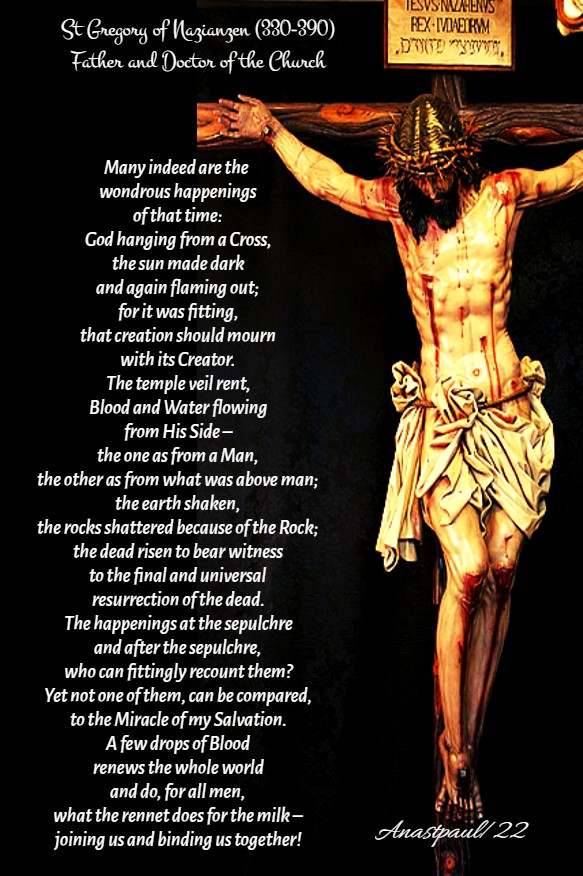
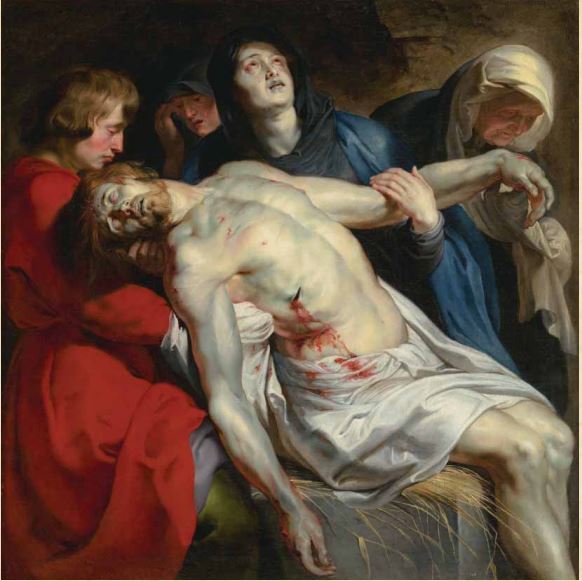
“Many indeed are the wondrous happenings of that time: God hanging from a Cross, the sun made dark and again flaming out; for it was fitting, that creation should mourn with its Creator. The temple veil rent, Blood and Water flowing from His side – the one as from a Man, the other as from what was above man; the earth shaken, the rocks shattered because of the Rock; the dead risen to bear witness to the final and universal resurrection of the dead. The happenings at the sepulchre and after the sepulchre, who can fittingly recount them? Yet not one of them, can be compared, to the Miracle of my Salvation. A few drops of Blood renews the whole world and do, for all men, what the rennet does for the milk – joining us and binding us together!”
St Gregory Nazianzen (330-390) Father & Doctor of the Church
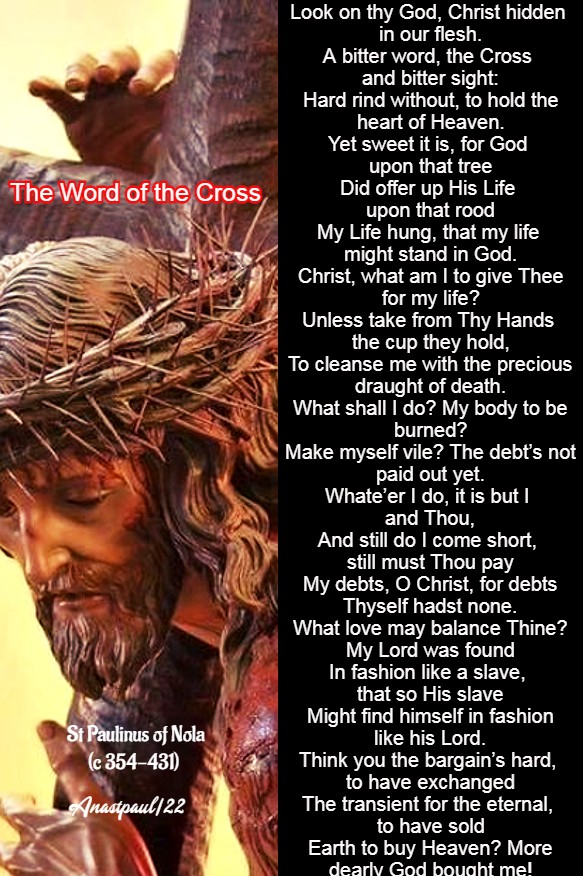
“The Word of the Cross Look on thy God, Christ hidden in our flesh. A bitter word, the Cross and bitter sight: Hard rind without, to hold the heart of Heaven. Yet sweet it is, for God upon that tree Did offer up His Life upon that rood My Life hung, that my Life might stand in God. Christ, what am I to give Thee for my life? Unless take from Thy Hands the cup they hold, To cleanse me with the precious draught of death. What shall I do? My body to be burned? Make myself vile? The debt’s not paid out yet. Whate’er I do, it is but I and Thou, And still do I come short, still must Thou pay My debts, O Christ, for debts Thyself hadst none. What love may balance Thine? My Lord was found In fashion like a slave, that so His slave Might find himself in fashion like his Lord. Think you the bargain’s hard, to have exchanged The transient for the eternal, to have sold Earth to buy Heaven? More dearly God bought me!
St Paulinus of Nola (c 354-431) Father of the Church
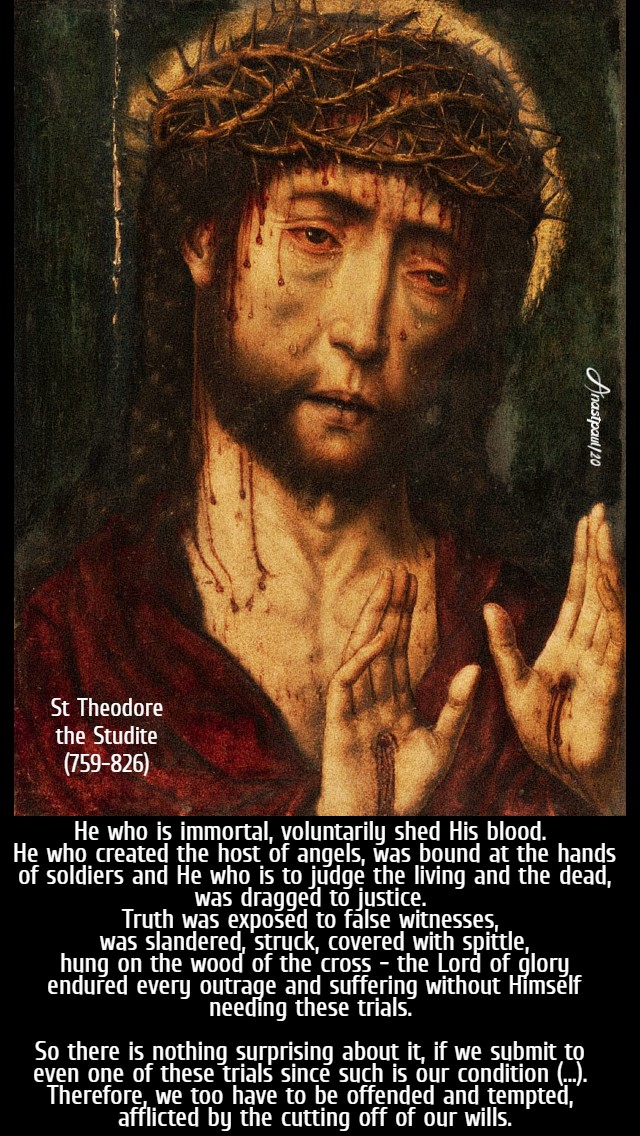
“He who is immortal, voluntarily shed His Blood. He who created the Host of Angels, was bound at the hands of soldiers and He who is to judge the living and the dead, was dragged to justice (cf. Acts 10:42; 2 Tm 4:1). Truth was exposed to false witnesses, was slandered, struck, covered with spittle, hung on the Wood of the Cross – the Lord of Glory (cf. 1 Cor 2:8) endured every outrage and suffering without Himself needing these trials. …
So there is nothing surprising about it, if we submit to even one of these trials, since such is our condition … Therefore, we too have to be offended and tempted, afflicted by the cutting off of our wills.”
St Theodore the Studite (759- 826) Monk at Constantinople, Father (Catecheses 1)
One Minute Reflection – 9 May – The Memorial of St Gregory Nazianzen (330-390) Bishop, Confessor, Father and Doctor of the Church – Sirach 39:6-14, Matthew 5:13-19
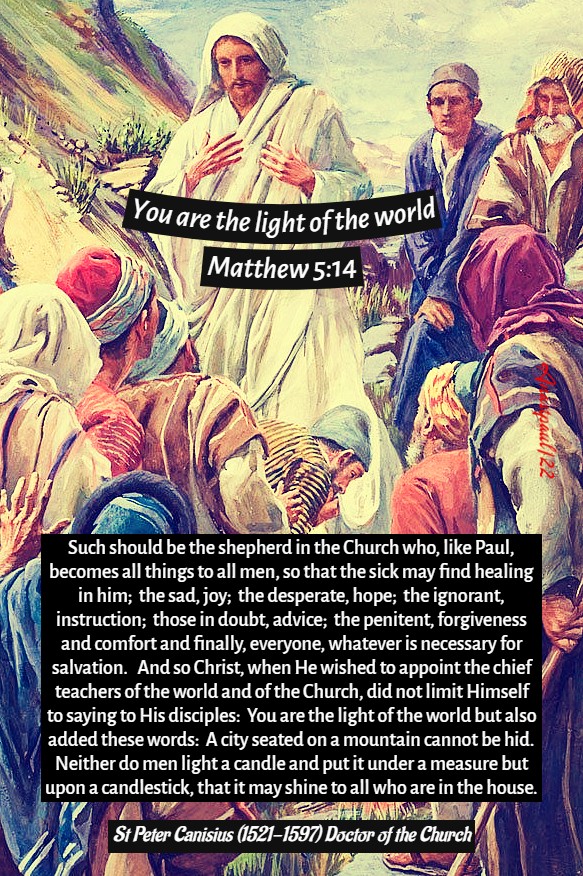
“You are the light of the world.” – Matthew 5:14
REFLECTION – “I shall always love and reverence the Apostles sent by Christ and their successors, in sowing the seed of the Gospel, those zealous and tireless co-operators in propagating the Word, who may justly say of themselves: Let a man so account of us as the ministers of Christ and the dispensers of the mysteries of God. For Christ, like a most watchful and most faithful householder, wished that the Gospel lamp should be lighted by such ministers and delegates, with fire sent down from Heaven and once lighted, should not be put under a measure but set upon a candlestick, so that it may spread its brightness far and wide and put to flight, all darkness and error, rife among both Jews and Gentiles.
Now it is not enough for the Gospel teacher to be a brilliant speaker in the eyes of the people; he must also be as a voice crying in the desert and endeavour, by his eloquence, to help many to lead good lives, lest, if he omit his duty of speaking, he be called the dumb dog that is not able to bark, spoken of by the prophet. Yes, he should also burn, in such a way, that, equipped with good works and love, he may adorn his evangelical office and follow the leadership of Paul. He indeed was not satisfied with bidding the Bishop of the Ephesians: This command and teach: conduct thyself in work as a good soldier of Christ Jesus but he unflaggingly preached the Gospel to friend and foe alike and, said with a good conscience to the Bishops gathered at Ephesus: You know how I have kept back nothing that was for your good but have declared it to you and taught you in public and from house to house, urging Jews and Gentiles to turn to God in repentance and to believe in our Lord Jesus Christ.
Such should be the shepherd in the Church who, like Paul, becomes all things to all men, so that the sick may find healing in him; the sad, joy; the desperate, hope; the ignorant, instruction; those in doubt, advice; the penitent, forgiveness and comfort and finally, everyone, whatever is necessary for salvation. And so Christ, when He wished to appoint the chief teachers of the world and of the Church, did not limit Himself to saying to His disciples: You are the light of the world but also added these words: A city seated on a mountain cannot be hid. Neither do men light a candle and put it under a measure but upon a candlestick, that it may shine to all who are in the house. Those churchmen err, who imagine that it is by brilliant preaching, rather than by holiness of and all-embracing love, they fulfil their office.” – St Peter Canisius SJ (1521-1597) Doctor of the Church (Sermon excerpt).
PRAYER – O God, Who gave to Your people, blessed Gregory, as a minister of salvation, grant, we beseech You, that we, who cherished him on earth as a teacher of life, may be found worthy to have him as an intercessor in Heaven. Through Jesus Christ, Thy Son our Lord, Who lives and reigns with Thee, in the unity of the Holy Ghost, God, world without end. Amen (Collect).
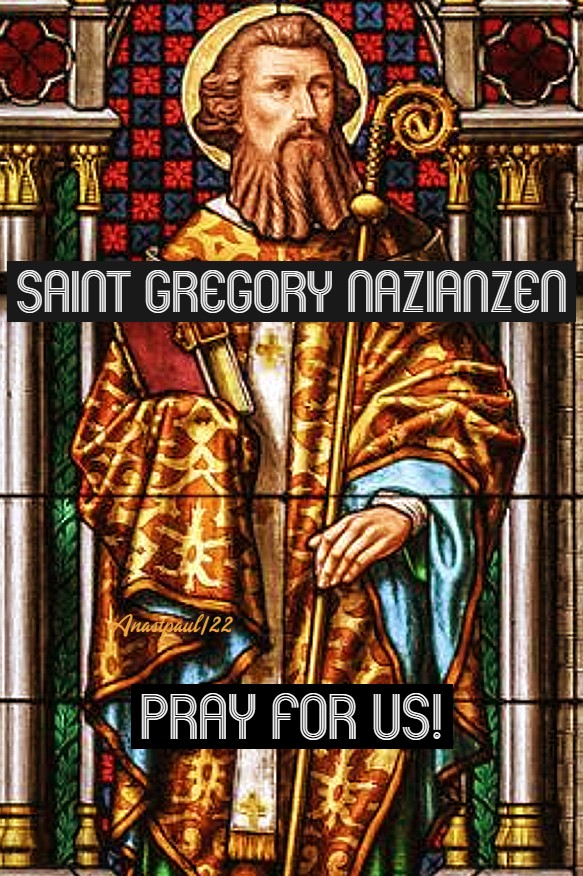
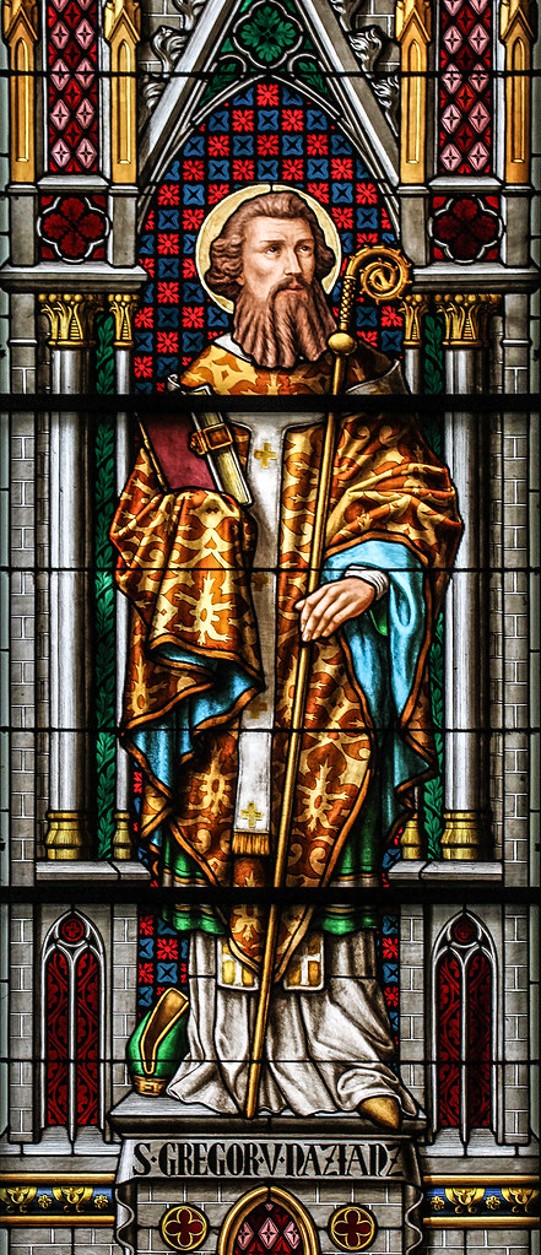
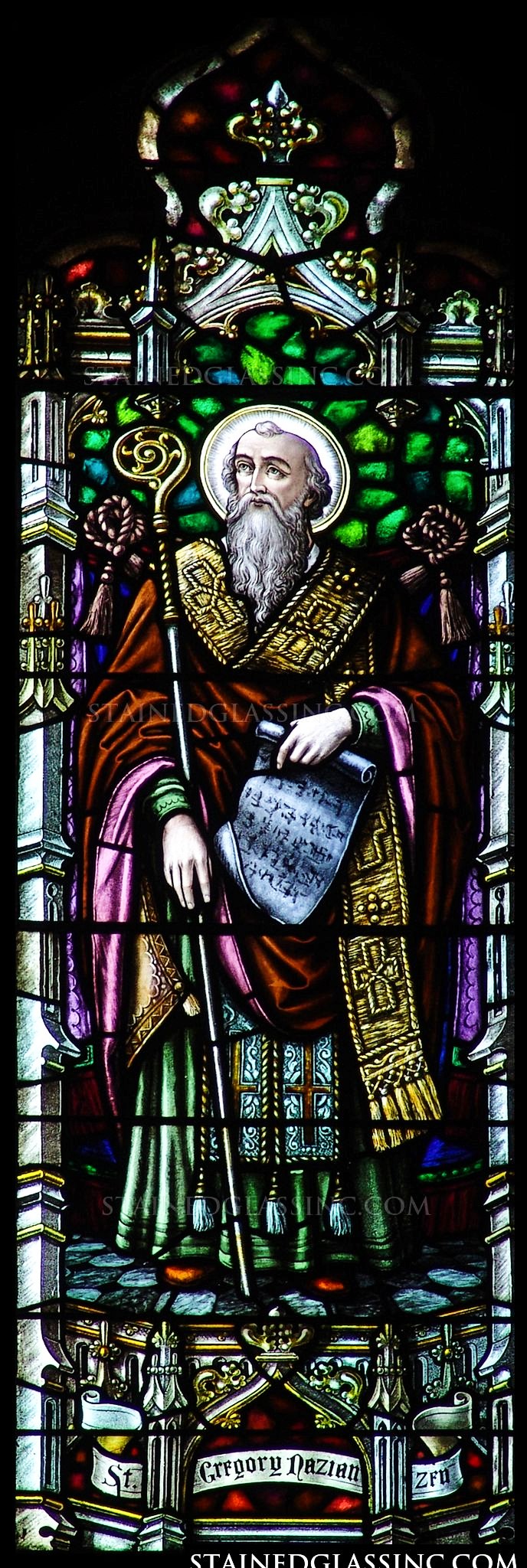
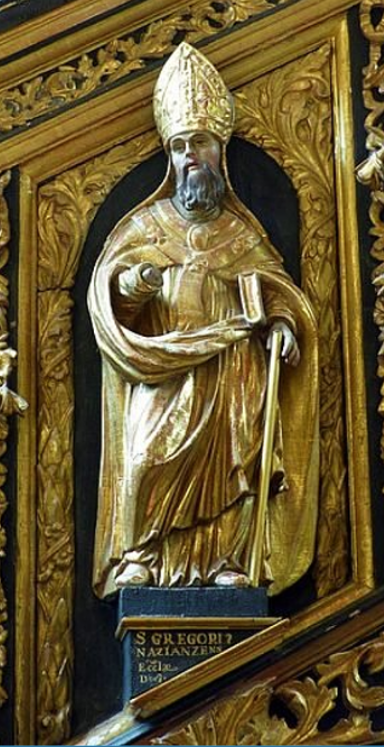
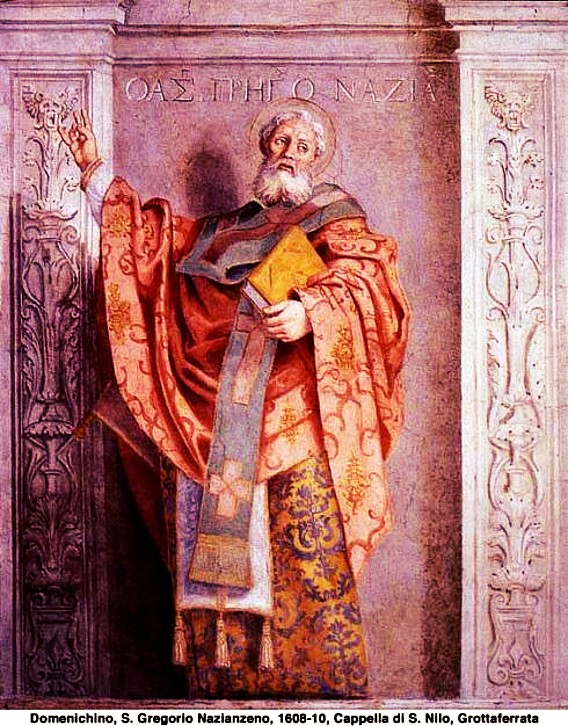
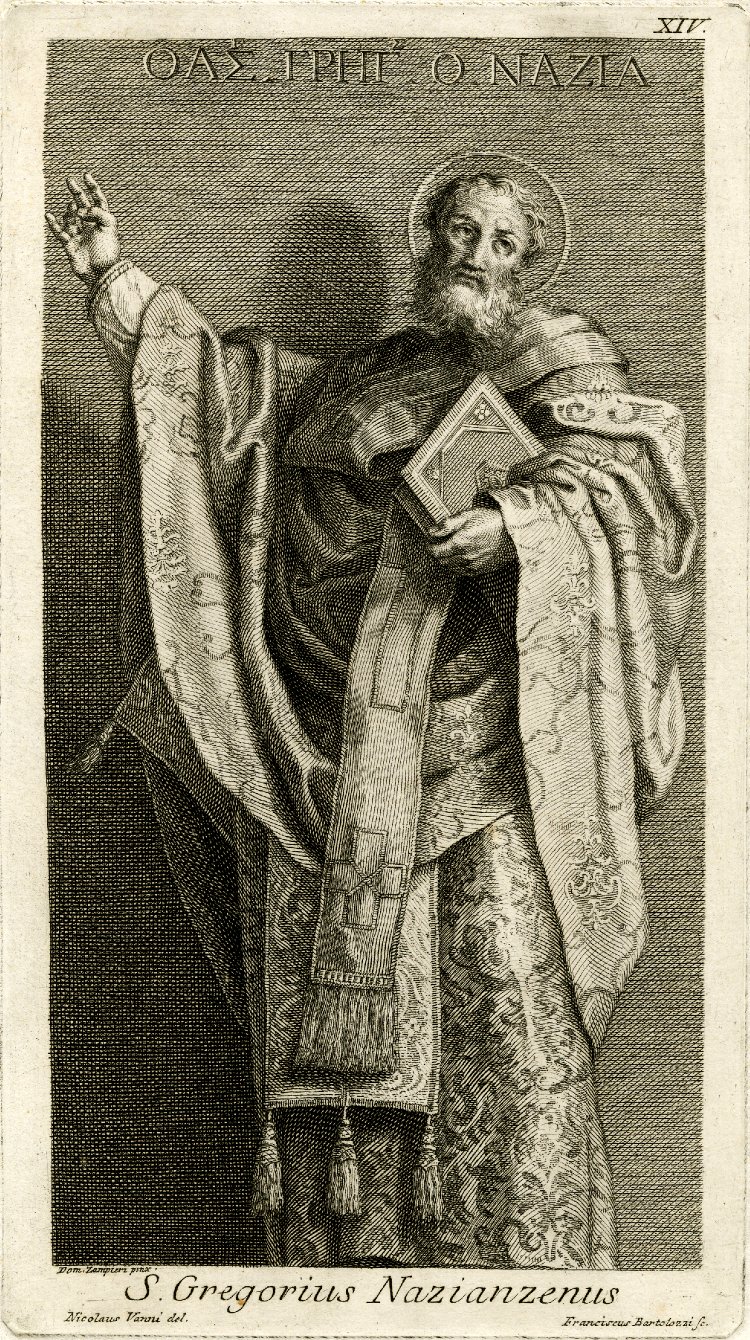
Saint of the Day – 9 May – St Gregory Nazianzen (330-390) Archbishop of Constantinople, Father and Doctor of the Church, Confessor, Theologian, Philosopher, Orator, Poet, Writer, he is remembered as the “Trinitarian Theologian.” He is widely considered one of the most accomplished rhetorical stylist of the patristic age. Along with his great friends and colleagues, the brothers St Basil the Great and St Gregory of Nyssa, he is known as one of the Cappadocian Fathers. The Cappadocia region, in modern-day Turkey, was an early site of Christian activity, with several missions by St Paul in this region. The Cappadocians advanced the development of early Christian theology, for example the doctrine of the Trinity and are highly respected as “Great” Fathers of the Church.
The Roman Martyrology states of him today: “At Naziazus, the birthday of St Gregory, Bishop and Doctor of the Church, surnamed “The Theologian” because of his remarkable knowledge of divinity. At Constantinople, he restored the Catholic Faith, which was fast waning and repressed the rising heresies.”
St Gregory Nazianzen (330-390) Bishop, Father and Doctor of the Church By Fr Francis Xavier Weninger, SJ (1805-1888)
St Gregory who, on account of his great knowledge in Sacred science, is surnamed the Theologian, was born at Nazianzum, in the year c 300. His father, whose name was also Gregory, his mother, Nonna, his brother Caesarius and Gorgonia, his sister, are all honoured as Saints. At Athens, where St. Gregory devoted himself to study, he became acquainted with St Basil the Great, who had made his home there with the same intention. They became most intimate friends, as both were virtuous and diligent. They secluded themselves from all frivolous young men, shunned gaming, idleness, and other vices of youth, cultivating only piety and knowledge. They knew of only two roads, one of which led to school, the other to Church.
After having finished his studies, Basil returned to his home but Gregory remained and studied eloquence, in which he was, in after years, unsurpassed. At that time also, Julian studied at Athens, who afterwards became Emperor and was called the Apostate. In regard to the manners and behaviour of this prince, Gregory said at that time; “Oh what a monster the Roman Empire nourishes in its bosom!” At the same time he predicted, that if Julian should ever wear the imperial crown, he would become the great enemy and persecutor of Christendom, which unhappily became true.
After several years, Gregory left Athens and returned to his native place. One day, while studying, he was overtaken by sleep and it appeared to him that he saw two beautiful virgins, who came as if wishing to speak to him. He asked who they were and what they desired. “One of us,” they answered, “is chastity, the other wisdom.God has sent us to be your friends and remain constantly with you.” His life proved that this vision was no empty dream. Gregory preserved his chastity inviolable and was endowed by the Almighty with such wisdom, that on account of it, he became celebrated throughout the whole world. Great men, among whom was St Jerome, often travelled many miles to hear him speak.
Having been Ordained Priest, he went secretly toBasil, who had retired to the desert of Pontus. There they lived in the greatest harmon, but, at the same time, in the greatest rigour occupied only in prayer and in studying the holy Scriptures.
After the lapse of some years, Gregory returned again to his home, to bring back to the True Faith, his father who, not out of wickedness,but out of simplicity and ignorance, had been deluded by the Arians. Gregory happily extricated him from his error …
Meanwhile Basil became Bishop of Caesarea and most earnestly requested Gregory to take the small bishopric of Sasima, as the far spreading heresy demanded a strong opposition. Gregory allowed himself to be prevailed upon and accepted the See. When, however, another one came who asserted that the office was his, he gave place to him and retired. They wished him afterwards to take charge of the church at Nazianzum but he arranged matters in such a manner, that they chose someone else.
He, however, did not succeed so well in Constantinople. He had gone thither to oppose the heretics, who had filled the whole city with their poison, to defend the Catholic faith and teach its doctrines to the people. After he had laboured there some time with great success, Peter, Bishop of Alexandria, nominated him Bishop of Constantinople and Gregory was obliged to take this heavy burden. All his thoughts were now directed to exterminate heresy and to restore the ancient prestige of the Church.
The Catholics had, at that time, only one Church where they assembled, the heretics having taken possession of all the others. Gregory, however, so brought it about that the newly chosen Emperor Theodosius came himself to Constantinople and gave the Cathedral back to the Catholics, although the heretics opposed it with all their power. This enraged the latter to such a degree that they hired a villain to assassinate the Bishop. The Saint was sick in bed when the murderer came under the pretext of visiting him. As he, however, was alone with him and, therefore, had every opportunity of committing the crime, God suddenly changed his heart, and falling at the feet of the Saint, he confessed his wicked intention and asked forgiveness. The Saint said; “May God, Who protected me, forgive you. I ask you nothing but that you forsake your heresy.”
Much more had he to suffer from the heretics but it in no wise slackened his zeal. The Catholics also gave him just cause of complaint.
Among the Bishops assembled in Council, a dispute arose, concerning the validity of Gregory’s election. The Saint represented to them, that he had not in any manner sought the office but that it had been forced upon him against his desire. Perceiving, however, that all were not satisfied with his explanation and fearing that the peace of the Church might be materially endangered, to the detriment of the whole Christian community, he arose and addressed the assemblage in the following manner:
“Dear colleagues and joint-shepherds of the flock of Christ, it would be very unbecoming to your dignity, should you, whose office it is to exhort others to peace, become disunited among yourselves. Am I the cause of your discord? Behold, I am not better than the prophet Jonas; cast me, therefore, into the sea and the tempest will be calmed. Although I am innocent of your charges, I will suffer without a murmur, that unanimity may be restored among you.”
after having thus spoken calmly and sweetly, he took leave of all present and went to the Emperor, whom he acquainted with his resolution to leave Constantinople. The Emperor, at first refused his consent but the Saint knew so well how to represent to him his reasons, that he at last gave him the desired permission.
He immediately made all the necessary preparations for his departure but once more ascended the pulpit of his Episcopal Church and in a last discourse, took leave of all the assembled faithful, as also of all the other Churches, hospitals and asylums of the city. To those who had frequently complained of his sermons because he unhesitatingly denounced their vices, he said: “Now joyfully clap your hands and cry that the bad, talkative tongue will cease to strike you; yes, it will cease but the hand still remains and pen and ink must in future sustain the combat.” Finally, he admonished them all to lead a Christian life and concluded his sermon with these words: “I exhort you, my dear children, to keep my instructions in your hearts. May the Grace of our Lord Jesus Christ, remain with you all. Amen!“
How deeply affected all his hearers were, was plainly perceived by their tears and their emotion. Well had they reason to be grieved, for they had possessed in Gregory a most tender father for their needy widows and orphans, an invincible protector of their faith, a teacher whom God had gifted with unusual wisdom, a careful, never weary pastor and almost perfect model of all virtue. They tried in every possible way to prevent his leaving but he was not to be persuaded to change his resolution but went on board the ship, which was ready to set sail and returned to his home.
On his arrival, he settled himself upon his parental estate, with the intention of then passing the remainder of his life in solitude and in the exercise of virtue.
This intention he carried out and prayers and devout meditation were his greatest comfort, until, failing health owing to excessive labour, besides old age and sickness, kept him for the greater part of the time in bed. Sometimes, however, he took the pen in hand and wrote several works to confute the doctrine of the heretics and to strengthen and confirm the Catholics. God permitted that the holy man, who had lived until now so piously and pure a life, should endure most fearful temptations from the Evil One. Constant calling on God, austere fasting, prayers, reading devout books and severe study, were the weapons he used against the enemy of man and he always conquered. The Most High also permitted that some men, envious and devoid of conscience, should calumniate the Saint everywhere and even falsely accuse him of some great crimes, to the Bishop of Tianea. The holy man was not angry but, while defending his honour, prayed God to bestow His grace upon his enemies and to pardon them.
Omitting much that might still be related of this great Saint, I will only mention one instance of his solicitude to avoid sin and to do penance. He thought that he had spoken in a certain affair more than was necessary and punished himself by remaining forty days without uttering a single word to anyone!
At length he expired happily, in the 90th year of his age, having laboured and suffered much for the honour of the Almighty and the protection of the True Church. Praise be to God!Amen.
Martyrs of Persia: 310 Christians murdered together for their faith in Persia. No details about them have survived.
20 Mercedarian Martyrs of Riscala: 20 Mercedarian friars who were murdered by Huguenot heretics for refusing to denounce their faith. 16th century at the Santa Maria convent at Riscala, France.
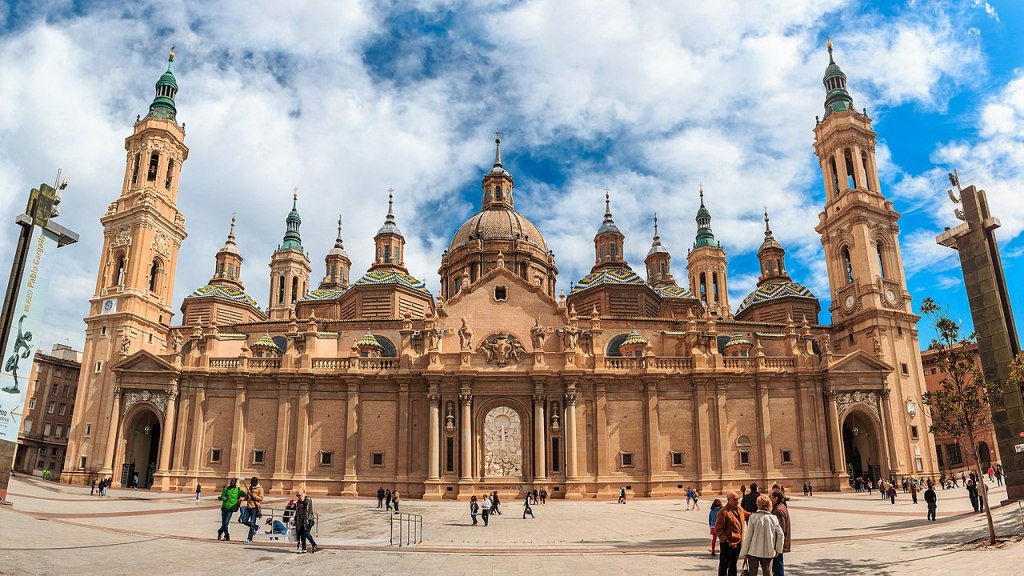
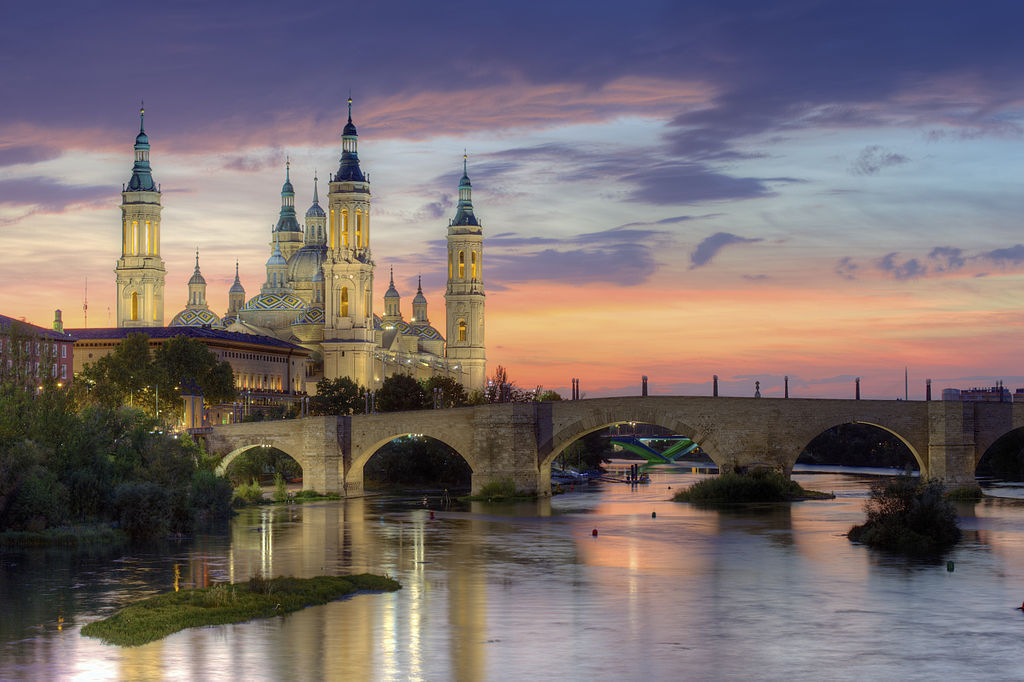
Nuestra Señora del Pilar / Our Lady of the Pillar (Zaragoza, Spain) (40) – 2 January, 12 October (originally 4 October), 15 August – (This Apparition it is considered the first Marian Apparition, and is unique because it happened while Mary was still living on Earth):
According to ancient Spanish history, on 2 January in the year 40, in the early days of Christianity, James the Greater, one of the original Twelve Apostles of Jesus Christ, was preaching the Gospel in what was then the pagan land of Caesaraugusta (now Zaragoza), in the Roman Province of Hispania.
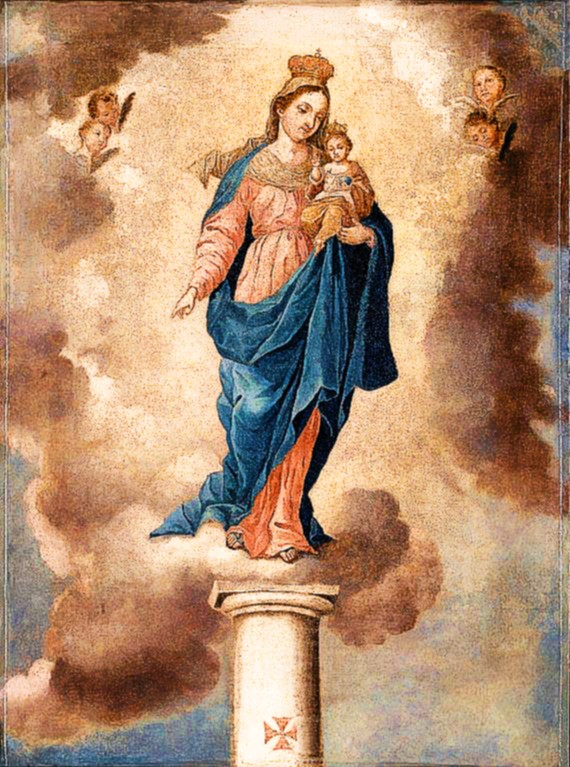
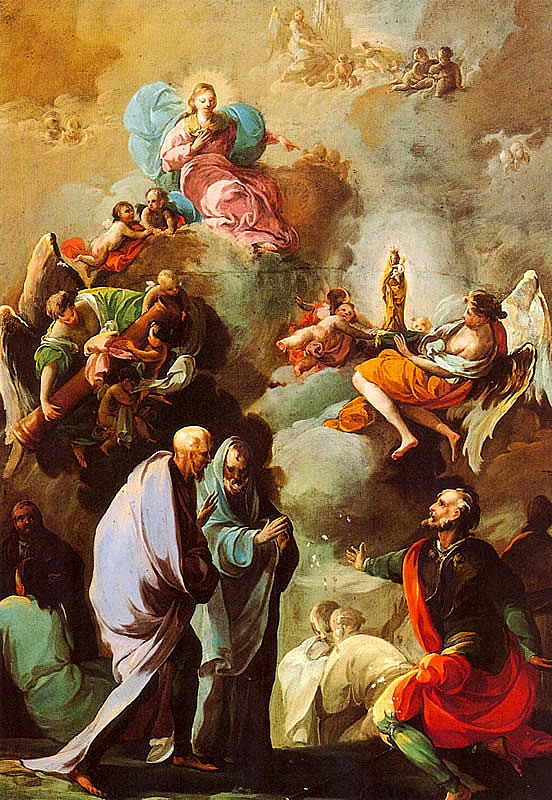
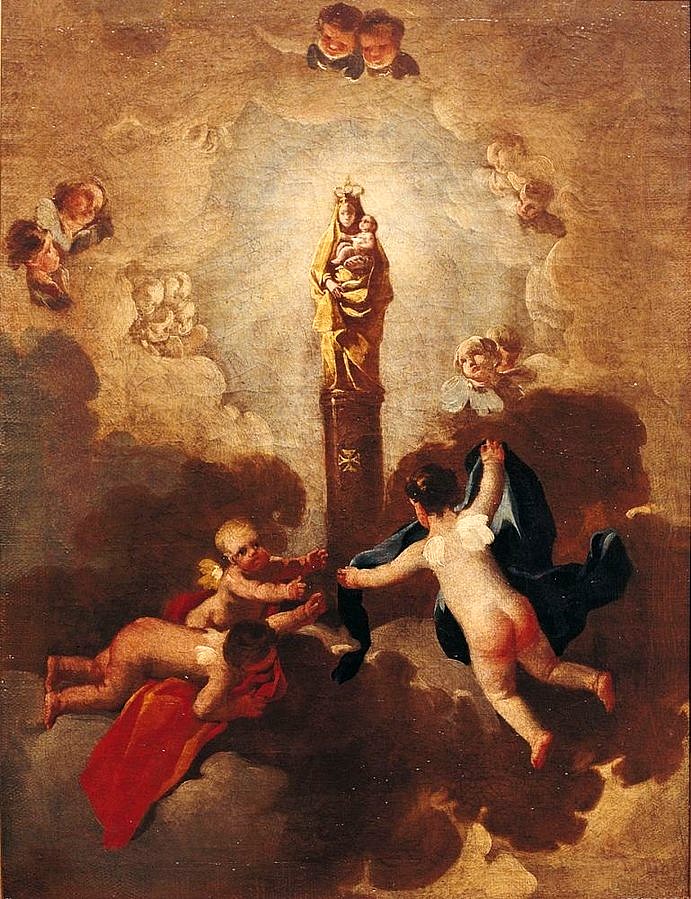
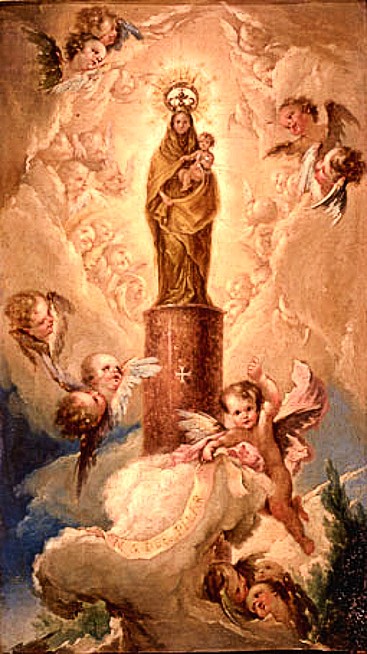
St James was disheartened with his mission, having made only a few converts. While he was praying by the banks of the Ebro River with some of his disciples, the Blessed Virgin Mary miraculously appeared before him atop a pillar accompanied by Angels. Mary assured James that the people would eventually be converted, becoming a stronghold of the Faith due to his efforts and their faith would be as strong as the pillar she was standing on. She gave him the pillar as a symbol and a wooden image of herself. James was also instructed to build a Chapel on the spot where she left the pillar which he did, making it the first Church in Spain.
Apparition of the Virgin of the Pillar to Saint James and his Saragossan disciples by Francisco Goya, c 1769.
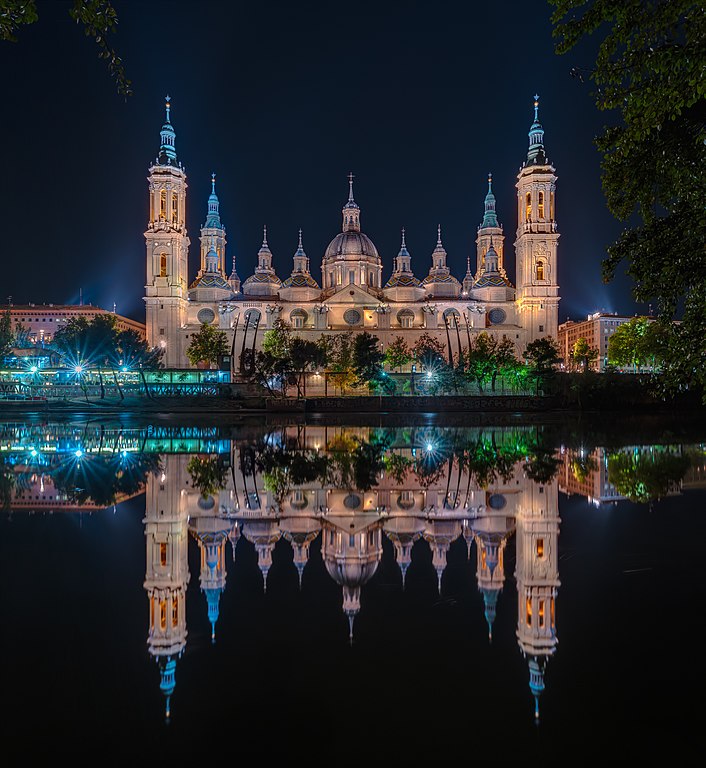
It is generally believed, that Mary appeared to James through bilocation, as she was still living, either in Ephesus or Jerusalem, at the time of this event, as she is believed to have died three to fifteen years after Jesus ascended into Heaven. After establishing the church, James returned to Jerusalem with some of his disciples where he became a Martyr, beheaded in 44 under Herod Agrippa. His disciples returned his body to Spain. The pillar left by the Virgin Mary is presently enshrined in the same but larger Basilica of Our Lady of the Pillar. It is believed to be the same pillar given and promised by Mary, in spite of numerous disasters that beset the Church. A fire in 1434 razed the Church that preceded the present Basilica Cathedral, see below.
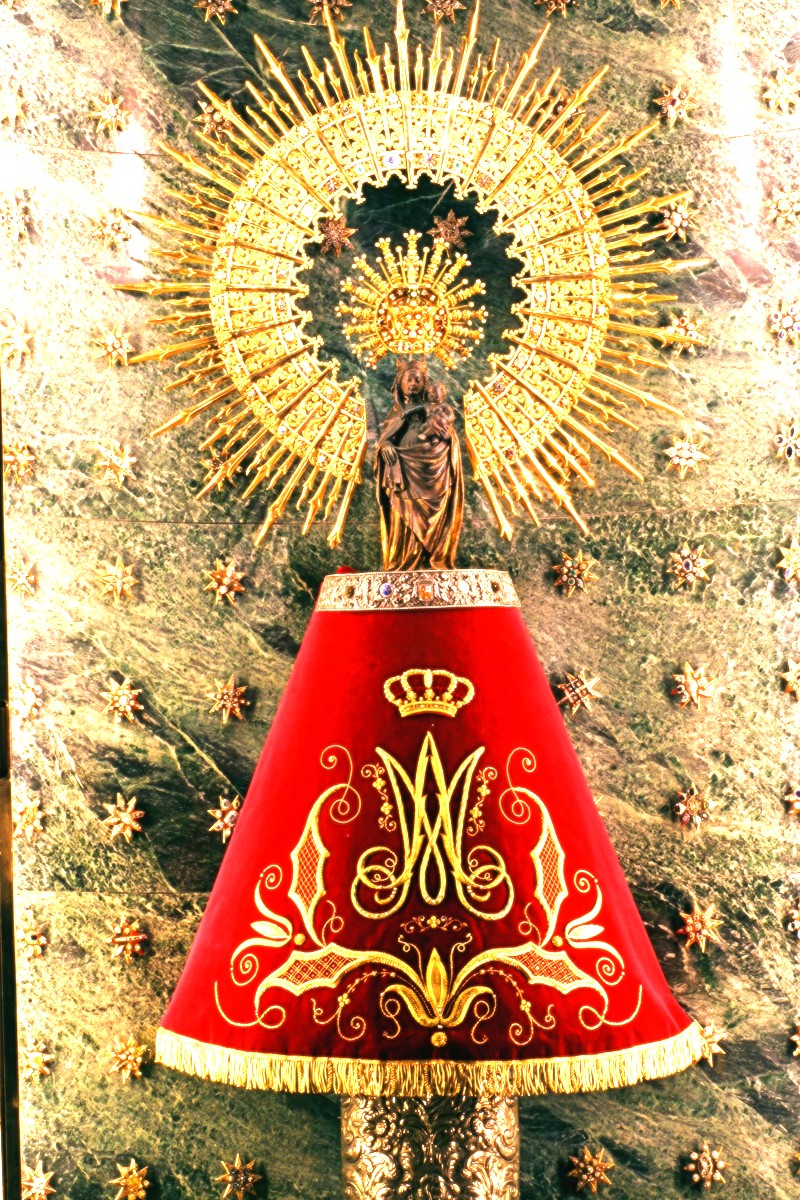
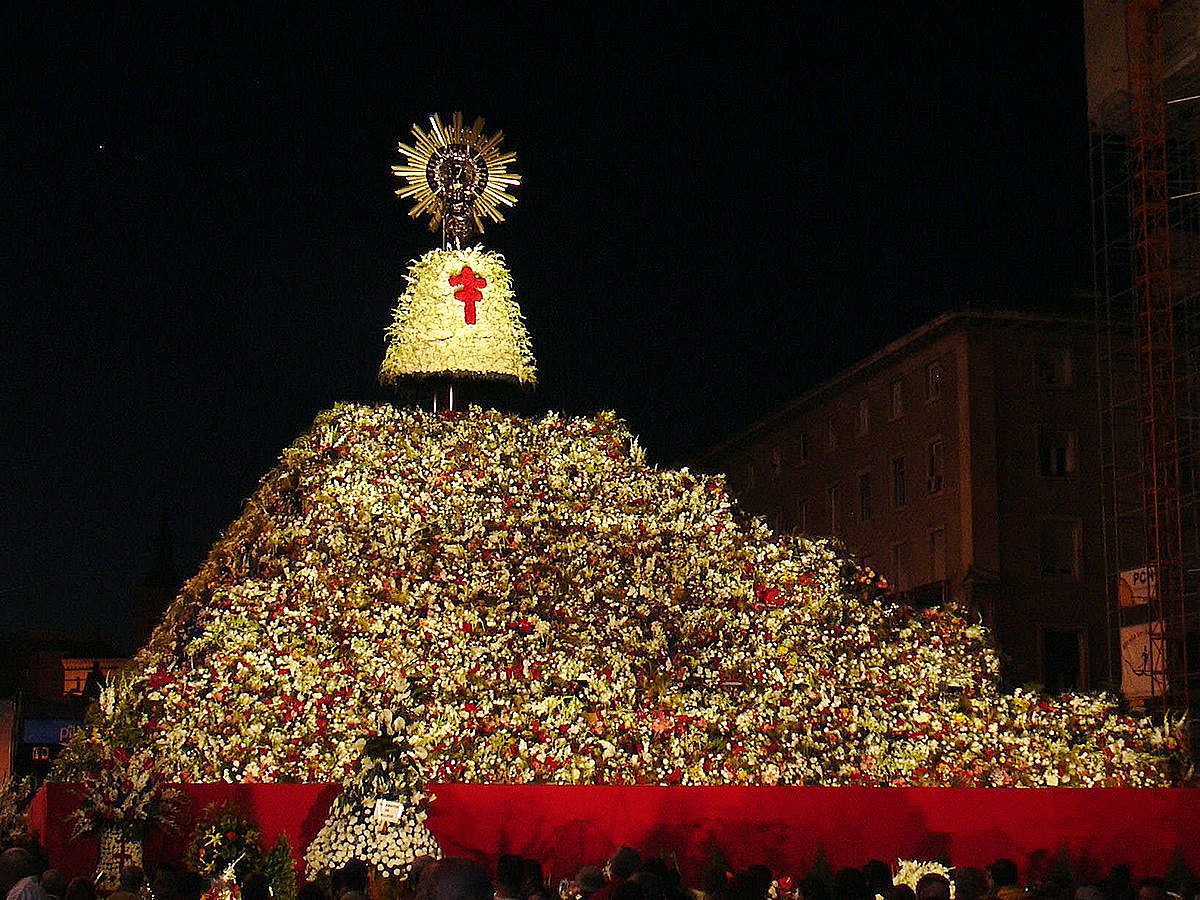
The image of the Blessed Virgin Mary may or may not be the original. Some reports state that the original wooden image was destroyed when the Church burned down in 1434, contradicting other reports, that it is still the original Statue. The Statue of the Blessed Virgin Mary is made of wood and stands 39 centimetres tall while the 1.8 m pillar is made of jasper.quartz. The Statue depicts Mother Mary with the Child Jesus on her left arm, Who has a dove sitting on His left palm. Since the 16th century, the pillar is usually draped in a skirt-like cover called manto (in English: mantle). As a whole, it is protected by a bronze case and then another case of silver. The image was canonically crowned in 1905 during the reign of Pope Pius X. The crown was designed by the Marquis of Griñi, valued at 450,000 pesetas (£18,750, in1910). During the three Marian festivities of today, 15 August and 12 October, the faithful adorn the base of the Pillar and Statue with flowers – see below (both our Blessed Mother and St James would be thrilled by this display of such immense faith and piety!)
The apparition of Our Lady of the Pillar is a widely accepted sacred tradition. Popes from earliest times issued Papal Bulls attesting to the authenticity of the Shrine and the appearance of the Virgin Mary. Pope Calixtus III issued a Bull in 1456 encouraging pilgrimage to the Lady of the Pillar. It acknowledged the miracle of its foundation and the miracles that had taken place at the Spanish Shrine. It was also through this Bull that the name “Our Lady of the Pillar” was confirmed. So many contradictions had arisen concerning the miraculous origin of the Church that during the reign of Pope Innocent XIII , the Bishops of Spain appealed to the Holy See to settle the controversy. After careful investigation, the twelve Cardinals, in whose hands the affair rested, adopted the following account, which was approved by the Sacred Congregation of Rites on 2 August 1723 and has since been inserted in the lessons of the Office of the Feast of Our Lady of the Pillar, celebrated on 12 October.
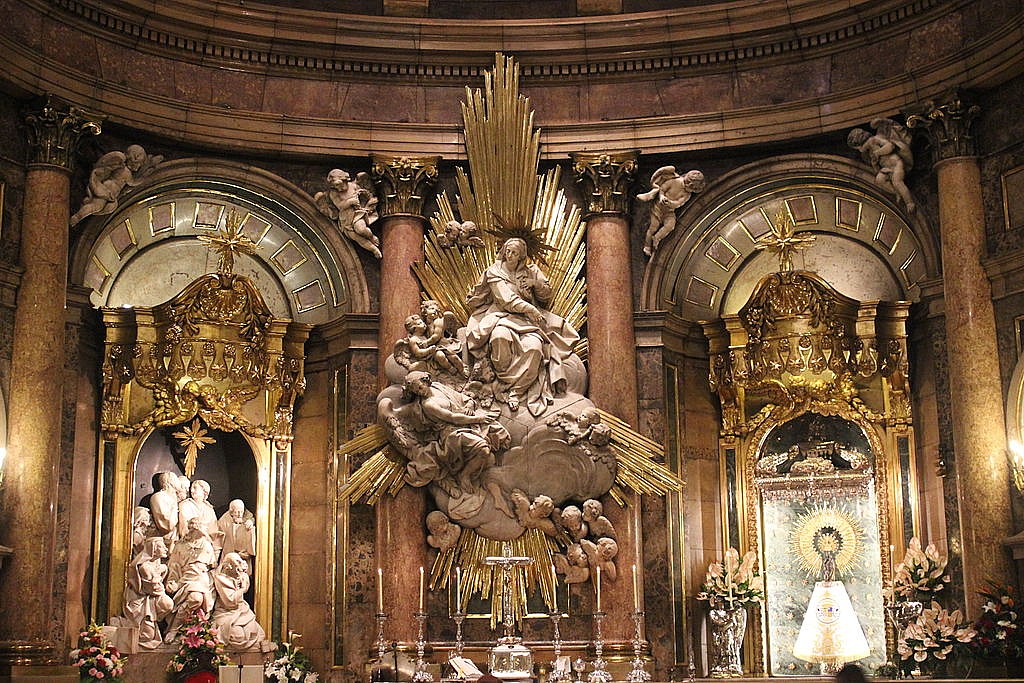
“Of all the places that Spain offers for the veneration of the devout, the most illustrious is doubtless the Sanctuary consecrated to God under the invocation of the Blessed Virgin, under the title of Our Lady of the Pillar, at Saragossa. According to ancient and pious tradition, St James the Greater, led by Providence into Spain, spent some time at Saragossa. He there received a signal favour from the Blessed Virgin. As he was praying with his disciples one night, upon the banks of the Ebro, as the same tradition informs us, the Mother of God, who still lived, appeared to him and commanded him to erect an oratory in that place. The Apostle delayed not to obey this injunction,and with the assistance of his disciples, soon constructed a small Chapel. In the course of time, a larger Church was built and dedicated, which, with the dedication of Saint Saviour’s, is kept as a festival in the City and Diocese of Saragossa on the 4th of October.“
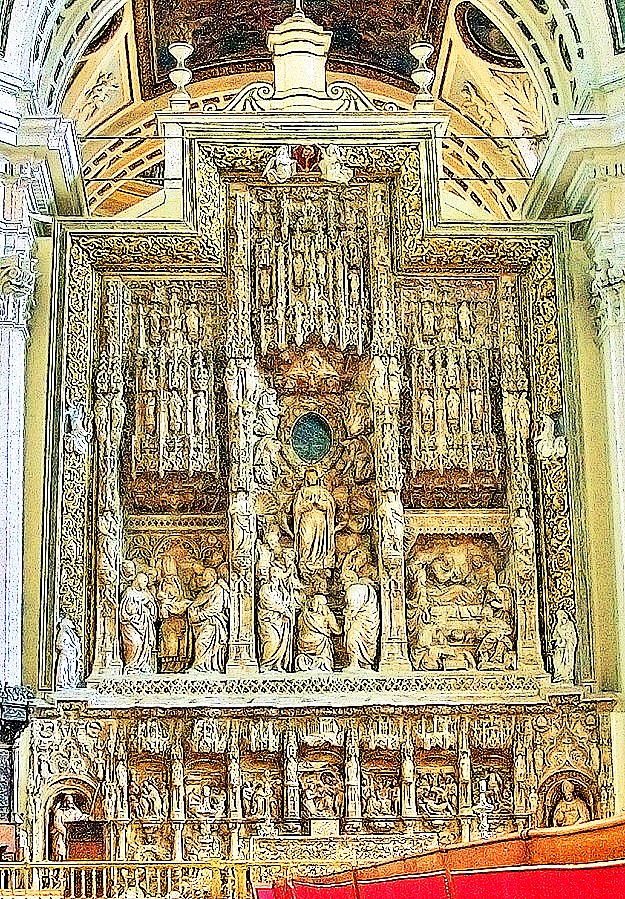
Holy Chapel of the Pillar of Zaragoza. Altar with the Arrival of the Virgin by ‘José Ramírez de Arellano.
In 1730, Pope Clement XII allowed the celebration of the Feast of Our Lady of the Pillar all over the Spanish Empire. As the date coincides with the discovery of the Americas, the Lady was later named as Patroness of the Hispanic World although her Patronages include all of the following: Zaragoza, Spain, Melo, Uruguay, Buenos Aires, Argentina, Diocese of Imus, Cavite, Zamboanga City, Santa Cruz, Manila, Alaminos, Laguna, San Simon, Pampanga, Libmanan, Camarines Sur, Pilar and Morong in Bataan, Mamburao, Occidental Mindoro, Sibonga, Cebu, Baleno, Masbate, Cauayan, Isabela.
Prayer: Hail, Mary, Our Lady of the Pillar, conceived without sin, I come to venerate and honour you. above all the Angels and Saints in Heaven, as my Queen, my Lady and my dearest Mother. I firmly resolve to serve you always and to do whatever I am able, that all may render faithful service to you. Most Holy Mary, through your kind intercession and by your own merits, obtain for me from your Divine Son Jesus, our Lord and Saviour, all the graces I need for the eternal salvation of my soul. Therefore, most devoted Mother of mothers, through the Precious Blood which your Son shed for us, I humbly beseech thee to receive me among your devotees and to accept me as your servant forever. Help me in my every thought, action word and deed, never to be displeasing in your sight and in the sight of your Son, our Lord and Redeemer. Think of me always, my dear Lady of the Pillar and do not forsake me in the hour of my death. Amen.
Bl Airaldus of Maurienne St Asclepius of Limoges St Aspasius of Auch St Blidulf of Bobbio Bl Guillaume Répin St Hortulana of Assisi St Isidore of Antioch St Isidore of Nitria St Laurent Bâtard
Saint Macarius the Younger of Alexandria (Died c 401) Priest, Monk, Desert Hermit.
St Maximus of Vienne Bl Odino of Rot St Paracodius of Vienne St Seiriol Blessed Sylvester of Troina St Telesphorus, Pope St Theodota St Theopistus St Vincentian of Tulle
Many Martyrs Who Suffered in Rome: There were many Martyrs who suffered in the persecutions of Diocletian for refusing to surrender the holy books. Though we know these atrocities occurred, we do not know the names of the Saints and we honour them as a group. c 303 in Rome, Italy.
Martyrs of Antioch – 5 saints: A group of Christian soldiers Martyred together for their faith. We know the names of five – Albanus, Macarius, Possessor, Starus and Stratonicus. They were born in Greece and were Martyred in Antioch (modern Antakya, Turkey).
Many Martyrs of Britain: The Christians of Britain appear to have escaped unharmed in the earlier persecutions which afflicted the Church but the cruel edicts of Diocletian were enforced in every corner of the Roman Empire and the faithful inhabitants of this land, whether native Britons or Roman colonists, were called upon to furnish their full number of holy Martyrs and Confessors. The names of few are on record but the British historian, Saint Gildas, after relating the Martyrdom of Saint Alban, tells us, that many others were seized, some put to the most unheard-of tortures and others immediately executed, while not a few hid themselves in forests and the caves of the earth, where they endured a prolonged death until God called them to their reward. The same writer attributes it to the subsequent invasion of the English, then a pagan people, that the recollection of the places, sanctified by these Martyrdoms, has been lost and so little honour paid to their memory. It may be added, that, according to one tradition, a thousand of these Christians were overtaken in their flight near Lichfield and cruelly massacred and that the name of Lichfield, or Field of the Dead, is derived from them.
Martyrs of Ethiopia – 3 saints: A group of Christians Martyred together for their faith. We know the names of three – Auriga, Claudia and Rutile.
Martyrs of Jerusalem – 2 saints: A group of Christians Martyred together for their faith. We know the names of two – Stephen and Vitalis.
Martyrs of Lichfield: Many Christians suffered at Lichfield (aka Lyke-field, meaning field of dead bodies), England in the persecutions of Diocletian. Though we know these atrocities occurred, we do not know the names of theSsaints and we honour them as a group. Their Martyrdom occurred in 304 at Lichfield, England.
Martyrs of Piacenza: A group of Christians who died together for their faith in the persecutions of Diocletian. No details about them have survived. They were Martyred on the site of Church of Madonna di Campagna, Piacenza, Italy.
Martyrs of Puy – 4 saints: Missionaries, sent by Saint Fronto of Périgueux to the area of Puy, France. Tortured and Martyred by local pagans. We know the names – Frontasius, Severinus, Severian and Silanus. They were beheaded in Puy (modern Puy-en-Velay), France and buried together in the Church of Notre Dame, Puy-en-Velay by Saint Fronto, their bodies laid out to form a cross.
Martyrs of Syrmium – 7 saints: Group of Christians Martyred together, date unknown. We know the names of seven – Acutus, Artaxus, Eugenda, Maximianus, Timothy, Tobias and Vitus – but very little else. This occurred in the 3rd or 4th century at Syrmium, Pannonia (modern Sremska Mitrovica, Serbia).
Martyrs of Tomi – 3 saints: Three brothers, all Christian soldiers, in the Imperial Roman army and all three Martyred in the persecutions of Emperor Licinius Licinianus. We know their names – Argeus, Marcellinus and Narcissus – but little else. They were Martyred in 320 at Tomi, Exinius Pontus, Moesia (modern Constanta, Romania).
Quote/s of the Day – 25 December – The Solemnity of the Nativity of Our Lord, Jesus Christ
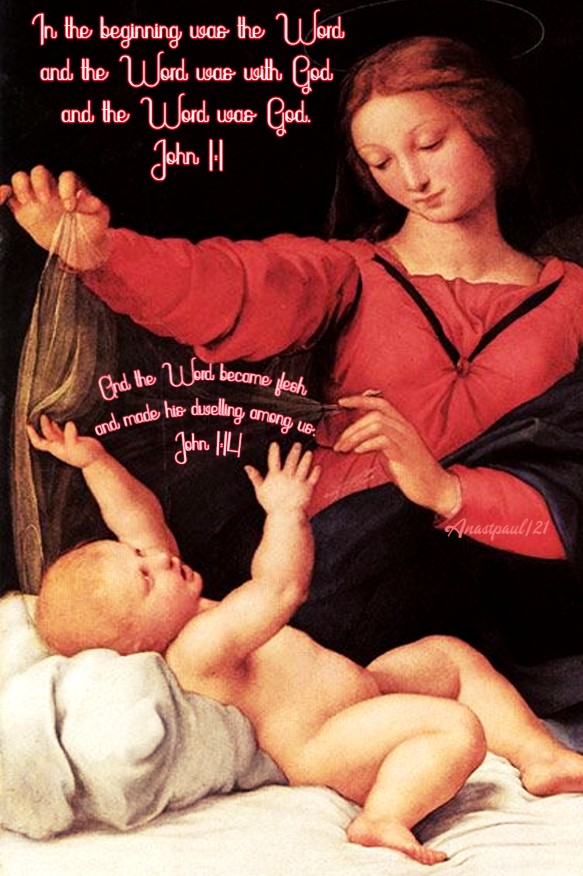
“In the beginning was the Word and the Word was with God and the Word was God.”
John 1:1
“And the Word became flesh and made his dwelling among us and we saw his glory, the glory as of the Father’s only Son, full of grace and truth.”
John 1:14
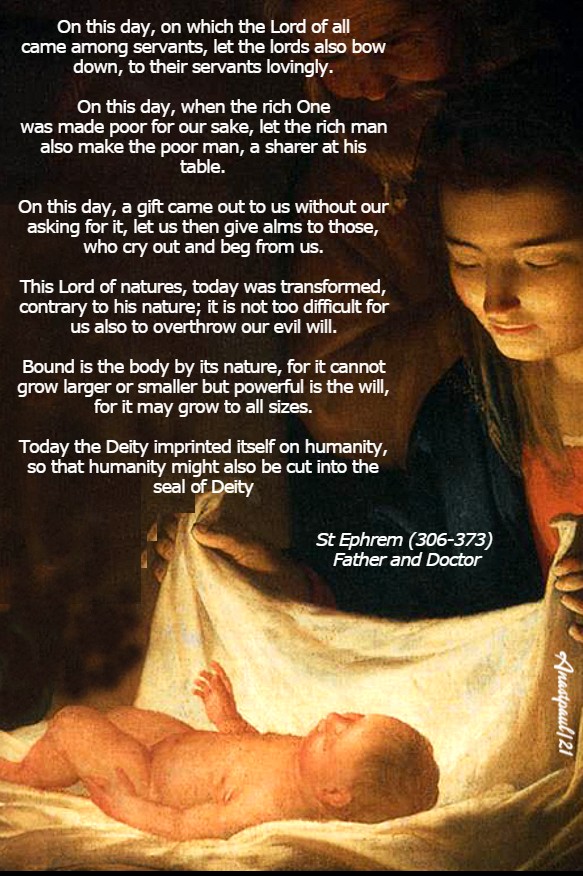
“On this day, on which the Lord of all came among servants, let the lords also bow down, to their servants lovingly.
On this day, when the rich One was made poor for our sake, let the rich man also make the poor man, a sharer at his table.
On this day, a gift came out to us without our asking for it, let us then give alms to those, who cry out and beg from us.
This Lord of natures, today was transformed, contrary to his nature; it is not too difficult for us also to overthrow our evil will.
Bound is the body by its nature, for it cannot grow larger or smaller but powerful is the will, for it may grow to all sizes.
Today the Deity imprinted itself on humanity, so that humanity might also be cut into the seal of Deity.”
St Ephrem (306-373) Father and Doctor
(Homily on Our Lord, 21)
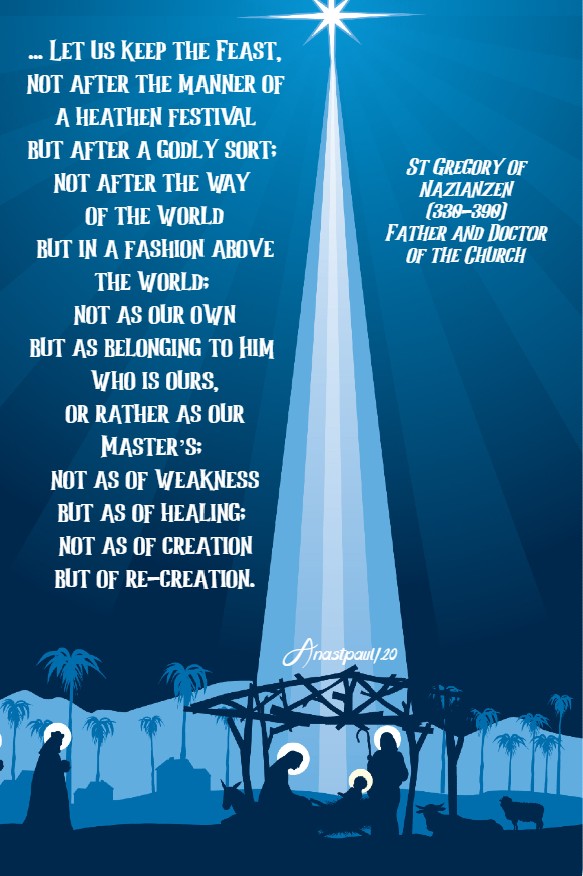
“… Let us keep the Feast, not after the manner of a heathen festival but after a godly sort; not after the way of the world but in a fashion above the world; not as our own but as belonging to Him who is ours, or rather as our Master’s; not as of weakness but as of healing; not as of creation but of re-creation.”
St Gregory of Nazianzen (330-390) Father and Doctor of the Church
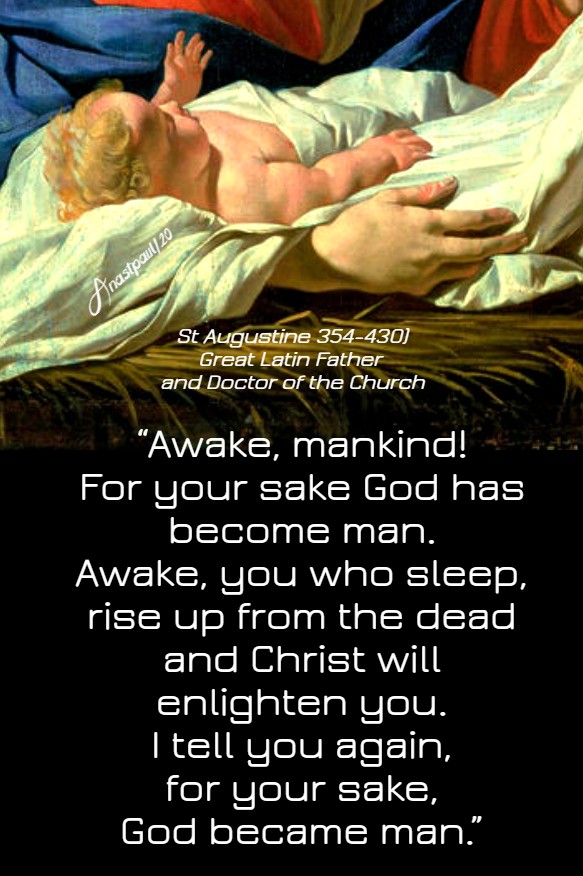
“Awake, mankind! For your sake God has become man. Awake, you who sleep, rise up from the dead and Christ will enlighten you. I tell you again, for your sake, God became man.”
St Augustine 354-430) Great Latin Father and Doctor of the Church
One Minute Reflection – 4 July – “Month of the Precious Blood” – Ezekiel 2: 2-5, Psalms 123: 1-2, 2, 3-4, Second Corinthians 12: 7-10, Mark 6: 1-6
“So he could notperform any mighty deed there, apart from curing a few sick people by laying his hands on them …” – Mark 6:5
REFLECTION – “One meaning of “could not” is simply the limits of some human will. Take, for example, the point ,that Christ “could not” fulfill any signs in Nazareth was due to disbelief on their part. Something essential for healing is required on both sides—faith on the part of the patients, power on that of the healer. So one side without its counterpart “could not,” so to speak, perform them. As this can be seen in medical care, it can also be seen in moral transformation. Similarly involving the limits of the will are the texts: “The world cannot not hate you” and “How can you speak good, being evil?” The metaphor of “impossibility” here must mean free refusal by the will. The same idea applies to those passages which say that what is, impossible for humanity is possible for God. Note also those passages that say that a person “cannot” (in one sense) be born a second time and a needle’s eye “cannot” let a camel through. What would stop these events happening if God willed them directly? Besides all these, there is, as in the case we are presently considering, a “cannot” in the sense of that which is totally inconceivable. We cannot conceive that God can be evil or fail to exist. It is inconceivable that reality cannot exist or two times two is fourteen. So here, it cannot be the case, that the Son would do anything which the Father would not do!” – St Gregory Nazianzen (330-390) Archbishop of Constantinople, Father and Doctor of the Church – Oration 30 (On the Son),10-11.
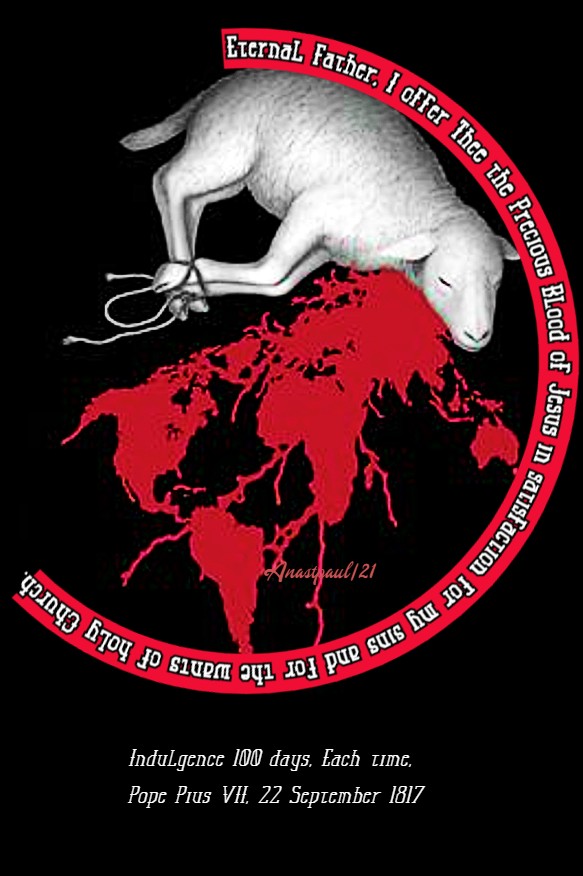
PRAYER – Lord our God, make us love You above all things and all our fellow-men, with a love that is worthy of You. May we look to Your Divine Son in total trust, faith, love and imitation. Grant too, that by the prayers of the Blessed Virgin Mary, we too may be granted the grace to follow Your only Son, no matter our sufferings, to one day reach You, in our heavenly home. We make our prayer, through Christ our Lord, in the unity of the Holy Spirit, one God, forever amen. Eternal Father, I offer Thee the Precious Blood of Jesus in satisfaction for my sins and for the wants of holy Church. – Indulgence 100 days, Each time, Pope Pius VII, 22 September 1817.
One Minute Reflection – 28 September – The Memorial of St Wenceslaus
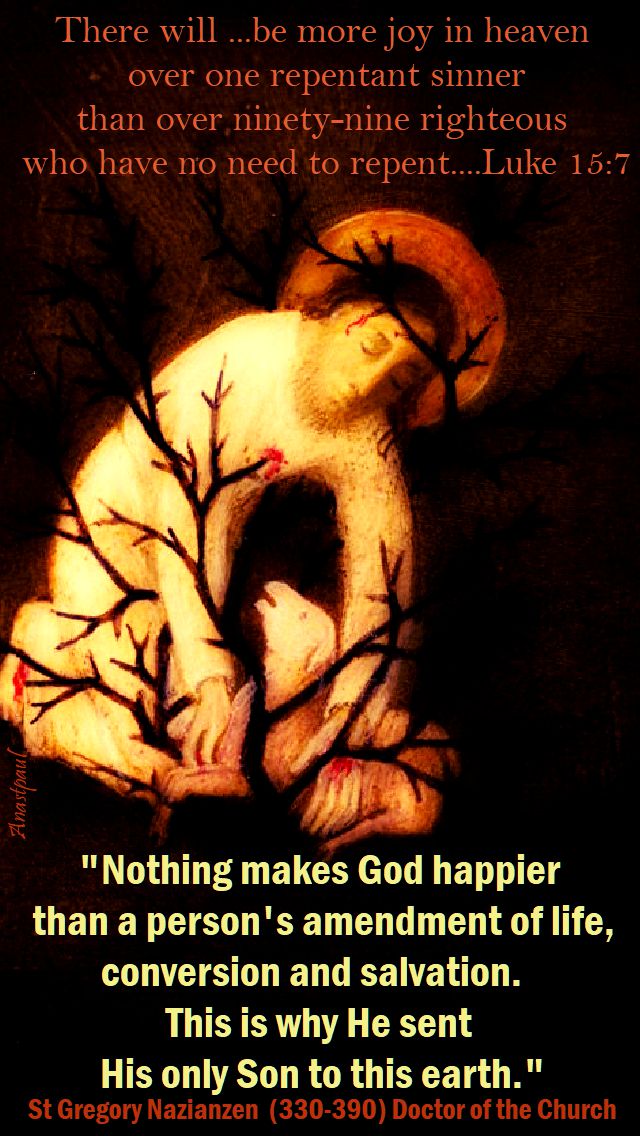
There will …be more joy in heaven over one repentant sinner than over ninety-nine righteous who have no need to repent.…Luke 15:7
REFLECTION – “Nothing makes God happier than a person’s amendment of life,
conversion and salvation.
This is why He sent His only Son to this earth.”…St Gregory Nazianzen (330-390) Doctor of the Church
PRAYER – Holy God, help me to amend my life constantly and be sincerely converted to You. Let me seek Your interests rather than my own and be ever more closely united with You.
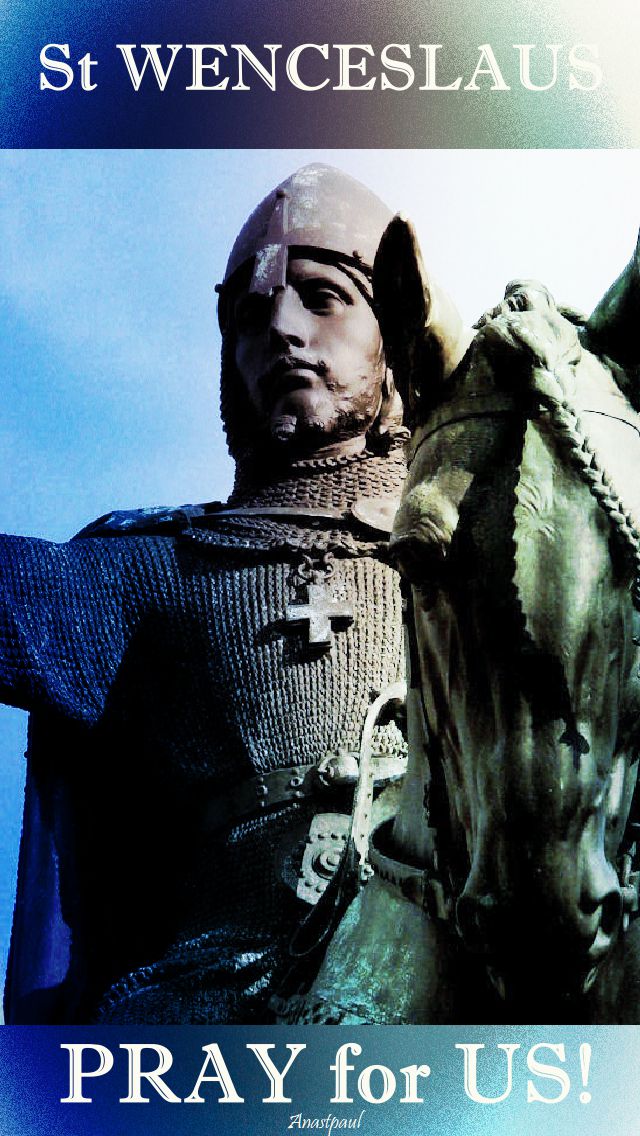
St Wenceslaus, who was assassinated by his own brother but who, by his holiness opened his brother’s eyes to repentance, please pray for us, that we may always seek the forgiveness of God. Amen
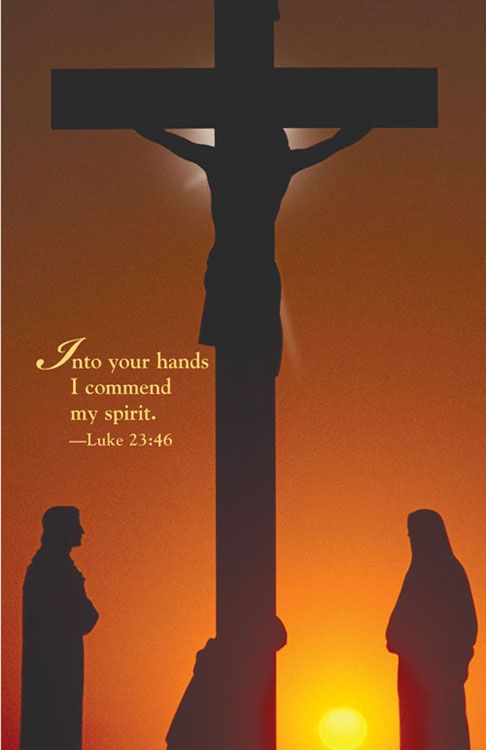
Father, into your hands I commend my spirit…………….Luke 23:46
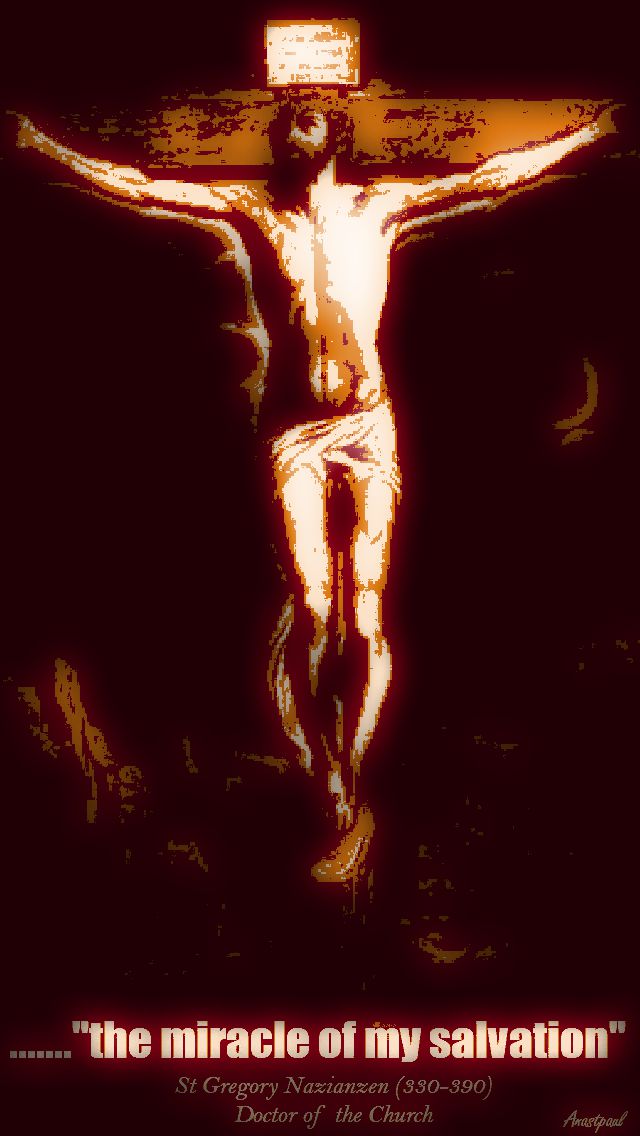
REFLECTION – A Few Drops of Blood Renew the Whole World!
Many indeed are the wondrous happenings of that time: God hanging from a cross, the sun made dark and again flaming out; for it was fitting that creation should mourn with its creator. The temple veil rent, blood and water flowing from His side: the one as from a man, the other as from what was above man; the earth shaken, the rocks shattered because of the rock; the dead risen to bear witness to the final and universal resurrection of the dead.
The happenings at the sepulchre and after the sepulchre, who can fittingly recount them? Yet no one of them can be compared to the miracle of my salvation. A few drops of blood renew the whole world and do for all men what the rennet does for the milk: joining us and binding us together………..St Gregory Nazianzen – Doctor of the Church
PRAYER – O God, who by the Passion of Christ your Son, our Lord, abolished the death inherited from ancient sin by every succeeding generation, grant that just as, being conformed to him, we have borne by the law of nature the image of the man on earth, so by the sanctification of grace we may bear the image of the Man of heaven. Through Christ our Lord. Amen






You must be logged in to post a comment.