Posted in EMBER DAYS, MARIAN TITLES, QUOTES on FASTING, SAINT of the DAY, Uncategorized

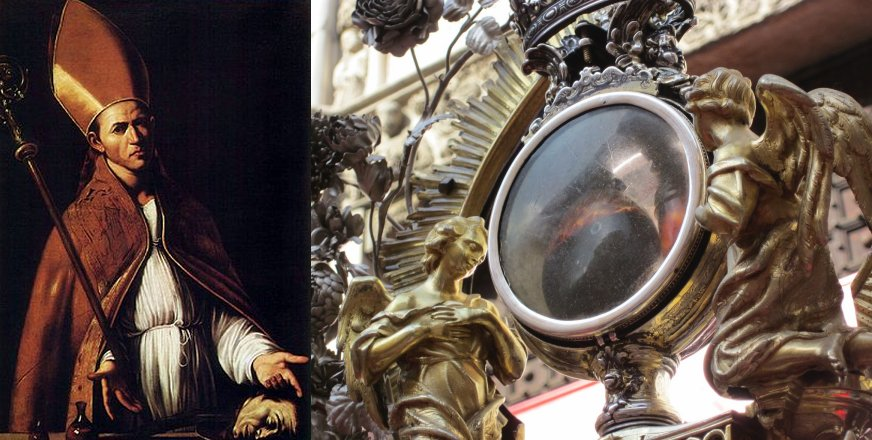
Ember Friday, Notre-Dame de la Salette / Our Lady of La Salette), France (1846), St Januarius of Naples (Died c 304) and all the Saints for 19 September

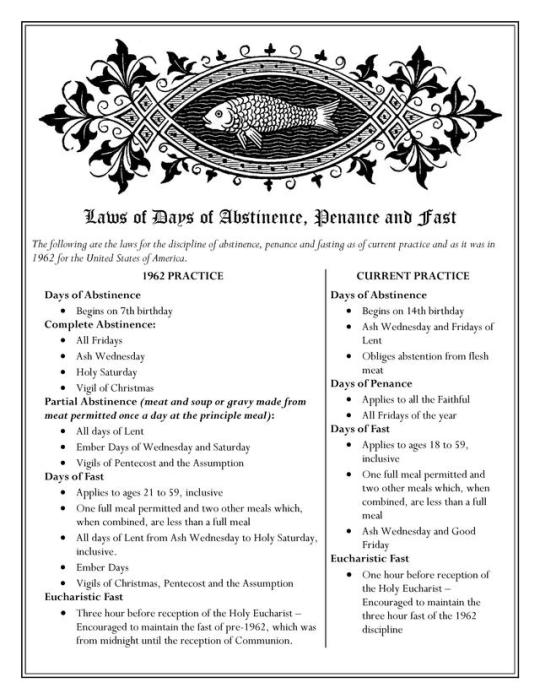
EMBER FRIDAY: FAST & ABSTINENCE See LAWS governing Days of Abstinence, Penance and Fast showing Pre and post-VaticanII https://anastpaul.com/2020/12/16/today-is-an-ember-day-did-you-remember/
https://youtu.be/CRWNXNhs66k

Notre-Dame de la Salette / Our Lady of La Salette), La Salette-Fallavaux, Isère, Rhône-Alpes, France (1846) 19 September:
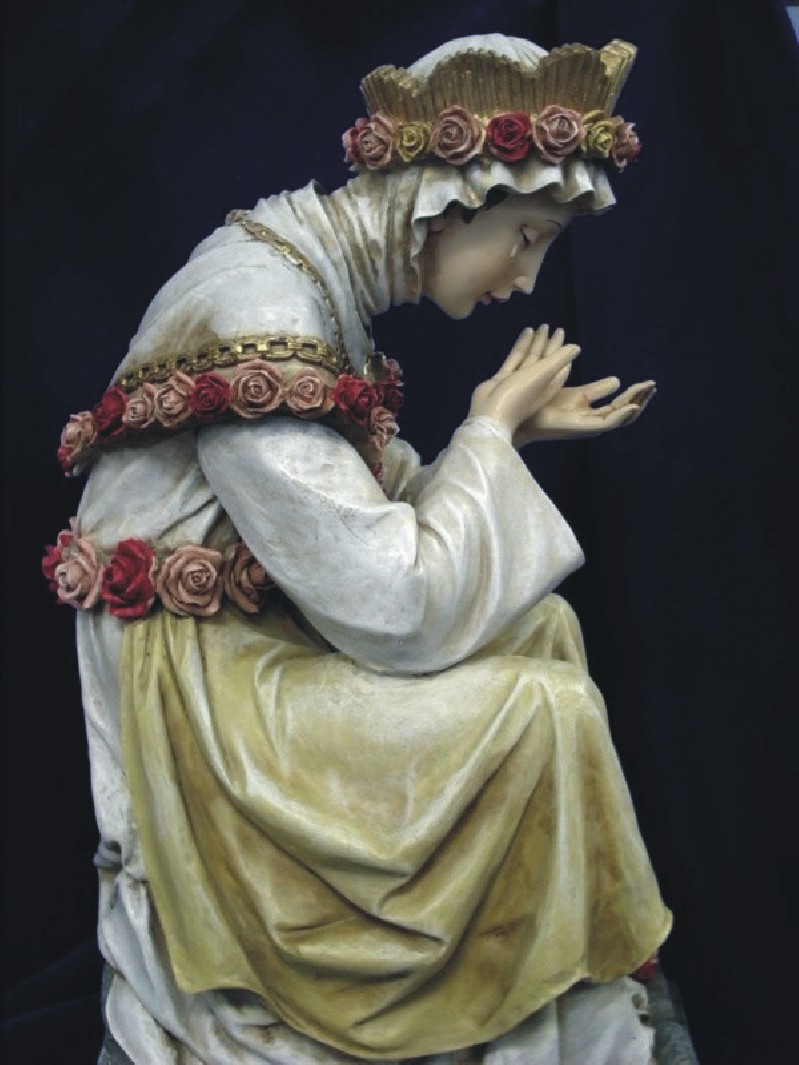
Our Lady appeared to two small children, Melanie Mathieu and Maximin Giraud, on the mountain of La Salette in the French Alps. She was crying and around her neck was a crucifix, with a hammer and pincers on either side – 19 September 1846. Approved by the Diocesan Bishop in 1851.
Read the story here:

https://anastpaul.wordpress.com/2017/09/19/feast-of-our-lady-of-la-salette-19-september/

St Januarius of Naples (Died c 304) Confessor, Bishop, Martyr of the Liquefying Blood
His Life and Death:

https://anastpaul.wordpress.com/2017/09/19/saint-of-the-day-19-september-st-januarius

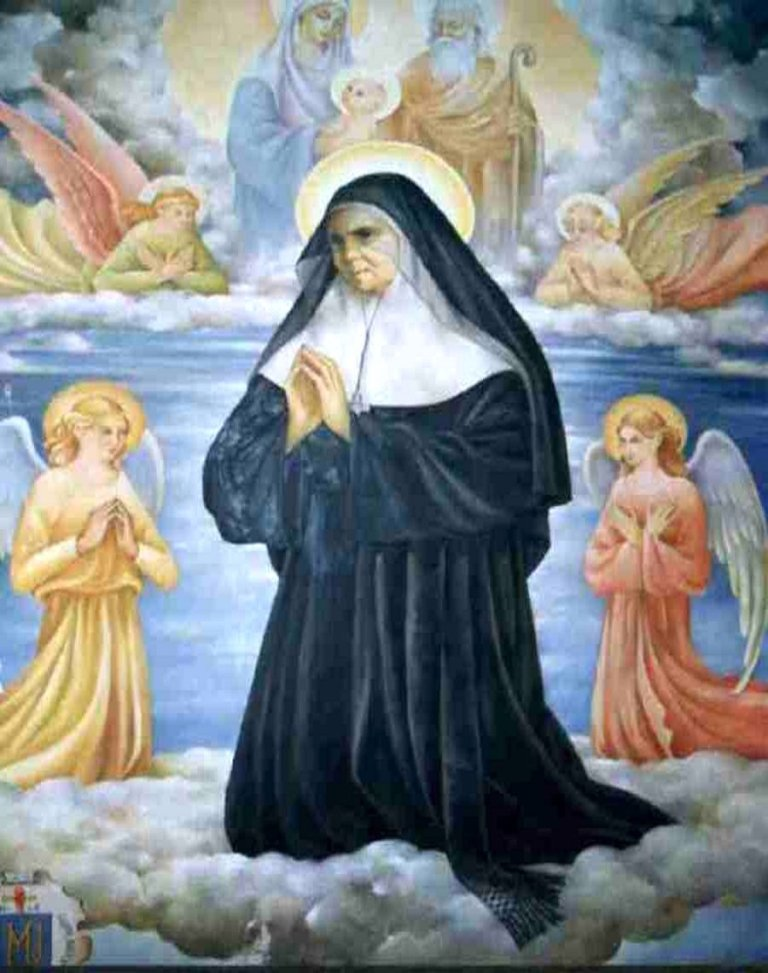
St Emilie de Rodat (1787–1852) Nun and Founder of the Sisters of the Holy Family, Mystic. Venerable Pope Pius XII Beatified her on 9 June 1940 and Canonised her on 23 April 1950.
Biography:

https://anastpaul.com/2019/09/19/saint-of-the-day-19-september-saint-emily-de-rodat-1787-1852/

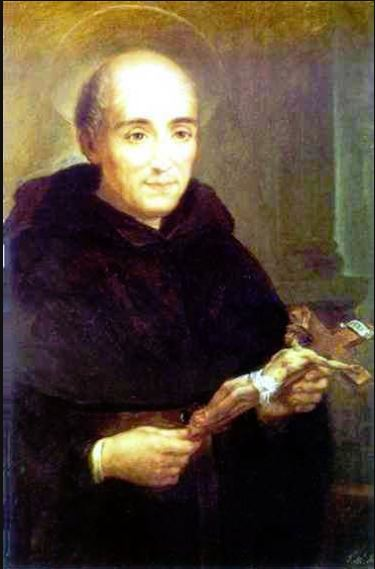
St Alonso de Orozco Mena OSA (1500 – 1591) Augustinian Priest, Preacher, Writer, Apostle of Charity, Spiritual Director, Marian Devotee, Ascetic.
His Loving Life:

https://anastpaul.com/2018/09/19/saint-of-the-day-19-september-st-alonsus-de-orozco-mena-o-s-a-1500-1591/

St Arnulph of Gap
Bl Carolus Hyon Song-Mun
St Constantia of Nocera
St Desiderius of Pozzuoli
St Eustochius (Died c461) Bishop of Tours
St Felix of Nocera
St Festus of Pozzuoli

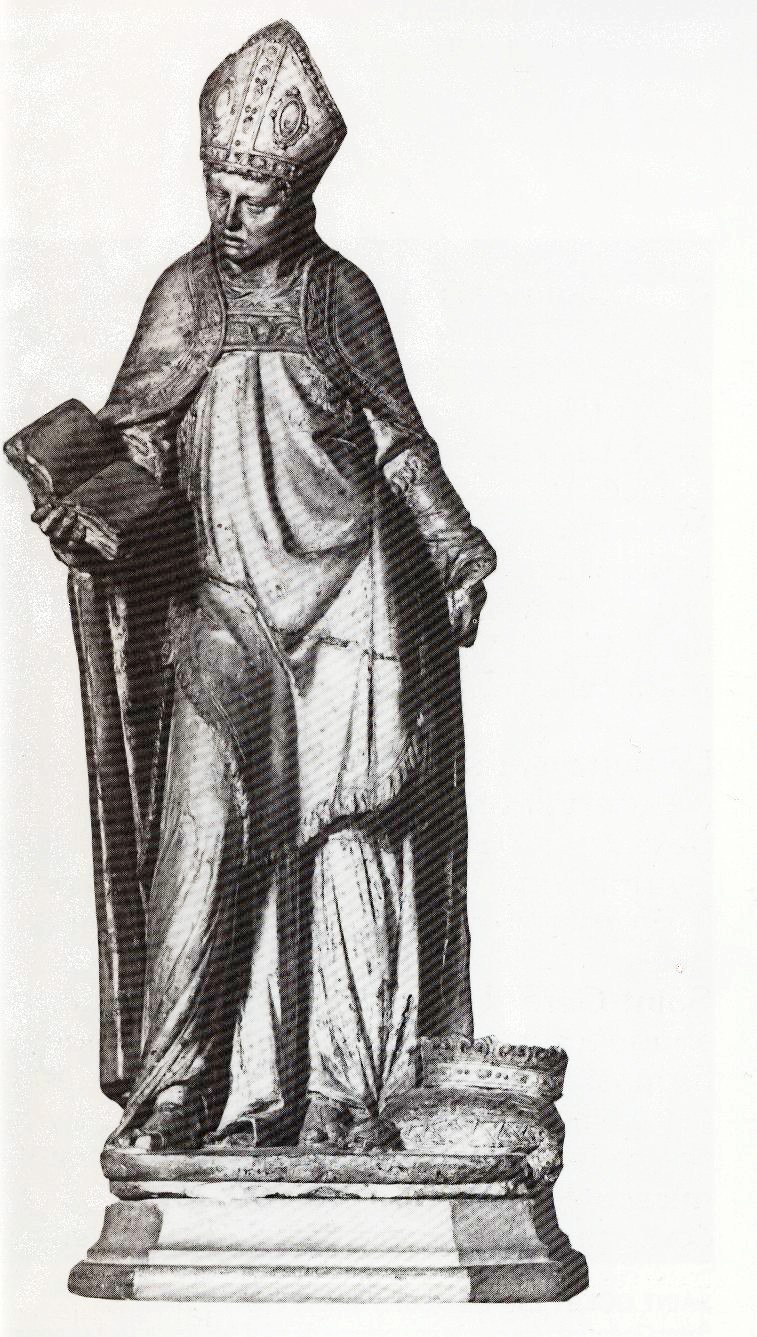
St Goeric (c570-c643) Bishop  of Metz  Goeric is listed as the 30th Bishop of Metz, having governed that See from 625 to 642 or 643.
The Roman Martyrology rads: “In Metz in Austrasia, still in the territory of today’s France, Saint Goeríco or Abo, Bishop, who succeeded Saint Arnulf, whose body was transported with veneration to this City.
His Life of Service:

https://anastpaul.com/2023/09/19/saint-of-the-day-19-september-saint-goeric-of-metz-c570-c643-bishop/

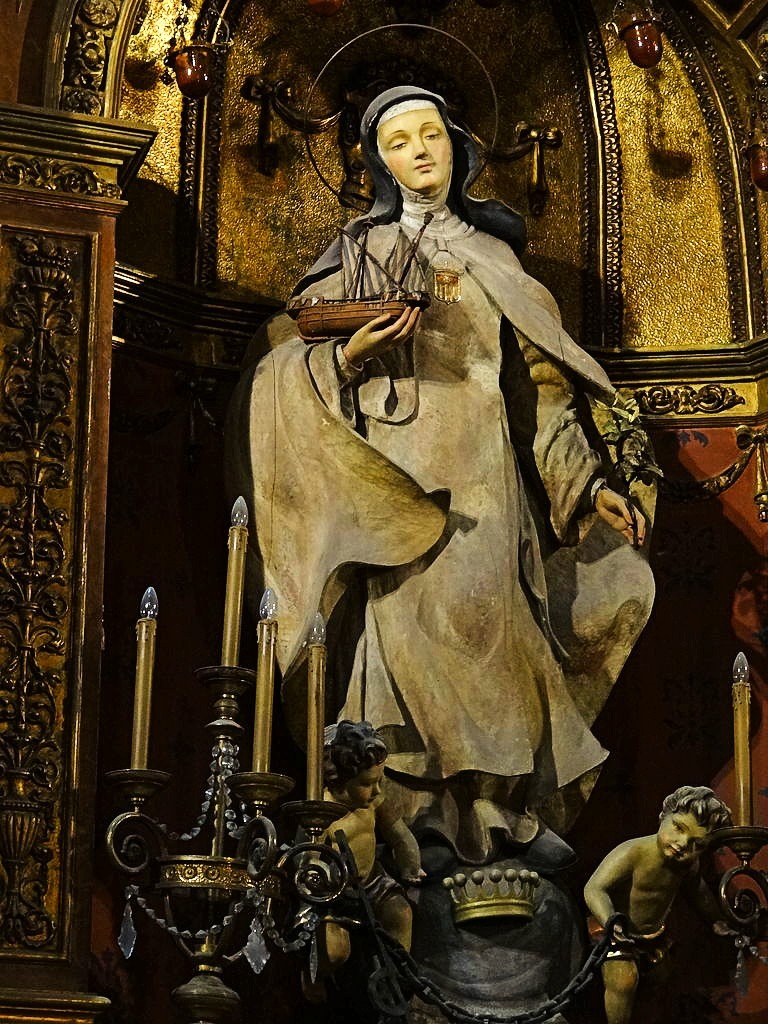
St Maria de Cervellón OdeM (1230 – 1290) Virgin, Catalan Superior of Second Order of the Mercedarians in her region. Mystic, graced with the gift of bilocation, Apostle of the poor, the abandoned, the needy. She was the first woman to wear the Habit of the ‘ Order of the Blessed Virgin Mary of Ransom. She is considered the Founder of the Mercedary Nuns.
Her entry in the Roman Martyrology states: “At Barcelona in Spain, blessed Maria de Cervellione, Virgin of the Order of Our Lady of Ransom. She is commonly called Maria of Help on account of the prompt assistance she renders to those who invoke her.
Patronages – Mercadarian Nuns and Sisters, Navigators, against shipwreck, Spanish sailors, of the abandoned.
On 13 February1692, Pope Innocent XII gave a favourable judgement and confirmed her immemorial cult;and she was introduced into the Roman Martyrology as a Saint on 8 November 1729. Her body is Incorrupt.
Her Holy Life:

https://anastpaul.com/2021/09/19/saint-of-the-day-19-september-st-maria-de-cervellon-odem-1230-1290/
Please watch this video if you are able to spare the time. It is absolutely beautiful.

St Pomposa
St Sequanus
St Sosius of Puzzuoli

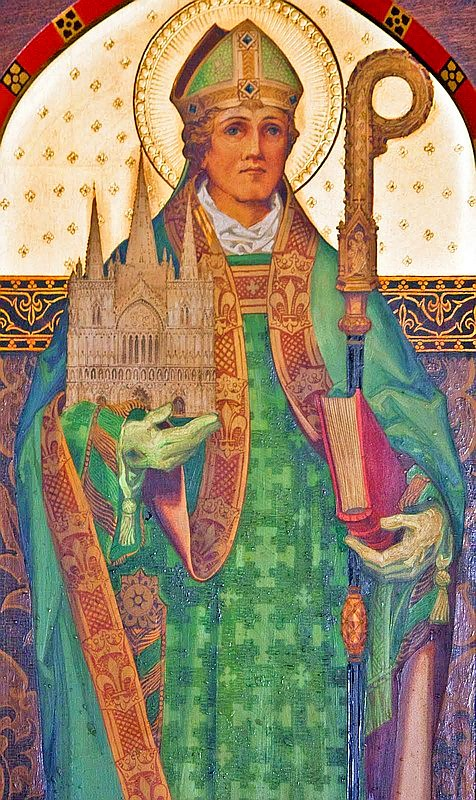
St Theodore of Canterbury (c602-690) the 7th Archbishop of Canterbury and the first Archbishop to rule the whole English Church. His body is Incorrupt.
The Roman Martyrology reads today: “At Canterbury, the holy Bishop, Theodore, who was sent to England by Pope Vitalian and was renowned for learning and holiness.”
Wonderful St Theodore:

https://anastpaul.com/2024/09/19/saint-of-the-day-19-september-st-theodore-of-canterbury-c602-690-the-7th-archbishop-of-canterbury/

St Trophimus of Synnada

Martyrs of Antioch – 3 Saints: Christians imprisoned, tortured and executed in various ways in the persecutions of Emperor Probus; some names have come down to us – Dorymedon, Sabbatius and Trophimus. c 277 at Antioch (in modern Turkey).

Martyrs of Phunon – (4 aints): Four bishops in Egypt who were sentenced to forced labour in a rock quarry and martyred in the persecution of Diocletian. Noted for celebrating Mass in prison. – Elias, Nilus, Patermuzio and Peleus. They were burned to death in 310 at Phunon, near Petra in Palestine.

Posted in INCORRUPTIBLES, MARIAN TITLES, SAINT of the DAY

Notre-Dame de la Salette / Our Lady of La Salette), France (1846), St Januarius of Naples (Died c 304) and all the Saints for 19 September

Notre-Dame de la Salette / Our Lady of La Salette), La Salette-Fallavaux, Isère, Rhône-Alpes, France (1846) 19 September:
Our Lady appeared to two small children, Melanie Mathieu and Maximin Giraud, on the mountain of La Salette in the French Alps. She was crying and around her neck was a crucifix, with a hammer and pincers on either side – 19 September 1846. Approved by the Diocesan Bishop in 1851.
Read the story here:

https://anastpaul.wordpress.com/2017/09/19/feast-of-our-lady-of-la-salette-19-september/

St Januarius of Naples (Died c 304) Confessor, Bishop, Martyr
About St Januarius here:

https://anastpaul.wordpress.com/2017/09/19/saint-of-the-day-19-september-st-januarius

St Emilie de Rodat (1787–1852) Nun and Founder of the Sisters of the Holy Family, Mystic. Venerable Pope Pius XII Beatified her on 9 June 1940 and Canonised her on 23 April 1950.
Biography:

https://anastpaul.com/2019/09/19/saint-of-the-day-19-september-saint-emily-de-rodat-1787-1852/

St Alonso de Orozco Mena OSA (1500 – 1591) Augustinian Priest, Preacher, Writer, Apostle of Charity, Spiritual Director, Marian Devotee, Ascetic.
Biography:

https://anastpaul.com/2018/09/19/saint-of-the-day-19-september-st-alonsus-de-orozco-mena-o-s-a-1500-1591/

St Arnulph of Gap
Bl Carolus Hyon Song-Mun
St Constantia of Nocera
St Desiderius of Pozzuoli
St Eustochius of Tours
St Felix of Nocera
St Festus of Pozzuoli

St Goeric of Metz (c570-c643) Bishop Goeric is listed as the 30th Bishop of Metz, having governed that See from 625 to 642 or 643.
The Roman Martyrology rads: “In Metz in Austrasia, still in the territory of today’s France, Saint Goeríco or Abo, Bishop, who succeeded Saint Arnulf, whose body was transported with veneration to this City.
His Life:

https://anastpaul.com/2023/09/19/saint-of-the-day-19-september-saint-goeric-of-metz-c570-c643-bishop/

St Maria de Cervellón OdeM (1230 – 1290) Virgin, Catalan Superior of Second Order of the Mercedarians in her region. Mystic, graced with the gift of bilocation, Apostle of the poor, the abandoned, the needy. She was the first woman to wear the Habit of the ‘ Order of the Blessed Virgin Mary of Ransom. She is considered the Founder of the Mercedary Nuns.
Her entry in the Roman Martyrology states: “At Barcelona in Spain, blessed Maria de Cervellione, Virgin of the Order of Our Lady of Ransom. She is commonly called Maria of Help on account of the prompt assistance she renders to those who invoke her.
Patronages – Mercadarian Nuns and Sisters, Navigators, against shipwreck, Spanish sailors, of the abandoned.
On 13 February1692, Pope Innocent XII gave a favourable judgement and confirmed her immemorial cult;and she was introduced into the Roman Martyrology as a Saint on 8 November 1729. Her body is Incorrupt.
Her Holy Life:

https://anastpaul.com/2021/09/19/saint-of-the-day-19-september-st-maria-de-cervellon-odem-1230-1290/
Please watch this video if you are able to spare the time. It is absolutely beautiful.

St Pomposa
St Sequanus
St Sosius of Puzzuoli
St Theodore of Canterbury (c602-690) the 7th Archbishop of Canterbury
St Trophimus of Synnada

Martyrs of Antioch – 3 Saints: Christians imprisoned, tortured and executed in various ways in the persecutions of Emperor Probus; some names have come down to us – Dorymedon, Sabbatius and Trophimus. c 277 at Antioch (in modern Turkey).

Martyrs of Phunon – (4 aints): Four bishops in Egypt who were sentenced to forced labour in a rock quarry and martyred in the persecution of Diocletian. Noted for celebrating Mass in prison. – Elias, Nilus, Patermuzio and Peleus. They were burned to death in 310 at Phunon, near Petra in Palestine.

Posted in MIRACLES, NAPLES, SAINT of the DAY

Saint of the Day – 25 August – St Patricia of Naples (7th Century) Virgin of the miraculous Liquifying Blood

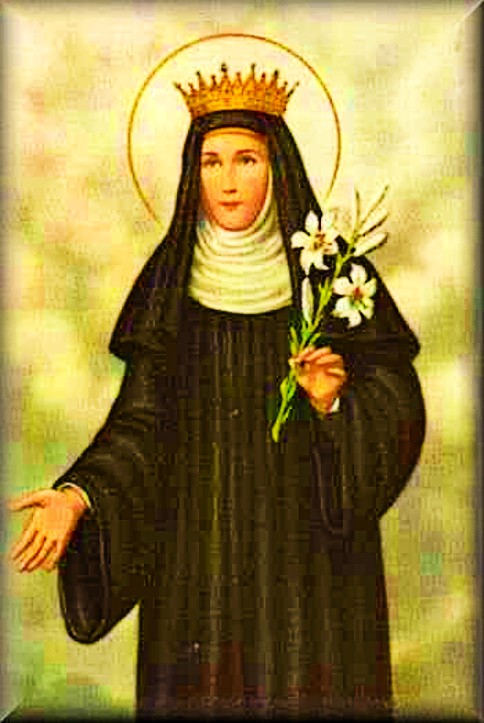
Saint of the Day – 25 August – St Patricia of Naples (7th Century) Virgin, Consecrated as a Religious Sister, Pilgrim. Born in Constantinople (modern Istanbul, Turkey) and died in c665 at Naples, Italy of natural causes. Patronage – of Naples, one of a long list of Patron Saints of Naples. St Patricia is less well known than St Januarius, also a Patron Saint of the City, who attracts crowds to Naples Cathedral three times a year to witness the miracle of a small sample of his blood turning to liquid but St Patricia’s blood liquifies every Tuesday, on her Feast Day and at many other times. Also known as –
Patricia of Constantinople, Patritia of… Patrizia of…

Saint Patricia, the niece of Emperor Constantine, was born in Constantinople in the year 30 of the Christian era. Brought up in the Imperial Court and trained in the Christian religion by a pious lady named Aglaia (now Blessed), she took the vow of virginity at an early age and, to remain faithful to her vow, she fled from her paternal home. With the faithful Aglaia as a companion, she sailed to Rome, where Pope Liberius bestowed upon her the veil of Christ’s Bride.

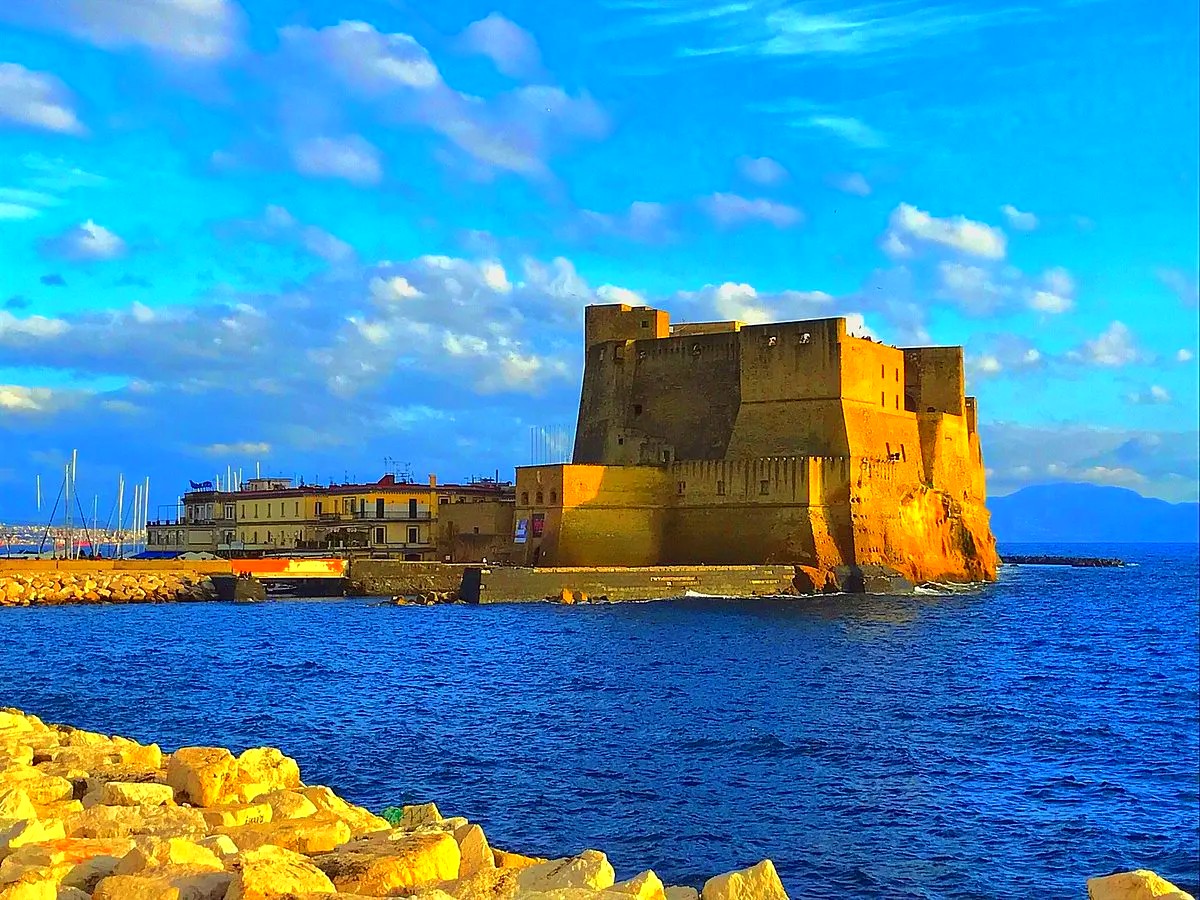
At the death of her father, she returned to Constantinople where she renounced all her worldly possessions, distributing her wealth to the poor. Patricia then embarked with her companion, on a ship bound for the Holy Land in order to visit the places sanctified by Our Lord. During the voyage, they were overtaken by a violent storm which carried the vessel in the opposite direction, as far away as Naples, Italy. There, they landed and took refuge on a rock near the bay, afterward called Castel del’ovo. After a few months of penitential life, she fell ill and died a saintly death at the age of 21.

The Castel del’ovo, legendary site of St Patricia’s shipwreck.

She was buried at the Church dedicated to the Martyr Saints Nicandro and Marciano, thereby remaining with her spiritual daughters, the Patrician Sisters who had formed around her. In 1864 the Sisters brought her remains to the Monastery of St Gregory theArmenian when their convent was suppressed.

Inside the Church of St Gregory the Armenian

St Patricia is today venerated by numerous devout pilgrims who reverently kneel before those sacred remains and frequently witness a wonderful miracle – the liquefying of her blood which flowed from her mouth almost 600 hundred years after her death. It is believed that, in 1214, one of her teeth had been pulled by a zealous knight and blood flowed from the empty socket.

The miracle has been repeated for 12 Centuries. Not only every year on her Feast day, 25 August, every Tuesday but frequently in the presence of pious pilgrims who come to pray and beg St Patricia’s intercession..

Ecclesiastical authorities and scientists have investigated the phenomenon more than once and have come to the conclusion that the liquefaction cannot be explained by science and, therefore, is a real miracle.

In Naples, every Tuesday is dedicated to St Patricia. The Sister Adorers of the Blessed Sacrament of her Order are in charge of her Shrine.

The Shrin of St Patricia inside her Chapel in the Church of St Gregory the Armenian in Naples
Posted in MARIAN TITLES, SAINT of the DAY

Notre-Dame de la Salette / Our Lady of La Salette), France (1846), St Januarius of Naples (Died c 304), St Emilie de Rodat, St Maria de Cervellón OdeM (1230 – 1290) and all the Saints for 19 September

St Pomposa
St Sequanus
St Sosius of Puzzuoli
St Theodore of Canterbury
St Trophimus of Synnada

Posted in MARIAN TITLES, SAINT of the DAY

Notre-Dame de la Salette / Our Lady of La Salette), La Salette-Fallavaux, Isère, Rhône-Alpes, France(1846) and Memorials of the Saints – 19 September

Seventeenth Sunday after Pentecost
Twenty Fifth Sunday in Ordinary Time

Notre-Dame de la Salette / Our Lady of La Salette), La Salette-Fallavaux, Isère, Rhône-Alpes, France
(1846) 19 September:
Mary appeared to two small children, Melanie Mathieu and Maximin Giraud, on the mountain of La Salette in the French Alps. She was crying and around her neck was a crucifix, with a hammer and pincers on either side – 19 September 1846. Approved by the Diocesan Bishop in 1851.
Read the story here:

https://anastpaul.wordpress.com/2017/09/19/feast-of-our-lady-of-la-salette-19-september/

St Januarius of Naples Martyr (Died c 304) (Optional Memorial)
About St Januarius here:

https://anastpaul.wordpress.com/2017/09/19/saint-of-the-day-19-september-st-januarius

St Alonso de Orozco Mena OSA (1500 – 1591) Augustinian Priest, Preacher, Writer, Apostle of Charity, Spiritual Director, Marian Devotee, Ascetic.
Biography:

https://anastpaul.com/2018/09/19/saint-of-the-day-19-september-st-alonsus-de-orozco-mena-o-s-a-1500-1591/
St Arnulph of Gap
St Carolus Hyon Song-Mun
St Constantia of Nocera
St Desiderius of Pozzuoli

St Emilie de Rodat (1787–1852) Nun and Founder of the Sisters of the Holy Family, Mystic. Venerable Pope Pius XII Beatified her on 9 June 1940 and Canonised her on 23 April 1950.
Biography:

https://anastpaul.com/2019/09/19/saint-of-the-day-19-september-saint-emily-de-rodat-1787-1852/

St Eustochius of Tours
St Felix of Nocera
St Festus of Pozzuoli
St Goeric of Metz
St Maria de Cervellón OdeM (1230 – 1290) Virgin, Second Order of the Mercedarians.
Please watch this video if you are able to spare the time. It is absolutely beautiful.

St Pomposa
St Sequanus
St Sosius of Puzzuoli
St Theodore of Canterbury
St Trophimus of Synnada

Martyrs of Antioch – (3 saints): Christians imprisoned, tortured and executed in various ways in the persecutions of Emperor Probus; some names have come down to us – Dorymedon, Sabbatius and Trophimus. c 277 at Antioch (in modern Turkey).

Martyrs of Phunon – (4 saints): Four bishops in Egypt who were sentenced to forced labour in a rock quarry and martyred in the persecution of Diocletian. Noted for celebrating Mass in prison. – Elias, Nilus, Patermuzio and Peleus. They were burned to death in 310 at Phunon, near Petra in Palestine.

Martyred in the Spanish Civil War:
• Blessed Consuelo Aguiar-Mella Díaz
• Blessed Herman José Fernández Sáenz
• Blessed Juan Pérez Rodrigo
• Blessed Lucas Martín Puente
• Blessed María de La Encarnación de La Yglesia de Varo
• Blessed María Dolores Aguiar-Mella Díaz
• Blessed Miguel Faúndez López
• Blessed Sebastián Obeso Alario

Posted in SAINT of the DAY

Memorials of the Saints – 19 September

St Januarius of Naples Martyr (Died c 304) (Optional Memorial)
About St Januarius here:
https://anastpaul.wordpress.com/2017/09/19/saint-of-the-day-19-september-st-januarius

Our Lady of La Salette (1846) :
Mary appeared to two small children, Melanie Mathieu and Maximin Giraud, on the mountain of La Salette in the French Alps. She was crying and around her neck was a crucifix, with a hammer and pincers on either side – 19 September 1846. Approved by the diocesan bishop in 1851.

Read the story here:
https://anastpaul.wordpress.com/2017/09/19/feast-of-our-lady-of-la-salette-19-september/
St Alonso de Orozco Mena OSA (1500 – 1591)
Biography:

Saint of the Day – 19 September – St Alonsus de Orozco Mena O.S.A. (1500 – 1591)


St Arnulph of Gap
St Carolus Hyon Song-Mun
St Constantia of Nocera
St Desiderius of Pozzuoli
St Emilie de Rodat (1787–1852)
St Eustochius of Tours
St Felix of Nocera
St Festus of Pozzuoli
St Goeric of Metz
Bl Mary de Cerevellon
St Pomposa
St Sequanus
St Sosius of Puzzuoli
St Theodore of Canterbury
St Trophimus of Synnada

Martyrs of Antioch – (3 saints): Christians imprisoned, tortured and executed in various ways in the persecutions of Emperor Probus; some names have come down to us – Dorymedon, Sabbatius and Trophimus. c 277 at Antioch (in modern Turkey).

Martyrs of Phunon – (4 saints): Four bishops in Egypt who were sentenced to forced labour in a rock quarry and martyred in the persecution of Diocletian. Noted for celebrating Mass in prison. – Elias, Nilus, Patermuzio and Peleus. They were burned to death in 310 at Phunon, near Petra in Palestine.


Martyred in the Spanish Civil War:
• Blessed Consuelo Aguiar-Mella Díaz
• Blessed Herman José Fernández Sáenz
• Blessed Juan Pérez Rodrigo
• Blessed Lucas Martín Puente
• Blessed María de La Encarnación de La Yglesia de Varo
• Blessed María Dolores Aguiar-Mella Díaz
• Blessed Miguel Faúndez López
• Blessed Sebastián Obeso Alario

Posted in DOCTORS of the Church, FATHERS of the Church, MORNING Prayers, QUOTES of the SAINTS, SAINT of the DAY, Uncategorized

Thought for the Day – 19 September – The Memorial of St Januarius – Martyr (Died c 304)

Thought for the Day – 19 September – The Memorial of St Januarius – Martyr (Died c 304)

Many centuries ago, St Januarius died for the Faith in the persecution of Diocletian and, to this day, God confirms the faith of his Church and works a continual miracle, through the blood which Januarius shed for Him.

Little did the heathen Governor think that he was the instrument, in God’s Hand, of ushering in the long succession of miracles which attest to the faith of St Januarius.

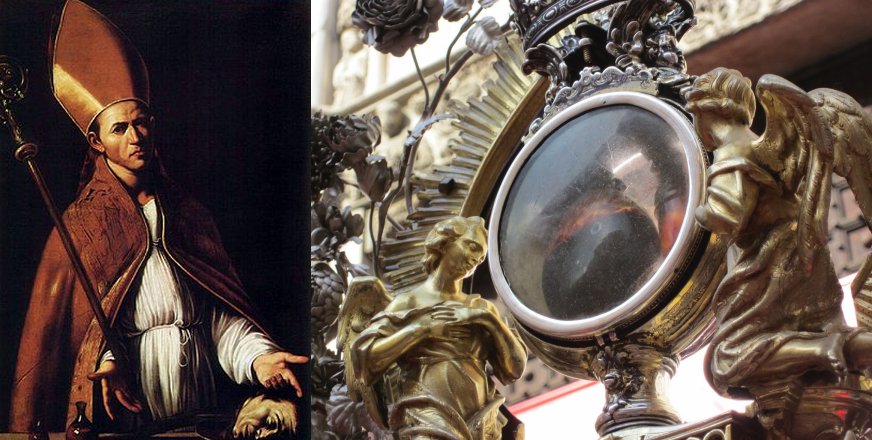
The Relics of St Januarius rest in the Cathedral of Naples and it is there that the liquefying of his blood occurs.   The blood is congealed in two glass vials but when it is brought near the Martyr’s head it melts and flows like the blood of a living man.

St Alphonsus Liguori wrote regarding St Januarius

“The Neapolitans honour this Saint as the principal Patron of their City and nation and the Lord Himself has continued to honour him, by allowing many miracles to be wrought through his intercession, particularly when the frightful eruptions of Mount Vesuvius, have threatened the City of Naples with utter destruction.   

While the Relics of St Januarius were being brought in procession towards this terrific volcano, the torrents of lava and liquid fire which it emitted have ceased, or turned their course from the City. But, the most stupendous miracle and that which is greatly celebrated in the Church, is the liquefying and effervescence, of this blessed Martyr’s blood whenever the Relic Vials are brought into the sight of his head.   

This miracle is renewed many times in the year, in the presence of all who desire to witness it;  yet, some heretics have endeavoured to throw a doubt upon its authenticity by frivolous and incoherent explanations but, no-one can deny the effect to be miraculous, unless he be prepared to question the evidence of his senses!”

Tertullian said, “The blood of the Martyrs is the seed of the Church.”   Sometimes, that blood is bubbling!

Posted in MORNING Prayers, SAINT of the DAY

Thought for the Day – 19 September – The Memorial of St Januarius

Thought for the Day – 19 September – The Memorial of St Januarius

Jesus said that we would know a tree by its fruits.   When it comes to miraculous stories like the one of Januarius’ blood, it’s best to look at the lives of the faithful.  Does this strange phenomenon bring people to deeper conversion?  Are they more in love with Jesus and his Church because of it?   After viewing the ancient bubbling blood, are the witnesses more charitable, just, prudent, chaste, kind and merciful?   Are those witnesses inspired to become witnesses – literally, martyrs – themselves?

For over 400 years folks have found a deeper faith in Christ and His Church because of the blood of Januarius.   Some have even turned to Jesus for the first time because of it. Repentance, conversion and discipleship are, no doubt, good fruits.

Tertullian said, “The blood of the martyrs is the seed of the church.” Sometimes, that blood is bubbling.

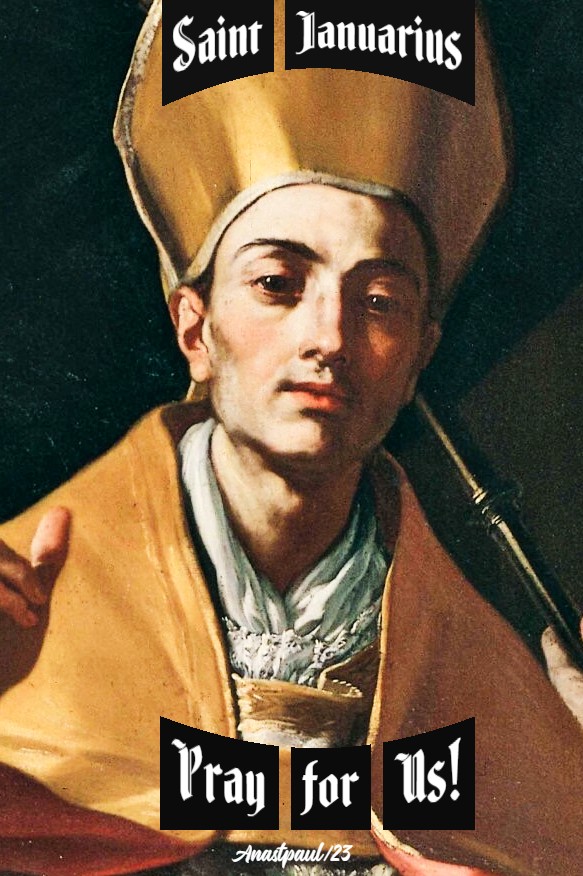
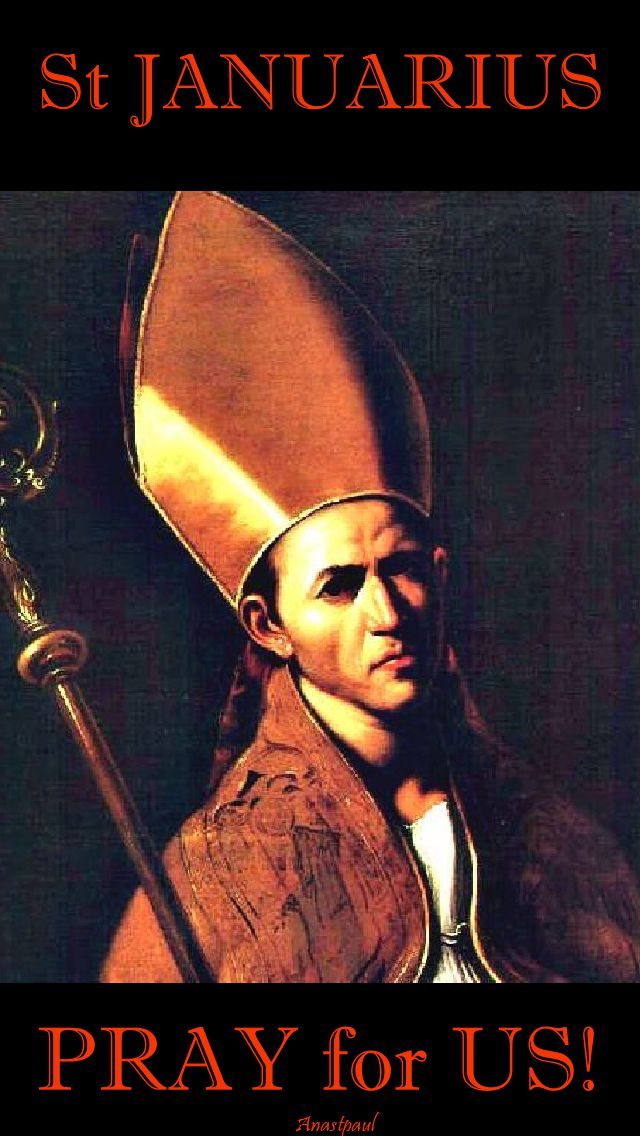
St Januarius, Pray for us!

st januariusopray for us - 19 SEPT 2017

Posted in DOCTORS of the Church, MIRACLES, QUOTES of the SAINTS, SAINT of the DAY

Saint of the Day – 19 September – St Januarius (Died c 304)

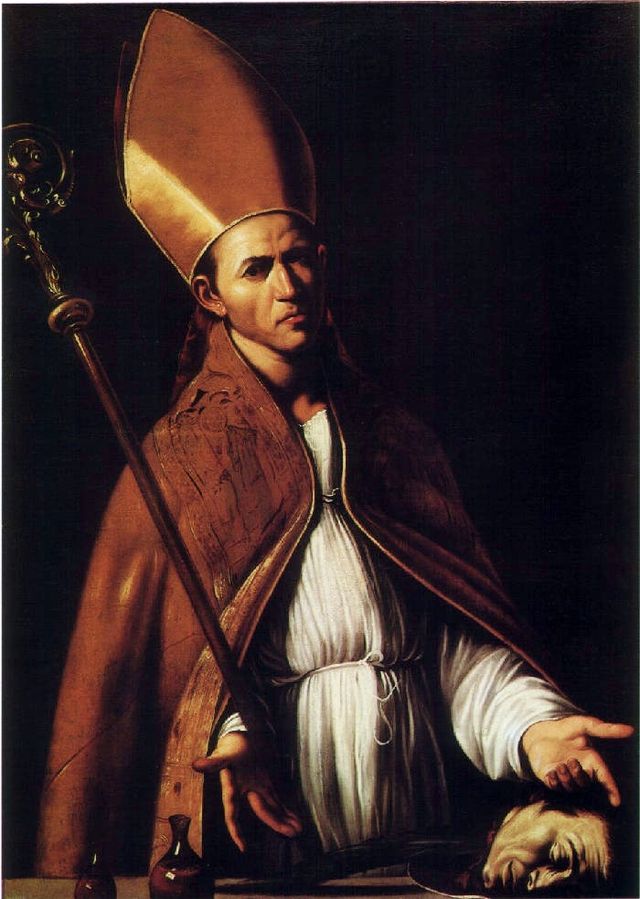
Saint of the Day – 19 September – St Januarius (Died c 304) (San Gennaro of Naples) – Martyr, Bishop (Fourth century –  Martyred c 304 at Naples, Italy or Pozzuoli, Italy ).   Patronages – against volcanic eruptions• blood banks• Benevento, Italy, diocese of• Naples, Italy, archdiocese of• Naples, Italy, city of.

HEADER stjanuariusblood

Saint Januarius, was born in Benevento to a rich patrician family  At a young age of 15—based upon his piety and faithfulness– he became the local Priest of his Parish in Benevento, which at the time was relatively pagan.   When Januarius was 20, he was elevated to Bishop of Naples.   At the onset of the persecution of Christians by Emperors Diocletian and Maximian, he worked tirelessly to hide and protect his fellow Christians, succeeding for approximately 1 ½ years.

However, he was eventually arrested, taken to Nola and brought before Timotheus, governor of Campania, on account of his profession of the Christian religion.   Upon refusing to recant his faith, and his constant assertion of the truth of the Gospel, Januarius and his companions were sentenced to be cast into the fiery furnace.   The flames, however, caused him no harm and the following day, he was led into the coliseum to be mauled by wild animals.  The beasts, however, laid themselves down in tame submission at his feet.

Governor Timotheus, enraged and again pronouncing sentence of death, was struck with blindness at his sentencing but Januarius healed him—a miracle which led to the miraculous conversion of 5,000 present.   The ungrateful judge, further inflamed with anger, ordered the saintly bishop beheaded, which occurred immediately.   St Januarius’ body was removed by faithful Christians, placed in the Cathedral of Naples and is said to have miraculously protected Naples from both the plague and the dangerous eruptions of nearby Mount Vesuvius.

You can read the full story here:  https://sourcebooks.fordham.edu/basis/januarius.asp – ACTS OF THE HIEROMARTYR JANUARIUS, BISHOP OF BENEVENTO

The Blood Miracle of Saint Januarius (Gennaro) -A miracle of the Church that is still occuring today

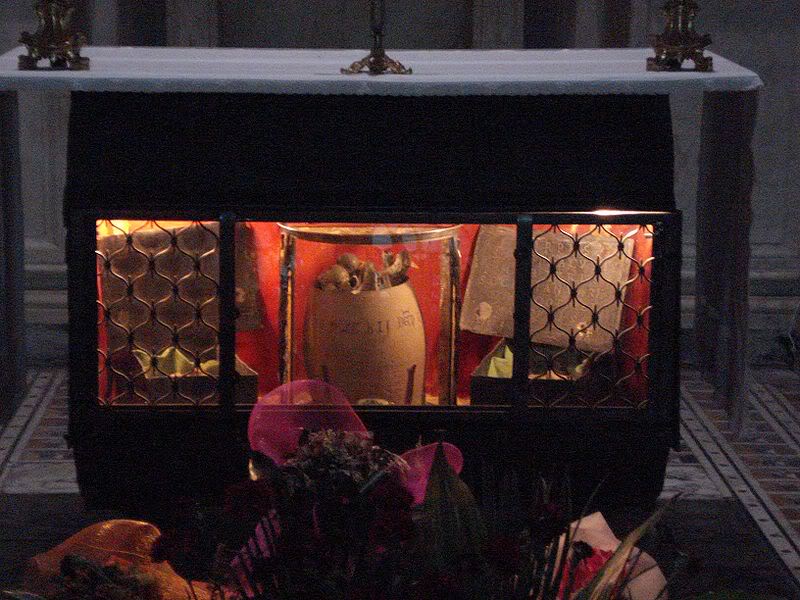
relics
Relics of St Januarius

The liquefaction (becoming liquid) of the blood of St Januarius is an extraordinary miracle of the Church that has been occurring up to 18 times each year for the past 600 years.  It is only one of a number of blood miracles that have taken place and in the case of St Januarius and others, are still taking place with blood that was collected soon after the death of certain martyrs.   There is a well-documented history of these samples of blood liquefying at various times of the year, especially on the Saints’ feast days.

This practice of gathering blood for relics, admittedly a somewhat surprising religious practice, nevertheless was a common practice beginning in the days of persecution when the early Christians soaked cloths in the blood shed by martyrs or, if possible, actually collected the liquid in flasks to keep as devotional items.   In the catacombs these flasks were buried with the dead, their discovery indicating that the person had died a martyr. Throughout the centuries, blood has been collected from holy persons recently deceased, especially martyrs for the faith, with the specimens being carefully kept with devotion and veneration.   These samples have been known to liquefy under various circumstances, at different seasons of the year, in various countries and in varied ways. Many samples still display wonderful reactions in our day, one of which, that of St Januarius we will here consider.

While it is scientifically known that blood once removed from the body soon coagulates and eventually spoils and since this natural reaction was common knowledge among the medical faculty of the Middle Ages, a claim made by them of remarkable liquefaction can hardly be ignored and would seem to indicate a transcendence of their experience.   And in our own day, the specimens that are still active are no less scientifically inexplicable than they were centuries ago, even amidst intense scientific investigation.

The best known and most intensely studied is the yearly blood miracle of St Januarius that occurs is Naples each year.  The recurring miracle of the liquefaction of his blood 18 times a year is often reported in the secular as well as the religious press and is the occasion of great gatherings in the Cathedral of Naples.   Here the people pray fervently while the resident cardinal, who usually presides over the ceremony, holds the vials of blood.   The miracle occurs when the bust reliquary containing the head of the saint is brought near.   When the liquefaction is accomplished in full view of the spectators, the cardinal announces, “The miracle has happened,” words that cause great rejoicing and the chanting of the Te Deum.

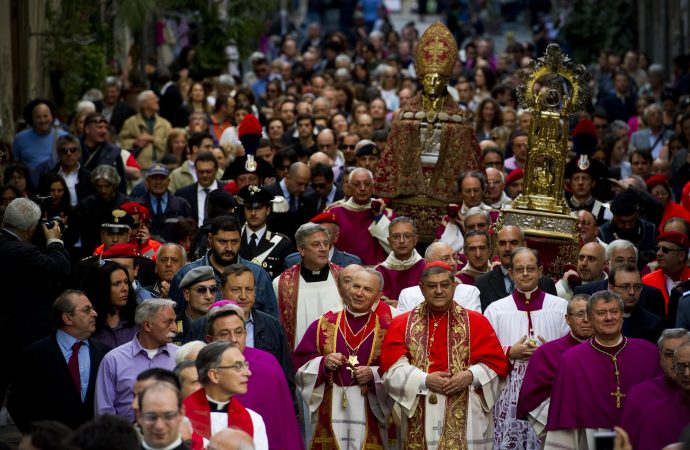
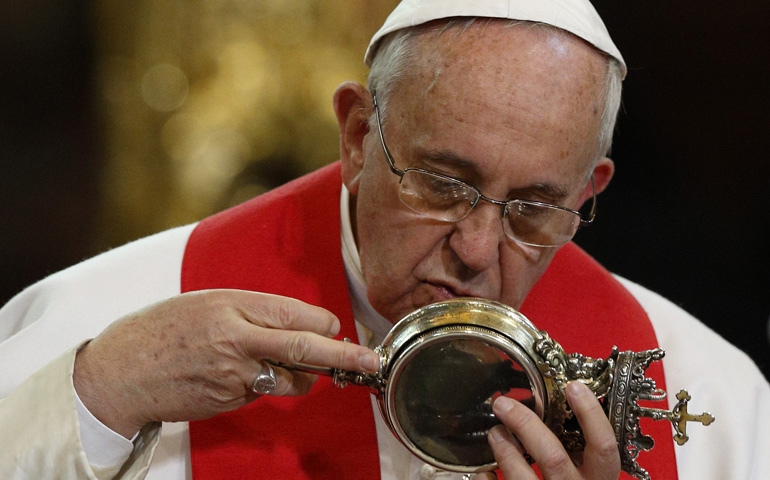
A scene from the procession on the feast of San Gennaro in Naples in 2015.FrancisNuns2

St Alphonsus Liguori wrote regarding Saint Januarius:

“The Neapolitans honour this saint as the principal patron of their city and nation and the Lord himself has continued to honour him, by allowing many miracles to be wrought through his intercession, particularly when the frightful eruptions of Mount Vesuvius have threatened the city of Naples with utter destruction.   While the relics of St Januarius were being brought in procession towards this terrific volcano, the torrents of lava and liquid fire which it emitted have ceased, or turned their course from the city.   But the most stupendous miracle and that which is greatly celebrated in the church, is the liquefying and boiling up of this blessed martyr’s blood whenever the vials are brought in sight of his head. This miracle is renewed many times in the year, in presence of all who desire to witness it; yet some heretics have endeavoured to throw a doubt upon its genuineness, by frivolous and incoherent explanations;  but no one can deny the effect to be miraculous, unless he be prepared to question the evidence of his senses.”IGNORE THE SMALL VERSION - st januarius