Quote/s of the Day – 15 April – Monday of Holy Week
Speaking of the Cross
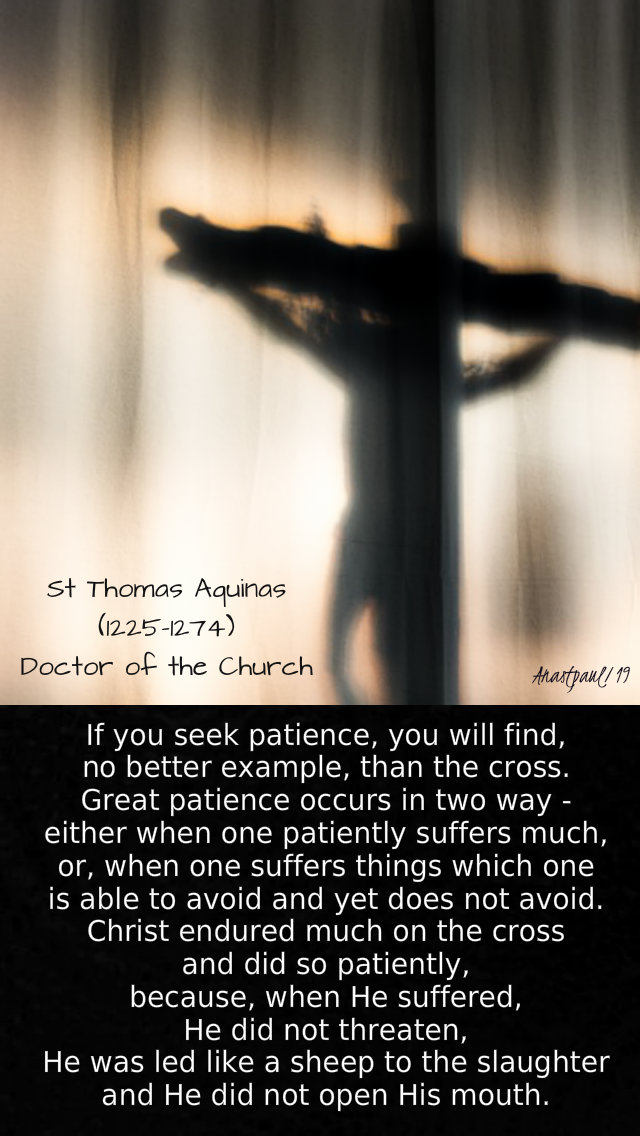
“If you seek patience, you will find no better example than the cross. Great patience occurs in two way – either when one patiently suffers much, or, when one suffers things which one is able to avoid and yet does not avoid. Christ endured much on the cross and did so patiently, because, when He suffered, He did not threaten, He was led like a sheep to the slaughter and He did not open His mouth.”
St Thomas Aquinas (1225-1274)
Doctor of the Church
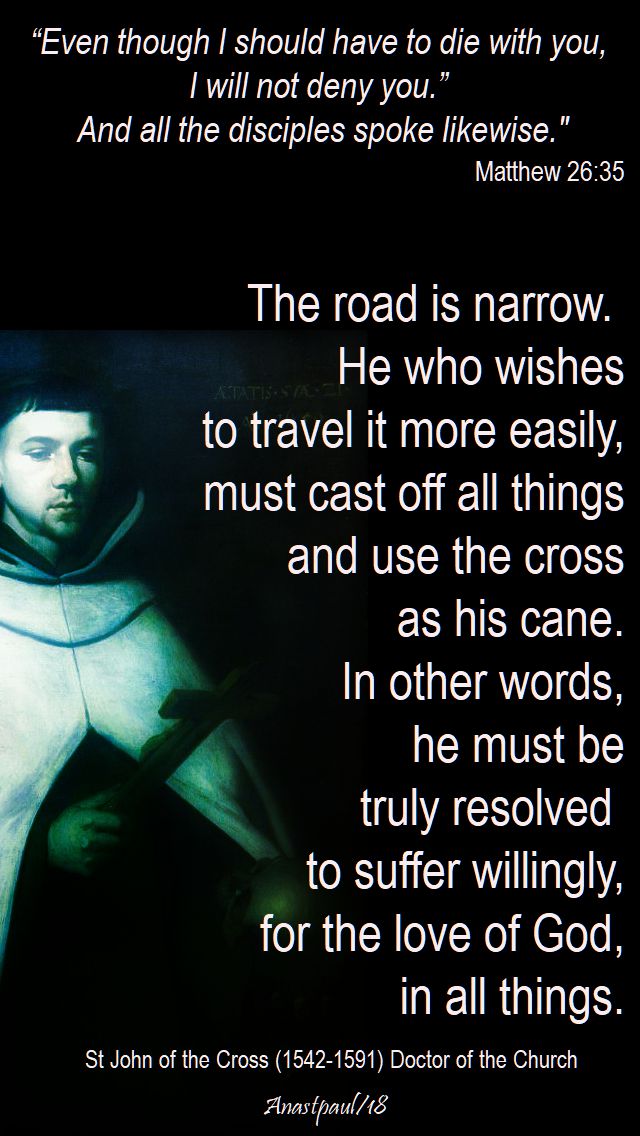
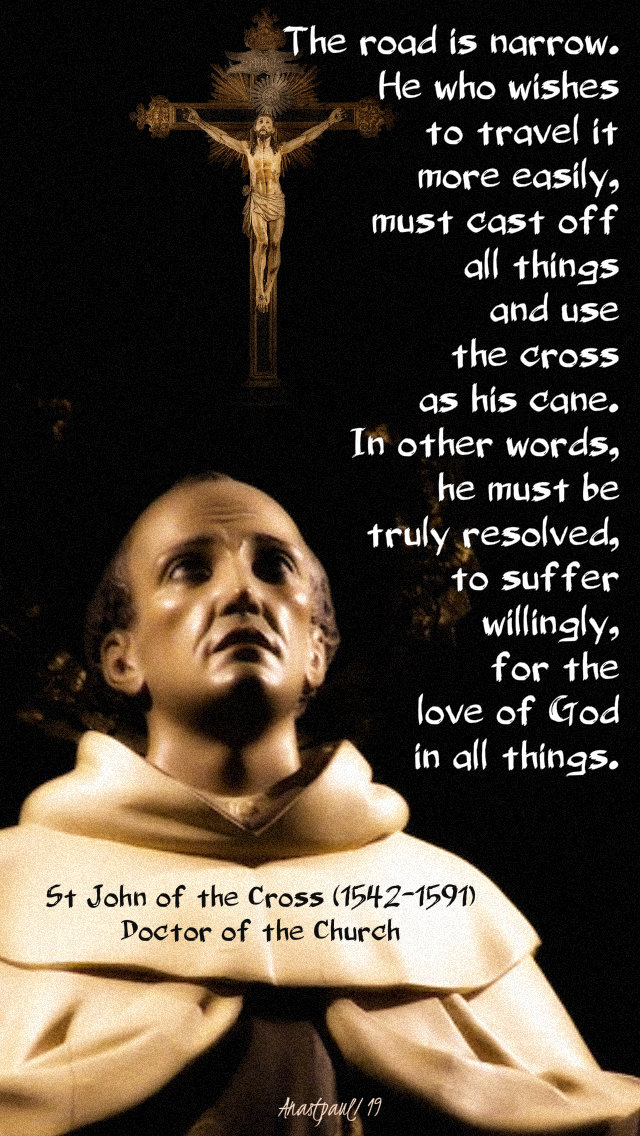
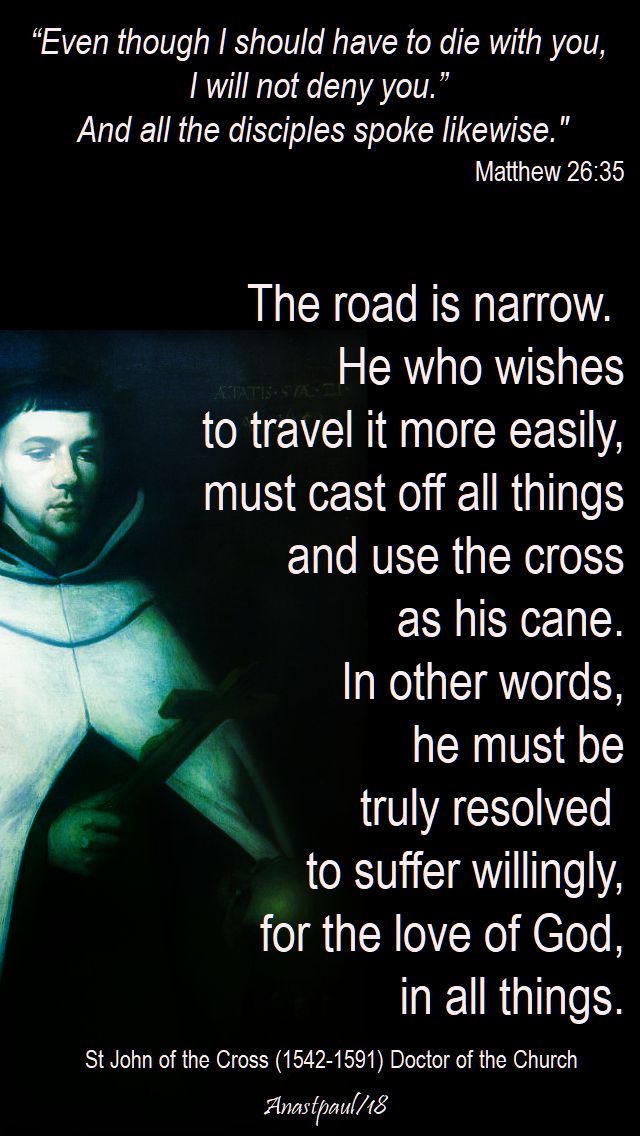
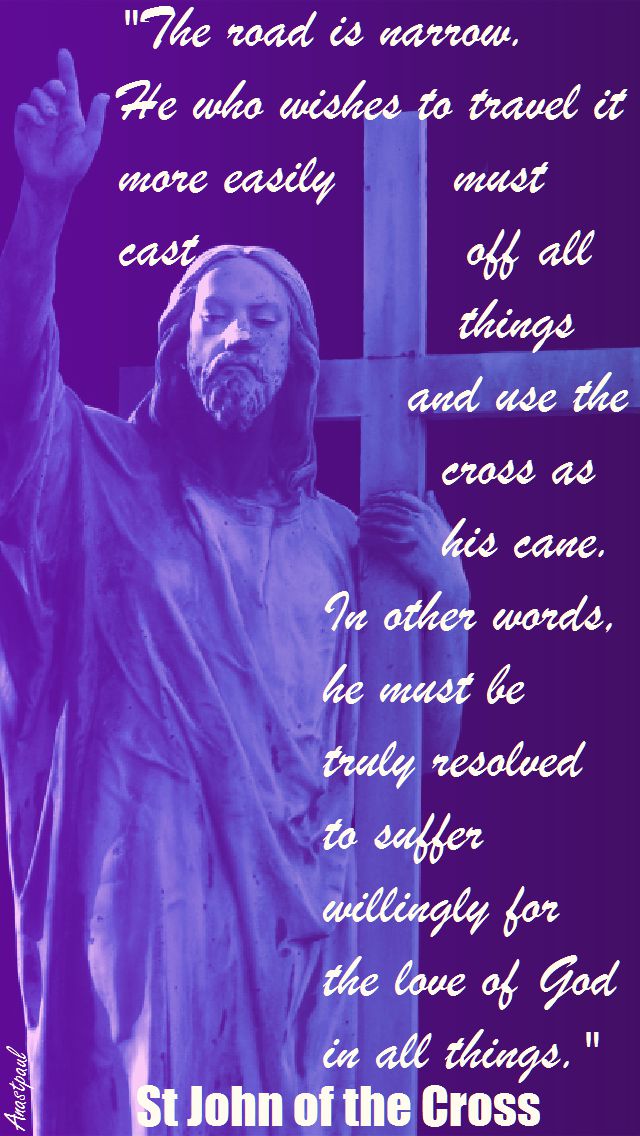
“The road is narrow. He who wishes to travel it more easily must cast off all things and use the cross as his cane. In other words, he must be truly resolved to suffer willingly for the love of God in all things.”
St John of the Cross (1542-1591)
Doctor of the Church
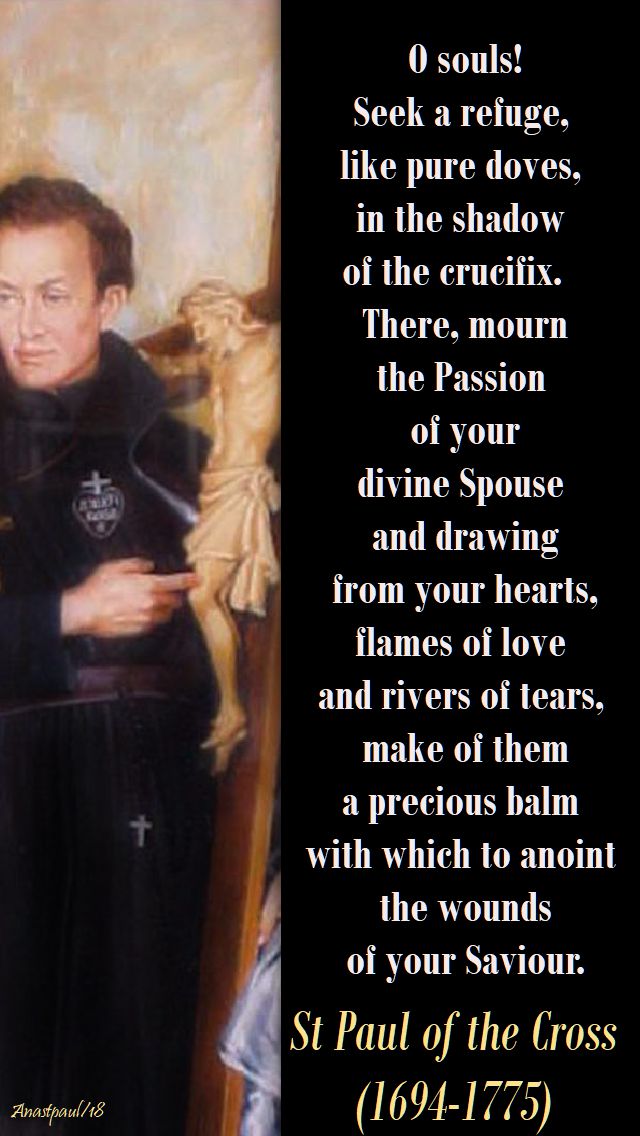
“O souls! Seek a refuge, like pure doves, in the shadow of the crucifix. There, mourn the Passion of your divine Spouse and drawing from your hearts flames of love and rivers of tears, make of them a precious balm with which to anoint the wounds of your Saviour.”
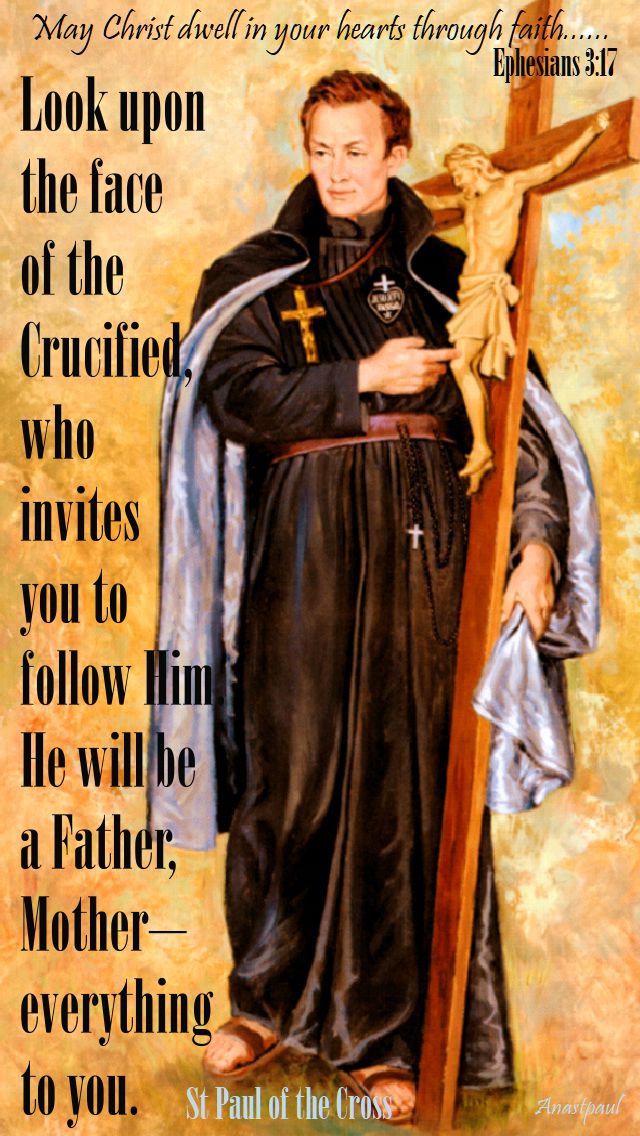
“Look upon the face of the Crucified, who invites you to follow Him. He will be a Father, a Mother – everything to you.”
St Paul of the Cross (1694-1775)
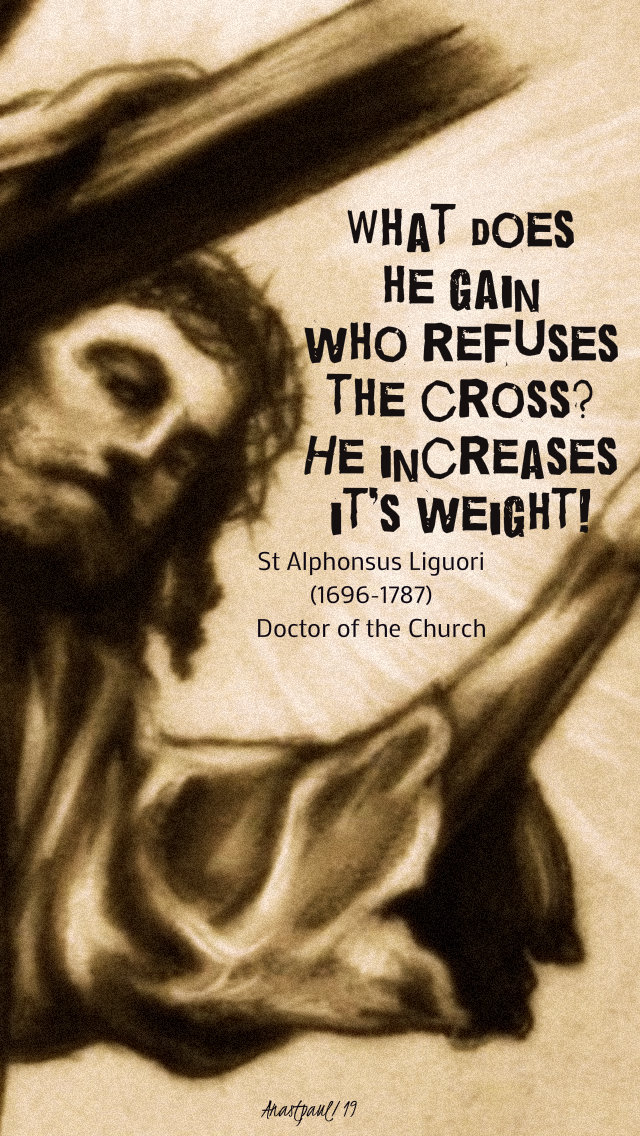
“What does he gain who refuses the cross? He increases it’s weight!”
St Alphonsus Liguori (1696-1787)
Doctor of the Church
Lenten Reflection – 29 March – Friday of the Third week of Lent, Year C, Gospel: Mark 12:28–34
“You shall love the Lord your God with all your heart and with all your soul, and with all your mind. This is the greatest and first commandment” (vv. 37-38). And he could have stopped there. Yet, Jesus adds something that was not asked by the doctor of the law. He says, in fact: “And a second is like it, You shall love your neighbour as yourself” (v. 39). And in this case too, Jesus does not invent the second commandment but takes it from the Book of Leviticus. The novelty is in His placing these two commandments together — love for God and love for neighbour — revealing that they are in fact inseparable and complementary, two sides of the same coin.”…Pope Francis – Angelus, 26 October 2014
“Stand fast, therefore, in this conduct and follow the example of the Lord, firm and unchangeable in faith, lovers of the brotherhood, loving each other, united in truth, helping each other with the mildness of the Lord, despising no man.”
St Polycarp, Letter to the Philippians
Daily Meditation: Fill our hearts with your love.
Our lesson today reminds us again
of God’s love and Jesus’ desire
that we love one another as we are loved.
On this journey, we are learning why this is a challenge for us.
We are experiencing our human weaknesses
and practising ways to be freer,
to open our hearts more fully to God’s love
and to give ourselves in fidelity, every day.
You ask us to express our thanks by self-denial. We are to master our sinfulness and conquer our pride. We are to show to those in need Your goodness to ourselves.
Preface for Lent III
Closing Prayer:
God of Mercy,
I feel my heart overflowing with Your tenderness.
I sense Your loving touch deep within my soul.
I ask for Your help in my weakness
that I might be faithful to Your word
and I am so grateful
that Your mercy for my failings
is as strong as Your unbounded love for me.
May the Lord bless us,
protect us from all evil
and bring us to everlasting life.
Amen.
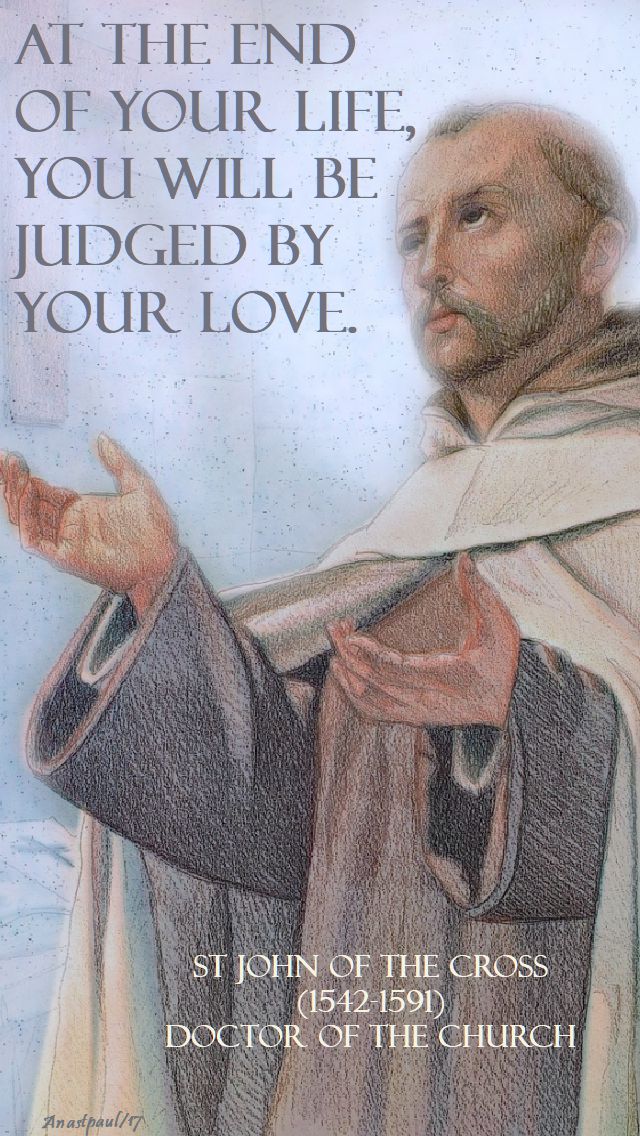
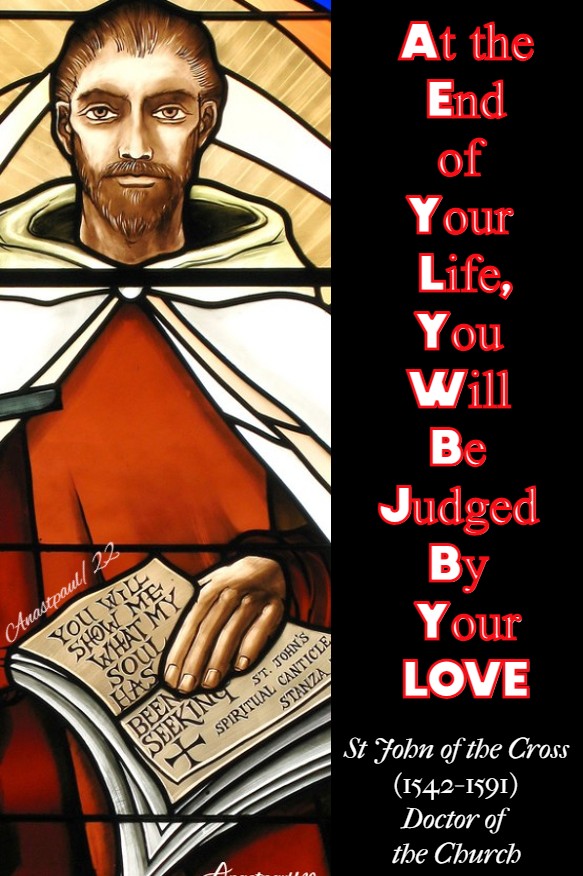
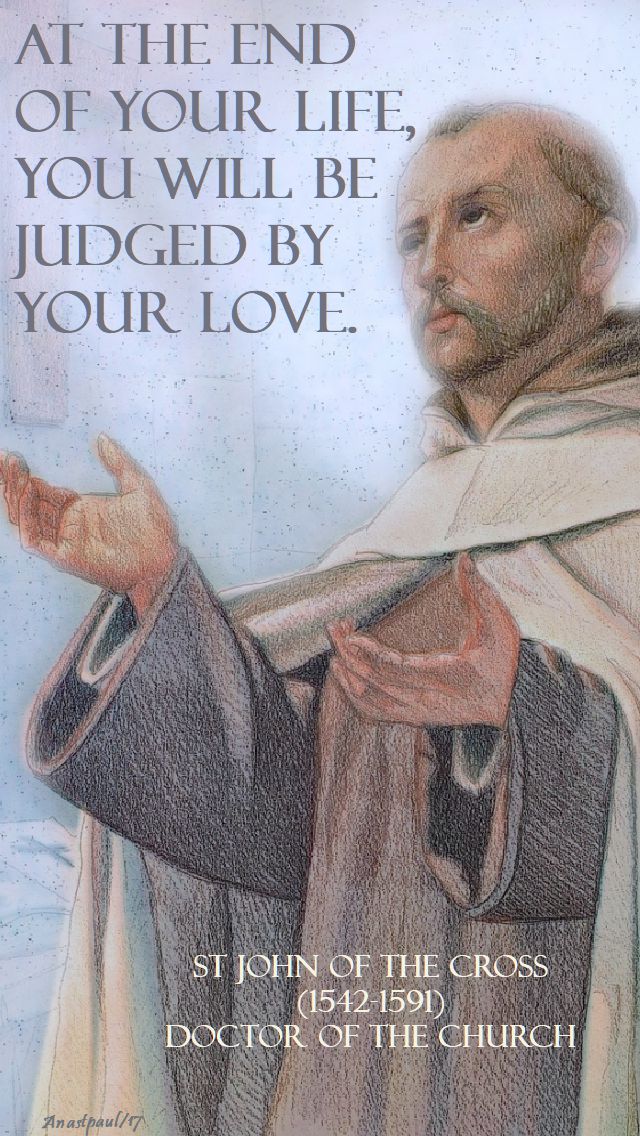
“At the end of your life, you will be judged by your love.”
St John of the Cross (1542-1591) Doctor of the Church
Thought for the Day – 19 February – Tuesday of the Sixth week in Ordinary Time, Year C, Gospel: Mark 8:14–21 and the memorial of Bl John Sullivan SJ (1861-1933)
And He said to them “Do you not yet understand or comprehend?”...Mark 8:21
Faith, the theologians say, is a certain and obscure habit of soul. It is an obscure habit because it brings us to believe divinely revealed truths, that transcend every natural light and infinitely exceed, all human understanding. As a result, the excessive light of faith bestowed on a soul, is darkness for it – a brighter light will eclipse and suppress a dimmer one. The sun so obscures all other lights, that they do not seem to be lights at all when it is shining and instead of affording vision to the eyes, it overwhelms, blinds and deprives them of vision since its light is excessive and disproportioned to the visual faculty. Similarly, the light of faith in its abundance, suppresses and overwhelms that of the intellect…
Another clearer example… If those born blind were told about the nature of the colours white or yellow, they would understand absolutely nothing, no matter how much instruction they received, since they never saw these colours… Only the names of these colours would be grasped, since the names are perceptible through hearing… Such is faith to the soul – it informs us of matters we have never seen or known… The light of natural knowledge does not show them to us… Yet we come to know it through hearing, by believing, what faith teaches, in blinding our natural light and bringing it in to submission. St Paul states: “Faith comes through hearing” (Rm 10:17). This amounts, to saying, that faith is not a knowledge, derived from the senses but an assent of the soul, to what enters through hearing… Faith, manifestly, is a dark night for souls but in this way, it gives them light. The more darkness it brings on them, the more light it sheds. For by blinding, it illumines them, according to those words of Isaiah: “If you do not believe, you will not understand” (cf. Is 7:9).
Blessed John Sullivan was illuminated by the Light of faith, in his many hours of silent prayer before the Blessed Sacrament, the place where our light is found.
God and Father,
You honour those who honour You.
Make sacred the memory
of Your servant John Sullivan,
by granting through his intercession,
the petition we now make
……………….(name the petition)
and hastening the day,
when his name will be venerated
by the title of Saint.
We make our prayer
through Christ our Lord,
in the Holy Spirit,
God forever.
Amen
Thought for the Day – 14 December – The Memorial of St John of the Cross (1542-1591) Doctor of the Church
Traces of the Divine Beauty in Creation From The Spiritual Canticle by Saint John of the Cross
“Created things in themselves, as Saint Augustine declares, give testimony to God’s grandeur and excellence. For God created all things with remarkable ease and brevity and in them He left some trace of who He is, not only in giving all things being from nothing but even by endowing them, with innumerable graces and qualities, making them beautiful in a wonderful order and unfailing dependence on one another. All of this He did through His own wisdom, the Word, His only begotten Son by whom He created them.
Saint Paul says: The Son of God is the splendour of His glory and the image of His substance. It should be known that only with this figure, His Son, did God look at all things, that is, He communicated to them their natural being and many natural graces and gifts and made them complete and perfect, as is said in Genesis: God looked at all things that He made, and they were very good. To look and behold that they were very good, was to make them very good in the Word, his Son.
Not only by looking at them did He communicate natural being and graces, as we said but also with this image of His Son alone, He clothed them in beauty by imparting to them supernatural being. This He did when He became man and elevated human nature in the beauty of God and consequently all creatures, since in human nature He was united with them all.
Accordingly, the Son of God proclaimed: If I be lifted up from the earth, I will elevate all things to me. And in this elevation of all things through the incarnation of His Son and through the glory of His resurrection according to the flesh, the Father did not merely beautify creatures partially but rather, we can say, clothed them wholly in beauty and dignity.”
“Lord I am not worthy but only say the word and I shall be healed.”
Quotes of the Day – 14 December – The Memorial of St John of the Cross (1542-1591) Doctor of the Church
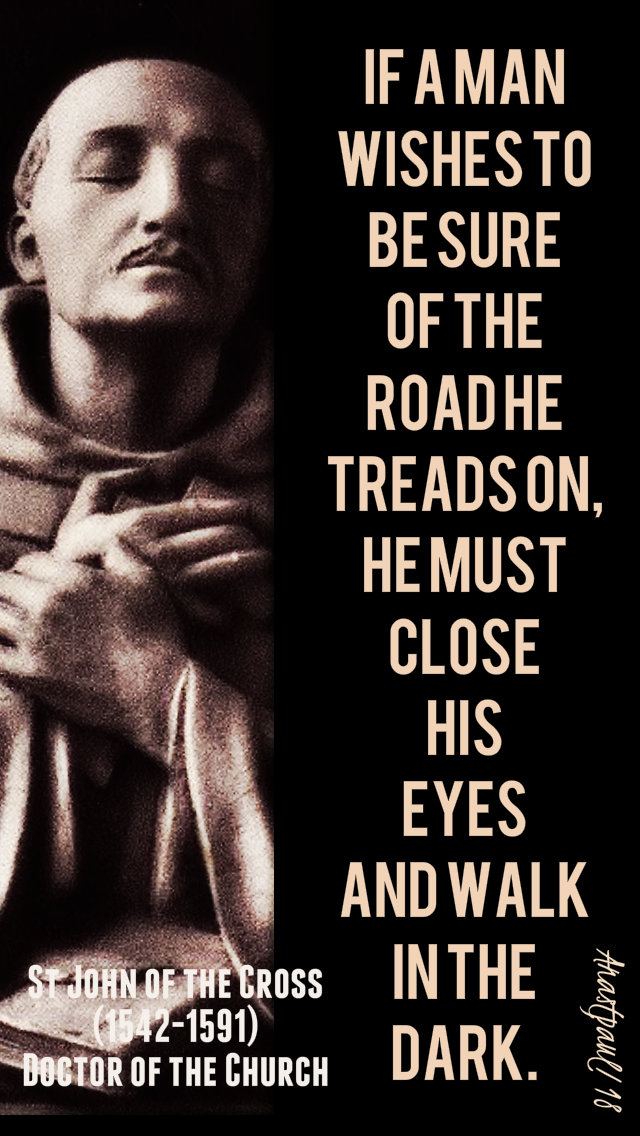
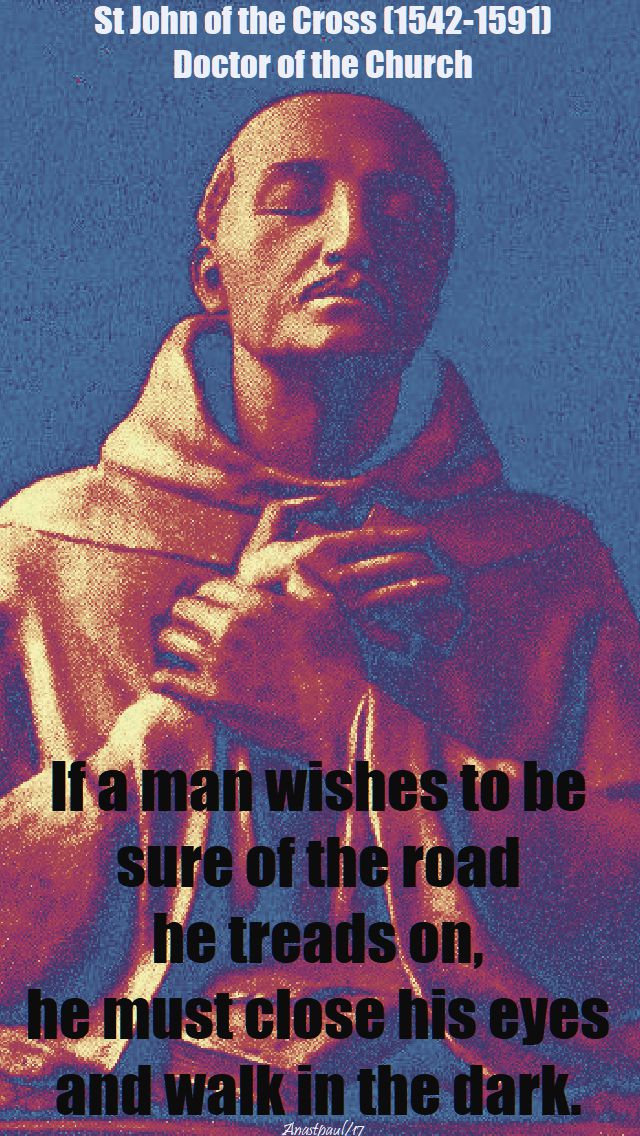
“If a man wishes to be sure of the road he treads on, he must close his eyes and walk in the dark.”
“The road is narrow. He who wishes to travel it more easily must cast off all things and use the cross as his cane. In other words, he must be truly resolved to suffer willingly for the love of God in all things.”
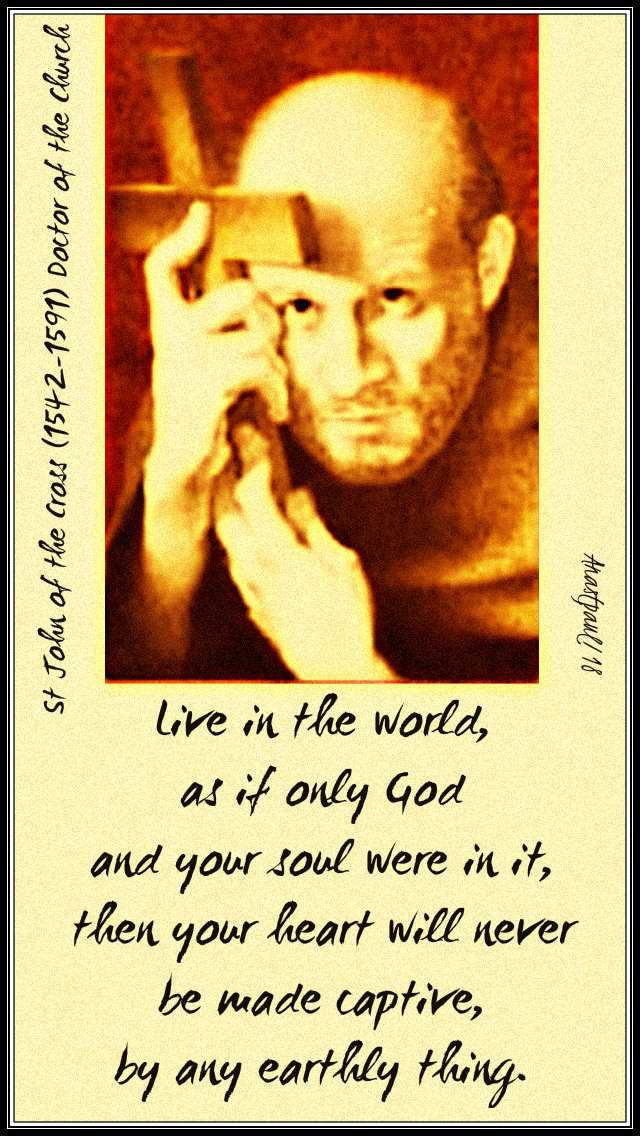
“Live in the world, as if only God and your soul were in it, then your heart will never be made captive, by any earthly thing.”
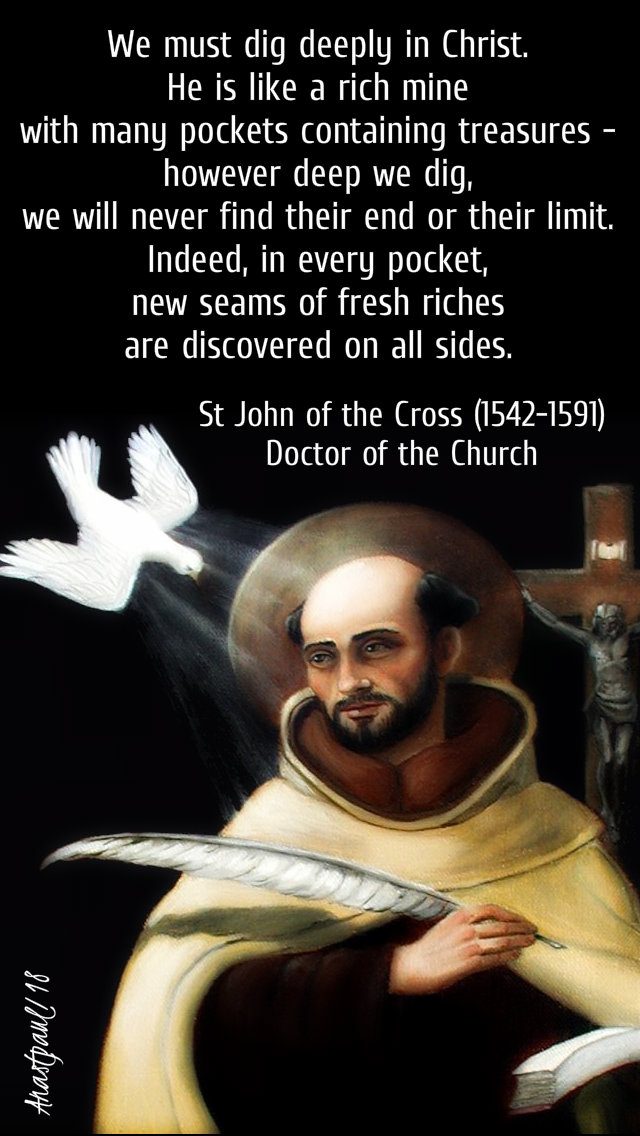
“We must dig deeply in Christ. He is like a rich mine with many pockets containing treasures – however deep we dig, we will never find their end or their limit. Indeed, in every pocket new seams of fresh riches are discovered on all sides.”
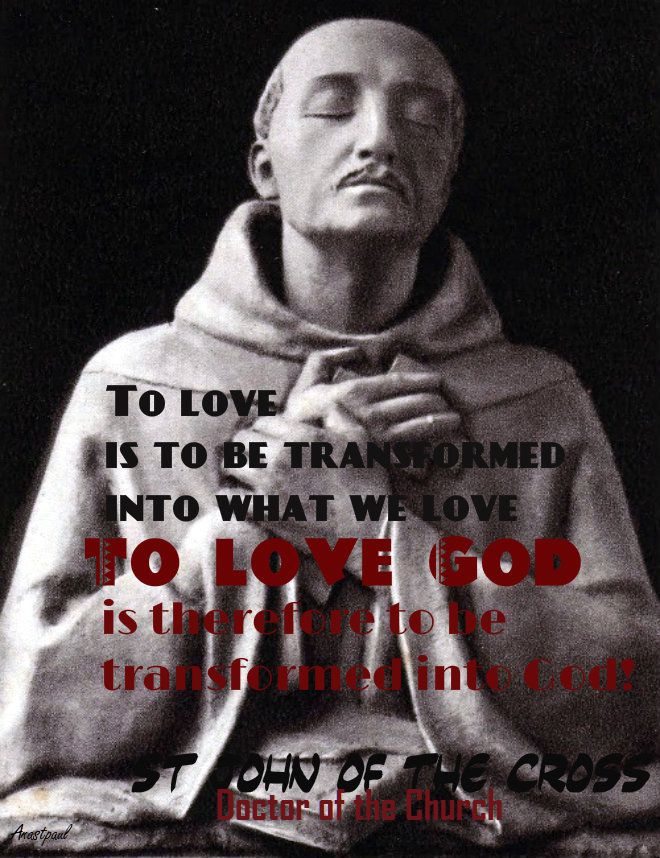
“At the end of your life, you will be judged by your love.”
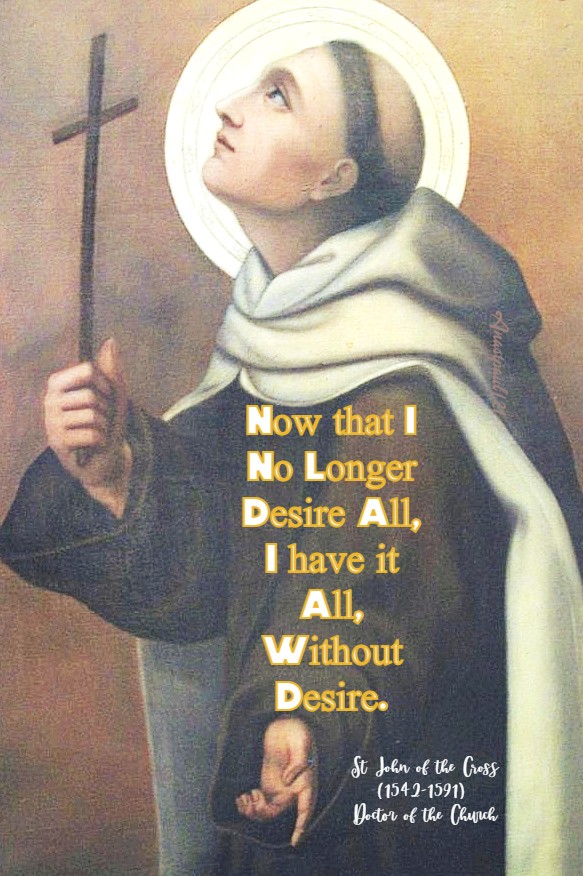
“Now that I no longer desire all, I have it all, without desire.”
St John of the Cross (1542-1591) Doctor of the Church
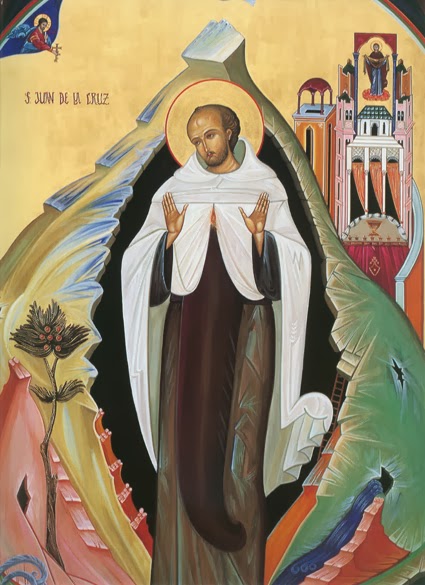
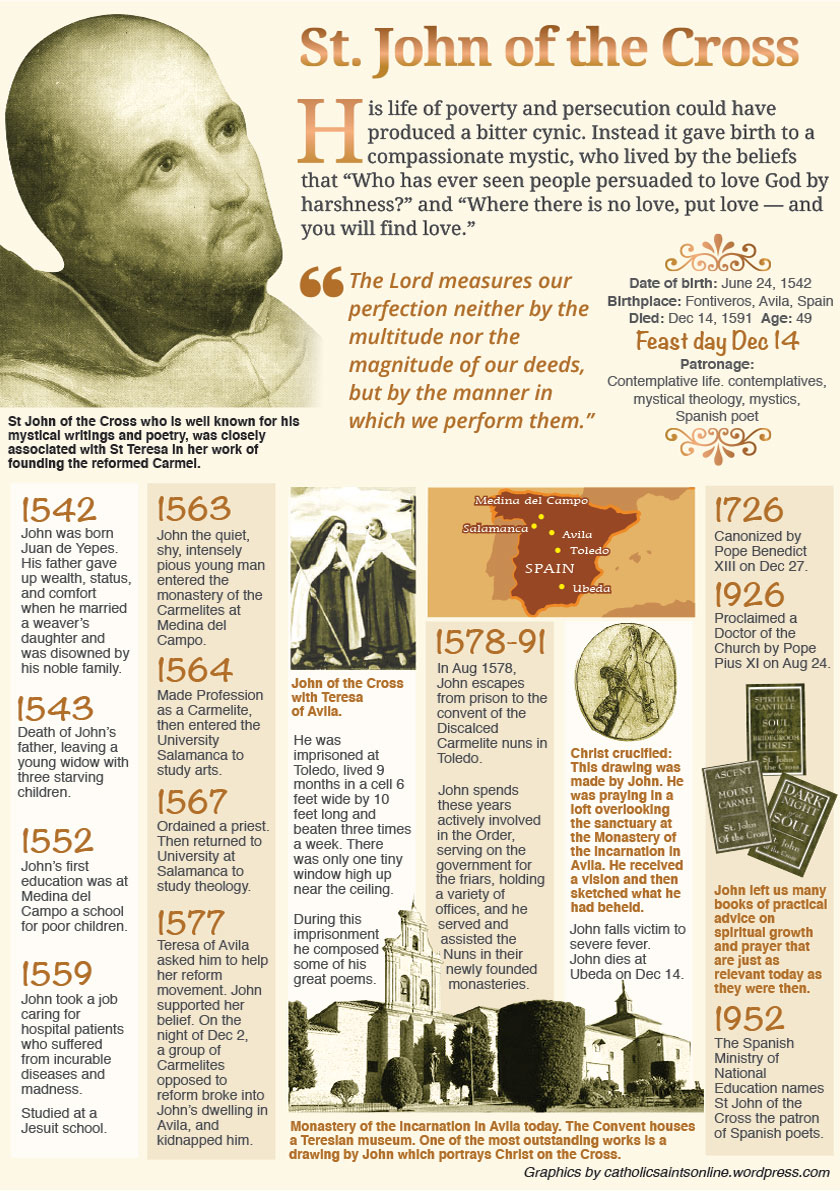
Saint of the Day – 14 December – St John of the Cross OCD (1542-1591) Confessor, Doctor of the Church, Priest, Reformer of the Carmelite Order, Mystic, Poet, Theologian, Writer. Born as Juan de Yepes y Álvarez on 24 June 1542 at Fontiveros, Ávila, Crown of Castile, Spanish Monarchy and died on 14 December 1591 (age 49) at Úbeda, Crown of Castile, Spanish Monarchy. John was mentored by and corresponded with, the older Carmelite, St Teresa of Ávila. Both his poetry and his studies on the development of the soul, are considered the summit of mystical Spanish literature and among the greatest works of all Spanish literature. He was Canonised by Pope Benedict XIII in 1726. In 1926, he was declared a Doctor of the Church by Pope Pius XI and is commonly known as the “Mystical Doctor.” Patronages – Contemplative life, contemplatives, Mystical Theology, Mystics, Spanish poets.
John’s life was a heroic effort to live up to his name: “of the Cross.” The folly of the Cross came to full realisation in time. “Whoever wishes to come after me must deny himself, take up his cross, and follow me” (Mark 8:34b) is the story of John’s life. The Paschal Mystery—through death to life—strongly marks John as rRformer, Mystic-poet and Theologian-priest.
Ordained a Carmelite Priest in 1567 at age 25, John met Teresa of Avila and like her, vowed himself to the primitive Rule of the Carmelites. As partner with Teresa and in his own right, John engaged in the work of reform and came to experience the price of reform – increasing opposition, misunderstanding, persecution, imprisonment. He came to know the cross acutely—to experience the dying of Jesus—as he sat month after month in his dark, damp, narrow cell with only his God.
Yet, the paradox! In this dying of imprisonment John came to life, uttering poetry. In the darkness of the dungeon, John’s spirit came into the Light. There are many mystics, many poets – John is unique as mystic-poet, expressing in his prison-cross the ecstasy of mystical union with God in the Spiritual Canticle.
But as agony leads to ecstasy, so John had his Ascent to Mount Carmel, as he named it in his prose masterpiece. As man-Christian-Carmelite, he experienced in himself this purifying ascent; as spiritual director, he sensed it in others; as psychologist-theologian, he described and analysed it in his prose writings. His prose works are outstanding in underscoring the cost of discipleship, the path of union with God – rigorous discipline, abandonment, purification. Uniquely and strongly John underlines the gospel paradox: the cross leads to resurrection, agony to ecstasy, darkness to light, abandonment to possession, denial to self to union with God. If you want to save your life, you must lose it. John is truly “of the Cross.” He died at 49—a life short, but full.
Quote/s of the Day – 14 September – Feast of the Exaltation of the Holy Cross
“In the Cross is salvation; in the Cross is life; in the Cross is protection against our enemies; in the Cross is infusion of heavenly sweetness; in the Cross is strength of mind; in the Cross is joy of spirit; in the Cross is excellence of virtue; in the Cross is perfection of holiness. There is no salvation of soul, nor hope of eternal life, save in the Cross.”
Thomas à Kempis (1380-1471) The Inner Life
“The road is narrow. He who wishes to travel it more easily must cast off all things and use the cross as his cane. In other words, he must be truly resolved to suffer willingly for the love of God in all things.”
St John of the Cross (1542-1591) Doctor of the Church
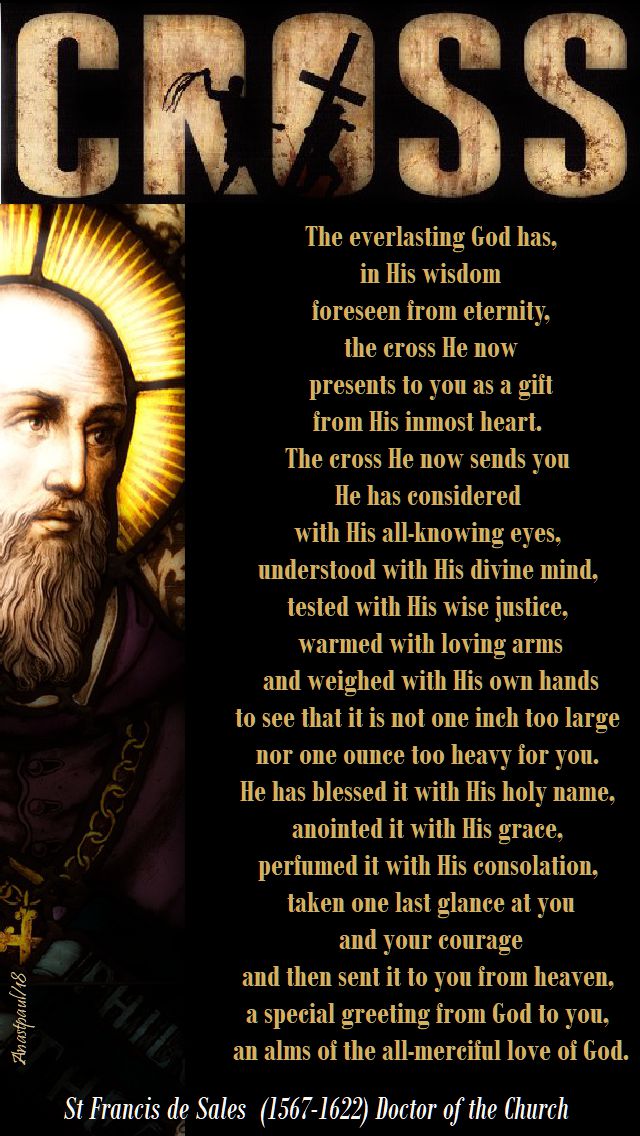
The everlasting God has in His wisdom foreseen from eternity the cross He now presents to you as a gift from His inmost heart. The cross He now sends you He has considered with His all-knowing eyes, understood with His divine mind, tested with His wise justice, warmed with loving arms and weighed with His own hands to see that it is not one inch too large nor one ounce too heavy for you. He has blessed it with His holy name, anointed it with His grace, perfumed it with His consolation, taken one last glance at you and your courage and then sent it to you from heaven, a special greeting from God to you, an alms of the all-merciful love of God.
St Francis de Sales (1567-1622) Doctor of the Church
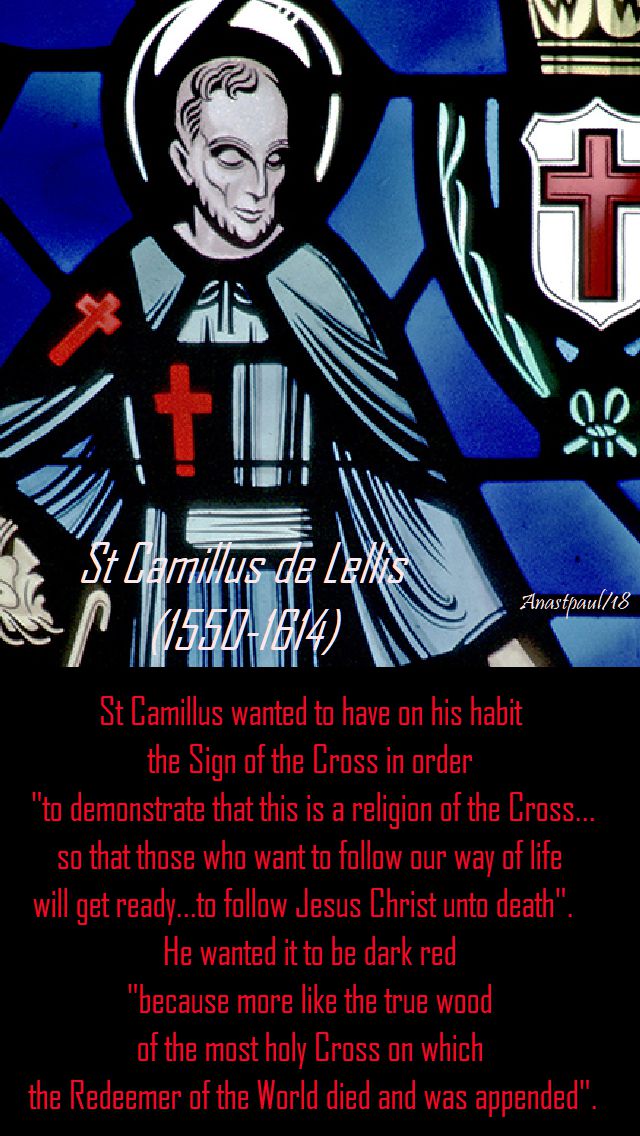
Camillus wanted to have on his habit the Sign of the Cross in order ‘to demonstrate that this is a religion of the Cross… so that those who want to follow our way of life will get ready… to follow Jesus Christ unto death’. He wanted it to be dark red ‘because more like the true wood of the most holy Cross on which the Redeemer of the World died and was appended’.
St Camillus de Lellis (1550-1614)
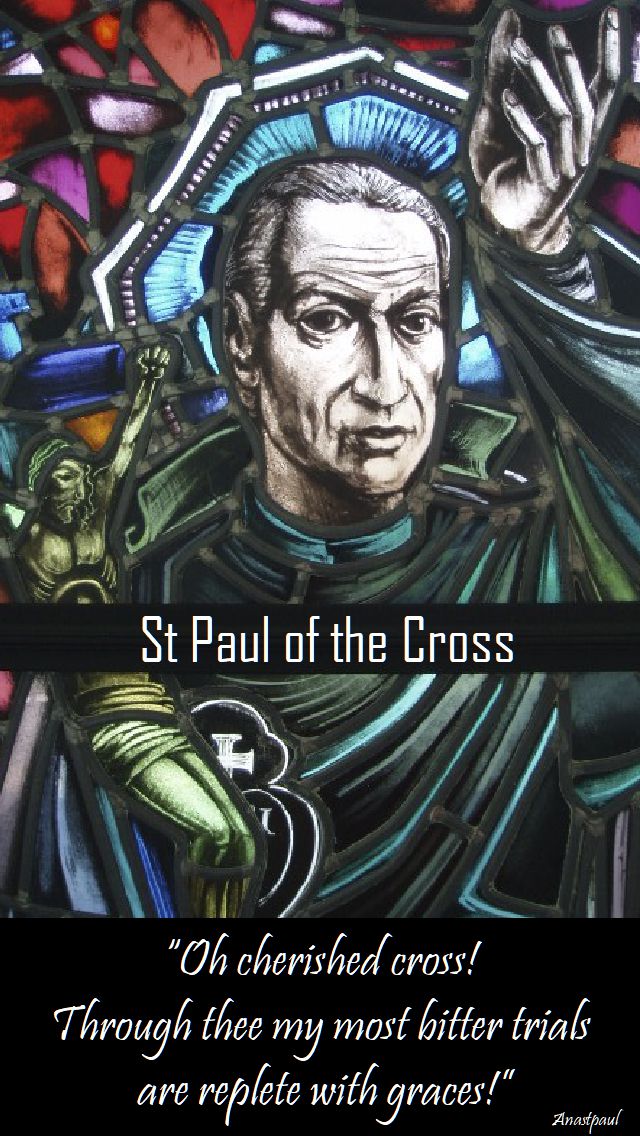
“Oh cherished cross! Through thee my most bitter trials are replete with graces!”
St Paul of the Cross (1694-1775)
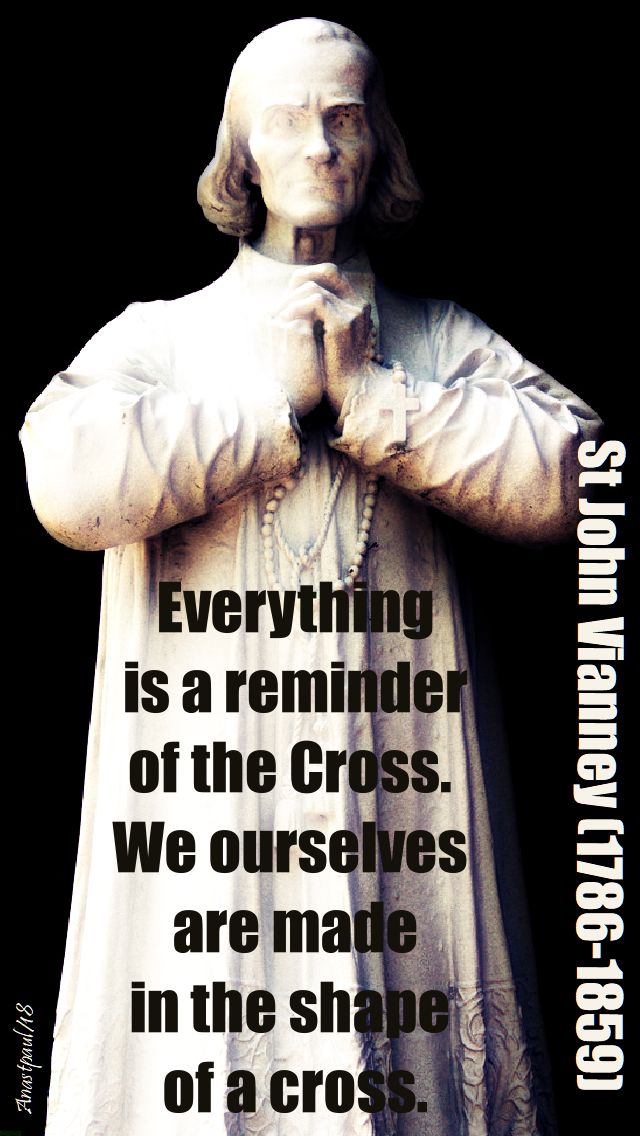
“Everything is a reminder of the Cross. We ourselves are made in the shape of a cross.”
St John Vianney (1786-1859)
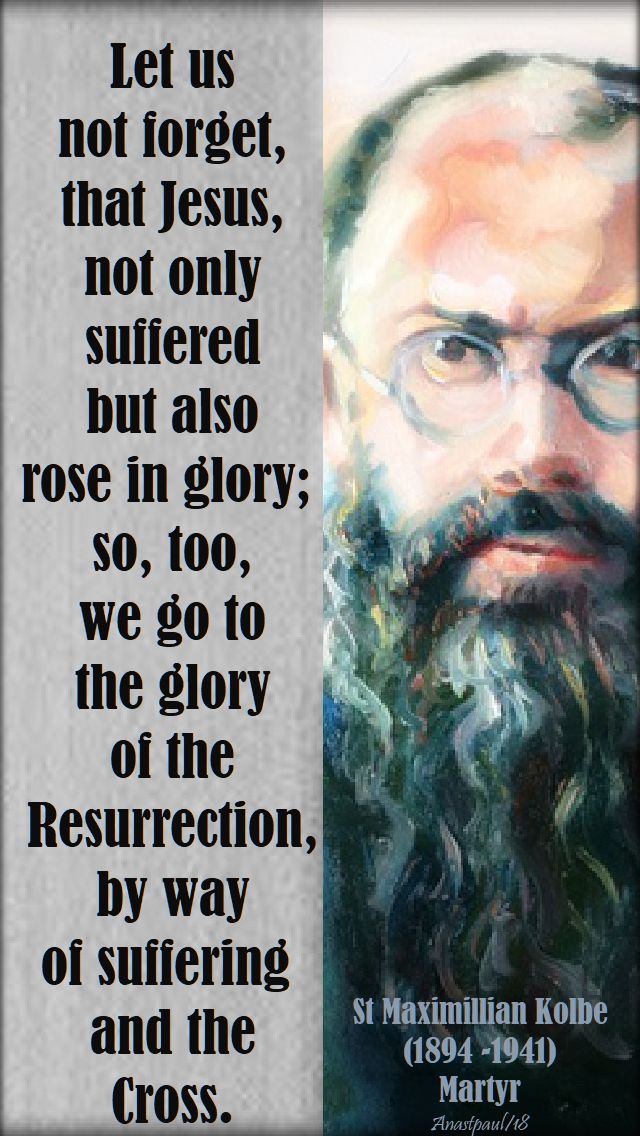
“Let us not forget, that Jesus not only suffered but also rose in glory; so, too, we go to the glory of the Resurrection, by way of suffering and the Cross.”
St Maximillian Kolbe (1894 -1941)
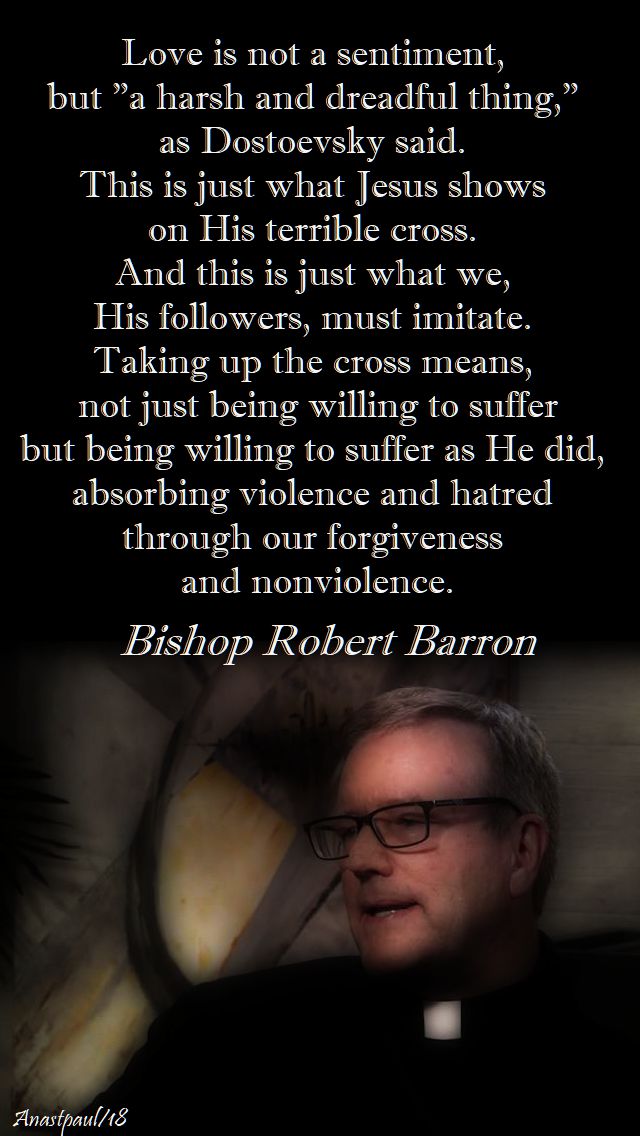
“There is line from the illuminator of the St John’s Bible that states: “We have to love our way out of this.” There is nothing wimpy or namby-pamby or blind about this conviction. When we love extravagantly, we are not purposely blinding ourselves to moral realities— just the contrary.
Love is not a sentiment, but “a harsh and dreadful thing,” as Dostoevsky said.
This is just what Jesus shows on His terrible cross. And this is just what we, His followers, must imitate. Taking up the cross means, not just being willing to suffer but being willing to suffer as He did, absorbing violence and hatred through our forgiveness and nonviolence.”
Quote of the Day – 24 July – Tuesday of the Sixteenth week in Ordinary Time, Year B – Today’s Gospel: Matthew 12:46-50
“For whoever does the will of my Father in heaven, is my brother and sister and mother.”…Matthew 12:50
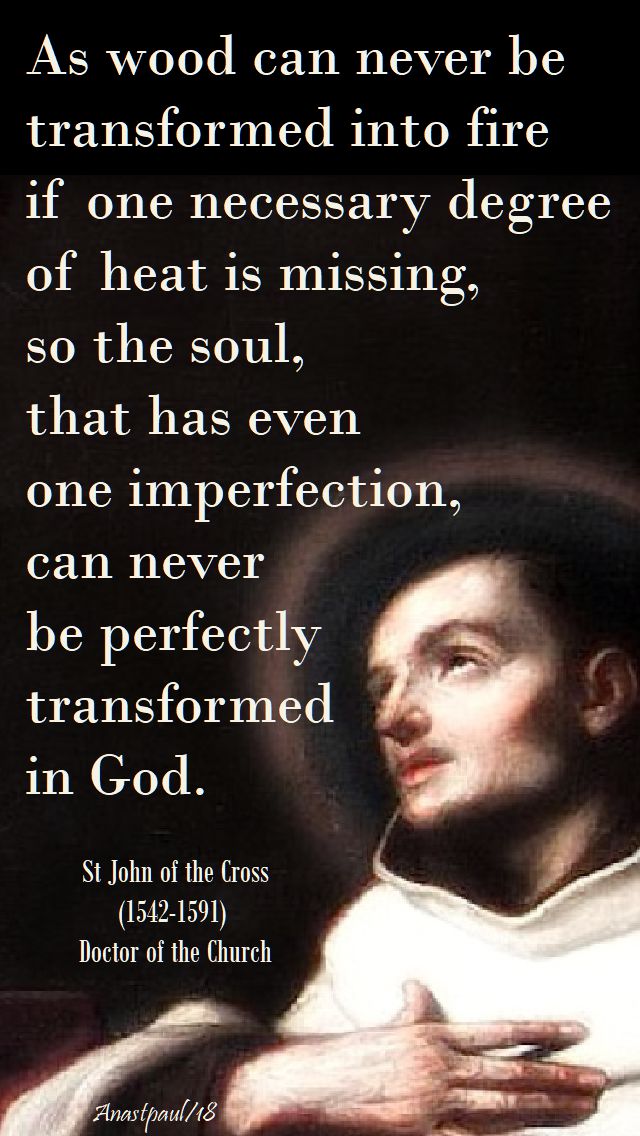
It is a matter of real sorrow when God has given us strength to break stronger fetters, those of vanity and sin, that we neglect our own progress and the attainment of such great blessings, because we will not detach ourselves from trifles. Not only do we not advance, we fall back. For it is well known, that on the spiritual road, not to go on overcoming self, is to go backwards and not to increase our gain, is to lose. As wood can never be transformed into fire, if one necessary degree of heat is missing, so the soul, that has even one imperfection, can never be perfectly transformed in God.
St John of the Cross (1542-1591) Doctor of the Church
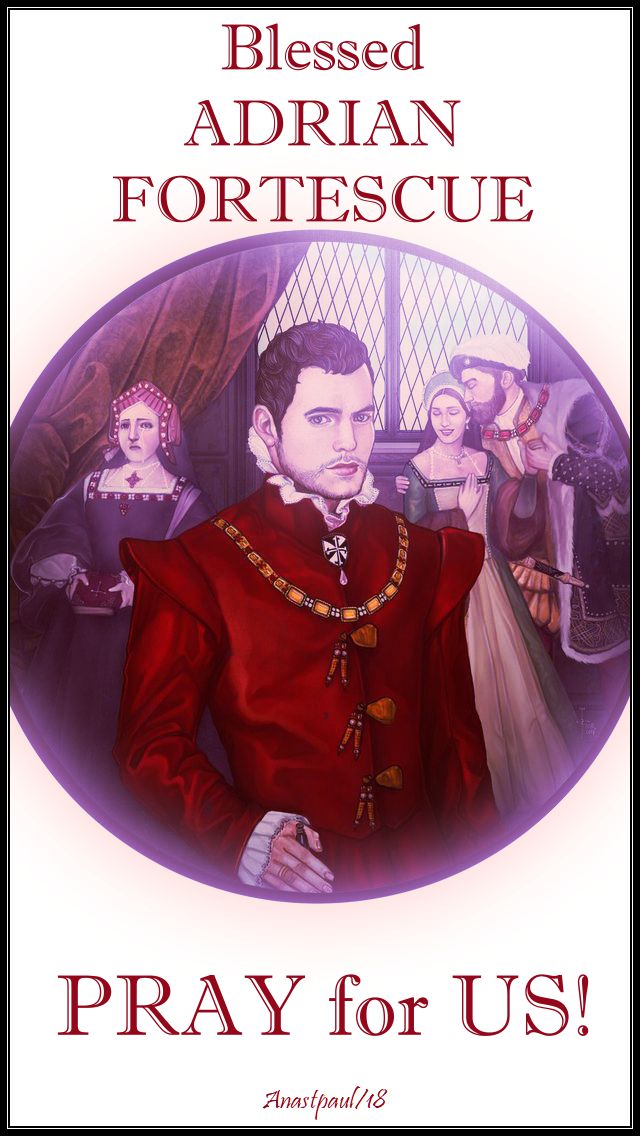
One Minute Reflection – 9 July – The Memorial of Blessed Adrian Fortescue T.O.S.D. (1476-1539) Martyr
“Even though I should have to die with you, I will not deny you.” And all the disciples spoke likewise”…Matthew 26:35.
REFLECTION – “The road is narrow. He who wishes to travel it more easily must cast off all things and use the cross as his cane. In other words, he must be truly resolved to suffer willingly for the love of God in all things.”…St John of the Cross (1542-1591) Doctor of the Church
PRAYER – O God, You specially strengthened Blessed Adrian Fortescue with a wonderful spirit of holiness and courage. Hear the prayers of Your people and from his renowned example, may we learn to be obedient to You rather than to human authority. We ask this through our Lord Jesus Christ, Your Son, who lives and reigns with you and the Holy Spirit, one God forever and ever. Amen
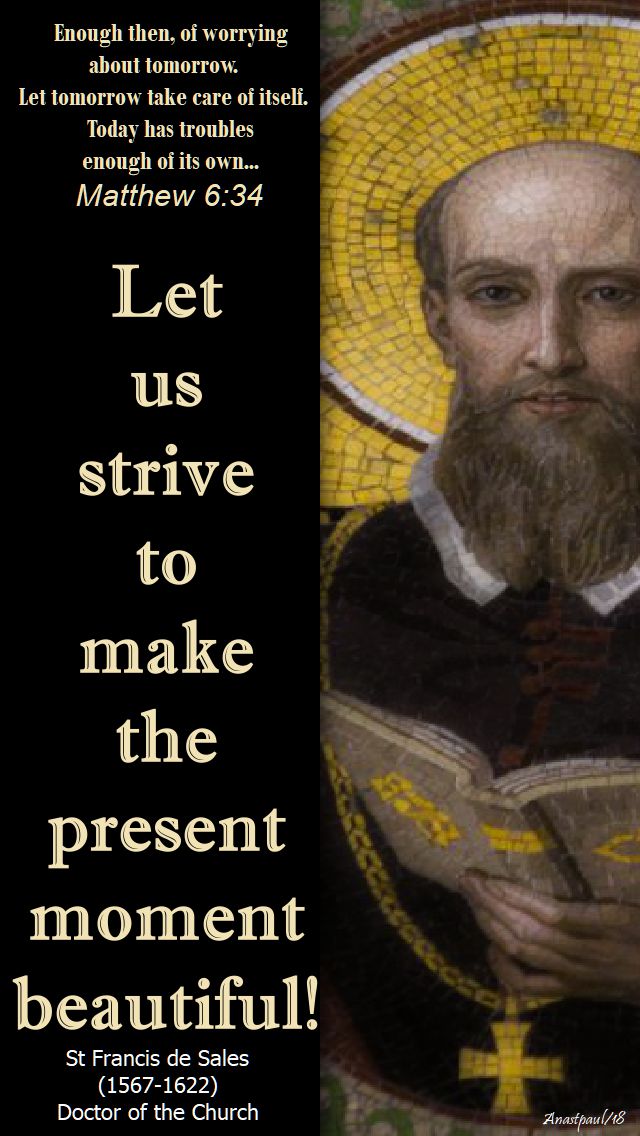
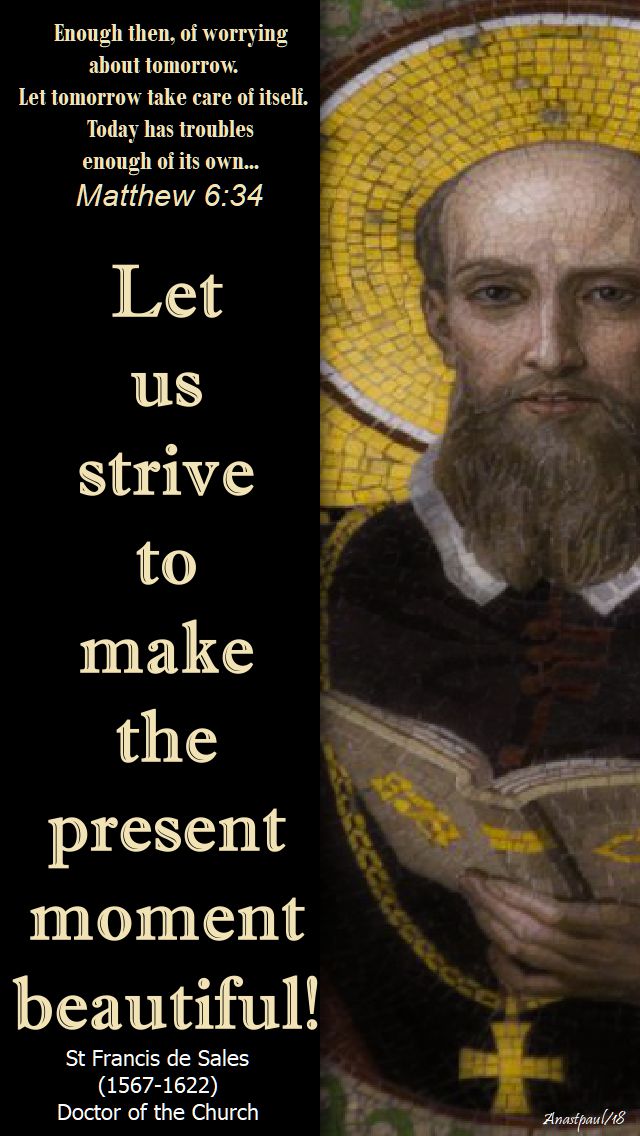
Enough then, of worrying about tomorrow. Let tomorrow take care of itself. Today has troubles enough of its own….Matthew 6:34
REFLECTION – “Let us strive to make the present moment beautiful!”…St Francis de Sales (1567-1622) Doctor of the Church
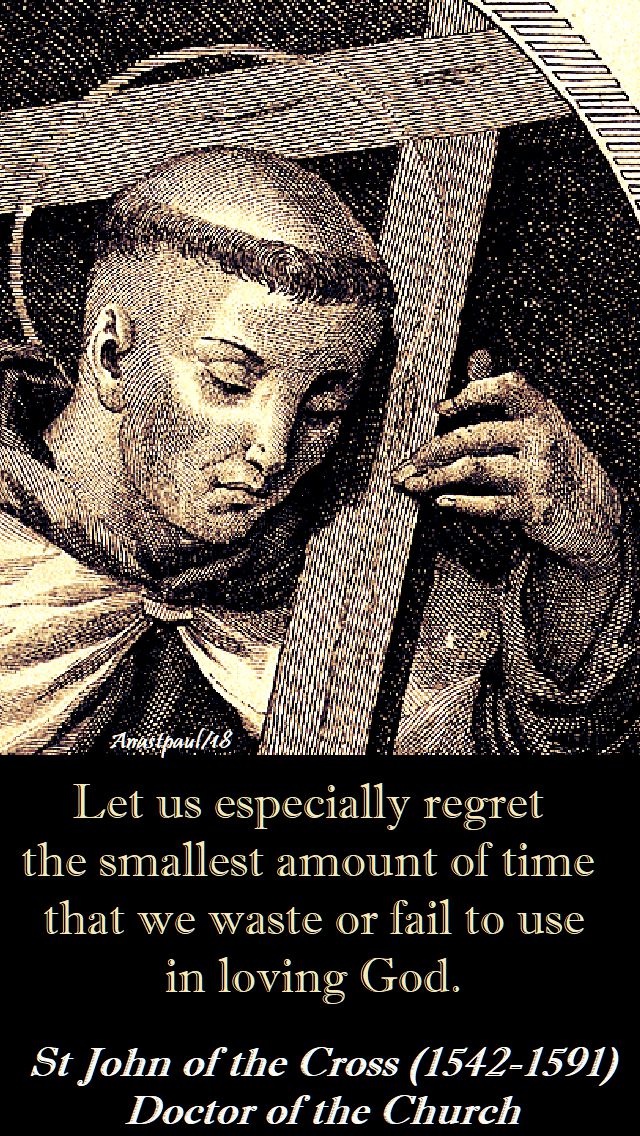
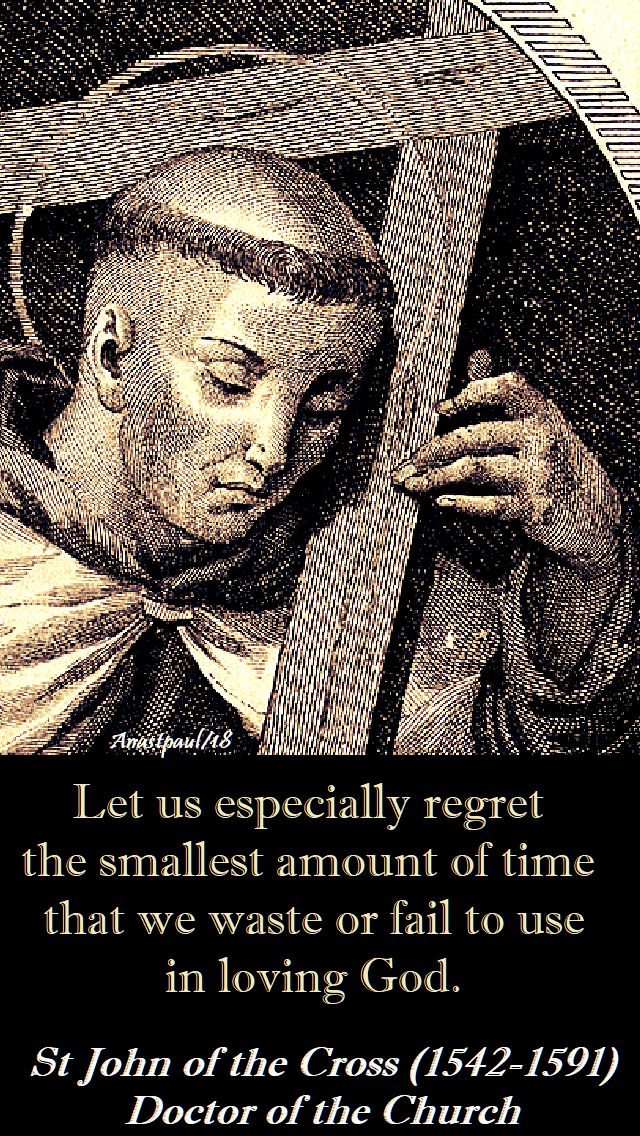
“Let us especially regret the smallest amount of time that we waste or fail to use in loving God.”..St John of the Cross (1542-1591) Doctor of the Church
PRAYER – Lord God, help me to remember that yesterday is gone forever and tomorrow may never come. Let me live in the present and strive to do Your will. Let me abandon myself to Your divine guidance and Your providence in all things. Amen
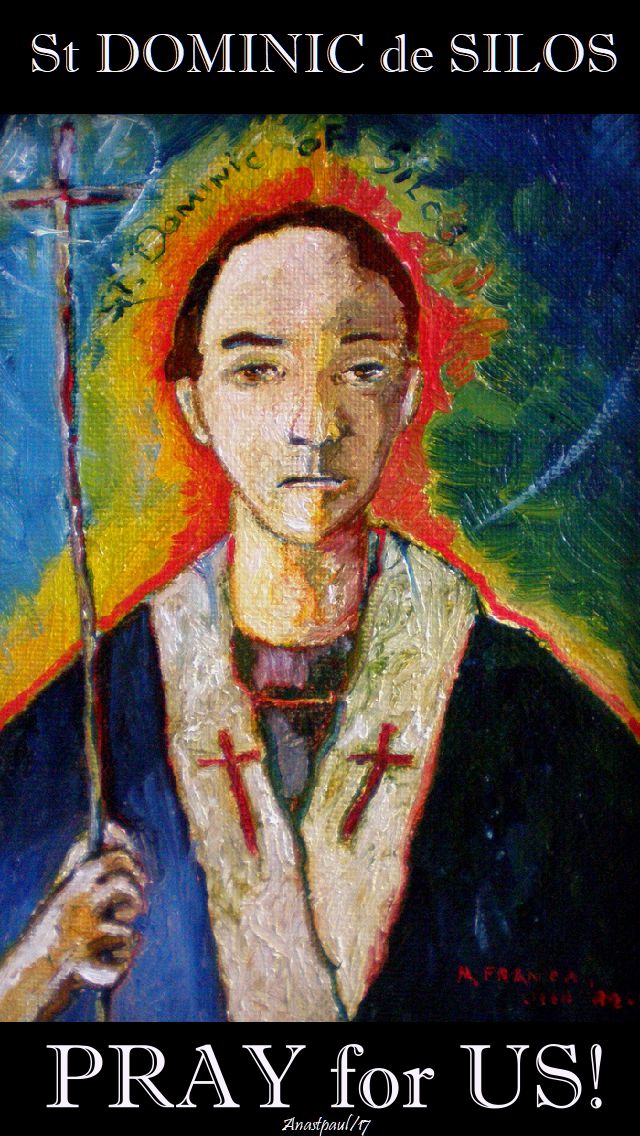
One Minute Reflection – 20 December – The Memorial of St Dominic de Silos (1000-1073)
You, O God, are my stronghold, my gracious God!………..Psalm 59:18
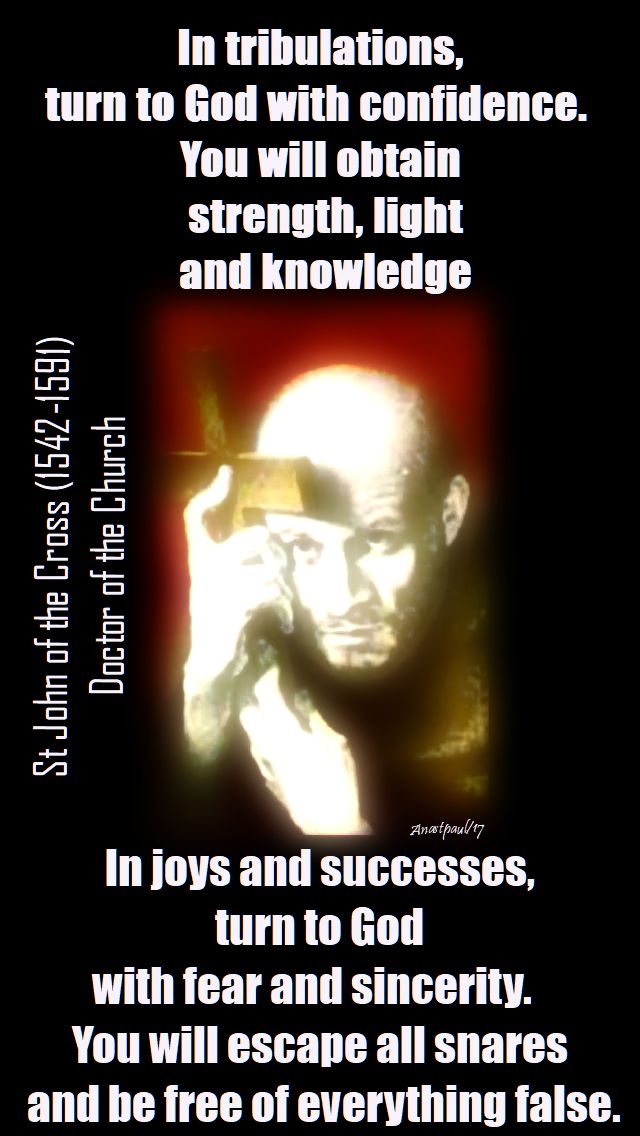
REFLECTION – “In tribulations, turn to God with confidence. You will obtain strength, light and knowledge.
In joys and successes, turn to God with fear and sincerity. You will escape all snares and be free of everything false.”..St John of the Cross
PRAYER – Heavenly Father, let me turn to You in good times and in bad. Grant that I may always remain in loving union with You no matter what adversity or goodness should befall me. As St Dominic de Silos lived his life, when he was exiled, he found another way to give You honour and through this adversity You filled his work with miracles. So too may it be in my life. St Dominic de Silos Pray for us! Amen
Thought for the Day – 14 December – The Memorial of St John of the Cross (1542-1591) Doctor of the Church
In his life and writings, John of the Cross has a crucial word for us today. We tend to be rich, soft, comfortable. We shrink even from words like self-denial, mortification, purification, asceticism, discipline. We run from the cross. John’s message—like the gospel—is loud and clear: Don’t—if you really want to live! (Fr Don Miller OFM)
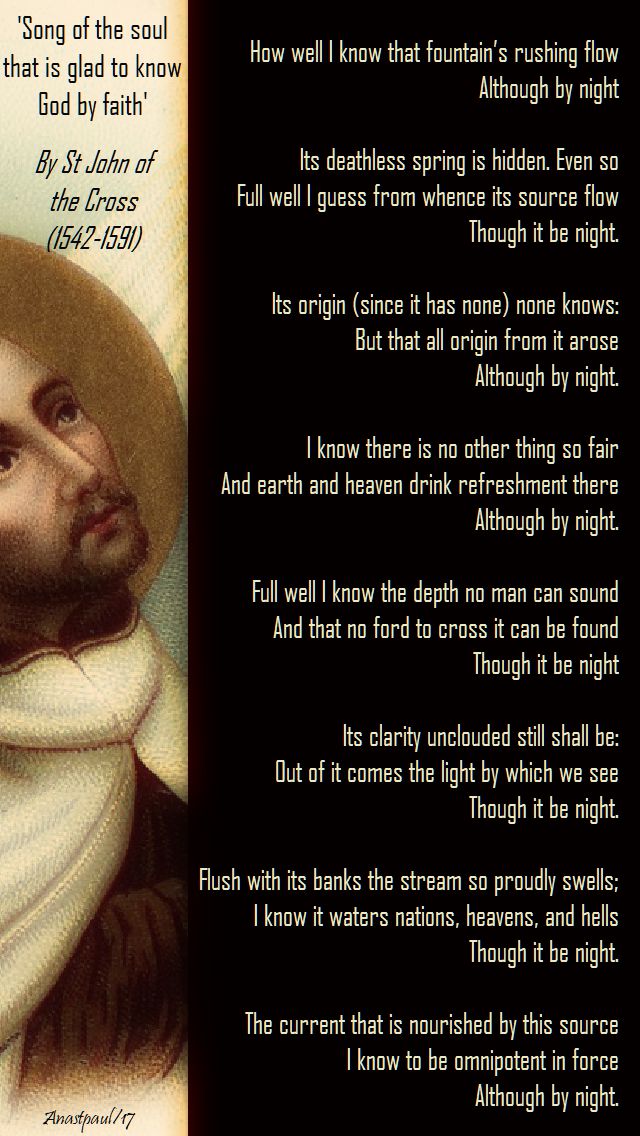
‘Song of the soul that is glad to know God by faith’
14 December – The Memorial of St John of the Cross (1542-1591) Doctor of the Church
There have been a number of translations into English of the works of St John of the Cross. One of the translations which has been considered one of the best is that by the Anglo-South African convert poet Roy Campbell (2 October 1901 – 22 April 1957).
In October 2009, Roger Scruton wrote about Roy Campbell in his article “A Dark Horse” published in The American Spectator. He was hated by the English “left establishment” especially because of his position on The Spanish Civil War.
The Wikipedia entry says of Roy Campbell that he “was considered by T. S. Eliot, Edith Sitwell and Dylan Thomas to have been one of the best poets of the period between the First and Second World wars but he is seldom found in anthologies today.”
Campbell’s translations of the poetry by St John of the Cross were lavishly praised by Argentine writer Jorge Luis Borges
For more about Campbell`s work, R J Dent has published an essay on Roy Campbell and his work entitled: Violence and exquisite beauty – the aesthetics of Roy Campbell.
Here is a poem of St John of the Cross with the translations by the late Roy Campbell.
‘Song of the soul that is glad to know God by faith’
How well I know that fountain’s rushing flow Although by night
Its deathless spring is hidden. Even so Full well I guess from whence its source flow Though it be night.
Its origin (since it has none) none knows: But that all origin from it arose Although by night.
I know there is no other thing so fair And earth and heaven drink refreshment there Although by night.
Full well I know the depth no man can sound And that no ford to cross it can be found Though it be night
Its clarity unclouded still shall be: Out of it comes the light by which we see Though it be night.
Flush with its banks the stream so proudly swells; I know it waters nations, heavens, and hells Though it be night.
The current that is nourished by this source I know to be omnipotent in force Although by night.
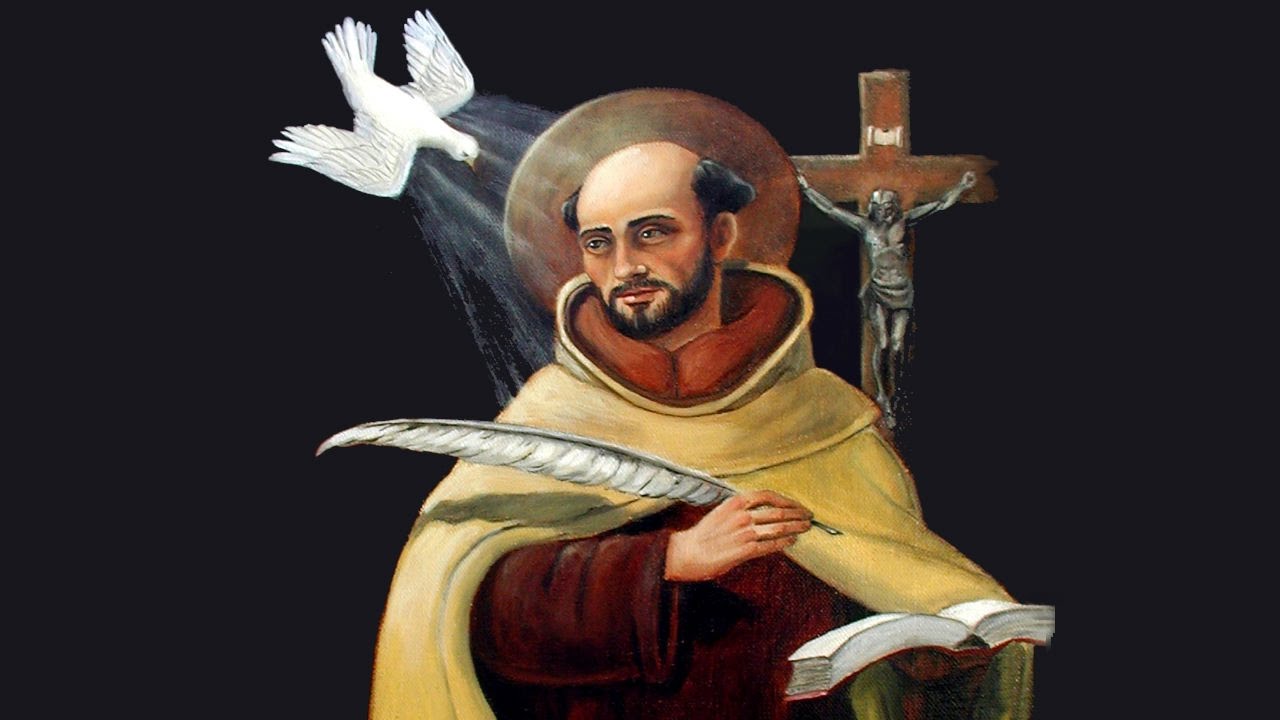
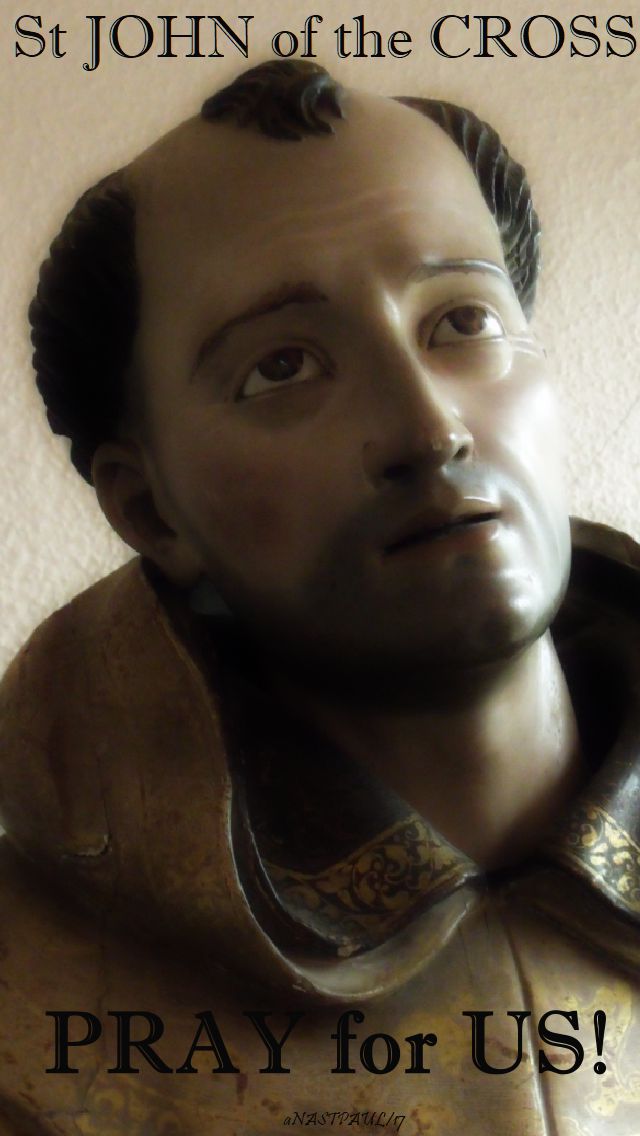
After the beatification of St John of the Cross on 25 January 1675, the Carmelite convent of Nuestra Señora de los Remedios near Seville commissioned this life-sized statue from the young Sevillian sculptor, Francisco Antonio Gijón, then only 21.
The figure of the saint holds a quill pen in his right hand and, in the left, a book with a model of a mountain surmounted by a cross, which refers to his mystic commentary, “The Ascent of Mount Carmel.”
Francisco Antonio Gijón (1653–c. 1721) and unknown painter (possibly Domingo Mejías)
Saint John of the Cross
c 1675
Painted and gilded wood
168 cm (66 1/8 in.)
Quotes of the Day – 14 December – The Memorial of St John of the Cross (1542-1591) Doctor of the Church
“In giving us His Son, His only Word, He spoke everything to us at once in this sole Word – and He has no more to say… because what He spoke before to the prophets in parts, He has now spoken all at once by giving us the ALL Who is His Son.”
“If a man wishes to be sure of the road he treads on, he must close his eyes and walk in the dark.”
“At the end of your life, you will be judged by your love.”
St John of the Cross (1542-1591) Doctor of the Church
One Minute Reflection – 14 December – The Memorial of St John of the Cross (1542-1591) Doctor of the Church
In all truth I tell you, unless a grain of wheat falls into the earth and dies, it remains only a single grain; but if it dies it yields a rich harvest…John 12:24
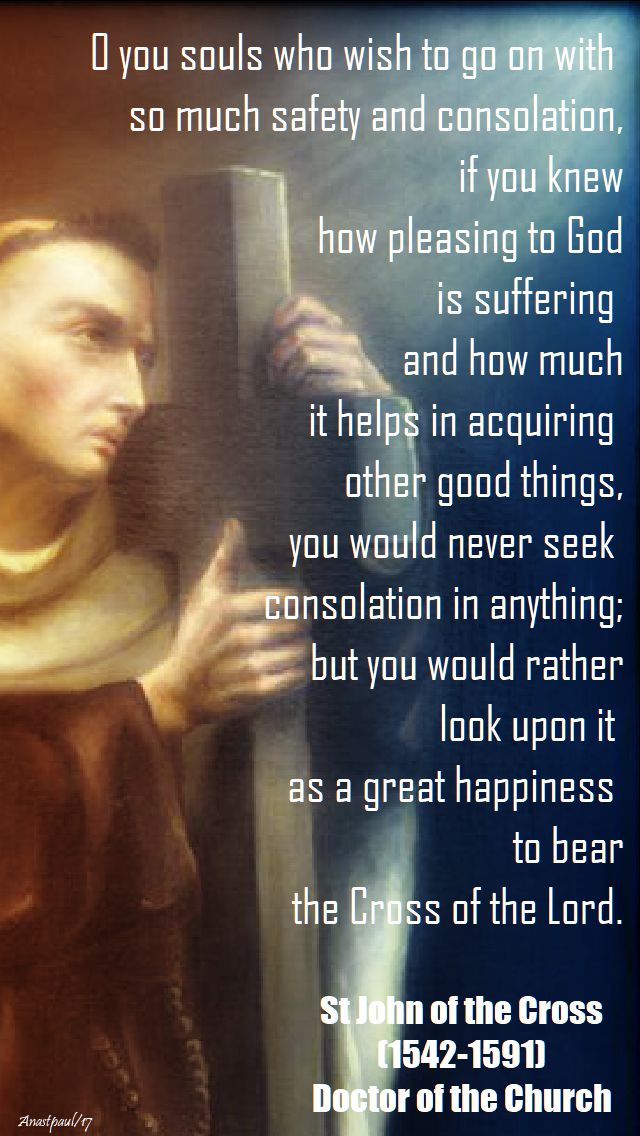
REFLECTION – “O you souls who wish to go on with so much safety and consolation, if you knew how pleasing to God is suffering and how much it helps in acquiring other good things, you would never seek consolation in anything; but you would rather look upon it as a great happiness to bear the Cross of the Lord.”…Saint John of the Cross
PRAYER – Lord God, You gave St John of the Cross, the grace of complete self-denial and an ardent love for the Cross of Christ. Grant that by following always in the footsteps of Christ and by the prayers of St John of the Cross on our behalf, we may come to the eternal vision of Your glory. Through our Lord Jesus Christ, in unity with the Holy Spirit, one God forever, amen.
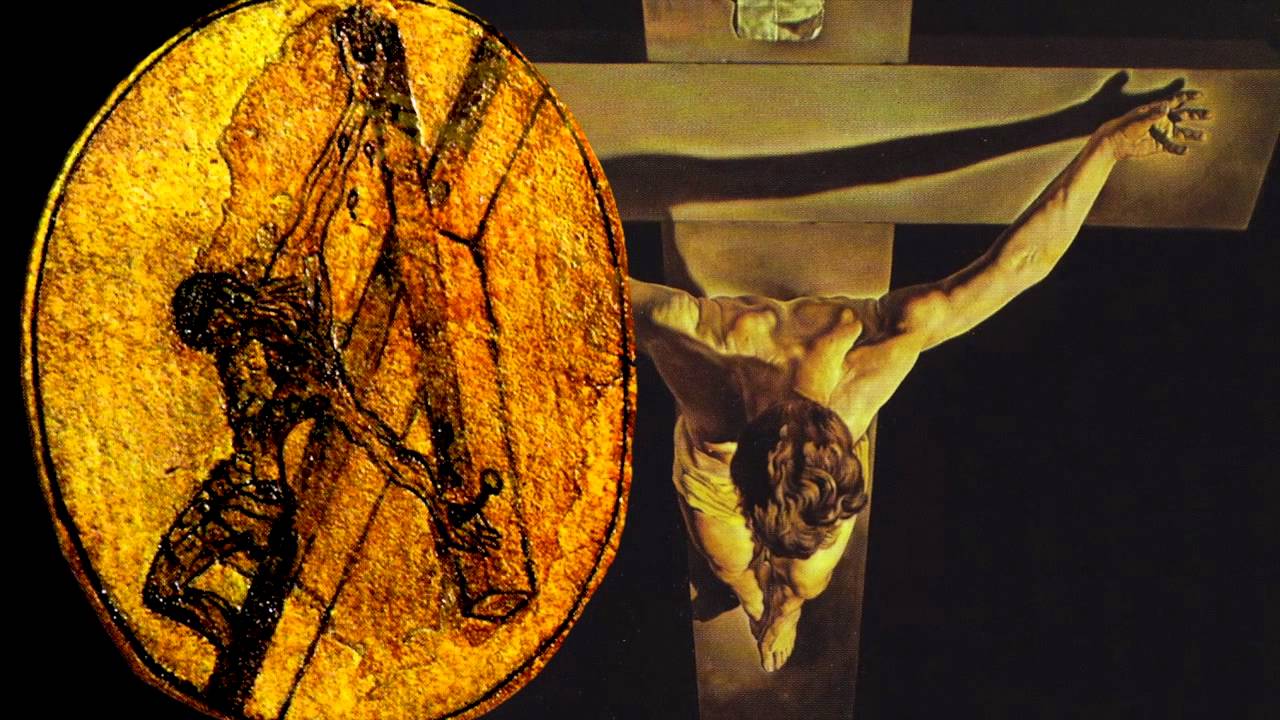
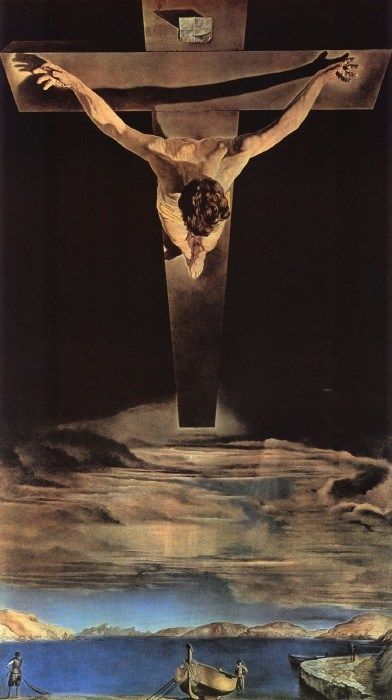
Christ of Saint John of the Cross is a painting by Salvador Dalí made in 1951.
It depicts Jesus Christ on the cross in a darkened sky floating over a body of water complete with a boat and fishermen. Although it is a depiction of the Crucifixion, it is devoid of nails, blood and a crown of thorns, because, according to Dalí, he was convinced by a dream that these features would mar his depiction of Christ. Also in a dream, the importance of depicting Christ in the extreme angle evident in the painting was revealed to him.
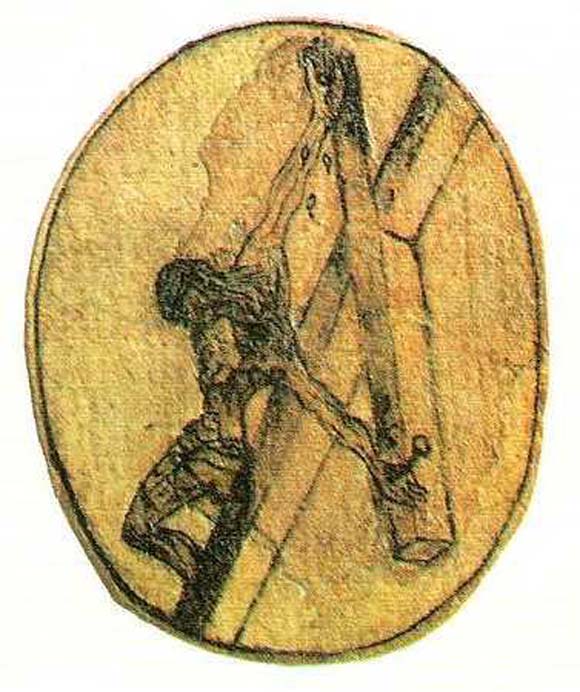
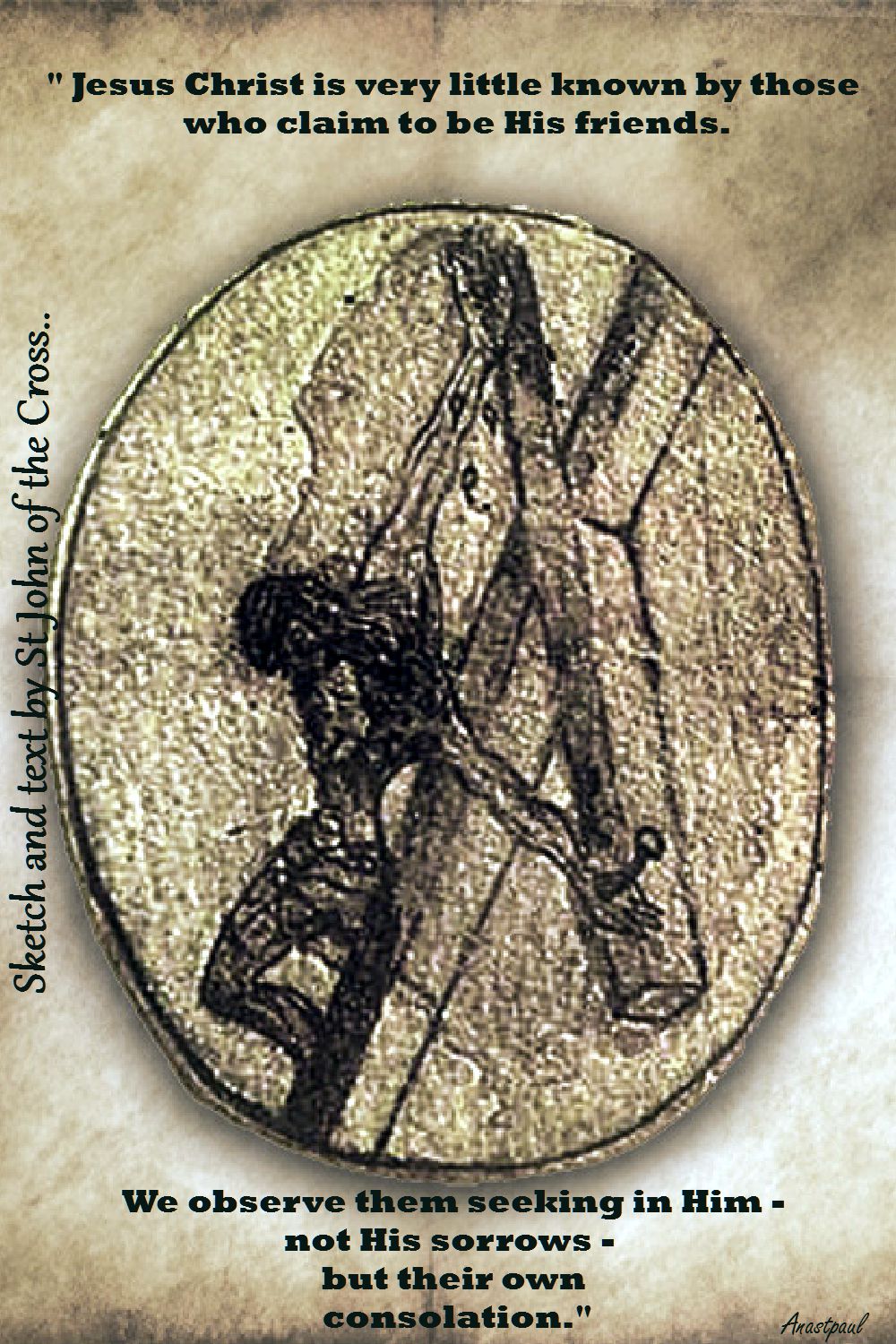
It is known by it’s Title because its design is based on a drawing by the 16th-century Spanish friar, today’s saint and a Doctor of the Church, St Jon of the Cross. The composition of Christ is also based on a triangle and circle (the triangle is formed by Christ’s arms; the circle is formed by Christ’s head). The triangle, since it has three sides, can be seen as a reference to the Trinity and the circle represents Unity. Below is the drawing by St John of the Cross.
On the bottom of his studies for the painting, Dalí explained its inspiration: “In the first place, in 1950, I had a ‘cosmic dream’ in which I saw this image in colour and which in my dream represented the ‘nucleus of the atom.’ This nucleus later took on a metaphysical sense; I considered it ‘the very unity of the universe,’ the Christ!”
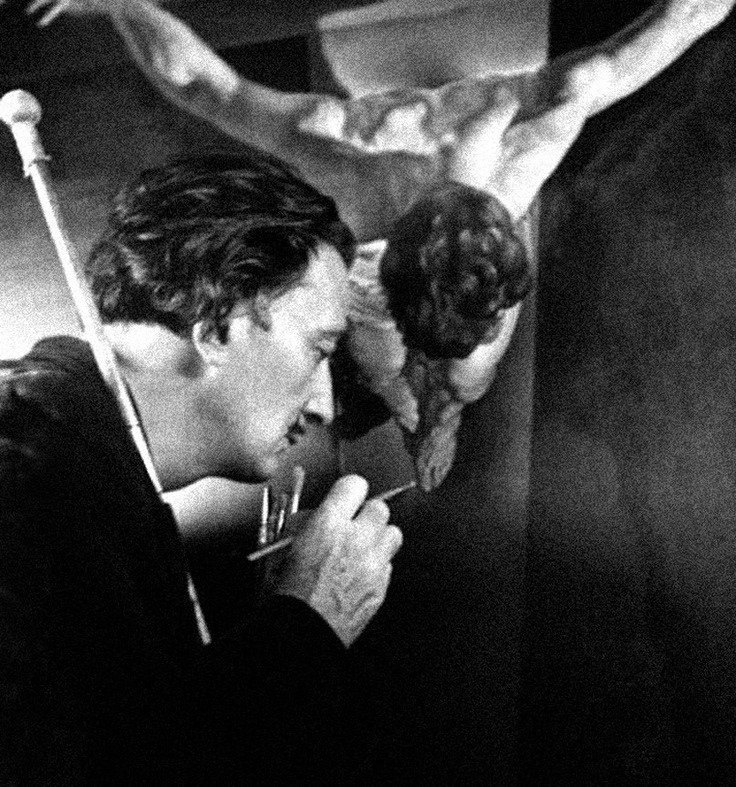
In order to create the figure of Christ, Dalí had Hollywood stuntman Russell Saunders suspended from an overhead gantry, so he could see how the body would appear from the desired angle and also envisage the pull of gravity on the human body. The depicted body of water is the bay of Port Lligat, Dalí’s residence at the time of the painting.
Saint of the Day – 14 December – (1542-1591) Doctor of the Church – Carmelite monk and Priest, Religious Founder, Writer, Poet, Mystic, Apostle of Contemplative Prayer. Also known as • Doctor of Mystical Theology • John della Croce • John de la Croix • John de la Cruz. Patronages – • contemplative life, contemplatives• mystical theology, mystics• Spanish poets• World Youth Day 2011• Segovia, Spain• Ta’ Xbiex, Malta. Attributes – eagle, Crucifix, Cross, Carmelite habit. John of the Cross is known for his writings. Both his poetry and his studies on the growth of the soul are considered the summit of mystical Spanish literature and one of the peaks of all Spanish literature. He was canonised as a saint in 1726 by Pope Benedict XIII. He is one of the thirty-six Doctors of the Church, added by Pope Pius XI in 1926. His works are • Ascent of Mount Carmel• Dark Night of the Soul, Book 1 • Dark Night of the Soul, Book 2 • A Spiritual Canticle of the Soul and the Bridegroom Christ.
St John was born Juan de Yepes y Álvarez into a converso family (descendents of Jewish converts to Christianity) in Fontiveros, near Ávila, a town of around 2,000 people. John’s father had been disowned by his wealthy Spanish family when he married a poor weaver rather than a woman of equal economic status. Living in poverty proved to be too much for him and he died shortly after John was born. John spent much of his youth in an orphanage, where he was clothed, fed and given an elementary education. At the age of 17, he found a job in a hospital and was accepted into a Jesuit college. In 1563 he entered the Carmelite Order. Eventually he enrolled in another university, where he did so well that he was asked to teach a class and to help settle disputes.
Ordained a Carmelite priest in 1567 at age 25, John met Teresa of Avila and, like her, vowed himself to the primitive Rule of the Carmelites. As partner with Teresa and in his own right, John engaged in the work of reform and came to experience the price of reform: increasing opposition, misunderstanding, persecution, imprisonment. John was caught up in a misunderstanding and imprisoned at Toledo, Spain. During those months of darkness in that little cell, John could have become bitter, revengeful, or filled with despair. But instead, he kept himself open to God’s action, for no prison could separate him from God’s all-embracing love. During this time he had many beautiful experiences and encounters with God in prayer. He came to know the cross acutely—to experience the dying of Jesus—as he sat month after month in his dark, damp, narrow cell with only his God.
Yet, the paradox! In this dying of imprisonment John came to life, uttering poetry. In the darkness of the dungeon, John’s spirit came into the Light. There are many mystics, many poets- John is unique as mystic-poet, expressing in his prison-cross the ecstasy of mystical union with God in the Spiritual Canticle.
But as agony leads to ecstasy, so John had his Ascent to Mt Carmel, as he named it in his prose masterpiece. As man-Christian-Carmelite, he experienced in himself this purifying ascent; as spiritual director, he sensed it in others; as psychologist-theologian, he described and analysed it in his prose writings. His prose works are outstanding in underscoring the cost of discipleship, the path of union with God: rigorous discipline, abandonment, purification. Uniquely and strongly John underlines the gospel paradox: The cross leads to resurrection, agony to ecstasy, darkness to light, abandonment to possession, denial to self to union with God. If you want to save your life, you must lose it. John is truly “of the Cross.” He died at 49—a life short, but full. AND his reforms of the “Discalced” Carmelites revitalised the Order. He was proclaimed a Doctor of the Church by Pope Pius XI on 24 August 1926.
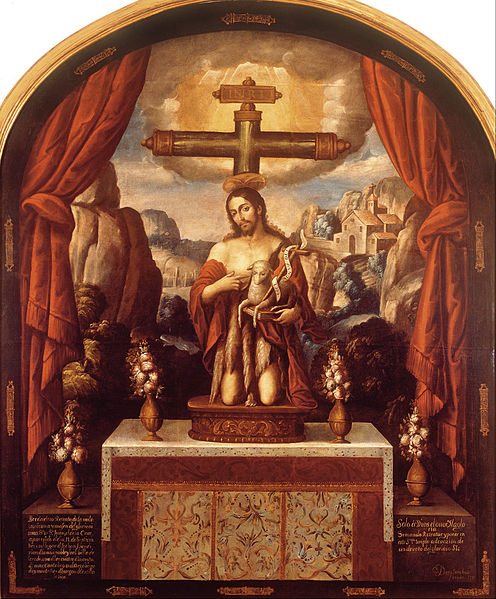
Diego de Sanabria – Saint John of the Cross
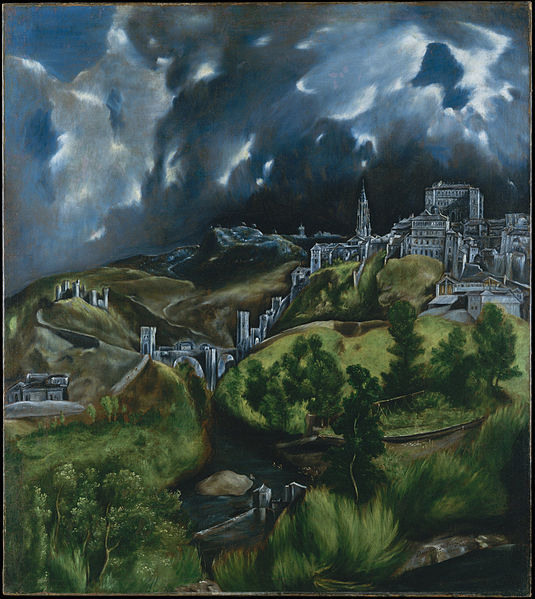
Image above – El Greco‘s landscape of Toledo depicts the priory in which John was held captive, just below the old Muslim alcázar and perched on the banks of the Tajo on high cliffs
“Jesus Christ is very little known by those who claim to be His friends. We observe them seeking in Him, not His sorrows but their own consolation.”
“The road is narrow. He who wishes to travel it more easily, must cast off all things and use the cross as his cane. In other words, he must be truly resolved. to suffer willingly for the love of God in all things.”
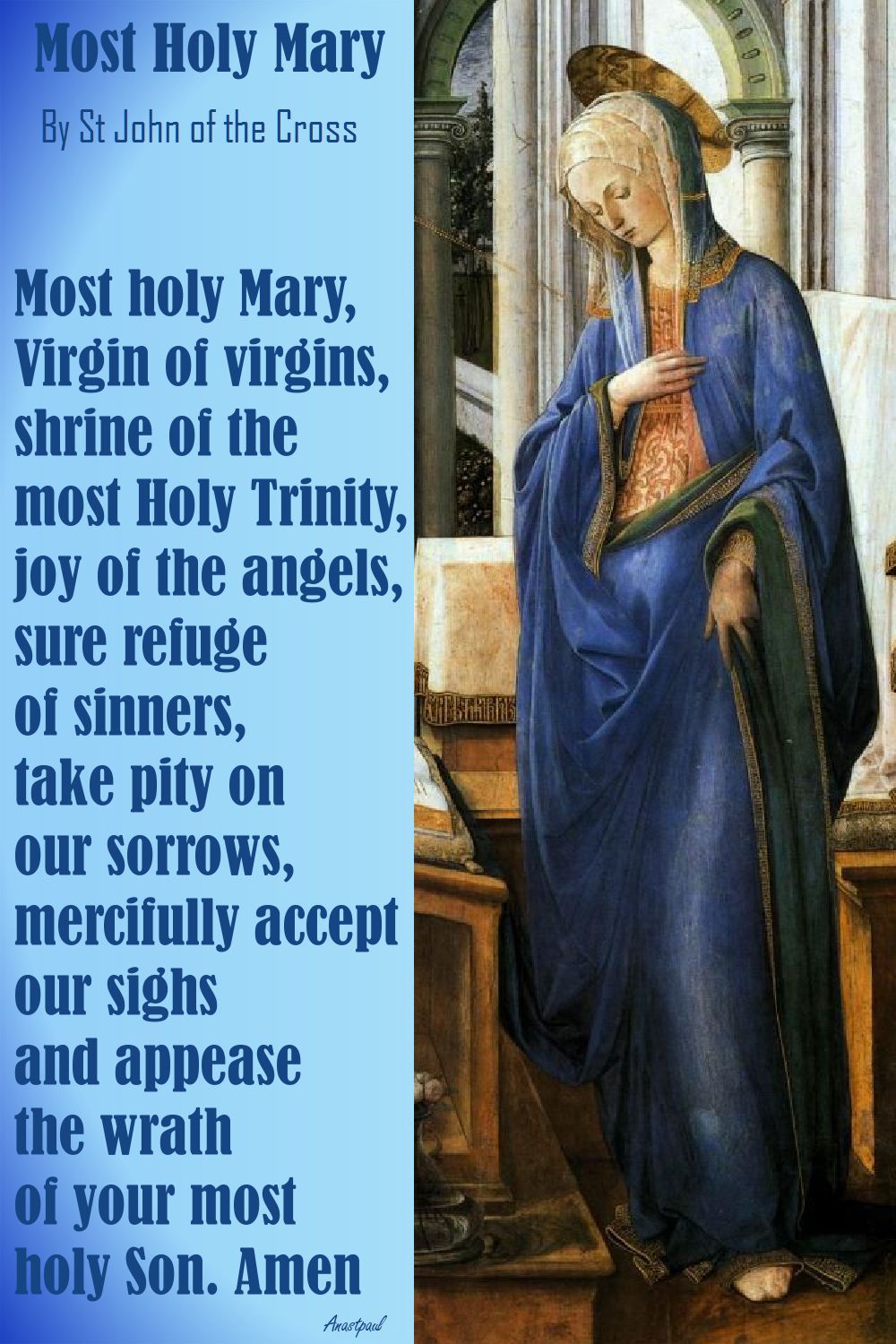
Most holy Mary,
Virgin of virgins,
shrine of the most Holy Trinity,
joy of the angels,
sure refuge of sinners,
take pity on our sorrows,
mercifully accept our sighs
and appease the wrath
of your most holy Son. Amen
“The road is narrow. He who wishes to travel it more easily must cast off all things and use the cross as his cane. In other words, he must be truly resolved to suffer willingly for the love of God in all things.”
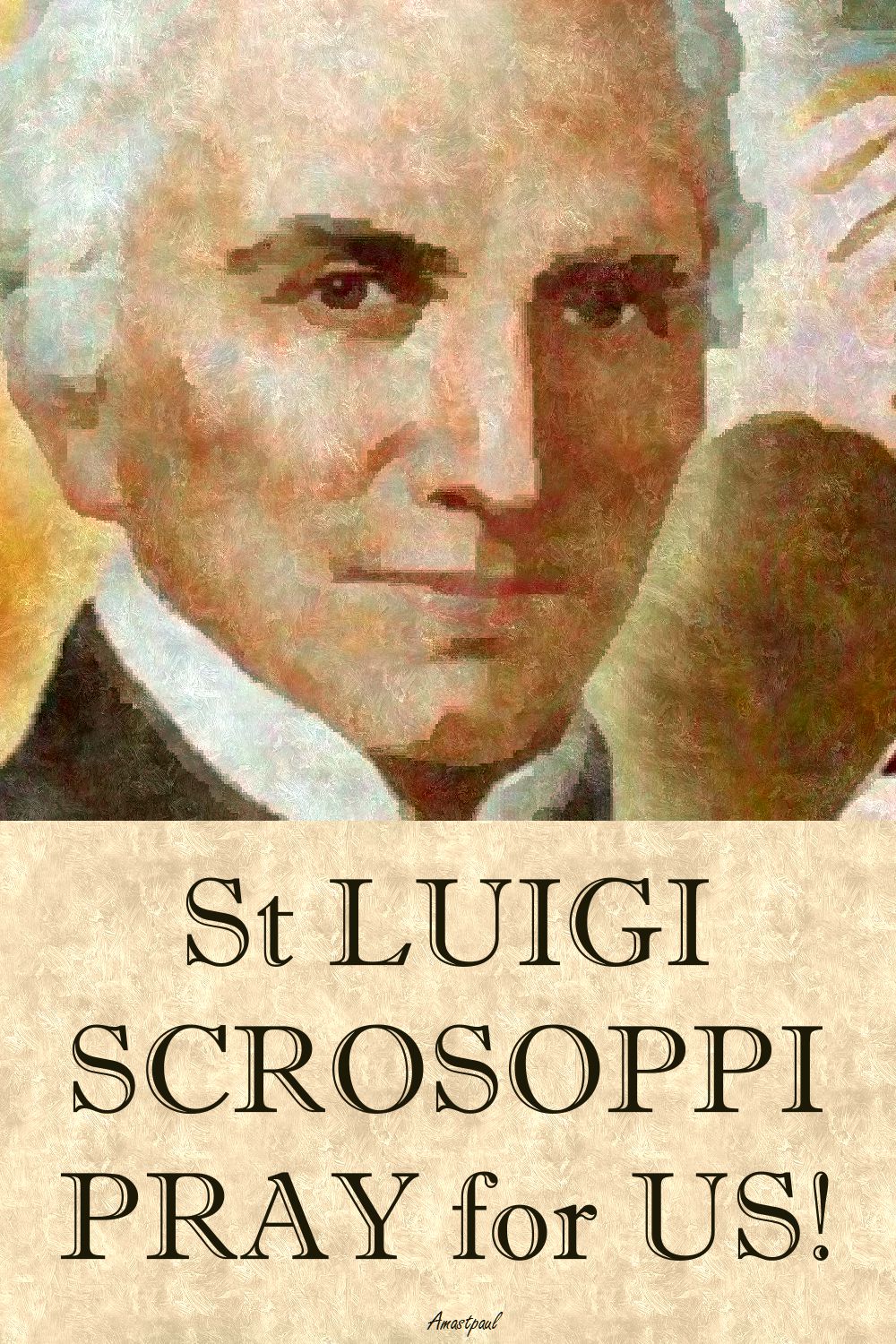
Gradually Father Luigi took on the fundamental traits of a spiritual life centred on Jesus Christ, loved and imitated in the humility and poverty of His incarnation in Bethlehem, in the simplicity of His working life at Nazareth, in His total immolation on the cross on Calvary and in the silence of the Eucharist. And since Jesus had said: “Whatever you did to one of the least of these my brethren you did it to me”, it is to them that every day Father Luigi devoted his life with the practical commitment to “seek first the kingdom of God and his justice” convinced that all the rest will be given according to the gospel promise. All the works he set in motion during his life reflect this preferential option for the poorest, the lowliest, the abandoned.
The more we read of the Saints, the more we know the answer without any doubt. For it has been given to us by God Himself, “whatever you do unto the least of these my brethren you did it to me.” (Matthew 25:45) So why on earth do we keep asking the same questions?
“At the evening of life, we shall be judged on our love” (CCC 1022; by St. John of the Cross)”
We know that God makes all things work together for the good of those who love him…….Romans 8:28
REFLECTION – “Do not allow yourselves to be overly saddened by the unfortunate accidents of this world. You are not aware of the benefits that they bring and by what secret judgment of God they are arranged for the eternal joy of the Elect.”………..St John of the Cross
PRAYER – Father of wisdom, help me to accept all earthly misfortunes even without understanding them, with the sure knowledge that good will comes from them. Let me never despair but trust in Your Providence that governs all things. Bl Thomas Sherwood, I think of you and your acceptance of your fate in total love of our good God, please pray for me, amen.
You must be logged in to post a comment.