Saint of the Day – 7 May – Saint Placid (Died c675) Abbot of the Abbey of Saint Symphorian in Autun in France. He was probably both born and died in the 7th Century in France. Also known as – Placidus, Plait.
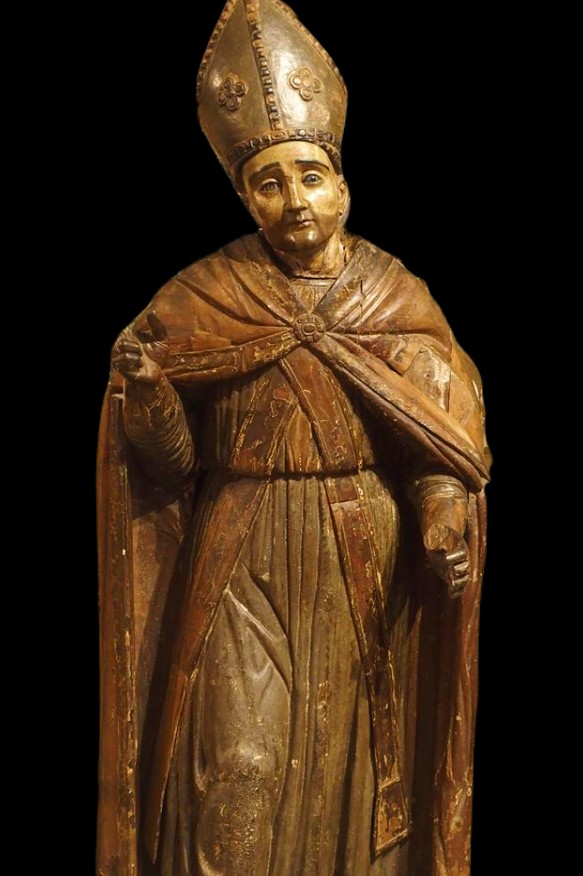
Unknown ancient Abbot
There is very little information about Saint Placid who became the Abbot of the Monastery at Autun. His existence is certain, as attested by the ancient cult paid to him in the Abbey and Basilica of Saint Symphorian in Autun.
However, precise chronological data is lacking and his figure remains elusive, the object of uncertainty and conjecture.
There is no certain knowledge about his birth, his education or his path of faith. His Episcopal identity itself is doubtful: some ancient martyrologies indicate him as the Bishop of Autun but his name does not appear in the official list of Bishops of the Diocese.
The only certainty concerns his role as the Abbot of the Abbey of Saint Symphorian in Autun. It is presumed that he governed the Abbey before 731, the year in which the Basilica was burned and destroyed by the Saracens.
The Martyrology of St Jerome mentions Saint Placidus on 7 May, attributing to him the title of Priest and Abbot of the Abbey of Saint Symphorian. His Liturgical memory is fixed for this date.
Despite the scarcity of biographical information, Saint Placid remains a venerated figure in local tradition. His memory is preserved in the Basilica of Saint Symphorianus (below), rebuilt after the Saracen destruction. His hagiography, although fragmentary, represents an important part in the history of the Church of Autun and of Benedictine monasticism.
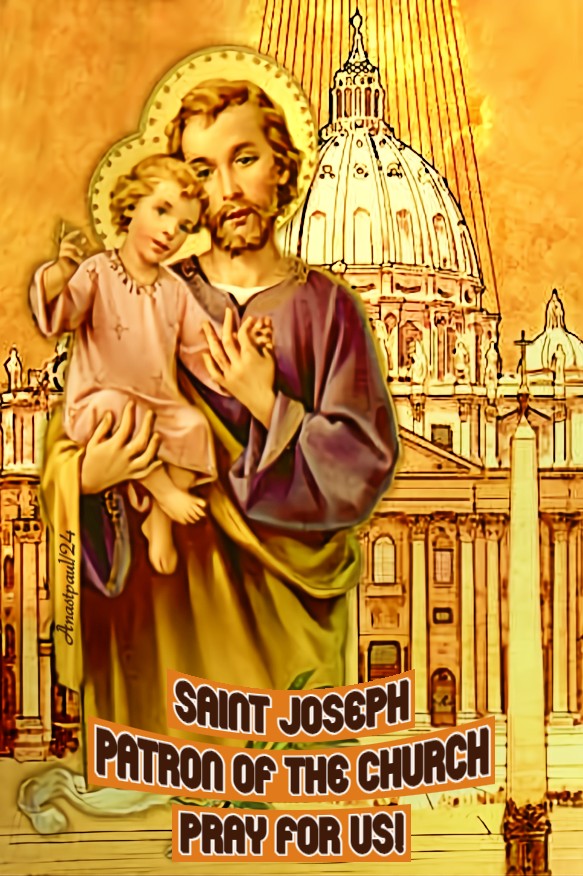
The Solemnity of the Patronage of St Joseph Wednesday preceding the Third Sunday after Easter: Few Catholics are likely familiar with the Eastertide Solemnity of St Joseph.By Papal Decree of Pope Pius IX on 8 December 1870 According to Father Francis Xavier Lasance (1860-1946) it was instituted during the hostile occupation of Rome by the Troops of the Italian King, Victor Emmanuel II. The Pope proclaimed St Joseph the Patron of the oppressed Household of the Faith, entrusting to St Joseph, the defence of Holy Mother Church.
In the beginning, this Feast Day was observed on the Third Sunday after Easter but when Pope St Pius X reformed the Liturgical Calendar to restore the Sunday Offices to prominence over those of the Saints, the second Feast of St Joseph was moved to the Wednesday preceding the Third Sunday after Easter. In 1911, the Feast was raised to a Double of the First Class and it was assigned an Octave after it was moved to the Wednesday before the Third Sunday after Easter. It is a Common Octave, so the Octave may or may not be commemorated on the intra Octave days depending on the rank of the Feasts which occur during the Octave. While this Feast day is not in the 1962 Missal, it is still kept by Priests who celebrate Holy Mass according to the pre-1955 reforms.
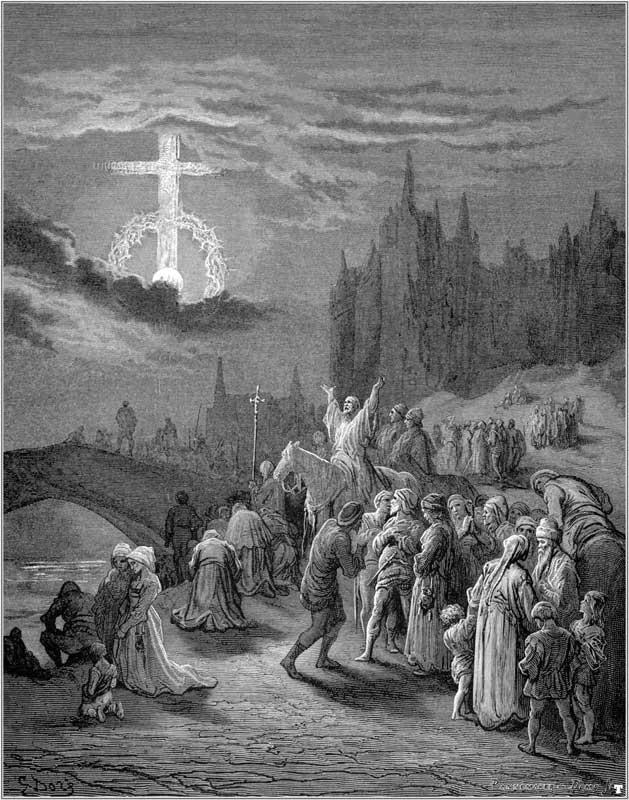
The Apparition of the Holy Cross over Jerusalem: The Commemoration of the appearance on 7 May 351, Pentecost that year, of a luminous image of the Holy Cross in Jerusalem. It stretched from Mount Golgotha to the Mount of Olives (about two miles / three kilometers), was brighter than the sun, lasted several hours and was seen by the entire City. It led to many conversions and was reported in a letter attributed to Saint Cyril of Jerusalem.
Bl Antonio de Agramunt St Augustine of Nicomedia St Augustus of Nicomedia St Cerenico of Spoleto St Domitian of Huy St Duje
St Flavia Domitilla of Terracina (1st Century) Virgin Martyr. The Roman Martyrology states of her today: “At Terracina, in Campania, the birthday of blessed Flavia Domitilla, Virgin and Martyr, niece of the Consul Flavius Clemens. She received the religious veil at the hands of St Clement and in the persecution of Domitian, was exiled with many others to the island of Pontia, where she endured a long Martyrdom for Christ. Taken afterwards to Terracina, she converted many to the faith of Christ by her teaching and miracles. The judge ordered the chamber in which she was, with the virgins Euphrosina and Theodora, to be set on fire and she thus consummated her glorious Martyrdom. She is also mentioned with the holy Martyrs Nereus and Achilleus, on the 12th of this month.” Her Life and Death: https://anastpaul.com/2021/05/07/saint-of-the-day-7-may-saint-flavia-domitilla-of-terracina-1st-century-virgin-and-martyr/
St Flavius of Nicomedia Bl Francesco Paleari Bl Gisela of Ungarn
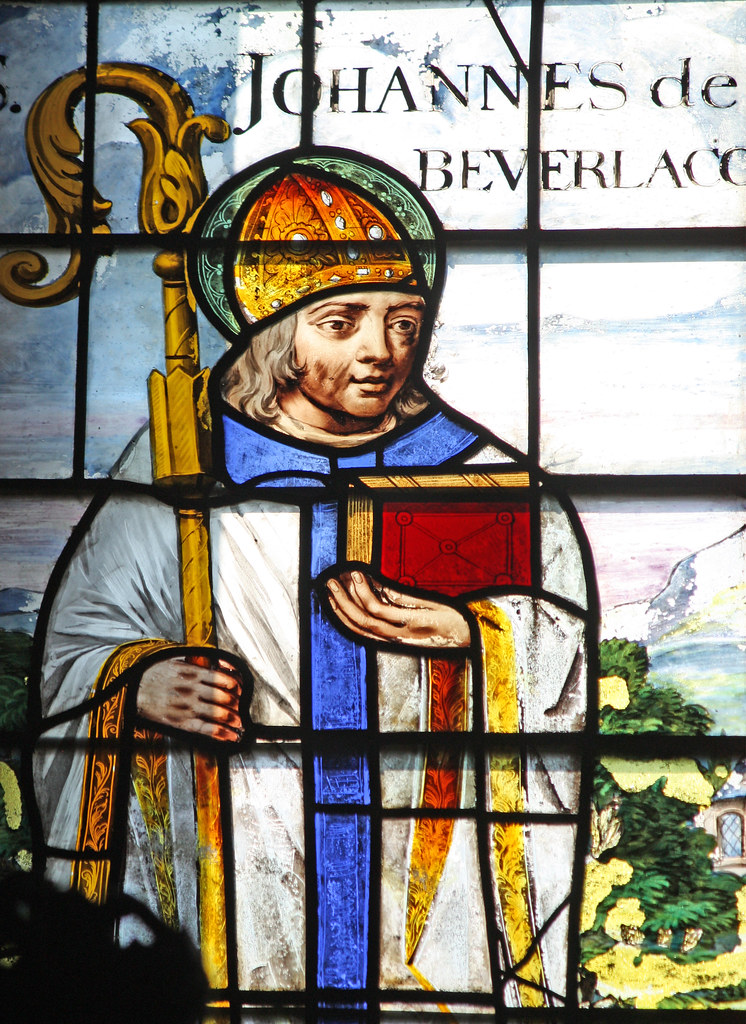
St John of Beverley (Died 721) Bishopof Hexham and then the Bishop of York, Scholar and Teacher, Apostle of the poor, and the sick Ascetic, Miracle-worker., a great friend of St Bede the Venerable. He founded a Monastery at Beverley, Yorkshire from which the Town developed. Today, it is a vibrant market Town of some 31,000 people. It owes its foundation and growth to Saint John of Beverley. The Beverley Cathedral now stands on the site of St John’s Monastery. The Roman Martyrology reads today: “At York, in England, St John, Bishop, renowned for his saintly life and miracles.” A Wonderful Saint from Yorkshire: https://anastpaul.com/2022/05/07/saint-of-the-day-7-may-st-john-of-beverley-died-721-of-the-miraculous-banner/
St Juvenal of Benevento St Maurelius of Voghenza-Ferrara St Peter (Died c735) Bishop of Pavia St Placid (Died c675) Abbot of Autun St Quadratus of Herbipolis St Quadratus of Nicomedia
St Serenicus of Hyesmes St Serenus of Hyesmes Bl Villanus (Died 1237) Bishop of Gubbio




 AnaStpaul
You must be logged in to post a comment.