Our Morning Offering – 1 August – The Memorial of (1696-1787) Doctor of the Church
The One Thing Necessary By St Alphonsus Liguori (1696-1787) Doctor of the Church
0 my God, help me to remember
That time is short, eternity is long.
What good is all the greatness of this world at the hour of death?
To love You, my God
and save my soul is the one thing necessary.
Without You, there is no peace, no joy.
My God, I need fear nothing but sin.
For to lose You, my God, is to lose all.
0 my God, help me to remember –
That to gain all I must leave all,
That in loving You
I have all good things,
the infinite riches of Christ
and His Church,
the motherly protection of Mary,
peace beyond understanding,
joy unspeakable!
Eternal Father, Your Son has promised,
that whatever we ask in His Name will be given to us.
In His Name I pray:
give me a burning faith,
a joyful hope,
a holy love for Jesus Christ.
Give me the grace of perseverance
in doing Your will in all things.
Do with me what You will.
I repent of having offended You.
Grant, O Lord, that I may love You always
and never let me be separated from You.
O my God and my All,
make me a saint!
Amen
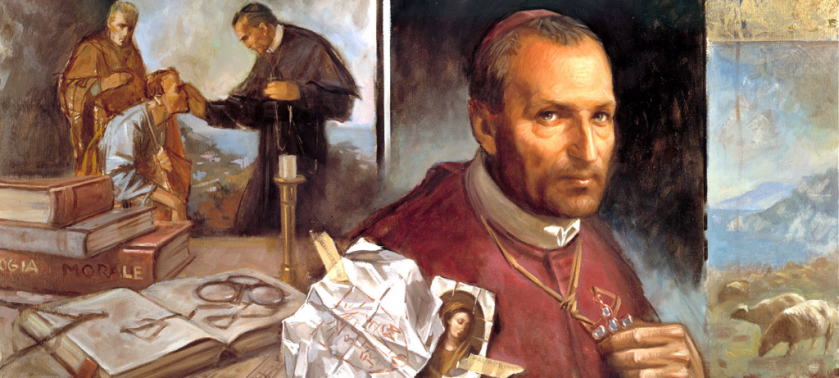
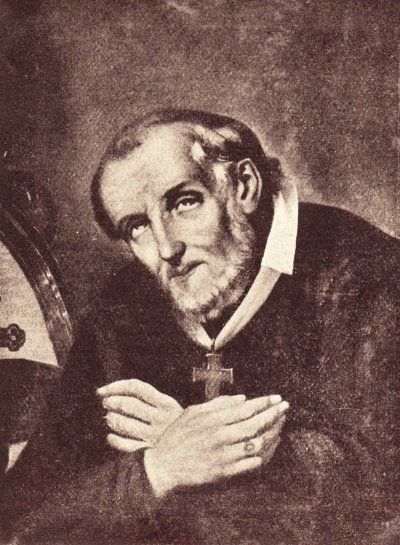
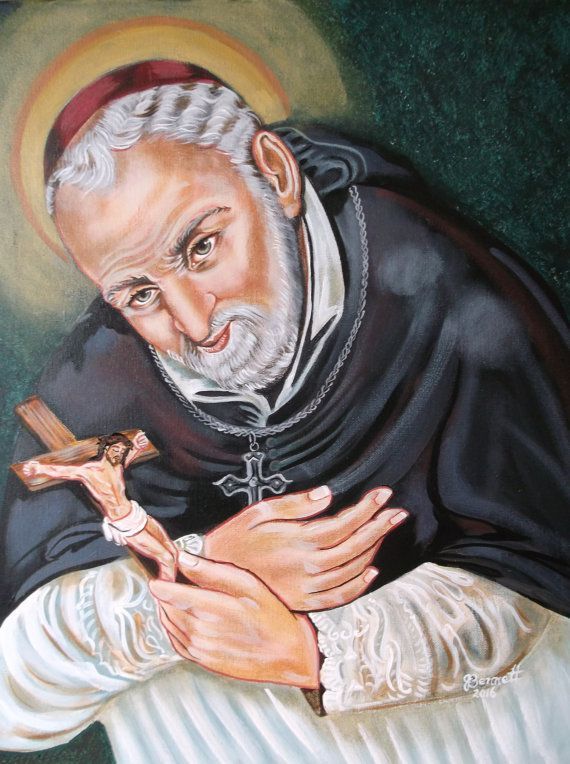
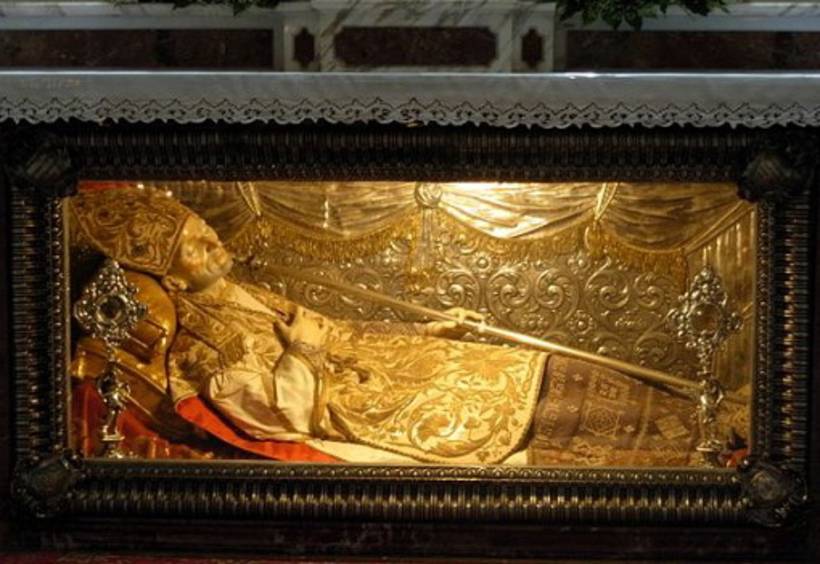
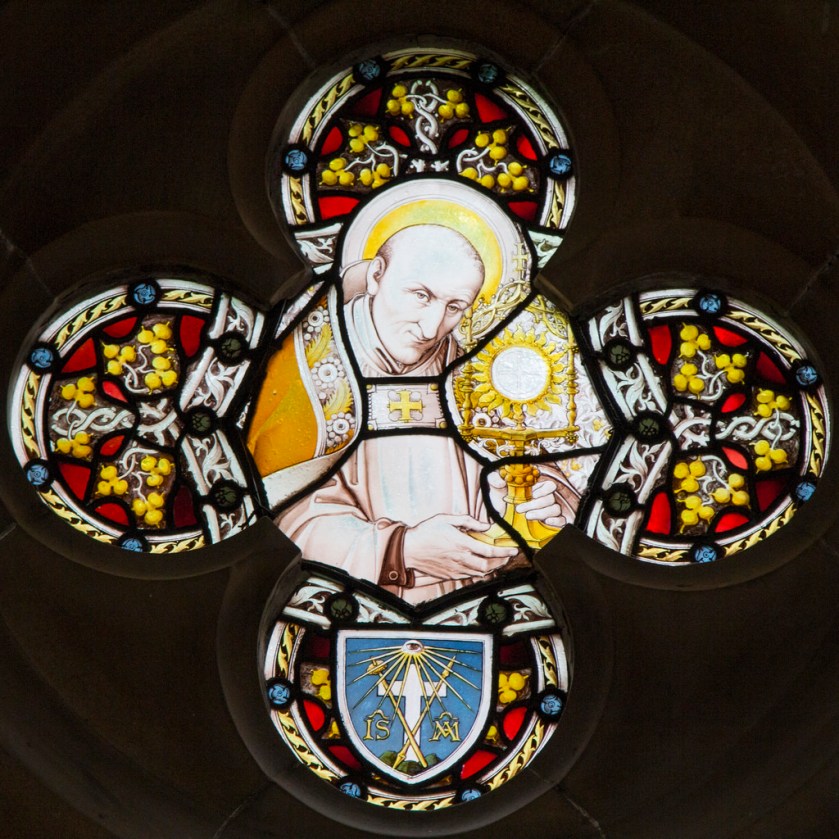
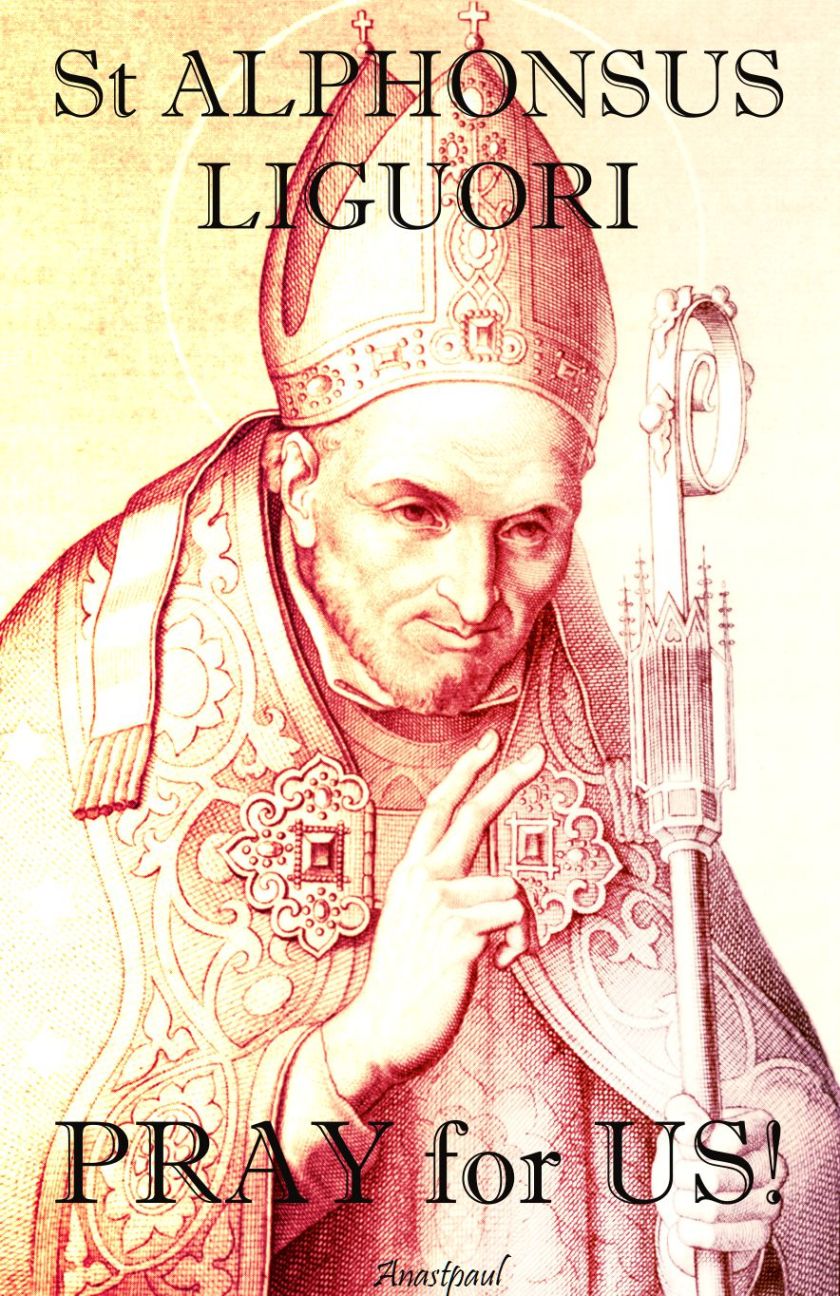
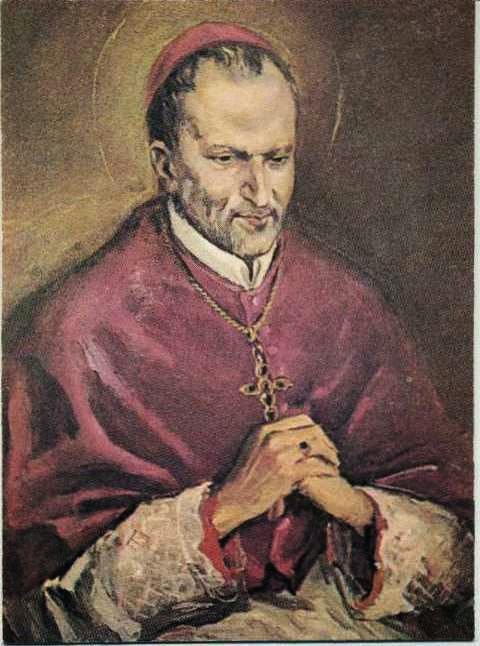
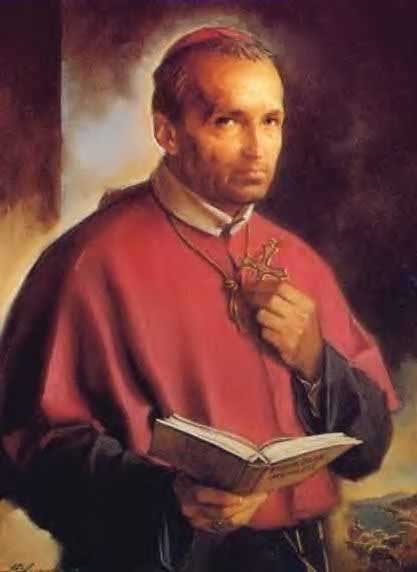
Saint of the Day – 1 August – St Alphonsus Maria de Liguori C.Ss.R. (1696-1787) – Confessor, Bishop, Doctor of the Church, Founder of the Redemptorists, Spiritual Writer, Composer, Musician, Artist, Poet, Lawyer, Scholastic Philosopher and Theologian. Patronages – against arthritis, against scrupulosity, of Confessors (given on 26 February 1950 by Pope Pius XII), final perseverance, moral theologians, moralists (1950 by Pope Pius XII), scrupulous people, vocations, Diocese of Acerra, Italy, Diocese of Agrigento, Italy,l Pagani, Italy, Sant’Agata de’ Goti, Italy.
The Roman Martyrology states of St Alphonsus today: “At Nocera-de-Pagani, Saint Alphonsus Maria de Liguori, Bishop of St Agatha of the Goths and Founder of the Congregation of the Most Holy Redeemer (the Redemptorists), distinguished by his zeal for the salvation of souls, by his writings, his preaching and his example.
He was inscribed on the Calendar of the Saints by Pope Gregory XVI in the year 1839, the 52nd after his happy death and , in 1871, was declared Doctor of the Universal Church by Pius IX, according to a decree of the Sacred Congregation of Rites.“
St Alphonsus was born of noble parents, near Naples, in 1696. His spiritual training was entrusted to the Fathers of the Oratory in that city and from his boyhood Alphonsus was known as a most devout Brother of the Little Oratory. At the early age of sixteen he was made doctor in law and he threw himself into this career with ardour and success.
A mistake, by which he lost an important cause, showed him the vanity of human fame and determined him to labour only for the glory of God. He entered the priesthood, devoting himself to the most neglected souls and to carry on this work he founded later the missionary Congregation of the Most Holy Redeemer, The Redemptorists.
At the age of sixty-six he became Bishop of St Agatha and undertook the reform of his diocese with the zeal of a Saint. He made a vow never to lose time and, though his life was spent in prayer and work, he composed a vast number of books, filled with such science, unction and wisdom that he has been declared one of the Doctors of the Church.
St Alphonsus wrote his first book at the age of forty-nine and in his eighty-third year had published about 100 volumes, when his director forbade him to write more. Very many of these books were written in the half-hours snatched from his labours as missionary, religious superior and Bishop, or in the midst of continual bodily and mental sufferings. With his left hand he would hold a piece of marble against his aching head while his right hand wrote.
Yet he counted no time wasted which was spent in charity. He did not refuse to hold a long correspondence with a simple soldier who asked his advice, or to play the harpsichord while he taught his novices to sing spiritual canticles. He lived in evil times, and met with many persecutions and disappointments.
For his last seven years he was prevented by constant sickness from offering the Adorable Sacrifice but he received Holy Communion daily and his love for Jesus Christ and his trust in Mary’s prayers sustained him to the end.
He died in 1787, in his ninety-first year.
For lots more details on St Alphonsus here: https://anastpaul.wordpress.com/2017/08/01/saint-of-the-day-1-august-st-alphonsus-maria-de-liguori-c-ss-r-doctor-of-the-church/
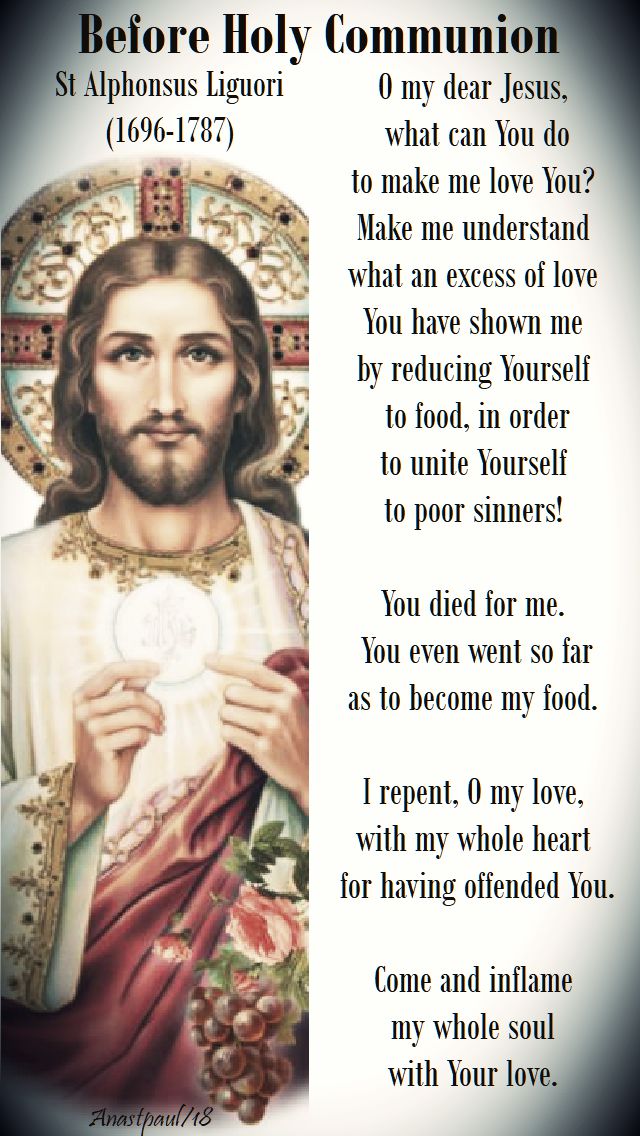
Sunday Reflection – 1 July – By St Alphonsus Liguori (1696-1787)
O my dear Jesus, what can You do to make me love You?
Make me understand, what an excess of love You have shown me, by reducing Yourself to food,
in order to unite Yourself to poor sinners!
You, my dear Redeemer, have so much affection for me,
that You have not refused to give Yourself, again and again, entirely to me in Holy Communion.
And yet, I have had the courage to drive You away from my soul on so many occasions!
You do not despise a humble and contrite heart.
You became human for my sake.
You died for me.
You even went so far as to become my food.
What more can there remain for You to do in order to gain my love?
Oh, that I could die with grief, every time that I remember, that I have despised Your grace.
I repent, O my love, with my whole heart for having offended You.
I love You, O infinite goodness! I love You, O infinite love!
I desire nothing but to love You and I fear nothing but to live without Your love.
My beloved Jesus, do not refuse to come to me.
Come, because I would rather die a thousand times than drive You away again.
I will do all that I can to please You.
Come and inflame my whole soul with Your love.
Grant that I may forget everything, to think only of You,
and to desire You alone,
my sovereign and my only good.
Sunday Reflection – 24 June – Help to Holiness by St Alphonsus Liquori (1696-1787) Most Zealous Doctor
St Alphonsus helps us, with:
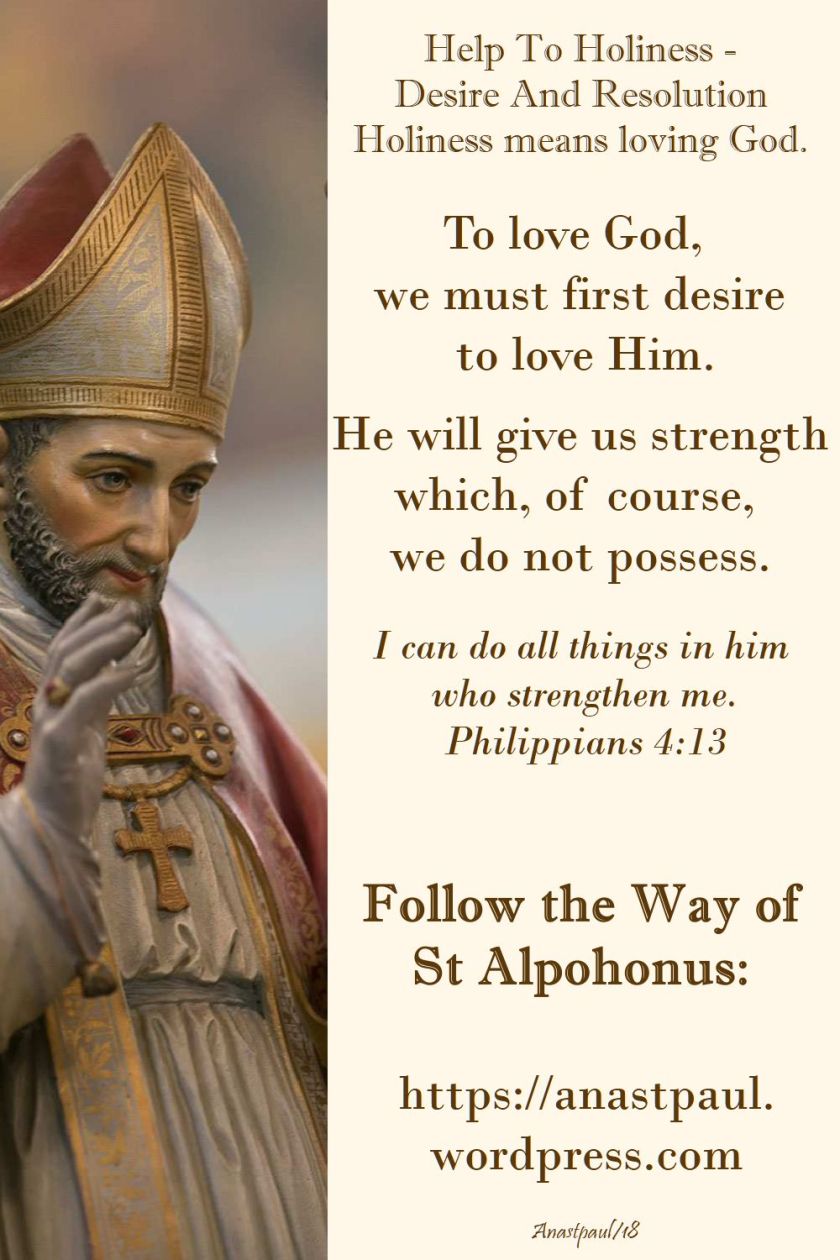
Help To Holiness – Desire And Resolution
Holiness means loving God.
To love God, we must first desire to love Him.
If we do not want something, we will, certainly go to little trouble to obtain it!
So it is with the love of God.
He that has a small wish to advance in divine love will become lukewarm and, continuing this tepidity,
will soon fall totally away from God.
On the other hand whoever aspires after holines, and makes daily efforts to advance, will, little by little, attain it.
Saint Teresa assures us:
God leaves no deisre without its reward.
But let us not trust to our own efforts, to advance in holiness but hope for all, from and through God.
He will give us strength which, of course, we do not possess. I can do all things in him who strengthen me.
Philippians 4:13
Many desire holiness but never take the means to gain it!
They want to do great penance and practice great prayer,
but such desires are mere fancies.
Saint Teresa often said: The devil has no dread of irresolute souls.
RESOLUTIONS
Let us then fix our minds in the ways of God.
Let us resolve to meditate each day on the passion of our Lord Jesus Christ.
Let us resign ourselves in peace to God’s plan for us.
Let us endeavour, in the time remaining to us, to give all to God.
Jesus has given Himself to us,
may God help us to give ourselves to Him.
Quote/s of the Day – 20 June – Wednesday Eleventh Week of Ord Time Year B – Today’s Gospel Matthew 6:1-6.16-18
“Speaking of: Humility”
“God resists the proud but gives grace to the humble”
James 4:6
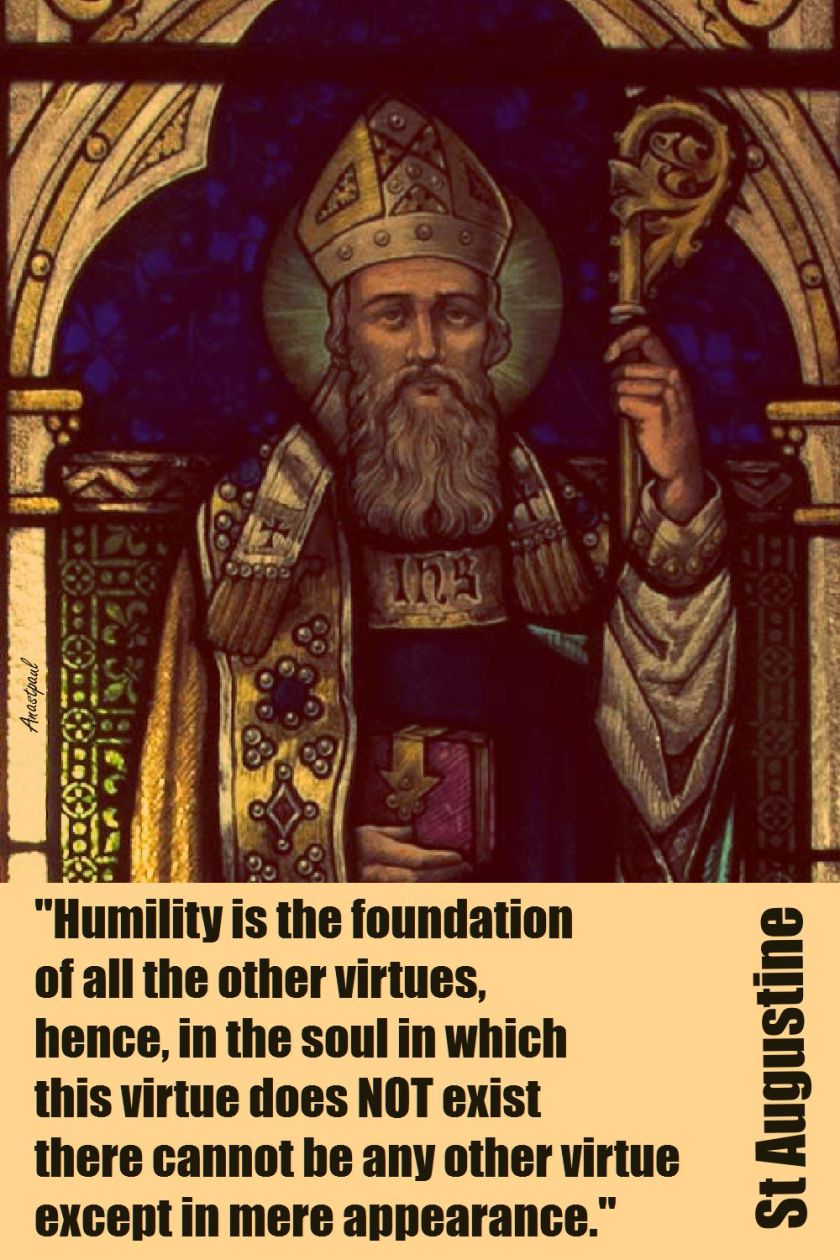
“Humility is the foundation of all the other virtues, hence, in the soul in which this virtue does not exist, there cannot be any other virtue, except in mere appearance.”
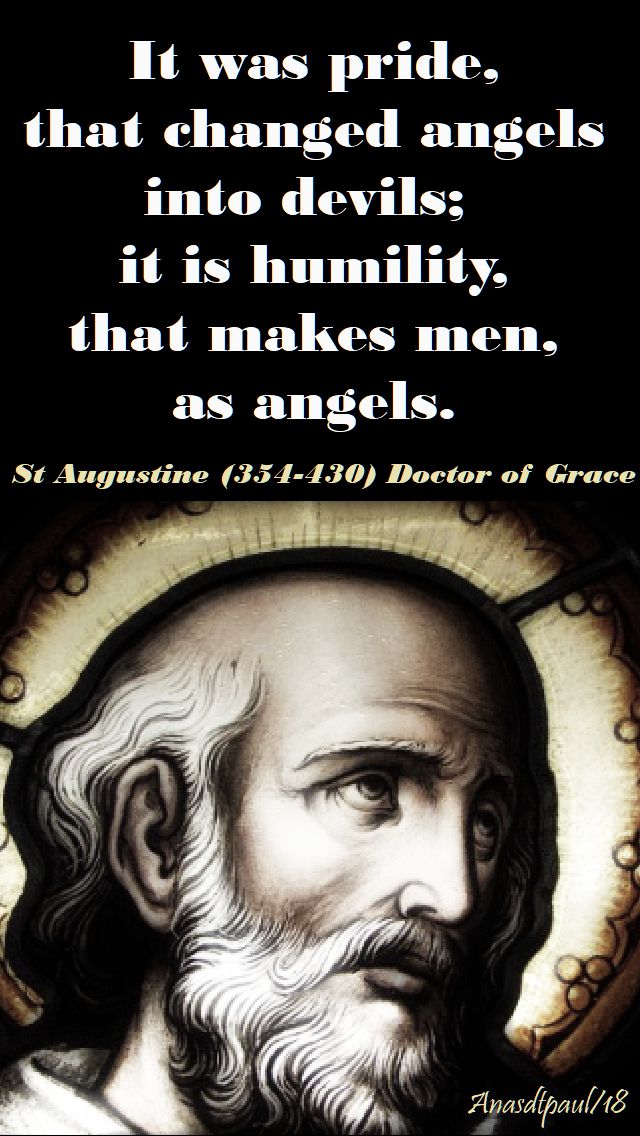
“It was pride that changed angels into devils; it is humility that makes men as angels.”
St Augustine (354-430) Doctor of Grace
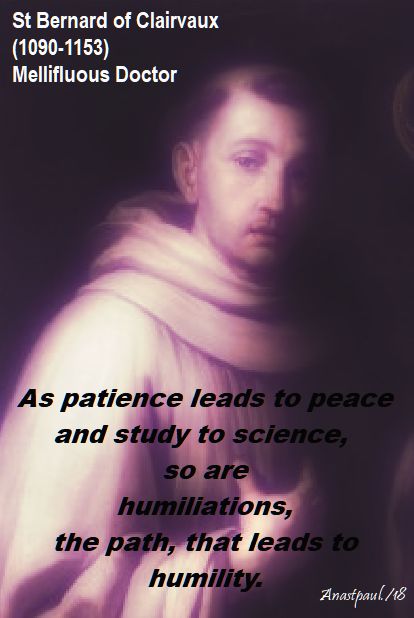
“As patience leads to peace and study to science, so are humiliations, the path that leads to humility.”
St Bernard of Clairvaux (1090-1153) Mellifluous Doctor
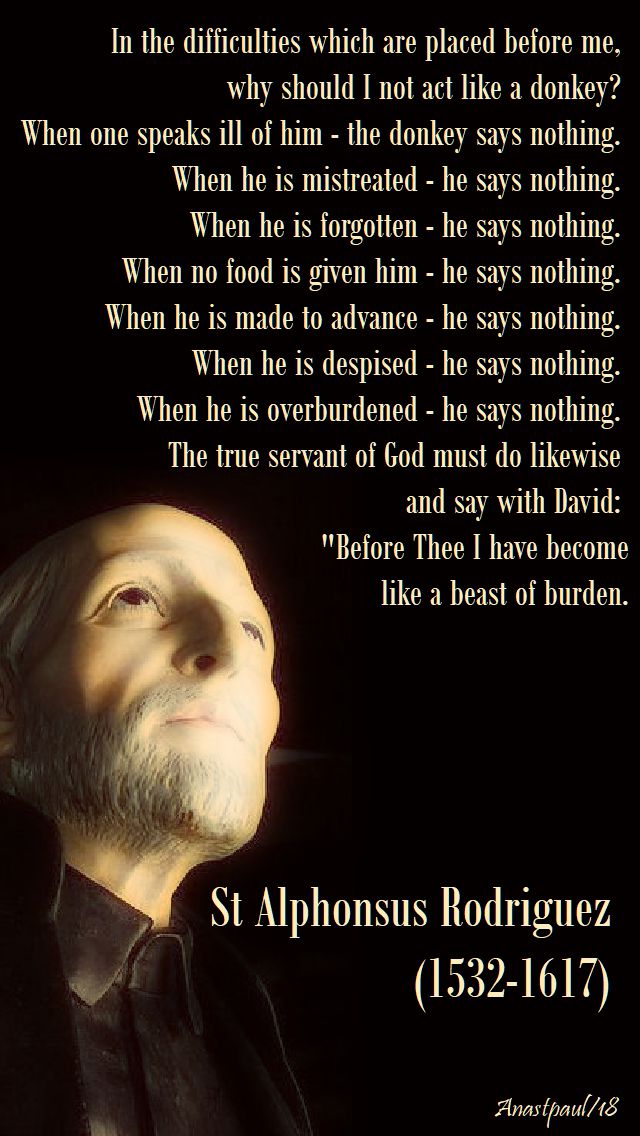
“In the difficulties which are placed before me, why should I not act like a donkey? When one speaks ill of him – the donkey says nothing. When he is mistreated – he says nothing. When he is forgotten – he says nothing. When no food is given him – he says nothing. When he is made to advance – he says nothing. When he is despised – he says nothing. When he is overburdened – he says nothing. The true servant of God must do likewise and say with David: “Before Thee I have become like a beast of burden.”
St Alphonsus Rodriguez (1532-1617)
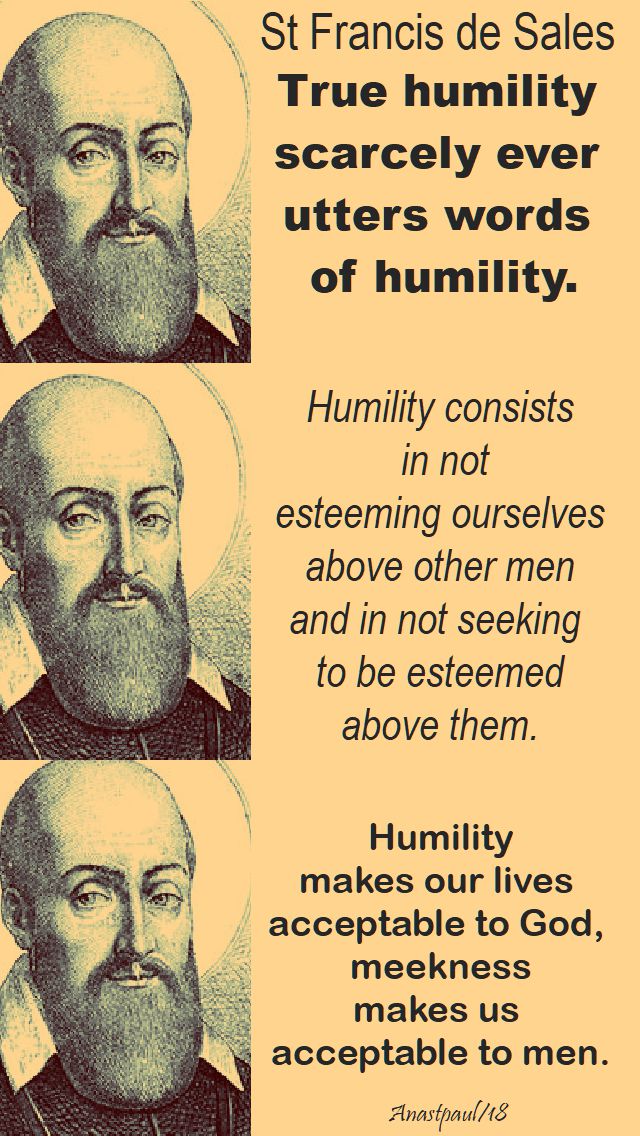
“True humility scarcely ever utters words of humility.”
“Humility consists in not esteeming ourselves above other men and in not seeking to be esteemed above them.”
“Humility makes our lives acceptable to God, meekness makes us acceptable to men.”
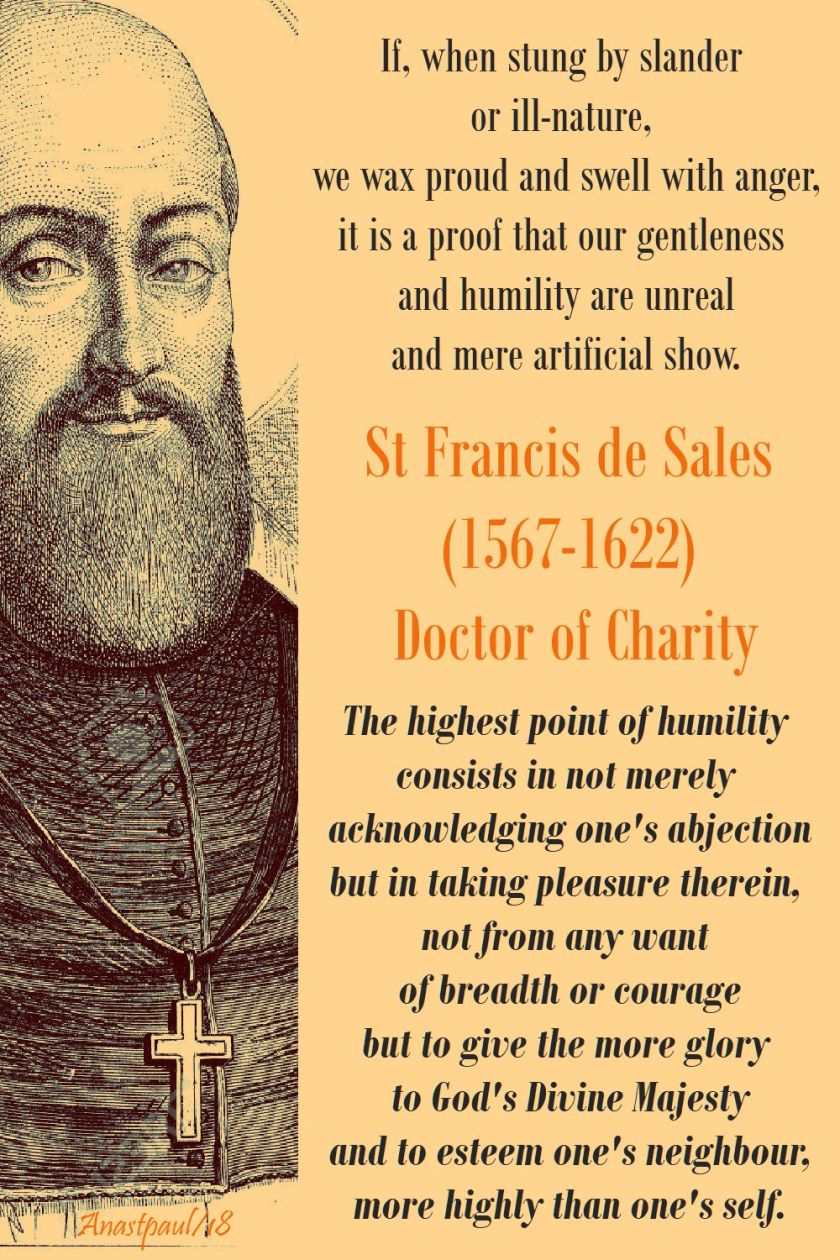
“If, when stung by slander or ill-nature, we wax proud and swell with anger, it is a proof that our gentleness and humility are unreal and mere artificial show.”
“The highest point of humility consists in not merely acknowledging one’s abjection but in taking pleasure therein, not from any want of breadth or courage but to give the more glory to God’s Divine Majesty and to esteem one’s neighbour, more highly than one’s self.”
St Francis de Sales (1567-1622) Doctor of Charity
“The truly humble reject all praise for themselves and refer it all to God.”
St Alphonsus Maria de Liguori (1696-1787) Most Zealous Doctor
Quote/s of the Day – 18 June – The Memorial of St Romuald (c 951-1027)
Speaking of: Prayer
“It is better to say one Our Father fervently and devoutly than a thousand, with no devotion and full of distraction.”
St Edmund (841-869)
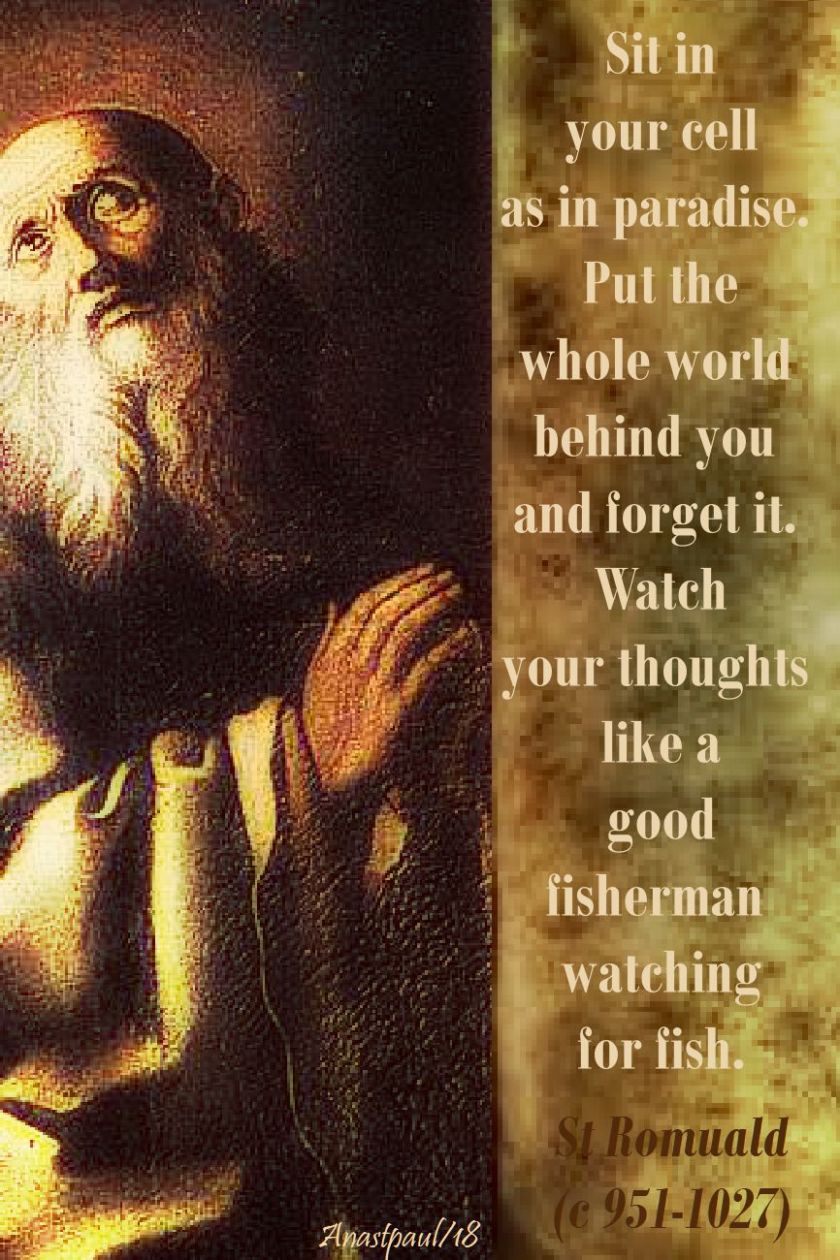
“Sit in your cell as in paradise. Put the whole world behind you and forget it. Watch your thoughts like a good fisherman watching for fish.”
St Romuald (c 951-1027)
“Were you to ask, ‘what are the means of overcoming temptations’, I would answer: The first means is prayer; the second is prayer; the third is prayer; and should you ask me, a thousand times, I would repeat the same.”
St Alphonsus Liguori (1696-1787)
Most Zealous Doctor
“When we speak to Jesus with simplicity and with all our heart, He does like a mother who holds her child’s head with her hands and covers it with kisses and caresses.”
St John Vianney (1786-1859)
“Jesus is waiting for you in the chapel. Go and find Him.”
St Jeanne Jugan (1792-1879) 30 August
“To clasp the hands in prayer is a beginning of an uprising against the disorder of the world.”
Karl Barth (1886-1968)
“Friends, do not be afraid of silence or stillness. Listen to God. Adore Him in the Eucharist.”
Pope Benedict XVI
“Turn your car into a monastery.”
Bishop Robert Barron
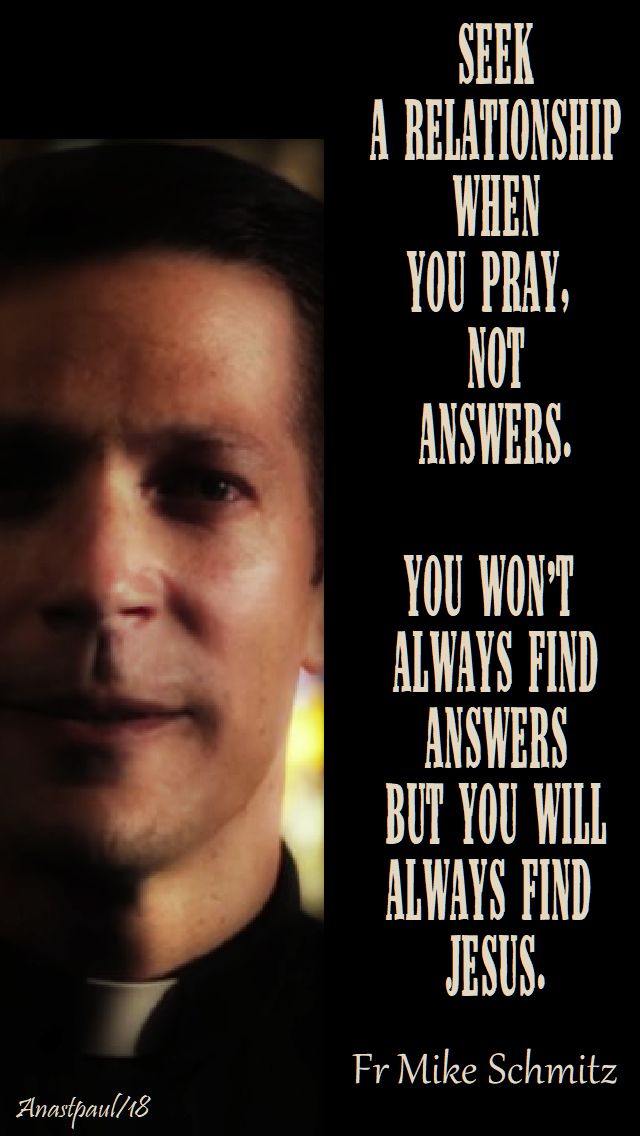
“Seek a relationship when you pray, not answers. You won’t always find answers but you will always find Jesus.”
Our Morning Offering – 29 April – Fifth Sunday of Eastertide
An Act of Confidence Before Holy Mass By St Alphonsus Liguori (1696-1787) Most Zealous Doctor
My soul expand your heart.
Your Jesus can do You every good
and indeed, love you.
Hope for great things from Your Lord,
who, urged by love,
comes all love to You.
Yes, my dear Jesus, my hope,
I trust in Your goodness,
that in giving Yourself to me this morning,
You will enkindle in my poor heart,
the beautiful flame of Your pure love
and a real desire to please You,
so that, from this day forward,
I may never will anything
but what You will.
Amen
Quote/s of the Day – 20 April – Friday of the Third Week of Eastertide – Today’s Gospel: John 6:52-59
“Speaking of: The Holy Eucharist”
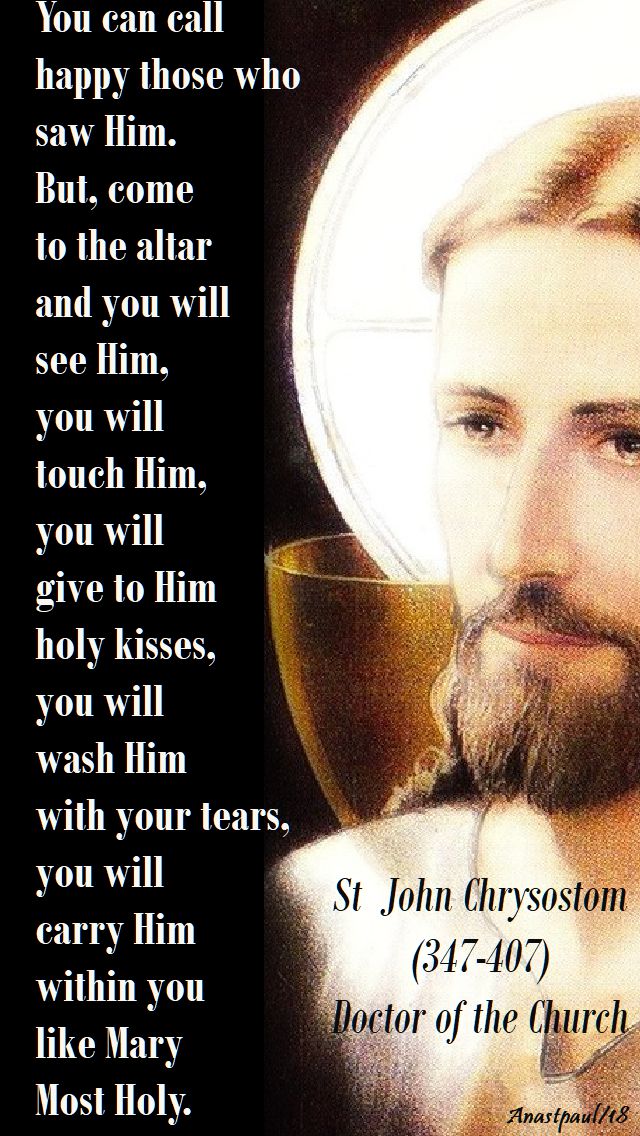
“You can call happy those who saw Him. But, come to the altar and you will see Him, you will touch Him, you will give to Him holy kisses, you will wash Him with your tears, you will carry Him within you like Mary Most Holy.”
St John Chrysostom (347-407) Doctor of the Church
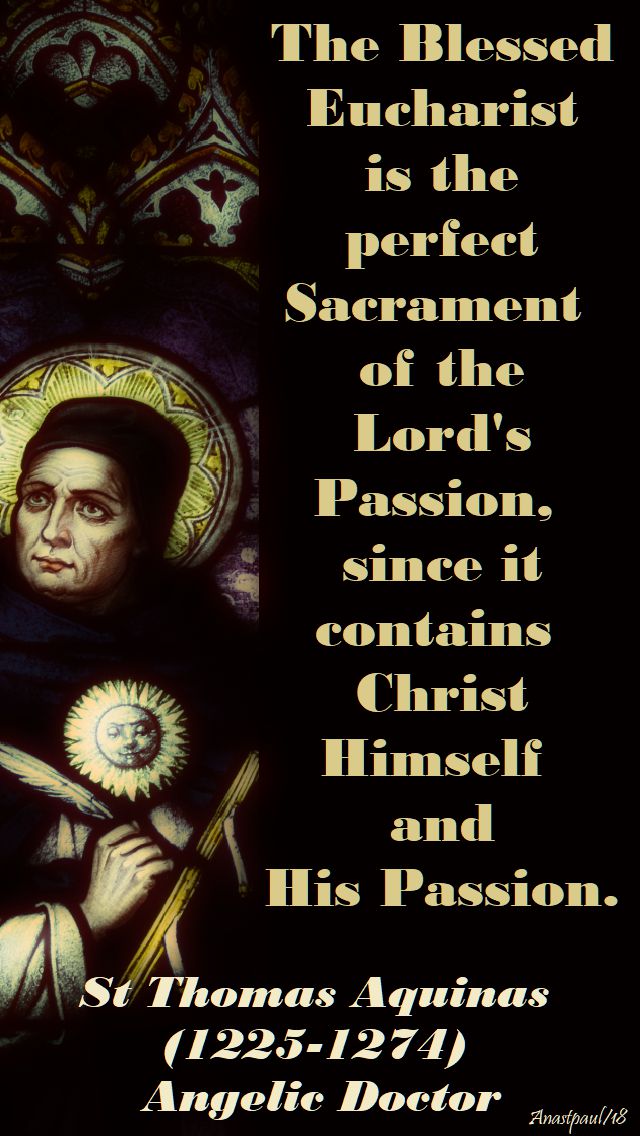
“The Blessed Eucharist is the perfect Sacrament of the Lord’s Passion, since It contains Christ Himself and his Passion.”
St Thomas Aquinas (1225-1274) Angelic Doctor
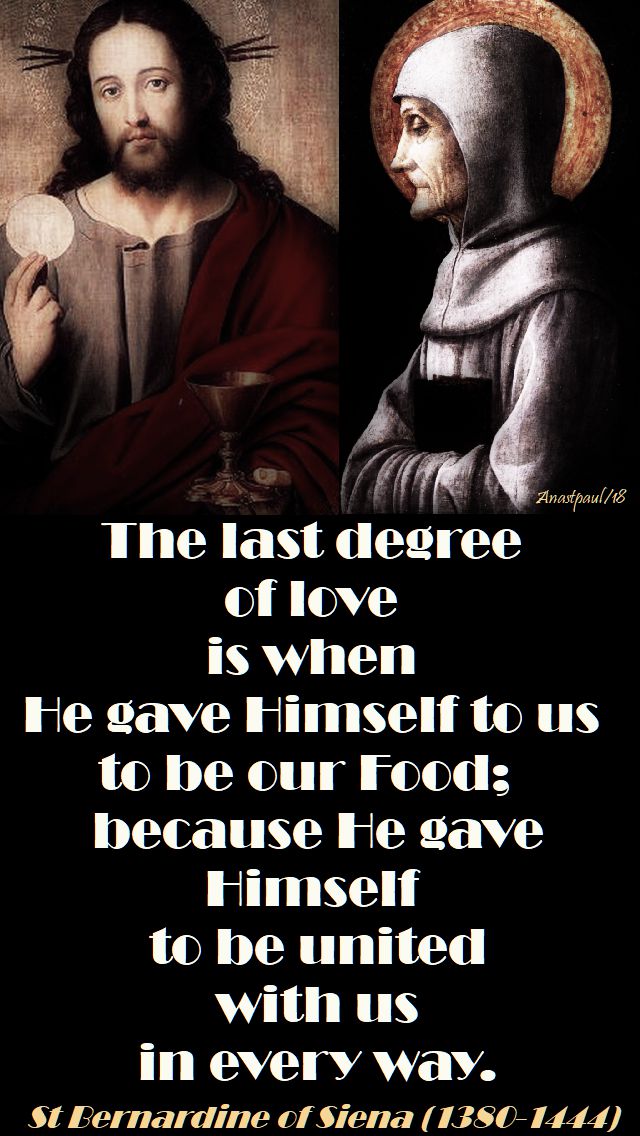
“The last degree of love is when He gave Himself to us to be our Food; because He gave Himself to be united with us in every way.”
St Bernardine of Siena (1380-1444)
“Of all devotions, that of adoring Jesus in the Blessed Sacrament is the greatest after the sacraments, the one dearest to God and the one most helpful to us.”
St Alphonsus Liguori (1696-1787) Most Zealous Doctor
“Upon receiving Holy Communion, the Adorable Blood of Jesus Christ really flows in our veins and His Flesh is really blended with ours.”
St John Vianney (1786-1859)
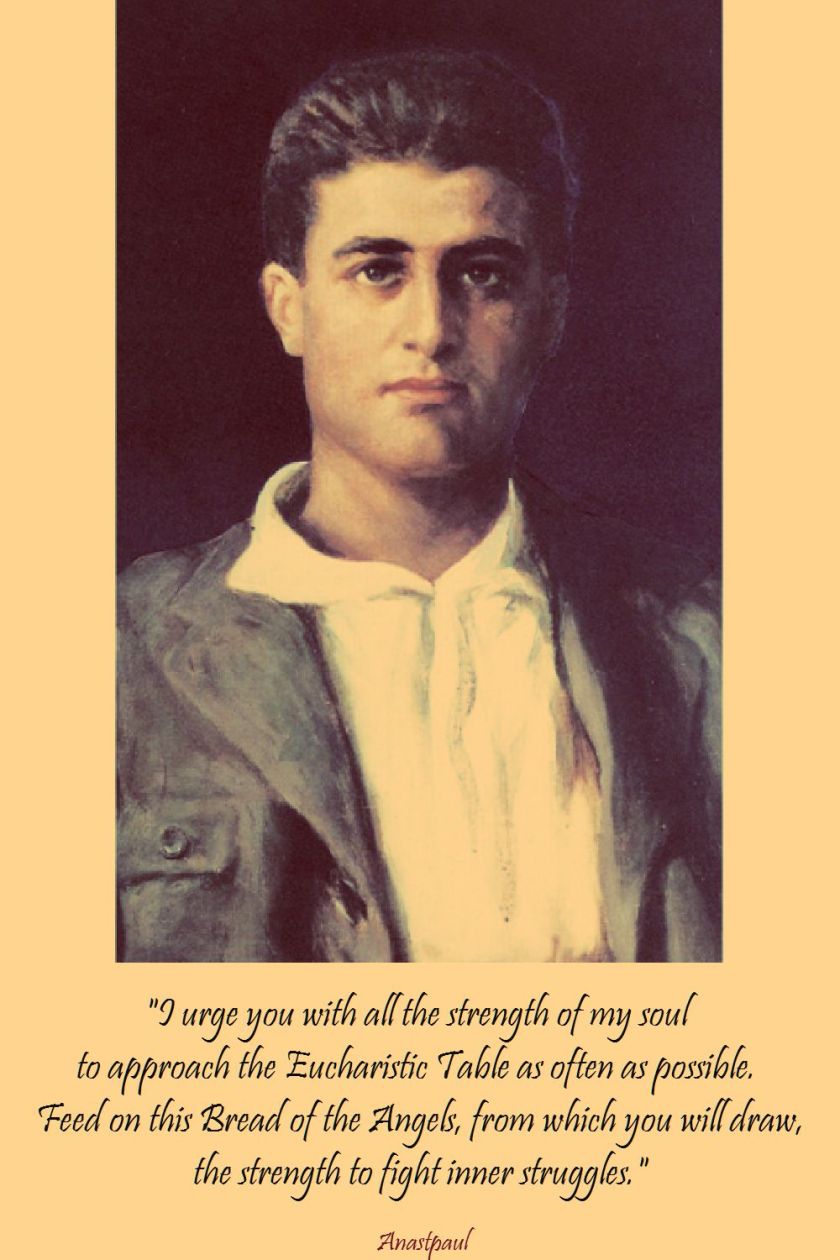
“I urge you with all the strength of my soul to approach the Eucharistic Table as often as possible. Feed on this Bread of the Angels from which you will draw the strength to fight inner struggles.”
Thought for the Day – – Tuesday of the Third Week of Eastertide – Today’s Gospel: John 6:30–35 & the Memorial of Bl Andrés Hibernón Real O.F.M. (1534-1602) ) ‘Apostle of Eucharistic Adoration’
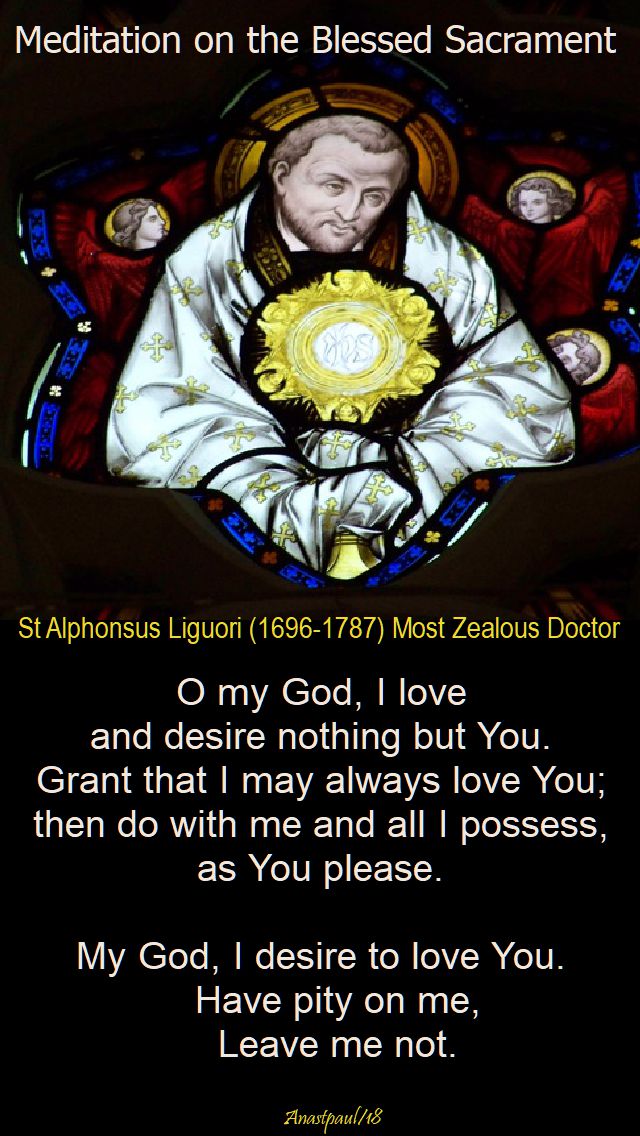
Meditation on the Blessed Sacrament by St Alphonsus Liguori (1696-1787) – Most Zealous Doctor
Meditation, wherever it is made,
pleases God.
But it seems that Jesus,
especially delights in prayer,
made before the Blessed Sacrament.
Did he not leave Himself for us
in this sacrament to be food for our spirit
and to be present for all who seek Him?
We cannot all make pilgrimages
to the places where Jesus lived
but the Lord who died for us
on the cross of Calvary
now dwells in person,
in the tabernacle – waiting.
We need not await a command
as we would of an earthly king,
to enter His presence –
He is waiting for us
to lay before Him our wants
and to seek His help.
So that we may taste
the sweetness of His presence,
it is good to empty ourselves
of earthly desires.
Be still and know that I am God. Psalm 46: 10
What pleasure is found in spending
a long time before the altar
where the Lord dwells!
What heavenly sweetness the Lord
allows us to taste and enjoy!
What should we do in the presence of the Lord in the Eucharist?
We should stay there, not to enjoy
sweetness and consolation
but to give pleasure to God
by making acts of love, saying
O my God, I love
and desire nothing but You.
Grant that I may always love You;
then do with me and all I possess,
as You please.
These acts of love,
even when made without sensible delight,
please god greatly.
For good people often have to bear
with distractions and dryness in prayer.
As for distractions,
of these we must not make much account.
It is enough to drive them away
when they come.
Do not on this account leave off prayer.
Saint Francis de Sales said:
“If, in meditation, we do nothing but drive away distractions, our meditation would be of great profit.”
And as for dryness:
this is the greatest pain
for those given to prayer,
for we find ourselves without
any sensible desire of loving God.
Added to this, at times, is the fear
of being separated from God
because of our sins.
There is the feeling
of being in utter darkness
without any way of escape.
At such times let us unite our desolation
with that which Jesus suffered on the cross.
If we can say nothing else,
it is enough to say,
at least by an act of the will:
My God, I desire to love You. Have pity on me; Leave me not.
PRAYER of one in deep affliction.
My God, I love You tenderly though I feel You far away. I will seek You ceaselessly lest from You I stray. AMEN
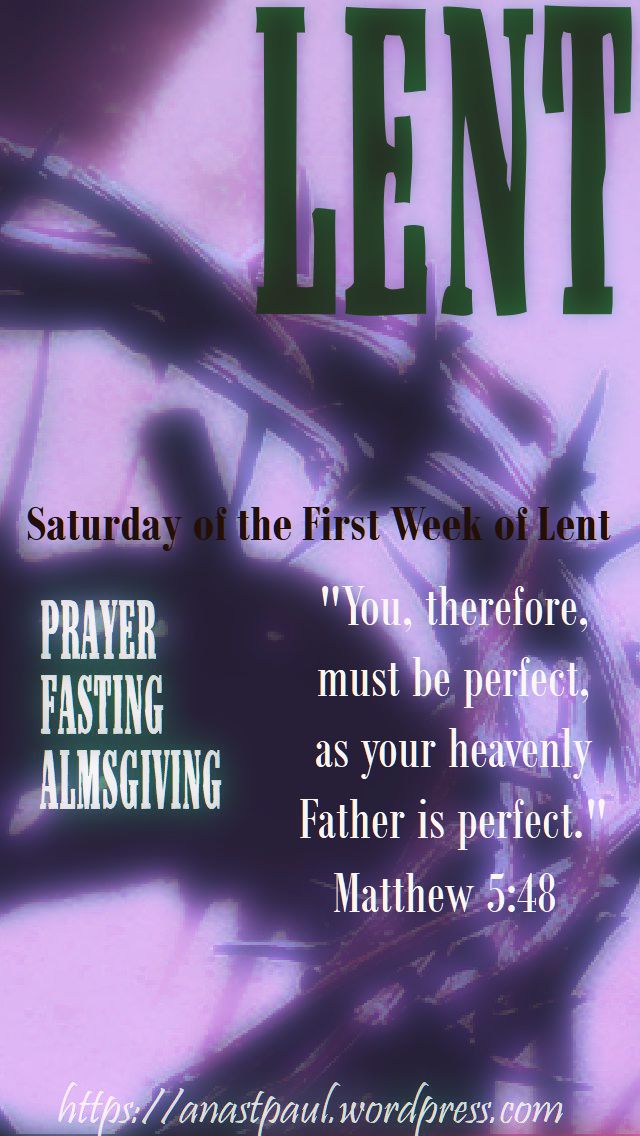
24 February 2018 – Saturday of the First Week of Lent
Deuteronomy 26:16-19, Psalms 119:1-2, 4-5, 7-8, Matthew 5:43-48
Deuteronomy 28:16 – “This day the Lord your God commands you to do these statutes and ordinances; you shall therefore be careful to do them with all your heart and with all your soul.”
Matthew 5:48 – “You, therefore, must be perfect, as your heavenly Father is perfect.”
The theme of today’s liturgy is law but not just any kind of law. The Law of the Lord rests on the single crucial fact of God’s having chosen the Jewish people as His very own. He made an agreement, a covenant with them. He never intended His covenant to be a burden on them. He chose them simply because He loved them. He Himself compared the covenant to marriage between a man and a woman. Marriage implies mutual respect, mutual obligation and above all, mutual love. Marriage cannot be static – if it does not evolve into deeper and deeper love and trust, it deteriorates and falls apart. Both parties have to be faithful to the obligations they freely have taken upon themselves. And that is what this law of the Lord is all about.
We Christians believe, that the Old Testament people of God has evolved into the Church, the Body of Christ, His Spouse. At the Last Supper, Jesus said “This cup … is the new Covenant in my blood” (Luke 22:29)
We, as the people of God are still responsible for fulfilling our part of the Covenant. But we, like the Old Testament people can and do grow careless. The marriage ‘cools off’, as it were. It needs renewal, it needs a ‘marriage encounter’ with our God. Lent is an extended ‘married couples retreat’ for us and for Him!
At the Last Supper, Jesus established the new Covenant and He also gave us a new law “a new commandment” that we love one another. Yesterday, He told us how much we need forgiving hearts. Today He gets tough: “But I say to you, Love your enemies and pray for those who persecute you…For if you love those who love you, what reward have you?” And He ends with the command that may seem impossible to fulfil – “You, therefore, must be perfect, as your heavenly Father is perfect.”
Fulfilling Jesus’ command is what our Christian life and above all LENT, it all about. It is a progressive process of co-operating with God in His will to make us a perfect spouse for Himself. We can fast, give alms, pray day and night but it is all a waste of time unless we at least try to fulfill this new commandment of the Lord. The ideal Jesus sets before us is not just tolerance of those who do not like us or whom we do not like, or the stranger who make us feel afraid and protective of our ‘patch’. Too often tolerance comes close to mindless indifference, which is the exact opposite of love!
Life with God, like any marriage, has to be worked at. Love is hard, it is a lifetime task that is never finished. Nor will Christ’s Bride, the Church, be the perfect bride until the end of time. BUT, we can be sure our God will do His part. It is only when we do all in our power to love and forgive that He will take over and love in us, with our hearts and then we will be perfected as our heavenly Father is perfect!…..Fr E Lawerence OSB
Is there someone who has hurt me or who is ‘an enemy’? Pray for them! Who are the groups in the world whom I hate or fear? Pray for them! Are there strangers in my neighbourhood of whom I am perhaps nervous or afraid, go to them and pray for them!
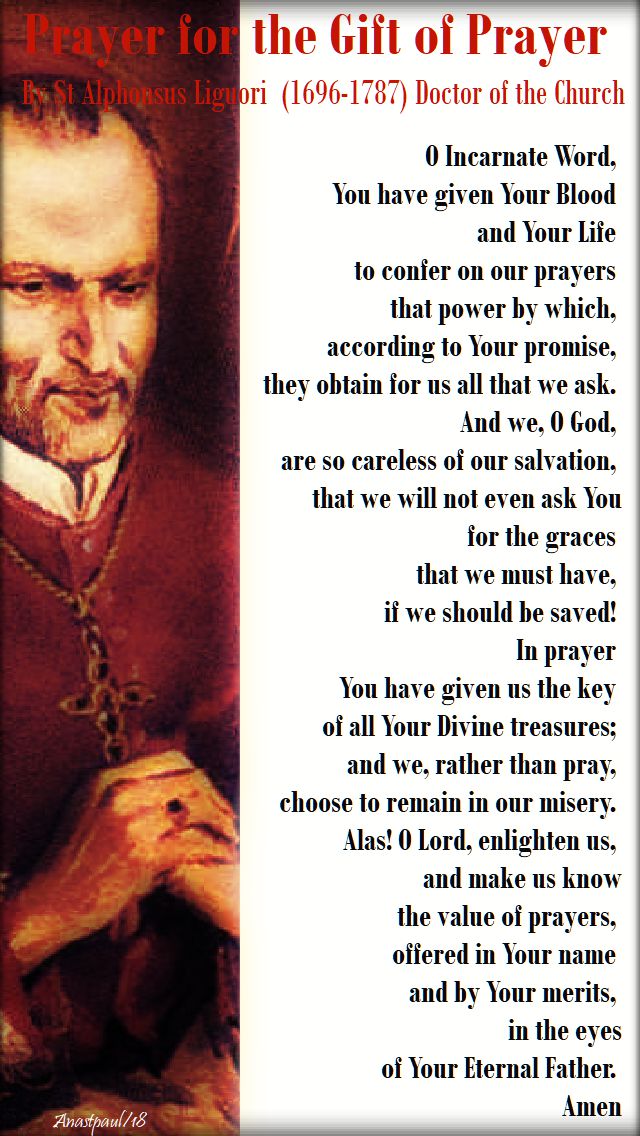
Prayer for the Gift of Prayer By St Alphonsus Liguori (1696-1787) Doctor of the Church
O Incarnate Word, You have given Your Blood and Your Life to confer on our prayers that power by which, according to Your promise, they obtain for us all that we ask. And we, O God, are so careless of our salvation, that we will not even ask You for the graces that we must have, if we should be saved! In prayer You have given us the key of all Your Divine treasures; and we, rather than pray, choose to remain in our misery. Alas! O Lord, enlighten us, and make us know the value of prayers, offered in Your name and by Your merits, in the eyes of Your Eternal Father. Amen
Our Morning Offering – 24 February – The Memorial of Blessed Thomas Mary Fusco
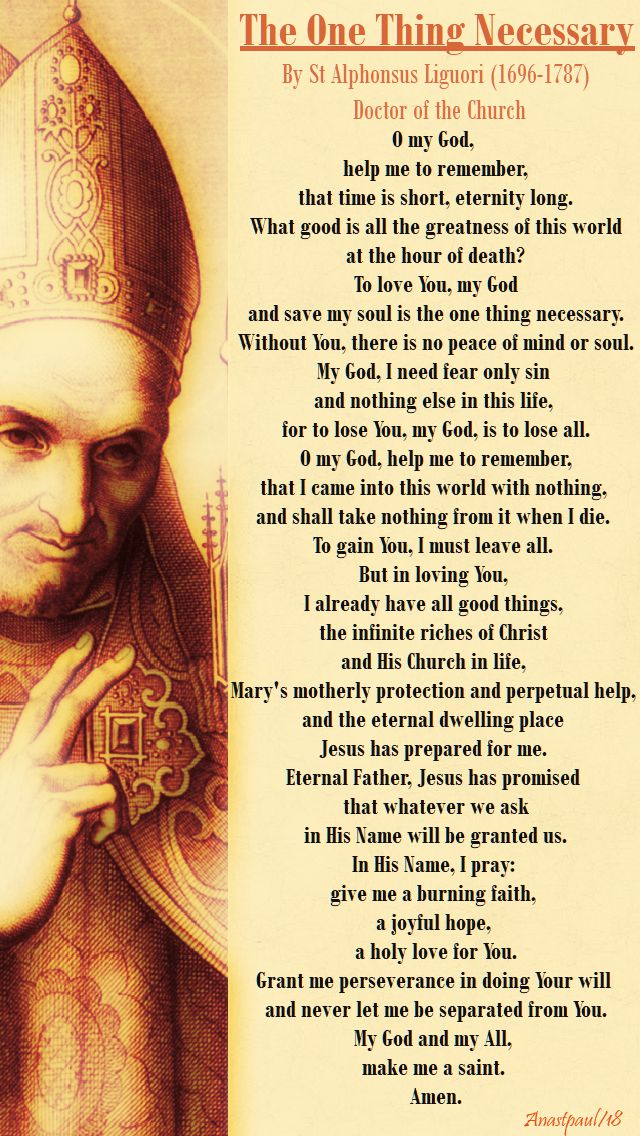
The One Thing Necessary By St Alphonsus Liguori (1696-1787) Doctor of the Church
O my God,
help me to remember,
that time is short, eternity long.
What good is all the greatness of this world
at the hour of death?
To love You, my God
and save my soul is the one thing necessary.
Without You, there is no peace of mind or soul.
My God, I need fear only sin
and nothing else in this life,
for to lose You, my God, is to lose all.
O my God, help me to remember,
that I came into this world with nothing,
and shall take nothing from it when I die.
To gain You, I must leave all.
But in loving You,
I already have all good things,
the infinite riches of Christ and His Church in life,
Mary’s motherly protection and perpetual help,
and the eternal dwelling place Jesus has prepared for me.
Eternal Father, Jesus has promised
that whatever we ask
in His Name will be granted us.
In His Name, I pray:
give me a burning faith,
a joyful hope,
a holy love for You.
Grant me perseverance in doing Your will
and never let me be separated from You.
My God and my All,
make me a saint.
Amen
Thought for the Day – – 16 February – The First Friday of Lent 2018
Alas, for our dearest Lord! up to this day what have we done for Him?
You see what He has done for us and the end of His doing it was to gain our love!
We look upon a crucifix and it hardly moves us.
We hear of His bittter passion but our eyes are dry and our hearts indifferent.
We kneel down to pray but we can hardly keep our thoughts fixed upon Him for a quarter of an hour together.
We go into His own most holy presence and we hardly bend the knee before the Tabernacle lest it should spoil our clothes.
We see others sin and what is it to us that Jesus is offended, so long as it is not we, who are risking our souls, by offending Him?
These are strange signs of love!
Surely Jesus cannot be much to us if this is the way we feel about Him.
Yet so it is.
We go our own way and do our own will.
The great thing is to please ourselves and to make things easy to ourselves.
Life must be taught to run smooth.
As to penance, it must be kept at arm’s length.
We must have our bodily comforts and worldly conveniences and our spiritual life must be nothing but a sufficiency of those inward consolations without which our souls give us pain, because they are not at rest.
If we worship God it is for self, if we do good to others, it is self we are seeking, even in our charity.
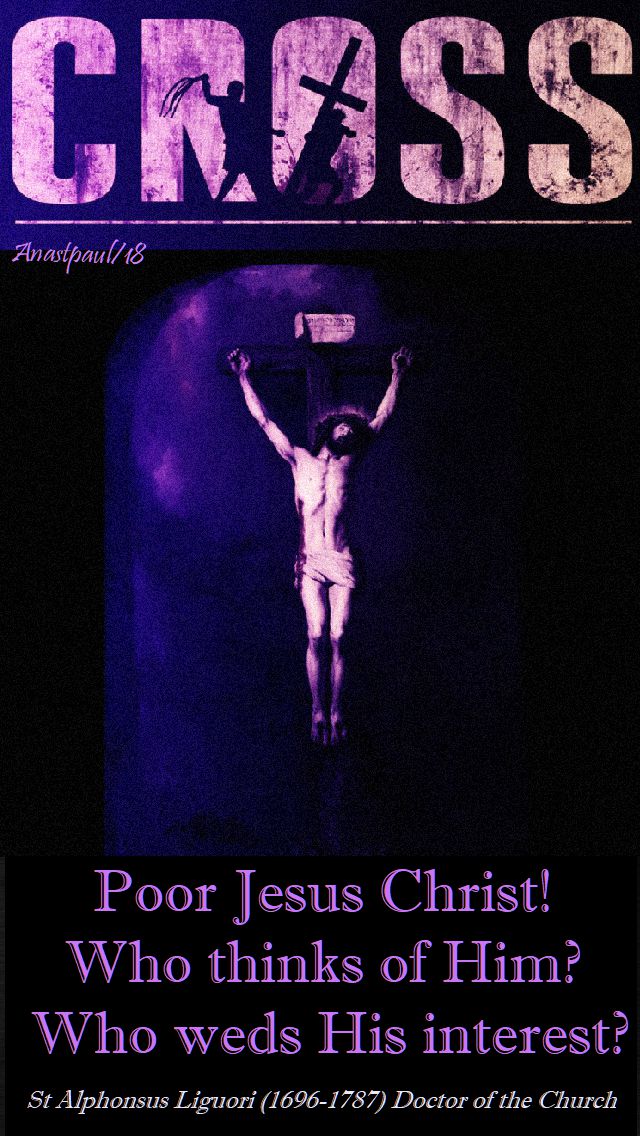
Poor Jesus Christ! as Saint Alphonsus used to say, “Poor Jesus Christ! Who thinks of Him? Who weds His interest?”
Father Faber – Remember Me: Daily Readings for Lent
Quote/s for the Day – 1 February – The Memorial of Bl Benedict Daswa (1946-1990) Martyr – The First South African-born to be Beatified.
Would it not have been so simple for Blessed Benedict to pay his share of the required amount to hire the Sangona (Witch Doctor) to “sniff out” the witch who caused the storms? It was not a huge amount of money required by each resident. The temptation to do so must have been quite appealing but he refused and tried to explain that the storms were a natural phenomenon. He did, however, pay the ultimate price for his fidelity, with his blood.
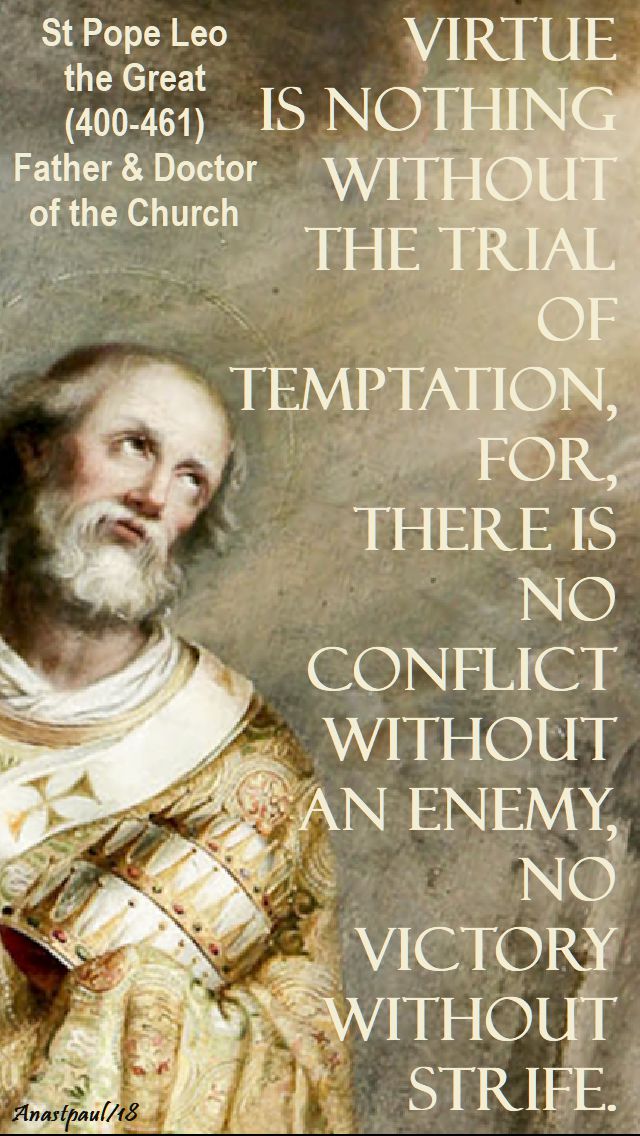
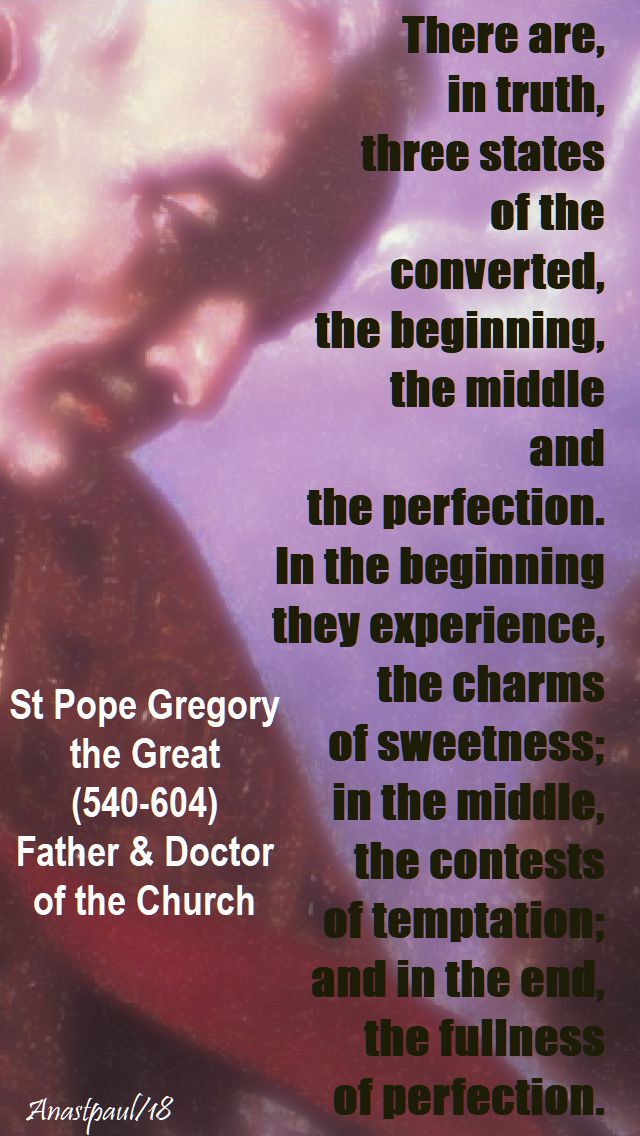
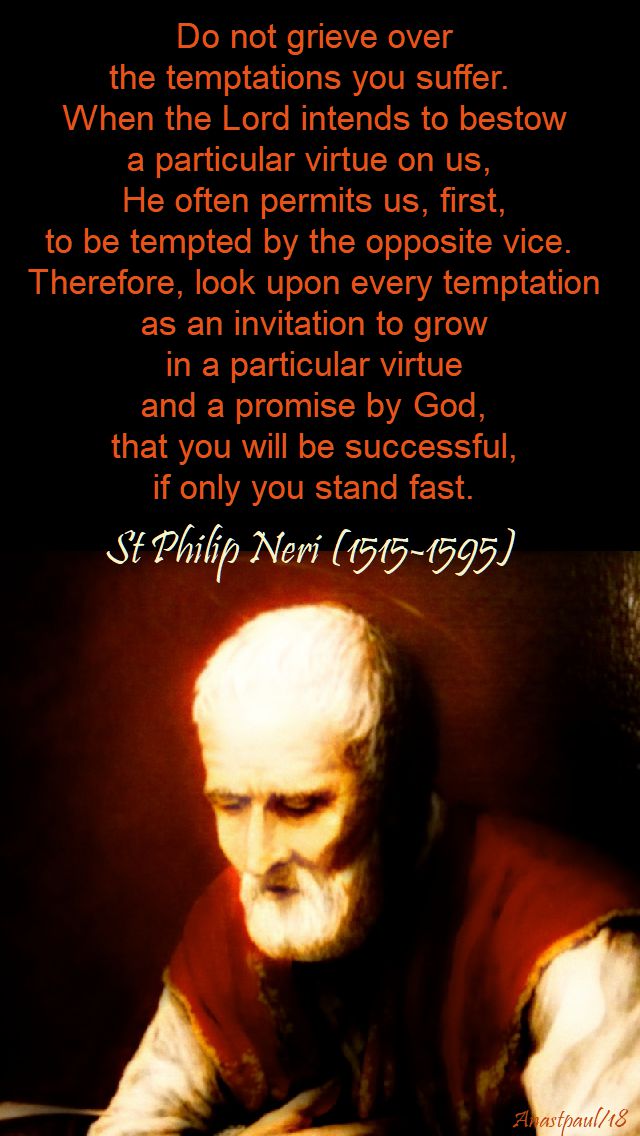
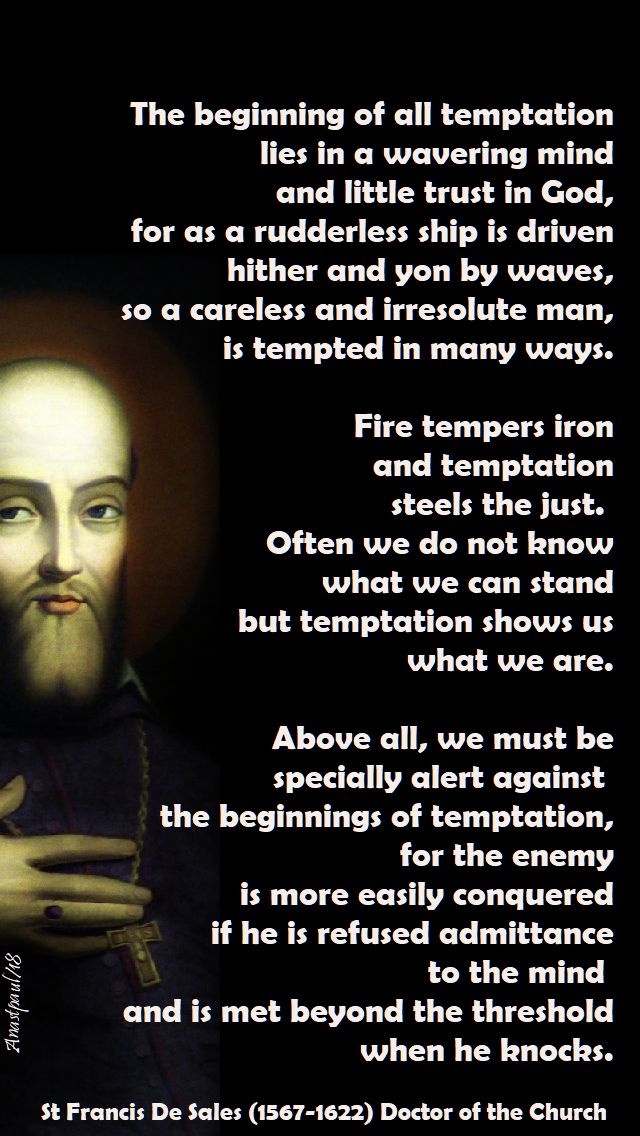
“Speaking of Temptation”
“Virtue is nothing, without the trial of temptation, for there is no conflict, without an enemy, no victory, without strife.”
St Pope Leo the Great (400-461) Father & Doctor of the Church
“There are in truth, three states of the converted, the beginning, the middle and the perfection. In the beginning, they experience the charms of sweetness; in the middle, the contests of temptation; and in the end, the fullness of perfection.”
St Pope Gregory the Great (540-604) Father & Doctor of the Church
“Do not grieve over the temptations you suffer. When the Lord intends to bestow a particular virtue on us, He often permits us first to be tempted by the opposite vice. Therefore, look upon every temptation as an invitation to grow in a particular virtue and a promise by God, that you will be successful, if only you stand fast.”
St Philip Neri (1515-1595)
“The beginning of all temptation lies in a wavering mind and little trust in God, for as a rudderless ship is driven hither and yon by waves, so a careless and irresolute man, is tempted in many ways. Fire tempers iron and temptation steels the just. Often we do not know what we can stand but temptation shows us what we are. Above all, we must be especially alert against the beginnings of temptation, for the enemy is more easily conquered if he is refused admittance to the mind and is met beyond the threshold when he knocks.”
St Francis De Sales (1567-1622) Doctor of the Church
“It often happens that we pray God to deliver us from some dangerous temptation and yet, God does not hear us but permits the temptation to continue troubling us. In such a case, let us understand, that God permits even this for our greater good. When a soul in temptation recommends itself to God and by His aid resists, O how it then advances in perfection.”
“He who trusts himself is lost. He who trusts in God can do all things.
St Alphonsus Liguori (1696-1787) Doctor of the Church
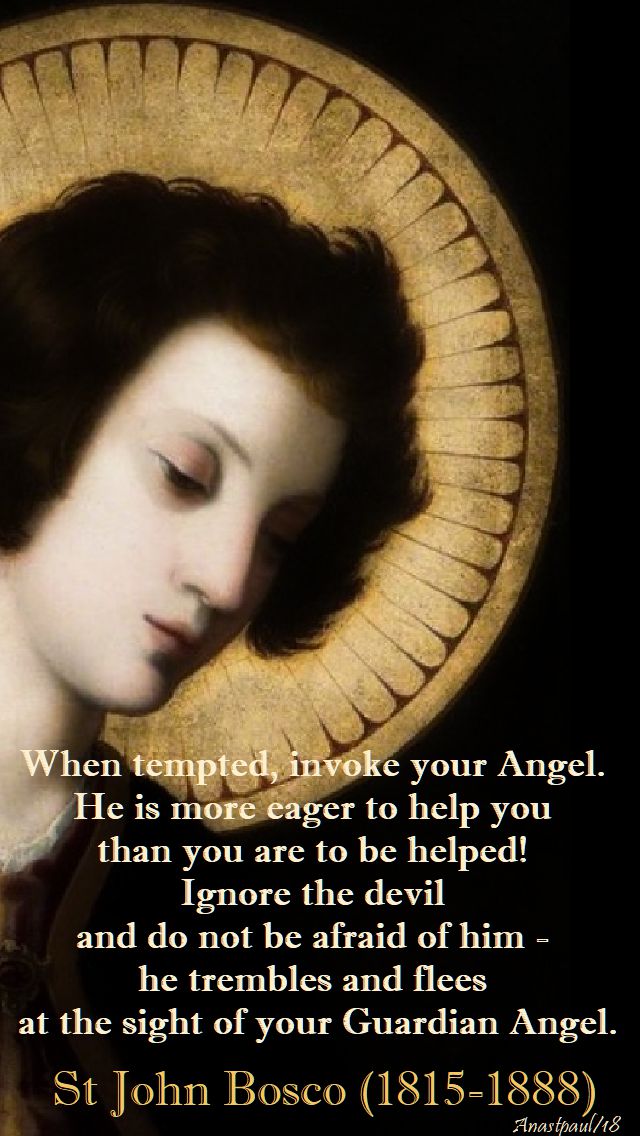
“When tempted, invoke your Angel. He is more eager to help you, than you are to be helped! Ignore the devil and do not be afraid of him – he trembles and flees, at the sight of your Guardian Angel.”
Quote/s of the Day – 15 January – The Feast of Our Lady of Banneux – “Speaking of Mary”
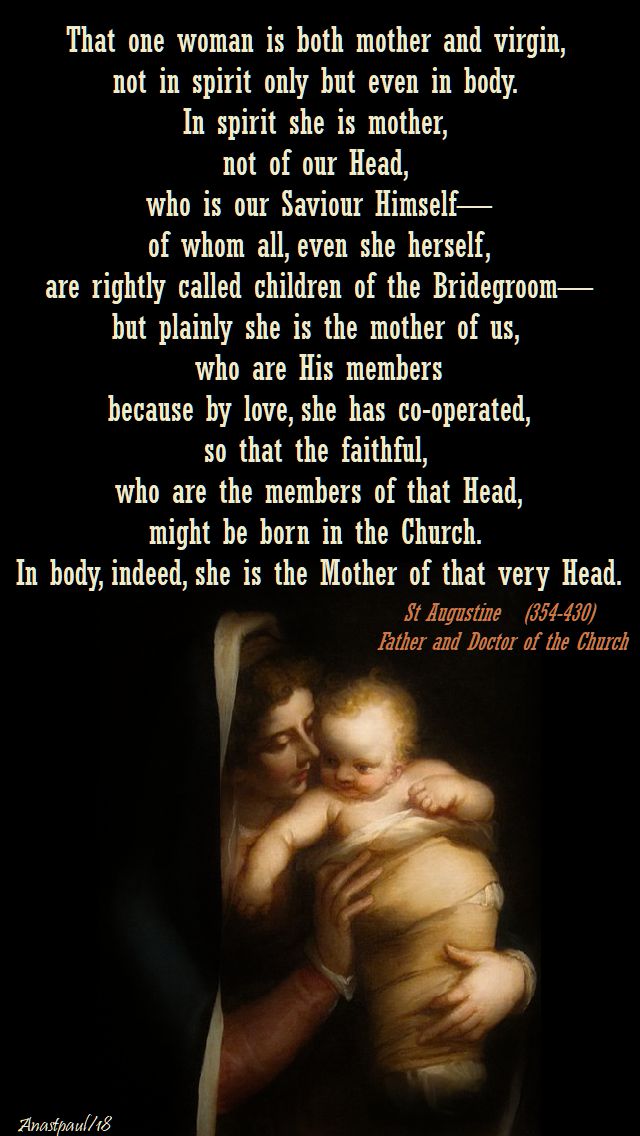
“That one woman is both mother and virgin, not in spirit only but even in body. In spirit she is mother, not of our Head, who is our Saviour Himself—of whom all, even she herself, are rightly called children of the Bridegroom— but plainly she is the mother of us, who are His members because by love, she has co-operated, so that the faithful, who are the members of that Head, might be born in the Church. In body, indeed, she is the Mother of that very Head”
St Augustine (354-430) Father and Doctor of the Church
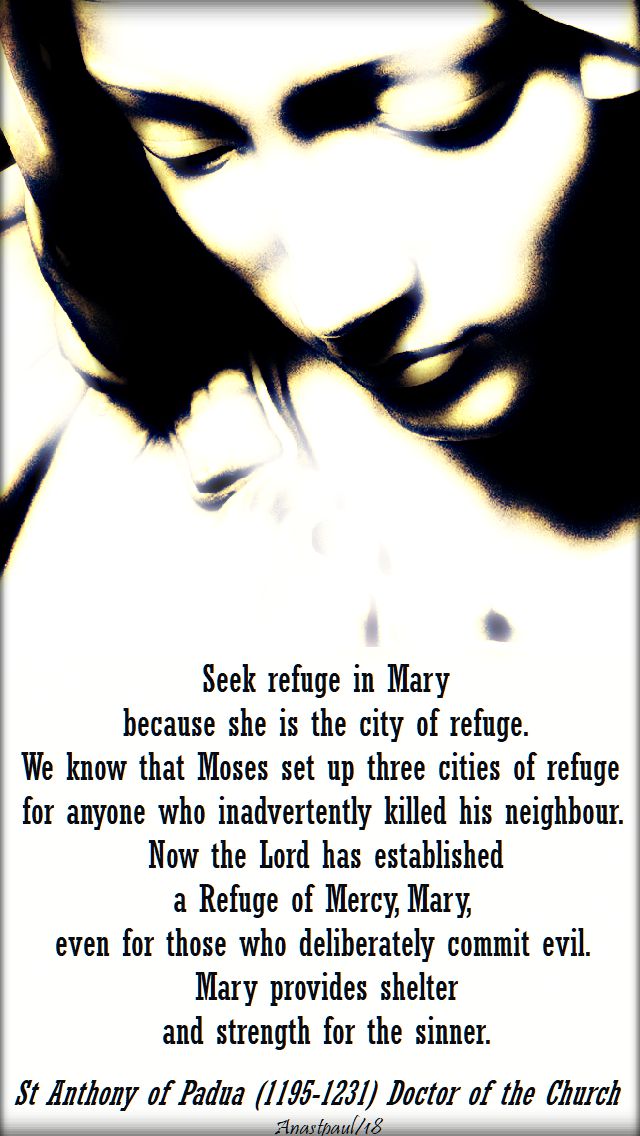
“Seek refuge in Mary because she is the city of refuge. We know that Moses set up three cities of refuge for anyone who inadvertently killed his neighbour. Now the Lord has established a Refuge of Mercy, Mary, even for those who deliberately commit evil. Mary provides shelter and strength for the sinner.”
St Anthony of Padua (1195-1231) Doctor of the Church
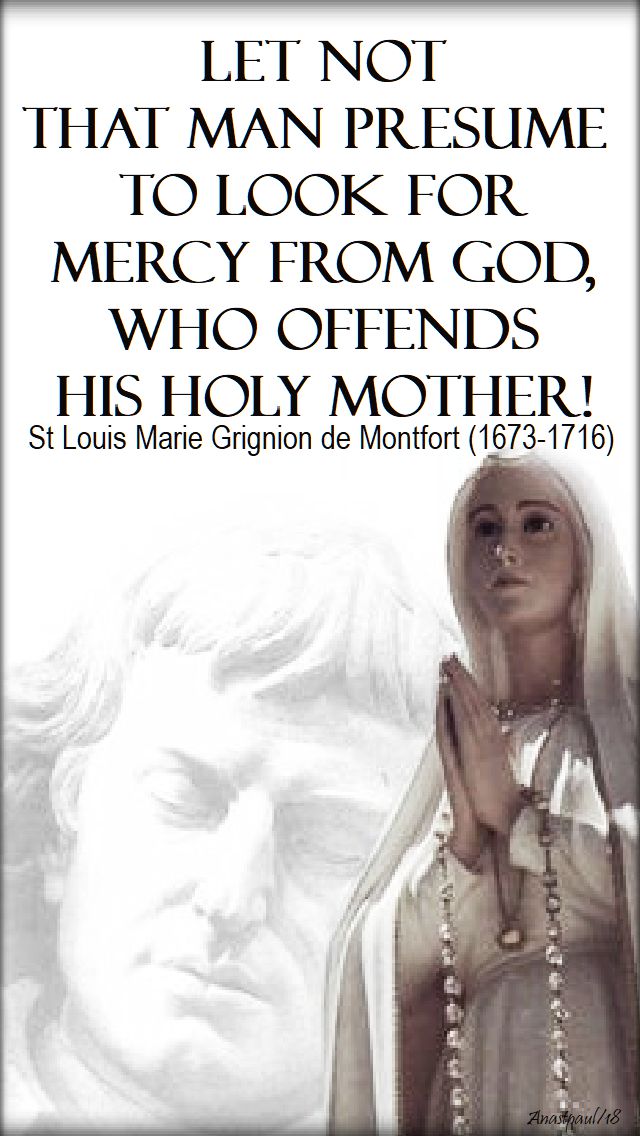
”Let not that man presume to look for mercy from God, who offends His Holy Mother!”
St Louis Marie Grignion de Montfort (1673-1716)
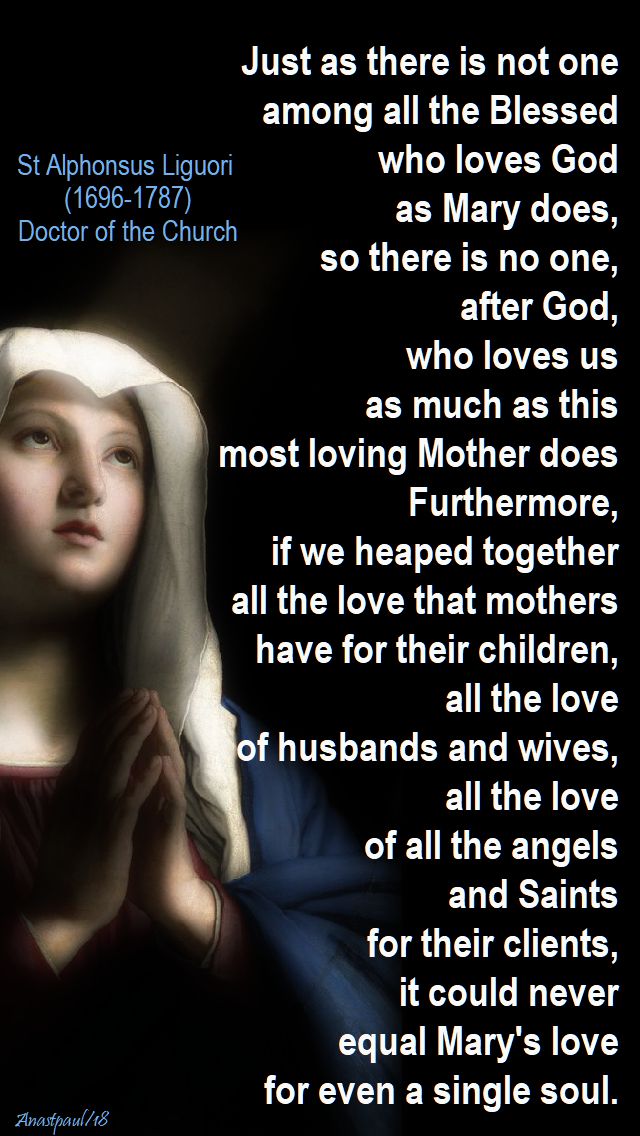
“Just as there is not one among all the Blessed who loves God as Mary does, so there is no one, after God, who loves us as much as this most loving Mother does. Furthermore, if we heaped together all the love that mothers have for their children, all the love of husbands and wives, all the love of all the angels and Saints for their clients, it could never equal Mary’s love for even a single soul.”
St Alphonsus Liguori (1696-1787) Doctor of the Church (The Glories of Mary)
“Only after the Last Judgment will Mary get any rest; from now until then, she is much too busy with her children.”
“To serve the Queen of Heaven, is already to reign there and to live under her commands, is more than to govern.”
St John Marie Baptiste Vianney (1786-1859)
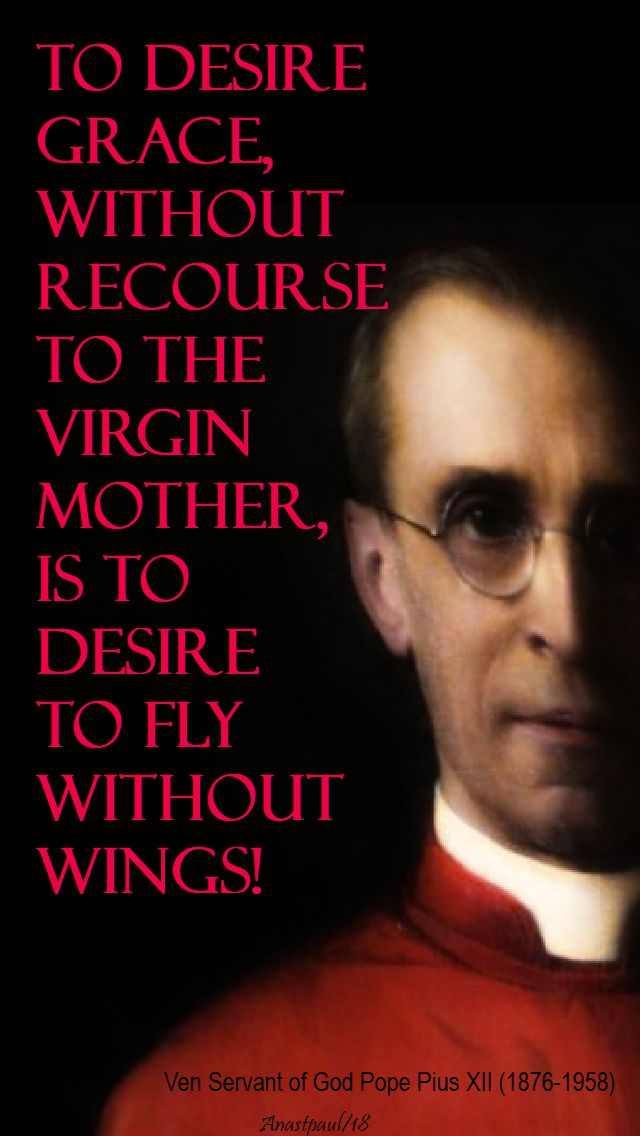
”To desire grace, without recourse to the Virgin Mother, is to desire to fly without wings!”
Ven Servant of God Pope Pius XII (1876-1958)
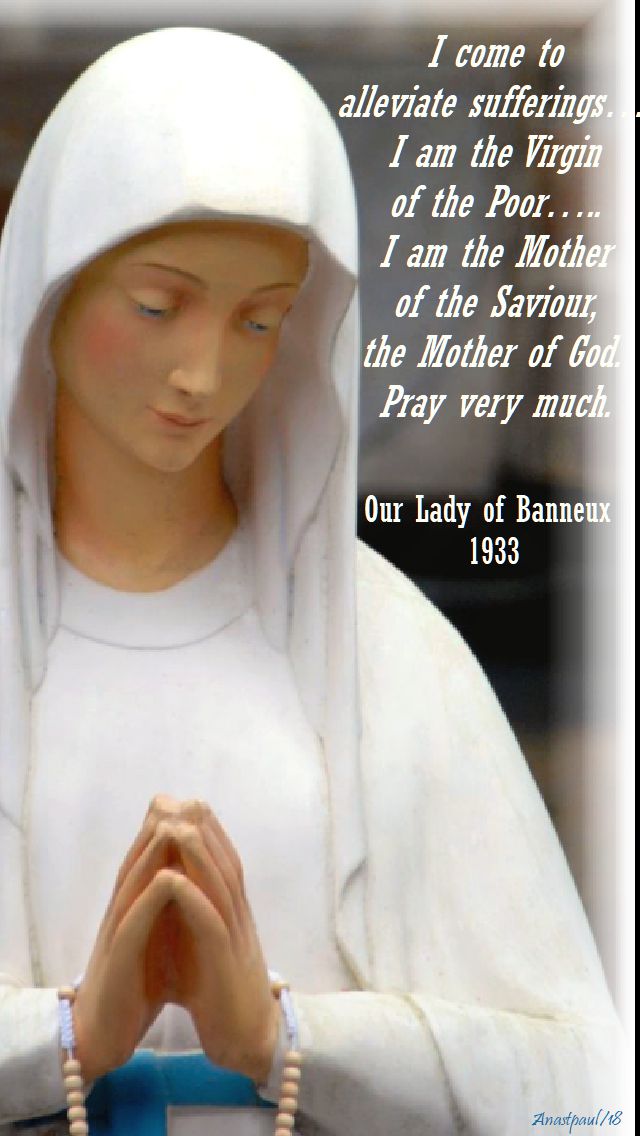
“I come to alleviate sufferings…. I am the Virgin of the Poor….. I am the Mother of the Saviour, the Mother of God. Pray very much.”
One Minute Reflection – 15 January – The Feast of Our Lady of Banneux
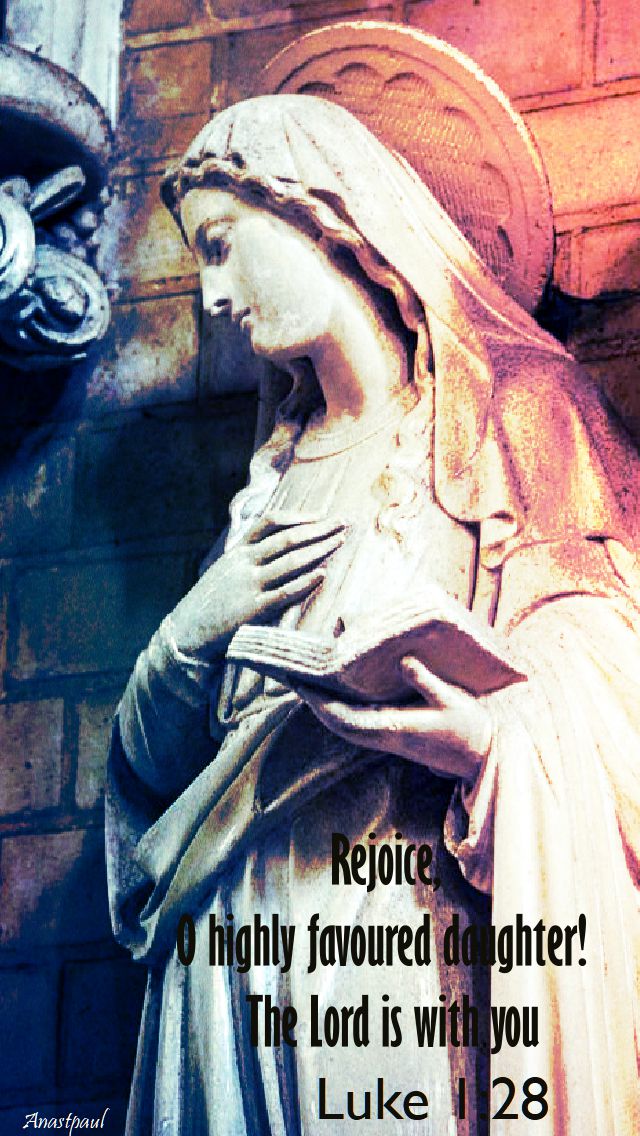
“Rejoice, O highly favoured daughter,! The Lord is with you.”…Luke 1:28
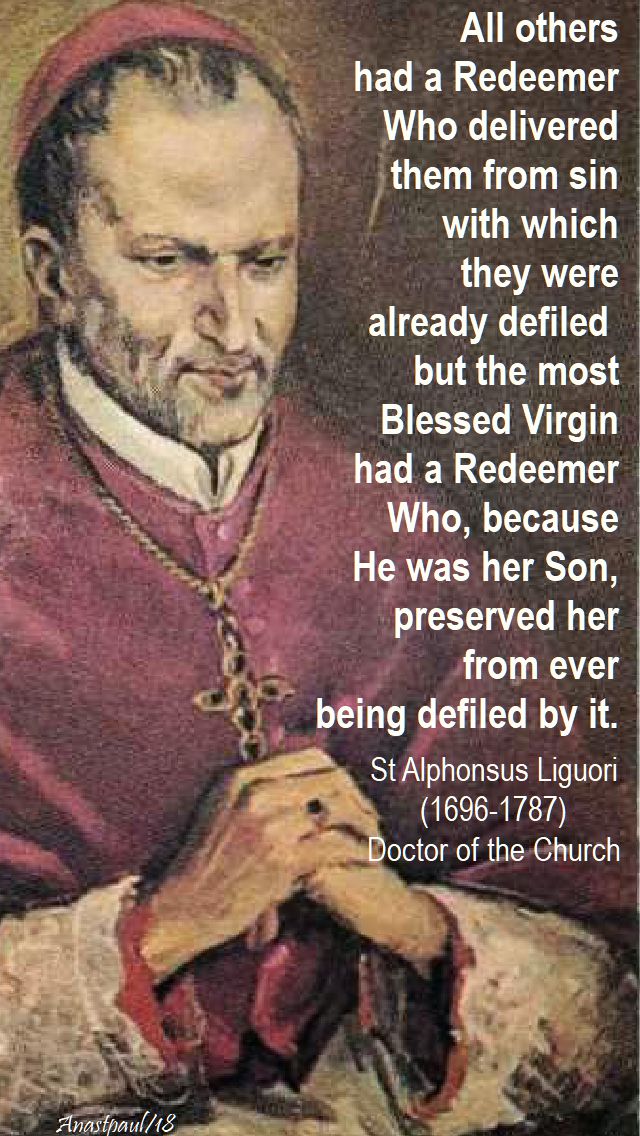
REFLECTION – ” All others had a Redeemer Who delivered them from sin with which they were already defiled but that the most Blessed Virgin had a Redeemer Who, because He was her Son, preserved her from ever being defiled by it. “…St Alphonsus Liguori (1696-1787) Doctor of the Church
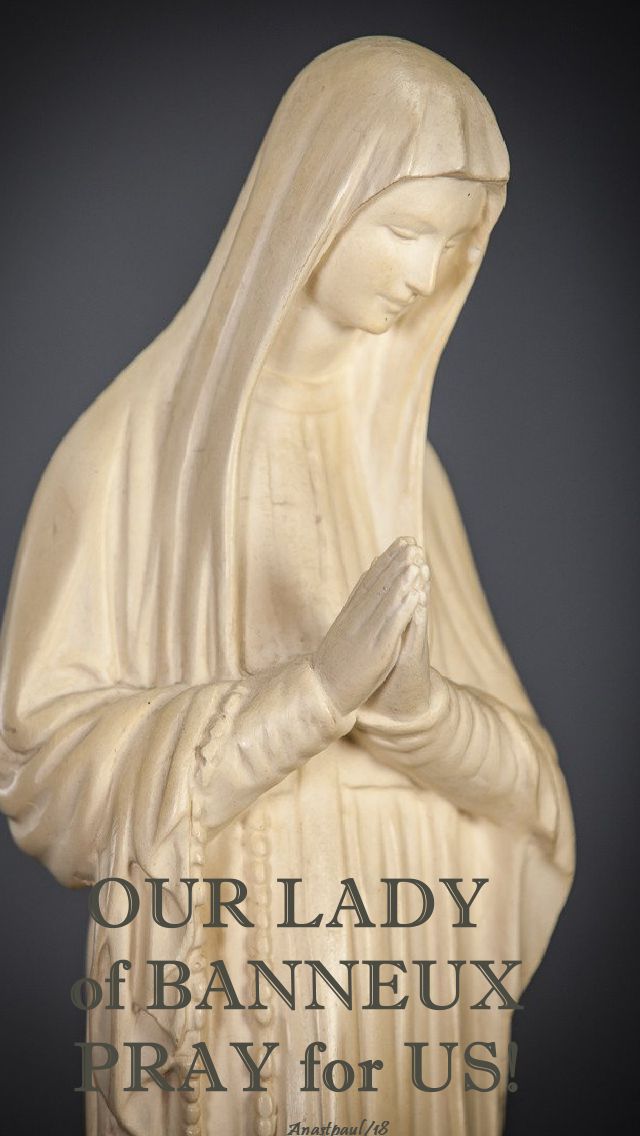
PRAYER – Heavenly Father, grant me the grace to have Mary as my constant intercessor. In all difficulties, let me call on her aid, for she is Your beloved Daughter and our Blessed Mother. Holy Mother of Banneux, Pray for us, amen!
One Minute Reflection – 10 January – The Month of the Most Holy Name
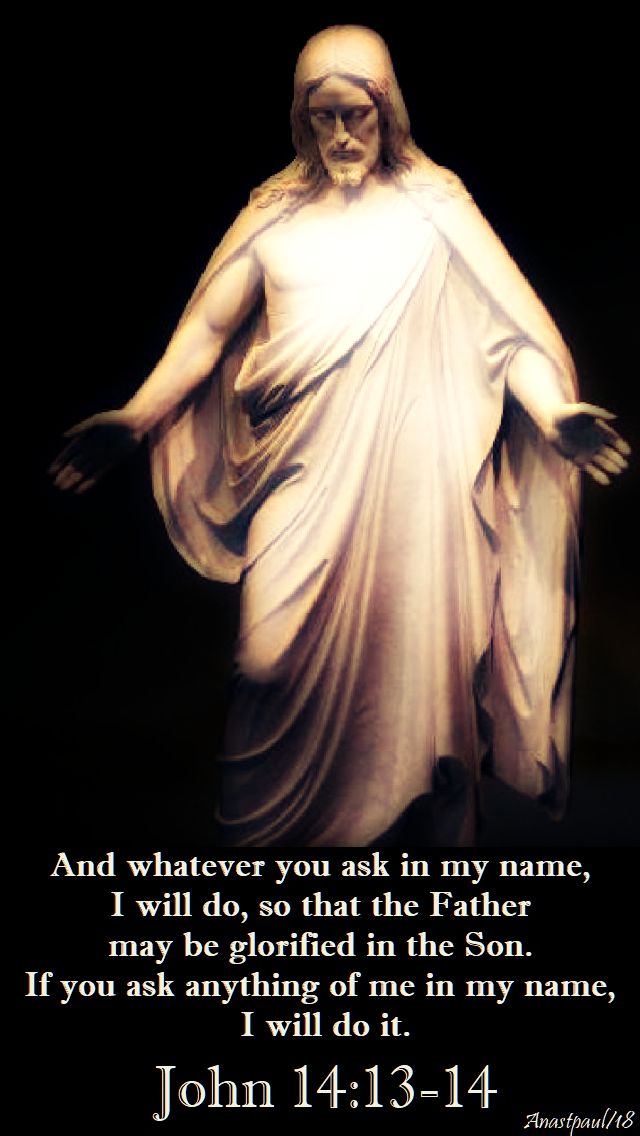
And whatever you ask in my name, I will do, so that the Father may be glorified in the Son. If you ask anything of me in my name, I will do it…John 14:13-14
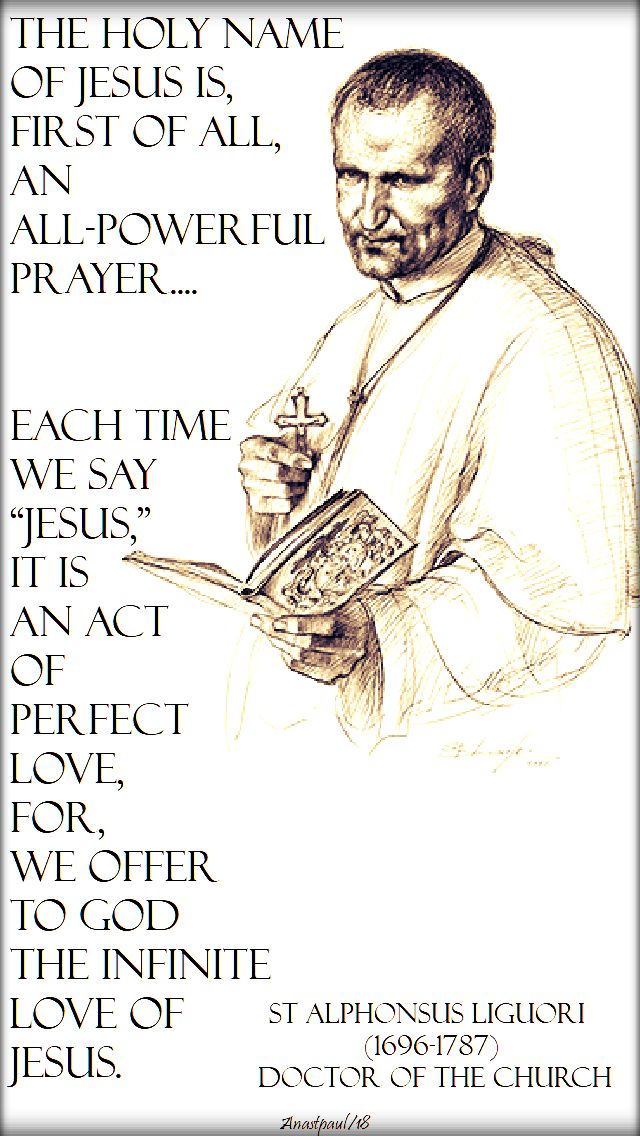
REFLECTION – The Holy Name of Jesus is, first of all, an all-powerful prayer. Our Lord Himself solemnly promises, that whatever we ask the Father in His Name, we shall receive. God never fails to keep His word. Each time we say “Jesus,” it is an act of perfect love, for, we offer to God, the infinite love of Jesus………….St Alphonsus Liguori (1696-1787) Doctor of the Church
PRAYER – Lord God, grant me the courage to confess my faith in the Name above all names and proclaim each moment the Holy Name of Your Son, thus giving You honour and glory. Jesus Name above all Names, be my standard and my beacon! Amen
Quote of the Day – 20 December – Wednesday of the Third Week of Advent
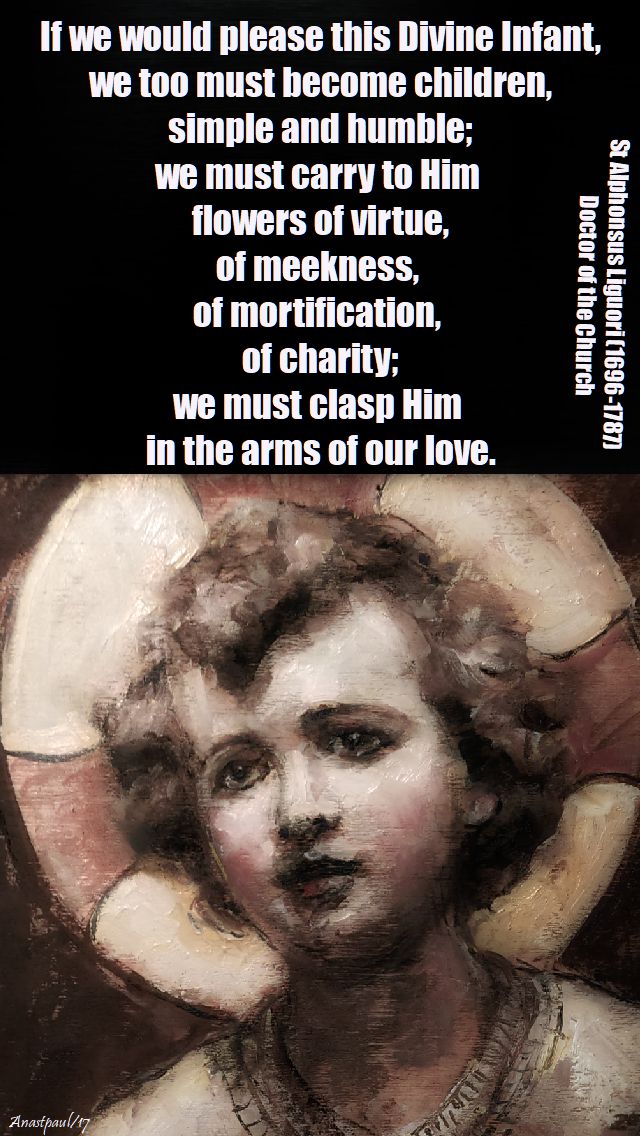
“If we would please this Divine Infant, we too must become children, simple and humble; we must carry to Him flowers of virtue, of meekness, of mortification, of charity; we must clasp Him in the arms of our love.”
St Alphonsus Liguori (1696-1787) Doctor of the Church
Quote/s of the Day – 2 October – The Memorial of the Holy Guardian Angels
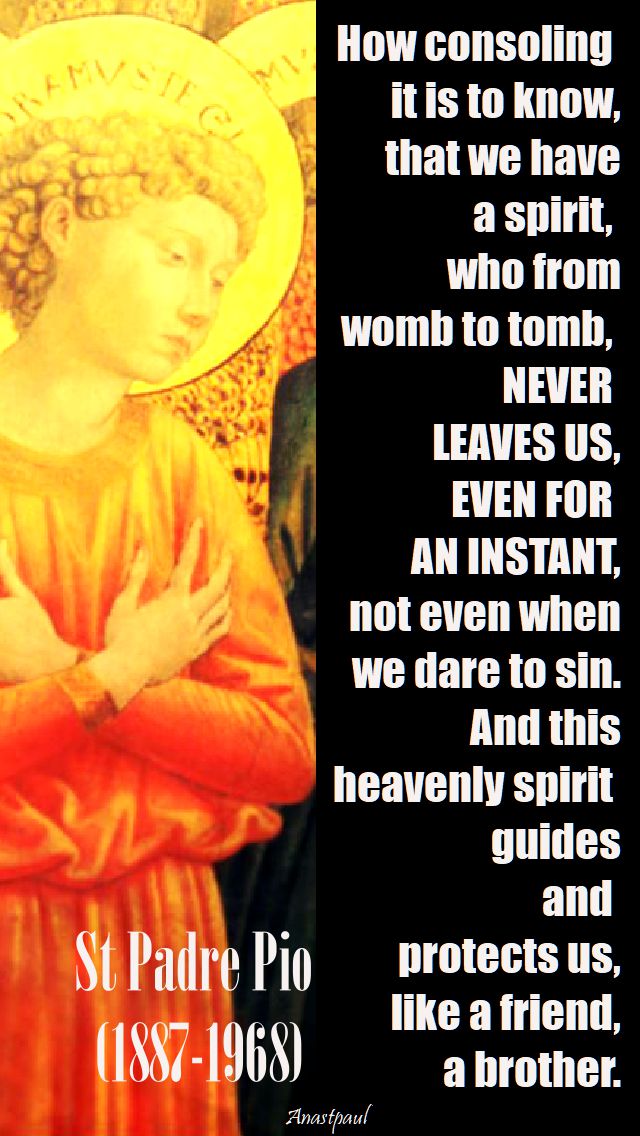
“How consoling it is to know , that we have a spirit, who from womb to tomb, NEVER LEAVES US, EVEN FOR AN INSTANT, not even when we dare to sin. And this heavenly spirit guides and protects us, like a friend, a brother.”
St Padre Pio (1887-1968)
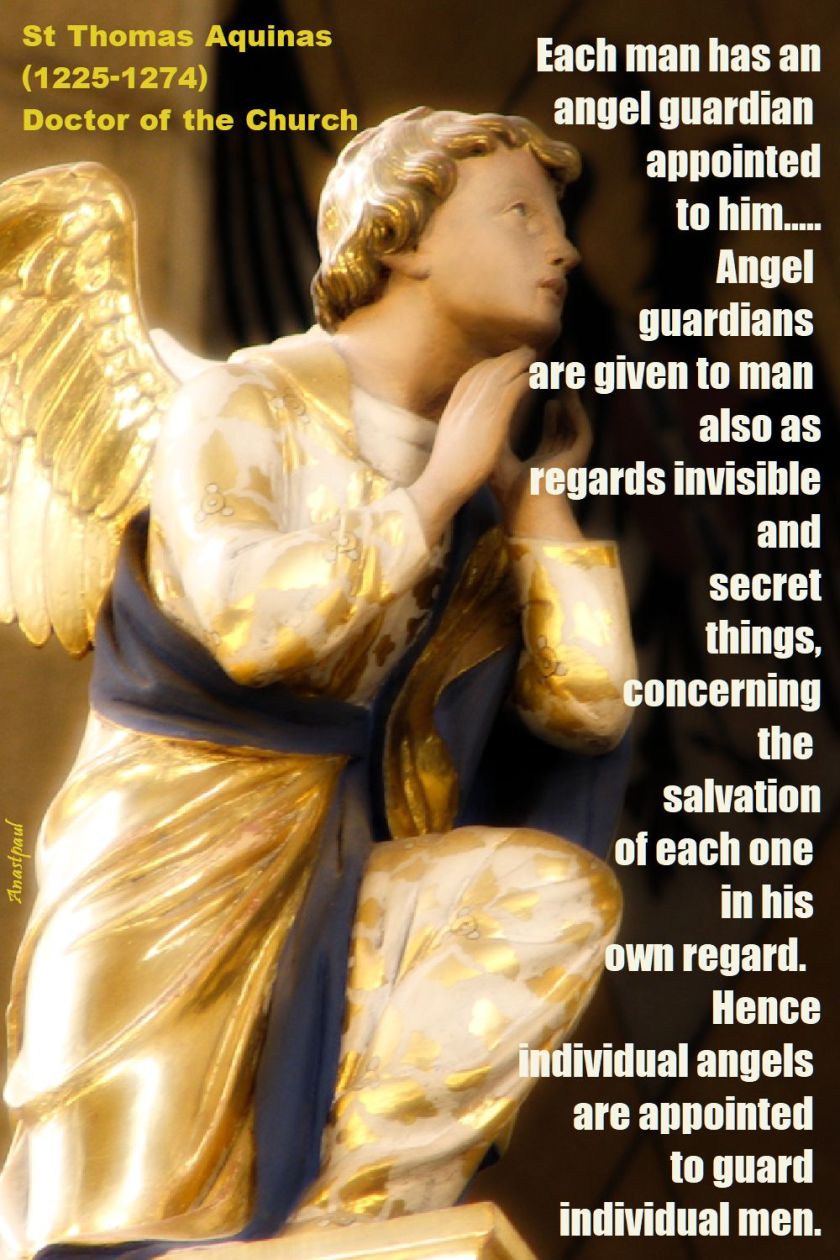
“Each man has an angel guardian appointed to him….Angel guardians are given to man also as regards invisible and secret things, concerning the salvation of each one in his own regard. Hence individual angels are appointed to guard individual men.”
St Thomas Aquinas (1225-1274) Doctor
“When tempted, invoke your Angel. He is more eager to help you than you are to be helped! Ignore the devil and do not be afraid of him: He trembles and flees at the sight of your Guardian Angel.”
St John Bosco (1815-1888)
“We should show our affection for the angels, for one day they will be our co-heirs just as here below they are our guardians and trustees appointed and set over us by the Father.”
St Bernard of Clairvaux (1090-1153) Doctor
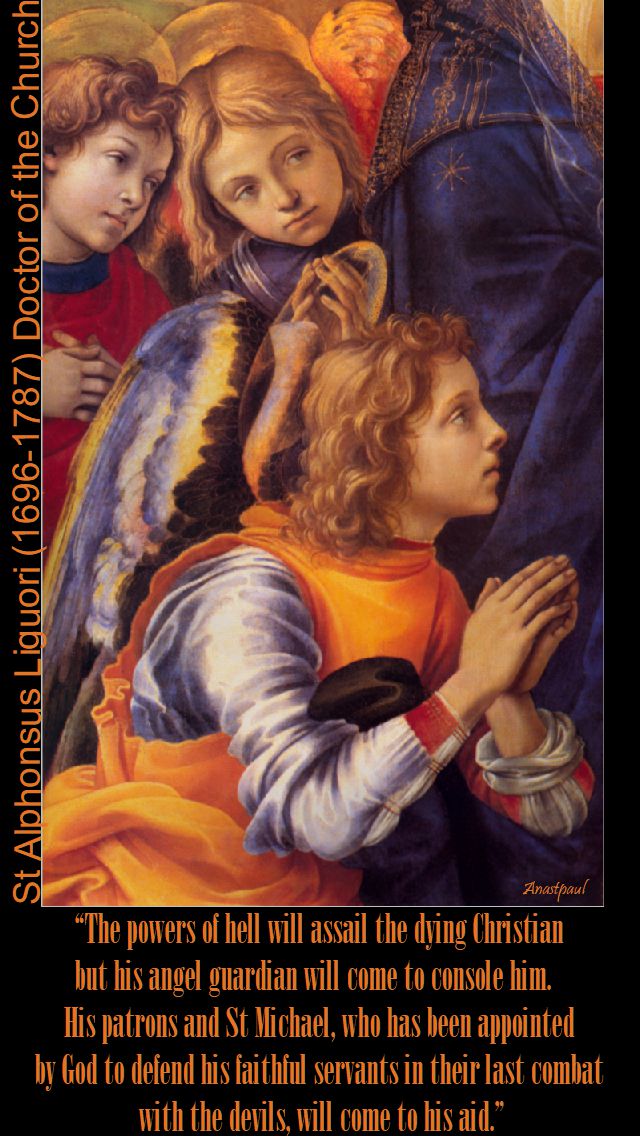
“The powers of hell will assail the dying Christian but his angel guardian will come to console him. His patrons and St. Michael, who has been appointed by God to defend his faithful servants in their last combat with the devils, will come to his aid.”
Quote/s of the Day – 1 August – Memorials of St Alphonsus Liquori and of St Peter Faber S.J.
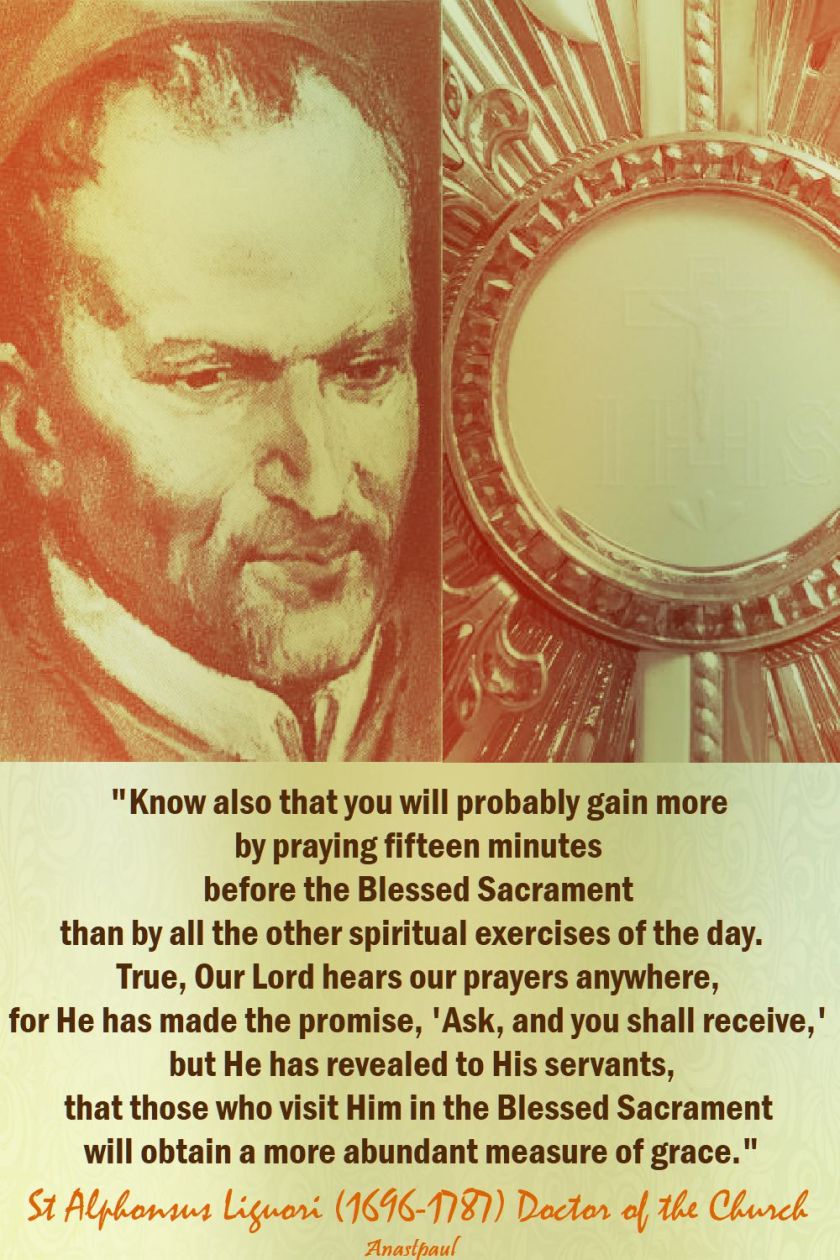
“Know also that you will probably gain more by praying fifteen minutes before the Blessed Sacrament than by all the other spiritual exercises of the day. True, Our Lord hears our prayers anywhere, for He has made the promise, ‘Ask, and you shall receive,’ but He has revealed to His servants, that those who visit Him in the Blessed Sacrament will obtain a more abundant measure of grace.”
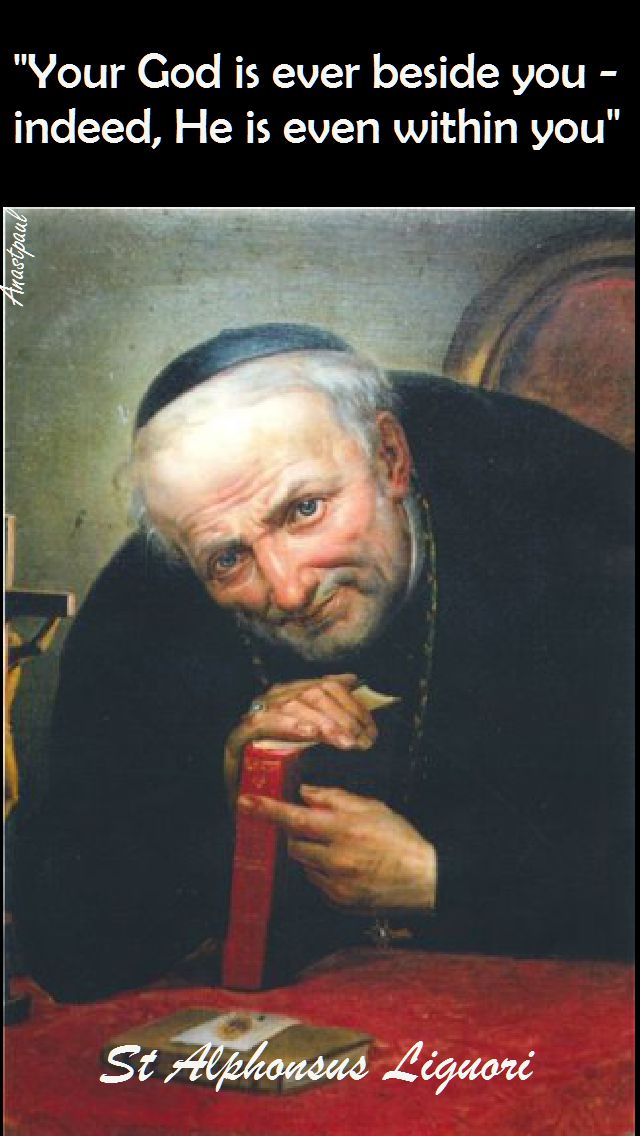
“Your God is ever beside you – indeed, He is even within you.”
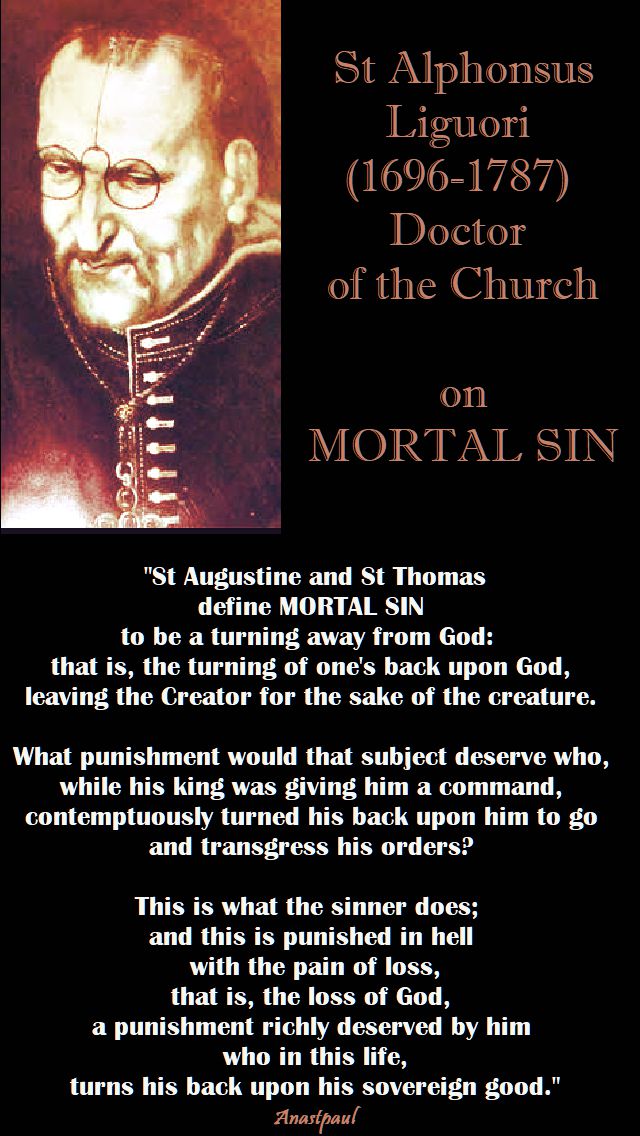
“St Augustine and St Thomas define mortal sin to be a turning away from God: that is, the turning of one’s back upon God, leaving the Creator for the sake of the creature. What punishment would that subject deserve who, while his king was giving him a command, contemptuously turned his back upon him to go and transgress his orders? This is what the sinner does; and this is punished in hell with the pain of loss, that is, the loss of God, a punishment richly deserved by him who in this life turns his back upon his sovereign good.”
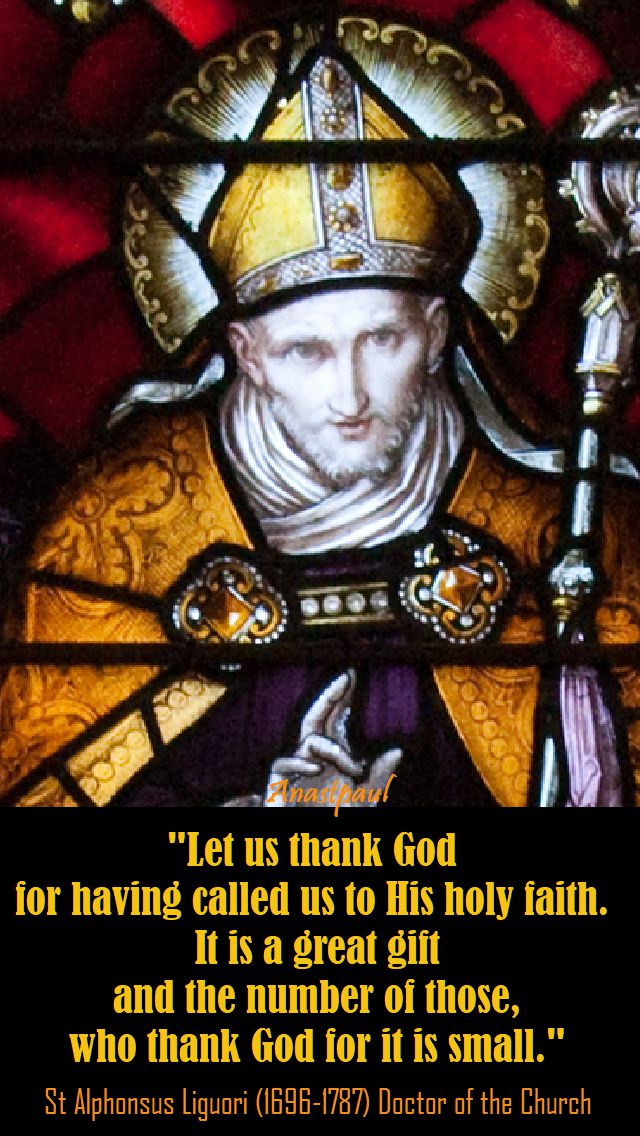
“Let us thank God for having called us to His holy faith. It is a great gift and the number of those, who thank God for it is small.”
St Alphonsus Liguori (1696-1787) Doctor of the Church
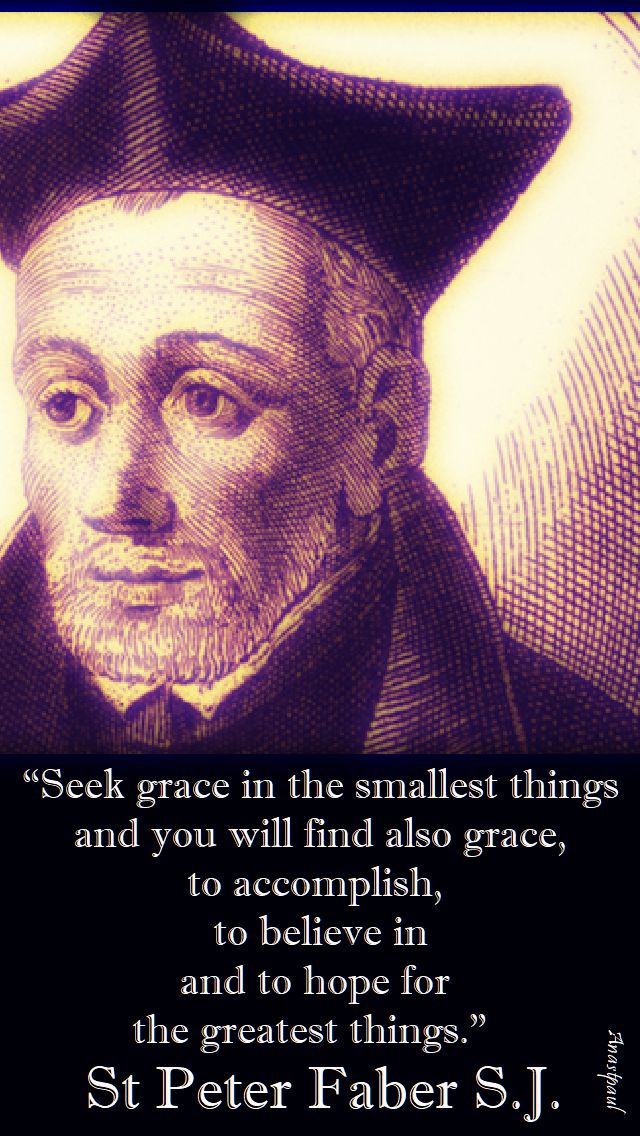
“Seek grace in the smallest things and you will find also grace, to accomplish, to believe in and to hope for the greatest things.”
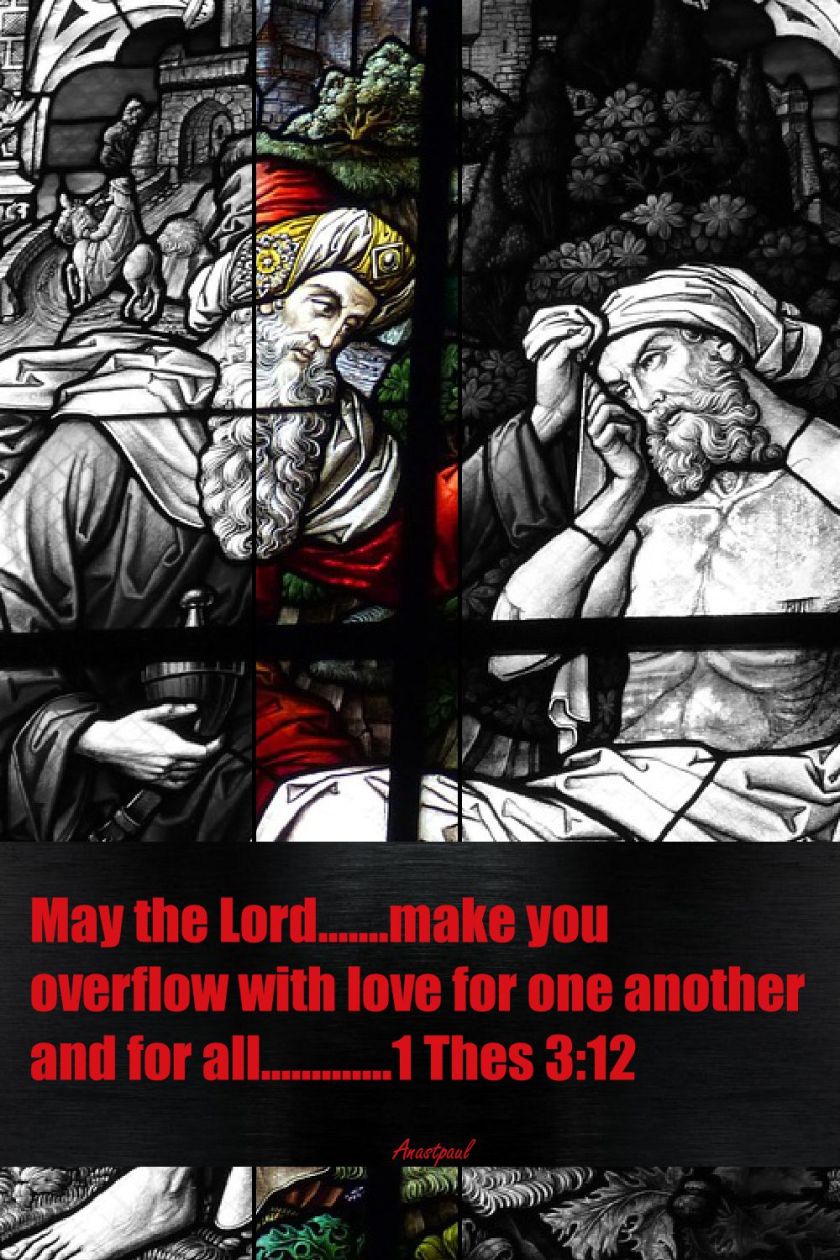
May the Lord…make you overflow with love for one another and for all.1 Thessalonians 3:12
REFLECTION – “The means for attaining perfect love is to accomplish frequent acts of love.
Fire is kindled by the wood that we cast into it and love is enkindled by acts of love.”….St Alphonsus Liguori (1696-1787) Doctor of the Church
PRAYER – Loving Father, grant me the grace to strive after perfect love. Help me to bring forth frequent acts of love, to all and sundry, to each of my neighbours, so that I may grow in this greatest of virtues. St Alphonsus Liguori pray for us, amen.
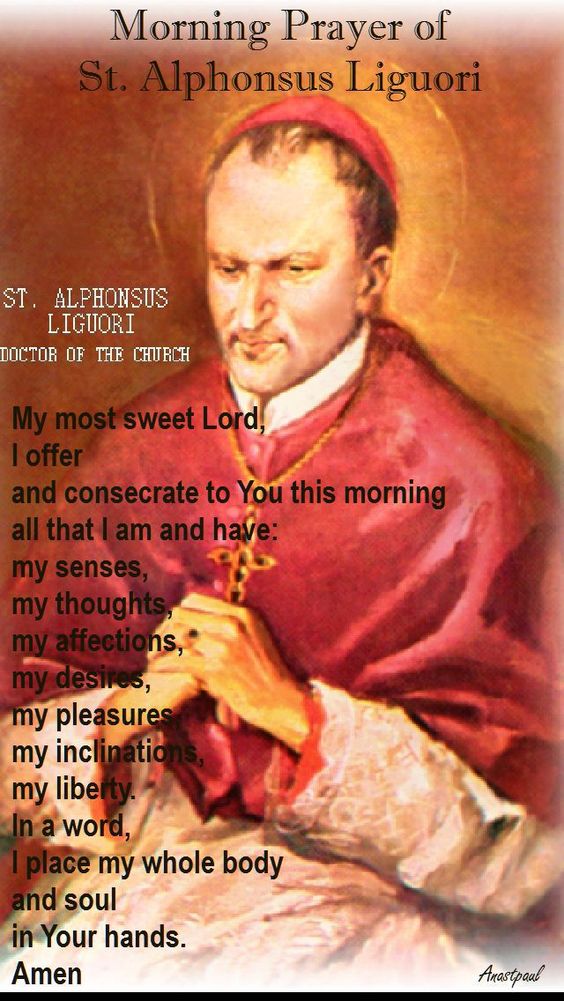
Morning Prayer of St. Alphonsus Liguori (1696-1787) Doctor of the Church Doctor zelantissimus (Most Zealous Doctor)
My most sweet Lord,
I offer and consecrate to You this morning
all that I am and have:
my senses,
my thoughts,
my affections,
my desires,
my pleasures,
my inclinations,
my liberty.
In a word,
I place my whole body and soul in Your hands. Amen
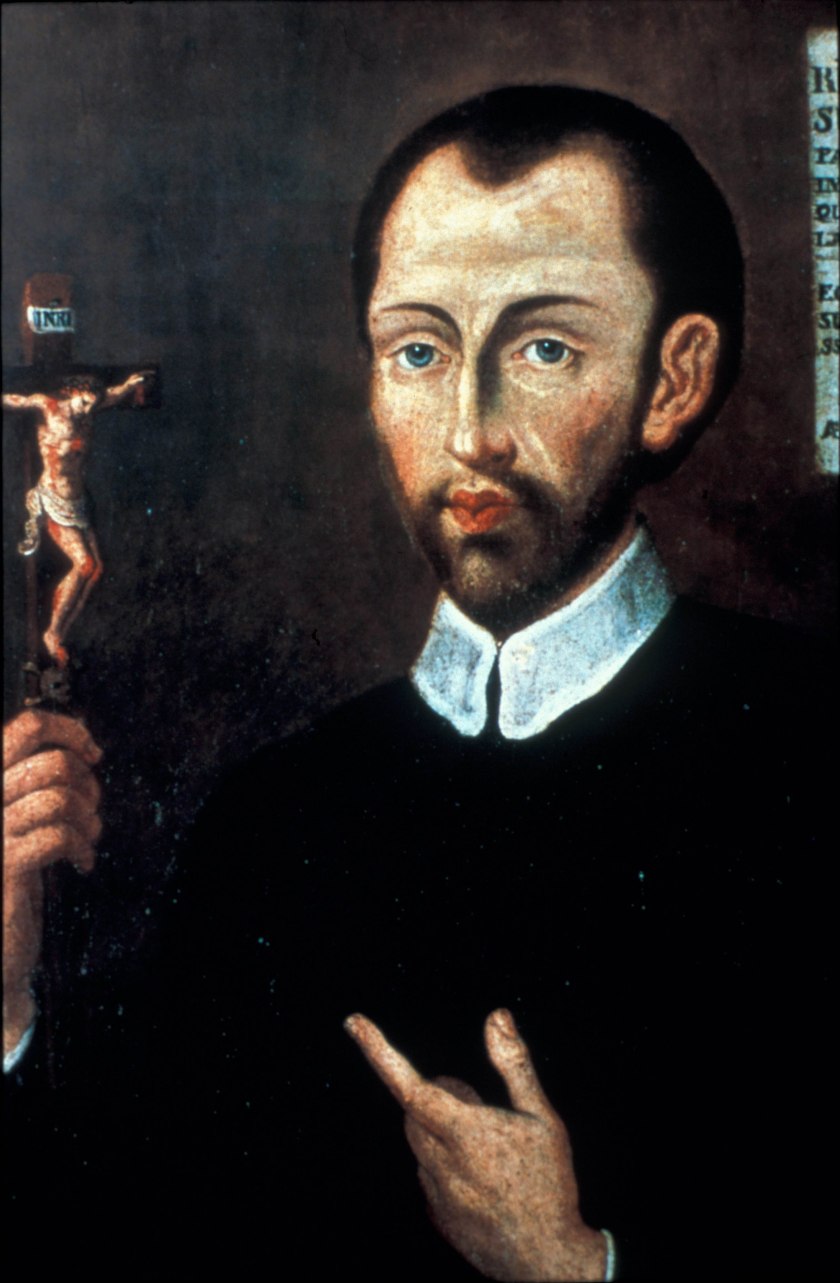
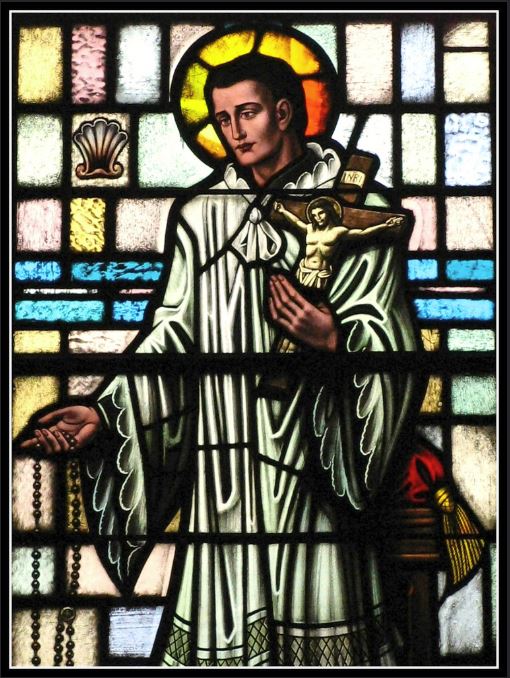
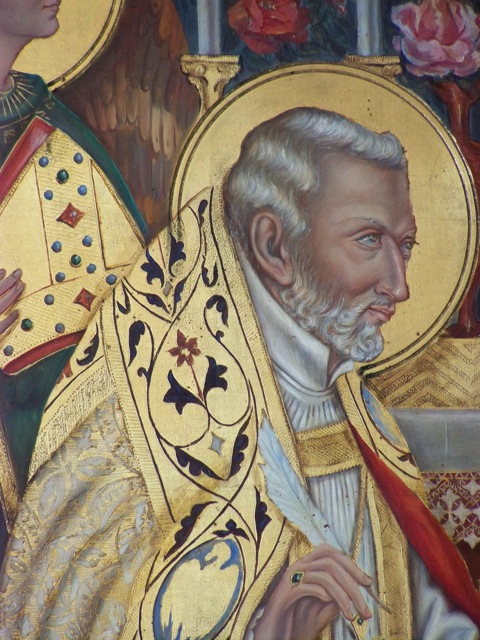
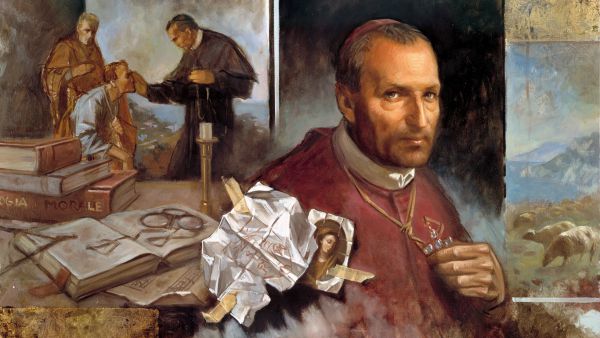
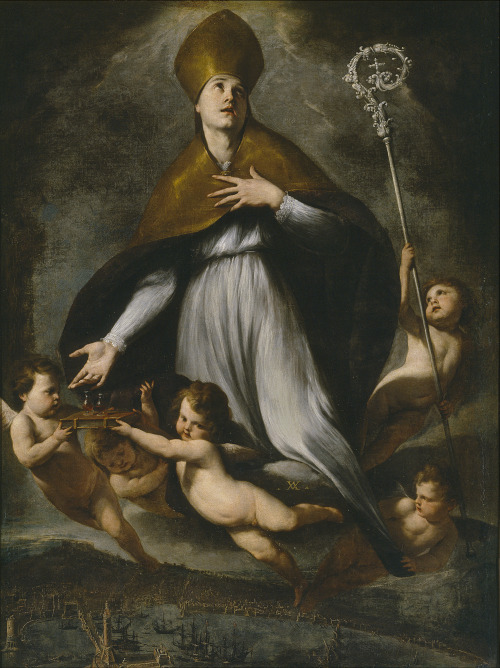
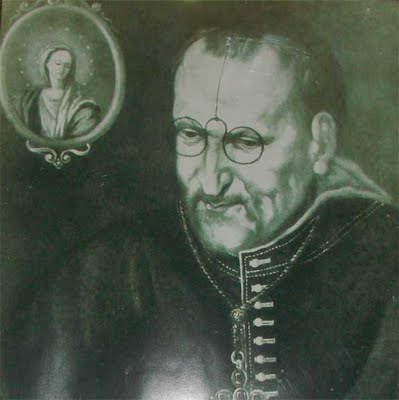
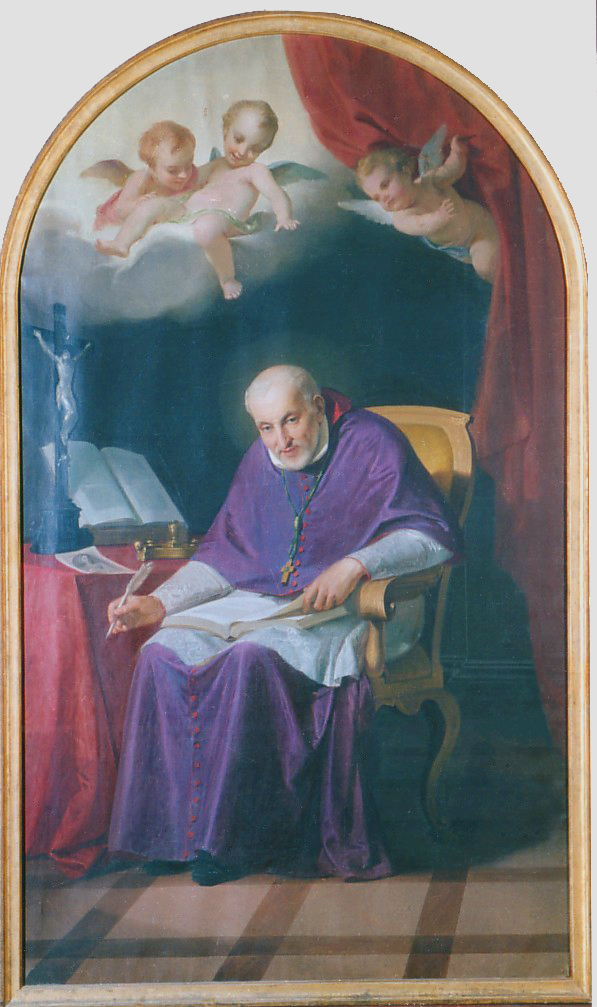
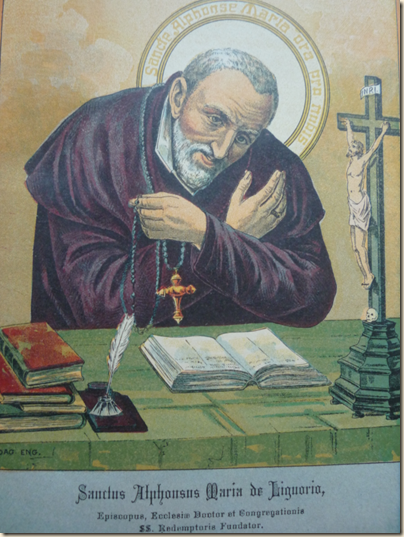
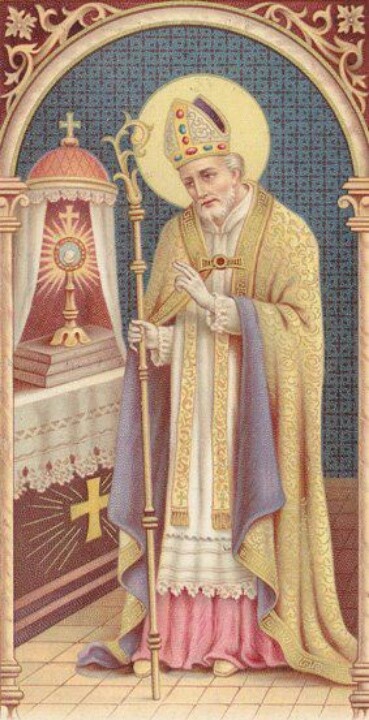
Saint of the Day – 2 August – St Alphonsus Maria de Liguori C.Ss.R. – Doctor of the Church-Bishop, Confessor, Founder, Spiritual Writer, Composer, Musician, Artist, Poet, Lawyer, Scholastic Philosopher and Theologian. Born on 27 September 1696 at Marianelli near Naples, Italy and died on 1 August 1787 at Nocera, Italy of natural causes. He was Canonised on 26 May 1839 by Pope Gregory XVI and declared Doctor of the Church by Pope Pius IX in 1871. He founded the Congregation of the Most Holy Redeemer (the Redemptorists). In 1762 he was appointed Bishop of Sant’Agata dei Goti. Patronages – against arthritis, against scrupulosity, of Confessors (given on 26 February 1950 by Pope Pius XII), final perseverance, moral theologians, moralists (1950 by Pope Pius XII), scrupulous people, vocations, Diocese of Acerra, Italy, Diocese of Agrigento, Italy,l Pagani, Italy, Sant’Agata de’ Goti, Italy. Attributes – chaplet, praying with a monstrance in his hands, pen, quill, crucifix, writing, bishop with his chin on his chest (due to his arthritis).
St Alphonsus learned to ride and fence but was never a good shot because of poor eyesight. Myopia and chronic asthma precluded a military career so his father had him educated for the legal profession. He was taught by tutors before entering the University of Naples, where he graduated with doctorates in civil and canon law at 16. He remarked later that he was so small at the time that he was almost buried in his doctor’s gown and that all the spectators laughed. When he was 18, like many other nobles, he joined the Confraternity of Our Lady of Mercy with whom he assisted in the care of the sick at the hospital for “incurables”.
He became a successful lawyer. He was thinking of leaving the profession and wrote to someone, “My friend, our profession is too full of difficulties and dangers; we lead an unhappy life and run risk of dying an unhappy death”. At 27, after having lost an important case, the first he had lost in eight years of practicing law, he made a firm resolution to leave the profession of law. Moreover, he heard an interior voice saying: “Leave the world, and give yourself to me.”
In 1723, he decided to offer himself as a novice to the Oratory of St. Philip Neri with the intention of becoming a priest. His father opposed the plan but after two months (and with his Oratorian confessor’s permission), he and his father compromised: he would study for the priesthood but not as an Oratorian and live at home. He was ordained on 21 December 1726, at 30. He lived his first years as a priest with the homeless and the marginalised youth of Naples. He became very popular because of his plain and simple preaching. He said: “I have never preached a sermon which the poorest old woman in the congregation could not understand”. He founded the Evening Chapels, which were managed by the young people themselves. The chapels were centres of prayer and piety, preaching, community, social activities and education. At the time of his death, there were 72, with over 10,000 active participants. His sermons were very effective at converting those who had been alienated from their faith.
Liguori suffered from scruples much of his adult life and felt guilty about the most minor issues relating to sin. Moreover, the saint viewed scruples as a blessing at times and wrote: “Scruples are useful in the beginning of conversion…. they cleanse the soul and at the same time make it careful”.
In 1729, Alphonsus left his family home and took up residence in the Chinese Institute in Naples. It was there that he began his missionary experience in the interior regions of the Kingdom of Naples, where he found people who were much poorer and more abandoned than any of the street children in Naples. In 1731, while he was ministering to earthquake victims in the town of Foggia, Alphonsus claimed to have had a vision of the Virgin Mother in the appearance of a young girl of 13 or 14, wearing a white veil.
Congregation of the Most Holy Redeemer (The Rdemptorists) – On 9 November 1732, he founded the Congregation of the Most Holy Redeemer, when Sister Maria Celeste Crostarosa told him that it had been revealed to her that he was the one that God had chosen to found the congregation. He founded the congregation with the charism of preaching popular missions in the city and the countryside. Its goal was to teach and preach in the slums of cities and other poor places. They also fought Jansenism, a heresy that supported a very strict morality: “the penitents should be treated as souls to be saved rather than as criminals to be punished”. He is said never to have refused absolution to a penitent.
A gifted musician and composer, he wrote many popular hymns and taught them to the people in parish missions. In 1732, while he was staying at the Convent of the Consolation, one of his order’s houses in the small city of Deliceto in the province of Foggia in Southeastern Italy, Liguori wrote the Italian carol “Tu scendi dalle stelle” (“From Starry Skies Descending”) in the musical style of a pastorale. The version with Italian lyrics was based on his original song written in Neapolitan, which began Quanno nascette Ninno (When the child was born). As it was traditionally associated with the zampogna, or large-format Italian bagpipe, it became known as Canzone d’i zampognari the (“Carol of the Bagpipers”).
Bishop Alphonsus was consecrated Bishop of Sant’Agata dei Goti in 1762. He tried to refuse the appointment by using his age and infirmities as arguments against his consecration. He wrote sermons, books and articles to encourage devotion to the Blessed Sacrament and the Blessed Virgin Mary. He first addressed ecclesiastical abuses in the diocese, reformed the seminary and spiritually rehabilitated the clergy and faithful. He suspended those priests who celebrated Mass in less than 15 minutes and sold his carriage and episcopal ring to give the money to the poor. In the last years of his life, he suffered a painful sickness and a bitter persecution from his fellow priests, who dismissed him from the Congregation that he had founded.
Death In 1775, he was allowed to retire from his office and went to live in the Redemptorist community in Pagani, Italy, where he died.
Veneration and legacy He was beatified on 15 September 1816 by Pope Pius VII and canonized on 26 May 1839 by Pope Gregory XVI.
In 1949, the Redemptorists founded the Alphonsian Academy for the advanced study of Catholic moral theology. He was named the patron of confessors and moral theologians by Pope Pius XII on 26 April 1950, who subsequently wrote of him in the encyclical Haurietis aquas.
Moral theology Alphonsus’ greatest contribution to the Church was in the area of moral theology. His masterpiece was The Moral Theology (1748), which was approved by the Pope himself and was born of Alphonsus’ pastoral experience, his ability to respond to the practical questions posed by the faithful and his contact with their everyday problems. He opposed sterile legalism and strict rigoururism. According to him, those were paths closed to the Gospel because “such rigour has never been taught nor practiced by the Church”. His system of moral theology is noted for its prudence, avoiding both laxism and excessive rigour. Since its publication it has remained in Latin, often in 10 volumes or in the combined 4-volume version of Gaudé. It saw only recently its first publication in translation, in an English translation made by Ryan Grant and published in 2017 by Mediatrix Press. The English translation of the work is projected to be around 5 volumes.
Mariology His Mariology, though mainly pastoral in nature, rediscovered, integrated and defended that of St Augustine of Hippo, St Ambrose of Milan and other fathers; it represented an intellectual defence of Mariology in the 18th century, the Age of Enlightenment, against the rationalism to which his often flaming Marian enthusiasm contrasted:
The Glories of Mary Marian Devotion Prayers to the Divine Mother Spiritual Songs The True Spouse of Jesus Christ
Other works Great Means of Salvation and of Perfection The Way of Salvation and of Perfection The Way of the Cross, Preparation for Death, The Incarnation, Birth and Infancy of Jesus Christ The Holy Eucharist Victories of the Martyrs
“Know also that you will probably gain more by praying fifteen minutes before the Blessed Sacrament than by all the other spiritual exercises of the day. True, Our Lord hears our prayers anywhere, for He has made the promise, ‘Ask, and you shall receive,’ but He has revealed to His servants that those who visit Him in the Blessed Sacrament will obtain a more abundant measure of grace.”
St Alphonsus Liguori (1696-1787) Most Zealous Doctor
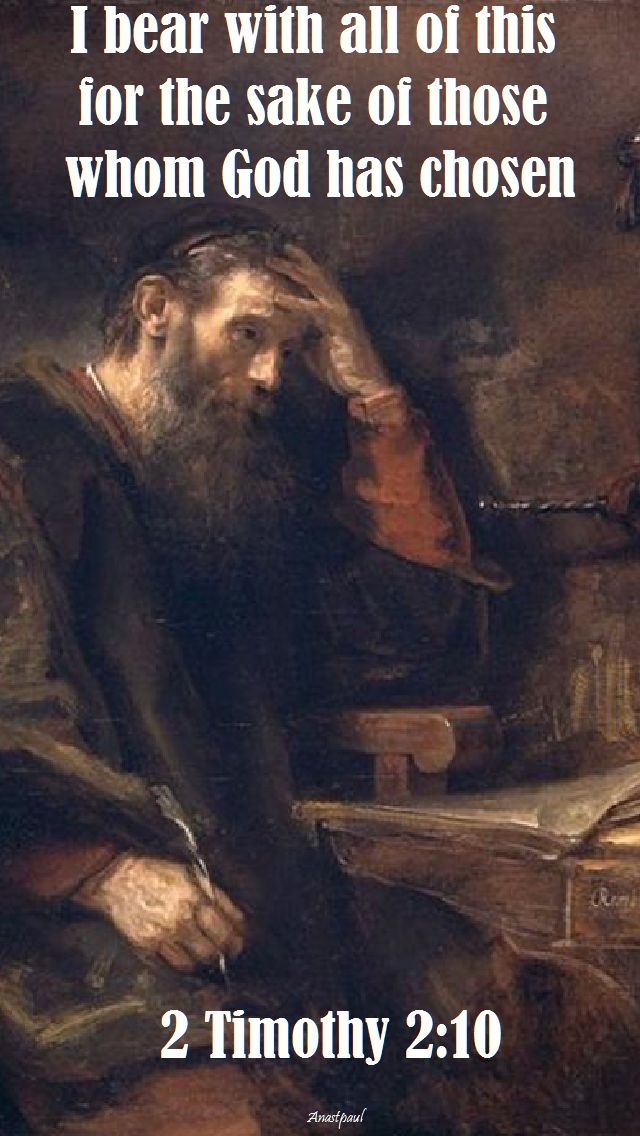
I bear with all of this for the sake of those whom God has chosen..2 Timothy 2:10
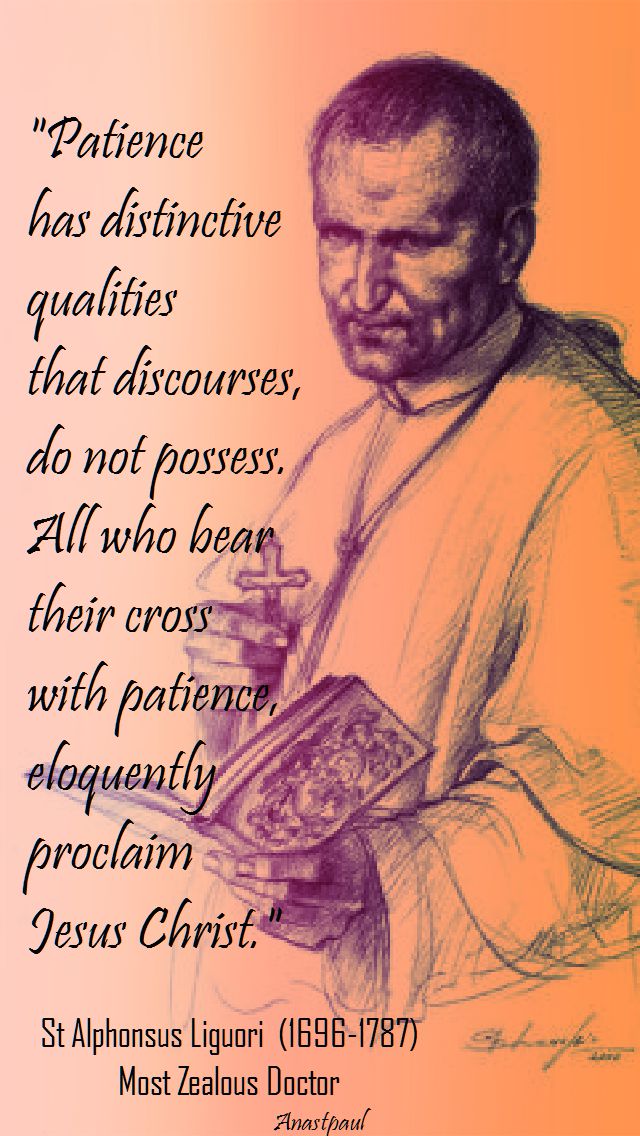
REFLECTION – “Patience has distinctive qualities that discourses do not possess. All who bear their cross with patience, eloquently proclaim Jesus Christ.”………….St Alphonsus Liguori
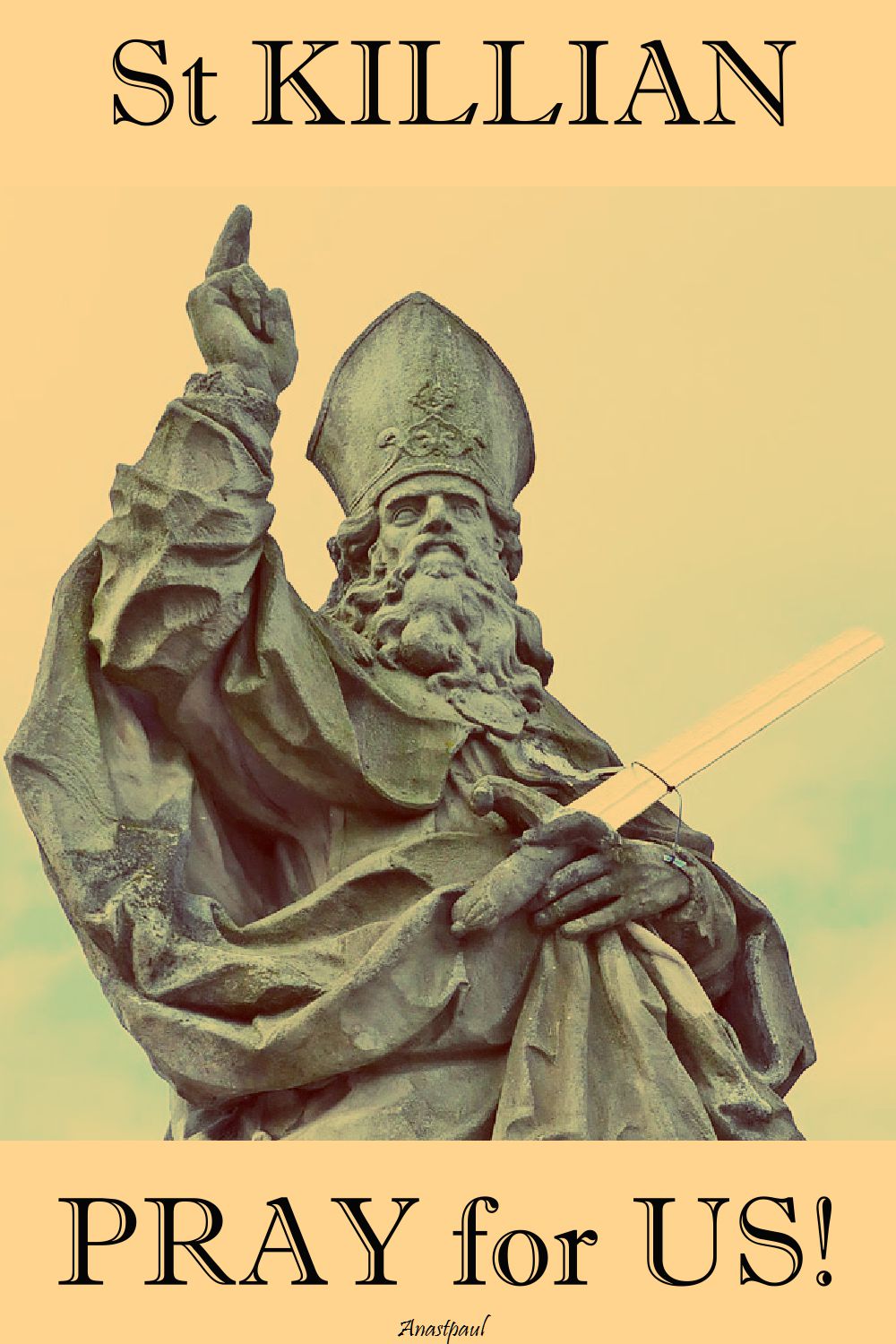
PRAYER – Heavenly Father, teach me to be patient under the crosses that come my way. Let my silent example speak vlumes to others and lead them to faith in Your Son, our Lord Jesus Christ. St Killian, you worked tirelessly and patiently for the glory of the Kingdom, please intercede for us all, amen.
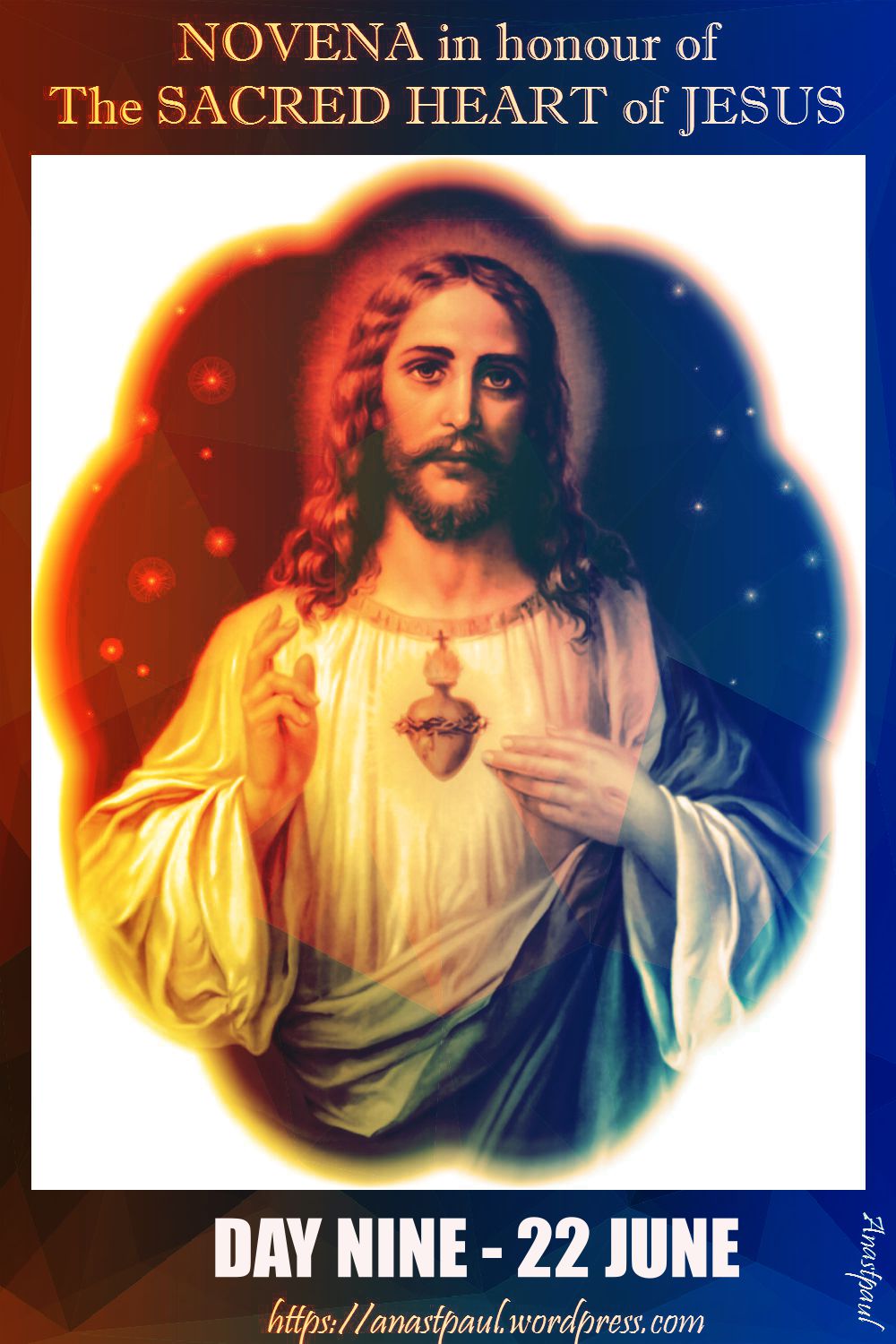
NOVENA in honour of the SACRED HEART of JESUS – DAY NINE –22 JUNE
By St Alphonsus Liguori (1696-1787) Most Zealous Doctor Published in 1758 from THE HOLY EUCHARIST
MEDITATION IX. The Faithful Heart of Jesus.
Oh, how faithful is the beautiful heart of Jesus towards those whom He calls to His love: He is faithful Who hath called you, Who also will perform.’ [1 Thess. v. 24].
The faithfulness of God gives us confidence to hope all things, although we deserve nothing. If we have driven God from our heart, let us open the door to Him and He will immediately enter, according to the promise He has made: If anyone open to Me the door, I will come in to him, and will sup with him. [Apoc. iii. 20]. If we wish for graces, let us ask for them of God, in the name of Jesus Christ and He has promised us that we shall obtain them: If you shall ask the Father anything in My name, He will give it you. [John xvi. 23]. If we are tempted, let us trust in His merits and He will not permit our enemies to strive with us beyond our strength: God is faithful, Who will not suffer you to be tempted above that which you are able. [1 Cor. x. 13].
Oh, how much better it is to have to do with God than with men! How often do men promise and then fail, either because they tell lies in making their promises, or because, after having made the promise, they change their minds: God is not as man, says the Holy Spirit, that He should lie; or as the Son of Man, that He should be changed. [Num. xxiii. 19]. God cannot be unfaithful to His promises, because, being Truth itself, He cannot lie; nor can He change His mind, because all that He wills is just and right. He has promised to receive all that come to Him, to give help to him that asks it, to love him that loves Him; and shall He then not do it? Hath He said, then, and will He not do it? [Ibid.].
Oh, that we were as faithful with God as He is with us! Oh, how often have we, in times past, promised Him to be His, to serve Him and love Him and then have betrayed Him, and, renouncing His service, have sold ourselves as slaves to the devil! Oh, let us beseech Him to give us strength to be faithful to Him for the future! Oh, how blessed shall we be if we are faithful to Jesus Christ in the few things that He commands us to do; He will, indeed, be faithful in remunerating us with infinitely great rewards and He will declare to us what He has promised to His faithful servants: Well done, good and faithful servant; because thou hast been faithful over a few things, I will place thee over many things; enter thou into the joy of thy Lord. [Matt. xxv. 21].
LET US PRAY – DAY NINE
Oh, that I had been as faithful towards You, my dearest Redeemer,
as You have been faithful to me.
Whenever I have opened my heart to You,
You have entered in, to forgive me and to receive me into Your favour.
Whenever I have called You, You have hastened to my assistance.
You have been faithfu1 with me
but I have been exceedingly unfaithful towards You.
I have promised You my love and then have many times refused it to You,
as if You, my God, Who has created and redeemed me,
were less worthy of being loved than Your creatures
and those miserable pleasures for which I have forsaken You.
Forgive me, O my Jesus. I know my ingratitude and abhor it.
I know that You are infinite goodness;
Who deserves an infinite love, especially from me,
whom You have so much loved,
even after all the offences I have committed against You.
Ah, no, my Love, have pity on me;
suffer me not to forsake You again
and then to damn myself, as I should deserve, to Hell.
O loving and faithful heart of Jesus, inflame, I beseech You, my miserable heart,
so that it may burn with love for You, My Jesus.
It seems to me that now I love You but I love You but little.
Make me love You exceedingly
and remain faithful to You until death.
I ask of You this grace, together with that of always praying to You for it.
Grant that I may die, rather than ever betray You again.
O Mary, my Mother, help me to be faithful to your Son. Amen.
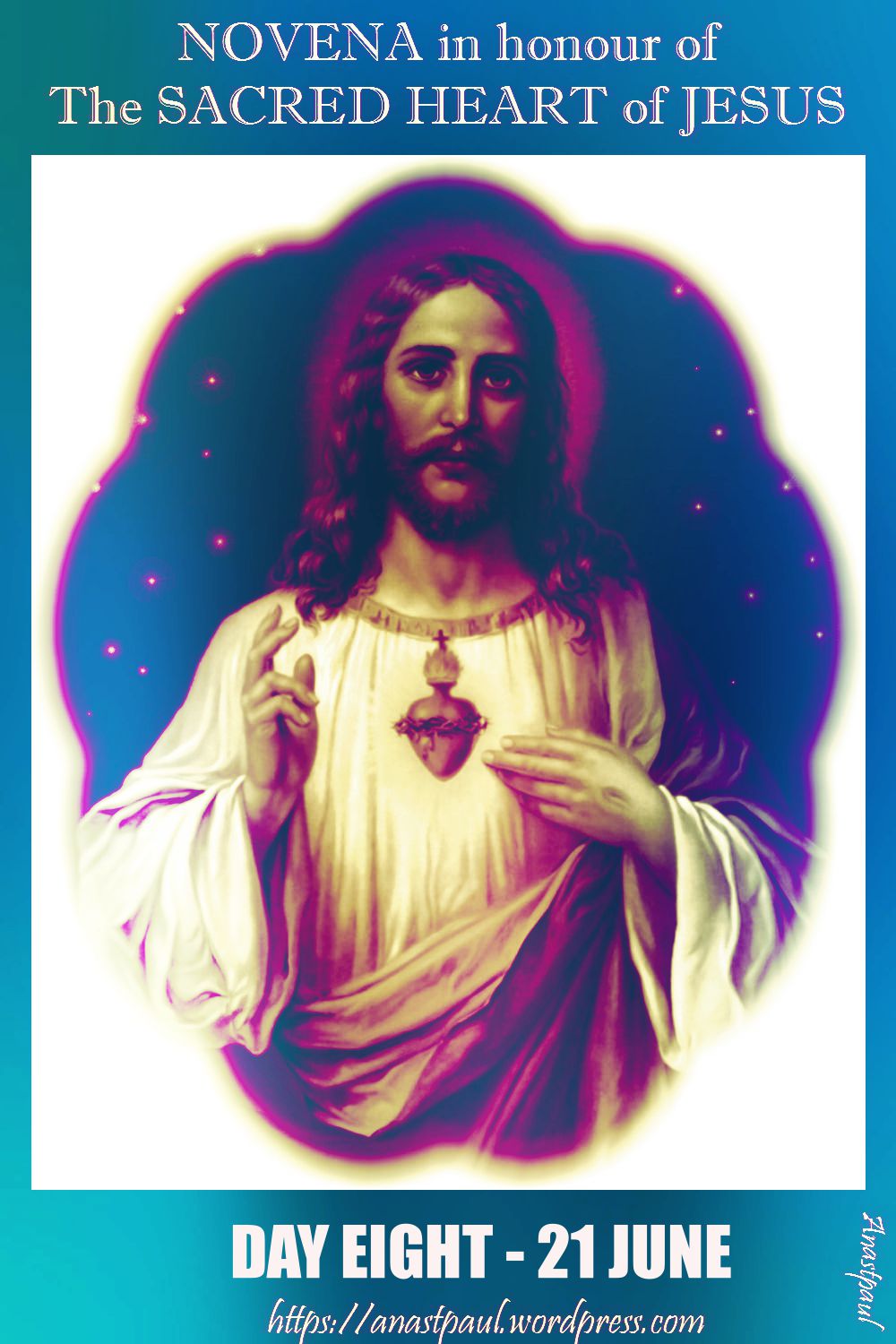
NOVENA in honour of the SACRED HEART of JESUS – DAY EIGHT –21 JUNE
By St Alphonsus Liguori (1696-1787) Most Zealous Doctor Published in 1758 from THE HOLY EUCHARIST
MEDITATION VIII. The Despised Heart of Jesus.
There is not a greater sorrow for a heart that loves, than to see its love despised: and so much the more when the proofs given of this love have been great, and, on the other hand, the ingratitude great.
If every human being were to renounce all his goods and to go and live in the desert, to feed on herbs, to sleep on the bare earth, to macerate himself with penances and at last give himself up to be murdered for Christ’s sake, what recompense could he render for the sufferings, the Blood, the life that this great Son of God has given for his sake? If we were to sacrifice ourselves every moment unto death, we should certainly not recompense in the smallest degree the love that Jesus Christ has shown us, by giving Himself to us in the most Holy Sacrament. Only conceive that God should conceal Himself under the species of bread to become the food of one of His creatures!
But, O my God, what recompense and gratitude do men render to Jesus Christ? What but ill-treatment, contempt of His laws and His maxims, —– injuries such as they would not commit towards their enemy, or their slave, or the greatest villain upon earth. And can we think of all these injuries which Jesus Christ has received and still receives every day and not feel sorrow for them? And not endeavour, by our love, to recompense the infinite love of His Divine heart, which remains in the most Holy Sacrament, inflamed with the same love towards us and anxious to communicate every good gift to us and to give Himself entirely to us, ever ready to receive us into His heart whenever we go to Him? Him that cometh to Me, I will not cast out. [John vi. 37].
We have been accustomed to hear of the Creation, Incarnation, Redemption, of Jesus born in a stable, of Jesus dead on the Cross. O my God, if we knew that another man had conferred on us any of these benefits, we could not help loving him. It seems that God alone has, to to say, this bad luck with men, that, though He has done His utmost to make them love Him, yet He cannot attain this end, and, instead of being loved, He sees Himself despised and neglected. All this arises from the forgetfulness of men of the love of God.
LET US PRAY – DAY EIGHT
O Heart of Jesus, abyss of mercy and love,
how is it that, at the sight of the goodness You hast shown me and of my ingratitude, I do not die of sorrow? You, O mv Saviour, after having given me my being,
have given me all Your Blood and Your life, giving Yourself up for my sake, to ignominy and death;
and, not content with this,
You have invented the mode of sacrificing Yourself every day for me in the Holy Eucharist,
not refusing to expose Yourself to the injuries which You receive, and which You foresaw,
in this Sacrament of love.
O my God, how can I see myself so ungrateful to You without dying with contrition!
O Lord, put an end, I pray You, to my ingratitude,
by wounding my heart with Your love and making me entirely Yours.
Remember the Blood and the tears that You shed for me, and forgive me.
Oh, let not all Your sufferings be lost upon me.
But though You have seen how ungrateful and unworthy of Your love I have been,
yet You didst not cease to love me even when I did not love You.
Grant that this day may be the day of my thorough conversion;
so that I may begin to love You and may never cease to love You, my sovereign good.
Make me die in everything to myself,
in order that I may live only for You and that I may always burn with Your love.
O Mary, your heart was the blessed altar
that was always on fire with Divine love:
my dearest Mother, make me like you;
obtain this from your Son,
Who delights in honouring and pleasing you,
by denying you nothing that you ask of Him. Amen
NOVENA in honour of the SACRED HEART of JESUS – DAY SEVEN –20 JUNE
By St Alphonsus Liguori (1696-1787) Most Zealous Doctor Published in 1758 from THE HOLY EUCHARIST
MEDITATION VII. The Grateful Heart of Jesus.
The heart of Jesus is so grateful, that it cannot behold the most trifling works done for the love of Him —–our smallest word spoken for His glory, a single good thought directed towards pleasing Him—–without giving to each its own reward. He is besides so grateful, that He always returns a hundredfold for one: You shall receive a hundredfold.
[Matt. xix. 29] Men, when they are grateful, and recompense any benefit done to them, recompense it only once; they, as it were, divest themselves of all the obligation, and then they think no more of it. Jesus Christ does not do thus. with us; He not only recompenses a hundredfold in this life every good action that we perform to please Him, but in the next life He recompenses it an infinite number of times throughout eternity. And who will be so negligent as not to do as much as he can to please this most grateful heart?
But, O my God, how do men try to please Jesus Christ? Or rather, I will say, how can we be so ungrateful towards this our Saviour? If He had only shed a single drop of Blood, or one tear alone for our salvation, yet we should be under infinite obligation to Him; because this drop and this tear would have been of infinite value in the sight of God towards obtaining for us every grace. But Jesus would employ for us every moment of His life. He has given us all His merits, all His sufferings, all His ignominies, all His Blood, and His life; so that we are under, not one, but infinite, obligations to love Him.
But alas! we are grateful even towards animals: if a little dog shows us any sign of affection, it seems to constrain us to love it. How, then, can we be so ungrateful towards God? It seems as if the benefits of God towards men change their nature, and become ill-usage; for, instead of gratitude and love, they obtain nothing but offences and injuries. Do Thou, O Lord, enlighten these ungrateful ones, to know the love that Thou bearest them.
LET US PRAY – DAY SEVEN
O my beloved Jesus,
behold at Your feet an ungrateful sinner.
I have been grateful indeed towards creatures
but to You, alone I have been ungrateful, Who died fur me
and have done the utmost to oblige me to love You.
My dearest Jesus, I have in times past offended You
but now I love You more than everything —–more than myself.
Tell me what You would have me to do;
for I am ready to do everything with Your help.
I believe that for my sake You dost remain in the Blessed Sacrament;
I thank You for it, O my love.
Oh, permit me not to be ungrateful in future for so many benefits and proofs of Your love.
Oh, bind me, unite me to Your heart
and permit me not, during the years that remain to me,
to offend You or grieve You any more.
O my Jesus, it is time that I should love You now.
Oh, that those years that I have lost would return!
But they will return no more
and the life that remains for me may be short;
but whether it be short or long, my God, I desire to spend it all in loving You,
my sovereign good, Who deserves an eternal and infinite love.
O Mary, my Mother, let me never again be ungrateful to your Son. Pray to Jesus for me. Amen.
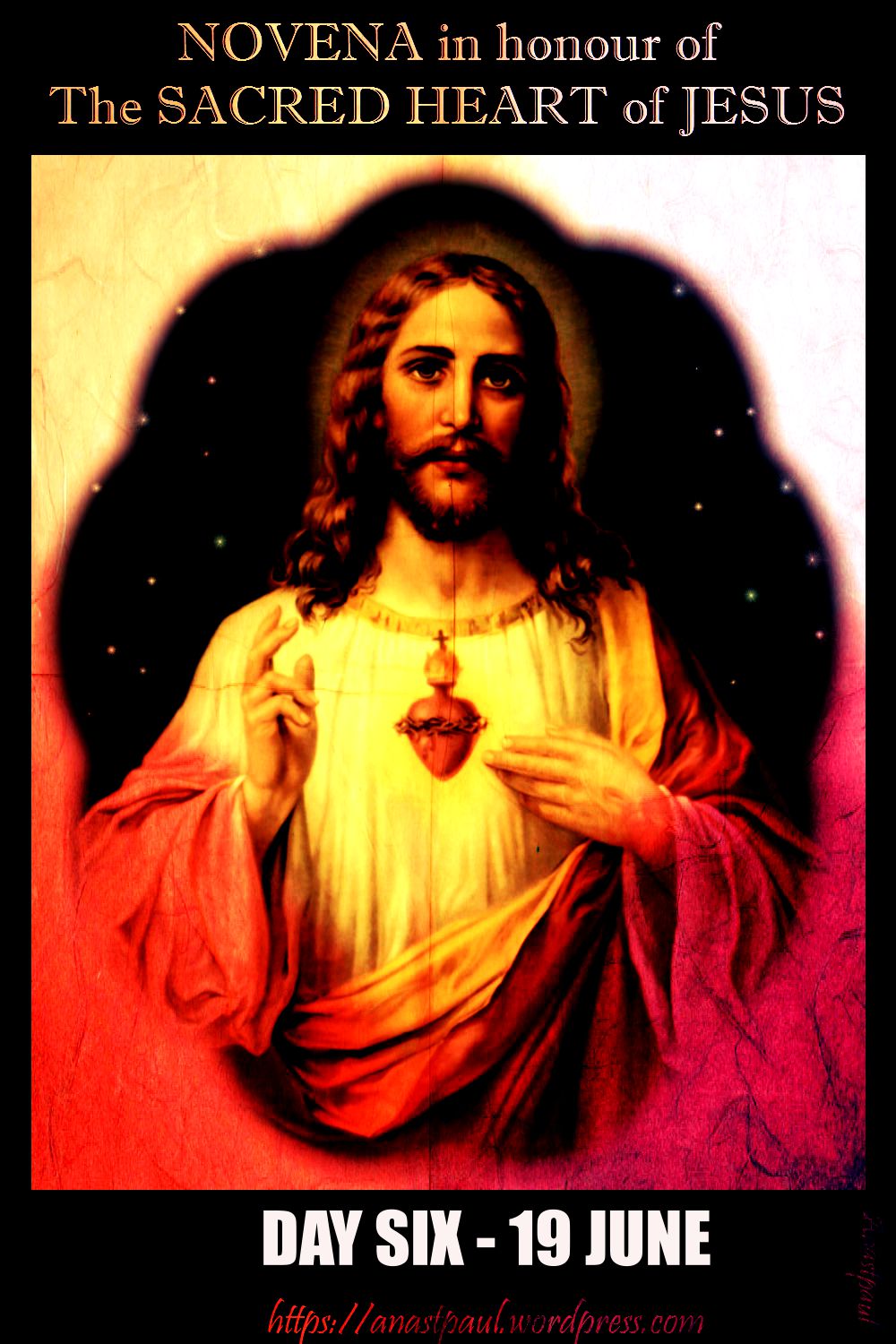
NOVENA in honour of the SACRED HEART of JESUS – DAY SIX – 19 JUNE
By St Alphonsus Liguori (1696-1787) Most Zealous Doctor Published in 1758 from THE HOLY EUCHARIST
MEDITATION VI. The Generous Heart of Jesus.
It is the characteristic of good-hearted people to desire to make everybody happy and especially those most distressed and afflicted. But who can ever find one who has a better heart than Jesus Christ? He is infinite goodness and has therefore a sovereign desire to communicate to us His riches: With Me are riches, that I may enrich them that love Me. [Prov. viii. 18, 21]
He for this purpose made Himself poor, as the Apostle says, that He might make us rich: He became poor for your sakes, that through His poverty you might be rich. [2 Cor. viii. 9]. For this purpose also He chose to remain with us in the most Holy Sacrament, where He remains constantly with His hands full of graces, to dispense them to those who come to visit Him. For this reason also He gives Himself wholly to us in Holy Communion, giving us to understand from this that He cannot refuse us any good gifts, since He even gives Himself entirely to us: How hath He not also, with Him, given us all things? [Rom. viii. 32]
For in the heart of Jesus we receive every good, every grace that we desire: In all things you are made rich in Christ. . . so that nothing is wanting to you in any grace. [1 Cor. 1. 5, 7]. And we must understand that we are debtors to the heart of Jesus for all the graces we have received —–graces of redemption, of vocation, of light, of pardon, the grace to resist temptations and to bear patiently with contradictions; for without His assistance we could not do anything good: Without Me you can do nothing. [John xv. 5]. And if hitherto, says our Saviour, you have not received more graces, do not complain of Me, but blame yourself, who has neglected to seek them of Me: Hitherto you have not asked anything; . . . ask, and you shall receive. [John xvi. 24]. Oh, how rich and liberal is the heart of Jesus towards everyone that has recourse to Him! Rich unto all that call upon Him. [Rom. x. 12]. Oh, what great mercies do those souls receive who are earnest in asking help of Jesus Christ. David said, For Thou, O Lord, art sweet and mild, and plenteous to all who call upon Thee. [Ps. lxxxv. 5]. Let us therefore always go to this heart, and ask with confidence, and we shall obtain all we want.
LET US PRAY – DAY SIX
Ah, my Jesus,
You have not refused to give me Your Blood and Your life
and shall I refuse to give You my miserable heart?
No, my dearest Redeemer, I offer it entirely to You.
I give You all my will – will You accept it and dispose of it at Your pleasure?
I can do nothing and have nothing
but I have this heart which You have given me
and of which no one can deprive me.
I may be deprived of my goods, my blood, my life but not of my heart.
With this heart I can love You;
with this heart I will love You.
I beseech You, O my God, teach me a perfect forgetfulness of myself.
I feel in myself a determination to please You
but in order to put my resolve iinto execution,
I expect and implore help from You.
It depends on You, O loving heart of Jesus,
to make my poor heart entirely Yours.
Oh, grant that my heart may be all on fire with the love of You,
even as Yours is on fire with the love of me.
Grant that my will may be entirely united to Yours
and from this day forth Your holy will may be the rule of all my actions,
of all my thoughts and of all my desires.
I trust, O my Saviour, that You will not refuse me Your grace,
to fulfill this resolution which I now make prostrate at Your feet,
to receive with submission whatever You may ordain for me, as well in life, as in death.
Blessed art you, O Immaculate Mary,
who had your heart always and entirely united to the heart of Jesus;
obtain for me, O my Mother,
that in future I may wish and desire that which Jesus wills and you will. Amen

















 AnaStpaul
You must be logged in to post a comment.