Thought for the Day – 27 November – Wednesday of the Thirty Fourth week in Ordinary Time, Year C, Gospel: Luke 21:12–19
“But not a hair of your head shall perish.” … Luke 21:9
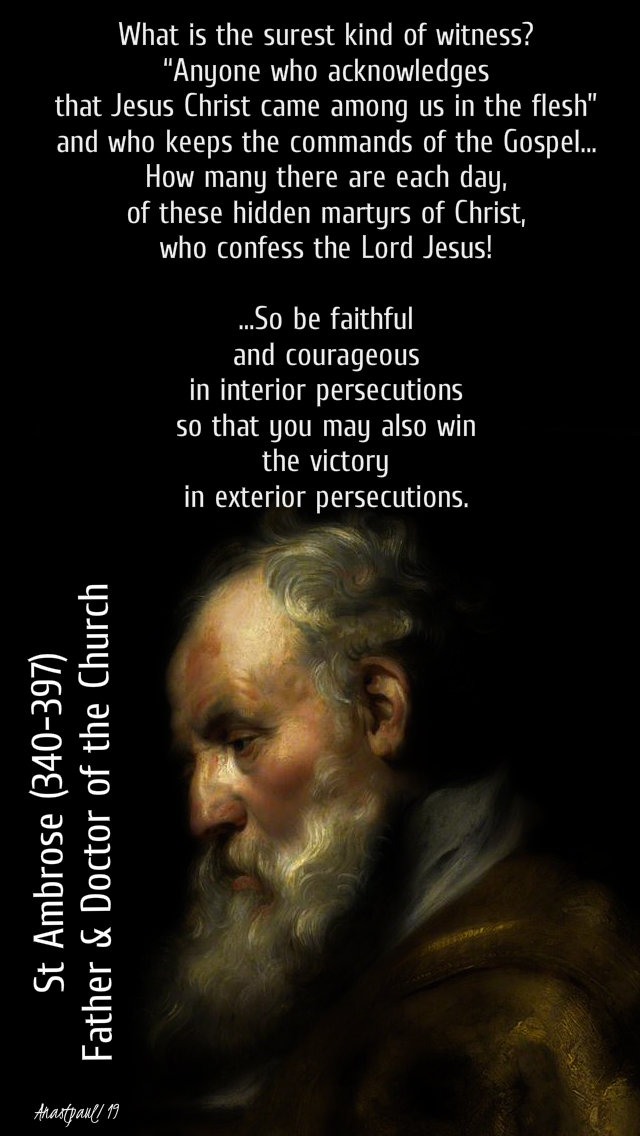
What is the surest kind of witness?
St Ambrose (340-397) Father & Doctor of the Church
“You can be a witness to Christ every day. You were tempted by the spirit of impurity but… you considered that chastity of spirit and body should not be soiled – you are a martyr or, in other words, a witness to Christ… You were tempted by the spirit of pride but, seeing the poor and needy, you were seized by tender compassion and preferred humility to arrogance – you are a witness to Christ. Better still – you have not given your witness in word alone but in deed as well.
What is the surest kind of witness? “Anyone who acknowledges that Jesus Christ came among us in the flesh” (cf. 1Jn 4,2) and who keeps the commands of the Gospel… How many there are each day of these hidden martyrs of Christ who confess the Lord Jesus! The apostle Paul knew that kind of martyrdom and witness of faith rendered to Christ, he who said: “Our boast is this, the testimony of our conscience” (2Cor 1,12). For how many people have made a confession of faith exteriorly but denied it interiorly!… So be faithful and courageous in interior persecutions so that you may also win the victory in exterior persecutions. There are “kings and rulers,” judges of formidable power, in the persecutions within, likewise. You have an example of these in the temptations undergone by our Lord (Mt 4,1ff.)”… (Sermon 20 on Psalm 118)
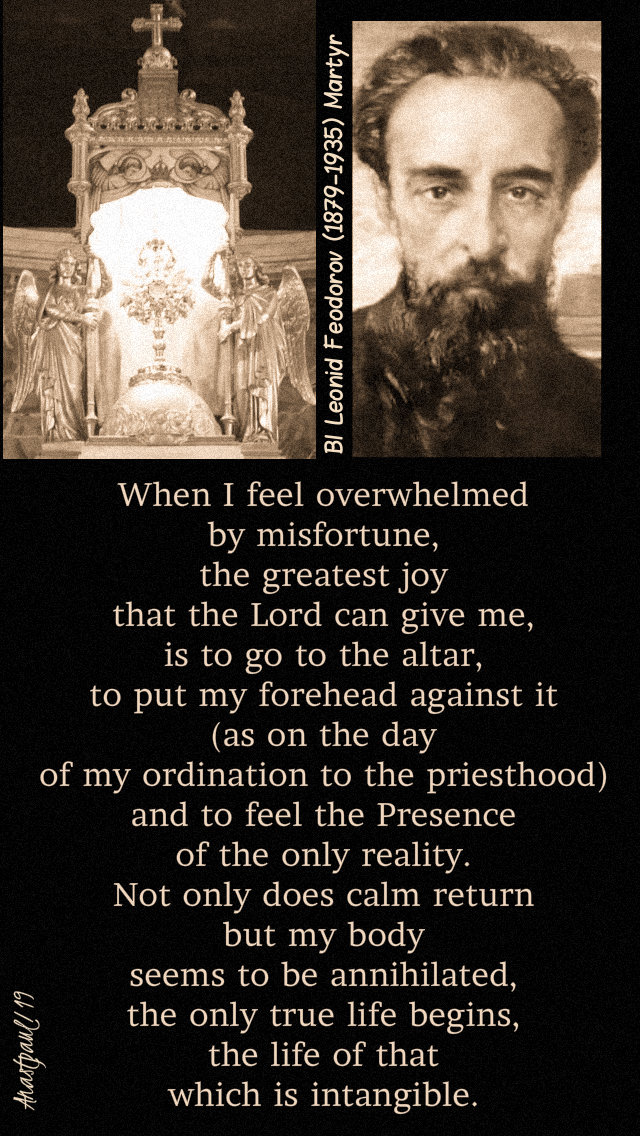
“When I feel overwhelmed by misfortune, the greatest joy that the Lord can give me, is to go to the altar, to put my forehead against it (as on the day of my ordination to the priesthood) and to feel the presence of the only reality. Not only does calm return but my body seems to be annihilated, the only true life begins, the life of that which is intangible.”
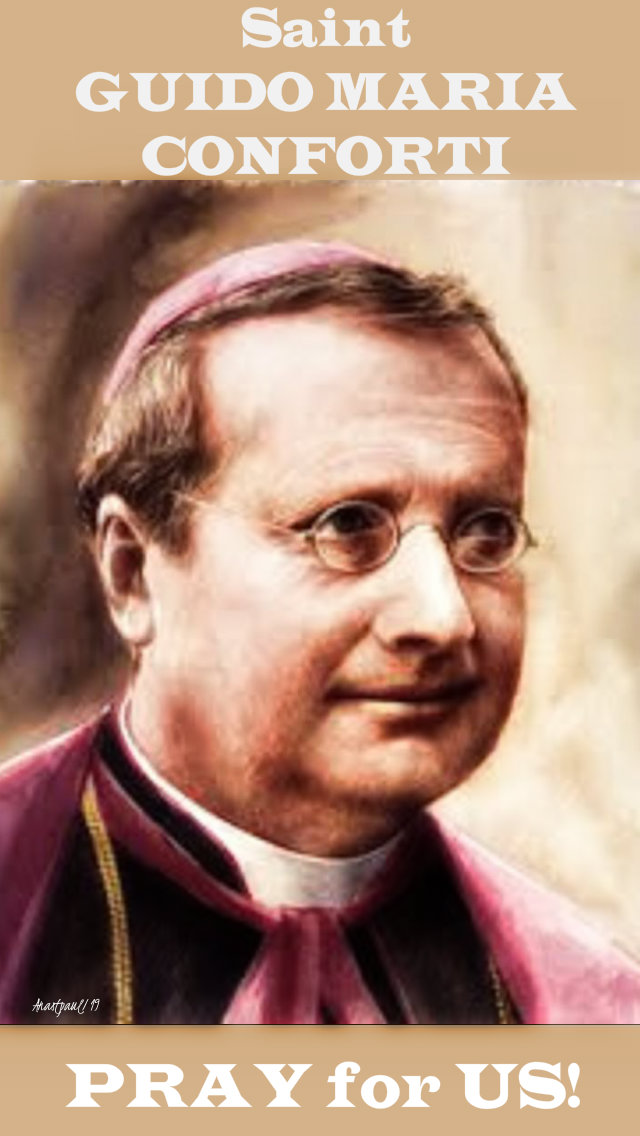
One Minute Reflection – 5 November – Tuesday of the Thirty-first week in Ordinary Time, Year C, Gospel: Luke 14:15–24 and the Memorial of St Guido Maria Conforti (1865-1931)
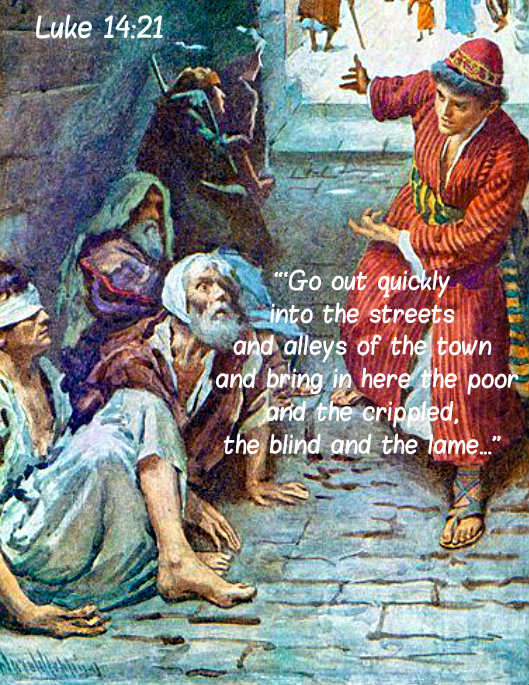
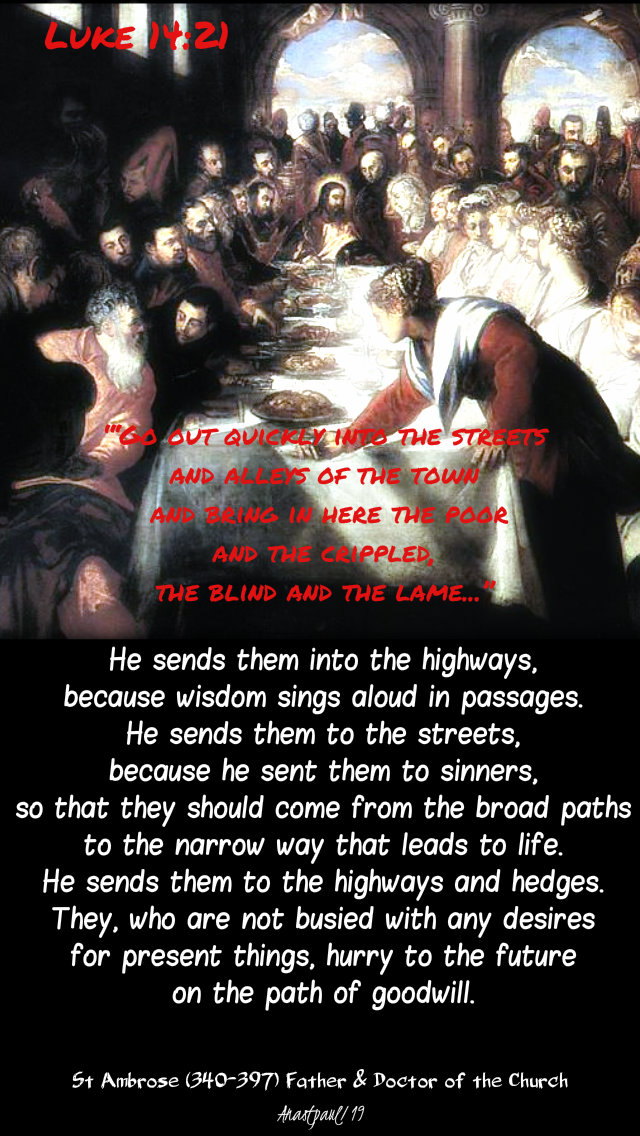
“‘Go out quickly into the streets and alleys of the town and bring in here the poor and the crippled, the blind and the lame…”… Luke 14:21
REFLECTION – “He turned to the Gentiles from the careless scorn of the rich. He invites both good and evil to enter in order to strengthen the good and change the disposition of the wicked for the better. The saying that was read today is fulfilled, “Then wolves and lambs will feed together.” He summons the poor, the maimed and the blind. By this, he shows us, either that handicaps do not exclude us from the kingdom of heaven and whoever lacks the enticements of sinning rarely offends, or that the Lord’s mercy forgives the weakness of sinners. Whoever glories in the Lord glories as one redeemed from reproach not by works but by faith.
He sends them into the highways, because wisdom sings aloud in passages. He sends them to the streets, because he sent them to sinners, so that they should come from the broad paths to the narrow way that leads to life. He sends them to the highways and hedges. They, who are not busied with any desires for present things, hurry to the future on the path of goodwill. Like a hedge that separates the wild from the cultivated and wards off the attacks of wild beasts, they can distinguish between good and evil and extend a rampart of faith against the temptations of spiritual wickedness.” … St Ambrose (340-397) Bishop of Milan, Father & Doctor of the Church (Exposition on the Gospel of Luke, 7)
PRAYER – Almighty God, to whom this world with all its goodness and beauty belongs, You give us life to joyfully follow Your commandments and to learn Your ways. Guard our hearts, that we may always hear and accept Your invitation and race to attend Your banquet in honour of Your Son, our Lord Jesus Christ. Fill us with an active love to run our race in holiness and may the prayers of Your servant, St Guido Maria Conforti, be a help in our efforts. We make our prayer through Christ, our Lord with the Holy Spirit, God for all eternity, amen.
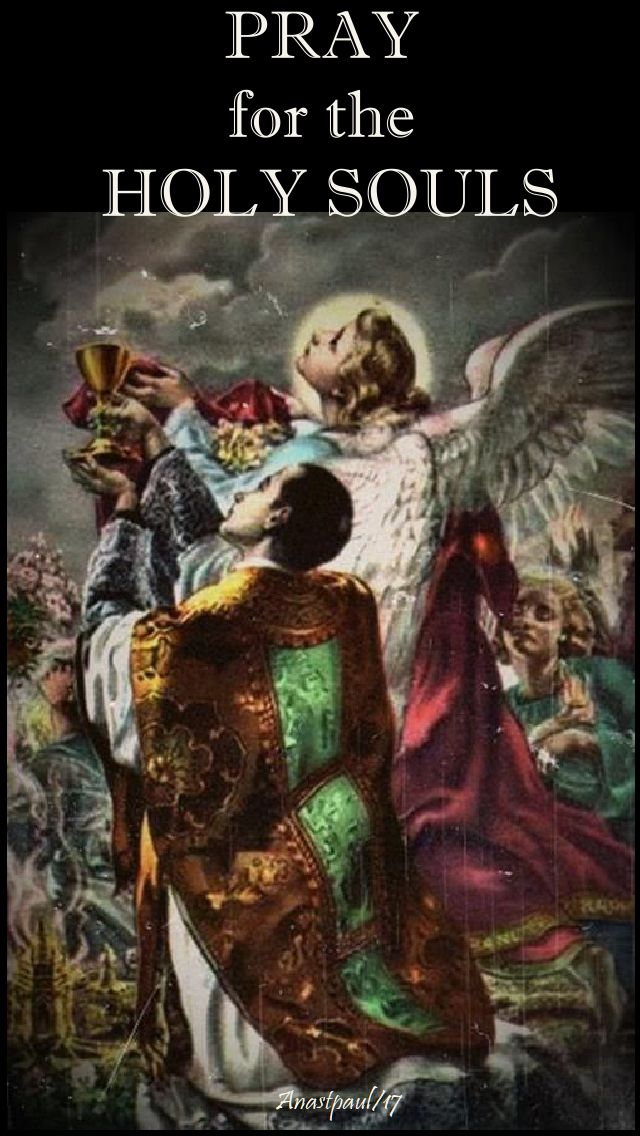
Thought for the Day – 2 November – Commemoration of All the Faithful Departed (All Souls)
Let us Die with Christ, to Live with Christ
Saint Ambrose (340-397)
Bishop and Great Latin Father & Doctor of the Church
An excerpt from his work, On the death of Satyrus (Saint Ambrose’s brother)
We see that death is gain, life is loss. Paul says – For me life is Christ and death a gain. What does “Christ” mean but to die in the body and receive the breath of life? Let us then die with Christ, to live with Christ. We should have a daily familiarity with death, a daily desire for death. By this kind of detachment our soul must learn to free itself from the desires of the body. It must soar above earthly lusts to a place where they cannot come near, to hold it fast. It must take on the likeness of death, to avoid the punishment of death. The law of our fallen nature is at war with the law of our reason and subjects the law of reason to the law of error. What is the remedy? Who will set me free from this body of death? The grace of God, through Jesus Christ, our Lord.
We have a doctor to heal us, let us use the remedy He prescribes. The remedy is the grace of Christ, the dead body our own. Let us then be exiles from our body, so as not to be exiles from Christ. Though we are still in the body, let us not give ourselves to the things of the body. We must not reject the natural rights of the body but we must desire before all else the gifts of grace.
What more need be said? It was by the death of one man that the world was redeemed. Christ did not need to die if He did not want to but He did not look on death as something to be despised, something to be avoided and He could have found no better means to save us, than by dying. Thus His death is life for all. We are sealed with the sign of His death, when we pray we preach His death, when we offer sacrifice we proclaim His death. His death is victory, His death is a sacred sign, each year His death is celebrated with solemnity by the whole world.
What more should we say about His death since we use this divine example, to prove, that it was death alone, that won freedom from death and death itsel,f was its own redeemer? Death is then no cause for mourning, for it is the cause of mankind’s salvation. Death is not something to be avoided, for the Son of God did not think it beneath His dignity, nor did He seek to escape it.
Death was not part of nature, it became part of nature. God did not decree death from the beginning, He prescribed it as a remedy. Human life was condemned because of sin to unremitting labour and unbearable sorrow and so began to experience the burden of wretchedness. There had to be a limit to its evil,; death had to restore what life had forfeited. Without the assistance of grace, immortality is more of a burden than a blessing.
The soul has to turn away from the aimless paths of this life, from the defilement of an earthly body, it must reach out to those assemblies in heaven, (though it is given only to the saints to be admitted to them), to sing the praises of God. We learn from Scripture how God’s praise is sung to the music of the harp – Great and wonderful are your deeds, Lord God Almighty, just and true are your ways, King of the nations. Who will not revere and glorify your nature? You alone are holy, all nations will come and worship before you. The soul must also desire to witness Your nuptials, Jesus and to see yYur bride escorted from earthly to heavenly realities, as all rejoice and sing – All flesh will come before you. No longer will the bride be held in subjection to this passing world but will be made one with the spirit.
Above all else, holy David prayed that he might see and gaze on this – One thing I have asked of the Lord, this I shall pray for, to dwell in the house of the Lord all the days of my life and to see how gracious is the Lord.
Pray for the Holy Souls, that they may gaze on His Face!
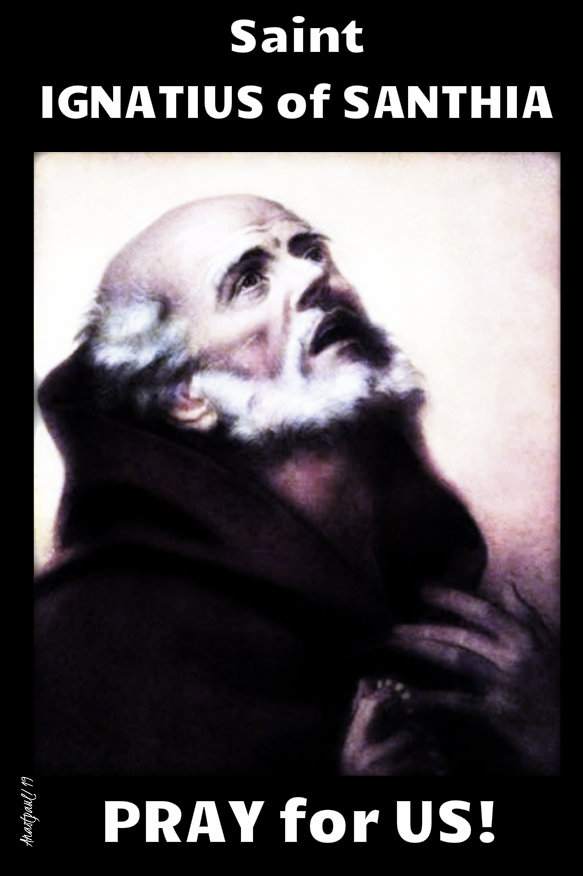
One Minute Reflection – 22 September – Twenty Fifth Sunday in Ordinary Time, Year C, Gospel: Luke 16:1–13 and the Memorial of St Ignatius of Santhia OFM Cap (1686-1770)
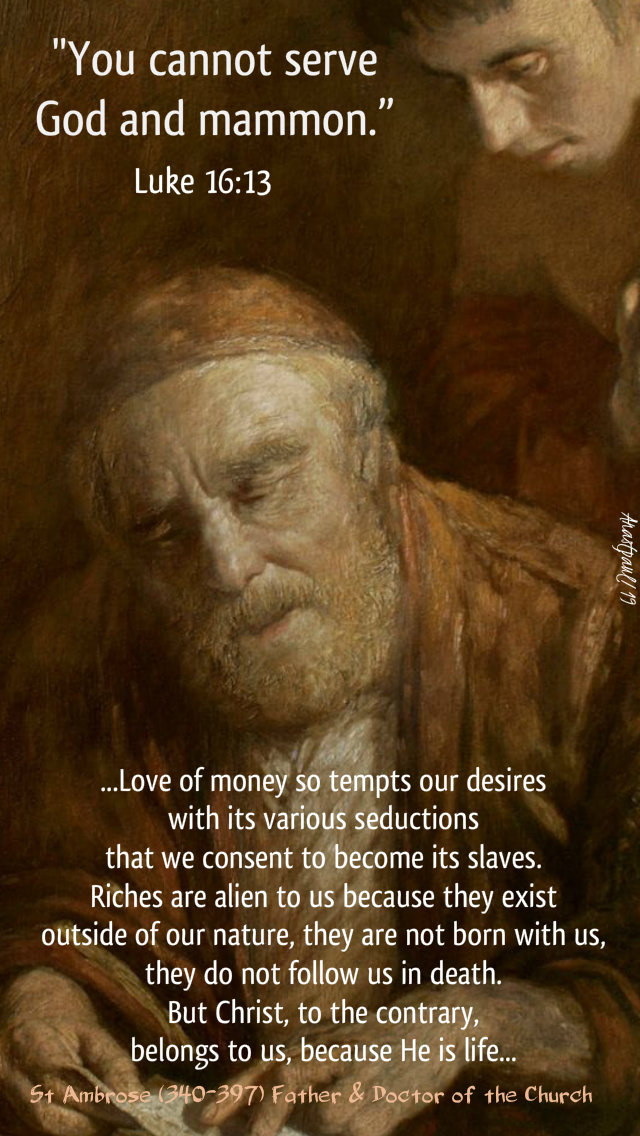
“You cannot serve God and mammon.” … Luke 16:13
REFLECTION – “A servant cannot serve two masters.” Not that there are two, there is only one Master. For even if there are some people who serve money, it has no inherent right to be a master, they themselves are the ones, who assume the yoke of this slavery. In fact, money has no rightful authority but constitutes an unjust bondage. That is why Jesus says: “Make friends for yourselves with deceitful money” so that by generosity to the poor we will win the favour of angels and saints.
The steward is not blamed. By this we learn that we are not masters but rather stewards of other people’s wealth. He was praised even though he was in the wrong because, in paying out to others in his master’s name he won support for himself. And how rightly Jesus spoke of “deceitful wealth” because love of money so tempts our desires with its various seductions that we consent to become its slaves. That is why He said: “If you are not trustworthy with what belongs to another, who will give you what is yours?” Riches are alien to us because they exist outside of our nature, they are not born with us, they do not follow us in death. But Christ, to the contrary, belongs to us because He is life… So don’t let us become slaves of exterior goods because Christ is the only one we should acknowledge as our Lord.” … Saint Ambrose (340-397) – Bishop of Milan, Father and Doctor of the Church – Commentary on Saint Luke’s Gospel, 7, 244s SC 52
PRAYER – All-powerful, eternal God, splendour of true light and never-ending day, turn our ears and hearts to Your Word, that we may hear and live by the seed You have sown. May all that grows in us, be of Your good seed and yield fruit a hundredfold. Grant Lord, we pray, that by the prayers of St Ignatius of Santhia, we may be filled with courage and love and spread Your Word by our lives. We make our prayer through Jesus, our Lord and Word, with the Holy Spirit, one God with You, forever, amen.
One Minute Reflection – 15 September – Twenty Fourth Sunday in Ordinary Time, Year C, Gospel: Luke 15:1–32 and the Memorial of Our Lady of Sorrows
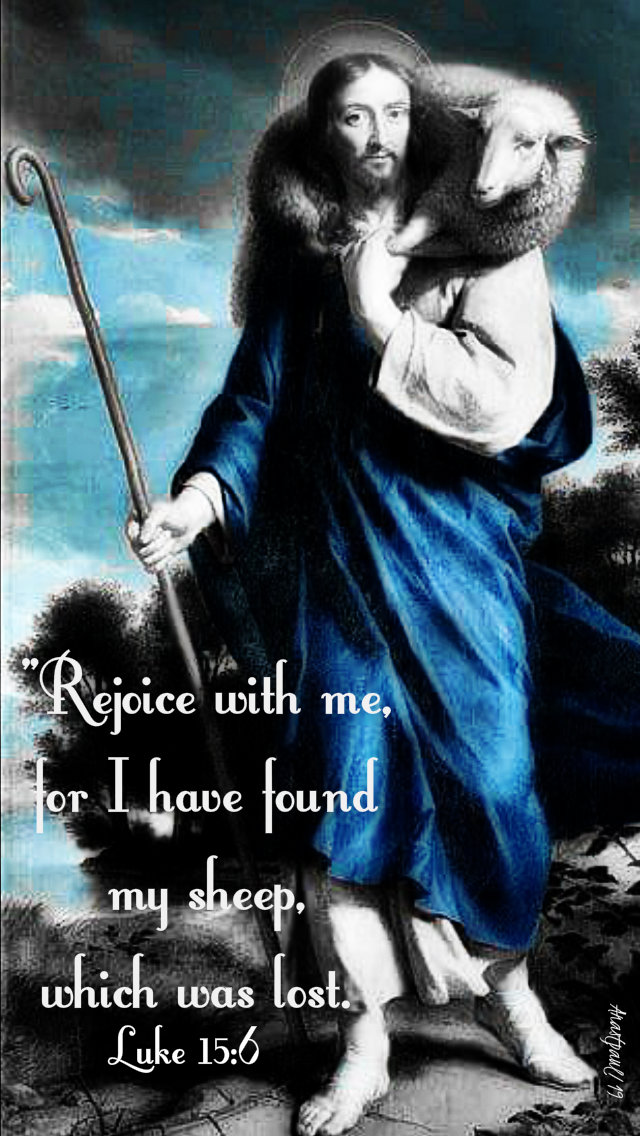
‘Rejoice with me, for I have found my sheep which was lost.’ ... Luke 15:6
REFLECTION – “Since man’s weakness is incapable of maintaining a firm step in this changing world, the good doctor shows you a remedy against going astray and the merciful judge does not withhold hope of forgiveness. It is not without reason that Saint Luke put forward three parables in succession – the sheep who strayed and was found again; the coin that was lost and found; the son who died and came back to life. This is so that this threefold remedy will urge us to take care of our wounds… The weary sheep is brought back by the shepherd, the lost coin is found, the son turns back and returns to his father, repenting of his waywardness…
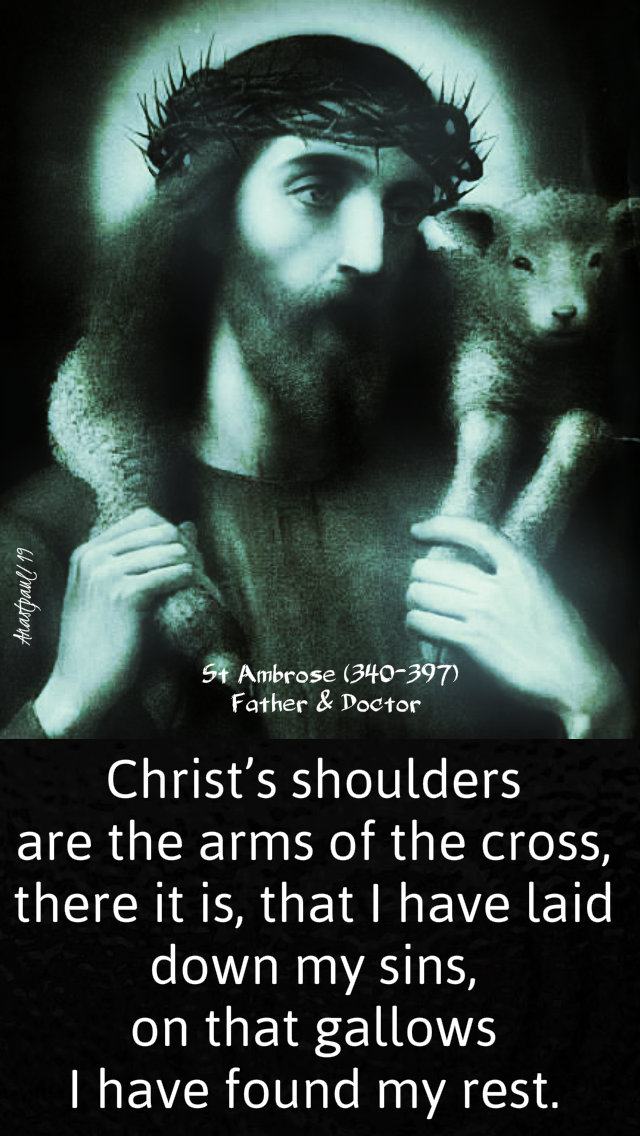
Let us rejoice, then, in that this sheep, which went astray in Adam, has been raised up again in Christ. Christ’s shoulders are the arms of the cross, there it is that I have laid down my sins, on that gallows I have found my rest. This “sheep” is one according to its nature but not in personality, since all form a single body composed of many in members. That is why it is written: “You are Christ’s body and individually parts of it,” (1Cor 12:27). “The Son of Man has come to save what was lost” (Lk 19:10), that is to say everyone, since “just as in Adam all die, so too in Christ shall all be brought to life” (1Cor 15:22)…
Nor, is it irrelevant, that the woman rejoices to have found her coin – it is no small thing, this coin on which is portrayed the image of a prince. In the same way, the good of the Church is the image of the King. We are sheep, let us then pray the Lord to lead us to restful waters (Ps 22[23]:2). We are sheep, let us ask for pasture. We are the coin, let us keep our value. We are sons, let us run to the Father.” … St Ambrose (340-397) – Bishop of Milan, Father & Doctor of the Church – On St Luke’s Gospel, 7, 207 (SC 52)
PRAYER – Look upon us Lord, creator and ruler of the whole world, grant us the grace to serve You with all our heart, that we may come to know, the power of Your forgiveness and love. Our Father, when Jesus Your Son, was raised up on the Cross, it was Your will that Mary, His Mother, should stand there and suffer with Him in her heart. Grant that in union with her, the Church may share in the passion of Christ and so be brought to the glory of His Resurrection. Be our intercessor and our consolation, Our Lady of Sorrows! We make our prayer through Christ our Lord, with the Holy Spirit, one God forever and ever, amen.
One Minute Reflection – 9 September – Monday of the Twenty-third week in Ordinary Time, Year C, Gospel: Luke 6:6-11 and the Memorial of St Peter Claver SJ (1581-1654) “slave of the slaves” and Blessed Frédéric Ozanam (1813–1853) “Servant to the Poor”
“On another sabbath, he went into the synagogue and taught and there was a man there whose right hand was withered.” … Luke 6:6
REFLECTION – “Are you angry at me because I have healed the whole man on the sabbath day?” In this place he revivified, with the salutary strength of good works, the hand which Adam stretched out to pluck the fruit of the forbidden tree. The hand which had withered through a crime, was healed by good deeds. Christ thereby rebuked the Jews who violated the precepts of the law with evil interpretations. They thought that they should rest even from good works on the sabbath, since the law prefigured in the present, the form of the future, in which indeed the days of rest from evils, not from blessings, would come.
Then you heard the words of the Lord, saying, “Stretch forth your hand.” That is the common and universal remedy. You, who think that you have a healthy hand, beware lest it is withered by greed or by sacrilege. Hold it out often. Hold it out to the poor person who begs you. Hold it out to help your neighbour, to give protection to a widow, to snatch from harm one whom you see subjected to unjust insult. Hold it out to God for your sins. The hand is stretched forth, then it is healed. Jeroboam’s hand withered when he sacrificed to idols, then it stretched out when he entreated God” … St Ambrose(340-397)- One of the 4 original Doctors of the Latin Church – Exposition on the Gospel of Luke, 5
PRAYER – God of mercy and love, You offer all peoples the dignity of sharing in your life. Rule over our hearts and bodies this day. Sanctify us and guide our every thought, word and deed, my our hands be held out to our neighbour in imitation of Your love and mercy. By the example and prayers of St Peter Claver and Bl Frederic Ozanam, strengthen us to overcome all racial hatreds and to love each other as brothers and sisters. We ask this through our Lord Jesus Christ, your Son, who lives and reigns with you and the Holy Spirit, one God, for ever and ever amen.
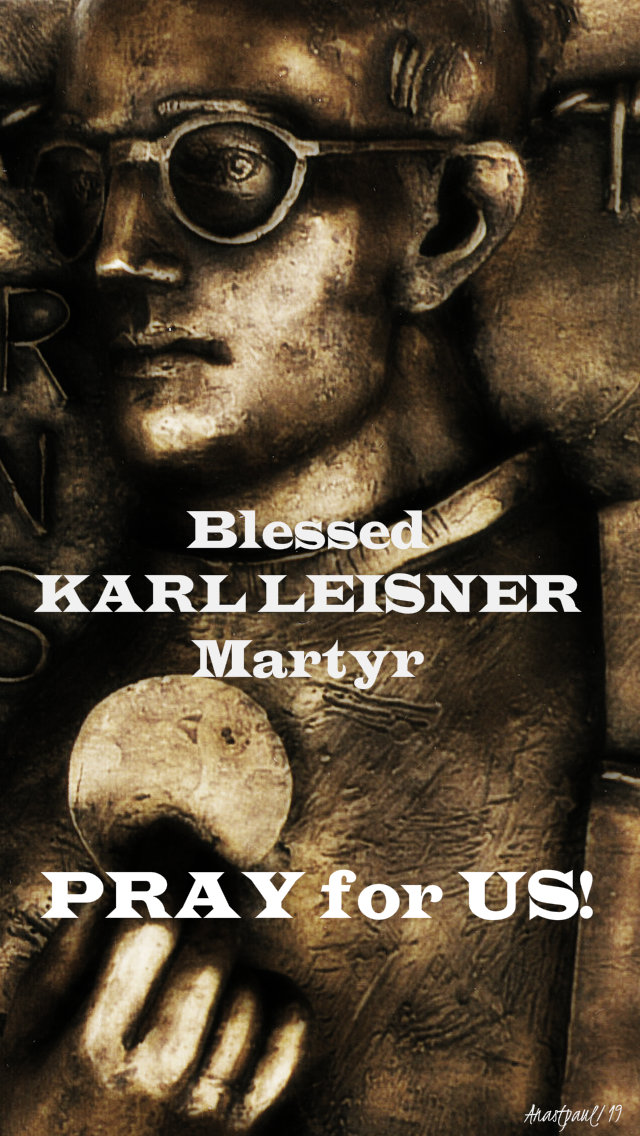
One Minute Reflection – 12 August – Monday of the Nineteenth Week in Ordinary Time, Year C, Gospel: Matthew 17:22–27 and the Memorial of Blessed Karl Marie Leisner (1915–1945) Priest, Martyr
“Does not your teacher pay the tax?” … Matthew 17:22
REFLECTION – “Since Christ reconciled the world to God, He Himself certainly did not need reconciliation. For what sin of His own was He to make propitiation, when He knew no sin? When the Jews were asking for the didrachma, which according to law was given for sin, He said to Peter: “Simon, from whom do kings of the earth take toll or tribute? From their sons or from others?” Peter answered: “From others.” Jesus said to him: “Then the sons are free. However, not to give offence to them, go to the sea and cast a hook and take the first fish that comes up and when you open its mouth, you will find a shekel, take that and give it to them for me and for yourself.”
He is pointing out that He is not obliged to propitiation for sins on His own behalf, because He is not a slave of sin but, as Son of God, free from all fault. For the Son sets free, it is the slave who is guilty. So He was free from all sin and gives no price of redemption for His own soul – the price of His blood was more than sufficient to redeem all the sins of the world. Justly then He sets others free, owing nothing for Himself.
Furthermore, not only does Christ owe no price of redemption for Himself or propitiation for sin but, if you take the case of anyone, it can be understood that no individuals owes propitiation for themselves, since Christ is the propitiation of all and Himself the redemption of all.” …Saint Ambrose (340-397) Father & Doctor – Commentary on Ps 48, 14-15 ; CSEL 64, 368-370 (trans. Breviary, Week 20, Saturday)
PRAYER – Almighty God and Father, by Your grace, we are made one in mind and heart. Give us a love for what You command and a longing for what You promise, so that, amid this world’s changes, our hearts may be set on the world of lasting joy. Grant, we pray that by the prayers of Blessed Karl Marie Leisner, we will be made always faithful. Through Him, with Him and in Him, in the union of the Holy Spirit, one God forever, amen.
Quote/s of the Day – 27 July – Saturday of the Sixteenth week in Ordinary Time, Year C, Gospel: 13:24-30
“Speaking of: Temptation”
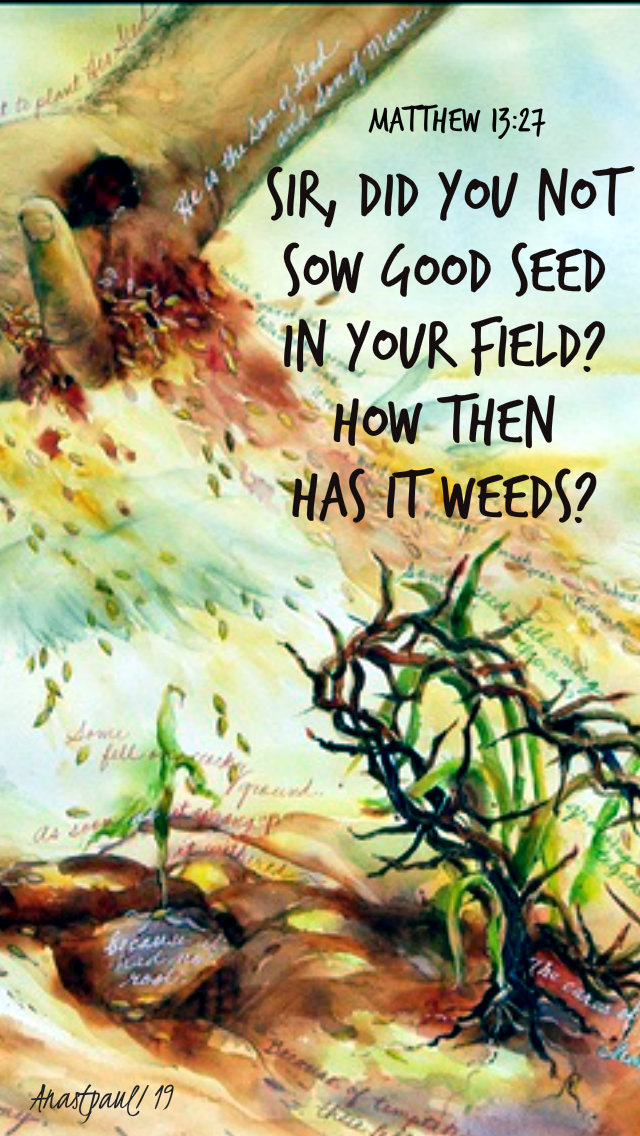
‘Sir, did you not sow good seed in your field? How then has it weeds?’
Matthew 13:27
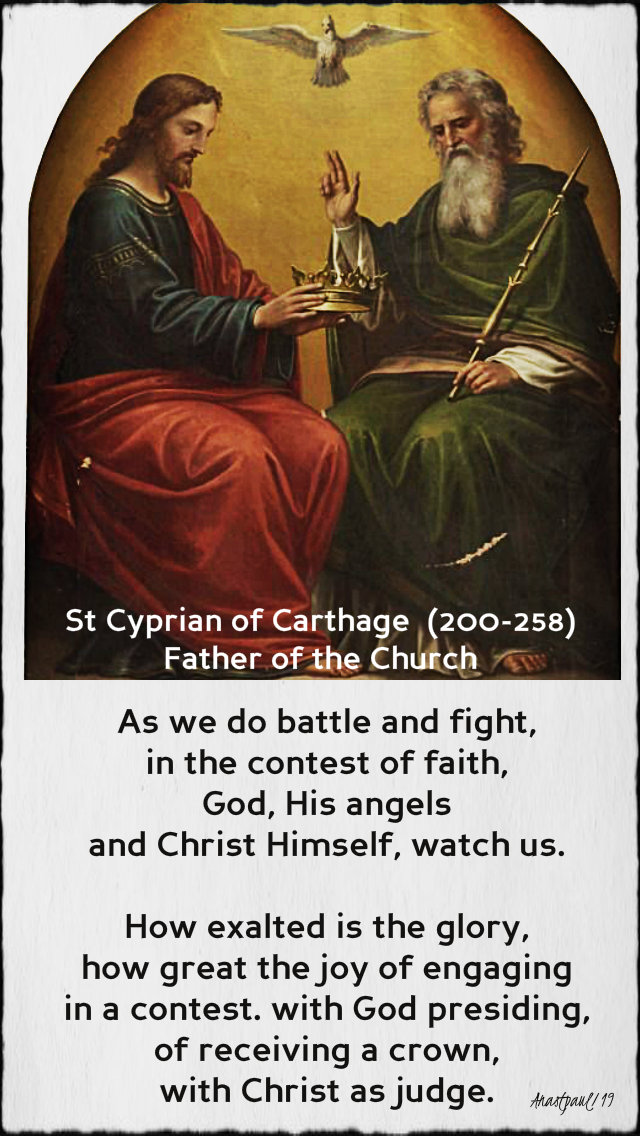
“As we do battle and fight, in the contest of faith, God, His angels and Christ Himself, watch us. How exalted is the glory, how great the joy of engaging in a contest with God presiding, of receiving a crown, with Christ as judge.”
St Cyprian of Carthage (200-258)
Bishop, Martyr, Father of the Church
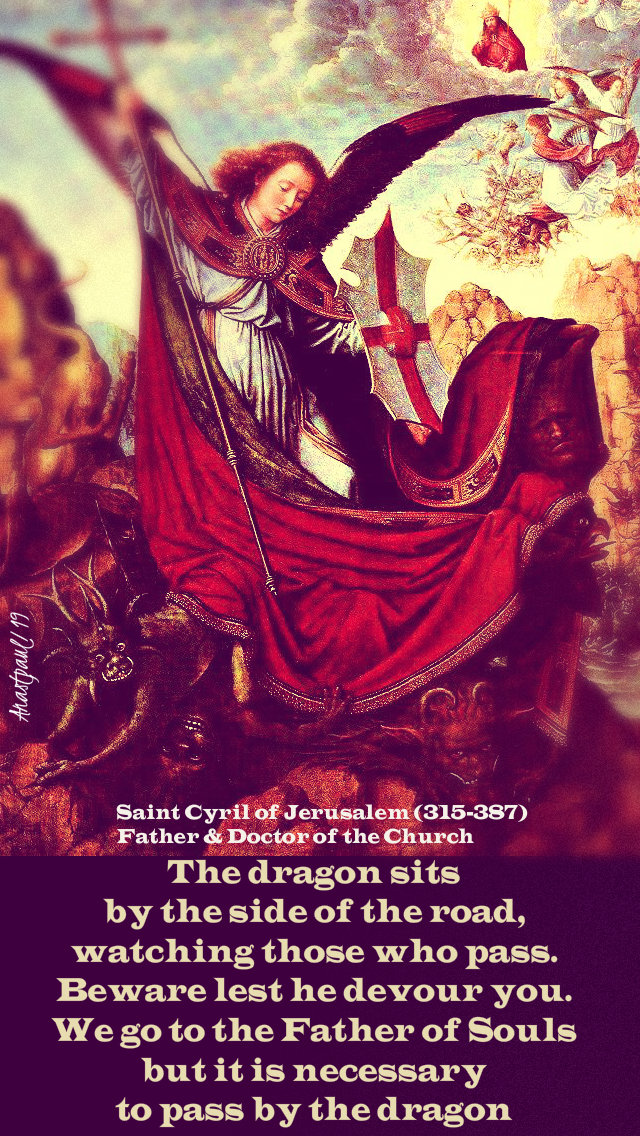
“The dragon sits by the side of the road, watching those who pass. Beware lest he devour you. We go to the Father of Souls but it is necessary to pass by the dragon.”
Saint Cyril of Jerusalem (315-387)
Father & Doctor of the Church
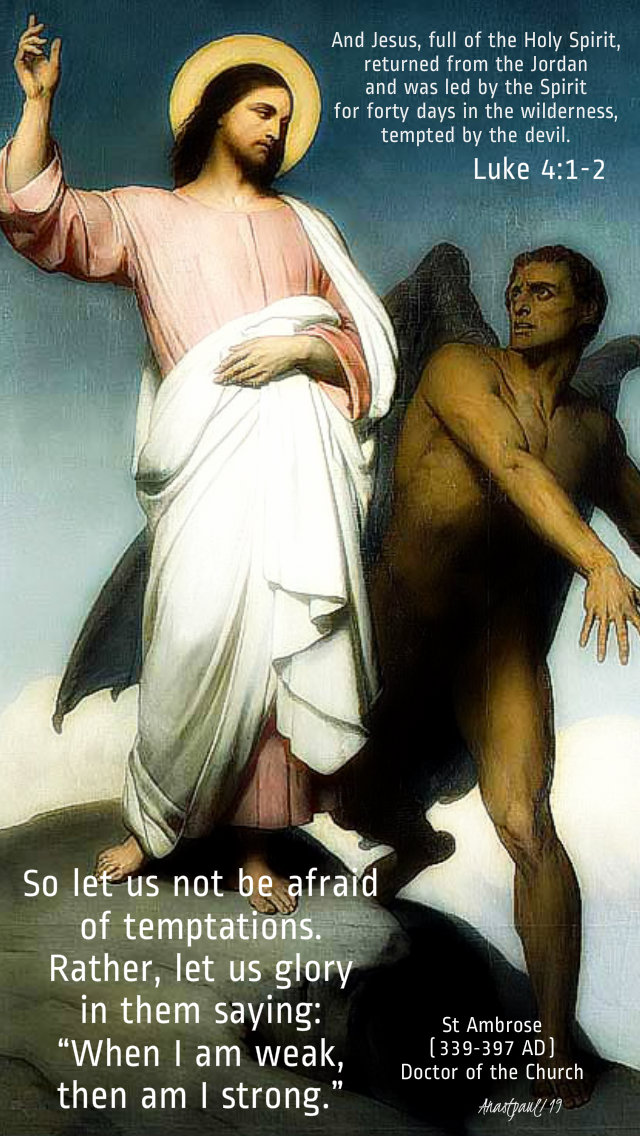
“So let us not be afraid of temptations. Rather, let us glory in them saying: “When I am weak, then am I strong.” [2 Cor. 12:10]”
St Ambrose (339-397 AD)
Doctor of the Church
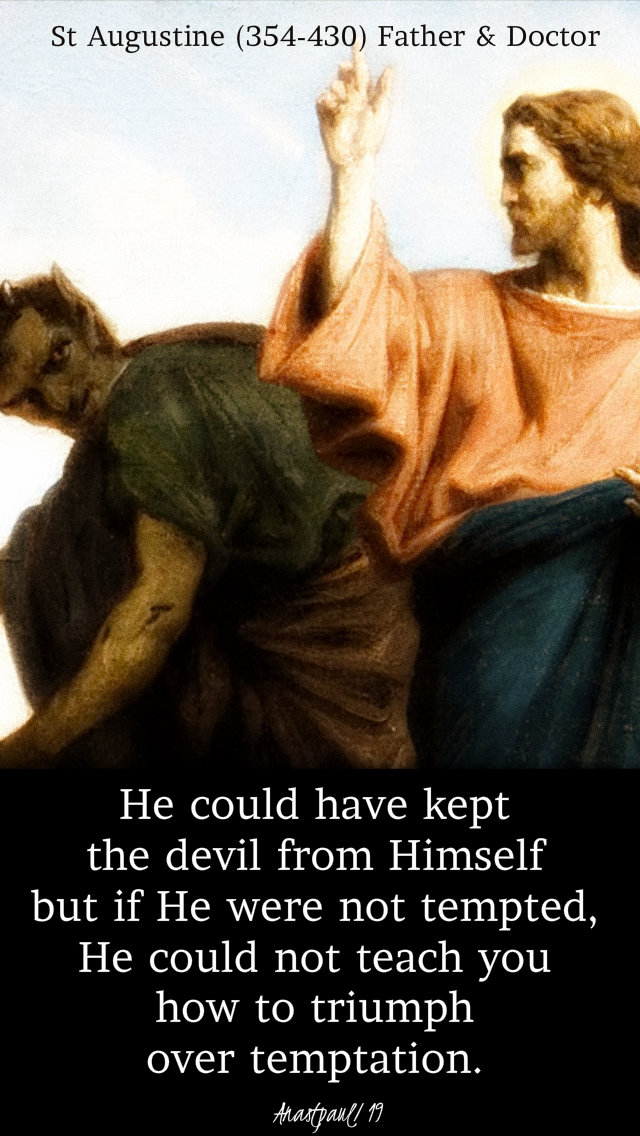
“He could have kept the devil from Himself but if He were not tempted, He could not teach you how to triumph over temptation.”
Saint Augustine (354-430)
Bishop and Great Western Father
and Doctor of the Church
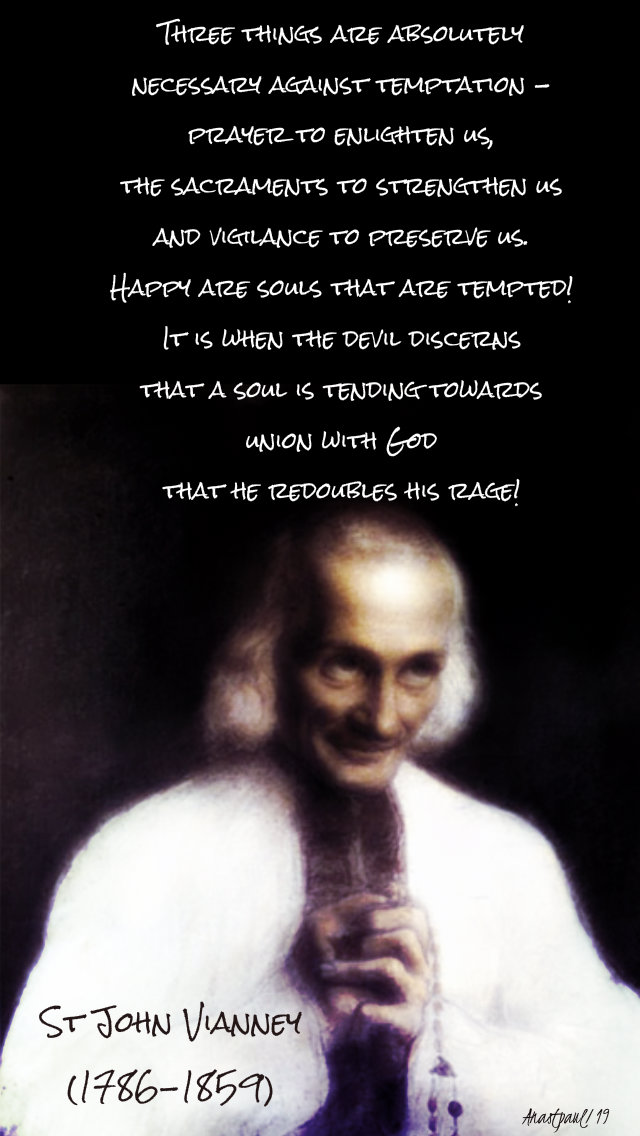
“Three things are absolutely necessary against temptation – prayer to enlighten us, the sacraments to strengthen us and vigilance to preserve us. Happy are souls that are tempted! It is when the devil discerns that a soul is tending towards union with God that he redoubles his rage!”
St John Marie Vianney (1786-1859)
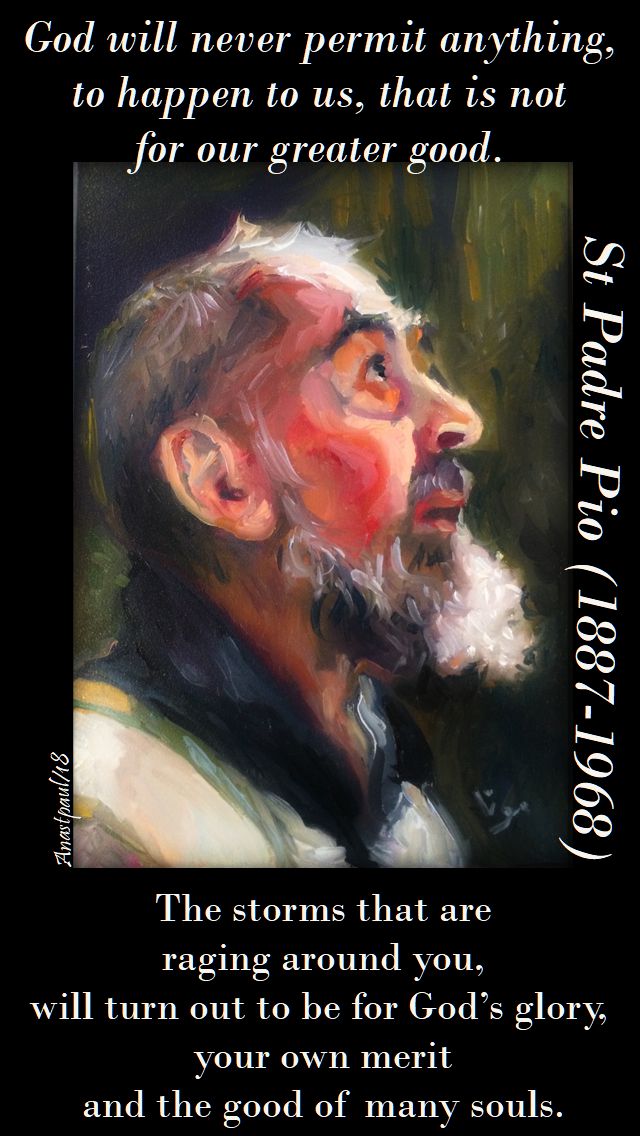
“God will never permit anything, to happen to us, that is not for our greater good.”
“The storms that are raging around you, will turn out to be for God’s glory, your own merit and the good of many souls.”
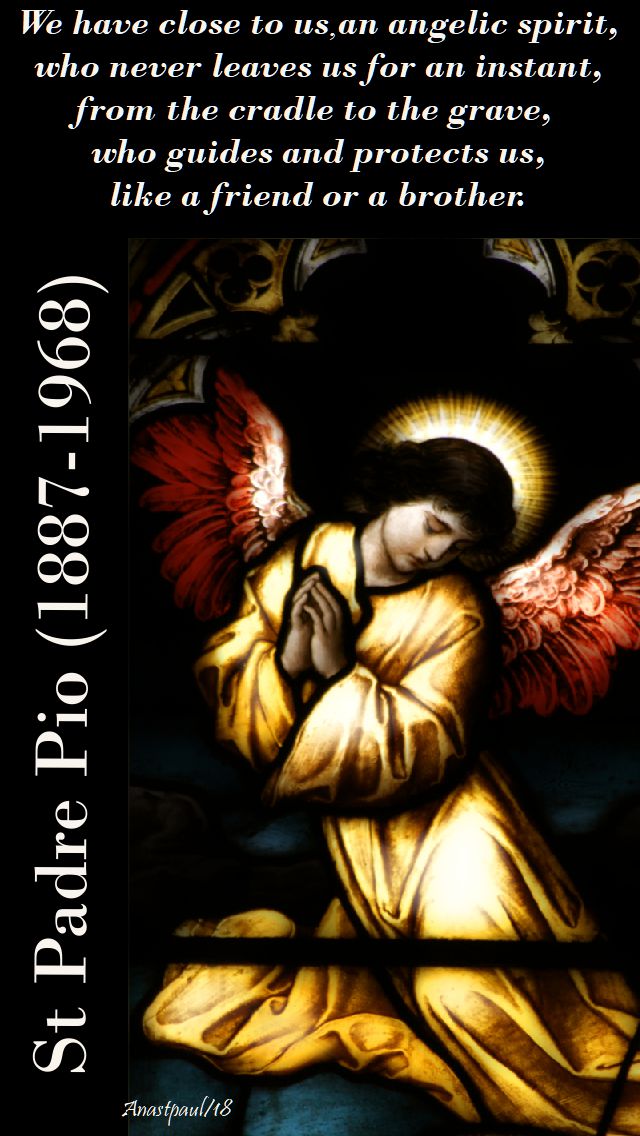
“We have close to us, an angelic spirit, who never leaves us for an instant, from the cradle to the grave, who guides and protects us, like a friend or a brother.”
Sunday Reflection – 14 July – Fifteenth Sunday in Ordinary Time, Year C, Luke 10:25–37
The Sacrament that you Receive is Effected by the Words of Christ
Saint Ambrose (340-397)
Bishop and Great Latin Father & Doctor of the Church
An Excerpt from his Work, ‘On the Mysteries’
We see that grace can accomplish more than nature, yet so far, we have been considering instances, of what grace can do through a prophet’s blessing. If the blessing of a human being had powe,r even to change nature, what do we say of God’s action in the consecration itself, in which the very words of the Lord and Saviour are effective? If the words of Elijah had power even to bring down fire from heaven, will not the words of Christ have power to change the natures of the elements? You have read that in the creation of the whole world He spoke and they came to be; He commanded and they were created. If Christ could by speaking, create out of nothing what did not yet exist, can we say that His words are unable to change existing things, into something they previously were not? It is no lesser feat to create new natures for things than to change their existing natures.
What need is there for argumentation? Let us take what happened in the case of Christ Himself and construct the truth of this mystery, from the mystery of the incarnation. Did the birth of the Lord Jesus from Mary come about in the course of nature? If we look at nature we regularly find, that conception results from the union of man and women. It is clear then, that the conception by the Virgin was above and beyond the course of nature. And this body that we make present, is the body born of the Virgin. Why do you expect to find, in this case, that nature takes its ordinary course, in regard to the body of Christ, when the Lord Himself was born of the Virgin, in a manner above and beyond the order of nature? This is indeed the true flesh of Christ, which was crucified and buried. This is then in truth the Sacrament of His Flesh.
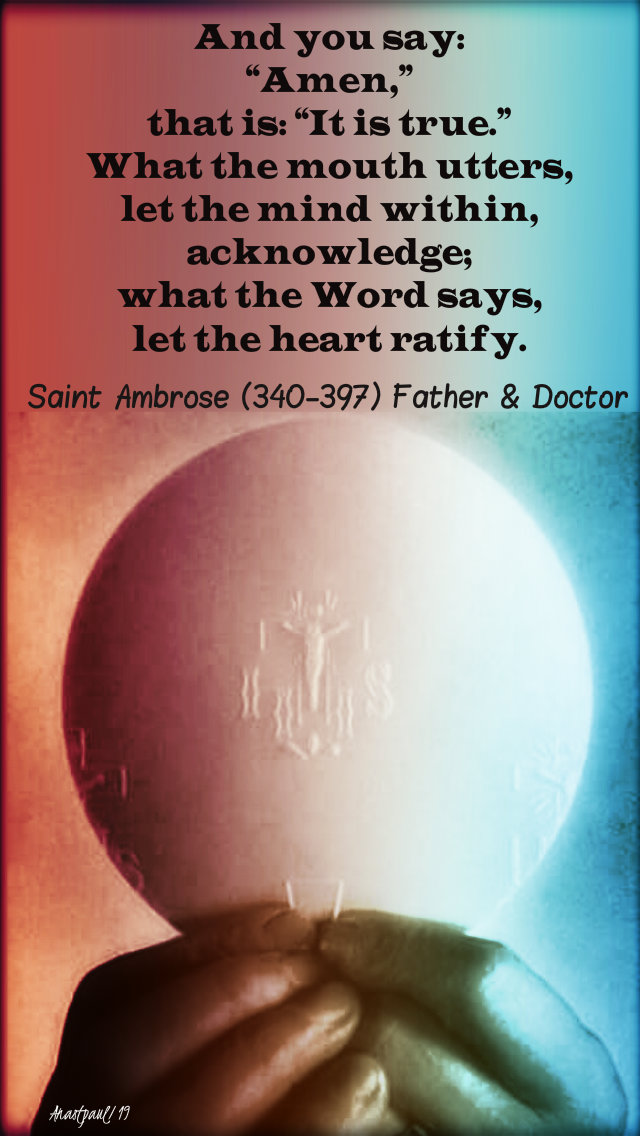
The Lord Jesus Himself declares – ‘This is my body.’ Before the blessing contained in these words, a different thing is named; after the consecration, a body is indicated. He Himself speaks of His blood. Before the consecration, something else is spoken of, after the consecration, blood is designated. And you say – “Amen,” that is: “It is true.” What the mouth utters, let the mind within acknowledge, what the Word says, let the heart ratify.
So the Church, in response to grace so great, exhorts her children, exhorts her neighbours, to hasten to these mysteries – neighbours, she says, come and eat, brethren, drink and be filled. In another passage the Holy Spirit has made clear to you what you are to eat, what you are to drink. Taste, the prophet says and see, that the Lord is good, blessed is the man who puts his trust in Him.
Christ is in that sacrament, for it is the body of Christ. It is, therefore, not bodily food but spiritual. Thus the Apostle too says, speaking of its symbol – Our fathers ate spiritual food and drank spiritual drink. For the body of God is spiritual; the body of Christ is that of a divine spirit, for Christ is a spirit. We read – The spirit before our face is Christ the Lord. And in the letter of Saint Peter we have this – Christ died for you. Finally, it is this food that gives strength to our hearts, this drink which gives joy to the heart of man, as the prophet has written.
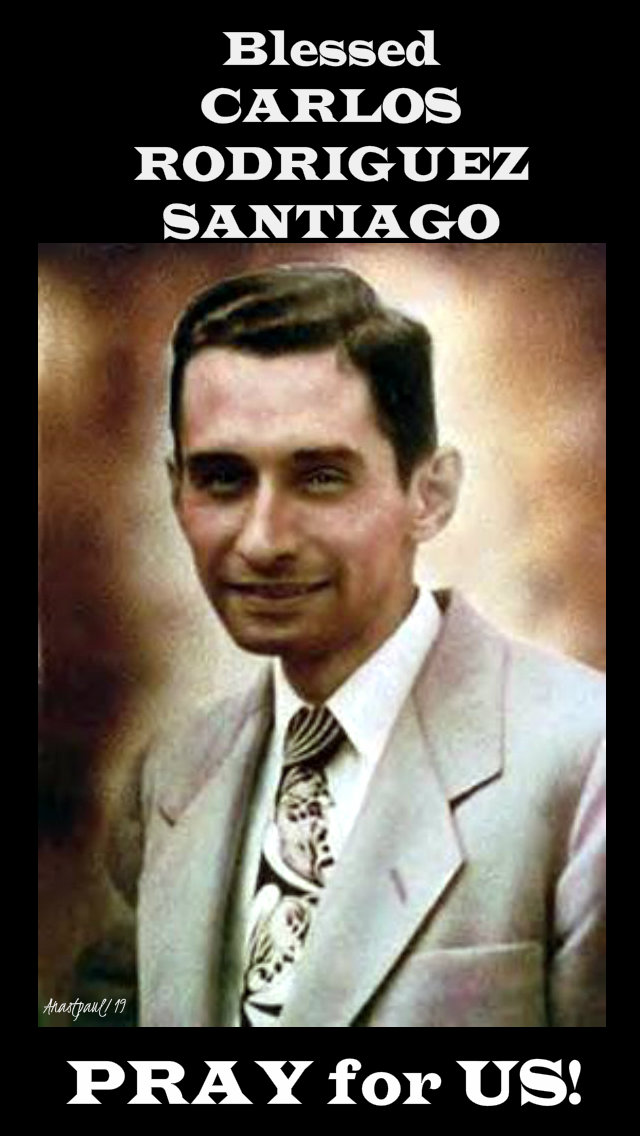
One Minute Reflection – 13 July – Saturday of the Fourteenth week in Ordinary Time, Year C, Gospel: Matthew 10:24–33 and the Memorial of Blessed Carlos Rodriguez Santiago
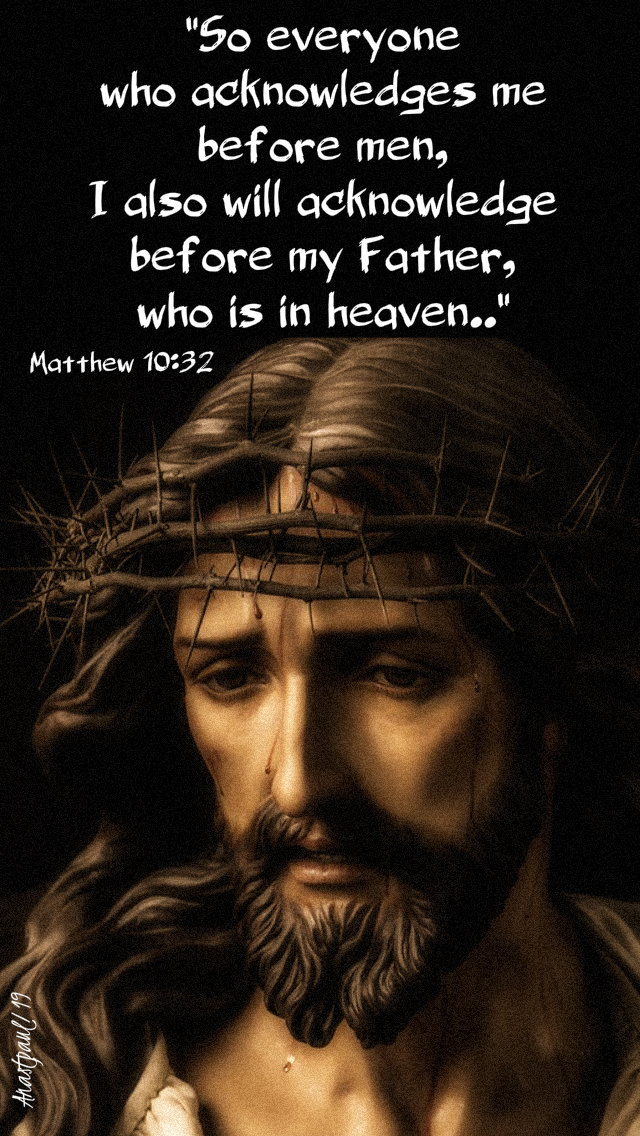
“So everyone who acknowledges me before men, I also will acknowledge before my Father, who is in heaven…”… Matthew 10:32
REFLECTION – “You can be a witness to Christ every day. You were tempted by the spirit of impurity but… you considered that chastity of spirit and body should not be soiled – you are a martyr or, in other words, a witness to Christ… You were tempted by the spirit of pride but, seeing the poor and needy, you were seized by tender compassion and preferred humility to arrogance – you are a witness to Christ. Better still – you have not given your witness in word alone but in deed as well.
What is the surest kind of witness? “Anyone who acknowledges that Jesus Christ came among us in the flesh” (cf. 1Jn 4,2) and who keeps the commands of the Gospel… How many there are each day of these hidden martyrs of Christ who confess the Lord Jesus! The apostle Paul knew that kind of martyrdom and witness of faith rendered to Christ, he who said: “Our boast is this, the testimony of our conscience” (2Cor 1,12). For how many people have made a confession of faith exteriorly but denied it interiorly!… So be faithful and courageous in interior persecutions so that you may also win the victory in exterior persecutions. There are “kings and rulers,” judges of formidable power, in the persecutions within, likewise. You have an example of these in the temptations undergone by our Lord (Mt 4,1ff.)”… St Ambrose (340-397) Father & Doctor of the Church -Sermon 20 on Psalm 118
PRAYER – Come to help us in our weakness, God of mercy, forgive the sins of Your people and as nothing we can do is worthy in Your sight, save us through the intercession of the Mother of our Lord, Jesus Christ. Listen too to the prayers of a fellow pilgrim Blessed Carlos, who has, by his love for You and passion to proclaim Christ Your Son, reached his eternal destination with You. We make our prayer through Jesus with the Holy Spirit, God forever, amen.
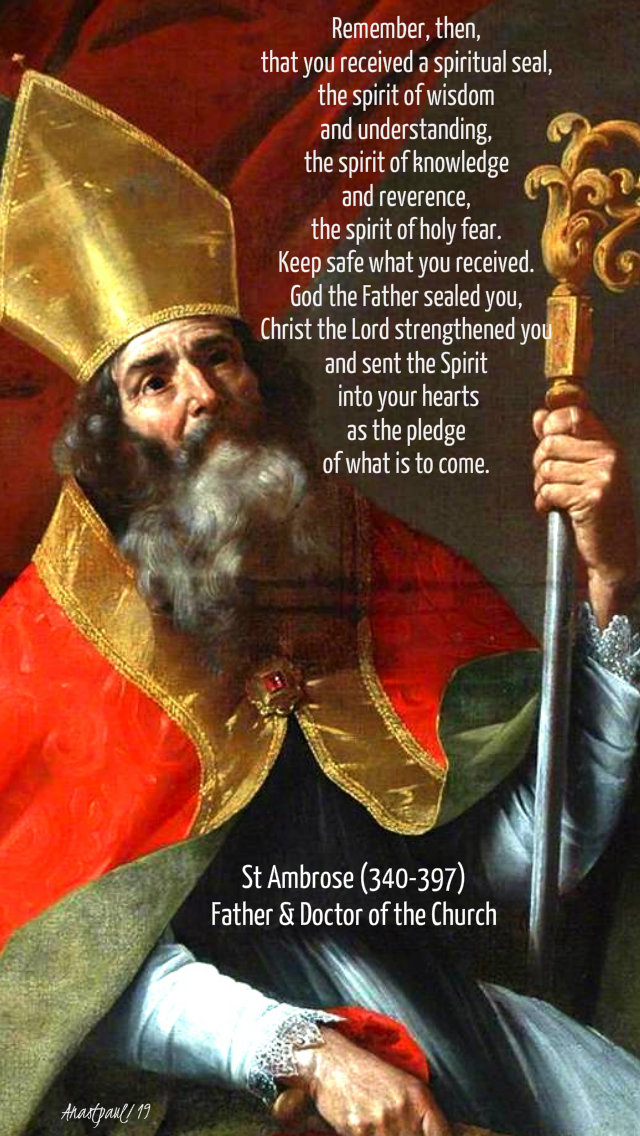
“Remember, then, that you received a spiritual seal, the spirit of wisdom and understanding, the spirit of knowledge and reverence, the spirit of holy fear. Keep safe what you received. God the Father sealed you, Christ the Lord strengthened you and sent the Spirit into your hearts as the pledge of what is to come.”
St Ambrose (340-397)
Father & Doctor of the Church
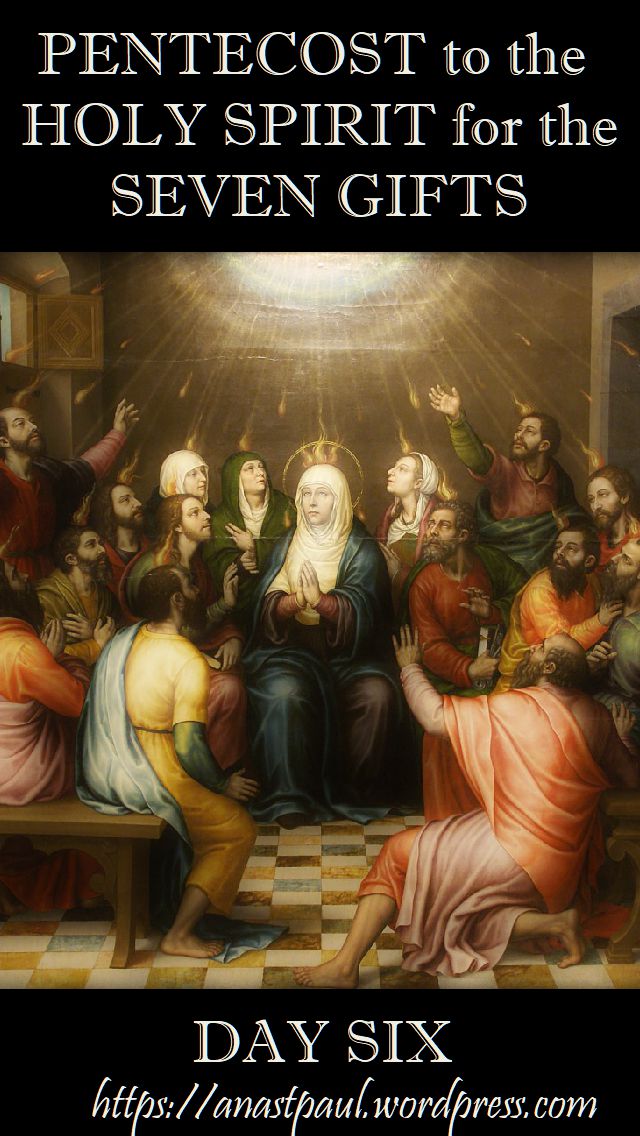
O Holy Spirit, Divine Consoler!
I adore You as my True God.
I offer You my whole heart,
and I render You heartfelt thanks
for all the benefits You have bestowed upon the world.
You are the author of all supernatural gifts
and enriched the Blessed Virgin Mary,
the Mother of God,
with all favours,
I ask You to visit me by Your grace and Your love,
and grant me the favour
I so earnestly seek…
…………………………………. State your request here…
O Holy Spirit,
spirit of truth, come into our hearts.
Let us Pray:
O Father in Heaven,
I beg You to send the Holy Spirit.
May Your Holy Spirit remind me
when I am apt to forget Your law.
Your love, Your promises.
May Your Holy Spirit strengthen my memory
to recall frequently Your sanctity,
omniscience, wisdom and goodness,
faithfulness and love.
May Your Holy Spirit encourage me,
when I am slothful,
strengthen me,
when I am weak,
enlighten me,
when I no longer can help myself.
Breathe in me, O Holy Spirit,
that I may do what is holy.
Stir me, that I may love what is holy.
Strengthen me, that I may preserve what is holy.
Protect me, Holy Spirit,
that I may never lose what is holy
and grant me the favour,
I so earnestly seek in this novena…
Come, O Holy Spirit,
fill the hearts of Your faithful,
and kindle in them the fire of Your love.
Amen
Lenten Thoughts – 28 March – Thursday of the Third Week of Lent, Year C
Hold fast to God, the one true good
Saint Ambrose (340-397) Bishop and Great Latin Father and Doctor of the Church
An excerpt from his Flight from the World
Where a man’s heart is, there is his treasure also. God is not accustomed to refusing a good gift to those who ask for one. Since He is good and especially to those who are faithful to Him, let us hold fast to Him with all our soul, our heart, our strength and so enjoy His light and see His glory and possess the grace of supernatural joy. Let us reach out with our hearts to possess that good, let us exist in it and live in it, let us hold fast to it, that good which is beyond all we can know or see and is marked by perpetual peace and tranquillity, a peace which is beyond all we can know or understand.
This is the good that permeates creation. In it we all live, on it we all depend. It has nothing above it, it is divine. No-one is good but God alone. What is good, is therefore, divine, what is divine is therefore good. Scripture says: When you open your hand all things will be filled with goodness. It is through God’s goodness that all that is truly good is given us and in it, there is no admixture of evil.
These good things are promised by Scripture to those who are faithful – The good things of the land will be your food.
We have died with Christ. We carry about in our bodies the sign of His death, so that the living Christ may also be revealed in us. The life we live is not now our ordinary life but the life of Christ, a life of sinlessness, of chastity, of simplicity and every other virtue. We have risen with Christ. Let us live in Christ, let us ascend in Christ, so that the serpent may not have the power here below, to wound us in the heel.
Let us take refuge from this world. You can do this in spirit, even if you are kept here in the body. You can at the same time be here and present to the Lord. Your soul must hold fast to Him, you must follow after Him in your thoughts, you must tread His ways by faith, not in outward show. You must take refuge in Him. He is your refuge and your strength. David addresses Him in these words: I fled to you for refuge and I was not disappointed.
Since God is our refuge, God who is in heaven and above the heavens, we must take refuge from this world in that place where there is peace, where there is rest from toil, where we can celebrate the great sabbath, as Moses said – The sabbaths of the land will provide you with food. To rest in the Lord and to see His joy, is like a banquet and full of gladness and tranquillity.
Let us take refuge like deer beside the fountain of waters. Let our soul thirst, as David thirsted, for the fountain. What is that fountain? Listen to David – With you is the fountain of life. Let my soul say to this fountain, When shall I come and see You face to face? For the fountain is God Himself.
One Minute Reflection – 10 March – The First Sunday of Lent
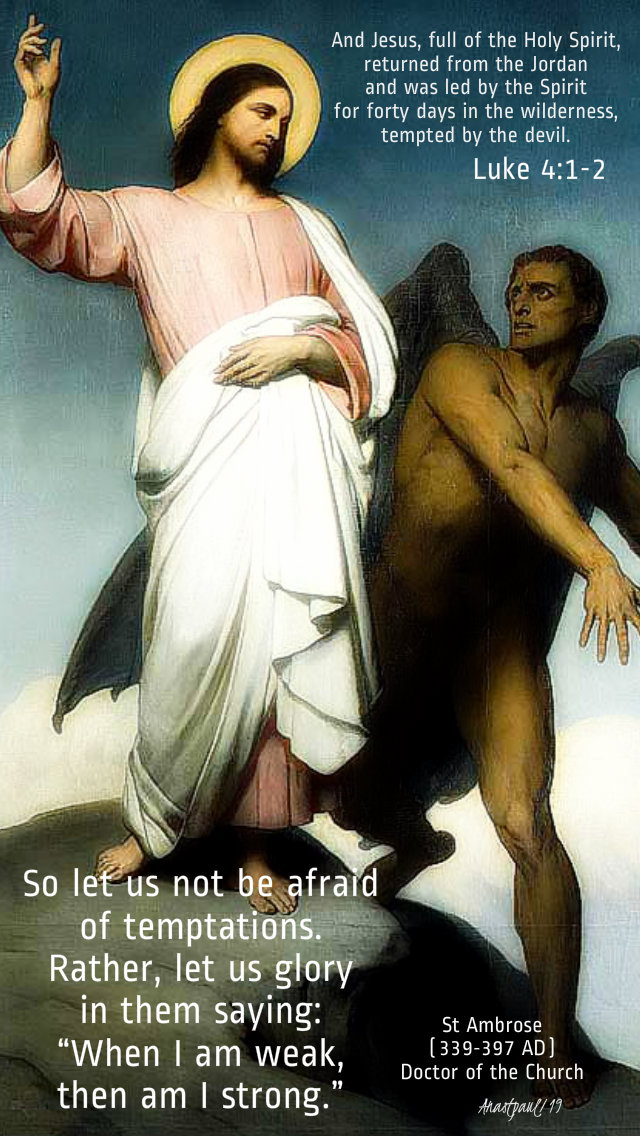
And Jesus, full of the Holy Spirit, returned from the Jordan and was led by the Spirit for forty days in the wilderness, tempted by the devil….Luke 4:1-2
REFLECTION – “The devil does not have only one weapon. He uses many different means to defeat human beings – now with bribery, now with boredom, now with greed he attacks, inflicting mental and physical wounds equally.
The kind of temptation varies with the different kinds of victim. Avarice is the test of the rich, loss of children that of parents and everyone is exposed to pain of mind or body. What a wealth of weapons is at the devil’s disposal!
It was for this reason that the Lord chose to have nothing to lose. He came to us in poverty so that the devil could find nothing to take away from Him. You see the truth of this when you hear the Lord himself saying:
“The prince of this world is come and has found nothing in me” [John 14:30]. The devil could only test Him with bodily pain but this too was useless because Christ despised bodily suffering.
Job was tested by his own goods, whereas Christ was tempted, during the experience of the wilderness, by the goods of all. In fact, the devil robbed Job of his riches and offered Christ the kingdom of the whole world. Job was tested by vexations, Christ by prizes. Job the faithful servant replied: “The Lord has given and the Lord has taken away” [Job 1:21] Christ, being conscious of His own divine nature, scorned the devil’s offering of what already belonged to Him.
So let us not be afraid of temptations. Rather, let us glory in them saying: “When I am weak, then am I strong.” [2 Cor. 12:10]….St Ambrose (339-397 AD) – Doctor of the Church
PRAYER – Through our annual Lenten observance, Lord, deepen our understanding of the mystery of Christ and make it a reality in the conduct of our lives. May the Blessed Virgin Mary, the Lord’s Mother and ours, be ever our prayerful help. We make our prayer through our Lord, Jesus Christ, with the Holy Spirit, God forever, amen.
One Minute Reflection – 23 February – Saturday of the Sixth week in Ordinary Time, Year C – The Memorial of St Polycarp (c 69–c 155) Martyr and Father of the Church
And after six days Jesus took with him Peter and James and John and led them up a high mountain, apart by themselves and he was transfigured before them and his garments became glistening, intensely white, as no fuller on earth could bleach them. And there appeared to them Elijah with Moses and they were talking to Jesus…Mark 9:2-4
The witness of the Prophets leads to the witness of the Apostles
REFLECTION – “It was the will of the Lord Jesus that Moses alone (though he was accompanied, it is true, by Joshua (Ex 24:13)) should climb the mountain to receive the law. In the gospel too, out of His many disciples He limited the revelation of His risen glory to three – Peter, James and John. Wishing to put no stumbling block in the way of His weaker followers, whose vacillating minds might prevent them from taking in the full meaning of the paschal mystery, He chose to keep His redemptive plan a secret and repeatedly warned Peter, James and John not to talk freely about what they had seen. Peter, in fact, did not know what to say. He thought of setting up three shelters for the Lord and His attendants. Then he found himself unable to bear the brilliance of the glory radiating from His transfigured Lord. Together with those “sons of thunder” (Mk 3:17), James and John, he fell to the ground (Mt 17:6)…
They entered the cloud in order to receive knowledge of hidden, secret matters and there they heard the voice of God saying: “This is my Beloved Son in whom I am well pleased. Listen to him.” What does “This is my beloved Son” mean? The implication is as follows: Make no mistake, Simon. Do not imagine God’s Son can be put into the same category as the servants who attend him. This man is my Son – neither Moses nor Elijah can be given that title, even though the one opened the sea and the other closed the heavens. Both of them exercised dominion over the elements but it was by the power of the Lord’s word that they did so (Ex 14; 1 Kgs 17:1). They were only servants, it was the Lord who made the waters into a solid wall, the Lord who caused the drought that closed the heavens and the Lord who, in his own time, opened them to release the rain.
For evidence of the resurrection to be accepted, the combined witness of those servants is required. But when the glory of their risen Lord is revealed, the servant’ aureole is lost in shadow. Sunrise obscures the stars, the light of the heavenly bodies grows pale before the brilliance of the sun shining on this material world. How then could human stars attract notice in the presence of the eternal Sun of Justice? (Mal 3:20).”…St Ambrose (340-397) Father & Doctor
PRAYER – Lord of all creation, let us praise You with voice and mind and deed. Let us too give glory to Your Holy Son and bask in the Sun of Justice! Grant us a place in the reflection of His Light to shine on those around us. As You gave St Polycarp, a place in the company of the Martyrs, grant us our eternal joy with him and all Your angels and saints. May his intercession, give us the strength to drink from that cup which Christ drank and so rise to eternal life. Through Christ our Lord, in unity with the Holy Spirit, one God forever, amen.
Quote/s of the Day – 21 January – The Memorial of St Agnes (c 291- c 304) Virgin and Martyr
Speaking of: Martyrdom
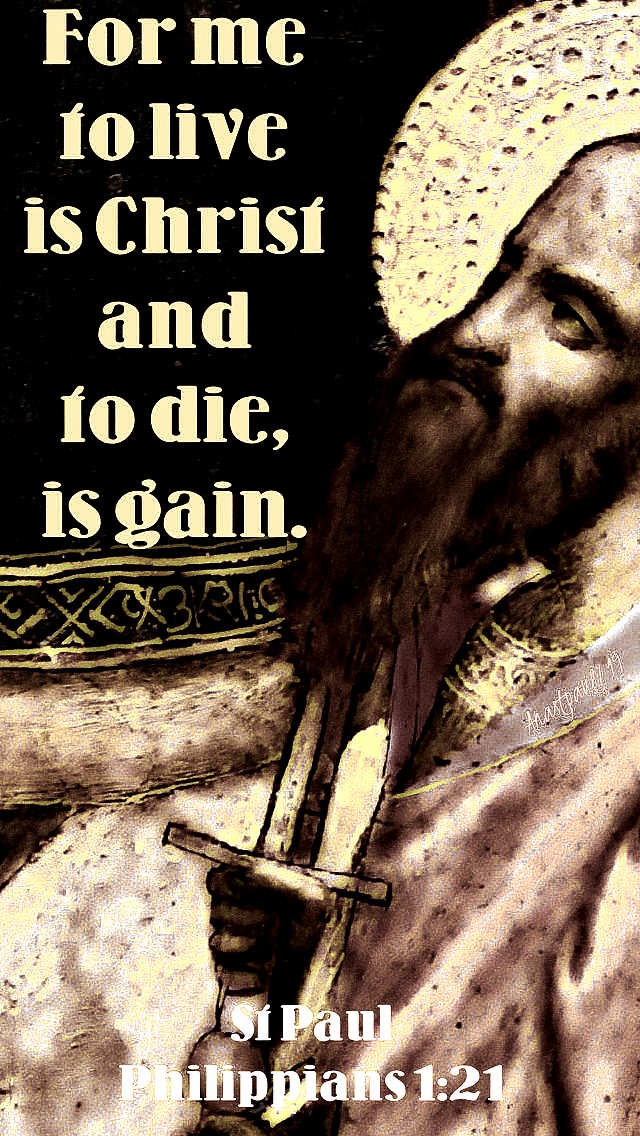
“For me to live is Christ and to die, is gain.”
St Paul – Philippians 1:21
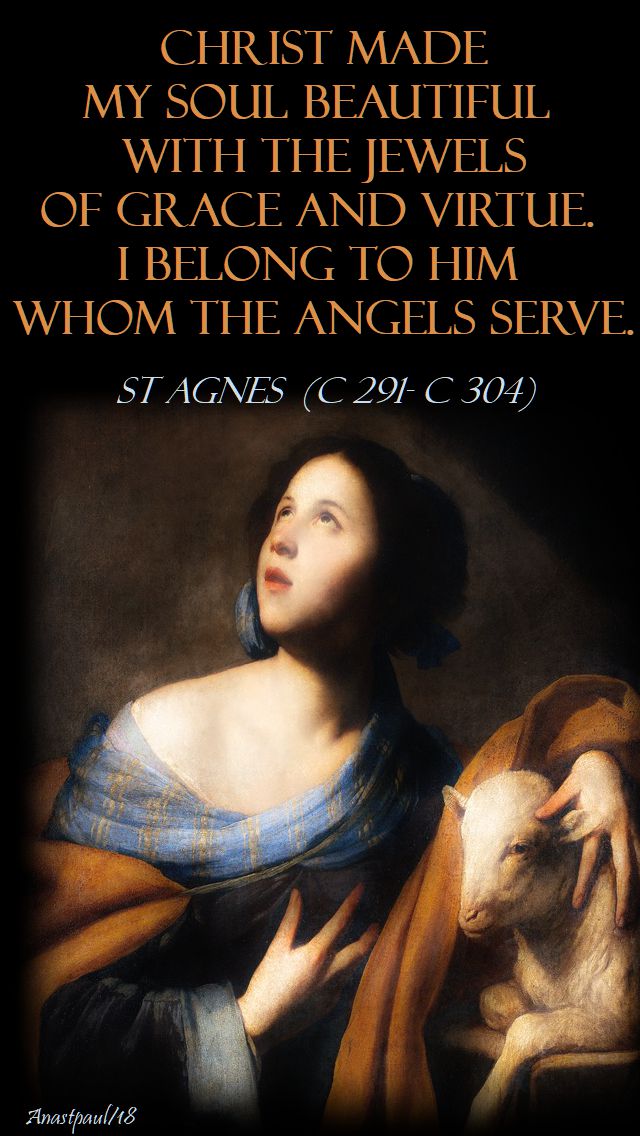
“Christ made my soul beautiful with the jewels of grace and virtue. I belong to Him whom the angels serve.”
St Agnes (c 291- c 304) Virgin and Martyr
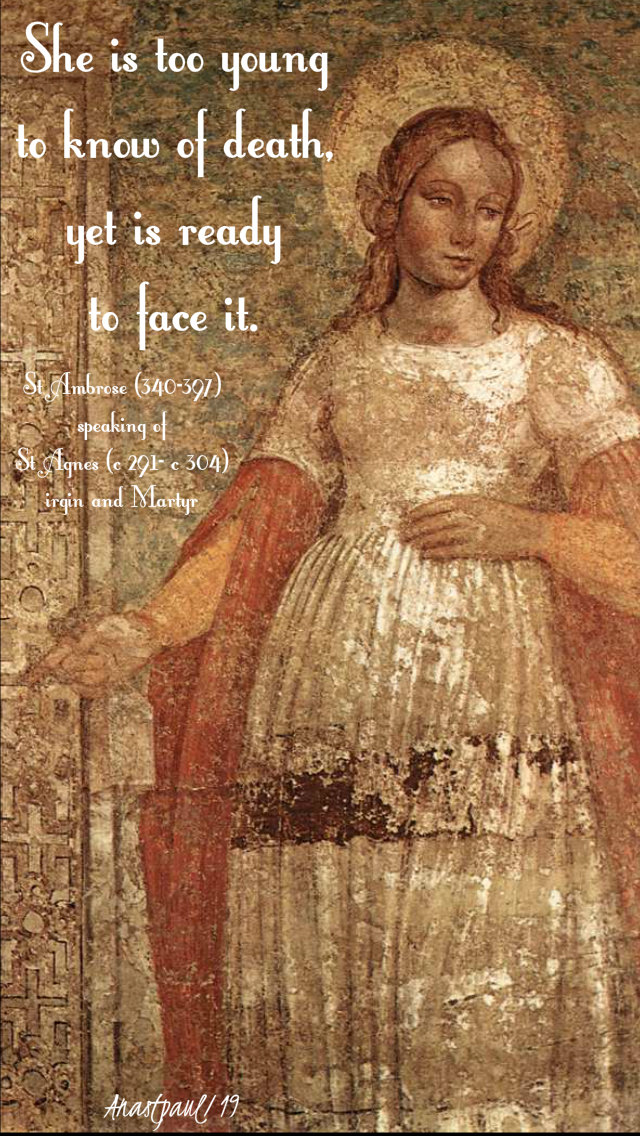
“She is too young to know of death, yet is ready to face it.”
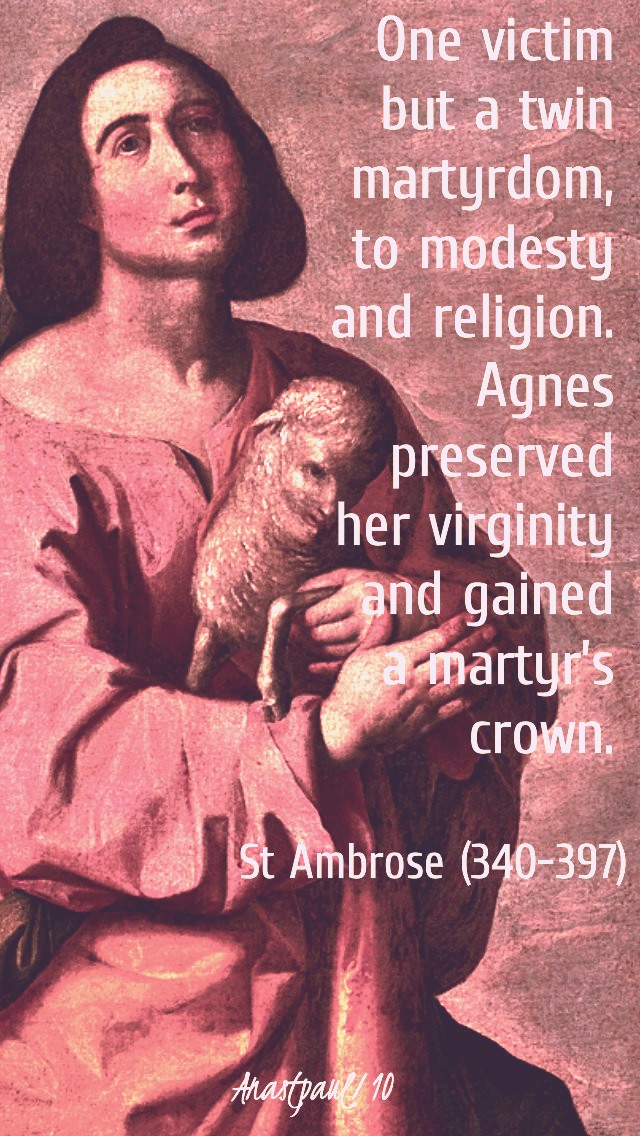
“One victim but a twin martyrdom, to modesty and religion. Agnes preserved her virginity and gained a martyr’s crown. “
From an essay ‘On Virgins’ by
Saint Ambrose (340-397) Father & Doctor of the Church
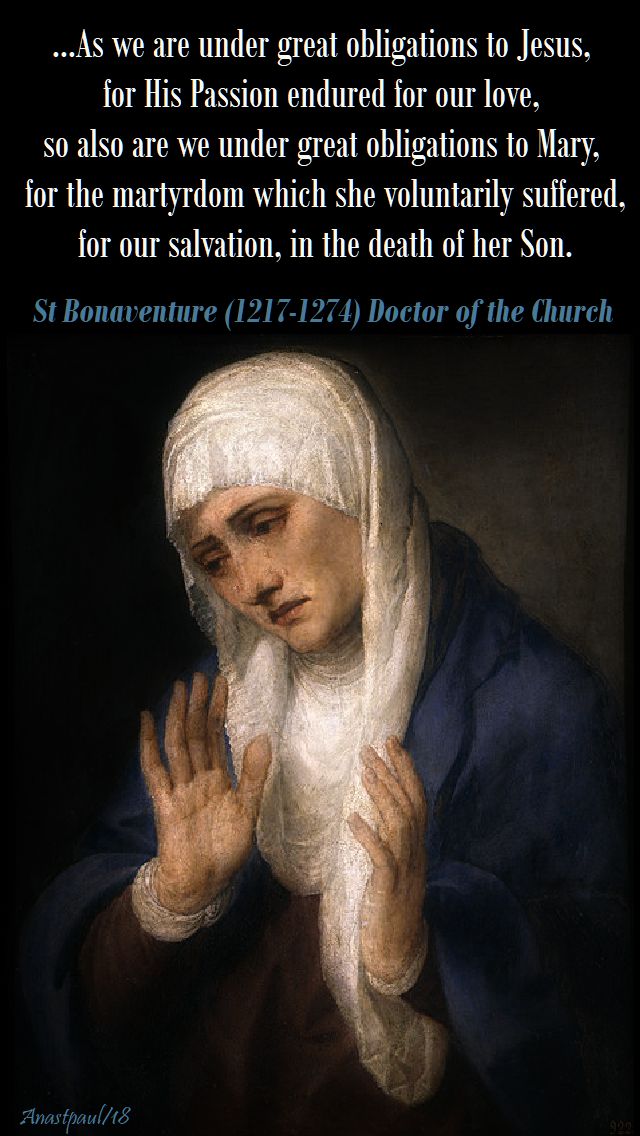
“…As we are under great obligations to Jesus, for His Passion endured for our love, so also are we under great obligations to Mary, for the martyrdom which she voluntarily suffered, for our salvation, in the death of her Son”.
St Bonaventure (1217-1274) Doctor of the Church
“Nothing can happen to me that God doesn’t want. And all that He wants, no matter how bad it may appear to us, is really for the best.”
St Thomas More (1478-1535) Martyr
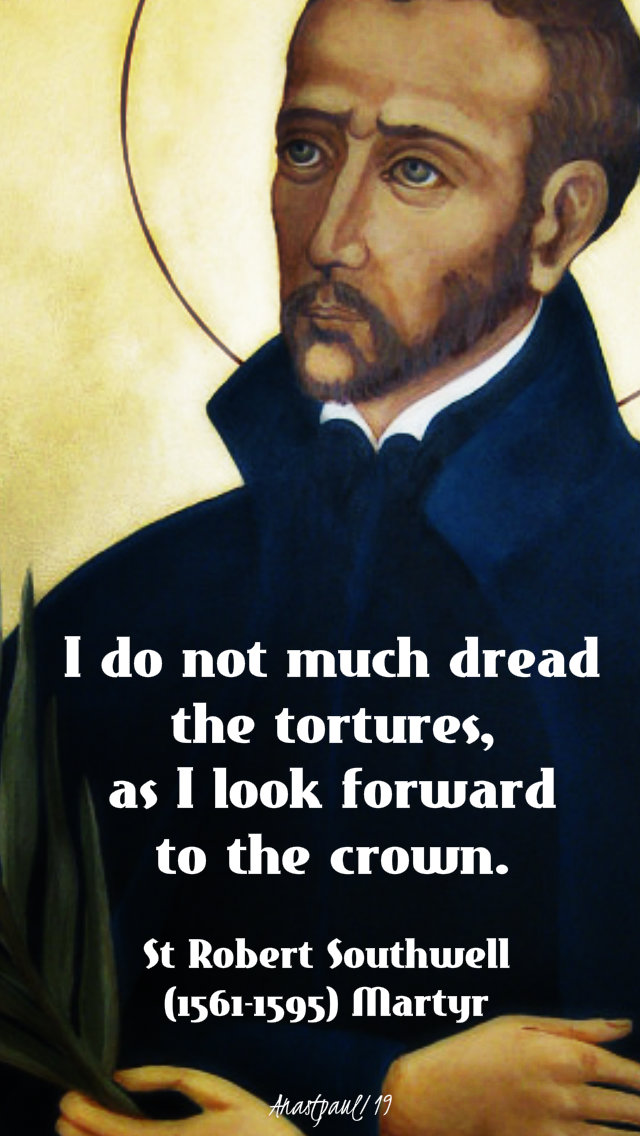
“I do not much dread the tortures, as I look forward to the crown.”
St Robert Southwell S.J. (1561-1595) Martyr
“The tyrant dies and his rule is over, the martyr dies and his rule begins.”
Søren Kierkegaard (1813-1855) The Journals of Kierkegaard
Quote/s of the Day – 9 December – The Second Sunday of Advent
“How I wish you were ….hot or cold! But because you are lukewarm … I will spew you out of my mouth!….”
Revelations 3:15
“The Word of God moves swiftly. He is not won by the lukewarm nor held fast by the negligent. Be attentive to His message and diligently follow the path God tells you to take. For He is swift in His passing.”
St Ambrose (340-397) Father & Doctor of the Church
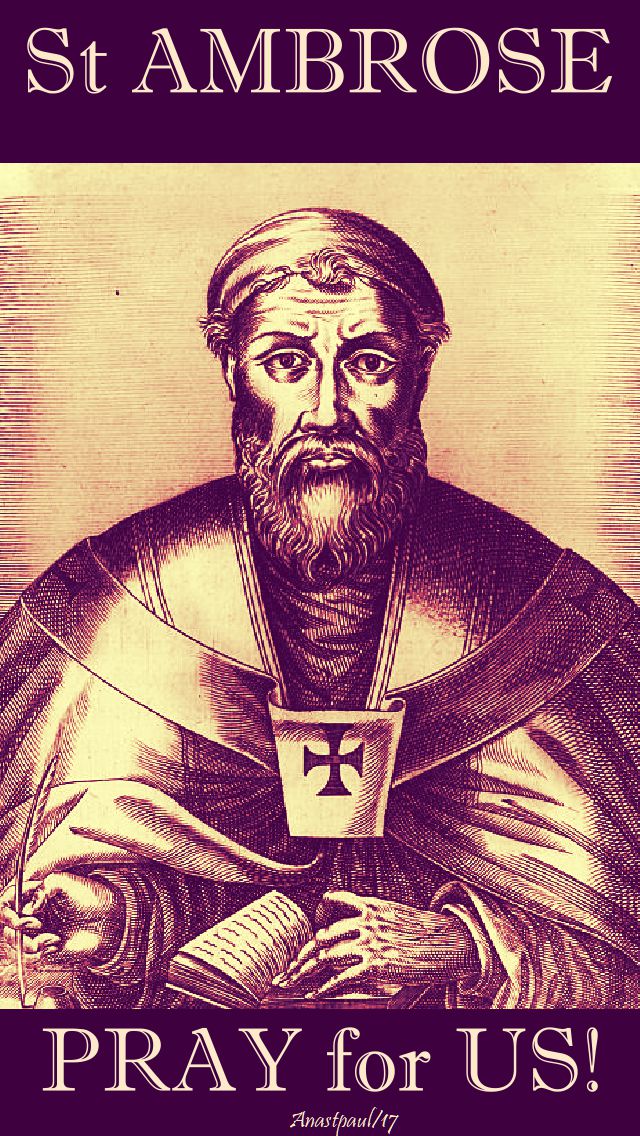
Thought for the Day – 7 December – The Memorial of St Ambrose (c 340-397)- Father and Doctor of the Church
“Holy Bishop Ambrose – about whom I shall speak to you today – died in Milan in the night between 3 and 4 April 397. It was dawn on Holy Saturday. The day before, at about five o’clock in the afternoon, he had settled down to pray, lying on his bed with his arms wide open in the form of a cross. Thus, he took part in the solemn Easter Triduum, in the death and Resurrection of the Lord. “We saw his lips moving”, said Paulinus, the faithful deacon who wrote his Life at St Augustine’s suggestion, “but we could not hear his voice”. The situation suddenly became dramatic. Honoratus, Bishop of Vercelli, who was assisting Ambrose and was sleeping on the upper floor, was awoken by a voice saying again and again, “Get up quickly! Ambrose is dying…”. “Honoratus hurried downstairs”, Paulinus continues, “and offered the Saint the Body of the Lord. As soon as he had received and swallowed it, Ambrose gave up his spirit, taking the good Viaticum with him. His soul, thus refreshed by the virtue of that food, now enjoys the company of Angels” (Life, 47).
On that Holy Friday 397, the wide open arms of the dying Ambrose expressed his mystical participation in the death and Resurrection of the Lord. This was his last catechesis – in the silence of the words, he continued to speak with the witness of his life.
Like the Apostle John, Bishop Ambrose – who never tired of saying: “Omnia Christus est nobis! To us Christ is all!”– continues to be a genuine witness of the Lord. Let us thus conclude our Catechesis with his same words, full of love for Jesus: “Omnia Christus est nobis! If you have a wound to heal, He is the doctor; if you are parched by fever, He is the spring; if you are oppressed by injustice, He is justice; if you are in need of help, He is strength; if you fear death, He is life; if you desire Heaven, He is the way; if you are in the darkness, He is light…. Taste and see how good is the Lord, blessed is the man who hopes in Him!” (De Virginitate, 16, 99). Let us also hope in Christ. We shall thus be blessed and shall live in peace.”
Pope Benedict – Excerpt, General Audience, Catechesis on St Ambrose, 24 October 2007
Quote/s of the Day -– 7 December – The Memorial of St Ambrose (c 340-397)- Father and Doctor of the Church
Note: I am still unable to make images so these are taken from this site.
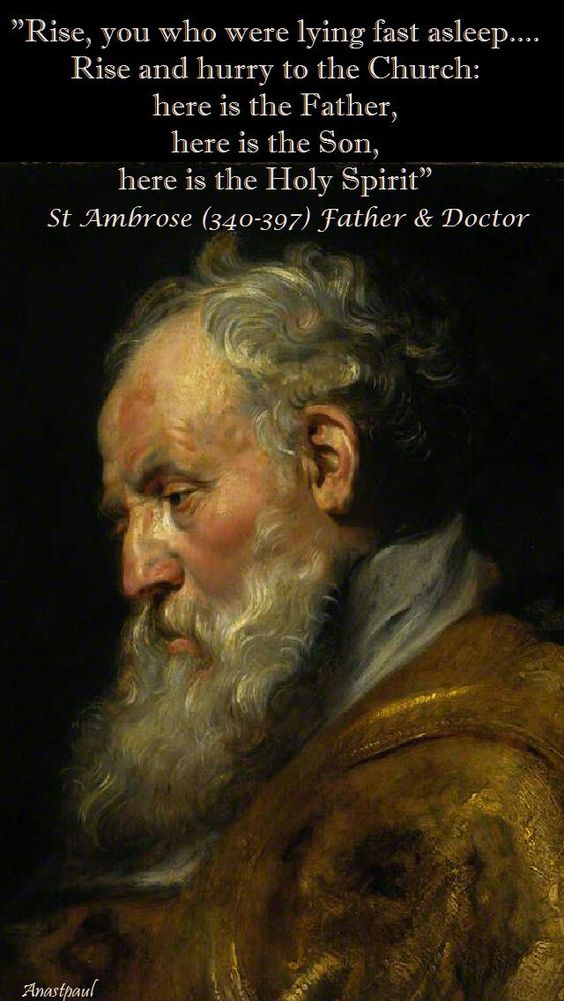
“Rise, you who were lying fast asleep… Rise and hurry to the Church: here is the Father, here is the Son, here is the Holy Spirit.”
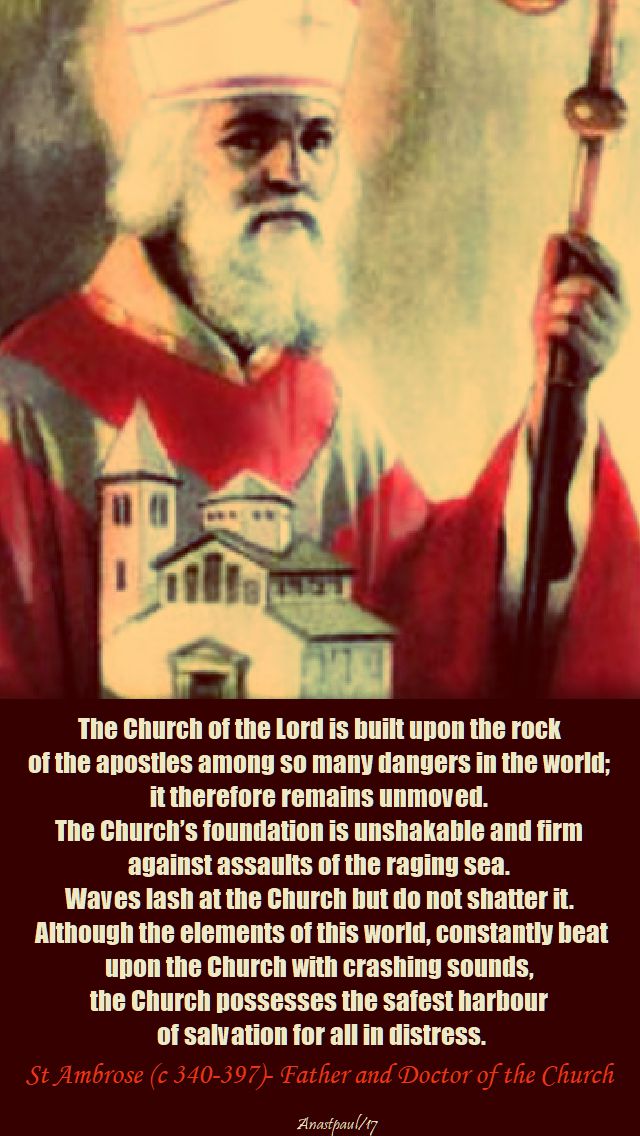
“The Church of the Lord is built upon the rock of the apostles among so many dangers in the world; it therefore remains unmoved. The Church’s foundation is unshakeable and firm against assaults of the raging sea. Waves lash at the Church but do not shatter it. Although the elements of this world, constantly beat upon the Church with crashing sounds, the Church possesses the safest harbour of salvation for all in distress.”
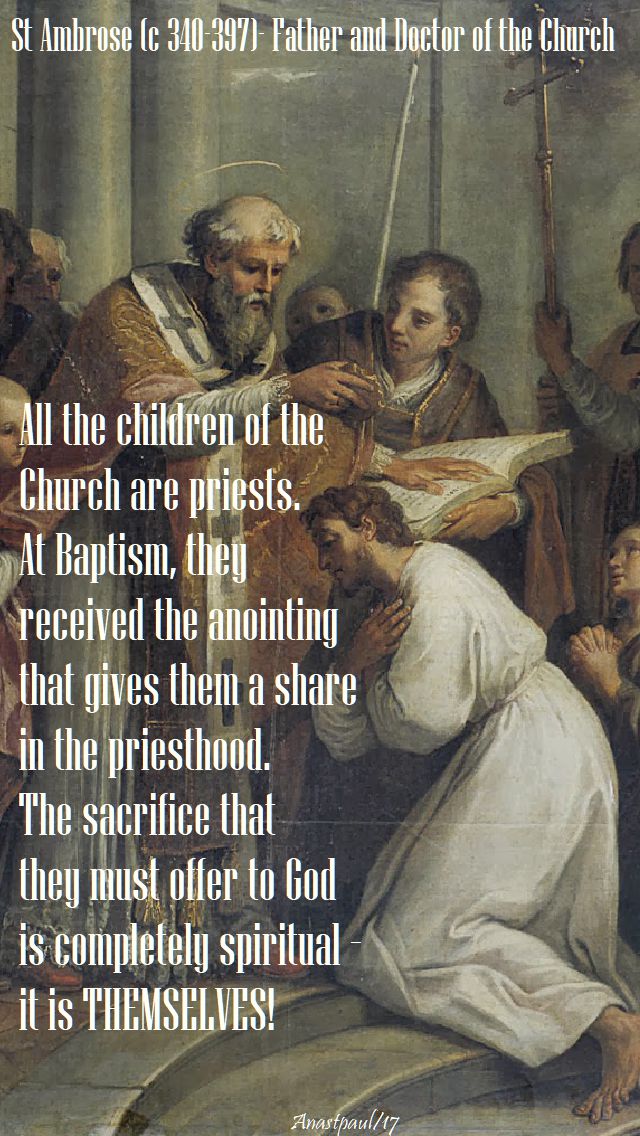
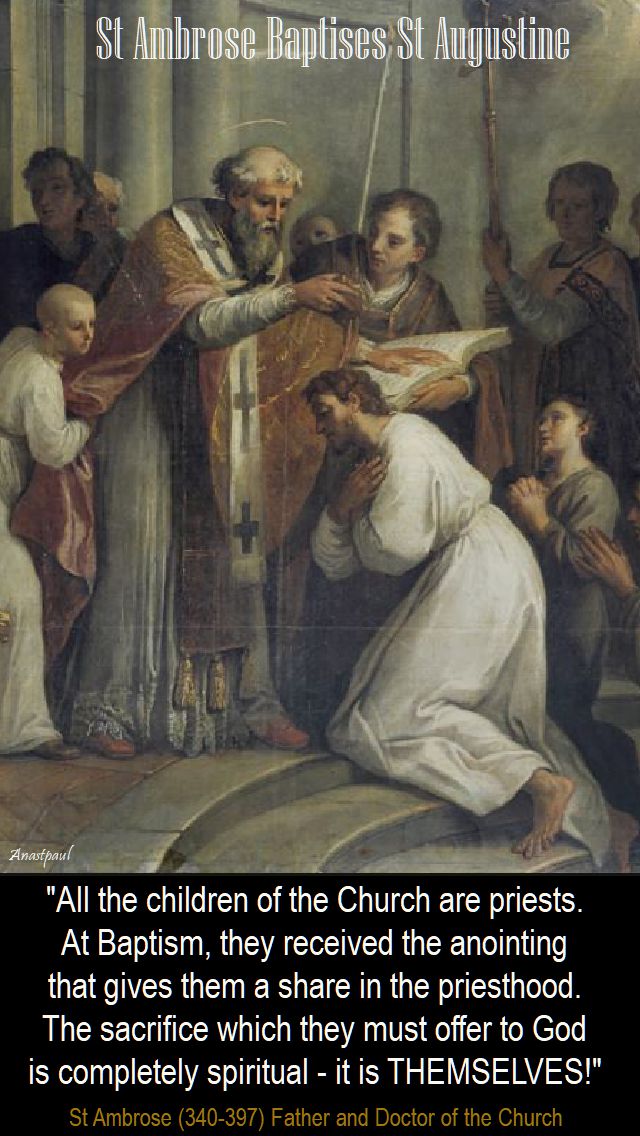
“All the children of the Church are priests. At Baptism, they received the anointing that gives them a share in the priesthood. The sacrifice that they must offer to God is completely spiritual – it is themselves.”
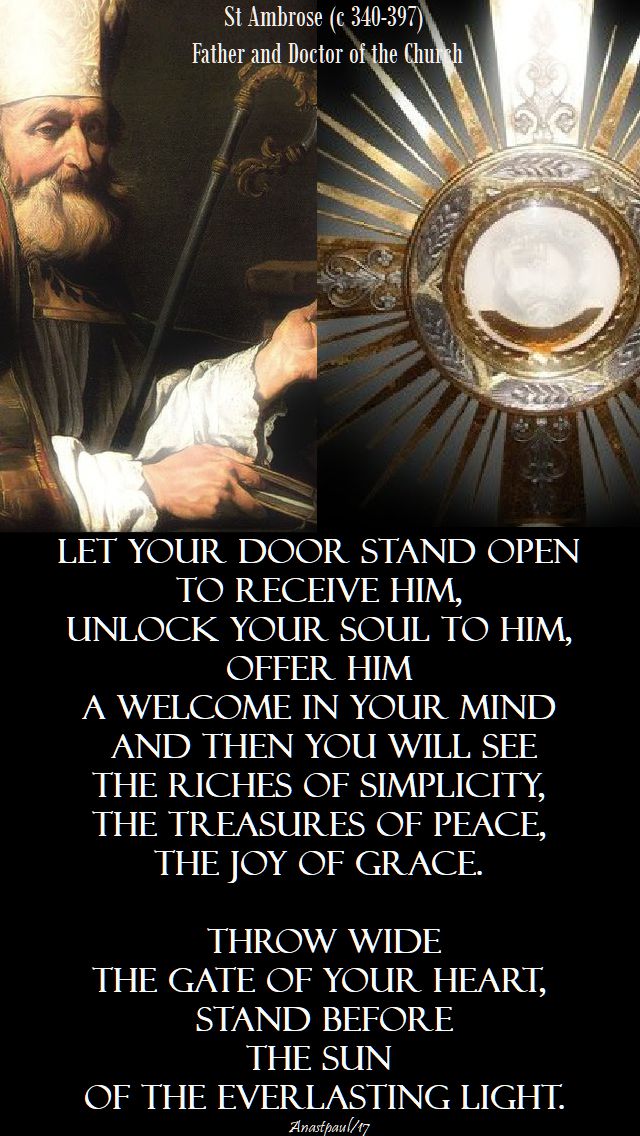
“Let your door stand open to receive Him, unlock your soul to Him, offer Him a welcome in your mind and then you will see the riches of simplicity, the treasures of peace, the joy of grace. Throw wide the gate of your heart, stand before the sun of the everlasting light.”
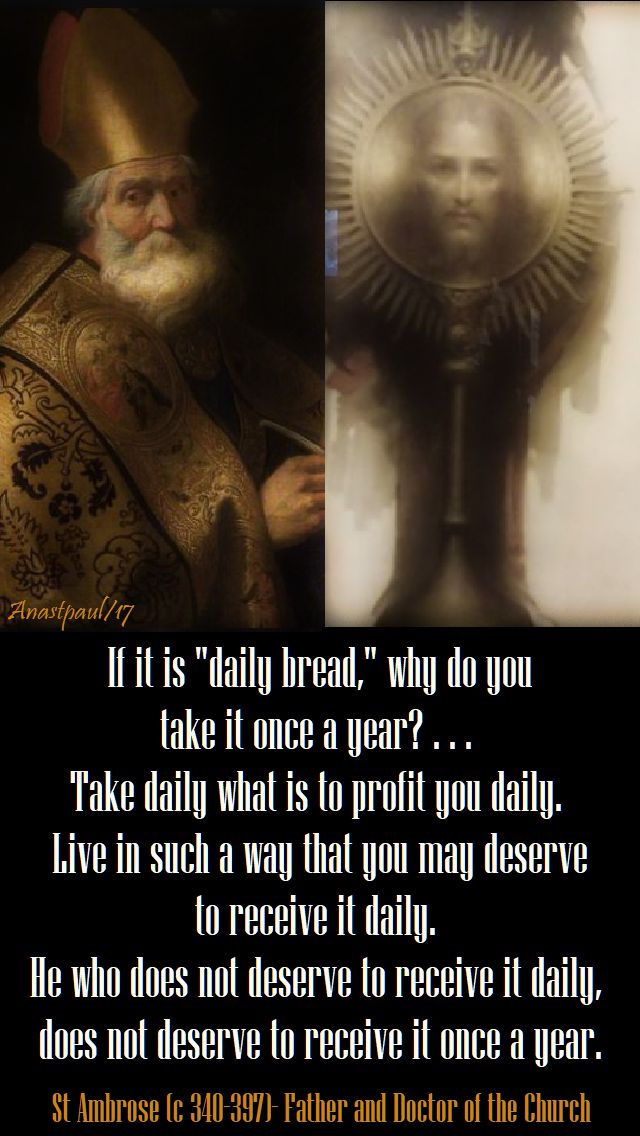
“If it is “daily bread,” why do you take it once a year? . . . Take daily what is to profit you daily. Live in such a way that you may deserve to receive it daily. He who does not deserve to receive it daily, does not deserve to receive it once a year.”
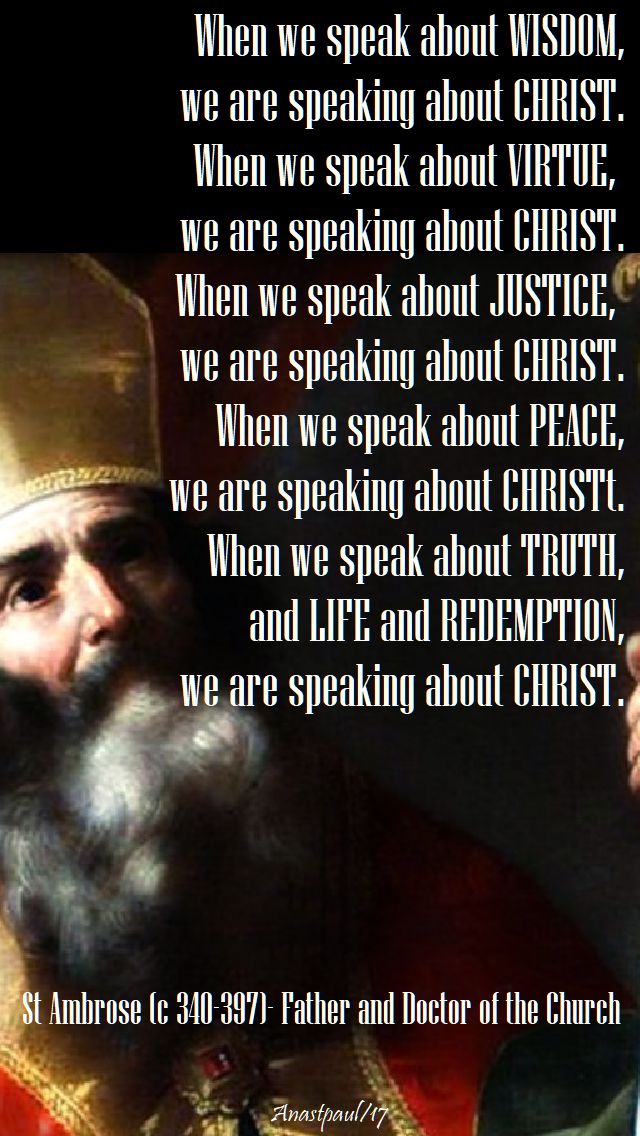
“When we speak about WISDOM, we are speaking about CHRIST. When we speak about VIRTUE, we are speaking about CHRIST. When we speak about JUSTICE, we are speaking about CHRIST. When we speak about PEACE, we are speaking about CHRIST. When we speak about TRUTH, and LIFE and REDEMPTION, we are speaking about CHRIST.”
St Ambrose (c 340-397)- Father and Doctor of the Church
Our Morning Offering – 7 December – The Memorial of St Ambrose (c 340-397)- Father and Doctor of the Church
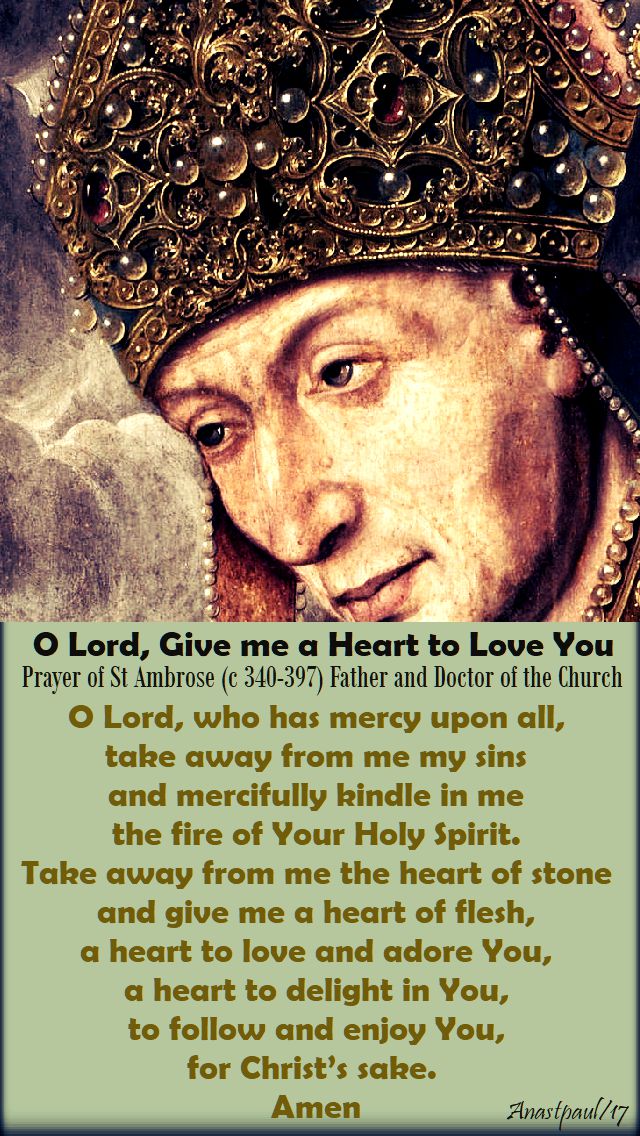
O Lord, Give me a Heart to Love You Prayer of St Ambrose (c 340-397) Father and Doctor of the Church
O Lord, who has mercy upon all,
take away from me my sins
and mercifully kindle in me
the fire of Your Holy Spirit.
Take away from me the heart of stone
and give me a heart of flesh,
a heart to love and adore You,
a heart to delight in You,
to follow and enjoy You,
for Christ’s sake.
Amen
Saint of the Day – 7 December – St Ambrose (c 340-397) – Father and Doctor of the Church
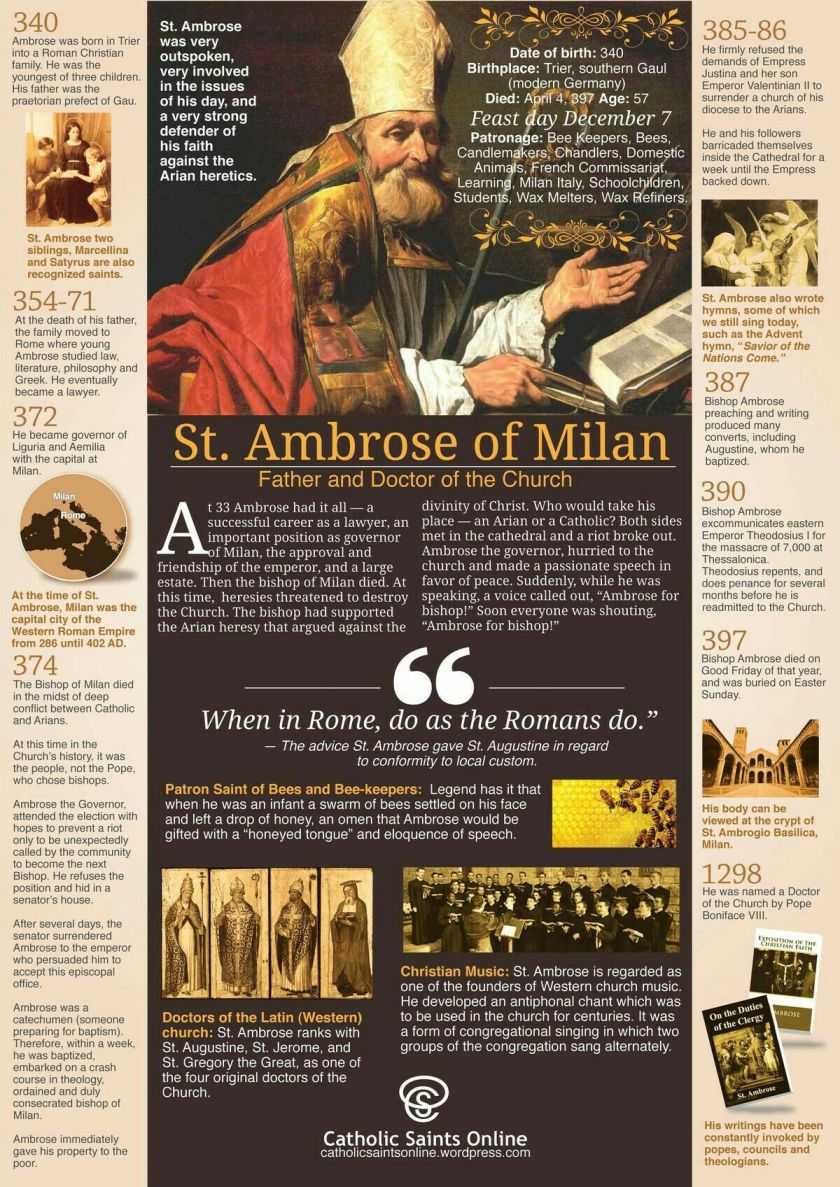
Today the Catholic Church celebrates the memory of St Ambrose, the brilliant Bishop of Milan who influenced St Augustine’s conversion and was named a Doctor of the Church.
Like Augustine himself, the older Ambrose (born around 340) was a highly educated man who sought to harmonise Greek and Roman intellectual culture with the Catholic faith. Trained as a lawyer, he eventually became the governor of Milan. He manifested his intellectual gifts in defence of Christian doctrine even before his baptism.
While Ambrose was serving as the governor of Milan, a bishop named Auxentius was leading the diocese. Although he was an excellent public speaker with a forceful personality, Auxentius also followed the heresy of Arius, which denied the divinity of Christ. Although the Council of Nicaea had reasserted the traditional teaching on Jesus’ deity, many educated members of the Church – including, at one time, a majority of the world’s bishops – looked to Arianism as a more sophisticated and cosmopolitan version of Christianity. Bishop Auxentius became notorious for forcing clergy throughout the region to accept Arian creeds.
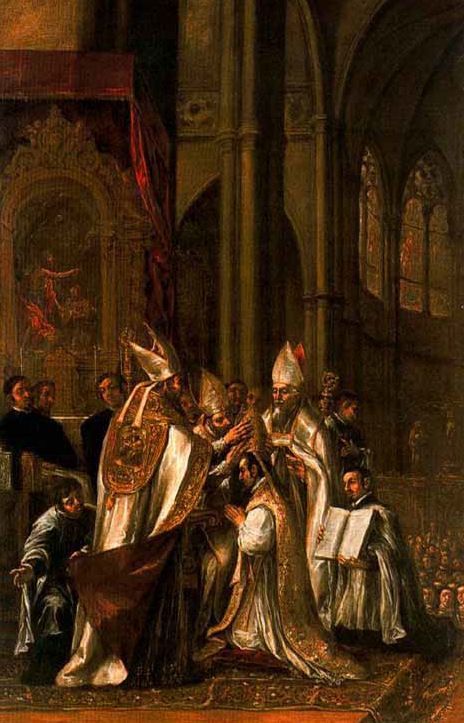
At the time of Auxentius’ death, Ambrose had not yet even been baptised. But his deep understanding and love of the traditional faith were already clear to the faithful of Milan. They considered him the most logical choice to succeed Auxentius, even though he was still just a catechumen. With the help of Emperor Valentinan, who ruled the Western Roman Empire at the time, a mob of Milanese Catholics virtually forced Ambrose to become their bishop against his own will. Eight days after his baptism, Ambrose received episcopal consecration on 7 December 374. The date would eventually become his liturgical feast.
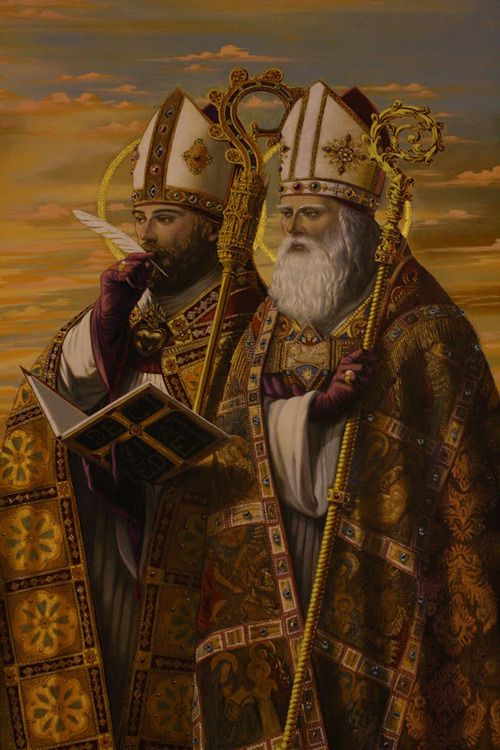
St Ambrose consecrated as Bishop
Bishop Ambrose did not disappoint those who had clamoured for his appointment and consecration. He began his ministry by giving everything he owned to the poor and to the Church. He looked to the writings of Greek theologians like St Basil for help in explaining the Church’s traditional teachings to the people during times of doctrinal confusion.
Like the fathers of the Eastern Church, Ambrose drew from the intellectual reserves of pre-Christian philosophy and literature to make the faith more comprehensible to his hearers. This harmony of faith with other sources of knowledge served to attract, among others, the young professor Aurelius Augustinus – a man Ambrose taught and baptised, whom history knows as St Augustine of Hippo.
St Augustine and St Ambrose
Ambrose himself lived simply, wrote prolifically and celebrated Mass each day. He found time to counsel an amazing range of public officials, pagan inquirers, confused Catholics and penitent sinners. The people of Milan never regretted their insistence that the reluctant civil servant should lead the local church. His popularity, in fact, served to keep at bay those who would have preferred to force him from the diocese, including the Western Empress Justina and a group of her advisers, who sought to rid the West of adherence to the Nicene Creed. Ambrose heroically refused her attempts to impose heretical bishops in Italy, along with her efforts to seize churches in the name of Arianism.
Ambrose also displayed remarkable courage when he publicly denied communion to the Emperor Theodosius, who had ordered the massacre of 7,000 citizens in Thessalonica. The chastened emperor took Ambrose’s rebuke to heart, publicly repenting of the massacre and doing penance for the murders.
“Nor was there afterwards a day on which he did not grieve for his mistake,” Ambrose himself noted when he spoke at the emperor’s funeral. The rebuke spurred a profound change in Emperor Theodosius. He reconciled himself with the Church and the bishop, who attended to the emperor on his deathbed.
St. Ambrose died in 397. His 23 years of diligent service had turned a deeply troubled diocese into an exemplary outpost for the faith. His writings remained an important point of reference for the Church, well into the medieval era and beyond.
At the Catholic Church’s Fifth Ecumenical Council – which took place at Constantinople in 553, and remains a source of authoritative teaching for both Catholics and Eastern Orthodox Christians – the assembled bishops named Ambrose, along with this protege St Augustine, as being among the foremost “holy fathers” of the Church, whose teaching all bishops should “in every way follow.”
One Minute Reflection – 26 November – Today’s Gospel: Luke 21:1-4 – Monday of the Thirty Fourth Week in Ordinary Time, Year B
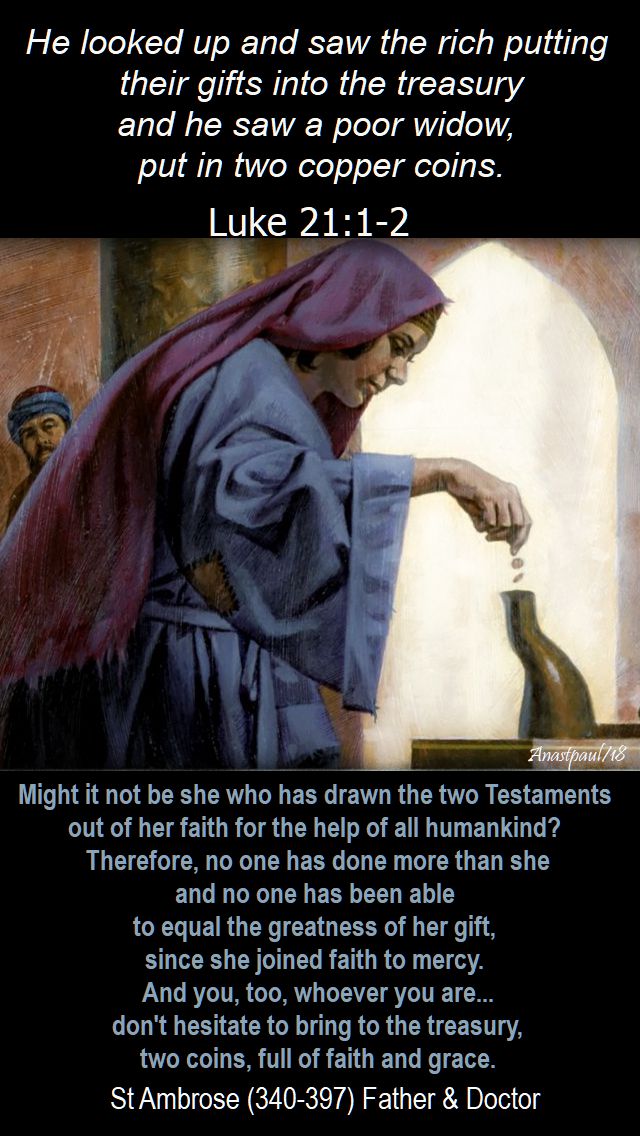
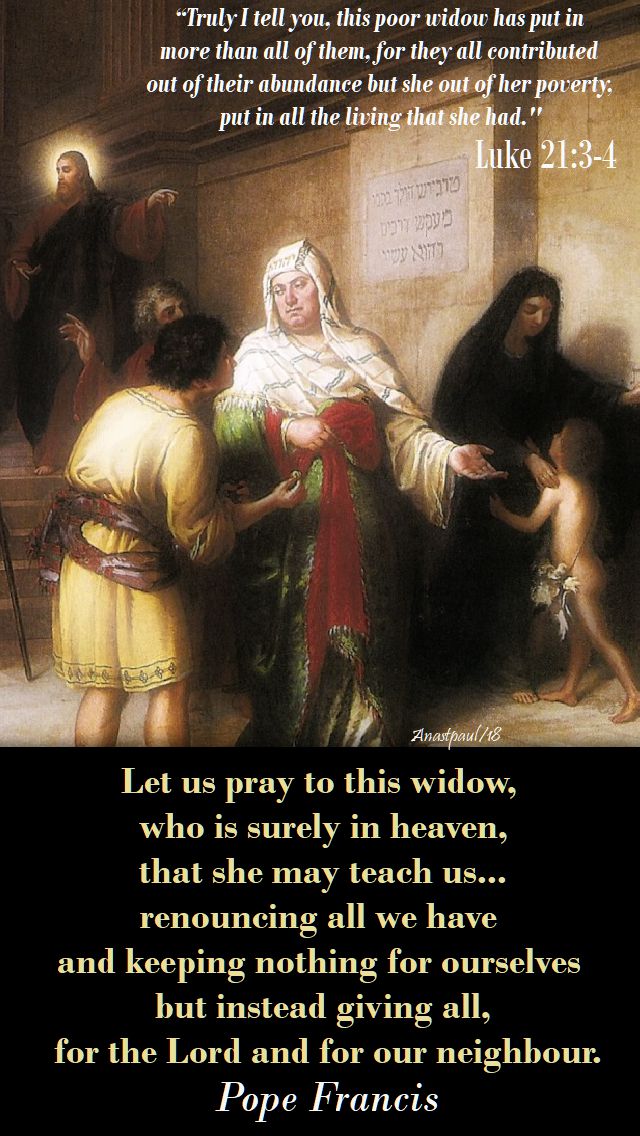
He looked up and saw the rich putting their gifts into the treasury and he saw a poor widow, put in two copper coins. And he said, “Truly I tell you, this poor widow has put in more than all of them, for they all contributed out of their abundance but she out of her poverty, put in all the living that she had.”…Luke 21:1-4
REFLECTION – “However, in the mystical sense, the woman who placed two small coins in the treasury, is not to be forgotten. Great indeed is that woman who was worthy to be preferred before everyone else according to the divine judgement! Might it not be she who has drawn the two Testaments out of her faith for the help of all humankind? Therefore, no one has done more than she and no one has been able to equal the greatness of her gift, since she joined faith to mercy. And you, too, whoever you are…, do not hesitate to bring to the treasury, two coins, full of faith and grace.”…St Ambrose (340-397) Father & Doctor
“In a certain sense the Church is a widow somewhat, because she is waiting for her Bridegroom to return… Of course, she has her Spouse in the Eucharist, in the Word of God, in the poor but she is waiting for Him to return. This woman wasn’t important, no one knew her. Nothing. She did not shine of her own light.
Likewise, the great virtue of the Church is not shining of her own light but rather reflecting the light that comes from her Spouse. Especially since over the centuries, when the Church wanted to have her own light, she was wrong. The Church receives light from there, from the Lord and all the services we do in the Church, help her to receive that light. When a service is lacking this light, it’s not good because it causes the Church to become rich, or powerful, or to seek power, or to lose her way, as has happened so many times in history, it happens in our life when we want to have another light – our own light, which is not really that of the Lord. When the Church is humble and poor and even when the Church confesses her misfortunes — we all have them — the Church is faithful.
Let us pray to this widow who is surely in heaven that she may teach us to be like the Church, renouncing all we have and keeping nothing for ourselves but instead giving all for the Lord and for our neighbour. Always humble and without boasting of having our own light but “always seeking the light which comes from the Lord.”…Pope Francis (Santa Marta, 24 November 2014)
PRAYER – God our Father, You give us a share in the one bread and the one cup and make us one in Christ. Help us to live as Your children and by our lives to bring Your salvation and joy to all the world. May the Holy Spirit fill us with all His gifts and virtues so that we may await the coming of Your Son, guided by His Light and may Mary, the blessed Virgin, accompany us, guarding and giving us her prayerful help. Through Christ our Lord, with the Holy Spirit, God forever, amen.
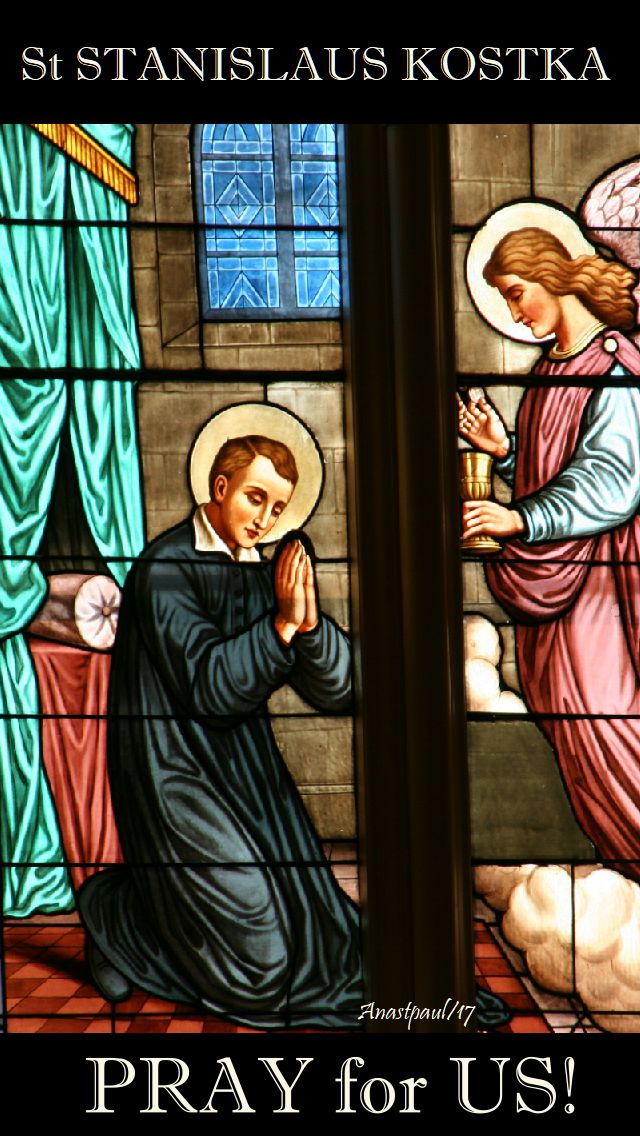
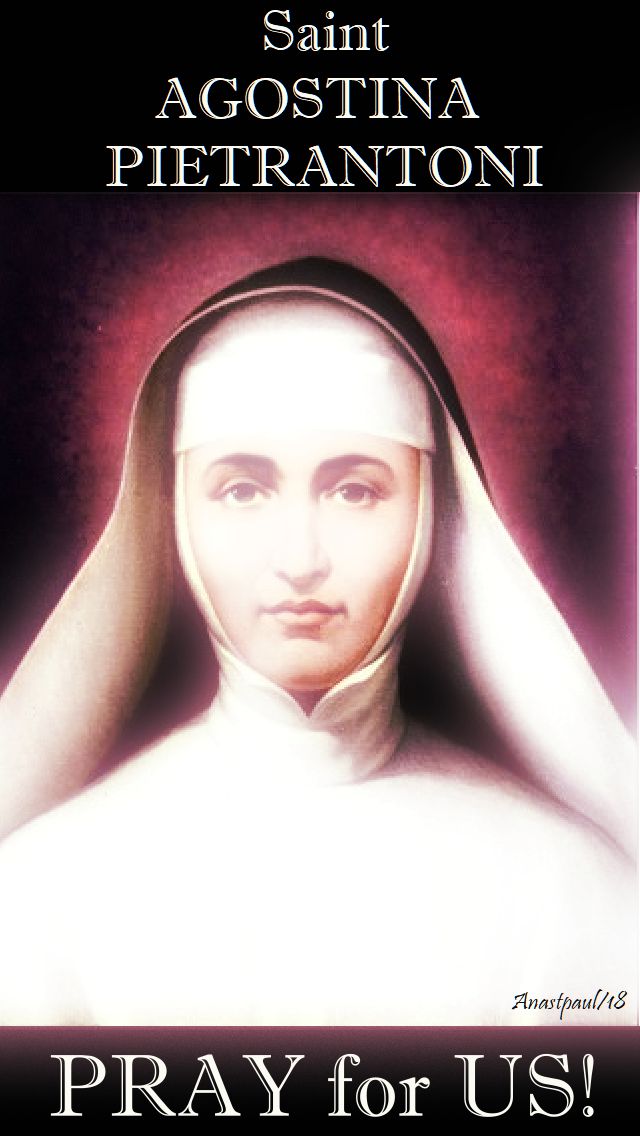
One Minute Reflection – 13 November – Today’s Gospel: Luke 17:7–10 – Tuesday of the Thirty Second week in Ordinary Time, Year B and the Memorial of St Stanislaus Kostka SJ (1550-1568) & St Agostina Livia Pietrantoni S.D.C. (1864-1894)
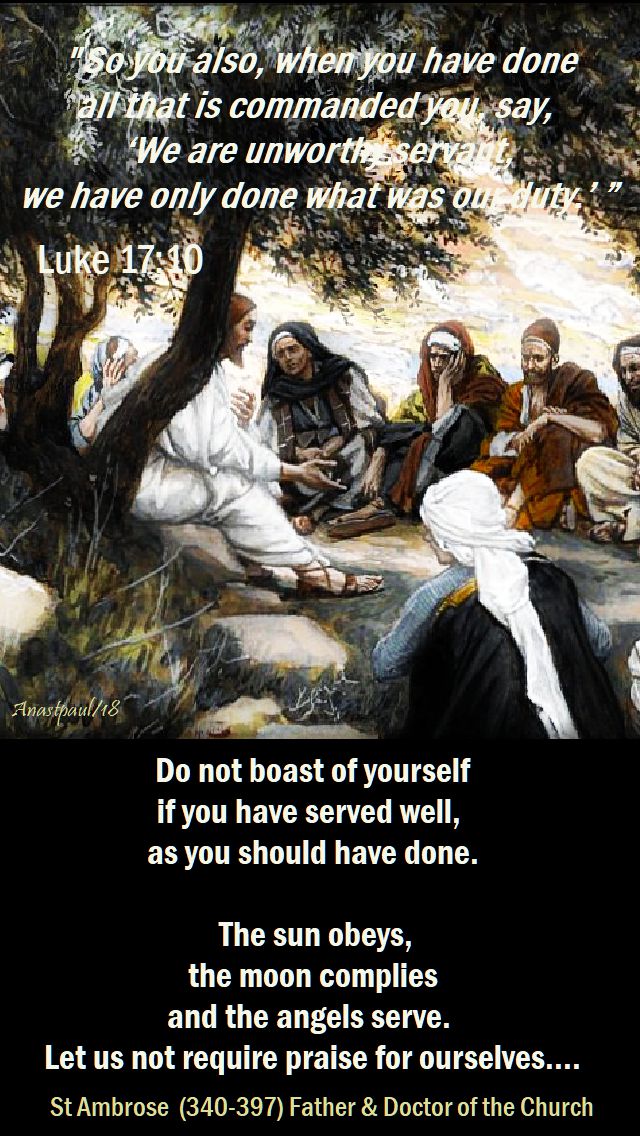
“So you also, when you have done all that is commanded you, say, ‘We are unworthy servants, we have only done what was our duty.’ ”…Luke 17:10
REFLECTION – “You do not say to your servant, “Sit down” but require more service from him and do not thank him. The Lord also, does not allow only one work or labour for you, because so long as we live, we must always work. Know that you are a servant overwhelmed by very much obedience. You must not set yourself first, because you are called a son of God. Grace must be acknowledged but nature not overlooked. Do not boast of yourself if you have served well, as you should have done. The sun obeys, the moon complies and the angels serve. Let us not require praise for ourselves, nor prevent the judgement of God and anticipate the sentence of the Judge but reserve it, for its own time and Judge. ”…Saint Ambrose (340-397) Father & Doctor of the Church (Exposition of the Gospel of Luke, 8)
PRAYER– Holy Father, I beg Your grace to achieve sanctity. Grant me the wisdom to follow Your Son, the fortitude to persevere in all trails and to be Your servant to all Your children but most of all Holy Father, grant me Your grace to obtain eternal life. Precious youths, St Stanislaus and St Agostina, please pray for us all , amen.
Thought for the Day – 2 November – The Commemoration of All the Faithful Departed (All Souls)
St Ambrose (340-397) Father & Doctor of the Church
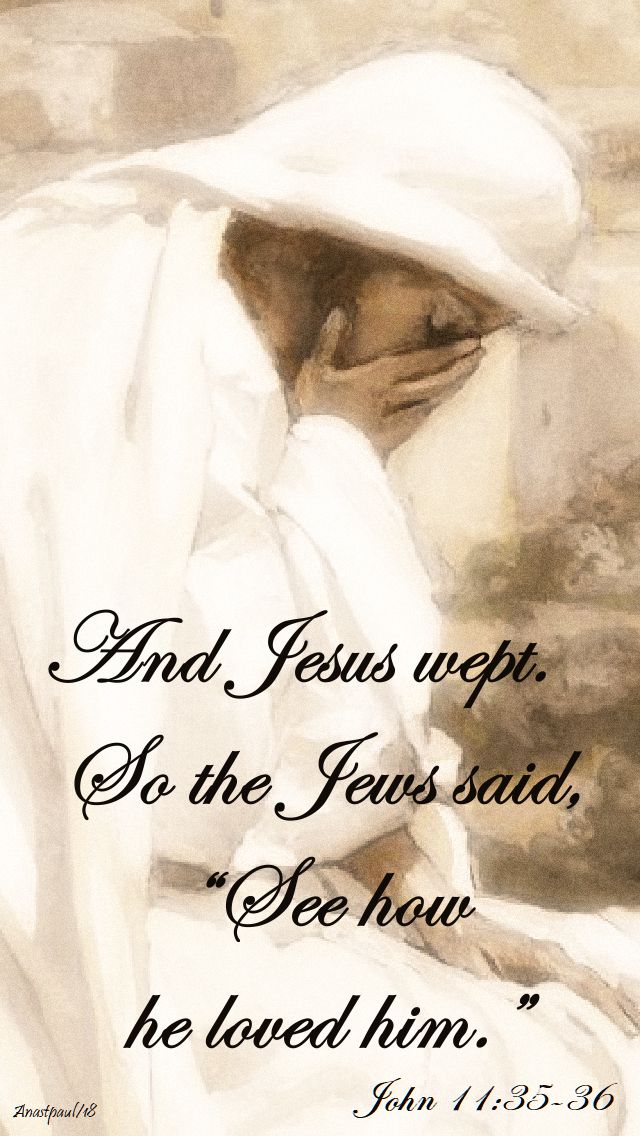
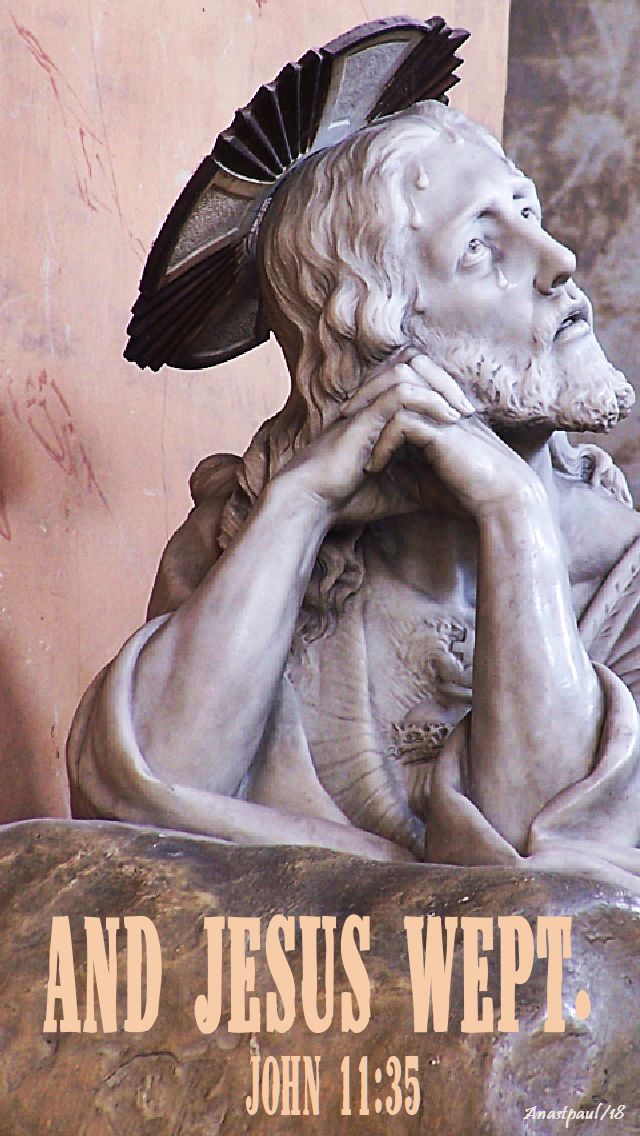
And Jesus wept. So the Jews said, “See how he loved him.”...John 11:35-36
Why do I pray for you, O my brother, who loved me so much and have been carried off from me… ? For I have not lost my relationship to you, rather it has been completely changed in my regard. Up to now, it was inseparable from the body but now, it is indissoluble from feeling. ,,You remain with me and will remain so always… Paul the apostle calls me back and places a sort of brake on my sadness with these words: “We do not want you to be unaware about those who have fallen asleep, so that you may not grieve like the rest who have no hope” (1Thes 4:13)…
But not all weeping is a sign of lack of faith or of weakness. Natural sorrow is one thing, the sadness of unbelief is another… Sorrow is not alone in having its grief and prayer bathes our bed with tears according to the prophet (Ps 6:7). When the patriarchs were enslaved, their people wept bitterly for themselves, as well. Thus tears are signs of affection and not incitements to sorrow. I confess that I have wept but the Lord also wept (Jn 11:35). He wept for someone not of his own kin, I for a brother. He wept for all men in one man – as for me, I will weep for you, my brother, in every man.
Christ wept with the feeling that is ours, not His own, for divinity has no tears… He wept in that man who was “sorrowful even to death” (Mt 26:38); He wept in him who was crucified, who died, who was buried; He wept in that man… who was born of the Virgin.
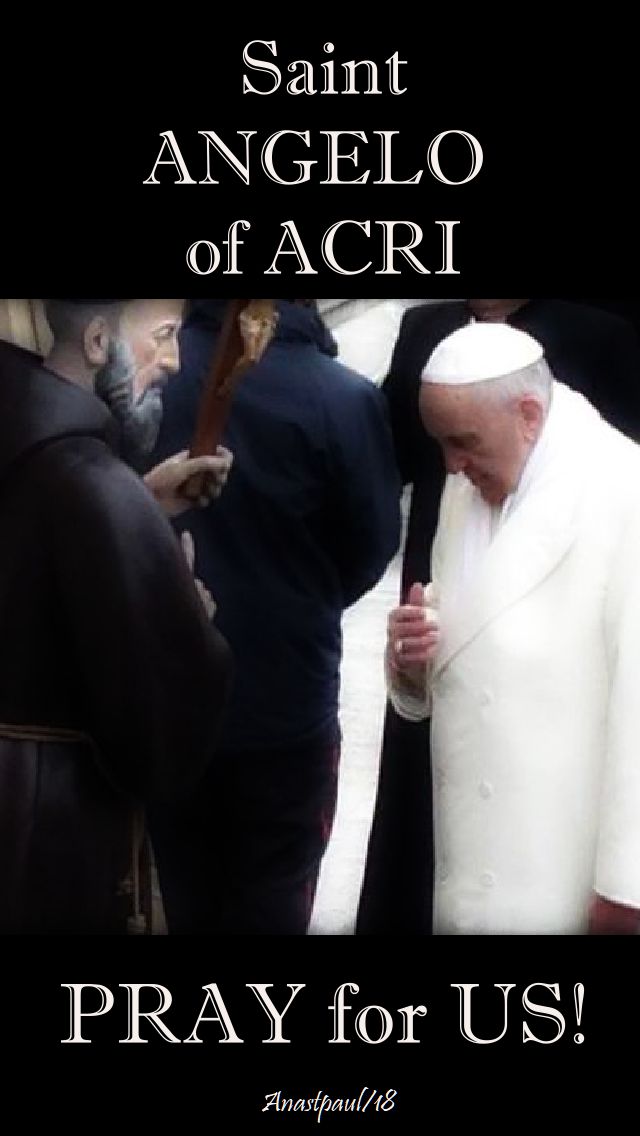
One Minute Reflection = 30 October – Today’s Gospel: Luke 13:18-21 – Tuesday of the Thirtieth week in Ordinary Time, Year B – The Memorial of St Angelo of Acri OFM Cap (1669-1739)
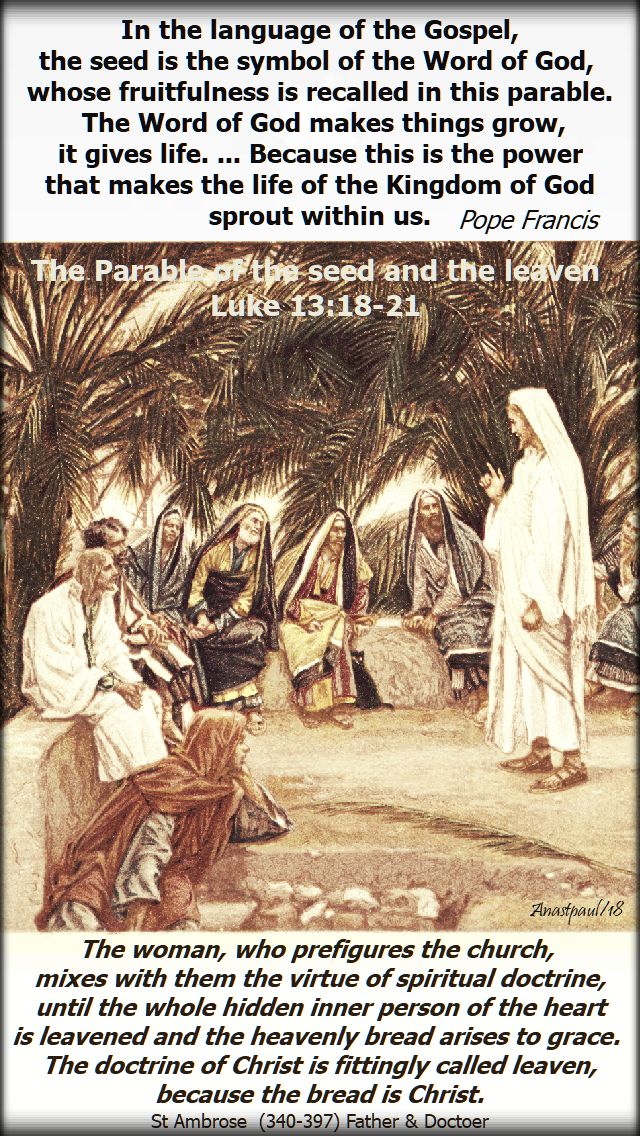
“What is the kingdom of God like? And to what shall I compare it? It is like a grain of mustard seed which a man took and sowed in his garden and it grew and became a tree and the birds of the air made nests in its branches.”..Luke 13:18-19
REFLECTION – “In the language of the Gospel, the seed is the symbol of the Word of God, whose fruitfulness is recalled in this parable. The Word of God makes things grow, it gives life. …Because this is the power that makes the life of the Kingdom of God sprout within us. And thus is the Kingdom of God, a humanly small and seemingly irrelevant reality. To become a part of it, one must be poor of heart, not trusting in their own abilities but in the power of the love of God; not acting to be important in the eyes of the world but precious in the eyes of God, who prefers the simple and the humble. When we live like this, the strength of Christ bursts through us and transforms what is small and modest into a reality, that leavens the entire mass of the world and of history. This opens us up to trust and hope, despite the tragedies, the injustices, the sufferings that we encounter. The seed of goodness and peace sprouts and develops, because the merciful love of God makes it ripen.”…Pope Francis = Angelus, 14 June 2015
“To what shall I compare the kingdom of God? It is like leaven which a woman took and hid in three measures of flour, till it was all leavened.”...Luke 13:20-21
REFLECTION – “There are three measures: of the flesh, of the soul and of the spirit. This is truer of the spirit in which we all live. The woman, who prefigures the church, mixes with them the virtue of spiritual doctrine, until the whole hidden inner person of the heart is leavened and the heavenly bread arises to grace. The doctrine of Christ is fittingly called leaven, because the bread is Christ. The apostle said, “For we, being many, are one bread, one body.” Leavening happens when the flesh does not lust against the Spirit, nor the Spirit against the flesh. We mortify the deeds of the flesh and the soul, aware that through the breath of God it has received the breath of life, shuns the earthly germs of worldly needs.”…St Ambrose (340-397) Father & Doctoer- Exposition of the Gospel of Luke, 7.
PRAYER – True light of the world, Lord Jesus Christ, as You enlighten all men for their salvation, give us grace, we pray, to herald Your coming by preparing the ways of justice and of peace. Help us Lord, that we may sprout and bear fruit, fitting to grow and be a home of comfort to our neighbour. By the prayers of St Angelo of Acri, who bore the seed of Your Word to many, may we too be heralds of Your Kingdom. Through Jesus our Lord, Who lives and reigns with the Father and the Holy Spirit, God forever, amen.
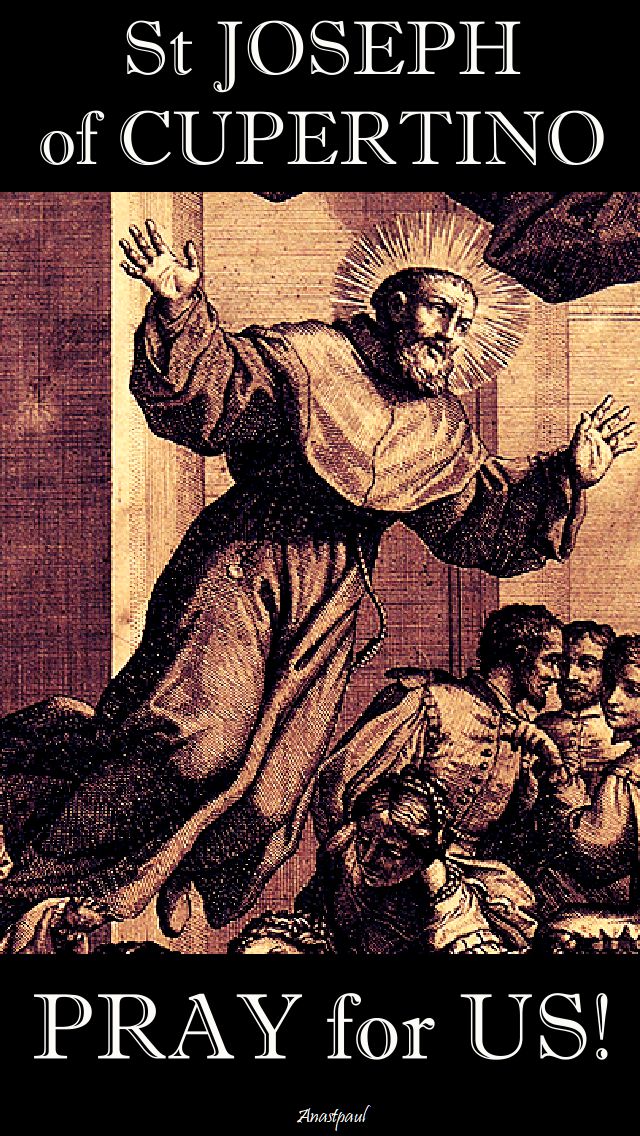
One Minute Reflection – 18 September – Today’s Gospel: Luke 7:11–17, Tuesday of the Twenty-fourth week in Ordinary Time and the Memorial of St Juan Macias O.P. (1585-1645) and St Joseph of Cupertino O.F.M. Conv. (1603-1663)
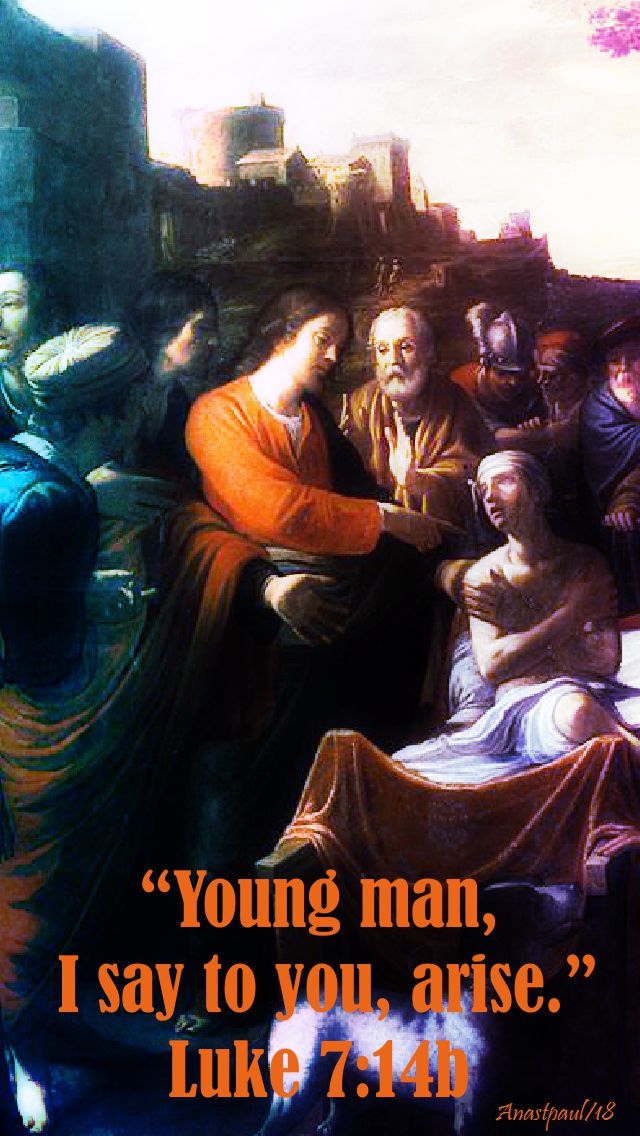
And he said, “Young man, I say to you, arise.”...Luke 7:14b
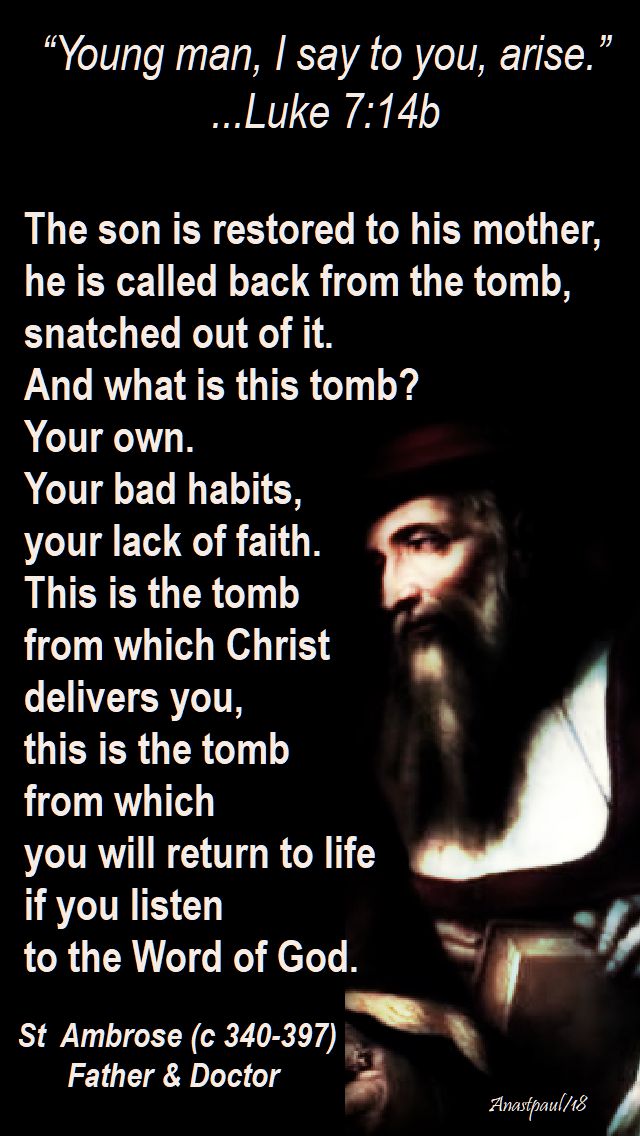
REFLECTION – “Even if the signs of death have removed all hope of life, even if the bodies of the dead lie beside the tomb, yet, at the voice of God, the corpses of those ready to decompose will rise and recover speech. The son is restored to his mother, he is called back from the tomb, snatched out of it. And what is this tomb? Your own. Your bad habits, your lack of faith. This is the tomb from which Christ delivers you, this is the tomb from which you will return to life if you listen to the Word of God. Even if your sin is so grave that you are unable to wash it clean for yourself with your tears of repentance, the Church, your mother, she who intercedes for each one of her children like a widowed mother for her only son, will weep for you. For she feels for it with a kind of spiritual suffering natural to her when she sees her offspring dragged down to death by lamentable vices…
Let her weep, then, this pious mother; let the crowd accompany her – and not just a crowd but a large crowd – and may it show compassion towards this tender mother. Then you will come to life again in your tomb and will be delivered, the bearers will stop and you will start to speak the words of the living; everyone will be astonished. The example of one will correct the many and they will praise God for having granted such remedies to us for escaping death.”…St Ambrose (c 340-397) Father & Doctor (A treatise on the Gospel of Saint Luke)
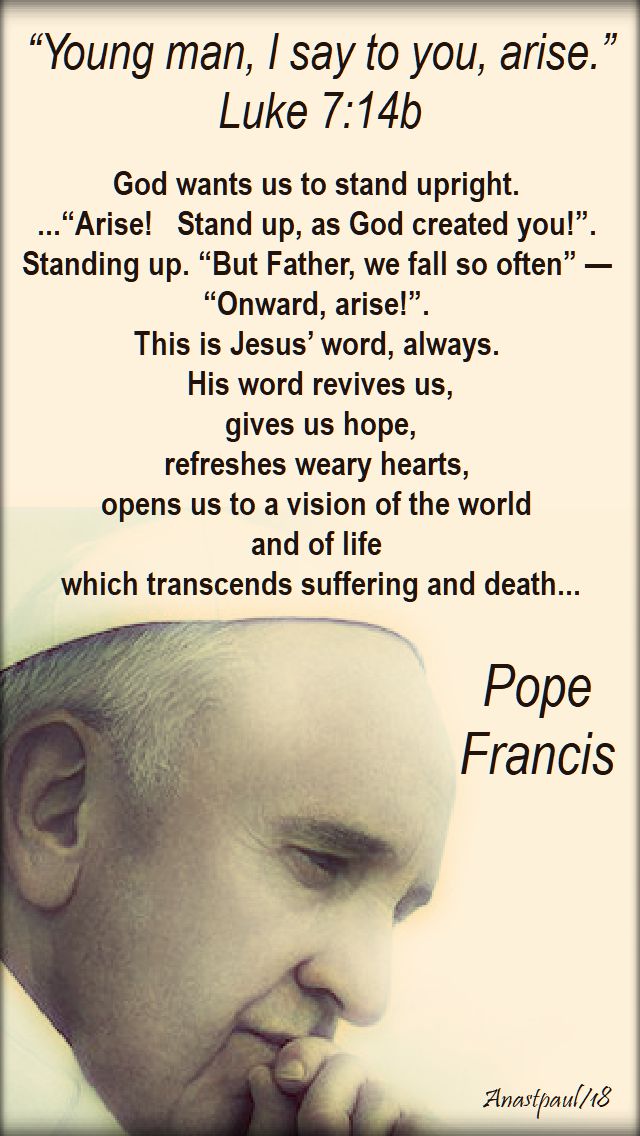
God wants us to stand upright. He created us to be on our fee,: for this reason, Jesus’ compassion leads to that gesture of healing, to heal us, of which the key phrase is: “Arise! Stand up, as God created you!”. Standing up. “But Father, we fall so often” — “Onward, arise!”. This is Jesus’ word, always. His word revives us, gives us hope, refreshes weary hearts, opens us to a vision of the world and of life which transcends suffering and death…Pope Francis – General audience, 10 August 2016
PRAYER – Heavenly Father, help me to be holy in the way that You have laid out for me. Let me stand upright and carry out my duties of my state of life to the full. Only in You may I attain holiness, learning to give myself, my will, my heart and my to You. St Joseph of Cupertino, you who were so disadvantaged, achieved by the grace of God, sanctity in this life and now behold His Face through all eternity. St Juan, in your lowly work, you stood in the Light of Christ, allowing the lowly and rich, to see Him who saved us. We ask You Holy Father, that You grant, by the intercession pf St Joseph and Juan, that we may reach our heavenly home. We make our prayer through Christ our Lord, with the Holy Spirit, one God forever, amen.
Quote/s of the Day – 29 August – The Memorial of the Beheading of St John the Baptist
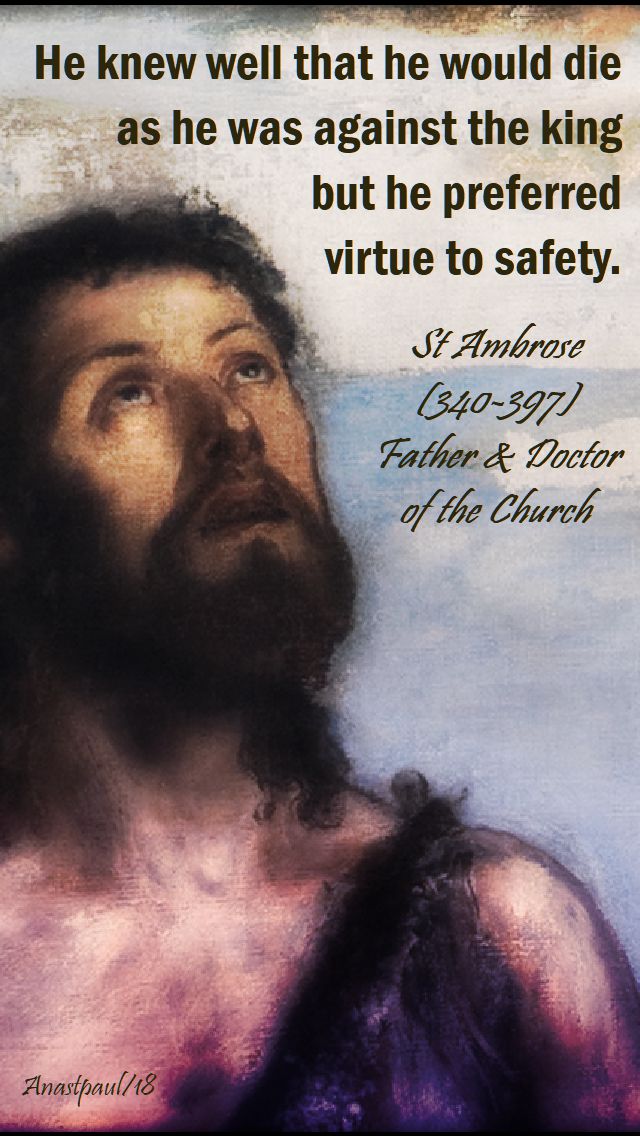
“And what else did John have in mind but what is virtuous, so that he could not endure a wicked union even in the king’s case, saying: “It is not lawful for thee to have her to wife.” He could have been silent, had he not thought it unseemly for himself not to speak the truth for fear of death, or to make the prophetic office yield to the king, or to indulge in flattery. He knew well that he would die as he was against the king but he preferred virtue to safety. Yet what is more expedient than the suffering which brought glory to the saint.”
St Ambrose (340-397) Father & Doctor of the Church
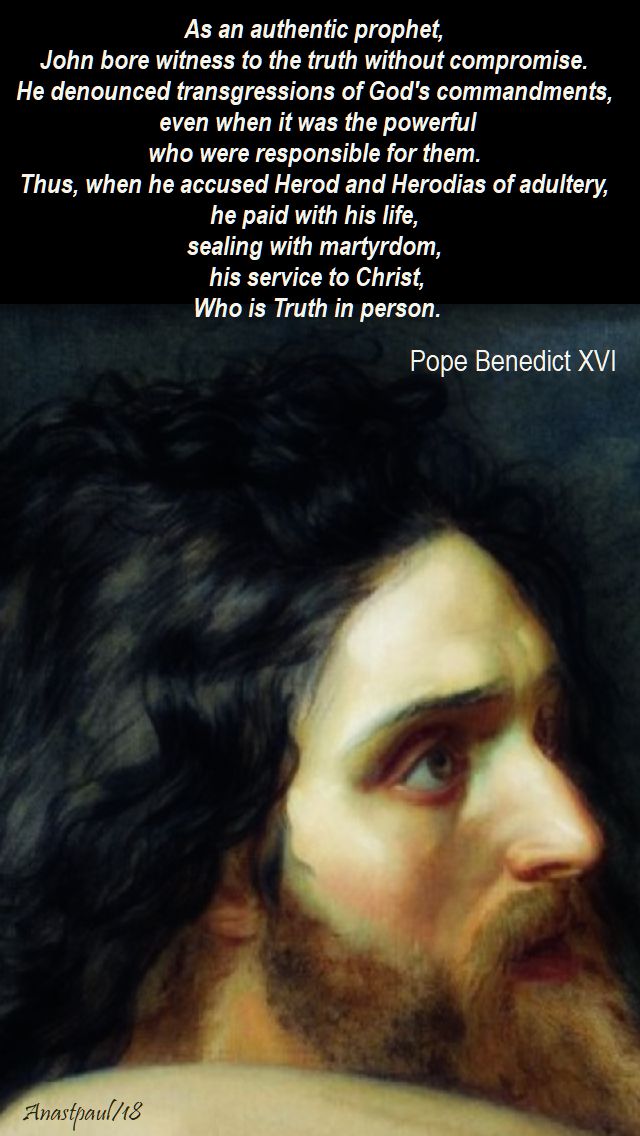
“As an authentic prophet, John bore witness to the truth without compromise. He denounced transgressions of God’s commandments, even when it was the powerful who were responsible for them. Thus, when he accused Herod and Herodias of adultery, he paid with his life, sealing with martyrdom, his service to Christ who is Truth in person.”
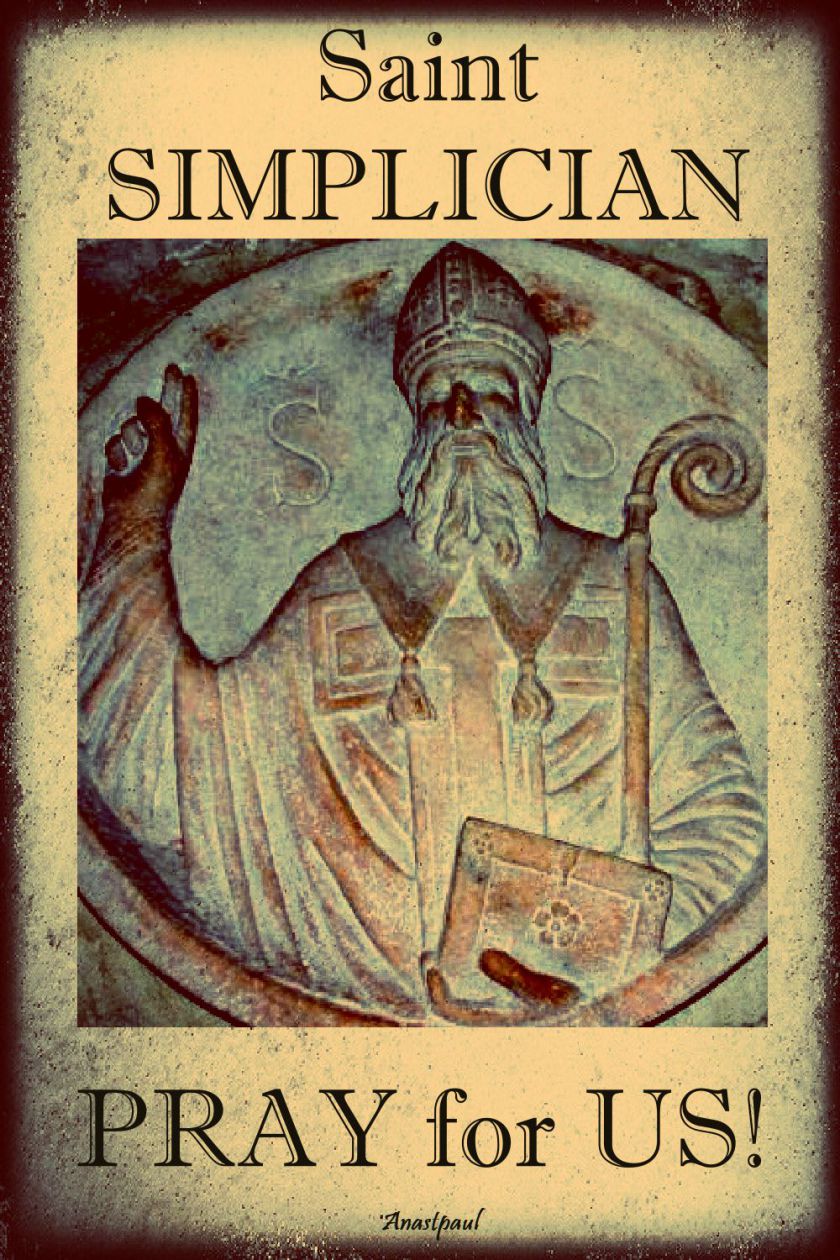
Thought for the Day – The Memorial of St Simplician (c 320-c 401),– 15 August
“Augustine and Simplician, sons of Milan, followers of Christ”
“Another great name enters Milan’s rich story in 384, that of the man who became St Augustine. In 384 he was not yet a saint. But he was a man who was searching, probing and asking questions, testing the spirits that drove him. First he found Ambrose, who “welcomed me as a father would and like a good bishop approved of my journeying,”according to his Confessions. Still, he was not ready to accept the Christian faith and way of life. But Ambrose could not be the spiritual director he needed.
Augustine had gotten through his doctrinal doubts and he “liked the Way, which was our Saviour, though the tight and narrow parts of that way” annoyed him. So God put it in his mind to go to Simplician, “whom I considered to be your good servant and your grace shone in him. I heard that since his youth he lived most devoted to you.”Now he had grown old and to Augustine he seemed to have become a great expert in studying God’s ways. “And so he was! So I wanted to share with him my inner turmoil so he might teach me how best I, as I was, could walk in your ways.”
That is quite an endorsement! From one saint-to-be about a wise and holy mentor, guide, companion on the road. One intently searching, the other guiding that search. We all need help from time as we make our authentic way. Maybe it can sound trite, an easy image, our life as a journey or pilgrimage, our walking the camino to a holy goal. But it speaks a deep truth.“…(Fr Edward W Schmidt S.J.)
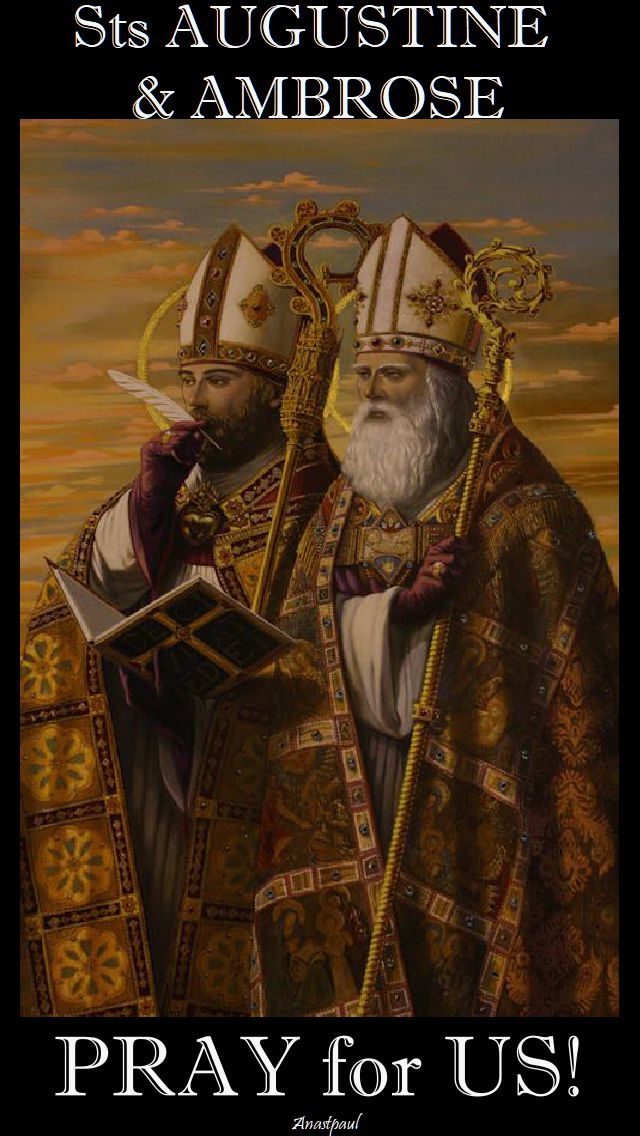
St Simplician, Sts Augustine & Ambrose, pray for us!
Quote/s of the Day – 15 August – The Memorial of St Simplicain (c 320-c 401), Friend and Teacher of St Ambrose and the “spiritual father of my soul” of St Augustine, Fathers and Doctors of the Church
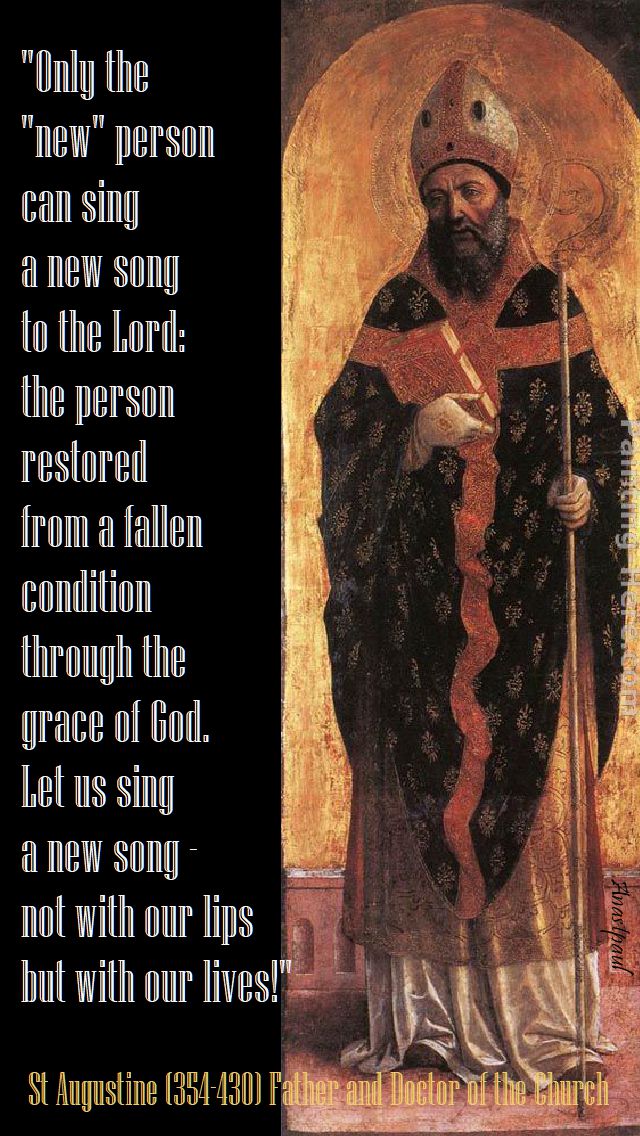
“Only the “new” person can sing a new song to the Lord: the person restored from a fallen condition, through the grace of God. Let us sing a new song – not with our lips but with our lives!”
St Augustine (354-430) Father and Doctor of the Church
“All the children of the Church are priests. At Baptism, they received the anointing that gives them a share in the priesthood. The sacrifice which they must offer to God is completely spiritual – it is THEMSELVES!”
St Ambrose (340-397) Father and Doctor of the Church











 AnaStpaul
You must be logged in to post a comment.