St Anna the Prophetess St Berlinda of Meerbeke St Blasius of Armentarius St Blasius of Oreto St Caellainn St Celerinus of Carthage St Clerina of Carthage St Deodatus of Lagny St Eutichio St Evantius of Vienne St Felix of Africa St Felix of Lyons
St Laurentius of Carthage St Lawrence the Illuminator ) Died 576) Bishop St Leonius of Poitiers St Liafdag St Lupicinus of Lyon St Margaret of England St Oliver of Ancona St Philip of Vienne St Remedius of Gap St Sempronius of Africa St Tigrides St Werburga of Bardney St Werburga of Chester
Benedictine Martyrs: A collective memorial of all members of the Benedictine Order who have died as Martyrs for the Faith.
Saint of the Day – 11 June – St Rembert of Hamburg (c830-888) Archbishop of Hamburg-Bremen, Missionary, Miracle-worker, Founder of Churches and Monasteries, Disciple of St Ansgar (801-865) “The Apostle of the North.” Born in c830 in Denmark (probably) and died on 3 February in 862 or 888 of natural causes. St Rembert most famously wrote the Hagiography about the life Ansgar, the Vita Ansgari, one of the most popular hagiographies of middle ages. Patronage s- of the blind and those with eye diseases, against storms at sea. Also known as – Rembert, Rembertus, Rimbert. Additional Memorial 4 February the day on which St Rembert was chosen as the Archbishop. St Ansgar’s life here: https://anastpaul.com/2019/02/03/saint-of-the-day-3-february-saint-ansgar-osb-801-865-apostle-of-the-north/
The Roman Martyrology reads : “In Bremen in Saxony, in today’s Germany, Saint Rembert, Bishop of Hamburg and Bremen, who, a faithful disciple of Saint Ansgar and his successor, extended his ministry to the regions of Denmark and Sweden and, at the time of the invasions of the Normans, he took care of the ransom of the Christian prisoners.”
Engraving in the Austrian National Library in Vienna
Little is directly known about Rimbert, much of the information available regarding his life comes from the Vita Rimberti, a Hagiography written by an unknown author, likely produced some time in the 10th Century. We believe that Rembert might have been a Dane. He studied under St Ansgar near Bruges in the neighbouring Monastery of Turholt. St Ansgar called him to his assistance in his missionary labours and, in his last sickness, recommended him to be his successor, saying: “Rembert is more worthy to be Archbishop, than I to discharge the office of his Deacon.”
After St Ansgar’s death, in 865, Rembert was unanimously chosen as the Archbishop of Hamburg-Bremen and evangelised, governed and administered all the Churches of Sweden, Denmark and Lower Germany, finishing the work of their conversion. Rembert continued much of the missionary labours begun under St Ansgar, despite the lack of Royal or Papal support.
As Archbishop, he maintained the poorhouse in Bremen which had been established by St Ansgar and founded a Monastery at Bücken. Rembert, furthermore, obtained market, coinage and toll rights for the City of Bremen.
He also began the conversion of the Sclavi and the Vandals, now called Brandenburghers. He sold the Sacred Vessels to redeem captives from the Normans and gave the horse on which he was riding, for the ransom of a virgin taken by the Sclavi.
In 884 Rembert personally led a Frisian army against the Vikings and following the victorious Battle of Norditi, was able to drive them permanently out of East Frisia! This indeed, was a Saint of many talents.
It was also chronicled in the Vita Rimberti that our Saint had performed numerous miracles, many of which are associated with his missionary work in Sweden. The miracles attributed to him include calming stormy seas, restoring sight to the blind and in one instance, performing an exorcism on the son of Louis the German.
He was most careful never to lose a moment of time from serious duties and prayer and never to interrupt the attention of his mind to God in his exterior functions.
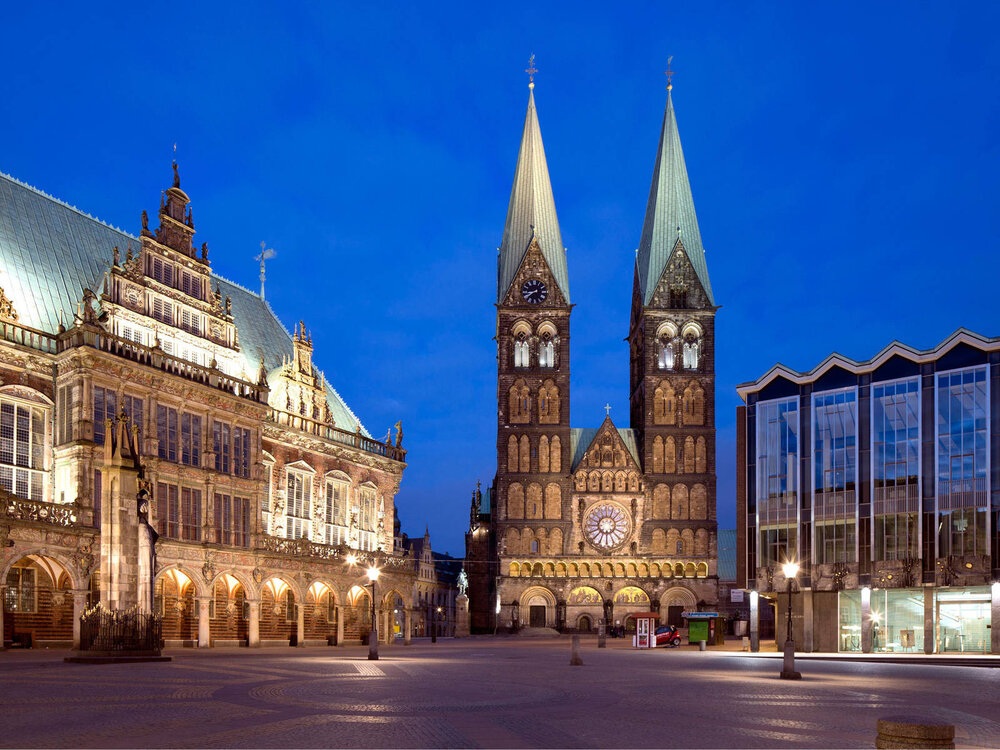
Rembert died on 3 February in 888 (or 862) but is commemorated also on the 4th of February, the day on which he was chosen Archbishop. Hewas buried on the outer wall of Bremen Cathedral next to St Willehad.
His life of St Ansgar is admired, both for the Author’s accuracy and piety and for the elegance and correctness of the composition. His letter to St Walburga, the first Abbess of Nienherse, is a vulnerable exhortation to humility and virginity.
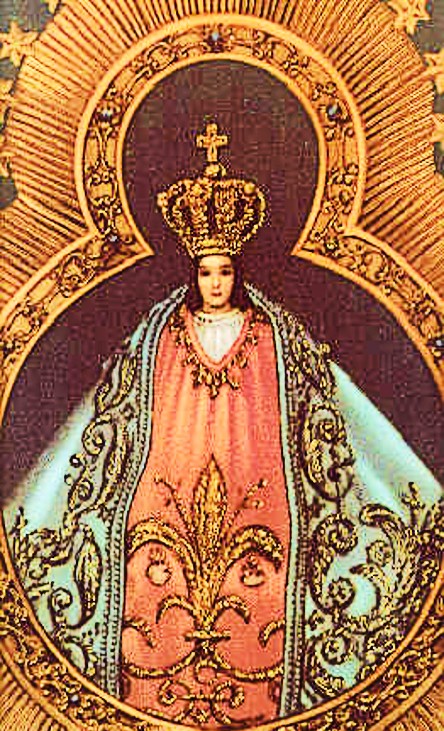
Nuestra Señora de Suyapa / Our Lady of Suyapa OR Virgen de Suyapa / The Virgin of Suyapa, Honduras (c1747) Patron of Honduras, Central America and The Orden de los Caballeros de Suyapa – 3 February:
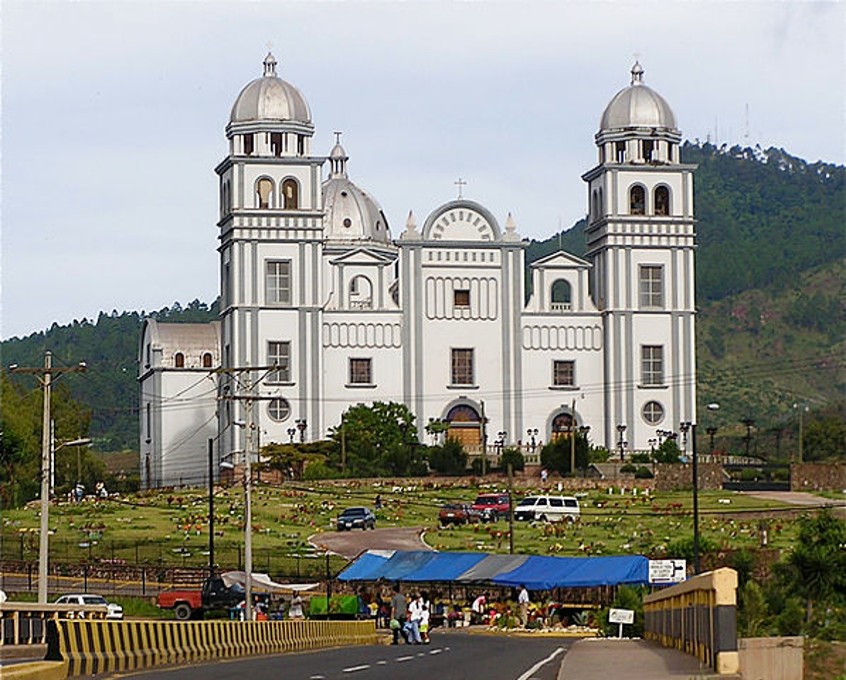
A title and image of the Blessed Virgin Mary popular in Honduras. The Statueis now enshrined in the Basilica of Suyapa, Tegucigalpa, Honduras. The sculptor and date of creation are unknown but the Statue was found by a farm worker on 3 February 1747. His family kept it as a focus for personal devotion. In 1768 a miraculous cure was attributed to Our Lady from this devotion. A Chapel was built for the Statue in 1777 to make public devotion possible.
The Statue was stolen in 1936 by a mentally ill woman who lived close by; it was located at her home and quickly returned. The quick end of the Football War in 1969 between Honduras and El Savador was attributed to the intercession of Mary following the outpouring of prayers to her under this title. The Staute was stolen again on 1 September 1986 – the thief stripped it of its gold, silver and jewels and then abandoned it in a restaurant men’s room in Tegucigalpa. It has since been restored to its former glory.
In 1925, Pope Pius XI declared her Patroness of Honduras under the title Our Lady of Suyapa and selected 3 February s her Feast day. In 1954, a large Basilica was built next to the Chapel. The Statue of the Virgin spends most of her time in the Chapel but every year before the celebration of her festival, the Statue is moved into the large Basilica to accommodate the crowds.
The Statue of the Virgin of Suyapa has a group of lay caretakers, all male, known as The Orden de los Caballeros de Suyapa (Order of the Knights of Suyapa). They care for the Statue and its Chapel and guard it full time when it is sent on pilgrimage around Honduras each February.
St Anna the Prophetess St Berlinda of Meerbeke St Blasius of Armentarius St Blasius of Oreto St Caellainn St Celerinus of Carthage St Clerina of Carthage St Deodatus of Lagny St Eutichio St Evantius of Vienne St Felix of Africa St Felix of Lyons St Hadelin of Chelle (Died c690) Priest, Monk, Hermit Bl Helinand of Pronleroy St Hippolytus of Africa St Ia of Cornwall St Ignatius of Africa Bl Iustus Takayama Ukon
Bl John Zakoly St Laurentinus of Carthage St Laurentius of Carthage St Lawrence the Illuminator ) Died 576) Bishop St Leonius of Poitiers St Liafdag St Lupicinus of Lyon St Margaret of England St Oliver of Ancona St Philip of Vienne St Remedius of Gap St Sempronius of Africa St Tigrides St Werburga of Bardney St Werburga of Chester
Benedictine Martyrs: A collective memorial of all members of the Benedictine Order who have died as Martyrs for the Faith.
St Anna the Prophetess St Berlinda of Meerbeke St Blasius of Armentarius St Blasius of Oreto St Caellainn St Celerinus of Carthage St Claudine Thevenet St Clerina of Carthage St Deodatus of Lagny St Eutichio St Evantius of Vienne St Felix of Africa St Felix of Lyons St Hadelin of Chelles Bl Helena Stollenwerk Bl Helinand of Pronleroy St Hippolytus of Africa St Ia of Cornwall St Ignatius of Africa Bl Iustus Takayama Ukon
Bl John Zakoly St Laurentinus of Carthage St Laurentius of Carthage St Lawrence the Illuminator St Liafdag St Lupicinus of Lyon St Margaret of England Bl Marie Rivier St Oliver of Ancona St Philip of Vienne St Remedius of Gap St Sempronius of Africa Blessed Stephen Bellesini OSA (1774-1840) Priest of the Hermits of St Augustine St Tigrides St Werburga of Bardney St Werburga of Chester
Benedictine Martyrs: A collective memorial of all members of the Benedictine Order who have died as Martyrs for the Faith.
Outside of Palestine one of the most famous sanctuaries of the Mother of God in the Levant, is a Convent of Orthodox nuns, – Dair as-Sagura, located within the walls of an ancient fortress on a hill near Damascus. It is thought to be the site where Abel, the murdered brother of Cain, is buried and, is also the site of one of the world’s most ancient Monasteries.
Saidnaya, (or Saydnaya or Sednaya), is a city located in a mountainous region of Syria about 17 miles north of Damascus. The word Saidnaya means “Our Lady” and refers to a famous icon of the Virgin Mother of God that is still kept in the main Church. The origin of the Shrine of Our Lady of Saideneida goes back to a time long before the separation of the Orthodox Church from Old Rome. In fact, there is a tradition, that associates the Shrine to at least the time of the Roman Emperor Justinian I (died 565). According to this tradition, the Roman Emperor Justininian I was leading his army through the desert in modern day Syria. His army was suffering greatly from a lack of water and was near despair, when the Emperor saw a beautiful gazelle in the distance. Justinian chased the animal, which came to a rocky knoll where there was a spring of fresh water. He was preparing to shoot the animal when it suddenly transformed into an icon of the Mother of God which shone with a heavenly light. A voice could be heard to say, “No, thou shalt not kill me, Justinian but thou shalt build a Church for me here on this hill.” The light then faded and the beautiful figure disappeared. The water from the spring saved his army and Justinian told his commanders what he had seen. He ordered them to draw up the plans for the Church Our Lady had requested. The architects complained of insurmountable problems and the Blessed Virgin appeared to the Emperor in a dream and gave him the plan for the Church and convent, of which she herself would be the protectress. The project was completed on the Feast of Our Lady’s nativity.
Mosaic depiction of Mary ordering Justinian not to kill her but to build a church on the rock in the background, after having first appeared to him as a gazelle. The scroll she holds reads: “No, thou shalt not kill me, Justinian but thou shalt build a Church for me, here, on this rock.”
Once constructed, the convent became so renowned that it was second only to Jerusalem as a site of pilgrimage. The icon, called Our Lady of Saideneida and attributed to St Luke, was said to have been brought to its home in the year 870 from Jerusalem. The holy Abbess of the convent, a woman named Marina, spoke to a Greek pilgrim named Theodore who had stopped at the convent for rest on his pilgrimage to the Holy Land. Since he was on his way to Jerusalem, the holy abbess Marina asked Theodore to purchase an icon of the Blessed Virgin in the Holy City and bring it back to the convent. The hermit, once in Jerusalem, forgot about the Abbess’s request and began making his way home, when he was stopped by a voice which asked, “Have you not forgotten something in Jerusalem? What have you done in regard to the commission from the Abbess Marina?” Theodore turned back and purchased a beautiful icon of the Theotokos that he knew would be acceptable to the Abbess. His journey back to the convent was fraught with difficulties, as he and his companions were set upon by bandits and suffered the attack of wild beasts. The hermit turned to the Blessed Virgin in all these dangers, invoking her intercession as he prayed before the icon. Despite all the attacks and violence, all those in the caravan were miraculously saved from every danger through the aid of the Mother of God.
The hermit Theodore, was convinced of the powerful aid of the icon and was tempted to keep it for himself. He decided to return home by another route to avoid the Abbess and Saideneida completely. He paid to take ship but the vessel encountered such a furious storm that they were forced to turn back rather than be lost. Repenting of his error, he returned to the road he had taken and made his way back to Saideneida. Once back at the convent, the days passed and he found that he did not want to part with the icon. He lied to the Abbess, telling her he had not purchased the icon she had requested and planned to depart from the convent in secret rather than face the disappointed abbess again. Moving in the darkness the following morning, the hermit made his way soundlessly to the gate so as to begin his trek back to his homeland. As he attempted to pass through the convent gate, however, there was an invisible power that would not allow him to pass. It was as if he were trying to walk through a wall of solid stone, though nothing could be seen that barred his way. When he realised that he would not be able to leave the convent, he turned back and faced the Abbess, admitting to her that he had lied and had intended to keep the icon for himself. With tears of gratitude, the Abbess Marina gave glory to God and His Holy Mother and the icon found its home. That same icon, known as the Shaghoura, meaning “the illustrious,” is kept in a pilgrimage Shrine that is separate from the rest of the chapel. It is hidden in an ornate niche with silver doors. Childless couples especially and pilgrims seeking miracles of cures, still come seeking the Blessed Virgin’s intercession. The Shrine was formerly well known in the West, where from about 1200 it was popularised by the stories of miracles and miraculous cures. A German chronicler, during the ages of the crusades, wrote of his pilgrimage to the convent and spoke of the special properties of a miraculous, holy oil that was emitted from the icon. It was believed, that the oil could cure the sick and Templar knights, especially, would go to the Shrine to obtain the holy oil for their Churches. Interestingly, not only Catholics but also Moslems go to the Shrine as pilgrims. It is remembered, that a sultan, in thanksgiving for a prayer answered through the icon, set a lamp to burn perpetually before the image of Our Lady. The Middle Ages were certainly a time of faith and there were many images of Our Lord, the Blessed Virgin and various Saints that were produced for the edification of the people. Inflamed with a true zeal for the faith and anxious to give glory to God, there were many Shrines all over Europe, many of which are now long forgotten in our age when the world struggles mightily to extinguish the Light of Christ.
Bl Alois Andritzki St Anatolius of Salins St Ansgar OSB (801-865) “Apostle of the North”, Bishop Biography: https://anastpaul.com/2019/02/03/saint-of-the-day-3-february-saint-ansgar-osb-801-865-apostle-of-the-north/ St Anna the Prophetess St Berlinda of Meerbeke St Blasius of Armentarius St Blasius of Oreto St Caellainn St Celerinus of Carthage St Claudine Thevenet St Clerina of Carthage St Deodatus of Lagny St Eutichio St Evantius of Vienne St Felix of Africa St Felix of Lyons St Hadelin of Chelles Bl Helena Stollenwerk Bl Helinand of Pronleroy St Hippolytus of Africa St Ia of Cornwall St Ignatius of Africa Bl Iustus Takayama Ukon Blessed John Nelson SJ (1535-1578) Priest Martyr Bl John Zakoly St Laurentinus of Carthage St Laurentius of Carthage St Lawrence the Illuminator St Liafdag St Lupicinus of Lyon St Margaret of England Bl Marie Rivier St Oliver of Ancona St Philip of Vienne St Remedius of Gap St Sempronius of Africa St Tigrides St Werburga of Bardney St Werburga of Chester — Benedictine Martyrs: A collective memorial of all members of the Benedictine Order who have died as martyrs for the faith.
Thought for the Day – 3 February – The Memorial of Saint Ansgar OSB (801-865)
The “Apostle of the North” had enough frustrations to become a saint—and he did.
History records what people do, rather than what they are. Yet the courage and perseverance of men and women like Ansgar can only come from a solid base of union with the original courageous and persevering Missionary.
Ansgar’s life is another reminder that God writes straight with crooked lines. Christ takes care of the effects of the apostolate in His own way, He is first concerned about the purity of the apostles themselves.
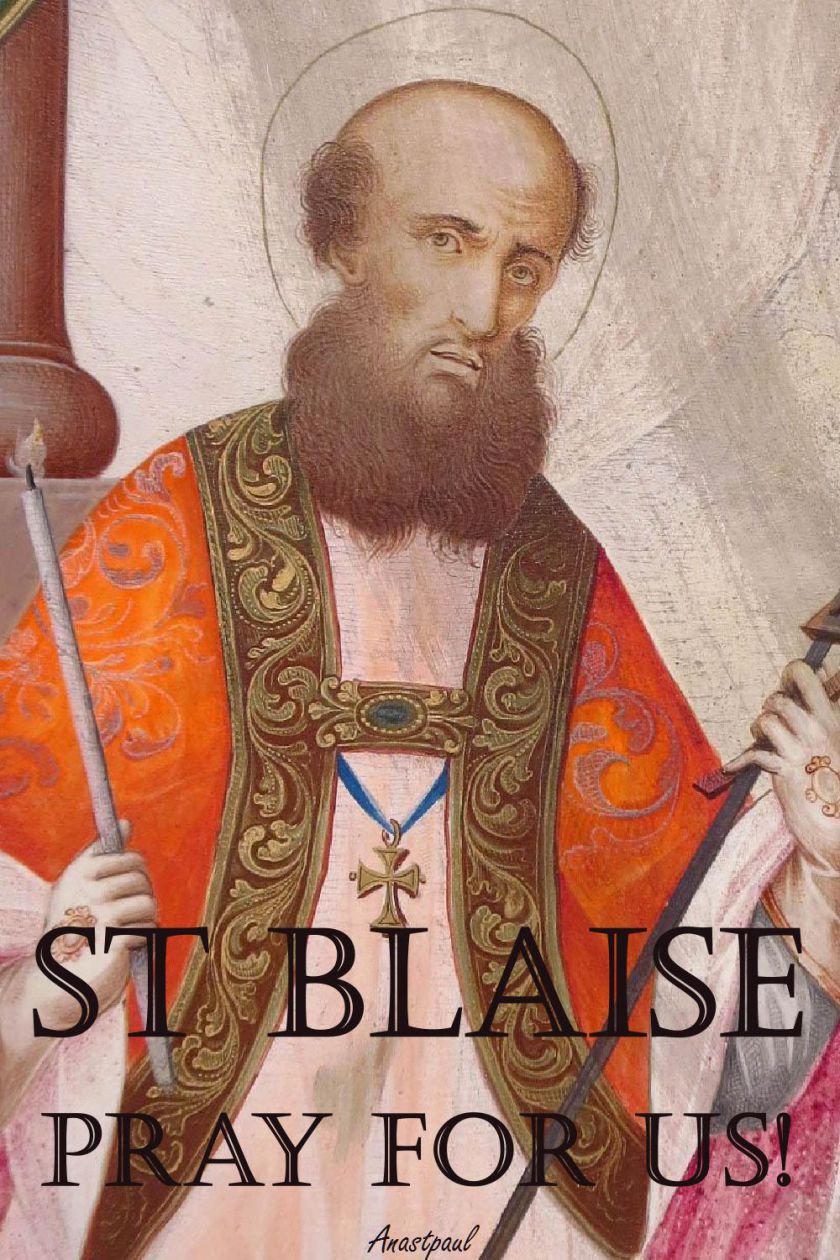
One Minute Reflection – 3 February – Fourth Sunday in Ordinary Time, Year C, Gospel: Luke 4:21–30 and The Memorial of St Blaise – Martyr (Died c 316) and St Ansgar (801-865)
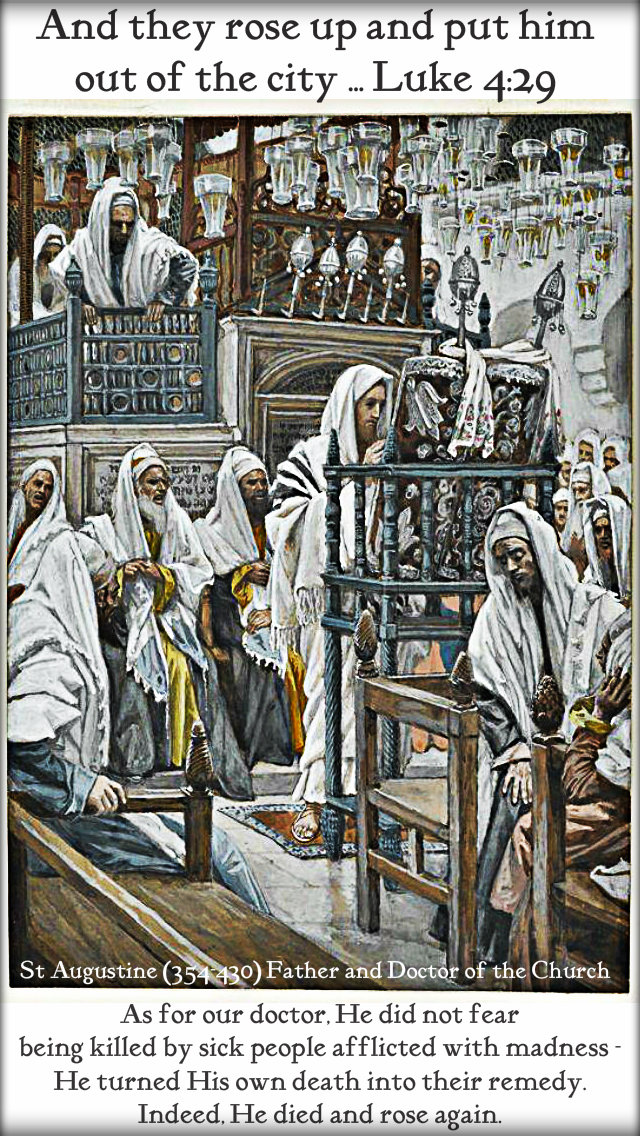
And they rose up and put him out of the city and led him to the brow of the hill on which their city was built, that they might throw him down headlong. But passing through the midst of them he went away….Luke 4:29-30
REFLECTION – “A doctor came amongst us to restore us to health – our Lord Jesus Christ. He discovered blindness in our hearts and promised the light that “eye has not seen and ear has not heard, and has not entered the heart of man” (1Cor 2:9).
The humility of Jesus Christ is the cure for your pride. Don’t scorn what will bring you healing, be humble, you for whom God humbled Himself. Indeed, He knew that the medicine of humility would cure you, He who well understood your sickness and knew how to cure it. While you were unable to run to the doctor’s house, the doctor in person came to your house… He is coming, He wants to help you, He knows what you need.
God has come with humility precisely in order that man might imitate Him. If He had remained above you, how would you have been able to imitate Him? And, without imitating Him, how could you be healed? He came with humility because He knew the nature of the remedy He had to administer – a little bitter, it is true but healing. And do you continue to scorn Him? He who holds out the cup to you and you say: “But what sort of God is this God of mine? He was born, suffered, was covered with spittle, crowned with thorns, nailed on the cross!” O miserable soul! You see the doctor’s humility and not the cancer of your pride. That is why humility displeases you…
It often happens that mentally ill people end up by beating their doctor. When that happens, the unfortunate doctor is not only not distressed by the one who beat him but attempts to treat him… As for our doctor, He did not fear being killed by sick people afflicted with madness, He turned His own death into their remedy. Indeed, He died and rose again.”…St Augustine (354-430) Father and Doctor of the Church
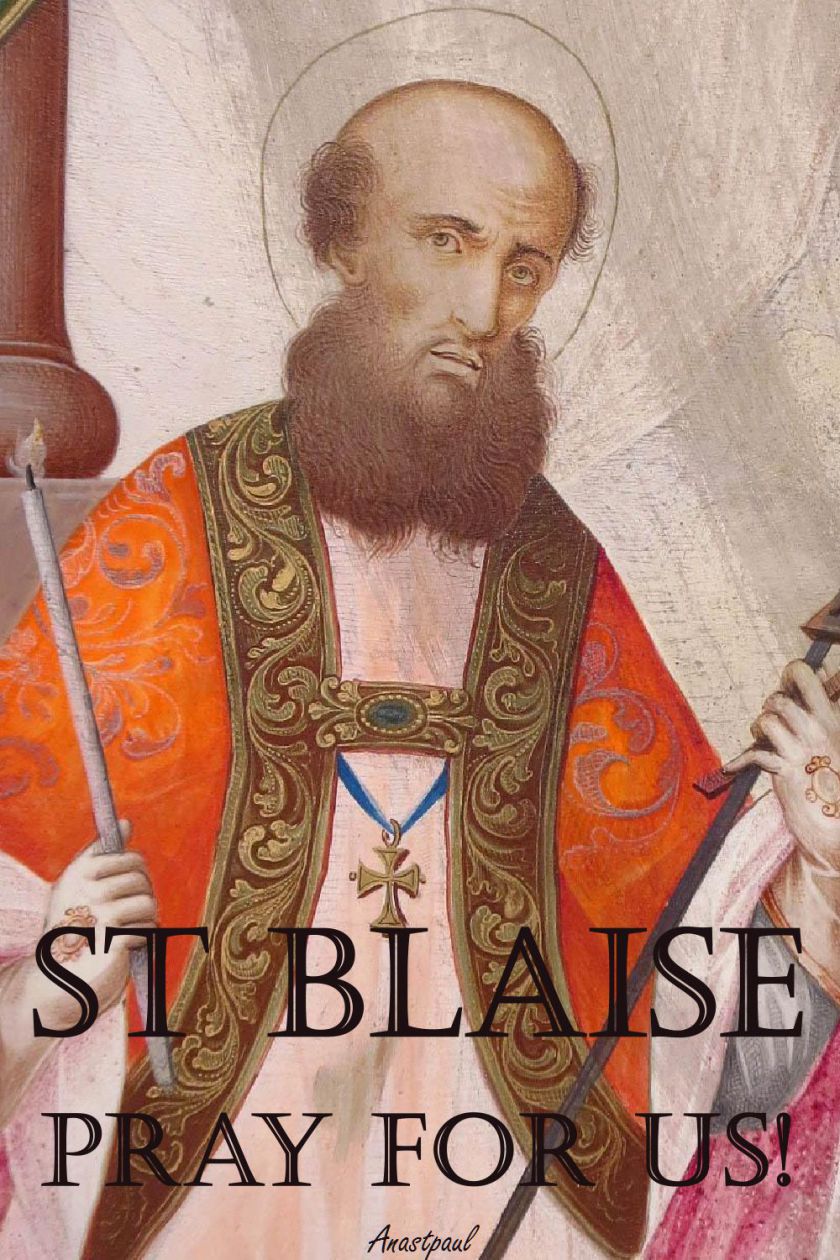
PRAYER – Lord our God, make us love You above all things and all our fellow-men, with a love that is worthy of You. May we look to Your Divine Son in love and imitation. Holy Father, You sent St Ansgar, Monk and Bishop, to bring the light of Christ to many nations of Northern Europe. Through his prayer give us grace to live always in the light of Your truth. Grant too, that by the prayers of St Blaise, we too may be granted the grace to follow Your only Son, no matter our sufferings, to You, in our heavenly home. We make our prayer, through Christ our Lord, in the unity of the Holy Spirit, one God, forever amen.
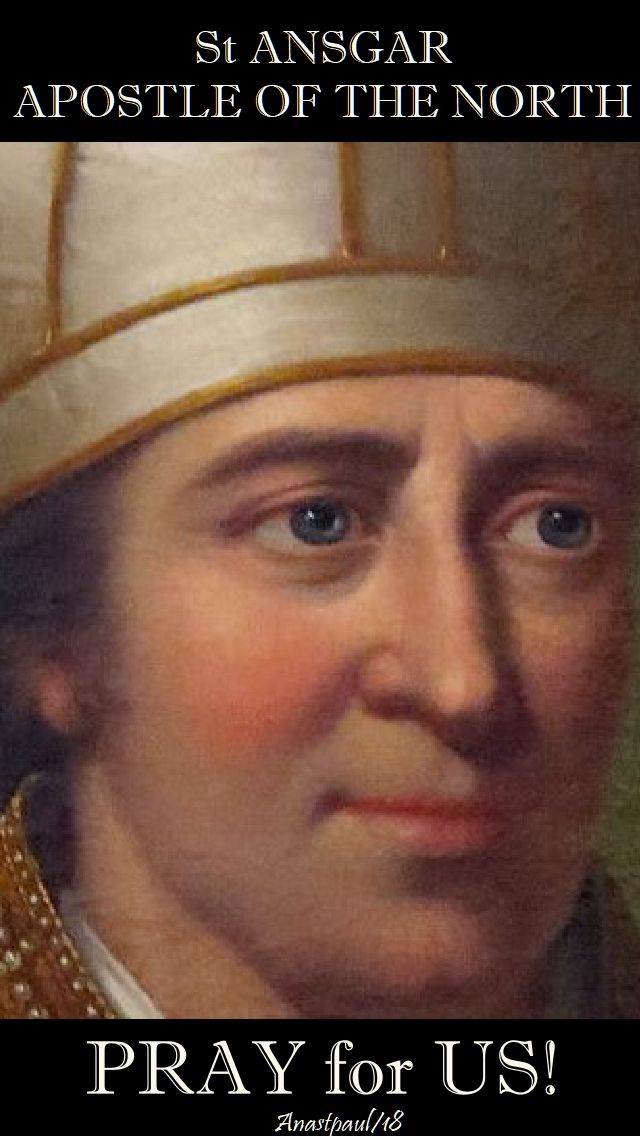
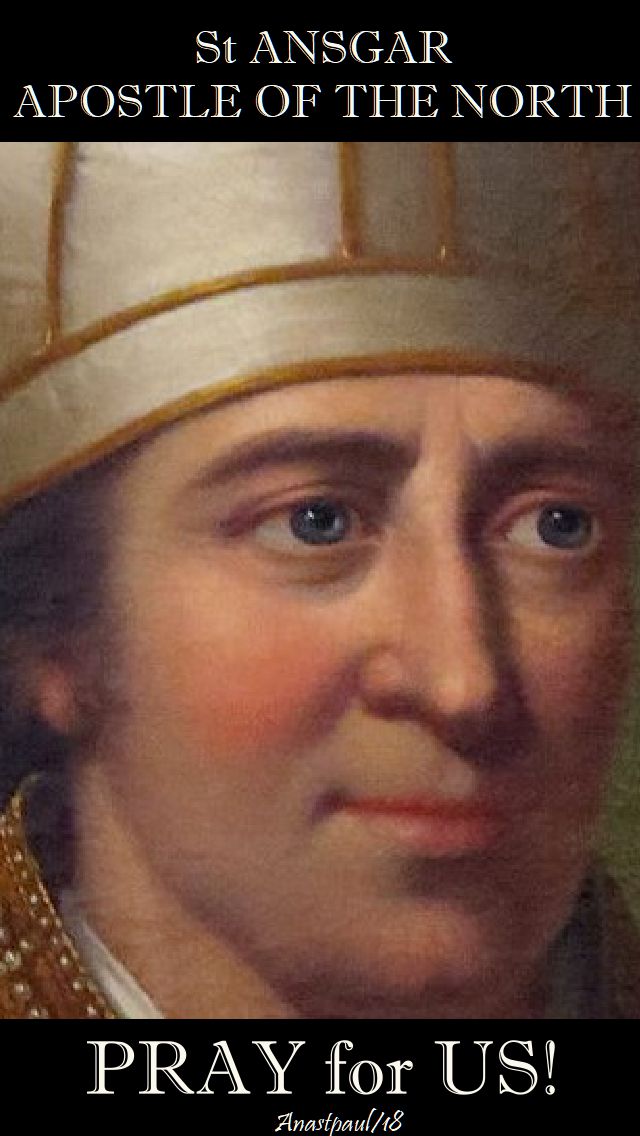
Saint of the Day – 3 February – Saint Ansgar OSB (801-865) “Apostle of the North”, Bishop, Monk, Mystic, Missionary, Preacher, Miracle-worker, Apostle of Charity Ascetic. Patronages – Denmark, Scandinavia, Sweden, Bremen, Germany, diocese of Hamburg, Germany, archdiocese of. He is also known as Anskar or Anschar. St Ansgarwas the Archbishop of Hamburg-Bremen – a northern part of the Kingdom of the East Franks. The See of Hamburg was designated a mission to bring Christianity to Northern Europe and Ansgar became known as the “Apostle of the North”. He was born in 801 at Amiens, Picardy, France and died on 3 February 865 at Bremen, Germany.
Ansgar was the son of a noble Frankish family, born near Amiens. After his mother’s early death, Ansgar was brought up in Corbie Abbey and was educated at the Benedictine monastery in Picardy. According to the Vita Ansgarii – The Life of Ansgar, when the little boy learned in a vision that his mother was in the company of the Blessed Virgin Mary, his careless attitude toward spiritual matters changed to seriousness. His pupil, successor and eventual biographer St Rimbert (830–888) considered the visions, of which this was the first, to be the main motivation of the saint’s life.
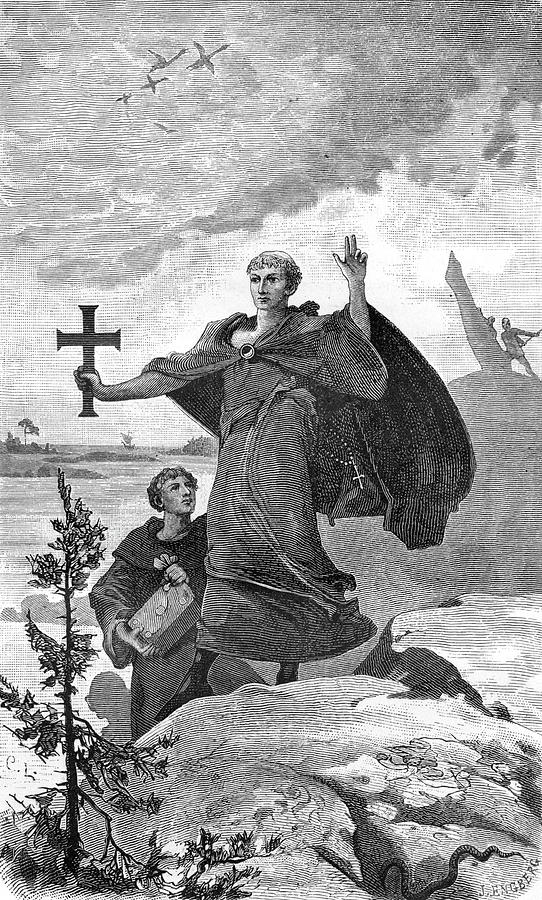
Ansgar was a product of the phase of Christianisation of Saxony (present day Northern Germany) begun by Charlemagne and continued by his son and successor, Louis the Pious. A group of monks including Ansgar were sent back to Jutland with the baptised exiled king Harald Klak. Ansgar returned two years later and was one of a number of missionaries sent to found the abbey of Corvey in Westphalia and there became a teacher and preacher. Then in 829 in response to a request from the Swedish king Björn at Hauge for a mission to the Swedes, Louis the Pious appointed Ansgar missionary. With an assistant, the friar Witmar, he preached and made converts for six months at Birka, on Lake Mälaren. They organised a small congregation there with the king’s steward, Hergeir and Mor Frideborg as its most prominent members. In 831 he returned to Louis’ court at Worms and was appointed to the Archbishopric of Hamburg. This was a new archbishopric with a see formed from those of Bremen and Verden, plus the right to send missions into all the northern lands and to consecrate bishops for them. He was given the mission of evangelising Denmark, Norway and Sweden. The King of Sweden decided to cast lots as to whether the Christian missionaries should be admitted into his kingdom. Ansgar recommended the issue to the care of God, and the lot was favourable.
Ansgar was consecrated in November 831 and, the arrangements having been at once approved by Pope Gregory IV, he went to Rome to receive the pallium directly from the hands of the pope and to be named legate for the northern lands. This commission had previously been bestowed upon Ebbo, Archbishop of Reims but the jurisdiction was divided by agreement, with Ebbo retaining Sweden for himself. For a time Ansgar devoted himself to the needs of his own diocese, which was still missionary territory with but a few churches. He founded a monastery and a school in Hamburg.
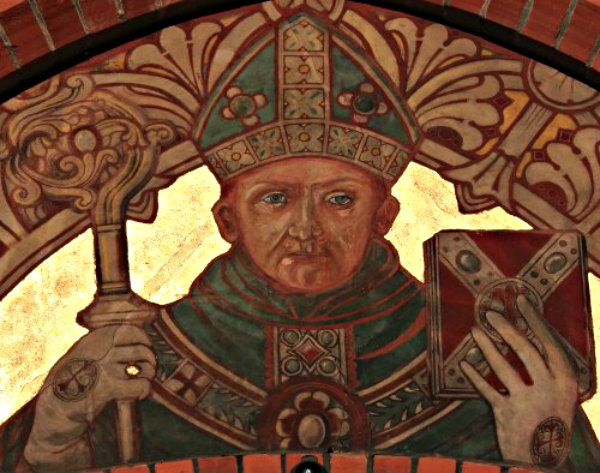
A depiction of Saint Ansgar from the Church Trinitatis, in Hamburg, Germany
After Louis died in 840, his empire was divided and Ansgar lost the abbey of Turholt, which had been given as an endowment for his work. Then in 845, the Danes unexpectedly raided Hamburg, destroying all the church’s treasures and books and leaving the entire diocese beyond repair. Ansgar now had neither see, nor revenue. Many of his helpers deserted him but the new king, Louis the German, came to his aid. After failing to recover Turholt for him, in 847 he awarded him the vacant diocese of Bremen, where he took up residence in 848. However, since Hamburg had been an archbishopric, the sees of Bremen and Hamburg were combined for him. This presented canonical difficulties and also aroused the anger of the Bishop of Cologne, to whom Bremen had been suffragan but after prolonged negotiations, Pope Nicholas I approved the union of the two dioceses in 864.
Through all this political turmoil, Ansgar continued his mission to the northern lands. The Danish civil war compelled him to establish good relations with two kings, Horik the Elder and his son, Horik II. Both assisted him until his death. He was able to secure recognition of Christianity as a tolerated religion and permission to build a church in Sleswick. He did not forget the Swedish mission and spent two years there in person (848–850), at the critical moment when a pagan reaction was threatened, which he succeeded in averting. In 854, Ansgar returned to Sweden when king Olof ruled in Birka. According to Rimbert, he was well disposed to Christianity.
Ansgar wore a rough hair shirt, lived on bread and water and showed great charity to the poor. Being the first missionary in Sweden and the organiser of the hierarchy in the Nordic countries, he was declared Patron of Scandinavia. Ansgar was buried in Bremen in 865.
His life story was written by his successor as archbishop, Rimbert, in The Life of Ansgar – Vita Ansgarii.
His Relics are located in Hamburg on two places – St. Mary’s Cathedral and St Ansgar’s and St Bernard’s Church.
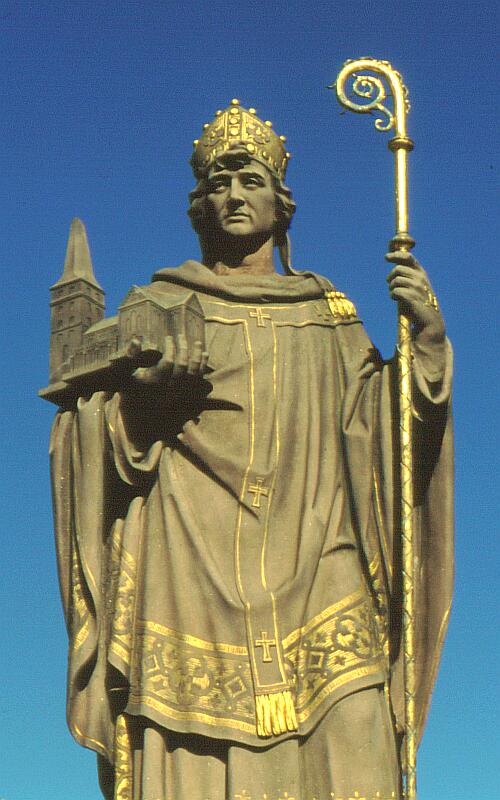
St Ansgar Statue in Hamburg
The Life of Ansgar aims above all to demonstrate Ansgar’s sanctity. It is speaks of St Ansgar’s visions, which, encouraged and assisted Ansgar’s remarkable missionary feats.
Through the course of this work, St Ansgar repeatedly embarked on a new stage in his career following a vision. His studies and ensuing devotion to the ascetic life of a monk were inspired by a vision of his mother in the presence of the Blessed Virgin Mary. When the Swedish people were left without a priest for some time, he begged King Horik to help him with this problem. St Ansgar was convinced he was commanded by heaven to undertake this mission and was influenced by a vision he received when he was concerned about the journey, in which he met a man who reassured him of his purpose and informed him of a prophet that he would meet, the Abbot Adalard, who would instruct him in what was to happen. In the vision, he searched for and found Adalard, who commanded, “Islands, listen to me, pay attention, remotest peoples”, which Ansgar interpreted as God’s will that he go to the Scandinavian countries as “most of that country consisted of islands and also, when ‘I will make you the light of the nations so that my salvation may reach to the ends of the earth’ was added, since the end of the world in the north was in Swedish territory”. Saint Adalard of Corbie (c 751-827), was the cousin of Charlemagne.
There are Statues dedicated to him in Hamburg, Copenhagen, Ribe as well as a stone cross at Birka. A crater on the Moon, Ansgarius, has been named for him.
Thought for the Day – 3 February – The Memorial of St Ansgar (801-865)
The “apostle of the north” (Scandinavia) had enough frustrations to become a saint—and he did. He became a Benedictine at Corbie, France, where he had been educated. Three years later, when the king of Denmark became a convert, Ansgar went to that country for three years of missionary work, without noticeable success. Sweden asked for Christian missionaries and he went there, suffering capture by pirates and other hardships on the way. Fewer than two years later, he was recalled, to become abbot of New Corbie (Corvey) and bishop of Hamburg. The pope made him legate for the Scandinavian missions. Funds for the northern apostolate stopped with Emperor Louis’s death. After 13 years’ work in Hamburg, Ansgar saw it burned to the ground by invading Northmen – Sweden and Denmark returned to paganism.
He directed new apostolic activities in the North, travelling to Denmark and being instrumental in the conversion of another king. By the strange device of casting lots, the king of Sweden allowed the Christian missionaries to return.
Ansgar’s biographers remark that he was an extraordinary preacher, a humble and ascetical priest. He was devoted to the poor and the sick, imitating the Lord in washing their feet and waiting on them at table. He died peacefully at Bremen, Germany, without achieving his wish to be a martyr.
History records what people do, rather than what they are. Yet the courage and perseverance of men and women like Ansgar can only come from a solid base of union with the original courageous and persevering Missionary. Ansgar’s life is another reminder that God writes straight with crooked lines. Christ takes care of the effects of the apostolate in His own way, He is first concerned about the purity of the apostles themselves and thus, through them, we learn the way of zeal, courage and a true missionary spirit, the way we are all called to live.
One Minute Reflection – 3 February – The Memorial of St Blaise – Martyr (Died c 316) and St Ansgar (801-865)
...Do not use your freedom as an opening for self-indulgence but be servants to one another in love….the fruit of the Spirit is love, joy, peace, patience, kindness, goodness, trustfulness, gentleness and self-control; no law can touch such things as these…Galatians 5:13,22-23
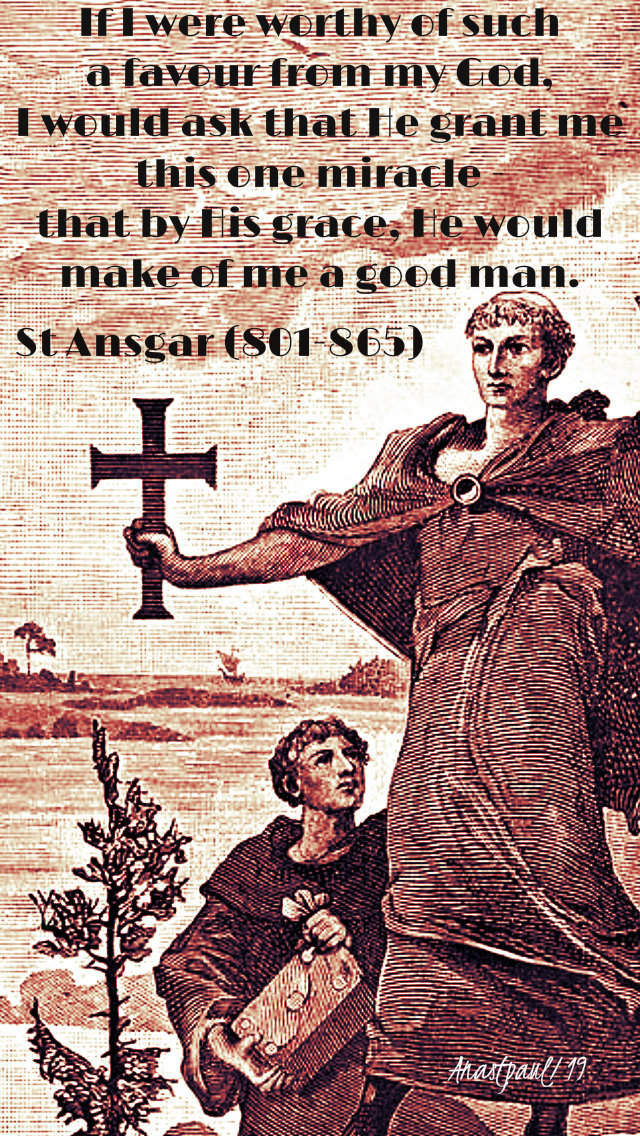
REFLECTION – “If I were worthy of such a favour from my God, I would ask that He grant me this one miracle: that by His grace He would make of me a good man.”- St Ansgar to a parishioner who was praising him for being a miracle worker
PRAYER – Holy Father, You sent St Ansgar, Monk and Bishop, to bring the light of Christ to many nations of Northern Europe. Through his prayer give us grace to live always in the light of Your truth. Grant too, that by the prayers of St Blaise, we too may be granted the grace to follow Your only Son, no matter our sufferings, to You, in our heavenly home. We make our prayer, through Christ our Lord, in the unity of the Holy Spirit, one God, forever amen.










 AnaStpaul
You must be logged in to post a comment.