St Aurelius St Cadwallader St Cummian Fada St Cunibert of Cologne (Died c 663) Archbishop of Cologne St Emilian Cucullatus St Evodius of Le Puy St Hesychius of Vienne Bl John Cini della Pace
St Livinus of Alost St Machar of Aberdeen St Namphasius St Nilus the Elder St Paternus of Sens St Publius St Renatus of Angers St Rufus of Avignon St Ymar of Reculver
Five Polish Brothers – Martyrs: They weren’t Polish and they weren’t related but were instead five Italian Benedictine Monks who worked with Saint Adalbert of Prague as missionaries to the Slavs and were Martyred together. They were – Benedict, Christinus, Isaac, John and Matthew. Born in Italy. They were Martyred in 1005 at the Benedictine Monastery near Gnesen, Poland and Canonised by Pope Julius II.
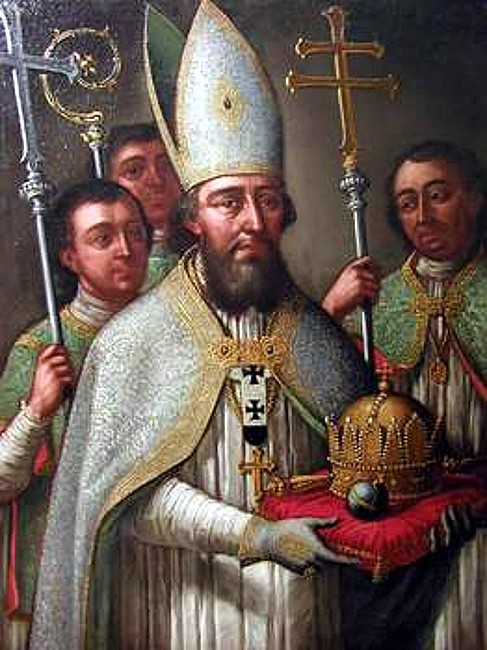
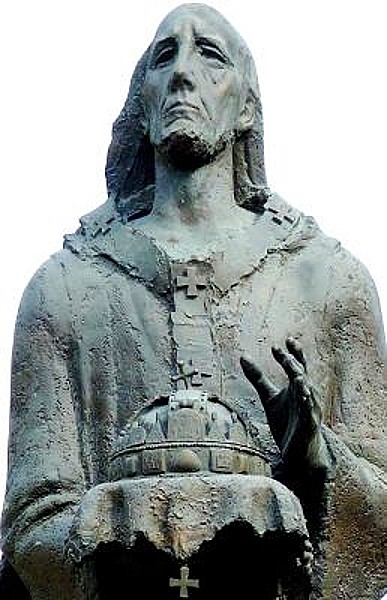
Saint of the Day – 12 November – Saint Astricus of Esztergom (Died c 1035) Archbishop of Esztergom, the first Archbishop of the Hungarian Church, Confessor, Monk, Abbot, Missionary, Born in Bohemia as Radla and died in c 1035 of natural causes. Patronage – Hungary. Also known as – Astricus of Ungarn, Anastasius XIX, Astericus Anastasius, Astrik of Pannonhalma, Ascrick, Astericus, Astrik-Anastaz, Radla.
Radla was a Czech or Croat from Bohemia, who was a Monk in Hungary. He probably received the habit at Brevnov, taking the name of Anastasius, of which Astricus is the equivalent. Astricus accompanied Saint Adalbert in the latter’s missionary work to the Bohemians and became the first Abbot of Břevnov Monastery. When Adalbert failed to consolidate his position in Bohemia and left Prague, Astricus went to the Kingdom of Hungary to help the missionaries among the Magyars.
He first served the wife of Duke Géza. In 997 Astricus became the first Abbot of the Benedictine Abbey of St Martin’s, the first ecclesiastical institution in Hungary, founded by Duke Géza. He then served Géza’s son, who was the great Saint Stephen I of Hungary and became the first Archbishop of the Hungarian Church.
Astricus served as Stephen’s Ambassador to Pope Sylvester II and negotiated the recognition of the new Kingdom of Hungary The Pope recognised Stephen as King of the Hungarians. Soon after Astricus’ return bringing the Crown with hin, Stephen was crowned by him, with the royal crown sent by Pope Sylvester, granted no doubt at the instance of the Emperor Otto III, in 1001. Astricus fulfilled the role of the Advisor to St Stephen on matters of spirit and of state until Stephen‘s death. He outlived the King and Saint by two years and spent those last days as a prayerful Monk.
The Assumption Cathedral of Kalocsa was extensively restored between 1907 and 1912. Under the Sanctuary, a red marble archiepiscopal tomb was excavated in 1910 in the place of the original 11th-century Cathedral. In addition to the intact skeleton, a gilded silver-headed crosier, a silver chalice, paten, golden rings, crosses, pallium with three jeweled gold pins and textile remnants were found. After many investigations these relics were confirmed as belonging to our Saint Astricus.
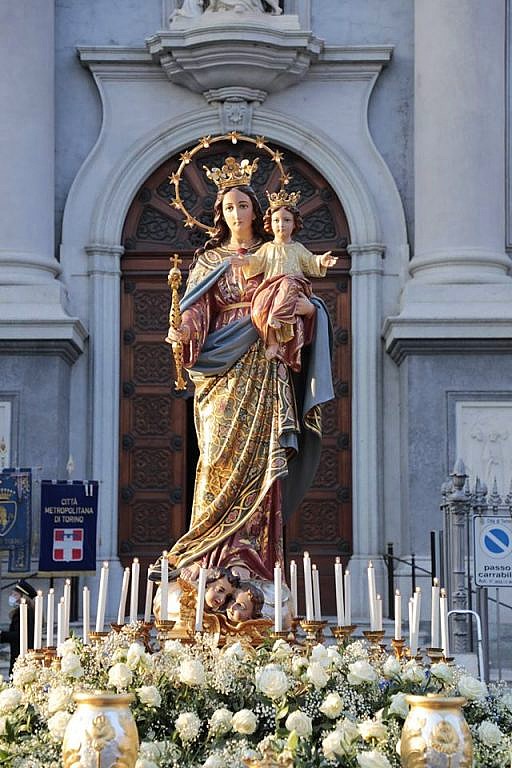
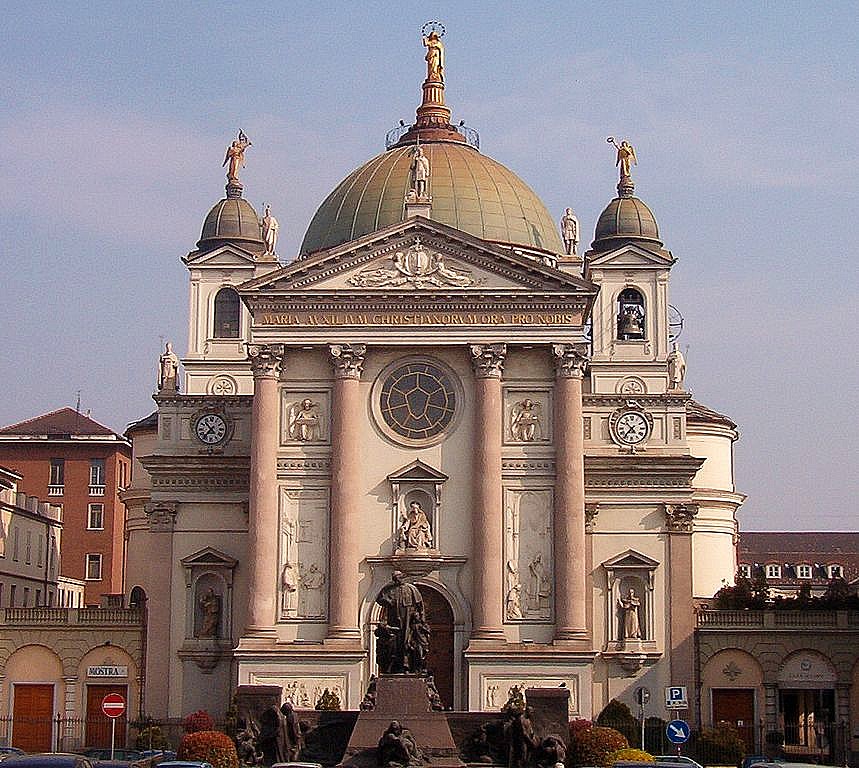
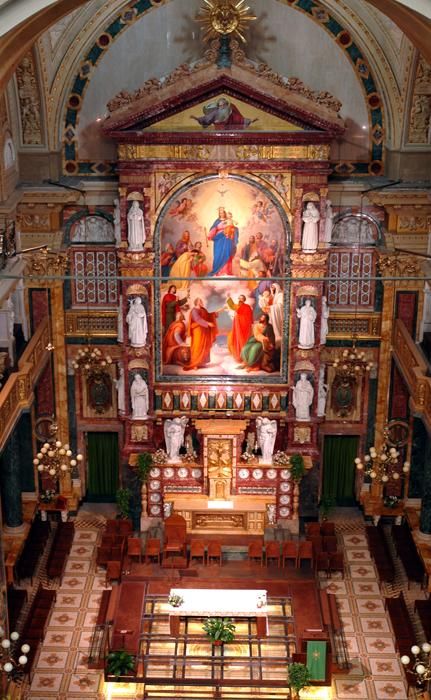
Maria Ausiliatrice a Valdocco / Our Lady of the Tower Secret, Turin, Italy (1863) – 12 November:
Our Lady of the Tower, at Fribourg, built on the lands of the heretics, on the very spot where an image of Our Lady had been found.
Don John Bosco, the amiable saint of the nineteenth century built a major Shrine to Our Lady Help of Christians, tying it in with the past and with the future. The Church was begun in 1863 with the sum of 8 cents. Don Bosco never revealed all that Our Lady had told him, in the several visions that preceded this but he did reveal that she asked him to build a great Shrine and that it would be a source of grace to all who came there to pray. He simply got permission, hunted up an architect who was willing, in the coldly realistic nineteenth century, to begin a Church on 8 cents and said, when the work was finished, that he had been paid every cent owing to him but, that he had been confronted in the beginning, by a man who many people said was completely mad. The architect must have had real faith, even to listen to Don Bosco. Like everything else accomplished by the great Saint of Turin, the building was beset with difficulties. No-one could understand why he insisted on naming it for Our Lady; even his own fellow priests. The money to pay for the project did not come in by the thousands, or even by the hundreds but by the penny. Every stone in the building, every bit of decorations, was a gift of love, and sacrifice from some grateful person who had benefitted from Our Lady’s help. The completed building is a testimonial of miracles and a Shrine of beauty, fit to stand with the world’s finest.
The curious thing about Don Bosco’s Shrine to Our Lady, and the one that should cause us thought, is the story of the right-hand tower. There is a large central dome, and on each side of it, a smaller one. On top of left-hand one is an angel holding a banner. The right-hand dome is built in the same way but its decoration is an angel offering a crown to Our Lady. One who saw the original sketches of the Church, drawn out in Don Bosco’s own hand, saw on the right-hand tower, a date 19.., indicating that at some time, in this warring century, there would be a victory over evil to correspond with Lepanto. Our Lady often tells her secrets to the saints and apparently Don Bosco knew the name and the place and thought it better not to reveal what he knew. Our Lady of the Tower Secret would take care of it in time and the left-hand angel bearing a banner labelled LEPANTO would have a counterpart, if mankind proves worthy. Don Bosco’s Church with Our Lady of the Tower was raised to the rank of a Basilica by Pope Pius X, Saint Pope Pius X.
St Arsatius St Astricus of Esztergom (Died c 1035) Bishop St Aurelius St Cadwallader St Cummian Fada St Cunibert of Cologne St Emilian Cucullatus St Evodius of Le Puy St Hesychius of Vienne Bl John Cini della Pace Bl José Medes Ferrís
St Namphasius St Nilus the Elder St Paternus of Sens St Publius St Renatus of Angers St Rufus of Avignon Bl Ursula Medes Ferris St Ymar of Reculver — Five Polish Brothers – martyrs: They weren’t Polish and they weren’t related but were instead five Italian Benedictine monks who worked with Saint Adalbert of Prague as missionaries to the Slavs and were martyred together. They were – Benedict, Christinus, Isaac, John and Matthew. Born in Italy. They were martyred in 1005 at the Benedictine monastery near Gnesen, Poland and Canonised by Pope Julius II.


 AnaStpaul
You must be logged in to post a comment.