Quote/s of the Day – 3 January – The Feast of the Most Holy Name of Jesus
“The sweet Name of Jesus produces in us holy thoughts, fills the soul with noble sentiments, strengthens virtue, begets good works and nourishes pure affection. All spiritual food leaves the soul dry, if it contain not, that penetrating oil, the Name Jesus.”
St Bernard of Clairvaux (1090 – 1153) Doctor of the Church
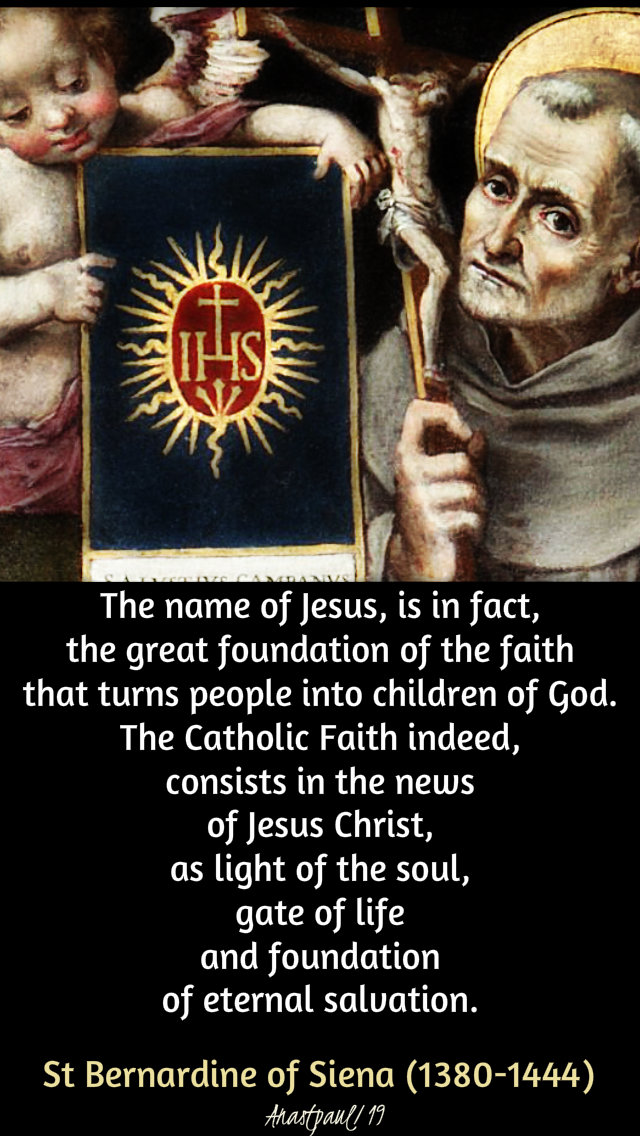
“The name of Jesus, is in fact, the great foundation of the faith that turns people into children of God. The Catholic Faith indeed, consists in the news of Jesus Christ, as light of the soul, gate of life and foundation of eternal salvation.”
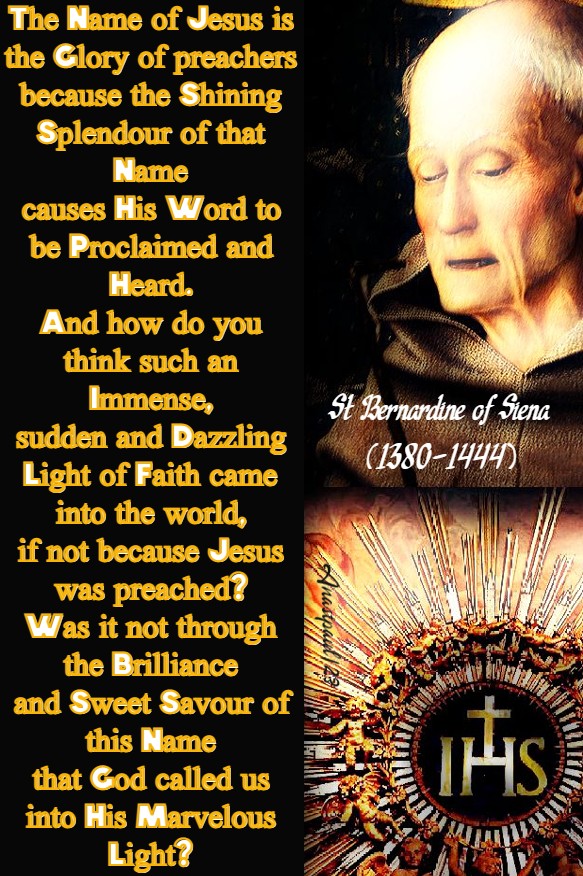
“The Name of Jesus is the glory of preachers because the shining splendour of that Name causes His word to be proclaimed and heard. And how do you think such an immense, sudden and dazzling light of faith came into the world, if not because Jesus was preached? Was it not through the brilliance and sweet savour of this Name that God called us into His marvelous light?”
St Bernardine of Siena (1380-1444)
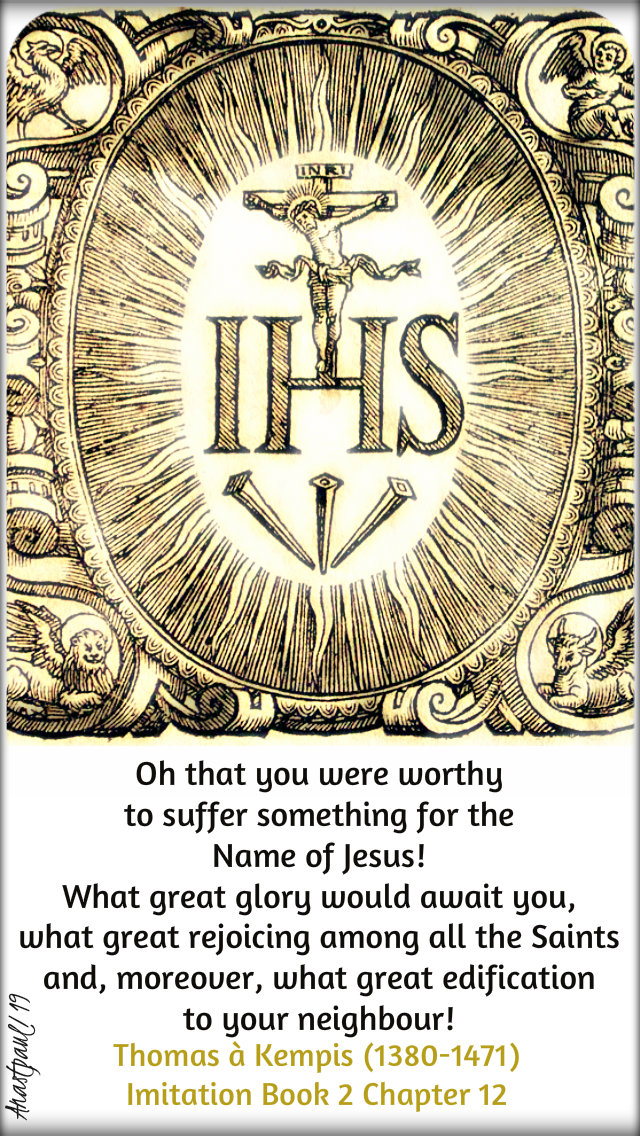
“Oh that you were worthy to suffer something for the Name of Jesus! What great glory would await you, what great rejoicing among all the Saints and, moreover, what great edification to your neighbour!”
Thomas à Kempis (1380-1471)
(Imitation Book 2- Chapter 12)
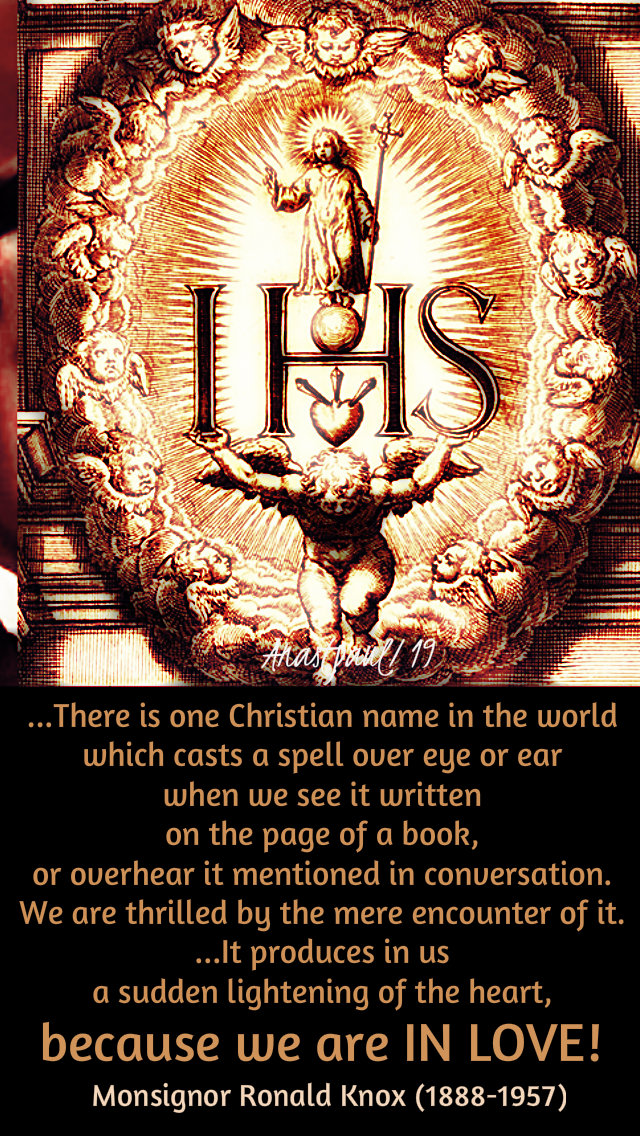
…There is one Christian name in the world which casts a spell over eye or ear when we see it written on the page of a book, or overhear it mentioned in conversation. We are thrilled by the mere encounter of it. …It produces in us a sudden lightening of the heart, because we are in love!”
Our Morning Offering – 3 January – The Feast of the Most Holy Name of Jesus
Jesu, Dulcis Memoria is a celebrated 12th century hymn by St Bernard of Clairvaux (1090-1153), Doctor Mellifluous. The entire hymn has some 42 to 53 stanzas depending upon the manuscript. Parts of this hymn are used for the Feast of the Holy Name of Jesus.
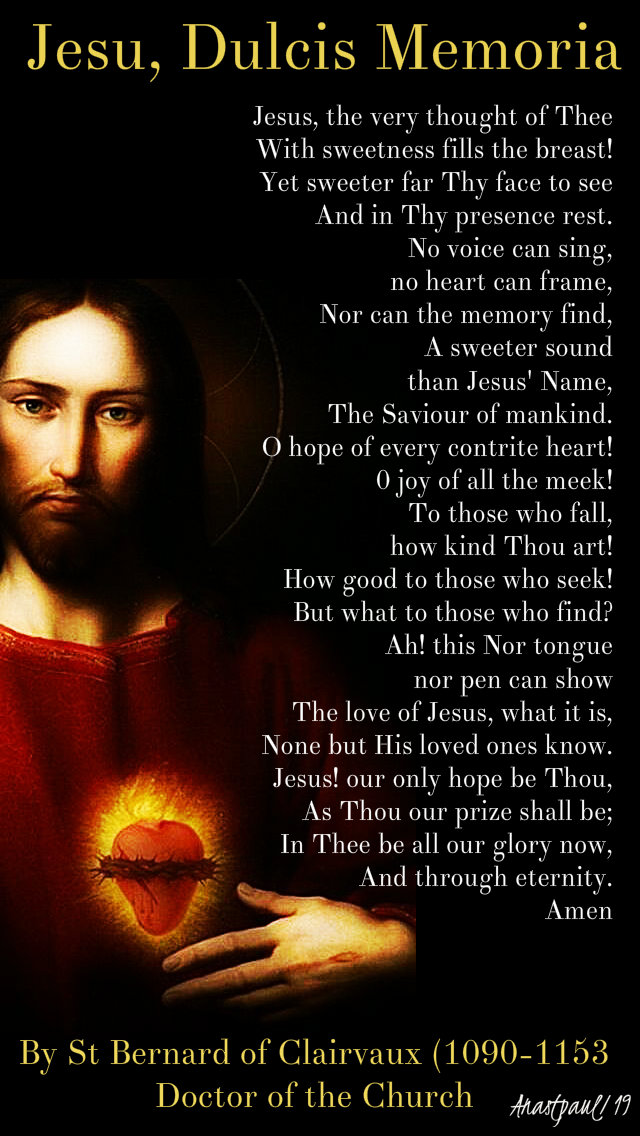
Hymn or Prayer Jesu, Dulcis Memoria By St Bernard of Clairvaux (1090-1153)
Jesus, the very thought of Thee
With sweetness fills the breast!
Yet sweeter far Thy face to see
And in Thy presence rest.
No voice can sing,
no heart can frame,
Nor can the memory find,
A sweeter sound than Jesus’ Name,
The Saviour of mankind.
O hope of every contrite heart!
0 joy of all the meek!
To those who fall, how kind Thou art!
How good to those who seek!
But what to those who find?
Ah! this Nor tongue nor pen can show
The love of Jesus, what it is,
None but His loved ones know.
Jesus! our only hope be Thou,
As Thou our prize shall be;
In Thee be all our glory now,
And through eternity.
Amen
Thought for the Day – 20 December – “And behold, you will conceive in your womb and bear a son and you shall call his name Jesus.” – Today’s Gospel Luke 1:26-38
Saint Bernard of Clairvaux (1090-1153) Abbot and Doctor of the Church
An excerpt from Homily 4
” In the sixth month, the angel Gabriel was sent from God to a city of Galilee named Nazareth, to a virgin betrothed to a man whose name was Joseph, of the house of David; and the virgin’s name was Mary. And he came to her and said, “Hail, full of grace, the Lord is with you!” But she was greatly troubled at the saying and considered in her mind what sort of greeting this might be. And the angel said to her, “Do not be afraid, Mary, for you have found favour with God. And behold, you will conceive in your womb and bear a son, and you shall call his name Jesus.”…Luke1:26-31
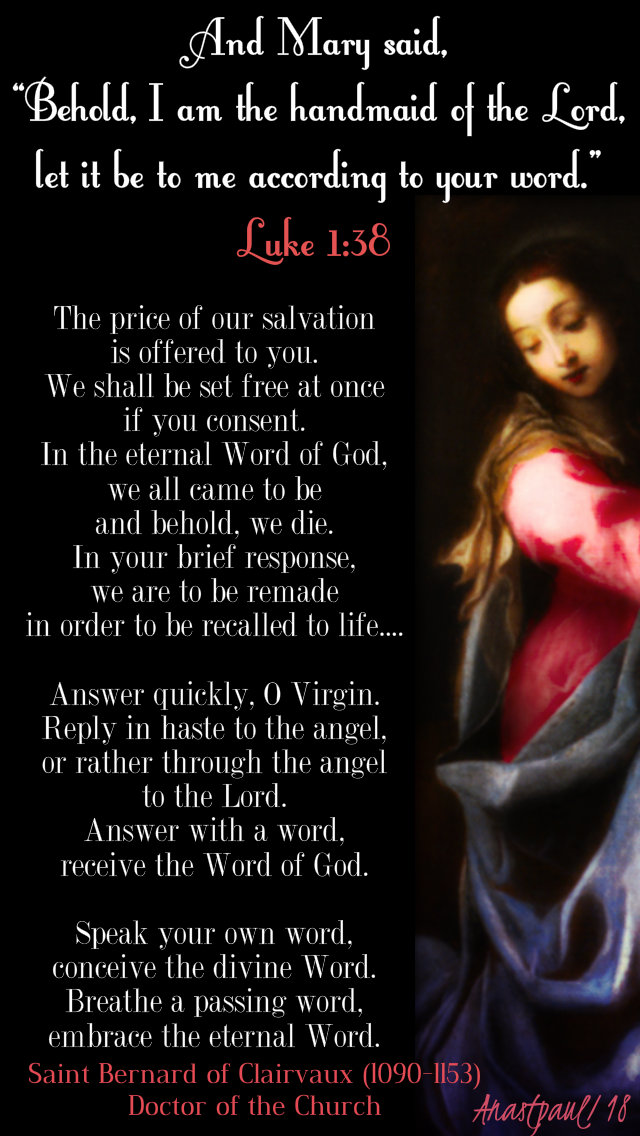
You have heard, O Virgin, that you will conceive and bear a son – you have heard that it will not be by man but by the Holy Spirit. The angel awaits an answer – it is time for him to return to God who sent him. We too are waiting, O Lady, for your word of compassion, the sentence of condemnation weighs heavily upon us.
The price of our salvation is offered to you. We shall be set free at once if you consent. In the eternal Word of God we all came to be and behold, we die. In your brief response we are to be remade in order to be recalled to life.
Tearful Adam with his sorrowing family begs this of you, O loving Virgin, in their exile from Paradise. Abraham begs it, David begs it. All the other holy patriarchs, your ancestors, ask it of you, as they dwell in the country of the shadow of death. This is what the whole earth waits for, prostrate at your feet. It is right in doing so, for on your word depends comfort for the wretched, ransom for the captive, freedom for the condemned, indeed, salvation for all the sons of Adam, the whole of your race.
Answer quickly, O Virgin. Reply in haste to the angel, or rather through the angel to the Lord. Answer with a word, receive the Word of God. Speak your own word, conceive the divine Word. Breathe a passing word, embrace the eternal Word.
Why do you delay, why are you afraid? Believe, give praise and receive. Let humility be bold, let modesty be confident. This is no time for virginal simplicity to forget prudence. In this matter alone, O prudent Virgin, do not fear to be presumptuous. Though modest silence is pleasing, dutiful speech is now more necessary. Open your heart to faith, O blessed Virgin, your lips to praise, your womb to the Creator. See, the desired of all nations is at your door, knocking to enter. If He should pass by because of your delay, in sorrow, you would begin to seek Him afresh, the One whom your soul loves. Arise, hasten, open. Arise in faith, hasten in devotion, open in praise and thanksgiving.
Behold the handmaid of the Lord, she says, be it done to me according to your word.
Thought for the Day – 15 December – Saturday of the Second week of Advent
The Word of the Lord will come to us – The Threefold Coming of the Lord
St Bernard Clairvaux (1090-1153) Doctor of the Church
We know that the coming of the Lord is threefold – the third coming is between the other two and it is not visible in the way they are. At His first coming the Lord was seen on earth and lived among men, who saw Him and hated Him. At His last coming All flesh shall see the salvation of our God and They shall look on Him whom they have pierced. In the middle, the hidden coming, only the chosen see Him and they see Him within themselves and so their souls are saved. The first coming was in flesh and weakness, the middle coming is in spirit and power and the final coming will be in glory and majesty.
This middle coming is like a road that leads from the first coming to the last. At the first, Christ was our redemption, at the last, He will become manifest as our life but in this middle way He is our rest and our consolation.
If you think that I am inventing what I am saying about the middle coming, listen to the Lord Himself: “If anyone loves me, he will keep my words and the Father will love him and we shall come to him.” Elsewhere I have read: Whoever fears the Lord does good things – but I think that what was said about whoever loves Him was more important, that whoever loves Him will keep His words. Where are these words to be kept? In the heart certainly, as the Prophet says I have hidden your sayings in my heart so that I do not sin against you. Keep the word of God in that way – Blessed are those who keep it. Let it penetrate deep into the core of your soul and then flow out again in your feelings and the way you behave, because if you feed your soul well it will grow and rejoice. Do not forget to eat your bread, or your heart will dry up. Remember and your soul will grow fat and sleek.
If you keep God’s word like this, there is no doubt that it will keep you, for the Son will come to you with the Father, the great Prophet will come, who will renew Jerusalem and He is the one who makes all things new. For this is what this coming will do, just as we have been shaped in the earthly image, so will we be shaped in the heavenly image. Just as the old Adam was poured into the whole man and took possession of him, so in turn will our whole humanity be taken over by Christ, who created all things, has redeemed all things and will glorify all things.
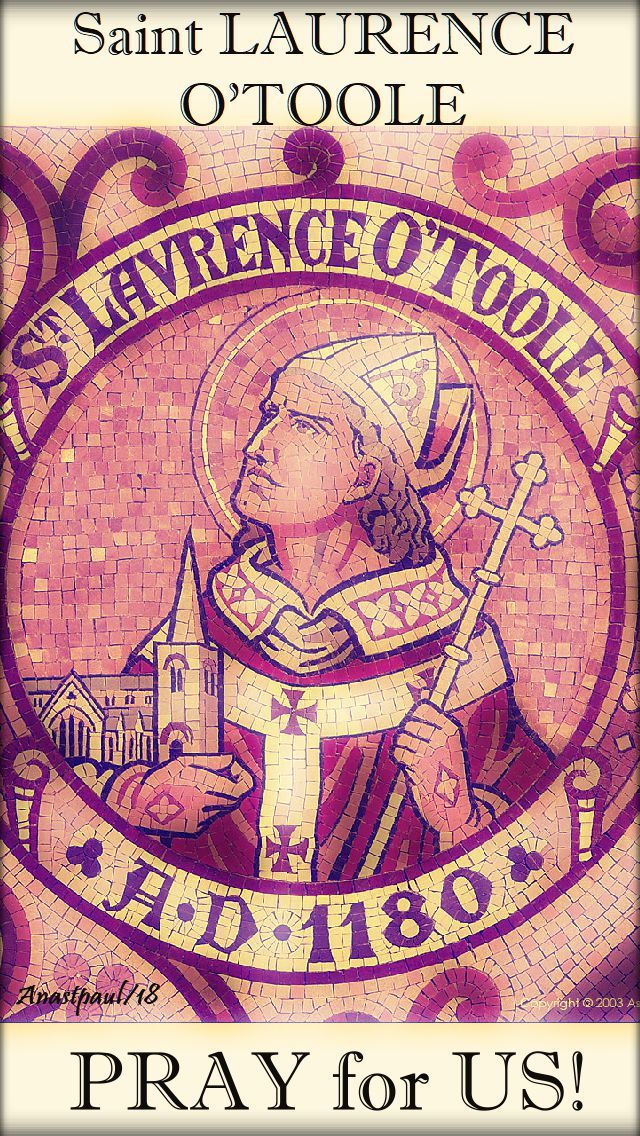
One Minute Reflection – 14 November – Today’s Gospel: Luke 17:11–19 -Wednesday of the Thirty Second week in Ordinary Time, Year B and the Memorial of St Laurence O’Toole (1128 – 1180)
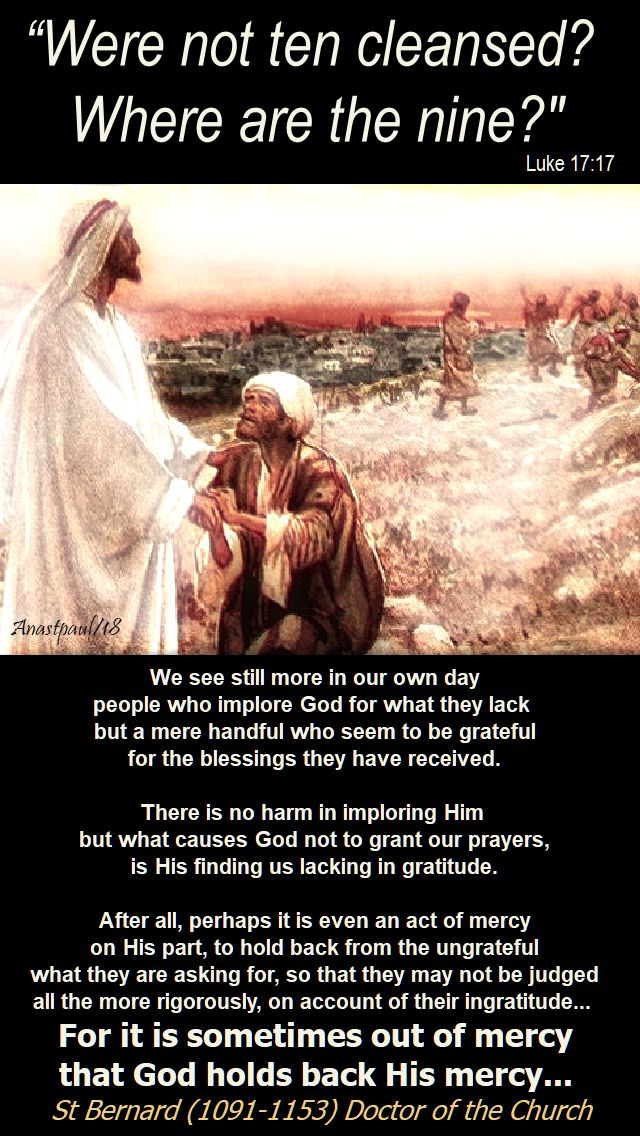
“Were not ten cleansed? Where are the nine?”…Luke 17:17
REFLECTION – “In our own day we see many people at prayer but, unfortunately, we see none of them turning back to give thanks to God… “Ten were cleansed, were they not? Where are the other nine?” As I think you will remember, it was in these words that our Saviour complained about the lack of gratitude of the other nine lepers. We read that they knew well how to make “supplications, prayers, petitions” since they lifted up their voices, crying out: “Jesus, Master! Have pity on us!” But they lacked the fourth thing required by the apostle Paul: “thanksgiving” (1Tm 2:1) for they did not turn back nor give thanks to God.
We see still more in our own day people who implore God for what they lack but a mere handful who seem to be grateful for the blessings they have received. There is no harm in imploring Him but what causes God not to grant our prayers, is His finding us lacking in gratitude. After all, perhaps it is even an act of mercy on His part to hold back from the ungrateful what they are asking for, so that they may not be judged all the more rigorously, on account of their ingratitude… For it is sometimes out of mercy that God holds back His mercy…
So you see that not all those who are healed of the leprosy of this world, I mean their manifest complaints, profit by their healing. Indeed, many are secretly afflicted with an ulcer worse than leprosy, all the more dangerous in that it is more interior. That is why it was right that the Saviour of the world should ask where the other nine lepers were, since sinners avoid healing. So, too, after his sin, God questioned the first man: “Where are you?” (Gn 3:9).”… St Bernard (1091-1153) Doctor of the Church
PRAYER – You Lord, Holy Father, never forget Your solemn covenant and grant us new life each day. We though in our hearts of stone do forget and cease to thank and bless You. Make our hearts turn in gratitude, for all we are and have is by Your grace and we are as nothing without You. May our minds, hearts and souls sing with love and thanks to You, Lord our God. Grant us new hearts by the prayers of Your Saint Laurence O’Toole and all the saints in heaven, who always lived with grateful hearts, praising You always. We ask this this through Jesus Christ with the Holy Spirit, one God forever, amen.
Quote/s of the Day – 9 November – The Feast of the Dedication of St John Lateran
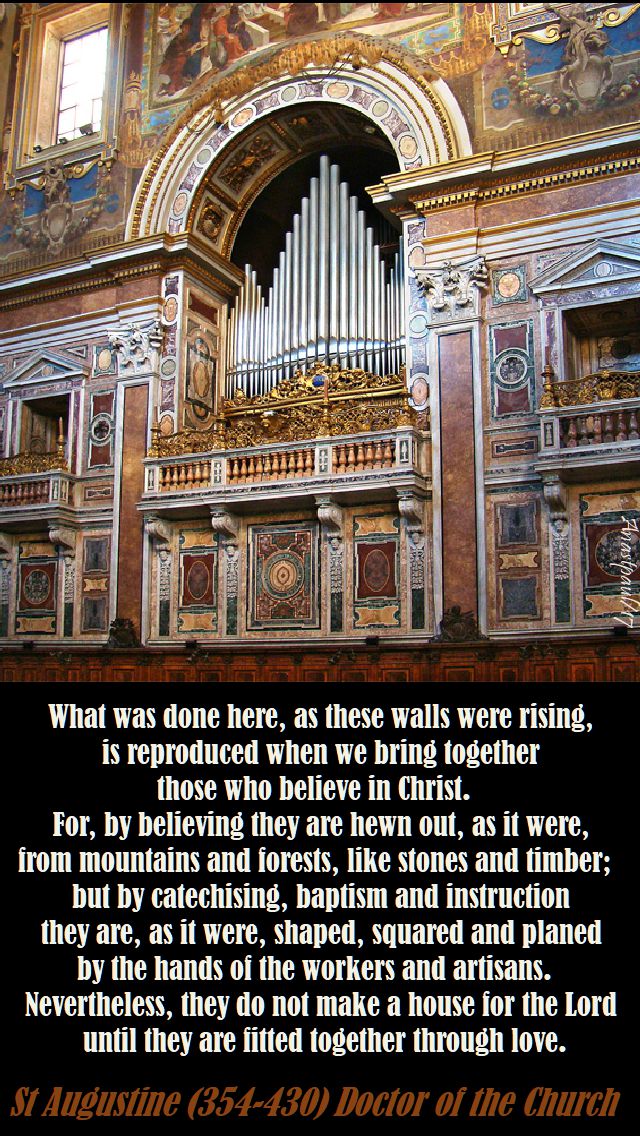
“What was done here, as these walls were rising, is reproduced when we bring together those who believe in Christ. For, by believing they are hewn out, as it were, from mountains and forests, like stones and timber but by catechising, baptism and instruction they are, as it were, shaped, squared and planed by the hands of the workers and artisans. Nevertheless, they do not make a house for the Lord, until they are fitted together through love”.
St Augustine (354-430) Doctor of the Church – Sermon 36
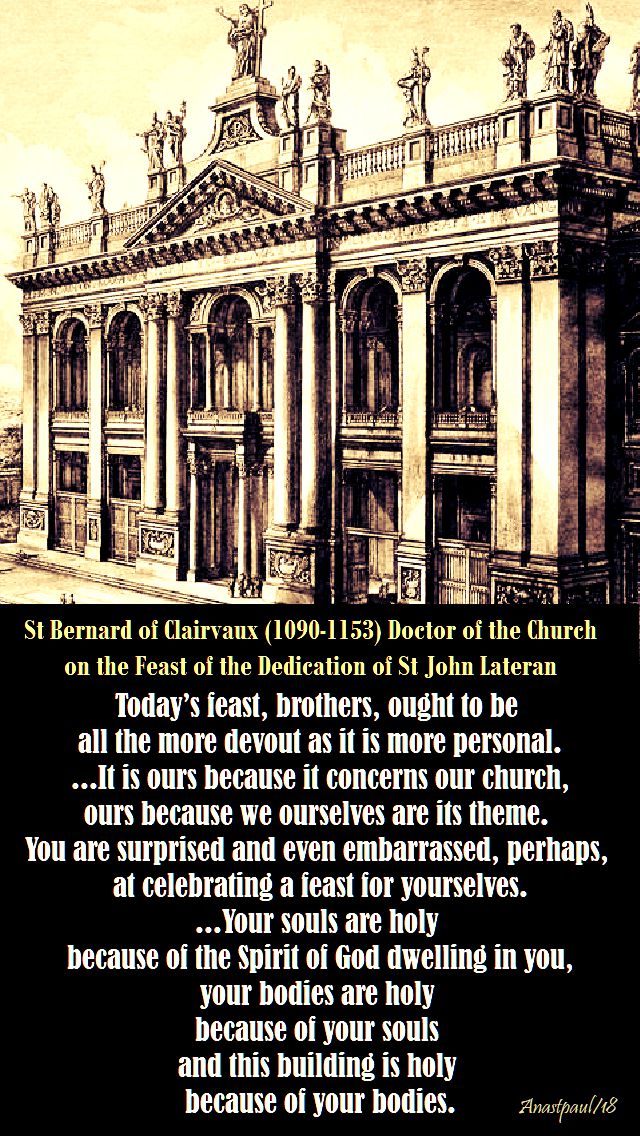
“Today’s feast, brothers, ought to be all the more devout as it is more personal. For other celebrations we have in common with other ecclesiastical communities but this one is proper to us, so that if we do not celebrate it, nobody will. It is ours because it concerns our church, ours because we ourselves are its theme. You are surprised and even embarrassed, perhaps, at celebrating a feast for yourselves. But do not be like horses and mules that have no understanding. Your souls are holy because of the Spirit of God dwelling in you, your bodies are holy because of your souls and this building is holy because of your bodies.”
St Bernard of Clairvaux (1090-1153) Doctor of the Church
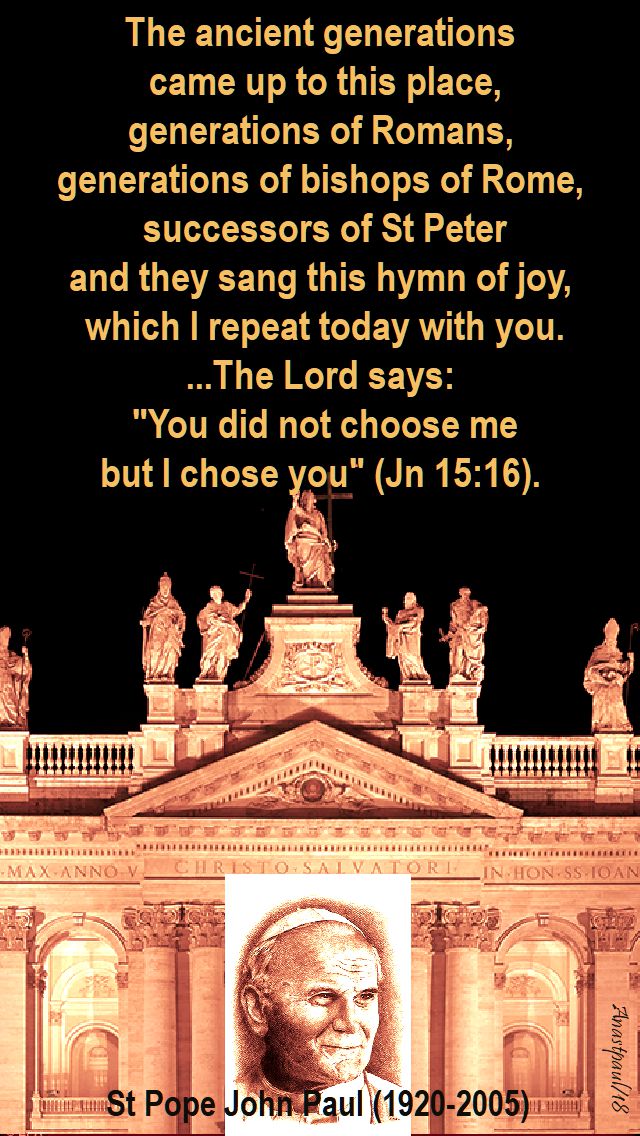
“Is not this an image of today’s event? The ancient generations came up to this place, generations of Romans, generations of bishops of Rome, successors of St Peter and they sang this hymn of joy, which I repeat today with you. I join these generations, I, the new Bishop of Rome, John Paul II, Polish by origin. I stop on the threshold of this temple and I ask you to welcome me in the Lord’s name. I beg you to welcome me, as you welcomed my Predecessors throughout the centuries, as you welcomed, only a few weeks ago, John Paul I, so beloved by the whole world! I beg you to welcome me too. The Lord says: “You did not choose me, but I chose you” (Jn 15:16). This is the only appeal I can make – I am not here by my own will. The Lord has elected me. In the Lord’s name I beg you therefore – welcome me!”
St Pope John Paul (1920-2005) RITE OF POSSESSION OF THE CHAIR OF THE BISHOP OF ROME HOMILY OF HIS HOLINESS JOHN PAUL II Basilica of St John Lateran Sunday, 12 November 1978
Our Morning Offering – 7 November – Wednesday of the Thirty First week in Ordinary Time, Year B
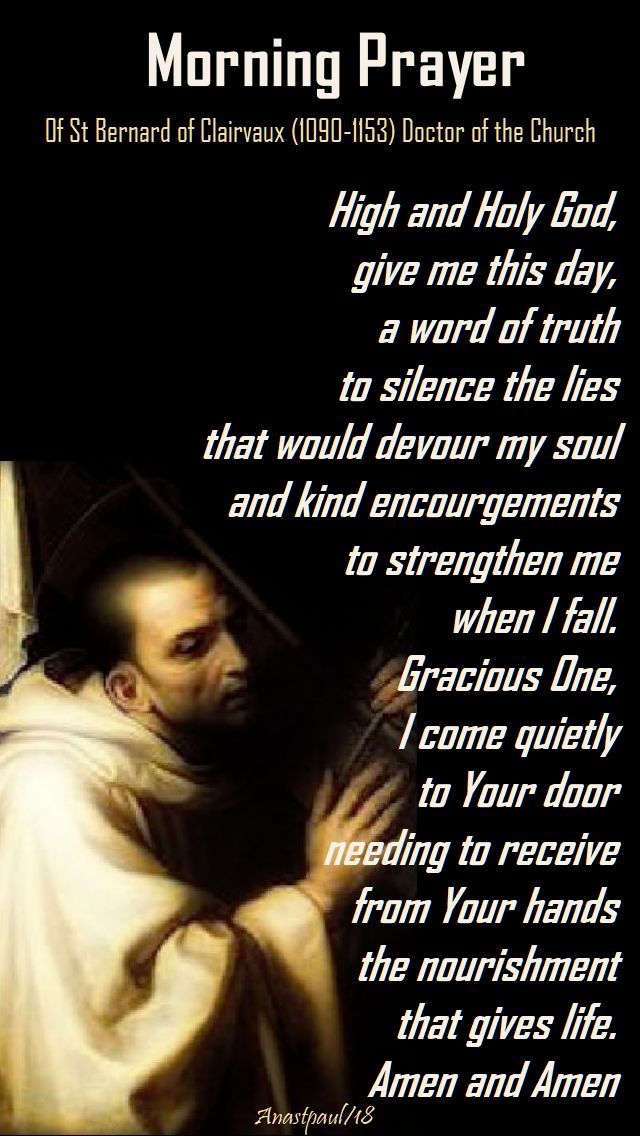
Morning Prayer By St Bernard of Clairvaux (1090-1153) Doctor of the Church
High and Holy God,
give me this day a word of truth
to silence the lies, that would devour my soul
and kind encourgements
to strengthen me when I fall.
Gracious One,
I come quietly to Your door
needing to receive from Your hands
the nourishment that gives life.
Amen and Amen
Sunday Reflection – 4 November – Thirty First Sunday in Ordinary Time, Year B
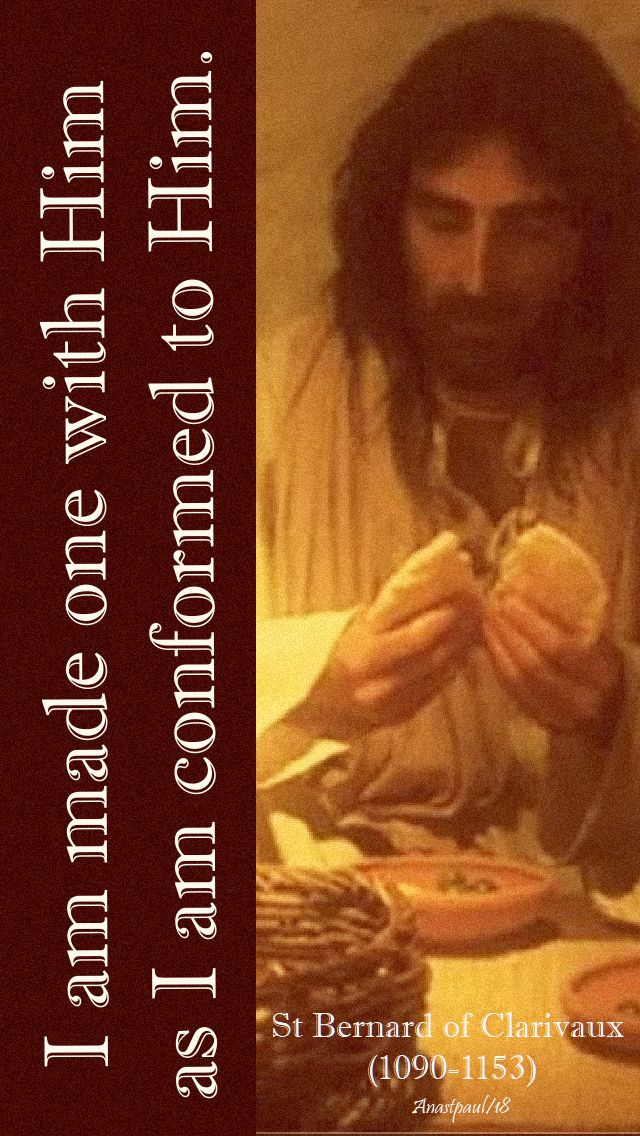
“I am made one with Him, as I am conformed to Him.” St Bernard of Clairvaux (1090-1153) Doctor of the Church
Saint Bernard teaches, that it is not enough for us to take and eat the Bread from Heaven. We must also offer ourselves to be eaten. Holy Communion is a wondrous exchange in which we become the bread of Christ. Listen to Saint Bernard:
“My penitence, my salvation are His food.
I myself am His food.
I am chewed as I am reproved by Him;
I am swallowed by Him as I am taught;
I am digested by Him as I am changed;
I am assimilated as I am transformed;
I am made one with Him, as I am conformed to Him.
He feeds upon us and is fed by us
that we may be the more loosely bound to Him.”
Saint Bernard, ever the poet, uses images of eating and assimilation to describe how Christ unites us to Himself. Our Lord becomes our food that we might become His. We need the language of poets and preachers in our approach to the Eucharist.
Quote/s of the Day- 2 October – The Memorial of the Holy Guardian Angels
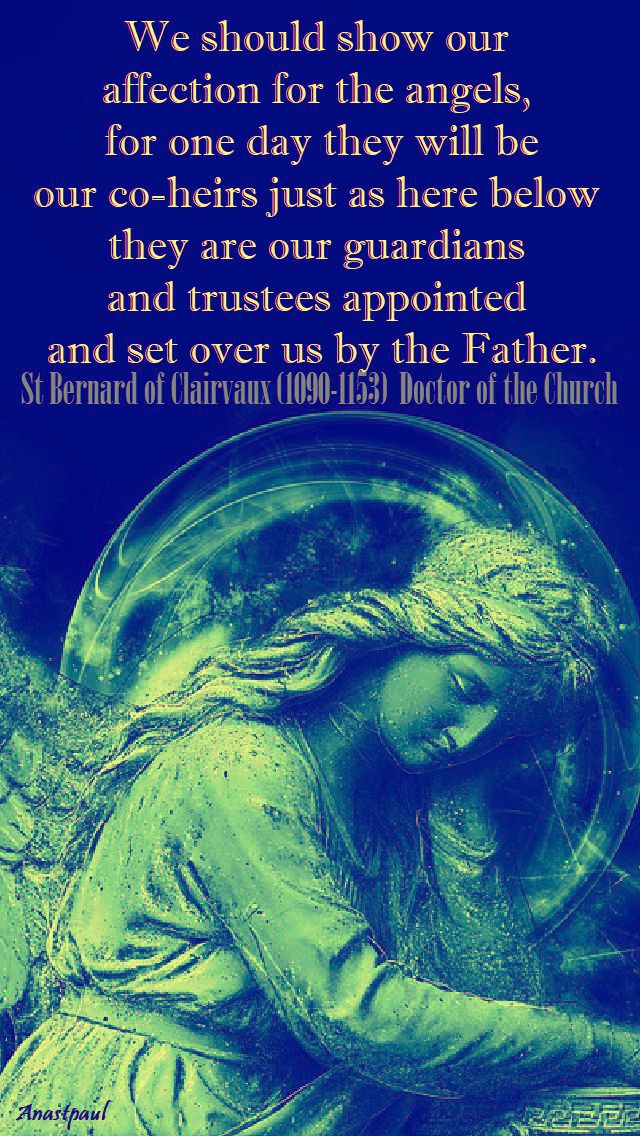
“We should show our affection for the angels, for one day they will be our co-heirs just as here below they are our guardians and trustees appointed and set over us by the Father.”
St Bernard of Clairvaux (1090-1153) Doctor of the Church
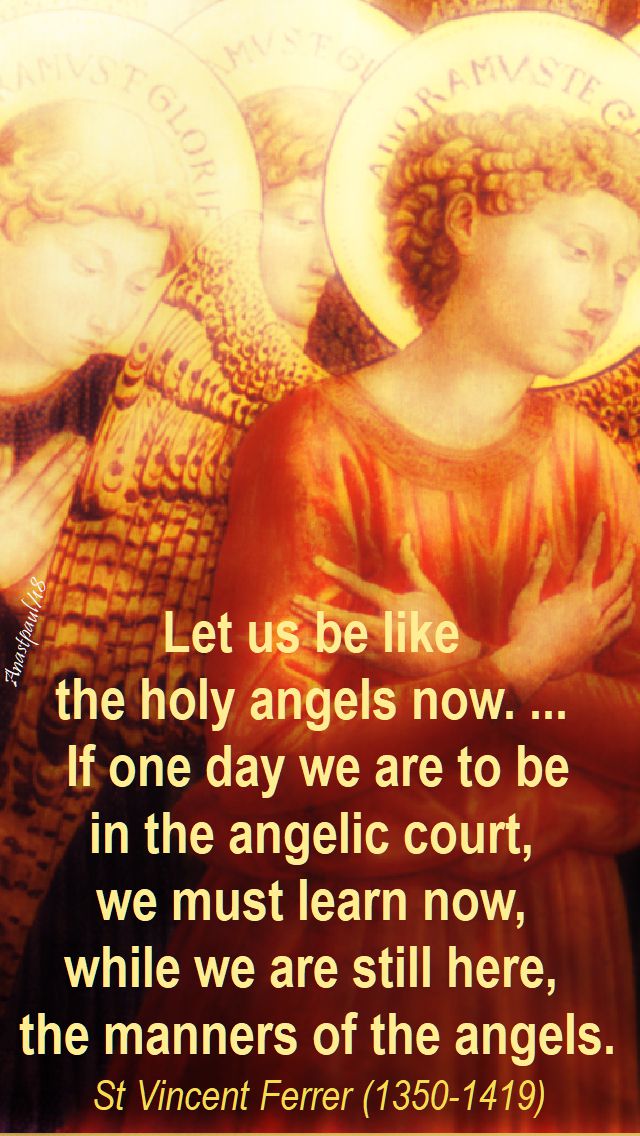
“Let us be like the holy angels now. … If one day we are to be in the angelic court, we must learn now, while we are still here, the manners of the angels.”
St Vincent Ferrer (1350-1419)
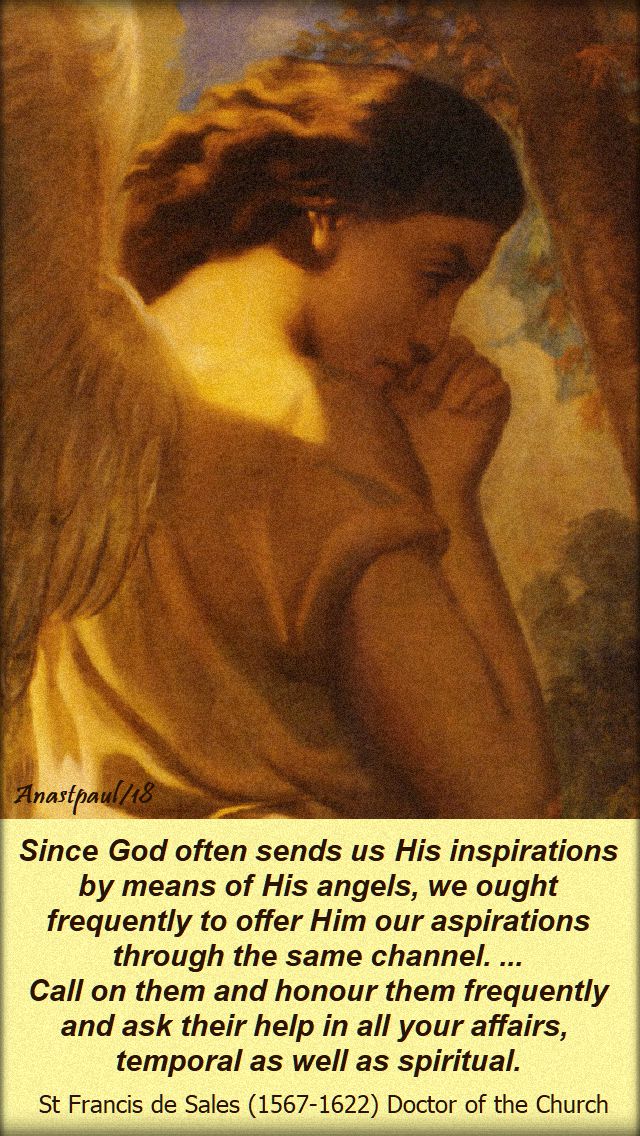
“Since God often sends us His inspirations by means of his angels, we ought frequently to offer Him our aspirations through the same channel…. Call on them and honour them frequently and ask their help in all your affairs, temporal as well as spiritual.”
St Francis de Sales (1567-1622) Doctor of the Church
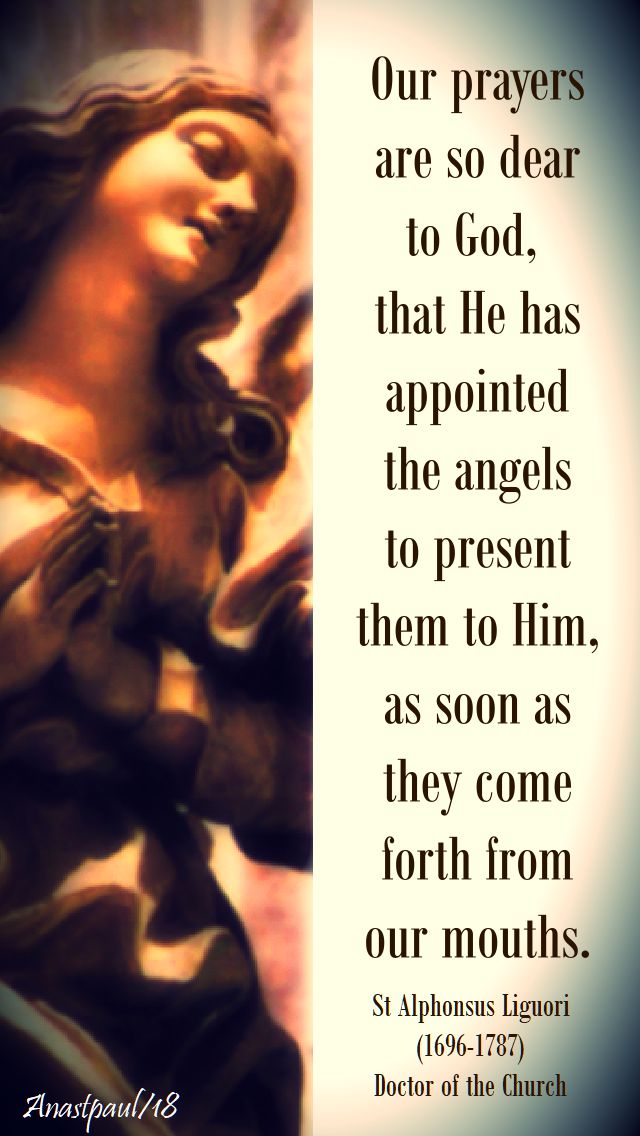
“Our prayers are so dear to God, that He has appointed the angels to present them to Him, as soon as they come forth from our mouths. ‘The angels,’ says St Hilary, ‘preside over the prayers of the faithful and offer them daily to God.’ This is that smoke of the incense, which are the prayers of saints, which St John saw ascending to God from the hands of the angels (Apoc. 8,3) and which he saw in another place, represented by golden phials full of sweet odours, very acceptable to God.”
St Alphonsus Liguori (1696-1787) Doctor of the Church
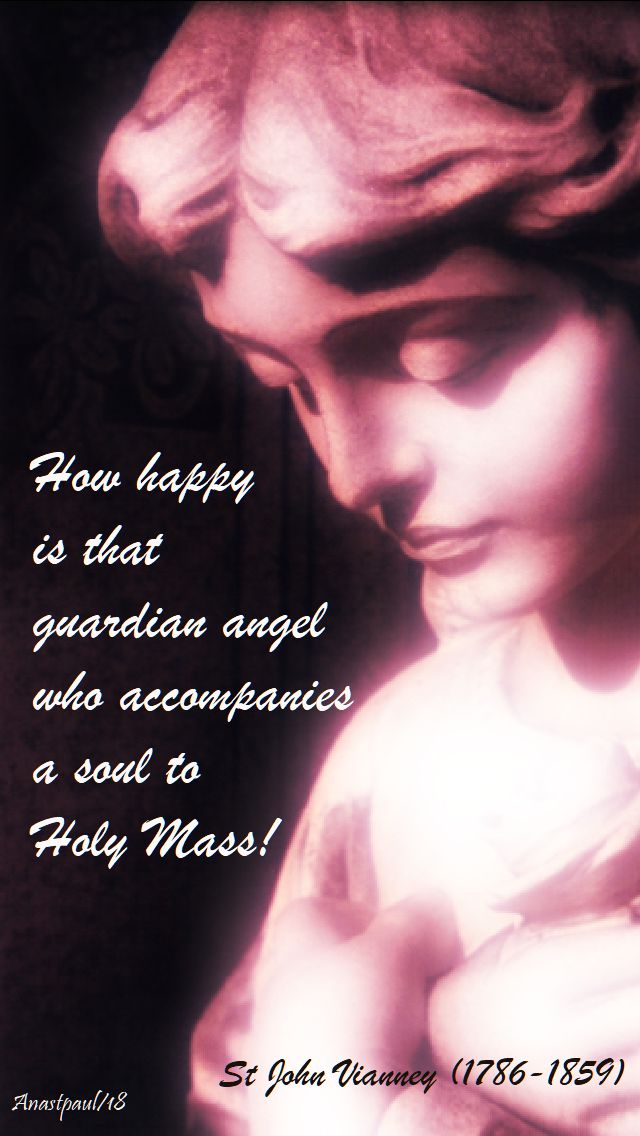
“How happy is that guardian angel who accompanies a soul to Holy Mass!”
Our Morning Offering – 16 September – Twenty-fourth Sunday in Ordinary Time, Year B
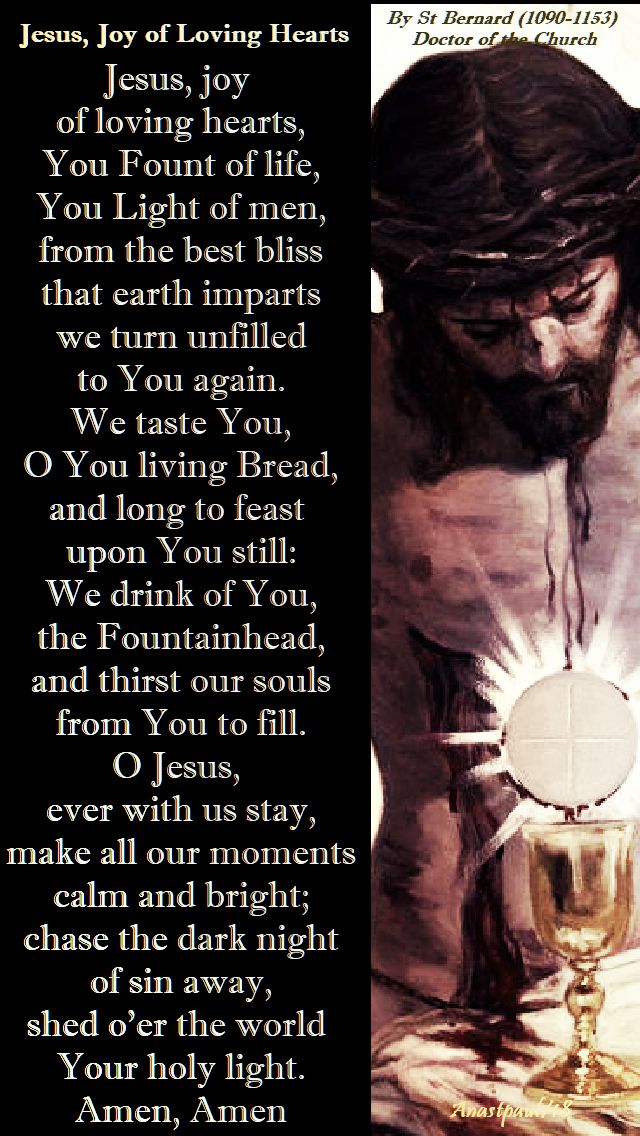
Jesus, Joy of Loving Hearts By St Bernard of Clairvaux (1090-1153) Doctor of the Church
Jesus, joy of loving hearts,
You Fount of life,
You Light of men,
from the best bliss that earth imparts
we turn unfilled to You again.
We taste You,
O You living Bread,
and long to feast upon You still:
We drink of You, the Fountainhead,
and thirst our souls from You to fill.
O Jesus, ever with us stay,
make all our moments calm and bright;
chase the dark night of sin away,
shed o’er the world Your holy light.
Amen, Amen
Quote/s of the Day – 15 September – The Memorial of Our Lady of Sorrows
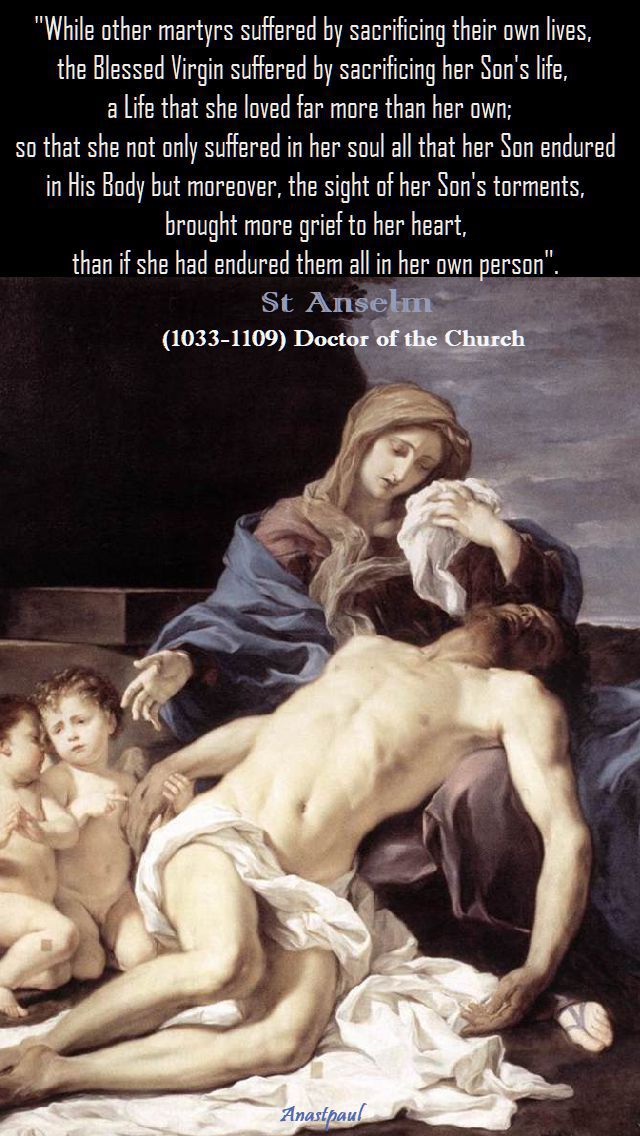
“While other martyrs suffered by sacrificing their own lives, the Blessed Virgin suffered by sacrificing her Son’s life, a Life that she loved far more than her own; so that she not only suffered in her soul all that her Son endured in His Body but moreover, the sight of her Son’s torments, brought more grief to her heart, than if she had endured them all in her own person”.
St Anselm (1033-1109) Doctor of the Church
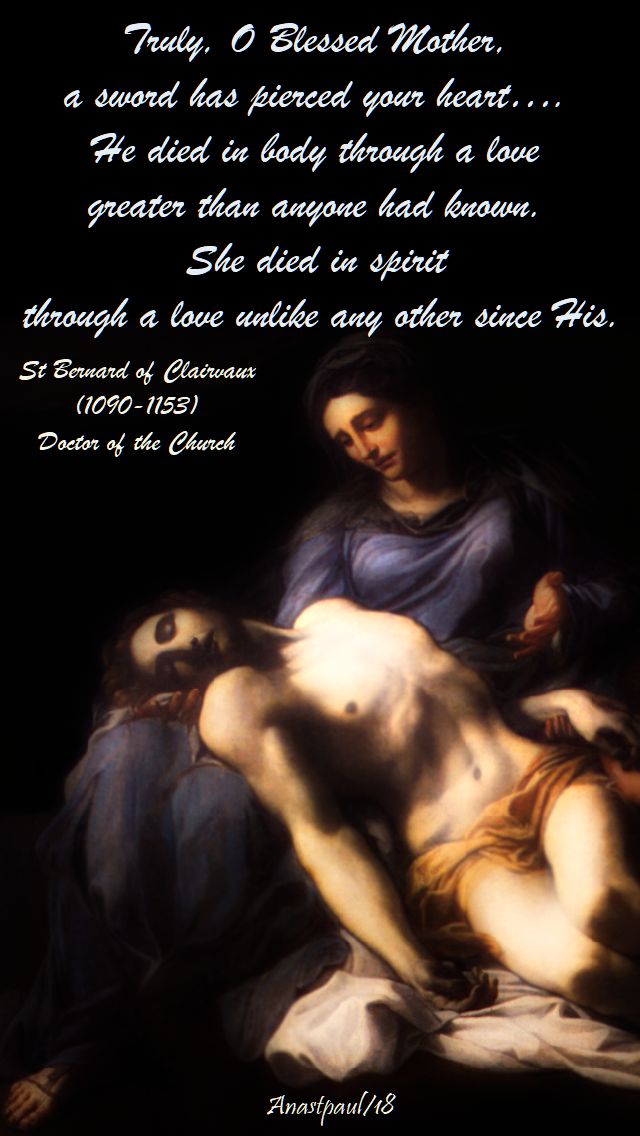
“Truly, O Blessed Mother, a sword has pierced your heart…. He died in body through a love greater than anyone had known. She died in spirit through a love unlike any other since His.”
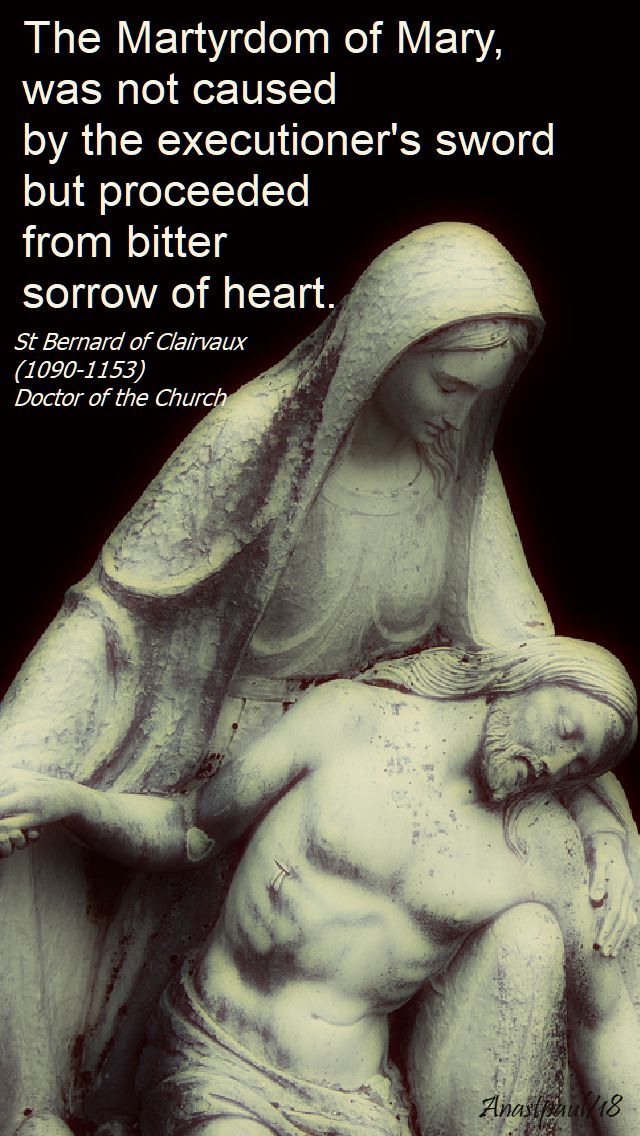
“The Martyrdom of Mary, was not caused by the executioner’s sword but proceeded from bitter sorrow of heart.”
St Bernard of Clairvaux (1090-1153) Doctor of the Church
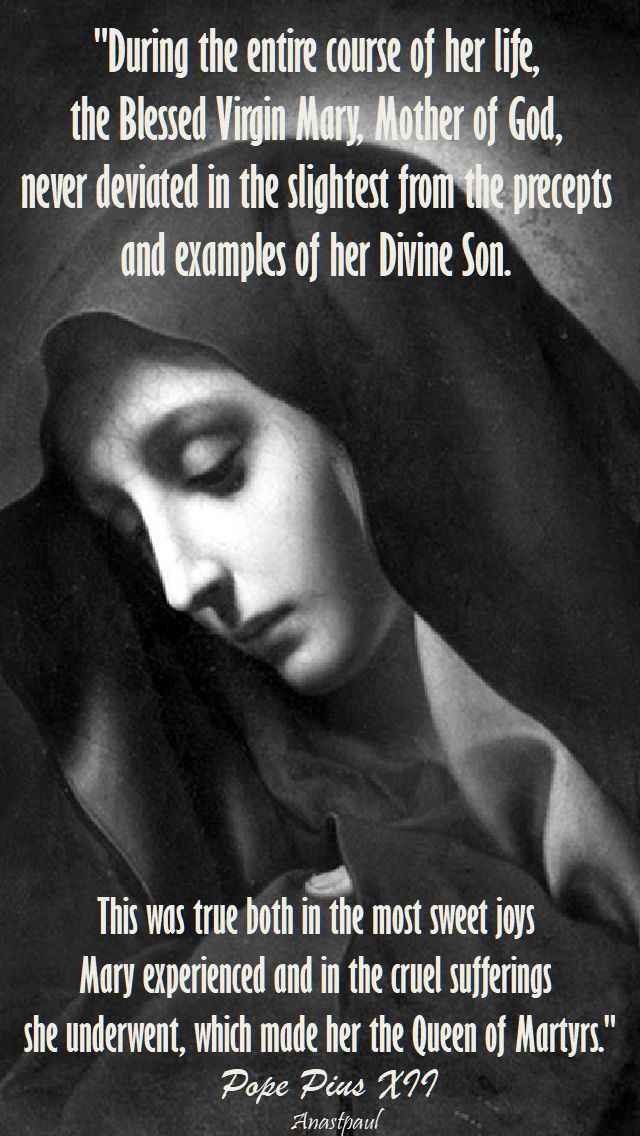
During the entire course of her life, the Blessed Virgin Mary, Mother of God, never deviated in the slightest from the precepts and examples of her Divine Son. This was true both in the most sweet joys Mary experienced and in the cruel sufferings she underwent, which made the the Queen of Martyr.
Venerable Pope Pius XII (1876-1958)
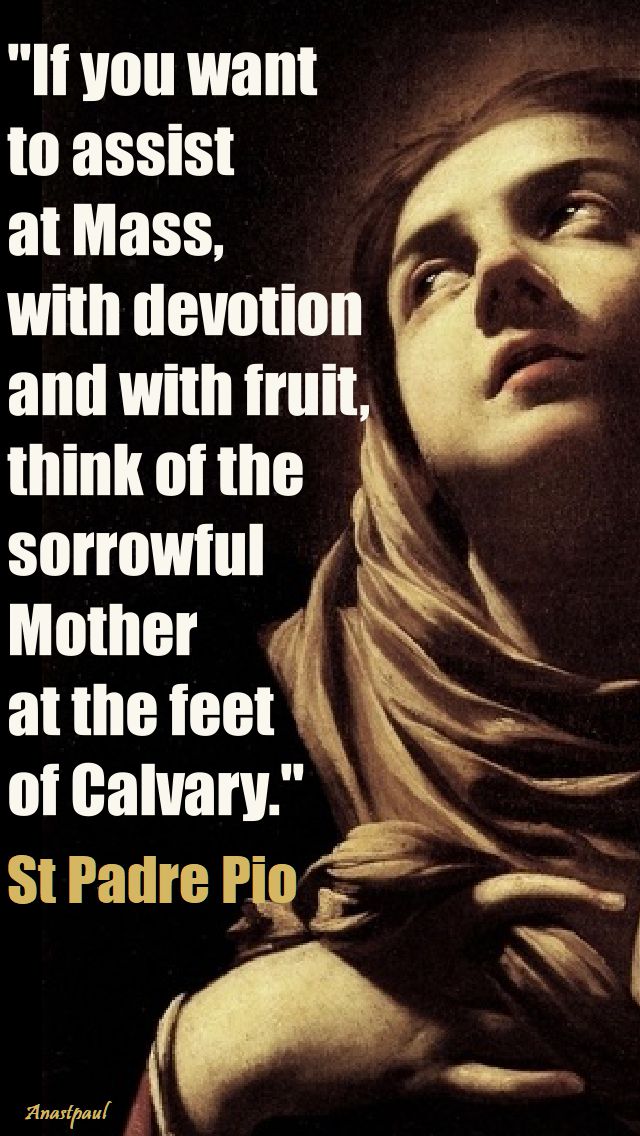
“If you want to assist at Mass, with devotion and with fruit, think of the sorrowful Mother at the feet of Calvary.”
Thought for the Day – 22 August – The Memorial of The Queenship of Mary, Holy Mother of God – Today’s Gospel: Luke 1:26–38
As St Paul suggests in Romans 8:28–30, God has predestined human beings from all eternity to share the image of his Son. All the more was Mary predestined to be the mother of Jesus. As Jesus was to be king of all creation, Mary, in dependence on Jesus, was to be queen. All other titles to queenship derive from this eternal intention of God. As Jesus exercised his kingship on earth by serving his Father and his fellow human beings, so did Mary exercise her queenship. As the glorified Jesus remains with us as our king till the end of time (Matthew 28:20), so does Mary, who was assumed into heaven and crowned queen of heaven and earth.
In the fourth century St Ephrem called Mary “Lady” and “Queen.” Later Church fathers and doctors continued to use the title. Hymns of the 11th to 13th centuries address Mary as queen: “Hail, Holy Queen,” “Hail, Queen of Heaven,” “Queen of Heaven.” The Dominican rosary and the Franciscan crown as well as numerous invocations in Mary’s litany celebrate her queenship.
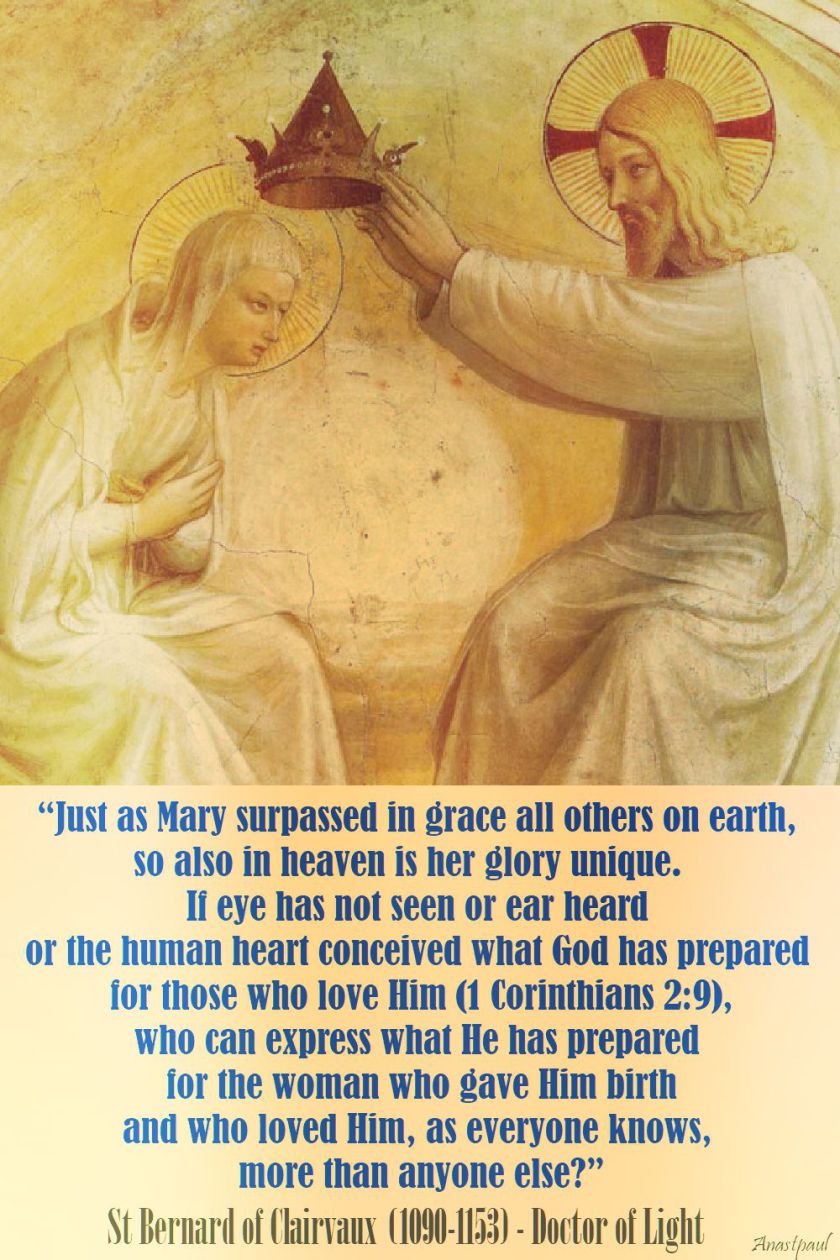
The feast is a logical follow-up to the Assumption and is now celebrated on the octave day of that feast. In his 1954 encyclical To the Queen of Heaven, Pius XII points out that Mary deserves the title because she is Mother of God because she is closely associated as the New Eve with Jesus’ redemptive work because of her preeminent perfection and because of her intercessory power. (Fr Don Miller OFM) “Just as Mary surpassed in grace all others on earth, so also in heaven is her glory unique. If eye has not seen or ear heard or the human heart conceived what God has prepared for those who love Him (1 Corinthians 2:9), who can express what He has prepared for the woman who gave Him birth and who loved Him, as everyone knows, more than anyone else?” (St Bernard of Clairvaux (1090-1153) – Doctor of Light – Mellifluous Doctor)
Mary Queen of Heaven and Earth,
Pray for your children!
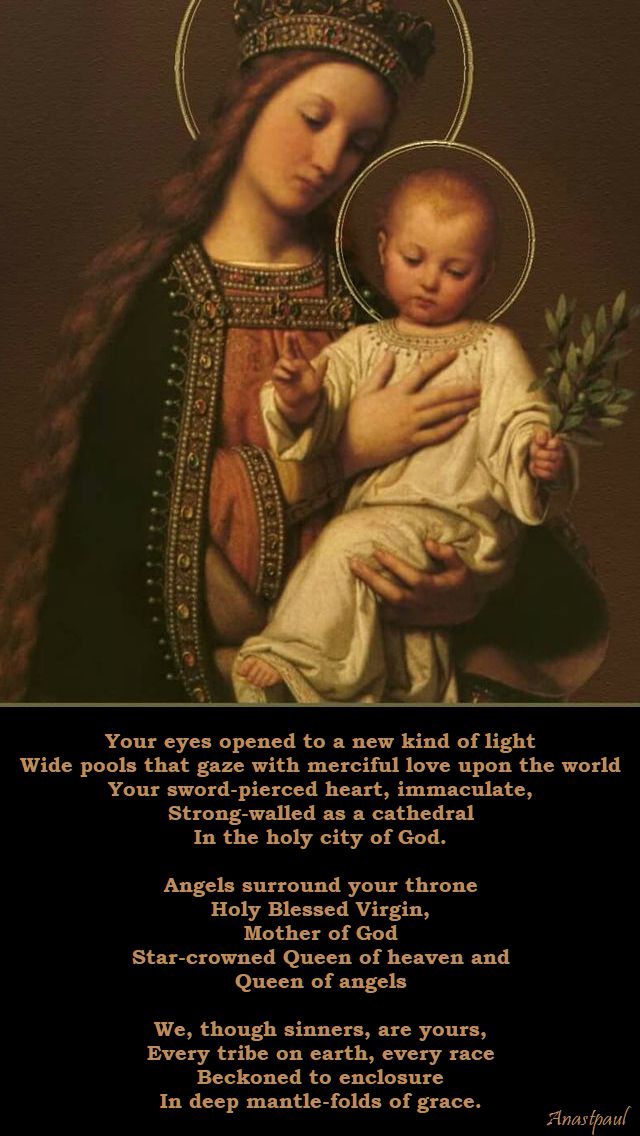
Your eyes opened to a new kind of light Wide pools that gaze with merciful love upon the world Your sword-pierced heart, immaculate,
Strong-walled as a cathedral
In the holy city of God.
Angels surround your throne Holy Blessed Virgin, Mother of God Star-crowned Queen of heaven and Queen of angels
We, though sinners, are yours, Every tribe on earth, every race Beckoned to enclosure In deep mantle-folds of grace.
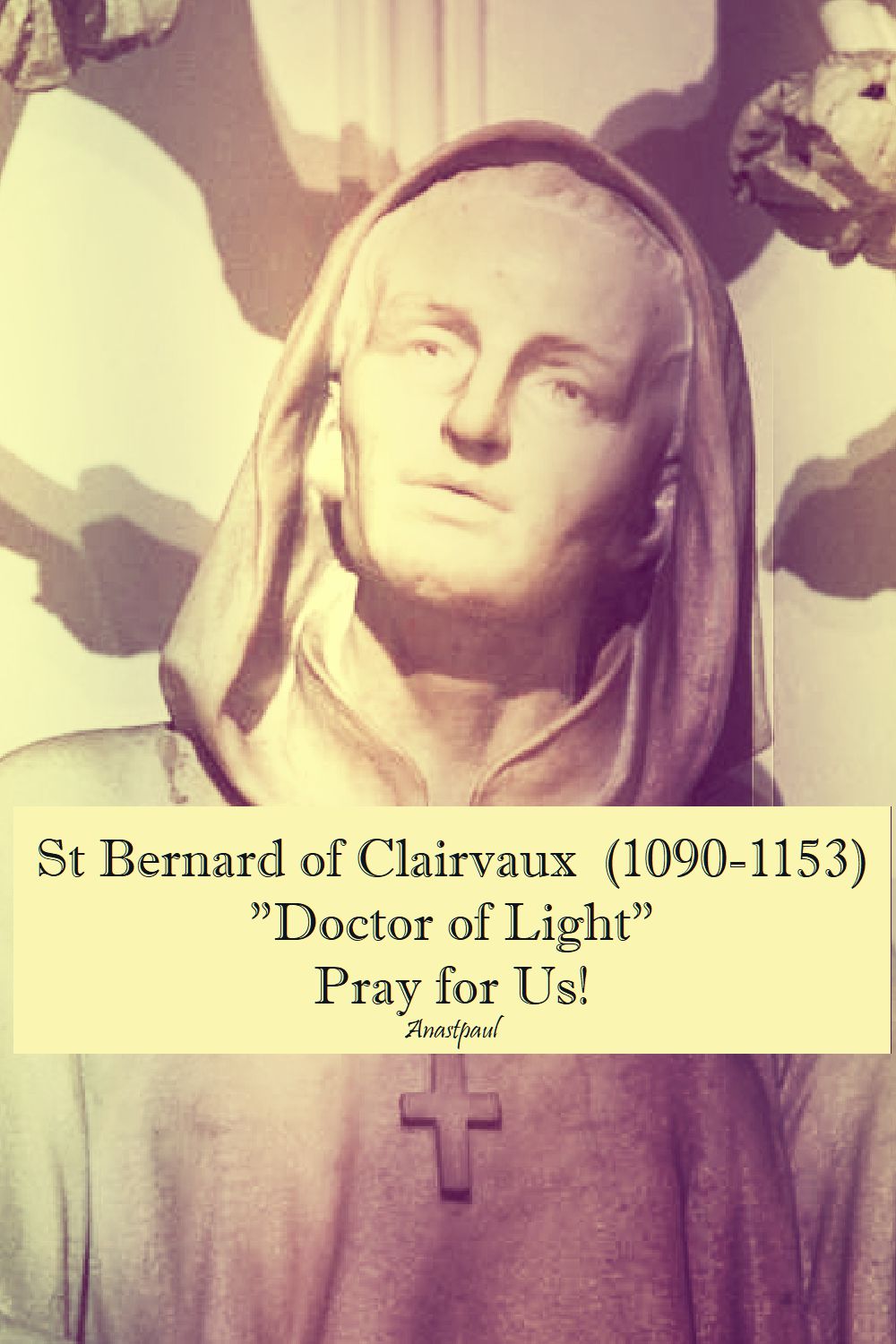
Quote/s of the Day – The Memorial of St Bernard of Clairvaux (1090-1153)
“Doctor of Light”
“The measure of love is love without measure.”
“Are you troubled? Think but of Jesus, speak but the name of Jesus, the clouds disperse and peace descends anew from heaven. Have you fallen into sin? So that you fear death? ..invoke the name of Jesus and you will soon feel life returning. No obduracy of the soul, no weakness, no coldness of heart can resist this holy name – there is no heart which will not soften and open in tears at this holy name.”
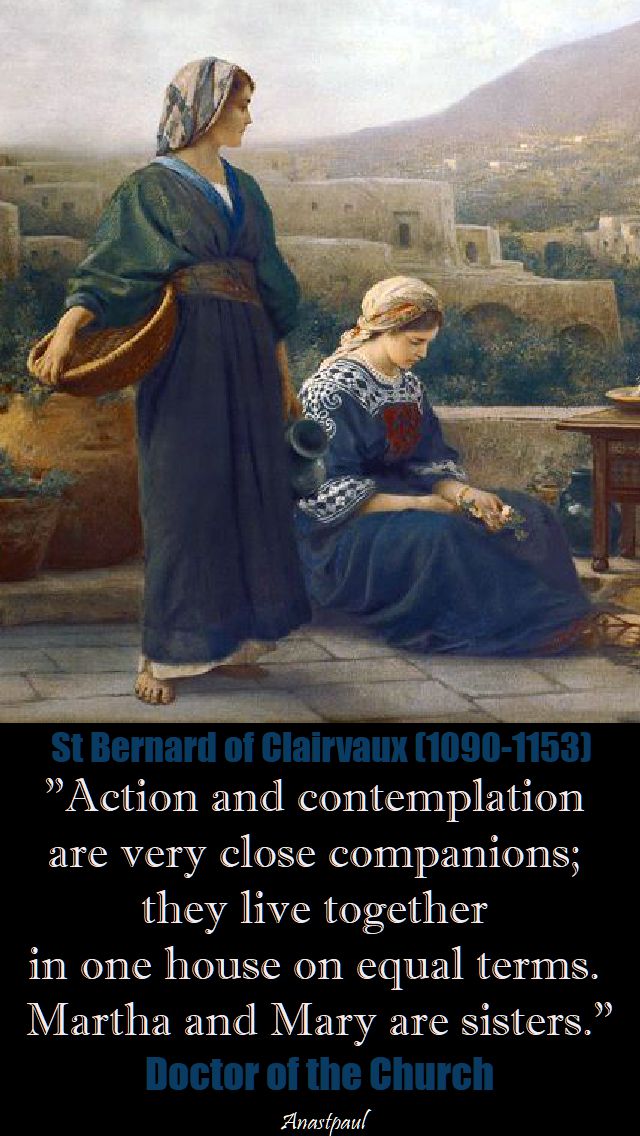
“Action and contemplation are very close companions; they live together in one house on equal terms. Martha and Mary are sisters.”
“The three most important virtues are: humility, humility and humility.”
“There are those who seek knowledge for the sake of knowledge – that is curiosity. There are those who seek knowledge to be known by others – that is vanity. There are those who seek knowledge in order to serve – that is Love.”
“Let us not imagine that we obscure the glory of the Son by the great praise we lavish on the Mother – for the more she is honoured, the greater is the glory of her Son. There can be no doubt that whatever we say in praise of the Mother gives equal praise to the Son.”
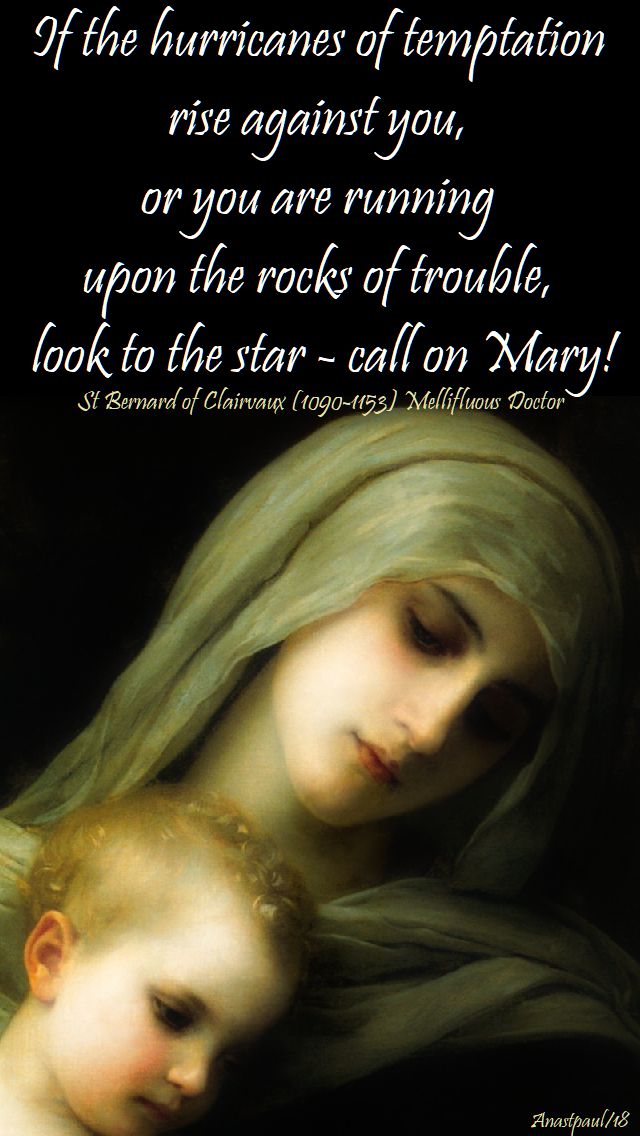
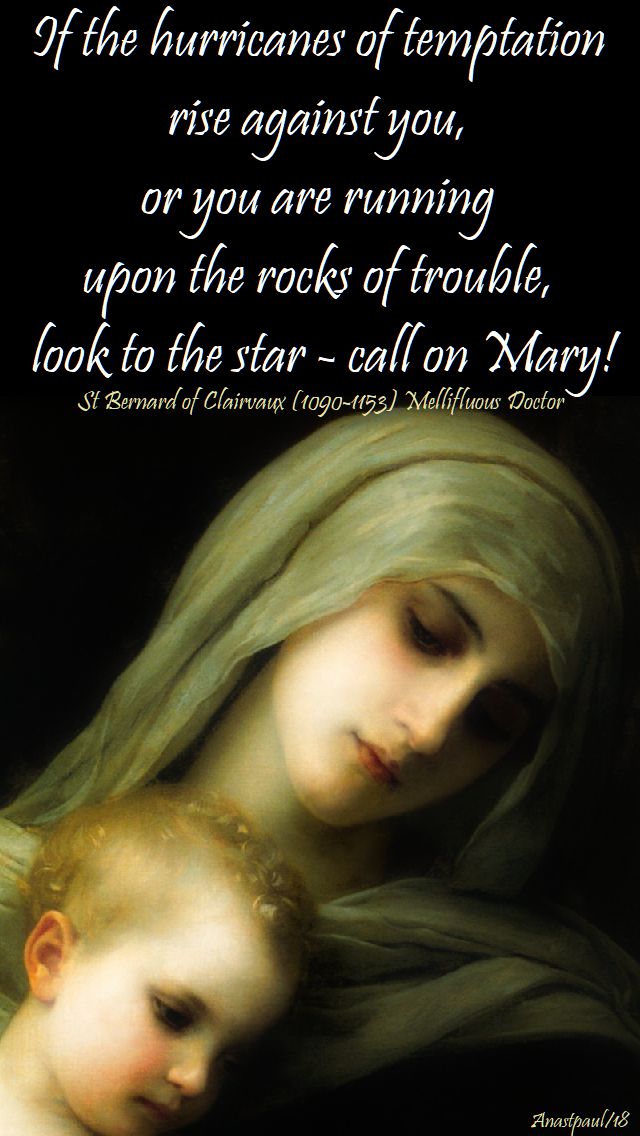
“If the hurricanes of temptation rise against you, or you are running upon the rocks of trouble, look to the star – call on Mary!”
St Bernard of Clairvaux (1090-1153) “Doctor of Light”
One Minute Reflection – 20 August – The Memorial of St Bernard of Clairvaux (1090-1153) “Doctor of Light”
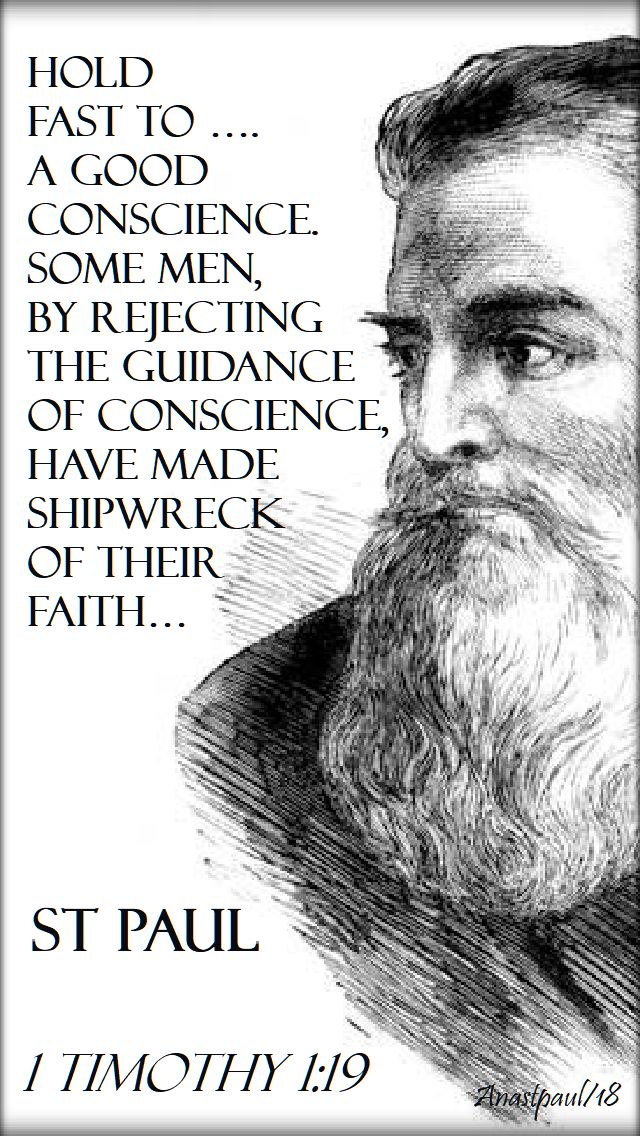
Hold fast to …. a good conscience. Some men, by rejecting the guidance of conscience, have made shipwreck of their faith…1 Timothy 1:19
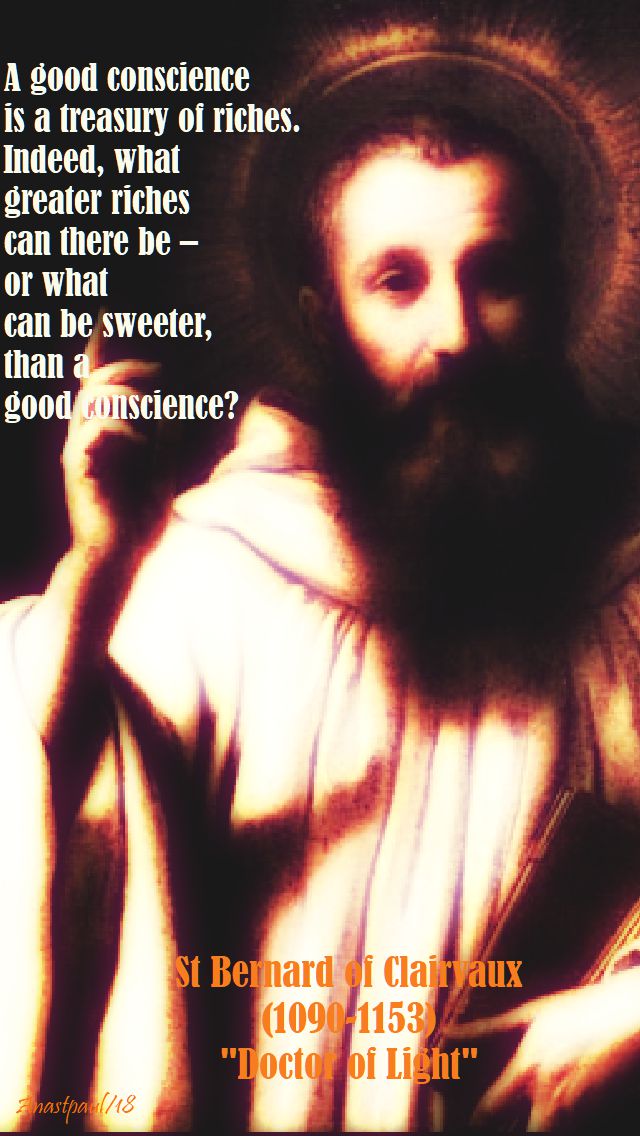
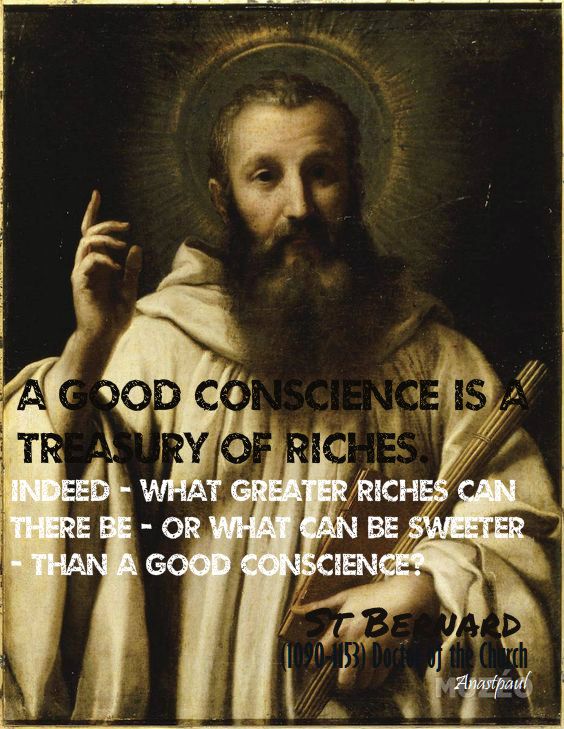
REFLECTION – “A good conscience is a treasury of riches. Indeed, what greater riches can there be – or what can be sweeter – than a good conscience?….St Bernard
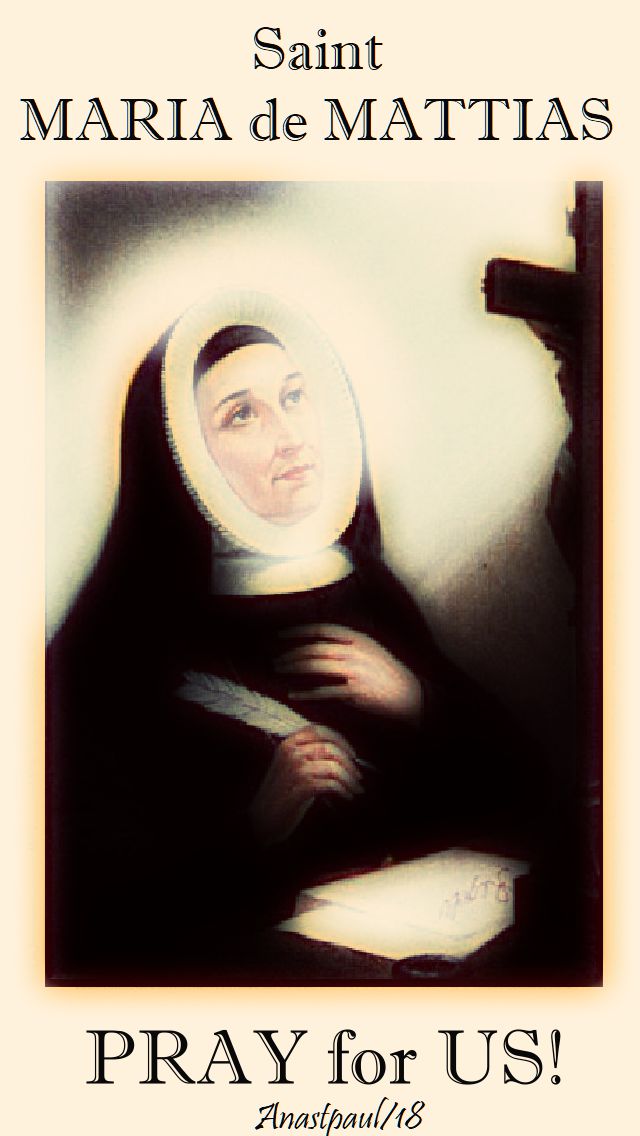
PRAYER – All-knowing God, may we be able to stand in Your presence with a good conscience. Help us to avoid anything that would sully our conscience and do all we can, to remain united with You. We ask that by Your goodness, the prayers of St Bernard and St Maria de Mattias, may assist us to grow in sanctity and develop a holy conscience. We make our prayer through our Lord Jesus Christ, with You and the Holy Spirit, one God forever, amen.
Our Morning Offering – 20 August – The Memorial of St Bernard of Clairvaux (1090-1153) “Doctor of Light”
On the Feast Day of St Bernard, can we do better than call on our Mother?
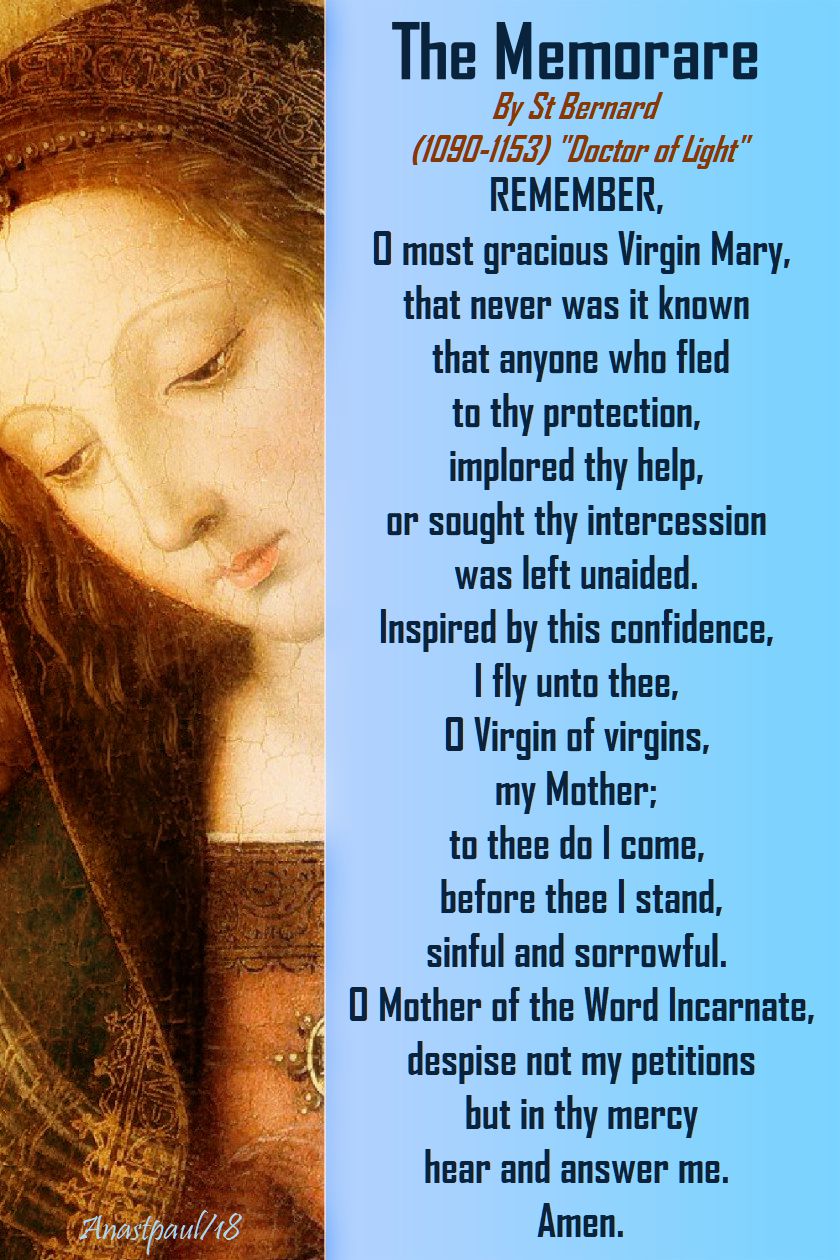
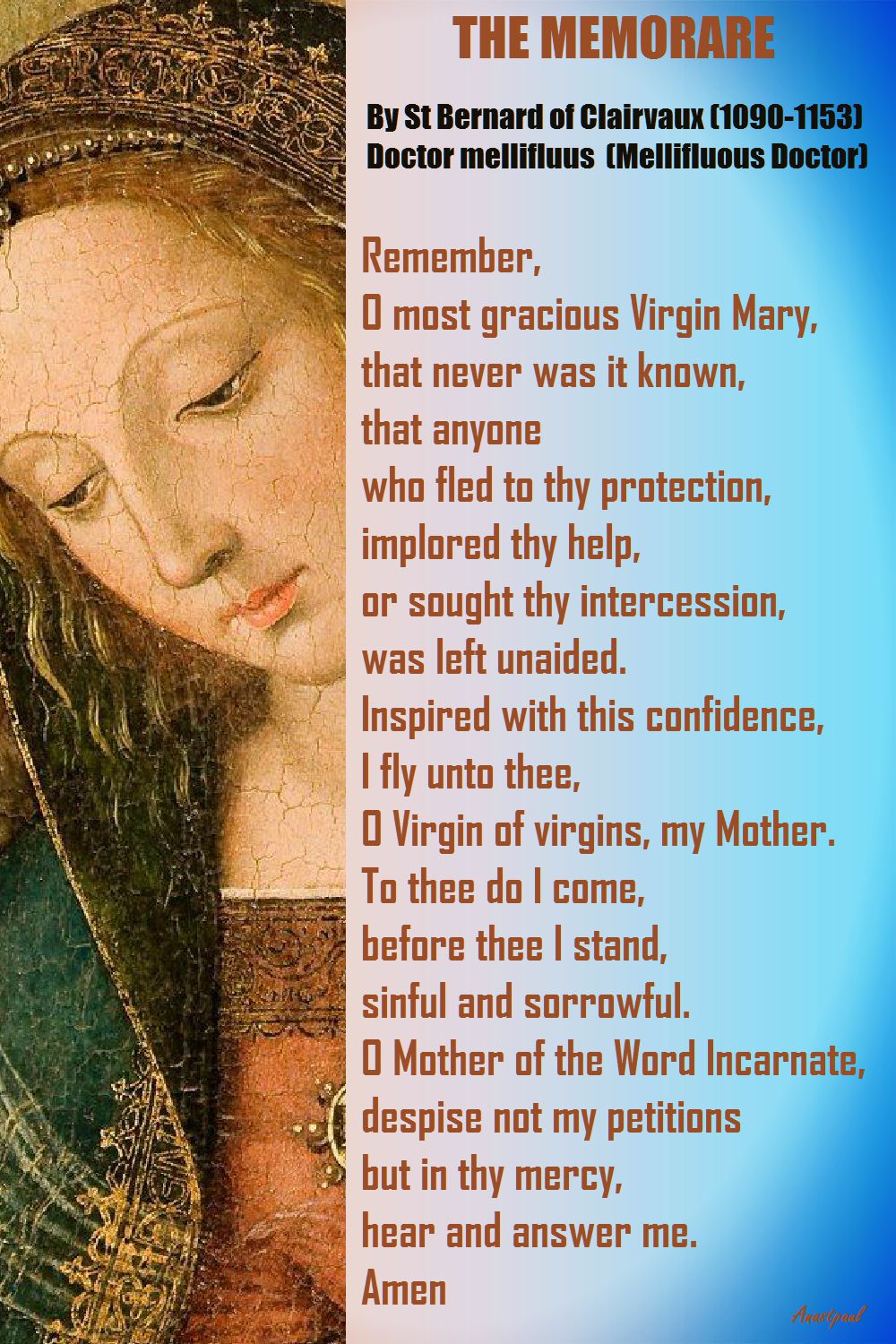
The Memorare By St Bernard (1090-1153) “Doctor of Light”
REMEMBER,
O most gracious Virgin Mary,
that never was it known
that anyone who fled
to thy protection,
implored thy help,
or sought thy intercession
was left unaided.
Inspired by this confidence,
I fly unto thee,
O Virgin of virgins,
my Mother;
to thee do I come,
before thee I stand,
sinful and sorrowful.
O Mother of the Word Incarnate,
despise not my petitions
but in thy mercy
hear and answer me.
Amen.
(The “Urgent” or “Emergency” Novena you will recall, is 9 times the Memorare)
Quote/s of the Day – 20 June – Wednesday Eleventh Week of Ord Time Year B – Today’s Gospel Matthew 6:1-6.16-18
“Speaking of: Humility”
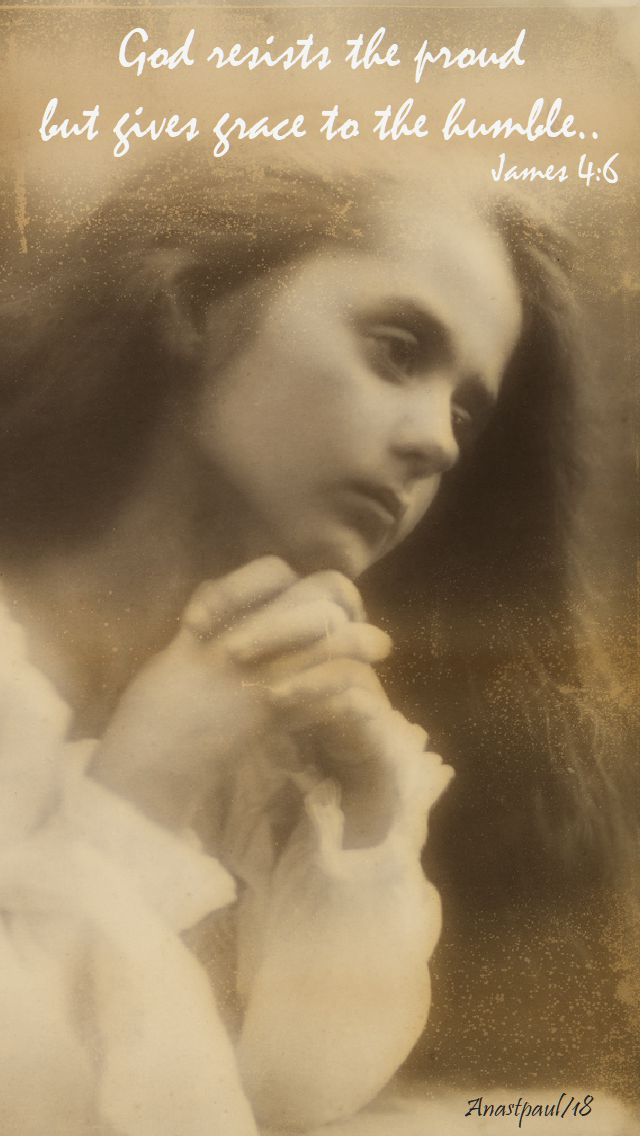
“God resists the proud but gives grace to the humble”
James 4:6
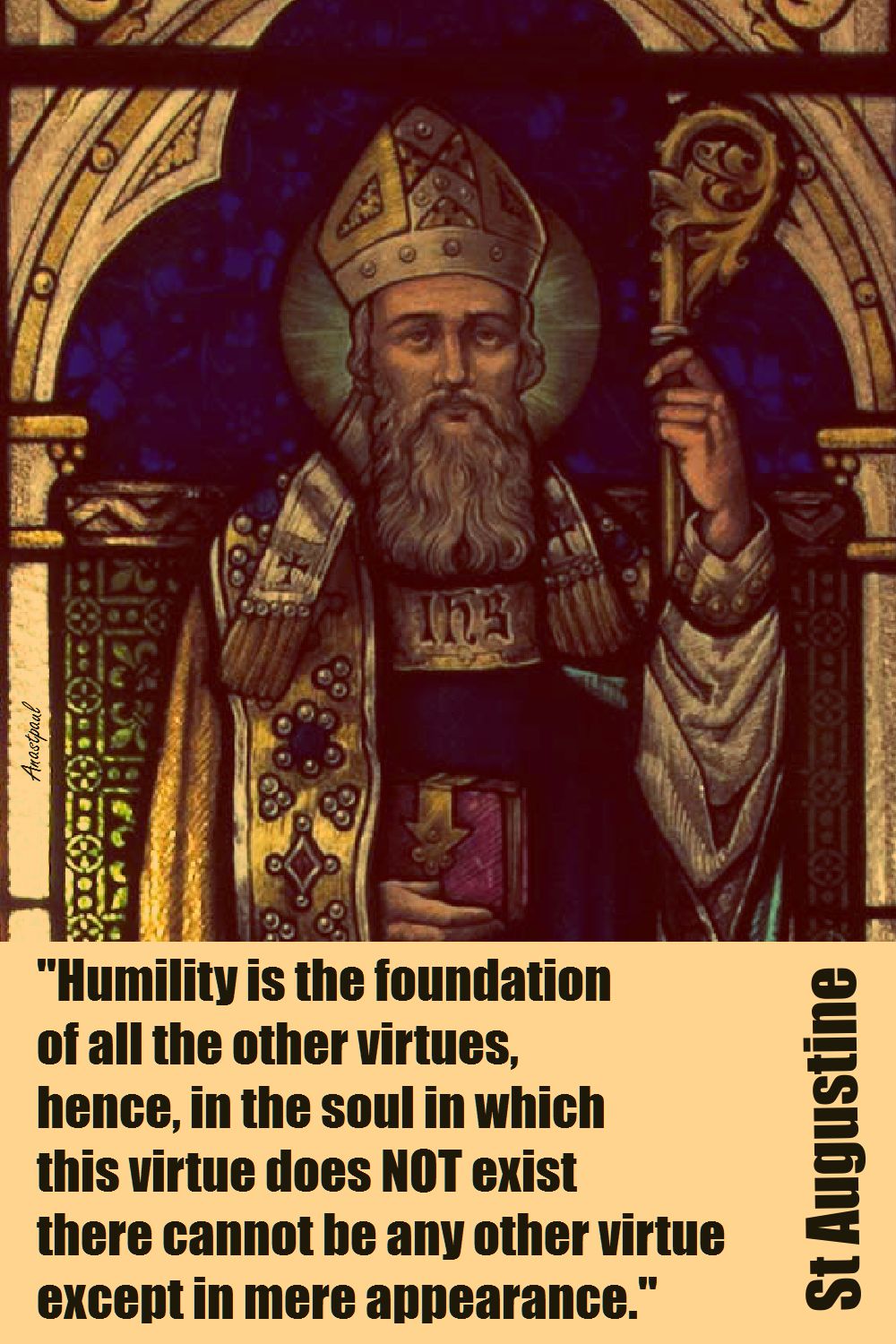
“Humility is the foundation of all the other virtues, hence, in the soul in which this virtue does not exist, there cannot be any other virtue, except in mere appearance.”
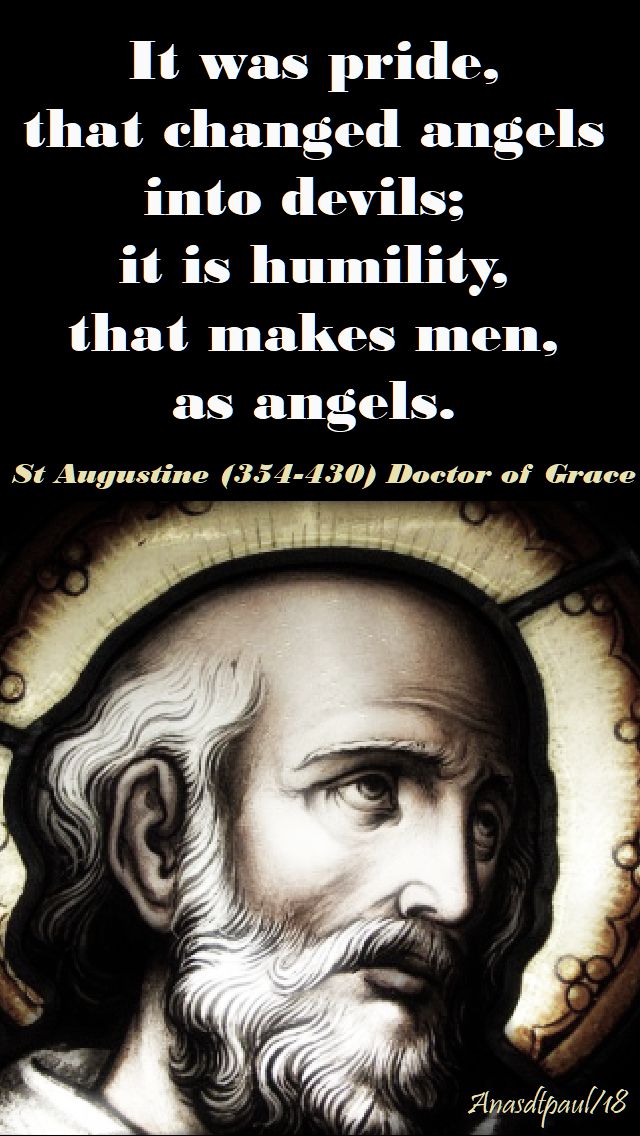
“It was pride that changed angels into devils; it is humility that makes men as angels.”
St Augustine (354-430) Doctor of Grace
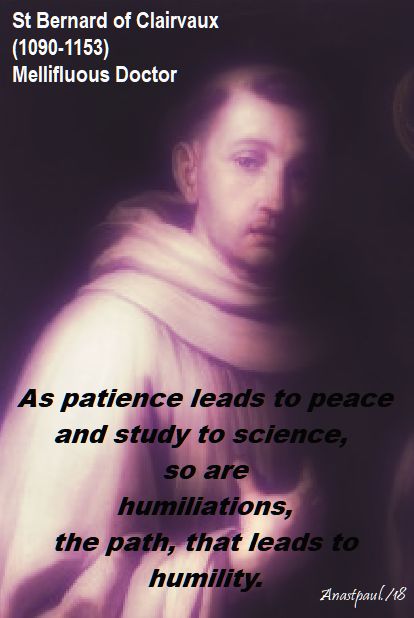
“As patience leads to peace and study to science, so are humiliations, the path that leads to humility.”
St Bernard of Clairvaux (1090-1153) Mellifluous Doctor
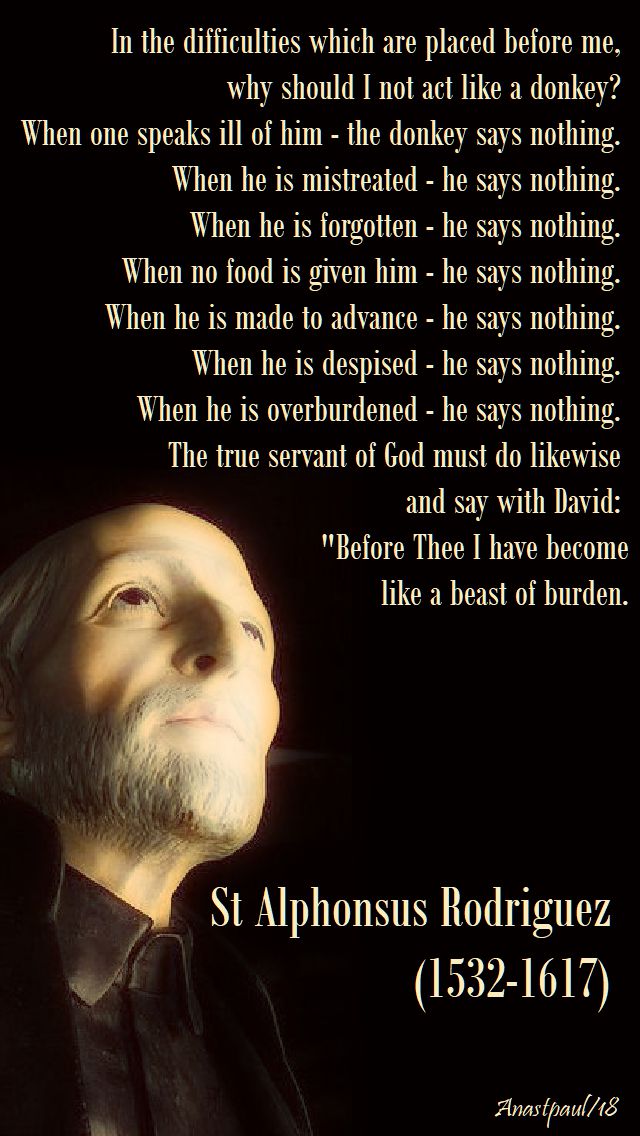
“In the difficulties which are placed before me, why should I not act like a donkey? When one speaks ill of him – the donkey says nothing. When he is mistreated – he says nothing. When he is forgotten – he says nothing. When no food is given him – he says nothing. When he is made to advance – he says nothing. When he is despised – he says nothing. When he is overburdened – he says nothing. The true servant of God must do likewise and say with David: “Before Thee I have become like a beast of burden.”
St Alphonsus Rodriguez (1532-1617)
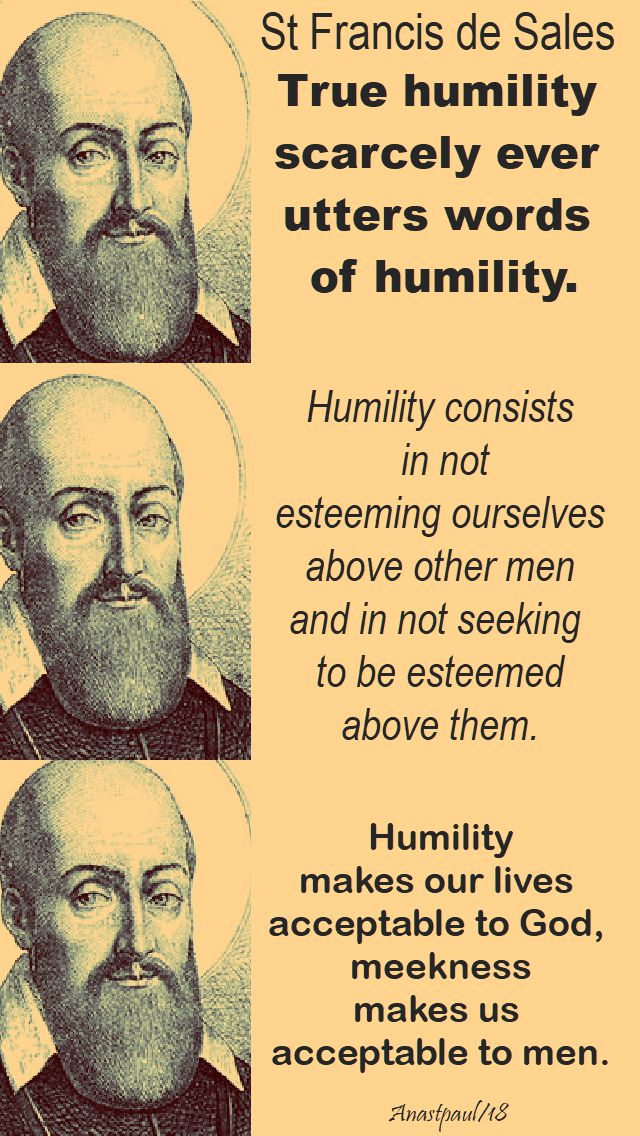
“True humility scarcely ever utters words of humility.”
“Humility consists in not esteeming ourselves above other men and in not seeking to be esteemed above them.”
“Humility makes our lives acceptable to God, meekness makes us acceptable to men.”
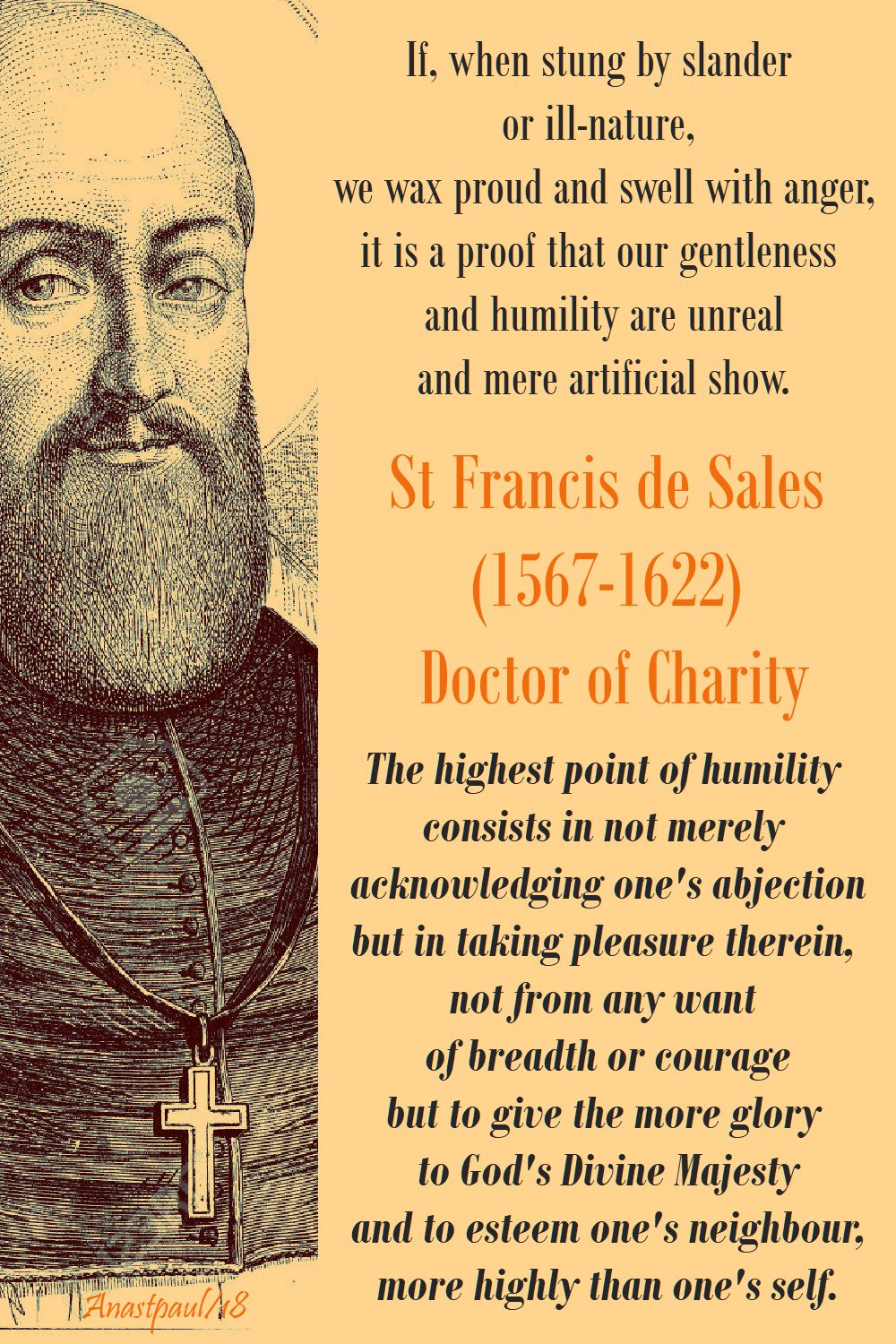
“If, when stung by slander or ill-nature, we wax proud and swell with anger, it is a proof that our gentleness and humility are unreal and mere artificial show.”
“The highest point of humility consists in not merely acknowledging one’s abjection but in taking pleasure therein, not from any want of breadth or courage but to give the more glory to God’s Divine Majesty and to esteem one’s neighbour, more highly than one’s self.”
St Francis de Sales (1567-1622) Doctor of Charity
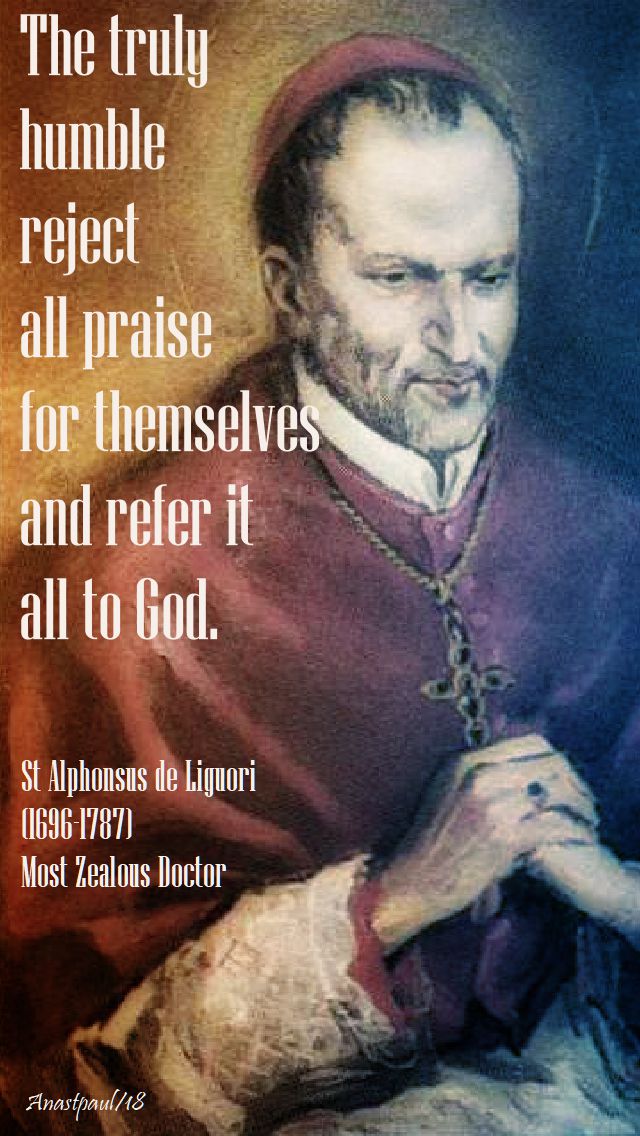
“The truly humble reject all praise for themselves and refer it all to God.”
St Alphonsus Maria de Liguori (1696-1787) Most Zealous Doctor
Quote/s of the Day – 23 April – Monday of the Fourth Week of Eastertide
“Speaking of Love, Life & Virtue”
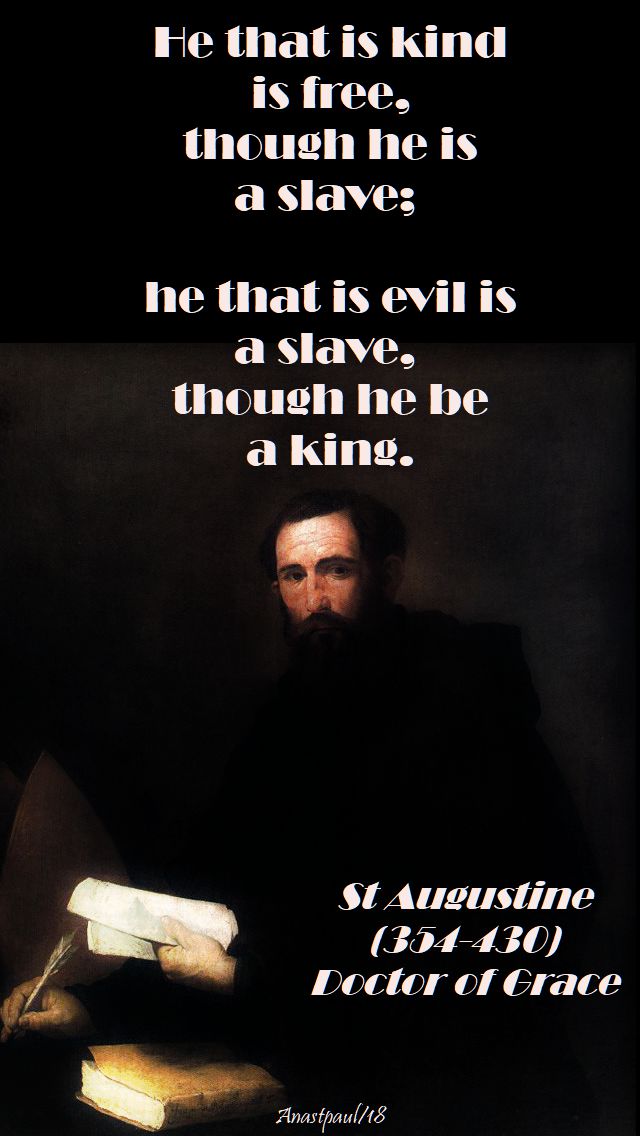
“He that is kind is free, though he is a slave; he that is evil is a slave, though he be a king.”
St Augustine (354-430) Doctor of Grace
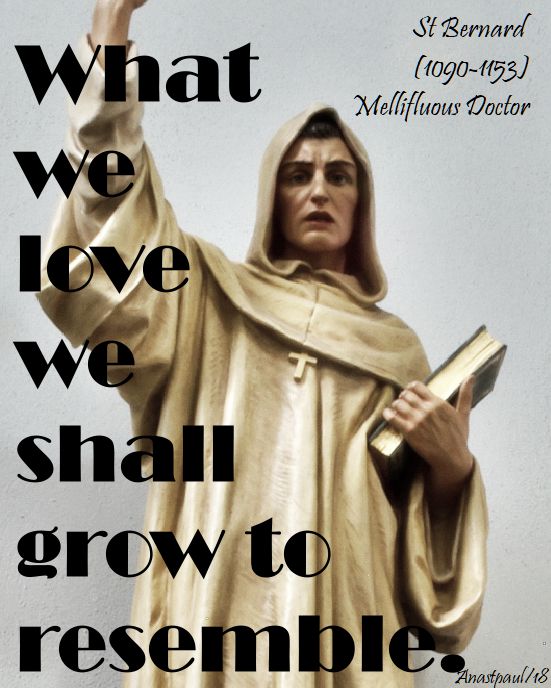
“What we love we shall grow to resemble.”
St Bernard of Clairvaux (1090-1153) Mellifluous Doctor
“The creator of the heavens obeys a carpenter; the God of eternal glory listens to a poor virgin. Has anyone ever witnessed anything comparable to this? Let the philosopher no longer disdain from listening to the common labourer; the wise, to the simple; the educated, to the illiterate; a child of a prince, to a peasant.”
St Anthony of Padua (1195-1231) Evangelical Doctor
“Commitment is doing what you said you would do, after the feeling you said it in, has passed.”
St Camillus de Lellis (1550-1614)
“You cannot love a thing without wanting to fight for it.”
G K Chesterton (1874-1936)
“You can’t go back and change the beginning but you can start where you are and change the ending.”
C S Lewis (1898-1963)
“The whole point of life is to learn to be a gift.”
Quote/s of the Day – 4 February – 5th Sunday of Year B
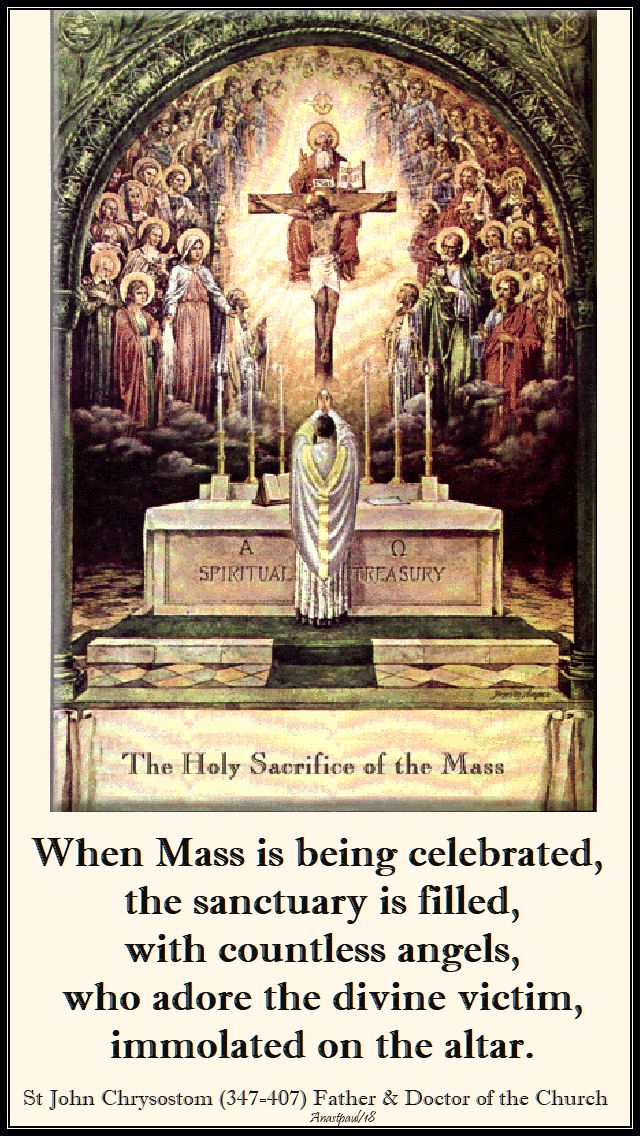
“Speaking of the Eucharist/the Holy Mass”
“When Mass is being celebrated, the sanctuary is filled, with countless angels, who adore the divine victim, immolated on the altar.”
St John Chrysostom (347-407) Father & Doctor of the Church
“The Holy Mass would be of greater profit, if people had it offered in their lifetime, rather than having it celebrated for the relief of their souls, after death.”
Pope Benedict XV (1854-1922)
“One merits more, by devoutly assisting at a Holy Mass, than by distributing, all of his goods to the poor and travelling, all over the world, on pilgrimage.”
St Bernard if Clairvaux (1090-1153) Doctor of the Church
“The celebration of Holy Mass has the same value as the Death of Jesus on the Cross.”
St Thomas Aquinas (1225-1274) Doctor of the Church
“When you have received Him, stir up your heart to do Him homage, speak to Him about your spiritual life, gazing upon Him in your soul, where He is present, for your happiness, welcome Him as warmly as possible and behave outwardly, in such a way, that your actions, may give proof to all, of His Presence.”
St Francis de Sales (1567-1622) Doctor of the Church
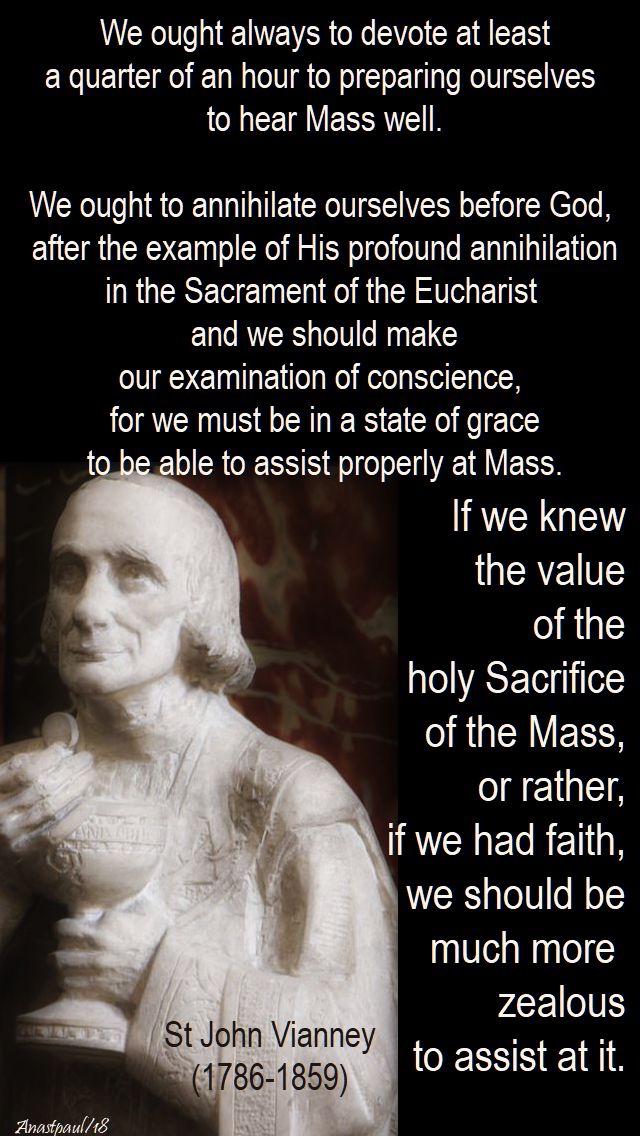
“If someone said to us, “At such an hour a dead person is to be raised to life, ” we should run very quickly to see it. But is not the Consecration, which changes bread and wine into the Body and Blood of God, a much greater miracle than to raise a dead person to life? We ought always to devote at least a quarter of an hour to preparing ourselves to hear Mass well. We ought to annihilate ourselves before God, after the example of His profound annihilation in the Sacrament of the Eucharist and we should make our examination of conscience, for we must be in a state of grace. to be able to assist properly at Mass. If we knew the value of the holy Sacrifice of the Mass, or rather, if we had faith, we should be much more zealous to assist at it.”
Quote/s of the Day – 7 January – The Solemnity of the Epiphany of Our Lord Jesus Christ
“If we approach with faith, we too will see Jesus….; for the Eucharistic table takes the place of the crib. Here the Body of the Lord is present, wrapped not in swaddling clothes but in the rays of the Holy Spirit.”
St John Chrysostom (347-407) Father & Doctor of the Church
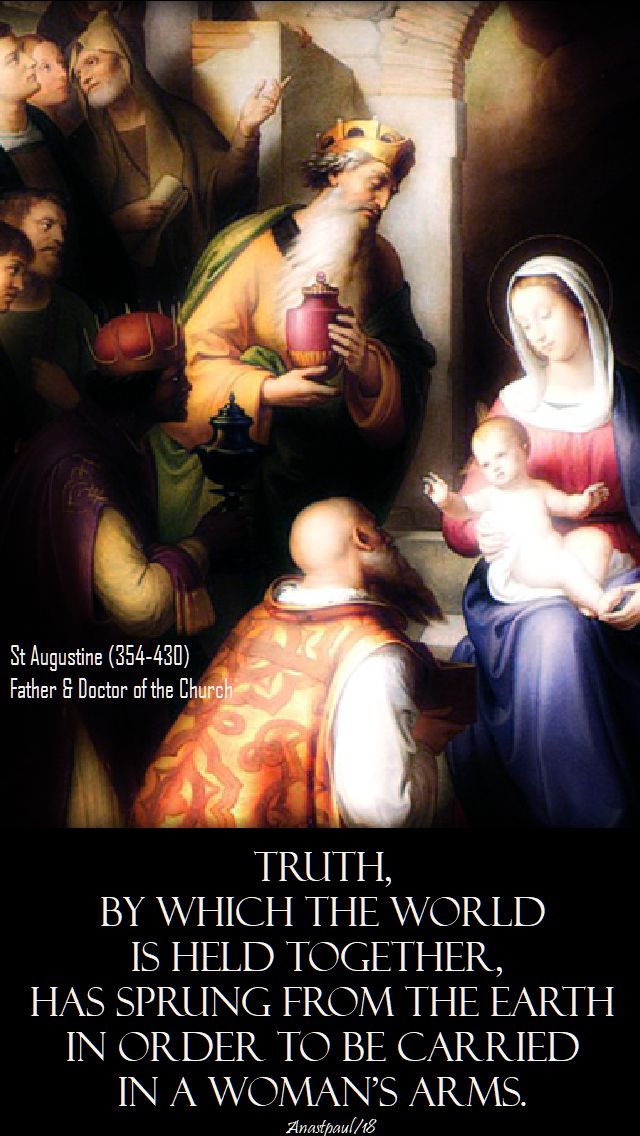
“Truth, by which the world is held together, has sprung from the earth, in order to be carried in a woman’s arms.”
St Augustine (354-430) Father & Doctor of the Church
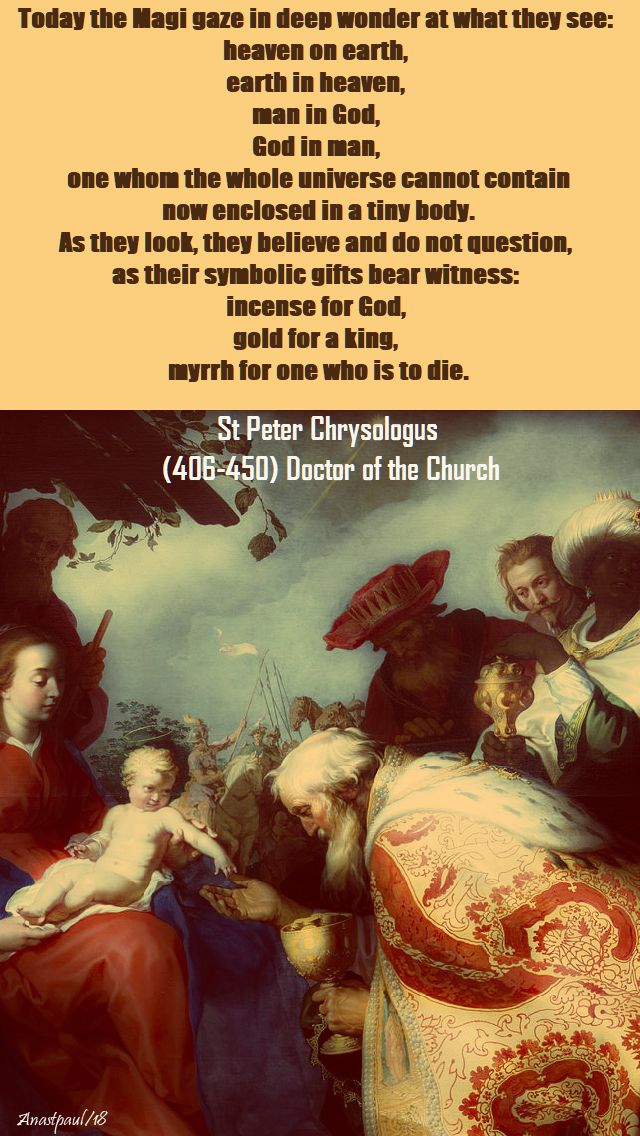
“Today the Magi gaze in deep wonder at what they see: heaven on earth, earth in heaven, man in God, God in man, one whom the whole universe cannot contain now enclosed in a tiny body. As they look, they believe and do not question, as their symbolic gifts bear witness: incense for God, gold for a king, myrrh for one who is to die.”
St Peter Chrysologus (406-450) Doctor of the Church
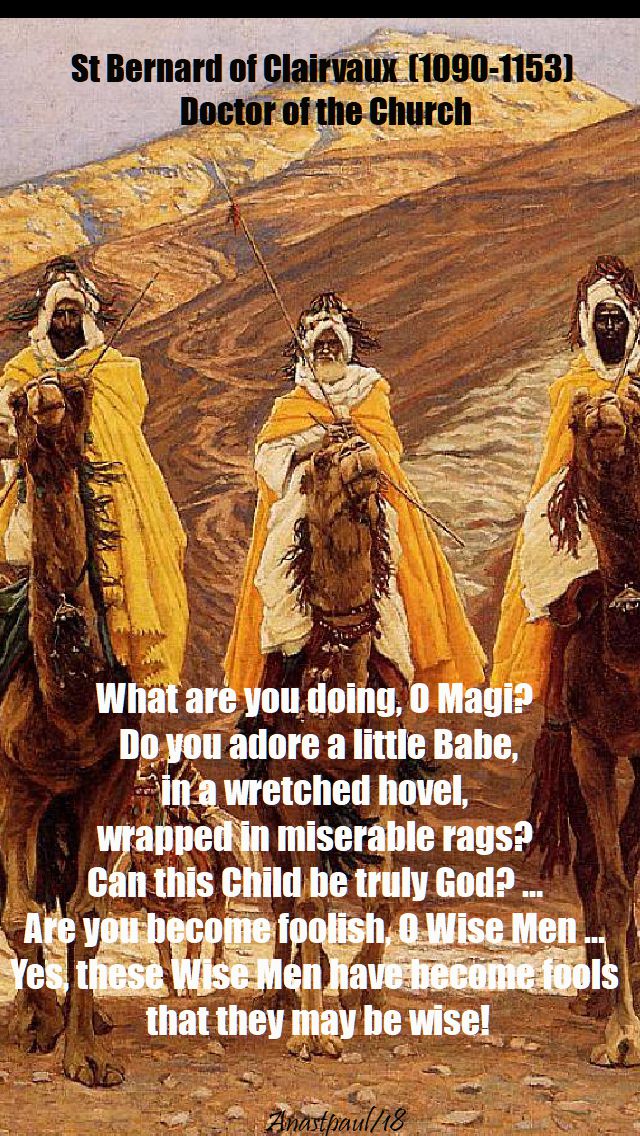
“What are you doing, O Magi? Do you adore a little Babe, in a wretched hovel, wrapped in miserable rags? Can this Child be truly God? … Are you become foolish, O Wise Men … Yes, these Wise Men have become fools that they may be wise!”
St Bernard of Clairvaux (1090-1153) Doctor of the Church
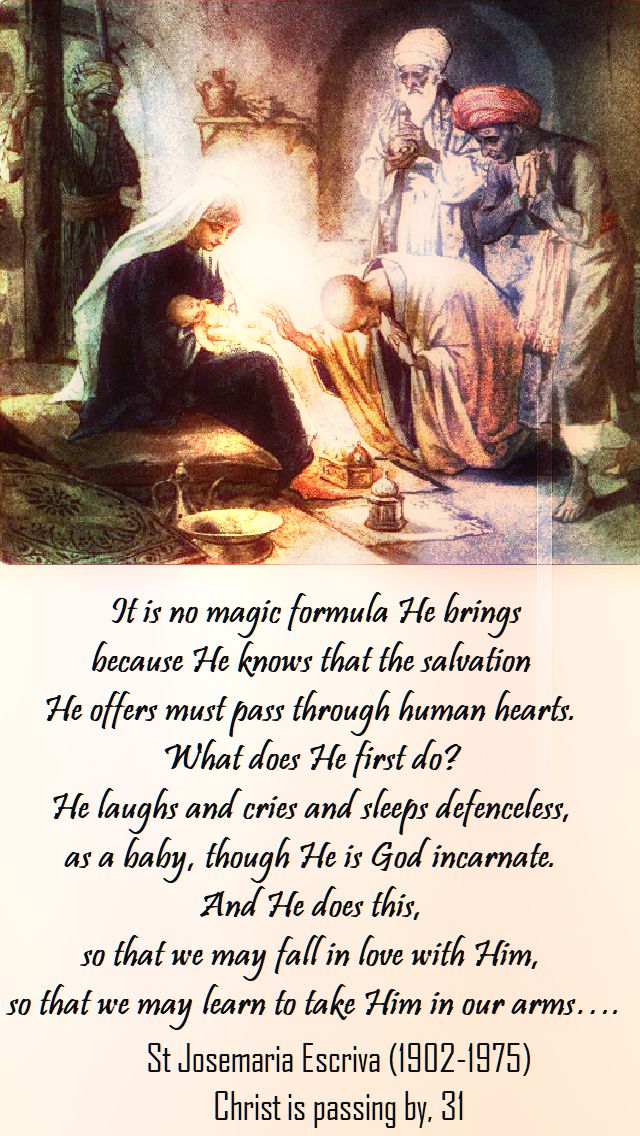
“It is no magic formula He brings because He knows that the salvation He offers must pass through human hearts. What does He first do? He laughs and cries and sleeps defenceless, as a baby, though He is God incarnate. And He does this, so that we may fall in love with Him, so that we may learn to take Him in our arms….”
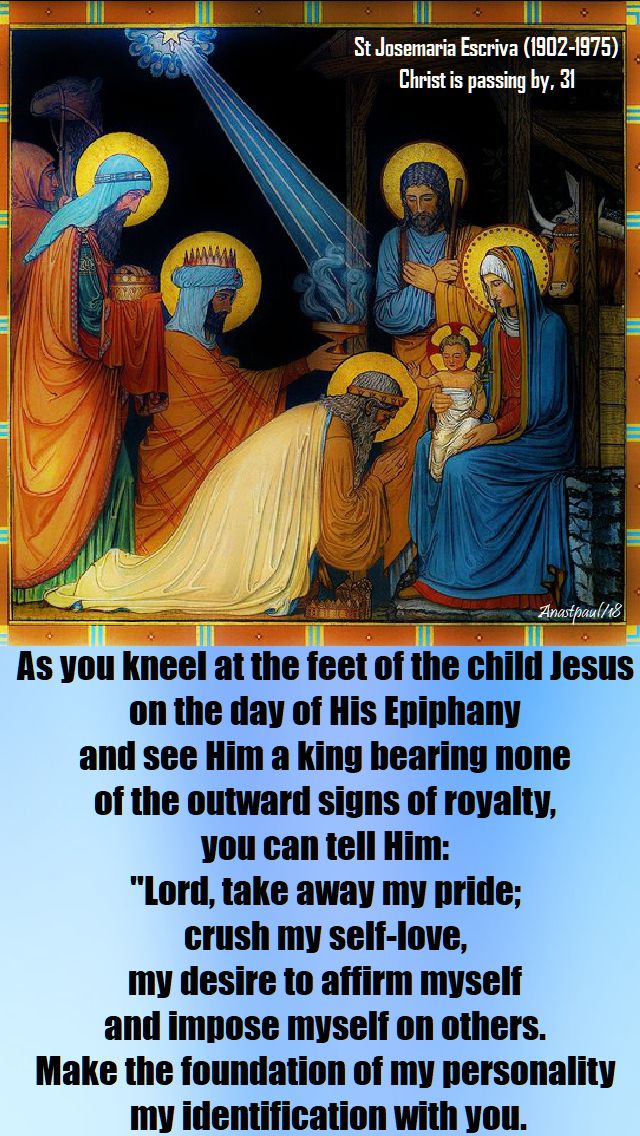
“As you kneel at the feet of the child Jesus on the day of His Epiphany and see Him a king bearing none of the outward signs of royalty, you can tell Him: “Lord, take away my pride; crush my self-love, my desire to affirm myself and impose myself on others. Make the foundation of my personality my identification with you.”
St Josemaria Escriva (1902-1975)
Christ is passing by, 31
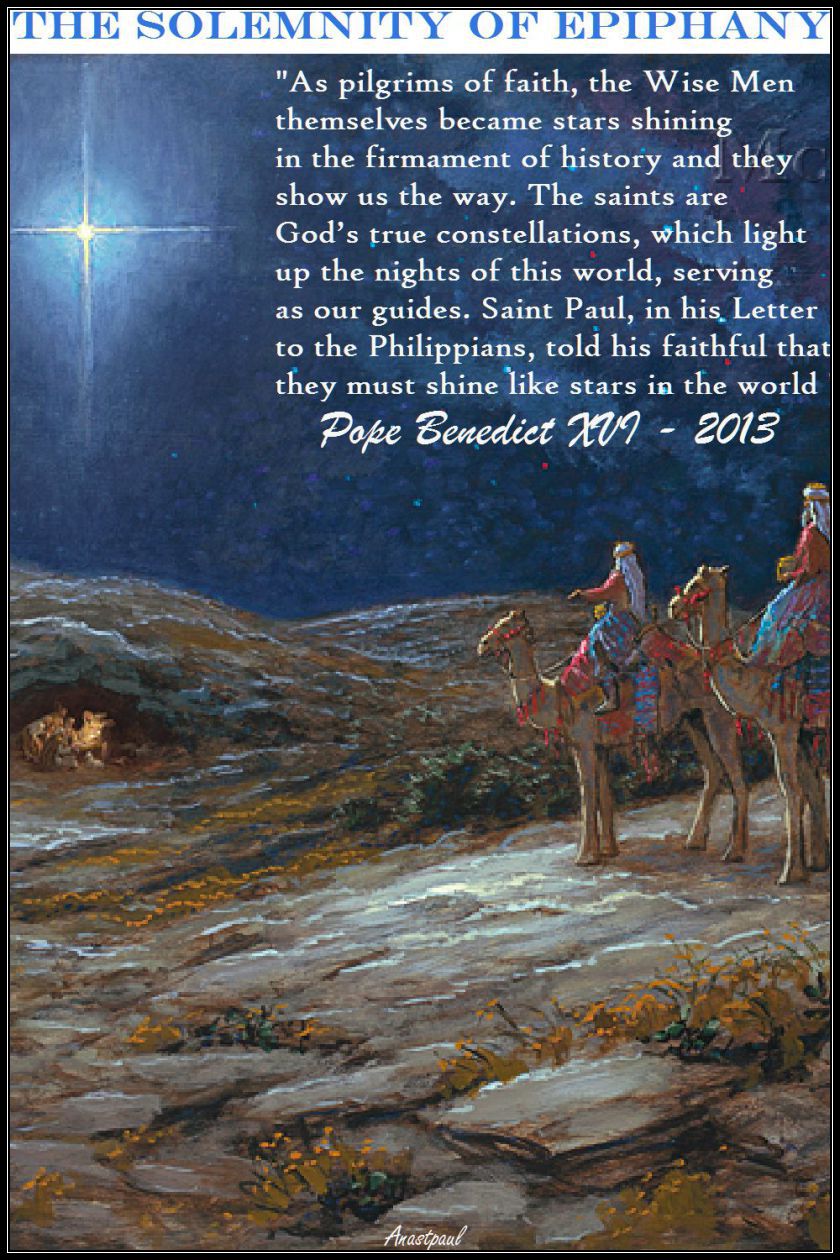
“As pilgrims of faith, the Wise Men themselves became stars shining in the firmament of history and they show us the way. The saints are God’s true constellations, which light up the nights of this world, serving as our guides. Saint Paul, in his Letter to the Philippians, told his faithful that they must shine like stars in the world.”
Extract from the Homily of His Holiness Benedict XVI
Vatican Basilica, Sunday, 6 January 2013
Quote of the Day – 31 December – Feast of the Holy Family and the Seventh Day of the Octave
“God, to Whom Angels submit themselves and Who Principalities and Powers obey, was subject to Mary; and not only to Mary but Joseph too, for Mary’s sake [….]. God obeyed a human creature; this is humility without precedent. A human creature commands God! it is sublime beyond measure.“
31 December – Feast of the Holy Family and the Seventh Day of the Octave
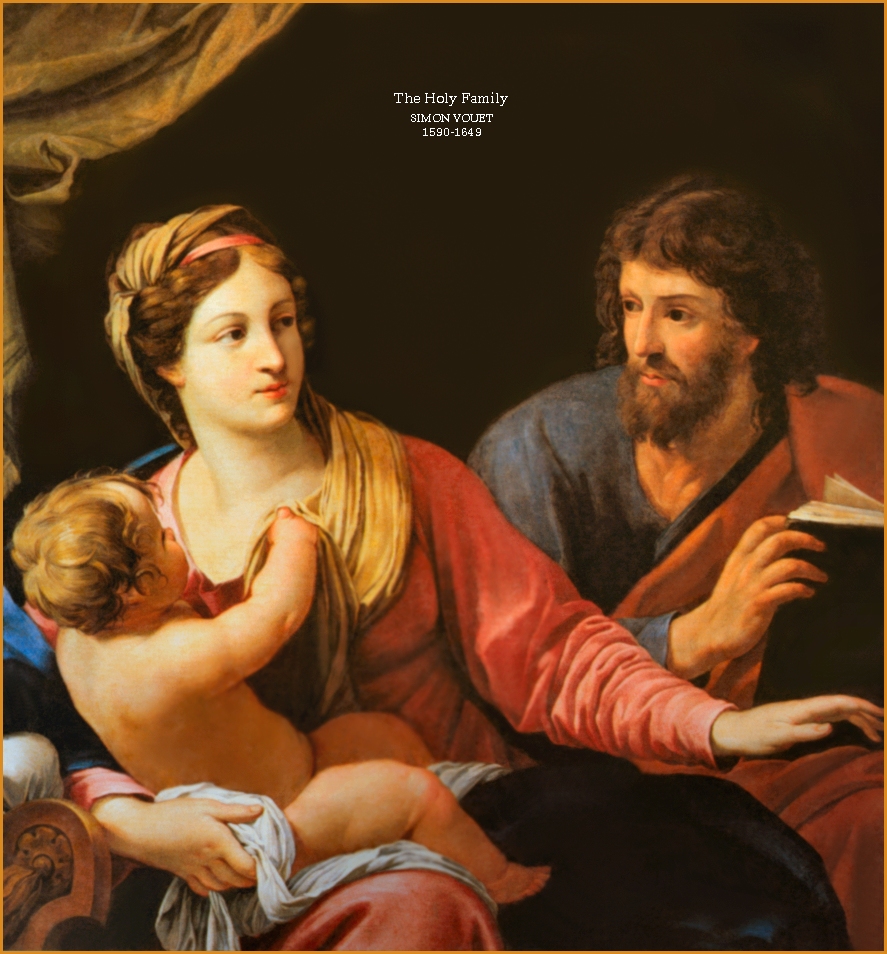
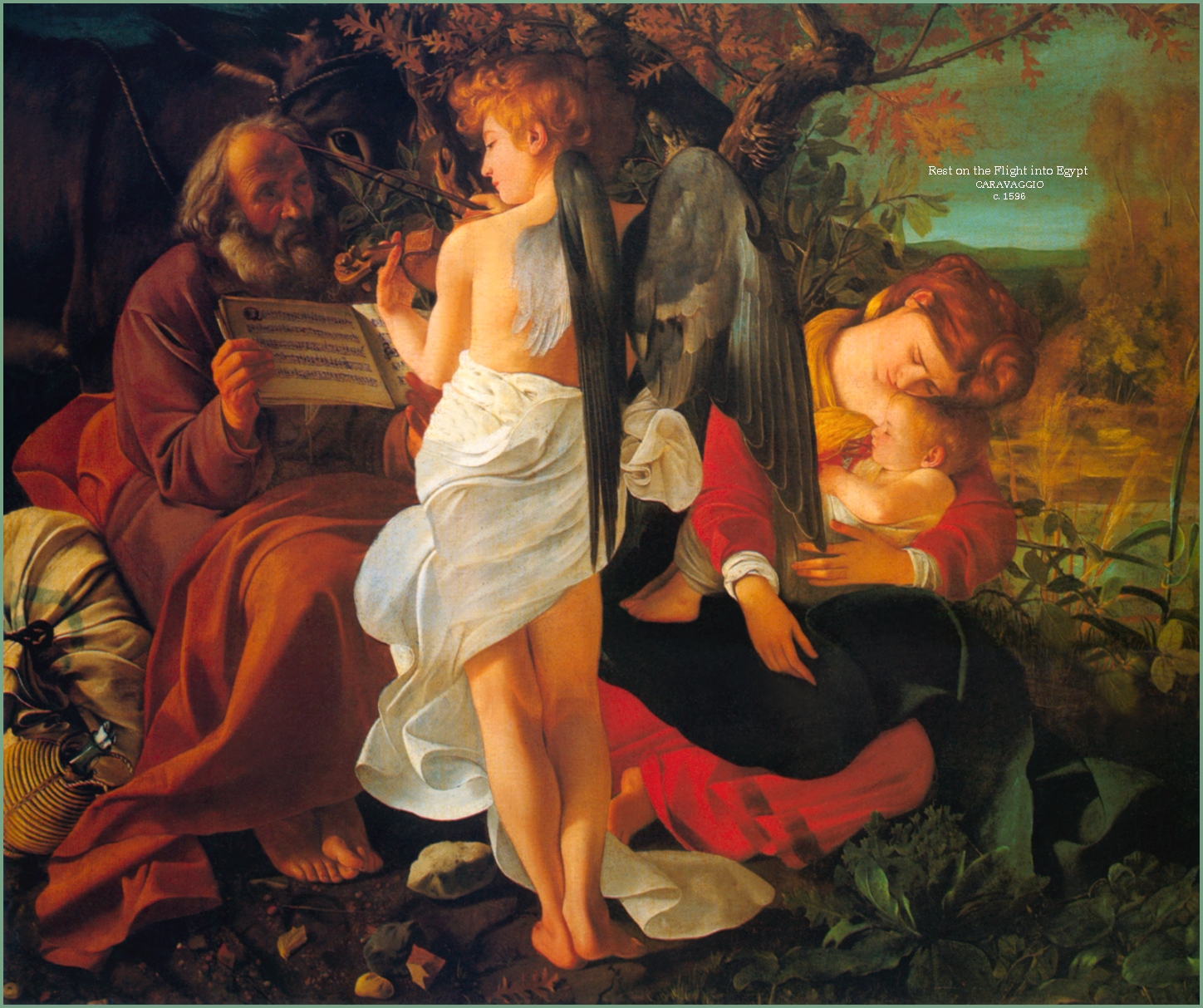
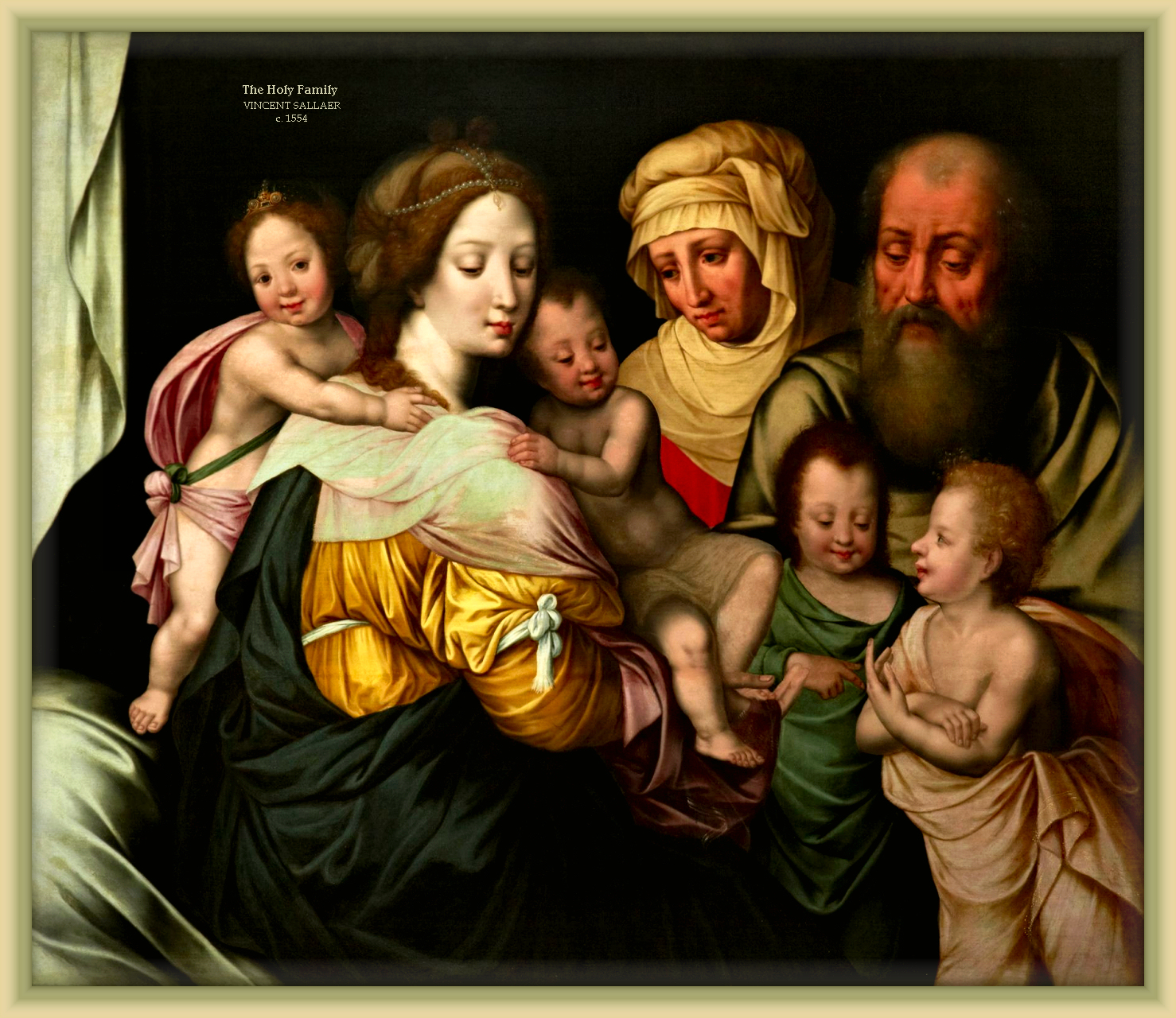
The Holy Family is the name given to the family unit of Jesus: The Divine Son of God Jesus, His mother the Virgin Mary and His foster-father Joseph. We know very little about the life of the Holy Family through the canonical Gospels. They speak of the early years of the Holy Family, including the birth of Jesus in Bethlehem, the flight into Egypt, and the finding of Jesus in the temple. Various non-canonical works, including the Infancy Gospel of Thomas, try to fill in the blanks. However, even though these apocryphal works may contain some truth derived from oral tradition, they have been deemed unworthy of canonical status because of the way they present Jesus. While the exact details of the day-to-day life of the Holy Family may be unknown, we can still learn a lot from the stories we do have.
As far back as St John Chrysostom (347-407) , Christians were urged to make of their home a family church in which the family members would find their sanctification. That was to be accomplished by putting Christ at the center of all individual and family life, by working and praying together, reading the Scriptures and worshiping as a unit. The cult of the Holy Family grew in popularity in the 17th century and several religious congregations have been founded under this title. The Holy Family also became portrayed in popular art of the period. On 26 October 1921 the Congregation of Rites (under Pope Benedict XV) inserted the Feast of the Holy Family into the Latin Rite general calendar. Until then it had been celebrated regionally. Popes before and including Benedict XV (especially Leo XIII) promoted the feast as a way to counter the breakdown of the family unit. Today the Church celebrates the Feast on the Sunday between Christmas and New Year’s Day (Known as the Feast of Mary Mother of God in the Catholic Church). If both Christmas and New Year’s Day fall on Sundays, no Sunday exists between the two dates, so the Church celebrates the Holy Family Feast on 30 December.
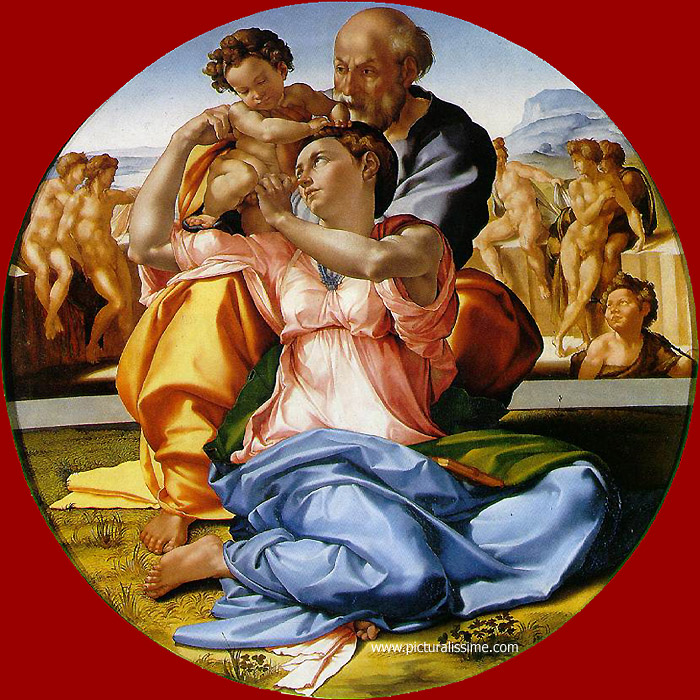
Michelangelo The Doni Tondo, The Holy Family with the infant St John the Baptist
The Holy Family: Jesus, Mary and Joseph
The devotion to the Holy Family was born in Bethlehem, together with the Baby Jesus. The shepherds went to adore the Child and, at the same time, they gave honour to His family. Later, in a similar way, the three wise men came from the East to adore and give honour to the newborn King with gifts of gold, frankincense and myrrh that would be safeguarded by His family.
We can go further to affirm that in a certain sense Christ, Himself, was the first devotee of His family. He showed His devotion to His mother and foster father by submitting Himself, with infinite humility, to the duty of filial obedience towards them. This is what St Bernard of Clairvaux said in this regard, ‘God, to whom angels submit themselves and who principalities and powers obey, was subject to Mary; and not only to Mary but Joseph also for Mary’s sake [….]. God obeyed a human creature; this is humility without precedent. A human creature commands God; it is sublime beyond measure.’ (First Homily on the ‘Missus Est’).
Today’s celebration demonstrates Christ’s humility and obedience with respect to the fourth commandment, whilst also highlighting the loving care that His parents exercised in His keeping. The servant of God, St Pope John Paul II, in 1989, entitled his Apostolic Exhortation, ‘Redemptoris Custos’ (Guardian of the Redeemer) which was dedicated to the person and the mission of Saint Joseph in the life of Christ and of the Church. After exactly a century, he resumed the teaching of Pope Leo XIII, for who Saint Joseph ‘.. shines among all mankind by the most august dignity, since by divine will, he was the guardian of the Son of God and reputed as His father among men’ (Encyclical Quamquam Pluries[1889] n. 3). Pope Leo XIII continued, ‘.. Joseph became the guardian, the administrator and the legal defender of the divine house whose chief he was.[…] It is, then, natural and worthy that as the Blessed Joseph ministered to all the needs of the family at Nazareth and girt it about with his protection, he should now cover with the cloak of his heavenly patronage and defend the Church of Jesus Christ.’ Not many years before, blessed Pope Pius IX had proclaimed Saint Joseph, ‘Patron of the Catholic Church’ (1870)
Almost intuitively, one can recognise that the mysterious, exemplary, guardianship enacted by Joseph was conducted firstly, in a yet more intimate way, by Mary. Consequently, the liturgical feast of the Holy Family speaks to us of the fond and loving care that we must render to the Body of Christ. We can understand this in a mystical sense, as guardians of the Church and also in the Eucharistic sense. Mary and Joseph took great care of Jesus’ physical body. Following their example, we can and must take great care of His Mystical Body, the Church and the Eucharist which He has entrusted to us. If Mary was, in some way, ‘thefirst tabernacle in history’ (St John Paul Ecclesia de Eucharistia, n. 55) then we, the Tabernacle, in which Our Lord chose to reside in person, in His Real Presence, was also entrusted to us.
We can learn from Mary and Joseph! What would they ever have overlooked in the care of Jesus’ physical body? Is there something, therefore, that we can withhold for the right and adoring care of His Eucharistic Body? No amount of attention, no sane act of love and adoring respect will ever be too much! On the contrary, our adoration and respect will always be inferior to the great gift that comes to us in the Holy Eucharist.
Looking at the Holy Family, we see the love, the protection and the diligent care that they gave to the Redeemer. We can not fail to feel uneasiness, perhaps a shameful thought, for the times in which we have not rendered the appropriate care and attention to the Blessed Eucharist. We can only ask for forgiveness and do penance for all the sacrilegious acts and the lack of respect that are committed in front of the Blessed Eucharist. We can only ask the Lord, through the intersession of the Holy Family of Nazareth, for a greater love for their Son Incarnate, who has decided to remain here on earth with us every day until the end of time. (From the Congregation for the Clergy.)
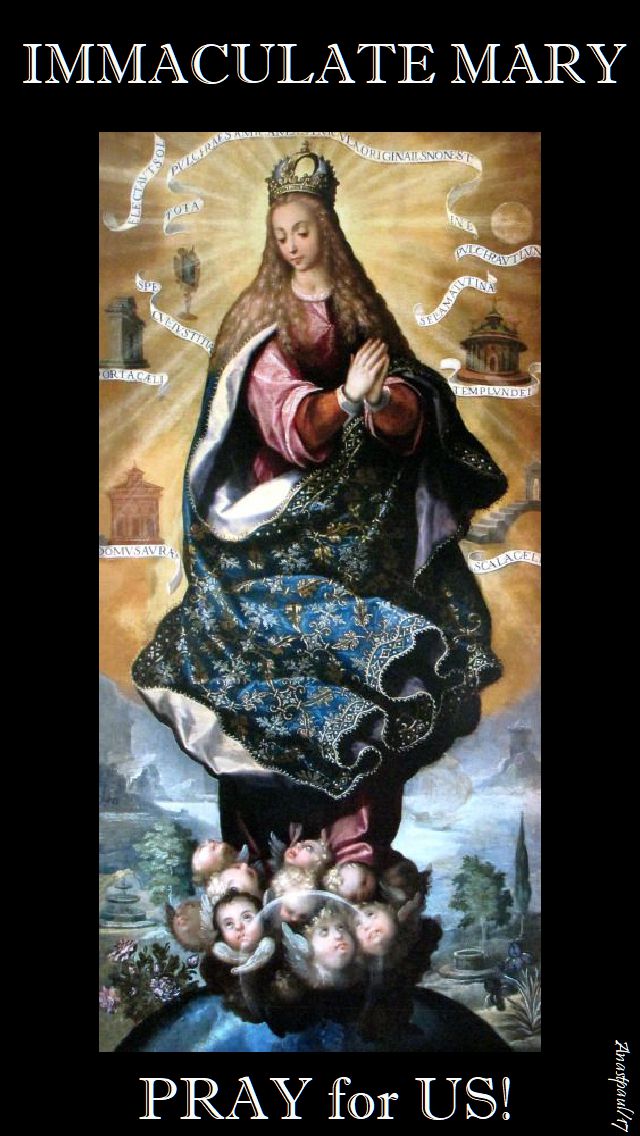
One Minute Reflection – 8 December – The Solemnity of the Immaculate Conception
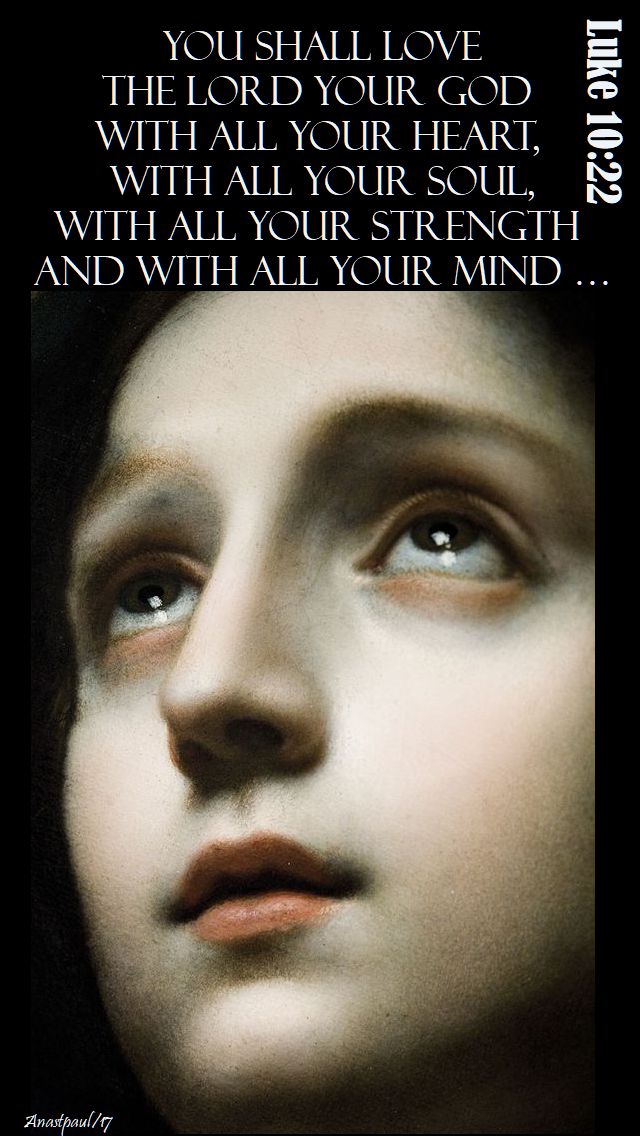
You shall love the Lord your God with all your heart, with all your soul, with all your strength and with all your mind ………………Luke 10:22
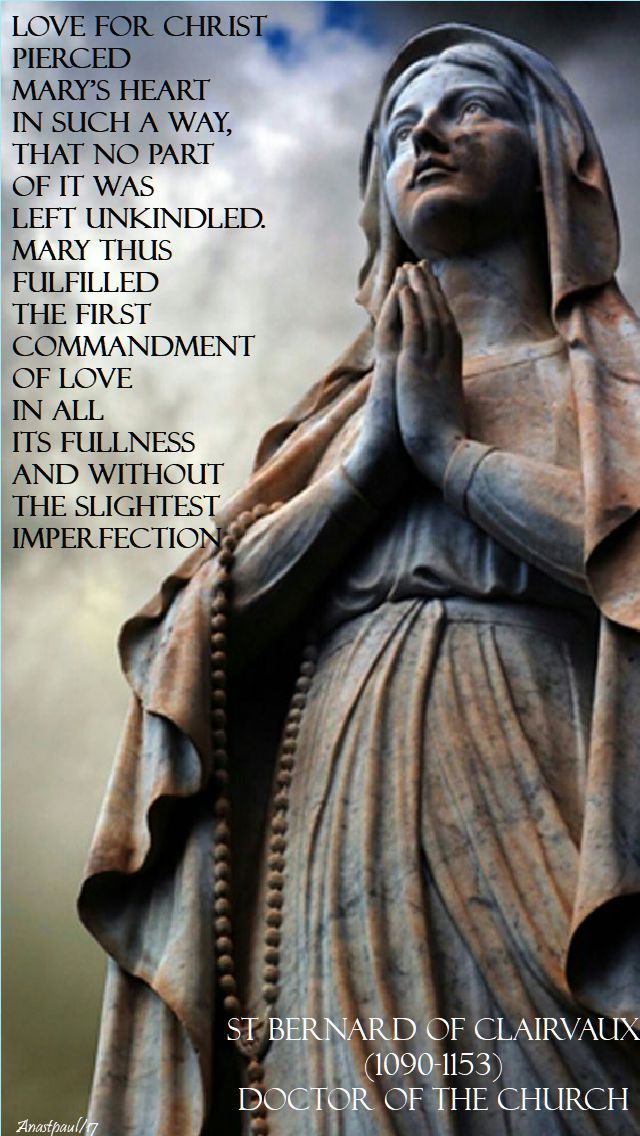
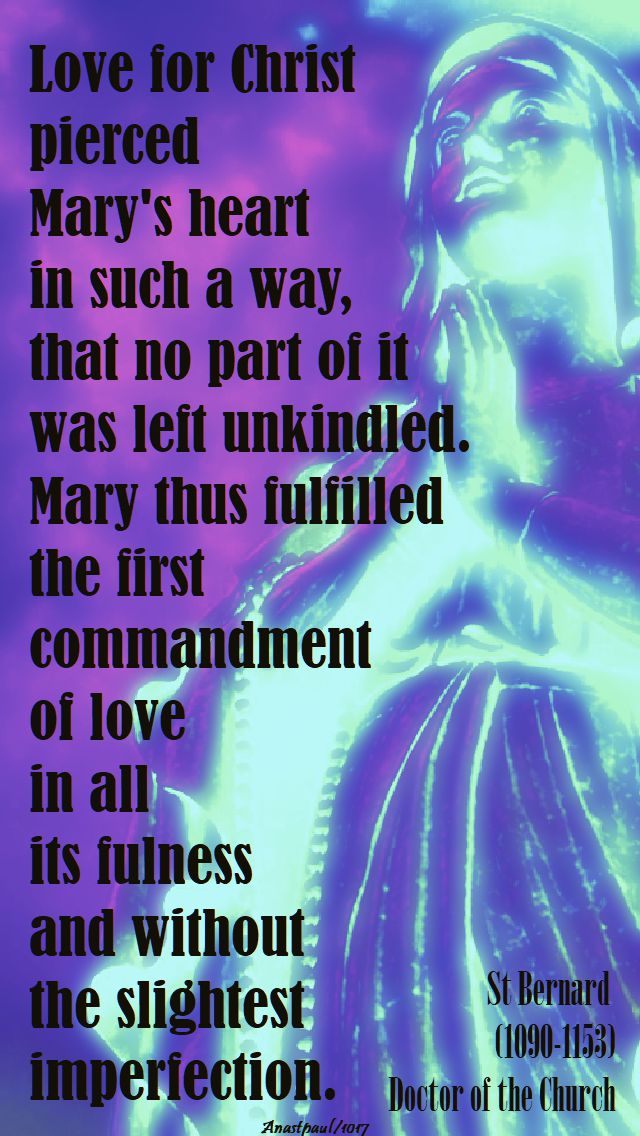
REFLECTION – Love for Christ pierced Mary’s heart in such a way that no part
of it was left unkindled. Mary thus fulfilled the first commandment of love
in all its fullness and without the slightest imperfection…………St Bernard
PRAYER – Heavenly Father, help us to imitate Your Immaculate Daughter Mary in her love for You. Grant us the grace to love You as much as she, all our lives and grant, that through her help and her prayers, we ourselves may come to You , cleansed from our sins. O Mary Immaculate, mother of our Lord, Pray for us! Amen
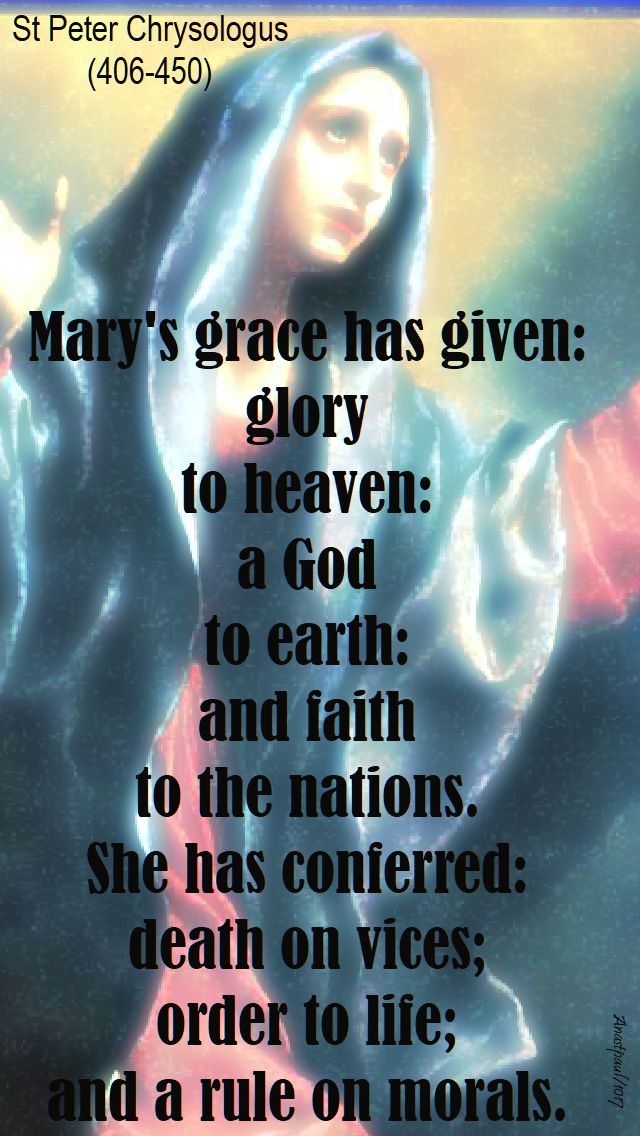
“Mary’s grace has given: glory to heaven: a God to earth: and faith to the nations. She has conferred: death on vices; order to life; and a rule on morals.”
St Peter Chrysologus (406-450)
“Love for Christ pierced Mary’s heart in such a way that no part of it was left unkindled. Mary thus fulfilled the first commandment of love in all its fulness and without the slightest imperfection.”
St Bernard (1090-1153)
“She is flower of the field from whom bloomed the precious lily of the valley.”
Quote/s of the Day – 12 September – Blessed Feast of the Holy Name of Mary!
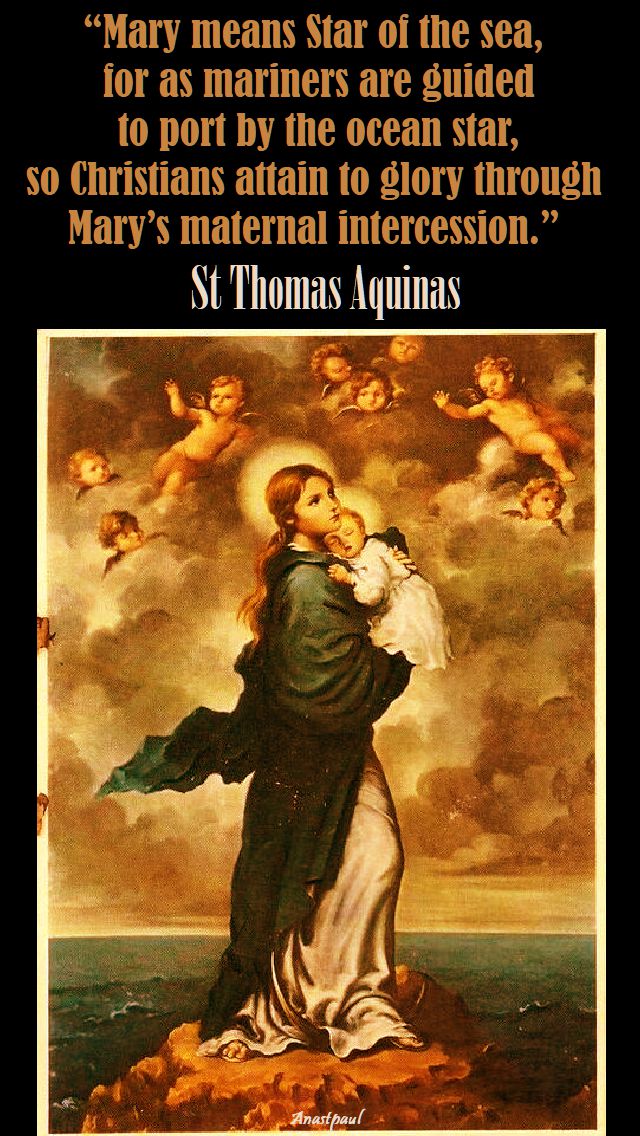
“Mary means Star of the sea, for as mariners are guided to port by the ocean star, so Christians attain to glory through Mary’s maternal intercession.”
St Thomas Aquinas
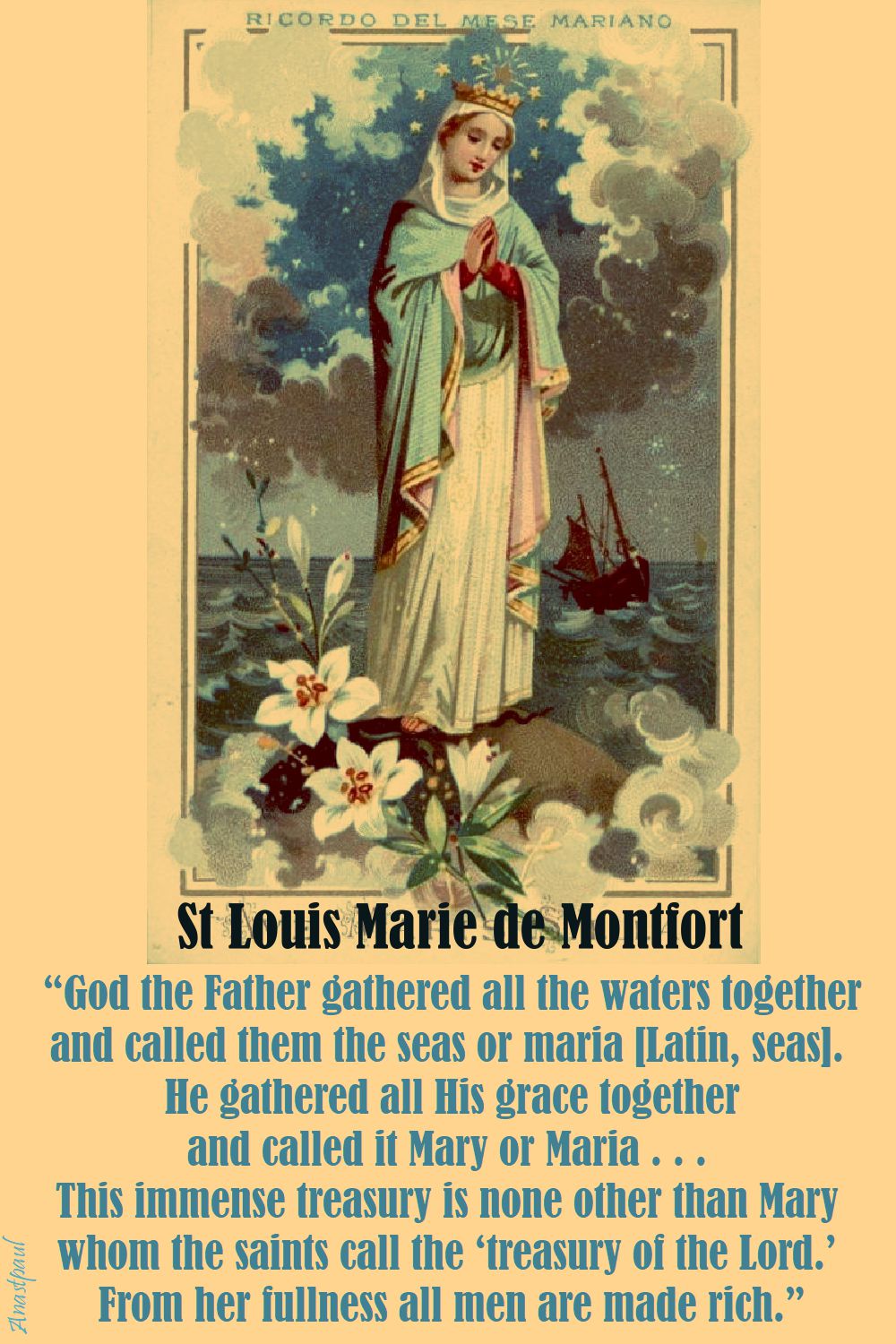
“God the Father gathered all the waters together and called them the seas or maria [Latin, seas]. He gathered all His grace together and called it Mary or Maria . . . This immense treasury is none other than Mary whom the saints call the ‘treasury of the Lord.’ From her fullness all men are made rich.”
St Louis de Montfort
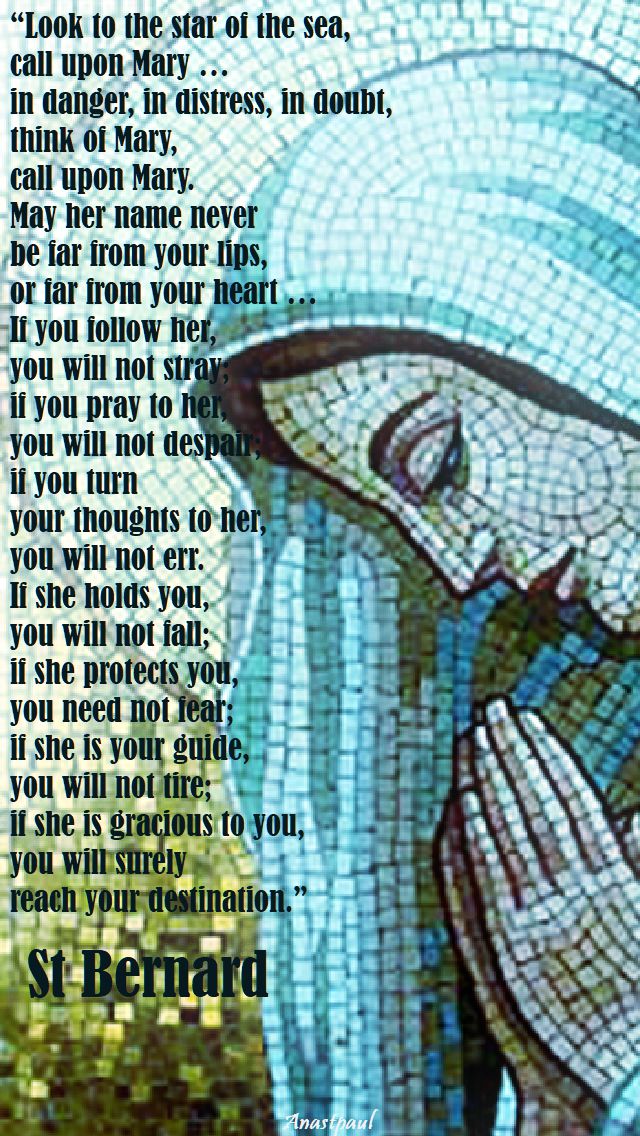
“Look to the star of the sea, call upon Mary … in danger, in distress, in doubt, think of Mary, call upon Mary. May her name never be far from your lips, or far from your heart … If you follow her, you will not stray; if you pray to her, you will not despair; if you turn your thoughts to her, you will not err. If she holds you, you will not fall; if she protects you, you need not fear; if she is your guide, you will not tire; if she is gracious to you, you will surely reach your destination.”
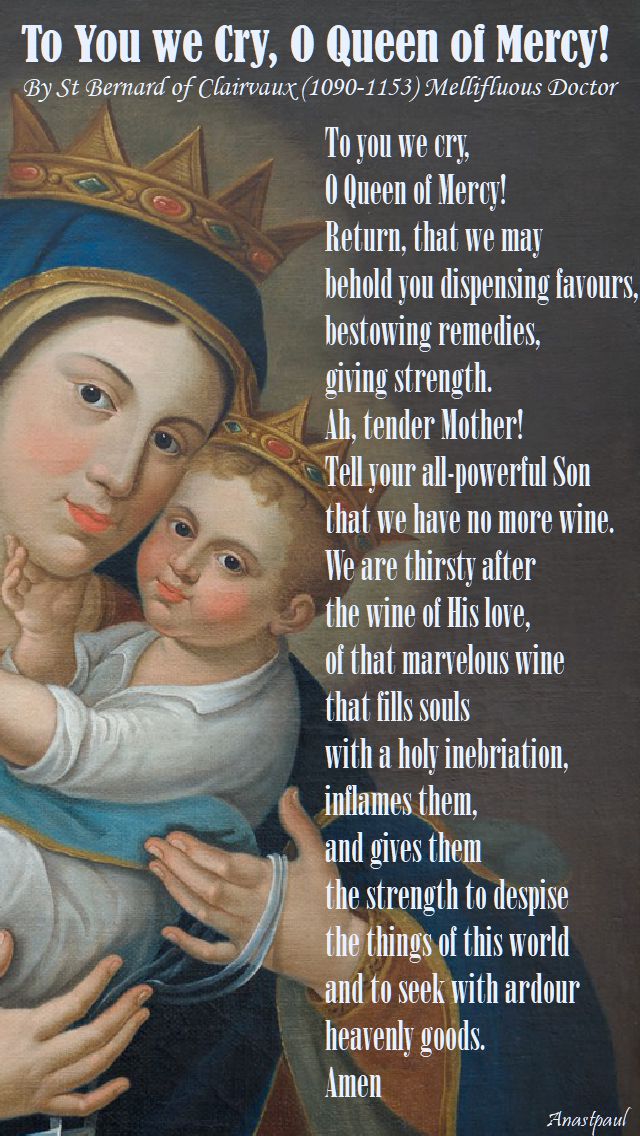
To You we Cry, O Queen of Mercy! By St Bernard of Clairvaux (1090-1153) Doctor mellifluus (Mellifluous Doctor)
To you we cry,
O Queen of Mercy!
Return, that we may
behold you dispensing favours,
bestowing remedies,
giving strength.
Ah, tender Mother!
Tell your all-powerful Son
that we have no more wine.
We are thirsty after the wine of His love,
of that marvelous wine
that fills souls with a holy inebriation,
inflames them,
and gives them the strength to despise
the things of this world
and to seek with ardour heavenly goods.
Amen
On the Feast Day of St Bernard, August 20, can we do better than call on our Mother
The Memorare by St Bernard of Clairvaux
REMEMBER, O most gracious Virgin Mary,
that never was it known that anyone who fled
to thy protection, implored thy help, or sought
thy intercession was left unaided. Inspired by
this confidence, I fly unto thee, O Virgin of virgins,
my Mother; to thee do I come; before thee I stand,
sinful and sorrowful. O Mother of the Word Incarnate,
despise not my petitions, but in thy mercy
hear and answer me. Amen.
(The Express Novena you will recall, is 9 times the Memorare)
Thought for the Day – 20 August – The Memorial of St Bernard of Clairvaux
Man of the century! Woman of the century! You see such terms applied to so many today—“golfer of the century,” “composer of the century,” “right tackle of the century”—that the line no longer has any punch. But Western Europe’s “man of the twelfth century,” without doubt or controversy, had to be Bernard of Clairvaux. Adviser of popes, preacher of the Second Crusade, defender of the faith, healer of a schism, reformer of a monastic Order, Scripture scholar, theologian, and eloquent preacher: any one of these titles would distinguish an ordinary man. Yet Bernard was all of these—and he still retained a burning desire to return to the hidden monastic life of his younger days.
His ability as arbitrator and counsellor became widely known. More and more he was lured away from the monastery to settle long-standing disputes. On several of these occasions, he apparently stepped on some sensitive toes in Rome. Bernard was completely dedicated to the primacy of the Roman See. But to a letter of warning from Rome, he replied that the good fathers in Rome had enough to do to keep the Church in one piece. If any matters arose that warranted their interest, he would be the first to let them know.
Shortly thereafter it was Bernard who intervened in a full-blown schism and settled it in favour of the Roman pontiff against the antipope.
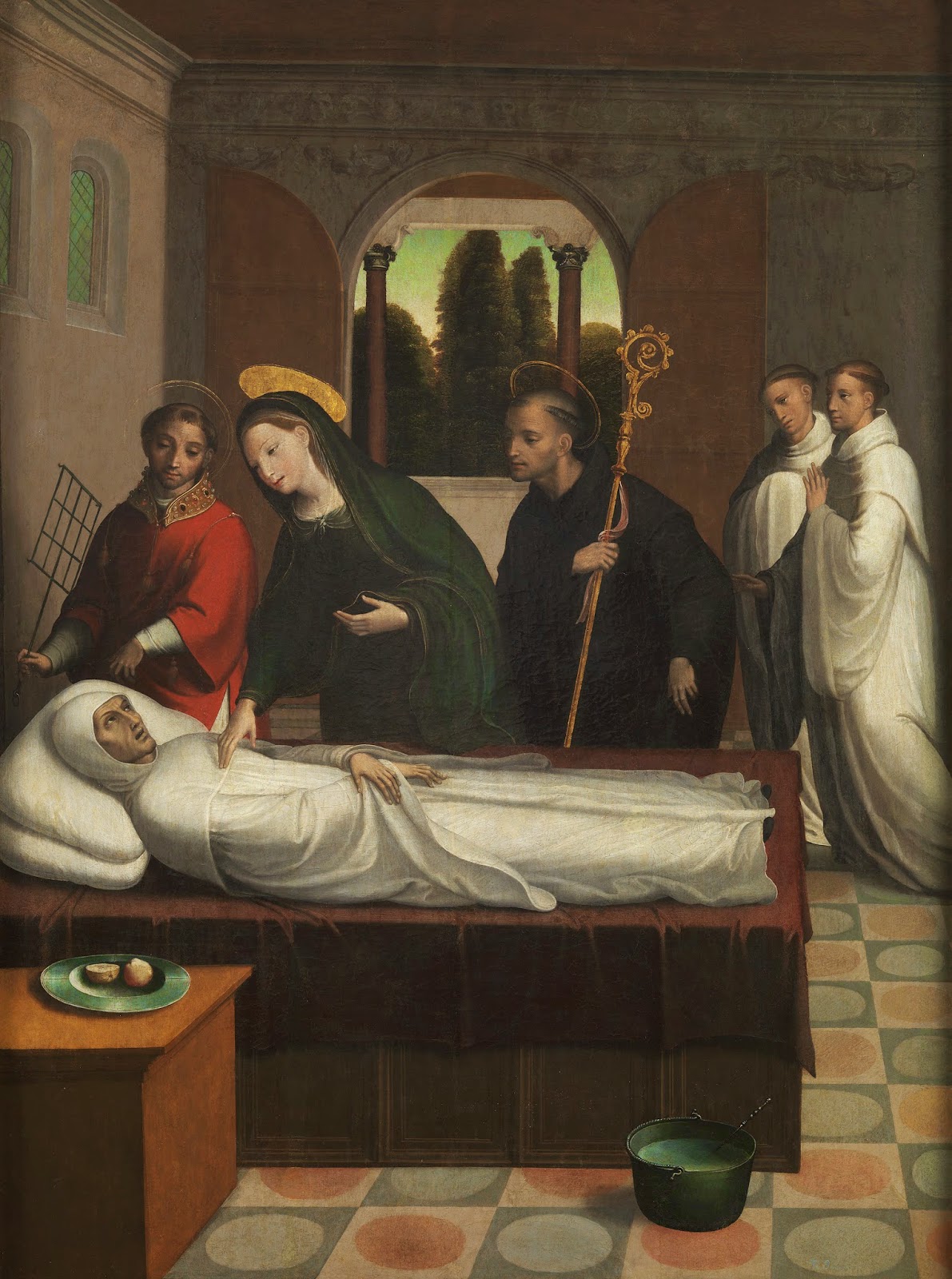
Bernard felt responsible in some way for the degenerative effects of the crusade. This heavy burden possibly hastened his death, which came August 20, 1153.
Juan Correa de Vivar (1510 – 16 April 1566) Death of St Bernard – 1545
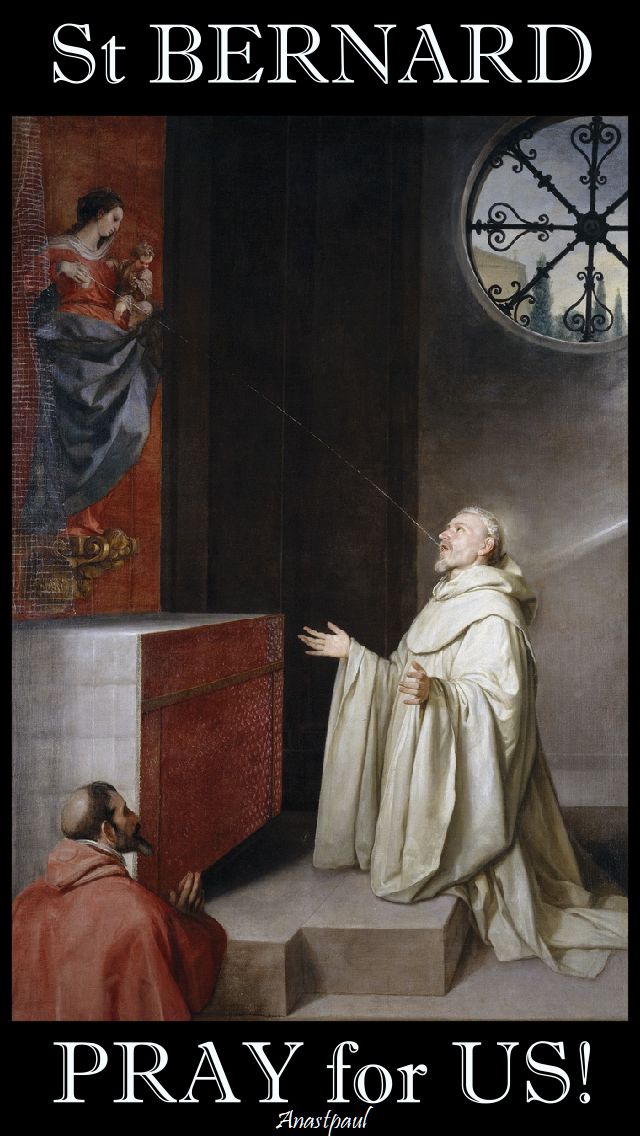
Bernard’s life in the Church was more active than we can imagine possible today. His efforts produced far-reaching results. But he knew that they would have availed little without the many hours of prayer and contemplation that brought him strength and heavenly direction. His life was characterised by a deep devotion to the Blessed Mother. His sermons and books about Mary are still the standard of Marian theology….Fr Don Miller OFM
Quote/s of the Day – The Memorial of St Bernard of Clairvaux
“Are you troubled? Think but of Jesus – speak but the name of Jesus, the clouds disperse and peace descends anew from heaven. Have you fallen into sin? So that you fear death? ..invoke the name of Jesus and you will soon feel life returning. No obduracy of the soul, no weakness, no coldness of heart can resist this holy name – there is no heart which will not soften and open in tears at this holy name.”
“The measure of love is love without measure.”
“Jesus, what made You so small? LOVE!”
“There are those who seek knowledge for the sake of knowledge – that is curiosity. There are those who seek knowledge to be known by others – that is vanity. There are those who seek knowledge in order to serve – that is Love.”
“The three most important virtues are: humility, humility and humility.”
“Let us not imagine that we obscure the glory of the Son by the great praise we lavish on the Mother – for the more she is honoured, the greater is the glory of her Son. There can be no doubt that whatever we say in praise of the Mother gives equal praise to the Son.”
“Love for Christ pierced Mary’s heart in such a way that no part of it was left unkindled. Mary thus fulfilled the first commandment of love in all its fulness and without the slightest imperfection.”
“Action and contemplation are very close companions; they live together in one house on equal terms. Martha and Mary are sisters.”
St Bernard of Clairvaux (1090-1153) Doctor of the Church
One Minute Reflection – 20 August – – The Memorial of St Bernard of Clairvaux
Hold fast to …. a good conscience. Some men, by rejecting the guidance of conscience, have made shipwreck of their faith…1 Timothy 1:19
REFLECTION – “A good conscience is a treasury of riches.
Indeed, what greater riches can there be – or what can be sweeter – than a good conscience?….St Bernard
PRAYER – All-knowing God, let me be able to stand in Your presence with a good conscience.
Help me to avoid anything that would sully my conscience and do all I can to remain united with You.
St Bernard, pray for us, amen.

















 AnaStpaul
You must be logged in to post a comment.