Posted in MARIAN TITLES, SAINT of the DAY

Easter Monday, Nostra Signora delle Lacrime / Our Lady of Tears, Sicily (1953) and the Saints for 1 April

Easter Monday

1 April – The Month of the Resurrection and the Blessed Sacrament

Blessed Abraham of Bulgaria
Blessed Alexander of Sicily
Saint Anastasio
Blessed Antonius of Noto
Saint Berhard of Amiens
Blessed Bernhardin of Noto

Saint Dodolinus of Vienne
Blessed Enrico Alfrieri OFM (1315-1405) Vicar General of the Friar’s Minor
Blessed Gerard of Sassoferrato
Saint Gilbert de Moray
Blessed Giuseppe Girott
Blessed Hugh of Bonnevaux

Saint Jacoba of Rome
Blessed John Bretton
Saint Leucone of Troyes

Blessed Marcelle

Blessed Nicolò of Noto
Saint Prudentius of Atina
Saint Tewdrig ap Teithfallt
Saint Theodora of Rome
Saint Valéry of Leucone (c565-c619) Priest, Abbot
Saint Venantius of Spalato
Blessed Vinebault

Posted in SAINT of the DAY

Saint of the Day – 1 April – Saint Celsus of Armagh (c1080-1129) Archbishop

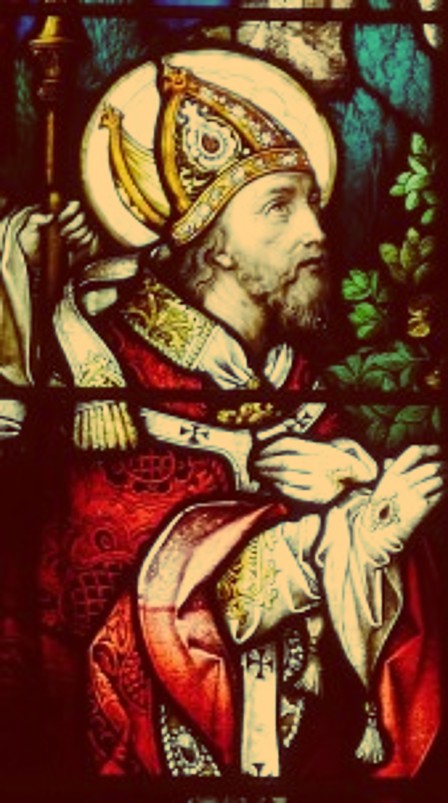
Saint of the Day – 1 April – Saint Celsus of Armagh (c1080-1129) Archbishop of Armagh, Reformer. He was responsible for the change from lay control of the Church in Ireland, to a Clerical-Episcopal model. Himself a hereditary lay administrator, he decided to seek Priestly Ordination and be embraced celibacy in order that the reform introduced by Pope St Gregory VIII on the Continent, could take effect also in Ireland. Born in c1080 in Ireland and died on 1 April 1129 at Ardpatrick, Munster, Ireland of natural causes. Also known as – Cellach Mac Aodh, Cellach Mc Aedh, Cellach of Armagh, Ceilach, Ceillach, Celestinus, Celsus, Keilach, Kelly.

This might be St Celsus or St Malacy?

Celsus was born in c1080. He belonged to a powerful local family, the Clann Sínaigh, which controlled what was then the Hereditary Lay Abbacy of Armagh. In this system the lay “successor” (of some Saint, in this case of St Patrick), was also the administrator, in this case of Armagh. That was the Ecclesiastical structure in Ireland at that time. Bishops and Priests seem to have had little influence and were probably under the control of these lay Abbots. In 1091 Celsus inherited the title of Administrator and was then the effective “Bishop” of Armagh.

Lay control of Bishoprics had also been operative in Europe but with the reform of Pope Gregory VII (1073-1085) it was gradually replaced by a Diocesan structure with Bishops. This reform spread to England, especially when strong Norman Archbishops like Bl Lanfranc and St Anselm, came to the See of Canterbury. In response to requests from the Norse community in Dublin, Bl Lanfranc had Consecrated Donngus and St Anselm had Consecrated Samuel Ó h-Ainglí as the Bishops for Dublin. In 1096, St Anselm had also Consecrated Malchus, as the first Bishop of Waterford.

In line with this reform Celsus of Armagh, a man of learning and piety, not yet married, made the courageous decision to become a Priest. In 1106 Maol Muire Ó Dunáin Consecrated him Bishop. In 1111 at the Synod of Rathbreasail at which Celsus was present, the reforms were made nationwide and the whole country was divided into formal Diocese with Cashel and Armagh as the two Archbishoprics.

In the face of stern opposition, probably most of all from within his own family, Celsus administered Armagh, whose Diocesan boundaries were laid down at this time. As a metropolitan Province, Armagh was given twelve suffragan Diocese. Dublin at this stage had a strong Norse population and was more linked with Canterbury. But in 1121, after Bishop Samuel Ó h-Ainglí died, Celsus went to Dublin as the new Bishop Gregory, was being installed.

In his absence Celsus appointed the young Monk Malachy (to become St Malachy of Lismore), who later succeeded him, to act as his Vicar in Armagh. Possibly his lengthy absence in Dublin was connected to a dispute there between the Norse and Irish factions or to his desire to assert Irish influence in that City.

Celsus, when he returned to Armagh in 1122, saw that Malachy had sterling qualities suitable in a Bishop. He sent him first to Lismore, where he could have contact with Benedictine influences from England and the continent. Celsus continued to administer Armagh. When Malachy returned, Celsus gave him the task of restoring Bangor as a monastic community and in 1124, he Consecrated him as the Bishop of Connor.

Knowing that his own family would try to regain control of Armagh when he died, Celsus named Malachy as his successor as Bishop there, sending him his Crozier in token. In 1129 while visiting Munster, Celsus died at Ardpatrick and was buried in Lismore at his own request. Malachy did indeed have difficulties establishing control as Bishop. But he was able to have Giolla Mac Liag, the Abbot of Derry, installed and accepted as effective Bishop and administrator of Armagh, while he himself returned to the Monastery of Bangor. Malachy then Consecrated a Bishop for Connor Diocese, keeping the See of Down for himself.

St Celsus personal decision to become a celibate Priest and a Bishop, effected a crucial change in the organisation and reform of the Church in Ireland in the 12th Century. He deserves to be better known and acknowledged for his personal example and achievements in the formation of the Church Episcopal structure in Ireland. St Celsus pray for Holy Mother Church, pray for Ireland, pray for us all!

Posted in MARIAN TITLES, SAINT of the DAY

Saturday in Passion Week and the First Saturday of the Month of the Resurrection, Nostra Signora delle Lacrime / Our Lady of Tears, Sicily (1953) and Memorials of the Saints – 1 April

Saturday in Passion Week – FAST

APRIL – THE MONTH OF THE RESURRECTION

First Saturday of the Month

Nostra Signora delle Lacrime / Our Lady of Tears, Sicily (1953) – 1 April:
HERE:

https://anastpaul.com/2021/04/01/maundy-thursday-2021-our-lady-of-tears-sicily-1953-and-memorials-of-the-saints-1-april/

Blessed Abraham of Bulgaria
Blessed Alexander of Sicily
Saint Anastasio
Blessed Antonius of Noto
Saint Berhard of Amiens
Blessed Bernhardin of Noto
Saint Celsus of Armagh (c1080-1129) Bishop
Saint Dodolinus of Vienne
Blessed Gerard of Sassoferrato
Saint Gilbert de Moray
Blessed Giuseppe Girott
Blessed Hugh of Bonnevaux

Saint Hugh of Grenoble (1053-1232) Bishop, Reformer, in the foundation of the Carthusian Order, founded a Monastery at Chalais.
The Roman Martyrology reads: “In Grenoble in Burgundia, in today’s France, St Hugh, Bishop, who worked for the reform of the customs of the clergy and the people and, during his Episcopate, ardently loving solitude, gave St Bruno at the time, his teacher and to his companions, the hermitage of Chartroux, of which he was also the first Abbot. He ruled his Church for about fifty years with the thoughtful example of his charity.”
The life of another St Hugh:

https://anastpaul.com/2022/04/01/saint-of-the-day-1-april-saint-hugh-of-grenoble-1053-1232/

Saint Jacoba of Rome
Blessed John Bretton
Saint Leucone of Troyes

Blessed Lodovico Pavoni FMI (1784-1849) Priest, Founder of the Sons of Mary Immaculate which came to be known also as the “Pavoniani, “ Pioneer in vocational schools, known as the “Forerunner of St John Bosco.” In the decree of 5 June 1947 Pope Pius XII described Pavoni as “another Philip Neri, the precursor of St John Bosco and the perfect emulator of St Joseph Cottolengo.”
His Lifestory:

https://anastpaul.com/2020/04/01/saint-of-the-day-1-april-saint-lodovico-pavoni-fmi-1784-1849/

Blessed Marcelle

Saint Mary of Egypt (c 344-c 421) Desert Mother, Penitent, Recluse.
Her Life:

https://anastpaul.com/2021/04/01/saint-of-the-day-1-april-saint-mary-of-egypt-c-344-c-421/

Saint Melito Sardis (Died c 180) Early Church Father, Bishop of Sardis (Died c 180), ecclesiastical Writer, Confessor, Apologist, Defender of Christ’s dual nature. Saint Melito is believed to have been martyred around the time he wrote his apology to Marcus Aurelius circa 180.
Biography:

https://anastpaul.com/2019/04/01/saint-of-the-day-1-april-st-melito-died-c-180/

Blessed Nicolò of Noto
Saint Prudentius of Atina
Saint Tewdrig ap Teithfallt
Saint Theodora of Rome
Saint Valery of Leucone
Saint Venantius of Spalato
Blessed Vinebault

Apostles of Picardy – Martyrs:
Saint Caidoc
Saint Fricor

Martyrs of Thessalonica – 6 Saints: A group of Christians Martyred. We know nothing about them but the names Alexander, Dionysius, Ingenianus, Panterus, Parthenius and Saturninus. Martyred in Thessalonica, Greece, date unknown.