Posted in MARIAN TITLES, SAINT of the DAY

Divina Pastora de las Almas ‘ The Divine Shepherdess of Souls, Spain (1703) and the Saints remembered on 25 September

St Anacharius of Auxerre
St Aurelia of Macerata
St Caian of Tregaian

St Egelred of Crowland
St Ermenfridus of Luxeuil
St Firminus of Amiens

St Fymbert
Blessed Marco Criado Guelamo OSsT (1522-1569) Trinitarian Priest Martyr
St Mewrog
St Neomisia of Mecerata
St Paphnutius of Alexandria
St Principius of Soissons
St Solemnis of Chartres

The Holy Bishops of Milan: Imagine being part of a Diocese in which 36 of your past Bishops are Saints and some are also Doctors of the Church and Popes (and others being considered for Sainthood)!
Today, the Church in Milan commemorates these holy Bishops.
They are:

  • Blessed Alfredo Ildefonso Schuster
  • Blessed Andrea Carlo Ferrari
  • Pope Pius XI
  • Saint Ambrose of Milan
  • Saint Ampelius of Milan
  • Saint Anathalon of Milan
  • Saint Antoninus of Milan
  • Saint Auxanus of Milan
  • Saint Benedict Crispus of Milan
  • Saint Benignus of Milan
  • Saint Calimerius of Milan
  • Saint Castritian of Milan
  • Saint Charles Borromeo
  • Saint Datius of Milan
  • Saint Dionysius of Milan
  • Saint Eugene of Milan
  • Saint Eusebius of Milan
  • Saint Eustorgius II of Milan
  • Saint Eustorgius of Milan
  • Saint Gaius of Milan
  • Saint Galdinus of Milan
  • Saint Geruntius of Milan
  • Saint Glycerius of Milan
  • Saint Honoratus of Milan
  • Saint John Camillus the Good
  • Saint Lazarus of Milan
  • Saint Magnus of Milan
  • Saint Mansuetus of Milan
  • Saint Marolus of Milan
  • Saint Martinian of Milan
  • Saint Mirocles of Milan
  • Saint Mona of Milan
  • Saint Natalis of Milan
  • Saint Protasius of Milan
  • Saint Senator of Milan
  • Saint Simplician of Milan
  • Saint Venerius of Milan
Posted in SAINT of the DAY

Saint of the Day – 25 September – Saint Ceolfrid (642-716) Abbot

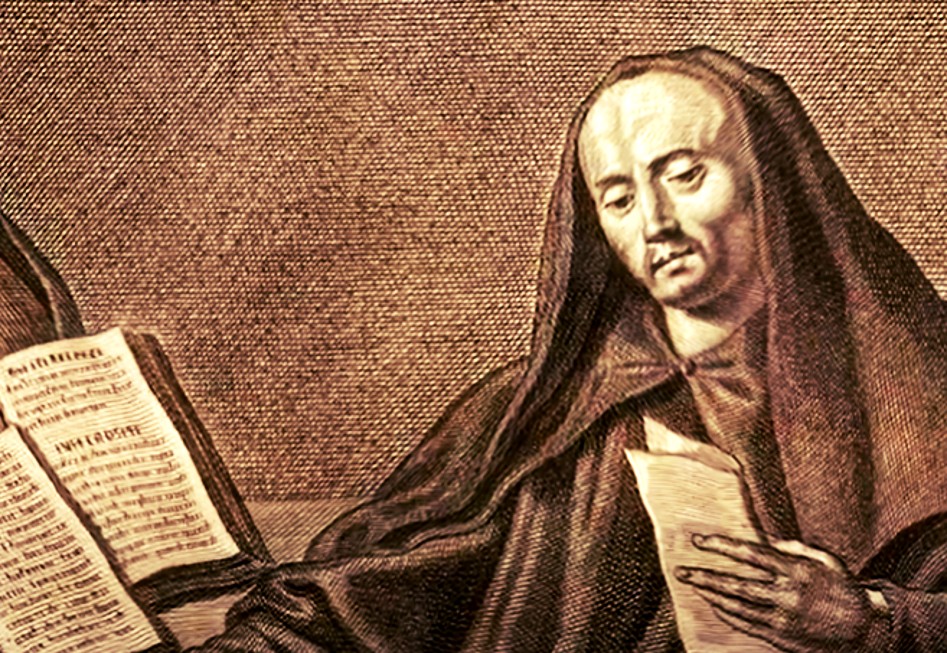
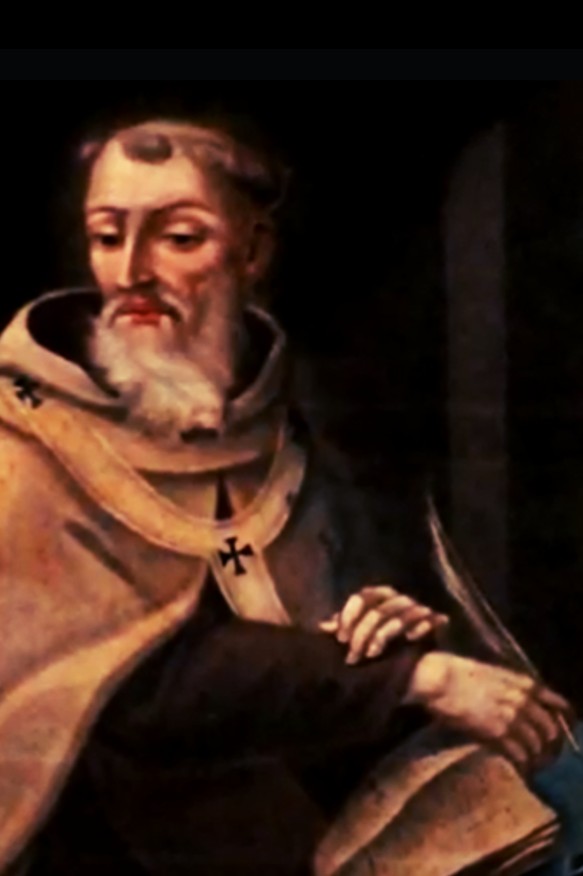
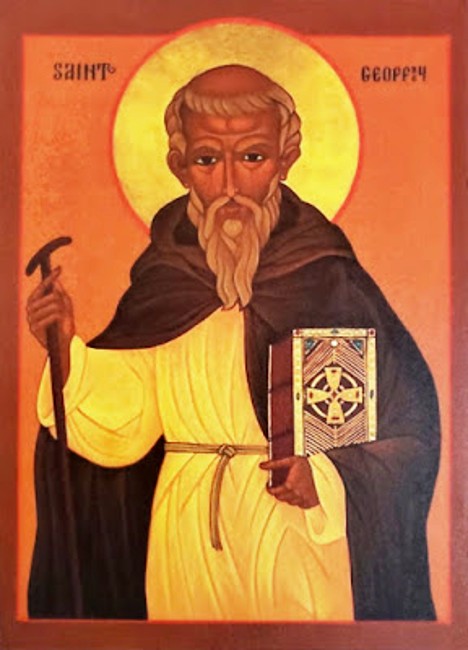
Saint of the Day – 25 September – Saint Ceolfrid (642-716) Abbot and Guardian of the Venerable St Bede, who was placed in his care when the child was 7 years old, for his education in the Monastery. He built an immense library at Jarrow and was himself a man of great knowledge of the Sacred writings. He was the Abbot of Monkwearmouth-Jarrow Abbey, of Wiremouth,Monastery and a major contributor to the production of the the famous Codex Amiatinus, which is considered the best-preserved manuscript of the Latin Vulgate. It was one of three giant single-volume Scriptures then made at Monkwearmouth–Jarrow and is the earliest complete, one-volume Latin Vulgates to survive. Born in 642 in Northumbria, England and died on 25 September 716 at Longres, Champagne, France of natural causes, whilst en route to Rome, to deliver a copy of the Codex to Pope Gregory II. Also known as – Ceolfrith, Ceufrey, Gaufrid, Geoffrey, Geoffroy, Geofroi, Gioffredo, Godefrid, Godefridus, Godfrey, Goffredo, Goffrey, Gofrido, Gotfrid, Gottfried, Jeffrey. CEOLFRID is the same Teutonic name as Geoffrey and signifies “Joyful.”

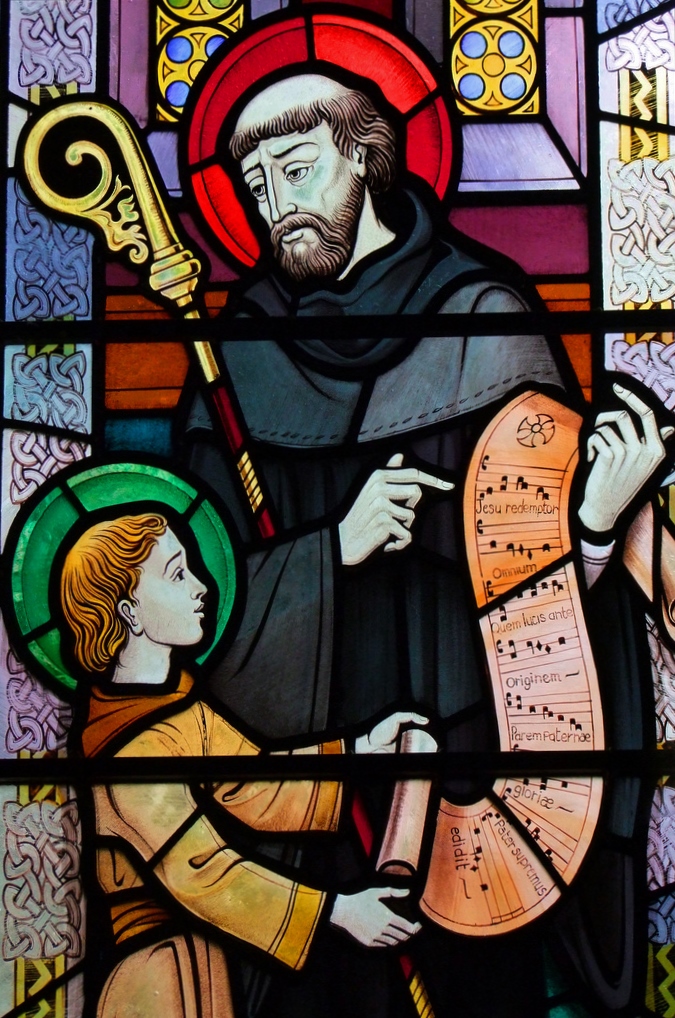
Ceolfrid was nobly born in Bernicia and related to St Benedict Biscop (c 628-690), (Tutor of the Venerable St Bede) wth whom he joined in the generous resolution of turning their backs upon the world and gave themselves to God.. With him, he made a journey to Rome, partly out of devotion, and partly for improvement in sacred studies and divine knowledge.

After their return he was St. Benedict’s assistant in the foundation of his Monastery of St Peter at Wiremouth, on the north bank of the river, in the Bishopric of Durham. S. Ceolfrid would have regarded it as his greatest felicity on earth, if he could have been as much forgotten by all creatures and despised by everyne as he studied to forget himself. He lived in his, community as St Antony and St Hilarion lived, on their mountains, in the most profound recollection and in the practice of the most austere penance.

When St Benedict built the Monastery of St Paul at Jarrow, he sent Ceolfrid, with seventeen Monks, to lay the foundation of that house and appointed him Abbot. Our Saint governed this Abbey for seven years in St Benedict’s life-time and was constituted, at the desire of that saint, in his last sickness, Abbot also of Wiremouth, from which time, he presided, for twenty-eight years, over both those Monasteries, which, for their proximity and constant interaction, were usually esteemed as one and were generally subject to one Abbot..

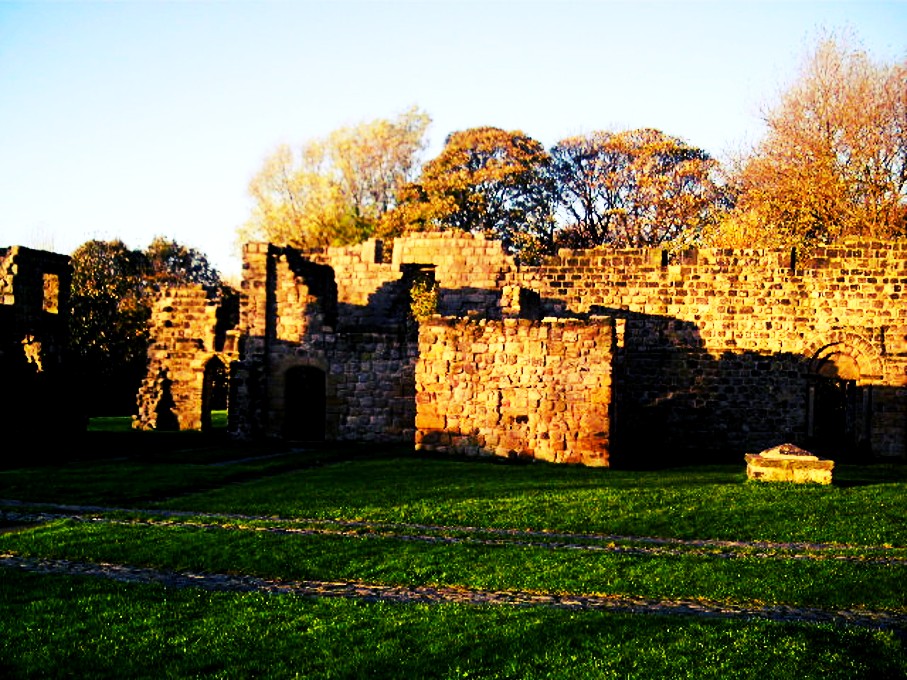
The remains of St Paul’s Monastery, Jarrow, where Ceolfrid was Abbot.

St Ceolfrid was diligent and active in everything he took in hand, of a sharp wit, wise and mature in judgement and fervent in zeal. the Venerable St Bede, who had the happiness to live under this admirable man, has left us most authentic testimonies of his learning, abilities and extraordinary sanctity. He was a great lover of Sacred literature and enriched the libraries of his two Monasteries with a great number of excellent volumnes but banished those which could only serve to entertain curiosity.

To how great a pitch he carried the Sacred sciences in his Monasteries, St Bede is an instance. He was himself very learned. Naitan, King of the Picts, sent to him, desiring to be informed concerning the right time of celebrating Easter and the true form of the clerical tonsure. The holy Abbot strongly proved and recommended to him ,the Catholic custom of observing Easter and the Roman tonsure called St Peter’s, by a letter which Bede hath inserted in his history. The King received it with great joy and satisfaction and commanded both points to be received and observed throughout his dominions. This King, likewise desired our Saint to send him builders, who might erect a stone Church, after the manner of the Romans, promising to dedicate it in honour of St Peter. The Abbot complied also with this request.

St Ceolfrid, finding himself broken with age and infirmities and no longer capable of teaching his Monks, by word and example, the perfect form of monastic observance, resigned his Abbacy. The Monks entreated him on their knees to alter his resolution but were obliged to acquiesce and, upon his recommendation, chose Hubert, a very learned Priest, Abbot of both Monasteries, in which then lived six hundred Monks.

This being done, the Saint, having sung Mass in the morning, made them a strong exhortation to mutual love and concord and, for fear of being stopped by the grandees of the kingdom, who all held him in great veneration, set out immediately with a design to perform a pilgrimage to the tombs of the Apostles at Rome. On the road, besides the canonical hours, he everyday sung the whole Psalter twice over and also, offered to God, the saving victim in the Mass which he sung everyday, except one when he was upon the sea and the three last days of his life.

After travelling one hundred and fourteen days, he arrived at Langres, in France, where, being stopped by sickness, he happily died on the 25th of September, in the year of our Lord 716, of his age seventy-four, of his sacerdotal character forty-seven and his Abbatial dignity, thirty-five years.

He was buried in the Church of the three brother Martyrs, Saints Speusippus, Eleusippus and Meleusippus. His relics were afterwards removed to his Monastery of Jarrow and thence, in the time of the Danish devastations, to Glastenbury. On a square stone at Jarrow, this inscription was found:
The dedication of the Church of St Paul at Jarrow, on the ninth day before the ides of May, in the fifteenth year of King Ecfrid and the fourth of the Abbot Ceolfrid, the builder of this Church.

The Life of St Benedict Biscop:
https://anastpaul.com/2021/01/12/saint-of-the-day-12-january-st-benedict-biscop-osb-c-628-690/

St Benedict Biscop with little St Bede
Posted in MARIAN TITLES, SAINT of the DAY

The Sixteenth Sunday after Pentecost, Divina Pastora de las Almas ‘ The Divine Shepherdess of Souls, Cantillana, Sevilla, Andalucía, Spain (1703) and Memorials of the Saints – 25 September

The Sixteenth Sunday after Pentecost +

Divina Pastora de las Almas ‘ The Divine Shepherdess of Souls, Cantillana, Sevilla, Andalucía, Spain (1703) – Fourth Saturday of September:
HERE:

https://anastpaul.com/2021/09/25/feasts-of-our-lady-and-memorials-of-the-saints-25-september/

Saint Cleopas (First Century) Disciple of Christ – one of the two Disciples of the Way to Emmaus. Martyr.
St Cleophas:
https://anastpaul.com/2021/09/25/saint-of-the-day-25-september-saint-cleopas-first-century-disciple-of-christ/

Blessed Herman of Reichenau/the Cripple (1013–1054) Benedictine Monk, Confessor, Scholar, Scientist, Writer, Hymnist, Poet, Musical Composer, Teacher. In his own day, the heroic cripple who achieved learning and holiness was called ‘The Wonder of His Age.’.
Composer of the “Salve Regina” Hail Holy Queen, “Veni Sancte Spiritus” Come Holy Spirit and “Alma Redemptoris Mater” amongst many others.
His Amazing Life and Works:

https://anastpaul.com/2019/09/25/saint-of-the-day-blessed-herman-of-reichenau-the-cripple-osb-1013-1054-the-wonder-of-his-age/

St Vincent Strambi CP (1745-1824) Bishop, Priest of the Passionist Order of St Paul of the Cross, Apostle of Charity, Preacher, Teacher, Writer. Beatified on 26 April 1925 at Saint Peter’s Basilica, by Pope Pius XI and Canonised on 11 June 1950 by Pope Pius XII.
Biography here:

https://anastpaul.wordpress.com/2017/09/25/23731/
AND MORE HERE:
https://anastpaul.com/2018/09/25/saint-of-the-day-25-september-st-vincent-strambi-c-p-1745-1824/

St Anacharius of Auxerre
St Aurelia of Macerata
St Caian of Tregaian
St Ceolfrid (642-716) Abbot and Guardian of the Venerable St Bede

St Egelred of Crowland
St Ermenfridus of Luxeuil
St Firminus of Amiens

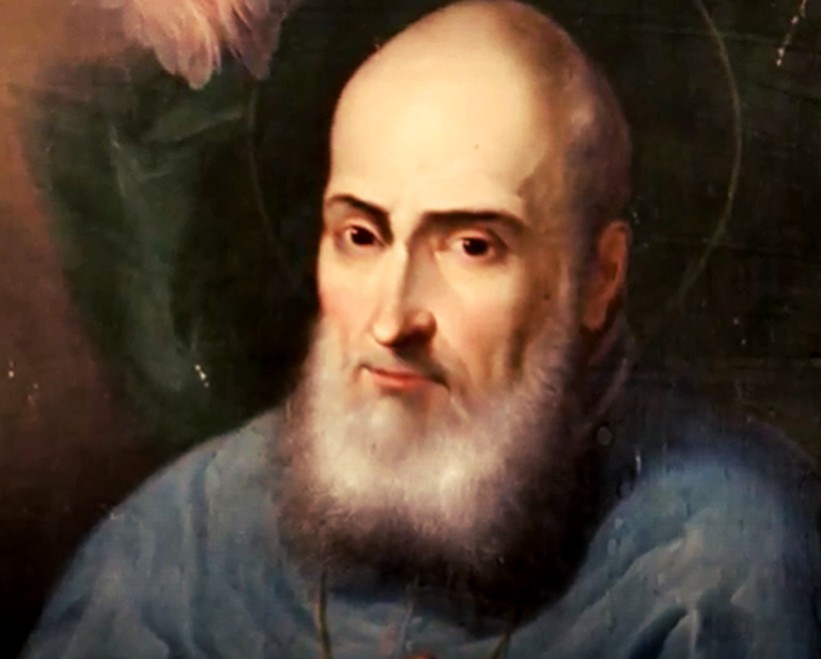
St Finbar (c 550– 623) Bishop of Cork and Abbot
About St Finbar:

https://anastpaul.com/2020/09/25/saint-of-the-day-25-september-saint-finbar-of-cork-c-550-623/

St Fymbert
Bl Marco Criado
St Mewrog
St Neomisia of Mecerata
St Paphnutius of Alexandria
St Principius of Soissons
St Sergius of Moscow
St Solemnis of Chartres

Martyrs of Damascus: A Christian family of six who were tortured to death in a persecution by Roman authorities. They were: Eugenia, Maximus, Paul, Rufus, Sabinian and Tatta. They were tortured to death in Damascus, Syria, date unknown.

The Holy Bishops of Milan: Imagine being part of a Diocese in which 36 of your past Bishops are Saints and some are also Doctors of the Church and Popes (and others being considered for Sainthood)!
Today, the Church in Milan commemorates these holy Bishops.
They are:

• Blessed Alfredo Ildefonso Schuster
• Blessed Andrea Carlo Ferrari
• Pope Pius XI
• Saint Ambrose of Milan
• Saint Ampelius of Milan
• Saint Anathalon of Milan
• Saint Antoninus of Milan
• Saint Auxanus of Milan
• Saint Benedict Crispus of Milan
• Saint Benignus of Milan
• Saint Calimerius of Milan
• Saint Castritian of Milan
• Saint Charles Borromeo
• Saint Datius of Milan
• Saint Dionysius of Milan
• Saint Eugene of Milan
• Saint Eusebius of Milan
• Saint Eustorgius II of Milan
• Saint Eustorgius of Milan
• Saint Gaius of Milan
• Saint Galdinus of Milan
• Saint Geruntius of Milan
• Saint Glycerius of Milan
• Saint Honoratus of Milan
• Saint John Camillus the Good
• Saint Lazarus of Milan
• Saint Magnus of Milan
• Saint Mansuetus of Milan
• Saint Marolus of Milan
• Saint Martinian of Milan
• Saint Mirocles of Milan
• Saint Mona of Milan
• Saint Natalis of Milan
• Saint Protasius of Milan
• Saint Senator of Milan
• Saint Simplician of Milan
• Saint Venerius of Milan