St John Chrysostom (347-407) Bishop, Confessor, Father and Doctor of the Church – “Golden Mouthed,” Preacher, Orator, Writer, Theologian, Confessor. Name Meaning – God is gracious; gift of God (John), golden-mouthed (Chrysostom). Biography: https://anastpaul.com/2017/09/13/saint-of-the-day-13-september-st-john-chrysostom-347-407-father-and-doctor-of-the-church-golden-mouthed/ (His Feast Day is today (changed in 1969 to 13 September). The Roman Martyrology states of him today: “At Constantinople, St John, Bishop, who was surnamed Chrysostom on account of his golden flow of eloquence. He greatly promoted the interests of the Christian religion by his preaching and exemplary life and, after many toils, closed his life in banishment. His sacred body was brought to Constantinople on this day in the reign of Theodosius the younger and afterwards taken to Rome and placed in the Basilica of the Prince of the Apostles. This illustrious Preacher of the Word of God, Pope Pius X declared and appointed as the Heavenly Patron of Sacred Orators.”
St Domitian of Melitene St Emerius of Bañoles St Gilduin Bl Gonzalo Diaz di Amarante St Henry de Osso y Cervello Bl John of Warneton St Julian of Le Mans St Julian of Sora St Lupus of Châlons
St Marius of Bodon Bl Michael Pini St Natalis of Ulster St Theodoric of Orléans St Pope Vitalian
Martyrs of North Africa – 30 Saints: A group of 30 Christians Martyred together by Arian Vandals. The only details to have survived are four of their names – Datius, Julian, Reatrus and Vincent. c 500 in North Africa.
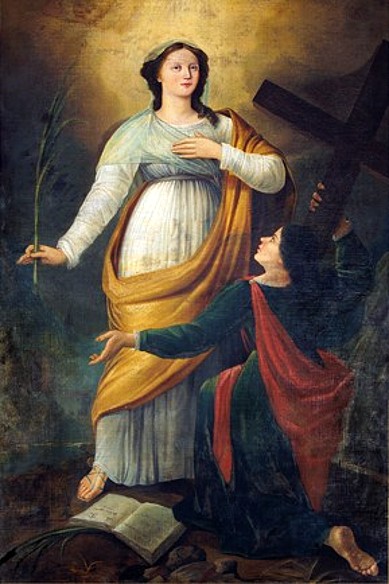
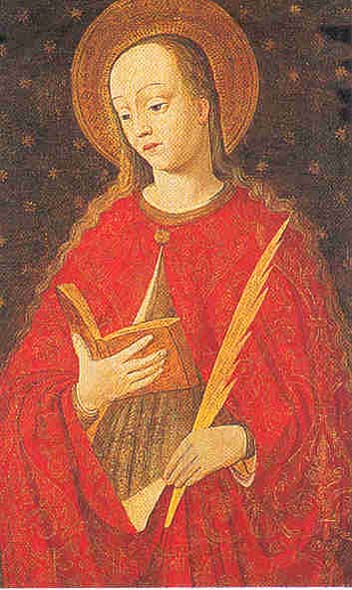
Saint of the Day – 27 January – St Devota (Died c 303) Virgin Martyr,. Born at Mariana, Corsica, France and died by being tortured to death on the rack in c 303. Patronages – Monica, Corsica, House of Grimaldi, Mariana, Corsica; mariners. Also known as – Dévote, … of Corsica, … of Monaco.
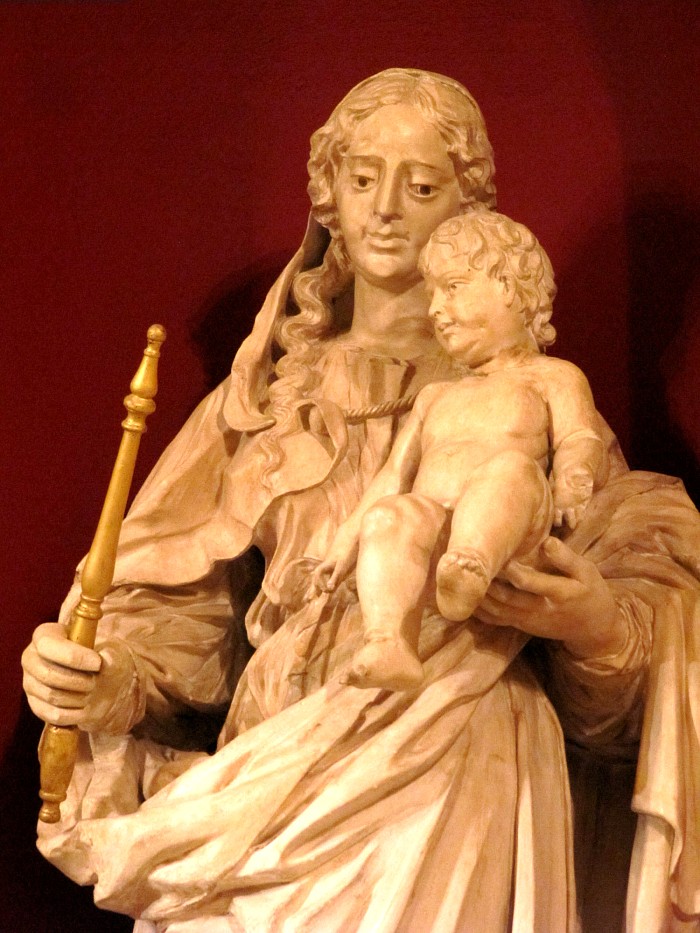
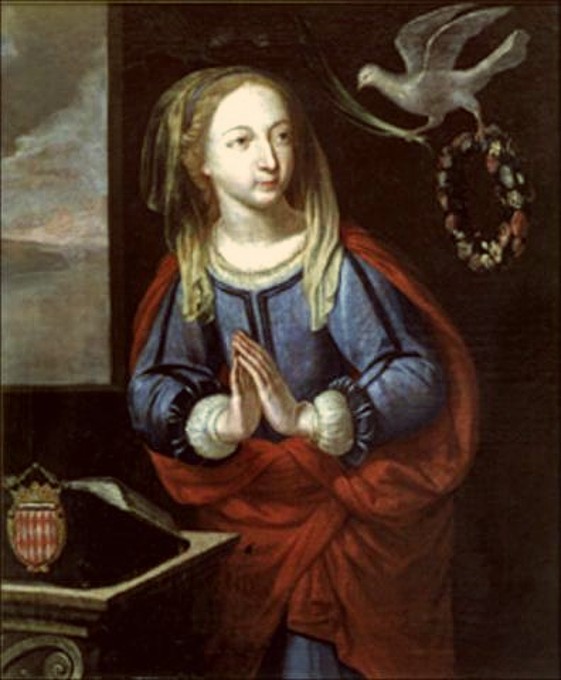
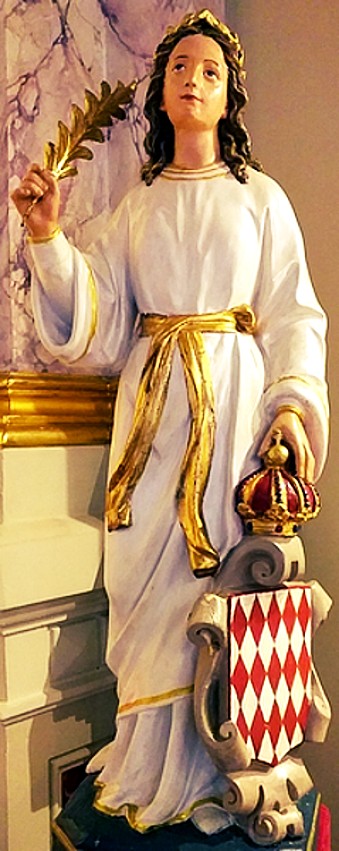
Part of the St DevotaAltarpiece at the St Nicholas Cathedral, Monaco
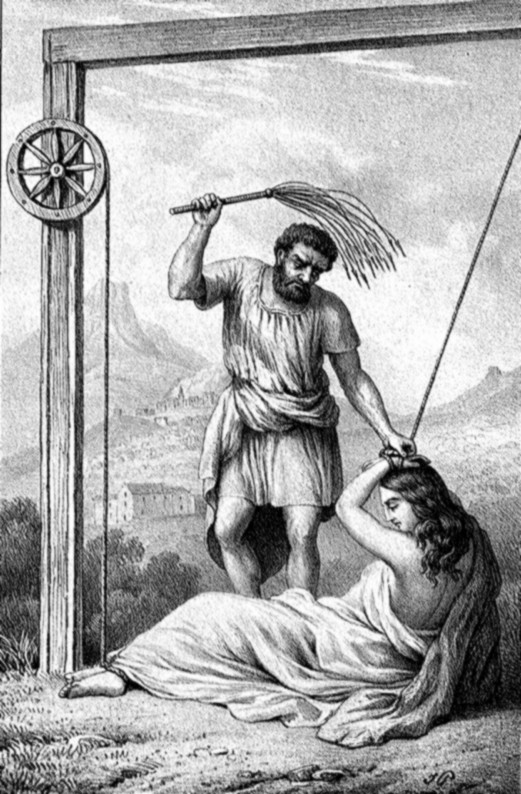
Devota was a Corsican woman born at Mariana, Corsica. A young virgin, she had decided to devote herself fully to the service of God. Devota was part the household of Senator Eutychius of the imperial Roman administration.. During the Diocletian persecution, the Prefect Barbarus, arrived in Corsica with a fleet and when he learned that the Senator was harbouring a Christian in his house, demanded that she be given up and compelled to perform the requisite sacrifice to the imperial cult. Senator Eutychius refused, and not wishing to confront him directly, Barbarus arranged to have him poisoned. Devota was imprisoned and tortured for her faith. Her mouth was crushed, and her body was dragged through rocks and brambles. She was Martyred at Mariana by being racked to death.
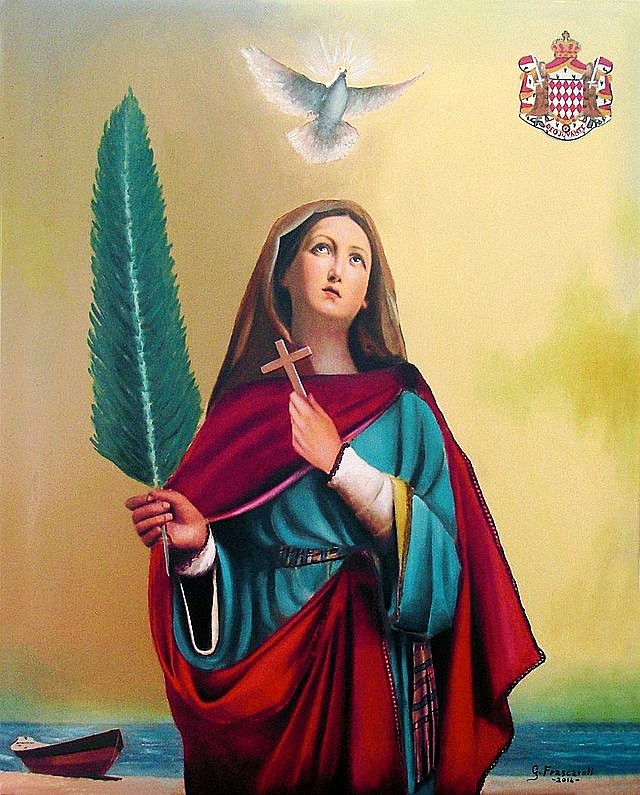
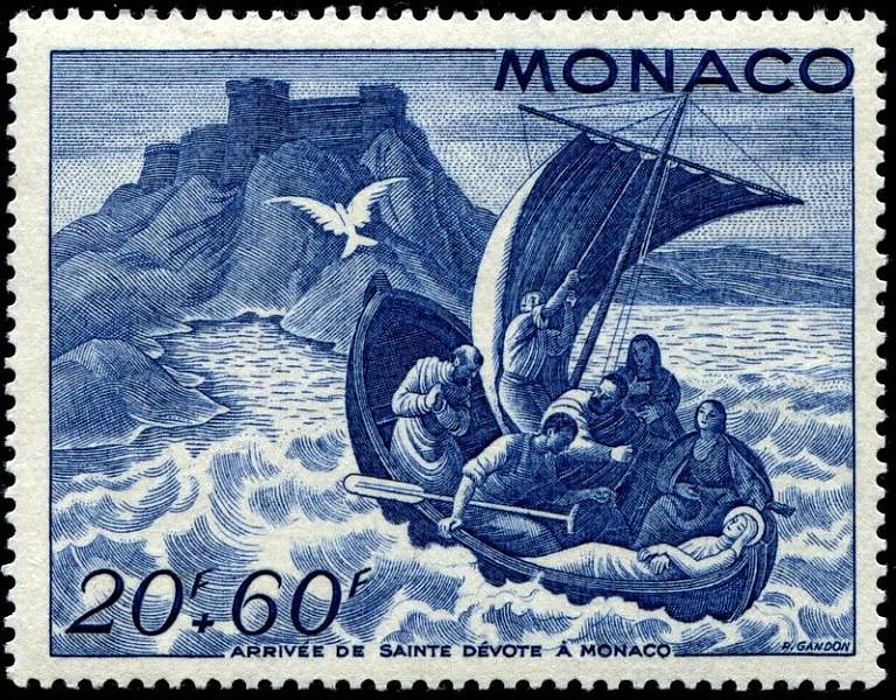
After her death, the Governor of the Province ordered her body to be burnt to prevent its veneration. However, it was saved from the flames by Christians. Her body was placed on a boat bound for Africa. Gratianus the boat’s pilot; Benenato, a Priest and Apollinaris, his Deacon believed it would receive proper Christian burial there. However, a storm overtook the boat. A dove appeared and guided the boat to present-day Les Gaumates, part of the Principality of Monaco, where a Chapel dedicated to Saint George stood.
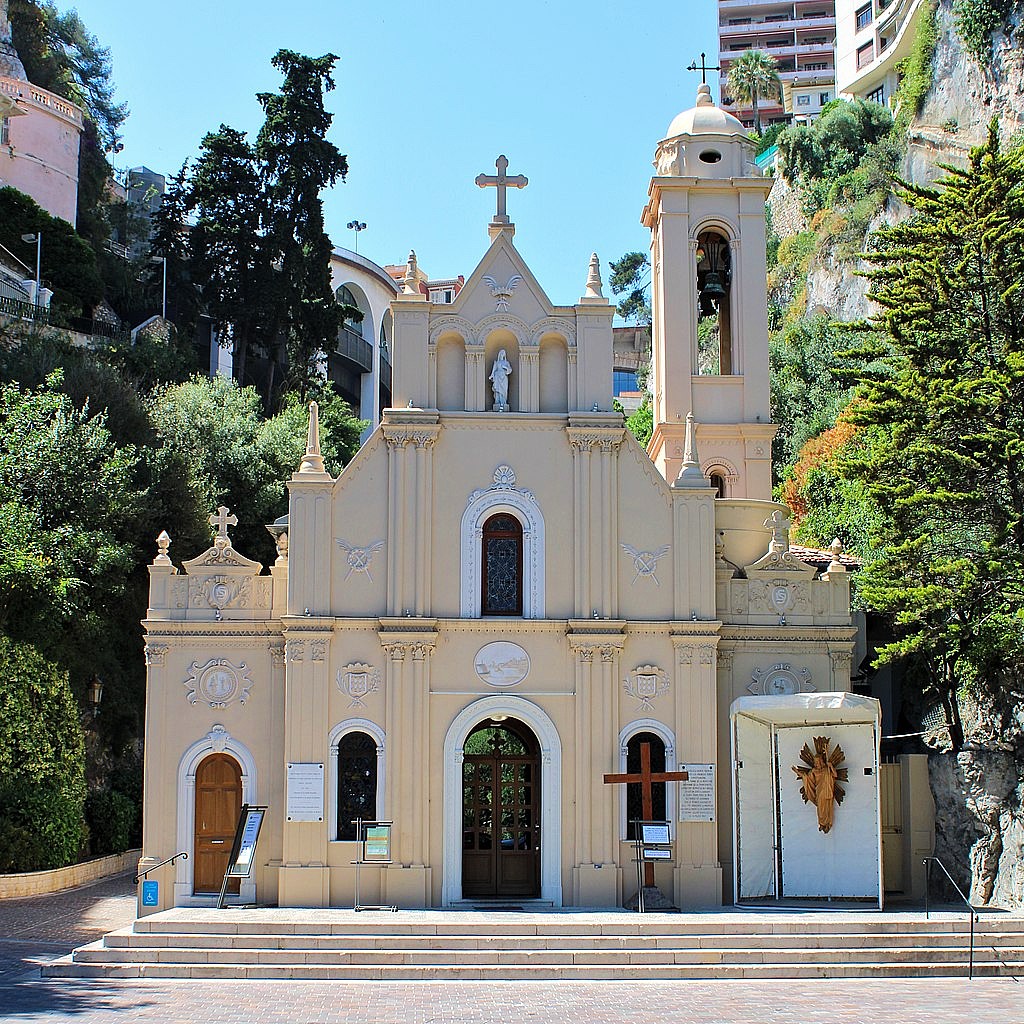
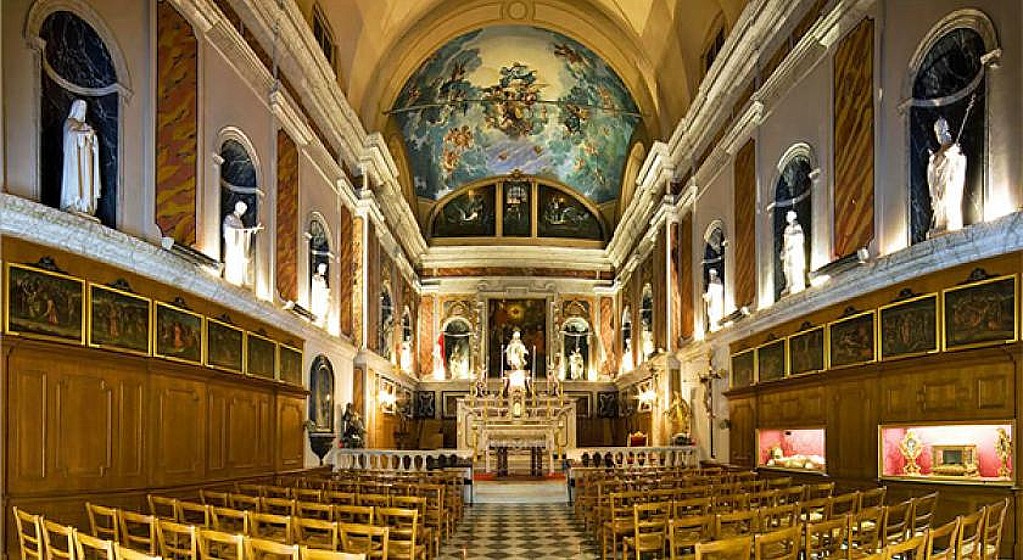
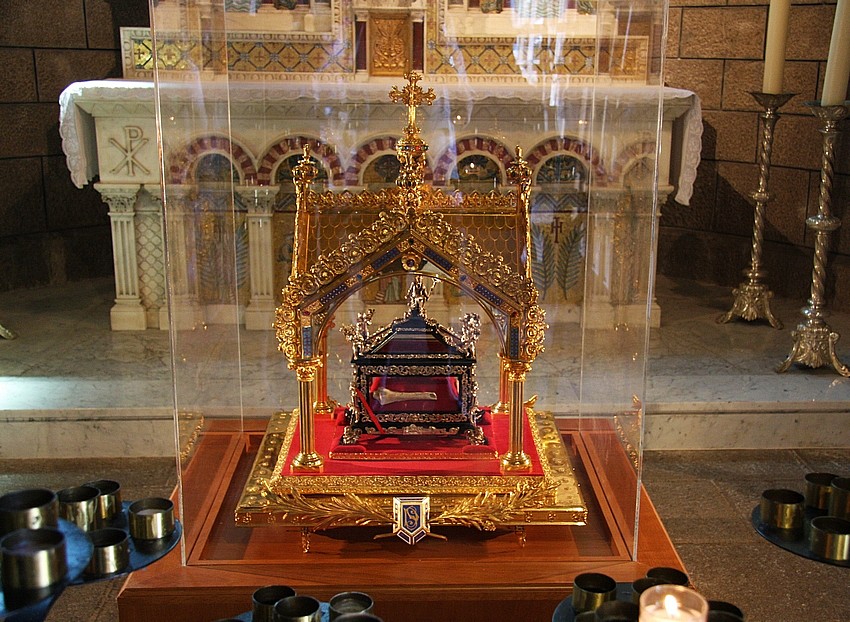
In her honour, a new Chapel was built, which stands in Monaco still where flowers bloom, on her Feast Day today, which is still in the throes of winter in Monaco and therefore, before their season. Reports of numerous miracles soon occurred at St Devota’s tomb. During incursions by Moors, Devota’s relics were translated to safety at the Monastery of Cimiez and were returned to Monaco, to her Church restored much later, by Antonio I, Prince of Monaco.
The Sainte-Dévote Chapel is first mentioned about 1070, belonging to the Abbey of Saint Pons. The Chapel was rebuilt and expanded several times. It became a Priory in the 13th century and in 1536 was acquired by Honoré I, Lord of Monaco. The Chapel became the Parish Church in 1887.
The “Legend of Saint Devota” is one of the Principality of Monaco’s oldest traditions – it has influenced national culture engendering a deep devotion to the Faith and to St Devota as well as influencing many areas of national life. in fields as diverse as history, literature, the arts, painting, music, coins and stamps. This legend, passed on through a medieval document, holds a special place in the heart of the Monégasque and over the centuries, has been awarded a permanent place in the Country’s history.
In 1070, Antinope, the Captain of a Florentine ship, attempted to steal the reliquary containing Devota’s relics. The legend states that a violent wind impeded him from escaping with the relics. Arrested, Ugo Grimaldi ordered his ears and nose to be cut off. Antinope’s boat was then burnt on the beach of Monaco.
In the 16th century, Devota was invoked for protection against the Genoese and the Pisans. Their ultimate failure to take away the independence of Monaco was attributed to the divine protection of Devota. In 1631, the cessation of an outbreak of the Plague was also due to St Devota’s intercession, as well as, the expulsion of the Spanish on the night of 17 November 1641 – a galley taken from the Spanish was renamed “Devota.” Monégasque coins bearing the effigy of Devota were issued in the 16th century, beginning in the reign of Honoré II, Prince of Monaco. During his reign, Devota became the Patroness of Monaco.
A series of postage stamps bearing Devota’s likeness were issued in 1944 and again in 1992.
St Devota has her very own corner on the famous Circuit de Monaco, where the most famous motor race in the world is held. Situated at the very first turn of the Grand Prix track is none other than the location of the Patron Saint’s Chapel. The celebrated Sanctuary is sadly often missed during the races, as the beautiful creme structure is usually covered by crash barriers and signage.
Joseph Méry put the legend of Saint Devota into verse. The first book written in Monegasque language by the Monegasque Poet, Louis Notari, is entitled A legenda de Santa Devota. It was composed in 1927 and is important because, until then, the Monégasque language, had been utilized only in speech.
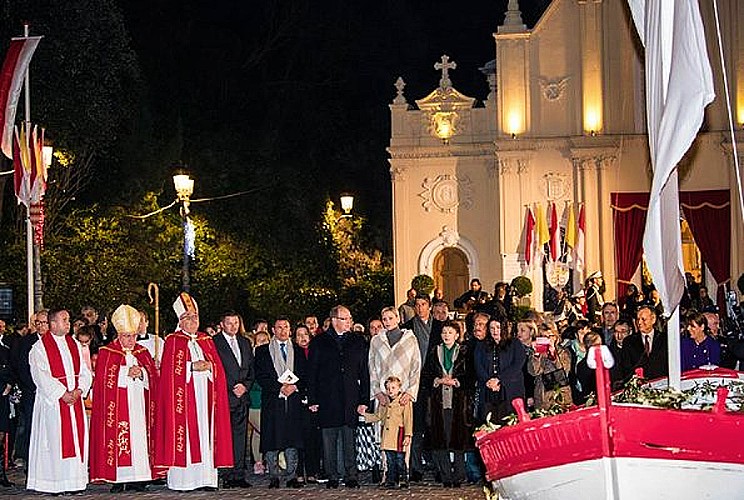
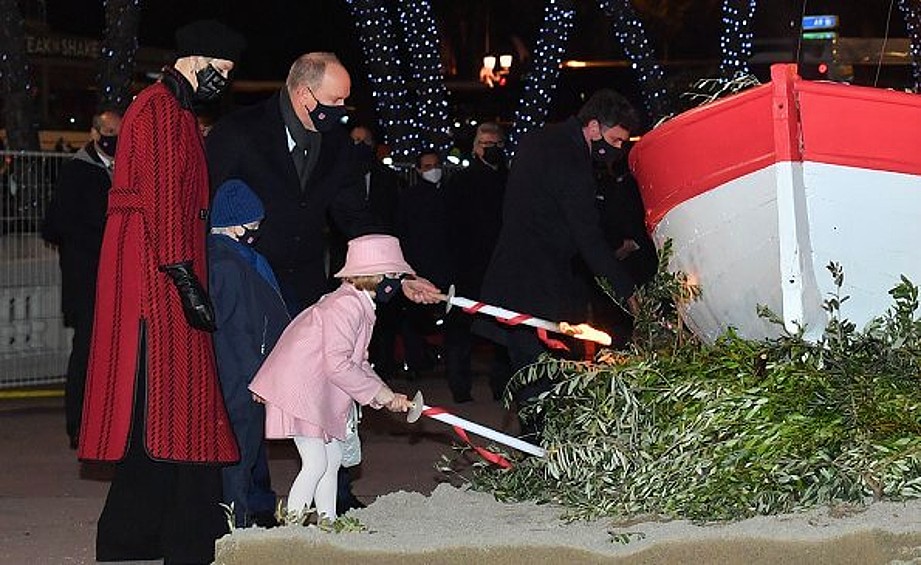
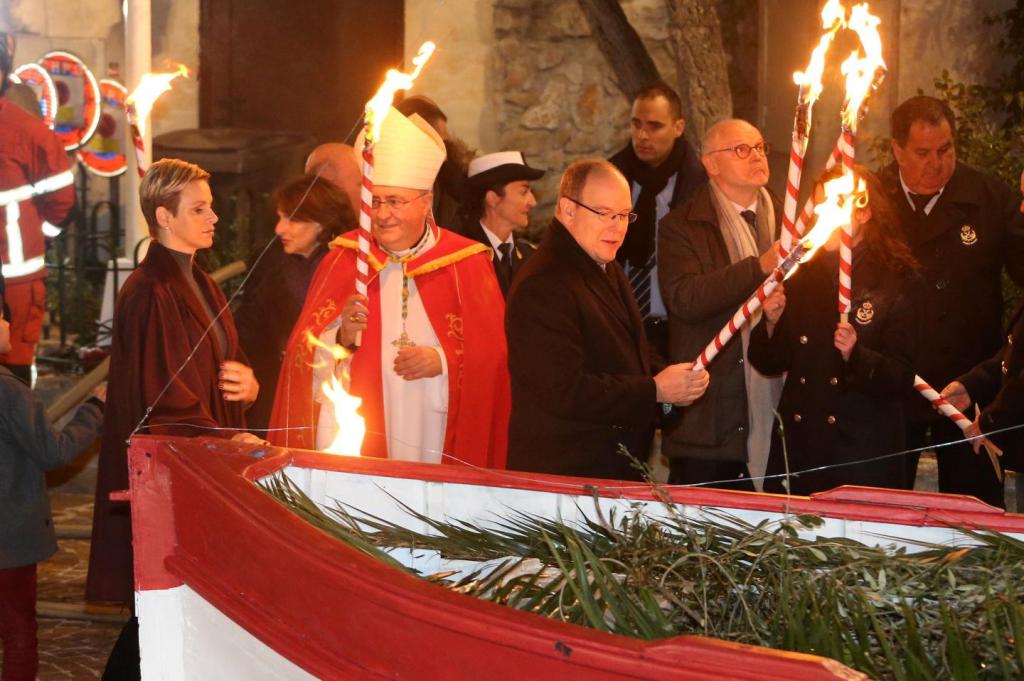
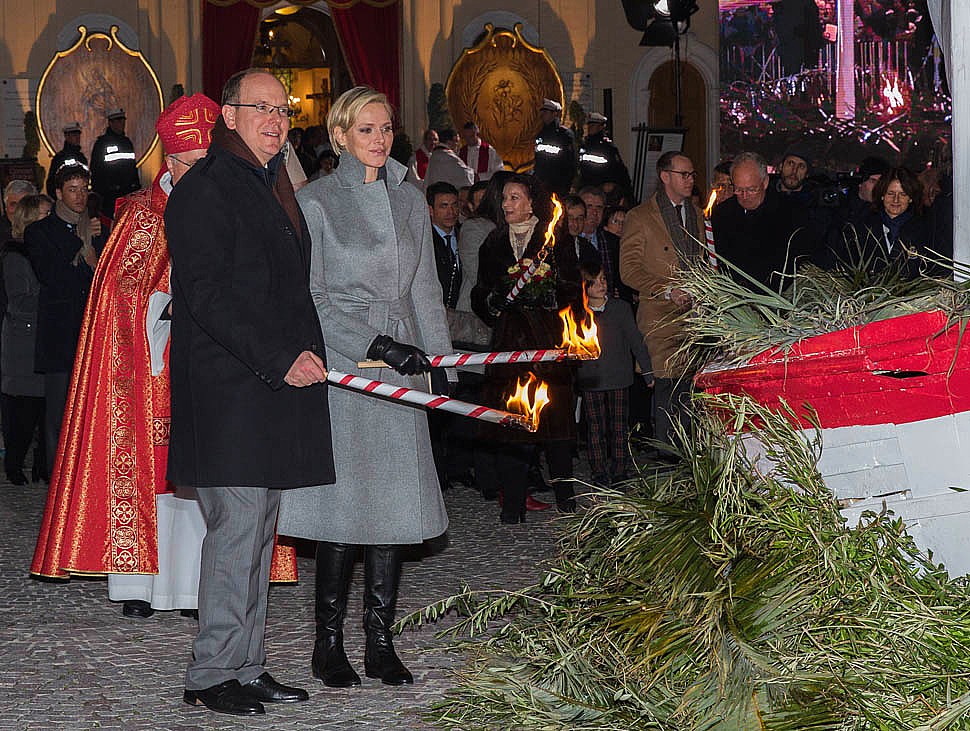
Her cult became important to Monaco and the Grimaldis. Since 1874 it has been the custom that on the evening before her feast day a symbolic fishing boat is brought in procession into Port-Hercule and set alight outside the Église Sainte Dévote. This is followed by a fireworks display that lights up Port-Hercule.
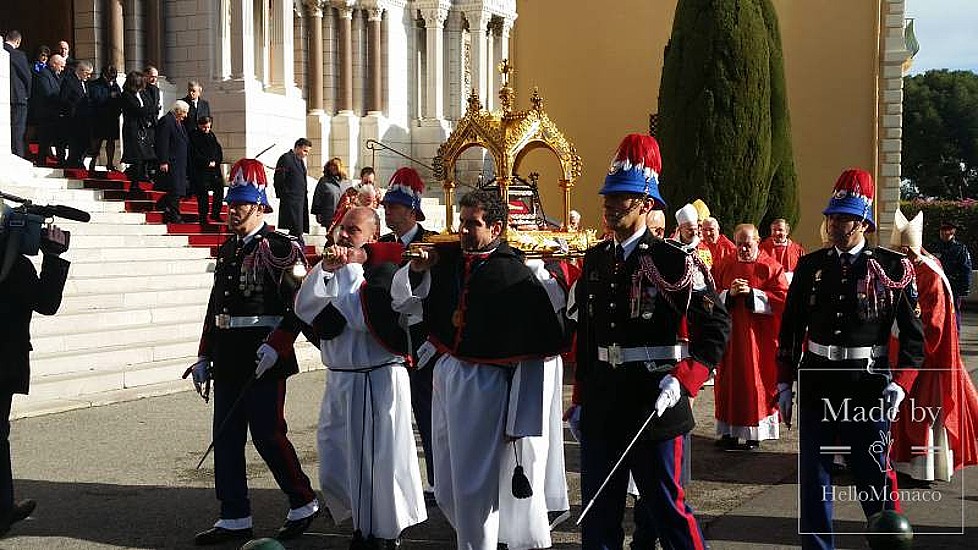
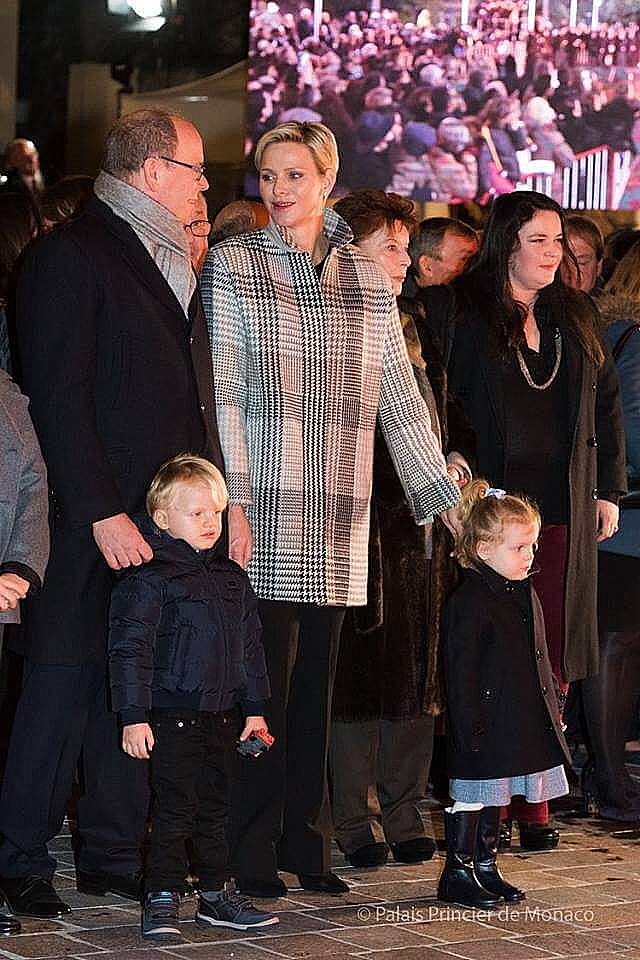
On 27 January Mass is celebrated in the Cathedral of Our Lady of the Immaculate Conception attended by Prince Albert II and Princess Charlene and their children. It is followed by a Solemn Procession of the Relics, to request protection for the Royal Family and the Principality. A Reception in the Monte Carlo Opera House also take place. Albert II, Prince of Monaco, together with Princess Charlene, participate in this ceremony.
In 2014 the Monegasque Rugby Federation, in association with the Princess Charlene of Monaco Foundation, organised the Saint Devota Rugby Challenge. Including teams from Spain and Italy, the free program includes educational workshops and circuits for disabled children, to introduce them to the game.
Most of you know that I am a South African and we, here at home, are all very proud of the South African Princess of Monaco, Charlene!
St John Chrysostom (347-407) Father and Doctor of the Church – “Golden Mouthed,” Preacher, Orator, Writer, Theologian, Confessor. Name Meaning – God is gracious; gift of God (John), golden-mouthed (Chrysostom). Biography: https://anastpaul.com/2017/09/13/saint-of-the-day-13-september-st-john-chrysostom-347-407-father-and-doctor-of-the-church-golden-mouthed/ AND: https://anastpaul.com/2018/09/13/saint-of-the-day-13-september-st-john-chrysostom-347-407-father-and-doctor-of-the-church-golden-mouthed-2/ His Feast Day is today (changed in 1969 to 13 September). The Roman Martyrology states of him today: “At Constantinople, St John, Bishop, who was surnamed Chrysostom on account of his golden flow of eloquence. He greatly promoted the interests of the Christian religion by his preaching and exemplary life and, after many toils, closed his life in banishment. His sacred body was brought to Constantinople on this day in the reign of Theodosius the younger and afterwards taken to Rome and placed in the Basilica of the Prince of the Apostles. This illustrious Preacher of the Word of God, Pope Pius X declared and appointed as the Heavenly Patron of Sacred Orators.”
Bl Antonio Mascaró Colomina St Avitus St Candida of Bañoles St Carolina Santocanale St Devota of Corsica (Died c 303) Virgin Martyr St Domitian of Melitene St Emerius of Bañoles
Blessed Jurgis Matulaitis-Matulewicz/George Matulaitis MIC (1871-1927) Archbishop of Vilnius from late 1918 until his resignation in 1925, Apostolic Nuncio in Lithuania, Founder of the Congregation of the Poor Sisters of the Immaculate Conception of the Blessed Virgin Mary and the Handmaids of Jesus in the Eucharist, Professor, Spiritual Director, Superior-General of the Marian Fathers from 1911 until his death and is known as the “Renovator of The Marians.” His Story: https://anastpaul.com/2020/01/27/saint-of-the-day-27-january-blessed-george-matulaitis-mic-1871-1927/
St Gilduin Bl Gonzalo Diaz di Amarante St Henry de Osso y Cervello St John Maria Muzeyi Bl John of Warneton St Julian of Le Mans St Julian of Sora St Lupus of Châlons
St Marius of Bodon Bl Michael Pini St Natalis of Ulster St Paul Josef Nardini Bl Rosalie du Verdier de la Sorinière St Theodoric of Orléans St Pope Vitalian
Martyrs of North Africa – 30 Saints: A group of 30 Christians martyred together by Arian Vandals. The only details to have survived are four of their names – Datius, Julian, Reatrus and Vincent. c 500 in North Africa.






 AnaStpaul
You must be logged in to post a comment.