St Madron of Cornwall St Maildulf of Malmesbury St Maw
St Paul of Noviodunum Bl Peter Lieou St Rasso of Grafrath St Restituta of Carthage St Silaus of Lucca St Solochanus of Chalcedon St Thethmar St Victor Roma
Martyrs of Alexandria – 3 Saints: Three Christians Martyred together; no details about them have survived except their names: Adrio, Basilla and Victor. 4th century Alexandria, Egypt.
Martyrs of Nyon: A group of Christians Martyred together in the persecutions of Diocletian. We know little more than three of their names: Aquilinus, Heradius and Paul. 303 at Noyon, Switzerland.
St Paschal Baylon OFM (1540-1592) “Seraph of the Eucharist,” “Saint of the Blessed Sacrament,” “Servant of the Blessed Sacrament.” Franciscan Lay Brother, Mystic…….. A man remarkable for innocence of life and the spirit of penance. Pope Leo XIII declared him the heavenly patron of Eucharistic Congresses and Societies and Apostolates, formed in honour of the Most Blessed Sacrament. About this beautiful Saint: https://anastpaul.wordpress.com/2018/05/17/saint-of-the-day-17-may-st-paschal-baylon-o-f-m-1540-1592-the-seraph-of-the-eucharist/
St Heraclius of Noviodunum Bl Ivan Ziatyk St Madron of Cornwall St Maildulf of Malmesbury St Maw
St Paul of Noviodunum St Peter Lieou St Rasso of Grafrath St Restituta of Carthage St Silaus of Lucca St Solochanus of Chalcedon St Thethmar St Victor Roma
Martyrs of Alexandria – 3 Saints: Three Christians Martyred together; no details about them have survived except their names: Adrio, Basilla and Victor. 4th century Alexandria, Egypt.
Martyrs of Nyon: A group of Christians Martyred together in the persecutions of Diocletian. We know little more than three of their names: Aquilinus, Heradius and Paul. 303 at Noyon, Switzerland.
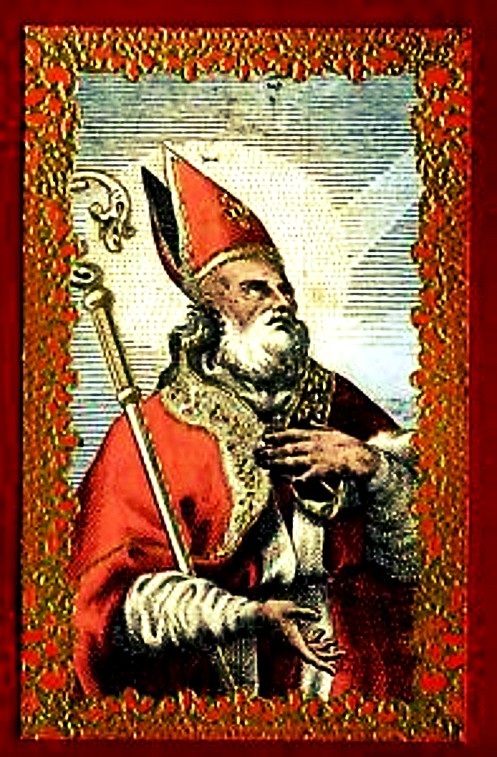
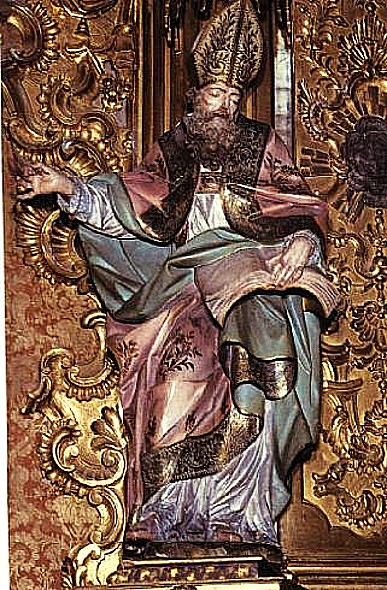
Saint of the Day – 17 May – Saint Emiliano I of Vercelli (Died 506) Bishop of Vercelli, Italy in the sixth century, Monk and Hermit, Confessor, Defender of the Faith, apostle of the needy, Social Reformer, spiritual director. Born in the 5th century, possibly in the Piedmont region of Italy and died on 11 September in Cercelli, Italy., the date of his entry into life is also celebrated as his feast in some places. Patronages – Cigliano and Villanova Monferrato.
Indeed, he might have preferred to hide in a hermitage and live in solitude and contemplation to better taste the flavour of the Lord but God’s call wanted him to actively serve his neighbour and he knew how to carry it out with commitment and fervour. Among other measures of practical life, he also had an aqueduct built. He asked of himself the maximum efforts in all things and did not spare himself in any way. Of others, he demanded what they could give, in the name of the Lord.
The Roman Martyrology states of him today: “In Vercelli, translation of St Emilian, Bishop.”
Emiliano, the Eleventh Bishop of the great Diocese of Vercelli, was born around the middle of the fifth century. Some sources mistakenly say he was of Spanish origin but he was probably Piedmontese.
He worked in difficult times, as a worthy successor of St Eusebius (who died in 371). After the fall of the Western Roman Empire (476), the barbarian populations occupied the Italian territory. Theodoric, King of the Ostrogoths, defeated Odoacer (493) and the Burgundians, with the capture of Ravenna, they conquered Italy. The occupied populations were continually tested by the ravages of wars. Vercelli, an important Roman municipality, was almost abandoned and depopulated. The most important authority, even from a civil standpoint, was the Bishop. Theodoric tried to establish a peaceful co-existence with the reduction of taxes and the liberation of many slaves. Although he was Arian, he did his utmost to improve relations between the Church of Rome and that of Constantinople. A few decades earlier, in the Council of Chalcedon (451), Christ’s dual nature, human and divine, had been recognised, not without great difficulty. Such were also the teachings of St Eusebio and S.tMassimo of Turin, fully shared by St Emiliano.
Our saint was from the important Eusebian Monastery which, as St Ambrose wrote, gathered around the Bishop, both contemplative religious and aspirants to the Priesthood. According to tradition, Emiliano was a Hermit for forty years near Sostegno, where then a Monastery of regular clerics was built. Even today there is an ancient Sanctuary dedicated to him.
He was elected Bishop between 493 and 497, maintaining a certain aptitude for contemplation. An authentic Shepherd, he was concerned, both with souls (let us think of him, often gathered with his community around the tomb of St Eusebius) and with the living conditions of his faithful.
For this purpose he asked Theodoric, to build a bridge and reduce taxes. Emiliano strongly defended the centrality of Papal power. He went to Rome for a Council called by St Symmachus (early 6th century), whose appointment and the first years of his Pontificate were marked by violent struggles to cancel his election. Pope Symmachus also escaped an attack. Peace returned in 505, thanks also to the intervention of Theodoric, with the adoption of the first rules to avoid external interference in the Papal elections.
Emiliano was an excellent spiritual director. He gave the veil and was confessor of the four sisters Licinia, Leonzia, Ampelia and Flavia who lived in the proto-monastery founded by Eusebia, sister of St Eusebius.
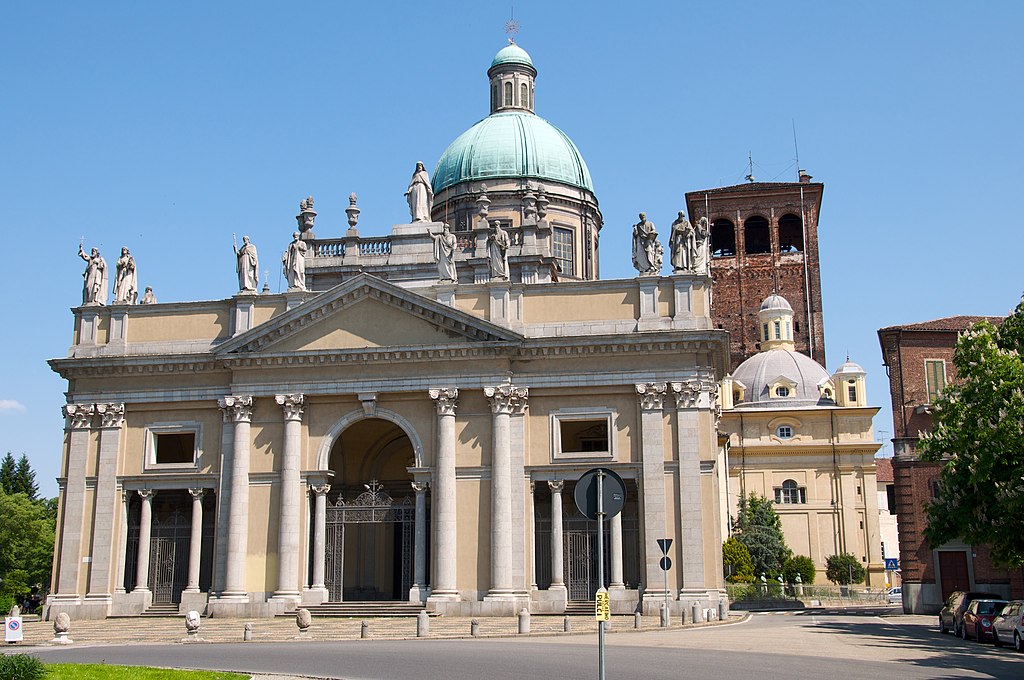
He died on 11 September, around 506 and was buried in the Cathedral. His cult remained alive and Altars were raised in his honour. On 17 May 1181, Bishop Alberto transferred St Emiliano’s relics to the main Altar. Rediscovered in 1565, seven years later it was placed in the Chapel of the Vergine dello Schiaffo, which was then dedicated to him.
Vercelli Cathedral
Two Parishes, Cigliano and Villanova Monferrato are dedicated to him.. He is not to be confused with Emilian II, a successor to the See of Vercelli, wo centuries later, who was his great devotee.
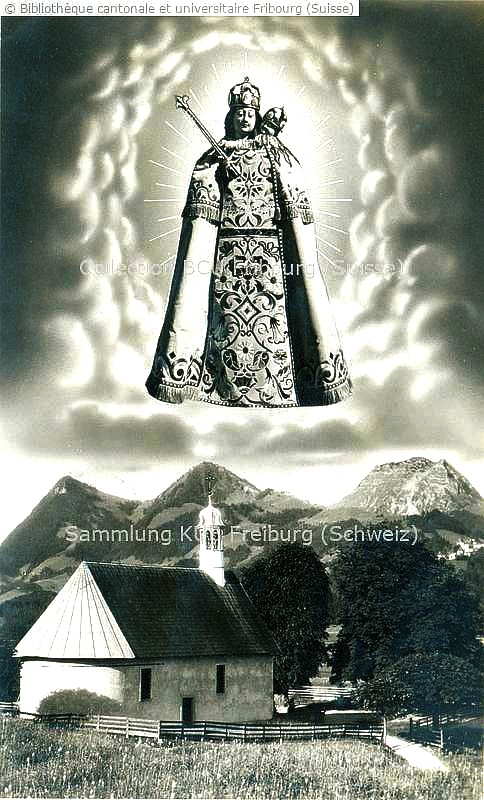
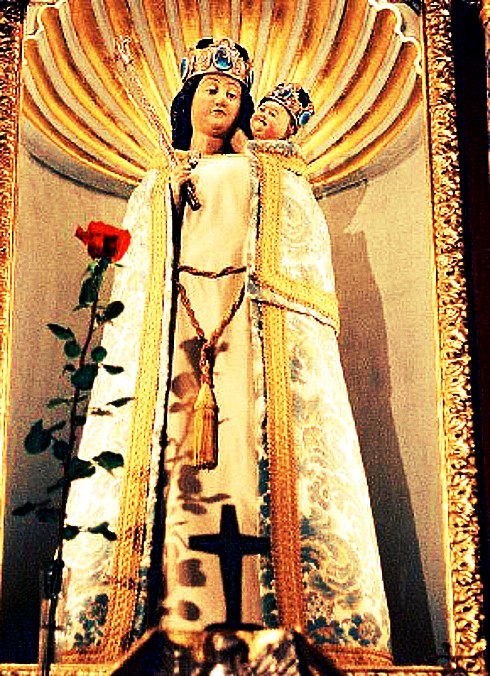
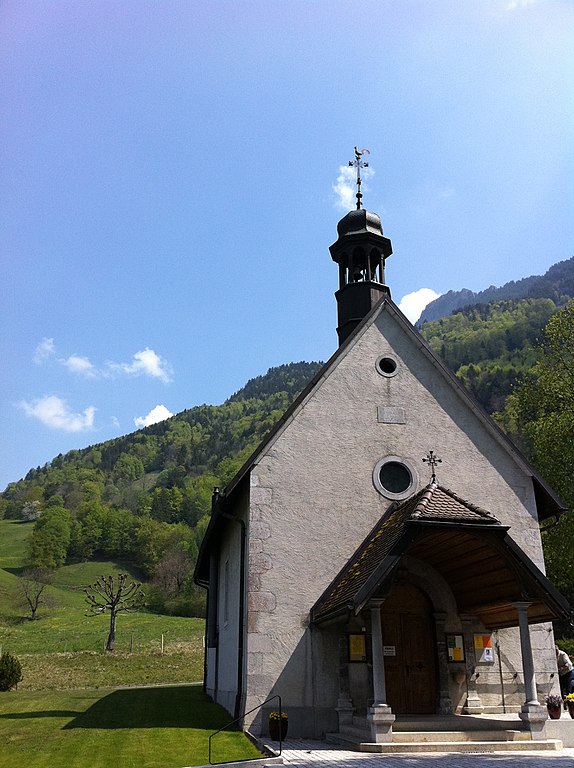
Notre-Dame des Marches, Broc, Gruyère, Fribourg, Switzerland / Our Lady of the Steps (1884)- 17 May:
Nestled at the foot of Gruyères Hill, the Chapel overlooks the terraced deposits of the Saane River known as Les Marches, the Steps. The 28″ statue of Our Lady of the Steps, usually vested, is a standing Virgin and Child in the late Gothic style of the 1400s. Documentary evidence of a Chapel here dates to 1572.
The present building goes back to 1705, the work of three brothers, all Priests, from a family of cheese merchants. Dom Nicolas Ruffieux, prothonotary of Broc, decided to build “the most beautiful Chapel in the country.” His brother Jean-Jacques, Priest of neighboring Gruyères, took on the project with a third brother’s help. In 1721, the Commune of Broc added the enclosure and the linden trees that still shade the courtyard. On 17 May 1884, a miracle occurred at Notre-Dame des Marches, the first of several in the 1880s, which turned the rural Chapel into a place of pilgrimage. Stricken with a spinal malady, Léonide Andrey, 22, had been unable to walk for six years. She was carried to Mass at the Chapel and walked home easily. By the 1930s, the Sanctuary was known as the “Little Lourdes of Fribourg.” Two main pilgrimages were established: one in September, initially termed the “anti-alcoholic pilgrimage” and one on a Wednesday in spring, the Pilgrimage of the Sick.
St Heraclius of Noviodunum Bl Ivan Ziatyk St Madron of Cornwall St Maildulf of Malmesbury St Maw
St Paschal Baylon OFM (1540-1592) “Seraph of the Eucharist,” “Saint of the Blessed Sacrament,” “Servant of the Blessed Sacrament.” Franciscan Lay Brother, Mystic…….. A man remarkable for innocence of life and the spirit of penance. Pope Leo XIII declared him the heavenly patron of Eucharistic Congresses and Societies and Apostolates, formed in honour of the Most Blessed Sacrament. About this beautiful Saint: https://anastpaul.wordpress.com/2018/05/17/saint-of-the-day-17-may-st-paschal-baylon-o-f-m-1540-1592-the-seraph-of-the-eucharist/
St Paul of Noviodunum St Peter Lieou St Rasso of Grafrath St Restituta of Carthage St Silaus of Lucca St Solochanus of Chalcedon St Thethmar St Victor Roma — Martyrs of Alexandria – 3 saints: Three Christians martyred together; no details about them have survived except their names: Adrio, Basilla and Victor. 4th century Alexandria, Egypt.
Martyrs of Nyon: A group of Christians martyred together in the persecutions of Diocletian. We know little more than three of their names: Aquilinus, Heradius and Paul. 303 at Noyon, Switzerland.


 AnaStpaul
You must be logged in to post a comment.