Posted in MARIAN TITLES, SAINT of the DAY, The APOSTLES & EVANGELISTS

EMBER Wednesday, Vigil of St Matthew, Apostle and Evangelist, Notre-Dame-au-Pied-d’Argent / Our Lady with the Silver Foot), France (1284) and the Saints for 20 September

EMBER Wednesdayhttps://anastpaul.com/2020/12/16/today-is-an-ember-day-did-you-remember/

St Pope Agapetus I (c489-536) Bishop of Rome Papal Reign from 13 May 535 – 22 April 536
St Candida of Carthage
St Clicerius of Milan Bishop
St Dionysius of Phrygia
St Dorimedonte of Synnada
St Eusebia of Marseilles
St Evilasius of Cyzicum
St Fausta of Cyzicum
St Glycerius of Milan
Bl John Eustace
St Priscus

Bl Thomas Johnson

Posted in MARIAN TITLES, SAINT of the DAY, The APOSTLES & EVANGELISTS

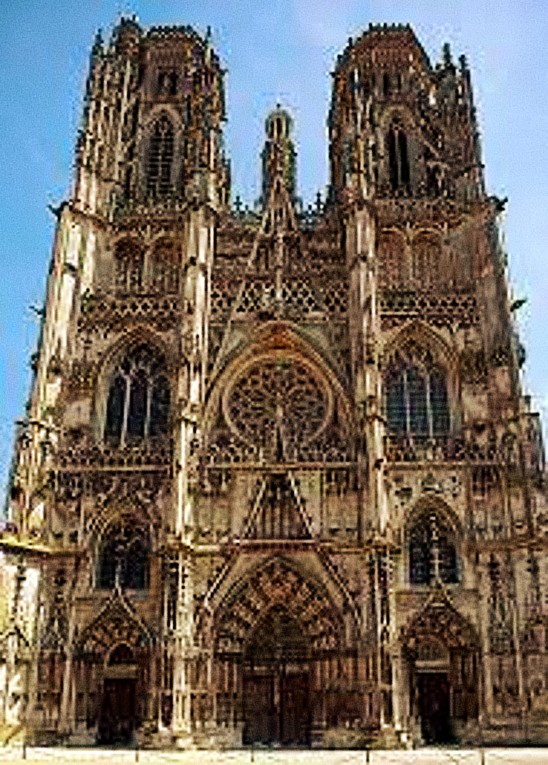
Notre-Dame-au-Pied-d’Argent / Our Lady with the Silver Foot), Toul, Meurthe-et-Moselle, Lorraine, France (1284) and Memorials of the Saints – 20 September

Notre-Dame-au-Pied-d’Argent / Our Lady with the Silver Foot), Toul, Meurthe-et-Moselle, Lorraine, France (1284) – 20 September:

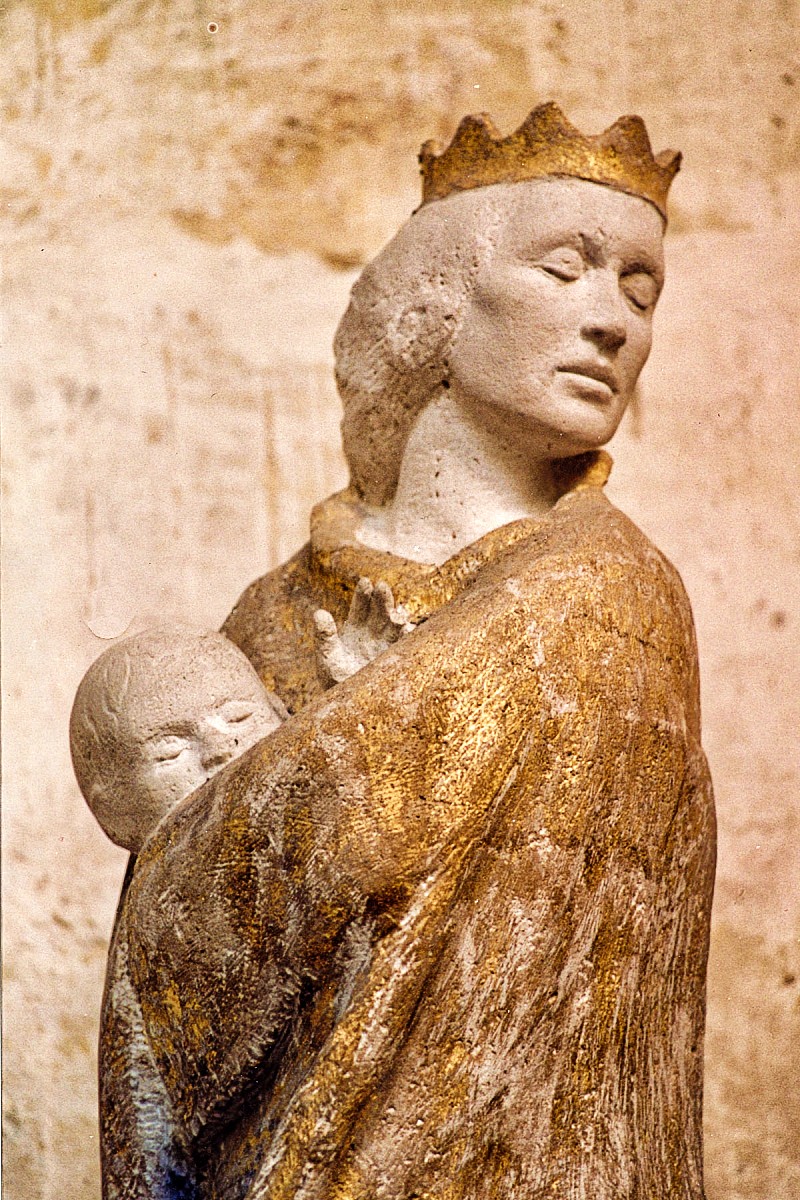
At Toul, in Lorraine, there was a Statue, which, according to an ancient tradition, informed a woman on 20 September in the year 1284, of an act of treachery which was being planned against the City.

The Statue was called Our Lady with the Silver Foot, or Notre-Dame au pied d’argenth. The faithful keep the memory of this stone Statue of the Blessed Virgin Mary, which was located just inside the entrance of the Church and placed over a sculpted clam. In those days there would be a lamp burning before it on feast days and almost every day, the faithful offered small candles which they lit and rested on a circular iron candlestick that was placed before the Statue. It was well known that several people who prayed before this Statue were cured of various diseases but the devotion and respect of the people toward this image, grew more than ever at the time of the Bishop Conrad because of the miracle that occurred in the following manner:

A woman named Helwide was in the Cathedral Saint-Etienne de Toul praying to the Blessed Virgin for consolation and the repose of the souls of her husband and daughter who had recently died. It was about midnight, when the Canons were praying Matins, that the Blessed Virgin Mary suddenly appeared to her.
The Virgin Mary ordered Helwide to go immediately to find a man named Rimbert, who was the guardian of “The Door to the Chair.” The Door to the Chair gave access to the Castrum, a little entrance to the City near Tanner Street. Helwide was urged to go quickly, for an enemy proposed to enter the City by the door to set their homes on fire and fill the streets with blood.
Regaining her senses after the vision, Helwide got up feeling very puzzled. She was hesitant about what she should do, though as Rimbert’s home was not far distant and was on her way home anyway, she decided she would indeed go there.
No sooner had Helwide stepped out of the Church, than she met the night-watch on patrol. She told them the tale of her vision and they responded by mocking her and making derogatory jokes. Despite this, two of them still decided to follow and actually see what would happen if Helwide could find the porter she sought.
The pair arrived with Helwide at the house and simply thrust the door open. Rimbert sat on his bunk, seeming startled, yet as if expecting the visit. Helwide briefly stated the purpose of her visit and Rimbert exclaimed, “I had precisely the same vision and the same warning! I do not know if it occurred in my sleep or in the state of wakefulness but I have been told that the Statue will move her foot in testimony of the truth!
At these words, all those present were seized with a great desire to see such a prodigy. With a rush they ran to the Cathedral and removed the candles and all that stood before the image. To their disappointment they found that the Virgin’s feet remained mostly hidden beneath the folds of the clothing of the Statue as before.
In the interim, several scholars and some laymen who were called to see the wonder, arrived on the scene. Seeing that nothing was apparently going to happen, they began cursing all the rest as senseless interpreters of dreams. As they stood not far from the Statue, many of them fell silent as they saw the Statue suddenly move as an entire foot of the Blessed Virgin Mary appeared from beneath the folds of her garment.
Terrified, but convinced, this time they all agreed to announce the peril which they now knew actually threatened them. Quickly rendering their thanks to Mary, they agreed to defend the City and call for reinforcements. They arrived just in time to take up their positions to defend the entrance to the City with the assistance of the Episcopal palace guards.
A tremendous struggle occurred when the invaders broke down the door and entered the courtyard, but the defenders were committed to the fight and held their own. When reinforcements arrived, the invaders fell to the last man.

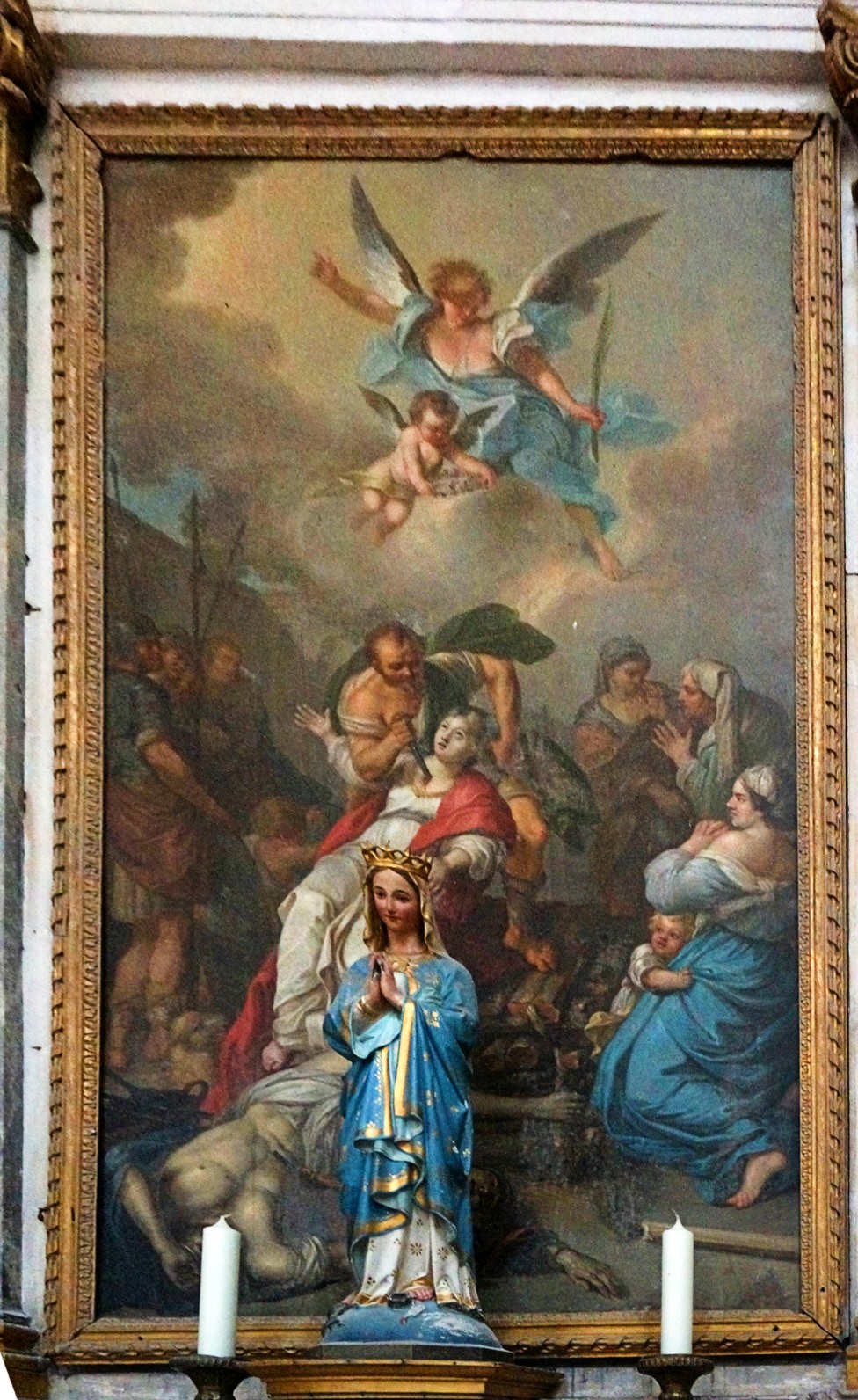
To perpetuate the memory and recognize the protection granted to them by the Blessed Virgin Mary, the people of Toul had a shoe of pure silver made to cover the foot on the Blessed Virgin’s Statue. From that time on the Statue was known as Our Lady with the Silver Foot. They also hung on the wall of the cathedral a picture which represented the heavenly vision and Mary was declared Patroness of the City.

The image of Our Lady with the Silver Foot was venerated in the City and the surrounding areas and in case of the threat of any public calamity, the Blessed Virgin was invoked and ,henceforth, the Statue would be carried in procession throughout the streets of the City. The Governors themselves considered it an honour to take the Statue upon their own shoulders. Pilgrimages were made to Our Lady of the Silver Foot; prayers answered, graces bestowed and miracles wrought.

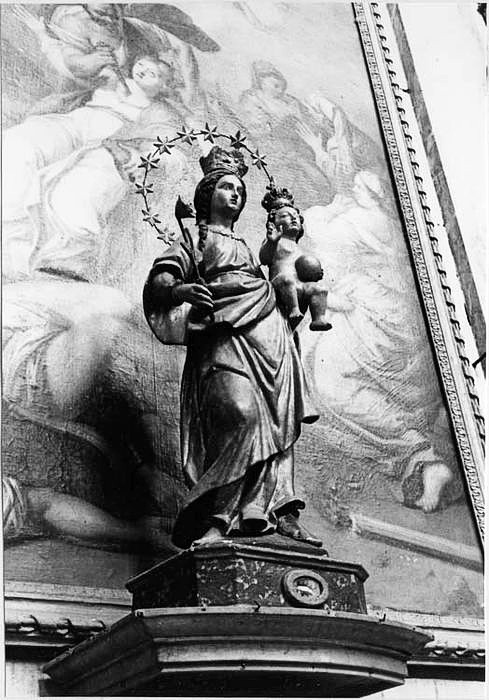
The original Statue of Our Lady with the Silver Foot was destroyed during the ravages of the French Revolution and was replaced later by a modern statue that was stolen in the 1980’s. The Gothic Cathedral was repaired after being damaged during the French Revolution but still awaits repair after the damage caused when it was struck during an aerial bombardment in the Second World War. There was once also a Monastery at Toul,but no trace of it remains.

A photography of the stolen Statue

Vigil of St Matthew, Apostle and Evangelist
St Agapitus of Rome
St Candida of Carthage
St Dionysius of Phrygia
St Dorimedonte of Synnada
St Eusebia of Marseilles

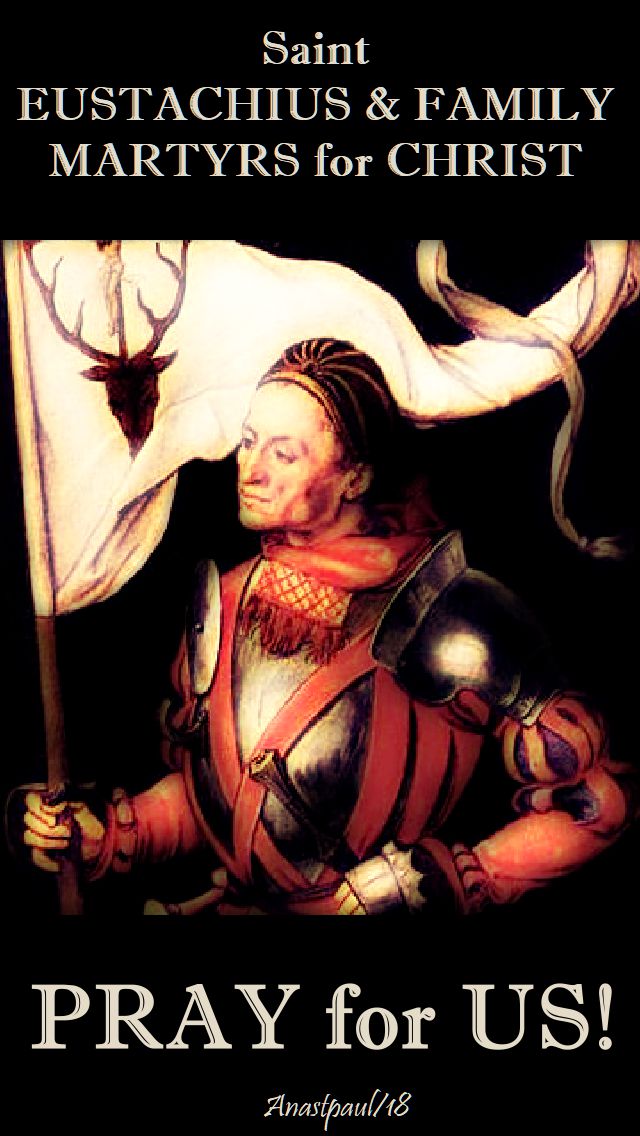
St Eustachius, Wife and Sons – Martyrs (Died c 188) St Eustachius is one of the Fourteen Holy Helpers – Patronages – against fire, difficult situations, fire prevention, firefighters, hunters, hunting, huntsmen, Madrid, torture victims, trappers.
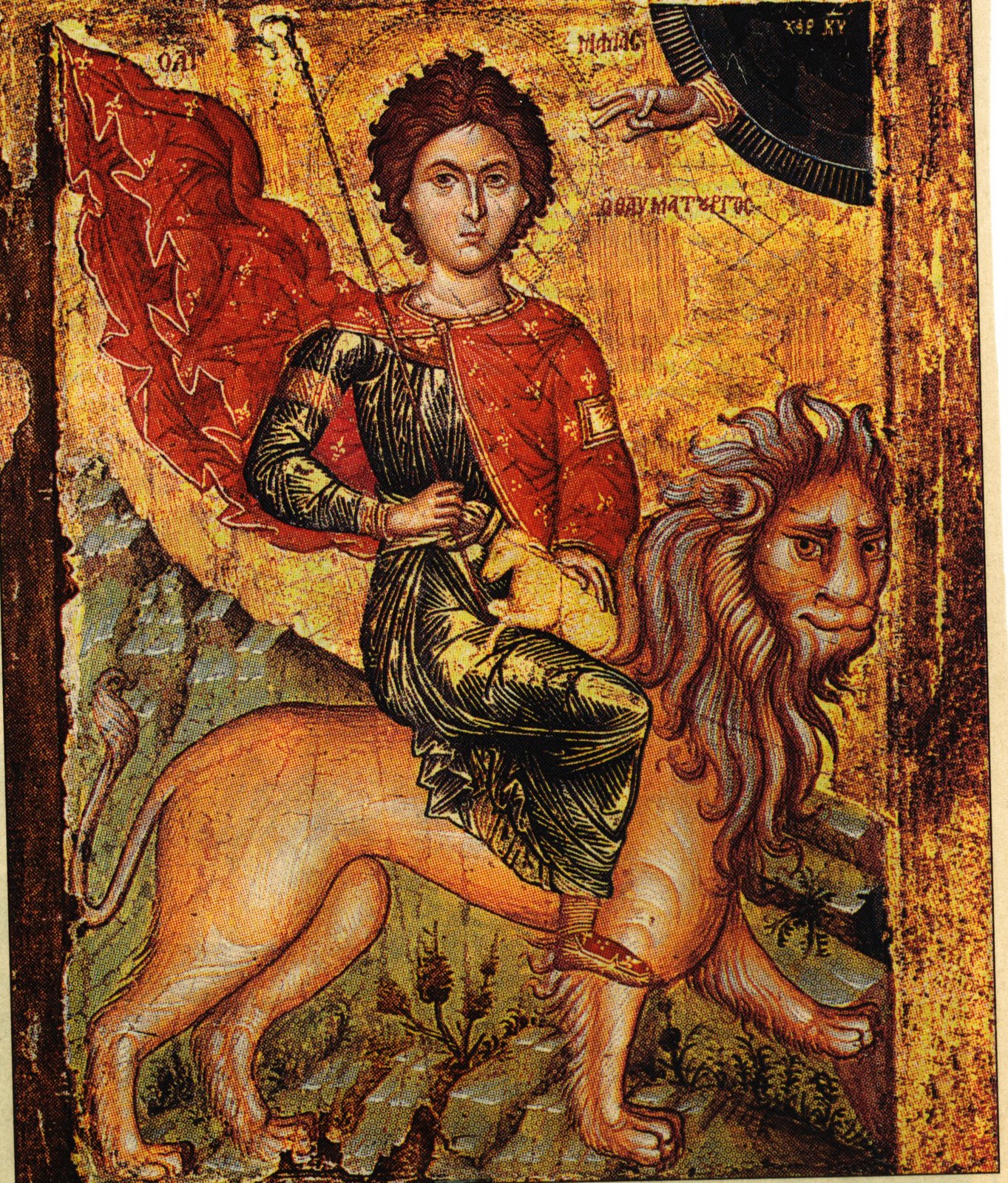
The Biography of this family of Martyrs:

https://anastpaul.com/2018/09/20/saint-of-the-day-20-september-st-eustachius-wife-and-sons-martyrs-died-c-188/

St Evilasius of Cyzicum
St Fausta of Cyzicum
Bl Francisco Martín Fernández de Posadas
St Glycerius of Milan
St John Charles Cornay
Bl John Eustace

Saint Jose Maria de Yermo y Parres (1851–1904) Priest, Founder of the Servants of the Sacred Heart of Jesus and of the Poor.
His Life:

https://anastpaul.com/2019/09/20/saint-of-the-day-20-september-saint-jose-maria-de-yermo-y-parres-1851-1904/

St Lawrence Mary Joseph Imbert
St Paul Chong Hasang
St Priscus
St Susanna of Eleutheropolis (Died 362) Virgin Martyr
Bl Thomas Johnson

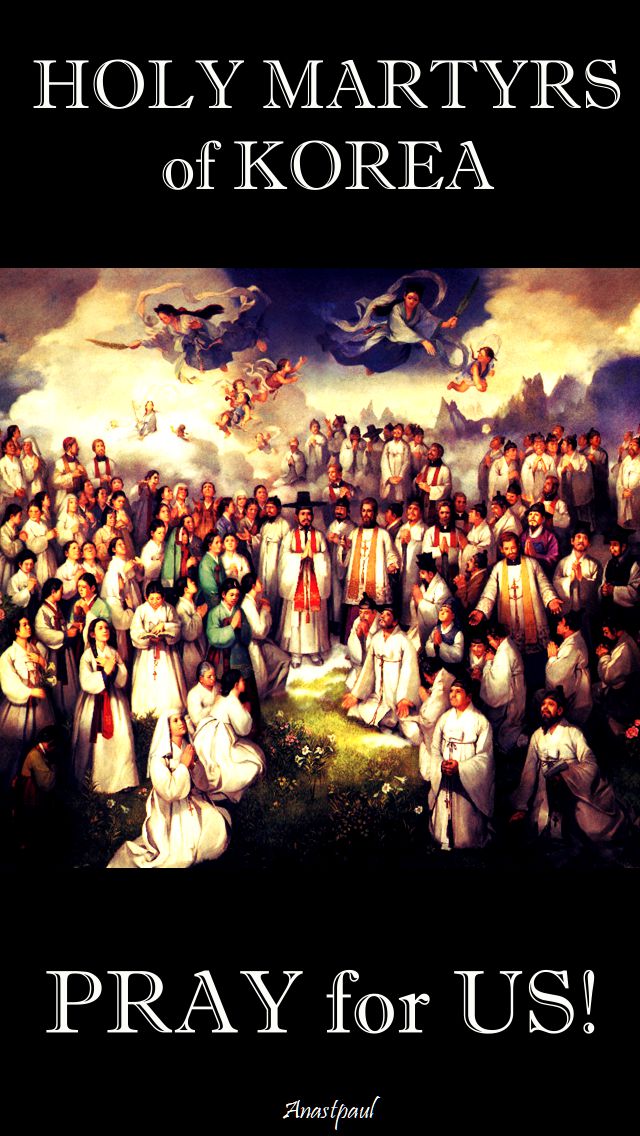
Martyrs of Korea: St Andrew Kim Taegon, St Paul Chong Hasang & Companions – 103 saints and beati. The Korean Martyrs were the victims of religious persecution against Catholics during the 19th century in Korea. At least 8,000 (as many as 10,000) adherents to the faith were killed during this period. (Memorial)
Their Story:

https://anastpaul.com/2017/09/20/saints-of-the-day-20-september-martyrs-of-korea-st-andrew-kim-taegon-st-paul-chong-hasang-companions-103-saints-and-beati/

Martyrs of Constantinople – 3 saints: A priest and two bishops who were imprisoned, tortured and martyred for the defense of icons in the iconoclast persecutions of emperor Leo the Isaurian. – Andrea, Asiano and Hypatius. They were martyred in 735 in Constantinople (modern Istanbul, Turkey) and their bodies were thrown to the dogs.

Martyrs of Pergen – 6 saints: A group of lay people martyred in the persecutions of Emperor Elagabalus. The names that have come down to us are Dionysius, Dioscorus, Philippa, Privatus, Socrates and Theodore. They were crucified c 220 at Pergen, Pamphylia, Asia Minor (in modern Turkey).

Martyred in the Spanish Civil War:
• Blessed Cristobal Iturriaga-Echevarría Irazola
• Blessed Santiago Vega Ponce
• Blessed Juan Antonio López Pérez

Posted in MORNING Prayers, PAPAL SERMONS, SAINT of the DAY, The WORD

One Minute Reflection – 20 September – Today’s Gospel: Luke 7:36–50

One Minute Reflection – 20 September – Today’s Gospel: Luke 7:36–50 – Thursday of the Twenty-fourth week in Ordinary Time, Year B and The Memorial of the Korean Martyrs – Sts Andrew Kim Taegon, Paul Chong Hasang & Companions – 103 saints and beati & St Eustachius & family (died 2nd century) – Martyrs

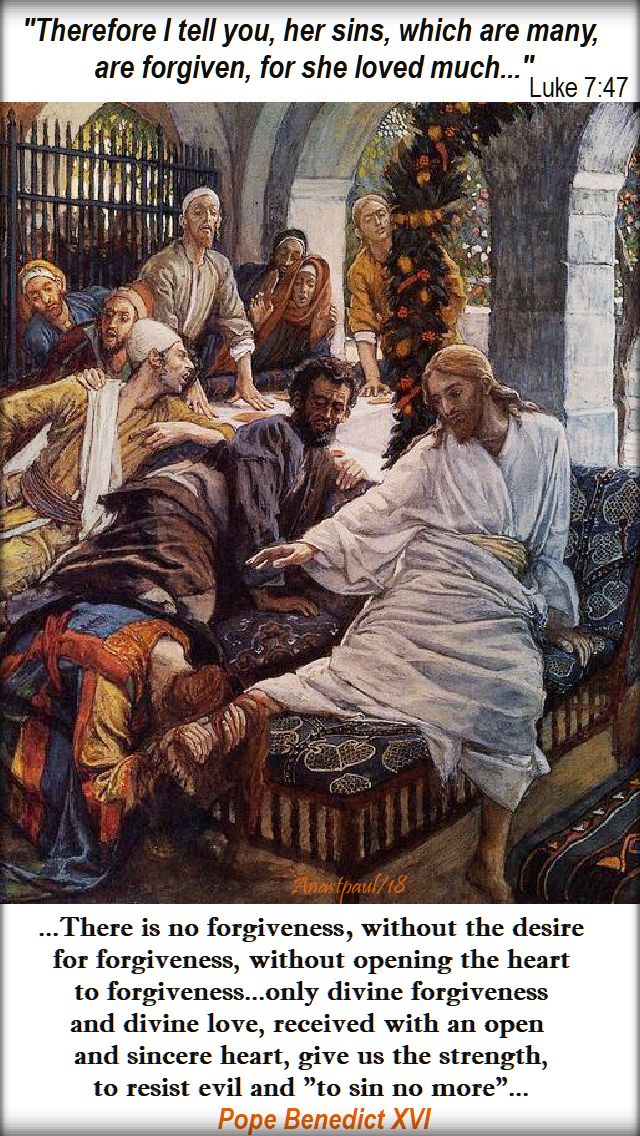
“Therefore I tell you, her sins, which are many, are forgiven, for she loved much”….Luke 7:47

REFLECTION – “Today, in particular, Jesus brings us to inner conversion:  He explains why He forgives us and teaches us to make forgiveness received from and given to, our brothers and sisters – the “daily bread” of our existence.
…Dear friends, from the Word of God we have just heard emerge practical instructions for our life.   Jesus does not enter into a theoretical discussion with His interlocutors on this section of Mosaic Law;  He is not concerned with winning an academic dispute about an interpretation of Mosaic Law but His goal is to save a soul and reveal that salvation is only found in God’s love.   This is why He came down to the earth, this is why He was to die on the Cross and why the Father was to raise Him on the third day.
Jesus came to tell us, that He wants us all in Paradise and that hell, about which little is said in our time, exists and is eternal for those who close their hearts to His love. …it is stressed that there is no forgiveness without the desire for forgiveness, without opening the heart to forgiveness – here it is highlighted, that only divine forgiveness and divine love, received with an open and sincere heart, give us the strength to resist evil and “to sin no more”, to let ourselves be struck by God’s love so that it becomes our strength.   Jesus’ attitude, thus becomes a model to follow, for every community, which is called to make love and forgiveness the vibrant heart of its life.”…Pope Benedict XVI – Sunday, 25 March 2007her sins which are many - luke 7 47 and there is no forgiveness without - pope benedict - 20 sept 2018

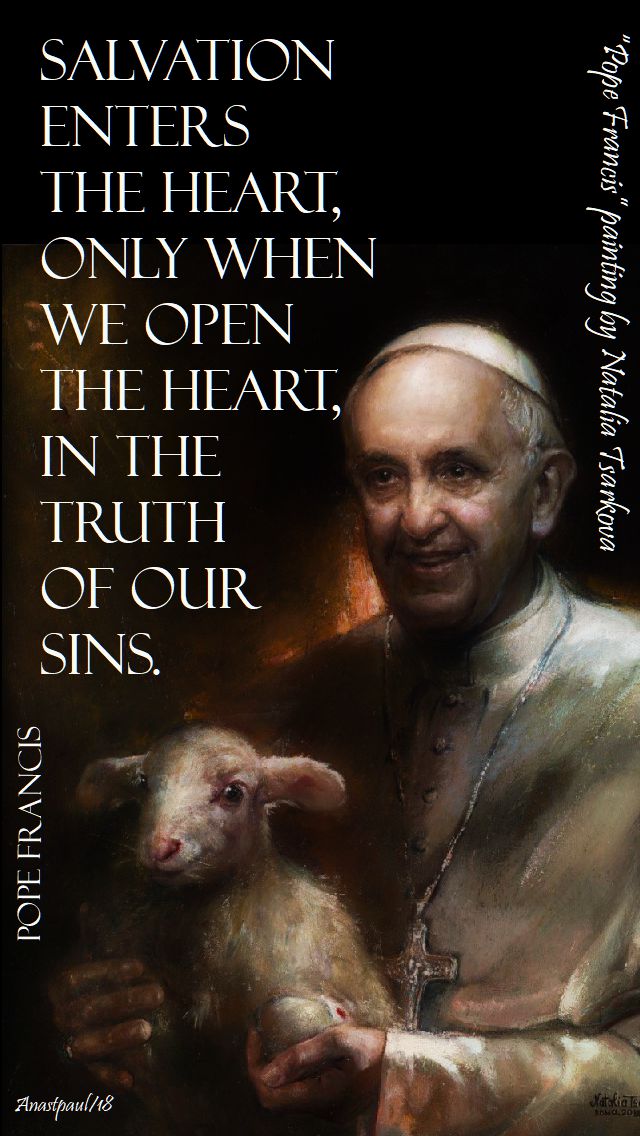
” Salvation enters the heart, only when we open the heart, in the truth of our sins.”…Pope Francis – Santa Marta, 18 Sept 2014 (“Pope Francis” painting by Natalia Tsarkova)salvation enters the heart only when we - pope francis 20 sept 2018

PRAYER – Grant us Lord, a true knowledge of salvation, so that, freed from fear and from the power of our foes, we may serve You faithfully, all the days of our life.   Give us Holy Father, a true desire for repentance and forgiveness and teach us each day, to forgive all with love.   Holy Martyrs, St Eustachius and family and those who so filled with love, died for the faith in Korea, please pray for us that we too may be filled with holy love and courage.   We make our prayer through our Lord, Jesus Christ in union with the Holy Spirit, one God, forever, amen.st eustachius and family martyrs - pray for us - 20 sept 2018holy-martyrs-of-korea-pray-for-us-20-sept-2017

Posted in SAINT of the DAY, Uncategorized

Saint of the Day – 20 September -St Eustachius, Wife and Sons – Martyrs (Died c 188)

Saint of the Day – 20 September -St Eustachius born as Placidas, Wife and Sons – Martyrs (Died c 188) One of the Fourteen Holy Helpers – Patronages – against fire, difficult situations, fire prevention, firefighters, hunters, hunting, huntsmen, Madrid, torture victims, trappers.st euchasius lg

The remarkable story of Saint Eustachius, is a lesson given by God Himself on the marvels of His Divine Providence.   He was a distinguished and very wealthy officer of the Roman army under the Emperor Trajan, in the beginning of the second century.   He practised generous charity to the poor, although he had not yet perceived the errors of idolatry.

One day, while this distinguished officer was vainly pursuing a deer, the animal suddenly stood immobile before him in the light of a hilltop and he perceived between its horns a luminous cross.   On the cross was the image of the crucified Saviour and a voice said to him, ‘I am the Christ whom you honour without knowing it;  the alms you give to the poor have reached Me.’   Like Saint Paul, he fell from his horse and remained inert for a time.   Coming to himself, he said interiorly, What is this voice I have heard?   You who speak to me, who are you, that I may believe in you?   And the Lord told him interiorly that He was the Creator of the light, of the seasons, of man and all things visible, that He had suffered to save the human race, died and been buried but had risen the third day.
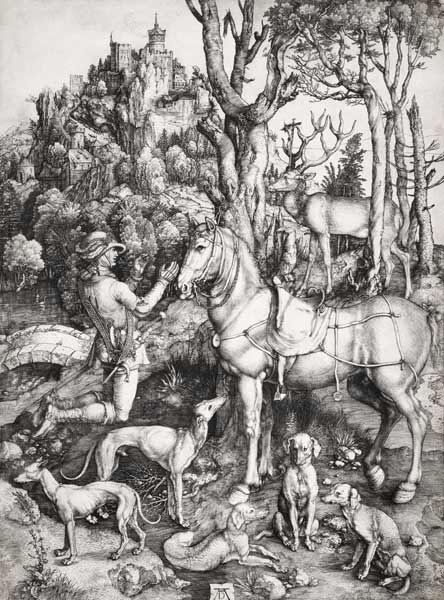
-Eustachius - durer

This was sufficient and the officer went home to fulfil the prescription he had received to be baptised with his wife and two young sons.   His spouse had received a similar revelation at the same time as himself and they all went to the Christian authority of the region in secret, to be baptised the same night.

In a short time he lost all his possessions through natural catastrophes and robbers.   But he had been advised beforehand that the Lord wanted to make of him another Job, that already the ancient enemy had plotted against him and that he was not to allow any thought of blasphemy to arise in his heart amid the sufferings that were awaiting him. He prayed for strength and retired from the region after the calamities, with his wife and children.   When by unforeseeable and extraordinary accidents, his wife and children were also taken from him and he believed the children dead, he was close to despair and wished his life might end but the warning of the Lord returned to his mind and he entered into the service of a land-owner of a village called Badyssus, to tend the fields. He remained for fifteen years in this occupation.   During this time his loved ones were well and safe, all spared in the perilous circumstances which had removed them from his sight but separated, each one like himself, from the three others.Saint_Eustace
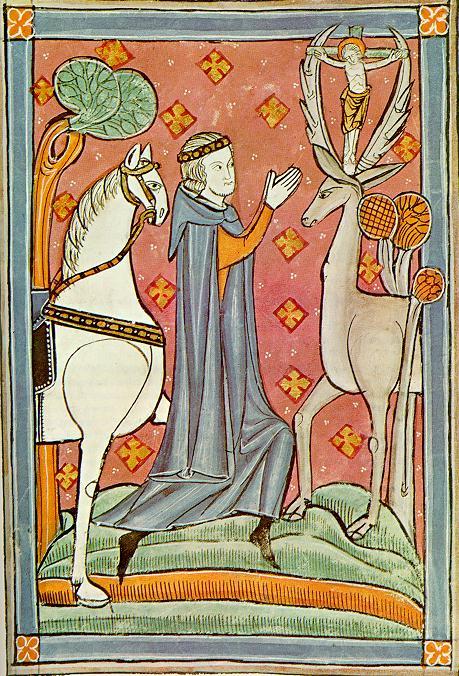
In those days the empire was suffering greatly from the ravages of barbarians and was sinking under the assaults.   The emperor Trajan had Eustachius sought out and when he was found, had him clothed in splendid garments to give him command over the troops he intended to send against the invaders.   During the celebration that accompanied his return, he related to the emperor all that had occurred to him.   When the troops were being assembled, his own sons were conscripted.   Seeing them, he noticed them as young men taller than most and of great nobility of bearing and countenance and kept them near him without yet recognising them.   One of the two, while on bivouac near the very house of his own mother, who like Eustachius had taken employment in the garden of a landowner, related the confused memories of his childhood to his companion. Suddenly, the two brothers recognised one another and embraced in an effusion of joy.

Their mother, by a delicate attention of Providence, had chanced to overhear them and reflecting on what she heard, became certain they were her own sons.   She went to the captain of the campaign to inquire about them and immediately recognised him.   Not wishing to startle him, she began to relate her story, identifying herself as the wife of a certain Placidus and saying she believed she was now in the presence of her two sons from whom she had been separated and whom she had not seen for long years.   One must imagine the sentiments of the captain on hearing this narration, the reunion which followed and the prayers of thanksgiving sent up to God by the family and also the troops, who joined them in their joy and prayers.

Returning to Rome victorious, Eustachius was received in triumph and greatly honoured, but when commanded to sacrifice during the celebration to the false gods, refused.   The infuriated emperor Adrian — for Trajan had died — ordered him with his wife and children to be exposed to a starved lion.   But instead of harming these servants of God, the beast came up to them, lowered its head as if in homage and left the arena.   The emperor, more furious still, caused the martyrs to be shut up inside a brazen bull, under which a fire was to be kindled, that they might be roasted to death.   Saint Eustachius prayed aloud and thanked God, asking Him who had reunited them to cause that their lives end at the same time, so they might be received together by Him into the happiness of His presence.   They expired but neither their bodies nor even their hair was injured. They were found entire the next day and at first it was believed they were still alive. Many believed in Christ through this final miracle, which to us today seems perhaps less miraculous than the story of their existence while alive.   A church in honour of the martyrs still exists in Rome:  Saint-Eustachius in Thermis.st_eustachius_by_elfessa-d5uoekm

Eustachius became known as a patron saint of hunters and firefighters and also of anyone facing adversity;  he was traditionally included among the Fourteen Holy Helpers. He is one of the patron saints of Madri  d, Spain. The island of Sint Eustatius in the Caribbean Netherlands is named after him.   The d’Afflitto, one of the oldest princely families in Italy, claim to be direct descendants of Saint Eustachius.

The novels “The Herb of Grace” (US title: Pilgrim’s Inn) (1948) by British author Elizabeth Goudge and Riddley Walker (1980) by American author Russell Hoban, incorporate the legend into their plot.   It has also inspired the film Imagination.

The saint’s cross-and-stag symbol is featured on bottles of Jägermeister, a German alcoholic digestif.   This is related to his status as patron of hunters; a Jägermeister was a senior foresters and gamekeeper in the German civil service until 1934, prior to the drink’s introduction in 1935.   Jägermeister has a round logo of a shining cross between the antlers of a deer/stag referring to two persons who had seen such a vision: Saint Hubertus and Saint Eustachius.
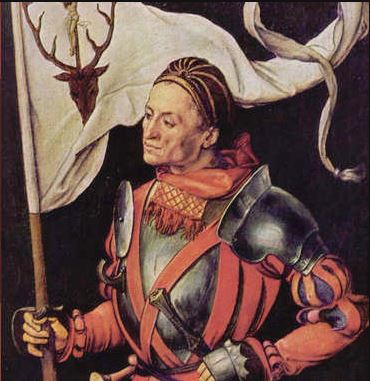
st eustachius

Saint Eustachius has a church dedicated to him in the southern part of India – he is called Saint Esthak in this part of the world and in County Kildare, Ireland.   There is a church dedicated to him on the campus of Newbridge College in Newbridge, County Kildare and the schools’ logo and motto is influenced by the vision of Saint Eustachius;  a nearby village is named Ballymore Eustace.

Sant’Eustachio is also honoured in Tocco da Casauria, a town in the Province of Pescara in the Abruzzo region of central Italy.   The town’s church, built in the twelfth century, was dedicated to Saint Eustachius.   It was rebuilt after being partially destroyed by an earthquake in 1706.

About the 14 Holy Helpers hereSt. Eustace