Bl Francesco Spoto Bl Hesso of Beinwil St José María Corbin-Ferrer St Maximus of Alexandria St Nicarete of Constantinople Bl Raymond de Barellis Bl Roger of Verdun St Theodore of Apamea (c 775-c 831) Confessor, Martyr, Monk, Brother of Saint Theophanes of Nicaea. St Theophanes of Nicaea Bl Walto of Wessobrünn
Nossa Senhora do Rosário / Our Lady of the Rosary (Atibaia, São Paulo, Brazil) (1817) – 27 December:
In 1763, slaves who couldn’t attend St John the Baptist’s, the main Church in Atibaia, began building their own. Completed in 1817, the Church is often called Nossa Senhora do Rosário dos Pretos, Our Lady of the Rosary of the Blacks. This agricultural City is home to the oldest and most active tradition in the region. The five indigenous groups in Atibaia combine African and Portuguese religious practices, centered around devotion to St Benedict and Our Lady of the Rosary. On 27 December, as they have for over 200 years, the locals gather outside Our Lady’s Church at dawn, dressed in brilliant uniforms of scarlet, green, blue, pink, or white and carrying swords, banners and musical instruments.
The day begins with a serenade and ends with fireworks. In between, to the sound of drums, guitars and pealing bells, the faithful process dancing through the City: young, old, male, female, black and white. The festa of Our Lady of the Rosary is part of a Christmas celebration beginning on 25 December with the erection of two towering poles topped with images of the Saints in Rosary Plaza and concluding 28 December with processions and Holy Mass honouring St Benedict.
Bl Adelheidis of Tennenbach Bl Alejo Pan López Bl Alfredo Parte-Saiz Bl Christina Ebner
Bl Francesco Spoto Bl Hesso of Beinwil St José María Corbin-Ferrer St Maximus of Alexandria St Nicarete of Constantinople Bl Odoardo Focherini Bl Raymond de Barellis Bl Roger of Verdun
Feast of the Holy Family+2020: Today’s Feast is held on the Sunday between Christmas and New Year’s Day. If both are Sundays, the Feast is celebrated on 30 December.
Today is the Feast day of the Holy Family but also every family’s feast day, since the Holy Family is the Patron and model of all Christian families. Today should be a huge family feast, since it is devoted entirely to the Holy Family as a model for the Christian family life. As Rev. Edward Sutfin states:
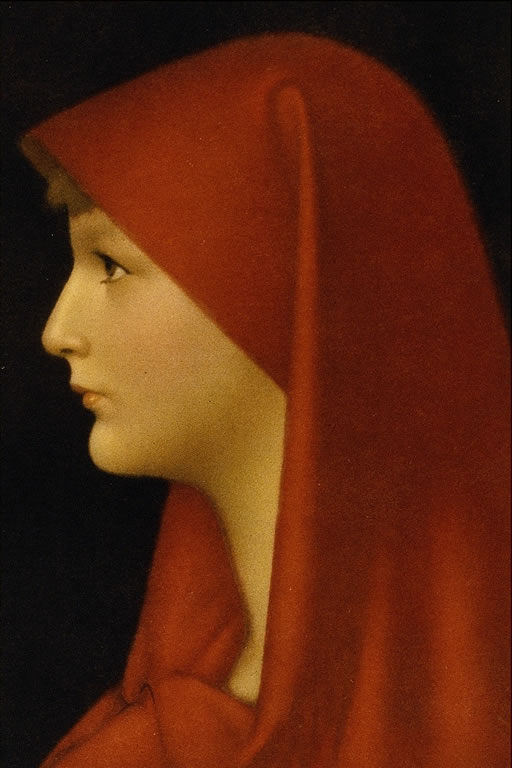
Saint of the Day – 27 December – St Fabiola (Died 399) Physician, divorced and then widowed in her second marriage, apostle of the poor and the sick, Foundress of the first known hospital and hospice, disciple of St Jerome, benefactress of the Church – born during the 4th century in Rome, Italy and died in 399 in Rome, Italy of natural causes. Patronages – Divorced people, difficult marriages, victims of abuse, adultery; unfaithfulness, widow, Hospice Movement.
The famous portrait of St Fabiola, painted by Jean-Jacques Henner in a classical Roman profile in 1885.
As Isaiah had prophesied, Christ came to preach the gospel to “the poor.” His church has always given a special option to the penniless. But sometimes rich people are even poorer than paupers because they are subject to greater temptations.
Fabiola was a member (as her name indicates) of the Fabii, one of ancient Rome’s most aristocratic and wealthy families. She was a Christian but a socialite and rather headstrong, probably because she had been raised to have her own way.
When Fabiola married, it was also to a man of social prominence. But, through no fault of hers, he proved to be so dissolute that she was unwilling to continue living with him. She therefore obtained a civil divorce. This was understandable. As so often happens today, Fabiola, still young, vigorous and companionable, took another spouse while her separated husband was still alive. Then as now, this was adultery. Fabiola remained strong in faith perhaps but proved weak in morals.
Providentially, Fabiola’s second mate did not live long. His death gave her the long-desired opportunity to seek reconciliation with the Church. Having performed the long public penance that was demanded in those days of public sinners, this Roman divorcee was re-admitted to the Sacraments by Pope St Siricius. Thenceforth, she sought to make amends for her waywardness by expending her great wealth on worthy causes. To churches and congregations in Rome and elsewhere she gave large sums. She also founded a Roman hospital for the sick poor, whom she gathered in from the streets and alleys and took care of personally, she treated citizens rejected from society due to their “loathsome diseases.” As far as is known, this was the first great Christian public hospital to be opened in western Europe.
In those days, St Jerome, the famous monk and scripture scholar, was exercising an influential apostolate among Roman Christian women of high position. Some of these had become nuns and gone to live near the saint in his chosen locale, Bethlehem. In 395 Fabiola herself went to the Holy Land to visit and learn from him. She stayed with two of his spiritual advisees, the nuns Sts Paula and Eustochium, both also Romans by origin. She applied herself, under the St Jerome’s direction, with the greatest zeal to the study and contemplation of the Scriptures and to ascetic exercises. Fabiola revered St Jerome and would have liked to join his community but the silent monastic life did not appeal to this gregarious and sociable woman.
Eventually, the rumour reached St Jerome’s little community that the Asiatic Huns were about to swarm into the area of Jerusalem and Bethlehem. Jerome and all his associates quickly fled for safety to the seacoast. The alarm proved to be false, however, so they moved back to Bethlehem – all except Fabiola, who had decided to return to Rome. She remained, however, in correspondence with St Jerome, who at her request wrote a treatise on the priesthood of Aaron and the priestly dress.
There is some indication that Fabiola was tempted once more to remarry. At least she did not yield to that temptation. Once back in Rome she renewed her program of good works. Co-operating with another prominent Roman Christian, the former senator Saint Pammachius, she set up a large hospice at Porto, the Roman port of entry on the Mediterranean coast. Intended to serve travellers and paupers arriving by sea, this guest-house, like her hospital in Rome, was both novel and welcome. As St Jerome tells us, within a year of its foundation, the good news of Fabiola’s hospice had spread across the Roman Empire from Britain to Persia. Even after the hospice, St Fabiola started to plan still another institution of charity but death now spoiled her plans.
All Rome, it is said, attended the funeral of its benefactress, who had shared her wealth with the needy. It was a wonderful manifestation of the gratitude and veneration with which she was regarded by the Roman populace.
St Jerome wrote a eulogistic memoir of Fabiola in a letter to her relative Oceanus.
St Fabiola’s Statue resides on the Colonnade at St Peter’s Basilica
The story of Fabiola has a curiously modern quality. This socially gifted woman can serve as a good example to today’s women whose marriages break up. Woman is endowed by God with talents both as a wife and a mother. Even when she loses her status as wife, she can still live out her status as mother, not only to her own children but to all who need a mother’s touch and a mother’s love.
The English Cardinal Nicholas Wiseman (1802-1865), wrote a fictional book, called Fabiola of the Church of the Catacombs and includes many saints and martyrs.
Bl Adelheidis of Tennenbach
Bl Alejo Pan López
Bl Alfredo Parte-Saiz
Bl Christina Ebner St Fabiola (Died 399)
Bl Francesco Spoto
Bl Hesso of Beinwil
St José María Corbin-Ferrer
St Maximus of Alexandria
St Nicarete of Constantinople
Bl Odoardo Focherini
Bl Raymond de Barellis
Bl Roger of Verdun Blessed Sára Schalkház S.S.S. (1899–1944) Martyr Biography of Blessed Sára: https://anastpaul.com/2018/12/27/saint-of-the-day-27-december-blessed-sara-salkahazi-s-s-s-1899-1944-martyr-a-catholic-gem/
St Theodore of Apamea
St Theophanes of Nicaea
Bl Walto of Wessobrünn









 AnaStpaul
You must be logged in to post a comment.