Posted in JESUIT SJ, MARIAN TITLES, SAINT of the DAY

Octave Day of St John, Apostle, Notre-dame de Montaigu-Zichem / Our Lady of Sichem / Montaigu (474), St Genevieve (c419-c 502) Virgin and the Saints for 3 January

Octave Day of St John,Apostle

The Titular Feast of the Society of Jesus
https://anastpaul.com/2017/01/03/the-titular-feast-of-the-jesuits/

St Arnold Wala
St Athanasius of Cilicia
St Bertilia of Mareuil
St Bertille of Thuringia

St Constant of Gap
St Cyrinus of Cyzicus
St Daniel Himmerod the Younger
St Daniel of Padua (Died 168) Deacon, Martyr
St Eustadi

St Florentius of Vienne
St Florentius of Vienne the Martyr
St Gordius of Cappadocia
St Imbenia (Died c300) Virgin, Martyr
St Lucian of Lentini
St Melorius
St Peter of Palestine

St Peter Balsam
St Primus of Cyzicus
St Salvator of Belluno
St Theogenes of Cyzicus
St Theonas
St Theopemptus of Nicomedia
St WenogStl William Vives
St Zosimus of Cilicia

Posted in EYES - Diseases, of the BLIND, Of the SICK, the INFIRM, All ILLNESS, SAINT of the DAY

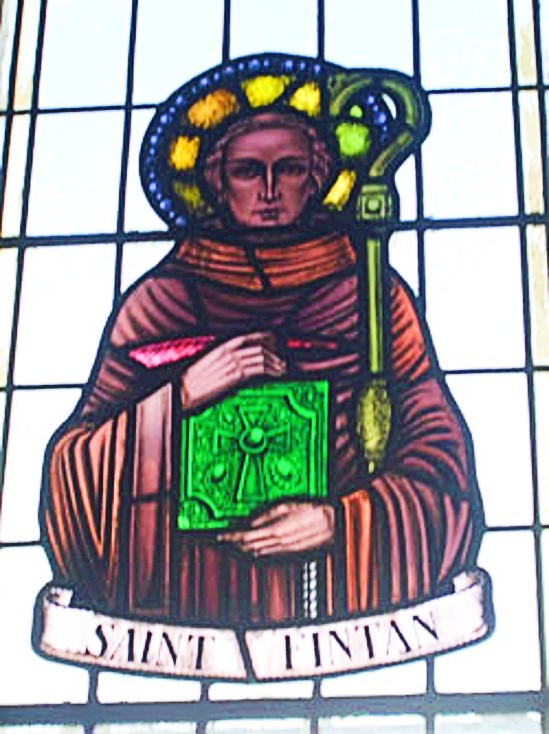
Saint of the Day – 3 January – St Fintan of Doon (Died 6th Century) Abbot

Saint of the Day – 3 January – St Fintan of Doon (Died 6th Century) Abbot, Founder of a Monastery, Miracle-worker. Born in Ireland and died in the 6th Century in Ireland of natural causes. Also known as – Fiontan, Fintanus. Patronage – eye diseases, against blindness, all ailments.

Fintan was a brother to St Finlug, son to Diman who was descended from Mured Manderig, King of Ulster. Alinna, of a noble Limerick family, was his mother.

St Comgall, Abbot of Bangor had founded a school at Bangor in the middle of the 6th Century and it was here that Fintan studied. At this time pirates raided these Monasteries frequently. Fintan, once, asked Finian of Maghbile to lend him a Gospel for his studies but was refused. The next night Fintan and his companions were on guard at the port, fearing an invasion. The pirates, however, firstly raided Magh Bile – the Monastery of St Finian and among the treasures they stole was the Gospel. Later they approached Bangor where Fintan was on guard. When they were about to attack the City, a storm suddenly arose and all the ships were sunk except that which carried the Gospel. The Gospel, along with other artefacts were recovered.

One Spring, a leper came to Fintan and requested some bread, made from newly ripened corn. Fintan instructed the leper to plant a seed in the newly ploughed field. The seed immediately grew and ripened and thus the leper was satisfied.

At this time a pagon king lived in a district called Calathmagh. On hearing of Fintan’s approach, the king instructed his servants to prevent the further progress of Fintan. On reaching a field where the king’s workers were, the Saint and his followers were obstructed from continuing. On requesting permission, they were insulted. Presently a storm arose and the crops were set on fire from which the smoke almost blinded the kings servants. With some Holy Water, Fintan restored their vision and they were deeply grateful to him and many converted.

After these occurrences, Fintan settled at Doon, whose name is derived from the earthen dun and from Blesc who was a vassal to the king at that time. The presence of Fintan’s well and the fact that this is the only place in the area with a name of origin “Dun” verifies that Doon is the place where Fintan settled.

Fintan’s settlement at Doon had been prophesised by St Comgall in the Leabhar Breac which has been translated thus:

“My little foster son shall obtain the fortress, Fintan, by whom the dun will be obtained His city of sacred protection shall be That which is called Doon (Dun Bleisce).”

At Doon, Fintan was welcomed with much hospitality from Columbanus, son to Kynchadhe. A feast, which consisted of a cow and calf and milk had been prepared for Fintan and his seven followers.

St Fintan’s well is situated in a grove of trees in the east corner of lower Kilmoylan townl. The well’s water is reputed to have great healing powers and previously many pilgrims journeyed there to be cured of diverse ailments but most especially of blindness and eye diseases..

They have left their cot for the holy well Near the Cross in the valley flowing, its bright blude hide haith a spell Light and joy to the blind bestowing.

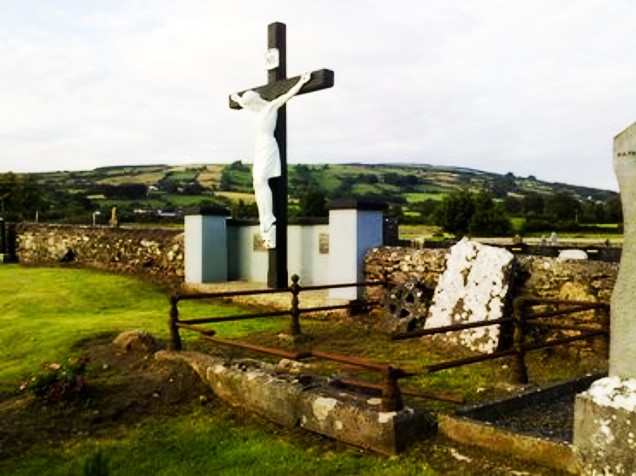
St Fintan is believed to have lived to a very old age. The exact site of St Fintan’s Monastery in Doon is uncertain but we presume it is near the ancient graves of St Fintan’s cemetery in Doon. From St Engus’ comments and other sources, it has been learned that St Fintan’s death fell on the 3rd of January. His Feast-day is celebrated in the Parish. There is no information, however, regarding the year or place of his death.

There is another St Fintan, celebrated on 17 February – Saint Fintan of Clonenagh (c 524 – 603) “Father of the Irish Monks.”
https://anastpaul.com/2021/02/17/saint-of-the-day-17-february-saint-fintan-of-clonenagh-c-524-603-father-of-the-irish-monks/

Posted in MARIAN TITLES, SAINT of the DAY

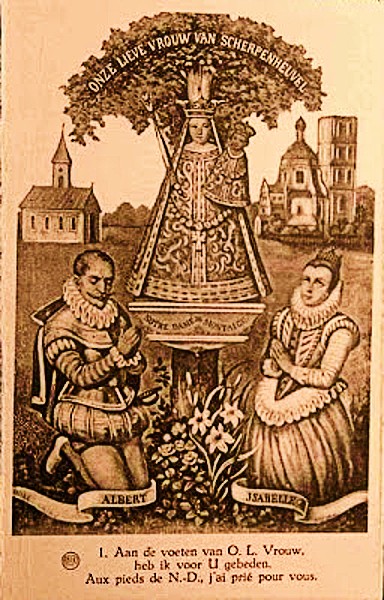
Octave Day of St John, Apostle, Notre-dame de Montaigu-Zichem / Our Lady of Sichem / Our Lady of Montaigu (474) and Memorials of the Saints – 3 January

Octave Day of St John, Apostle

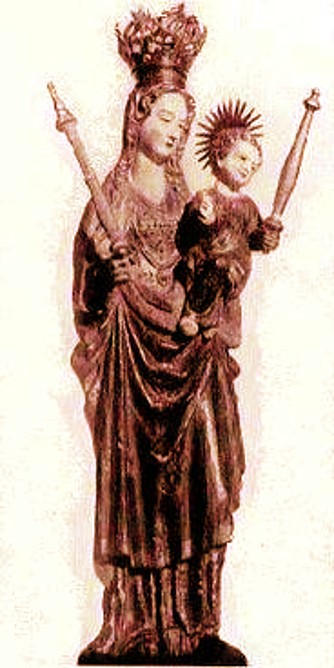
Notre-dame de Montaigu-Zichem / Our Lady of Sichem / Our Lady of Montaigu (474) – 3 January:

The Shrine in Brabant in the Duchy of Louvain, is a replacement of the one below Mount Garizim, Israel. Hadrian restored the temple on Mount Garizim and dedicated it to Jupiter. A small Christian community settled there and on several occasions they suffered greatly at the hands of the pagans. In 474 the Emperor, to avenge an unjust attack on the community, gave Mount Garizim to the Christians, who built on it a Church dedicated to the Blessed Virgin.
After the Mohammedan conquest, Christianity practically disappeared from the district. The French made amends by erecting a Shrine to Mary in the Duchy of Louvain. The ancient Statue of Our Lady of Sichem, or as Our Lady of Montaigu-Zichem, which is the title more commonly used today, has been venerated in Belgium from very early times. The Mother of God rewarded the faithful magnanimously for their pious attention.
According to legend, a shepherd boy originally found the Statue of Our Lady after it had apparently fallen from a niche cut in an old oak tree. The Statue was mysteriously too heavy for him to lift alone, so he ran to find his master, and have him return to help him replace the statue in its place in the old oak.
It is said that in 1306 the Blessed Virgin Mary moved the hearts of the people by causing four drops of blood to flow from the eyes of the Statue. This revived the faith of the people and increased their fervour.
A small Chapel was built beneath the tree, which was rebuilt in 1602 and the dedication of Our Lady of Sichem took place in the year 1604 by the Archbishop of Mechlin, Mathias Hovius.
From that time forward, there were many miracles as Our Lady seemed to demonstrate her appreciation by granting many favours. The Statue was soon venerated as miraculous, and there have been many pilgrimages to the site during the centuries, continuing even until this day.

The Titular Feast of the Society of Jesus
https://anastpaul.com/2017/01/03/the-titular-feast-of-the-jesuits/

St Genevieve (c 419-c 502) Virgin, Apostle of prayer and of the poor and sick. Patronages – against plague, against natural disasters, against fever, French security forces (chosen in 1962), Paris, France, Women’s Army Corps.
Biography:

https://anastpaul.com/2020/01/03/saint-of-the-day-3-january-saint-genevieve-c-419-c-502/

St Pope Antherus (Died 235) Martyr, Bishop of Rome from 21 November 235 to 3 January 236, the date of his Martyrdom.
Biography:

https://anastpaul.com/2021/01/03/saint-of-the-day-3-january-saint-pope-antherus-died-235-martyr/

Bl Arnold Wala
St Athanasius of Cilicia
St Bertilia of Mareuil
St Bertille of Thuringia

St Blitmund of Bobbio (Died 660) Monk, Abbot, Founder of Monasteries and Churches, Miracle-worker.
His Story
:
https://anastpaul.com/2022/01/03/saint-of-the-day-3-january-saint-blitmund-of-bobbio-died-660/

St Constant of Gap
St Cyrinus of Cyzicus
St Daniel Himmerod the Younger
Bl Daniel of Padua
St Eustadius
St Finlugh
St Fintan of Doon (Died 6th Century) Abbot
St Florentius of Vienne
St Florentius of Vienne the Martyr
Bl Gerard Cagnoli
St Gordius of Cappadocia
St Imbenia
St Lucian of Lentini
St Melorius
St Peter of Palestine
St Primus of Cyzicus
St Salvator of Belluno
St Theogenes of Cyzicus
St Theonas
St Theopemptus of Nicomedia
St Wenog
Bl William Vives
St Zosimus of Cilicia

Martyrs of Africa – 12 Saints: A group of Christians Martyred together in Africa, date unknown, exact location unknown. We know nothing more than their names – Acuta, Candidus, Constantius, Eugenia, Firmus, Hilarinus, Lucida, Martial, Poenica, Possessor, Rogatianus and Statutianus.

Martyrs of Tomi – 7 Saints: A group of Christians Martyred together, date unknown. We know nothing more than their names – Claudon, Diogenius, Eugene, Eugentus, Pinna, Rhodes and Rhodo. They were martyred at Tomi, Exinius Pontus, Moesia (modern Constanta, Romania).