Posted in MARIAN TITLES, SAINT of the DAY

Octave of the Holy Innocents, Madonna delle Rose / Our Lady of the Rose, Italy (1417) and Memorials of the Saints – 4 January

St Aedh Dubh
St Aggaeus the Martyr

St Celsus of Trier
Bl Chiara de Ugarte
St Chroman
St Dafrosa of Acquapendente

St Ferreolus of Uzès
St Gaius of Moesia

St Hermes of Moesia
St Libentius of Hamburg
Bl Louis de Halles
St Mavilus of Adrumetum
St Neophytos
St Neopista of Rome
St Oringa of the Cross
Bl Palumbus of Subiaco

St Rigobert of Rheims (Diedc743) Archbishop
Bl Roger of Ellant
St Stephen du Bourg
St Theoctistus

Posted in SAINT of the DAY

Saint of the Day – 4 January – Saint Gregory of Langres (Died 539) Bishop

Saint of the Day – 4 January – Saint Gregory of Langres (Died 539) Bishop of Langres and Dijon, Count and Governor, Father of 2 Sons and Widower, before being appointed as the Bishop of Langres, Ascetic, Miracle-worker. Great-grandfather of St Gregory of Tours. He ordered the translation of the Relics of Saint Benignus and built the Church and the Abbey of Saint-Benignus of Dijon. Born around around 446, as the Count of Autun, in Saone-et-Loire, modern France and died in 539 of natural causes. Also known as – Gregory of Autun, Gregory of Dijon. Additional Memorials – 13 May and 6 November (translation of relics).

The Roman Martyrology reads today: “At Langres, Gregory, Bishop, renowned for his miracles, Great-grandfater of St Gregory of Tours, who wrote of him.

Gregory was a descendant of a rich family of Senators. After the death of his uncle, Attale, he became the Count of Autun. He was the Count and Governor of Autun and Autunois.

History retains the memory of a man firm and severe, yet fair. He was ruthless to cowards and bandits, kind and gentle with those in need and with the good and faithful servants of Christ..

Gregory had two sons of his union with Armentaire, daughter of Armentarius, Senator of Lyons. One of his sons, named Tetricus, became his successor to the Episcopal See of Langres. His second son, also named Gregory, became the grandfather of the famous St Gregory of Tours.

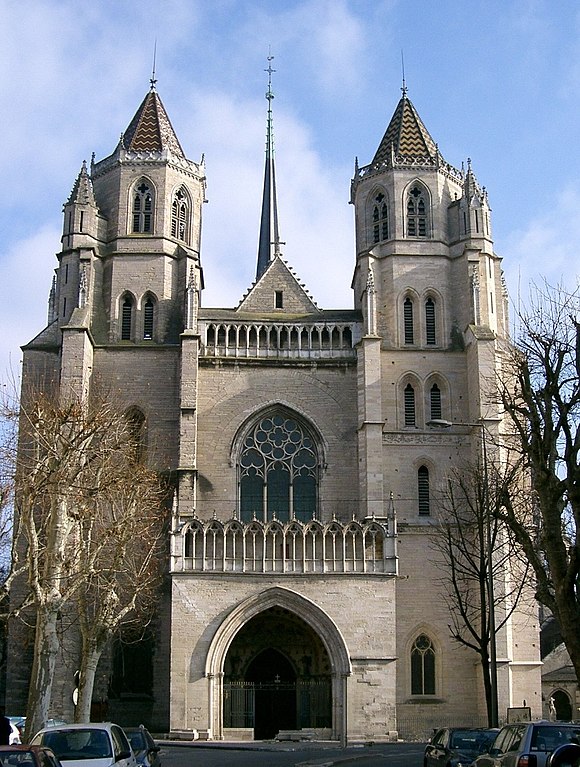
After the death of his wife, Gregory joined the Church. his biographer tells us that he was elected in 506 by the Clergy and the faithful of Langres to the Episcopal See. It is about this date that he founded the Abbey of Saint-Bénigne of Dijon – St Benignus, who was a Martyr who died in the 3rd Century, is the Patron Saint and first herald of Christianity of Dijon (Feast day 1 November). Gregory placed the Relics of St Benignus, the Apostle of Burgundy, in the Basilica he built at the Abbey. The Abbey Church built by Gregory was superseded by a Romanesque Basilica, which collapsed in 1272 and was replaced by the present Dijon Cathedral. He placed the Monastery under he care of Abbot Eustad.

Gregory was an exemplary shepherd, indulging in abstinence with great rigour, eating only bread made with barley, using only wine diluted with water and spending long hours in prayer. He lived “like an anchorite in the middle of the world”, according to St Gregory of Tours, his great-grandson.

He made frequent trips to Dijon, which at that time depended on the Diocese of Langres. He lived near the baptistery of Saint Vincent, near the Saint-Etienne Church. It was a place with many relics, where he came to pray at night. The legend tells us that one of the clerics watching him one night saw the revered saints coming to sing and glorify God with him. Saint Benignus too appeared to Gregory and told him that he was quite grieved that his cult was neglected. Gregory immediately renovated and restored the Shrine of the Martyr.

It was in his day that Abbot Sigo, who would be Canonised under the name of St Seine, came to the Abbey of Reome, under the spiritual direction of St Jean of Reome.

On his way to Langres to celebrate Epiphany, Gregory caught A cold and died on 4 January 539. He had held the Episcopal Seat for thirty-three years. He was buried, according to his wishes, in the Church of Saint-Jean de Dijon, near the baptistery. Legend has it that on the way to his funeral convoy, passing in front of the prison, the prisoners implored the deceased and that he performed a miracle – the gates of the penal establishment opened by themselves.

His son, Tetricus, who succeeded him in the Episcopal See of Langres, made a transfer of his father’s body, in order to raise a Monument worthy of his holiness. This event is commemorated on 6 November. Later, a second translation took place in 1282 – a part of his Relics were deposited in the Cathedral of Langres . Gui of Geneva , Bishop of Langres, deposited them in a silver box which was placed on a column behind the main Altar of Saint-Mammès. The Clergy assembled in Synod, participated in this ceremony.

The Cathedral of Saint Benignus in Dijon today
Posted in MARIAN TITLES, SAINT of the DAY

Octave of the Holy Innocents, Madonna delle Rose / Our Lady of the Rose (1417), Madonna della Treviso / Our Lady of Treviso of St Jerome Emiliani and Memorials of the Saints – 4 January

Octave of the Holy Innocents

Madonna delle Rose / Our Lady of the Rose (Albano Sant’Alessandro, Italy) (1417) – 4 January:
AND —
Madonna della Treviso di San Jerome Emiliani / Our Lady of Treviso of St Jerome Emiliani

https://anastpaul.com/2021/01/04/our-lady-of-treviso-and-memorials-of-the-saints-4-january/
HERE:
https://anastpaul.com/2022/01/04/madonna-delle-rose-our-lady-of-the-roses-albano-santalessandro-italy-1417-madonna-della-treviso-di-san-jerome-emiliani-our-lady-of-treviso-of-st-jerome-emiliani-and-memorials-of-the-sain/

St Aedh Dubh
St Aggaeus the Martyr

St Angela of Foligno TOSF (1248-1309) known as the “Mistress of Theologians” – Wife, Mother, Widow, Religious, Mystic, Writer, Third Order Franciscan, Foundress of a religious community, which refused to become an enclosed religious order, so that it might continue her vision of caring for those in need. It is still active today.
About St Angela:

https://anastpaul.com/2020/01/04/saint-of-the-day-4-january-saint-angela-of-foligno-tosf-1248-1309/

St Celsus of Trier
Bl Chiara de Ugarte
St Chroman
St Dafrosa of Acquapendente

St Elizabeth Ann Seton (1774-1821) (Memorial, United States) Widow and Mother, Religious, Foundress, Teacher, first native-born citizen of the United States to be Canonised .
Biography:

https://anastpaul.wordpress.com/2018/01/04/saint-of-the-day-st-elizabeth-ann-seton-1774-1821/

St Ferreolus of Uzès
St Gaius of Moesia
St Gregory of Langres (Died 539) Bishop
St Hermes of Moesia
St Libentius of Hamburg
Bl Louis de Halles
St Mavilus of Adrumetum
St Neophytos
St Neopista of Rome
St Oringa of the Cross
Bl Palumbus of Subiaco

St Pharaildis of Ghent (c 650-c 740) Virgin, Apostle of the poor, Miracle-worker.
About St Pharaildis:

https://anastpaul.com/2022/01/04/saint-of-the-day-4-january-saint-pharaildis-of-ghent-c-650-c-740/

St Rigobert of Rheims
Bl Roger of Ellant
St Stephen du Bourg
St Theoctistus

Blessed Thomas Plumtree (Died 1570) Priest, Martyr, Rector of Stubton, Military Chaplain to Blessed Thomas Percy (7th Earl of Northumberland), renowned Preacher of the uprising and Martyr of the Rising of the North. He was Beatified on 9 December 1886 by Pope Leo XIII.
His Life and Death:

https://anastpaul.com/2021/01/04/saint-of-the-day-4-january-blessed-thomas-plumtree-died-1570-priest-martyr/

Martyrs of Africa – 7 Saints: A group of Christians Martyred together in the persecutions of the Arian Vandal king Hunneric. Saint Bede wrote about them. – Aquilinus, Eugene, Geminus, Marcian, Quintus, Theodotus and Tryphon. In 484 in North Africa.

Martyrs of Rome – 3 Saints: Three Christians Martyred together in the persecutions of Julian the Apostate for refusing to renounce Christianity as ordered. – Benedicta, Priscillianus and Priscus. In 362 in Rome, Italy.