St Benedict of Campagna St Crescentius of Carthage St Ethelwald of Farne (Died 699) Priest, Monk and Hermit St Felix the Martyr St Felix of Monte Cassino St Fergus of Duleek St Fidelis the Martyr St Frumentius of Hadrumetum St Gwinear
St Julian the Confessor St Liberatus of Carthage St Maidoc of Fiddown St Nicon of Sicily
St Ottone Frangipane (1040-1127) Layman, military Knight, Pilgrim, Ascetic, Hermit, Miracle-worker both during life and after his death. Founder of a Pilgrim’s Hospice in Ariano which later became a huge Hospital. Born in 1040 in Rome, Italy and died on 23 March 1127 in Ariano Irpino, Italy of natural causes. His Life: https://anastpaul.com/2023/03/23/saint-of-the-day-23-march-st-ottone-frangipane-1040-1127/
Daughters of Feradhach: They are mentioned in early calendars and martyrologies but no information about them has survived.
Martyrs of Caesarea – 5 Saints: A group of five Christians who protested public games which were dedicated to pagan gods. Martyred in the persecutions Julian the Apostate. The only details we know about them are their names – Aquila, Domitius, Eparchius, Pelagia and Theodosia. They were martyred in 361 in Caesarea, Palestine.
Bl Álvaro del Portillo Díez de Sollano St Benedict of Campagna St Crescentius of Carthage St Ethelwald of Farne St Felix the Martyr St Felix of Monte Cassino St Fergus of Duleek St Fidelis the Martyr St Frumentius of Hadrumetum St Gwinear
Daughters of Feradhach: They are mentioned in early calendars and martyrologies but no information about them has survived.
Martyrs of Caesarea – 5 Saints: A group of five Christians who protested public games which were dedicated to pagan gods. Martyred in the persecutions Julian the Apostate. The only details we know about them are their names – Aquila, Domitius, Eparchius, Pelagia and Theodosia. They were martyred in 361 in Caesarea, Palestine.
Bl Álvaro del Portillo Díez de Sollano Bl Annunciata Asteria Cocchetti St Benedict of Campagna St Crescentius of Carthage Bl Edmund Sykes St Ethelwald of Farne St Felix the Martyr St Felix of Monte Cassino St Fergus of Duleek St Fidelis the Martyr St Frumentius of Hadrumetum St Gwinear
St Julian the Confessor St Liberatus of Carthage St Maidoc of Fiddown Bl Metod Dominik Trcka St Nicon of Sicily St Ottone Frangipane Bl Peter Higgins Blessed Pietro of Gubbio OSA (Died c 1306) Priest
Daughters of Feradhach: They are mentioned in early calendars and martyrologies but no information about them has survived.
Martyrs of Caesarea – 5 Saints: A group of five Christians who protested public games which were dedicated to pagan gods. Martyred in the persecutions Julian the Apostate. The only details we know about them are their names – Aquila, Domitius, Eparchius, Pelagia and Theodosia. They were martyred in 361 in Caesarea, Palestine.
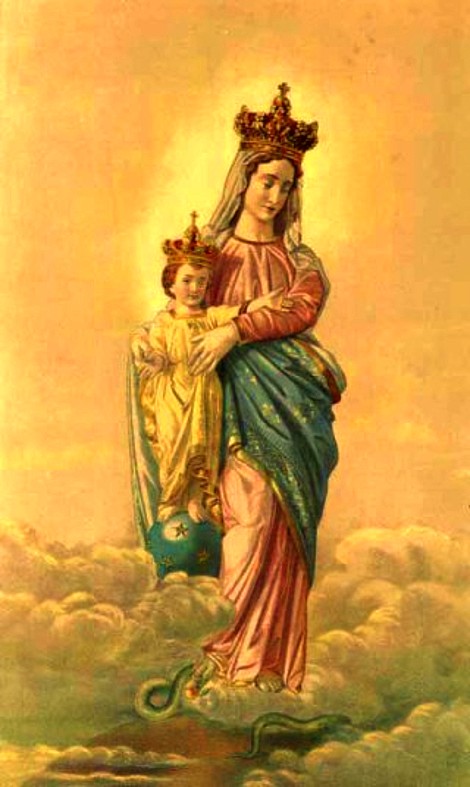
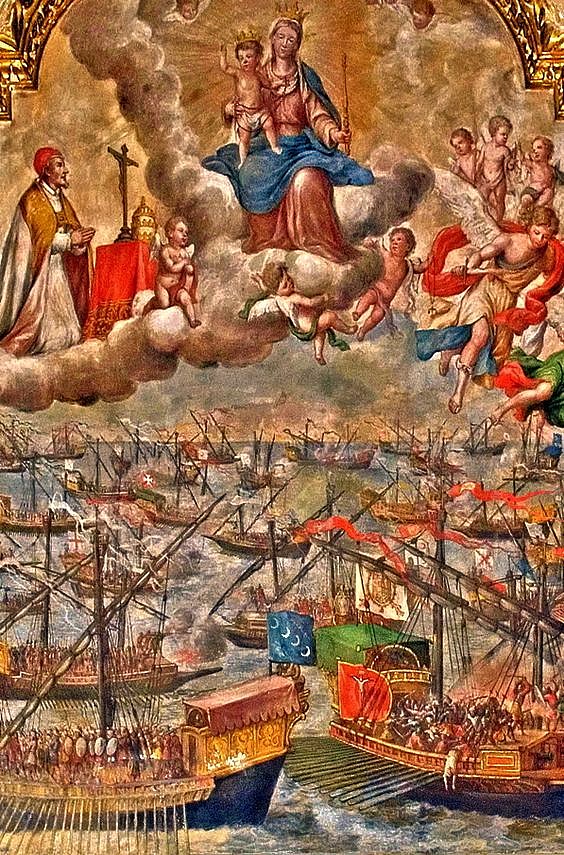
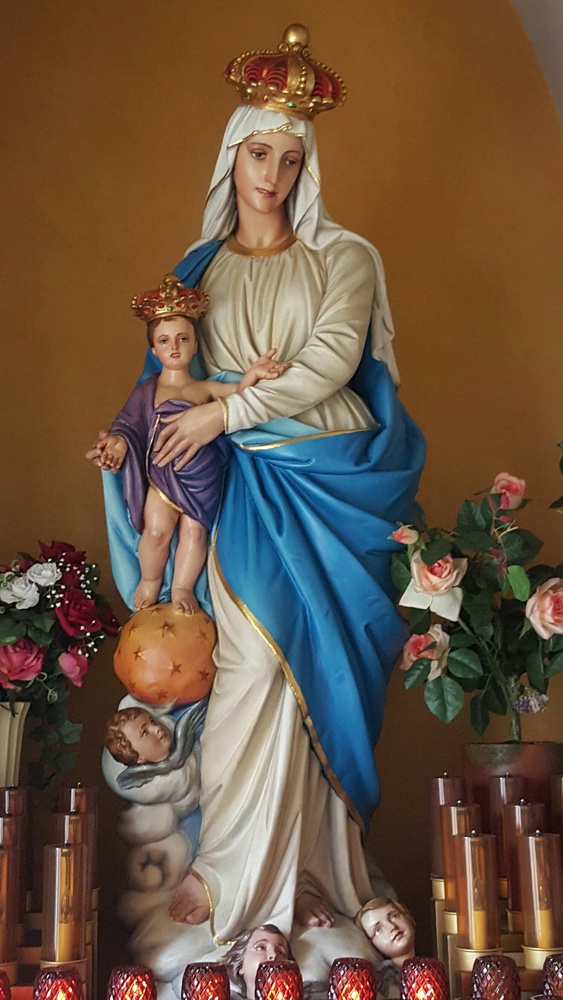
Madonna della Vittoria di Lepanto / Our Lady of Victory of Lepanto and Hungary, (1716) – 23 March:
The Battle of Lepanto was a naval engagement that took place between the ships of the Catholic Holy League under Don Juan of Austria and the navy of the Ottoman Empire under Ali Pasha, supported by a large fleet of corsairs. The Ottoman Empire was far too powerful for any one Christian kingdom to stand against it and, although all of Western Europe was threatened, only Spain, the Papal States, the Duchy of Savoy, the Republic of Venice, the Republic of Genoa and the Knights of Saint John, took a stand against them. Altogether they still had only 212 ships against no less than 278 ships. For hundreds of years the Ottoman Empire had been making advances into Europe, while also making lightning raids along the coastlines to pillage and take slaves. They intended to eventually overwhelm all of Europe and at that time, Catholics stood almost alone against them, as no Protestant force would do anything to oppose the invasion. The advantage in this contest went strongly to the Turks and so, Pope Pius V implored all of Christendom, to pray the Rosary to the Blessed Virgin Mary, to obtain her intercession before the throne of God, for their victory. Admiral Andrea Doria sailed to meet the Turks with an image of the Blessed Virgin prominently displayed in his flagship’s state room. The Venetian forces on Cyprus, had been under siege by the Turks, during the time that the Catholic forces were preparing to meet them. On 1 August they surrendered, after being assured, that they could leave the island unopposed. The Ottoman commander broke his solemn oath, however, taking the Venetians captive and flaying their captain while he was yet alive. Once he had completed this unspeakable torture, the captain’s dead body was hung from a spar on Mustafa’s flagship alongside the heads of all the Venetian commanders. This was the type of barbarism the Catholic forces sailed to oppose. The engagement took place on the 7th of October 1571, only 6 years after the Knights of Saint John defeated a powerful Ottoman army at Malta. Don Juan of Austria encouraged his men by telling them that “There is no paradise for cowards.” If they should lose the engagement, the Mediterranean Sea would be opened up to assist future Ottoman invasions. Victory would mean at least a brief reprieve. The Ottoman Turks had not lost any significant naval engagements in the memory of any living man, yet they were defeated. It was widely recognised, that the battle was won through the power of Mary, Our Lady of Victory. The Turks had come up like fire from the East, plundering, raping, enslaving, threatening to master the whole of Christendom but had been defeated at Lepanto through the power of the Rosary. The Turks had lost nearly 9 of every 10 ships and 30,000 men went to a watery grave. The Holy League lost only 17 galleys and 7,500 men. Many historians rank Lepanto as the most decisive naval engagement since the Battle of Actium in 31 BC, proving to the Christians, that the Turks could be beaten. Although the Turks soon rebuilt their fleet, many of their best soldiers and sailors were already dead at Malta and Lepanto and they could not be easily replaced.
This feast also celebrates another Christian victory, as in 1716, Mary, Queen of Victory, was chosen to protect her children again, at Petenwardein. This battle was fought on 5 August 1716, between the Austrian army of Prince Eugene and the Turks at Peterwardein in Hungary and, it was also won through the power of Mary Most Holy. To help equip the Christian army against the Turks, Pope Clement XI emptied the Papal treasury. The two armies met on the morning of the feast of Our Lady of the Snows; the Christian army was outnumbered ten to three; the enemy had the advantage of position but the Christian strength lay in the right of their cause and in Mary, who watched over them. The battle was long but, behind the lines in the Churches of Europe, Catholics prayed – their prayers were heard. That evening the sun set on a free Hungary. Mary’s men had won the day; Mary’s banner floated victoriously over a Christian land. The news filled the Christian world with joy but nowhere more than at Rome. In thanksgiving to the Mother of God for her help, glorious, solemn, pontifical ceremonies of gratitude were held in the Basilica of Saint Mary Major. After Lepanto, Pius V instituted the feast of the Holy Rosary in Rome and Clement XI extended it to the whole world. Today, other more sinister errors eat at the heart of Christian culture. Against the errors of our time, we must appeal to Mary; she is our Advocate, our Queen of Victories and of Peace. For her and for her blessed Son, we struggle and in her powerful intercession with the Prince of Peace, we place our trust. We struggle today to preserve our birthright as sons of God.
St Theodolus of Antioch St Victorian of Hadrumetum St Walter of Pontoise OSB (c 1030-c 1099) A very reluctant Abbot — Daughters of Feradhach: They are mentioned in early calendars and martyrologies, but no information about them has survived.
Martyrs of Caesarea – 5 saints: A group of five Christians who protested public games which were dedicated to pagan gods. Martyred in the persecutions Julian the Apostate. The only details we know about them are their names – Aquila, Domitius, Eparchius, Pelagia and Theodosia. They were martyred in 361 in Caesarea, Palestine.
Bl Álvaro del Portillo Díez de Sollano
Bl Annunciata Asteria Cocchetti
St Benedict of Campagna
St Crescentius of Carthage
Bl Edmund Sykes
St Ethelwald of Farne
St Felix the Martyr
St Felix of Monte Cassino
St Fergus of Duleek
St Fidelis the Martyr
St Frumentius of Hadrumetum
St Gwinear St Joseph Oriol (1650-1702) His life: https://anastpaul.com/2019/03/23/saint-of-the-day-23-march-st-joseph-oriol-1650-1702/
St Julian the Confessor
St Liberatus of Carthage
St Maidoc of Fiddown
Bl Metod Dominik Trcka
St Nicon of Sicily
St Ottone Frangipane
Bl Peter Higgins
Bl Pietro of Gubbio St Rafqa Pietra Choboq Ar-Rayès OLM (1832 – 1914)
St Theodolus of Antioch
St Victorian of Hadrumetum
—
Daughters of Feradhach: They are mentioned in early calendars and martyrologies, but no information about them has survived.
Martyrs of Caesarea – 5 saints: A group of five Christians who protested public games which were dedicated to pagan gods. Martyred in the persecutions Julian the Apostate. The only details we know about them are their names – Aquila, Domitius, Eparchius, Pelagia and Theodosia. They were martyred in 361 in Caesarea, Palestine.
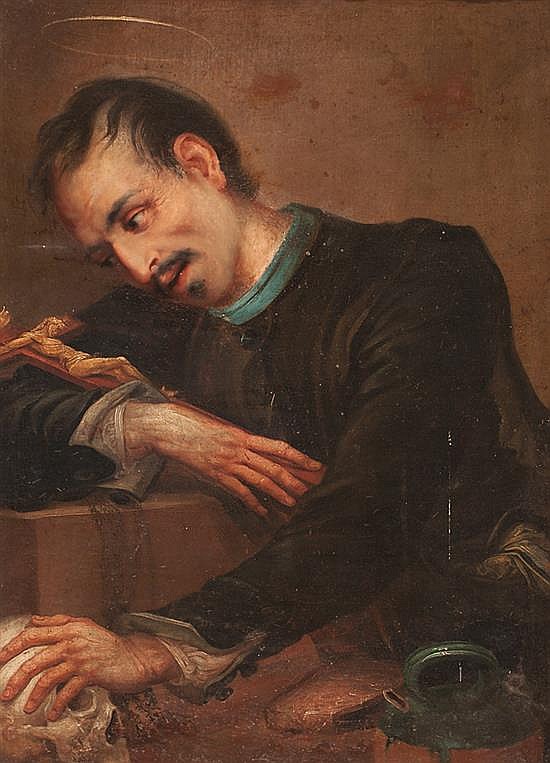
Saint of the Day – 23 March – St Joseph Oriol (1650-1702) Priest, Confessor, prophet, healer, apostle of penance, prayer and the sick and miracle-worker. Known as the Thaumaturgus of Barcelona. Born on 23 November 1650 in Barcelona, Spain and died on 23 March 1702 in his hometown of natural causes. Patronage – Barcelona.
St Joseph was born into a poor family but managed to study at the University of Barcelona where he was awarded a doctorate of theology on 1 August 1674. He was ordained on 30 May 1676.
He went on a pilgrimage to Rome, Italy in 1686, when Pope Innocent XI granted him a benefice at Santa Maria del Pino (Our Lady of the Pines), Barcelona, Spain, a parish he served for the rest of his life.
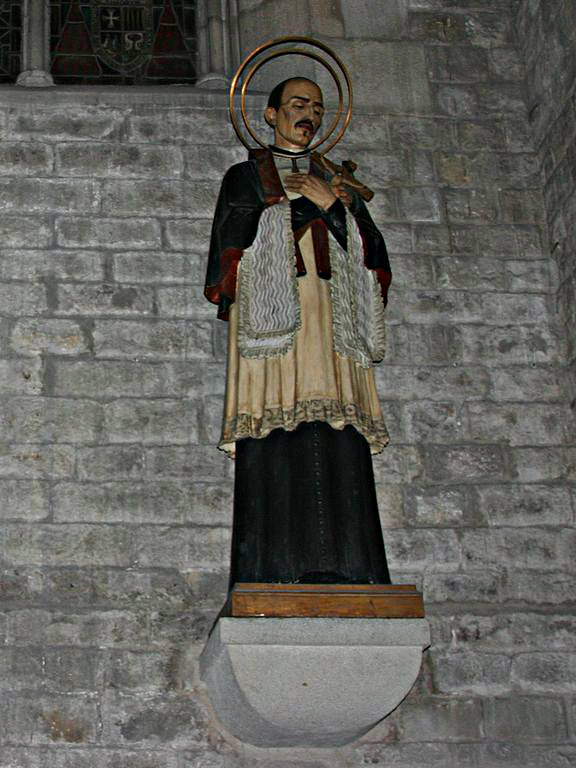
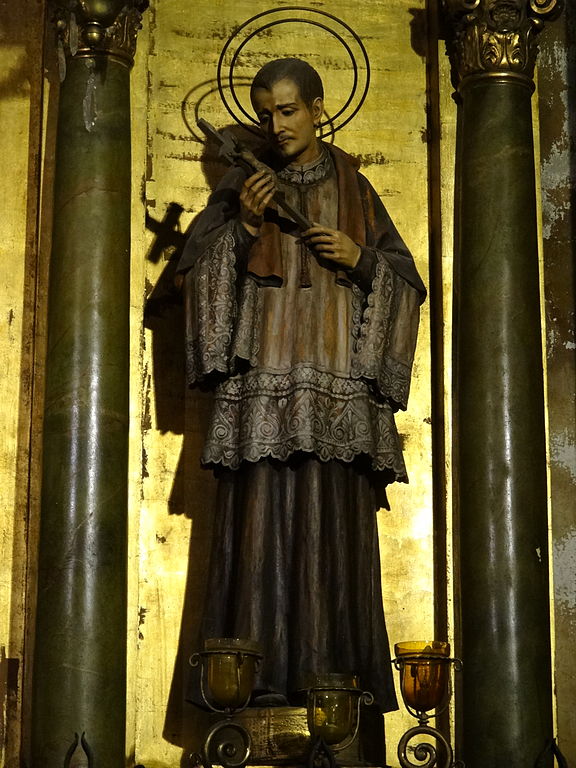
Statue of St Joseph Oriol at Santa Maria del Pino, below is the Church
EPSON DSC picture
He went to Rome to offer himself for the foreign missions, seeking to evangelise the infidels and become a martyr. On the way to Rome, Joseph fell ill at Marseilles, France and had a vision that gave him a new mission – to revitalise the faith in his own country.
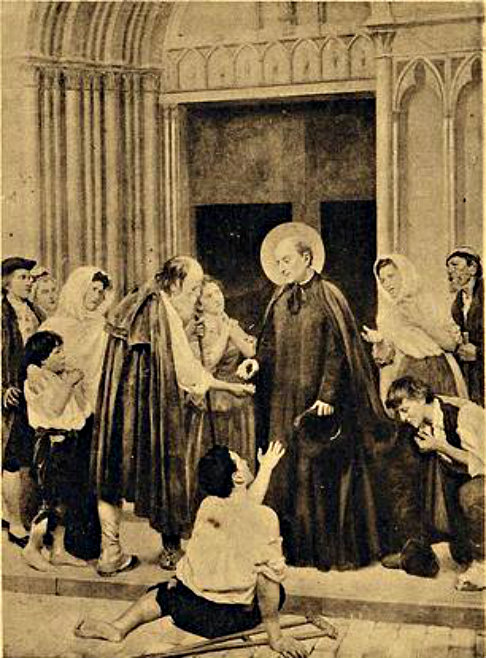
He returned home and worked with the youngest of children and roughest of soldiers and prayed without ceasing for the living and the dead. He wore a hair-shirt, lived for 26 years, half his life, solely on bread and water. He became a famed confessor, prophet, healer and miracle worker. The dying, the blind, the deaf and dumb, the lame and the paralytic, were said to be instantly cured by him.
Joseph was Beatified by Pope Pius VII on 5 September 1808 and Pope Pius X later Canonised him on 20 May 1909.
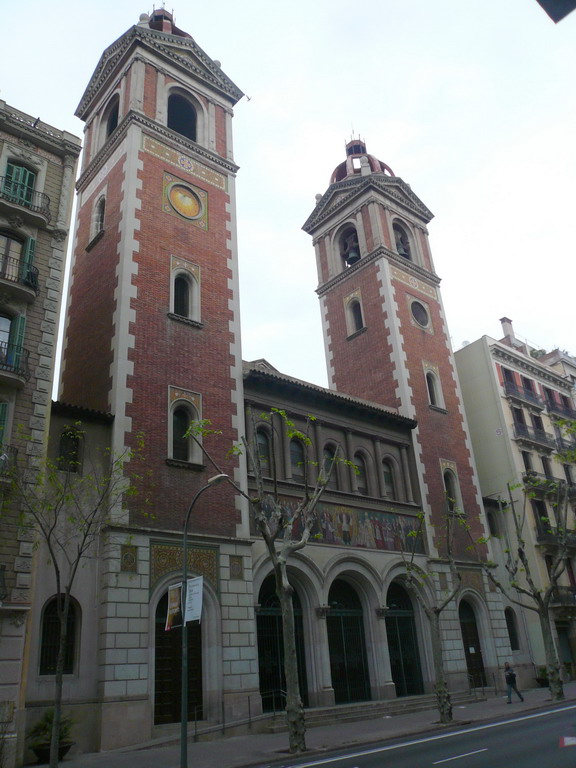
He is buried in the Chapel of the Virgin Mary of Montserrat in Church of the Parish which he served all his life, between 1687 and 1702, Our Lady of the Pines in Barcelona, although a Basilica has also been built in his honour.
Basilica of St Joseph Oriol in Barcelona
The Canonisation Miracle:
On 6 April 1806, priest José Mestres fell off a walkway on the outside of the church’s apse. He rose unscathed from the experience and attributed the event to St Joseph Oriol, whose remains are interred inside the church.
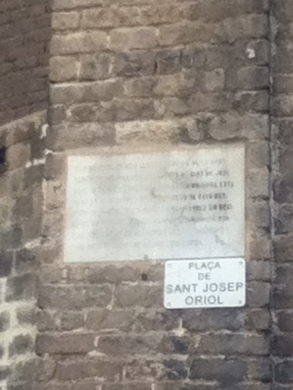
Although St Joseph was renowned for his healing miracles in 17th century Barcelona. He cured the deaf, blind, mute and otherwise disabled people who came to him. But despite his accomplishments in life, sainthood can only be bestowed upon someone after their death. As a result of this posthumous miracle, Oriol was canonised by the pope in September of the same year. A small plaque was installed on the corner of the church to commemorate Padre Mestres’ blessed fall.
This tiny landmark, located on the side of the Church of Santa Maria del Pi in the middle of Barcelona’s dense Gothic Quarter, marks the memory of this miracle of Fr José.
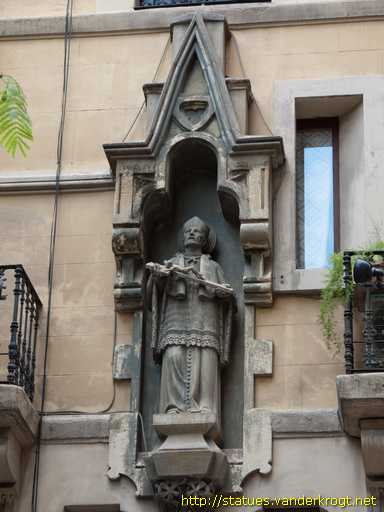
While St Joseph Oriol is little known outside of Spain, his Feast day today is celebrated with a wonderful festival in Barcelona every year and flowers are placed at the numerous statues of St Joseph throughout Barcelona.
Bl Álvaro del Portillo Díez de Sollano
Bl Annunciata Asteria Cocchetti
St Benedict of Campagna
St Crescentius of Carthage
Bl Edmund Sykes
St Ethelwald of Farne
St Felix the Martyr
St Felix of Monte Cassino
St Fergus of Duleek
St Fidelis the Martyr
St Frumentius of Hadrumetum
St Gwinear St Joseph Oriol (1650-1702)
St Julian the Confessor
St Liberatus of Carthage
St Maidoc of Fiddown
Bl Metod Dominik Trcka
St Nicon of Sicily
St Ottone Frangipane
Bl Peter Higgins
Bl Pietro of Gubbio
St Rafqa
St Theodolus of Antioch
St Victorian of Hadrumetum
—
Daughters of Feradhach: They are mentioned in early calendars and martyrologies, but no information about them has survived.
Martyrs of Caesarea – 5 saints: A group of five Christians who protested public games which were dedicated to pagan gods. Martyred in the persecutions Julian the Apostate. The only details we know about them are their names – Aquila, Domitius, Eparchius, Pelagia and Theodosia. They were martyred in 361 in Caesarea, Palestine.







 AnaStpaul
You must be logged in to post a comment.