
Saint of the Day – 11 January – St Leucius of Brindisi (Died c180) Bishop, Confessor, Missionary. Born in Eastern Europe and died in c180 in Brindisi, Italy of natural causes. Patronages – of Atessa, the City of Brindisi and the Archdiocese of Brindisi-Ostuni, all in Italy. Also known as – Leucio.
The Roman Martyrology reads: “At Brindisi, the holy saint Leucius, Bishop and Confessor.”
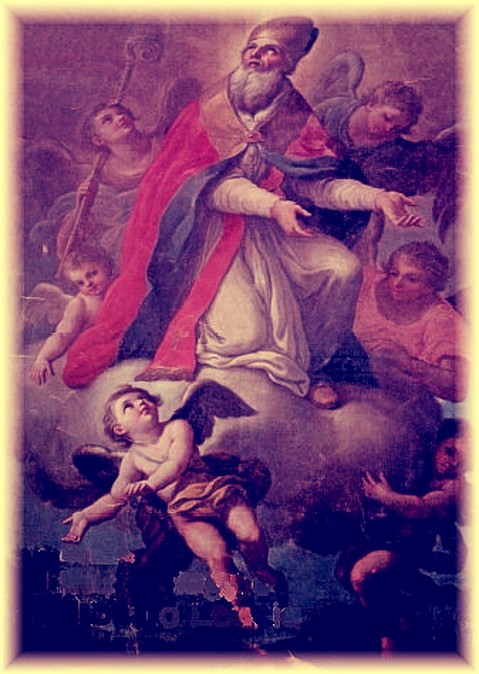
St Leucius was the first Bishop of Brindisi,who founded the Diocese of Brindisi in 165. A second Bishop of the same name is also honoured as a Saint but he lived in the 5th Century and was Martyred – this latter was mentioned by St Gregory the Great.
Not much is known of Leucius’ early life, although it is believed that he was born in Eastern Europe, to Eudecius and Euphrodisia and was given the name of Eupressius at birth. The young Eupressius was educated and spent the formative years of his life in Alexandria, Egypt.
Following the death of his mother, he entered monastic life. A heavenly vision, during a memoria of the Virgin, would change his name from Eupressius to Leucius (this name means bright, pure as the light). Having already been Ordained a Bishop, Leucius wished to undertake a Missionary Apostolate in Brindisi, to liberate the pagans. Leucius left Alexandria for Brindisi, which at the time was one of the largest ports of the Mediterranean, in the southern part of Italy.
Leucius first became renowned when many pagans in Apulia heard him preaching the Gospel during a drought. He claimed that if they had faith in his message, the rains would come. After the rains fell, the pagans were immediately converted to Chris. Soon after, he became the first Bishop of Brindisi and proceeded to build the Churches of St Mary’s and St John the Baptist.
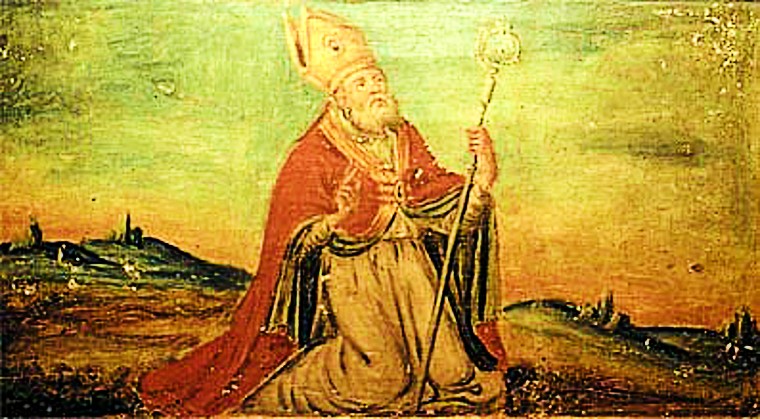
However, the honour of the Mother of God, however, it is more likely that the Bishop of Brindisi of the 5th Century, was the one who built a Church in honour of the Blessed Virgin. After all, that custom became the norm only after the Blessed Virgin Mary was proclaimed as the Mother of God at the Council of Ephesus in 431. Immediately afterwards, Santa Maria Maggiore was built in Rome. From that moment, every City built a St Mary’s Church as if for battle. It is, therefore, logical that the roots of the St Mary’s Church in Brindisi, dates from the 4th Century rather than the 2nd.
The later part of his life is unknown but according to tradition, he suffered martyrdom in the year 180 but this is not acknowledged in the Martyrology. Soon after his death his remains were returned to Brindisi, there they remained until the Lombard invasion of 768, when they were moved to Trani, then to the capital of the Duchy of Benevento and finally to the Basilica Cathedral of Brindisi, see below.



 AnaStpaul
You must be logged in to post a comment.