Posted in MARIAN TITLES, SAINT of the DAY

Easter Monday, Nostra Signora delle Lacrime / Our Lady of Tears, Sicily (1953) and the Saints for 1 April

Easter Monday

1 April – The Month of the Resurrection and the Blessed Sacrament

Blessed Abraham of Bulgaria
Blessed Alexander of Sicily
Saint Anastasio
Blessed Antonius of Noto
Saint Berhard of Amiens
Blessed Bernhardin of Noto

Saint Dodolinus of Vienne
Blessed Enrico Alfrieri OFM (1315-1405) Vicar General of the Friar’s Minor
Blessed Gerard of Sassoferrato
Saint Gilbert de Moray
Blessed Giuseppe Girott
Blessed Hugh of Bonnevaux

Saint Jacoba of Rome
Blessed John Bretton
Saint Leucone of Troyes

Blessed Marcelle

Blessed Nicolò of Noto
Saint Prudentius of Atina
Saint Tewdrig ap Teithfallt
Saint Theodora of Rome
Saint Valéry of Leucone (c565-c619) Priest, Abbot
Saint Venantius of Spalato
Blessed Vinebault

Posted in SAINT of the DAY

Saint of the Day – 4 April – St Zosimus of Palestine (c 460-c 560) Priest, Hermit

Saint of the Day – 4 April – St Zosimus of Palestine (c 460-c 560) Priest, Monk, Hermit. As already reported in the legendary life of St Mary of Egypt, St Zosimus, a Monk and Hermit, is the one who discovers St Mary in the desert and gave her Holy Communion shortly before her death. When she died, he buried her and related her lifestory (as she had related it to him) to his fellow Monks, who in turn finally recorded it in writing.

The Roman Martyrology reports: “In Palestine, the Anchorite, St Zosimus, who buried the remains of St Mary of Egypt.”

Zosimas was born in the second half of the fifth century, during the reign of Emperor Theodosius II. He became a Monk in a Monastery in Palestine at a very young age. At the age of fifty-three, he moved to a very strict Monastery located in the wilderness close to the Jordan River, where he spent the remainder of his life. He is best known for his encounter with Mary of Egypt, as we read below from her Vita:

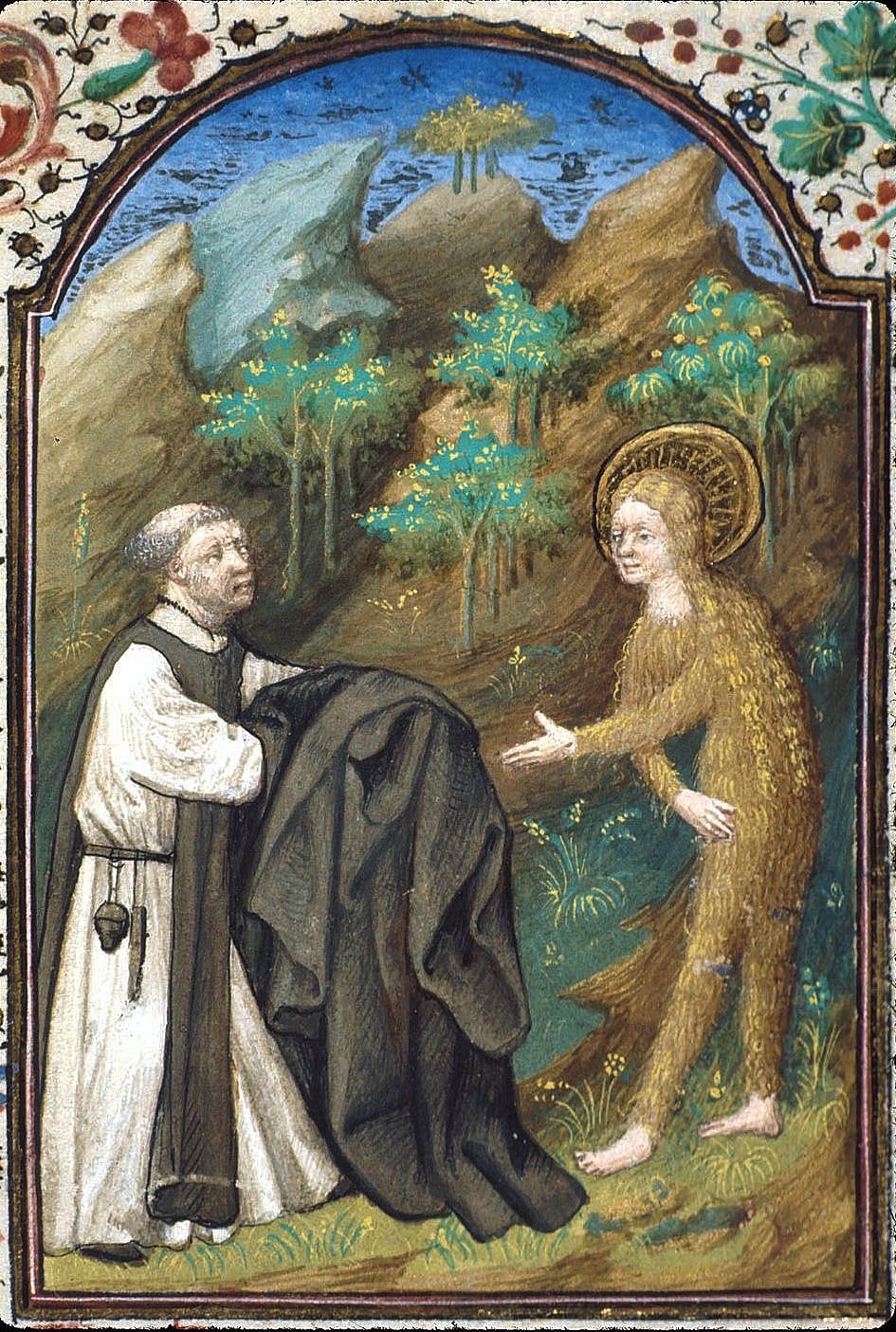
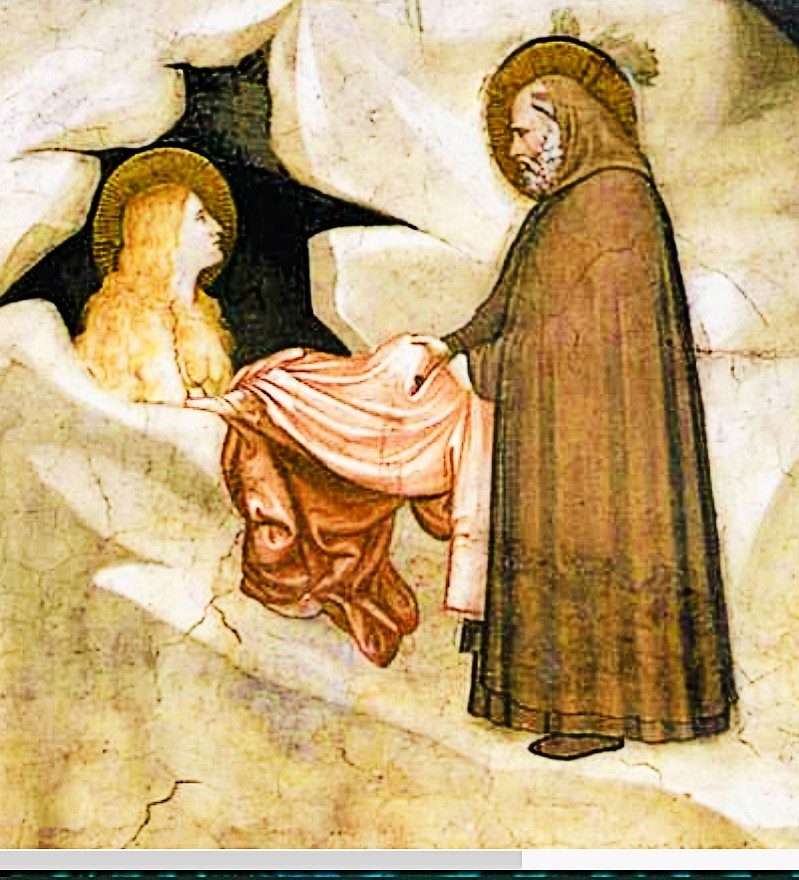
“Approximately one year before her death, she recounted her life to Saint Zosimas of Palestine (c 460-c 560), who encountered her in the desert. When he unexpectedly met her in the desert, she was completely naked and almost unrecognisable as human. She asked St Zosimas to give her his mantle to cover her nakedness and then she narrated her life’s story to him.

She then asked him to meet her at the banks of the Jordan, on Holy Thursday of the following year and bring her Holy Communion. When he fulfilled her wish, she crossed the river to get to him by walking on the surface of the water and received Holy Communion, asking him to meet her again in the desert the following Lent.

The next year, St Zosimas travelled to the same spot where he first met her, some twenty days’ journey from his Monastery and found her lying there dead. According to an inscription written in the sand next to her head, she had died on the very night he had given her the Blessed Sacrament and had been somehow miraculously transported to the place he found her. Her body was preserved incorrupt.

He buried her body with the assistance of a passing lion. On returning to the Monastery, he related her life story to the brethren and it was preserved among them, as oral tradition, until it was written down by St Sophronius.”

St Mary’s life:
https://anastpaul.com/2021/04/01/saint-of-the-day-1-april-saint-mary-of-egypt-c-344-c-421/

Posted in MARIAN TITLES, SAINT of the DAY

Saturday in Passion Week and the First Saturday of the Month of the Resurrection, Nostra Signora delle Lacrime / Our Lady of Tears, Sicily (1953) and Memorials of the Saints – 1 April

Saturday in Passion Week – FAST

APRIL – THE MONTH OF THE RESURRECTION

First Saturday of the Month

Nostra Signora delle Lacrime / Our Lady of Tears, Sicily (1953) – 1 April:
HERE:

https://anastpaul.com/2021/04/01/maundy-thursday-2021-our-lady-of-tears-sicily-1953-and-memorials-of-the-saints-1-april/

Blessed Abraham of Bulgaria
Blessed Alexander of Sicily
Saint Anastasio
Blessed Antonius of Noto
Saint Berhard of Amiens
Blessed Bernhardin of Noto
Saint Celsus of Armagh (c1080-1129) Bishop
Saint Dodolinus of Vienne
Blessed Gerard of Sassoferrato
Saint Gilbert de Moray
Blessed Giuseppe Girott
Blessed Hugh of Bonnevaux

Saint Hugh of Grenoble (1053-1232) Bishop, Reformer, in the foundation of the Carthusian Order, founded a Monastery at Chalais.
The Roman Martyrology reads: “In Grenoble in Burgundia, in today’s France, St Hugh, Bishop, who worked for the reform of the customs of the clergy and the people and, during his Episcopate, ardently loving solitude, gave St Bruno at the time, his teacher and to his companions, the hermitage of Chartroux, of which he was also the first Abbot. He ruled his Church for about fifty years with the thoughtful example of his charity.”
The life of another St Hugh:

https://anastpaul.com/2022/04/01/saint-of-the-day-1-april-saint-hugh-of-grenoble-1053-1232/

Saint Jacoba of Rome
Blessed John Bretton
Saint Leucone of Troyes

Blessed Lodovico Pavoni FMI (1784-1849) Priest, Founder of the Sons of Mary Immaculate which came to be known also as the “Pavoniani, “ Pioneer in vocational schools, known as the “Forerunner of St John Bosco.” In the decree of 5 June 1947 Pope Pius XII described Pavoni as “another Philip Neri, the precursor of St John Bosco and the perfect emulator of St Joseph Cottolengo.”
His Lifestory:

https://anastpaul.com/2020/04/01/saint-of-the-day-1-april-saint-lodovico-pavoni-fmi-1784-1849/

Blessed Marcelle

Saint Mary of Egypt (c 344-c 421) Desert Mother, Penitent, Recluse.
Her Life:

https://anastpaul.com/2021/04/01/saint-of-the-day-1-april-saint-mary-of-egypt-c-344-c-421/

Saint Melito Sardis (Died c 180) Early Church Father, Bishop of Sardis (Died c 180), ecclesiastical Writer, Confessor, Apologist, Defender of Christ’s dual nature. Saint Melito is believed to have been martyred around the time he wrote his apology to Marcus Aurelius circa 180.
Biography:

https://anastpaul.com/2019/04/01/saint-of-the-day-1-april-st-melito-died-c-180/

Blessed Nicolò of Noto
Saint Prudentius of Atina
Saint Tewdrig ap Teithfallt
Saint Theodora of Rome
Saint Valery of Leucone
Saint Venantius of Spalato
Blessed Vinebault

Apostles of Picardy – Martyrs:
Saint Caidoc
Saint Fricor

Martyrs of Thessalonica – 6 Saints: A group of Christians Martyred. We know nothing about them but the names Alexander, Dionysius, Ingenianus, Panterus, Parthenius and Saturninus. Martyred in Thessalonica, Greece, date unknown.

Posted in FATHERS of the Church, MARIAN TITLES, SAINT of the DAY

Friday of the Fourth Week of Lent, Nostra Signora delle Lacrime / Our Lady of Tears, Sicily (1953) and Memorials of the Saints – 1 April

Friday of the Fourth Week of Lent +2022

Nostra Signora delle Lacrime / Our Lady of Tears, Sicily (1953) – 1 April:
HERE:
https://anastpaul.com/2021/04/01/maundy-thursday-2021-our-lady-of-tears-sicily-1953-and-memorials-of-the-saints-1-april/

Blessed Abraham of Bulgaria
Blessed Alexander of Sicily
Saint Anastasio
Blessed Antonius of Noto
Saint Berhard of Amiens
Blessed Bernhardin of Noto
Saint Celsus of Armagh
Saint Dodolinus of Vienne
Blessed Gerard of Sassoferrato
Saint Gilbert de Moray
Blessed Giuseppe Girotti
Blessed Hugh of Bonnevaux
Saint Hugh of Grenoble (1053-1232) Bishop,
Saint Jacoba of Rome
Blessed John Bretton
Saint Leucone of Troyes

Saint Lodovico Pavoni FMI (1784-1849) Priest, Founder of the Sons of Mary Immaculate which came to be known also as the “Pavoniani, “ Pioneer in vocational schools, known as the “Forerunner of St John Bosco.”
His Lifestory:

https://anastpaul.com/2020/04/01/saint-of-the-day-1-april-saint-lodovico-pavoni-fmi-1784-1849/

Blessed Marcelle

Saint Mary of Egypt (c 344-c 421) Desert Mother, Penitent, Recluse.
Her Life:

https://anastpaul.com/2021/04/01/saint-of-the-day-1-april-saint-mary-of-egypt-c-344-c-421/

Saint Melito Sardis (Died c 180) Early Church Father, Bishop of Sardis (Died c 180), ecclesiastical Writer, Confessor, Apologist, Defender of Christ’s dual nature. Saint Melito is believed to have been martyred around the time he wrote his apology to Marcus Aurelius circa 180.
Biography:

https://anastpaul.com/2019/04/01/saint-of-the-day-1-april-st-melito-died-c-180/

Blessed Nicolò of Noto
Saint Prudentius of Atina
Saint Tewdrig ap Teithfallt
Saint Theodora of Rome
Saint Valery of Leucone
Saint Venantius of Spalato
Blessed Vinebault
Blessed Zofia Czeska-Maciejowska

Apostles of Picardy – Martyrs:
Saint Caidoc
Saint Fricor –

Martyrs of Dalmatia and Istria – 9 Saints: A group of Christians Martyrs who died at various locations in Dalamtia and Istria (in modern Croatia, whose relics were later taken to Rome, Italy, and who are remembered together. We know the names Anastasio, Antiochiano, Asterius, Gaiano, Mauro, Paoliniano, Septimius, Telio and Venantius.
Died
• on the Adriatic coast of modern Croatia
• relics translated to Rome, Italy

Martyrs of Thessalonica – 6 saints: A group of Christians martyred. We know nothing about them but the names Alexander, Dionysius, Ingenianus, Panterus, Parthenius and Saturninus.
Died
Thessalonica, Greece, date unknown

Martyred Sisters of Thessalonica:
Saint Agape
Saint Chionia

Martyred in Alexandria:
Saint Stephen
Saint Victor

Martyred in Armenia:
Saint Irenaeus
Saint Quintian

Martyred in Heraclea:
Saint Castus
Saint Victor

Martyred in the Mexican Revolution
Blessed Anacleto González Flores
Blessed Jorge Vargas González
Blessed Luis Padilla Gómez
Blessed Ramón Vargas González

Posted in INCORRUPTIBLES

Saint of the Day – 1 April – Saint Mary of Egypt (c 344-c 421)

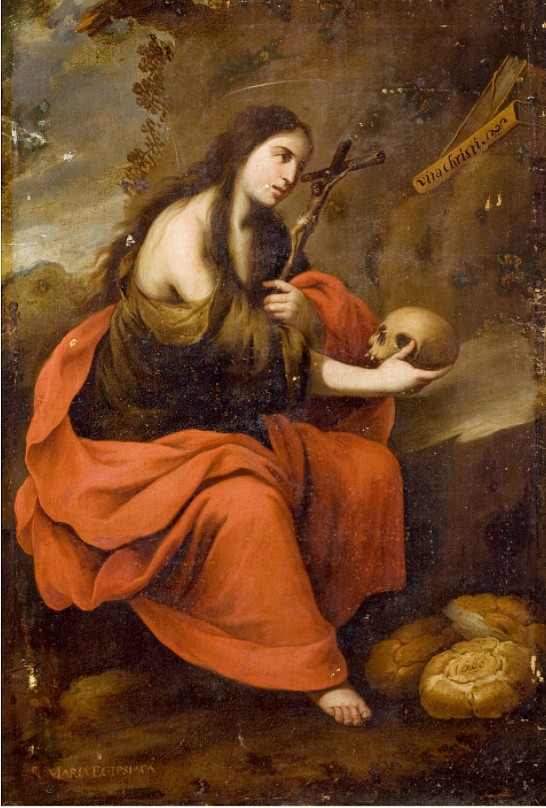
Saint of the Day – 1 April – Saint Mary of Egypt (c 344-c 421) Desert Mother, Penitent, Recluse, Born in c 344 in Egypt am died in c 421 in the desert near the River Jordan of natural causes. Also known as Maria Aegyptica, Maria Egiziaca. Patronages – Penitents, Chastity (warfare against the flesh; deliverance from carnal passions), demons (deliverance from), fever, skin diseases, reformed fallen women.

The primary source of information on Saint Mary of Egypt is the Vita written of her, around 100 years after her death, by St Sophronius, the Bishop of Jerusalem (634–638). Most of the information in this section is taken from this source. The complete Vita is available to read here (from an Orthodox Church source): https://stmaryofegypt.org/files/library/life.htm

Saint Mary, was born somewhere in the Province of Egypt. At the age of twelve she ran away from her parents to the City of Alexandria. Here she lived an extremely dissolute life. In her Vita, it states that she often refused the money offered for her sexual favours, as she was driven “by an insatiable and an irrepressible passion” and that she mainly lived by begging, supplemented by spinning flax.

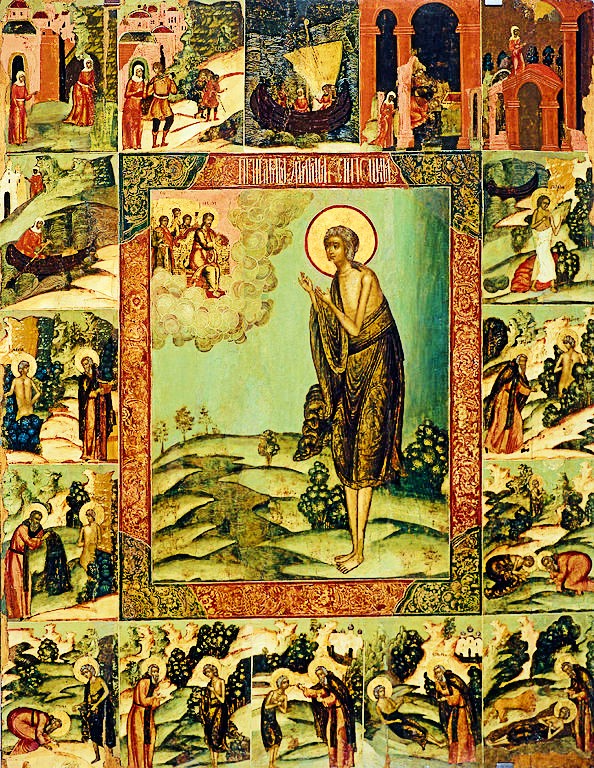
Ico depicting St Mary’s life

After seventeen years of this lifestyle, she travelled to Jerusalem for the Feast of the Exaltation of the Holy Cross. She undertook the journey as a sort of “anti-pilgrimage,” stating, that she hoped to find, in the pilgrim crowds at Jerusalem, even more partners in her lust. She paid for her passage by offering sexual favours to other pilgrims and she continued her habitual lifestyle for a short time in Jerusalem.

Her Vita relates that when she tried to enter the Church of the Holy Sepulchre for the celebration, she was barred from doing so by an unseen force. Realising that this was because of her impurity, she was struck with remorse and upon seeing an icon of the Mother of God Blessed Virgin. outside the Church, she prayed for forgiveness and promised to give up the world. Then, she attempted again to enter the Church and this time, was permitted in.

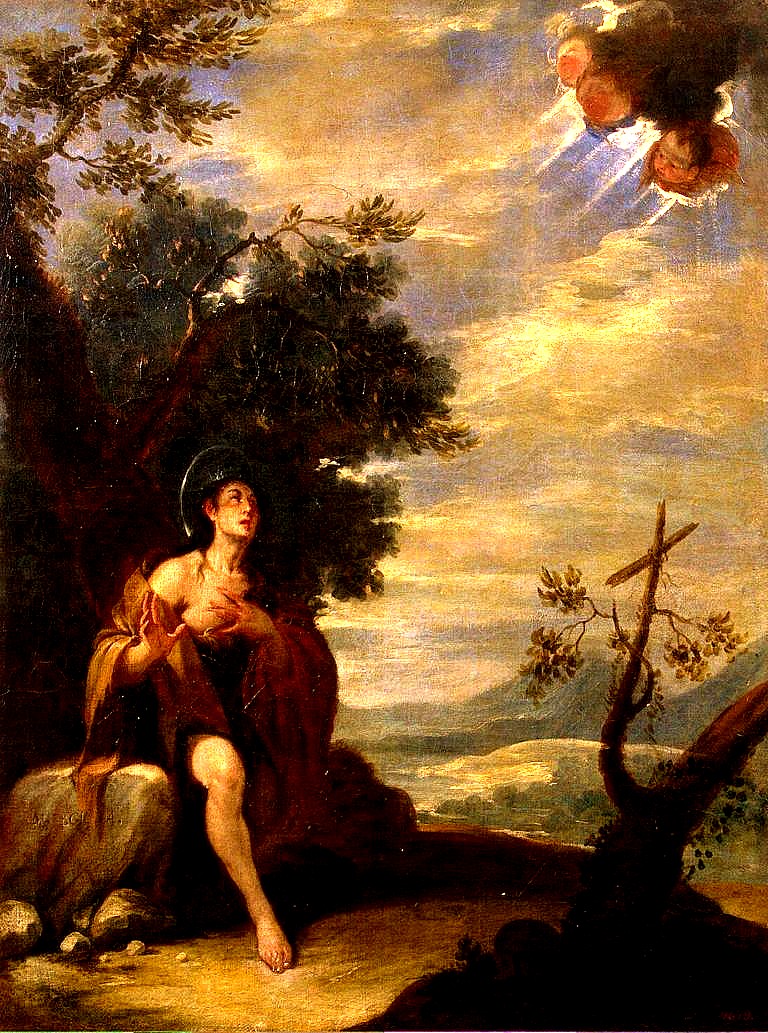
After venerating the relic of the True Cross, she returned to the Icon to give thanks and heard a voice telling her, “If you cross the Jordan, you will find glorious rest.” She immediately went to the Monastery of Saint John the Baptist on the bank of the River Jordan, where she received absolution and afterwards, Holy Communion. The next morning, she crossed the Jordan and retired to the desert to live the rest of her life as a hermit in penitence. She took with her only three loaves of bread and once they were gone, lived only on what she could find in the wilderness.

Approximately one year before her death, she recounted her life to Saint Zosimas of Palestine (c 460-c 560), who encountered her in the desert. When he unexpectedly met her in the desert, she was completely naked and almost unrecognisable as human. She asked St Zosimas to give her his mantle to cover her nakedness and then she narrated her life’s story to him.

St Zosimas gies St Mary his mantle

She then asked him to meet her at the banks of the Jordan, on Holy Thursday of the following year and bring her Holy Communion. When he fulfilled her wish, she crossed the river to get to him by walking on the surface of the water and received Holy Communion, asking him to meet her again in the desert the following Lent.

St Mary’s last Holy Communion

The next year, St Zosimas travelled to the same spot where he first met her, some twenty days’ journey from his Monastery and found her lying there dead. According to an inscription written in the sand next to her head, she had died on the very night he had given her the Blessed Sacrament and had been somehow miraculously transported to the place he found her. Her body was preserved incorrupt.

He buried her body with the assistance of a passing lion. On returning to the Monastery, he related her life story to the brethren and it was preserved among them, as oral tradition, until it was written down by St Sophronius.

There is disagreement among various sources regarding the dates of Saint Mary’s life. The dates given above correspond to those in the Catholic Encyclopedia. The Bollandists place her death in 421, or 530. The only clue given in her Vita, is the fact that the day of her repose was 1 April which was stated to be Holy Thursday, meaning ,that Easter fell on 4 April that year, 421.

St Mary’s relics lie in various Cathlic Churhes, the Italian Churches are named below- Rome, Naples, and Cremona in Italy and in Antwerp, Belgium. In Italy, Mary became associated with the Patronage of fallen women much like Mary Magdalene, to whom similar traits were associated. There are a number of Churches or Chapels dedicated to Saint Mary of Egypt, among which are:

Temple of Portunus (Santa Maria Egiziaca, Rome)
Church of Santa Maria Egiziaca a Forcella, Naples
Church of Santa Maria Egiziaca a Pizzofalcone, Naples
Chapel in Church of the Holy Sepulchre in Jerusalem, commemorating the site of her conversion

Many literary works commemorate her within various formats, both fictional, stage and music.

Posted in FATHERS of the Church, MARIAN TITLES, SAINT of the DAY

Maundy Thursday +2021, Nostra Signora delle Lacrime / Our Lady of Tears, Sicily (1953) and Memorials of the Saints – 1 April

Maundy Thursday +2021:
https://anastpaul.com/2020/04/09/maundy-or-holy-thursday-of-the-passion-of-our-lord-jesus-christ-and-the-seven-churches-visitation-9-april/

Nostra Signora delle Lacrime / Our Lady of Tears, Sicily (1953) – 1 April:

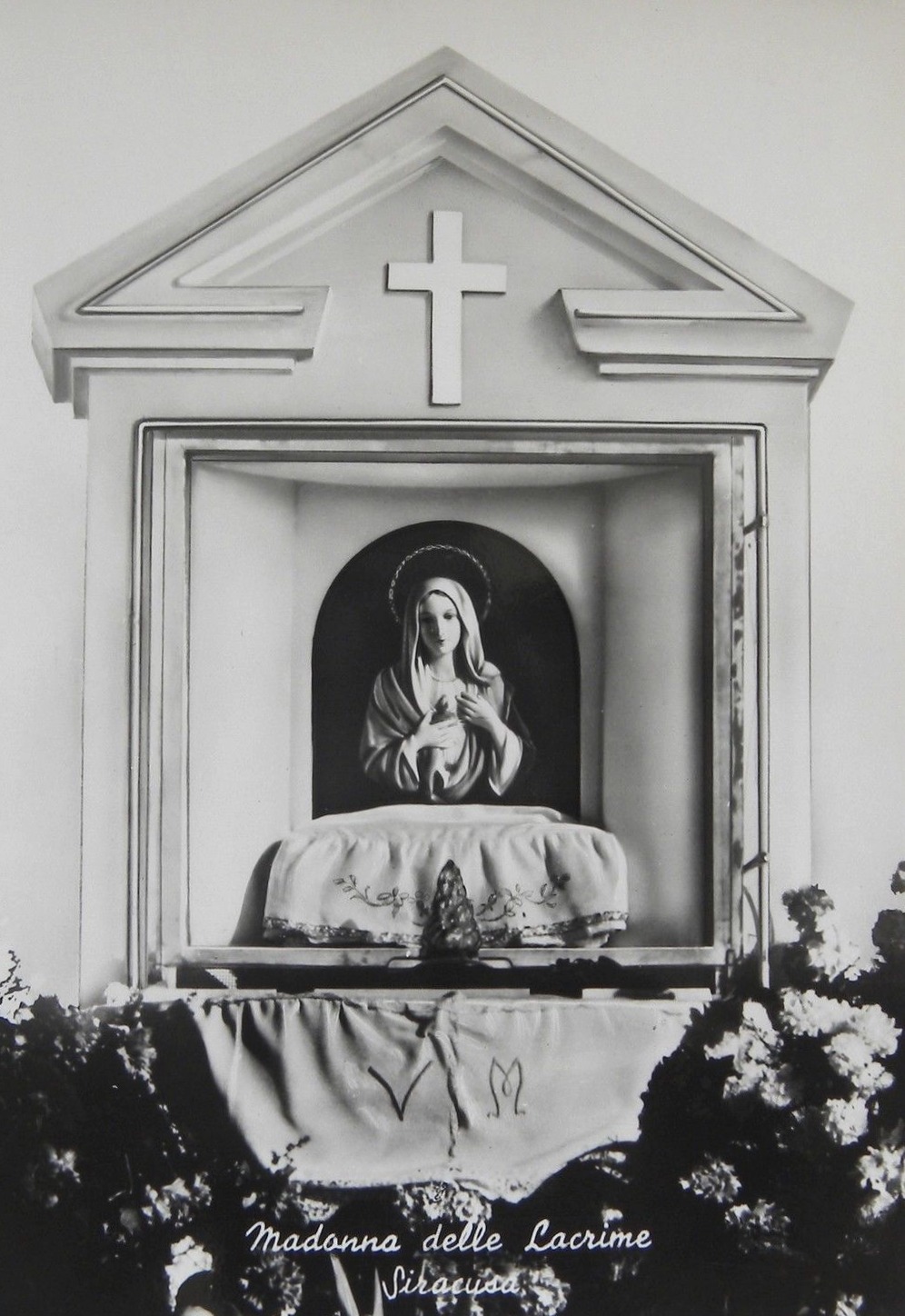
Also known as the Weeping Madonna of Syracuse, this plaster hanging wall plaque depicts the Immaculate Heart of Mary in the style of the 1950’s. Like many others just like it, it was mass-produced in a factory in Tuscany and shipped to various locations throughout the world.

This particular plaque of Our Lady of Tears was purchased for a wedding gift for a couple who wed on 21 March 1953. The couple, Angelo and Antonian Iannuso, would later admit, that they were not devout but they liked the plaque and placed it on the wall over their bed. Antonian soon became pregnant but the happy couple learned, that the pregnancy caused Antonian to suffer from toxemia that resulted frequent convulsions and even temporary blindness.adly
On the morning of 29 August, 1953, Antonian awoke to find that her sight had been restored.
“I opened my eyes and stared at the image of the Madonna above the bedhead. To my great amazement, I saw that the effigy was weeping. I called my sister-in-law, Grazie and my aunt, Antonian Sgarlata, who came to my side, showing them the tears. At first they thought it was an hallucination due to my illness but when I insisted, they went close to the plaque and could esily see ,that tears were really falling from the eyes of the Madonna and, that some tears ran down her cheeks onto the bedhead. Taken by fright, they took it out the front door, calling the neighbours and they too confirmed the phenomenon…”
The plaque of Our Lady of Tears was publicly displayed, convincing even the skeptics of the prodigy as many of the sick were miraculously healed of their ailments. Some of the tears were collected for scientific examination and the findings were as follows:

“…the liquid examined is shown to be made up of a watery solution of sodium chloride in which traces of protein and nuclei of a silver composition of excretiary, substances of the quanternary type, the same as found in the human secretions, used as a comparison during the analysis.
“The appearance, the alkalinity and the composition, induce one to consider the liquid examined analogous to human tears.”

The tears stopped four days later at 11:40 am.
On 17 October 1954, Pope Pius XII stated the following during a radio broadcast:
“…we acknowledge the unanimous declaration of the Episcopal Conference held in Sicily, on the reality of that event. Will men understand the mysterious language of those tears?”

A vintage postcard of the miraculous Weeping Madonna of Syracuse, Sicily.

Blessed Abraham of Bulgaria
Blessed Alexander of Sicily
Saint Anastasio
Blessed Antonius of Noto
Saint Berhard of Amiens
Blessed Bernhardin of Noto
Saint Celsus of Armagh
Saint Dodolinus of Vienne
Blessed Gerard of Sassoferrato
Saint Gilbert de Moray
Blessed Giuseppe Girotti
Blessed Hugh of Bonnevaux
Saint Hugh of Grenoble
Saint Jacoba of Rome
Blessed John Bretton
Saint Leucone of Troyes
Saint Lodovico Pavoni FMI (1784-1849)
His Lifestory:

https://anastpaul.com/2020/04/01/saint-of-the-day-1-april-saint-lodovico-pavoni-fmi-1784-1849/

Blessed Marcelle
Saint Mary of Egypt (c 344-c 421) Desert Mother, Penitent
Saint Melito Bishop of Sardis (Died c 180) Early Church Father
Biography:

https://anastpaul.com/2019/04/01/saint-of-the-day-1-april-st-melito-died-c-180/
Blessed Nicolò of Noto
Saint Prudentius of Atina
Saint Tewdrig ap Teithfallt
Saint Theodora of Rome
Saint Valery of Leucone
Saint Venantius of Spalato
Blessed Vinebault
Blessed Zofia Czeska-Maciejowska

Apostles of Picardy:
Saint Caidoc
Saint Fricor

Martyrs of Dalmatia and Istria – 9 saints: A group of Christians martyrs who died at various locations in Dalamtia and Istria (in modern Croatia, whose relics were later taken to Rome, Italy, and who are remembered together. We know the names Anastasio, Antiochiano, Asterius, Gaiano, Mauro, Paoliniano, Septimius, Telio and Venantius.
Died
• on the Adriatic coast of modern Croatia
• relics translated to Rome, Italy

Martyrs of Thessalonica – 6 saints: A group of Christians martyred. We know nothing about them but the names Alexander, Dionysius, Ingenianus, Panterus, Parthenius and Saturninus.
Died
Thessalonica, Greece, date unknown

Martyred Sisters of Thessalonica:
Saint Agape
Saint Chionia

Martyred in Alexandria:
Saint Stephen
Saint Victor

Martyred in Armenia:
Saint Irenaeus
Saint Quintian

Martyred in Heraclea:
Saint Castus
Saint Victor

Martyred in the Mexican Revolution
Blessed Anacleto González Flores
Blessed Jorge Vargas González
Blessed Luis Padilla Gómez
Blessed Ramón Vargas González