Posted in MARIAN TITLES, SAINT of the DAY

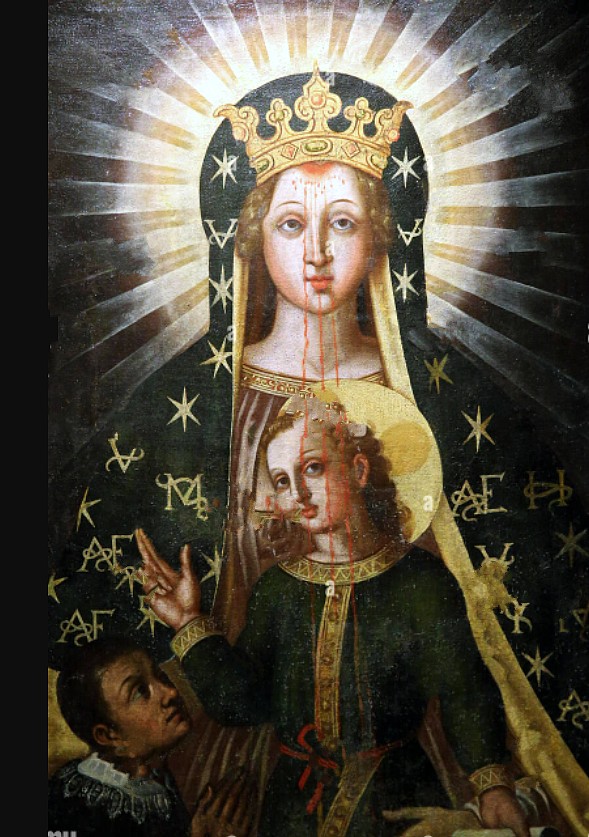
Madonna del Sangue / The Bleeding Madonna in Re, Piedmont, Italy (1494), St Peter Martyr,and more wonderful Saints – 29 April

Madonna del Sangue / The Bleeding Madonna in Re, Piedmont, Italy (1494) – 29 April:
HERE:

https://anastpaul.com/2022/04/29/madonna-del-sangue-the-bleeding-madonna-in-re-piedmont-italy-1494-and-memorials-of-the-saints-29-april/

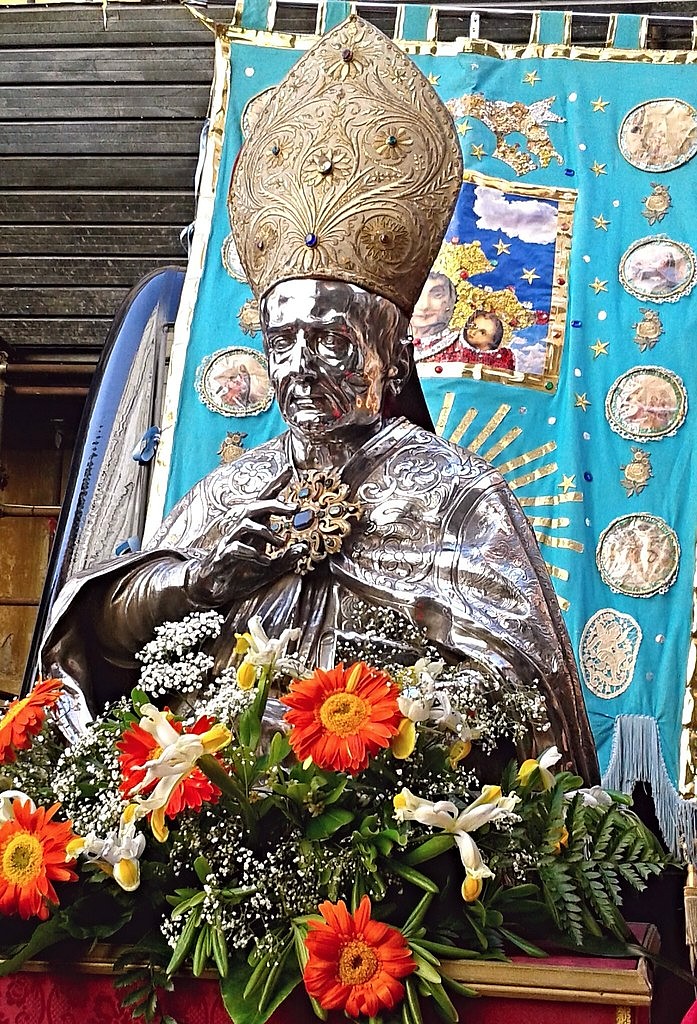
St Peter Martyr/ of Verona OP (1205–1252) Martyr, Priest and Friar of the Order of Preachers, , a celebrated Preacher, Miracle-worker, Marian devotee. He served as Inquisitor in Lombardy, was murdered by an assassin and was Canonised 11 months after his death, making his the fastest Canonisation in history.
His Life:

https://anastpaul.com/2019/04/29/saint-of-the-day-29-april-st-peter-of-verona-op-1205-1252/

St Joseph Benedict Cottolengo (1786-1842) – Priest, Founder, Confessor, Apostle of Charity. Known as “The Labourer of Divine Providence.” St Joseph was Canonised on 19 March 1934 by Pope Pius XI.
Thie lovely Saint:

https://anastpaul.com/2018/04/30/saint-of-the-day-30-april-st-joseph-benedict-cottolengo-1786-1842-an-intense-day-of-love/

Abbots of Cluny: A feast that recognises the great and saintly early Abbots of Cluny Abbey:

  • Saint Aymardus of Cluny
  • Saint Berno of Cluny
  • Saint Hugh of Cluny
  • Saint Mayeul
  • Saint Odilo of Cluny
  • Saint Odo of Cluny
  • Saint Peter the Venerable

St Ava of Denain
St Daniel of Gerona
St Dichu
St Endellion of Tregony
St Fiachan of Lismore

St Hugh of Cluny (1024-1109) St Hugh the Great, Priest and Royal Prince, Abbot of Cluny from 1049 until his death., Founder-builder of numerous Monasteries, Convents , Hospitals and the biggest Church in Europe (the Abbey Church at C luny) prior to the building of St Peter’s, apostle of the poor, the sick, the marginalised by the feudal system, ecclesiastical Reformer, holy father to his Monks and servant to all who needed him,. He was one of the most influential leaders of the monastic orders from the Middle Ages.
St Hugh the Great:

https://anastpaul.com/2021/04/29/saint-of-the-day-29-april-st-hugh-of-cluny-1024-1109-st-hugh-the-great/

St Gundebert of Gumber
St Juan Vargas
St Paulinus of Brescia
Bl Robert Gruthuysen
St Senan of Wales

St Severus of Naples (Died 409) Bishop of Naples for 46 years, Confessor, friend of St Ambrose, constructor of four Basilicas and the first Baptistry in the West.
The Roman Martyrology reads: “In Naples, St Severus, Bishop, loved by St Ambrose, as a brother and, by his Church ,as a father.

Fascinating fact:
The City of Naples has more than 50 official Patron Saints, although its principal Patron is the Martyr Bishop, Saint Januarius.(Died c 304).
His life here: https://anastpaul.com/2017/09/19/saint-of-the-day-19-september-st-januarius/
St Severus is one of those 50 and the full list is contained in his biography, below.
His Life:
https://anastpaul.com/2022/04/29/saint-of-the-day-29-april-saint-severus-of-naples-died-409/

St Theoger
St Torpes of Pisa
St Tychicus
St Wilfrid the Younger

Martyrs of Cirta: A group of Clergy and Laity Martyred together in Cirta, Numidia (in modern Tunisia) in the persecutions of Valerian. They were – Agapius, Antonia, Emilian, Secundinus and Tertula, along with a woman and her twin children whose names have not come down to us.

Martyrs of Corfu: A gang of thieves who converted while in prison, brought to the Faith by Saint Jason and Saint Sosipater who had been imprisoned for evangelising. When the gang announced their new Faith, they were Martyred together. They were – Euphrasius, Faustianus, Insischolus, Januarius, Mammius, Marsalius and Saturninus. They were boiled in oil and pitch in the 2nd century on the Island of Corcyra (modern Corfu, Greece.
Also known as: Martyrs of Corcyra, Seven Holy Thieves, Seven Holy Robbers, Seven Robber Saints.

Posted in BAPTISM, CARMELITES, DOCTORS of the Church, DOMINICAN OP, MORNING Prayers, QUOTES of the SAINTS, QUOTES on CONVERSION, QUOTES on SANCTITY, SAINT of the DAY, The HOLY GHOST, The WORD

One Minute Reflection – 29 April – “A ray of sunlight shining on a smudgy window”

One Minute Reflection – 29 April – Monday of the Second week of Easter, Year C, Gospel: John 3:1–8 and the Memorial of St Peter of Verona OP (1205–1252)

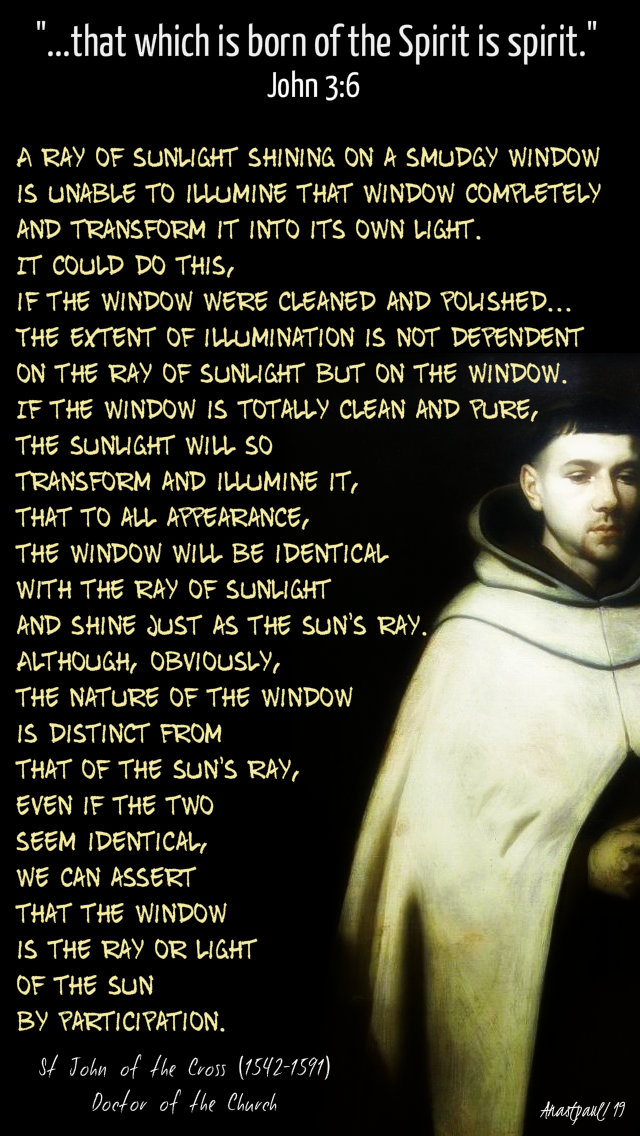
“…that which is born of the Spirit is spirit.”...John 3:6

REFLECTION – “We read in Saint John – No one can enter the Kingdom of God without being born of water and Spirit.   To be reborn in the Holy Spirit during this life is to become most like God in purity, without any mixture of imperfection.   Accordingly, pure transformation can be effected – although not essentially – through the participation of union.

Here is an example that will provide a better understanding of this explanation.   A ray of sunlight shining on a smudgy window, is unable to illumine that window completely and transform it into its own light.   It could do this, if the window were cleaned and polished… The extent of illumination is not dependent on the ray of sunlight but on the window.   If the window is totally clean and pure, the sunlight will so transform and illumine it, that to all appearances the window will be identical with the ray of sunlight and shine just as the sun’s ray.   Although, obviously, the nature of the window is distinct from that of the sun’s ray, even if the two seem identical, we can assert, that the window is the ray or light of the sun by participation.

The soul on which the divine light of God’s being is ever shining, or better, in which it is ever dwelling by nature, is like this window.   A soul makes room for God by wiping away all the smudges and smears of creatures, by uniting its will perfectly to God’s, for to love is to labour, to divest and deprive oneself for God, of all that is not God.   When this is done, the soul will be illumined by and transformed in God.”…St John of the Cross (1542-1591) Doctor of the Churchjohn 3 6 that which is born of the spirit - a ray of sunlight - st john of the cross - 29 april 2019

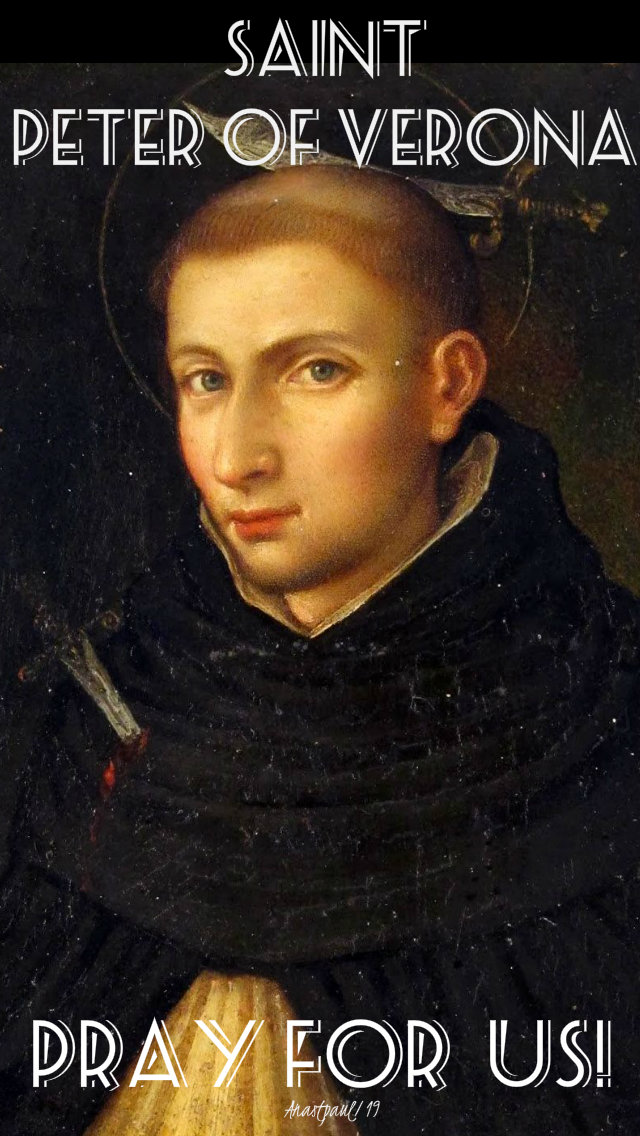
PRAYER – Almighty God and Father, grant that Your faithful people who were buried with Your Son in baptism, may by His Resurrection and intercession at Your right hand, obtain for us eternal life.   Send Your Spirit upon Your adopted children and lead us in Your way.   Grant that by the intercession of St Peter of Verona, our path may be straightened and glow with Your light.   Through Christ our Lord, with the Holy Spirit, God forever, amen.st peter of verona pray for us 29 april 2019

Posted in DOCTORS, / SURGEONS / MIDWIVES., DOMINICAN OP, SAINT of the DAY

Saint of the Day – 29 April – St Peter of Verona OP (1205–1252)

Saint of the Day – 29 April – St Peter of Verona OP (1205–1252) also known as St Peter Martyr – Priest and Friar of the Order of Preachers, a celebrated Preacher, Miracle-worker, Marian devotee.   He served as Inquisitor in Lombardy, was murdered by an assassin and was Canonised 11 months after his death, making his, the fastest Canonisation in history. Patronages – inquisitors, midwives, Castelleone di Suasa, Italy, Verona, Italy, Diocese of, Guaynabo, Puerto Rico. St Peter is the the first Canonised Martyr of the Dominican Order.st PeterMartyr-400x526
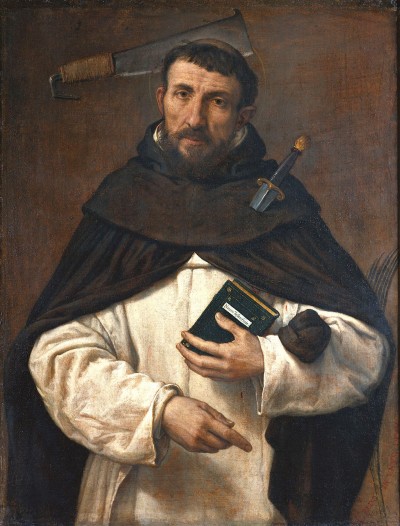
In the English-speaking part of the world especially, all too little is known about this illustrious Friar Preacher.   Possibly this is in part due to the well-known bias in England against the old-time inquisition, which spread thence into the colonies founded by that country, for Saint Peter was closely connected with that institution.   Indeed, by not a few he is considered as a man without a heart.   Yet he was most compassionate.   His character was rounded out by an admirable strength of will and a mind so judiciously balanced that he neither shrank from duty, whatever the sacrifice, or even danger, it involved, nor allowed his heart to control his judgement.

Father Thomas Agni of Leontino, another noted Dominican, archbishop of Cosenza and later patriarch of Jerusalem, was the first to write a life of the blessed martyr.   His testimony should he all the more reliable because he lived for many years with Saint Peter of Verona, had been his superior and was an eye-witness of the principal events in his life.   The work shows no signs of undue predilection.   Agni’s original manuscript was for long years at Saint Mark’s Convent, Florence. Another, with some additions by Father Ambrose Taegio, was preserved in the Convent of Nostra Donna delle Grazie, Milan.

Peter was born in Verona, Italy in 1205, of parents who had embraced the heresy of Cartharism but he did attend a Catholic school.   He was educated at the University of Bologna and was accepted into the Dominican Order by Dominic himself.  st peter martyr beautiful lg
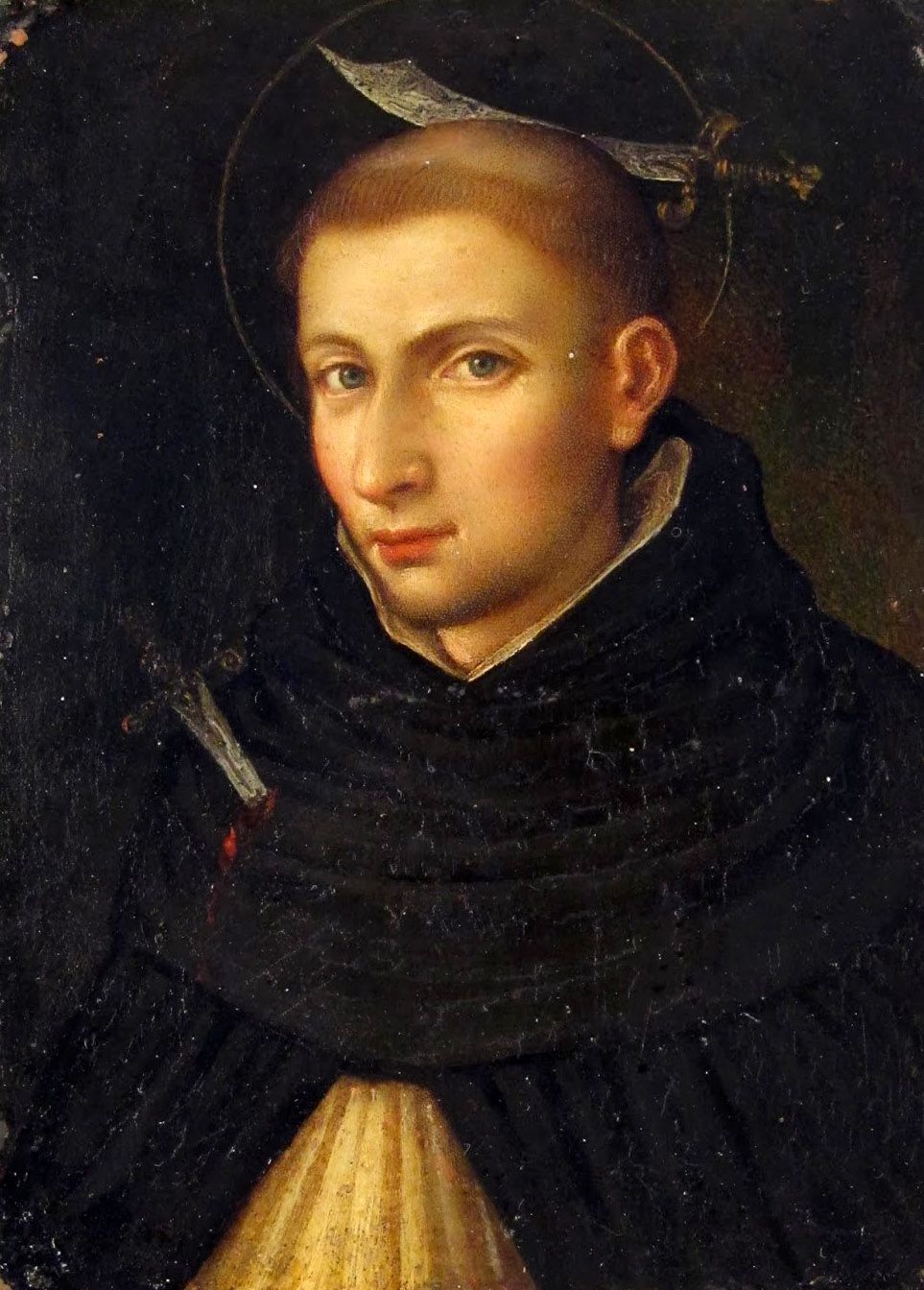
Because the Dominicans were theologically trained preachers, the popes entrusted the Inquisition to them.   In 1234, Pope Innocent IV recognised Peter’s virtues (severity of life and doctrine, talent for preaching, and zeal for the orthodox Catholic faith) and appointed him Inquisitor in Lombardy.   He spent about six months in that office and it is unclear whether he was ever involved in any trials.   His one recorded act was a declaration of clemency for those confessing heresy or sympathy to heresy.   In 1251 his jurisdiction was extended to most of northern Italy. Although he attracted huge crowds with his preaching, as an inquisitor he also made enemies.

Marvellously filled with the gifts of the Holy Spirit, he laboured continually for the propagation and defence of the true faith, being zealous for its promotion among the people.   To this end he established the Association of the Faith and the Confraternity of the Blessed Virgin Mary.   He was a fervent of promoter of community and fraternal life and served the brethren wisely as a prior.   He was also greatly solicitous for the spiritual good of the sisters, lovingly assisting them with his advice and exhortations to their spiritual benefit.

In his sermons he denounced heresy and also those Catholics who professed the Faith by words but acted contrary to it in deeds.   Crowds came to meet him and followed him, conversions were numerous, including many Cathars who returned to orthodoxy.

Because of this, a group of Milanese Cathars conspired to kill him.   They hired an assassin, one Carino of Balsamo.   Carino’s accomplice was Manfredo Clitoro of Giussano. On 6 April 1252, when Peter was returning from Como to Milan, the two assassins followed Peter to a lonely spot near Barlassina and there killed him and mortally wounded his companion, a fellow friar named Domenico.SaintPeterTheMartyr'sAssasination.JPG
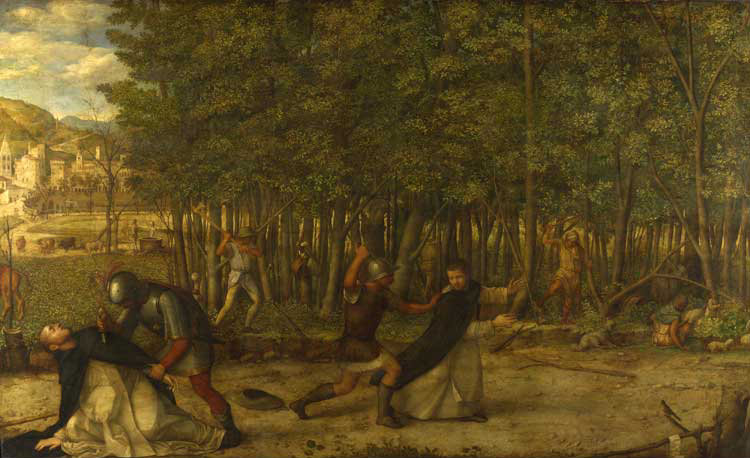
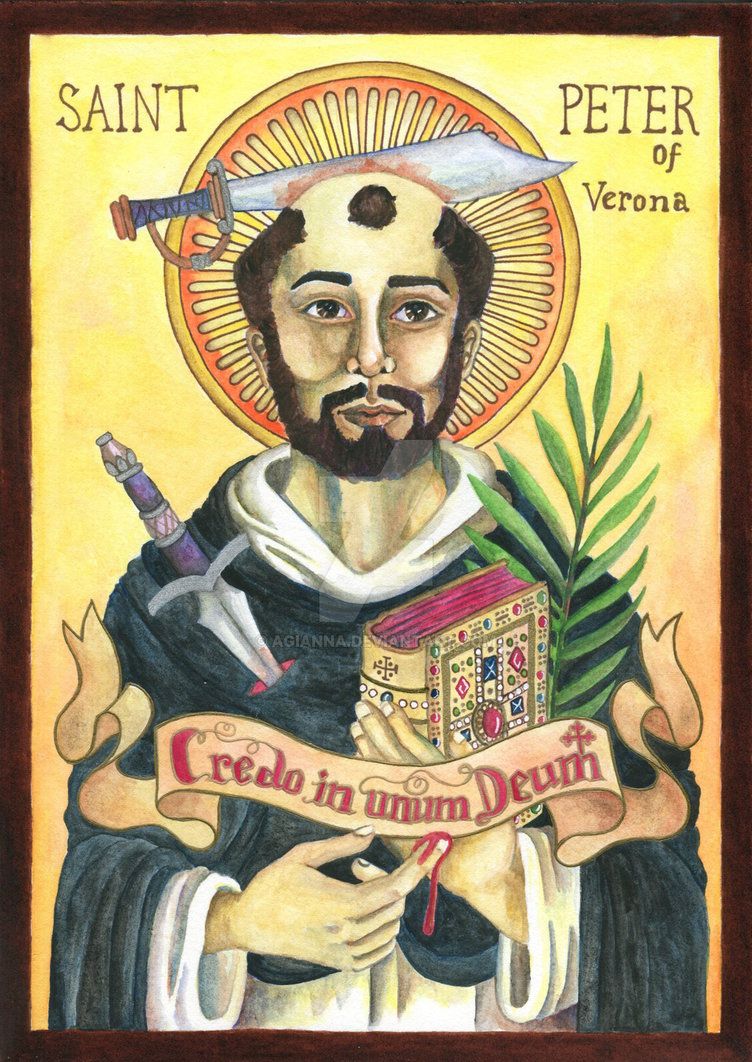
Carino struck Peter’s head with an axe and then attacked Domenico.   Peter rose to his knees and recited the first article of the Symbol of the Apostles (the Apostle’s Creed). Offering his blood as a sacrifice to God, according to legend, he dipped his fingers in it and wrote on the ground: “Credo in Deum” “I believe in God”, the first words of the Apostles’ Creed.   The blow that killed him cut off the top of his head but the testimony given at the inquest into his death confirms that he began reciting the Creed when he was attacked.   Domenico was carried to Meda, where he died five days afterwards.st peter of verona icon
The murderer Carino, renounced heresy, became a Dominican co-operator brother and died with a reputation for sanctity.  He is the subject of a local cult as Blessed Carino of Balsamo.

Wherever he went, the deaf, the dumb, the blind, the lame and people sick with every kind of ailment were brought to him.   Ordinarily all were benefited by his prayers.  They praised God for the power of healing which He had given His servant.st Peter-of-Verona-Full-e1425844752637-400x454.jpg
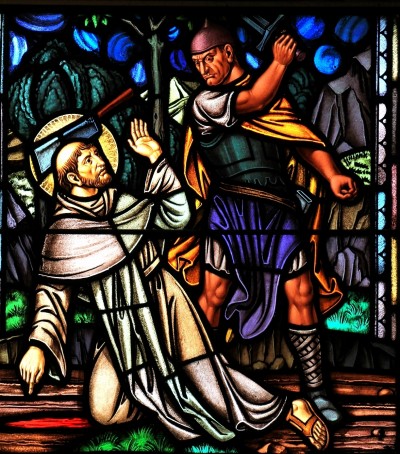
Peter of Verona and with reason, was considered a learned doctor.   Yet he ever continued to store his mind with new knowledge, whether through prayer, meditation, or reading the Sacred Writings.   The example which he set his religious brethren showed them by what means they could perfect themselves in their state of life and make themselves useful to the Church.   Never did his degree of Master in Sacred Theology cause him to neglect study.   Study never prevented him from being the first at all the regular exercises.   Well did he know how to combine the practices of the cloister with the labours of the apostolic life.st petermartyr1
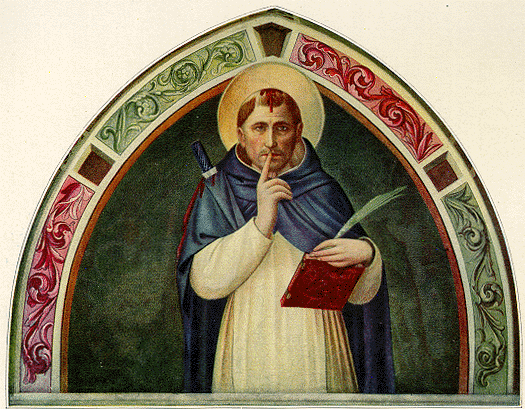
In private conversation, just as in his sermons, he stimulated the faithful with his personal sentiments of love for the Blessed Virgin.   Because of his influence in their favour the Servites (they were investigated to ensure their orthodoxy) have ever regarded Peter of Verona in the light of a second founder of their order.   After his Canonisation, they placed him on the list of their holy patrons and protectors.

The Bull of Canonisation was sent at once to all bishops and ecclesiastical superiors, with an order that the feast of Peter of Verona should he celebrated every year on 29 April. This day was chosen for the celebration because that of his martyrdom, 6 April often falls in Holy Week, or within the octave of Easter.   Alexander IV and several of his successors, prescribed that the feast should he of the same obligation as that of Saint Dominic. Finally, Clement X, by a papal decree, ordered that the feast of Saint Peter Martyr should have the rank of a duplex for the whole Church.   This was in 1670 and the practice is in use today, wherever the Roman breviary is recited.

However, veneration of Peter of Verona is especially noteworthy in the Order of Friars Preacher and in that of the Servites.   It is particularly the case in Italy, the land of his birth, the field of his labours and the place of his holy death.   There many are the churches, chapels and confraternities erected in his honour.st peter martyr of verona

The body of the martyr is still preserved and venerated in a magnificent chapel of Saint Eustorgio, Milan.   Princes and noblemen of France, Germany, England and Italy (particularly the archbishops of Milan) imitated the king and queen of Cyprus with their rich gifts for the enshrinement of the saint’s relics.   At each time of their various translations (1253, 1340, 1651 and 1736) many miracles were wrought.   Suffice it to say that the Acta Sanctorum, in the third volume for April, where they treat of our martyr, give a long list of attested wonders worked by him.tomb of st peter martyr 439px-Lombardia_Milano4_tango7174.jpg
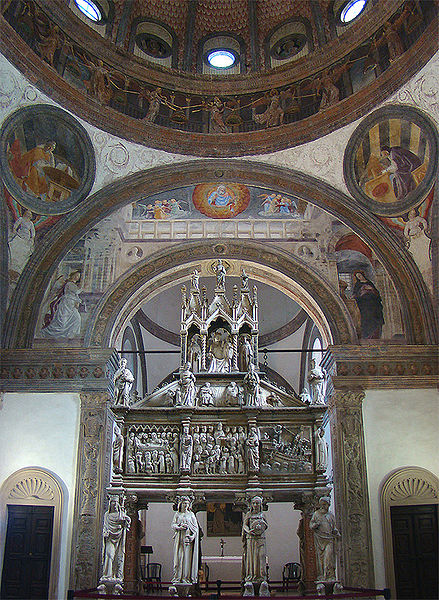
Saint Thomas of Aquinas, the Angelic Doctor, was an ardent admirer of Peter of Verona.  In 1263 he visited the martyr’s sepulchre.   While at Saint Eustorgio’s Convent, the great theologian and poet wrote the following verses in eulogy of the valiant athlete of the faith, which were afterwards engraved on a marble slab and placed near his tomb, where they may still he read:

Here silent is Christ’s Herald.
Here quenched, the People’s Light.
Here lies the martyred Champion
Who fought Faith’s holy fight.
The Voice the sheep heard gladly,
The light they loved to see
He fell beneath the weapons
Of graceless Cathari.

The Saviour crowns His Soldier.
His praise the people psalm.
The Faith he kept adorns him
With martyr’s fadeless palm.

His praise new marvels utter,
New light he spreads abroad
And now the whole wide city
Knows well the path to God.

Posted in DOMINICAN OP, SAINT of the DAY

Memorials of the Saints – 29 April

St Catherine of Siena (1347-1380) Doctor of the Church (Memorial)
St Catherine here:   https://anastpaul.wordpress.com/2018/04/29/saint-of-the-day-29-april-st-catherine-of-siena-1347-1380-doctor-of-the-church/

Abbots of Cluny: A feast that recognises the great and saintly early abbots of Cluny Abbey:
• Saint Aymardus of Cluny
• Saint Berno of Cluny
• Saint Hugh of Cluny
• Saint Mayeul
• Saint Odilo of Cluny
• Saint Odo of Cluny
• Saint Peter the Venerable


St Antonius Kim Song-u
St Ava of Denain
St Daniel of Gerona
St Dichu
St Endellion of Tregony
St Fiachan of Lismore
St Hugh of Cluny
St Gundebert of Gumber
St Joseph Benedict Cottolengo
St Paulinus of Brescia
St Peter of Verona OP (1205–1252) – St Peter Martyr
Bl Robert Gruthuysen
St Senan of Wales
St Severus of Naples
St Theoger
St Torpes of Pisa
St Tychicus
St Wilfrid the Younger

Martyrs of Cirta: A group of clergy and laity martyred together in Cirta, Numidia (in modern Tunisia) in the persecutions of Valerian. They were – Agapius, Antonia, Emilian, Secundinus and Tertula, along with a woman and her twin children whose names have not come down to us.

Martyrs of Corfu: A gang of thieves who converted while in prison, brought to the faith by Saint Jason and Saint Sosipater who were had been imprisoned for evangelizing. When the gang announced their new faith, they were martyred together. They were – Euphrasius, Faustianus, Insischolus, Januarius, Mammius, Marsalius and Saturninus. They were boiled in oil and pitch in the 2nd century on the Island of Corcyra (modern Corfu, Greece.
Also known as:
• Martyrs of Corcyra
• Seven Holy Thieves
• Seven Holy Robbers
• Seven Robber Saints