Posted in MARIAN TITLES, SAINT of the DAY

Thursday in Passion Week, Onze-Lieve-Vrouw van Bruges / Our Lady of Bruges, (1150), where a lock of Our Lady’s hair is preserved, St Benedict, St Nicholas of Flue and the Saints for 21 March

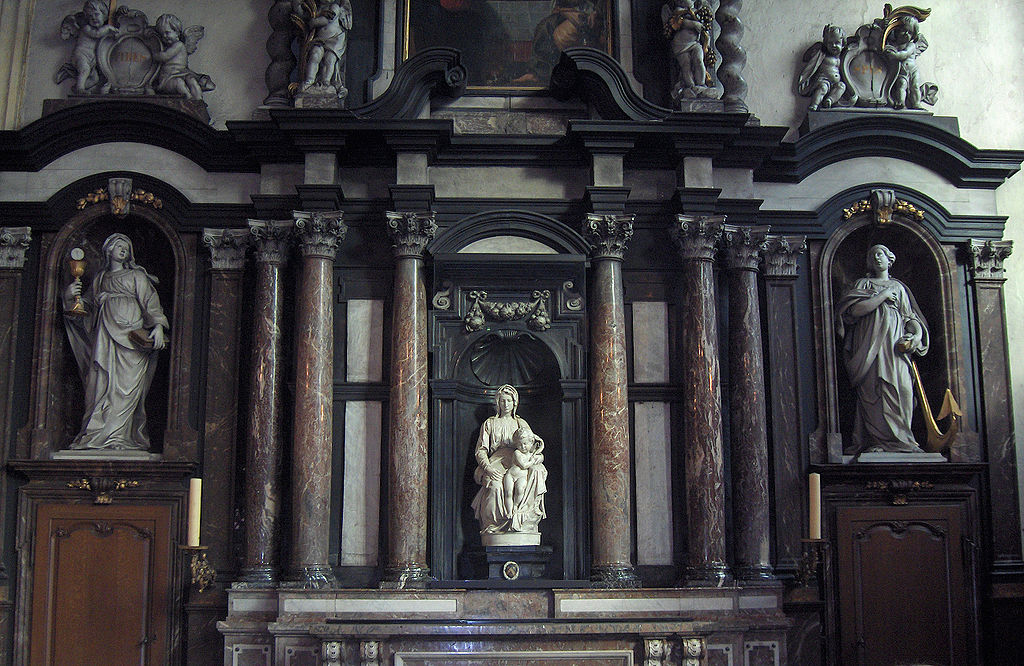
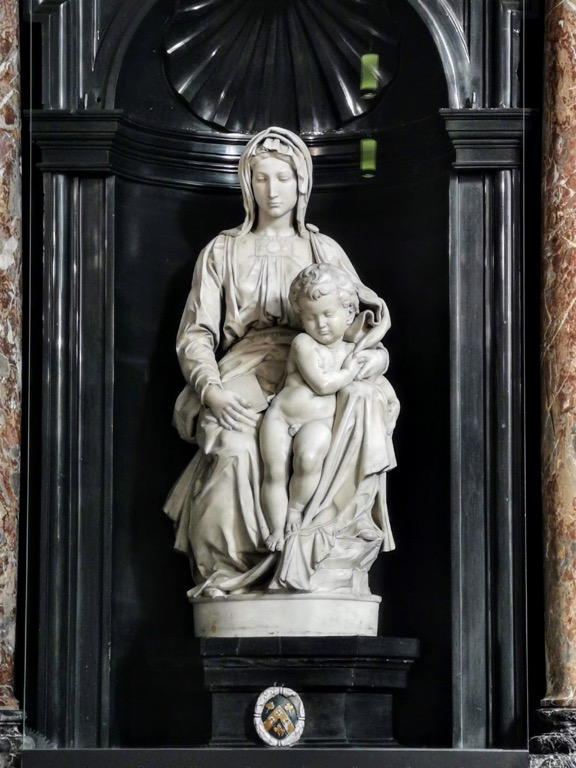
Michelangelo Buonarroti; Bruges Madonna; https://www.royalacademy.org.uk/art-artists/work-of-art/O1822

St Alfonso de Rojas
St Birillus of Catania
St Christian of Cologne
St Domninus of Rome

St Isenger of Verdun
St James the Confessor

Bl Lucia of Verona (1514-1574) Laywoman, Apostle of the Sick

St Lupicinus of Condat (Died c480) brother of St Romanus (Died c460)both Abbots at Condat Monastery. St Romanus is venerated on 28 February,

St Philemon of Rome
Bl Santuccia Terrebotti

Posted in FATHERS of the Church, MARIAN TITLES, SAINT of the DAY

Tuesday of the Fourth Week in Lent, Onze-Lieve-Vrouw van Bruges / Our Lady of Bruges, Flanders (1150) and Memorials of the Saints – 21 March

Tuesday of the Fourth Week in LentFAST

Onze-Lieve-Vrouw van Bruges / Our Lady of Bruges, Flanders (1150), where a lock of Our Lady’s hair is preserved – 21 March:
HERE:

https://anastpaul.com/2021/03/21/passion-sunday-or-the-fifth-suday-of-lent-2021-our-lady-of-bruges-flanders-1150-and-memorials-of-the-saints-21-march/

Michelangelo Buonarroti; Bruges Madonna; https://www.royalacademy.org.uk/art-artists/work-of-art/O1822 Credit line: (c) (c) Royal Academy of Arts /

St Benedict OSB (c 480-547) Abbot, Patron of Europe and Founder of Western Monasticism.
His Feast Day was moved in 1969.
Biography:

https://anastpaul.com/2018/07/11/saint-of-the-day-11-july-st-benedict-of-nursia-osb-c-480-547-patron-of-europe-and-founder-of-western-monasticism/
AND:
https://anastpaul.com/2017/07/11/saint-of-the-day-11-july-st-benedict-of-nursia-o-s-b-abbot-patron-of-europe-patronus-europae/

St Alfonso de Rojas
St Birillus of Catania
St Christian of Cologne
St Domninus of Rome

St Enda of Aran (c 450 – c 530) Monk, Abbot of Aran “Father of Irish Monasticism” and Aran is known as “Aran of the Saints.”
About St Enda:

https://anastpaul.com/2020/03/21/saint-of-the-day-21-march-st-enda-of-aran-c-450-c-530-patriarch-of-irish-monasticism/

St Isenger of Verdun
St James the Confessor

St John of Valence (Died 1146) Bishop, Founder of the Abbey of Bonnevaux, Monk, Abbot, Apostle of the poor, Social Reformer.
The Roman Martyrology reads: “In Valence in the territory of Vienne in France, St John, Bishop, who, at first Abbot of Bonnevaux, suffered many adversities for the defence of justice and with charity took care of the peasants, the poor and the merchants ruined by debts.”
His Life:

https://anastpaul.com/2022/03/21/saint-of-the-day-21-march-saint-john-of-valence-died-1146/

Bl Lucia of Verona (1514-1574) Laywoman, Apostle of the Sick
St Lupicinus of Condat

St Nicholas of Flue (1417-1487) Swiss Hermit and Ascetic who is the Patron Saint of Switzerland. He is sometimes invoked as Brother Klaus. A husband and father, a Mystic, a Writer, farmer, military leader, Member of the assembly, Councillor, Judge, he was respected as a man of complete moral integrity. He was Canonised on 15 May 1947 by Pope Pius XII.
About St Nicholas:

https://anastpaul.wordpress.com/2018/03/21/saint-of-the-day-21-march-st-nicholas-of-flue-1417-1487/St Nicholas of Flue (1417-1487)

St Serapion the Scolastic (Died c 354-370) Bishop of Thmuis, near Diospolis in the Nile delta of Egypt, Monk and Hermit, Confessor, brilliant Scholar of great learning, Theologian, Writer, a companion to St Anthony, the Desert and a close friend of St Athanasius and gave support to him against the heretic Arians in Egypt, for which action he was exiled.
St Serapion’s Life:

https://anastpaul.com/2021/03/21/saint-of-the-day-21-march-saint-serapion-the-scolastic-died-c-354-370-bishop/

St Philemon of Rome
Bl Santuccia Terrebotti

Martyrs of Alexandria: A large but unknown number of Catholics massacred in several Churches during Good Friday services in Alexandria, Egypt by Arian heretics during the persecutions of Constantius and Philagrio. They were Martyred on Good Friday in 342 in Alexandria, Egypt.


Posted in SAINT of the DAY

Saint of the Day – 21 March – Saint Serapion the Scolastic (Died c 354-370) Bishop

Saint of the Day – 21 March – Saint Serapion the Scolastic (Died c 354-370) Bishop of Thmuis, near Diospolis in the Nile delta of Egypt, Monk and Hermit, Confessor, brilliant Scholar of great learning, theologian, writer, a companion to St Anthony, the Desert Father and a close friend of St Athanasius and gave support to him against the heretic Arians in Egypt, for which action he was exiled. Died in c 365-370 of natural causes while in exile in Egypt. Also known as Serapion of Thmuis, Serapion the Scholar.

The surname of the Scholastic, which was given him, is a proof of the reputation which he acquired, by his penetrating genius and by his extensive learning, both sacred and profane. He presided for some time in the catechetical school of Alexandria but, to apply himself more perfectly to the science of the saints, to which he had always consecrated himself, his studies and his other actions, he retired into the desert and became a bright light in the monastic state.

Saint Athanasius assures us, in his life of Saint Antony, that in the visits which Serapion paid to that illustrious Father of Hermits, Saint Antony often spoke of things which passed in Egypt at a distance, of which he had gained supernatural knowledge. St Athanasius tells too, that St Anthony bequeathed after his death, one of his tunics of hair to Serpaion.

Serapion was drawn out of his retreat, to be placed in the Episcopal See of Thmuis, a famous City of Lower Egypt, near Diospolis. The name in the Egyptian tongue signified ‘a goat,’ which animal, as St Jerome informs us, was anciently worshipped there.

Serapion was closely linked with St Athanasius in the defence of the Catholic faith—for which he was banished by the Emperor Constantius; whence Saint Jerome styles him as confessor. Certain persons, who confessed God, the Son consubstantial with the Father, denied the divinity of the Holy Ghost. This error was no sooner broached but our saint strenuously opposed it and informed Saint Athanasius of this new inconsistent blasphemy and that zealous defender of the adorable mystery of the Trinity, the fundamental article of the Christian faith, wrote against this rising monster.

The four letters which Athanasius wrote to Serapion, in 359, when in exile, were the first express confutation of the Macedonian heresy that were published. Serapion, though separated from Athanasius, continued the fight, to great advantage, against both the Arians and Macedonians.

He also compiled an excellent book against the Manichees, in which he shows that our bodies may be made the instruments of good and that our souls may be perverted by sin; that there is no creature of which a good use may not be made and that both just and wicked men, are often changed, the former by falling into sin, the latter by becoming virtuous. It is, therefore, a self-contradiction to pretend with the Manichees that our souls are the work of God but our bodies of the devil, or the evil principle.

Saint Serapion wrote several learned letters and a treatise on the Titles of the Psalms, quoted by Saint Jerome, which are now lost. He was also the author of a series of writings on the Doctrine of the Divinity of the Holy Spirit (addressed to the Emperor).

At his request, Saint Athanasius composed several of his works against the Arians and so great was his opinion of our saint, that he desired him to correct, or add to them what he thought wanting.

Socrates relates that Saint Serapion gave an precis of his own life and an abridged rule of Christian perfection in very few words, which he would often repeat, saying: “The mind is purified by spiritual knowledge, (or by holy meditation and prayer,) the spiritual passions of the soul by charity, and the irregular appetites by abstinence and penance.”

Serapion died in his banishment and is commemorated on this day in the Roman Martyrology, which states of him: “At Alexandria, the blessed Serapion, anchorite and Bishop of Thmuis, a man of great virtue, who, being forced into exile by the enraged Arians, went to heaven.”

Posted in MARIAN TITLES, SAINT of the DAY

Passion Sunday or the Fifth Sunday of Lent +2021, OOnze-Lieve-Vrouw van Bruges / Our Lady of Bruges, Flanders (1150 and Memorials of the Saints – 21 March

Passion Sunday or the Fifth Suday of Lent +2021
__
Onze-Lieve-Vrouw van Bruges / Our Lady of Bruges, Flanders (1150), where a lock of Our Lady’s hair is preserved – 21 March:

Michelangelo Buonarroti; Bruges Madonna; https://www.royalacademy.org.uk/art-artists/work-of-art/O1822 Credit line: (c) (c) Royal Academy of Arts /

At a Shrine in Flanders, dedicated to Mary, it is reported that a lock of Our Lady’s hair is preserved, given by a Syrian Bishop, named Mocca.
This Shrine is likewise said to have its famous relic of the Holy Blood, which is the centre of much pilgrimage. The precious relic was brought from Palestine by Thierry of Alsace on his return from the second crusade. From 1150 this relic has been venerated with much devotion. The annual pilgrimage attended by the nobility in their quaint robes takes place on the Monday following the first Sunday in May. Not only the Flemish nobility take part, but also thousands of pilgrims from all over Christendom.
Every Friday the relic is less solemnly exposed for the veneration of the Faithful. As mentioned above, the Shrine is dedicated to Mary, for it was she who gave her own blood to her Divine Son, the God-Man.
As at all the Marian Shrines, miracles take place through the intercession of the Mother of God.
The present Gothic Cathedral of Notre-Dame in Bruges was built in 1225 and is famous for its 400 foot tall brick tower. Inside, however, is where the real treasures are kept. Among those relics already mentioned, there is also a Madonna of Bruges, a marble sculpture of the Blessed Virgin and the Divine Child sculpted by Michelangelo.

The features of the Blessed Virgin depicted in the Madonna of Bruges are very similar in appearance to the famous Pieta, which Michelangelo was said to have completed just prior to this sculpture. It is the only one of his works that left Italy during Michelangelo’s lifetime and was purchased and brought to Bruges by a wealthy merchant.
In 1794 the inhabitants of Bruges were forced by the French Revolutionaries to ship the Madonna of Bruges to Paris. It was fortunate that the Statue was not destroyed, as so many Catholic works of art were during the French Revolution. TheSstatue did not remain long in Paris, as it was returned to Bruges after the defeat of Emperor Napoleon. It was taken again in 1944 when the German’s retreated from Belgium, but it was discovered two years later in Germany and returned once again to Bruges.
As a precaution, after a bomb was set before the Statue of the Pieta in Saint Peter’s Basilica in 1972, the Madonna of Bruges was placed behind bulletproof glass, so that the public can now only admire the sculpture from several feet away.

__
Alfonso de Rojas
St Augustine Tchao
St Benedetta Cambiagio Frassinello (1791 – 1858)
Biography:

https://anastpaul.com/2019/03/21/saint-of-the-day-21-march-st-benedetta-cambiagio-frassinello-1791-1858/
St Birillus of Catania
St Christian of Cologne
St Domninus of Rome
St Enda of Aran (c 450 – c 530)
About St Enda:

https://anastpaul.com/2020/03/21/saint-of-the-day-21-march-st-enda-of-aran-c-450-c-530-patriarch-of-irish-monasticism/
St Isenger of Verdun
St James the Confessor
Bl John of Valence
Bl Lucia of Verona
St Lupicinus of Condat
Bl Mark Gjani
Bl Matthew Flathers
St Nicholas of Flue (1417-1487)
About St Nicholas:

https://anastpaul.wordpress.com/2018/03/21/saint-of-the-day-21-march-st-nicholas-of-flue-1417-1487/
St Serapion the Scolastic (Died c 354-370) Bishop
St Philemon of Rome
Bl Santuccia Terrebotti

Bl Thomas Pilcher
Bl William Pike

Martyrs of Alexandria: A large but unknown number of Catholics massacred in several churches during Good Friday services in Alexandria, Egypt by Arian heretics during the persecutions of Constantius and Philagrio. They were martyred on Good Friday in 342 in Alexandria, Egypt.