St Benedict of Campagna St Crescentius of Carthage St Ethelwald of Farne (Died 699) Priest, Monk and Hermit St Felix the Martyr St Felix of Monte Cassino St Fergus of Duleek St Fidelis the Martyr St Frumentius of Hadrumetum St Gwinear
St Julian the Confessor St Liberatus of Carthage St Maidoc of Fiddown St Nicon of Sicily
St Ottone Frangipane (1040-1127) Layman, military Knight, Pilgrim, Ascetic, Hermit, Miracle-worker both during life and after his death. Founder of a Pilgrim’s Hospice in Ariano which later became a huge Hospital. Born in 1040 in Rome, Italy and died on 23 March 1127 in Ariano Irpino, Italy of natural causes. His Life: https://anastpaul.com/2023/03/23/saint-of-the-day-23-march-st-ottone-frangipane-1040-1127/
Daughters of Feradhach: They are mentioned in early calendars and martyrologies but no information about them has survived.
Martyrs of Caesarea – 5 Saints: A group of five Christians who protested public games which were dedicated to pagan gods. Martyred in the persecutions Julian the Apostate. The only details we know about them are their names – Aquila, Domitius, Eparchius, Pelagia and Theodosia. They were martyred in 361 in Caesarea, Palestine.
Bl Álvaro del Portillo Díez de Sollano St Benedict of Campagna St Crescentius of Carthage St Ethelwald of Farne St Felix the Martyr St Felix of Monte Cassino St Fergus of Duleek St Fidelis the Martyr St Frumentius of Hadrumetum St Gwinear
Daughters of Feradhach: They are mentioned in early calendars and martyrologies but no information about them has survived.
Martyrs of Caesarea – 5 Saints: A group of five Christians who protested public games which were dedicated to pagan gods. Martyred in the persecutions Julian the Apostate. The only details we know about them are their names – Aquila, Domitius, Eparchius, Pelagia and Theodosia. They were martyred in 361 in Caesarea, Palestine.
Bl Álvaro del Portillo Díez de Sollano Bl Annunciata Asteria Cocchetti St Benedict of Campagna St Crescentius of Carthage Bl Edmund Sykes St Ethelwald of Farne St Felix the Martyr St Felix of Monte Cassino St Fergus of Duleek St Fidelis the Martyr St Frumentius of Hadrumetum St Gwinear
St Julian the Confessor St Liberatus of Carthage St Maidoc of Fiddown Bl Metod Dominik Trcka St Nicon of Sicily St Ottone Frangipane Bl Peter Higgins Blessed Pietro of Gubbio OSA (Died c 1306) Priest
Daughters of Feradhach: They are mentioned in early calendars and martyrologies but no information about them has survived.
Martyrs of Caesarea – 5 Saints: A group of five Christians who protested public games which were dedicated to pagan gods. Martyred in the persecutions Julian the Apostate. The only details we know about them are their names – Aquila, Domitius, Eparchius, Pelagia and Theodosia. They were martyred in 361 in Caesarea, Palestine.
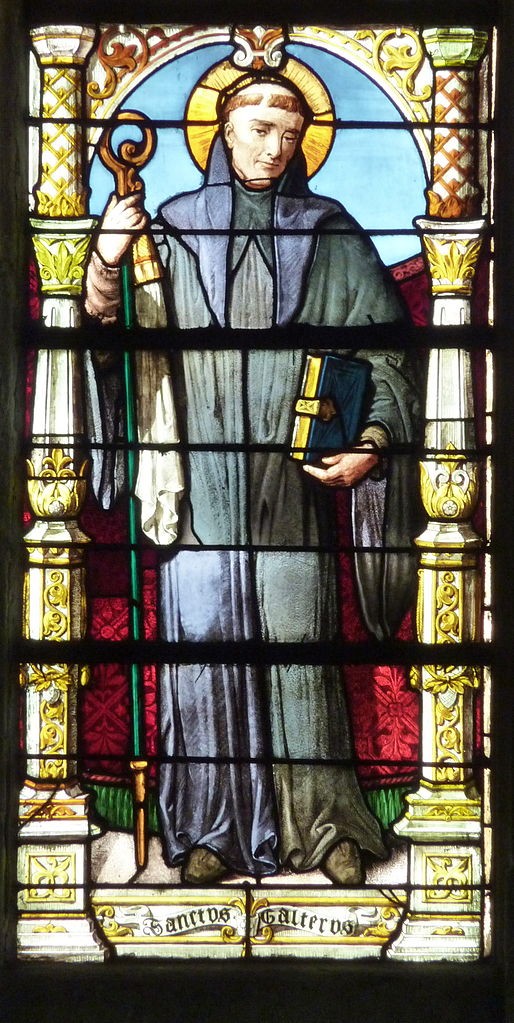
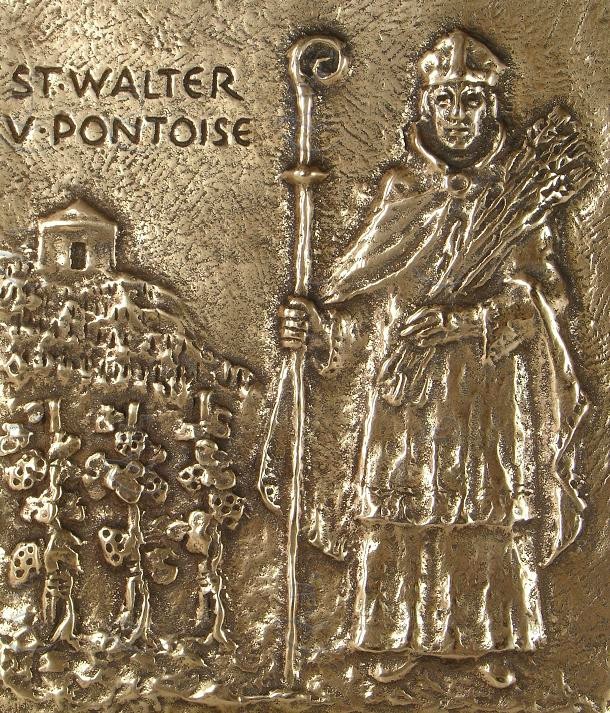
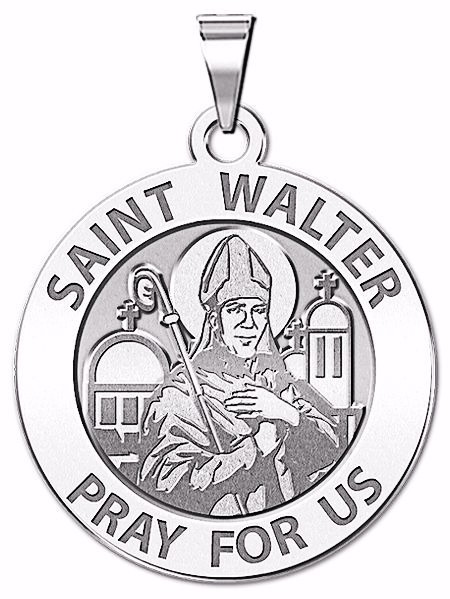
Saint of the Day – 23 March – Saint Walter of Pontoise OSB (c 1030-c 1099) A very reluctant Abbot, Reformer, would-be hermit. Born in c 1030 in Andainville, Picardy, France and died on Good Friday, 8 April 1099 of natural causes. Patronages – against job-related stress, prisoners, prisoners of war, vintners, Pontoise, France.
Walter had been a Professor of philosophy and rhetoric before deciding to join the Benedictine Abbey of Rebais-en-Brie to retreat from the world and the temptations success had brought him.
When the Cross Benedictine Abbey in Pontoise was founded, Walter was chosen as its first Abbot. By custom, the Abbot placed his hand under the king’s hand during the installation. Instead, Walter placed his hand over the hand of King Philip I and told him: “It is from God, not from your majesty, that I accept the charge of this church.”
Walter soon decided that embracing the Office of Abbot sid not leave him enough time for solitude and prayer, so he secretly left the Abbey and went to the Benedictine Abbey at Cluny, where St Hugh was the Abbot.
When the Monks at Pontoise learned where he was, they forced him to return, so he often moved into a cell for days at a time. Eventually, he fled again, this time to an island in the Loire River. The Monks brought him back again after a pilgrim told them where he was.
Walter hadn’t given up his dream to live as a simple Monk, so he went to Rome to appeal to Pope Gregory VII and resign his position as Abbot. However, Pope Gregory dashed Walter’s plans, telling him to go back to the Abbey and use his God-given talents for the best of his fellow Monks. This order seemed to change everything and Walter never again tried to escape.
Not that he led a quiet life. as the Abbot. For after his visit to Pope Gregory, he campaigned against the abuses and corruptions of his fellow Benedictines and denounced clerical abuses, especially among secular Priests, whom he criticised for lack of discipline and for simony. They responded by having him beaten and imprisoned. That didn’t stop Walter who, at a 1092 Church Council in Paris, defended a Vatican decree banning the faithful from going to Masses offered by Priests, living with a concubine.
Walter continued living as simple life as possible and being faithful to his administrative and pastoral functions as the Abbot. But, to find his own solace, he often spent the night in prayer before the Tabernacle in Church.
Shortly before his death on Good Friday, he built the Convent of Our Lady at Bertaucourt for Nuns.
Walter was buried in the Abbey at Pontoise. Numerous miracles were reported at his tomb. His remains were stolen during the French Revolution. Most were not recovered.
He was Canonised by Hugh de Boves, the Archbishop of Rouen in 1153 and was one of the last Saints in Western Europe, to have been Canonised by an authority, other than the Pope.
Walter is the Patron of prisoners because while he was a novice, he once took pity on an inmate at the Monastery prison and helped the prisoner to escape.
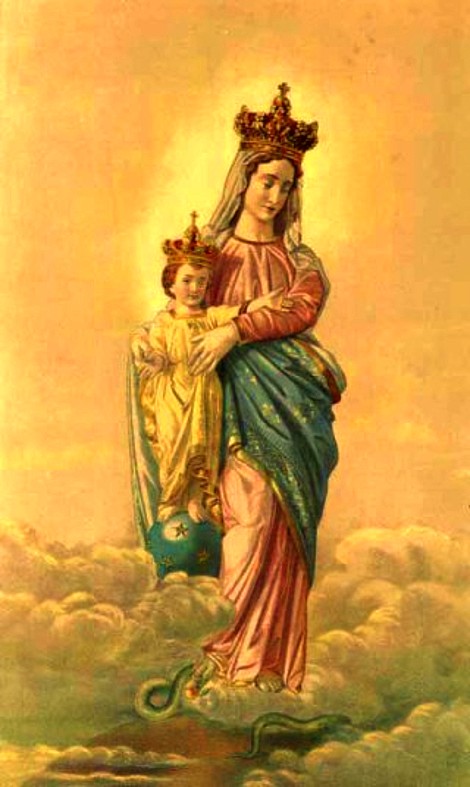
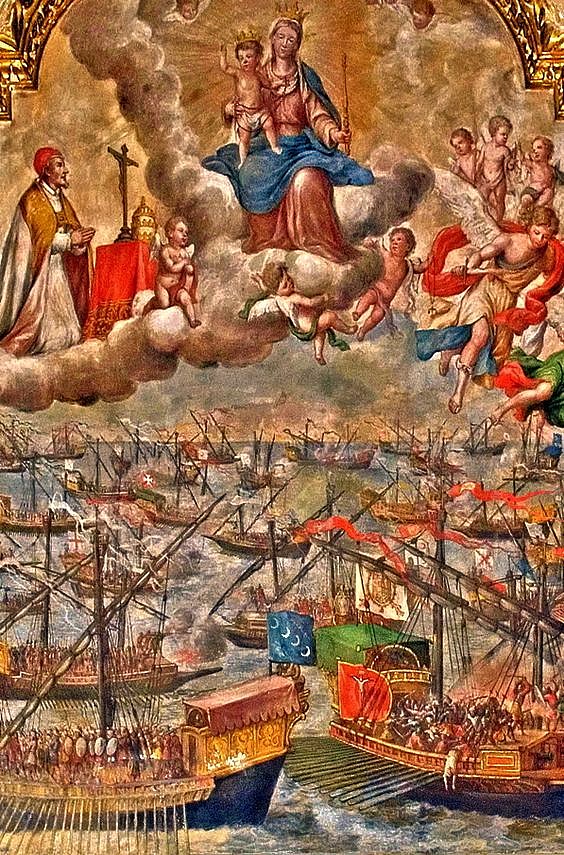
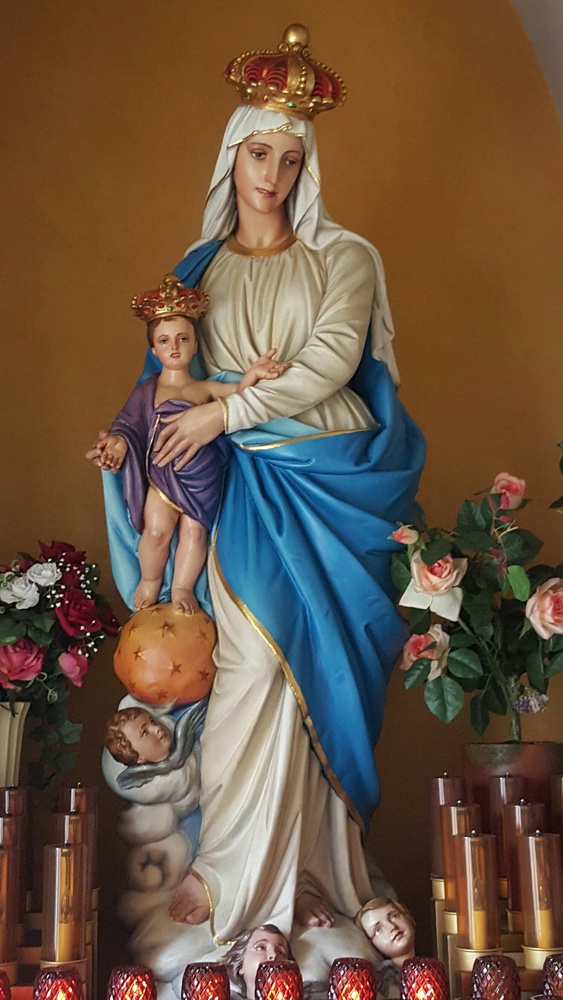
Madonna della Vittoria di Lepanto / Our Lady of Victory of Lepanto and Hungary, (1716) – 23 March:
The Battle of Lepanto was a naval engagement that took place between the ships of the Catholic Holy League under Don Juan of Austria and the navy of the Ottoman Empire under Ali Pasha, supported by a large fleet of corsairs. The Ottoman Empire was far too powerful for any one Christian kingdom to stand against it and, although all of Western Europe was threatened, only Spain, the Papal States, the Duchy of Savoy, the Republic of Venice, the Republic of Genoa and the Knights of Saint John, took a stand against them. Altogether they still had only 212 ships against no less than 278 ships. For hundreds of years the Ottoman Empire had been making advances into Europe, while also making lightning raids along the coastlines to pillage and take slaves. They intended to eventually overwhelm all of Europe and at that time, Catholics stood almost alone against them, as no Protestant force would do anything to oppose the invasion. The advantage in this contest went strongly to the Turks and so, Pope Pius V implored all of Christendom, to pray the Rosary to the Blessed Virgin Mary, to obtain her intercession before the throne of God, for their victory. Admiral Andrea Doria sailed to meet the Turks with an image of the Blessed Virgin prominently displayed in his flagship’s state room. The Venetian forces on Cyprus, had been under siege by the Turks, during the time that the Catholic forces were preparing to meet them. On 1 August they surrendered, after being assured, that they could leave the island unopposed. The Ottoman commander broke his solemn oath, however, taking the Venetians captive and flaying their captain while he was yet alive. Once he had completed this unspeakable torture, the captain’s dead body was hung from a spar on Mustafa’s flagship alongside the heads of all the Venetian commanders. This was the type of barbarism the Catholic forces sailed to oppose. The engagement took place on the 7th of October 1571, only 6 years after the Knights of Saint John defeated a powerful Ottoman army at Malta. Don Juan of Austria encouraged his men by telling them that “There is no paradise for cowards.” If they should lose the engagement, the Mediterranean Sea would be opened up to assist future Ottoman invasions. Victory would mean at least a brief reprieve. The Ottoman Turks had not lost any significant naval engagements in the memory of any living man, yet they were defeated. It was widely recognised, that the battle was won through the power of Mary, Our Lady of Victory. The Turks had come up like fire from the East, plundering, raping, enslaving, threatening to master the whole of Christendom but had been defeated at Lepanto through the power of the Rosary. The Turks had lost nearly 9 of every 10 ships and 30,000 men went to a watery grave. The Holy League lost only 17 galleys and 7,500 men. Many historians rank Lepanto as the most decisive naval engagement since the Battle of Actium in 31 BC, proving to the Christians, that the Turks could be beaten. Although the Turks soon rebuilt their fleet, many of their best soldiers and sailors were already dead at Malta and Lepanto and they could not be easily replaced.
This feast also celebrates another Christian victory, as in 1716, Mary, Queen of Victory, was chosen to protect her children again, at Petenwardein. This battle was fought on 5 August 1716, between the Austrian army of Prince Eugene and the Turks at Peterwardein in Hungary and, it was also won through the power of Mary Most Holy. To help equip the Christian army against the Turks, Pope Clement XI emptied the Papal treasury. The two armies met on the morning of the feast of Our Lady of the Snows; the Christian army was outnumbered ten to three; the enemy had the advantage of position but the Christian strength lay in the right of their cause and in Mary, who watched over them. The battle was long but, behind the lines in the Churches of Europe, Catholics prayed – their prayers were heard. That evening the sun set on a free Hungary. Mary’s men had won the day; Mary’s banner floated victoriously over a Christian land. The news filled the Christian world with joy but nowhere more than at Rome. In thanksgiving to the Mother of God for her help, glorious, solemn, pontifical ceremonies of gratitude were held in the Basilica of Saint Mary Major. After Lepanto, Pius V instituted the feast of the Holy Rosary in Rome and Clement XI extended it to the whole world. Today, other more sinister errors eat at the heart of Christian culture. Against the errors of our time, we must appeal to Mary; she is our Advocate, our Queen of Victories and of Peace. For her and for her blessed Son, we struggle and in her powerful intercession with the Prince of Peace, we place our trust. We struggle today to preserve our birthright as sons of God.
St Theodolus of Antioch St Victorian of Hadrumetum St Walter of Pontoise OSB (c 1030-c 1099) A very reluctant Abbot — Daughters of Feradhach: They are mentioned in early calendars and martyrologies, but no information about them has survived.
Martyrs of Caesarea – 5 saints: A group of five Christians who protested public games which were dedicated to pagan gods. Martyred in the persecutions Julian the Apostate. The only details we know about them are their names – Aquila, Domitius, Eparchius, Pelagia and Theodosia. They were martyred in 361 in Caesarea, Palestine.



 AnaStpaul
You must be logged in to post a comment.