Thought for the Day – 4 October – Meditations with Antonio Cardinal Bacci (1881-1971)
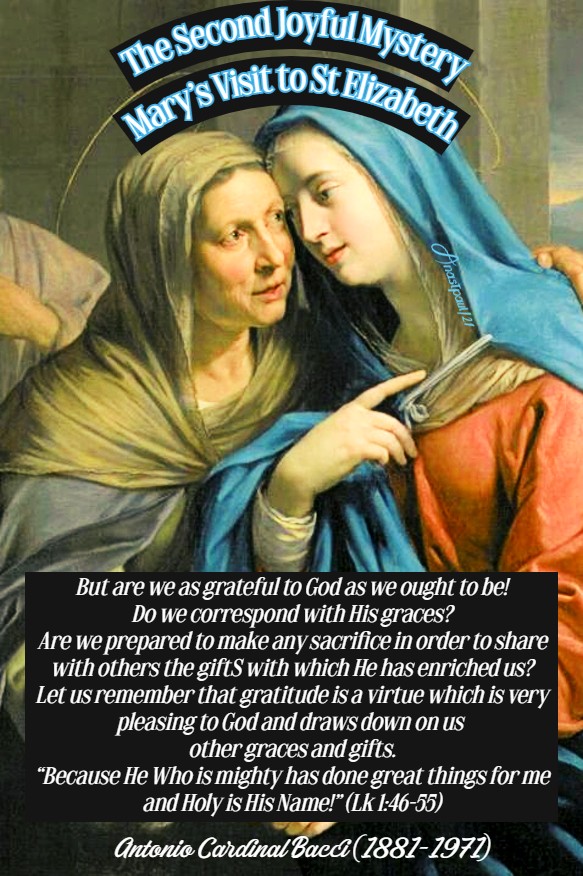
“Month of the Holy Rosary” The Second Joyful Mystery Mary’s Visit to St Elizabeth
“But are we as grateful to God as we ought to be! Do we correspond with His graces? Are we prepared to make any sacrifice in order to share with others the gifts with which He has enriched us?
Let us remember that gratitude is a virtue which is very pleasing to God and draws down on us other graces and gifts.
In his panegyric on Trajan, the younger Pliny observes that the best means of soliciting new favours, is to show gratitude for those which we have already received. On the other hand, as St Bernard points out, ingratitude is like a scorching wind, which dries up the dew of Divine Mercy (Sermon 5 in Cant). Let us be grateful to God, therefore and do our best to share with others the gifts which we have received. “Because He Who is mighty has done great things for me and Holy is His Name!” (Lk 1:46-55).”
Thought for the Day – 12 September – Meditations with Antonio Cardinal Bacci (1881-1971)
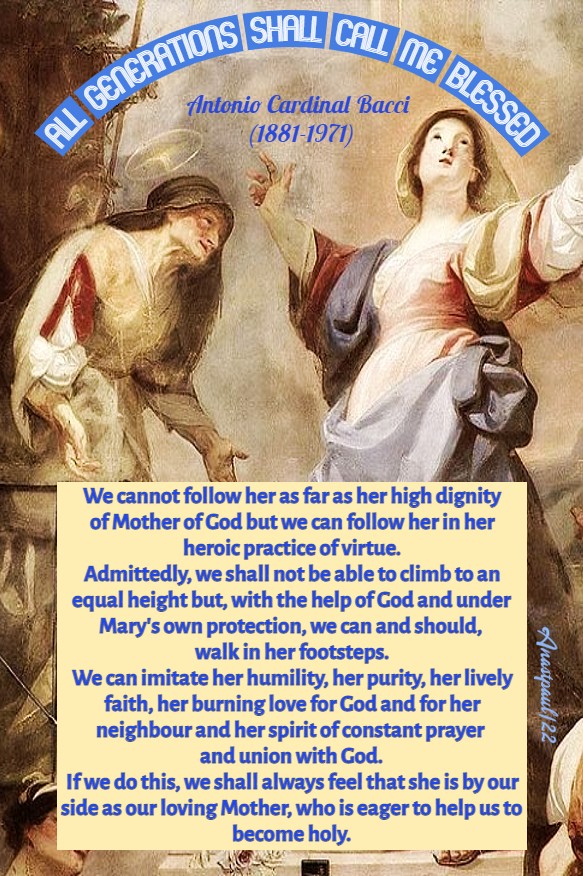
“All Generations Shall Call Me Blessed”
“It is related in the Gospel, that once a certain occasion, a woman in the crowd, was roused by the preaching and miracles of Jesus and cried out: “Blessed is the womb that bore thee and the breasts that nursed thee.” But Jesus replied: “Rather blessed are they who hear the word of God and keep it” (Lk 11:27-28). These words take nothing from the glory of the Mother of God. They were not intended for her but, for us. She was great and holy, not only because she was chosen to be the Mother of the Word Incarnate but also because she perfected herself in virtue by carrying out, in everything, the teaching of her Divine Son, Jesus.
We cannot follow her as far as her high dignity of Mother of God but we can follow her in her heroic practice of virtue. Admittedly, we shall not be able to climb to an equal height but, with the help of God and under Mary’s own protection, we can and should, walk in her footsteps.
We can imitate her humility, her purity, her lively faith, her burning love for God and for her neighbour and her spirit of constant prayer and union with God. If we do this, we shall always feel that she is by our side as our loving Mother, who is eager to help us to become holy.”
Thought for the Day – 2 July – Meditations with Fr Richard Frederick Clarke SJ (1839-1900)
From “The Devout Year” By Fr Richard Frederick Clarke SJ (1839-1900)
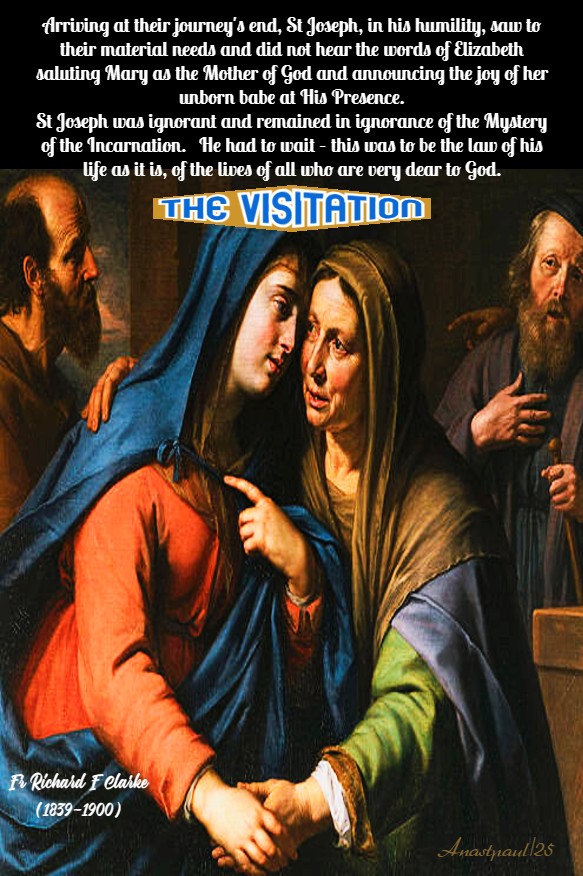
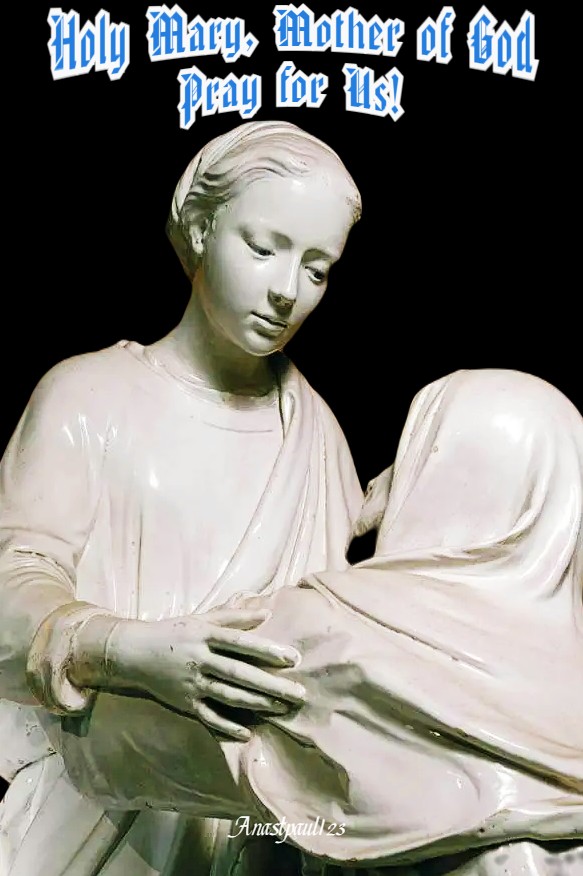
The Visitation
+1. The visit of Mary to her cousin St Elizabeth took place a short time after the Annunciation . It had been suggested to her by the Angel’s message, telling her that Elizabeth was to bear a son. St Joseph knew nothing of this, yet, he raised no objection to the journey. He had already conceived such a reverence for his spotless spouse that it was enough for him that she entertained a wish. He knew that she never acted on impulse, or without a due cause and so, when Mary asked his leave to visit her cousin, he at once consented. So we too, should consult, as far as possible, the wishes of others, especially our spouses, seeking to conform our will to others in the spirit of charity.
+2. St Joseph would not allow his young wife to journey alone. He went with her as her escort. What a happiness to him to wait upon her! How tenderly he watches over her How thoughtfully he sees to all her wants! Men often idealise those they love but there was no need to idealise Mary. She was an ideal in herself. And when he approached her, Joseph somehow felt that he was drawing near to God and that God dwelt in her ,in some other way than by His graces and gifts.
+3. Arriving at their journey’s end, St Joseph, in his humility, saw to their material needs and did not hear the words of Elizabeth saluting Mary as the Mother of God and announcing the joy of her unborn babe at His Presence. St Joseph was ignorant and remained in ignorance of the Mystery of the Incarnation. He had to wait – this was to be the law of his life as it is, of the lives of all who are very dear to God.
Quote/s of the Day – 2 July – The Feast of the Feast of the Visitation of the Blessed Virgin Mary
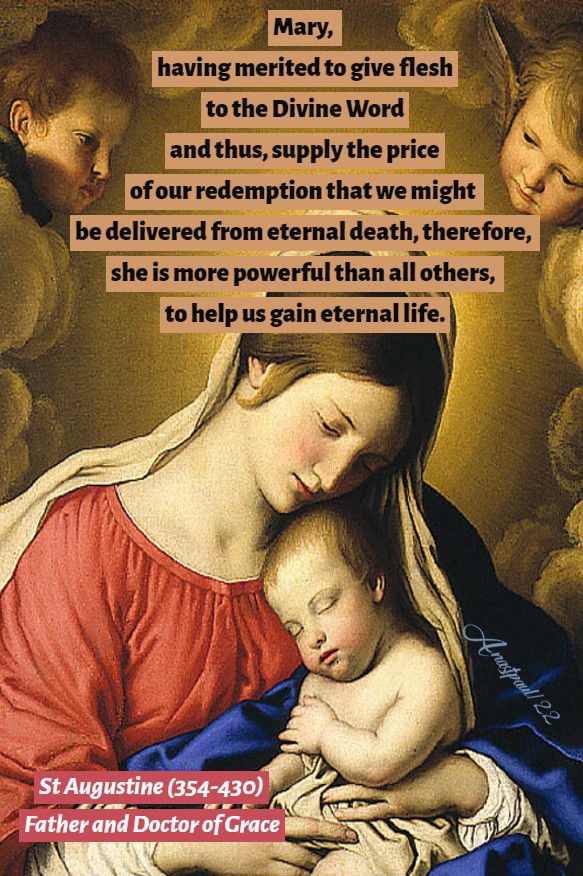
“Mary, having merited to give flesh to the Divine Word and thus, supply the price of our redemption that we might be delivered from eternal death, therefore, she is more powerful than all others, to help us gain eternal life.”
St Augustine (354-430) Father and Doctor of Grace
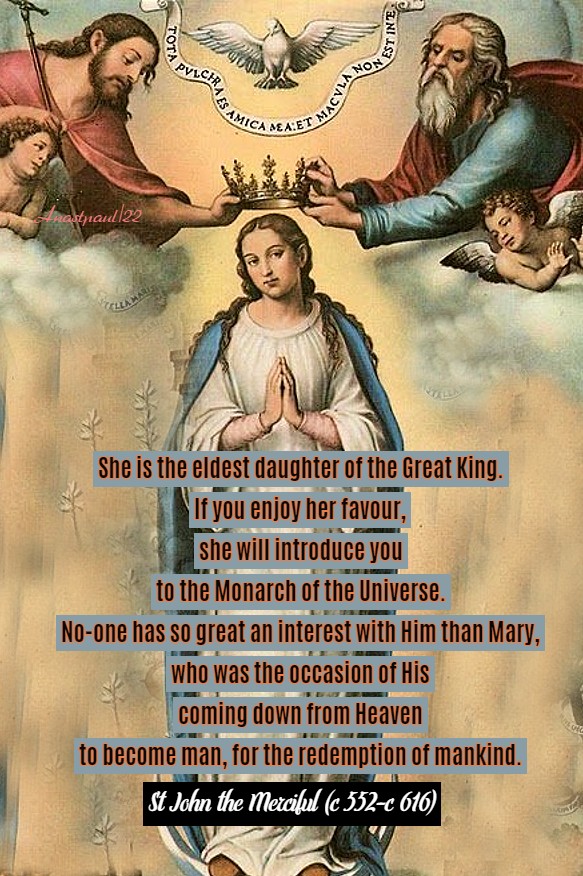
“She is the eldest daughter of the Great King. If you enjoy her favour, she will introduce you to the Monarch of the Universe. No-one has so great an interest with Him than Mary, who was the occasion of His coming down from Heaven to become man, for the redemption of mankind.”
St John the Merciful (c552-c 616)
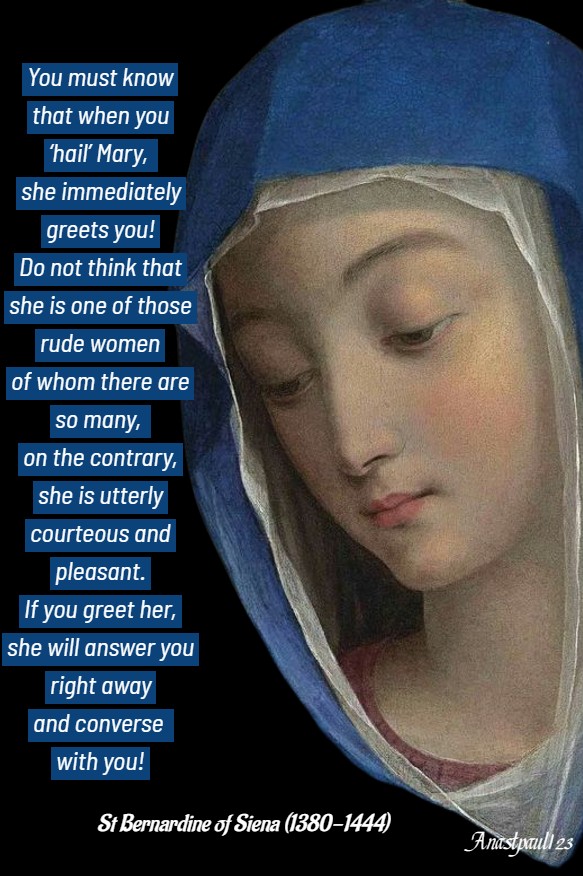
“You must know that when you ‘hail’ Mary, she immediately greets you! Do not think that she is one of those rude women of whom there are so many, on the contrary, she is utterly courteous and pleasant. If you greet her, she will answer you right away and converse with you!”
St Bernardine of Siena (1380-1444)
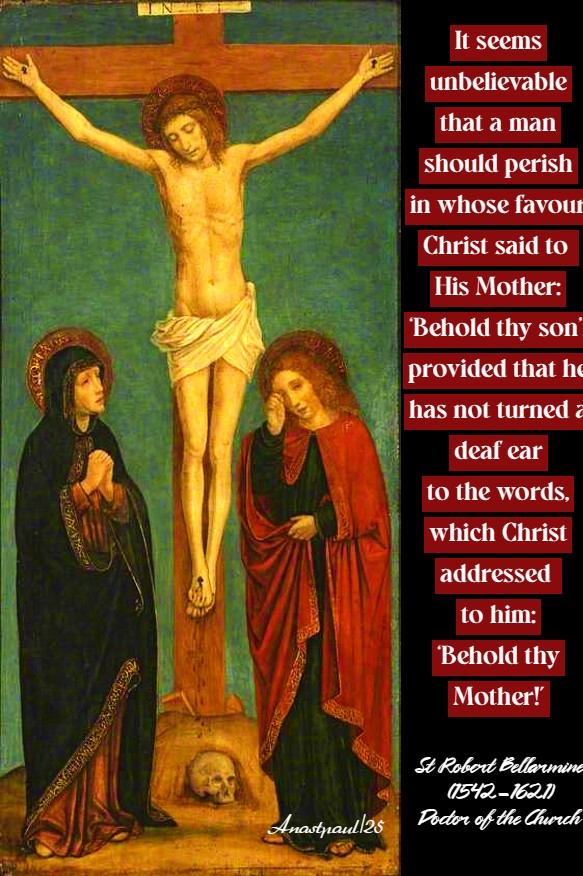
“It seems unbelievable that a man should perish in whose favour Christ said to His Mother: ‘Behold thy son’, provided that he has not turned a deaf ear to the words, which Christ addressed to him: ‘Behold thy Mother!’”
St Robert Bellarmine (1542-1621) Doctor of the Church
One Minute Reflection – 2 July – “The Month of the Most Precious Blood” – The Visitation of the Blessed Virgin Mary – Song 2:8-14 – Luke 1:39-47 – Scripture search here: https://www.drbo.org/
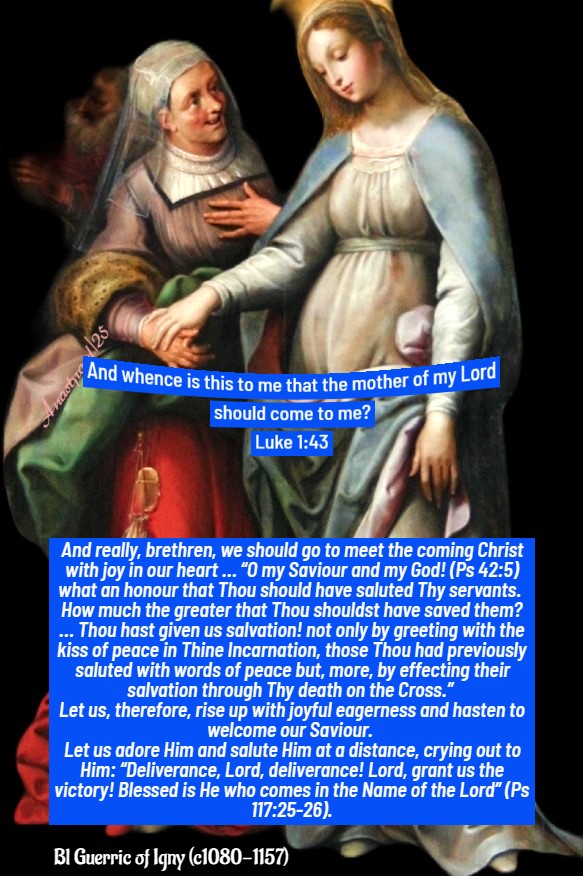
“And whence is this to me that the mother of my Lord should come to me?” – Luke 1:43
REFLECTION – “Behold the King is coming, let us hasten to meet our Saviour” (Advent Liturgy). Solomon put it very well when he said: “As cold water to a thirsty soul, so is good news from a far country” (Prv 25:25). He certainly brings good news who announces the coming of the Saviour, the reconciliation of the world and the good things of the world to come. “How welcome the feet of them who preach peace and bring good tidings!” (Is 52:7)…
Such messengers are waters of refreshment and a draught of saving wisdom to a soul athirst for God. For such a soul, the herald of the Coming and of the other Mysteries of the Saviour, draws and proffers water “with joy from the springs of the Saviour” (Is 12:3). And so, it seems to me, the soul is heard to reply to the messenger … in the words of Elisabeth. It has drunk of the same spirit as she has and says: “And whence is this to me that the mother of my Lord should come to me? For behold, as soon as the voice of thy salutation sounded in my ears, the infant in my womb leaped for joy. And blessed art thou who hast believed because those things shall be accomplished which were spoken to thee by the Lord.”
And really, brethren, we should go to meet the coming Christ with joy in our heart … “O my Saviour and my God! (Ps 42:5) what an honour that Thou should have saluted Thy servants. How much the greater that Thou shouldst have saved them? … Thou hast given us salvation! not only by greeting with the kiss of peace in Thine Incarnation, those Thou had previously saluted with words of peace but,more, by effecting their salvation through Thy death on the Cross.” Let us, therefore, rise up with joyful eagerness and hasten to welcome our Saviour. Let us adore Him and salute Him at a distance, crying out to Him: “Deliverance, Lord, deliverance! Lord, grant us the victory! Blessed is He who comes in the Name of the Lord” (Ps 117:25-26).” – Blessed Guerric of Igny (c1080-1157) Cistercian Abbot (2nd Sermon of Advent).
PRAYER – Bestow upon Thy servants, we beseech Thee, O Lord, the gift of heavenly grace that as the child-bearing of the Blessed Virgin marked the beginning of our salvation, so may the solemn Feast of her Visitation bring us an increase of peace.Through Jesus Christ, Thy Son our Lord, Who lives and reigns with Thee, in the unity of the Holy Ghost, God, world without end. Amen (Collect).
Our Morning Offering – 2 July – The Feast of the Visitation
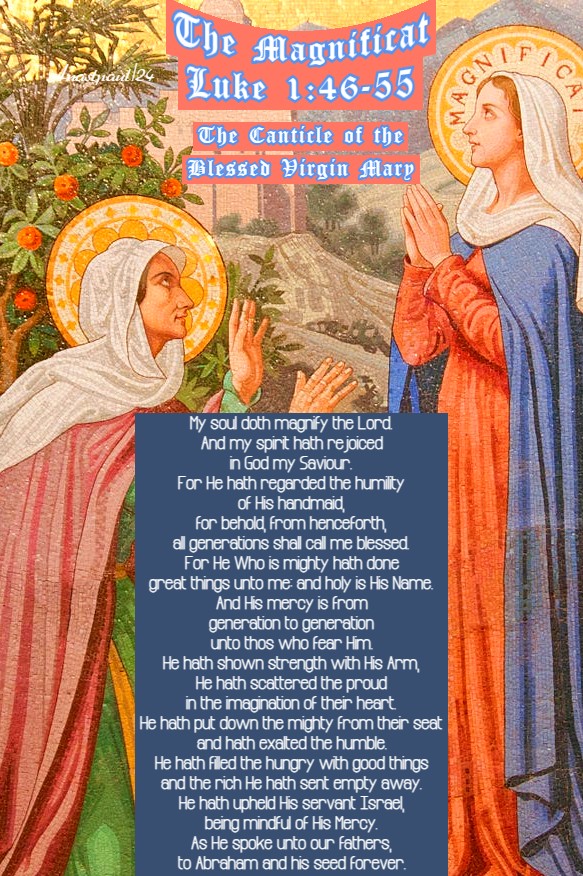
The Magnificat The Canticle of the Blessed Virgin Mary Luke 1:46-55 Indulgence 100 days
My soul doth magnify the Lord. And my spirit hath rejoiced in God my Saviour. For He hath regarded the humility of His handmaid, for behold, from henceforth, all generations shall call me blessed. For He Who is mighty hath done great things unto me: and holy is His Name. And His mercy is from generation to generation unto thos who fear Him. He hath shown strength with His Arm, He hath scattered the proud in the imagination of their heart. He hath put down the mighty from their seat and hath exalted the humble. He hath filled the hungry with good things and the rich He hath sent empty away. He hath upheld His servant Israel, being mindful of His Mercy. As He spoke unto our fathers, to Abraham and his seed forever.
Glory be to the Father and to the Son and to the Holy Ghost as it was in the beginning, is now and ever shall be, world without end! Amen
Bl Giovanni (Died c1420) and Bl Pietro da Fabriano BecchettiOSA (Died c1421) Priests of the Order of the Hermits of Saint Augustine St Jacques Fermin Bl Jarich of Mariengaarde St Jéroche
Martyred Soldiers of Rome – 3 Saints: Three soldiers who were converted at the Martyrdom of Saint Paul the Apostle. Then they were martyred, as well. We known nothing else about them but their names – Acestes, Longinus and Megistus. Martyred c68 in Rome, Italy
Martyrs in Carthage by Hunneric – 7 Saints: A group of seven Christians tortured and murdered in the persecutions of the Arian Vandal king Hunneric for remaining loyal to the teachings of orthodox Christianity. They were some of the many who died for the faith during a period of active Arian heresy. – Boniface, Liberatus, Maximus, Rogatus, Rusticus, Septimus and Servus.
Martyrs of Campania – 10 Saints: A group of ten Christians Marytred together in the persecutions of Diocletian. The only details about them to have survived are their names – Ariston, Crescention, Eutychian, Felicissimus, Felix, Justus, Marcia, Symphorosa, Urban and Vitalis. Martyred in 284 in Campania, Italy.
Thought for the Day – 7 March – Meditations with Fr Richard Frederick Clarke SJ (1839-1900)
“Short Meditations for March, St Joseph” From “The Devout Year” By Fr Richard Frederick Clarke SJ (1839-1900)
7th Day – The Visitation
+1. The visit of Mary to her cousin St Elizabeth took place a short time after the Annunciation . It had been suggested to her by the Angel’s message, telling her that Elizabeth was to bear a son. St Joseph knew nothing of this, yet, he raised no objection to the journey. He had already conceived such a reverence for his spotless spouse that it was enough for him that she entertained a wish. He knew that she never acted on impulse, or without a due cause and so, when Mary asked his leave to visit her cousin, he at once consented. So we too, should consult, as far as possible, the wishes of others, especially our spouses, seeking to conform our will to others in the spirit of charity.
+2. St Joseph would not allow his young wife to journey alone. He went with her as her escort. What a happiness to him to wait upon her! How tenderly he watches over her How thoughtfully he sees to all her wants! Men often idealise those they love but there was no need to idealise Mary. She was an ideal in herself. And when he approached her, Joseph somehow felt that he was drawing near to God and that God dwelt in her ,in some other way than by His graces and gifts.
+3. Arriving at their journey’s end, St Joseph, in his humility, saw to their material needs and did not hear the words of Elizabeth saluting Mary as the Mother of God and announcing the joy of her unborn babe at His Presence. St Joseph was ignorant and remained in ignorance of the Mystery of the Incarnation. He had to wait – this was to be the law of his life as it is, of the lives of all who are very dear to God.






 AnaStpaul
You must be logged in to post a comment.