Posted in DOCTORS of the Church, EUCHARISTIC Adoration, FEASTS and SOLEMNITIES, MORNING Prayers, PAPAL ENCYLICALS, PRAYERS of the CHURCH, PRAYERS of the SAINTS, QUOTES of the SAINTS

Blessed and Holy Feast of Corpus Christi! 18 June 2017

Blessed and Holy Feast of Corpus Christi! 18 June 2017
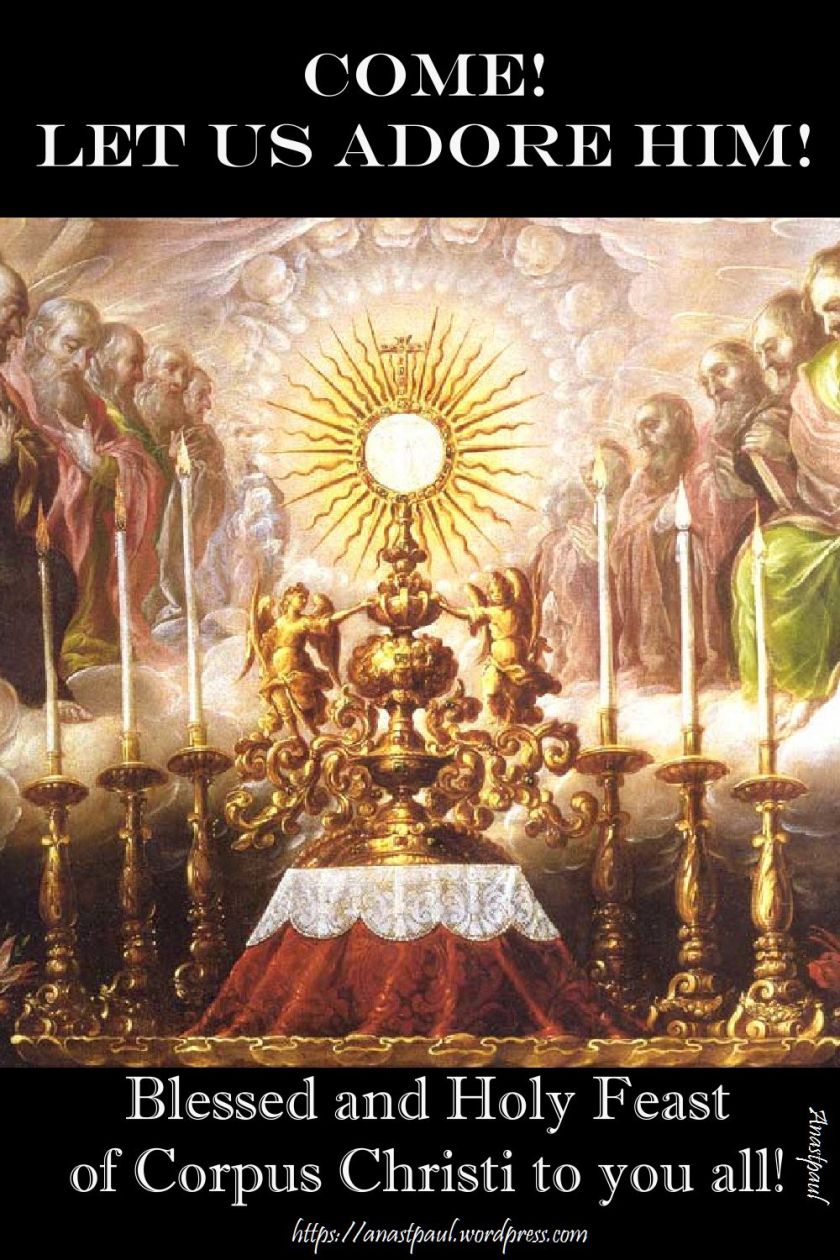
come let us adore him- 18 june 2017

“The solemnity of Corpus Christi originated within a very precise cultural and historical context.   Its aim was to proclaim openly the faith of the People of God in Jesus Christ’s real, living presence in the Blessed Sacrament of the Eucharist.”
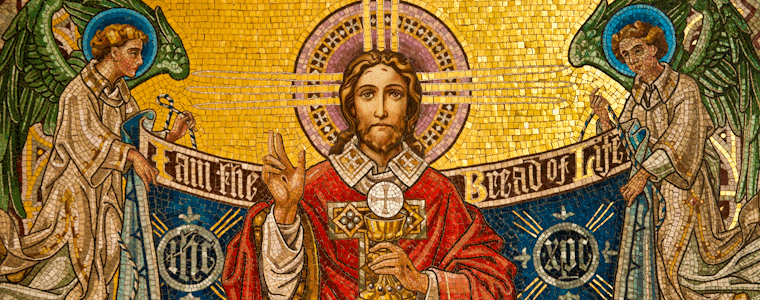
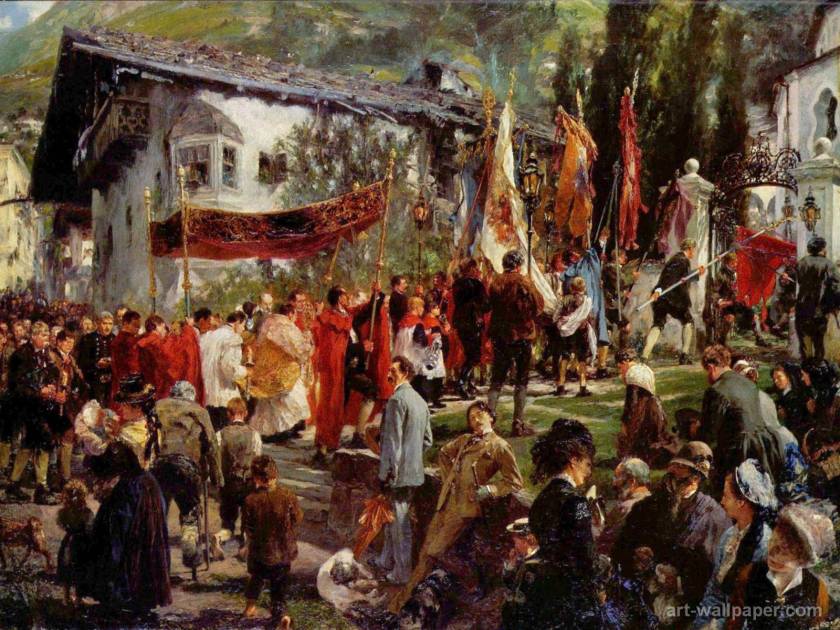
CC_homeCorpusChristiProcession

Pope Benedict XVI explains the history of this feast, which dates back to the 13th century, as follows:

St Juliana of Cornillon had a vision which “presented the moon in its full splendour, crossed diametrically by a dark stripe.   The Lord made her understand the meaning of what had appeared to her.   The moon symbolised the life of the Church on earth, the opaque line, on the other hand, represented the absence of a liturgical feast (…) in which believers would be able to adore the Eucharist so as to increase in faith, to advance in the practice of the virtues and to make reparation for offences to the Most Holy Sacrament. (…)

Jacques Pantaléon of Troyes was also won over to the good cause of the Feast of Corpus Christi during his ministry as Archdeacon in Lièges.   It was he who, having become Pope with the name of Urban IV in 1264, instituted the Solemnity of Corpus Christi on the Thursday after Pentecost as a holiday of obligation for the universal Church.

Until the end of the world

Detail of the reliquary containing the corporal with traces of the Eucharistic miracle that occurred in Bolsena in 1263. It is kept in the Cathedral of Orvieto, Italy.

Detail of the reliquary containing the corporal with traces of the Eucharistic miracle that occurred in Bolsena in 1263. It is kept in the Cathedral of Orvieto, Italy.

In the Bull of its institution, entitled Transiturus de hoc mundo, (11 Aug. 1264), Pope Urban even referred discreetly to Juliana’s mystical experiences, corroborating their authenticity.   He wrote: “Although the Eucharist is celebrated solemnly every day, we deem it fitting that at least once a year it be celebrated with greater honour and a solemn commemoration.

“Indeed we grasp the other things we commemorate with our spirit and our mind but this does not mean that we obtain their real presence.   On the contrary, in this sacramental commemoration of Christ, even though in a different form, Jesus Christ is present with us in his own substance.   While he was about to ascend into Heaven he said ‘And lo, I am with you always, to the close of the age’ (Matthew 28:20).”
The Pontiff made a point of setting an example by celebrating the solemnity of Corpus Christi in Orvieto, the town where he was then residing.   Indeed, he ordered that the famous Corporal with the traces of the Eucharistic miracle which had occurred in Bolsena the previous year, 1263, be kept in Orvieto Cathedral — where it still is today.

While a priest was consecrating the bread and the wine he was overcome by strong doubts about the Real Presence of the Body and Blood of Christ in the sacrament of the Eucharist.   A few drops of blood began miraculously to ooze from the consecrated Host, thereby confirming what our faith professes.

Texts that move the heart

Urban IV asked one of the greatest theologians of history, St Thomas Aquinas — who at that time was accompanying the Pope and was in Orvieto — to compose the texts of the Liturgical Office for this great feast.   They are masterpieces, still in use in the Church today, in which theology and poetry are fused.   These texts pluck at the heartstrings in an expression of praise and gratitude to the Most Holy Sacrament, while the mind, penetrating the mystery with wonder, recognizes in the Eucharist the Living and Real Presence of Jesus, of His Sacrifice of love that reconciles us with the Father and gives us salvation.

In the words of St. Thomas:

“How inestimable a dignity, beloved brethren, divine bounty has bestowed upon us Christians from the treasury of its infinite goodness!   For there neither is nor ever has been a people to whom the gods were so nigh as our Lord and God is nigh unto us.

“Desirous that we be made partakers of His divinity, the only-begotten Son of God has taken to Himself our nature so that having become man, He would be enabled to make men gods.  Whatever He assumed of our nature He wrought unto our salvation. For on the altar of the Cross He immolated to the Father His own Body as victim for our reconciliation and shed His blood both for our ransom and for our regeneration. Moreover, in order that a remembrance of so great benefits may always be with us, He has left us His Body as food and His Blood as drink under appearances of bread and wine.

“O banquet most precious!   O banquet most admirable!   O banquet overflowing with every spiritual delicacy!   Can anything be more excellent than this repast, in which not the flesh of goats and heifers, as of old, but Christ the true God is given us for nourishment?   What more wondrous than this holy sacrament! In it bread and wine are changed substantially, and under the appearance of a little bread and wine is had Christ Jesus, God and perfect Man.   In this sacrament sins are purged away, virtues are increased, the soul is satiated with an abundance of every spiritual gift.   No other sacrament is so beneficial.   Since it was instituted unto the salvation of all, it is offered by Holy Church for the living and for the dead, that all may share in its treasures.

“My dearly beloved, is it not beyond human power to express the ineffable delicacy of this sacrament in which spiritual sweetness is tasted in its very source, in which is brought to mind the remembrance of that all-excelling charity which Christ showed in His sacred passion? Surely it was to impress more profoundly upon the hearts of the faithful the immensity of this charity that our loving Savior instituted this sacrament at the last supper when, having celebrated the Pasch with His disciples.   He was about to leave the world and return to the Father.   It was to serve as an unending remembrance of His passion, as the fulfillment of ancient types — this the greatest of His miracles.   To those who sorrow over His departure He has given a unique solace.”

“Eucharistic springtime”

I would like to affirm with joy that today there is a “Eucharistic springtime” in the Church.   How many people pause in silence before the Tabernacle to engage in a loving conversation with Jesus!   It is comforting to know that many groups of young people have rediscovered the beauty of praying in adoration before the Most Blessed Sacrament.
John Paul II said in his Encyclical Ecclesia de Eucharistia: “In many places, adoration of the Blessed Sacrament is also an important daily practice and becomes an inexhaustible source of holiness. The devout participation of the faithful in the Eucharistic procession on the Solemnity of the Body and Blood of Christ is a grace from the Lord which yearly brings joy to those who take part in it. Other positive signs of Eucharistic faith and love might also be mentioned” (no. 10).

In remembering St Juliana of Cornillon let us also renew our faith in the Real Presence of Christ in the Eucharist.   As we are taught by the Compendium of the Catechism of the Catholic Church, “Jesus Christ is present in the Eucharist in a unique and incomparable way.   He is present in a true, real and substantial way, with his Body and his Blood, with his Soul and his Divinity.   In the Eucharist, therefore, there is present in a sacramental way, that is, under the Eucharistic Species of bread and wine, Christ whole and entire, God and Man” (no. 282).

Dear friends, fidelity to the encounter with Christ in the Eucharist in Holy Mass on Sunday is essential for the journey of faith but let us also seek to pay frequent visits to the Lord present in the Tabernacle!   In gazing in adoration at the consecrated Host, we discover the gift of God’s love, we discover Jesus’ Passion and Cross and likewise his Resurrection.

Source of joy
It is precisely through our gazing in adoration that the Lord draws us towards Him into His mystery in order to transform us as He transforms the bread and the wine.

The Saints never failed to find strength, consolation and joy in the Eucharistic encounter. Let us repeat before the Lord present in the Most Blessed Sacrament the words of the Eucharistic hymn Adoro te devote, “Devoutly I adore Thee: Make me believe ever more in you, Draw me deeply into faith, into Your hope, into Your love”.

BENEDICT XVI, General Audience, November 17, 2010
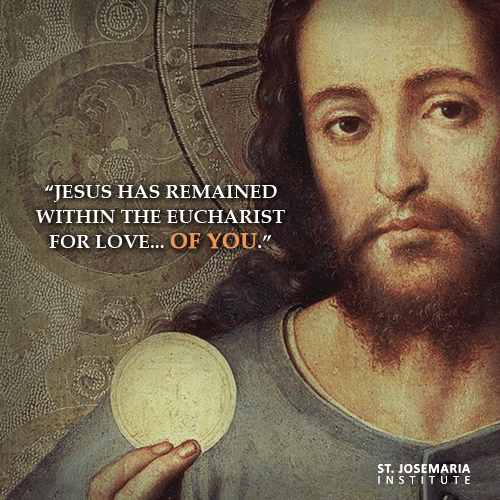
corpus christi 3

Posted in FEASTS and SOLEMNITIES, SAINT of the DAY

Saints and Feasts – 18 June

The Solemnity of Corpus Christi (Most countries today 2017)

St Abraham of Clermont
St Alena of Dilbeek
St Amandus of Bordeaux
St Arcontius of Brioude
St Athenogenes of Pontus
St Calogero of Sicily
St Calogerus of Fragalata
St Calogerus the Anchorite
St Colman mac Mici
St Cyriacus of Malaga
St Demetrius of Fragalata
St Edith of Aylesbury
St Elizabeth of Schonau
St Elpidius of Brioude
St Equizio of Telese
St Erasmo
St Etherius of Nicomedia
Bl Euphemia of Altenmünster
St Fortunatus the Philosopher
St Gerland of Caltagirone
St Gregory Barbarigo
St Gregory of Fragalata
St Guy of Baume
St Jerome of Vallumbrosa
St Marcellian
St Marina of Alexandria
St Marina of Bithynia
Bl Marina of Spoleto
St Mark
Bl Osanna Andreasi
St Osanna of Northumberland
St Osmanna of Jouarre
St Paula of Malaga
Bl Peter Sanchez

Hermits of Karden: A father (Felicio) and his two sons (Simplicio and Potentino)who became pilgrim to various European holy places and then hermits at Karden (modern Treis-Karden, Germany). (Born in Aquitaine (in modern France) Their relics transferred to places in the Eifel region of western Germany at some point prior to 930. They were canonised on 12 August 1908 by Pope Pius X (cultus confirmation)


Martyrs of Ravenna – 4 saints: A group of four Christians martyred together. We have no details but their names – Crispin, Cruciatus, Emilius and Felix. They were martyred in Ravenna, Italy, date unknown.

Martyrs of Rome – 3 saints: Three Christians martyred together . We have no details but their names – Cyriacus, Paul and Thomas. In Rome, Italy, date unknown.

Martyrs of Tripoli – 3 saints: Three imperial Roman soldiers, at last two of them recent converts, who were imprisoned, tortured and executed for their faith. Martyrs – Hypatius, Leontius and Theodulus. They were Greek born and they died c135 at Tripoli, Phoenicia (in modern Lebanon).

Posted in MORNING Prayers, SAINT of the DAY

Thought for the Day – 17 June

Thought for the Day – 17 June

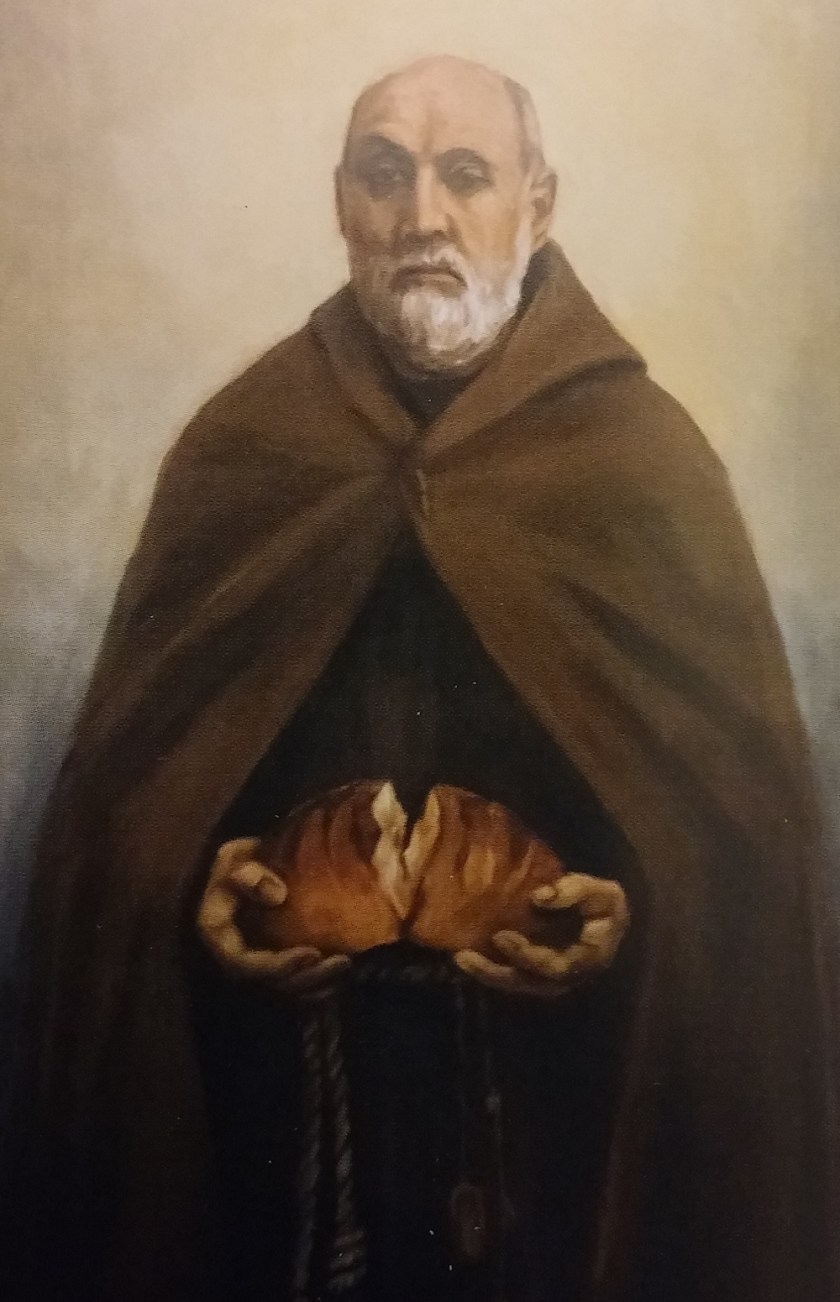
From his installation of showers for homeless Romans at the Vatican to his spontaneous meetings with the poor, Pope Francis has beautifully shown that the Church has a “preferential option for the poor,”.    The life and work of St Albert Chmielowski, likewise, reminds us that a particular vocation of the Christian is to love the poor, marginalised, weak and those with disabilities.   In today’s self-centred age, when professional success is seen as the greatest good and money is the driving force of our lives, St. Albert Chmielowski — who gave up the life of a celebrity painter to serve Christ by helping the poor — challenges us to ask if we focus too much on worldly goals and ignore life’s true meaning.   “But seek first the kingdom [of God] and his righteousness,* and all these things will be given you besides.” (Matthew 6:33).

St Albert Chmielowski, pray for us!

st albert chmielowski pray for us . 2.


Posted in MORNING Prayers, NOVENAS, PRAYERS of the SAINTS, SACRED and IMMACULATE HEARTS

NOVENA in honour of the SACRED HEART of JESUS – DAY FOUR – 17 JUNE

NOVENA in honour of the SACRED HEART of JESUS – DAY FOUR – 17 JUNE

By St Alphonsus Liguori
(1696-1787) Most Zealous Doctor
Published in 1758 from THE HOLY EUCHARIST

MEDITATION IV.
The Sorrowful Heart of Jesus.

It is impossible to consider how afflicted the heart of Jesus was for love of us and not to pity Him.   He Himself tells us that His heart was overwhelmed with such such sorrow, that this alone would have sufficed to take His life away and to make Him die of pure grief, if the virtue of His Divinity had not, by a miracle, prevented His death:  My soul is sorrowful even unto death. [Mark xiv. 34]

The principal sorrow which afflicted the heart of Jesus so much was not the sight of the torments and infamy which men were preparing for Him but the sight of their ingratitude towards.   His immense love.   He distinctly foresaw all the sins which we should commit after all His sufferings and such a bitter and ignominious death.   He foresaw, especially, the horrible insults which men would offer to His adorable heart, Which He has left us in the Most Holy Sacrament as a proof of His affection.   O my God, what affronts has not Jesus Christ received from men in this Sacrament of love?   One has trampled Him under foot, another has thrown Him into the gutters, others have availed themselves of Him to pay homage to the devil!

And yet the sight of all these insults did not prevent Him from leaving us this great pledge of His love.   He has a sovereign hatred of sin;  but still it seems as if His love towards us had overcome the hatred He bore to sin, since He was content to permit these sacrileges, rather than to deprive the souls that love Him of this Divine food.   Shall not all this suffice to make us love a heart that has loved us so much?

Has not Jesus Christ done enough to deserve our love?   Ungrateful that we are, shall we still leave Jesus forsaken on the altar, as the majority of men do?   And shall we not unite ourselves to those few souls who acknowledge Him and melt with love more even than the torches melt away which burn round the ciborium?   The heart of Jesus remains there, burning with love for us;  and shall we not, in His Presence, burn with love for Jesus?

DAY FOUR - 17 JUNE - SACRED HEART NOVENA

LET US PRAY – DAY FOUR

My adorable and dearest Jesus,
behold at Your feet one who has caused
so much sorrow to Your amiable Heart.
O my God, how could I grieve this Heart,
Which has loved me so much
and has spared nothing to make Itself loved by me?
But console Yourself, I will say, O my Saviour,
for my heart having been wounded, through Your grace,
with Your most holy love, feels now so much regret
for the offences I have committed against You,
that it would die of sorrow.
Oh; who will give me, my Jesus,
that sorrow for my sins which You felt for them in Your life!
Eternal Father, I offer You the sorrow
and abhorrence Your Son felt for my sins;
and, for His sake, I beseech You to give me so great a sorrow
for the offences I have committed against You,
that I may lead an afflicted and sorrowful life
at the thought of having once despised Your love.
And You, O my Jesus, do You give me, from this day forth,
such a horror of sin, that I may abhor even the lightest faults,
considering that they displease You,
Who does not deserve to be offended much or little,
but deserves an infinite love.
My beloved Lord, I now detest everything that displeases You
and in future I will love only You
and that which You love.
Oh, help me, give me the strength,
give me the grace to invoke Youo constantly, O my Jesus
and always to repeat to You this petition:

My Jesus, give me Your love. give me Your love, give me Your love.

And you, most holy Mary,
obtain for me the grace to pray to you continually
and to say to you, O my Mother, make me love Jesus Christ.
Amen

Posted in CATHOLIC DEVOTIONS of the Month, EUCHARISTIC Adoration, MORNING Prayers, QUOTES of the SAINTS, SACRED and IMMACULATE HEARTS

Quote of the Day – 17 June

Quote of the Day – 17 June

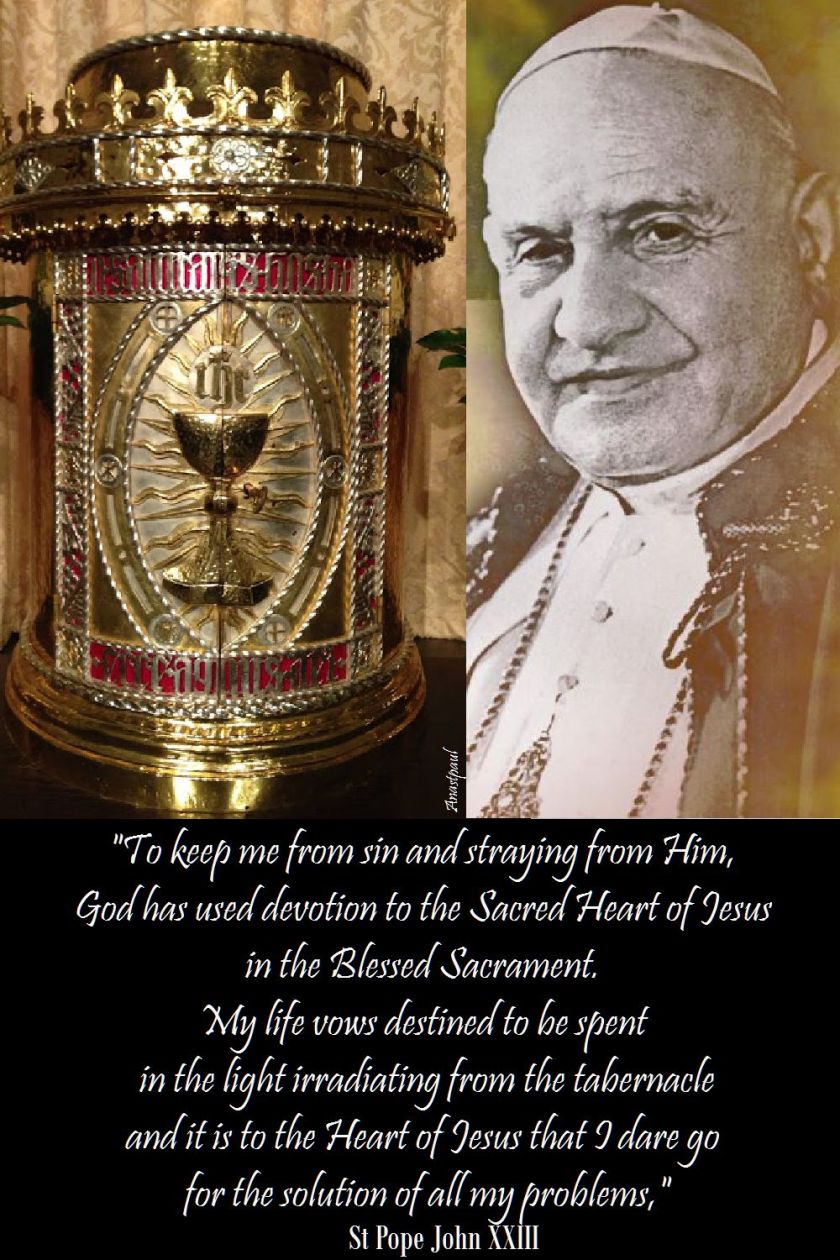
“To keep me from sin and straying from Him,
God has used devotion to the Sacred Heart of Jesus
in the Blessed Sacrament.
My life vows destined to be spent
in the light irradiating from the tabernacle
and it is to the Heart of Jesus that I dare go
for the solution of all my problems,”

– Pope John XXIII

to keep me from sin - st pope john xxIII

Posted in MORNING Prayers, QUOTES of the SAINTS, SAINT of the DAY, The WORD

One Minute Reflection – 17 June

One Minute Reflection – 17 June

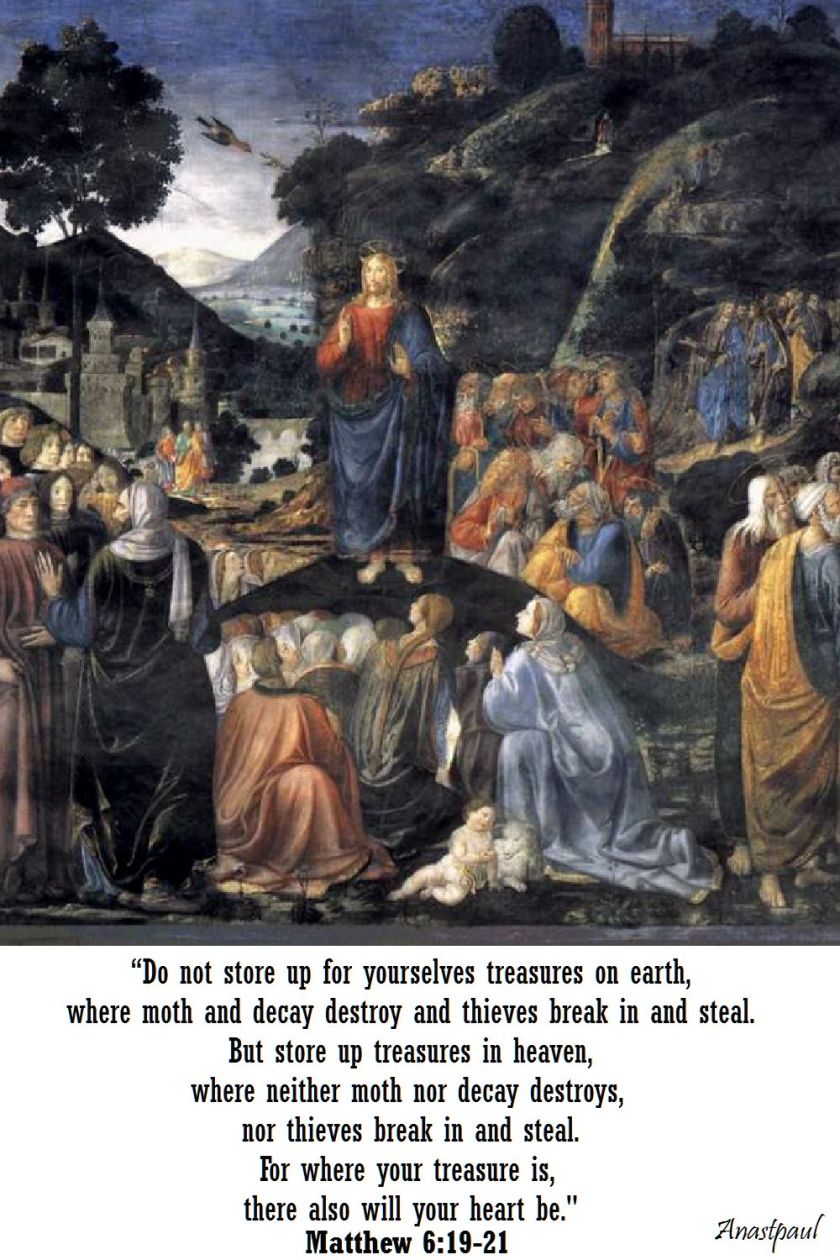
“Do not store up for yourselves
treasures on earth,
where moth and decay destroy
and thieves break in and steal.
But store up treasures in heaven,
where neither moth nor decay destroys,
nor thieves break in and steal.
For where your treasure is,
there also will your heart be.”….Matthew 6:19-21

matthew 6 19-21

REFLECTION – Reflecting on his own priestly vocation, Pope John Paul II wrote in 1996 that Brother Albert had played a role in its formation …..“because I found in him a real spiritual support and example in leaving behind the world of art, literature and the theater and in making the radical choice of a vocation to the charity” ………..St John Paul speaking of St Albert Chmielowski (Gift and Mystery: On the Fiftieth Anniversary of My Priestly Ordination)

PRAYER – Father of goodness, make me realise and understand that each and all of my brothers represent the face of Jesus and that He is the only way to You for us all!  Help me to extend all of myself to my neighbour in loving imitation of Your Son.   St Albert Chmielowski, pray for us that we too may be a light in the darkness of this world, to all who call out to us in their pain and suffering.   And please pray for us! Amen

st albert chmielowski pray for us

Posted in CATHOLIC DEVOTIONS of the Month, MORNING Prayers, PRAYERS of the SAINTS, SACRED and IMMACULATE HEARTS

Our Morning Offering – 17 June

Our Morning Offering – 17 June

Be my Strength, O Sacred Heart!
By St Margaret Mary Alacoque

O Sacred Heart of Jesus,
I fly to You,
I unite myself with You,
I enclose myself in You!
Receive my call for help, O my Saviour,
as a sign of my horror of all within me
contrary to Your holy love.
Let me die rather a thousand times,
than consent to sin against You!
Be my strength, O God –
defend me,
protect me.
I am Yours and desire forever to be Yours!
Amen

be my strength, o sacred heart - st margaret mary alacoque


Posted in SAINT of the DAY

Saint of the Day – 17 June – St Albert Chmielowski T.O.S.F. (The 19th-century Polish saint who was influenced by St. Francis of Assisi later influenced Pope St. John Paul II.)

Saint of the Day – 17 June – St Albert Chmielowski T.O.S.F.  (The 19th-century Polish saint who was influenced by St. Francis of Assisi later influenced Pope St. John Paul II.)   (20 August 1845 at Igoalomia (Aigolonija), Poland as Adam Hilary Bernard Chmielowski – 25 December 1916 at Krakow, Poland, of natural causes).   Canonised on 12 November 1989 by Pope John Paul II at Saint Peter’s Square, Rome.   Professed religious of the Third Order of St Francis and the founder of both the Servants of the Poor and Sisters Servants of the Poor.  Also known as:  Adam Chmielowski, Adam Hilary Bernard Chmielowski, Brat Albert, Brother Albert, Brother of Our Lord, Brother of Our God, Our God’s Brother.   Patronages – Painters, Servants of the Poor, Sisters Servants of the Poor, Franciscan tertiaries, Soldiers
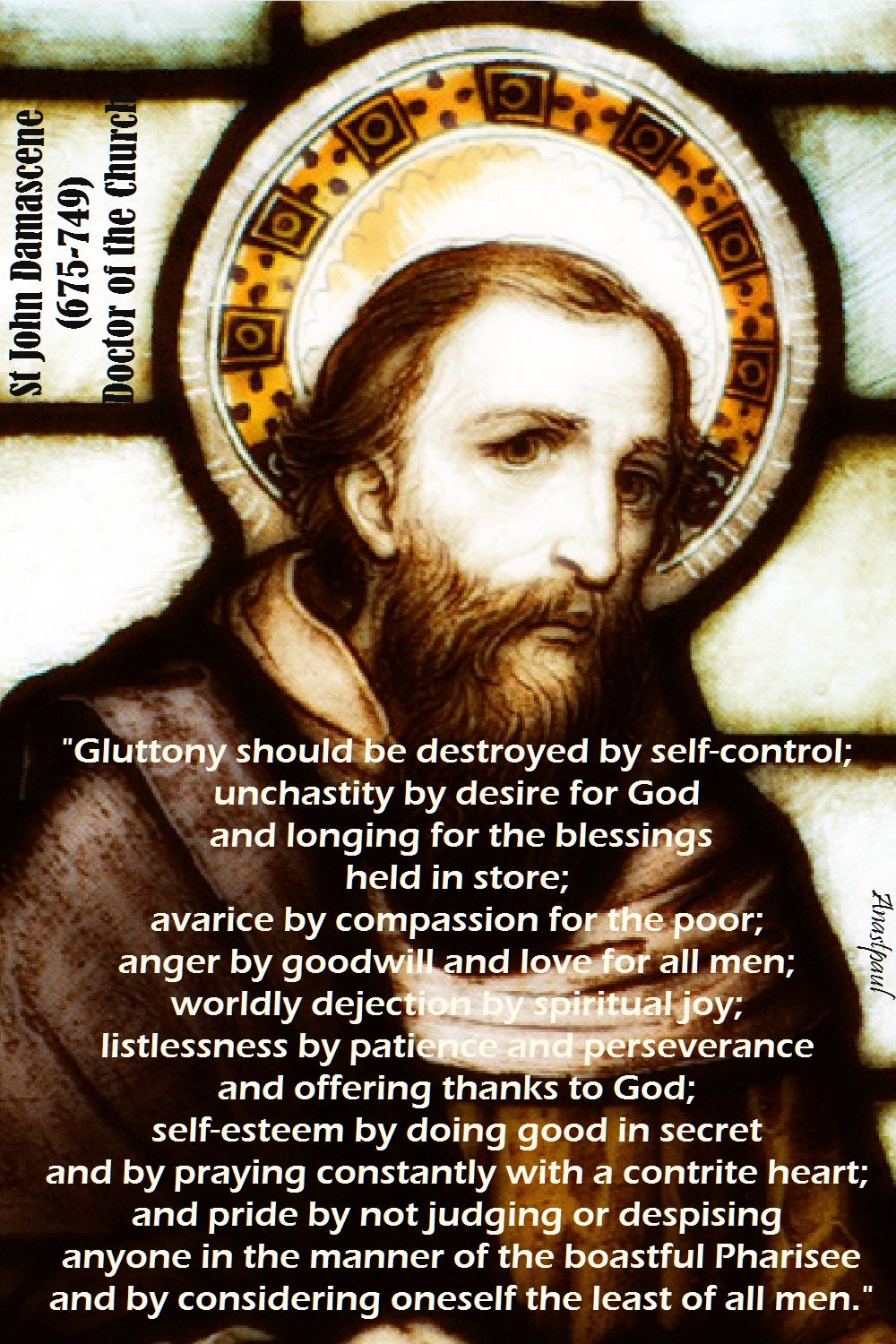
Volunteers, Harvests, Travellers, Puławy, Diocese of Sosnowiec.   Attributes – priest’s attire or Franciscan robe.

SAINT ALBERT CHMIELOWSKI 5

Adam Chmielowski was born into an aristocratic family in Igołomia, a village outside of Krakow, in 1845.   Then, Poland formally didn’t exist – the once-mighty Polish state was partitioned between Austria, Prussia and Russia in 1772, 1773 and 1795.   Yet the Polish people refused to accept this and many rebelled against the oppressors.

One such upheaval was the January Insurrection of 1863-1864, directed against the Russian Empire, in which the Poles fought bravely yet were brutally suppressed.   Not yet 18, Adam took part.   During one battle, a Russian grenade killed Adam’s horse and badly damaged his leg, which was amputated.   Adam, however, didn’t take pity on himself; he stoically taught himself to function with a wooden limb and offered up the dismemberment to God for the cause of Polish independence.

After the uprising, Adam decided to pursue a career in painting and was accepted at the prestigious Academy of Fine Arts in Munich, where he studied with many famous Polish painters.   Upon returning to Poland, Adam worked as a painter 1870-1885.   In total, he produced 61 paintings.   He quickly became one of the most feted Polish artists, living briefly in Warsaw and then in artsy, intellectual Krakow.   Adam’s social circle consisted of the best-known Polish artists, actors and writers.

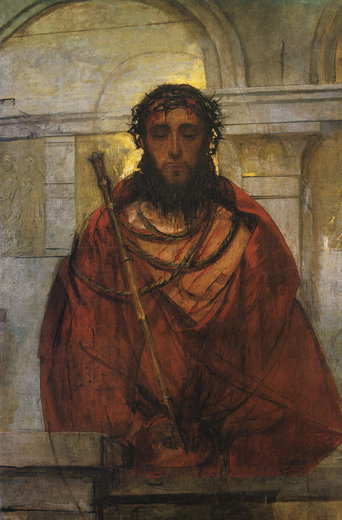
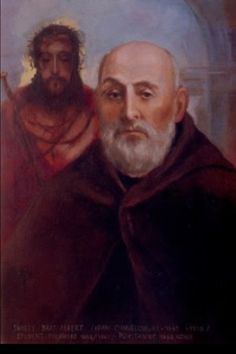
Yet Adam Chmielowski wasn’t happy with this glitzy life of celebrity.   At one point, he was even hospitalized for depression.   Adam remained a devout Catholic and his paintings — including his masterpiece, the unfinished Ecce Homo, which depicts the mocked Christ — often dealt with religious themes.

rsz_ecce_homo_courtesy_of_the_albertine_nuns_at_st_albert_shrine

He knew that he needed to grow closer to God.   Adam briefly thought of becoming a Jesuit but his enthusiasm fizzled after entering the novitiate.   He kept asking God what he wanted of him.

Nineteenth-century Krakow was a city of social inequality.   In Adam’s day, more than a fifth of its population consisted of the unemployed, who were frequently homeless.   The filthy, lice-infested city homeless shelter had terrible sanitary conditions.   The Church in Krakow, especially the Vincentians and other orders, aided the poor.   However, this was insufficient.   At this time, Adam became increasingly attracted to St. Francis of Assisi.   This medieval champion of the poor’s ministry resonated with Krakow’s socioeconomic problems.   Eventually, Adam welcomed the homeless into his own apartment.   In 1887, Adam Chmielowski became a Third Order Franciscan and took vows at the hands of Krakow Archbishop Cardinal Albin Dunajewski, taking the name Albert.   He began to call himself “Brother Albert” and wore a gray habit.

The following year, Brother Albert realized that to bring Krakow’s poor lasting change, the city’s homeless shelter would need reform.   He negotiated an agreement with the city government, making him the institution’s caretaker.   To finance the improvements, Brother Albert auctioned off his paintings.   In addition to improving the material conditions, he banned alcohol in the shelter.   He asked the poor to work (making exceptions for the elderly and those with disabilities), teaching them practical skills and lectured on the Catechism and the Gospels.

Eventually, Brother Albert founded two religious orders, the Albertine Brothers and Sisters, devoted to the poor.   They set up homes for the poor, sick and elderly in 20 Polish cities.   Brother Albert worked to help as many poor persons as possible until his death in 1916, amidst World War I.   During that bloody conflict, he sent Albertine Brothers and Sisters to the trenches to aid war invalids.   After his death, thousands of Kracovians visited his tomb, convinced that he died a saint.

Today, the Albertines run homes for the poor and sick all over the world.   Visitors to Krakow can make a pilgrimage to the Albertine-run Ecce Homo Shrine, which features a museum devoted to St. Albert and the famous titular painting.

St. Albert Chmielowski greatly inspired St. John Paul II.   In 1938, when Karol Wojtyła started his studies in Polish literature at the Jagiellonian University, he was a young, promising actor, playwright and poet.   Yet his calling to serve God and the Church was stronger than his love for the arts.   In this, he found inspiration in his fellow artist St. Albert Chmielowski.

ALBERT

In 1949, the young Father Karol Wojtyła wrote a play about him titled Our God’s Brother.   A Kracovian urban legend had it that Brother Albert met Vladimir Lenin (who lived in Krakow after being expelled from Russia) and debated him on how to best alleviate poverty.   The play features imagined dialogues between the saint and the communist revolutionary (called “the Stranger”), powerfully showing the difference between the Christian and Marxist approach:   The former argues that poverty can be overcome by seeing God’s image in the individual, while the latter reduces all to class struggle and argues that the rich must be violently overthrown.   After his election as pope, John Paul beatified St. Albert in 1983 and canonised him in 1989.

St Albert Chmielowski, Pray for us!


Posted in SAINT of the DAY

Saints and Feasts – 17 June

Maria in the Forest: Also known as:
• Holy Mary in the Forest
• Maria im Walde
The Apparitions occuredin a wooded area near Dolina, Grafenstein, Carinthia, Austria on the 17, 18 and 19 June 1849 to three young shepherdesses in which Mary appeared as the Immaculate Conception.

St Adolph of Utrecht
St Agrippinus of Como
St Albert Chmielowski – https://www.youtube.com/watch?v=0B-GU8YKpD8  and BROTHER ALBERT – City of Saints – https://vimeo.com/154707109
St Antidius of Besançon
Bl Arnold of Foligno
St Avitus of Perche
St Blasto of Rome
St Botolph of Ikanhoe
St Briavel of Gloucestershire
St David of Bourges
St Dignamerita of Brescia
St Diogenes of Rome
St Emily de Vialar
St Gundulphus of Bourges
St Herveus of Bretagne
St Himerius of Amelia
St Hypatius of Chalcedon
St Molling of Wexford
St Montanus of Gaeta
St Nectan of Hartland
Bl Paul Burali d’Arezzo
Bl Peter Gambacorta
St Phêrô Ða
Bl Philippe Papon
Bl Pierre-Joseph Cassant
St Prior
St Rambold of Ratisbon
Bl Ranieri Scaccero
St Theresa of Portugal

Martyrs of Apollonia – 7 saints: A group of Christians who fled to a cave near Apollonia, Macedonia to escape persecution for his faith, but were caught and executed. The names we know are – Basil, Ermia, Felix, Innocent, Isaurus, Jeremias and Peregrinus. They were beheaded at Apollonia, Macedonia.

Martyrs of Aquileia – 4 saints: Four Christian martyrs memorialised together. No details about them have survived, not even if they died together – Ciria, Maria, Musca and Valerian. c.100 in Aquileia, Italy.

Martyrs of Chalcedon – 3 saints: Three well-educated Christian men who were sent as ambassadors from King Baltan of Persia to the court of emperor Julian the Apostate to negotiate peace between the two states, and an end of Julian’s persecutions of Christians. Instead of negotiating, Julian imprisoned them, ordered them to make a sacrifice to pagan idols and when they refused, had them executed. Their names were Manuel, Sabel and Ismael. They were beheaded in 362 in Chalcedon (part of modern Istanbul, Turkey) and their bodies burned and no relics survive.

Martyrs of Fez – 4 beati: A group of Mercedarians sent to Fez, Morocco to ransom Christians imprisoned and enslaved by Muslims. For being openly Christian they were imprisoned, tortured, mutilated and executed. Martyrs – Egidio, John, Louis and Paul. They were martyred in Fez, Morocco.

Martyrs of Rome – 262 saints: A group of 262 Christians martyred in the persecutions of Diocletian. In c303 in Rome, Italy. They were buried on the old Via Salaria in Rome.

Martyrs of Venafro – 3 saints: Three Christian lay people, two of them imperial Roman soldiers, who were converts to Christianity and were martyred together in the persecutions of Maximian and Diocletian – Daria, Marcian and Nicander. They were beheaded c.303 in Venafro, Italy. By 313 a basilica had been built over their graves which were re-discovered in 1930. They are patrons of Venafro, Italy.

Posted in MORNING Prayers, NOVENAS, PRAYERS of the SAINTS, SACRED and IMMACULATE HEARTS

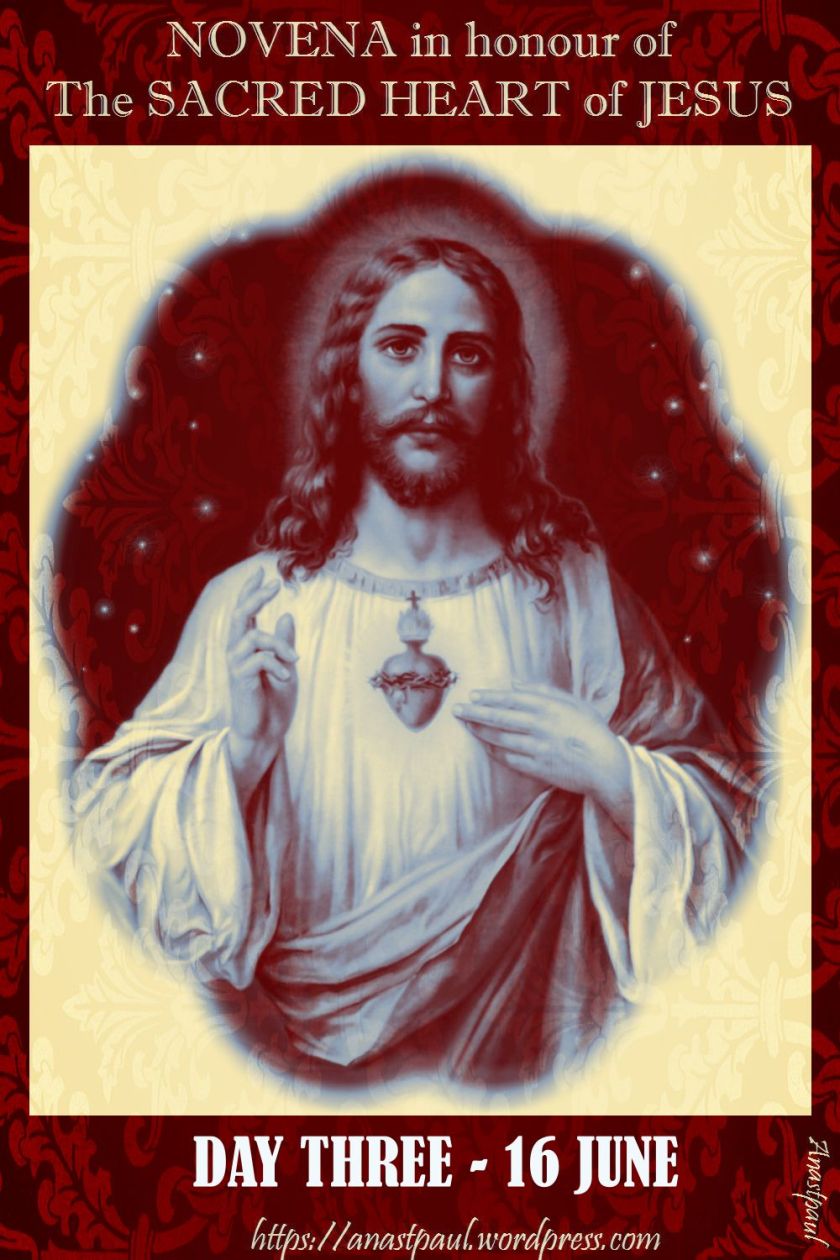
NOVENA in honour of the SACRED HEART of JESUS – DAY THREE – 16 JUNE

NOVENA in honour of the SACRED HEART of JESUS – DAY THREE – 16 JUNE

By St Alphonsus Liguori
(1696-1787) Most Zealous Doctor
Published in 1758 from THE HOLY EUCHARIST

MEDITATION III.
The Heart of Jesus Christ Panting to be Loved.

Jesus has no need of us; He is equally happy, equally rich, equally powerful with or without our love; and yet, as St. Thomas says, [Opusc. 63, c. 7] He loves us so, that He desires our love as much as if man was His God, and His felicity depended on that of man. This filled holy Job with astonishment: What is man that Thou shouldst magnify him or why dost Thou set Thy heart upon him? [Job vii. 17]

What! Can God desire or ask with such eagerness for the love of a worm? It would have been a great favour if God had only permitted us to love Him. If a vassal were to say to his king, “Sire, I love you,” he would be considered impertinent. But what would one say if the king were to tell his vassal, “I desire you to love me”? The princes of the earth do not humble themselves to this; but Jesus, Who is the King of Heaven, is He Who with so much earnestness demands our love: Love the Lord thy God with thy whole heart. [Matt. xxii. 37] So pressingly does He ask for our heart: My son, give Me thy heart. [Prov. xxiii. 26] And if He is driven from a soul, He does not depart but He stands outside of the door of the heart and He calls and knocks to be let in: I stand at the gate and knock. [Apoc. iii. 20] And He beseeches her to open to Him, calling her sister and spouse: Open to Me, My sister, My love. [Cant. v. 2] In short, He takes a delight in being loved by us, and is quite consoled when a soul says to Him, and repeats often, “My God, my God, I love Thee.”

All this is the effect of the great love He bears us. He who loves necessarily desires to be loved. The heart requires the heart; love seeks love: “Why does God love, but that He might be loved Himself,” [In Cant. s. 83] said St. Bernard; and God Himself first said, What doth the Lord thy God require of thee, but that thou fear the Lord thy God, . . . and love Him? [Deut. x. 12] Therefore He tells us that He is that Shepherd Who, having found the lost sheep, calls all the others to rejoice with Him: Rejoice with Me, because I have found My sheep that was lost. [Luke xv. 6] He tells us that He is that Father Who, when His lost son returns and throws himself at His feet, not only forgives him, but embraces him tenderly. He tells us that he that loves Him not is condemned to death: He that loveth not abideth in death. [l John iii. 14] And, on the contrary, that He takes him that loves Him and keeps possession of him: He that abideth in charity, abideth in God, and God in him. John iv. 16] Oh, will not such invitations, such entreaties, such threats, and such promises move us to love God, Who so much desires to be loved by us?

DAY THREE - NOVENA SACRED HEART 16 JUNE

LET US PRAY – DAY THREE

My dearest Redeemer,
I will say to You, with St. Augustine,
You command me to love You
and threaten me with Hell if I do not love You;
but what more dreadful Hell, what greater misfortune,
can happen to me than to be deprived of Your love!
If, therefore, You desire to frighten me,
You should threaten me only that I should live without loving You;
for this threat alone will frighten me more than a thousand hells.
If, in the midst of the flames of Hell, the damned could burn with Your love,
O my God, Hell itself would become a paradise;
and if, on the contrary, the blessed in Heaven could not love You,
Paradise would become hell. Thus St. Augustine expresses himself.

I see, indeed, my dearest Lord,
that I, on account of my sins, did deserve to be forsaken by Your grace
and at the same time condemned to be incapable of loving You;
but still I understand that You continue to command me to love You
and I also feel within me a great desire to love You.
This my desire is a gift of Your grace and it comes from You.
Oh, give me also the strength necessary to put it into execution
and make me, from this day forth, say to You earnestly
and from the bottom of my heart
and to repeat to You always,
“My God, I love You, I love You, I love You.”
You desire my love; I also desire Yours.
Blot out, therefore, from Your remembrance, O my Jesus.
the offences that in past times I have committed against You;
let us love each other henceforth forever.
I will not leave You and You will not leave me.
You will always love me and I will always love You.
My dearest Saviour, in Your merits I place my hope;
oh, make Yourself my beloved forever
and be loved greatly,
by a sinner who has offended You greatly.

O Mary, Immaculate Virgin,
help me and beseech Jesus for me. Amen


Posted in CATHOLIC DEVOTIONS of the Month, CATHOLIC Quotes, EUCHARISTIC Adoration, MORNING Prayers

Thought for the Day – 16 June

Thought for the Day – 16 June

“How consoling it is to think that in the very moment of the Eucharist’s eternal birth I was present to the mind of God and He foreknew the number of times I would allow Him to come to me in Holy Communion;   that, even then, His tender love thankfully appreciated my hospitality, as if not I, a miserable creature of one day but He Himself were to be the favoured beneficiary.

“It was in the beginning . . . ” What, then, will be the duration of His “eucharistic life”?

Christ’s eucharistic life will last till the consummation of the world because until then will men have to eat His flesh to have life everlasting.   When He said to His Apostles: “Behold, I am with you all days, even unto the consummation of the world,” He doubtlessly meant not only His divine and spiritual presence and His moral assistance but also His eucharistic presence.

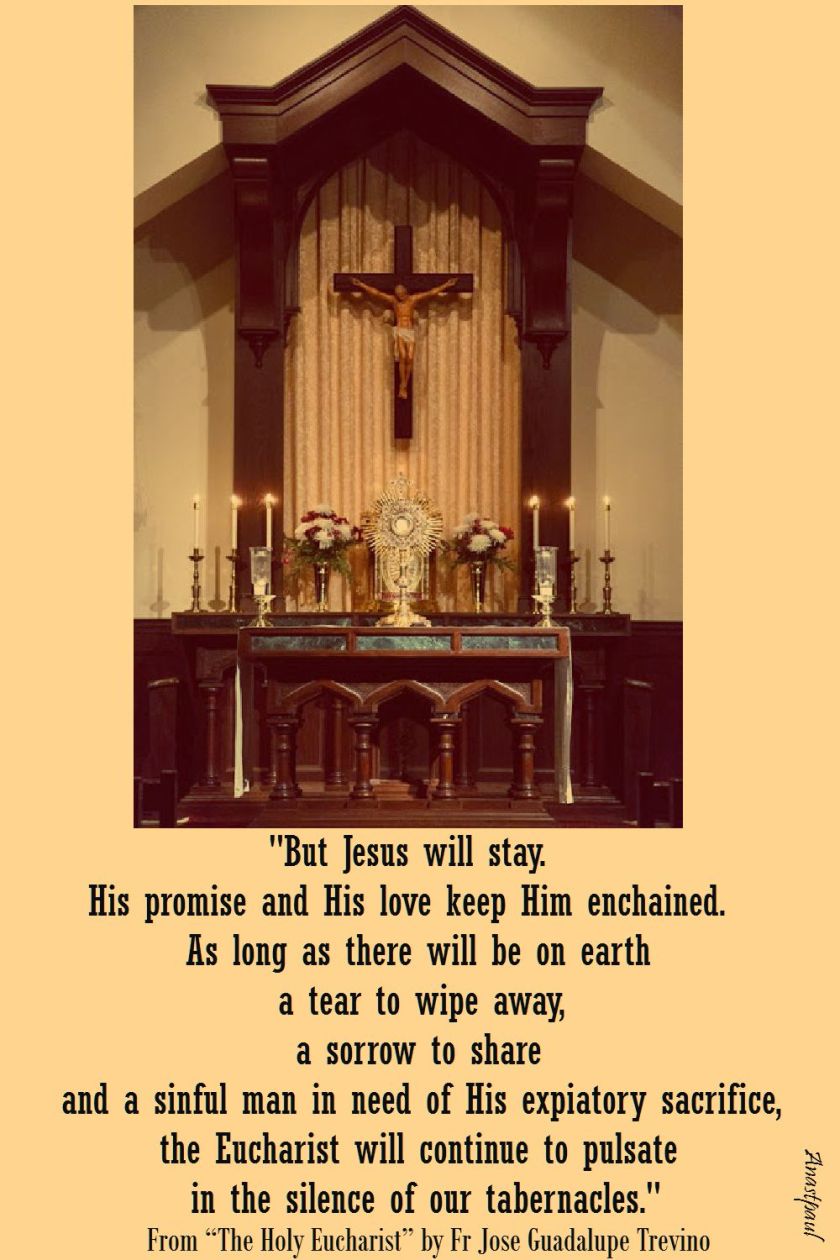
His enemies may refuse Him rights they would not deny even the lowest pariah, imprisoning Him within the narrow limits of His temples;   they may subject Him to the most abominable outrages, thereby making His mystic passion in the Eucharist in some way exterior and visible.   Those who call themselves His friends may multiply the traitor’s kiss, deny Him and His works and abandon Him who showered upon them the tokens of His love.   But Jesus will stay.   His promise and His love keep Him enchained.   As long as there will be on earth a tear to wipe away, a sorrow to share and a sinful man in need of His expiatory sacrifice, the Eucharist will continue to pulsate in the silence of our tabernacles.”

“The Holy Eucharist” by Fr Jose Guadalupe Trevino

but jesus will stay - fr jose guadalupe trevino - the holy eucharist

Posted in EUCHARISTIC Adoration, MORNING Prayers, QUOTES of the SAINTS

Quote of the Day – 16 June

Quote of the Day – 16 June

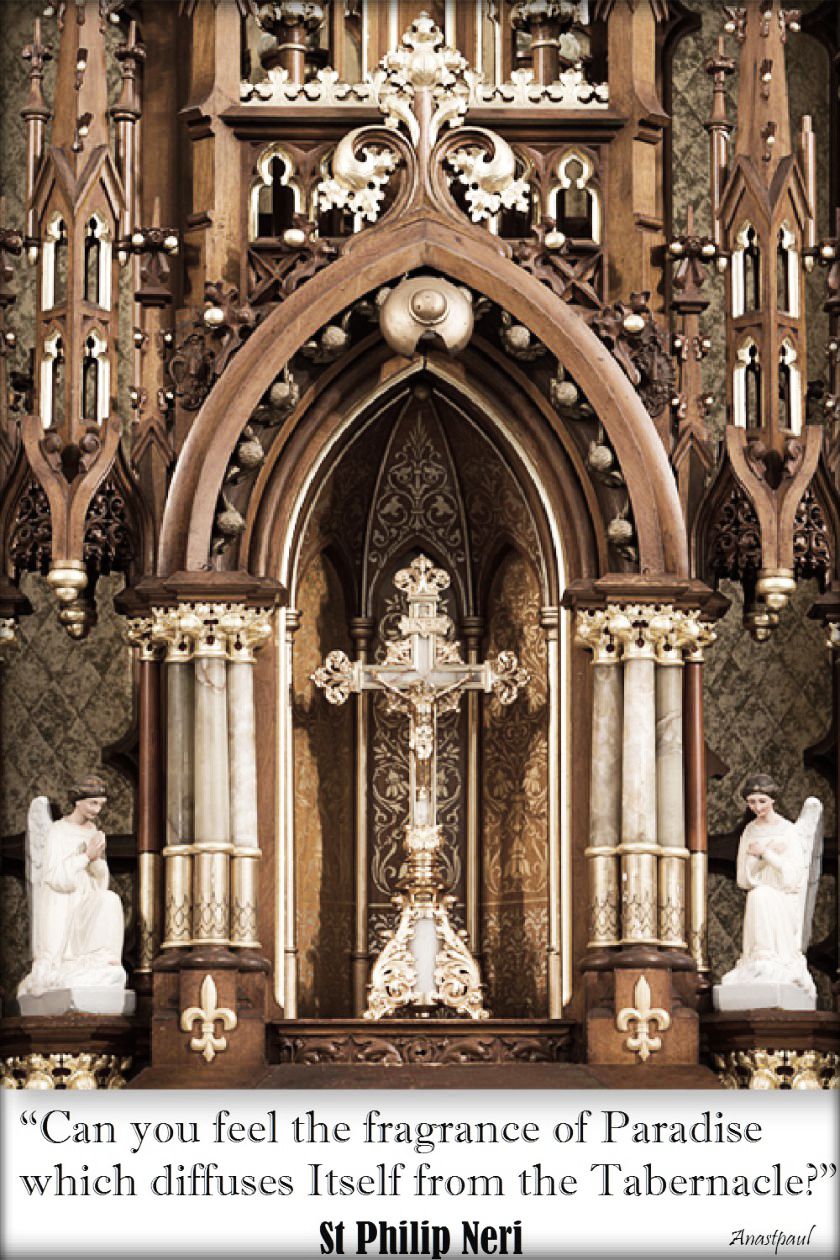
“Can you feel the fragrance of Paradise
which diffuses Itself from the Tabernacle?”

St Philip Neri

e2809ccan-you-feel-the-fragrance-of-paradise-st-philip-neri-16 june 2017-no 2

Posted in CATHOLIC DEVOTIONS of the Month, EUCHARISTIC Adoration, MORNING Prayers, SACRED and IMMACULATE HEARTS, The WORD

One Minute Reflection – 16 June

One Minute Reflection – 16 June

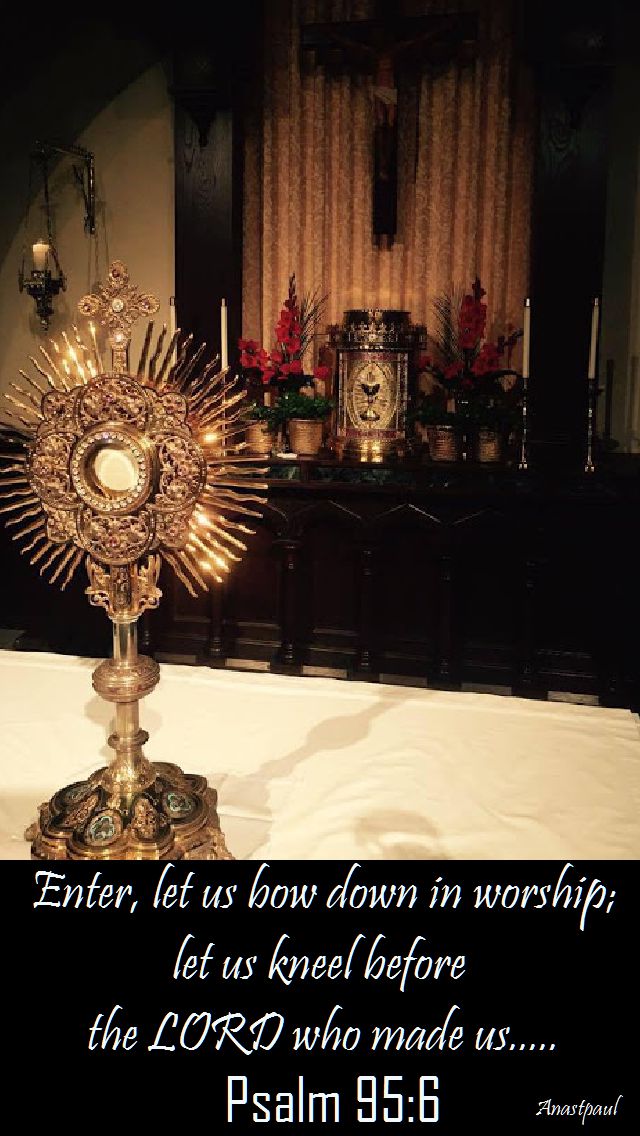
Enter, let us bow down in worship;
let us kneel before the LORD who made us….Psalm 95:6

psalm 95 6

REFLECTION – “The practice of adoration is not difficult.
It is a gentle abiding in My presence,
a resting in the radiance of My Eucharistic Face,
a closeness to My Eucharistic Heart.
Words, though sometimes helpful, are not necessary,
nor are thoughts.
What I seek from one who would adore Me in spirit and in truth
is a heart aflame with love,
a heart content to abide in my presence,
silent and still,
engaged only in the act of loving Me
and of receiving My love.
Though this is not difficult,
it is, all the same,
my own gift
to the soul who asks for it.
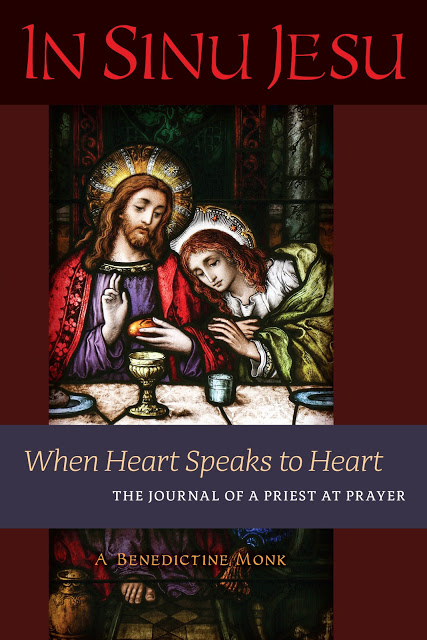
Ask, then, for the gift of adoration.”…………..From In Sinu Iesu, The Journal of a Priest

in-sinu-jesu-cover

PRAYER – Lord Jesus, in all my trials and difficulties, let me have recourse to You through Your Eucharistic and Sacred Heart. Grant me the grace of Adoration and consolation offered by You to all who will abide in You, grant me the grace of of just loving You and through You, finding peace and rest. Give me Yourself dear Lord. Amen

Posted in CATHOLIC DEVOTIONS of the Month, MORNING Prayers, PRAYERS of the SAINTS, SACRED and IMMACULATE HEARTS

Our Morning Offering – 16 June

Our Morning Offering – 16 June

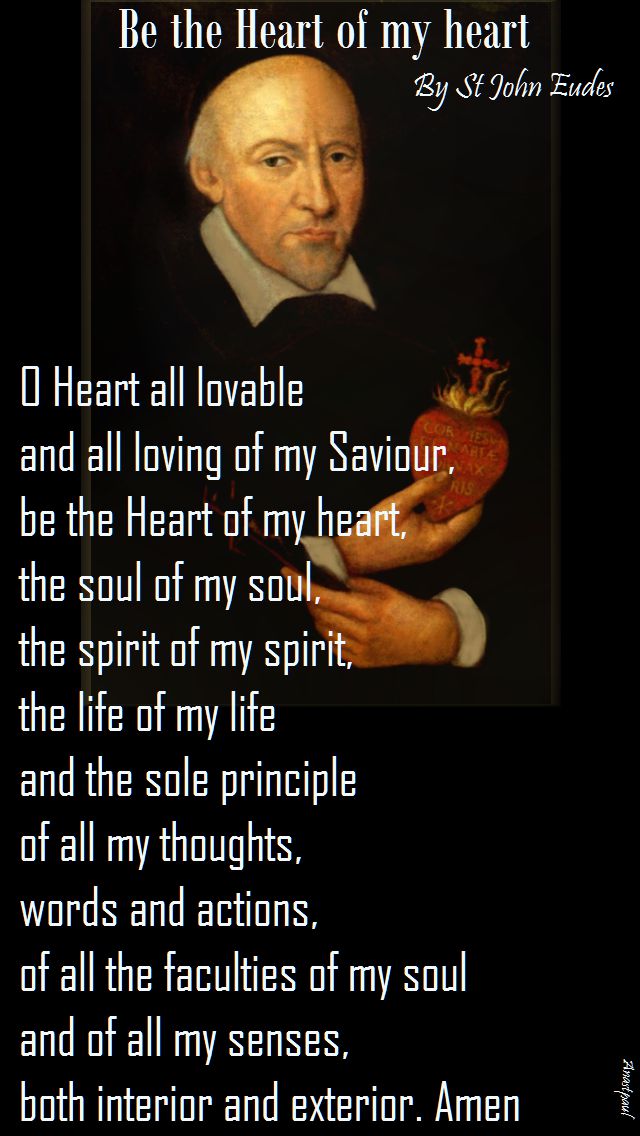
Be the Heart of my heart
By St John Eudes

O Heart all lovable
and all loving of my Saviour,
be the Heart of my heart,
the soul of my soul,
the spirit of my spirit,
the life of my life
and the sole principle of all my thoughts,
words and actions,
of all the faculties of my soul
and of all my senses,
both interior and exterior. Amen

be the heart of my heart

Posted in CATHOLIC DEVOTIONS of the Month, QUOTES of the SAINTS, SACRED and IMMACULATE HEARTS, SAINT of the DAY, Uncategorized

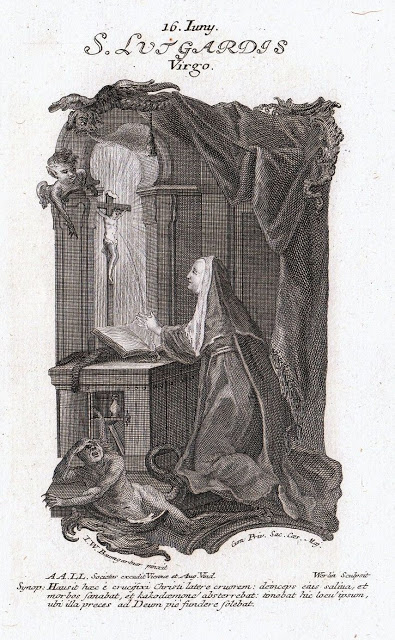
Saint of the Day – 16 June – St Lutgarde of Aywières (1182-1246 –The first known woman stigmatic of the Church and one of the first promoters of devotion to the Sacred Heart

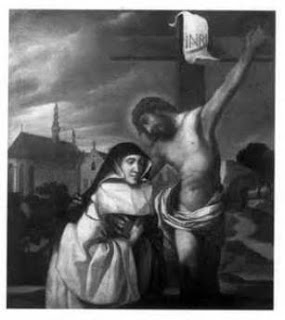
Saint of the Day – 16 June – St Lutgarde of Aywières (1182-1246 –The first known female stigmatic of the Church and one of the first promoters of devotion to the Sacred Heart – Religious, Mystric, Miracle-Worker, Stimatist, Visionary (1182 at Tongres, Limburg, Belgium – 16 June 1246 at Aywieres (modern Awirs), Belgium of natural causes, just as night office began on the Saturday night following Feast of the Holy Trinity)   Her relics were transferred to Ittre, Belgium on 4 December 1796 to avoid destruction in the French Revolution.   Patronages – birth, childbirth, blind people, againts blindness, disabled, handicapped of physically challenged people, Belgium, Flanders, Belgium.   Attributes – • woman with Christ showing her His wounded side, blind Cistercian abbess, Cistercian nun being blinded by the Heart of Jesus, Cistercian to whom Christ extends his hand from the cross, woman in attendance when Christ shows his Heart to the Father

St Lutgarde 5

When Lutgarde was twelve, her parents placed her in the care of the Benedictine sisters at St. Catherine’s monastery near Liège, Belgium.   The convent allowed visitors and young men came to court the beautiful young woman.   Once when an ardent fellow and Lutgarde were talking, Christ appeared to her.   Opening His garment, Christ showed Lutgarde the wound in His side bleeding as if recently opened and He said to her, “Do not seek any longer the caresses of unseemly love. Contemplate here what you should love and why you should love it. Here, I pledge to you are the delights of total purity, which will follow it.”   When the confused young man tried to resume their conversation, Lutgarde chased him off. “Get away from me, you fodder of death,” she said, “for I have been overtaken by another lover.”

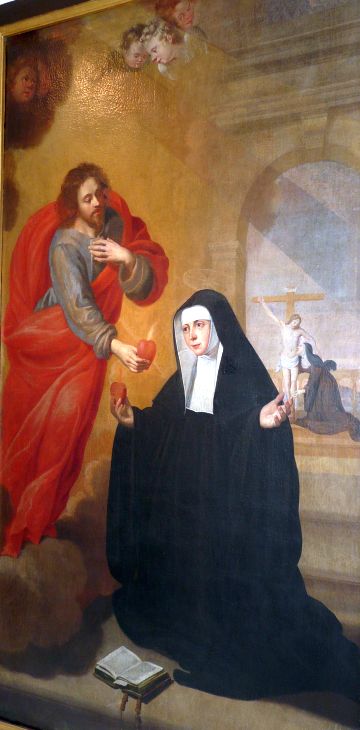
St. Lutgarde made unusually rapid progress in the spiritual life.   She opened herself fully to Christ in prayer and He favoured her with an intimate experience of His presence.   He gave her gifts of healing and of understanding the convent’s Latin prayers.   But she asked him to take them back because both kept her from focusing on loving Him.   Then the Lord said to her, “What do You want?” “I want Your heart,” she said.   “No, rather it is Your heart that I want,” replied the Lord. “So be it, Lord,” said Lutgarde, “so long as Your heart’s love is mingled with mine and I have and hold my heart in You.   For with You as my shield, my heart is secure for all time.”

SANTA LUTGARD - Santa_Lutgarda-Goya

St Lutgarde spent nine years in St. Catherine’s convent and she was elected to be Superioress of the community there.   The year was 1205, when the saint was twenty-three years old.  Far from being flattered or pleased by her elevation to this dignity, Lutgarde regarded it as a disaster.   Indeed, it seems to have moved her to look elsewhere and to seek some other Order.   She thought St. Catherine’s could provide her with sufficient opportunities for living as a contemplative as long as she was an obscure member of the community but not when she took her place at its head.  While taking up her role as Superior, it was natural that her thoughts should turn to the austere Cistercian nuns, commonly known as Trappists, who had by this time, many flourishing convents in the Low Countries.

She asked the advice of a learned preacher of Liege, Jean de Lierre, who urged her to give up her post as prioress and leave the Benedictine Order for the Cistercian convent of Aywieres, (Awirs) which had recently been founded near Liege but had been transferred to a site in Brabant, near the village of Lillois.   She was very reluctant to accept this particular choice because French was spoken in Brabant and she felt it would be unwise to enter a convent where she would not understand the language of her superiors or spiritual directors.   Meanwhile, Christ Himself intervened and spoke the following words to her:  “It is My will that you go to Aywieres, and if you do not go, I will have nothing more to do with you.”
As if this were not enough, Lutgarde was also admonished by a saintly friend, who has since been venerated as St. Christine “the Admirable” who told her to go to Aywieres and so with no further possibility of doubt as to the convent of the Cistercian Order to which she was called, Lutgarde left St. Catherine’s without consulting her community and went to Aywieres.

When the nuns of St. Catherine’s discovered their loss, they were inconsolable, but it was too late to do anything about it. Lutgarde, in her turn, prayed earnestly for the peace of the community she had left and was assured by the Blessed Virgin that her prayers would be answered.   Indeed, Thomas of Cantimpre ends the first book of his life of St. Lutgarde with the comment:  “The indubitable effect of these prayers is to be seen even today [some fifty years later] in the community of St. Catherine’s. For this particular convent continues to grow in fervour more than ever, and to increase, at the same time, in temporal prosperity.”

Three times she fasted for periods of seven years, subsisting only on bread and liquids. The saint dedicated each fast for the Lord’s purposes:  once for Lutgarde of Aywières the conversion of heretics, a second time for the salvation of sinners and a final time for Emperor Frederick II, who was threatening the church.   Before her death she prophesied the latter’s demise, which occurred in 1250.

St Lutgardis is considered one of the leading mystics of the 13th century.[   A life of Lutgardis, Vita Lutgardis, was composed less than two years after her death by Thomas of Cantimpre, a Dominican friar and a theologian of some ability.  Lutgardis was venerated at Aywières for centuries and her relics were exhumed in the 16th century.   Works of art depicting the saint include a baroque statue of Lutgardis on the Charles Bridge by Matthias Braun in Prague and a painting by Goya.

Thomas Merton, in his biography of the Saint, reports that she had a particular devotion to St. Agnes, the Roman virgin martyr.   She was one day praying to St. Agnes when “suddenly a vein near her heart burst, and through a wide open wound in her side, blood began to pour forth, soaking her robe and cowl.”    She then sank to the floor and “lost her senses.”   She was never known to have been wounded in this way again but it is known that she kept the scar until the end of her life.   This took place when she was twenty-nine years old.   Witnesses to this event were two nuns, one named Margaret, the other Lutgarde of Limmos, who washed the Saint’s clothes.

Thomas Merton also tells that on many occasions, this saintly Cistercian, in meditating on Christ’s Passion, would fall into ecstasy and sweat blood.   A priest who had heard of this sweat of blood watched for an opportunity to witness it himself.   One day he found her in ecstasy, leaning against a wall, her face and hands dripping with blood.   Finding a pair of scissors, he managed to snip off a lock of the Saint’s hair which was wet with blood (he did so thinking to have proof of the event and also to have the lock of hair as a relic)   As he stood marveling at the blood on the lock of hair, the Saint suddenly came to herself.  Instantly the blood vanished; not only from her face and hands but also from the lock in his hands and also the blood that was on his hands!   Thomas Merton writes “At this, the priest was so taken aback that he nearly collapsed from astonishment.”

St. Lutgarde spent four decades at Aywières entirely devoted to the heart of Christ.   Five years before her death, that is, in 1241, St. Lutgarde received the revelation that she would enter heaven on the third Sunday after Pentecost, when the Gospel of the Great Marriage Feast would be sung.   She died in 1246.

St Lutgarde 8
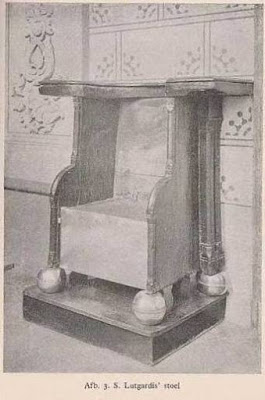
St Lutgarde chair
06-16-1246-lutgardis_2

Read further about St Lutgarde here : http://www.mysticsofthechurch.com/2015/09/st-lutgarde-of-aywieres-first-known.html

Posted in SAINT of the DAY

Saint’s Memorials – 16 June

St Actinea of Volterra
St Aitheachan of Colpe
St Amandus of Beaumont
Bl Antoine Auriel
St Aurelian of Arles
St Aureus of Mainz
St Benno of Meissen
St Berthaldus
St Ceccardus of Luni
St Cettin of Oran
St Colman McRhoi
St Crescentius of Antioch
St Cunigunde of Rapperswil
St Curig of Wales
St Cyriacus of Iconium
St Elidan
St Felix of San Felice
St Ferreolus of Besançon
St Ferrutio of Besançon
Bl Gaspare Burgherre
St Graecina of Volterra
St Ismael of Wales
St Julitta of Iconium
St Justina of Mainz
St Lutgardis of Tongeren
St Maurus of San Felice
St Palerio of Telese
St Similian of Nantes
Bl Thomas Redyng
St Tycho of Amathus

Martyrs of Africa: A group of five Christians martyred together. We know nothing else but the names – Cyriacus, Diogenes, Marcia, Mica, Valeria. They were martyred in an unknown location in Africa, date unknown.

Martyrs of Làng Cóc: A group of five Christian laymen, four farmers and a doctor, from the same village in the apostolic vicariate of Central Tonkin (in modern Vietnam). During the persecutions of emperor Tu Duc, they were each ordered to stomp on a cross to show their contempt for Christianity; they each refused. Imprisoned, tortured and martyred.
• Anrê Tuong
• Ðaminh Nguyen
• Ðaminh Nguyen Ðuc Mao
• Ðaminh Nhi
• Vinh Son Tuong
The were beheaded on 16 June 1862 in Làng Cóc, Nam Ðinh, Vietnam and canonised on 19 June 1988 by Pope John Paul II.


Posted in MORNING Prayers, NOVENAS, SACRED and IMMACULATE HEARTS, Uncategorized

NOVENA in honour of the SACRED HEART of JESUS – DAY TWO – 15 JUNE

NOVENA in honour of the SACRED HEART of JESUS – DAY TWO – 15 JUNE

By St Alphonsus Liguori
(1696-1787) Most Zealous Doctor
Published in 1758 from THE HOLY EUCHARIST

MEDITATION II.
The Loving Heart of Jesus.

Oh, if we could but understand the love that burns in the heart of Jesus for us!   He has loved us so much, that if all men, all the Angels and all the Saints were to unite, with all their energies, they could not arrive at the thousandth part of the love that Jesus bears to us.   He loves us infinitely more than we love ourselves,   He has loved us even to excess: They spoke of His decease (excess) which He was to accomplish in Jerusalem. [Luke ix. 31]  And what greater excess of love could there be than for God to die for His creatures? He has loved us to the greatest degree:  Having loved His own . . . He loved them unto the end;  [John, xiii. 1] since, after having loved us from eternity, —–for there never was a moment from eternity when God did not think of us and did not love each one-of us:  I have loved thee with an everlasting love, [Jer. xxxi, 3]—–for the love of us.   He made Himself Man and chose a life of sufferings and the death of the Cross for our sake. Therefore He has loved us more than His honur, more than His repose and more than His life; for He sacrificed everything to show us the love that He bears us.   And is not this an excess of love sufficient to stupefy with astonishment the Angels of Paradise for all eternity?

This love has induced Him also to remain with us in the Holy Sacrament as on a throne of love;  for He remains there under the appearance of a small piece of bread, shut up in a ciborium, where He seems to remain in a perfect annihilation of His majesty, without movement and without the use of His senses;  so that it seems that He performs no other office there than that of loving men.   Love makes us desire the constant presence of the object of our love.   It is this love and this desire that makes Jesus Christ reside with us in the Most Holy Sacrament.   It seemed too short a time to this loving Saviour to have been only thirty-three years with men on earth;  therefore, in order to show His desire of being constantly with us, He thought right to perform the greatest of all miracles, in the institution of the Holy Eucharist.   But the work of redemption was already completed, men had already become reconciled to God;  for what purpose, then, did Jesus remain on earth in this Sacrament?   Ah, He remains there because He cannot bear to separate Himself from us, as He has said that He takes a delight in us.

Again, this love has induced Him even to become the food of our souls, so as to unite Himself to us and to make His heart and ours as one: He that eateth My Flesh and drinketh My Blood, abideth in Me and I in him. [John, vi. 57] O
wonder!   O excess of Divine love!   It was said by a servant of God, if anything could shake my faith in the Eucharist, it would not be the doubt as to how the bread could become flesh, or how Jesus could be in several places and confined into so small a space, because I should answer that God can do everything;   but if I were asked how He could love men so much as to make Himself their food, I have nothing else to answer but that this is a mystery of faith above my comprehension and that the love of Jesus cannot be understood.   O love of Jesus, do Thou make Thyself known to men and do Thou make Thyself loved!

DAY TWO - 15 JUNE

LET US PRAY – DAY TWO

O adorable heart of my Jesus, heart inflamed with the love of men,
heart created on purpose to love them,
how is it possible that You can be despised
and Your love so ill corresponded to by men?
Oh, miserable that I am, I also have been one of those ungrateful ones
that have not loved You.
Forgive me, my Jesus, this great sin of not having loved You,
Who are so amiable and Who has loved me so much
that You can do nothing more to oblige me to love You.
Grant me the grace to love You.
O Love of my Jesus; You are my Love.
O burning heart of my Jesus, inflame my heart also.
Do not permit me in future, even for a single moment,
to live without Your love; rather kill me, destroy me;
do not let the world behold the spectacle of such horrid ingratitude
as that I, who have been so beloved by You
and received so many favours and lights from You,
should begin again to despise Your love.
I trust in the Blood that You have shed for me,
that I shall always love You and that You will always love me
and that this love between You and me will not be broken off for all eternity.

O Mary, Mother of fair love,
you who desires so much to see Jesus loved,
bind me, unite me to your Son;
but bind me to Him, so that we may never again be separated. Amen

Posted in CATECHESIS, CATHOLIC DEVOTIONS of the Month, CATHOLIC Quotes, EUCHARISTIC Adoration, JESUIT SJ, MORNING Prayers, QUOTES of the SAINTS

Thought for the Day – 15 June

Thought for the Day – 15 June

Why is the Sacred Heart the Holy Eucharist?

It is impossible to identify the Holy Eucharist too closely with Jesus Christ.   We should remember He is in the Holy Eucharist not merely with His substance.   I have corrected many of my students over the years who tell me “Transubstantiation means that the substance of bread and wine become the substance of Jesus Christ.” I reply, “No, transubstantiation means the substance of bread and wine are no longer there. The substance of bread and wine is replaced not only by the substance of Christ’s Body and Blood. What replaces the substance of bread and wine is Jesus Christ!” Everything that makes Christ, Christ replaces what had been the substance of bread and wine.   The substance of bread and wine become the whole Christ.

Therefore, Christ in the Holy Eucharist is here with His human heart.   Is it a living heart?   Yes! That is why the revelations our Lord made to St. Margaret Mary about promoting devotion to the Sacred Heart were all made from the Holy Eucharist.

Why do we equate the Sacred Heart with the Holy Eucharist?   Because the Holy Eucharist is the whole Christ with His human heart.   According to St. Margaret Mary, the Sacred Heart is the Holy Eucharist.   So it follows that devotion to the Sacred Heart is devotion to the Holy Eucharist.   It is infinite Love Incarnate living in our midst in the Blessed Sacrament.

Servant of God Fr John A Hardon SJ

why is the sacred heart the Holy Eucharist - fr john a hardon

Posted in DOCTORS of the Church, EUCHARISTIC Adoration, MORNING Prayers, QUOTES of the SAINTS

Quote of the Day – 15 June

Quote of the Day – 15 June

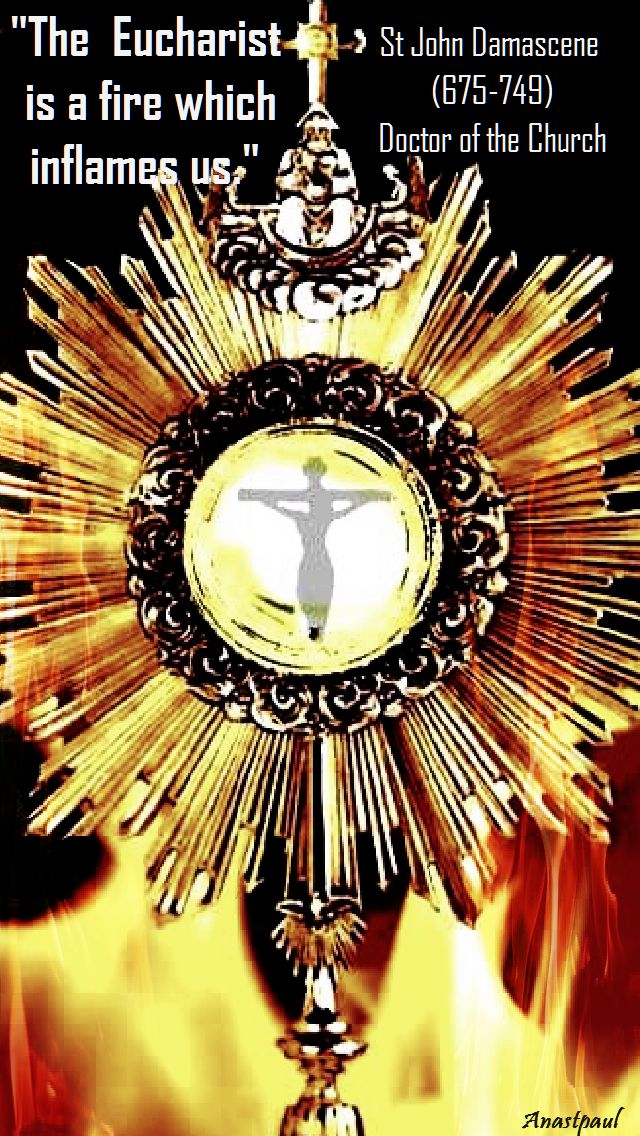
“The Eucharist is a fire
which inflames us.”

St John Damascene (675-749) – Doctor of the Church

the eucharist is a fire which enflames us - st john damascene

Posted in DOCTORS of the Church, FATHERS of the Church, MORNING Prayers, QUOTES of the SAINTS, The WORD

One Minute Reflection – 15 June

One Minute Reflection – 15 June

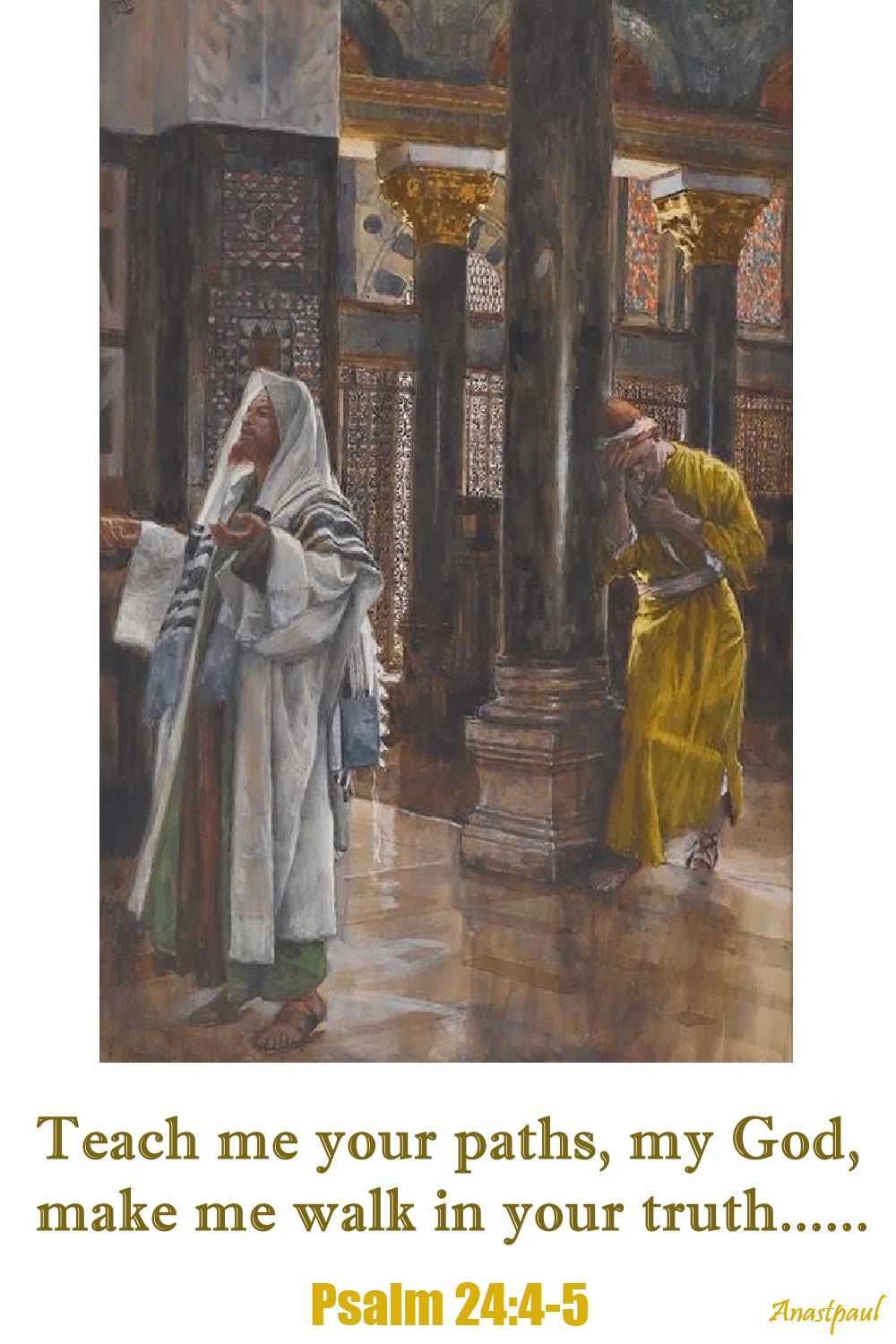
Teach me your paths, my God,
make me walk in your truth………..Psalm 24:4-5

Psalm 24 4-5

REFLECTION – “Gluttony should be destroyed by self-control; unchastity by desire for God and longing for the blessings held in store; avarice by compassion for the poor; anger by goodwill and love for all men; worldly dejection by spiritual joy; listlessness by patience, perseverance and offering thanks to God; self-esteem by doing good in secret and by praying constantly with a contrite heart; and pride by not judging or despising anyone in the manner of the boastful Pharisee, and by considering oneself the least of all men.”………..St John Damascene (675-749) – Doctor of the Church

gluttony - st john damascene

PRAYER – Heavenly Father, teach me Your paths and help me to walk always in Your truth, following ever more closely the way set before me by Your Divine Son, Our Lord Jesus Christ.  May Your Grace and Your Spirit fill my heart with the love, courage, zeal and strength I need to overcome the world and be a light to my neighbour. Amen

Posted in ART DEI, SAINT of the DAY

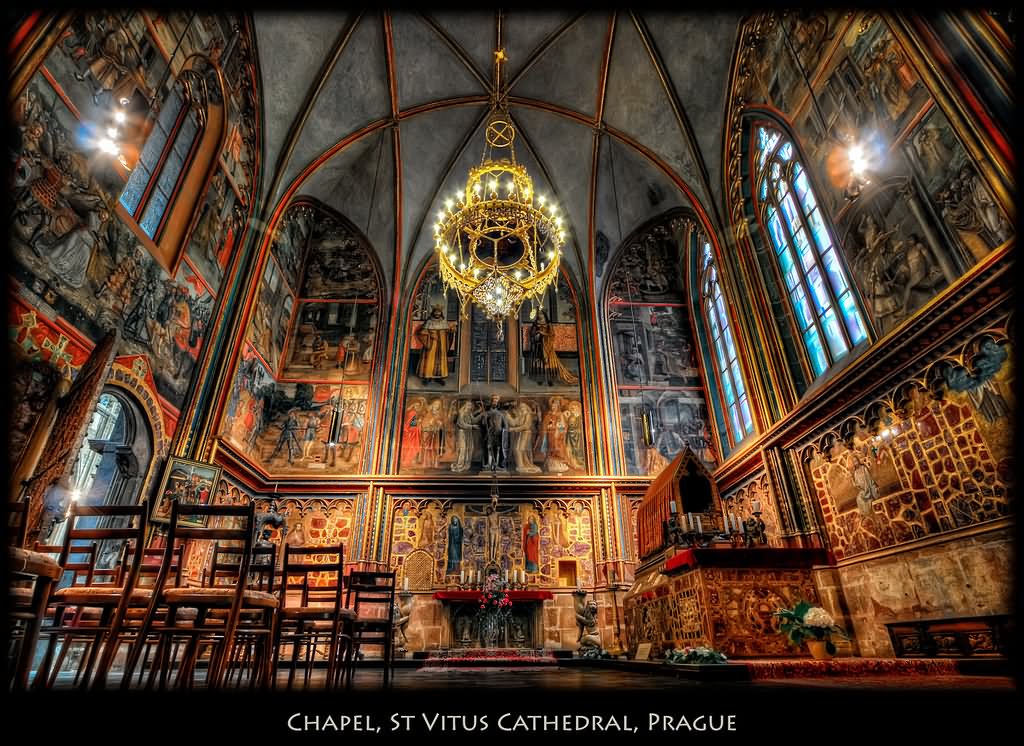
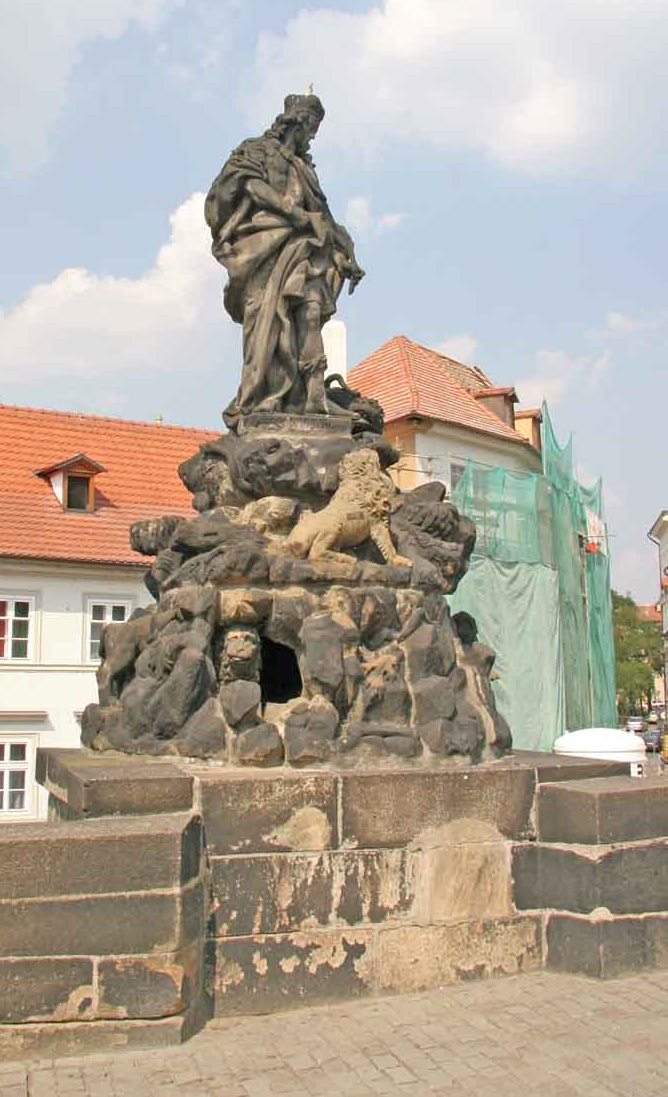
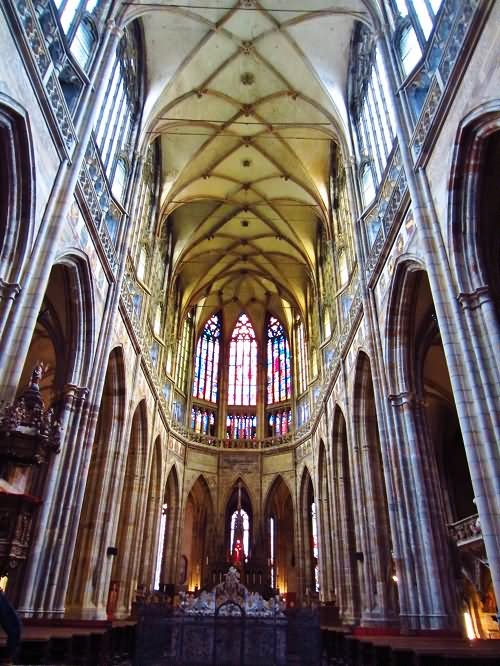
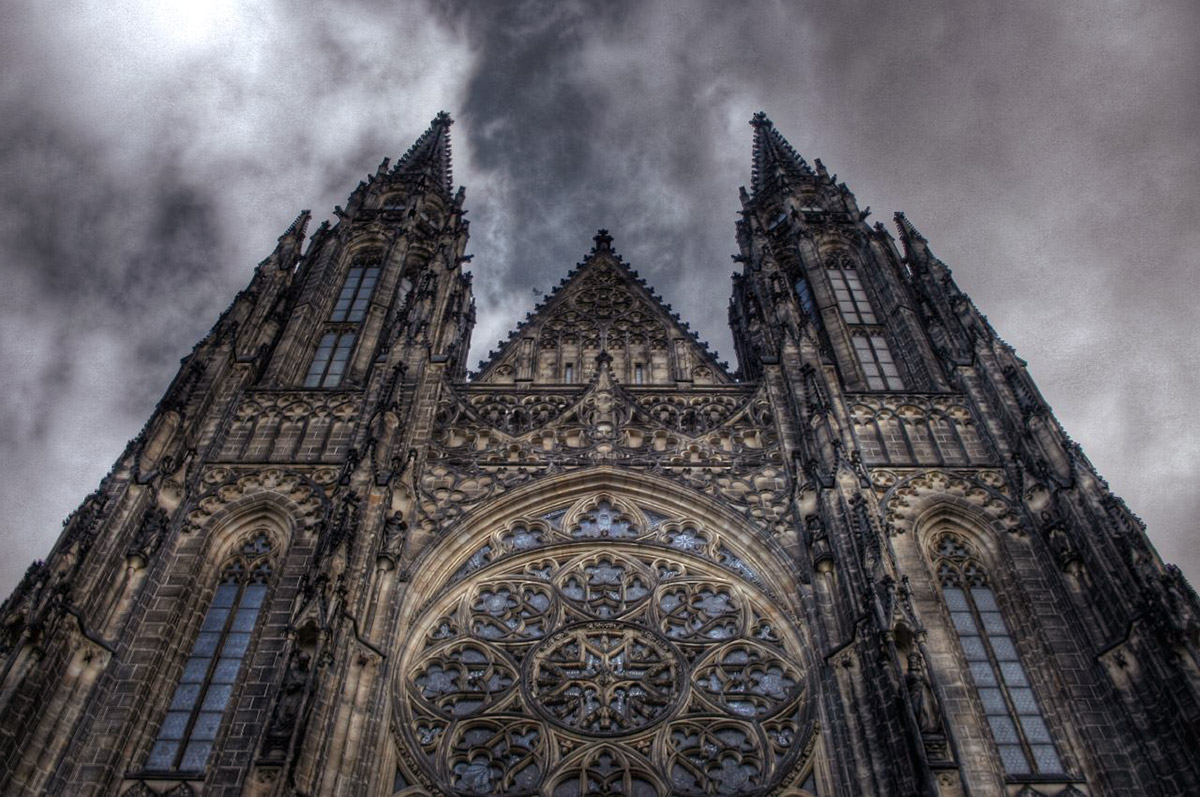
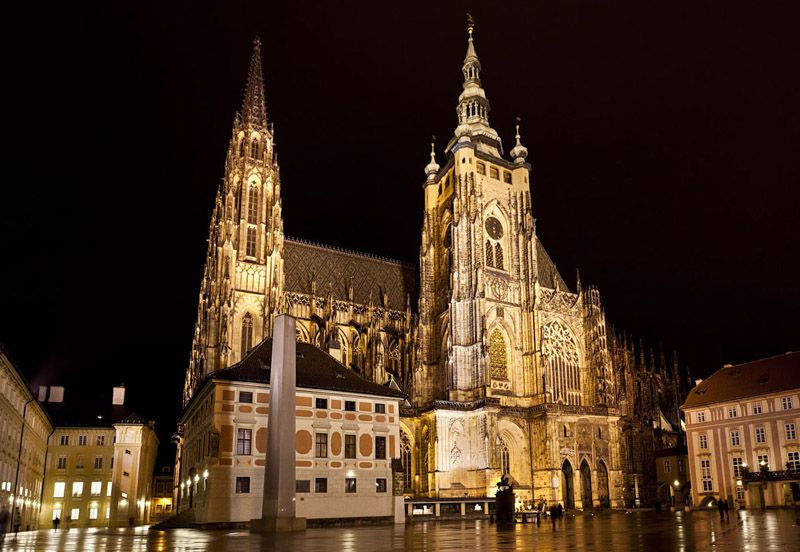
Celebrating St Vitus’ Memorial and the Cathedral in his honour in Prague, Czech Republic, the country for which he is a Patron

Celebrating St Vitus’ Memorial and the Cathedral in his honour in Prague, Czech Republic, the country for which he is a Patron.   The Image below is the Chapel of St Vitus within the Cathedral.

Chapel-St.-Vitus-Cathedral-Prague

To many people, St. Vitus Cathedral is Prague Castle.   While the Prague Castle complex houses many buildings, St. Vitus is the one that dominates the skyline wherever you are in city.   St. Vitus Cathedral (Katedrála svatého Víta) is a Gothic masterpiece and the spiritual symbol of the Czech state.

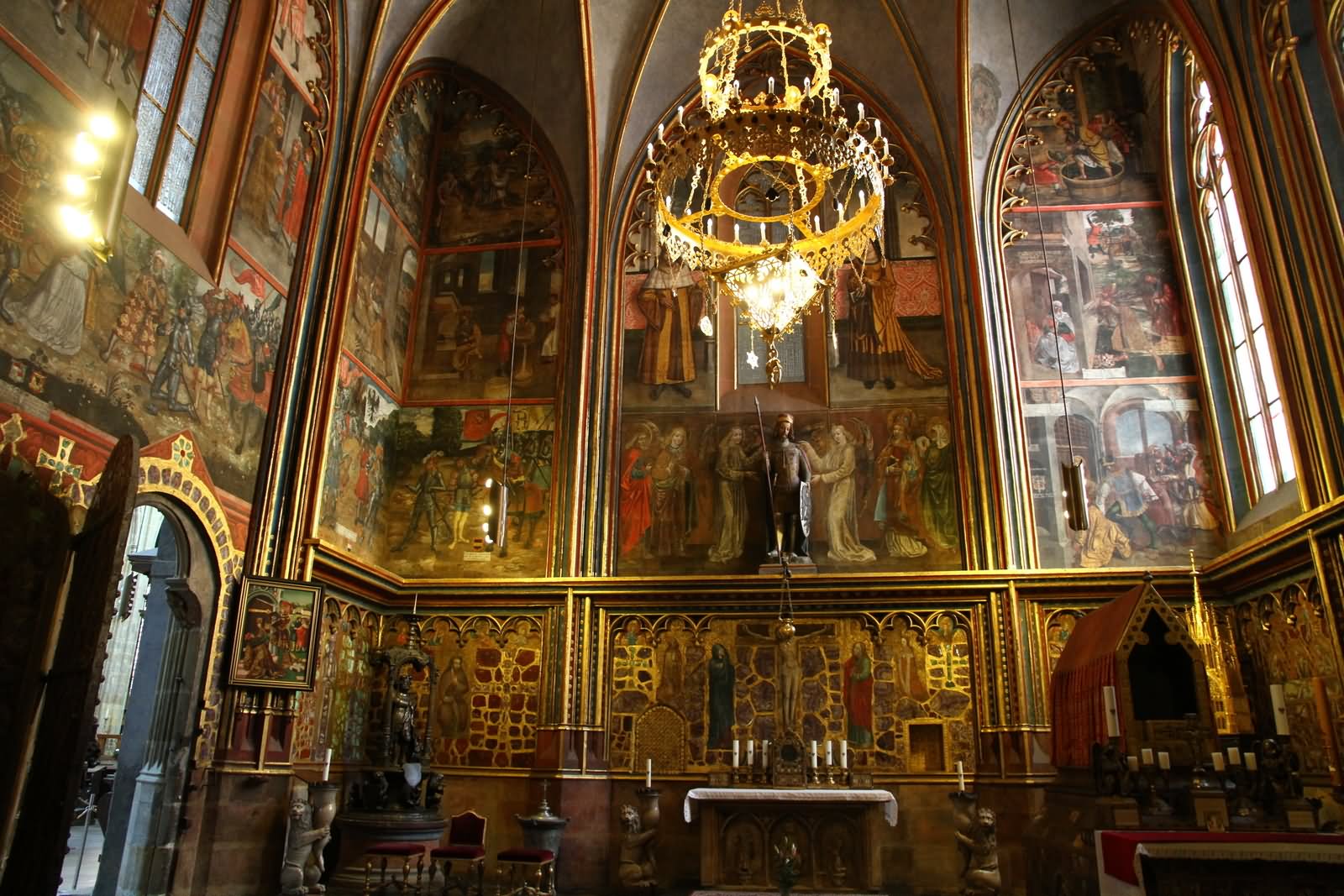
The cathedral was commissioned by Charles IV. Construction began in 1344 on the site of an earlier 10th century rotunda.   Its original builders, Matthias of Arras and later Peter Parler, constructed the chancel with a ring of chapels – St. Wenceslas Chapel, the Golden Portal and the lower section of the main steeple.   However, it took almost six centuries to complete, with the final phase of construction in the period 1873-1929.   Below is St Wenceslas Chapel which is decorated with frescoes and semi-precious stones.   A door in the south-western corner of the chapel leads to the Crown Chamber, in which the Bohemian Coronation Jewels are stored.

St.-Wanceslas-Chapel-Inside-The-St.-Vitus-Cathedral

As well as being the largest and most important Basilica in Prague, St. Vitus Cathedral has also overseen the coronation of Czech kings and queens.   In the chancel of the cathedral, in front of the high altar, is the royal mausoleum.   Below this, in the crypt, there are the royal tombs. Czech kings and queens and patron saints of the country are interred here.

The Great South Tower of the Cathedral was founded in the late 14th century and reconstructed in the 16th and 18th centuries.   The tower holds the largest bell in the Czech Republic, called Zikmund, which dates from the 16th century.   Visitors can climb the Great South Tower, see the bell partway up and enjoy spectacular views over the city from the top.   The tower has 287 narrow, winding steps and is more than 90 metres high.

Posted in DOCTORS of the Church, MORNING Prayers, PRAYERS of the SAINTS, SACRED and IMMACULATE HEARTS

Our Morning Offering – 15 June

Our Morning Offering – 15 June

Daily Offering to the Sacred Heart
By St Therese of Lisieux (1873-1897)
Doctor of the Church

O my God!
I offer You all my actions of this day
for the intentions and for the glory
of the Sacred Heart of Jesus.
I desire to sanctify every beat of my heart,
my every thought,
my simplest works,
by uniting them to His infinite merits;
and I wish to make reparation for my sins
by casting them into the furnace
of His Merciful Love.
O my God! I ask of You for myself
and for those whom I hold dear,
the grace to fulfill perfectly Your Holy Will,
to accept for love of You
the joys and sorrows of this passing life,
so that we may one day be united together
in heaven for all Eternity. Amen

daily offering to the sacred heart - st therese of lisieux.2

Posted in SAINT of the DAY

Saint of the Day – 15 June – St Vitus (c 290-c 303) – Martyr, One of the Seven Holy Helpers

Saint of the Day – 15 June – St Vitus (c 290-c 303) – Martyr, One of the Fourteen Holy Helpers – died age 12–13 in Lucania, modern-day Basilicata, Italy).   Patronages – against animal attacks, against dog bites, against epilepsy; epileptics, against lightning, against over-sleeping, against rheumatic chorea or Saint Vitus Dance, against snake bites, against storms, against wild beasts, of actors, comedians, dancers, dogs, Bohemia, Czech Republic, Serbia, 17 cities.

Saint Vitus lived during the joint reigns of two Roman Emperors.   The Roman Emperor Maximian, who was Roman Emperor for the Western Empire from 286 to 305 and Diocletian (r.284-305). who mounted some of the fiercest persecutions of the early Church especially in the East of the Roman Empire.   This was an extremely dangerous time to adhere to the Christian faith due to persecutions of the Roman Emperors.   St Vitus was the son of a Sicilian senator named Hylas.   The family adhered to the Pagan Roman Gods but at the age of twelve Vitus converted to Christianity.   His father was so furious that he had his son and his associates arrested and whipped.   They were released and escaped to Rome.   His links with Roman nobility gained Vitus access to the royal court of the Roman Emperor Diocletian.   It is said that Vitus cured the son of the Emperor of evil spirits.   A sacrifice to the Roman gods was planned in thanks for the cure   Vitus was unable to participate due his Christian beliefs and when this emerged he was accused of being a sorcerer and practising magic to effect the cure.   He and his friends were arrested and condemned to death in the arena.   Legend tells that the wild beasts and lions refused to attack Vitus and he was killed by the terrible fate of being boiled in oil.

The veneration of the martyrs spread rapidly in Southern Italy and Sicily, Pope Gregory the Great mentions a monastery dedicated to Vitus in Sicily.   The veneration of St. Vitus, the chief saint of the group, also appeared very early at Rome.   Pope Gelasius I (492-496) mentions a shrine dedicated to him and at Rome in the seventh century the chapel of a deaconry was dedicated to him.

In 756 AD, it is said that the relics of St. Vitus were brought to the monastery of St-Denis by Abbot Fulrad.   They were later presented to Abbot Warin of Corvey in Germany, who solemnly transferred some of them to this abbey in 836.   From Corvey the veneration of St Vitus spread throughout Westphalia and in the districts of eastern and northern Germany.   His cult grew in Prague, Bohemia when, in 925 A.D., king Henry I of Germany presented as a gift the bones of one hand of St. Vitus to Wenceslaus, Duke of Bohemia. Since then, this relic has been a sacred treasure in the St. Vitus Cathedral in Prague.

Charles_Bridge_St_Vitus
Statue of St Vitus on Charles Bridge, Prague

Saint Vitus is one of the Fourteen Martyrs who give aid in times of trouble.   He is specifically invoked against chorea, which is called St. Vitus Dance.

Adorable-Interior-View-Of-The-St.-Vitus-Cathedral-PragueST VITUS CATHEDRAL IN PRAGUEVitusCathedralc-prague-st-vitus-cathedral-1

Posted in SAINT of the DAY, The BLESSED VIRGIN MARY

Saints’ Memorials and Feast Days – 15 June

Nuestra Señora de Montemayor

St Abraham of Saint-Cyriacus
St Achaicus of Corinth
Bl Albertina Berkenbrock
St Barbara Cui Lianshi
St Benildis of Córdoba
St Constantine of Beauvais
St Domitian of Lobbes
St Edburgh of Winchester
St Eigil
St Eutropia of Palmyra
St Fortunatus of Corinth
St Germaine Cousin
St Hadelinus of Lobbes
St Hesychius of Durostorum
St Hilarion of Espalion
Bl Juan Rodriguez
St Julius of Durostorum
St Landelin of Crespin
St Leonides of Palmyra
St Libya of Palmyra
St Lotharius of Séez
St Melan of Viviers
St Orsisius
Bl Pedro da Teruel
Bl Peter Snow
St Pierre de Cervis
Bl Ralph Grimston
St Tatian of Cilicia
Bl Thomas Scryven
St Trillo of Wales
St Vaughe of Ireland
St Vitus
St Vouga of Lesneven

Martyr of Lucania – 11 saints: Eleven Christians martyred together. We known nothing else about them but the names – Anteon, Candidus, Cantianilla, Cantianus, Chrysogonus, Jocundus, Nivitus, Protus, Quintianus, Silvius, Theodolus in Lucania (modern Basilicata), Italy, date unknown.

Posted in CATHOLIC DEVOTIONS of the Month, MORNING Prayers, NOVENAS, SACRED and IMMACULATE HEARTS

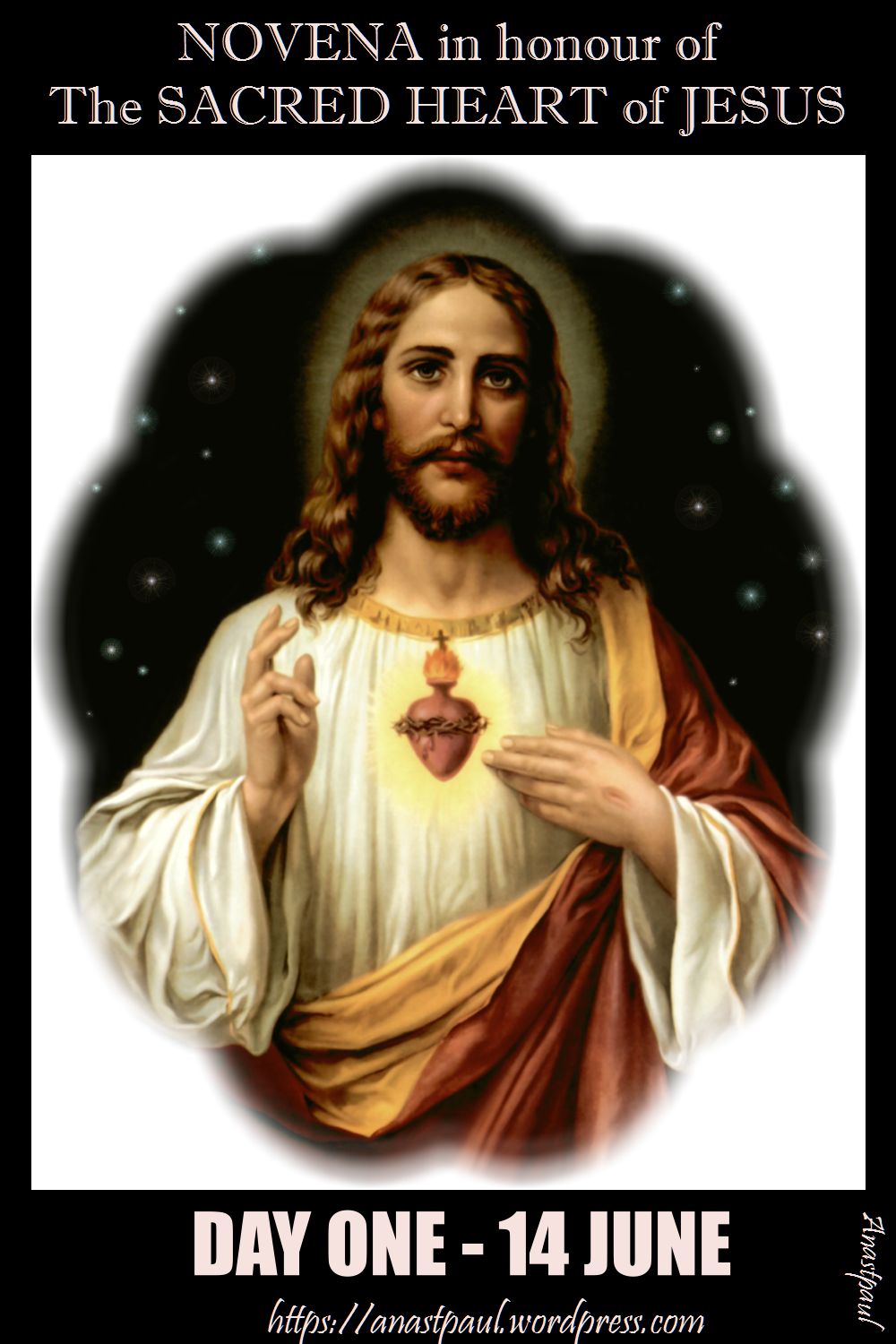
NOVENA in honour of the SACRED HEART of JESUS – DAY ONE – 14 JUNE

NOVENA in honour of the SACRED HEART of JESUS – DAY ONE – 14 JUNE

By St Alphonsus Liguori  (1696-1787) Most Zealous Doctor
From The Holy Eucharist Published in 1758

MEDITATION I.
The Amiable Heart of Jesus.

He who shows himself amiable in everything must necessarily make himself loved.   Oh, if we only applied ourselves to discover all the good qualities by which Jesus Christ renders Himself worthy of our love, we should all be under the happy necessity of loving Him.   And what heart among all hearts can be found more worthy of love than the Heart of Jesus?

A heart all pure, all holy, all full of love towards God and towards us;  because all His desires are only for the Divine glory and our good.   This is the heart in which God finds all His delight.     Every perfection, every virtue reign in this heart; —–a most ardent love for God, His Father, united to the greatest humility and respect that can possibly exist;  a sovereign confusion for our sins, which He has taken upon Himself, united to the extreme confidence of a most affectionate Son;  a sovereign abhorrence of our sins, united to a lively compassion for our miseries;  an extreme sorrow. united to a perfect conformity to the will of God.

In Jesus is found everything that there can be most amiable.   Some are attracted to love others by their beauty, others by their innocence, others by living with them, others by devotion.   But if there were a person in whom all these and other virtues were united, who could help loving him?   If we heard that there was in a distant country a foreign prince who was handsome, humble, courteous, devout, full of charity, affable to all, I who rendered good to those who did him evil;   then, I although we knew not who he was, and though he knew not us and though we were not acquainted with him, nor was there any possibility of our ever being so, yet we should be enamoured of him and should be constrained to love him.   How is it, then, possible that Jesus Christ, Who possesses in Himself all these virtues and in the most perfect degree and Who loves us so tenderly, how is it possible that He should be so little loved by men and should not be the only object of our love?

O my God, how is it that Jesus, Who alone is worthy of love and Who has given us so many proofs of the love that He bears us, should be alone, as it were, the unlucky one with us, Who cannot arrive at making us love Him;  as if He were not sufficiently worthy of our love!   This is what caused floods of tears to St. Rose of Lima, St. Catherine of Genoa, St. Teresa, St. Mary Magdalene of Pazzi, who, on considering the ingratitude of men, exclaimed, weeping, “Love is not loved, Love is not loved.”

DAY ONE - NOVENA SACRED HEART

LET US PRAY – DAY ONE:

O my amiable Redeemer,
what object more worthy of love could Your Eternal Father command me to love than You?
You are the beauty of Paradise,
You are the love of Your Father,
Your heart is the throne of all virtues.
O amiable heart of my Jesus,
You deserve the love of all hearts;
poor and wretched is that heart which loves You not!
So miserable, O my God, has my heart been, during all the time in which it has not loved You.
But I will not continue to be so wretched;
I love You, I will always continue to love You, O my Jesus.
O my Lord, I have hitherto forgotten You and now what can I expect?
That my ingratitude will oblige You to forget me entirely and forsake me forever?
No, my Saviour, do not permit this.
O lovely flames that burnt in the loving heart of my Jesus,
enkindle in my poor heart that holy fire which You came down from Heaven to kindle on earth.
Consume and destroy all the impure affections that dwell in my heart
and prevent it from being entirely Yours.
O my God, grant that it may only exist to love You and You alone, my dearest Saviour.
You are now the only object of my love. I love You, I love You, I love You and I will never love anyone else but You.
My beloved Lord, do not disdain to accept the love of a heart which has once afflicted You by my sins.
Let it be Your glory to exhibit to the Angels
a heart now burning with the love of You, which hitherto shunned and despised You.

Most holy Virgin Mary, my hope, will you assist me
and beseech Jesus to make me, by His grace, all that He wishes me to be.
Amen

Posted in CATHOLIC DEVOTIONS of the Month, JESUIT SJ, MORNING Prayers, PRAYERS of the SAINTS, SACRED and IMMACULATE HEARTS

Our Morning Offering – 14 June

Our Morning Offering – 14 June

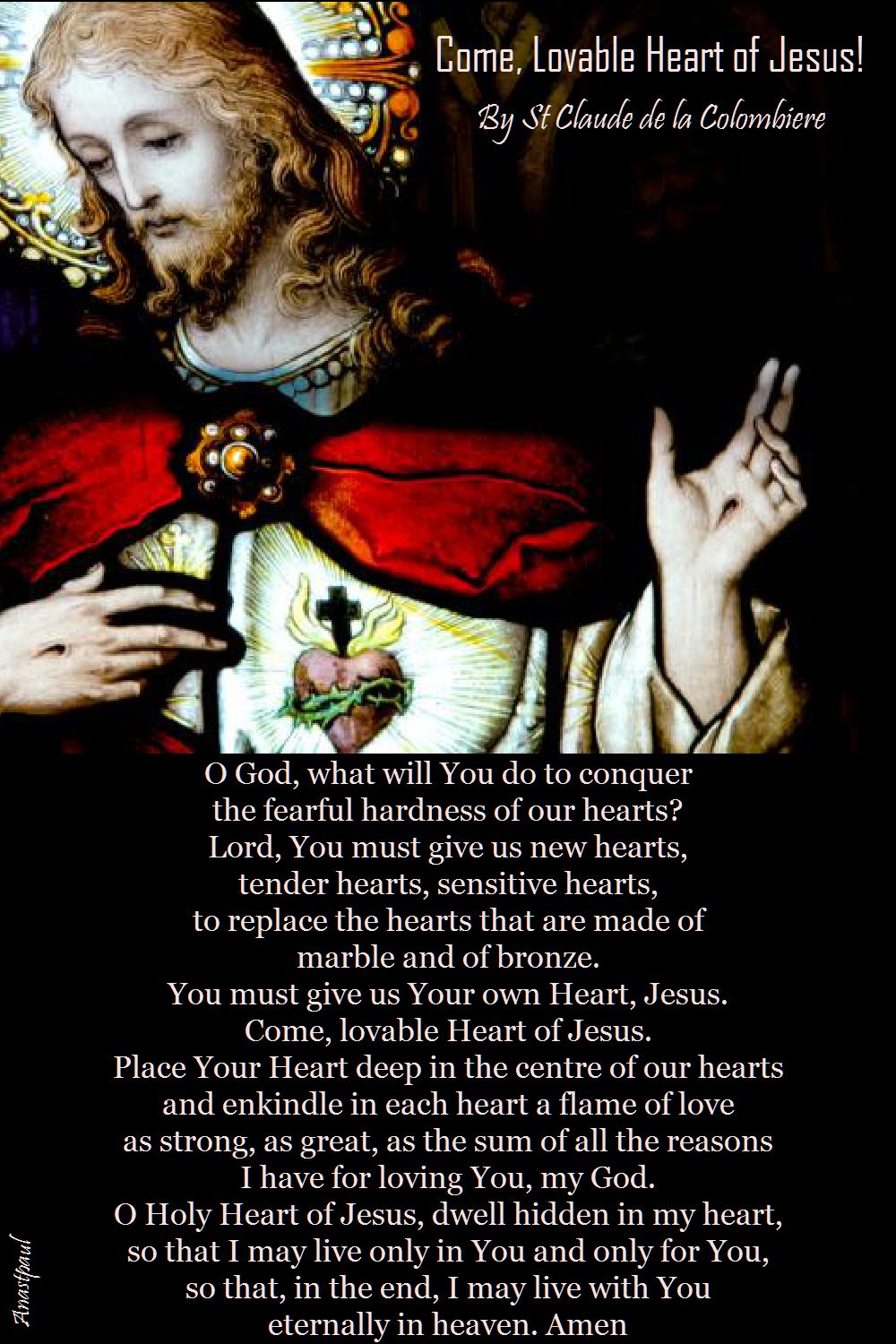
Come, Lovable Heart of Jesus!
By St Claude de la Colombiere

O God, what will You do to conquer
the fearful hardness of our hearts?
Lord, You must give us new hearts,
tender hearts, sensitive hearts,
to replace the hearts that are made of
marble and of bronze.
You must give us Your own Heart, Jesus.
Come, lovable Heart of Jesus.
Place Your Heart deep in the centre of our hearts
and enkindle in each heart a flame of love
as strong, as great, as the sum of all the reasons
I have for loving You, my God.
O Holy Heart of Jesus, dwell hidden in my heart,
so that I may live only in You and only for You,
so that, in the end, I may live with You
eternally in heaven. Amen

come, lovable heart of jesus - st claude de la colombiere

Posted in SAINT of the DAY

Saint of the Day – 14 June – St Methodius of Constantinople

Saint of the Day – 14 June – St Methodius of Constantinople – Monk and and Patriarch of Constantinople (born in the 8th century at Syracuse, Sicily – 847 of natural causes).

St. Methodius worked for unity and reconciliation in the Eastern Church and, served as the Patriarch of Constantinople for the last five years of his life.

Born in Syracuse, he first felt the call to enter religious life while in Constantinople, where he had gone to seek a position at court.   He left for the island of Chinos, where he built a monastery and started a monastic community.

However, his time at the monastery was short-lived since he was summoned by the Patriarch of Constantinople to help govern the diocese and create unity after a debate broke out on the use of icons in worship.   While in Rome seeking the Pope’s help, he was exiled for seven years.   He returned as patriarch in 842 and continued to work for unity.

Posted in SAINT of the DAY

Saints’ Memorials and other Feasts – 14 June

Our Lady of the Trellis

St Anastasius of Córdoba
St Burchard of Meissen
St Caomhán of Inisheer
St Castora Gabrielli
St Cearan the Devout
Bl Constance de Castro
St Cyprien
St Cyriacus of Zeganea
St Davnet
St Digna of Córdoba
St Dogmael of Wales
St Elgar of Bardsey
St Elisha the Prophet
St Etherius of Vienne
St Felix of Córdoba
Bl Fortunatus of Napoli
Bl Francisca de Paula de Jesus Isabel
St Gerold of Evreux
Bl Hartwig of Salzburg
St Joseph the Hymnographer
St Marcian of Syracuse
St Mark of Lucera
St Methodius of Constantinople
St Nennus of Arran
Bl Peter de Bustamante
St Protus of Aquileia
St Quintian
St Richard of Saint Vannes
St Rufinus of Soissons
St Thecla
St Theopista
St Valerius of Soissons
Bl Walter Eustace

Posted in DOCTORS of the Church, EUCHARISTIC Adoration, franciscan OFM, MORNING Prayers, SAINT of the DAY

Celebrating the Life and Miracles of St Anthony of Padua on his Memorial today 13 June

Celebrating the Life and Miracles of St Anthony of Padua on his Memorial today 13 June

St Anthony and the Holy Eucharist

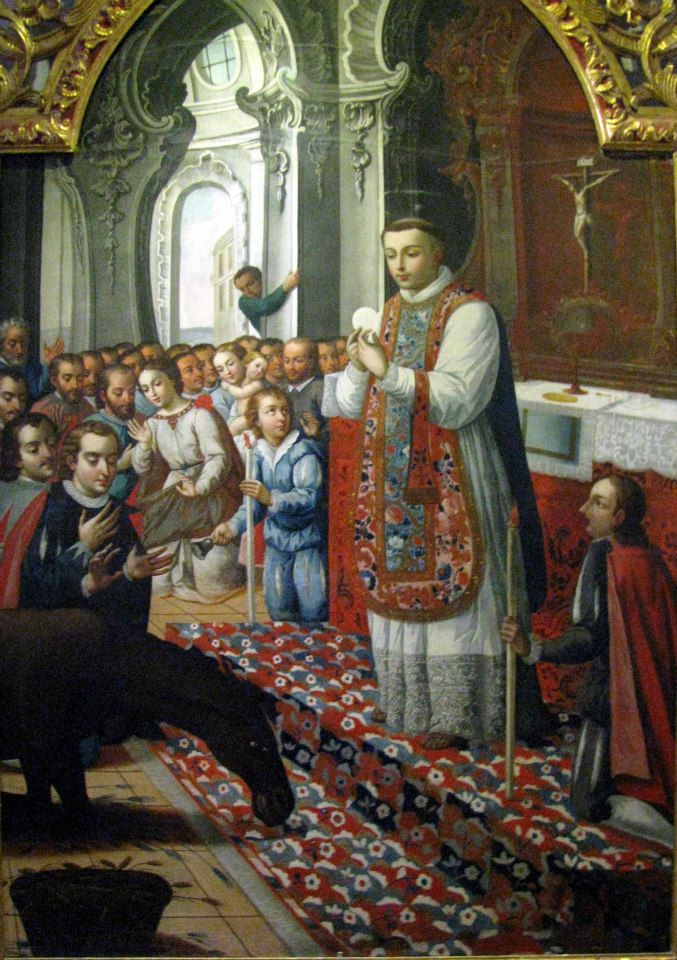
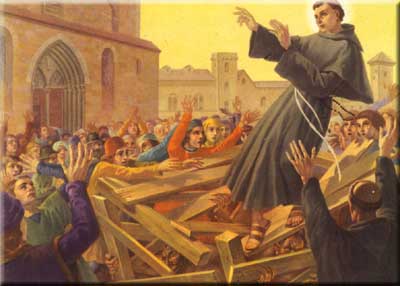
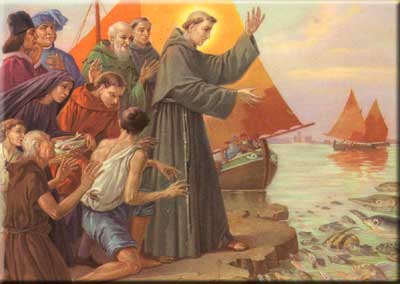
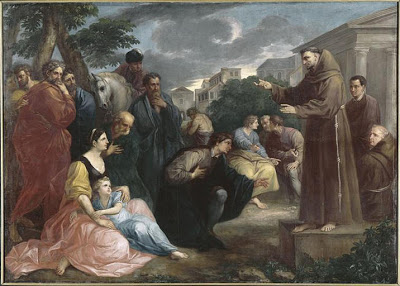
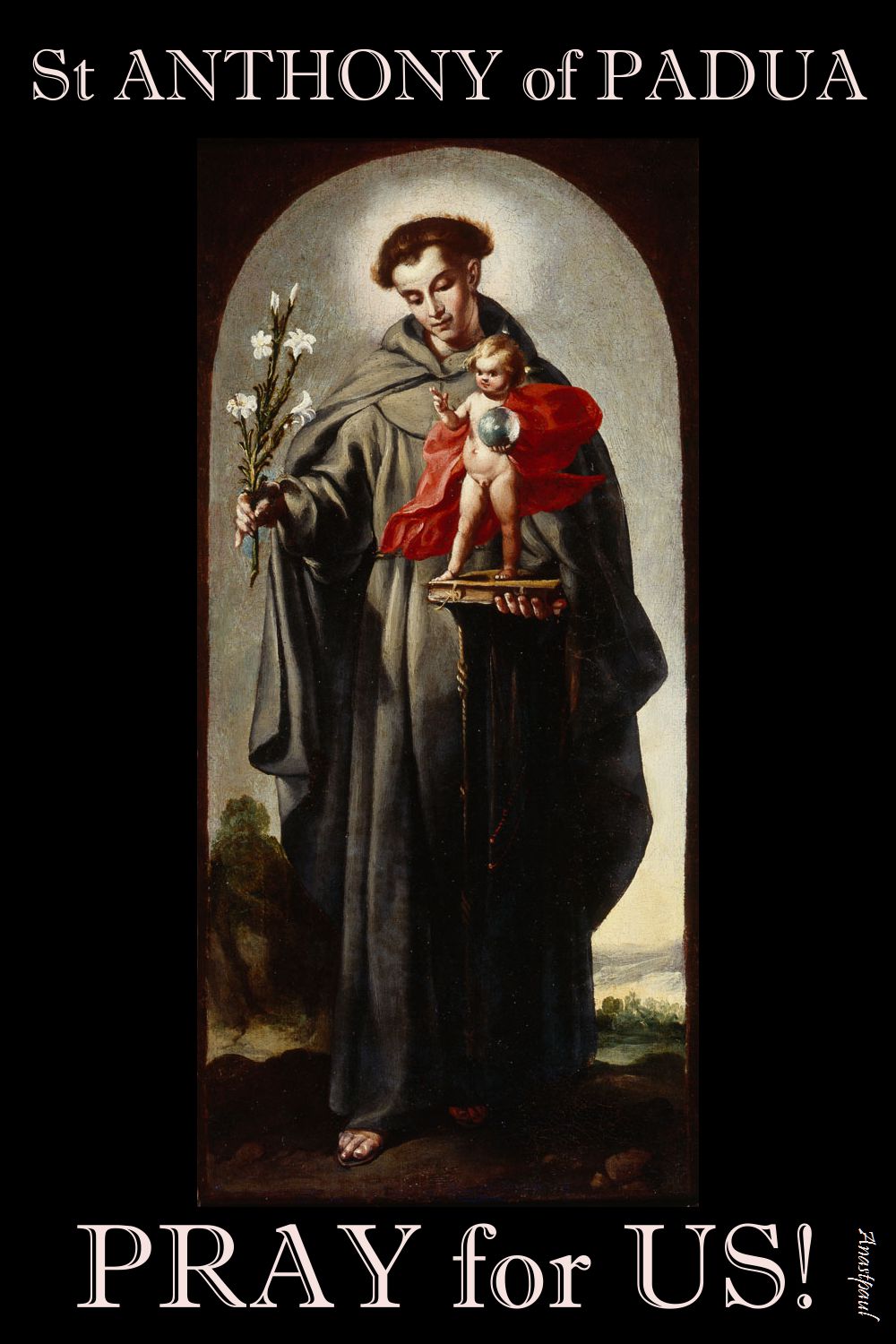
Anthony has been pictured by artists and sculptors in all kinds of ways.   He is depicted with a book in his hands, with a lily or torch.   He has been painted preaching to fish, holding a monstrance with the Blessed Sacrament in front of a mule or preaching in the public square or from a nut tree.

To prove to the heretics that Jesus is truly in the Blessed Sacrament, a horse was not given any food for three days.    Oats were placed in front of him.   The horse refused to eat the oats till he had knelt down and adored Jesus in the Holy Eucharist that St Anthony held in his hand.  This took place in Rimini Italy.

Miracles-of-St.-Anthony-of-Padua (1)

St Anthony and the Child Jesus

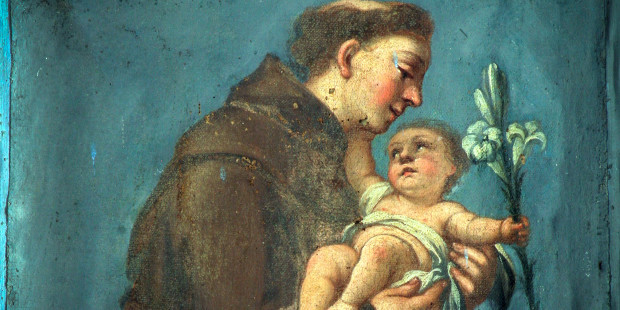
But since the 17th century we most often find the saint shown with the child Jesus in his arm or even with the child standing on a book the saint holds.   A story about Saint Anthony related in the complete edition of Butler’s Lives of the Saints (edited, revised and supplemented by Herbert Anthony Thurston, S.J., and Donald Attwater) projects back into the past a visit of Anthony to the Lord of Chatenauneuf.   Anthony was praying far into the night when suddenly the room was filled with light more brilliant than the sun.   Jesus then appeared to Saint Anthony under the form of a little child. Chatenauneuf, attracted by the brilliant light that filled his house, was drawn to witness the vision but promised to tell no one of it until after Anthony’s death.

Some may see a similarity and connection between this story and the story in the life of Saint Francis when he re-enacted at Greccio the story of Jesus and the Christ Child became alive in his arms.   There are other accounts of appearances of the child Jesus to Francis and some companions.

These stories link Anthony with Francis in a sense of wonder and awe concerning the mystery of Christ’s incarnation.   They speak of a fascination with the humility and vulnerability of Christ who emptied himself to become one like us in all things except sin. For Anthony, like Francis, poverty was a way of imitating Jesus who was born in a stable and would have no place to lay his head.

web-st-anthony-of-padua-zvonimir-atletic-shutterstock_51259915

Patron of Sailors, Travelers, Fishermen

In Portugal, Italy, France and Spain, Saint Anthony is the patron saint of sailors and fishermen.   According to some biographers his statue is sometimes placed in a shrine on the ship’s mast.   And the sailors sometimes scold him if he doesn’t respond quickly enough to their prayers.

Not only those who travel the seas but also other travelers and vacationers pray that they may be kept safe because of Anthony’s intercession.   Several stories and legends may account for associating the saint with travelers and sailors.

First, there is the very real fact of Anthony’s own travels in preaching the gospel, particularly his journey and mission to preach the gospel in Morocco, a mission cut short by severe illness.   But after his recovery and return to Europe he was a man always on the go, heralding the Good News.

There is also a story of two Franciscan sisters who wished to make a pilgrimage to a shrine of our Lady but did not know the way.   A young man is supposed to have volunteered to guide them.   Upon their return from the pilgrimage one of the sisters announced that it was her patron saint, Anthony, who had guided them.

Still another story says that in 1647 Father Erastius Villani of Padua was returning by ship to Italy from Amsterdam.   The ship with its crew and passengers was caught in a violent storm.   All seemed doomed. Father Erastius encouraged everyone to pray to Saint Anthony.   Then he threw some pieces of cloth that had touched a relic of Saint Anthony into the heaving seas.   At once, the storm ended, the winds stopped and the sea became calm.

miracle8miracle3

Teacher, Preacher

Among the Franciscans themselves and in the liturgy of his feast, Saint Anthony is celebrated as a teacher and preacher extraordinaire.   He was the first teacher in the Franciscan Order, given the special approval and blessing of Saint Francis to instruct his brother Franciscans.   His effectiveness as a preacher calling people back to the faith resulted in the title “Hammer of Heretics.”   Just as important were his peacemaking and calls for justice.

In canonising Anthony in 1232, Pope Gregory IX spoke of him as the “Ark of the Testament” and the “Repository of Holy Scripture.”   That explains why Saint Anthony is frequently pictured with a burning light or a book of the Scriptures in his hands.   In 1946 Pope Pius XII officially declared Anthony a Doctor of the Universal Church.   It is in Anthony’s love of the word of God and his prayerful efforts to understand and apply it to the situations of everyday life that the Church especially wants us to imitate Saint Anthony.

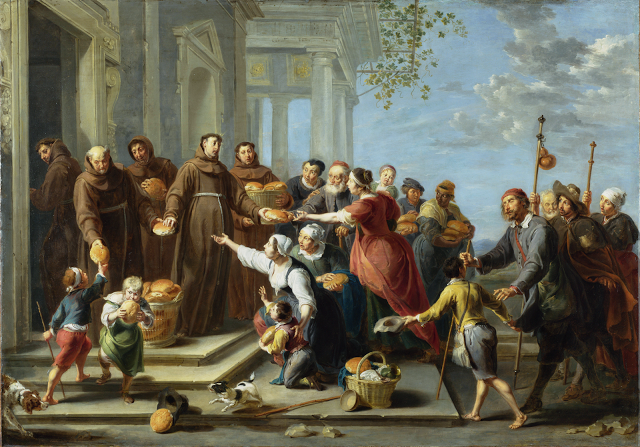
Saint Anthony of Padua distributing Bread by Willem van Herp the Elder circa 1662Anthony-of-Padua-preaching

While noting in the prayer of his feast Anthony’s effectiveness as an intercessor, the Church wants us to learn from Anthony, the teacher, the meaning of true wisdom and what it means to become like Jesus, who humbled and emptied himself for our sakes and went about doing good.


Franciscan Father Norman Perry (1929-1999) served as editor-in-chief of St. Anthony Messenger magazine for 18 years.

St Anthony of Padua, Pray for us!

ST ANTHONY OF PADUA - JUNE 13

Posted in DOCTORS of the Church, franciscan OFM, MORNING Prayers, SAINT of the DAY

Thought for the Day – 13 June

Thought for the Day – 13 June

St Anthony of Padua was a tireless preacher, teacher, defender of the faith.   He brought many back to God by his example and words.   But first he gave himself to God completely.   Like all saints, he is a perfect example of turning one’s life over to Christ. God did with Anthony as God pleased — and what God pleased was a life of spiritual power and brilliance that still attracts admiration today.   He whom popular devotion has nominated as finder of lost objects found himself by losing himself totally to the providence of God.   Preaching was simply the overflow of his own inner life.   For all of us, if God comes first and the cultivation of intimacy with Him, then everything else flows from this, as water flows from its source.

St Anthony of Padua, brilliant star, Pray for us!

ST ANTHONY OF PADUA PRAY FOR US 3