
St Abachum of Persia
Bl Andrew of Peschiera
St Arsenius of Corfu
St Audifax of Persia
St Bassian of Lodi
Bl Beatrix of Lens
St Branwallader of Jersey
St Canute
St Catellus of Castellammare
St Contentius
Bl Elisabetta Berti
St Faustina of Como
St Fillan
St Firminus of Gabales
St Germanicus of Smyrna
St Godone of Novalesa
St John of Ravenna
St Joseph Sebastian Pelczar
St Liberata of Como
Bl Marcelo Spínola y Maestre
St Maris of Persia
St Messalina of Foligno
St Ponziano of Spoleto
St Remigius of Rouen
St Wulstan of Worcester
—
Martyrs of Numidia – 9 saints: A group of Christians martryred together for their faith. The only details to survive are nine of their names – Catus, Germana, Gerontius, Januarius, Julius, Paul, Pia, Saturninus and Successus. 2nd century Numidia in North Africa.
Month: January 2018
Novena to St Paul in preparation for the Feast of The Conversion of St Paul on 25 January: Day THREE – 18 January
Novena to St Paul in preparation for the Feast of The Conversion of St Paul on 25 January
Day THREE – 18 January
“Suddenly a light from heaven flashed about him…. (he) heard a voice saying to him, ‘Saul, Saul, why do you persecute me?…I am Jesus….” They led (Saul) by the hand” (Acts 9:3,4,5,8)
Pope Emeritus Benedict XVI speaks of conversion as an act of obedience toward a reality that does not originate from us, that precedes us: the concrete God. (Joseph Ratzinger – The Nature and Mission of Theology {Ignatius, 1995 p 58})
Let us Pray:
Glorious St Paul,
your conversion is a powerful witness to the world
that God loves us and does not give up on us,
no matter how far we stray.
Help me to live a life of ongoing obedience to God
and conversion of my wilful heart.
Pray that I may renounce self-will
and surrender myself to my Creator
who has a plan to make me a saint.
May faith move me to believe that God can and will,
change the things in me that seem insurmountable.
Pray that I may love God’s will and providence for me.
In this confidence, I entrust to you, St Paul,
these, my intentions
………………………………….
(mention your request)
I ask this through Christ, Our Lord, amen.
St Paul Pray for us!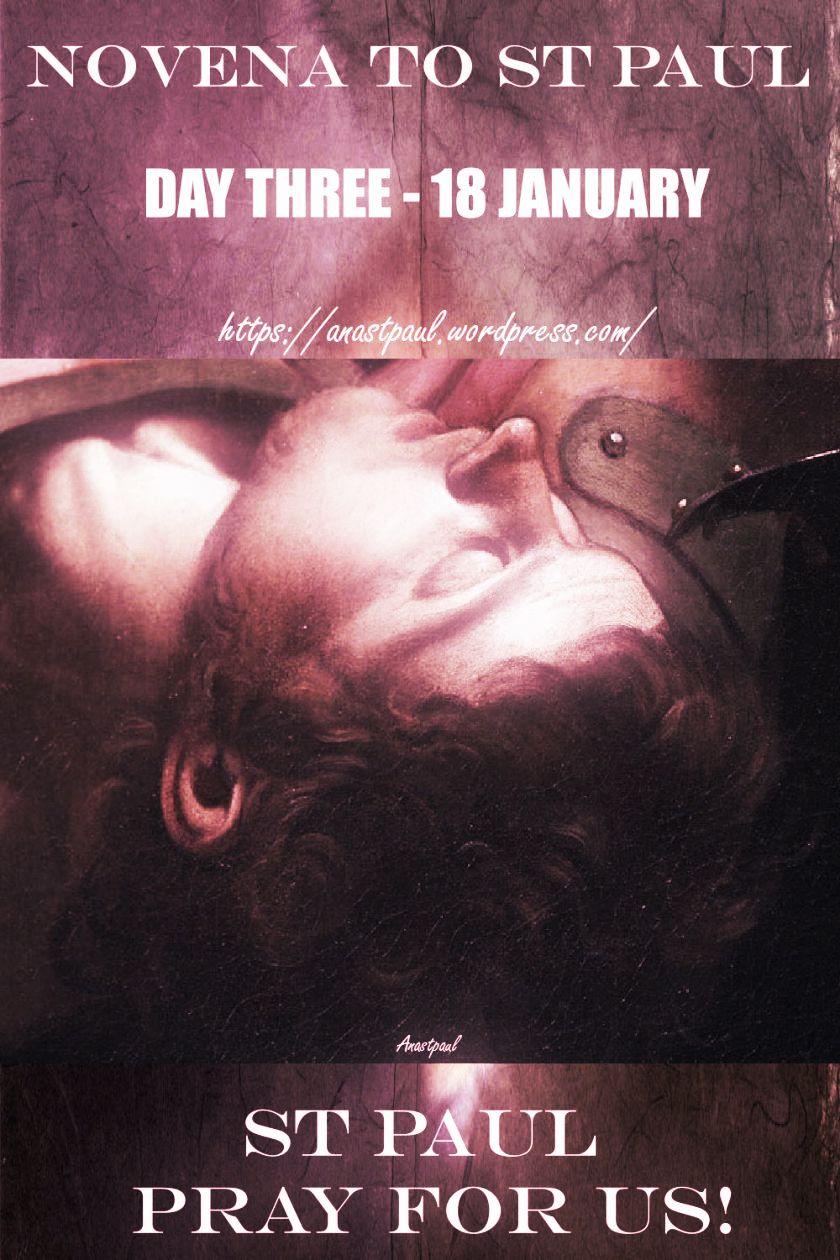
Novena to St Francis de Sales – Day Four: 18 January
Novena to St Francis de Sales
Day Four – 18 January
“Self-love dies only when our body dies, so we must, while we live in this land of exile, continue to counterattack its assaults on our senses and its underhanded tactics. It is enough if we firmly withstand, giving no wilful or deliberate consent … When we feel within ourselves the first movements of self-love or of other passions, let us prostrate ourselves immediately before the heart of God and tell Him, in a spirit of confidence and humility, “Lord, have mercy on me because I am a very weak creature.” Then let us tranquilly rest in peace and put ourselves at God’s disposal.” (St Francis de Sales Letters 1675; O. XIX, pp. 272-273)
O blessed Francis de Sales,
who on earth did excel in a life of virtue,
especially in the love of God and neighbour,
I earnestly ask you to take me
under your compassionate care and protection.
Obtain for me conversion of mind and heart.
Grant that all people, especially ……………………..
(names of those whom you wish to include)
may experience the depth of God’s redeeming and healing love.
Teach me to fix my eyes on the things of heaven even as I walk each day
with my feet planted firmly on the earth.
Help me, through the practice of virtue and the pursuit of devotion,
to avoid anything that would otherwise cause me to stumble in my attempt
to follow Christ and to be an instrument of the Holy Spirit.
Encouraged by your prayers and example,
help me to live fully my sacred dignity
with the hope of experiencing my sacred destiny, eternal life with God.
Receive also this particular need or concern that I now lift up in prayer
………………………..…….
(mention your particular need).
O God, for the salvation of all, You desired that St Francis de Sales—
preacher, missionary, confessor, bishop and founder—
should befriend many long the road to salvation.
Mercifully grant that we,
infused with the humility and gentleness of his charity,
guided by his wisdom and sharing in his spirit may experience eternal life.
We ask this through Christ our Lord. Amen
St Francis de Sales, pray for us.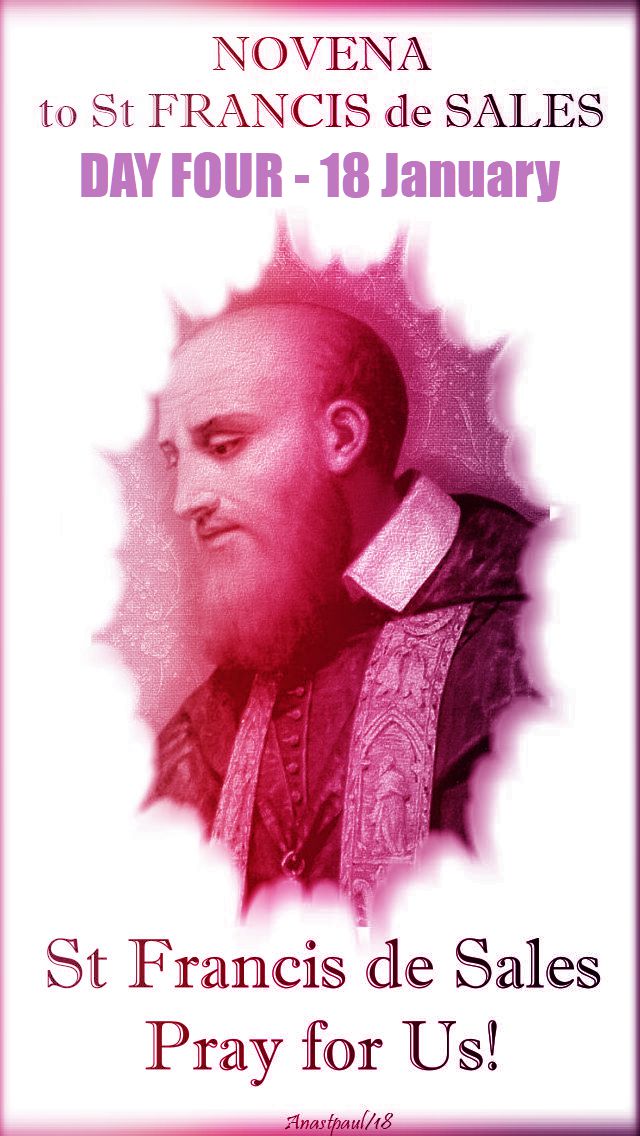
Thought for the Day – 18 January – The Memorial of St Margaret of Hungary (1242-1270)
Thought for the Day – 18 January – The Memorial of St Margaret of Hungary (1242-1270)
A young woman of extraordinary beauty, St Margaret attracted the attention of suitors even though she was a nun. Ottokar, the king of Bohemia, was determined to marry her. For political reasons, Béla liked the idea. He asked Margaret to get released from her commitments and marry Ottokar. Béla had not bargained for the steely resistance of his strong-willed daughter. She responded to his request with defiance:
“When I was only 7-years-old, you tried to espouse me to the Polish Duke. You will remember my answer then. I said that I wished to serve Him only to whom you had espoused me at my birth. As a child, I would not yield to your will in opposition to God’s claims on me. Do you think that I am likely to give in to you now that I am older and wiser? And am I more capable of grasping the greatness of the divine grace that has been given me? Then, my Father, stop trying to turn me from my determination to remain a religious. I prefer the heavenly kingdom to that which has been offered me by the King of Bohemia. I would rather die than obey these commands of yours that will bring death to my soul. Mark my words. If matters ever come to such a pass and I am driven to it, I will surely put an end to the whole affair by mutilating myself, so that I shall never again be desirable to any man.”
So Béla backed down. Witnesses say that had he persisted, gritty Margaret would likely have fulfilled her threat. Butler’s Lives of the Saints says that she performed “marvellous” service to the sick, so nauseating that its “details cannot be set out before the fastidious modern reader.” Out of sympathy for the poor, Margaret also imitated their squalor. She so neglected all personal hygiene, for example, that she repulsed her sisters. And for long periods she denied herself food and sleep. Since she was a princess and the convent was built for her, no one seems to have been able to temper her excesses.
The church recognises Margaret of Hungary as a saint in spite of the traces of wilfulness and pride that seem to have marked her life. But she excelled in charity and “love covers over many a sin” (1 Peter 4:8). Those of us who want to be holy but have many “in-spite-ofs” to contend with, can be glad of that!
St Margaret of Hungary, pray for us!
Quote/s of the Day – 18 January – “Speaking of the Holy Eucharist/Holy Mass”
Quote/s of the Day – 18 January – “Speaking of the Holy Eucharist/Holy Mass“
“Let us return from that Table,
like lions breathing out fire,
terrifying to the devil!”
St John Chrysostom (347-407) Father & Doctor of the Church
“O Sacrament of Love!
O sign of Unity!
O bond of Charity!
He who would have Life finds here indeed
a Life to live in and a Life to live by.”
St Augustine (354-430) Father & Doctor of the Church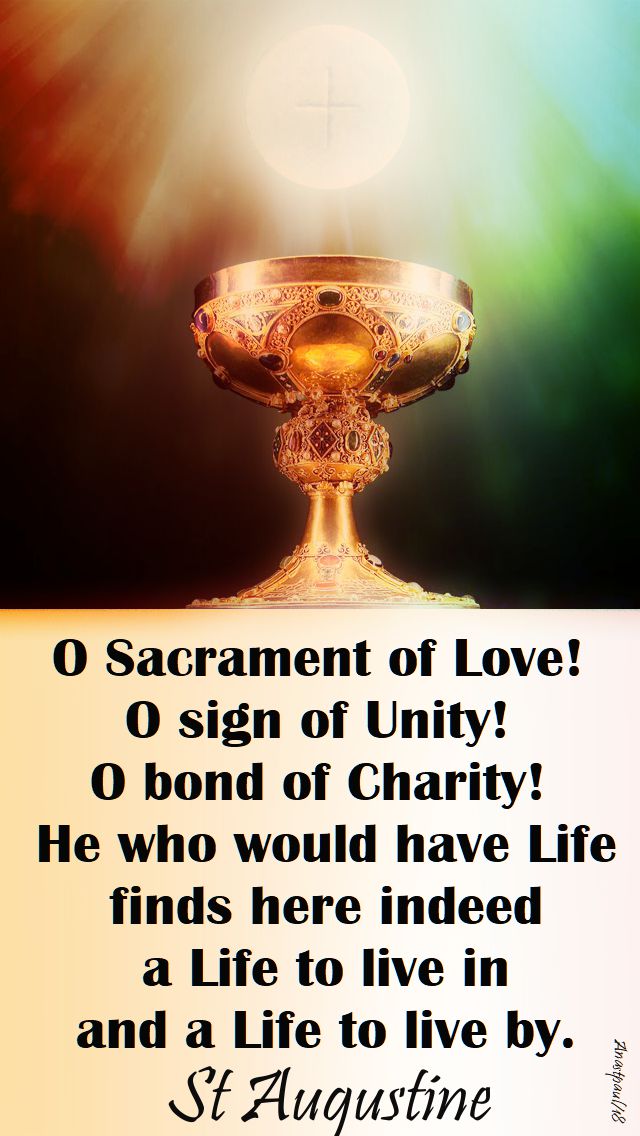
“What does the poor man do
at the rich man’s door,
the sick man in the presence of his physician,
the thirsty man at a limpid stream?
What they do, I do before the Eucharistic God.
I pray. I adore. I love.”
St Francis of Assisi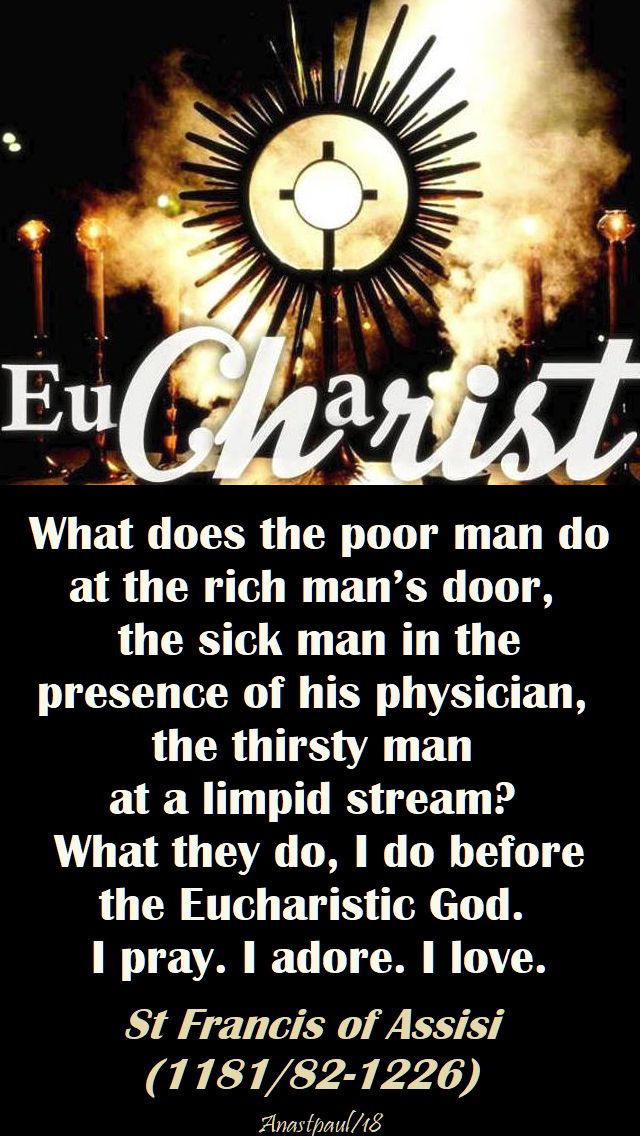
“Put all the good works in the world
against one Holy Mass;
they will be as a grain of sand
beside a mountain.”
St John Marie Baptiste Vianney (1786-1859)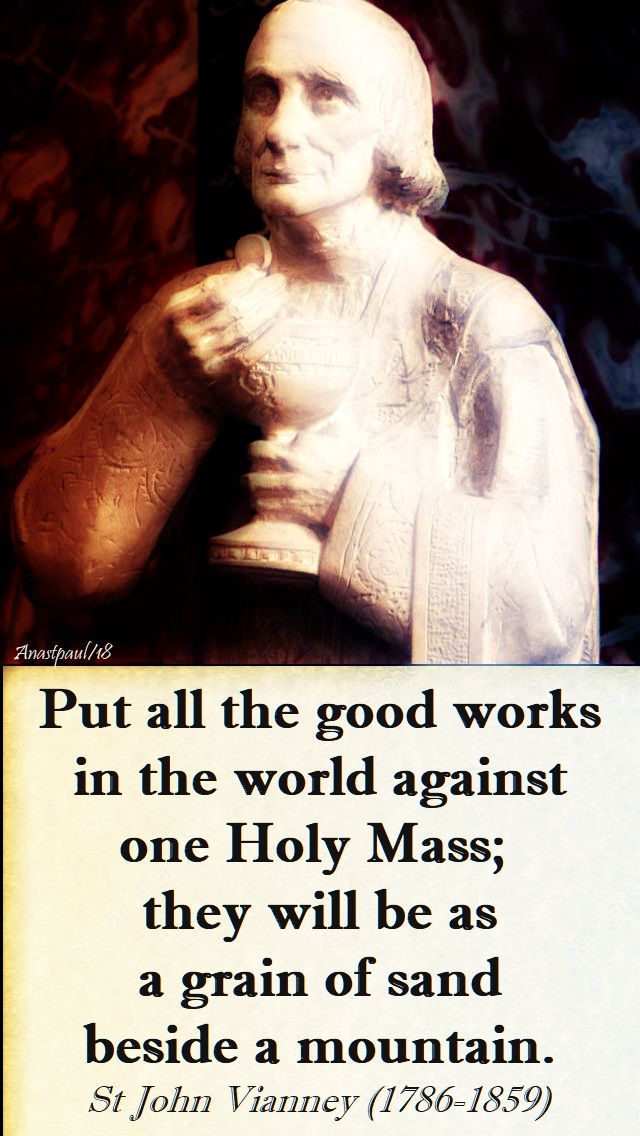
“When you look at the crucifix,
you understand how much Jesus loved you then.
When you look at the Sacred Host,
you understand how much Jesus loves you now.”
“Unless we believe and see Jesus
in the appearance of bread on the altar,
we will not be able to see Him
in the distressing disguise of the poor.”
St Mother Teresa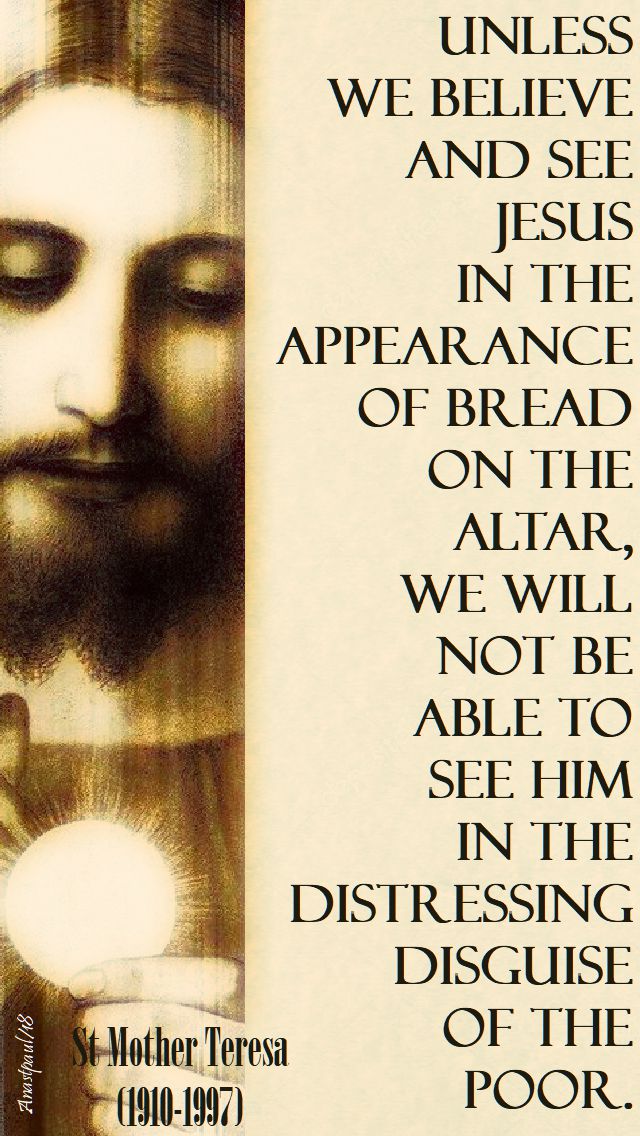
One Minute Reflection – 18 January – The Memorial of St Margaret of Hungary (1242-1270)
One Minute Reflection – 18 January – The Memorial of St Margaret of Hungary (1242-1270)
Just as the Father who has life sent me and I have life because of the Father, so the man who feeds on me will have life because of me...John 6:57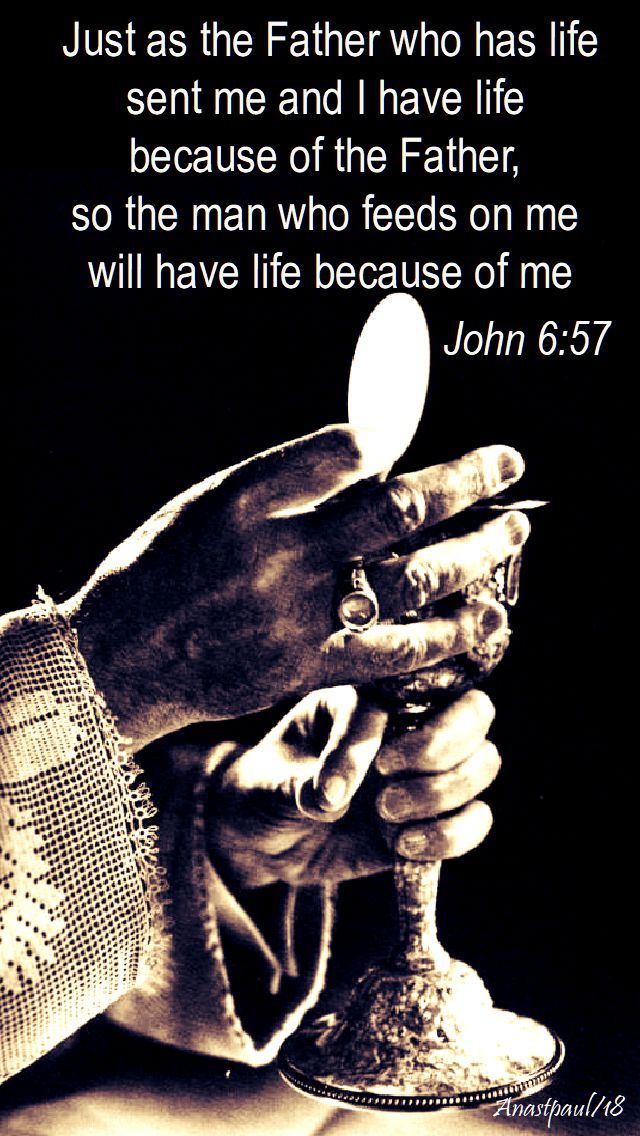
REFLECTION – “The Holy Eucharist, is a fire that purifies and consumes all our miseries and imperfections. Do everything in your power to make yourself worthy of the Eucharist and this Divine Fire, will take care of the rest.”…St Hyacinth of Mariscotti T.O.R.(1585-1640)
PRAYER – Living God, You have given me the Eucharist as my food for heavenly life. Help me to partake of it often and so be strengthened on my pilgrim journey on earth. Grant that St Margaret of Hungary, may add us all to her prayers, that by her intercession, we too may learn the true way home. Through Jesus Christ, our Lord, in union with the Holy Spirit, one God forever and ever, amen.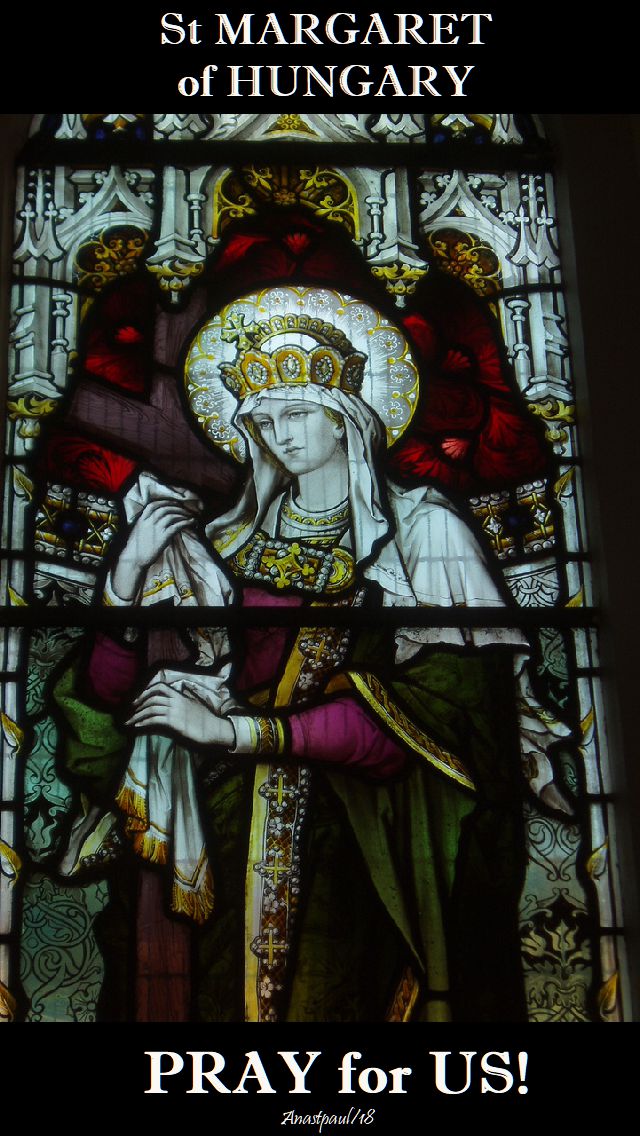
Our Morning Offering – 18 January
Our Morning Offering – 18 January
Daily Prayer “Grant me Grace”
By St Thomas Aquinas
(1225-1274) Doctor of the Church
Grant me grace,
O merciful God,
to desire ardently
all that is pleasing to You,
to examine it prudently,
to acknowledge it truthfully,
and to accomplish it perfectly,
for the praise and glory of Your name.
Amen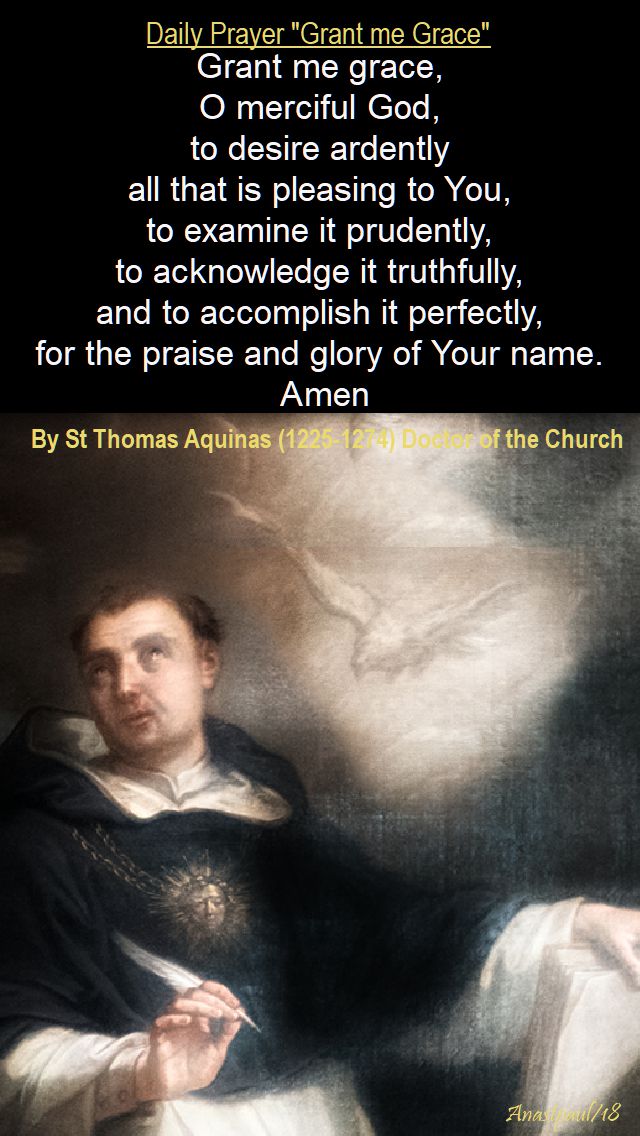
Saint of the Day – 18 January – St Margaret of Hungary OP (1242-1270)
Saint of the Day – 18 January – St Margaret of Hungary OP (1242-1270) – Nun and Virgin – born in 1242 and died on 18 January 1271 at Budapest, Hungary. Her relics were given to the Poor Clares at Pozsony (modern Bratislava, Slovak Republic) when the Dominican Order in the area was dissolved, however, most of her relics were destroyed in 1789 though what remains are still preserved at Gran, Gyor, Pannonhalma, Hungary. Patronage – against flood. Attributes – Dominican holding a lily and a book, a princess with a lily, Dominican in prayer with a globe of fire over her head. Princess Margaret was a Dominican nun and the daughter of King Béla IV of Hungary and Maria Laskarina. 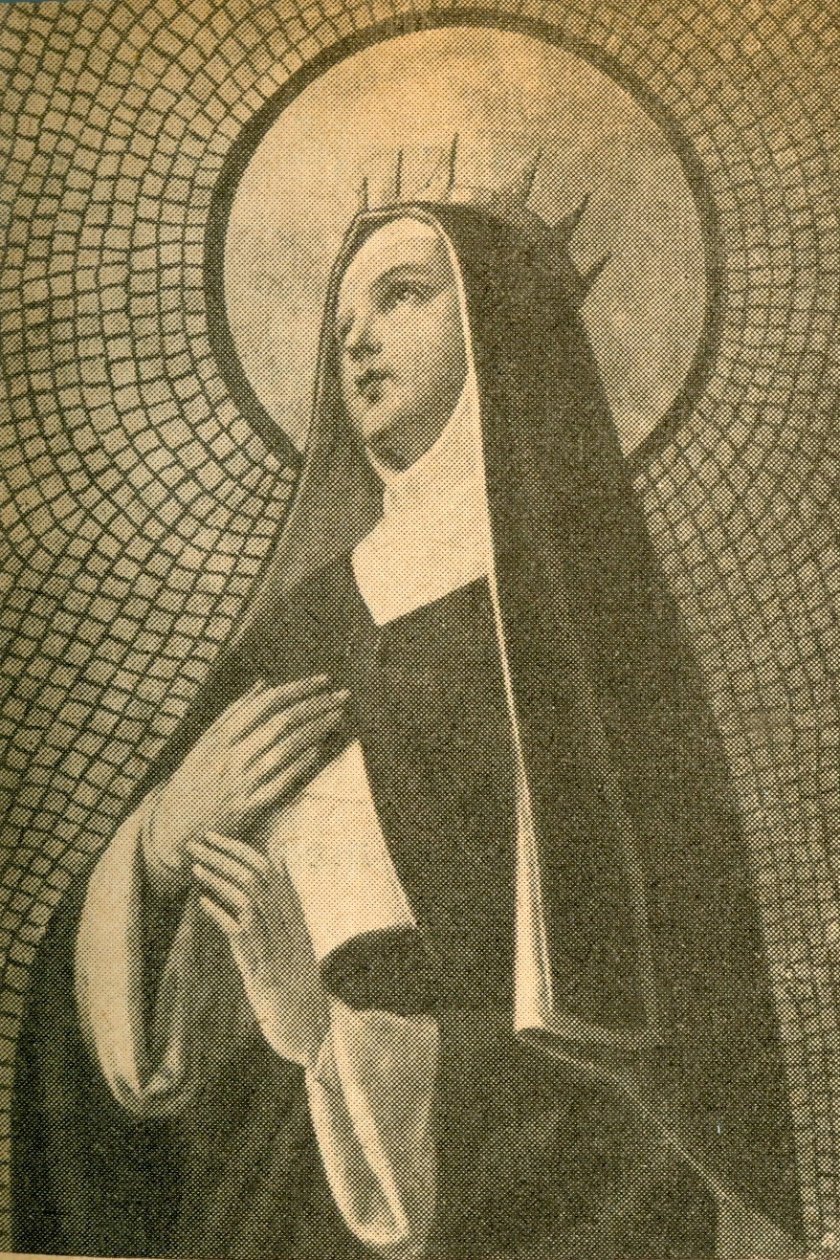
Margaret, the daughter of King Bela IV, champion of Christendom and Queen Mary Lascaris of Hungary, was offered to God before her birth, in petition that the country would be delivered from the terrible scourge of the Tartars. The prayer having been answered, the king and queen made good their promise by placing the rich and beautiful three-year-old in the Dominican convent at Vesprim. Here, in company with other children of nobility, she was trained in the arts thought fitting for royalty.
Margaret was not content with simply living in the house of God, she demanded the religious habit–and received it–at the age of four. Furthermore, she took upon herself the austerities practised by the other sisters–fasting, hairshirts, the discipline (scourge), and night vigils. She soon learned the Divine Office by heart and chanted it happily to herself as she went about her play. She chose the least attractive duties of the nuns for herself. She would starve herself to keep her spirit humble. No one but Margaret seemed to take seriously the idea that she would one day make profession and remain as a sister, for it would be of great advantage to her father if she were to make a wise marriage.
This question arose seriously when Margaret was 12. She responded in surprise. She said that she had been dedicated to God, even before her birth and that she intended to remain faithful to that promise. Some years later her father built for her a convent on the island in the Danube between Buda and Pest. To settle the matter of her vocation, here she pronounced her vows to the master general of the order, Blessed Humbert of the Romans, in 1255 and took the veil in 1261.


Again, when Margaret was 18, her father made an attempt to sway her from her purpose, because King Ottokar of Bohemia, hearing of her beauty, had come seeking her hand. He even obtained a dispensation from the pope and approached Margaret with the permission. Margaret replied as she had previously, “I esteem infinitely more the King of Heaven and the inconceivable happiness of possessing Jesus Christ than the crown offered me by the King of Bohemia.” Having established that she was not interested in any throne but a heavenly one, she proceeded with great joy to live an even more fervent religious life than she had before.
Margaret’s royal parentage was, of course, a matter of discussion in the convent. But the princess managed to turn such conversation away from herself to the holy lives of the saints who were related to her by blood–King Saint Stephen, Saint Hedwig, Saint Elizabeth of Hungary and several others. She did not glory in her wealth or parentage, but strove to imitate the saints in their holiness. She took her turn in the kitchen and laundry, seeking by choice much heavy work that her rank might have excused her from doing. She was especially welcome in the infirmary, which proves that she was not a sad-faced saint and she made it her special duty to care for those who were too disagreeable for anyone else to tend.
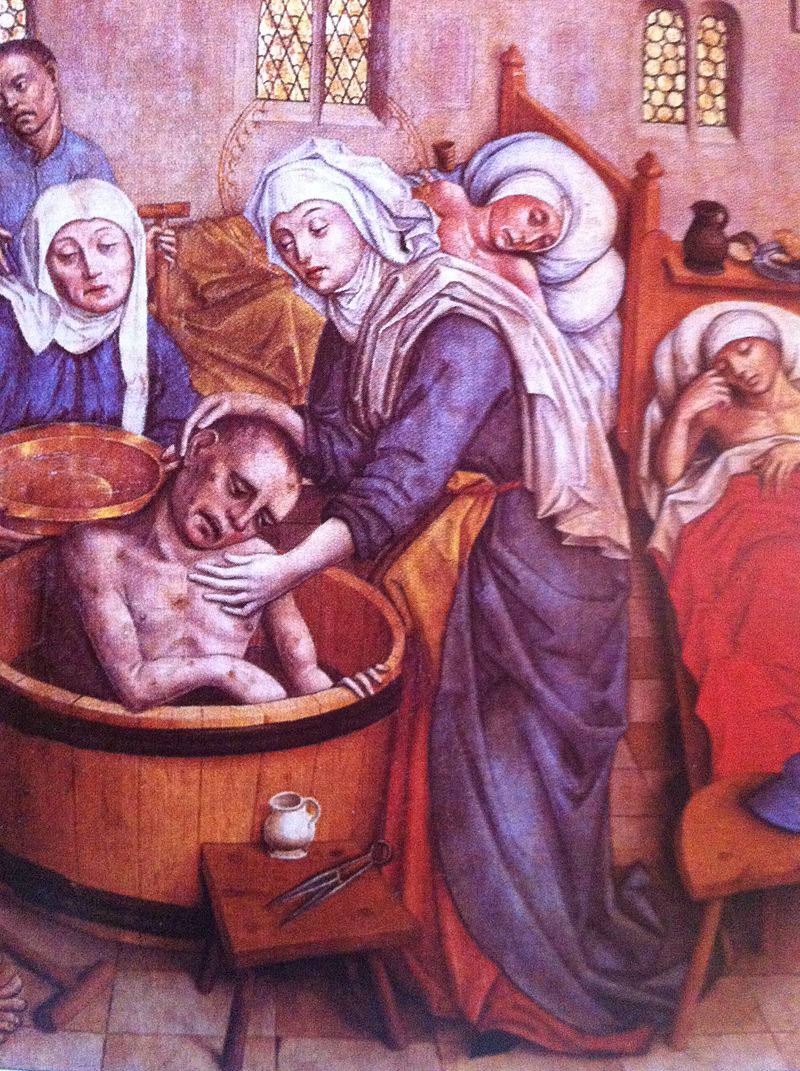
Margaret’s austerities seem excessive to us of a weaker age. The mysteries of the Passion were very real to her and gave reason for her long fasts, severe scourgings and other mortifications detailed in the depositions of witnesses taken seven years after her death (of which records are still in existence). Throughout Lent she scarcely ate or slept. She not only imitated the poverty-stricken in their manual labour and hunger but also in their lack of cleanliness–a form of penance at that time.
She had a tender devotion to Our Lady and on the eve of her feasts, Margaret said a thousand Hail Mary’s. Unable to make the long pilgrimage to the Holy Land, to Rome, or to any of the other famous shrines of Christendom, the saint developed a plan by which she could go in spirit: she counted up the miles that lay between herself and the desired shrine and then said an Ave Maria for every mile there and back. On Good Friday she was so overcome at the thoughts of Our Lord’s Passion that she wept all day. She was frequently in ecstasy and very embarrassed if anyone found her so and remarked on her holiness.


Simone Martini – St Elisabeth, St Margaret and Henry of Hungary
A number of miracles were performed during Margaret’s lifetime and many more after her death because Margaret had an implicit faith in the power and efficacy of prayer. The princess nun was only 28 when she died. Most of the particulars of her life are recorded in existing depositions of witnesses taken in 1277. Her friends and acquaintances petitioned for her to be acclaimed a saint almost immediately after her death. Among them was her own servant, Agnes, who rightly observed that this daughter of a monarch showed far more humility than any of the monastery’s maids. Although their testimony expressed Margaret’s overpowering desire to allow nothing to stand between her and God, the process of canonisation was not complete until 1943, when she was canonised on 19 November by Venerable Pope Pius XII.


Memorials of the Saints – 18 January
St Margaret of Hungary (1242-1270)
–
St Agathius the Martyr
St Ammonius of Astas
St Archelais the Martyr
Bl Beatrix of Este the Younger
Bl Charlotte Lucas
St Catus
Bl Christina Ciccarelli
St Day/Dye
St Deicola of Lure
Bl Fazzio of Verona
Bl Félicité Pricet
St Jaime Hilario Barbel Cosen
St Leobard of Tours
St Margaret of Hungary
Bl Maria Teresa Fasce
Bl Monique Pichery
St Moseus of Astas
St Prisca of Rome
St Susanna the Martyr
St Thecla the Martyr
S tUlfrid of Sverige
Bl Victoire Gusteau
St Volusian of Tours
—
Martyrs of Carthage – 3 saints
Martyrs of Egypt -37 saints
Martyrs of Nicaea – 3 saints
Novena to St Paul in preparation for the Feast of The Conversion of St Paul on 25 January
Novena to St Paul in preparation for the Feast of The Conversion of St Paul on 25 January
Day TWO – 17 January
Saul of Tarsus, the “Pharisee, a son of Pharisees” (Acts 23:6) had often prayed in the Psalms “You have said, ‘seek my face.’ My heart says to you, ‘Your face, Lord, do I seek’…Bow your heavens, O Lord and come down!….Flash forth the lightening …Stretch forth your hand from on high, rescue me and deliver me.” (Ps 27:8-9; 144:5,6,7).
And that is EXACTLY what happened when Saul encountered Christ on the road to Damascus!
LET US PRAY:
Glorious St Paul,
your conversion is a powerful witness to the world
that God loves us and does not give up on us,
no matter how far we stray.
May every circumstance of my life be an occasion
to change my way of thinking,
to renounce self-will and
to surrender myself to the wisdom
and tenderness of Jesus Christ
who is acting to make me His saint.
Pray that I may love God’s will and providence for me.
In this confidence, I entrust to you, St Paul,
these, my intentions
………………………………………..
(mention your request)
I ask this through Christ, Our Lord, amen.
St Paul Pray for us!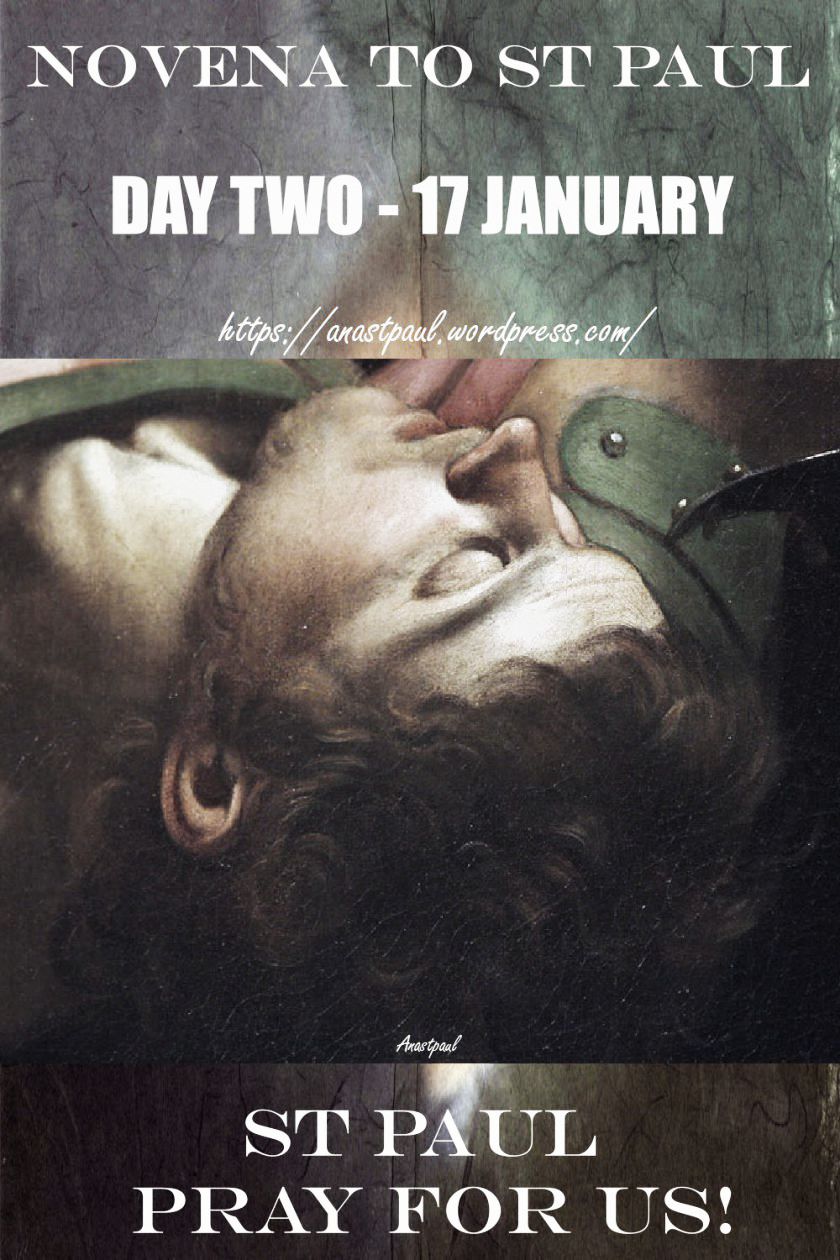
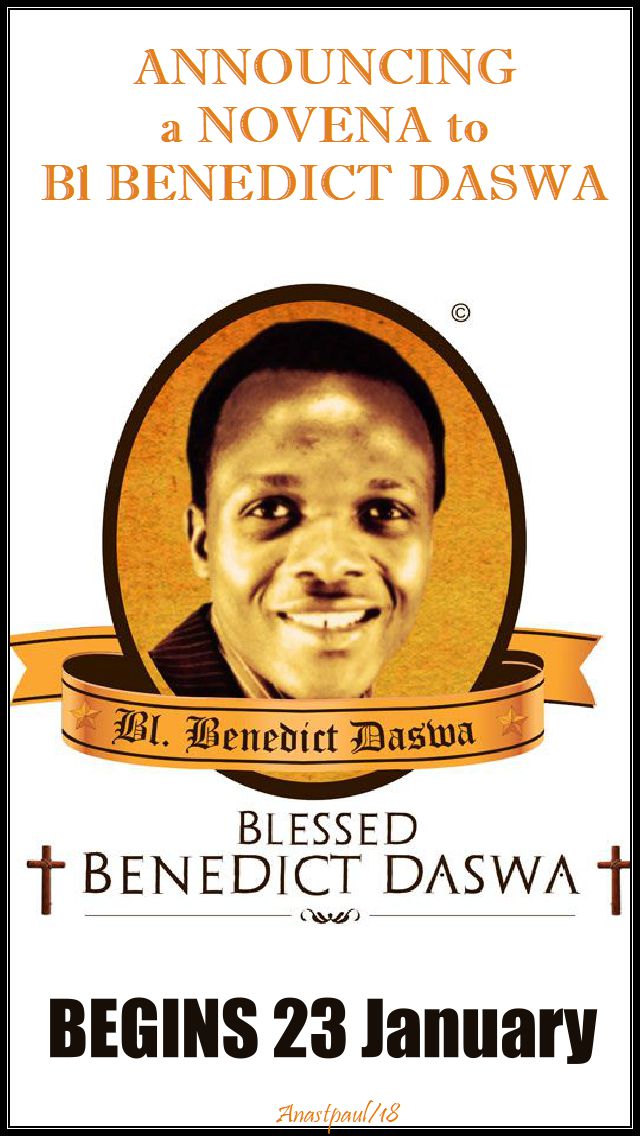
Announcing the NOVENA to Blessed BENEDICT DASWA – Memorial 1 February
Announcing the NOVENA to Blessed BENEDICT DASWA – Memorial 1 February
Begins 23 January
We are encouraging people in all the Dioceses of Southern Africa (SACBC region) to pray for the favours and graces they need during the nine days prior to the Feast on 1 February. This novena will commence on 23 January and conclude on 31 January. We also invite people to make three acts of kindness each day of the Novena in remembrance of the three acts of charity which Blessed Benedict performed the day he was martyred.
The NOVENA PRAYER in various languages
The Novena Prayer in various languages for opening or downloading:
English english-novena
Afrikaans afrikaans_combined
French french-novena
Portuguese portuguese-novena
South Sotho s-sotho-novena
North Sotho sepedi-novena
XiTsonga tsonga-novena
TshiVenda venda-novena
Novena to St Francis de Sales Day Three – 17 January
Novena to St Francis de Sales
Day Three – 17 January
“I desire very little and what I do desire I desire very little; I have hardly any desires but if I were to begin my life all over again I would want to have none at all … Ask for nothing, refuse nothing; we must simply abandon ourselves into the hands of Providence, without nourishing any other desire but to do whatever God wills. St Paul practised this act of absolute abandonment at the very moment of his conversion. When he was deprived of his sight, he immediately said, “Lord, what do you want me to do?” [cf. Act 22:10] From that moment on he put himself completely at God’s disposal. All our perfection consists precisely in the practical application of this principle. ” (St Francis de Sales Spiritual Treatises XXI, O. VI, pp. 383-384)
O blessed Francis de Sales,
who on earth did excel in a life of virtue,
especially in the love of God and neighbour,
I earnestly ask you to take me under your compassionate care and protection.
Obtain for me conversion of mind and heart.
Grant that all people, especially …………………….
(names of those whom you wish to include)
may experience the depth of God’s redeeming and healing love.
Teach me to fix my eyes on the things of heaven even as I walk each day
with my feet planted firmly on the earth.
Help me, through the practice of virtue and the pursuit of devotion,
to avoid anything that would otherwise cause me to stumble
in my attempt to follow Christ and to be an instrument of the Holy Spirit.
Encouraged by your prayers and example,
help me to live fully my sacred dignity
with the hope of experiencing my sacred destiny: eternal life with God.
Receive also this particular need or concern that I now lift up in prayer.
………………………………………. (mention your particular need).
O God, for the salvation of all, You desired that St Francis de Sales—
preacher, missionary, confessor, bishop and founder—
should befriend many along the road to salvation.
Mercifully grant that we,
infused with the humility and gentleness of his charity,
guided by his wisdom and sharing in his spirit may experience eternal life.
We ask this through Christ our Lord. Amen
St Francis de Sales, pray for us.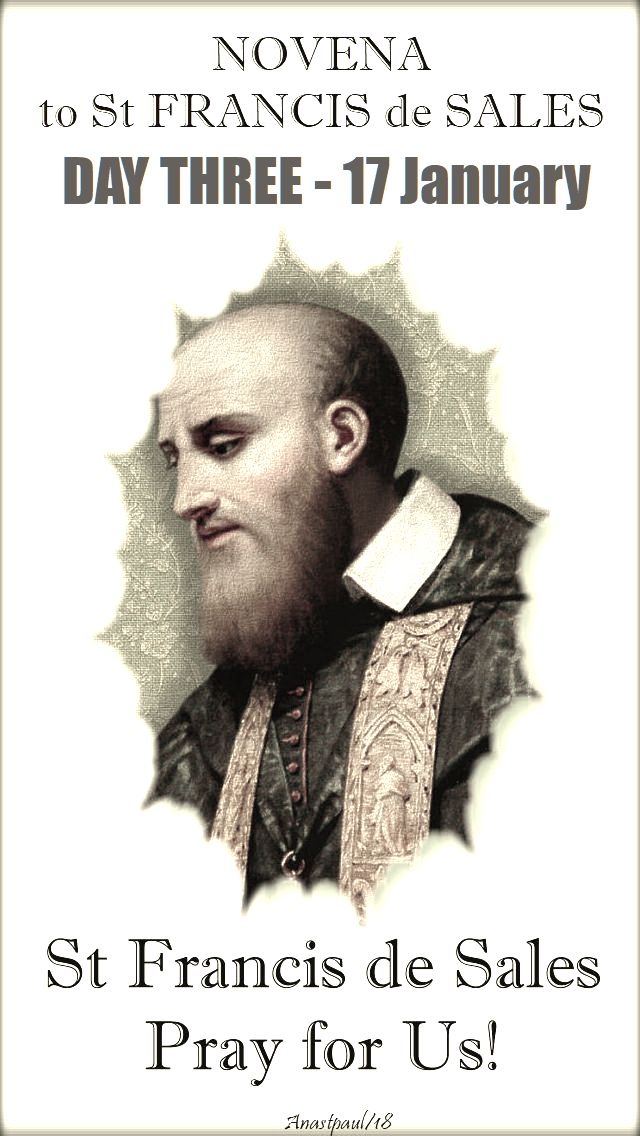
Thought for the Day – 17 January – The Memorial of St Anthony Abbot (251-356)
Thought for the Day – 17 January – The Memorial of St Anthony Abbot (251-356)
In an age that smiles and jeers at the notion of devils and angels, a person known for having power over evil spirits must at least make us pause. And in a day when people speak of life as a “rat race,” one who devotes a whole life to solitude and prayer points to an essential of the Christian life in all ages. Anthony’s hermit life reminds us of the absoluteness of our break with sin and the totality of our commitment to Christ. Even in God’s good world, there is another world whose false values constantly tempt us.
Our most powerful protection IS
the Sign of the Cross:
“Let us not then be ashamed
to confess the Crucified.
BE THE CROSS OUR SEAL,
made with boldness by our fingers,
on our brow and in everything,
over the bread we eat and the cups we drink,
in our comings in and goings out,
before our sleep,
when we lie down
and when we awake,
when we are in the way
and when we are still.
Great is that preservative,
it is without price,
for the poor’s sake,
without toil,
for the sick,
since also its’ grace is from God.
It is the Sign of the faithful
and the dread of evils –
for He has triumphed over them in it,
having made a shew of them openly –
for when they see the Cross,
they are reminded of the Crucified;
they are afraid of Him,
Who hath bruised the head of the dragon.
Despise not the Seal
because of the freeness of the Gift
but for this,
rather honour thy Benefactor!”
St Cyril of Jerusalem (315-387)
Father & Doctor of the Church

“The Sign of the Cross
is the most terrible weapon
against the devil.
Thus the Church wishes not only,
that we have it continually
in front of our minds,
to recall to us
just what our souls are worth
and what they cost Jesus Christ
but also that we should make it
at every juncture ourselves:
when we go to bed,
when we awaken during the night,
when we get up,
when we begin any action,
and, above all,
when we are tempted.”
St John Vianney (1786-1859)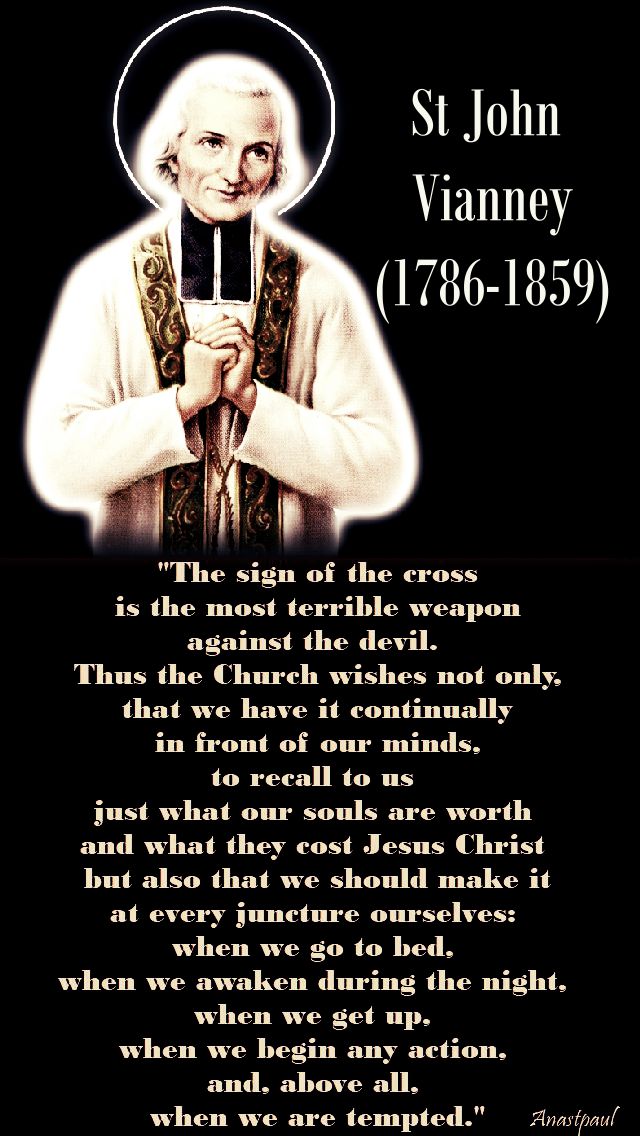
St Anthony Abbot Pray for us!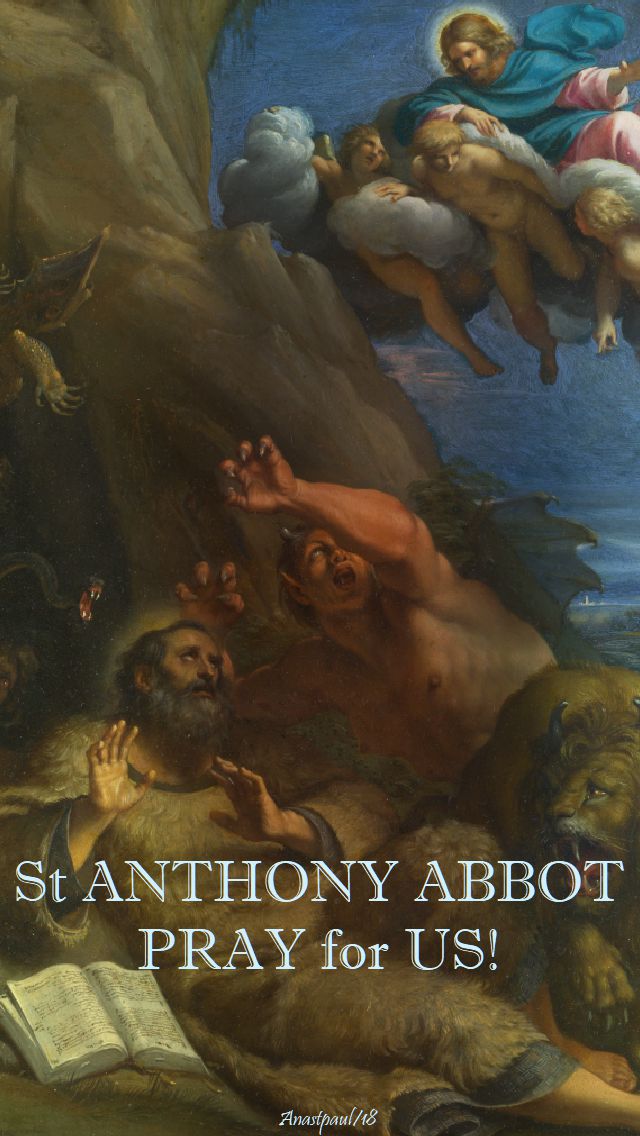
Quote/s of the Day – 17 January – The Memorial of St Anthony Abbot (251-356)
Quote/s of the Day – 17 January – The Memorial of St Anthony Abbot (251-356)
“The illusions of this world soon vanish,
especially if a man arms himself with
the Sign of the Cross.
The devils tremble
at the Sign of the Cross of our Lord,
by which He triumphed over
and disarmed them.”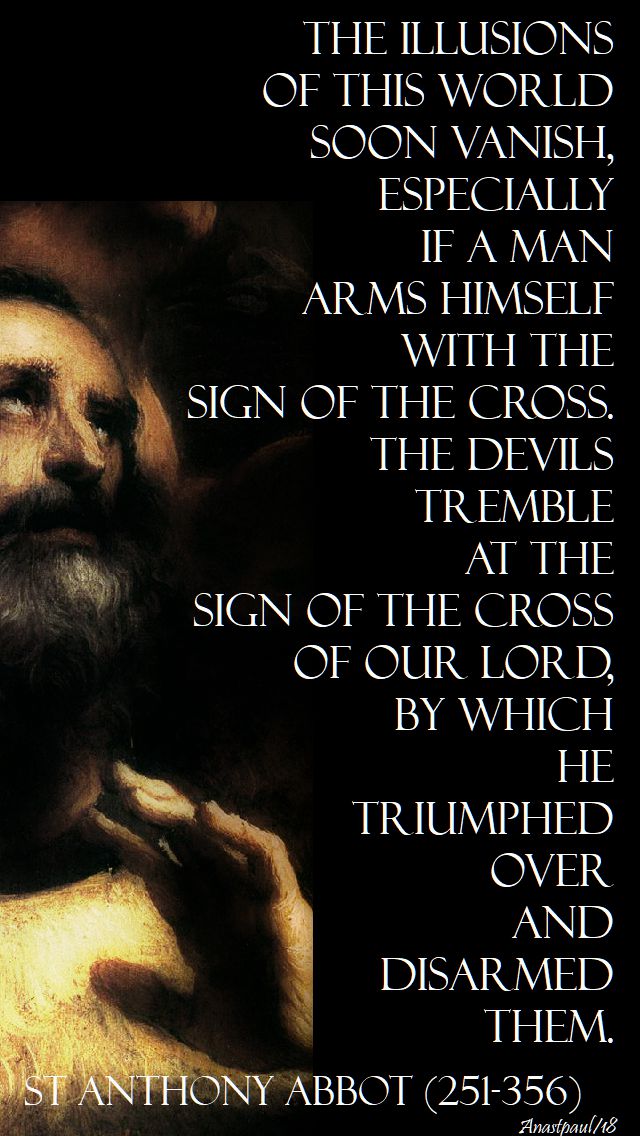
“The days are coming when men will go mad;
and, when they meet a man who has kept his senses,
they will rise up against him, saying,
“You are mad, because you are not like us.”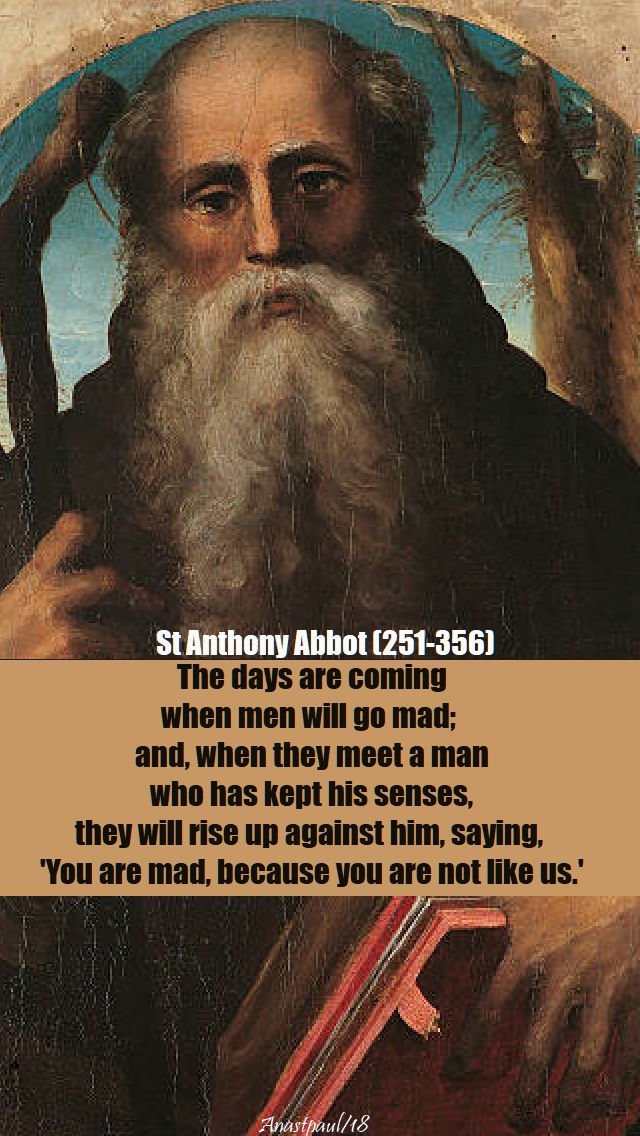
“I saw the snares that the enemy
spreads out over the world
and I said groaning,
“What can get through from such snares?”
Then I heard a voice saying to me, “Humility.”
“Reject pride and consider everyone
more righteous than yourself.”
St Anthony Abbot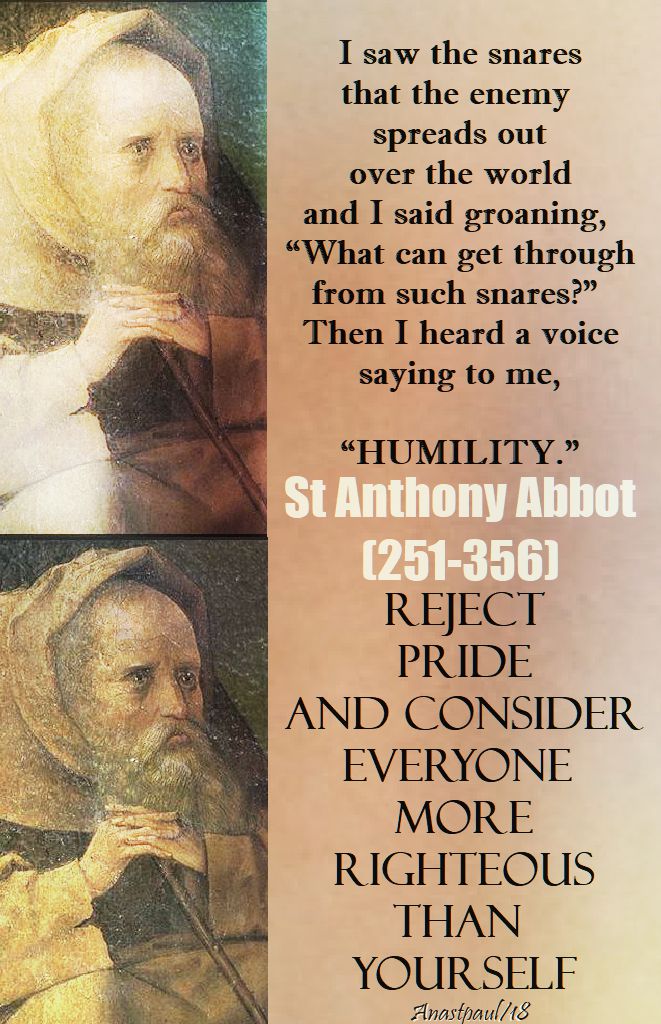
St Anthony told his monks:
For the presence, either of the good or evil,
by the help of God, can easily be distinguished.
The vision of the holy ones, is not fraught with distraction:
‘For they will not strive, nor cry,
nor shall anyone hear their voice’ (Matthew 12:19; Isaiah 42:2).
But it comes quietly and gently.
that an immediate joy, gladness and courage, arise in the soul.
For the Lord, who is our joy, is with them
and the power of God the Father.
St Ambrose: (340-397) Life of Saint Anthony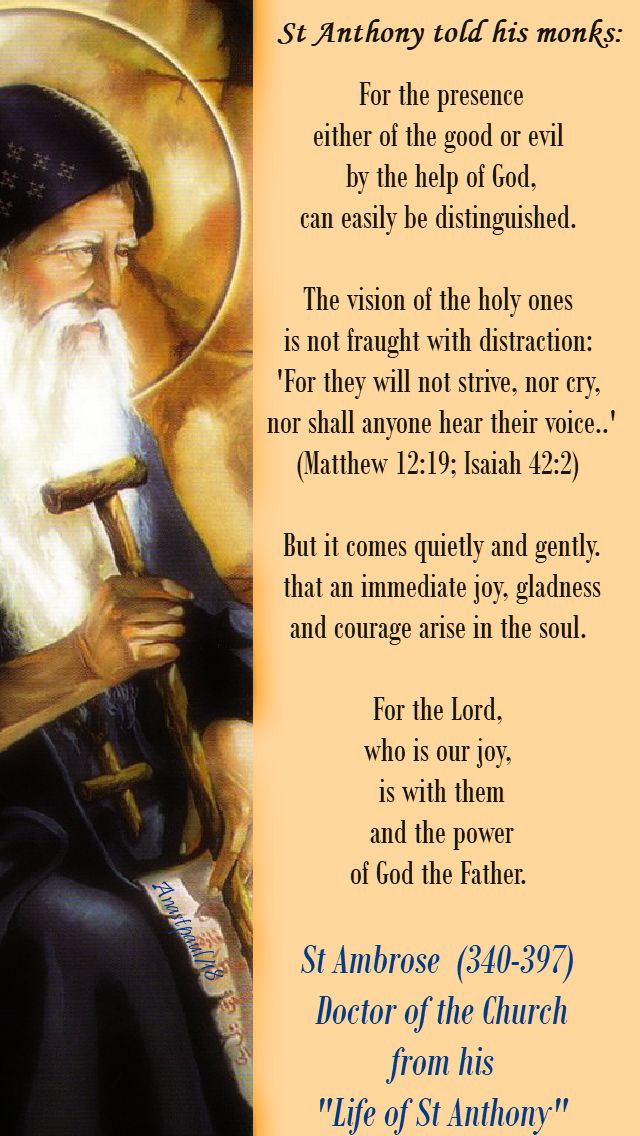
One Minute Reflection – 17 January – The Memorial of St Anthony Abbot (251-356)
One Minute Reflection – 17 January – The Memorial of St Anthony Abbot (251-356)
What can a man offer in exchange for his very life?……..Matthew 16:26
REFLECTION – “Everything of this world is sold at its price or exchanged for another equivalently priced. But the promise of life eternal is purchased at a bargain price!”……St Anthony Abbot 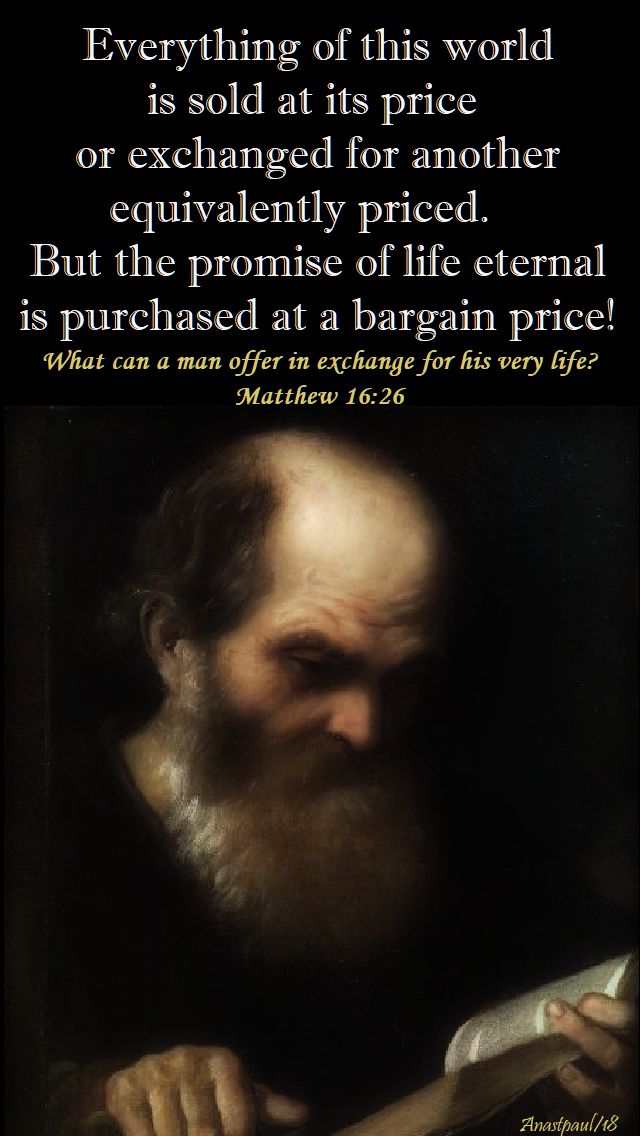
PRAYER – Lord of all, help me to be willing to pay the price of receiving eternal life. Let me offer myself to You in all that I do and say each day. Lord, grant that through the intercession of St Anthony Abbot, we may deny ourselves, abandon ourselves to Your divine will and love You above all things. Through our Lord, Jesus Christ, in union with the Holy Spirit, one God with You forever amen.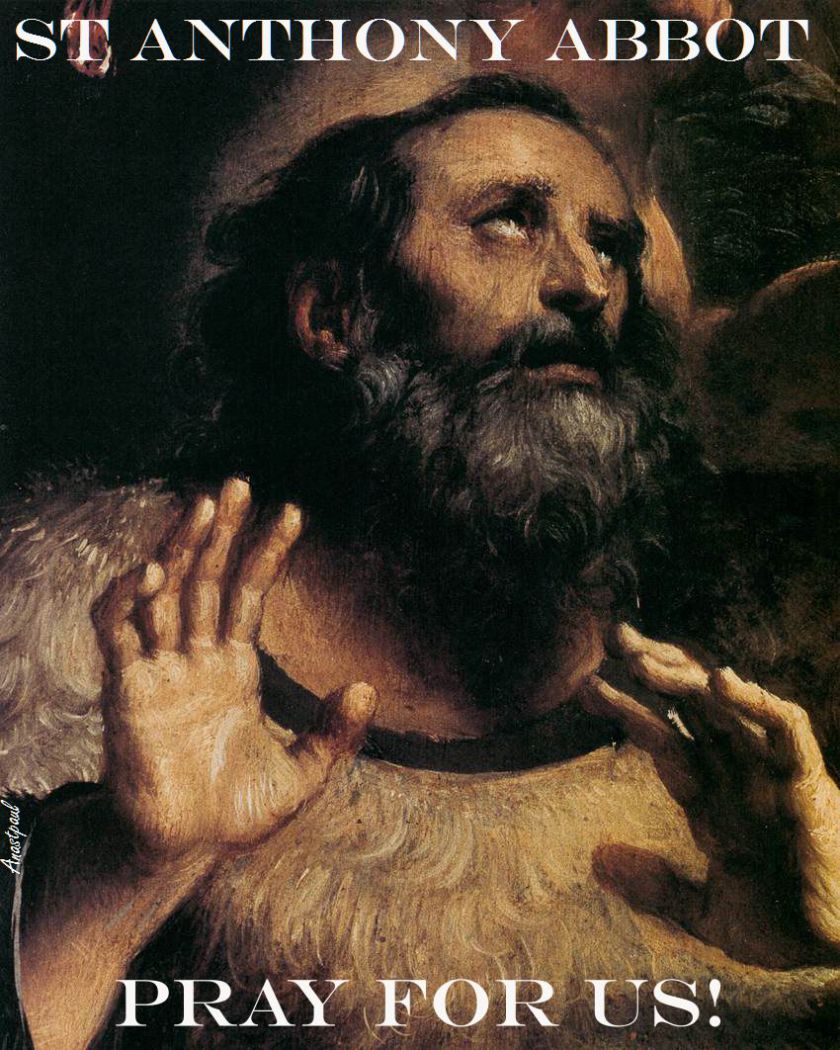
Our Morning Offering – 17 January
Our Morning Offering – 17 January
Morning Prayer
By St Teresa of Avila (1515-1582) Doctor of the Church “Doctor of Prayer”
Lord, grant that I may always
allow myself
to be guided by You,
always follow Your plans,
and perfectly accomplish
Your Holy Will.
Grant that in all things,
great and small,
today and all the days of my life,
I may do whatever You require of me.
Help me respond
to the slightest prompting of Your Grace,
so that I may be Your trustworthy
instrument for Your honour.
May Your Will be done in time
and in eternity by me,
in me
and through me.
Amen.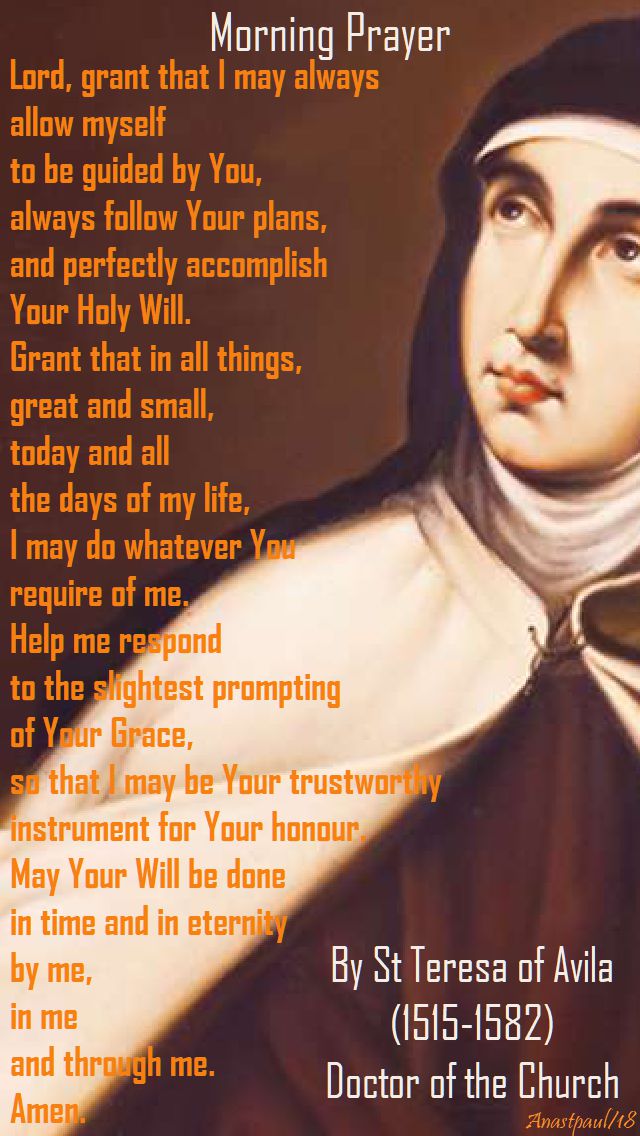
Saint of the Day – 17 January – St Anthony Abbot (c 251-356)
Saint of the Day – 17 January – St Anthony Abbot (c 251-358) Also known as: • Abba Antonius • Anthony of Egypt• Anthony of the Desert• Anthony the Anchorite• Anthony the Great• Anthony the Hermit• Antonio Abate• Father of Cenobites• Father of All Monks• Father of Western Monasticism. PATRONAGES – against eczema/skin diseases/skin rashes, epileptics; against ergotism, against pestilence, , of amputees, anchorites, animals, basket makers and weavers, brushmakers, butchers, cemetery workers, domestic animals, farmers, gravediggers, graveyards, hermits, pigs, monks, relief from pestilence, swineherds, Hospitallers, Tempio-Ampurias, Italy, Diocese of 9 Cities.
The biography of Anthony’s life by Athanasius of Alexandria helped to spread the concept of Christian monasticism, particularly in Western Europe via its Latin translations. He is often erroneously considered the first Christian monk but as his biography and other sources make clear, there were many ascetics before him. Anthony was, however, the first to go into the wilderness (about ad 270), which seems to have contributed to his renown. Accounts of Anthony enduring supernatural temptation during his sojourn in the Eastern Desert of Egypt inspired the often-repeated subject of the temptation of St Anthony in Western art and literature. St Anthony is appealed to against infectious diseases, particularly skin diseases. In the past, many such afflictions, including ergotism, erysipelas, and shingles, were referred to as St Anthony’s fire.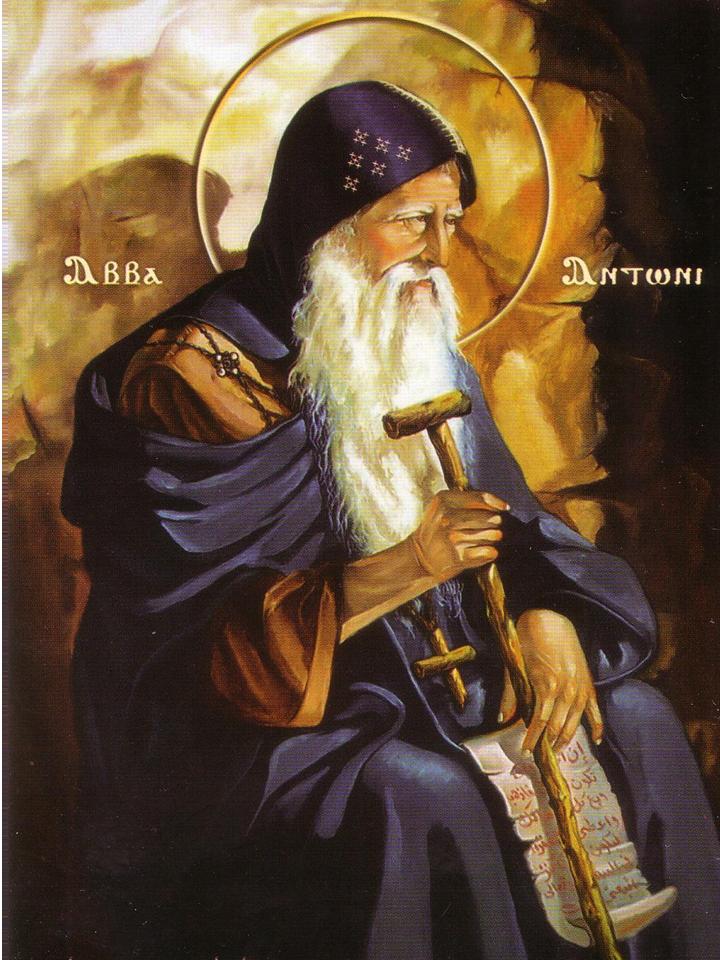
Anthony was born in Egypt in 250. At age 20, when his parents died, Anthony made sure his younger sister’s education could be completed in a community of holy women. He then sold all his possessions and left for a life of solitude in the desert. There an elderly hermit taught him about prayer and penance. For 20 years, he lived in isolation. Anthony wanted to know God deeply. He did penance by taking only bread and water once a day at sunset. The devil appeared to him in terrible shapes to tempt him. But Anthony had great confidence in God. Anthony’s unusual life did not make him harsh but radiant with God’s love and compassion.

Stories of Anthony’s holiness spread and people came to learn from him how to become holy. Some admirers wanted to stay, so Anthony—at age 54—founded a type of monastery consisting of hermitages near one another. Anthony wrote a rule that guided the monks. Later when Anthony heard of the persecutions of the Christians, he wanted to die a martyr. At 60, he left the desert to minister to the Christians in prisons, fearlessly exposing himself to danger. He came to realise that a person can die daily for Christ by serving him in ordinary ways with great love. 
So he returned to the desert to his life of prayer and penance. His life of solitude was again interrupted, however, when at age 88 he had a vision in which he saw the harm Arian followers were doing to the Church by denying the divinity of Christ. Anthony left for Alexandria to preach against this heresy. At age 90, another vision sent Anthony searching the desert for Saint Paul, the first hermit. These two holy men met and spoke of the wonders of God. Anthony is said to have died peacefully in a cave at age 105.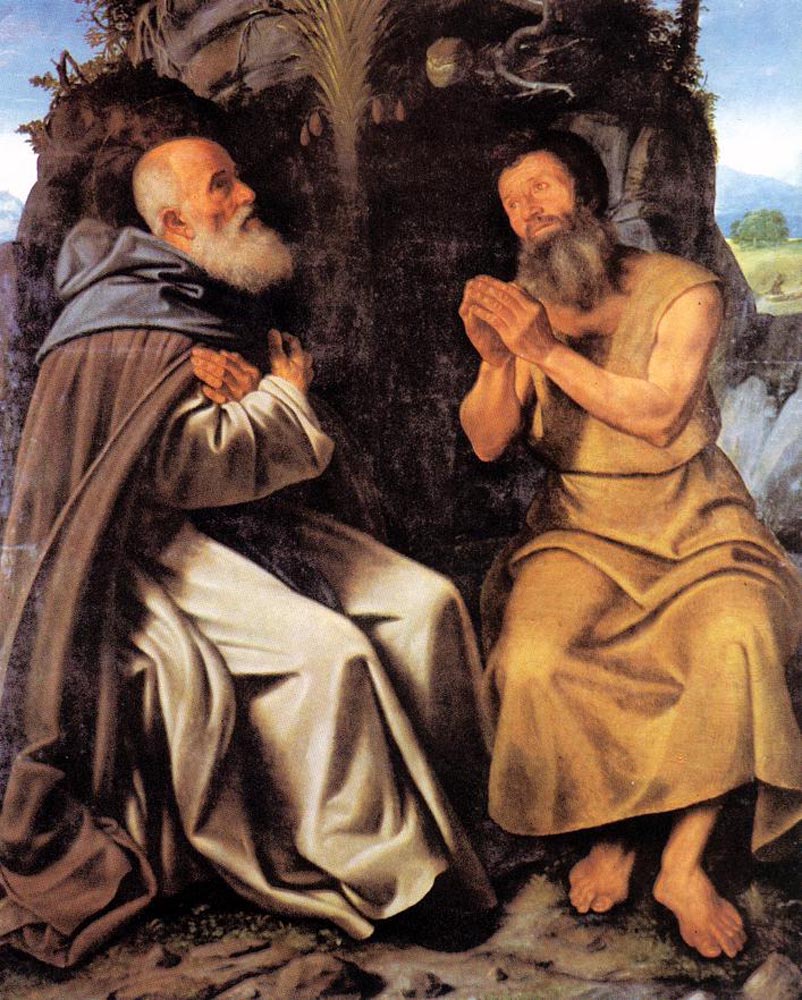
The life of Anthony will remind many people of St Francis of Assisi. At 20, Anthony was so moved by the Gospel message, “Go, sell what you have, and give to [the] poor” (Mark 10:21b), that he actually did just that with his large inheritance. He is different from Francis in that most of Anthony’s life was spent in solitude. At 54, he responded to many requests and founded a sort of monastery of scattered cells. Again like Francis, he had great fear of “stately buildings and well-laden tables.” Like Francis and of course, many saints, Anthony too desired martyrdom.
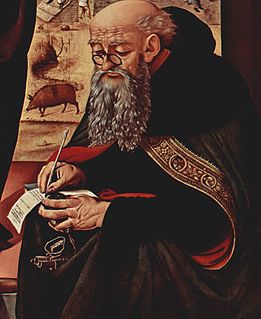
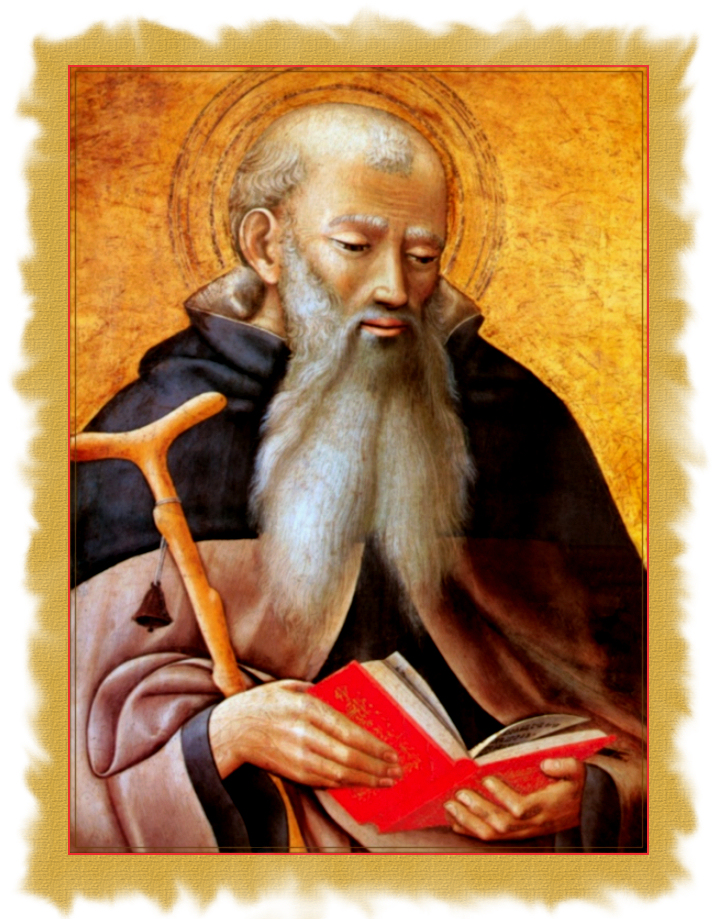
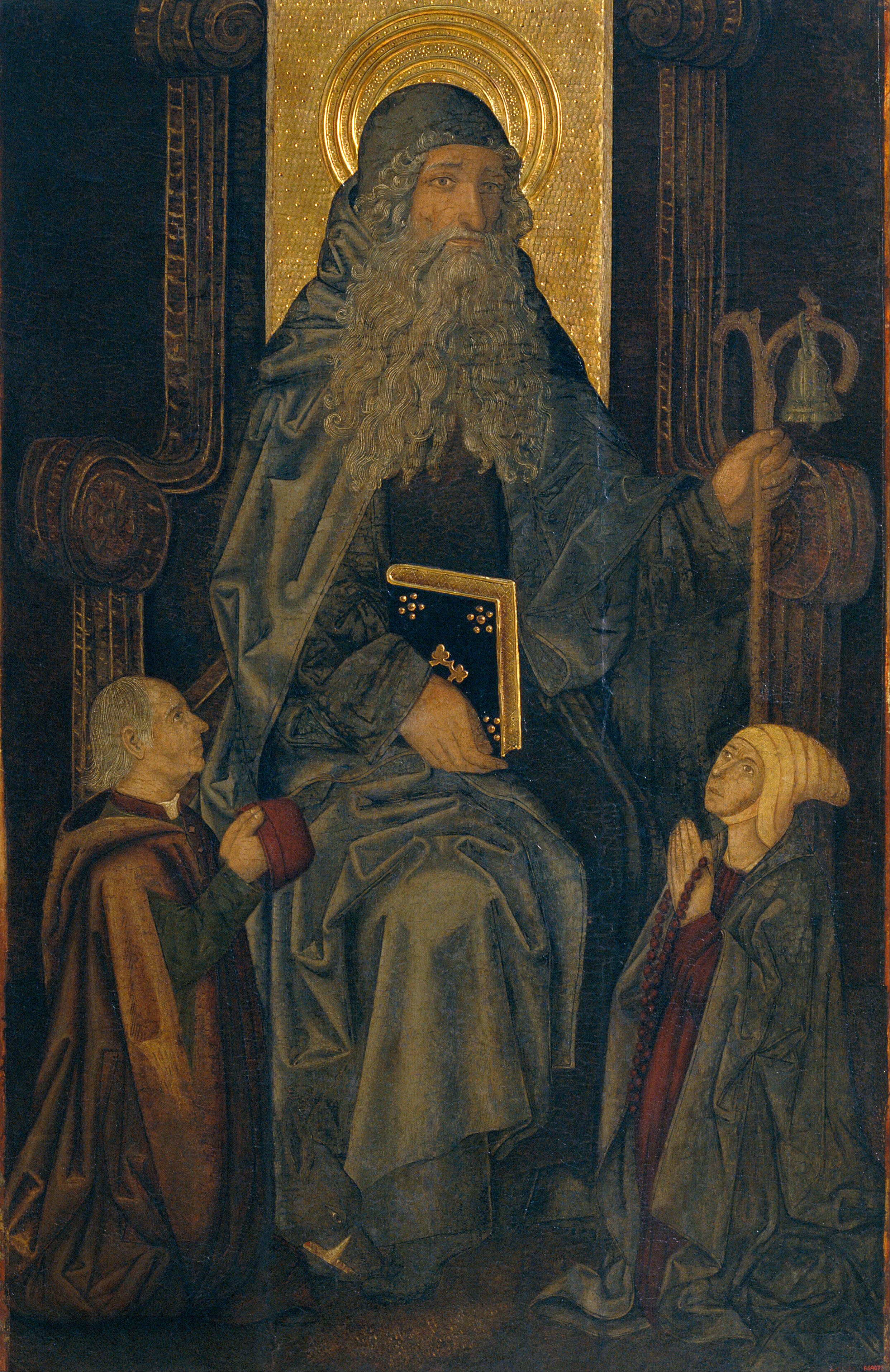
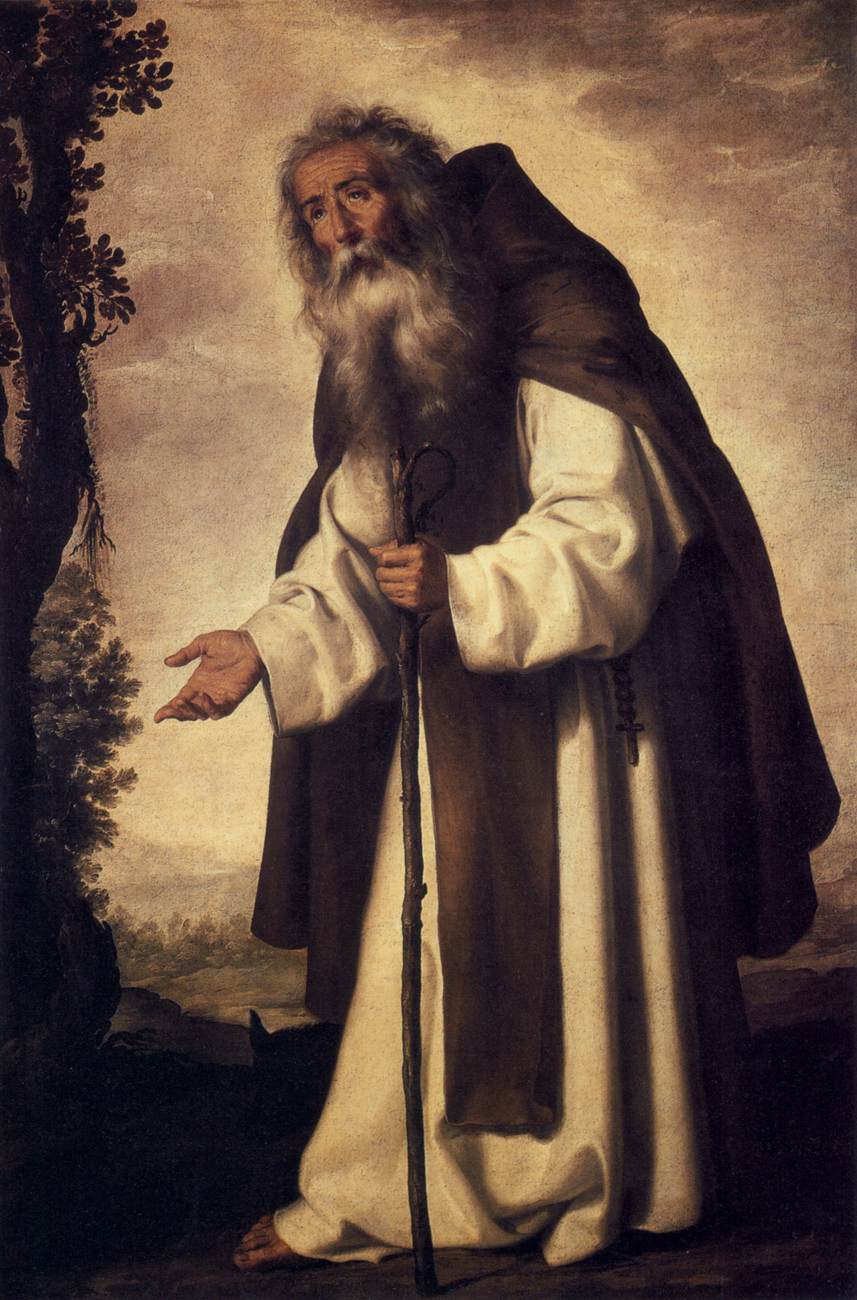
Anthony is associated in art with a T-shaped cross (which St Francis adopted), a pig and a book. The pig and the cross are symbols of his valiant warfare with the devil—the cross his constant means of power over evil spirits, the pig a symbol of the devil himself. The book recalls his preference for “the book of nature” over the printed word.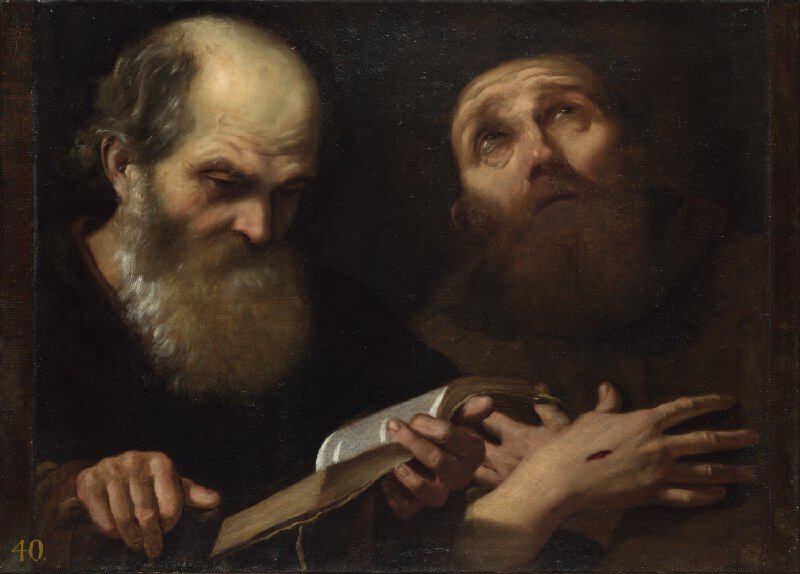
Feast of Our Lady of Pontmain and Memorials of the Saints – 17 January
St Anthony Abbot (251-356) (Memorial)
Our Lady of Pontmain: During the Franco-Prussian War, German troops approached the town of Pontmain, France and the villagers there prayed for protection. On the evening of 17 January 1871, Mary appeared in the sky for several minutes over the town. She wore a dark blue dress covered in stars, carried a crucifix and below her were the words Pray please. God will hear you soon. My son lets Himself be touched. That night the German army was ordered to withdraw and an armistice ending the war was signed eleven days later on 28 January. Approval of diocesan bishop.

OLYMPUS DIGITAL CAMERA

—
St Achillas of Sketis
St Amoes of Sketis
St Antony of Rome
Bl Euphemia Domitilla
Bl Gamelbert of Michaelsbuch
St Genitus
St Genulfus
St Jenaro Sánchez Delgadillo
St John of Rome
Bl Joseph of Freising
St Julian Sabas the Elder
St Marcellus of Die
St Merulus of Rome
St Mildgytha
St Nennius
St Neosnadia
St Pior
St Richimir
Bl Rosalina of Villeneuve
St Sabinus of Piacenza
St Sulpicius of Bourges
Martyrs of Langres: Eleusippus, Leonilla, Meleusippus, Speusippus
Novena to St Paul in preparation for the Feast of The Conversion of St Paul on 25 January
Novena to St Paul in preparation for the Feast of The Conversion of St Paul on 25 January
Blessed John Henry Newman (d 1890) looked upon conversion as nothing more than a deeper discovery of what we already truly desire. Conversion happens at the level of desire. It is the restoration of what makes us truly human.
Novena to St Paul
DAY ONE – 16 January
Glorious St Paul,
your conversion is a powerful witness to the world
that God loves us and does not give up on us,
no matter how far we stray.
Help me to live a life of ongoing conversion.
True conversion means converting my life to the
design of God, the plan He has for me right now.
Pray that I may love God’s will and providence for me.
In this confidence, I entrust to you, St Paul,
these, my intentions,
………………………………..
(mention your request)
I ask this through Christ, Our Lord, amen.
St Paul Pray for us!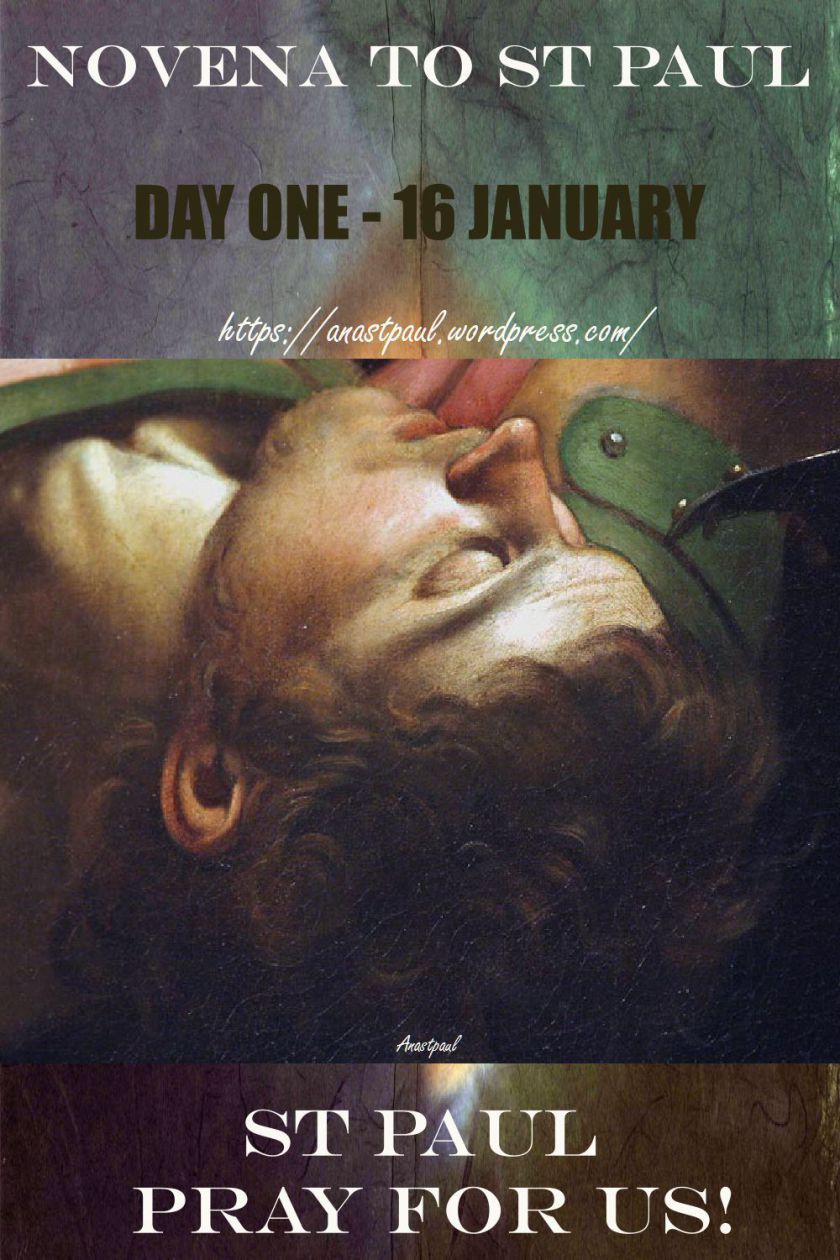
Novena to St Francis de Sales – Day Two – 16 January
Novena to St Francis de Sales
Day Two – 16 January
“State openly that you desire to be devout. I do not say that you should assert that you are devout but that you desire to be devout. Do not be ashamed to practice the ordinary, necessary actions that bring us to the love of God. Acknowledge frankly that you are trying to meditate, that you would rather die than commit a mortal sin, that you are resolved to frequent the sacraments and to follow your director’s advice. This candid confession of our desire to serve God and to consecrate ourselves entirely to His love is most acceptable to His Divine Majesty.” (St Francis de Sales INT. V, Ch. 18; O. III, p. 365)
O blessed Francis de Sales, you who on earth did excel in a life of virtue,
especially in the love of God and neighbour,
I earnestly ask you to take me under your compassionate care and protection.
Obtain for me conversion of mind and heart.
Grant that all people, especially ……………………….
(names of those whom you wish to include)
may experience the depth of God’s redeeming and healing love.
Teach me to fix my eyes on the things of heaven
even as I walk each day with my feet planted firmly on the earth.
Help me, through the practice of virtue and the pursuit of devotion,
to avoid anything that would otherwise cause me to stumble
in my attempt to follow Christ and to be an instrument of the Holy Spirit.
Encouraged by your prayers and example,
help me to live fully my sacred dignity
with the hope of experiencing my sacred destiny:
eternal life with God.
Receive also this particular need or concern that I now lift up in prayer.
…………………………… (mention your particular need).
O God, for the salvation of all,
You desired that St. Francis de Sales—
preacher, missionary, confessor, bishop and founder—
should befriend many along the road to salvation.
Mercifully grant that we,
infused with the humility and gentleness of his charity,
guided by his wisdom and sharing in his spirit
may experience eternal life.
We ask this through Christ our Lord. Amen
St Francis de Sales, pray for us.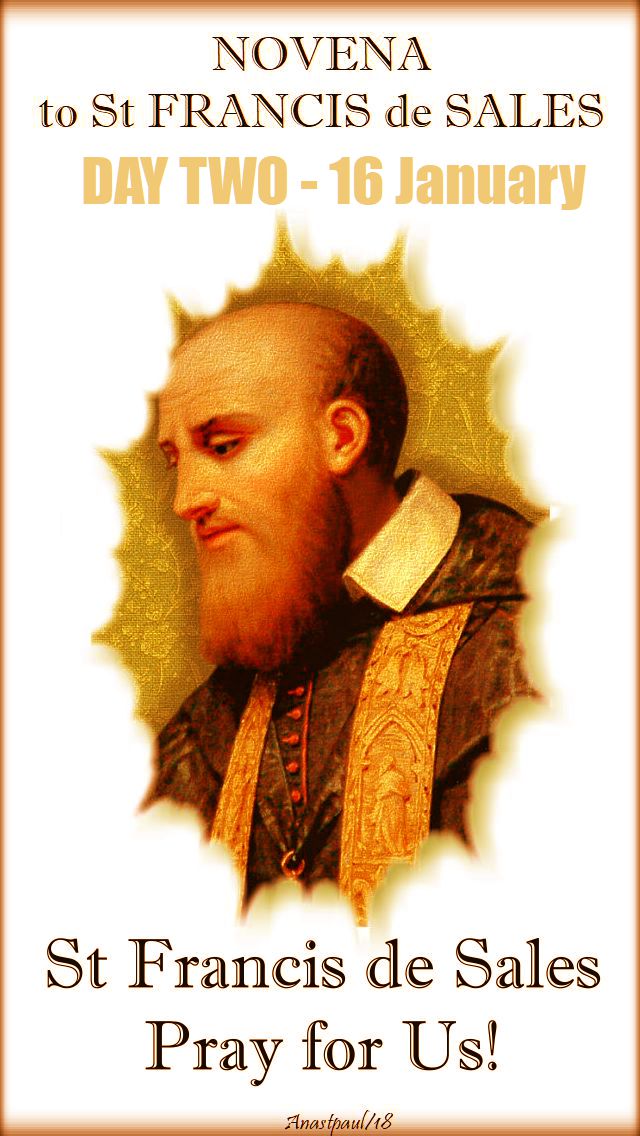
Thought for the Day – 16 January – The Memorial of St Joseph Vaz (1651-1711) Apostle of Sri Lanka
Thought for the Day – 16 January – The Memorial of St Joseph Vaz (1651-1711) Apostle of Sri Lanka
“Saint Joseph shows us the importance of transcending religious divisions in the service of peace. His undivided love for God opened him to love for his neighbour; he ministered to those in need, whoever and wherever they were. His example continues to inspire the Church in Sri Lanka today. She gladly and generously serves all members of society. She makes no distinction of race, creed, tribe, status or religion in the service she provides through her schools, hospitals, clinics and many other charitable works. All she asks in return is the freedom to carry out this mission.
Religious freedom is a fundamental human right. Each individual must be free, alone or in association with others, to seek the truth and to openly express his or her religious convictions, free from intimidation and external compulsion.
As the life of Saint Joseph Vaz teaches us, genuine worship of God bears fruit not in discrimination, hatred and violence but in respect for the sacredness of life, respect for the dignity and freedom of others and loving commitment to the welfare of all.” (From the Homily of Pope Francis on the Canonisation of St Joseoph Vaz – 14 January 2015)
“Joseph Vaz was on fire with faith. Guided by the example of his Divine Master, he travelled the whole Island, going everywhere, often barefoot, with a rosary round his neck as a sign of his Catholic faith. As a true disciple of Jesus, he endured innumerable sufferings with joy and confidence, knowing that in those sufferings too God’s plans were being fulfilled. His heroic charity, shown in a particular way in his selfless devotion to the victims of the epidemic in 1697, earned him the respect of everyone.
May the example of Father Joseph Vaz speak to your hearts…He welcomed everyone as a child of God. And because of this love his name is now invoked as a blessing, here in Sri Lanka and throughout the world. “Blessed are the peacemakers” (Mt. 5: 9). When lasting peace comes, all Sri Lankans will be blessed and your country will be restored in its full dignity and greatness. May Almighty God achieve this through you. Amen.
May Almighty God through the intercession of Our Lady and of blessed Joseph Vaz achieve this through you.” (St Pope John Paul on the Beatification of St Joseph Vaz – 21 January 1995)

Quote/s of the Day – 16 January – The memorial of St Joseph Vaz (1651-1711) Apostle of Sri Lanka – “Speaking of Charity”
Quote/s of the Day – 16 January – The memorial of St Joseph Vaz (1651-1711) Apostle of Sri Lanka – “Speaking of Charity”
“Help one another
with the generosity
of the Lord
and despise no one.
When you have
the opportunity
to do good,
do not let it go by.”
St Polycarp of Smyrna (69-155) Father of the Church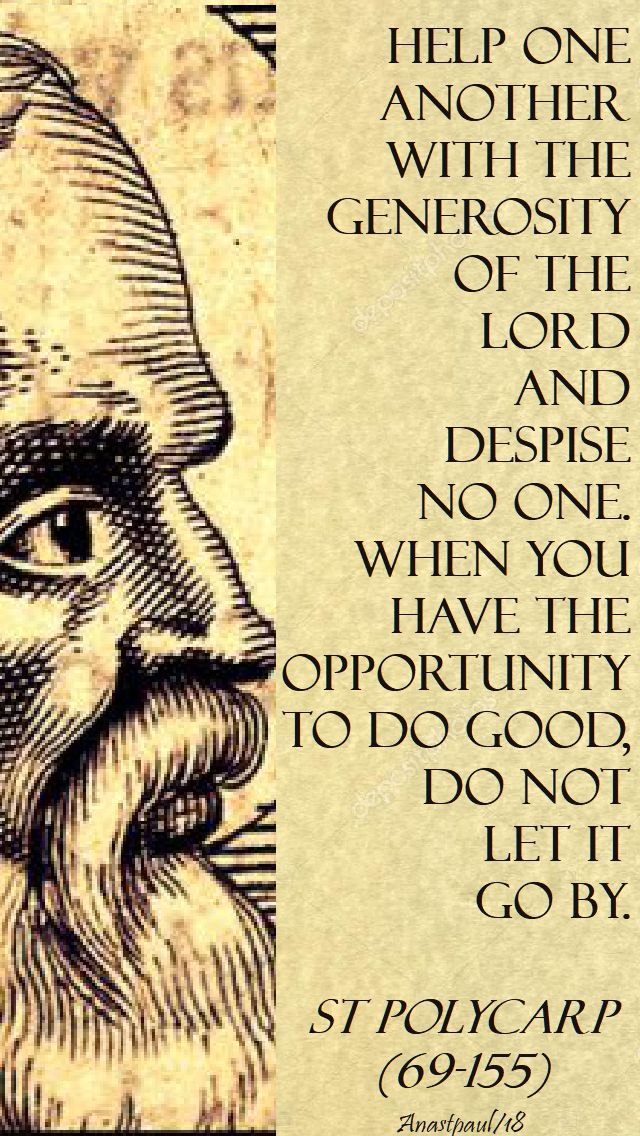
“No one has ever been accused
for not providing ornaments
…Do not, therefore, adorn the church
and ignore your afflicted brother,
for he is the most precious temple of all.”
St John Chrysostom (347-407) Father & Doctor of the Church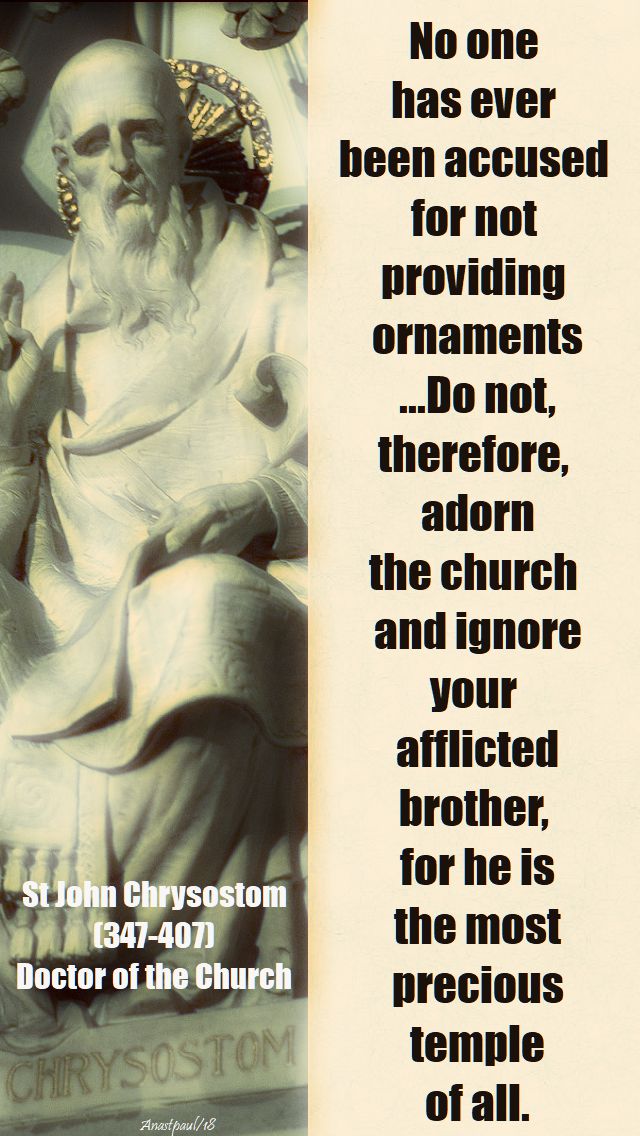
“Beauty grows in you to the extent that love grows
because charity itself is the soul’s beauty.”
“You cannot attain to charity except through humility.”
St Augustine (354-430) Father & Doctor of the Church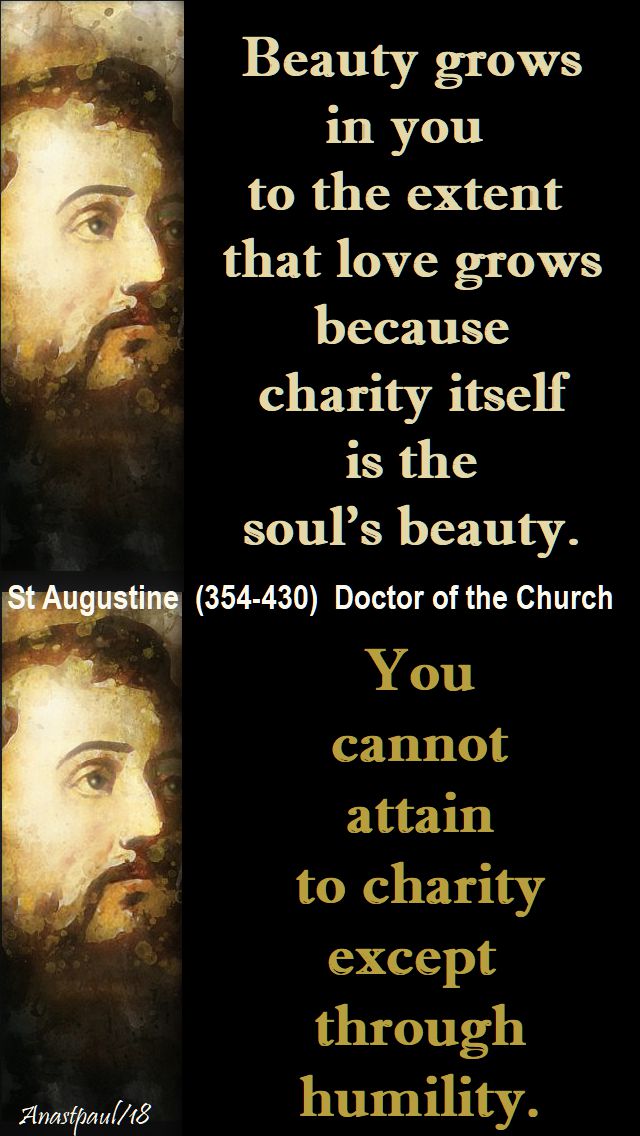
“It is by the path of love, which is charity,
that God draws near to man and man to God.
But where charity is not found,
God cannot dwell.
If, then, we possess charity,
we possess God, for “God is Charity”
St Albert the Great (1200-1280) Doctor of the Church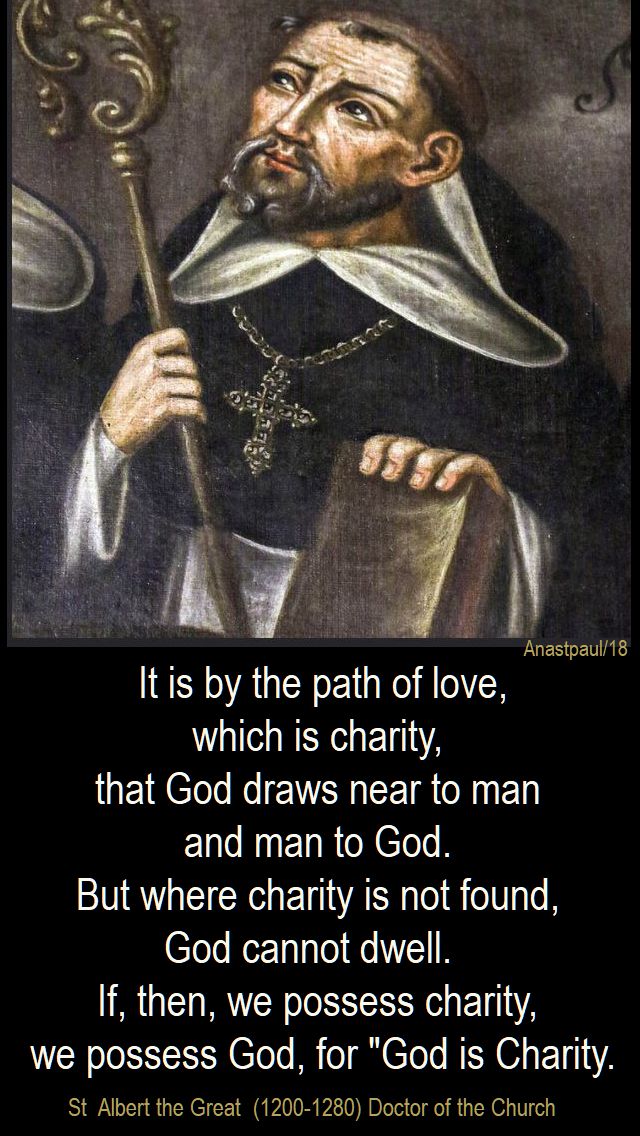
“If you want God to hear your prayers,
hear the voice of the poor.
If you wish God to anticipate your wants,
provide those of the needy without waiting
for them to ask you.
Especially anticipate the needs of those
who are ashamed to beg.
To make them ask for alms is to make them buy it.”
St Thomas of Villanova (1486-1555)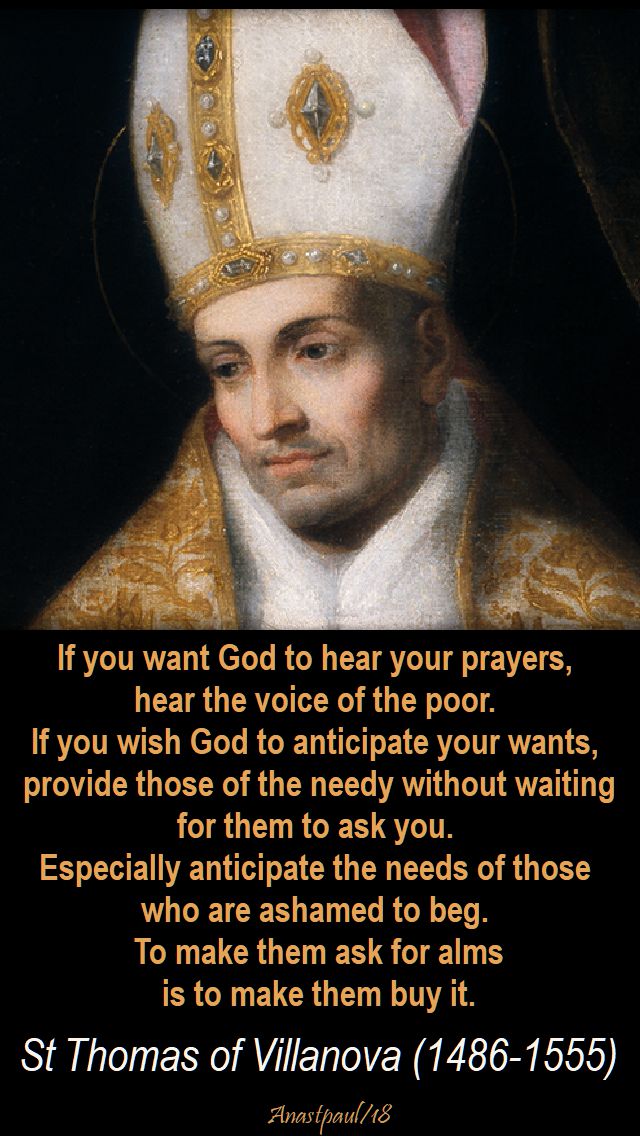
“No man discovers anything big
if he does not make himself small.”
“Show me your hands.
Do they have scars from giving?
Show me your feet.
Are they wounded in service?
Show me your heart.
Have you left a place for divine love?”
Venerable Fulton J Sheen (1895-1979)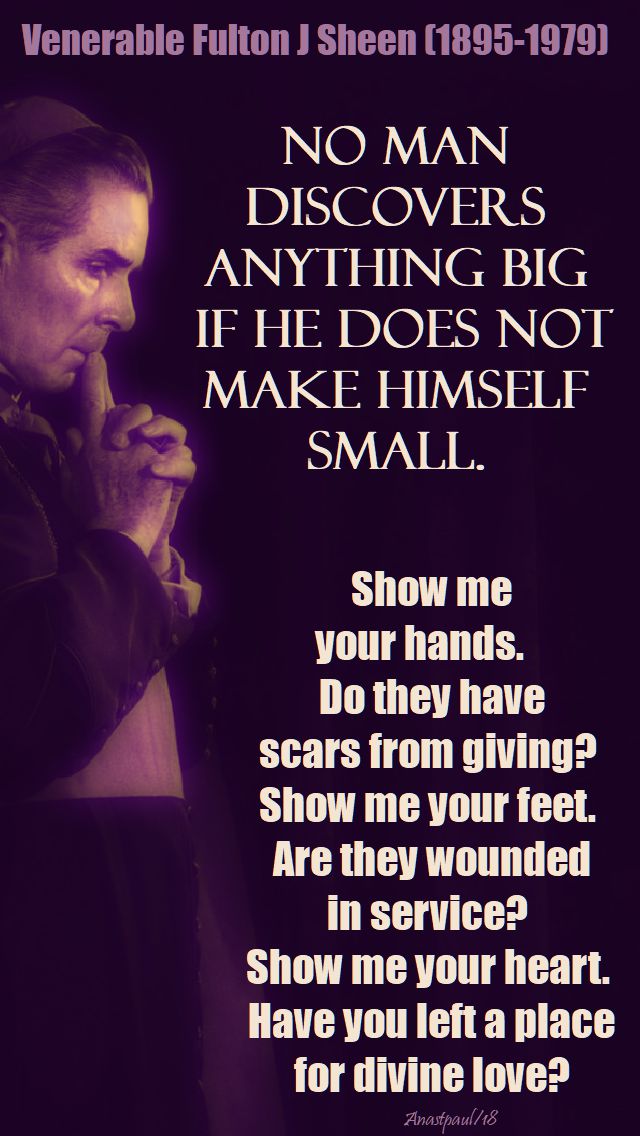
One Minute Reflection – 16 January – The Memorial of St Joseph Vaz (1651-1711) Apostle of Sri Lanka
One Minute Reflection – 16 January – The Memorial of St Joseph Vaz (1651-1711) Apostle of Sri Lanka
“Go, therefore and make disciples of all nations, baptising them in the name of the Father and of the Son and of the holy Spirit”…Matthew 28:19
REFLECTION – “I encourage each of you to look to Saint Joseph as a sure guide. He teaches us how to go out to the peripheries, to make Jesus Christ everywhere known and loved…. Saint Joseph gives us an example of missionary zeal…. Leaving behind his home, his family, the comfort of his familiar surroundings, he responded to the call to go forth, to speak of Christ wherever he was led. Saint Joseph knew how to offer the truth and the beauty of the Gospel in a multi-religious context, with respect, dedication, perseverance and humility. This is also the way for the followers of Jesus today. We are called to go forth with the same zeal, the same courage, of Saint Joseph…” Pope Francis at the Canonisation of St Joseph Vaz, 14 January 2015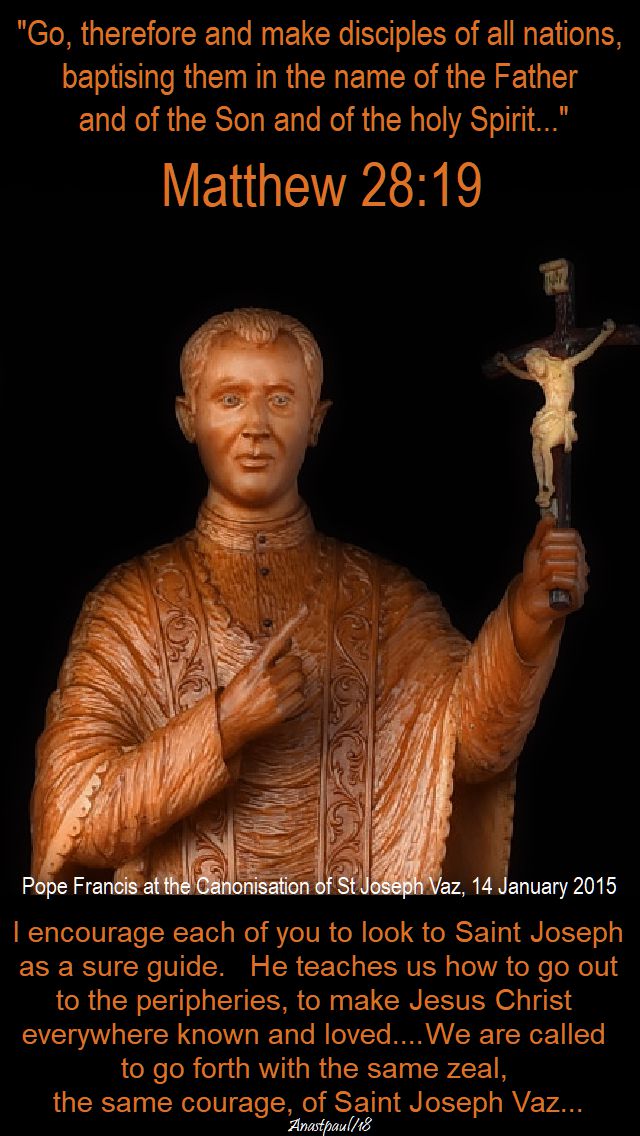
PRAYER – Lord God, may we too glorify You by our lives as St Joseph Vaz did! Grant us, we pray, Your grace, that we may, in union with the Church throughout the world, sing a new song to the You and declare Your glory to all the ends of the earth. May the prayer of St Joseph Vaz, intercede on our behalf, to assist us to imitate his zeal and love. Amen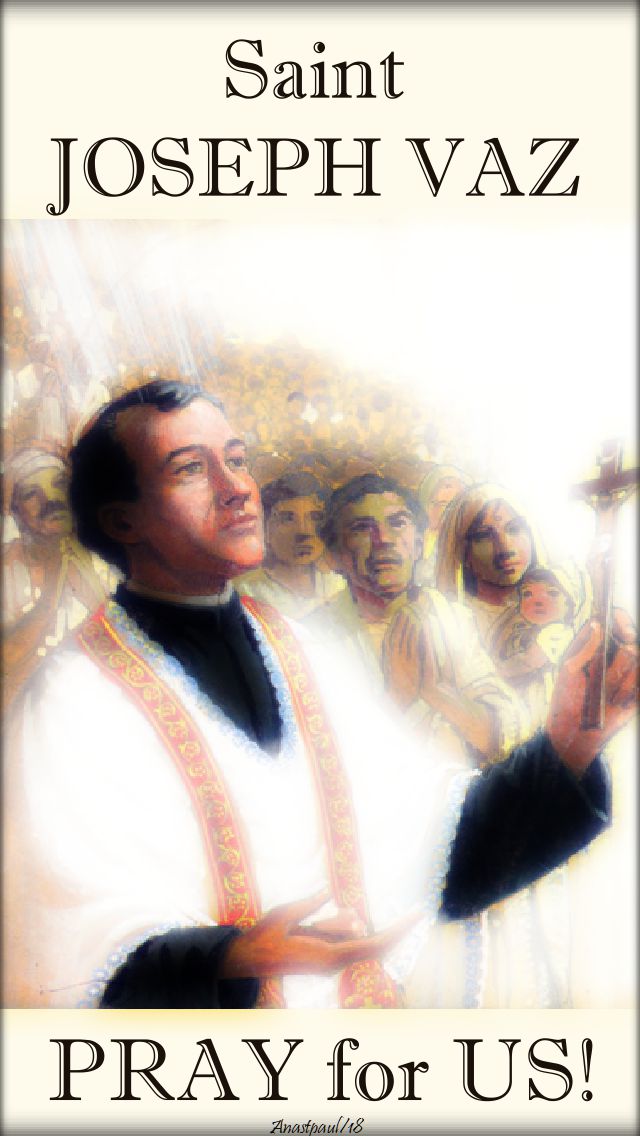
Our Morning Offering – 16 January
Our Morning Offering – 16 January
St Patrick’s Morning Prayer
As I arise today,
may the strength of God pilot me,
the power of God uphold me,
the wisdom of God guide me.
May the eye of God look before me,
the ear of God hear me,
the Word of God speak for me.
May the hand of God protect me,
the way of God lie before me,
the shield of God defend me,
the host of God save me.
May Christ shield me today.
Christ with me,
Christ before me,
Christ behind me,
Christ in me,
Christ beneath me,
Christ above me,
Christ on my right,
Christ on my left,
Christ when I lie down,
Christ when I sit,
Christ when I stand,
Christ in the heart of everyone
who thinks of me,
Christ in the mouth of everyone
who speaks of me,
Christ in every eye that sees me,
Christ in every ear that hears me.
Amen.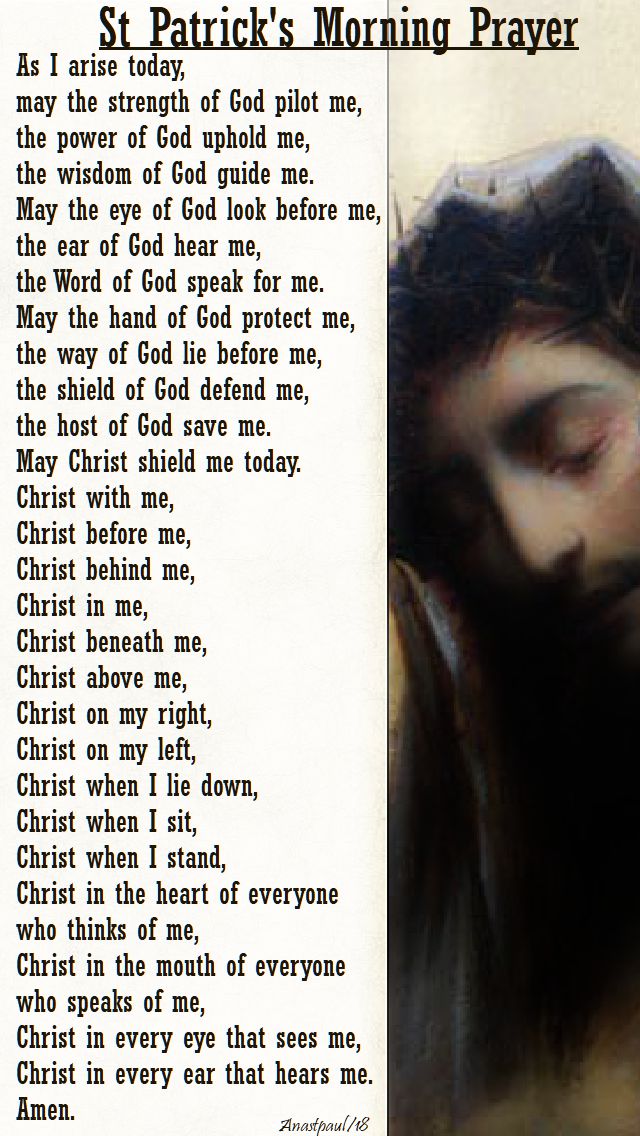
Saint of the Day – 16 January – St Joseph Vaz C.O. (1651-1711) “Apostle of Sri Lanka”
Saint of the Day – 16 January – St Joseph Vaz C.O. (1651-1711) Apostle of Ceylon/Sri Lanka – Oratorian Priest and Missionary, known as the “Apostle of Sri Lanka”. St Joseph was born on 21 April 1651 at Benaulim, Salcette, Goa, India and died late at night on 16 January 1711 at Kandy, Sri Lanka, of natural causes. Patronages – the Archdiocese of Goa and Damão, India and Sri Lanka. Attributes – Mitre placed to side, holding crucifix, sun icon, Oratorian habit. St Joseph arrived in Ceylon during the Dutch occupation, when the Dutch were imposing Calvinism as the official religion after taking over from the Portuguese. He travelled throughout the island bringing the Eucharist and the sacraments to clandestine groups of Catholics. Later in his mission, he found shelter in the Kingdom of Kandy where he was able to work freely. By the time of his death, Vaz had managed to rebuild the Catholic Church on the island. As a result of his labours, Vaz is known as the Apostle of Ceylon and Sri Lanka.

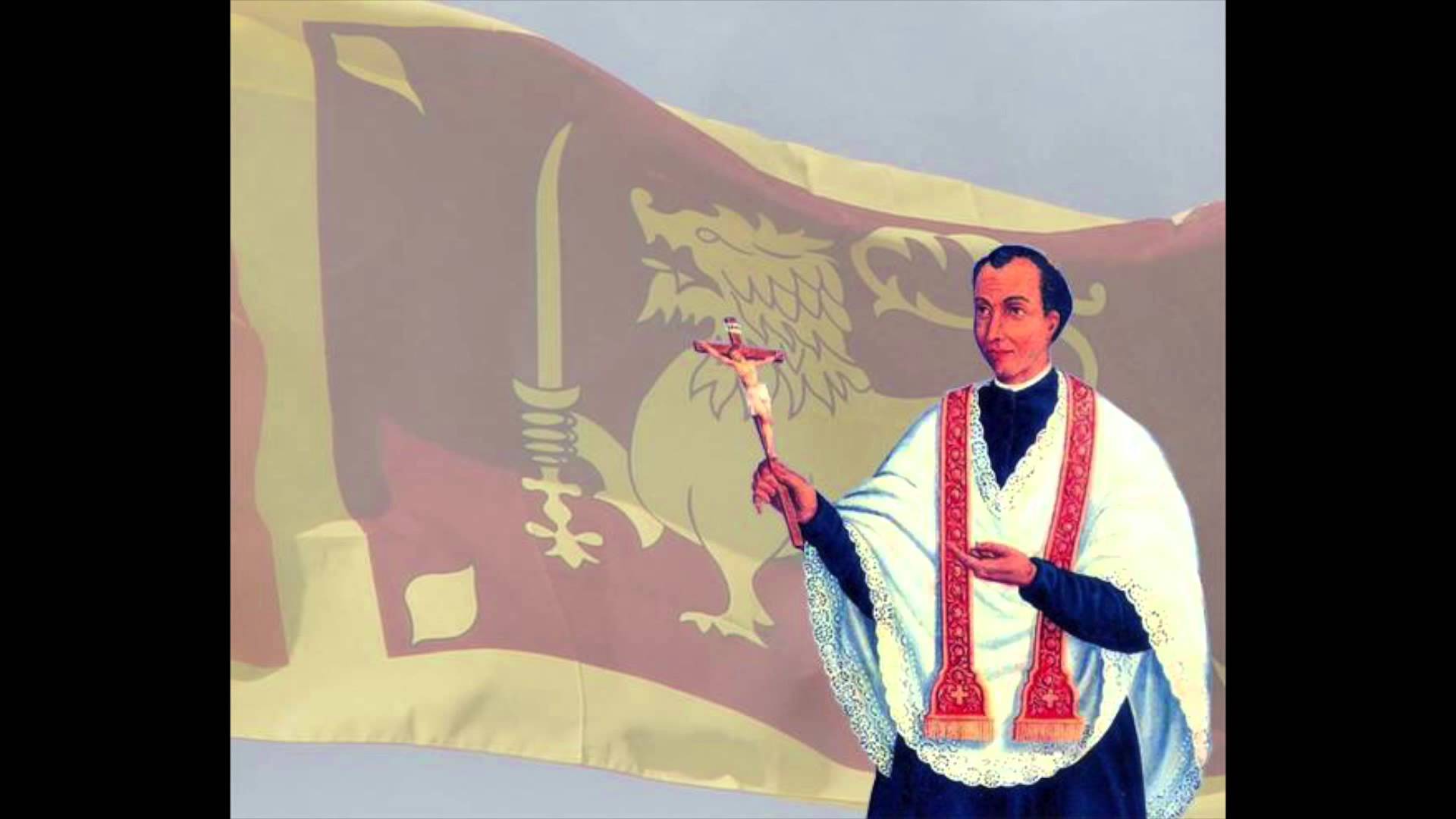
Father Joseph Vaz was born on 21 April 1651, in India. He was a Goan, born in Benaulim, and was raised in the villages of Benaulim and Sancoale. When he grew up, his father sent him to a school at Benaulim to learn Latin as a preparation for his priestly studies. Joseph Vaz made such rapid progress in his studies that his father decided to send him to the city of Goa, to the Jesuit College of Saint Paul. After completing his studies with the Jesuits, Joseph Vaz entered the Academy of Saint Thomas Aquinas for his philosophical and theological studies. In 1676 he was ordained a priest.

How the call to mission came to him, we do not know exactly. He knew about the misery of the Catholics of Ceylon (Sri Lanka) and their complete abandonment. Ceylon was a Buddhist Country. But there were, at that time, a large number of Catholics living on the island without a priest or a church. In 1658, the Dutch, being adherents of the Dutch Reformed Church and fearing that Catholics would support the Portuguese, began to persecute the Catholics, forbidding the practice of the Catholic faith within their territory. Joseph Vaz’s heart was afire to go and save the Church in Ceylon at any cost.
He presented his request to go to Ceylon to the ecclesiastical authorities. But, he was asked to serve the abandoned Catholics of Canara (Karnataka) in southwestern India. Joseph Vaz lived in Canara for 4 years. During that time he gave shape to the church of Mangalore, where he had reached in 1682. He built churches and chapels. In many villages, he opened a small school, appointed a catechist and made provision by establishing confraternities for the maintenance of the church.
In 1684 Joseph Vaz made his way back to Goa. There he found a small community of Goan priests at the church of the Cross of Miracles. He entered this tiny community and was elected the superior. Within a few months, seven more priests joined the community and gave it new energy. To give a form of stability to the community, Joseph Vaz then organised the Goan community into the Oratorian Institute of Milagristas of Goa. The Goa Oratory of Saint Philip Neri is assumed to be the first fully native religious community of the Latin rite in Asia. This indigenous priestly community was the ideal group to work in Ceylon and restore the Catholic Church there. After a six month stay in the Oratory, in March, 1686, Joseph Vaz set out for Ceylon In April, 1687, he disembarked in Ceylon as a poor beggar.
In 1658, 120 Catholic missionaries had left Ceylon and the churches were closed or destroyed. From 1658 to 1687 Catholics were isolated: no priest, no sacraments and no church. Joseph Vaz arrived in Jaffna. He started his life in Ceylon without any logistic support. With a rosary on his neck he begged from door to door for his survival. That was how he made contact with Catholics. Joseph Vaz was the first non-European missionary to came to Ceylon. He came, not sent by civil, royal or ecclesiastical authorities. And he came in simplicity and poverty, without the support or protection of an institutional Church.
The Dutch commander of Jaffna noticed the revival of Catholic life in his district. On Christmas night, 1689, two years after Joseph Vaz had started his apostolate, the commander detected the presence of the priest. Three hundred Christians were imprisoned. But Joseph Vaz was not among the prisoners. No one knows how he escaped. With the help of some Catholics, he went to Puttalam since this was part of the Kandy Kingdom outside of Dutch authority. Joseph Vaz had chosen Kandy the centre of his apostolate to avoid the vigilance of the Dutch. But, as soon as the King, Vimaladharma Surya II, was informed, Joseph Vaz was bound in chains and conducted to a prison in Kandy, as he was seen as a foreign spy. Joseph Vaz had studied Tamil and now, in Jaffna, in the prison, he started to study the local language, Sinhala. In 1693 the king set the priest free. As soon as he obtained the freedom to minister to the Catholics of the city, Joseph Vaz had the people build a simple church and dedicated it to Our Lady.
In 1696 there was a prolonged drought in Kandy. The king was very much distressed and asked the highest Buddhist religious leaders of his kingdom to perform their ceremonies to call down rain. But, it was to no avail. The king then asked Joseph Vaz to pray to his God and obtain rain for the kingdom. Joseph Vaz answered the king´s request by a prayer in the public square the next day. It brought such abundant rain that Joseph Vaz won the sympathy of the king, liberty for himself and permission to bring more priests from the Goan Oratory. In a letter dated 10 February 1696, the Bishop of Cochin, appointed Joseph Vaz as his Vicar General with full jurisdiction, spiritual as well as temporal, over the entire island of Ceylon. In 1696, the Oratory Fathers of Goa began to arrive on the island and so a properly constituted mission was established.
Joseph Vaz undertook long missionary journeys throughout a large portion of the west of the island. He even entered the city of Colombo, and continued this journey and his missionary apostolate in Gurubavilla, Malwana Sitawaka, Soffragan. Between April and November, 1698, Joseph Vaz paid his second visit to Colombo. From there he continued his apostolic journey through Negombo, Mantota, Mannar, Vanny, Kalpitya, Punarym, Jaffna, Trincomalee, Puliyadiva and Batticaloa. In 1699, he went beyond Malwana and baptized more or less a thousand people. In the years 1700, 1704 and 1705, Joseph Vaz undertook further missionary journeys to Puttalam, Mantota, Vanny, Allanbil, Kottiyar, Trincomalee, Batticaloa, Pungadda and the Neduntivu Island in the North. Today in Sri Lanka, nine out of twelve dioceses comprise the area of these districts erected by Joseph Vaz. In 1705, it was Joseph Vaz who expanded the small shrine of Our Lady of Madhu.


In 1703, Pope Clement XI (1700-1721) sent a legate who proposed to nominate Joseph Vaz as the Vicar Apostolic of Ceylon. Joseph Vaz humbly declined the offer to be the first Apostolic Vicar of Ceylon. But whether a bishop or not, Joseph Vaz administered the Church in the whole country as a bishop would have done.
In 1710, Joseph Vaz was completely exhausted. He died 16 January 1711. He had spent 24 years of untiring labours in the mission of Ceylon. He was 59 years old. He left a marvelous legacy: 70,000 Catholics, 15 churches and 400 chapels. He translated into Singalese and Tamil, the local languages, various prayers and a catechism. After his death, his example and methods of apostolic work made him a continuing inspiration for the priests in Sri Lanka. When the Missionary Oblates of Mary Immaculate came to Sri Lanka in 1857, they were able to build on and continue Fr Vaz´s apostolic work.
On 21 January 1995, St Joseph was beatified by St Pope John Paul II in Colombo. He was canonised on 14 January 2015 by Pope Francis in an open-air Mass ceremony at the Galle Face Green in Colombo.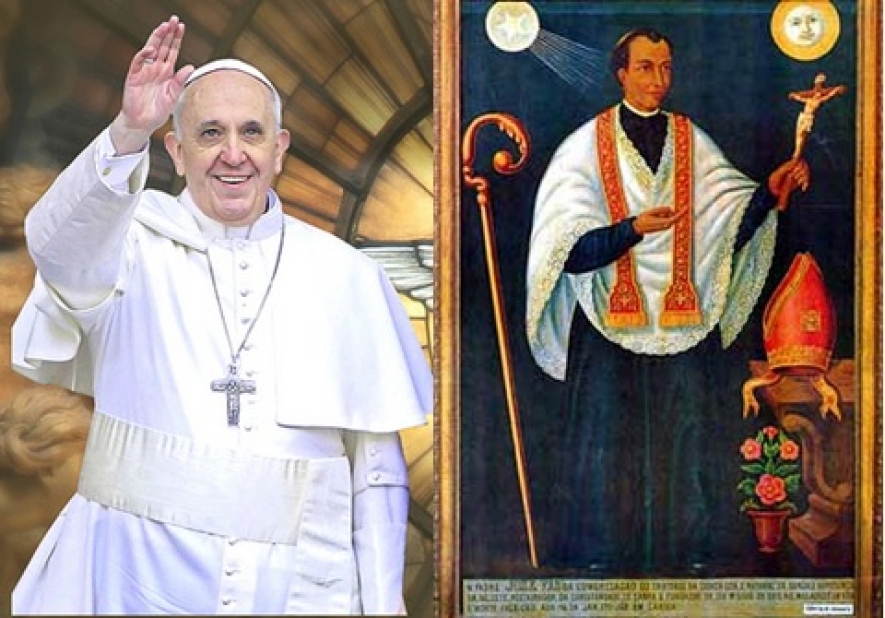
Memorials of the Saints – 16 January
St Berard and Companions (Peter, Adjute, Accurs, Odo and Vitalis)
St Dana of Leuca
St Dunchaid O’Braoin
St Fulgentius of Ecija
St Fursey of Peronne
Bl Gonzalo de Amarante
St Henry of Coquet
St Honoratus of Arles
St Honoratus of Fondi
Bl James of Luino
St James of Tarentaise
Bl Joan of Bagno di Romagna
St Joseph Vaz C.O. (1651-1711) Apostle of Sri Lanka
St Juana Maria Condesa Lluch
Bl Konrad II of Mondsee
St Leobazio
St Liberata of Pavia
St Marcellus I, Pope
St Melas of Rhinocolura
St Priscilla of Rome
St Sigeberht of East Anglia
St Titian of Oderzo
St Triverius
St Valerius of Sorrento
Novena to St Francis de Sales Day One – 15 January
Novena to St Francis de Sales
Day One – 15 January
There is no clock, no matter how good it may be, that doesn’t need resetting and rewinding twice a day, once in the morning and once in the evening. In addition, at least once a year it must be taken apart to remove the dirt clogging it, straighten out bent parts and repair those worn out. In like manner, every morning and evening a person who really takes care of his heart must rewind it for God’s service by means of certain practices of piety. At least once a year he must take it apart and examine every piece in detail; that is, every affection and passion, in order to repair whatever defects there may be. (INT. Part 5, Ch. 1; O. III, p. 340)
O blessed Francis de Sales,
who on earth did excel in a life of virtue,
especially in the love of God and neighbour,
I earnestly ask you to take me
under your compassionate care and protection.
Obtain for me conversion of mind and heart.
Grant that all people,
especially ……………………..
(names of those whom you wish to include)
may experience the depth of God’s redeeming and healing love.
Teach me to fix my eyes on the things of heaven
even as I walk each day with my feet planted firmly on the earth.
Help me, through the practice of virtue and the pursuit of devotion,
to avoid anything that would otherwise cause me to stumble
in my attempt to follow Christ
and to be an instrument of the Holy Spirit.
Encouraged by your prayers and example,
help me to live fully my sacred dignity
with the hope of experiencing my sacred destiny:
eternal life with God.
Receive also this particular need or concern
that I now lift up in prayer………………………………
(mention your particular need).
O God, for the salvation of all,
you desired that St Francis de Sales,
preacher, missionary, confessor, bishop and founder,
should befriend many along the road to salvation.
Mercifully grant that we,
infused with the humility and gentleness of his charity,
guided by his wisdom and sharing in his spirit
may experience eternal life.
We ask this through Christ our Lord. Amen.
St Francis de Sales, pray for us.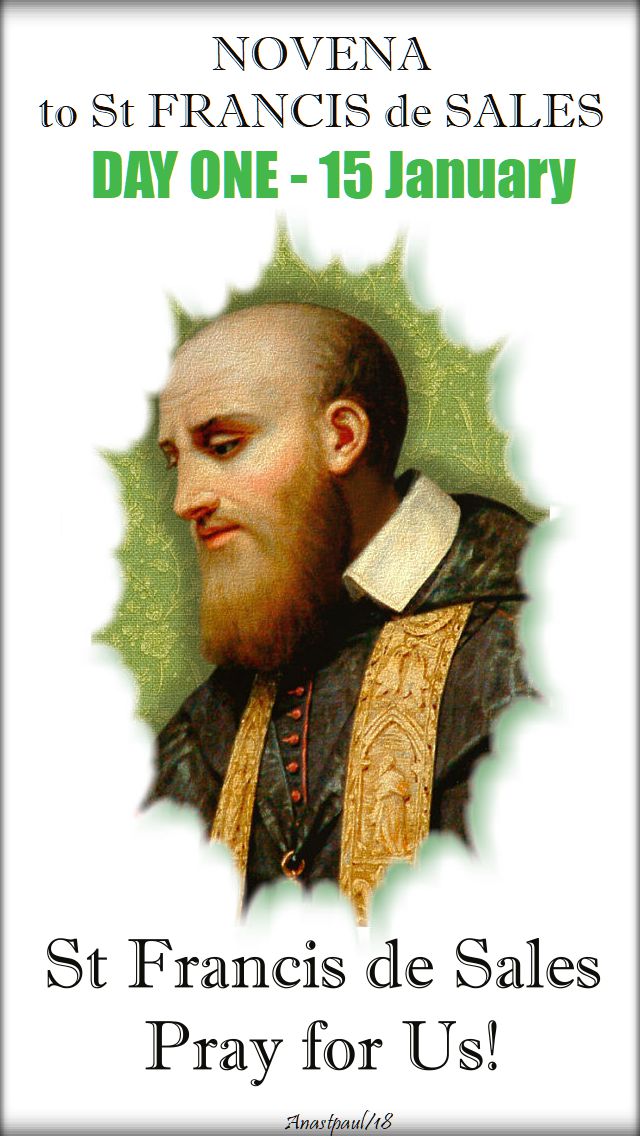
Thought for the Day – 15 January – The Feast of Our Lady of Banneux – Our Lady of the Poor and Queen of Nations
Thought for the Day – 15 January – The Feast of Our Lady of Banneux – Our Lady of the Poor and Queen of Nations
There are many ways of “being poor” and in today’s world, the more we have, the poorer we can be. Our Lady of Banneux is a most worthy intercessor to pray on our behalf to our God of such loving mercy, for all the needs of the poor of the world, for so many who are rich in goods but poor in spirit.
As St John Paul said on a visit to Banneux – “The poor today – and there are many ways of being poor! – feel at home in Banneux. They come here to find comfort, courage, hope, union with God in their affliction. I encourage the pilgrims who come here to pray to her, who, always and everywhere in the Church, reflects the face of the Mercy of God.”
Holy Mother Mary, Mother of God, Pray for us!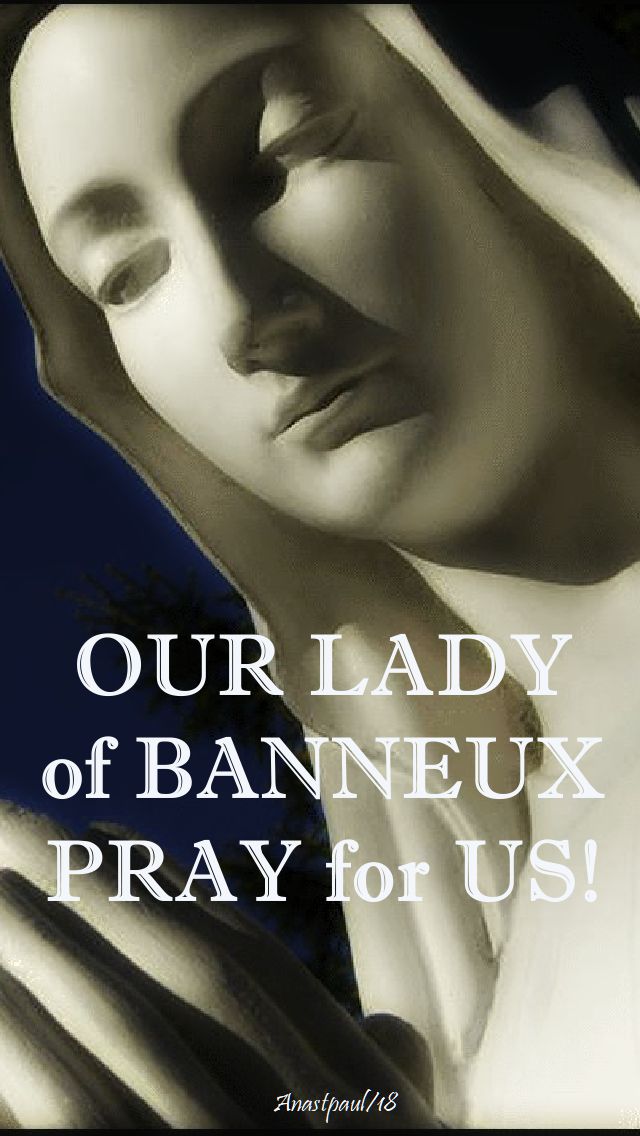
Quote/s of the Day – 15 January – The Feast of Our Lady of Banneux – “Speaking of Mary”
Quote/s of the Day – 15 January – The Feast of Our Lady of Banneux – “Speaking of Mary”
“That one woman is both mother and virgin,
not in spirit only but even in body.
In spirit she is mother, not of our Head,
who is our Saviour Himself—of whom all,
even she herself, are rightly called children of the Bridegroom—
but plainly she is the mother of us, who are His members
because by love, she has co-operated, so that the faithful,
who are the members of that Head, might be born in the Church.
In body, indeed, she is the Mother of that very Head”
St Augustine (354-430) Father and Doctor of the Church
“Seek refuge in Mary because she is the city of refuge.
We know that Moses set up three cities of refuge
for anyone who inadvertently killed his neighbour.
Now the Lord has established a Refuge of Mercy, Mary,
even for those who deliberately commit evil.
Mary provides shelter and strength for the sinner.”
St Anthony of Padua (1195-1231) Doctor of the Church
”Let not that man presume to look for mercy from God,
who offends His Holy Mother!”
St Louis Marie Grignion de Montfort (1673-1716)
“Just as there is not one among all the Blessed
who loves God as Mary does, so there is no one,
after God, who loves us as much as this most loving Mother does.
Furthermore, if we heaped together
all the love that mothers have for their children,
all the love of husbands and wives,
all the love of all the angels and Saints for their clients,
it could never equal Mary’s love for even a single soul.”
St Alphonsus Liguori (1696-1787) Doctor of the Church (The Glories of Mary)
“Only after the Last Judgment will Mary get any rest;
from now until then, she is much too busy with her children.”
“To serve the Queen of Heaven, is already to reign there
and to live under her commands, is more than to govern.”
St John Marie Baptiste Vianney (1786-1859)
”To desire grace, without recourse to the Virgin Mother,
is to desire to fly without wings!”
Ven Servant of God Pope Pius XII (1876-1958)
“I come to alleviate sufferings….
I am the Virgin of the Poor…..
I am the Mother of the Saviour,
the Mother of God.
Pray very much.”
Our Lady of Banneux 1933
One Minute Reflection – 15 January – The Feast of Our Lady of Banneux
One Minute Reflection – 15 January – The Feast of Our Lady of Banneux
“Rejoice, O highly favoured daughter,! The Lord is with you.”…Luke 1:28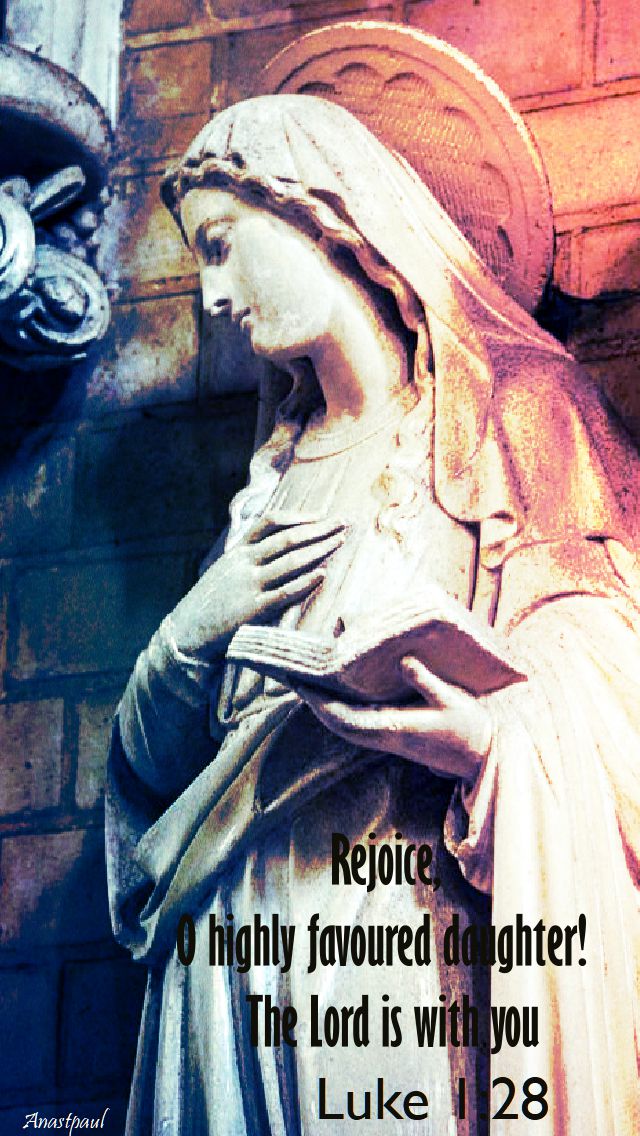
REFLECTION – ” All others had a Redeemer Who delivered them from sin with which they were already defiled but that the most Blessed Virgin had a Redeemer Who, because He was her Son, preserved her from ever being defiled by it. “…St Alphonsus Liguori (1696-1787) Doctor of the Church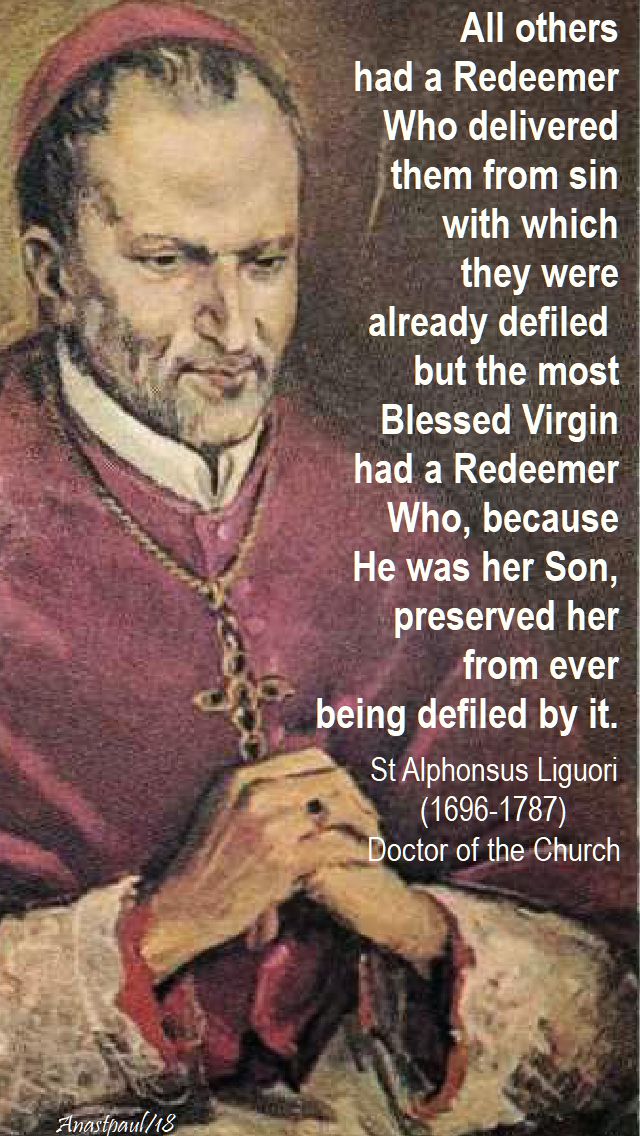
PRAYER – Heavenly Father, grant me the grace to have Mary as my constant intercessor. In all difficulties, let me call on her aid, for she is Your beloved Daughter and our Blessed Mother. Holy Mother of Banneux, Pray for us, amen!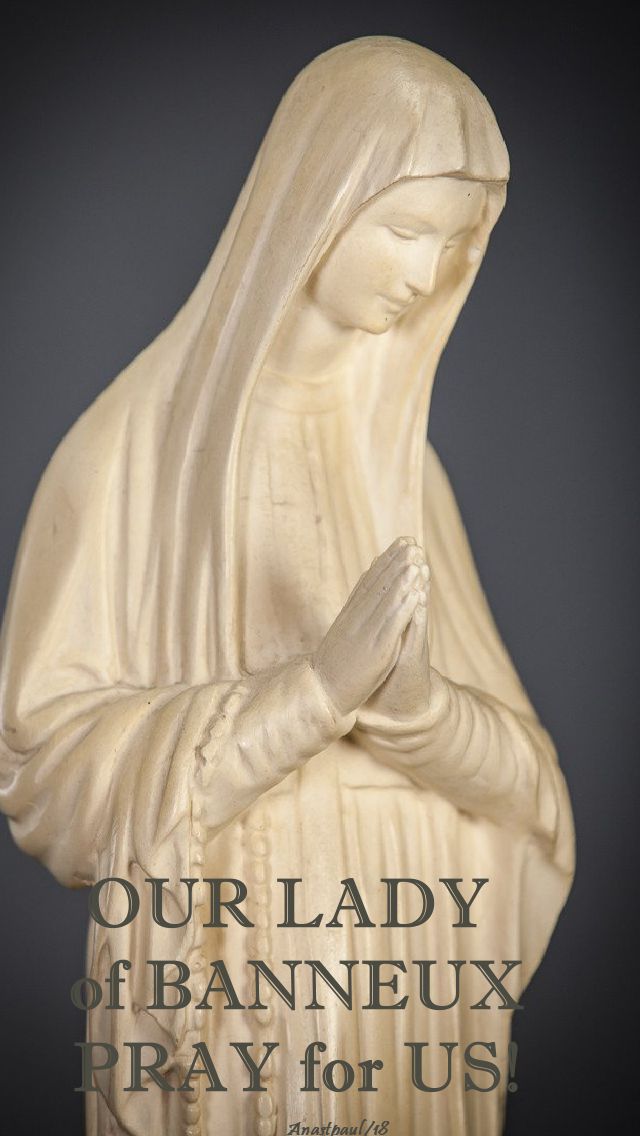
 AnaStpaul
You must be logged in to post a comment.