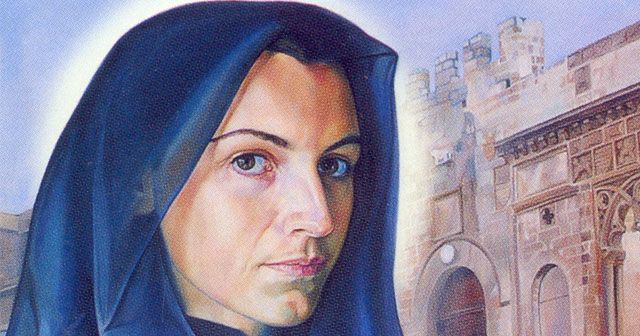
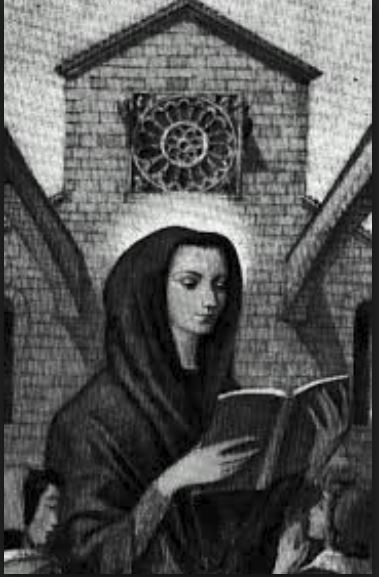
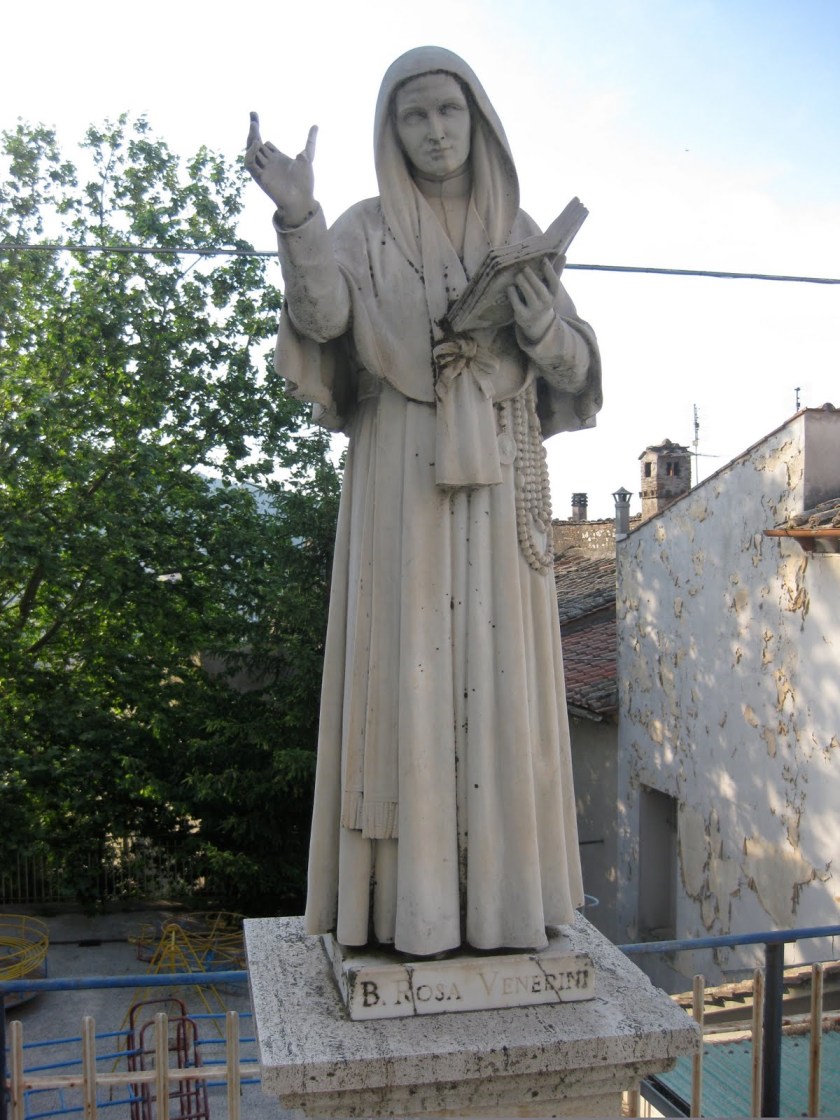
Posted in franciscan OFM, SAINT of the DAY

Saint of the Day – 11 May – St Ignatius of Laconi O.F.M. Cap. (1701-1781)

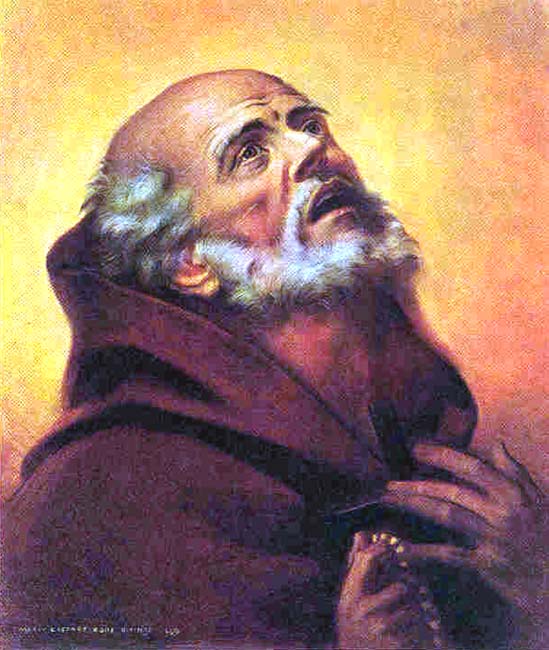
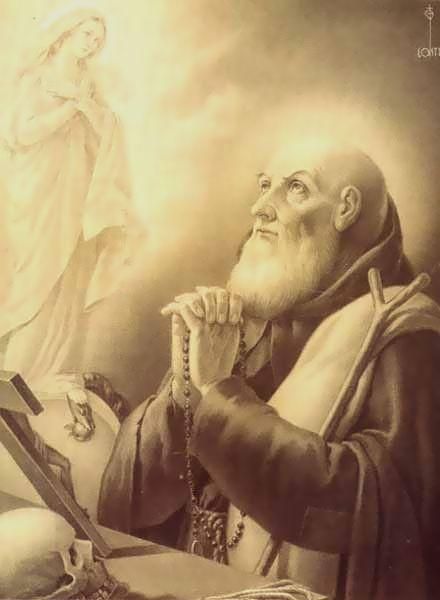
Saint of the Day – 11 May – St Ignatius of Laconi O.F.M. Cap. (1701-1781) Franciscan of the Order of Friars Minor Capuchin born as Vincenzo Peis on 17 December 1701 at Laconi, Nuoro, Italy and died on 11 May 1781 in Cagliari, Italy of natural causes.  Known as  “the Holy Friar,” “the Apostle of the Streets, “ “the Wonder-worker”,  “the Miracle-Worker” and “Padre Santo.”   His conquering a serious illness prompted him to consecrate his life to God and therefore entered the religious life though not as an ordained priest.   Peis was better known in Sardinia for his humble demeanour coupled with his concern for those who were poor.   He mingled with all people he met and was generous towards those who were ill.   But he became known as something of a wonder worker during his life and he had performed 121 miracles during his life. Patronages-Oristano, Students, Beggars.St Ignatius of Laconi

Vincenzo Peis was born on 10 December 1701 in Sardinia as one of seven children to the poor peasants Mattia Peis Cadello and Anna Maria Sanna Casu.   He was baptised as “Francesco Ignazio Vincenzo” since he was born out of a difficult pregnancy in which her mother invoked the intercession of Saint Francis of Assisi.

Ignatius worked on the fields to support his parents.   He suffered a serious illness circa 1719 (aged seventeen) that made him vow that he would consecrate himself to God and join the Order of Friars Minor Capuchin if he managed to recover from it.   He did so recover but put off the fulfilment of his vow after his father convinced him to wait;  his father was anxious about it because he depended on Ignatius for support in the fields. But there seems to be some indication that his parents objected to his entering the order. In 1721 he was in danger once more when the horse he was riding panicked.   He could have been thrown off but he called upon the assistance of Saint Francis of Assisi and renewed the vow he had made during his illness.   This time his parents did not raise objections to his becoming a friar and granted him their blessing.   In his childhood he often called the local church his “home” and took St Lawrence of Brindisi (1559-1619) as his personal role model.

He asked for admission at the convent in Cagliari but the superiors there hesitated because of his delicate health.   He then called upon an influential friend who interceded for him and he was allowed to be received into the novitiate on 10 November 1721. Ignatius made his profession on 10 November 1722.    Despite his infirmities his ardour allowed him to attend the spiritual exercises of the order and to excel in perfection of his observance of the order’s Rule.   From 1722 until 1737 he worked at the house’s weaving shed and from 1737 onwards was an alms beggar.

Ignatius spent his time in a number of different occupations and was later appointed as the quester of alms due to his humble and modest conduct.   He had good relations with the people in Cagliari who realised that although he was begging alms, he was also giving back to them in a spiritual manner.   His modest demeanour was seen as a quiet sermon for all who saw him going about which made him a noted figure.,, He seldom spoke; when required he spoke with exceptional kindness and great affection.   He would also instruct the children and the uneducated that he came across as well as going out to comfort the sick and urging sinners to be converted and to do penance.

There is a legend that he was known for his strict and total obedience to his superiors even when it required the denial of his own will.   He was accustomed to go to the house of an usurer because he feared that in accepting an alms from him he would share the guilt of this man’s injustices.   But when the man complained and the superior commanded him he accepted alms from the man.   It was when he returned that he opened the sack that the usurer offered and blood started to flow out.   To those around him the saint said:  “This is the blood of the poor squeezed from them by usury”.

His sister had often written to him asking him to visit her so that she could get his advice in certain matters.   Brother Ignatius had no mind to heed her request but when his superior ordered him to do so he at once undertook the visit.   But he left again as soon as he had given the required advice.   His brother was sent to prison and it was hoped that – in view of reputation of Brother Ignatius – the latter could obtain his brother’s release.   His superior sent him to speak to the governor but he asked that his brother be dealt with according to justice.

Despite his poor health and other infirmities he continued on in his work no matter how arduous it seemed.   Even after he became blind in 1779, he continued to work on for the benefit of those around him. Ignatius died on 11 May 1781 at 3:00pm in Cagliari where his remains were interred.

St Ignatius’ grave soon became a place in which miracles flourished and this was one dimension towards the opening of his cause for canonisation.   He was beatified on 16 June 1940 and was Canonised on 21 October 1951 by Pope Pius XII.   St Ignatius of Laconi WITH MARY

Posted in franciscan OFM, SAINT of the DAY

Memorials of the Saints – 11 May

St Anastasius of Lérida
St Anthimus of Rome
St Bassus of Sabina
St Bertilla
St Criotan of MacReddin
Bl Diego of Saldaña
St Evellius of Pisa
St Fabius of Sabina
St Francis of Girolamo
St Fremund of Dunstable
St Gengulphus of Burgundy
St Gjon Koda
St Gualberto
St Ignatius of Laconi (1701-1781)

https://www.youtube.com/watch?v=wFI561f-QGI

Bl Illuminatus
St Illuminatus of San Severino
Bl James Walworth
Bl John Rochester
St Maiulo of Hadrumetum
St Majolus of Cluny
St Mamertus of Vienne
St Maximus of Sabina
St Mayeul
St Mozio of Constantinople
St Possessor of Verdun
St Principia of Rome
St Tudy
St Vincent L’Hénoret
Bl Vivaldus
St Walbert of Hainault

Martyrs of Camerino: An imperial Roman official, his wife, their children and servants, all of whom were converts and martyrs: Anastasius, Aradius, Callisto, Eufemia, Evodius, Felice, Primitiva, Theopista.

Posted in DOCTORS of the Church, QUOTES of the SAINTS, QUOTES on HUMILITY, SAINT of the DAY

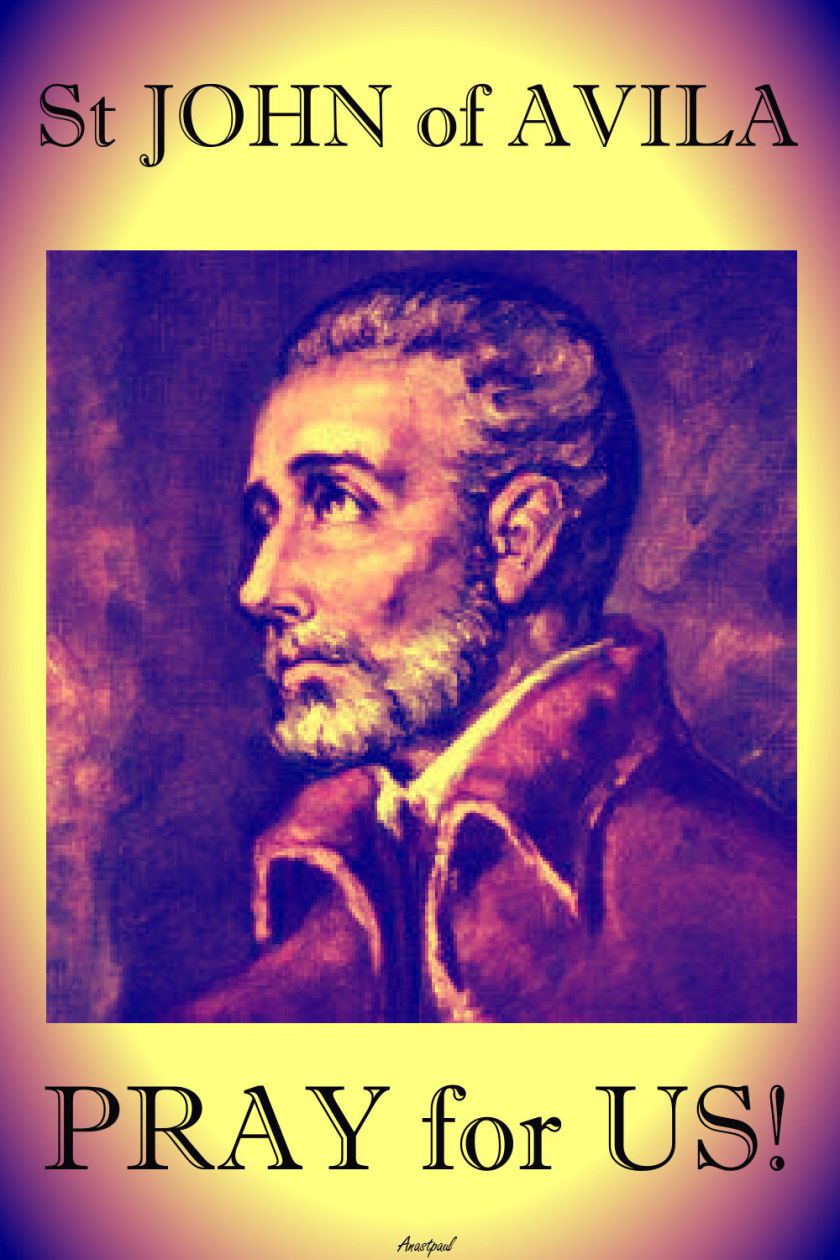
Thought for the Day – 10 May – Thursday of the Sixth Week of Eastertide, the Memorials of St John of Avila (1499-1569) Doctor of the Church

Thought for the Day – 10 May – Thursday of the Sixth Week of Eastertide, the Memorials of St John of Avila (1499-1569) Doctor of the Church

Five Grades of Humility and Twelve Degrees.
By St John of Avila “Father Master Avila” Doctor of the Church (1499-1569)

The first grade is that, recognising his own
baseness, a man should treat his own will with
contempt.

The second is outwardly to show this self-
contempt both in dress and manners and by
choosing work of a mean and servile character.

The third is to be patient when despised by
others.

The fourth is to rejoice in being despised.

The fifth is to desire with the whole heart to
be despised by others.

Twelve other degrees of humility. 

The first degree is the fear of God.

The second, is to deny our own will.

The third, is obedience.

The fourth, is patience.

The fifth, is the confession of sins.

The sixth, is contempt of oneself.

The seventh, is to prefer others to oneself,
esteeming them more highly.

The eighth, is to avoid singularity in outward
things.

The ninth, is to be silent unless spoken to.

The tenth, is not to be prompt to laughter.

The eleventh, is to speak little and with
gravity.

The twelfth, is to prefer a low estate and
occupation.

St John of Avila (1499-1569), Pray for us!

And to Divide the week into stages of the Passion of Christ: – read here – https://anastpaul.wordpress.com/2017/05/10/thought-for-the-day-10-may/st-john-of-avila-pray-for-us-no-10 may 2017.2

Posted in CATHOLIC DEVOTIONS of the Month, MARIAN QUOTES, MARIAN TITLES, QUOTES of the SAINTS, The BLESSED VIRGIN MARY

Marian Thought for the Day – 10 May “Mary’s Month” and Thursday of the Sixth Week of Eastertide

Marian Thought for the Day – 10 May “Mary’s Month” and Thursday of the Sixth Week of Eastertide

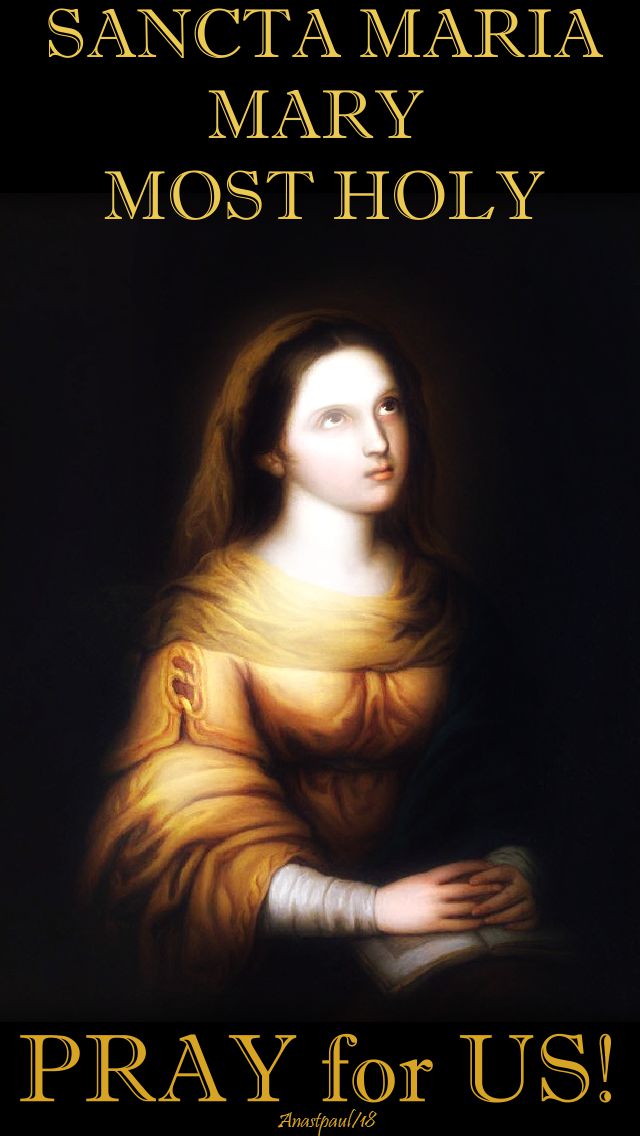
Mary is “Sancta Maria,” the Holy Mary
Blessed John Henry Newman (1801-1890)

GOD alone can claim the attribute of holiness.   Hence we say in the Hymn, “Tu solus sanctus,” “Thou only art holy.”   By holiness we mean the absence of whatever sullies, dims and degrades a rational nature;  all that is most opposite and contrary to sin and guilt.

We say that God alone is holy, though in truth all His high attributes are possessed by Him in that fullness, that it may be truly said that He alone has them.   Thus, as to goodness, our Lord said to the young man, “None is good but God alone.”   He too alone is Power, He alone is Wisdom, He alone is Providence, Love, Mercy, Justice, Truth.   This is true but holiness is singled out as His special prerogative, because it marks more than His other attributes, not only His superiority over all His creature but emphatically, His separation from them.   Hence we read in the Book of Job, “Can man be justified compared with God, or he that is born of a woman appear clean?   Behold, even the moon doth not shine and the stars are not pure, in His sight.”   “Behold, among His saints none is unchangeable and the Heavens arc not pure in His sight.”

This we must receive and understand in the first place but secondly, we know too, that, in His mercy, He has communicated in various measures His great attributes to His rational creatures and, first of all, as being most necessary, holiness.   Thus Adam, from the time of his creation, was gifted, over and above his nature as man, with the grace of God, to unite him to God and to make him holy.   Grace is therefore called holy grace; and, as being holy, it is the connecting principle between God and man.   Adam in Paradise might have had knowledge and skill and many virtues;  but these gifts did not unite him to his Creator.   It was holiness that united him, for it is said by St Paul, “Without holiness no man shall see God.”

And so again, when man fell and lost this holy grace, he had various gifts still adhering to him;  he might be, in a certain measure, true, merciful, lovin, and just but these virtues did not unite him to God.   What he needed was holiness and, therefore, the first act of God’s goodness to us in the Gospel, is to take us out of our unholy state by means of the sacrament of Baptism and by the grace then given u, to re-open the communications, so long closed, between the soul and heaven.

We see then the force of our Lady’s title, when we call her “Holy Mary.”   When God would prepare a human mother for His Son, this was why He began by giving her an immaculate conception.   He began, not by giving her the gift of love, or truthfulness, or gentleness, or devotion, though according to the occasion she had them all.   But He began His great work before she was born, before she could think, speak, or act, by making her holy and thereby, while on earth, a citizen of heaven.   “Tota pulchra es, Maria!”   Nothing of the deformity of sin was ever hers.   Thus she differs from all saints. There have been great missionaries, confessors, bishops, doctors, pastors.   They have done great works and have taken with them numberless converts or penitents to heaven. They have suffered much and have a superabundance of merits to show.   But Mary in this way resembles her Divine Son,  that, as He, being God, is separate by holiness from all creatures, so she is separate from all Saints and Angels, as being “full of grace.”

sancta maria -mary most holy - pray for us - 10 may 2018


Posted in DOCTORS of the Church, EUCHARISTIC Adoration, MORNING Prayers, QUOTES of the SAINTS, QUOTES on HUMILITY, QUOTES on SANCTITY, QUOTES on SUFFERING, QUOTES on the CROSS of CHRIST, SAINT of the DAY, The HOLY EUCHARIST / The HOLY MASS

Quote/s of the Day – 10 May St John of Avila (1499-1569) St Joseph de Veuster (1840-1889)

Quote/s of the Day – 10 May – Thursday of the Sixth Week of Eastertide, the Memorials of St John of Avila (1499-1569) “Apostle of Andalusia” “Father Master Avila” – Doctor of the Church and St Joseph de Veuster (1840-1889) – St Damian of Molokai

“Turn yourself round like a piece of clay and say to the Lord:
I am clay, and You, Lord, the potter.
Make of me what You will.”turn-yourself-round-stjohnofavila-10 may 2017

“Withdraw your heart from the world
before God takes your body from it.”withdraw-your-heart-st-john-of-avila-10-may-2018.jpg

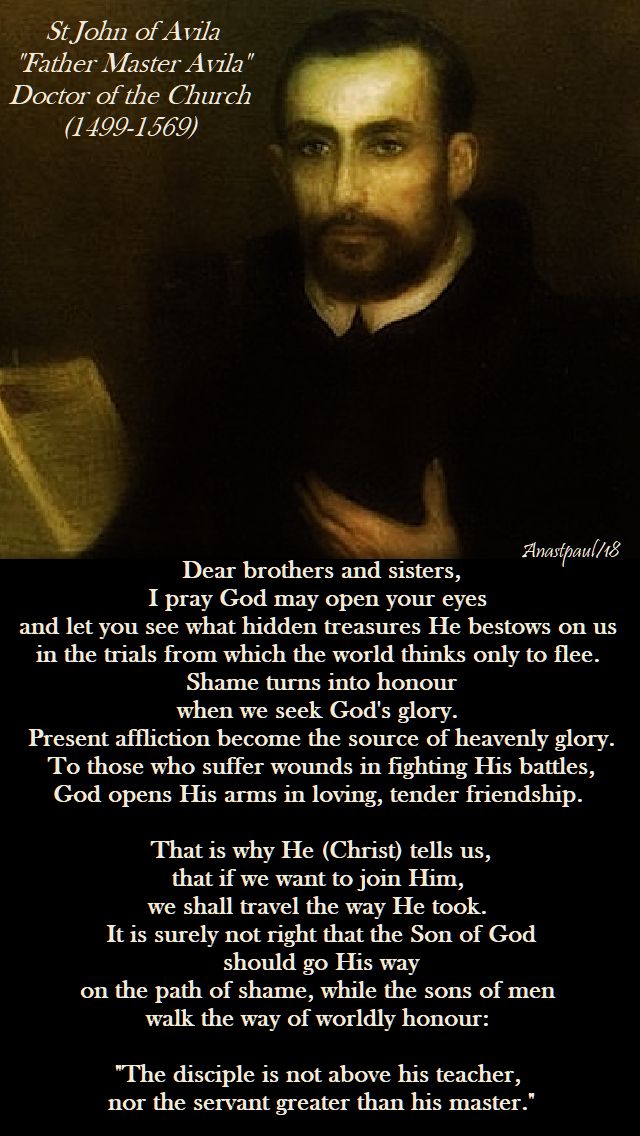
Dear brothers and sisters, I pray God may open your eyes
and let you see what hidden treasures He bestows on us
in the trials from which the world thinks only to flee.
Shame turns into honour when we seek God’s glory.
Present affliction become the source of heavenly glory.
To those who suffer wounds in fighting His battles,
God opens His arms in loving, tender friendship.
That is why He (Christ) tells us, that if we want to join Him,
we shall travel the way He took.
It is surely not right that the Son of God should go His way
on the path of shame, while the sons of men
walk the way of worldly honour:
“The disciple is not above his teacher,
nor the servant greater than his master.”

St John of Avila “Father Master Avila” (1499-1569)dear brothers and sisters - st john of avila - 10 may 2018

“The Blessed Sacrament is indeed the stimulus for us all, for me as it should be for you, to forsake all worldly ambitions.   Without the constant presence of our Divine Master upon the altar in my poor chapels, I never could have persevered casting my lot with the lepers of Molokai, the foreseen consequence of which, begins now to appear on my skin and is felt throughout the body.   Holy Communion being the daily bread of a priest, I feel myself happy, well pleasedand resigned in the rather exceptional circumstances, in which it has pleased Divine Providence to put me.”

St Father Damien of Molokai (1840-1889)the blessed sacrament is indeed the stimulus - st damian of molokai - 10 may 2018


Posted in CATHOLIC DEVOTIONS of the Month, MARIAN DEVOTIONS, MARIAN PRAYERS, MARIAN QUOTES, MORNING Prayers, QUOTES of the SAINTS, The WORD

One Minute Marian Reflection – 10 May “Mary’s Month” and Thursday of the Sixth Week of Eastertide

One Minute Marian Reflection – 10 May “Mary’s Month” and Thursday of the Sixth Week of Eastertide

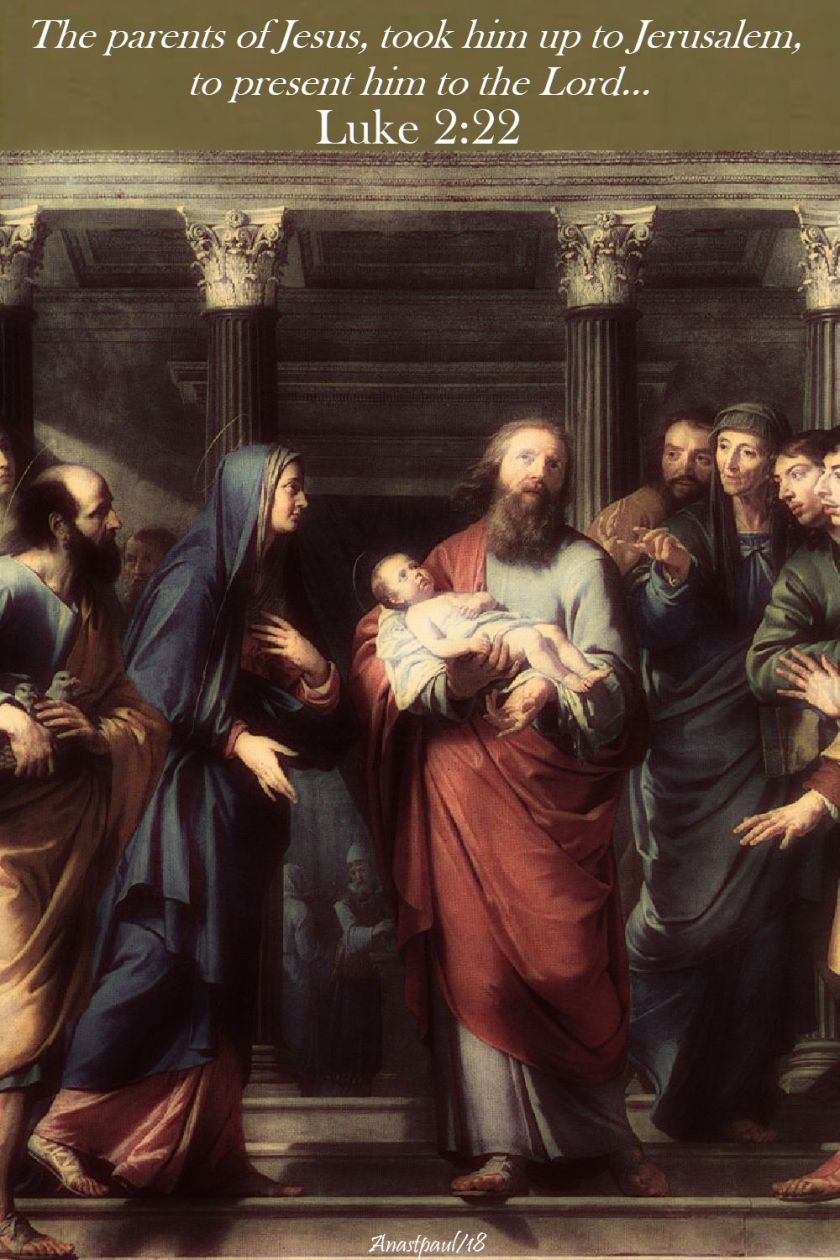
The parents of Jesus, took him up to Jerusalem, to present him to the Lord…Luke 2:22the parents of Jesus took him up to Jersualem - luke 2 22 - 10 may 2018

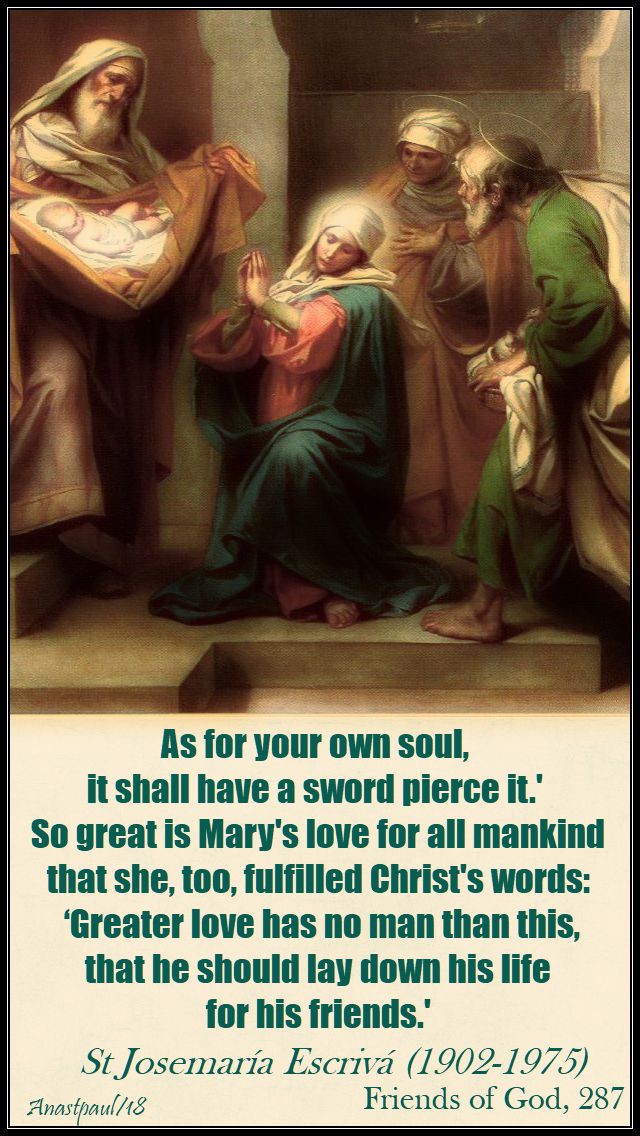
REFLECTION – MARY:  PRESENTING JESUS IN THE TEMPLE: “She teaches us to have charity.   Remember the scene of the presentation of Jesus in the temple.   An old man, Simeon, said to Mary, ‘Behold: This child is destined to bring about the fall of many and the rise of many in Israel and to be a sign, which people will refuse to acknowledge, so that the thoughts of many hearts shall be made manifest. As for your own soul, it shall have a sword pierce it.’   So great is Mary’s love for all mankind that she, too, fulfilled Christ’s words:  ‘Greater love has no man than this, that he should lay down his life for his friends.’ “… St Josemaría Escrivá (1902-1975) – “Mother of God and Our Mother,” Friends of God, 287.
Let us offer to our Mother today:
A pilgrimage to one of her shrines, or at least such a pilgrimage in prayer.as for your own soul - st josemaria - 10 may 2018

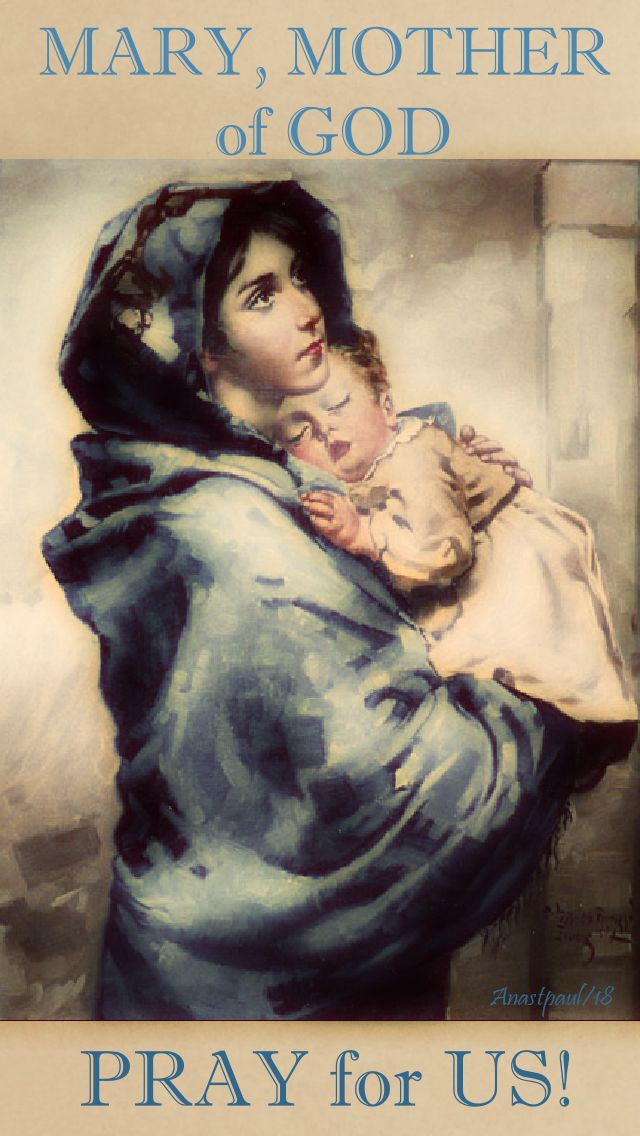
PRAYER – Our Father, Your Son was ransomed with the offering of 2 turtledoves and Mary, in obedience and with immense love in heart was submissive and offered herself too, for all mankind.   Her sorrows were to come and she pondered them whilst she manifested her love and charity through her son.   Grant us we pray, through her intercession, that we may grow in charity and through the offering of our sorrows, for the sins of all the world.   Through our Lord Jesus Christ in the unity of the Holy Spirit, one God forever, amen.mary mother of god - pray for us - 10 may 2018

Posted in CATHOLIC DEVOTIONS of the Month, CATHOLIC-PRAYERS OF THE CHURCH, CONSECRATION Prayers, EASTER, MARIAN PRAYERS, MORNING Prayers, PRAYERS of the CHURCH, The RESURRECTION

Our Morning Offering – 10 May “Mary’s Month” and Thursday of the Sixth Week of Eastertide

Our Morning Offering – 10 May “Mary’s Month” and Thursday of the Sixth Week of Eastertide

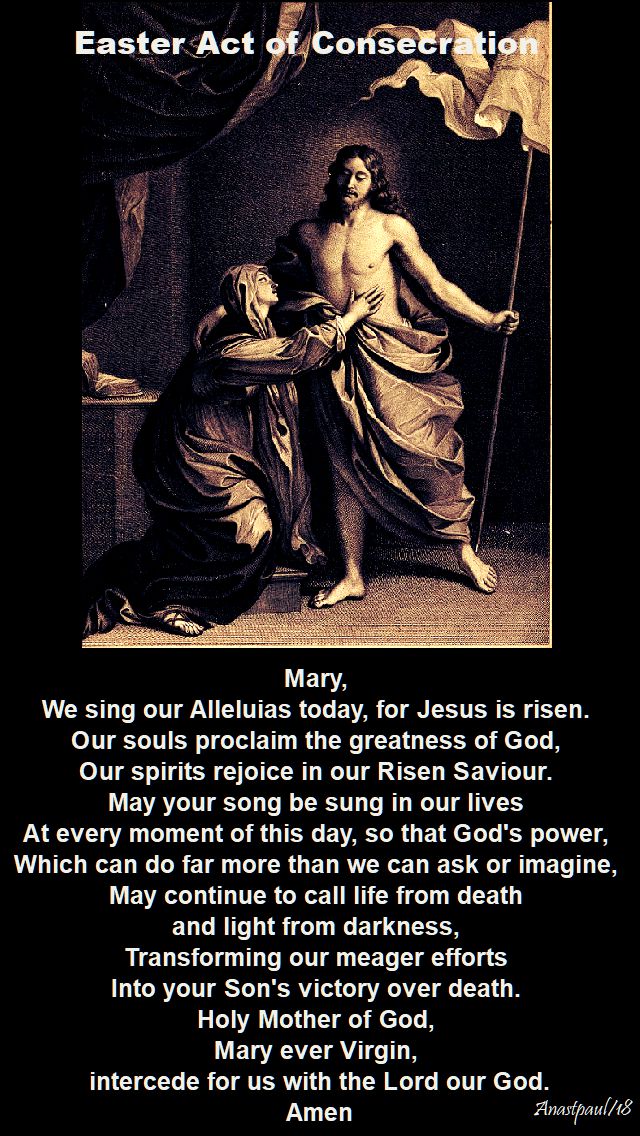
Easter Act of Consecration
Prayers of the Church

Mary,
We sing our Alleluias today, for Jesus is risen.
Our souls proclaim the greatness of God,
Our spirits rejoice in our Risen Saviour.
May your song be sung in our lives
At every moment of this day, so that God’s power,
Which can do far more than we can ask or imagine,
May continue to call life from death
and light from darkness,
Transforming our meager efforts
Into your Son’s victory over death.
Holy Mother of God,
Mary ever Virgin,
intercede for us with the Lord our God.
Ameneaster act of consecration - 10 may 2018 - thursday of the sixth week

Posted in DOCTORS of the Church, PAPAL DECREE, PAPAL MESSAGES, SAINT of the DAY, VATICAN Resources

Saint of the Day – 10 May – St John of Avila (1499-1569) “Apostle of Andalusia” known as “Father Master Avila” – Doctor of the Church

Saint of the Day – 10 May – St John of Avila (1499-1569) “Apostle of Andalusia” known as “Father Master Avila” – Doctor of the Church – Priest, Doctor of the Church, known as the Apostle of Andalusia, Mystic, Author, Preacher, Scholastic teacher, Founder of Schools and Universities, Reformer, Spiritual Advisor, Evangelist, Preacher (one of the greatest preachers of his time) was born on 6 January 1499 at Almodovar del Campo (Ciudad Real), Toledo, New Castile, Spain and died on 10 May 1569 at Montilla, Spain of natural causes.   Patronages – of  Andalusia, Spain, Spain, Spanish secular clergy, World Youth Day 2011.   His Relics are  interred in the Jesuit church at Montilla, Spain.  (More info and images see my post last year:  https://anastpaul.wordpress.com/2017/05/10/saint-of-the-day-10-may-st-john-of-avila/).
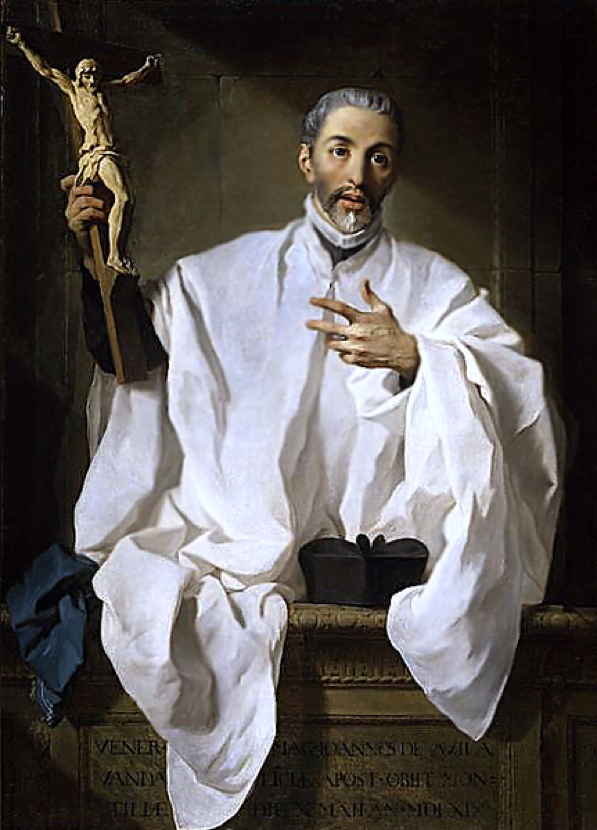
JohnofAvila

APOSTOLIC LETTER

Proclaiming Saint John of Avila, diocesan priest,
a Doctor of the Universal Church

BENEDICTUS PP. XVI
FOR PERPETUAL REMEMBRANCE

1. Caritas Christi urget nos (2 Cor 5:14).   The love of God, made known in Jesus Christ, is the key to the personal experience and teaching of the Holy Master John of Avila, an “evangelical preacher” constantly grounded in the sacred Scriptures, passionately concerned for the truth and an outstanding precursor of the new evangelization.

The primacy of grace, which inspires good works, the promotion of a spirituality of trust and the universal call to holiness lived as a response to God’s love are central themes in the teaching of this diocesan priest who devoted his life to the exercise of his priestly ministry.

On 4 March 1538 Pope Paul III issued the Bull Altitudo Divinae Providentiae, addressed to John of Avila and authorizing him to found the University of Baeza in the province of Jaén. John is there described as “praedicatorem insignem Verbi Dei”.   On 14 March 1565 Pius IV sent a Bull confirming the faculties granted to the University in 1538, wherein John is called “Magistrum in theologia et verbi Dei praedicatorem insignem” (cf. Biatiensis Universitas, 1968).   His contemporaries readily called him “Master”, a title which he held from 1538. In the homily for his canonization on 31 May 1970, Pope Paul VI praised his person and his outstanding teaching on the priesthood;  he held him up as an example of preaching and spiritual direction, called him a advocate of ecclesiastical reform and stressed his continuing influence down to our own time.

John of Avila lived in the first half of the sixteenth century.   He was born on 6 January 1499 or 1500 in Almodóvar del Campo (Ciudad Real, in the Archdiocese of Toledo).   He was the only son of devout Christian parents, Alonso Ávila and Catalina Gijón, who were wealthy and of high social standing.   When John was fourteen years old, he was sent to study law at the prestigious University of Salamanca.   He left his studies at the end of the fourth term, after a profound experience of conversion.   This prompted him to return home to devote himself to meditation and prayer.

Set on becoming a priest, in 1520 he went to study theology and humanities at the University of Alcalá de Henares, which was open to the great currents of the theology of that time and to the stirring of Renaissance humanism.   In 1526, he received priestly ordination and celebrated his first solemn Mass in his parish church.   Intending to go as a missionary to the West Indies, he determined to distribute his large inheritance among the needy.   Then, with the consent of the future first Bishop of Tlaxcala in New Spain (Mexico), he went to Seville to await a ship for the new world.

While preparing for his journey, John devoted himself to preaching in the city and its environs.   There he met the venerable Servant of God Fernando de Contreras, a doctor of Alcalá and a celebrated catechist.   Fernando, impressed by the young priest’s witness of life and his rhetorical ability, got the Archbishop of Seville to dissuade him from going to America in order to remain in Andalusia.   He stayed with de Contreras in Seville, sharing with him a life of poverty and prayer.   Devoting himself to preaching and spiritual direction, he continued to study theology at the College of Saint Thomas, where he may have been granted the title of “Master”.

In 1531, because of a misunderstanding about a homily he had given, John was imprisoned.   It was in prison that he began writing the first version of his work, Audi, Filia.  In those years he received the grace of an unusually profound insight into the mystery of God’s love and the great benefits bestowed on humanity by Jesus Christ our Redeemer.   Thereafter these were to be pillars of his spiritual life and central themes of his preaching.

Following his acquittal in 1533, he continued to preach with considerable success among the people and before the authorities but he chose to move to the Diocese of Córdoba, where he received incardination.   Some time later, in 1536, the Archbishop of Granada summoned him, desirous of his counsel.   There, in addition to continuing his work of evangelisation, he completed his studies at the university.

Thanks to his insight into the times and his excellent academic training, John of Avila was an outstanding theologian and a true humanist.   He proposed the establishment of an international court of arbitration to avoid wars and he invented and patented a number of engineering devices.   Leading a life of great poverty, he devoted himself above all to encouraging the Christian life of those who readily listened to his preaching and followed him everywhere.   He was especially concerned for the education and instruction of boys and young men, especially those studying for the priesthood.   He founded several minor and major colleges, which after the Council of Trent would become seminaries along the lines laid down by that Council.   He also founded the University of Baeza, which was known for centuries for its work of training clerics and laity.

After travelling throughout Andalusia and other regions of Central and Eastern Spain in preaching and prayer, in 1554, already ill, he finally withdrew to a simple house in Montilla (Córdoba), where he exercised his apostolate through an abundant correspondence and the preparation of several of his writings.   The Archbishop of Granada wanted to take John as his theological expert to the last two sessions of the Council of Trent.   Prevented from travelling because of ill health, he drafted the Memoriales, which were to have considerable influence on that great ecclesial assembly.

On the morning of 10 May 1569, in his humble home in Montilla, surrounded by disciples and friends, clinging to a crucifix, after much suffering he surrendered his soul to the Lord.

3. John of Avila was a contemporary, friend and counsellor of great saints and one of the most celebrated and widely esteemed spiritual masters of his time.

Saint Ignatius Loyola, who held him in high regard, was eager for him to enter the nascent “Company” which was to become the Society of Jesus.   Although he himself did not enter, the Master directed some thirty of his best students to the Society.   Juan Ciudad, later Saint John of God, the founder of the Order of Hospitallers, was converted by listening to the saintly Master and thereafter relied on him as his spiritual director. The grandee Saint Francis Borgia, later the General of the Society of Jesus, was another important convert thanks to the help of Father Avila.   Saint Thomas of Villanova, Archbishop of Valencia, disseminated Father Avila’s catechetical method in his diocese and throughout the south of Spain.   Among Father Avila’s friends were Saint Peter of Alcántara, Provincial of the Franciscans and reformer of the Order, and Saint John de Ribera, Bishop of Badajoz, who asked him to provide preachers to renew his diocese and later, as Archbishop of Valencia, kept a manuscript in his library containing 82 of John’s sermons.   Teresa of Jesus, now a Doctor of the Church, underwent great trials before she was able to send him the manuscript of her Autobiography.   Saint John of the Cross, also a Doctor of the Church, was in touch with his disciples in Baeza who assisted in the Carmelite reform.   Blessed Bartholomew of the Martyrs was acquainted with his life and holiness through common friends, and many others acknowledged the moral and spiritual authority of the Master.826px-Attributed_to_el_Greco_-_Portrait_of_Juan_de_Ávila_-_Google_Art_Project
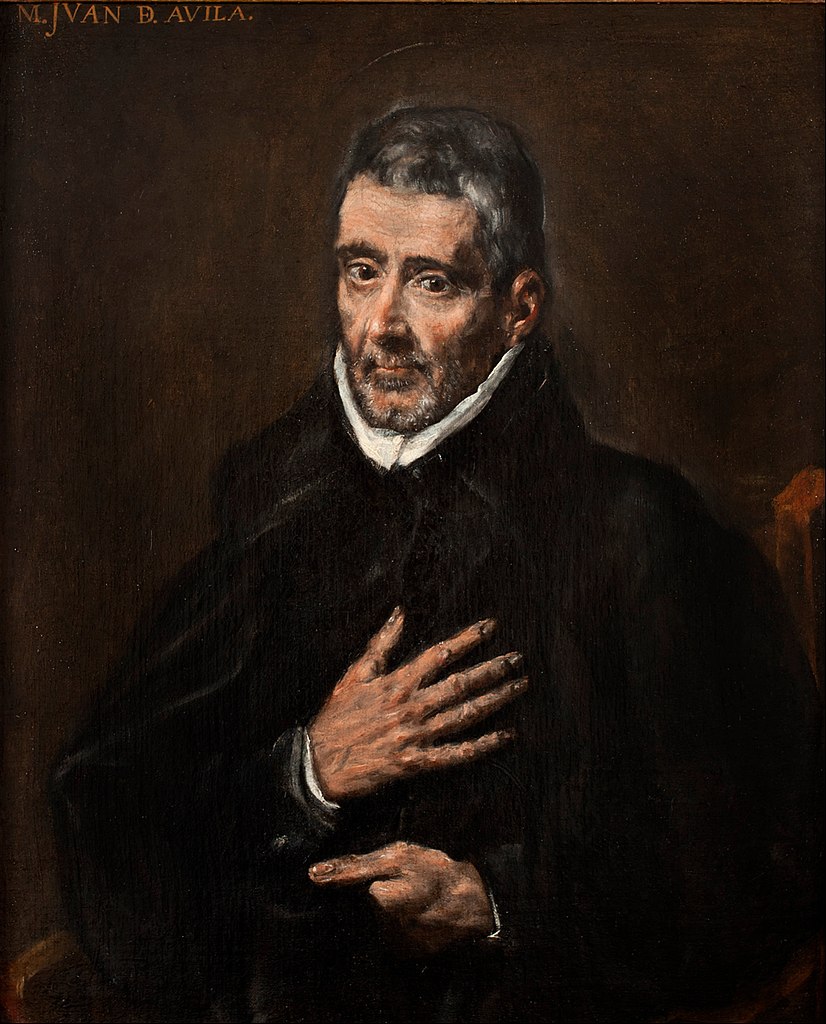
4. Although “Father Master Avila” was primarily a preacher, he did not fail to make masterful use of his pen to set forth his teaching.   His memory and his posthumous influence, down to our own times, are closely linked not only to his life and witness but also to his various writings.

His major work, Audi, Filia, a classic of spirituality, is his most systematic treatise, wide-ranging and complete; its definitive edition was completed by the author in the last years of his life.  The Catechism or Christian Doctrine, the only work printed during his lifetime (1554), is a pedagogical synthesis of the content of the faith, addressed to children and adults.   The Treatise on the Love of God, a literary gem, reflects the depths of his insight into the mystery of Christ, the Incarnate Word and Redeemer.   The Treatise on the Priesthood is a brief compendium including his conversations, sermons and letters.   Saint John’s writings also include minor works consisting of guidelines or recommendations (avisos) for the spiritual life.   The Treatises on Reform are linked to the Council of Trent and the provincial synods which implemented it, and fittingly deal with personal and ecclesial renewal.   The Sermons and Conversations, like his Letters, are writings which span the entire liturgical year and the years of his priestly ministry. His commentaries on the Bible — including those on the Letter to the Galatians, the First Letter of John and others — are systematic expositions of remarkable insight and of great pastoral value.

All these works are marked by profound content, a clearly pedagogical format and the use of images and examples which give a glimpse into the sociological and ecclesial realities of the time.   The tone is one of supreme trust in God’s love, which calls each person to the perfection of charity.   His language is the classical and sober Castilian of his birthplace, La Mancha, coloured at times by the imagination and warmth of the south, an environment in which he spent the greater part of his apostolic life.

In his effort to discern the working of the Spirit in the Church during a complex historical period fraught with confusion, cultural change, various currents of humanism and the search for new forms of spirituality, he was clear in his presentation of criteria and concepts.

5. In his teaching, Master John of Avila constantly spoke of baptism and redemption as spurs to growth in holiness.   He explained that Christian spiritual life, as a participation in the life of the Blessed Trinity, begins with faith in the God who is Love, is grounded in God’s goodness and mercy as expressed in the merits of Christ and is wholly guided by the Spirit;  that is to say, by love of God and our brothers and sisters.   He writes: “Open your little heart to that breadth of love by which the Father gave us His Son, and with Him gave us Himself and the Holy Spirit and all things besides” (Letter 160). And again:  “Your neighbour is a concern of Jesus Christ” (ibid., 62), and therefore: “The proof of perfect love of our Lord is seen in the perfect love of our neighbour” (ibid., 103).   He also showed a deep appreciation of created realities, ordering them in the perspective of love.

Since we are temples of the Trinity, it is the Triune God who grants us His own life and thus our hearts become gradually one with God and our brothers and sisters.   The way of the heart is one of simplicity, goodness, love and filial affection.   This life according to the Spirit is markedly ecclesial, for it expresses the spousal love between Christ and the Church — the central theme of Audi, Filia.   It is also Marian:   configuration to Christ, through the working of the Holy Spirit, is a process of growth in virtues and gifts which takes Mary as our model and Mother.   The missionary dimension of spirituality, derived from its ecclesial and Marian dimension, is clearly seen in the writings of Master Avila, who calls for apostolic zeal grounded in contemplation and the constant pursuit of holiness.   Devotion to the saints is something he recommends, since they point us toward “a great Friend, God himself, who embraces our hearts in His love (…) and commands us to have many other friends, who are His saints” (Letter 222).

6. If Master Avila was a pioneer in pointing to the universal call to holiness, he also had an essential role in the historical development of a systematic doctrine on the priesthood.   Down the centuries his writings have been a source of inspiration for priestly spirituality and even a current of mysticism among secular priests.   His influence can clearly be seen in a number of later spiritual writers.

Central to Master Avila’s teaching is the insight that, as priests, “during the Mass we place ourselves on the altar in the person of Christ to carry out the office of the Redeemer Himself” (Letter 157) and that acting in persona Christi demands that we humbly embody God’s paternal and maternal love.   This calls for a particular lifestyle, marked by regular recourse to the word of God and the Eucharist, by the adoption of a spirit of poverty, by preaching “temperately”, in other words, based on prior study and prayer and by love for the Church as the Bride of Christ.

The creation of means for providing candidates to the priesthood with a suitable formation, the need for greater holiness among the clergy and the necessary reform of ecclesial life were deep and constant concerns of the Holy Master.   A holy clergy is essential to the renewal of the Church and this in turn calls for the careful selection and suitable training of aspirants to the priesthood.   To meet this need, Saint John urged the establishment of seminaries and the creation of a special College for the study of sacred Scripture.   These proposals would affect the entire Church.

The foundation of the University of Baeza, to which he gave all his attention and enthusiasm, turned out to be one of his most successful ventures, since it succeeded in offering seminarians an excellent initial and permanent formation, with special emphasis on the study of a pastorally oriented “positive theology”;   it also gave rise to a priestly school which flourished for centuries.

7. Given the evident and growing reputation for sanctity of Master John of Avila, the cause for his beatification and canonisation was opened in the Archdiocese of Toledo in 1623.   It was not long before witnesses were questioned in Almodóvar del Campo and Montilla, where the Servant of God was born and died and in Córdoba, Granada, Jaen, Baeza and Andujar.   Nevertheless, for various reasons the cause was left unfinished until 1731, when the Archbishop of Toledo sent to Rome the informative processes that had already been completed.   In a decree dated 3 April 1742, Pope Benedict XIV approved Master Avila’s writings and praised his doctrine and on 8 February 1759, Clement XIII declared his heroic virtues.   John of Avila was beatified by Pope Leo XIII on 6 April 1894 and canonised by Pope Paul VI on 31 May 1970.   Acknowledging his outstanding role as a model of priesthood, in 1946 Pius XII named him Patron of the diocesan clergy of Spain.

The title of “Master”, by which Saint John of Avila was known in his lifetime and down the centuries, made it possible, following his canonisation, to consider naming him a Doctor of the Church.   Thus, at the request of Cardinal Benjamín de Arriba y Castro, Archbishop of Tarragona, the twelfth Plenary Assembly of the Spanish Episcopal Conference in July 1970, decided to petition the Holy See to declare him a Doctor of the Universal Church.   Many other petitions followed, particularly on the twenty-fifth anniversary of his canonisation (1995) and the fifth centenary of his birth (1999).

The declaration that a saint is a Doctor of the Universal Church implies the recognition of a charism of wisdom bestowed by the Holy Spirit for the good of the Church and evidenced by the beneficial influence of his or her teaching among the People of God.   All this was clearly evident in the person and work of Saint John of Avila.   He was often sought out by his contemporaries as a master of theology, gifted with the discernment of spirits, and a director of souls.   His help and guidance were sought by great saints and acknowledged sinners, the wise and the unlearned, the poor and the rich;  he was also responsible for important conversions and sought constantly to improve the life of faith and the understanding of the Christian message of those who flocked to him, eager to hear his teaching.   Learned bishops and religious also sought him out as a counsellor, preacher and theologian.   He exerted considerable influence on those who came into contact with him and on the environments in which he moved.

8. Master Avila was not a university professor, although he had organised and served as the first rector of the University of Baeza.   He held no chair in theology but gave lessons in sacred Scripture to lay people, religious and clerics.

He never set forth a systematic synthesis of his theological teaching, yet his theology was prayerful and sapiential.   In his Memorial II to the Council of Trent, he gives two reasons for linking theology and prayer:  the holiness of theological knowledge, and the welfare and up-building of the Church.   As befitted a true humanist endowed with a healthy sense of realism, his was a theology close to life, one which answered the questions of the moment and did so in a practical and understandable way.

The teaching of John of Avila is outstanding for its quality and precision and its breadth and depth, which were the fruit of methodical study and contemplation together with a profound experience of supernatural realities.   His abundant correspondence was soon translated into Italian, French and English.

Particularly evident was his profound knowledge of the Bible, which he wished to be known by all.   For this reason he did not hesitate to expound the Scriptures, both in his daily preaching and his lessons on specific books.   He was in the habit of comparing translations and analysing their literary and spiritual meaning, and was familiar with the most important patristic commentaries.   He was also convinced that study and prayer were necessary for a proper understanding of revelation and that insight into the meaning of the sacred texts could be gained with the aid of tradition and of the magisterium.   From the Old Testament he cited most frequently the Psalms, Isaiah and the Song of Songs.   From the New, he cited the Apostle John and, most of all, Saint Paul. Pope Paul VI, in the Bull for his canonisation, described him as “a faithful imitator of Saint Paul”.

9. The teaching of Master John of Avila clearly contains a sound and enduring message, capable of strengthening and deepening the deposit of faith while lighting up new pathways of doctrine and life.   The relevance of his teaching can be seen by comparing it to the papal magisterium; in this way we see that his eminens doctrina constitutes a genuine charism, a gift of the Holy Spirit to the Church past and present.

The primacy of Christ and of grace which, in relation to the love of God, was a constant theme of Master Avila’s teaching, has been taken up by contemporary theology and spirituality, and has clear implications for pastoral activity, as I stressed in my Encyclical Deus Caritas Est.   Trust, based on the acknowledgement and experience of God’s love, goodness and mercy, has also been proposed in the recent papal magisterium, as for example in the Encyclical Dives in Misericordia and the Post-Synodal Apostolic Exhortation Ecclesia in Europa, which is a real proclamation of the Gospel of hope, as I also wished my Encyclical Spe Salvi to be.   In the Apostolic Letter Ubicumque et Semper, establishing the Pontifical Council for Promoting the New Evangelisation, I noted that “to proclaim fruitfully the word of the Gospel it is first necessary to have a profound experience of God”;   these words evoke the serene and humble figure of this “evangelical preacher” whose outstanding doctrine continues to be most timely.

10. In 2002, the Spanish Episcopal Conference was informed of the positive outcome of the review of the teaching found in the works of Saint John of Avila conducted by the Congregation for the Doctrine of the Faith. In 2003 a number of Cardinals, Archbishops and Bishops, Presidents of Bishops’ Conferences, Superiors General of Institutes of Consecrated Life, leaders of ecclesial associations and movements, universities and other institutions, along with certain distinguished individuals, joined the Spanish Episcopal Conference in expressing to Pope John Paul II, through a Postulatory Letter, the appropriateness of bestowing on Saint John of Avila the title of Doctor of the Church.

Once the dossier was forwarded to the Congregation for the Causes of Saints and a relator for the cause was named, it was necessary to draft the relative Positio.   The President and Secretary of the Spanish Episcopal Conference, together with the President of the committee for the doctorate and the postulator of the cause, then signed the definitive Petition (Supplex Libellus) on 10 December 2009.   The particular meeting of the theological consultors of the Congregation met on 18 December 2010 to discuss naming the Holy Master a Doctor of the Church.   The vote was positive.   On 3 May 2011, the plenary session of Cardinal and Bishop members of the Congregation presided over by the Prefect, Cardinal Angelo Amato, and with Archbishop Salvatore Fisichella as relator, decided, with another unanimous vote, to ask me, if I so desired, to declare Saint John of Avila as a Doctor of the Universal Church.   On 20 August 2011, during the World Youth Day celebrations in Madrid, I announced to the People of God: “I will shortly declare Saint John of Avila a Doctor of the Universal Church”.   On 27 May 2012, Pentecost Sunday, I had the joy of telling the throngs of pilgrims from throughout the world gathered in Saint Peter’s Square that “the Spirit, who has spoken through the prophets, continues to inspire with His gifts of wisdom and knowledge men and women committed to the pursuit of truth, who offer new insights into the mystery of God, of man and of the world.   Hence I am pleased to announce that on 7 October next, at the start of the Ordinary Assembly of the Synod of Bishops, I will proclaim Saint John of Avila and Saint Hildegard of Bingen Doctors of the Universal Church… The sanctity of their lives and the profundity of their doctrine make them perennially relevant:  the grace of the Holy Spirit guided them to that experience of insight into divine revelation and intelligent dialogue with the world which constitutes the constant horizon of the Church’s life and activity. Especially in the light of the new evangelisation to which the Assembly of the Synod of Bishops will be dedicated and the beginning of the Year of Faith, these two Saints and Doctors will be most important and relevant”.

Today, with the help of God and the approval of the whole Church, this act has taken place.   In Saint Peter’s Square, in the presence of many Cardinals and Prelates of the Roman Curia and of the Catholic Church, in confirming the acts of the process and willingly granting the desires of the petitioners, I spoke the following words in the course of the Eucharistic sacrifice: “Fulfilling the wishes of numerous brethren in the episcopate, and of many of the faithful throughout the world, after due consultation with the Congregation for the Causes of Saints, with certain knowledge and after mature deliberation, with the fullness of my apostolic authority I declare Saint John of Avila, diocesan priest, and Saint Hildegard of Bingen, professed nun of the Order of Saint Benedict, to be Doctors of the Universal Church.   In the name of the Father, and of the Son, and of the Holy Spirit”.

I hereby decree the present Letter to be perpetually valid and fully effective and I establish that from this moment anything to the contrary proposed by any person, of whatever authority, knowingly or unknowingly, is invalid and without force.

Given in Rome, at Saint Peter’s, under the ring of the Fisherman, on 7 October 2012, in the eighth year of my Pontificate.

BENEDICTUS PP. XVI

Posted in SAINT of the DAY

Memorials of the Saints – 10 May

St John of Avila (1499-1569) “Apostle of Andalusia”– Doctor of the Church

St Joseph de Veuster (1840-1889) – St Damian of Molokai (Optional Memorial)

https://www.youtube.com/watch?v=vqI-5HP7KHs


St Alphius of Lentini
Bl Amalarius of Metz
Bl Antonio of Norcia
St Aurelian of Limoges
Bl Beatrix d’Este the Elder
St Blanda of Rome
St Calepodius of Rome
St Catald of Taranto
St Comgall of Bangor
St Cyrinus of Lentini
St Dioscorides of Smyrna
Bl Enrico Rebuschini
St Epimachus of Rome
St Felix of Rome
Bl Giusto Santgelp
St Gordian the Judge
Bl Ivan Merz
St Job the Patriarch
Bl Nicholas Albergati
St Palmatius of Rome
St Philadelphus of Lentini
St Quartus of Capua
St Quintus of Capua
St Simplicius of Rome
St Solange of Bourges
St Thecla
Bl William of Pontnoise

Posted in SAINT of the DAY

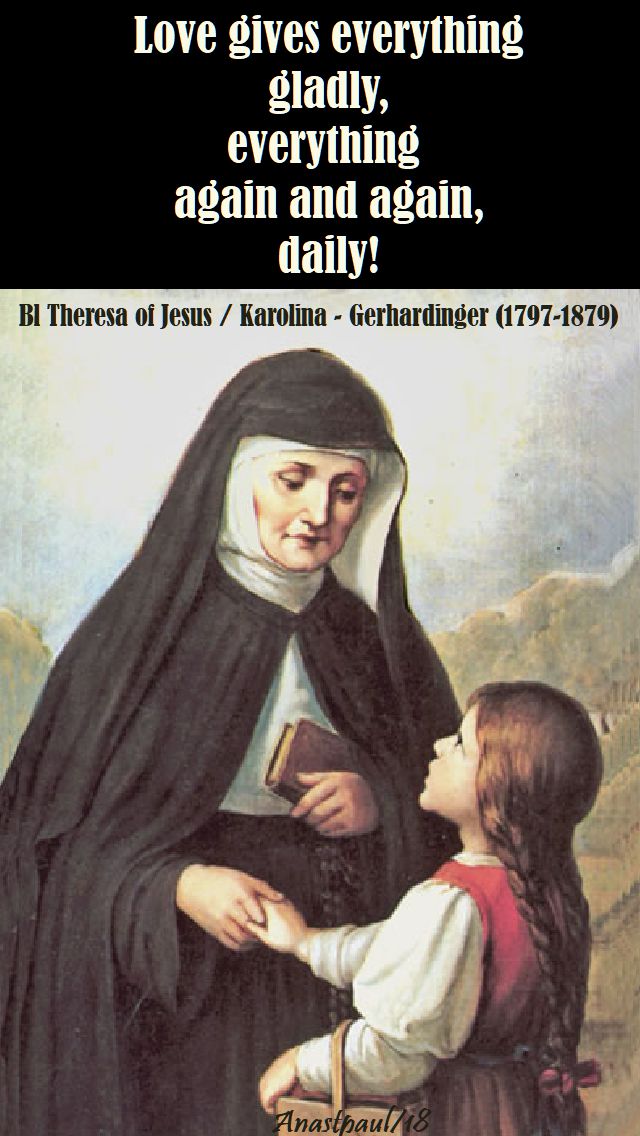
Saint of the Day – 9 May – Blessed Theresa of Jesus/Karolina Gerhardinger (1797-1879)

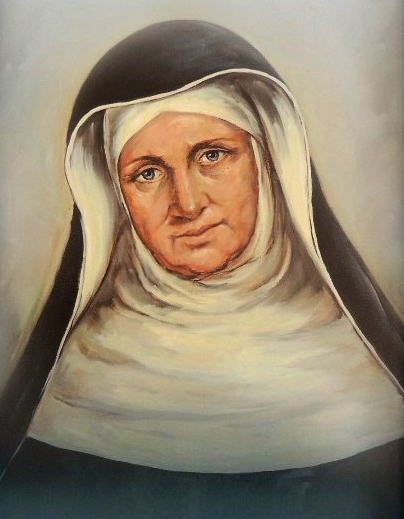
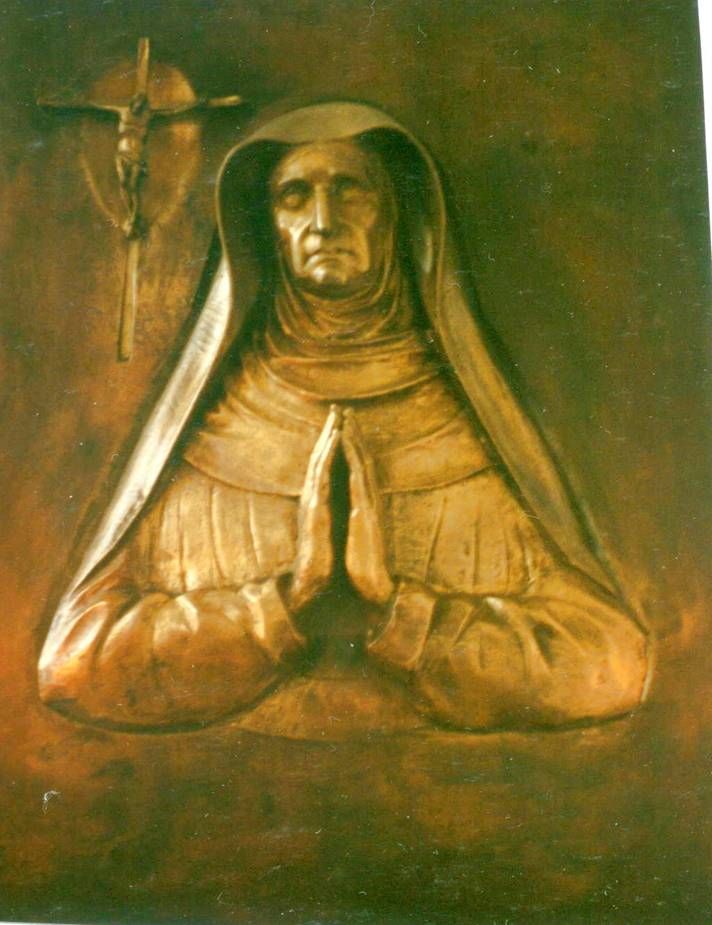
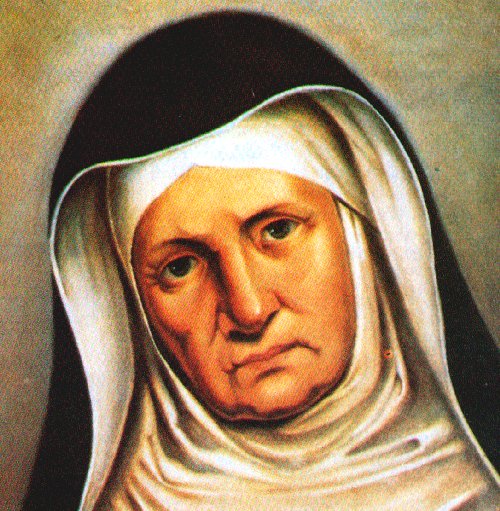
Saint of the Day – 9 May – Blessed Theresa of Jesus/Karolina Gerhardinger (1797-1879). – Religious nun, Foundress, Teacher.    Born on 20 June 1797 at Stadtamhof, Bavaria, Germany as Caroline Gerhardinger and died on 9 May 1879 in München, Bavaria, Germany of natural causes.   She was Beatified on 17 November 1985 by St Pope John Paul II.   Patronages – The School Sisters of Notre Dame and Teachers.BETTER - Mother-Theresa-Gerhadinger2

Karolina Gerhardinger was born in Bavaria on 20 June 1797 as the sole child of Willibard and Franziska Gerhardinger.

Karolina lived during turbulent times in Bavaria.   At the age of 15, she was already a certified teacher in the school for girls in Stadtamhof near Regensburg.   She was a very gifted educator whose enthusiastic and encouraging acceptance of the children soon made her a beloved teacher.   Under the spiritual guidance of Bishop George Michael Wittmann (1760-1833), Karolina gradually recognised God’s call to found a religious community in order to respond to the needs of the times through education.

On 16 November 1835, Karolina professed her religious vows and took the name, Mary Theresa of Jesus.   Her love for God, nourished and strengthened by her devotion to the Blessed Sacrament, enkindled the burning desire of her life:  to know God and to do God’s will.   God’s cause was the only concern of her heart.   Blessed Theresa anchored her community in poverty and dedicated it to Mary.karolina - therese

In 1822, Karolina had written, “The love of Jesus sees into the future.”   As foundress, she endeavoured to give the new congregation a future.   She sent her sisters in communities of twos and threes to small towns and villages where they taught girls who would have been deprived of an adequate education.   This brought about the development of a new form of apostolic religious life whereby all the sisters and houses were governed by a member of the congregation, a general superior.   As a result, the congregation experienced rapid growth and acceptance but Blessed Theresa and her sisters also suffered great hardship and painful struggle.   In 1865, the rule and constitutions of the School Sisters of Notre Dame were finally approved by Pope Pius IX. Blessed Theresa then continued to govern the congregation as its general superior until her death in Munich on May 9, 1879.header - Theresia_Gerhardinger

On 17 November 1985, Theresa of Jesus was declared “Blessed” by St Pope John Paul II in St Peter’s Basilica in Rome.

img-Blessed-Karolina-Gerhardinger1


Posted in MORNING Prayers, NOVENAS, QUOTES - J R R Tolkien and MORE, The HOLY GHOST

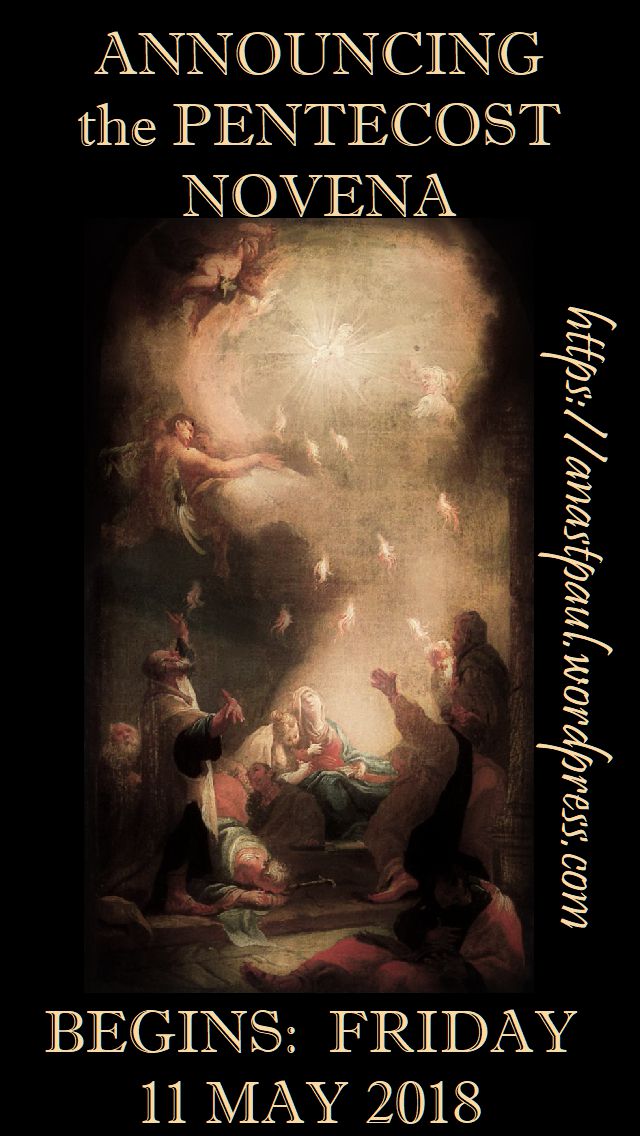
Announcing a Novena to the Holy Spirit for the Seven Gifts – from ASCENSION to PENTECOST – Begins Friday 11 May

Announcing a Novena to the Holy Spirit for the Seven Gifts – from ASCENSION to PENTECOST
Begins Friday 11 May

As we continue to celebrate Easter in the Catholic World, we also begin to look forward to the pivotal moment in Church history, the day everything changed, the moment that Christ sent His followers the Holy Spirit.

The Novena begins on the Friday of the 6th Week of Easter, which is the day after the Solemnity of the Ascension (Ascension Thursday).   Even where this Solemnity is transferred to the 7th Sunday of Easter, this Novena still begins on the Friday before.   We all know that Jesus told his Apostles that He would send them a helper, that even though He would return to the Father, He would always be with us.   “And eating together with them, he commanded them, that they should not depart from Jerusalem, but should wait for the promise of the Father…” Acts 1:4

This Pentecost Novena in honour of the Holy Spirit is in a sense the first Novena ever taken by followers of Christ and it was Christ Himself who instructed His followers to undertake it.  While the Apostles and Mary were gathered in the upper room they waited and they prayed, trusting in the promise that Christ made to them, not knowing what to expect but waiting with expectant hearts.   Now more than ever, we too need to pray and wait for the power of the Holy Spirit to guide us and empower us to face the challenges of every day.

JOHN 16:5-11 – Bishop Robert Barron

“Friends, once again in today’s Gospel Jesus promises to send us the Holy Spirit.   The Spirit is the fuel of the Church, the energy and life force of the Body of Christ.   And we can’t get Him through heroic effort.   We can only get Him by asking for Him.   That’s why, for the past two thousand years, the Church has begged for this power from on high.
Jesus told us that the Father would never refuse someone who asked for the Holy Spirit.   So ask!   And ask again!   Realise that every liturgy is a begging for the Holy Spirit.   Fr Hesburgh of Notre Dame once commented that the one prayer that is always appropriate—whether one is experiencing success or failure, whether one is confident or afraid, whether one is young or old— is “Come, Holy Spirit!”
He’s right, for this is the fundamental prayer of the Church.   Mind you, we pray it, as the first Apostles did, in the presence of Mary and with her support.   In the Hail Mary, we say, “Pray for us sinners, now and at the hour of our death.”   What are we asking her to pray for but the Holy Spirit?”

announcing the pentecost novena - begins friday 11 may - posted 9 may 2018

Posted in CATHOLIC DEVOTIONS of the Month, MARIAN DEVOTIONS, MARIAN QUOTES, MARIAN TITLES, QUOTES of the SAINTS, The BLESSED VIRGIN MARY, The WORD

Marian Thought for the Day – 9 May “Mary’s Month!” – Wednesday of the Sixth Week of Eastertide

Marian Thought for the Day – 9 May “Mary’s Month!” – Wednesday of the Sixth Week of Eastertide

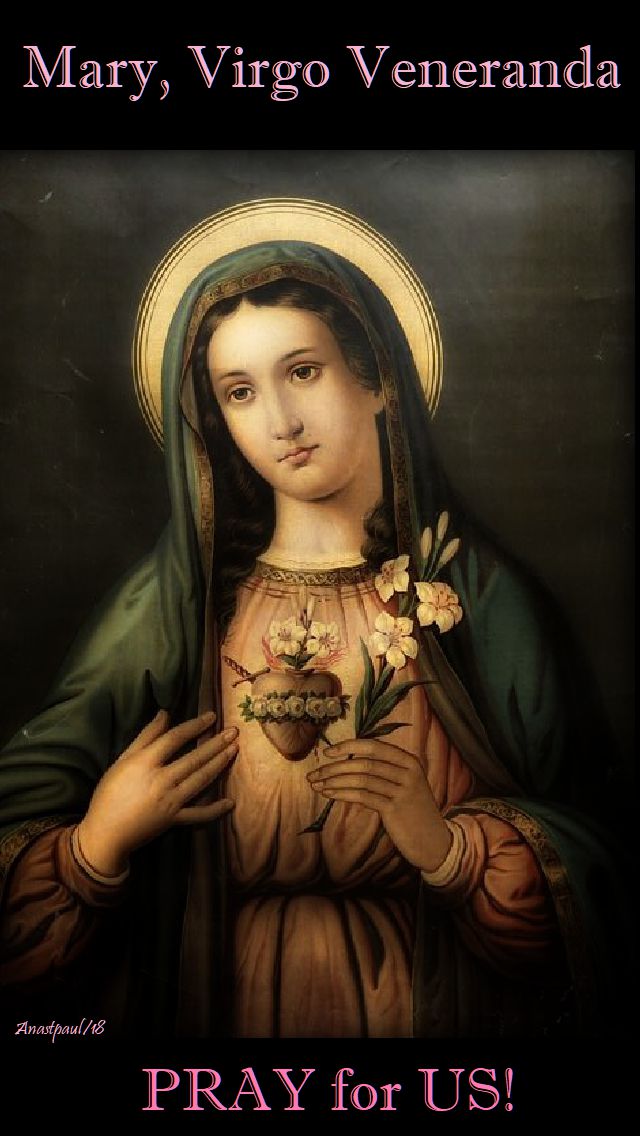
Mary is the “Virgo Veneranda,”

The All-Worshipful Virgin
Blessed John Henry Newman Cong. Orat. (1801-1890)

WE use the word “Venerable” generally of what is old.   That is because only what is old has commonly those qualities which excite reverence or veneration.

It is a great history, a great character, a maturity of virtue, goodness, experience, that excite our reverence and these commonly, cannot belong to the young.

But this is not true when we are considering Saints.   A short life with them is a long one. Thus Holy Scripture says, “Venerable age is not that of long time, nor counted by the number of years but it is the understanding of a man that has gray hairs and a spotless life is old age.   The just man, if he be cut short by death, shall be at rest;  being made perfect in a short time, he fulfilled a long time.” [Wisdom v.]

Nay, there is a heathen writer, who knew nothing of Saints, who lays it down that even to children, to all children, a great reverence should be paid and that on the ground of their being as yet innocent.   And this is a feeling very widely felt and expressed in all countries;  so much so that the sight of those who have not sinned (that is, who are not yet old enough to have fallen into mortal sin) has, on the very score of that innocent, smiling youthfulness, often disturbed and turned the plunderer or the assassin in the midst of his guilty doings, filled him with a sudden fear and brought him, if not to repentance, at least to change of purpose.

And, to pass from the thought of the lowest to the Highest, what shall we say of the Eternal God (if we may safely speak of Him at all) but that He, because He is eternal, is ever young, without a beginning and therefore without change and, in the fullness and perfection of His incomprehensible attributes, now just what He was a million years ago?   He is truly called in Scripture the “Ancient of Days,” and is therefore infinitely venerable;   yet He needs not old age to make him venerable;  He has really nothing of those human attendants on venerableness which the sacred writers are obliged figuratively to ascribe to Him, in order to make us feel that profound abasement and reverential awe which we ought to entertain at the thought of Him.

And so of the great Mother of God, as far as a creature can be like the Creator;  her ineffable purity and utter freedom from any shadow of sin, her Immaculate Conception, her ever-virginity—these her prerogatives (in spite of her extreme youth at the time when Gabriel came to her) are such as to lead us to exclaim in the prophetic words of Scripture both with awe and with exultation, “Thou art the glory of Jerusalem and the joy of Israel;  thou art the honour of our people;  therefore hath the hand of the Lord strengthened thee and therefore art thou blessed forever.”

Mary, Virgo Veneranda, Pray for us!mary virgo veneranda - pray for us - 9 may 2018

Posted in MORNING Prayers, QUOTES of the SAINTS, QUOTES on CHARITY, QUOTES on LOVE, QUOTES on PATIENCE, QUOTES on PRAYER, SAINT of the DAY

Quote/s of the Day – 9 May “Mary’s Month!” – Wednesday of the Sixth Week of Eastertide and the Memorial of Blessed Theresa of Jesus/Karolina Gerhardinger (1797-1879)

Quote/s of the Day – 9 May “Mary’s Month!” – Wednesday of the Sixth Week of Eastertide and the Memorial of Blessed Theresa of Jesus/Karolina Gerhardinger (1797-1879)

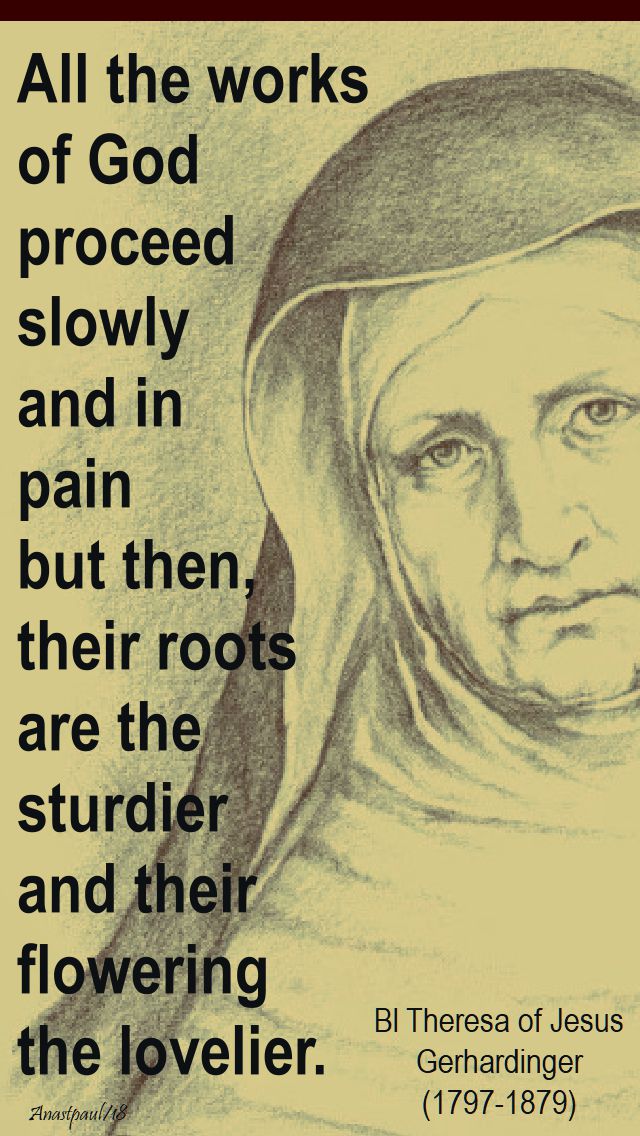
“All the works of God proceed slowly and in pain
but then, their roots are the sturdier
and their flowering the lovelier.”all the works of god - bl theresa of jesus gerhardinger - 9 may 2018

“Love gives everything gladly,
everything
again and again, daily!”love gives everything gladyly - bl karolina gerhardinger - 9 may 2018

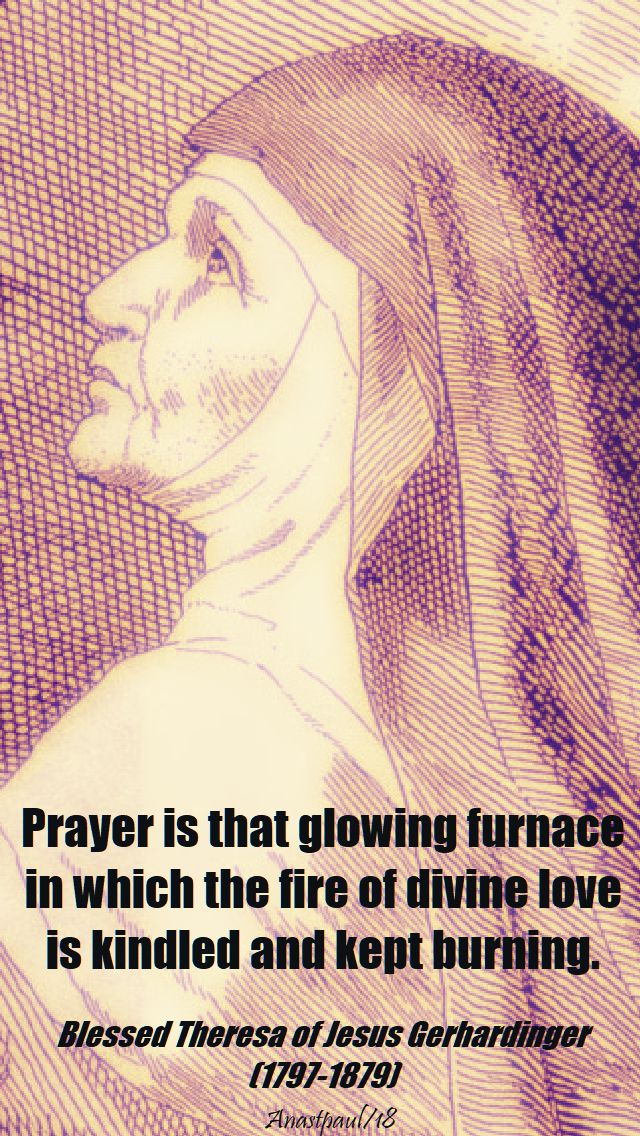
“Prayer is that glowing furnace
in which the fire of divine love
is kindled and kept burning.”

Blessed Theresa of Jesus/Karolina Gerhardinger (1797-1879)prayer is that glowing furnace - bl theresa of jesus karolina gerhardinger - 9 may 2018

Posted in CATHOLIC DEVOTIONS of the Month, MARIAN DEVOTIONS, MARIAN QUOTES, MORNING Prayers, QUOTES of the SAINTS, QUOTES on HUMILITY, The BLESSED VIRGIN MARY, The CHRIST CHILD, The INCARNATION, The NATIVITY of JESUS

One Minute Marian Reflection – 9 May “Mary’s Month!” – Wednesday of the Sixth Week of Eastertide

One Minute Marian Reflection – 9 May “Mary’s Month!” – Wednesday of the Sixth Week of Eastertide

The angel said to them, “Do not be afraid; for behold, I proclaim to you good news of great joy that will be for all the people.   For today in the city of David, a saviour has been born to you, who is Messiah and Lord...Luke 2:10-11

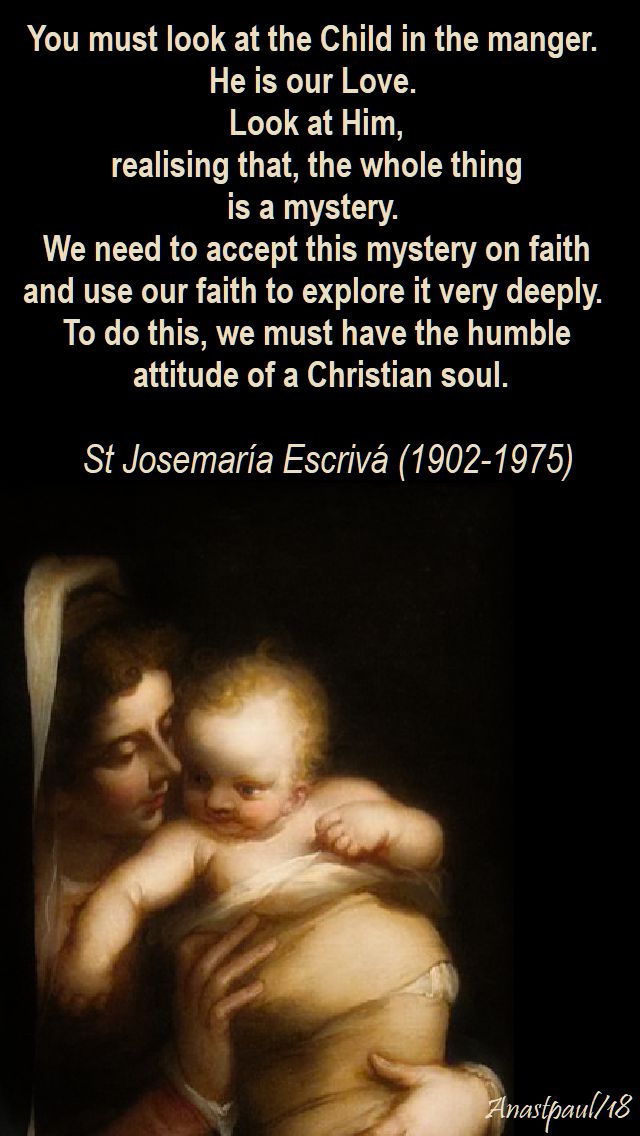
REFLECTIONMARY:  WELCOMING THE SHEPHERDS:   “You must look at the Child in the manger.   He is our Love.   Look at Him, realising that the whole thing is a mystery. We need to accept this mystery on faith and use our faith to explore it very deeply.   To do this, we must have the humble attitude of a Christian soul.” …St Josemaría Escrivá (1902-1975) “Christ Triumphs through Humility,” Christ is Passing by 13.
Let us offer to our Mother today:   

Small hidden sacrifices,
especially those that go against the grain.you must look at the child in the manger - st josemaria - 9 may 2018

PRAYER – Almighty God, Your incarnate Word fills us with the new light He brought to men.   Let the light of faith in our hearts shine through all that we do and say.   Grant that through Mary, mother of Christ and our mother and protector, by her prayers and solace, we may learn humility and true faith.   We make our prayer through Jesus, our Lord, with You and the Holy Spirit, one God forever, amen.holy mary mother of god - pray for us - 9 may 2018

Posted in SAINT of the DAY

Memorials of the Saints – 9 May

St Banban the Wise
St Beatus of Laon
St Beatus of Lungern
Bl Benincasa of Montepulciano
St Brynoth of Scara
St Dionysius of Vienne
Bl Fortis Gabrielli
St Gerontius of Cervia
St Giuse Hien
St Gorfor of Llanover
St Gregory of Ostia
St Hermas of Rome
Isaiah the Prophet
St John of Châlon
Bl Theresa of Jesus/Karolina Gerhardinger (1797-1879)
St Maria del Carmen Rendiles Martinez
St Pachomius of Tabenna
St Sanctan of Kill-da-Les
Bl Stefan Grelewski
Bl Thomas Pickering
St Vincent of Montes

Martyrs of Persia: 310 Christians murdered together for their faith in Persia. No details about them have survived.

20 Mercedarian Martyrs of Riscala: 20 Mercedarian friars who were murdered by Huguenot heretics for refusing to denounce their faith. 16th century at the Santa Maria convent at Riscala, France.

Posted in CATHOLIC DEVOTIONS of the Month, CONSECRATION Prayers, EASTER, MARIAN DEVOTIONS, MARIAN PRAYERS, MORNING Prayers, PRACTISING CATHOLIC, PRAYERS of the CHURCH

Our Morning Offering – 9 May “Mary’s Month!” – Wednesday of the Sixth Week of Eastertide

Our Morning Offering – 9 May “Mary’s Month!” – Wednesday of the Sixth Week of Eastertide

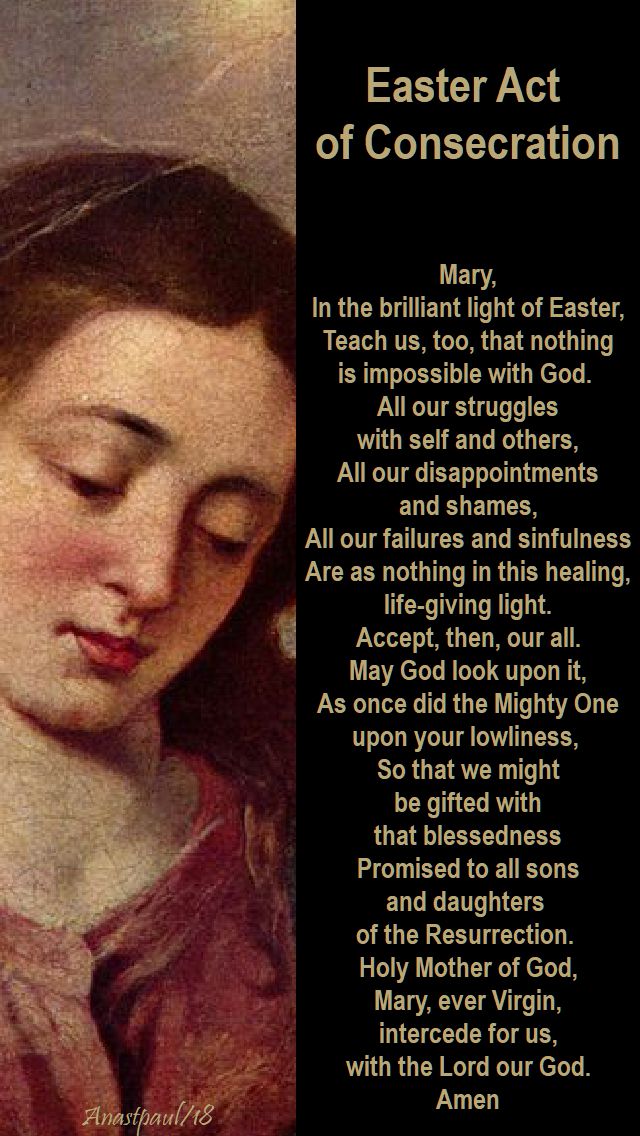
Easter Act of Consecration
Marian Prayers of the Church

Mary,
In the brilliant light of Easter,
Teach us, too, that nothing is impossible with God.
All our struggles with self and others,
All our disappointments and shames,
All our failures and sinfulness
Are as nothing in this healing, life-giving light.
Accept, then, our all.
May God look upon it,
As once did the Mighty One upon your lowliness,
So that we might be gifted with that blessedness
Promised to all sons and daughters of the Resurrection.
Holy Mother of God,
Mary, ever Virgin,
intercede for us, with the Lord our God.
Ameneaster act of consecration to mary - 9 may 2018

Posted in CATHOLIC DEVOTIONS of the Month, MARIAN DEVOTIONS, MARIAN QUOTES, MARIAN TITLES, MORNING Prayers, QUOTES of the SAINTS, The BLESSED VIRGIN MARY

Marian Thought for the Day – 8 May – “Mary’s Month!” – Tuesday of the Sixth Week of Eastertide

Marian Thought for the Day – 8 May – “Mary’s Month!” – Tuesday of the Sixth Week of Eastertide

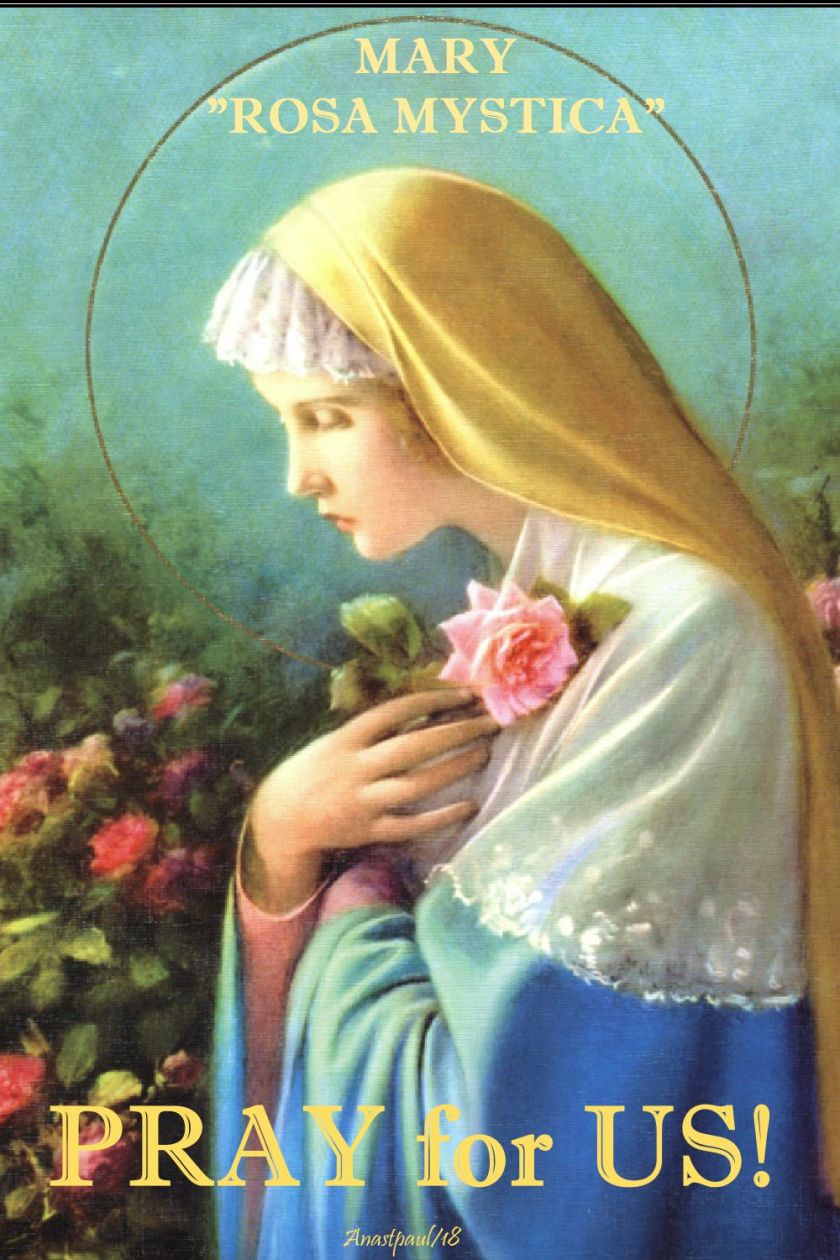
Mary is the “Rosa Mystica,” the Mystical Rose
Blessed John Henry Newman (1801-1890)

HOW did Mary become the Rosa Mystica, the choice, delicate, perfect flower of God’s spiritual creation?   It was by being born, nurtured and sheltered in the mystical garden or Paradise of God.   Scripture makes use of the figure of a garden, when it would speak of heaven and its blessed inhabitants.   A garden is a spot of ground set apart for trees and plants, all good, all various, for things that are sweet to the taste or fragrant in scent, or beautiful to look upon, or useful for nourishment;  and accordingly in its spiritual sense, it means the home of blessed spirits and holy souls dwelling there together, souls with both the flowers and the fruits upon them, which by the careful husbandry of God, they have come to bear, flowers and fruits of grace, flowers more beautiful and more fragrant than those of any garden, fruits more delicious and exquisite than can be matured by earthly husbandman.

All that God has made speaks of its Maker;, the mountains speak of His eternity;, the sun of His immensity and the winds of His Almightiness.   In like manner flowers and fruits speak of His sanctity, His love and His providence;  and such as are flowers and fruits, such must be the place where they are found.   That is to say, since they are found in a garden, therefore a garden has also excellences which speak of God because it is their home.   For instance, it would be out of place if we found beautiful flowers on the mountain-crag, or rich fruit in the sandy desert.   As then by flowers and fruits are meant, in a mystical sense, the gifts and graces of the Holy Ghost, so by a garden is meant mystically, a place of spiritual repose, stillness, peace, refreshment and delight.

Thus our first parents were placed in “a garden of pleasure” shaded by trees, “fair to behold and pleasant to eat of,” with the Tree of Life in the midst and a river to water the ground.   Thus our Lord, speaking from the cross to the penitent robber, calls the blessed place, the heaven to which He was taking him, “paradise,” or a garden of pleasure. Therefore St John, in the Apocalypse, speaks of heaven, the palace of God, as a garden or paradise, in which was the Tree of Life giving forth its fruits every month.

Such was the garden in which the Mystical Rose, the Immaculate Mary, was sheltered and nursed to be the Mother of the All Holy God, from her birth to her espousals to St Joseph, a term of thirteen years.   For three years of it, she was in the arms of her holy mother, St Anne and then for ten years she lived in the temple of God.   In those blessed gardens, as they may be called, she lived by herself, continually visited by the dew of God’s grace and growing up a more and more heavenly flower, till at the end of that period she was meet for the inhabitation in her of the Most Holy.   This was the outcome of the Immaculate Conception.   Excepting her, the fairest rose in the paradise of God has had upon it blight and has had the risk of canker-worm and locust.   All but Mary;  she from the first was perfect in her sweetness and her beautifulness and at length, when the angel Gabriel had to come to her, he found her “full of grace,” which had, from her good use of it, accumulated in her, from the first moment of her being.

Mary, Rosa Mystica, Pray for us!mary - rosa mystica - pray for us - 8 may 2018

Posted in DOCTORS of the Church, MORNING Prayers, QUOTES of the SAINTS, QUOTES on ETERNAL LIFE, The HOLY GHOST, The WORD

Thought for the Day – 8 May – Tuesday of the Sixth Week of Eastertide – Today’s Gospel: John 16:5–11

Thought for the Day – 8 May – Tuesday of the Sixth Week of Eastertide – Today’s Gospel: John 16:5–11

” 5 But now I am going to him who sent me; yet none of you asks me, ‘Where are you going?’  6 But because I have said these things to you, sorrow has filled your hearts.  7 Nevertheless I tell you the truth: it is to your advantage that I go away, for if I do not go away, the Counsellor will not come to you; but if I go, I will send him to you.  8 And when he comes, he will convince the world concerning sin and righteousness and judgment:  9 concerning sin, because they do not believe in me;  10 concerning righteousness, because I go to the Father, and you will see me no more;  11 concerning judgment, because the ruler of this world is judged.” (RSV-Catholic ed)

“It is better for you that I go”
St Bernard (1091-1153) Mellifluous Doctor
3rd sermon for Pentecost

The Holy Spirit overshadowed the Virgin Mary (Lk 1:35) and strengthened the apostles on the day of Pentecost.   In her case it was to soften the impact on her virginal body of the coming of the divinity and, in theirs, to “clothe them with power from on high” (Lk 24:49), that is with burning charity…   In their weakness how could they have fulfilled their mission of conquering death without that “love as strong as death” or not allowed the “gates of hell to prevail against them” without that “passion fierce as Sheol” ? (Mt 16:18; Sg 8:6).   However, when they saw such enthusiasm, some thought they were drunk (Acts 2:13).

They were indeed drunk but with new wine…, that which the “true Vine” poured down from the heights of heaven, that which “gladdens the human heart” (Jn 15:1; Ps 104[103]:15)…   This was a new wine for the dwellers on earth but it is found in abundance in heaven…, it runs in streams in the streets and squares of the holy city where it spreads gladness of heart…

And so in heaven, there was a special wine of which earth was ignorant.   Yet earth, too, had something of its own that was its glory – Christ’s flesh – and heaven thirsted for the presence of that flesh.   Could anyone stand in the way of so reliable and grace-filled an exchange, between heaven and earth, angels and apostles, as that by which earth possesses the Holy Spirit and heaven the flesh of Christ?…

“If I do not go away,” Jesus says, “the Advocate will not come to you.”   That is to say, if you do not allow what you love to leave you, you will not obtain what you desire.   “It is to your advantage that I go” and that I should carry you over from earth to heaven, from flesh to spirit, for the Father is spirit, the Son is spirit and the Holy Spirit is also spirit… And the Father “who is spirit seeks worshippers who will worship him in spirit and in truth” (Jn 4:23-24).

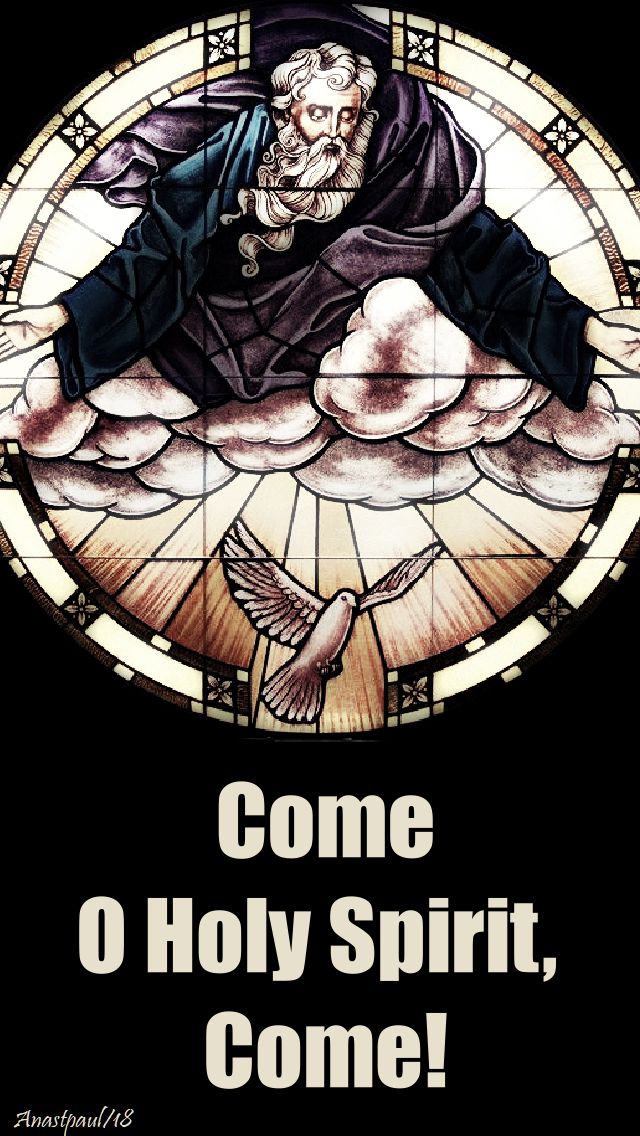
Come O Holy Spirit, Come!come o holy spirit, come! - 8 may 2018.jpg


Posted in MORNING Prayers, QUOTES - J R R Tolkien and MORE, QUOTES on ATHEISM, QUOTES on CHARITY, QUOTES on CHASTITY, QUOTES on FAITH, QUOTES on JUSTICE, QUOTES on MERCY, QUOTES on the CHURCH, QUOTES on the CROSS of CHRIST, QUOTES on the DEVIL/EVIL, QUOTES on TRUTH, SPEAKING of .....

Quote/s of the Day – 8 May – Tuesday of the Sixth Week of Eastertide

Quote/s of the Day – 8 May – Tuesday of the Sixth Week of Eastertide

Speaking of: Gilbert Keith Chesterton (1874-1936) Seeking Gilbert Keith, Part Two ……

English Catholic Convert, writer, poet, philosopher, dramatist, journalist, orator, lay theologian, biographer, and literary and art critic. Chesterton is often referred to as the “prince of paradox” (Part One – https://anastpaul.wordpress.com/2018/04/18/quote-s-of-the-day-18-april-wednesday-of-the-third-week-of-eastertide/)

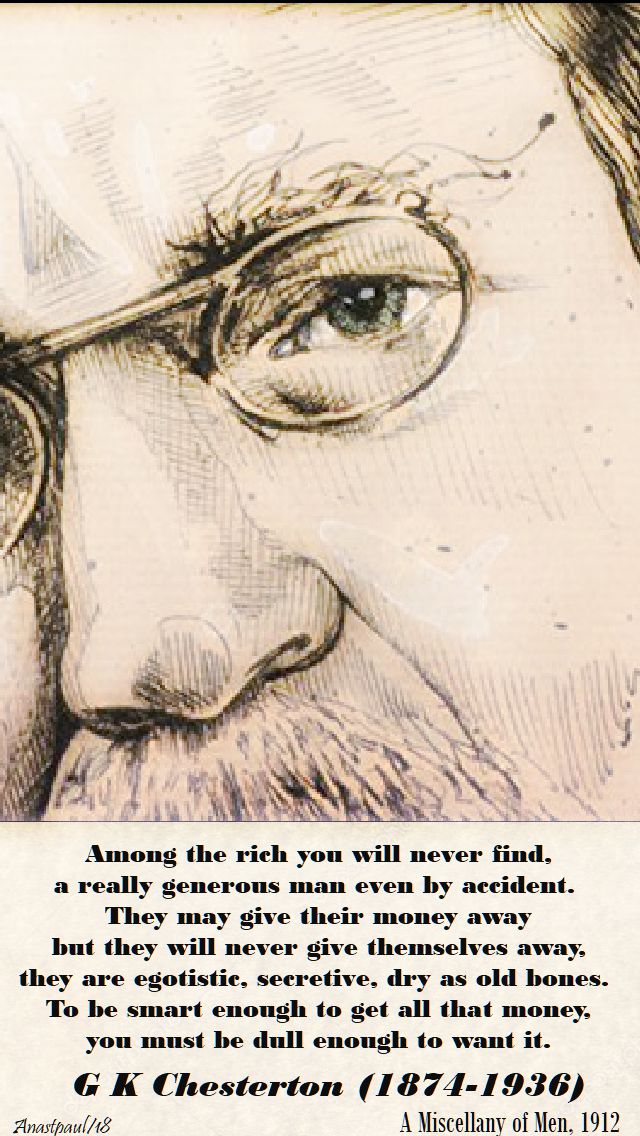
“Among the rich you will never find,
a really generous man even by accident.
They may give their money away
but they will never give themselves away,
they are egotistic, secretive, dry as old bones.
To be smart enough to get all that money,
you must be dull enough to want it.”

A Miscellany of Men, 1912among the rich you will never find - g k chesterton - seeking chesterton part two - 8 may 2018

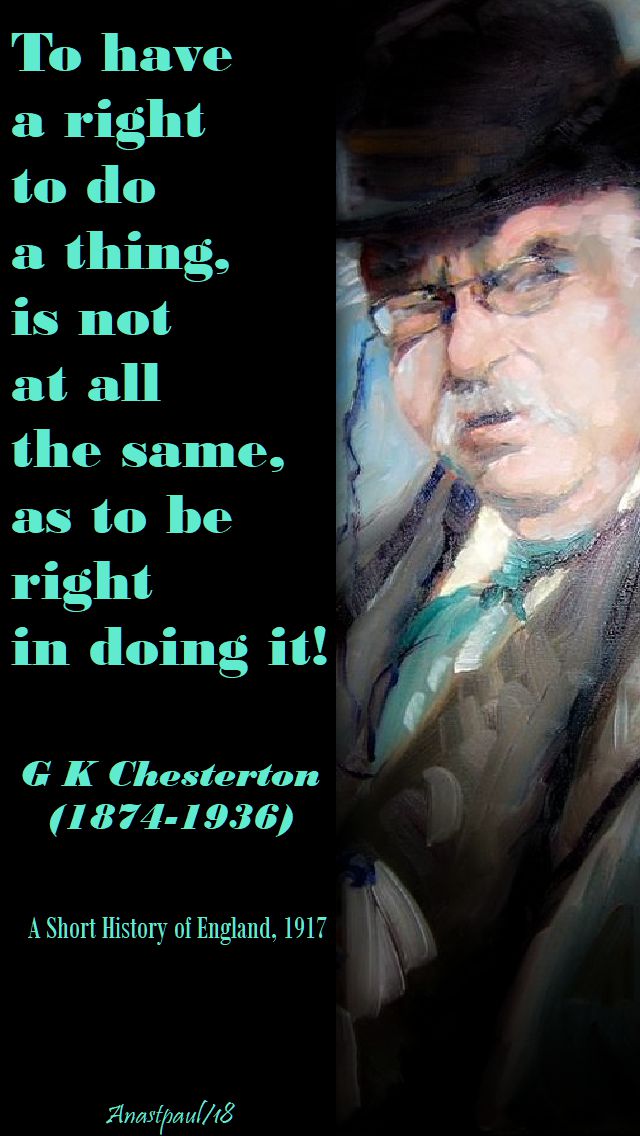
“To have a right to do a thing,
is not at all the same,
as to be right in doing it.”

A Short History of England, 1917to have a right to do a thing - g k - seeking chesterton part two - 8 may 2018

“Once abolish the God
and the government
becomes the God.”

Christendom in Dublin, 1933once abolish the god - seeking g k chesterton part tow - 8 may 2018

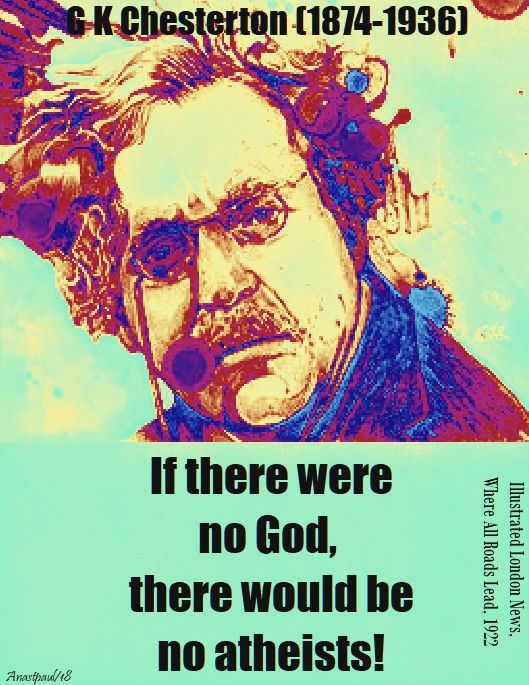
“If there were no God,
there would be no atheists.”

Illustrated London News, Where All Roads Lead, 1922if there were no god - g k chesterton - seeking chesterton part two - 8 may 2018

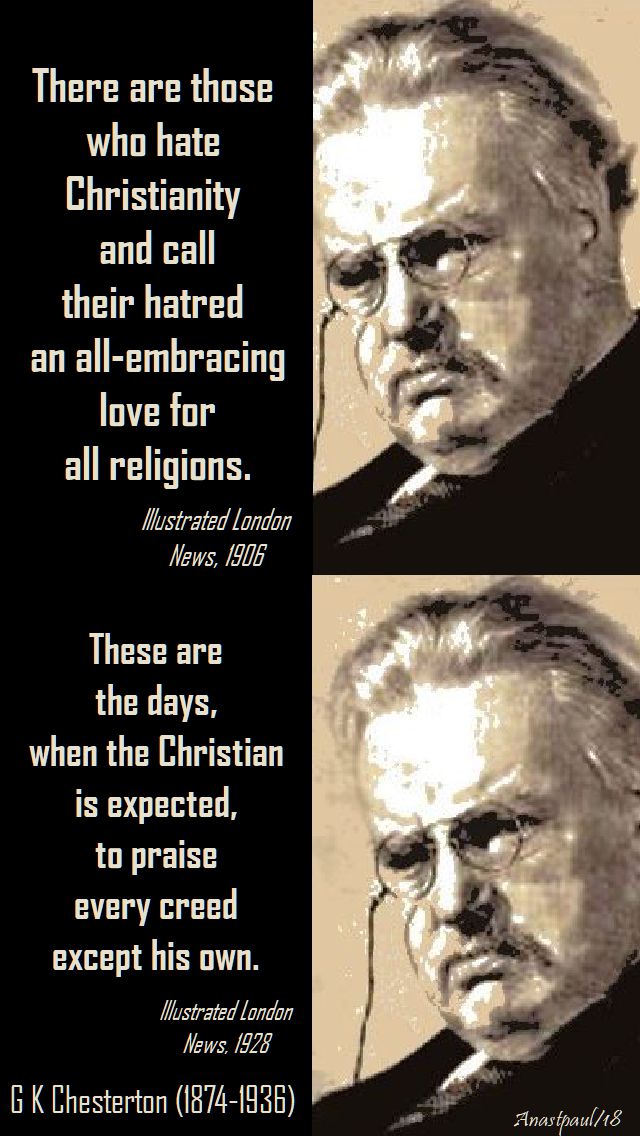
“There are those who hate Christianity
and call their hatred
an all-embracing love for all religions.”

Illustrated London News, 1906

“These are the days,
when the Christian is expected,
to praise every creed except his own.”

Illustrated London News, 1928these are the days & there are those who hate - seeking chesterton part two - 8 may 2018

“A Catholic is a person,
who has plucked up courage,
to face the incredible and inconceivable idea,
that something else may be wiser than he is.”

The Surrender on Sex, 1934a catholic is a person - seeking chesterton - part two - 8 may 2018

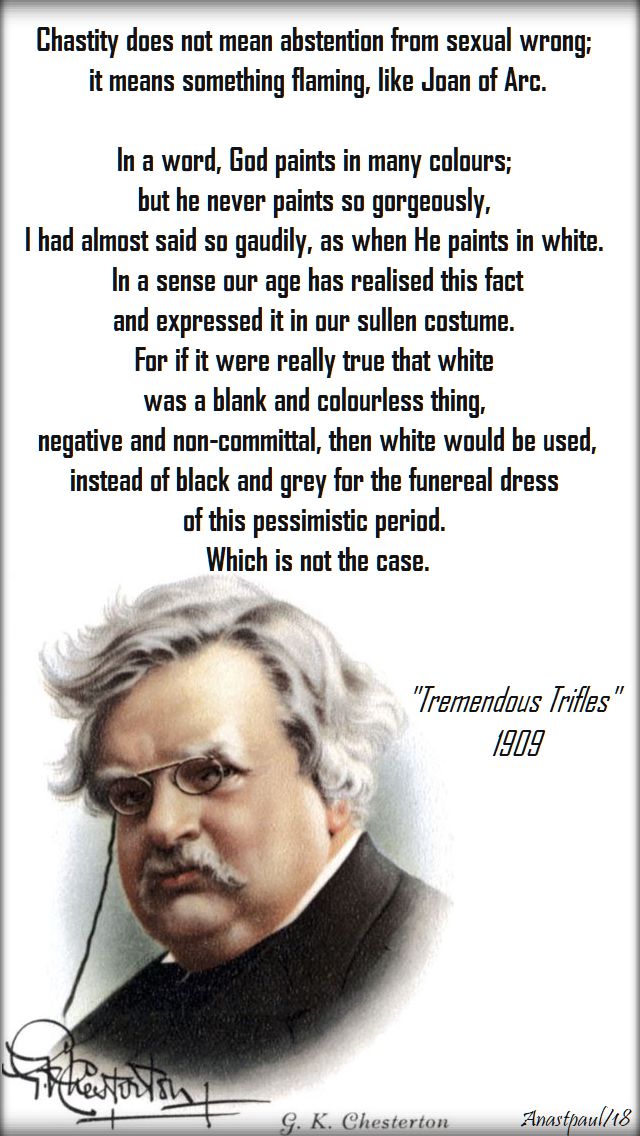
“Chastity does not mean abstention from sexual wrong;
it means something flaming, like Joan of Arc.
In a word, God paints in many colours;
but he never paints so gorgeously,
I had almost said so gaudily, as when He paints in white.
In a sense our age has realised this fact
and expressed it in our sullen costume.
For if it were really true that white
was a blank and colourless thing,
negative and non-committal, then white would be used,
instead of black and grey for the funereal dress
of this pessimistic period.
Which is not the case.”

“Tremendous Trifles” 1909

Gilbert Keith Chesterton (1874-1936)chastity does not mean - g k chesterton - seeking chesterton part two - 8 may 2018

Posted in CATHOLIC DEVOTIONS of the Month, EASTER, MARIAN PRAYERS, MARIAN QUOTES, MARIAN TITLES, MORNING Prayers, QUOTES of the SAINTS, The BLESSED VIRGIN MARY, The HOLY EUCHARIST / The HOLY MASS, The INCARNATION, The WORD

One Minute Marian Reflection – 8 May – “Mary’s Month!” – Tuesday of the Sixth Week of Eastertide

One Minute Marian Reflection – 8 May – “Mary’s Month!” – Tuesday of the Sixth Week of Eastertide

And the angel said to her in reply, “The holy Spirit will come upon you, and the power of the Most High will overshadow you.   Therefore the child to be born will be called holy, the Son of God…Luke 1:35and the angel said to her in reply - luke 1 35 - 8 may 2018

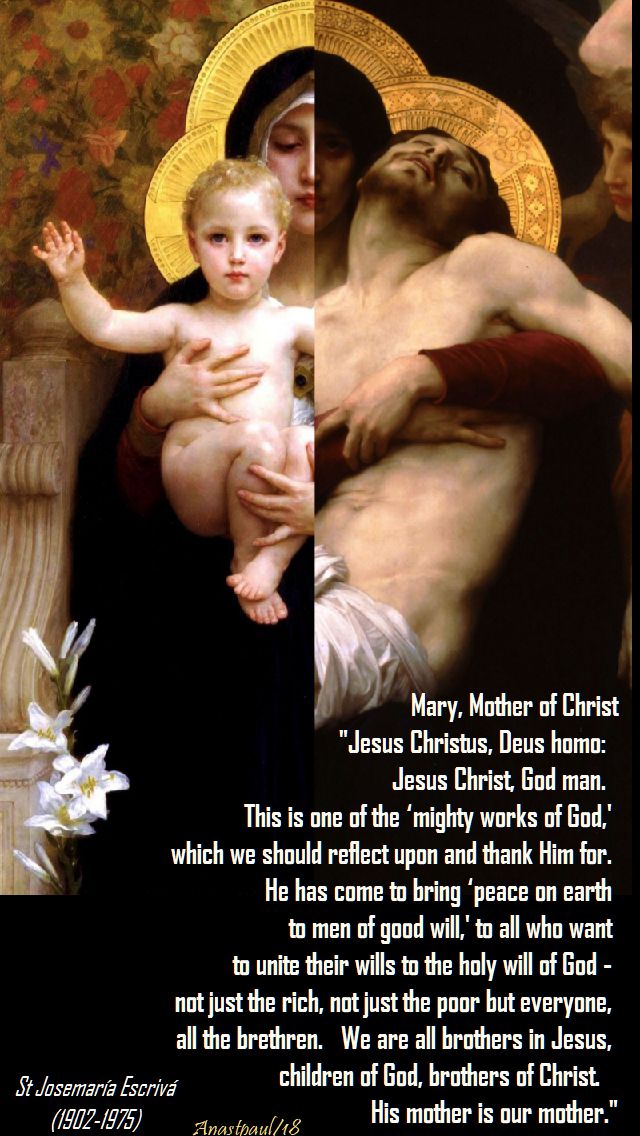
REFLECTIONMARY:  MOTHER OF CHRIST – “Jesus Christus, Deus homo:  Jesus Christ, God man.   This is one of the ‘mighty works of God,’ which we should reflect upon and thank Him for.   He has come to bring ‘peace on earth to men of good will,’ to all who want to unite their wills to the holy will of God – not just the rich, not just the poor but everyone, all the brethren.   We are all brothers in Jesus, children of God, brothers of Christ.   His mother is our mother .”…St Josemaría Escrivá (1902-1975) – “Christ Triumphs through Humility” – “Christ is Passing By – 13”
Let us offer to our Mother today:
Jesus Himself, when we receive Him in Holy Communion.mary mother of christ - st josemaria - 8 may 2018

PRAYER – Shape us in the likeness of the divine nature of our Redeemer, whom we believe to be true God and true man, since it was Your will, Lord God, that He, Your Word, should take to Himself our human nature in the womb of the Blessed Virgin Mary. Grant, we pray, that by intercession of the Mother of our Lord Jesus Christ, we may reach eternal life.   We make our prayer, through Christ, our Lord, in union with You and the Holy Spirit, one God, forever, amen.mary mother of christ - pray for us - 8 may 2018


Posted in CATHOLIC DEVOTIONS of the Month, CATHOLIC-PRAYERS OF THE CHURCH, CONSECRATION Prayers, EASTER, MARIAN DEVOTIONS, MARIAN PRAYERS, MORNING Prayers, PRACTISING CATHOLIC, PRAYERS of the CHURCH, The RESURRECTION

Our Morning Offering – 8 May – “Mary’s Month!” – Tuesday of the Sixth Week of Eastertide

Our Morning Offering – 8 May – “Mary’s Month!” – Tuesday of the Sixth Week of Eastertide

Easter Act of Consecration
(Prayers of the Church)

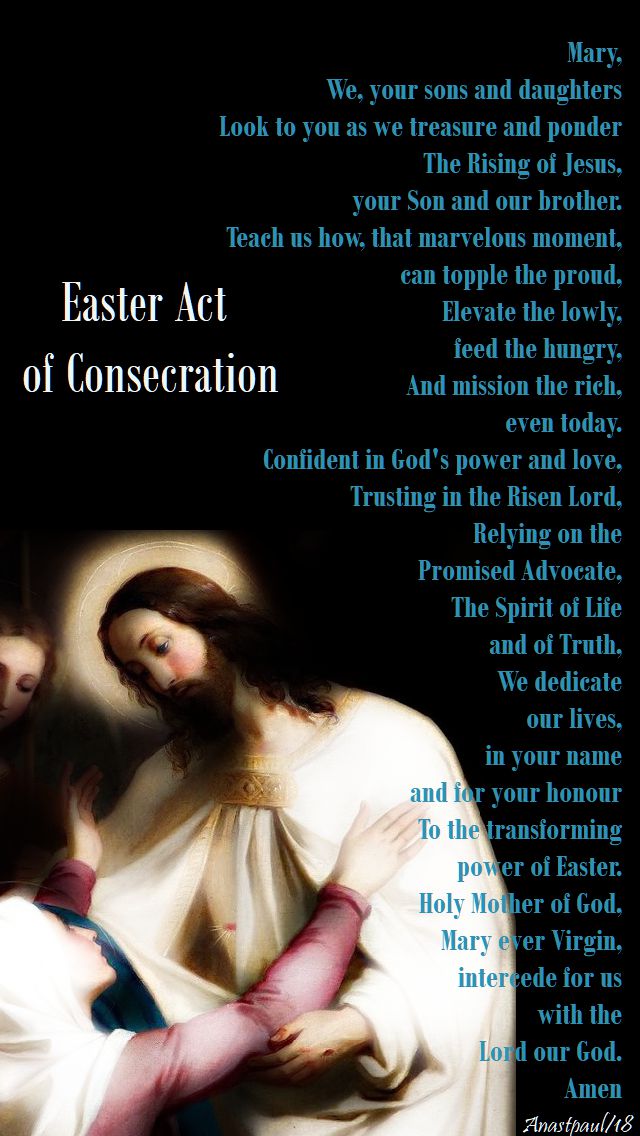
Mary,
We, your sons and daughters
Look to you as we treasure and ponder
The Rising of Jesus,
your Son and our brother.
Teach us how, that marvelous moment,
can topple the proud,
Elevate the lowly,
feed the hungry,
And mission the rich,
even today.
Confident in God’s power and love,
Trusting in the Risen Lord,
Relying on the Promised Advocate,
The Spirit of Life and of Truth,
We dedicate our lives,
in your name and for your honour
To the transforming power of Easter.
Holy Mother of God,
Mary ever Virgin,
intercede for us with the Lord our God.
Ameneaster act of consecration - no 2 - tuesday of the 6th week of easter - 8 may 2018

Posted in ArchAngels and Angels, SAINT of the DAY

Saint of the Day – 8 May – Apparition of Michael the Archangel at Monte Gargano, Italy (492)

Saint of the Day – 8 May – Apparition of Michael the Archangel at Monte Gargano, Italy (492)

michael

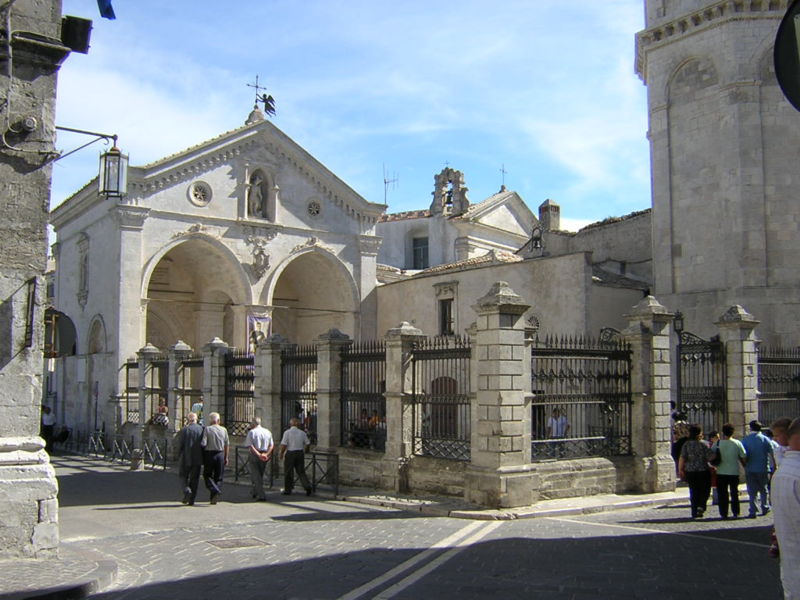
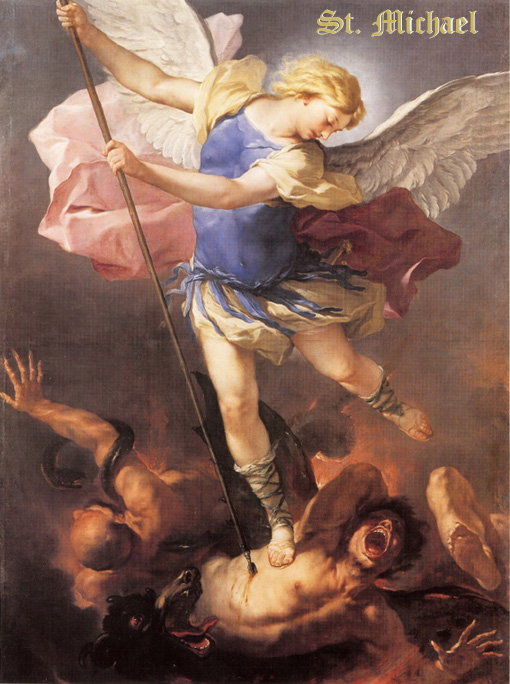
It is evident from Holy Scripture that God is pleased to make frequent use of the ministry of the heavenly spirits in the dispensations of His providence in this world.   The Angels are all pure spirits;  by a property of their nature they are immortal, as is every spirit. They have the power of moving or conveying themselves at will from place to place and such is their activity that it is not easy for us to conceive of it.   Among the holy Archangels, Saints Michael, Gabriel and Raphael are particularly distinguished in the Scriptures.   Saint Michael, whose name means Who is like unto God?, is the prince of the faithful Angels who opposed Lucifer and his followers in their revolt against God.   Since the devil is the sworn enemy of God’s holy Church, Saint Michael is given to it by God as its special protector against the demon’s assaults and stratagems.st michael at gargano

Various apparitions of this powerful Angel have proved the protection of Saint Michael over the Church.   We may mention his apparition in Rome, where Saint Gregory the Great saw him in the air sheathing his sword, to signal the cessation of a pestilence and the appeasement of God’s wrath.   Another apparition to Saint Ausbert, bishop of Avranches in France, led to the construction of Mont-Saint-Michel in the sea, a famous pilgrimage site.   8 May, however, is destined to recall another no less marvellous apparition, occurring near Monte Gargano in the Kingdom of Naples.

In the year 492 a man named Elvio Emanuele Gargan was pasturing his large herds in the countryside. One day a bull fled to the mountain, where at first it could not be found.   When its refuge in a cave was discovered, an arrow was shot into the cave but the arrow returned to wound the one who had sent it.   Faced with so mysterious an occurrence, the persons concerned decided to consult the Bishop of the region, St Lorenzo Maiorano (Died 545), his feast day being 7 February.  He ordered three days of fasting and prayers.   After three days, the Archangel Saint Michael appeared to the Bishop and declared that the cavern, where the bull had taken refuge, was under his protection and that God wanted it to be Consecrated under his name and in honour of all the Holy Angels.

Accompanied by his clergy and people, Bishop Lorenzo went to that cavern, which he found already disposed in the form of a Church.   The divine mysteries were celebrated there and there arose in this same place a magnificent temple where the divine Power has wrought great miracles.   To thank God’s adorable goodness for the protection of the holy Archangel, the effect of His merciful Providence, this feast day was instituted by the Church in his honour.Grotto where the Archangel Michael is said to have appeared in 492Grotto where the Archangel Michael is said to have appeared in 492 - 2

It is said of this special guardian and protector of the Church that, during the final persecution of Antichrist, he will powerfully defend it:  At that time shall Michael rise up, the great prince who protects the children of thy people. (Dan. 12:1)   Compare this text with Chapter 10 of the Apocalypse of Saint John.Monte_Santangelo_San_Michele_DSC_7156bSantuario_san_michele_arcangeloapparition of st michaelGiordano St. Michael

Posted in ArchAngels and Angels, MARIAN TITLES, MIRACLES, SAINT of the DAY

8 May – Apparition of Michael the Archangel at Monte Gargano, Italy (492), Feast of Our Lady of Luján and Memorials of the Saints

Apparition of Michael the Archangel at Monte Gargano, Italy (492)

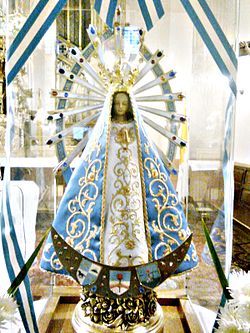
Our Lady of Luján:  The Virgin is a two feet tall terracotta statue of Our Lady.   It was made in Brazil and sent to Argentina in May 1630.   Its original appearance seemed inspired by Murillo’s Immaculates.   In 1887, to preserve and protect it, the image was given a solid silver covering.   It is usually clothed with a white robe and sky blue cloak, the colors of the Argentinian flag.   Only the dark oval face with big blue eyes and the hands folded in prayer are now visible.
Tradition says that an ox-drawn wagon was taking the statue from Buenos Aires to Santiago del Estero.   The animals stopped at the Luján River and refused to cross. Through trial and error the teamsters discovered that it the box with the Virgin was in the wagon, the oxen would not move;  if it was removed, then away they went.   After testing this several times, the people realised that Our Lady wanted to stay in Luján and so she is there today.
The image was first taken to the nearby home of Don Rosendo.   He built a primitive chapel for it which lasted 40 years.   A bigger shrine was completed in 1685.   A new sanctuary was built in the 19th century.   The image was crowned canonically in 1887.   In 1930 Pope Pius XII gave the sanctuary the title of Basilica.
Patronages:
• Agentina (proclaimed on 8 September 1930 Pope Pius XI)
• Argentinian military chaplains
• Paraguay
• Uruguay

Virgen_de_Luján-Réplica

St Acacius of Byzantium
Bl Aloysius Luis Rabata
St Amatus Ronconi
Bl Angelo of Massaccio
St Arsenio of Mount Scete
St Benedict II, Pope
St Boniface IV, Pope
St Desideratus of Bourges
Bl Domenico di San Pietro
St Gibrian
St Helladius of Auxerre
St Ida of Nivelles
St Martin of Saujon
St Metrone of Verona
St Odrian of Waterford
St Otger of Utrecht
St Peter of Besançon
Bl Pietro de Alos
Bl Raymond of Toulouse
Bl Teresa Demjanovich
Bl Ulrika Fransiska Nisch
St Victor Maurus
St Wiro of Utrecht

Posted in CATHOLIC DEVOTIONS of the Month, MARIAN DEVOTIONS, MARIAN QUOTES, MARIAN TITLES, QUOTES of the SAINTS, The BLESSED VIRGIN MARY

Marian Thought for the Day – 7 May “Mary’s Month” – Monday of the Sixth week of Eastertide

Marian Thought for the Day – 7 May “Mary’s Month” – Monday of the Sixth week of Eastertide

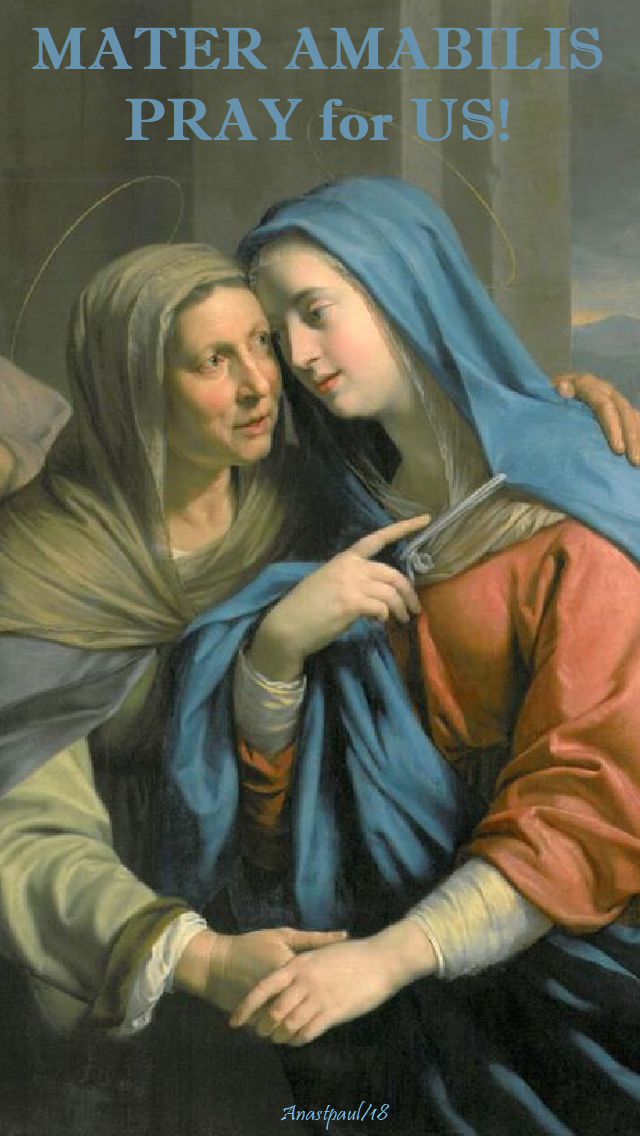
Mary is the “Mater Amabilis”
the Lovable or Dear Mother
Blessed John Henry Newman (1801-1890)

WHY is she “Amabilis” thus specially?   It is because she was without sin.   Sin is something odious in its very nature and grace is something bright, beautiful, attractive.

However, it may be said that sinlessness was not enough to make others love her, or to make her dear to others and that for two reasons:   first, because we cannot like anyone that is not like ourselves and we are sinners;   and next, because her being holy would not make her pleasant and winning because holy persons whom we fall in with, are not always agreeable and we cannot like them, however we may revere them and look up to them.

Now as to the first of these two questions, we may grant that bad men do not, cannot like good men but our Blessed Virgin Mary is called Amabilis, or lovable, as being such to the children of the Church, not to those outside of it, who know nothing about her and no child of Holy Church but has some remains of God’s grace in his soul which makes him sufficiently like her, however greatly wanting he may be, to allow of his being able to love her.   So we may let this question pass.

But as to the second question, viz., How are we sure that our Lady, when she was on earth, attracted people round her and made them love her merely because she was holy?—considering that holy people sometimes have not that gift of drawing others to them.

To explain this point we must recollect that there is a vast difference between the state of a soul such as that of the Blessed Virgin, which has never sinned and a soul, however holy, which has once had upon it Adam’s sin;   for, even after baptism and repentance, it suffers necessarily from the spiritual wounds which are the consequence of that sin. Holy men, indeed, never commit mortal sin, nay, sometimes have never committed even one mortal sin in the whole course of their lives.   But Mary’s holiness went beyond this. She never committed even a venial sin and this special privilege is not known to belong to anyone but Mary.

Now, whatever want of amiableness, sweetness, attractiveness, really exists in holy men arises from the remains of sin in them, or again from the want of a holiness powerful enough to overcome the defects of nature, whether of soul or body but, as to Mary, her holiness was such, that if we saw her and heard her, we should not be able to tell to those who asked us anything about her except simply that she was angelic and heavenly.

Of course, her face was most beautiful but we  should not be able to recollect whether it was beautiful or not, we should not recollect any of her features because it was her beautiful sinless soul, which looked through her eyes and spoke through her mouth and was heard in her voice and compassed her all about.   When she was still, or when she walked, whether she smiled, or was sad, her sinless soul, this it was, which would draw all those to her who had any grace in them, any remains of grace, any love of holy things.

There was a divine music in all she said and did—in her mien, her air, her deportment, that charmed every true heart that came near her.   Her innocence, her humility and modesty, her simplicity, sincerity, and truthfulness, her unselfishness, her unaffected interest in everyone who came to her, her purity—it was these qualities which made her so lovable and were we to see her now, neither our first thought nor our second thought would be, what she could do for us with her Son, (though she can do so much) but our first thought would be, “Oh, how beautiful!” and our second thought would be, “Oh, what ugly hateful creatures are we!”

Mater Amabilis, Pray for us!mater amabilis - lovable mother - dear mother - the visitation - pray for us - 7 may 2018

Posted in MORNING Prayers, SAINT of the DAY

Thought for the Day – 7 May – Monday of the Sixth week of Eastertide and the Memorial of St Rose Venerini (1656-1728)

Thought for the Day – 7 May – Monday of the Sixth week of Eastertide and the Memorial of St Rose Venerini (1656-1728)

Prayer was the breath of her day.   Rose did not impose on herself or her Daughters long vocal prayers but recommended that the life of the Maestre, in the practice of the precious education ministry, be a continuous speaking with God, of God and for God.

Intimate communion with the Lord was nourished by mental prayer, which the Saint considered “essential nourishment of the soul”.   In meditation, Rosa listened to the Teacher who taught along the roads of Palestine and in a particular way from the height of the Cross.   With her gaze upon the crucifix, Rosa always felt more strongly her passion for the salvation of souls.   For this reason, she celebrated and lived daily the Eucharist in a mystical way.   In her imagination, the Saint saw the world as a great circle;   she placed herself in the centre of it and contemplated Jesus, the immaculate victim, who offered Himself from every part of the world to the Father through the Eucharistic Sacrifice.

She called this means of elevating herself to God “The Greatest Circle”.   With incessant prayer, she participated spiritually in all the Masses being celebrated in every part of the world.   She united with love the sufferings, hard work and joys of her own life to the sufferings of Jesus Christ, concerned that His Precious Blood would not be shed in vain…vatican.va

St Rose Venerini, pray for us!st rose venerini - pray for us - 7 may 2018

Posted in MORNING Prayers, QUOTES of the SAINTS, QUOTES on DIVINE PROVIDENCE, QUOTES on TRUST and complete CONFIDENCE in GOD, SAINT of the DAY

Quote of the Day – 7 May – Monday of the Sixth week of Eastertide and the Memorial of St Rose Venerini (1656-1728)

Quote of the Day – 7 May – Monday of the Sixth week of Eastertide and the Memorial of St Rose Venerini (1656-1728)

“I feel so nailed to the Will of God,
that nothing else matters, neither death nor life.
I want what He wants;
I want to serve Him
as much as pleases Him and no more.”

St Rose Venerini M.P.V. (1656-1728)i feel so nailed to the will of god - st rose venerini - 7 may 2018

Posted in CATHOLIC DEVOTIONS of the Month, MARIAN DEVOTIONS, MARIAN PRAYERS, MARIAN QUOTES, MORNING Prayers, QUOTES of the SAINTS, The WORD

One Minute Marian Reflection – 7 May “Mary’s Month” – Monday of the Sixth week of Eastertide

One Minute Marian Reflection – 7 May “Mary’s Month” – Monday of the Sixth week of Eastertide

And behold, Elizabeth, your relative, has also conceived a son in her old age and this is the sixth month for her who was called barren...Luke 1:36luke 1 36 - and behold elizabeth your relative - 7 may 2018

REFLECTION – “MARY:  OUR MODEL IN ORDINARY LIFE – “We can’t forget that Mary spent nearly every day of her life just like millions of other women who look after their families, bring up their children and take care of their houses.   Mary sanctifies the ordinary, everyday things.what some people wrongly regard as unimportant and insignificant, everyday work, looking after those closest to you, visits to friends and relatives.   What a blessed ordinariness, that can be so full of love of God.” …St Josemaria Escriva (1902-1975) – “To Jesus through Mary” – Christ is Passing By 144
Let us offer to our Mother today:
Affectionate details of service and attention to those closest to us.mary - our model inordinary life - st josemaria - 7 may 2018

PRAYER – Almighty, ever-living God, You inspired the Blessed Virgin Mary, when she was carrying Your Son, to visit her cousin, St Elizabeth.   Grant that, always docile to the voice of the Spirit, we may, together with our Lady, glorify Your name and serve our neighbour.   Mary, you who are kindness and mercy, help us to fulfil our duties with love and please pray for us.   We make our prayer through Jesus Christ, our Lord, in union with You, holy Father and the Holy Spirit, one God, forever, amen.holy mary mother of god - pray for us - 7 may 2018

Posted in CATHOLIC DEVOTIONS of the Month, EASTER, MARIAN PRAYERS, MORNING Prayers, PRAYERS of the CHURCH, The RESURRECTION

Our Morning Offering – 7 May “Mary’s Month” – Monday of the Sixth week of Eastertide

Our Morning Offering – 7 May “Mary’s Month” – Monday of the Sixth week of Eastertide

Easter Act of Consecration

Mary,
God has worked a great wonder:
Jesus is risen!
No longer are we caught in the cords of death,
For He has loosened our bonds.
No longer need we walk in fear,
For He has become our strong hope.
No longer are we alone and estranged,
For He has called us friends.
May your faith in the face of death,
even death on the cross,
May your hope,
almost buried with Him in the tomb,
May your love,
nearly staunched by the fear of his disciples,
May your joy in the Resurrected Saviour
be ours this day,
As we, in your name, for your honour,
live out our Easter mission.
To go forth and teach all peoples.
Holy Mother of God,
Mary ever Virgin,
intercede for us, with the Lord our God.
Ameneaster act of consecration - 7 may 2018

Posted in SAINT of the DAY, VATICAN Resources

Saint of the Day – 7 May – St Rose Venerini (1656-1728)

Saint of the Day – 7 May – St Rose Venerini M.P.V. (1656-1728) Religious, Foundress, Teacher, Innovator and Pioneer, Apostle of Charity – born (Rosa Venerini) on 9 February 1656 at Viterbo, Italy and died on 7 May 1728 at Rome, Italy of natural causes.   St Rose was a pioneer in the education of women and girls in 17th-century Italy and the foundress of the Religious Teachers Venerini (Italian: Maestre Pie Venerini), an religious order of women, often simply called the Venerini Sisters.   She was canonised by Pope Benedict XVI on 15 October 2006.Santa_Rosa_Venerini
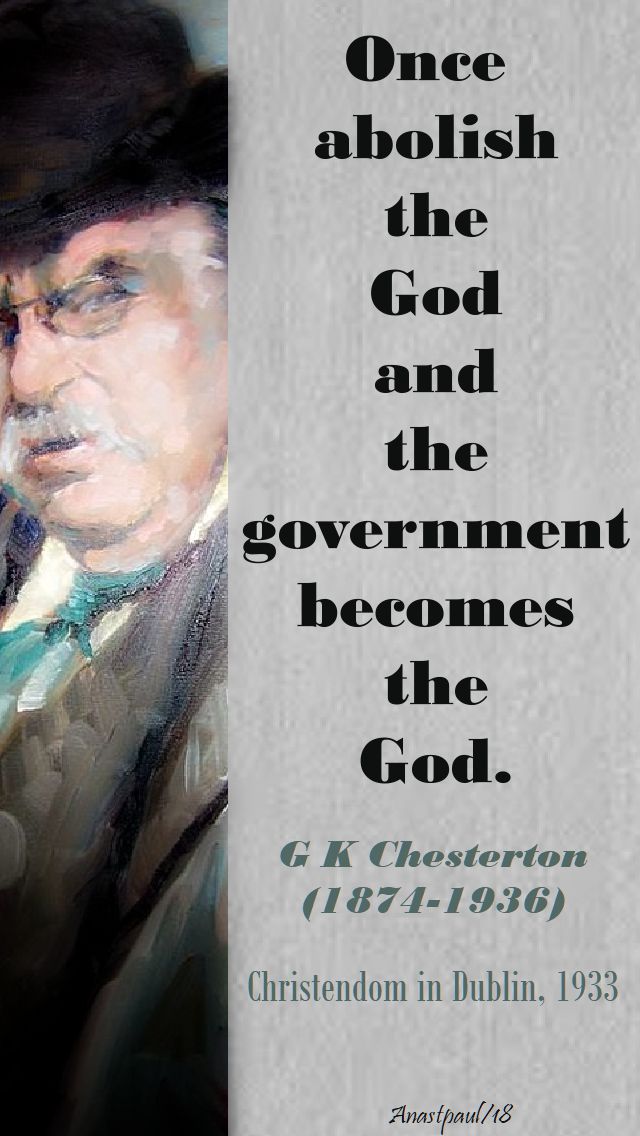
Rosa Venerini, was born in Viterbo, on 9 February 1656.   Her father, Goffredo, originally from Castelleone di Suasa (Ancona), after having completed his doctorate in medicine at Rome, moved to Viterbo where he practised the medical profession brilliantly in the Grand Hospital.   From his marriage to Marzia Zampichetti, of an ancient family of Viterbo, four children were born:   Domenico, Maria Maddalena, Rosa and Orazio.

Rosa was naturally gifted with intelligence and an uncommon human sensibility.   The education that she received in her family allowed her to develop her many talents of mind and heart, forming her in steadfast Christian principles.   According to her first biographer, Father Girolamo Andreucci, S.I., she made a vow to consecrate her life to God at the age of seven.   During the early years of her youth, she lived through a conflict between the attractions of the world and the promise made to God.   Rosa overcame this crisis with trusting prayer and mortification.

At age twenty, Rosa raised questions about her own future.   The women of her time could choose only two orientations for their live:  marriage or the cloister.   Rosa esteemed both but she felt called to realise another project for the good of the Church and the society of her time.   Urged on by prophetic interior occurrences, she committed much time in suffering and searching before reaching a resolution that was completely innovative.

In the autumn of 1676, on the advice of her father, Rosa entered the Dominican Monastery of St Catherine, with the prospect of fulfilling her vow.   With her Aunt Anna Cecilia beside her, she learned to listen to God in silence and in meditation.   She remained in the monastery for only a few months because the sudden death of her father forced her to return to her suffering mother.   In the years immediately following, Rosa had to bear the burden of serious events for her family:  her brother Domenico died at only twenty-seven years of age;  a few months later her mother died, unable to bear the sorrow.

In the meantime, Maria Maddalena married.   There remained at home only Orazio and Rosa, by now twenty-four years old.   Challenged by the desire to do something great for God, in May of 1684, the Saint began to gather the girls and women of the area in her own home to recite the rosary.  The way in which the girls and women prayed and above all, their conversation before and after the prayer, opened the mind and heart of Rosa to a sad reality:  the woman of the common people was a slave of cultural, moral and spiritual poverty.   She then understood that the Lord was calling her to a higher mission which she gradually identified in the urgent need to dedicate herself to the instruction and Christian formation of young women, not with sporadic encounters but with a school understood in the real and true sense of the word.ST ROSE VENERINI 4
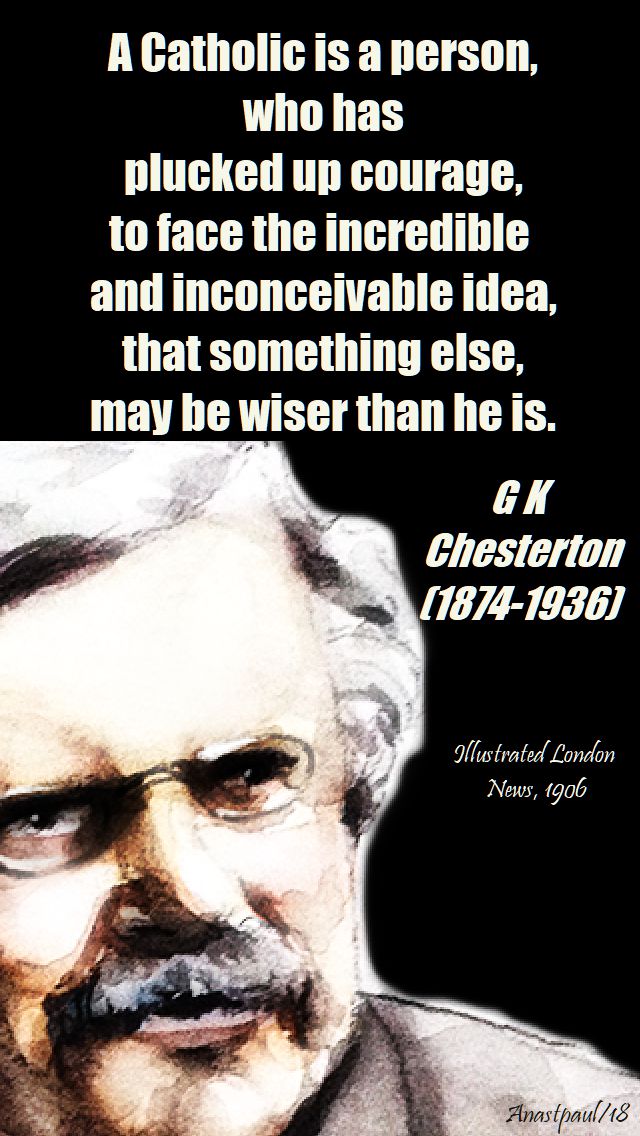
On 30 August 1685, with the approval of the Bishop of Viterbo, Cardinal Urbano Sacchetti and the collaboration of two friends, Gerolama Coluzzelli and Porzia Bacci, Rosa left her father’s home to begin her first school, according to an innovative plan that had matured in prayer and her search for the will of God.   The first objective of the Foundress was to give the girls of the common people a complete Christian formation and prepare them for life in society.   Without great pretence, Rosa opened the first “Public School for Girls in Italy”.   The origins were humble but the significance was prophetic, the human promotion and spiritual uplifting of woman was a reality that did not take long to receive the recognition of the religious and civil authorities.

The initial stages were not easy.   The three Maestre (teachers) had to face the resistance of clergy who considered the teaching of the catechism as their private office.   But the harshest suspicion came from conformists who were scandalised by the boldness of this woman of the upper middle class of Viterbo who had taken to heart the education of ignorant girls.   Rosa faced everything for the love of God and with her characteristic strength, continuing on the path that she had undertaken, by now sure that she was truly following the plan of God.   The fruits proved her to be right.   The same clergy soon recognised the moral improvement that the work of education generated among the girls and mothers.

The validity of this initiative was acknowledged and its fame went beyond the confines of the Diocese.   Cardinal Mark Antonio Barbarigo, Bishop of Montefiascone, understood the genius of the Viterbo project and he called the Saint to his diocese.   The Foundress, always ready to sacrifice herself for the glory of God, responded to the invitation.   From 1692 to 1694, she opened ten schools in Montefiascone and the villages surrounding Lake Bolsena.   The cardinal provided the material means and Rosa made the families aware, trained the teachers and organised the schools.   When she had to return to Viterbo to attend to the strengthening of her first school, Rosa entrusted the schools and the teachers to the direction of a young woman, St Lucia Filippini (1672-1732), in whom she has seen particular gifts of mind, heart and spirit.

After the openings in Viterbo and Montefiascone, other schools were started in Lazio. Rosa reached Rome in 1706 but the first experience in Rome was a real failure which marked her deeply and caused her to wait six long years before regaining the trust of the authorities.   On 8 December 1713, with the help of Abate Degli Atti, a great friend of the Venerini family, Rosa was able to open one of her schools in the centre of Rome at the foot of the Campidoglio.

On 24 October 1716, they received a visit from Pope Clement XI, accompanied by eight Cardinals, who wanted to attend the lessons.   Amazed and pleased, at the end of the morning he addressed these words to the Foundress: Signora Rosa, you are doing that which we cannot do.   We thank you very much because with these schools you will sanctify Rome ”.

ST ROSE VENERINI 3

From that moment on, Governors and Cardinals asked for schools for their areas.   The duties of the Foundress became intense, consisting of travels and hard work interwoven with joys and sacrifices for the formation of new communities.   Wherever a new school sprang up, in a short time a moral improvement could be noted in the youth.

Rosa Venerini died a saintly death in the community of St Mark’s in Rome on the evening of 7 May 1728.   She had opened more than forty schools.   Her remains were entombed in the nearby Church of the Gesù, so loved by her.   In 1952, on the occasion of her Beatification, they were transferred to the chapel of the Generalate in Rome.

We can summarise the charism of Rosa Venerini in a few words.   She lived consumed by two great passions:  passion for God and passion for the salvation of souls.   When she understood that the girls and women of her time needed to be educated and instructed in the truths of the faith and of morality, she spared nothing of time, hard work, struggle and difficulties of every kind, as long as it responded to the call of God.   She knew that the proclamation of the Good News could be received if people were first liberated from the darkness of ignorance and error.   Moreover, she intuited that professional training could give woman a human promotion and affirmation in society.   This project required an educating Community and Rosa, without pretense and well before its time in history, offered to the Church the model of the Apostolic Religious Community.st rosa end note

Rosa did not practice her educational mission only in the school but took every occasion to announce the love of God.   She comforted and cured the sick, raised the spirits of the discouraged, consoled the afflicted, called sinners back to a new life, exhorted to fidelity consecrated souls not observing their call, helped the poor and freed people from every form of moral slavery.

Educate to save became the motto that urged the Maestre Pie Venerini to continue the Work of the Lord intended by their Foundress and radiate the charism of Rosa to the world:  to free from ignorance and evil so that the project of God which every person carries within can be visible.

ST ROSE VENERINI 5

This is the magnificent inheritance that Rosa Venerini left her Daughters.   Wherever the Maestre Pie Venerini strive to live and transmit the apostolic concern of their Mother, in Italy as in other lands, they give preference to the poor.

After having made its contribution to the Italian immigrants to the USA from 1909 and in Switzerland from 1971 to 1985, the Congregation extended its apostolic activity to other lands:  India, Brazil, Cameroon, Romania, Albania, Chile, Venezuela and Nigeria.RoseVenerini

Posted in The HOLY CROSS

Apparition of the Holy Cross over Jerusalem and Memorials of the Saints – 7 May

Apparition of the Holy Cross over Jerusalem: Commemorates the appearance on 7 May 351, Pentecost that year, of a luminous image of the Holy Cross in Jerusalem.   It stretched from Mount Golgotha to the Mount of Olives (about two miles / three kilometers), was brighter than the sun, lasted several hours and was seen by the entire city.   It led to many conversions and was reported in a letter attribued to Saint Cyril of Jerusalem.

St Abba
St Agostino Roscelli
Bl Albert of Bergamo
Bl Antonio de Agramunt
St Augustine of Nicomedia
St Augustus of Nicomedia
St Cerenico of Spoleto
St Domitian of Huy
St Duje
St Flavia Domitilla of Terracina
St Flavius of Nicomedia
Bl Francesco Paleari
Bl Gisela of Ungarn
Bl Jan Eugeniusz Bajewski
St John of Beverley
St Juvenal of Benevento
St Maurelius of Voghenza-Ferrara
Bl Miqael of Ulompo
St Peter of Pavia
St Placid of Autun
St Quadratus of Herbipolis
St Quadratus of Nicomedia
St Rose Venerini (1656-1728)

St Serenicus of Hyesmes
St Serenus of Hyesmes
Bl Villanus of Gubbio