
Quote of the Day – 18 December – The Memorial of Our Lady of Expectation
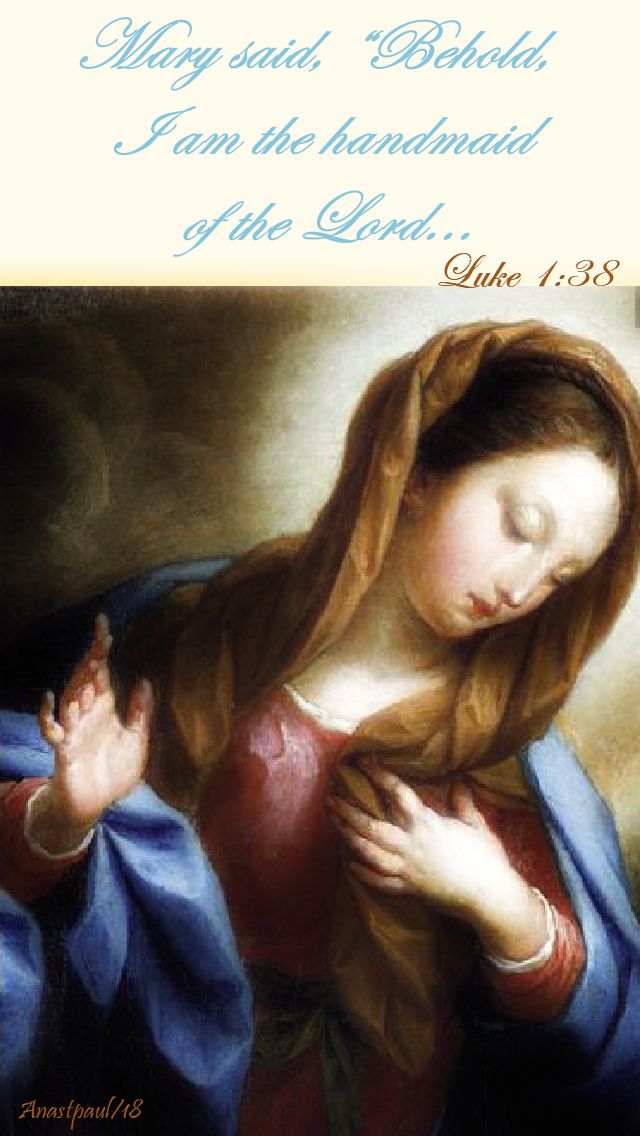
“Mary said, Behold I am the handmaid
of the Lord”
Let what you have said be done to me
Luke 1:38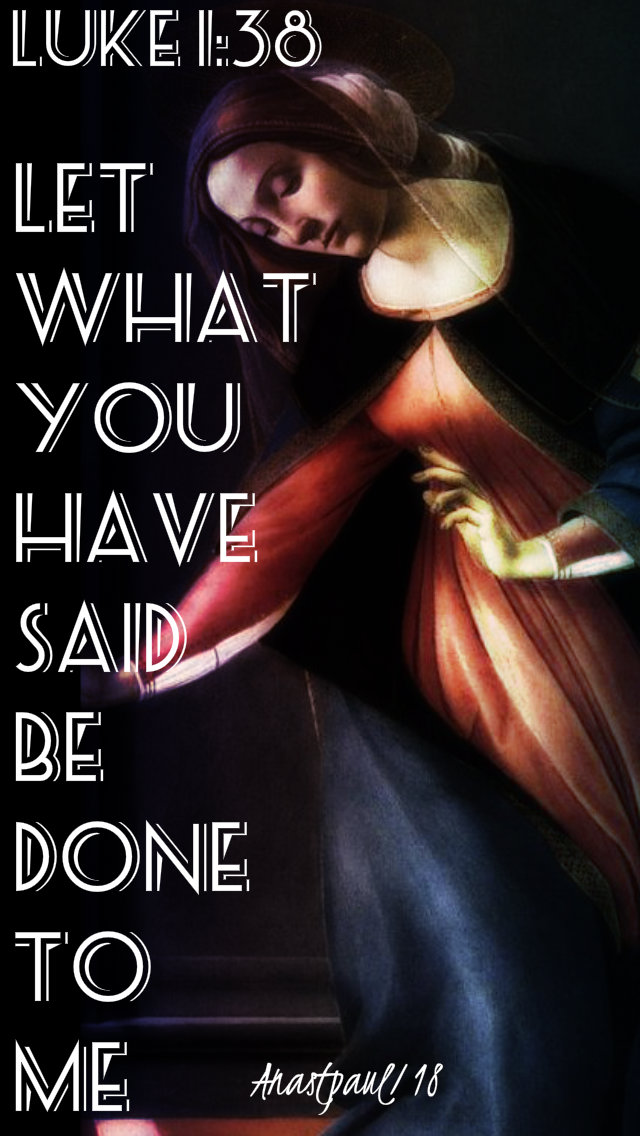
Quote of the Day – 18 December – The Memorial of Our Lady of Expectation
Luke 1:38
Advent and Christmas Wisdom with St Alphonsus Liguori (1696-1787))
18 December
Jesus made Himself a child to gain our confidence and our love.
“Consider that the Son of God has made Himself little in order to make us great. He has given Himself to us, that we might give ourselves to Him. He has come to show us His love, that we may respond to it by giving Him ours. Let us, therefore, receive Him with affection, let us love Him and call upon Him with all our needs.
“A child gives easily” says St Bernard. Children readily give whatever is asked of them. Jesus came into the world as a child to demonstrate that He was ready and willing to give all. If we wish for light, Jesus has come to enlighten us. If we desire strength, He will strengthen us. If we wish for pardon, He has come to pardon us. In short, He has come to give us all that we need.
O my Jesus, You have descended from heaven to give Yourself entirely to us. How can we turn our backs on You? I have been loved by You and I have also been ungrateful. O my Redeemer, forgive the injuries that I have committed against You.”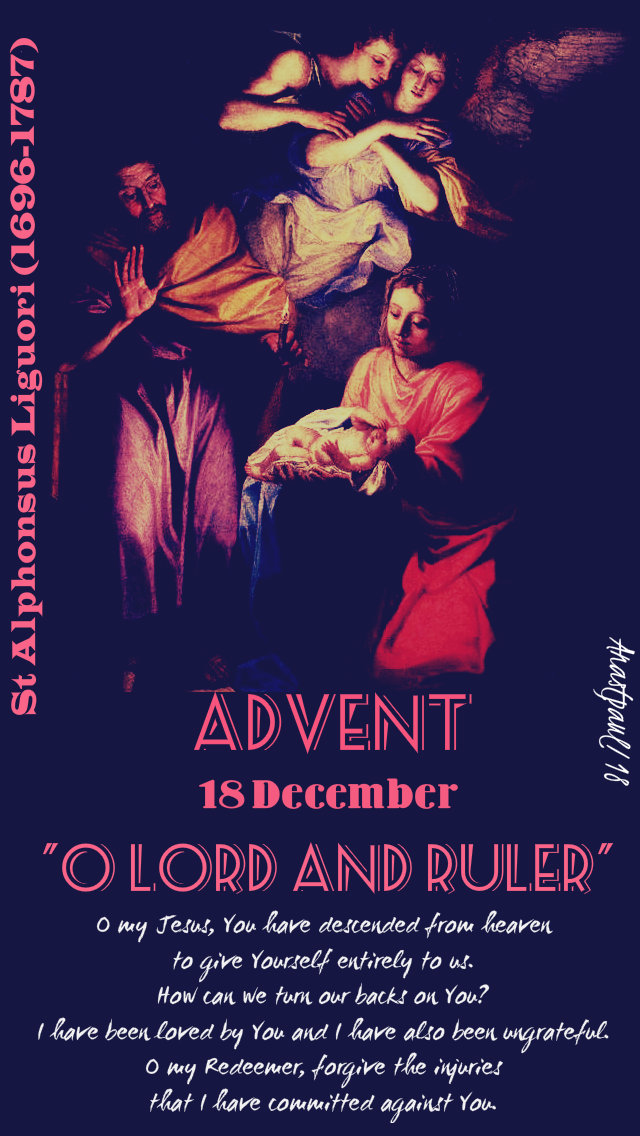
Scripture
“It is now the hour for you to wake from sleep….Let us cast off deeds of darkness and put on the armour of light.”
Romans 13:11,12
Prayer
O LORD AND RULER
of the House of Israel,
who appeared to Moses in the flame of the burning bush
and gave him the law on Sinai:
Come and redeem us with outstretched arms.
Advent Action
Are we in the core group of Christians who embody and live the purest form of the Gospel? Or do we find ourselves among the masses that acknowledge Jesus, enjoy being Christian but don’t pursue it at any deep level? The two requirements in the Gospel are that we repent and believe. If we repent, we do no wrong and speak no lies. If we believe with all our hearts, we follow the Star to the Manger. Let these last few days be a time when we begin the journey to the Christmas core – to the Christ Child. “Let us make ourselves ready to celebrate Christmas by contemplating Mary and Joseph- Mary, the woman full of grace who had the courage to entrust herself totally to the Word of God; Joseph, the faithful and just man who chose to believe the Lord rather than listen to the voices of doubt and human pride. With them, let us walk together toward Bethlehem.” ...Pope Francis – Angelus, 22 December 2013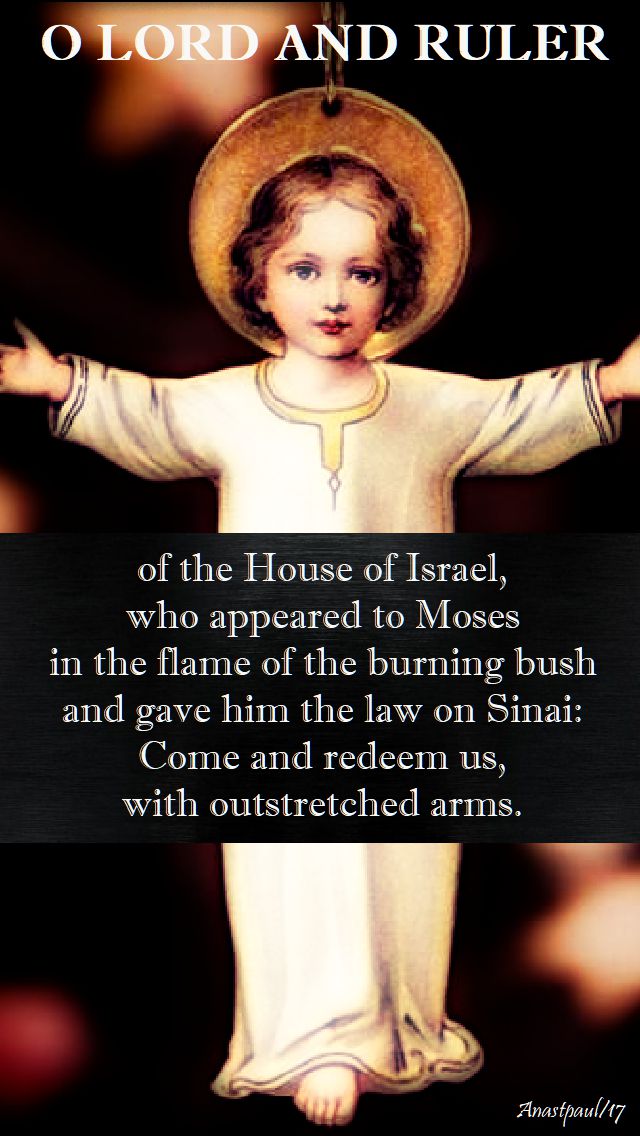
Our Morning Offering – 18 December – The Feast of Our Lady of Expectation
Maiden yet a Mother
By Dante Alighieri (1265-1321)
Tr Msgr Ronald A Knox (1888-1957)
Maiden yet a mother,
daughter of thy Son,
high beyond all other,
lowlier is none;
thou the consummation
planned by God’s decree,
when our lost creation
nobler rose in thee!
Thus His place prepared,
he who all things made
‘mid his creatures tarried,
in thy bosom laid;
there His love He nourished,
warmth that gave increase
to the root whence flourished
our eternal peace.
Nor alone thou hearest
When thy name we hail;
Often thou art nearest
When our voices fail;
Mirrored in thy fashion
All creation’s gird,
Mercy, might compassion
Grace thy womanhood.
Lady, let our vision
Striving heavenward, fail,
Still let thy petition
With thy Son prevail,
Unto whom all merit,
prayer and majesty,
With the Holy Spirit
And the Father be.
Maiden Yet A Mother is a translation of a poem by Durante (Dante) degli Alighieri (c 1265–1321). It is based upon the opening verses of Canto 33 of the Paradiso from his Divine Comedy in which St Bernard of Clairvaux (1090–1153) praises and prays to the Virgin Mother on behalf of Dante. It was translated from the original Italian into English by the Catholic convert, Monsignior Ronald A Knox (1888-1957).
The Feast of Our Lady of Expectation – 18 December
Like a secret told by angels,
getting known upon the earth,
is the Mother’s expectation
of Messiah’s speedy birth.
Fr F W Faber (1814-1863) “Our Lady’s Expectations”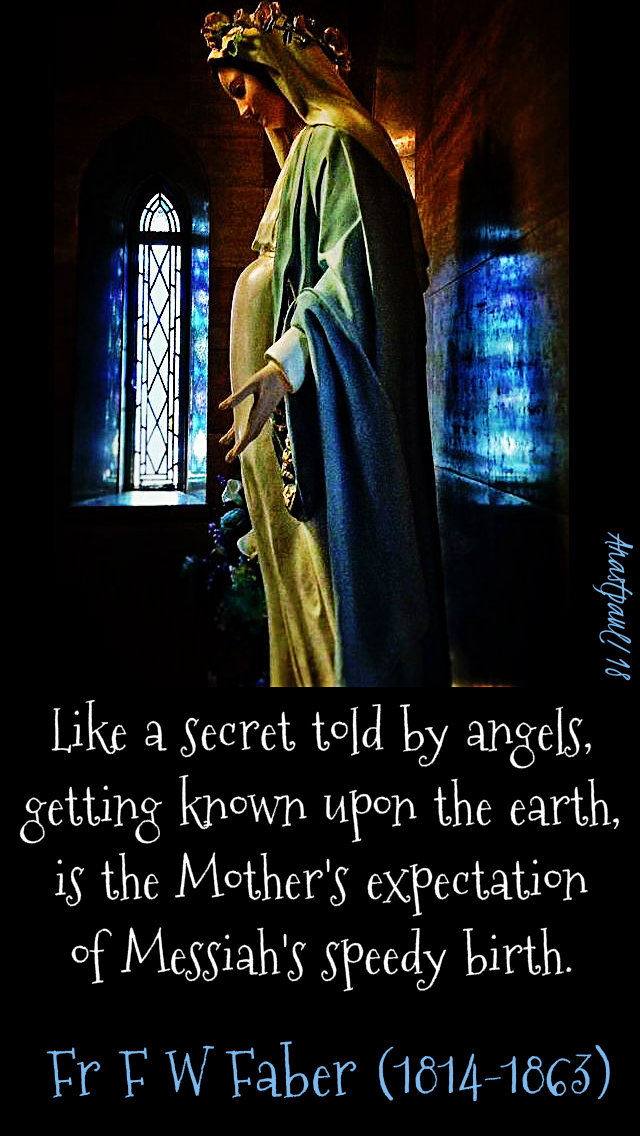
One of the most inspiring days preceding Christmas is the feast of “Our Lady of Expectation,” unknown to many today but still kept alive in many countries like Spain, Portugal, Italy and Poland as well as in a few religious orders. In older editions of missals, this feast is still listed as a votive Mass. The feast is celebrated on the 18 December, a week before Christmas Day.
Our Blessed Lady, well advanced in pregnancy, is portrayed in the highest dignity of her Divine Motherhood. Dressed in royal apparel as daughter of David the King, she awaits with joy the arrival of her divine Son, the Prince of Peace. Her whole posture suggests how she remains wholly consumed in contemplation of her Son under her heart. Her immaculate womb has become a living portable sanctuary of divinity. There are special prayers and novenas to “Our Lady of Expectation” available for women who cannot conceive or bear a child.
We can try to imagine what those nine months were like for The Blessed Virgin, knowing that the Lord grew within her, was one with her. We can only begin to understand the patience she had to possess, looking forward to both the glory and joy of the divine birth. We experience these same feelings—albeit to a lesser extent, no doubt—during this Advent season of preparation. We examine our lives and look forward to the saving grace of our Lord, as mediated by Our Blessed Mother. While the Lord’s plan was first enacted at the moment Mary was conceived without sin and made manifest to the Blessed Virgin at the Annunciation, it was made evident to the world at the moment of the Nativity. Prior to that, Mary had seen and heard what others had not and she had only one more week to anticipate the arrival of her son, Our Lord, the Redeemer of the World!

Our Blessed Mother was the original tabernacle, in which the Word became flesh and dwelt among us. Saint Augustine wrote that Mary conceived the Word in her heart before she conceived the Word in her flesh—that as she anticipated the birth of Jesus, her faith grew simultaneously. The second Vatican Council declared that during the time of her pregnancy, the heart of the Incarnate Word beat gently below her immaculate heart – two immaculate hearts, beating silently and prayerfully as one.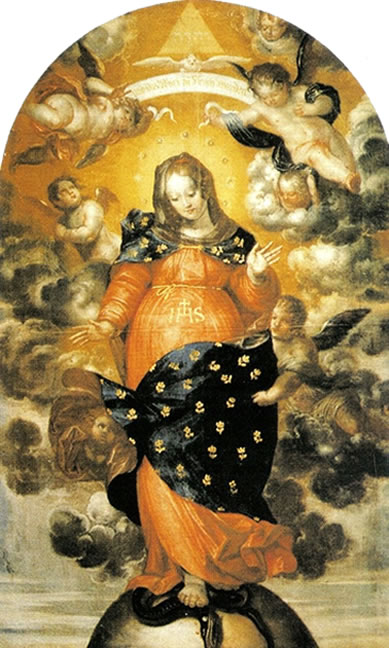
We can imagine Mary’s nine-month journey as one of wonder and anticipation but given the circumstances she found herself in, we also know of her difficult journey, the doubts of Saint Joseph, the anxiety that she must have experienced during that time. But Our Blessed Mother demonstrated not only patience but also forbearance and deep trust in the Lord. She knew the road would not be easy—in fact, that her joy would almost certainly be linked to suffering throughout her life—but in hope and confidence placed her life in the Lord’s hands. As she prepared for the birth of Jesus, Mary emptied herself, allowing her body and soul to be filled with the grace and spirit of the Lord. During Advent, we pray for a similar experience, that we might approach the birth of Our Saviour with hope and confidence.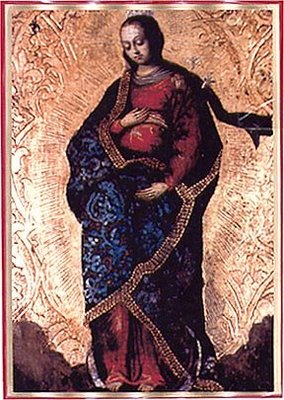
The votive Mass of “Our Lady of Expectation” is theologically enlightening and spiritually enriching for the time of Advent and Christmas. With the entrance antiphon, the Church prays with the prophet for the coming of the Just One from heaven that the earth may be ready to welcome the Saviour: “Send victory like a dew, you heavens, and let the clouds rain down the just. Let the earth open for salvation to spring up” (Is 45:8).
In the opening prayer, the Church offers the prayer to God through Mary’s intercession: “O God who wished that your Word would take the flesh from the womb of the Virgin as announced by the Angel and whom we confess to be the true Mother of God, may we be helped by her intercession.”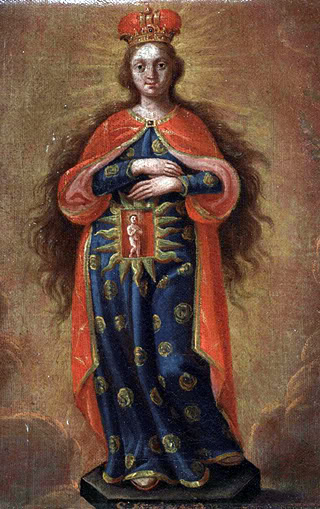
Our Lady of the Expectation – This Feast originated in Spain. When the feast of the Annunciation (25 March) was transferred to 18 December because of the regulation forbidding feasts in Lent, it remained on this date after the Annunciation was again celebrated on its original date. It impressed on the faithful the sentiments of the Blessed Virgin as the time of her delivery approached.
St Auxentius of Mopsuetia
St Basilian of Laodicea
St Bodagisil of Aquitaine
St Desiderius of Fontenelle
Bl Eugenio Cernuda Febrero
St Flannán of Killaloe
St Gatianus of Tours
Bl Giulia Valle (1847-1916)
About Blessed Giulia: https://anastpaul.wordpress.com/2017/12/18/saint-of-the-day-18-december-bl-giulia-nemesia-valle-1847-1916/
St Malachi the Prophet
St Mawnan of Cornwall
Bl Miguel San Román Fernández
St Phaolô Nguyen Van My
St Phêrô Truong Van Ðuong
St Phêrô Vu Van Truat
Bl Philip of Ratzeburg
St Rufus of Philippi
St Samthann of Clonbroney
St Theotimus of Laodicea
St Winebald of Heidenheim
St Zosimus of Philippi
Martyrs of Northwest Africa – 42 saints:
Mercedarian Redeemers – 6 beati – These are a group of Mercedarian friars who worked together, under the leadership of Saint Peter de Amer, to ransom (e.g., redeem) prisoners and minister to them after.
Reflection:
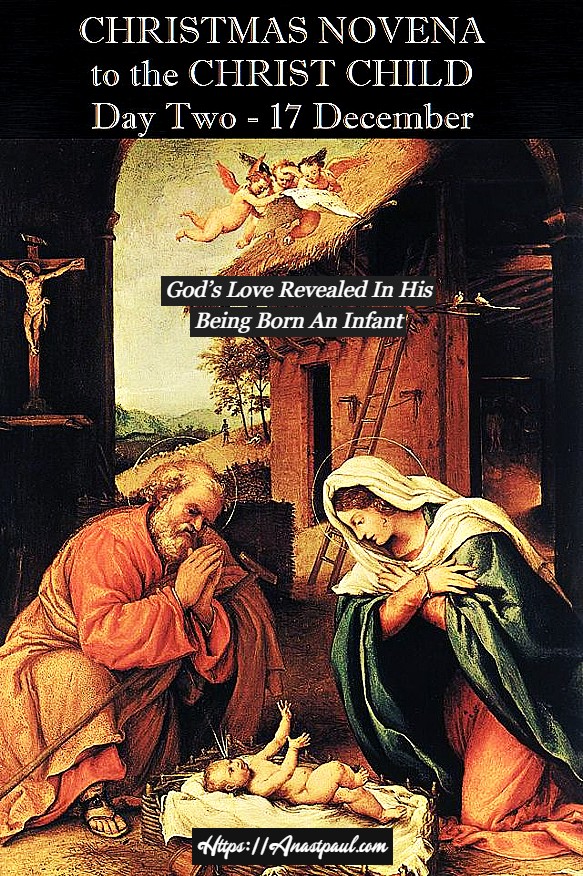
When the Son of God became man for our sake, He could have come to earth as an adult man from the first moment of of His human existence, as Adam did when he was created. But since the sight of little children draws us with a special attraction to love them, Jesus chose to make His first appearance on earth as a little infant and indeed as the poorest and most pitiful infant that was ever born.
“God wished to be born as a little babe,” wrote Saint Peter Chrysologus, “in order that He might teach us to love and not to fear Him.”
The prophet Isaiah had long before foretold that the Son of God was to be born as an infant and thus give Himself to us on account of the love He bore us: “A child is born to us, a son is given to us.”
My Jesus, supreme and true God!
What has drawn You from heaven to be born in a cold stable, if not the love which You bear for us men?
What has allured You from the bosom of Your Father, to place You in a hard manger?
What has brought You from Your throne above the stars, to lay You down on a little straw?
What has led You from the midst of the nine choirs of angels, to set You between two animals?
You, who inflames the seraphim with holy fire, are now shivering with cold in this stable!
You, who sets the stars in the sky in motion, cannot now move unless others carry You in their arms!
You, who give men and beasts their food, has need now a little milk to sustain Your life!
You, who are the joy of heaven, do now whimper and cry in suffering!
Tell me, who has reduced You to such misery?
“Love has done it,” says Saint Bernard.
The love which You bear us men has brought all this on You!
Prayer:
O Dearest Infant!
Tell me, what have You come on earth to do?
Tell me, whom do You seek?
Yes, I already know.
You have come to die for me, in order to save me from hell.
You have come to seek me, the lost sheep, so that,
instead of fleeing from You, I may rest in Your loving arms.
Ah my Jesus, my treasure, my life, my love and my all!
Whom will I love, if not You?
Where can I find a brother, a friend,
a spouse more loving and lovable than You are?
I love You, my dear God; I love You, my only good.
I regret the many years when I have not loved You
but rather spurned and offended You.
Forgive me, O my beloved Redeemer;
for I am sorry that I have treated You thus and I regret it with all my heart.
Pardon me and give me the grace never more to withdraw from You
but constantly to love You in all the years that still lie before me in this life.
My love, I give myself entirely to You;
accept me and do not reject me as I deserve.
O Mary, you are my advocate.
By your prayers you obtain whatever you wish from your Son.
Pray to Him then to forgive me
and to grant me holy perseverance until death. Amen
Thought for the Day – 17 December – The Memorial of St John of Matha O.SS.T (1160-1213) – Founder of the Trinitarians
The Trisagion Chaplet
The Order of the Most Holy Trinity for the Redemption of Captives was founded in France by St John de Matha and St Felix of Valois in 1198. From the very early stages of the of order, the Trinitarians have used a form of prayer based on the Trisagion (sometimes Trisagium or Triagion, from the Greek “three” + ”holy”). This is a Byzantine prayer still used in the Divine Liturgy in the Eastern Orthodox, Oriental Orthodox and Eastern Catholic churches in praise of the Holy Trinity: its simplest form is “Holy God, Holy Mighty One, Holy Immortal One, have mercy on us.”
The Trisagion Chaplet (also called a rosary) has three sets of nine beads each – of course, a rosary can be used too. When reciting the Trisagion Chaplet, each set begins with the Trisagion: “Holy God, Holy Mighty One, Holy Immortal One, have mercy on us.” and the Pater Noster. An invocation is said on each of the nine beads: “To you be praise, glory, and thanksgiving forever, blessed Trinity. Holy, Holy, Holy, Lord God of power and might; heaven and earth are full of your glory.” Each set of nine prayers is followed by a Gloria Patri (“Glory be to the Father and the Son and the Holy Spirit…”) and the recitation of the chaplet ends with a closing prayer.
Let us Pray!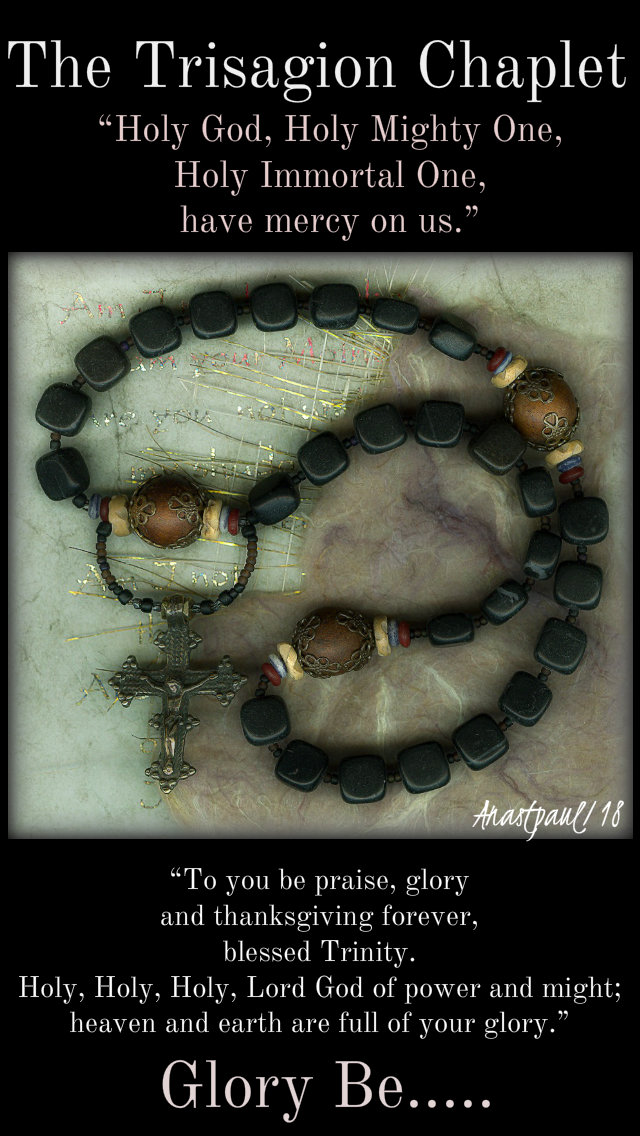
Quote of the Day – 17 December – The Memorial of St John of Matha O.SS.T (1160-1213) – Founder of the Trinitarians and the Devotion to Our Lady of Good Remedy
From the Apostolic Letter “Sacred Vessel of the Holy Trinity” by St Pope John XXIII
(AAS LIII, 1961, 602-604)
The Trinitarian religious whose primary duties are to worship the Triune God with a special devotion, to promote this devotion and to aid the needy and those who suffer by performing works of mercy, have honoured the Virgin Mary – Sacred Vessel of the Holy Trinity – under the title of “Mother of Good Remedy” from the very beginnings of their Order.
Indeed, St John de Matha, their founder and lawgiver, had a great love for the Virgin Mother of God. He founded and spread this holy Order under her protection and bequeathed to his sons and daughters the heritage of a strong Marian devotion. A singular love, for the Mother of God, has flourished among these religious throughout the ages, for she continually healed the sufferings of her suppliants; indeed, it still flourishes among them up to the present day.
The General Chapter of 1959, aware that such traditional devotion had become even stronger in the Order, decided to express the desire of all religious of the Order and to petition the Apostolic See that the glorious Virgin Mary, under the title of Our Lady of Good Remedy, should be declared the principal, heavenly patroness of the Trinitarian Order.
We have willingly decided to grant this request, hoping that the friars of the Order will be inflamed to honour the Virgin Mary under this title with an even more ardent love. We also trust that they, moved by her example, will more intensely commit themselves to bring relief and remedy to the less fortunate. Therefore, after consulting with the Sacred Congregation of Titles, with full knowledge and mature deliberation and with the fullness of our apostolic authority, by virtue of this document, we designate and declare the Blessed Virgin Mary, under the title of Good Remedy, to be forever the heavenly, principal patroness of the whole Order of the Most Holy Trinity, along with St Agnes, virgin and martyr. The celebration of the feast of Our Lady of Good Remedy is to be given all the liturgical honours and privileges which are fittingly accorded to the patrons of religious Orders and Congregations; moreover, we grant the added faculty of celebrating her feast each year on 8 October.
Most powerful Virgin,
we come to you in dangers and adversities.
You are our protection,
you are our refuge,
you are our Mother of Remedy.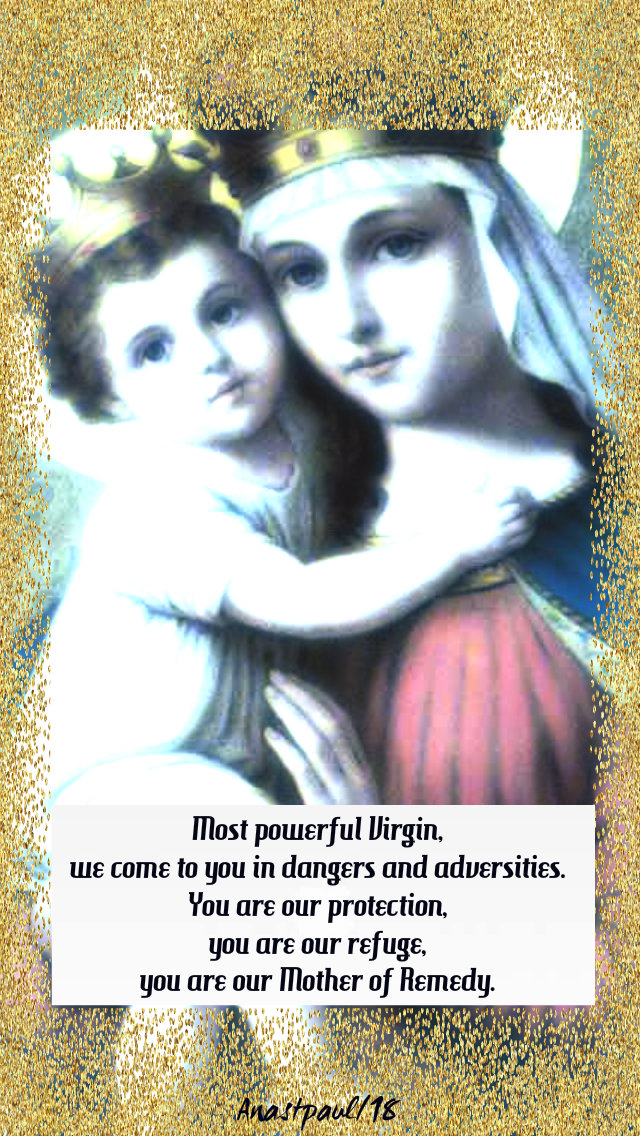
Advent and Christmas Wisdom with St Alphonsus Liguori (1696-1787))
17 December
The Heart of Jesus in the womb of His Mother
“Consider that whatever Jesus suffered in His life and in His Passion was all placed before Him while He was in the womb of Mary. He accepted everything that was proposed to Him with delight but in accepting all things and in overcoming the natural repugnance of sense, O my God, what anguish and oppression did the innocent heart of Jesus suffer. Our Redeemer accepted each moment even though He continually had before His eyes that confusion which He would one day feel at seeing Himself stripped naked, scourged and suspended by three iron nails, ending His life in the midst of insults and curses. And for what? To save us miserable and ungrateful sinners.
My beloved Redeemer, how much did it cost You to raise me from the ruin, which I brought on myself through my sins? What can I do without Your grace? I can do nothing but pray that You will help me but even this prayer comes from the merits of Your suffering and death! O my Jesus, help me!”
Scripture
The book of the genealogy of Jesus Christ, the son of David, the son of Abraham.
Matthew 1:1
Prayer
O WISDOM
You came forth from the mouth of the Most High
and reaching from beginning to end,
You ordered all things mightily and sweetly.
Come and teach us the way of prudence
Advent Action
Time is fast approaching for Eternity to break into time. And today we begin our special preparations to celebrate Your birthday. Your Evangelist, Matthew, begins his Gospel by tracing Your origin as a human being. You did not come to us as bolt from the blue. You fully belong to our human stock. Matthew’s list of Your genealogy is disturbing, if not shocking. Of course, Your ancestors include great patriarchs of the chosen people. But it also includes some of ill repute! It begins with Abraham begetting Isaac. Ishmael, the first son of Abraham, is not in the picture. The story continues with Isaac begetting Jacob and not the elder son Esau. Again, Jacob begets Judah, ignoring Joseph who was obviously the best of the brothers. With these unreasonable choices, Matthew seems to impress on us that often God does not choose the best or the noblest or the saintly. Thank You, Lord, for it is only Your unpredictable graciousness that made You choose me and employ me in Your service! Only by my prayer, ‘O my Jesus, help me’ can I live up to this choice. And so I increase my prayer this week. (Fr Joseph Thena SSP)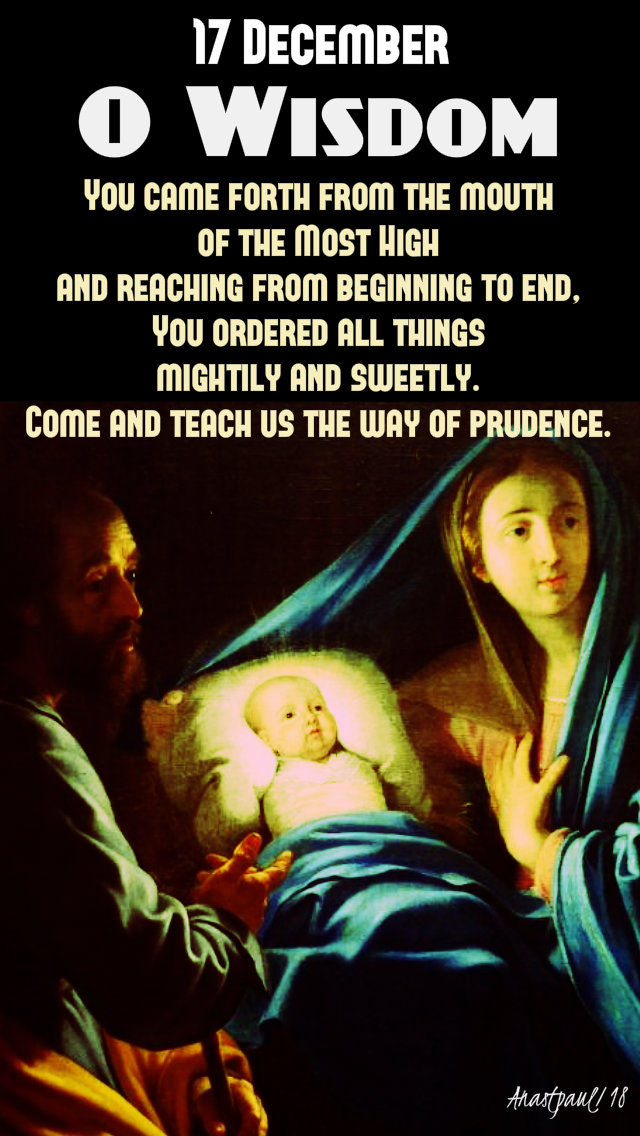
Our Morning Offering – 17 December – The Memorial of St John of Matha O.SS.T (1160-1213) – Founder of the Trinitarians and the Devotion to Our Lady of Good Remedy
Prayer/Hymn to Our Lady of Good Remedy
O Mary, you accept our prayers
and lovingly grant remedy,
we ask you with humility,
remain with us continually.
Be with us if we fall in sin
and feel its cruel captivity,
break all the bonds which hold us chained,
and cleanse our hearts’ iniquity.
Help us when love is growing cold
and worldly lures lead us astray,
let heaven shine within our hearts
lest we forget salvation’s way.
Assist us in our sufferings,
when body soul or spirit fail.
Bring peace and calm into our lives
until the light of heaven prevail.
Be with your children at death’s hour,
protect them in your great pity,
that with your aid, they may enjoy
rewards throughout eternity.
With grateful hearts we sing your praise
with hymns unto the Trinity,
for giving us in all our needs
the Virgin as a remedy.
Amen.
From the Breviary Office of Readings for the Feast of Our Lady of Good Remedy
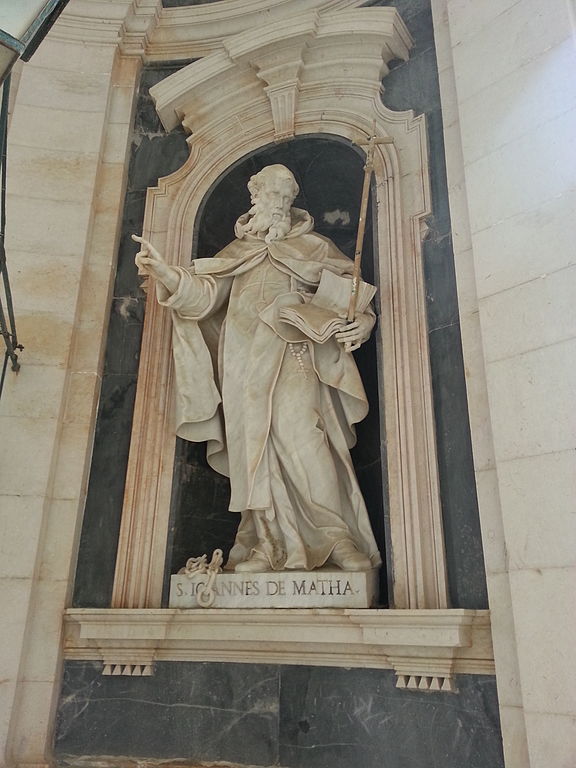
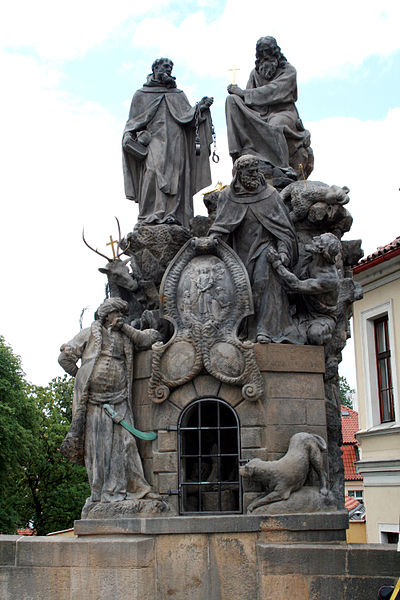
Saint of the Day – 17 December – St John of Matha O.SS.T (1160-1213) – Priest, Founder of The Order of the Most Holy Trinity and of the Captives, also known as the Order of the Most Holy Trinity or the Trinitarians, Confessor, – born on 23 June 1160 at Faucon, Provence, France and died on 12 December 1223 at Rome, Italy of natural causes.
Patronage – The Trinitarians.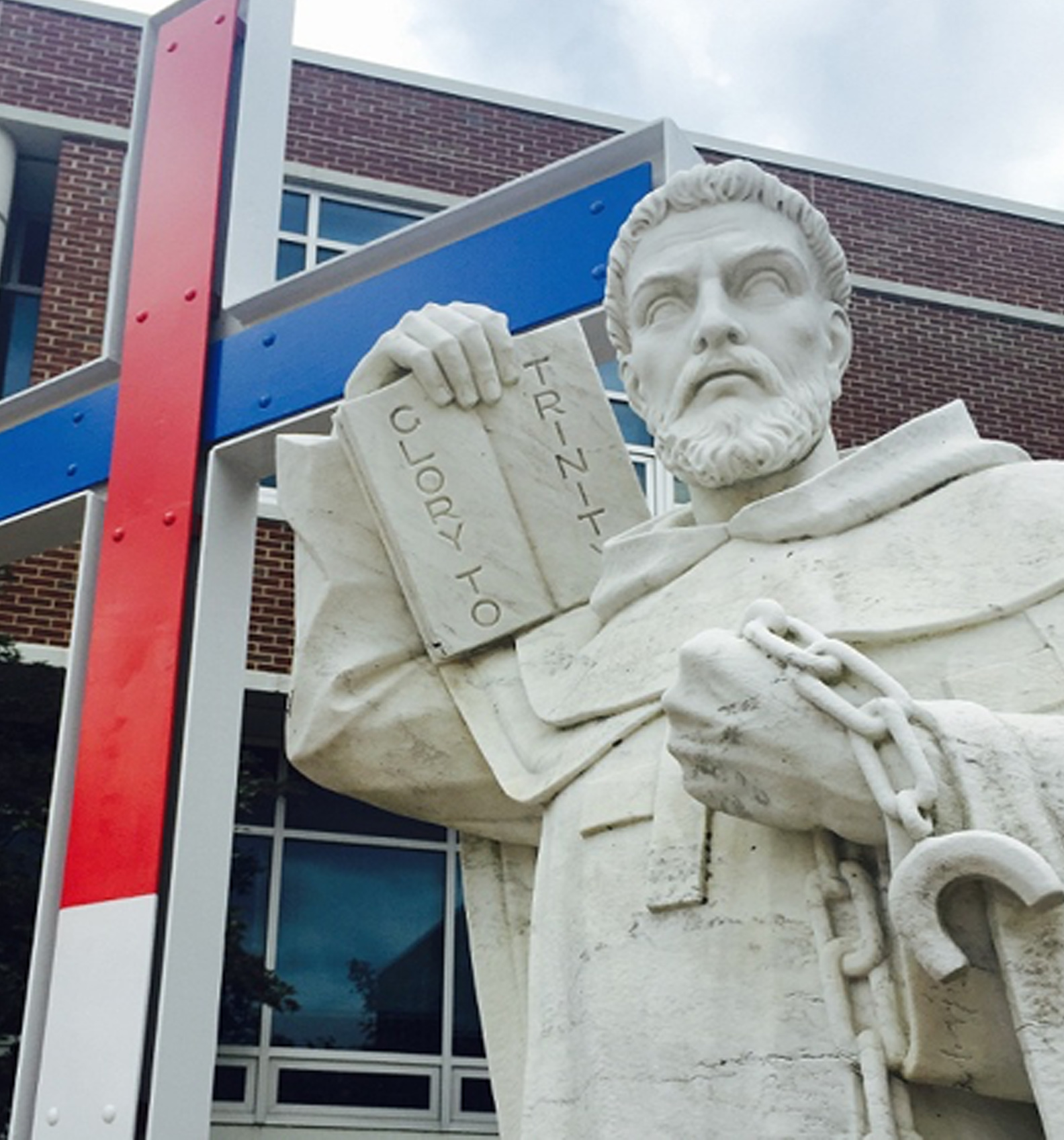
Between the eighth and the fifteenth centuries, medieval Europe was in a state of intermittent warfare between the Christian kingdoms of southern Europe and the Muslim polities of North Africa, Southern France, Sicily and portions of Spain. The threat of capture, whether by pirates or coastal raiders, or during one of the region’s intermittent wars, was not a new but rather a continuing threat to the residents of Catalonia, Languedoc and the other coastal provinces of medieval Christian Europe.
The redemption of captives is listed among the corporal works of mercy. The period of the Crusades, when so many Christians were in danger of falling into the hands of Muslims, witnessed the rise of religious orders vowed exclusively to this pious work.
St John of Matha was born to noble parents on the borders of Provence on 23 June 1169. He was baptised John, in honour of St John the Baptist. His father Euphemius sent him to Aix, where he learned grammar, fencing, riding, and other exercises fit for a young nobleman. It is said that while there he gave the poor a considerable part of the money his parents sent him and he visited the hospital every Friday, assisting the sick poor.
He studied theology at the University of Paris and was ordained a priest at the age of 32 in December 1192. 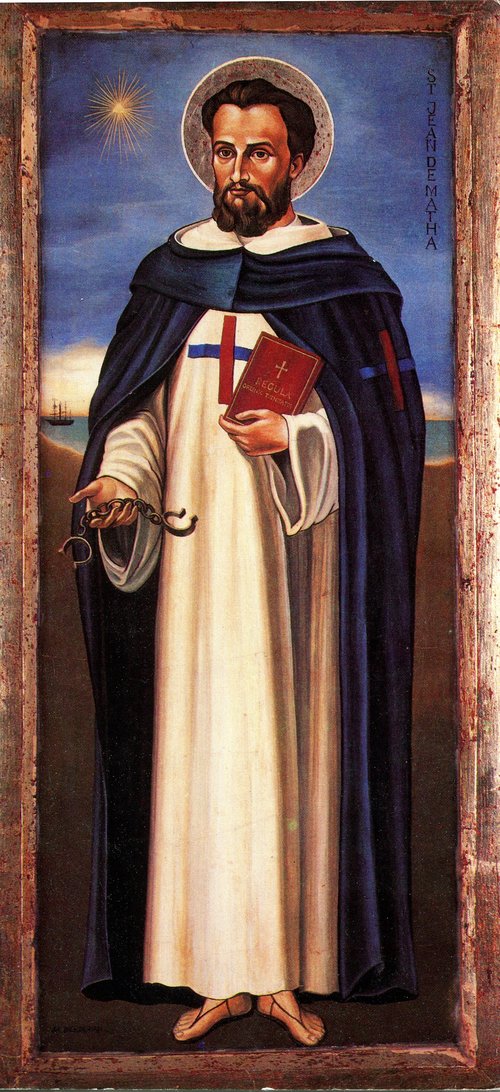
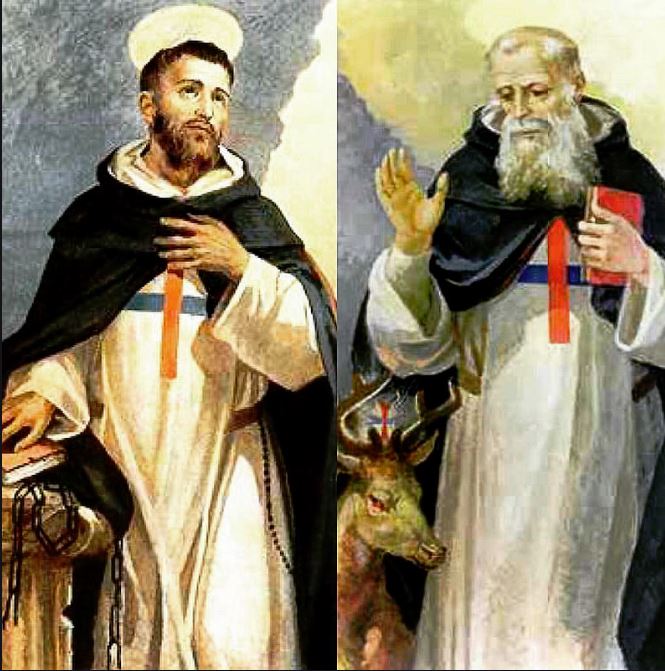
According to Trintarian tradition, on 28 January 1193, John celebrated his first Mass. During that Mass, he was struck with a vision of Christ holding by the hand two chained captives, one a Moor, the other a Christian (the Crusades were in full force at the time). The Christian captive carried a staff with a red and blue cross. After the Mass, John decided to devote himself to the task of ransoming Christian captives from the Moors. Before entering upon this work, he thought it needful to spend some time in retirement, prayer and mortification and having heard of a holy hermit, St Felix of Valois (1127–1212), living in a great wood near Gandelu, in the diocese of Meux, he repaired to him and requested him to instruct him in the practice of perfection.


One day while walking with Felix, John had another vision–a white stag appeared at a stream with a red and blue cross between its antlers. John disclosed to Felix the design he had conceived on the day on which he said his first mass, to succour captive Christians under slavery and Felix offered his help in carrying it out. They set out for Rome in the midst of a severe winter, towards the end of the year 1197, to obtain the pope’s benediction.
On 17 December 1198, he obtained the preliminary approval of Pope Innocent III for a new order dedicated in honour of the Blessed Trinity for the redemption of Christian captives. This order was fully approved in 1209. The Order of the Most Holy Trinity’s first monastery was established at Cerfroid (just north of Paris) and the second at Rome at the church of San Tommaso in Formis. Christian slaves were first rescued by the Order in 1201. In 1202 and 1210 John travelled to Tunisia himself and brought back countless Christian slaves.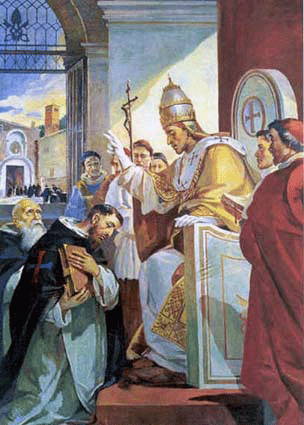
St John founded the Trinitarians to go to the slave markets, buy the Christian slaves and set them free. To carry out this plan, the Trinitarians needed large amounts of money. So, they placed their fund-raising efforts under the patronage of Mary. In gratitude for her assistance, St John of Matha honoured Mary with the title of “Our Lady of Good Remedy.” Devotion to Mary under this ancient title is widely known in Europe and Latin America and the Church celebrates her feast day on 8 October. Our Lady of Good Remedy is often depicted as the Virgin Mary handing a bag of money to St John of Matha.


Before his death, Trinitarian tradition says he met St Francis of Assisi and introduced Francis to the Frangipani family, one of the benefactors of the Franciscan order. St John of Matha died on 17 December 1213, in Rome in the house of St Thomas In Formis on the Caelian Hill.
In 1655, his relics were transferred from Rome to Madrid. He was Canonised on 21 October 1666 by Pope Alexander VII (cultus confirmed).
Today the Trinitarian family is composed of priests, brothers, women (enclosed nuns and active sisters) as well as committed laity. Members of the Trinitarian family include the Trinitarian religious, the Trinitarian contemplative nun,; the Trinitarian Sisters of Valence, the Trinitarian Sisters of Rome, Valencia, Madrid, Mallorca and Seville, the Oblates of the Most Holy Trinit, the Third Order Secular (tertiaries) and other Trinitarian laity. All are distinguished by the cross of red and blue which dates from the origins of the Order. Trinitarians are found throughout Europe and in the Americas as well as in Africa, India, Korea and the Philippines.
In 2000 the Vatican Congregation for Institutes of Consecrated Life and Societies of Apostolic Life approved “The Trinitarian Way” rule of life which would guide all the lay groups associated with the Trinitarians including the Third Order Secular, the Trinitarian Movement, Confraternities, etc.
Like the Jesuits, Trinitarians also pledge not to seek promotion within the Church hierarchy. If promotion is offered, however, it is accepted.
The Order of the Most Holy Trinity is active on five continents and in many countries.
St Briarch of Bourbriac
St John of Matha O.SS.T (1160-1213)
St Josep/José Manyanet y Vives (1833-1901)
Biography: https://anastpaul.wordpress.com/2017/12/17/saint-of-the-day-17-december-st-josep-manyanet-y-vives-1833-1901/
St Judicaël
St Lazarus of Bethany
BL Mariano Alarcón Ruiz
Bl Mathilde Téllez Robles
St Maxentiolus
St Modestus of Jerusalem
St Olympias of Constantinople
Bl Peter of Spain
St Sturmi of Fulda
St Tydecho
St Wivina
St Yolanda
Martyrs of Eleutheropolis – (60+ Martyrs-Beati): Approximately 60 Christian soldiers in the imperial Roman army of emperor Heraclius; they were murdered as a group for their faith by invading Saracen Muslims. We know the names of two of them – Calaoicus and Florian. 638 in Eleutheropolis (Beit Jibrin), Palestine.
Christmas Novena to the Christ Child – Day One – 16 December
DAY ONE
God’s Love Revealed In His Becoming Man.
Reflection:
Because our first parent Adam, had rebelled against God, he was driven out of paradise and brought on himself and all his descendants the punishment of eternal death. But the son of God, seeing man thus lost and wishing to save him from death, offered to take upon Himself our human nature and to suffer death Himself, condemned as a criminal on a cross.
“But, My Son,” we may imagine the eternal Father saying to Him, “think of what a life of humiliations and sufferings You wilt have to lead on earth. You will have to be born in a cold stable and laid in a manger, the feeding trough of beasts.
While still an infant, You will have to flee into Egypt, to escape the hands of Herod.
After Your return from Egypt, You will have to live and work in a shop as a lowly servant,
poor and despised.
And finally, worn out with sufferings, You will have to give up Your life on a cross, put to shame and abandoned by everyone.”
“Father,” replies the Son, “all this matters not. I will gladly bear it all, if only I can save man.”
What should we say if a prince, out of compassion for a dead worm, were to choose to become a worm himself and give his own life blood in order to restore the worm to life? But the eternal Word has done infinitely more than this for us. Though He is the sovereign Lord of the world, He chose to become like us, who are immeasurably more beneath Him than a worm is beneath a prince and He was willing to die for us, in order to win back for us the life of divine grace that we had lost by sin.
When He saw that all the other gifts which He had bestowed on us were not sufficient to induce us to repay His love with love, He became man Himself and gave all of Himself to us.
“The Word was made flesh and dwelt among us;”
“He loved us and delivered Himself up for us.”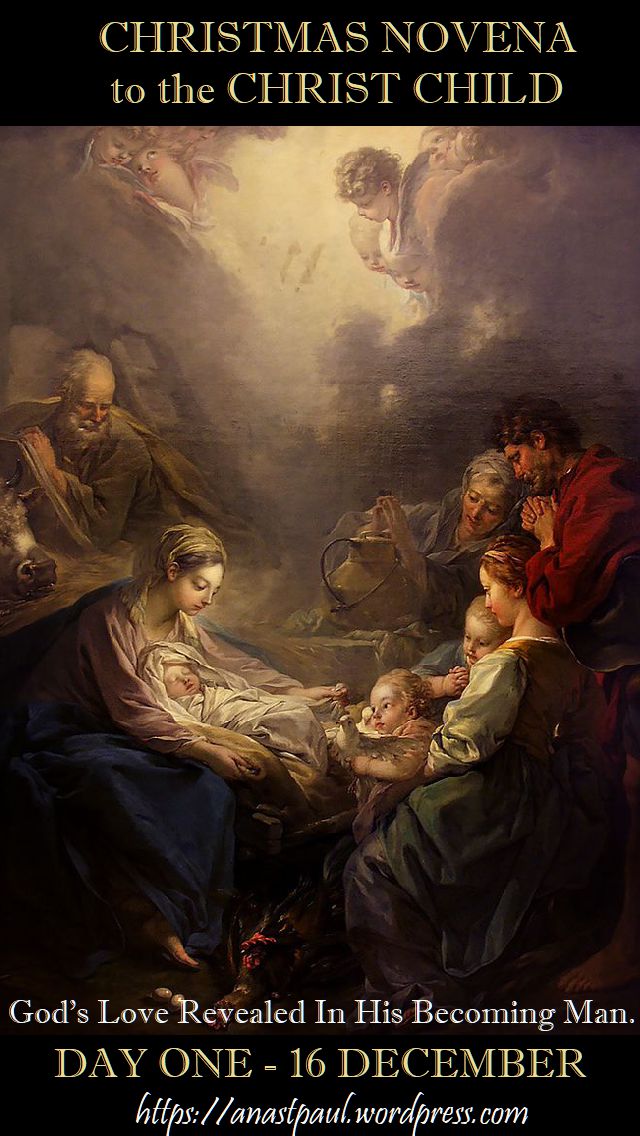
O Great Son of God,
You became man in order to make Yourself loved by men.
But where is the love that men give You in return?
You gave Your life blood to save our souls.
Why then are we so unappreciative that,
instead of repaying You with love,
we spurn You with ingratitude?
And I, Lord, I myself more than others have ill treated You.
But Your Passion is my hope.
For the sake of that love which led You to take upon Yourself
human nature and to die for me on the cross,
forgive me all the offences I have committed against You.
I love You, O Word Incarnate;
I love You, O infinite goodness.
Out of love for You, that I could die of grief for these offences.
Give me, O Jesus, Your love.
Let me no longer live in ungrateful
forgetfulness of the love You bear me.
I wish to love You always.
Grant that I may always preserve in this holy desire.
O Mary, Mother of God and my Mother,
pray for me that Your Son, may give me,
the grace to love Him always, unto death.
Amen.
Sunday Reflections – Gaudete Sunday – The Third Sunday of Advent – 16 December 2018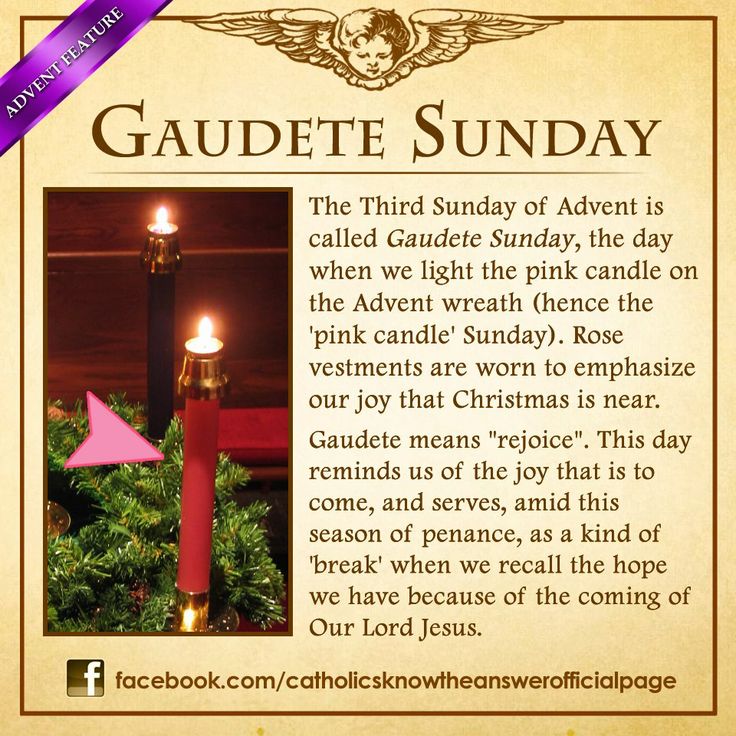
What is special about the Third Sunday of Advent? For much of the Church’s history, this Sunday had a special name: “Gaudete” Sunday. The traditions surrounding this Sunday go back as far as the fourth or fifth century, as does the season of Advent itself. Advent, our preparation for Christmas, was originally a forty-day penitential season like Lent. In fact, since it used to begin on 12 November (just after the Memorial of St. Martin of Tours), it was called “St Martin’s Lent.” “Gaudete Sunday” was the Advent counterpart to “Laetare Sunday,” which marks the mid-point in Lent.
On Gaudete Sunday, the season of Advent shifts its focus. For the first two weeks of Advent, the focus can be summed up in the phrase, “The Lord is coming.” But beginning with Gaudete Sunday, the summary might be, “The Lord is near.” This shift is marked by a lighter mood and a heightened sense of joyous anticipation.
Liturgically, the colours lighten as well. The priest usually wears rose-coloured vestments, a hue seen only on Gaudete Sunday and Laetare Sunday. On this day, we light the third candle of the Advent wreath, which is also rose-coloured, or if you prefer, pink.
The word “Gaudete” is Latin for “Rejoice.” This celebration is a reminder that God who loves us is still in charge and that we await His coming not with fear but with tremendous joy. Today’s Second Reading, from the Letter of St Paul to the Ephesians, reflects this joy: “Rejoice in the Lord always; again I will say, Rejoice. Let all men know your forbearance. The Lord is at hand. Have no anxiety about anything but in everything by prayer and supplication with thanksgiving let your requests be made known to God. And the peace of God, which passes all understanding, will keep your hearts and your minds in Christ Jesus.”
The one exception to the audio barrage of so-called ‘Christmas Hymns’ we hear during Advent, is the simple chant “O Come, O Come Emmanuel.” This song, with its longing for the coming of the Saviour, genuinely belongs to Advent and not to Christmas.
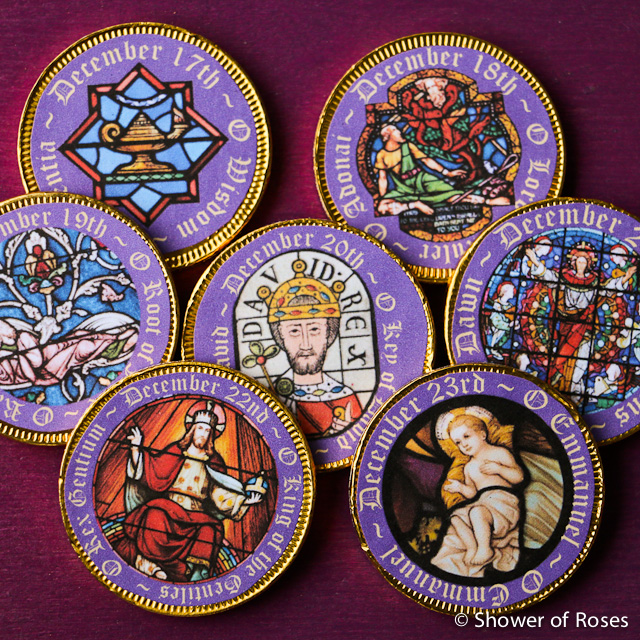
Its melody is based on Gregorian chant and its verses are all taken from the Church’s “O antiphons.” These antiphons introduce the Magnificat, or Canticle of Mary, in the Evening Prayer of the Liturgy of the Hours from 17 December through 23 December.
Each antiphon begins with a traditional title for Christ.
They are: “O Wisdom,” “O Leader of the House of Israel
[Adonai],” “O Root of Jesse’s Stem,” “O Key of David,” “O Radiant Dawn,” “O King of all the nations,” and finally, “O Emmanuel” which means “God with us.” Each of these traditional titles for the Messiah connects the coming of Christ with the prophetic writings of the Old Testament.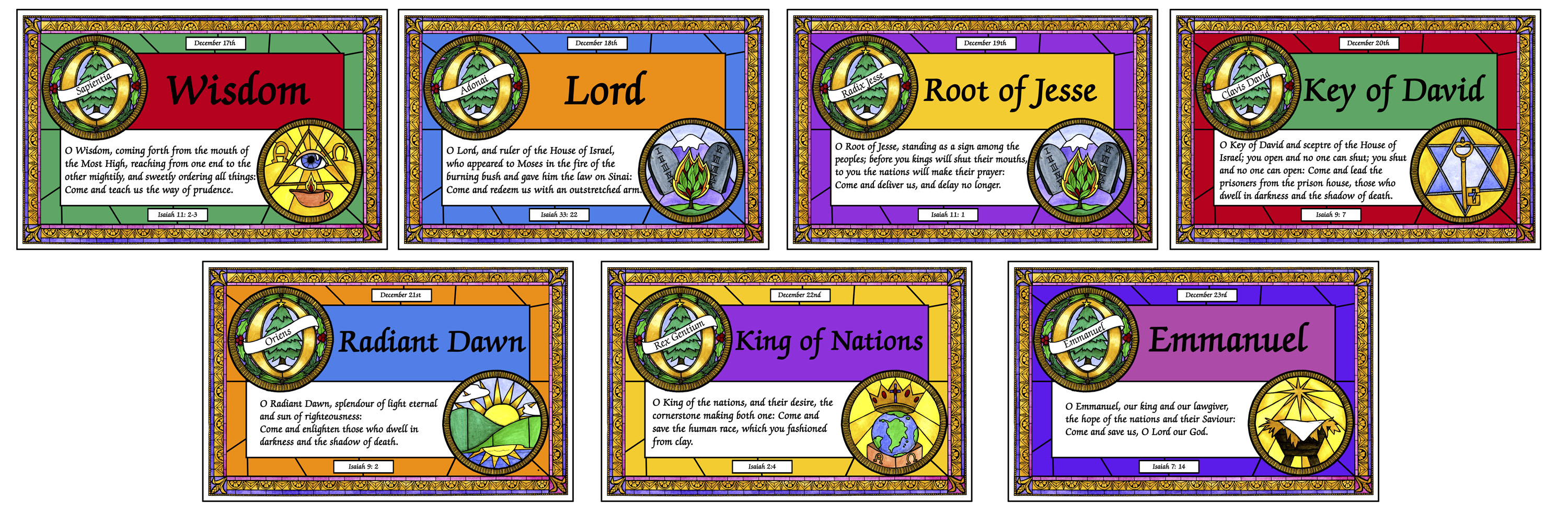
On the last days of Advent, you may wish to add these “O Antiphons” to your
evening prayer, your prayer at table, or your bedtime prayer.
17 DECEMBER
O Wisdom of our God Most High,
guiding creation with power and love:
come to teach us the path of knowledge!
18 DECEMBER
O Leader of the House of Israel,
giver of the Law to Moses on Sinai:
come to rescue us with your mighty power!
19 DECEMBER
O Root of Jesse’s stem,
sign of God’s love for all his people:
come to save us without delay!
20 DECEMBER
O Key of David,
opening the gates of God’s eternal Kingdom:
come and free the prisoners of darkness!
21 DECEMBER
O Radiant Dawn,
splendour of eternal light, sun of justice:
come and shine on those who dwell in darkness and in the shadow of death.
22 DECEMBER
O King of all nations and keystone of the Church:
come and save man, whom you formed from the dust!
23 DECEMBER
O Emmanuel, our King and Giver of Law:
come to save us, Lord our God!
Gaudete Sunday – The Blessing of the Christ Child Figurine
This Sunday, the Third Sunday in the Season of Advent, is called “Gaudete Sunday”: “rejoice”, because the Entrance Antiphon of Holy Mass takes up St Paul’s words in the Letter to the Philippians where it says: “Rejoice in the Lord always; again, I will say, Rejoice”. And immediately after he explains the reason, because “The Lord is at hand” (Phil 4: 4-5). This is the reason for joy. But what does “the Lord is at hand” mean? In what sense must we understand this “closeness” of God? The Apostle Paul, writing to the Christians of Philippi, is evidently thinking of Christ’s return and invites them to rejoice because it is certain. Yet, St Paul in his Letter to the Thessalonians, warns that no one can know the moment of the Lord’s coming (cf. 1 Thes 5: 1-2) and puts people on guard against any kind of alarmism, as if Christ’s return were imminent (cf. 2 Thes 2: 1-2).
Thus the Church, illumined by the Holy Spirit, already at that time understood increasingly better that God’s “closeness” is not a question of space and time but rather of love: love brings people together!
This coming Christmas will remind us of this fundamental truth of our faith and in front of the manger we shall be able to savour Christian joy contemplating in the newborn Jesus the Face of God who made Himself close to us out of love.
In this light, it gives me real pleasure to renew the beautiful tradition of the Blessing of the Christ Child figurines, the miniature statues of the Baby Jesus to be placed in the manger. I address you in particular, dear boys and girls of Rome, who have come this morning with your Baby Jesus figurines that I now bless. I invite you to join me, following attentively this prayer:
God, our Father
You so loved humankind
that You sent us Your only Son Jesus,
born of the Virgin Mary,
to save us and lead us back to You.
We pray that with Your Blessing
these images of Jesus,
who is about to come among us,
may be a sign of Your presence and
love in our homes.
Good Father,
give Your Blessing to us too,
to our parents, to our families and
to our friends.
Open our hearts,
so that we may be able to
receive Jesus in joy,
always do what He asks
and see Him in all those
who are in need of our love.
We ask you this in the name of Jesus,
Your beloved Son
who comes to give the world peace.
He lives and reigns forever and ever.
Amen.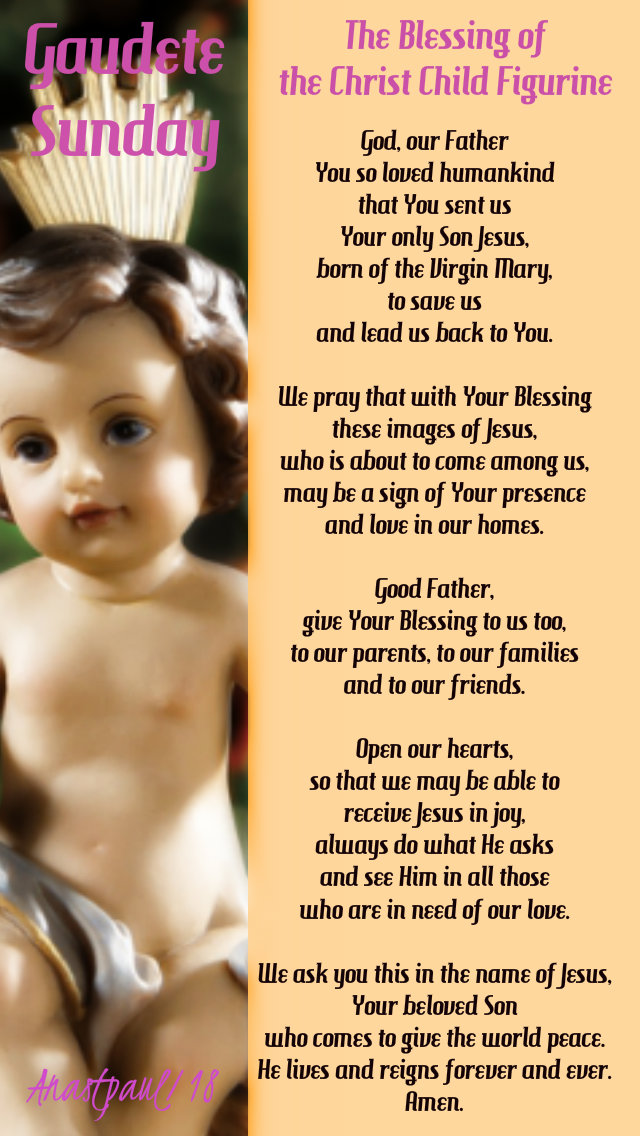
Thought for the Day – 16 December 2018 – The Third ‘Gaudete’ Sunday of Advent
An excerpt from his Sermon 293
John is the voice but the Lord is the Word who was in the beginning. John is the voice that lasts for a time, from the beginning, Christ is the Word who lives forever.
Take away the word, the meaning and what is the voice? Where there is no understanding, there is only a meaningless sound. The voice without the word strikes the ear but does not build up the heart.
However, let us observe what happens when we first seek to build up our hearts. When I think about what I am going to say, the word or message is already in my heart. When I want to speak to you, I look for a way to share with your heart what is already in mine.
In my search for a way to let this message reach you, so that the word already in my heart may find a place also in yours, I use my voice to speak to you. The sound of my voice brings the meaning of the word to you and then passes away. The word which the sound has brought to you is now in your heart and yet it is still also in mine.
When the word has been conveyed to you, does not the sound seem to say – the word ought to grow and I should diminish? The sound of the voice has made itself heard in the service of the word and has gone away, as though it were saying – my joy is complete. Let us hold on to the word; we must not lose the word conceived inwardly in our hearts.
Do you need proof that the voice passes away but the divine Word remains? Where is John’s baptism today? It served its purpose and it went away. Now it is Christ’s baptism that we celebrate. It is in Christ that we all believe, we hope for salvation in Him. This is the message the voice cried out.
Because it is hard to distinguish word from voice, even John himself was thought to be the Christ. The voice was thought to be the word. But the voice acknowledged what it was, anxious not to give offence to the word. I am not the Christ, he said, nor Elijah, nor the prophet. And the question came: Who are you, then? He replied: I am the voice of one crying in the wilderness – Prepare the way for the Lord!
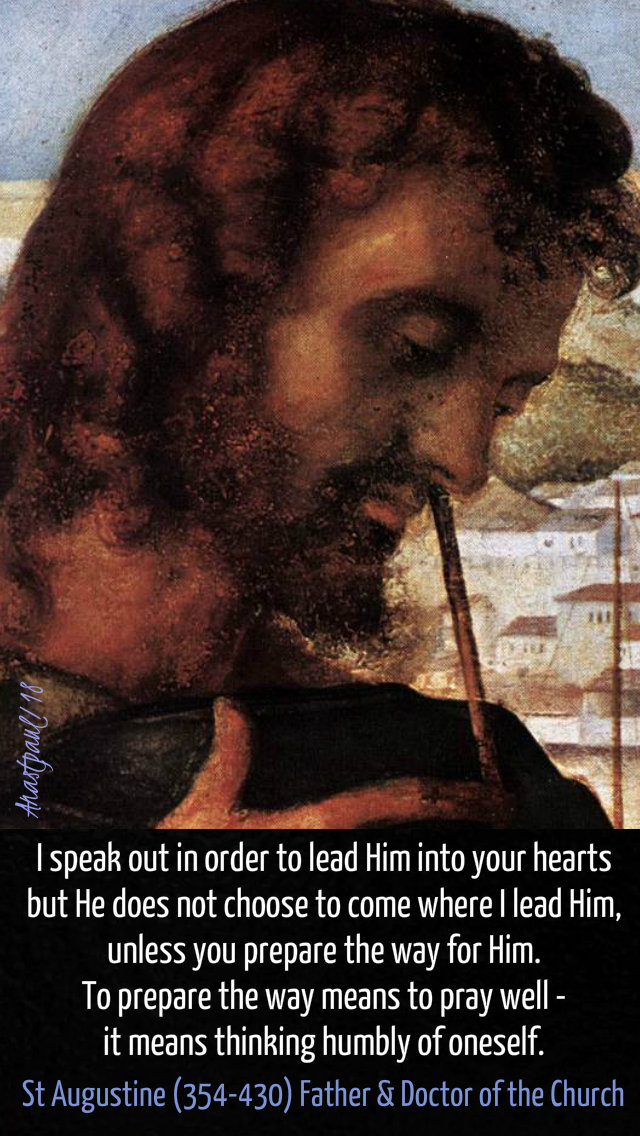
The voice of one crying in the wilderness is the voice of one breaking the silence. Prepare the way for the Lord, he says, as though he were saying: “I speak out in order to lead Him into your hearts but He does not choose to come where I lead Him, unless you prepare the way for Him.”
To prepare the way means to pray well – it means thinking humbly of oneself. We should take our lesson from John the Baptist. He is thought to be the Christ, he declares he is not what they think. He does not take advantage of their mistake to further his own glory.
If he had said, “I am the Christ,” you can imagine how readily he would have been believed, since they believed he was the Christ even before he spoke. But he did not say it, he acknowledged what he was. He pointed out clearly who he was; he humbled himself.
He saw where his salvation lay. He understood that he was a lamp and his fear was that it might be blown out, by the wind of pride.”
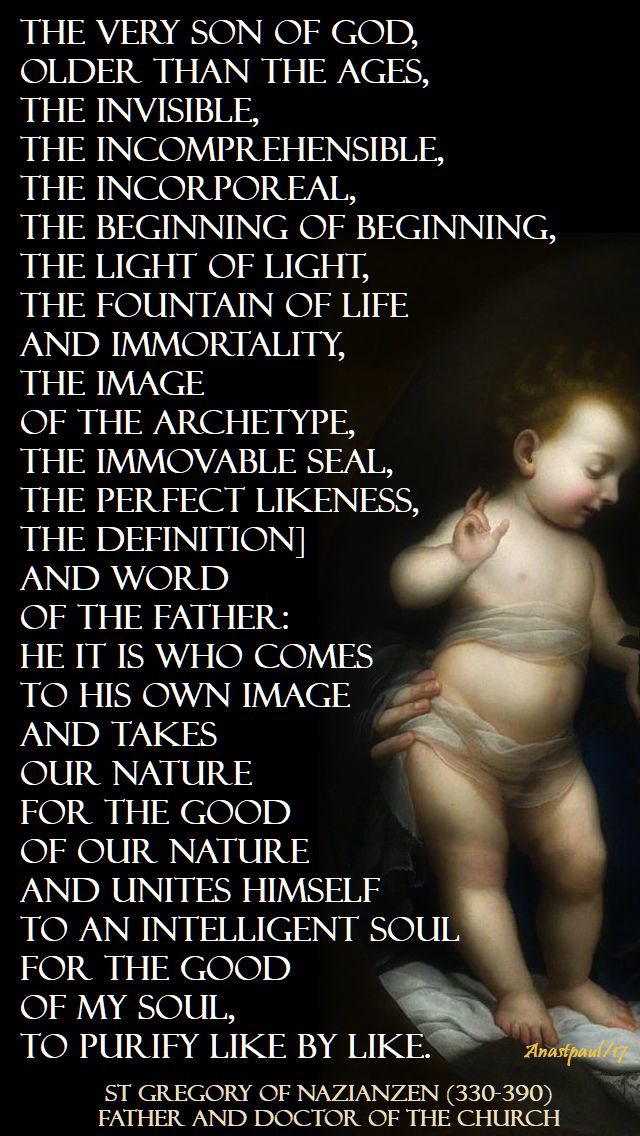
“The very Son of God,
older than the ages,
the invisible,
the incomprehensible,
the incorporeal,
the beginning of beginning,
the light of light,
the fountain of life and immortality,
the image of the archetype,
the immovable seal,
the perfect likeness,
the definition and word of the Father:
He it is who comes to His own image
and takes our nature for the good of our nature
and unites Himself to an intelligent soul
for the good of my soul,
to purify like by like.”
Advent and Christmas Wisdom with St Alphonsus Liguori (1696-1787)
16 December – Gaudete Sunday
God has given His only Son to save us
“Consider, that the eternal Father has given His Son to the world, for the light and life of all people, in order that He might win salvation.
Consider also, that the Father, in sending His Son to be our Redeemer and Mediator has, in a certain sense, bound Himself to forgive us and love us. On the other hand, the divien Word, having accepted the invitation of His Father, has also bound Himself to love us – not for our own merits but rather, to fulfil the merciful will of His Father.”
Scripture
Have no anxiety about anything but in everything, by prayer and supplication, with thanksgiving, let your requests be made known to God.
Philippians 4:6
Prayer (St Alphonsus)
O infinite God
and only love of my soul,
I thank You,
for having given me Your Son.
For the sake of this same Son,
accept me
and bind me with chains of love
to my Redeemer.
Amen
Advent Action
We begin this third week of Advent asking to feel the joy that comes from knowing our Lord’s coming to us is near.
In these precious days ahead, we are praying, longing, hoping in the background of our everyday lives.
His mission is to the poor, the brokenhearted, prisoners and captives. His mission is for us. It is “good news,” full of healing, liberty and release. We can smile today as we imagine the freedom He has won for us and how liberating it will be to live it, with Him, for others.
It is right to give our God thanks and praise and to follow His mission in our lives.
Jesus will come again, very soon!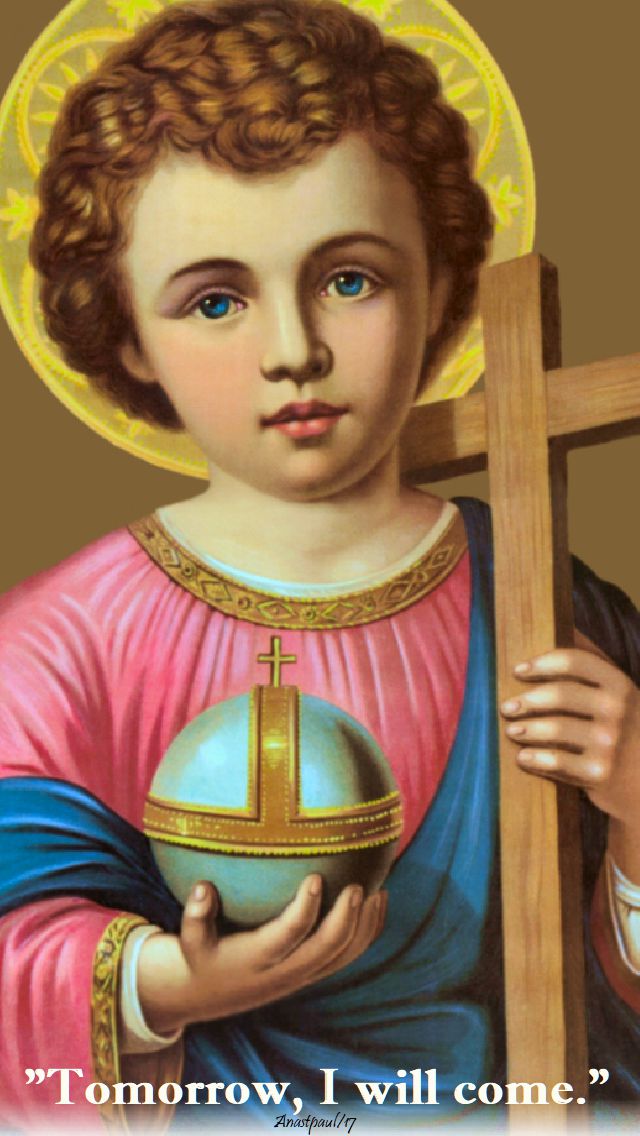
Our Morning Offering – The Third Sunday of Advent – 16 December 2018
How Beautiful
By Daryl Madden
How beautiful
Your light this day
Reflection of
Colours arrayed
How beautiful
Your precious gift
Our daily bread
The soul to lift
How beautiful
Your living Word
Let soul be lead
By Spirit heard
How beautiful
Your blessed grace
Our gift, Your light
Souls to embrace
By courtesy of the Poet Daryl Madden
https://darylmadden.wordpress.com/2018/12/15/how-beautiful/comment-page-1/#comment-3319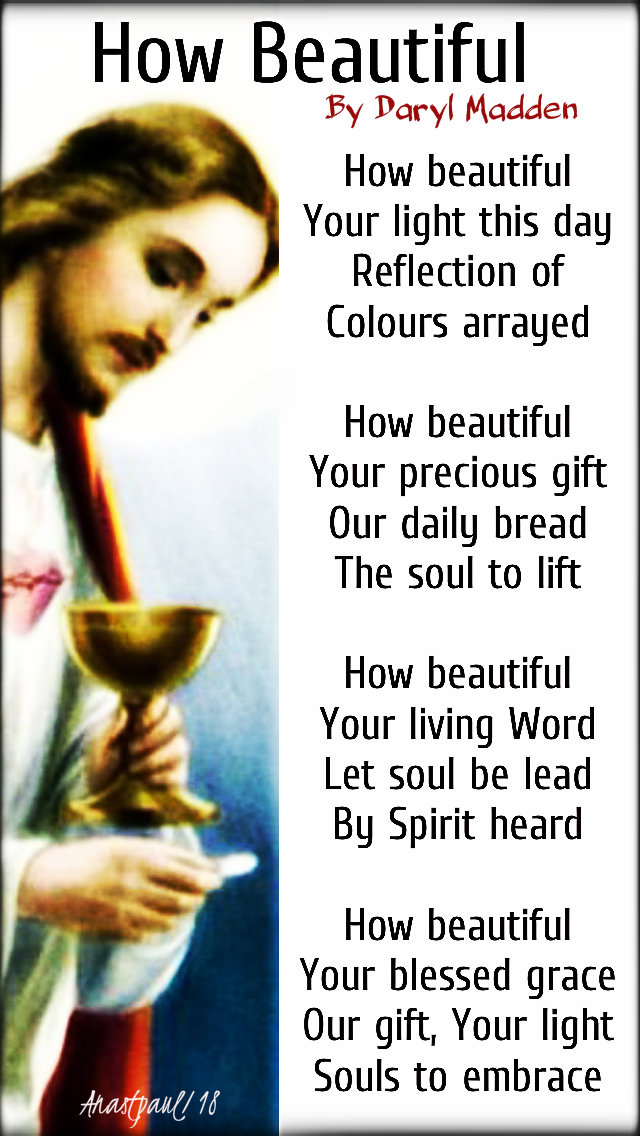
Saint of the Day – 16 December – Blessed Sebastian Maggi OP (1414–1496) Religious Priest of the Order of Preachers, Confessor – born in 1414 at Brescia, Italy and died in 1496 at Genoa, Italy of natural causes. Blessed Sebastian also served as the confessor to both Girolamo Savonarola (1452–1498) and Saint Catherine of Genoa (1447–1510). His body is incorrupt.
Sebastian Maggi was born in Brescia to nobles in 1414. He is related to Bishop Berardo Maggi who was also the Duke and Count of Brescia.
Maggi began his work in 1429 when he joined the Order of Preachers. His intelligence was noticed and he later received a master’s degree in theological studies. He rose through the ranks and became the superior of several religious Dominican houses. He practised corporal mortification and was strict in discipline. He would often tell his subordinates: “When you have committed a fault, come to me, not as prior but as your father. If you will not have me as a father, you will find me a severe judge.”
He appointed the monk Girolamo Savonarola to the position of novice master and set that famous Florentine friar on his own path to fame. In his time he was regarded as one of the greatest preachers in the Italian state.
Pope Alexander VI chose Father Maggi to investigate revelations that Savonarola claimed were given to him directly from God. Savonarola appealed the choice and believed that Sebastian – as Vicar-General of the Lombard Congregation – would be biased and try to take over his recently-emancipated “San Marco” facility in Florence. Alexander VI, however, had already decided to give the facility back to the Congregation, making Sebastian, Savonarola’s canonical superior.
Perhaps, if Sebastian Maggi had lived, he might have saved Savonarola from the political entanglements that sent him to his death. Sebastian was his confessor for a long time and always testified in his favour when anyone attacked the reformer’s personal life. It is hard to say just where he stood politically in the long and complex series of events concerning the separation of Lombard province from the province of Italy. But all that has been written of him, conveys the same impression, he was a kind and just superior, who kept the rule with rigid care but was prudent in exacting it of others.

Several times Sebastian Maggi was sent on missions of reform and he died on one of these. On his way to a convent for visitation, he became ill at Genoa and died there in 1496. He is buried at the Dominican “Santa Maria di Castello” complex in Genoa (see below).
History has written of Blessed Sebastian that his greatest virtues were seen in his governing. As the prior of several convents, Blessed Sebastian often loved to wait on his Dominican sisters and brothers with his own hands and to minister to them when they were ill. It was commonly said, that when Blessed Sebastian visited the sick, he did so with as much joy as attending a wedding.
3rd ‘Gaudete’ Sunday of Advent (2018)
St Adelaide of Burgundy (c 931-999) Holy Roman Empress
About St Adelaide: https://anastpaul.wordpress.com/2017/12/16/saint-of-the-day-16-december-st-adelaide-of-italy-burgundy-c-931-999/
St Adelard of Cysoing
St Ado of Vienne
Bl Adolphus of Tunis
Bl Arnaldo of Tunis
St Albina of Caesarea
St Ananias
St Azarias
St Bean of Lough Derg
St Beoc
Bl Clemente Marchisio
St Dominic Dosso
Bl Elizabeth of Saint Francis
Bl Filip Siphong Onphithakt
St Irenion
Bl James of Tunis
Bl Jaume Mases Boncompte
St Jean Wauthier
St Macarius of Collesano
Bl Mary Fontanella
St Misael
St Nicholas Chrysoberges
Bl Raynald de Bar
Bl Sebastian Maggi OP (1414–1496)
—
Martyred Women of North-West Africa: A large group of women martyred in the persecutions of Hunneric, Arian King of the Vandals. 482 in North-West Africa.
Martyrs of Ravenna – (4 saints): A group of Christians martyred together. Four names and no other information has survived – Agricola, Concordius, Navalis and Valentine. c 305 at Ravenna, Italy.
Thought for the Day – 15 December – Saturday of the Second week of Advent
The Word of the Lord will come to us – The Threefold Coming of the Lord
St Bernard Clairvaux (1090-1153) Doctor of the Church
We know that the coming of the Lord is threefold – the third coming is between the other two and it is not visible in the way they are. At His first coming the Lord was seen on earth and lived among men, who saw Him and hated Him. At His last coming All flesh shall see the salvation of our God and They shall look on Him whom they have pierced. In the middle, the hidden coming, only the chosen see Him and they see Him within themselves and so their souls are saved. The first coming was in flesh and weakness, the middle coming is in spirit and power and the final coming will be in glory and majesty.
This middle coming is like a road that leads from the first coming to the last. At the first, Christ was our redemption, at the last, He will become manifest as our life but in this middle way He is our rest and our consolation.
If you think that I am inventing what I am saying about the middle coming, listen to the Lord Himself: “If anyone loves me, he will keep my words and the Father will love him and we shall come to him.” Elsewhere I have read: Whoever fears the Lord does good things – but I think that what was said about whoever loves Him was more important, that whoever loves Him will keep His words. Where are these words to be kept? In the heart certainly, as the Prophet says I have hidden your sayings in my heart so that I do not sin against you. Keep the word of God in that way – Blessed are those who keep it. Let it penetrate deep into the core of your soul and then flow out again in your feelings and the way you behave, because if you feed your soul well it will grow and rejoice. Do not forget to eat your bread, or your heart will dry up. Remember and your soul will grow fat and sleek.
If you keep God’s word like this, there is no doubt that it will keep you, for the Son will come to you with the Father, the great Prophet will come, who will renew Jerusalem and He is the one who makes all things new. For this is what this coming will do, just as we have been shaped in the earthly image, so will we be shaped in the heavenly image. Just as the old Adam was poured into the whole man and took possession of him, so in turn will our whole humanity be taken over by Christ, who created all things, has redeemed all things and will glorify all things.
Quote/s of the Day – 15 December – Saturday of the Second week of Advent
“Into this world, this demented inn
in which there is absolutely no room for Him at all,
Christ comes uninvited.”

“At this Christmas, when Christ comes,
will He find a warm heart?
Mark the season of Advent,
by loving and serving the others,
with God’s own love and concern.”
(Love: A Fruit Always in Season)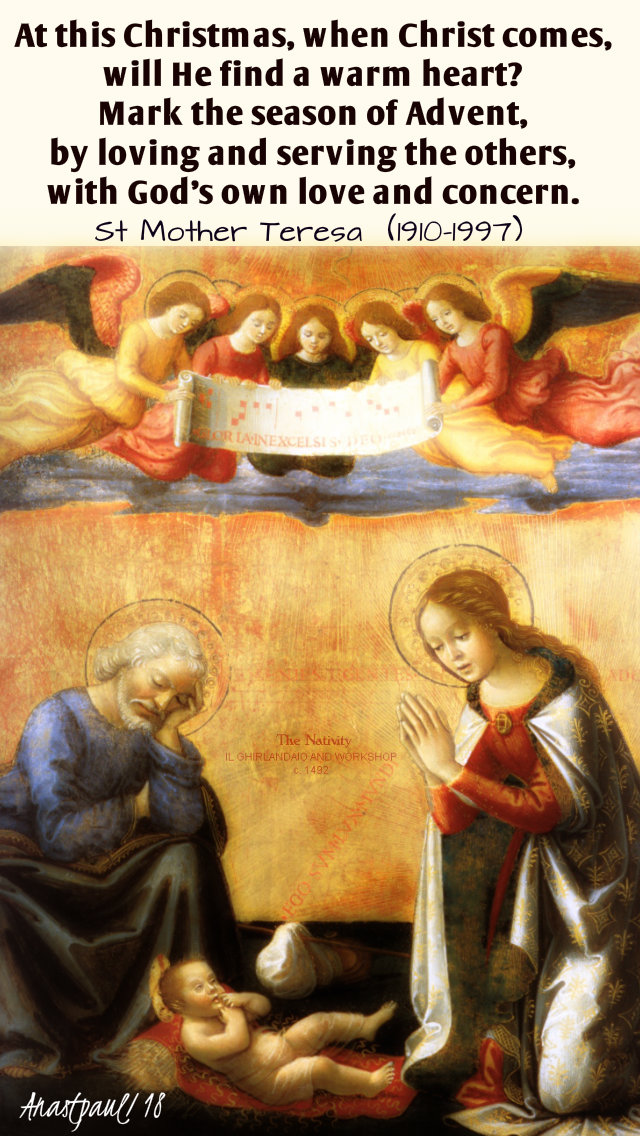
Advent and Christmas Wisdom with St Alphonsus Liguori
15 December – Saturday of the Second week of Advent
The greatest sorrow of Jesus
“Consider Jesus, who revealed to the Venerable Agatha of the Cross, that which afflicted Him more than any other sorrow was hardness of the hearts of humanity. This sorrow, was the bitter chalice that Jesus begged the Father to remove from Him, saying, “Let this chalice pass from me. ” What chalice? The contempt with which His love was treated. Our Lord revealed to St Catherine of Siena that this was the reason that He exclaimed from the cross, “My God, my God, why have You forsaken me?”
Knowing this sorrow, let us change our will, repent of our sins and resolve to love God. In this way, we shall then find peace, that is, the divine friendship that we seek. We beg the Lord for the necessary grace to execute what we propose. We call upon our Blessed Lady and ask that she not cease to pray until we are changed and made into what God wishes us to be.”
Scripture
“So also will the Son of Man suffer at their hands.”
Matthew 17:12b
Prayer (St Alphonsus)
“O my most amiable Jesus,
how much have I caused You to suffer?
In the future,
I will love You above all things,
ready to give up my life a thousand times,
in order to accomplish Your will.
Mary Holy Mother,
I beg your prayer and loving care.
Please help us all.
Amen”
Advent Action
Today’s Scriptures encourage us to look for the signs of Jesus, who will restore life to us. “Lord, help me see the signs of Your coming. Let me not be blinded by the glare of business or the millions of lights in malls and on trees. Rather, let me look for You in the small things of the day, with my heart longing for You. “Christ dwelt for nine months in the tabernacle of Mary’s womb. He dwells until the end of the ages in the tabernacle of the Church’s faith. He will dwell forever, in the knowledge and love of each faithful soul.” [Blessed Isaac of Stella (c 1100-1170) Cistercian Monk] Amen!”
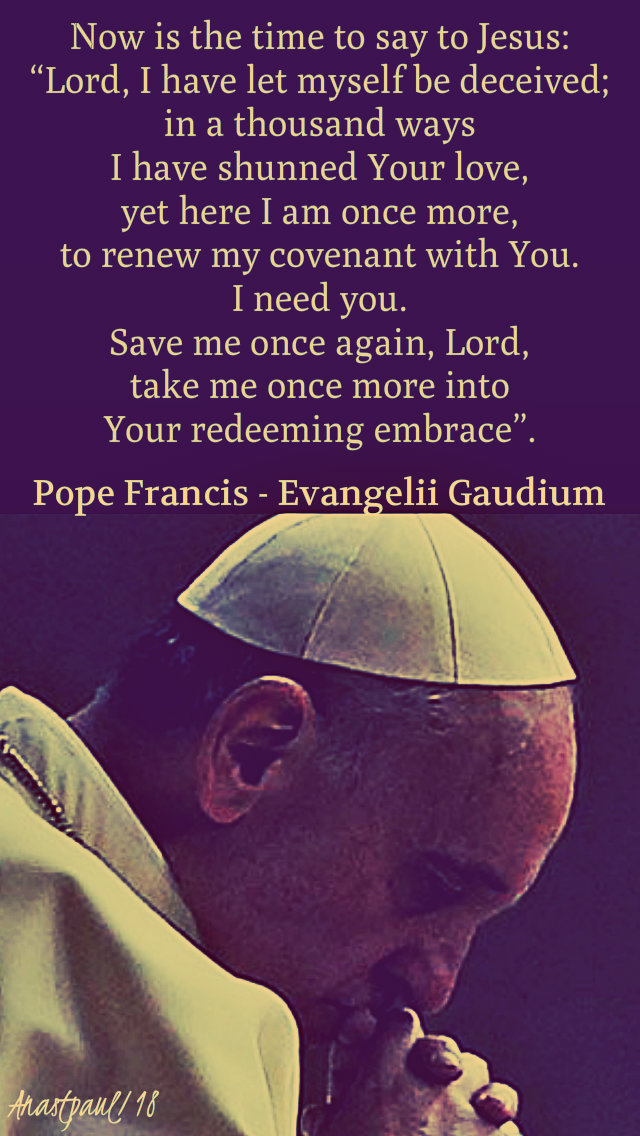
“Now is the time to say to Jesus:
“Lord, I have let myself be deceived;
in a thousand ways I have shunned Your love,
yet here I am once more,
to renew my covenant with You.
I need you.
Save me once again, Lord,
take me once more into
Your redeeming embrace”.
Our Morning Offering – 15 December – Saturday of the Second week of Advent
O Most Blessed and Sweet Virgin Mary
By St Thomas Aquinas (1225-1274) Doctor of the Church
0 most blessed and sweet Virgin Mary,
Mother of God, filled with all tenderness,
Daughter of the most high King,
Lady of the Angels,
Mother of all the faithful,
On this day and all the days of my life,
I entrust to your merciful heart,
my body and my soul,
all my acts, thoughts, choices,
desires, words, deeds,
my entire life and death,
So that, with your assistance,
all may be ordered to the good
according to the will of your beloved Son,
our Lord Jesus Christ.
Amen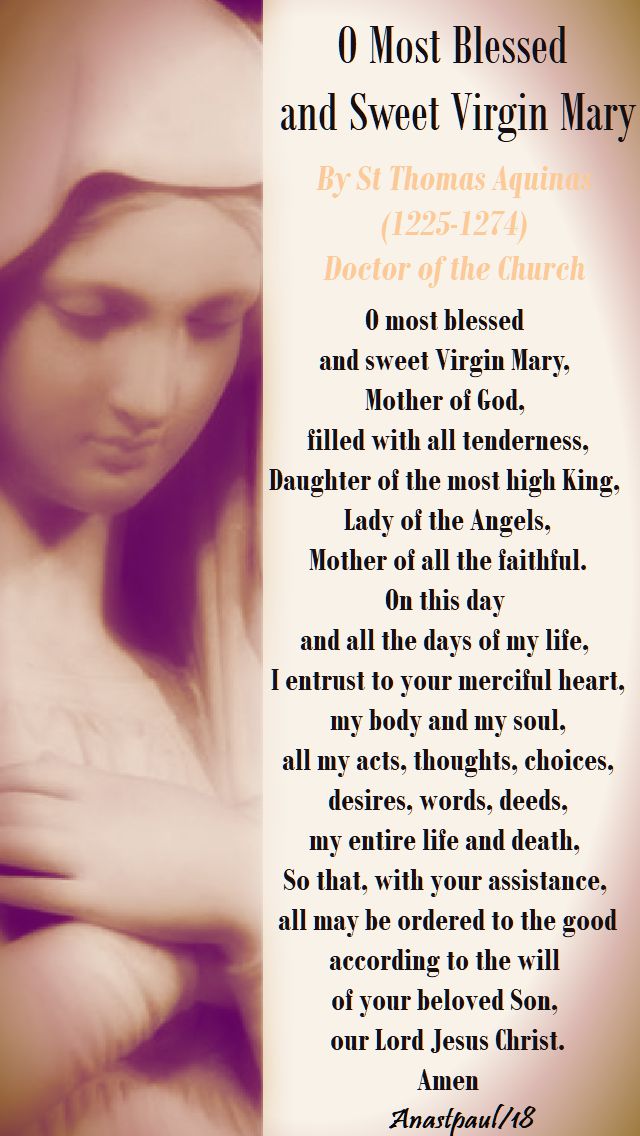
Saint of the Day – 15 December – Blessed Karl Steeb (1773 – 1856) Priest, Founder, Apostle of Charity, Lawyer, Teacher of Languages. Blessed Karl was born on 18 December 1773 in Tübingen, Baden-Württemberg (modern Germany) and died on 15 December 1856 at Verona, Italy of natural causes. Blessed Karl founded the Institute of the Sisters of Mercy in support of the needy and the sick of which he is the Patron.
His father was a highly esteemed businessman of the Lutheran faith who administered the assets of the Duke of Wurttemberg. He sent Karl to Paris at sixteen and at eighteen to Verona, Italy to study further. He was a mature and reserved boy, focusing his attention on his studies. He was a fervent Lutheran but was fascinated with the lively Veronese world, with its cultural and religious vitality. He attracted a dialogue with some well-known priests and laity and this led him in September 1792, to become Catholic.
Four years later he was ordained a priest, which caused great bitterness on the part of his father, who disinherited him. However, upon the death of his sister Guglielmina he did inherit, all proceeds of which he donated to the poor of Verona. It was a time of war between Napoleon and Austria – the battles of Bassano, of Bishop’s Castle, the Rivoli and then the uprising of anti-1797 (the “Pasque Veronese”). Blessed Karl lived at this time between infirmaries, hospitals, the military sickbays and the infectious lepers, as a priest, nurse and interpreter in three languages.
He contracted typhoid through his work in the hospitals but his spiritual director, Father G B Bertolini, assured him “It’s not your time. The Lord expects something great from you.”
His Order, the Sisters of Mercy, was born in 1840, in two rooms, dedicated to all the suffering and needy. From the two rooms, the Institute began a journey that continues still, with homes in Europe, Latin America and Africa.
Karl, who many called the “father of the sick”, died in 1856 after seeing the completion of a church as the Mother Church of the Sisters of Mercy, in Verona, where his body is buried. Pope Paul VI Beatified him in 1975 after confirmation of a miracle.
(This biography was translated from Italian and is not comprehensive but the best I could find).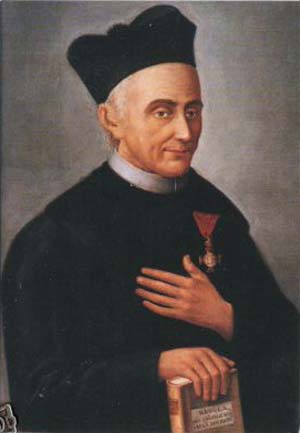
Bl Karl Steeb (1773 – 1856)
St Margaret of Fontana
Bl Maria della Pace
St Mary Crocifissa di Rosa (1813 – 1855)
Biography: https://anastpaul.wordpress.com/2016/12/15/saint-of-the-day-15-december/
St Maximinus of Micy
St Offa of Essex
Bl Pau Gracia Sánchez
St Paul of Latros
Bl Ramón Eirin Mayo
St Silvia of Constantinople
St Urbicus
St Valerian of Abbenza
Bl Victoria Strata
St Virginia Centurione Bracelli (1587-1651)
Biography: https://anastpaul.wordpress.com/2017/12/15/saint-of-the-day-15-december-st-virginia-centurione-bracelli-1587-1651/
Martyrs of Drina – (5 beati): Also known as
• Daughters of Divine Charity of Drina
• Drina Martyrs
Five members of the Daughters of Divine Charity who were martyred while fighting off Chetnik rapists. They were –
Jozefa Bojanc
Jozefa Fabjan
Karoline Anna Leidenix
Kata Ivanisevic
Terezija Banja
Their martyrdom occured in December 1941 in Gorazde, Bosansko-Podrinjski, Bosnia-Herzegovina
They were Beatified on 24 September 2011 by Pope Benedict XVI.
Martyrs of North Africa – (7 saints): A group of Christians martyred together for their faith in North Africa. The only details about them that survive are their names – Caelian, Candidus, Faustinus, Fortunatus, Januarius, Lucius and Mark.
Martyrs of Rome – (22 saints): A group of 22 Christians martyred together in the persecutions of Valerian. The only details we have are five of their names – Antonius, Irenaeus, Saturnin, Theodorus and Victor. c 258 in Rome, Italy.
Thought for the Day – 14 December – The Memorial of St John of the Cross (1542-1591) Doctor of the Church
Traces of the Divine Beauty in Creation
From The Spiritual Canticle by Saint John of the Cross
“Created things in themselves, as Saint Augustine declares, give testimony to God’s grandeur and excellence. For God created all things with remarkable ease and brevity and in them He left some trace of who He is, not only in giving all things being from nothing but even by endowing them, with innumerable graces and qualities, making them beautiful in a wonderful order and unfailing dependence on one another. All of this He did through His own wisdom, the Word, His only begotten Son by whom He created them.
Saint Paul says: The Son of God is the splendour of His glory and the image of His substance. It should be known that only with this figure, His Son, did God look at all things, that is, He communicated to them their natural being and many natural graces and gifts and made them complete and perfect, as is said in Genesis: God looked at all things that He made, and they were very good. To look and behold that they were very good, was to make them very good in the Word, his Son.
Not only by looking at them did He communicate natural being and graces, as we said but also with this image of His Son alone, He clothed them in beauty by imparting to them supernatural being. This He did when He became man and elevated human nature in the beauty of God and consequently all creatures, since in human nature He was united with them all.
Accordingly, the Son of God proclaimed: If I be lifted up from the earth, I will elevate all things to me. And in this elevation of all things through the incarnation of His Son and through the glory of His resurrection according to the flesh, the Father did not merely beautify creatures partially but rather, we can say, clothed them wholly in beauty and dignity.”
“Lord I am not worthy but only say the word and I shall be healed.”
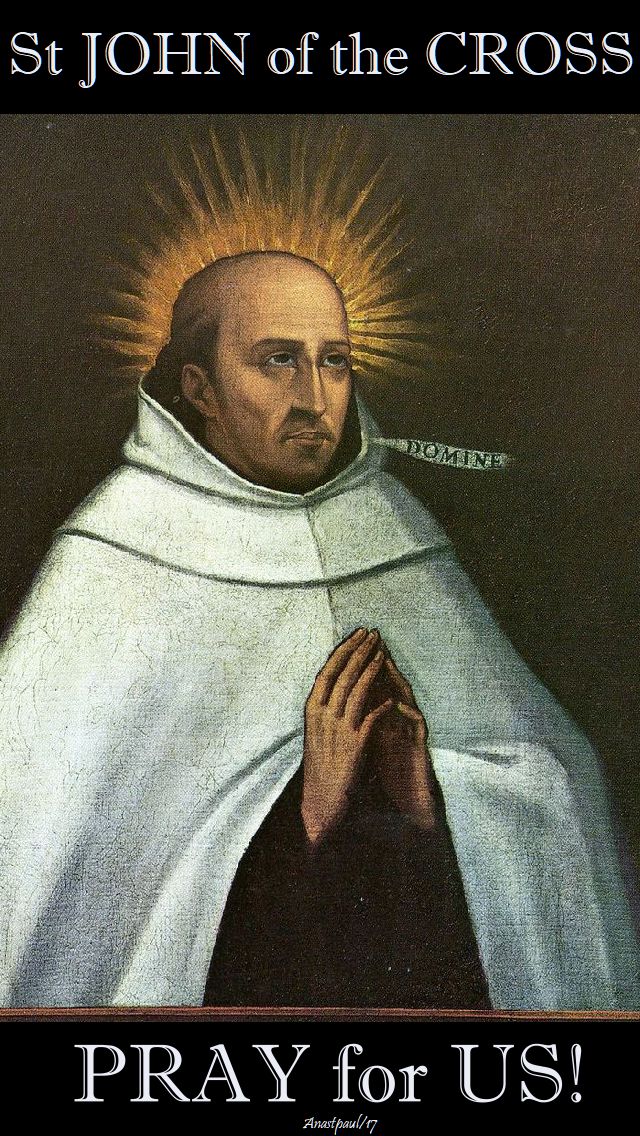
Quotes of the Day – 14 December – The Memorial of St John of the Cross (1542-1591) Doctor of the Church
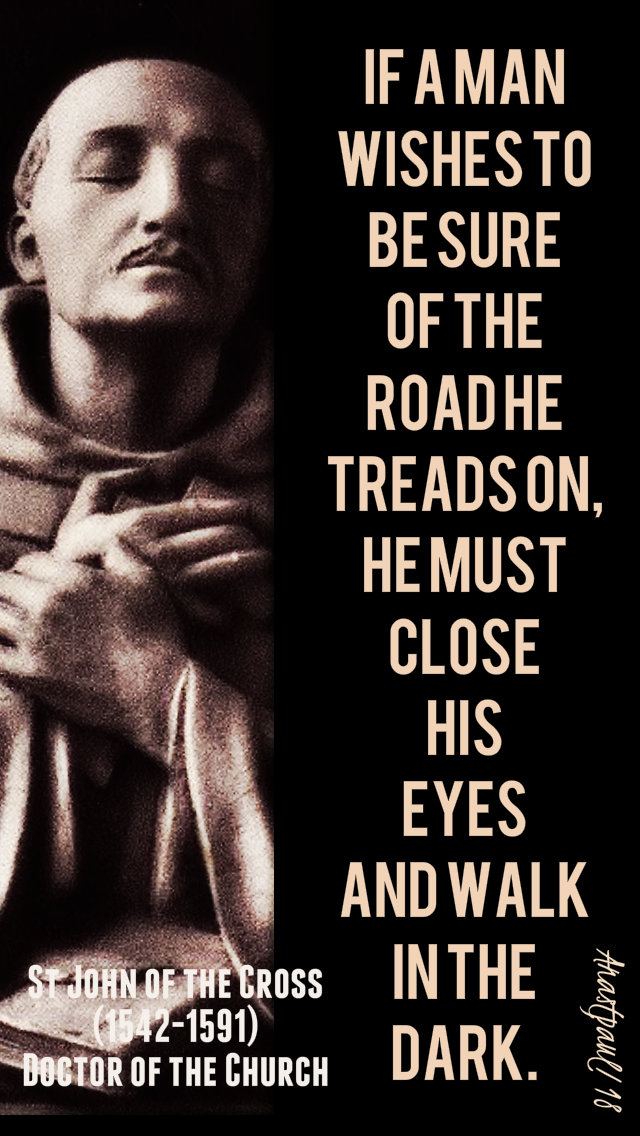
“If a man wishes to be sure of the road
he treads on, he must close his eyes
and walk in the dark.”
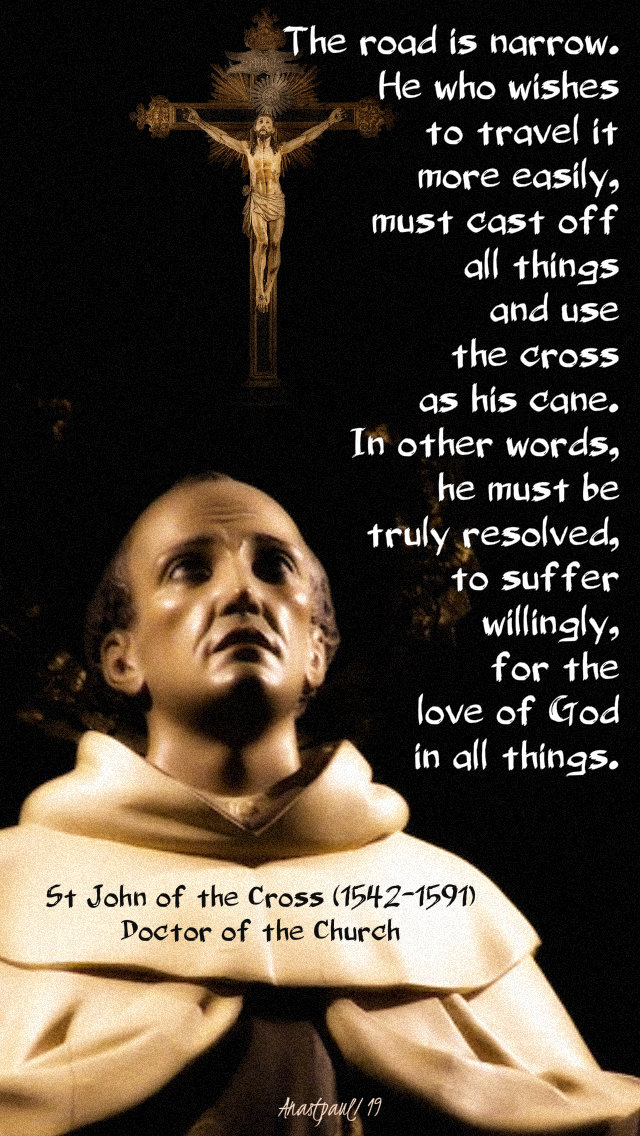
“The road is narrow.
He who wishes to travel it more easily
must cast off all things and use the cross as his cane.
In other words, he must be truly resolved
to suffer willingly for the love of God in all things.”
“Live in the world,
as if only God and your soul were in it,
then your heart will never be made captive,
by any earthly thing.” 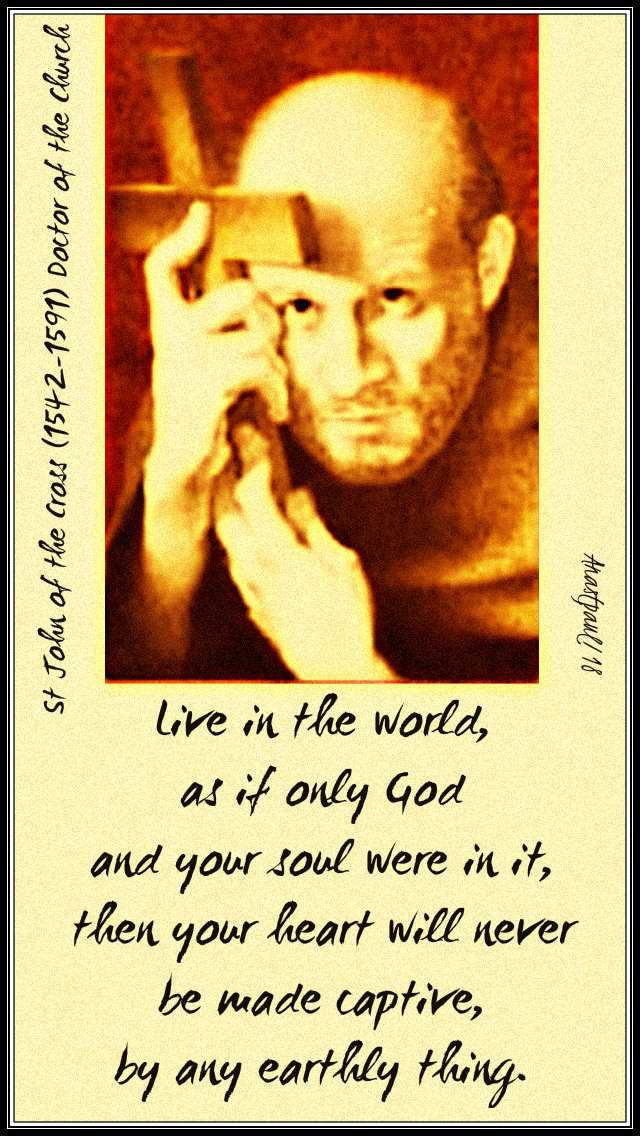
“We must dig deeply in Christ.
He is like a rich mine
with many pockets containing treasures –
however deep we dig,
we will never find their end or their limit.
Indeed, in every pocket new seams of fresh riches
are discovered on all sides.”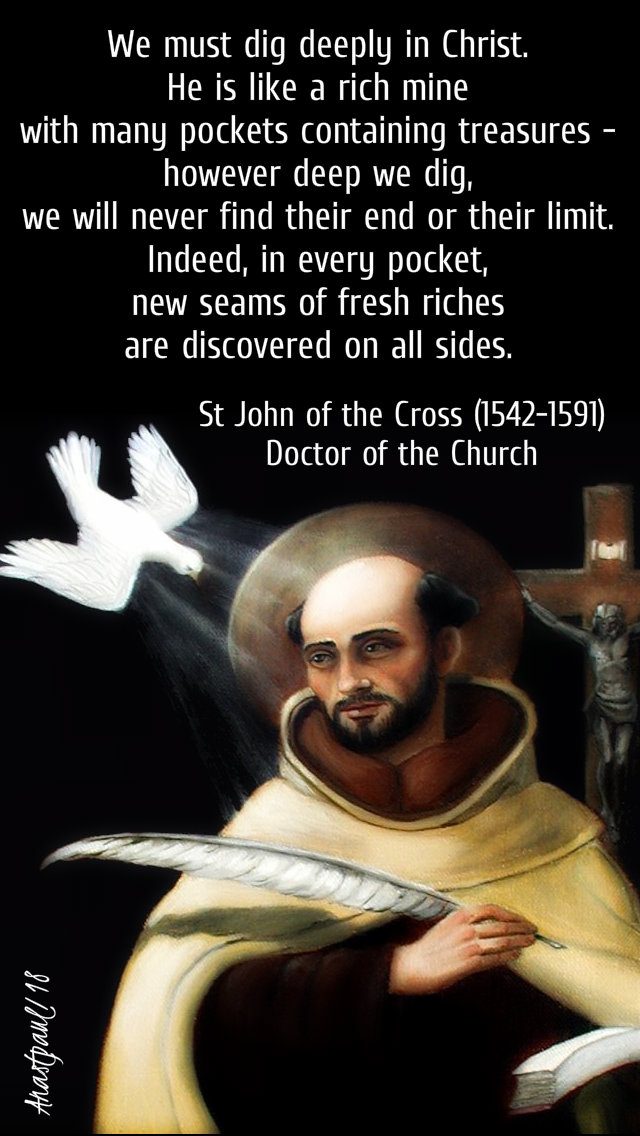
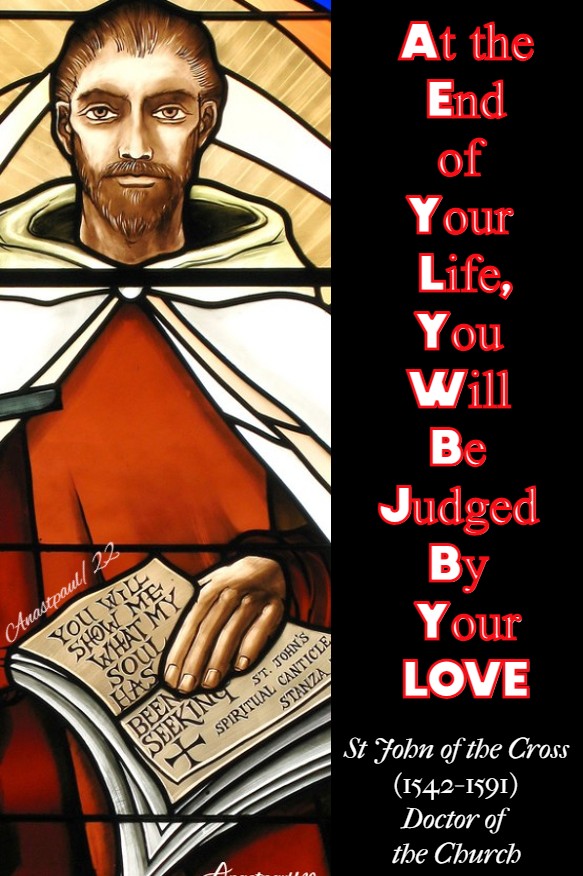
“At the end of your life,
you will be judged by your love.”
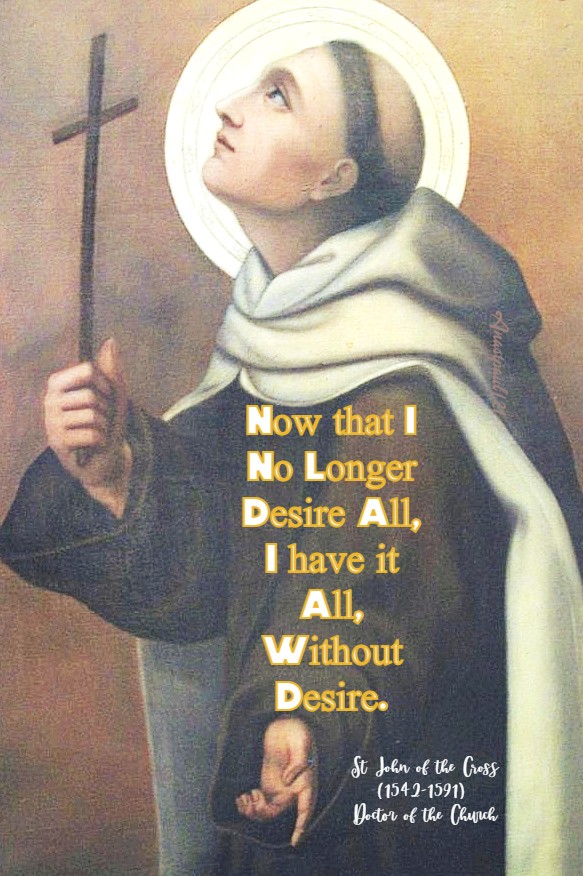
“Now that I no longer desire all,
I have it all, without desire.”
Advent and Christmas Wisdom with St Alphonsus Liguori
14 December – Friday of the Second week of Advent
Jesus suffers so much in order to gain our hearts
“Consider that Jesus suffered for our love. During His entire life, He had no other purpose than the glory of God and our salvation. Even though He could have saved us without suffering, He chose to embrace a life of suffering. He was poor, despised and deprived of every comfort, with a death that was more desolate and bitter than any death ever endured by a martyr or penitent. All of this, was done for the sole purpose of helping us understand the greatness of His love for us.
Saint Bonaventure exclaims, ‘It is a wonder to see a God endure such sufferings, shedding tears in a stable, poor in a workshop, languishing on a cross, in short afflicted and troubled His whole life, all because of His love for sinful humanity.'”
Scripture
“I am the Lord your God,
who teaches you to profit,
who leads you in the way you should go.”
Isaiah 48:17
Prayer (St Alphonsus)
“O sovereign God,
help me not to be ungrateful
for all that You have given me.
Help me to die in love with You.
Mary, my hope, help me.
Pray to Jesus for me.”
Advent Action
“O my Lord Jesus, whose love for me has been so great as to bring You down from heaven to save me, teach me, dear Lord, my sin—teach me its heinousness—teach me truly to repent of it—and pardon it in Your great mercy! I beg You, O my dear Saviour, to recover me! Your grace alone can do it. I cannot save myself. I cannot recover my lost ground. I cannot turn to You, I cannot please You, or save my soul without You. I shall go from bad to worse, I shall fall from You entirely, I shall quite harden myself against my neglect of duty, if I rely on my own strength. I shall make myself my centre instead of making it in You. I shall worship some idol of my own framing instead of You, the only true God and my Maker, unless You hinder it by Your grace. O my dear Lord, hear me! I have lived long enough in this undecided, wavering, unsatisfactory state. I wish to be Your good servant. I wish to sin no more. Be gracious to me and enable me to be what I know I ought to be.”…Blessed John Henry Newman (1801-1890)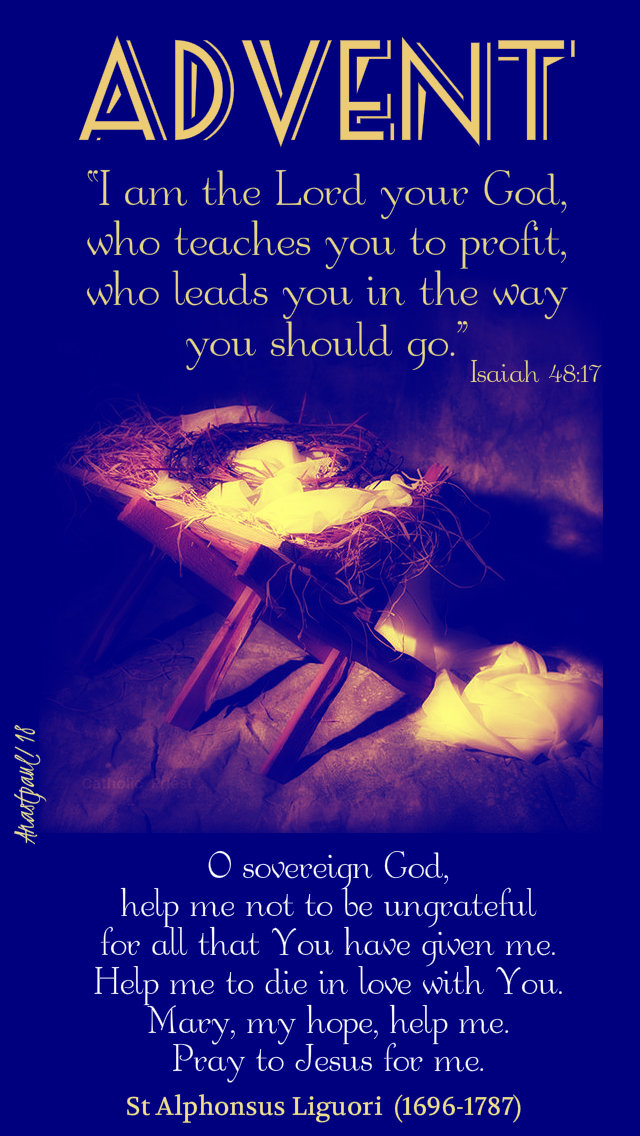
Our Morning Offering – 14 December – The Memorial of St John of the Cross (1542-1591) Doctor of the Church
O King of Gentleness
By St John of the Cross
O blessed Jesus,
give me stillness of soul in You.
Let Your mighty calmness reign in me.
Rule me, O King of Gentleness,
King of Peace.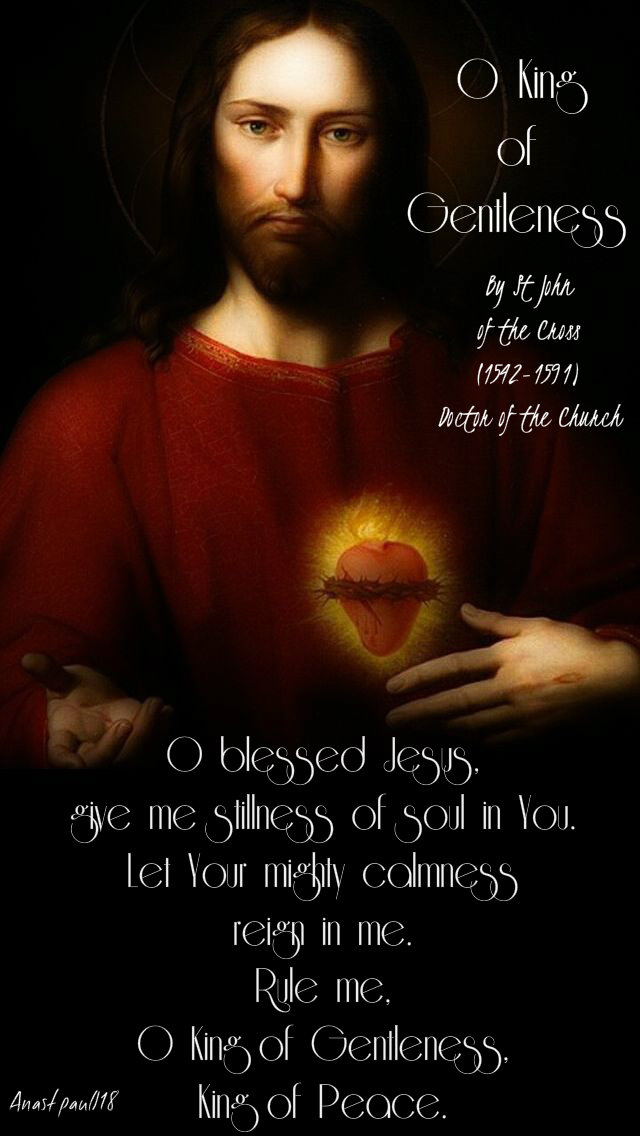
 AnaStpaul
You must be logged in to post a comment.