Quote/s of the Day – 20 May – The Solemnity of Pentecost, Alleluia!
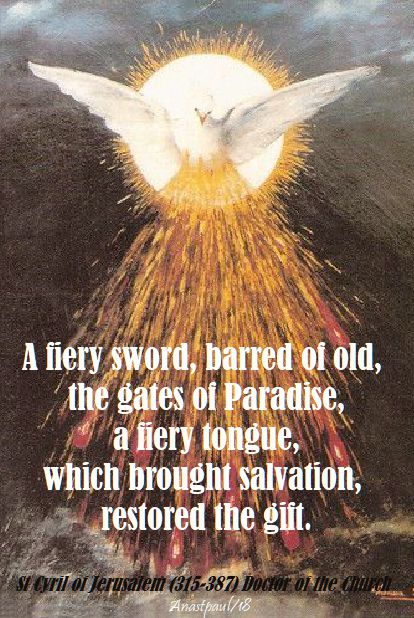
“A fiery sword, barred of old, the gates of Paradise, a fiery tongue, which brought salvation, restored the gift.”
St Cyril of Jerusalem (315-387) Doctor of the Church (Catechetical Lectures: Lecture 17 no. 15)
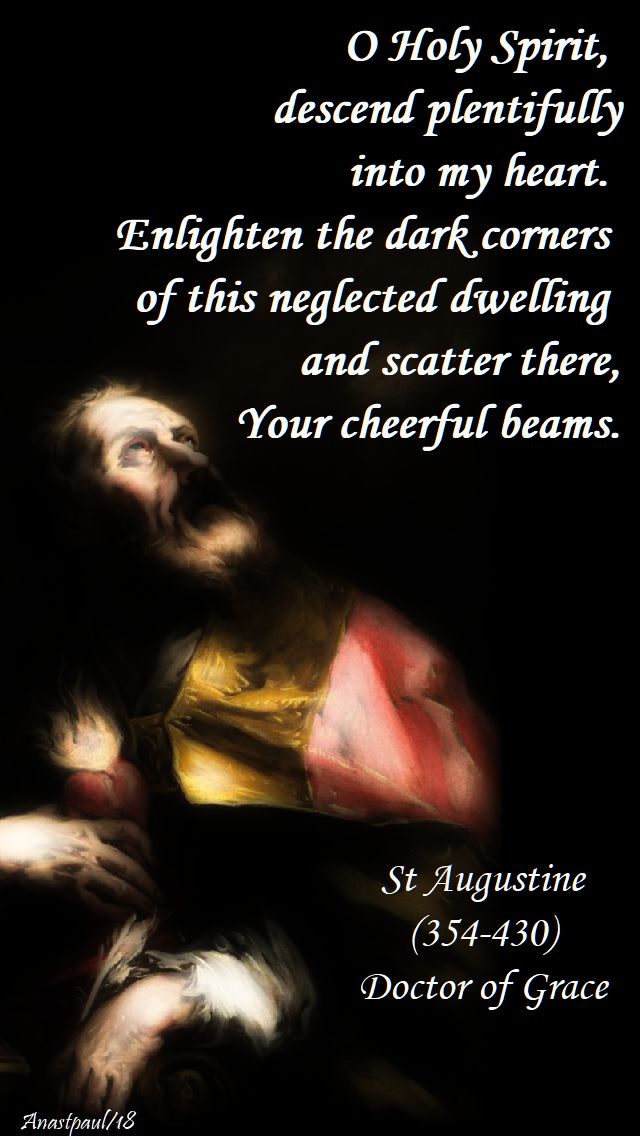
“O Holy Spirit, descend plentifully into my heart. Enlighten the dark corners of this neglected dwelling and scatter there, Your cheerful beams.”
St Augustine (354-430) Doctor of Grace
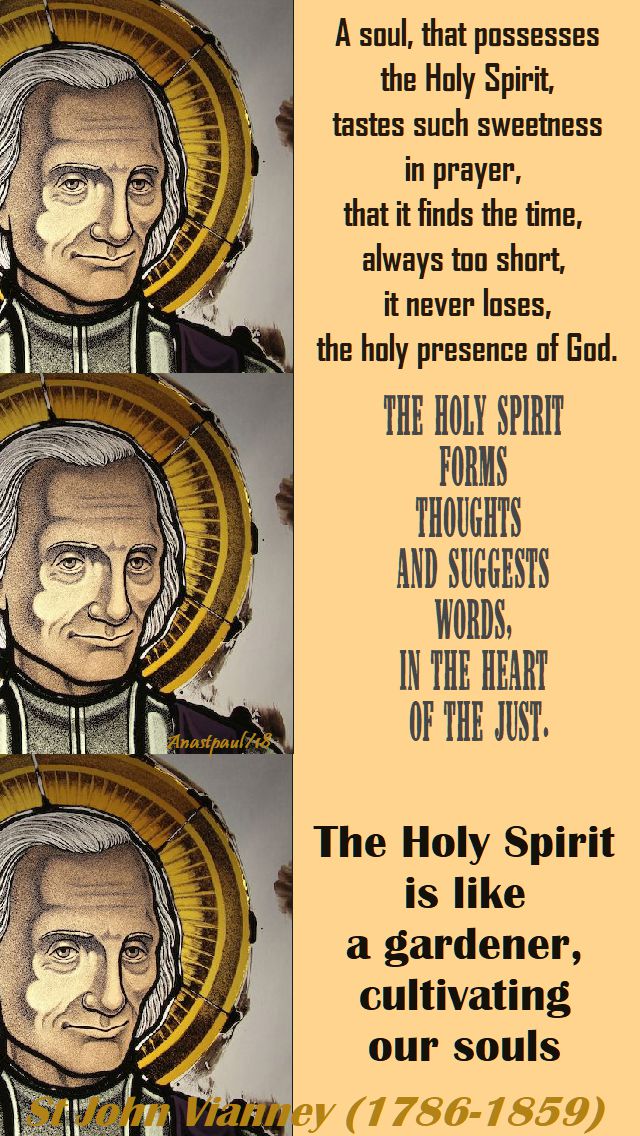
“A soul, that possesses the Holy Spirit, tastes such sweetness, in prayer, that it finds the time, always too short, it never loses, the holy presence of God.”
“The Holy Spirit forms thoughts and suggests words, in the hearts of the just.”
“The Holy Spirit is like a gardener, cultivating our souls.”
St John Vianney (1786-1859)
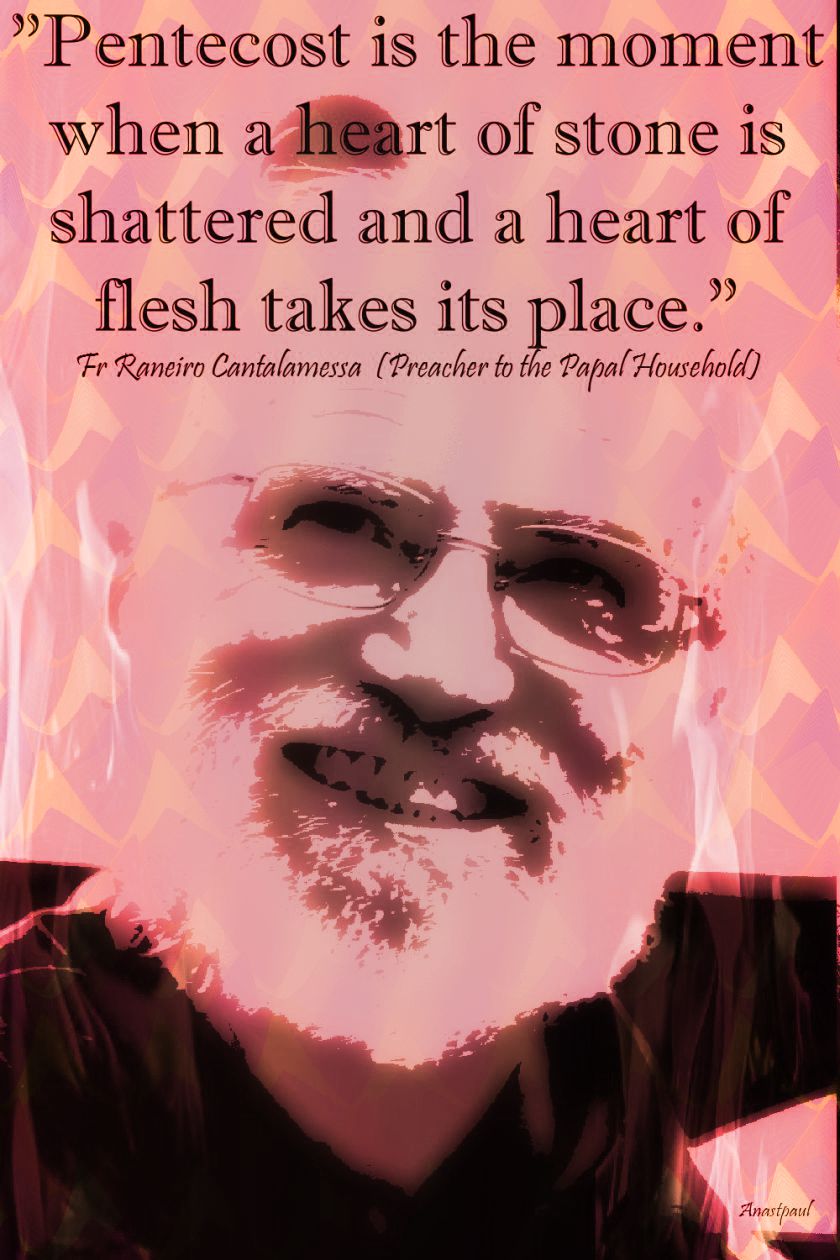
“Pentecost is the moment when a heart of stone is shattered and a heart of flesh takes its place.”
Fr Raneiro Cantalamessa (Preacher to the Papal Household)
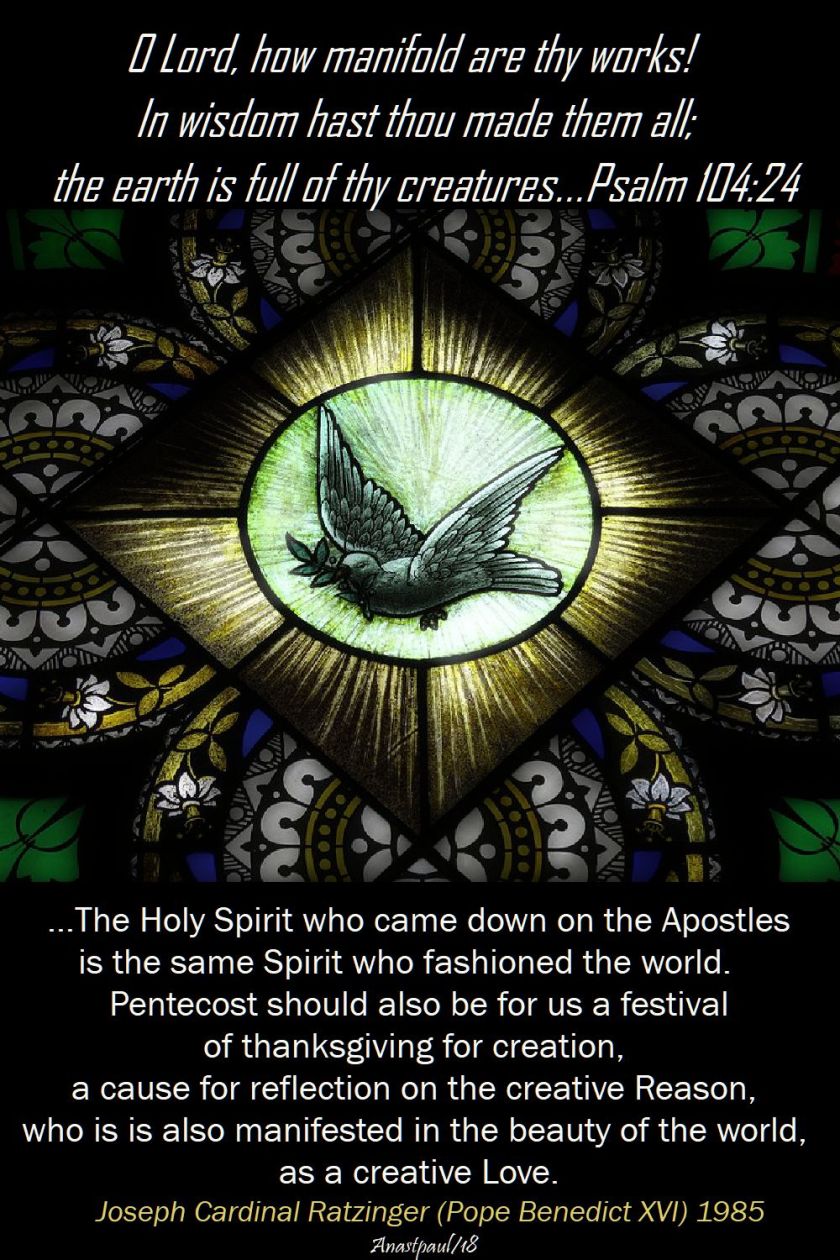
O Lord, how manifold are thy works! In wisdom hast thou made them all; the earth is full of thy creatures…Psalm 104:24
REFLECTION – “…the Holy Spirit who came down on the Apostles is the same Spirit who fashioned the world. Pentecost should also be for us a festival of thanksgiving for creation, a cause for reflection on the creative Reason, who is is also manifested in the beauty of the world, as a creative Love.”…Joseph Cardinal Ratzinger (Pope Benedict XVI) 1985
PRAYER – Lord God, pour out the gifts of the Holy Spirit on all mankind and fulfil now, in the hearts of Your faithful, what You accomplished at the beginning of the world, every second of every day and when the Gospel was first preached on earth. Come, O Holy Spirit, come! We make our prayer through our Lord Jesus Christ, Your Son, in the unity of the Holy Spirit, one God forever, amen.
Our Morning Offering – 20 May – Pentecost Sunday, Alleluia!
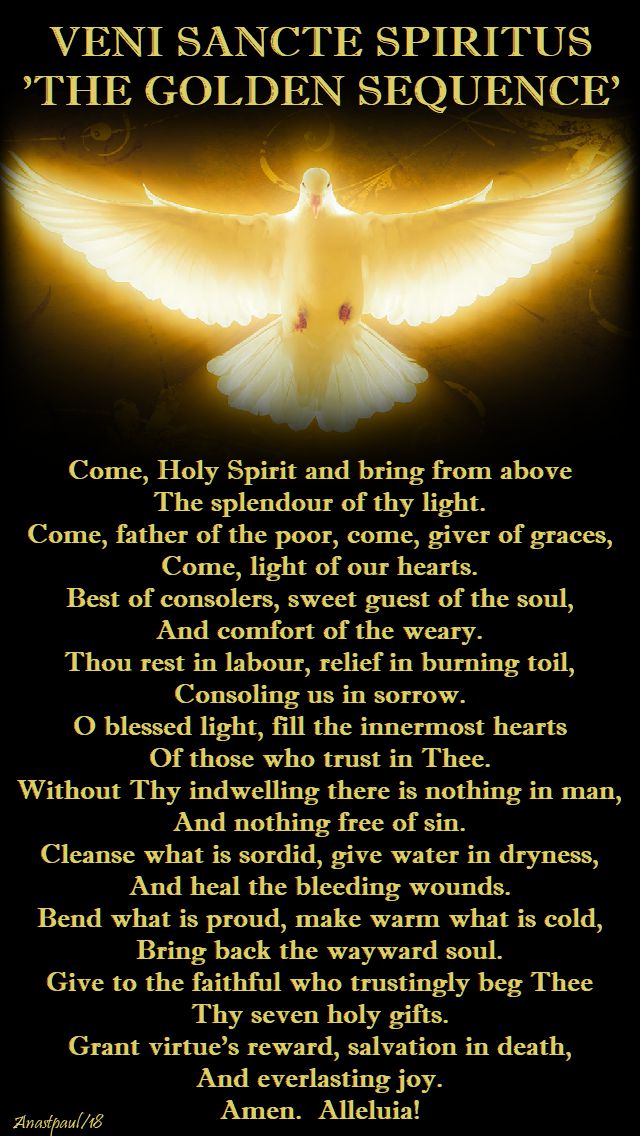
Veni Sancte Spiritus – The Golden Sequence
Before the Alleluia, proclamation of the Gospel, the ancient sequence Veni Sancte Spiritus (Come, Holy Spirit) is recited or sung on each day of Pentecost week. This hymn appeared first in liturgical books around the year 1200. It has been variously ascribed to Pope Innocent III (1216), to King Robert of France (1031) and even to Saint Gregory the Great (604). Most probably, however, its author was Cardinal Stephen Langton (1128), Archbishop of Canterbury. The poem has been known from medieval times as the “Golden Sequence” because of its richness in thought and expression. Each one of the short stanzas is a sentence in itself, thus facilitating meditation. Below is one of the many translations used today.
Prayer:
Come, Holy Spirit and bring from above
The splendour of Thy light.
Come, father of the poor, come, giver of graces,
Come, light of our hearts.
Best of Consolers, sweet guest of the soul,
And comfort of the weary.
Thou rest in labour, relief in burning toil,
Consoling us in sorrow.
O blessed light, fill the innermost hearts
Of those who trust in Thee.
Without Thy indwelling there is nothing in man,
And nothing free of sin.
Cleanse what is sordid, give water in dryness,
And heal the bleeding wounds.
Bend what is proud, make warm what is cold,
Bring back the wayward soul.
Give to the faithful who trustingly beg Thee
Thy seven holy gifts.
Grant virtue’s reward, salvation in death,
And everlasting joy. Amen. Alleluia.
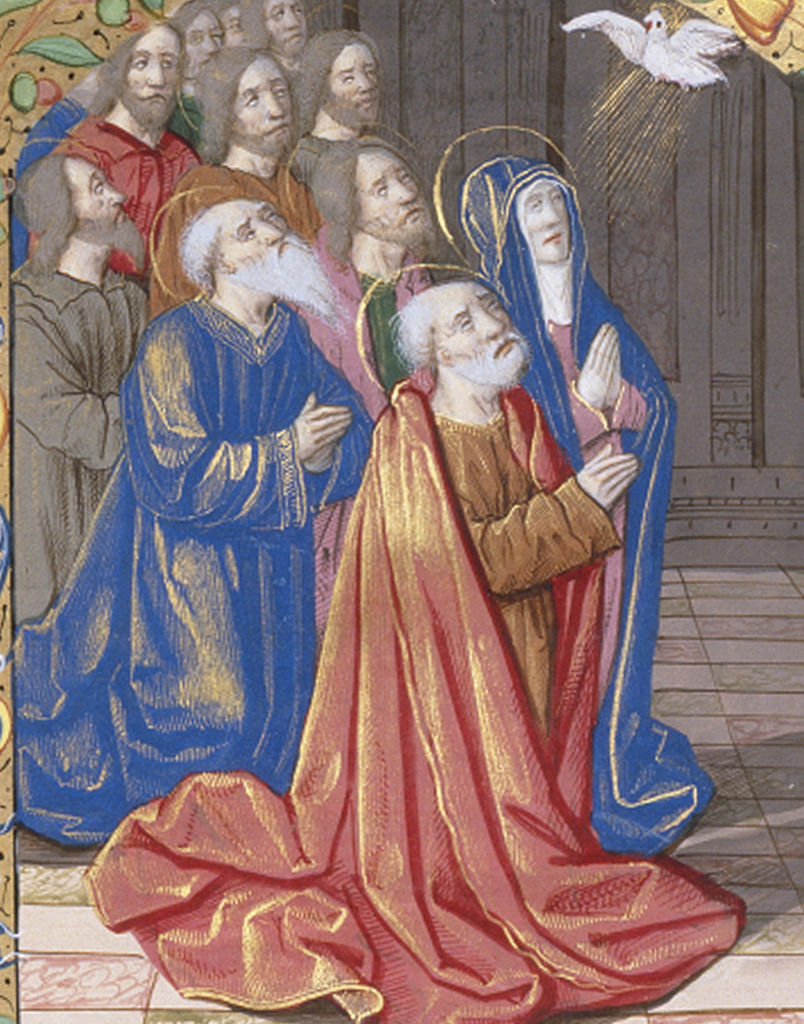
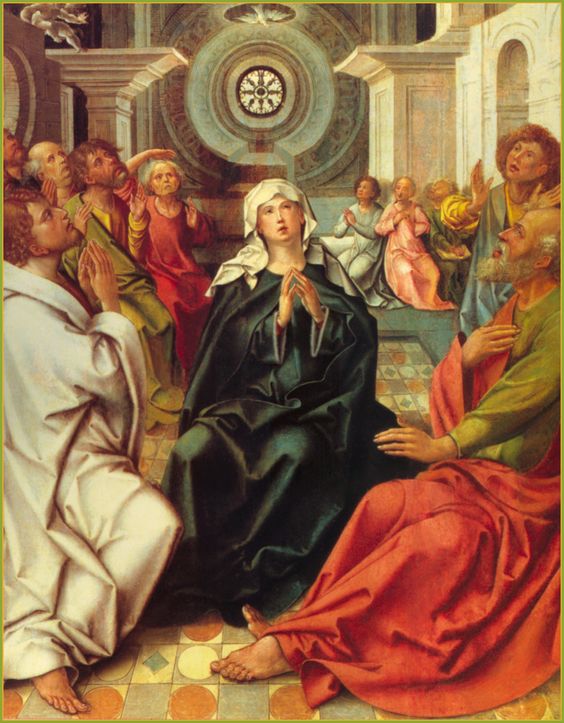
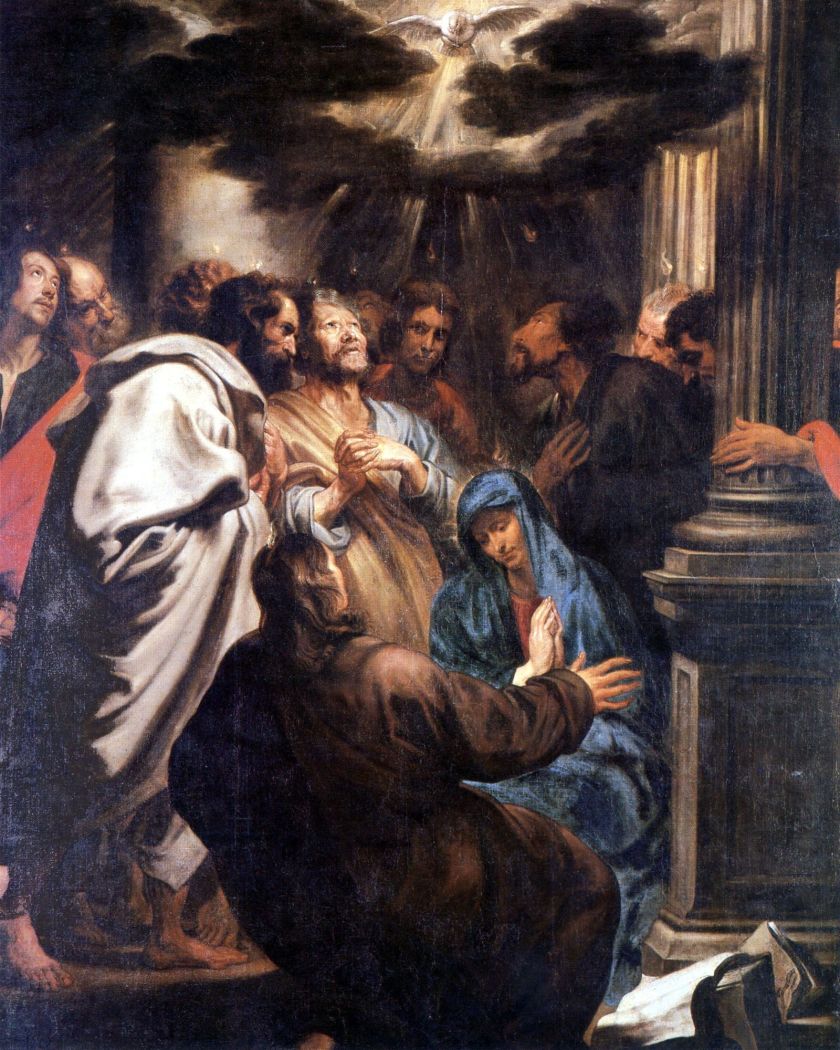
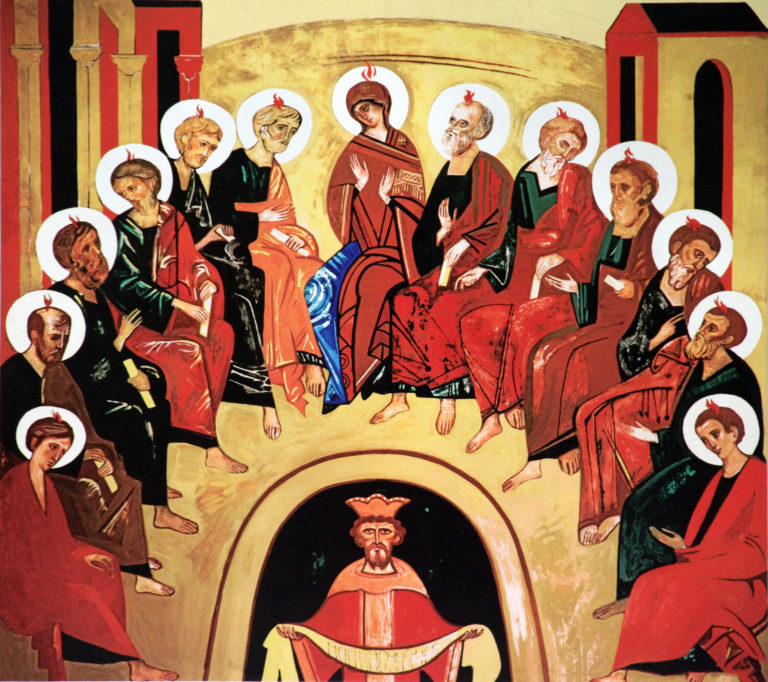
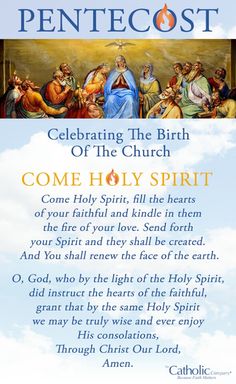
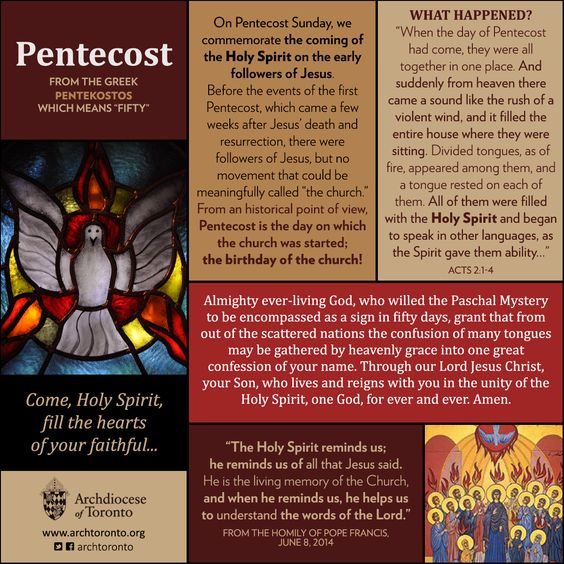
And when the days of Pentecost were drawing to a close, they were all together in one place. And suddenly there came a sound from heaven, as of a violent wind coming and it filled the whole house where they were sitting. And there appeared to them parted tongues as of fire, which settled upon each of them. And they were all filled with the Holy Spirit and began to speak in foreign tongues, even as the Holy Spirit prompted them to speak... (Acts 2, 1-4).
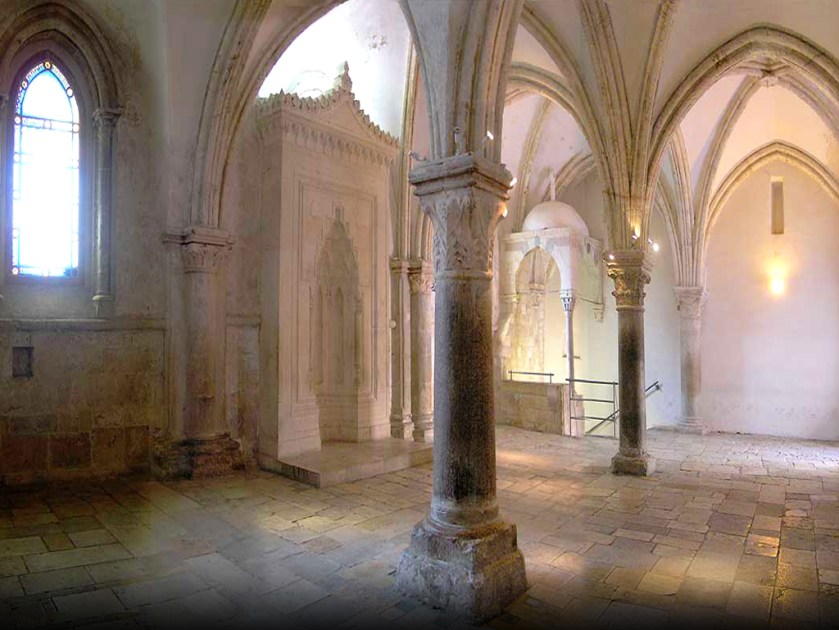
After Jesus had ascended to heaven, the apostles and disciples returned to the Holy City. They remained together in the Upper Room or Cenacle, the place where Jesus had appeared to them and which may well be called, the first Christian church. About a hundred and twenty persons were assembled there. They chose Matthias as an apostle in place of the unhappy Judas; they prayed and waited for the Paraclete.
The Cenacle
Ten days had passed, it was Sunday, the seventh Sunday after the resurrection. At about nine o’clock in the morning, as they were together praying fervently, the Holy Spirit descended upon them. Note how all the great theophanies in Christ’s life occurred during the course of prayer. After His baptism, for instance, when Jesus was praying the heavens opened and the Holy Spirit descended in the form of a dove; likewise, it was during prayer at night, that the transfiguration took place on Tabor. Surely too, it was while Mary was praying, that Gabriel delivered his message and the Holy Spirit overshadowed her. Pentecost followed precedent. The small community of Christians had prepared themselves through prayer for the coming of the Paraclete. The same is true at Mass today, every day; through prayer we ready our souls for the advent of the Spirit.
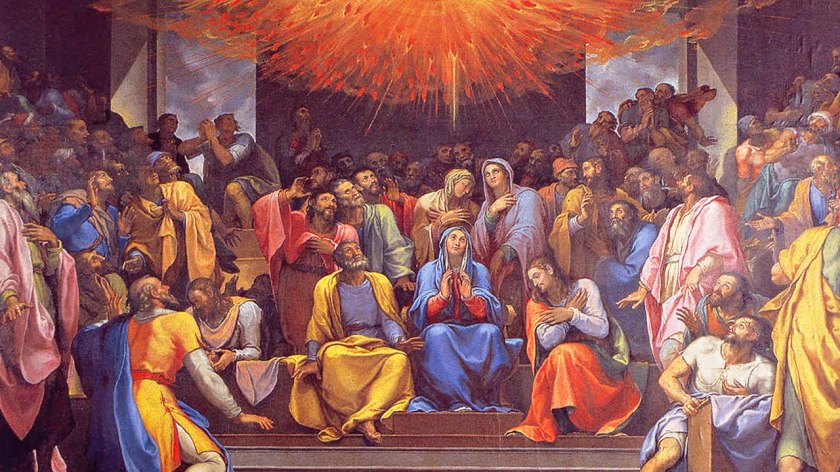
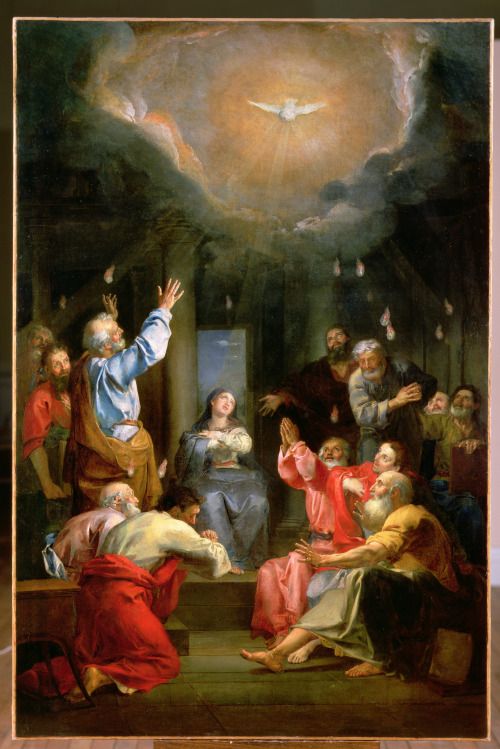
The descent upon the apostles was internal and invisible in nature although accompanied by certain visible phenomena. There came a mighty roar, like the onrush of a violent wind. It came suddenly, from heaven but unlike storms that strike a structure from without, this one penetrated and filled the room where the disciples were gathered. Therefore it was not a natural wind, it was a miracle peculiar to the occasion. A second visible sign consisted in tongues of fire, that descended upon each one present. These fiery tongues gave visible evidence that the Holy Spirit had descended upon them.
Louis Galloche – The Descent of the Holy Spirit
Today at Mass, particularly at holy Communion, the power of the Holy Spirit will come down upon us, fiery tongues will not be seen but invisible tongues of fire will not be absent. There was still another external manifestation of the Holy Spirit, the apostles and disciples were enabled to speak various languages.
After the roar of the wind many of Jerusalem’s pilgrims hurried to the Cenacle. Pentecost was one of the three festivals which obliged all Jews to be present in Jerusalem. Jews from distant lands and Jewish converts from paganism too, attended these feasts. As a result, a colourful crowd, speaking a variety of languages, surrounded the house. Now the apostles, who so shortly before had hid in fear behind locked doors, came forth and courageously walked among the multitude, speaking to each in his native tongue. It was indeed amazing! Galileans, and multilingual?
But the malicious too were present, they had the answer. Nothing marvellous at all! Those Galileans were simply drunk and their drunken babble sounded like a foreign language! Peter showed no hesitation in answering the charge. None of their number, he said, were intoxicated, it was but nine o’clock in the morning and at that hour men usually are sober. What the multitude saw was, in fact, the fulfilment of Joel’s prophecy: In those days (of the Messiah), God will pour forth His Spirit upon men and they will prophesy. . . . Then the apostle pointed his words more directly against the accusers, they had killed Jesus, had nailed Him to the Cros; but God had awakened Him and after His departure to heaven, He sent the Holy Spirit.
BEN63198 St. Peter Preaching in Jerusalem (detail of 63197) c.1427 (fresco) by Masolino da Panicale, Tommaso (1383-c.1447) Brancacci Chapel, Santa Maria del Carmine, Florence, Italy Italian, out of copyright
The pilgrims who had heard Peter give this first Pentecostal sermon “were pierced to the heart and said, Brethren, what shall we do? But Peter said to them, Repent and be baptised and you will receive the gift of the Holy Spirit.” Three thousand responded.
One final question, why the miracle of tongues? In answer, recall the story regarding the tower of Babel. Puffed up by pride, men attempted to build a tower that would touch the heavens. To punish their sin, God confused their speech. Sin causes confusion and division. Now Christ came to gather all men into His Church and thereby to unite them to Himself. This should result in creating but one family of nations again. To this blessed state the miracle of tongues points.
Yes, even we as individuals have a gift of tongues which all men can understand. It is the gift of love infused into us by the Holy Spirit. Love unites, love is a common language, by means of love we can speak to all nations…Excerpted from The Church’s Year of Grace, Pius Parsch
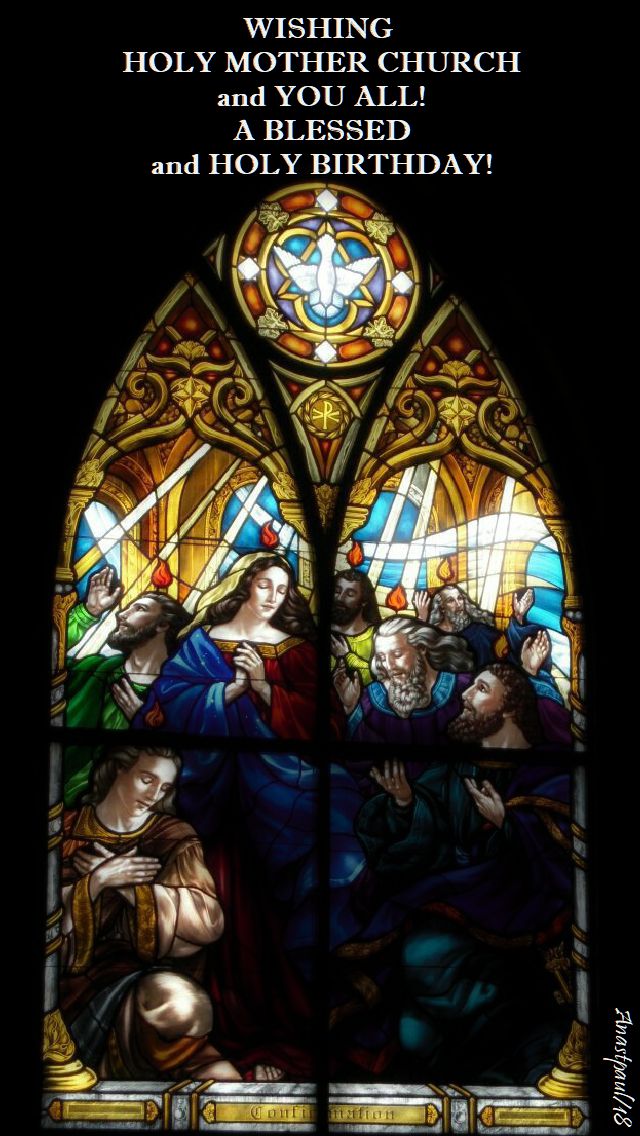
Wishing Holy Mother Church and
you all a Blessed, Holy and love-filled Pentecost! Alleluia!
St Bernadine of Siena O.F.M. (1380-1444) (Optional Memorial)
St Abercius
Bl Albert of Bologna
St Alexander of Edessa
St Althryda
St Anastasius of Brescia
St Aquila of Egypt
St Arcangelo Tadini
Bl Arnaldo Serra and Companions
St Asterius of Edessa
St Austregisilus of Bourges
St Basilla of Rome
St Baudelius of Nîmes
St Codrato
Bl Columba of Rieti
St Ethelbert of East Anglia
Bl Guy de Gherardesca
St Helena
St Hilary of Toulouse
St José Pérez Fernández
St Lucifer of Caglieri
St Marcello
Bl Maria Angelica Perez
St Plautilla of Rome
St Protasius Chong Kuk-bo
St Rafaél García Torres
St Talaleo of Egea
St Thalalaeus of Edessa
St Theodore of Pavia
St Tomás Valera González
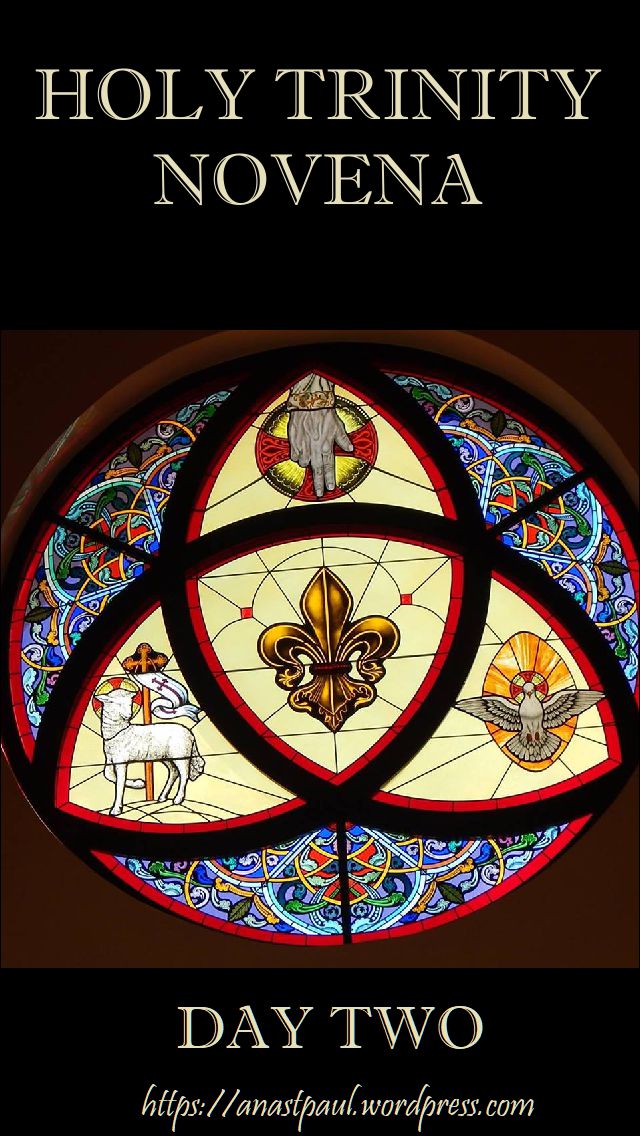
DAY TWO GOD THE SON “This is my beloved Son in whom I am well pleased.”
SCRIPTURAL READING
In the beginning was the Word and the Word was with God and the Word was God. He was in the beginning with God. All things came to be through Him and without Him nothing came to be. What came to be through Him was life and this life was the light of the human race; the light shines in the darkness and the darkness has not overcome it…John 1:1-5
MEDITATION
At the Baptism of Jesus and at the Transfiguration, the Father’s words were heard: “This is My beloved Son in whom I am well-pleased, listen to Him”: “For God so loved the world that He gave His only Son, so that everyone who believes in Him may not die but have eternal life.”; “So that all who will honour the Son, in the same way as they honour the Father. Who does not honour the Son, does not honour the Father, who sent Him.” (Jn. 5,23)
PRAYER
I believe in Jesus Christ, His only Son, our Lord.
Who was conceived by the Holy Spirit and born of the Virgin Mary.
He suffered under Pontius Pilate, was crucified, died and was buried.
He descended into hell.
On the third day, He rose again.
He ascended into Heaven
and is seated at the right hand of the Father.
From thence He shall come, to judge the living and the dead.
Bless me through the marvelous goodness
of Your Sacred Heart, which chose death to bring us life.
Bless me through the love with which You plead for us
before the throne of God,
bless me in the Blessed Sacrament
with which You give Yourself to us in Holy Communion.
Grant that all this love and bitter pain,
may not be lost on me.
Eternal Son, in Your mercy, grant my petition:
…………………….(mention your petition)
Most Holy Trinity, Godhead indivisible,
Father, Son and Holy Spirit,
our first beginning and our last end,
You have made us after Your own image and likeness.
Grant that all the thoughts of my mind,
all the words of my mouth,
all the affections of my heart
and all my actions be always conformed to Your holy Will.
After having seen You here below, in Your manifestations and by faith,
may I come at last to see You face to face,
in the perfect possession of You, forever in heaven.
Amen
“None of us lives for himself only, none of us dies for himself only; if we live, it is for the Lord that we live and if we die, it is for the Lord we die. Whether we live or die, then, we belong to the Lord. For Christ died and rose to life in order to be the Lord of the living and the dead.”…(Romans 14:7-9)
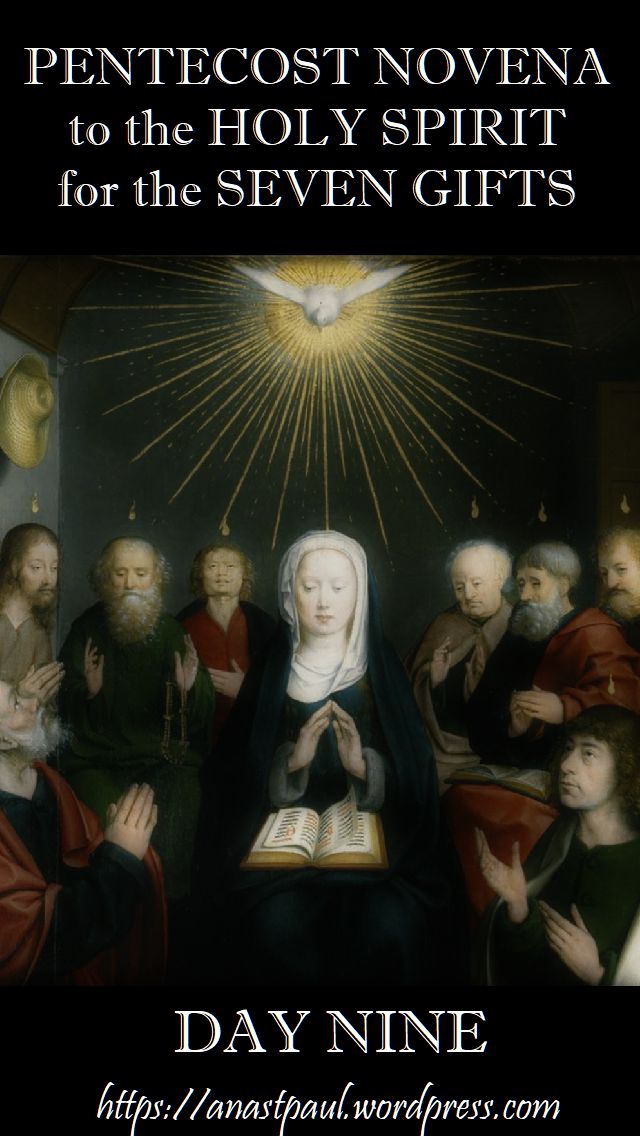
Pentecost Novena to the Holy Spirit for the Seven Gifts Day Nine – 19 May 2018
DAY NINE Thou, on those who evermore Thee confess and Thee adore In Thy sevenfold gifts, descend. Give them comfort when they die, Give the life with Thee on high, Give them joys which never end. Amen
THE FRUITS of the HOLY SPIRIT
The gifts of the Holy Spirit perfect the supernatural virtues, by enabling us to
practice them with greater docility to divine inspiration. As we grow in the
knowledge and love of God, under the direction of the Holy Spirit, our service becomes
more sincere and generous, the practice of virtue becomes more perfect. Such acts of
virtue leave the heart filled with joy and consolation and are known as Fruits of the
Holy Spirit. These Fruits in turn render the practice of virtue more attractive and
become a powerful incentive for still greater efforts, in the service of God, to serve
Whom is to reign.
Prayer
Come, O Divine Spirit, fill my heart with Your heavenly fruits, Your charity, joy,
peace, patience, benignity, goodness, faith, mildness and temperance, that I may
never weary of the service of God but by continued faithful submission, to Your
inspiration, may merit to be united eternally with You, in the love of the Father and
the Son. Amen.
Our Father
Hail Mary
Glory be to the Father (seven times)
Act of Consecration
Prayer for the Seven Gifts
Marian Thought for the Day – 19 May “Mary’s Month” – Saturday of the Seventh Week of Eastertide
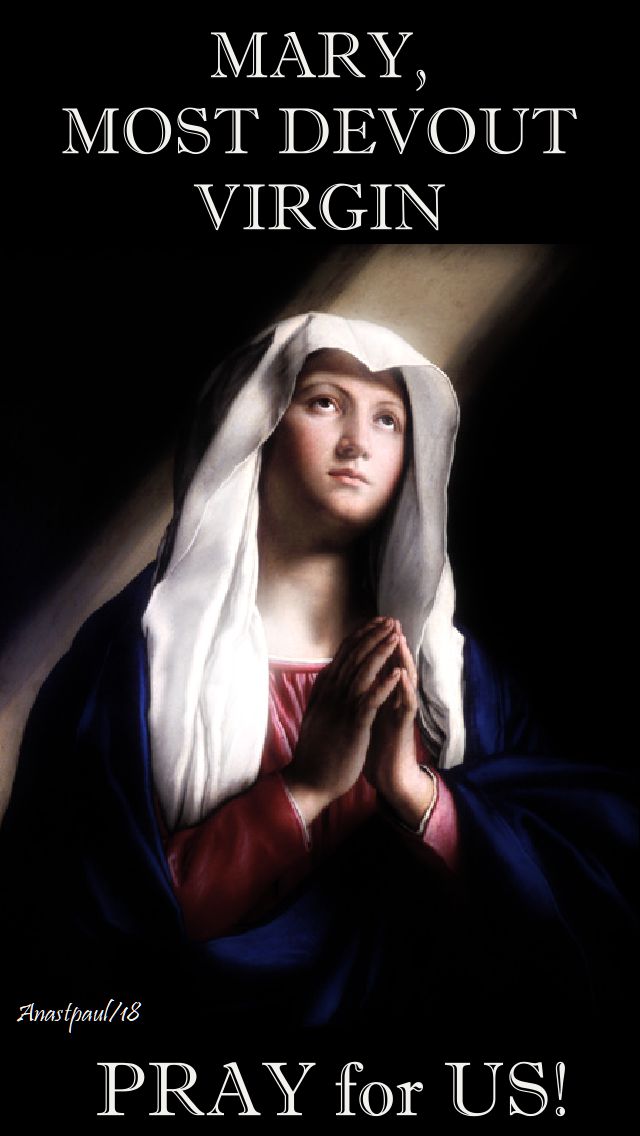
Mary is the “Vas Insigne Devotionis,” The Most Devout Virgin
Blessed John Henry Newman (1801-1890)
TO be devout is to be devoted. We know what is meant by a devoted wife or daughter. It is one, whose thoughts centre in the person so deeply loved, so tenderly cherished.,, She follows Him about with her eyes; she is ever seeking some means of serving Him and, if her services are very small in their character, that only shows, how intimate they are and how incessant. And especially if the object of her love be weak, or in pain, or near to die, still more intensely does she live in His life and know nothing but Him.
This intense devotion towards our Lord, forgetting self in love for Him, is instanced in St Paul, who says. “I know nothing but Jesus Christ and Him crucified.” And again, “I live, [yet] now not I, but Christ lives in me; and [the life] that I now live in the flesh, I live in the faith of the Son of God, who loved me and delivered Himself for me.”
But great as was St Paul’s devotion to our Lord, much greater was that of the Blessed Virgin, because she was His Mother and because she had Him and all His sufferings actually before her eyes and because she had the long intimacy, of thirty years with Him and because she was from her special sanctity, so ineffably near to Him in spirit. When, then, He was mocked, bruised, scourged and nailed to the Cross, she felt as keenly as if every indignity and torture inflicted on Him, was struck at herself. She could have cried out in agony at every pang of His.
This is called her compassion, or her suffering with her Son and it arose from this that she was the “Vas insigne devotionis.”
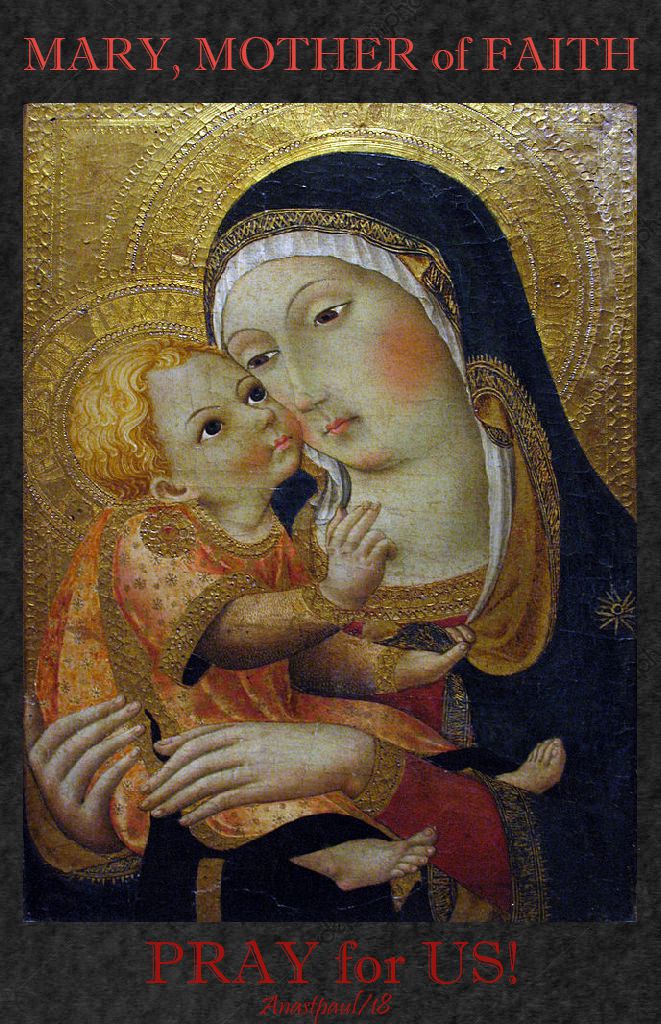
Mary, “Vas Insigne Devotionis,” The Most Devout Virgin
One Minute Marian Reflection – 19 May “Mary’s Month” – Saturday of the Seventh Week of Eastertide
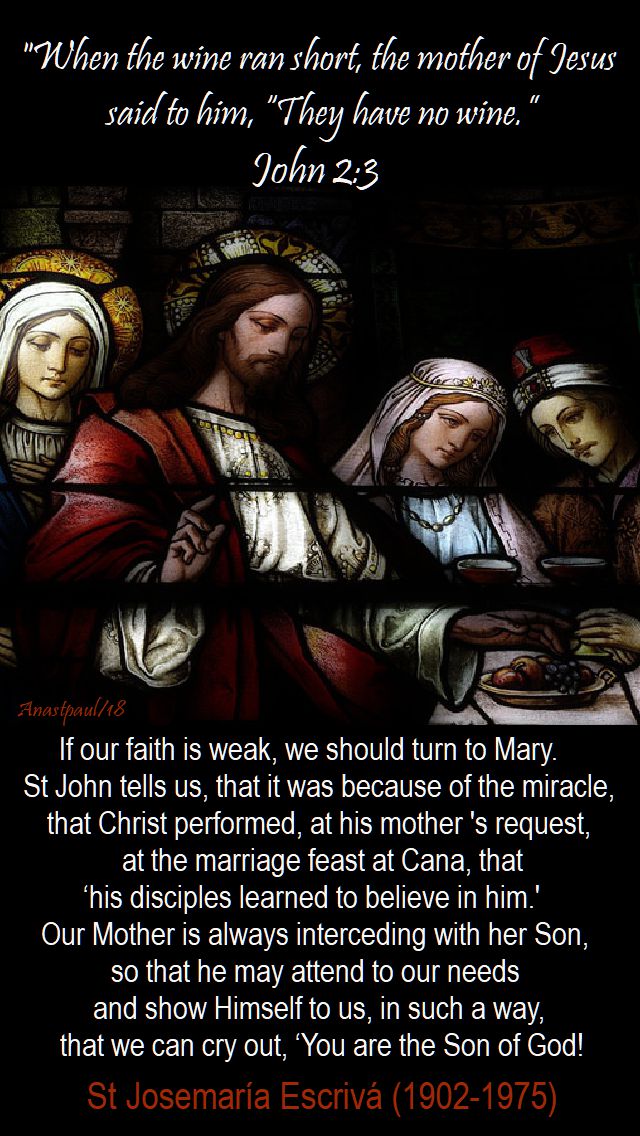
When the wine ran short, the mother of Jesus said to him, “They have no wine.”…John 2:3
REFLECTION – “MARY: HER FAITH – “If our faith is weak, we should turn to Mary. St John tells us, that it was because of the miracle that Christ performed, at his mother ‘s request, at the marriage feast at Cana, that ‘his disciples learned to believe in him.’ Our Mother is always interceding with her Son, so that he may attend to our needs and show Himself to us, in such a way, that we can cry out, ‘You are the Son of God!'”...St Josemaría Escrivá (1902-1975) “Mother of God and Our Mother,” Friends of God, 285 Let us offer to our Mother today: The “Memorare” for the person in our family who most needs the help of our Lady.
PRAYER – Almighty God and Father, Your ways are not our ways, teach us to willingly agree to them, for You know which way we should go. Help us to say “yes” always to Your plan and to render ourselves, as a sacrament of Your divine love to all we meet. Fill us with the grace to be your tools, to bring glory to Your kingdom. Our Father, who art in heaven, may Your Will be done on earth, as it is in heaven. Mary Mother of God, pray for us! Through our Our Lord Jesus Christ with You, in the union of the Holy Spirit, one God forever, amen.
Our Morning Offering – 19 May “Mary’s Month” – Saturday of the Seventh Week of Eastertide
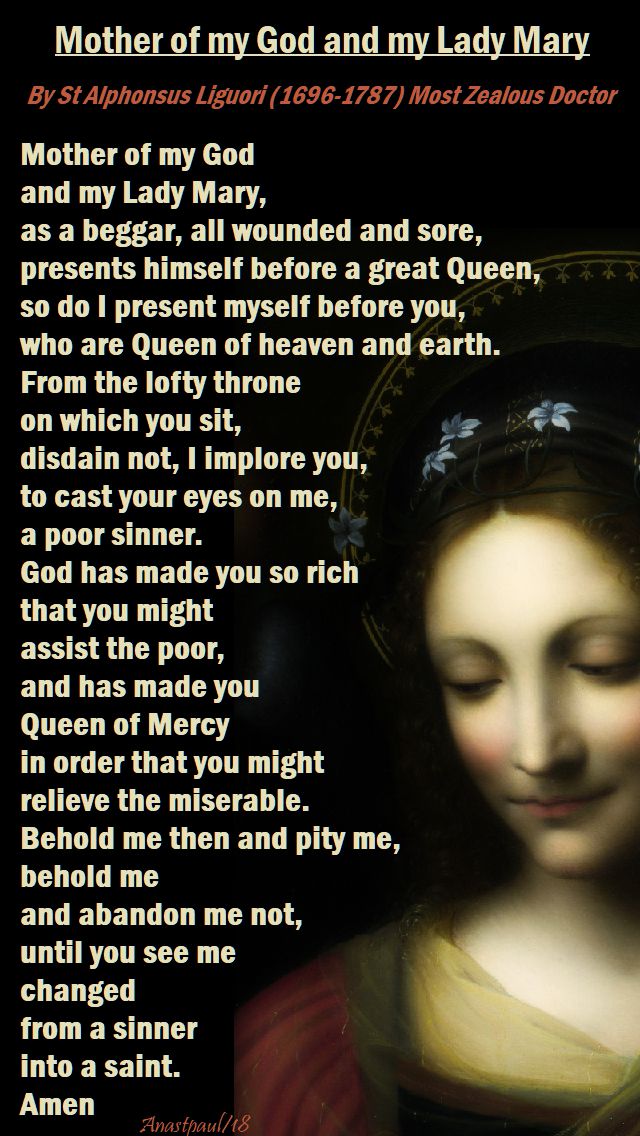
Mother of my God and my Lady Mary By St Alphonsus Liguori (1696-1787) Most Zealous Doctor
Mother of my God and my Lady Mary,
as a beggar, all wounded and sore,
presents himself before a great Queen,
so do I present myself before you,
who are Queen of heaven and earth.
From the lofty throne on which you sit,
disdain not, I implore you,
to cast your eyes on me,
a poor sinner.
God has made you so rich
that you might assist the poor,
and has made you Queen of Mercy
in order that you might relieve the miserable.
Behold me then and pity me,
behold me and abandon me not,
until you see me changed
from a sinner into a saint.
Amen
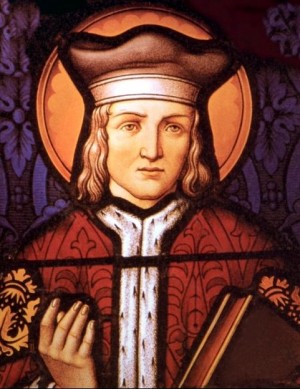
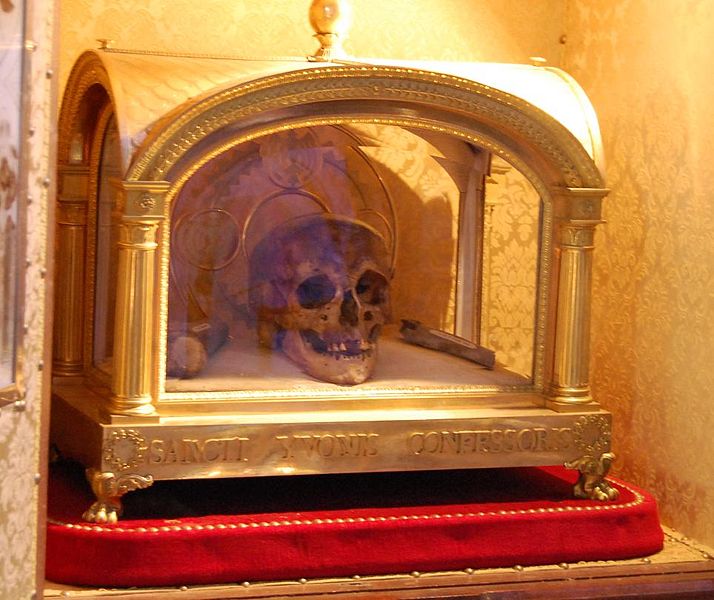
Saint of the Day – 19 May – St Ivo of Kermartin T.O.S.F. (1253-1303) also known Yvo or Ives – Priest, Franciscan Tertiary, known as the “Advocate of the Poor”, Civil Lawyer – born on 17 October 1253 at Kermartin near Treguier, Brittany and died on 19 May 1303 at Louannec, Brittany of natural causes following a sermon on Ascension Eve. Patronages – abandoned people, advocates, attorneys, barristers, lawyers, bailiffs, Brittany, canon lawyers, canonists, judges, jurists, notaries, orphans, children. Attributes – lawyer enthroned between rich and poor litigants, lawyer holding a book, with an angel near his head and a lion at his feet, lawyer surrounded by suppliants, holding a parchment and pointing upwards, lawyer surrounded by symbols of the Holy Spirit such as doves.
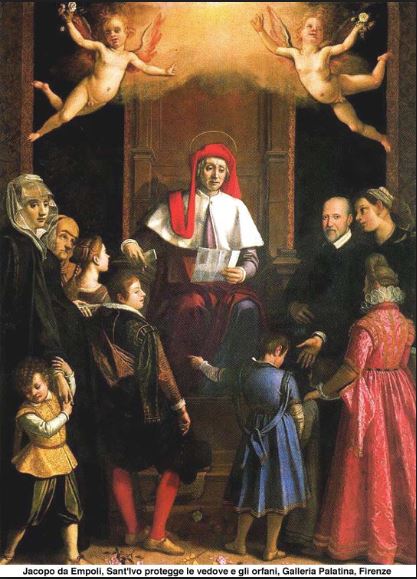
Born at Kermartin, a manor near Tréguier in Brittany, on 17 October 1253, Ivo was the son of Helori, lord of Kermartin and Azo du Kenquis. In 1267 Ivo was sent to the University of Paris, where he graduated in civil law. While other students partied, Ivo studied, prayed and visited the sick. He also refused to eat meat or drink wine. Among his fellow-students were the scholars Blessed Duns Scotus (1266-1308 – Doctor Subtilis -Subtle Doctor) and Roger Bacon OFM (1219-1292 – Doctor Mirabilis – Miraculous Doctor). He went to Orléans in 1277 to study canon law under Peter de la Chapelle, a famous jurist who later became bishop of Toulouse and a cardinal. On his return to Brittany, having received minor orders he was appointed an “official”, the title given to an ecclesiastical judge, of the archdeanery of Rennes (1280). He protected orphans and widows, defended the poor and rendered fair and impartial verdicts. It’s said that even those on the losing side, respected his decisions. Ivo also represented the helpless in other courts, paid their expenses and visited them in prison. He earned the title “Advocate of the Poor.” Although it was common to give judges “gifts,” Ivo refused bribes. He often helped disputing parties settle out of court so they could save money.
Meanwhile, he studied Scripture and there are strong reasons for believing the tradition held among Franciscans, that he joined the Third Order of St Francis sometime later at Guingamp. Ivo was ordained to the priesthood in 1284. He continued to practice law and once, when a mother and son couldn’t resolve their differences, he offered a Mass for them. They immediately reached a settlement.
The Widow of Tours
Tours was near Orleans, the bishop held his court there and Ivo, while visiting the court, lodged with a certain widow. One day he found his widow-landlady in tears. Her tale was that next day she must go to court to answer to the suit of a travelling merchant who had tricked her. It seemed that two of them, Doe and Roe, lodging with her, had left in her charge a casket of valuables, while they went off on their business but with the strict injunction, that she was to deliver it up again, only to the two of them jointly demanding it. That day, Doe had come back and called for the casket, saying that his partner Roe was detained elsewhere and she in good faith in his story, had delivered the casket to Doe. But then later came Roe demanding it, charging his partner with wronging him, and holding the widow responsible for delivering up the casket to Doe, contrary to the terms of their directions. And if she had to pay for those valuables it would ruin her. “Have no fear,” said young Ivo, “I will go to court tomorrow, for you.”
When the case was called before the Judge and the merchant Roe charged the widow with breach of faith, “Not so,” pleaded Ivo, “My client need not yet make answer to this claim. The plaintiff has not proved his case. The terms of the bailment were that the casket should be demanded by the two merchants coming together. But here is only one of them making the demand. Where is the other? Let the plaintiff produce his partner.” The judge promptly approved his plea. Whereupon the merchant, required to produce his fellow, turned pale and would have retired. But the judge, suspecting something from his plight, ordered him to be arrested and questioned; the other merchant was also traced and brought in and the casket was recovered, which, when opened, was found to contain nothing but old junk. In short, they had conspired to plant the casket with the widow and then to coerce her to pay the value of the alleged contents. Thus the young advocate saved the widow from ruin and the fame of his clever defence of the widow soon went far and wide.
Legacy
On the occasion of the 700th anniversary of the birth of St Ivo, St Pope John Paul II said, “The values proposed by St Ivo retain an astonishing timeliness. His concern to promote impartial justice and to defend the rights of the poorest persons invites the builders of Europe today to make every effort to ensure that the rights of all, especially the weakest, are recognised and defended.”
Saint Ivo is the patron of lawyers. As a result, many law schools and association of catholic lawyers have taken his names. For instance, the Society of St. Yves in Jerusalem (a Catholic Centre for Human Rights and Legal Aid, Resources and Development), the Conférence Saint Yves in Luxembourg (the Luxembourg Catholic Lawyers Association), or the Association de la Saint Yves Lyonnais.
Ivo was Canonised in June 1347 by Clement VI at the urging of Philip I, Duke of Burgundy. At the inquest into his sanctity in 1331, many of his parishioners testified as to his goodness, that he preached regularly in both chapel and field and that under him “the people of the land became twice as good as they had been before”. The connection between religion and good behaviour was especially stressed in his sermons and he is reported to have “chased immorality and sin from the village of Louannec”.
Shortly after 1362, the future saint Jeanne-Marie de Maillé reported a vision of St Ivo, during which he told her, “If you are willing to abandon the world, you will taste here on earth the joys of heaven.”
Ivo is often represented with a purse in his right hand (for all the money he gave to the poor during his life) and a rolled paper in the other hand (for his charge as a judge). Another popular representation of Ivo is between a rich man and a poor one. The churches of Sant’Ivo alla Sapienza and Sant’Ivo dei Bretoni in Rome are dedicated to him.
A 14th century engraving on St Ivo’s Shrine:
Sanctus Ivo erat Brito, Advocatus, et non latro Res miranda populo.
Saint Yvo was a Breton and a lawyer but not dishonest – An astonishing thing in people’s eyes.
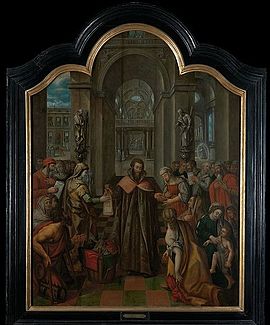
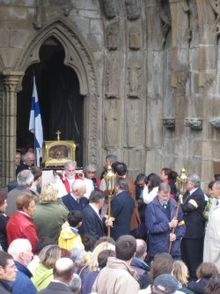
St Ivo giving alms to the poor by Josse van der BarenThe relics of Saints Ivo and Tugdual in a procession at the gate of Tréguier’s cathedral in 2005. In the reliquary is the skull of Saint IvoRelic skull and reliquary of St Ivo in Tréguier, Brittany, France
St Alcuin of York
Bl Augustine Novello
St Calocerus of Rome
St Pope Celestine V
St Crispin of Viterbo
St Cyriaca of Nicomedia and Companions
St Cyril of Trèves
St Dunstan of Canterbury
St Evonio of Auvergne
St Hadulph of Saint-Vaast
Bl Humiliana de’ Cerchi
St Ivo Hélory of Kermartin (1253-1303)
Bl Jean-Baptiste-Xavier Loir
Bl Józef Czempiel
Bl Juan of Cetina
Bl Louis Rafiringa
Bl Lucinio Fontanil Medina
St Parthenius of Rome
Bl Peter de Duenas
Bl Peter Wright
St Philoterus of Nicomedia
St Pudens of Rome
St Pudentiana of Rome
St Theophilus of Corte
Bl Verena Bütler
Our Morning Prayer – 18 May “Mary’s Month” Friday of the Seventh Week of Eastertide
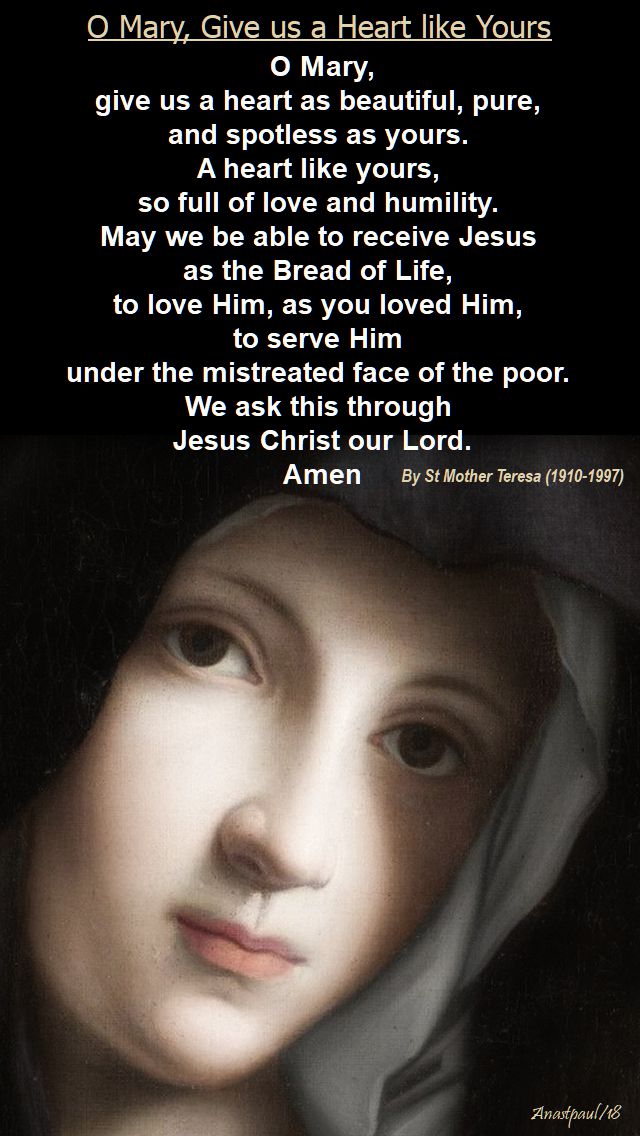
O Mary, Give us a Heart like Yours By St Mother Teresa (1910-1997)
O Mary, give us a heart as beautiful, pure,
and spotless as yours.
A heart like yours,
so full of love and humility.
May we be able to receive Jesus
as the Bread of Life,
to love Him as you loved Him,
to serve Him
under the mistreated face of the poor.
We ask this through
Jesus Christ our Lord.
Amen
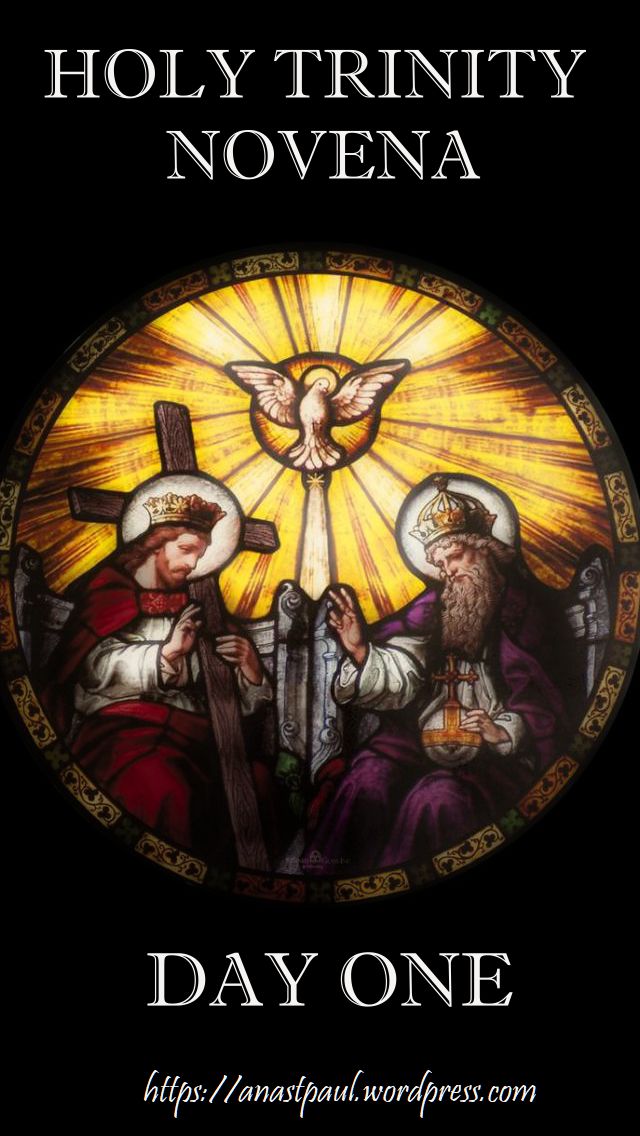
DAY ONE GOD THE FATHER “Our Father who art in heaven”
SCRIPTURAL READING
“This is how you are to pray: Our Father in heaven, hallowed be thy name, thy kingdom come, thy will be done, on earth as in heaven. Give us this day our daily bread and forgive us our trespasses as we forgive those who trespass against us and lead us not into temptation but deliver us from the evil one. If you forgive others their transgressions, your heavenly Father will forgive you. But if you do not forgive others, neither will your Father forgive your transgressions.”...Matthew 6:9-15
MEDITATION
In the New Testament, Jesus spoke about the Father and to the Father 170 times. From the beginning of His ministry, Jesus would say: “I was sent by the Father,” “Your God and my God,” “the Father and I are one.” “I do only the things told by my Father,” “Father, not my will but Yours be done,” etc.
PRAYER
God Eternal Father, bless me, through the love,
with which, You have begotten Your only Son, from all eternity
and shared with Him, the fullness of Your Divinity.
Bless me, through the love, which has adopted us as children
and made us partakers of the treasures of Your Divinity.
Bless me, through the love, which sent us Your Son
and the Holy Spirit to work the miracles of Your power and mercy in us.
Grant that I may always revere and honour You as my great God
and love You with my whole heart, as the best of fathers.
Eternal Father, grant my petition:
…………………….(mention your petition)
Most Holy Trinity, Godhead indivisible,
Father, Son, and Holy Spirit,
our first beginning and our last end,
You have made us after Your own image and likeness.
Grant that all the thoughts of my mind,
all the words of my mouth,
all the affections of my heart
and all my actions be always conformed to Your holy Will.
After having seen You here below in Your manifestations and by faith,
may I come at last to see You face to face,
in the perfect possession of You forever in heaven.
Amen
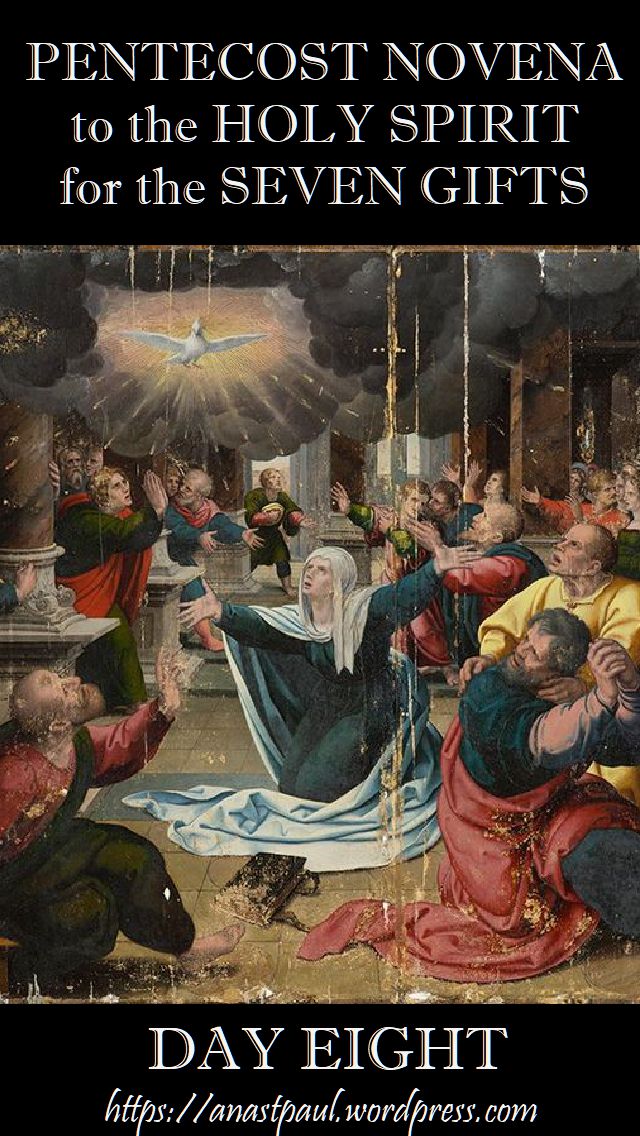
Pentecost Novena to the Holy Spirit for the Seven Gifts Day Eight – 18 May 2018
DAY EIGHT Bend the stubborn heart and will; Melt the frozen, warm the chill; Guide the steps that go astray!
THE GIFT OF WISDOM
Embodying all the other gifts, as charity embraces all the other virtues, Wisdom is
the most perfect of the gifts. Of Wisdom it is written “all good things come to me with her, and innumerable riches through her hands.” It is the gift of Wisdom that
strengthens our faith, fortifies hope, perfects charity and promotes the practice of
virtue in the highest degree. Wisdom enlightens the mind to discern and relish things
divine, in the appreciation of which earthly joys lose their savour, whilst the Cross
of Christ yields a divine sweetness according to the words of the Saviour: “Take up thy cross and follow me, for my yoke is sweet and my burden light.”
Prayer
Come, O Spirit of Wisdom and reveal to my soul the mysteries of heavenly things,
their exceeding greatness, power and beauty. Teach me to love them above and beyond
all the passing joys and satisfactions of earth. Help me to attain them and possess
them for ever. Amen.
Our Father
Hail Mary
Glory be to the Father (seven times)
Act of Consecration
Prayer for the Seven Gifts
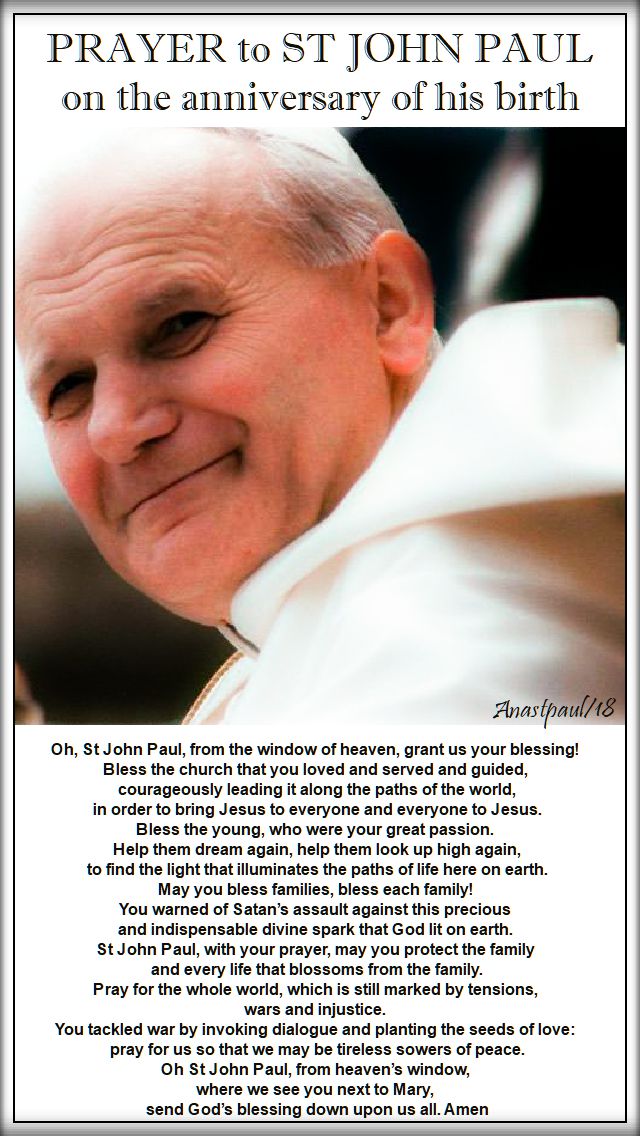
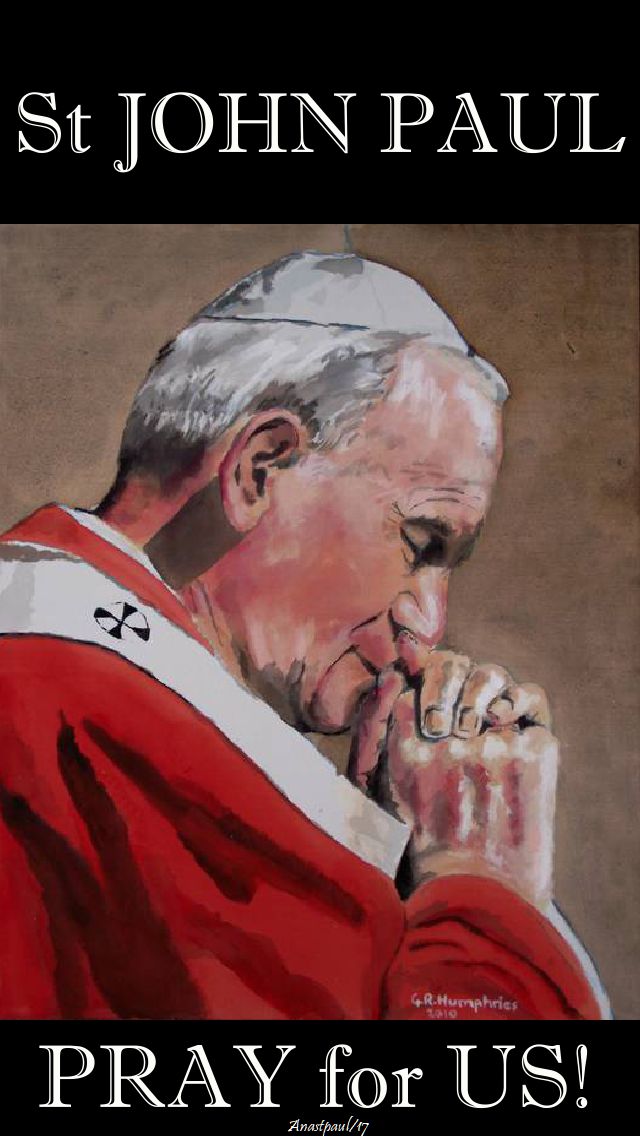
On the Anniversary of the Birth of St John Paul, Karol Wojtyla, we send him our love and ask for his intercession.
Vatican Official Prayer to St John Paul II
Oh, St John Paul, from the window of heaven, grant us your blessing! Bless the church that you loved and served and guided, courageously leading it along the paths of the world, in order to bring Jesus to everyone and everyone to Jesus. Bless the young, who were your great passion. Help them dream again, help them look up high again, to find the light that illuminates the paths of life here on earth. May you bless families, bless each family! You warned of Satan’s assault against this precious and indispensable divine spark that God lit on earth. St John Paul, with your prayer, may you protect the family and every life that blossoms from the family. Pray for the whole world, which is still marked by tensions, wars and injustice. You tackled war by invoking dialogue and planting the seeds of love: pray for us so that we may be tireless sowers of peace. Oh St John Paul, from heaven’s window, where we see you next to Mary, send God’s blessing down upon us all. Amen
Marian Thought for the Day – 18 May “Mary’s Month” Friday of the Seventh Week of Eastertide
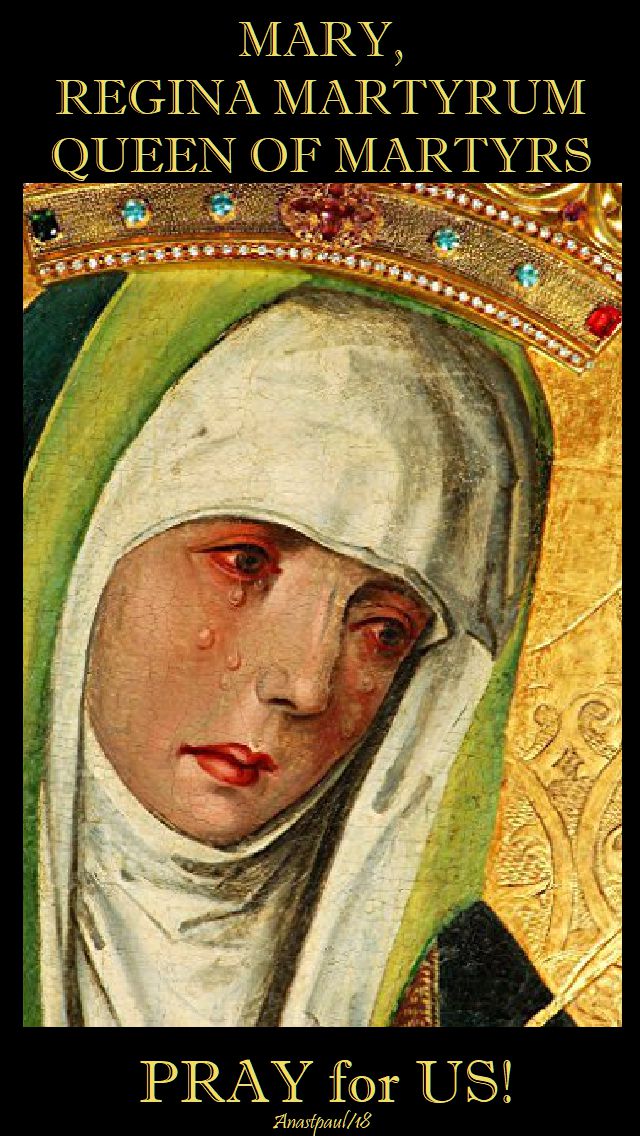
Mary is the “Regina Martyrum,” the Queen of Martyrs
Blessed John Henry Newman (1801-1890)
WHY is she so called?—she who never had any blow, or wound, or other injury to her consecrated person. How can she be exalted over those whose bodies suffered the most ruthless violences and the keenest torments for our Lord’s sake? She is, indeed, Queen of all Saints, of those who “walk with Christ in white, for they are worthy” but how of those “who were slain for the Word of God and for the testimony which they held?”
To answer this question, it must be recollected that the pains of the soul may be as fierce as those of the body. Bad men who are now in hell and the elect of God who are in purgatory, are suffering only in their souls, for their bodies are still in the dust. Yet how severe is that suffering! And perhaps most people who have lived long, can bear witness in their own persons, to a sharpness of distress, which was like a sword cutting them, to a weight and force of sorrow which seemed to throw them down, though bodily pain there was none.
What an overwhelming horror it must have been, for the Blessed Mary, to witness the Passion and the Crucifixion of her Son! Her anguish was, as Holy Simeon had announced to her, at the time of that Son’s Presentation in the Temple, a sword piercing her soul. If our Lord Himself could not bear the prospect of what was before Him and was covered in the thought of it with a bloody sweat, His soul thus acting upon His body, does not this show how great mental pain can be? and would it have been wonderful though, if Mary’s head and heart, had given way as she stood under His Cross?
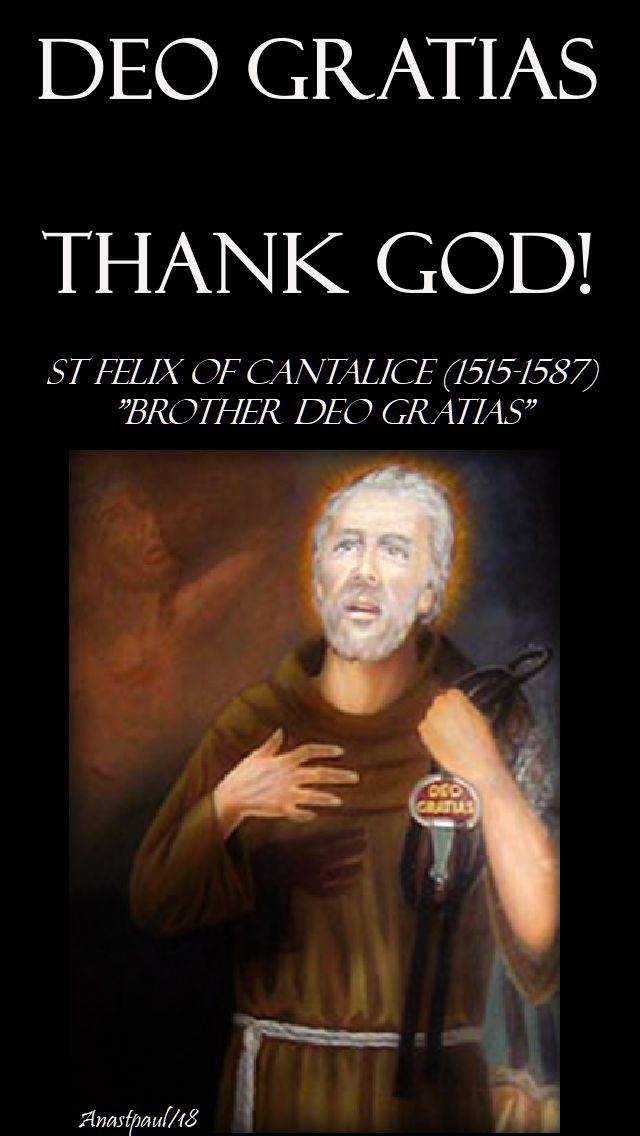
Thought for the Day – 18 May – Friday of the Seventh Week of Eastertide and the Memorial of St Felix of Cantalice O.F.M. Cap.(1515-1587) “Brother Deo Gratias”
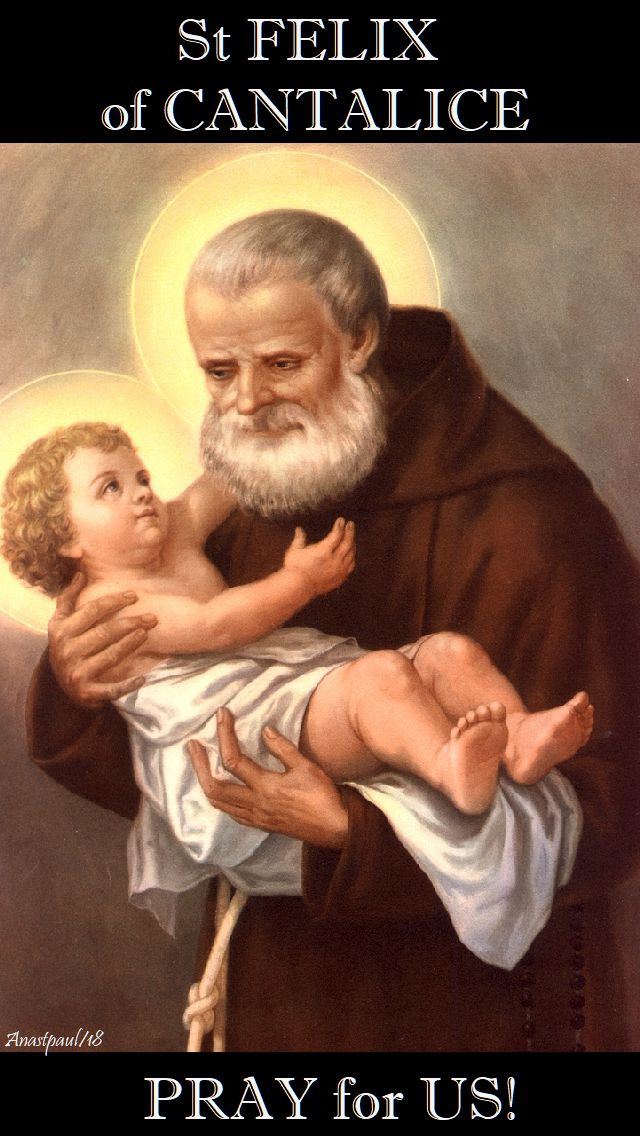
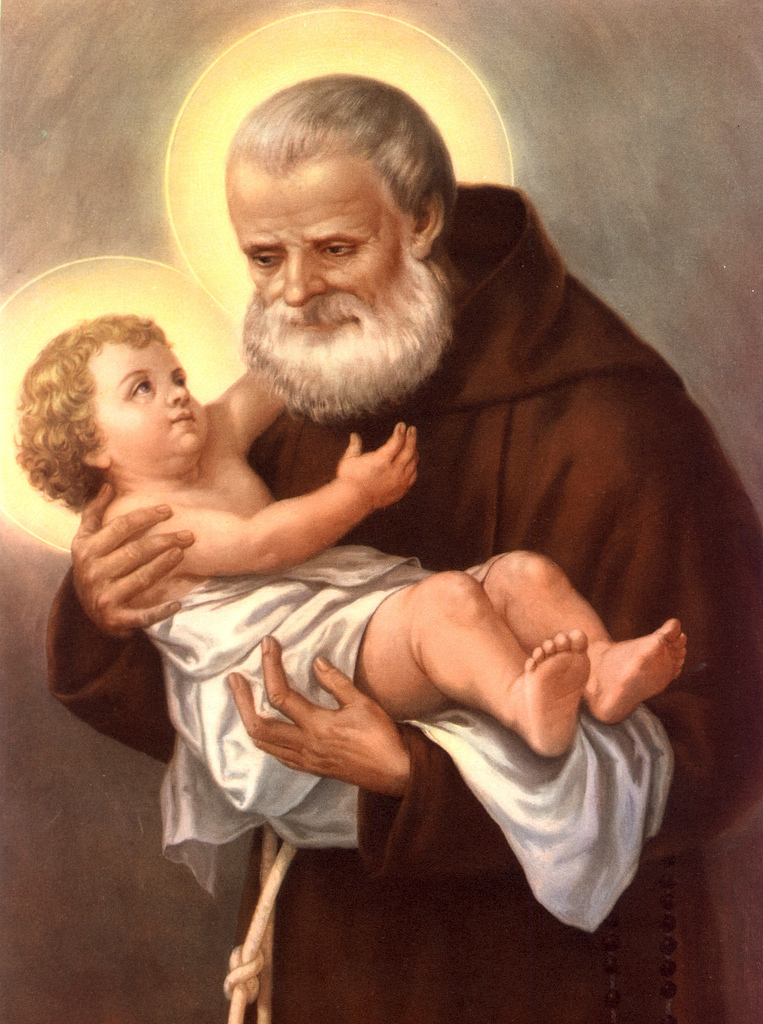
Saint Felix did not have what the world esteems; his education was lacking. But he knew five red letters — the wounds of the divine crucified One, Whom he worshipped daily in the Blessed Sacrament and one white one — the Virgin Mary, from whom he one day miraculously received the divine Child in his arms.
St Felix of Cantalice “Brother Deo Gratias”, Pray for us!
Quote of the Day – 18 May – Friday of the Seventh Week of Eastertide and the Memorial of St Felix of Cantalice O.F.M. Cap.(1515-1587) “Brother Deo Gratias”
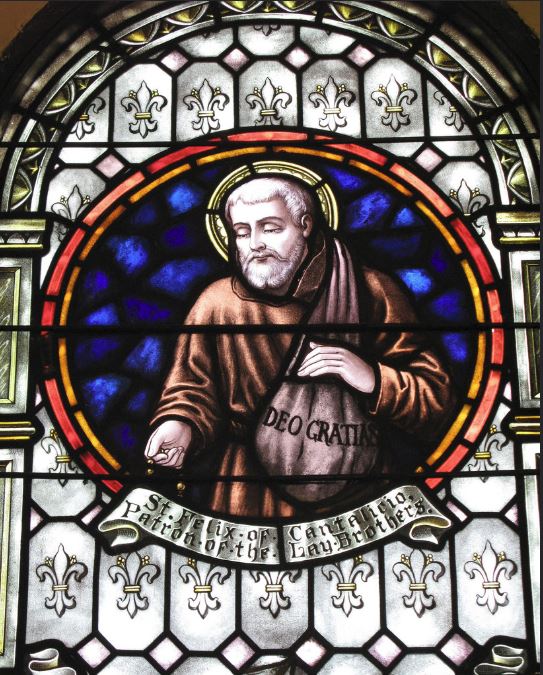
“Deo Gratias” “Thank God”
St Felix of Cantalice (1515-1587)
“Brother Deo Gratias”
One Minute Marian Reflection – 18 May “Mary’s Month” Friday of the Seventh Week of Eastertide
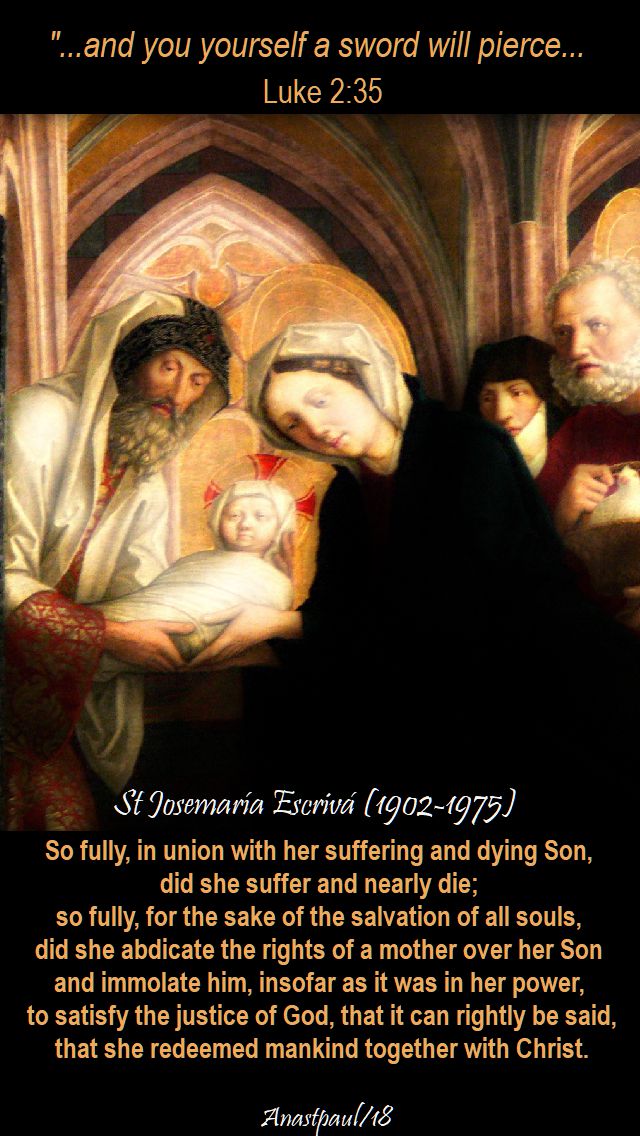
“…and you yourself a sword will pierce...” Luke 2:35
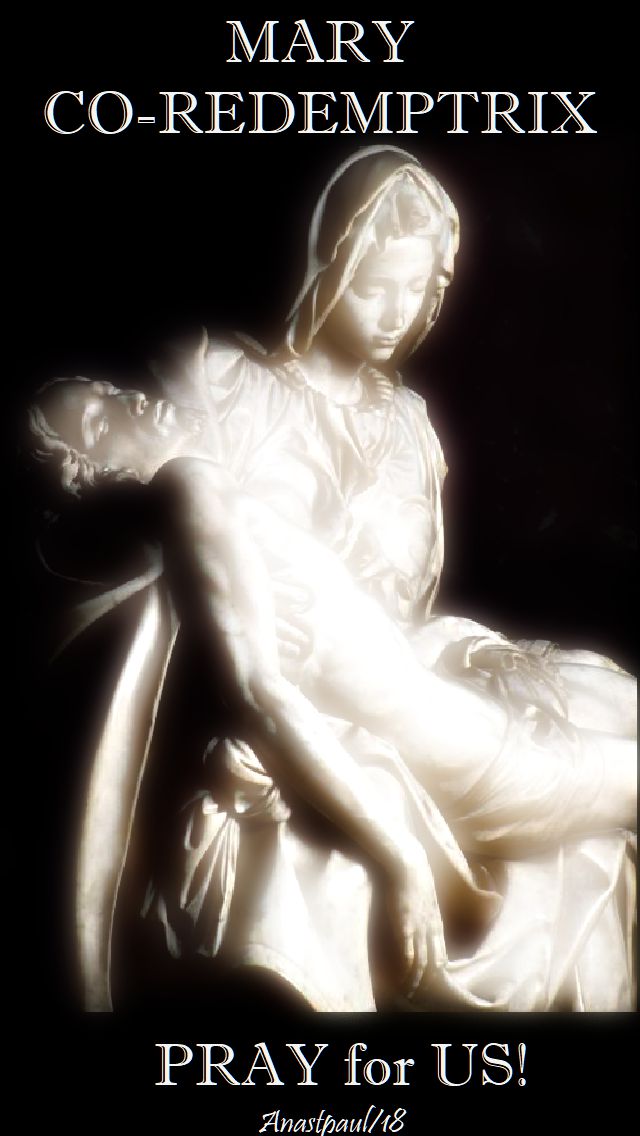
REFLECTION – “MARY: THE CO-REDEMPTRIX – “It is with good reason that the popes have called Mary co-redemptrix. ‘So fully, in union with her suffering and dying Son, did she suffer and nearly die; so fully, for the sake of the salvation of all souls, did she abdicate the rights of a mother over her Son and immolate him, insofar as it was in her power, to satisfy the justice of God, that it can rightly be said that she redeemed mankind together with Christ.’ This gives us a deeper understanding of that moment in the Passion of our Lord on which we shall never tire of meditating: Stabat autem iuxta crucem Iesu mater eius, ‘There, standing by the cross of Jesus, was his mother.'”…St Josemaría Escrivá (1902-1975) – “Mother of God and Our Mother,” Friends of God, 287. Let us offer to our Mother today: Five small hidden sacrifices in honour of the five major wounds of our Lord.
PRAYER – Lord God, in Your wisdom You gave us Your only begotten Son and His Mother to be ours too! You gave us both Your only Divine Son to save us from our sins and His Mother, to help us become Your perfect children. Penetrate our inmost being with Your holy light, so that our way of life may always be worthy of Your great love and the sacrifice of Your Son and His Mother. We ask this through Jesus Christ, our Lord, in the unity of the Holy Spirit, one God forever, amen.
Saint of the Day – 18 May – St Felix of Cantalice O.F.M. Cap.(1515-1587) Capuchin Friar – (the first Capuchin to be Canonised), Confessor, Apostle of Charity, Preacher, Teacher, Writer. Born on 18 May 1515 at Cantalice, Abruzzi, Italy and died on 18 May 1587 at Rome, Italy of natural causes. Patronages – Cantalice, Italy, Spello, Italy. Attributes – Capuchin habit; holding the Baby Jesus, carrying a sack.
It was in a small village at the foot of Mount Appenine named Cantalice, that Saint Felix was born in 1513 of pious but poor parents, the third of four sons born to Santi and Santa Porri. It was not long before the little boy, when he approached the other children, was hailed by them: ‘Here comes Felix, the Saint!’ He showed a predilection for solitary prayer from his earliest youth and as a little shepherd used to retire to a quiet place to kneel there and meditate on the Passion of Jesus.
When he was a little older, he resolved to take the habit of the Capuchin Friars. The rigour of their rule could not deter him but his obligations could; he was employed as a labourer, to assist his family. When his life was spared in an accident, during which two runaway bulls and a trailing plough should have killed him, the man for whom he was working saw the hand of God in his preservation and permitted him to leave, to enter religion. He was at that time nearly thirty years old but the Superiors, observing his fervour, placed no obstacles.
In 1545 he pronounced his vows and was sent to Rome, where for forty years he begged for the community. His characteristic words to his companion were: “Let us go, my Brother, with rosary in hand, our eyes to the ground and our spirit in heaven.” He was of an exquisite politeness, extreme gentleness and great simplicity. It is said that his begging sack was as bottomless as his heart.Brother Felix blessed all benefactors and all those he met with a humble “Deo Gratias!” (thanks be to God!), causing many to refer to him as “Brother Deo Gratias”. Felix was so successful in his work that during the famine of 1580, the political leader of Rome asked the Capuchins if they would ‘lend’ Felix to them so he could collect food and provisions for the entire city. The Capuchins agreed and Felix embraced his new task with great success and love.
The sick persons he visited at night became attached to him and for his part, he sought them out everywhere in Rome, insofar as obedience permitted. He preached in the street, rebuked corrupt politicians and officials and exhorted young men to stop leading dissolute lives. He also composed simple teaching canticles and arranged for children to gather in groups to sing them as a way to teach them the catechism.
One day on the street he met two duelists with sword in hand. He begged them to repeat after him, Deo gratias! which finally they did and after taking him as arbiter of their quarrel, they separated as good friends. Saint Felix met Saint Philip Neri (1515-1595 – Memorial 26 May) in Rome and they became friends who wished one another all possible torments for the love of Jesus Christ. They sometimes remained together without speaking for considerable periods, seemingly transported with joy. He was also a friend of St Charles Borromeo (1538-1584 – Memorial 4 November).
Saint Felix had a great devotion to the most Blessed Virgin, reciting Her rosary with such tenderness that he could not continue at times. He loved the Holy Name of Jesus and invited the children he would meet, to say it with him. He slept only for about two hours, going afterwards to the church to visit the Blessed Sacrament, to be with the Lord and remaining there in prayer until the office of Prime; then he would serve the first Mass and receive Communion every day.
When he was sick and was given the last Sacraments, he saw the Blessed Virgin and a beautiful troop of Angels coming to fortify him in this last journey. He cried out in joy and gave up his soul peacefully to his Creator in 1587. So many attended his funeral that some were injured in the press to get into the church and an extra door had to be knocked through one wall so they could exit.
He was Beatified on 1 October 1625 by Pope Urban VIII and Canonised by Pope Clement XI on 22 May 1712.
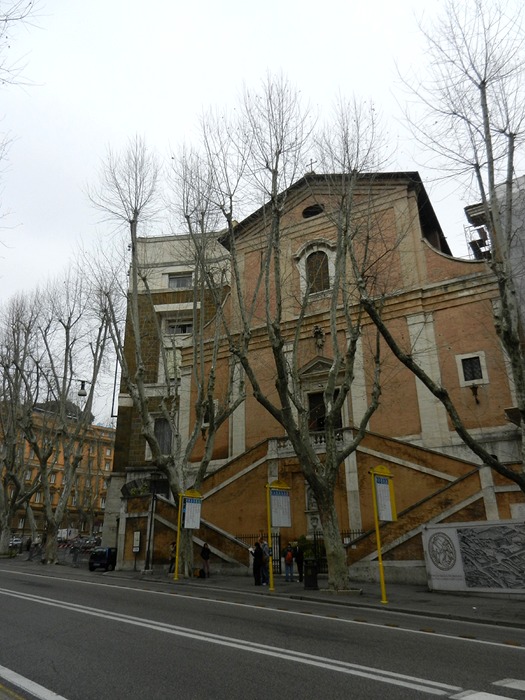
His body is in the Capuchin Church of Rome – the Church of the Immaculate Conception in Rome; a plenary indulgence is granted to those who, fulfilling the ordinary conditions, visit a church of his Order on his feast day.
St Pope John I (Optional Memorial)
—
Bl Burchard of Beinwil
St Dioscorus of Kynopolis
St Elgiva of Shaftesbury
St Eric of Sweden
St Felix of Cantalice O.F.M. Cap.(1515-1587)
St Felix of Spoleto
St Feredarius of Iona
Bl Jan Oprzadek
St Merililaun
St Ortasio of Alexandria
St Potamon of Heraclea
St Serapione of Alexandria
Bl Stanislaw Kubski
St Venantius of Camerino
Bl William of Toulouse
—
Martyrs of Ancyra – 8 saints: Seven nuns martyred in the persecutions of Diocletian and the innkeeper who was executed for giving them a Christian burial: Alexandria, Claudia, Euphrasia, Julitta, Matrona, Phaina, Thecusa and Theodatus. c.304 in Ancyra, Galatia (in modern Turkey)
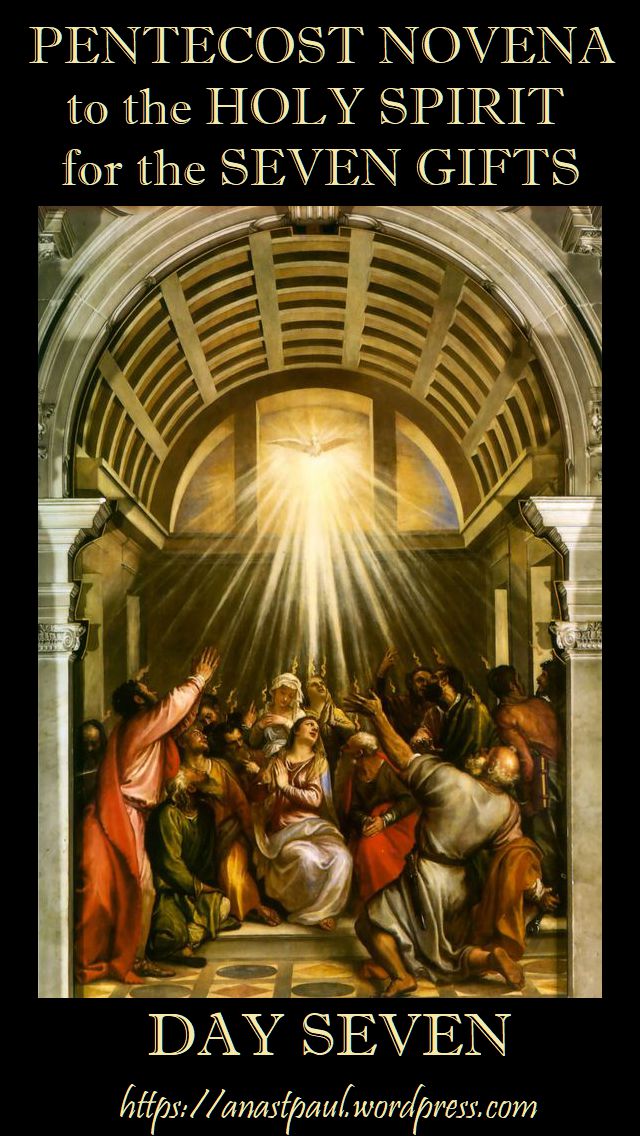
Pentecost Novena to the Holy Spirit for the Seven Gifts Day Seven – 17 May 2018
DAY SEVEN Heal our wounds our strength renew; On our dryness pour Thy dew; Wash the stains of guilt away!
THE GIFT OF COUNSEL
The gift of Counsel endows the soul with supernatural prudence, enabling it to judge
promptly and rightly what must be done, especially in difficult circumstances.
Counsel applies the principles furnished by Knowledge and Understanding, to the
innumerable concrete cases that confront us, in the course of our daily dutym as
parents, teachers, public servants and Christian citizens. Counsel is supernatural
common sense, a priceless treasure in the quest of salvation. “Above all things, pray to the Most High, that He may direct thy way in truth.”
Prayer
Come, O Spirit of Counsel, help and guide me in all my ways, that I may always do Your
holy will. Incline my heart to that which is good; turn it away from all that is
evil and direct me, by the straight path of Your commandments, to that goal of eternal
life for which I long. Amen
Our Father
Hail Mary
Glory be to the Father (seven times)
Act of Consecration
Prayer for the Seven Gifts
Thought for the Day – 17 May – Thursday of the Seventh Week of Eastertide and the Memorial of St Paschal Baylon O.F.M. (1540-1592) “Seraph of the Eucharist”.
Prayer before the Blessed Sacrament occupied much of Saint Francis of Assisi’s energy. Most of his letters were to promote devotion to the Eucharist. Paschal shared that concern.
The life of Saint Paschal Baylon is one of simple adoration of the Lord and great devotion to His Mother. Saint Paschal recognised the importance of spending time before Our Saviour, in contemplation of His passion, love and sacrifice—in the earthly presence of God. Through his devotion to the Blessed Sacrament, Saint Paschal was graced with wisdom beyond his education and obedience and charity, beyond measure. His life inspires us to greater communion with the Lord, leading us to His spiritual treasures.
An hour in prayer before our Lord in the Eucharist could teach all of us a great deal.
Go to Jesus in the Most Blessed Sacrament with bended knee and acknowledge that He is truly present Body, Blood, Soul and Divinity!
Go to Jesus in the Most Blessed Sacrament with a silent tongue and confess “Jesus in The Most Blessed Sacrament, you are Lord!”
Go to Jesus in the Most Blessed Sacrament with bowed head and say “lead me, Lord”.
Go to Jesus in The Most Blessed Sacrament with a humble heart and say “show me how to love as You love, Lord”.
Go to Jesus in The Most Blessed Sacrament with folded hands and say “take my hands, use them as Your hands Lord”
Go to Jesus in the Most Blessed Sacrament with a closed mouth and listen to Him whispering to our soul, and responding with “Yes Lord”.
Go to Jesus in the Most Blessed Sacrament with a meek spirit and say, “Not by my power and my might but by Your power and Your might Lord!”
Go to Jesus in the Most Blessed Sacrament with a fiat and say, “Not my will but Your will be done Lord!”
Marian Thought for the Day – 17 May “Mary’s Month” – Thursday of the Seventh Week of Eastertide
Mary is the “Mater Salvatoris,” the Mother of the Saviour
Blessed John Henry Newman (1801-1890)
HERE again, as in our reflections of yesterday, we must understand what is meant, by calling our Lord a Saviour, in order to understand why it is used, to form one of the titles given to Mary in her Litany.
The special name by which our Lord was known before His coming was, as we found yesterday, that of Messias, or Christ. Thus He was known to the Jews. But when He actually showed Himself on earth, He was known by three new titles, the Son of God, the Son of Man and the Saviour; the first expressive of His Divine Nature, the second of His Human, the third of His Personal Office. Thus the Angel who appeared to Mary, called Him the Son of God; the angel who appeared to Joseph called Him Jesus, which means in English, Saviour; and so the Angels, too, called Him a Saviour when they appeared to the shepherds. But He Himself specially calls Himself the Son of Man.
Not Angels only, call Him Saviour but those two greatest of the Apostles, St Peter and St Paul, in their first preachings. St Peter says He is “a Prince and a Saviour” and St Paul says, “a Saviour, Jesus.” And both Angels and Apostles tell us why He is so called—because He has rescued us from the power of the evil spirit and from the guilt and misery of our sins. Thus the Angel says to Joseph, “Thou shalt call His name Jesus, for He shall save His people from their sins;” and St Peter, “God has exalted Him to be Prince and Saviour, to give repentance to Israel and remission of sins.” And He says Himself, “The Son of Man is come to seek and to save that which is lost.”
Now let us consider how this affects our thoughts of Mary. To rescue slaves from the power of the Enemy implies a conflict. Our Lord, because He was a Saviour, was a warrior. He could not deliver the captives without a fight, nor without personal suffering. Now, who are they who especially hate wars? A heathen poet answers. “Wars,” he says, “are hated by Mothers.” Mothers are just those who especially suffer in a war. They may glory in the honour gained by their children but still such glorying, does not wipe out, one particle of the long pain, the anxiety, the suspense, the desolation and the anguish which the mother of a soldier feels. So it was with Mary.
For thirty years she was blessed with the continual presence of her Son—nay, she had Him in subjection. But the time came when that war called for Him, for which He had come upon earth. Certainly He came, not simply to be the Son of Mary but to be the Saviour of Man and, therefore, at length He parted from her. She knew then, what it was to be the mother of a soldier. He left her side; she saw Him no longer, she tried in vain to get near Him. He had for years lived in her embrace and after that, at least in her dwelling—but now, in His own words, “The Son of Man had not where to lay His head.”
And then, when years had run out, she heard of His arrest, His mock trial and His passion. At last she got near Him—when and where?—on the way to Calvary and when He had been lifted upon the Cross. And at length she held Him again in her arms, yes—when He was dead. True, He rose from the dead but still she did not thereby gain Him, for He ascended on high and she did not at once follow Him. No, she remained on earth many years—in the care, indeed, of His dearest Apostle, St John. But what was even the holiest of men, compared with her own Son and Him the Son of God?
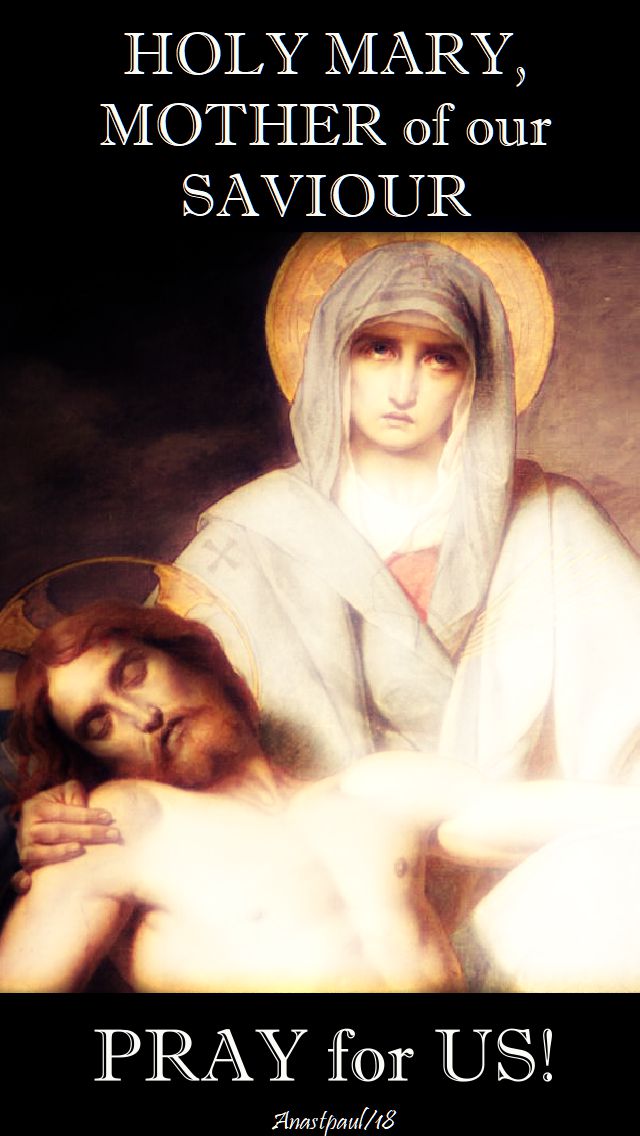
O Holy Mary, Mother of our Saviour, in this meditation we have now suddenly passed from the Joyful Mysteries to the Sorrowful, from Gabriel’s Annunciation to thee, to the Seven Dolours. That, then, will be the next series of Meditations which we make about thee.
Quote/s of the Day – 17 May – Thursday of the Seventh Week of Eastertide and the Memorial of St Paschal Baylon O.F.M. (1540-1592)
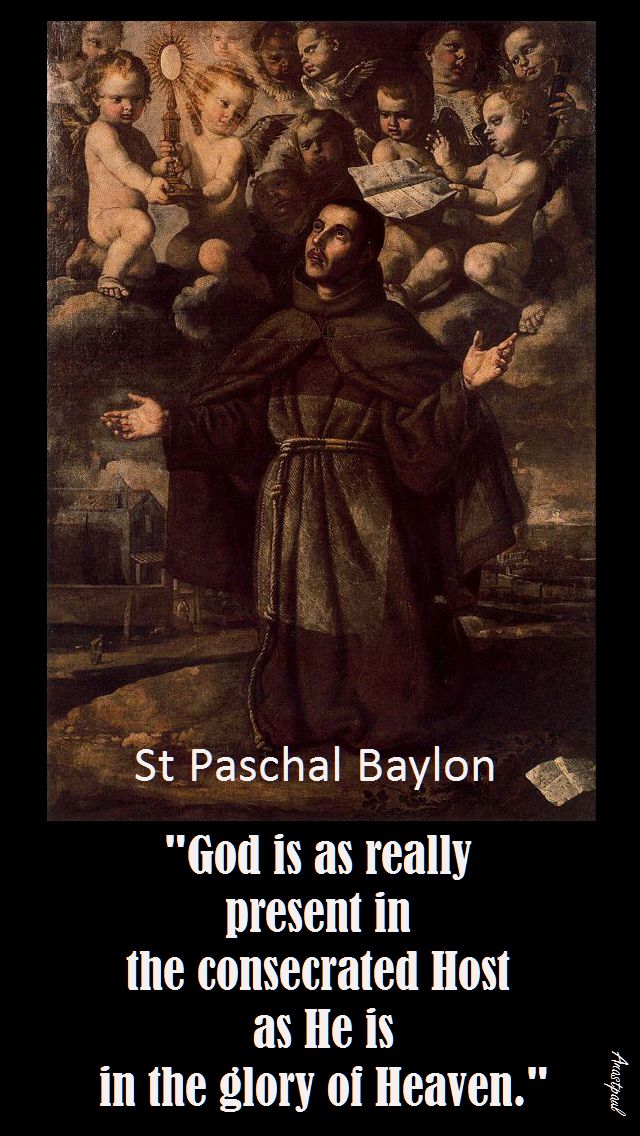
“God is as really present in the consecrated Host as He is in the glory of Heaven”
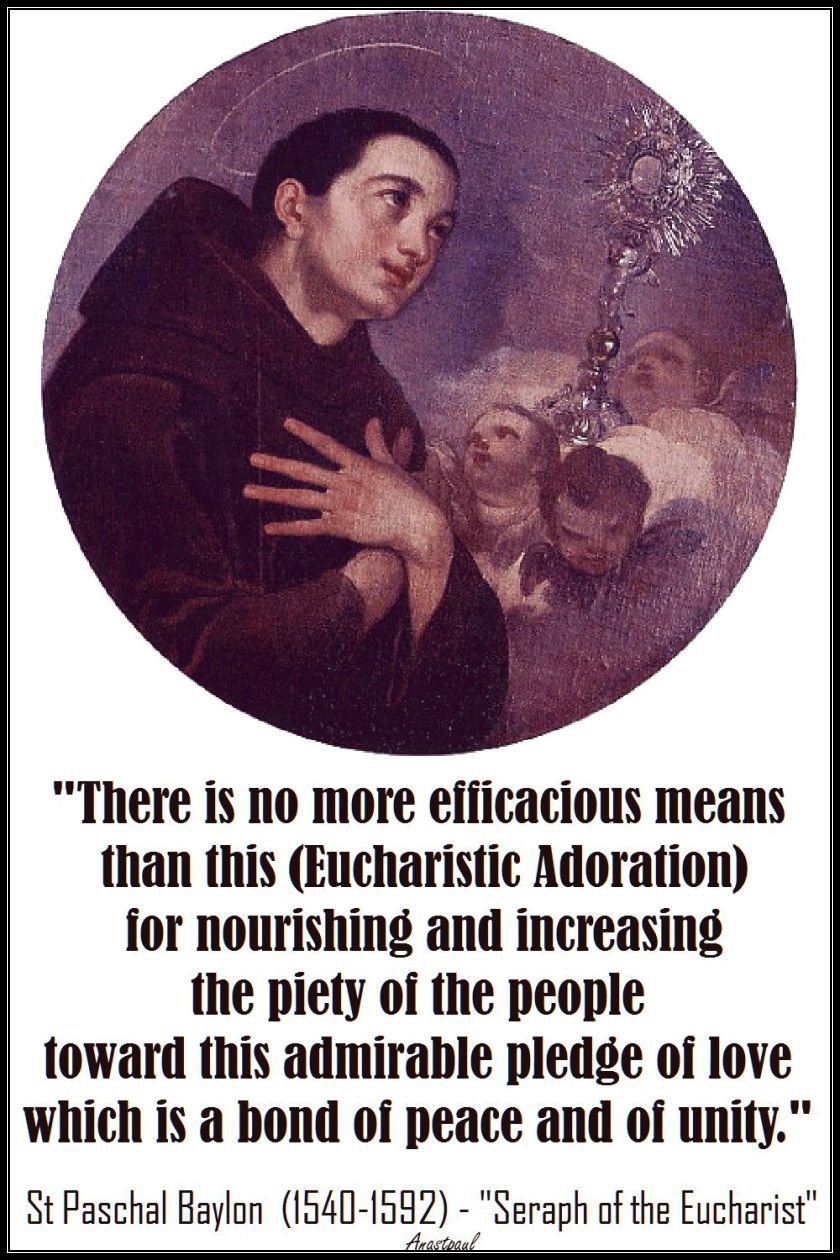
“There is no more efficacious means than this (Eucharistic Adoration) for nourishing and increasing the piety of the people toward this admirable pledge of love which is a bond of peace and of unity.
One Minute Marian Reflection – 17 May “Mary’s Month” – Thursday of the Seventh Week of Eastertide
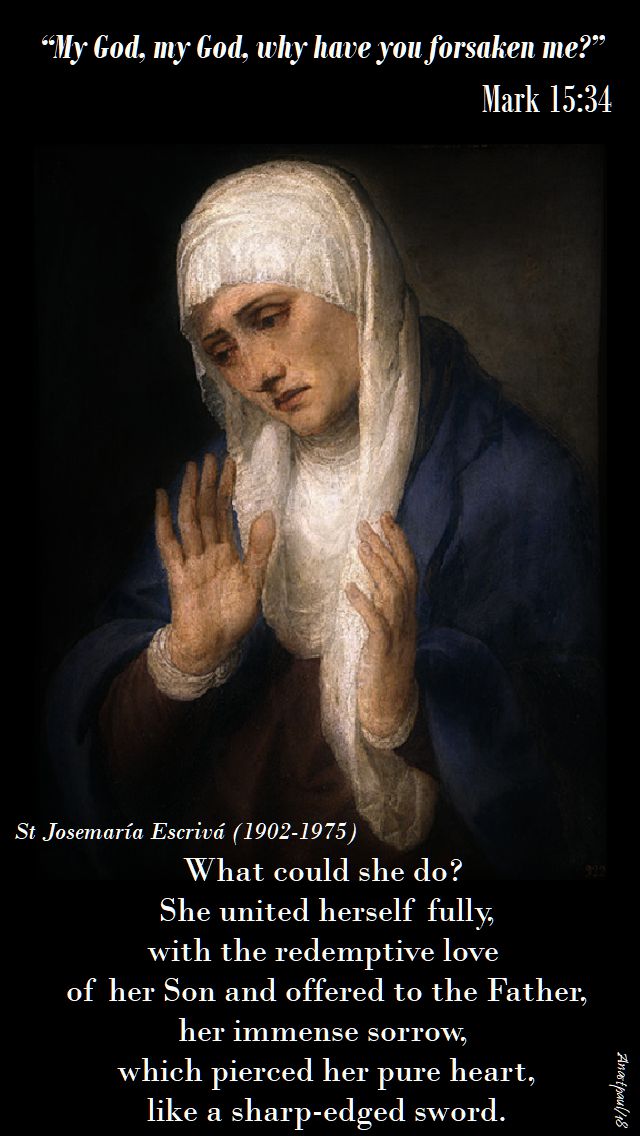
And at three o’clock Jesus cried out in a loud voice, “Eloi, Eloi, lema sabachthani?” which is translated, “My God, my God, why have you forsaken me?”…Mark 15:34
REFLECTION – “MARY: THE SORROWING MOTHER – “Our Lady is there listening to the words of her Son, united to Him in His suffering, when He cried out ‘My God, my God, why have you forsaken me?’ What could she do? She united herself fully, with the redemptive love of her Son and offered to the Father, her immense sorrow, which pierced her pure heart, like a sharp-edged sword.”…St Josemaría Escrivá (1902-1975) “Mother of God and Our Mother,” Friends of God, 288 Let us offer to our Mother today: The mortification of keeping quiet about any pain or discomfort, any inconvenience or disappointment, uniting it with her pain as she stood by her crucified Son.
PRAYER – Almighty God and Father, forgive the sins of Your people and as nothing we can do is worthy in Your sight, save us through the intercession of the Mother of our Lord Jesus Christ. As Christ suffered for our sins, so Mary, the Blessed Virgin His Mother, suffered with Him and for us too. Grant we pray, that by her prayers we may learn to give You these sufferings alone, in silence for our sins in union with our suffering Lord and His Mother, with the Holy Spirit, one God with You, forever amen.
Our Morning Offering – 17 May “Mary’s Month” – Thursday of the Seventh Week of Eastertide
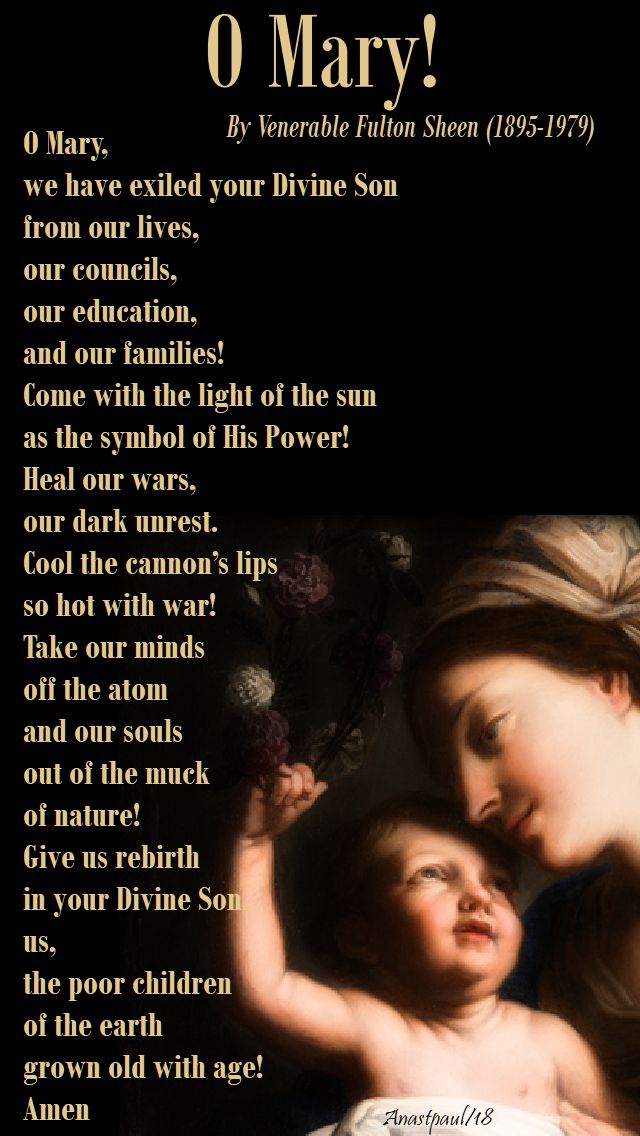
O Mary! By Venerable Fulton Sheen (1895-1979)
O Mary,
we have exiled your Divine Son
from our lives,
our councils,
our education,
and our families!
Come with the light of the sun
as the symbol of His Power!
Heal our wars,
our dark unrest.
Cool the cannon’s lips so hot with war!
Take our minds off the atom
and our souls out of the muck of nature!
Give us rebirth in your Divine Son, us,
the poor children of the earth
grown old with age!
Amen
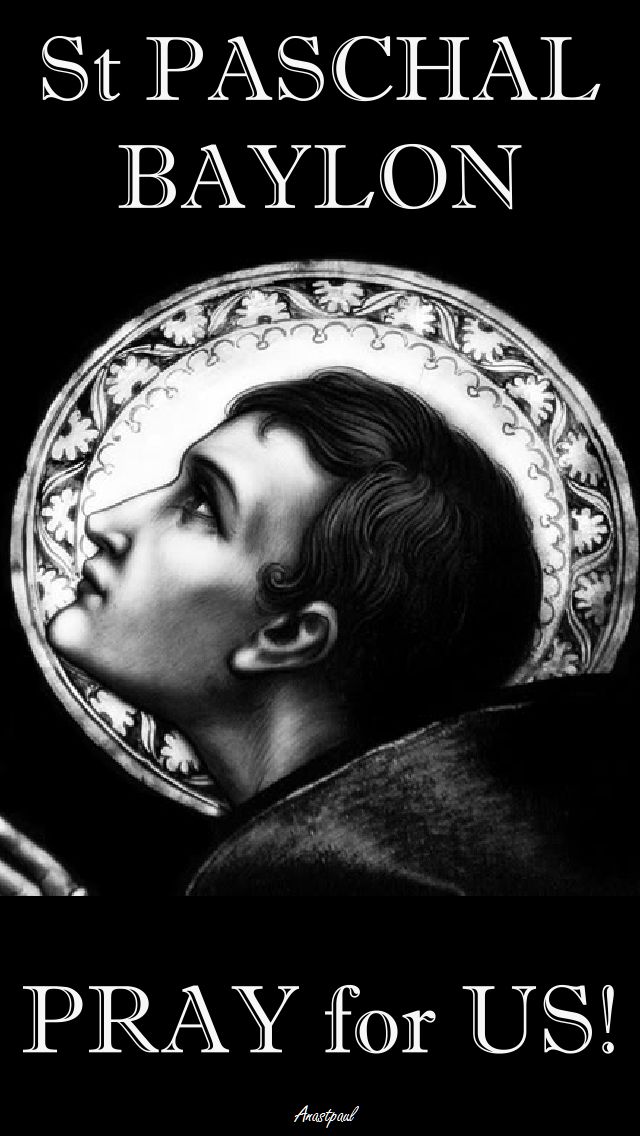
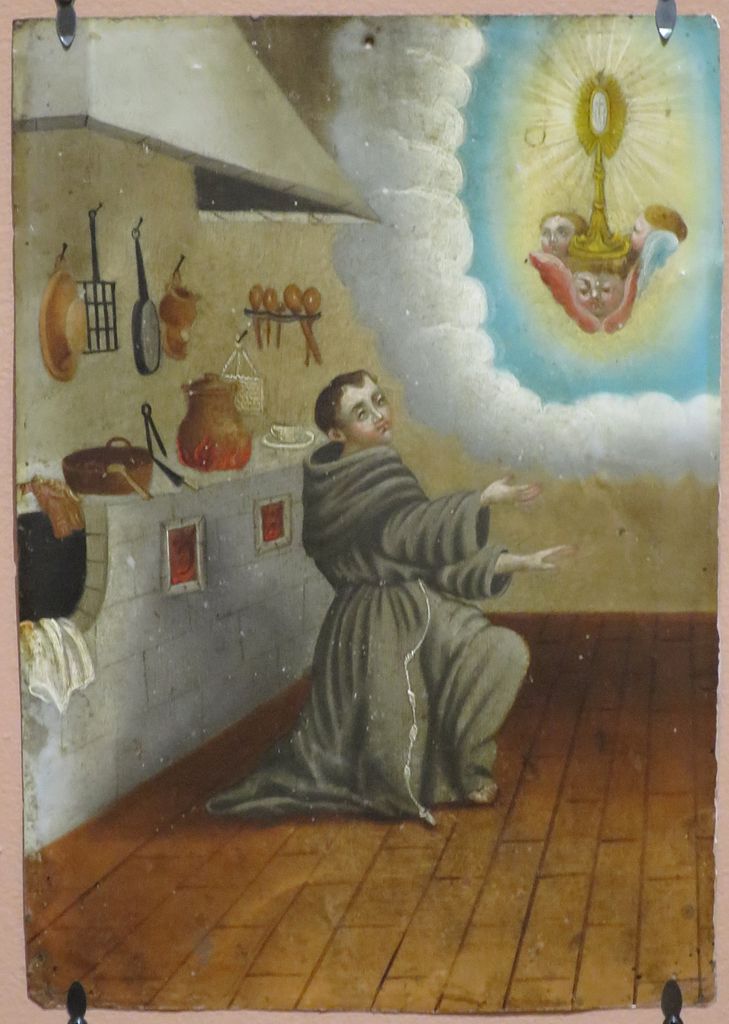
Saint of the Day – 17 May – St Paschal Baylon OFM (1540-1592) Religious Brother of the Order of Lay Brothers Minor, Mystic, Contemplative, Apostle of the Eucharist and Mary, Apostle of the Sick and the poor, known as the “Seraph of the Eucharist,” “Saint of the Blessed Sacrament,” “Servant of the Blessed Sacrament.” St Paschal was born on 24 May 1540 (feast of Pentecost) at Torre Hermosa, Aragon, (modern Spain) and he died on 15 May 1592 (feast of Pentecost) at Villa Reale, Spain of natural causes. Patronages – cooks, shepherds, Eucharistic congresses and organisations (proclaimed by Pope Leo XIII on 28 November 1897), Shepherds, Male Children and Priesthood Vocation, Eucharistic Adoration, Diocese of Segorbe-Castellón de la Plana, Spain, Obado, Bulacan, Philippines. Like his holy father of the Franciscans, St Francis of Assisi, St Paschal is best known for his strong and deep devotion to the Eucharist, which manifested in his childhood.
In Paschal’s lifetime the Spanish empire in the New World was at the height of its power, though France and England were soon to reduce its influence. The 16th century has been called the Golden Age of the Church in Spain, for it gave birth to Ignatius of Loyola, Francis Xavier, Teresa of Avila, John of the Cross, Peter of Alcantara, Francis Solano, Salvator of Horta, St John of Avila and many others.
Paschal’s Spanish parents were poor and pious. Between the ages of seven and 24 he worked as a shepherd and began a life of mortification. He was able to pray on the job and was especially attentive to the church bell, which rang at the Elevation during Mass. Paschal had a very honest streak in him. He once offered to pay owners of crops for any damage his animals caused!
In 1564, Paschal joined the Friars Minor and gave himself wholeheartedly to a life of penance. Though he was urged to study for the priesthood, he chose to be a brother. At various times he served as porter, cook, gardener and official beggar.
Paschal was careful to observe the vow of poverty. He would never waste any food or anything given for the use of the friars. When he was porter and took care of the poor coming to the door, he developed a reputation for great generosity. The friars sometimes tried to moderate his liberality!
Paschal spent his spare moments praying before the Blessed Sacrament. In time, many people sought his wise counsel. It was Jesus in the Blessed Sacrament, that gave St Paschal great wisdom. He was hardly able to read and write but he was able to hold intelligent conversations with learned doctors in theology. Some of the theologians felt that Paschal was inspired by God. The priests of the monastery used to ask his advice about preaching. When the saint spoke about the Birth of Jesus and the Last Supper, it was as though he had been present at these events.
On Whit-Sunday, in 1592, St Paschal turned fifty-two years old. He knew that death was near and tried to put his habit on but being very weak he fell to the floor. Just then, a Brother entered. He placed the habit on Paschal and put him in bed.
During this time the monks told Paschal that Mass had started and his heart was filled with joy. As the monastery bell was ringing for the Elevation of the Host, the dying saint said, “Jesus, Jesus,” and then breathed his last. The news of his death spread like fire over the whole country.
On the day of St Paschal’s funeral Mass, a wonderful miracle took place. Paschal opened his eyes from the coffin and looked at the Host and the Chalice during the elevation of the Mass – He adored God publicly, even though he was dead.
Perhaps the most amazing thing about St Paschal, are the strange happenings known as the “Knocks of St Paschal.” At first, the knocks came from Paschal’s tomb. Later they came from relics and pictures of the saint. Sometimes the knocks have come as a kind of warning, to let people know that a terrible event was about to take place. It is also said that in Spain and Italy, those who are devoted to St Paschal, are warned about their death, days before, so that they may have a chance to receive the Last Sacraments.
People flocked to his tomb immediately after his burial; miracles were reported promptly. Paschal was Canonised in 1690 and was named patron of Eucharistic congresses and societies in 1897.





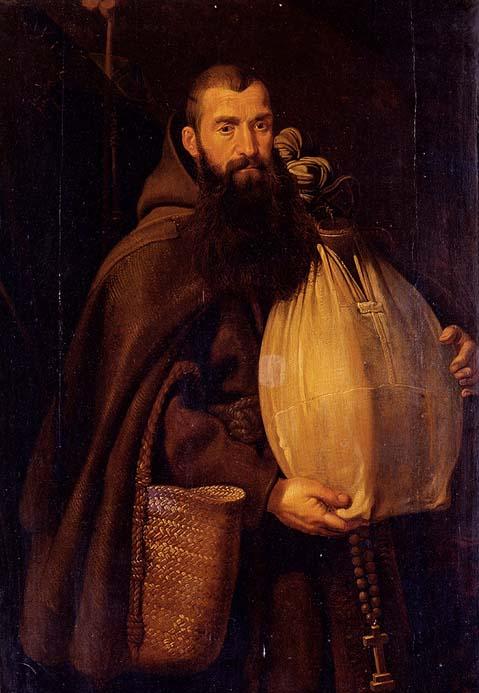 Brother Felix blessed all benefactors and all those he met with a humble “Deo Gratias!” (thanks be to God!), causing many to refer to him as “Brother Deo Gratias”. Felix was so successful in his work that during the famine of 1580, the political leader of Rome asked the Capuchins if they would ‘lend’ Felix to them so he could collect food and provisions for the entire city. The Capuchins agreed and Felix embraced his new task with great success and love.




 AnaStpaul
You must be logged in to post a comment.