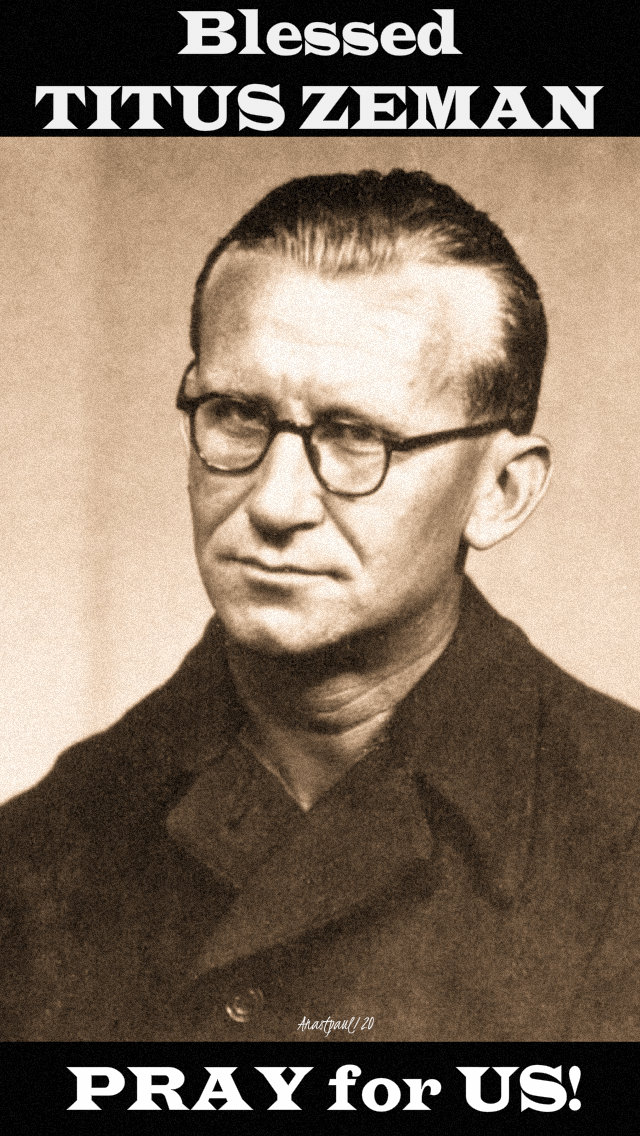
One Minute Reflection – 8 January – Third day after Epiphany and the Memorial of Blessed Titus Zeman SDB (1915-1969) Priest and Martyr, Readings: 1 John 4:11-18, Psalm 72:1-2, 10-13, Mark 6:45-52
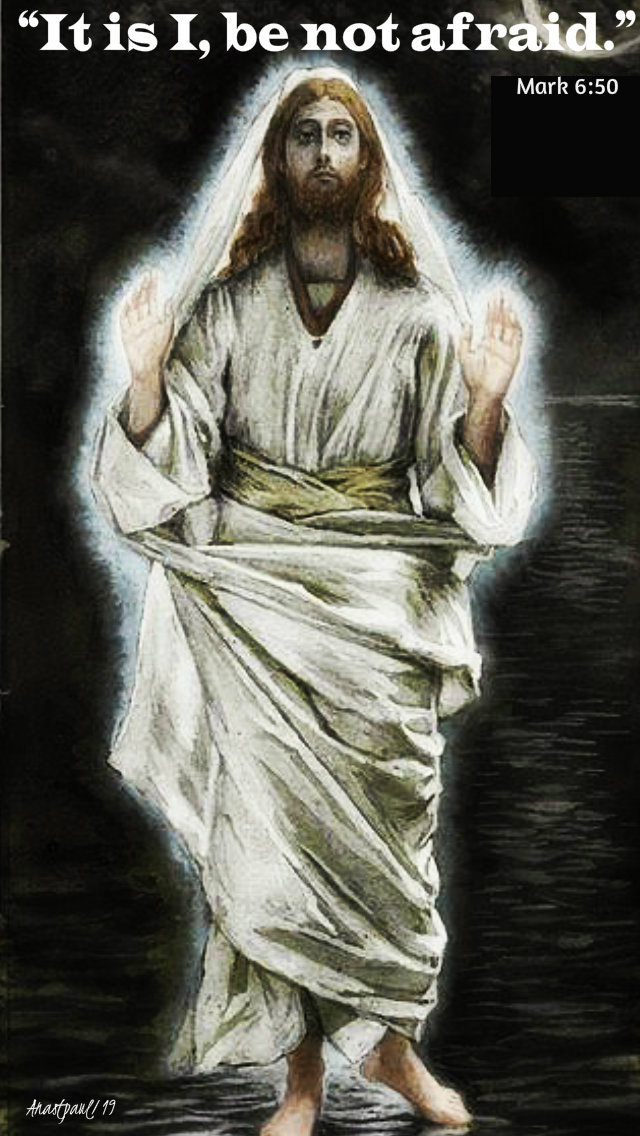
“Take courage, it is I, be not afraid!” … Mark 6:50
REFLECTION – “All ships have a compass which, when touched by the magnet, always turns towards the polar star. And even when the boat is making its way in a southward direction, yet the compass does not cease turning towards its north at all times.
In the same way, let the fine point of your spirit always turn towards God, its north. ( … ) You are about to take to the high seas of the world, do not on this account, alter dial or mast, sail or anchor or wind. Keep Jesus Christ as your dial, at all times, His Cross for mast on which to hoist your resolutions, as a sail. Let your anchor be, profound trust in Him and set out early. May the propitious wind of heavenly inspirations ever fill the sails of your vessel more and more and cause you, to speed forward, to the harbour of a holy eternity. ( … )
Should everything turn upside down, I do not say around us but within us, that is to say, should our soul be sad, happy, in sweetness, in bitterness, peaceful, troubled, in light, in darkness, in temptation, in rest, in enjoyment, in disgust, in dryness, in gentleness, should the sun burn it or the dew refresh it, ah!, this point of our heart, our spirit, our higher will, which is our compass, should, nevertheless, always and at all times turn unceasingly, tend perpetually towards the love of God.” … St Francis de Sales (1567-1622) – Bishop of Geneva and Doctor of the Church
PRAYER – God and Father, light of all mankind, make our hearts radiant with the splendour of that light which long ago You shed on our fathers in the faith and give Your people the joy of lasting peace.,, May the prayers of Your blessed saints and martyrs be a comfort on our journey. ,,Blessed Titus Zeman please pray for us all. Through Christ, our Lord, in the unity of the Holy Spirit, God forever, amen.
Our Morning Offering – 8 January – Third day after Epiphany and the Memorial of Blessed Titus Zeman SDB (1915-1969) Priest and Martyr
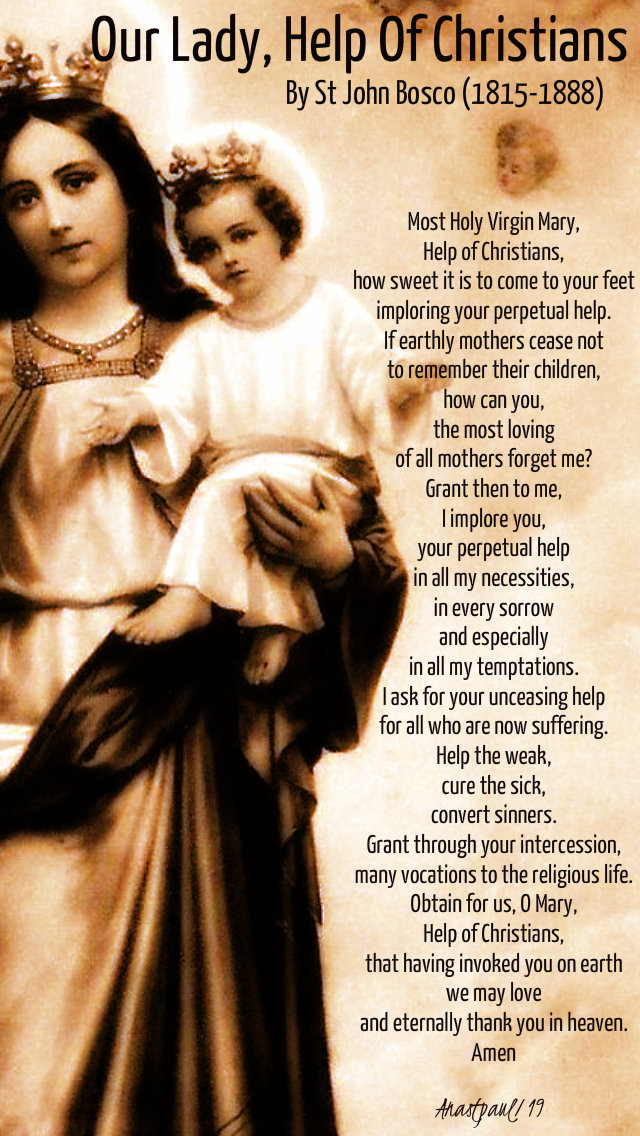
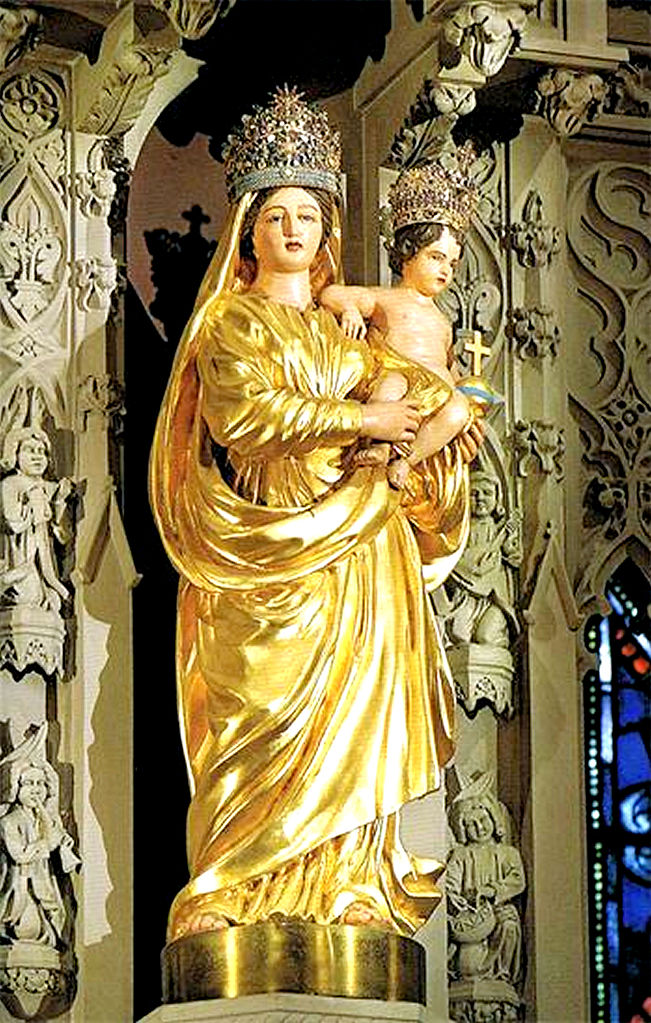
As today is the Memorial of the Priest and Martyr, Blesssed Titus Zeman of the Salesians of St John Bosco – a man whose life is an excellent example of faithfulness to Don Bosco’s cause, especially through the zeal and love that he showed to save the vocations of young Salesians under the Communist regime of Czechoslovakia, let us pray St John Bosco’s prayer to Our Lady Help of Christians, to whom Blessed Titus gave all the honour of his work.
Our Lady, Help Of Christians By St John Bosco (1815-1888)
Most Holy Virgin Mary,
Help of Christians,
how sweet it is to come to your feet
imploring your perpetual help.
If earthly mothers cease not
to remember their children,
how can you,
the most loving of all mothers forget me?
Grant then to me, I implore you,
your perpetual help in all my necessities,
in every sorrow and especially in all my temptations.
I ask for your unceasing help
for all who are now suffering.
Help the weak,
cure the sick,
convert sinners.
Grant through your intercession,
many vocations to the religious life.
Obtain for us, O Mary, Help of Christians,
that having invoked you on earth
we may love and eternally thank you in heaven.
Amen
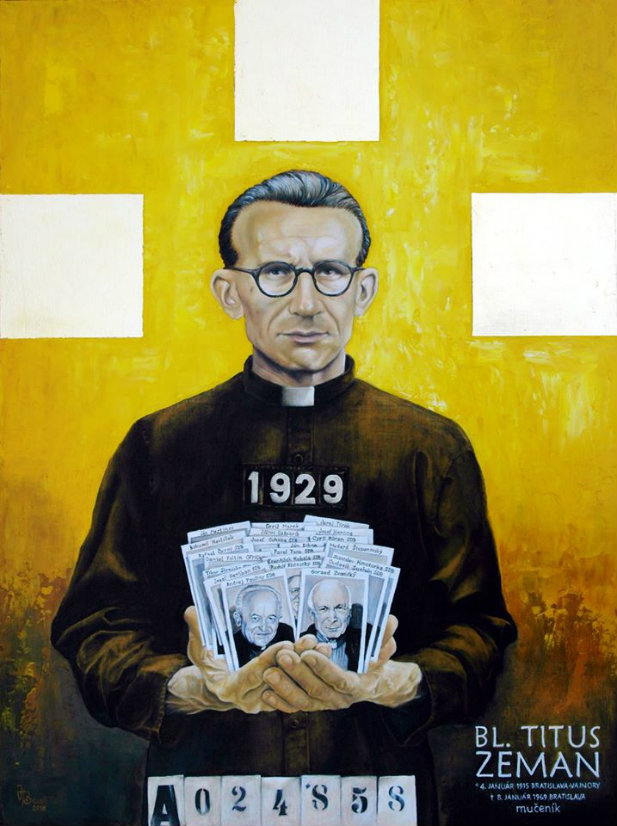
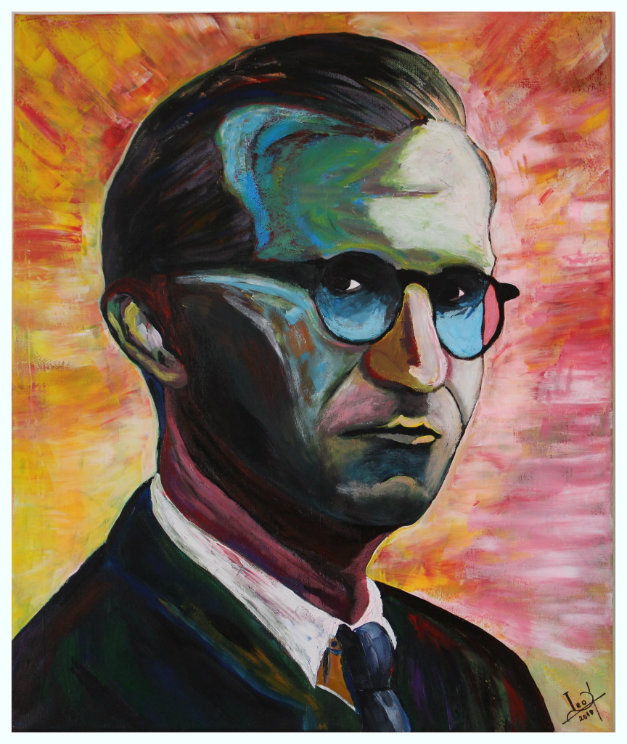
Saint of the Day – 8 January – Blessed Titus Zeman SDB (1915-1969) Priest and Martyr, a professed member of the Salesians of Don Bosco, Professor, Catechist, Defender of the Faith and of the oppressed. Born on 4 January 1915 in Vajnory, Bratislavský, Slovakia and died on 8 January 1969 in Bratislava, Slovakia of heart failure, aged 54. Patronage – Persecuted Christians.
Blessed Titus studied in Italian cities prior to his ordination and worked in Slovakia to protect fellow Salesians after the communist regime outlawed religious orders. He was arrested after attempting to send Salesians out of the country and was imprisoned from 1952 until 1964 and died due to poor health sustained from the prison conditions. He has been acclaimed as a Martyr and Defender of religious liberties.
Fr Titus was born into a Catholic family on 4 January 1915, at Vajnory, near Bratislava, the capital of Slovakia. As early as age 10 he had wanted to become a priest. After completing his secondary studies with the Salesians, in 1931 he entered the novitiate. He professed vows in 1932 and on 7 March 1938, made his perpetual profession at Sacred Heart in Rome.
He did his theology at the Gregorian University in Rome and then went to Chieri, where he spent his free time at the oratory. In Turin in 23 June 1940, he achieved the goal of Priestly Ordination. On 4 August 1940, he celebrated his first Mass at Vajnory, his birthplace.
After his Ordination, he was assigned briefly to the Salesian youth centre in Bratislava but then the provincial sent him to University to take a degree in chemistry and natural sciences, which he did. He was then sent to teach in the diocesan high school at Trnava in 1943. There, he was loved and respected by the students because of his cheerful, calm but no-nonsense yet fatherly disposition. Always ready to assist people, he made many friends. On at least one occasion he gave a place of safety to protect a Jewish youth.
After the war the high school was nationalised and the government ordered that Crucifixes be removed from the classrooms. Fr Titus and two other teachers procured and put up new ones, to the displeasure of the principal.
Fr Titus moved to the Salesian school in Trnava and was prefect of studies in 1946-1947, then Catechist in 1947-1949 while also helping in several parishes.
Saving Vocations with Clandestine Escapes:
In mid-April 1950, when the Communist regime in Czechoslovakia banned religious orders and congregations and suddenly arrested and began to intern religious in concentration camps, on the night of 13-14 April —“the night of the barbarians”—the Slovak provincial believed it was necessary to organise clandestine trips to Turin so that young religious (both clerics and coadjutors) could complete their studies and he asked Fr Titus to undertake, the risky activity of smuggling them across the border to Austria. He carried out two such expeditions for more than 60 young Salesians, giving the credit for their success to Mary Help of Christians and winning the admiration of Fr Peter Ricaldone and the other superiors in Turin.
During a third expedition in April 1951, he and the other fugitives were caught and arrested. He then underwent a difficult trial, during which he was accused of being a traitor to his country and a Vatican spy and he risked the death penalty. On 22 February 1952, in consideration of attenuating circumstances, he was instead condemned to 25 years in prison.
A Slow Martyrdom:
Fr Titus was released from prison after 12 years on 10 March 1964. He was suffering obviously from the long ordeal in prison and survived only five years, dying on 8 January 1969. He was very much known for his holiness and, indeed, his martyrdom. He lived his life of suffering with a great spirit of sacrifice and as an offering: “Even if I lose my life, I do not consider it a waste, knowing that at least one of those whom I have saved has become a Priest to take my place.”
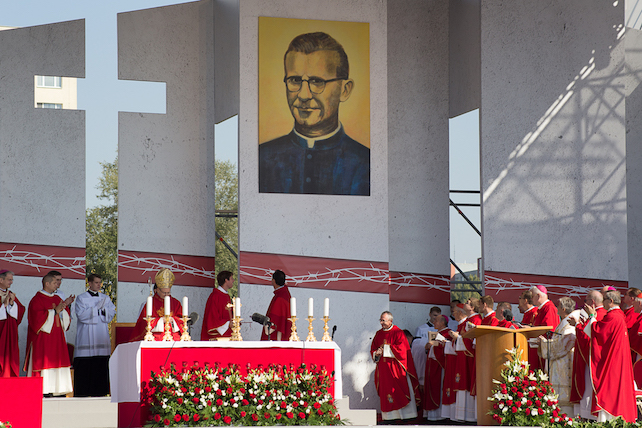
Zeman was acclaimed a Servant of God in 2010 under Pope Benedict XVI after the Canonisation process commenced in Bratislava – the cause was taken with ascertaining whether Zeman had died “in odium fidei” (in hatred of the faith). Pope Francis approved his Beatification on 27 February 201 – the Beatification occurred in Bratislava on 30 September 2017.
St Garibaldus of Regensburg
St Gudule of Brussels
St Helladius
St Julian of Beauvais
St Lawrence Giustiniani
St Lucian of Beauvais
St Maximian of Beauvais
St Maximus of Pavia
Bl Nathalan of Aberdeen
St Patiens of Metz
St Pega of Peakirk
St Severinus of Noricum
St Theophilus the Martyr
St Thorfinn Blessed Titus Zeman SDB (1915-1969) Priest and Martyr
The above film was the winner of the International “Festival dobrých správ” (of Good News) honoured a short film about the life of blessed Titus Zeman SDB. The video entitled “Titus Zeman – a martyr for spiritual freedom to follow oneʹs vocation” was first place in the category of short films under 15 minutes and takes a closer look at the heroic sacrifice of the Salesian. The author of the winning film is Salesian past pupil Roman Maturkanič from Slovakia who currently works as a film director. “Probably the biggest challenge was to narrate the very eventful life of Titus in such a short time. We won the first place prize, but we could say that this is Titusʹ victory,” said the director of the film’s achievement in the competition.
St Wulsin of Sherborne
—
Martyrs of Greece – 9 saints: A group of Christians honored in Greece as martyrs, but we have no details about their lives or deaths – Euctus, Felix, Januarius, Lucius, Palladius, Piscus, Rusticus, Secundus and Timotheus
Martyrs of Terni – 4 saints: A group of Christian soldiers in the imperial Roman army. Executed during the persecutions of emperor Claudius. Martyrs. – Carbonanus, Claudius, Planus and Tibudianus. They were martyred in 270 in Terni, Italy.
Thought for the Day – 7 January – Meditations with Antonio Cardinal Bacci (1881-1971) – Second Day after Epiphany
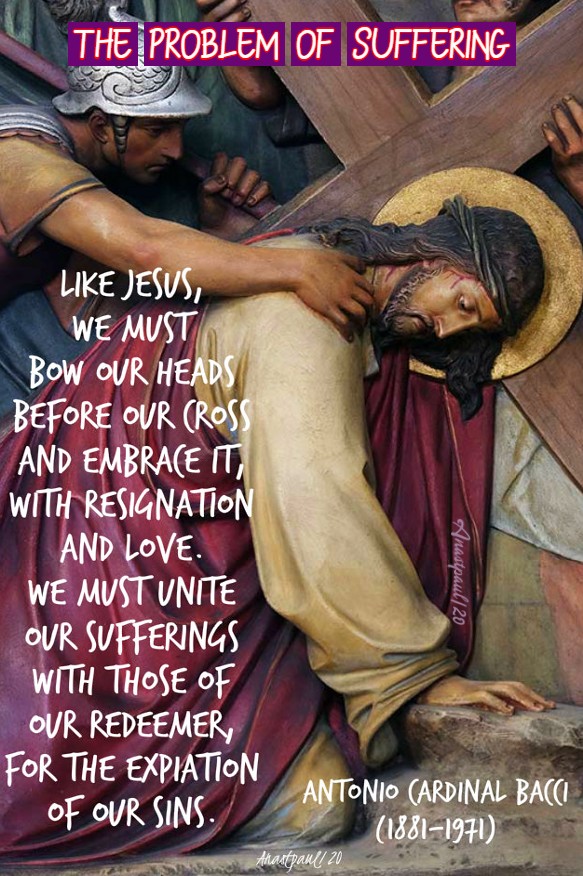
The Problem of Suffering
“Christianity, alone, offers an adequate explanation of the mystery of suffering. Why is there such a thing as suffering? The problem is a profound one and the explanations suggested by various schools of philosophy, fail to satisfy the human heart and leave the mind in doubt. Christian doctrine tells us, that God is infinitely good but also infinitely just. Being infinitely good, He created man without suffering. He also gave man the wonderful gift of liberty, which man abused by committing sin. Once the sin had been committed, God, in His infinite justice, demanded expiation. Hence, suffering and death … “and through sin, death and thus death has passed unto all men because all have sinned” (Rom 5:12). Together with death, came the never-ending series of misfortunes, of physical and moral sufferings, which beset humanity.
Suffering then, does not come directly from God. It is a consequence of and, a punishment for, sin. But, there is also the aspect of expiation and redemption. God, in His infinite justice, demands from man a penalty for his sin … but, He does not cease to be infinitely good. Hence, to the mystery of suffering, there is added, the mystery of Redemption. The Son of God Himself, is made man and takes upon Himself, all our sins. For the full expiation of our sins, He, the “Man of Sorrows,” offers to the Eternal Father, His own sufferings of infinite value.
It would not be right, however, if we were to remain inactive in this work of redemption. Like Jesus, we must bow our heads before our Cross and embrace it, with resignation and love. We must unite our sufferings with those of our Redeemer, for the expiation of our sins.”
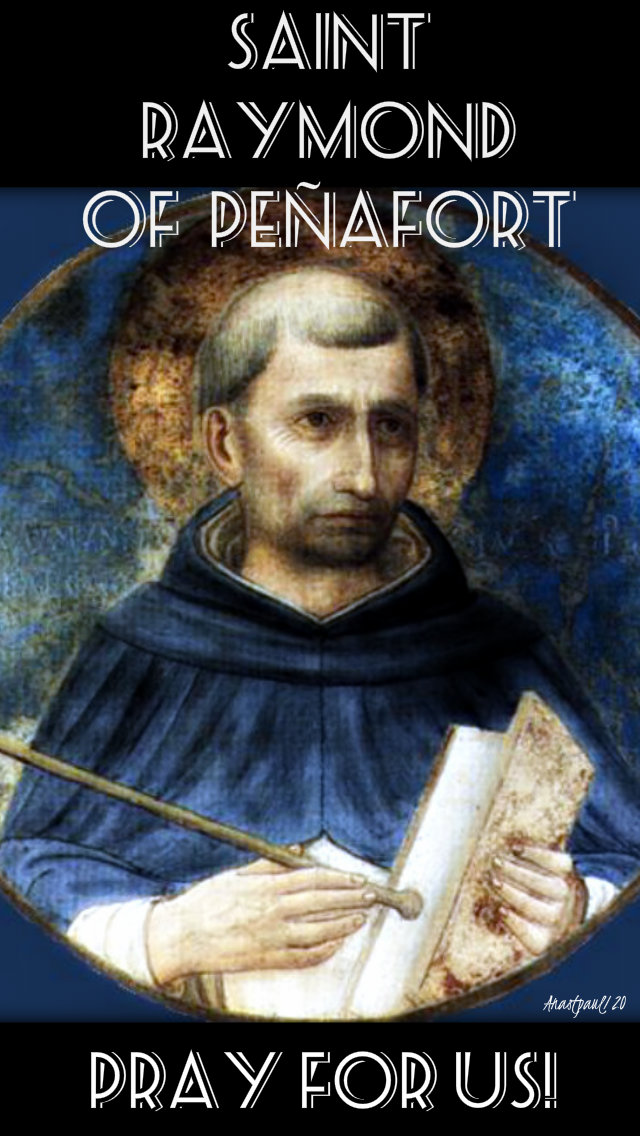
Quote/s of the Day – 7 January – St Raymond of Peñafort (1175-1275) “Father of Canon Law”
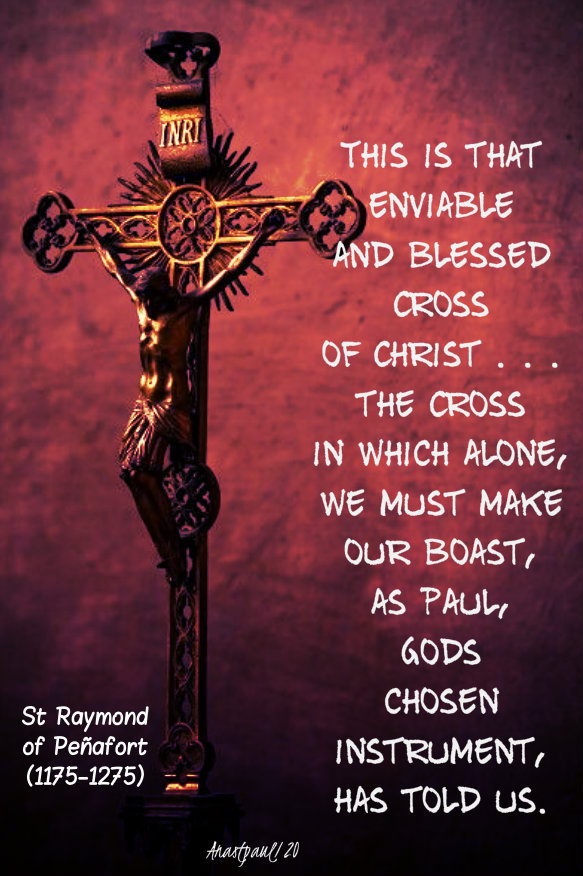
“This is that enviable and blessed Cross of Christ . . . the Cross in which alone, we must make our boast, as Paul, God’s chosen instrument, has told us.”
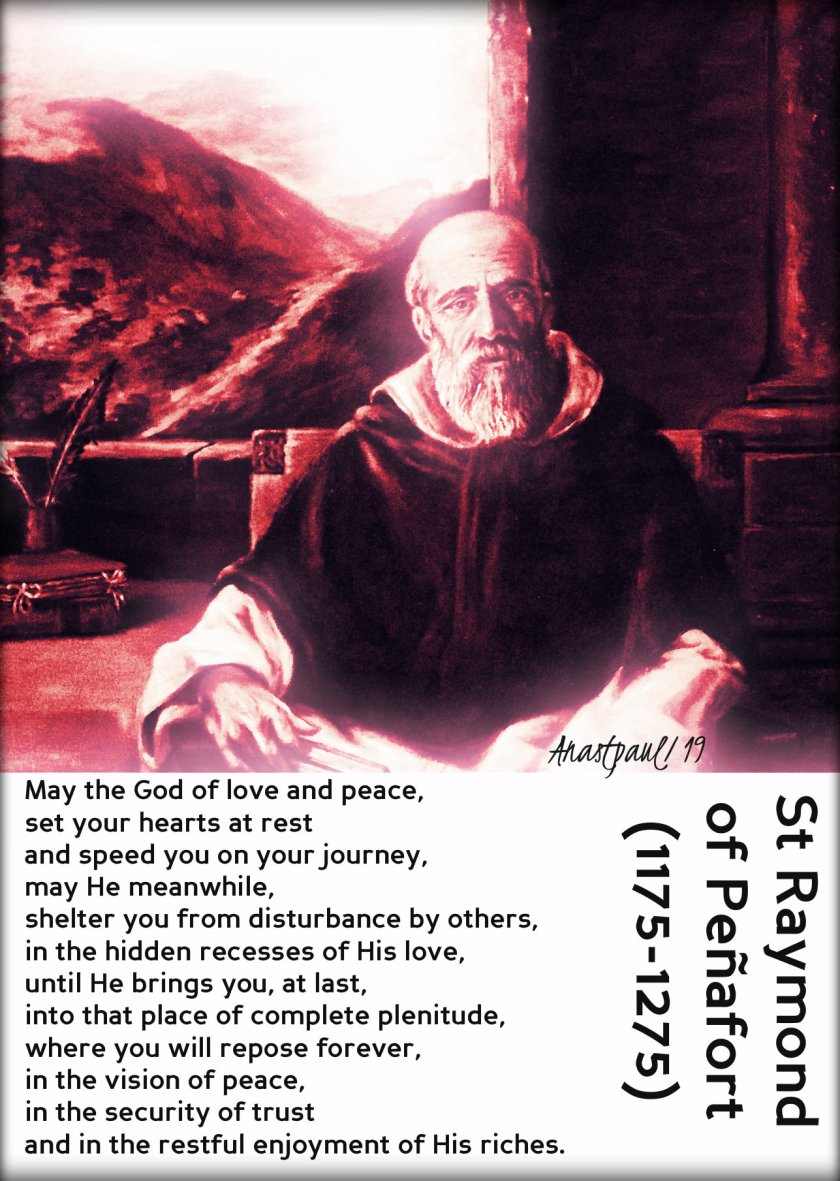
“May the God of love and peace, set your hearts at rest and speed you on your journey, may He meanwhile, shelter you from disturbance by others, in the hidden recesses of His love, until He brings you, at last, into that place of complete plenitude, where you will repose forever, in the vision of peace, in the security of trust and in the restful enjoyment of His riches.”
One Minute Reflection – 7 January – Second day after Epiphany, Readings: 1 John 4:7-10, Psalm 72:1-4, 7-8, Mark 6:34-44 and the Memorial of St Raymond of Peñafort OP (1175-1275)
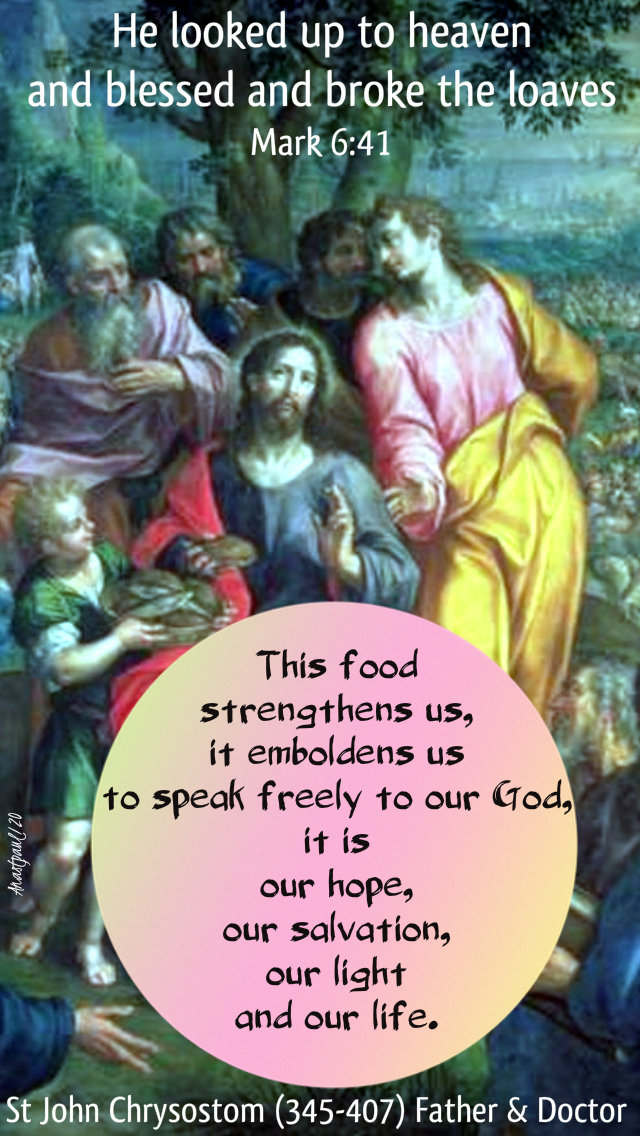
And taking the five loaves and the two fish, he looked up to heaven and blessed and broke the loaves and gave them to the disciples to set before the people ... Mark 6:41
REFLECTION – “Christ gave us His flesh to eat in order to deepen our love for Him. When we approach Him, then, there should be burning within us, a fire of love and longing… The wise men paid homage to Christ’s body even when it was lying in a manger… They only saw Christ in a manger, they saw nothing of what you now see and yet they approached Him with profound awe and reverence.
You see Him, not in a manger but on an altar, not carried by a woman but offered by a priest and you see the Spirit bountifully poured out upon the offerings of bread and wine. Unlike the wise men, you do not merely see Christ’s body, you know His power as well and the whole divine plan for our salvation… Let us then awaken in ourselves a feeling of awe and let us show a far greater reverence than did those foreigners so that we do not approach this sacrament casually, without thinking of what we do…
This food strengthens us, it emboldens us to speak freely to our God, it is our hope, our salvation, our light and our life.
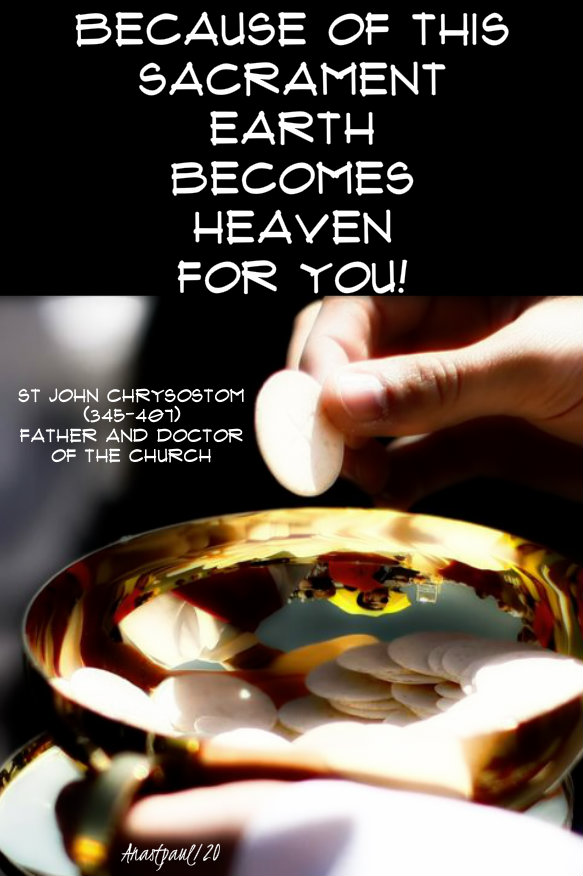
If we go to the next world fortified by this sacrifice, we shall enter its sacred portals with perfect confidence, as though protected all over, by armour of gold. But why do I speak of the next world? Because of this sacrament earth becomes heaven for you. Throw open the gates of heaven, look through and you will see the proof of what I say. What is heaven’s most precious possession? I will show you it here on earth. I do not show you angels or archangels, heaven or the heaven of heavens but I show you the very Lord of all these. Do you not see how you gaze, here on earth, upon what is most precious of all? You not only gaze on it but touch it as well. You not only touch it but eat it. So cleanse your soul from sin and prepare your mind to receive these mysteries.” … St John Chrysostom (345-407) Bishop of Constantinople, Father and Doctor of the Church
PRAYER – Almighty God, our Father, when Your only-begotten Son revealed Himself in flesh and blood, we came to know Him as our fellow-man . Now He feeds us by His mysteries and cleanses us by His Blood to transform us inwardly, until we bear His likeness. As You inspired St Raymond of Peñafort with an immense compassion for sinners and captives, grant us, through his prayer, freedom from sin and the grace to do Your will. Through our Lord, Jesus Christ, with the Holy Spirit, one God forever with You, amen.
Our Morning Offering – 7 January – Second day after Epiphany
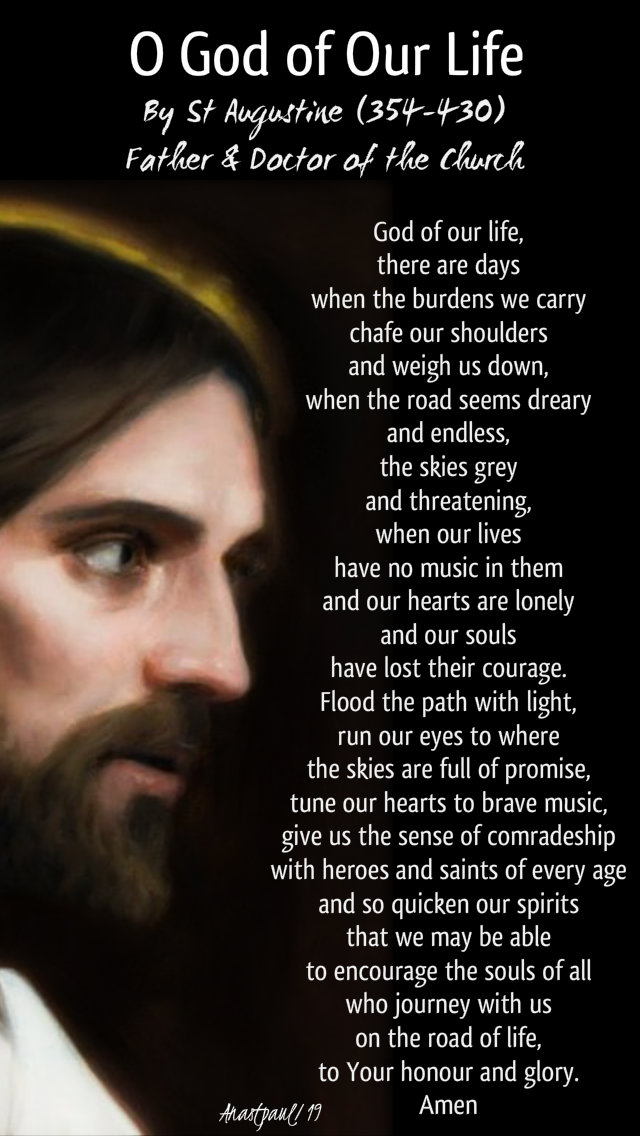
O God of Our Life By St Augustine (354-430) Father & Doctor of the Church
God of our life,
there are days when the burdens we carry
chafe our shoulders and weigh us down,
when the road seems dreary and endless,
the skies grey and threatening,
when our lives have no music in them
and our hearts are lonely
and our souls have lost their courage.
Flood the path with light,
run our eyes to where
the skies are full of promise,
tune our hearts to brave music,
give us the sense of comradeship
with heroes and saints of every age
and so quicken our spirits
that we may be able
to encourage the souls of all
who journey with us on the road of life,
to Your honour and glory.
Amen
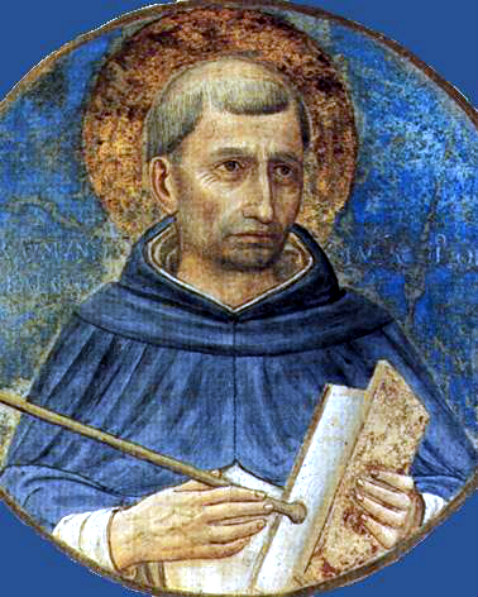
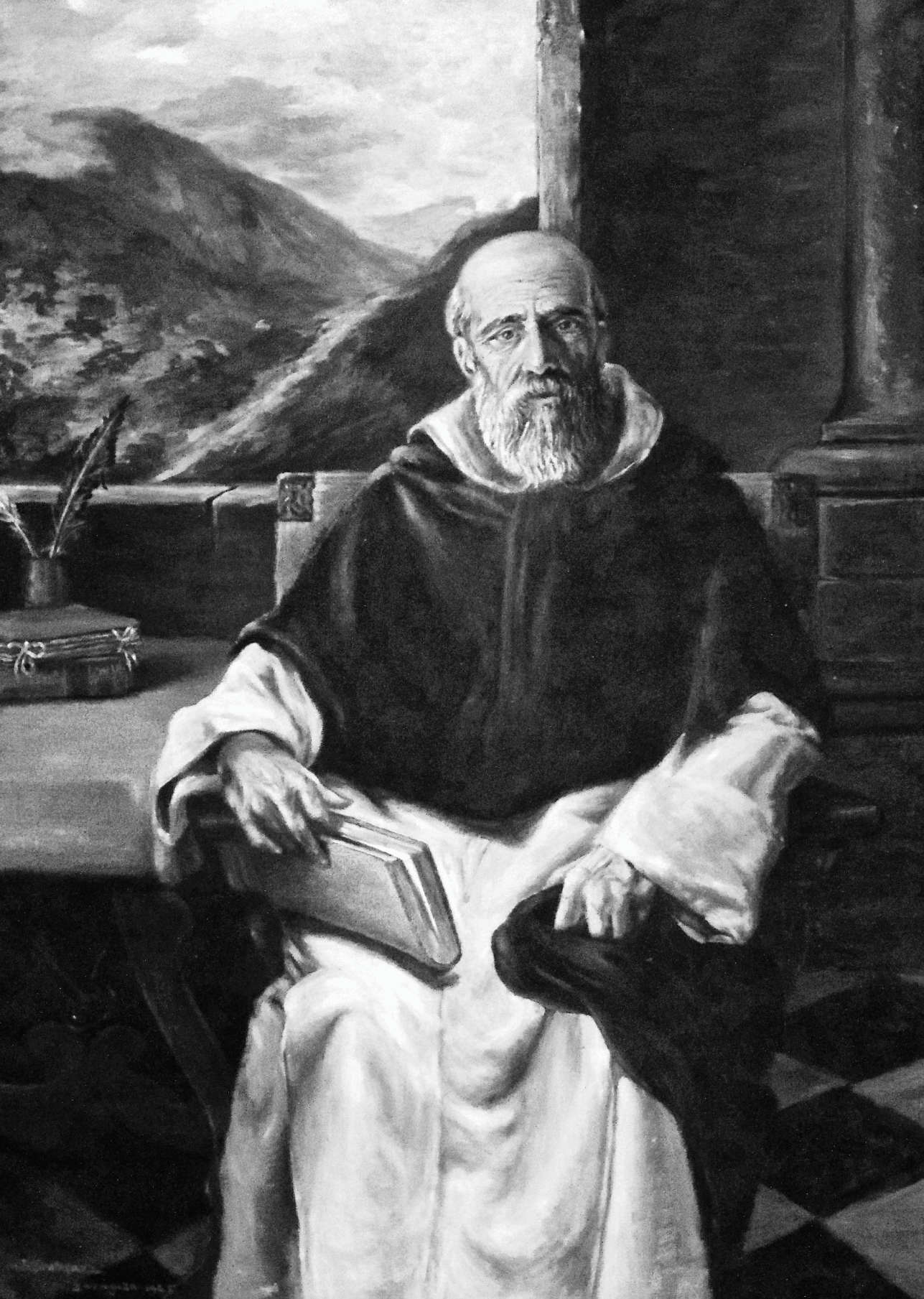
Saint of the Day – 7 January – St Raymond of Peñafort OP (1175-1275) known as the “Father of Canon Law” – Master of the Order of Preachers, Archbishop, Dominican Priest, Confessor, Evangelist, Missionary, Theologian,Teacher, Philosopher, Lawyer of both Canon and Civil Law, Writer, Spiritual Director and Adviser, Preacher, miracle worker. Born as Raimundo de Peñafort in 1175 at Peñafort, Catalonia, Spain and died on 6 January 1275, aged 100 years old, at Barcelona, Spain of natural causes . Patronages – attorneys, barristers, lawyers, canon lawyers, medical record librarians, Barcelona, Spain, Navarre, Spain.
As a lawyer, priest and preacher, St Raymond of Penyafort made a significant mark on the history of Spain and the church. His preaching helped re-Christianise Spain after the Moors were overthrown. And his compilation of papal and conciliar decrees, it was the main source of canon law for seven centuries.
Raymond of Peñafort was born in Vilafranca del Penedès, a small town near Barcelona, Catalonia, around 1175 . Descended from a noble family with ties to the royal house of Aragon, he was educated in Barcelona and at the University of Bologna, where he received doctorates in both civil and canon law.
An accomplished lawyer and scholar, Raymond joined the Dominicans at Barcelona in 1222. The 47-year-old novice was assigned to develop a book of case studies for confessors that helped to shape the medieval church’s penitential system. Also a gifted preacher, Raymond had remarkable success evangelising Moors and Jews. And he travelled throughout Spain rejuvenating the spiritual life of Christians that the Moors had enslaved. Among his main themes were spiritual combat and standing firm in trials. Listen to his voice in this letter:
“The preacher of God’s truth has told us that all who want to live righteously in Christ will suffer persecution. . . . the only exception to this general statement is, I think, the person who either neglects, or does not know how, to live temperately, justly and righteously in this world.
May you never be numbered among those whose house is peaceful, quiet and free from care, those on whom the Lord’s chastisement does not descend, those who live out their days in prosperity and in the twinkling of an eye will go down to hell.
Your purity of life, your devotion, deserve and call for a reward, because you are acceptable and pleasing to God, your purity of life must be made purer still, by frequent buffetings, until you attain perfect sincerity of heart. If from time to time you feel the sword falling on you with double or treble force, this also should be seen as sheer joy and the mark of love. The two-edged sword consists in conflict without, fears within. It falls with double or treble force within, when the cunning spirit troubles the depths of your heart with guile and enticements. . . . The sword falls with double and treble force externally when, without cause, persecution breaks out from within the church, where wounds are more serious, especially when inflicted by friends.
This is that enviable and blessed cross of Christ . . . the cross in which alone we must make our boast, as Paul, God’s chosen instrument, has told us.”
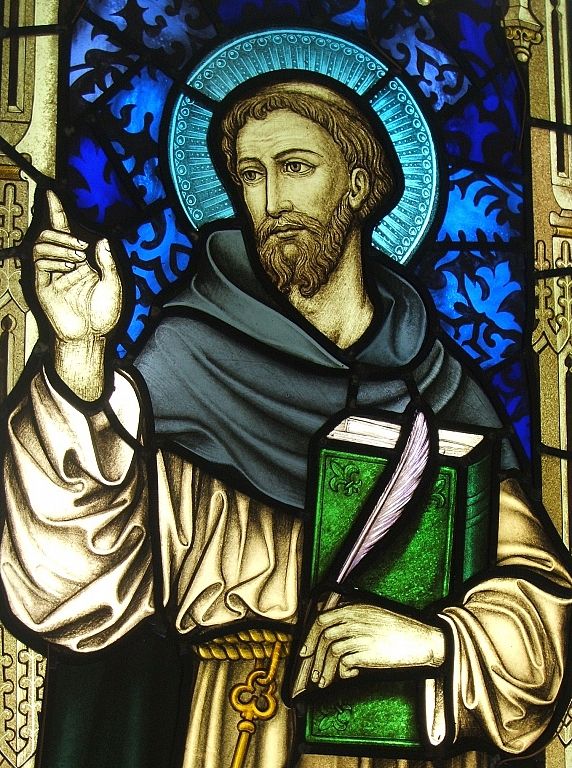
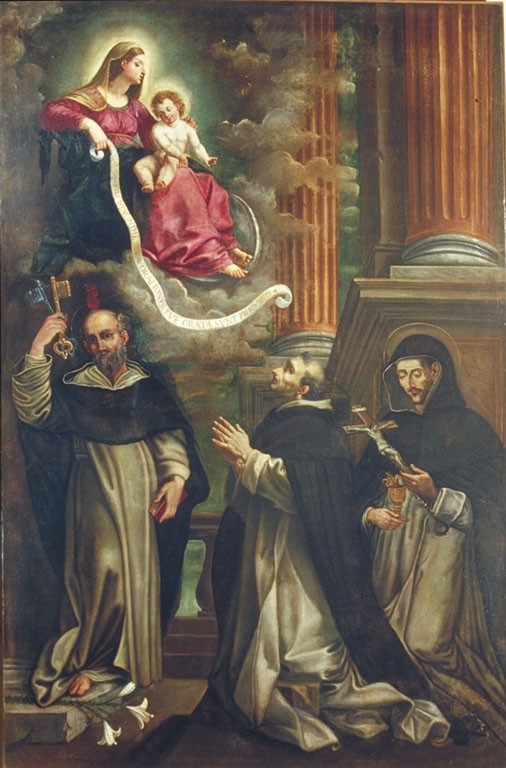
St Raymond on the left with the key which represents his unlocking of the decretals
In 1230, Pope Gregory IX brought Raymond to Rome as his confessor. The reputation of the saint for juridical science decided the pope to employ Raymond of Peñafort’s talents in re-arranging and codifying the canons of the Church. He had to rewrite and condense decrees that had been multiplying for centuries and which were contained in some twelve or fourteen collections already existing. We learn from a Bull of Gregory IX to the Universities of Paris and Bologna, that many of the decrees in the collections were but repetitions of ones issued before, many contradicted what had been determined in previous decrees and many, on account of their great length, led to endless confusion, while others had never been embodied in any collection and were of uncertain authority.
The pope announced the new publication in a Bull directed to the doctors and students of Paris and Bologna in 1231 and commanded that the work of St Raymond alone, should be considered authoritative and should alone, be used in the schools. Because they were so well arranged, canonists relied on Raymond’s Decretals until the new codification of 1917.
When Raymond completed his work, the pope appointed him Archbishop of Tarragona but the saint declined the honour. After declining the appointment of Archbishop, he could not avoid his election as the third general of the Dominicans in 1238. But when he reformed the Dominican rule, he slipped in a clause allowing early retirement of office holders. And he used it to retire in 1240.
But he continued to work 35 more years, focusing on bringing Jews and Moors to Christ. To equip Catholics for this work, he introduced the study of Hebrew and Arabic among Dominicans and persuaded Thomas Aquinas to write his Summa Contra Gentes as an evangelistic tool. Raymond told his general that ten thousand Moors had been baptised through the efforts of the Dominicans. He died at 100 years of age in 1275.
St Raymond was Canonised by Pope Clement VIII in 1601. He was buried in the Cathedral of Santa Eulalia in Barcelona.
st Raymond’s Tomb in Barcelona Cathedral
Most Famous Miracle
Raymond of Penyafort served as the confessor for King James I of Aragon, who was a loyal son of the Church but allowed his lustful desires to shackle him. While on the island of Majorca to initiate a campaign to help convert the Moors living there, the king brought his mistress with him. Raymond reproved the king and asked him repeatedly to dismiss his concubine. This the king refused to do. Finally, the saint told the king that he could remain with him no longer and made plans to leave for Barcelona. But the king forbade Raymond to leave the island and threatened punishment to any ship captain who dared to take him.
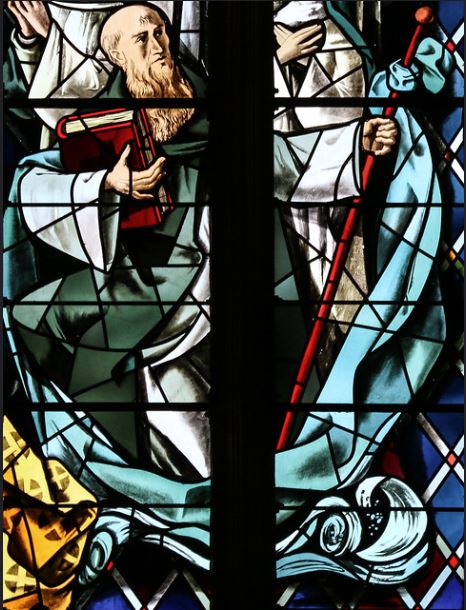
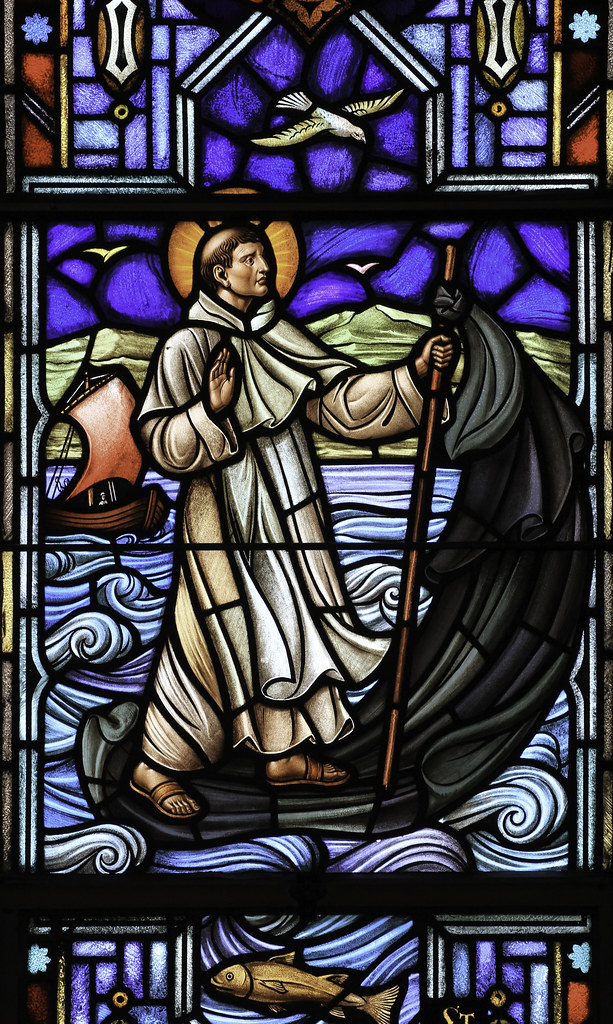
Saint Raymond then said to his Dominican companion, “Soon you will see how the King of heaven will confound the wicked deeds of this earthly king and provide me with a ship!” They then went down to the seashore where Raymond took off his cappa (the long black cloak the Dominicans wear over the white tunic and scapular) and spread one end of it on the water while rigging the other end to his walking staff. Having thus formed a miniature mast, Raymond bid the other Dominican to hop on but his companion, lacking the saint’s faith, refused to do so. Then Raymond bid him farewell and with the Sign of the Cross he pushed away from the shore and miraculously sailed away on his cloak. Skirting around the very boats that had forbidden him passage, the saint was seen by scores of sailors who shouted in astonishment and urged him on.
Raymond sailed the ~160 miles to Barcelona in the space of 6 hours, where his landing was witnessed by a crowd of amazed spectators.
Touched by this miracle, King James I renounced his evil ways and thereafter, led a good life.
St Raymond of Peñafort OP (1175-1275) (“Father of Canon Law”) (Optional Memorial)
St Aldric of Le Mans
Bl Ambrose Fernandez
St Anastasius of Sens
St Brannock of Braunton
St Candida of Greece
St Canute Lavard
St Cedd
St Clerus of Antioch
St Crispin I of Pavia
St Cronan Beg
St Emilian of Saujon
St Felix of Heraclea
Bl Franciscus Bae Gwan-gyeom
St Januarius of Heraclea
St Julian of Cagliari
St Kentigerna
St Lucian of Antioch
Bl Marie-Thérèse Haze
St Pallada of Greece
St Polyeuctus of Melitene
St Reinhold of Cologne
St Spolicostus of Greece
St Theodore of Egypt
St Tillo of Solignac
St Valentine of Passau
St Virginia of Ste-Verge
Bl Wittikund of Westphalia
Thought for the Day – 6 January – Meditations with Antonio Cardinal Bacci (1881-1971) – First Day after Epiphany
Giving Ourselves, Our Prayer, Our Mortification
The Magi gave Jesus material gifts also, as symbols of their complete dedication to Him.
They gave Him gold, because He was a king,
incense, because He was God
and myrrh, because He was man.
We often say that we love God and wish to serve and obey Him in all things.
But when we see that this entails sacrifice, we forget our promises!
We must ask ourselves if we are prepared to offer Jesus gold, that is, to offer Him everything we possess for the promotion of His glory, for the spread of His Kingdom and for the relief of His poor, in whom we ought, always, to see and love Christ Himself.
We must examine ourselves thoroughly on this.
It is easy to find excuses for not giving to God and to His poor in accordance with our means.
We should offer also, the incense of our adoration and unceasing prayer.
There can be no sanctity without prayer.
There can be no real Christians without sanctity.
Finally, we must offer the myrrh of our mortification.
Mortification, as St Vincent de Paul has said, is the ABC of Christian perfection.
St Paul exhorts us, to carry always in ourselves the mortification of Jesus.
If we are not mortified, we can never be holy and can never share the joy which the Magi experienced as they lay prostrate before the cradle of our Divine Redeemer.
Definition of Mortification: Mortification is the feeling of being completely humiliated. The word mortification has its roots in the Latin word for “death,” mors.
The original meaning of mortification is religious, in Christianity the meaning is “putting your sin to death”. In Christian practice, this has varied from denying oneself pleasurable things, like certain foods, to inflicting physical pain on oneself. The religious reason for this kind of mortification is to cause the “death” of sins — or desires — of the body.
Quote/s of the Day – 6 January – First Day after Epiphany and the Memorial of St André Bessette (1845-1937)
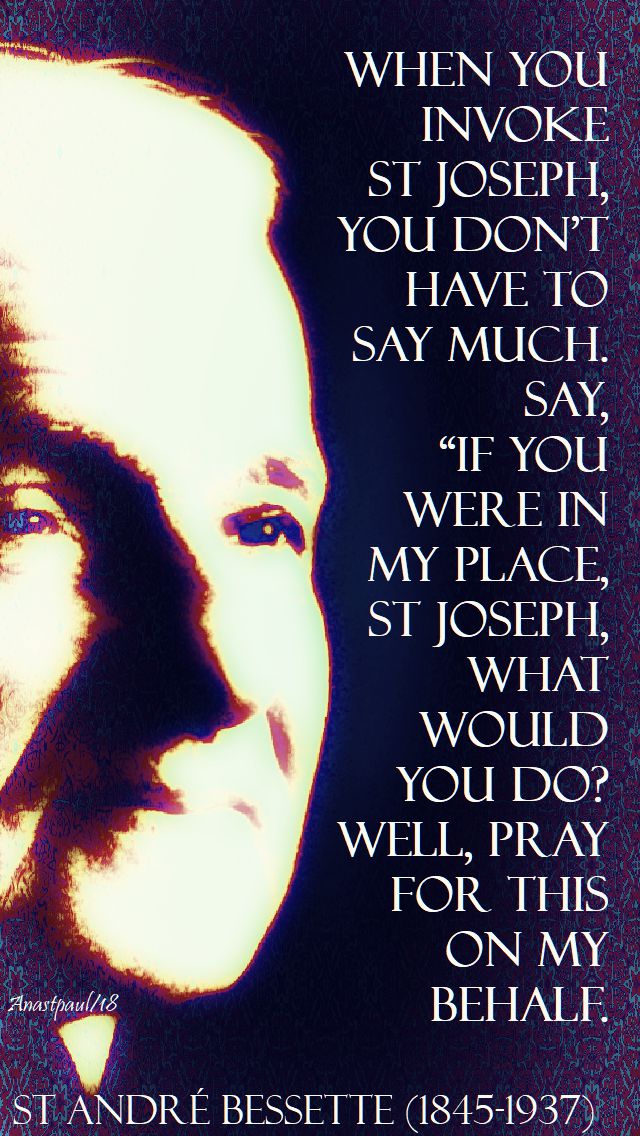
“When you invoke St Joseph, you don’t have to say much. Say, “if you were in my place, St Joseph, what would you do? Well, pray for this on my behalf.”
“When you say to God, ‘our Father’, He has His ear right next to your lips.”
“It is with the smallest brushes that the Artist paints the best paintings.”
One Minute Reflection – 6 January – First Day after Epiphany, Readings:
1 John 3:22–4:6, Psalm 2:7-8, 10-11, Matthew 4:12-17, 23-25
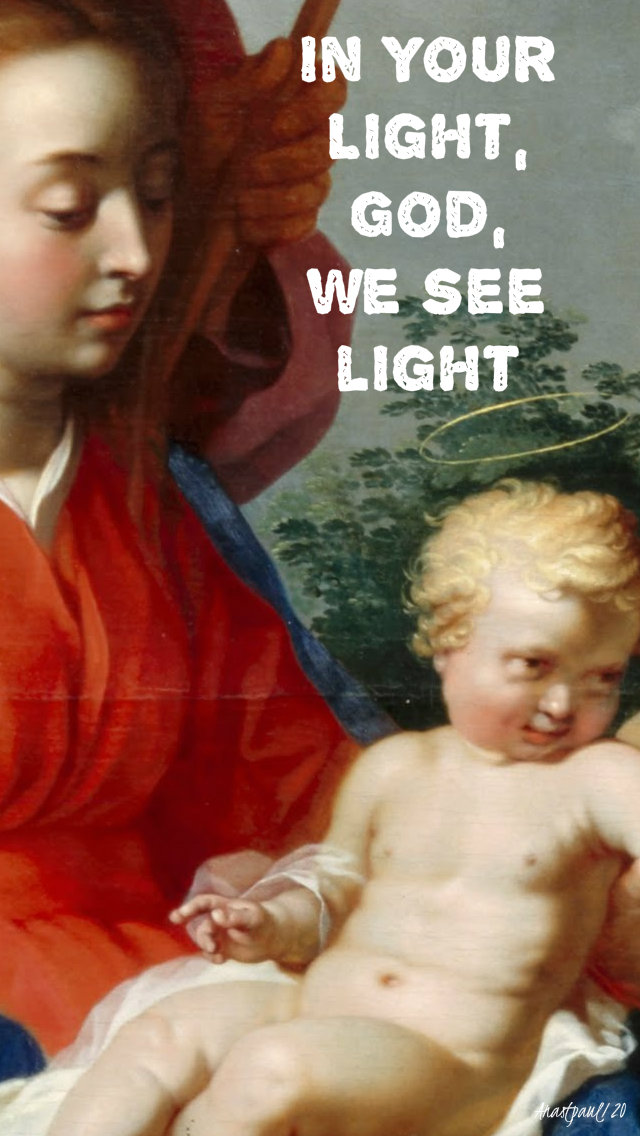
” .. The people who sit in darkness have seen a great light, on those dwelling in a land overshadowed by death, light has arisen.” … Matthew 4:16
REFLECTION – “In speaking of vision, or rather of a great light, Matthew undoubtedly intends us to understand our Saviour’s luminous preaching, the radiance of the Good News of the Kingdom of God. The land of Zebulon and of Naphtali heard it from our Lord’s own mouth before anyone else…
For in fact it was in this particular land that our Lord began to preach, it was there His preaching was inaugurated… And the apostles, who were the first to see this true light over these regions of Zabulon and Naphtali, themselves became “lights of the world”... As Isaiah’s text continues: “They rejoice before you as at the harvest, as men make merry when dividing the spoils.” This joy will indeed become the apostles’s joy, it will be a twofold joy when “they come back like reapers carrying their sheaves” and “as conquerors sharing the spoil”, that is to say of the conquered devil…
For it was You, our Lord and Saviour, who removed from their shoulders “the yoke that burdened them”, that yoke of the devil’s who in former times lorded it over the world when he reigned over all the nations and caused their necks to bow beneath the yoke of a grievous slavery… You it was who, without troops, without bloodshed, in the secret of Your power, freed us to place us at Your service… Yes, the devil will be “burned as fuel for the flames” because “a child is born to us”, the lowly Son of God “upon whose shoulders dominion rests” because, being God, He is able to possess the pre-eminence by His own strength… And His “dominion extends” since He will not only reign over the Jews, as David did but He will have the sovereignty over all nations “both now and forever”.” … Rupert of Deutz OSB (c 1075-1130) Benedictine Monk, Theologian, Exegete, Writer.
PRAYER – Lord, may the radiance of Your glory, light up our hearts and bring us through the shadows of this world, until we reach our homeland of everlasting light. May the prayers of St Andre Bessette and all Your saints who stand beside You, be an assistance in our moments of trial. Through Christ, the Light which shows us light and the Holy Spirit, God now and forever, amen.
Our Morning Offering – 6 January – First Day after Epiphany and the Month of the Most Holy Name
Write Your Blessed Name, Upon My Heart By Thomas à Kempis (1380-1471)
Write Your blessed name,
O Lord,
upon my heart,
there to remain so indelibly engraved,
that no prosperity,
no adversity shall ever move me
from Your love.
Be to me a strong tower of defence,
a comforter in tribulation,
a deliverer in distress,
a very present help in trouble
and a guide to heaven
through the many temptations
and dangers of this life.
Amen
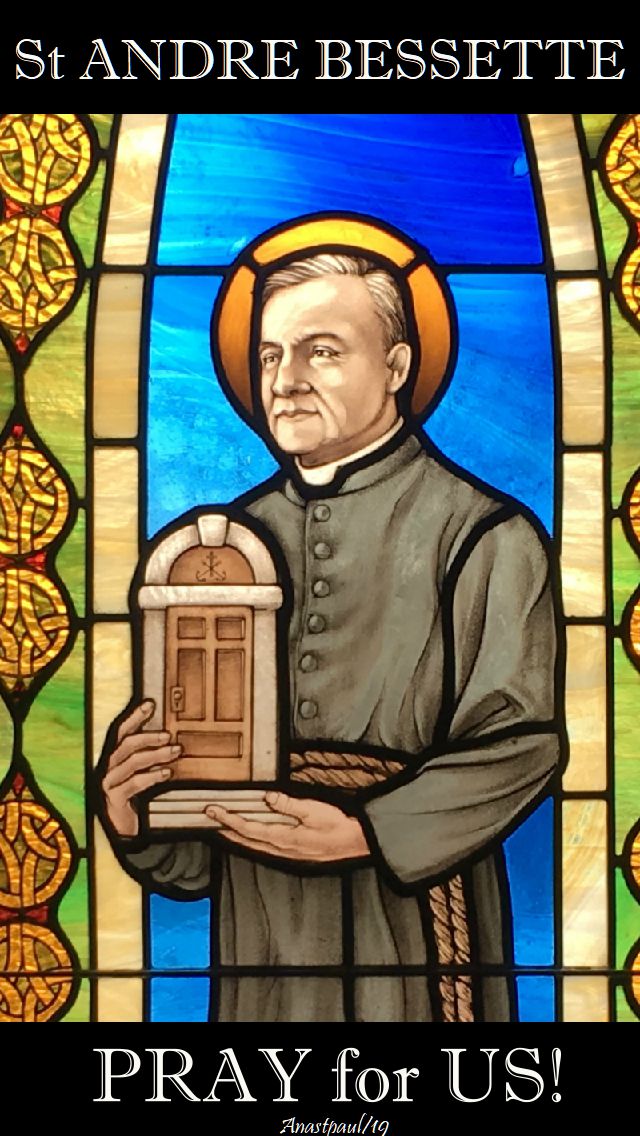
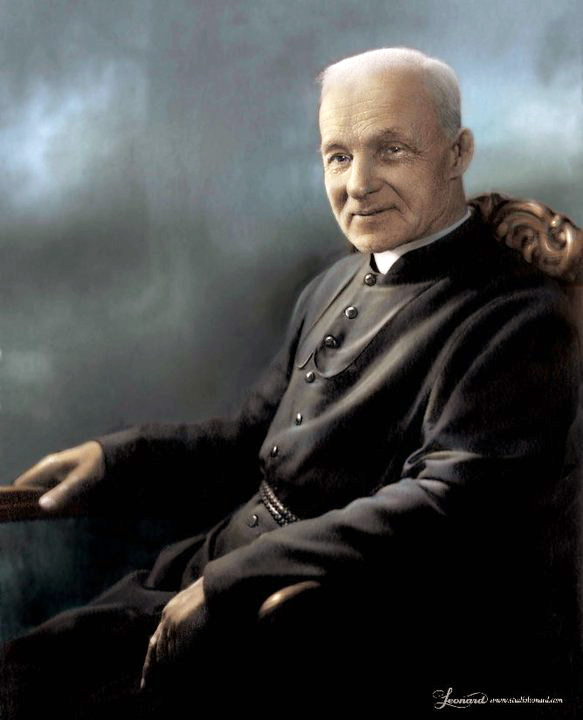
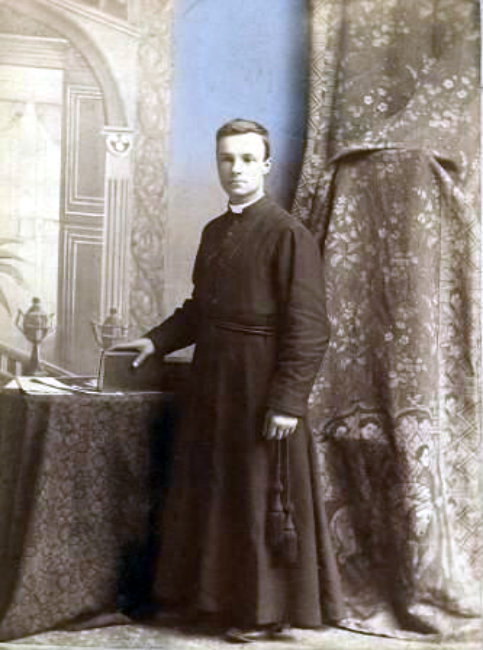
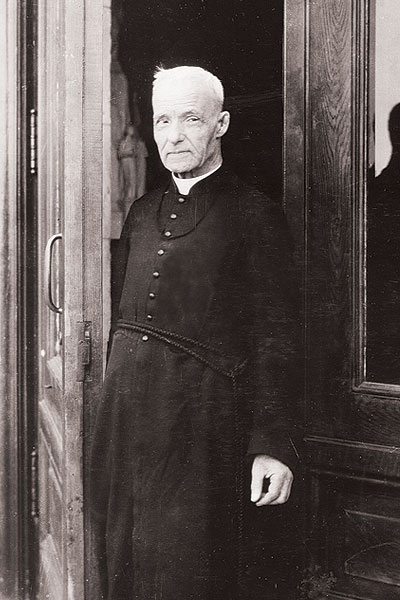
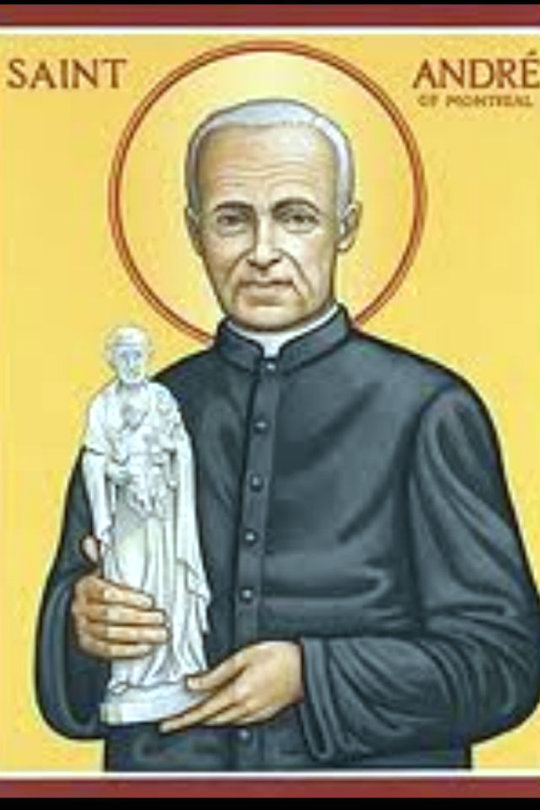
Saint of the Day – 6 January – Saint André Bessette CSC (1845-1937) “God’s Doorkeeper” more commonly known as Brother André and since his Canonisation as Saint André of Montreal, was a lay brother of the Congregation of Holy Cross, Apostle of Prayer, the Holy Eucharist, the Passion of Christ and of charity to the sick. He is famous for the many miracles worked during his and since his death. He was a devotee of St Joseph and constantly attributed all the cures to his intercession.
Saint Brother André, born Alfred Bessette on 8 August 1845 in Saint-Grégoire d’Iberville, Quebec, was the eighth in a family of 12 children, four of whom died in infancy. At birth, he was so frail that the curé baptised him in an emergency ritual the following day. The family was working-class, his father, Isaac Bessette, was a carpenter and lumberman and his mother, Clothilde Foisy Bessette, saw to the education of her children. In 1849, with employment scarce and his family living in poverty, Alfred’s father moved to Farnham, Quebec to work as a lumberman but soon perished tragically crushed by a falling tree. André was only nine years old and his mother died of tuberculosis three years later, when he was 12 years of age, he was an orphan, without money or education.
He remained small for his age and rather frail. He tried working as a helper on his uncle’s farm and he tried learning a number of trades – shoemaking, baking, welding and blacksmithing but his health did not permit him to persevere in any of them. When he was about 18, he emigrated to New England, where he found work in the textile industry.
He returned to Canada in 1867 and he pastor of his parish, the Fr André Provençal, noticed the devotion and generosity of the young man. He decided to present Alfred to the Congregation of Holy Cross in Montreal, writing a note to the superior, “I’m sending you a saint.” Although he was initially rejected by the order because of frail health, Archbishop Ignace Bourget of Montreal intervened on his behalf and in 1872, Alfred was accepted and entered the novitiate of the congregation, receiving the religious name of Brother André, by which he was known for the rest of his life. He made his final vows on 2 February 1874, at the age of 28. Although he spoke fluent French and English, he could neither read nor write.
For 40 years, he was the porter at Notre-Dame College in Montreal. He also looked after the laundry and the sacristy, he ran errands and cleaned. “When I joined this community, the superiors showed me the door, and I remained 40 years,” he said. As his work permitted, Brother André visited the sick and met with the handicapped and the chronically ill. His great confidence in Saint Joseph inspired him to recommend the saint’s devotion to all those who were afflicted.
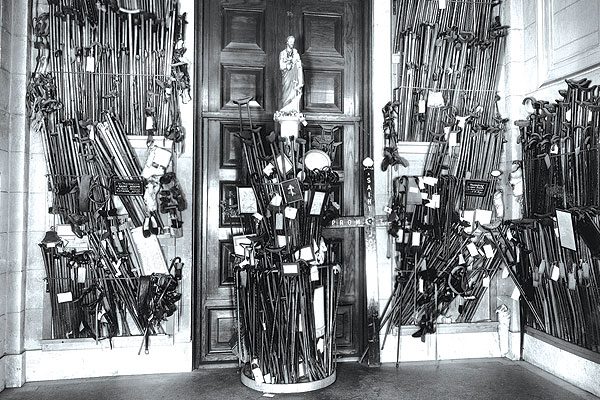
On his many visits to the sick in their homes, he would rub the sick person lightly with oil taken from a lamp burning in the college chapel and recommend them, in prayer, to Saint Joseph. People claimed that they had been cured through the prayers of the good Brother and Saint Joseph and they were grateful their prayers had been heard.
His reputation spread throughout Montreal and many brought their sick relatives to see the College door-keeper. They came in such great numbers that there were complaints from the parents of students and Brother André’s superiors as well as doctors, the compromise solution was to authorise him to place a statue of Saint Joseph on the mountainside, facing the College.
In 1904, with the help of some lay friends he built a wooden chapel on Mount Royal. The cost, $200, came from the offerings of those whom he had helped and from the nickels he charged students for haircuts. Pilgrims flocked to the chapel and so many people wrote to Brother André with requests for prayers that four secretaries were required to answer their letters. The chapel was enlarged in 1908 and a stone crypt was erected in 1917. Construction of the Basilica began in 1924. It was finally completed in 1967. Saint Joseph’s Oratory on Mount Royal is known around the world as a place of pilgrimage. Each year, hundreds of thousands of people are drawn to this place of prayer and recollection.
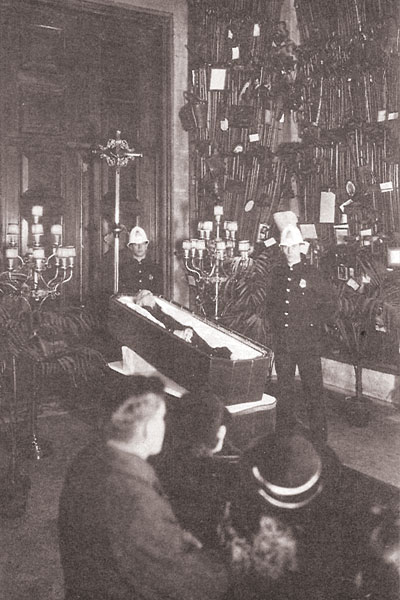
Brother André died on 6 January 1937, at the age of 91. A million people filed past his coffin.
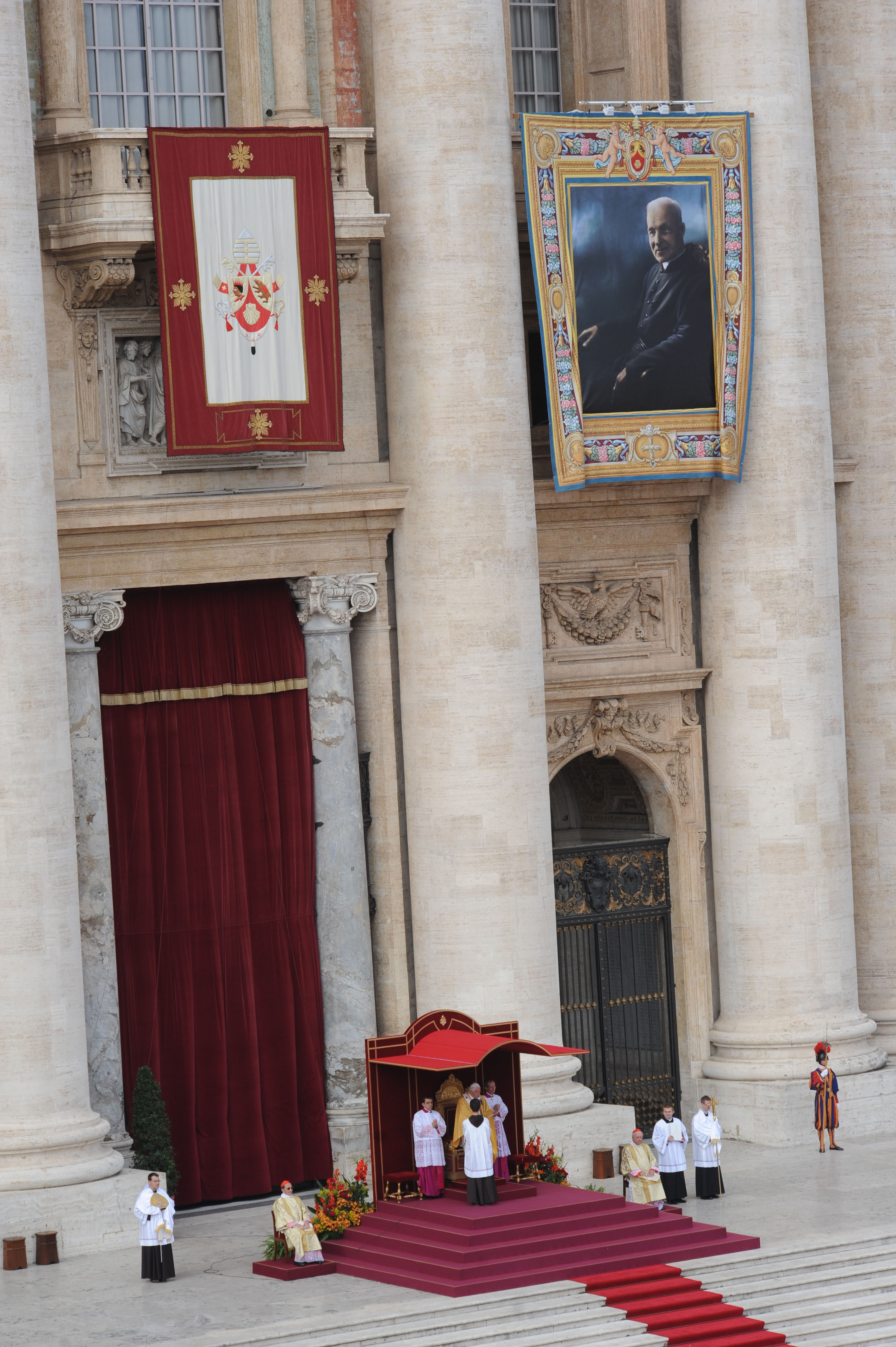
The remains of Brother André lie in the church he helped build. His body lies in a tomb built below the Oratory’s Main Chapel, except for his heart, which is preserved in a reliquary in the same Oratory. The heart was stolen in March 1973, but was recovered in December 1974 with the help of famous criminal attorney Frank Shoofey. He was declared Blessed on 23 May 1982 by Saint John Paul II. On Sunday, 17 October 2010, Pope Benedict Canonised him.
André Bessette was above all a man of prayer. Father André Provençal, who had recommended him as a candidate for joining the religious of the Holy Cross, had noticed his piety when Alfred was a young man. Alfred was hesitant to present himself to the Holy Cross novitiate because he had so little education but Father Provençal managed to persuade him that one didn’t have to know how to read or write in order to pray. St André’s spirit of prayer overcame the reticence of his Holy Cross superiors. The novice master was convinced that even if he turned out to be unsuitable for work, he could surely pray and teach by example.
Prayer was at the heart of his works of mercy. He prayed with the sick and involved them in praying, inviting them to reconciliation with God. He regularly prayed well into the night. He meditated on the passion of Jesus and saw the suffering of Jesus in the suffering people who came to him for help.
Like Moses on the mountain, he spent hours in intercessory prayer on behalf of those who asked him to talk to God on their behalf, often at the foot of the crucifix and before the Blessed Sacrament. That is where he found the courage, the patience and the serenity, to carry on his joyful love of all who came to his door.
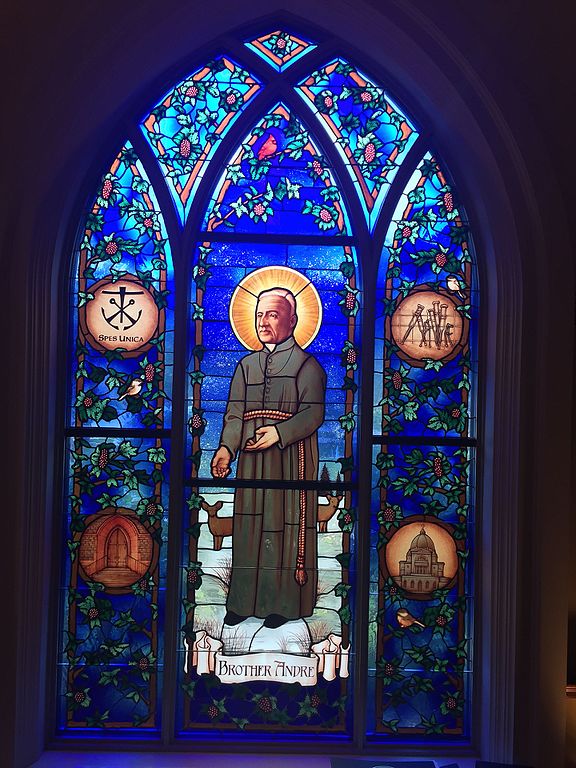
Stained Glass window with St Andre Bessette at the University of Notre Dame.
He understood Saint Joseph’s life to be much like his own – a worker, at times an emigrant, fulfilling the role of a servant in an educational context. This was also the reality of many of the people who shared with Brother André their difficulties, suffering, weaknesses and illnesses. His love of God and neighbour became a movement of the people, based entirely on word of mouth and the witness of those who had received help from his prayers.
St André Bessette, Pray for us too, we beg you, amen.
Statue of St André Bessette on the grounds of Saint Joseph’s Oratory in Montreal.
The Solemnity of the Epiphany of the Lord – Epiphany celebrates the visit of the three kings or wise men to the Christ Child, signifying the extension of salvation to the Gentiles. The date of Epiphany, one of the oldest Christian feasts, is 6 January the 12th day after Christmas. However, in most countries, the celebration of Epiphany is transferred to the Sunday that falls between January 2 and January 8 (inclusive). Greece, Ireland, Italy and Poland continue to observe Epiphany on 6 January as do some dioceses in Germany.
Because Epiphany is one of the most important Christian feasts, it is a Holy Day of Obligation in most countries.
St Demetrius of Philadelphia
St Diman Dubh of Connor
St Edeyrn
St Eigrad
St Erminold of Prüfening
St Felix of Nantes
Bl Frederick of Saint-Vanne
Bl Gertrud of Traunkirchen
Bl Gertrude van Oosten
St Guarinus of Sion
St Guy of Auxerre
St Honorius
St Hywyn of Aberdaron
St John de Ribera
St Julian of Antinoë
St Julius
Bl Luc of Roucy
Bl Macarius the Scot
St Macra of Rheims
St Merinus
St Nilammon of Geris
St St Petran of Landévennec
St Peter of Canterbury
Bl Peter Thomas
St Pia of Quedlinburg
St Pompejanus
St Rafaela Porras y Ayllón
Bl Raymond de Blanes
Bl Rita Amada de Jesus
St Schotin
St Wiltrudis of Bergen
—
Martyrs in Africa: Unknown number of Christian men and women who were martyred in the persecutions of Septimus Severus. They were burned to death c 210.
Martyrs of Sirmium – 8 saints: A group of Christians martyred together for their faith. The only surviving details are the names of eight of them – Anastasius VIII, Florianus, Florus, Jucundus, Peter, Ratites, Tatia and Tilis. They were martyred in the 4th century at Syrmium, Pannonia (modern Sremska Mitrovica, Vojvodina, Serbia).
Twelve Apostles Saints of Ireland: Twelve 6th century Irish monks who studied under Saint Finian at Clonard Abbey and then spread the faith throughout Ireland. Each has his own commemoration but on this day they and their good work are considered and celebrated together. Though Saint Finian is sometimes included, most ancient writers list them as –
• Brendan of Birr
• Brendan the Navigator
• Columba of Iona
• Columba of Terryglass
• Keiran of Saighir
• Kieran of Clonmacnois
• Canice of Aghaboe
• Lasserian of Leighlin
• Mobhí of Glasnevin
• Ninnidh the Saintly of Loch Erne
• Ruadh´n of Lorrha
• Senan of Iniscathay
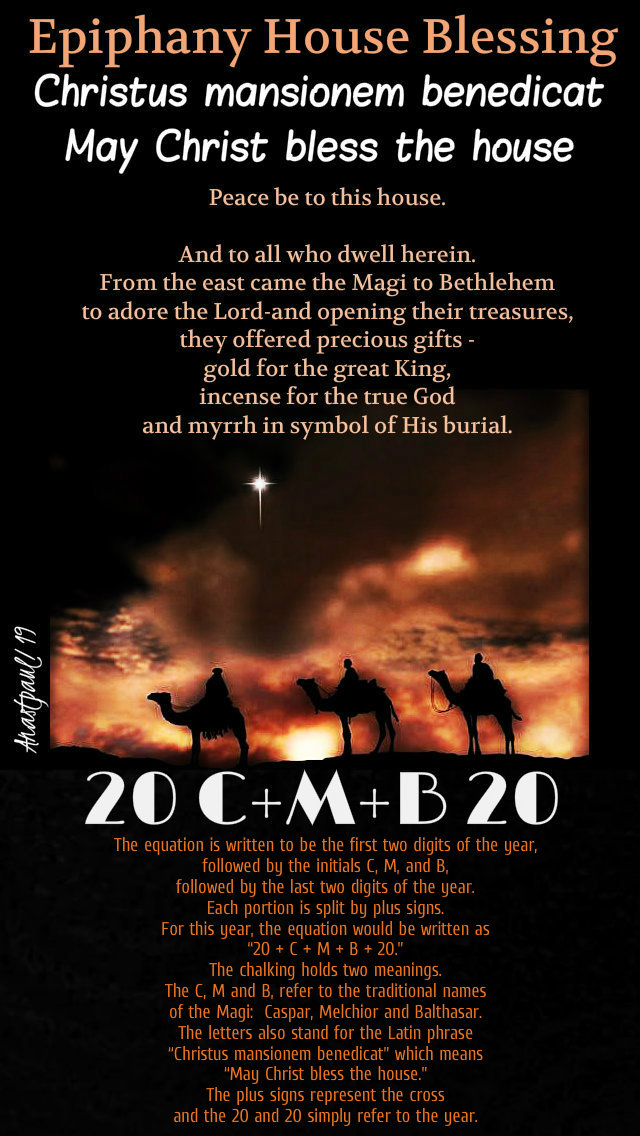
The equation is written to be the first two digits of the year,
followed by the initials C, M, and B,
followed by the last two digits of the year.
Each portion is split by plus signs.
For this year, the equation would be written as “20 + C + M + B + 20.”
The chalking holds two meanings.
The C, M and B, refer to the traditional names
of the Magi: Caspar, Melchior and Balthasar.
The letters also stand for the Latin phrase “Christus mansionem benedicat” which means “May Christ bless the house.”
The plus signs represent the cross
and the 20 and 20 simply refer to the year.
Thought for the Day – 5 January – Meditations with Antonio Cardinal Bacci (1881-1971) The Solemnity of the Epiphany of the Lord
The Epiphany
“Let us consider the faith of the Magi, a faith which was willing, lively and active.
They saw in the sky, the star which heralded the Infant Jesus and experienced the divine inspiration in their hearts.
Immediately, they went in search of Him.
They were not even deterred by the long and hazardous journey, which lay before them.
When they arrived at Jerusalem, they found Herod, who did not know what they were talking about. The star disappeared and the priests replied coldly to the questions they asked.
But all the time, their trust in the divine call continued to grow.
Eventually, they reached a poor barn, where they found, not an earthly King but a little child, who was crying on the straw bed of a manger.
As a reward for their trouble and perseverance, a voice in their hearts told them, that this was Jesus, the King of Kings and Saviour of the world.
Unfortunately, when we hear the divine call, no matter how clear and simple it is, we find a thousand excuses for delaying and perhaps for not responding to it at all.
Let us humbly promise to be more generous in listening for it and more energetic in complying with it, regardless of the cost!
It was love which inspired the Magi. Love sustained them on their journey and made them fall prostrate in adoration before the Infant Jesus. Even before they offered Him material gifts, they offered Him, their hearts!”
Quote/s of the Day – 5 January – The Solemnity of the Epiphany of the Lord
“If the Magi had come in search of an earthly King, they would have been disconcerted at finding that they had taken the trouble to come such a long way for nothing. Consequently they would have neither adored nor offered gifts. But since they sought a heavenly King, though they found in Him no signs of royal pre-eminence, yet, content with the testimony of the star alone, they adored – for they saw a man and they acknowledged God.”
St John Chrysostom (347-407)
Father and Doctor of the Church
“The Gospel account of the Magi describes their journey from the East as a journey of the spirit, as a journey toward the encounter with Christ. They are attentive to signs that indicate His presence, they are tireless in facing the trials of the search, they are courageous in deducing the implications for life that derive from encounter with the Lord. This is life – Christian life, is a journey but being attentive, tireless and courageous. A Christian, journeys like this. Journey attentively, tirelessly, courageously!”
“And as they fell to their knees before the small, poor and vulnerable Infant, the unexpected and unknown Child of Bethlehem, they discovered the glory of God.”
Sunday Reflection – 5 January – The Solemnity of the Epiphany of the Lord
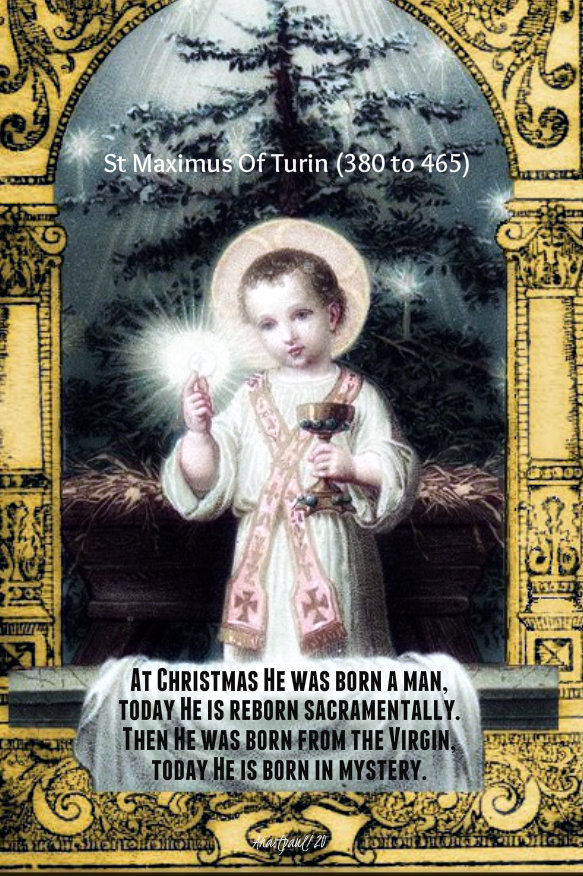
“At Christmas He was born a man, today He is reborn sacramentally.
Then He was born from the Virgin, today He is born in mystery.
When He was born a man, His mother Mary held Him close to her heart, when He is born in mystery, God the Father embraces Him with His voice when He says: This is my beloved Son in whom I am well pleased, listen to Him.
The mother caresses the tender baby on her lap, the Father serves His Son by His loving testimony.
The mother holds the child for the Magi to adore, the Father reveals that His Son is to be worshipped by all the nations.”
St Maximus Of Turin (380 to 465) Bishop of Turin, Theologian
One Minute Reflection – 5 January – The Solemnity of the Epiphany of the Lord, Readings: Isaiah 60:1-6, Psalm 72:1-2, 7-8, 10-13, Ephesians 3:2-3, 5-6, Matthew 2:1-12
“… They fell down and worshipped him. Then, opening their treasures, they offered him gifts, gold and frankincense and myrrh.” … Matthew 2:11
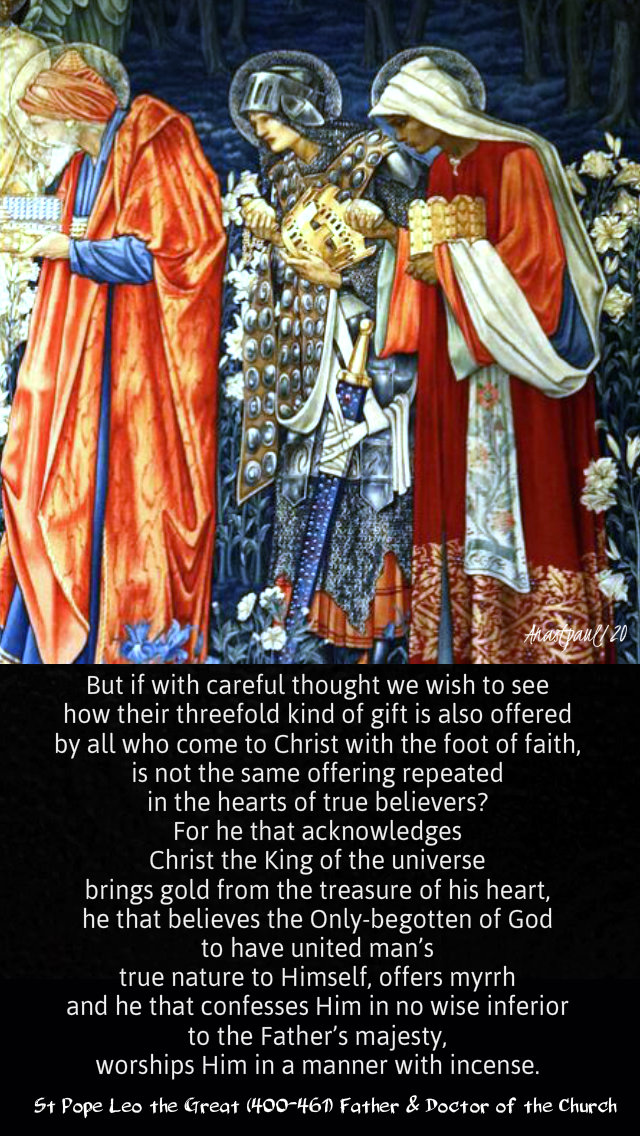
REFLECTION – “But if with careful thought we wish to see how their threefold kind of gift is also offered by all who come to Christ with the foot of faith, is not the same offering repeated in the hearts of true believers? For he that acknowledges Christ the King of the universe brings gold from the treasure of his heart, he that believes the Only-begotten of God to have united man’s true nature to Himself, offers myrrh and he that confesses Him in no wise inferior to the Father’s majesty, worships Him in a manner with incense.” … St Pope Leo the Great (400-461) Father and Doctor of the Church
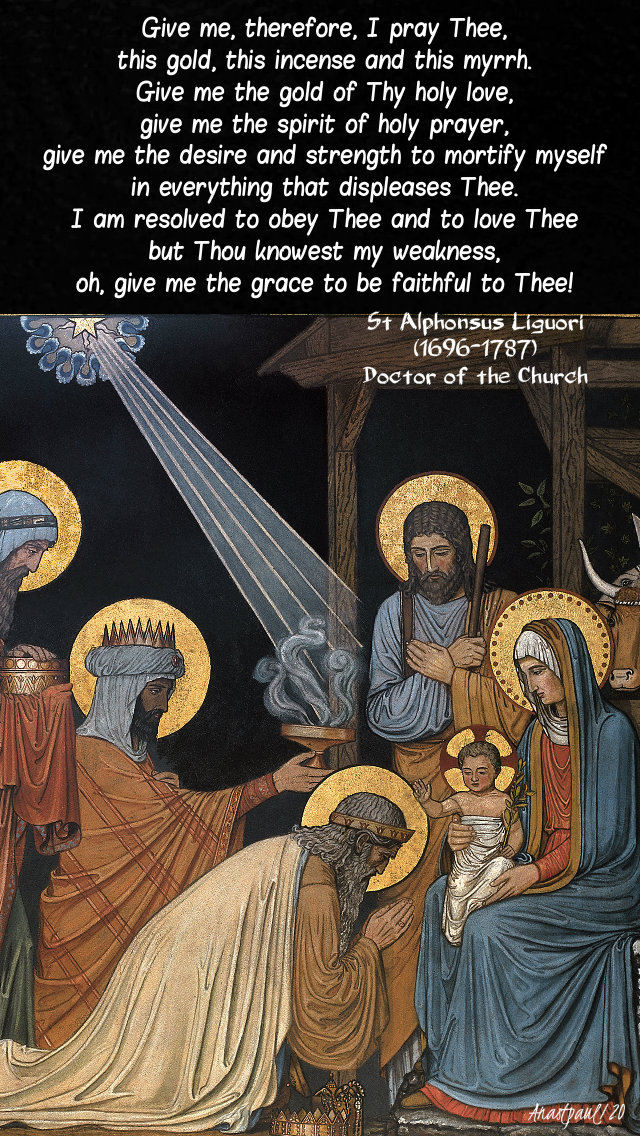
PRAYER – “Give me, therefore, I pray Thee, this gold, this incense and this myrrh. Give me the gold of Thy holy love, give me the spirit of holy prayer, give me the desire and strength to mortify myself in everything that displeases Thee. I am resolved to obey Thee and to love Thee but Thou knowest my weakness, oh, give me the grace to be faithful to Thee!” … St Alphonsus Liguori (1696-1787) Doctor of the Church
Our Morning Offering – 5 January – The Solemnity of the Epiphany of the Lord
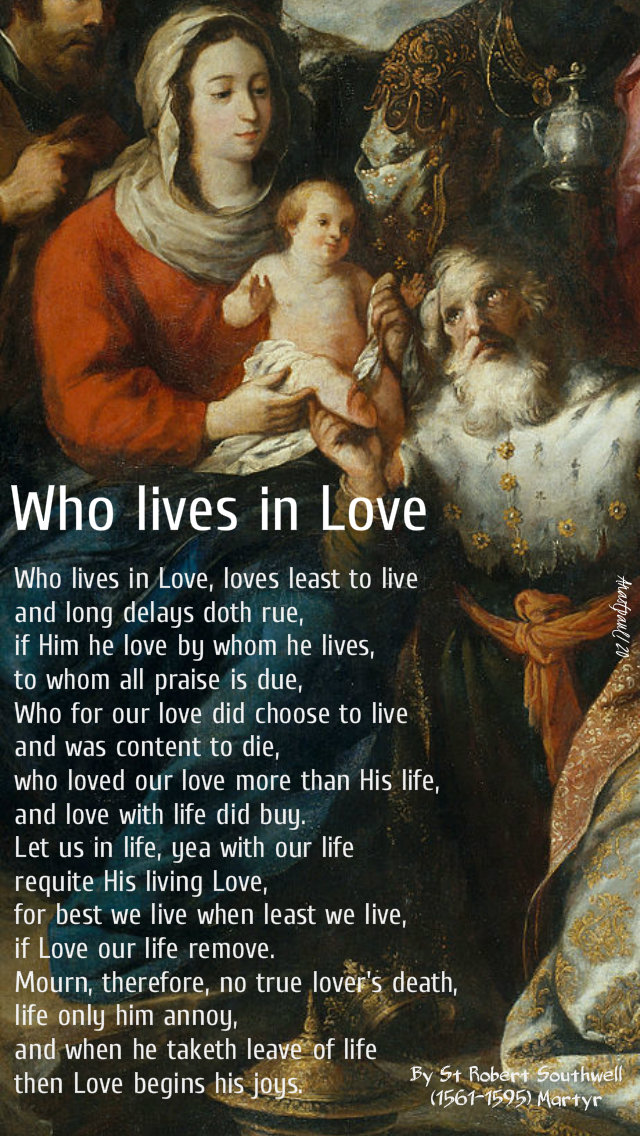
Who lives in Love By St Robert Southwell SJ (1561-1595) Martyr
Who lives in Love, loves least to live
and long delays doth rue,
if Him he love by whom he lives,
to whom all praise is due,
Who for our love did choose to live
and was content to die,
who loved our love more than His life,
and love with life did buy.
Let us in life, yea with our life
requite His living love,
for best we live when least we live,
if Love our life remove.
Mourn, therefore, no true lover’s death,
life only him annoy,
and when he taketh leave of life
then Love begins his joys.
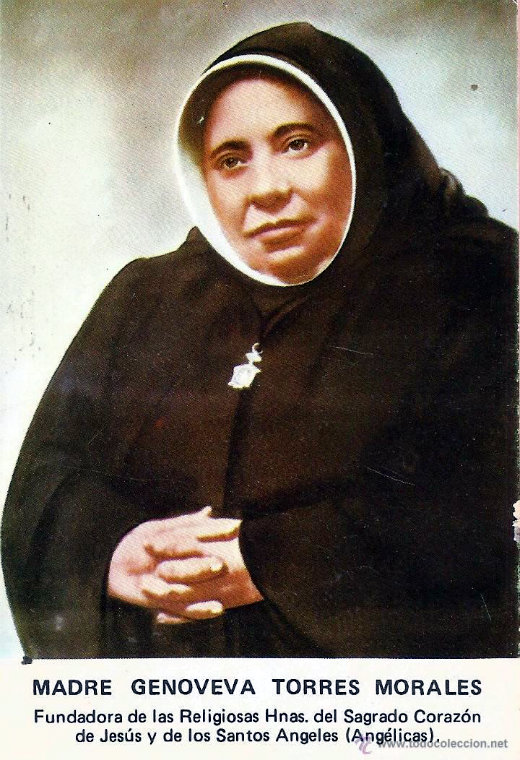
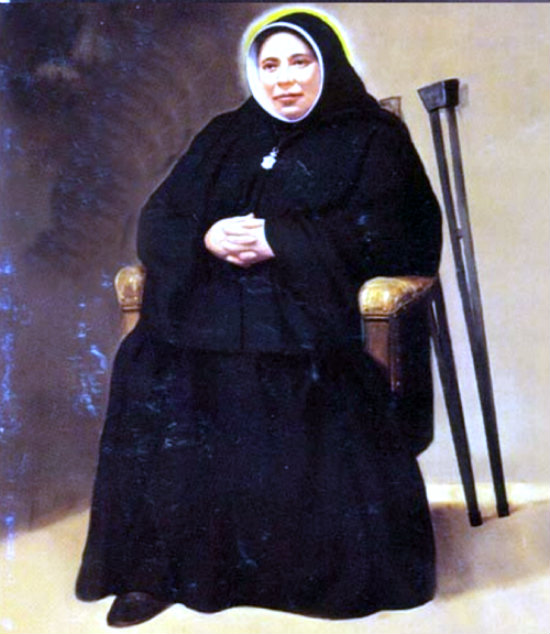
Saint of the Day – 5 January – Saint Genoveva Torres Morales (1870-1956) – Nun and Foundress of the Congregation of the Sacred Heart of Jesus and the Holy Angels (The Angélicas) of which Order she is the Patron, known as the “Angel of Solitude,” Apostle of the Holy Eucharist and of the Blessed Virgin Mary.
Genoveva Torres Morales was born on 3 January 1870 in Almenara, Castille, Spain, the youngest of six children. By the age of eight, both her parents and four of her siblings had died, leaving Genoveva to care for the home and her brother, José. Although he treated her with respect, José was very demanding and taciturn. Being deprived of affection and companionship from her early years, Genoveva became accustomed to solitude.
When she was 10, she took a special interest in reading spiritual books. Through this pursuit she came to understand that true happiness is doing God’s will and it was for this reason that each one of us is created. This became her rule of life.
At the age of 13, Genoveva’s left leg had to be amputated in order to stop the gangrene that was spreading there. The amputation was done in her home and since the anaesthesia was not sufficient, the pain was excruciating. Throughout her life her leg caused her pain and sickness and she was forced to use crutches.
From 1885 to 1894 she lived at the Mercy Home run by the Carmelites of Charity. In the nine years she lived with the sisters and with other children, the young Genoveva deepened her life of piety and perfected her sewing skills. It was also in these years that Fr Carlos Ferrís, a diocesan priest and future Jesuit and founder of a leprosarium in Fontilles, would guide the “beginnings” of her spiritual and apostolic life.
God also gave Genoveva the gift of “spiritual liberty” and this was something she would endeavour to practise throughout her life. Reflecting on this period at the Mercy Home, she later would write: “I loved freedom of heart very much and worked and am working to achieve it fully…. It does the soul so much good that every effort is nothing compared with this free condition of the heart.”
Genoveva intended to join the Carmelites of Charity but it seems she was not accepted due to her physical condition. She longed to be consecrated to God and, being of a decided and resolute nature, she continued to be open to His guidance.
In 1894 Genoveva left the Carmelites of Charity’s home and went to live briefly with two women who supported themselves by their own work. Together they “shared” the solitude and poverty.
In 1911, Canon Barbarrós suggested that Genoveva begin a new religious community, pointing out that there were many poor women who could not afford to live on their own and thus suffered much hardship. For years, Genoveva had thought of starting a religious congregation that would be solely concerned with meeting the needs of such women, since she knew of no one engaged in this work.
With the help of Canon Barbarrós and Fr Martín Sánchez, SJ, the first community was established in Valencia. Shortly thereafter, other women arrived, wanting to share the same apostolic and spiritual life. It was not long before more communities were established in other parts of Spain, despite many problems and obstacles.
A constant source of suffering for Mother Genoveva was her involvement in external activity and the new foundations. She desired to return to her characteristic interior solitude and remain alone with the Lord but she accepted her calling as God’s will and did not let her physical or interior suffering stop her.
She would say: “Even if I must suffer greatly, thanks be to God’s mercy, I will not lack courage.”
She was known for her kindness and openness to all and for her good sense of humour – she would even joke about her physical ailments.
In 1953, the Congregation of the Sacred Heart of Jesus and the Holy Angels received Pontifical approval. Mother Genoveva died on 5 January 1956. She was Beatified by St Pope John Paul II on 29 January 1995 at St Peter’s and Canonised by him on 4 May 2003 in Spain. … Vatican.va
The Solemnity of the Epiphany of the Lord +2019(many countries and Diocese will celebrate tomorrow 6 January, as per usual but many others will celebrate today, the nearest Sunday to the 6th).
Bl Convoyon of Redon
St Deogratias of Carthage
St Dorotheus the Younger
Bl François Peltier
St Gaudentius of Gnesen St Genoveva Torres Morales (1870-1956)
St Gerlac of Valkenburg
Bl Jacques Ledoyen
Bl Joan Grau Bullich
St Kiara
St Lomer of Corbion
Bl Marcelina Darowska
Bl Maria Repetto
Bl Paula of Tuscany
Nl Pierre Tessier
Bl Pietro Bonilli
St Simeon Stylites
St Syncletica
St Talida of Antinoë
—
Martyrs of Africa – 14 saints: A group of Christians martyred together in Africa, date unknown, exact location unknown. We know nothing more than their names – Acutus, Anastasia, Candidus, Coelifloria, Felix, Honorius, Januaria, Jucundus, Lucianus, Marcus, Petrus, Secundus, Severus and Telesphorus.
Martyrs of Sais: A group of Christians martyred for their faith, but about whom no details have survived. They were martyred by drowning near Sais, Egypt.
Martyrs of Upper Egypt: There were many martyrs who suffered in the persecutions of Diocletian in the Thebaid region. Though we know these atrocities occurred, to the point that witnesses claim the torturers and executioners were exhausted by the work, we do not know the names of the saints and we honour them as a group. Many were beheaded and or burned alive in 303 in Upper Egypt.
Thought for the Day – 4 January – Meditations with Antonio Cardinal Bacci (1881-1971)
Sin
In that we prefer our own wayward whims to the law of God, sin is an abuse of liberty.
It is a revolt against right reason, the dictates of which, we refuse to obey.
It is an offence against our Creator and Redeemer, whose commandments we despise and whose redeeming grace, we reject by our actions.
It is moreover, an act of supreme folly, for it extinguishes, not only the supernatural splendour of grace but, also, the natural light of reason.
Through sin, man is brutalised and experiences in himself, as his first punishment, the confusion of his whole being.
In practice, the sinner denies God, Who has created and redeemed him.
He upsets the natural order of things and is violently separated from the source of all truth, beauty and goodness. As a result, he experiences, in himself, the hell which he has constructed with his own hands – a hell of emptiness, disgust and remorse.
Unless the helping hand of God reaches out to rescue him from the abyss, all this is simply a bitter foretaste of eternal despair.
God, as St Augustine has written, has ordained from all eternity, that every dissolute soul will be it’s own punishment.
For the sinner, hell begins on this earth! There can be no peace for the wicked.
When we realise, the gravity, stupidity and dire consequences of sin, it seems impossible, that a rational being, enlightened and enriched by divine grace, should continue to sin.
Nevertheless, sad experience teaches us that the lives of individuals, families and human society in general, are often distorted by this evil, which is the root of all other evils.
Quote/s of the Day – 4 January – Saturday of Christmas – the Memorial of Saint Angela of Foligno (1248-1309)
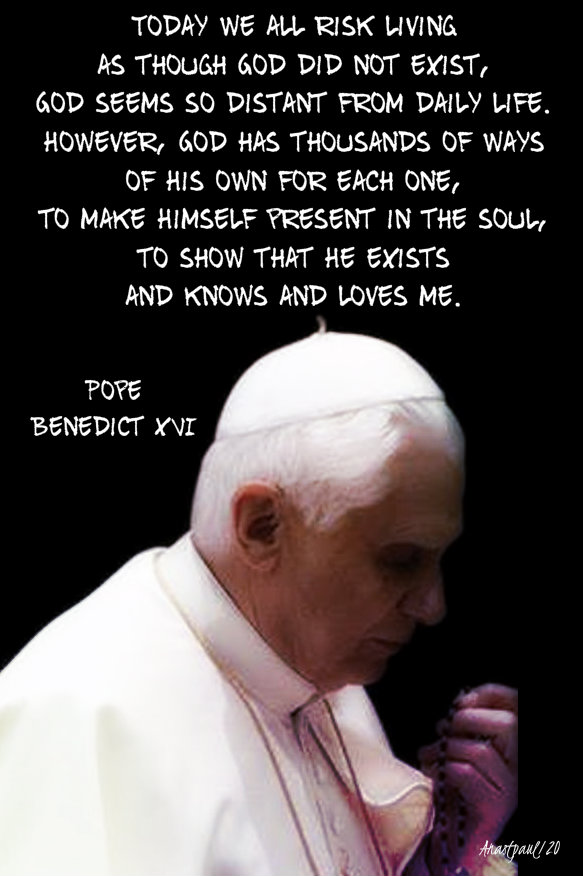
“Dear brothers and sisters, Blessed Angela’s life began with a worldly existence, rather remote from God. Yet her meeting with the figure of St Francis and, finally, her meeting with Christ Crucified, reawakened her soul to the presence of God, for the reason that with God alone life becomes true life, because, in sorrow for sin, it becomes love and joy. And this is how Blessed Angela speaks to us.
Today we all risk living as though God did not exist, God seems so distant from daily life. However, God has thousands of ways of His own for each one, to make Himself present in the soul, to show that He exists and knows and loves me. And Blessed Angela wishes to make us attentive to these signs with which the Lord touches our soul, attentive to God’s presence, so as to learn the way with God and towards God, in communion with Christ Crucified.
Let us pray the Lord that He make us attentive to the signs of His presence and that He teach us truly to live.”
Pope Benedict XVI A talk on Angela of Foligno – October, 2010
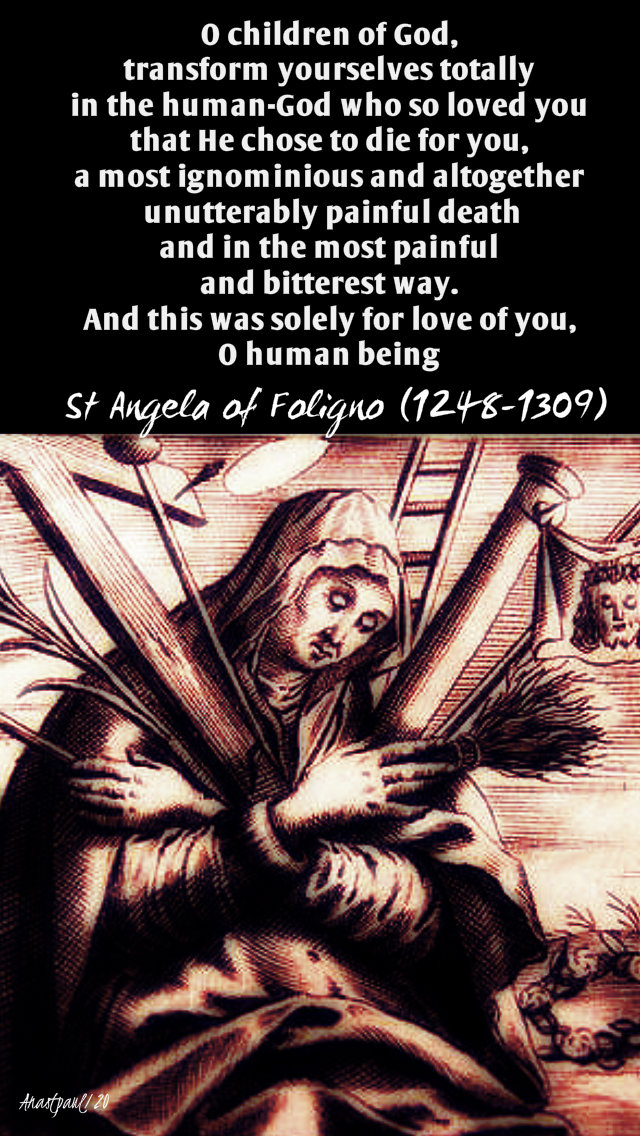
“O children of God, transform yourselves totally in the human-God who so loved you that He chose to die for you, a most ignominious and altogether unutterably painful death and in the most painful and bitterest way. And this was solely for love of you, O human being.”
One Minute Reflection – 4 January – Saturday of Christmas, Readings:
1 John 3:7-10, Psalm 98:1, 7-9, John 1:35-42
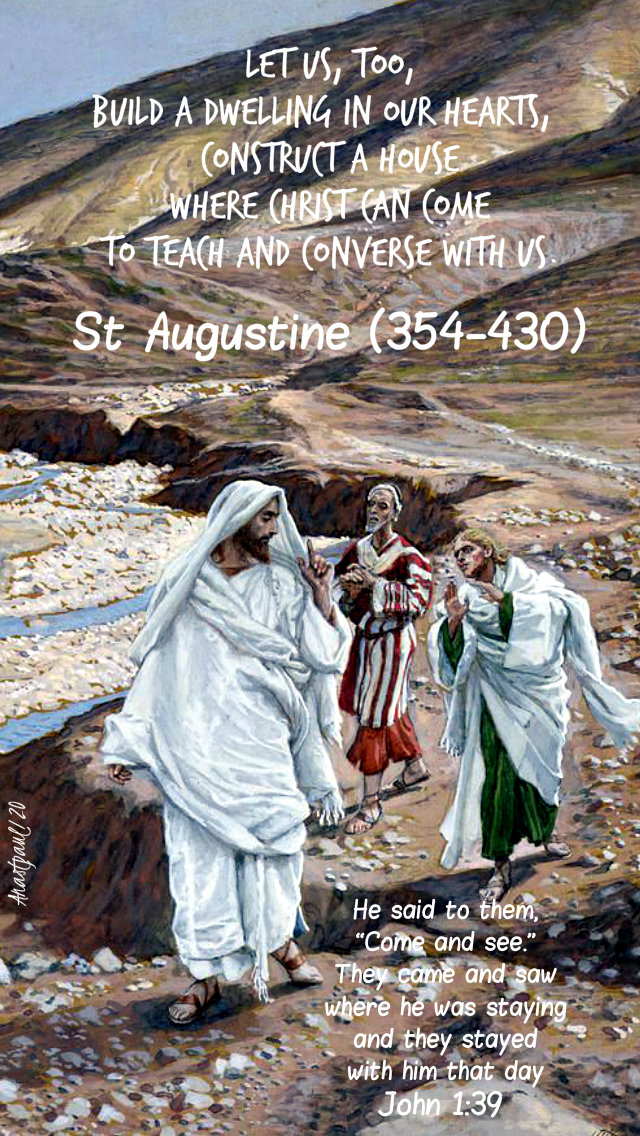
He said to them, “Come and see.” They came and saw where he was staying and they stayed with him that day … John 1:39
REFLECTION – “John was there and two of his disciples with him.” John was such “a friend of the Bridegroom” that he did not seek his own glory, he simply bore witness to the truth (Jn 3:29.26). Did he dream of keeping back his disciples and preventing them from following the Lord? Not in the least. He himself showed them the one they were to follow (…) He declared: “Why cling to me? I am not the Lamb of God. Behold the Lamb of God (…) Behold him who takes away the sins of the world.”
At these words the two disciples who were with John followed Jesus. “Jesus turned and saw that they were following him and said to them: ‘What are you looking for?’ They said to him: ‘Rabbi, where are you staying?” As yet they were not following Him definitively, as we know, they joined themselves to Him when He called them to leave their boat (…), when He said to them: “Come after me and I will make you fishers of men” (Mt 4:19). That was the moment they joined Him definitively, no longer to leave Him. But for now they wanted to see where Jesus was living and put into practice the words of Scripture: “If you see an intelligent man, seek him out at daybreak; let your feet wear away his doorstep! Learn from him the precepts of the Lord” (cf. Sir 6:36f.). So Jesus showed them where He was living, they went and stayed with Him. What a happy day they spent! What a blessed night! Who can say what it was they heard from the Lord’s mouth? Let us, too, build a dwelling in our hearts, construct a house where Christ can come to teach and converse with us.” … St Augustine (354-430) Bishop of Hippo, Father & Doctor of the Church – Sermons on Saint John’s Gospel, no 7
PRAYER – Almighty God, the light of a new star in heaven, heralded Your saving love . Let the light of Your salvation dawn in our hearts and keep them always open to Your life-giving grace. May we stay with Your Son, for He will teach us Your ways. Kindly hear the prayers on our behalf of Mary our mother and of all Your saints and may St Angela of Foligno intercede today on our behalf. Through Christ, our Lord, with the Holy Spirit, God now and forever, amen.
Our Morning Offering – 4 January – Saturday of Christmas
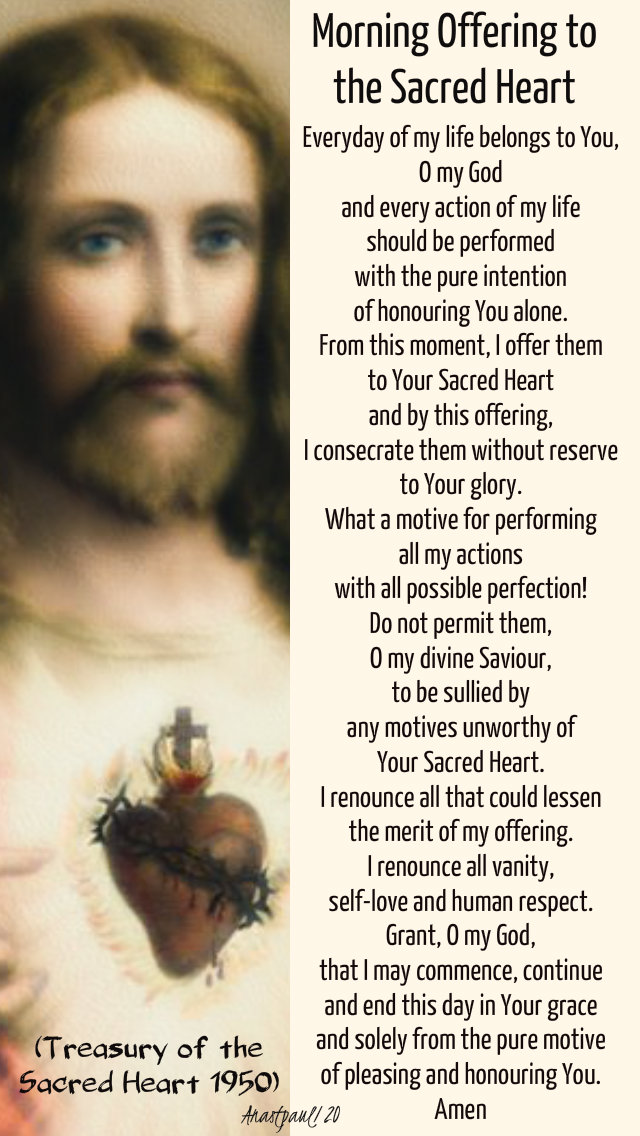
Morning Offering to the Sacred Heart (Treasury of the Sacred Heart 1950)
Everyday of my life belongs to You,
O my God
and every action of my life
should be performed with the pure intention
of honouring You alone.
From this moment, I offer them
to Your Sacred Heart
and by this offering,
I consecrate them without reserve
to Your glory.
What a motive for performing
all my actions with all possible perfection!
Do not permit them, O my divine Saviour,
to be sullied by any motives unworthy of
Your Sacred Heart.
I renounce all that could lessen
the merit of my offering.
I renounce all vanity,
self-love and human respect.
Grant, O my God,
that I may commence, continue
and end this day in Your grace
and solely from the pure motive
of pleasing and honouring You.
Amen
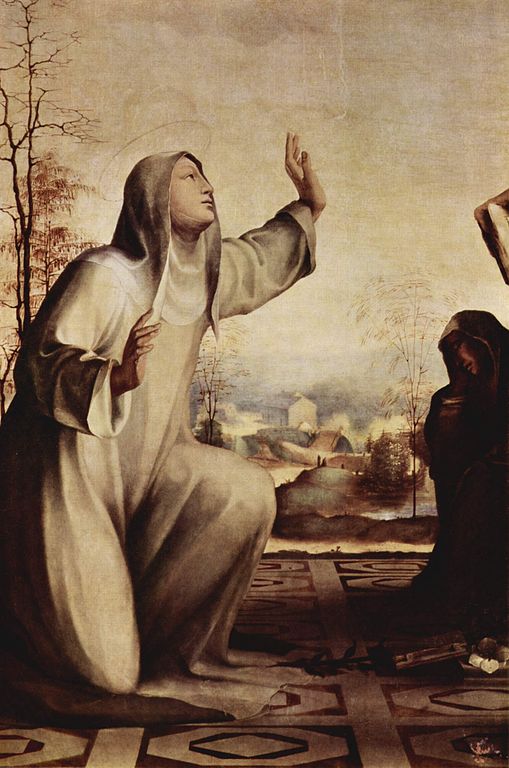
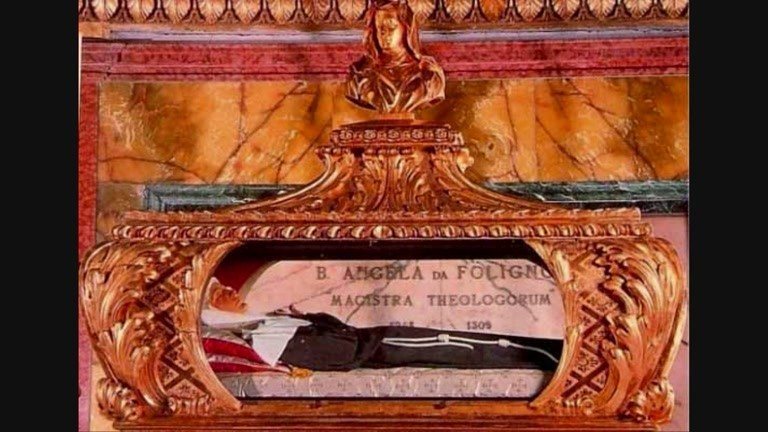
Saint of the Day – 4 January – Saint Angela of Foligno TOSF (1248-1309) known as the “Mistress of Theologians” – Wife, Mother, Widow, Religious, Mystic, Writer, Third Order Franciscan, Foundress of a religious community, which refused to become an enclosed religious order, so that it might continue her vision of caring for those in need. It is still active. Patronages – against sexual temptation, against temptations, assistance with the death of children, people ridiculed for their piety, widows.
Angela’s birth date, which is not known with certainty, is often listed as 1248. She was born into a wealthy family at Foligno, in Umbria. Married, perhaps at an early age, she had several children. Angela reports that she loved the world and its pleasures. Around the age of 40, she reportedly had a vision of St Francis and recognised the emptiness of her life. From that time, she began to lead a life devoted to higher perfection.
Angela of Foligno is a model for people who want to simplify their lifestyle. As a young adult she reveled in luxury and sensuality. She married a rich man of Foligno, Italy, and used his wealth to indulge herself in possessions. And her impetuous temperament nudged her into sinful behaviour.
However in 1285, Angela experienced a surprising conversion. One day she wept bitterly and confessed a serious sin to a friar, who absolved her. Then she embarked on a life of prayer and penance. Over the next six years, step-by-step she divested herself of her attachments to people and things.
In 1288 her mother, husband and sons died of a plague. As a widow, Angela was free to concentrate on her pursuit of holiness . She modelled herself on St Francis of Assisi and joined the Franciscan Third Order in 1291. Like Francis, Angela expected to meet Christ in the poor. For instance, on Holy Thursday, 1292, she and a companion went to care for lepers at the hospital in Foligno. After they had washed a man who was badly decomposed, they drank some of the bathwater. The experience so moved Angela that she says all the way home she felt “as if we had received Holy Communion.”
Angela of Foligno was a visionary who, like St Catherine of Siena, regularly fell into trances. From 1292 to 1296 she dictated her revelations to Brother Arnold, her confessor. Angela recorded 30 steps of her tortured spiritual journey, which always seemed to blend awareness and absence of God, certitude and doubt and joy and agony.
A small band of disciples gathered around the saint. She led them wisely, instructing them in basic Christian living. This excerpt from her Instructions, advocates prayer and meditation on Scripture:
“No-one can be saved without divine light. Divine light causes us to begin and to make progress and it leads us to the summit of perfection. Therefore, if you want to begin and to receive this divine light, pray. If you have begun to make progress, pray. And if you have reached the summit of perfection and want to be super-illumined so as to remain in that state, pray. If you want faith, pray. If you want hope, pray. If you want charity, pray. If you want poverty, pray. If you want obedience, pray. If you want chastity, pray. If you want humility, pray. If you want meekness, pray. If you want fortitude, pray. If you want any virtue, pray.”
And pray in this fashion – always reading the Book of Life, that is, the life of the God-man, Jesus Christ, whose life consisted of poverty, pain, contempt and true obedience.
At Christmas, 1308, Angela told her companions she would die shortly. A few days later Christ appeared to her, promising to come personally to take her to heaven. She died in her sleep on 3 January 1309, surrounded by her community. Her remains repose in the Church of St Francis at Foligno and many miracles have been recorded there.
Considered a “great medieval mystic,” Angela is said to have received mystical revelations, which she dictated to a scribe in the late 13th century. These accounts are contained in a compilation of two works, her Book of Visions and Instructions.
Pope Clement XI approved the veneration paid to her over the centuries in his Beatification of her on 11 July 1701 and Pope Francis extended the veneration to all the Church on 9 October 2013, declaring her a saint by equipollent Canonisation, recognising the validity of the long-standing veneration of her.
Her feast day is celebrated by the Third Order of Saint Francis, both Secular and Regular, on 4 January (7 January in the United States). Although the community she founded was not recognised as a religious institute until the 20th-century, she is honoured as a religious.
St Aedh Dubh
St Aggaeus the Martyr St Angela of Foligno TOSF (1248-1309)
St Celsus of Trier
Bl Chiara de Ugarte
St Chroman
St Dafrosa of Acquapendente
St Ferreolus of Uzès
St Gaius of Moesia
St Gregory of Langres
St Hermes of Moesia
St Libentius of Hamburg
Bl Louis de Halles St Manuel Gonzalez Garcia (1877–1940) “Apostle of the Abandoned Tabernacles” St Manuel’s Story:
St Mavilus of Adrumetum
St Neophytos
St Neopista of Rome
St St St Oringa of the Cross
Bl Palumbus of Subiaco
St Pharaildis of Ghent
St Rigobert of Rheims
Bl Roger of Ellant
St Stephen du Bourg
St Theoctistus
Bl Thomas Plumtree
—
Martyrs of Africa – 7 saints: A group of Christians martyred together in the persecutions of the Arian Vandal king Hunneric. Saint Bede wrote about them. – Aquilinus, Eugene, Geminus, Marcian, Quintus, Theodotus and Tryphon. In 484 in North Africa.
Martyrs of Rome – 3 saints: Three Christians martyred together in the persecutions of Julian the Apostate for refusing to renounce Christianity as ordered. – Benedicta, Priscillianus and Priscus. In 362 in Rome, Italy.

















 One day she wept bitterly and confessed a serious sin to a friar, who absolved her. Then she embarked on a life of prayer and penance. Over the next six years, step-by-step she divested herself of her attachments to people and things.

 AnaStpaul
You must be logged in to post a comment.