Posted in ASPIRATIONS and EJACULATIONS, CATHOLIC DEVOTIONS of the Month, DOCTORS of the Church, FEASTS and SOLEMNITIES, PRACTISING CATHOLIC, PRAYERS for VARIOUS NEEDS, PRAYERS of the CHURCH, QUOTES of the SAINTS, The HOLY NAME

Second Thought for the Day – 3 January – This Name is the cure for all diseases of the soul. 

Second Thought for the Day – 3 January – Christmas Weekday and the Feast of the Most Holy Name of Jesus

This Name is the cure for all diseases of the soul.

St Bernard of Clairvaux (1090-1153)
Doctor of the Church

“The sweet Name of Jesus produces in us holy thoughts, fills the soul with noble sentiments, strengthens virtue, begets good works and nourishes pure affections. All spiritual food leaves the soul dry, if it contain not that penetrating oil, the Name Jesus. When you take your pen, write the Name Jesus, if you write books, let the Name of Jesus be contained in them, else they will possess no charm or attraction for m, you may speak, or you may reply, but if the Name of Jesus sounds not from your lips, you are without unction and without charm.

Jesus to me is honey in the mouth, light in the eyes, a flame in our heart.   This Name is the cure for all diseases of the soul.   Are you troubled? think but of Jesus, speak but the Name of Jesus, the clouds disperse and peace descends anew from heaven.

Have you fallen into sin? so that you fear death? invoke the Name of Jesus and you will soon feel life returning.   No obduracy of the soul, no weakness, no coldness of heart can resist this holy Name, there is no heart which will not soften and open in tears at this holy name.   Are you surrounded by sorrow and danger? invoke the Name of Jesus and your fears will vanish.

Never yet was human being in urgent need and on the point of perishing, who invoked this help-giving Name and was not powerfully sustained.   It was given us for the cure of all our ills, to soften the impetuosity of anger, to quench the fire of concupiscence, to conquer pride, to mitigate the pain of our wounds, to overcome the thirst of avarice, to quiet sensual passions and the desires of low pleasures.

If we call to our minds the Name of Jesus, it brings before us His most meek and humble heart and gives us a new knowledge of His most loving and tender compassion.   The Name of Jesus is the purest and holiest, the noblest and most indulgent of names, the Name of all blessings and of all virtues, it is the Name of the God-Man, of sanctity itself. To think of Jesus is to think of the great, infinite God Who, having given us His life as an example, has also bestowed the necessary understanding, energy and assistance to enable us to follow and imitate Him, in our thoughts, inclinations, words and actions.

If the Name of Jesus reaches the depths of our heart, it leaves heavenly virtue there.   We say, therefore, with our great master, St Paul the Apostle – If any man love not our Lord Jesus Christ, let him be anathema.”

Jesus, I offer You my thoughts,
that You may keep them pure,
my actions, that they may
always glorify Your Name,
my words, that they may
forever give You praise!jesus i offer you my thoughts 3 jan 2020 most holy name of jesus.jpg

Posted in MEDITATIONS - ANTONIO CARD BACCI, QUOTES - J R R Tolkien and MORE, QUOTES on MEDITATION

Thought for the Day – 3 January – Making a Good Meditation

Thought for the Day – 3 January – Meditations with Antonio Cardinal Bacci (1881-1971)

Making a Good Meditation

“It is not enough, simply to make a meditation.
It ought to be made well.
It is well made only when it results in an increase of solid virtue and sanctity.
Meditation, moreover, should not be study but mental prayer – a raising of mind to God, asking Him to illumine the darkness of our hearts, too often entangled with the things of the world and, to reinforce our wills, rescuing them from the violent attractions of evil and drawing them, in the direction of virtue and sacrifice.
To meditate, is not to study but to pray.
Whoever loses himself in subtle investigations of Christian Doctrine in order to learn something or to be able to mystify others, is studying, not meditating.
It would be even worse, to let one’s imaginations wander off into a kind of pseudo-mystic daydream.
Let us be quite clear about this – Meditation is not a waste of time but a very serious occupation.
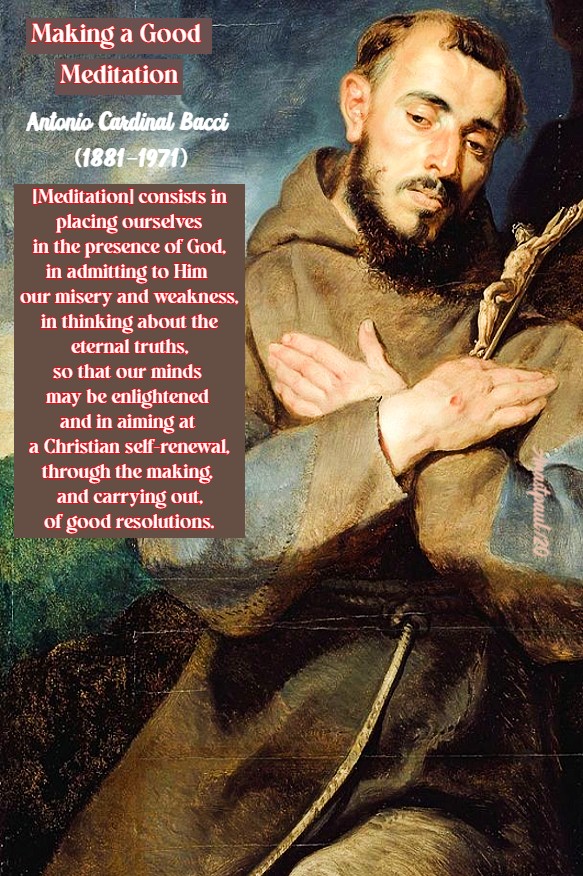
It consists in placing ourselves in the presence of God, in admitting to Him our misery and weakness, in thinking about the eternal truths, so that our minds may be enlightened and in aiming at a Christian self-renewal, through the making and carrying out, of good resolutions.

Antonio Cardinal Bacci

Posted in CATHOLIC DEVOTIONS of the Month, CATHOLIC-PRAYERS OF THE CHURCH, CHRISTMASTIDE!, DOCTORS of the Church, FATHERS of the Church, FEASTS and SOLEMNITIES, PRACTISING CATHOLIC, PRAYERS of the CHURCH, QUOTES of the SAINTS, The HOLY NAME, The WORD

Quote/s of the Day – 3 January – Blessed be the Most Holy Name of Jesus without end!

Quote/s of the Day – 3 January – Christmas Weekday

and the Feast of the Most Holy Name of Jesus

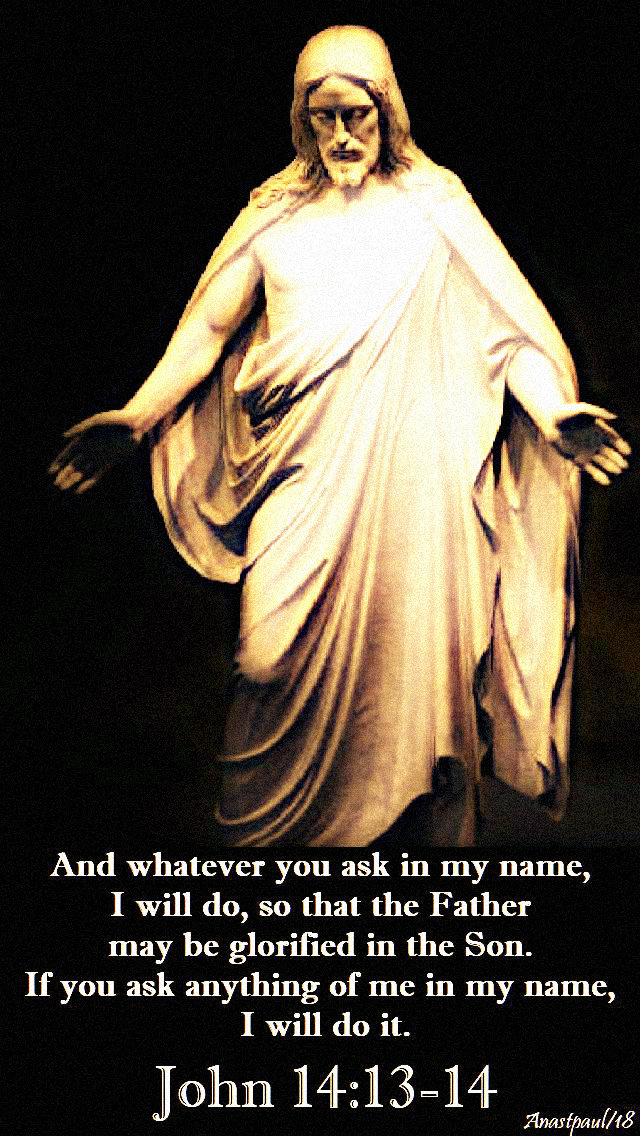
“And whatever you ask in my name,
I will do, so that the Father
may be glorified in the Son.
If you ask anything of me,
in my name,
I will do it.”

John 14:14-14john-14-13-14-10-jan-2018 and 2020 and whatever you ask in my name i will do, so that.jpg

“And you shall call His name Jesus,
because in His Name we adore
the entire majesty of the Godhead.
All who dwell in the heavens,
those who abide upon the earth
and everyone of those
who are held in the depths of hell,
bow down prostate to this Name.
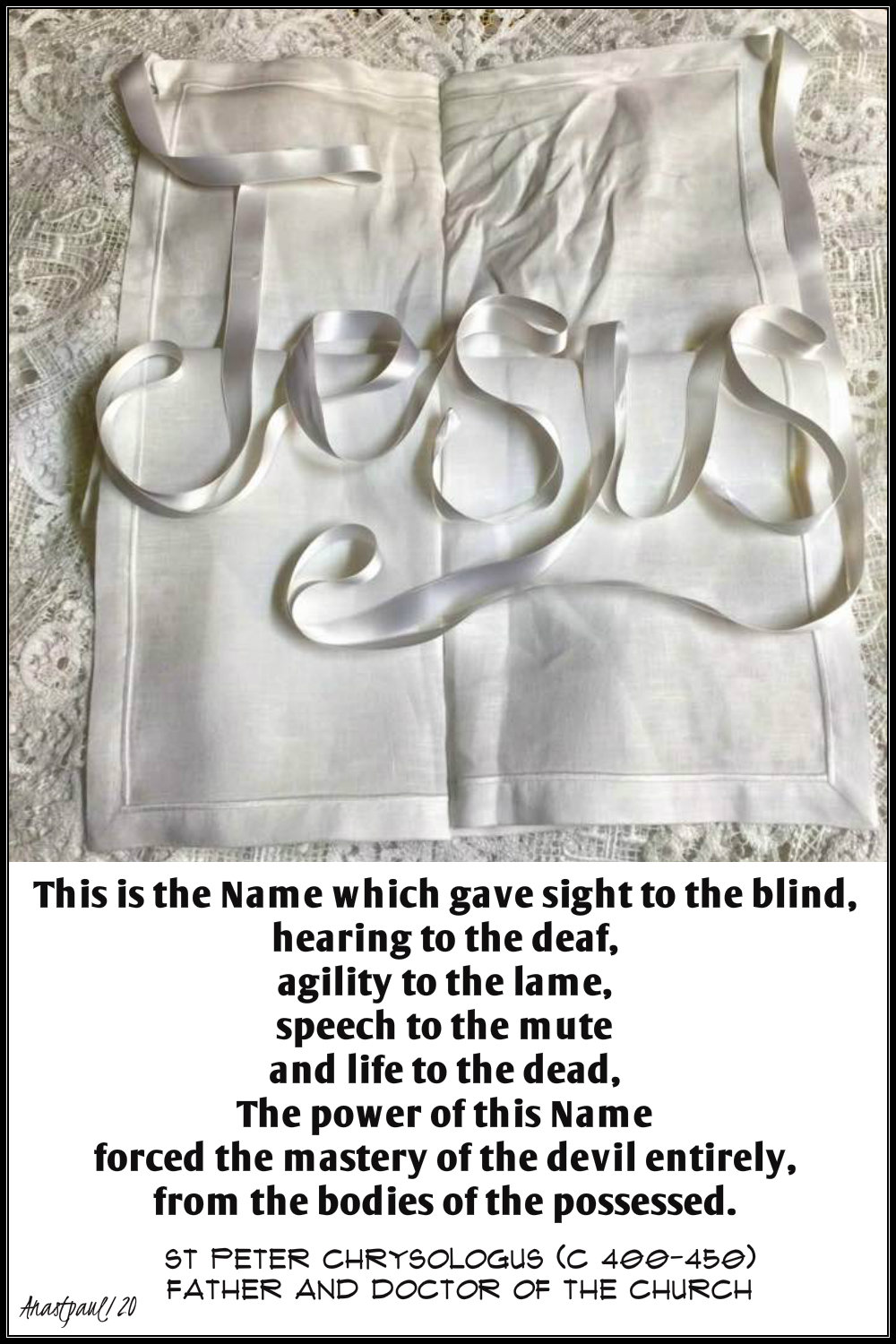
This is the Name which gave sight to the blind,
hearing to the deaf,
agility to the lame,
speech to the mute
and life to the dead,
The power of this Name
forced the mastery of the devil entirely,
from the bodies of the possessed.”

St Peter Chrysologus (c 400-450)
Father and Doctor of the Churchthis is the name - st peter chrysologus - 3 jan 2020.jpg

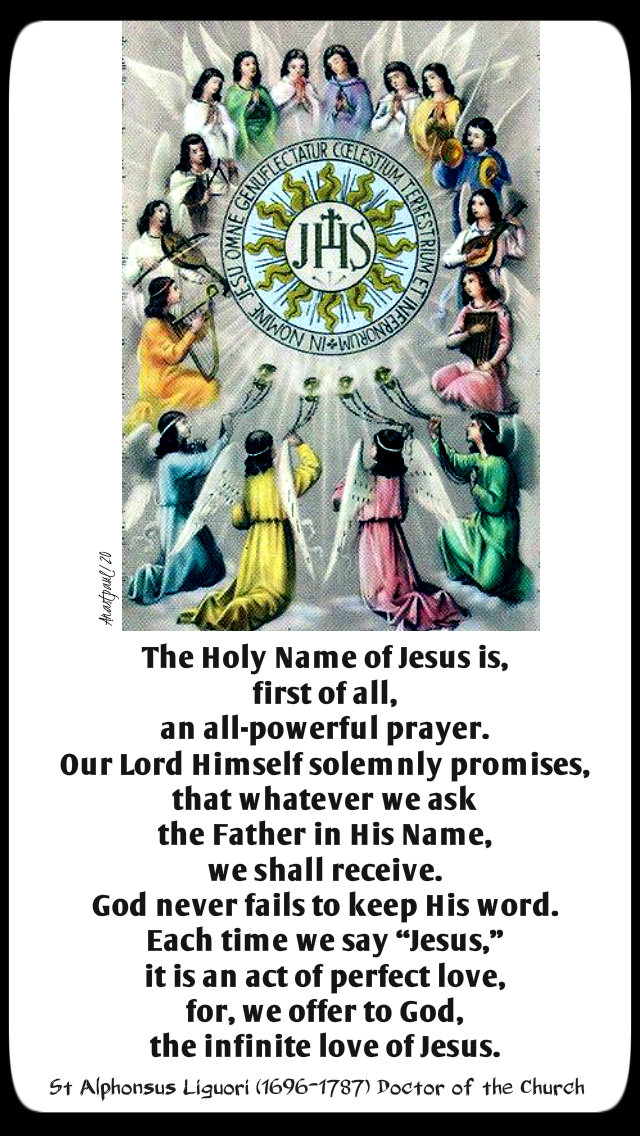
“The Holy Name of Jesus is, first of all, an all-powerful prayer.
Our Lord, Himself, solemnly promises,
that whatever we ask the Father in His Name,
we shall receive.
God never fails to keep His word.
Each time we say “Jesus,”
it is an act of perfect love,
for, we offer to God,
the infinite love of Jesus”

St Alphonsus Liguori (1696-1787)
Doctor of the Churchthe holy name of jesus is first of all an all powerful prayer - st alphonsus liguori 3 jan 2020.jpg

”The invocation of the Holy Name of Jesus,
is the simplest way of praying always.
When the Holy Name is repeated often
by a humbly attentive heart,
the prayer is not lost by heaping up empty praises
but holds fast to the Word and
”brings forth fruit with patience” (Luke 8:15).
This prayer is possible at all times
because it is not one occupation among others
but the only occupation –
that of loving God which animates
and transfigures every action in Christ Jesus”

CCC 2668ccc2668-the-invocation-of-the-holy-name-3-jan-2019 and 2020.jpg

“We, Jesuits, want to be conferred the name of Jesus,
militate under the standard of His Cross and this means,
to have the same sentiments of Christ.
It means to think like Him,
love like Him, see like Him, walk like Him.
It means to do what He did
and with His same sentiments,
with the sentiments of His Heart.
The heart of Christ is the heart of a God
who, out of love, “emptied” Himself.

Pope Francis

(3 January 2014)we-jesuits-want-to-be-pope-francis-on-3-jan-2014-my-image-3-jan-201 and 2020 in quotes.jpg

Blessed be the Most Holy Name of Jesus without end!

blessed be the most holy name of jesus without end - 3 jan 2020.jpg

Posted in CATHOLIC DEVOTIONS of the Month, CATHOLIC-PRAYERS OF THE CHURCH, CHRISTMASTIDE!, FEASTS and SOLEMNITIES, ONE Minute REFLECTION, PRAYERS of the CHURCH, QUOTES of the SAINTS, QUOTES on CONVERSION, QUOTES on ETERNAL LIFE, St JOHN the BAPTIST, The HOLY NAME, The WORD

One Minute Reflection – 3 January – ‘He became mortal that you might become God and put on your original beauty.’

One Minute Reflection – 3 January – Christmas Weekday and the Feast of the Most Holy Name of Jesus, Readings:  1 John 2:29-3, 6, Psalm 98:1, 3-6, John 1:29-34

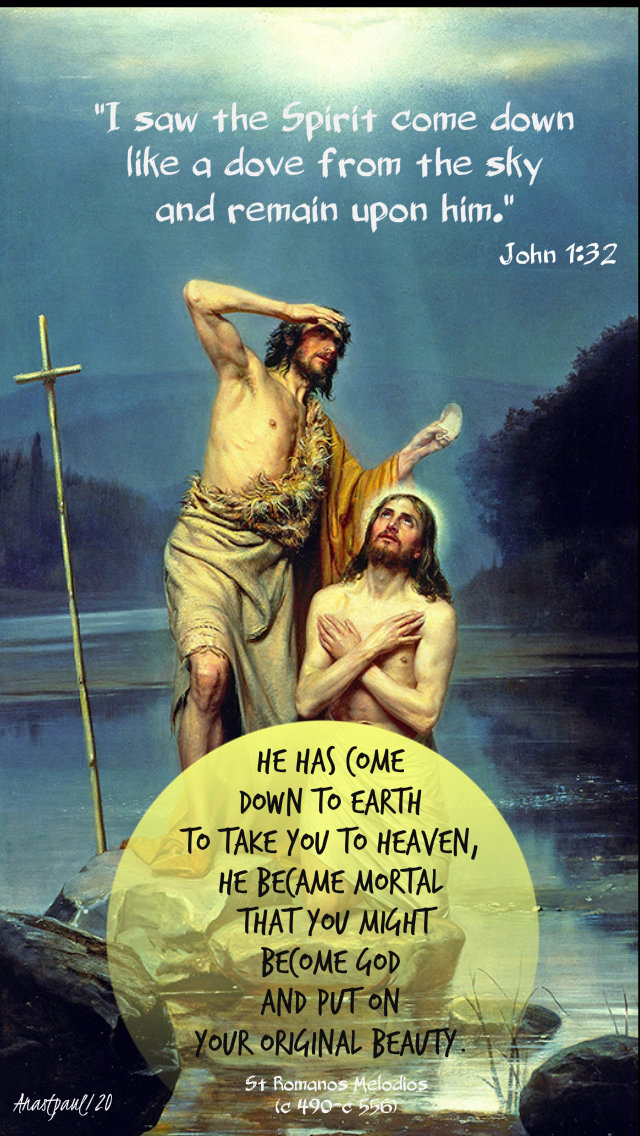
I did not know him but the reason why I came baptising with water, was that he might be made known to Israel.”   John testified further, saying, “I saw the Spirit come down like a dove from the sky and remain upon him”. … John 1:31-32

REFLECTION – “Upon Adam, blinded in Eden, a Sun has arisen, rising up from Bethlehem and has opened his eyes by washing them in the waters of Jordan.   Upon him whom darkness and shadows were covering, that light has dawned which will never go out.   Night is no more for him, all is day, Dawn is born for him, since it was dusk when he hid himself, as Scripture says (Gn 3:8).   He who fell in the evening has found the Sunrise that gives him light, he has fled from the dark and advanced towards the morning which has manifested itself and illuminated all. (…)

Sing aloud, O Adam and worship Him who comes to meet you.   While you were drawing back, He manifested Himself to you that you might see and touch and welcome Him.   He whom you feared after you had been deceived, has been made like you for your sake.  He has come down to earth to take you to heaven, He became mortal that you might become God and put on your original beauty.   Wishing to open up again for you the gates of Eden, He lived in Nazareth.   For all this, sing of Him, man and glorify with a psalm, the One who manifested Himself and has shone over all.

The eyes of the children of earth have received the strength to behold the heavenly Face, the sight of the creatures of clay, (Gn 2:7) has perceived the undimmed shining of the immaterial Light, that prophets and kings have not seen but longed to see (Mt 13:17). Great Daniel was called a man of desires because he desired to contemplate Him whom we behold.   David, too, hoped for this decree, now we can understand what lay hidden, the One who manifested Himself and illuminated all.” … St Romanos Melodios (c 490-c 556) Monk, Composer of Hymns, Poet – 2nd hymn for the Epiphany, 1,3,8john 1 32 I saw the spirit come down like a dove - he has come down to earth - st romanus melodios 3 jan 2020.jpg

PRAYER – Almighty God, Your Son’s manhood, born of the Virgin, was a new creation, untainted by our sinful condition.   Renew us then, in Christ and cleanse us from our sins.   May the Holy Name of Jesus, be our light, our safeguard and our shield.   Through Christ our Lord, in the unity of the Holy Spirit, God for all time and forever, amen.the jesus prayer - 3 jan 2018.jpg

Posted in CATHOLIC DEVOTIONS of the Month, FEASTS and SOLEMNITIES, Our MORNING Offering, PRAYERS of the SAINTS, The HOLY NAME, Thomas a Kempis

Our Morning Offering – 3 January – O Sweet Name of Jesus

Our Morning Offering – 3 January – Christmas Weekday and the Feast of the Most Holy Name of Jesus

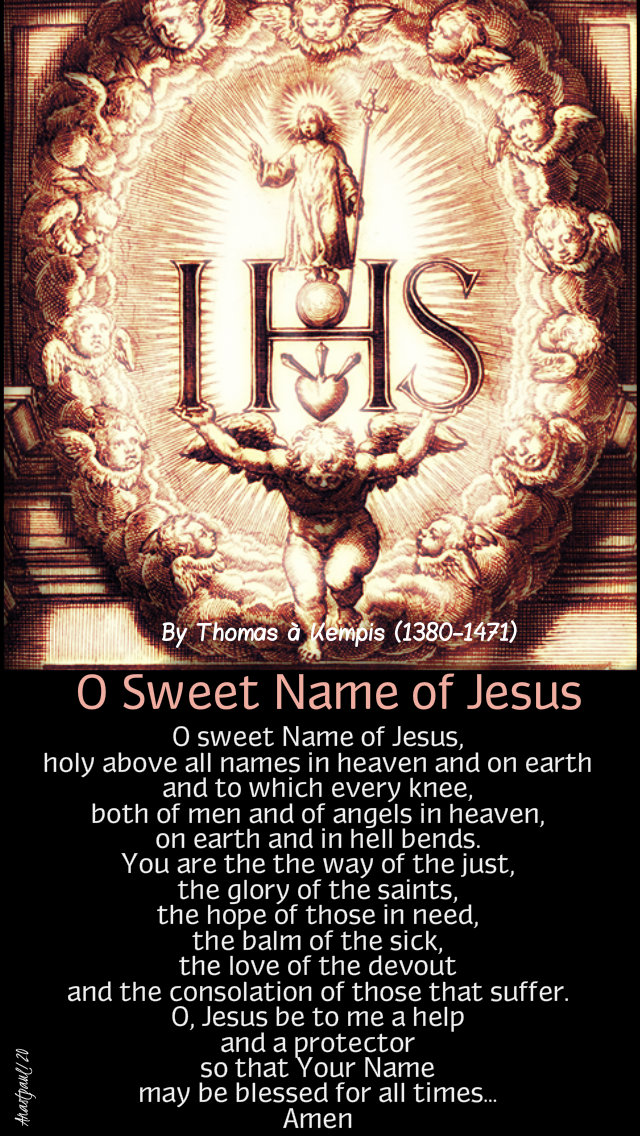
O Sweet Name of Jesus
Thomas à Kempis (1380-1471)
(Manualis Parvulorum XIII)

O sweet Name of Jesus,
holy above all names in heaven and on earth
and to which every knee,
both of men and of angels in heaven,
on earth and in hell bends.
You are the the way of the just,
the glory of the saints,
the hope of those in need,
the balm of the sick,
the love of the devout
and the consolation of those that suffer.
O, Jesus be to me a help
and a protector
so that Your Name
may be blessed for all times…
Ameno sweet name of jesus by thomas a kempis 3 jan 2020.jpg

Posted in Against STORMS, EARTHQUAKES, THUNDER & LIGHTENING, FIRES, DROUGHT / NATURAL DISASTERS, Of the SICK, the INFIRM, All ILLNESS, SAINT of the DAY

Saint of the Day – 3 January – Saint Genevieve (c 419-c 502)

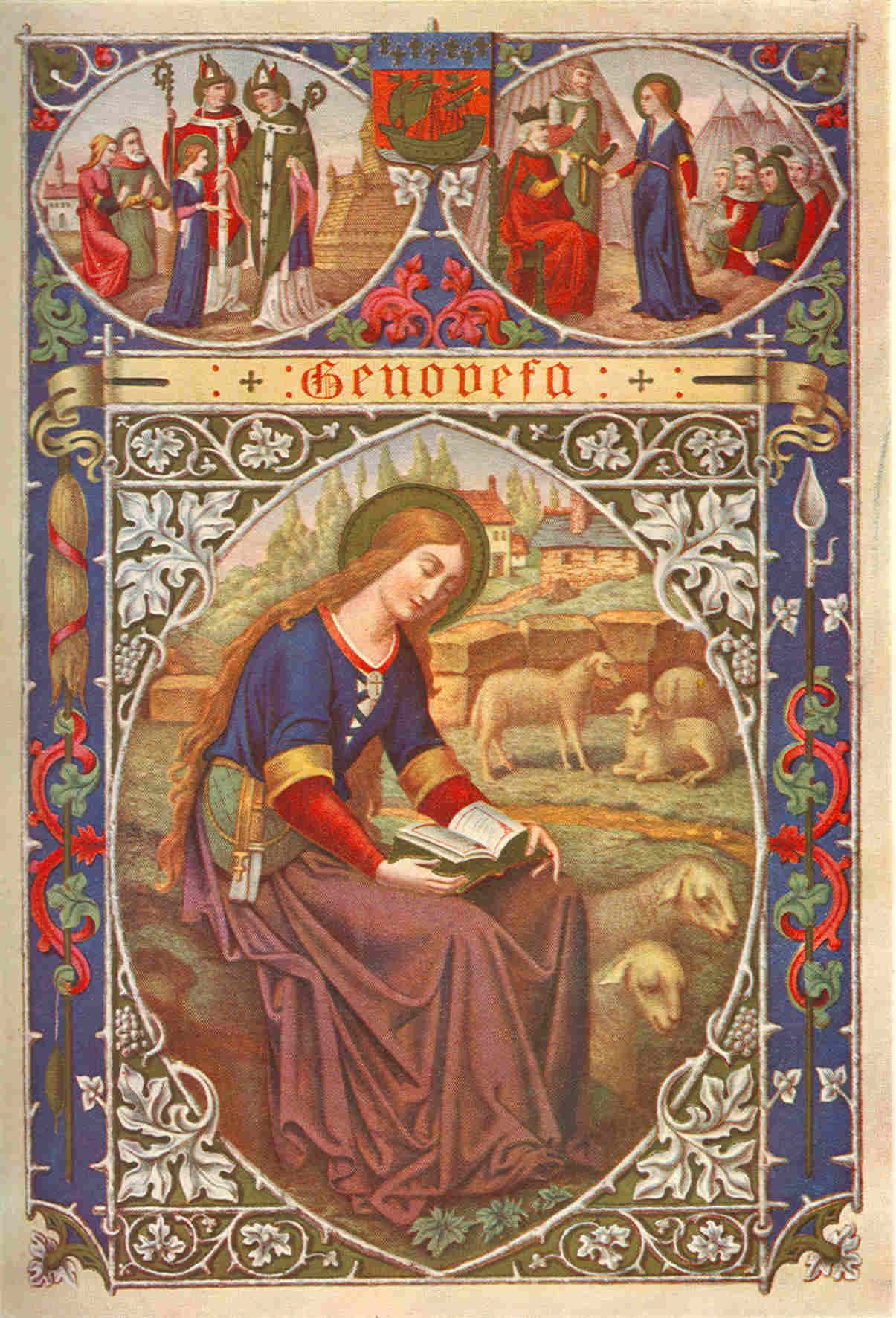
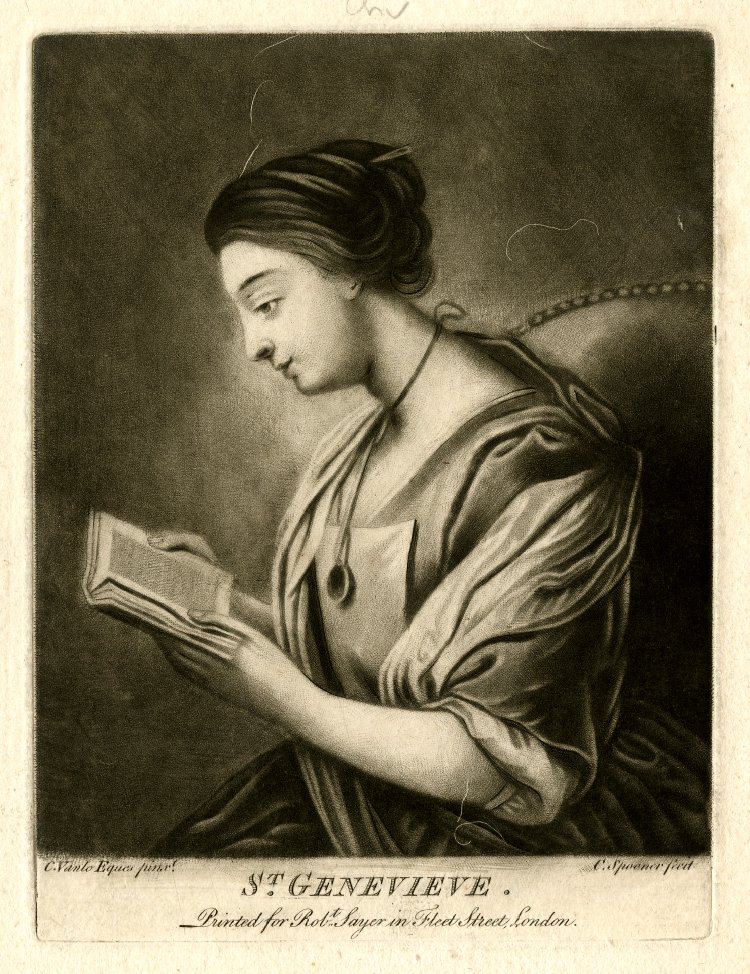
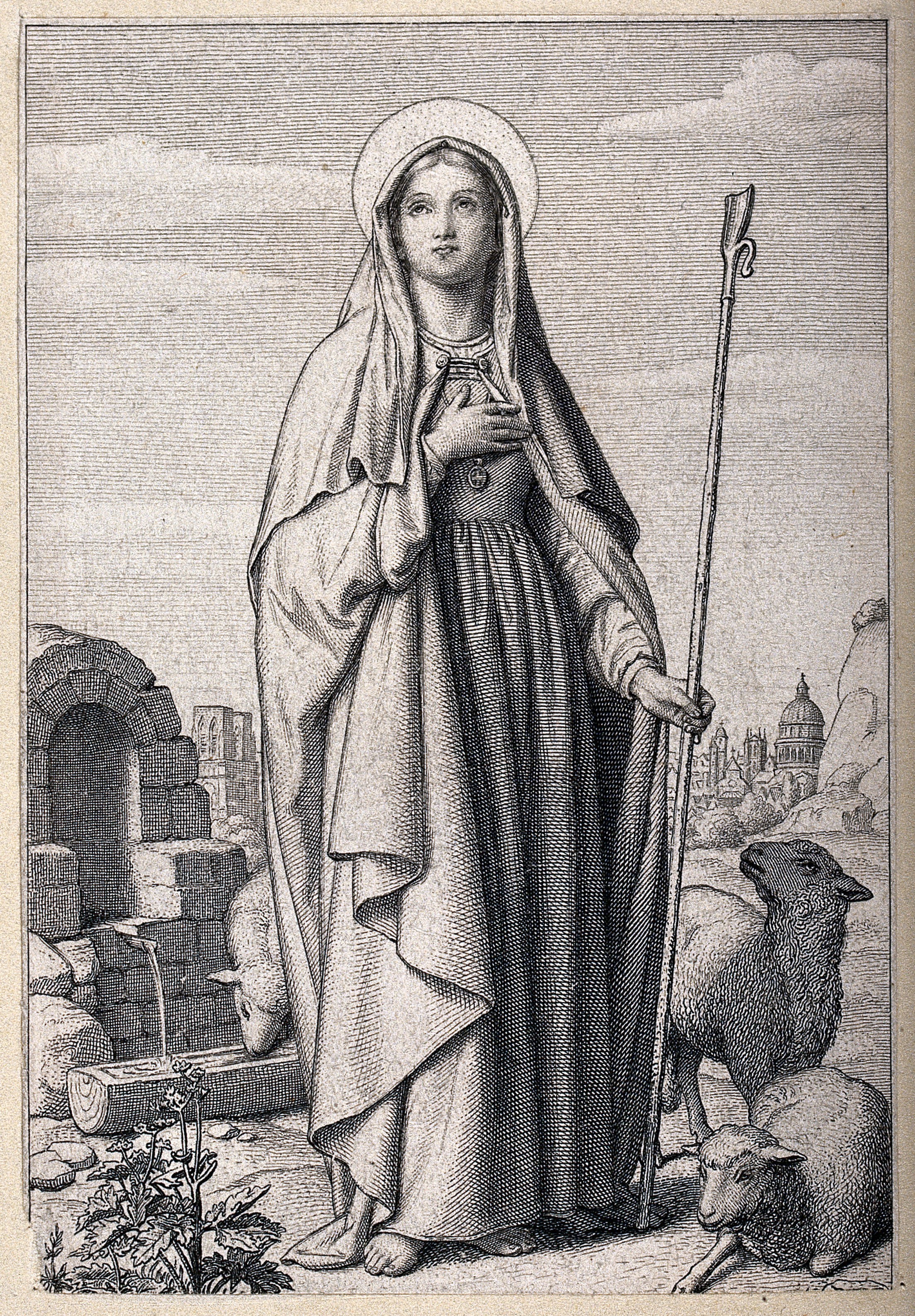
Saint of the Day – 3 January – Saint Genevieve (c 419-c 502) Virgin, apostle of prayer and of the poor and sick – Patronages – against plague, against natural disasters, against fever, French security forces (chosen in 1962), Paris, France, Women’s Army Corps.   In 451 she led a “prayer novena” that was said to have saved Paris by diverting Attila’s Huns away from the city.   When the Germanic king Childeric I besieged the city in 464, she acted as an intermediary between the city and its besiegers, collecting food and convincing Childeric to release his prisoners.   Her following and her status as patron saint of Paris were promoted by Clotilde – Princess and Saint (c 474-545), who may have commissioned the writing of her vita. st genevieve 1.jpg

On his way to combat heresy in Britain, St Germanus of Auxerre (c 378-c 448) made an overnight stop at Nanterre, France.   In the crowd that gathered to hear him speak, Germanus spotted Genevieve, a beautiful 7-year-old girl and he foresaw her future holiness.   When he asked little St Genevieve if she wanted to dedicate her life to God, she enthusiastically said yes.   So he laid hands on her with a blessing, thus launching the spiritual career of one of France’s most admired saints.

St Genevieve.jpg
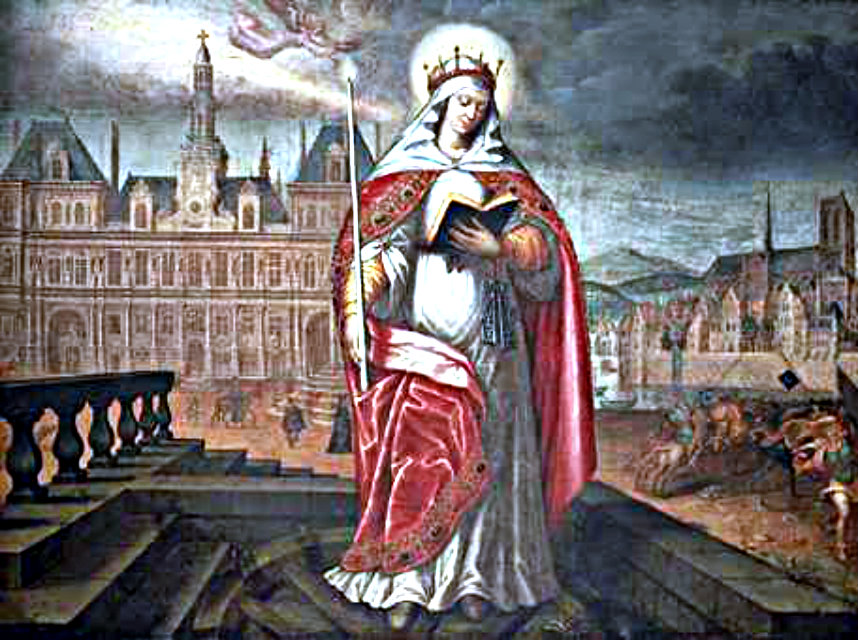
Saint Genevieve, seventeenth-century painting, Musée Carnavalet, Paris

St Genevieve was born around the year 420 in the small French village of Nanterre.  After both of her parents died, she went to live with her godmother in Paris.   She was admired for her piety and works of charity and she practised corporal austerities which included abstaining completely from meat and breaking her fast only twice in the week. Many of her neighbours, filled with jealousy and envy, accused Genevieve of being an impostor and a hypocrite.

At 15, Genevieve formally consecrated herself as a virgin but continued to live as a laywoman.   Because of her generous giving to the poor, she became widely known in the vicinity around Paris.   At first, however, Genevieve met great hostility.   But St Germanus defused it by authorising her with public signs of his support.st genevieve 2.jpg

Once when the Franks were besieging Paris, Genevieve rescued the city from starvation by leading a convoy of ships up the Seine to Troyes to obtain food.   In this selection from her biography, we learn that she had to work a miracle to bring it home safely:

During the return voyage, however, the ships were so buffeted by the wind . . . that the high holds fore and aft in which they had stored the grain tipped over on their sides.   And the ships filled with water.   Quickly Genovefa, her hands stretched toward heaven, begged Christ for assistance.   Immediately the ships were righted.   Thu,s through her, our God . . . saved eleven grain-laden ships. . . .st genevieve 4.jpg

When she returned to Paris, her sole concern was to distribute the grain to all according to their needs  . She made it her first priority to provide a whole loaf to those whose strength had been sapped by hunger.   Thus, when her servant girls went to the ovens they would often find only part of the bread they had baked. . . .  But it was soon clear who had taken the bread from the ovens for they noticed the needy carrying loaves throughout the city and heard them magnifying and blessing the name of Genevieve.  For she put her hopes not in what is seen but in what is not seen.   For she knew the Prophet spoke truly who said: “Whoever is kind to the poor is lending to God” (Proverbs 19:17).   For through a revelation of the Holy Spirit she had once been shown that land, where those who lend their treasure to the poor expect to find it again.   And for this reason, she was accustomed to weep and pray incessantly, for she knew that as long as she was in the flesh she was exiled from the Lord.

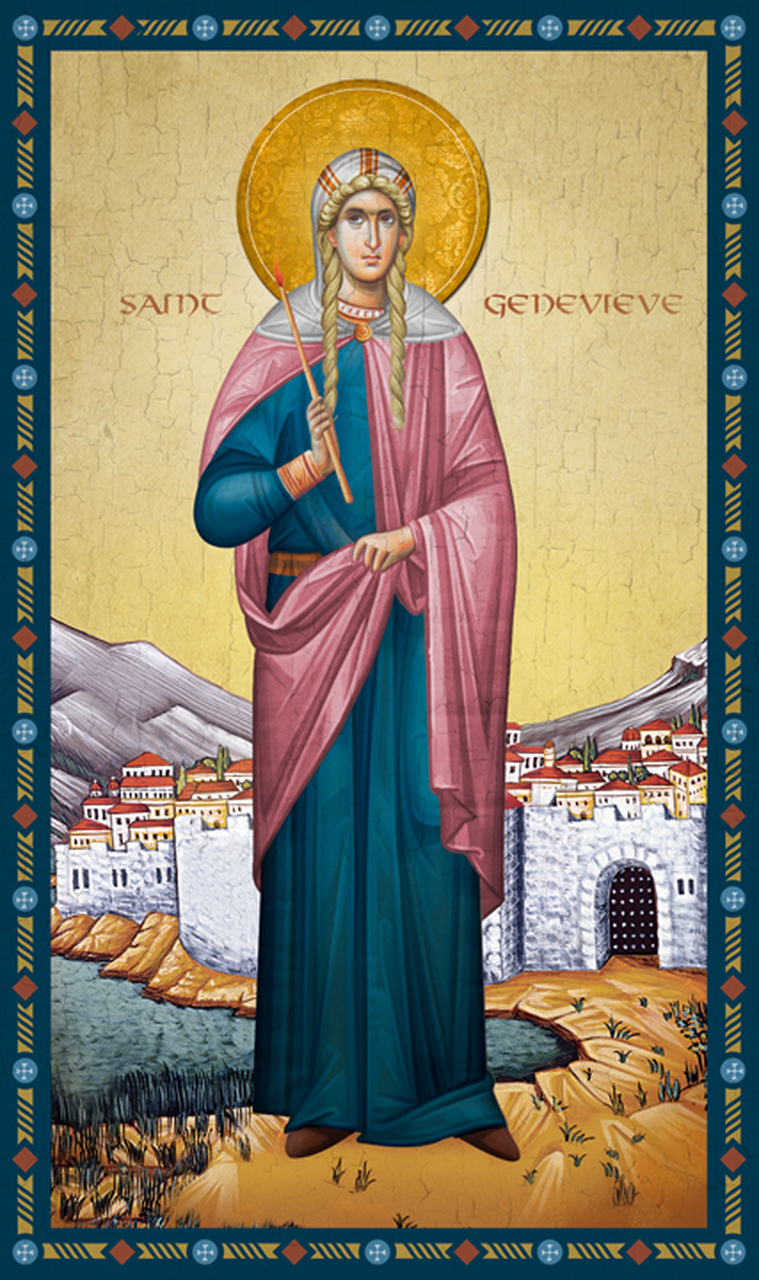
From that time Genevieve enjoyed a heroine’s status and used her influence and wonders on the city’s behalf.   For example, she persuaded Childeric, who had conquered Paris, to release many captives.   And in 451, when Attila the Hun was advancing on the city, she got the populace to pray and fast for their safety.   The invader changed his course and Paris was spared.   She also became a trusted adviser to Clovis, the king of the Franks.st genevieve icon.jpg

St Genevieve had a particular devotion to St Denis (died 3rd century) and wished to erect a chapel in his honour to house his relics.   Around the year 475 Genevieve purchased some land at the site of the saint’s burial where a shrine was built.   This small chapel became a famous place of pilgrimage during the fifth and sixth centuries.

When Genevieve died around 500, she was buried in the church of Sts Peter and Paul at Paris.   So many miracles occurred through her intercession there that it became a pilgrimage spot and came to be called St Genevieve.

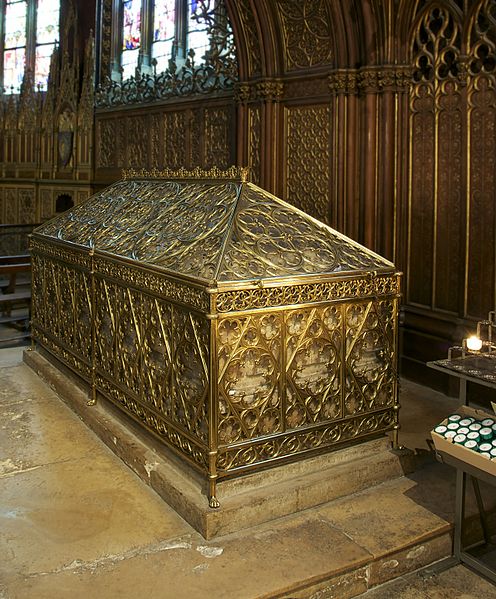
496px-Châsse_shrine_Ste_Geneviève_Saint_Etienne_du_Mont.jpg
St Genevieve’s Tomb

The King, Clovis, founded an abbey for St Genevieve, where she was later re-interred. Under the care of the Benedictines, who established a monastery there, the church witnessed numerous miracles wrought at her tomb.   In the year 1129, the city was saved from an epidemic, the relics of St Genevieve were carried in a public procession.

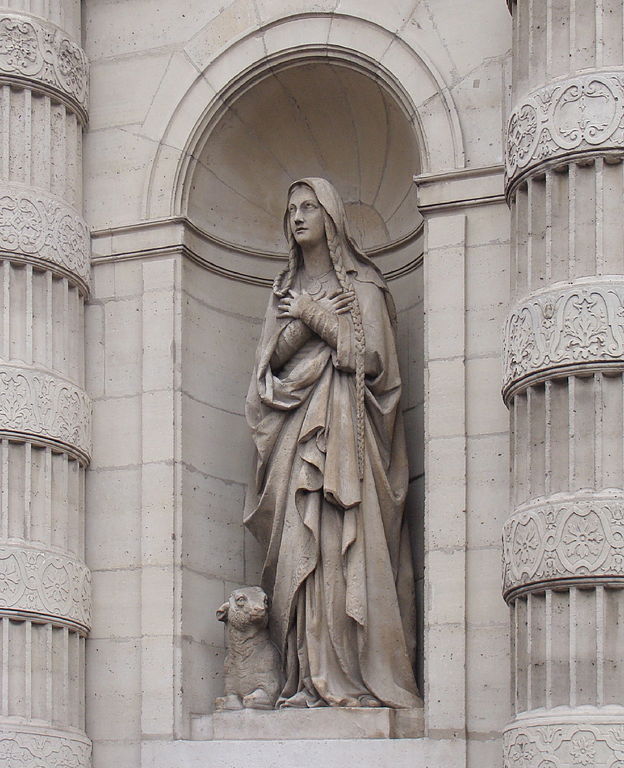
About 1619 Louis XIII named Cardinal François de La Rochefoucauld abbot of Saint Genevieve’s.   The canons had been lax and the cardinal selected Charles Faure to reform them.   This holy man was born in 1594 and entered the canons regular at Senlis.   He was remarkable for his piety and, when ordained, succeeded after a hard struggle in reforming the abbey.   Many of the houses of the canons regular adopted his reform.   In 1634, he and a dozen companions took charge of Saint-Geneviève-du-Mont of Paris.   This became the mother-house of a new congregation, the Canons Regular of St Genevieve, which spread widely over France.624px-Sainte_Genevieve_façade_Saint-Etienne-du-Mont.jpg

Posted in FEASTS and SOLEMNITIES, JESUIT SJ, SAINT of the DAY, The HOLY NAME

Feast of the Most Holy Name of Jesus, the Titular Feast of the Society of Jesus and Memorials of the Saints – 3 January

Feast of the Most Holy Name of Jesus (Optional Memorial) – moved to 3 January
The Holy Name of Jesus: https://anastpaul.wordpress.com/2018/01/03/3-january-feast-of-the-most-holy-name-of-jesus/
AND:

Feast of the Most Holy Name of Jesus – 3 January

The Titular Feast of the Society of Jesus

THE TITULAR FEAST OF THE JESUITS

St Pope Antherus
Bl Arnold Wala
St Athanasius of Cilicia
St Bertilia of Mareuil
St Bertille of Thuringia
St Blitmund of Bobbio
St Constant of Gap
St Cyrinus of Cyzicus
St Daniel Himmerod the Younger
Bl Daniel of Padua
St Eustadius
St Finlugh
St Fintan of Doon
St Florentius of Vienne
St Florentius of Vienne the Martyr
St Genevieve (c 419-c 502)

Bl Gerard Cagnoli
St Gordius of Cappadocia
St Imbenia
St Kuriakose Elias Chavara
St Lucian of Lentini
St Melorius
St Peter of Palestine
St Primus of Cyzicus
St Salvator of Belluno
St Theogenes of Cyzicus
St Theonas
St Theopemptus of Nicomedia
St Wenog
Bl Bl William Vives
St Zosimus of Cilicia

Martyrs of Africa – 12 saints: A group of Christians martyred together in Africa, date unknown, exact location unknown. We know nothing more than their names – Acuta, Candidus, Constantius, Eugenia, Firmus, Hilarinus, Lucida, Martial, Poenica, Possessor, Rogatianus and Statutianus.

Martyrs of Tomi – 7 saints: A group of Christians martyred together, date unknown. We know nothing more than their names – Claudon, Diogenius, Eugene, Eugentus, Pinna, Rhodes and Rhodo. They were martyred at Tomi, Exinius Pontus, Moesia (modern Constanta, Romania).

Posted in MEDITATIONS - ANTONIO CARD BACCI, QUOTES on MEDITATION, QUOTES on SILENCE

Thought for the Day – 2 January – Silence

Thought for the Day – 2 January – Meditations with Antonio Cardinal Bacci (1881-1971)

“Silence”

at least for a little time each day - bacci antonio cardinal 2 jan 2020

“Absorbed in the deafening din of the world around us, it is difficult to hear the voice of God.
At least, for a little while each day, we must create within ourselves, a zone of silence, in order to listen to His voice.
Since God speaks readily in the silence of the heart, let us recollect ourselves before Him, in this quiet oasis.
At least a quarter of an hour of daily meditation is essential for the life of a Christian.
This should be the jumping-off board for all the actions of day, if we wish these to be correct and productive of good.

It is very useful, moreover, to recall to mind frequently during the day, the resolutions which have been formed and to accompany these reflections, with short prayers, aspirations and acts of love for God.”

Antonio Cardinal Bacci

Posted in CHRISTMASTIDE!, DOCTORS of the Church, FATHERS of the Church, MARIAN QUOTES, MOTHER of GOD, QUOTES of the SAINTS, QUOTES on ABORTION, QUOTES on FRIENDSHIP, SAINT of the DAY, St JOHN the BAPTIST, The CHRIST CHILD, The WORD

Quote/s of the Day – 2 January – Basil and Gregory

Quote/s of the Day – 2 January – Christmas Weekday and The Memorial of St Basil the Great (329-379) and St Gregory of Nazianzen (330-390), Readings: 1 John 2:22-28, Psalm 98:1-4, John 1:19-2

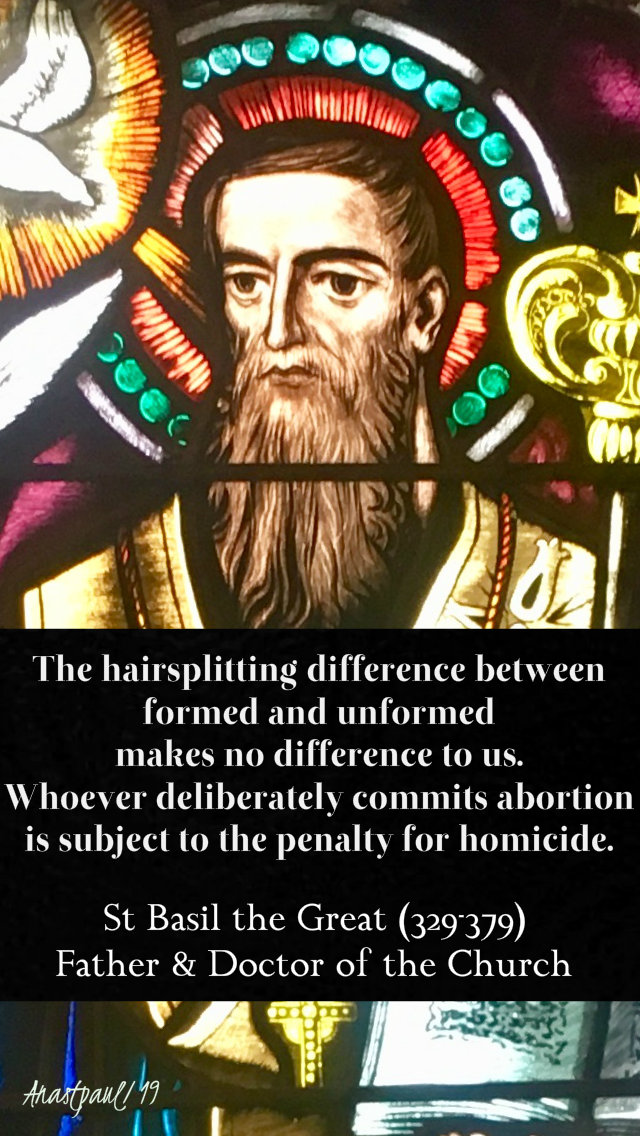
“The hairsplitting difference between
formed and unformed makes no difference to us.
Whoever deliberately commits abortion
is subject to the penalty for homicide.”

St Basil the Great (329-379)

Father & Doctor of the Churchthe-hairsplitting-difference-st-basil-the-great-2-jan-2019 and 2020.jpg

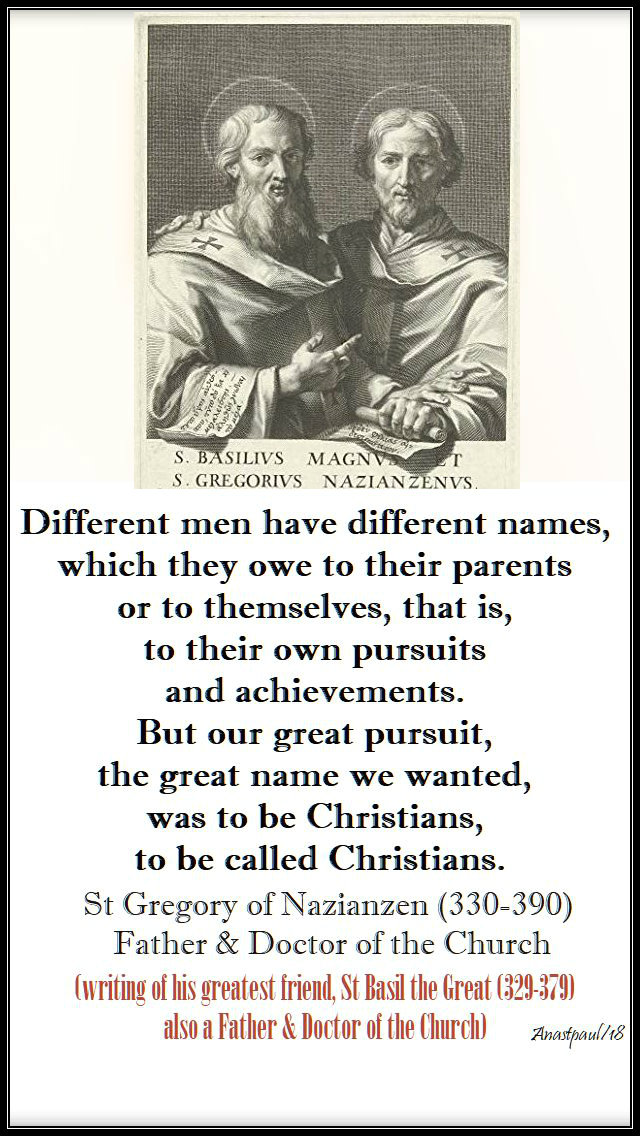
“Different men have different names,
which they owe to their parents or to themselves,
that is, to their own pursuits and achievements.
But our great pursuit,
the great name we wanted,
was to be Christians,
to be called Christians.”

St Gregory of Nazianzen (330-390)

(from his writings on his friendship with St Basil)different-men-st-gregory-of-nazianzen-2-jan-2018 and 2020.jpg

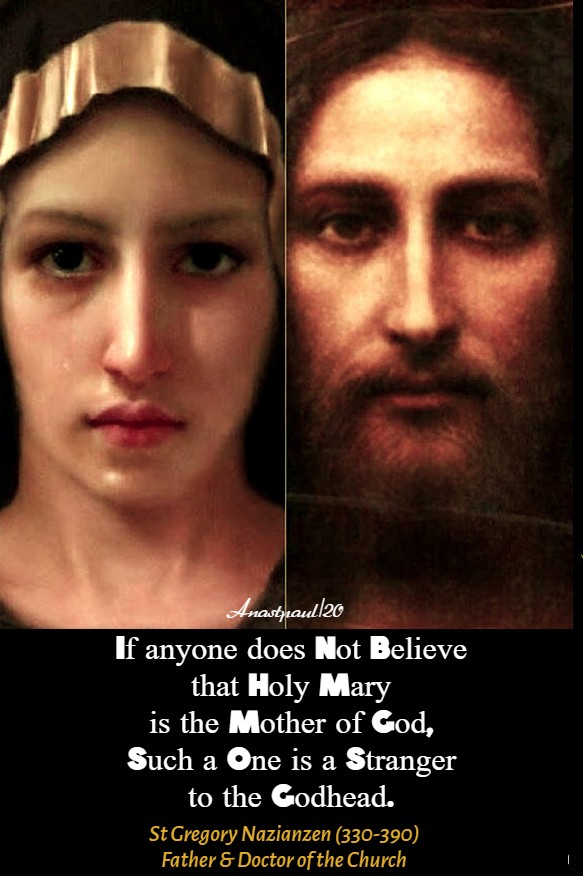
“If anyone does not believe
that Holy Mary
is the Mother of God,
such a one is a stranger
to the Godhead.”

St Gregory of Nazianzen (330-390)
Father & Doctor of the Church

Posted in DOCTORS of the Church, FATHERS of the Church, ONE Minute REFLECTION, QUOTES of the SAINTS, QUOTES on CONVERSION, QUOTES on DISCIPLESHIP, QUOTES on REPENTANCE, SAINT of the DAY, St JOHN the BAPTIST, The WORD

One Minute Reflection – 2 January – “Now I begin.”

One Minute Reflection – 2 January – Christmas Weekday and The Memorial of St Basil the Great (329-379) and St Gregory of Nazianzen (330-390), Readings: 1 John 2:22-28, Psalm 98:1-4, John 1:19-28

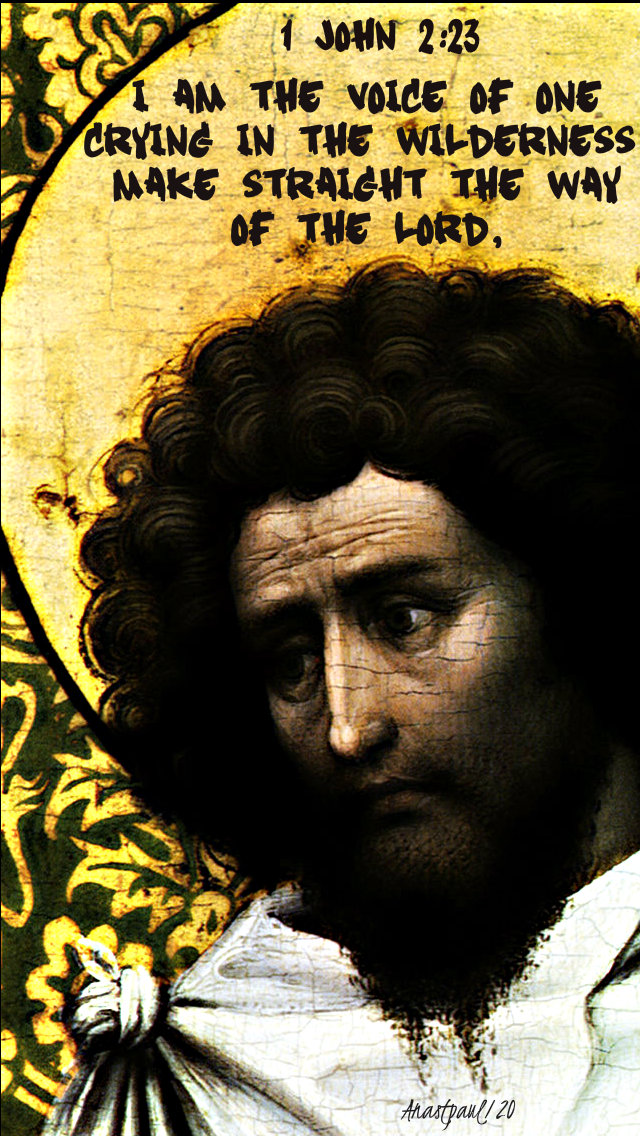
He said, “I am the voice of one crying in the wilderness, ‘Make straight the way of the Lord,’ as the prophet Isaiah said.” … 1 John 2:231 john 2 23 i am the voice of one crying in the wilderness 2 jan 2020.jpg

REFLECTION“Prepare a way for the Lord.”   Brethren, however far you journey along it… from the very nature of goodness, there is no limit to the way along which you travel. And so… the wise and indefatigable traveller… can say to himself each day:  “Now I begin”… And how many “go astray in the wilderness”… None of them can yet say:  “Now I begin.”

For “the beginning of wisdom is the fear of the Lord.”   If the beginning of wisdom, then surely it is also the beginning of the way of goodness…  It is this that encourages praise…; it also moves the proud to penance, so that they hear the voice of him crying in the wilderness,ordering the preparation of the way and thus showing how to begin it:  “Do penance for the kingdom of heaven is close at hand”…

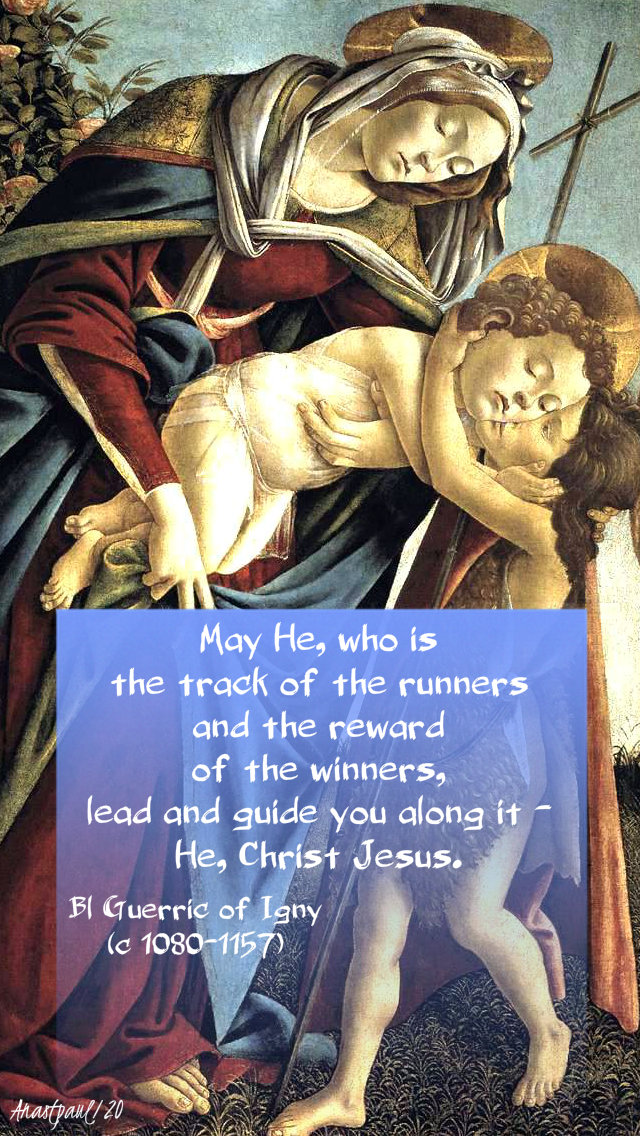
If you are on the way then fear only one thing, lest you leave it, lest you offend the Lord who leads you along it so that He would abandon you to “wander in the way of your own heart”…   If you feel that the way is too narrow look forward to the end to which it leads you.   If you were to see how everything is to be attained, then you would say without hesitation:  “Broad indeed is your command!”   If you cannot see so far, believe Isaiah who could…   “Behold,” he says, “the redeemed shall walk by this way and the ransomed of the Lord shall return and come to Sion with singing, everlasting joy shall be upon their heads  . They shall obtain also joy and gladness and sorrow and sighing shall flee away.”   Those who dwell sufficiently on this end I think will not only make the way easier for himself but also grow wings, so that he no longer walks but flies…   May He, who is the track of the runners and the reward of the winners, lead and guide you along it – He, Christ Jesus.” … Blessed Guerric of Igny (c 1080-1157) Cistercian Abbot – 5th sermon of Advent, SC 166may he who is the track of the runners and the reward of the winnders guide you along it bl guerric of igny 2 jan 2019.jpg

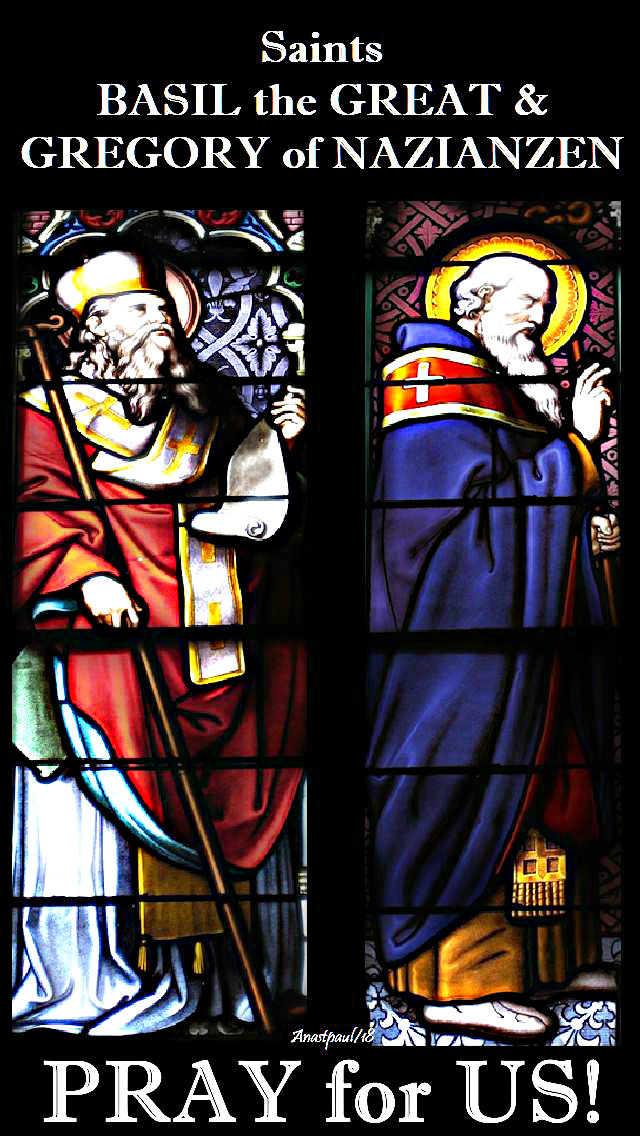
PRAYER – Look with favour on our morning prayer, Lord and in Your saving love, let Your light penetrate the wilderness in our hearts.   May no sordid desires darken our minds, renewed and enlightened as we are, by Your heavenly grace.   God our Father, You enriched Your Church and gave examples for us to follow in the life and teachings of Sts Basil and Gregory. Grant that, learning Your truth with humility, we may practise it in faith and love.   Sts Basil and Gregory, pray for our beloved Church, pray for all Catholic Christians, through Jesus Christ with the Holy Spirit, God forever, amen.sts-basil-and-gregory-pray-for-us-2-jan-2018 AND 2019.jpg

Posted in CHRISTMASTIDE!, DOCTORS of the Church, FATHERS of the Church, Our MORNING Offering, PRAYERS for VARIOUS NEEDS, PRAYERS of the SAINTS, SAINT of the DAY

Our Morning Offering – 2 January – Steer the Ship of my Life, Lord

Our Morning Offering – 2 January – Christmas Weekday and The Memorial of St Basil the Great (329-379) and St Gregory of Nazianzen (330-390)

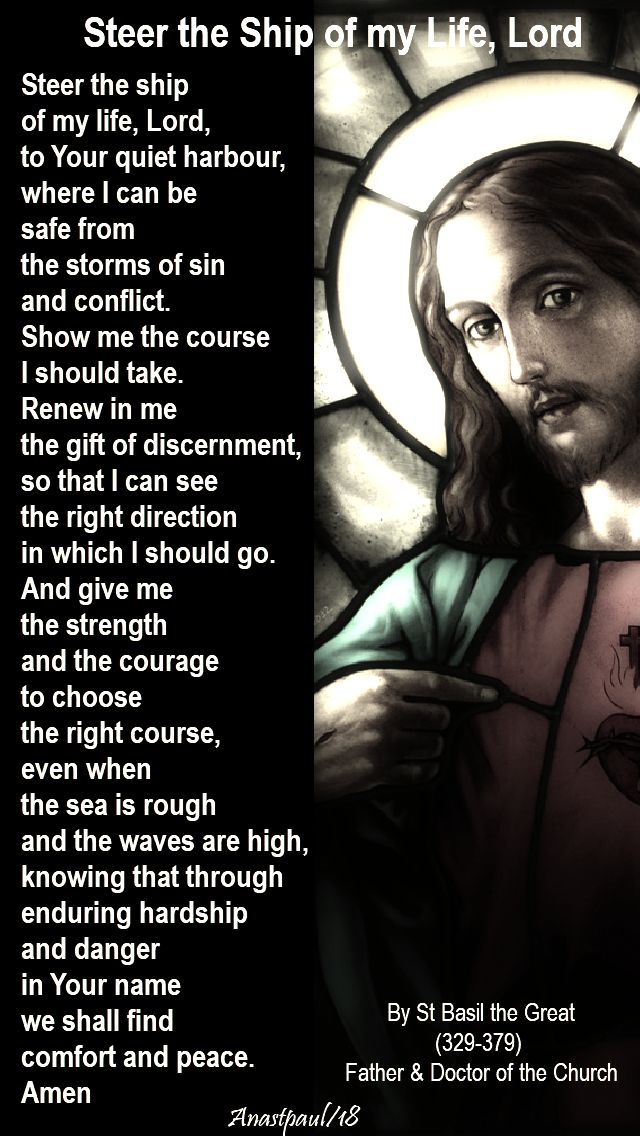
Steer the Ship of my Life, Lord
By St Basil the Great (329-379)

Steer the ship of my life, Lord,
to Your quiet harbour,
where I can be safe from
the storms of sin and conflict.
Show me the course I should take.
Renew in me the gift of discernment,
so that I can see the right direction
in which I should go.
And give me the strength
and the courage to choose the right course,
even when the sea is rough
and the waves are high,
knowing that through enduring
hardship and danger in Your name
we shall find comfort and peace.
Amensteer-the-ship-of-my-life-lord-st-basil-11-june-2018-no-2-jpg.jpg

Posted in SAINT of the DAY

Saint of the Day – Blessed Marie Anne Blondin SSA (1809-1890)

Saint of the Day – Blessed Marie Anne Blondin SSA (1809-1890) Religious and Foundress of the Sisters of Saint Anne, apostle of the Holy Eucharist and Divine Providence, Teacher – born Esther Blondin on 18 April 1809 in Terrebonne, Quebec, Canada and died on 2 January 1890 at Lachine, Quebec, Canada of natural causes.  bl marie-anne-blondin-b1).jpg
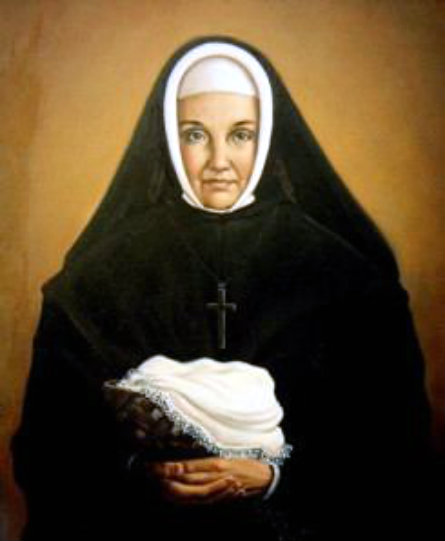
Esther Blondin, in religion “Sister Marie Anne”, was born in Terrebonne (Quebec, Canada) on 18 April 1809, in a family of deeply Christian farmers.   From her mother she inherited a piety centred on Divine Providence and the Eucharist and, from her father, a deep faith and a strong patience in suffering.   Esther and her family were victims of illiteracy so common in French Canadian milieu of the nineteenth century.   Still an illiterate at the age of 22, Esther worked as a domestic in the Convent of the Sisters of the Congregation of Notre Dame, that had been recently opened in her own village.   A year later, she registered as a boarder in order to learn to read and write.   She then became a novice in the Congregation but had to leave, due to ill health.

In 1833, Esther became a teacher in the parochial school of Vaudreuil.   Little by little, she found out, that one of the causes of this illiteracy was due to a certain Church ruling, that forbade that girls be taught by men and that boys be taught by women.   Unable to finance two schools, many parish priests chose to have none.   In 1848, under an irresistible call of the Spirit, Esther presented to her Bishop, Ignace Bourget, a plan she long cherished – that of founding a religious congregation “for the education of poor country children, both girls and boys in the same schools”.   A rather new project for the time!   It even seemed quite rash and contrary to the established order.   Since the State was in favour of such schools, Bishop Bourget authorised a modest attempt so as to avoid a greater evil.bl marie anne blondin with children.jpeg
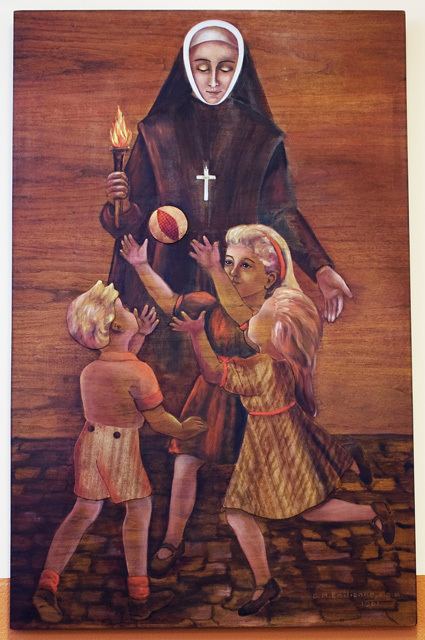
The Congregation of the Sisters of Saint Anne was founded in Vaudreuil on 8 September 1850.   Esther, now named “Mother Marie Anne”, became its first superior.   The rapid growth of this young Community soon required larger quarters.    During the Summer of 1853, Bishop Ignace Bourget transferred the Motherhouse to Saint Jacques de l’Achigan. The new chaplain, Father Louis Adolphe Marechal, interfered in an abusive way in the private life of the Community.   During the Foundress’ absence, Father changed the pupils’ boarding fees.   Should he be away for a while, he asked that the Sisters await his return to go to confession.   After a year of this existing conflict between the chaplain and the Foundress, the latter being anxious to protect the rights of her Community, Bishop Bourget asked Mother Marie Anne, on 18 August 1854, “to resign.”   He called for elections and warned Mother Marie Anne “not to accept the superiorship, even if her sisters wanted to re-elect her.”   Even though she could be re-elected, according to the Rule of the Community, Mother Marie Anne obeyed her Bishop whom she considered God’s instrument.   And she wrote:  “As for me, my Lord, I bless Divine Providence a thousand times for the maternal care he shows me in making me walk the way of tribulations and crosses.”bl marie anne blondin.jpg
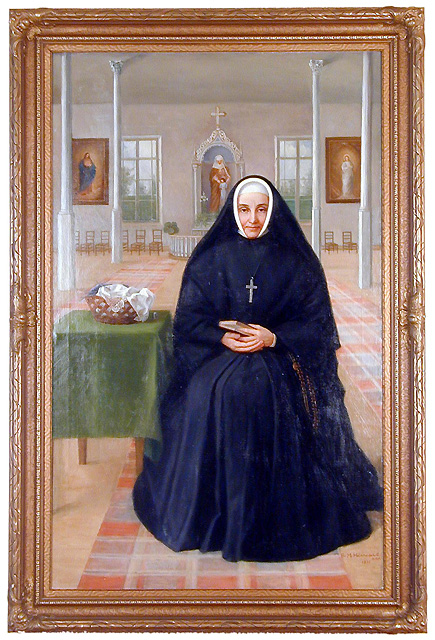
Mother Marie Anne, having been named Directress at Saint Genevieve Convent, became the target of attacks from the Motherhouse authorities, influenced by the dictatorship of Father Marechal.   Under the pretext of poor administration, Mother Marie Anne was recalled to the Motherhouse in 1858, with the Bishop’s warning:  “take means so that she will not be a nuisance to anyone.”   From this new destitution and until her death on 2 January 1890, Mother Marie Anne was kept away from administrative responsibilities. She was even kept away from the General Council deliberations when the 1872 and 1878 elections reelected her.   Assigned to mostly hidden work in the laundry and ironing room, she led a life of total self-denial and thus ensured the growth of the Congregation. Behold the paradox of an influence which some wanted to nullify!   In the Motherhouse basement laundry room in Lachine, where she spent her days, many generations of novices received from the Foundress a true example of obedience and humility, imbued with authentic relationships which ensure true fraternal charity.   To a novice who asked her one day why she, the Foundress, was kept aside in such lowly work, she simply replied with kindness :  “The deeper a tree sinks its roots into the soil, the greater are its chances of growing and producing fruit.”

The attitude of Mother Marie Anne, who was a victim of so many injustices, allows us to bring out the evangelical sense she gave to events in her life.   Just as Jesus Christ, who passionately worked for the Glory of His Father, so too Mother Marie Anne sought only God’s Glory in all she did.   “The greater Glory of God” was the aim she herself gave her Community.   “To make God known to the young who have not the happiness of knowing Him” was for her a privileged way of working for the Glory of God.   Deprived of her most legitimate rights and robbed of all her personal letters with her bishop, she offered no resistance and she expected, from the infinite goodness of God, the solution to the matter.   She was convinced that “He will know well, in his Wisdom, how to discern the false from the true and to reward each one according to his deeds.”Blessed_Marie-Anne_Blondin
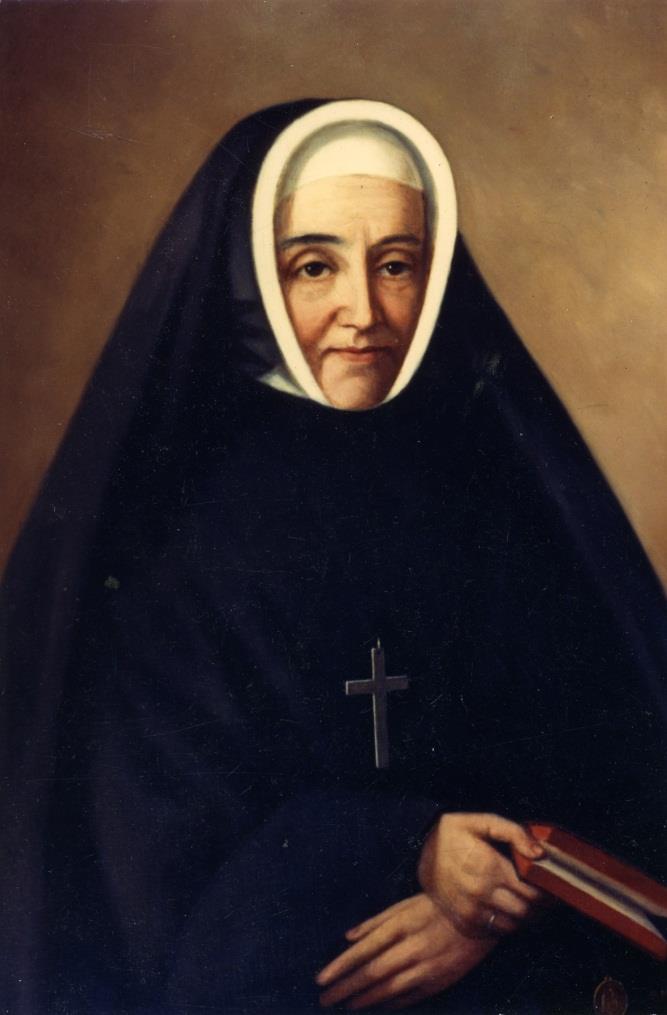
Prevented from being called “Mother” by those in authority, Mother Marie Anne did not jealously hold on to her title of Foundress, rather she chose annihilation, just like Jesus, “her crucified Love”, so that her Community might live.   However, she did not renounce her mission of spiritual mother of her Community.   She offered herself to God in order “to expiate all the sins which were committed in the Community” and she daily prayed to Saint Anne “to bestow on her spiritual daughters the virtues so necessary for Christian educators.”bl marie-anne-blondin-bbcb7571-43b9-4f58-85eb-03d51ae92c6-resize-750
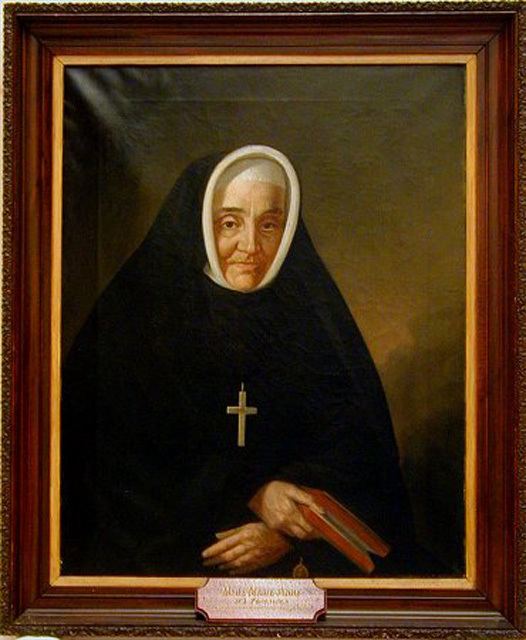
Like any prophet invested with a mission of salvation, Mother Marie Anne lived persecution by forgiving without restriction, convinced that “there is more happiness in forgiving than in revenge.”   This evangelical forgiveness, the guarantee of “the peace of soul which she held most precious,” was ultimately proven on her death bed when she asked her superior to call for Father Marechal “for the edification of the Sisters.”

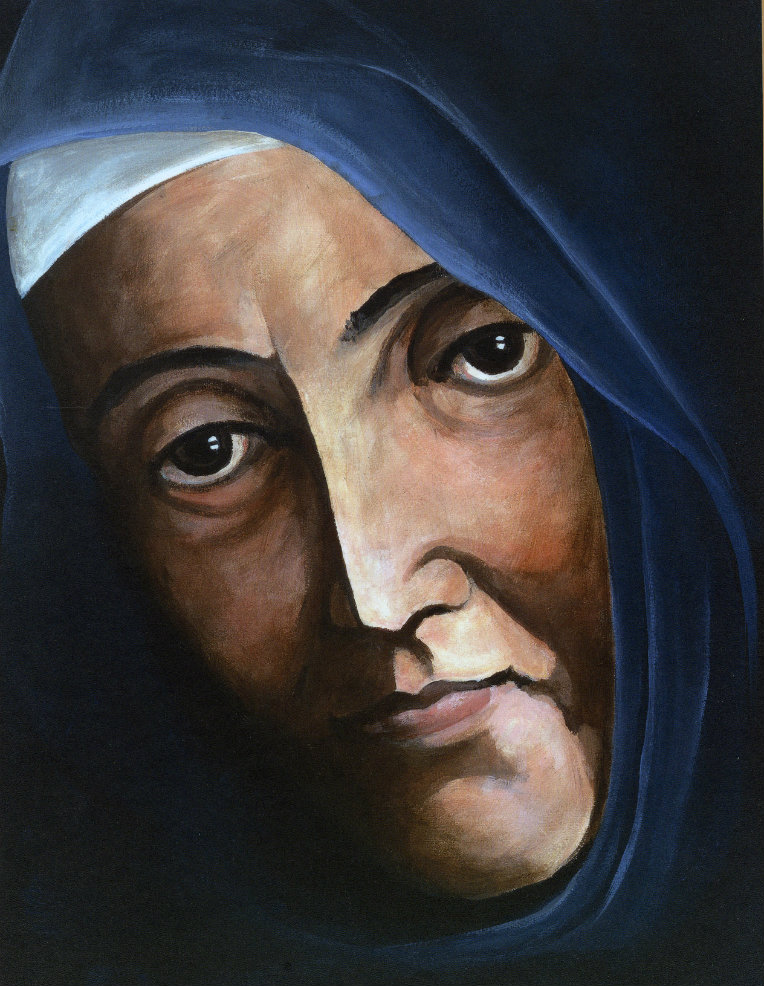
As she felt the end approaching, Mother Marie Anne left to her daughters her spiritual testament in these words which are a resume of her whole life :   “May Holy Eucharist and perfect abandonment to God’s Will be your heaven on earth.”   She then peacefully passed away at the Motherhouse of Lachine, on 2 January 1890, “happy to go to the Good God” she had served all her life…. Vatican.vabl Mother-Mary-Anne-by-Doruyter_edited-1.jpg
Posted in DOCTORS of the Church, FATHERS of the Church, SAINT of the DAY

Memorials of the Saints -2 January

St Basil the Great (329-379) Father & Doctor of the Church (Memorial)
St Gregory of Nazianzen (330-390) Father & Doctor of the Church (Memorial)
About these 2 great fathers:

https://anastpaul.wordpress.com/2018/01/02/saint-s-of-the-day-st-basil-the-great-329-379-and-st-gregory-of-nazianzen-330-390-fathers-and-doctors-of-the-church/
AND:
https://anastpaul.com/2019/01/02/saint-s-of-the-day-2-january-st-basil-the-great-329-379-and-st-gregory-of-nazianzen-330-390-two-bodies-one-spirit/

St Adelard of Corbie
Bl Airaldus of Maurienne
St Asclepius of Limoges
St Aspasius of Auch
St Blidulf of Bobbio
Bl Guillaume Répin
St Hortulana of Assisi
St Isidore of Antioch
St Isidore of Nitria
St Laurent Bâtard
St Macarius the Younger
Blessed Marie Anne Blondin SSA (1809-1890)
St Maximus of Vienne
Bl Odino of Rot
St Paracodius of Vienne
St Seraphim of Sarov
St Seiriol
Bl Stephana de Quinzanis
St Telesphorus, Pope
St Theodota
St Theopistus
St Vincentian of Tulle

Many Martyrs Who Suffered in Rome:   There were many martyrs who suffered in the persecutions of Diocletian for refusing to surrender the holy books.   Though we know these atrocities occured, we do not know the names of the saints and we honour them as a group. c 303 in Rome, Italy.

Martyrs of Antioch – 5 saints:   A group of Christian soldiers martyred together for their faith. We know the names of five – Albanus, Macarius, Possessor, Starus and Stratonicus. They were born in Greece and were martyred in Antioch (modern Antakya, Turkey).

Many Martyrs of Britain:   The Christians of Britain appear to have escaped unharmed in the earlier persecutions which afflicted the Church but the cruel edicts of Diocletian were enforced in every corner of the empire and the faithful inhabitants of this land, whether native Britons or Roman colonists, were called upon to furnish their full number of holy Martyrs and Confessors.   The names of few are on record but the British historian, Saint Gildas, after relating the martyrdom of Saint Alban, tells us that many others were seized, some put to the most unheard-of tortures and others immediately executed, while not a few hid themselves in forests and deserts and the caves of the earth, where they endured a prolonged death until God called them to their reward.   The same writer attributes it to the subsequent invasion of the English, then a pagan people, that the recollection of the places, sanctified by these martyrdoms, has been lost and so little honour paid to their memory.   It may be added that, according to one tradition, a thousand of these Christians were overtaken in their flight near Lichfield and cruelly massacred and that the name of Lichfield, or Field of the Dead, is derived from them.

Martyrs of Ethiopia – 3 saints:   A group of Christians martyred together for their faith. We know the names of three – Auriga, Claudia and Rutile.

Martyrs of Jerusalem – 2 saints:   A group of Christians martyred together for their faith. We know the names of two – Stephen and Vitalis.

Martyrs of Lichfield: Many Christians suffered at Lichfield (aka Lyke-field, meaning field of dead bodies), England in the persecutions of Diocletian.   Though we know these atrocities occured, we do not know the names of the saints, and we honour them as a group. Their martyrdom occurred in 304 at Lichfield, England.

Martyrs of Piacenza: A group of Christians who died together for their faith in the persecutions of Diocletian.   No details about them have survived. They were martyred on the site of church of Madonna di Campagna, Piacenza, Italy.

Martyrs of Puy – 4 saints: Missionaries, sent by Saint Fronto of Périgueux to the area of Puy, France. Tortured and martyred by local pagans.   We know the names – Frontasius, Severinus, Severian and Silanus.   They were beheaded in Puy (modern Puy-en-Velay), France and buried together in the church of Notre Dame, Puy-en-Velay by Saint Fronto, their bodies laid out to form a cross.

Martyrs of Syrmium – 7 saints: Group of Christians martyred together, date unknown. We know the names of seven – Acutus, Artaxus, Eugenda, Maximianus, Timothy, Tobias and Vitus – but very little else. This occurred in the 3rd or 4th century at Syrmium, Pannonia (modern Sremska Mitrovica, Serbia).

Martyrs of Tomi – 3 saints: Three brothers, all Christians, all soldiers in the imperial Roman army, and all three martyred in the persecutions of emperor Licinius Licinianus. We know their names – Argeus, Marcellinus and Narcissus – but little else.
They were martyred in 320 at Tomi, Exinius Pontus, Moesia (modern Constanta, Romania).

Posted in MEDITATIONS - ANTONIO CARD BACCI, QUOTES for the NEW YEAR

Thought for the Day – 1 January – The New Year

Thought for the Day – 1 January – Meditations with Antonio Cardinal Bacci (1881-1971)

The New Year

This is a new gift which God, in His infinite goodness, gives to us.   But every gift of God, demands, on our part, a generous expression of gratitude, which should result in positive acts of virtue.   Gratitude is an empty and short-lived sentiment, unless, it is accompanied by a sincere intention of performing good works.

Time is the price of eternity, because, with time, we can purchase an eternity of happiness or misery.

Consider this great truth – Every year is like a ladder in our lives.   Now, it is necessary that this ladder should lead us, not perilously downwards towards evil but, upwards towards Heaven, even if, with faltering footsteps.

The New Year opens today as a blank page in the diary of our lives.   What do we intend to write there?   The usual inanities and sins, perhaps?

Let us reflect before God and in the light of eternity which awaits us.   This is the time for great decisions.   It is necessary that we should offer our resolutions to God, along with a humble and fervent prayer, that He will strengthen us to comply faithfully with His grace.

Antonio Cardinal Bacci

Posted in ABOUT Antonio Bacci, MEDITATIONS - ANTONIO CARD BACCI, MORNING Prayers, PRACTISING CATHOLIC, QUOTES - J R R Tolkien and MORE

Meditations for Each Day with Antonio Cardinal Bacci (1881-1971)

Meditations for Each Day with Antonio Cardinal Bacci (1881-1971)cardinal bacci.jpg

I plan, in 2020, to use Cardinal Bacci’s Daily Meditations in my usual ‘Thought for the Day’.

From the Introduction to his book:

“The frenetic pace of modern life presents a host of challenges for the Catholic who wishes to grow in sanctity.   Distracted by the pressures of modernity, it often leaves him little room for making a profound and serious study of the state of his interior life.
The Catholic Faith is not only to be believed but applied to our everyday life and as St James has said, “faith also, if it have not works, is dead in itself” (Js 2:14).
An excellent means of helping a soul interiorise the principles of the Faith and to dispose the soul to greater acts of love of God, is through daily meditation.   This brings us to the present book, written by Antonio Cardinal Bacci, who was one of the most renowned Latinists of the 20th century.

[These Meditations] will aid the reader in exploring the depths of the Catholic Faith and, if understood and prayerfully read, hopefully will help him persevere in virtue, as Cardinal Bacci states:   “The masters of the spiritual life assure us that without the practice of meditation, it is almost impossible for the just man to persevere in virtue, or for the tepid to become fervent, or for the sinner to be converted.” (Med 2 Jan)

What sources does Cardinal Bacci use to compose his reflections?   As a classicist, he approaches the great sources of the ancient world …. he shows his great familiarity with the wisdom of the Church Fathers, especially through the works of St Augustine.   His constant guide is St Thomas Aquinas, whose penetrating reason illuminated by Divine Revelation, probes the profound beauty and mystery of Catholicism.   The Imitation of Christ is another cherished companion, indicating that Cardinal Bacci has made it’s teachings an integrated part of his life.   Of course, the words of Sacred Scripture, spill out on almost every page, giving life to St Jerome’s words, who said, that “ignorance of Scripture is ignorance of Christ.”

++++++++++

Unfortunately, there is not a great deal of biographical information about Cardinal Bacci in English.

Antonio Cardinal Bacci was born in Giugnola, Italy and was Ordained a Priest in 1909, becoming a faculty member and rector of the Archiepiscopal Seminary of Florence between 1910 and 1922.   Due to his reputation as a Latinist – already at such a young age – during the latter part of 1922, he was chosen to work for the Secretariate of the Vatican State.   Made an honourary Chamberlain for Pope Pius XI the following year, he soon earned the great trust and respect of the then Secretary for Briefs, Msgr Nicola Sebastiani.   In this role he composed letters and Pontifical documents in Latin “with pose and prudence … weighing and adjusting thoughts and expressions even to the smallest shades of meaning.”   When Msgr Sebastiani died, Cardinal Bacci took over the Secretariate for Briefs.   During this time he published an Italian-Latin dictionary.

In 1960, St Pope John XXIII made him a Cardinal Deacon and consecrated him as titular Archbishop of Colonia de Cappadocia two years later.   He participated in all the sessions of Vatican II and made an impassioned address to the Council on the use of Latin.

In 1971, he died of a stroke in his Vatican apartment, after having spent nearly 50 years, in direct service to 4 Popes.

++++++++++

“In writing these pages, I have desired, to do a little good, … first of all for myself and secondly for those who may wish to read and reflect upon them.   I hoped to accomplish something for myself, in that I wrote down these short daily meditations, in order to be able to remember them more easily and to be able to turn to them whenever the opportunity should arise.   Then, on the advice of enlightened friends, I decided to publish them in the hope that they might prove useful to others.

It was my intention to produce an edifying, rather than, an erudite work.   This explains the simple style and the repetition of certain ideas.   I have found it convenient to return to these ideas at regular intervals, in order to impress them more deeply on the mind and heart of the reader.

There are many well-written books of meditation but they are either too long and, therefore, inaccessible to many classes of people, who complain that they have not time to read them, or they are written in an antiquated style, which is not acceptable today. The result is, that many persons, including some who are genuinely holy, never make a meditation at all and this, is a very great loss.

I have done my best to be concise and, at the same time, to offer an abundance of ideas, in the hope that the reader … may derive from them, material for useful reflections and for profitable resolutions.

May God and the Blessed Virgin bless my labour so that it may be the source of good, for many souls, amen.”Antonio Cardinal Bacci

Posted in NOTES to Followers, QUOTES for the NEW YEAR, The WORD

May our good Lord Bless and keep you all in 2020! Rejoice in the Lord always

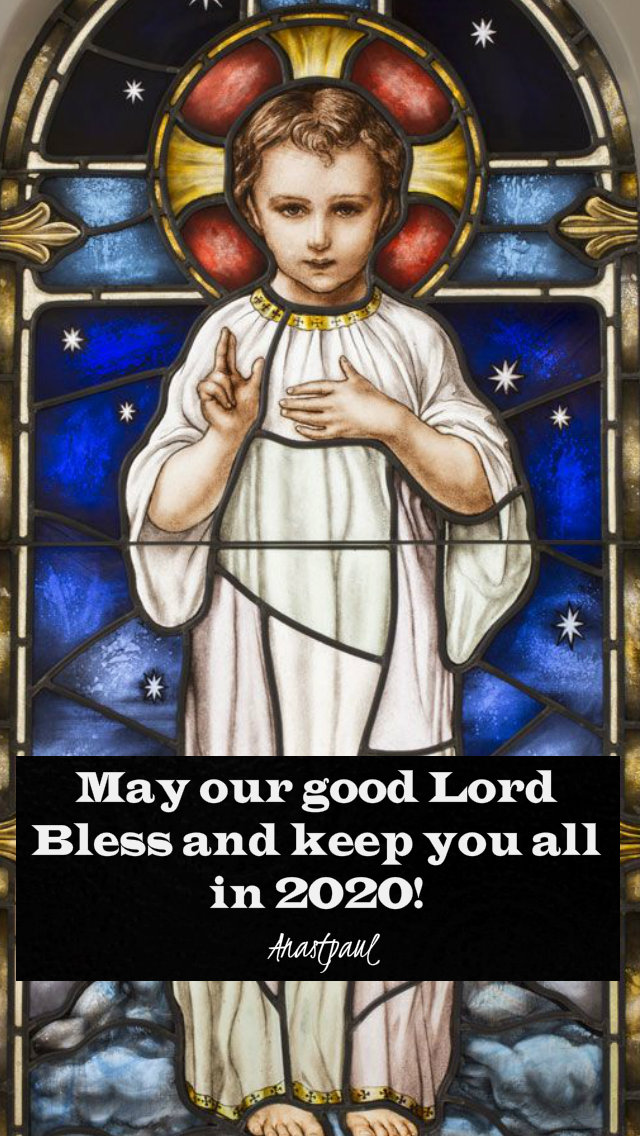
May our good Lord
Bless and keep you all
in 2020!may our good lord bless and keep you all in 2020.jpg

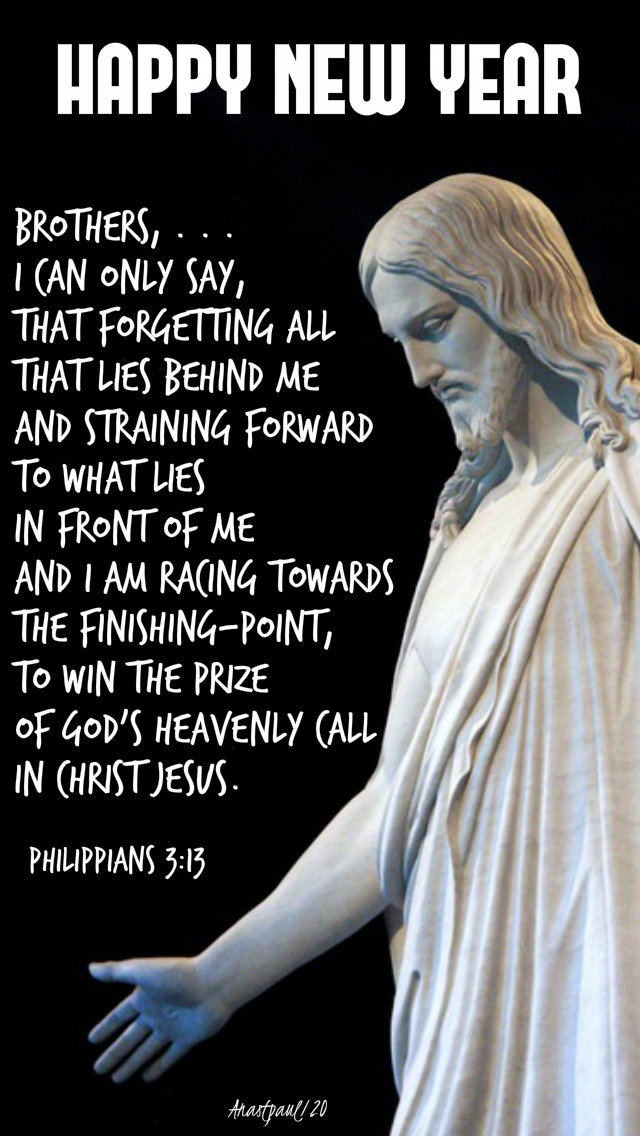
“Brothers, . . . I can only say,
that forgetting all that lies behind me
and straining forward to what lies in front of me
and I am racing towards the finishing-point,
to win the prize of God’s heavenly call
in Christ Jesus.”

Philippians 3:13BROTHERS I CAN ONLY SAY THAT forgetting phil 3 13 - happy new year .jpg

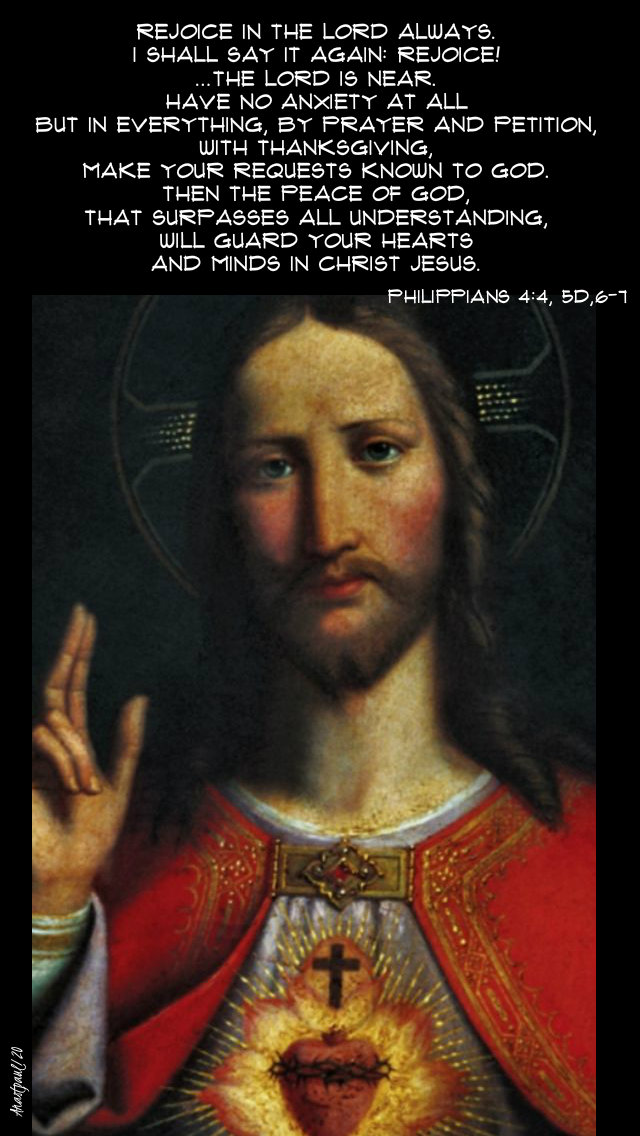
Rejoice in the Lord always.
I shall say it again: rejoice!
…The Lord is near.
Have no anxiety at all
but in everything, by prayer and petition,
with thanksgiving,
make your requests known to God.
Then the peace of God,
that surpasses all understanding,
will guard your hearts
and minds in Christ Jesus.

Philippians 4:4, 5d,6-7philippians 4 4 5d 6-7 1 jan 2020.jpg

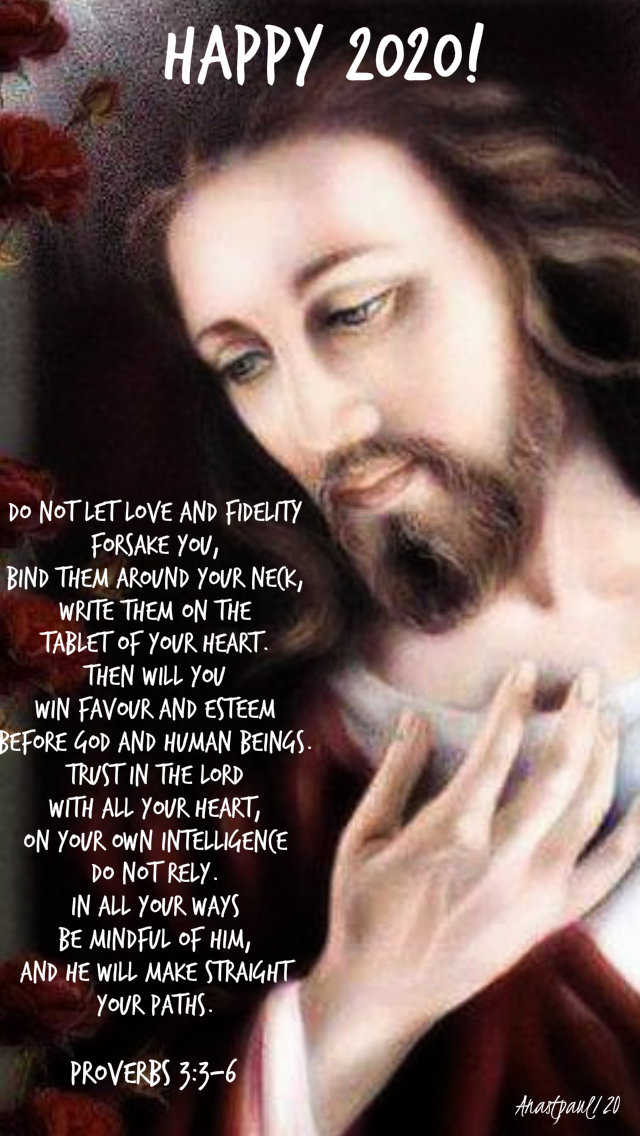
Do not let love and fidelity forsake you,
bind them around your neck,
write them on the tablet of your heart.
Then will you win favour and esteem
before God and human beings.
Trust in the LORD with all your heart,
on your own intelligence do not rely.
In all your ways be mindful of him,
and he will make straight your paths.

Proverbs 3:3-6proverbs 3 3-6 do not let love and fidelity forsake you happy new year.jpg

Posted in CATHOLIC TIME, CATHOLIC-PRAYERS OF THE CHURCH, PRACTISING CATHOLIC, PRAYERS for VARIOUS NEEDS, PRAYERS of the CHURCH

The Holy Father’s Prayer Intention for January 2020

The Holy Father’s
Prayer Intention for
JANUARY 2020

Prayer Intention for Evangelisation

Promotion of World Peace

We pray that Christians,
followers of other religions
and all people of goodwill,
may promote peace
and justice in the world.

the holy father's prayer intention january 2020.jpg

Posted in CATHOLIC DEVOTIONS of the Month, CATHOLIC-PRAYERS OF THE CHURCH, DOCTORS of the Church, HYMNS, PRACTISING CATHOLIC, PRAYERS for SEASONS, PRAYERS of the CHURCH, PRAYERS of the SAINTS, The HOLY NAME

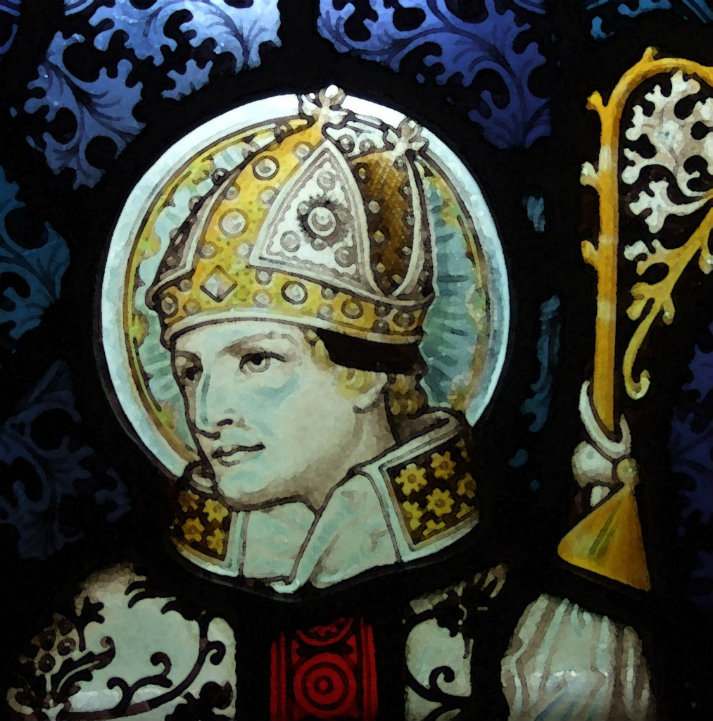
Monthly Catholic Devotions – January, the Month of the Most Holy Name of Jesus
january the month of the most holy name of jesus 1 jan 2020.jpgMonthly Catholic Devotions

JANUARY
is the Month of
THE MOST HOLY NAME OF JESUS

The month of January is dedicated to the Holy Name of Jesus.
“In the name of Jesus every knee should bow, of those that are in heaven, on earth and under the earth” (Phil 2:10).
Christ’s name is chosen in heaven and the Angel Gabriel announces it when he informs the Blessed Virgin of the incarnation:
“Behold thou shall conceive in thy womb and shalt bring forth a son and thou shall call his name Jesus”.
It is a name that has marvellous implications, for it means “saviour.”   The very name bespeaks the magnitude of His mission, His infinite love, a love that will cause Him to offer Himself up for us.

The name of Jesus is the sweetest of all names and He who bears it is most worthy of all love.   He who calls Jesus, his friend, can be assured that this friend is the most devoted and unselfish of all friends.

Jesus is our all.
In His name, we may pray to the Father with assurance of being heard.
In His name, the Church administers all her sacraments.
In His name, she offers all her prayers and blesses homes, the fields and the sick.
In the name of Jesus, she casts out evil spirits
and at the hour of our death bids us, “Go forth, Christian soul.”
She assures us, that whoever shall call upon this name will be saved. When our soul has departed this life to seek its eternal home, the Church asks in the name of Jesus, “Eternal rest give unto him, O Lord.” … Fr Benedict Baur, OSB

Jesu Dulcis Memori

By St Bernard of Clairvaux (1090-1153) Doctor of the Church

Jesus, the very thought of Thee
with sweetness fills my breast,
But sweeter far Thy face to see
and in Thy presence rest.

Nor voice can sing nor heart can frame,
Nor can the memory find
a sweeter sound than Jesus’ name,
O Saviour of mankind.

O hope of every contrite heart,
O joy of all the meek
to those who fall, how kind Thou art,
how good to those who seek!

But what to those who find?
Ah this nor tongue nor pen can show,
the love of Jesus, what it is none
but His loved ones know.

Jesus our only joy be Thou
as Thou our prize wilt be.
Jesus, be Thou our glory now
and through eternity.
Amen

2019:
https://anastpaul.com/2019/01/01/january-is-the-month-of-the-most-holy-name-of-jesus/

2018:
https://anastpaul.com/2018/01/01/monthly-catholic-devotions-january-is-the-month-of-the-most-holy-name-of-jesus-2/jesu, dulcis memoria st bernard of clairvaux hymn or prayer.jpg

Posted in CHRISTMASTIDE!, FEASTS and SOLEMNITIES, MARIAN REFLECTIONS, MARIAN TITLES, MOTHER of GOD, PRACTISING CATHOLIC

Thought for the Day – 1 January – Take heart, dear children, here I am, your Mother!

Thought for the Day – 1 January – The Solemnity of Mary, Mother of God and the Octave Day of the Nativity of the Lordtake heart dear children here i am your mother - pope francis 1 jan 2019.jpg

Excerpt
Pope Francis’ Homily on
The Solemnity of Mary, Mother of God
1 January 2019

“All who heard were amazed at what the shepherds told them” (Lk 2:18).   To be amazed -this is what is asked of us today, at the conclusion of the Octave of Christmas, as we continue to contemplate the Child born for us, lacking everything, yet abounding in love. Amazement is what we should feel at the beginning of each year, for life is a gift that constantly gives us a chance to make a new start, even from the most lowly of circumstances.

Today is also a day to be amazed by the Mother of God.   God appears as a little child, held in the arms of a woman who feeds her Creator.   The statue before our eyes depicts the Mother and Child so close as to appear as one.   That is the mystery we celebrate today, which gives rise to boundless amazement – God has become one with humanity forever.   God and man, always together, that is the good news of this new year.   God is no distant lord, dwelling in splendid isolation above the heavens but love incarnate, born like us of a mother, in order to be a brother to each of us, to be close to us – the God of closeness.   He rests on the lap of His mother, who is also our mother and from there he pours out upon humanity a new tenderness.   Thus we come to understand more fully God’s love, which is both paternal and maternal, like that of a mother who never stops believing in her children and never abandons them.   God-with-us, Emmanuel, loves us despite our mistakes, our sins and the way we treat our world.   God believes in mankind, because its first and pre-eminent member is His own Mother.

At the beginning of the year, let us implore from Mary the grace to be amazed at the God of surprises.   Let us renew the amazement we felt when faith was first born in us. The Mother of God helps us – the Mother who gave birth to the Lord, now presents us, reborn, to the Lord.   She is a mother who generates in her children the amazement of faith, because faith is an encounter, not a religion.   Without amazement, life becomes dull and routine and so it is with faith.   The Church too needs to renew her amazement at being the dwelling place of the living God, the Bride of the Lord, a Mother who gives birth to her children.   Otherwise, she risks turning into a beautiful museum of the past.   A “Church museum”.   Our Lady, instead, gives the Church the feel of a home, a home in which the God of newness dwells.   Let us receive with amazement the mystery of the Mother of God, as the inhabitants of Ephesus did at the time of the Council.   Like them, let us acclaim her “Holy Mother of God”.   From her, let us allow ourselves to be gazed upon, to be embraced, to be taken by the hand.

Let us allow ourselves to be gazed upon.   Especially in times of need, when we are entangled in life’s knots, we rightly lift our eyes to Our Lady, to Our Mother.   Yet first, we should let ourselves be gazed upon by Our Lady.   When she gazes upon us, she does not see sinners but children.   It is said that the eyes are the mirror of the soul, the eyes of Mary, full of grace, reflect the beauty of God, they show us a reflection of heaven.   Jesus Himself said that the eye is “the lamp of the body” (Mt 6:22) – the eyes of Our Lady are able to bring light to every dark corner, everywhere they rekindle hope.   As she gazes upon us, she says: “Take heart, dear children, here I am, your Mother!”

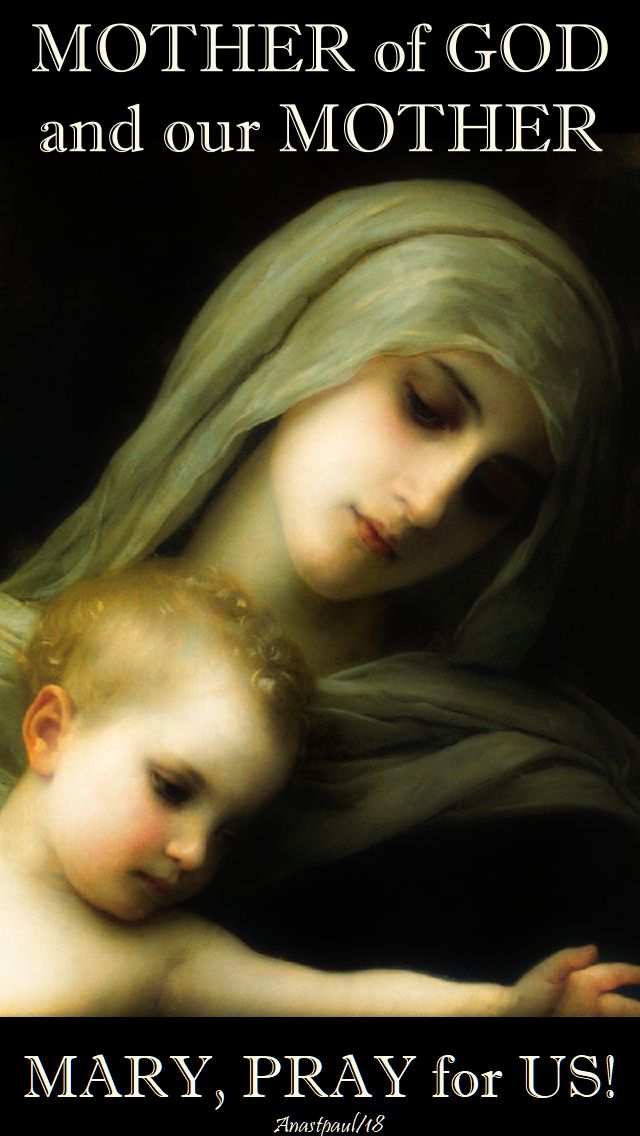
Holy Mother of God, OUR  mother, Pray for Us!mother of god and our mother - mary pray for us - 14 may 2018.jpg

Posted in CHRISTMASTIDE!, FATHERS of the Church, QUOTES for the NEW YEAR, QUOTES of the SAINTS, QUOTES on DISCIPLESHIP, QUOTES on LOVE, SAINT of the DAY, The WILL of GOD

Quote/s of the Day – 1 January – ‘Love God’

Quote/s of the Day – 1 January – The Solemnity of Mary, Mother of God and the Octave Day of the Nativity of the Lord and the Memorial of St Fulgentius of Ruspe (c 462 – 533)

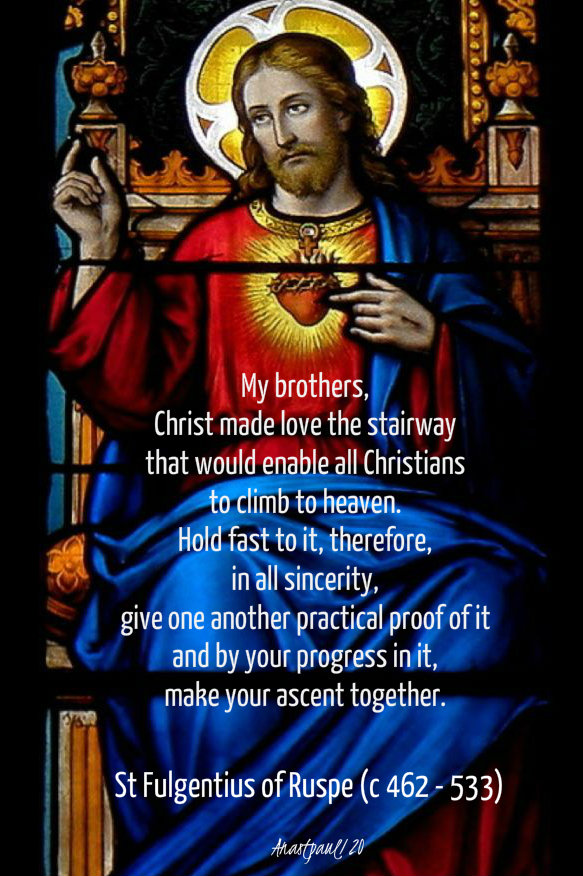
“My brothers,
Christ made love the stairway
that would enable all Christians
to climb to heaven.
Hold fast to it, therefore,
in all sincerity,
give one another practical proof of it
and by your progress in it,
make your ascent together.”

St Fulgentius of Ruspe (c 462 – 533)

From a sermon on The Feast of Saint Stephenchrist made love the stairway - st fulgentius 1 jan 2020.jpg

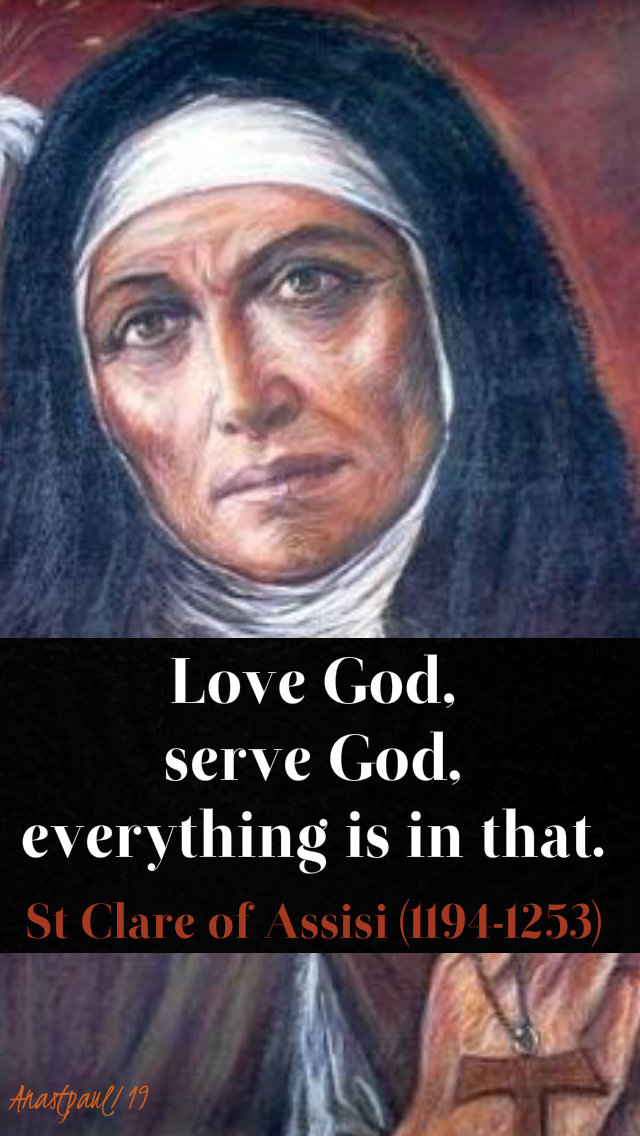
“Love God,
serve God,
everything is in that.”

St Clare of Assisi (1194-1253)love-god-serve-god-everything-is-in-that-st-clare-1-jan-2019 and 2020.jpg

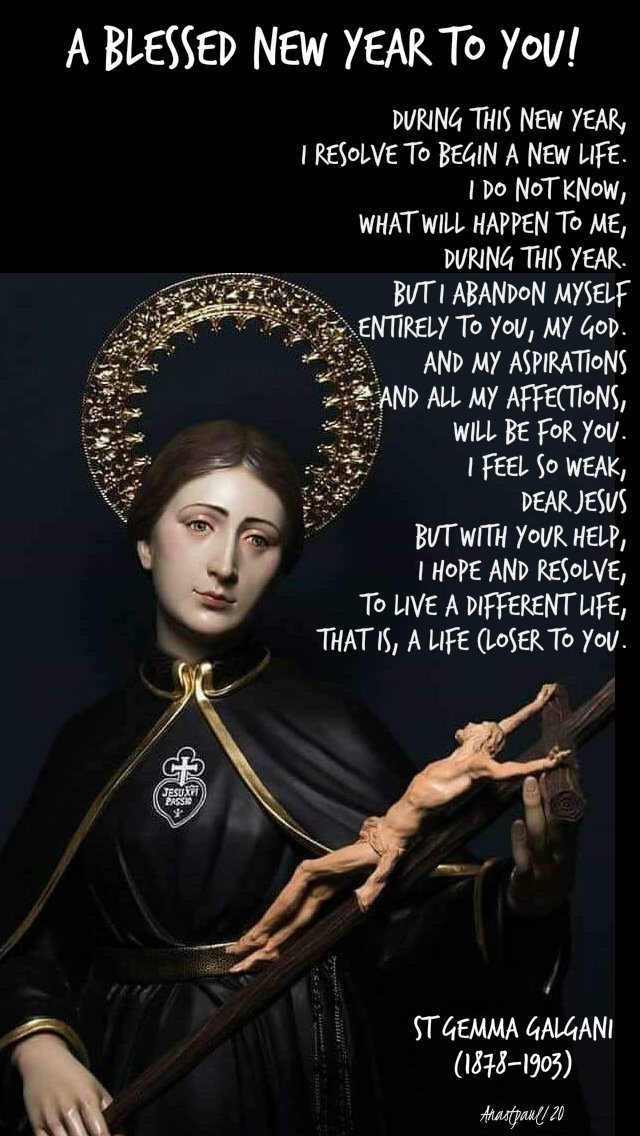
“During this new year,
I resolve to begin a new life.
I do not know,
what will happen to me, during this year.
But I abandon myself entirely to You, my God.
And my aspirations and all my affections,
will be for You.
I feel so weak, dear Jesus
but with Your help,
I hope and resolve,
to live a different life,
that is, a life closer to You.”

St Gemma Galgani (1878-1903)during this new year i resolve - st gemma galgani a blessed new year - 1 jan 2020.jpg

Posted in CARMELITES, CHRISTMASTIDE!, MARIAN REFLECTIONS, MARIAN TITLES, MOTHER of GOD, ONE Minute REFLECTION, QUOTES of the SAINTS, The WORD

One Minute Reflection – 1 January – ‘..For the sake of His love take me…’

One Minute Reflection – 1 January – The Solemnity of Mary, Mother of God and the Octave Day of the Nativity of the Lord, Readings: Numbers 6:22-27, Psalm 67:2-3, 5-6, 8, Galatians 4:4-7, Luke 2:16-21

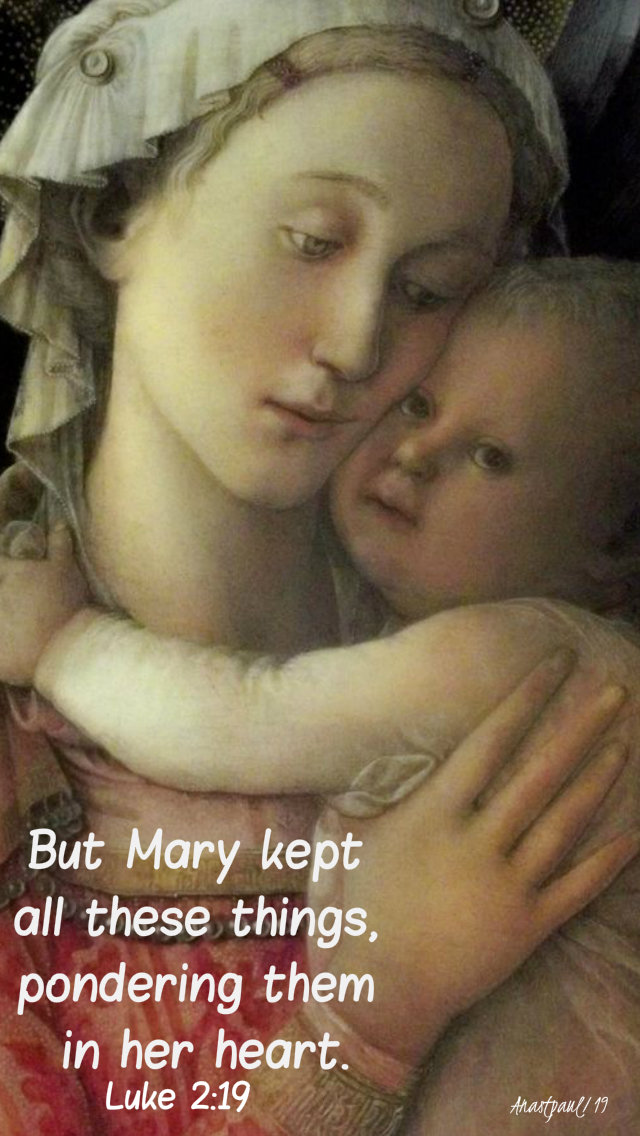
But Mary kept all these things, pondering them in her heart. … Luke 2:19luke 2 19 but mary kept all these things pondering 1 jan 2019.jpg

REFLECTION – “You will pray to the Virgin Mother that she obtain for you a perfect renewal of life and that, by this grace, she herself, the venerable rose, become your mother and godmother in such a way, that you may be her true daughter in conduct.  And pray that this very gem of decency, may envelop your soul, in the mantle of her cleanliness, preserving you without any spot, under her most dulcet tutelage, for her Son, the Lord King.   And pray that your name may be numbered among Israel, the choicest lot, so that you have share with those who walk in innocence of heart, always seeing the Lord before them in all of their ways. (cf. Ps 15:8)

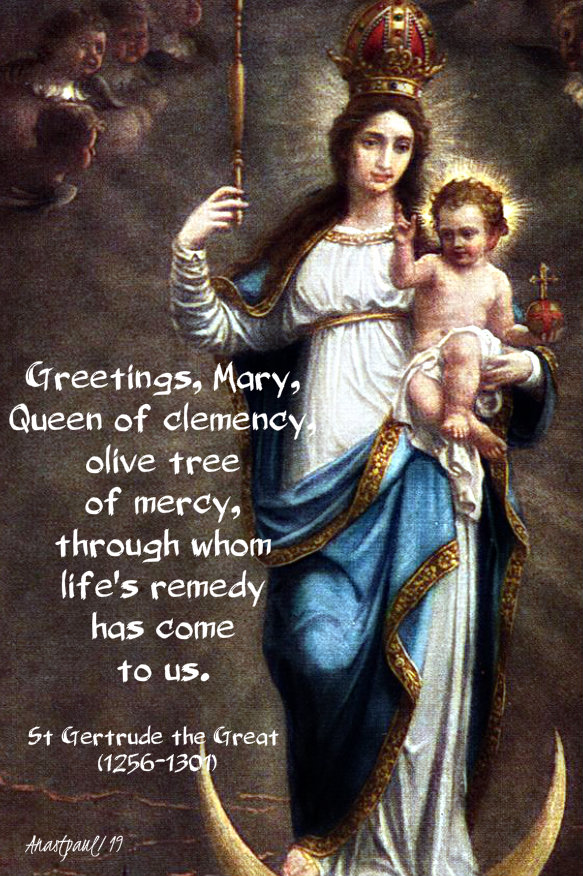
Greetings, Mary, queen of clemency, olive tree of mercy, through whom life’s remedy has come to us.   Queen of clemency, Virgin Mother of the divine offspring, through whom the Child of supernal light came to us, the scented offspring of Israel.   Ah!   Just as you became the true mother of us all, through your Son, who Himself, your one and only Son, did not scorn to become our Brother, now then, for the sake of His love take me, an unworthy woman, into your motherly care.   Aid my faith, keep and instruct it and become so much the godmother of my renewal and faith now, that you may be my only mother and closest to my heart for eternity, always caring for me with loving-kindness in this life and taking me, into your full motherliness, at the hour of death.   Amen.” … St Gertrude the Great of Helfta (1256-1301)greetings mary queen of clemency - 1 jan 2020 st gertrude the great.jpg

PRAYER – God, our Father, since You gave mankind a Saviour through the blessed Mary, virgin and mother, grant that we may feel the power of her intercession, when she pleads for us with Jesus Christ, Your Son, the author of life, who lives and reigns with You and the Holy Spirit, God, forever and ever, amen.

Posted in CHRISTMASTIDE!, FEASTS and SOLEMNITIES, MARIAN POETRY, MARIAN PRAYERS, Our MORNING Offering, POETRY, PRAYERS for SEASONS, The BLESSED VIRGIN MARY, The INCARNATION, The NATIVITY of JESUS

Our Morning Offering – 1 January – ‘Now will I sing to Thy mother!’

Our Morning Offering – 1 January – The Solemnity of Mary, Mother of God and the Octave Day of the Nativity of the Lord

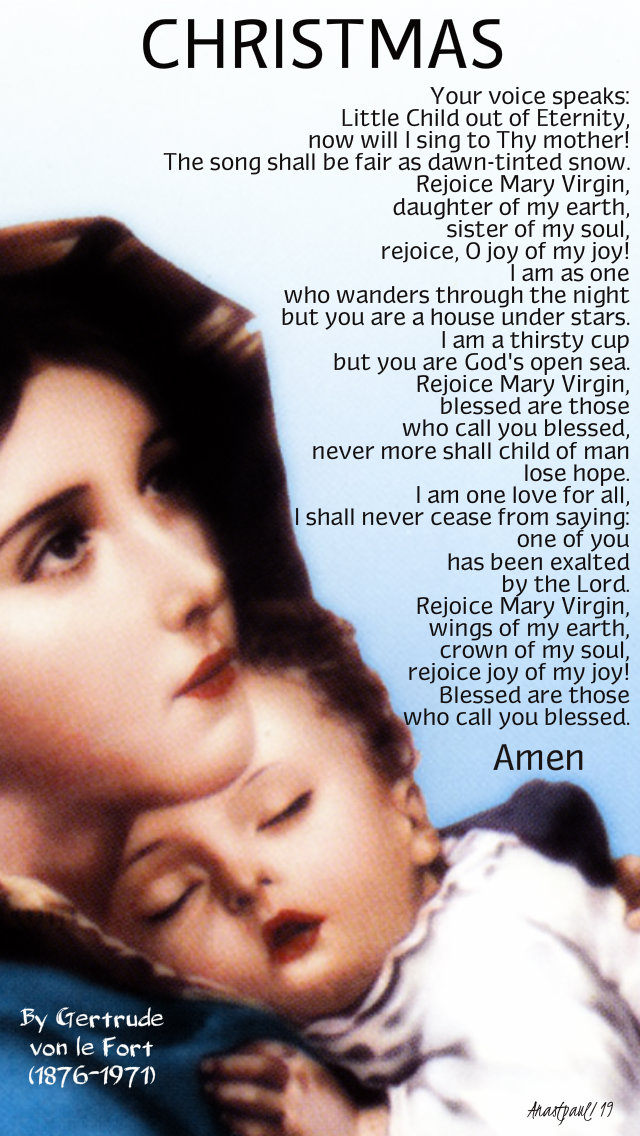
CHRISTMAS
By Gertrude von le Fort (1876-1971)

Your voice speaks:
Little child out of Eternity, now will I sing to Thy mother!
The song shall be fair as dawn-tinted snow.
Rejoice Mary Virgin, daughter of my earth, sister of my soul,
rejoice, O joy of my joy!
I am as one who wanders through the night
but you are a house under stars.
I am a thirsty cup but you are God’s open sea.
Rejoice Mary Virgin, blessed are those who call you blessed,
never more shall child of man lose hope.
I am one love for all, I shall never cease from saying:
one of you has been exalted by the Lord.
Rejoice Mary Virgin, wings of my earth, crown of my soul,
rejoice joy of my joy!
Blessed are those who call you blessed.

The Baroness Gertrud von Le Fort (full name Gertrud Auguste Lina Elsbeth Mathilde Petrea Freiin von Le Fort – 11 October 1876 – 1 November 1971 – aged 95) was a German writer of novels, poems and essays.
She converted to Catholicism in 1925 and most of her writings came after this conversion. She published over 20 books, comprising poems, novels and short stories.   Her work gained her the accolade of being “the greatest contemporary transcendent poet.”   Her works are appreciated for their depth and beauty of their ideas and for her sophisticated refinement of style.   She was nominated by Hermann Hesse for the Nobel Prize in Literature and was granted an honorary Doctorate of Theology for her contributions to the issue of faith in her works.CHRISTMAS BY GERTRUDE VON LE FORT 1 january 2019.jpg

Posted in FATHERS of the Church, SAINT of the DAY

Saint of the Day – 1 January – Saint Fulgentius of Ruspe (c 462 – 533) “The Pocket Augustine”

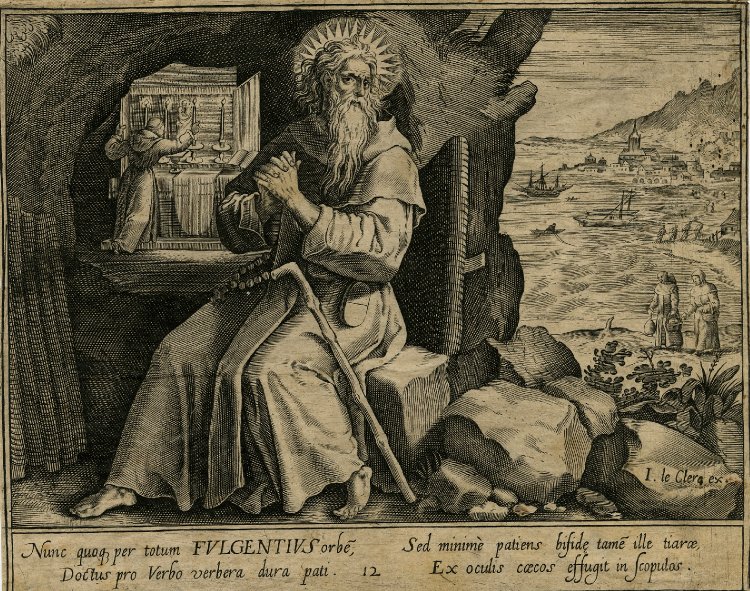
Saint of the Day – 1 January – Saint Fulgentius of Ruspe (c 462 – 533) Abbot, Bishop of the city of Ruspe, Roman province of Africa, North Africa in modern day Tunisia, Theologian, Writer- known as “The Pocket Augustine” – born Fabius Claudius Gordianus Fulgentius in c 462 at Carthage, North Africa (modern Tunis, Tunisia) and died on 1 January 533 in Ruspe of natural causes.   He is venerated today and on 3 January by the Augustinians.st fulgentius engraving.jpg

He was born to a Roman senatorial family, and was well educated.   His father Claudius, died while Fulgentius was still quite young.   His mother, Mariana taught him to speak Greek and Latin.   He became so good at Greek, that he spoke it like a native and committed all of Homer to memory.   He was also well trained in Latin literature.

As he grew older, he managed his house wisely in subjection to his mother and Fulgentius quickly gained wide respect for his conduct of the family affairs.   This reputation helped him to acquire a post as a civil servant in the government of Rome, as a procurator of Byzacena.

He quickly grew tired of the provincial life.   This, together with his studies of religion, particularly a sermon of Saint Augustine of Hippo on Psalm 36, led to his being attracted to a religious life and he entered a monastery, became a monk, then was Ordained and became Abbot.585px-Fulgentius_von_Ruspe_17Jh.jpg

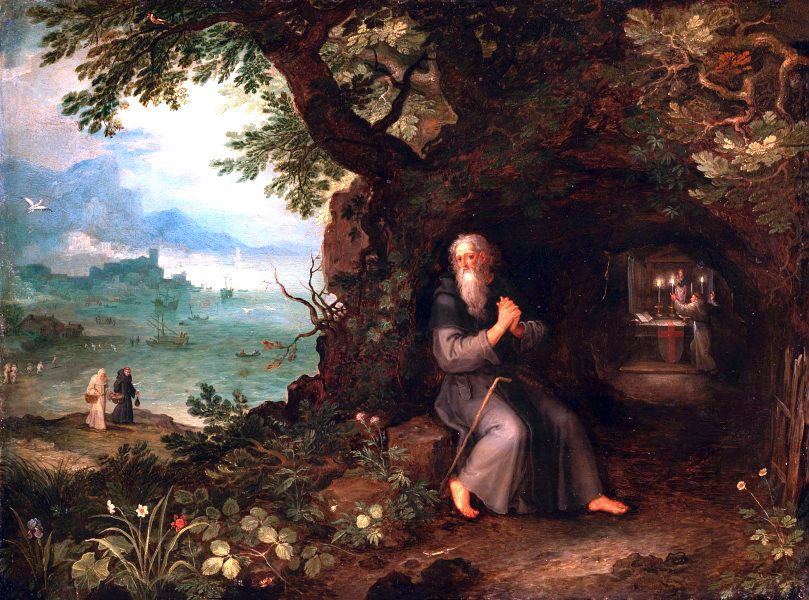
At the time, the Arian persecutions had ceased but the election of Catholic bishops was forbidden.   In 508 it became necessary to defy the law when bishops were consecrated, Fulgentius being chosen for Ruspe (modern Kudiat Rosfa, Tunisia).   He was exiled with 60 other bishops to Sardinia.   There they built a monastery and continued to write, pray, and study.Landscape_with_St.jpg

Fulgentius was invited back to Carthage by the Arian king Thrasimund to hold a debate with his Arian replacement around 515 and so successfully refuted his Arian opponents that he was exiled again in 518.

King Hilderic succeeded Thrasimund in 523 and permitted the exiles to return.   Peace finally being restored to the African church, Fulgentius returned to his Diocese. He would have preferred to return to his monastery and resume his studies but he was such a popular preacher, he was kept busy in the pulpit until his death.st fulgentius

As a Bishop, he followed Augustine’s example in living in community with the clergy of his Diocese.   He founded several other monasteries in Africa.   When he was exiled to Sardinia, not wanting to be away from the monastic community life, he even founded monasteries there.

Various letters and eight sermons survive.   Fulgentius’s work shows his vast knowledge of Greek and a strong influence and agreement with Saint Augustine, so much so, that he is known as “The Pocket Augustine.”   He wrote frequently against Arianism and Pelagianism.E07a-photo-St-Fulgentius-of-Ruspe-1013x1024.jpg

Saint Fulgentius died of natural causes in 533 at Ruspe.   Some of his relics are located at Bourges, France.

St Fulgentius truly aimed to live a life in conformity with St Augustine’s precept:

“Everything outside of us fluctuates with the storms and temptations of this age.   But we need an interior desert, where we gather ourselves and live of our faith.” … (Sermo 47,25)Saint+Fulgentius.jpg

Posted in CHRISTMASTIDE!, FEASTS and SOLEMNITIES, MARIAN TITLES, MOTHER of GOD, SAINT of the DAY, The INCARNATION, The NATIVITY of JESUS

1 January 2020 – The Solemnity of Mary, Mother of God and the Octave Day of the Nativity of the Lord and the 53rd World Day of Prayer for Peace +2019 and Memorials of the Saints

1 January – The Solemnity of Mary, Mother of God and the Octave Day of the Nativity of the Lord and the 53rd World Day of Prayer for Peace +2019

Mary, Mother of God and the Octave Day of the Nativity of the Lord (Solemnity)
1 January 2018:
https://anastpaul.wordpress.com/2018/01/01/1-january-2018-the-solemnity-of-mary-the-mother-of-god/
1 January 2019:
https://anastpaul.com/2019/01/01/1-january-the-solemnity-of-mary-mother-of-god-and-the-octave-day-of-the-nativity-of-the-lord/octave-day-mary-mother-of-god-2016jpg.jpg

53rd Annual World Day of Prayer for Peace:   Feast day dedicated to peace.   It first observed on 1 January 1968, proclaimed by St Pope Paul VI.   It was inspired by the encyclical Pacem in Terris by St Pope John XXIII and with reference to Paul’s encyclical Populorum Progressio.   Our Holy Fathers have used this day to make magisterial declarations relevant to the social doctrine of the Church on such topics as the United Nations, human rights, women’s rights, labour unions, economic development, the right to life, international diplomacy, peace in the Holy Land, globalisation, migrants, refugees and terrorism.

St Pope Paul VI:  https://anastpaul.com/2019/01/01/the-52nd-world-day-of-prayer-for-peace-1-january-2019/

Titular Feast of the Society of Jesus – But now celebrated on 3 January, the Feast of the Holy Name of Jesus

Bl Adalbero of Liege
St Baglan of Wales
St Basil of Aix
Bl Bonannus of Roio
St Brogan
St Buonfiglio Monaldi
Bl Catherine de Solaguti
St Clarus of Vallis Regia
St Clarus of Vienne
St Colman mac Rónán
St Colman Muillin of Derrykeighan
St Concordius of Arles
St Connat
St Cuan
St Demet of Plozévet
St Elvan
St Eugendus of Condat
St Euphrosyne of Alexandria
St Fanchea of Rossory
St Felix of Bourges
St Frodobert of Troyes
St Fulgentius of Ruspe (c 462 – 533)
St Gisela of Rosstreppe
St Gregory Nazianzen the Elder
Bl Hugolinus of Gualdo Cattaneo
Bl Jean-Baptiste Lego
Bl Jean of Saint-Just-en-Chaussée
St Joseph Mary Tomasi
St Justin of Chieti
Bl Lojze Grozde
St Maelrhys
St Magnus the Martyr
Bl Marian Konopinski
St Mydwyn
St Odilo of Cluny
St Odilo of Stavelot
St Peter of Atroa
St Peter of Temissis
Bl René Lego
St Sciath of Ardskeagh
St Severino Gallo
St Telemachus
St Thaumastus of Mainz
St Theodotus
St Tyfrydog
Bl Valentin Paquay
St Vincent Strambi
St William of Dijon
St Zedislava Berka
St Zygmunt Gorazdowski

Breton Missionaries to Britain
Martyred Soldiers of Rome: Thirty soldiers martyred in Rome as a group during the persecutions of Diocletian. We don’t even known their names. They were martyred c 304 at Rome, Italy.

Martyrs of Africa – 8 saints: Eight Christians martyred together in Africa, date unknown. The only details we have are four of their names – Argyrus, Felix, Narcissus and Victor.

Martyred in the Spanish Civil War:
• Blessed Andrés Gómez Sáez