Our Morning Offering – 18 September – Friday of the Twenty-fourth week in Ordinary Time
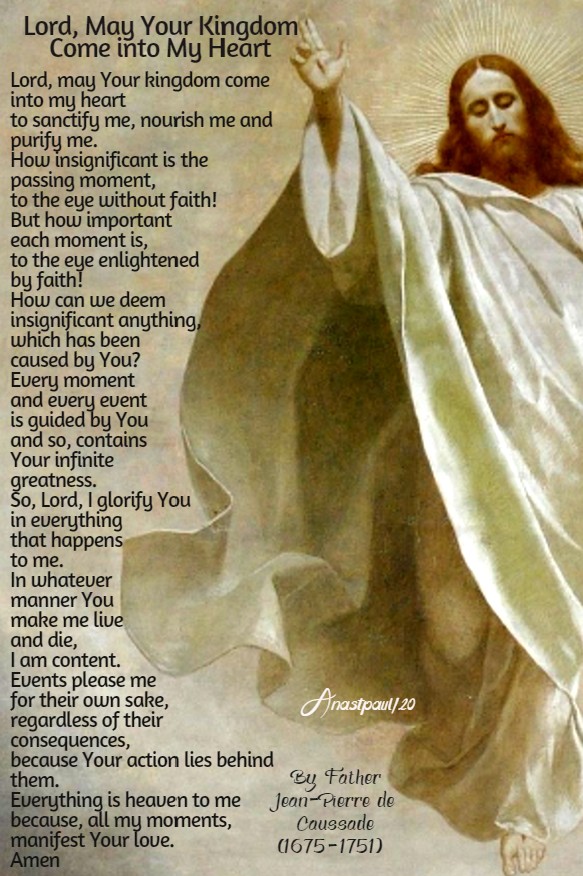
Lord, May Your Kingdom Come into My Heart By Father Jean-Pierre de Caussade (1675-1751)
Lord, may Your kingdom come into my heart to sanctify me, nourish me and purify me. How insignificant is the passing moment, to the eye without faith! But how important each moment is, to the eye enlightened by faith! How can we deem insignificant anything, which has been caused by You? Every moment and every event is guided by You and so, contains Your infinite greatness. So, Lord, I glorify You in everything that happens to me. In whatever manner You make me live and die, I am content. Events please me for their own sake, regardless of their consequences, because Your action lies behind them. Everything is heaven to me because, all my moments, manifest Your love. Amen
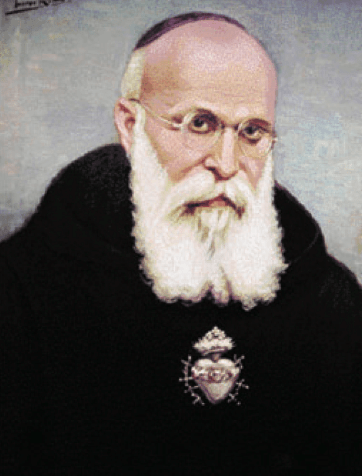
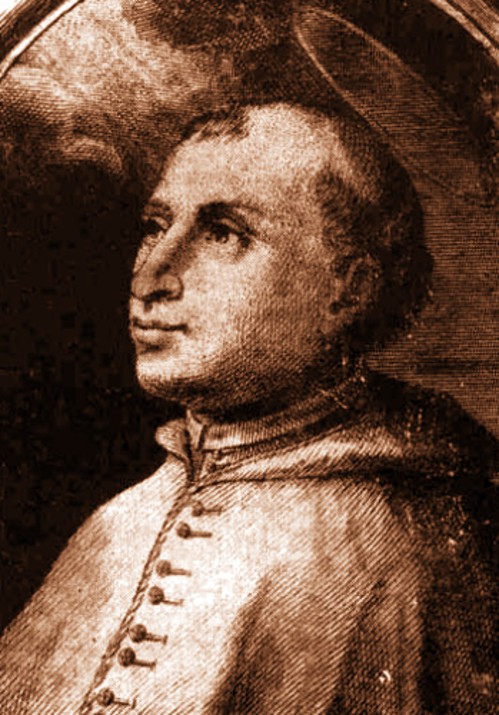
Saint of the Day – 18 September – Blessed Ambrosio María de Torrent (Salvador Chuliá Ferrandis) TC (1866-1936) Priest and Martyr of the Spanish civil War. Blessed Ambrosio was a religious Friar and Priest of The Amigonian Friars. He was a man of deep piety, a devotee of the Eucharist, a great apostle of the confessional and a competent director of souls. Born on 16 April 1866 in Torrent, Valencia, Spain and died by being shot at dawn on 18 September 1936 in Torrent, Valencia, Spain.
The Amigonian Friars and Sisters, are a religious institute of religious founded in Spain during the 19th century which specialises in working with young boys facing issues of juvenile delinquency and drug addiction. They follow the Rule of the Third Order Regular of St Francis. The Friars follow a spirituality based on the vision of St Francis of Assisi, given to them by their founder, a Capuchin Friar Minor. They also model themselves on the role of Our Lady of Sorrows, who stood at the foot of the Cross, sharing her Son’s agony and love for the world. She is a model to the Friars, of the generosity, mercy, strength and tenderness needed in the mission of serving their charges.
Salvador Chuliá Ferrandis , which was his civil name, was born in Torrent (Valencia) on 16 April 1866. He studied ecclesiastical studies at the Conciliar Seminary of Valencia but, once he received the diaconate, he entered the Capuchin Tertiary. On 4 April 1892, he was Ordained a Priest, making his perpetual religious vows on 5 July 1898, taking the name Ambrosio María de Torrent.
A man of broad culture but rather gentle in character and of little authority, he was always more inclined to exercise obedience than to command. In his pastoral ministry, he manifested himself as a man of council and spiritual director of the fraternity, confessor of religious and students.
Captured in his father’s house on 21 August 1936, he was taken to La Torre prison, in his hometown. In that prison, Father Ambrosio and nine other Capuchin Tertiaries practically led community life. From the street, you could hear them sing the Sorrows of the Virgin and the wounds of Saint Francis.
In the early hours of 18 September 1936, he was executed in the area of La Mantellina, Torrent, along with seven other Priests and Friars. Father Ambrosio, despite his shyness, was the one who bravely faced Martyrdom and encouraged his companions by raising, at the final moment, his hands to bless and forgive the executioners.
When trying to delineate his spiritual silhouette, the various biographers agree that Father Ambrosio was a little Franciscan flower – simple, humble, conciliatory, poor, obedient, silent, sparing in words, that he did not speak ill of anyone and that he always looked to find the good in all. Likewise, they define him as a man of deep piety, a devotee of the Eucharist, a great apostle of the confessional and a competent director of souls.
His mortal remains rest in the Chapel of Los Mártires, in the parish of Nuestra Señora de Monte Sión de Torrent (Valencia), where they are frequently visited.
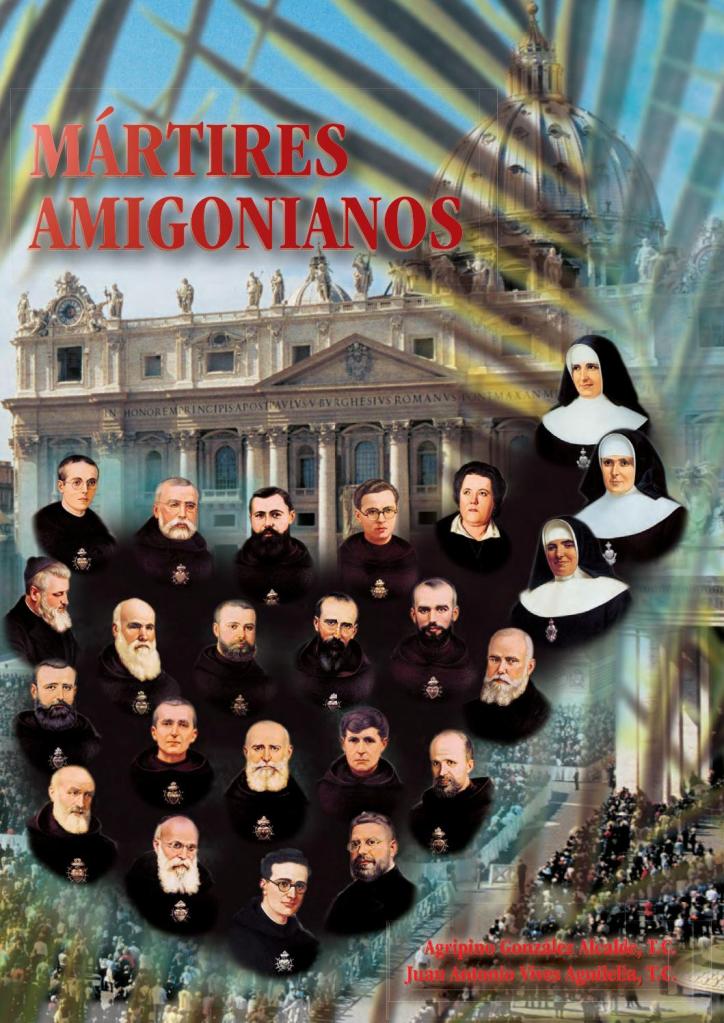
Blessed Ambrosio was Beatified by Pope John Paul II togther with 232 others who were Martyred during the Spanish Civil War. The Image below shows the Martyrs of the Amigonian Orders.
St Oceano of Nicomedia Saint Richardis (839-c 895) Biography: https://anastpaul.com/2019/09/18/saint-of-the-day-18-september-saint-richardis-839-c-895/ St Sophia of Egypt — Martyred in the Spanish Civil War: • Blessed Ambrosio María de Torrent (Salvador Chuliá Ferrandis) • Blessed Carlos Eraña Guruceta • Blessed Fernando García Sendra • Blessed Jacinto Hoyuelos Gonzalo • Blessed Jesus Hita Miranda • Blessed José García Mas • Blessed José María Llópez Mora • Blessed Justo Lerma Martínez • Blessed Salvador Fernández Pérez • Blessed Vicente Gay Zarzo • Blessed Vicente Jaunzarás Gómez
Thought for the Day – 17 September – Meditations with Antonio Cardinal Bacci (1881-1971)
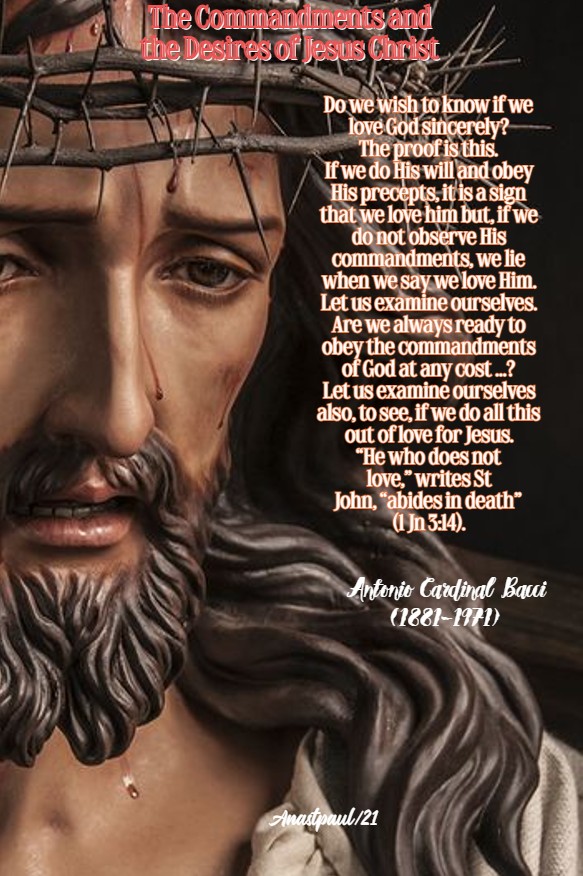
The Commandments and the Desires of Jesus Christ
“Sanctity consists, in doing the will of God, in all things. We can become perfect by doing His will, from the motive of love alone. “He who has my commandments and keeps them,” said Jesus, “he it is who loves me. But he who loves me, will be loved by my Father and I will love him and manifest myself to him. If anyone love me, he will keep my word and my Father will love him and we will come to him and make our abode with him” (Jn 14:21-23).
Do we wish to know if we love God sincerely? The proof is this. If we do His will and obey His precepts, it is a sign that we love him but, if we do not observe His commandments, we lie when we say we love Him. We must, therefore, show our love, by observing in all things, the commandments of God. He gave us these commandments our of love for us, so that, by observing them, we should be saved and should be happy with Him. Even as He has given them out of love, we should observe them out of love, for He is our supreme and only good. Just as Jesus lovingly did the will of His heavenly Father, from Bethlehem to Nazareth, from Nazareth to Calvary and from Calvary to Heaven, so we should follow in His footsteps, by doing the adorable will of God in all the circumstances of our lives, both joyful and sorrowful. But, we must obey the divine will out of love, that is, because we love God whole-heartedly and above all created things.
Everything is easy to him who loves. “When we love him who gives us orders,” says St Francis de Sales, “even the hardest of actions becomes easy.”
Let us examine ourselves. Are we always ready to obey the commandments of God at any cost and would we die rather than offend Him? Let us examine ourselves also, to see, if we do all this out of love for Jesus. “He who does not love,” writes St John, “abides in death” (1 Jn 3:14).”
Quote/s of the Day – 17 September – The Memorial of St Robert Bellarmine SJ (1542-1621) Doctor of the Church
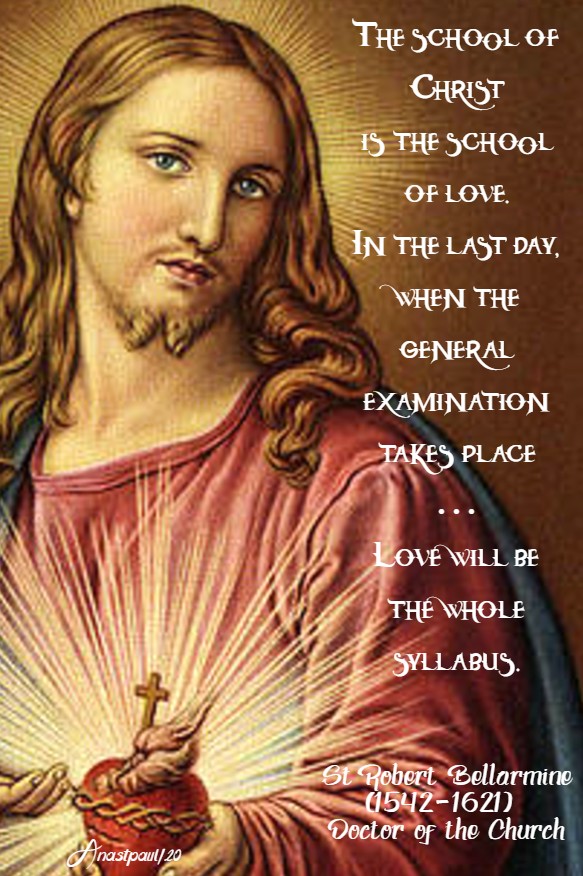
“The school of Christ is the school of love. In the last day, when the general examination takes place … Love will be the whole syllabus.”
“What is easier, sweeter, more pleasant, than to love goodness, beauty and love, the fullness of which, YOU ARE, O Lord, my God?”
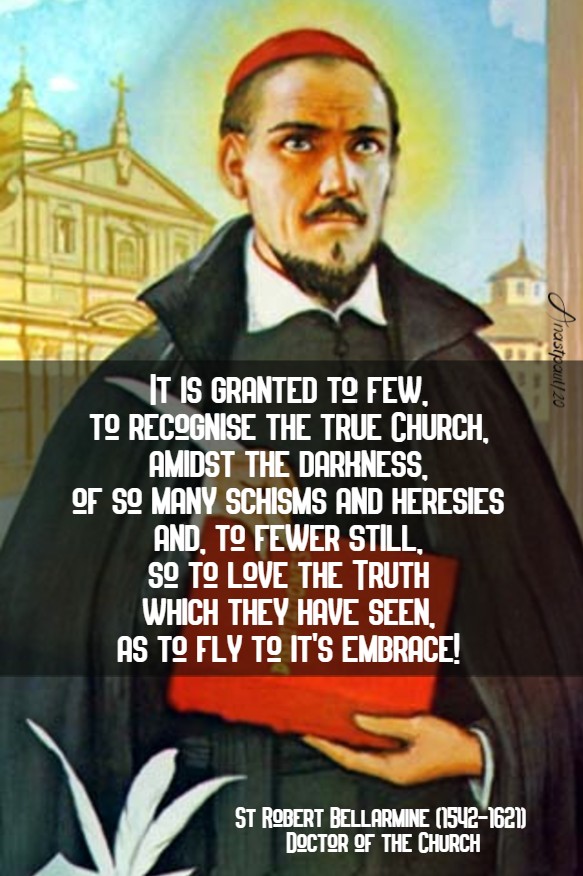
“It is granted to few, to recognise the true Church, amidst the darkness, of so many schisms and heresies and, to fewer still, so to love the Truth which they have seen, as to fly to it’s embrace!”
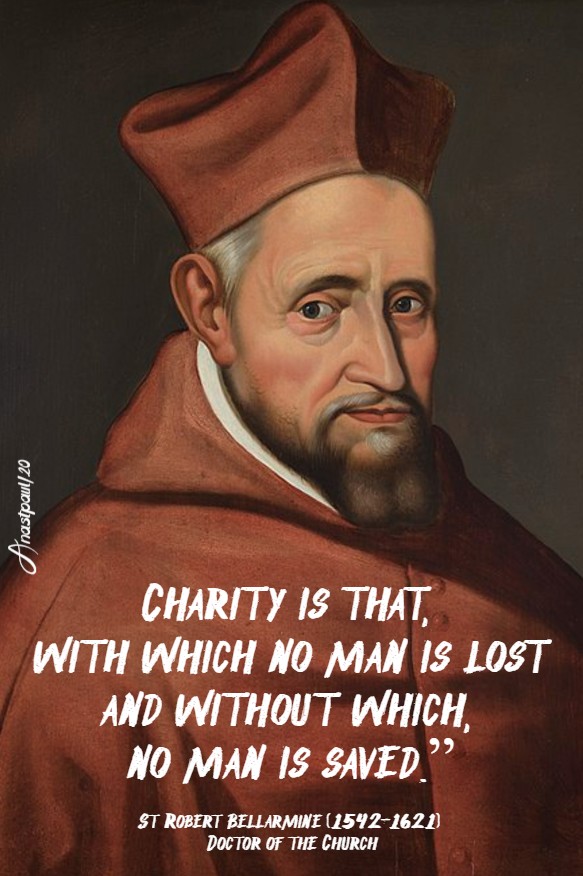
“Charity is that, with which no man is lost and without which, no man is saved.”
“It seems unbelievable that a man should perish in whose favour Christ said to His Mother: ‘Behold thy son’, provided that he has not turned a deaf ear to the words, which Christ addressed to him: ‘Behold thy Mother.’”
St Robert Bellarmine (1542-1621) Doctor of the Church
One Minute Reflection – 17 September – Thursday of the Twenty Fourth week in Ordinary Time, Readings: 1 Corinthians 15:1-11, Psalms 118:1-2, 16-17, 28, Luke 7:36-50 and the Memorial of St Robert Bellarmine (1542-1621) Doctor of the Church
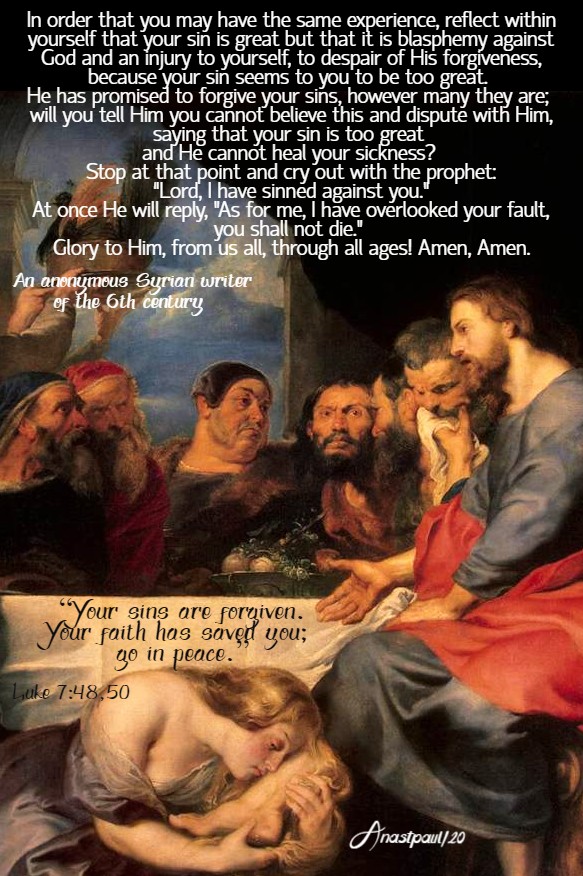
“Your sins are forgiven. Your faith has saved you; go in peace.” ~ Luke 7:48,50
REFLECTION – “A sinful woman has proclaimed to us that God’s love has gone forth in search of sinners. For when He called her, Christ was inviting our whole race to His love and, in her person, He was drawing all sinners to His forgiveness. He spoke to her alone but He was drawing all creation to His grace. (…)
Who would not be struck by the mercy of Christ, who accepted an invitation to a Pharisee’s house in order to save a sinner! For the sake of the woman who hungered for forgiveness, He, Himself felt hunger for the table of Simon the Pharisee and all the while, under the guise of a meal of bread, He had prepared for the sinner a meal of repentance! (…)
In order that you may have the same experience, reflect within yourself that your sin is great but that it is blasphemy against God and an injury to yourself, to despair of His forgiveness, because your sin seems to you to be too great. He has promised to forgive your sins, however many they are; will you tell Him you cannot believe this and dispute with Him, saying that your sin is too great and He cannot heal your sickness? Stop at that point and cry out with the prophet: “Lord, I have sinned against you” (Ps 51[50]:6). At once He will reply, “As for me, I have overlooked your fault, you shall not die.” Glory to Him from us all, through all ages! Amen, Amen.” ~ An anonymous Syrian writer of the 6th century – From a collection of homilies on the sinful woman, 1, 4.5.19.26.28 (Eastern Syrian)
PRAYER – Heavenly Father, teach me to do everything for Your honour and glory. Grant me the grace to work out my salvation with anxious concern each day of my life. St Robert Bellarmine, as you worked tirelessly for the salvation of souls, so now pray for us all, as tirelessly, that we may achieve eternal joy, amen.
Our Morning Offering – 17 September – Thursday of the Twenty Fourth week in Ordinary Time and the Memorial of St Robert Bellarmine (1542-1621) Doctor of the Church
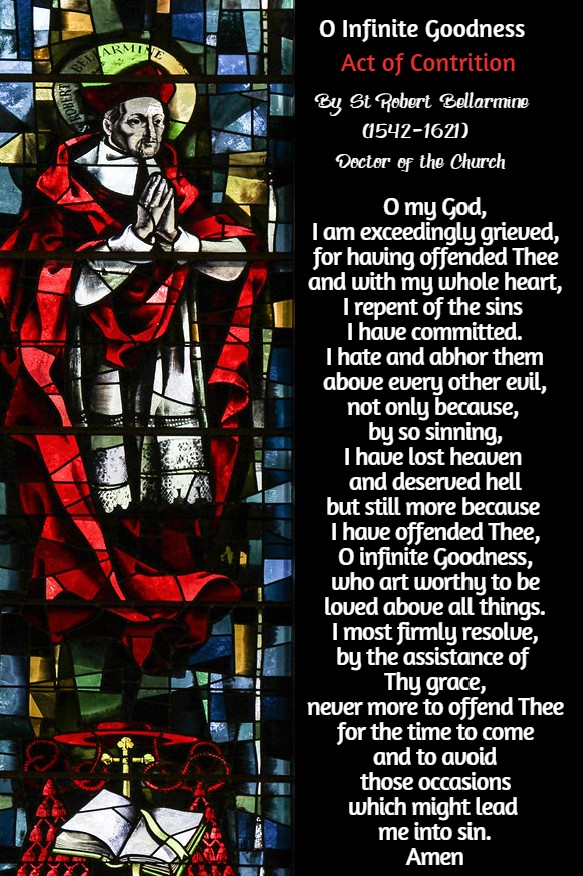
O Infinite Goodness Act of Contrition By St Robert Bellarmine (1542-1621) Doctor of the Church
O my God, I am exceedingly grieved, for having offended Thee and with my whole heart, I repent of the sins I have committed. I hate and abhor them above every other evil, not only because, by so sinning, I have lost heaven and deserved hell but still more because I have offended Thee, O infinite Goodness, who art worthy to be loved above all things. I most firmly resolve, by the assistance of Thy grace, never more to offend Thee for the time to come and to avoid those occasions which might lead me into sin. Amen
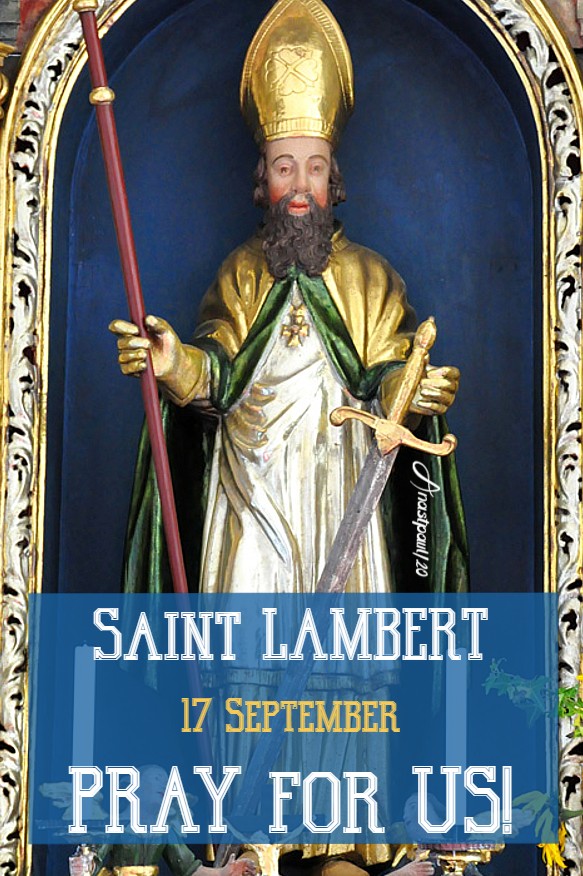
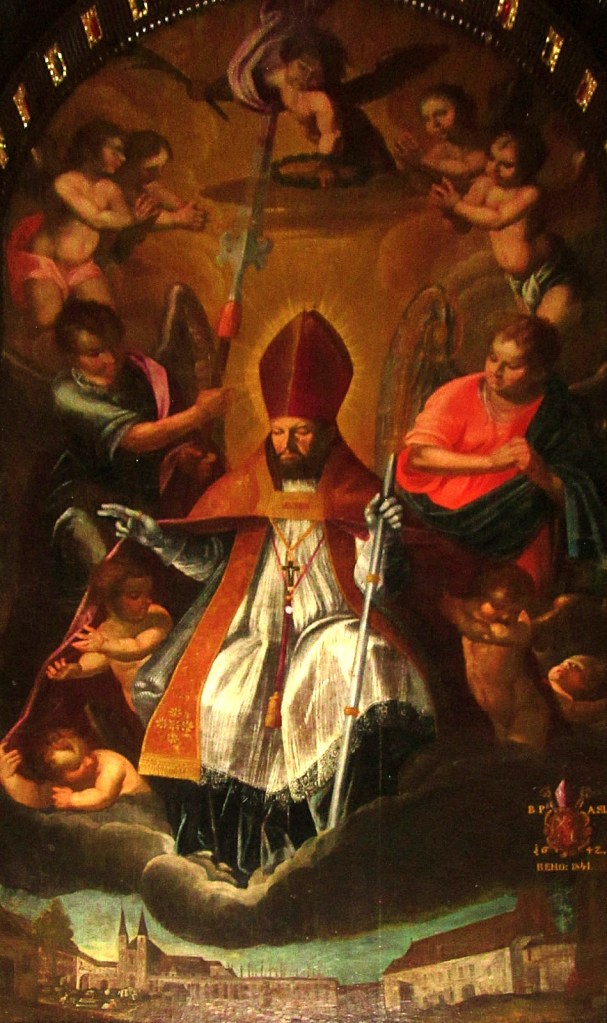
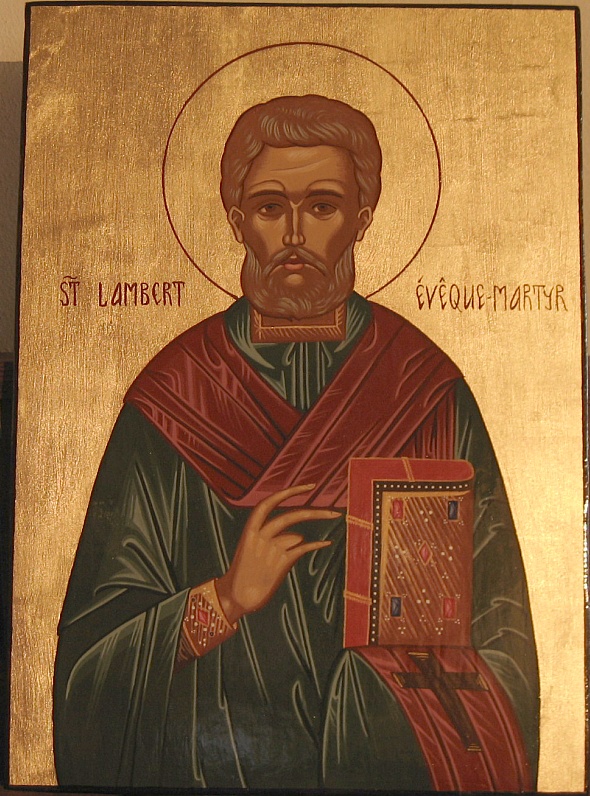
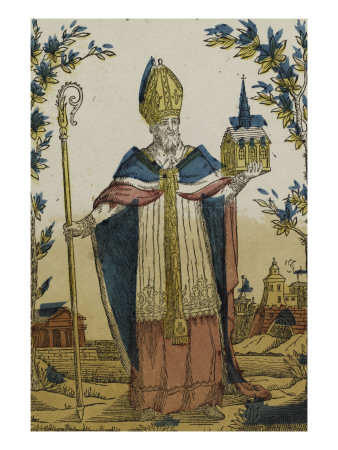
Saint of the Day – 17 September – St Lambert (c 635-c 700) Bishop and Martyr, Bishop of Maastricht, Confessor, Missionary. Born in c635 at Maastricht, Netherlands and died by stabbing through the heart by a javelin in c 700 at the Chapel of Saint Cosmas and Saint Damian, Liège, Belgium while celebrating Mass. Patronages – Liège, Belgium, Diocese of Middelaar, Netherlands,Freiburg , Gladbeck and Lambrecht in the Palatinate; of farmers, surgeons, dentists, against kidney disease, against diseases of domestic animals, as well as against hernia, gallstones and epilepsy. Finally, he is the patron saint of fowl. St Lambert is also known as Lambert of Liege or of Maastricht, Lamberto, Lambertus, Landebertus.
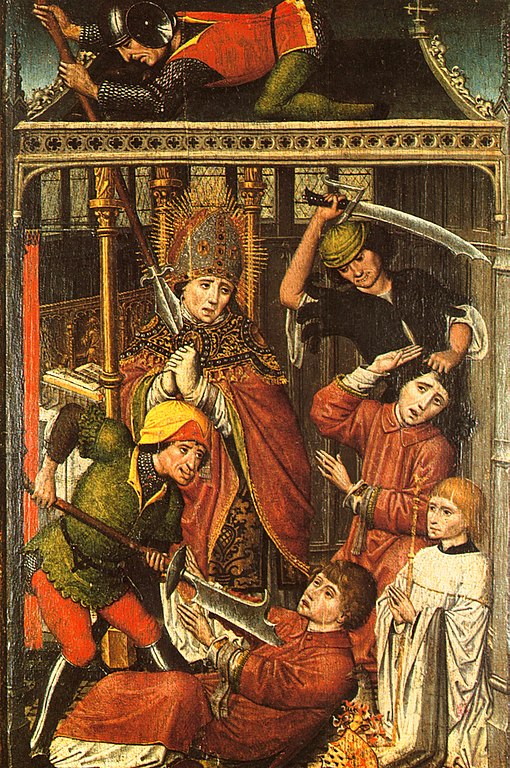
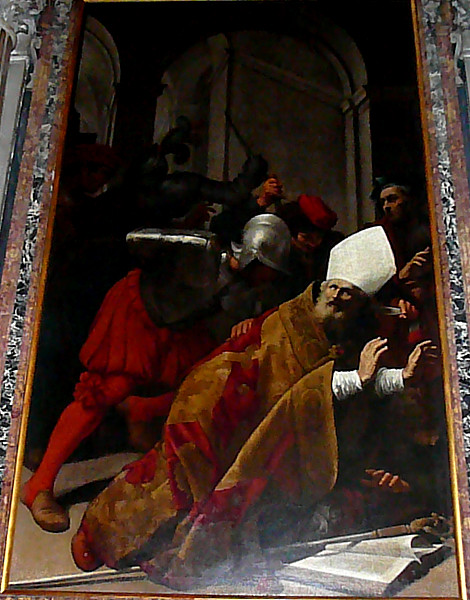
The Martyrdom of St Lambert and his 2 newphews
Lambert was from a noble family of Maastricht, the supposed son of Apre, lord of Liège, and his wife Herisplende, both from noble families. The child was Baptised by his godfather, the local bishop, Remaclus and educated by Landoald, Archpriest of the city. Lambert was also related to the seneschal Hugobert, father of Plectrude, Pepin of Herstal’s lawful wife and thus an in-law of hereditary mayors of the palace who controlled the Merovingian kings of Austrasia.
Lambert appears to have frequented the Merovingian Court of King Childeric II and was a protégé of his uncle, St Theodard, who succeeded Remaclus as Bishop of Maastricht. He is described by early biographers as “a prudent young man of pleasing looks, courteous and well-behaved in his speech and manners, well-built, strong, a good fighter, clear-headed, affectionate, pure and humble and fond of reading.” When Theodard was murdered soon after 669, the councillors of Childeric made Lambert Bishop of Maastricht. After five years he was involved in the political turmoil following the death of Childeric II. Lambert was then exiled from his seat by Ebroino, the previous mayor of the Neustria palace.
He withdrew to the Monastery of Stavelot where he lived for seven years as one of the Monks, claiming no privileges despite his office. Once, getting up to pray during the night, he accidentally disturbed the monastic silence.
The Abbot called out for whoever was responsible, to do penance by standing barefoot in the snow, before a Cross outside the Monastery Church. In the morning, the Abbot was dismayed to see the Bishop standing barefoot, covered with snow, before the Cross, his face shining. The Abbot sought to apologise but Lambert replied that he was honoured to serve God like the Apostles, in cold and nakedness.
When King Pepin of Heristal took power in 681, he restored Lambert to his See, despite the Saint’s desire to remain in obscurity. The holy Bishop renewed his pastoral labours with vigour, visiting the most distant parishes and preaching the Gospel to the pagans who still inhabited the area, despite danger and threats.
In company with St Willibrord, who had come from England in 691, Lambert preached the gospel in the lower stretches of the Meuse, in the area to the north. In conjunction with St Landrada, he founded a female Convent at Munsterblizen. Lambert was also the spiritual director of the young noble Hubertus, eldest son of Bertrand, Duke of Aquitaine. Hubertus would later succeed Lambert as Bishop of Maastricht.
Lambert seems to have succumbed to the political turmoil that developed when various clans fought for influence as the Merovingian dynasty gave way to the Carolingians. Historian Jean-Louis Kupper says that the Bishop was the victim of a private struggle between two clans seeking to control the Tongres-Maastricht see. Lambert is said to have denounced Pepin’s adulterous liaison with Alpaida, who was to become the mother of Charles Martel. This aroused the enmity of either Pepin, Alpaida, or both. The Bishop was murdered at Liege by the troops of Dodon, Pepin’s domesticus (manager of state domains), father or brother of Alpaida.
The year of his death is variously given for some time between 700 and 709. Lambert came to be viewed as a Martyr for his defence of the Sacrament of Marriage and marital fidelity. Lambert’s two nephews, Peter and Audolet, were also killed defending their uncle. They too, were viewed as saints.
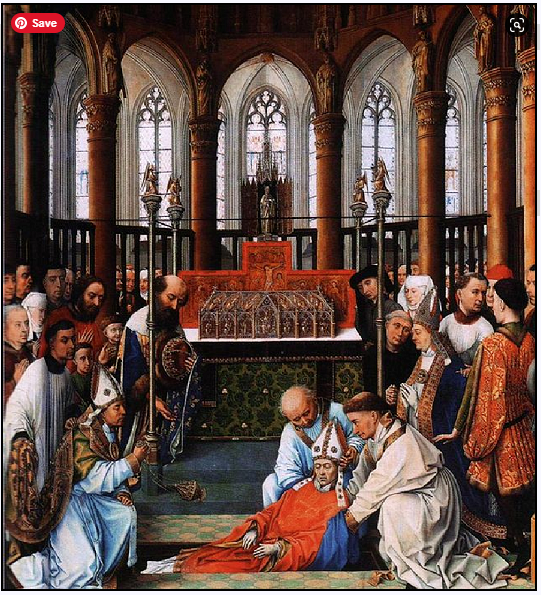
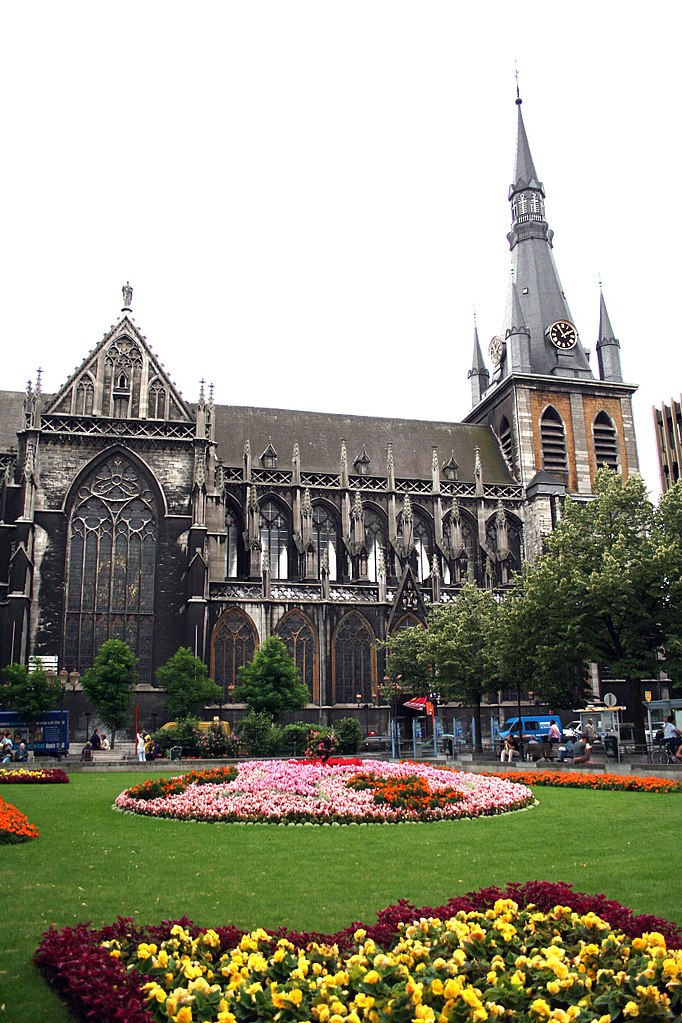
Although Lambert was buried in his family’s vault in the cemetery of Saint Peter, Maastricht, Netherlands, his successor as Bishop, St Hubertus, translated his relics to Liège, to which the see Maastricht was eventually moved. To enshrine Lambert’s relics, Hubertus, built a Basilica near Lambert’s residence which became the true nucleus of the city. The shrine became St Lambert’s Cathedral which was destroyed in 1794. Its site is the modern Place Saint-Lambert. Lambert’s tomb is now located in the present Liège Cathedral. The Cathedral of Our Lady and St Lambert in Liege was built in his honour.
Liege CathedralThe Cathedral of Our Lady and St Lambert in Liege
Saint Lambert is one of the best-loved Saints of Belgium, where many Parish Churches are dedicated to him. St Lambert’s admiration was also particularly widespread in the Archdiocese of Cologne. Near Lambrecht in the Palatinate Forest, in Germany now but bordering on France, is the Lambert Cross, a stone cross, which bears the name of Lambert, from which the town takes its name.
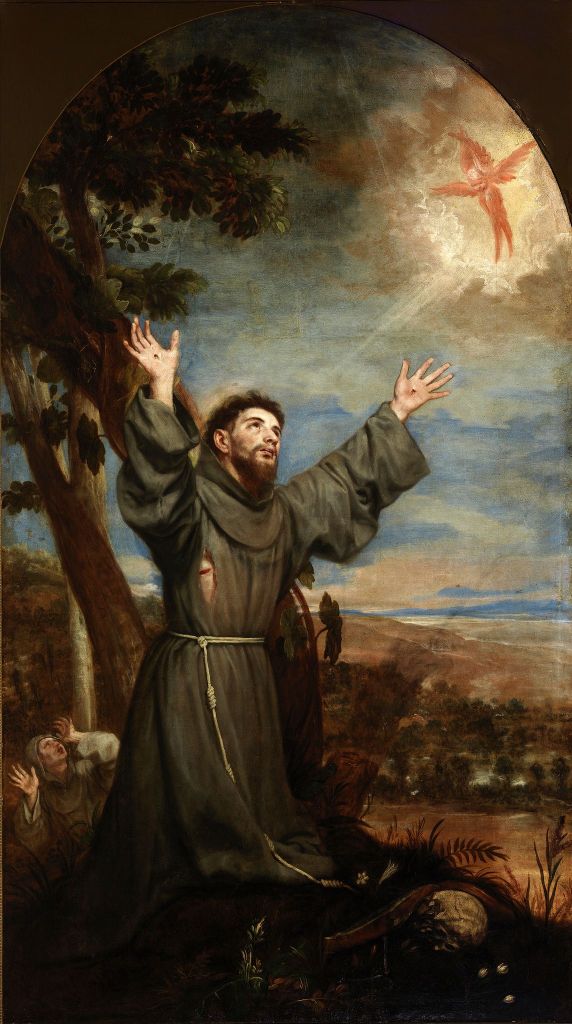
Stigmata of St Francis of Assisi: Two years before the great Saint Francis of Assisi died and when he was forty-two years old — one year after he had built the first crib in honour of Our Lord — he went off to a lonely mountain called Mount Alvernia, to prepare himself by forty days of fasting and prayer for the feast of Saint Michael, the greatest of God’s angels, whose feast day is 29 September. On the feast of the Exaltation of the Holy Cross on 14 September, Saint Francis received in his hands, feet and side the Sacred Wounds from Our Lord’s own body.
Never was a saint more beautifully loved by Jesus than Saint Francis of Assisi. The wounds Jesus gave him stayed in his hands, feet and side and continually bled for two more years, until he died in 1226. The day on which Saint Francis received the Five Wounds of Our Lord was 14 September but so, that this beautiful event might have a feast day for itself, the Stigmata of Saint Francis is commemorated today, on 17 September. The simple liturgy of this holy saint’s life might be put this way – the crib in 1223 and the Cross in 1224.
St Justin of Rome St Lambert (c 635-c 700) Bishop & Martyr St Narcissus of Rome St Peter Arbues St Rodingus St Satyrus of Milan St Socrates Bl Stanislaus of Jesus and Mary St Stephen St Theodora St Uni of Bremen St Zygmunt Sajna St Zygmunt Szcesny Felinski TOSF (1822-1895) His Life: https://anastpaul.com/2019/09/17/saint-of-the-day-17-september-saint-zygmunt-szcesny-felinski-1822-1895/ — Martyred in the Spanish Civil War • Blessed Álvaro Santos Cejudo Moreno Chocano • Blessed Juan Ventura Solsona • Blessed Timoteo Valero Pérez
Thought for the Day – 16 September – Meditations with Antonio Cardinal Bacci (1881-1971)
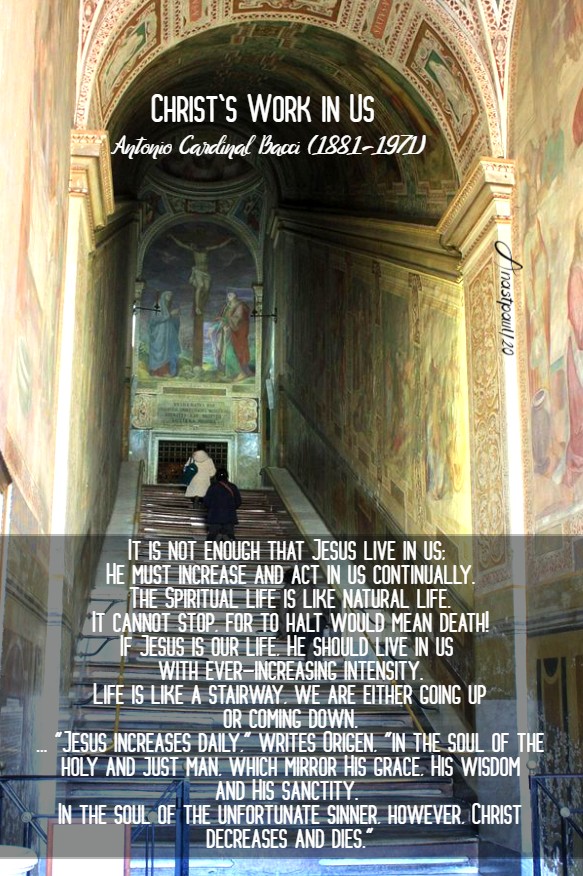
Christ’s Work in Us
“It is not enough that Jesus live in us ; He must increase and act in us continually. The Spiritual life is like natural life. It cannot stop, for to halt would mean death! If Jesus is our life, He should live in us with ever-increasing intensity. Life is like a stairway, we are either going up or coming down.
If we continue to climb energetically towards Jesus, we shall be coming nearer to Christian perfection. If, on the other hand, we halt, the supernatural life of Jesus in us, will begin to weaken. Tepedity will replace fervour and sin will succeed tepidity. It is difficult to remain unchanged because, life involves movement. ‘Jesus Christ,” writes St Augustine, “was born a baby but, He did not remain one. He grew to boyhood, to adolescence and then, to maturity.”
It is necessary for us to grow also. More precisely, it is necessary that Jesus grow continuously in us through faith, charity and good works. “Court the good,” admonishes St Paul, “from a good motive always … until Christ is formed in you” (Gal 4:18-19).
It is not enough that Christ be born in us, it is necessary that He increase to the fullness of perfection (Cf Eph 4:13-16). “Jesus increases daily,” writes Origen, “in the soul of the holy and just man, which mirror His grace, His wisdom and His sanctity. In the soul of the unfortunate sinner, however, Christ decreases and dies.”
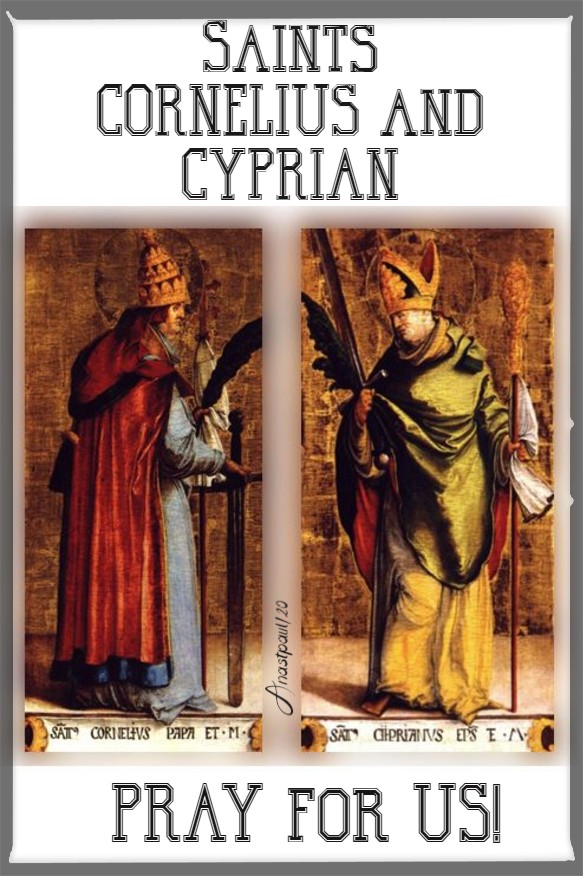
Quote/s of the Day – 16 September – The Memorial of Sts Cornelius & Cyprian
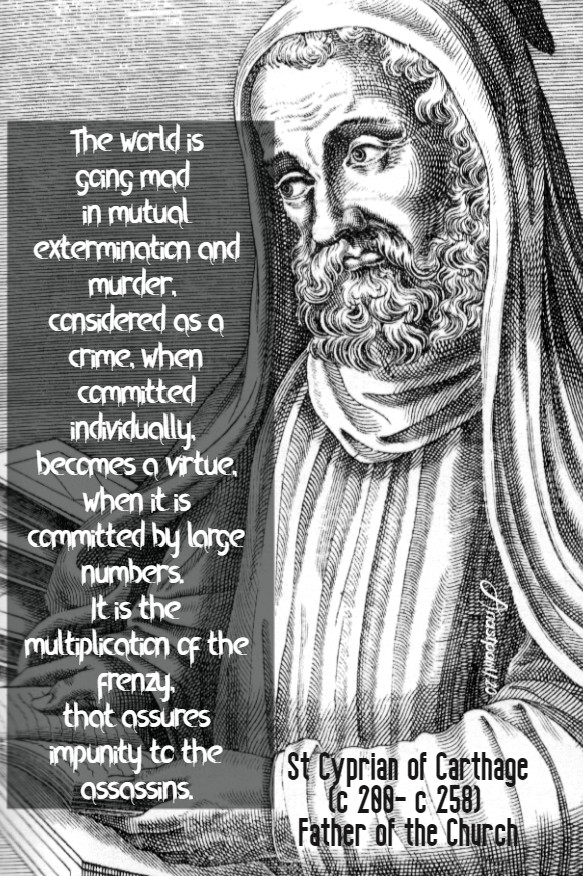
“The world is going mad in mutual extermination and murder, considered as a crime, when committed individually, becomes a virtue, when it is committed by large numbers. It is the multiplication of the frenzy, that assures impunity to the assassins.”
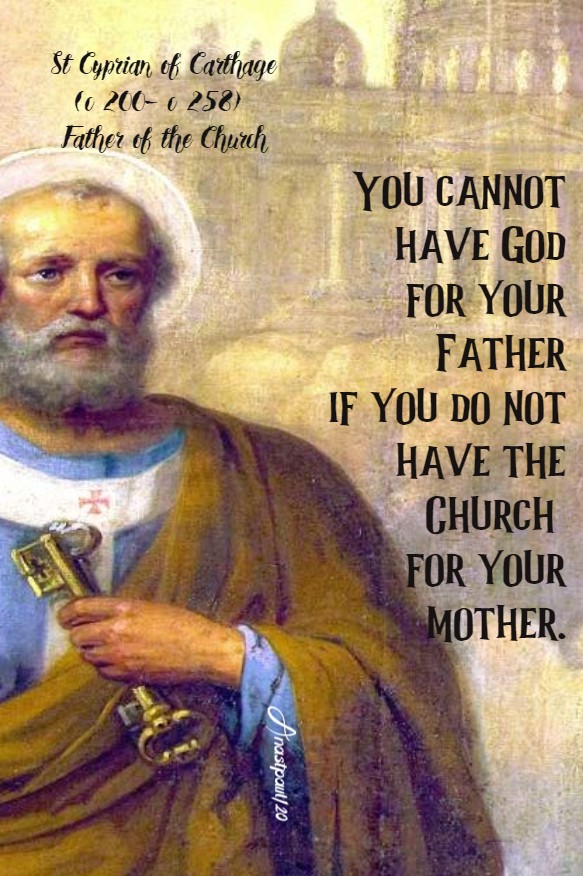
“You cannot have God for your Father if you do not have the Church for your mother.”
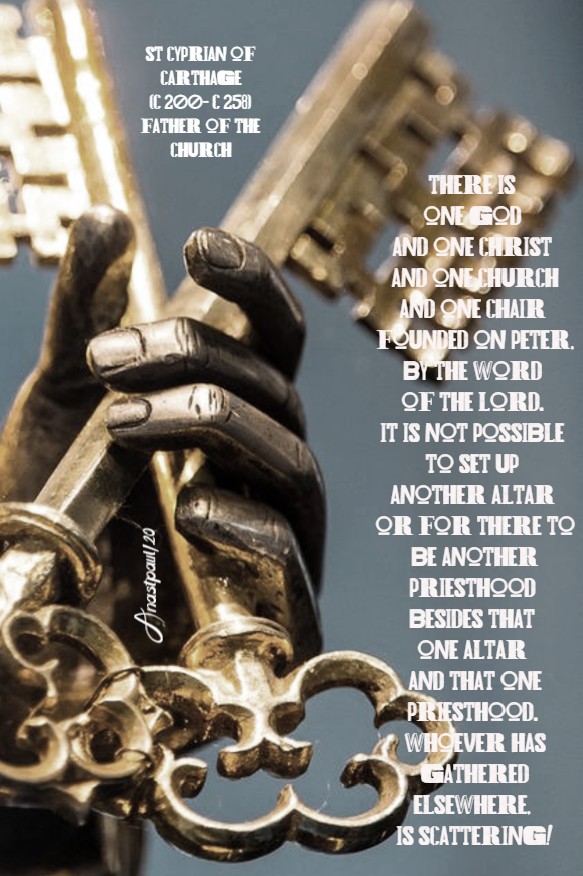
“There is one God and one Christ and one Church and one Chair founded on Peter, by the word of the Lord. It is not possible to set up another altar or for there to be another priesthood besides that one altar and that one priesthood. Whoever has gathered elsewhere, is scattering!”
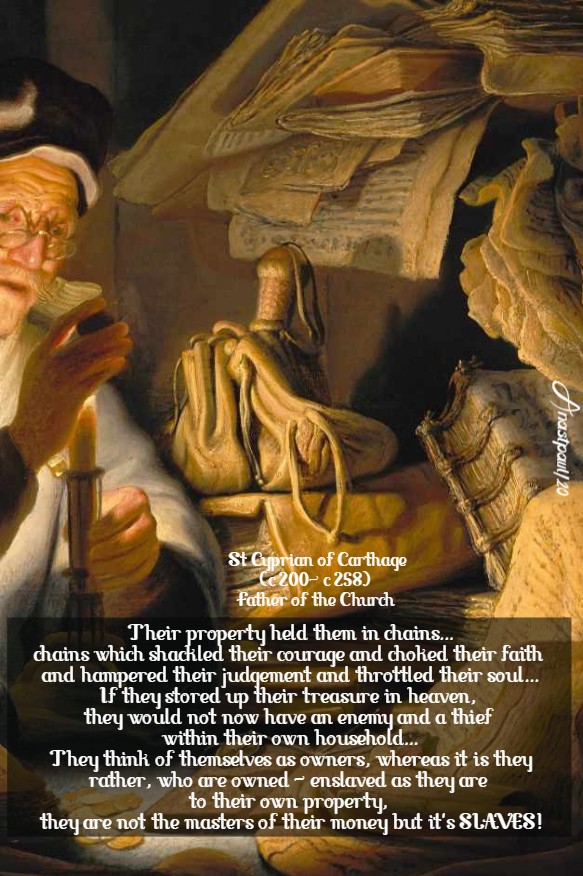
“Their property held them in chains… chains which shackled their courage and choked their faith and hampered their judgement and throttled their soul… If they stored up their treasure in heaven, they would not now have an enemy and a thief within their own household… They think of themselves as owners, whereas it is they rather, who are owned – enslaved as they are to their own property, they are not the masters of their money but it’s slaves!”
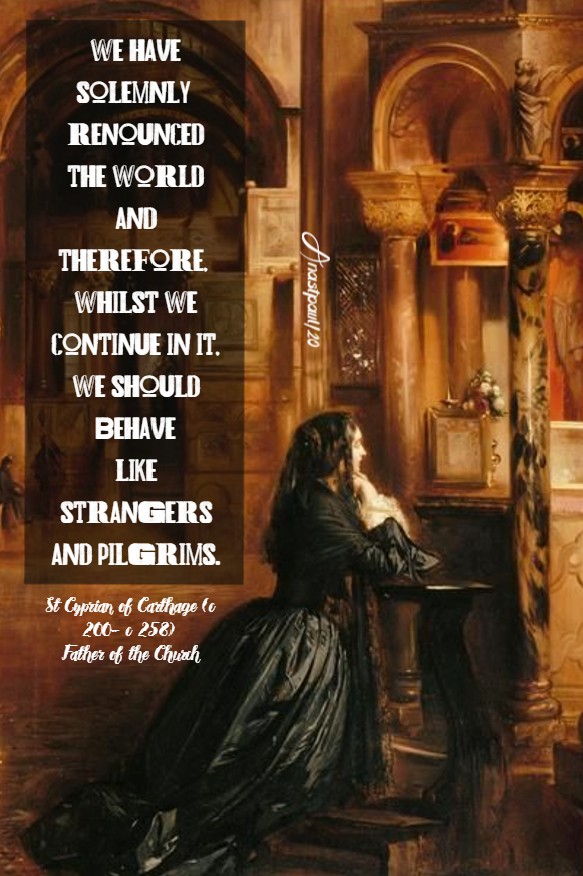
“We have solemnly renounced the world and therefore, whilst we continue in it, we should behave like strangers and pilgrims.”
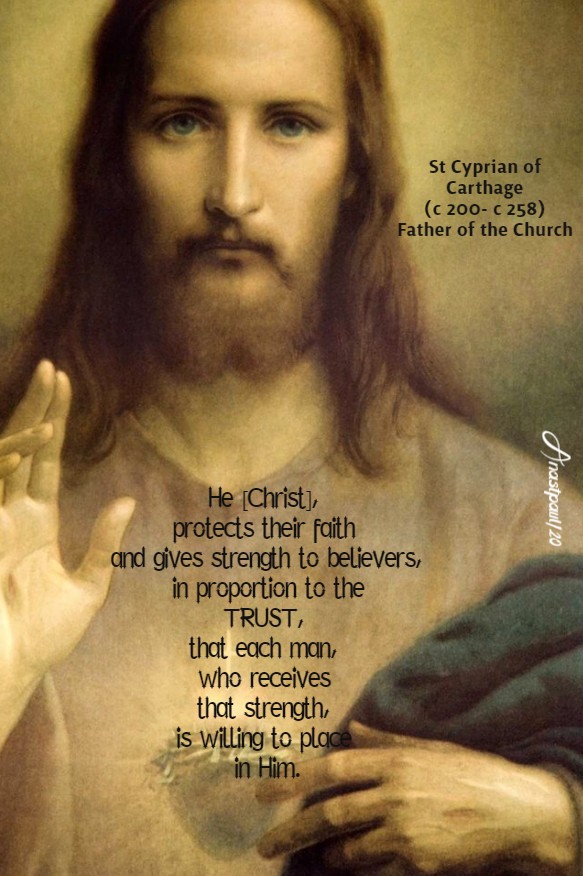
“He [Christ], protects their faith and gives strength to believers, in proportion to the TRUST, that each man, who receives that strength, is willing to place in Him.”
“The wretched bodies of the condemned shall simmer and blaze in those living fires.”
St Cyprian of Carthage (c 200- c 258) Bishop and Martyr, Father of the Church
One Minute Reflection – 16 September – Wednesday of the Twenty Fourth week in Ordinary Time, Readings: 1 Corinthians 12:31–13:13, Psalms 33:2-3, 4-5, 12 and 22, Luke 7:31-35 and the Memorial of Sts Cornelius & Cyprian
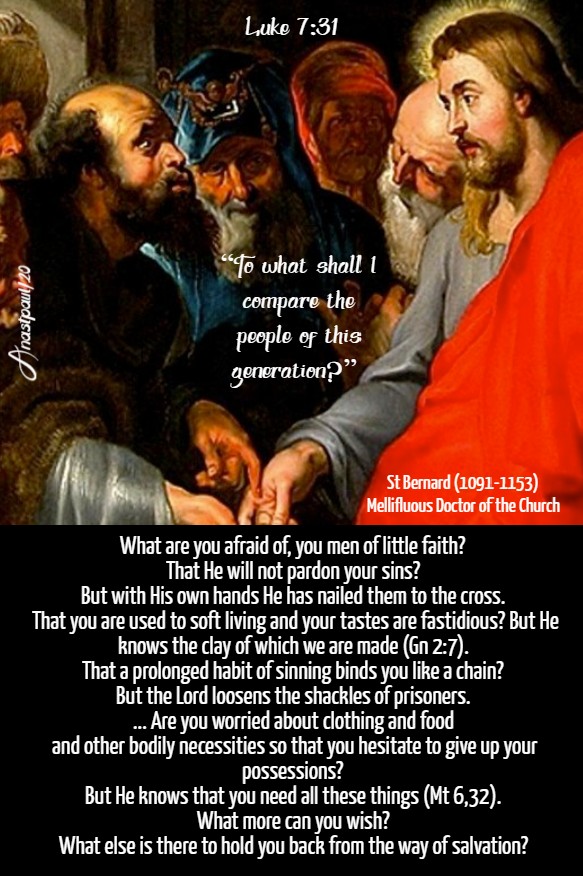
“To what shall I compare the people of this generation?” … Luke 7:31
REFLECTION – “The apostle Paul says that there are some, who have no knowledge of God (1 Co 15:34). My opinion is that all those who lack knowledge of God, are those, who refuse to turn to Him. I am certain, that they refuse because they imagine this kindly disposed God, to be harsh and severe, this merciful God to be callous and inflexible, this lovable God to be cruel and oppressive. So it is, that wickedness plays false to itself, setting up for itself an image that does not represent God as He truly is.
What are you afraid of, you men of little faith? That He will not pardon your sins? But with His own hands He has nailed them to the cross. That you are used to soft living and your tastes are fastidious? But He knows the clay of which we are made (Gn 2:7). That a prolonged habit of sinning binds you like a chain? But the Lord loosens the shackles of prisoners. Or perhaps that angered by the enormity and frequency of your sins, He is slow to extend a helping hand? But where sin abounded, grace became superabundant (Rom 5,20). Are you worried about clothing and food and other bodily necessities so that you hesitate to give up your possessions? But He knows that you need all these things (Mt 6,32). What more can you wish? What else is there to hold you back from the way of salvation? This is what I say – you do not know God, yet you will not believe our words. I should like you to believe those whom experience has taught.” … St Bernard (1091-1153) Mellifluous Doctor of the Church – Commentary on the Song of Songs, Sermon 38
PRAYER – Look upon us Lord, Creator and Ruler of the whole world, give us the grace to serve You with all our hearts, to take up our cross and follow You, that we may come to know the power of Your love and the forgiveness which You give and You teach. Grant that by the intercession of Sts Cornelius and Cyprian, we may attain the glory of Your kingdom and see You face to face. We make our prayer through Christ our Lord with the Holy Spirit, one God forever, amen.
Our Morning Offering – 16 September – Wednesday of the Twenty Fourth week in Ordinary Time and the Memorial of Sts Cornelius & Cyprian
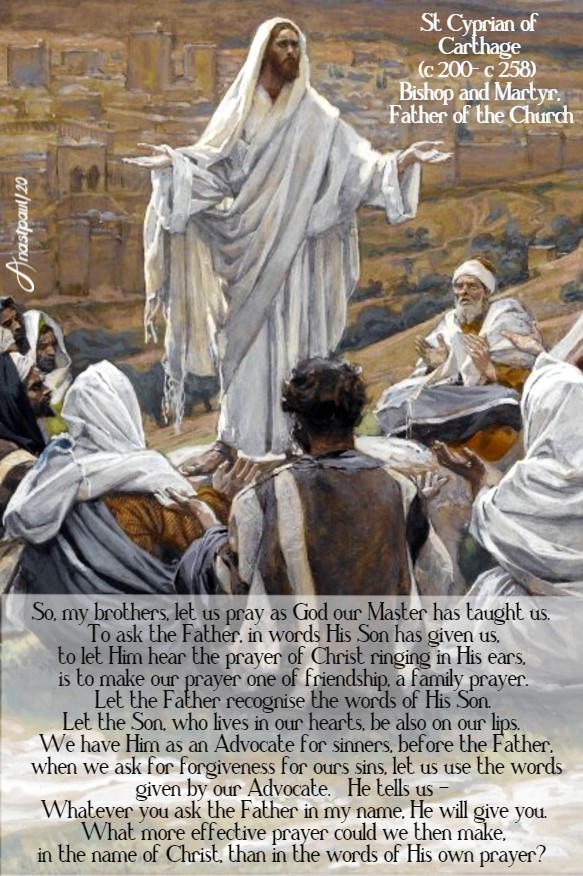
“So, my brothers, let us pray as God our Master has taught us. To ask the Father, in words His Son has given us, to let Him hear the prayer of Christ ringing in His ears, is to make our prayer one of friendship, a family prayer. Let the Father recognise the words of His Son. Let the Son, who lives in our hearts, be also on our lips. We have Him as an Advocate for sinners, before the Father, when we ask for forgiveness for ours sins, let us use the words given by our Advocate. He tells us – Whatever you ask the Father in my name, He will give you. What more effective prayer could we then make, in the name of Christ, than in the words of His own prayer?”
St Cyprian of Carthage (c 200- c 258) Bishop and Martyr, Father of the Church
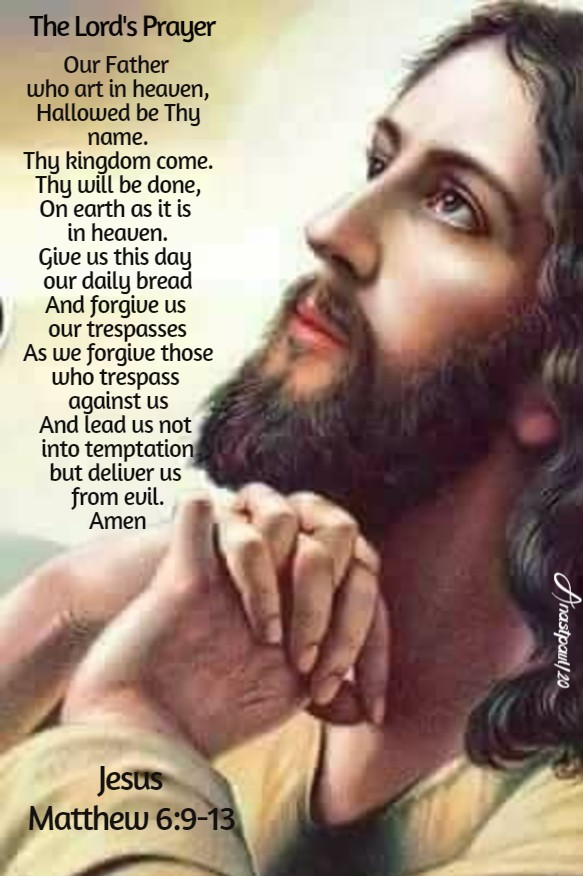
The Lord’s Prayer Jesus Matthew 6:9-13
Our Father who art in heaven, Hallowed be Thy name. Thy kingdom come. Thy will be done, On earth as it is in heaven. Give us this day our daily bread And forgive us our trespasses As we forgive those who trespass against us And lead us not into temptation but deliver us from evil. Amen
Saint of the Day – Blessed Luigi Ludovico Allemandi (1390-1450) Bishop and Cardinal – often called “The Cardinal of Arles.” Born in c 1390 possibly in Arbent, Bugey, Kingdom of France and died on 16 September 1450 (aged 60) Arles, Kingdom of France. Blessed Luigi was a Priest driven by immense love for the Holy Mother of God and for the Church. His involvement in various Councils and papal dissentions, were the result of his great desire to maintain the purity of the Chair of Peter. He is also known as Louis Allemand, Louis Alamanus, Louis Alemanus, Louis Almannus, Louis Alamandus.
The noble Germanic family of Allemandi moved, at the time of the Ottoni emperors, to Piedmont and more precisely to San Michele di Prazzo, in Val Maira. Most likely the present Blessed was born here, although according to other hypotheses he would have been born in the nearby French region of Bugey. What is certain, however, is the Saluzzo origins of the family, given the future good relations that Ludovico had with Cardinal Amedeo of the Marquises of Saluzzo.
He embarked on an ecclesiastical career at a very young age and, having entered the Canons of Lyon, he was elevated to the dignity of Prior of Piellonez and Contamines-sur-Arles. At the University of Avignon, he graduated in law in 1414. He received various positions as a teacher at Abbeys in Tours, Valenza and Barbona.
He took part in the councils of Pisa and Constance, both aimed at a positive conclusion of the Western schism. Pope Martin V then assigned him to the Episcopal chair of Maguelonne in 1418 and of Arles in 1423.
Awarded the Cardinal’s purple, in 1424 he became governor of Bologna, where he had to face the ongoing struggle between Guelphs and Ghibellines. Here he was imprisoned for several long days by the powerful Guelph family of the Canetoli. When released, he moved to Rome where he worked at the Papal Court.
He was a prominent member of the Council of Basel in 1432 and together with Cardinal Julian Cesarini led the forces that maintained the power of the general councils over the Pope’s own control of the Church. It was while the council was proceeding, that he tended to victims of the plague. He later led opposition to the Pope but Cesarini was reconciled with Pope Eugene IV and had a prominent part in the Pope’s convoked Council of Florence. In 1439 he led the effort to depose Eugene IV and the election of a successor. In 1440 he placed the tiara upon Antipope Felix V and Consecrated him as a Bishop. This was a misguided attempt at reforming the Church which Blessed Luigi believed was vital. Eugene IV responded to this and excommunicated the antipope while also depriving Luigi of all his Ecclesiastical dignities. This occurred on 11 April 1440 – he was stripped of Arles as his Archdiocese and was stripped of his Titular Church.
Antipope Felix V made him the legate to the Diet of Frankfurt to the Court of Emperor Friedrich IV. He was further involved in the unsuccessful efforts to win over Europe’s Princes to Basel’s antipope. In order to make an end of the schism, the former cardinal advised Felix V to abdicate, at which stage Pope Nicholas V restored the Cardinal to all his honours and appointed him as a Papal Legate to the German kingdom; his full restoration was on 19 December 1449. He was restored to his Titular Church as well and from that moment, until his death served as the Protopriest of the College of Cardinals. It was due to his estrangement to the Roman See that he was not permitted to participate in the conclave of 1447.
He returned to his former Archdiocese of Arles, where he dedicated himself with great zeal, to the catechetical formation of the people. Death reached him in 1450 at the Franciscan convent of Salon. He was buried in his Cathedral and his tomb did not take long to become a pilgrimage destination and a miraculous place.
The historian, Saxius, summarised his life as follows: “Angelicam vitam duxit,” that is, “he led an angelic life,” characterised by a marked Marian devotion embodied in support of the dogma of the Immaculate Conception.
In 1527, Pope Clement VII officially confirmed his cult by declaring him “Blessed.”
St Abundantius of Rome St Abundius of Rome St Andrew Kim Taegon St Cunibert of Maroilles St Curcodomus Bl Dominic Shobyoye St Dulcissima of Sutri St Edith of Wilton St Eugenia of Hohenburg St Euphemia of Chalcedon St Geminianus of Rome St John of Rome Blessed Luigi Ludovico Allemandi (c 1390-1450) Bishop and Cardinal St Lucy of Rome St Ludmila St Marcian the Senator Bl Martin of Huerta Bl Michael Himonaya St Ninian (Died 432) Apostle to the Southern Picts Biography: https://anastpaul.com/2018/09/16/saint-of-the-day-16-september-st-ninian-c-360-died-432-apostle-to-the-southern-picts/
Martyrs of the Via Nomentana: Four Christian men martyred together, date unknown – Alexander, Felix, Papias and Victor. They were martyred on the Via Nomentana outside Rome, Italy.
Martyred in the Spanish Civil War: • Blessed Antonio Martínez García • Blessed Ignasi Casanovas Perramón • Blessed Manuel Ferrer Jordá • Blessed Pablo Martínez Robles • Blessed Salvador Ferrer Cardet
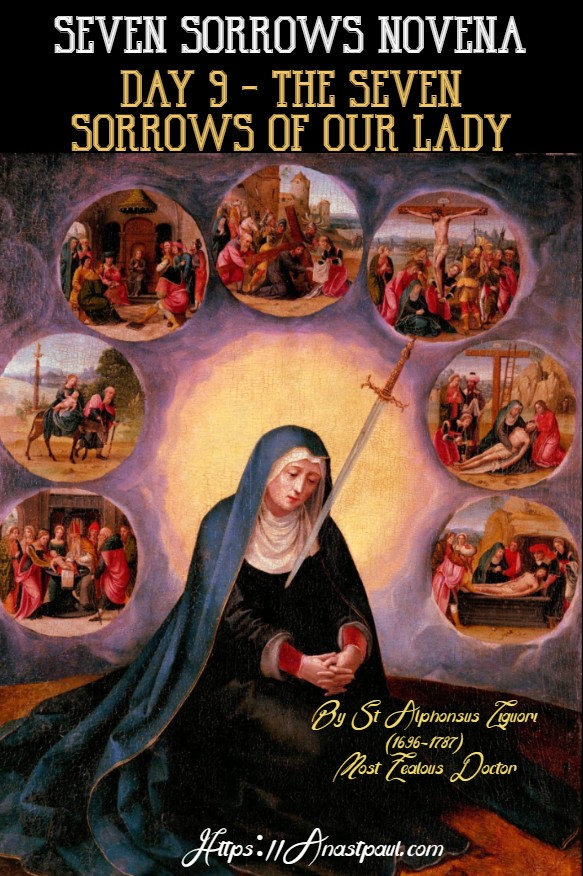
The Seven Sorrows Novena By St Alphonsus Liguori (1696-1787) Most Zealous Doctor
Day Nine Feast of the Blessed Virgin Mary, Mother of Sorrows
Opening Prayer
V/. O God +, come to my assistance R/. O Lord, make haste to help me.
Gloria Patri …
Let intercession be made for us, we beseech Thee, O Lord Jesus Christ, now and at the hour of our death, before the throne of Thy mercy, by the Blessed Virgin Mary, Thy Mother, whose most holy soul was pierced by a sword of sorrow in the hour of Thy bitter Passion. Through Thee, Jesus Christ, Saviour of the world, Who with the Father and the Holy Ghost lives and reigns, world without end. Amen
Reflection (St Alphonsus de Liguori)
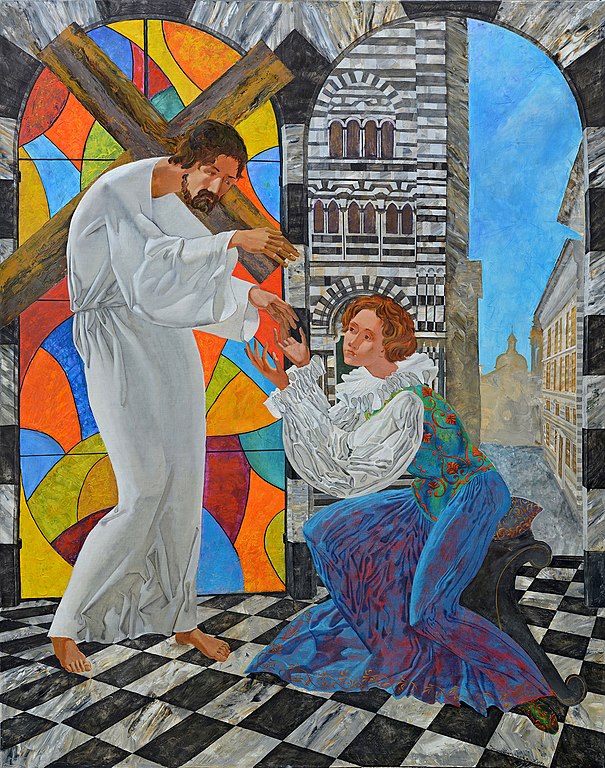
Meditation: Consider the meeting of the Son and the Mother, which took place on this journey. Jesus and Mary looked at each other and their looks became as so many arrows to wound those hearts which loved each other so tenderly. My most loving Jesus, by the sorrow Thou didst experience in this meeting, grant me the grace of a truly devoted love for Thy most holy Mother. And thou, my Queen, who wast overwhelmed with sorrow, obtain for me, by thy intercession, a continual and tender remembrance of the Passion of thy Son.
Closing Prayers V/. Pray for us, O Virgin most sorrowful R/. That we may be made be worthy of the promises of Christ.
Ave Maria …
Prayer of St Alphonsus: O afflicted Virgin! O soul, great in virtues and great also in sorrows! for both arise from that great fire of love thou hast for God; thou “whose heart can love nothing but God”; O Mother, have pity on me, for I have not loved God and I have so much offended Him. Thy sorrows give me great confidence to hope for pardon. But this is not enough; I wish to love my Lord and who can better obtain this for me than thou, thou who art the Mother of fair love? O Mary, thou dost console all, comfort me also. Amen
Thought for the Day – 15 September – Meditations with Antonio Cardinal Bacci (1881-1971)
Mary’s Patience 2
“We also have our share of suffering and humiliation. It is useless to try and escape from it, useless to rebel against it. If we embrace the cross patiently and lovingly, a Jesus and Mary did, it will seem lighter, even welcome. If we attempt to cast it from us, it will weigh more heavily on our shoulders. There are two kinds of men, those who bear their cross, patiently and embrace it because they wish to be like Jesus and, those who do not want to suffer and rebel. The former may stagger beneath their daily burden but, they have peace of soul because they are putting into practice, the great Gospel precept: “By your patience, you will win your souls” (Lk 21:19). They know that they are on the path to Heaven and this thought is consolation, which cannot be taken from them. The second group of men, rebel against the cross and, therefore, suffer doubly, in body and in soul. “The senseless man,” the Holy Spirit says, “loves not to be reproved” (Prov 15:12).
To which of these two categories do we belong? Do we love our cross, or do we carry it patiently, at least? Anyone who does not want the cross, does not want Jesus. Let the example of Mary and of the Saints inspire us. They always bore their burden patiently, they even looked for suffering and humiliation. If we cannot reach such heroic heights, let us at last, accept, from the hands of Our Lord, the cross which He offers us. Let us accept the sufferings which we meet on the way of life. If we are not heroic enough to seek to be unknown and mortified, let us resolve to accept, patiently, the inevitable sorrows of life.”
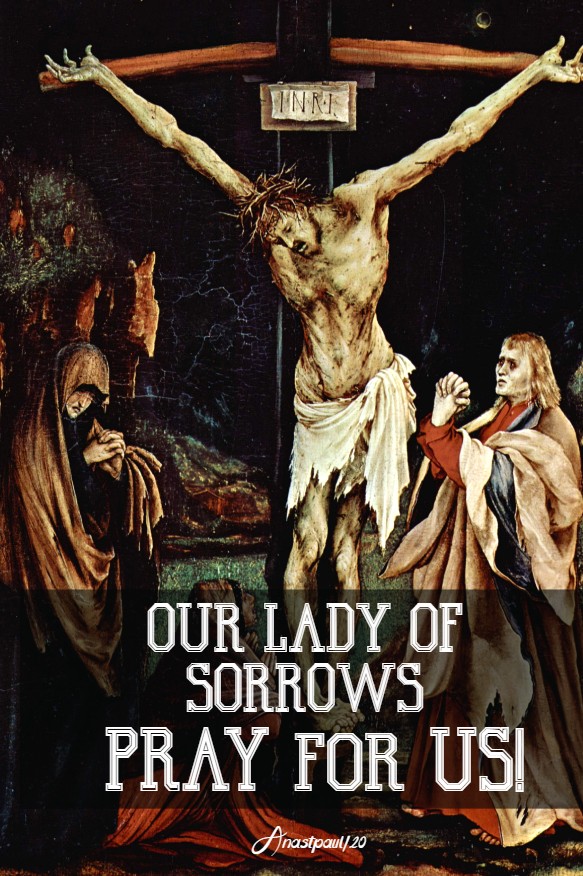
Quote/s of the Day – 15 September – The Memorial of Our Lady of Sorrows and of St Catherine of Genoa (1447-1510)
‘By the cross of our salvation Mary stood in desolation While the Saviour hung above All her human powers failing, Sorrow’s sword, at last prevailing, Stabs and breaks her heart of love… Virgin Mary, full of sorrow, From your love I ask to borrow Love enough to share your pain. Make my heart to burn with fire, Make Christ’s love my own desire, Who for love of me was slain.’
Stabat Mater
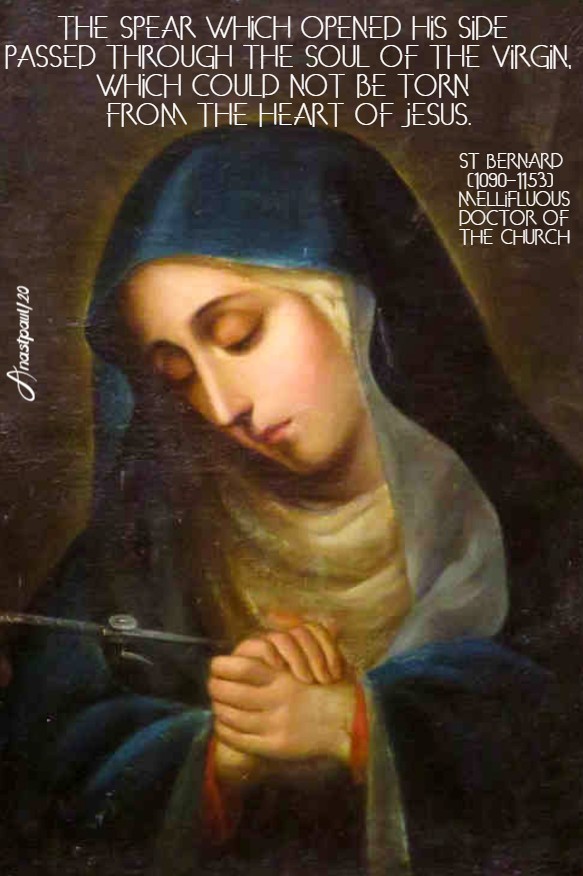
“The spear which opened His side passed through the soul of the Virgin, which could not be torn from the heart of Jesus.”
St Bernard (1090-1153) Mellifluous Doctor of the Church
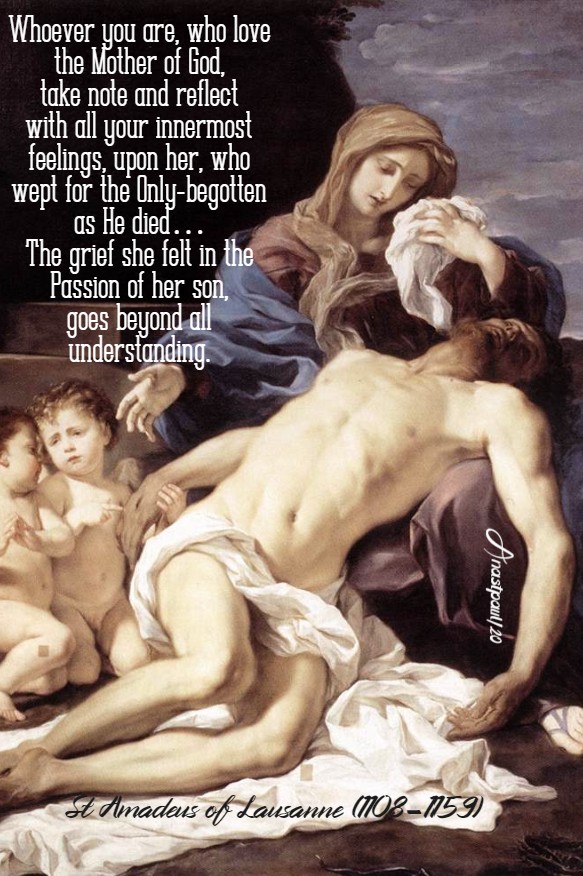
“Whoever you are, who love the Mother of God, take note and reflect with all your innermost feelings, upon her, who wept for the Only-Begotten as He died… The grief she felt in the Passion of her son, goes beyond all understanding.”
St Amadeus of Lausanne (1108-1159)
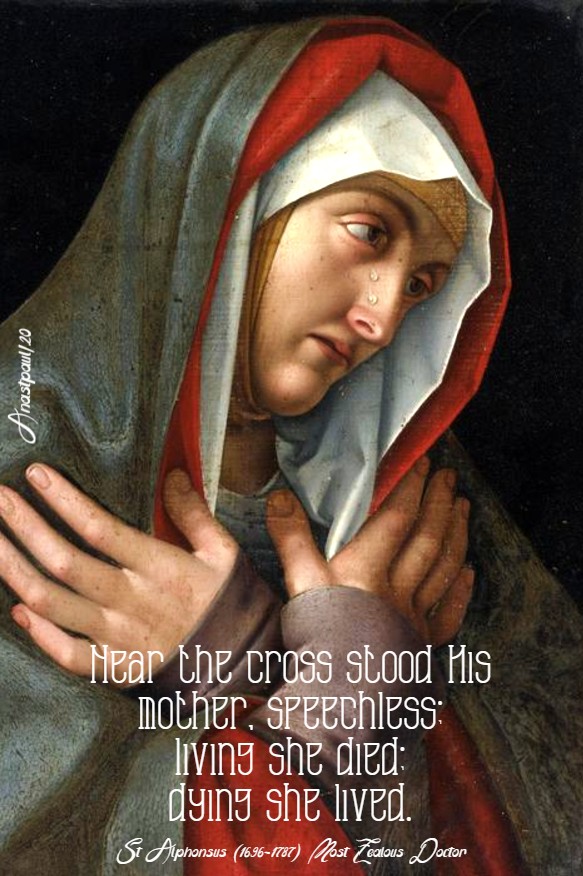
“Near the cross stood His mother, speechless; living she died; dying she lived.”
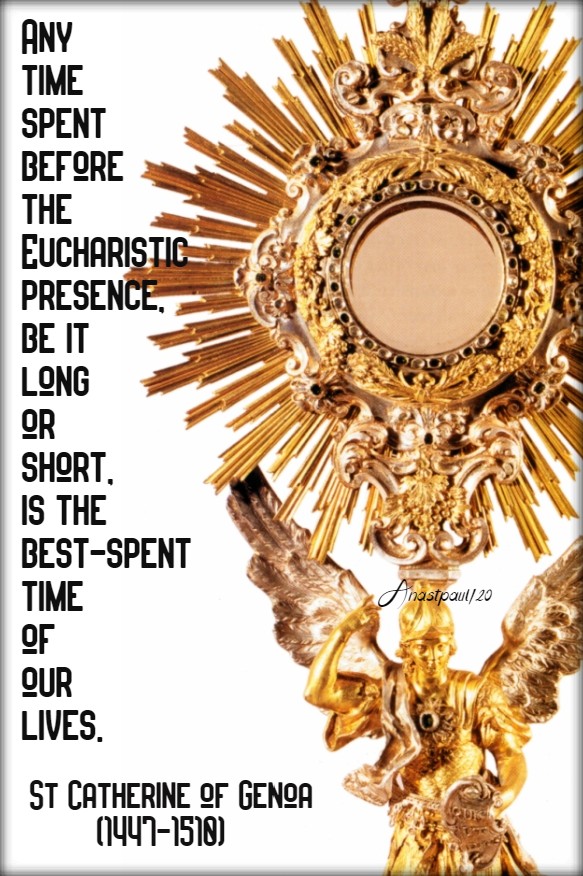
“Any time spent before the Eucharistic presence, be it long or short, is the best-spent time of our lives.”
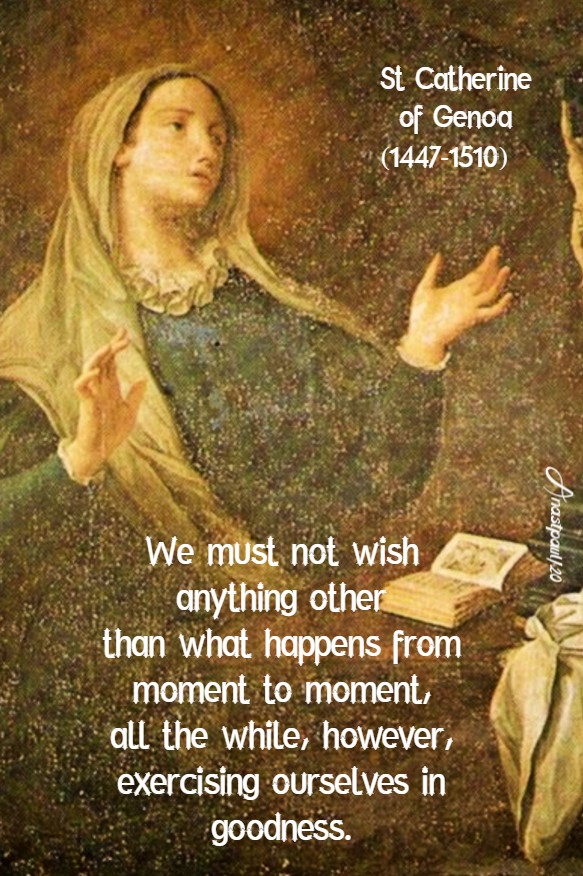
“We must not wish anything other than what happens from moment to moment, all the while, however, exercising ourselves in goodness.”
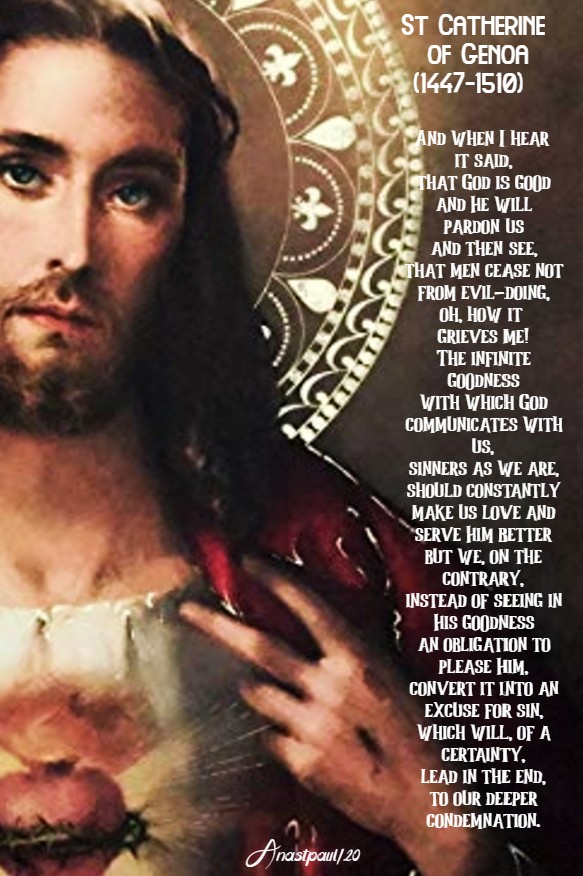
“And when I hear it said, that God is good and He will pardon us and then see, that men cease not from evil-doing, oh, how it grieves me! The infinite goodness with which God communicates with us, sinners as we are, should constantly make us love and serve Him better but we, on the contrary, instead of seeing in His goodness an obligation to please Him, convert it into an excuse for sin, which will, of a certainty, lead in the end, to our deeper condemnation.”
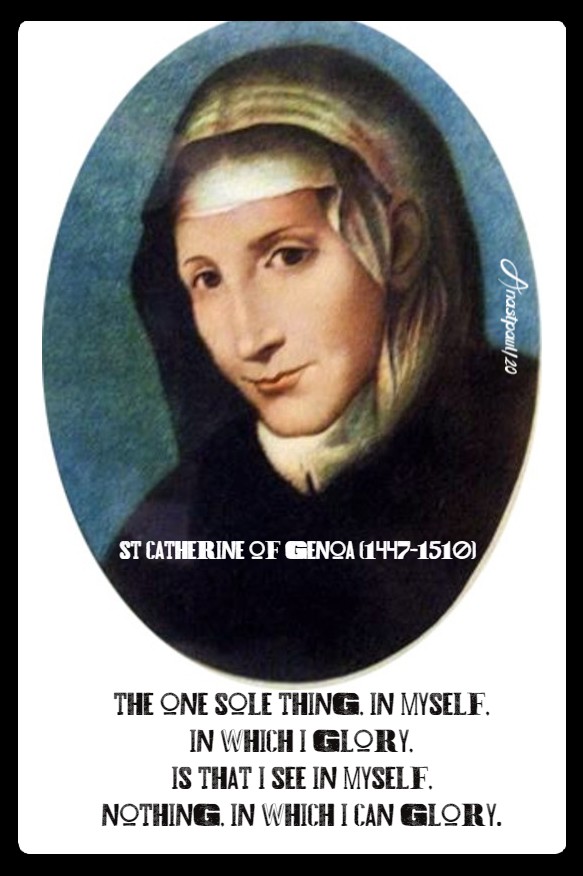
“The one sole thing, in myself, in which I glory, is that I see in myself, nothing, in which I can glory.”
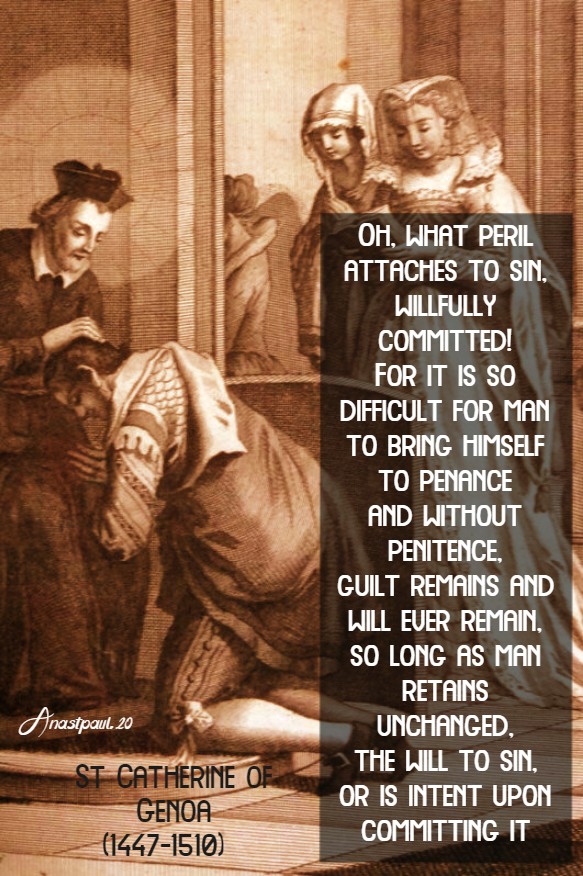
“Oh, what peril attaches to sin, wilfully committed! For it is so difficult for man to bring himself to penance and without penitence, guilt remains and will ever remain, so long as man retains unchanged, the will to sin, or is intent upon committing it.”
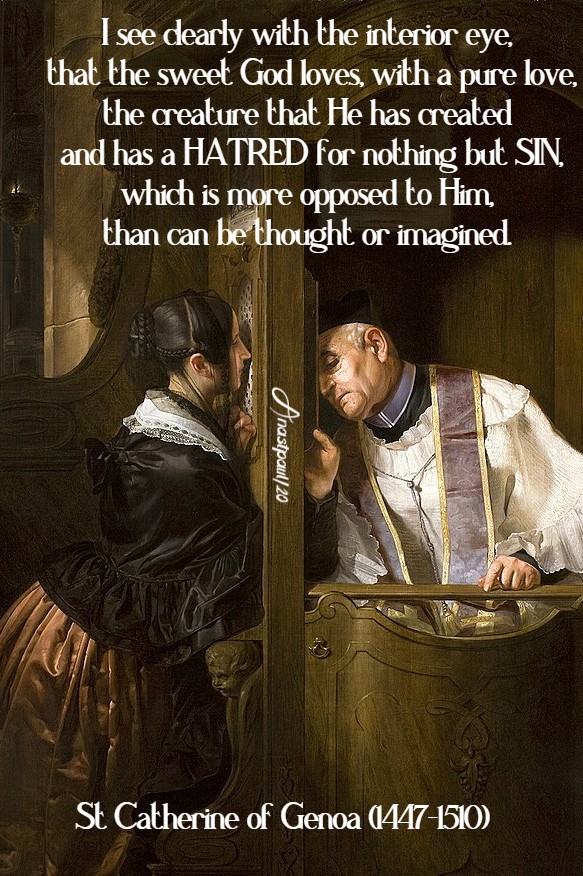
“I see clearly with the interior eye, that the sweet God loves, with a pure love, the creature that He has created and has a HATRED for nothing but SIN, which is more opposed to Him, than can be thought or imagined.”
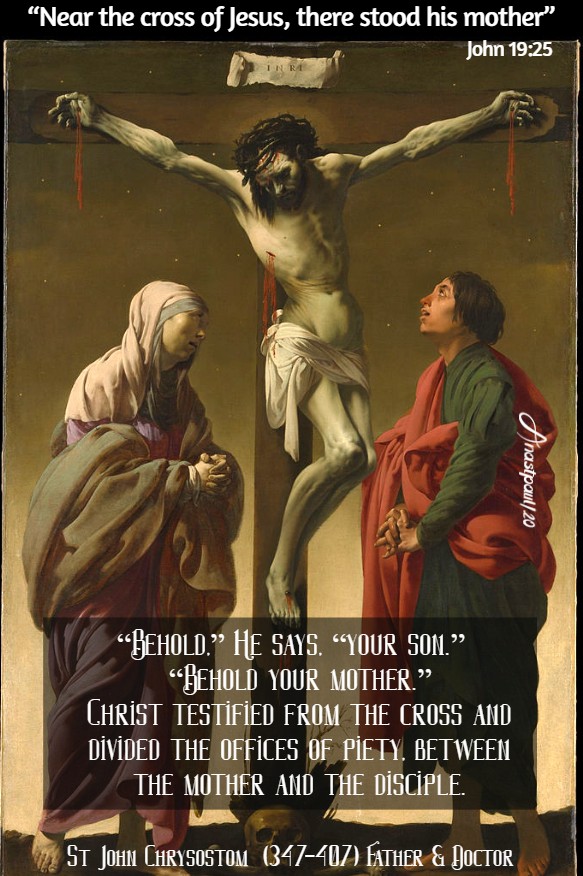
“Near the cross of Jesus, there stood his mother…” … John 19:25
REFLECTION – “Mary, the mother of the Lord, stood by her Son’s cross. No-one has taught me this but the holy Evangelist John. Others have related how the earth was shaken at the Lord’s passion, the sky was covered with darkness, the sun withdrew itself and how the thief was, after a faithful confession, received into paradise. John tells us what the others have not told, how the Lord, while fixed on the cross called to His mother. He thought it was more important that, victorious over His sufferings, Jesus gave her the offices of piety, than that He gave her a heavenly kingdom. For, if it is the mark of religion to grant pardon to the thief, it is a mark of much greater piety, that a mother is honoured with such affection by her Son. “Behold,” He says, “your son.” “Behold your mother.” Christ testified from the cross and divided the offices of piety, between the mother and the disciple.
Nor was Mary below what was becoming of the mother of Christ. When the Apostles fled, she stood at the cross and with pious eyes beheld her Son’s wounds. For she did not look to the death of her offspring but to the salvation of the world. Or perhaps, because that “royal hall” knew that the redemption of the world would be through the death of her Son, she thought that by her death, she also might add something to that universal gift. But Jesus did not need a helper for the redemption of all, who saved all without a helper. This is why He says, “I am counted among those who go down to the pit. I am like those who have no help.” He received indeed the affection of His mother but sought not another’s help. Imitate her, holy mothers, who in her only dearly beloved Son, set forth so great an example of maternal virtue. For neither have you sweeter children, nor did the Virgin seek the consolation of being able, to bear another son.” … St John Chrysostom (347-407) Father and Doctor of the Church – Letter 63
PRAYER – Our Father, when Jesus Your Son, was raised up on the Cross, it was Your will that Mary, His Mother, should stand there and suffer with Him in her heart. Grant that in union with her, the Church may share in the passion of Christ and so be brought to the glory of His Resurrection. Be our intercessor and our consolation, Our Lady of Sorrows, amen.
Our Morning Offering – 15 September – The Memorial of Our Lady of Sorrows
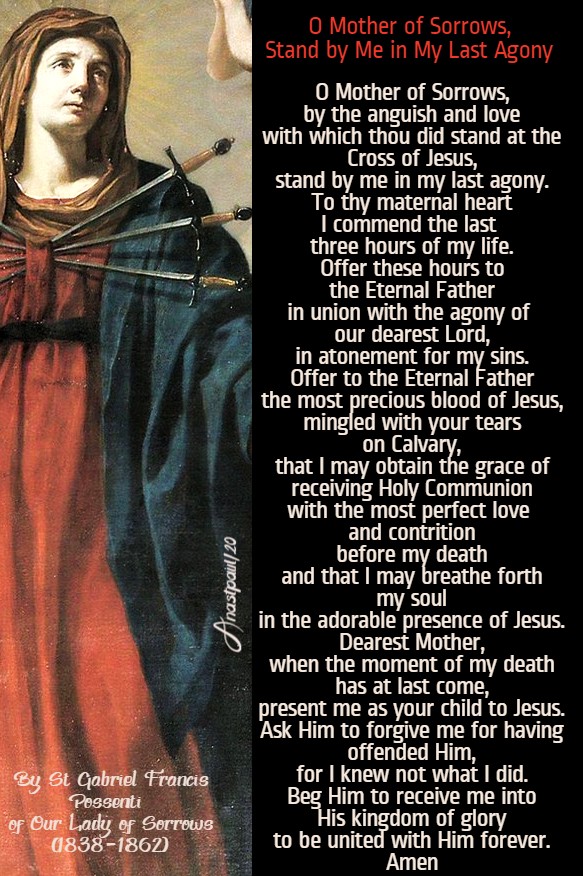
O Mother of Sorrows, Stand by Me in My Last Agony By St Gabriel Francis Possenti of Our Lady of Sorrows (1838-1862)
O Mother of Sorrows, by the anguish and love with which thou did stand at the Cross of Jesus, stand by me in my last agony. To thy maternal heart I commend the last three hours of my life. Offer these hours to the Eternal Father in union with the agony of our dearest Lord, in atonement for my sins. Offer to the Eternal Father the most precious blood of Jesus, mingled with your tears on Calvary, that I may obtain the grace of receiving Holy Communion with the most perfect love and contrition before my death and that I may breathe forth my soul in the adorable presence of Jesus. Dearest Mother, when the moment of my death has at last come, present me as your child to Jesus. Ask Him to forgive me for having offended Him, for I knew not what I did. Beg Him to receive me into His kingdom of glory to be united with Him forever. Amen
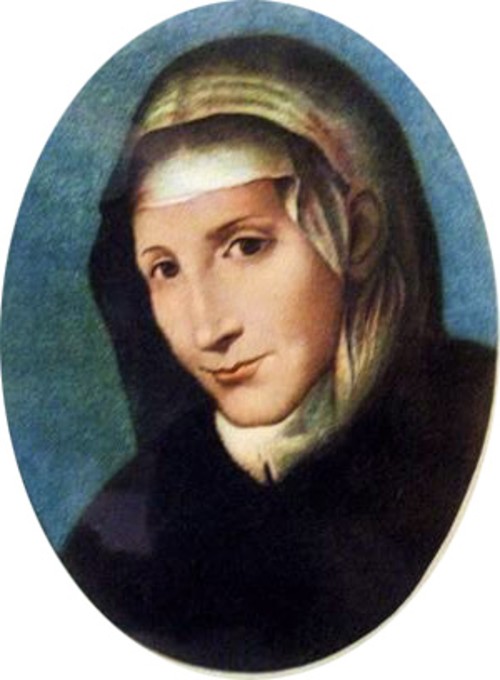
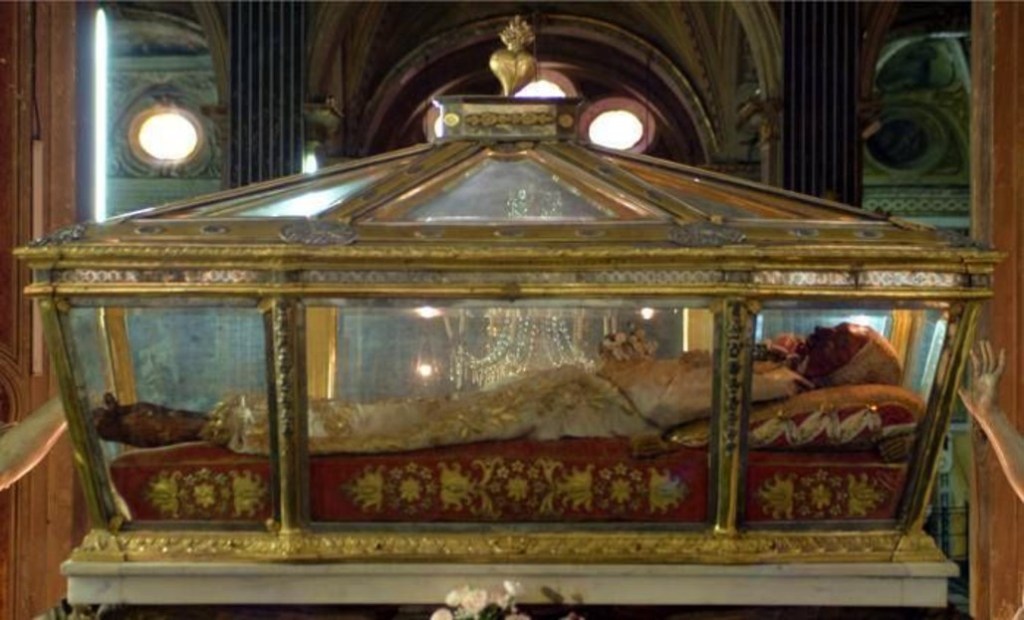
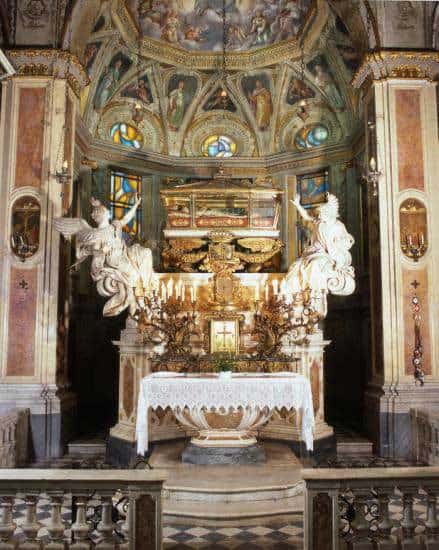
Saint of the Day – 15 September – St Catherine of Genoa (1447-1510) Married laywoman, Mystic, Apostle of the sick, the poor and the needy, Writer – born in 1447 at Genoa, Italy as Caterina Fieschi Adorno and died on 15 September 1510 at Genoa, Italy of natural causes. Patronages – Brides, Childless Couples, Difficult Marriages, People Ridiculed For Their Piety, Temptations, Victims Of Adultery, Victims Of Infidelity. Her body is incorrupt and rests in a glass reliquary at the Capuchin Church in Genoa.
Catherine was born in Genoa in 1447. She was the youngest of five. Her father, Giacomo Fieschi, died when she was very young. Her mother, Francesca di Negro provided such an effective Christian education that the elder of her two daughters became a religious. When Catherine was 16, she was given in marriage to Giuliano Adorno, a man who after various trading and military experiences in the Middle East had returned to Genoa in order to marry.
Married life was far from easy for Catherine, partly because of the character of her husband who was given to gambling. Catherine herself, was at first induced to lead a worldly sort of life in which, however, she failed to find serenity. After 10 years, her heart was heavy with a deep sense of emptiness and bitterness. A unique experience on 20 March 1473 sparked her conversion. She had gone to the Church of San Benedetto in the monastery of Nostra Signora delle Grazie [Our Lady of Grace], to make her confession and, kneeling before the Priest, “received,” as she herself wrote, “a wound in my heart from God’s immense love.” It came with such a clear vision of her own wretchedness and shortcomings and at the same time of God’s goodness, that she almost fainted.
Her heart was moved by this knowledge of herself — knowledge of the empty life she was leading and of the goodness of God. This experience prompted the decision that gave direction to her whole life. She expressed it in the words: “no longer the world, no longer sin” (cf. Vita Mirabile, 3rv). Catherine did not stay to make her Confession. On arriving home she entered the remotest room and spent a long time weeping. At that moment she received an inner instruction on prayer and became aware of God’s immense love for her, a sinner. It was a spiritual experience she had no words to describe ( cf. Vita Mirabile, 4r).
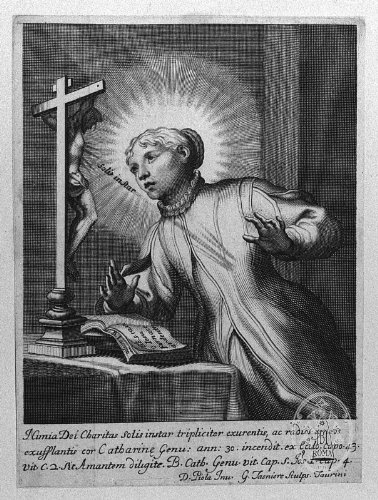
It was on this occasion that the suffering Jesus appeared to her, bent beneath the Cross, as he is often portrayed in the Saint’s iconography. A few days later she returned to the Priest to make a good Confession at last. It was here, that began the “life of purification” which for many years caused her to feel constant sorrow for the sins she had committed and which spurred her to impose forms of penance and sacrifice upon herself, in order to show her love to God.
St Catherine of Genoa painted by artist Denys Savchenko. It resides in the St Catherine Church, Genoa, Italy.
On this journey Catherine became ever closer to the Lord until she attained what is called “unitive life,” namely, a relationship of profound union with God. In her Vita it is written, that her soul was guided and instructed from within, solely by the sweet love of God, which gave her all she needed. Catherine surrendered herself so totally into the hands of the Lord that she lived, for about 25 years, as she wrote, “without the assistance of any creature, taught and governed by God alone” (Vita, 117r-118r), nourished above all by constant prayer and by Holy Communion which she received every day, an unusual practice in her time. Only many years later did the Lord give her a Priest who cared for her soul.
Catherine was always reluctant to confide and reveal her experience of mystical communion with God, especially because of the deep humility she felt before the Lord’s graces. The prospect of glorifying Him and of being able to contribute to the spiritual journey of others, alone spurred her, to recount what had taken place within her, from the moment of her conversion, which is her original and fundamental experience.
The place of her ascent to mystical peaks was Pammatone Hospital, the largest hospital complex in Genoa, of which she was director and animator. Hence Catherine lived a totally active existence despite the depth of her inner life. In Pammatone a group of followers, disciples and collaborators formed around her, fascinated by her life of faith and her charity. Indeed her husband, Giuliano Adorno, was so so won over, that he gave up his dissipated life, became a Third Order Franciscan and moved into the hospital to help his wife.
Catherine’s dedication to caring for the sick continued until the end of her earthly life on 15 September 1510. From her conversion until her death there were no extraordinary events but two elements characterise her entire life – on the one hand her mystical experience, that is, the profound union with God, which she felt as spousal union and on the other, assistance to the sick, the organisation of the hospital and service to her neighbour, especially the neediest and the most forsaken. These two poles, God and neighbour, totally filled her life, virtually all of which she spent within the hospital walls.
Dear friends, we must never forget that the more we love God and the more constantly we pray, the better we will succeed in truly loving those who surround us, who are close to us, so that we can see in every person the Face of the Lord whose love knows no bounds and makes no distinctions. The mystic does not create distance from others or, an abstract life but, rather approaches other people, so that they may begin to see and act with God’s eyes and heart.
Catherine’s thought on purgatory, for which she is particularly well known, is summed up in the last two parts of the book mentioned above – The Treatise on Purgatory and the Dialogues between the body and the soul. The first original passage concerns the “place” of the purification of souls. In her day, it was depicted mainly using images linked to space – a certain space was conceived of, in which purgatory was supposed to be located. Catherine, however, did not see purgatory as a scene in the bowels of the earth – for her it is not an exterior but rather an interior fire. This is purgatory – an inner fire. The Saint speaks of the Soul’s journey of purification on the way to full communion with God, starting from her own experience of profound sorrow for the sins committed, in comparison with God’s infinite love (cf. Vita Mirabile, 171v).
We heard of the moment of conversion when Catherine suddenly became aware of God’s goodness, of the infinite distance of her own life from this goodness and of a burning fire within her. And this is the fire that purifies, the interior fire of purgatory. Here too, is an original feature in comparison with the thought of her time. In fact, she does not start with the afterlife in order to recount the torments of purgatory — as was the custom in her time and perhaps still is today — and then to point out the way to purification or conversion. Rather our Saint begins with the inner experience of her own life on the way to Eternity.
“The soul,” Catherine says, “presents itself to God, still bound to the desires and suffering that derive from sin and this makes it impossible for it to enjoy the beatific vision of God.” Catherine asserts that God is so pure and holy, that a soul stained by sin, cannot be in the presence of the Divine Majesty (cf. Vita Mirabile, 177r).
We too feel how distant we are, how full we are of so many things that we cannot see God. The soul is aware of the immense love and perfect justice of God and consequently, suffers for having failed to respond in a correct and perfect way to this love and, love for God itself, becomes a flame, love itself cleanses it from the residue of sin.
In Catherine we can make out the presence of theological and mystical sources on which it was normal to draw in her time. In particular, we find an image typical of Dionysius the Areopagite – the thread of gold that links the human heart to God Himself. When God purified man, he bound him with the finest golden thread, that is, His love and draws him toward Himself with such strong affection, that man i,s as it were “overcome and won over and completely beside himself.” Thus man’s heart is pervaded by God’s love that becomes the one guide, the one driving force of his life (cf. Vita Mirabile, 246rv). This situation of being uplifted towards God and of surrender to His will, expressed in the image of the thread, is used by Catherine to express the action of divine light on the souls in purgatory, a light that purifies and raises them to the splendour of the shining radiance of God (cf. Vita Mirabile, 179r).
With her life, St Catherine teaches us that the more we love God and enter into intimacy with Him in prayer the more He makes Himself known to us, setting our hearts on fire with His love. In writing about purgatory, the Saint reminds us of a fundamental truth of faith that becomes for us an invitation to pray for the deceased, so that they may attain the beatific vision of God in the Communion of Saints.
Moreover, the humble, faithful and generous service in Pammatone Hospital that the Saint rendered throughout her life, is a shining example of charity for all and an encouragement, especially for women who, with their precious work enriched by their sensitivity and attention to the poorest and neediest, make a fundamental contribution to society and to the Church.
Catherine’s writings were examined by the Holy Office and declared to contain doctrine that would alone be enough to prove her sanctity and she was accordingly Beatified in 1675 by Pope Clement X and Canonised in 1737 by Pope Clement XII. Her writings also, became sources of inspiration for other religious leaders such as Robert Bellarmine and Francis de Sales and Cardinal Henry Edward Manning. Pope Pius XII declared her Patroness of the hospitals in Italy.
When she died, her body was placed in a coffin in the Chapel of the hospital where she had served so selflessly. The wooden coffin unfortunately suffered water damage, yet after it was removed, a year later, the body itself was found to be incorrupt. Her body was later transferred to the Capuchin Convent Annunziata di Portoria, near the centre of Genoa and can be viewed by the public, in the Church attached to the Convent.
St Aichardus St Albinus of Lyon Bl Anton Maria Schwartz St Aprus of Toul St Bond of Sens St Catherine of Genoa (1447-1510)
Bl Camillus Constanzo St Emilas of Cordoba St Eutropa of Auvergne St Hernan Bl Jacinto de Los Ángeles and Bl Juan Bautista St Jeremias of Cordoba St Joseph Abibos St Mamillian of Palermo St Melitina St Mirin of Bangor St Nicetas the Goth St Nicomedes of Rome Blessed Paolo Manna PIME (1872-1952) “A Burning Soul” Priest, Missionary His Life: https://anastpaul.com/2019/09/15/saint-of-the-day-15-september-blessed-paolo-manna-pime-1872-1952-a-burning-soul/
St Porphyrius the Martyr St Ribert St Ritbert of Varennes Bl Rolando de Medici Bl Tommasuccio of Foligno St Valerian of Châlon-sur-Saône St Valerian of Noviodunum St Vitus of Bergamo Bl Wladyslaw Miegon — Martyrs of Adrianopolis – 3 saints: Three Christian men martyred together in the persecutions of Maximian – Asclepiodotus, Maximus and Theodore. They were martyred in 310 at Adrianopolis (Adrianople), a location in modern Bulgaria.
Martyrs of Noviodunum – 4 saints: Three Christian men martyred together, date unknown – Gordian, Macrinus, Stratone and Valerian. They were martyred in Noviodunum, Lower Moesia (near modern Isaccea, Romania).
Mercedarian Martyrs of Morocco – 6 beati: A group of six Mercedarians who were captured by Moors near Valencia, Spain and taken to Morocco. Though enslaved, they refused to stop preaching Christianity. Martyrs. – Dionisio, Francis, Ildefonso, James, John and Sancho. They were crucified in 1437 in Morocco.
Martyred in the Spanish Civil War: Bl Antonio Sierra Leyva Bl Pascual Penades Jornet
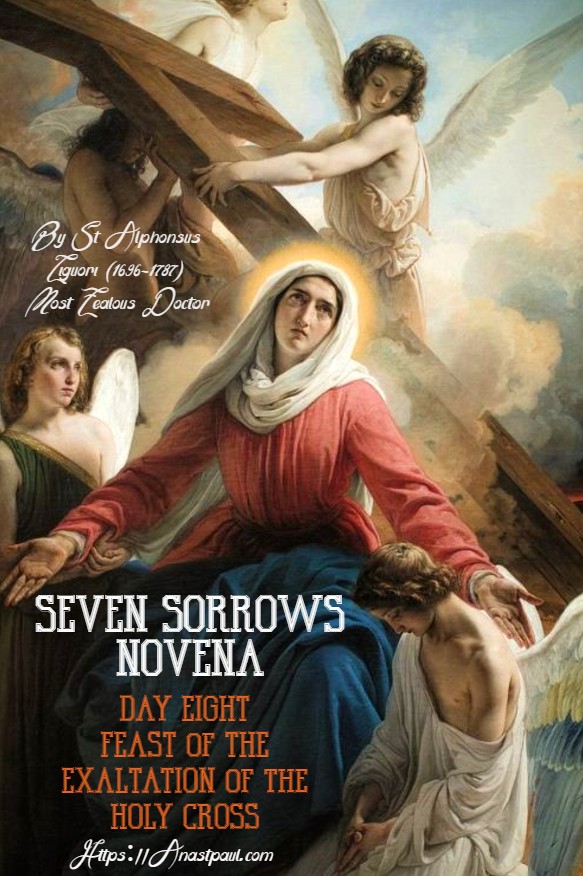
Day Eight Feast of the Exaltation of the Holy Cross
Opening Prayer
V/. O God + come to my assistance R/. O Lord, make haste to help me.
Gloria Patri …
Sweet Mother of Sorrows, Providence wished that Saint Helena, like you the mother of a king, find the Cross of your Son and lavish honours on this relic of relics. Grant, me Sorrowful Queen and Mother that, like Saint Helena, I always honour the symbol of our salvation, the Cross. And like the Church, may I hold it high, display and wear it with gratitude and pride. Above all, may I unite my sufferings to that of Jesus on the Cross and carry my crosses not in shame but in faith, love and patience as He did. I grieve for thee, O Mary most sorrowful, for the pangs that wrenched thy most loving heart at the death of your Son, Jesus. Dear Mother, by thy heart sunk in the bitterness of desolation, obtain for me the virtue of patience in suffering and the gift of zeal for the salvation of souls and this my special intention ……………………. (mention your intention) Amen
Reflection (St Alphonsus de Liguori)
Meditation: Consider how, after the death of our Lord, two of His disciples, Joseph and Nicodemus, took Him down from the Cross and placed Him in the arms of His afflicted Mother, who received Him with unutterable tenderness and pressed Him to her bosom.
Ave Maria …
Prayer of St Alphonsus: O Mother of Sorrows, for the love of this Son, accept me for thy servant and pray to Him for me. And Thou, my Redeemer, since Thou hast died for me, permit me to love Thee, for I wish but Thee and nothing more. I love Thee, my Jesus and I repent of ever having offended Thee. Never permit me to offend Thee again. Grant that I may love Thee always and then do with me what Thou will. Amen
Note:As St Alphonsus has only done the Seven Sorrows, Day 8 has been adapted and included from his Stations of the Cross. However, Day 9 is from his reflections and prayers on our Mother of Sorrows.
Thought for the Day – 14 September – Meditations with Antonio Cardinal Bacci (1881-1971)
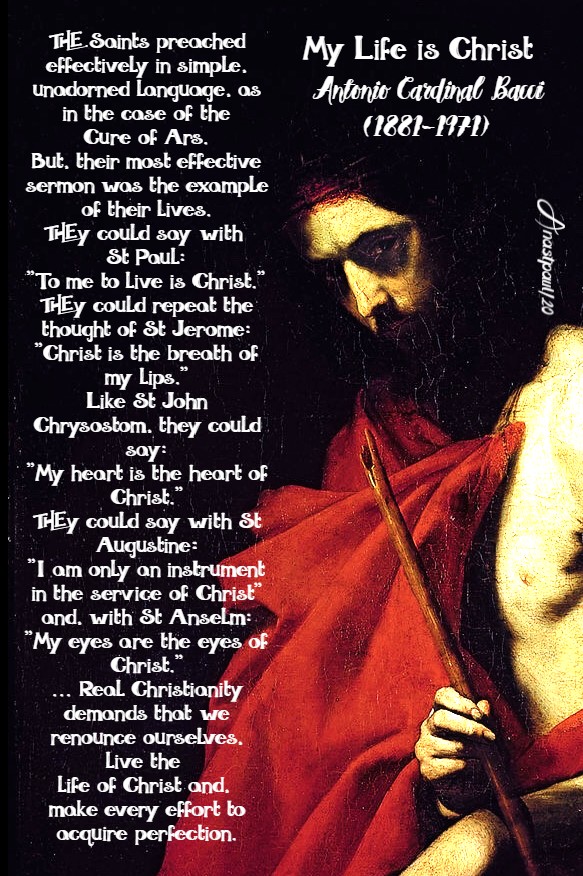
My Life is Christ
“St Paul reached such a degree of union with Christ that he could exclaim” “To me to live is Christ” (Phil 1:21). Elsewhere he says” “It is now no longer I that live but Christ lives in me” (Gal 2:20). This is a characteristic of the Saints. They live their own lives no longer, for they live the life of Christ. That is to say, their minds and hearts are always fixed on Jesus. They love the Lord, more than all things and, more than themselves. God is the object of all their desires, affections and actions. As a result, the soul is transfigured and is infused with divine life, so that it does nothing which is not activated by grace. In the Saints, then, there is reflected something heavenly which attracts and stimulates one to virtue.
The Saints preached effectively in simple, unadorned language, as in the case of the Cure of Ars. But, their most effective sermon was the example of their lives. They could say with St Paul: “To me to live is Christ.” They could repeat the thought of St Jerome: “Christ is the breath of my lips.” Like St John Chrysostom, they could say: “My heart is the heart of Christ.” They could say with St Augustine: “I am only an instrument in the service of Christ” and, with St Anselm: “My eyes are the eyes of Christ.”
When we meditate on these words, which signify the height of sanctity, we feel very small, shabby and far from the Christian perfection to which we should aspire. Perhaps we are still immersed in sin, or perhaps, we are wavering between the things of this world and the things of God, or perhaps, as yet, we have not given up our egoism and complacent mediocrity in order to offer ourselves entirely to God. Real Christianity demands that we renounce ourselves, live the life of Christ and, make every effort to acquire perfection.”
Quote/s of the Day – 14 September – Feast of the Exaltation of the Holy Cross
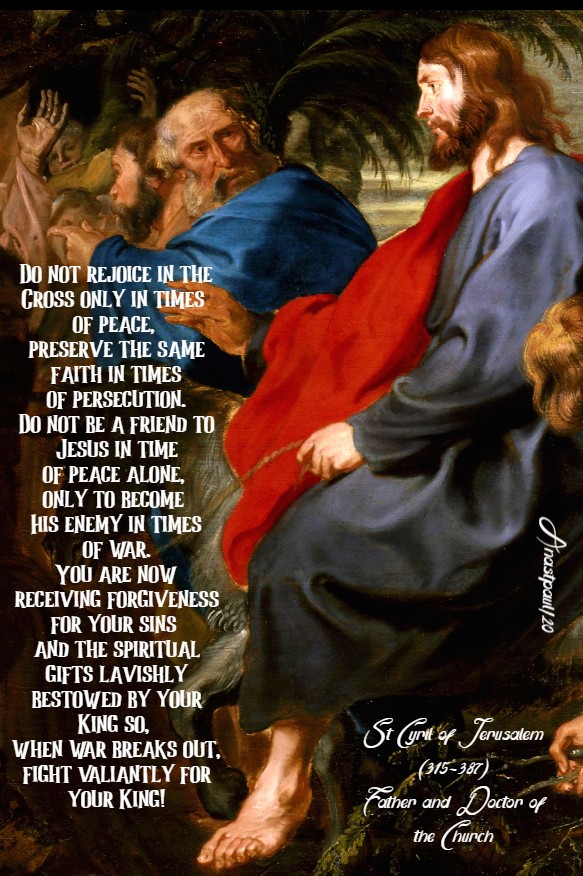
“Do not rejoice in the Cross only in times of peace, preserve the same faith in times of persecution. Do not be a friend to Jesus in times of peace alone, only to become His enemy in times of war. You are now receiving forgiveness for your sins and the spiritual gifts lavishly bestowed by your King so, when war breaks out, fight valiantly for your King.”
St Cyril of Jerusalem (315-387) Father and Doctor of the Church
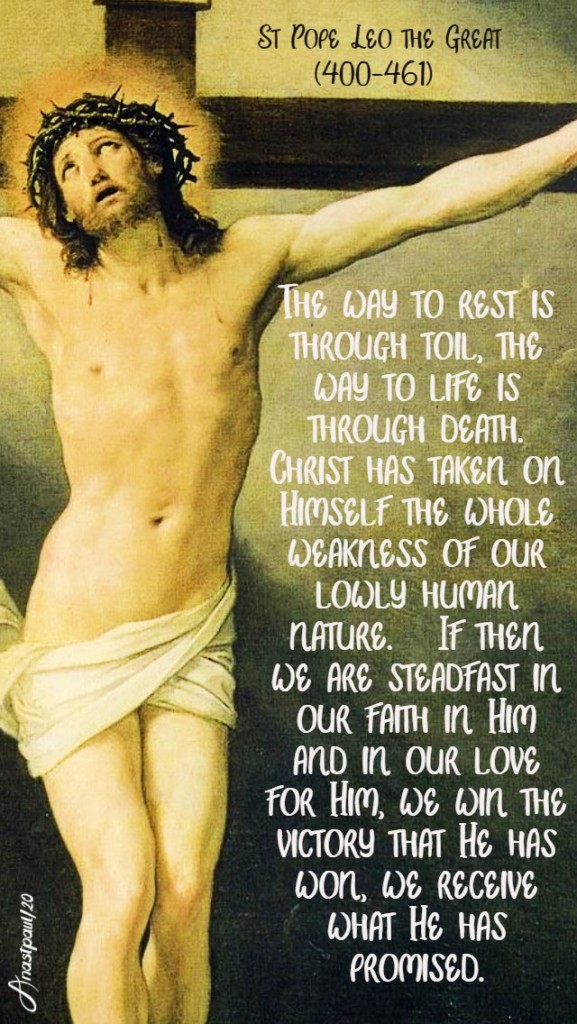
“The way to rest is through toil, the way to life is through death. Christ has taken on Himself the whole weakness of our lowly human nature. If then we are steadfast in our faith in Him and in our love for Him, we win the victory that He has won, we receive what He has promised.”
St Pope Leo the Great (400-461) Father and Doctor of the Church
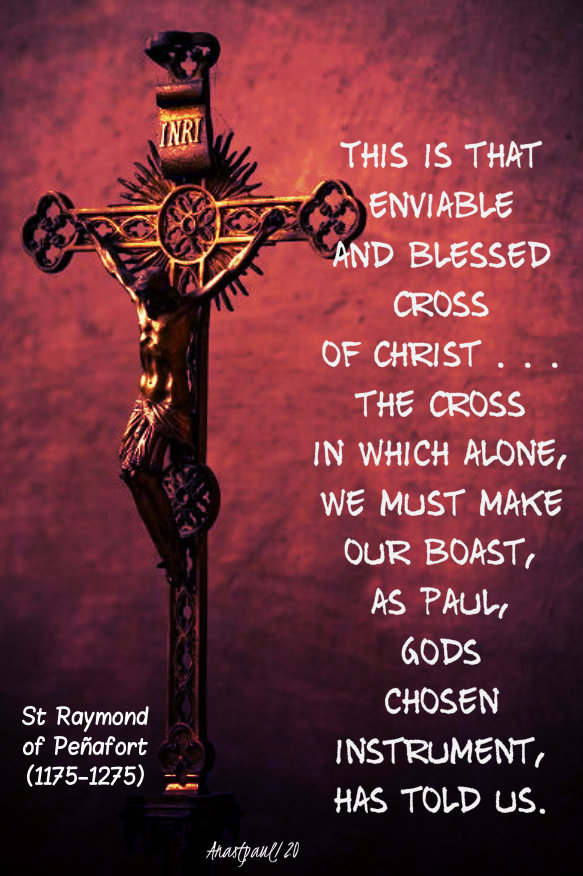
“This is that enviable and blessed Cross of Christ . . . the Cross in which alone, we must make our boast, as Paul, God’s chosen instrument, has told us.”
St Raymond of Peñafort (1175-1275)
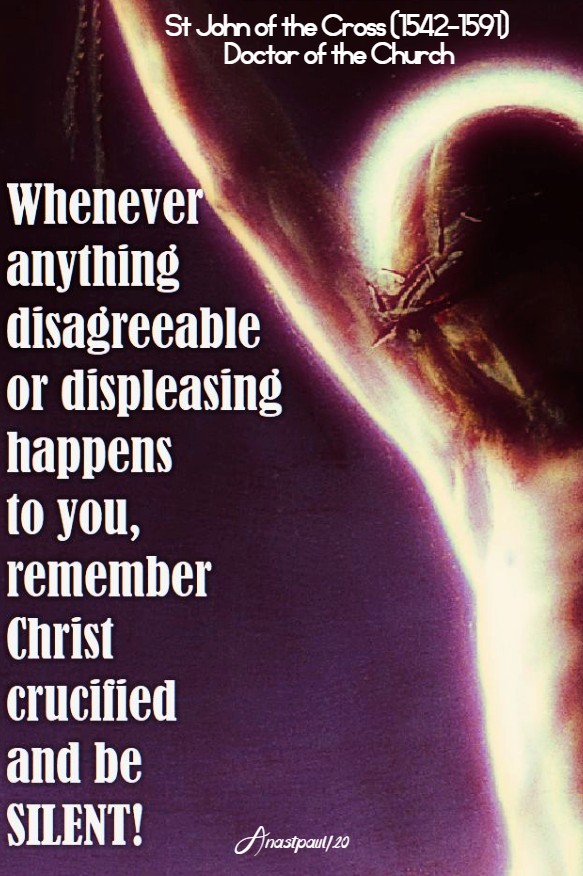
“Whenever anything disagreeable or displeasing happens to you, remember Christ crucified and be silent!”
St John of the Cross (1542-1591) Doctor of the Church
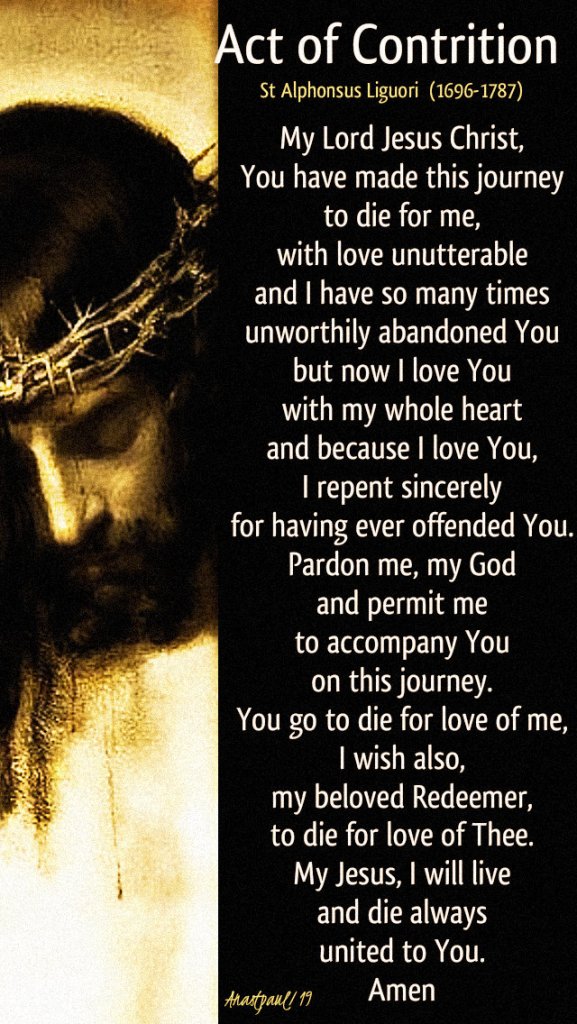
“Act of Contrition
My Lord Jesus Christ, You have made this journey to die for me, with love unutterable and I have so many times unworthily abandoned You but now I love You with my whole heart and because I love You, I repent sincerely for having ever offended You. Pardon me, my God and permit me to accompany You on this journey. You go to die for love of me, I wish also, my beloved Redeemer, to die for love of Thee. My Jesus, I will live and die always united to You.” Amen
By St Alphonsus Mary Liguori (1696-1787) Doctor of the Church
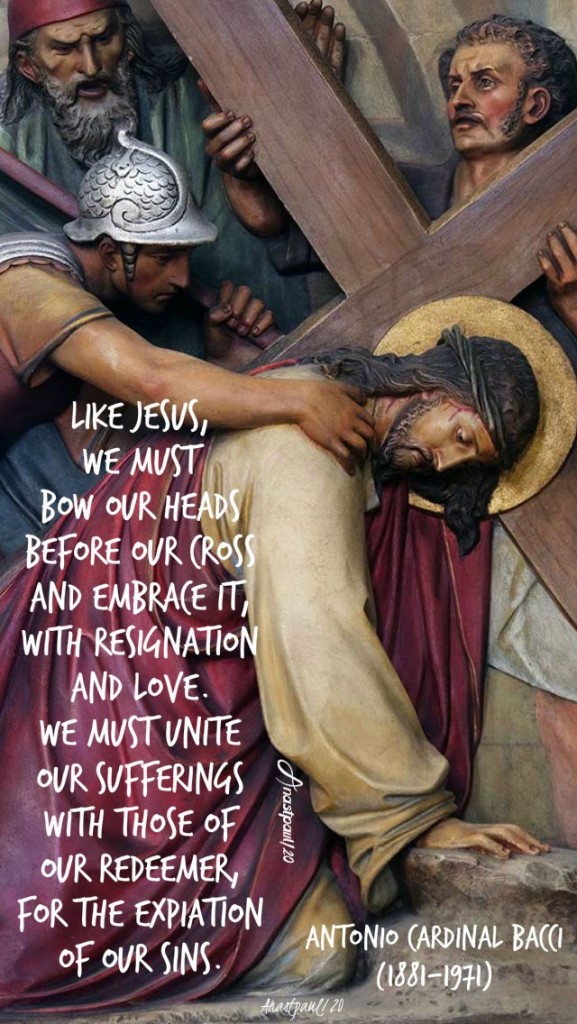
“Like Jesus, we must bow our heads before our Cross and embrace it, with resignation and love. We must unite our sufferings with those of our Redeemer, for the expiation of our sins.”
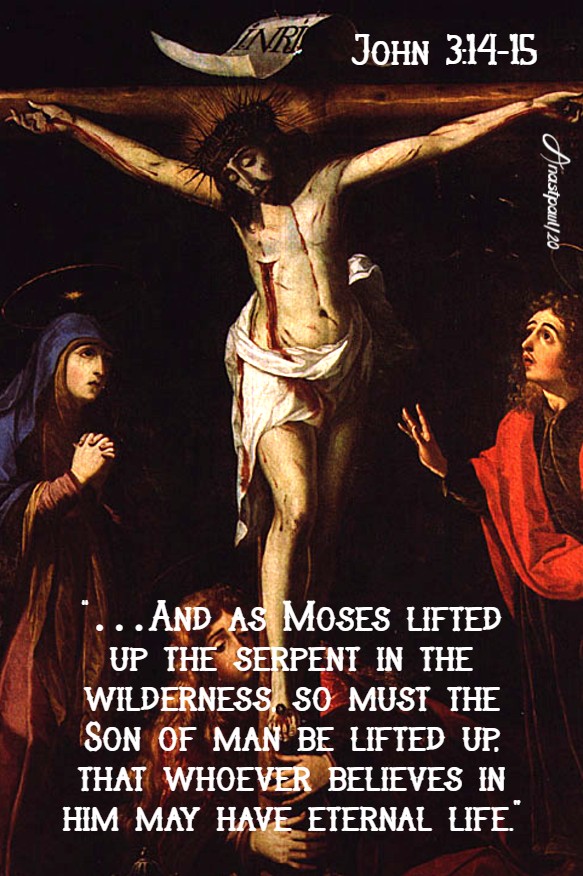
“…And as Moses lifted up the serpent in the wilderness, so must the Son of man be lifted up, that whoever believes in him may have eternal life.”… John 3:14-15
REFLECTION – “We are celebrating the Feast of the Cross which drove away darkness and brought in the light… Had there been no Cross, Christ could not have been Crucified. Had there been no Cross, Life Itself could not have been nailed to the tree. And if Life had not been nailed to it, they would be no streams of immortality pouring from Christ’s side, blood and water for the world’s cleansing. The legal bond of our sin would not be cancelled, we should not have obtained our freedom, we should not have enjoyed the fruit of the tree of life and the gates of paradise would not stand open. Had there been no Cross, death would not have been trodden underfoot, nor hell despoiled… The Cross is called Christ’s glory, it is saluted as His triumph.”….St Andrew of Crete (650-740)
PRAYER – O God, who willed that Your Only Begotten Son should undergo the Cross to save the human race, grant, we pray, that we, who have known His mystery on earth, may merit the grace of His redemption in heaven. For You placed the salvation of the human race on the wood of the Cross, so that, where death arose, life might again spring forth and the evil one, who conquered on a tree, might likewise on a tree be conquered through Christ. O cross, You are the glorious sign of victory. Through your power may we share in the triumph of Christ Jesus. We adore you Christ and we praise you, for by your holy Cross you have redeemed the world. Amen
Our Morning Offering – 14 September – Feast of the Exaltation of the Holy Cross
Prayer In Honour of the Holy Cross Third Prayer from the Seven Penitential Psalms Devotion
Almighty God, Lord Jesus Christ, who, for our sake, stretched out Your pure hands on the Cross and redeemed us with Your precious Blood, grant me to feel and understand that I may have true repentance and great perseverance, all the days of my life. Your reign is a reign for all ages. Amen
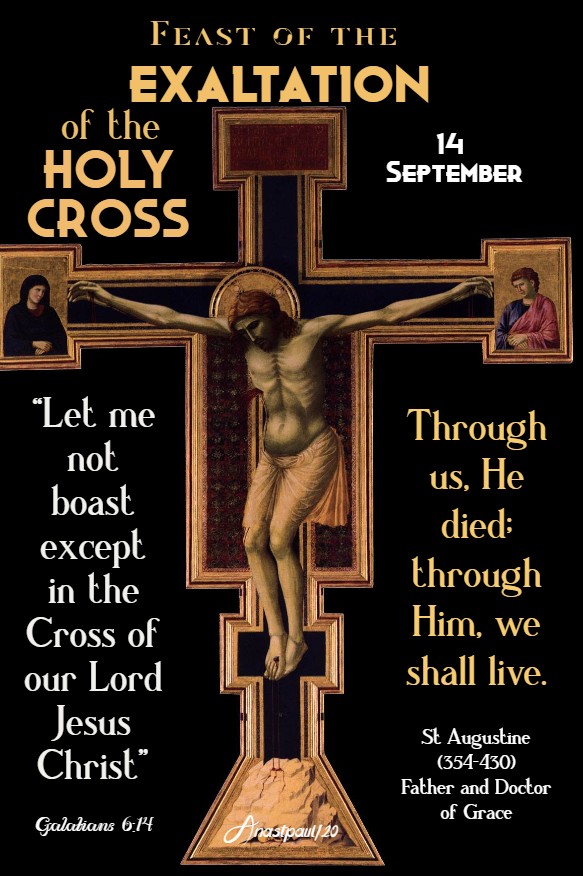
Feast of the Exaltation of the Holy Cross – 14 September
St Augustine
“Let me not boast except in the Cross of our Lord Jesus Christ”
It is a great thing that we are promised by the Lord but far greater is what has already been done for us and which we now commemorate.
Where were the sinners, what were they, when Christ died for them?
When Christ has already given us the gift of His death, who is to doubt that He will give the saints the gift of His own life?
Why does our human frailty hesitate to believe that mankind will one day live with God?
Who is Christ if not the Word of God: in the beginning was the Word and the Word was with God, and the Word was God?
This Word of God was made flesh and dwelt among us. He had no power of Himself to die for us – He had to take from us our mortal flesh.
This was the way in which, though immortal, He was able to die; the way in which He chose to give life to mortal men – He would first share with us and then enable us to share with Him.
Of ourselves, we had no power to live, nor did He of Himself have the power to die. In other words, He performed the most wonderful exchange with us. Through us, He died; through Him, we shall live.
The death of the Lord our God should not be a cause of shame for us; rather, it should be our greatest hope, our greatest glory. In taking upon Himself the death that He found in us, He has most faithfully promised to give us life in Himself, such as we cannot have of ourselves.
He loved us so much, that, sinless Himself, He suffered for us sinners, the punishment we deserved for our sins.
How then can He fail to give us the reward we deserve for our righteousness, for He is the source of righteousness? How can He, whose promises are true, fail to reward the saints, when He bore the punishment of sinners, though without sin Himself?
Brethren, let us then fearlessly acknowledge and even openly proclaim, that Christ was Crucified for us; let us confess it, not in fear but in joy, not in shame but in glory.
The apostle Paul saw Christ and extolled His claim to glory. He had many great and inspired things to say about Christ but he did not say that he boasted in Christ’s wonderful works – in creating the world, since He was God with the Father, or in ruling the world, though He was also a man like us.
Rather, he said: Let me not boast except in the cross of our Lord Jesus Christ.
St Augustine – Sermon Guelf 3 from the Office of Readings, Monday of Holy Week
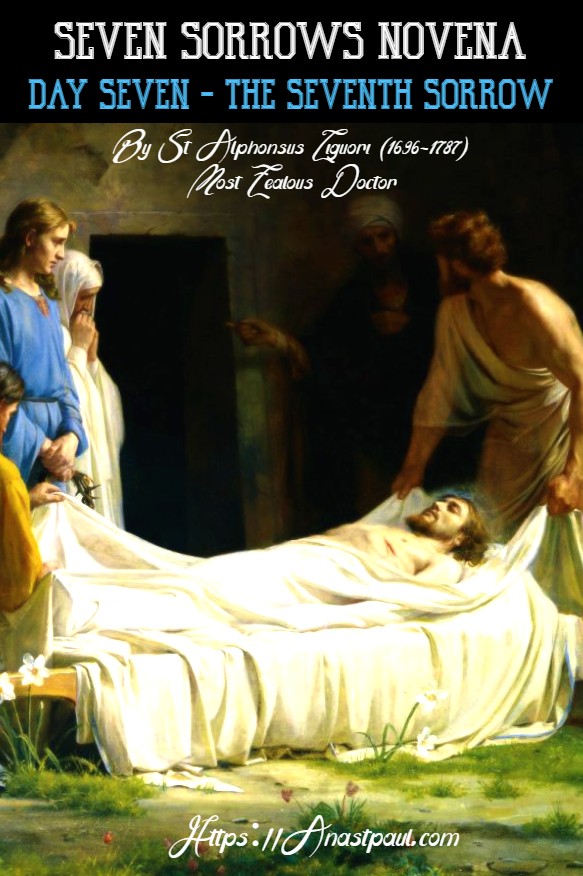
The Seven Sorrows Novena By St Alphonsus Liguori (1696-1787) Most Zealous Doctor
Day Seven – The Seventh Sorrow Jesus is Placed in the Tomb
Opening Prayer
V/. O God +, come to my assistance R/. O Lord, make haste to help me.
Gloria Patri …
Reflection (St Alphonsus de Liguori)
Meditation: Hastily the Body is wrapped in a clean linen cloth. Nicodemus has brought myrrh and aloes and the Body is bound in the Shroud with them. Nearby is a new tomb, belonging to Joseph of Arimathea and there they lay Jesus. Mary and John and the holy women follow them and watch as the great stone to the sepulchre is rolled. It is the end.
I grieve for thee, O Mary most sorrowful, for the pangs that wrenched thy most loving heart at the burial of Jesus. Dear Mother, by thy heart sunk in the bitterness of desolation, obtain for me the virtue of diligence and the gift of wisdom. And this my special intention ……………………. (mention your intention) Amen
Ave Maria …
Prayer of St Alphonsus: My afflicted Mother, I will not leave thee alone to weep; no, I wish to keep thee company with my tears. This grace I ask of thee to-day – obtain for me a continual remembrance of the passion of Jesus and of thine also and a tender devotion to them, that all the remaining days of my life, may be spent in weeping for thy sorrows, O my Mother and for those of my Redeemer, I hope that these dolors will give me the confidence and strength not to despair at the hour of my death, at the sight of the offences I have committed against my Lord. By these must I obtain pardon, perseverance, paradise, where I hope to rejoice with thee and sing the infinite mercy of my God through all eternity – thus I hope, thus may it be. Amen, amen.









 AnaStpaul
You must be logged in to post a comment.