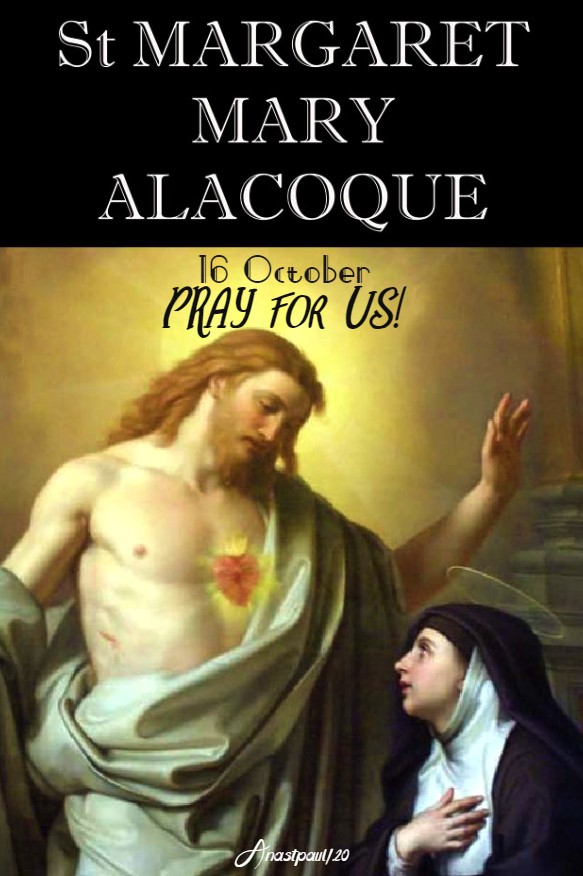
Quote/s of the Day – 16 October – The Memorial of St Margaret Mary Alacoque (1647-1690) “Apostle of the Sacred Heart”
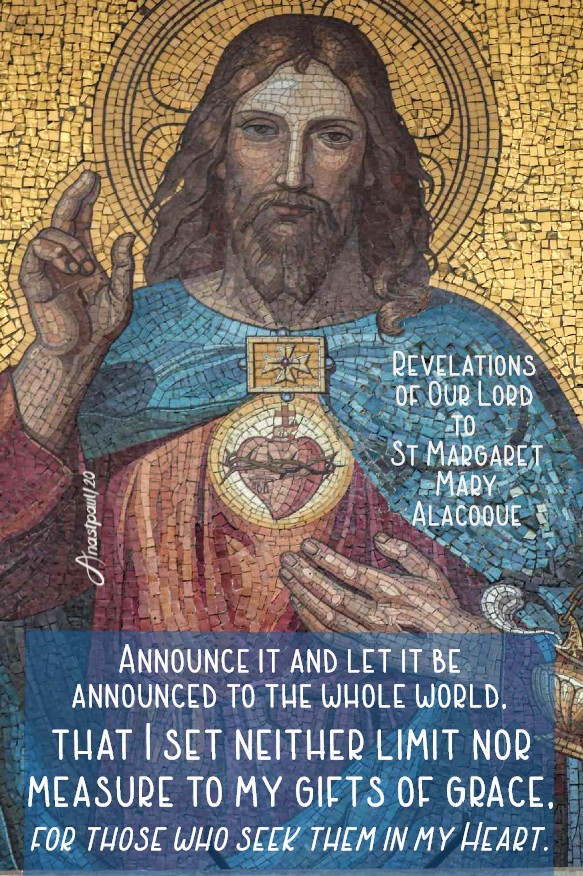
“Announce it and let it be announced to the whole world, that I set neither limit nor measure to my gifts of grace, for those who seek them in my Heart.”
Revelations of Our Lord to St Margaret Mary Alacoque
“The Sacred Heart is the symbol of that boundless love which moved the Word to take flesh, to institute the Holy Eucharist, to take our sins upon Himself and, dying on the Cross, to offer Himself as a victim and sacrifice to the eternal Father.”
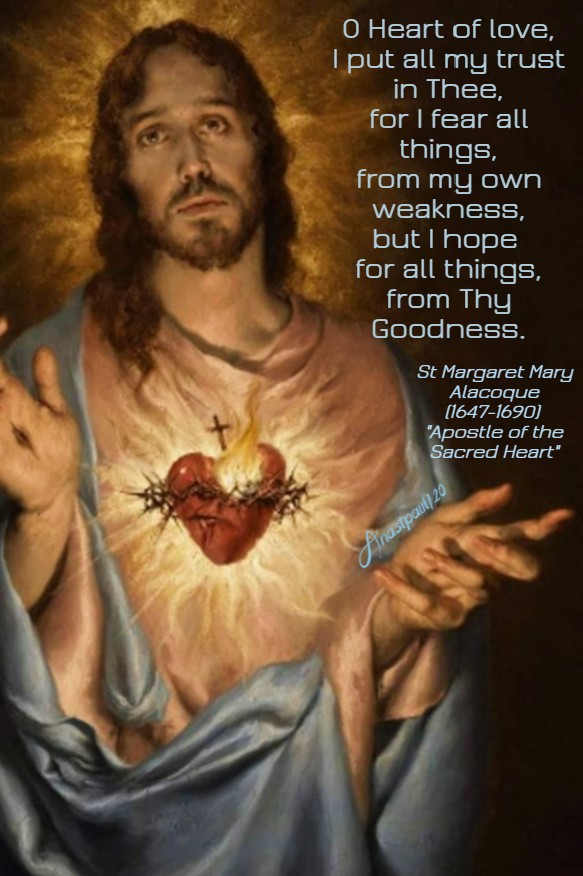
“O Heart of love, I put all my trust in Thee, for I fear all things, from my own weakness, but I hope for all things, from Thy Goodness.”
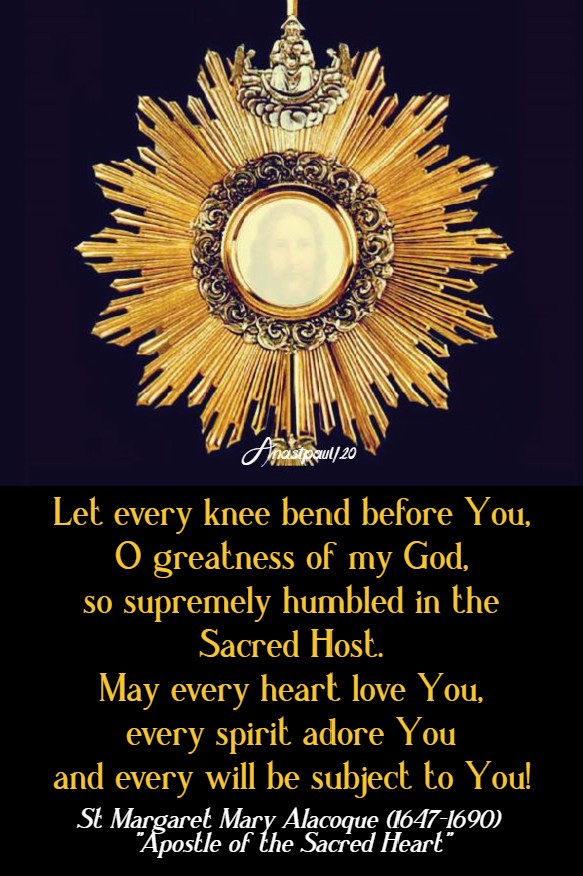
“Let every knee bend before You, O greatness of my God, so supremely humbled in the Sacred Host. May every heart love You, every spirit adore You and every will be subject to You!”
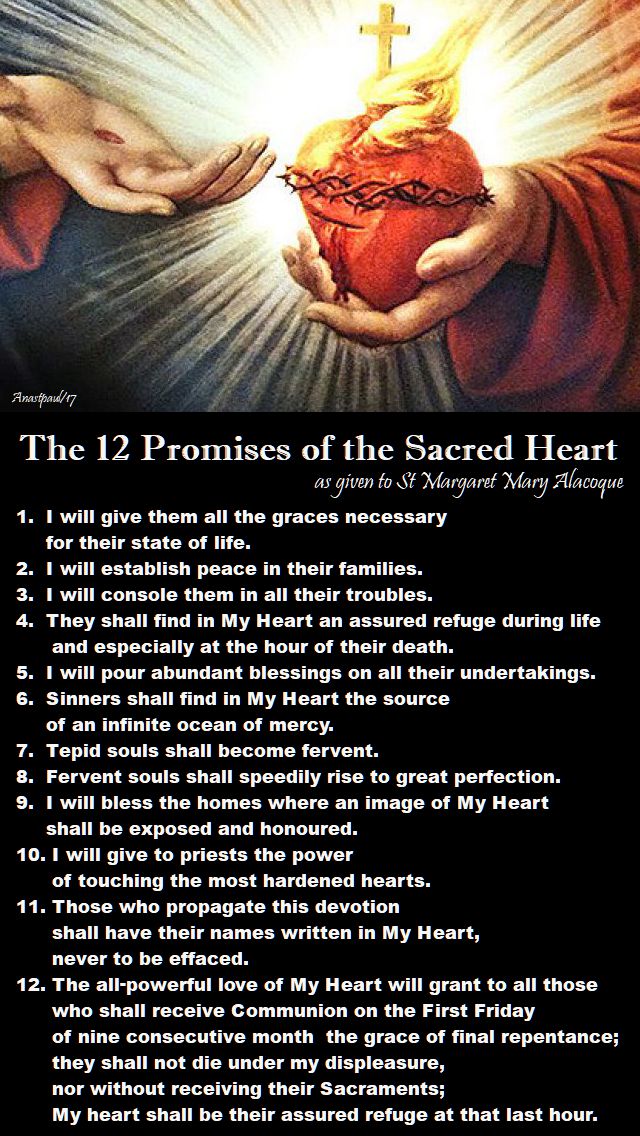
The Twelve Promises of Jesus to Saint Margaret Mary or those Devoted to His Sacred Heart:
I will give them all the graces necessary for their state of life.
I will establish peace in their families.
I will console them in all their troubles.
They shall find in My Heart an assured refuge during life and especially at the hour of their death.
I will pour abundant blessings on all their undertakings.
Sinners shall find in My Heart the source of an infinite ocean of mercy.
Tepid souls shall become fervent.
Fervent souls shall speedily rise to great perfection.
I will bless the homes where an image of My Heart shall be exposed and honoured.
I will give to priests the power of touching the most hardened hearts.
Those who propagate this devotion shall have their names written in My Heart, never to be effaced.
The all-powerful love of My Heart will grant to all those who shall receive Communion on the First Friday of nine consecutive months the grace of final repentance; they shall not die under my displeasure, nor without receiving their Sacraments; My heart shall be their assured refuge at that last hour.
From Saint Margaret Mary Alacoque’s Vision of Jesus
St Margaret Mary Alacoque (1647-1690) “Apostle of the Sacred Heart“
One Minute Reflection – 16 October – Friday of the Twenty-eighth Week in Ordinary Time, Readings: Ephesians 1:11-14, Psalms 33:1-2, 4-5,12-13, Luke 12:1-7 and the Memorial of St Margaret Mary Alacoque (1647-1690) “Apostle of the Sacred Heart” and St Gall (c 550–c 646) Missionary to Switzerland
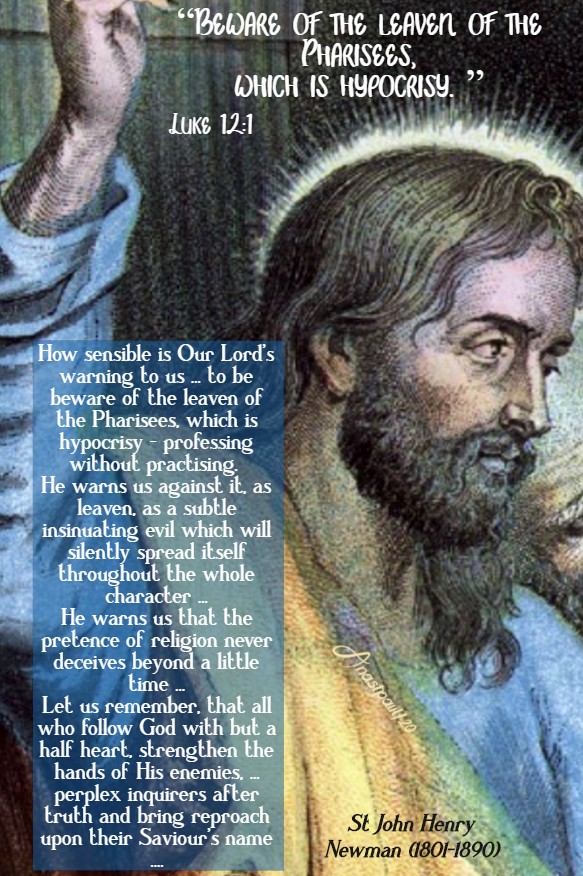
“Beware of the leaven of the Pharisees, which is hypocrisy. ” … Luke 12:1
REFLECTION – “Christ told His friends, that is, His disciples, to beware of the leaven of the Pharisees and scribes, meaning, by leaven, their false pretense. Hypocrisy is hateful to God and humanity. It does not bring a reward and it is utterly useless for the salvation of the soul. It is rather the cause of its damnation. Although sometimes it may escape detection for a little while, before long, it is sure to be uncovered and bring disgrace on them. It is like an unattractive woman when she is stripped of that external embellishment which she produced by artificial means.” – St Cyril of Alexandria (376-444) Known as ‘The Pillar of Faith,”Archbishop of Alexandria (Commentary on Luke, Homily 86)
“How sensible is Our Lord’s warning to us … to be beware of the leaven of the Pharisees, which is hypocrisy – professing without practising. He warns us against it, as leaven, as a subtle insinuating evil which will silently spread itself throughout the whole character … He warns us that the pretence of religion never deceives beyond a little time … Let us remember, that all who follow God with but a half heart, strengthen the hands of His enemies, … perplex inquirers after truth and bring reproach upon their Saviour’s name …. Woe unto the deceiver and self-deceived! …. God give us grace to flee from this woe while we still have time! Let us examine ourselves, to see if there be any wicked way in us. … And, let us pray God to enlighten us and to guide us and, to give us the will to please Him and the power.” – St John Henry Newman C.Orat (1801-1890)
PRAYER – Lord Jesus Christ, You wondrously revealed all of the deep treasures of Your Heart to St Margaret Mary. May her merits and example win us the grace to love You above all things and in all things so that we may make our abode in Your own Sacred Heart. St Margaret Mary, pray for us that we may live in the Sacred Heart of Christ our Lord and may the prayer of St Gall lead us to be lights of the truth. Through You, Lord Jesus, who live and reign forever, in union with God our Father and the Holy Spirit, one God, amen.
Our Morning Offering – 16 October – Friday of the Twenty-eighth Week in Ordinary Time and the Memorial of St Gall (c 550–c 646) Missionary to Switzerland with St Columban
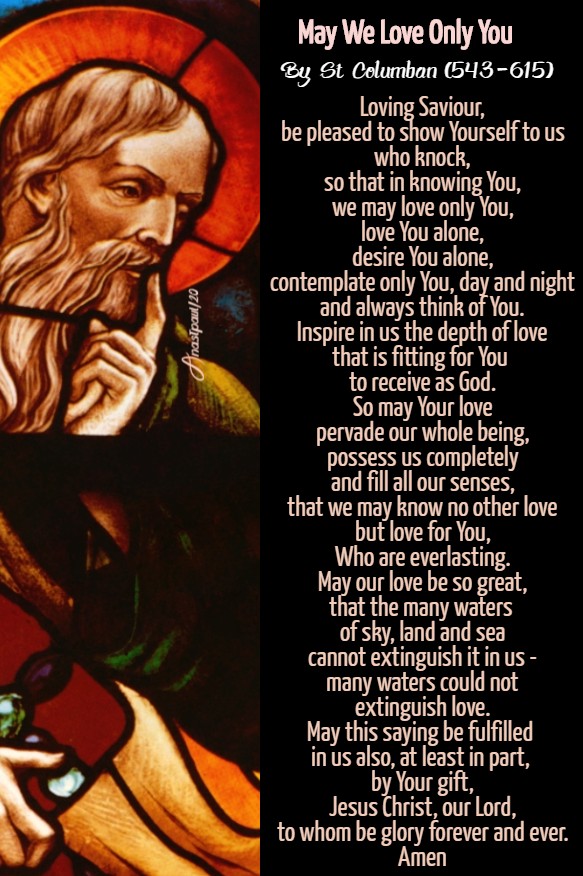
May We Love Only You By St Columban (543-615)
Loving Saviour, be pleased to show Yourself to us who knock, so that in knowing You, we may love only You, love You alone, desire You alone, contemplate only You, day and night and always think of You. Inspire in us the depth of love that is fitting for You to receive as God. So may Your love pervade our whole being, possess us completely and fill all our senses, that we may know no other love but love for You, Who are everlasting. May our love be so great, that the many waters of sky, land and sea cannot extinguish it in us – many waters could not extinguish love. May this saying be fulfilled in us also, at least in part, by Your gift, Jesus Christ, our Lord, to whom be glory forever and ever. Amen
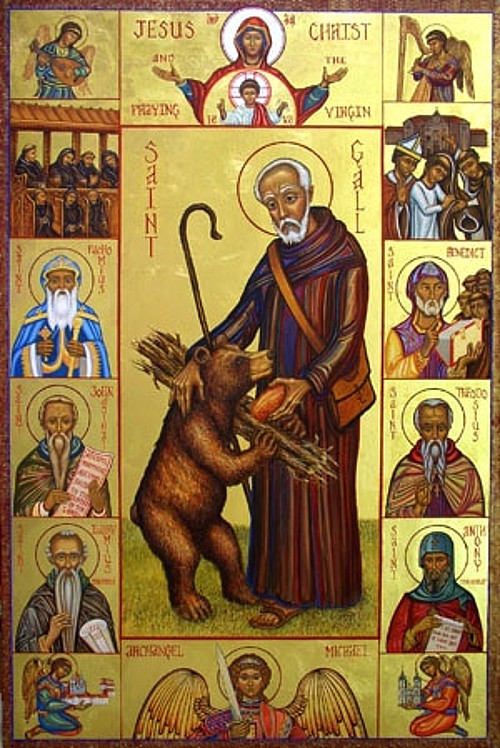
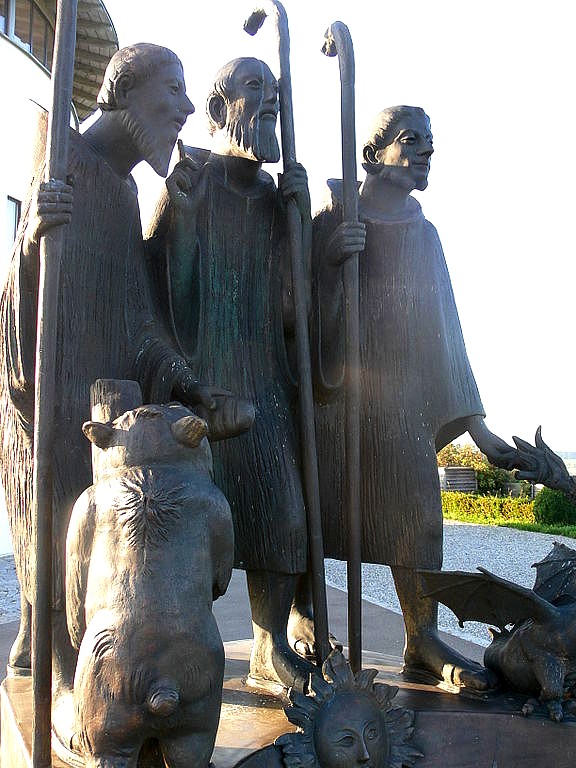
Saint of the Day – 16 October – Saint Gall (c 550–c 646) Monk, Missionary, Hermit – he was a disciple and one of the traditional twelve companions of Saint Columbanus on his mission from Ireland to the continent. He is also known as Callo, Chelleh, Gaaech, Gallen, Gallo, Gallonus, Gallunus, Gallus, Gilianus. Saint Deicolus was the elder brother of Gall. An assiduous preacher of the Gospel, a skilful trainer of people in the work of evangelisation, and a man of remarkable holiness of his life, Saint Gall left an abiding mark on the country in which he worked. His memory has long been revered in the locality of his labours he became known and honoured as the “Apostle of Switzerland.” Patronages – bears, birds, geese, poultry, Sweden, Switzerland, St Gallen and the Diocese of St Gallen, Switzerland.
Little is known of the boyhood of Gall except, that it is generally thought that he showed great piety and interest in the Christian faith. As a young man he went to study under St Comgall of Bangor. St Comgall’s Monastery at Bangor had become renowned throughout Europe as a great centre of Christian learning. Because of the great learning at Bangor, Ireland became known as “the land of Saints and Scholars.” Missionaries went out from Bangor Abbey to all parts of Ireland, the British Isles and the Continent.
Studying in Bangor at the same time as Gall, was St Columbanus who, had become a trusted assistant to St Comgall. St Columbanus, although so established at Bangor, felt a great call to missionary evangelisation. And so he laid before the Abbott Comgall his request to be set free for this work.
Comgall was loath to part with one who had become so great a help and comfort to him but, realising that he had no right to consider only his own convenience, he gave his consent and Columbanus, together with twelve companions, the most noted of whom was Gall, set out about the year 589, bidding a life-long farewell to home and friends in order to face unknown difficulties and danger,s for the glory of God’s Kingdom across Europe.
Columbanus and Gall and their companions settled for a while in Switzerland at Lake Constance. After a while Columbanus felt an urge to go into Italy but Gall was taken sick of a fever and couldn’t go with him, apart from the fact that he was more anxious for a life of solitude. Recovering from his illness, Gall fixed upon a quiet place on the River Steinach for his life of solitude. Having begun with a three day fast there, he erected a small stone hut or cell for prayer, an oratory after the manner usual in Ireland. And so began the Abbey and the City of Saint Gall. Cells were soon added for twelve monks whom Gall carefully instructed.
Saint Gall was soon known in Switzerland as a powerful preacher. He is said to have thrown down images to heathen gods and exhorted the worshippers of these images to return to the true God. As a result of Gall’s work, practically the whole of Switzerland embraced the Christian faith.
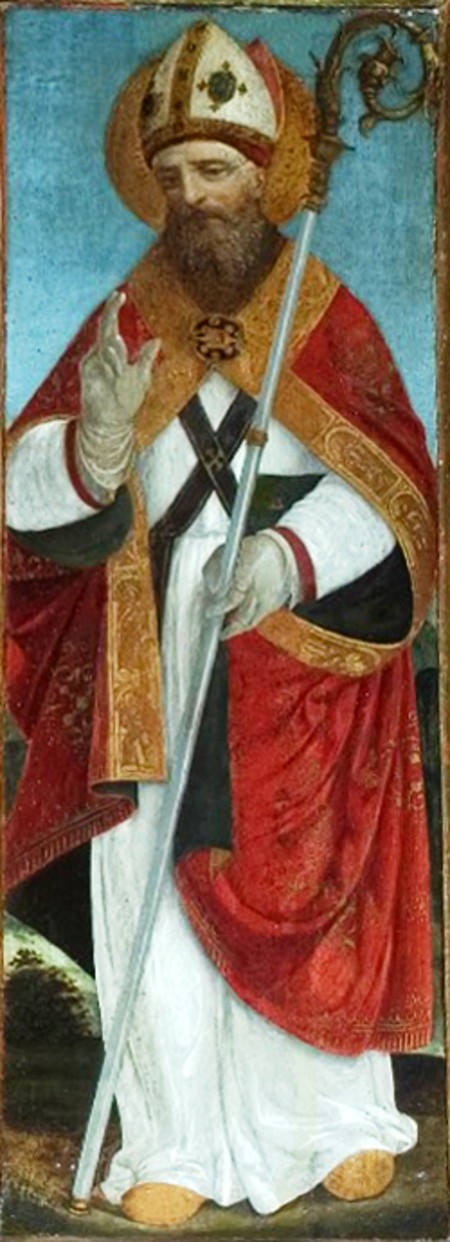
When the See of Constance became vacant, the clergy, who assembled to elect a new Bishop, were unanimously in favour of Saint Gall on account of his superior learning and sanctity. He, however, refused, pleading that the election of a stranger would be contrary to Church law but proposed his Deacon John, who was duly elected and consecrated Bishop.
In the year 625, on the death of Eustasius, who was Abbott of Luxeuil, a Monastery founded by Saint Columbanus, six members of that community, all Irishmen, were sent by the Monks to request Saint Gall to undertake the government of the Monastery. He refused to quit his life of solitude and undertake any office of rank which might involve him in the cares of the world.
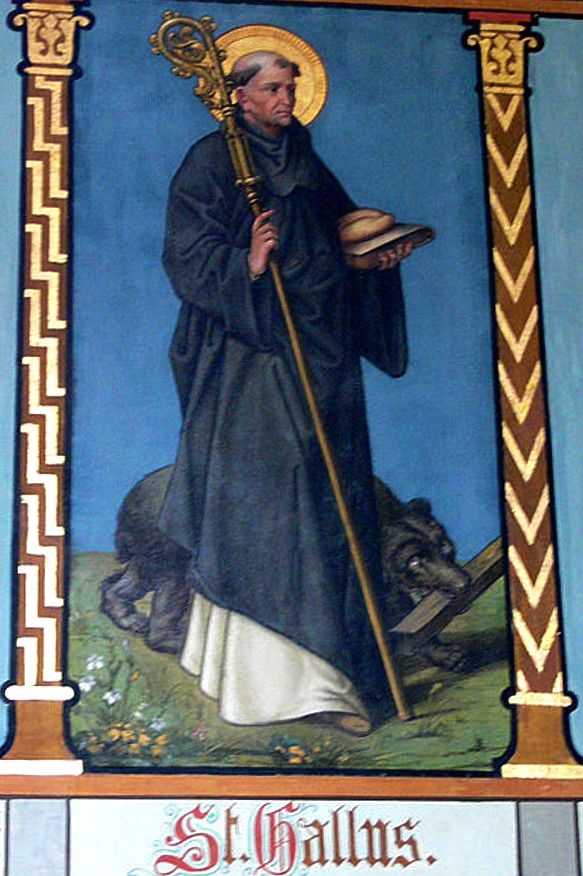
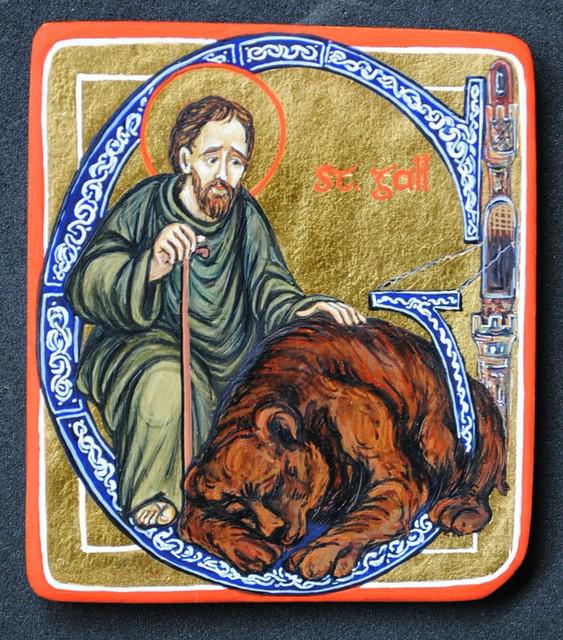
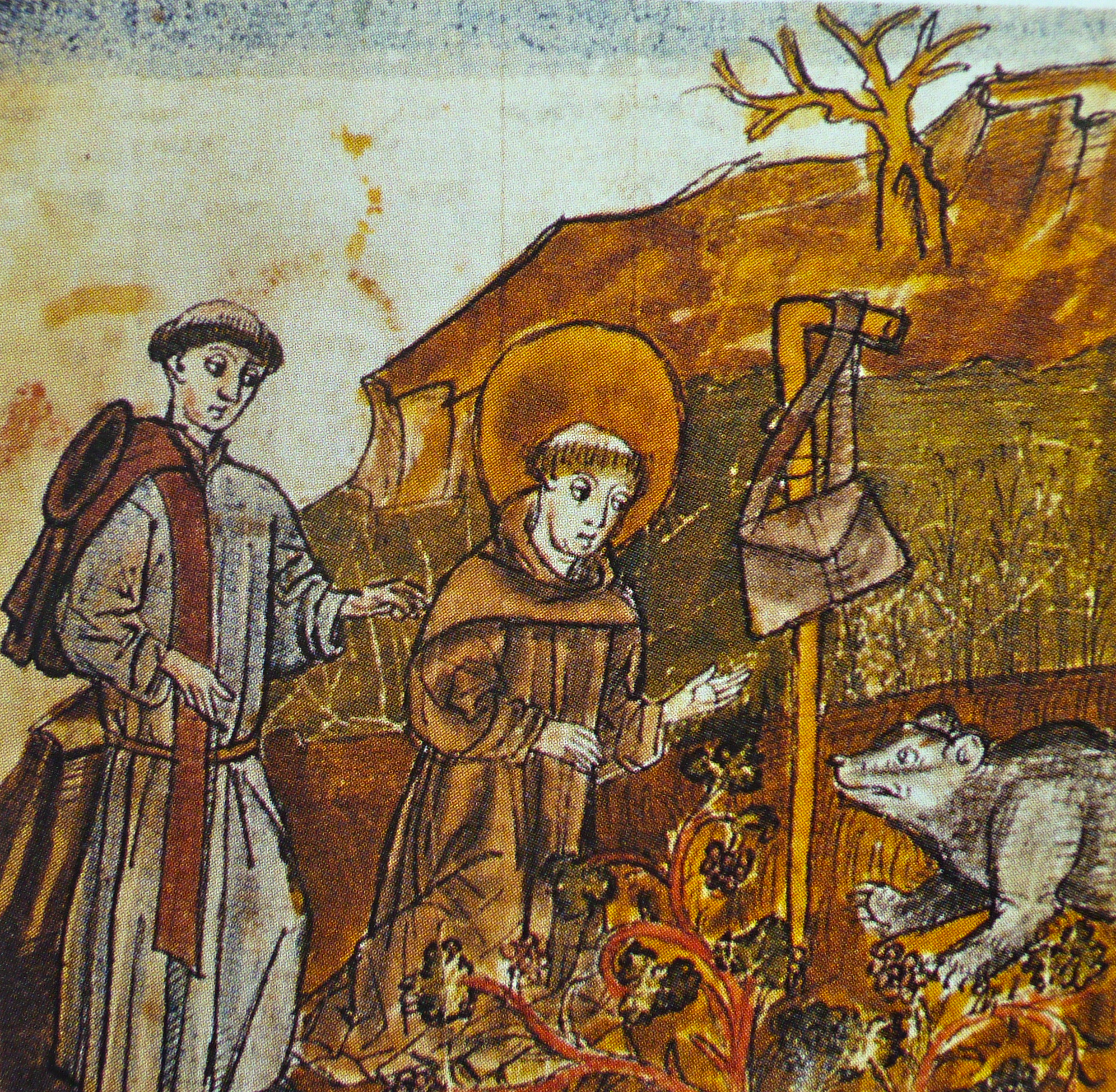
A miracle about Saint Gall in his solitary life has become well-known. The story tells how a bear became St Gall’s sole/soul friend in the closing years of his life and that the bear used to carry logs to the saint so that he could light his fire. The bear has now become the coat of arms for the town of St Gallen in Switzerland and the bear carrying the logs is depicted on the wall of the great Cathedral there.
Saint Gall died on 16 October in the year 645, at the age of 95 and that date – is now honoured in Ireland each year as Saint Gall’s Day. The tradition in St Gall’s Church, is celebrated with each member of the congregation arriving for Mass with their teddy bear on that day.
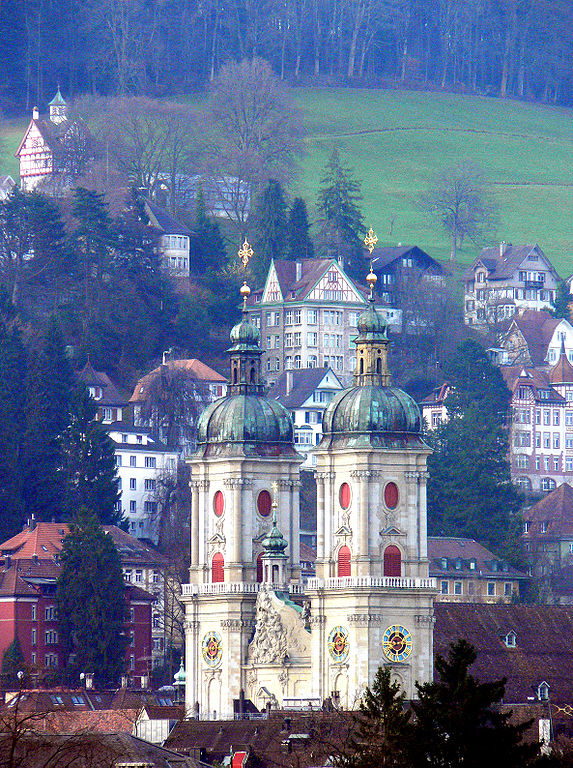
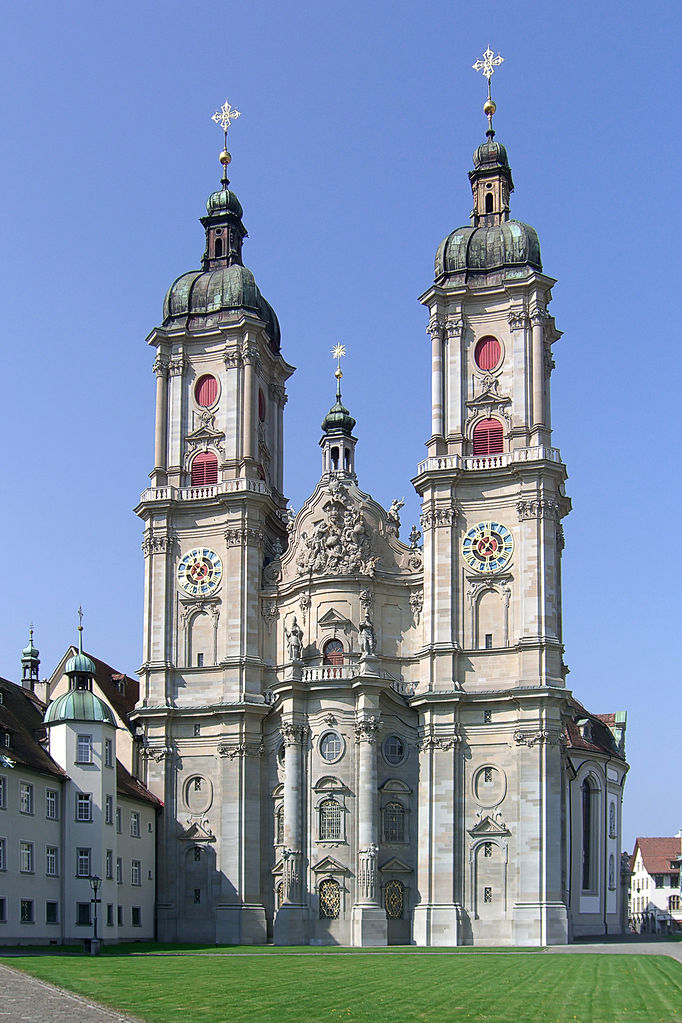
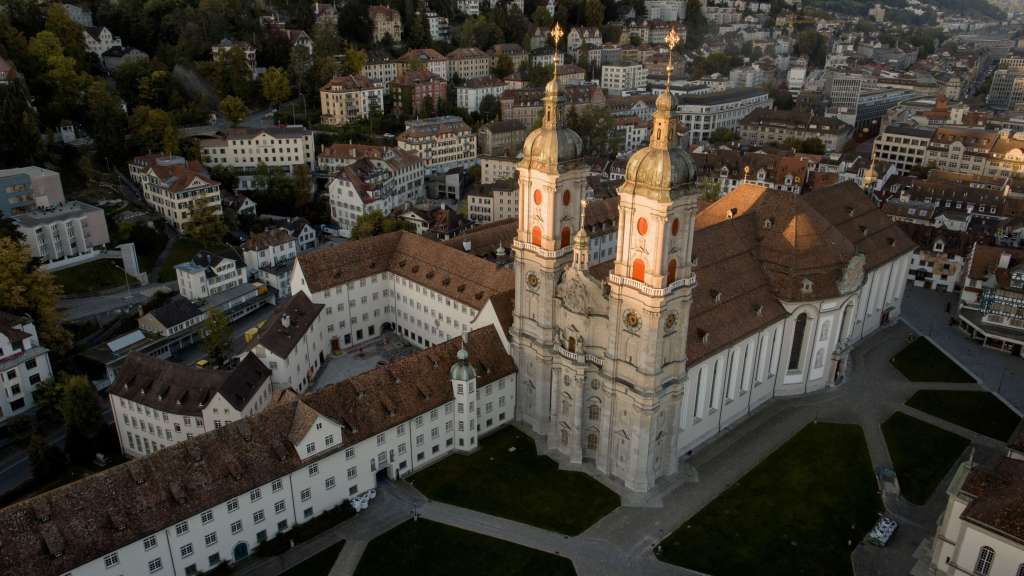
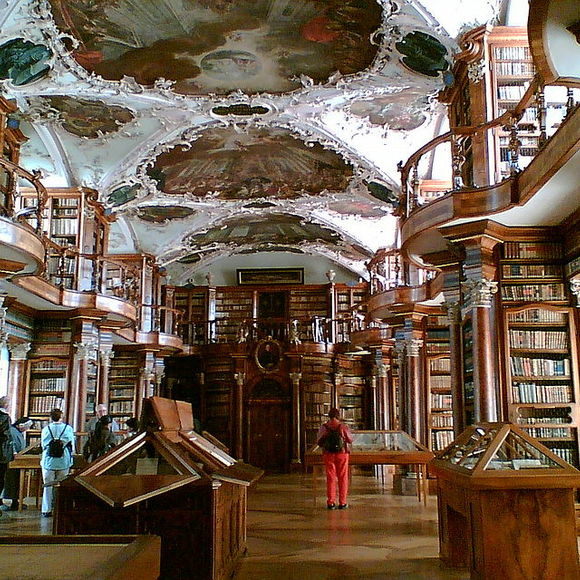
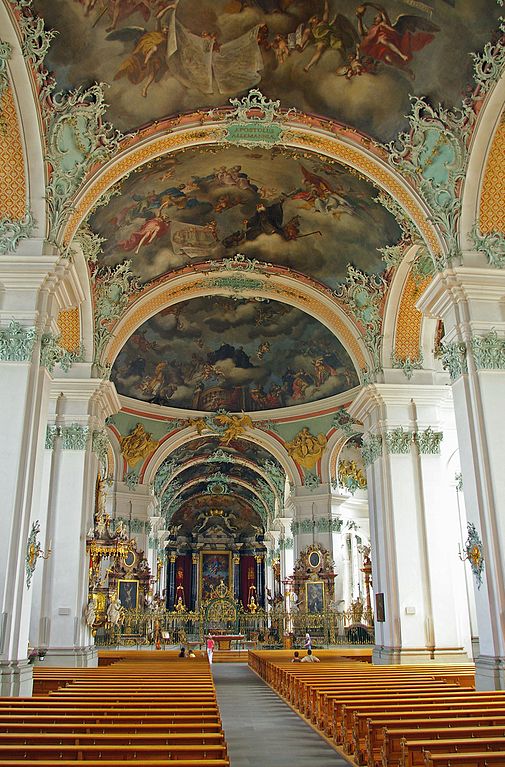
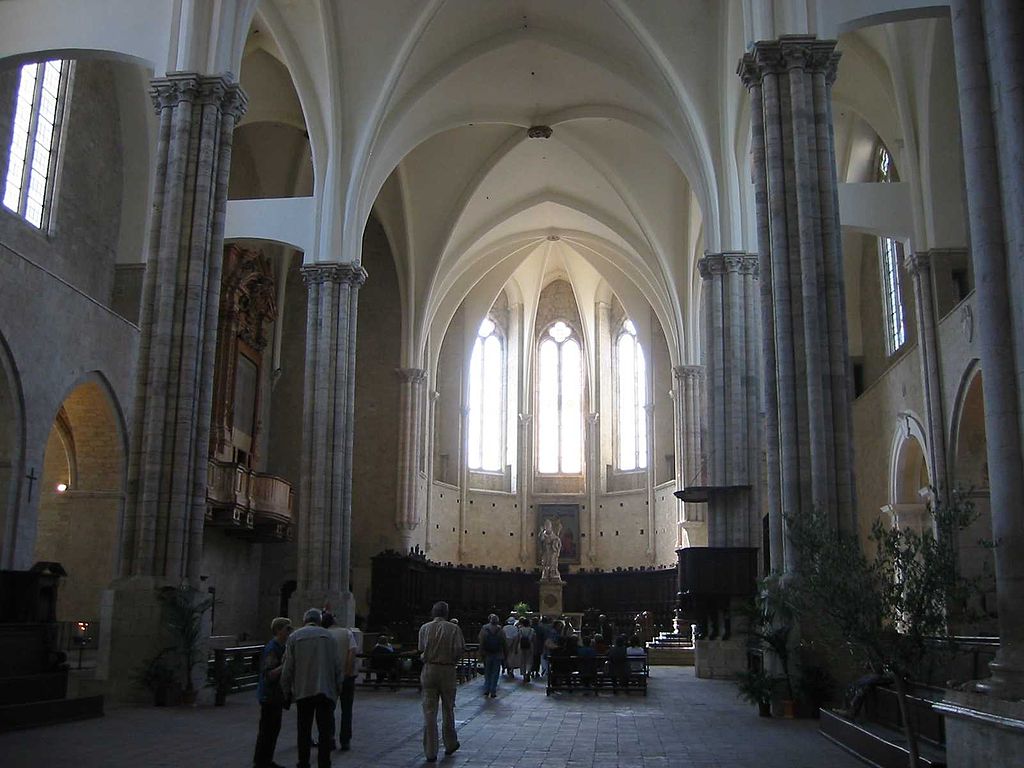
After his death, a small church was erected which developed into the Abbey of St Gall, the nucleus of the Canton of St Gallen in eastern Switzerland, the first abbot of which was Saint Othmar. The “Abbey of St Gall,” was named for the saint who had lived in this place and whose relics were honoured there. Below is the world-famous Basilica Cathedral, the renowned Baroque Interior, the Abbey and the very important Library at St Gall’s Abbey.
When Columbanus, Gall and their companions left Ireland for mainland Europe, they took with them learning and the written word. Their effect on the historical record was significant, as the books were painstakingly reproduced on vellum by monks across Europe. Many of the Irish texts destroyed in Ireland during Viking raids were preserved in Abbeys across the channel.
St Amandus of Limoges St Ambrose of Cahors Bl Anicet Koplinski Bl Augustine Thevarparampil St Balderic St Baldwin St Bertrand of Comminges St Bolonia St Conogon of Quimper St Dulcidius of Agen St Eliphius of Toul St Eremberta of Wierre St Florentinus of Trier St Gall (c 550–c 646) “Apostle of Switzerland” St Gerard Majella CSsR (1726-1755) St Gerard’s Story: https://anastpaul.com/2018/10/16/saint-of-the-day-16-october-st-gerard-majella-c-ss-r-1726-1755/
St Martinian of Mauretania St Mummolinus St Saturian of Mauretania St Silvanus of Ahun St Victor of Cologne St Vitalis of Noirmoutier — Martyrs in Africa – 220 saints: A group of 220 Christians martyrs about whom we know nothing but that they died for their faith.
Martyrs of North Africa – 365 saints: A group of 365 Christians who were martyred together in the persecutions of the Vandal king Genseric. The only details that have survived are the names of two of the martyrs – Nereus and Saturninus. 450 in North Africa.
Thought for the Day – 15 October – Meditations with Antonio Cardinal Bacci (1881-1971)
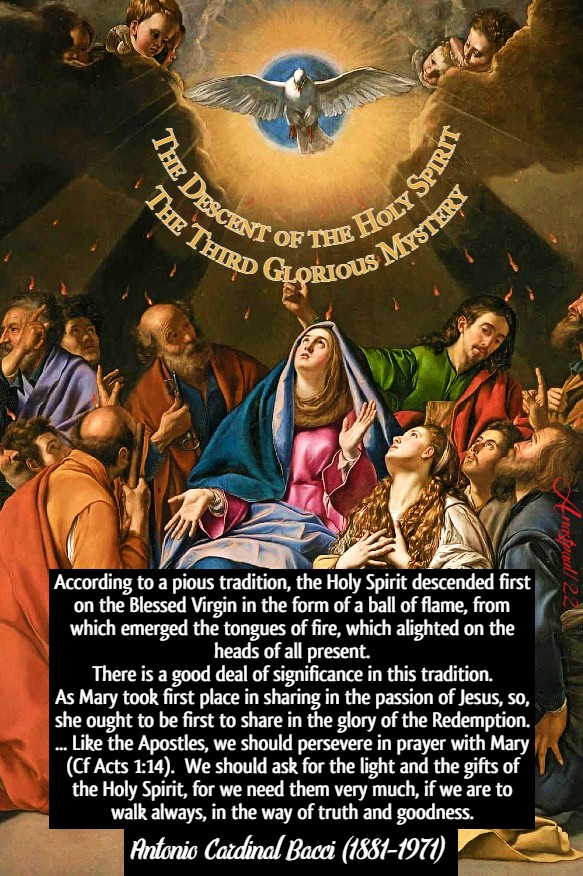
“Month of the Holy Rosary” The Third Glorious Mystery The Descent of the Holy Spirit
“Before He left this earth for the glory of Heaven, Jesus promised His Apostles that He would not leave them orphans but would send them the Paraclete, the Spirit of Truth, “whom the world cannot receive because, it neither sees him, nor knows him” (1 Jn 14:16-18). This promise was repeated by our divine Redeemer on the day of His Ascension, when He told them not to depart from Jerusalem until the promise would have been fulfilled. In fact, the Apostles were obedient to His instructions. They gathered together in the Cenacle, where, they spent the time in constant prayer, along with Mary and a number of the faithful. On the feast of Pentecost, the house was shaken by a sound from Heaven as of a violent wind blowing and tongues of fire appeared, which settled on each one of them. Then they were all filled with the Holy Spirit (Cf Act 1:2).
According to a pious tradition, the Holy Spirit descended first on the Blessed Virgin in the form of a ball of flame, from which emerged the tongues of fire, which alighted on the heads of all present. There is a good deal of significance in this tradition. As Mary took first place in sharing in the passion of Jesus, so, she ought to be first to share in the glory of the Redemption. St Bernard compared the Blessed Virgin to an aquaduct, bearing the treasures of grace and the gifts of the Holy Spirit, to all the faithful (Sermo de Aquaeducru). It is an apt comparison, for the Mother of the Redeemer occupies a position of supremacy in the Mystical Body of Jesus Christ. Like the Apostles, we should persevere in prayer with Mary (Cf Acts 1:14). We should ask for the light and the gifts of the Holy Spirit, for we need them very much, if we are to walk always, in the way of truth and goodness.”
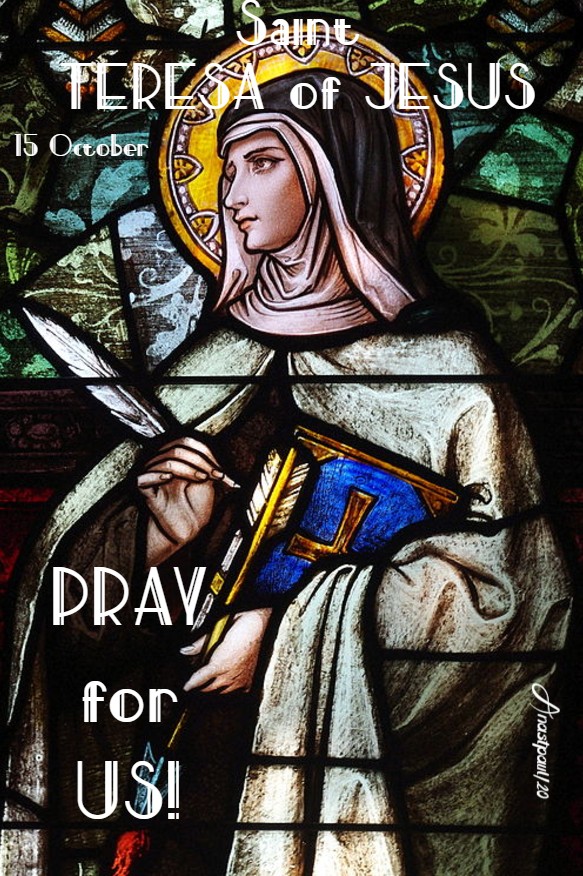
Quotes of the Day – 15 October – The Memorial of St Teresa of Jesus of Avila OCD (1515-1582) Doctor of the Church – “Doctor of Prayer”
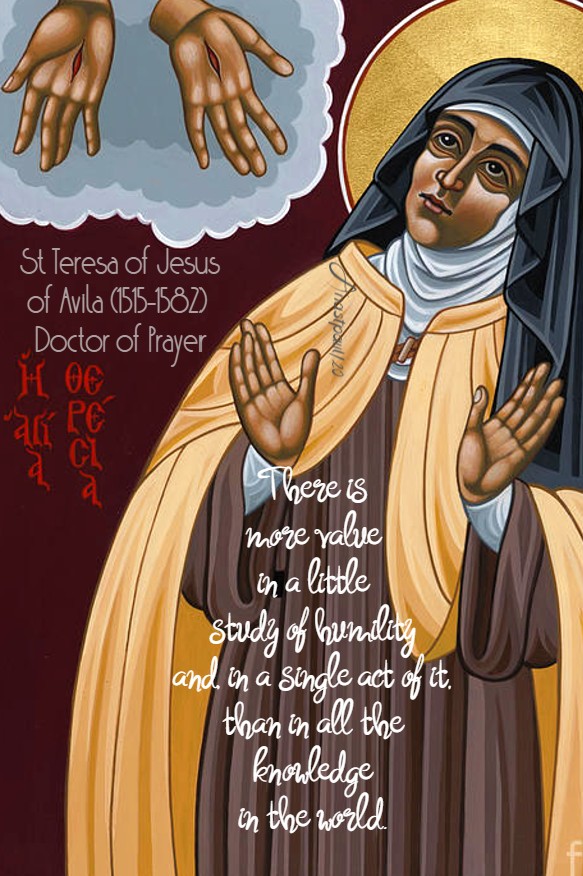
“There is more value in a little study of humility and, in a single act of it, than in all the knowledge in the world.”
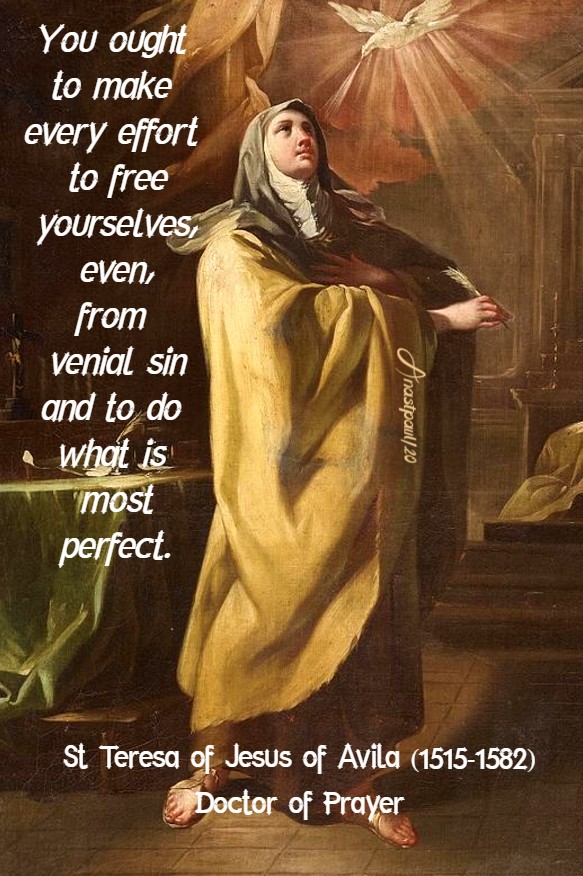
“You ought to make every effort to free yourselves, even from venial sin and to do what is most perfect.”
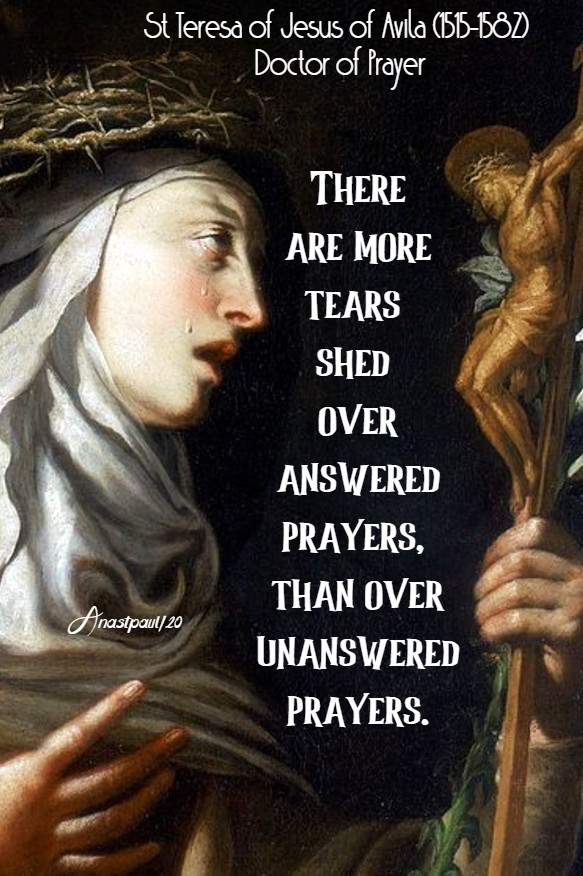
“There are more tears shed over answered prayers, than over unanswered prayers.”
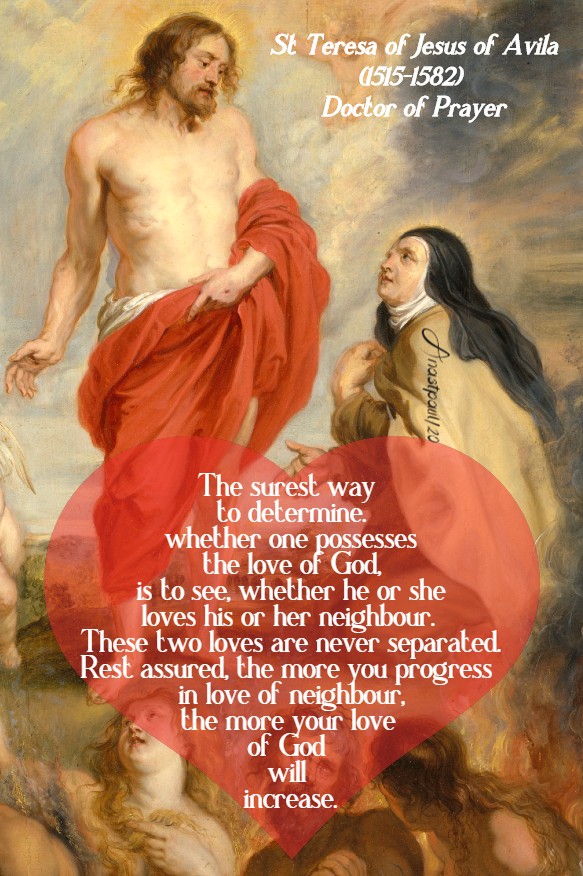
“The surest way to determine. whether one possesses the love of God, is to see, whether he or she loves his or her neighbour. These two loves are never separated. Rest assured, the more you progress in love of neighbour, the more your love of God will increase.”
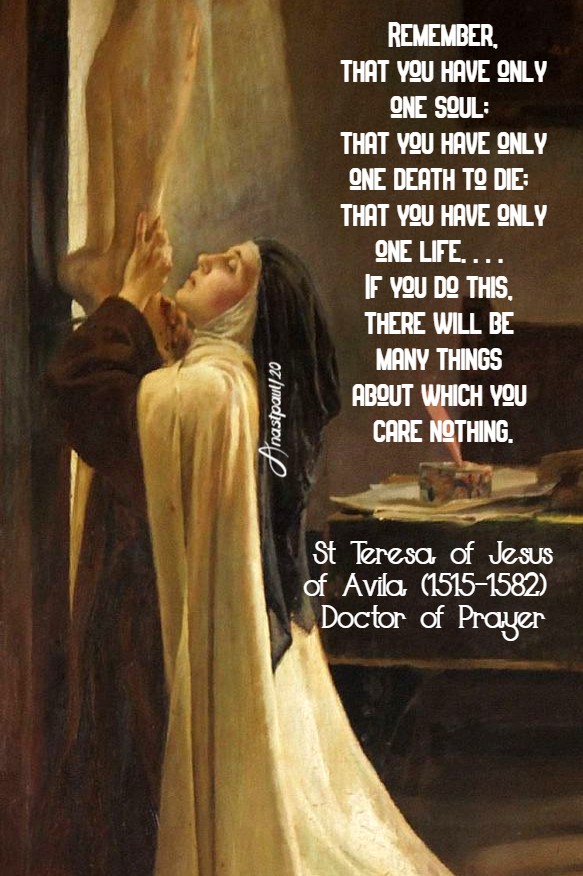
“Remember that you have only one soul; that you have only one death to die; that you have only one life. . . . If you do this, there will be many things about which you care nothing.”
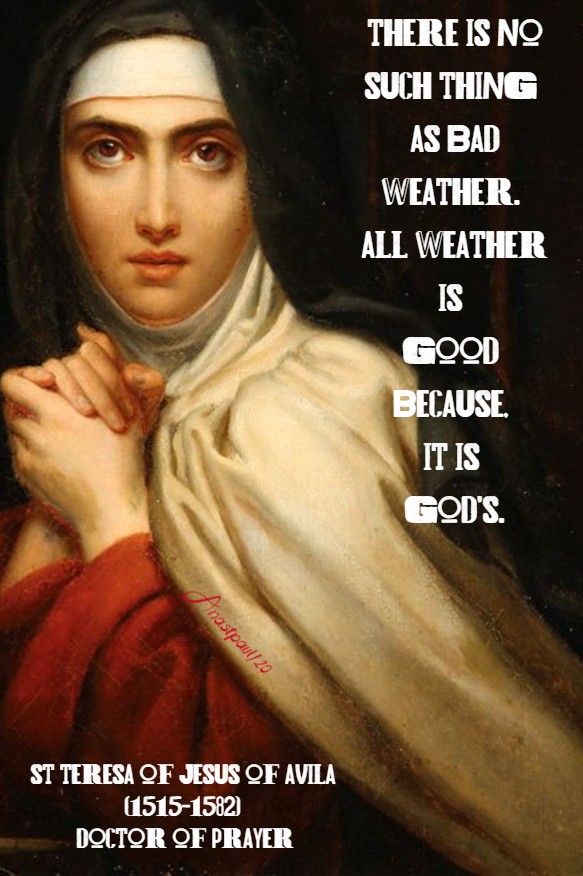
“There is no such thing as bad weather. All weather is good because, it is God’s.”
St Teresa of Jesus of Avila (1515-1582) Doctor of Prayer
One Minute Reflection – 15 October – Thursday of the Twenty-eighth week in Ordinary Time, Readings: Ephesians 1:1-10, Psalms 98:1, 2-3,3-4, 5-6, Luke 11:47-54 and the Memorial of St Teresa of Jesus of Avila (1515-1582) Doctor of the Church “Doctor of Prayer”
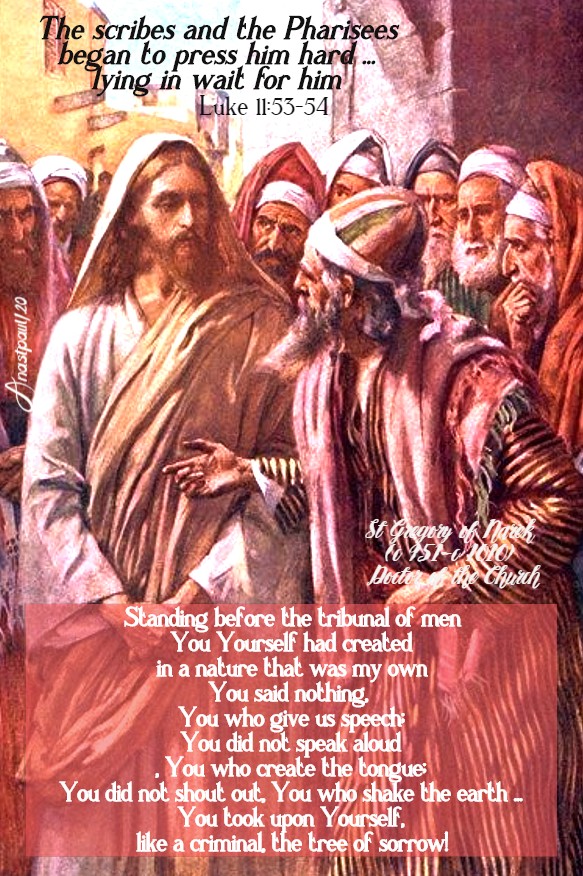
The scribes and the Pharisees began to press him hard … lying in wait for him … Luke 11:53-54
REFLECTION – “With a fear mingled with joy I consider it desirable to say something here about the sufferings you endured for my sake, O God of us all! Standing before the tribunal of men You Yourself had created in a nature that was my own You said nothing, You who give us speech; You did not speak aloud, You who create the tongue; You did not shout out, You who shake the earth (…) You did not give up to shame the one who gave You up to the terrors of death; You showed no resistance when You were bound and when You were struck, you were not outraged. When they spat on You, You did not swear back and when they struck You with the fist, You did not tremble. When they taunted You, You were not angered and when they hit You, Your face did not change (…) Far from giving You a moment of respite, O source of life, they at once prepared for carrying the instrument of death. You accepted it graciously, took it gently, hoisted it patiently. You took upon Yourself, like a criminal, the tree of sorrow!” – St Gregory of Narek (c 951-c 1010) Doctor of the Church, Armenian Monk, mystical Philosopher, Theologian and Poet – Book of prayers, no 77
PRAYER – Almighty God, our Father, You sent St Teresa of Jesus to be a witness in the Church to the way of perfection. Sustain us by her spiritual doctrine and kindle in us, the longing for true holiness. Through Christ, our Lord, in union with the Holy Spirit, God forever. May the intercession of St Teresa be a source of strength, amen.
Our Morning Offering – 15 October – Thursday of the Twenty-eighth week in Ordinary Time – The Memorial of St Thecla of Kitzengen OSB (Died c 790) Missionary apostle with St Boniface
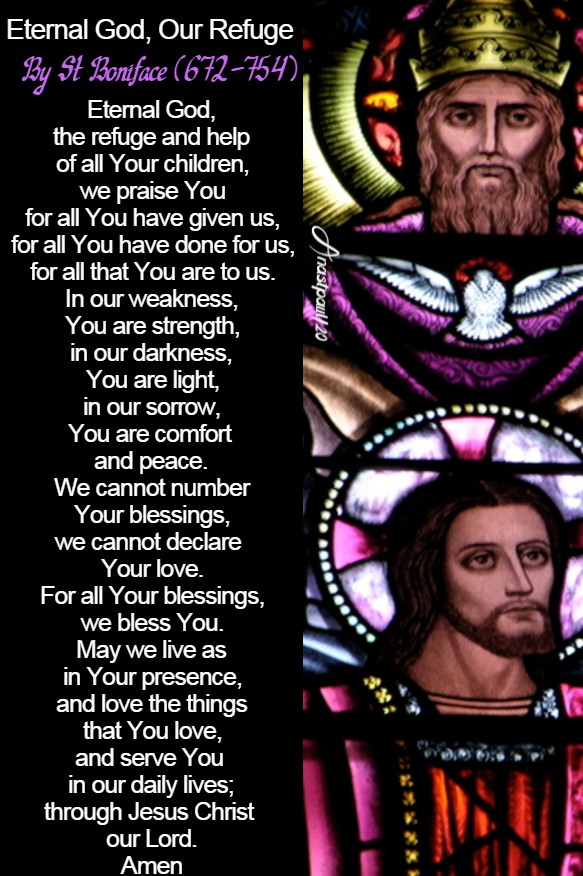
Eternal God, Our Refuge By St Boniface (672-754) “The Apostle of Germany”
Eternal God, the refuge and help of all Your children, we praise You for all You have given us, for all You have done for us, for all that You are to us. In our weakness, You are strength, in our darkness, You are light, in our sorrow, You are comfort and peace. We cannot number Your blessings, we cannot declare Your love. For all Your blessings, we bless You. May we live as in Your presence, and love the things that You love, and serve You in our daily lives; through Jesus Christ our Lord. Amen
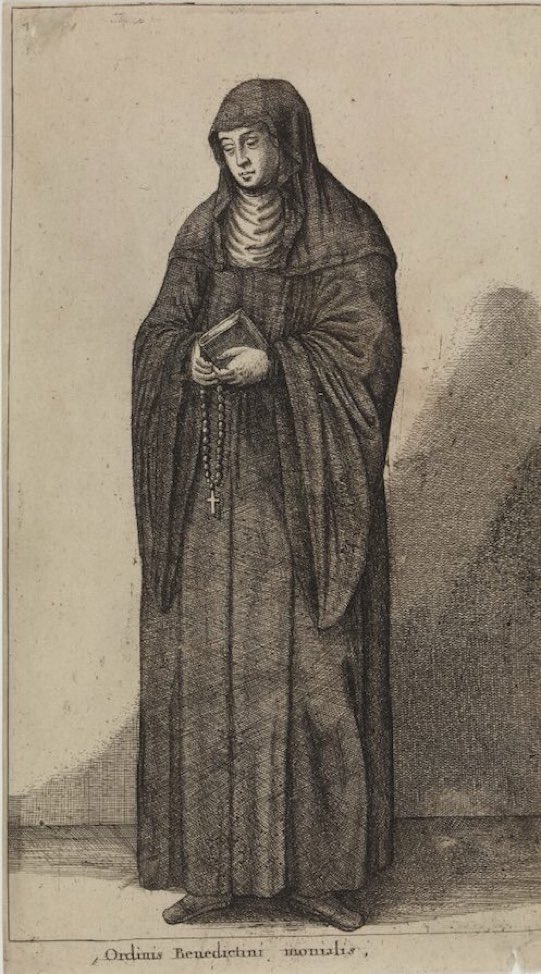
Saint of the Day – 15 October – St Thecla of Kitzengen OSB (Died c 790) a Benedictine nun and abbess. Born in England, she went to Germany to assist Saint Boniface in his missionary labours. She died in c790 at Kitzingen Abbey, Germany of natural causes. She is also known as Thecla of England, Tecla, Heilga.
The clues about Saint Thecla are tantalising. Who was this nun entrusted to govern two Abbeys in eighth century Francia, east of the Rhine, a more dangerous area than her native Britain?
She was a kinswoman of Saint Lioba (c 710–782) who, in turn, was kin of St Boniface. Thecla lived with St Lioba and other Benedictine nuns at Wimbourne, a double monastery governed by Saint Tetta.
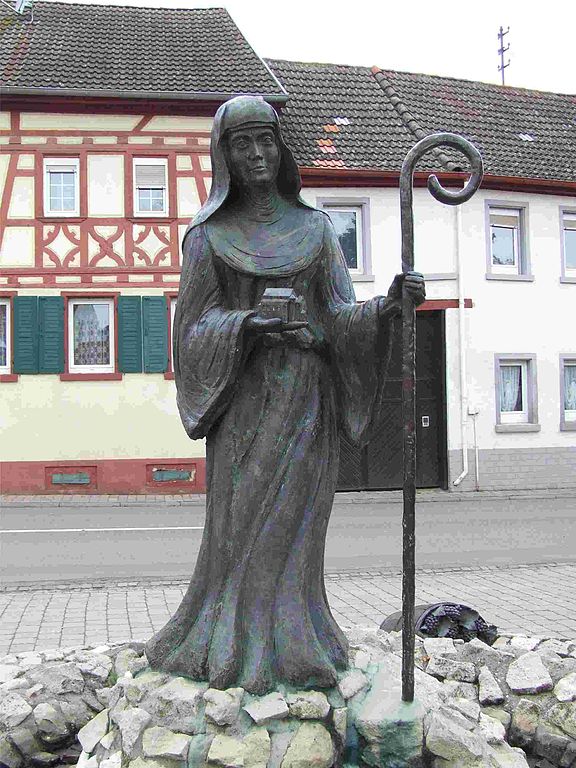
St Leoba’s statue in Schornsheim, Germany
The savage Teutonic people of Northern Europe were brought to Christ by missionaries in the eighth century. The most famous of these gospel-bearers was St Boniface. Among his helpers were women. He asked Tetta, the abbess of Wimborne, Dorset, to send him assistants. Tetta sent Lioba and Thecla to his aid.
Boniface appointed these women as heads of monastic institutions observing the Benedictine rule. Boniface must have trusted Thecla a great deal because he put her charge of two Abbeys, one at Ochsenfurt and the other at Kitzingen. Their work endured even after he had been butchered by pagans. Many a man has been able to work on his feet because others supported him on their knees. Boniface relied on his “daughters” as more than heads of Abbeys. He called on them to be his prayer partners.
A Kneeling Saint in Nun’s Robes, 16th century sketch by Plautilla Nelli
In a famous letter to the “…revered and dearly loved sisters Leobgith and Thecla and to Cynehild,” he wrote: “I urge and direct you, beloved daughters, to pray to our Lord frequently, as we trust you do constantly and will continue to do, as you have in the past … and know that we praise God and our heart’s yearning grows, that God our Lord, refuge of the poor and hope of the lowly, will free us from our straits and the trials of this evil age, that His word may spread and the wonderful Gospel of Christ be held in honour, that His grace be not fruitless in me… And… pray that I may not die without some fruit for that Gospel.”
Abbesses at this time were in positions of power and influence and acted autonomously. That Thecla was responsible for two Abbeys tells us how much Boniface trusted her, both for her abilities and loyalty. The 11th century Passion of Boniface says, “She shone like a light in a dark place.”
It seems that Thecla’s character was so noble that when she oversaw Kitzingen, she was simply called Heilga, which means “The Saint.” This day, 15 October is her feast day. The Roman martyrlogy states – “In Germany, St Thecla, thanks be to God.”
She is believed to have died around 790, after more than 40 years in Francia. Her relics were at Kitzingen and her cult apparently was strong in the 11th century.
But there is a sad postscript centuries later. In 1525 during the Peasants War, the tombs of Thecla and another saint were desecrated and when the church was rebuilt in 1695, the bodies were covered with rubbish. Despite this outrage, the echoes of the good they did cannot be muted and we are sure that they will rise again at the resurrection.
St Antiochus of Lyon St Aurelia of Strasbourg St Callistus of Huesca St Cannatus of Marseilles Bl Cipriano Alguacil Torredenaida St Euthymius the Younger Bl Josefa Martínez Pérez St Leonard of Vandoeuvre Bl Narcis Basté y Basté Bl Pere Verdaguer Saurina Bl Ramón Esteban Bou Pascual St Sabinus of Catania St Severus of Trier St Thecla of Kitzengen OSB (Died c 790) St Willa of Nonnberg — Martyrs of Cologne: A group of 360 Christian soldiers martyred together in the persecutions of Diocletian and Maximian. They were martyred in 303 outside the city walls of Cologne, Germany.
Martyred in the Spanish Civil War: • Blessed Cipriano Alguacil Torredenaida • Blessed Josefa Martínez Pérez • Blessed Narcis Basté y Basté • Blessed Pere Verdaguer Saurina • Blessed Ramón Esteban Bou Pascual
Thought for the Day – 14 October – Meditations with Antonio Cardinal Bacci (1881-1971)
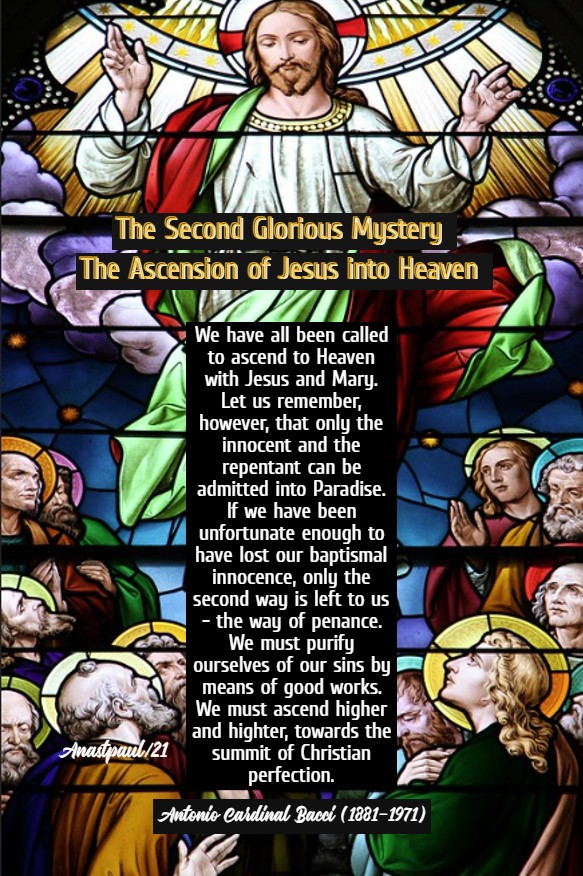
“Month of the Holy Rosary” The Second Glorious Mystery The Ascension of Jesus into Heaven
“Forty days after His glorious resurrection, Jesus came, with all His friends, among them His Mother, to the Mount of Olives. This area had already witnessed the opening phase of His passion, which was all the more poignant, perhaps because in Gethsemane, it was not only His body which was lacerated by scourges and nails but, His soul, which experienced the agonising vision of the sins and ingratitude of the human race. Now, however, He is here with a glorified body as the Conqueror of sin and of death. He looks for the last time on His small band of followers, to whom He has entrusted His mission of transforming the entire universe by preaching and putting into practice, the Gospel message, throughout the world. Now, He promises them the Holy Spirit, Who will give them the power to overcome evil. Then He is lifted up toward Heaven, until a bright cloud hides Him from their sight.
Perhaps, the Blessed Mother, was the last to take her eyes off the disappearing cloud which had removed Jesus from view. Her human eyes never saw again the beloved figure of her divine Son but, in her soul, she saw Him entering triumphantly into Heaven among choirs of Angels and sitting at the right hand of the Eternal Father. She saw and thought with infinite yearnng of the not too distant day, when she would have passed from mortal exile, into the everlasting happiness of Heaven, where she would embrace her divine Son again in an ecstasy of love.
We have all been called to ascend to Heaven with Jesus and Mary. Let us remember, however, that only the innocent and the repentant can be admitted into Paradise. If we have been unfortunate enough to have lost our baptismal innocence, only the second way is left to us – the way of penance. We must purify ourselves of our sins by means of good works. We must ascend higher and highter, towards the summit of Christian perfection.”
Quote/s of the Day – 14 October – Wednesday of the Twenty-eighth week in Ordinary Time, Readings: Galatians 5:18-25, Psalms 1:1-2, 3, 4 and 6, Luke 11:42-46
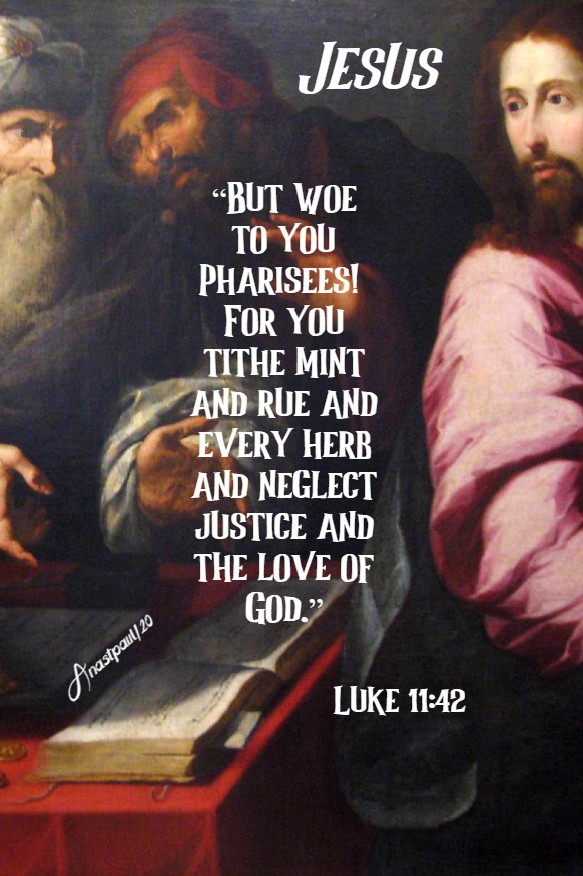
“But woe to you Pharisees! For you tithe mint and rue and every herb and neglect justice and the love of God.”
Luke 11:42
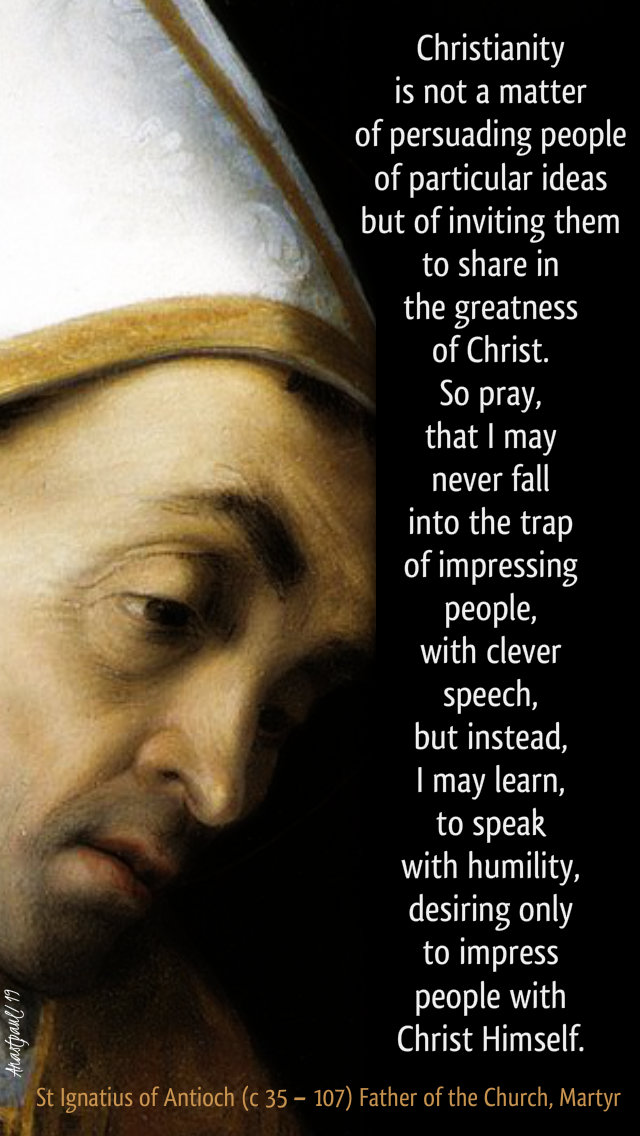
“Christianity is not a matter of persuading people of particular ideas but of inviting them to share in the greatness of Christ. So pray, that I may never fall into the trap, of impressing people, with clever speech but instead, I may learn, to speak with humility, desiring only to impress people, with Christ Himself.”
St Ignatius of Antioch (c 35 – 107) Father of the Church, Martyr
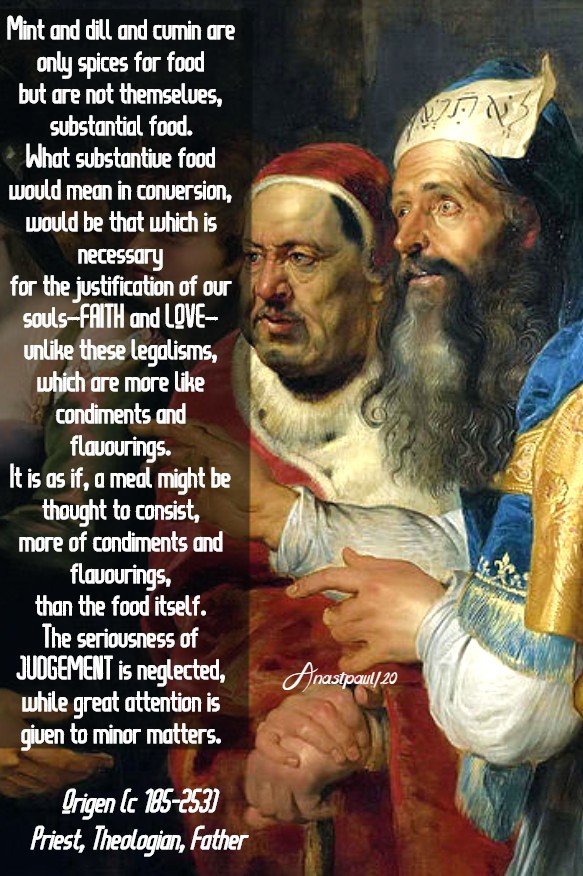
“Mint and dill and cumin are only spices for food but are not themselves, substantial food. What substantive food would mean in conversion, would be that which is necessary for the justification of our souls—faith and love— unlike these legalisms, which are more like condiments and flavourings. It is as if, a meal might be thought to consist, more of condiments and flavourings, than the food itself. The seriousness of judgement is neglected, while great attention is given to minor matters.”
Origen (c 185-253) Priest, Theologian, Father
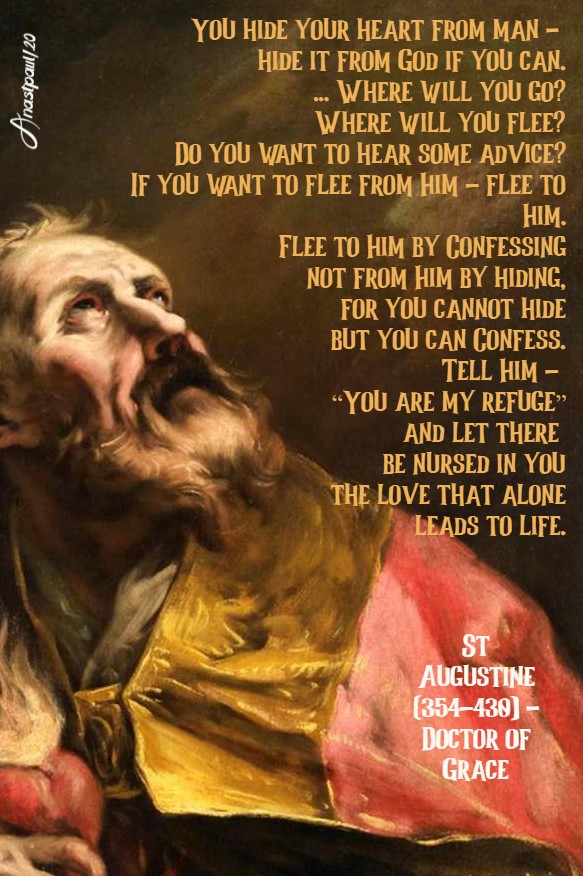
“You hide your heart from man – hide it from God if you can. … Where will you go? Where will you flee? Do you want to hear some advice? If you want to flee from Him – flee to Him. Flee to Him by Confessing, not from Him, by hiding, for you cannot hide but you can Confess. Tell Him. “You are my refuge” (Ps 32[31]:7) and let there be nursed in yo, the love that alone leads to life.”
St Augustine (354-430) Father and Doctor of Grace
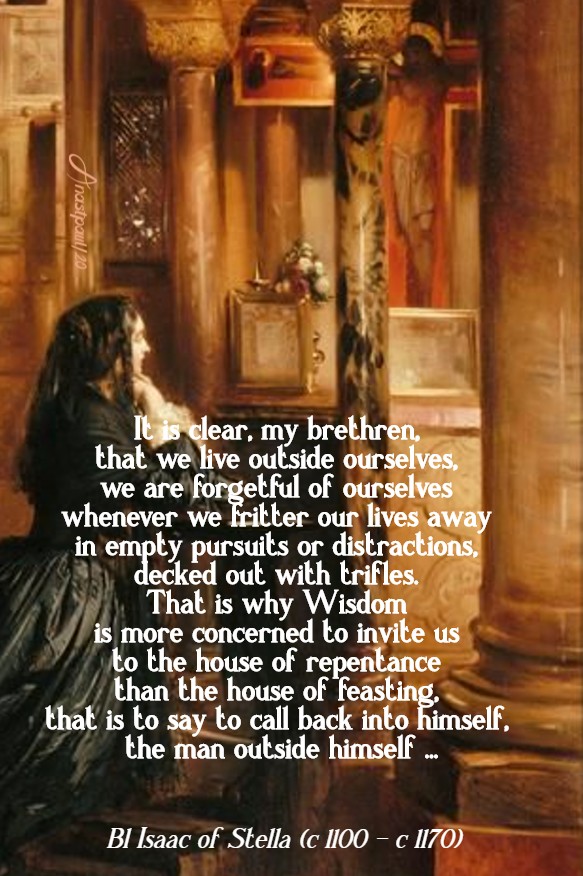
“It is clear, my brethren, that we live outside ourselves, we are forgetful of ourselves whenever we fritter our lives away in empty pursuits or distractions, decked out with trifles. That is why Wisdom is more concerned to invite us to the house of repentance than the house of feasting, that is to say to call back into himself, the man outside himself …”
Blessed Isaac of Stella O.Cist (c 1100 – c 1170) Sermon 2 for All Saints, 13-20
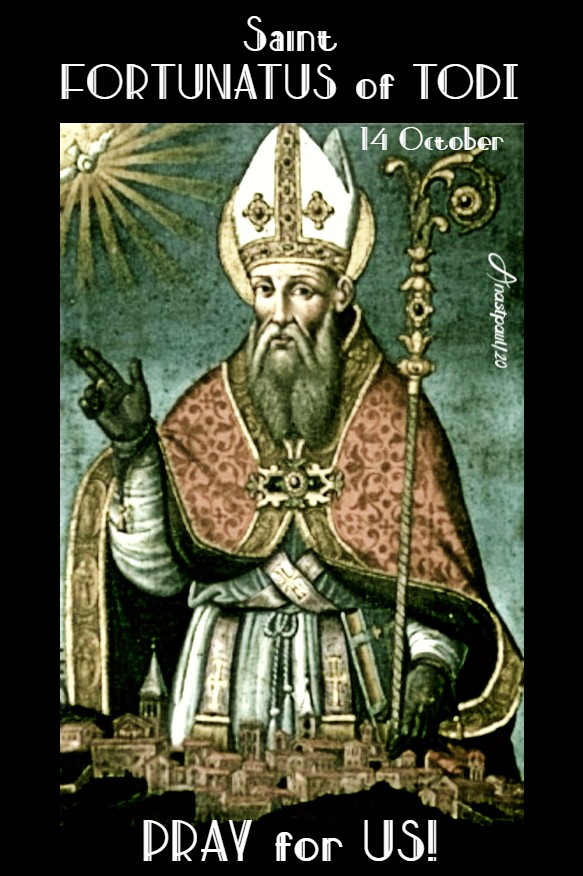
One Minute Reflection- 14 October – Wednesday of the Twenty-eighth week in Ordinary Time, Readings: Galatians 5:18-25, Psalms 1:1-2, 3, 4 and 6, Luke 11:42-46 and the Memorial of St Fortunatus of Todi (Died 537) Bishop
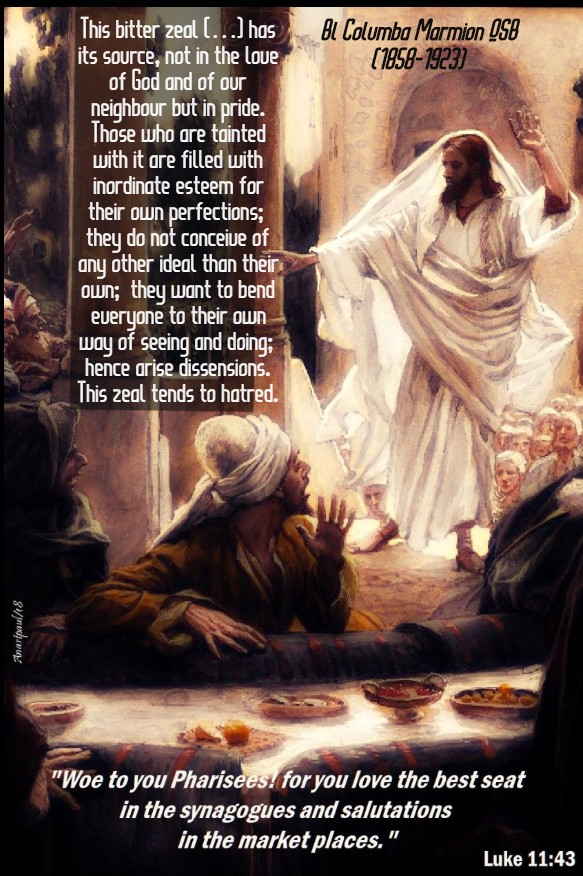
“Woe to you Pharisees! for you love the best seat in the synagogues and salutations in the market places.”…Luke 11:43
REFLECTION – “Forms of zeal, taking the appearance of good, are to be met with. There is, for example, the zeal of the Pharisee, strict observers of the outward law. This bitter zeal (…) has its source, not in the love of God and of our neighbour but in pride. Those who are tainted with it are filled with inordinate esteem for their own perfections; they do not conceive of any other ideal than their own; they want to bend everyone to their own way of seeing and doing; hence arise dissensions. This zeal tends to hatred.
See with what acrimony the Pharisees, moved by this zeal, pursue the Lord Jesus, putting insidious questions to Him, setting snares to entrap Him, seeking not to know the truth but to find Christ in fault. See how they press Him, how they try to induce Him to condemn the woman taken in adultery: “Now Moses in the Law commanded us to stone such a one. But what sayest Thou?” (Jn 8:5). (…) See, too, how they reproach Him for healing on the Sabbath day (Lk 6:7); how they complain of the disciples for rubbing the ears of corn in their hands on the day of rest (Mt 12:2); how they are scandalized at seeing the Divine Master sit down at dinner with the sinners and publicans (Mt 9:2). These are so many manifestation of this bitter zeal into which hypocrisy so often enters.” – Blessed Columba Marmion OSB (1858-1923) Abbot – Good Zeal (Christ the Ideal of the Monk
PRAYER – Heavenly Father, grant that I may believe what I have learned, never presuming to know better than the teachings of Holy Mother Church and that I may put into practice what I believe. Let my commitment be like unto the Bishop, St Fortunatus of Todi, who lived Your Word with joy and great zeal for faith in Christ, Your Son, God with You and the Holy Spirit, amen.
Our Morning Offering – 14 October – Wednesday of the Twenty-eighth week in Ordinary Time
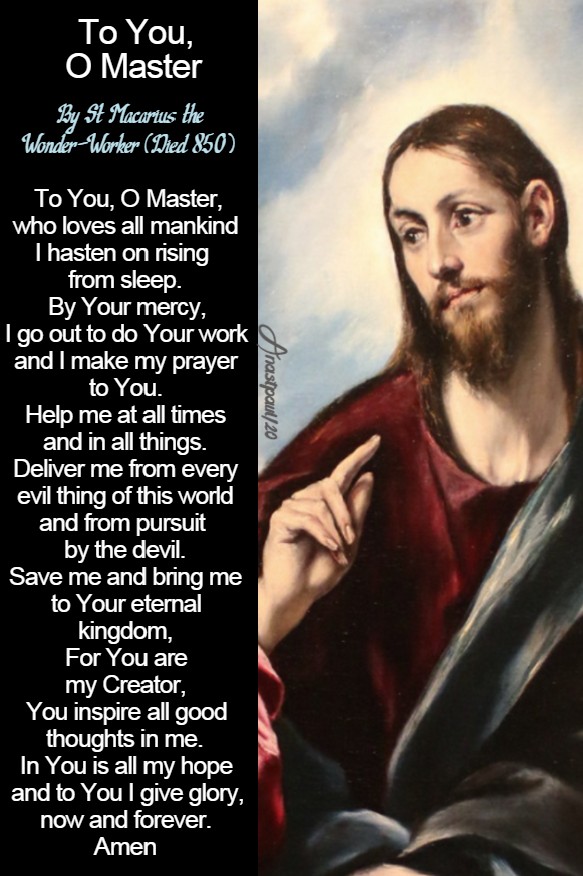
To You, O Master By St Macarius the Wonder-Worker (Died 850)
To You, O Master, who loves all mankind I hasten on rising from sleep. By Your mercy, I go out to do Your work and I make my prayer to You. Help me at all times and in all things. Deliver me from every evil thing of this world and from pursuit by the devil. Save me and bring me to Your eternal kingdom, For You are my Creator, You inspire all good thoughts in me. In You is all my hope and to You I give glory, now and forever. Amen
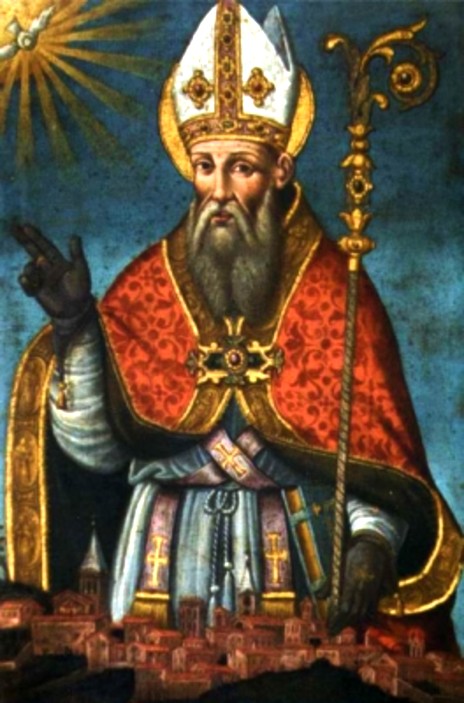
Saint of the Day – 14 October – Saint Fortunatus of Todi (Died 537) Bishop, Confessor, miracle-worker. Patronage – Todi.
An entry in the Roman Martyrology under 14 October records: “At Todi in Umbria, St Fortunatus, Bishop, who, as is mentioned by blessed Gregory, was endowed with an extraordinary gift for casting out unclean spirits.”
Sts Hermagoras and Fortunatus by Giovanni Battista Tiepolo (1736)
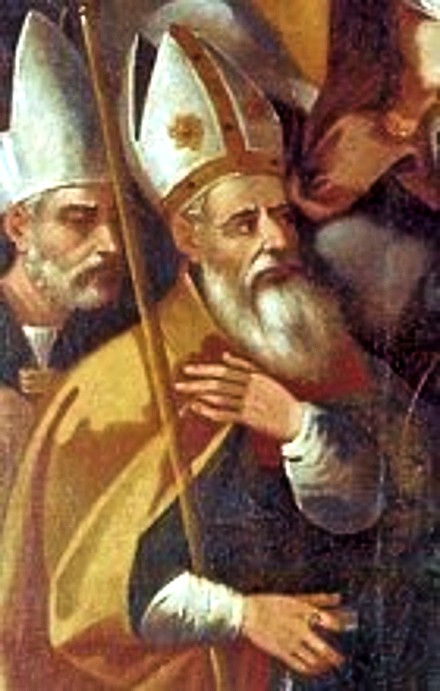
According to the Dialogues of Pope Gregory the Great, Bishop Fortunatus of Todi “He possessed extraordinary power over evil spirits, for on occasions he would expel legions of them and, when they turned their violence against him personally, he would crush them with the weapon of incessant prayer.” He records the following:
“On one occasion, Fortunatus drove out the spirits which plagued a woman who had sex before attending the dedication of the Church of St Sebastianus. A noblewoman from Tuscany and her daughter-in-law, were due to attend this ceremony. The night before the dedication, the young woman slept with her husband. As soon as the relics of Sebastian were brought out, a spirit possessed the woman. When a Priest threw the linen cloth from the altar on her to cover her, he was attacked by the same spirit. Only Fortunatus was able to drive out the spirit by spending many days and nights in prayer. He also drove a spirit out of a possessed man, which later inflicted itself on a family in Todi.
Fortunatus cured a blind man by making a sign of the cross in front of his eyes. Later, he cured a mad horse, when he made a sign of the cross over it’s head.
When Goths carried off two small boys from an estate on the outskirts of Ravenna, Fortunatus repeatedly asked them to return the boys unharmed. When leaving Todi, the leader of the Goths passed in front of theCchurch of St Peter. His horse slipped and fell and he suffered a broken rib. After the leader of the Goths sent the boys safely to Fortunatus, one of his Deacons sprinkled the rib with holy water, healing it.
Fortunatus was called to revive a dead man called Marcellus. Before dawn on Easter Sunday, Fortunatus went to see the corpse with two Deacons. When he called to the corpse, the man came back to life.”
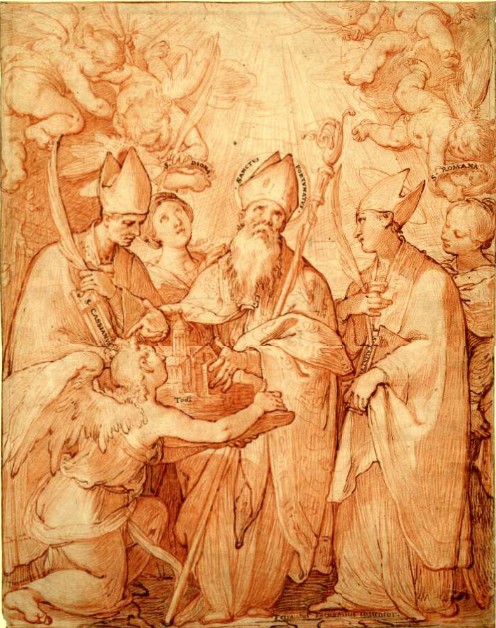
St Fortunatus with Sts Cassian and Callistus with a model of Todi
The Dialogues also state that miracles soon occurred at the grave of St Fortunatus but they do not specify where this was. A lead plaque discovered during a recognition of the relics of St Fortunatus in 1580 was inscribed:
Hec sunt reliquie beatissimi Fortunati episcopi et confessoris DCCVIII
These are the relics of St Fortunatus, Bishop and Confessor (708)
This plaque presumably recorded a formal recognition of the relics in 708. It seems likely that this recognition occurred in the Church that stood on the site of the Cappella Gregoriana which was partly demolished in 1296 to make way for the construction of the present Church of San Fortunato. In the following year, Pope Boniface VIII consented to the translation of the relics of Saints Fortunatus, Cassian and Callistus from the old Church to what became the Crypt of the new one. He granted indulgences to those attending the subsequent translation of these relics, see the Church below. The crypt houses a sepulchre containing the remains of Sts Fortunatus, Cassian and Callistus, as well as the tomb of Fra Jacopone da Todi OFM (1230–1306), the well-known hymnist.
Bl Ana María Aranda Riera St Angadrisma of Beauvais St Bernard of Arce St Celeste of Metz St Dominic Loricatus St Donatian of Rheims (Died 390) Biography: https://anastpaul.com/2018/10/14/saint-of-the-day-14-october-st-donatian-of-rheims-died-390/ Saint Fortunatus of Todi (Died 537) Bishop St Franciszek Roslaniec St Gaudentius of Rimini St Gundisalvus of Lagos Bl Jacques Laigneau de Langellerie St Lupulo of Capua St Lupus of Caesarea St Manacca St Manehildis St Modesto of Capua Bl Richard Creagh Blessed Roman Lysko (1914–1949) Priest and Martyr His Life and Death: https://anastpaul.com/2019/10/14/saint-of-the-day-14-october-blessed-roman-lysko-1914-1949-priest-and-martyr/ St Rusticus of Trier St Saturninus of Caesarea St Stanislaw Mysakowski St Venanzio of Luni — Martyrs of Caesarea – (4 saints): Three brothers and a sister martyred together in the persecutions of Diocletian – Carponius, Evaristus, Fortunata and Priscian. In 303 in Caesarea, Cappadocia (in modern Turkey) – their relics enshrined in Naples, Italy.
Martyred in the Spanish Civil War: • Blessed Ana María Aranda Riera • Blessed Jacques Laigneau de Langellerie
Thought for the Day – 13 October – Meditations with Antonio Cardinal Bacci (1881-1971)
“Month of the Holy Rosary” The First Glorious Mystery The Resurrection of Our Lord”
“Jesus could not have remained lifeless in the sepulchre. He is the Man-God, the conqueror of sin and of death. He willed to be subject to all the conditions of human exiastence with the exception of sin, therefore, He suffered and died for love of us.
However, as He had foretold, He rose gloriously from the tomb on the third day. This resurrection is proved historically in a most certin manner, by the behaviour of the Apostles, who, were at first downcast and incredulous and were transformed, into heroes and martyrs, by the glorious appearance of Jesus. It is confirmed by the obstinacy and deceitfulness of the Jews, who went so far as to bribe the soldiers who were guarding the sepulchre, not to reveal the truth. It is proved, moreover, by the fact, that the Apostle Thomas, refused to believe in the Resurrection until he had placed his fingers in the wounds of the Redeemer, Who afterwards appeared to him.
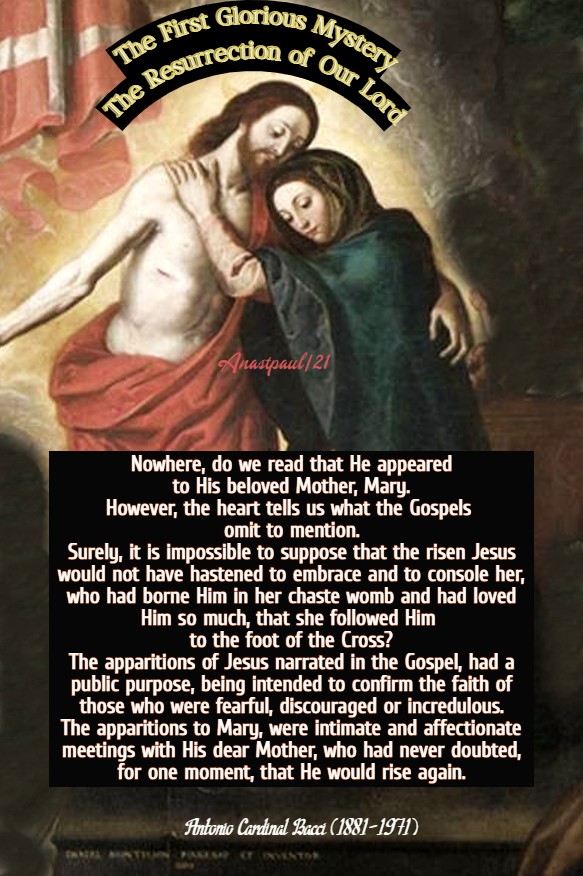
We read in the Gospels and in the Acts of the Apostles, that the risen Jesus appeared many times to the Apostles to confirm their faith, to speak with them of the Kingdom of God and to give them His final instructions and commands. We read also, that He appeared to Mary Magdalen to reward her great love and to console her. Nowhere, do we read that He appeared to His beloved Mother, Mary. However, the heart tells us what the Gospels omit to mention. Surely, it is impossible to suppose that the risen Jesus would not have hastened to embrace and to console her, who had borne Him in her chaste womb and had loved Him so much, that she followed Him to the foot of the Cross?
The apparitions of Jesus narrated in the Gospel, had a public purpose, being intended to confirm the faith of those who were fearful, discouraged or incredulous. The apparitions to Mary, were intimate and affectionate meetings with His dear Mother, who had never doubted, for one moment, that He would rise again. There may be another explanation, however. It is possible, that Mary’s humility would have prevented her from discussing, with others, her happy moments of reunion with her risen Son.”
Quote/s of the Day – 13 October – The 103rd Anniversary of the Last Apparition of Our Lady of Fatima
Our Lady of Fátima –or Our Lady of the Rosary, the name the three children called her – is a title given to the Blessed Virgin Mary as She appeared in apparitions reported by three shepherd children at Fátima in Portugal. These Apparitions occurred on the 13th day of six consecutive months in 1917, the first on 13 May and the last today, 13 October 1917. The three children were Lúcia Santos and her cousins Jacinta and Francisco Marto. Her message was one of hope, repentance and conversion for the whole world.
“I have come, to warn the faithful, to amend their lives and ask pardon for their sins. They must not continue to offend Our Lord, Who is already too much offended.”
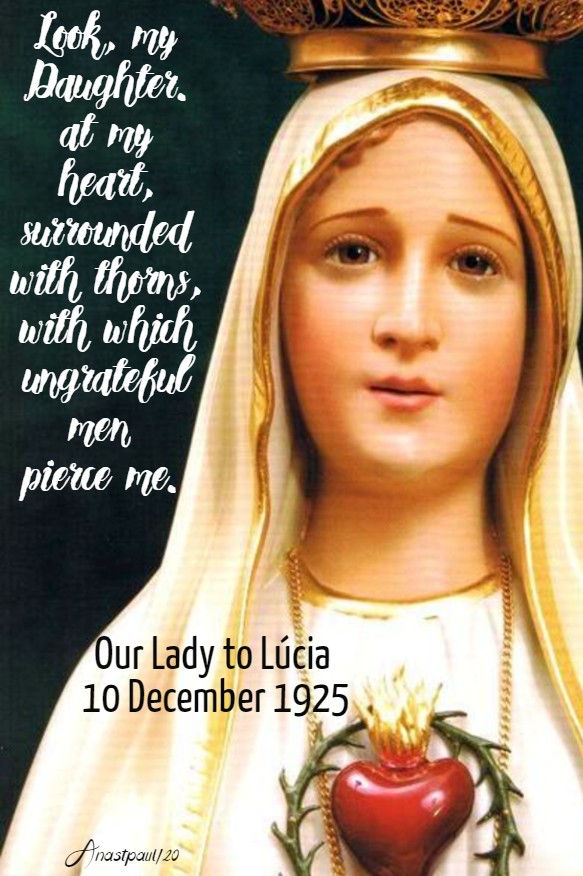
“Look, my Daughter,” Our Lady said to Lúcia on 10 December 1925, “at my heart, surrounded with thorns, with which ungrateful men pierce me.”
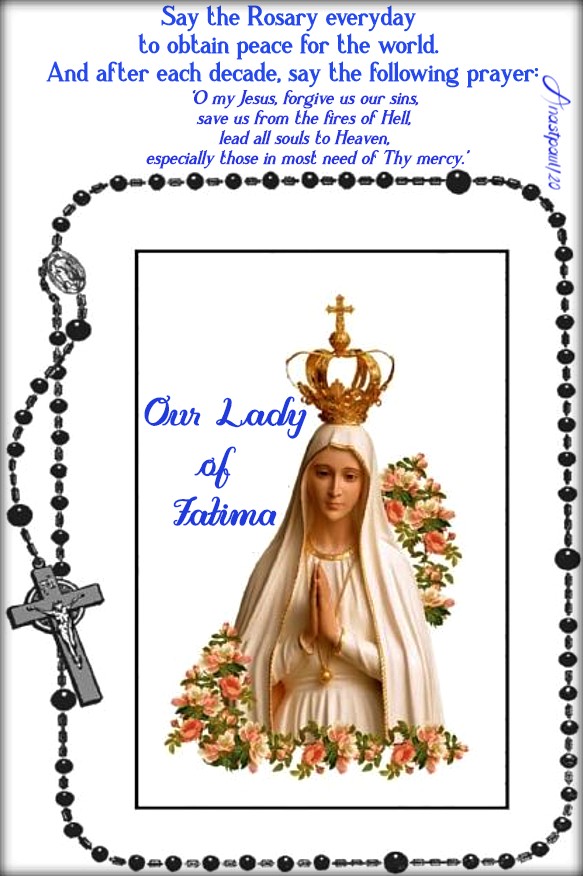
“Say the Rosary everyday to obtain peace for the world. And after each decade, say the following prayer: ‘O my Jesus, forgive us our sins, save us from the fires of Hell, lead all souls to Heaven, especially those in most need of Thy mercy.’”
“Pray, pray a great deal and make sacrifices for sinners, for many souls go to Hell because they have no-one to make sacrifices and pray for them.”
“In the end, my Immaculate Heart will triumph.”
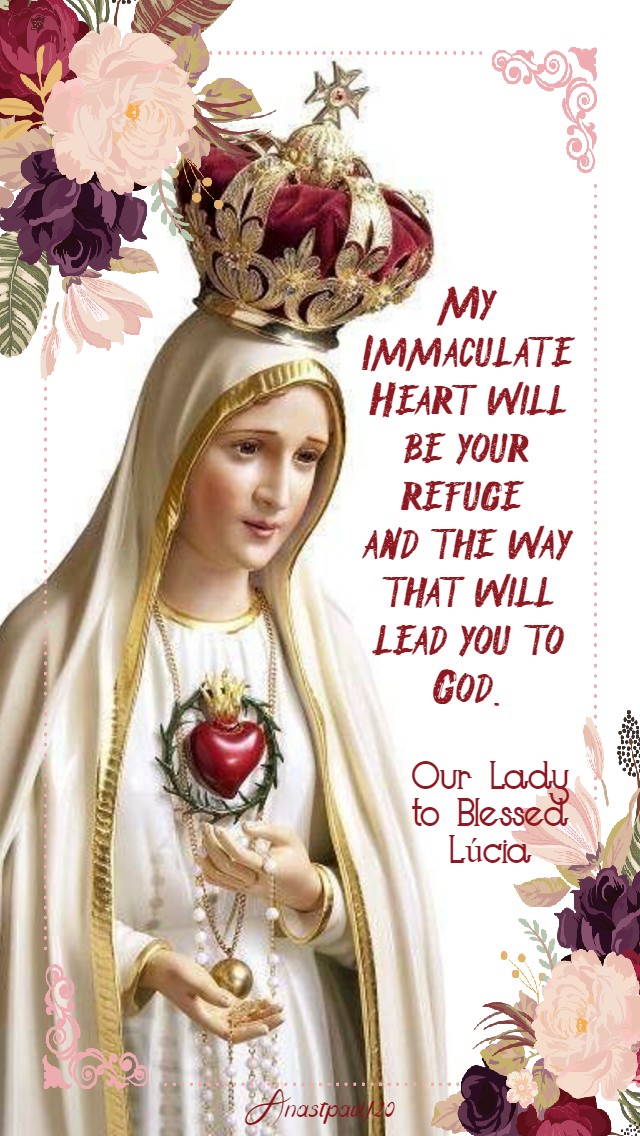
Our Lady assured Lúcia: “My Immaculate Heart will be your refuge and the way that will lead you to God.” Thus, if we devote ourselves to her Immaculate Heart, Mary will lead us to her Son, Jesus Christ and we will be on the way to Heaven.
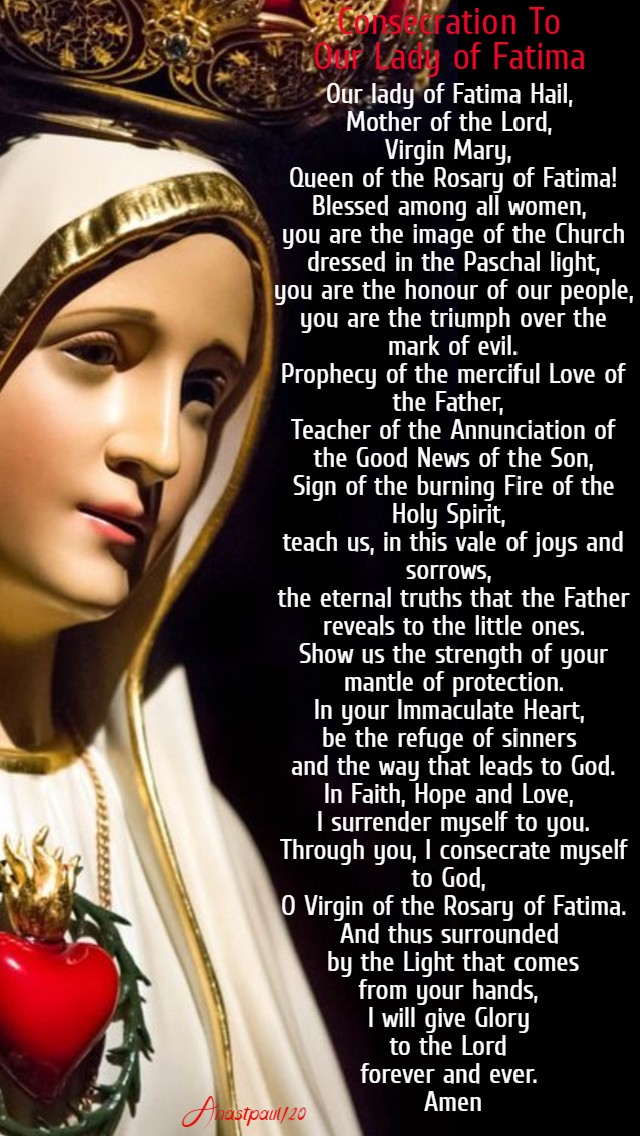
Official Prayer of Consecration To Our Lady of Fatima (Issued for the Jubilee in 2017)
Our lady of Fatima Hail, Mother of the Lord, Virgin Mary, Queen of the Rosary of Fatima! Blessed among all women, you are the image of the Church dressed in the Paschal light, you are the honour of our people, you are the triumph over the mark of evil. Prophecy of the merciful Love of the Father, Teacher of the Annunciation of the Good News of the Son, Sign of the burning Fire of the Holy Spirit, teach us, in this vale of joys and sorrows, the eternal truths that the Father reveals to the little ones. Show us the strength of your mantle of protection. In your Immaculate Heart, be the refuge of sinners and the way that leads to God. In Faith, Hope and Love, I surrender myself to you. Through you, I consecrate myself to God, O Virgin of the Rosary of Fatima. And thus surrounded by the Light that comes from your hands, I will give Glory to the Lord, forever and ever. Amen
One Minute Reflection – 13 October – Tuesday of the Twenty-eighth week in Ordinary Time, Readings: Galatians 5:1-6, Psalms 119:41, 43,44, 45, 47, 48, Luke 11:37-41 and the 103rd Anniversary of the Last Apparition of Our Lady of Fatima
And the Lord said to him, “Now you Pharisees cleanse the outside of the cup and of the dish but inside you are full of extortion and wickedness.”…Luke 11:39
REFLECTION – “If the world that seeks my God were to know, if those learned men who seek for God in science and endless discussion were to know, if people did but know where to find God, how many wars would be prevented, what peace there would be in the world, how many souls would be saved! Unreasoning and stupid that you look for God where He is not! Listen and be filled with awe – God is in our hearts, I know it. God lives in the human heart when this heart lives withdrawn from all that is not Him, when this heart heeds God’s knock at it’s door (Rv 3,20) and, sweeping and cleaning all its rooms, makes itself ready to welcome Him who alone truly satisfies.
How sweet it is to live like this, with God in the heart. What sublime peace to find oneself filled with God!… What little trouble it is, rather it should be said, there is no trouble in doing what He wishes, since we love His will and even pain and suffering are His peace, since we suffer for love. Only God fills the soul and fills it wholly. Let scientists go on asking – Where is God? He is where those clever ones, arrogant in their knowledge, cannot reach.” … Saint Raphael Arnaiz Baron (1911-1938) – Spanish Trappist monk (Spiritual writings)
PRAYER – Lord God, open our hearts to Your Grace, that we may be filled with Your light and overflow with gratitude for Your merciful love. May we love and adore and worship You in return. Although we are sinners, our hearts long to thank You in total trust and humble thankfulness. Grant that by the prayers of the Blessed Virgin Mary of Fatima, our Mother, we may grow in holiness. Through Your only Son, our Saviour and Redeemer, with the Holy Spirit, God, forever, amen.
Our Morning Offering – 13 October – Tuesday of the Twenty-eighth week in Ordinary Time
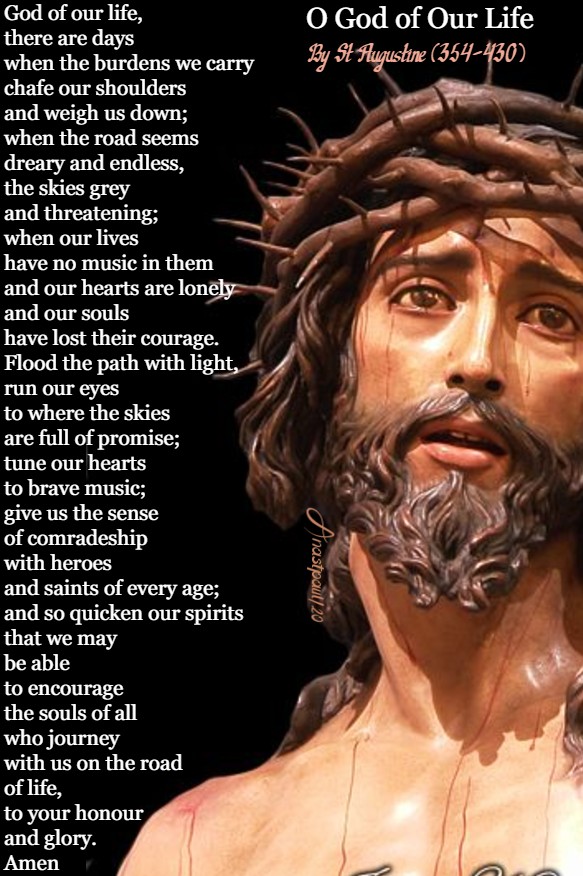
O God of Our Life By St Augustine (354-430) Father & Doctor of the Church
God of our life, there are days when the burdens we carry chafe our shoulders and weigh us down; when the road seems dreary and endless, the skies grey and threatening; when our lives have no music in them and our hearts are lonely and our souls have lost their courage. Flood the path with light, run our eyes to where the skies are full of promise; tune our hearts to brave music; give us the sense of comradeship with heroes and saints of every age; and so quicken our spirits that we may be able to encourage the souls of all who journey with us on the road of life, to your honour and glory. Amen
Saint of the Day – 13 October – Blessed Maddalena Panattieri OP (1443–1503) member of the Sisters of Penance of Saint Dominic, Stigmatist, she was blessed with many Mystical gifts – prophecy, visions, Eucharistic Adorer, Catechist – born in 1443 at Turino, Diocese of Vercelli, Piedmont, Italy and died on 13 October 1503 at Turino, Italy of natural causes. Patronages – Trino, Catechists.
Maddalena Pannatieri was born at Trino, near Vercelli, in 1443, of deeply religious parents. She was a devout child, who made a vow of virginity while she was quite young. Before she was twenty years old, she took her vows as a Dominican Tertiary, an exceptional circumstance, showing that she was held in high esteem. The Tertiary chapter was made up principally of widows and older woman who centred their Apostolate of active charities around the Dominican Church. Maddalena fitted into this work with ease and she brought to the chapter a spirit of penance that few of her companions could match. The delightful part of it all wa,s that her penances never rendered her dreary; she was a cheerful, resourceful person to have around. People drew as much good from her spirit of joy as from any other feature of her spirituality.
Maddalena had a special fondness for little children and, what we now call baby-sitting, and used her influence with the children to bring their parents to a better way of life. Childless women won her sympathy and several times her prayers brought the blessing of motherhood to such people. She taught Catechism to children and gradually the older folk of her acquaintance began to sit in on her classes. She was quite unaware that she had great powers of description and could make the truths of religion clear to simple people. The Dominican fathers allowed her to use a large room attached to the Church for a class room and the class grew. Not only the parents of the children and the simple folk of the neighbourhood but also a number of Priests and religious were attending regularly.
When the reform movement started by Blessed Raymond of Capua got underway, Maddalena Parnatieri promoted it in Trino. Through her influence, Blessed Sebastian Maggio was invited to preach there and he accomplished great good.
Maddalena was considered the protectress of the city of Trino. Whatever disaster threatened it, the citizens expected her to look out for their interests and she usually did. In her life there is no mention of a “dark night of the soul” or of grim detachment from all things of earth. Her love of God kept her from attaching herself to any illegitimate pleasures but she thoroughly enjoyed the lawful ones – she loved her family and her townspeople and was happy in their company. Her favourite brother was a good-for-nothing- he was always in trouble. When his conduct had gone beyond the patience of everyone but Magdalene, she threw herself on her knees in front of her Crucifix and she stayed there until our Lord assured her that He would take a hand with the black sheep: ” I cannot refuse you anything,” He said.
The Dominican fathers received her solitude when they were persecuted by a wealthy man of the town. This person carried his hatred so far, that he was finally excommunicated for persecuting the Church. There was of course, a good deal of blood shed before the affair was over and one of the reprobate’s followers made the mistake of hitting Maddalena and calling her names. Before the irate townspeople could deal out justice to him, God did; the man died a violent death.
God revealed to Maddalena the coming political troubles of Italy – the French invasion of the country. She did not live to see this prophecy accomplished but she persistently asked God’s mercy for her people. During the violent quarrels and bloodshed of the time, Trino was always spared, though the villages all around were in a shambles. The townsfolk unhesitatingly gave credit to Maddalena!
Maddalena died on 13 October 1503 in Trino. On her deathbed she said: “I could not be happy in Heaven, if you were not there too” to those assembled near her bedside. She sang “Jesus our Redeemer” and the “Ave Maria” prior to her death. Her remains were found in 1964 and transferred in 1970.
Maddalena received formal Beatification from Pope Leo XII on 26 September 1827 once the Pontiff confirmed that a ‘cultus’ (or popular devotion) to Maddalena existed and had endured since her death.
St Leobono of Salagnac Blessed Maddalena Panattieri OP (1443–1503) St Maurice of Carnoet St Regimbald of Speyer St Romulus of Genoa St Simbert of Augsburg St Theophilus of Antioch St Venantius — Three Crowns of Cordoba – (3 saints): Three Christian men martyred in the persecutions of Diocletian – Faustus, Januarius and Martial. They were burned to death in 304 in Cordoba, Spain.
Martyred in the Spanish Civil War: • Blessed Àngel Presta Batllé • Blessed ángel Ramos Velázquez • Blessed Antonio Ayet Canós • Blessed Ruperto García Arce • Blessed Salustiano González Crespo • Blessed Tomás Pallarés Ibáñez • Blessed Francesc Mitjá i Mitjá • Blessed Herminio Motos Torrecillas • Blessed Joan Puig Serra
Thought for the Day – 12 October – Meditations with Antonio Cardinal Bacci (1881-1971)
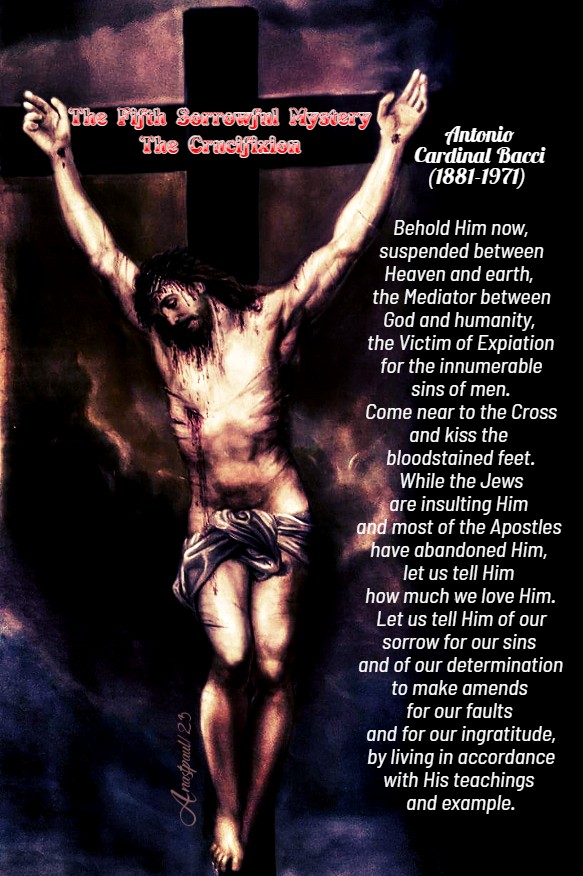
“Month of the Holy Rosary” The Fifth Sorrowful Mystery The Crucifixion
“At last, Jesus reaches Calvary, breathless and reduced to utter exhaustion. The instrument of torture is taken from Him and laid upon the ground. Our divine Redeemer suffers acute pain as Her is again stripped of His garments, which have stuck to His wounds. Now, He is stretched, an innocent victim, on the altar of sacrifice, the Cross. One of the executioners grasps His hand, pierces it with a large nail and attaches it to the wood. Then, he does the same with the other hand and with the two feet. His Mother is close at hand. She feels in her heart the blows of the hammer which lacerate the living flesh of Jesus. Jesus remains silent “as a meek lamb that is carried to be a victim” (Jer 11:19).
Now, the executioners raise up the Cross and fix it in the hold already prepared for it. The shock of this impact sends a shudder of terrible pain through the Victim’s members and entire frame. Behold Him now, suspended between Heaven and earth, the mediator between God and humanity, the victim of expiation for the innumerable sins of men.
Come near to the Cross and kiss the bloodstained feet. While the Jews are insulting Him and most of the Apostles have abandoned Him, let us tell Him how much we love Him. Let us tell Him of our sorrow for our sins and of our determination to make amends for our faults and for our ingratitude, by living in accordance with His teachings and example.”
Quote/s of the Day – 12 October – Monday of the Twenty-eighth week in Ordinary Time, Readings: Galatians 4:22-24, 26-27, 31, 5:1, Psalms 113:1-2, 3-4, 5 and 6-7, Luke 11:29-32
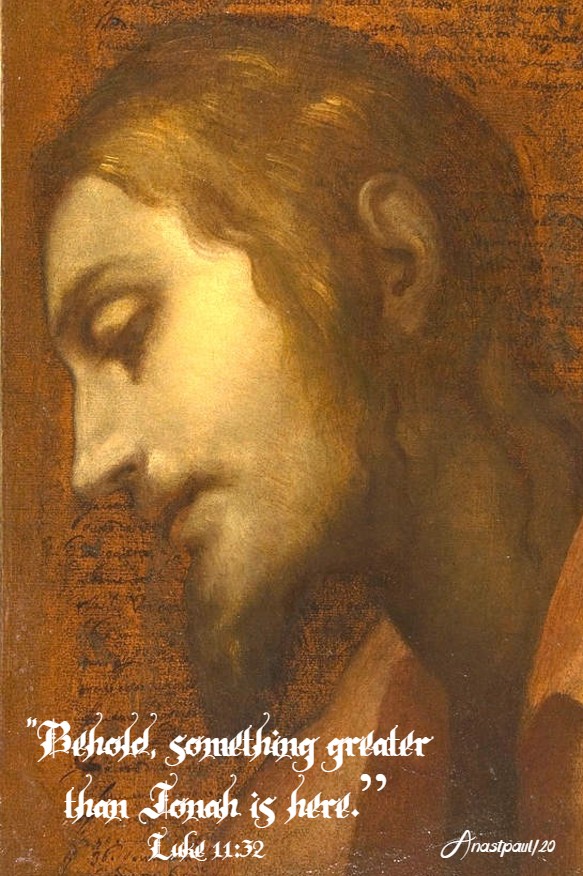
“Behold, something greater than Jonah is here.”
Luke 11:32
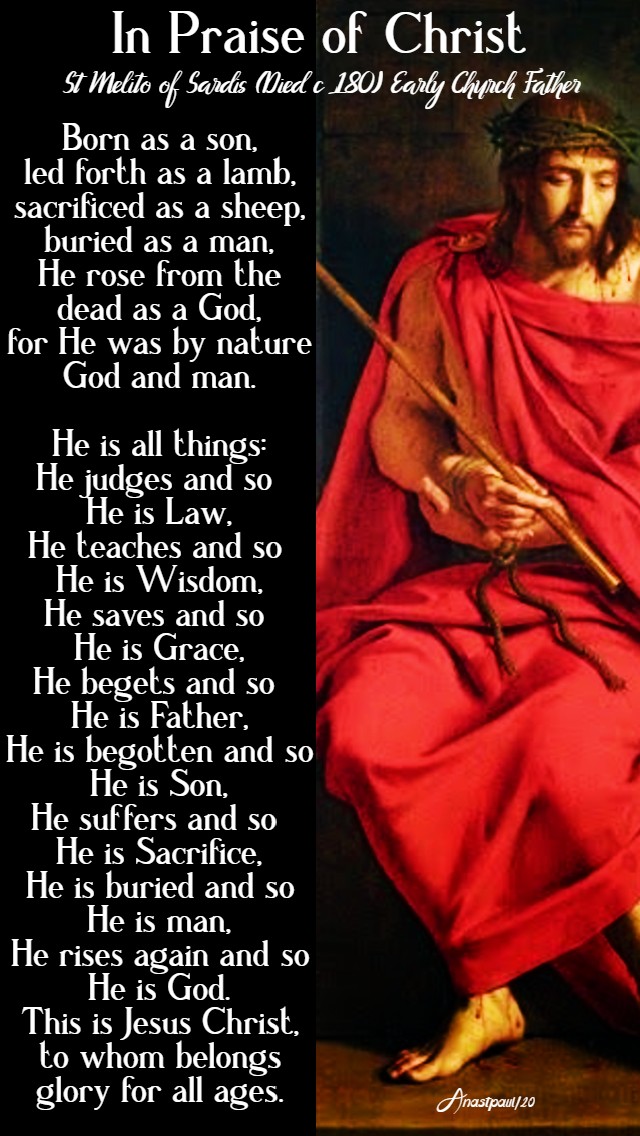
Born as a son, led forth as a lamb, sacrificed as a sheep, buried as a man, He rose from the dead as a God, for He was by nature God and man.
He is all things: He judges and so He is Law, He teaches and so He is Wisdom, He saves and so He is Grace, He begets and so He is Father, He is begotten and so He is Son, He suffers and so He is Sacrifice, He is buried and so He is man, He rises again and so He is God. This is Jesus Christ, to whom belongs glory for all ages.
Saint Melito, Bishop of Sardis (Died c 180) Early Church Father In Praise of Christ
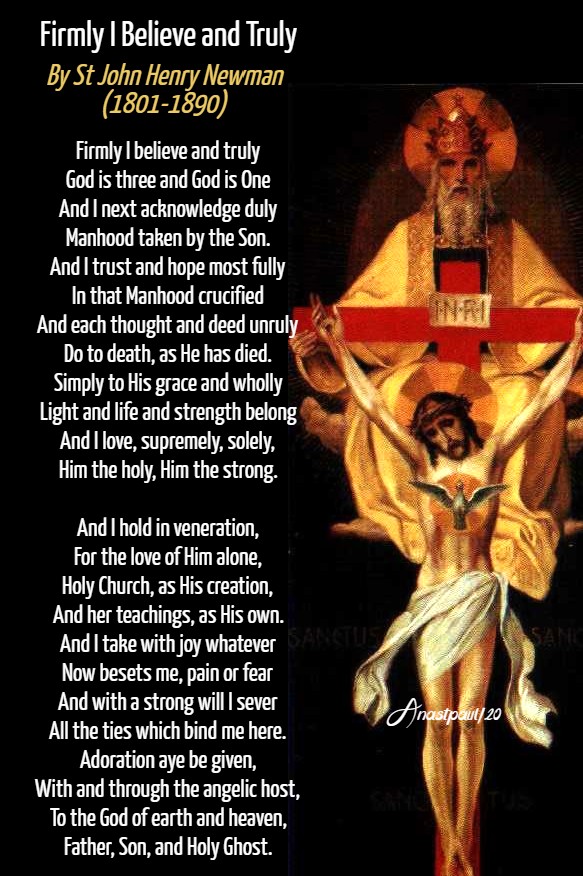
Firmly I Believe and Truly By St John Henry Newman (1801-1890)
Firmly I believe and truly God is three and God is One And I next acknowledge duly Manhood taken by the Son. And I trust and hope most fully In that Manhood crucified And each thought and deed unruly Do to death, as He has died. Simply to His grace and wholly Light and life and strength belong And I love, supremely, solely, Him the holy, Him the strong.
And I hold in veneration, For the love of Him alone, Holy Church, as His creation, And her teachings, as His own. And I take with joy whatever Now besets me, pain or fear And with a strong will I sever All the ties which bind me here. Adoration aye be given, With and through the angelic host, To the God of earth and heaven, Father, Son, and Holy Ghost.
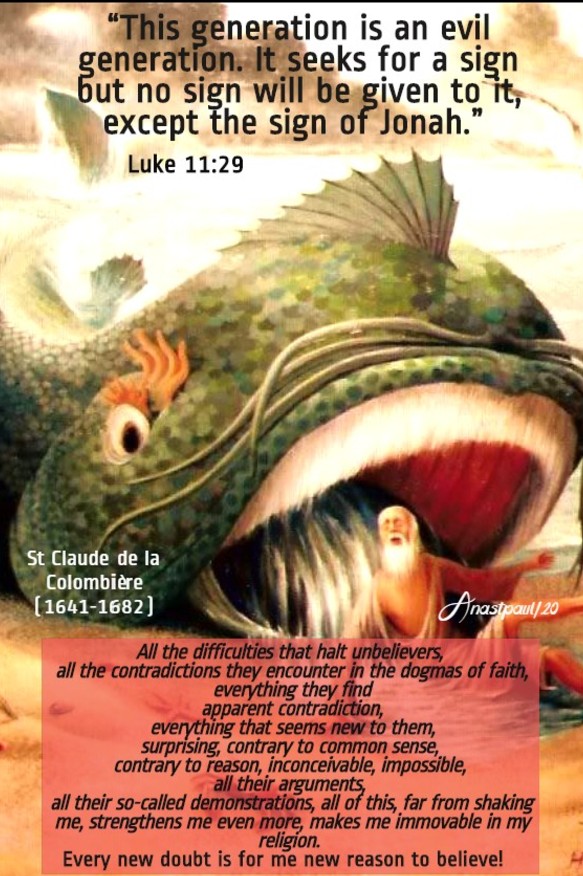
“This generation is an evil generation. It seeks for a sign but no sign will be given to it, except the sign of Jonah.” … Luke 11:29
REFLECTION – “Bad christians lack faith and do not deny it but they claim to be excused, in that they have no reasons for believing. Because of this there is nothing as common as this speech in the mouths of many people: “If I had witnessed a miracle I should be a saint!”“Evil and unfaithful generation! It seeks a sign!” (Mt 12:39). The wicked look for signs.
What is even more remarkable about this, is that, even though they have seen many taking place daily before their eyes, even though they are, so to speak, entirely surrounded, they never stop looking for more like the scribes and Pharisees; they would like to see them in heaven when they have seen them on earth. But neither the dead raised up during the life of the Saviour, nor the eclipse of the sun at death, make them believers; their envy becomes stronger, their hatred more malicious; each goes as far as raging, yet their unbelief is not healed by it. It used to be like this regarding those who, living badly, wait for miracles in order to believe: “They will not be persuaded if someone should rise from the dead” (Lk 16:31). (…)
All the difficulties that halt unbelievers, all the contradictions they encounter in the dogmas of faith, everything they find apparent contradiction, everything that seems new to them, surprising, contrary to common sense, contrary to reason, inconceivable, impossible, all their arguments, all their so-called demonstrations, all of this, far from shaking me, strengthens me even more, makes me immovable in my religion. (…) Every new doubt is for me, new reason to believe.” … St Claude de la Colombière (1641-1682) “Apostle of Sacred Heart” – Christian Reflections
PRAYER – “Dear Lord! It is just when I am in the world that I have most need of You because You know it is full of snares that the devil has set for me. You must hold my hand, dear Lord, if You will not abandon me. A little of the world is not bad for me; it is even good, for it teaches me how small it is and I feel the greater happiness when I come back to You. But that I may surely do so, You must only loose Your hold a little, that it may not try me too far, You must not entirely leave hold. Do You see dear Lord? I wish to clasp Your hand – do not refuse me!” (I Wish to Clasp Your Hand – Do Not Refuse Me! – Prayer of Eugene de Ferronays)Our Lady Aparecida, Pray for Us!
Saint of the Day – 12 October – Saint Rodobaldo II Cipolla of Pavia (Died 1254) Bishop of Pavia from 1230 to his death, apostle of the poor. Rodobaldo was the 53rd bishop of Pavia. Archdeacon of the Cathedral, he was elected in 1230 and Consecrated by Pope Gregory IX. St Roboaldo II is remembered as a zealous shepherd and for his intense charitable activity. Together with the Pope he preached the crusade against Frederick II, which earned him prison – he was jailed in Pisa. Then he worked to reconcile the Emperor with Innocent IV. He died in 1254. The relics are kept in the Cathedral of Pavia. He is also known as Cipolla of Pavia.
San Rodobaldo II Cipolla of Pavia is a Bishop who lived in the 13th century. In the chronotaxis of the Bishops of Pavia it is placed in fifty-third place, after San Folco Scotti and before Guglielmo da Caneto. It is indicated with the second appellation, as among the bishops before him there is a Rodobaldo de ‘Sangiorgio, who ruled the Diocese in the second decade of the thirteenth century.
In the Verona hagiographic publication, it is stated that he was born in Verona; belonging to the Cipolla family, who before being elected to lead the Diocese held the office of Archdeacon of the Cathedral chapter.
In 1233 he founded the Company of the Holy Spirit in Pavia and brought the Franciscan friars, Vallombrosan and Dominican monks to the diocese. Among the latter he became a friend of St ‘Isnardo di Vicenza, to whom, it is said, he donated the monastery of San Tommaso Apostolo.
Subsequently, he took an active part in the mediation of peace, working towards the reconciliation between the Emperor and the new Pontiff, Innocent IV. He died in Pavia on 12 October 1254 and since 1279 his body has been placed in the crypt of the City Cathedral of St Siro. His cult as a saint was confirmed by Pope Leo XIII with a decree of 20 December 1888.
In the Roman martyrology, with the words – “In Pavia, St Rodobaldo II, bishop, man of exemplary spirit of penance, who worked hard for the divine worship and in the search for the relics of the saints.”
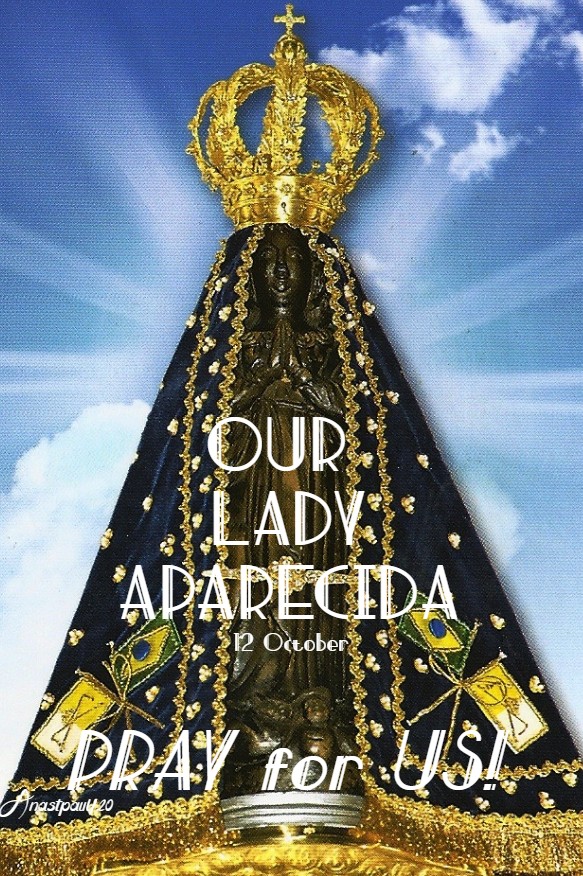
Nossa Senhora Aparecida / Our Lady Aparecida, Aparecida, Sao Paulo, Brazil (1717) – 12 October: Also known as – Our Lady Who Appeared:
In October 1717, Dom Pedro de Almedida, Count of Assumar passed through the area of Guarantinqueta, a small city in the Paraiba river valley. The people there decided to hold a feast in his honour and though it was not fishing season, the men went to the waters to fish for the feast. Three of the fishermen, Domingos Garcia, Joco Alves and Felipe Pedroso, prayed to the Immaculate Conception and asked God’s help. However, after several hours they were ready to give up. Joco cast his net once more near the Port of Itaguagu but instead of fish, he hauled in the body of a statue. The three cast their net again, and brought up the statue’s head. After cleaning the statue they found that it was Our Lady of the Immaculate Conception. Naming their find Our Lady Aparecida, they wrapped it in cloth and continued to fish; now their nets were full. While we do not know why the statue was at the bottom of the river, we do know who made it. Frei Agostino de Jesus, a carioca monk from Sao Paulo known for his sculpture. The image was less than three feet tall, was made around 1650 and must have been underwater for years. It is a dark brown colour, is covered by a stiff robe of richly embroidered thick cloth and wears an imperial crown which was added in 1904. Only her face and hands can be seen. Pope Pius XII proclaimed her principal patroness of Brazil in 1930. The statue was vandalised by being broken into several pieces just prior to a visit by St Pope John Paul II but a group of dedicated artists and artisans carefully pieced it together again. Patronages: • Aparecida, Brazil, diocese of • Brazil • World Youth Day 2013
Nuestra Señora del Pilar / Our Lady of the Pillar (Imus, Philippines) – 12 October
Tradition says that in the early day of the Church, Saint James the Greater was spreading the Gospel in Spain but making very little progress. He was dejected and questioning his mission. About 44, the Virgin Mary, who was still living in Jerusalem at the time, bi-located and appeared to him in a vision to boost his morale. In it, she was atop a column or pillar, which was being carried by angels. That pillar is believed to be the same one venerated in Zaragoza, Spain today. Miraculous healings reported at the scene. PatronageS: • Imus, Philippines, diocese of • Tagbilaran, Philippines • Zamboanga, Philippines, archdiocese of • Zamboanga City, Philippines • Zaragoza, Spain.
St Pantalus of Basle St Priscian the Martyr St Relindis St Rodobaldo II Cipolla of Pavia (Died 1254) Bishop Bl Roman Sitko St Salvinus of Verona Bl Thomas Bullaker St Wilfrid (c 633-709) Bishop His Life: https://anastpaul.com/2018/10/12/saint-of-the-day-12-october-st-wilfrid-c-633-709/ — Martyred in the Spanish Civil War: • Blessed Bartolomé Caparrós García • Blessed Eufrasio of the Child Jesus • Blessed José González Huguet • Blessed Pedro Salcedo Puchades • Blessed Rafael Lluch Garín
Thought for the Day – 11 October – Meditations with Antonio Cardinal Bacci (1881-1971)
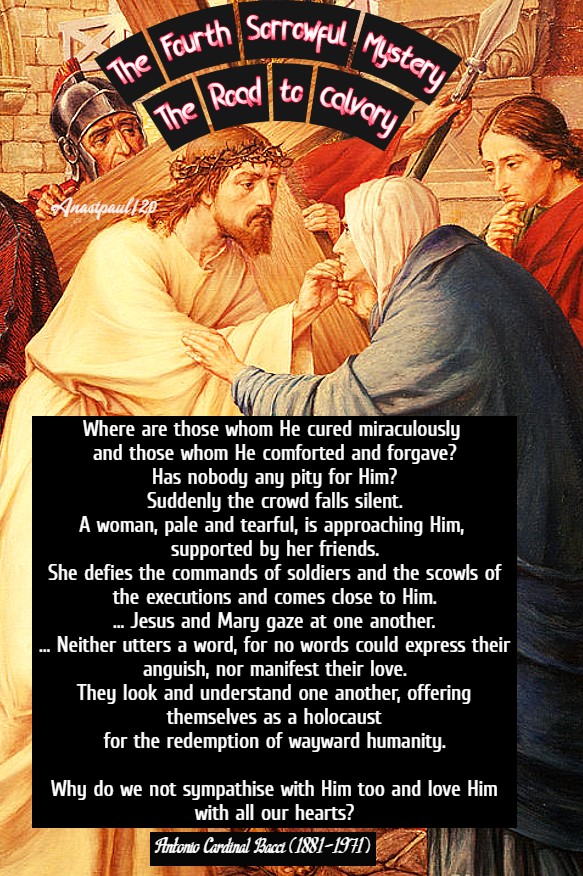
“Month of the Holy Rosary” The Fourth Sorrowful Mystery The Road to Calvary
“Scourged, crowned with thorns and derided, Jesus is finally condemned to death. Burdened with the Cross, He sets out for the place of execution in the midst of a crowd of enemies, blasphemers and idle speculators. Among them , there is only a tiny group which sympathises with Jesus, namely, Mary His Mother, the devout women and the beloved Apostle, St John.
The divine Redeemer goes forward laboriously beneath the heavy weight of the Cross. He has already lost a large quantity of blood in Gethsemane and during the scourging and crowning with thorns. His strength seems to be failing but love sustains Him. Looking feebly around Him, He sees the mocking Jews, the indifferent and disrespectful Roman soldiers and a throng of curious spectators looking for something to amuse them. Is there nobody else? Where are those whom He cured miraculously and those whom He comforted and forgave? Has nobody any pity for Him? Suddenly the crowd falls silent. A woman, pale and tearful, is approaching Him, supported by her friends. She defies the commands of soldiers and the scowls of the executions and comes close to Him.
Here and there, a murmur is heard – It must be His Mother, poor woman! Jesus and Mary gaze at one another. It would be impossible for us to guess at the immense depths of love contained in that loving exchange of glances. Neither utters a word, for no words could express their anguish, nor manifest their love. They look and understand one another, offering themselves as a holocaust for the redemption of wayward humanity.
Nevertheless, in this silent meeting, there was great consolation for the Heart of Jesus, for He had found someone who loved and understood Him, amongst those malicious throngs. Why do we not sympathise with Him too and love Him with all our hearts?”

















 AnaStpaul
You must be logged in to post a comment.