Posted in MARIAN TITLES, SAINT of the DAY

Nuestra Señora La Conquistadora / Our Lady the Conqueror, Santa Fe, New Mexico and Memorials of the Saints – 12 January

Nuestra Señora La Conquistadora / Our Lady the Conqueror, Santa Fe, New Mexico – 12 January:
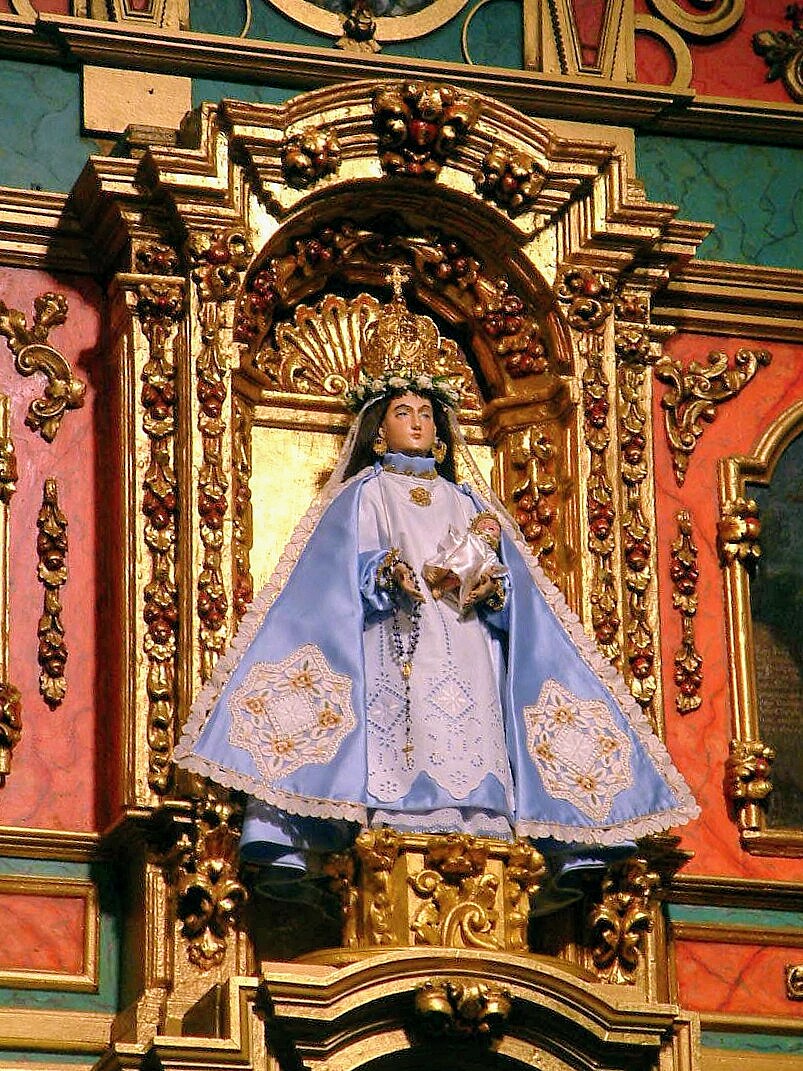
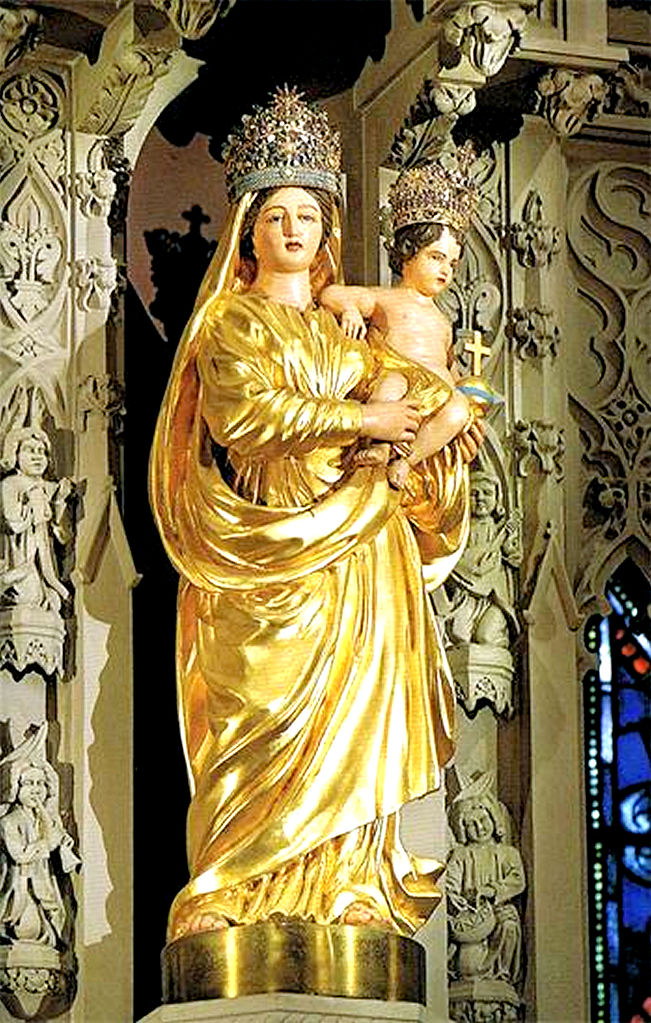
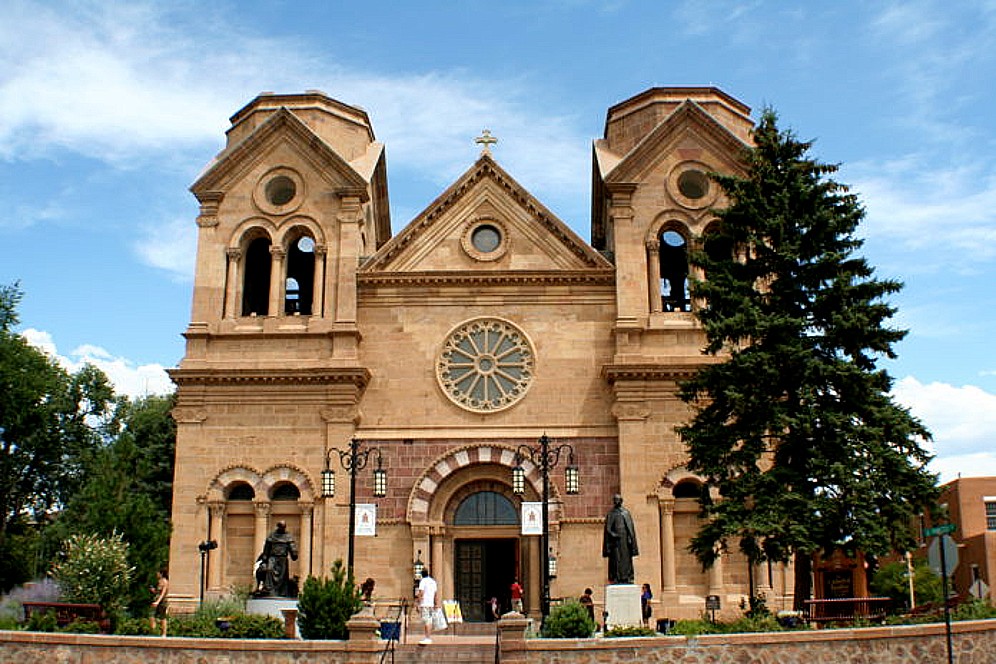
In the North Chapel of the beautiful Cathedral of Santa Fe stands a little Statue (scarcely 90 cms tall) of Our Lady holding the Child Jesus. It was skilfully carved by loving hands in Spain. Mary is clad in a richly embroidered dress, topped by a jewelled crown. Her regal countenance wears a serene, detached expression that is strangely impressive. This is Our Lady of Conquest, or La Conquistadora.
The Statue of Our Lady came to the new world in the care of the Franciscan missionary Fray Alonso da Venevides. She was installed with great ceremony in a Church in Santa Fe. Over the ensuing decades, as often happens, the men living in the region did not practice their religion as they should. Mary appeared in a vision to a young girl, warning her that the colony would be overrun due to the loss of reverence for Priests and the Faith.
In the year 1680 the local Indians rose up and attacked the Spanish. Twenty-one Priests were killed and the colonists completely driven out of the region. The statue was rescued from the burning Church and taken back to Mexico with the colonists who escaped the wrath of the Indians.

It was not until the year 1691 that Don Diego de Vargas was sent by the King of Spain to attempt the re-settlement of the City of Santa Fe. Like so many Spanish heroes who had accomplished seemingly impossible deeds during their lifetimes, he was as fervent a Catholic as he was a capable knight. Don Diego de Vargas carried with him the statue of Our Lady as he re-entered New Mexico. Although he had only a small force, he was able to peacefully negotiate a peace with the various Indian nations. He attributed his success to “the Sovereign Queen, Most Blessed Mary.” He is said to have vowed to build a chapel for her and hold a yearly procession if she would grant him a speedy and bloodless victory over the Indian, which she did.
Upon reaching his goal, however, the Indians refused to allow the Spanish colonists to return to Santa Fe. The Spanish under Don Diego were few in number and they were forced to fight a numerically superior force.
The colonists prayed the Rosary before the Statue of the Blessed Virgin, as the men engaged the Indians in battle. The fighting lasted all day and it was not until evening when they reclaimed the city. Once again, Mary was credited for the victory and to show her sovereignty, Don Diego placed an officer’s baton in her hand.
The Shrine symbolises a spirit of deep-rooted Faith and devotion, which characterised the “Conquistadores” of this land. There is still a great deal of devotion shown to Mary at the Cathedral of St Francis, which includes processions, fiestas and other celebrations.
The Statue was formally crowned by Cardinal Francis Spellman and in 1960 received a Papal Coronation.
St Aelred of Rievaulx OCSO (1110-1167)
About St Aelred:

https://anastpaul.wordpress.com/2018/01/12/saint-of-the-day-12-january-st-aelred-of-rievaulx-1110-1167-saint-bernard-of-the-north/

Bl Antoine Fournier
St Antonio Maria Pucci OSM (1819-1892)
Biography:

https://anastpaul.com/2019/01/12/saint-of-the-day-st-anthony-mary-pucci-osm-1819-1892/
St Arcadius of Mauretania
Bl Bartholomew Alvarez
Bl Bernardo de Plano
St Biccianus
St Benedict Biscop OSB (c 628-690) – Bishop and Abbot of Wearmouth, who introduced Stained Glass windows to England and raised the Venerable Saint Bede
St Bernard of Corleone
St Caesaria of Arles
St Caroticus
Bl Emmanuel d’Abreu
St Eutropius
St Ferreolus of Grenoble
Bl John Gaspard Cratz
St John of Ravenna
Bl Lucia of Valcaldara
St Marguerite Bourgeoys CND (1620-1700)
St Marguerite’s Biography:

https://anastpaul.wordpress.com/2017/01/12/saint-of-the-day-12-january-st-marguerite-bourgeoys/

St Martinian of Belozersk
St Martin of León
Bl Nicholas Bunkerd Kitbamrung
St Peter of Abessala
Blessed Pierre-François Jamet (1762-1845)
About Blessed Pierre-François:

https://anastpaul.com/2020/01/12/saint-of-the-day-12-january-blessed-pierre-francois-jamet-1762-1845/
St Probus of Verona
St Quinctus the Soldier
St Satyrus
St Tatiana of Rome
St Tigrius
St Victorian of Asana
Bl Vincent da Cunha

Martyrs of Africa – 44 saints: A group of 44 Christian soldiers murdered together for their faith in Africa. The only details that survive are four of their names – Castulus, Modestus, Rogatus and Zoticus.

Martyrs of Ephesus – 42 saints: Forty-two monks martyred at a monastery in Ephesus (modern Turkey) during the persecutions of the Iconoclast Byzantine Emperor Constantine V. Their names have not come down to us. Martyred c 762.

Martyrs of Iona – 38 saints: Thirty-eight monks martyred in Iona, Ireland. Their names have not come down to us. They were Martyred in 750 at Iona, Ireland.
Posted in "Follow Me", MEDITATIONS - ANTONIO CARD BACCI, QUOTES - J R R Tolkien and MORE, QUOTES for CHRIST, QUOTES on DISCIPLESHIP, QUOTES on EVANGELISATION, QUOTES on OBEDIENCE, QUOTES on SACRIFICE, QUOTES on SANCTITY, QUOTES on SELF-DENIAL, QUOTES on SIN, QUOTES on the CROSS of CHRIST, QUOTES on THE MYSTICAL BODY, The HOLY CROSS, The KINGDOM of GOD / HEAVEN, The REDEMPTION

Thought for the Day – 11 January – The Dignity and Responsibility of Being a Christian

Thought for the Day – 11 January – Meditations with Antonio Cardinal Bacci (1881-1971)

The Dignity and Responsibility of Being a Christian

“This exalted dignity carries with it grave obligations.
The most important is to avoid sin.
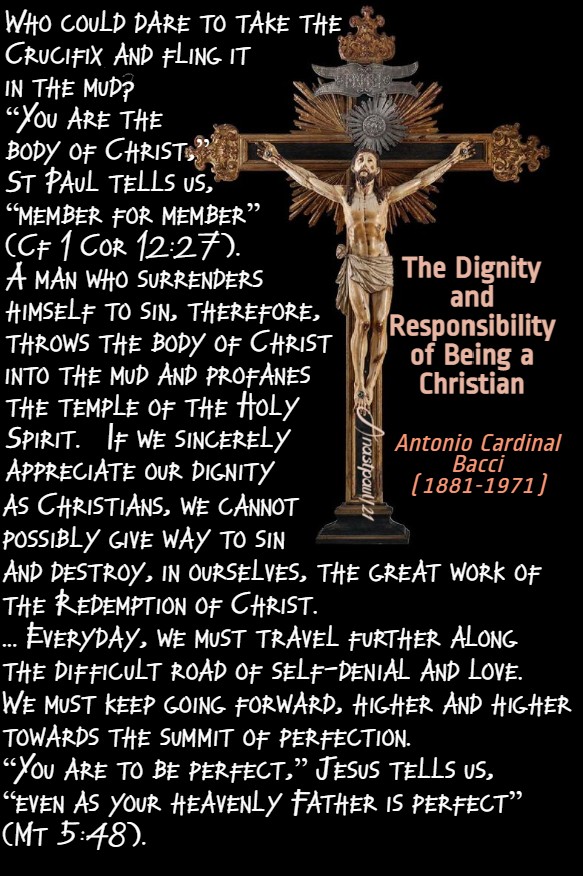
Who could dare to take the Crucifix and fling it in the mud?
“You are the body of Christ,” St Paul tells us, “member for member” (Cf 1 Cor 12:27).
A man who surrenders himself to sin, therefore, throws the body of Christ into the mud and profanes the temple of the Holy Spirit.
If we sincerely appreciate our dignity as Christians, we cannot possibly give way to sin and destroy, in ourselves, the great work of the Redemption of Christ.
We should, moreover, practise virtue.
We should live in and for Jesus, like St Paul, who said, “For to me to live is Christ … ” (Phil 1:21).
Everyday, we must travel further along the difficult road of self-denial and love.
We must keep going forward, higher and higher towards the summit of perfection.
“You are to be perfect,” Jesus tells us, “even as your heavenly Father is perfect” (Mt 5:48).
Even this is not enough, however!
A genuine Christian is not satisfied with avoiding sin and sanctifying himself but, he tries, by every means at his disposal, by word, action, good example and sacrifice, to spread the Kingdom of Christ among his fellow-men.”

Antonio Cardinal Bacci

Part One of ‘The Dignity and Responsibility of Being a Christian’ here:
https://anastpaul.com/2020/04/29/thought-for-the-day-29-april-the-dignity-and-responsibility-of-being-a-christian/

Posted in "Follow Me", CHRIST, the WAY,TRUTH,LIFE, DOCTORS of the Church, FATHERS of the Church, QUOTES for CHRIST, QUOTES of the SAINTS, QUOTES on CONVERSION, QUOTES on DISCIPLESHIP, QUOTES on EVANGELISATION, QUOTES on FAITH, QUOTES on PERSEVERANCE, QUOTES on REPENTANCE, The KINGDOM of GOD / HEAVEN, The WORD

Quote/s of the Day – 11 January – The kingdom of God is at hand, repent and believe in the gospel.

Quote/s of the Day – 11 January – The Sixth Day in the Octave of Epiphany, Readings: Hebrews 1:1-6, Psalms 97:1 and 2, 6 and 7, 9, Mark 1:14-20

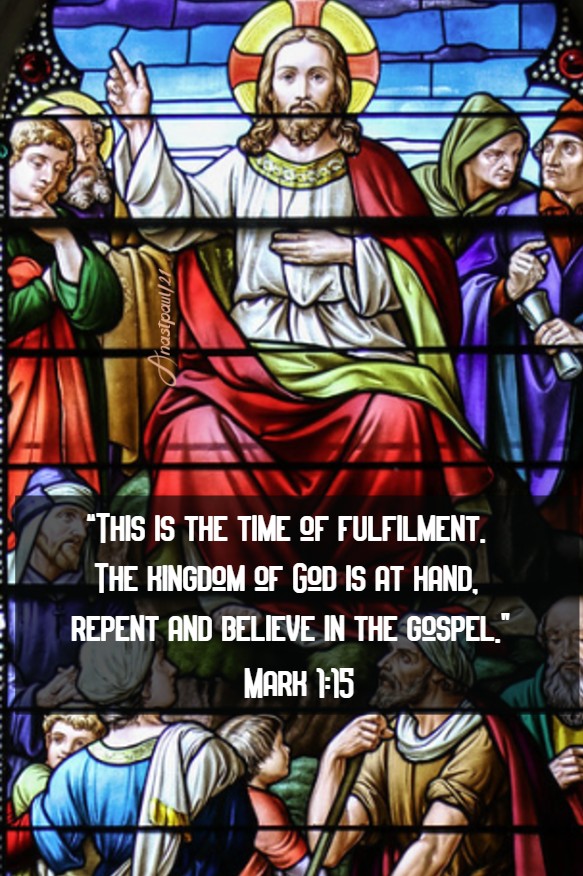
“This is the time of fulfilment.
The kingdom of God is at hand,
repent and believe in the gospel.”

Mark 1:15

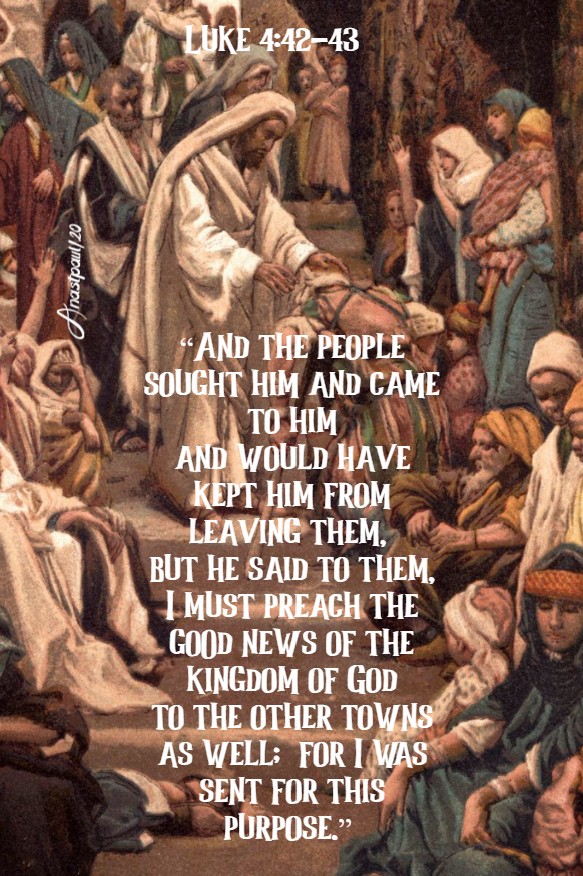
“And the people sought him and came to him
and would have kept him from leaving them,
but he said to them,
I must preach the good news of the kingdom of God
to the other towns as well; for I was sent for this purpose.”

Luke 4:42-43

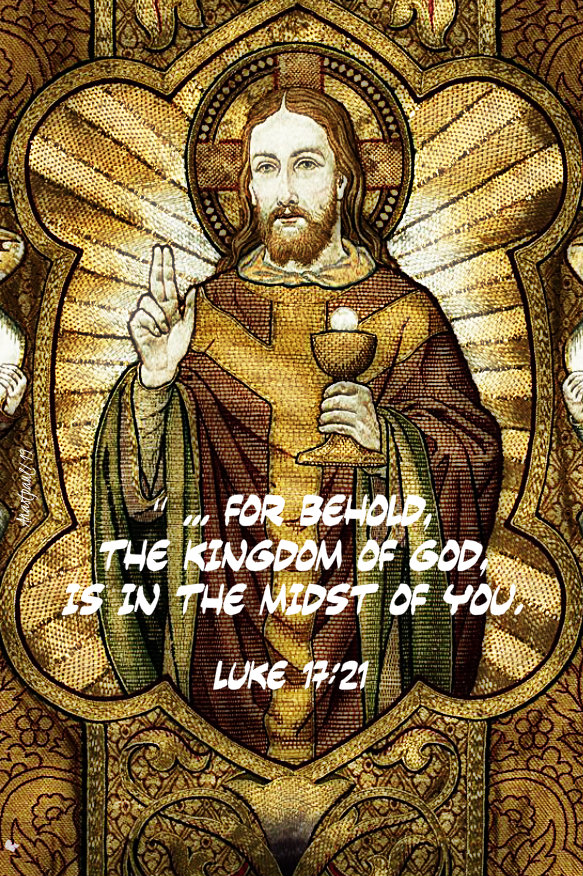
” … For behold,
the kingdom of God,
is in the midst of you.”

Luke 17:21

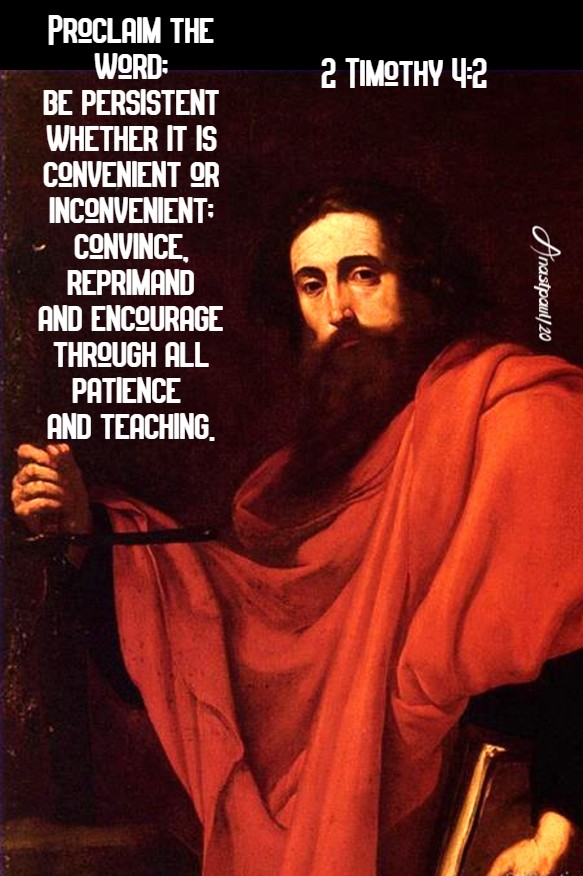
“Proclaim the word;
be persistent
whether it is convenient or inconvenient;
convince,
reprimand
and encourage
through all patience and teaching.”

2 Timothy 4:2

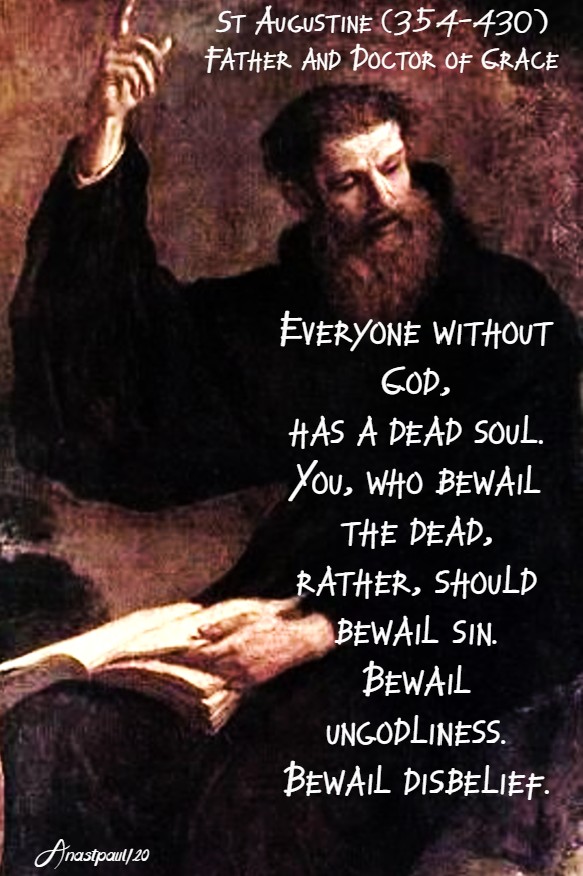
“Everyone without God,
has a dead soul.
You, who bewail the dead,
rather, should bewail sin.
Bewail ungodliness.
Bewail disbelief.”

St Augustine (354-430)
Father and Doctor of Grace

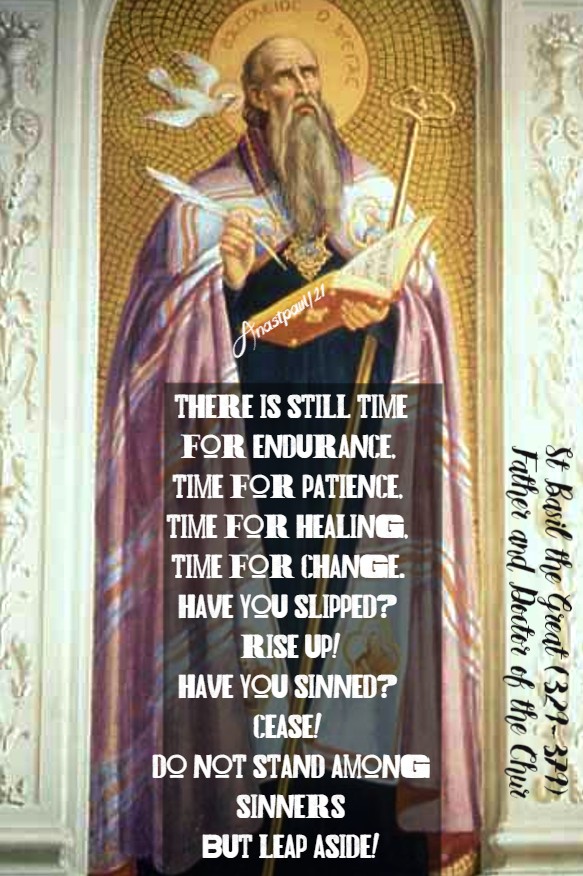
“There is still time for endurance,
time for patience,
time for healing,
time for change.
Have you slipped?
Rise up!
Have you sinned?
Cease!
Do not stand among sinners
but leap aside!”

St Basil the Great (329-379)
Father and Doctor of the Church

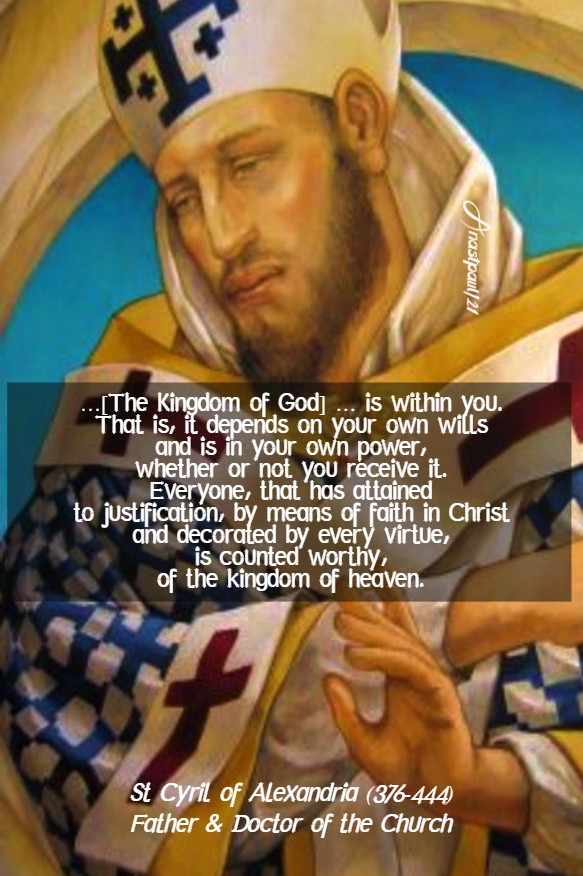
” …[The Kingdom of God] … is within you.
That is, it depends on your own wills
and is in your own power,
whether or not you receive it.
Everyone, that has attained
to justification, by means of faith in Christ
and decorated by every virtue,
is counted worthy,
of the kingdom of heaven.”

St Cyril of Alexandria (376-444)
Father & Doctor of the Church

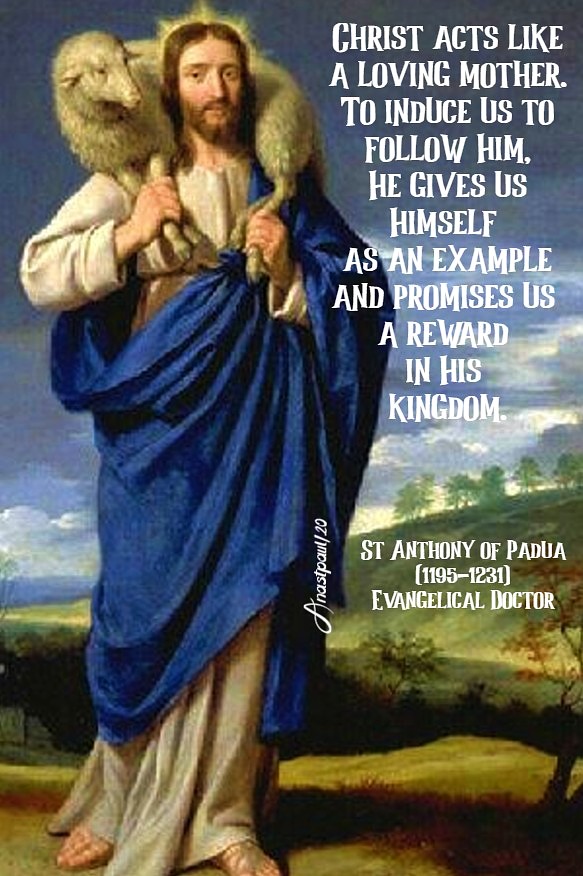
“Christ acts like a loving mother.
To induce us to follow Him,
He gives us Himself as an example
and promises us a reward in His kingdom.”

St Anthony of Padua (1195-1231)
Evangelical Doctor

Posted in CHRIST, the WAY,TRUTH,LIFE, DOCTORS of the Church, FATHERS of the Church, ONE Minute REFLECTION, QUOTES for CHRIST, QUOTES of the SAINTS, QUOTES on DEATH, QUOTES on HEAVEN, QUOTES on HELL, QUOTES on SACRED SCRIPTURE, The BLESSED VIRGIN MARY, The KINGDOM of GOD / HEAVEN, The WORD

One Minute Reflection – 11 January – “The kingdom of God is at hand ” – Mark 1:15

One Minute Reflection – 11 January – The Sixth Day in the Octave of Epiphany, Readings: Hebrews 1:1-6Psalms 97:1 and 26 and 79Mark 1:14-20

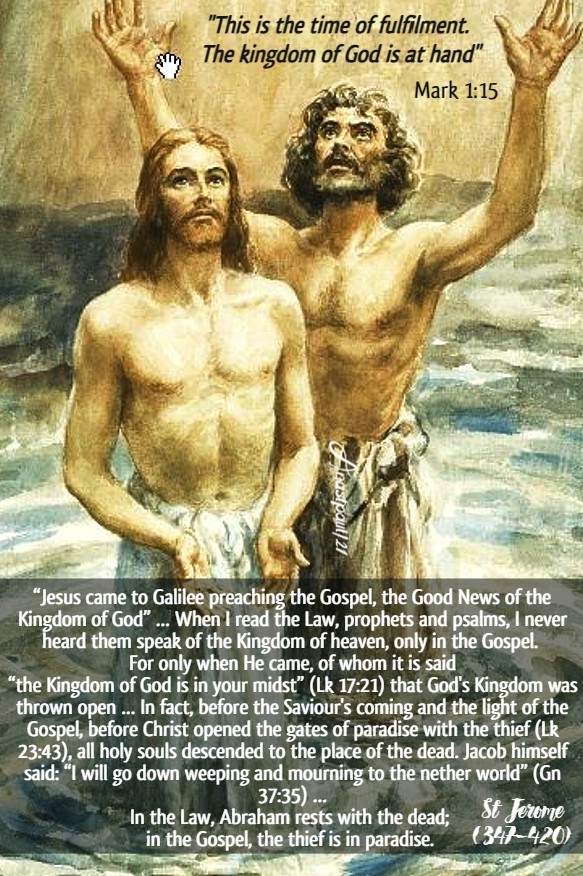
“This is the time of fulfilment. The kingdom of God is at hand ”– Mark 1:15

REFLECTION “After John had been arrested, Jesus came into Galilee ” According to our interpretation, John stands for the Law and Jesus the Gospel. Indeed, John says: “One mightier than I is coming after me …” (Mk 1:7) and elsewhere: “He must increase, I must decrease” (Jn 3:30): in this way he compares the Law with the Gospel. And afterwards he says: “I – that is, the Law – baptise you with water; he – that is the Gospel – will baptise you in the Holy Spirit” (Mk 1:8). And so, Jesus comes because John had been put in prison. In effect, the Law is finished, it has been brought to an end, it no longer has its former freedom. But we have passed from the Law to the Gospel …

“Jesus came to Galilee preaching the Gospel, the Good News of the Kingdom of God” … When I read the Law, prophets and psalms, I never heard them speak of the Kingdom of heaven, only in the gospel. For only when He came, of whom it is said “the Kingdom of God is in your midst” (Lk 17:21) that God’s Kingdom was thrown open … In fact, before the Saviour’s coming and the light of the Gospel, before Christ opened the gates of paradise with the thief (Lk 23:43), all holy souls descended to the place of the dead. Jacob himself said: “I will go down weeping and mourning to the nether world” (Gn 37:35) … In the Law, Abraham rests with the dead; in the Gospel, the thief is in paradise. We are not denigrating Abraham; we all want to rest in his bosom (Lk 16:23) but we prefer Christ to Abraham, the Gospel to the Law.

We read that after Christ’s Resurrection many saints appeared in the holy city (Mt 27:53). Our Lord and Saviour preached on earth and preached, too, to the underworld. He died and descended to hell to free the souls held captive there (1 Pt 3:18f.).” – St Jerome (347-420) Priest, Translator of Sacred Scripture, Father and Doctor of the Church – Homilies on Saint Mark’s Gospel, no.2A ; SC 494

PRAYER – Lord, be the beginning ad the end of all that we are and do and say. Prompty our actions with Your grace and complete them with Your all-powerful help. Let our hearts belong to You alone and make us Your obedient servants. By the intercession of the Blessed Mary our Hope and all the Saints and Angels, we make our prayer through Christ our Lord, amen.

Posted in Our MORNING Offering, PRAYERS for SEASONS, PRAYERS of the CHURCH, The HOLY NAME

Our Morning Offering – 11 January – The Golden Arrow

Our Morning Offering – 11 January – Month of the Most Holy Name of Jesus

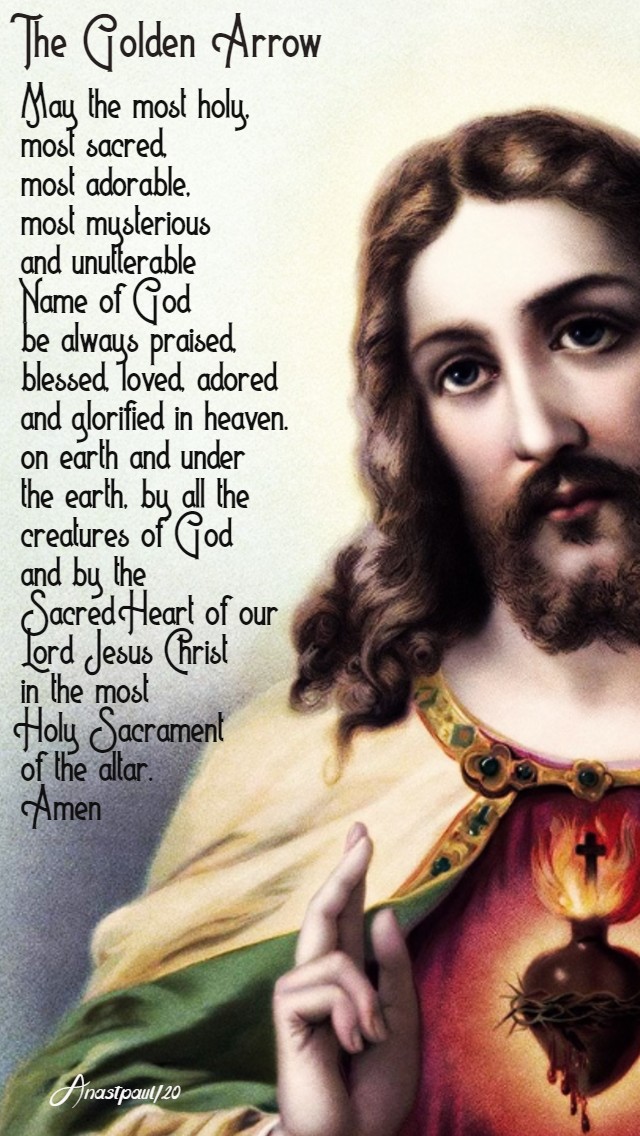
The Golden Arrow

May the most holy,
most sacred,
most adorable,
most mysterious
and unutterable Name of God
be always praised,
blessed,
loved,
adored
and glorified in heaven.
on earth and under the earth,
by all the creatures of God
and by the Sacred Heart
of our Lord Jesus Christ
in the most Holy Sacrament
of the altar.
Amen

This prayer was revealed by Jesus Himself to a Carmelite Nun of Tours in 1843 as a reparation for blasphemy. “This Golden Arrow will wound My Heart delightfully” He said “and heal the wounds, inflicted by blasphemy.”

Posted in SAINT of the DAY

Saint of the Day – 11 January – Saint Salvius of Amiens (Died c 625)

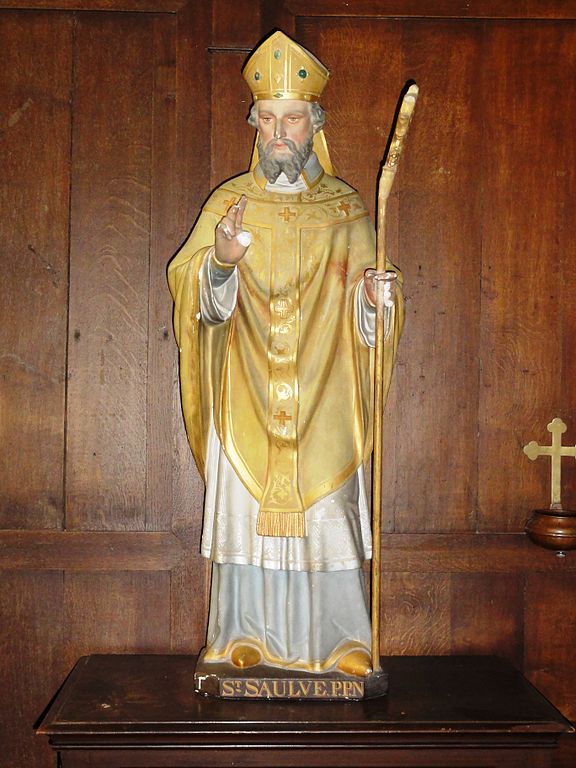
Saint of the Day – 11 January – Saint Salvius of Amiens (Died c 625) Bishop, Monk, miracle-worker. St Salvius was the fifth Bishop of the French city ​​of Amiens . He lived in the 6th century and 7th century. He is often confused with Salvius of Albi and Salvius of Valencijn. Patronages – against speech impediments, of Montreui, the Frisian town of Dronrijp and of the town of Saint-Sauflieu, in France. He is also known as – Sauve or Saulve (also of Montreuil).

Salvius came from a wealthy Amiens family. He chose an ascetic lifestyle as a hermit but a group of followers gathered around him. One of these followers was St Ingoald (died around 600, memorial on 29 October). The Montreuil Monastery was created from this group of followers. Salvius himself was the first Abbot.He lived a frugal life and was very kind to his fellow man.

According to legend, Salvius was miraculously elected Bishop of Amiens . The miracle is that Salvius had died after a holy life and his fellow monks had entombed his corpse and then watched around the Coffin that night as is the custom, in the “Wake.” In the morning, the coffin opened with a big bang and Salvius opened his eyes from his sleep. He told the monks that he was indeed on his way to the heavenly world but God had sent him back to continue to serve on earth. As a result of this amazing experience, he was elected Bishop to succeed Bishop Ado.

As the Bishop, Salvius was gracious and lived a life of great care and mercy to the poor. By the grace of God, Salvius was able to perform many miracles, curing the blind, the deaf and those with other ailments. On one of his journeys as a Bishop, he healed a deaf and dumb child. He is, therefore, named as patron, for those suffering from speech impediments.

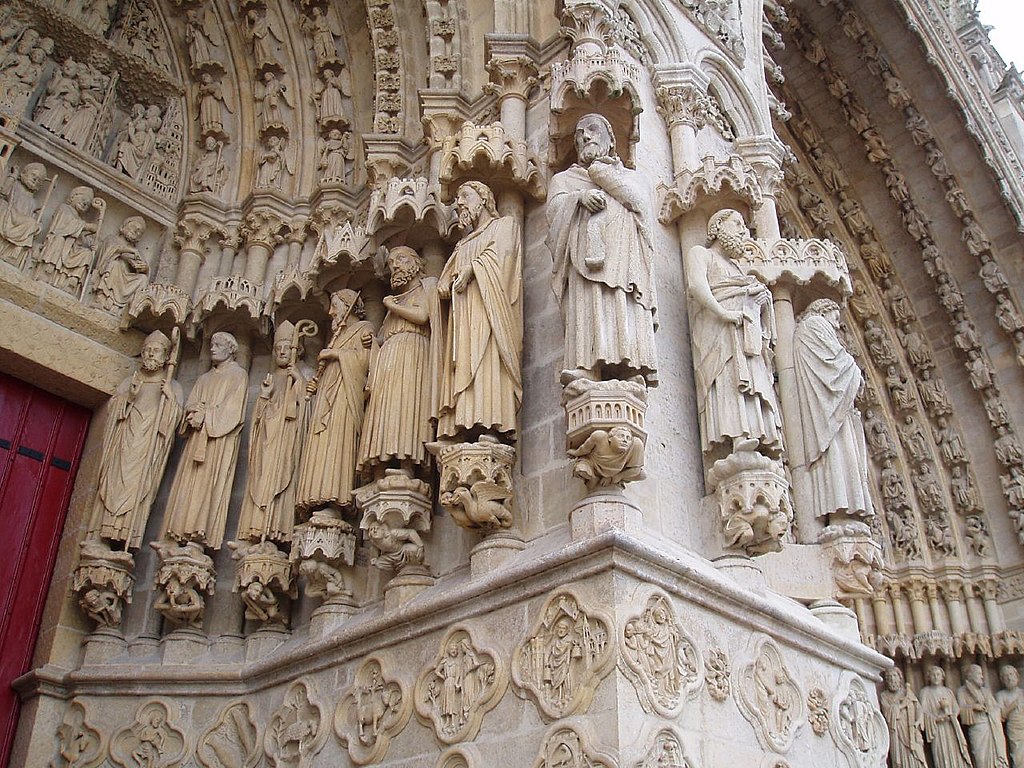
He built a church dedicated to the apostle Peter at Montreuil and also discovered the place where the body of St Firmin of Amiens was buried. St Firmin, who died in c 303 as a Martyr, was the first Bishop of Amiens. Salvius came to the right place with the help of the Holy Spirit. Here he glanced up into the sky, in prayer and a ray of sunshine brought about a shaking of the earth precisely at the site of Firminius’ tomb. Salvius commissioned the remains of Firminius to be taken to Notre-Dame of Amiens. The image below shows our Saint as the 3rd from the left in the St Firmin (in the middle) portal of the Notre-Dame of Amiens.

OLYMPUS DIGITAL CAMERA

Miraculous cures continued at his grave. His relics rest at Montreuil, in Picardy, in the Benedictine Abbey which bears his name, whither they were translated from the Cathedral of Amiens, several years after his death, as is related in his anonymous life. A relic of this saint was formerly kept with great veneration in the Cathedral of Canterbury, mentioned in the history of that church.

Posted in MARIAN TITLES, SAINT of the DAY

Our Lady of Bessiere and Memorials of the Saints – 11 January

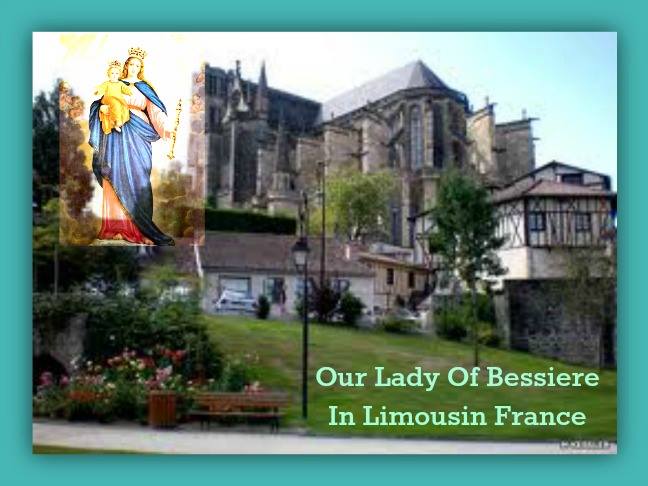
Notre-Dame de Bessiere / Our Lady of Bessiere, Limousin, France – 11 January:

The region of Limousin is nestled near the heart of France, and the essentially rural area has suffered much from heresies such as that of the French Huguenots over the centuries. Devotion to Our Lady is always a sure remedy, so much so that one of her titles is Destroyer of Heresies.
Among the many miracles said to have taken place at the Shrine of Our Lady of Bessiere, in Limousin, France, is one told of a certain heretic who had derided the devotion paid to Our Lady. He would hide in the woods and waylay pilgrims on their way to the Shrine.
Fearing neither God nor his Holy Mother, he would block their way, mock them for undertaking such a journey, sneer at their Christian beliefs and taunt them with sarcastic reproaches and foul ridicule.
The unhappy man was soon to regret his folly. He was severely punished one day, as upon returning home, he saw his house go up in flames before his very eyes. Even with the assistance of his neighbours, all attempts to put out the flames were fruitless. In a matter of minutes his house was fully engulfed in flames.
As the fire was at its height, Our Lady appeared in the flames in all her majesty and was seen to frown upon the heretic. This vision was witnessed by all present, who immediately fell upon their knees, urging the heretic to do the same.
A broken man, frightened and frustrated, he prostrated himself, calling upon the Mother of God to be merciful to him.
His pleas were not in vain but it was not his house that she saved but his soul. In that moment he experienced a true and lasting conversion. He went onto live a very penitential life and died true believer.

St Alexander of Fermo
St Anastasius of Suppentonia
Blessed Ana Maria Janer Anglarill (1800-1885)
Her Story:

https://anastpaul.com/2020/01/11/saint-of-the-day-11-january-blessed-ana-maria-janer-anglarill-1800-1885/
St Boadin of Ireland
St Breandan of Ireland
St Eithne
St Fedelemia
Bl Francis Rogaczewski
St Francisca Salesia Aviat
St Honorata of Pavia
St Pope Hyginus
St Leucius of Alexandria
St Leucius of Brindisi
St Liberata of Pavia
St Lucius the Soldier
St Luminosa of Pavia
St Mark the Soldier
St Michael of Klopsk
St Palaemon
St Paldo
St Peter Balsam
St Peter of Alexandria
St Peter of Anea
St Peter the Soldier
St Salvius of Amiens (Died c 625) Bishop
St Severus of Alexandria
St Speciosa of Pavia
St Taso
St Theodosius the Soldier
St Theodosius of Antioch
St Theodosius the Cenobiarch
His Life:

https://anastpaul.com/2017/01/11/saint-of-the-day-11-january-st-theodosius-the-cenobiarch/
St Tipasio of Tigava
St Tommaso da Cori OFM (1655-1729)
About St Tommaso:

https://anastpaul.com/2019/01/11/saint-of-the-day-11-january-st-tommaso-da-cori-ofm-1655-1729/

St Vitalis of Gaza (Died c 625)
Biography:

https://anastpaul.wordpress.com/2018/01/11/saint-of-the-day-11-january-st-vitalis-of-gaza-died-c-625/

Posted in "Follow Me", BAPTISM, MEDITATIONS - ANTONIO CARD BACCI, ORIGINAL SIN, QUOTES - J R R Tolkien and MORE, QUOTES on GRACE, QUOTES on REPENTANCE, QUOTES on SIN

Thought for the Day – 10 January – The Sacrament of Baptism

Thought for the Day – 10 January – Meditations with Antonio Cardinal Bacci (1881-1971)

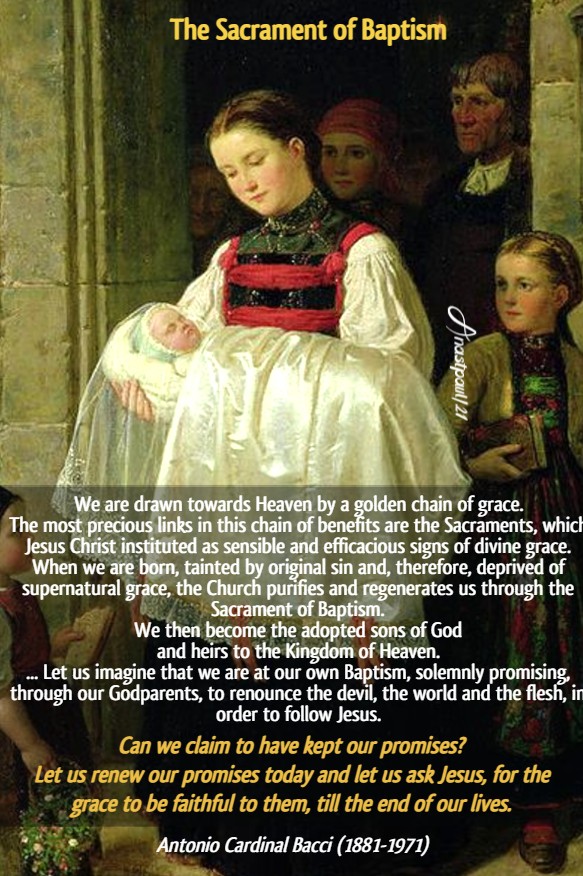
The Sacrament of Baptism

“We are drawn towards Heaven by a golden chain of grace.
The most precious links in this chain of benefits are the Sacraments, which Jesus Christ instituted as sensible and efficacious signs of divine grace.
When we are born, tainted by original sin and, therefore, deprived of supernatural grace, the Church purifies and regenerates us through the Sacrament of Baptism.
We then become the adopted sons of God and heirs to the Kingdom of Heaven.

It is helpful for us to repeat the Baptismal vows which were once made by others, in our name.
Let us imagine that we are at our own Baptism, solemnly promising, through our Godparents, to renounce the devil, the world and the flesh, in order to follow Jesus.

Can we claim to have kept our promises?
Or are we forced to admit that we have not always lived up to our obligations?

Let us renew our promises today and let us ask Jesus, for the grace to be faithful to them, till the end of our lives.”

Antonio Cardinal Bacci

Posted in "Follow Me", BAPTISM, CHRIST the LIGHT, DOCTORS of the Church, FATHERS of the Church, FEASTS and SOLEMNITIES, QUOTES for CHRIST, QUOTES of the SAINTS, QUOTES on DISCIPLESHIP, QUOTES on SIN

Quote/s of the Day – 10 January – Baptism

Quote/s of the Day – 10 January – Feast of the Baptism of the Lord

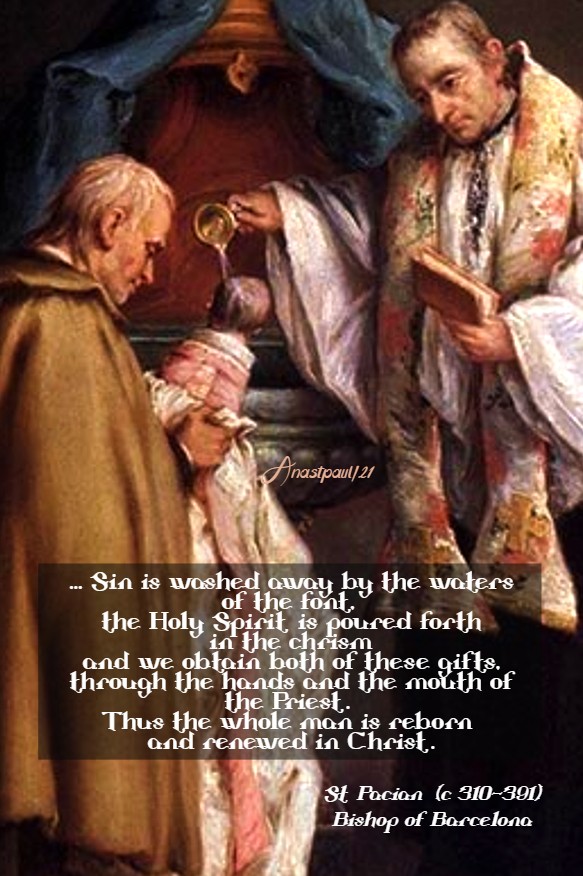
“ … Sin is washed away by the waters of the font,
the Holy Spirit is poured forth in the chrism
and we obtain both of these gifts,
through the hands and the mouth of the Priest.
Thus the whole man is reborn
and renewed in Christ.”

St Pacian (c 310–391)
Bishop of Barcelona

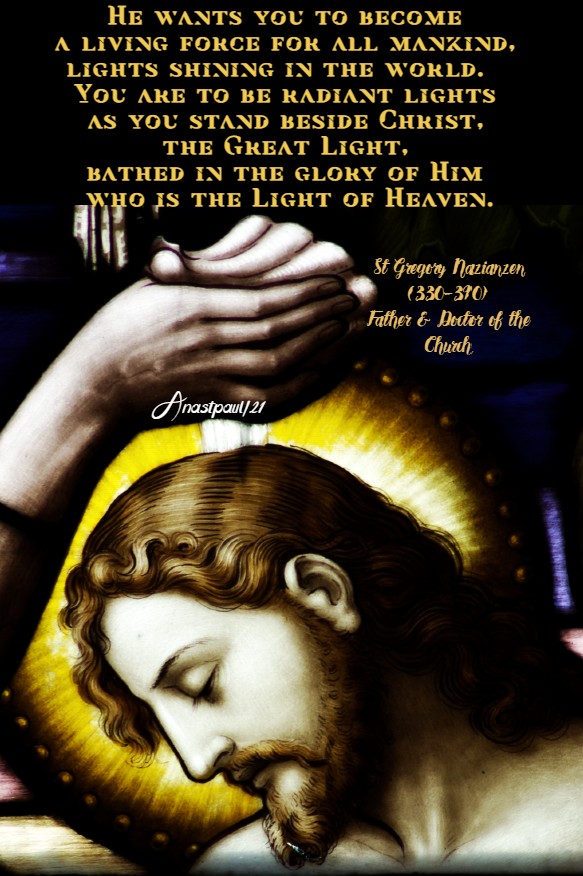
“He wants you to become
a living force for all mankind,
lights shining in the world.
You are to be radiant lights
as you stand beside Christ,
the Great Light,
bathed in the glory of Him
who is the Light of Heaven.”

St Gregory Nazianzen (330-390)
Father & Doctor of the Church

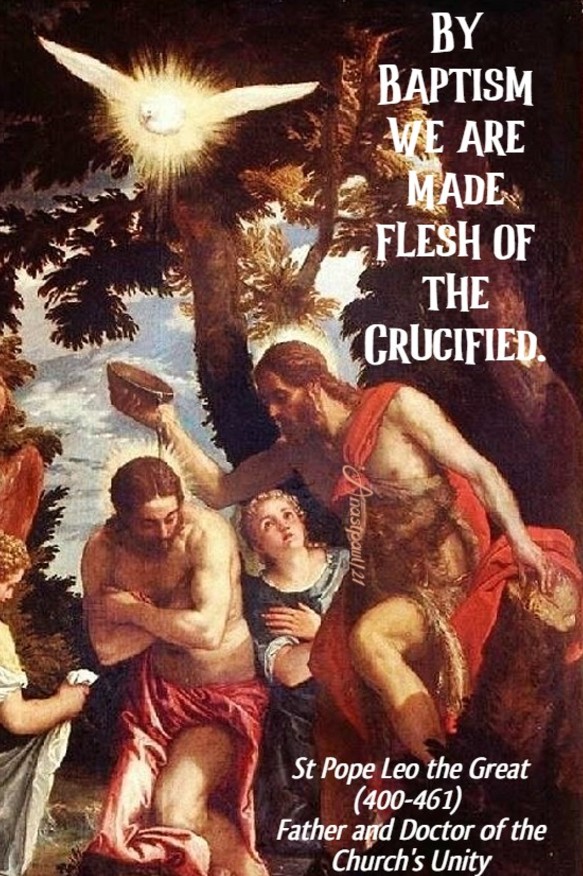
“By Baptism we are made flesh of the Crucified.”

St Pope Leo the Great (400-461)
Father and Doctor of the Church’s Unity

More here:
https://anastpaul.com/2018/01/08/quote-s-of-the-day-8-january-the-feast-of-the-baptism-of-the-lord/

Posted in "Follow Me", BAPTISM, FATHERS of the Church, FEASTS and SOLEMNITIES, HYMNS, ONE Minute REFLECTION, PRAYERS for VARIOUS NEEDS, PRAYERS of the CHURCH, QUOTES of the SAINTS, The WORD

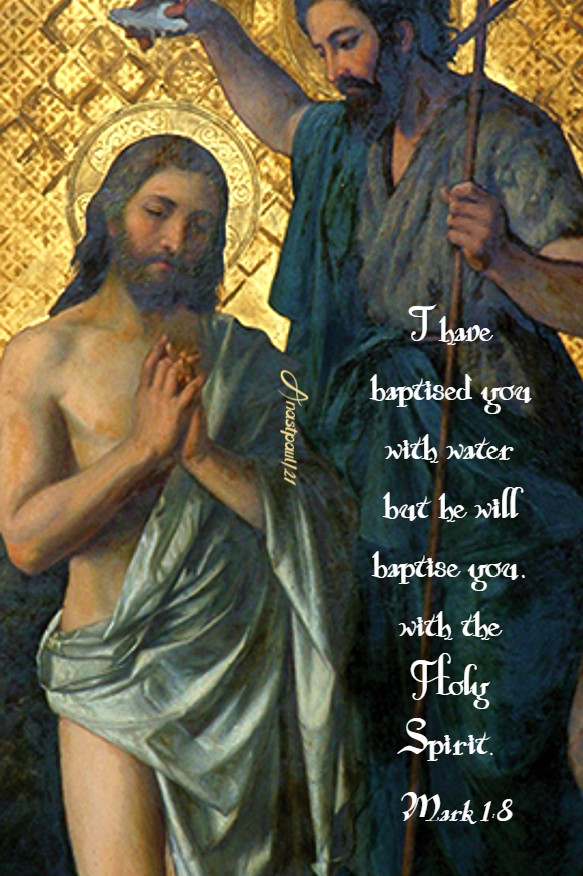
One Minute Reflection – 10 January -“ He will baptise you, with the Holy Spirit.” – Mark 1:8

One Minute Reflection – 10 January – Feast of the Baptism of the Lord , Readings: Isaiah 55:1-11, Isaiah 12:2-3,4,5-6, 1 John 5:1-9, Mark 1:7-11

“I have baptised you with water but he will baptise you, with the Holy Spirit.” – Mark 1:8

REFLECTION – “Today, the Lord Jesus has come to be baptised. He wanted to wash His body in the water of the Jordan.
Someone might say: “Why did He who was the Holy One want to be baptised?” So listen.
Christ was baptised, not in order to be sanctified by the water but so that He, Himself would sanctify the water and would purify the waves, that He touched by His personal action.
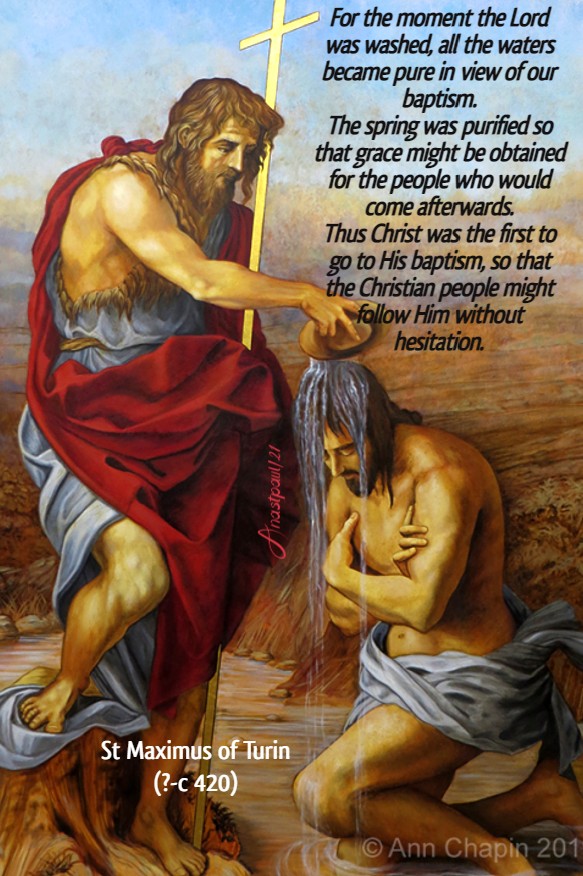
Thus, we have to do with the consecration of the water much more than with that of Christ. For the moment the Lord was washed, all the waters became pure in view of our baptism. The spring was purified so that grace might be obtained for the people who would come afterwards. Thus Christ was the first to go to His baptism, so that the Christian people might follow Him without hesitation.
And in this I perceive a mystery.
Did not the column of fire go ahead into the Red Sea in this way, so as to encourage the children of Israel to walk behind it? It crossed the water first so as to break a path for those who would follow.
According to the testimony of the Apostle Paul, this event was a symbol of baptism (1 Cor 10:1f.). Without any doubt, when the people were covered by the cloud and carried by the water, it was a kind of baptism.
And all that was fulfilled by the same Christ our Lord, who in the column of His body now precedes the Christian people to baptism, just as He preceded the children of Israel across the sea, in the column of fire. The same column, which in times past enlightened the eyes of those who were walking, now gives light to the hearts of the believers. Then it marked a solid path in the waves, now in this bath, it strengthens the steps of faith.” – St Maximus of Turin (?-c 420) BishopSermon for the feast of the Epiphany

PRAYER – By the Benedictines of Stanbrook
When Jesus comes to be baptised,
He leaves the hidden years behind,
The years of safety and of peace,
To bear the sins of all mankind.

The Spirit of the Lord comes down
Anoints the Christ to suffering,
To preach the word, to free the bound
And to the mourner comfort bring.

Our everlasting Father, praise,
With Christ, His well-beloved Son,
Who with the Soirit reigns serene,
Untroubled Trinity in One.
Amen

Posted in DOCTORS of the Church, FATHERS of the Church, FEASTS and SOLEMNITIES, Our MORNING Offering, PRAYERS of the SAINTS, The HOLY EUCHARIST / The HOLY MASS

Our Morning Offering – 10 January – O Christ, our Master and God

Our Morning Offering – 10 January – Feast of the Baptism of the Lord

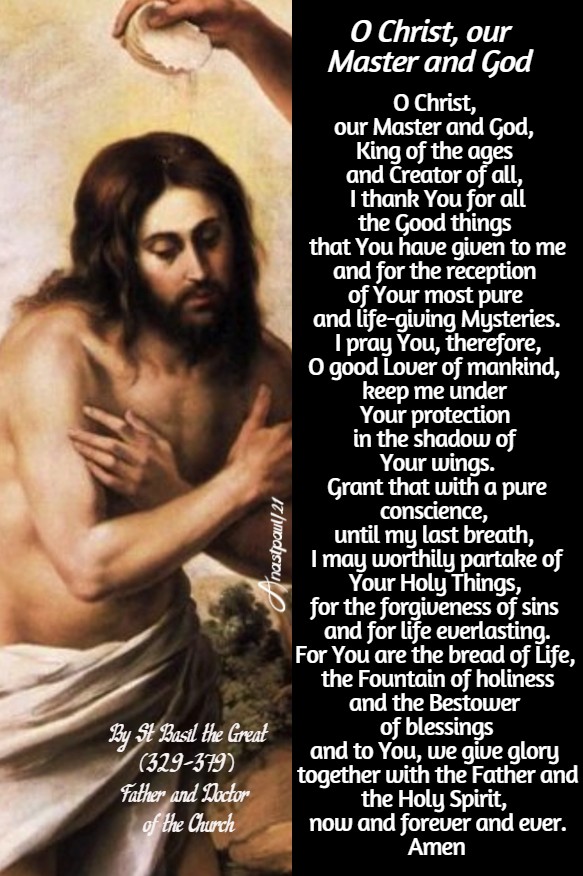
O Christ, our Master and God
St Basil the Great (329-379)
Father and Doctor of the Church

O Christ, our Master and God,
King of the ages and Creator of all,
I thank You for all the Good things
that You have given to me
and for the reception of Your most pure
and life-giving Mysteries.
I pray You, therefore, O good Lover of mankind,
keep me under Your protection
in the shadow of Your wings.
Grant that with a pure conscience,
until my last breath,
I may worthily partake of Your Holy Things,
for the forgiveness of sins
and for life everlasting.
For You are the bread of Life,
the Fountain of holiness
and the Bestower of blessings
and to You, we give glory
together with the Father and the Holy Spirit,
now nad forever and ever.
Amen

Posted in SAINT of the DAY

Saint of the Day – 10 January – Saint William of Bourges O.Cist (c 1140-1209)

Saint of the Day – 10 January – Saint William of Bourges O.Cist (c 1140-1209) Archbishop of Bourges from 1200 until his death, Confessor, Monk, renowned for miracles and virtue. He served as a Canon in Soissons and Paris before he entered the Order of Grandmont. Sometime later he entered the Cistercians. He was known to practice austerities, such as abstaining from meat and wearing a hair shirt. He was also known for his deep devotion to the Blessed Sacrament and for his conversion of sinners. He oversaw the construction of the new archdiocesan Cathedral that his predecessor had authorised and in which he himself would be buried. He performed eighteen miracles in life and many more in death. His Canonisation was celebrated under Pope Honorius III, a mere 9 years after his death, in 1218 and he was named as the Patron Saint for the Parisian college, i.e. the University of Paris as well as of gunsmiths. He was born as Guillaume de Donjeon in the 12th century in Nevers, France and died on 10 January 1209 at Bourges, France of natural causes whilst at prayer. He is also known as Guillaume de Bourges, William Berruyer, William de Don Jeon, William the Confessor. Additional Memorial – 8 November as one of the Saints of the Diocese of Evry.

William, of the illustrious family of the ancient Counts of Nevers, was educated by Peter the Hermit, Archdeacon of Soissons, his maternal uncle. From his early childhood William learned to despise the folly and emptiness of the world, to abhor its pleasures and to tremble at its dangers. At an early age he learned to elude the vanities of the world and to practice exercises of piety and the gaining of knowledge.

William was made a Canon, an Ecclesiastic attached to a Cathedral Church, first at Soissons and afterwards in Paris but, he soon resolved to abandon the world and retired into the solitude of Grandmont, where he lived with great regularity in that austere Order of Monks. Finally, he joined the Cistercians, flourishing with sanctity at the time and later was chosen to be Prior of the Abbey of Pontigny, then made Abbot of Challis.

On the death of Henri de Sully, Archbishop of Bourges, William was chosen to succeed him. The announcement of this new dignity which had fallen on him overwhelmed him with grief and he would not have accepted the office had not the Pope and his own Cistercian General, the Abbot of Citeaux, commanded him to do so.

This image shows St William receiving the order to accept the Bishopric

His first care in his new position was to conform his life to the most perfect rules of sanctity. He redoubled all his austerities, saying it was incumbent on him now, to do penance for others, as well as for himself. He always wore a hair shirt under his religious habit and never added to his clothing in winter or diminished it in summer; he never ate any flesh meat, though he had it at his table for guests. As the Bishop William proved to be instrumental in the ongoing construction of the Gothic Cathedral of Saint Stephen which his predecessor had commenced earlier in 1195. The lower half of the Cathedral was completed and around December 1208 the choir was almost finished, at which time, he was able to celebrate the Christmas Mass.

He began preparations for a mission among the Albigensians when he died just after midnight kneeling at the altar in contemplation and meditation in 1209, in this posture he expired. In his last will and testament he requested that he be buried in his hair shirt and be laid on ashes.

While this holy Bishop was laid out for veneration, an infirm young boy who wanted to venerate him but had to be carried to the Church by his mother, was completely cured of his infirmities and ran about proclaiming the miracle. The stone of his Tomb in the Cathedral Church of Bourges cured mortal wounds and illnesses and delivered possessed persons; the deaf and dumb, the blind, the mentally ill became sound. So many miracles occurred there that the monks could not record them all.

St William had fostered a deep and special devotion to the Blessed Sacrament and loved to spend much of his time at the foot of the altar contemplating it. The poor and sick were never forgotten for the Bishop visited them on frequent occasions, while he also ministered to the imprisoned. He defended clerical rights against state intervention. He once incurred wrath from King Philip II when the bishop enacted an interdict from Innocent III against him for having divorced his wife.

Posted in SAINT of the DAY

Feast of the Baptism of the Lord and Memorials of the Saints – 10 January

Baptism of the Lord – Feast and Fifth Day in the Octave of Epiphany

St Aldo of Carbonari
St Pope Agatho
Bl Anna of the Angels Monteagudo
St Arcontius of Viviers
Bl Benincasa of Cava
St Dermot of Inis Clothrann
St Domitian of Melitene
Bl Pope Gregory X
Bl Giles of Lorenzana
St Léonie Aviat/Françoise de Sales OSFS (1844-1914)
St Léonie’s Life:

https://anastpaul.com/2019/01/10/saint-of-the-day-10-january-st-leonie-francoise-de-sales-aviat-1844-1914/
St Marcian of Constantinople
Blessed Maria Dolores Rodríguez Sopeña y Ortega (1848-1918)
Her Lifestory:

https://anastpaul.com/2020/01/10/saint-of-the-day-10-january-blessed-maria-dolores-rodriguez-sopena-1848-1918/
St Maurilius of Cahors
St Nicanor of Cyprus
St Paul the Hermit
St Peter Orseolo OSB Cam. (928–987)
About St Peter:

https://anastpaul.wordpress.com/2018/01/10/saint-of-the-day-10-january-st-peter-orseolo-o-s-b-cam-928-987/

St Petronius of Die
Bl Raymond de Fosso
St Saethryth of Faremoutier
St Thecla of Lentini
St Thomian of Armagh
St Valerius of Limoges
St William of Bourges O.Cist (c 1140-1209) Bishop

Posted in CHRIST the LIGHT, CHRIST, the WAY,TRUTH,LIFE, MEDITATIONS - ANTONIO CARD BACCI, QUOTES - J R R Tolkien and MORE, QUOTES for the NEW YEAR, QUOTES on CONVERSION, QUOTES on FAITH, QUOTES on GRACE, QUOTES on LOVE of GOD, QUOTES on PURITY, QUOTES on SANCTITY

Thought for the Day – 9 January – “Lord, that I May See!”

Thought for the Day – 9 January – Meditations with Antonio Cardinal Bacci (1881-1971)

“Lord, that I May See!”

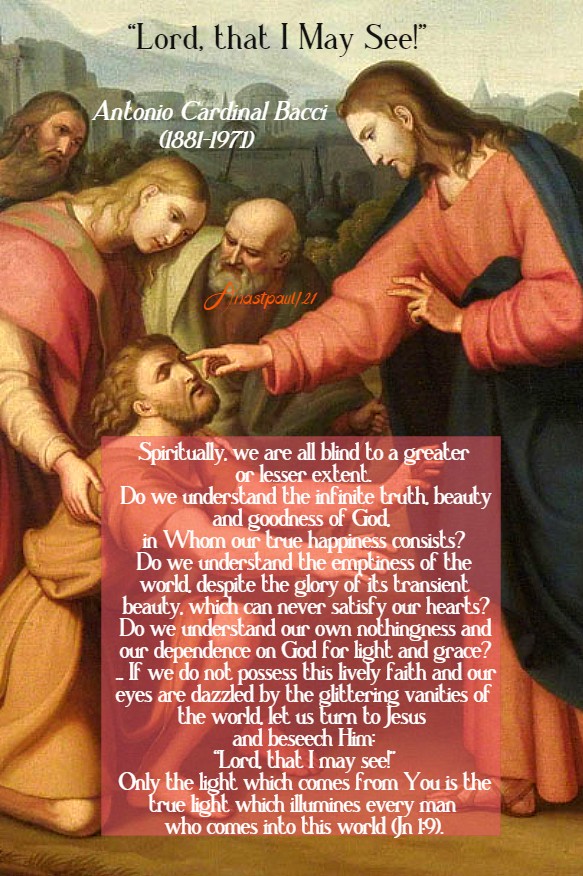
“Spiritually, we are all blind to a greater or lesser extent.
Do we understand the infinite truth, beauty and goodness of God, in Whom our true happiness consists?
Do we understand the emptiness of the world, despite the glory of its transient beauty, which can never satisfy our hearts?
Do we understand our own nothingness and our dependence on God for light and grace?
If we understood all this, then the scales of our spiritual blindness would fall from our eyes.
Our faith would be even purer and more heartfelt than that of the poor blind man of Jericho.
If we do not possess this lively faith and our eyes are dazzled by the glittering vanities of the world, let us turn to Jesus and beseech Him: “Lord, that I may see!”
Only the light which comes from You is the true light which illumines every man who comes into this world (Jn 1:9).”

Antonio Cardinal Bacci

Posted in "Follow Me", CHRIST the LIGHT, CHRIST, the WAY,TRUTH,LIFE, CHRISTMASTIDE!, DOCTORS of the Church, FATHERS of the Church, GOD ALONE!, PRACTISING CATHOLIC, QUOTES for CHRIST, QUOTES for the NEW YEAR, QUOTES of the SAINTS, QUOTES on DISCIPLESHIP, QUOTES on FAITH, QUOTES on GRACE, QUOTES on HUMILITY, QUOTES on SACRIFICE, QUOTES on SANCTITY, QUOTES on SELF-DENIAL, QUOTES on the CROSS of CHRIST, The FAITHFUL on PILGRIMAGE, The HEART, The HOLY CROSS, The WORD, Thomas a Kempis

Quote/s of the Day – 9 January – Run, … do not stay asleep

Quote/s of the Day – 9 January – Saturday after Epiphany

“He must increase
but I must decrease.”

John 3:30

“Do not have Jesus Christ on your lips
and the world in your heart.”

St Ignatius of Antioch (37-105)
Bishop & Martyr

“You hide your heart from man –
hide it from God if you can.
… Where will you go?
Where will you flee?
Do you want to hear some advice?
If you want to flee from Him – flee to Him.
Flee to Him by Confessing, not from Him, by hiding,
for you cannot hide but you can Confess.
Tell Him. “You are my refuge” (Ps 32[31]:7)
and let there be nursed in yo,
the love that alone leads to life.”

St Augustine (354-430)
Father and Doctor of Grace

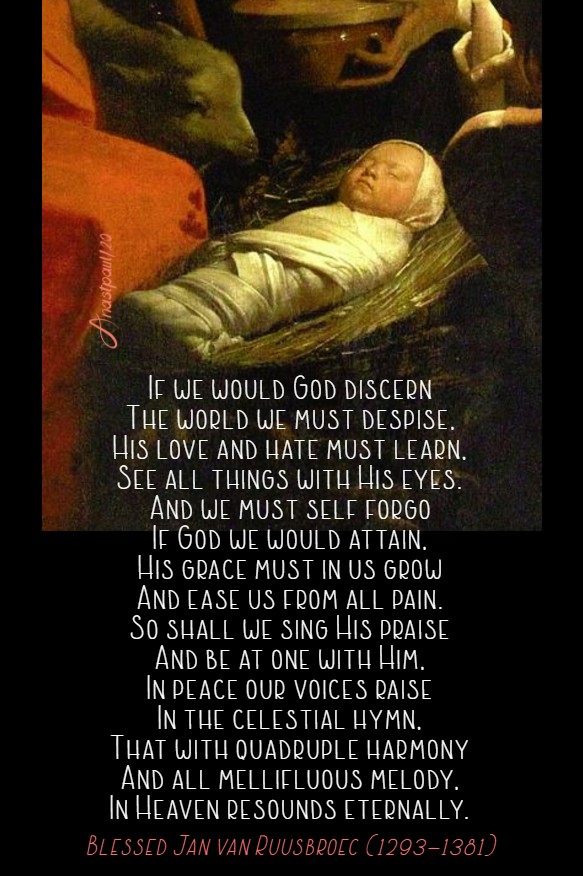
“If we would God discern
The world we must despise,
His love and hate must learn,
See all things with His eyes.
And we must self forgo
If God we would attain,
His grace must in us grow
And ease us from all pain.
So shall we sing His praise
And be at one with Him,
In peace our voices raise
In the celestial hymn,
That with quadruple harmony
And all mellifluous melody,
In Heaven resounds eternally.”

Bl Jan van Ruusbroec (1293-1381)

Embrace, then, Jesus crucified,
raising to Him the eyes of your desire!
Consider His burning love for you,
which made Jesus pour out His blood
from every part of His body!
Embrace Jesus crucified,
loving and beloved and in Him,
you will find true life because He is God made man.
Let your heart and your soul burn
with the fire of love drawn from Jesus on the Cross!
… You will have no other desire than to follow Jesus!
Run, … do not stay asleep
because time flies and does not wait one moment!
Dwell in God’s sweet love!”

St Catherine of Sienna (1347-1380)
Doctor of the Church

“Without the Way, there is no going,
Without the Truth, there is no knowing,
Without the Life, there is no living.”

Thomas à Kempis (1380-1471)

Posted in "Follow Me", CHRIST the LIGHT, CHRIST, the WAY,TRUTH,LIFE, CHRISTMASTIDE!, DOCTORS of the Church, FATHERS of the Church, ONE Minute REFLECTION, QUOTES for CHRIST, QUOTES of the SAINTS, QUOTES on FAITH, QUOTES on GRACE, QUOTES on HUMILITY, QUOTES on PRIDE, QUOTES on SANCTITY, QUOTES on SELF-DENIAL, St JOHN the BAPTIST, The WORD

One Minute Reflection – 9 January – “He must increase but I must decrease.” John 3:30

One Minute Reflection – 9 January – Saturday after Epiphany, Readings: 1 John 5:14-21, Psalms 149:1-2, 3-4,5 and 6 and 9, John 3:22-30

“He must increase but I must decrease.” – John 3:30

REFLECTION – “He must increase but I must decrease.” In John, human righteousness had reached the highest level that man could attain. Truth itself (Jn 14:6) said: “Among men, there has been none greater than John the Baptist” (cf. Mt 11:11); so no man could have surpassed him. But he was only a man, whereas Jesus Christ, was man and God. And since, according to Christian grace, we are asked (…) not to boast about ourselves but “whoever boasts let him boast in the Lord” (2 Cor 10:17), …, that is the reason John cried out: “He must increase but I must decrease.” To be sure, God is neither decreased nor increased in Himself. But for ourselves, to the extent that a true spiritual life develops, divine grace increases and human importance decreases until the temple of God, which is made up of all the members of the body of Christ (cf. 1 Cor 3:16), reaches it’s perfection, all domination, authority and importance have died and God has become “all in all” (cf. Col 1:16; 1 Cor 15:28). …
“The Word was the true light which enlightens everyone coming into this world, … from his fullness we have all received” (Jn 1:9.16). In itself, the light is always total light, however, it increases in one who is enlightened and diminishes when, what is without God in that person, is destroyed. For without God, we can only sin and this human power decreases, when divine grace overcomes and destroys the sin. The weakness of the creature gives way to the power of the Creator and the vanity of our egoism melts before the love that fills the universe. From the depths of our distress, John the Baptist acclaims the mercy of Christ: “He must increase and I must decrease.”St Augustine (354-430) Bishop, Father, Doctor of Grace Sermon for the birth of John the Baptist;

PRAYER – Almighty, ever-living God, through Christ, Your Son, You made of us a new creation. Shape us then, in His likeness, by the gift of the Holy Spirit, since in Him, our human nature now lives with You. Lord God, let the Blessed Virgin the Mother of Your Divine Son and our mother, ever commend us to Your love and care. May her charity and wisdom inspire us to treasure Your teaching and express it in our lives. Through our Lord Jesus, in union with the Holy Spirit, one God forever, amen.

Posted in CHRISTMASTIDE!, MARIAN PRAYERS, Our MORNING Offering, PRAYERS of the SAINTS

Our Morning Offering – 9 January – Let Me Love Your Jesus By St Ildephonsus

Our Morning Offering – 9 January – Saturday after Epiphany

Let Me Love Your Jesus
By St Ildephonsus (c 607-670)

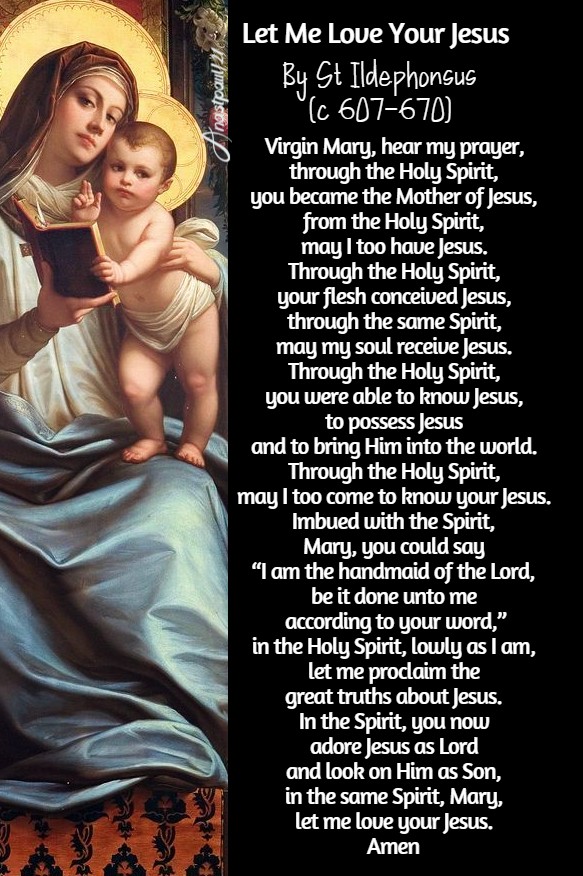
Virgin Mary, hear my prayer,
through the Holy Spirit,
you became the Mother of Jesus,
from the Holy Spirit,
may I too have Jesus.
Through the Holy Spirit,
your flesh conceived Jesus,
through the same Spirit,
may my soul receive Jesus.
Through the Holy Spirit,
you were able to know Jesus,
to possess Jesus
and to bring Him into the world.
Through the Holy Spirit,
may I too come to know your Jesus.
Imbued with the Spirit, Mary, you could say
“I am the handmaid of the Lord,
be it done unto me according to your word,”
in the Holy Spirit, lowly as I am,
let me proclaim the great truths about Jesus.
In the Spirit, you now adore Jesus as Lord
and look on Him as Son,
in the same Spirit, Mary,
let me love your Jesus.
Amen

Posted in SAINT of the DAY

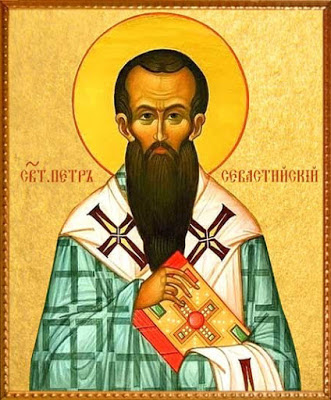
Saint of the Day – 9 January – St Peter of Sebaste (c 340-c 391) Bishop

Saint of the Day – 9 January – St Peter of Sebaste (c 340-c 391) Bishop of Sebaste in Lesser Armenia. Born in c 340 in Caesarea, Cappadocia and died in 391 in Sebaste, Lesser Armenia, of natural causes. He was the younger brother of Basil of Caesarea, Gregory of Nyssa, the famous Christian Hermit Naucratius and Macrina the Younger, all Saints. He is also known as Peter of Sebasteia, as well as a close friend and colleague of St Gregory of Nazianzen, another Doctor of the Church.

Any sibling who has ever idolised their older siblings, followed in their footsteps, or felt himself living in their shadow, can certainly relate to Peter of Sebaste, who was the youngest child of a true theological powerhouse of a family.

Peter lived in the second half of the fourth century and was born around the year 340. He was the youngest of ten children and lost his father in his cradle, some think before he was born. His older siblings were two of the Cappadocian Fathers—Basil of Caesarea, that is St Basil the Great and St Gregory of Nyssa—and the great female monk and desert mother, St Macrina the Younger. Macrina took the young Peter under her spiritual wing and trained him in the religious life of asceticism.

Family of Saints

Peter was a brilliant young student and, after a childhood spent studying the liberal arts, he turned all of his intellectual strength towards theological studies, focusing particularly on studying the Sacred Scriptures.

Basil was appointed the Bishop of Caesarea in 370 and, shortly after, ordained his younger brother, Peter, as a Priest. Soon after ordaining Peter, Basil took him into his Episcopal court as an advisor and confidante. Peter withdrew soon after from court and became, like Macrina, a solitary ascetic.

Peter helped Macrina and their mother start a monastic community of women and started a monastery community of men as well but, unfortunately, he was forced back into the public square when he was appointed the Bishop of Sebaste in Armenia.

As Bishop, Peter’s activities were not well-recorded but in his life and Episcopal administration, he displayed the same characteristics as Basil. Linked together in the closest manner with his brothers, he followed their writings with the greatest interest. At his advice Gregory of Nyssa wrote his great work, Against Eunomius, in defence of Basil’s similarly named book answering the polemical work of Eunomius. It was also at his desire, that Gregory wrote the Treatise on the Work of the Six Days, to defend Basil’s similar treatise against false interpretations and to complete it. Another work of Gregory’s, On the Endowment of Man, was also written at Peter’s suggestion and sent to the latter with an appropriate preface as an Easter gift in 397.

“A letter, which St Peter wrote and which is prefixed to St Gregory of Nyssa’s books against Eunomius, has entitled him to a rank among the ecclesiastical writers and is a standing proof, that though he had confined himself to sacred studies, yet by good conversation and reading and by the dint of genius and an excellent understanding, he was inferior to none but his incomparable brother Basil and his colleague and friend, St Gregory of Nazianzen, in solid eloquence.
In 381, he attended the general council held at Constantinople and joined the other Bishops in condemning the Macedonian heretics. Not only his brother, St Gregory of Nyssa but also Theodoret and all antiquity, bear testimony to his extraordinary sanctity, prudence and zeal. ”
(From the life of his sister St Macrina, composed by their brother St Gregory of Nyssa).

His death happened in summer, about the year 391 and his brother of Nyssa mentions, that his memory was honoured at Sebaste (probably the very year after his death) by an anniversary solemnity, with several martyrs of that city. His name occurs in the Roman Martyrology, on the 9th of January.

Posted in MARIAN TITLES, MIRACLES, SAINT of the DAY

Feast of the Black Nazarene, Our Lady of Mercy of Absam/Our Lady of Clemency (Austria) and Memorials of the Saints – 9 January

Feast of the Black Nazarene, 9 January:
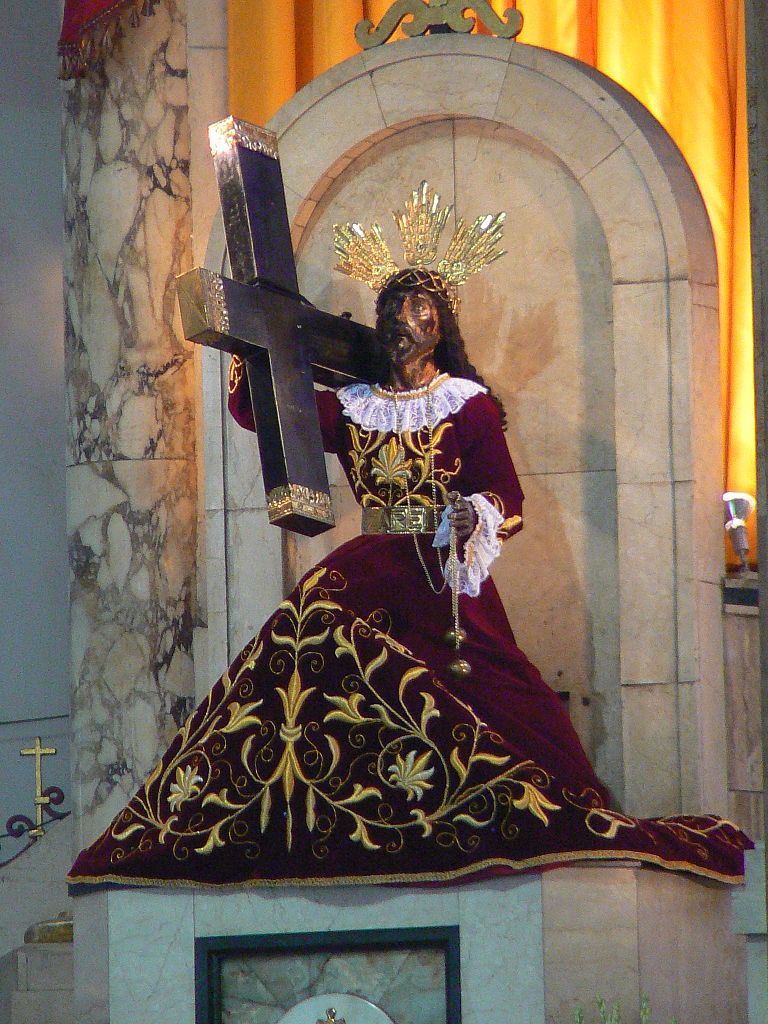
The Black Nazarene is a blackened, life-sized wooden icon of Jesus Christ carrying the Cross. It was constructed in Mexico in the early 17th Century by an Aztec carpenter. In 1606, Spanish Augustinian Missionaries originally brought the icon to Manila. Philippines. .In 1650, Pope Innocent X issued a Papal Bull which canonically established the Cofradia de Jesús Nazareno, to encourage devotion. In the 19th Century, Pope Pius VII granted Indulgences to those who piously pray before the image. Patronage: Quiapo, Philippines.

The ship caught fire, burning the icon but the locals kept the charred Statue. Miracles, especially cures, have been reported in its presence. The Church in which it stood, burned down around it in 1791 and, again in 1929. In 1645, the Church was destroyed by earthquakes and 1863 it was damaged once again. In 1945 the restored Church was badly shaken by bombings BUT still, throughout all these natural and un-natural disasters, the Statue remained standing amidst the devastation around it.

It used to be carried through the streets every January and Christians would rub cloths on it to make Relics but Centuries of this treatment have left the Statue in bad state and since 1998, a replica is paraded on the Feast day celebrations

Our Lady of Mercy of Absam/Our Lady of Clemency (Austria) (1797) – 9 January:
The Shrine is probably the only one in the world where Our Lady’s Shrine is enclosed in glass. It dates from the late 18th century.
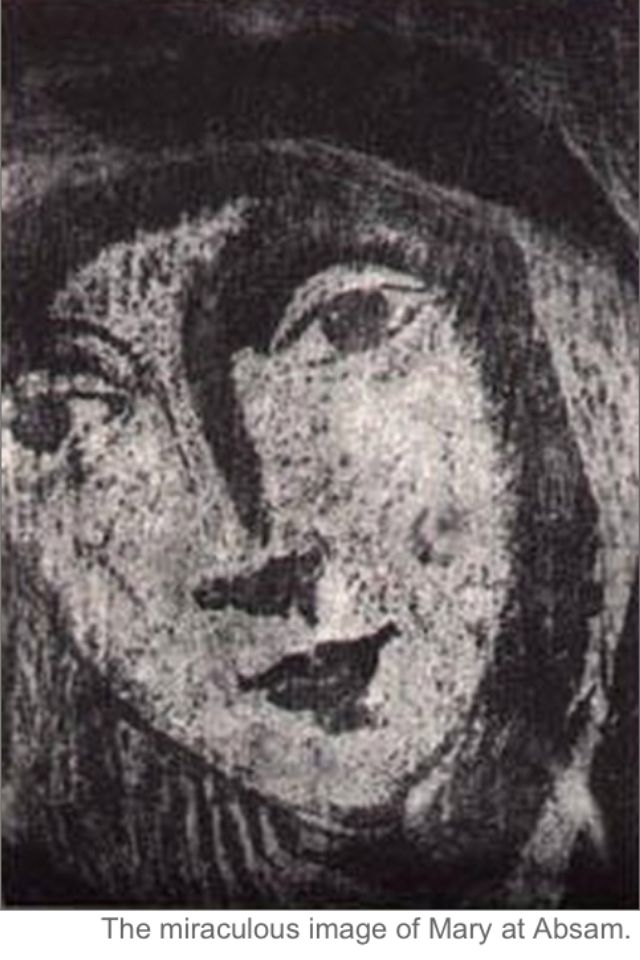
On a dark snowy day in 1797, Rosina Bucher, a young girl of the village of Absam near Innsbruck, was sitting by the window sewing in her farmhouse. It was between three and four in the afternoon and the light was just beginning to fade. Rosina looked up and saw a face in the window pane. She looked closely, not sure that she saw clearly and finally called her mother.
Others, including the Parish Priest, were called in to observe the strange happening. All agreed that it was a face, the face of the Mother of Sorrows. It was turned slightly and there was a strange expression on it.
The window was made up of several small panes of glass quite dark in colour. They removed the pane of glass with the picture on it, which was on the inside of the double window. After they had examined the glass, it was sent to experts in painting and glasswork. Here it was discovered that the face disappeared when water was put on the glass but came back as soon as the glass was dry. They analysed it chemically and could not discover by what process the picture had been placed there.

Rosina’s mother thought it was an omen of trouble. The Parish Priest, on the contrary, felt that Our Lady’s blessing must rest on the house. He asked her to let him have the picture for the Church. It can now be seen at St Mary’s Basilica Absam, which quickly became a popular shrine and the most important site of Marian pilgrimage in the Austrian federal state of Tyrol.
Many miracles have been recorded from the pilgrims who prayed there. The church was raised to the status of a Minor Basilica in June of 2000 by Pope John Paul II due to its popularity as a site of pilgrimage.
Our Lady of Clemency of Absam is still a popular place of pilgrimage but the most popular date is the anniversary of the discovery of the picture, 17 January. On the 17th of each month, there is a celebration of the discovery of the image. The picture is quite small, the size of a small pane of glass. It is not at all pretty and popularly known as Our Lady of Mercy and Clemency of Absam – clemency, because Mary’s heart is filled with love and kindness to those who pray at this shrine and implore her help.

St Adrian of Canterbury (c 635-710)
About St Adrian:

https://anastpaul.wordpress.com/2018/01/09/saint-of-the-day-9-january-st-adrian-of-canterbury-c-635-710/

Blessed Alix le Clerc/Teresa of Jesus CND (1576-1622)
Her Story:

https://anastpaul.com/2020/01/09/saint-of-the-day-9-january-blessed-alix-le-clerc-teresa-of-jesus-cnd-1576-1622/
St Agatha Yi
Bl Antony Fatati
St Brithwald of Canterbury
St Eustratius of Olympus
Bl Franciscus Yi Bo-Hyeon
St Honorius of Buzancais
Bl Józef Pawlowski

Sts Julian and Basilissa (died c 304) Martyrs
Biography:

https://anastpaul.com/2019/01/09/saints-of-the-day-sts-julian-and-basilissa-died-c-304-martyrs/
Bl Kazimierz Grelewski
St Marcellinus of Ancona
St Marciana
Bl Martinus In Eon-min
St Maurontius
St Nearchus
St Paschasia of Dijon
St Peter of Sebaste (c 340-c 391) Bishop
St Philip Berruyer
St Polyeucte
St Teresa Kim
St Waningus of Fécamp

Martyrs of Africa – 21 saints: A group of 21 Christians murdered together for their faith in the persecutions of Decius. The only details to survive are 14 of their names – Artaxes, Epictetus, Felicitas, Felix, Fortunatus, Jucundus, Pictus, Quietus, Quinctus, Rusticus, Secundus, Sillus, Vincent and Vitalis. They were martyred in c 250.
Martyrs of Antioch – 6 saints: A group of Christians martyred together during the persecutions of Diocletian – Anastasius, Anthony, Basilissa, Celsus, Julian and Marcionilla.

Posted in QUOTES - J R R Tolkien and MORE, QUOTES for CHRIST, QUOTES on SUFFERING, QUOTES on TEMPTATION, QUOTES on TRUST and complete CONFIDENCE in GOD

Thought for the Day – 8 January – Entrusting Ourselves to God

Thought for the Day – 8 January – Meditations with Antonio Cardinal Bacci (1881-1971)

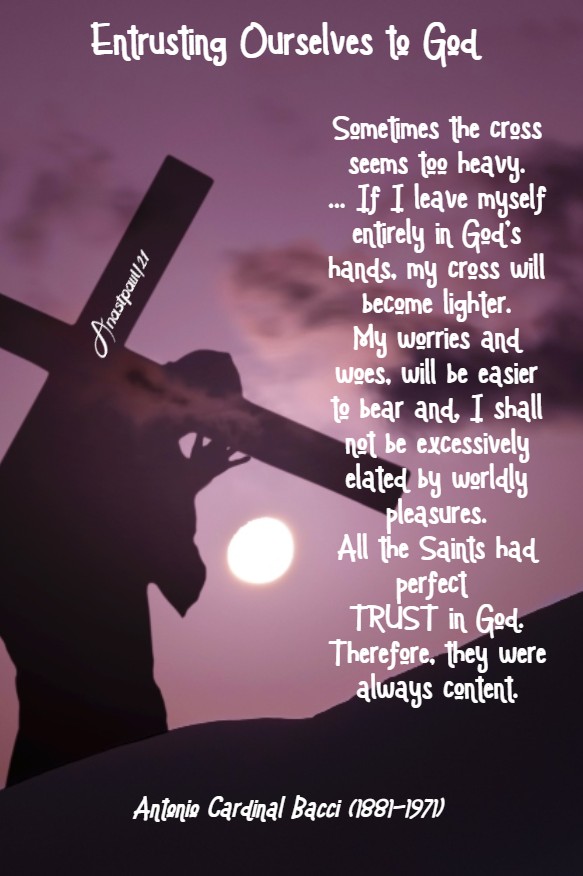
Entrusting Ourselves to God

“Sometimes the cross seems too heavy.
Physical or moral sufferings may give rise to a feeling of rebellion, or temptations may grow so strong that I feel overwhelmed and unable to experiece the supernatural influence of God’s grace.

At such times, I should remember the words of Jesus: “Come to me, all you who labour and are burdened and I will give you rest. Take my yoke upon you and learn from me, for I am meek and humble of heart and you will find rest for your souls. For my yoke is easy and my burden light” (Mt 11:28).

If I leave myself entirely in God’s hands, my cross will become lighter.
My worries and woes, will be easier to bear and, I shall not be excessively elated by worldly pleasures.

All the Saints had perfect TRUST in God.
Therefore, they were always content.”

Antonio Cardinal Bacci

Part One of ‘Entrusting Ourselves to God’ here:
https://anastpaul.com/2020/07/16/thought-for-the-day-16-july-entrusting-ourselves-to-god/

Posted in DOCTORS of the Church, FATHERS of the Church, I BELIEVE!, QUOTES for CHRIST, QUOTES of the SAINTS, QUOTES on DIVINE PROVIDENCE, QUOTES on FAITH, QUOTES on GRACE, QUOTES on LOVE of GOD, QUOTES on PEACE, QUOTES on TRUST and complete CONFIDENCE in GOD, QUOTES on WORRY/ANXIETY

Quote/s of the Day – 8 January – “Trust”

Quote/s of the Day – 8 January – The Third Day within the Octave of Epiphany

“Trust”

He [Christ], protects their faith
and gives strength to believers,
in proportion to the TRUST,
that each man,
who receives that strength,
is willing to place in Him.”

St Cyprian of Carthage (c 200- c 258)
Bishop and Martyr, Father of the Church

“The Lord is near,
do not be anxious
about anything!”

St Augustine (354-430)
Great Western Father and Doctor of Grace

“Rest is in Him alone.
Man knows no peace in the world
but he has no disturbance
when he is with God.”

St Bernard of Clairvaux (1090-1153)
Mellifluous Doctor

“He who trusts in God
can do all things.”

St Francis de Sales (1567-1622)
Doctor of Charity

“Free your mind from all that troubles you;
God will take care of things.
You will be unable to make haste in this (choice) without,
so to speak,
grieving the heart of God
because He sees that you do not honour Him sufficiently
with holy trust.
Trust in Him, I beg you
and you will have the fulfilment
of what your heart desires.”

St Vincent de Paul (1581-1660)

“Oh! My God,
how much Your Hand was upon me
and yet how little I was aware of it!
How good You are! How good You are!
How You protected me!
How you covered me with Your wings,
when I did not even believe in Your existence!”

Bl Charles of Jesus de Foucauld (1858-1916)

Posted in "Follow Me", CHRIST, the WAY,TRUTH,LIFE, DOCTORS of the Church, GOD ALONE!, ONE Minute REFLECTION, QUOTES for CHRIST, QUOTES of the SAINTS, QUOTES on COURAGE, QUOTES on ETERNAL LIFE, QUOTES on FAITH, QUOTES on the CROSS of CHRIST, QUOTES on TRUST and complete CONFIDENCE in GOD, SAINT of the DAY, The WORD

One Minute Reflection – 8 January – Our compass

One Minute Reflection – 8 January – The Third Day within the Octave of Epiphany, Readings: 1 John 4:11-18, Psalms 72:1-2, 10,12-13, Mark 6:45-52 and the Memorial of St Peter Thomas OCD (c 1305-1366)

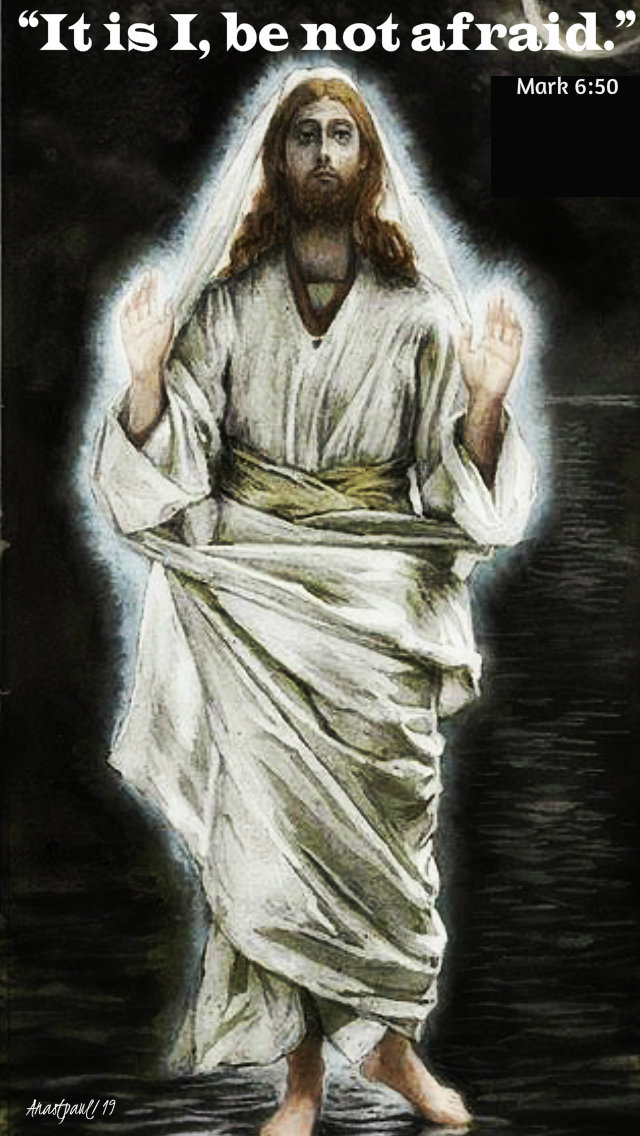
“Take courage, it is I, be not afraid!” … Mark 6:50

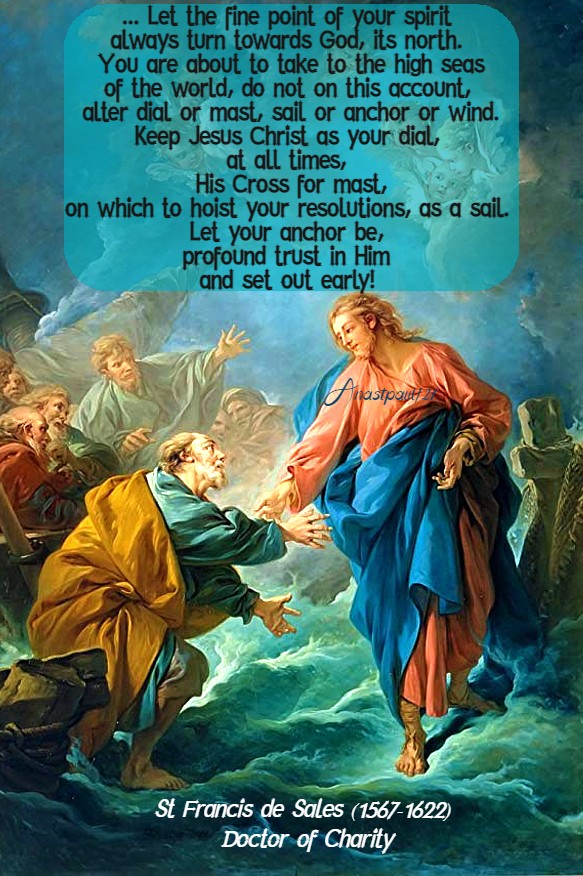
REFLECTION – “All ships have a compass which, when touched by the magnet, always turns towards the polar star. And even when the boat is making its way in a southward direction, yet the compass does not cease turning towards its north at all times.
In the same way, let the fine point of your spirit always turn towards God, its north. … You are about to take to the high seas of the world, do not on this account, alter dial or mast, sail or anchor or wind. Keep Jesus Christ as your dial, at all times, His Cross for mast on which to hoist your resolutions, as a sail. Let your anchor be, profound trust in Him and set out early. May the propitious wind of heavenly inspirations ever fill the sails of your vessel more and more and cause you, to speed forward, to the harbour of a holy eternity. …
Should everything turn upside down, I do not say around us but within us, that is to say, should our soul be sad, happy, in sweetness, in bitterness, peaceful, troubled, in light, in darkness, in temptation, in rest, in enjoyment, in disgust, in dryness, in gentleness, should the sun burn it or the dew refresh it, ah!, this point of our heart, our spirit, our higher will, which is our compass, should, nevertheless, always and at all times turn unceasingly, tend perpetually towards the love of God.” … St Francis de Sales (1567-1622) – Bishop of Geneva and Doctor of the Church

PRAYER – God and Father, light of all mankind, make our hearts radiant with the splendour of that light which long ago You shed on our fathers in the faith and give Your people the joy of lasting peace. May the prayers of Your blessed saints and martyrs be a comfort on our journey. Through Christ, our Lord, in the unity of the Holy Spirit, God forever, amen.

Posted in Our MORNING Offering, PRACTISING CATHOLIC, PRAYERS for SEASONS, PRAYERS for VARIOUS NEEDS, QUOTES - J R R Tolkien and MORE, QUOTES for the NEW YEAR, QUOTES on DIVINE PROVIDENCE, QUOTES on FAITH, The WILL of GOD

Our Morning Offering – 8 January – Lord, May Your kingdom Come Into My Heart

Our Morning Offering – 8 January – The Third Day within the Octave of Epiphany

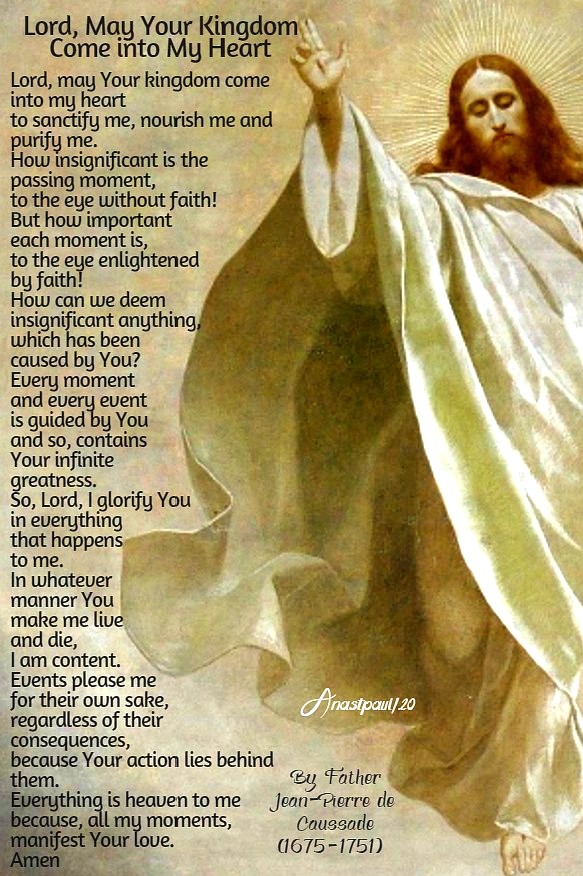
Lord, May Your kingdom Come Into My Heart
By Fr Jean Pierre de Caussade (1675-1751)

Lord, may Your kingdom come into my heart
to sanctify me, nourish me and purify me.
How insignificant is the passing moment,
to the eye without faith!
But how important each moment is,
to the eye enlightened by faith!
How can we deem insignificant anything
which has been caused by You?
Every moment and every event is guided by You
and so contains Your infinite greatness.
So, Lord, I glorify You in everything
that happens to me.
In whatever manner You make me live and die,
I am content.
Events please me for their own sake,
regardless of their consequences
because Your action lies behind them.
Everything is heaven to me
because all my moments,
manifest Your love.
Amen

Posted in CARMELITES, SAINT of the DAY

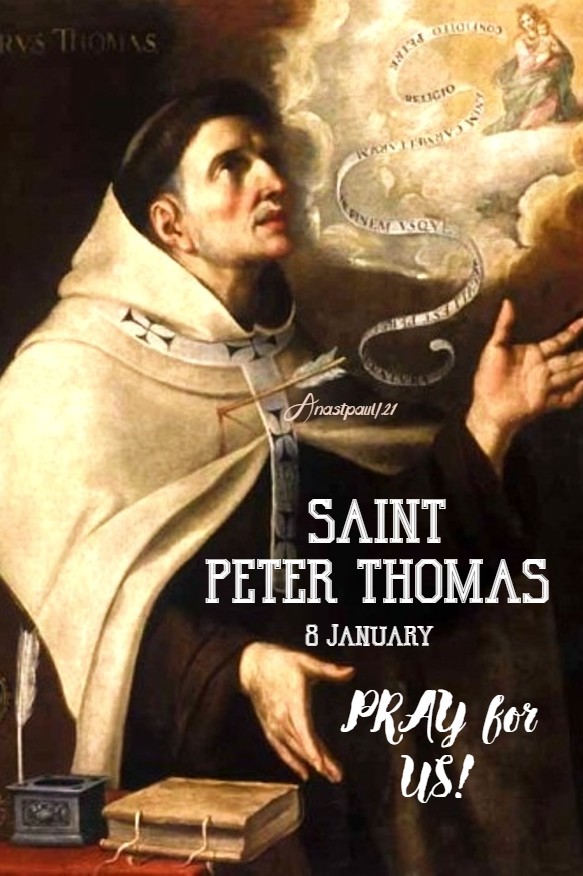
Saint of the Day – 8 January – St Peter Thomas OCD (c 1305-1366)

Saint of the Day -8 January – St Peter Thomas OCD (c 1305-1366) Carmelite Priest and Friar, Archbishop of Crete, Latin Patriarch of Constantinople, noted Preacher, Papal legate, the Carmelite Order’s Procurator-General to the Papal Court, Teacher, Marian devotee, miracle-worker – born as Pierre Tomas in c 1305 in southern Perigord, France and died 1366 at Famagorta, Cyprus from wounds received in a military action in Alexandria, Egypt in 1365. He preached the Crusade against the Turks throughout Serbia, Hungary and Constantinople and travelled with the armies. He enjoyed a reputation among both Catholic and Orthodox spheres as an apostle of Church unity. Before the Turkish uprising (when his remains were lost), during the Canonisation process, when his tomb was opened, his body was found to be “perfect and whole and the members as flexible as before” (Carmesson, pp. 100-1)

Peter Thomas was born around the year 1305 to a very poor family in Périgord. His father was a serf. When still a teenager, he left his parents and his younger sister to ease the burdens on his family. He went to the nearby small town of Monpazier, where he attended school for about three years, living on alms and teaching younger pupils. He led the same type of life at Agen until the age of twenty, when he returned to Monpazier.

The Prior of the Carmelite convent of Lectoure employed Thomas as a teacher for a year in their school. He entered the Carmelite Order at the age of twenty-one and made his profession of religious vows at Bergerac where he taught for two years. He studied philosophy at Agen, where he was ordained a Priest three years later. For the next few years, he continued his studies, while also teaching in Bordeaux, Albi and again in Agen. This was followed by three years of study in Paris. He was preaching in Cahors, during a procession of prayer held in supplication for the end to a serious drought, when rain began to fall. This was viewed by many as miraculous.

He was the Order’s Procurator General and an official Preacher at the Papal Court of Pope Clement VI at Avignon. At the death of Pope Clement VI, he accompanied the bosy to the Chaise-Dieu, preaching at all the twelve stops along the way (April, 1353).

From that time on the whole life of Peter Thomas was dedicated to the fulfilment of delicate missions entrusted to him by the Holy See, for peace among Christian princes, for the defence of the rights of the Church before the most powerful monarchs of the age, for the union of the Orthodox Byzantine–Slavs with the Roman Church, for the anti-Muslim crusade and the liberation of the Holy Land.
In 1354 he was made Bishop of Patti and Lipari. In 1363 he was appointed Archbishop of Crete and in 1364 he became the Latin Patriarch of Constantinople.

Peter caught a cold during the Christmas feasts of 1365. His condition worsened on 28 December and on 6 January, being “reduced to skin and bones” (Phil Of M., p. 151, 15), he piously ended his earthly life “at about the second hour of the night” (ib. 154, 8), after having distributed all his belongings to the poor. He died in the Carmelite convent of Famagusta. 

His remains seemed surrounded by light to those who watched them during the wake. The funeral was a veritable triumph – even the dissident Greeks and others, who would willingly have “drunk his blood” (ib. p. 156, 3-4) while he was aliv, participated devoutly. The funeral eulogy was delivered by John Carmesson, who several times felt himself mysteriously urged to call the deceased a saint (lb., 157, 8). The body remained exposed for six days and was visited by a great number of people – cures and other miracles were verified before and after the burial (Smet, pp. 163-84). 

Two qualified admirers of Peter Thomas wrote his Vita almost on the morrow of his death – Philip of Mézières (died 1405), Chancellor of King Peter of Cyprus and spiritual son of the Saint, (The Life of St. Peter Thomas by Philippe de Mézières) and the Franciscan, John Carmesson, Minister of the Province of the Holy Land, who had delivered the funeral eulogy.

The fours volumes of sermons and the tract De Immaculata Conception Blessed Maria Virgini which he wrote have been lost. But the famous processional Cross presented to him in 1360 by the Christian refugees from Syria and used by him, as the standard in the Alexandrian crusade and as a source of strength in his own last agony. is now preserved in the Venetian church of St John. He had willed the Cross to his friend, Philip of Mézières, who on 23 December 1370, gave it to the Grand School of St John in Venice. This processional Cross became the object of intense devotion and was depicted on the city’s standard.

He was Beatified in 1609 by Pope Paul V and Canonised in 1628 by Pope Urban VIII.
Posted in MARIAN TITLES, SAINT of the DAY

Our Lady of Prompt Succour, New Orleans, USA (1809) and Memorials of the Saints – 8 January

Our Lady of Prompt Succour, New Orleans, USA (1809) – 8 January:
Such wonderful miracles – read about the Marian Patron of Louisiana here:
https://anastpaul.com/2019/01/08/memorials-of-the-saints-8-january/

St Abo of Tblisi
St Albert of Cashel
St Apollinaris the Apologist (Died 2nd Century) Bishop, Apologist
St Athelm of Canterbury
St Atticus of Constantinople
St Carterius of Caesarea
Bl Edward Waterson
St Ergnad of Ulster
St Erhard of Regensburg
St Eugenian of Autun
Bl Eurosia Fabris (1866-1932)
Biography:

https://anastpaul.com/2019/01/08/saint-of-the-day-8-january-blessed-eurosia-fabris-1866-1932-mamma-rosa/

St Garibaldus of Regensburg
St Gudule of Brussels
St Helladius
St Julian of Beauvais
St Lawrence Giustiniani
St Lucian of Beauvais
St Maximian of Beauvais
St Maximus of Pavia
Bl Nathalan of Aberdeen
St Patiens of Metz
St Pega of Peakirk
St Peter Thomas OCD (1305-1366)
St Severinus of Noricum
St Theophilus the Martyr
St Thorfinn
Blessed Titus Zeman SDB (1915-1969) Priest and Martyr
His Life and Death:

https://anastpaul.com/2020/01/08/saint-of-the-day-8-january-blessed-titus-zeman-sdb-1915-1969-priest-and-martyr/

The above film was the winner of the International “Festival dobrých správ” (of Good News) honoured a short film about the life of Blessed Titus Zeman SDB. The video entitled “Titus Zeman – a Martyr for Spiritual Freedom to Follow Oneʹs Vocation” was first place in the category of short films under 15 minutes and takes a closer look at the heroic sacrifice of the Salesian.
The author of the winning film is Salesian past pupil Roman Maturkanič from Slovakia who currently works as a film director.
“Probably the biggest challenge was to narrate the very eventful life of Titus in such a short time. We won the first place prize but we could say that this is Titusʹ victory,” said the director of the film’s achievement in the competition.

St Wulsin of Sherborne

Martyrs of Greece – 9 saints: A group of Christians honored in Greece as martyrs, but we have no details about their lives or deaths – Euctus, Felix, Januarius, Lucius, Palladius, Piscus, Rusticus, Secundus and Timotheus

Martyrs of Terni – 4 saints: A group of Christian soldiers in the imperial Roman army. Executed during the persecutions of emperor Claudius. Martyrs. – Carbonanus, Claudius, Planus and Tibudianus. They were martyred in 270 in Terni, Italy.

Posted in GOD ALONE!, MEDITATIONS - ANTONIO CARD BACCI, PRACTISING CATHOLIC, QUOTES - J R R Tolkien and MORE, QUOTES for the NEW YEAR, QUOTES on ETERNAL LIFE, QUOTES on GRACE, QUOTES on GRATITUDE, QUOTES on LOVE of GOD, QUOTES on MERIT, QUOTES on PURITY of INTENTION, QUOTES on SACRIFICE, QUOTES on SANCTITY, QUOTES on VIRTUE, QUOTES on WORK/LABOUR, The FAITHFUL on PILGRIMAGE

Thought for the Day – 7 January – Merit and the Love of God

Thought for the Day – 7 January – Meditations with Antonio Cardinal Bacci (1881-1971) The Solemnity of the Epiphany of the Lord

Merit and the Love of God

“The more we know, writes St Catherine of Siena, the more we love and the more we love, the more we receive.
Our merit, she concludes, increases in accordance with the measure of our love (Dialogues, c 131).
We tend to judge men on the strength of their achievements and to judge ourselves, according to the degree of success which we have attained.
Our standards could hardly be more false.
How much soever each one is in Thy eyes,” the author of The Imitation of Christ cries out to God in the words of St Francis, “so much is he and no more” (Bk III, c 50).

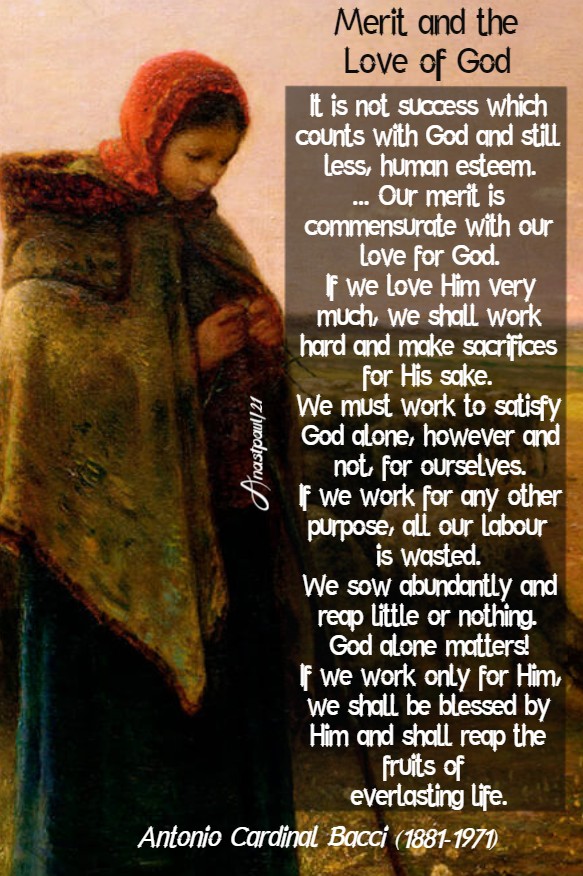
It is not success which counts with God and still less, human esteem.
What matters with God, is our intention of pleasing Him and of working for His glory, from the motive of pure love.
If we are successful in our work, let us praise God.
If we are unsuccessful, let us thank Him, just the same.
Our merit is commensurate with our love for God.
If we love Him very much, we shall work hard and make sacrifices for His sake.
We must work to satisfy God alone, however and not, for ourselves.
If we work for any other purpose, all our labour is wasted.
We sow abundantly and reap little or nothing.
God alone matters.
If we work only for Him, we shall be blessed by Him and shall reap the fruits of everlasting life.
Amen!”

Antonio Cardinal Bacci

Posted in GOD ALONE!, JESUIT SJ, POETRY, QUOTES for CHRIST, QUOTES of the SAINTS, QUOTES on FAITH, QUOTES on GRACE, QUOTES on HOPE, QUOTES on LOVE, The DIVINE INFANT, THE EPIPHANY of the LORD

Quote of the Day – 7 January – “The Epiphany” By St Robert Southwell SJ (1561-1595)

Quote of the Day – 7 January – The Second Day within the Octave of Epiphany

Poem
“The Epiphany”

To blaze the rising of this glorious sun
A glittering star appeareth in the east
Whose sight to pilgrim toil three sages won
To seek the light they long had in request,
And by this star to nobler star they pace
Whose arms did their desired sun embrace.

Still was the sky wherein these planets shined
And want the cloud that did eclipse their rays,
Yet through this cloud their passage they did find,
And pierced these sages’ hearts by secret ways,
Which made them know, the Ruler of the skies
By Infant tongue and looks of babish eyes.

Heaven at her light, earth blusheth at her pride
And of their pomp these peers ashamed be,
Their crowns, their robes, their train they set aside
When God’s poor cottage, clouts and crew they see,
All glorious things their glory now despise
Since God contempt doth more than glory prize.

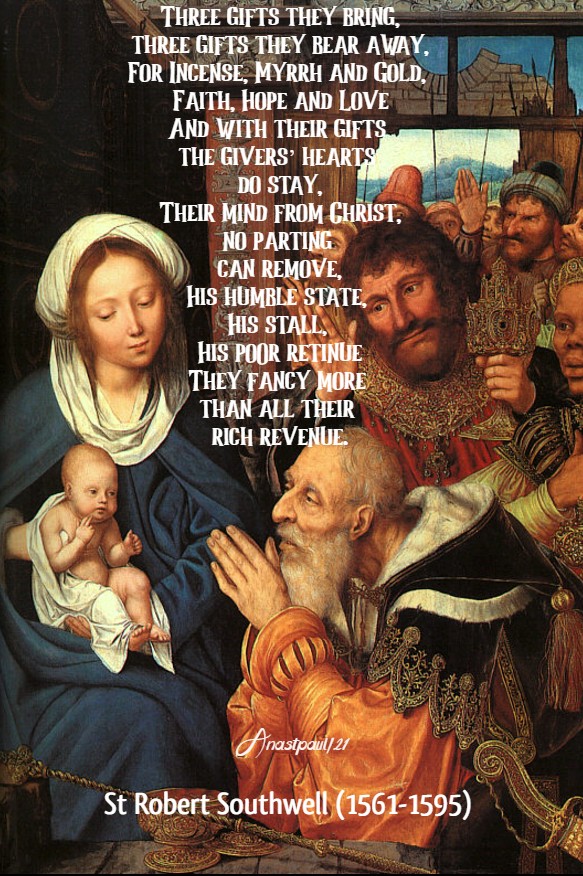
Three gifts they bring, three gifts they bear away,
For Incense, Myrrh and Gold, Faith, Hope and Love
And with their gifts the givers’ hearts do stay,
Their mind from Christ, no parting can remove,
His humble state, His stall, His poor retinue
They fancy more than all their rich revenue.

By St Robert Southwell SJ (1561-1595)
Martyr

Posted in CHRIST the LIGHT, DOCTORS of the Church, FATHERS of the Church, ONE Minute REFLECTION, PRACTISING CATHOLIC, QUOTES for CHRIST, QUOTES for the NEW YEAR, QUOTES of the SAINTS, QUOTES on FAITH, QUOTES on HEAVEN, QUOTES on SANCTITY, SAINT of the DAY, THE EPIPHANY of the LORD, The FAITHFUL on PILGRIMAGE, The INCARNATION, The NATIVITY of JESUS, The WORD

One Minute Reflection – 7 January – Shine like that star – St Pope Leo the Great

One Minute Reflection – 7 January – The Second Day within the Octave of Epiphany, Readings: 1 John 3:22 – 4:6, Psalms 2:7-8, 10-12, Matthew 4:12-17, 23-25 and the Memorial of St Raymond of Peñafort (1175-1275) “Father of Canon Law”

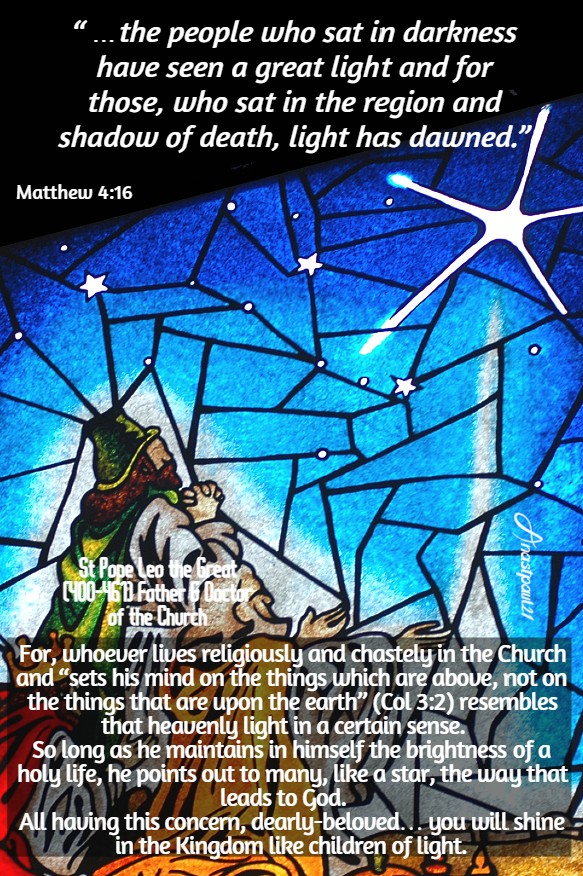
“ …the people who sat in darkness have seen a great light and for those, who sat in the region and shadow of death, light has dawned.”…Matthew 4:16

REFLECTION – “All these things we know to have taken place ever since the three wise men, aroused in their far-off land, were led by a star to recognise and worship the King of heaven and earth.
The responsiveness of that star exhorts us to imitate it’s obedience and, as much as we can, to make ourselves servants of that grace which invites us all to Christ.
For, whoever lives religiously and chastely in the Church and “sets his mind on the things which are above, not on the things that are upon the earth” (Col 3:2) resembles that heavenly light in a certain sense.
So long as he maintains in himself the brightness of a holy life, he points out to many, like a star, the way that leads to God.
All having this concern, dearly-beloved… you will shine in the Kingdom like children of light.”… St Pope Leo the Great (400-461) Father & Doctor of the Church

PRAYER – Lord, may the radiance of Your glory, light up our hearts and bring us through the shadows of this world, until we reach our homeland of everlasting light. Grant we pray, that by the intercession of St Raymond of Peñafort , our way may be smoothed and our troubles eased. We ask this through Jesus, our Lord, with the Holy Spirit, God forever, amen.

Posted in CHRISTMASTIDE!, DOCTORS of the Church, Our MORNING Offering, PRAYERS for SEASONS, PRAYERS of the SAINTS, The DIVINE INFANT, THE EPIPHANY of the LORD, The HEART

Our Morning Offering – 7 January – O Child, So Worthy of Our Love, I Offer You My Heart

Our Morning Offering – 7 January – The Second Day within the Octave of Epiphany

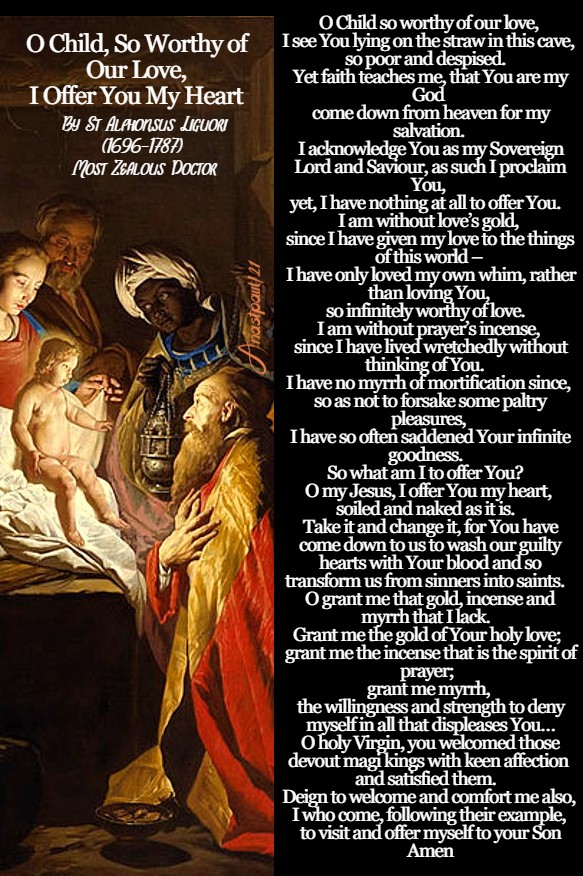
O Child, So Worthy of Our Love,
I Offer You My Heart
By St Alphonsus Liguori (1696-1787)
Most Zealous Doctor

O Child so worthy of our love,
I see You lying on the straw in this cave,
so poor and despised.
Yet faith teaches me, that You are my God
come down from heaven for my salvation.
I acknowledge You as my Sovereign Lord and Saviour,
as such I proclaim You,
yet, I have nothing at all to offer You.
I am without love’s gold,
since I have given my love to the things of this world –
I have only loved my own whim, rather than loving You,
so infinitely worthy of love.
I am without prayer’s incense,
since I have lived wretchedly without thinking of You.
I have no myrrh of mortification since,
so as not to forsake some paltry pleasures,
I have so often saddened Your infinite goodness.
So what am I to offer You?
O my Jesus, I offer You my heart, soiled and naked as it is.
Take it and change it, for You have come down to us
to wash our guilty hearts with Your blood
and so transform us from sinners into saints.
O grant me that gold, incense and myrrh that I lack.
Grant me the gold of Your holy love;
grant me the incense that is the spirit of prayer;
grant me myrrh,
the willingness and strength to deny myself
in all that displeases You…
O holy Virgin, you welcomed those devout magi kings
with keen affection and satisfied them.
Deign to welcome and comfort me also,
I who come, following their example,
to visit and offer myself to your Son
Amen

Posted in SAINT of the DAY

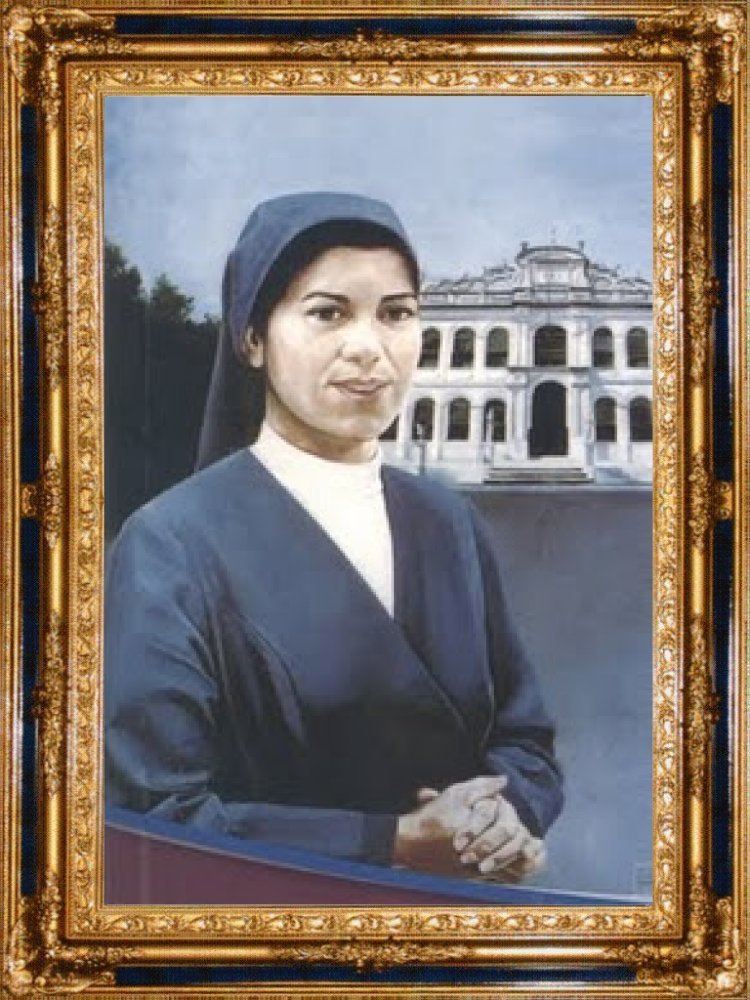
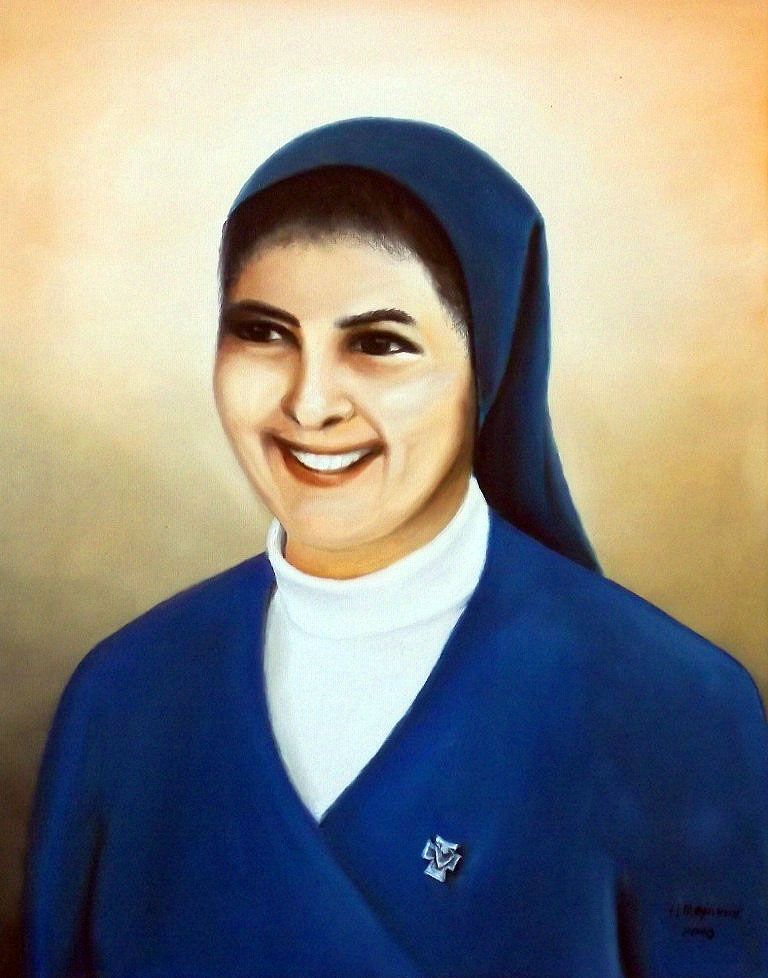
Saint of the Day – 7 January – Blessed Lindalva Justo de Oliveira DC (1953-1993) Virgin and Martyr

Saint of the Day – 7 January – Blessed Lindalva Justo de Oliveira DC (1953-1993) Virgin and Martyr – “in defensum castitati,” Religious Sister of the Vincentian Sisters, apostle of the elderly and the sick – born on 20 October 1953 Sitio Malhada da Areia, Açu, Rio Grande do Norte, Brazil and died on 9 April 1993 (aged 39) in Salvador, Bahia, Brazil. She was stabbed 44 times.

Lindalva Justo de Oliveira was born on 20 October 1953 at Sitio Malhada da Areia, in a very poor area of Rio Grande do Norte, Brazil. Lindalva’s father, João Justo da Fé, a farmer, was a widower. His second marriage was to Maria Lúcia de Oliveira. Little Lindalva was the sixth of 13 children born to the couple. Lindalva was baptised on 7 January 1954.

Her family was not well-off but rich in the Christian faith. João moved his family to Açu so his children could attend school and after many sacrifices, he was able to buy a house where the family still resides today.

Besides following her mother’s good example, Lindalva demonstrated a natural inclination toward the poorer children and spent much time with them.

At age 12, Lindalva received First Holy Communion and during her school years she was always happy to help the less fortunate. Later, while living with her brother, Djalma and his family in Natal, she received an administrative assistant’s diploma in 1979.

From 1978 to 1988 she held various jobs in retail sales and as a cashier at a petrol station, sending some of her salary home to help her mother. Lindalva found time to visit the local home for the elderly every day after work.

In 1982, as she lovingly assisted her father in the last months of his terminal illness, she reflected seriously on her life and decided to serve the poor. She then enrolled in a nursing course but also enjoyed those things typical of young people – building friendships, guitar lessons and cultural studies.

In 1986 she participated in the vocational initiatives of the Daughters of Charity. After she received the Sacrament of Confirmation in 1987, Lindalva applied for admission to the Daughters. On the Feast of Our Lady of Lourdes, 11 February 1988, she entered the postulancy and edified her companions with her joy and genuine concern for the poor.

Her character was marked by a sweet disposition but also by truth. In a letter to her alcoholic brother, Antonio, she wrote: “Think about it and reward yourself. I pray for you very much and I will continue to pray and if necessary I will do penance so that you are able to fulfil yourself as a person. Follow Jesus, who fought until death for the life of sinners and gave His own life, not as God but as man, for the forgiveness of sins. We must seek refuge in Him, only in Him is life worth living.”A year later her brother quit drinking.

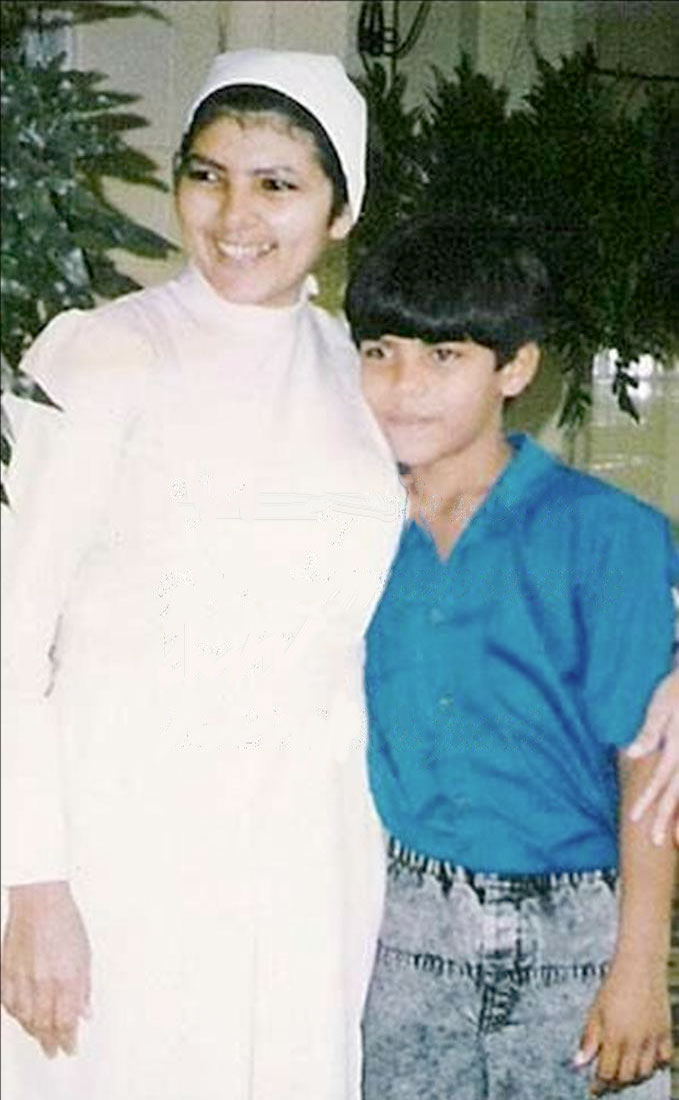
On 29 January 1991 Sr Lindalva was assigned 40 elderly male patients in the municipal nursing home in Salvador da Bahia. She undertook the more humble tasks and sought out those who suffered the most and cared for their spiritual and material well-being by encouraging their reception of the Sacraments. Sr Lindalva would sing and pray with them and she even took her driving test so she could take them out for rides.

During January of 1993, a certain Augusto da Silva Peixoto, a 46-year-old man with an irascible character, managed to be admitted to the facility through the recommendation of another, even though he had no right to be there. Sr Lindalva treated him with the same courtesy and respect as the other patients, yet he became enamoured of her.

She prudently distanced herself from him and was cautious in his regard. Nonetheless, he explicitly declared his lustful intentions towards her. A simple solution would have been for Sr Lindalva to leave but her love for the elderly caused her to declare, “I prefer to shed my blood than to leave this place.”

By 30 March Augusto’s advances became so insistent and frightening that she sought the help of a health-care official to restrain this unruly patient. Although he promised to improve his attitude and behaviour, he harboured hatred and vengeance that developed into a murderous plan.

On 9 April 1993, Good Friday, Sr Lindalva took part in the parish Way of the Cross at 4: 30 in the morning. By 7 a.m. she was back at work to prepare and serve breakfast as she did every day. As she served coffee from behind a table, Augusto approached and thrust a fishmonger’s knife above her collar-bone.

Sinking to the ground, she cried “God protect me” several times. Patients ran for cover. Enveloped in an insane rapture while holding up her body, Augusto stabbed her 44 times shouting, “I should have done this sooner!”

He then suddenly became calm, sat down on a bench, wiped the knife on his trousers, threw it on the table and exclaimed: “She did not want me!” and turning to the doctor, said, “You can call the police, I will not run away; I did what had to be done”.

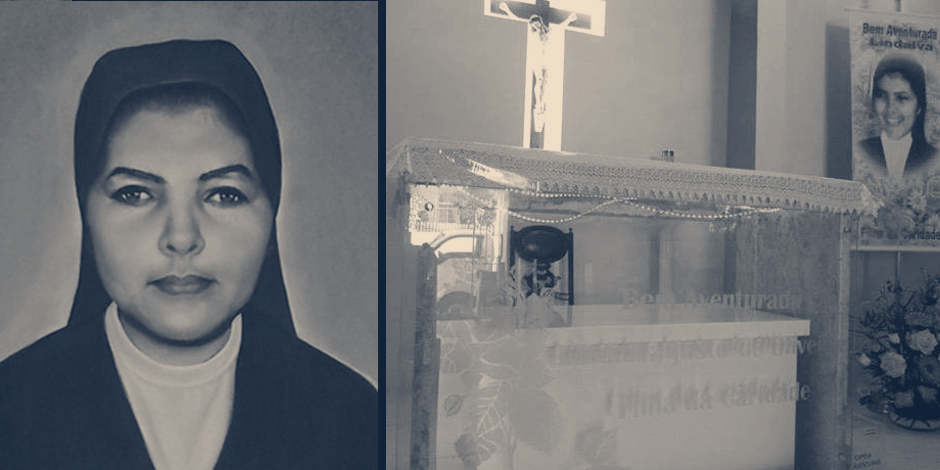
The next day, Holy Saturday, 10 April 1993, Cardinal Lucas Moreira Neves, OP, Primate of Brazil, celebrated the 39-year-old Sister’s funeral and commented: “A few years were enough for Sr Lindalva to crown her Religious life with martyrdom”…. Vatican.va As of 6 April 2014 her remains are in the Capela das Relíquias da Beata Lindalva.

Tomb in the Chapel established in Blessed Lindalva’s honour

Oliveira’s Beatification received the approval of Pope Benedict XVI who determined that she was killed “in defensum castitatis” – the defence of her vow of chastity. She was Beatified on 2 December 2007 in which Cardinal José Saraiva Martins presided over on the behalf of the Pope.

Augustus, her murderer, was still alive as of 2007. He was in a mental hospital until 2005.

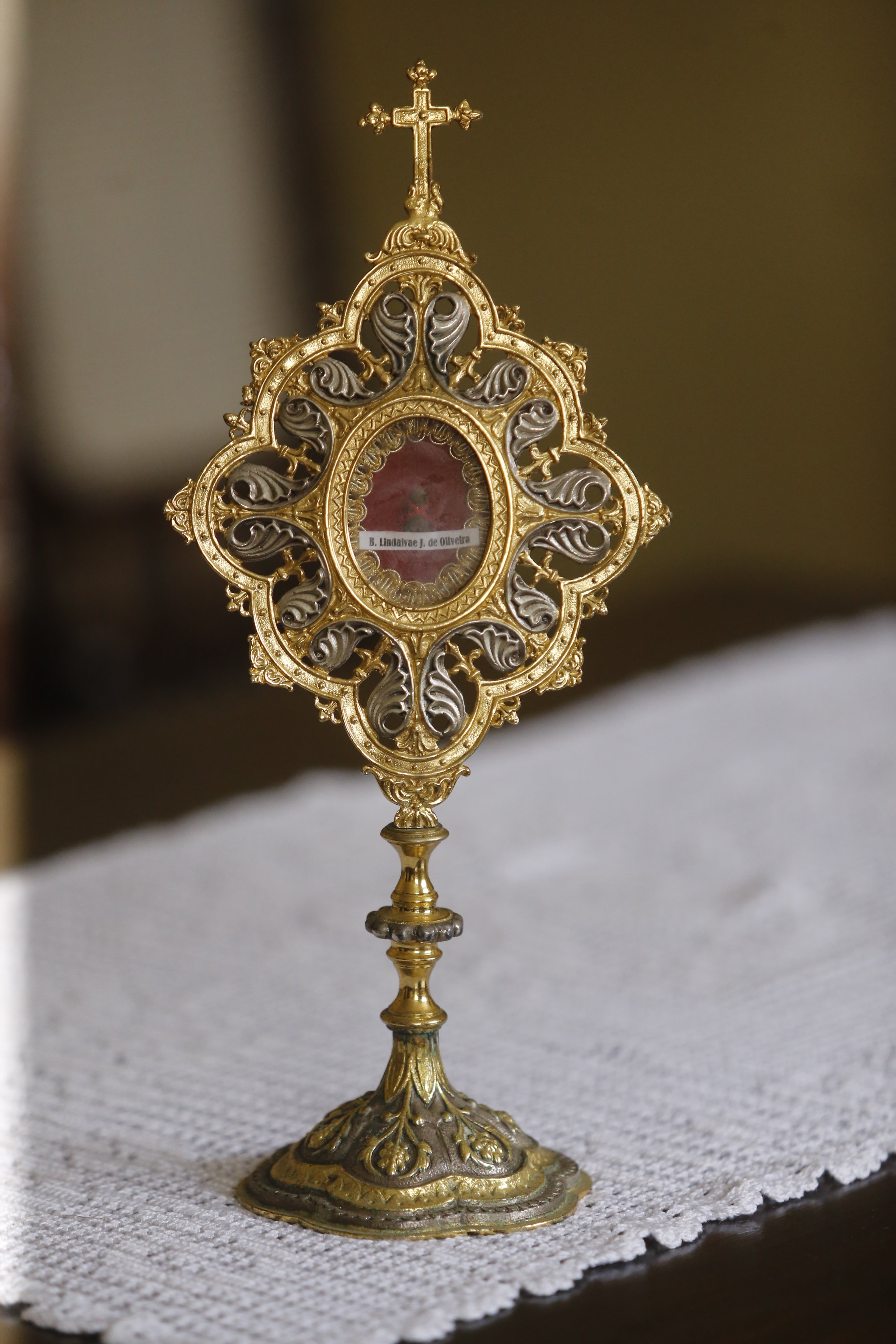
Blessed Lindalva’s Reliquary