Our Morning Offering – 10 March – Wednesday of the Third Week of Lent
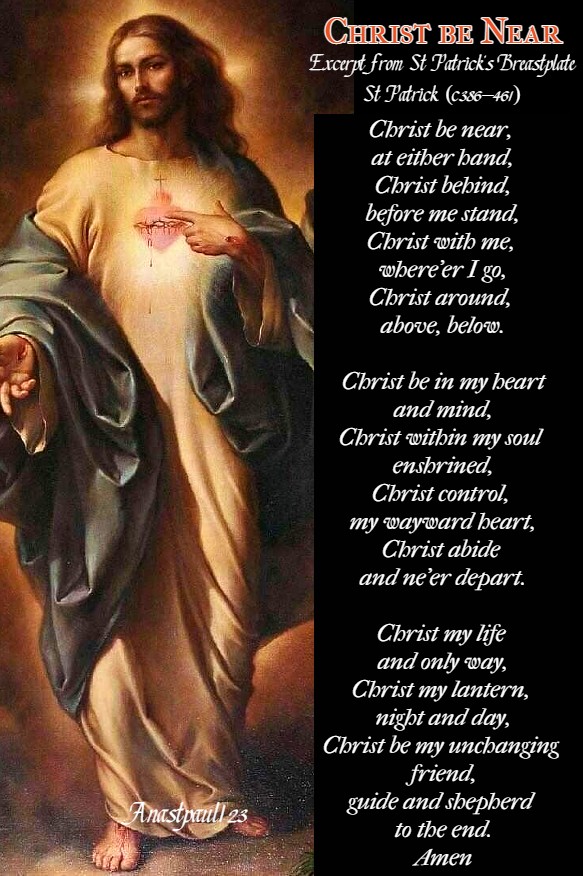
Excerpt from St Patrick’s Breastplate Christ be Near St Patrick (c 386 – 461)
Christ be near, at either hand, Christ behind, before me stand, Christ with me, where’er I go, Christ around, above, below.
Christ be in my heart and mind, Christ within my soul enshrined, Christ control, my wayward heart, Christ abide and ne’er depart.
Christ my life and only way, Christ my lantern, night and day, Christ be my unchanging friend, guide and shepherd to the end.
We have this prayer and his own story in one of the authentic writings of Patrick – his Confessio, which is above all, an act of homage to God for having called Patrick, unworthy sinner, to the apostolate.
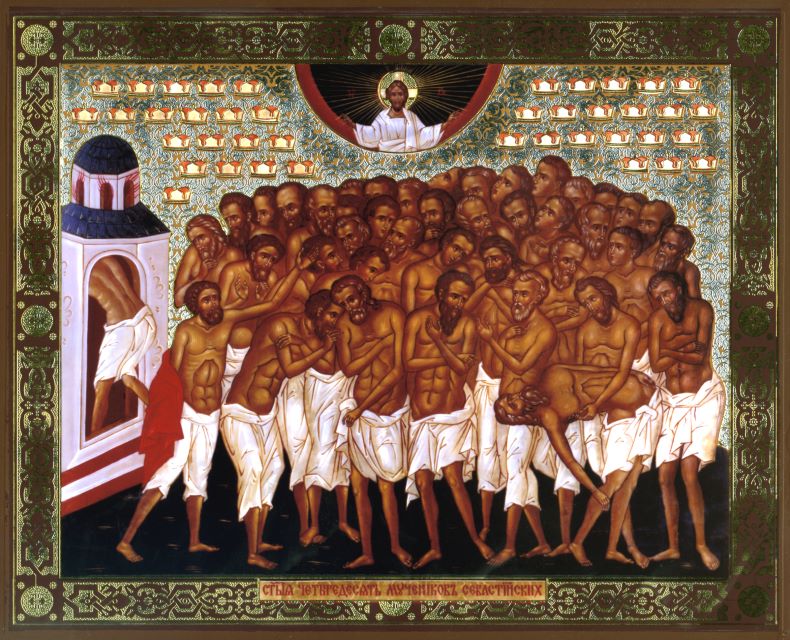
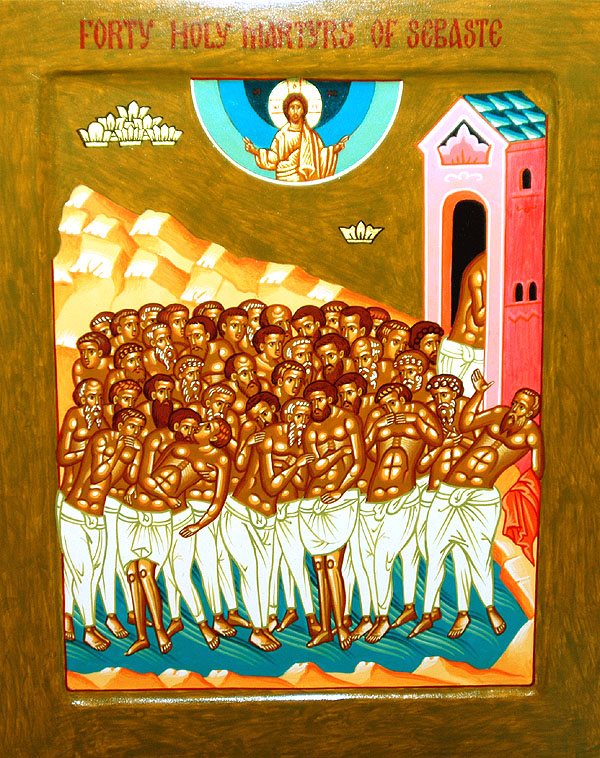
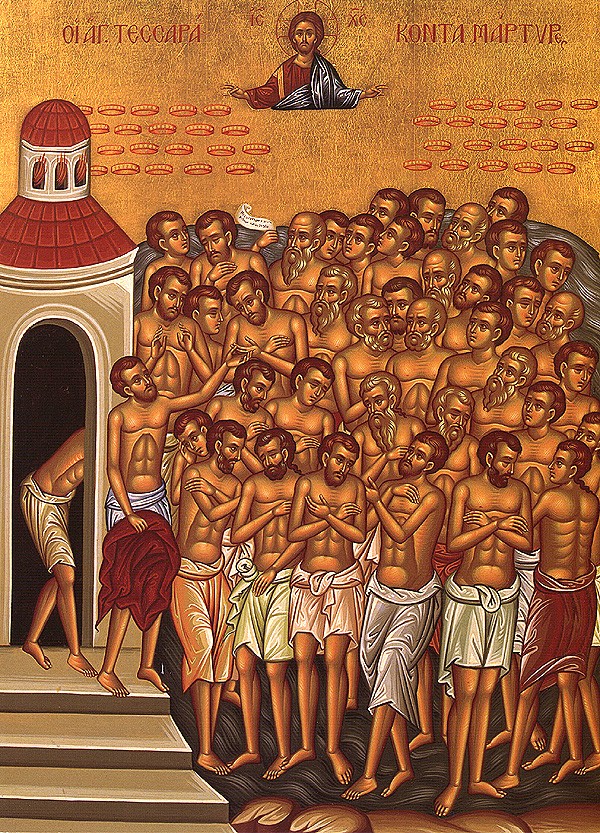
Saints of the Day – 10 March – The Forty Martyrs of Sebaste, Armenia (Died 320). The Forty Martyrs were a group of Roman soldiers in the Legio XII Fulminata (Armed with Lightning) whose martyrdom in 320, for the Christian faith, is recounted in the Roman Martyrology. The Forty Martyr are also honoured on 9 March, particularly in the Eastern Church but the Roman Martyrology places them today, on 10 March.
They were killed near the City of Sebaste, in Lesser Armenia (present-day Sivas in Turkey), victims of the persecutions of Licinius, who after 316, persecuted the Christians of the East. The earliest account of their existence and martyrdom is given by Bishop Basil of Caesarea, that is, St Basil the Great (329-379) in a homily he delivered on their feast day. The Feast of the Forty Martyrs is thus older than Basil himself, who eulogised them, fifty or sixty years after their deaths.
As St Basil tells the story – forty soldiers who had openly confessed themselves Christians were condemned by the prefect to be exposed naked upon a frozen pond near Sebaste on a bitterly cold night, that they might freeze to death.
Among the confessors, one yielded and, leaving his companions, sought the warm baths near the lake which had been prepared for any who might prove inconstant. Upon immersion into the cauldron, the one who yielded went into shock and immediately died. So this lone soldier died, deprived of both earthly and heavenly life.
One of the guards, Aglaius, was set to keep watch over the Martyrs and beheld a supernatural brilliance in the form of halos over their heads, overshadowing them. He at once proclaimed himself a Christian, threw off his garments and joined the remaining thirty-nine. Thus the number of forty remained complete.
At daybreak, the stiffened bodies of the confessors, which still showed signs of life, were burned and the remains cast into a river. Christians, however, collected the precious remains as best they could and the relics were distributed throughout many cities. In this way, veneration of the Forty Martyrs became widespread and numerous Churches were erected in their honour. But in Sebaste itself, a 40-domed Cathedral was built. The Cathedral of Sebastia stood for nearly 1,000 years, until the invasion of Tamerlane and the Mongols at the end of the 14th century. However, the “Forty Martyrs Cathedral” name has survived to this day.
A Church was built at Caesarea, in Cappadocia and it was in this Church, that St Basil delivered his homily. St Gregory of Nyssa was especially devoted to the Forty Martyrs – two discourses in praise of them, preached by him in the Church dedicated to them, are still preserved and upon the death of his parents, he laid them to rest beside the relics of the confessors. St Ephrem the Syrian has also eulogised the Forty Martyrs. Sozomen,a Roman Lawyer and Historian, who was an eye-witness, has left an interesting account of the finding of the relics in Constantinople, in the Shrine of Saint Thyrsus built by Caesarius, through the instrumentality of Empress Pulcheria.
The cult of the Forty Martyrs is widespread all over in the Eastern Church. The Forty Saints Monastery in Sarandë, modern day Albania, which gave its name in Greek to the City itself, was built in the 6th century and was an important pilgrimage site. The Churches of St Sophia in Ohrid (modern-day North Macedonia) and Kiev (Ukraine) contain their depictions, datable to the 11th and 12th centuries, respectively. A number of auxiliary Chapels were dedicated to the Forty and there are several instances, when an entire Church is dedicated to them – for example Xeropotamou Monastery on Mount Athos and the 13th-century Holy Forty Martyrs Church, in Bulgaria. a Church of the 40 saints located in Constantinople.. In Syria, the Armenian Cathedral of Aleppo and the Greek Orthodox Cathedral of Homs are dedicated to the Forty Martyrs.
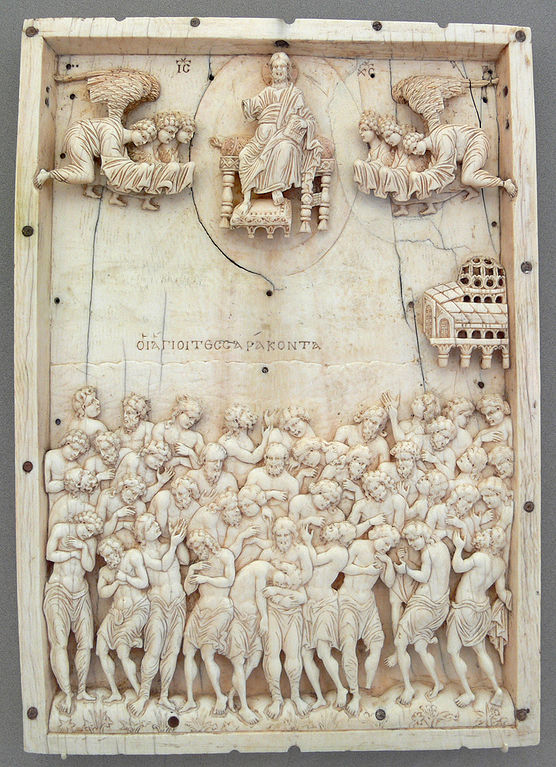
Ivory relief icon from Constantinople, 10th century
The feast day of the Forty Martyrs falls is intentionally placed that it will fall during Lent. There is an intentional play on the number forty being both the number of Martyrs and the days in the fast. Their feast also falls during Lent so that the endurance of the Martyrs will serve as an example to the faithful to persevere to the end. in order to attain heavenly reward..
A prayer mentioning the Forty Holy Martyrs of Sebaste is also placed in the Orthodox Wedding Service (referred to as a “crowning”) to remind the bride and groom that spiritual crowns await them in Heaven also if they remain as faithful to Christ as these saints of long ago.
Special devotion to the Forty Martyrs of Sebaste was introduced at an early date into the West. Bishop St Gaudentius of Brescia (died about 410 or 427) received particles of the ashes of the Martyrs during a voyage in the East and placed them, with other relics, in the altar of the Basilica which he had erected, at the Consecration of which, he delivered a discourse, still extant.
The Church of Santa Maria Antiqua in the Roman Forum, built in the fifth century, contains a Chapel, built like the Church itself, on the ancient site and Consecrated to the Forty Martyrs. A sixth or seventh-century mural there depicts their martyrdom. The names of the confessors, as we find them also in later sources, were formerly inscribed on this fresco. There is a beautiful Chapel of the Forty Martyrs in the Church of the Holy Sepulchre in Jerusalem.
Chapel of the Forty Martyrs in the Church of the Holy Sepulchre, Jerusalem.
Acts of these Martyrs, written subsequently, in Greek, Syriac and Latin, are yet extant, also a “Testament” of the Forty Martyrs.
Santa Maria della Querce /Our Lady of the Oak, Tuscany, Italy (1467) – 10 March:
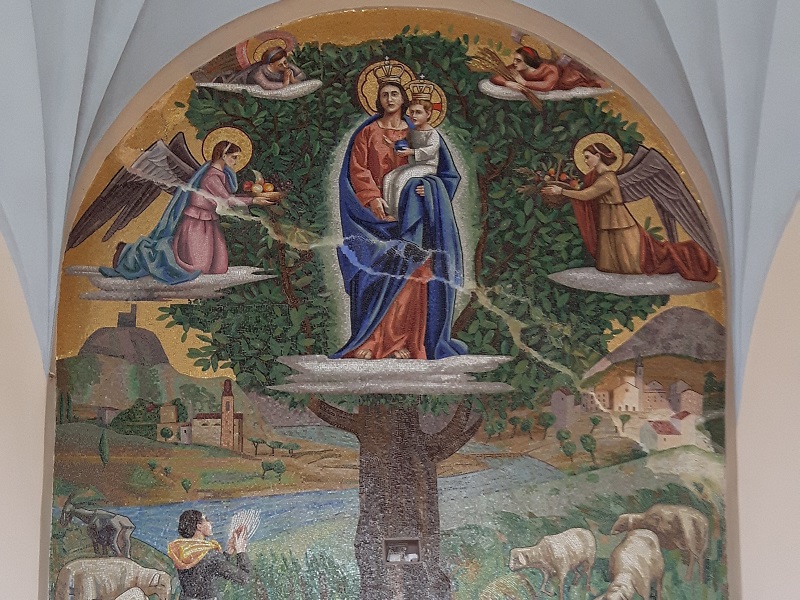
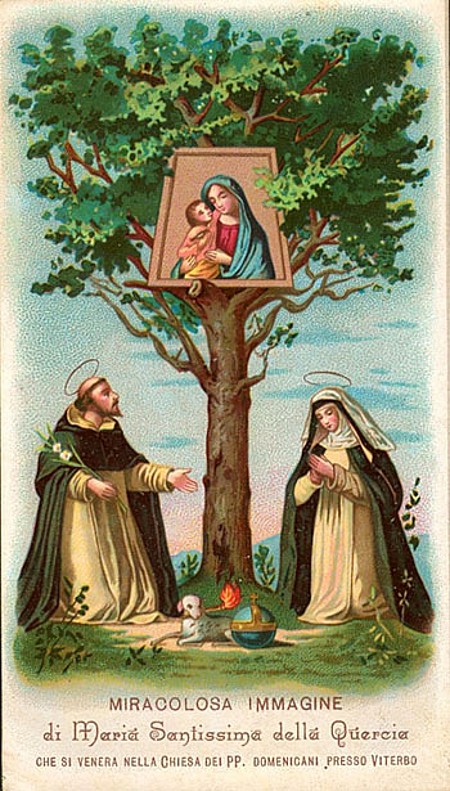
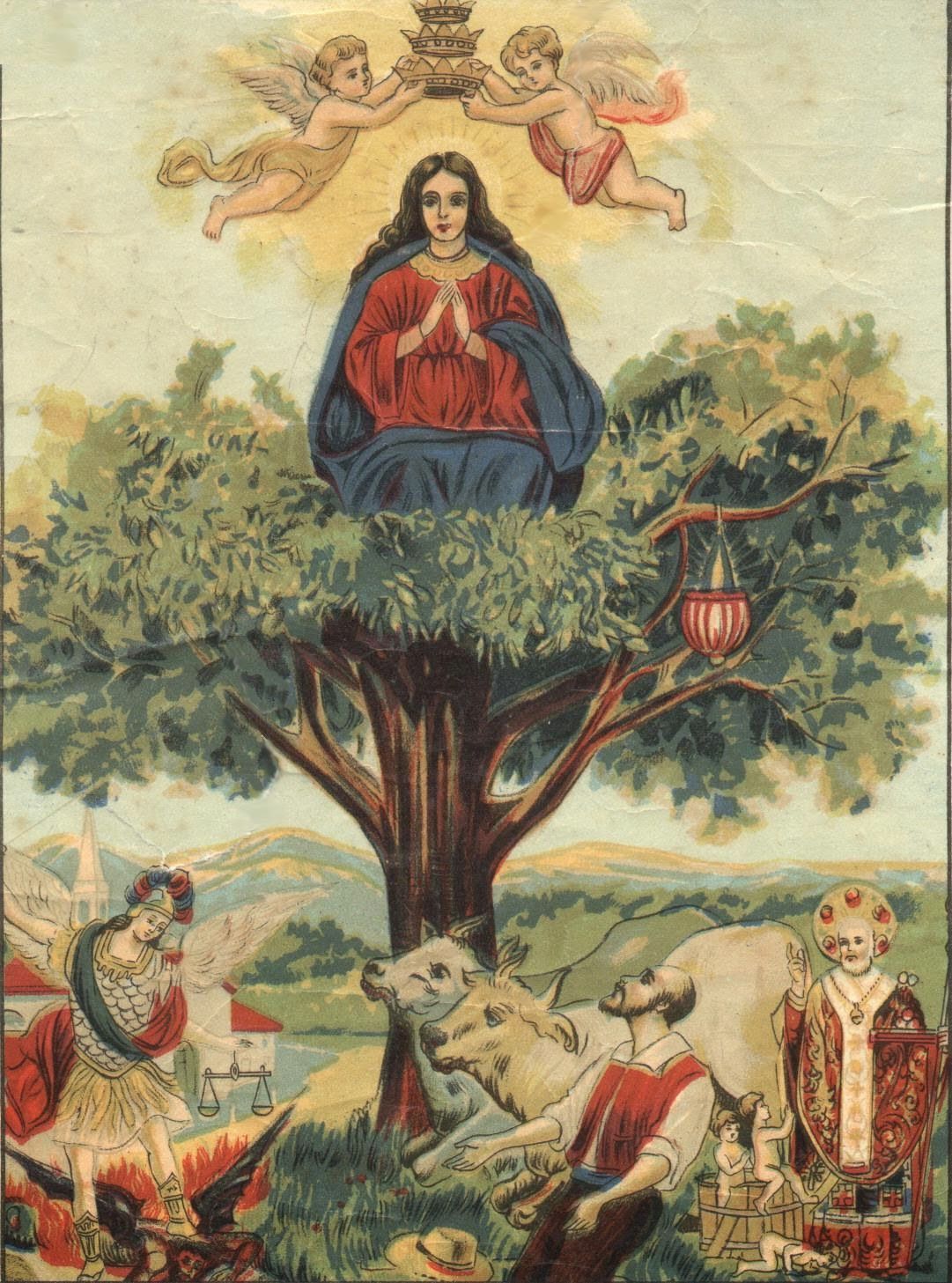
The Abbot Orsini wrote: “Our Lady of the Vine, Tuscany, Italy. A fine Church, located near Viterbo, occupied at present by Dominicans.” The city of Viterbo is located at the foot of Mount Cimino in the province of Rome. Viterbo itself currently has 34 separate Parishes, with 8 religious houses for men and 18 houses for sisters. I can find no reference to Our Lady of the Vine, or Madonna della Vito, anywhere in the entire region of Tuscany. I found two references to Dominican convents. The first was Our Lady of the Oak, or Madonna della Quercia, which also has a Dominican convent attached. The second was Santa Maria dei Gradi, of which only the Church still remains. It was one of the earliest Dominican convents, although it is now used mainly as a retreat house. The Heavenly Mother, like all mothers, does not discriminate between children, for her help is for everyone. We now continue with Our Lady of the Oak, which is almost surely the place referred to be the good Abbot as Our Lady of the Vine. At one time in Viterbo there was a certain man named Mastro Baptist Magnano Iuzzante, who was a very God-fearing devotee of the glorious Virgin Mary. He hired a painter named Monetto in the year 1417 to paint an image on a tile of the most glorious Virgin Mary, holding her Son in her arms. Mastro Baptist then lovingly laid the tile on an oak tree that stood at the edge of his vineyard, near the road leading to Bagnaia and along which robbers often awaited to attack unwary travellers. The image remained there for about 50 years under cover of the oak’s branches and after a while, only a few women who passed by ever stopped to say a prayer and to admire the beauty of a natural tabernacle that a wild vine, which had embraced the oak, had created.
During this period a hermit of Siena, Pier Domenico Alberti, whose hermitage was at the foot of Palanzana, went around the countryside and the nearby towns of Viterbo, saying, “Among Bagnaia and Viterbo there is a treasure.” Many people, driven by greed, started digging there but found nothing and asked for an explanation from the hermit. Domenico then brought them under the oak tree chosen by the Virgin and pointed to the real treasure, the Madonna. He told them of the day he had decided to take away the sacred image to his hermitage and of how it had returned to the oak. Dominico was not alone in this experience. A devout woman named Bartolomea often walked past the oak tree and stopped each time to pray to the Blessed Virgin. One day she also decided to take the tile to her home. After saying her evening prayers, Bartolomea went to bed but woke up in the morning to find the image missing. She at first thought that her family had taken it to place it somewhere else but upon learning that this was not so, she ran to the oak tree and saw what she had already guessed – the tile had miraculously returned to its place amid the tendrils of the vine. Bartolomea tried again but always the sacred image returned to the tree. At first she did not say anything to anyone, to avoid being regarded as lying or insane. Then, in 1467, during the month of August, the whole region was struck by the greatest scourge of those times: the plague. Everywhere there were the bodies of the dead lying in the deserted streets and there was everywhere, great weeping and mourning. Some then remembered the image painted on the humble tile, and, as if driven by an inexplicable force, went to kneel beneath the oak. Nicholas of Tuccia, an historian, said that on one day 30,000 people were there to beg for mercy. A few days later the plague ceased and then 40,000 of the faithful came back to thank the Virgin Mary. The people of Viterbo were headed by their Bishop Pietro Gennari and there were many, from other regions. In early September of the same year another extraordinary event happened. A good knight of Viterbo had many enemies, as will often happen to a follower of Christ. One day he was surprised by his enemies outside the walls of Viterbo. Alone and unarmed and having no way to deal with the mortal danger, he fled into the nearby woods. Fatigued and desperate to reach his destination, the knight heard the cries of the enemy draw nearer and nearer. Eventually he arrived at the oak with the sacred image of Mary, where he fell at her feet with great faith and embraced the trunk of the tree, putting his life into the hands of his Heavenly Mother. The knight’s enemies reached the oak but were surprised that they could no longer see the knight. They began to look behind every tree and bush but not one could see him since he had disappeared before their very eyes. Failing to find him after a long time spent in searching, they gave up in disgust. Then the knight, after thanking the Virgin Mary, returned to Viterbo and told everyone what had happened. Bartolomea heard his tale and encouraged by his words, she described the miracles to which she had been a witness. They told everyone what had happened to them with so much enthusiasm and devotion. The stories spread like wildfire and many people, coming from the most diverse regions of Italy, flocked to the feet of the oak to implore help from the Blessed Virgin.
It was decided to build an Altar and then a Chapel of planks before Pope Paul II gave the necessary permission to build a small Church in 1467. Many Popes and Saints have been devotees of the image, including St Charles Borromeo, St Paul of the Cross, St Ignatius Loyola, Saint Crispin of Viterbo and St Maximilian Kolbe, among many others. On 20 January 1944, during the bombing of Viterbo, a squadron of 12 bombers headed for the oak but upon arriving at their destination, inexplicably veered to the right and the bombs dropped, did not destroying anything outside of the Church, which was empty. The remains of the bombs, 3 large chunks, are kept behind the Altar of the Madonna. In 1986, Pope John Paul II proclaimed Our Lady of the Oak, Patroness of the new Diocese of Viterbo, formed from the union of those of Viterbo, Tuscania, Montefiascone, Acquapendente and Bagnoregio. Even today the Virgin protects her devotees and the devotion to the Blessed Virgin of the Oak is very strong. Every year on the second Sunday of September, the faithful commemorate the “Benefits from the Sacred Image of Our Lady of the Oak.” Many cities and towns, with their brotherhoods, participate in the procession of thanksgiving, called the “Covenant of Love “ The Mayor of Viterbo, on behalf of all participants, renews the Consecration made of old by the whole region, back in 1467.
__ St Alexander of Apema St Anastasia the Patrician St Andrew of Strumi St Attalas of Bobbio St Blanchard of Nesle-la-Réposte St Caius of Apema St Cordratus of Nicomedië St Droctoveus of Paris Bl Elias del Socorro Nieves St Emilian of Lagny St Failbhe the Little St Gustav the Hermit St Himelin Bl Jean-Marie Joseph Lataste St John Ogilvie SJ (1579-1615 died aged 36) MARTYR Biography: https://anastpaul.wordpress.com/2017/03/10/saint-of-the-day-10-march-st-john-ogilvie/ St John Ogilvie, his Rosary and the Baron: https://anastpaul.wordpress.com/2017/03/10/st-john- ogilvie-sj-10-march/
Forty Martyrs of Sebaste, Armenia (Died 320) – Forty Christian soldiers of the Thunderstruck Legion of the Imperial Roman army who were tortured and murdered for their faith during the persecutions of Emperor Licinius. They were exposed naked on a frozen pond to freeze to death at Sebaste, Armenia in 320 and their bodies afterward were burned.
Thought for the Day – 9 March – Meditations with Antonio Cardinal Bacci (1881-1971)
Blessed are the Merciful
If we want God to show mercy to us, we must be merciful to those who are in material or spiritual distress.
“Blessed are the merciful, for they shall obtain mercy” (Mt 5:7)
Let us recall the Gospel parable about the king who was making out the accounts of all his servants. One man was brought before him who owed him the enormous sum of ten thousand talents. He had no means of paying the debt. In order to obtain at least some compensation, the king ordered that this servant should be sold, together with his wife and children. But the servant wept and implored, so that the king was moved with pity and pardoned him completely. When the servant had left the king’s presence, he met a fellow servant who owed him a small sum, namely, one hundred pieces of silver. He threw himself angrily upon him immediately. The unfortunate fellow began begging for mercy with tears in his eyes but, it was no use. He was flung into prison and condemned to forced labour until such time as the debt would be paid. Soon afterwards, the king came to hear of this incident. He was furious with the cruel servant and ordered him to be put in prison and severely punished (Mt 18:23-25).
This parable refers to all of us. What debts we have contracted before God! Nevertheless, He is prepared to forgive us everything, provided that we are also merciful towards our fellowmen. This should be a comforting assurance.
Day Twenty-one of our Lenten Journey – 9 March – The Third Sunday of Lent, Readings: Daniel 3:25, 34-43, Psalms 25:4-5, 6 and 7, 8 and 9, Matthew 18:21-35
Imitating Christ with Thomas à Kempis (1380-1471)
In You is the source of life and in Your Light Lord, we see light Psalm 35(36)
“Lord, how often will my brother sin against me and I forgive him? As many as seven times?” – Matthew 18:21
CHRIST: MY CHILD, stand firm and trust in Me. For what are words but words? They fly through the air but hurt not a stone. If you are guilty, consider how you would gladly amend and repair the damage you have caused. If you are not conscious of any fault, think that you wish to bear this for the sake of God. It is little enough for you occasionally to endure words, since you are not yet strong enough to bear hard blows.
And why do such small matters pierce you to the heart, unless because you are still carnal and pay more heed to men than you ought? You do not wish to be reproved for your faults and you seek shelter in excuses because you are afraid of being despised. But look into yourself more thoroughly and you will learn that the world is still alive in you, in a vain desire to please men. For when you shrink from being abased and confounded for your failings, it is plain indeed that you are not truly humble or truly dead to the world, and that the world is not crucified in you.
Listen to My word and you will not value ten thousand words of men. Behold, if every malicious thing that could possibly be invented were uttered against you, what harm could it do if you ignored it all and gave it no more thought than you would a blade of grass? Could it so much as pluck one hair from your head?
He who does not keep his heart within him and who does not have God before his eyes, is easily moved by a word of disparagement. He who trusts in Me, on the other hand and who has no desire to stand by his own judgement, will be free from the fear of men. For I am the judge and discerner of all secrets. I know how all things happen. I know who causes injury and who suffers it. From Me that word proceeded and with My permission it happened, that out of many hearts thoughts may be revealed. I shall judge the guilty and the innocent but I have wished beforehand to try them both by secret judgement.
The testimony of man is often deceiving but My judgement is true — it will stand and not be overthrown. It is hidden from many and made known to but a few. Yet it is never mistaken and cannot be mistaken even though it does not seem right in the eyes of the unwise.
To Me, therefore, you ought to come in every decision, not depending on your own judgement. For the just man will not be disturbed, no matter what may befall him from God. Even if an unjust charge be made against him he will not be much troubled. Neither will he exult vainly, if through others, he is justly acquitted. He considers that it is I Who search the hearts and inmost thoughts of men, that I do not judge according to the face of things or human appearances. For what the judgement of men considers praiseworthy, is often worthy of blame in My sight.
DISCIPLE: O Lord God, just Judge, strong and patient, You Who know the weakness and depravity of men, be my strength and all my confidence, for my own conscience is not sufficient for me. You know what I do not know and, therefore, I ought to humble myself whenever I am accused and bear it meekly, forgiving them who utter such.
Forgive me, then, in Your mercy for my every failure in this regard and give me once more, the grace of greater endurance. Better to me is Your abundant mercy in obtaining pardon, than the justice which I imagine in defending the secrets of my conscience. And though, I am not conscious to myself of any fault, yet I cannot thereby justify myself because without Your mercy, no man living will be justified in Your sight. (Book 3 Ch 46)
Quote/s of the Day – 9 March – Tuesday of the Third week of Lent, Readings: Daniel 3:25, 34-43, Psalms 25:4-5, 6 and 7, 8 and 9, Matthew 18:21-35
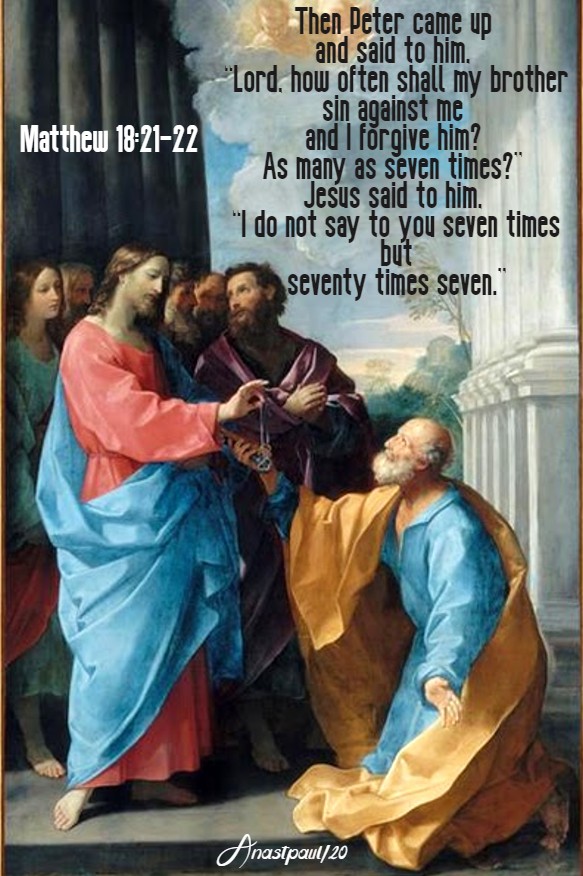
“Then Peter came up and said to him, “Lord, how often shall my brother sin against me and I forgive him? As many as seven times?” Jesus said to him, “I do not say to you seven times but seventy times seven.”
Matthew 18:21-22
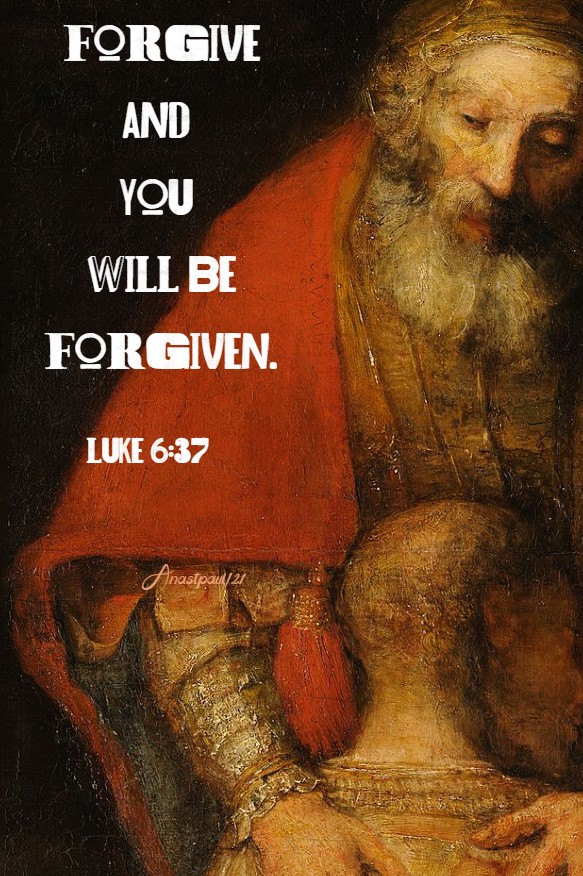
“Forgive and you will be forgiven.”
Luke 6:37
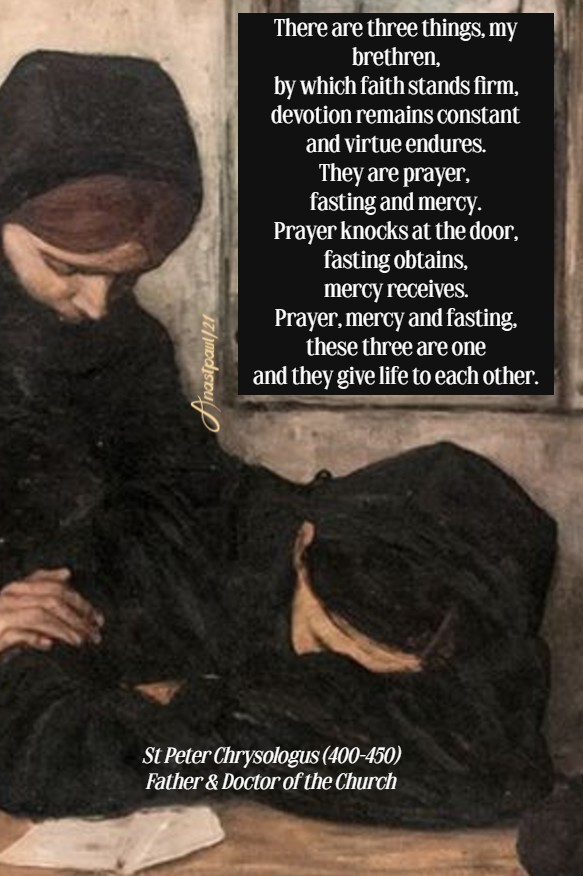
“There are three things, my brethren, by which faith stands firm, devotion remains constant and virtue endures. They are prayer, fasting and mercy. Prayer knocks at the door, fasting obtains, mercy receives. Prayer, mercy and fasting, these three are one and they give life to each other.”
St Peter Chrysologus (400-450) Bishop of Ravenna, Father & Doctor of the Church
“To the extent that you pray, with all your soul, for the person who slanders you, God will make the truth known to those who have been scandalised by the slander.”
St Maximus the Confessor (c 580–662)
“If a man finds it very difficult to forgive injuries, let him look at a Crucifix and think that Christ shed all His Blood for him and not only forgave His enemies but, even prayed His Heavenly Father, to forgive them also. Let him remember, that when he says the Pater Noster, everyday, instead of asking pardon for his sins, he is calling down VENGEANCE UPON HIMSELF!”
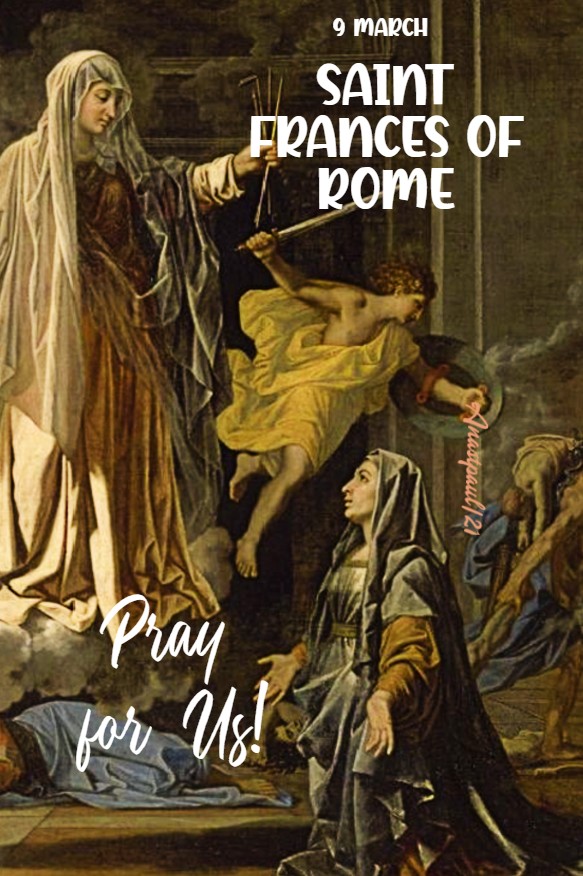
One Minute Reflection – 9 March – Tuesday of the Third week of Lent, Readings: Daniel 3:25, 34-43, Psalms 25:4-5, 6 and 7, 8 and 9, Matthew 18:21-35 and the Memorial of St Frances of Rome (1384-1440)
“Should you not have had pity on your fellow servant, as I had pity on you?” …Matthew 18:33
REFLECTION – “What is human mercy like? It makes you concerned for the hardship of the poor. What is divine mercy like? It forgives sinners… In this world God is cold and hungry in all the poor, as He Himself said (Mt 25:40)… What sort of people are we? When God gives, we want to receive, when He asks, we refuse to give? When a poor man is hungry, Christ is in need, as He said Himself: “I was hungry and you gave me no food” (v. 42). Take care not to despise the hardship of the poor, if you would hope, without fear, to have your sins forgiven… What He receives on earth He returns in heaven. I put you this question, dearly beloved – what is it you want, what is it you are looking for, when you come to Church? What indeed if not mercy? Show mercy on earth and you will receive mercy in heaven. A poor man is begging from you and you are begging from God, he asks for a scrap, you ask for eternal life… And so, when you come to Church, give whatever alms you can to the poo,r in accordance with your means.” – St Caesarius of Arles (470-543) Sermon 25
PRAYER – Infinite Lord, help me to serve You always in accord with Your holy will. Show us how to make You our Lord and our All. St Frances of Rome, you showed us all the way of holiness within the confines of our lives, always seeking to do the will of God and serve all His children, most especially those in need but remaining always true to the vows of your marriage. Please pray for us all, amen.
Our Morning Offering – 9 March – Tuesday of the Third week of Lent
Hear us, O Heavenly Father, For the Sake of Your Only Son By St Augustine (354-430) Father and Doctor of the Church
Almighty Father, come into our hearts and so fill us with Your love that forsaking all evil desires, we may embrace You, our only good. Show us, O Lord our God, what You are to us. Say to our souls, I am your salvation, speak so, that we may hear. Our hearts are before You, open our ears, let us hasten after Your Voice. Hide not Your Face from us, we beseech You, O Lord. Open our hearts, so that You may enter in. Repair the ruined mansions, that You may dwell therein. Hear us, O Heavenly Father, for the sake of Your only Son, Our Lord Jesus Christ, who lives and reigns with You and the Holy Spirit, one God, now and forever. Amen
Saint of the Day – 9 March – Saint Bosa of York OSB (Died c 705) Fourth Bishop of York, Benedictine Monk, ecclesiastical reformer St Bosa was highly regarded by the Venerable St Bede who praised his humility and sanctity.
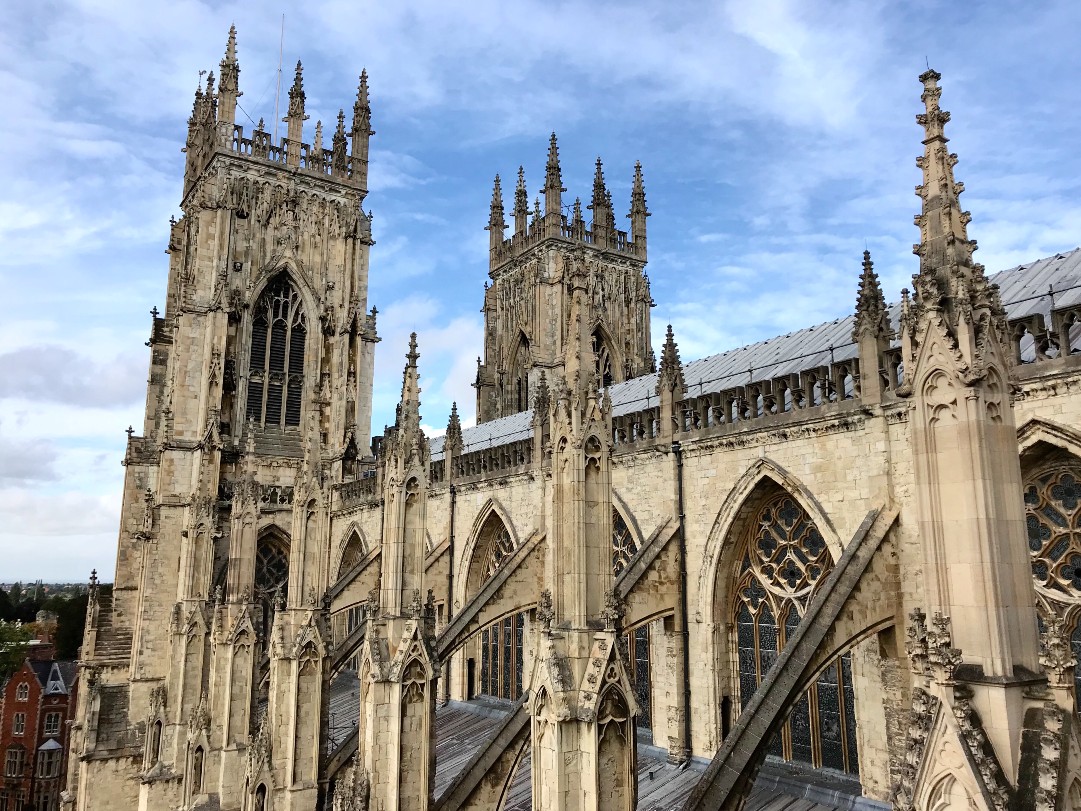
A window in York Minster showing various Bishops, one of whom is St Bosa.
Nothing is known of the birth or early life of Bosa. Bosa was a Northumbrian, educated at Whitby Abbey under the Abbess St Hilda. He subsequently joined the Monastery as a Monk and became one of five men educated at Whitby who went on to become Bishops. The other four were Oftfor, Ætla, St John of Beverley, and St Wilfrid II.
In 678, after Wilfrid was removed from the Bishopric of York and banished from Northumbria, the Diocese of York was divided into three. Bosa was appointed to the now greatly reduced Diocese of York, which included the sub-kingdom of Deira, thanks to the support of King Ecgfrith of Northumbria and St Theodore of Tarsus, the Archbishop of Canterbury.
Bosa was Consecrated in his Cathedral at York in 678 by Theodore but Wilfrid declared that he was unable to work with Bosa because he did not consider him to be a member of the Catholic Church. Bosa’s episcopate lasted nine years but with Wilfrid back in favour, in 687, Bosa was removed just as his predecessor had been. He returned to York in 691, after Wilfrid was once again expelled. While Bishop, Bosa introduced a communal life for the clergy of the Cathedral and set up a continuous liturgy in the Cathedral.
York Minster
The date of Bosa’s death is unknown; he was still alive in 704 but must have died before 706, when his successor was named. His successor at York was St John of Beverley, the Bishop of Hexham. A contemporary writer, the Venerable St Bede, praised Bosa as a man of “singular merit and sanctity.” St Bede also praised Bosa’s humility. Bosa was also responsible for the early education of St Acca, later Bishop of Hexham, who grew up in his household.
Bosa appears as a saint in an 8th-century liturgical calendar of York, the only sign that he was venerated as a saint before the Norman Conquest of England. The 16th-century English antiquary John Leland included Bosa in his list of saint’s resting places in England, giving it as York.
Notre-Dame de Savigny /Our Lady of Savigny, France (1112) – 9 March:
The Abbot Orsini wrote: “Foundation of Savigny, in the Diocese of Avranches, in Normandy, in honour of the Blessed Virgin, about the year 1112, by the blessed Vitalis, hermit, who was its first Abbot.” About the year 1112, in the Diocese of Avranches, the Blessed Vitalis (Vital de Mortain) established the foundation of the Abbey of Savigny (Abbaye de Savigny) in honour of the Blessed Mother. This day commemorates the event. The Abbey was founded near the village of Savigny-le-Vieux in the north of France and Blessed Vitalis became the first Abbot. It was initially Benedictine but soon was given over to Cistercian Monks. Within only thirty years it had over thirty daughter houses. Initially, Vitalis had gone into the forest of Savigny to become a hermit. His fame for sanctity, however, drew disciples to him. These disciples needed shelter from the elements and soon Vitalis found those crude structures had become a kind of Monastery requiring a rule of life. When the Lord of Fougeres granted the land to Vital, the Monastery was founded, and the hermit became the reluctant Abbot. In 1119 Pope Celestine II took the Abbey under his protection. Serlo, also known as Serlon, was the third Abbot of Savigny. During his period of office, one of the monks was known to have a deep and tender devotion to the Blessed Mother and while he was saying Mass in honour of Our Lady, he beheld the Virgin’s hand making the Sign of the Cross over the Chalice at the consecration of the wine. At the same time, a deliciously sweet odour surrounded the Monk. Thereafter, as often as he recalled this, he was refreshed by the sweetness of the scent which had encompassed him at the time. Mary’s presence was frequently experienced at this Shrine, particularly during the Holy Sacrifice of the Mass and numerous miracles were wrought, prayers answered and graces bestowed for the asking. During the 16th century the Abbey was pillaged and burned by Calvinists but it was not until the French Revolution that the Abbey was reduced to a pile of ruins.
Unlike the Abbey, the Church Our Lady of Savigny, still stands. According to an inscription on one of the capitals in the choir, the Church was dedicated to our Lady in 1128 and it is believed, that there is no Church in the district, that is older. It was restored in the year 1869 and serves the surrounding areas to this day..
St Joseph, we ask for your assistance in all our needs. The Novena begins on Wednesday 10 March. Please pray for us!
St Teresa of Avila’s Plea
“Would that I could persuade all men to be devoted to this glorious Saint, for I know, by long experience, what blessings he can obtain for us from God. I have never known anyone who was truly devoted to him and honoured him, by particular services, who did not advance greatly in virtue, for he helps in a special way, those souls who commend themselves to him. It is now very many years since I began asking him for something on his feast and I have always received it. If the petition was in any way amiss, he rectified it for my greater good . . .
I ask for the love of God, that he who does not believe me, will make the trial for himself—then he will find out by experience, the great good that results from commending oneself to this glorious Patriarch and in being devoted to him.”
St Alphonsus Liguori on St Joseph, Patron of a Happy Death
“Since we all must die, we should cherish a special devotion to St Joseph, that he may obtain for us a happy death. All Christians regard him as the advocate of the dying who had honoured him during their life and they do so for three reasons:
“First, because Jesus Christ loved him not only as a friend but as a father and on this account his mediation is far more efficacious than that of any other Saint.
“Second, because St Joseph has obtained special power against the evil spirits, who tempt us with redoubled vigour at the hour of death.
“Third, the assistance given St Joseph at his death by Jesus and Mary, obtained for him the right to secure a holy and peaceful death for his servants. Hence, if they invoke him at the hour of death, he will not only help them but he will also obtain for them the assistance of Jesus and Mary.”
Thought for the Day – 8 March – Meditations with Antonio Cardinal Bacci (1881-1971)
Our Martyrdom
“St Ambrose describes virtue, as a slow martyrdom. In this sense, we must all be martyrs. There is only one difference. The Martyrs of the Church shed their blood and gave up their lives for Jesus, within one hour or one day and gained their reward immediately. Our martyrdom, on the other hand, will be prolonged. It will last all our lives and will end only when we accept death with resignation from the hands of God. Ours is the martyrdom of virtue. Let us clearly understand, that solid Christian virtue is a slow and continual martyrdom, which will end with death. It is not a flower, which springs up spontaneously in the garden of the soul. It is like a seed which is thrown on the damp earth and must die there slowly, so that it can generate young shoots, which will produce the ears of corn. “Unless the grain of wheat falls into the ground and dies, it remains alone. But, if it dies, it brings forth much fruit” (Jn 12:24-25). It is necessary, then, to descend into the mire of humility and to remain there until we die. Only after we have died to ourselves, shall we rise again in God (Cf ibid). After the death of our lower instincts and vices, we shall find a new life.”
Day Twenty of our Lenten Journey – 8 March – The Third Sunday of Lent, Readings: 2 Kings 5:1-15, Psalm 42:2-3; 43:3-4, Luke 4:24-30
Imitating Christ with Thomas à Kempis (1380-1471)
In You is the source of life and in Your Light Lord, we see light Psalm 35(36)
And they rose up and tdrove him out of the town and brought him to the brow of the hill on which their town was built, so that they could throw him down the cliff.– Luke 4:29
When Christ was in the world, He was despised by men. In the hour of need He was forsaken by acquaintances and left by friends to the depths of scorn. He was willing to suffer and to be despised. Do you dare to complain of anything?
He had enemies and defamers. Do you want everyone to be your friend, your benefactor? How can your patience be rewarded if no adversity test it? How can you be a friend of Christ if you are not willing to suffer any hardship? Suffer with Christ and for Christ if you wish to reign with Him.
Had you but once entered into perfect communion with Jesus or tasted a little of His ardent love, you would care nothing at all for your own comfort or discomfort but would rejoice in the reproach you suffer. For love of Him makes a man despise himself.
A man who is a lover of Jesus and of truth, a truly interior man who is free from uncontrolled affections, can turn to God at will and rise above himself to enjoy spiritual peace. He who tastes life as it really is, not as men say or think it is, is indeed wise with the wisdom of God rather than of men.
He who learns to live the interior life and to take little account of outward things, does not seek special places or times to perform devout exercises. A spiritual man quickly recollects himself because he has never wasted his attention upon externals. No outside work, no business that cannot wait stands in his way. He adjusts himself to things as they happen.
He whose disposition is well ordered cares nothing about the strange, perverse behaviour of others, for a man is upset and distracted only in proportion as he engrosses himself in externals. If all were well with you, therefore and, if you were purified from all sin, everything would tend to your good and be to your profit. But because you are as yet neither entirely dead to self nor free from all earthly affection, there is much that often displeases and disturbs you. Nothing so mars and defiles the heart of man as impure attachment to created things.
But if you refuse external consolation, you will be able to contemplate heavenly things and often to experience interior joy. (Book 2 Ch 1)
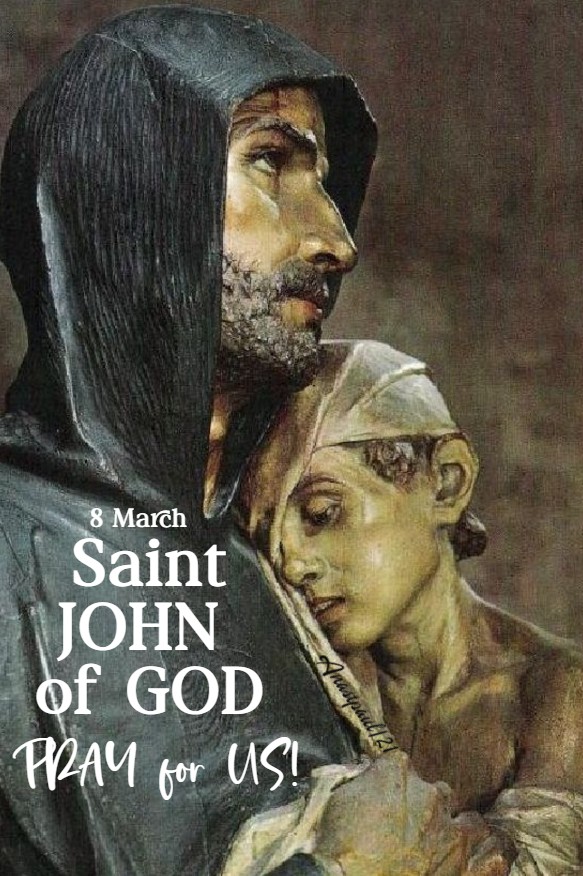
Quote/s of the Day – 8 March – Monday of the Third week of Lent, Readings: 2 Kings 5:1-15, Psalm 42:2-3; 43:3-4, Luke 4:24-30 and the Memorial of St John of God (1495-1550)
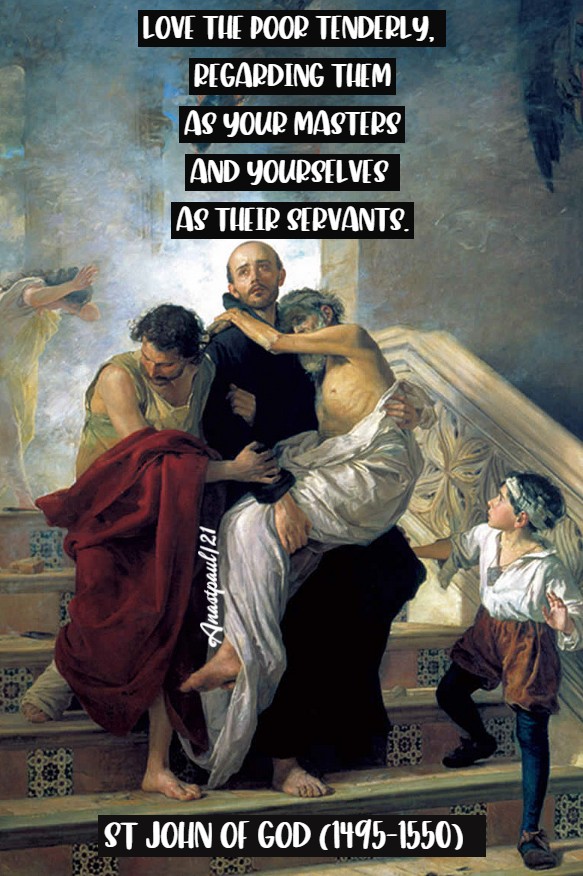
“Love the poor tenderly, regarding them as your masters and yourselves as their servants.”
“For just as water extinguishes a fire, just so does charity blot out our sins.”
One Minute Reflection – 8 March – Monday of the Third week of Lent, Readings: 2 Kings 5:1-15,Psalms 42:2, 3; 43:3, 4, Luke 4:24-30 and the Memorial fo St John of God (1495-1550) and Blessed Vincent Kadlubek O.Cist (c 1160-1223)
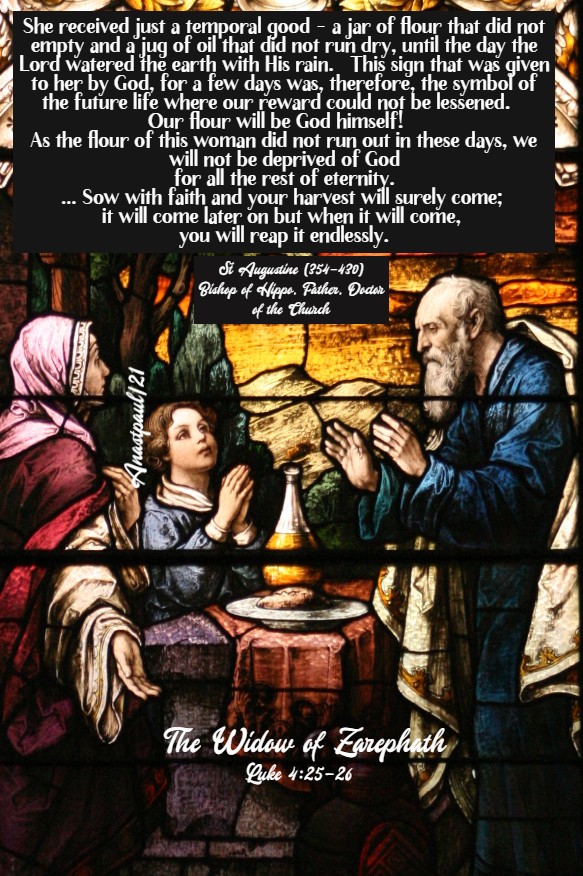
“There were many widows in Israel in the days of Elijah, when the heavens were shut up three years and six months and a great famine came over all the land. Elijah was sent to none of them but only to Zarephath, in the land of Sidon, to a woman who was a widow.” – Luke 4:25-26
REFLECTION – “The poor widow had gone out to look for two blocks of wood to bake some brea,: it is at this time that Elijah meets her. This woman is the symbol of the Church because a cross is made of two pieces of wood, the woman, who was destined to die, searches for something by which to live eternally. There is a hidden mystery in this … Elijah tells her: “Go, feed me first with your poverty and you will not run out of your goods.” What a blessed poverty! If the widow received here on earth such retribution, what a reward may she hope to receive in the life to come!
I insist on this point – let us not expect to harvest the fruit of our sowing now, at the time we sow. Here on earth, we sow with difficulty what will be the harvest of our good works but only later on, will we gather the fruits of this with joy, according to what is said: “Those who go forth weeping, carrying sacks of seed, will return with cries of joy, carrying their bundled sheaves” (Ps 125:6). Actually Elijah’s act towards this woman was not her reward, but only a symbol of it. For if this widow would have been rewarded here on earth for having fed the man of God, what a miserable sowing, what a poor crop! She received just a temporal good – a jar of flour that did not empty and a jug of oil that did not run dry, until the day the Lord watered the earth with His rain. This sign that was given to her by God, for a few days was, therefore, the symbol of the future life where our reward could not be lessened. Our flour will be God himself! As the flour of this woman did not run out in these days, we will not be deprived of God for all the rest of eternity … Sow with faith and your harvest will surely come; it will come later on but when it will come, you will reap it endlessly.” – St Augustine (354-430) Bishop of Hippo, Father, Doctor of the Church – Sermon 11, 2-3
PRAYER – Lord our God, make us love You above all things and all our fellow-men, with a love that is worthy of You. May we look to Your Divine Son in love and imitation. Grant we pray, that by the prayers of the St John of God and Bl Vincent Kadlubek we too may be granted the grace to follow Your only Son, no matter our sufferings. We make our prayer, through Christ our Lord, in the unity of the Holy Spirit, one God, forever amen.
Our Morning Offering – 8 March – Monday of the Third week of Lent
Only What You Will or Will Not By Thomas à Kempis (1380-1471)
Grant me Your grace, most merciful Jesus, so that it may be with me and work with me and persevere with me to the end. Grant that I may always want and desire that which is most acceptable and pleasing to You. Let Your will be mine and let my will always follow Yours and be in perfect accord with it. Let me always will or not will, the same with You and may I not be able to will or not will anything, except what You will or will not. Amen
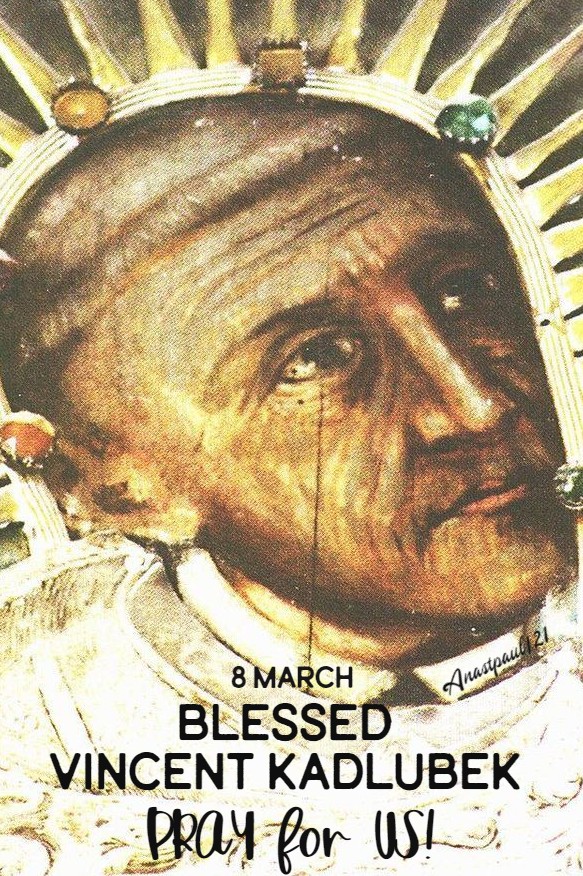
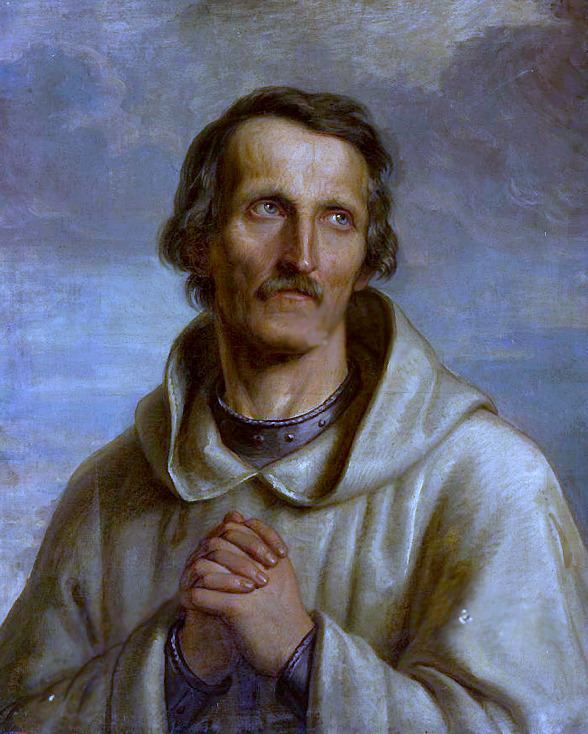
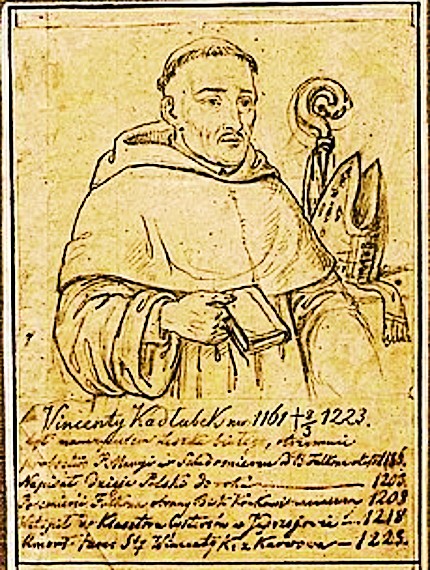
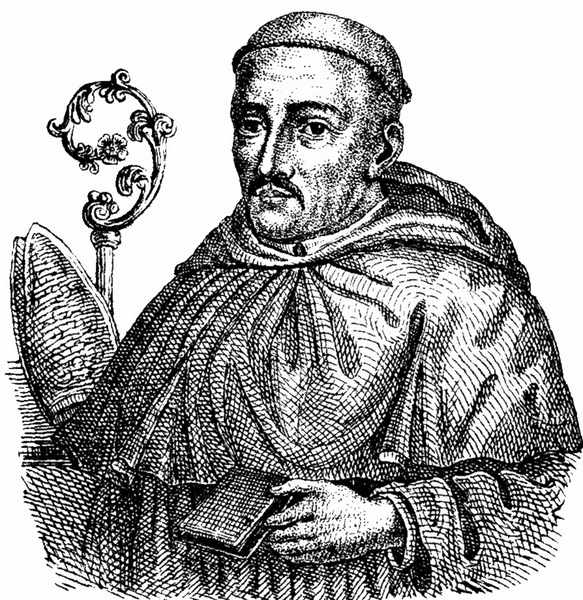
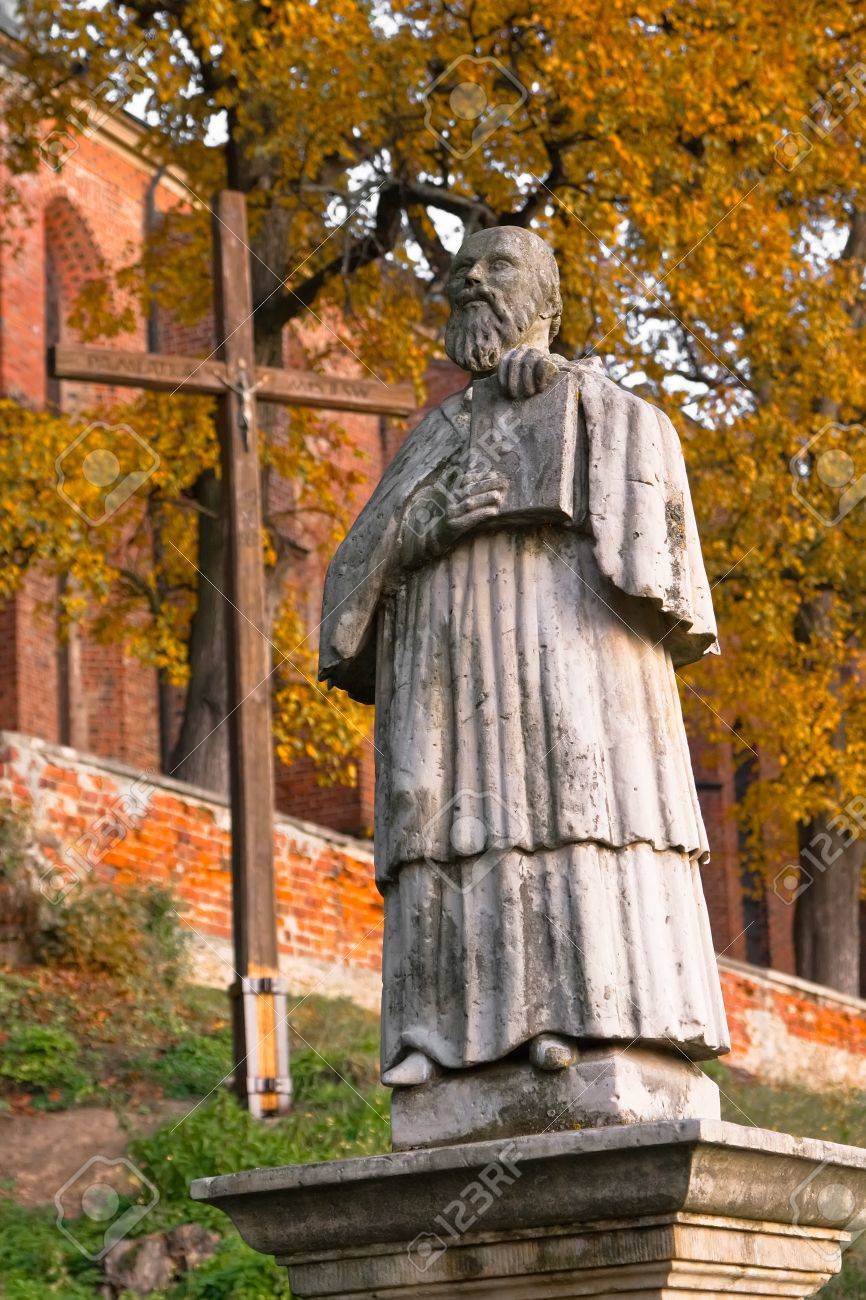
Saint of the Day – 8 March – Blessed Vincent Kadlubek O.Cist (c 1160-1223) Bishop, Cistercian Monk, noted Historian, prolific Writer and renowned Precher. His Episcopal mission was to reform the Diocesan Priests and to re-invigorate the faithful. Born in 1160 as Wincenty at Karnow, Duchy of Sandomir, Poland and died on 8 March 1223 at Jedrzejow, Poland of natural causes. Patronages – Writers, Sandomierz, Diocese of Kielce, Jędrzejów. He is also known as – Vincent Kadlubo, Vincent Kadlubko, Vincent of Cracow, Wincenty Kadlubek.
Wincenty Kadlubek was born of noble family about the year 1160 at Karnow, in the Duchy of Sandomir in Poland. He studied at the Cathedral school in Kraków. It was while at the latter that he studied under Mateusz Cholewa. It was the latter’s patronage that allowed Vincent to be sent abroad for further studies. He was sent to France and Bolgona in Italy, where met the future Pope Innocent III when the two were students and he also encountered John of Salisbury, the historian and poet. He received Priestly Ordination in 1189 and became Canon and Dean of Cathedral School of Krakow. A document dated 1212 bears his signature as “Praepositus Sandomirensis of the quondam,” namely the Provost of the Cathedral of Sandomir.
On the death of Bishop Fulk of Krakow on 11 September 1207, the chapter voted in favour of the election of Vincent. Pope Innocent III confirmed the decision in a papal bull on 28 March 1208 and Vincent received his Episcopal Consecration from the Archbishop of Gniezno, two months later. Innocent III’s bull referred to Vincent’s wisdom as the motivation for his selection, while referring to him as a “master and preacher.”
Vincent set out to reform the Diocesan Priests to ensure their holiness, while also seeking to invigorate the faithful to active participationthe life of the Church. He also supported the construction of Monasteries in the Diocese. He Consecrated Saint Florian’s Basilica and was said to have once been the Chaplain to Casimir II the Just.
The Bishop was noted for his linguistic skills, for his charismatic preaching and for his expertise in Canon law as well as for his renowned rhetoric abilities. He knew of the natural sciences as well, since he had studied them while in Paris and Bologna. But it was while in Europe that he started reading the life and works of Saint Bernard of Clairvaux and became enthralled with the charism of the Cistercians, to whom he granted attention as Bishop.
In 1214, thanks to the providential intervention of Bishop Vincent, a long-running dispute about the possession of Galicia was resolved. In 1215 he participated in the Fourth Council of the Lateran.
In 1218 he resigned from his Diocese, which Pope Honorius III accepted and entered the Cistercian Monastery in Jędrzejów. He became the first Pole to join the Cistercians.
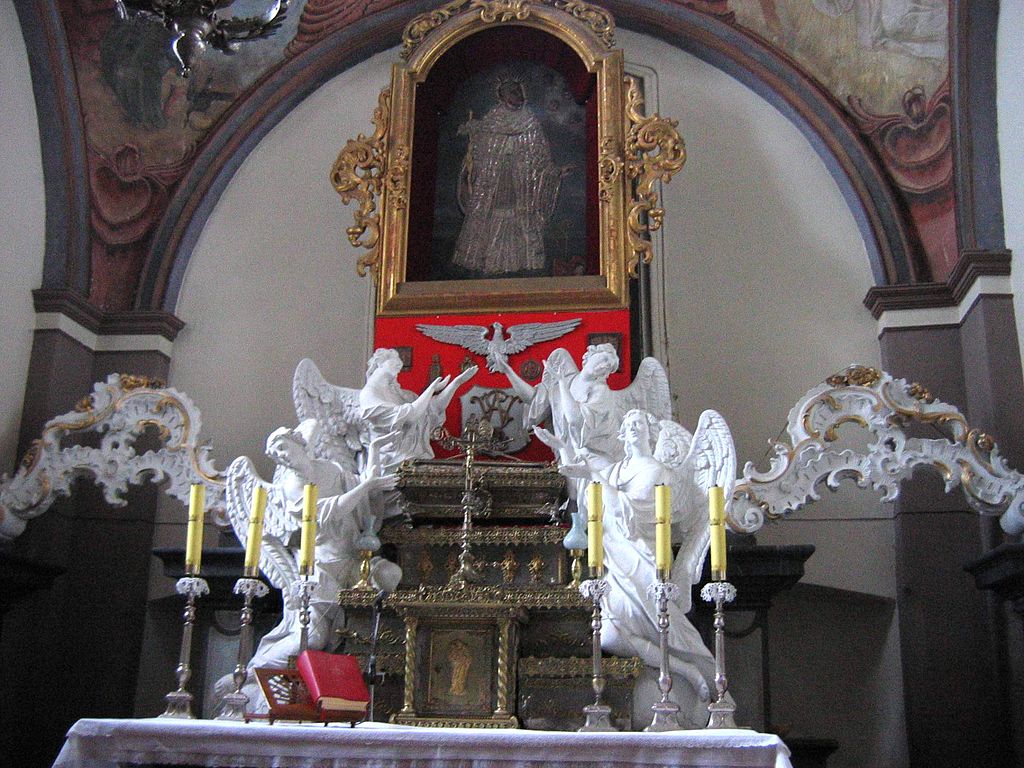
Vincent died on 8 March 1223 and his remains were buried before the high altar of the Monastery Church. His remains were exhumed on 26 April 1633 with his pallium found intact though his remains had become skeletal. Measurements were taken and it was surmised that he was of “fair height.” His remains were moved to a new location before the high altar on the following 16 August. Kadłubek’s remains were again exhumed and reinterred in mid-1765 and some were moved to Sandomierz in 1845 for veneration. Other parts to his remains were moved in 1903 to Wawel and placed in a silver urn.
Relics at the Monastery Church in Jędrzejów
In 1682, the King Jan III Sobieski petitioned for his Beatification and a similar petition was made in 1699 by the General Chapter of the Order of Citeaux, though it was not until 18 February 1764, under pressure from Wojciech Ziemicki, Abbot of Jedrzejow, that Pope Clement XIII granted confirmation of cult as “Blessed” although he is popularly known as ‘Saint’ in Poland.
Finally worthy of note that the works of Blessed Wincenty Kadlubek composed as the first Polish journalist: “Chronica seu originale et principum Regum Poloniae” in four volumes. The first three are in the form of dialogue between the Archbishop of Gnesen John (1148-65) and Matthew Bishop of Krakow (1145-65). The first is legendary, the second is based on a chronicle of a Gallo, the third and fourth summarize the experience of the author. The period in which the work saw the light does not find the experts agree: it was commissioned by King Casimir, or when Leszek Vincent was already a bishop, while others, he devoted himself to it now imprisoned in the monastery.
Some of Blessed Vincent’s writings had a huge impact on the Polish political doctrine of the 14th and 15th centuries. Some suggest that his most well-known book “Chronicles of the Kings and Princes of Poland” was written at the request of Prince Casimir II others suggest that it at the request of Prince Leszek while Blessed Vincent was a Bishop; still others claim that it was not written until after his retirement.
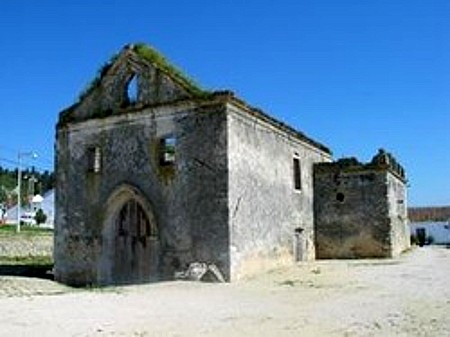
Nossa Senhora das Virtudes / Our Lady of Virtues, Lisbon, Portugal (15th Century) – 8 March:
The Church of the Monastery of Our Lady of Virtues, or Nossa Senhora das Virtudes, until recently was nothing more than a ruin, located north of Lisbon. A small Church was constructed in 2009 and further work is planned. The site is now protected because of its historical importance but for no other reason, as pilgrimages and devotion to the Blessed Virgin declined from the 19th century until the 21st century, when there remained almost no memory of the glory that once was here. According to tradition, the origin of the Church of Our Lady of Virtues, relates to the appearance of Our Lady to a keeper of cows back in the early fifteenth century. The apparition gave rise to a pilgrimage to the site, as well as the later construction of a primitive Chapel, presumably made of wood and other perishable materials. A short time later, due to the growing importance of the site and the devotion of the faithful, King Duarte commanded that a Franciscan Monastery be built, that would be attached to the Chapel. Following upon the construction of the Monastery, a hospital was also soon built and subsequently inns and other businesses supporting the thriving community that grew up around the Chapel. Pilgrimages to the Shrine became widespread throughout the remainder of the fifteenth century. Of unquestionable importance throughout the Middle Ages, the more recent centuries have seen the abandonment of pilgrimages to the Shrine, as well as the decay of the buildings and the eventual abandonment of the site by the Franciscans. At the beginning of the 1990’s, when excavations were made at the Monastery, all that remained was ruins. Despite the fact that the Monastery was almost completely destroyed, there are still some structural remains located on the north side of the Church and most of these structures are assumed to still be buried beneath the earth. This is believed because the Church of Our Lady of Virtues itself, was partially buried before the archaeological work revealed it.
St Apollonius of Antinoë St Arianus of Alexandria St Beoadh of Ardcarne St Duthus of Ross St Felix of Burgundy St Humphrey of Prüm St Jon Helgi Ogmundarson St Litifredus of Pavia St Philemon of Antinoë St Pontius of Carthage St Provinus of Como St Quintilis of Nicomedia St Rhian St Senan of Scattery St Stephen of Obazine St Theophylact of Nicomedia St Theoticus of Alexandria St Veremundus of Irache Blessed Vincent Kadlubek O.Cist (c 1160-1223) Bishop — Martyrs of North Africa – 9 saints – A bishop and some of his flock who were martyred together in North Africa. The only details that have survived are nine of the names – Beata, Cyril, Felicitas, Felix, Herenia, Mamillus, Rogatus, Silvanus, Urban.
Thought for the Day – 7 March– Meditations with Antonio Cardinal Bacci (1881-1971)
My Life is Christ
“Through the work of the Incarnation and Redemption, Jesus assumed, not only a human body and soul so that He might be loved more and so, that He might redeem us but, He also assumed a mystical body, which is composed of all men in the state of grace. The mystical body is the Church, of which Christ is the head. We should all desire to be members of this mystical body. To do so, we must live the life of Christ, which is His grace. If we are separated from the life of Christ, we are nolonger Christians. We are merely dead and rotten limbs, to use the metaphor of the vine tree and the branches. “I am the vine,” says Jesus, “you are the branches. He who abides in me and I in him,” He continues, “he bears much fruit. If anyone does not abide in me,” He adds, “he shall be cast outside, as the branch and wither and they shall gather them up and cast them into fire and they shall burn” (Cf Jn 15:4-5).
“For the branch,” says St Augustine, “there can be no half-measures. Either it remains united with the vine, or it is thrown into the fire.” The same holds true for each one of us. We must choose, either close union with Jesus, or separation and spiritual death. We must decide between a life of fervour in Christ, or a life of tepidity and sin.”
Day Nineteen of our Lenten Journey – 7 March – The Third Sunday of Lent, Readings: Exodus 20:1-17, Psalms 19:8-11, 1 Corinthians 1:22-25, John 2:13-25
Imitating Christ with Thomas à Kempis (1380-1471)
In You is the source of life and in Your Light Lord, we see light Psalm 35(36)
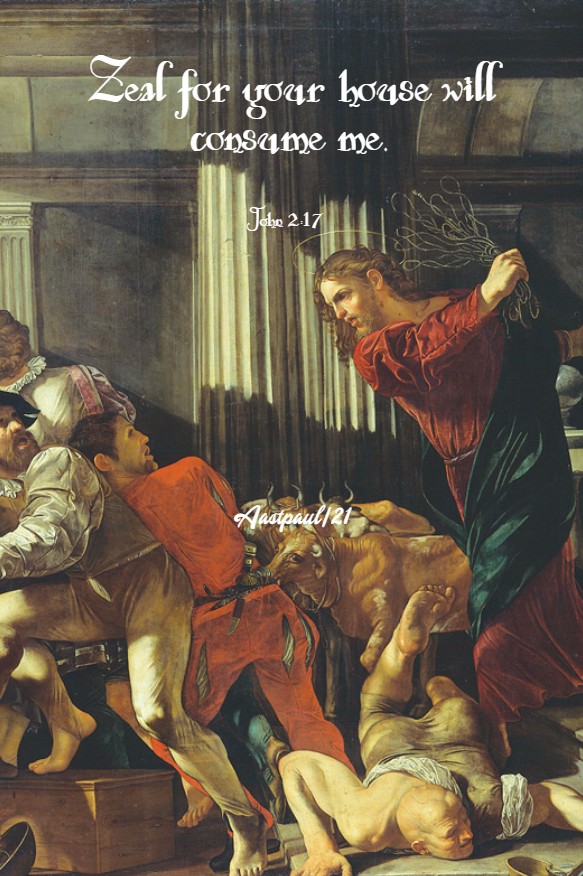
“Zeal for your house will consume me.” John 2:17
O LORD, I am in sore need still of greater grace, if I am to arrive at the point, where no man and no created thing can be an obstacle to me. For as long as anything holds me back, I cannot freely fly to You. He that said “Oh that I had wings like a dove, that I might fly away and be at rest!“(Ps 55:7) desired to fly freely to You. Who is more at rest, than he who aims at nothing but God? And who more free, than the man who desires nothing on earth?
It is well, then, to pass over all creation, perfectly to abandon self and to see in ecstasy of mind that You, the Creator of all, have no likeness among all Your creatures and that unless a man be freed from all creatures, he cannot attend freely to the Divine. The reason why so few contemplative persons are found, is that so few know how to separate themselves entirely from what is transitory and created.
For this, indeed, great grace is needed, grace that will raise the soul and lift it up above itself. Unless a man be elevated in spirit, free from all creatures and completely united to God, all his knowledge and possessions are of little moment. He who considers anything great except the one, immense, eternal good will long be little and lie groveling on the earth. Whatever is not God is nothing and must be accounted as nothing.
There is great difference between the wisdom of an enlightened and devout man and the learning of a well-read and brilliant scholar, for the knowledge which flows down from divine sources is much nobler than that laboriously acquired by human industry.
Many there are, who desire contemplation but, who do not care to do the things, which contemplation requires. It is also a great obstacle to be satisfied with externals and sensible things and to have so little of perfect mortification. I know not what it is, or by what spirit we are led, or to what we pretend — we who wish to be called spiritual — that we spend so much labour and even more anxiety on things that are transitory and mean, while we seldom or never advert with full consciousness to our interior concerns.
Alas, after very little meditation we falter, not weighing our deeds by strict examination. We pay no attention to where our affections lie, nor do we deplore the fact that our actions are impure.
Remember that because all flesh had corrupted its course, the great deluge followed. Since, then, our interior affection is corrupt, it must be that the action which follows from it, the index as it were of our lack of inward strength, is also corrupt. Out of a pure heart come the fruits of a good life.
People are wont to ask how much a man has done but they think little of the virtue with which he acts. They ask: Is he strong? rich? handsome? a good writer? a good singer? or a good worker? They say little, however, about how poor he is in spirit, how patient and meek, how devout and spiritual. Nature looks to his outward appearance; grace turns to his inward being. The one often errs, the other trusts in God and is not deceived. (Book 3 Ch 31)
Quote/s of the Day – 7 March – The Third Sunday of Lent, Readings: Exodus 20:1-17, Psalms 19:8-11, 1 Corinthians 1:22-25, John 2:13-25
“Zeal for your house will consume me.”
John 2:17
“Whatever you do, do from the heart, as for the Lord and not for others, knowing that you will receive from the Lord the due payment of the inheritance; be slaves of the Lord Christ.”
Colossians 3:23-24
“This is the glory of man – to persevere and remain in the service of God. For this reason, the Lord told His disciples: ‘You did not choose Me but I chose you.’ He meant that His disciples did not glorify Him by following Him but, in following the Son of God, they were glorified by Him. As He said: ‘I wish that where I am they also may be, that they may see My glory.’”
St Irenaeus (130-202) Father of the Church and Martyr
“… There is one Road and one only, well secured against all possibility of going astray and, this Road is provided by One Who is Himself both God and man. As God, He is the Goal, as man, He is the Way.”
St Augustine (354-430) Bishop of Hippo Father and Doctor of Grace
“… It was their vocation to call sinners to repentance, to heal those who were sick, whether in body or spirit, to seek in all their dealing, never to do their own will but the will of Him who sent them and, as far as possible, to save the world by their teaching.”
St Cyril of Alexandria (376-444) Bishop, Father & Doctor of the Church
Our life is: “To breathe God in and out. To find God in everything. To reveal God to all. To radiate the presence of God.”
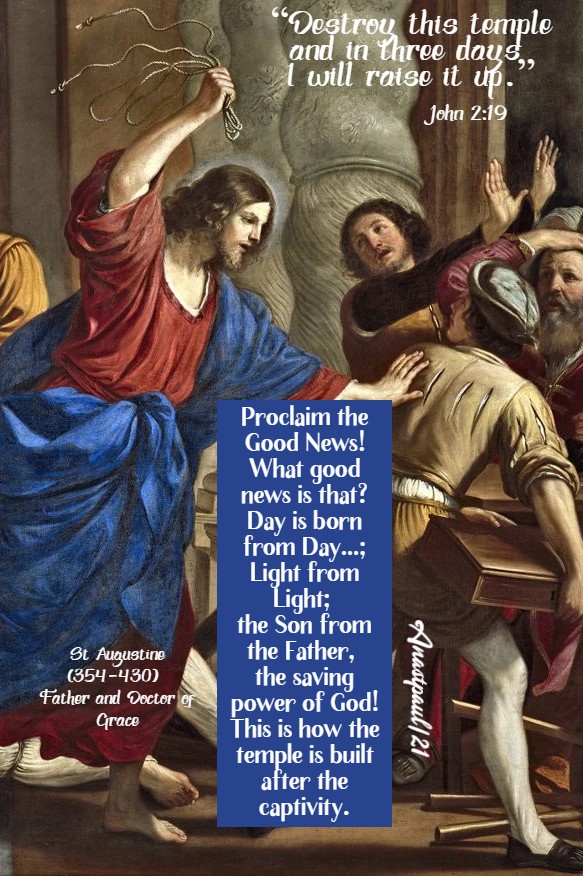
“Destroy this temple and in three days I will raise it up.” – John 2:19
REFLECTION – “We are still God’s workmen who are building the temple of God. This temple’s dedication has already taken place in its Head, in that the Lord has risen from the dead after His victory over death and having destroyed in Himself what was mortal, He has ascended to heaven … But now we are building this temple through faith, so that its dedication may also be made at the final resurrection. That is why … one of the Psalms has the title: “When the Temple was rebuilt after the captivity” (95[96]:1 Vg.). Call to mind our own former captivity when the devil held the whole world in his power, like a flock of the unfaithful. It was due to this captivity that our Redeemer came. He shed His blood for our ransoming and, by the blood He poured out, He cancelled the debt that was holding us captive (Col 2:14) … Sold beforehand to sin, we have now been set free by grace. Following this captivity, the temple is now being built and, to raise it up, the Good News proclaimed. That is why this Psalm begins as follows: “Sing to the Lord a new song” And, lest you think this temple is being constructed in some insignificant corner, as the heretics who separate themselves from the Church build it, pay attention to what follows: “Sing to the Lord, all you lands” … “Sing to the Lord a new song; sing to the Lord, all you lands.” Sing and clap your hands! Sing and “bless the name of the Lord” (v. 2). Proclaim the day, born of the day of salvation, the day, born of the day of Christ. For who is the salvation of God if not His Christ? This is the salvation we pray for in the Psalm: “Show us, Lord, your mercy and give us your saving help.” Just men of old longed for this salvation, those of whom the Lord said to His disciples: “Many desired to see what you see but did not see it” (Lk 10:24)… “Sing to the lord a new song; sing to the Lord” See the fervour of the builders! “Sing to the Lord and bless his name.” Proclaim the Good News! What good news is that? Day is born from Day… Light from Light; the Son from the Father, the saving power of God! This is how the temple is built after the captivity.” – St Augustine (354-430) Bishop of Hippo, Father and Doctor of Grace – Sermon 163,5
PRAYER – Lord our God, Your Son so loved the world that He gave Himself up to death for our sake. Strengthen us by You grace and give us a heart willing to livew by that same love. May His Mother and ours, be with us and give us hope and strength. Through Jesus Christ, our Lord in the unity of the Holy Spirit, one God now and forever, amen.
Our Morning Offering – 7 March – The Third Sunday of Lent
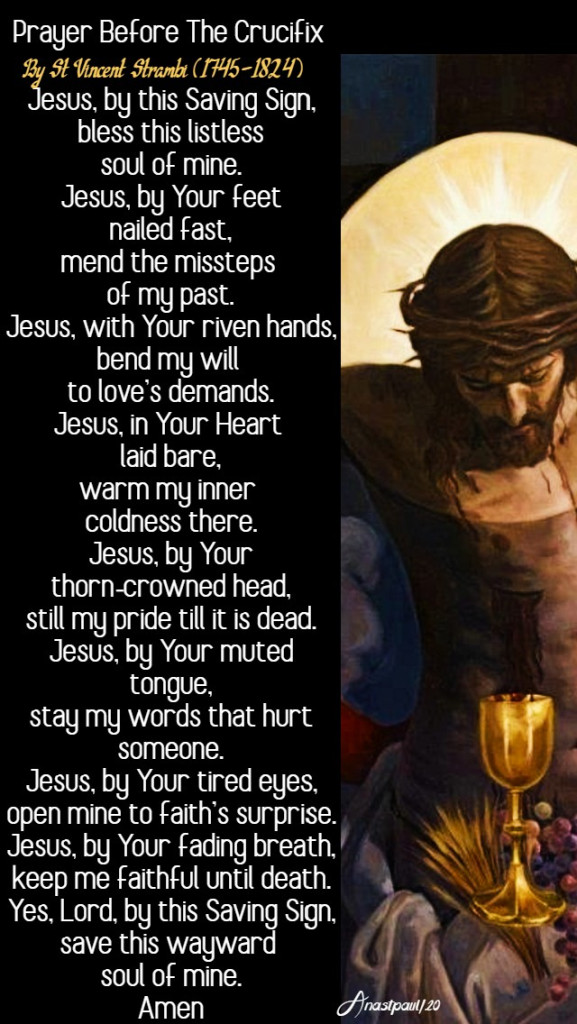
Prayer Before The Crucifix By St Vincent Strambi (1745-1824)
Jesus, by this Saving Sign, bless this listless soul of mine. Jesus, by Your feet nailed fast, mend the missteps of my past. Jesus, with Your riven hands, bend my will to love’s demands. Jesus, in Your Heart laid bare, warm my inner coldness there. Jesus, by Your thorn-crowned head, still my pride till it is dead. Jesus, by Your muted tongue, stay my words that hurt someone. Jesus, by Your tired eyes, open mine to faith’s surprise. Jesus, by Your fading breath, keep me faithful until death. Yes, Lord, by this Saving Sign, save this wayward soul of mine. Amen
Saint of the Day – 7 March – Saint Siméon-François Berneux MEP (1814-1866) Bishop, Martyr, Missionary of the Paris Foreign Missions Society, Professor and Spiritual Director at the Mans seminary. Born on 14 May 1814 in Château-du-Loir, Sarthe, France and died by being tortured, blinded by having quicklime thrown in his eyes and then beheaded on 7 March 1866 on a beach beside the Han River in Sae-nam-teo, Seoul, South Korea. St Siméon-François is also venerated along with the rest of the 103 Korean Martyrs on 20 September.
Siméon-François was born to a poor and pious family. He felt a call to the Priesthood at the age ten and in 1831 at the age of seventeen, he entered the Seminary in Mans, France. Due to health problems, he had to leave the Seminary for two years, during which time he worked as a tutor. Finally he was Ordained a Diocesan Priest on 20 May 1837. Initially, Father Berneux served as a Professor and Spiritual Director at the Mans seminary which specifically trained Priests for the Missions.
In 1839 Siméon joined the Paris Foreign Missions Society and left for the Asian missions on 13 January 1840. He arrived first in Manila, Philippines before being assigned to the Tonkin region of modern Vietnam on 17 January 1841.
He began his work near a small Convent outside the town of Moi-yen, learning the Annam language. But he was barely started, when he was arrested on Holy Saturday 1841 during one of the periodic anti–Christian persecutions, Siméon and a brother Priest were dragged from place to place, ordered to renounce Christianity, ordered to convince lay people to renounce the faith and when their persecutors finally realised that the 2 Priests would not co-operate, they were sentenced to death on 8 October 1842.
However, before the sentence could be officially approved, a French official learned of their imprisonment and on 7 March 1843, had them released. Father Berneux was sent to the Chinese province of Manchuria where he continued his missionary work for the next ten years, sometimes in Singapore or Macao.
On 5 August 1854 he was chosen the fourth Vicar Apostolic of Korea by Pope Pius IX and arrived there with some fellow Missionaries in early 1856. For administrative reasons, he was also appointed Titular Bishop of Capsa and was Consecrated on 27 December 1954.
He learned Korean and then, as Bishop, spent time on the road visiting rural Christians, started a Seminary in Pae-ron, founded several schools and started a printing house that published Catholic works in Korean.
Thousands were Baptised during his time as Bishop but a palace coup in 1864 and threats of Russian invasion, led to a resurgence in anti-Western, anti–Christian nationalism and official persecution of the Church.
Bishop Berneux was arrested on 23 February 1866. He was taken to the capital and from 3 to 7 March he was repeatedly beaten and interrogated under torture until the bones in his legs were shattered. As he was dragged to his death, Bishop Siméon preached to the people who had come out to witness the execution and to remind his fellow sufferers, that they died for the glory of the Kingdom of God, imitating their Redeemer.
The interrogation of Bishop Siméon
The deaths of Berneux and other Catholic Missionaries in Korea, was followed by a French punitive expedition which only served to reinforce the Korean policy of isolationism.
The Korean Martyrs were Canonised on 6 May 1984.
St Siméon-François relics were brought to Berlin in 2001 and are held in the Institute of St Philipp Neri in Berlin, Germany.
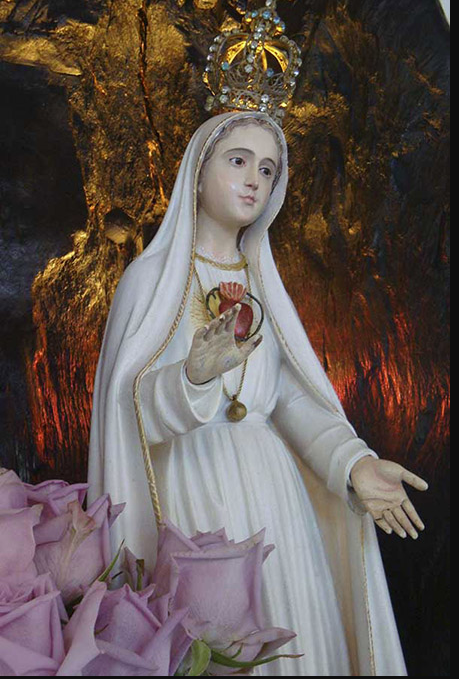
Nossa Senhora da Estrela / Our Lady of the Star, Villa Vicosa, Portugal (1050) – 7 March:
In the year 1050 there were two Benedictine Monks who lived in the convent of Monte Cassino. They decided to go on pilgrimage, teaching and catechising all those they met along the way. One night they found themselves wandering on the coast of Normandy, France, near a place called Grand Champ. Tired and sleepy, they decided to spend the night on the beach under the stars. Father Rogerio slept on the cool sand and the other Monk found himself a place to rest in a small boat nearby. As the night went on, the tide came up and the little boat was gently drawn out onto the sea. Without realising it, the Monk was going on an adventure in which he would not awaken until he was just off the coast of England. In Salisbury, England, everyone was amazed to see the Monk in the little boat, convinced that it was a miracle that he had crossed the French Sea in a small boast and lived to see the shores of England. Soon, the Monk was made Bishop and his period in office was marvellous to the people because he was a humble man of prayer, who sacrificed everything for God. The Monk who had stayed on the beach, Father Rogerio, knew nothing of what had happened to his friend. All he knew was that he and the boat had disappeared and, giving his concerns into the hands of God, he determined to continue on his journey alone. One night not long afterward, Father Rogerio went to sleep and had a dream that would change his life forever. In his dream he saw a great star fall from the sky, burning all the bushes and trees and heard a voice that said: “Our Lady wants a Church built in this place.” When he awoke, Father Rogerio looked about himself. He was not injured but this indeed was the place he had seen in his dream, for everything around him was burned. Father understood that Our Lady really did desire that he should build a Church there in her honour. He also felt in his heart, the desire to give Mary the title of “Our Lady of the Star” because of the star he had seen in his dream. Due to the poverty of those who inhabited that region, Father Rogerio was only able to build a small Altar and a tiny Chapel which would be the seed of the great Abbey of Our Lady of the Star of Monteburgo. One day an immense Chapel would be built, sheltering not only the Church but a very large convent as well. King William, who was the Duke of Normandy and he who had conquered England, learning of the Shrine of Our Lady of the Star, sent his private doctor to visit the little Chapel to find out for himself how it had all come about. Upon arriving there, the doctor discovered that he was the brother of the Monk Rogerio! He listened to his brother’s account of how he had been separated from his friend and then told about his dream. The doctor believed everything at once and to Father Rogerio’s surprise, the doctor knew the Monk who had crossed the channel in a small boat and informed his brother, that his lost friend had become the Bishop of Salisbury! The two brothers excitedly thanked Our Lady for providing this reunion. The Bishop of Salisbury, our former friend of the Monk Rogerio, asked King William to help his brother in the faith, for they were both blessed by Our Lady on their pilgrimage. William the Conqueror, with a glad heart, donated to Father Rogerio the entire region of Monteburg, along with the resources to build a great Church and an Abbey there that became a great seminary. The work was finished by the son of King William, King Henry. He, taking the throne, continued the work until its completion. The Abbey of Our Lady of the Star was, for many centuries, a centre of the Church for the whole region. Dark centuries ensued and the Church and Abbey suffered a decline until in 1842, the Vicar General of Coutances took possession of what was by that time little more than an enclosure of ruins. He turned it over to the Brothers of Mercy, a new order meant to promote Catholic education. The Abbey Church was rebuilt but as time went on, the Brothers of Mercy also left and all is now used as part of an agricultural school. As for Our Lady of the Star, it is a story almost completely forgotten, even to Catholics.
Prayer to Our Lady of the Star
“O, Our Lady of the Star, to you our gaze turns and our childlike hearts. You are the Morning Star, that announces the arrival of the day. You are the Evening Star, that shines in our night. You are the Star of the Sea, who sends us her son Jesus, the eternal Light of the world. Through the darkness and storms of life, in the hour of doubt or of temptation, in the revolt, be our clarity and our peace. Be our hope and our purity, be our sweetness and our strength, O Lady of the Star. May our gaze and our hearts forever rest on you. O Lady of the Star, Pray for us. Amen”
St Ardo of Aniane St Deifer of Bodfari St Drausinus of Soissons St Enodoch St Esterwine of Wearmouth St Eubulus of Caesarea St Gaudiosus of Brescia Bl Henry of Austria Blessed Leonid Feodorov (1879-1935) Martyr His Life and Death: https://anastpaul.com/2019/03/07/saint-of-the-day-7-march-blessed-leonid-feodorov-1879-1935-martyr/ St Paul of Prusa St Paul the Simple St Reinhard of Reinhausen Bl William of Assisi — Martyrs of Carthage – 4 saints: A catechist and three students martyred together for teaching and learning the faith. We know little more than their names – Revocatus, Saturninus, Saturus and Secundulus. Mauled by wild beasts and beheaded 7 March 203 at Carthage, North Africa
Martyrs of Korea St Siméon-François Berneux MEP (1814-1866) Bishop, Martyr St Bernard-Louis Beaulieu St Ioannes Baptista Nam Chong-Sam St Pierre-Henri Dorie St Simon-Marie-Just Ranfer de Bretenières
Martyrs of Laos Bl Luc Sy Bl Maisam Pho Inpèng Martyrs of Tyburn Bl German Gardiner Bl John Ireland Bl John Larke
Thought for the Day – 6 March – Meditations with Antonio Cardinal Bacci (1881-1971)
Filial and Servile Fear
“We should not be afraid of God because He is our greatest benefactor and loves us infinitely. When we are lost, He searches for us as a loving father would search for a wandering son. Because they think only of the majesty and justice of God, some people keep themselves at a distance from Him, as Adam did, after he had sinned. They forget that the Lord told Adam, the sinner, of the coming of the pardoning Redeemer (Gen 3:9). Bossuet truly observes, that “after the curse which came upon men through sin, there has always remained in their hearts, a certain dread of the supernatural, which prevents them from approaching God with confidence.” Jansenism increased this fear, emphasising the justice and majesty of God, rather, than the infinite love of Jesus and the beauty of His teaching.
Some writers compare our souls with the divine majesty and justice, in order to stress our unworthiness but, they forget, that Jesus is “Meek and humble of heart,” that He forgave the penitent woman, the good thief and the adulteress and, had kind words for the lost sheep and the prodigal son. They never think of the wonderful words of the beloved disciple: “God is love” (1 Jn 4:16).
This false fear of God, dries up our piety and lessens our trust in His mercy. It can lead to moroseness, to scrupulosity and to discouragement.
We should avoid this excessive fear which separates us from God. Even though we are sinful and unworthy, we should remember, that God is our loving Father, Who is always ready to help us and to grant us forgiveness. We should recall, moreover, that out of love for us, He did not spare His own Son, (Cf Rom 8:32) but gave Him to us for our redemption. If Jesus shed His blood and died for us, how can we doubt His love?”
Day Eighteen of our Lenten Journey – 6 March – Saturday of the Second week of Lent, Readings: Micah 7:14-15, 18-20, Psalms 103: 1-2, 3-4, 9-10, 11-12, Luke 15: 1-3, 11-32
Imitating Christ with Thomas à Kempis (1380-1471)
In You is the source of life and in Your Light Lord, we see light Psalm 35(36)
I will arise and go to my father and I will say to him, “Father, I have sinned against heaven and before you” – Luke 15:18
In that day every trial borne in patience will be pleasing and the voice of iniquity will be stilled; the devout will be glad; the irreligious will mourn and the mortified body will rejoice far more than if it had been pampered with every pleasure. Then the cheap garment will shine with splendour and the rich one become faded and worn; the poor cottage will be more praised than the gilded palace. In that day persevering patience will count more than all the power in this world; simple obedience will be exalted above all worldly cleverness; a good and clean conscience will gladden the heart of man far more than the philosophy of the learned and contempt for riches will be of more weight than every treasure on earth.
Then you will find more consolation in having prayed devoutly than in having fared daintily; you will be happy that you preferred silence to prolonged gossip.
Then holy works will be of greater value than many fair words; strictness of life and hard penances will be more pleasing than all earthly delights.
Learn, then, to suffer little things now that you may not have to suffer greater ones in eternity. Prove here what you can bear hereafter. If you can suffer only a little now, how will you be able to endure eternal torment? If a little suffering makes you impatient now, what will hell fire do? In truth, you cannot have two joys: you cannot taste the pleasures of this world and afterward reign with Christ.
If your life to this moment had been full of honours and pleasures, what good would it do if at this instant you should die? All is vanity, therefore, except to love God and to serve Him alone.
He who loves God with all his heart does not fear death or punishment or judgement or hell, because perfect love assures access to God.
It is no wonder that he who still delights in sin fears death and judgment.
It is good, however, that even if love does not as yet restrain you from evil, at least the fear of hell does. The man who casts aside the fear of God cannot continue long in goodness but will quickly fall into the snares of the devil. (Book 1 Ch 24:5-7)
Quote/s of the Day – 6 March – Saturday of the Second week of Lent, Readings: Micah 7:14-15, 18-20, Psalms 103: 1-2, 3-4, 9-10, 11-12, Luke 15: 1-3, 11-32
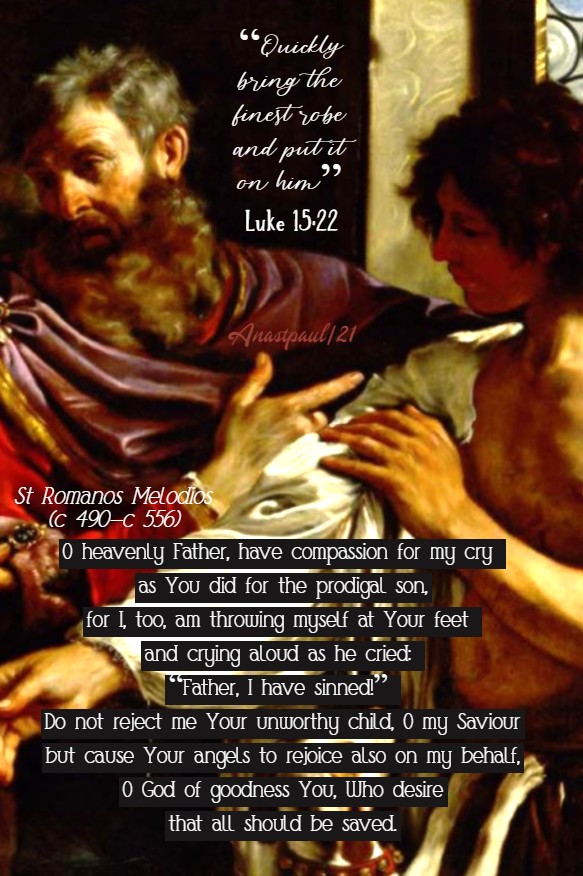
“Quickly bring the finest robe and put it on him”
Luke 15:22
‘God, be merciful to me a sinner!’
Luke 18:13
“You do not know when your last day may come. You are an ingrate! Why not use the day, today, that God has given you to repent?”
“He who calls us, came here below, to give us the means of getting there. He chose the wood that would enable us to cross the sea – indeed, no-one can cross the ocean of this world, who is not borne by the Cross of Christ. Even the blind can cling to this Cross. If you can’t see where you are going very well, don’t let go of it, it will guide you by itself. ”
St Augustine (354-430) Father & Doctor of Grace
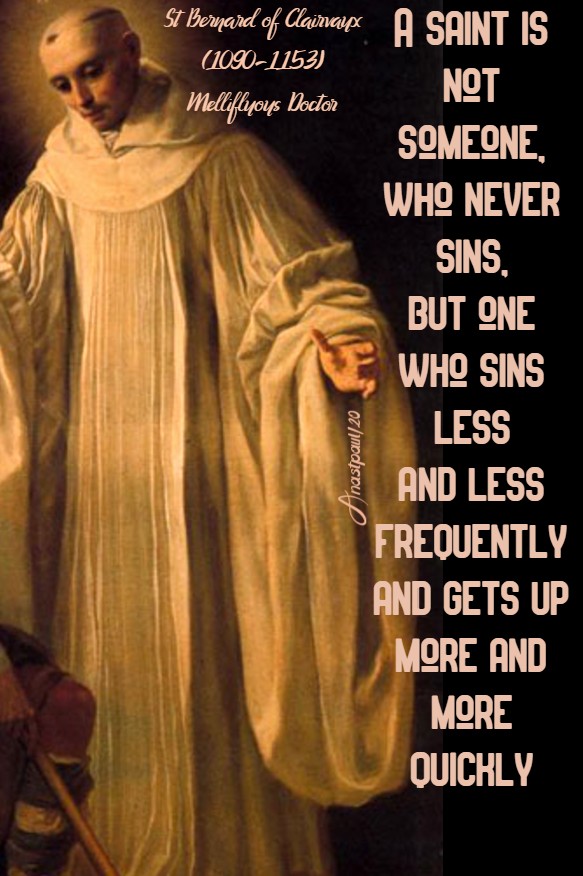
“A saint is not someone, who never sins, but one who sins less and less frequently and gets up more and more quickly.”
St Bernard of Clairvaux (1090-1153) Mellifluous Doctor
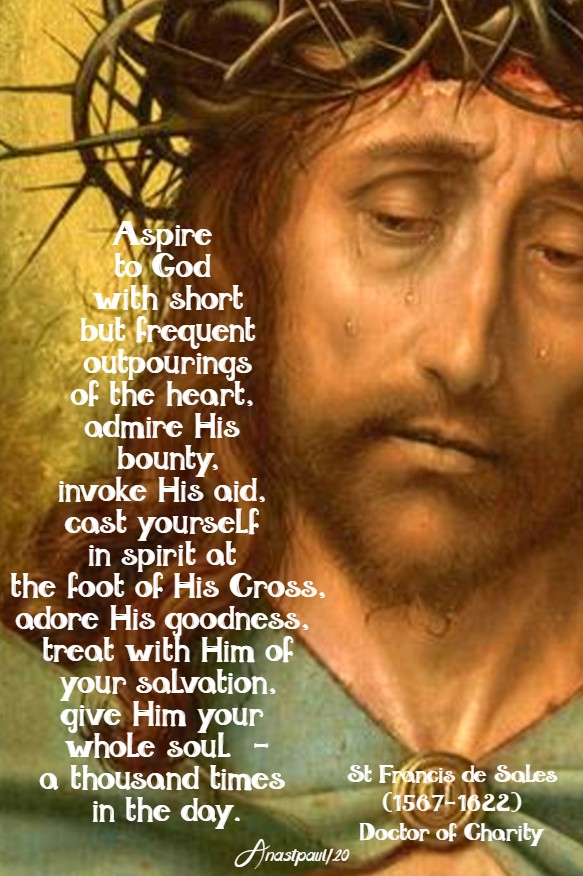
“Aspire to God with short but frequent outpourings of the heart, admire His bounty, invoke His aid, cast yourself in spirit at the foot of His Cross, adore His goodness, treat with Him of your salvation, give Him your whole soul – a thousand times in the day.”
One Minute Reflection – 6 March – Saturday of the Second week of Lent, Readings: Micah 7:14-15, 18-20, Psalms 103: 1-2, 3-4, 9-10, 11-12, Luke 15: 1-3, 11-32
“Quickly bring the finest robe and put it on him” – Luke 15:22
REFLECTION – “How many there are who, through repentance, have been worthy to receive the love You hold for humankind. You justified the anguished publican and the weeping woman who was a sinner (Lk 18.14; 7,50) for, through a predetermined design, You foresee and grant pardon. Convert me also together with them, You, Who desire that all should be saved.
My soul was soiled as it put on the garment of its sins (Gn 3,21). O let me make fountains flow from my eyes that I may purify it by repentance. Clothe me with the shining robe worthy of Your wedding (Mt 22,12), You, Who desire that all should be saved…
O heavenly Father, have compassion for my cry as You did for the prodigal son, for I, too, am throwing myself at Your feet and crying aloud as he cried: “Father, I have sinned!” Do not reject me Your unworthy child, O my Saviour but cause Your angels to rejoice also on my behalf, O God of goodness You, Who desire that all should be saved.
For you have made me Your child and Your own heir through grace (Rm 8,17). Yet as for me, because I have offended You, am here a prisoner, an unhappy slave sold over to sin! Take pity on Your own image (Gn 1,26) and call it back from exile, O Saviour, You, Who desire that all should be saved…
Now is the time for repentance… The words of Paul urge me to persevere in prayer (Col 4,2) and await You. Therefore, with trust I pray, for I well know Your mercy, I know You come the first towards me and I am calling out for help. Should You delay, it is to give me the reward for perseverance, You, Who desire that all should be saved.
Grant me always to extol You and give You glory by leading a life that is pure. Grant that my deeds may be in accord with my words, that I may sing to You, Almighty… with pure prayer, Christ alone who desires that all should be saved.” – St Romanos Melodios (c 490-c 556) Monk, Composer of hymns, Poet – Hymn 55; SC 283
PRAYER – Almighty God, Whose sanctifying grace, even here on earth, brings us the gifts of heaven, guide us in this present life and lead us, in the footsteps of that Light the Christ, Whom You sent to lead us in His Light to the light of Your dwelling. May the prayers of all Your angels with the Blessed Virgin our Mother, St John the Baptist, St Joseph, Blessed Sylvester of Assisi and all the Saints strengthen and lighten our way. Through Jesus Christ our Lord, with the Holy Spirit, God forever, amen.
Our Morning Offering – 6 March – Saturday of the Second week of Lent and always a Marian day
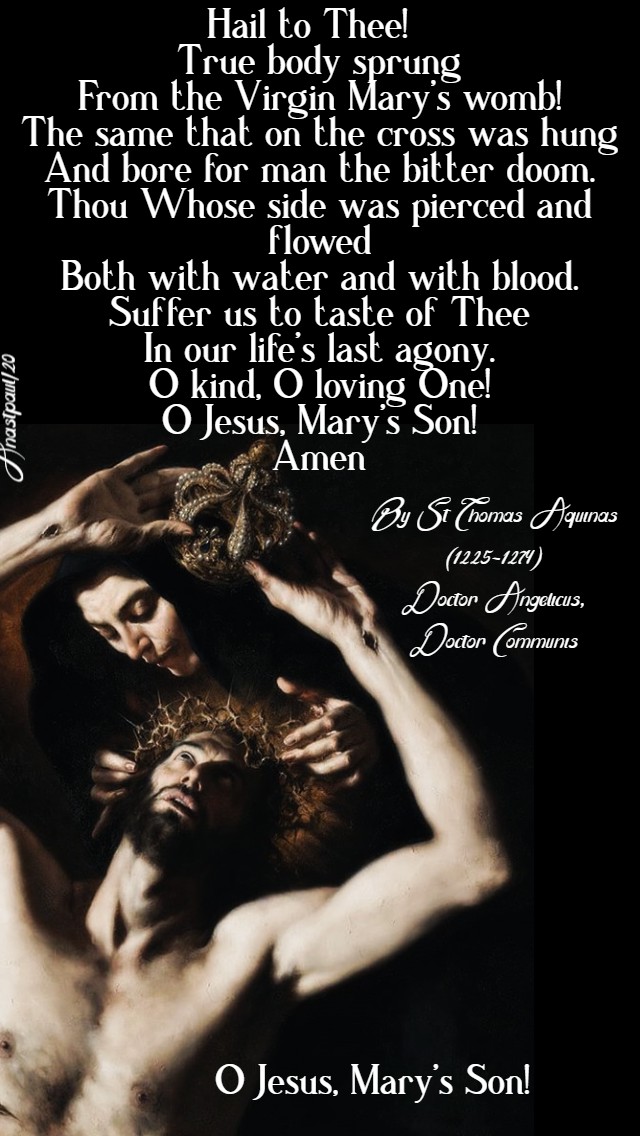
O Jesus, Mary’s Son! By St Thomas Aquinas (1225-1274) Doctor Angelicus, Doctor communis
Hail to Thee! True body sprung From the Virgin Mary’s womb! The same that on the cross was hung And bore for man the bitter doom. Thou Whose side was pierced and flowed Both with water and with blood. Suffer us to taste of Thee In our life’s last agony. O kind, O loving One! O Jesus, Mary’s Son! Amen

























 AnaStpaul
You must be logged in to post a comment.