Twenty First Sunday after Pentecost Twenty Ninth Sunday in Ordinary Time
Könnyezo Szuz Mária / Our Lady of Tears or the Weeping Madonna (Sajópálfala, Miskolci, Borsod-Abaúj-Zemplén, Hungary) (1717) – Third Sunday of October, 16 February:
During the Turkish occupation of the late 1600s, the town of Sajópálfala in northeastern Hungary was destroyed and deserted. Not long after Greek Catholics resettled the area. The painting of the Madonna and Child in their village Church perspired and wept bloody tears, from 6 January to 16 February 1717.
The investigating Bishop took the picture to Eger, where it stayed in the Franciscan Church until the Communists dissolved the religious orders in 1950. Then the painting was lost to the faithful of Sajópálfala, who had made an annual pilgrimage to Eger on the Feast of Our Lady of Sorrows.
In 1969, they located the original weeping image in a Church in the Diocese of Pécs, where a friar had taken it when the Eger Monastery closed. On 25 October 1973, after 256 years, the Weeping Virgin Mary returned to the Church of the Visitation in Sajópálfala, where the main pilgrimage days are now Pentecost Sunday and the third Sunday in October.
Bl Battista de Bonafede St Berarius I of Le Mans St Catervus St Colman of Kilroot Blessed Contardo Ferrini TOSF (1859-1902) Layman, Third Order Franciscan
St Ethelbert of Eastry St Ethelred of Eastry St Florentius of Orange
Bl Gilbert the Theologian St Heron of Antioch Bl Jacques Burin St John the Short/Dwarf St Louthiern St Mamelta of Persia St Nothelm of Canterbury St Richard Gwyn St Rudolph of Gubbio St Rufus of Rome St Serafino of Montegranaro St Solina of Chartres St Zosimus of Rome — Martyrs of Nicomedia – 3 saints: A group of Christians martyred in the persecutions of Diocletian. The only details about them that have survived are their names – Alexander, Marianus and Victor. 303 in Nicomedia (in modern Turkey).
Martyrs of Valenciennes -5 beati: A group of Ursuline nuns martyred in the persecutions of the French Revolution. • Hyacinthe-Augustine-Gabrielle Bourla • Jeanne-Reine Prin • Louise-Joseph Vanot • Marie-Geneviève-Joseph Ducrez • Marie-Madeleine-Joseph Déjardins
Martyrs of Volitani: A group of martyrs who were praised by Saint Augustine of Hippo. In Volitani, proconsular Africa (in modern Tunisia).
Martyred in the Spanish Civil War: • BlessedFidel Fuidio Rodriguez • BlessedJosé Sánchez Medina • BlessedPerfecto Carrascosa Santos • BlessedTársila Córdoba Belda de Girona
Thought for the Day – 16 October – Meditations with Antonio Cardinal Bacci (1881-1971)
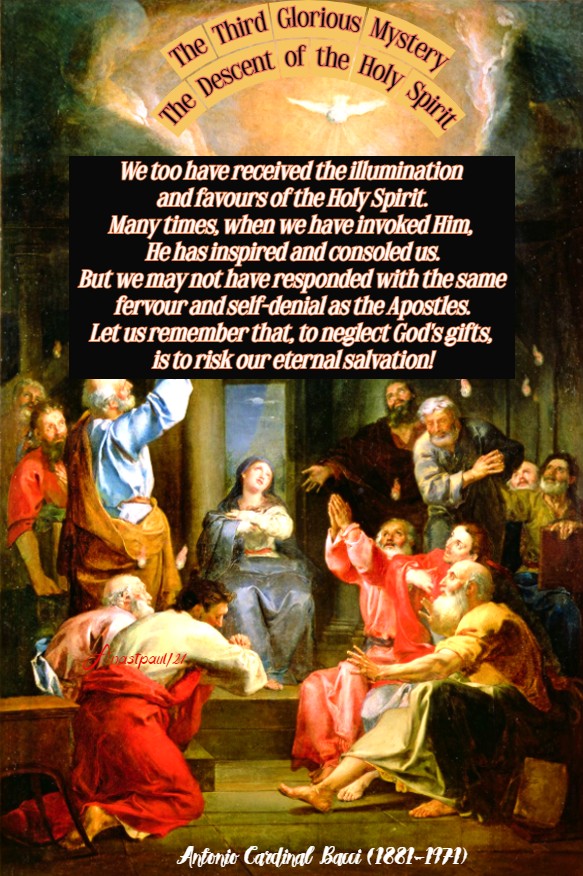
“Month of the Holy Rosary” The Third Glorious Mystery The Descent of the Holy Spirit
“The Apostles were completely transformed after the feast of Pentecost. They had ben ignorant rustics, timid and vacillating. They had hardly understood at all, the lofty teachings of Christ, for they were hoping still for an earthly kingdom in which they would occupy the highest posts.
When they received the Holy Spirit, however, their minds were flooded with supernatural light and they became heroic in their resolution. Ignorant, though they had been, they became masters of Truth, far superior to the sages of Athens or the philosophers of Rome. They were no longer timid and hesitating but, fearlessly encountered the power of the Sanhedrin, the whips of the soldiery, the dangers of long voyages and, Martyrdom itself.
We too have received the illumination and favours of the Holy Spirit. Many times, when we have invoked Him, He has inspired and consoled us. But we may not have responded with the same fervour and self-denial as the Apostles. Let us remember that, to neglect God’s gifts, is to risk our eternal salvation!”
Quote/s of the Day – 17 October – “Month of the Most Holy Rosary” – Readings: Romans 4: 13, 16-18; Psalm 105: 6-9, 42-43; Luke 12: 8-12
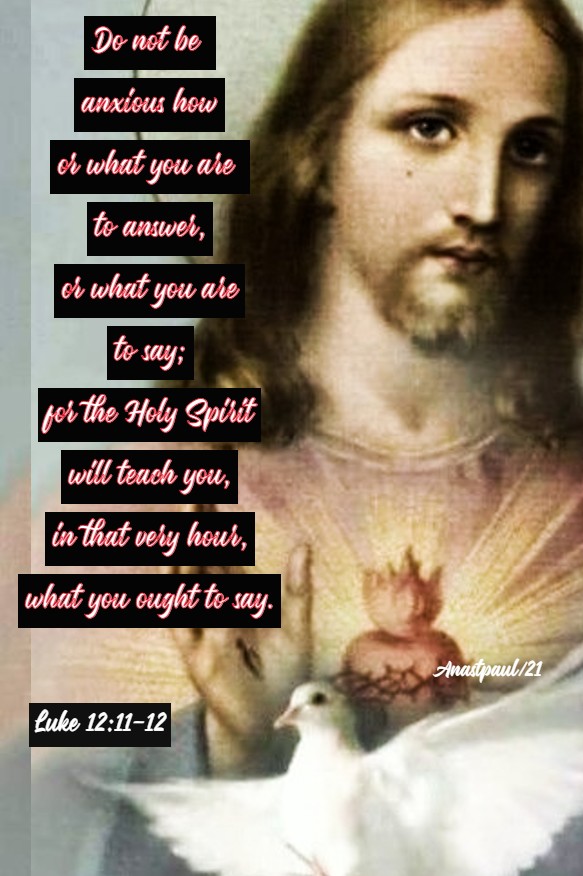
“…Do not be anxious how or what you are to answer, or what you are to say; for the Holy Spirit will teach you, in that very hour, what you ought to say.”
Luke 12:11-12
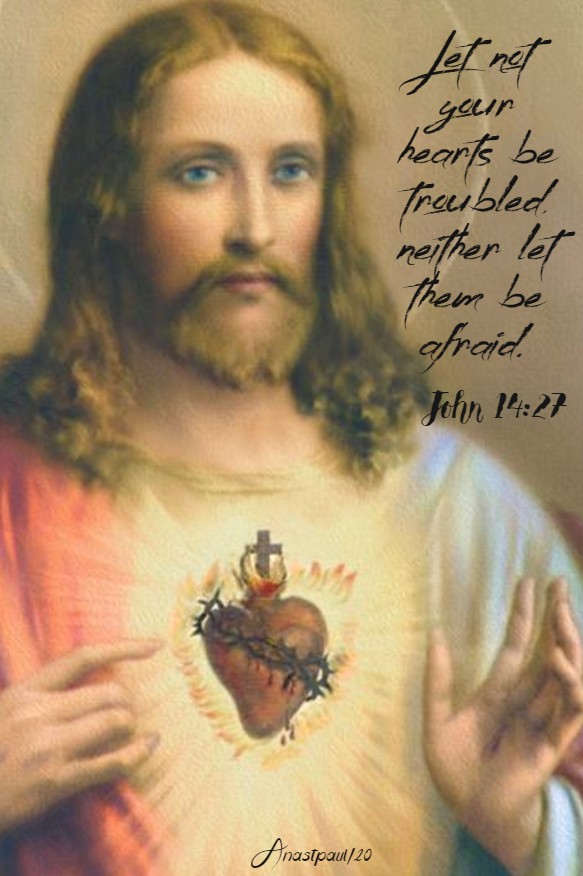
“Let not your hearts be troubled, neither let them be afraid.”
John 14:27
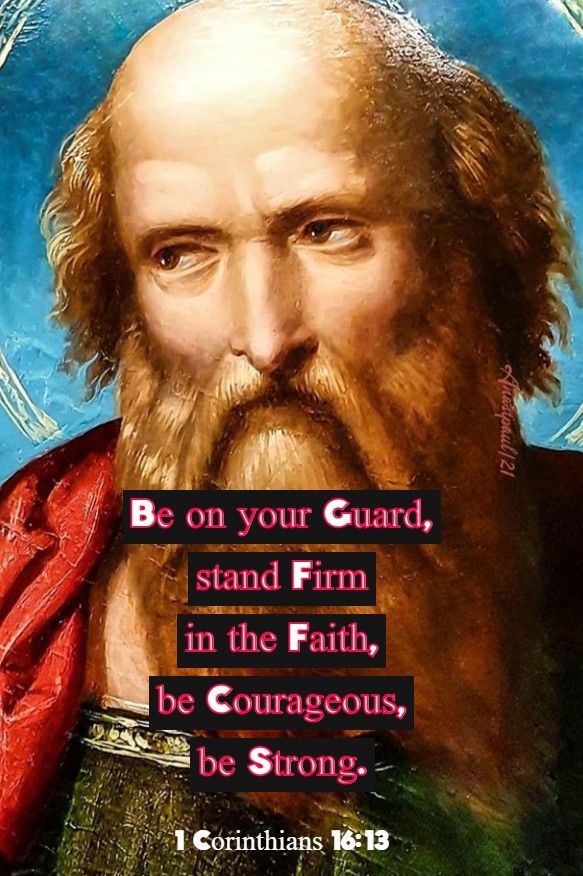
“Be on your guard, stand firm in the faith, be courageous, be strong.”
1 Corinthians 16:13
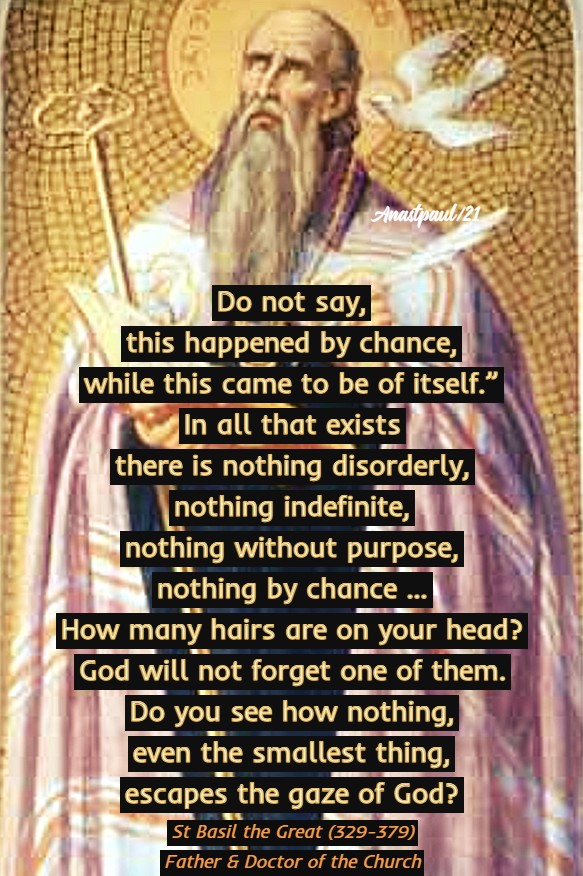
“Do not say, this happened by chance, while this came to be of itself.” In all that exists there is nothing disorderly, nothing indefinite, nothing without purpose, nothing by chance … How many hairs are on your head? God will not forget one of them. Do you see how nothing, even the smallest thing, escapes the gaze of God?”
St Basil the Great (329-379) Father & Doctor of the Church
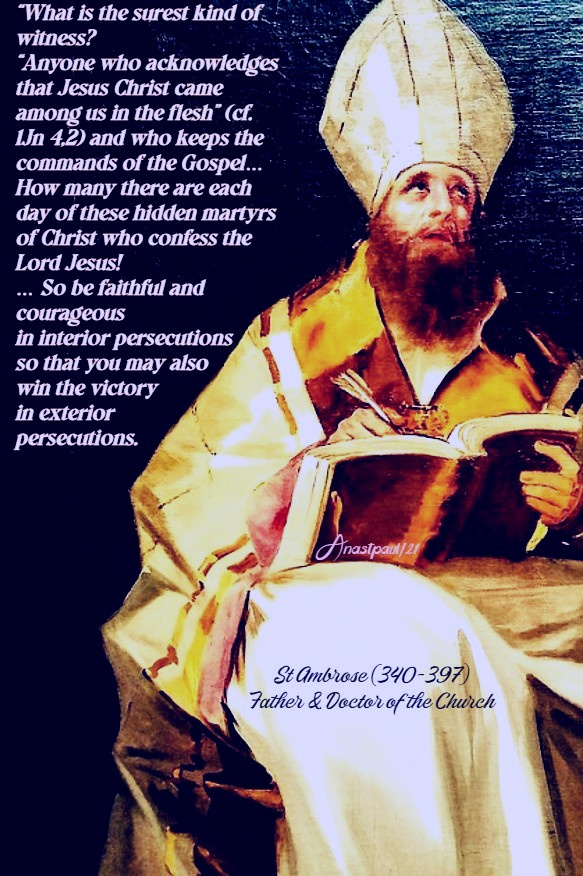
“What is the surest kind of witness? “Anyone who acknowledges that Jesus Christ came among us in the flesh” (cf. 1Jn 4,2) and who keeps the commands of the Gospel… How many there are each day of these hidden martyrs of Christ who confess the Lord Jesus! … So be faithful and courageous in interior persecutions so that you may also win the victory in exterior persecutions.”
St Ambrose (340-397) Father & Doctor of the Church
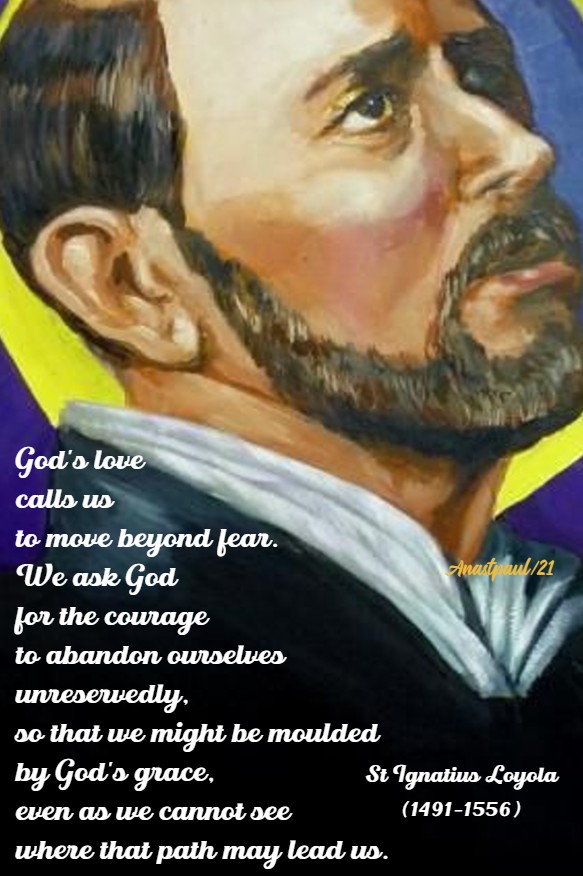
“God’s love calls us to move beyond fear. We ask God for the courage to abandon ourselves unreservedly, so that we might be moulded by God’s grace, even as we cannot see where that path may lead us.”
St Ignatius Loyola (1491-1556)
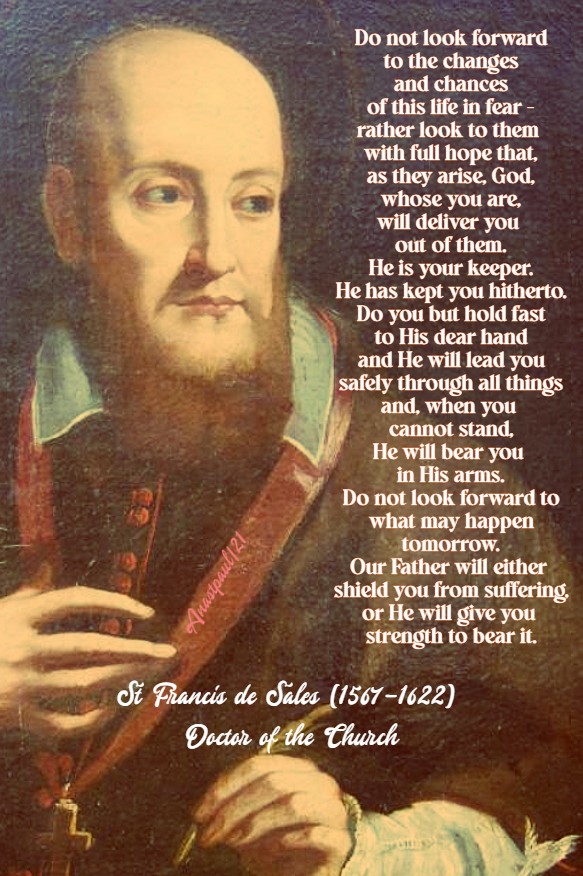
“Do not look forward to the changes and chances of this life in fear – rather look to them with full hope that, as they arise, God, whose you are, will deliver you out of them. He is your keeper. He has kept you hitherto. Do you but hold fast to His dear hand and He will lead you safely through all things and, when you cannot stand, He will bear you in His arms. Do not look forward to what may happen tomorrow. Our Father will either shield you from suffering, or He will give you strength to bear it.”
St Francis de Sales (1567-1622) Doctor of the Church
One Minute Reflection – 16 October – “Month of the Most Holy Rosary” – Readings: Romans 4: 13, 16-18; Psalm 105: 6-9, 42-43; Luke 12: 8-12
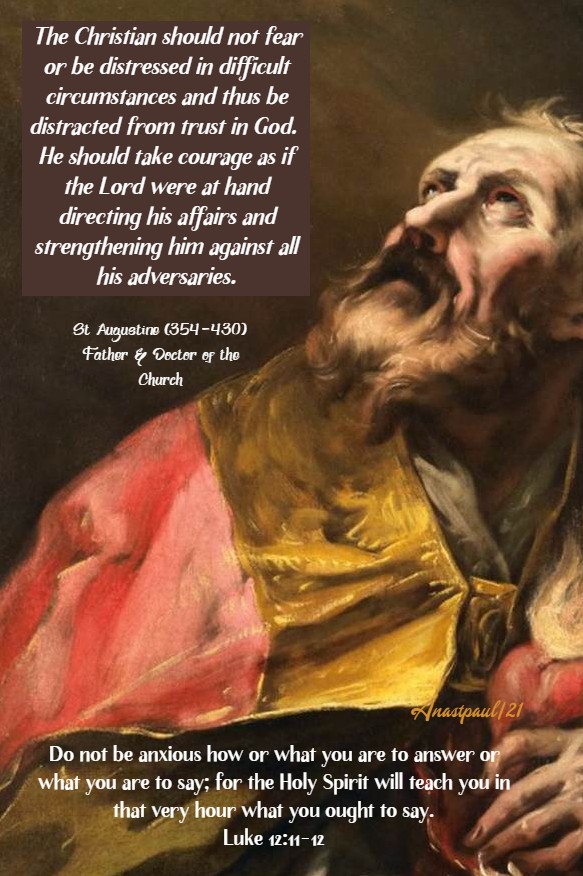
“…Do not be anxious how or what you are to answer or what you are to say; for the Holy Spirit will teach you in that very hour what you ought to say – Luke 12:11-12
REFLECTION – “The Christian should not fear or be distressed in difficult circumstances and thus be distracted from trust in God. He should take courage as if the Lord were at hand directing his affairs and strengthening him against all his adversaries.
It is as if the Holy Spirit were instructing him, even as to the very replies he should make to his enemies.”… St Augustine (354-430) Father & Doctor of the Church (The Morals, 63)”
PRAYER – All-powerful, eternal God, grant us the grace of Your Spirit and fill us with the light of understanding and love. Grant that by the prayers of your Saints we may be strengthened and depend only on You. Holy Queen of the Holy Rosary, our Mother Mary and St Hedwig, pray for us. We make our prayer through Jesus, our Lord with the Holy Spirit, God forever, amen.
Our Morning Offering – 16 October – “Month of the Most Holy Rosary” – Mary’s Saturday
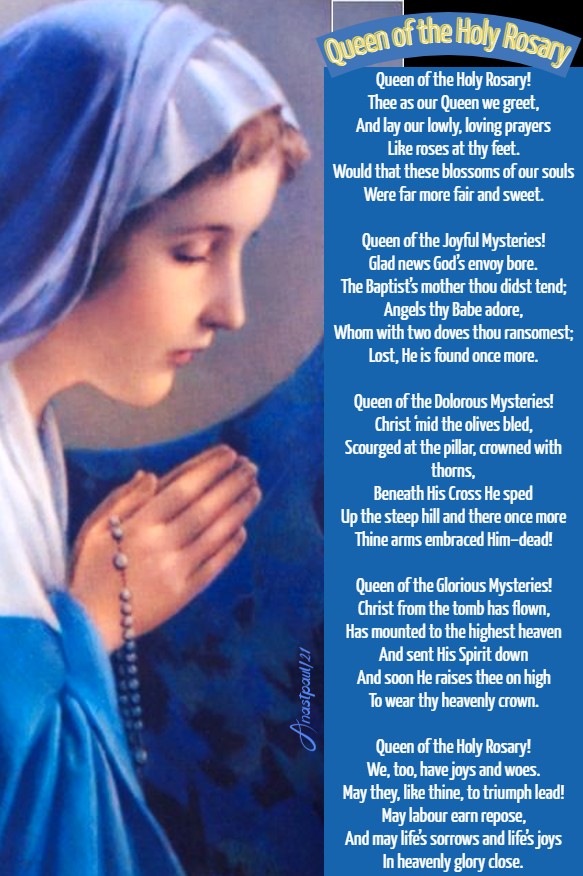
Queen of the Holy Rosary
Queen of the Holy Rosary! Thee as our Queen we greet, And lay our lowly, loving prayers Like roses at thy feet. Would that these blossoms of our souls Were far more fair and sweet.
Queen of the Joyful Mysteries! Glad news God’s envoy bore. The Baptist’s mother thou didst tend; Angels thy Babe adore, Whom with two doves thou ransomest; Lost, He is found once more.
Queen of the Dolorous Mysteries! Christ ‘mid the olives bled, Scourged at the pillar, crowned with thorns, Beneath His Cross He sped Up the steep hill and there once more Thine arms embraced Him–dead!
Queen of the Glorious Mysteries! Christ from the tomb has flown, Has mounted to the highest heaven And sent His Spirit down And soon He raises thee on high To wear thy heavenly crown.
Queen of the Holy Rosary! We, too, have joys and woes. May they, like thine, to triumph lead! May labour earn repose, And may life’s sorrows and life’s joys In heavenly glory close.
Taken from: Cyril Robert – Mary Immaculate: God’s Mother and Mine. Poughkeepsie, New York: Marist Press, 1946
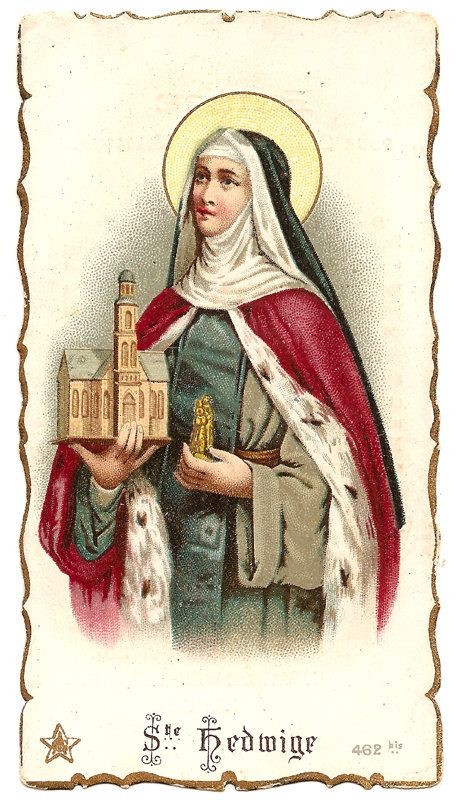
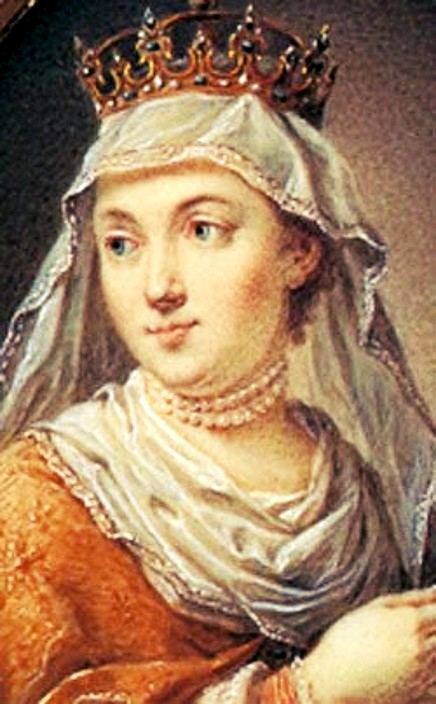
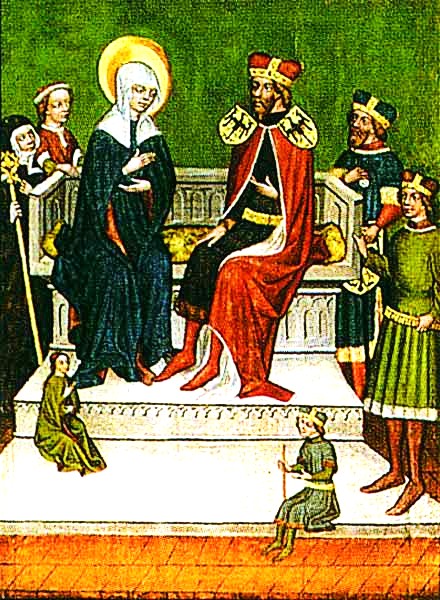
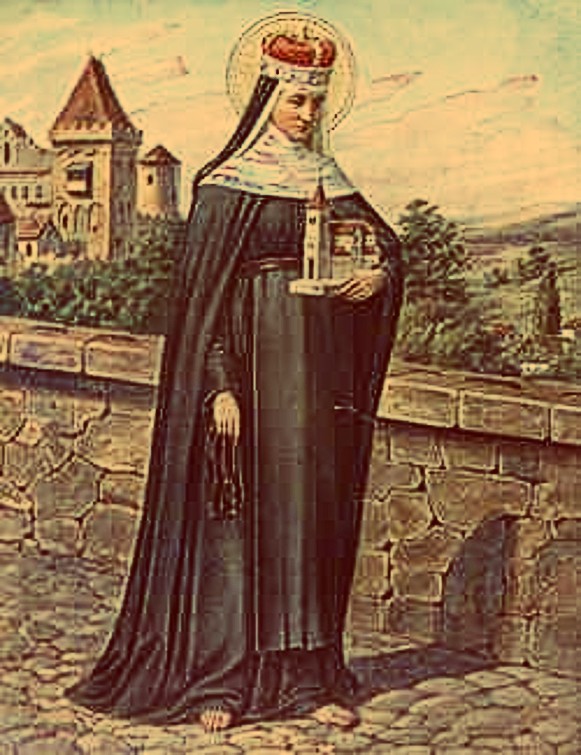
Saint of the Day – 16 October – St Hedwig of Andechs (1174-1243) Mother, Widow, High Duchess of Poland, Apostles of orphans, the poor, the sick, founder with her husband of Monasteries, schools and Churches, Administrator, peace-maker, Born in 1174 in Castle Andechs, Bavaria (part of modern Germany) and died on 15 October 1243 at at Trzebnica, Silesia (part of modern Poland). Also known as – Hedwig of Silesia, Hedwig von Andechs, Jadwiga Slaska, Hedvigis, Hedwiges, Avoice.Patronages – against jealousy, brides, duchesses, death of children, difficult marriages, widows, Silesia, Diocese of Görlitz, Germany, Andechs Abbey, Bavaria, Germany, 6 cities. She was Canonised on 26 March 1267 by Pope Clement IV.
An example of all virtues, especially worthy to be imitated, is presented to us today, in the life of St Hedwig. Her father was Berthold, Duke of Carinthia and Count of Meran. Her mother, Agnes, was of equally high birth. She was one of eight children – of her four brothers, two became Bishops, Ekbert of Bamberg and Berthold of Aquileia. Mechtilde became Abbess of Kitzingen and another sister, became the mother of St Elizabeth of Hungary. Already in Hedwig’s childhood it was visible that God had gifted her with a mind far beyond her age. She possessed an innate inclination to all virtues and nothing of what usually delights the young, touched her heart, just as little pleasure did she evince, in later years, in the honours, riches and amusements of the world. Reading and praying were her only enjoyments. All her books were devout works and her prayers were said mostly before an image of the Blessed Virgin, whom she loved and honoured like a worldly mother.
When scarcely twelve years old, she was given in marriage to Henry, Duke of Poland and Silesia. Although married so early in life, her conduct was so sensible and virtuous, that everyone was greatly astonished at it. Among her maxims was this: “The greater one is by birth, the greater one must be in virtue and the more distinguished we are in station, the more we must distinguish ourselves by our conduct, in order to be a bright example to others.” She became the mother of three sons and three daughters, all of whom she educated most piously.
She was a little over twenty, and her husband thirty years of age, when their sixth child was born; after which, desiring to serve God more perfectly, she made a vow before the Bishop, in which her husband joined, to live in future in perpetual continence.
From that hour, Hedwig grew daily more and more perfect in all Christian virtues, occupying every moment left her from the cares she bestowed upon her children, in prayers and deeds of charity. She found especial comfort in assisting at Holy Mass; hence, she was not satisfied with one but went to as many as she could; and the manner in which she conducted herself in Church was a proof of her deep devotion. Towards widows and orphans, her kindness was truly motherly and many of them she fed in her palace, serving them herself, sometimes on bended knees. She frequently visited the sick in the hospitals; encouraged them to be patient and assisted them by rich alms. She never hesitated to wash the feet of the lepers, or to kiss the sores of the sufferers. She persuaded the Duke, her husband, to build a large convent not far from Breslau, for the Cistercian nuns, which she made a home for poor children, who were educated there and afterwards, provided for according to their station. Nothing could be more modest and plain than the garments of the holy Duchess and her example in this respect induced others living at Court to attire themselves with great simplicity. In the midst of the dissipation of the Court, the Saint lived so austere a life, that it was more to be admired than to be followed.
To prove her virtue, God visited her with a great many cares and sorrows. The enemy invaded the dominions of her spouse, who was wounded in a battle and made prisoner. When this news was brought to her, she raised her eyes confidently to heaven, saying: “I hope to see him again soon, well and free.” She herself went to Conrad, the Duke who had imprisoned her husband and spoke so earnestly to him that he restored her husband to liberty. Soon after, Henry became dangerously ill and Hedwig nursing him most faithfully, did everything to make his death happy. To those who pitied her after his death, she said: “We must adore the decrees of the Almighty, not only in days of happiness but also in those of sorrow and bereavement.” Three years later, she lost her first-born son, who was killed in a battle with the Tartars and this sad event found her as submissive to the will of Providence as she had been on the death of her husband.
Soon after the burial of the Duke in 1238, at the Cistercian Monastery of Nuns, Trzebnica Abbey, Hedwig had too followed him into the Convent, which, at her request, he had founded, to be further removed from all temporal vanity and to serve the Lord more peacefully and perfectly. The widow moved into the Convent of Cistercian Nuns which was led by her daughter Gertrude, assuming the position of a lay sister and donning the habit. She observed most strictly the regulations of the Order, desiring to do the meanest work and to be considered the least of the Sisters. In her austerity to herself she had now full liberty. She fasted daily, except on Sundays and festivals but her fasts were much more rigorous than those of others, for she abstained from all meat and wine and partook only of herbs, bread and water. She wore, day and night, rough hair-cloth and an iron girdle which she had already worn while at Court. She went bare-footed over snow and ice and slept, when well, on the bare boards and when ill, on straw covered with a coarse cloth. Her sleep lasted hardly three hours before Matins; the remainder of the night she occupied in prayer, which she only interrupted to scourge herself to blood. So severe a life emaciated her body to a skeleton. While working, she always raised her soul to the Most High by mental prayer,and she was often found in an ecstasy, or raised high above the ground. Her conversation was only of God, virtue and piety. Towards the Crrucified Saviour, she bore the deepest devotion and the mysteries of His bitter Passion and Death were the objects of her daily meditations, during which, she frequently shed tears. Mary, the Blessed Virgin, was most ardently loved by her,and her whole countenance glowed at the bare mention of her holy name.
So holy a life could only be followed by a happy death, of which a severe sickness was the messenger. Before others became aware that her life was in danger, the Saint asked for the last Sacraments and she received them with a devotion which drew tears from the eyes of all who were present. Before her end, S. Catherine of Alexandria, St Thecla, St Ursula and St Magdalen appeared to her, all of whom she had greatly honoured during her life. These heavenly visitors comforted her and accompanied her to the mansions of everlasting bliss.
Twenty-five years after her death, her holy body was exhumed, as so many extraordinary miracles had taken place at her intercession. On opening the coffin, the whole Church was filled with fragrance. The flesh of the whole body was consumed, except that of three fingers on her left hand. With these she had frequently held a picture of the Blessed Virgin, which she constantly carried with her. While dying, she held this picture so fast, that after her death it could not be removed and it was buried with her. Pope Clement IV. placed the Duchess among the Saints on account of her many great virtues, of the miracles which she had wrought while she lived and of those which took place after her death, through her intercession. The inhabitants of Poland venerate her as one of their special Patrons. (By Father Francis Xavier Weninger, 1876)
Dedication of the Church of Our Lady of Milan (1417) by Pope Martin V – 16 October:
The Abbot Orsini wrote: “Dedication of Our Lady of Milan, by Pope Martin V, in the year 1417. This Church was built in 1388 by John Galleas, Duke of Milan.”
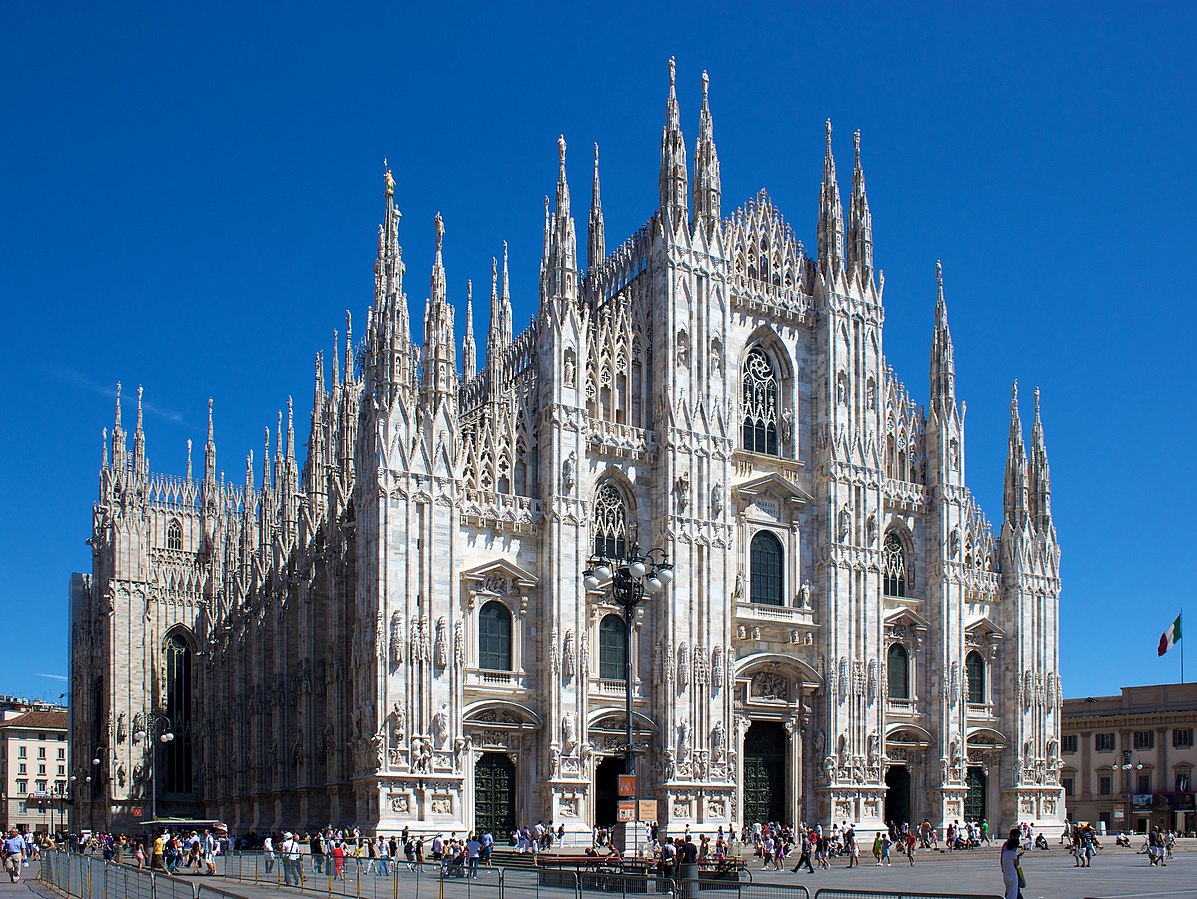
The magnificent Milan Cathedral is a Gothic Cathedral that has its roots in the fourth centurY. Today it is one of the most famous and celebrated structures in all of Europe. It is the second largest Church in Italy after St Peter’s Basilica in Rome and the third largest Catholic Church in the world.
Dedicated to the Mother of God, the present Cathedral was begun in the 14th century but was not completed until the 20th century when the last gate was finally installed in 1965. Emperor Napoleon Bonaparte himself ordered that the façade be finished in the year 1805, as he desired to see the beautiful structure completed. He guaranteed that the French would pay for the work, although they never actually did. Even so, it took seven years to complete the work. There were other additions that followed, including stained glass windows and various arches and lace-like spires. In the end it can be said, that the Cathedral required 6 centuries to complete and is one of the largest Cathedrals in the entire world.
The Madonnina Spire or guglia del tiburio (“lantern spire“), one of the main features of the Cathedral, was erected in 1762 at the height of 108.5 m (356 ft), as designed by Francesco Croce. At the top of the spire is the polychrome Madonnina Statue, designed and built by Carlo Pellicani in 1774, during the episcopacy of Bishop Giuseppe Pozzobonelli who supported the idea to place the Madonnina at the top of the Cathedral, By tradition, no building in Milan may be higher than the Madonnina.
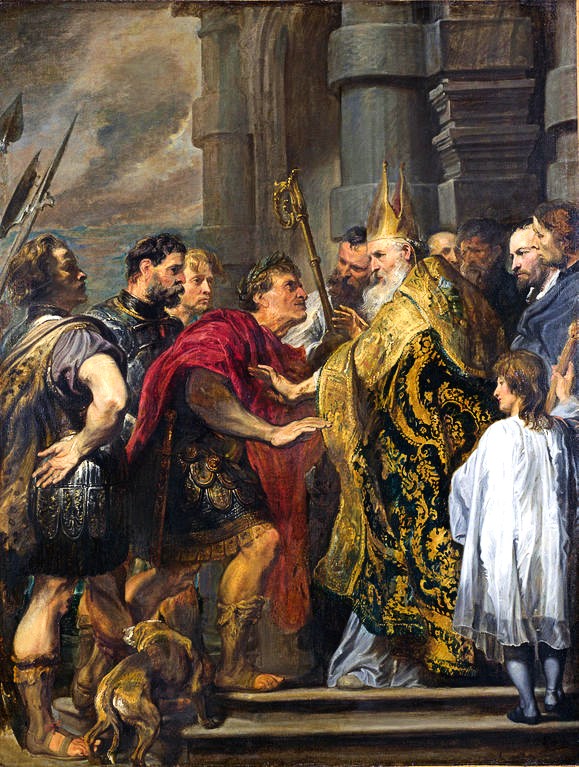
The first Church thought to occupy the location was built by Saint Ambrose, although there is an old baptistery which was constructed in about 335. The good Abbot appears to have been incorrect in dating the Cathedral from 1388, as there is a plate attached to a stone on the Church which states: “El Principio del Duomo di Milano Nel Anno 1386.”
St Ambrose barring Theodocius from Milan Cathedral
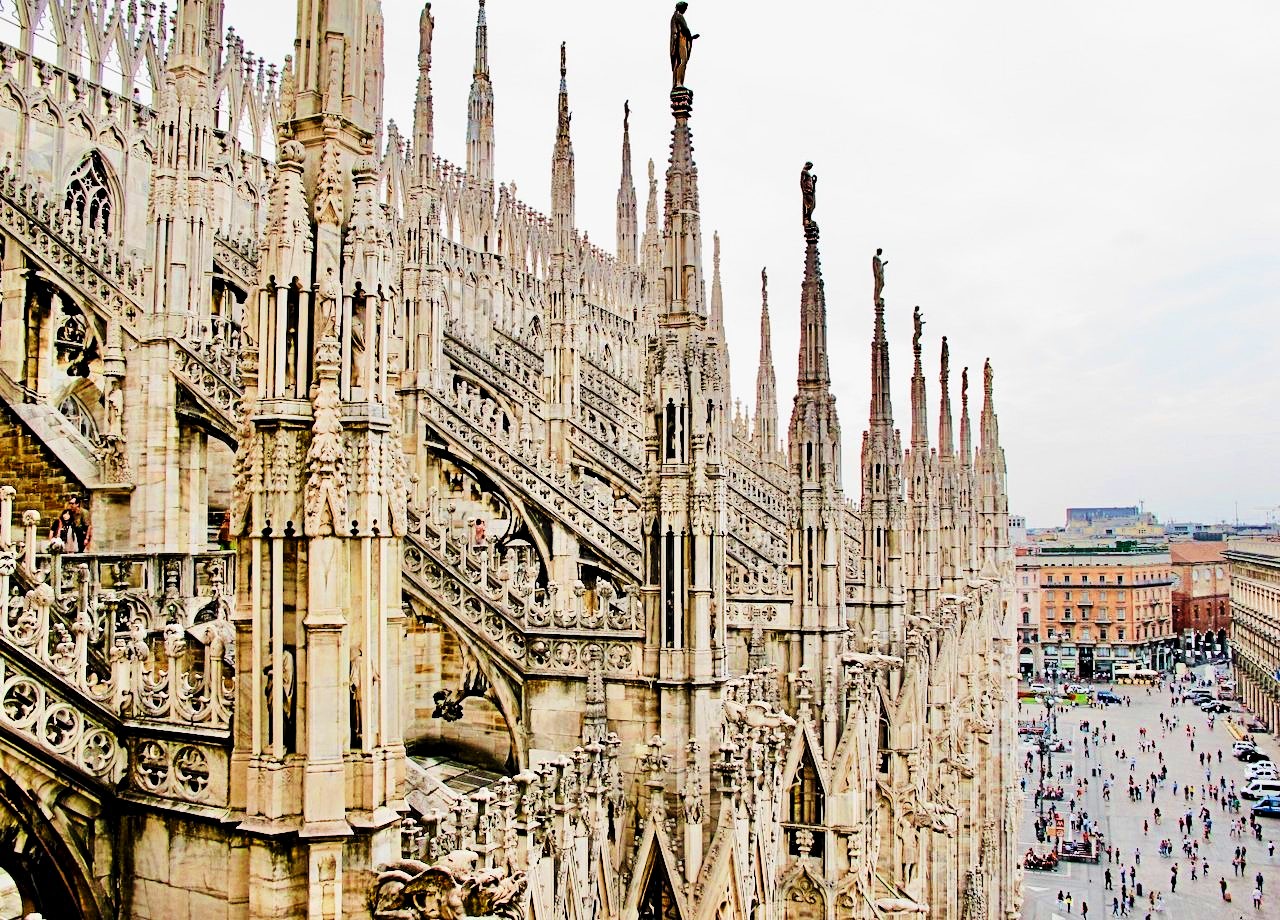
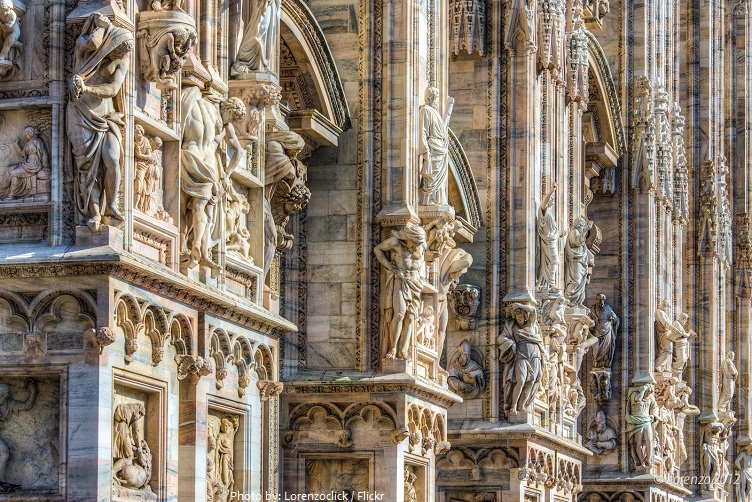
The Milan Cathedral houses a Holy Nail which was used to Crucify Christ. It is marked by a tiny red light located in the dome above the apse. There are more Statues on this Cathedral than any other in the world, 3159 in total. 2245 of these are on the exterior together with 96 gargoyles and 135 spires. It is said that if the Statues were placed on top of each other, they would reach a height of about 5,300 meters (3.3 miles).
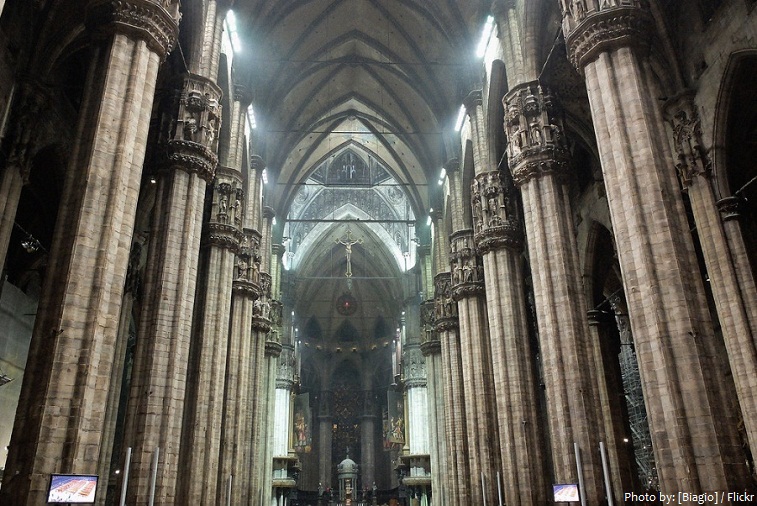
The Cathedral is 158.5 meters (520 feet) long, 92 meters (302 feet) wide. It has a cruciform plan in the form of a Latin cross that covers nearly 12,000 square meters. 40,000 people can fit comfortably within. Its construction was up five naves, a central and two lateral on each side, resting on 40 columns of 24.50 meters (80 feet) each.
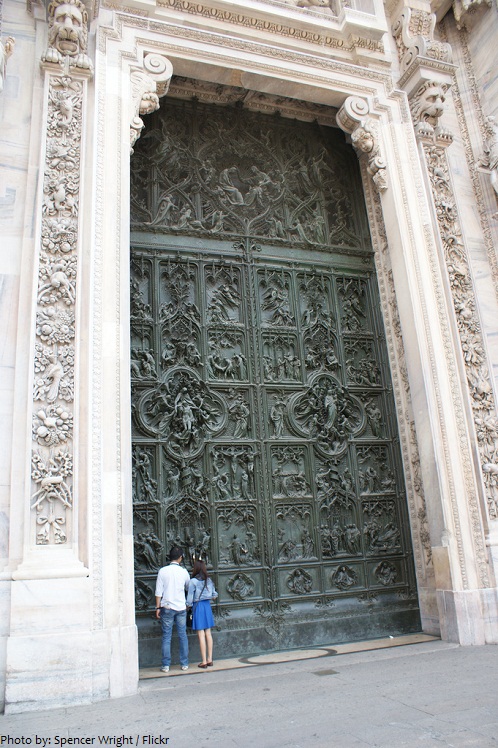
Access to the Cathedral is made through five large bronze doors from Piazza Duomo. The central one [pic. below] is the oldest and was created in the nineteenth century by Ludovico Pogliaghi.
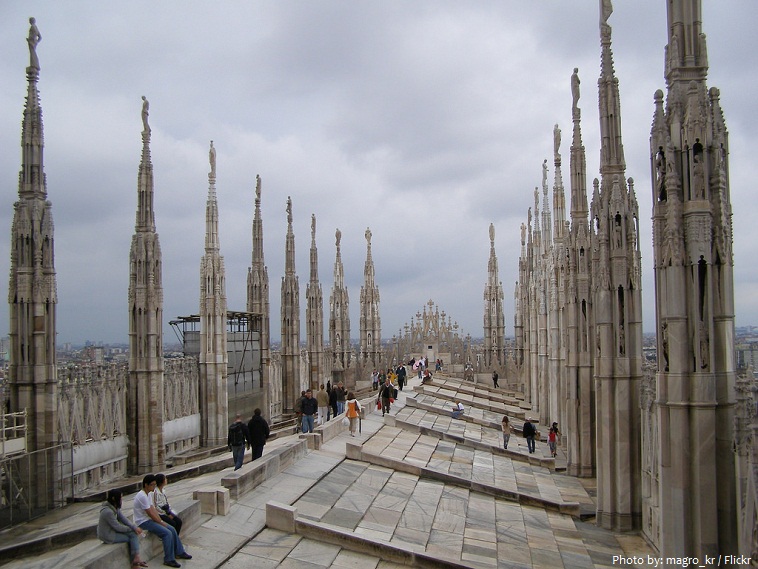
After exploring the inside, visitors can pay a small fee to take a fascinating trip to the Duomo’s roof via steps or elevator. It is an amazing experience to walk among the forest of spires and the view from the roof is unmatched. On a clear day you can see as far as the Alps and Apennines.
St Amandus of Limoges St Ambrose of Cahors Bl Anicet Koplinski Bl Augustine Thevarparampil St Balderic St Baldwin St Bertrand of Comminges St Bolonia St Conogon of Quimper St Dulcidius of Agen St Eliphius of Toul St Eremberta of Wierre St Florentinus of Trier
Bl Gerald of Fossanuova St Hedwig of Andechs (1174-1243) Mother, Widow, High Duchess of Poland Bl Jesús Villaverde Andrés Bl Józef Jankowski St Junian St Lull St Magnobodus of Angers
St Martinian of Mauretania St Mummolinus St Saturian of Mauretania St Silvanus of Ahun St Victor of Cologne St Vitalis of Noirmoutier — Martyrs in Africa – 220 saints: A group of 220 Christians martyrs about whom we know nothing but that they died for their faith.
Martyrs of North Africa – 365 saints: A group of 365 Christians who were martyred together in the persecutions of the Vandal king Genseric. The only details that have survived are the names of two of the martyrs – Nereus and Saturninus. 450 in North Africa.
Thought for the Day – 15 October – Meditations with Antonio Cardinal Bacci (1881-1971)
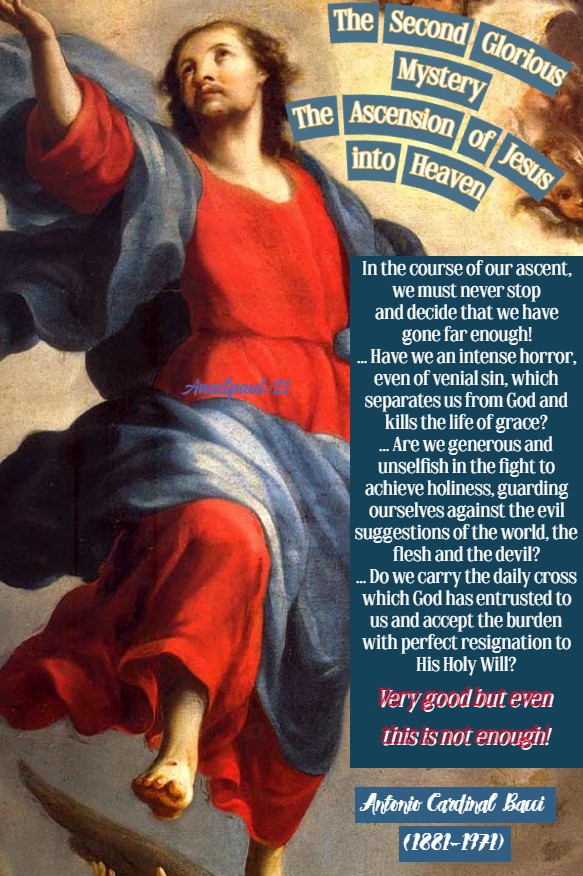
“Month of the Holy Rosary” The Second Glorious Mystery The Ascension of Jesus into Heaven
“In the course of our ascent, we must never stop and decide that we have gone far enough! To stop would inevitably mean going backward. Jesus and Mary are inviting and encouraging us to go higher and higher.
Have we been purified of sin, the defiler of the soul and the destroyer of human dignity? Have we an intense horror, even of venial sin, which separates us from God and kills the life of grace? It is still not enough – we must go higher.
Are we generous and unselfish in the fight to achieve holiness, guarding ourselves against the evil suggestions of the world, the flesh and the devil? It is still not enough – we must continue to advance.
Do we carry the daily cross which God has entrusted to us and accept the burden with perfect resignation to His Holy Will? Very good but even this is not enough!”
Quote/s of the Day – 15 October – The Memorial of St Teresa of Jesus of Avila OCD (1515-1582) Doctor of the Church
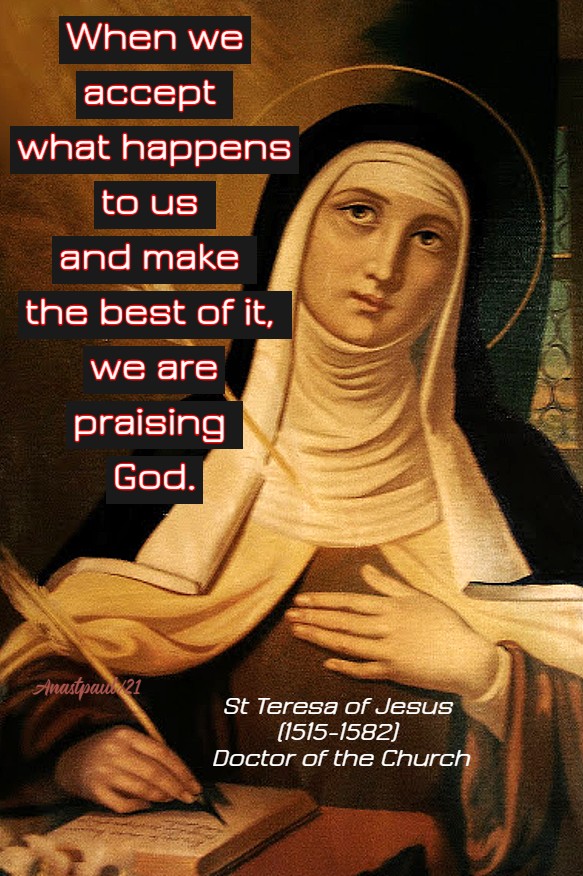
“When we accept what happens to us and make the best of it, we are praising God.”
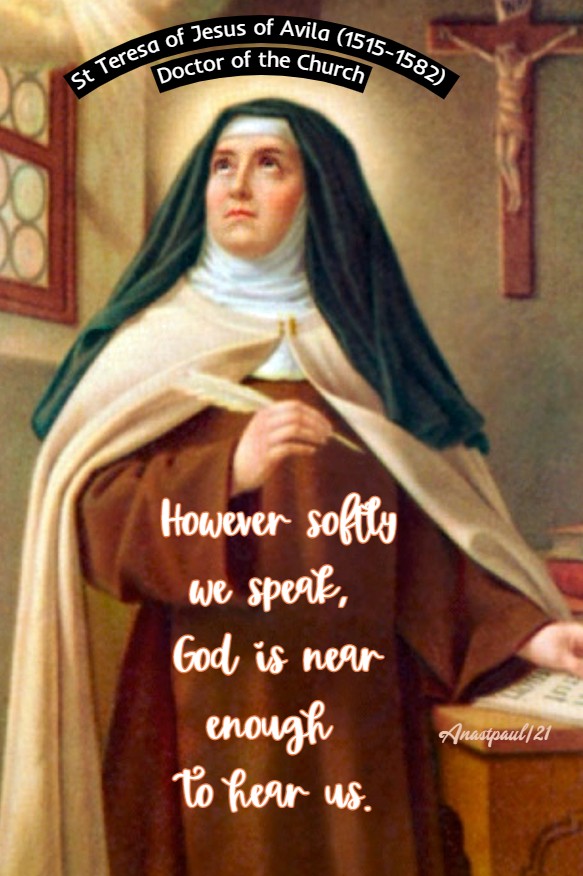
“However softly we speak, God is near enough to hear us.”
“Souls who do not practice prayer, are like people whose limbs are paralysed.”
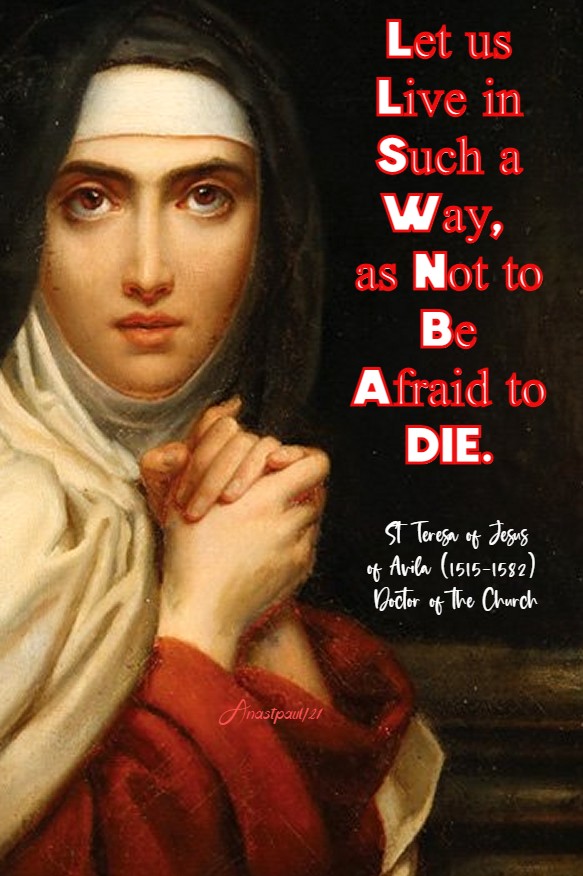
“Let us live in such a way, as not to be afraid to die.”
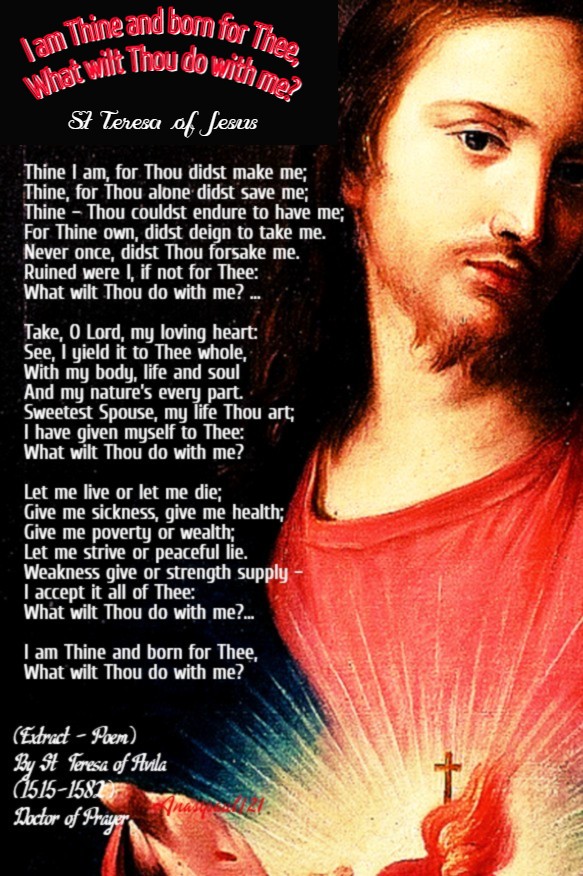
“I am Thine and born for Thee, What wilt Thou do with me?” By St Teresa of Jesus of Avila OCD (1515-1582) Doctor of the Church (Excerpted on the image)
Sovereign Lord, upon Thy throne, Endless Wisdom, One and whole, Goodness that dost feed my soul, Good and great, One God alone, As I sing my love for Thee. What wilt Thou do with me?
Thine I am, for Thou didst make me; Thine, for Thou alone didst save me; Thine – Thou couldst endure to have me; For Thine own, didst deign to take me. Never once, didst Thou forsake me. Ruined were I, if not for Thee: What wilt Thou do with me?
What, O good and loving Lord, What wilt Thou have this creature do? This Thy slave, a sinner too, Waiting till she hears Thy word? With Thy will in close accord, Sweetest Love, I come to Thee: What wilt Thou do with me?
Take, O Lord, my loving heart: See, I yield it to Thee whole, With my body, life and soul And my nature’s every part. Sweetest Spouse, my life Thou art; I have given myself to Thee: What wilt Thou do with me?
Let me live or let me die; Give me sickness, give me health; Give me poverty or wealth; Let me strive or peaceful lie. Weakness give or strength supply – I accept it all of Thee: What wilt Thou do with me?…
I am Thine and born for Thee, What wilt Thou do with me?”
Poem – I am Yours, for You I was born – “Vuestra Soy, para Vos nací ” (trans. E.Allison Peers)
One Minute Reflection – 15 October – Readings: Romans 4: 1-8; Psalms 32: 1b-2, 5, 11; Luke 12: 1-7 – The Memorial of St Teresa of Jesus of Avila OCD (1515-1582) Doctor of the Church
“Why, even the hairs of your head are all numbered. Fear not, you are of more value than many sparrows.”…Luke 12:7
REFLECTION – “What more do we desire from such a good friend at our side? Unlike our friends in the world, He will never abandon us when we are troubled or distressed. Blessed is the one who truly loves Him and always keeps Him near. Let us consider the glorious Saint Paul – it seems, that no other name fell from his lips, than that of Jesus because, the name of Jesus, was fixed and embedded in his heart. Once I had come to understand this truth, I carefully considered the lives of some of the Saints, the great contemplatives and found, that they took no other path – Francis, Anthony of Padua, Bernard, Catherine of Siena. A person must walk along this path in freedom, placing himself in God’s hands. If God should desire to raise us to the position of one who is an intimate and shares His secrets, we ought to accept this gladly.
Whenever we think of Christ, we should recall, the love that led Him to bestow on us, so many graces and favours and also, the great love God showed in giving us, in Christ, a pledge of His love – for love calls for love in return. Let us strive to keep this always before our eyes and to rouse ourselves to love Him. For if, at some time the Lord should grant us the grace, of impressing His love on our hearts, all will become easy for us and we shall accomplish great things quickly and without effort.” – St Teresa of Jesus (1515-1582) Doctor of the Church (An excerpt from her On the Book of Life)
PRAYER – Lord Jesus Christ, You wondrously revealed all of the deep treasures of Your Heart to St Teresa. May her merits and example win us the grace to love You above all things and in all things so that we may make our abode in Your own Sacred Heart. Through You, Lord Jesus, who live and reign forever, in union with God our Father and the Holy Spirit, one God, amen.
Our Morning Offering – 15 October – The Memorial of St Teresa of Jesus of Avila OCD (1515-1582) Doctor of the Church
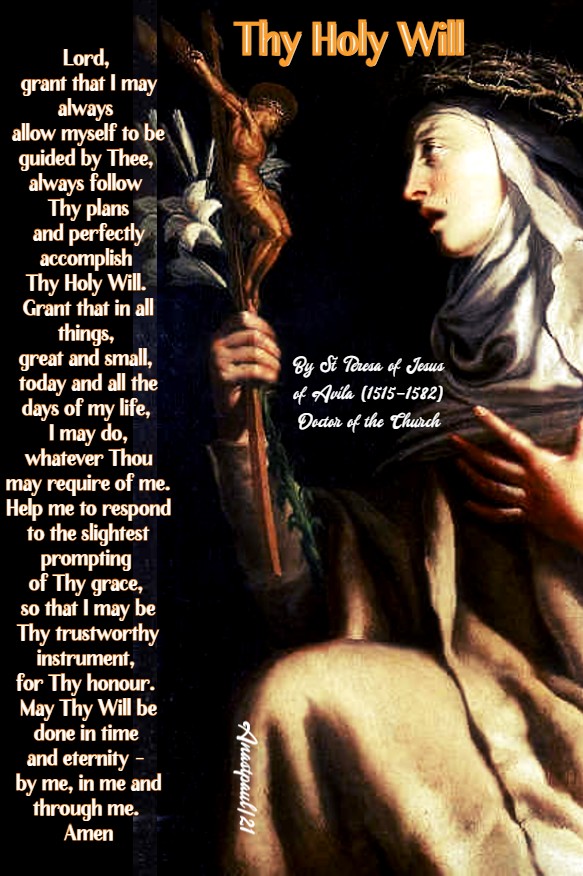
Thy Holy Will By St Teresa of Jesus of Avila (1515-1582) Doctor of the Church
Lord, grant that I may always allow myself to be guided by Thee, always follow Thy plans and perfectly accomplish Thy Holy Will. Grant that in all things, great and small, today and all the days of my life, I may do, whatever Thou may require of me. Help me to respond to the slightest prompting of Thy grace, so that I may be Thy trustworthy instrument, for Thy honour. May Thy Will be done in time and eternity – by me, in me and through me. Amen
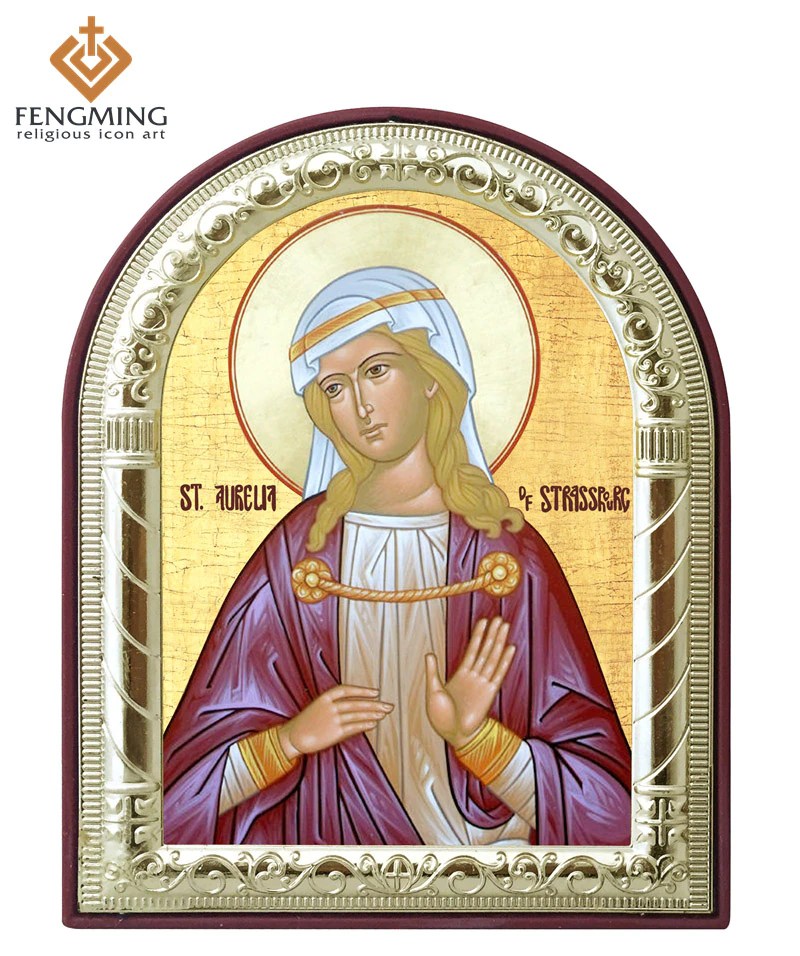
Saint of the Day – 15 October – Saint Aurelia of Strasbourg (Died 1027) Virgin Recluse, Princess Died on 15 October 1027 at Regensburg, Gemany of natural causes. Aurelia’s name means – “she who shines like gold,.” Patronage – against fever. Also known as – Aurelia of Ratisbon, Aurelia of Regensburg.
Aurelia was a Princess of the Hugo Capet family, who fled to Alsace to escape from marriage and lived as a Recluse. Only Bishop Wolfgang of Ratisbon knew of her hermitage and he cared for her spiritual and material welfare.
Royal documents from the 10th century validate the existence of a Church built over the crypt in which the tomb of Saint Aurelia was situated. The Church was dedicated to Aurelia and her tomb was highly revered by the faithful, during the Middle Ages. Aurelia was invoked particularly for help in cases of fever.
After the Protestant Reformation, the aforementioned Church passed into the hands of the Lutherans, who in 1524 desecrated the Saint’s tomb and disposed of the relics but without succeeding in eliminating the cult that remains alive to this day.
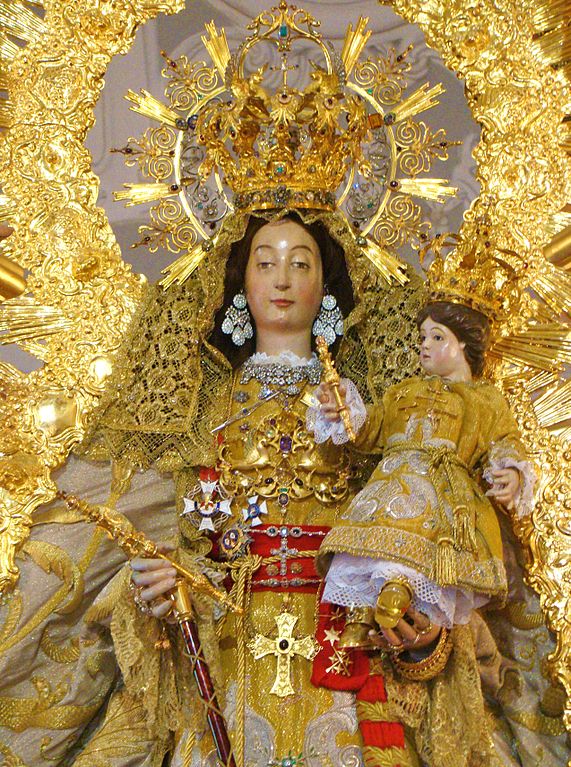
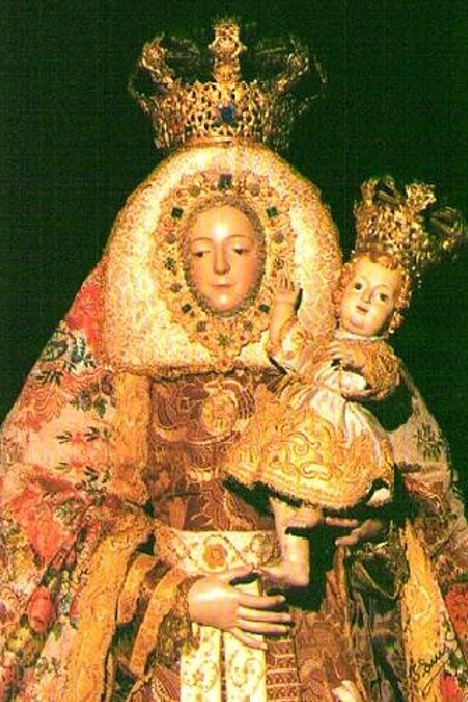
Virgen de los Remedios / Virgin of the Remedies, Rubite, Granada, Spain (12th Century) – 15 October:
The Virgin of Los Remedios is the title of the Virgin Mary which was promoted by the Trinitarian Order, founded in the late 12th century. The devotion became tied to the re-conquest of Spain, then still at its height. In the following century it spread to other parts of Europe. When Spain began the exploration and conquest of the Americas, it was a favourite devotion of the Spanish conquistadores. It remains a popular devotion in Spain. Patronages – Diocese of San Cristóbal de La Laguna, the island of Tenerife, and the city of Cali, Colombia.
This Statue of the Virgin of Los Remedios, is kept in the Cathedral of the Diocese of San Cristóbal de La Laguna (Tenerife, Spain)
St Antiochus of Lyon St Aurelia of Strasbourg (Died 1027) Virgin Recluse, Princess St Callistus of Huesca St Cannatus of Marseilles Bl Cipriano Alguacil Torredenaida St Euthymius the Younger Bl Josefa Martínez Pérez St Leonard of Vandoeuvre Bl Narcis Basté y Basté Bl Pere Verdaguer Saurina Bl Ramón Esteban Bou Pascual St Sabinus of Catania St Severus of Trier
St Willa of Nonnberg — Martyrs of Cologne: A group of 360 Christian soldiers martyred together in the persecutions of Diocletian and Maximian. They were martyred in 303 outside the city walls of Cologne, Germany.
Martyred in the Spanish Civil War: • Blessed Cipriano Alguacil Torredenaida • Blessed Josefa Martínez Pérez • Blessed Narcis Basté y Basté • Blessed Pere Verdaguer Saurina • Blessed Ramón Esteban Bou Pascual
Thought for the Day – 14 October – Meditations with Antonio Cardinal Bacci (1881-1971)
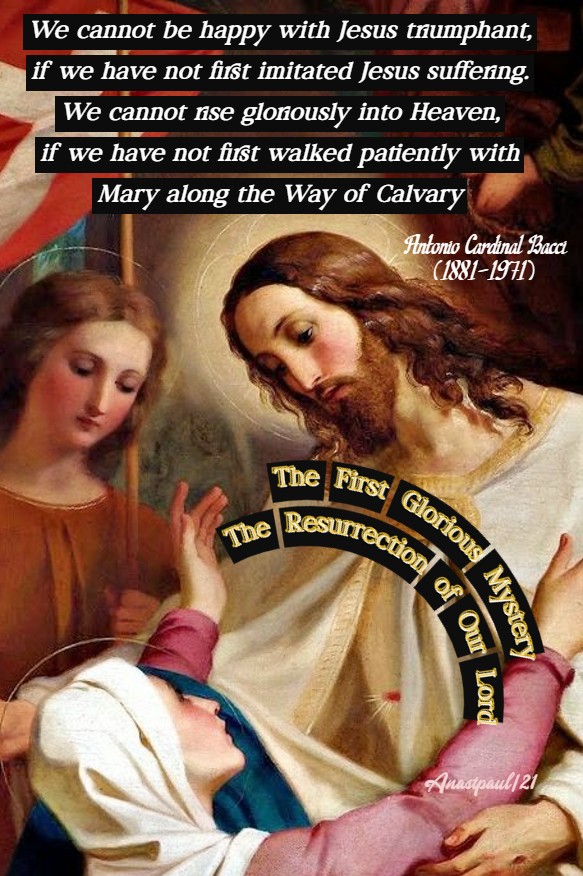
“Month of the Holy Rosary” The First Glorious Mystery The Resurrection of Our Lord
“Do we wish to share also in the joy of the Resurrection of Jesus Christ? Let us imitate Mary. First of all, we must participate as she did in the sufferings of Christ. By meditating frequently on the Passion and Death of Christ, we can nourish in our hearts, an intense love for Him Who suffered so much for our salvation. Let us learn to carry our cross, as He carried His, with resignation and with conformity to God’s Will. Spiritual joy is always the fruit of renunciation and love.
We cannot be happy with Jesus triumphant ,if we have not first imitated Jesus suffering. We cannot rise gloriously into Heaven, if we have not first walked patiently with Mary along the Way of Calvary!”
Quote/s of the Day – 14 October – “Month of the Holy Rosary” – Readings: Romans 3: 21-30; Psalms 130: 1b-6ab; Luke 11: 47-54
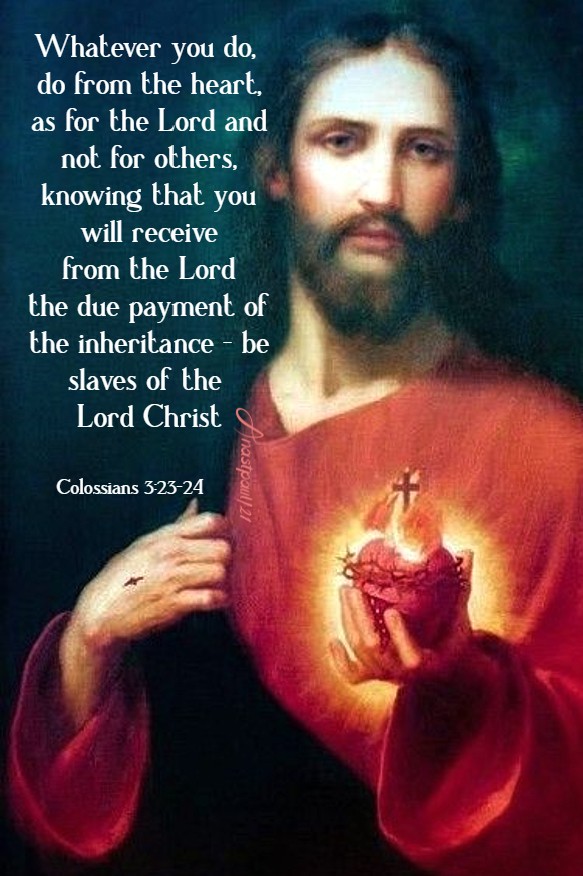
“Whatever you do, do from the heart, as for the Lord and not for others, knowing that you will receive from the Lord the due payment of the inheritance; be slaves of the Lord Christ.”
Colossians 3:23-24
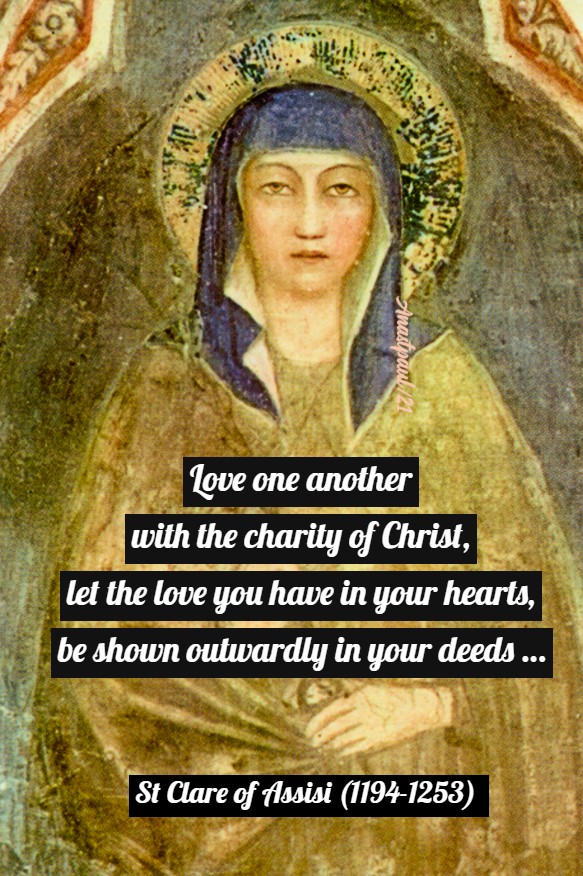
“Love[ing] one another with the charity of Christ, let the love you have in your hearts, be shown outwardly in your deeds …”
St Clare of Assisi (1194-1253)
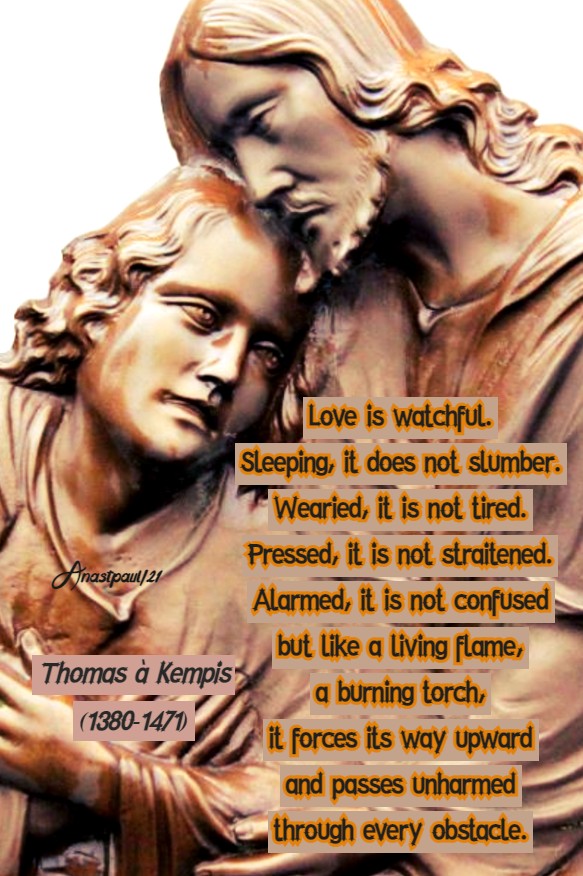
“Love is watchful. Sleeping, it does not slumber. Wearied, it is not tired. Pressed, it is not straitened. Alarmed, it is not confused but like a living flame, a burning torch, it forces its way upward and passes unharmed through every obstacle.”
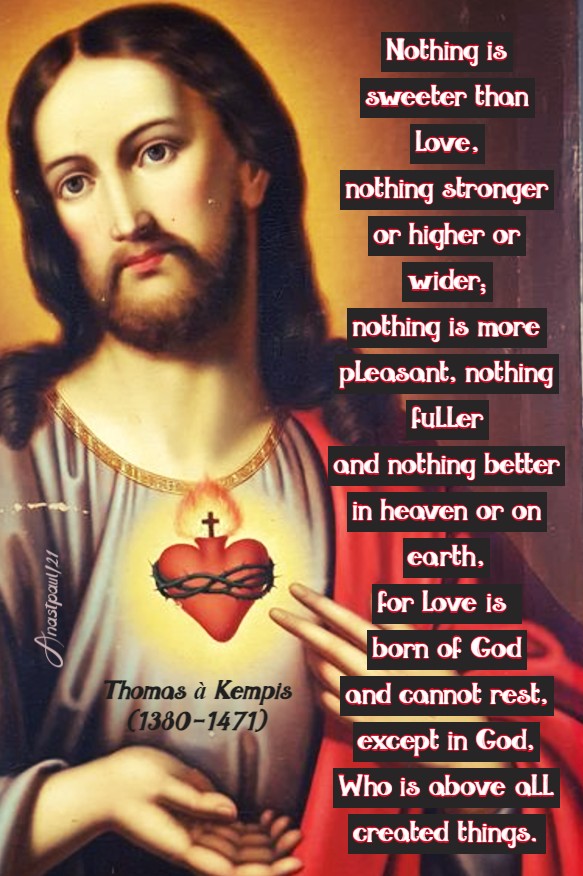
“Nothing is sweeter than love, nothing stronger or higher or wider; nothing is more pleasant, nothing fuller and nothing better in heaven or on earth, for love is born of God and cannot rest except in God, Who is above all created things.”
Thomas à Kempis (1380-1471)
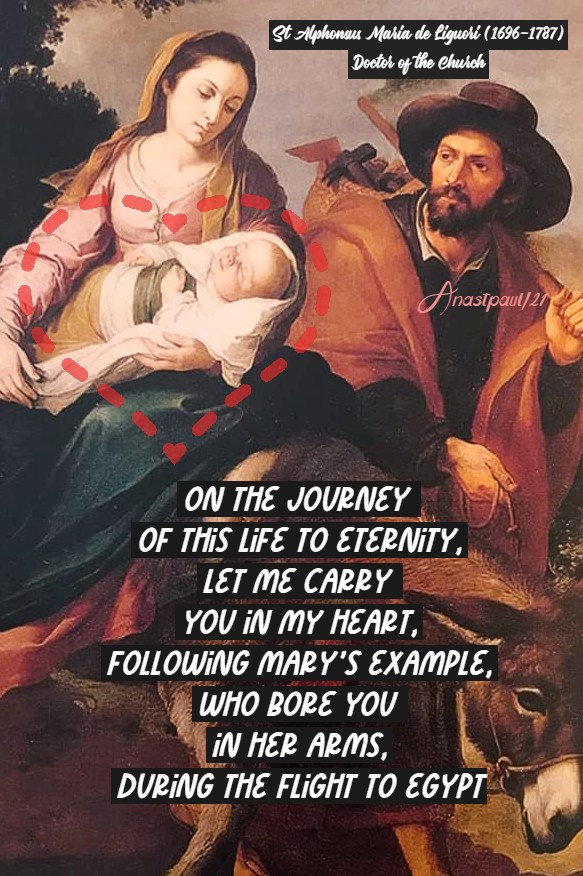
“On the journey of this life to eternity, let me carry You in my heart, following Mary’s example, who bore You in her arms, during the flight to Egypt.”
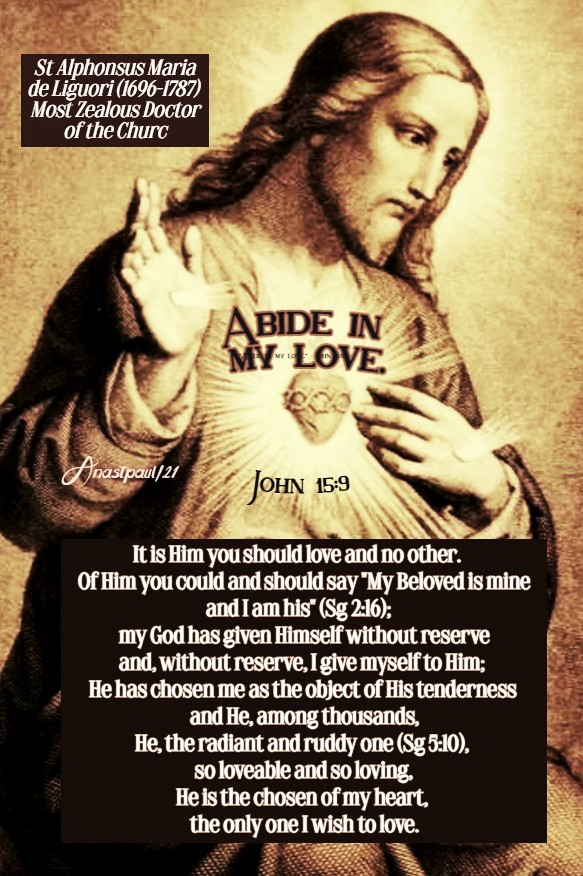
“… It is Him you should love and no other. Of Him you could and should say “My Beloved is mine and I am his” (Sg 2:16); my God has given Himself without reserve and, without reserve, I give myself to Him; He has chosen me as the object of His tenderness and He, among thousands, He, the radiant and ruddy one (Sg 5:10), so loveable and so loving, He is the chosen of my heart, the only one I wish to love.”
St Alphonsus Maria de Liguori (1696-1787) Most Zealous Doctor
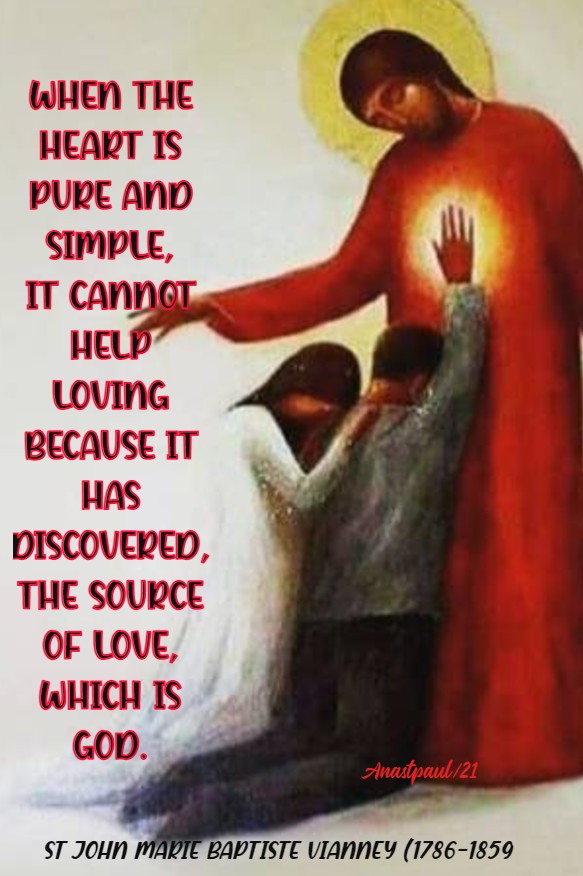
“When the heart is pure and simple, it cannot help loving because it has discovered, the source of love, which is God.”
St John Marie Baptiste Vianney (1786-1859)
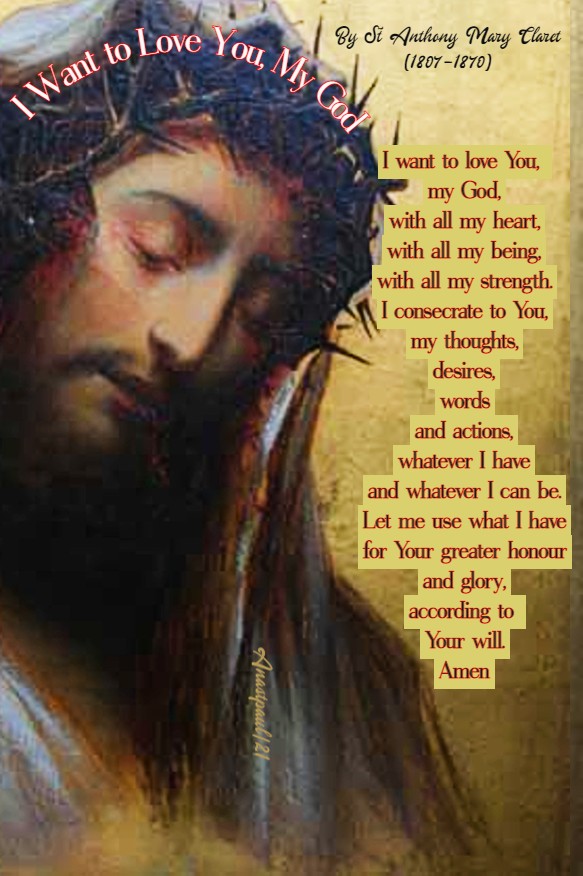
I Want to Love You, My God By St Anthony Mary Claret (1807-1870)
I want to love You, my God, with all my heart, with all my being, with all my strength. I consecrate to You, my thoughts, desires, words and actions, whatever I have and whatever I can be. Let me use what I have for Your greater honour and glory, according to Your will. Amen
One Minute Reflection – 14 October – “Month of the Holy Rosary” – Readings: Romans 3: 21-30; Psalms 130: 1b-6ab; Luke 11: 47-54
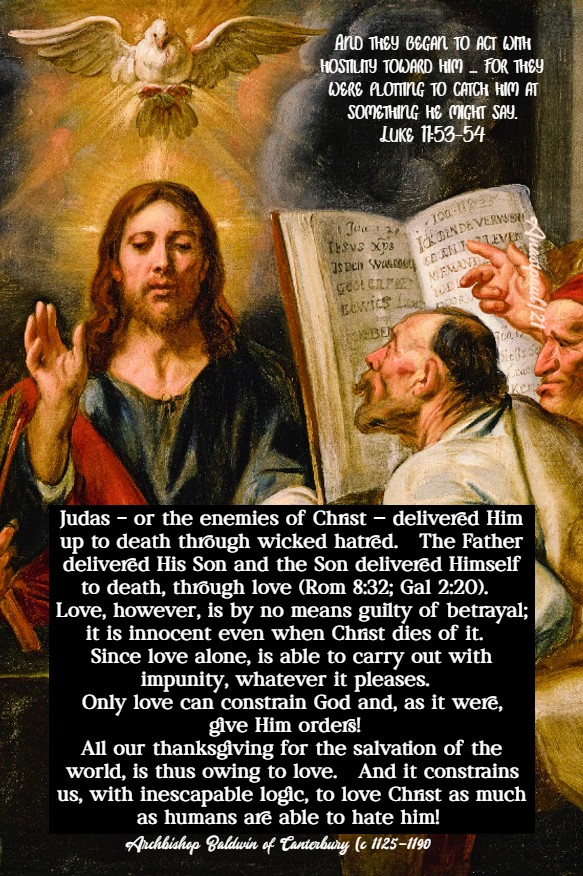
“And they began to act with hostility toward him… for they were plotting to catch him at something he might say. ” – Luke 11:53-54
REFLECTION – “God so loved the world that he gave his only Son” (Jn 3:16). This only Son “was offered”, not because His enemies overcame Him but because “he surrendered himself” (cf. Is 53:12). “He loved his own in the world and he loved them to the end” (Jn 13:1). This “end” was the death He accepted on behalf of those whom He loved; this was the end of all perfection, the end of perfect love, for “there is no greater love than to lay down one’s life for one’s friends” (Jn 15:13).
This love of Christ, was stronger in the death of Chris, than His enemies’ hatred – for hatred could only do what love permitted it to do. Judas – or the enemies of Christ – delivered Him up to death through wicked hatred. The Father delivered His Son and the Son delivered Himself to death, through love (Rom 8:32; Gal 2:20). Love, however, is by no means guilty of betrayal; it is innocent even when Christ dies of it. Since love alone, is able to carry out with impunity, whatever it pleases. Only love can constrain God and, as it were, give Him orders! This it was, that caused Him to descend from Heaven and placed Him on the Cross; this it was, that shed Christ’s Blood for the remission of sins, in an act that was as innocent as it was salutary. All our thanksgiving for the salvation of the world ,is thus owing to love. And it constrains us, with inescapable logic, to love Christ as much as humans are able to hate Him! – Archbishop Baldwin of Canterbury (c 1125-1190) also Baldwin of Forde Cistercian abbot, then Bishop (The Sacrament of the Altar, II, 1 ).
PRAYER – I Love You, O My God – By St Jean Marie Baptiste Vianney (1786-1859) I love You, O my God and my only desire is to love You until the last breath of my life. I love You, O my infinitely lovable God and I would rather die loving You, than live without loving You. I love You, Lord and the only grace I ask, is to love You eternally My God, if my tongue cannot say in every moment that I love You, I want my heart to repeat it to You as often as I draw breath. Amen
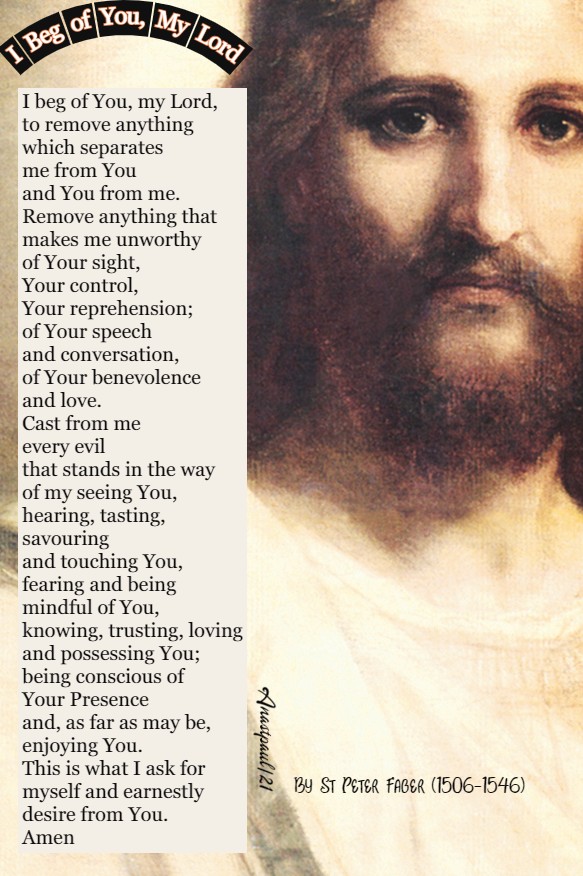
I Beg of You, My Lord By St Peter Faber (1506-1546)
I beg of You, my Lord, to remove anything which separates me from You and You from me. Remove anything that makes me unworthy of Your sight, Your control, Your reprehension; of Your speech and conversation, of Your benevolence and love. Cast from me every evil that stands in the way of my seeing You, hearing, tasting, savouring and touching You, fearing and being mindful of You, knowing, trusting, loving and possessing You; being conscious of Your Presence and, as far as may be, enjoying You. This is what I ask for myself and earnestly desire from You. Amen
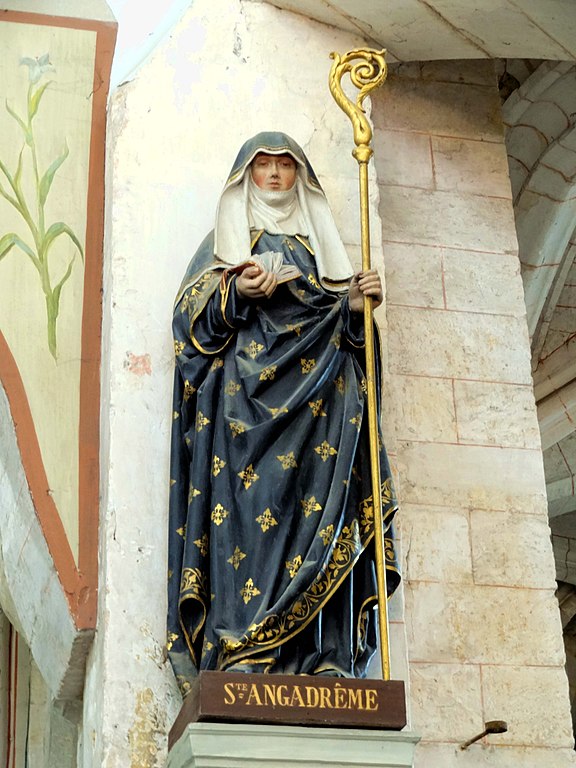
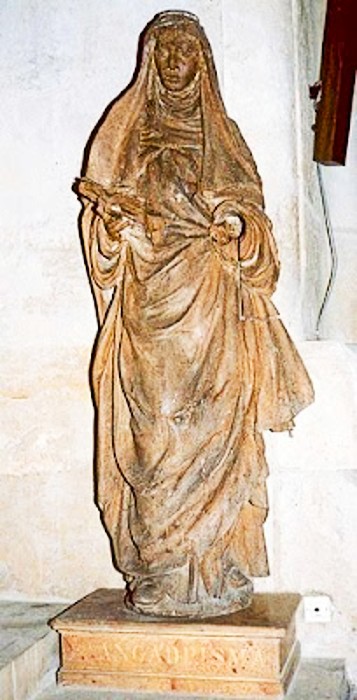
Saint of the Day – 14 October – Saint Angadrisma of Beauvais (Died c 615) Virgin, Abbess, miracle-worker. Born in c 615 in the Diocese of Thérouanne, France and died in c 696 at the Oroër-des-Vierge Abbey, Beauvais, France of natural causes. Patronages – against drought, against fire, against natural disasters, against slander, of Beauvais, France, City of and of the Diocese of Beauvais-Noyon-Senlis. Also known as – Andragasyna, Angadreme, Angadresima, Angadrême, Angradesma.
The Roman Martyrology states today : “Near Beauvais in Neustria, now in France, Saint Angadrisma, Abbess of the Monastery founded by Saint Brolph and called the Oratory because she had several places of prayer, in which she ceaselessly served the Lord.”
Angadrisma lived in the Diocese of Thérouanne in northern France. She was the daughter of Robert I, Bishop of Tours and a cousin to Lambert, the Bishop of Lyons.
Her education was profoundly influenced by St Homer, Bishop of the Diocese and by her cousin, St Lambert, who at that time was a Monk in Fontanelle.
It was probably their influence that supported the girl in her desire to become a nun, and which encouraged her, at a young age, to make a private vow of her Virginity. she was, however, promised in an arranged marriage, to St Ansbert of Chaussy. To avoid the wedding, Angadrisma prayed fervently that she would become physically repellent. Her prayers were answered when she afflicted with leprosy.
The young gentleman, Ansbert, later became the Bishop of Rouen, married another person and Angadrisma was free to receive the religious habit from the hands of St Ouen, the Archbishop of Rouen; from that day her illness disappeared. She became Abbess of the Benedictine Convent of Oroër-des-Vierges, near Beauvais.
Many miracles are attributed to her and she is credited with having extinguished a fire that threatened to destroy the Convent . She led the sisters in prayer, holding aloft the relics of the holy Founder St Ebrulf of Ouche.
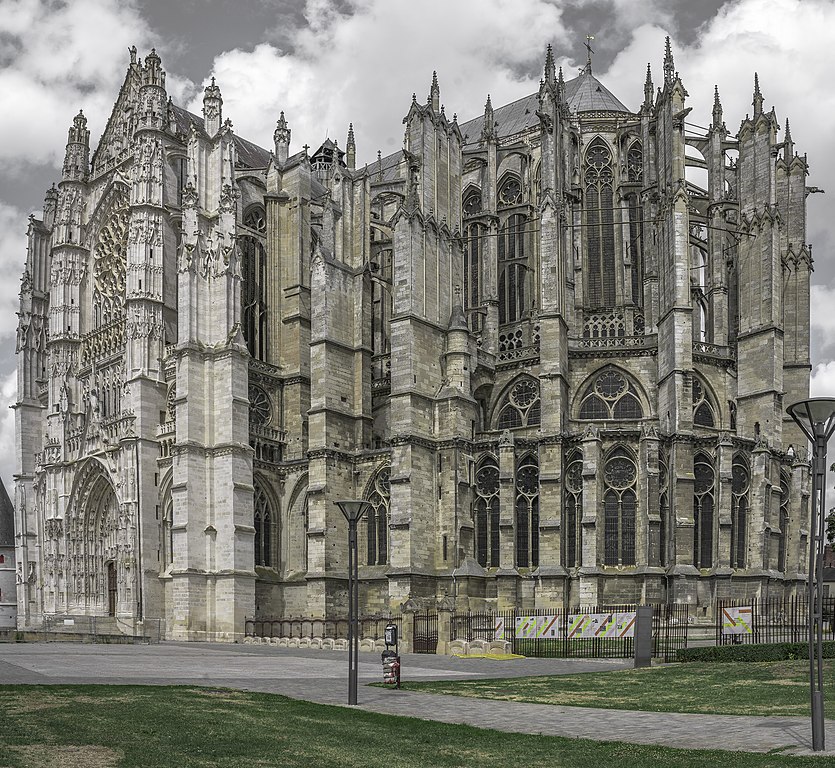
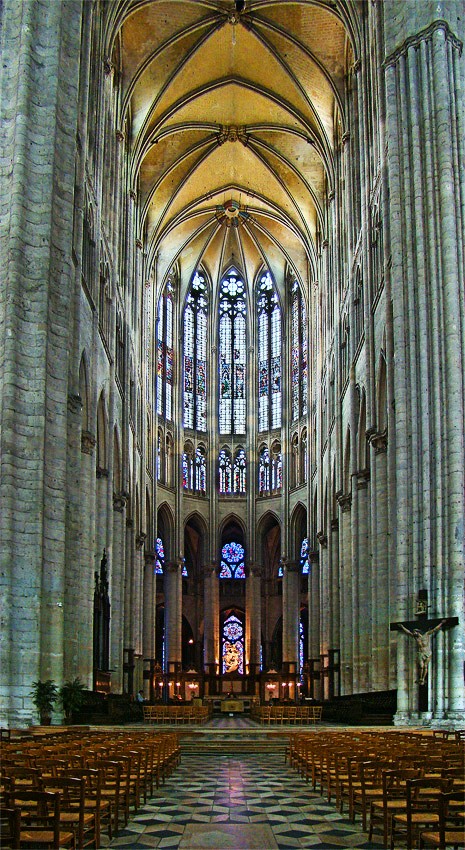
When the Convent was destroyed by the Normans in 851, the Saint’s relics were transferred to the Church of St Michele in the City. During the French Revolution they were again moved and placed in the Cathedral of Beauvais, which is a spectacular building, see below.
Saint Fortunatus of Todi (Died 537) Bishop, Confessor, miracle-worker. An entry in the Roman Martyrology under 14 October records: “At Todi in Umbria, St Fortunatus, Bishop, who, as is mentioned by blessed Gregory, was endowed with an extraordinary gift for casting out unclean spirits.” About St Fortunatus: https://anastpaul.com/2020/10/14/saint-of-the-day-14-october-saint-fortunatus-of-todi-died-537/
St Franciszek Roslaniec St Gaudentius of Rimini St Gundisalvus of Lagos Bl Jacques Laigneau de Langellerie St Lupulo of Capua St Lupus of Caesarea St Manacca St Manehildis St Modesto of Capua Bl Richard Creagh
St Rusticus of Trier St Saturninus of Caesarea St Stanislaw Mysakowski St Venanzio of Luni — Martyrs of Caesarea – (4 saints): Three brothers and a sister martyred together in the persecutions of Diocletian – Carponius, Evaristus, Fortunata and Priscian. In 303 in Caesarea, Cappadocia (in modern Turkey) – their relics enshrined in Naples, Italy.
Martyred in the Spanish Civil War: • Blessed Ana María Aranda Riera • Blessed Jacques Laigneau de Langellerie
Thought for the Day – 13 October – Meditations with Antonio Cardinal Bacci (1881-1971)
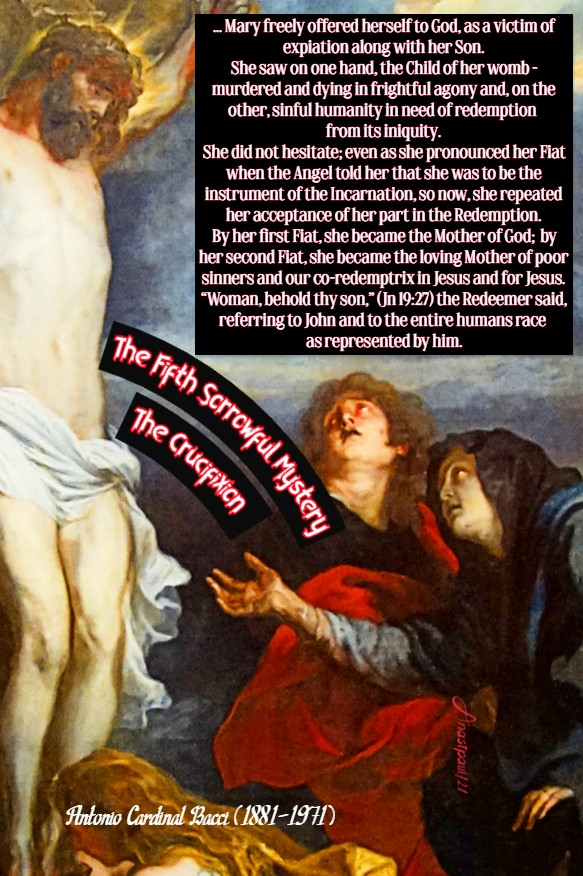
“Month of the Holy Rosary” The Fifth Sorrowful Mystery The Crucifixion
“Jesus had only one consolation in the midst of His terrible sufferings. His mother, Mary was beside the Cross along with His beloved Apostle and the holy women who had always followed Him. Mary loved her Son with a love greater than that of any mother, which is the greatest love possible on earth. She loved Jesus with the heart of a Mother and of a Virgin – He was her only treasure. Moreover, she loved Him, not only as her Son but, also as her God. Precisely because she loved Him as her God, her love was in perfect harmony with the divine will.
She understood the mystery which led Jesus to accept death on the Cross – the mystery of the Redemption. “He was offered because it was his own will” (Isa 53:7). He was offered on our behalf, as a voluntary victim to His heavenly Father.
In the same way, Mary freely offered herself to God, as a victim of expiation along with her Son. She saw on one hand, the Child of her womb – murdered and dying in frightful agony and, on the other, sinful humanity in need of redemption from its iniquity. She did not hesitate; even as she pronounced her Fiat when the Angel told her that she was to be the instrument of the Incarnation, so now, she repeated her acceptance of her part in the Redemption. By her first Fiat, she became the Mother of God; by her second Fiat, she became the loving Mother of poor sinners and our co-redemptrix in Jesus and for Jesus. “Woman, behold thy son,” (Jn 19:27) the Redeemer said, referring to John and to the entire humans race as represented by him.”
Quote/s of the Day – 13 October – The 104th Anniversary of the Last Apparition of Our Lady of Fatima and the Miracle of the Sun – Readings: Romans 2: 1-11; Psalm 62: 2-3, 6-7,9; Luke 11:42-46
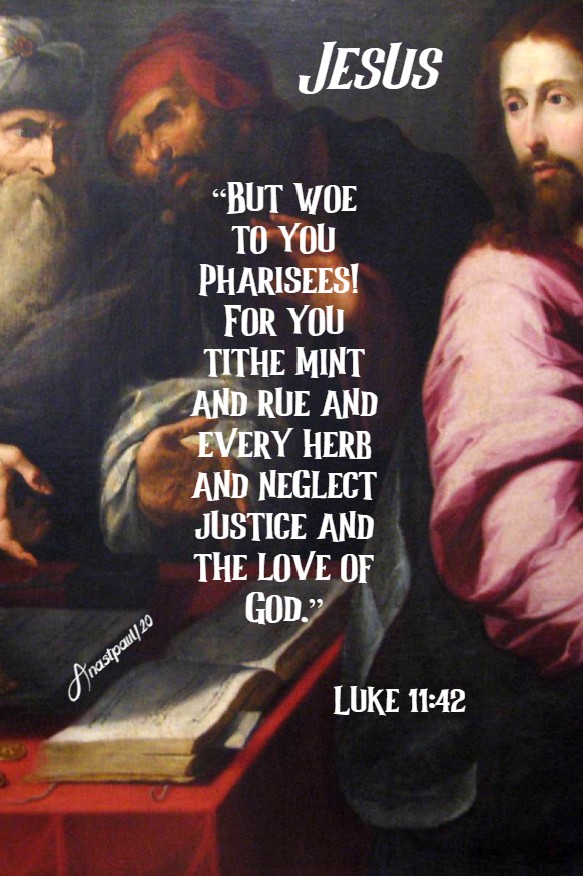
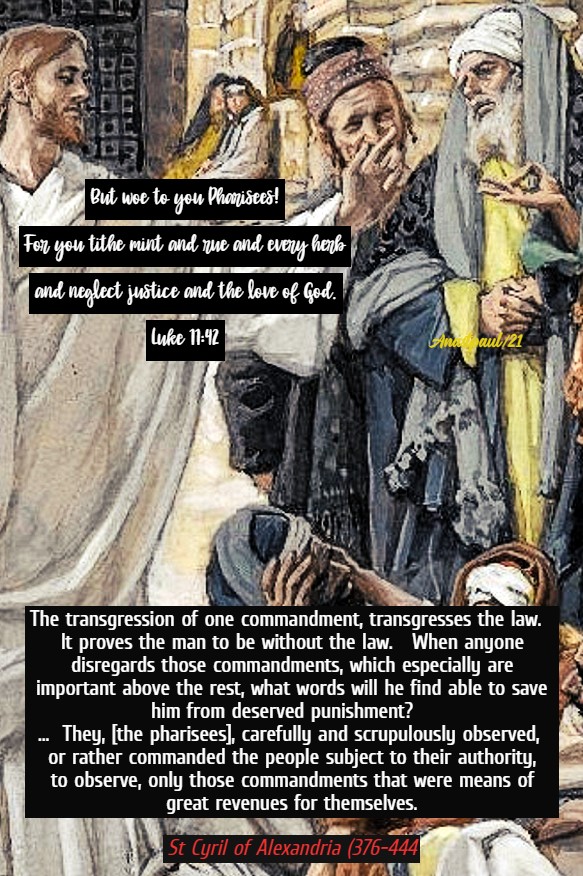
“But woe to you Pharisees! For you tithe mint and rue and every herb and neglect justice and the love of God.”
Luke 11:42
“Beware of the leaven of the Pharisees, which is hypocrisy. ”
Luke 12:1
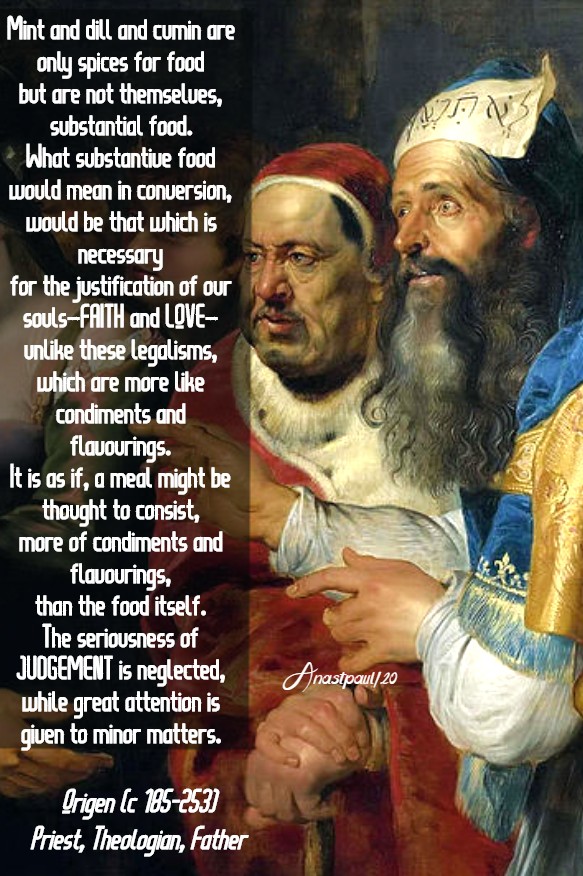
“Mint and dill and cumin are only spices for food but are not themselves, substantial food. What substantive food would mean in conversion, would be that which is necessary for the justification of our souls—faith and love— unlike these legalisms, which are more like condiments and flavourings. It is as if, a meal might be thought to consist, more of condiments and flavourings, than the food itself. The seriousness of judgement is neglected, while great attention is given to minor matters.”
Origen (c 185-253) Priest, Theologian, Father
“Grace is given, not to those who speak [their faith] but to those, who live their faith.”
St Gregory of Nazianzen (330-390) Father and Doctor of the Church
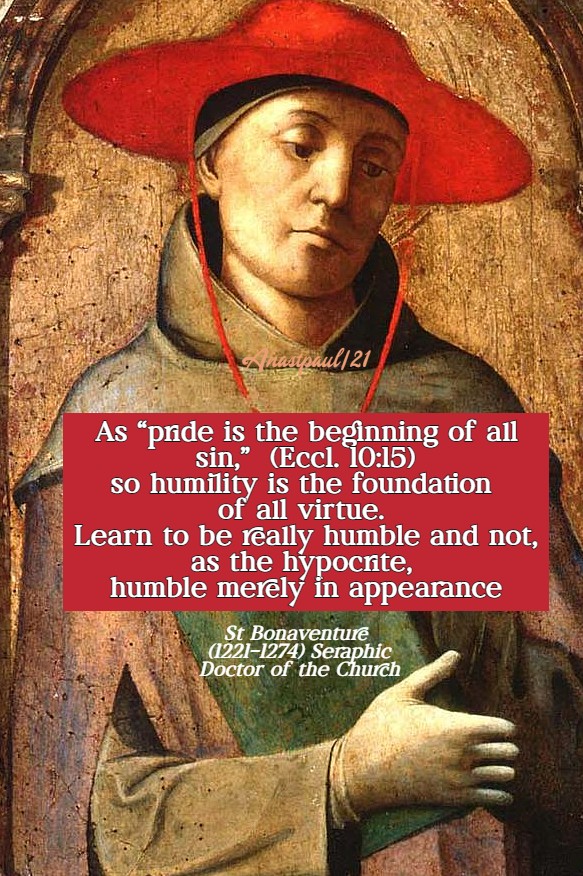
“As “pride is the beginning of all sin,” (Eccl. 10:15) so humility is the foundation of all virtue. Learn to be really humble and not, as the hypocrite, humble merely in appearance.”
St Bonaventure (1221-1274) Seraphic Doctor of the Church
One Minute Reflection- 13 October – “Month of the Holy Rosary” and the 104th Anniversary of the Last Apparition of Our Lady of Fatima and the Miracle of the Sun – Readings: Romans 2: 1-11; Psalm 62: 2-3, 6-7,9; Luke 11:42-46
“Woe to you Pharisees! You pay tithes of mint and of rue and of every garden herb but you pay no attention to judgement and to love for God. These you should have done, without overlooking the others.” – Luke 11:42
REFLECTION – “The transgression of one commandment, transgresses the law. It proves the man to be without the law. When anyone disregards those commandments, which especially are important above the rest, what words will he find able to save him from deserved punishment? The Lord proved that the Pharisees merited these severe censures, saying, “Woe to you, Pharisees, who tithe mint, rue and all herbs and pass over judgement and the love of God!” You should have done these things and not passed by the others, that is, to leave them undone. They omitted, as of no importance ,those duties which they were especially bound to practice, like justice and the love of God. They carefully and scrupulously observed, or rather commanded the people subject to their authority to observe, only those commandments that were means of great revenues for themselves.” – St Cyril of Alexandria (376-444) Archbishop of Alexandria, known as The Pillar of Faith, Father and Doctor of the Incarnation (Commentary on Luke, Homily 84)
PRAYER – Lord God, open our hearts to Your Grace, that we may be filled with Your light and overflow with gratitude for Your merciful love. May we love and adore and worship You in return. Although we are sinners, our hearts long to thank You in total trust and humble thankfulness. Grant that by the prayers of the Blessed Virgin Mary of Fatima, our Mother, we may grow in holiness. Through Your only Son, our Saviour and Redeemer, with the Holy Spirit, God, forever, amen.
Our Morning Offering – 13 October – “Month of the Holy Rosary” and the 104th Anniversary of the Last Apparition of Our Lady of Fatima and the Miracle of the Sun
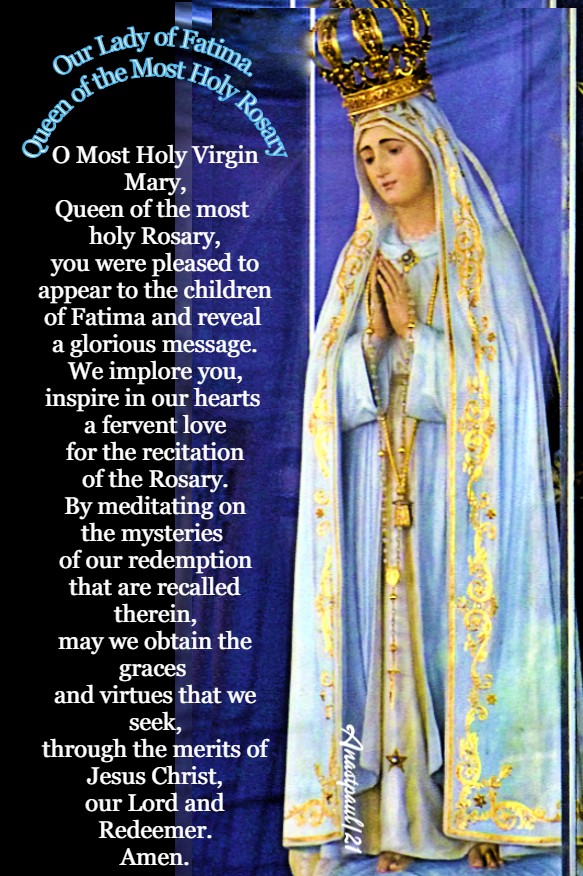
Our Lady of Fatima. Queen of the Most Holy Rosary
O Most Holy Virgin Mary, Queen of the most holy Rosary, you were pleased to appear to the children of Fatima and reveal a glorious message. We implore you, inspire in our hearts a fervent love for the recitation of the Rosary. By meditating on the mysteries of our redemption that are recalled therein, may we obtain the graces and virtues that we seek, through the merits of Jesus Christ, our Lord and Redeemer. Amen.
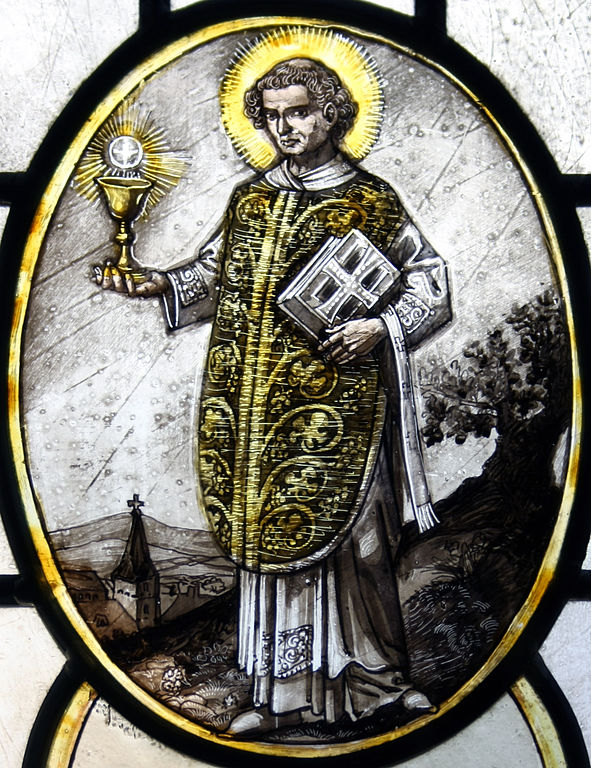
Saint of the Day – 13 October – Saint Lubentius (Died 370) Priest, Missionary, Disciple of St Martin of Tours and St Maximinus of Trier. Patronage – sailors on the River Lahn. Also known as – Lubencio, Lubenzio, Lubin.
Lubentius was delivered by his parents when a small child, to St Martin of Tours, to educate him. St Martin Baptised him and treated him as a son. Martin later sent him to Bishop St Maximinus of Trier in Germany, to be educated for the priesthood. When Lubentius came of canonical age, Maximin Ordained him Priest.
He worked as a Parish Priest in Kobern. In 349, St Maximin us died while visiting relatives in Acquitaine. His successor, St Paulinus of Trier, sent Lubentius to retrieve the Saint’s body. Lubentius travelled to Acquitaine and after diligent search, discovered the Church where St Maximinus’ body had been buried. He and his companions, obtained the keys to the Church from the sleeping custodian and made off with the body, bringing it back to Trier.
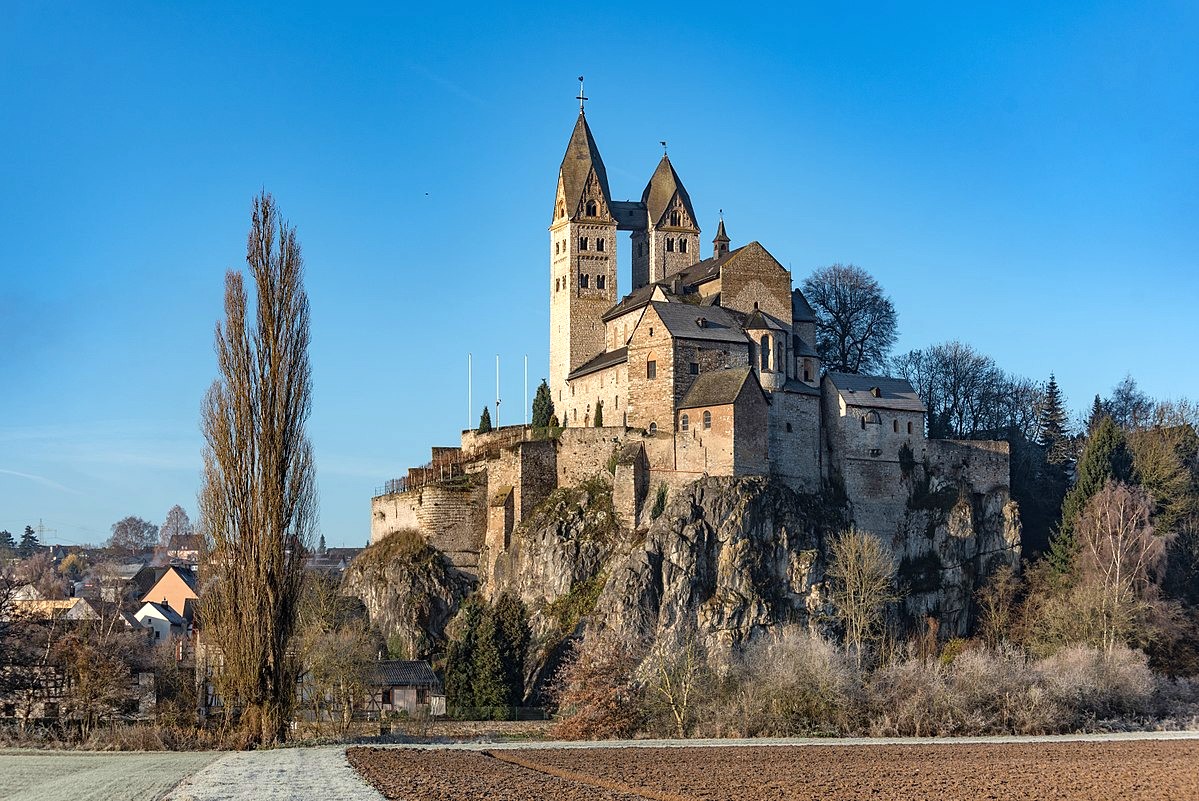
According to the records of the 12th century, he worked as a Missionary along the Lahn river and founded a famous Church at Dietkirchen.
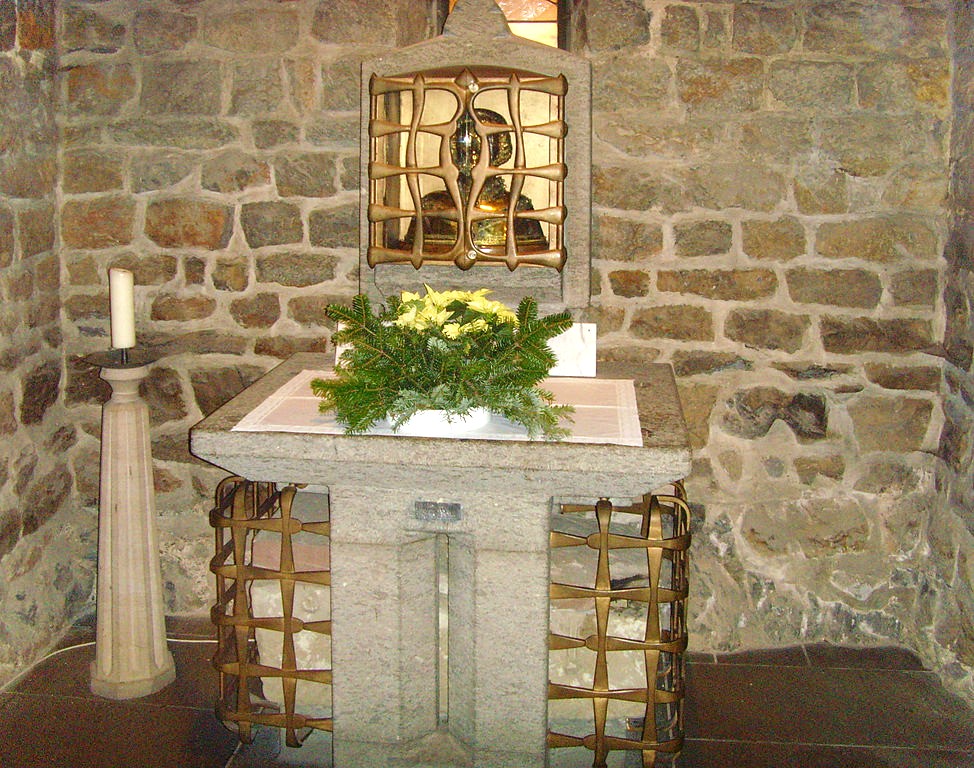
He died in Kobern. His body was interred in the collegiate Church of Saint Lubentius in Dietkirchen, Limburg, Germany. Some relics were granted to Kell, Andernach, Germany, some relics to Lahnstein, Germany and also to Trier, Germany.
Bust containing the relics of St Lubertius at the Church he built in Dietkirchen.
St Lubentius Church on a rock outcrop above the river Lahn
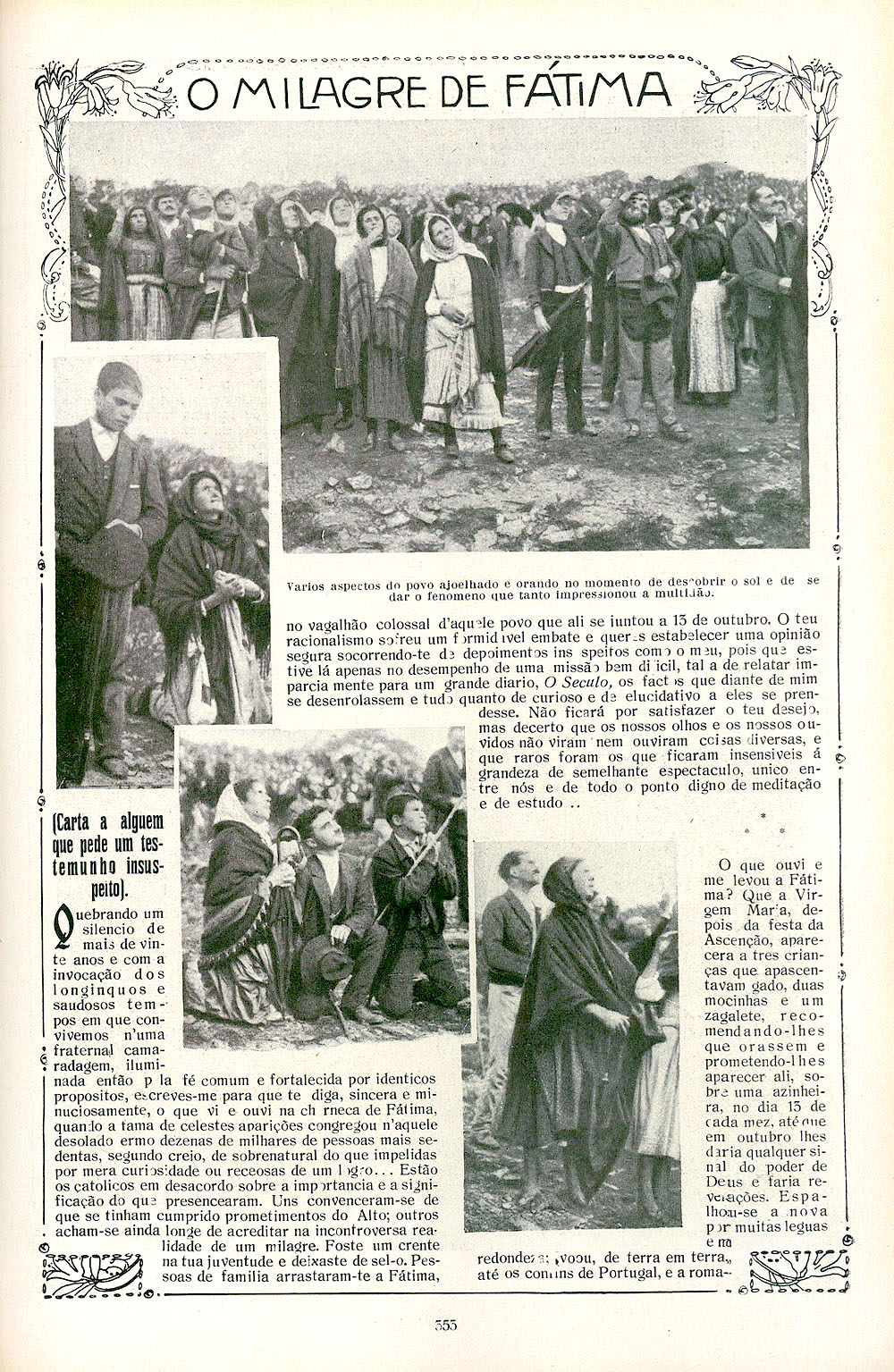
Our Lady of Fatima: The Sixth & Final Apparition & the Miracle of the Sun (1917) 13 October (104th Anniversary +2021)
The Day the Sun Danced… The Miracle of the Sun which occurred miraculously on 13 October 1917, attended by a large crowd who had gathered in Fátima, Portugal, in response to a prophecy made by three shepherd children, Lúcia Santos and Francisco and Jacinta Marto. The prophecy was that the Virgin Mary (referred to as Our Lady of Fátima), would appear and perform miracles on that date. Newspapers published testimony from witnesses who said that they had seen extraordinary solar activity, such as the Sun appearing to “dance” or zig-zag in the sky, careen towards the Earth, or emit multicolored light and radiant colours. According to these reports, the event lasted approximately ten minutes.
The local Bishop opened a canonical investigation of the event in November 1917, to review witness accounts and assess whether the private revelations from Mary were compatible with Catholic doctrine. The local Priest conducting the investigation was particularly convinced by the concurring testimony of the extraordinary solar phenomena, received from secular reporters, government officials and other skeptics in attendance. Bishop José da Silva declared the miracle “worthy of belief” on 13 October 1930, permitting “officially the cult of Our Lady of Fatima” within the Catholic Church.
At a gathering on 13 October 1951 at Fátima, the Papal Legate, Cardinal Federico Tedeschini, told the million people attending, that on 30 October, 31 October, 1 November and 8 November 1950, Pope Pius XII himself witnessed the miracle of the Sun from the Vatican gardens.
St Maurice of Carnoet St Regimbald of Speyer St Romulus of Genoa St Simbert of Augsburg St Theophilus of Antioch St Venantius — Three Crowns of Cordoba – (3 saints): Three Christian men martyred in the persecutions of Diocletian – Faustus, Januarius and Martial. They were burned to death in 304 in Cordoba, Spain.
Martyred in the Spanish Civil War: • Blessed Àngel Presta Batllé • Blessed ángel Ramos Velázquez • Blessed Antonio Ayet Canós • Blessed Ruperto García Arce • Blessed Salustiano González Crespo • Blessed Tomás Pallarés Ibáñez • Blessed Francesc Mitjá i Mitjá • Blessed Herminio Motos Torrecillas • Blessed Joan Puig Serra
Thought for the Day – 12 October – Meditations with Antonio Cardinal Bacci (1881-1971)
“Month of the Holy Rosary” The Fourth Sorrowful Mystery The Road to Calvary
“The Moment soon pases. The executioners urge Jesus forward once more, towards the place of execution. His strength is exhausted and He stumbles several times beneath the weight of the Cross. Each time, however, He rises, covered with blood and dust and again, embraces the Cross.
How often we also fall! Sometimes because of the weight of our cross, we fall in discouragement or in despair. On these occasions, let us look towards the divine Sufferer and embrace our cross again, for it is the ladder by which we must ascend to Heaven.
Sometimes, it is sin which causes us to fall. If we have yielded to the violence of temptation, let us look towards Jesus, just the same. He Who loved us so much on the way to Calvary and on the tree of the Cross, is certainly ready to forgive and comfort us.
Quote/s of the Day – 12 October – “Month of the Holy Rosary” and the Memorial of St Serafino of Montegranaro OFM Cap (1540-1604)
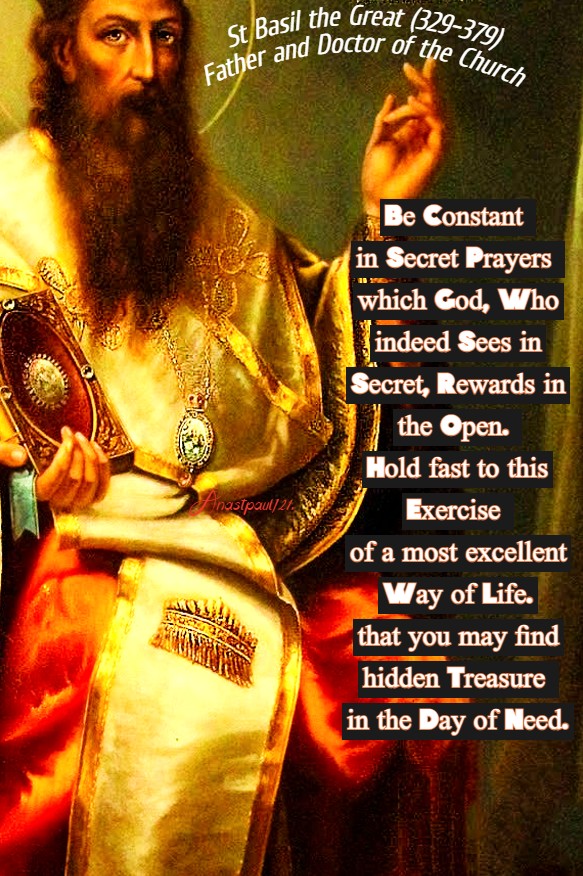
“Be constant in secret prayers which God, Who indeed sees in secret, rewards in the open. Hold fast to this exercise of a most excellent way of life. that you may find hidden treasure in the day of need.”
St Basil the Great (329-379) Father and Doctor of the Church
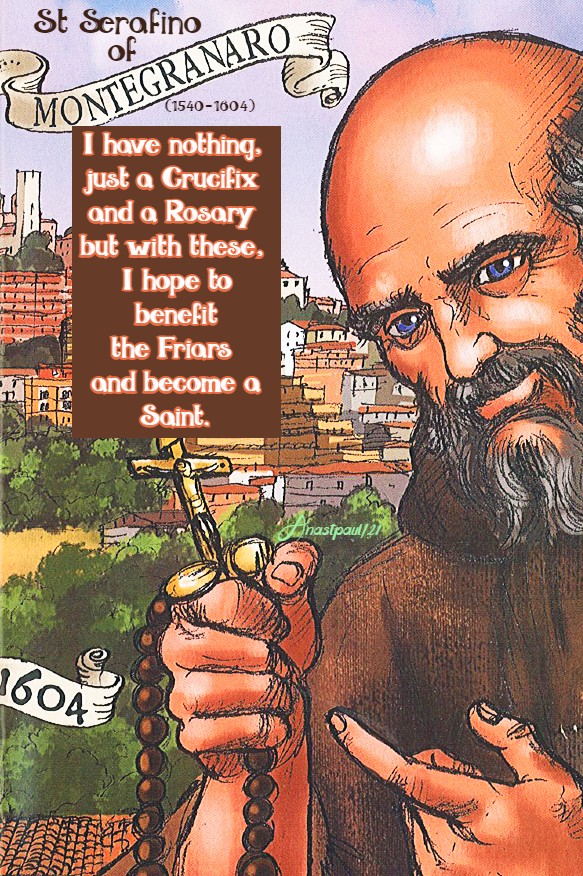
“I have nothing, just a Crucifix and a Rosary but with these, I hope to benefit the Friars and become a Saint.”
Said by St Serafino upon entering the Novitiate
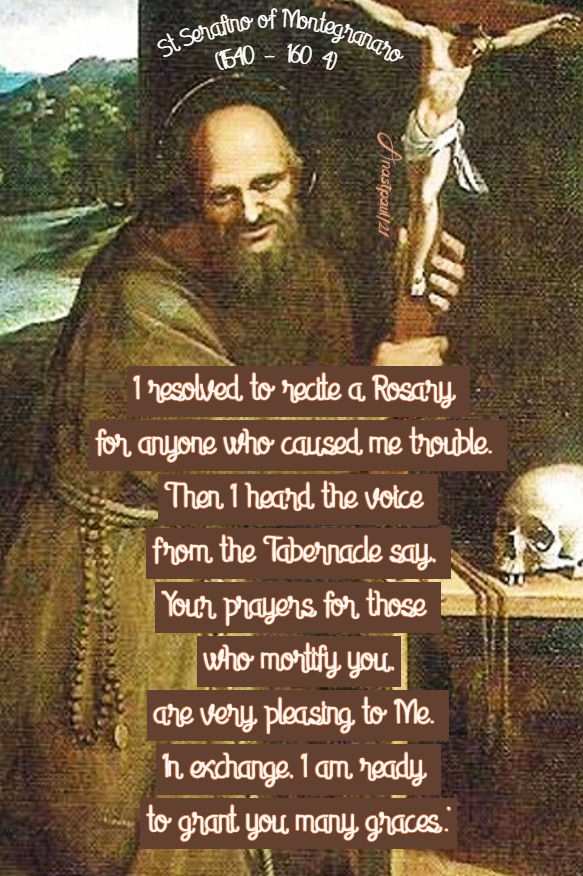
“… [I] resolved to recite a Rosary for anyone who caused me trouble. Then I heard the voice from the Tabernacle say, ‘Your prayers for those who mortify you, are very pleasing to Me. In exchange, I am ready to grant you many graces.‘”
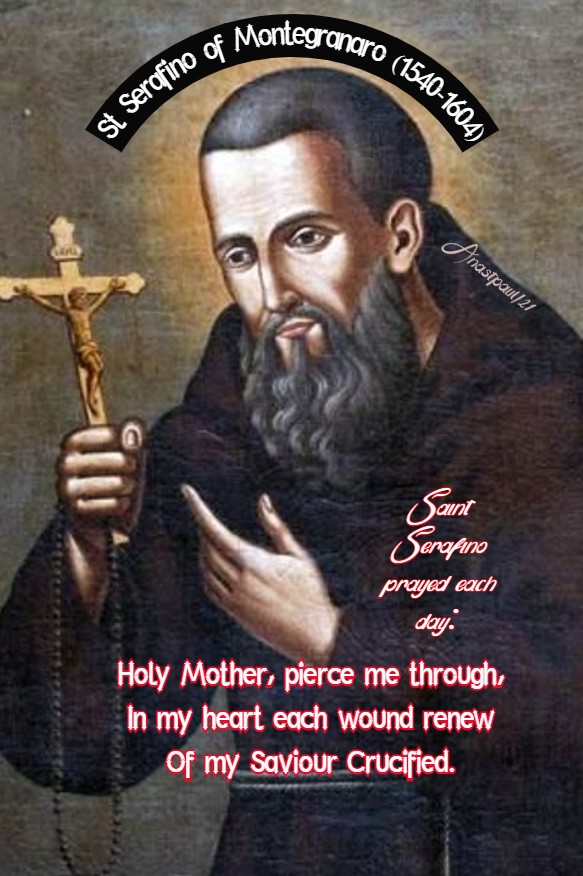
Saint Serafino prayed each day:
“Holy Mother, pierce me through, In my heart each wound renew Of my Saviour Crucified.”
One Minute Reflection – 12 October – “Month of the Holy Rosary” – Readings: Romans 1: 16-25; Psalm 19: 2-5; Luke 11: 37-41 and the Memorial of St Serafino of Montegranaro OFM Cap (1540-1604)
And the Lord said to him, “Now you Pharisees cleanse the outside of the cup and of the dish but inside you are full of extortion and wickedness.”…Luke 11:39
REFLECTION – “The Pharisee invites Him to an entertainment for his own purpose. The Saviour of all, submits to this for providence’s sake. He made the matter an opportunity of giving instruction, not consuming the time of their meeting in the enjoyment of food and delicacies but, in the task of making those ,who were assembled there, more virtuous. The dull Pharisee himself, supplied an occasion for His speech, “because he wondered,” it says, “that he did not wash before dinner.” Did he wonder at Him, as having done something of which he approved, as being especially worthy of the saints? This was not his view. How could it be? On the contrary, he was offended because, although He had the reputation of a righteous man and a prophet, He did not conform Himself to their unreasonable customs.
Our argument is this. “O foolish Pharisee, you boast much of your knowledge of the sacred Scriptures. You are always quoting the law of Moses. Tell us where Moses gave you this commandment? What commandment ordained by God requires people to wash before eating? The waters of sprinkling were indeed given by the command of Moses for the cleansing of bodily uncleanness, as being a type of the Baptism which really is holy and cleansing, even that in Christ. Those who were called to the priesthood were also bathed in water. The divine Moses bathed Aaron and the Levites. The law thereby declared by means of the baptism enacted in type and shadow that even its priesthood did not have what is sufficient for sanctification. On the contrary, it needs divine and holy Baptism for the true cleansing.” – St Cyril of Alexandria (376-444) Father and Doctor of the the Incarnation of the Church (Commentary on Luke, “Homily 83”).
PRAYER – Lord God, open our hearts to Your Grace, that we may be filled with Your light and overflow with gratitude for Your merciful love. May we love and adore and worship You in return. Although we are sinners, our hearts long to thank You in total trust and humble thankfulness. Grant that by the prayers of the Blessed Virgin Mary Queen of our Hearts and of the humble St Serafino, we may grow in holiness. Through Your only Son, our Saviour and Redeemer, with the Holy Spirit, God, forever, amen.
May Your Heart Dwell Always in our Hearts! by Saint Francis De Sales (1567-1622) Doctor of Charity
May Your Heart dwell always in our hearts! May Your Blood ever flow in the veins of our souls! O Sun of our hearts, You give life to all things by the rays of Your goodness! I will not go, until Your Heart has strengthened me, O Lord Jesus! May the Heart of Jesus be the King of my heart! Blessed be God. Amen
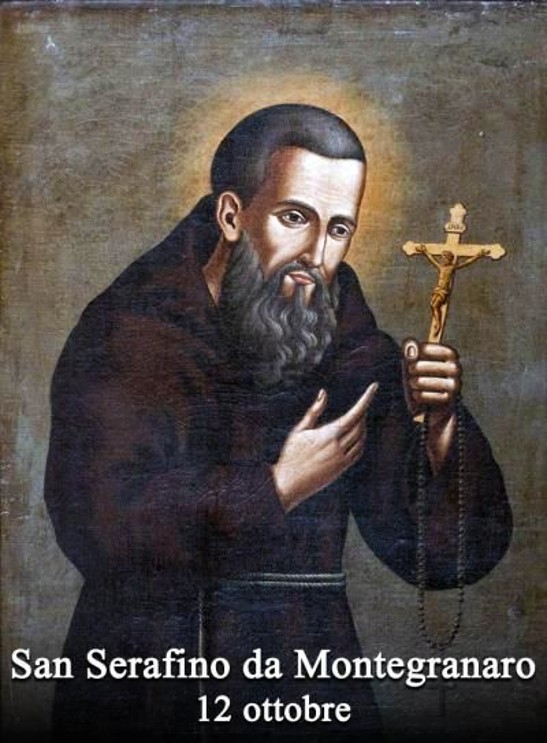
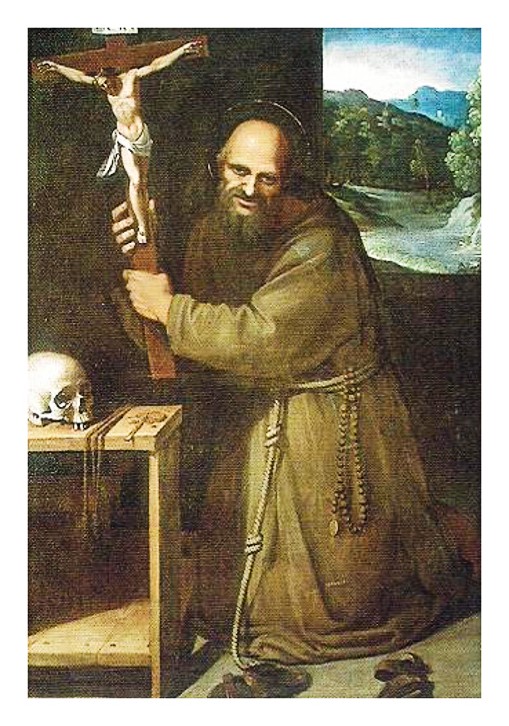
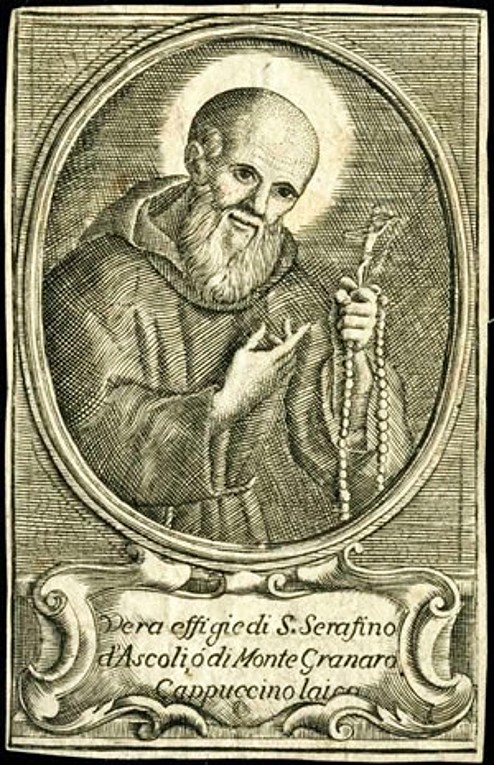
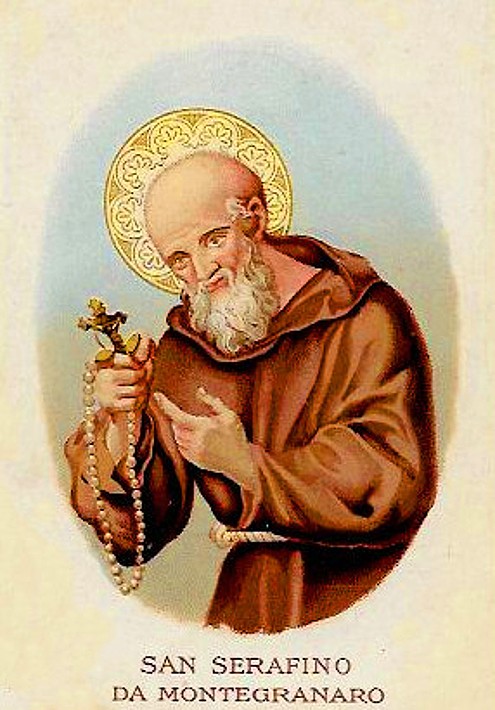
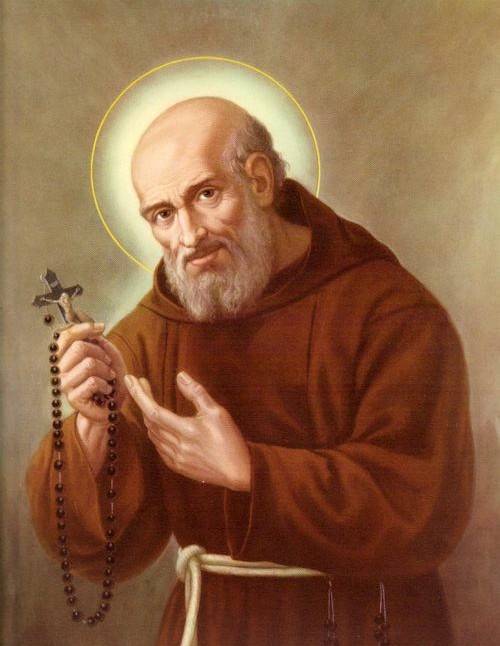
Saint of the Day – 12 October – St Serafino of Montegranaro OFM Cap (1540-1604) Franciscan Capuchin Lay Friar, Confessor, gifted with the charism of prophecy, mystic, Apostle of the poor, spiritual advisor, devoted to the Blessed Sacrament, the Holy Rosary and to the Blessed Virgin Mary, wonder-worker . Born as Felice Rapagnano in1540 at Montegranaro, Italy and died on 12 October 1604 at Ascoli Piceno, Italy of natural causes. Also known as – Serafino of Ascoli Piceno, Serafinus, Seraphim, Seraphin. Felix, Felice.
The Roman Martyrology states: “At Ascoli, St Seraphinus, Confessor, of the Order of Minorite Capuchins, distinguished by holiness of life and humility. Hre was enrolled among the Saints by the Sovereign Pontiff Clement XIII.”
Born Felice (Felix) Rapagnano at Montegranaro, then in the March of Fermo, he was the second of four children of poor but pious parents, Gerolamo Rapagnano and Teodora Giovannuzzi. His father was a mason. Because of their poverty, the family depended on the productivity of all of its members. The eldest son, Silenzio, followed in his father’s footsteps as a mason. The slighter and less manually adept Felix, was hired out to a local farmer as a shepherd. Felix enjoyed shepherding since it afforded him time for prayer. Even at an early age, he had an inclination toward silence, seclusion and prayer. When their father died, however, he was summoned home. His brother understood that Felix lacked the skills of a mason but hoped to use him as an unskilled laborer. All attempts proved futile. Felix could not even learn how to slake lime. He did learn, however, to put up with the physical and emotional abuse heaped upon him by his irascible brother.
Felix kept in mind stories he had heard about the desert ascetics and of their fasting and penances and dreamed of becoming like them. He confided in a friend, Luisa Vannucci from Loro Piceno, who encouraged him to enter religious life. She specifically mentioned the Capuchins because she was familiar with these Friars and with their reputation for virtue. Immediately, he left for Tolentino and presented himself to the Capuchin Provincial, expecting to be admitted that very day. But such was not the Capuchin custom. Instead, he was sent home, in all likelihood because of his age, he was just eighteen and fragile condition. In 1556, he repeated his request to the Prior Provincial, who this time accepted him and sent him to the Novitiate of the Province at Jesi.
After he completed a year of probation, Felix received the religious name of Serafino (meaning “seraph” or “celestial being or the burning one”). Upon entering the Order, he remarked, “I have nothing, just a Crucifix and a Rosary but with these, I hope to benefit the Friars and become a Saint.” Serafino was distinguished from the first, by his unaffected simplicity, mortification and obedience, as well as a great charity towards the poor. He had a special devotion to the Blessed Sacrament and to the Blessed Virgin. He was assigned to serve variously as a porter or questor at various Friaries throughout the March but most of his religious life was spent at Ascoli Piceno.
Serafino’s physical appearance was described as that of a peasant – hair always rumpled, clumsy at manual tasks and mainly illiterate. But his holiness was recognised by many. At times, he was discouraged by the ridicule of his Capuchin brothers. He would regain his composure through prayer. He explained, “When I entered religious life I was a poor, unskilled labourer, lacking both talent and potential. I remained as I was and this caused so many humiliations and rebukes, which the devil used as opportunities to tempt me to leave religious life and retreat to some desert, withdrawing into myself. I entrusted myself to the Lord and, one night I heard a voice coming from the Tabernacle say, ‘To serve God you must die to yourself and accept adversity, of whatever type.’ So I accepted them and resolved to recite a Rosary for anyone who caused me trouble. Then I heard the voice from the Tabernacle say, ‘Your prayers for those who mortify you are very pleasing to me. In exchange, I am ready to grant you many graces.‘”
A Capuchin custom was to keep rooms near the Porter’s Office available for the use of travelLers and pilgrims. At whatever hour of the night, Serafino would answer the door. Many recounted that, after the City gates had been closed for the night, they had sought refuge at the Capuchin Friary, which were usually located outside the City walls and that they had been welcomed warmly by Serafino. He spent entire nights in Church. Friars testified that, after everyone else had gone to bed, they would often hear him walking toward the Church to spend the night in adoration before the Blessed Sacrament. There he was heard praying, “Peace, Lord, I ask peace for so-and-so.” He once confided that the reason he spent so much of the night before the Tabernacle was because, in his room, he was greatly tempted against chastity, even in his old age.
Memories agree, that Serafino was endowed with the gift of reading the secrets of hearts and with that of miracles and prophecy. Although unlettered, Serafino’s advice was sought by secular and ecclesiastical dignitaries. His reputation reached as far as the Dukes of Bavaria and Parma, the nobles of Bologna and Cardinal Ottavio Bandini. The Bishop of Ascoli, the eminent theologian Cardinal Girolamo Bernerio, also sought out his advice.
Serafino was austere in his person. Only once in his life did he accept a new religious habit and then, only out of obedience. For forty continuous years, he ate only soup or salad. In keeping with the spirituality prevalent at the time, Serafino had a personal devotion of serving as many Masses as possible. To avoid having people kiss his hand or tunic to show their respect, he would carry a Crucifix with him, offering it for them to kiss instead.
However, Serafino was also endowed with a great sense of humour. Once, a woman asked him if she would give birth to a boy or a girl. He attempted to avoid answering. But the woman insisted, saying, “How shall I know what name to choose?” Chuckling, Serafino responded, “As far as that goes, choose Ursula and Companions,” indicating that throughout her life the woman would give birth to a succession of girls.
Even before Serafino’s burial in 1604, his first biographer put pen to paper. He was Canonised by Pope Clement XIII on 16 July 1767. Pope Clement Canonised Serafino together with John Cantius, Joseph Calasanz, Joseph of Cupertino, Jerome Emiliani and Jane Frances de Chantal. In the Papal Bull of Canonisation, the illiterate and physically clumsy Capuchin was acclaimed as a person who “knew how to read and understand the great book of life which is our Saviour, Jesus Christ. For that reason, he deserves to be listed among Christ’s principal disciples.”
Serafino’s tomb is in the Capuchin friary at Ascoli Piceno. A Church at San Lorenzo Nuovo is dedicated to him.
Serafino was in love with the mystery of Christ and of Our Lady. He was enthralled to meditate on them and would go into ecstasy. He would have liked to be in the fraternity at Loreto or in Rome to be able to serve as many Masses as possible each day. This was the source of his zeal – to work with Christ to save souls. He was remembered and venerated – for his brief and penetrating spiritual exhortations; for his extremely fruitful vocational apostolate; for his veneration for priests; for his compassion for the sick, the troubled and the poor; for his courageous commitment to make peace in society and in families; for his missionary enthusiasm and his desire for martyrdom. Although he was almost illiterate he could speak about the things of God with extraordinary ability and unction. When he was obliged, by obedience, to give a sermon in the refectory, his words in commenting on the psalm Qui habitat in adiutorio Altissimi, or the sequence Stabat Mater dolorosa were so full of feeling that he used to reduce everyone to tears. Dear holy Saint Serafino, pray for us all!





























 AnaStpaul
You must be logged in to post a comment.