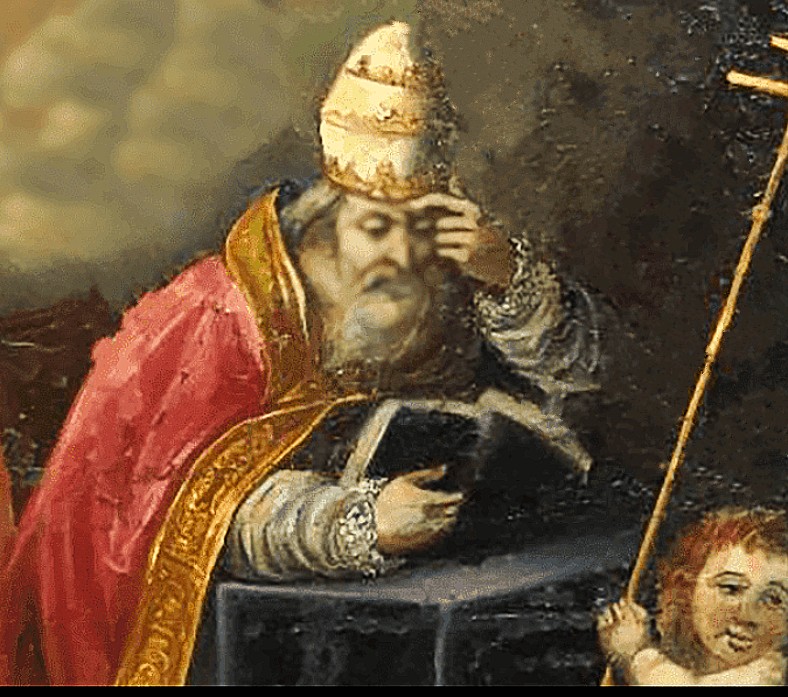
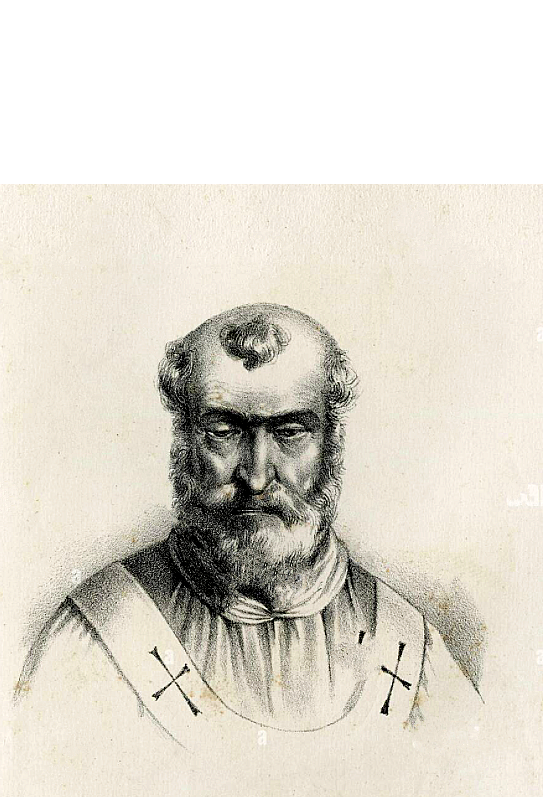
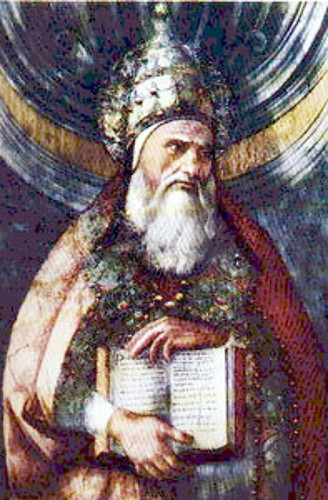
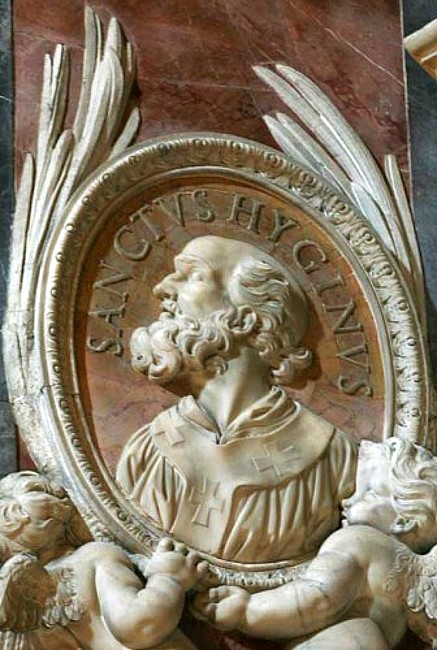
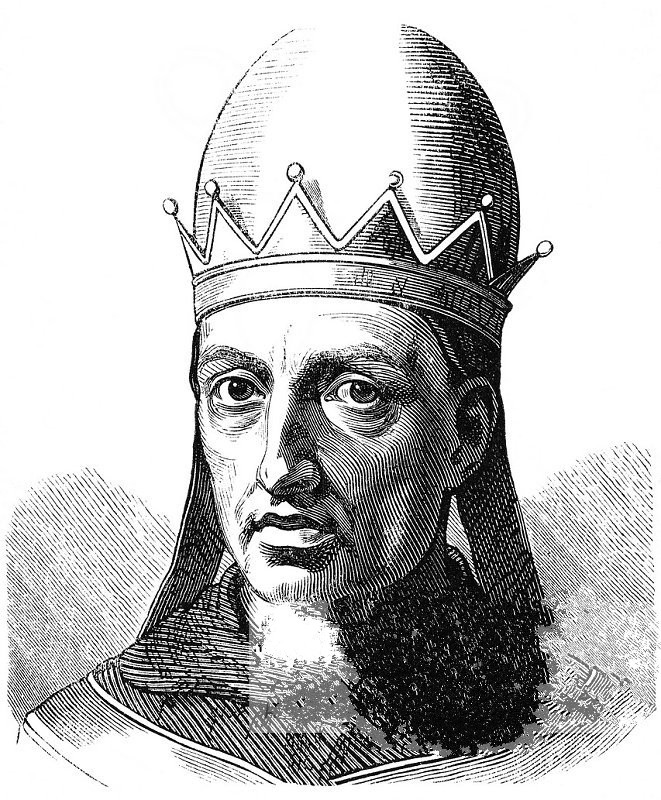
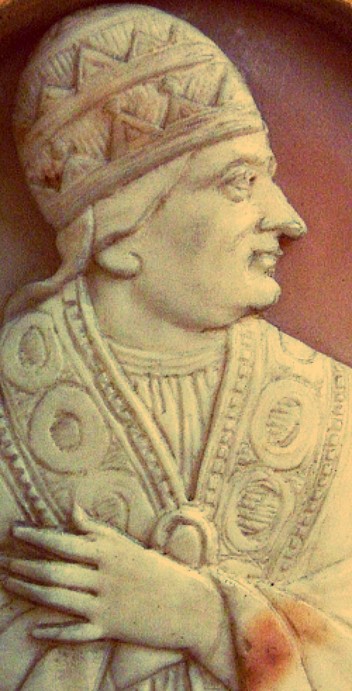
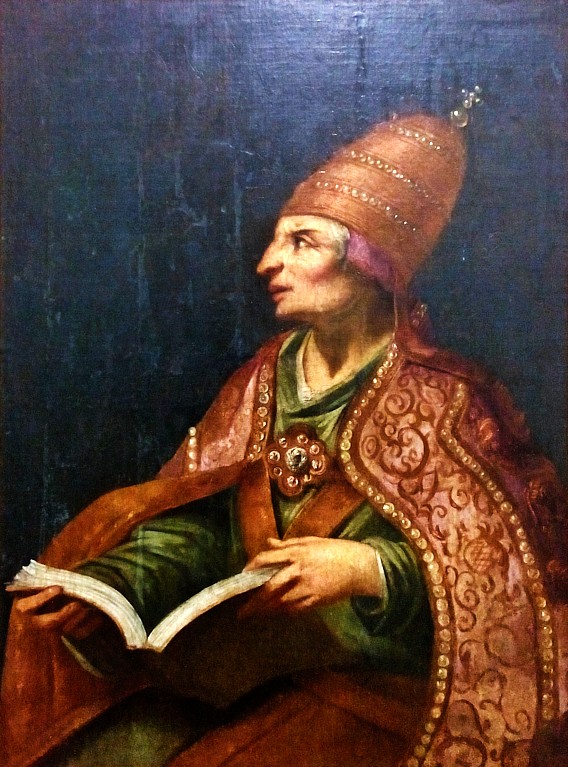
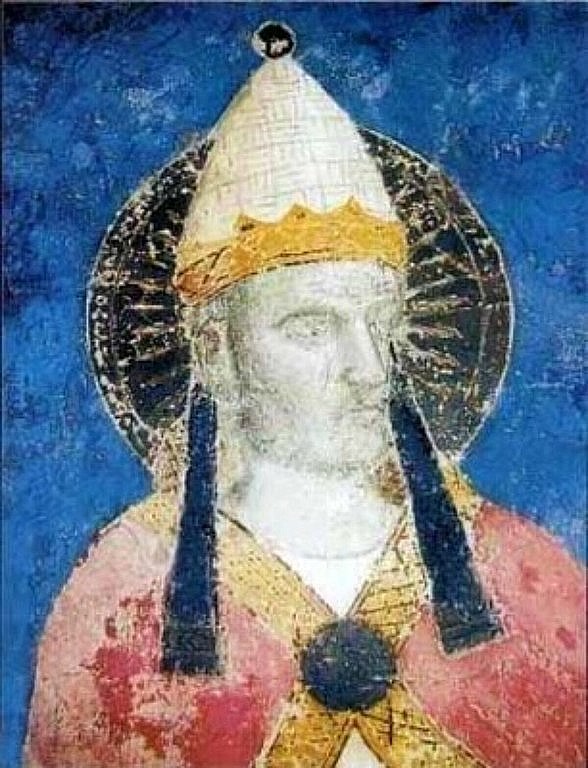
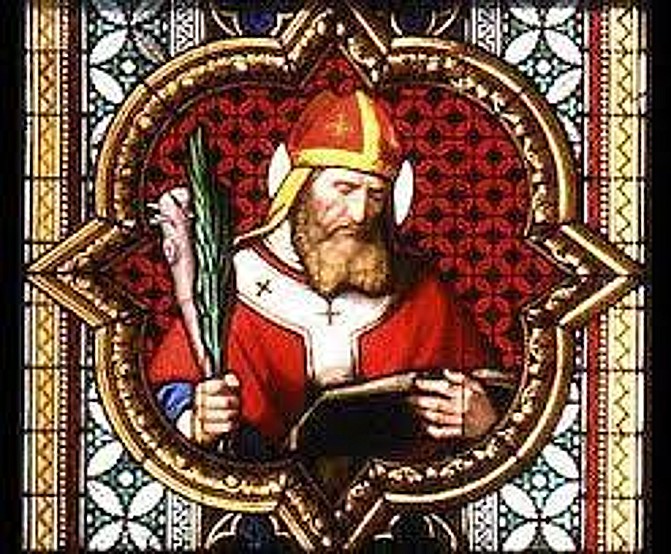
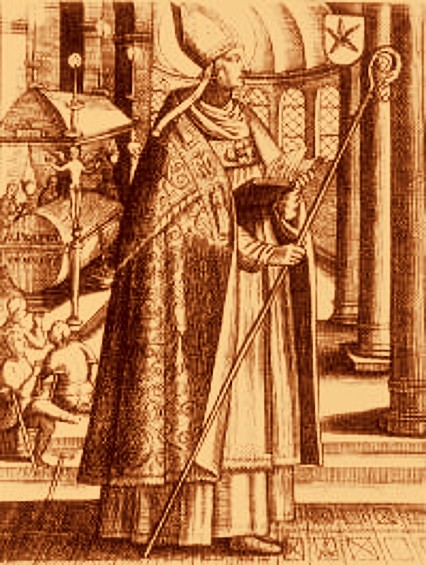
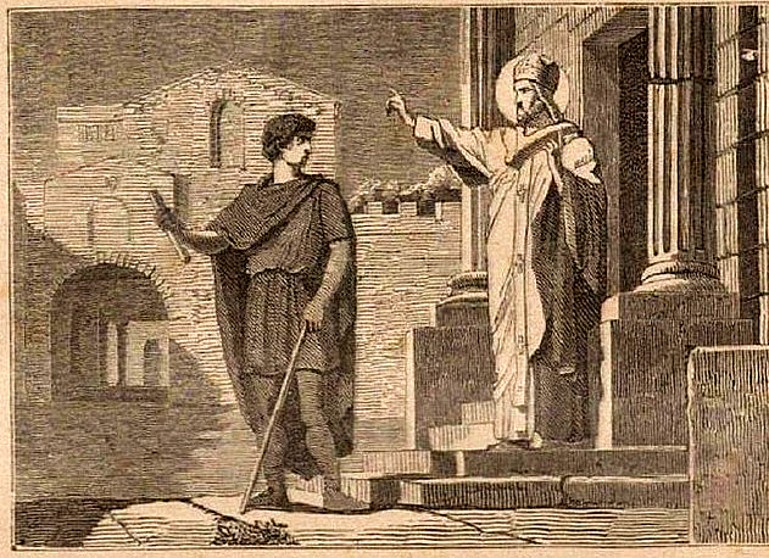
Saint of the Day – 11 January – Saint Pope Hyginus (Died 142) Papal Ascension c 138. Born in Athens, Greece and died in 142 in Rome, Italy. Also known as – Hygin, Igino.
Tradition holds that during his Papacy he determined the various prerogatives of the clergy and defined the grades of the ecclesiastical hierarchy. Hyginus also instituted Godparents at Baptism to assist the baptised during their Christian life. In addition, he decreed, that all Churches be Consecrated.
Not much is recorded in historical documents about Hyginus’ biographical details, other than, that he was born in Greece. The City of Rome, as the centre of the Empire, drew many different people from the corners of the Empire and was subsequently a very diverse place. Many of these earliest Popes reflected this diversity—a sharp distinction from the medieval Popes who were nearly uniformly of Italian descent.
St Irenaeus says, that the gnostic Valentinus came to Rome in Hyginus’ time, remaining there until St Anicetus became Pontiff
Cerdo, another Gnostic and predecessor of Marcion of Sinope, also lived at Rome in the reign of Hyginus but, by confessing his errors and recanting, he succeeded in obtaining re-admission into the Church. However, he eventually degenerated back into heresy and was expelled from the Church. The Liber Pontificalis also relates, that Pope Hyginus organised the hierarchy and established the order of ecclesiastical precedence.
The ancient sources contain no information as to his having died a martyr. At his death he was buried on the Vatican Hill, near Saint Peter’s Tomb.
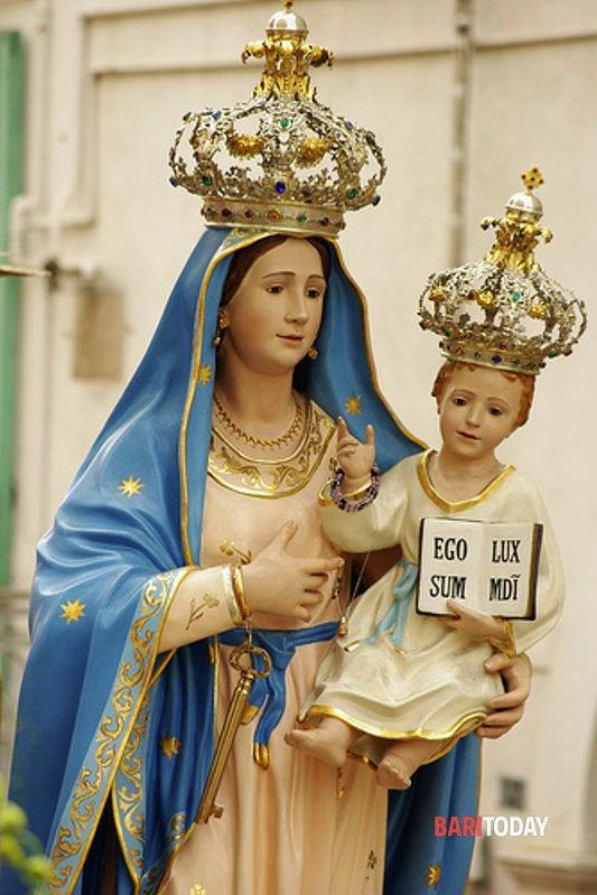
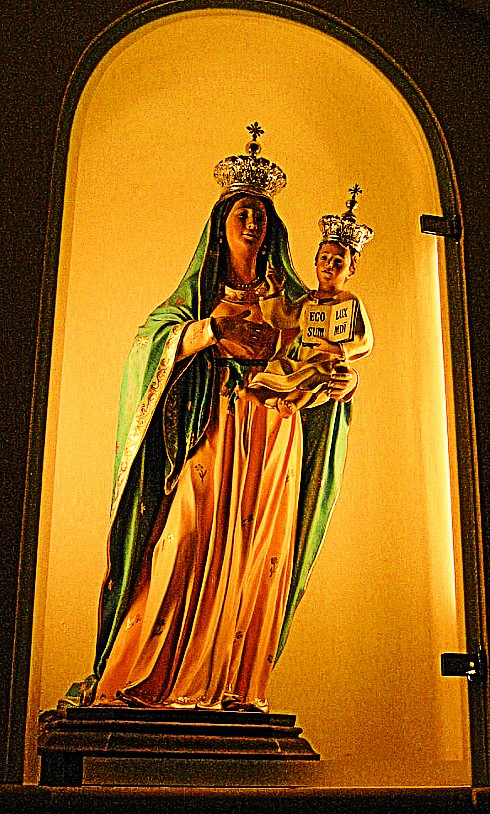
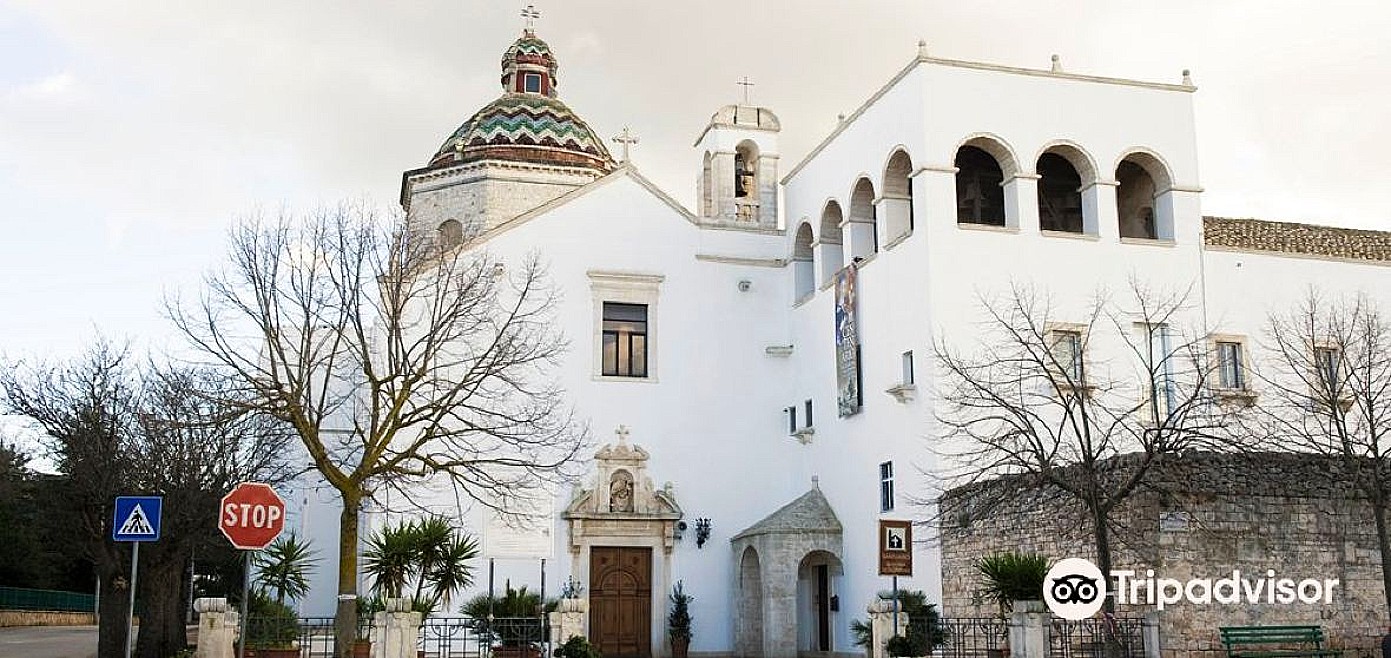
Madonna della Vetrana / Our Lady of the Vetrana(Castellana Grotte, Bari, Puglia, Italy (1691) – 11 January:
In Castellana from time immemorial, there was a small Chapel dedicated to the Mother of God which contained a miraculous Fresco which was greatly revered ,after the Madonna had rid the region of the plague in the seventeenth century. Since then, the Shrine became a destination for faithful pilgrims reaping countless miracles, which the Virgin Mother obtained from her Divine Son.
In late 1690 the Church was almost ruined when a serious incident came to disturb the Castellana and the surrounding area. A serious disease spread, carrying death and mourning. Casimiro wrote in 1726. “This evil that made a great slaughter among the people, once attacked, all six children of Hadrian (Count of Conversano) and his wife Isabel Caracciolo. He who loved his wife and children, seeing this danger, resorted to the intercession of the Virgin … All his family was spared from evil. “ Two good priests’ recourse to the intercession of Saint Mary of the Vetrana and on 11 January 1691 one of them heard a voice that ordering the scourge to cease. “The Lady also expressed her desire to expand the Church.“ “So – continues Casimiro – “the Castellana people in recognition of the benefits received from the Virgin, immediately agreed to rebuild and expand the Church of St Maria della Vetrana.” The work lasted only a year and all the citizens of the Castellana took part.
Castellana, began to be known around the world after 23 January 1938, when Prof. Franco Anelli, a Caver, discovered a karst cave system. In 1959 because of this fascinating underground world, Castellana changed its name to ‘Castellana Grotte.‘
The festivities and celebrations on 11 January
St Alexander of Fermo St Anastasius of Suppentonia
St Boadin of Ireland St Breandan of Ireland (the name is not an error) St Eithne St Fedelemia Bl Francis Rogaczewski St Francisca Salesia Aviat St Honorata of Pavia St Pope Hyginus (Died 142) Papal Ascension c 138 St Leucius of Alexandria St Leucius of Brindisi St Liberata of Pavia St Lucius the Soldier St Luminosa of Pavia St Mark the Soldier St Michael of Klopsk St Palaemon St Paldo St Peter Balsam St Peter of Alexandria St Peter of Anea St Peter the Soldier
Thought for the Day – 10 January – Meditations with Antonio Cardinal Bacci (1881-1971)
The Death of the Sinner as Opposed to the Death of the Just
“Now that we have witnessed these contrasting scenes, let us examine ourselves in the presence of God. Let each of us ask: What will be my fate? If we can rank ourselves amongst the just, let us thank God. We are not there on our own merits. “By the grace of God, I am what I am” (1 Cor 15:10).
Perhaps we need only reproach ourselves with some deficiency or weakness but, have at the same times, a strong desire to serve God and a great love for Him. In this case, we can take heart. We can cast ourselves into the merciful arms of God. But, if on the other hand, we are hardened and habitual sinners, then woe betide us! Perhaps this meditation is the last grace which God will bestow on us!”
Quote/s of the Day – 10 January – “Month of the Most Holy Name of Jesus”
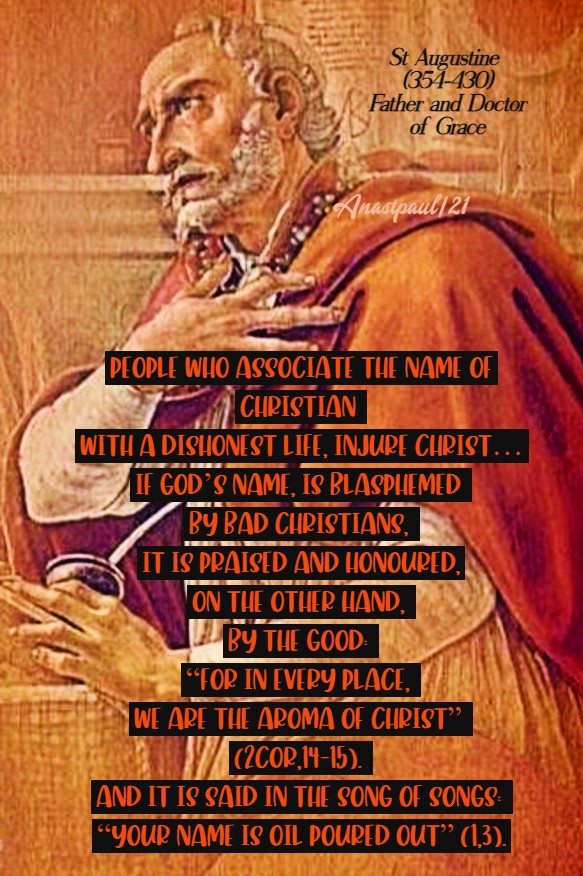
“People who associate the name of Christian with a dishonest life, injure Christ… If God’s Name, is blasphemed by bad Christians, it is praised and honoured, on the other hand, by the good: “For in every place, we are the aroma of Christ” (2 Cor,14-15). And it is said in the Song of Songs: “Your name is oil poured out” (1,3).”
St Augustine (354-430) Father and Doctor of Grace
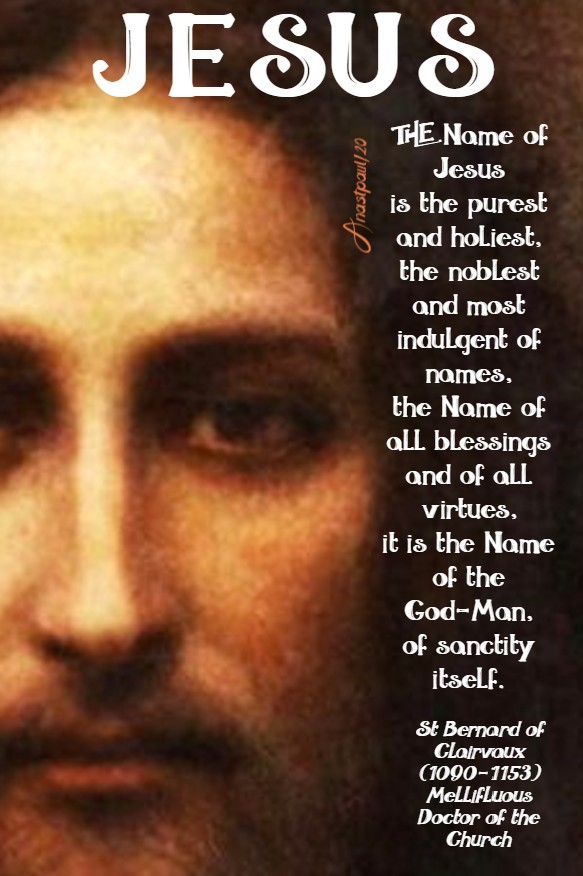
“The Name of Jesus is the purest and holiest, the noblest and most indulgent of names, the Name of all blessings and of all virtues, it is the Name of the God-Man, of sanctity itself.”
St Bernard of Clairvaux (1090-1153) Mellifluous Doctor of the Church
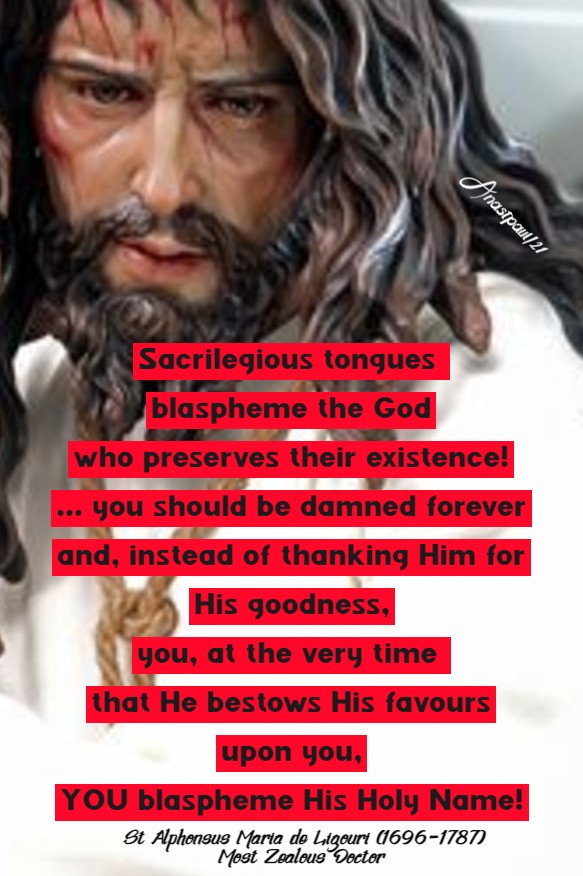
“Sacrilegious tongues blaspheme the God who preserves their existence! … you should be damned forever and, instead of thanking Him for His goodness, you, at the very time that He bestows His favours upon you, YOU blaspheme His Holy Name!”
St Alphonsus Maria de Liguori (1696-1787) Most Zealous Doctor
One Minute Reflection – 10 January – The Fifth Day within the Octave of Epiphany, Readings: Romans 12:1-5; Luke 2:42-52
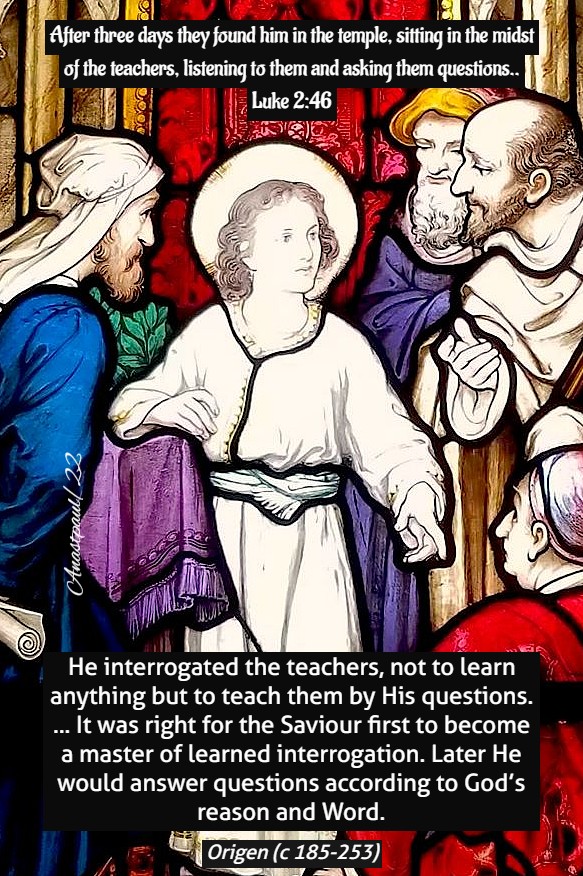
“After three days they found him in the temple, sitting in the midst of the teachers, listening to them and asking them questions…” Luke 2:46
REFLECTION – ”Because He was a small child, He is found “in the midst of teachers,” sanctifying and instructing them. Because He was a small child, He is found “in their midst,” not teaching them but “asking questions.” He did this because it is appropriate to His age, to teach us what befits boys, even if they are wise and learned. They should rather hear their teachers than want to teach them and not show off with a display of knowledge. He interrogated the teachers, not to learn anything but to teach them by His questions. From one fountain of doctrine, there flow, both wise questions and answers. It is part of the same wisdom, to know what you should ask and what you should answer. It was right for the Saviour first to become a master of learned interrogation. Later He would answer questions according to God’s reason and Word.” – Origen (c 185-253) Priest, Theologian, Father(Homilies on the Gospel of Luke, 19).
PRAYER – Holy Father, trusting in the motherly intercession of Mary Most Holy, Queen of Families and under the powerful protection of St Joseph, her spouse, grant we pray, that we may dedicate ourselves tirelessly to this beautiful mission which You have placed in our hands, as mothers and fathers of Your children. Strengthen us to protect and guide them in Your ways. Through the prayers of our Holy Mother and the Guardian of Your divine Son and of His Church, in union with Jesus Christ our Lord and the Holy Spirit, amen.
Our Morning Offering – 10 January – The Fifth Day within the Octave of Epiphany
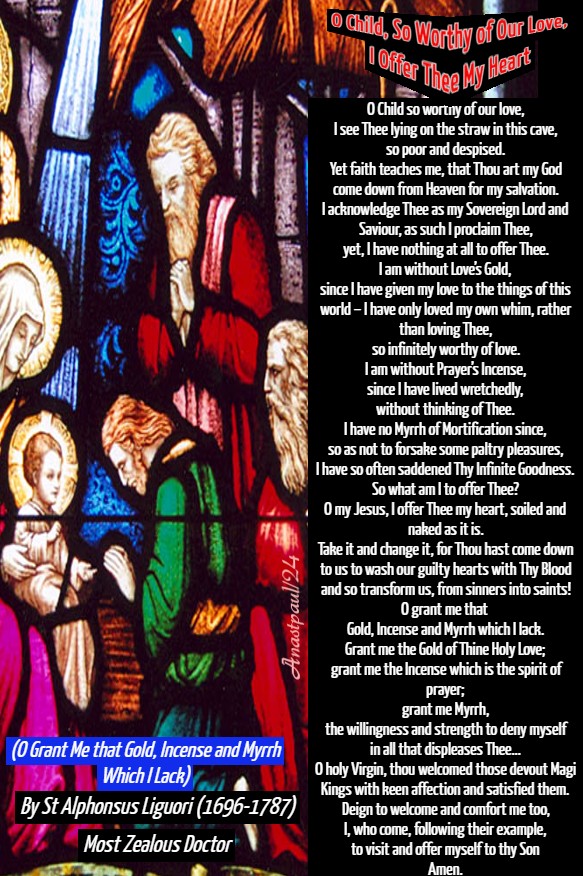
O Child, So Worthy of Our Love, I Offer Thee My Heart (O Grant Me that Gold, Incense and Myrrh Which I Lack) By St Alphonsus Liguori (1696-1787) Most Zealous Doctor
O Child so worthy of our love, I see You lying on the straw in this cave, so poor and despised. Yet faith teaches me, that You are my God come down from heaven for my salvation. I acknowledge You as my Sovereign Lord and Saviour, as such I proclaim You, yet, I have nothing at all to offer You. I am without Love’s Gold, since I have given my love to the things of this world – I have only loved my own whim, rather than loving You, so infinitely worthy of love. I am without Prayer’s Incense, since I have lived wretchedly without thinking of You. I have no Myrrh of Mortification since, so as not to forsake some paltry pleasures, I have so often saddened Your infinite goodness. So what am I to offer You? O my Jesus, I offer You my heart, soiled and naked as it is. Take it and change it, for You have come down to us to wash our guilty hearts with Your Blood and so transform us from sinners into saints. O grant me that Gold, Incense and Myrrh which I lack. Grant me the Gold of Your Holy Love; grant me the Incense which is the spirit of prayer; grant me Myrrh, the willingness and strength to deny myself in all that displeases You… O holy Virgin, you welcomed those devout Magi Kings with keen affection and satisfied them. Deign to welcome and comfort me also, I, who come, following their example, to visit and offer myself to your Son Amen.
Saint of the Day – 10 January – Blessed Pope Gregory X TOSF (1210-1276) Bishop of Rome 1272 and Ruler of the Papal States until his death. He was elected on 1 September 1271 following the longest election in the history of the Church and ascended the throne on 27 March. He was a Third Order Franciscan. Born Teobaldo Visconti, in 1210 in Piacenza, Italy and died on 10 January 1276 at Arezzo, Italy of a fever. He was Beatified on 8 July 1713 by Pope Clement XI.
Teobaldo Visconti, a member of the illustrious Visconti family of Piacenza, was born in the City in 1210. In his youth, he was distinguished for his extraordinary virtue and his progress in his studies, especially of the Canon Law, which he began in Italy and pursued at Paris and lastly, at Liege. He was Archdeacon of this last Church, when he received an order from the Pope to preach the Crusade for the recovery of the Holy Land. Incredible were the pains which he took in executing this commission and in reconciling the Christian Princes, who were at variance.
When the Crusade faltered, a tender compassion for the distressed situation of the servants of Christ in those parts, moved the holy Archdeacon of Liege to undertake a dangerous pilgrimage to Palestine, in order to comfort them, and at the same time to satisfy his devotion by visiting the holy places.
In the interim, the See of Rome had been vacant for almost three years, from the death of Clement IV, in November 1268, the Cardinals, who were assembled at Viterbo, could not reach an agreement in the choice of a Pope. By common consent, they referred the election to six amongst them, who, on 1 September in 1271, nominated Teobald, the Archdeacon of Liege. Upon the news of his election, he prepared himself to return to Italy. Nothing could be more tender and moving than his last farewell to the disconsolate Christians of Palestine, whom he promised, in a most solemn manner, never to forget.
He arrived at Rome in March 1272 and was first Ordained Priest, then Consecrated Bishop and Crowned. He took the name of Gregory X and, to procure the most effectual succour to the Holy Land, called a General Council to meet at Lyons, where Pope Innocent IV had held the last in 1245. The fourteenth General Council, the second of Lyons, was opened in that City in May, 1274, in which were assembled five hundred Bishops and seventy Abbots.
The Council was closed by the fifth and last session, on 17 July. The more our holy Pope was overwhelmed with public affairs, the more watchful he was over his own soul and the more earnest in the interior duties of self-examination, contemplation and prayer. He spoke little, conversing assiduously in his heart with God; he was very abstemious in his diet and most rigorous to himself in all things. By this crucified life, his soul was prepared to taste the hidden manna which is concealed in the divine word, with which he continually nourished it, in holy meditation.
After the Council, he was taken up in measures for carrying out its decrees, particularly those relating to the Crusade in the East. By his unwearied application to business and the fatigues of his journey, in passing the Alps on his return to Rome, he contracted a distemper, of which he died at Arezzo, on 10 January, in 1276, three years and nine months after his Consecration and four years, four months, and ten days after his election. His name was inserted in the Roman Martyrology, published by Benedict XIV and he was Beatified on 8 July 1713, by Pope Clement XI.
Madonna del Pianto / Madonna of the Lament or the Weeping Madonna, Rome, Italy (1546) – 10 January:
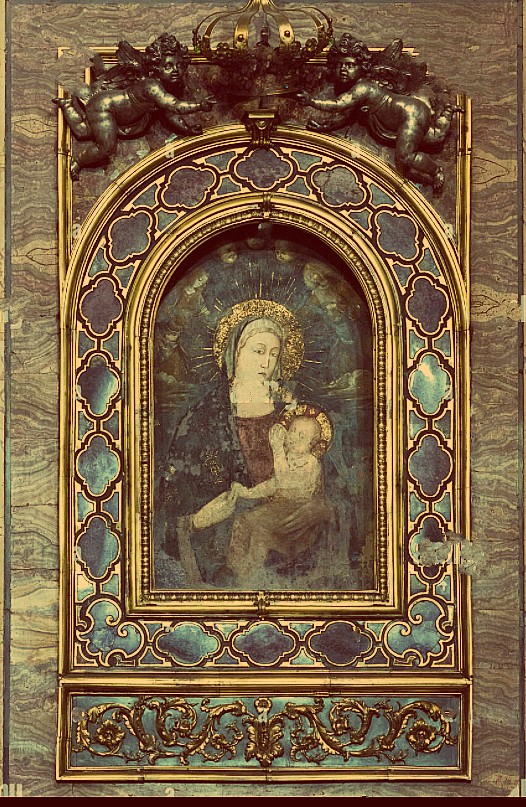
On 10 January1546, two men quarreled violently near the street Shrine of the Madonna del Portico d’Ottavia, on via Arco dei Cenci near the Roman Ghetto. One begged the other to spare him for love of the Virgin Mary, then stabbed that man in the back when he hugged him in forgiveness. The image of the Virgin wept three days. The 15th-century fresco was then moved into the nearby Church of San Salvatore de Cacabariis.
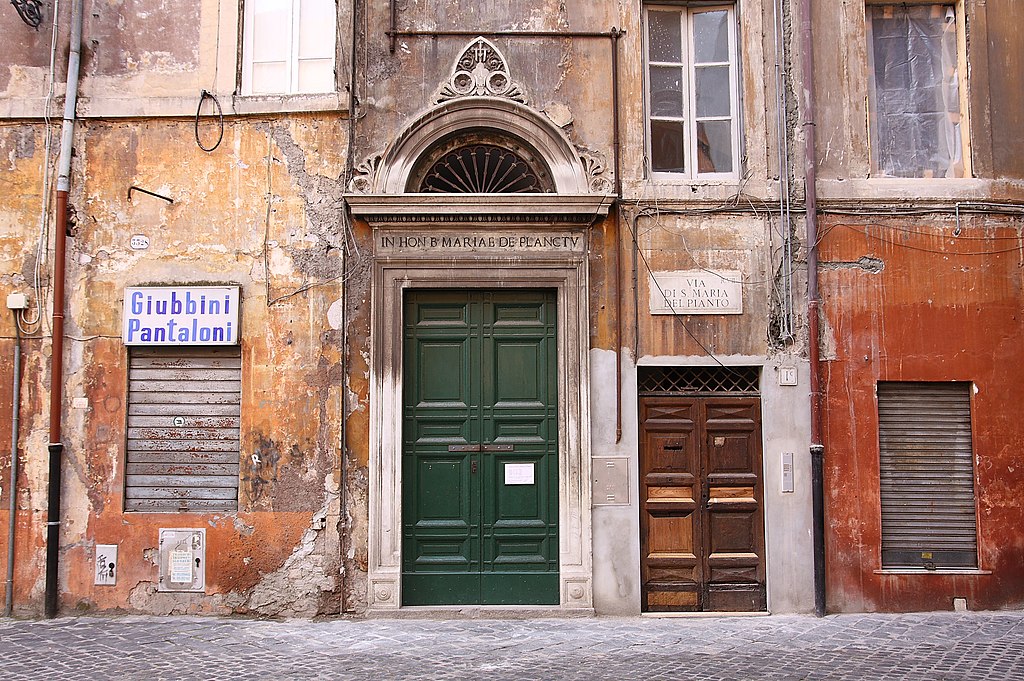
The old entrance to the church at Via Santa Maria del Pianto.
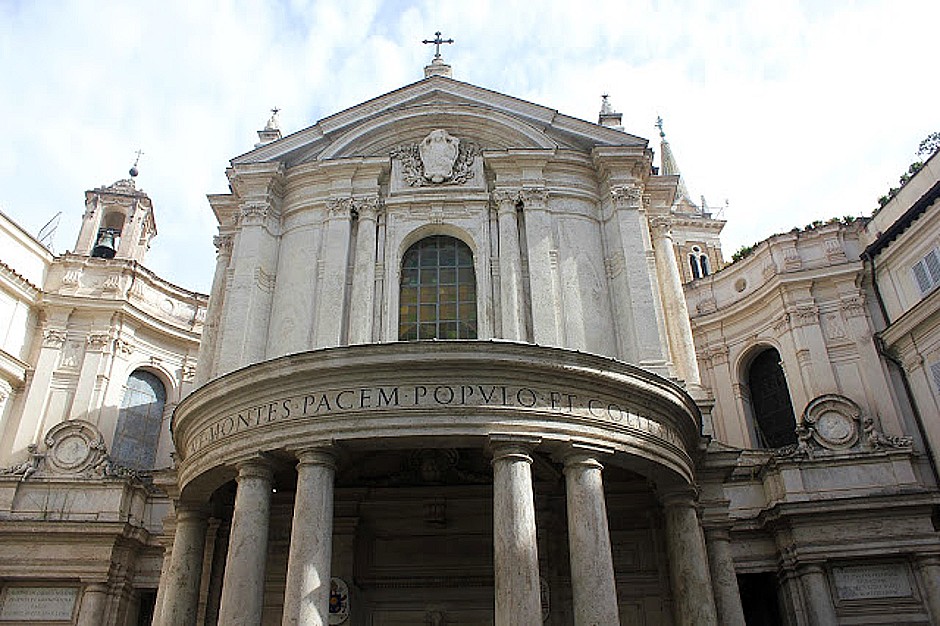
In 1612 the Church reconstruction began and in 1616 the image was re-installed and the Church re-dedicated to the Weeping Madonna. The event is commemorated in a fresco, the Madonna of the Lament, over the high Altar. There is also the painting of the Miracle of the Weeping Madonna opposite the organ on one of the two sides of the Altarpiece. Mother and Child were crowned on 20 May 1643. The ancient image is a representation of Mary nursing the Child.
St Aldo of Carbonari St Pope Agatho Bl Anna of the Angels Monteagudo St Arcontius of Viviers Bl Benincasa of Cava St Dermot of Inis Clothrann St Domitian of Melitene Blessed Pope Gregory X TOSF (1210-1276) Bishop of Rome 1272-1276 Bl Giles of Lorenzana
St Maurilius of Cahors St Nicanor of Cyprus St Paul the Hermit (c 230-342) The First Desert Hermit “In Thebais, the birthday of St Paul, the first Hermit, who lived alone in the desert from the sixteenth to the one hundred and thirteenth year of his age. His soul was seen by St Anthony Abbot, carried by Angels among the choirs of Apostles and Prophets. His Feast is celebrated on the 15th day of this Month. (Roman Martyrology)”
Thought for the Day – 9 January – Meditations with Antonio Cardinal Bacci (1881-1971)
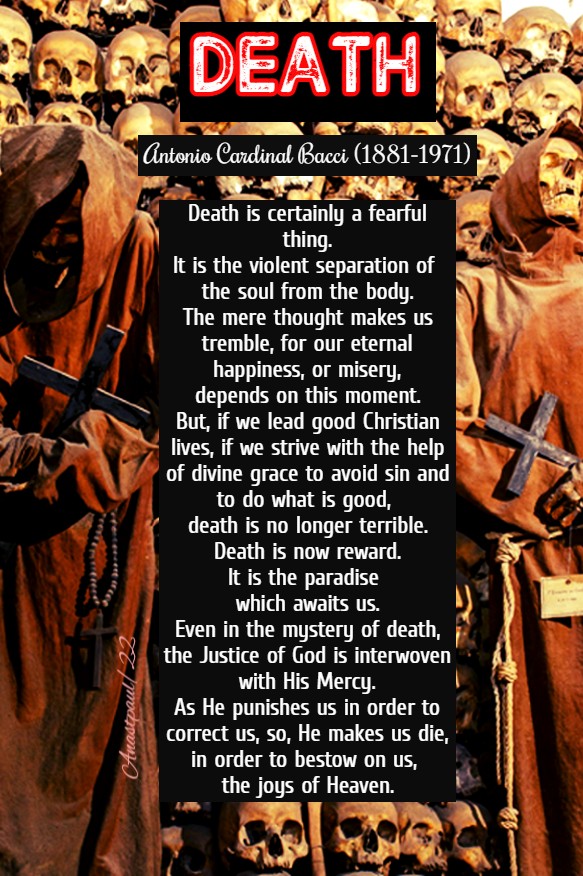
Death
“Death, like suffering, is the result of sin: “Through sin death” (Rom 5:12). But, it is more than a punishment for sin. It is also a liberation for the just who, like St Francis of Assisi, look upon death as the good sister, who will come one day to set them free and unite them with Christ in everlasting happiness. “Desiring to depart and to be with Christ …” (Phil 1:33).
Death is certainly a fearful thing. It is the violent separation of the soul from the body. The mere thought makes us tremble, for our eternal happiness, or misery, depends on this moment. But, if we lead good Christian lives, if we strive with the help of divine grace to avoid sin and to do what is good, death is no longer terrible. Death is now reward. It is the paradise which awaits us. Even in the mystery of death, the Justice of God is interwoven with His Mercy. As He punishes us in order to correct us, so, He makes us die, in order to bestow on us, the joys of Heaven.”
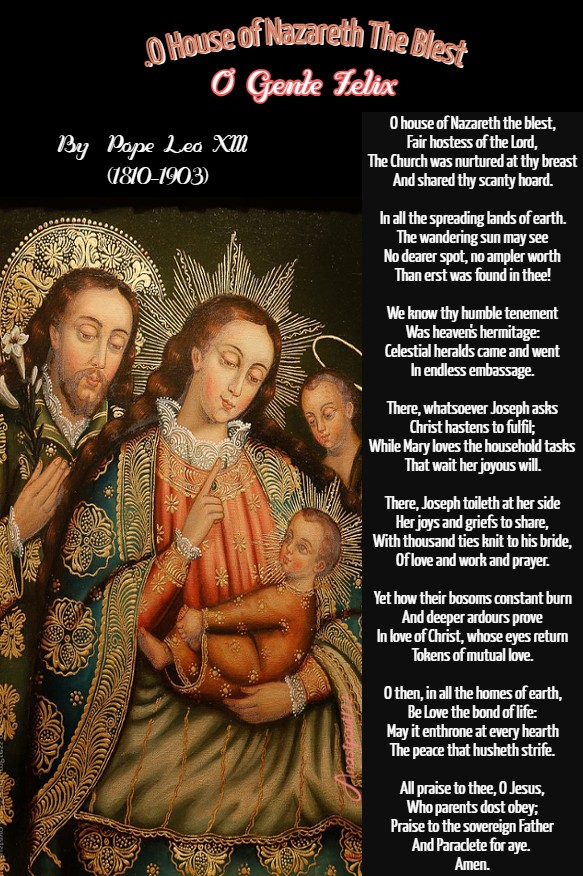
Quote/s of the Day – 9 January – Sunday withi the Octave of Epiphany and the Feast of the Holy Family of Jesus, Mary and Joseph
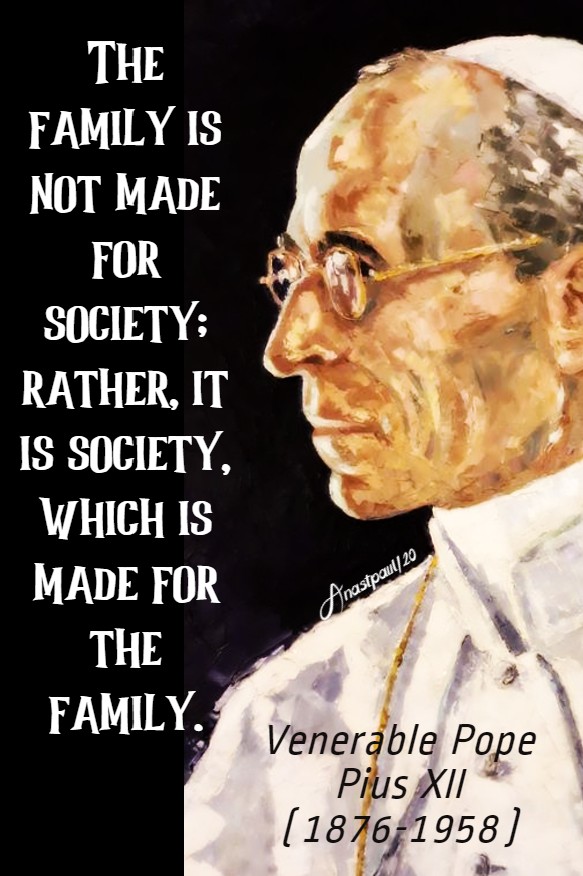
“ … The family is not made for society; rather, it is society, which is made for the family.”
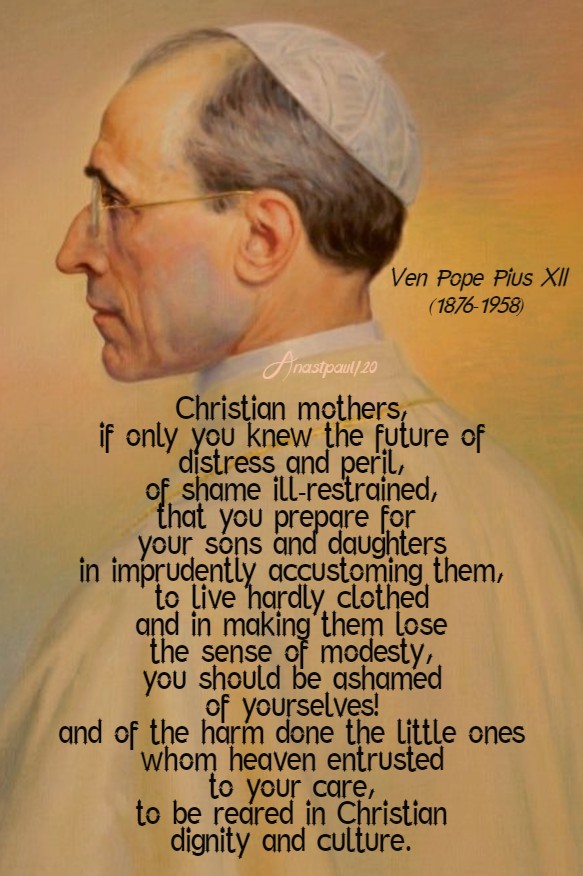
“Christian mothers, if only you knew the future of distress and peril, of shame ill-restrained, that you prepare for your sons and daughters in imprudently accustoming them, to live hardly clothed and in making them lose the sense of modesty, you should be ashamed of yourselves! and of the harm done the little ones whom heaven entrusted to your care, to be reared in Christian dignity and culture.”
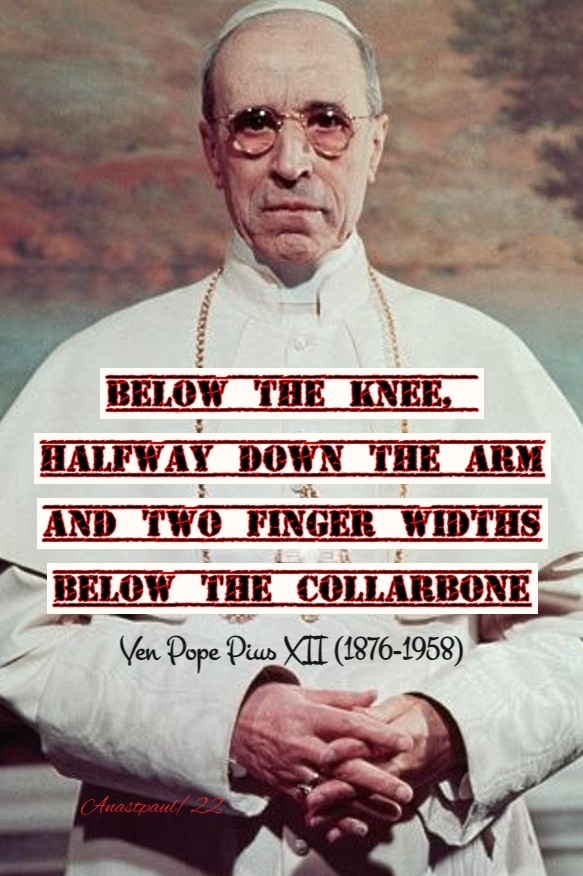
“Below the knee, halfway down the arm and two finger widths below the collarbone.”
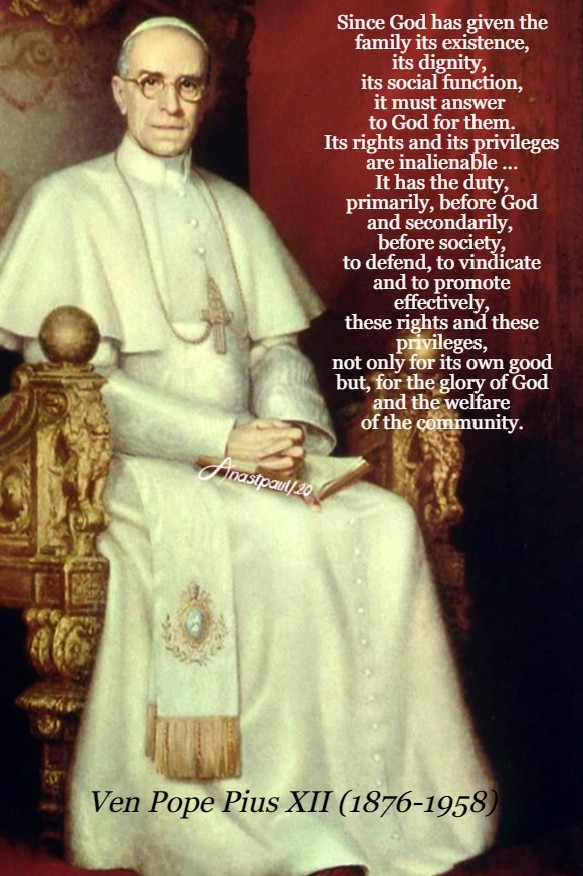
“Since God has given the family its existence, its dignity, its social function, it must answer to God for them. Its rights and its privileges are inalienable … It has the duty, primarily, before God and secondarily, before society, to defend, to vindicate and to promote effectively, these rights and these privileges, not only for its own good but, for the glory of God and the welfare of the community.”
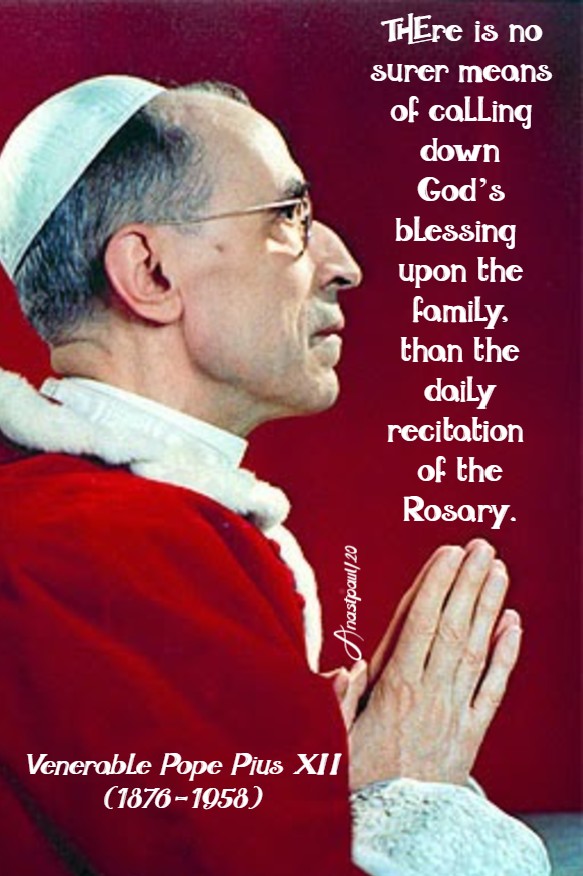
“There is no surer means of calling down God’s blessing upon the family, than the daily recitation of the Rosary.”
One Minute Reflection – 9 January – Sunday withi the Octave of Epiphany and the Feast of the Holy Family of Jesus, Mary and Joseph, Readings: Colossians 3:12-17, Luke 2:42-52
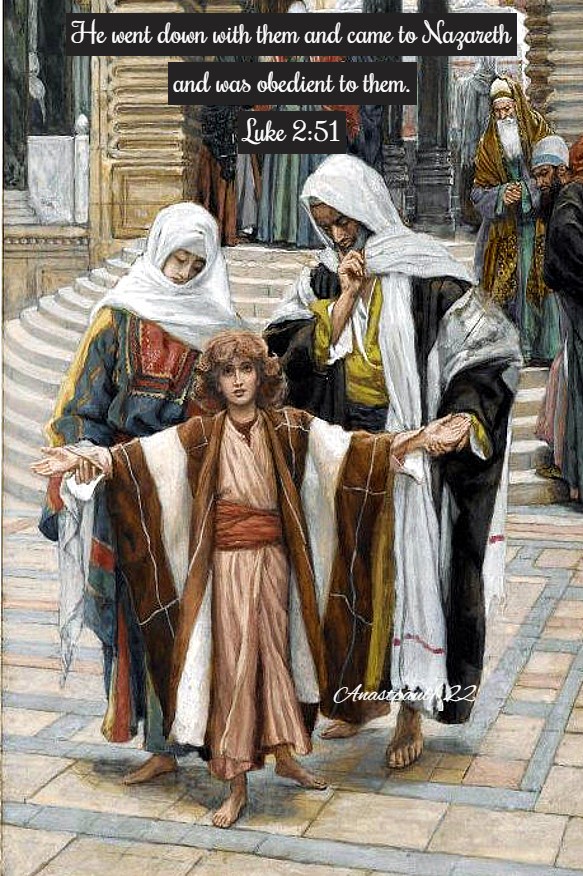
“He went down with them and came to Nazareth and was obedient to them” – Luke 2:51
REFLECTION – “In saying to Joseph – “Do not be afraid to take Mary as your wife” (Mt 1:20), the Angel was not mistaken. … The address as “wife” was neither empty nor false, for this Virgin was the happiness of her husband, in a way, that was all the more perfect and admirable, in that she became a mother without the participation of that husband, fecund, without him but faithful to him. It was because of that genuine marriage, that they both merited to be called “the parents of Christ” – not only she as “His Mother” but also he, as “his father,” insofar as he was husband of Christ’s Mother, father and husband spiritually, not according to the flesh. Both of them – he only by the spirit, she even in the flesh – are parents of His Humility, not of His Nobility, parents of His Weakness, not of his Divinity. Look in the Gospel, which cannot lie – His Mother said to Him: “Son, why have you done this to us? See how your father and I, have been searching for you anxiously.”
As for Him, wanting to show that He also had a Father, besides them, who had conceived Him without a mother, answered them: “Why were you looking for me? Did you not know that I had to be in my Father’s house?” And so, that no-one should think that in speaking thus, He was denying His parents, the Evangelist added: “He went down with them to Nazareth and was subject to them.” … Now why did He subject Himself to those who were so inferior to His Divine Nature? Because, “humbling himself, he took on the nature of a slave” (Phil 2:7), according to which, they were His parents. If they had not been united by a true marriage, even without carnal intercourse, they could not both have been the parents of that nature of a servant.
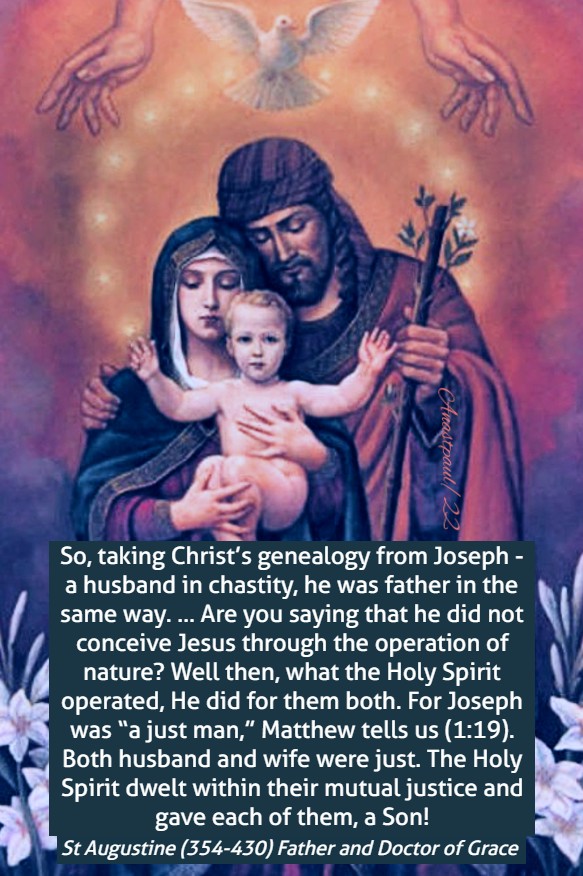
So, taking Christ’s genealogy from Joseph – a husband in chastity, he was father in the same way. … Are you saying that he did not conceive Jesus through the operation of nature? Well then, what the Holy Spirit operated, He did for them both. For Joseph was “a just man,” Matthew tells us (1:19). Both husband and wife were just. The Holy Spirit dwelt within their mutual justice and gave each of them, a Son!” – St Augustine (354-430) Father and Doctor of Grace (Marriage and concupiscence 1,11; Sermon 51)
PRAYER – God, our Father, in the Holy Family of Nazareth, You have given us the true model of a Christian home. Grant, that by following Jesus, Mary and Joseph in their love for each other and in the example of their family life, we may come to Your home of peace and joy. We make our prayer through our Lord Jesus Christ, Your Son Who lives and reigns with You and the Holy Spirit, God, now and forever, amen.
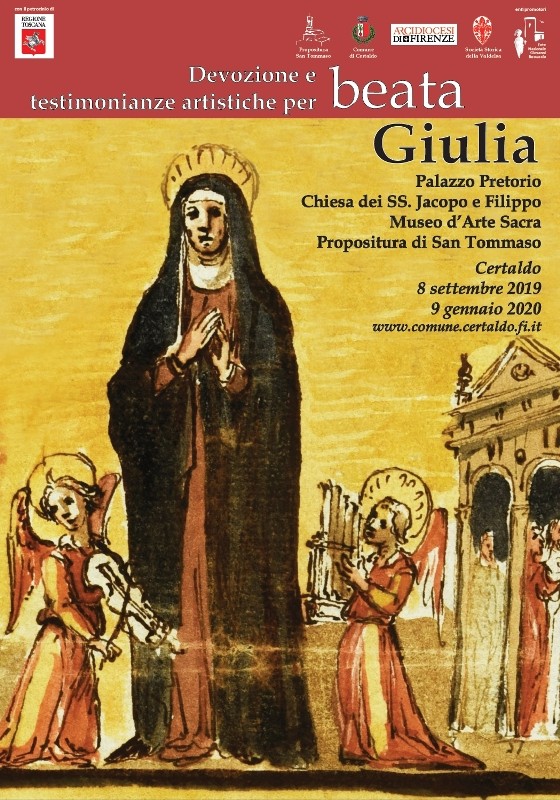
Saint of the Day – 9 January – Blessed Julia of CertaldoOSA (1319-1367) Laywoman, Third Order Augustinian, Recluse, Ascetic, Mystic living a life of prayer and penance. Born in 1319 at Certaldo, Italy as Giulia and died on 9 January 1367 of natural causes. Patronages – of the City and Diocese of Certaldo, Augustinian tertiaries, Against the plague/epidemics. all sickness, ailments. Also known as – Giulia della Rena da Certaldo, Julia della Rena.
The Roman Martyrology states of her today: “In Certaldo in Tuscany, Blessed Giulia della Rena, of the Third Order of Saint Augustine, who lived alone for God in a narrow cell next to the Church.“
Julia was born in Tuscany, near Certaldo, in 1319, of a family of noble origin. After being orphaned at a young age, she entered the service of the Tinolfi family in nearby Florence, There, having come into contact with the Augustinians and their spirituality, she took on the habit of the secular Third Order Augustinians when she was not yet twenty. She was professed in 1388 at the Church of the Holy Spirit.
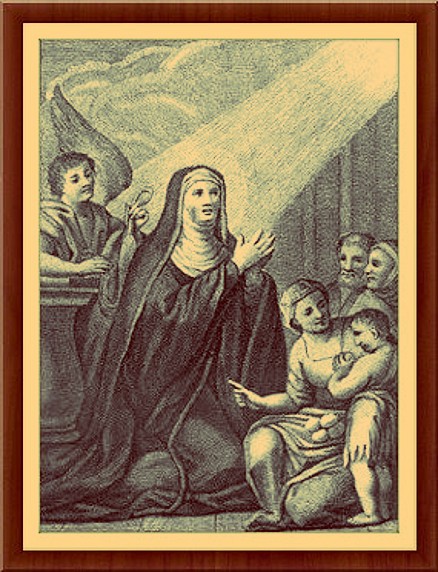
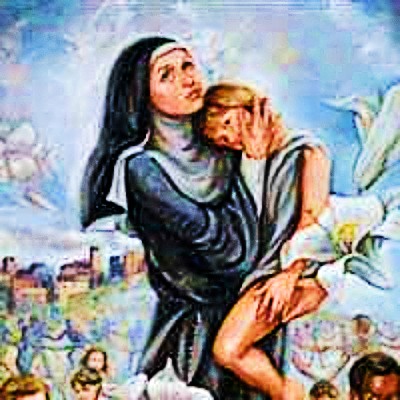
But the tumult in Florence caused her to return home to Certaldo where she rescued a child from a burning building. This act of charity and heroism brought her unwanted fame and attention. Julia, feeling drawn to a more radical and austere vocation, decided to take refuge in a small room attached to the Augustinian Church of Sts Michael and James. She had little in her small cell save for a two little windows and a Crucifix. The windows opened, one into the Church to attend the sacred mysteries, the other towards the outside, to receive the food that popular piety would send her.
Julia would never leave her little “hermitage.” She lived there, segregated from the world for thirty years, following the long path of asceticism and mysticism to the end. Penance and prayer filled her day, as she sought daily to unite herself to Christ and to do penance and mortification, for all the sins of the world.
The people of Certaldo and the surrounding area, were devoted to this holy woman and took it upon themselves to assist her material existence with victuals and whatever she needed. The popular tradition tells, that even the children ran to her aid in large numbers, bringing her something to eat and that Julia, grateful and smiling, reciprocated with beautiful fresh flowers in any season of the year, even when the ground was covered with snow!
Nothing more is known about Julia, except that she was greatly revered by her fellow citizens for the life of piety she lived . It was as if she “belonged” to them as family.
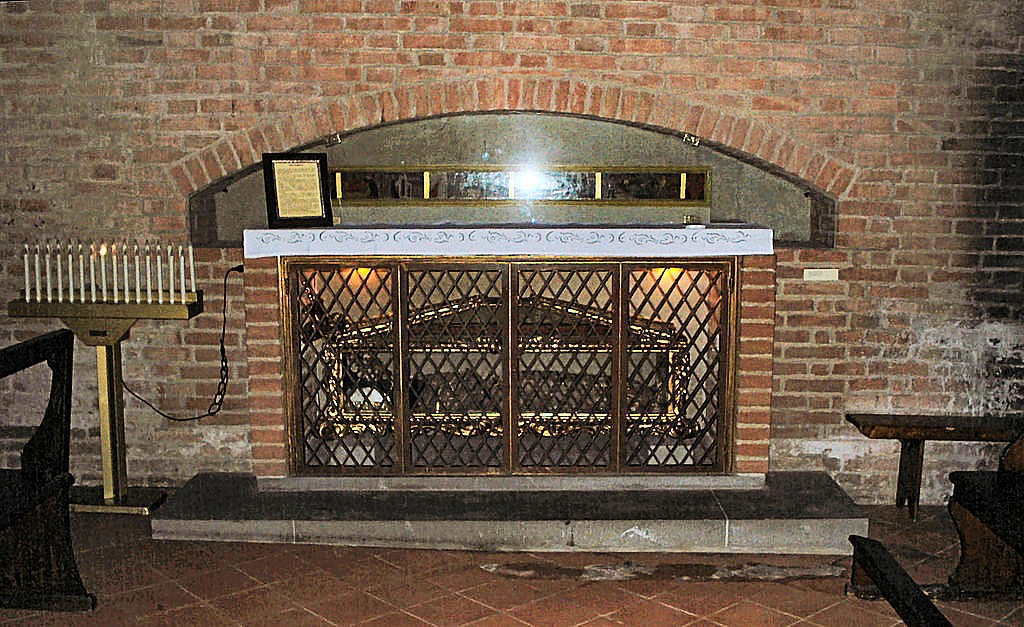
Julia died around the year 1367. Her cult developed immediately after her passing, since the dedication of an Altar in the same Church where she had lived and where her body had been interred dates to 1372. Since 1506, the Certaldese Municipality contributed to the feast in honour of the Blessed, whose intercessory protection was attributed, several times, for the liberation from contagions diseases and the plague.
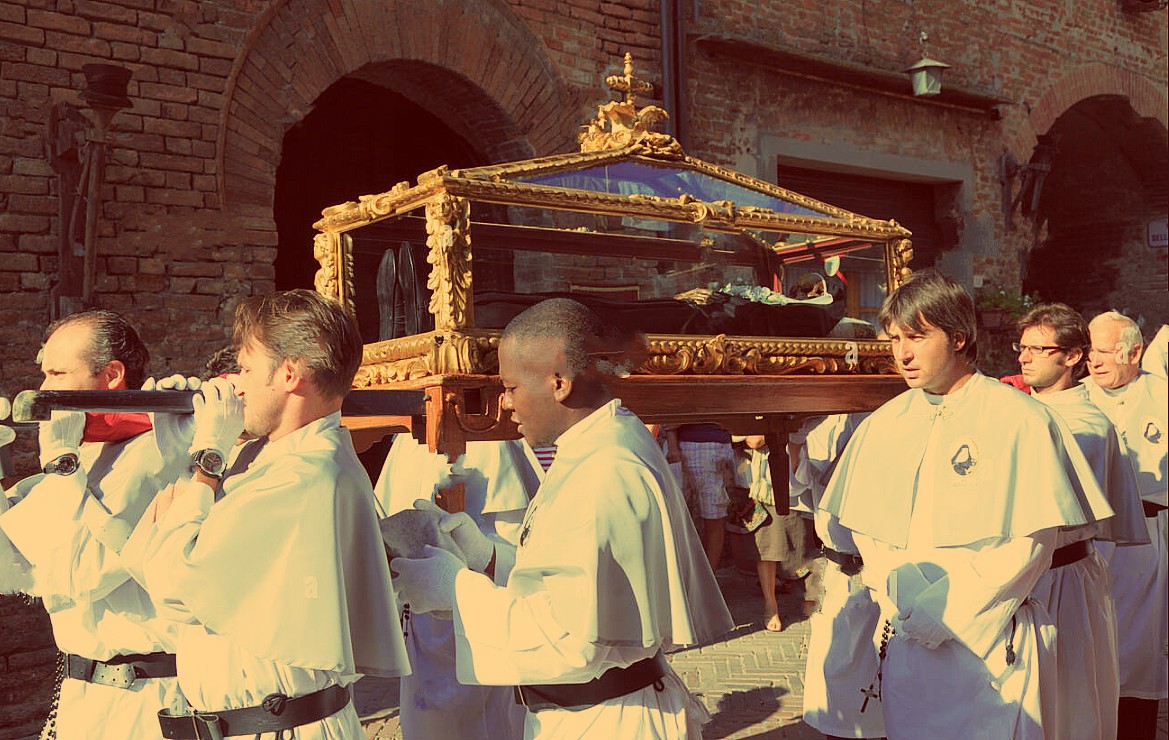
His mortal remains are venerated in Certaldo in the Church of Sts James and Philip, which once belonged to the Augustinians and where her Feast is celebrated with great honour each year, as the Patron of the region.
Her cult from time immemorial, was confirmed by Pope Pius VII on 18 May 1819 raising her to the Altars as Blessed Julia of Certaldo and inserting her name in the Roman Martyrology.
To celebrate the Bicentennial of the death of Blessed Julia, on 9 January 2019, the Bishop, Monsignor Andrea Migliavacca, launched a year of devotion to the protector of Certaldo, with a solemn Procession and Holy Mass to pay homage to Blessed Julia, Supported by the Municipality of Certaldo, a full year of exhibitionsm devotions and events began.
During the celebration, the new silver Reliquary, made for the occasion thanks to the gift of silver by the people of Certaldo and the new banner of the Opera Beata Giulia Apostolate was inaugurated and blessed. In addition, a votive lamp was lit, which burnt next to the Altar of the Blessed Julia, for the whole of 2019.
St Agatha Yi Bl Antony Fatati St Brithwald of Canterbury St Eustratius of Olympus Bl Franciscus Yi Bo-Hyeon St Honorius of Buzancais Bl Józef Pawlowski
Blessed Julia of Certaldo OSA (1319-1367) Recluse, Laywoman, Third Order Augustinian
Bl Kazimierz Grelewski St Marcellinus of Ancona St Marciana Bl Martinus In Eon-min St Maurontius St Nearchus St Paschasia of Dijon
St Peter of Sebaste (c 340-c 391) Bishop of Sebaste in Lesser Armenia. Member of the glorious family of Saints – He was the younger brother of Basil of the Great, Gregory of Nyssa, the famous Christian Hermit Naucratius and Macrina the Younger and a close friend of Gregory of Nazianzen, all Saints. Of course, Basil and Gregory of Nazianzen are both Doctors too. About St Peter: https://anastpaul.com/2021/01/09/saint-of-the-day-9-january-st-peter-of-sebaste-c-340-c-391-bishop/
St Philip Berruyer St Polyeucte St Teresa Kim St Waningus of Fécamp (Died c 688) Monk, Abbot
Martyrs of Africa – 21 Saints: A group of 21 Christians murdered together for their faith in the persecutions of Decius. The only details to survive are 14 of their names – Artaxes, Epictetus, Felicitas, Felix, Fortunatus, Jucundus, Pictus, Quietus, Quinctus, Rusticus, Secundus, Sillus, Vincent and Vitalis. They were Martyred in c 250. Martyrs of Antioch – 6 saints: A group of Christians Martyred together during the persecutions of Diocletian – Anastasius, Anthony, Basilissa, Celsus, Julian and Marcionilla.
Thought for the Day – 8 January – Meditations with Antonio Cardinal Bacci (1881-1971)
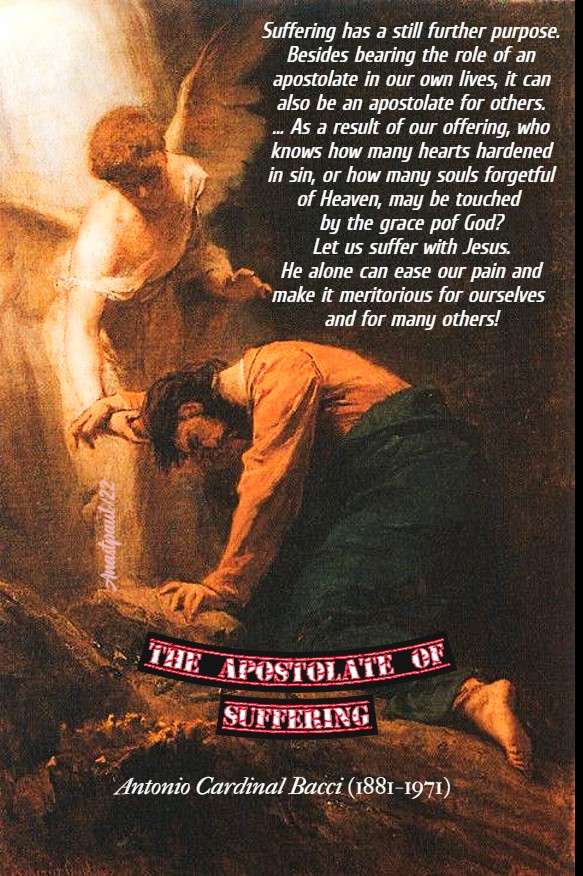
The Apostolate of Suffering
“Suffering has a still further purpose. Besides bearing the role of an apostolate in our own lives, it can also be an apostolate for others. We can offer our sufferings and sorrows to God, not only for our own spiritual advancement but, also for the expiation of the sins of the human race, for our enemies, for the persecutors of the Church, for the Church itself and for all the other suffering members of the Mystical Body of Christ. In this way, we can accomplish great good and can acquire merit before God.
As a result of our offering, who knows how many hearts hardened in sin, or how many souls forgetful of Heaven, may be touched by the grace pof God?
Let us suffer with Jesus. He alone can ease our pain and make it meritorious for ourselves and for many others!”
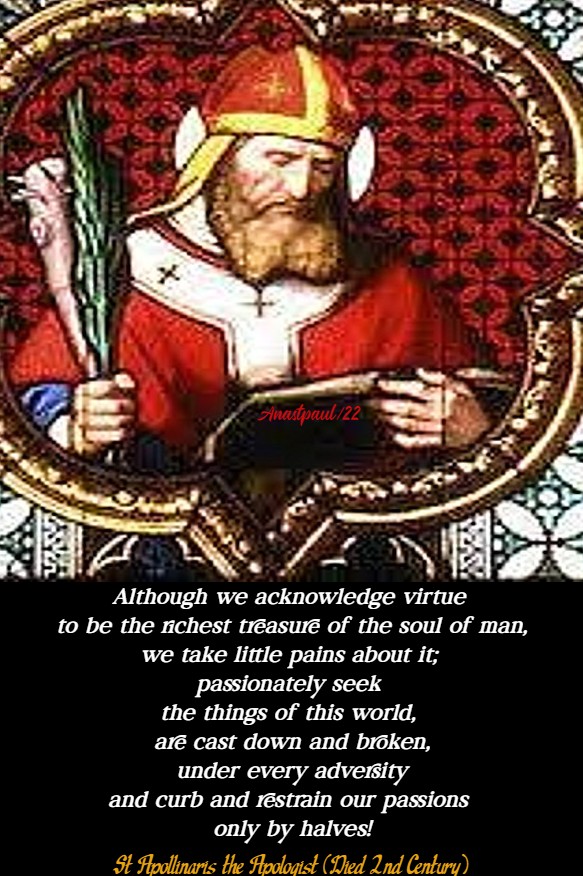
Quote of the Day – 8 January – The Third Day within the Octave of Epiphany and the Memorial of St Apollinaris the Apologist (Died 2nd Century)
“Although we acknowledge virtue to be the richest treasure of the soul of man, we take little pains about it; passionately seek the things of this world, are cast down and broken, under every adversity and curb and restrain our passions only by halves!”
“We, therefore, grossly deceive ourselves, in not allotting more time, to the study of divine truths. It is not enough barely to believe them and let our thoughts, now and then, glance upon them. That knowledge, which shows us Heaven, will not bring us to the possession of it and will deserve punishments, not rewards, if it remain slight, weak and superficial. By serious and frequent meditation, it must be concocted, digested and turned into the nourishment of our affections, before it can be powerful and operative enough, to change them and produce the necessary fruit in our lives. For this, all the Saints, affected solitude and retreats from the noise and hurry of the world, as much as their circumstances allowed them.”
One Minute Reflection – 8 January – The Third Day within the Octave of Epiphany, Readings: Titus 3:4-7; Luke 2:15-20
“But Mary kept all these words, pondering them in her heart.” – Luke 2:19
REFLECTION – “Often, it seems to us, Mary forgot to eat and to drink, keeping vigil in order to think about Christ, to see Christ in His flesh. She burned with love of Him and passionately loved to serve Him. She often did what the Song of Songs sings about: “I was sleeping, but my heart kept vigil.” (Song 5:2) Even when she was resting, she continued to dream of Him who filled her thoughts throughout the day. Whether she was keeping vigil or resting in peace, she always lived in Him, was always occupied with Him.
Where her treasure was, there also was her heart (Mt 6:21); where her glory was, there also was her mind. She loved her Lord and her Son with all her heart, with all her mind, with all her strength (Mt 22:37). She saw with her eyes, touched with her hands, the Word of Life (1 Jn 1:1). How blessed was Mary, to whom it was given to embrace Him who embraces and nourishes everything! How happy was she who carried Him, who carries the universe (Heb 1:3), she who nursed a Son, who gives her life, a Son who nourishes her and all beings on earth (Ps 145:15).
The One, Who is the Wisdom of the Father, put His arms around her neck, the One, Who is the Strength, that gives movement to everything, sat in her arms. He, Who is the Rest of souls, (Mt 11:29) rested on her motherly breast. How gently He held her in His hands, peacefully looked at her, He ,Whom the angels wish to contemplate (1 Pet 1:12) and He gently called her, He ,Whom every being calls upon when in need. Filled with the Holy Spirit, she held Him close to her heart … She never had enough of seeing Him or of hearing Him, Whom “many prophets and kings wished to see … but did not see.” (Lk 10:24) Thus Mary grew evermore in love and her mind was unceasingly attached to divine contemplation.” – St Amadeus of Lausanne (1108-1159) Bishop (Homily on Mary, 4).
PRAYER – Lord open our hearts to Your grace. As You brought joy to the world through the Incarnation of Your Son, Our Lord Jesus Christ, grant that through the prayer of His Ever-Virgin Mother, our hearts too may grow in virtue and love by learning to reflect constantly on His commandments and counsels. We make our prayer through our Lord Jesus, with the Holy Spirit, God forever, amen.
Our Morning Offering – 8 January – Octave of Epiphany and Mary’s Day
Mother of Salvation, Blessed Lady By Anselm (1033-1109) Magnificent Doctor Marian Doctor
Mother of Salvation, Blessed Lady, you are the Mother of Justification and those who are justified; the Mother of Reconciliation and those who are reconciled; the Mother of Salvation and those who are saved. What a blessed trust and what a secure refuge! The Mother of God is our Mother. The Mother of the One in Whom alone, we hope and Whom alone, we fear, is our Mother! … The One Who partook of our nature and by restoring us to life, made us children of His Mother, invites us by this grace, to proclaim that we are His brothers and sisters. Therefore, our Judge, is also our Brother. The Saviour of the world, is our Brother. Our God has become – through Mary – our Brother! Anen
Saint of the Day – 8 January – Saint Apollinaris the Apologist (Died 2nd Century) Bishop of Hierapolis, Apologist, Confessor, Defender of the True Faith against heretics, Writer, renowned Scholar. Also known as – Apollinaris Claudius, Apollinaris of Hierapolis, Claudius Apollinaris, Apollinare di Gerapoli. Additional Memorial – 7 February on some calendars.
The Roman Martyrology states: “In Hierapolis in Phrygia, in today’s Turkey, Saint Apollinaris, Bishop, who shone under the Emperor Marcus Aurelius for doctrine and holiness.”
He lived in the time of Emperor Marcus Aurelius (161-180) and was undoubtedly one of the most important prelates in Asia. He became famous for his polemical treatises against the heretics of his day, whose errors he showed to be entirely borrowed from the pagans.
Notwithstanding the great eulogies bestowed on Saint Apollinaris by Eusebius, Saint Jerome, Theodoret and others, little is known of his acts and his writings, which then were held in great esteem, are apparently all lost, just a few fragments remaining for our edification. . He had written many excellent treatises against the heretics and pointed out, as Saint Jerome testifies, the pagan sect from which each heresy derived its errors.
Nothing rendered his name so illustrious, however, as the noble apology for the Christian religion which he addressed to the Emperor, Marcus Aurelius about the year 175. This was spoken soon after the miraculous victory the Emperor obtained over enemies, through the prayers of the Christians. Saint Apollinaris reminded Marcus Aurelius of the benefit he had received from God through the prayers of his Christian subjects and implored protection for them, against the persecutions of the pagans. Marcus Aurelius published an edict in which he forbade anyone, under pain of death, to accuse a Christian on account of his religion but, by a strange inconsistency, he did not have the courage to abolish the laws then in force against the Christians. As a consequence, many of them continued to suffer martyrdom, though their accusers were also put to death.
The exact date of St Apollinaris’ death is not known; but the Roman Martyrology mentions him today.
St Abo of Tblisi St Albert of Cashel St Apollinaris the Apologist (Died 2nd Century) Bishop, Apologist St Athelm of Canterbury St Atticus of Constantinople St Carterius of Caesarea Bl Edward Waterson St Ergnad of Ulster St Erhard of Regensburg St Eugenian of Autun
St Garibaldus of Regensburg St Gudule of Brussels St Helladius St Julian of Beauvais St Lawrence Giustiniani St Lucian of Beauvais St Maximian of Beauvais St Maximus of Pavia Bl Nathalan of Aberdeen St Patiens of Metz St Pega of Peakirk
St Peter Thomas OCD (1305-1366) Carmelite Priest and Friar, Archbishop of Crete, Latin Patriarch of Constantinople, noted Preacher, Papal legate, the Carmelite Order’s Procurator-General to the Papal Court, Teacher, Marian devotee, miracle-worker (somehow this Saint crept into the list for 6 January, today is his correct Memorial). His Life: https://anastpaul.com/2021/01/08/saint-of-the-day-6-january-st-peter-thomas-ocd-c-1305-1366/
St Severinus of Noricum St Theophilus the Martyr St Thorfinn
The above film was the winner of the International “Festival dobrých správ” (of Good News) honoured a short film about the life of Blessed Titus Zeman SDB. The video entitled “Titus Zeman – a Martyr for Spiritual Freedom to Follow Oneʹs Vocation” was first place in the category of short films under 15 minutes and takes a closer look at the heroic sacrifice of the Salesian. The author of the winning film is Salesian past pupil Roman Maturkanič from Slovakia who currently works as a film director. “Probably the biggest challenge was to narrate the very eventful life of Titus in such a short time. We won the first place prize but we could say that this is Titusʹ victory,” said the director of the film’s achievement in the competition.
St Wulsin of Sherborne
Martyrs of Greece – 9 saints: A group of Christians honored in Greece as martyrs, but we have no details about their lives or deaths – Euctus, Felix, Januarius, Lucius, Palladius, Piscus, Rusticus, Secundus and Timotheus
Martyrs of Terni – 4 saints: A group of Christian soldiers in the imperial Roman army. Executed during the persecutions of emperor Claudius. Martyrs. – Carbonanus, Claudius, Planus and Tibudianus. They were martyred in 270 in Terni, Italy.
Thought for the Day – 7 January – Meditations with Antonio Cardinal Bacci (1881-1971)
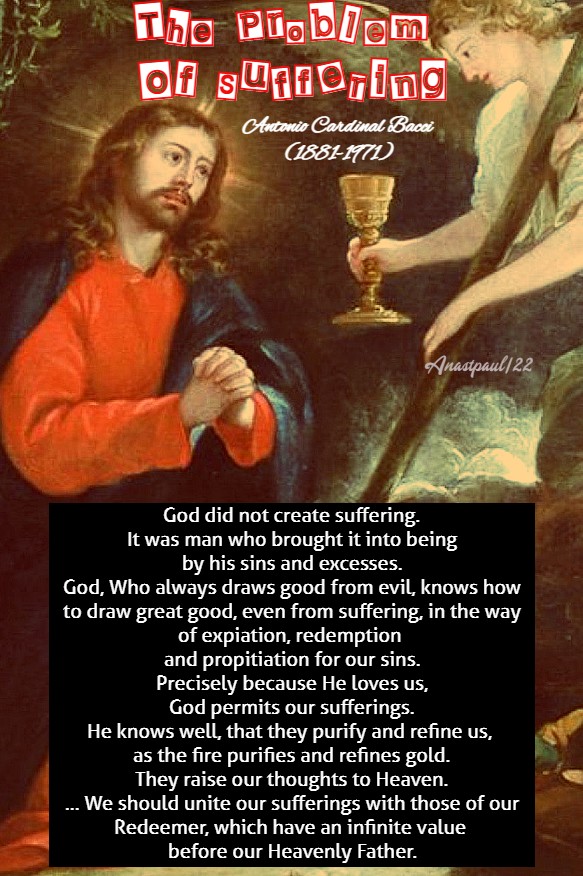
The Problem of Suffering
“There are some , unfortunately, who rebel under the lash of pain. “God is not good,” they say. “If He were good, He would not permit suffering. God does not love me. If He loved me, He would not make me suffer.”
This is false, of course. God did not create suffering. It was man who brought it into being by his sins and excesses. God, Who always draws good from evil, knows how to draw great good, even from suffering, in the way of expiation, redemption and propitiation for our sins. Precisely because He loves us, God permits our sufferings. He knows well, that they purify and refine us, as the fire purifies and refines gold. They raise our thoughts to Heaven.
God permits suffering for our spiritual welfare. But because it has this elevating and propitiatory power, we ought to receive it with an act of resignation and love, as Jesus did in Gethsamane. We should unite our sufferings with those of our Redeemer, which have an infinite value before our Heavenly Father.”
Quote of the Day – 7 January – The Second Day within the Octave of Epiphany
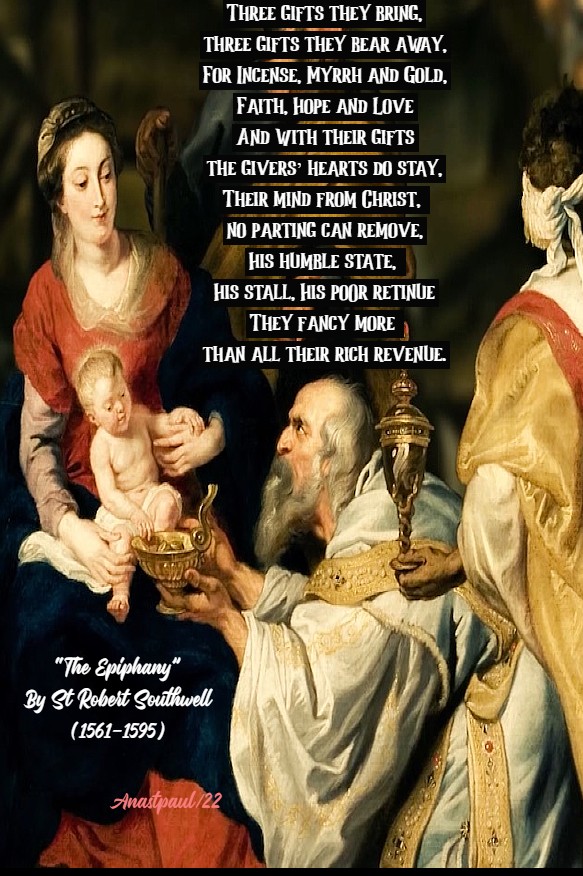
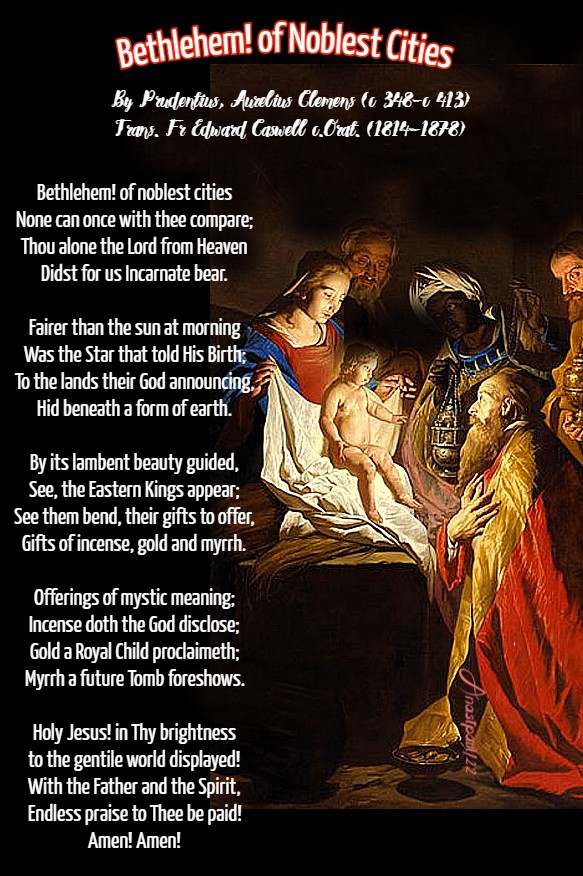
“The Epiphany” By St Robert Southwell SJ (1561-1595) Martyr
To blaze the rising of this glorious sun A glittering star appeareth in the east Whose sight to pilgrim toil three sages won To seek the light they long had in request, And by this star to nobler star they pace Whose arms did their desired sun embrace.
Still was the sky wherein these planets shined And want the cloud that did eclipse their rays, Yet through this cloud their passage they did find, And pierced these sages’ hearts by secret ways, Which made them know, the Ruler of the skies By Infant tongue and looks of babish eyes.
Heaven at her light, earth blusheth at her pride And of their pomp these peers ashamed be, Their crowns, their robes, their train they set aside When God’s poor cottage, clouts and crew they see, All glorious things their glory now despise Since God contempt doth more than glory prize.
Three gifts they bring, three gifts they bear away, For Incense, Myrrh and Gold, Faith, Hope and Love And with their gifts the givers’ hearts do stay, Their mind from Christ, no parting can remove, His humble state, His stall, His poor retinue They fancy more than all their rich revenue.
One Minute Reflection – 7 January – The Second Day within the Octave of Epiphany, Readings:1 John 5: 5-13; Psalm 147: 12-15, 19-20; Gospel: Luke 5: 12-16
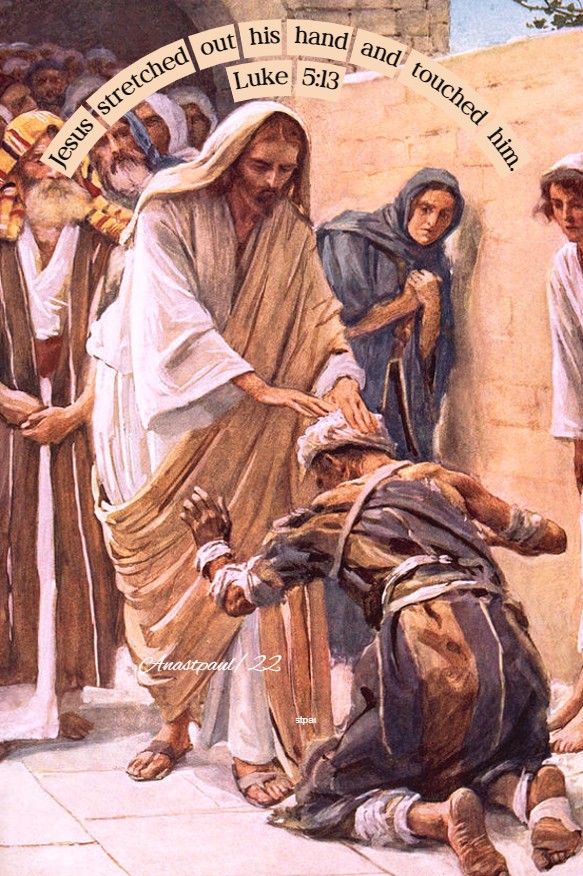
“Jesus stretched out his hand and touched him” … Luke 5:13
REFLECTION – “Christ said when He came into the world: ‘Sacrifice and offering you did not desire but a body you prepared for me … Then I said: Behold I come to do your will’ ” (Heb 10:5.7; Ps 40:7-9 LXX). Can it be true that God wanted to become man to save us from our wretchedness … and conquer our love? Yes, it is so true that it is an article of faith: “Who for us and for our salvation came down from heaven… and was made man” (Creed) … Yes, this is what God has done, so to be loved by us! … This is how He wanted to make known the immensity of His love for us: “the grace of God our saviour has appeared to all” (Ti 2:11). It is, as though, our Lord said: “Man does not love Me because he cannot see Me, I am going to make Myself visible and talk to him, in that way I shall surely make Myself loved”: “He has appeared on earth and spoken with us” (cf. Bar 3:38).
God’s love for humankind is vast, vast from all eternity: “with age-old love I have loved you; so in mercy I have drawn you to myself” (cf. Jer 31:3). But we have not yet seen how great and incomprehensible He is. When the Son of God was seen in the form of a child, lying on the straw in a stable, then He was made known indeed: “the kindness and generous love of God our saviour appeared” (Ti 3:4). As Saint Bernard observed: “The creation of the world made God’s power shine out, the ordering of the world, His wisdom but the Incarnation of the Word, caused His mercy to break forth in the sight of all.” …
“By showing disdain towards God,” Saint Fulgentius said, “man was separated from Him forever and, since man could no longer return to God, God deigned to come to find him on earth.” And as Saint Augustine had already said: “We were unable to go to the Doctor, therefore, the Doctor had the graciousness, to come to us.” … St Alphonsus Maria de Liguori (1696-1787) – Bishop and Doctor of the Church – 1st address for the Octave of Christmas.
PRAYER – Almighty God and Father, by the guidance of a star, You revealed the Birth of the Saviour of the world. Open our minds and hearts to that revelation and may it bear fruit in our lives. May Your nearness, be understood in our hearts and minds, ‘may the Lord Jesus touch our eyes, as He did those of the blind and may the prayers of His Blessed Mother Mary and ours, grant us strength on our journey. We make our prayer, through Christ, our Lord in the unity of the Holy Spirit, God forever and ever, amen.
Our Morning Offering – 7 January – The Second Day within the Octave of Epiphany
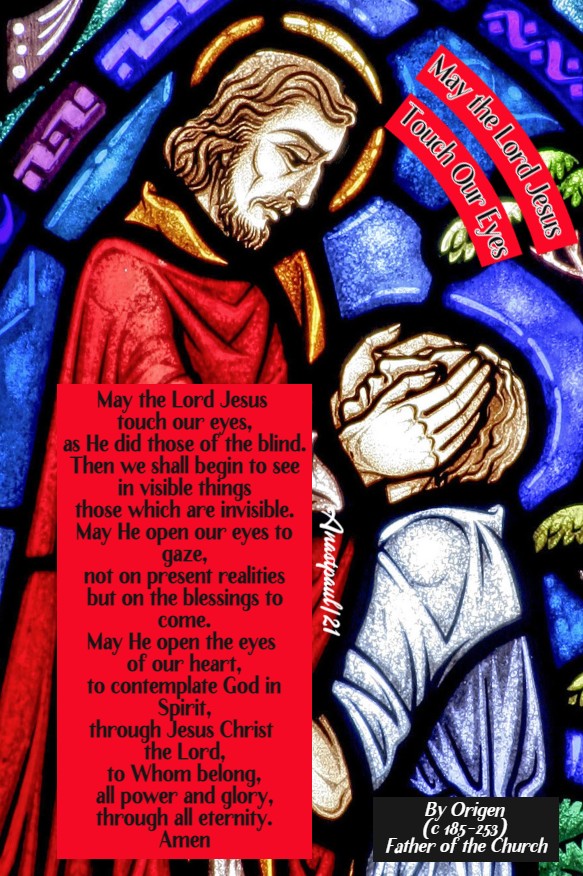
May the Lord Jesus Touch Our Eyes By Origen (c 185-253) Father of the Church
May the Lord Jesus touch our eyes, as He did those of the blind. Then we shall begin to see in visible things those which are invisible. May He open our eyes to gaze, not on present realities but on the blessings to come. May He open the eyes of our heart, to contemplate God in Spirit, through Jesus Christ the Lord, to whom belong, power and glory, through all eternity. Amen.
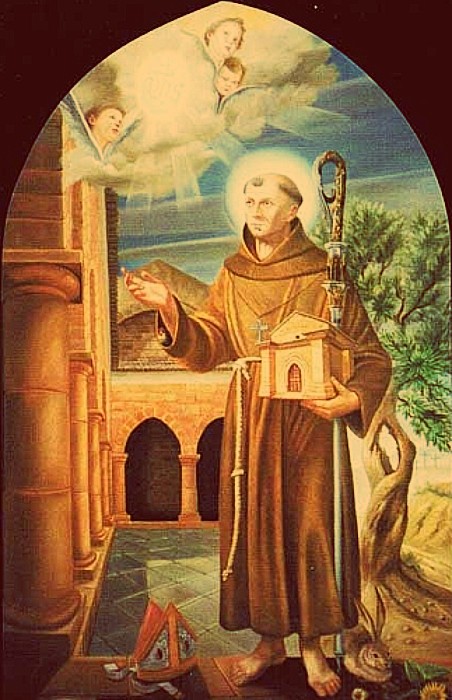
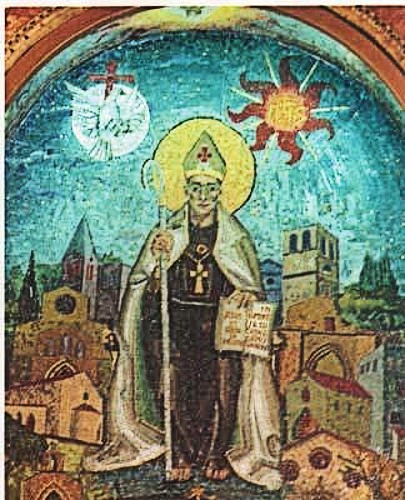
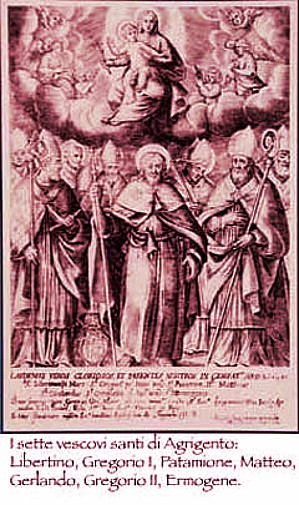
Saint of the Day – 7 January – Blessed Matthew of Agrigento OFM (c 1377-1450) “Apostle of the Holy Name of Jesus” Bishop, Priest and Friar of the Friars Minor, Missionary Preacher often with St Bernardine of Siena, Provincial Vicar and General Commissioner of the Order, founder of many Convents. The Etymology of the name Matthew is “man of God,” from Hebrew. Born in 1377 as Matteo Guimerà on the Via Arco di San Francesco di Paola in Rabbato, Agrigento, Italy and died on 7 January 1450 in the Franciscan Monastery (which he had founded) of Santa Maria di Gesù, Palermo, Sicily, Italy of natural causes. Also known as – Matteo/Matthew Guimerà.
The Roman Martyrology states: “In Palermo, transit of Blessed Matteo Guimerá, Bishop of Agrigento, of the Order of Minors, lover and advocate of the Most Holy Name of Jesus”
Matthew was born on the southern coast of Sicily in c 1377. His parents were pious Catholics and they educated and instilled in him, a fervent love of the Faith.
He entered the Seraphic Order in 1391-92 at the Convent of St Frances of Assisi in Agrigento where he made his religious profession in 1394. He studied theology in Bologna, Italy and Barcelona, Spain, where he earned his doctorate and was Ordained a Priest in 1400.
Matthew became a travelling missionary preacher in the region of Tarragona, Spain from 1400 to 1405 and was then appointed Novie Master. In 1417, Matthew returned to Italy, desiring to work with St Bernardine of Siena, who was leading the observant reform movement of the Franciscan Order which gave rise to the Observant Franciscans. They met in 1418, perhaps at the General Chapter of the Order held at Mantua and Matthew, soon afterwards, asked his superiors for permission, to transfer to the Observing branch of the Order.
Matthew’s friendship with St Bernardine had a profound effect on his life. The two were fellow preachers and shared a desire for reform. Both preached tirelessly and led an austere life, in keeping with the spirit of Franciscan rule. Likewise, both encouraged devotion to the Holy Name of Jesus – in the case of Matthew, joined to the name of Mary, the Mother of God – for this reason, many of the Convents he founded in Italy and Spanish lands bear the name of Santa Maria de Jesús.
Matthew had the support of King Alfonso the Magnanimous and Pope Eugene IV, for the expansion of the reform movement. . In 1425, Pope Martin V granted him the power to found observant convents, in addition to those he had already reformed: Messina , Palermo , Agrigento, Syracuse , Barcelona , Valencia , etc. In addition, he was Provincial Vicar of the Order in Sicily between 1425 and 1430 and General Commissioner from 1432 to 1440.
Invited by the King of Spain, in 1427-1428, he preached in Valencia , Barcelona, Vic and other places. Invited again, he returned in 1430 to preach and perform peacekeeping missions, spreading devotion to the Holy Name of Jesus and founding new observant convents. He was chosen Bishop of his native City, Agrigento which he wanted to refuse but at the insistence of King Alfonso, he was appointed Bishop on 17 September 1442 and Consecrated the following year.
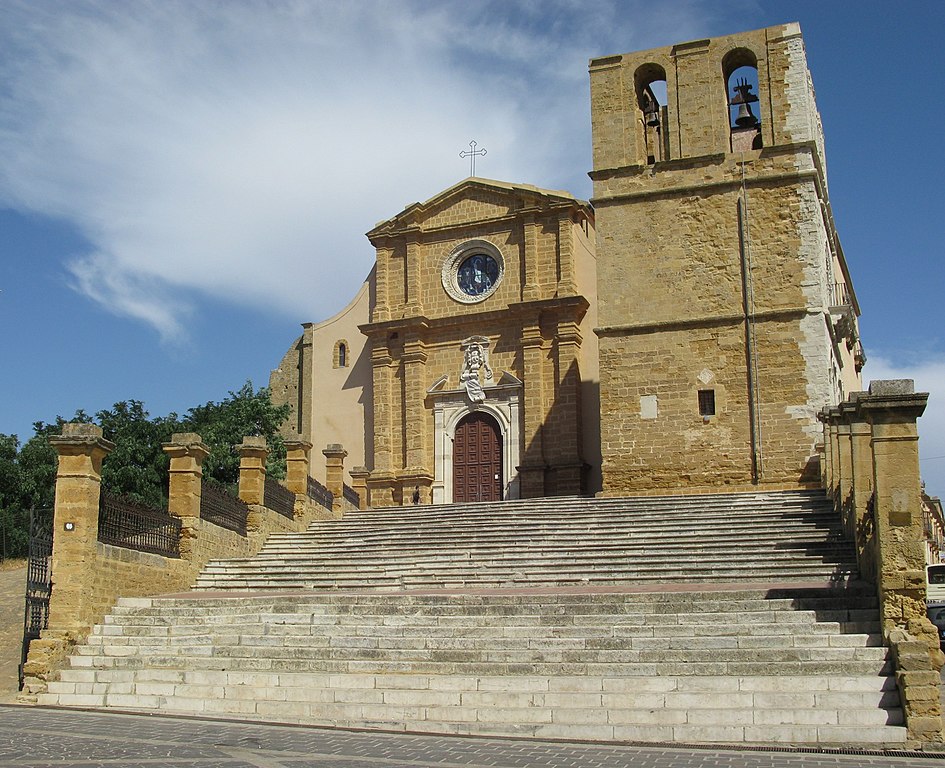
Cathedral of Agrigento, where Blessed Matthew was Bishop.
He was a reformist and a zealous Bishop of the ecclesiastical discipline of the clergy, which pitted him against a section of the clergy and the nobility, who slandered him (accused him of squandering Church property by exercising charity to the poor) and having illicit relations with a woman) and asked the Holy See to investigate. Prosecuted by the Papal Curia, he was found innocent and acquitted, regaining the Pope’s confidence. Again, however, his enemies provoked new conflicts and Matthew, realising that he was unable to maintain order, presented his resignation from the Bishopric.
When this was accepted in 1445, he retired to the Convent of Palermo, where he lived as a Friar until his death on 7 January 1450. He was buried in the same Convent.
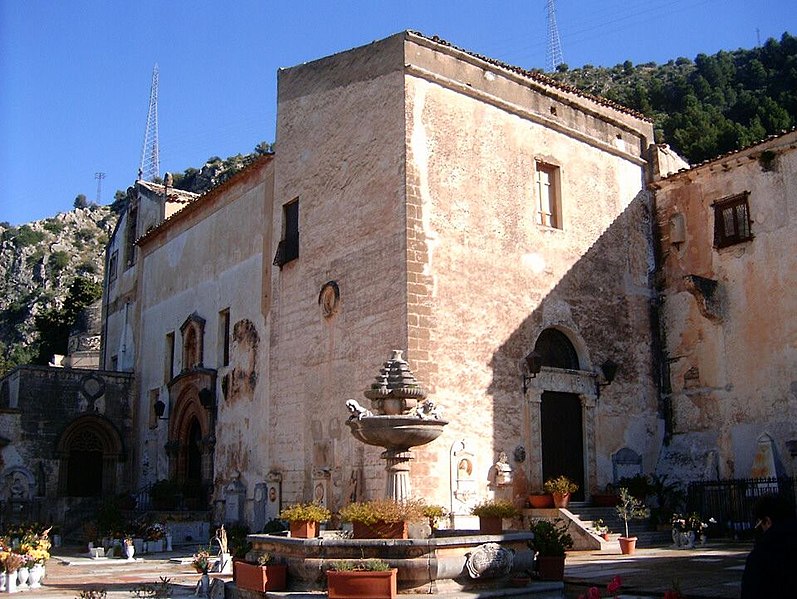
Convent of St Mary of Jesus of Palermo, founded by the Blessed and where he died and was buried.
The people soon considered him a saint and began to venerate him. In 1759 the Diocesan process of Beatification began , which led to the confirmation of the immemorial cult, equivalent to the Beatification by Pope Clement XIII on 22 February 1767.
Around a hundred of Blessed Matthew’s sermons are preserved, which were found during the twentieth century and only from 1960 began to be published by Agostino Amore. Written in Latin and the vernacular, they comment on biblical texts with great theological depth.
Madonna delle Grazie / Our Lady of Grace, Costa Folgaria, Italy (1588) – 7 January, 8 September:
Brother Pietro Dal Dosso di Folgaria – a young Hermit Friar of the Order, Saint Jerome of Vicenza – was inspired directly by the Virgin Mary into building a small Church in her honour on the Echen Peak during the second half of the 16th century. Obediently, the Friar began his work and built a small Chapel, occupying what is now the Apse of the Sanctuary of the Madonna delle Grazie. In the 17th Century, the Magnifica Comunità di Folgaria expanded the small building and endowed it with a Bell Tower (1662). The Sanctuary currently hosts the miraculous Madonna, which was declared Holy Patron of Skiers by Papal Decree. The Terracotta statue of the Virgin Mary dates to the second half of the 16th century and is venerated by thousands of believers, who hold an ancient feast – as well as a solemn procession – on the 8th of September every year, when the Statue is carried by ski instructors. All along its age-old history, the Sanctuary of Echen has always been a pilgrimage destination and numerous faithful have put up their own votive offers for graces received in the small Church. The Sanctuary is approximately 2 km away from Folgaria, near the hamlet of Costa and can be easily reached on foot after an easy walk. I am not sure why this Title is listed for today, 7 January but there must be a good reason.
St Aldric of Le Mans Bl Ambrose Fernandez St Anastasius of Sens St Brannock of Braunton St Candida of Greece St Canute Lavard St Cedd St Clerus of Antioch St Crispin I of Pavia St Cronan Beg St Emilian of Saujon St Felix of Heraclea Bl Franciscus Bae Gwan-gyeom St Januarius of Heraclea St Julian of Cagliari St Kentigerna
St Lucian of Antioch Bl Marie-Thérèse Haze Blessed Matthew of Agrigento OFM (1377-1450) “Apostle of the Holy Name of Jesus,” Franciscan Priest and Friar, Bishop, Missdionary Preacher often with St Bernardine of Siena. St Pallada of Greece St Polyeuctus of Melitene St Reinhold of Cologne St Spolicostus of Greece St Theodore of Egypt St Tillo of Solignac St Valentine of Passau St Virginia of Ste-Verge Bl Wittikund of Westphalia
Thought for the Day – 6 January – Meditations with Antonio Cardinal Bacci (1881-1971)
The Epiphany
“Let us consider the faith of the Magi, a faith which was willing, lively and active. They saw in the sky the star which heralded the Infant Jesus and experienced the divine inspiration in their hearts. Immediately they went in search of Him. They were not even deterred by the long and hazardous journey which lay before them.
When they arrived at Jerusalem, they found Herod, who did not know what they were talking about. The star disappeared and the priests replied coldly to the questions they asked. But all the time their trust in the divine call continued to grow. Eventually, they reached a poor barn, where they found, not an earthly King but, a little Child Who was crying on the straw bed of a manger. As a reward for their trouble and perseverance, a voice in their hearts told them that this was Jesus, the King of Kings and Saviour of the world.
Unfortunately, when we hear the divine call, no matter how clear and simple it is, we find a thousand excuses for delaying and perhaps, for not responding to it at all! Let us humbly promise to be more generous in listening for it and more energetic in complying with it, regardless of the cost.”
Quote/s of the Day – 6 January – The Solemnity of the Epiphany of the Lord
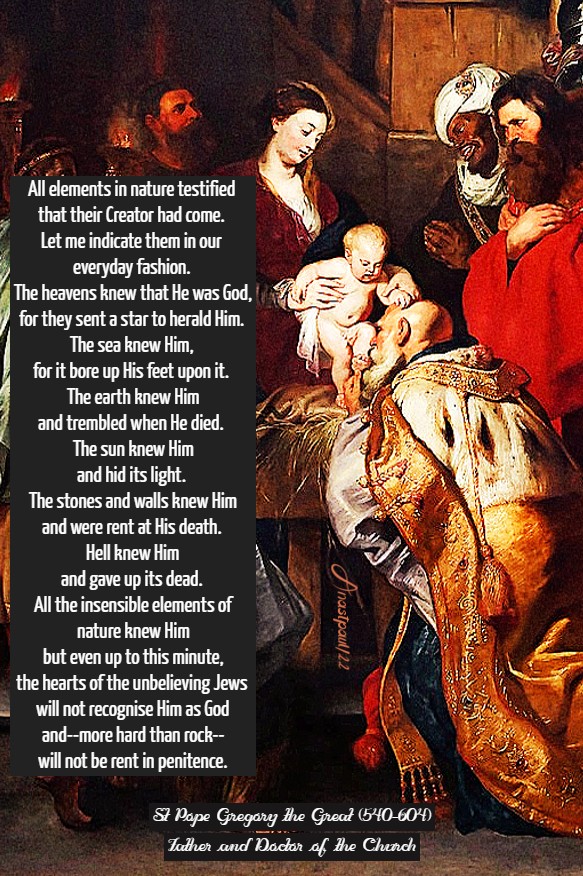
“All elements in nature testified that their Creator had come. Let me indicate them in our everyday fashion. The heavens knew that He was God, for they sent a star to herald Him. The sea knew Him, for it bore up His feet upon it. The earth knew Him and trembled when He died. The sun knew Him and hid its light. The stones and walls knew Him and were rent at His death. Hell knew Him and gave up its dead. All the insensible elements of nature knew Him but even up to this minute, the hearts of the unbelieving Jews will not recognise Him as God and–more hard than rock– will not be rent in penitence.”
St Pope Gregory the Great (540-604) Father and Doctor of the Church
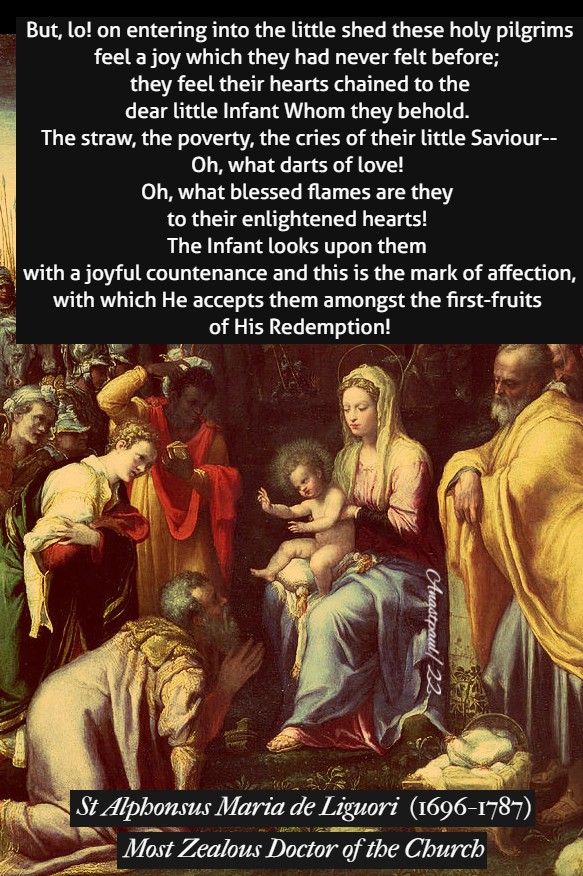
“But, lo! on entering into the little shed these holy pilgrims feel a joy which they had never felt before; they feel their hearts chained to the dear little Infant Whom they behold. The straw, the poverty, the cries of their little Saviour– Oh, what darts of love! Oh, what blessed flames are they to their enlightened hearts! The Infant looks upon them with a joyful countenance and this is the mark of affection, with which He accepts them amongst the first-fruits of His Redemption!”
St Alphonsus Maria de Liguori (1696-1787) Most Zealous Doctor of the Church
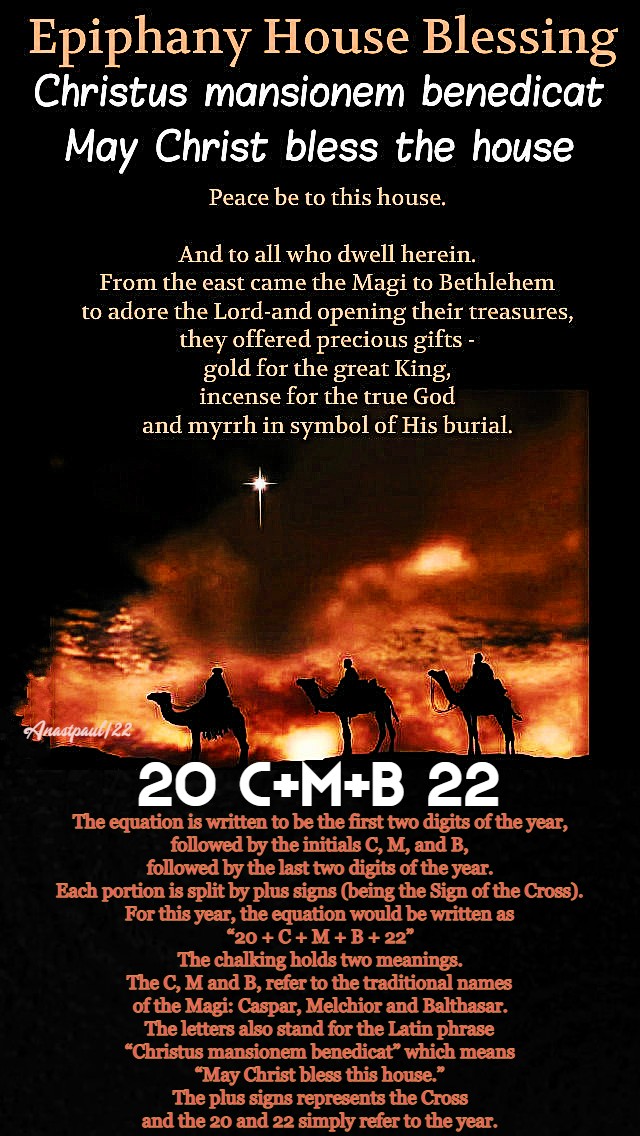
Chalk the Door – Epiphany House Blessing 20 C+M+B 22 “Christus mansionem benedicat” The equation is written to be the first two digits of the year, followed by the initials C, M, and B, followed by the last two digits of the year. Each portion is split by plus signs (being the Sign of the Cross). For this year, the equation would be written as “20 + C + M + B + 22”
The chalking holds two meanings. The C, M and B, refer to the traditional names of the Magi: Caspar, Melchior and Balthasar. The letters also stand for the Latin phrase “Christus mansionem benedicat” which means “May Christ bless this house.” The plus signs represents the Cross and the 20 and 22 simply refer to the year.
One Minute Reflection – 6 January – The Solemnity of the Epiphany of the Lord, Readings: Isaiah 60:1-6, Psalms 72:1-2, 7-8,10-11, 12-13, Ephesians 3:2-3, 5-6, Matthew 2:1-12
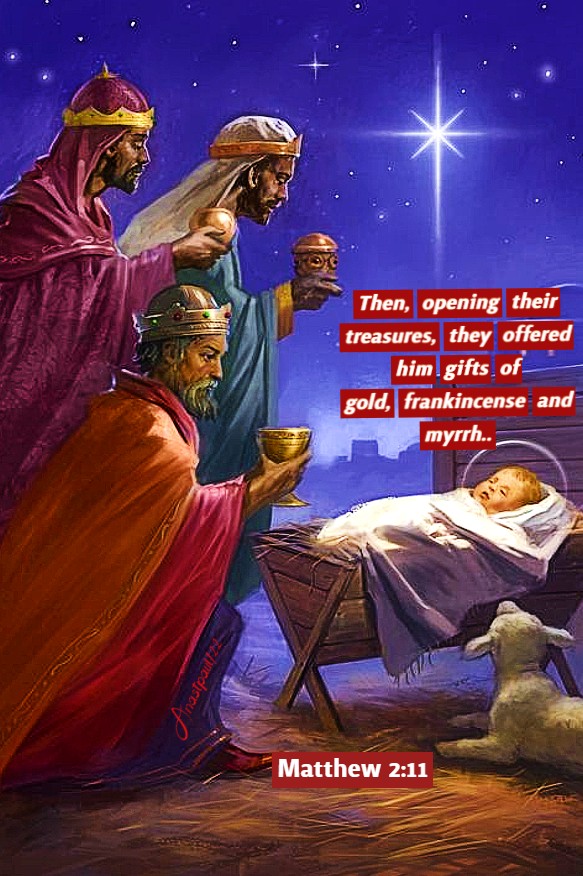
“They fell down and worshipped him. Then, opening their treasures, they offered him gifts of gold, frankincense and myrrh.” – Matthew 2:11
REFLECTION – “Guided by the Star, the wise men from the East, having arrived in Bethlehem, entered the house in which the Blessed Virgin Mother was staying with her Child. They opened their treasures and offered the Lord three gifts – Gold, Frankincense, and Myrrh – thereby acknowledging Him as Lord, true Man,and true King.
Holy Church also offers these same gifts to her Saviour everyday without ceasing. She offers Him Frankincense by acknowledging and believing in Him, the true Lord and Creator of all. She offers Him Myrrh, when she affirms, that He assumed the substance of our flesh, in which He willed to suffer and die for our salvation. And she offers Him, Gold by believing, without a doubt, that He reigns eternally with the Father and the Holy Ghost. …
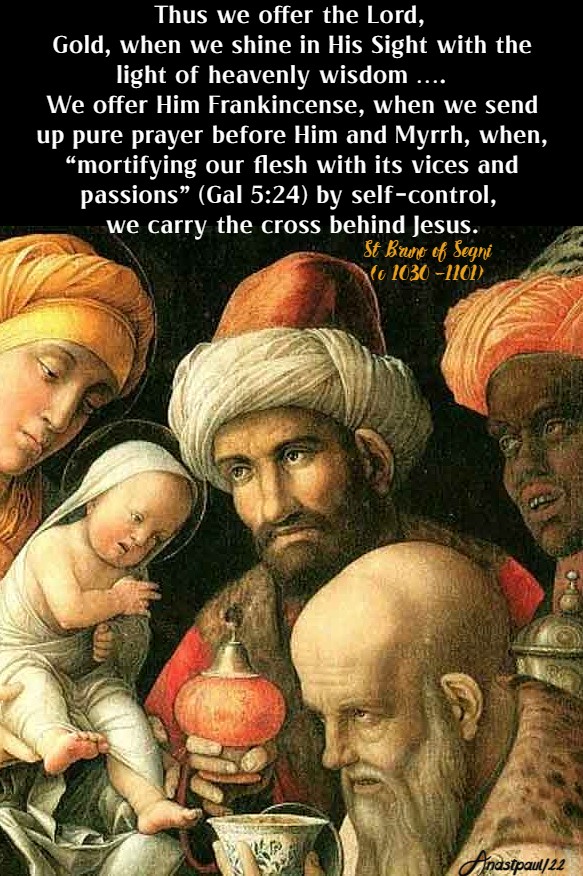
Alternatively, the offering of these gifts may be taken in a mystical sense. Heavenly wisdom is symboliSed by Gold, according to the verse of Solomon, which says: “A priceless treasure lies in the mouth of the sage” (cf. Prv 21:20). … By Frankincense, pure prayer is to be understood, as the psalmist says: “Let my prayer rise like incense in your sight, O Lord” (Ps 141[140]:2). For when our prayer is pure, it yields a purer fragrance to the Lord than the smoke of burning incense and just as such smoke rises upward, so does our prayer ascend to the Lord. Myrrh can be taken as the mortification of our flesh. Thus we offer the Lord, Gold when we shine in His Sight with the light of heavenly wisdom …. We offer Him Frankincense when we send up pure prayer before Him and Myrrh, when, “mortifying our flesh with its vices and passions” (Gal 5:24) by self-control, we carry the cross behind Jesus.” – St Bruno of Segni O.Cart. (c 1030 -1101) Bishop (1st Sermon on the Epiphany ; PL 165, 863).
PRAYER – “Give me, therefore, I pray Thee, this Gold, this Incense and this Myrrh. Give me the Gold of Thy holy Love, give me the spirit of holy prayer, give me the desire and strength to mortify myself in everything that displeases Thee. I am resolved to obey Thee and to love Thee but Thou knowest my weakness, oh, give me the grace to be faithful to Thee!- St Alphonsus Liguori (1696-1787) Doctor of the Church.


























 AnaStpaul
You must be logged in to post a comment.