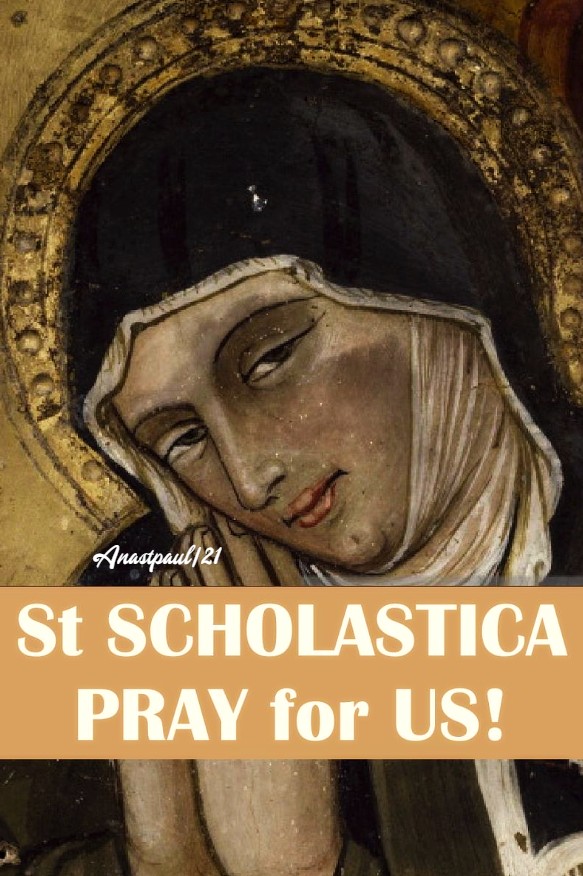
Quote/s of the Day – 10 February – The Memorial of St Scholastica (c482-547) Virgin – 2 Cor 10:17-18; 11:1-2, Matthew 25:1-13
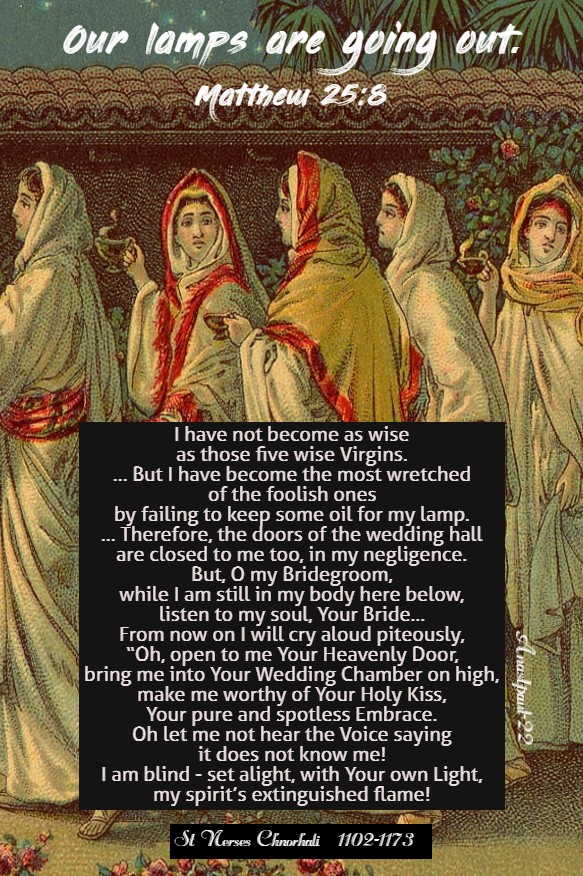
“Our lamps are going out.”
Matthew 25:8
“I have not become as wise as those five wise Virgins. … But I have become the most wretched of the foolish ones by failing to keep some oil for my lamp, namely, mercy together with virginity or, still more, the anointing from Baptism’s Sacred fount…
Therefore, the doors of the wedding hall are closed to me too, in my negligence. But, O my Bridegroom, while I am still in my body here below, listen to my soul, Your Bride… From now on, I will cry aloud piteously, “Oh, open to me Your Heavenly Door, bring me into Your Wedding Chamber on high, make me worthy of Your Holy Kiss, Your pure and spotless Embrace. Oh let me not hear the Voice saying it does not know me! I am blind; set alight with Your own Light my spirit’s extinguished flame!”
St Nerses Chnorhali (1102-1173) Armenian Bishop
“If we wish to make any progress in the service of God, we must begin everyday of our life, with new eagerness. We must keep ourselves, in the presence of God, as much as possible and have no other view or end, in all our actions but the divine honour.”
St Charles Borromeo (1538-1584)
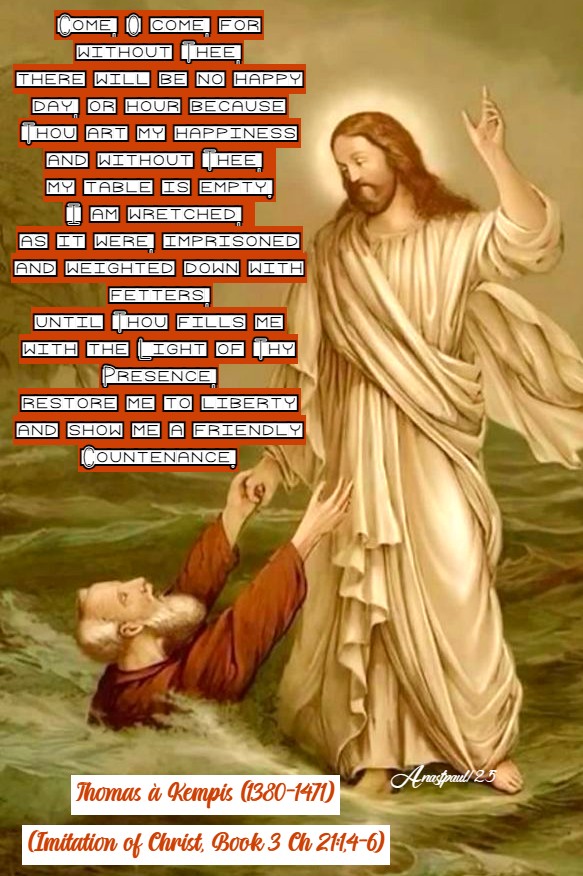
“Come, O come, for without Thee, there will be no happy day, or hour because Thou art my happiness and without Thee, my table is empty. I am wretched, as it were, imprisoned and weighted down with fetters, until Thou fills me with the Light of Thy Presence, restore me to liberty and show me a friendly Countenance.”
One Minute Reflection – 10 February – The Memorial of St Scholastica (c482-547) Virgin – 2 Cor 10:17-18; 11:1-2, Matthew 25:1-13
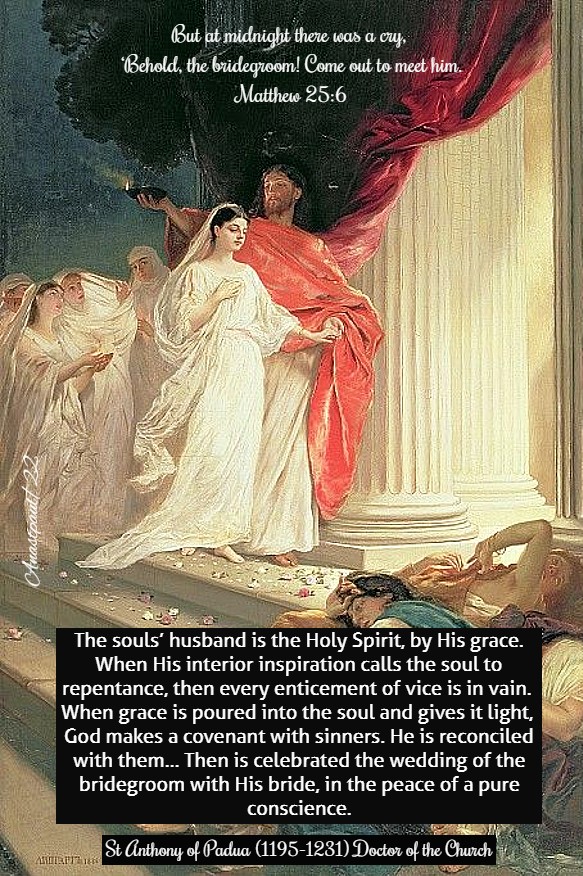
“But at midnight there was a cry, ‘Behold, the bridegroom! Come out to meet him.” – Matthew 25:6
REFLECTION – “The souls’ husband is the Holy Spirit, by His grace. When His interior inspiration calls the soul to repentance, then every enticement of vice is in vain. The pride that wants command, the greed and lust that consumes everything: this was the master that used to control and ravage the soul. Their very names have been removed from the repentant sinner’s mouth… When grace is poured into the soul and gives it light, God makes a covenant with sinners. He is reconciled with them… Then is celebrated the wedding of the Bridegroom with His bride, in the peace of a pure conscience.” – St Anthony of Padua (1195-1231) Doctor of the Church
PRAYER – O God, Who, to show us the way of innocence, caused the soul of Your Virgin, blessed Scholastica, to fly up to Heaven in the likeness of a dove, grant us, through her merits and prayers, to live innocently, so that we may be found worthy to reach everlasting joys. Through Jesus Christ, Thy Son our Lord, Who lives and reigns with Thee, in the unity of the Holy Ghost, God, world without end. Amen (Collect).
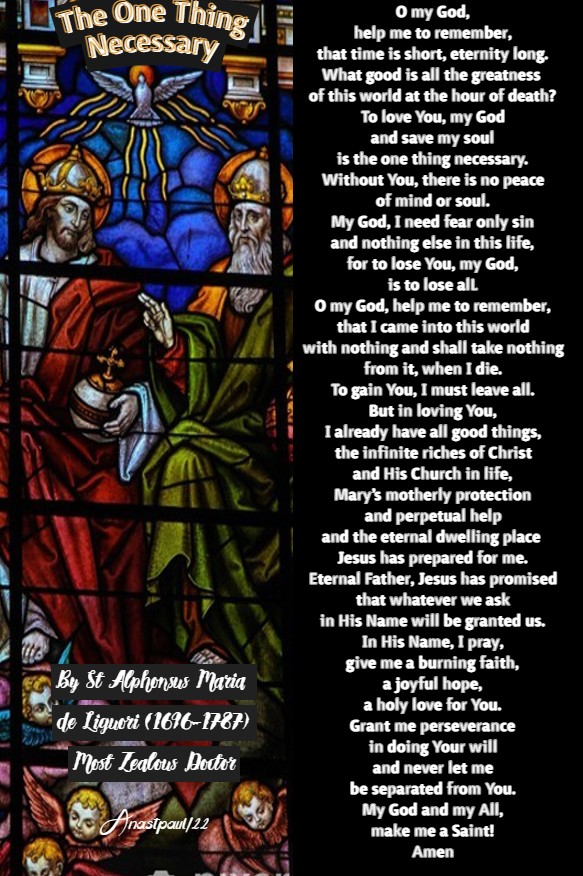
The One Thing Necessary By St Alphonsus Maria de Liguori (1696-1787) Most Zealous Doctor
O my God, help me to remember, that time is short, eternity long. What good is all the greatness of this world at the hour of death? To love You, my God and save my soul is the one thing necessary. Without You, there is no peace of mind or soul. My God, I need fear only sin and nothing else in this life, for to lose You, my God, is to lose all. O my God, help me to remember, that I came into this world with nothing and shall take nothing from it, when I die. To gain You, I must leave all. But in loving You, I already have all good things, the infinite riches of Christ and His Church in life, Mary’s motherly protection and perpetual help and the eternal dwelling place Jesus has prepared for me. Eternal Father, Jesus has promised that whatever we ask in His Name will be granted us. In His Name, I pray, give me a burning faith, a joyful hope, a holy love for You. Grant me perseverance in doing Your will and never let me be separated from You. My God and my All, make me a Saint! Amen
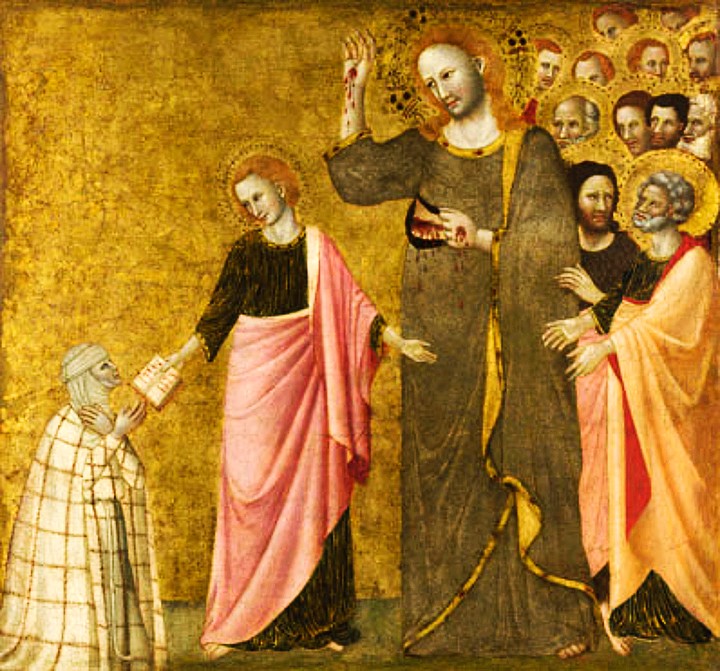
Saint of the Day – 10 February – Blessed Clare Agolanti of Rimini OSC (1282-1346) Married, Widowed, Nun., Penitent, Mystic. Born as Chiara Agolanti in 1282 at Rimini, Italy and died on 10 February 1344 at Rimini, Italy of natural causes.
The Vision of the Blessed Clare of Rimini / Francesco da Rimini (Master of the Blessed Clare). ca. 1333–1340.
Chiara Agolanti was born to a wealthy family of Rimini. Married at a young age, she was sent into exile upon the death of her husband. Upon her return, she witnessed the horrifying hanging of her father and brother by a rival political faction. She remarried and soon fell a prey to the dangers to which her youth and beauty exposed her, and began to lead a life of sinful dissipation.
One day when she was attending Mass in the Church of the Franciscan Friars, she seemed to hear a mysterious voice that bade her say an Our Father and a Hail Mary at least once with fervour and attention. Clare obeyed the command, not knowing from where it came and then began to reflect upon her life.
She made the decision to enter into the Third Order of Saint Francis, resolving to expiate her sins by a life of penance. She soon became a model of every virtue but more especially of charity towards the destitute and afflicted.
She abandoned her life of luxury and established a convent for a group of women under her direction. When the Poor Clares were compelled to leave Regno on account of the prevailing wars, it was mainly through the exertions of Clare that they were able to obtain a Convent and means of sustenance at Rimini.
Later, Clare herself entered the Order of Poor Clares Nuns, along with several other pious women and became Prioress of the Convent of Our Lady of the Angels at Rimini. She is believed to have worked numerous miracles and towards the close of her life to have been favoured in an extraordinary manner with the gift of contemplation.
Her body is now in the cathedral of Rimini.
On 22 December 1784 her cutus was confirmed by Pope Pius VI.
St St Baldegundis St Baptus of Magnesia Bl Catherine du Verdier de la Sorinière St Charalampias Blessed Clare Agolanti of Rimini OSC (1282-1346) Married, Widowed, Nun St Desideratus of Clermont St Erluph of Werden Bl Eusebia Palomino Yenes Bl Hugh of Fosse
St José Sánchez del Río “Joselito” (1913-1928) Boy Martyr was a Mexican Cristero who was put to death by government officials because he refused to renounce his Catholic faith. His death was seen as a largely political venture on the part of government officials in their attempt to stamp out dissent and crush religious freedom in the area. Patronages – Persecuted Christians, Catholic Children and Adolescents, Sahuayo, Mexico, his birthplace. Biography: https://anastpaul.wordpress.com/2018/02/10/saint-of-the-day-10-february-st-jose-sanchez-del-rio-joselito-1913-1928-boy-martyr/
Bl Louise Bessay de la Voûte Bl Louise Poirier épouse Barré Bl Marie-Anne Hacher du Bois Bl Marie-Louise du Verdier de la Sorinière Bl Mikel Beltoja Bl Paganus Bl Paul of Wallachia Bl Pierre Frémond St Porfirio St Prothadius of Besançon St Salvius of Albelda St Silvanus of Terracina St Soteris the Martyr St Troiano of Saintes St Trumwin of Whitby
Martyred Soldiers in Rome: A group of ten Christian soldiers who were Martyred together for their faith. We know little more about them but four of their names – Amantius, Hyacinth, Irenaeus and Zoticus. • 120 at Rome, Italy. They were buried on the Via Lavicana outside RomeAmantius, Hyacinth, Irenaeus, Zoticus.
Thought for the Day – 9 February – Meditations with Antonio Cardinal Bacci (1881-1971)
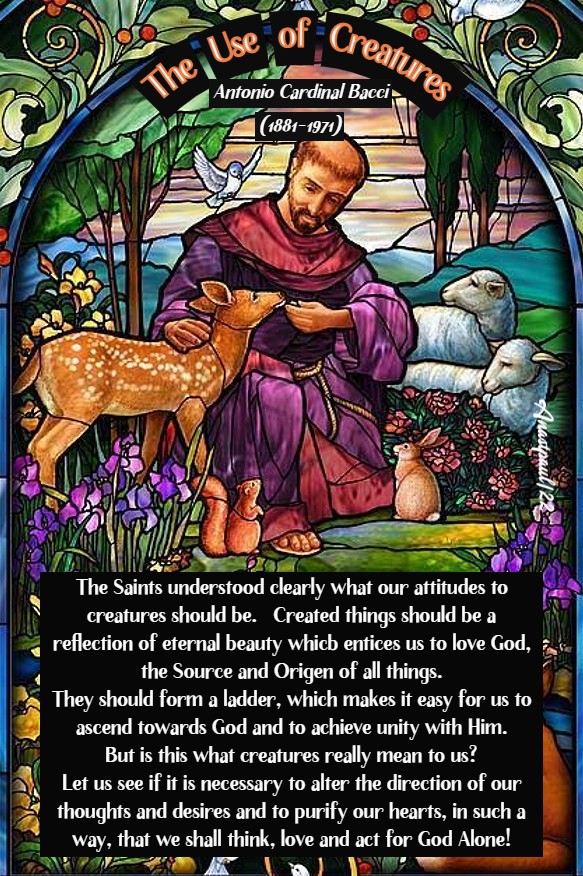
The Use of Creatures
“The Saints understood clearly what our attitudes to creatures should be. Created things should be a reflection of eternal beauty whicb entices us to love God, the Source and Origen of all things. They should form a ladder, which makes it easy for us to ascend towards God and to achieve unity with Him. But is this what creatures really mean to us? Or do they, more often than not, lead us away from God? Perhaps we are held up too frequently by our love for creatures and tend to forget God. The passing loveliness of this earth causes us to forget the everlasting beauty for which we are destined. Worse still, the use of creatures may divert us from God altogether and cause us to disobey His law.
Let us examine ourselves thoroughly on this point. Let us see if it is necessary to alter the direction of our thoughts and desires and to purify our hearts, in such a way, that we shall think, love and act for God Alone!”
Quote/s of the Day – 9 February – The Memorial of St Cyril of Alexandria (376-444) Bishop, Confessor, Father and Doctor of the Church
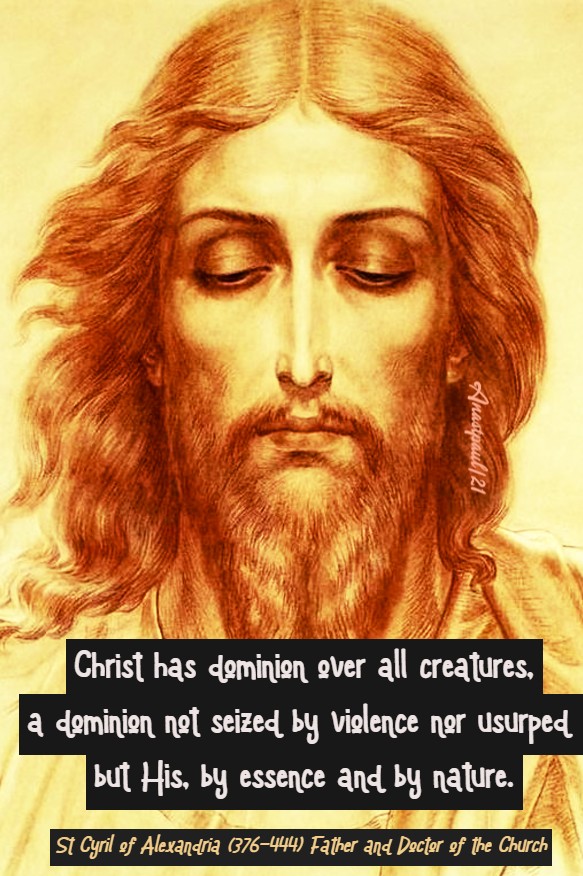
“Christ has dominion over all creatures, a dominion not seized by violence nor usurped but His, by essence and by nature.”
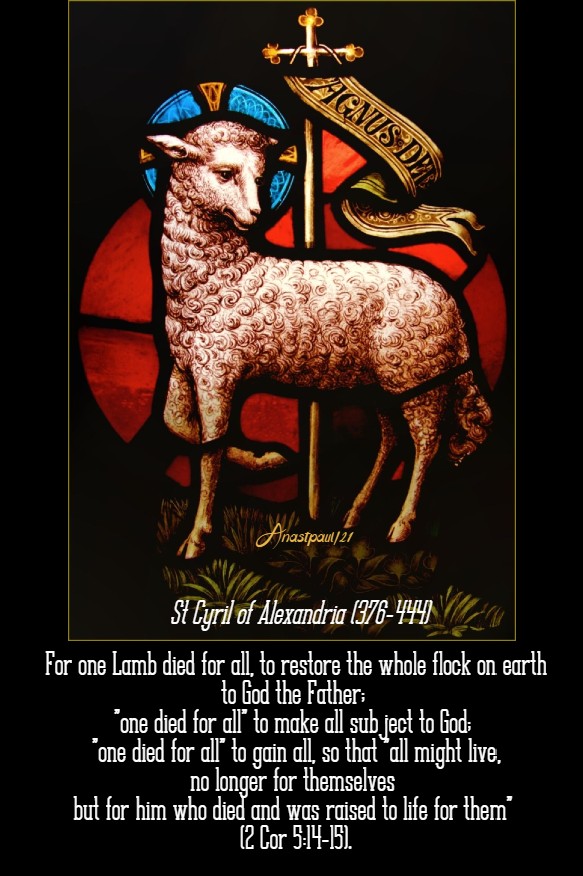
“For one Lamb died for all, to restore the whole flock on earth to God the Father; “one died for all” to make all subject to God; “one died for all” to gain all, so that “all might live, no longer for themselves but for Him who died and was raised to life for them” (2 Cor 5:14-15).”
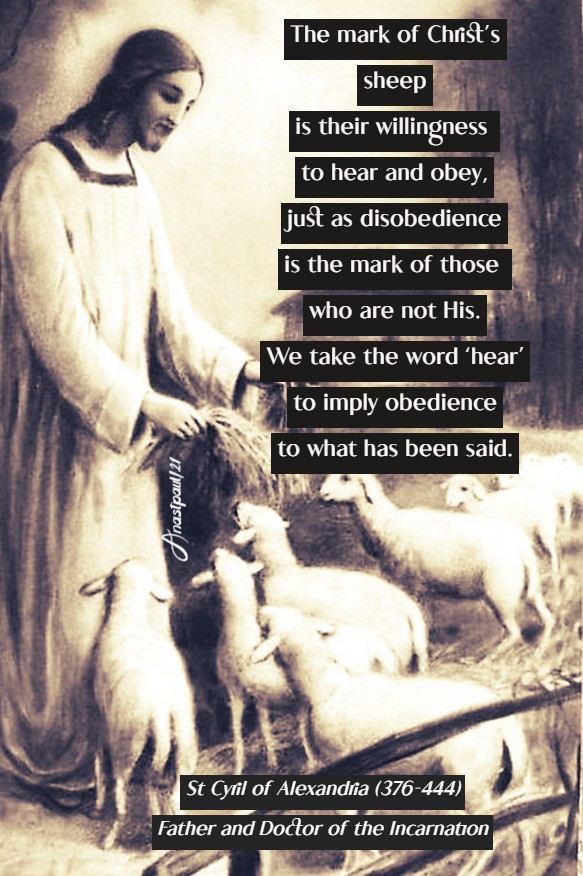
“The mark of Christ’s sheep is their willingness to hear and obey, just as disobedience is the mark of those who are not His. We take the word ‘hear’ to imply obedience to what has been said.”
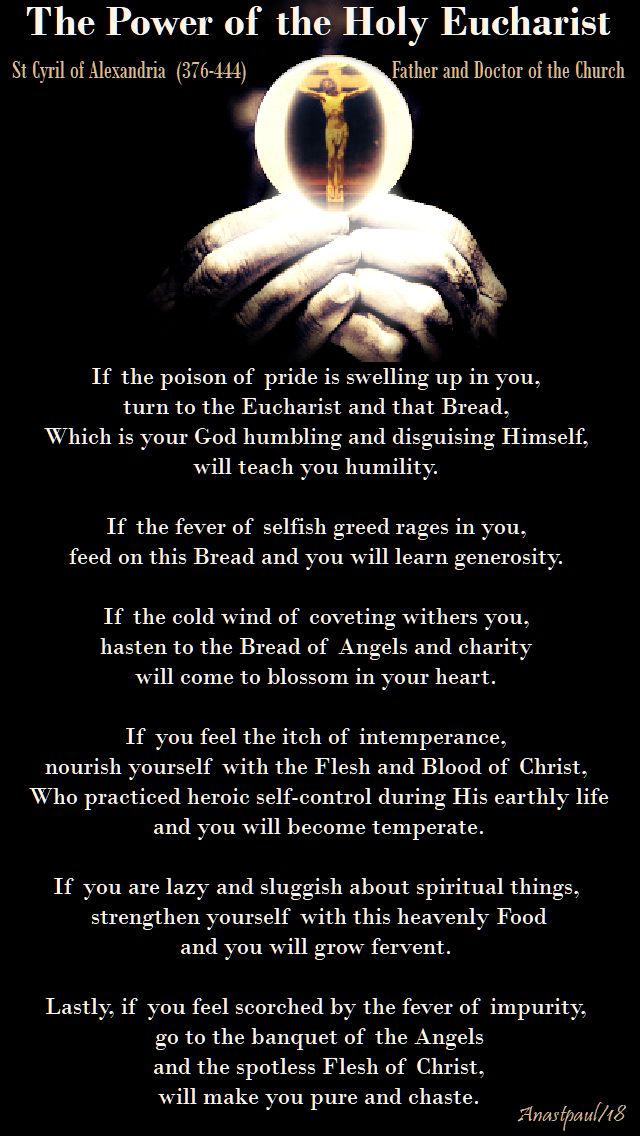
“If the poison of pride is swelling up in you, turn to the Eucharist and that Bread, Which is your God humbling and disguising Himself, will teach you humility.
If the fever of selfish greed rages in you, feed on this Bread and you will learn generosity.
If the cold wind of coveting withers you, hasten to the Bread of Angels and charity will come to blossom in your heart.
If you feel the itch of intemperance, nourish yourself with the Flesh and Blood of Christ, Who practiced heroic self-control during His earthly life and you will become temperate.
If you are lazy and sluggish about spiritual things, strengthen yourself with this heavenly Food and you will grow fervent.
Lastly, if you feel scorched by the fever of impurity, go to the banquet of the Angels and the spotless Flesh of Christ, will make you pure and chaste.”
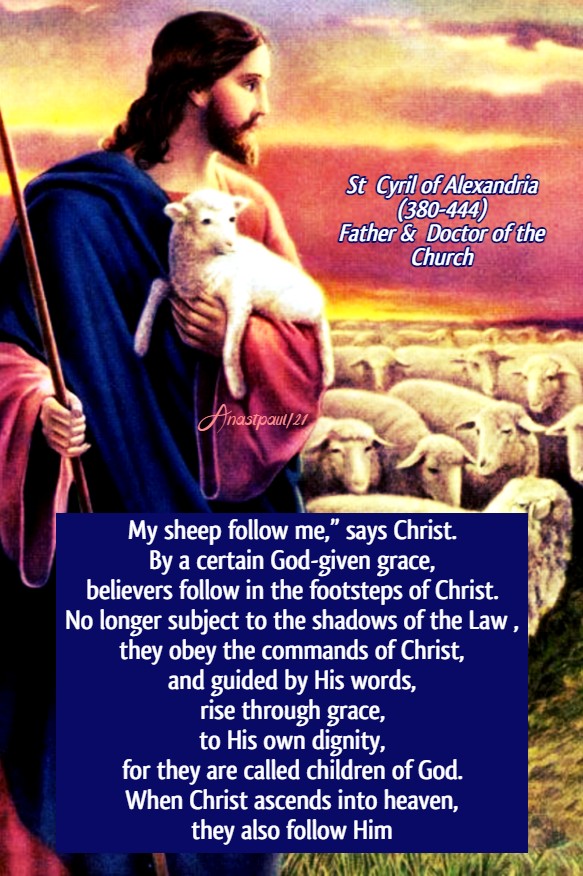
“My sheep follow me,” says Christ. By a certain God-given grace, believers follow in the footsteps of Christ. No longer subject to the shadows of the Law , they obey the commands of Christ, and guided by His words, rise through grace, to His own dignity, for they are called children of God. When Christ ascends into heaven, they also follow Him.”
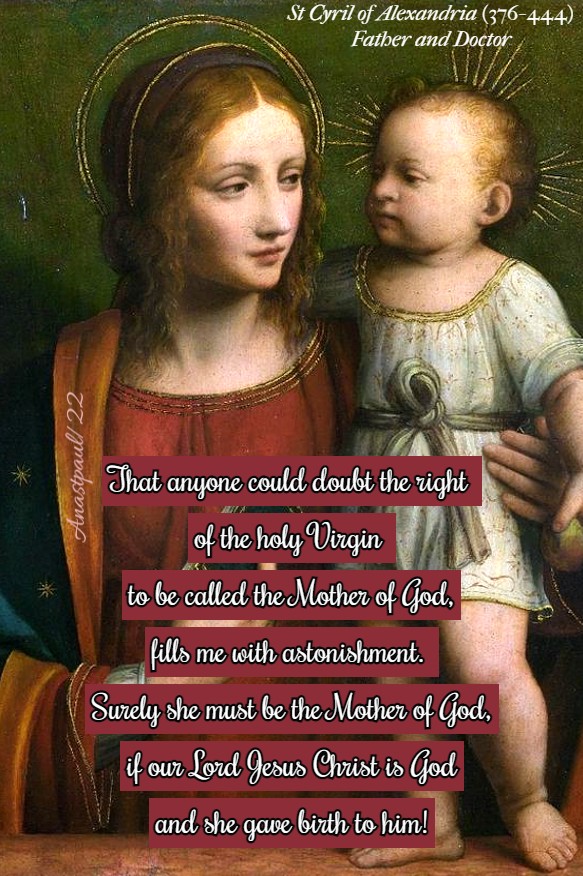
“That anyone could doubt the right of the holy Virgin to be called the Mother of God, fills me with astonishment. Surely she must be the Mother of God, if our Lord Jesus Christ is God and she gave birth to him!”
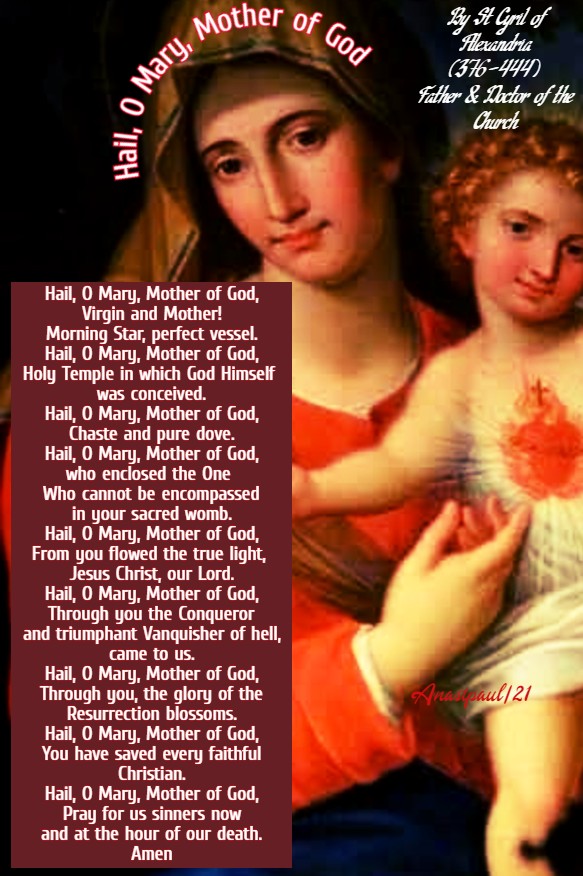
Hail, O Mary, Mother of God By St Cyril of Alexandria (376-444) Father & Doctor of the Church
Hail, O Mary, Mother of God, Virgin and Mother! Morning Star, perfect vessel. Hail, O Mary, Mother of God, Holy Temple in which God Himself was conceived. Hail, O Mary, Mother of God, Chaste and pure dove. Hail, O Mary, Mother of God, who enclosed the One Who cannot be encompassed in your sacred womb. Hail, O Mary, Mother of God, From you flowed the true light, Jesus Christ, our Lord. Hail, O Mary, Mother of God, Through you the Conqueror and triumphant Vanquisher of hell, came to us. Hail, O Mary, Mother of God, Through you, the glory of the Resurrection blossoms. Hail, O Mary, Mother of God, You have saved every faithful Christian. Hail, O Mary, Mother of God, Pray for us sinners now and at the hour of our death. Amen
One Minute Reflection – 9 February – The Memorial of St Cyril of Alexandria (376-444) Bishop, Confessor, Father and Doctor of the Church – 2 Timothy 4:1-8, Matthew 5,13-19.
Jesus said to His disciples: “You are the salt of the earth. … You are the light of the world.” – Matthew 5:13, 14
REFLECTION – “You are the salt of the earth. It is not for your own sake, He says but for the world’s sake that the word is entrusted to you. I am not sending you into two cities only or ten or twenty, not to a single nation, as I sent the prophets of old but across land and sea, to the whole world. And that world is in a miserable state. For when He says: You are the salt of the earth, He is indicating, that all mankind had lost its savour and had been corrupted by sin. Therefore, He requires of these men, those virtues which are especially useful and even necessary, if they are to bear the burdens of many. For the man who is kindly, modest, merciful and just will not keep his good works to himself but will see to it, that these admirable fountains send out their streams, for the good of others. Again, the man who is clean of heart, a peacemaker and ardent for truth, will order his life so as to contribute to the common good. …
Then He passes onto a more exalted comparison – You are the light of the world. Once again, “of the world,” not of one nation or twenty cities but of the whole world. The light He means, is an intelligible light, far superior to the rays of the sun we see, just as the salt is a spiritual salt. First salt, then light, so that you may learn how profitable sharp words may be and how useful, serious doctrine. Such teaching holds in check and prevents, dissipation, it leads to virtue and sharpens the mind’s eye. A city set on a hill cannot be hidden, nor do men light a lamp and put it under a basket. Here again, He is urging them to a careful manner of life and teaching them, to be watchful, for they live under the eyes of all and have the whole world for the arena of their struggles.” – St John Chrysostom (347-407) Archbishop of Constantinople, Father and Doctor of the Church (An excerpt from his Homily on Matthew).
PRAYER – King of heaven and earth, Lord God, rule over our hearts and bodies this day. Sanctify us and guide our every thought, word and deed according to the commandments of Your law, so that now and forever, Your grace may free and save us. Teach us Lord to walk in the ways of the Cross of Your Son, our Saviour, longing for and rejoicing always in our heavenly home as St Cyril of Alexandria so lovingly and willingly inspires us to do. Through Christ our Lord, with the Holy Spirit, God, forever, amen.
Lord, for Tomorrow and its Needs By Sister Mary Xavier (1877)
Lord, for tomorrow and its needs I do not pray; keep me, my God, from stain of sin, just for today. Let me both diligently work and duly pray; let me be kind in word and deed, just for today. Let me no wrong or idle word unthinking say; set thou a seal upon my lips, just for today. And if today my tide of life should ebb away, give me Thy sacraments divine, sweet Lord, today. So, for tomorrow and its needs I do not pray but keep me, guide me, love me, Lord, just for today. Amen
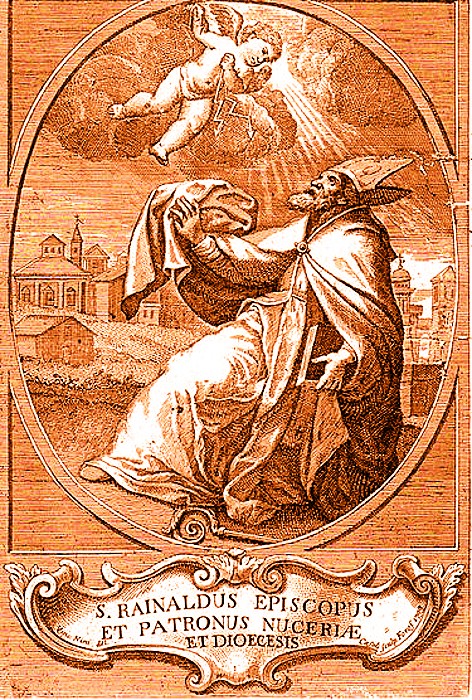
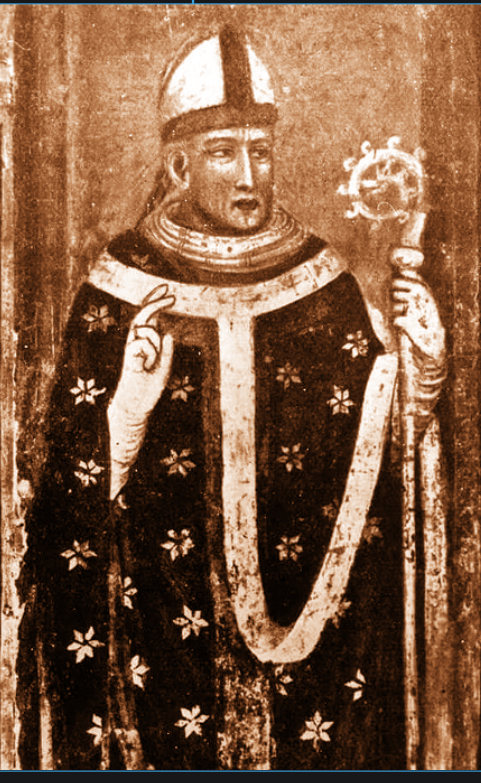
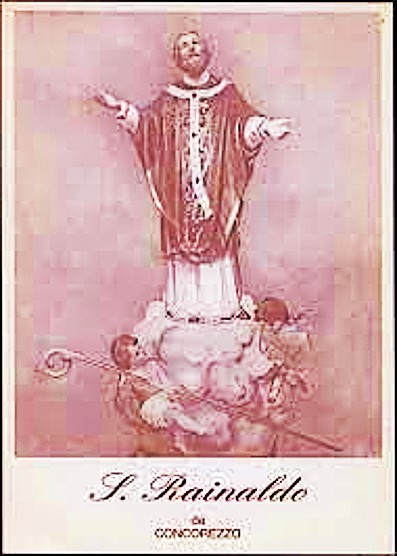
Saint of the Day – 9 February – Saint Raynald of Nocera (c 1150-1217) Bishop of Nocera, Umbria, Italy, Hermit, Monk, Abbot. Born in c 1150 smf died on 9 February 1217 in Nocera, Umbria, Italy of natural causes. Patronages – the Diocese of Assisi-Nocera Umbria-Gualdo Tadino, Italy. and City of Norcera. Also known as Rainaldus and Rainaldo. His body is incorrupt.
The Roman Martyrology reads: “In Nocera Umbra, St. Rainaldo, Bishop, formerly a Camaldolese Monk of Fonte Avellana, who, while carrying out the Episcopal office, firmly preserved the habits of monastic life.”
Raynald was a rather singular figure of a Hermit Monk and Bishop, who broke away from the mentality of his time, to radically change his life, becoming an admirable example of piety and charity, faith and obedience, in a world characterised by wealth and power, compromises and collusions between secular and spiritual powers.
He was the eldest son of one of the local Lords who dominated Nocera nd Foligno, heir to the fief of Postignano and already destined for posts of political and military importance of the first degree, Raynald received a refined education as befitted his rank.
But at the age of twenty, he abandoned all his possessions to give himself to the hermitage on the mountain of Gualdo, the Serrasanta, famous for the presence of men dedicated to prayer and penance. Here he was able to live “a perfect eremitical life.” However, he soon felt, in his heart the need to submit to a superior, who could guide him in constantly following God’s will and he then became a Monk at the Camaldolese Monastery of Fonte Avellana, where “together with his brothers, he served God perfectly and devoutly” and was also elected Abbot.
Raynald was associated in the Episcopate with Bishop Ugo,who was engaged in high juridical positions in the Roman Curia. In 1213, on the death of Ugo, the holy hermit became the Bishop of the Diocese.
The Episcopate of Raynald was distinguished by his unusual choice – to remain a Monk even as a Bishop and he did so with the typical obstinacy of Saints, always entirely dedicated to God and to his brothers, as the Minor Legend narrates: “he kept his life perfect, as when he was in the Monastery with fasts, vigils and prayers, dedicating himself to God and busy in the Bishop’s care as a celebrant of divine worship and a helper of the poorest and most needy people .”
To give a living example of Christian love, he adopted a child from Nocera, an orphan, keeping him in the Bishop’s palace and honouring him every day at the table, as if it had been Christ Himself Who was asking for help.
The presence of the holy Bishop was important at the promulgation of the Indulgence of the Portiuncula in August 1216, commissioned by St Francis of Assisi.
Raynald died on 9 February 1217 near Nocera Umbra and his body was immediately honoured. With a trial on miracles, promoted by his successor Bishop Pelagius, after a few months, he was raised on the main Altar of the Cathedral and, therefore, proclaimed a Saint according to the customs of the time.
The troubled political events soon dispersed, attributed to the intercession of the Saint. In 1248 Nocera, a Guelph City, was destroyed by the army of Frederick II who encamped in the aforementioned Cathedral. An extraordinary event was the discovery of the body of St Raynald, intact. St Raynald was then proclaimed Patron of Nocera and his tomb was transferred to the Church of Santa Maria dell’Arengo, now dedicated to St John the Baptist. The destroyed City was rebuilt and the devotion to the Saint persisted over the centuries.
When in 1448 the reconstruction of the Cathedral resumed again, the memory of St Raynald was added to the official title of the Church, which, for seven centuries had been dedicated to the Virgin of the Assumption. His body was solemnly transported to the new Cathedral in 1456 and for centuries it was the centre of the cult that made St Raynald the protector of the City and of the Diocese of Nocera.
The Saint did not fail to help his faithful with protective intercession in the tragic moments of wars, destruction and calamitous events such as frequent earthquakes. Today, after the painful events of the 1997 earthquake, the Patron’s still incorrupt body was venerated in the Church of St Felicissimus. On the anniversary of his death, St Raynald is commemorated by the Camaldolese Monastery.
St Attracta of Killaraght St Brachio of Auvergne St Cuaran the Wise St Didymus of Membressa St Donatus the Deacon St Eingan of Llanengan St Emilian of Membressa Bl Erizzo Bl Francisco Sanchez Marquez
St Nebridius of Egara St Nicephorus of Antioch St Poëmus of Membressa St Primus the Deacon St Raynald of Nocera (c 1150-1217) Bishop St Romanus the Wonder Worker St Ronan of Lismore St Sabino of Abellinum
St Sabinus of Canosa (c 461–566) Bishop, Confessor, Benedictine Monk, Papal Legate, miracle-worker, graced with the charism of prophecy, Defender of the Faith against heretics, friend of Saint Benedict of Nursia, builder of Churches and Monasteries, following the Benedictine discipline of Ora et labora. His Life: https://anastpaul.com/2021/02/09/saint-of-the-day-9-february-saint-sabinus-of-canosa-c-461-566-bishop/
St Teilo of Llandaff
Martyrs of Alexandria: An unknown number of Christians who were massacred in church in 4th century Alexandria, Egypt by Arian heretics for adhering to the orthodox faith.
Martyrs of Membressa: A group of 44 Christians martyred together. We know little else about them some names – • Ammon • Didymus • Emilian • Lassa • Poemus They were martyred in Membressa in Africa.
Thought for the Day – 8 February – Meditations with Antonio Cardinal Bacci (1881-1971)
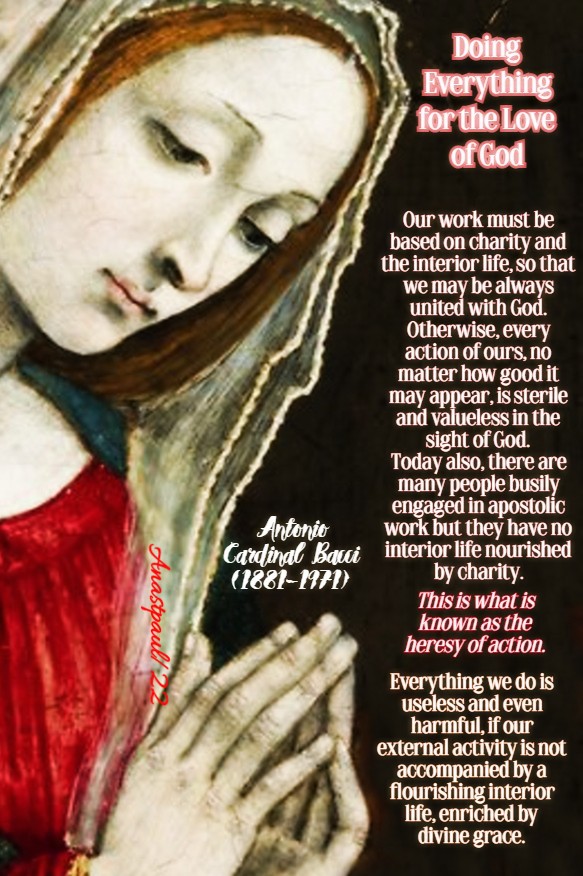
Doing Everything for the Love of God
“In one of his letters, Luther wrote that he was so busy that he had no time to read his Breviary, nor to offer Holy Mass. There is no doubt that it was this estrangement from prayer and from the love of God, which caused him to finish up as he did. Our work must be based on charity and the interior life, so that we may be always united with God. Otherwise, every action of ours, no matter how good it may appear, is sterile and valueless in the sight of God.
Today also, there are many people busily engaged in apostolic work but they have no interior life nourished by charity. This is what is known as the heresy of action.
Everything we do is useless and even harmful, if our external activity is not accompanied by a flourishing interior life, enriched by divine grace. St Gregory the Great paraphrases the words of the Gospel as follows: “Our Lord says: If anyone loves Me, let him keep my commandments. Love is proved by action. This is why St John (1 Jn 2:4) says, that the man who claims to love God and does not keep His commandments, is a liar. We love God sincerely if we keep His commandments and avoid the immoderate pleasures of our age. Anyone who surrenders without reserve to the unlawful desires of this world, certainly does not love God because, he is acting contrary to His will.” (Homil 30 in Ev).”
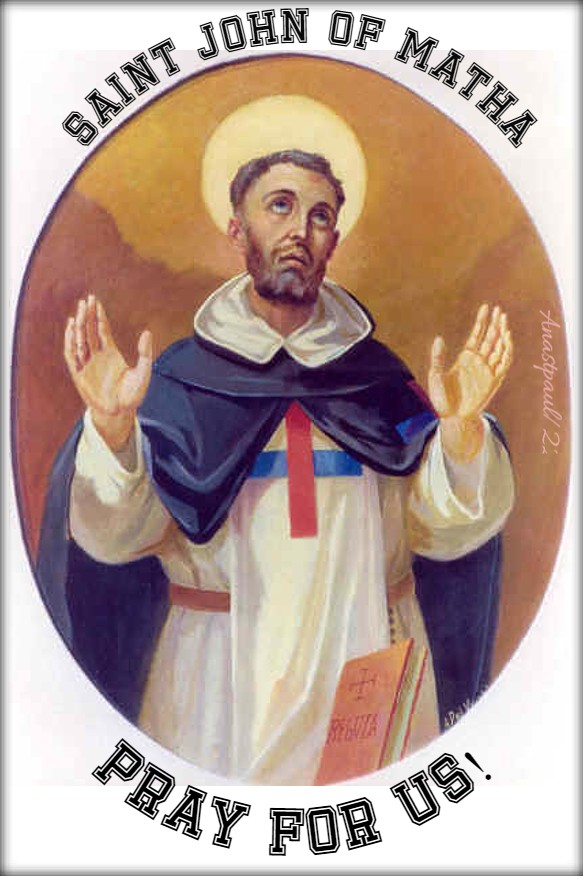
Quote/s of the Day – 8 February – The Memorial of St John of Matha (1160-1213) Confessor – Sirach 31:8-11, Matthew 12:35-40
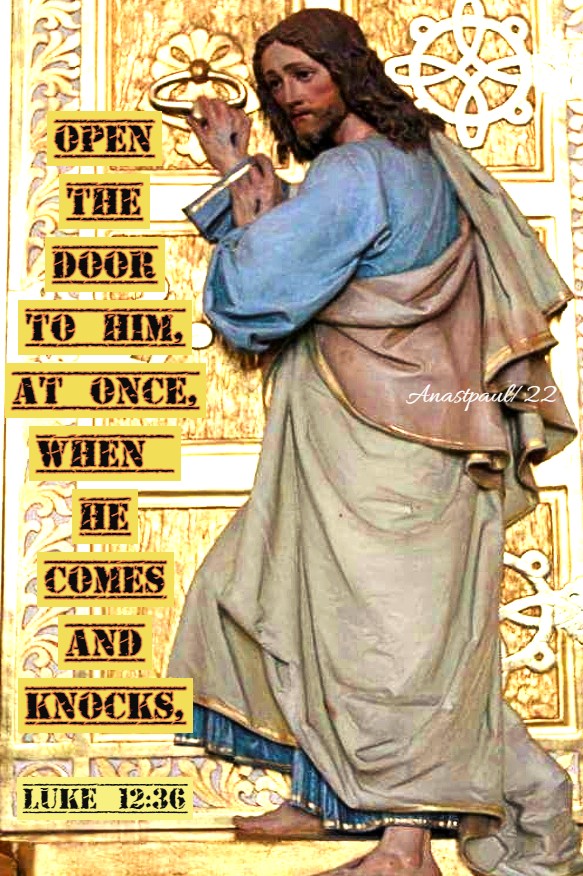
“Open the door to him, at once, when he comes and knocks.”
Luke 12:36
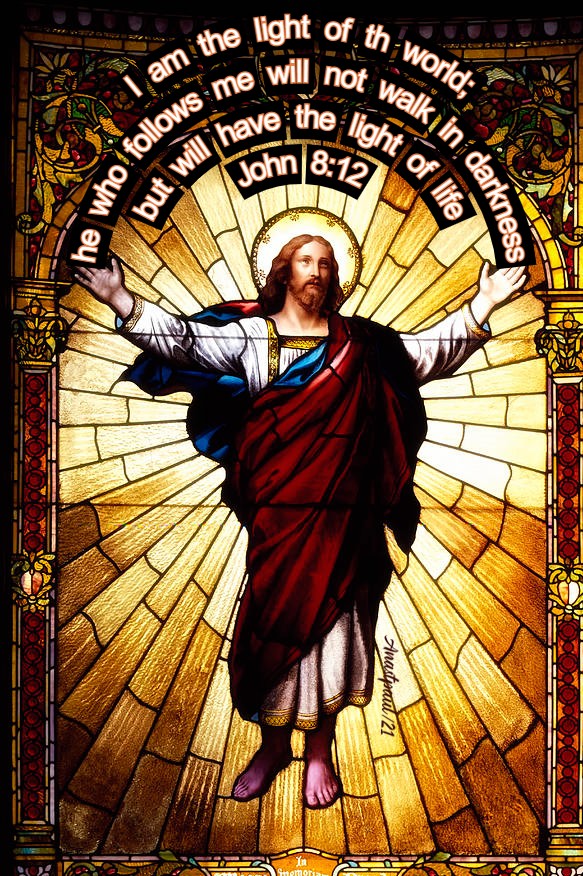
“I am the Light of the world; he who follows me will not walk in darkness but will have the light of life.”
John 8:12
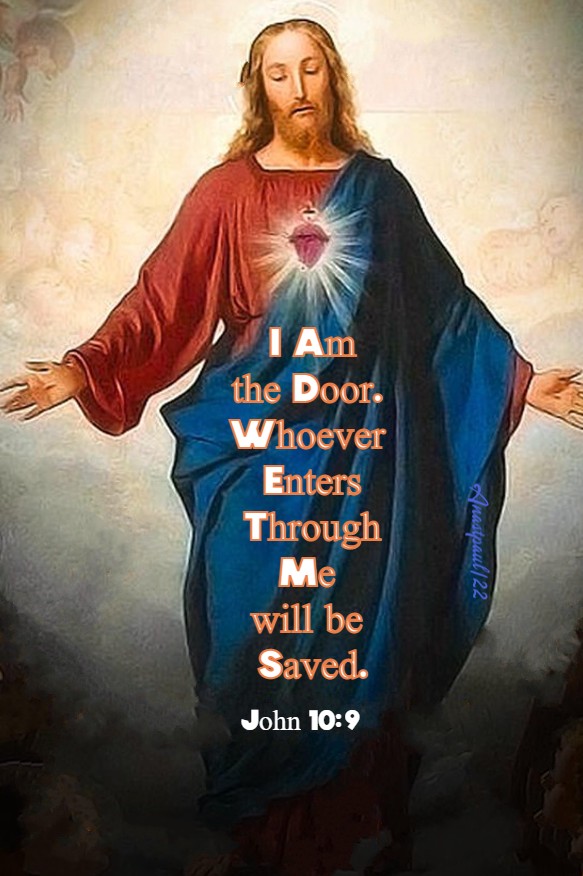
“I am the door. Whoever enters through me will be saved….”
John 10:9
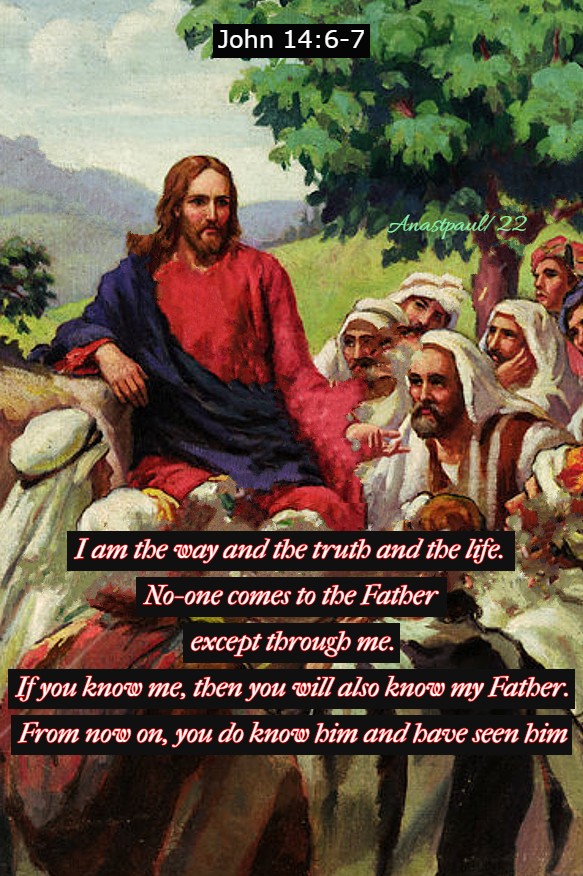
“I am the way and the truth and the life. No-one comes to the Father except through me. If you know me, then you will also know my Father. From now on, you do know him and have seen him.”
John 14:6-7
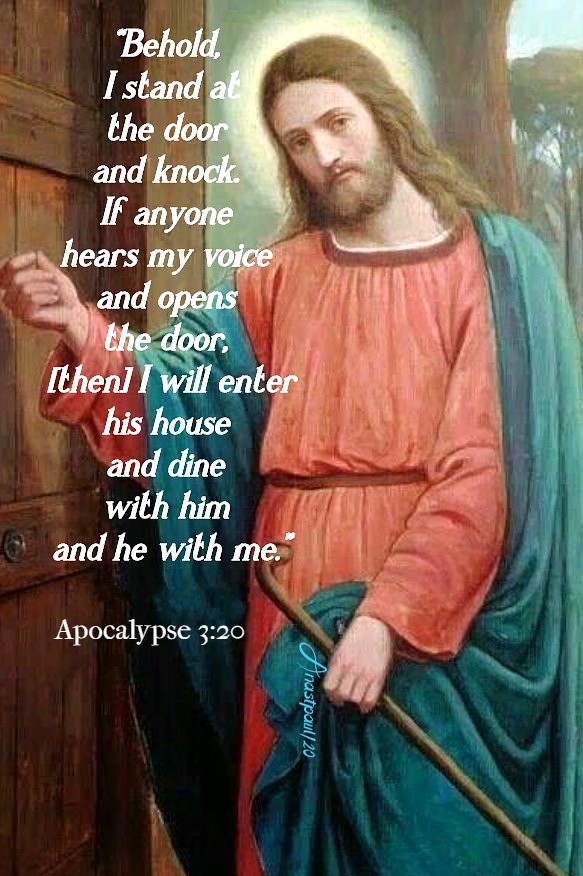
“Behold, I stand at the door and knock. If anyone hears my voice and opens the door, [then] I will enter his house and dine with him and he with me.”
Apocalypse 3:20
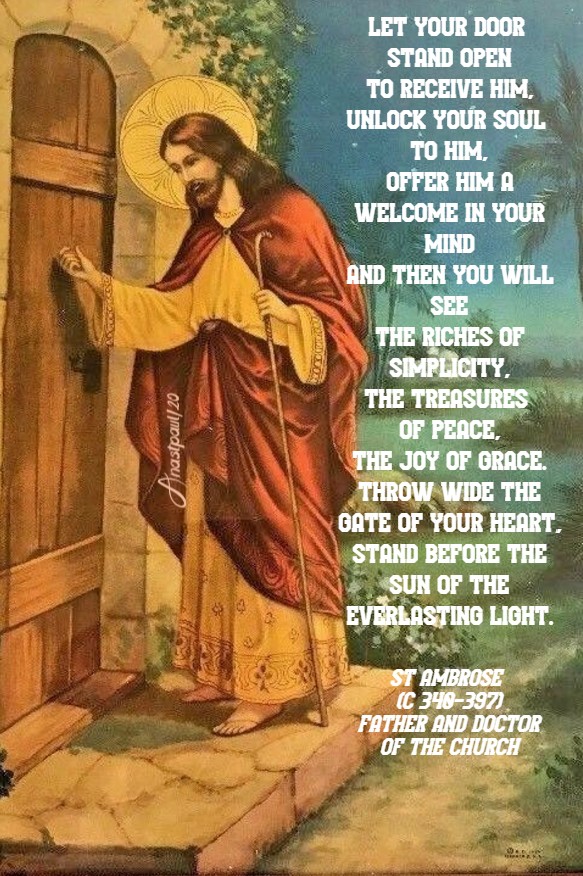
“Let your door stand open to receive Him, unlock your soul to Him, offer Him a welcome in your mind and then you will see the riches of simplicity, the treasures of peace, the joy of grace. Throw wide the gate of your heart, stand before the Sun of the everlasting Light.”
St Ambrose (c 340-397) Father and Doctor of the Church
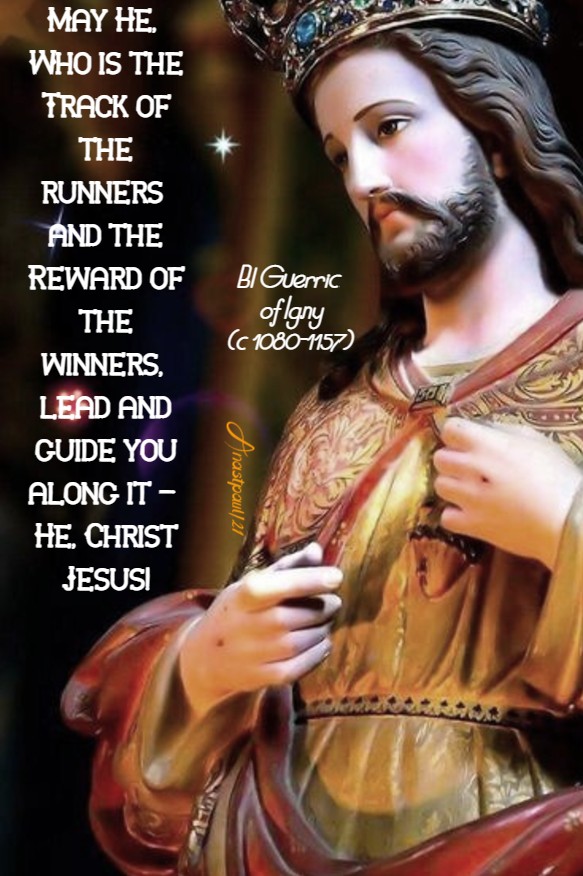
“May He, Who is the Track of the runners and the Reward of the winners, lead and guide you along it – He, Christ Jesus!”
Bl Guerric of Igny O.Cist (c 1080-1157)
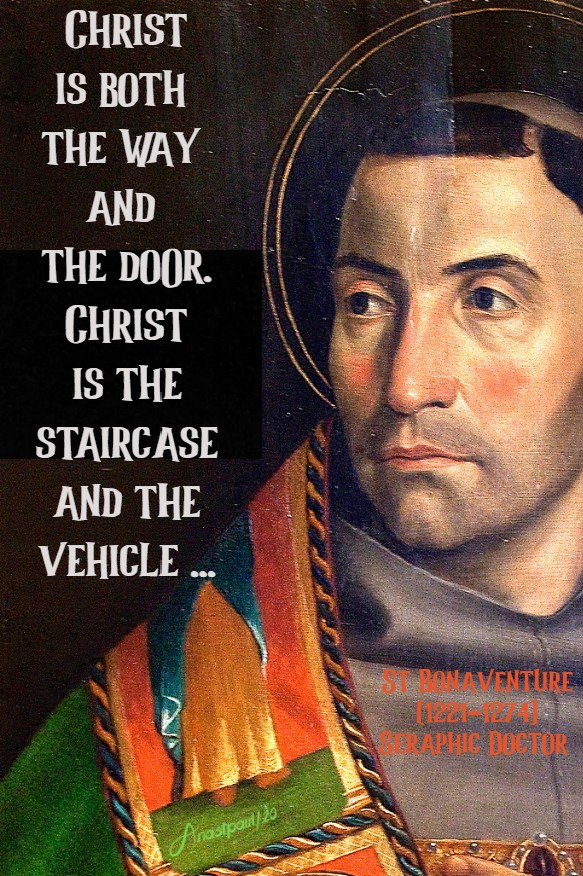
“Christ is both the way and the door. Christ is the staircase and the vehicle …”
St Bonaventure (1221-1274) Seraphic Doctor
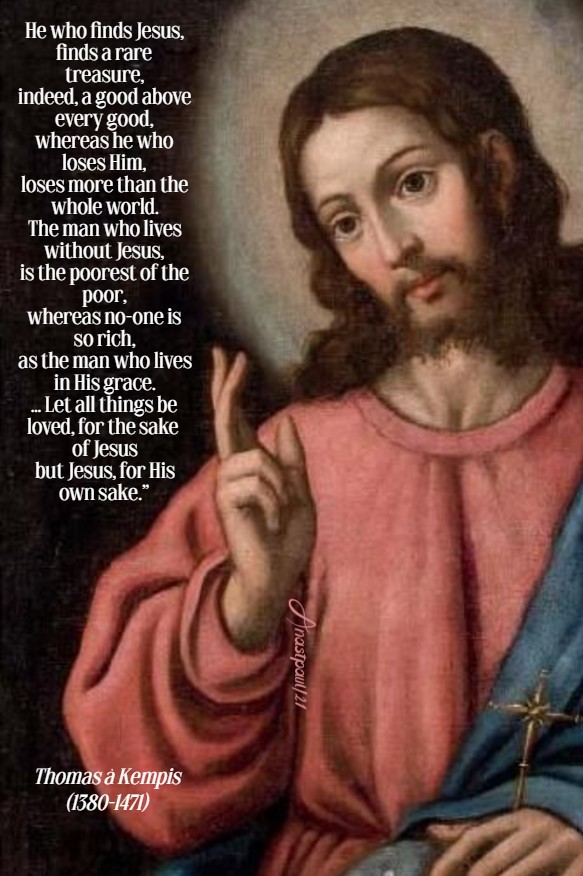
“ He who finds Jesus, finds a rare treasure, indeed, a good above every good, whereas he who loses Him, loses more than the whole world. The man who lives without Jesus, is the poorest of the poor, whereas no-one is so rich, as the man who lives in His grace. … Let all things be loved, for the sake of Jesus but Jesus, for His own sake.”
One Minute Reflection – 8 February – The Memorial of St John of Matha (1160-1213) Confessor – Sirach 31:8-11, Matthew 12:35-40
“Let your loins be girt about and your lamps burning and you yourselves ,like men waiting for their master’s return from the wedding; so that when he comes and knocks, they may straightaway open to him. Blessed are those servants whom the master, on his return, shall find watching.” – Luke 12:35-37
REFLECTION –“God, the Word, stirs up the lazy and arouses the sleeper. For indeed, someone who comes knocking at the door is always wanting to come in. But, it depends on us, if He does not always enter or always remain. May your door be open to Him Who comes; open your soul, enlarge your spiritual capacities, that you may discover the riches of simplicity, the treasures of peace and sweetness of grace. Expand your heart, run to meet the Sun of that Eternal Light that “enlightens everyone” (Jn 1,9). It is certain, that this true Light shines for all but, if anyone shuts their windows, then they themselves shut themselves off from this Eternal Light.
So even Christ remains outside, if you shut the door of your soul. It is true that He could enter but He does not want to use force, He does not put those who refuse under pressure. Descended from the Virgin, born from her womb, He shines throughout the universe to give light to all. Those who long to receive the Light, that shines with an everlasting brightness, open up to Him. No night comes to intervene. Indeed, the sun we see each day gives way to night’s darkness but the Sun of justice (Mal 3,20) knows no setting, for Wisdom is not overcome by evil.” – St Ambrose (340-397) Bishop of Milan and Father and Doctor of the Church – (12th Sermon on Psalm 118).
PRAYER – All-powerful, eternal God and Father, grant us the grace of Your Spirit and fill us with the light of understanding and love. May we learn to truly pray and by our prayers to entreat You to bless us in Your goodness and lead us to true faith in Your eternal light and Word sent to redeem us. May we always be waiting and prepared to open the door of our hearts to Jesus Christ our Lord, who comes in light, love and peace. Grant that by the prayers of blessed Saint John of Matha we may be strengthened. Holy Mother, be our protection and our guide. We make our prayer through Jesus Christ, our Lord with the Holy Spirit, God now and forever, amen.
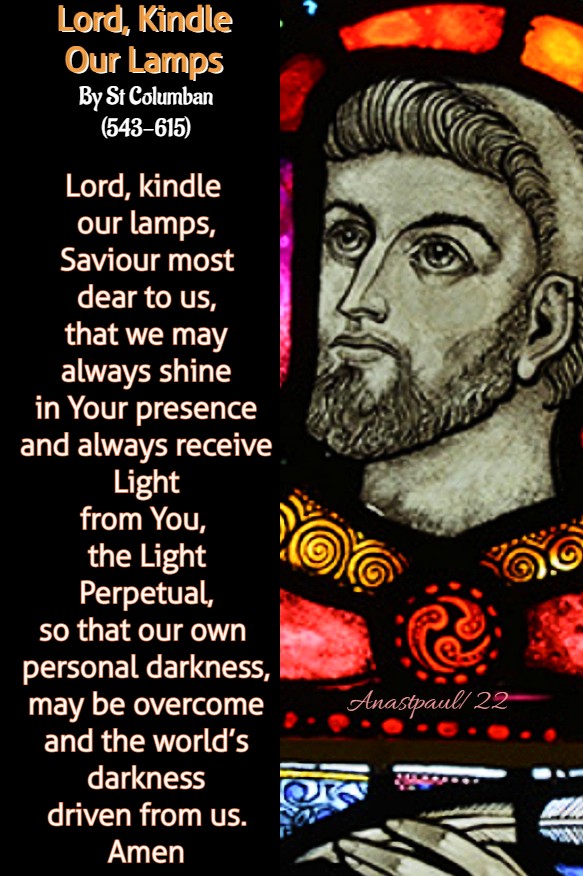
Lord, kindle our lamps, Saviour most dear to us, that we may always shine in Your presence and always receive Light from You, the Light Perpetual, so that our own personal darkness, may be overcome and the world’s darkness driven from us. Amen
(This is an excerpt from a much longer prayer and is taken from the wonderful Sermon XII by St Columban/us)
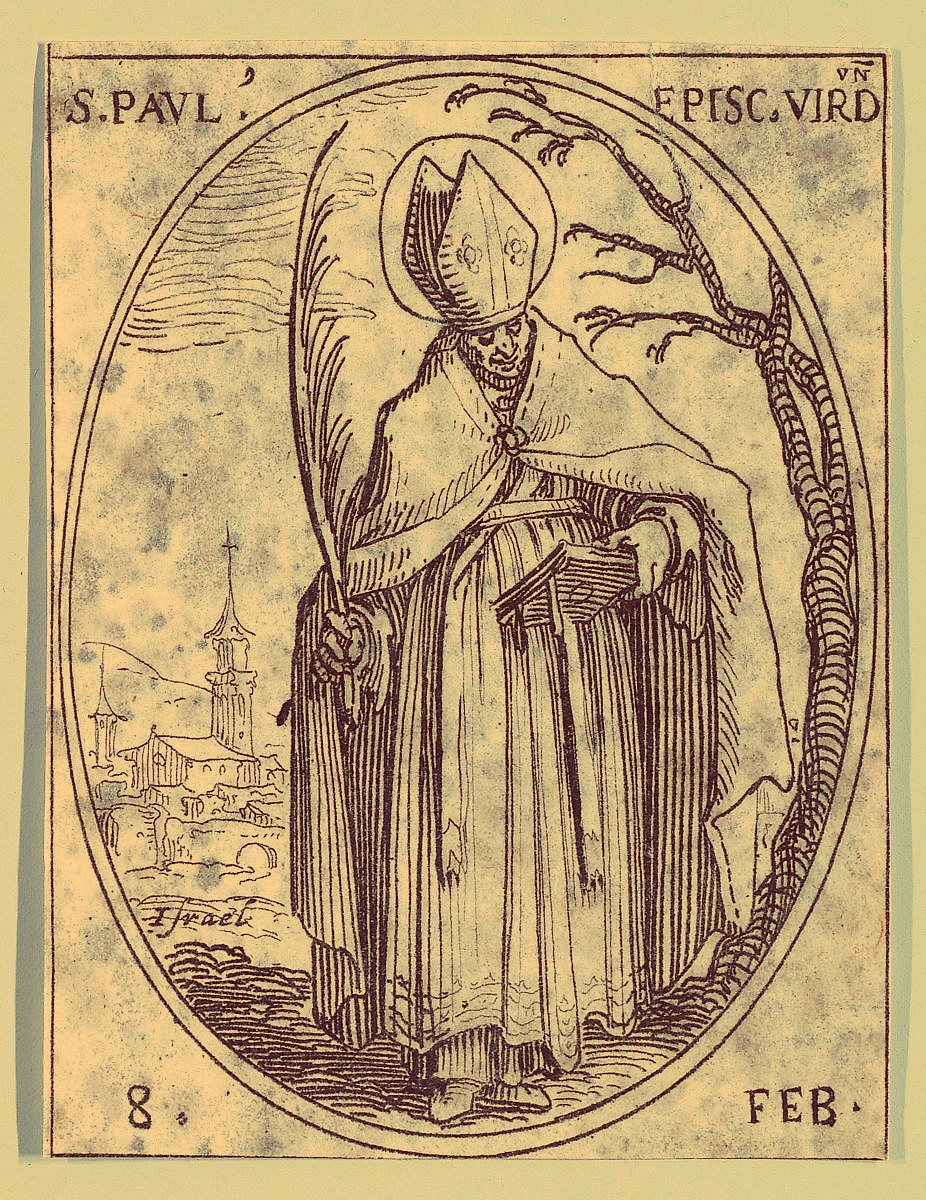
Saint of the Day – 8 February – St Paul of Verdun (c 576-c 648) Bishop of Verdun, in the Lorraine region of France from 630 until his death., Abbot. Patronage – Verdun, bakers and pastry chefs. Also known as St Paulus of Verdun.
The Roman Martyrology states: “At Verdun in France, St Paulus, Bishop renowned for miracles.”
Paul was the son of a wealthy family – his name suggests that he was part of the old Gallo-Roman aristocracy. According to St Augustine Abbey’s Book of Saints, Paulus was the brother of Saint Germanus of Paris, although in St Germanus’s Vita we find no reference to a brother, not that this is decisive, considering the little information we have of our ancient Saints.
Paul became a hermit and spent time in the mountains of Paulsberg (named for him in modern France), near Trier in modern Germany. Later he became a Monk at the Monastery at Tholey, Germany, where he was firstly appointed as the Master of the School and then the second Abbot.
In around 630, Paul was named the Bishop of Verdun, by King Dagobert I. According to his Vita he was made Bishop against his will and due to the influence of one of his students, Adalgisel Grimo. Reportedly he found the Diocese in a very poor financial state and was aided by grants from said Adalgisel and the Frankish King of Austrasia.
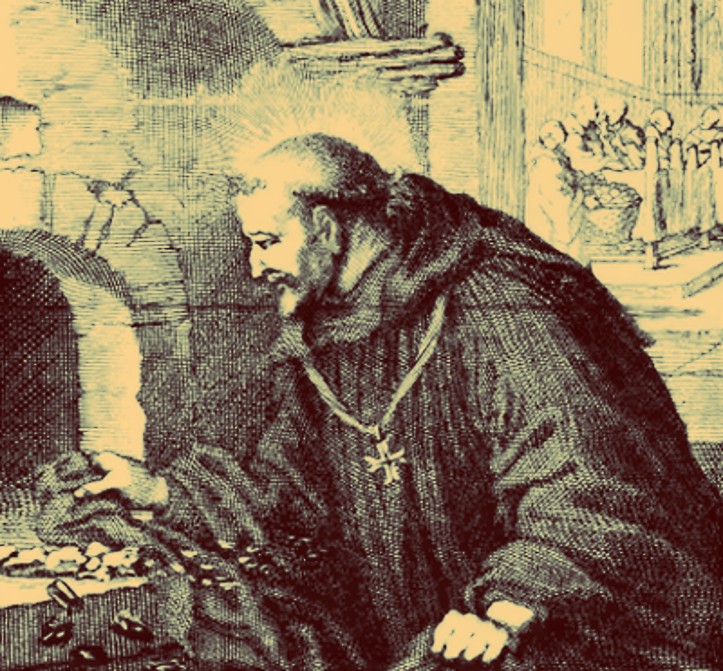
One of his numerous miracles relates, that as Paul was working in the bakery in the Abbey of Tholey when the oven became clogged with ash and malfunctioned. He feared that the bread would not be ready in time for the meal, so he climbed into the burning oven in full habit, cleaned it with his hood, arranged the loaves to be baked and later emerged from the oven with the fully baked loaves. Because of this miracle, Paulus became the Patron Saint of bakers and pastry chefs. On his feast day the “bread of Saint Paul” is distributed annually on the streets of Verdun.
Paul died in c 648 and was buried in the Church of St Saturninus in Verdun, which he had built and which was later renamed St Paul’s after him.
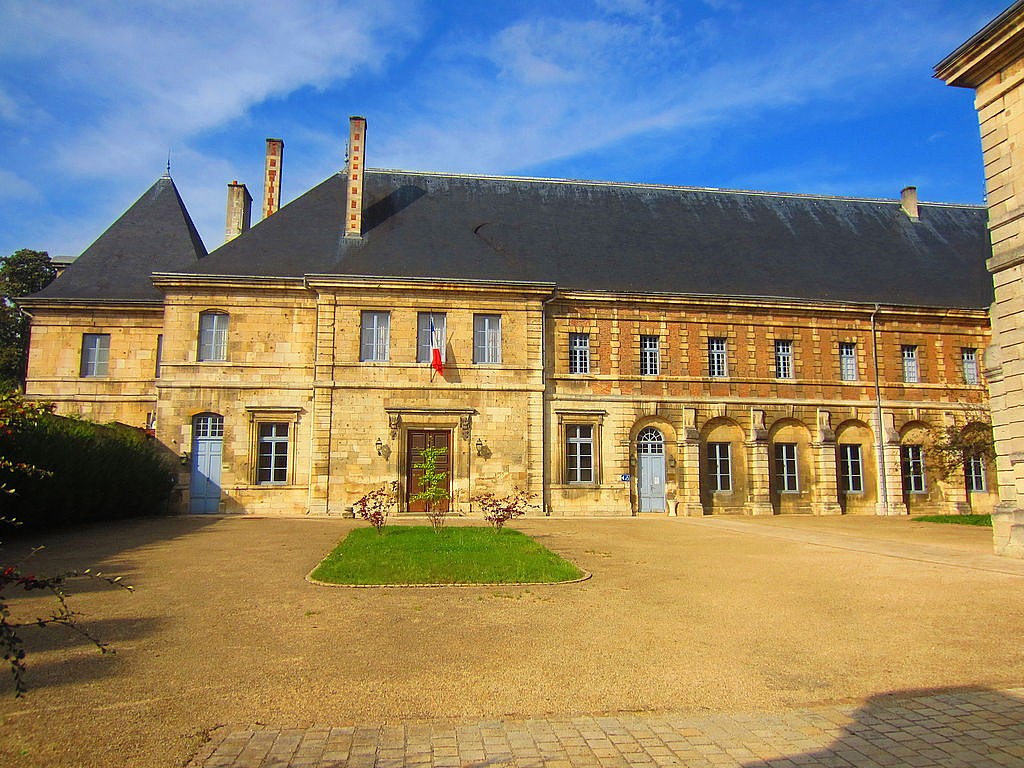
The Abbey of Saint-Paul de Verdun, founded by Bishop Viefrid from 970 to 973 was dedicated to him.
The Abbey of Verdun
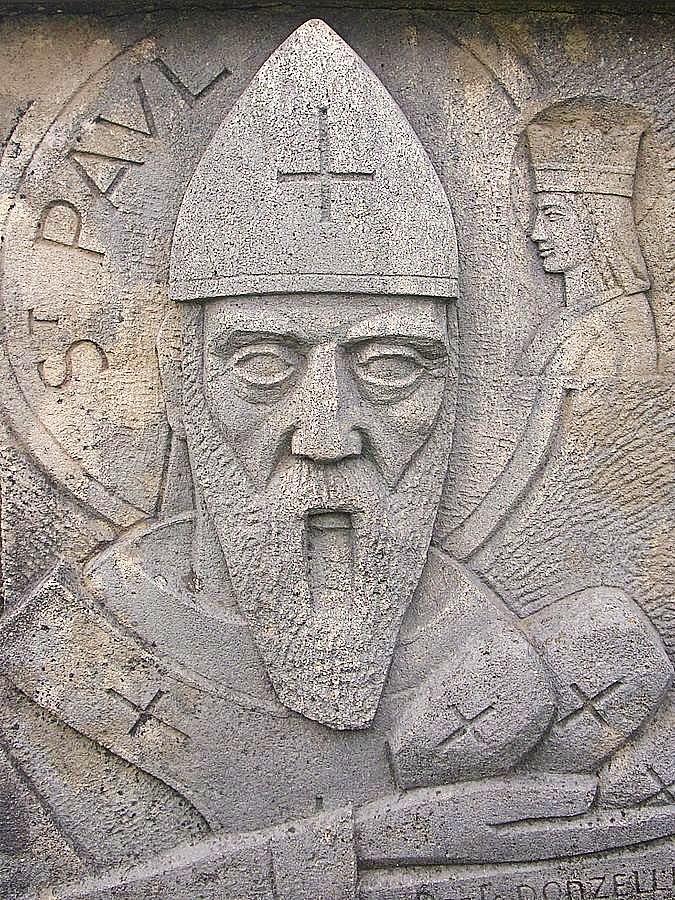
In addition, the “Paul-Cross” was erected in stone a few kilometers from Verdun, at a place called “Le Rozelier”. The Bishop Saint represented there was recognisable as Saint Paulus from the bread that he is holding. The Plague beneath this Cross states:
“In the late Ninth Century, the Monks of Tholey translated to their Abbey in Saarland the relics of Saint Paul, Bishop of Verdun, a former Monk of Tholey Abbey, in order to evade the Norman invasion. Here they were stopped by a mysterious and miraculous force. A cross was erected in this place, commemorating the miraculous event and is called the Paul Cross. The Abbey of Saint-Vanne de Verdun established a Priory there in the 12th century. The current Cross and the Altar, which contains a relic of St Paul, were blessed by Monseigneur Petit, Bishop of Verdun, on 14 August 1963.”
St Paul distributing bread from the “St Paul Cross” near Verdun
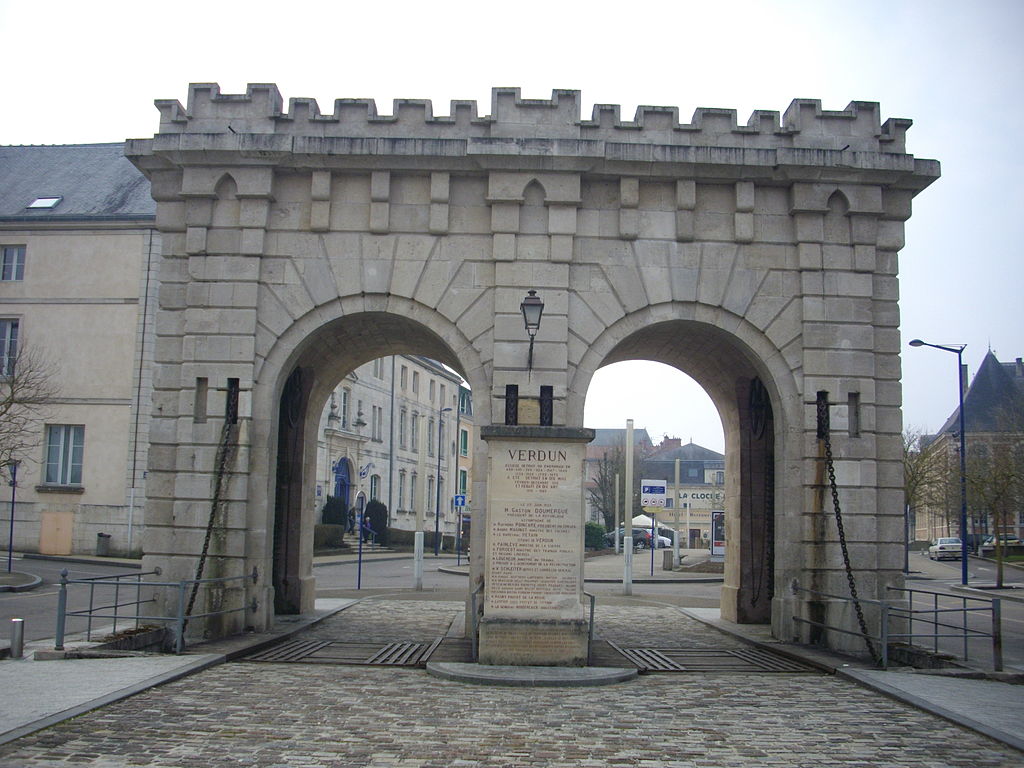
Added to the ramparts of the City of Verdun in the Nineteenth Century is a gate called “St Paul’s Gate.” iI is composed of two arched passages (entry and exit), each one protected by a drawbridge. The Gate allowed the Army conscripts arriving at the Station to enter the City centre and reach the Jeanne d’Arc Barracks. In the 1920s the ramparts around the lower City, weakened by the bombardments of 1916, were pulled down. The only surviving remnants are the Saint-Paul Gate along with the Tour Chaussée. The former has been decorated with commemorative plaques dedicated to victory in the Battle of Verdun and to the reconstruction of the City., believed, of course, to be due to the prayers of their people for the Intercession of the Blessed Virgin of Verdun and the beloved St Paul.
St Jerome Emiliani CRS (1486–1537) Layman, Founder of the Somascan Fathers, Apostle of the poor, orphans, the sick. Patronages – the Somaschians, orphans, abandoned children. St Jerome was numbered amongst the Saints by Pope Clement XIII and assigned the Feast Day of 20 July. About St Jerome: https://anastpaul.com/2019/02/08/saint-of-the-day-8-february-st-jerome-emiliani-crs-1486-1537/
St Giacuto St Gisela St Honoratus of Milan St Inventius of Pavia St Isaias Boner St Jacoba Bl Josephina Gabriella Bonino St Kigwe St Lucius of Rome St Meingold St Mlada of Prague St Nicetius of Besançon St Oncho of Clonmore St Paul of Rome St Paul of Verdun (c 576-c 648) Bishop
Martyrs of Constantinople: Community of 5th century Monks at the Monastery of Saint Dius at Constantinople. Imprisoned and martyred for loyalty to the Vatican during the Acacian Schism. 485 in Constantinople.
Martyrs of Persia: An unknown number of Christians murdered in early 6th-century Persia. Legend says that so many miracles occurred through the intercession of these Martyrs that the King decreed an end to the persecution of Christians.
Thought for the Day – 7 February – Meditations with Antonio Cardinal Bacci (1881-1971)
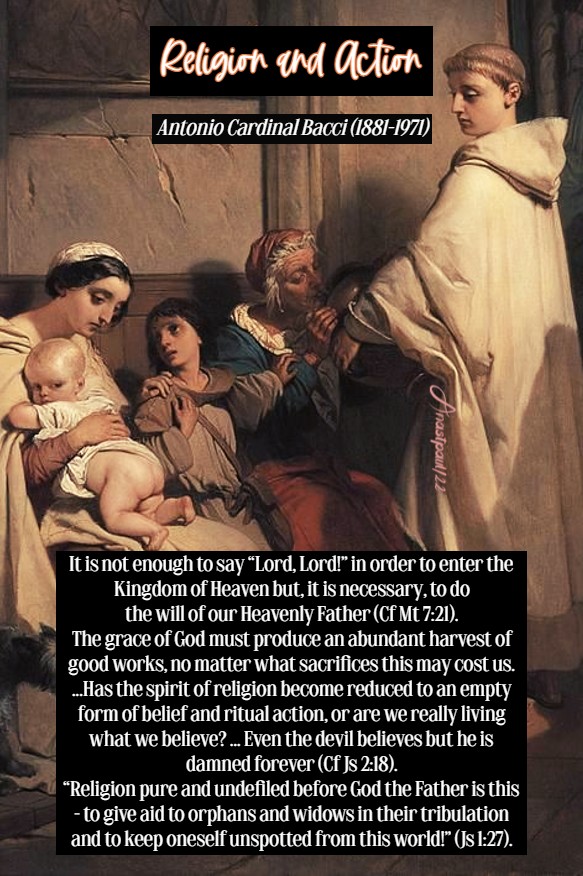
Religion and Action
“Anyone who fails to correspond with the grace of God, is not living the life of Jesus. Without the life of Jesus, he is a dead limb, a withered branch cut away from the vine. It is not enough to say “Lord, Lord!” in order to enter the Kingdom of Heaven but, it is necessary to do the will of our Heavenly Father (Cf Mt 7:21). The grace of God must produce an abundant harvest of good works, no matter what sacrifices this may cost us. Otherwise, God’s gift would have been bestowed in vain and, before the Supreme Judge one day, would be a reason for a terrible retribution, instead of a reward. Let us think seriously about this. Has the spirit of religion become reduced to an empty form of belief and ritual action, or are we really living what we believe? Meditate with attention to these words of St James: “What will it profit, my brethren, if a man says he has faith but does not have works? Can the faith save him? And if a brother or a sister be naked and in want of daily food and, one of you say to them, ‘Go in peace, be warmed and filled,’ yet you do not give them what is necessary for the body, what does it profit? So faith too, unless it has works, is dead in itself” (Js 2:14-17).
Even the devil believes but he is damned forever (Cf Js 2:18). “Religion pure and undefiled before God the Father is this – to give aid to orphans and widows in their tribulation and to keep oneself unspotted from this world!” (Js 1:27).
One Minute Reflection –7 February – The Memorial of St Romuald, Abbot (c 951-1027) – Ecclus 45:1-6, Matthew 19:27-29.
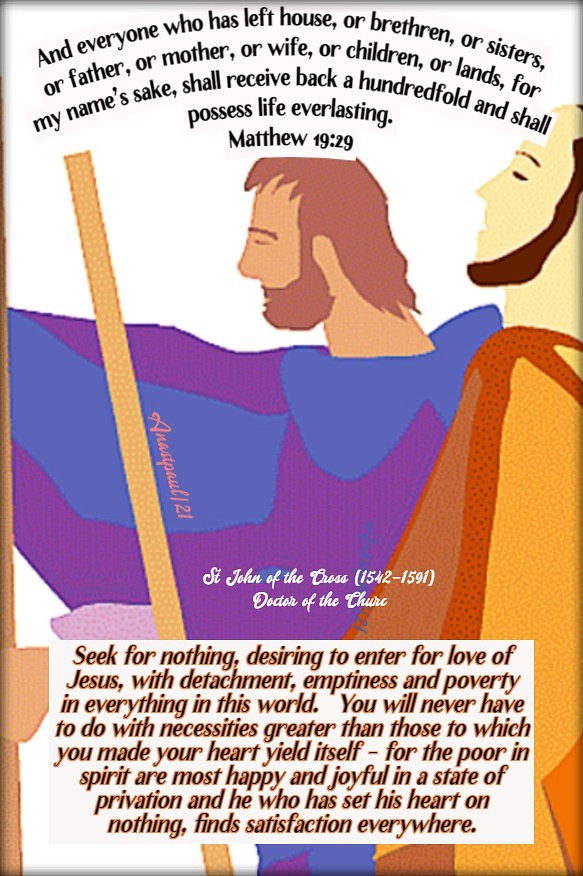
“And everyone who has left house, or brethren, or sisters, or father, or mother, or wife, or children, or lands for my name’s sake, shall receive a hundredfold and shall possess life everlasting.” – Matthew 19:29
REFLECTION – “Seek for nothing, desiring to enter for love of Jesus, with detachment, emptiness and poverty in everything in this world. You will never have to do with necessities greater than those to which you made your heart yield itself – for the poor in spirit are most happy and joyful in a state of privation and he who has set his heart on nothing, finds satisfaction everywhere.
The poor in spirit (Mt 5:3) give generously all they have and their pleasure consists in being thus deprived of everything for God’s sake and out of love to their neighbour … Not only do temporal goods – the delights and tastes of the senses – hinder and thwart the way of God but spiritual delights and consolations also, if sought for or clung to eagerly, disturb the way of virtue.” – St John of the Cross (1542-1591) Carmelite, Doctor of the Church (Spiritual maxims, nos. 352, 355,356, 364; 1693 edition)
PRAYER – Father of might and power, every good and perfect gift comes to us from You. Implant in our hearts the love of Your Name and Your creatures. Increase our zeal for Your service by following behind Your Son with determination and joy. Nourish in us what good and tend it with watchful care. Grant that the prayers and caring love of the Blessed Virgin, our Mother, may help us to follow Jesus our Saviour unreservedly and thus attain eternal life. We make our prayer through Christ, our Lord in the union of the Holy Spirit, one God for all eternity, amen.
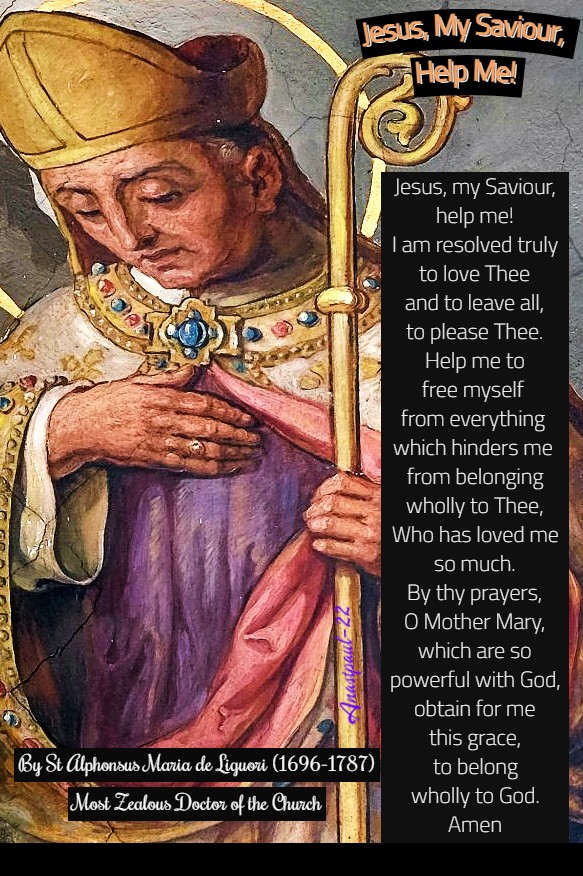
Jesus, My Saviour, Help Me! By St Alphonsus Maria de Liguori (1696-1787) Most Zealous Doctor of the Church
Jesus, my Saviour, help me! I am resolved truly to love Thee and to leave all, to please Thee. Help me to free myself from everything which hinders me from belonging wholly to Thee, Who has loved me so much. By thy prayers, O Mother Mary, which are so powerful with God, obtain for me this grace, to belong wholly to God. Amen
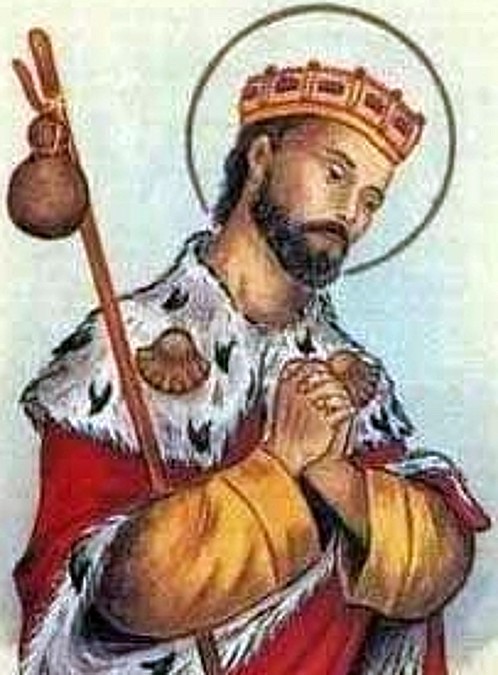
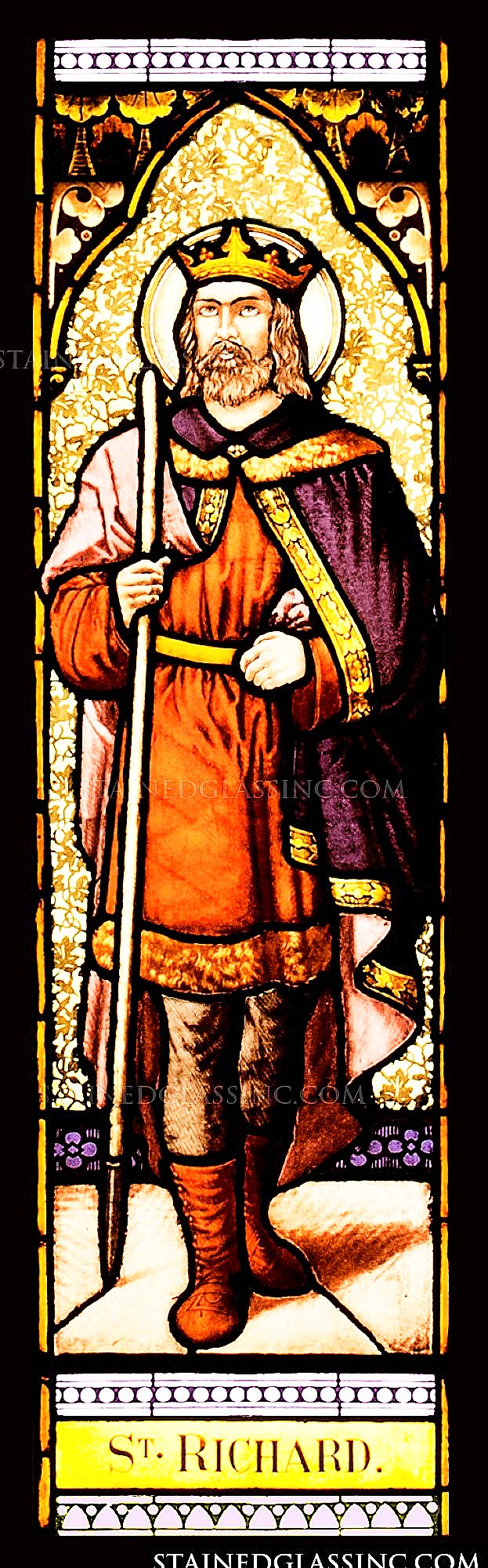
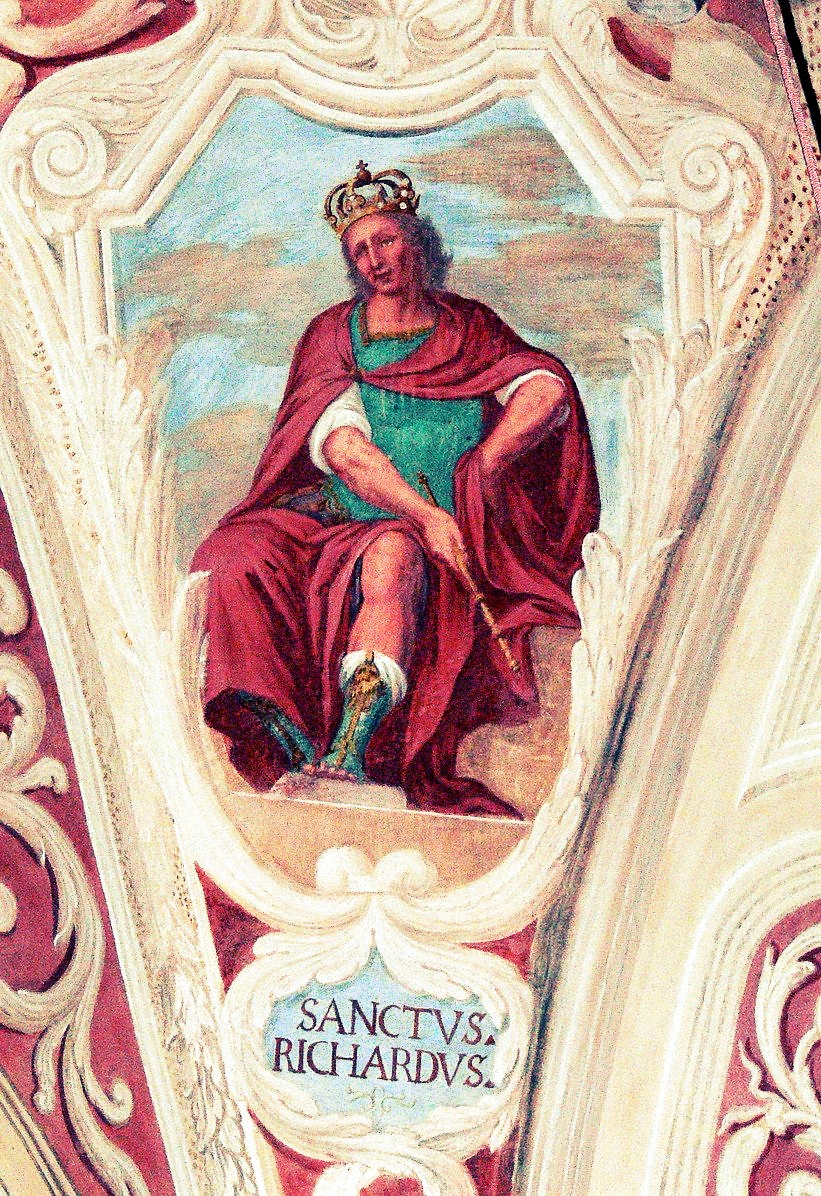
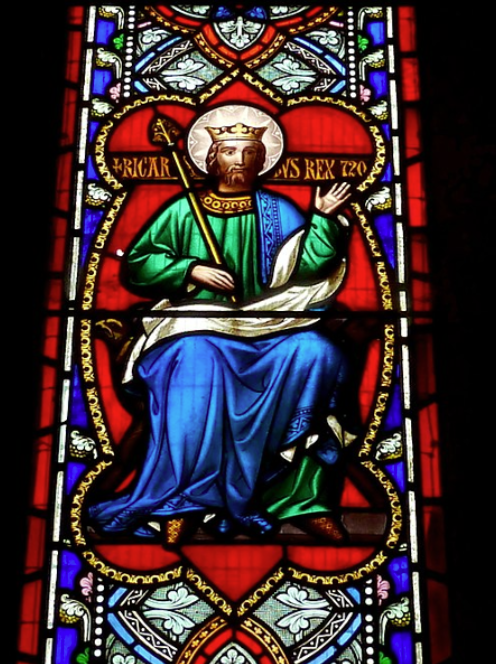
Saint of the Day – 7 February – Saint Richard the King Pilgrim (Died c 722) Layman Prince, Married and was the Father of the West Saxon Saints Willibald (Bishop of Eichstadt), Winnibald (Abbot of Heidesheim) and Walburga. (Virgin, Nun). Died in722 at Lucca, Italy of natural causes. Also known as – Richard of Lucca, Richard the Pilgrim, Richard the Saxon, Ricanus, Ricarius, Richard of Wessex.
The Roman Martyrology reads: “In Lucca, deposition of St Riccard, Father of the Saints Willibald, Winnibald and Walburga, who died on the way with his children from England to Rome.”
Richard, Prince of the Western Saxons, husband of a relative of Saint Boniface, St Wuna.
This noble and devout family came from Wessex, an English region and according to an account of the Nun Hugebure of Heidenheim, in 720, he entrusted his eleven-year-old daughter Walburga to the Abbess of Wimborne in Dorset, renounced his estates, and left with his two sons on a pilgrimage to Rome. Willibald was just twenty and Wunibald was nineteen.
Left to right – St Willibald, St Wuna, St Richard, St Walburga, St Winnibald
Sailing on the River Hamble, near Southampton, they crossed the English Channel and then up the Seine, finally arriving at Rouen in France. Not before having visited and prayed at numerous French Shrines and Sanctuaries, the three pilgrims then made their way to Italy.
Riccard died unexpectedly after developing a fever, near Lucca in c 722, before reaching Rome. In this Tuscan City, the pilgrim Saint still rests today and his relics are the object of veneration in the Basilica of St Fredian.
St Willibald then joined the famous St Boniface in the evangelisation of Germany, founding the double Monastery of Heidenheim and becoming the first Bishop of the City of Eichstatt. Wunibald was also a Missionary with them and ran the Heidenheim Monastery with his sister Walburga., when she joined them. When Willibald died and was buried in Eichstadt, it was desired that Riccard’s remains, which were still deposited in Lucca, would be transferred there so that they could rest next to those of his son. The faithful of Lucca, however, firmly opposed this suggestion and the inhabitants of Eichstadt had to be content with a little dust from his tomb.
However, in consideration of the sublime holiness of his offspring and the numerous miracles that occurred at his tomb in St Fredian, a life of “Saint Richard, King of England” was then written, a title thus also bestowed upon him by the Catholic Martyrology until 1956.
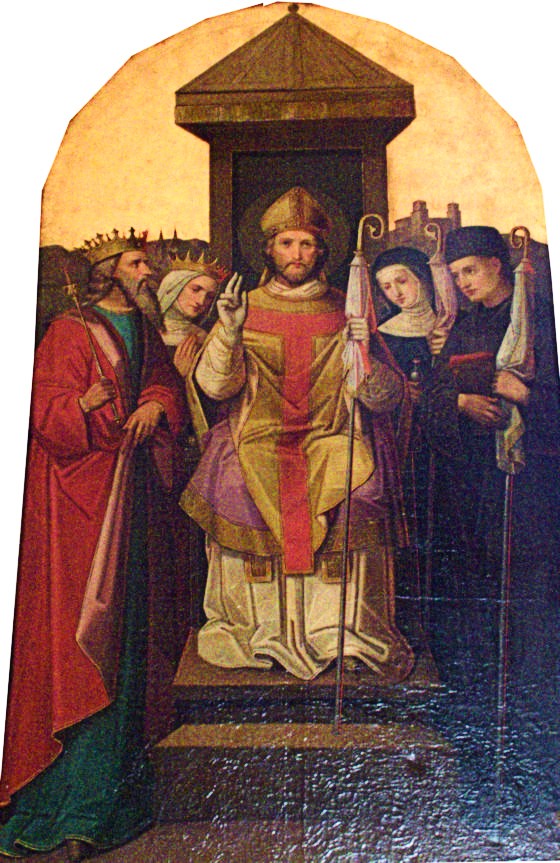
Richard is depicted with the Blessed Mother and his three children at Eichstädt Cathedral. In religious artworks, Richard is portrayed as a royal pilgrim in an ermine-lined cloak with two sons, one a Bishop and one an Abbot.
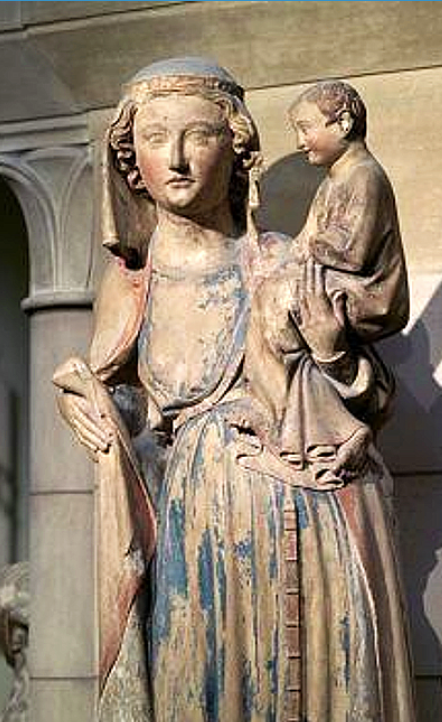
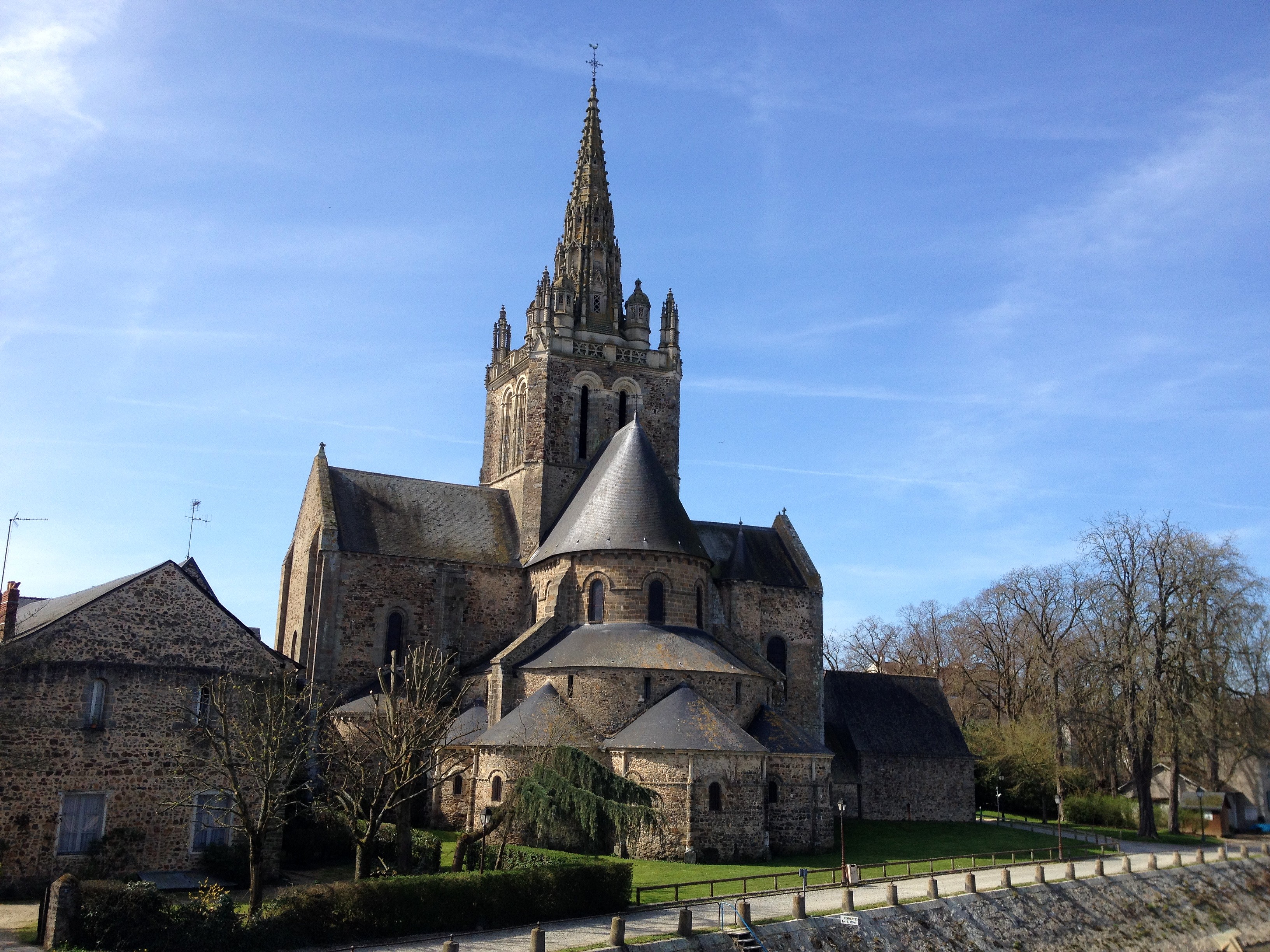
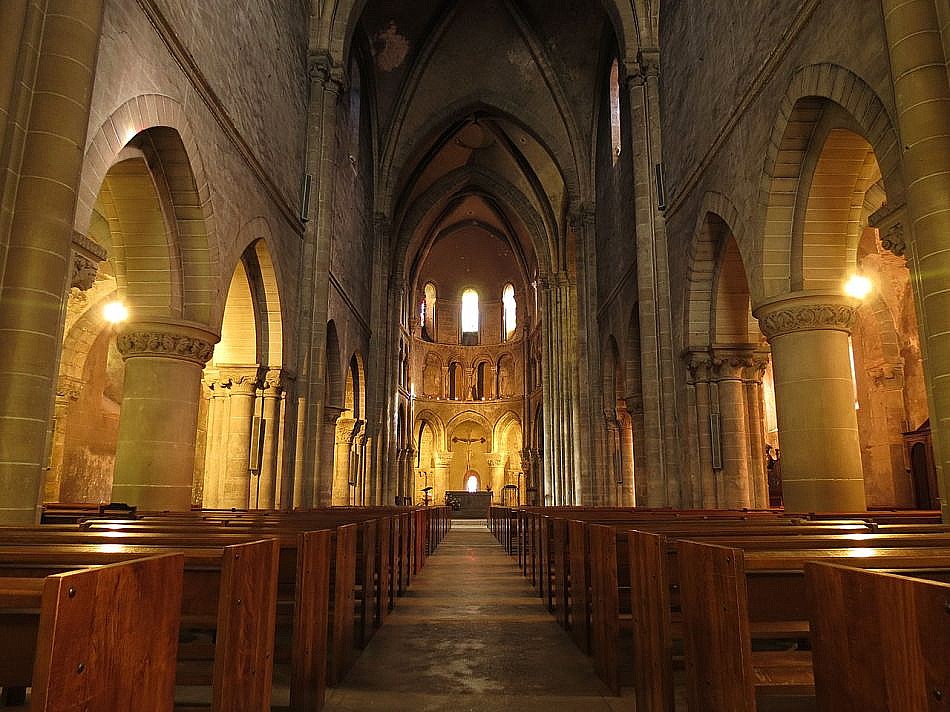
Notre-Dame d’Avesniéres, Laval / Our Lady of Avesnières, Laval, France (11th Century) – 7 February:
The Basilica of Notre-Dame Avesnières is located in Laval, in the region of Pays de la Loire. It is located in the district of Avesnières, on the right bank of the Mayenne river and south of the City centre. The Church has existed at least since the 11th Century but it got its present appearance in the 12th Century, when the Benedictines set up a Priory here. The nuns left Avesnières during the Hundred Years’ War and the Church then became a simple Parish Church. It was raised to the rank of minor Basilica in 1898, by Pope Leo XIII.
The Church was founded by Guy, Lord of Laval, who, falling into the river wanting to cross it, was miraculously saved from drowning, by the Blessed Virgin and transported safely to the river bank. The spot was chosen, in remembrance of this miraculous rescue, to host a Sanctuary dedicated to the Notre-Dame. In 1871, Monsignor Casimir Wicart, first Bishop of Laval, in the face of the anxiety provoked by the advance of the Prussian troops, decided to organise a large prayer vigil in Avesnières. At this ceremony, the faithful assembled and took an oath to rebuild the Church if the Blessed Mother saved the City from foreign occupation. The next day, the Prussians were stopped in their tracks in Saint-Melaine, at the gates of Laval, when the Virgin appeared before them. Where is our faith today?!
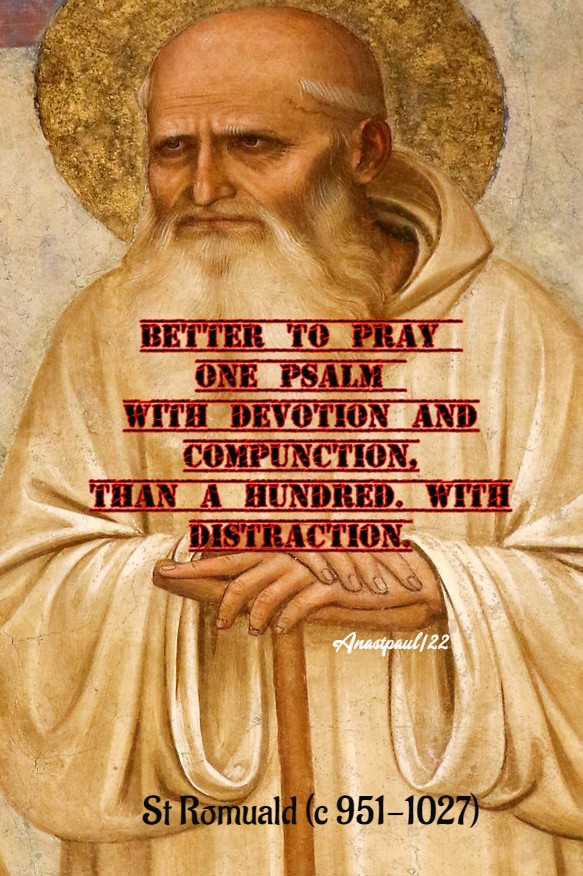
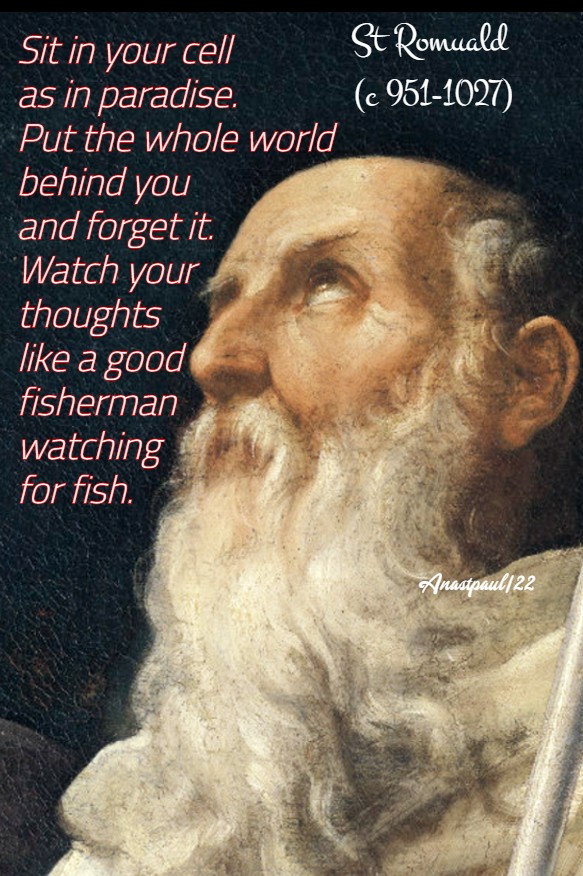
St Romuald (c 951-1027) Monk, Abbot, Ascetic, Founder of the Camaldolese Order and a major figure in the Eleventh-Century “Renaissance of eremitical asceticism.” His Feast Day is today and was thus from 1595. It was changed to 19 June in 1969. St Romuald’s Life: https://anastpaul.com/2018/06/19/saint-of-the-day-19-june-st-romuald-c-951-1027/
St Adaucus of Phrygia St Amulwinus of Lobbes St Anatolius of Cahors Bl Anna Maria Adorni Botti Bl Anselmo Polanco Bl Anthony of Stroncone St Augulus St Chrysolius of Armenia St Fidelis of Merida Bl Felipe Ripoll Morata
St Giles Mary of Saint Joseph OFM (1729-1812) known as the “Consoler of Naples” and the “Saint of the Little Way.” Although his desire was to become a priest, his lack of education meant that he was unable to fulfil this desire and served instead as a professed religious Friar in the Order of Friars Minor in Naples. St Giles Life: https://anastpaul.com/2019/02/07/saint-of-the-day-7-february-st-giles-mary-of-st-joseph-ofm-1729-1812/
Bl Jacques Sales St John of Triora St Juliana of Bologna Bl Klara Szczesna St Lorenzo Maiorano St Luke the Younger
Blessed Mary of Providence/Eugénie Smet HHS (1825-1871) Nun and Founder of the Society of the Helpers of the Holy Souls. Her apostolate has spread throughout the world – now in 24 countries and continues to minister to the Souls in the Body of Christ — both those on earth and those who have departed this world. Biography: https://anastpaul.com/2021/02/07/saint-of-the-day-7-february-blessed-mary-of-providence-hhs-1825-1871/
St Maximus of Nola St Meldon of Péronne St Moses the Hermit St Parthenius of Lampsacus Bl Peter Verhun
Blessed Pope Pius IX (1792-1878) Bishop of Rome from 16 June 1846 to the day of his death. He is the longest-reigning Pope in the history of the Church, serving for over 31 years. During his Pontificate, Pius IX convened the First Vatican Council (1869–70), which decreed Papal Infallibility and promulgated the Dogma of the Immaculate Conception. Pope Pius IX named three new Doctors of the Church: St Hilary of Poitiers (1851), St Alphonsus Liguori (1871) St Francis de Sales (19 July 1877). His body is incorrupt. All about Blessed Pope Pius IX: https://anastpaul.wordpress.com/2018/02/07/saint-of-the-day-blessed-pope-pius-ix-1792-1878/
St Richard the King Pilgrim (Died c 722) Layman Bl Rizziero of Muccia Bl Rosalie Rendu (1786-1856) St Theodore Stratelates
Thought for the Day – 6 February – Meditations with Antonio Cardinal Bacci (1881-1971)
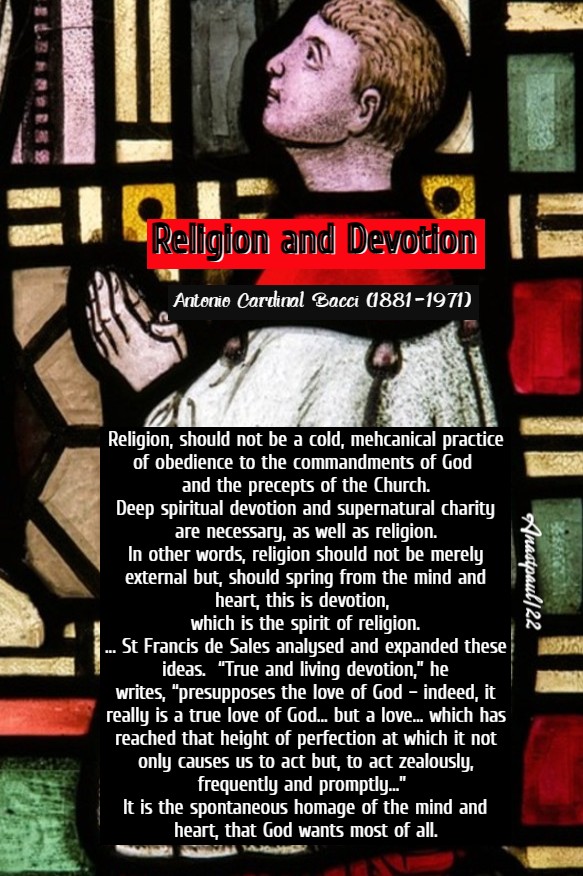
Religion and Devotion
“Religion, should not be a cold, mehcanical practice of obedience to the commandments of God and the precepts of the Church. Deep spiritual devotion and supernatural charity are necessary, as well as religion. In other words, religion should not be merely external but, should spring from the mind and heart, this is devotion, which is the spirit of religion. “Devotion,” wites Aquinas, “seems to be the determination to give one’s self readily to the service of God” (Summa Theologiae, II-II, q 82, a 2, ad 1). But this determination should be loving and effective because, as St Thomas also observes, “charity generates devotion” (Summa Theologiae, II-II, q 82, a 2, ad 2).
St Francis de Sales analysed and expanded these ideas. “True and living devotion,” he writes, “presupposes the love of God – indeed, it really is a true love of God… but a love… which has reached that height of perfection at which it not only causes us to act but, to act zealously, frequently and promptly…” (Introduction to the Devout Life, Bk I, C 1). He continues: “Since devotion consists in an unique degree of charity, it not only makes us prompt, active and zealous in the observance of all the divine commands but, incites us, furthermore, to perform readily and lovingly, as many good works as we can… even if they are only recommended or suggested” (Ibid). From this solid and sincere devotion flows, that taste for divine things, that inner gentleness and peace of spirit which the Saints enjoyed, even in the midst of sorrow and disillusionment. It is the spontaneous homage of the mind and heart, that God wants most of all.”
Quote/s of the Day – 6 February – The Fifth Sunday after the Epiphany – Readings: Colossians 3:12-17, Matthew 13:24-30
“A sower went out to sow”
Matthew 13:30
“Sir, did you not sow good seed in your field? How then has it weeds?”
Matthew 13:27
“It is better to be cured within the Church’s community than to be cut off from its Body as incurable members. As long as a member still forms part of the Body, there is no reason to despair of its cure; once it has been cut off, it can be neither cured nor healed.”
St Augustine (354-430) Father and Doctor of Grace
“Brethren, the just man shall scarcely be saved. What, then, will become of the sinner?”
St Arsenius s the Great (c 354-c 449)
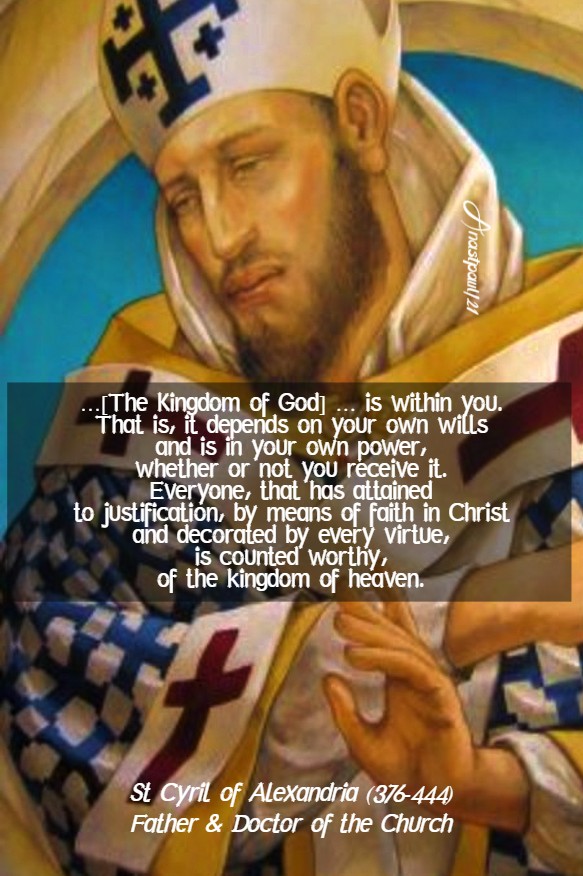
“… [The Kingdom of God] … is within you. That is, it depends on your own wills and is in your own power, whether or not you receive it. Everyone, that has attained to justification, by means of faith in Christ and decorated by every virtue, is counted worthy, of the Kingdom of Heaven.”
St Cyril of Alexandria (376-444) Father and Doctor of the Church
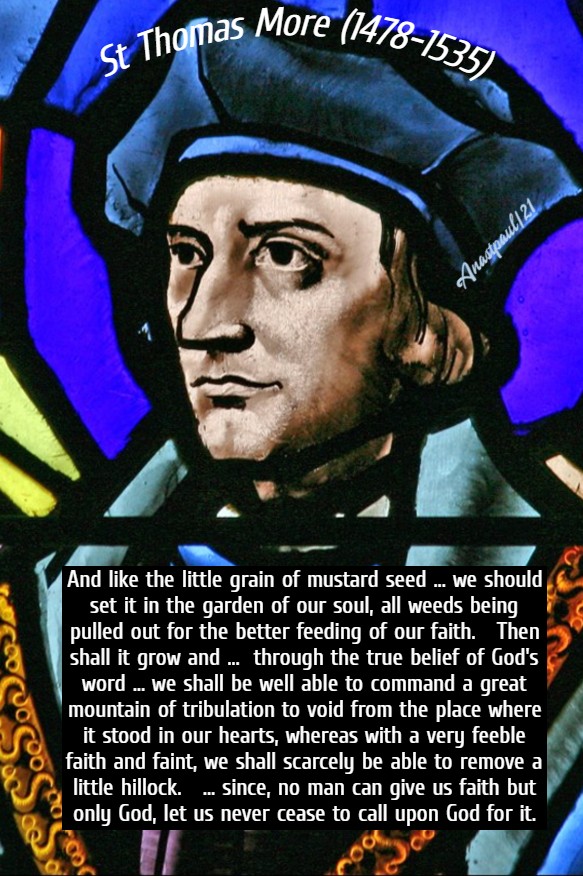
“And like the little grain of mustard seed … we should set it in the garden of our soul, all weeds being pulled out for the better feeding of our faith. Then shall it grow and … through the true belief of God’s word … we shall be well able to command a great mountain of tribulation to void from the place where it stood in our hearts, whereas with a very feeble faith and faint, we shall scarcely be able to remove a little hillock.”
St Thomas More (1478-1535)
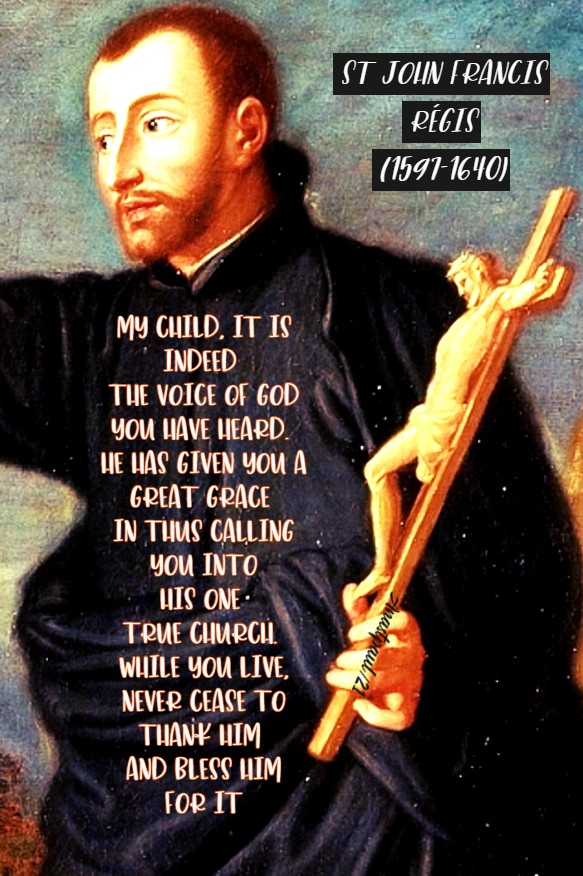
“My child, it is indeed the Voice of God you have heard. He has given you a great grace in thus calling you into His one true Church. While you live, never cease to thank Him and bless Him for it.”
One Minute Reflection – 6 February – The Fifth Sunday after the Epiphany – Readings: Colossians 3:12-17, Matthew 13:24-30
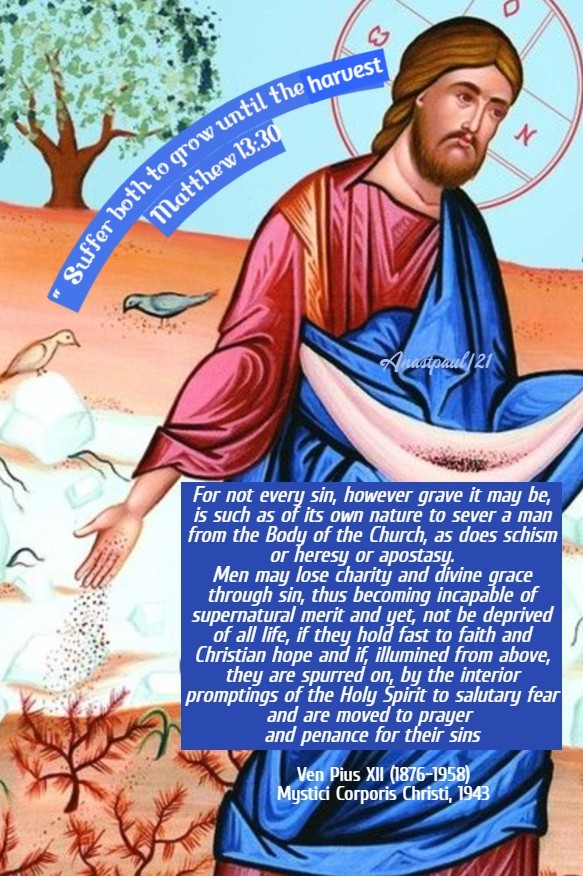
“Suffer both to grow until the harvest” – Matthew 13:30
REFLECTION – “Nor must one imagine that the Body of the Church, just because it bears the name of Christ, is made up during the days of its earthly pilgrimage, only of members conspicuous for their holiness, or, that it consists only of those whom God has predestined to eternal happiness. It is owing to the Saviour’s infinite mercy, that place is allowed in His Mystical Body here below, for those whom, of old, He did not exclude from the banquet (cf. Mt 9:11). For not every sin, however grave it may be, is such as of its own nature to sever a man from the Body of the Church, as does schism or heresy or apostasy. Men may lose charity and divine grace through sin, thus becoming incapable of supernatural merit and yet, not be deprived of all life, if they hold fast to faith and Christian hope and if, illumined from above, they are spurred on, by the interior promptings of the Holy Spirit to salutary fear and are moved to prayer and penance for their sins.
Let everyone then abhor sin, which defiles the mystical members of our Redeemer but,, if anyone unhappily falls and his obstinacy has not made him unworthy of communion with the faithful, let him be received with great love and let eager charity see in him a weak member of Jesus Christ. For, as the Bishop of Hippo remarks – “it is better to be cured within the Church’s community than to be cut off from its Body as incurable members. As long as a member still forms part of the Body, there is no reason to despair of its cure; once it has been cut off, it can be neither cured nor healed.’”- Venerable Pius XII (1876-1958) – Pope from 1939 to 1958 – Encyclical – Mystici Corporis Christi, 1943.
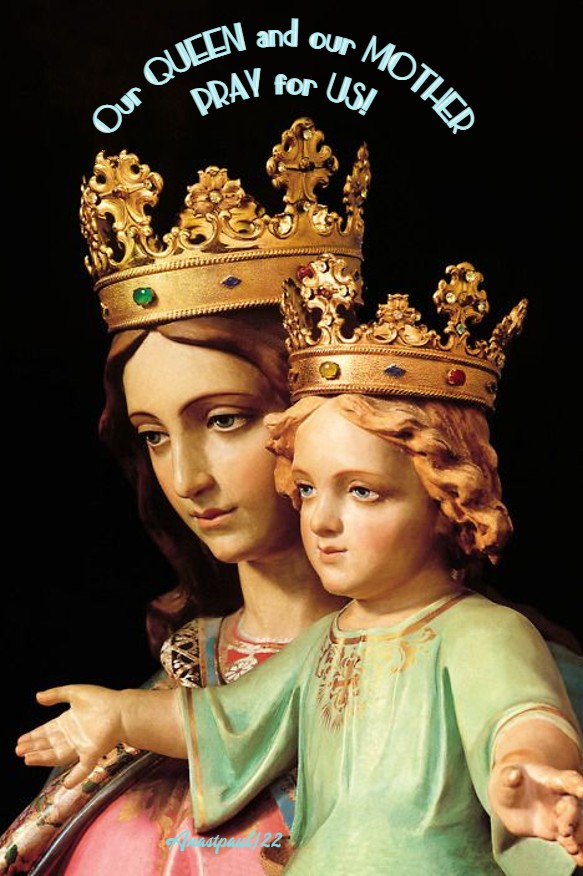
PRAYER – All-powerful and ever-living God, splendour of true light and never-ending day, chase away the night of sin and fill our minds with the glory of Your coming. Take away our heart of stone and give us a heart of flesh, help us in our battle with sin and the devil. By our prayers, Your holy sacraments and the strength of the Holy Spirit, may we be ever vigilant of the evil one. Hear the prayers of our Queen and Mother, the Blessed Virgin of Mercy on our behalf dear Lord. We make our prayer through Christ, our Lord with the Holy Spirit, one God forever, amen.
Our Morning Offering – 6 February – The Fifth Sunday after the Epiphany
In the Name of the Father, Son and Holy Spirit By St Hilary of Poitiers (315-368) Father & Doctor of the Church
Father, keep us from vain strife of words. Grant to us constant profession of the Truth! Preserve us in a true and undefiled faith so that we may hold fast to that which we professed when we were Baptised in the Name of the Father, Son and Holy Spirit, that we may have You for our Father, that we may abide in Your Son and in the fellowship of the Holy Spirit. Through Jesus Christ, Our Lord. Amen
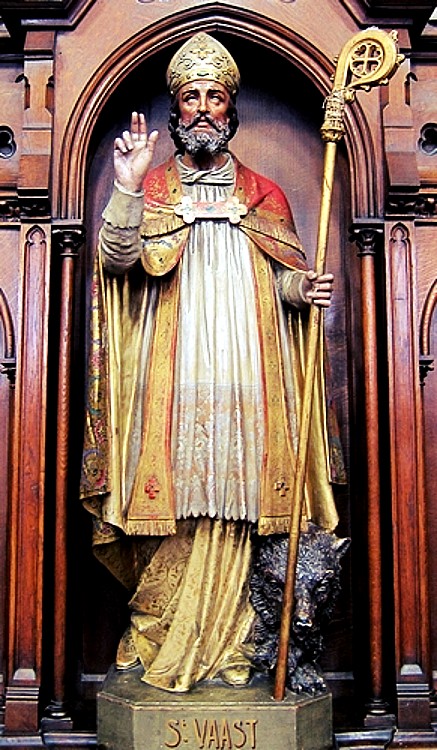
Saint of the Day – 6 February – Saint Vaast of Arras (c 453-539 or 540) The First Bishop of Arras, France, Hermit, Ascetic, Miracle-worker, Advisor to King Clovis. Born in c 453 at Limoges, France and died on 6 February in 539–540 at Arras, France of natural causes. Patronages – against eye diseases, of the Diocese of Arras, Boulogne and Saint-Omer, France, of children, of children who late learning to walk. Also known as – Foster, Gaston, Gastone, Vaat, Vedast, Vedasto, Vedastus. Additional Memorials – 2 January (discovery of relics), 7 February (enshrinement of relics), 15 July (translation of relics in Cambrai), 1 October (translation of relics).
The Roman Martyrology reads: “In Arras in Belgian Gaul, today in France, Saint Vedastus, Bishop, who, sent by Saint Remigius Bishop of Rheims to the devastated City, catechised King Clovis, re-established the Church and held it for about forty years and brought to an end, the need of work for evangelisation among the previously still pagan peoples of the region.”
Vaast was a native of the Limoges region, born in the second half of the 5th century. He left his parents as a young man and embarked on a secluded ascetic life as a Hermit, hidden from the world in the Diocese of Toul, France. It was there, near Toul, that he accidentally met King Clovis I who, after defeating the Germans, was returning to his country.
The traditional account of the conversion of King Clovis by St Vaast, says while on the road to Rheims, they encountered a blind beggar at the bridge over the river Aisne. The man besought Vaast’s assistance. Vaast, in this account had already been Ordained a Priest, was inspired to pray and blessed the beggar, at which point the man immediately recovered his sight. The miracle convinced the King to adopt his wife’s religion. Vaast became and remained an advisor to King Clovis. until the King’s death.
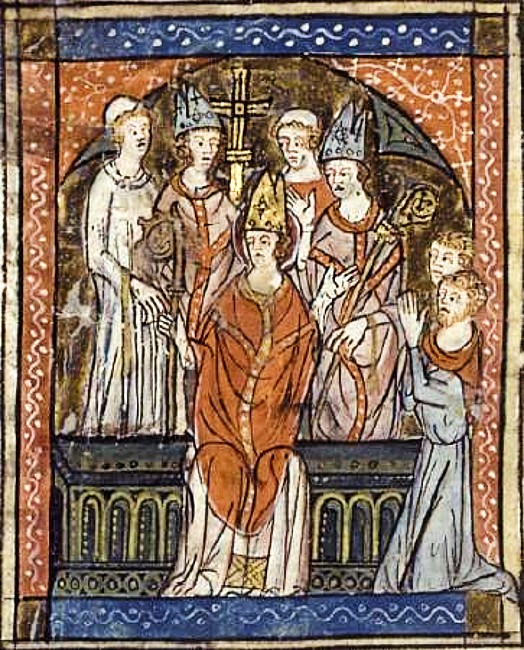
They continued their journey to Rheims, where Bishop St Remigius administered Baptism to the King. On his departure, Clovis recommended his instructor to the Bishop, who, knowing of the Hermit’s moral, devotional and theological qualities, first Ordained him as a Priest and then Consecrated him as the Bishop of Arras. (in the year 500).
The Consecration of St Vaast
This City of Arras was initially sacked by the Huns and the population, already Christian since the Fourth Century, had dispersed during the invasion. Arras was slowly repopulated but its inhabitants had practically returned to paganism. The new Bishop courageously embarked on his missionary work, reorganising his Diocese, converting numerous inhabitants in his many apostolic journeys in the vast territory entrusted to him.
He remained a friend of King Clovis and Queen Clotilde throughout his life and at the same time, he always remained a disciple, as it were, of St Remigius, who became his adviser, guide and trusted example.
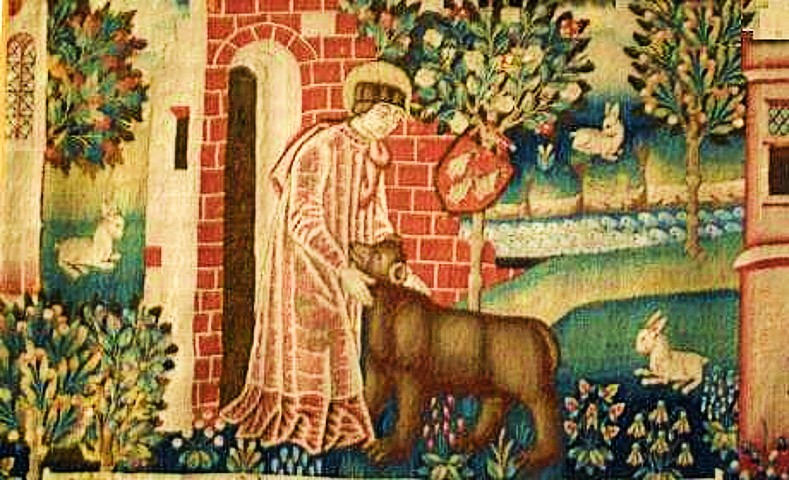
After having ruled the Diocese for 40 years, he died on 6 February 539 or 540. The news concerning the efficacious nature of prayer to Vaast and the many and diverse miracles and prodigies worked by God through his intercession, continued over the centuries. This resulted in three ‘Vitae,’ being written. One of the Vita’s by St Alcuin, recounts that on one occasion, having spent the day in instructing a nobleman, his host would see him on his way with a glass of wine to sustain him but found the cask empty. Vaast bid the servant to bring whatever he should find in the vessel. The servant then found the barrel overflowing with excellent wine, just like at Cana! The image below relates to another miracle for which I cannot find the legend.
St Vaast’s miracle of the beast
His body had many translations, due to the Norman invasion of the City of Arras in the Ninth Century. In December 880, the City was set on fire and its inhabitants massacred but the relics were rescued and hidden at Beauvais which was fortified.
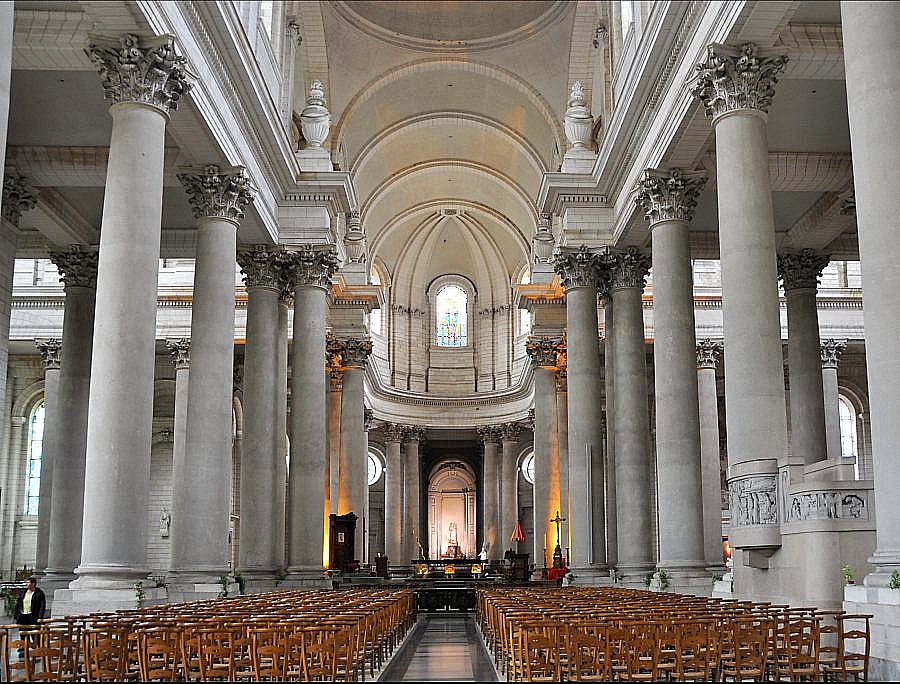
In 667, St Aubert, the Seventh Bishop of Arras, began to build an Abbey for Benedictine Monks on the site of a little Chapel which Saint Vaast had erected in honour of Saint Peter. Vaast’s relics were transferred to the new Abbey, which was completed by Auburt’s uccessor and generously endowed by King Theuderic III, who together with his wife, was afterwards buried there. The relics, in the following centuries, remained in possession of the Abbey of St Vaast until the French Revolution, when the Abbey was sacked, however, the relics miraculously remained intact! They were later transferred to the Cathedral of Arras, where they still are today.
Cathedral of Arras
St Vaast’s cult, since ancient times, is widespread throughout France . It is reported in the litanies of the Saints and he is considered the Founder of the Episcopal See of Arras, for which he is the main Patron. In France he is more widely known as St Gastone.
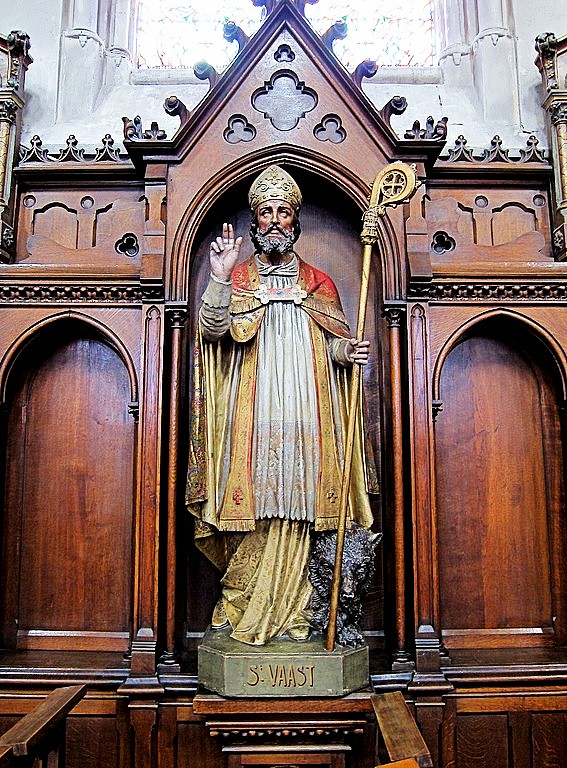
St Vaast’s Statue at another Church in his honour at Wambrechies, France
St Amand of Moissac St Amand of Nantes St Andrew of Elnone Bl Angelus of Furci St Antholian of Auvergne St Brinolfo Algotsson Cassius of Auvergne Bl Diego de Azevedo
St Gerald of Ostia St Gonsalo Garcia OFM St Guarinus St Guethenoc St Hildegund St Ina of Wessex St Jacut St Liminius of Auvergne Bl Mary Teresa Bonzel St Mateo Correa-Magallanes St Maximus of Aurvergne St Mel of Ardagh St Melchu of Armagh St Mun of Lough Ree St Relindis of Eyck St Revocata St Saturninus St Tanco of Werden St Theophilus St Theophilus the Lawyer St Vaast of Arras (c 453-539 or 540) Bishop St Victorinus of Auvergne
Martyrs of Emesa: St Luke the Deacon St Mucius the Lector
Thought for the Day – 5 February – Meditations with Antonio Cardinal Bacci (1881-1971)
IDLENESS
“Idleness is forbidden by God because work is His commandment. He had already told Adam and his successors: “In the sweat of your brow, you shall eat bread” (Gen 3:19).
St Paul warns us: “If any man will not work, neither let him eat” (2 Thess 3L10). This is a universal law which embraces people of all classes and circumstances. God commands everyone to work. Therefore, anybody who disobeys this law without reason, sins against God. Those who lead leisurely inactive lives should meditate seriously on this law of God. The fact that they possess large fortunes does not excuse them from this divine law. They must engage in some work, either menial or manual. It may be for themselves or it may be for their needy brothers who live in want or in illness and cannot fend for themselves. We are all brothers in Jesus. It is not right that one brother should live in poverty and wretchedness, while another idly enjoys a life of plenty and of pleasure.
Anyone who loves God is never idle, says St Jerome. The love of God works wonderful things, if it does not, it cannot be called love.”

















 AnaStpaul
You must be logged in to post a comment.