Thought for the Day – 11 July – Meditations with Antonio Cardinal Bacci (1881-1971)
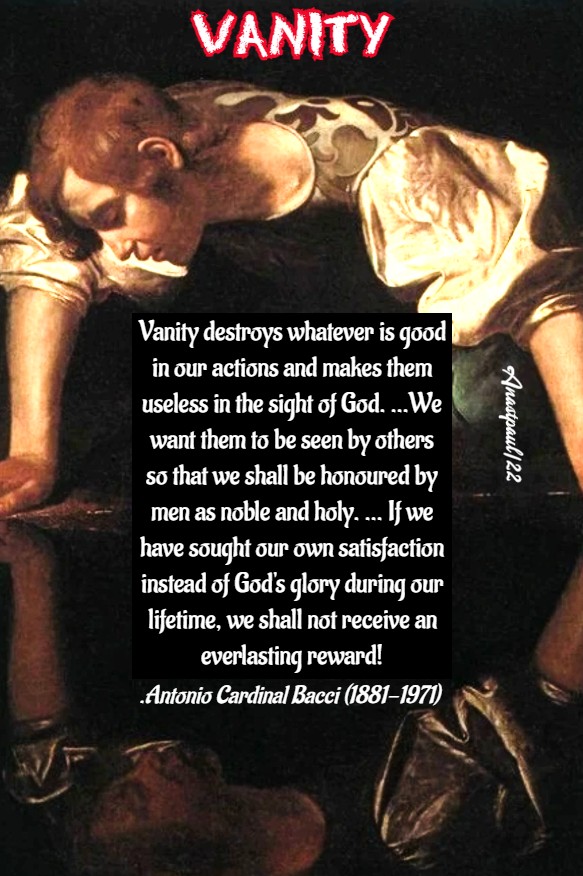
VANITY
“Vanity destroys whatever is good in our actions and makes them useless in the sight of God. It robs our good actions of all merit because they should be done only for the glory of God, whereas we are performing them for our own glory. We want them to be seen by others so that we shall be honoured by men as noble and holy.
If our actions have been motivated by self-interest, rather than by the desire for the glory of God, we shall hear, at the judgement seat of God the terrible condemnation: “You have received your reward” (Cf Mt 6:2).
If we have sought our own satisfaction instead of God’s glory during our lifetime, we shall not receive an everlasting reward!”
Quote/s of the Day – 11 July – The Memorial of St Pius I, Pope (Died c 154) Martyr – 1 Peter 5:1-4; 5:10-11, Matthew 16:13-19
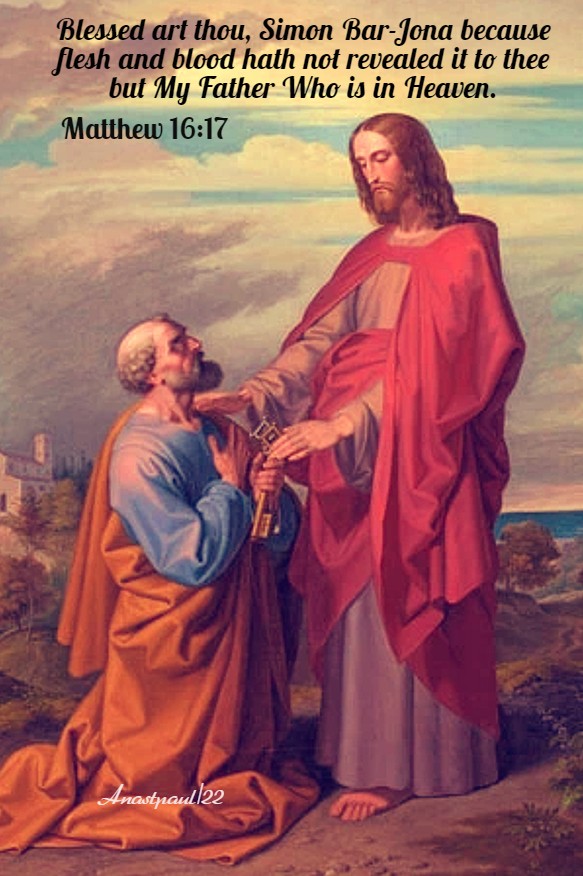
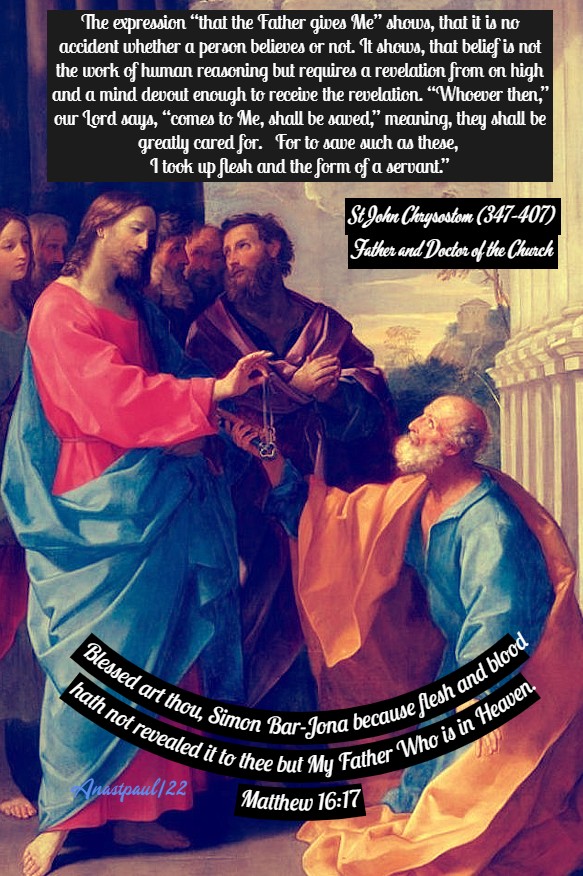
“Blessed art thou, Simon Bar-Jona because flesh and blood hath not revealed it to thee but My Father Who is in Heaven.”
Matthew 16:17
“Faith gives rise to prayer and this prayer obtains an increase of faith.”
St Augustine (354-430) Father and Doctor of Grace
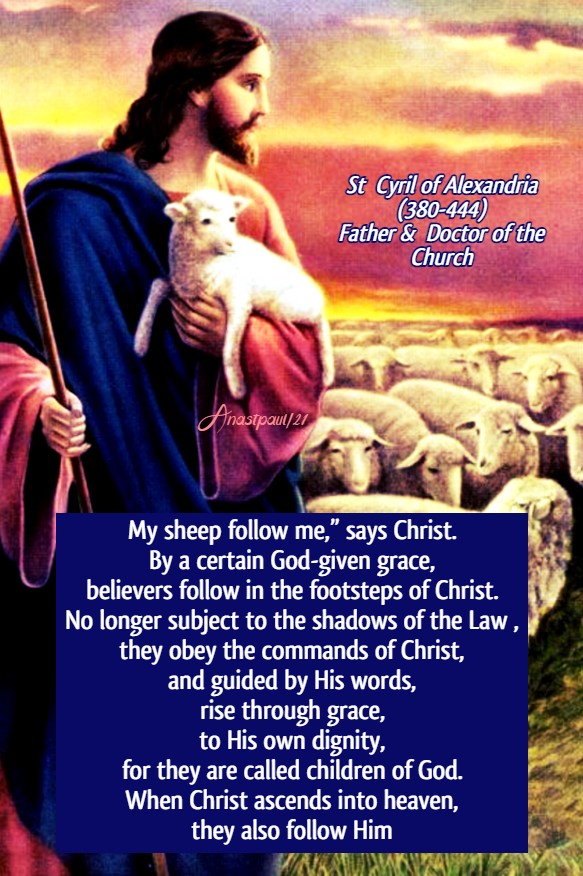
“My sheep follow me,” says Christ. By a certain God-given grace, believers follow in the footsteps of Christ. No longer subject to the shadows of the Law , they obey the commands of Christ, and guided by His words, rise through grace, to His own dignity, for they are called children of God. When Christ ascends into heaven, they also follow Him.”
St Cyril of Alexandria (376-444) Father & Doctor of the Church
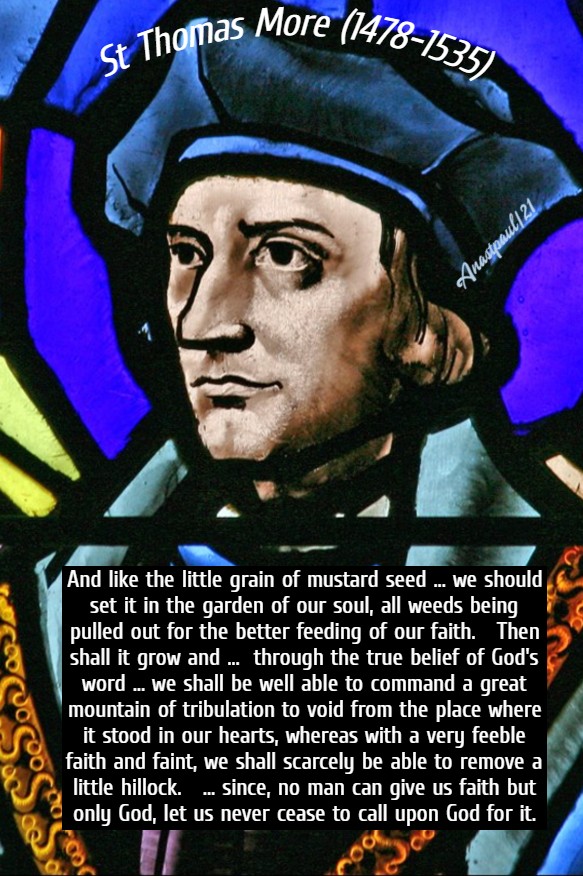
“And like the little grain of mustard seed … we should set it in the garden of our soul, all weeds being pulled out for the better feeding of our faith. Then shall it grow and … through the true belief of God’s word … we shall be well able to command a great mountain of tribulation to void from the place where it stood in our hearts, whereas with a very feeble faith and faint, we shall scarcely be able to remove a little hillock.”
St Thomas More (1478-1535)
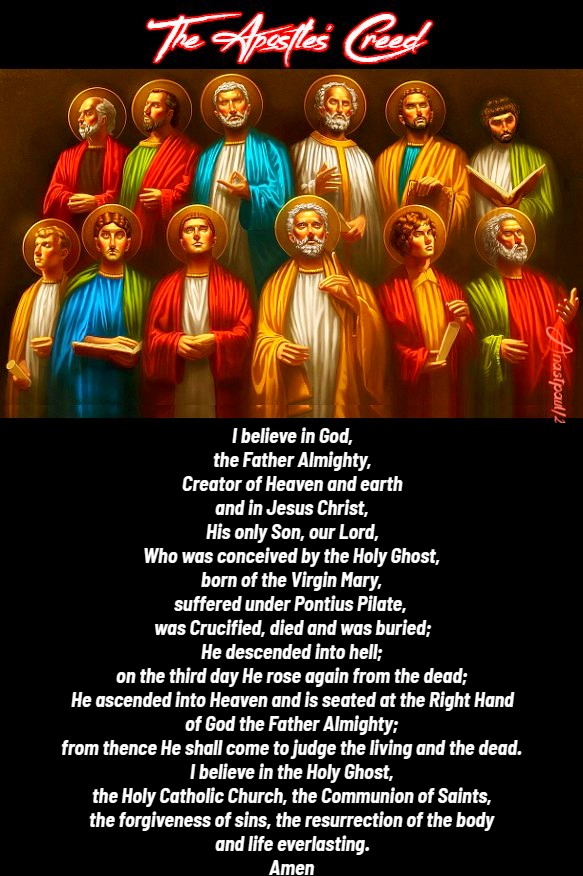
The Apostles’ Creed
I believe in God, the Father Almighty, Creator of Heaven and earth and in Jesus Christ, His only Son, our Lord, Who was conceived by the Holy Ghost, born of the Virgin Mary, suffered under Pontius Pilate, was Crucified, died and was buried; He descended into hell; on the third day He rose again from the dead; He ascended into Heaven and is seated at the Right Hand of God the Father Almighty; from thence He shall come to judge the living and the dead. I believe in the Holy Ghost, the Holy Catholic Church, the communion of Saints, the forgiveness of sins, the resurrection of the body and life everlasting. Amen
One Minute Reflection – 11 July – “The Month of the Precious Blood” – The Memorial of St Pius I, Pope (Died c 154) Martyr – 1 Peter 5:1-4; 5:10-11, Matthew 16:13-19
“Blessed art thou, Simon Bar-Jona because flesh and blood hath not revealed it to thee but My Father Who is in Heaven.” – Matthew 16:17
REFLECTION – “Faith in Me, He intimates here, is no ordinary thing or one that comes from human reason but [it] needs a revelation from above. And this He establishes throughout His discourses, showing, that this faith requires a noble sort of soul and one drawn on by God. The expression “that the Father gives Me” shows, that it is no accident whether a person believes or not. It shows, that belief is not the work of human reasoning but requires a revelation from on high and a mind devout enough to receive the revelation. “Whoever then,” our Lord says, “comes to Me, shall be saved,” meaning, they shall be greatly cared for. For to save such as these, I took up flesh and the form of a servant.” – St John Chrysostom (347-407) Archbishop of Constantinople, Father and Doctor of the Church (Homilies on the Gospel of John 45)”
PRAYER – Look forgivingly on thy flock, Eternal Shepherd and keep it in Thy constant protection, by the intercession of blessed Pius thy Martyr and Sovereign Pontiff, whom Thou didst constitute Shepherd of the whole Church.. Through the same Jesus Christ, Thy Son our Lord, Who lives and reigns with Thee, in the unity of the Holy Ghost, God, world without end. Amen (Collect).
Our Morning Offering – 11 July – “The Month of the Most Precious Blood”
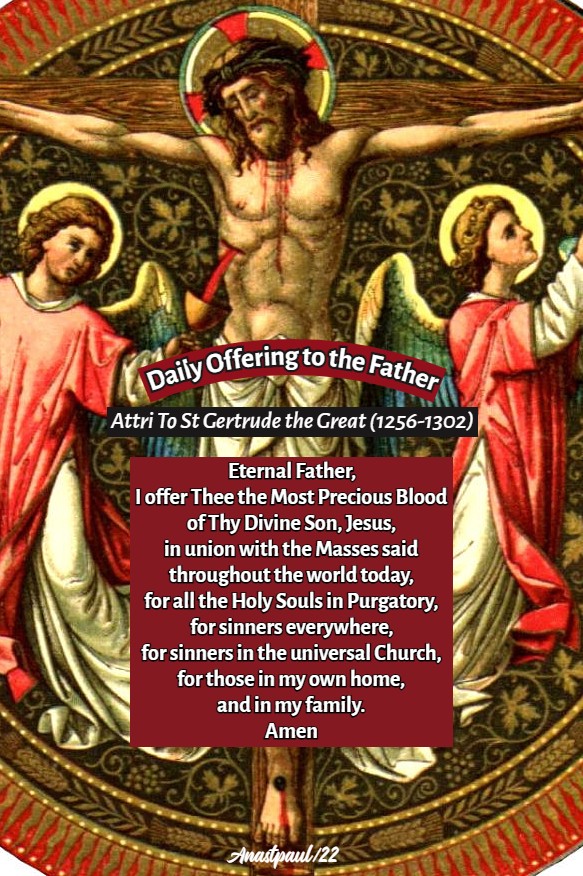
Daily Offering to the Father Attri To St Gertrude the Great (1256-1302)
Eternal Father, I offer Thee the Most Precious Blood of Thy Divine Son, Jesus, in union with the Masses said throughout the world today, for all the Holy Souls in Purgatory, for sinners everywhere, for sinners in the universal Church, for those in my own home, and in my family. Amen
You might see fantastic claims for this prayer, especially printed on Holy Cards, such as the release of 1000 souls from Purgatory, each time it is prayed. Nowhere in St Gertrude’s writings, is this wild promise made so be careful of treating prayers and devotions as amulets or magical charms. And further, this prayer is claimed to have been written by heer but this is very uncertain. The Church has summarily condemned prayer cards containing a promise to release one or more souls from Purgatory, or any other ‘miraculous’ claims. Such an easy way to release 1,000 souls seems inconsistent with the Church’s understanding of Purgatory and, given all the means the Church employs to help the dead, such as special Masses or Indulgences applicable only to the dead.
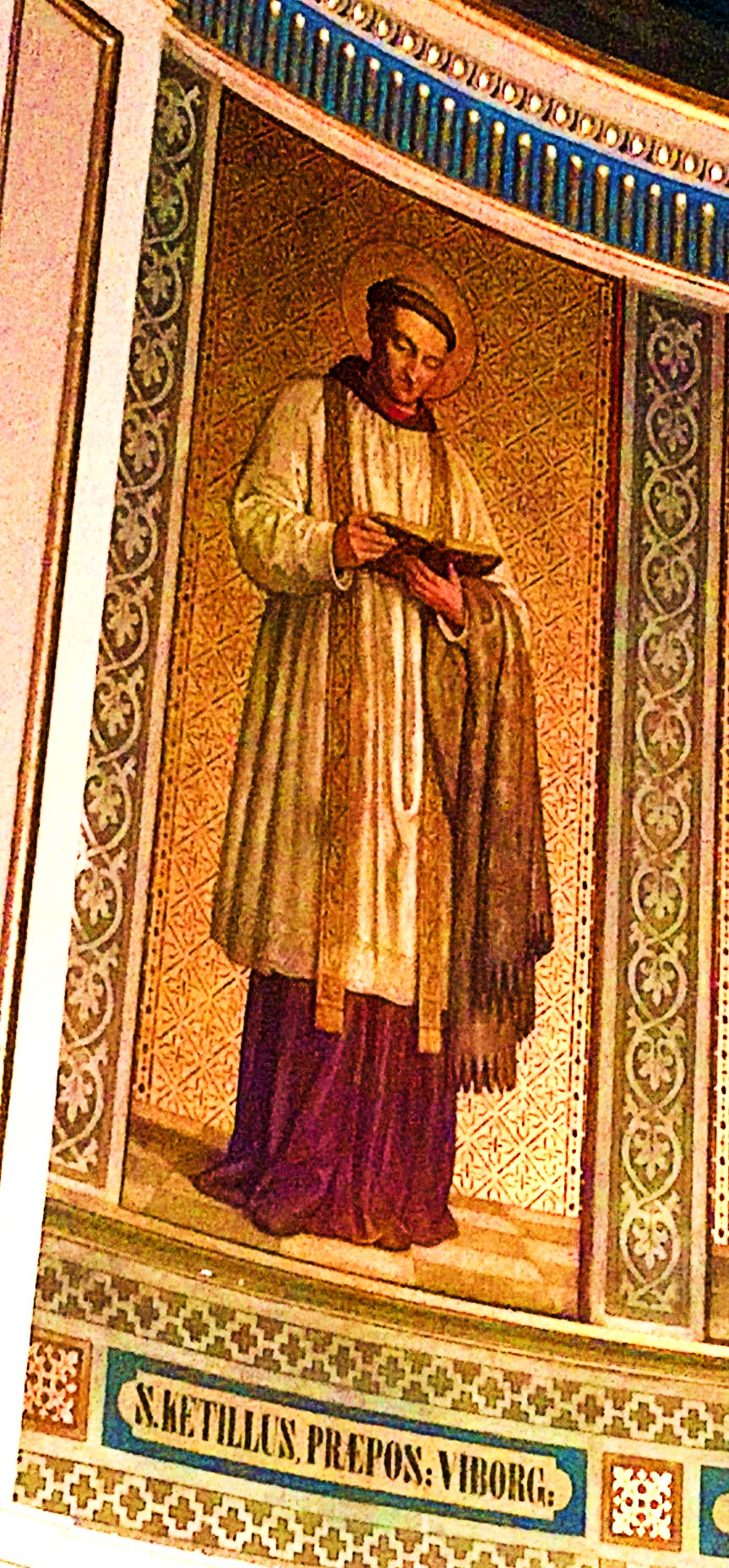
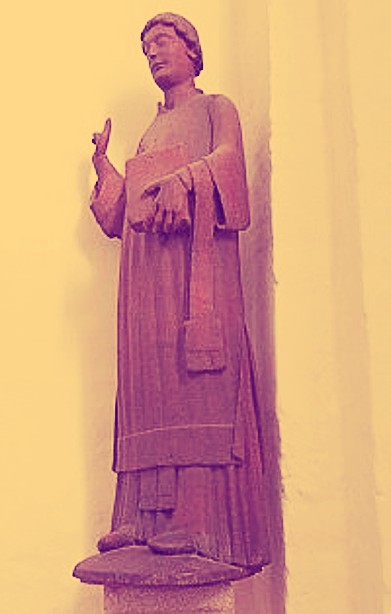
Saint of the Day – 11 July – Saint Kjeld of Viborg OSA (Died c 1150) St Francis of the North,” Priest, Apostle of the poor, needy and sick. Born in Denmark and died in c 1150 in Viborg, Denmark of natural causes. Patronage – Viborg, Denmark, of the blind and those with eye diseases. Also known as – “St Francis of Assisi of the North,” Ketil, Ketille, Kield, Exuperian.
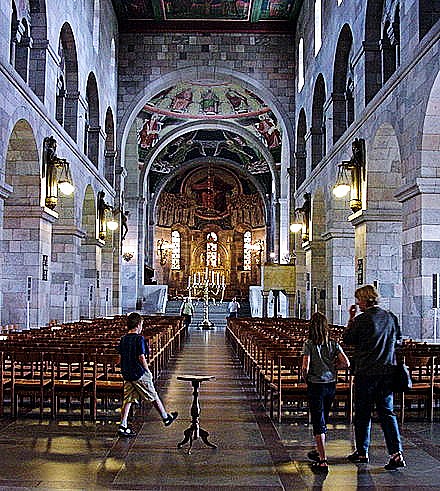
Kjeld was born in the early 12th Century to wealthy parents, who lived on a farm in central Denmark. He was a Godly boy and it was soon decided that he should have a future in the Church. He was sent to Viborg, where he joined the Cathedral College or Chapter. The Cathedral Chapter was the place where Priests were trained and while they lived as Canons at the Cathedral, they assisted the Bishop in his administrative work. The Canons Regular lived in a community following St Augustine’s Rule and they were led by a Prior.
Kjeld thrived in the Cathedral Chapter, where he was elected as head of the Cathedral Chapter College and around 1145 he was elected Prior of the other Canons. Kjeld was a very caring, generous and compassionate man who gave all he could to the sick, poor and needy. It is told in his biography that IN 1145, when Viborg City was threatened by fire, Kjeld ran to the Tower of the Cathedral, where he prayed fervently to God to spare the City and the Church, after which the fire miraculously receded.
Despite the fact that the Canons had chosen Kjeld as their Prior, there soon came disputes between them and him, apparently because they objected to his generous distribution of the Cathedral Chapter’s funds to the poor. The Canons elected a new Prior and Kjeld moved to Aalborg for a while. Although Kjeld was popular in Aalborg he longed to spread the Christian faith and desired Martyrdom among the Wends. He went on a pilgrimage to Rome, where he visited the Tombs of the Apostles and had an audience with Pope Eugene III (1145-1153). He sought the Pope’s permission to go on a mission among the Wends but, although he received the desired authorisation, the Pope expressed the sentiment that he would rather see Kjeld return to Viborg and continue his work as Prior of the Cathedral College. The Pope wrote to the Cathedral College, who had to bow and take Kjeld back as their leader. But soon after, in 1150, Kjeld died in Viborg and was buried in the Cathedral.
Numerous miracles were granted by God at his grave. The sick became healthy after visits to the tomb and the blind especially, were granted their sight – according to the Saint’s biography, at least twelve people had their sight restored. The Church authorities now sought Kjeld’s Canonisation and they, therefore, sent a request to the Pope in Rome. In 1188 Pope Clement III (1187-1191) consented and the Archbishop Absalon celebrated Kjeld’s Canonisation locally, which occurred on 11 July 1189.
St Pius I, Pope (Died c 154) Martyr The Ninth Successor of St Peter. Papal Ascension c 142. Born at Aquileia, Italy and died in Rome. The Roman Martyrology states of him today: “At Rome, the blessed Pius, Pope and Martyr, who was crowned with Martyrdom in the persecution of Marcus Aurelius.” Biography: https://anastpaul.com/2021/07/11/saint-of-the-day-11-july-saint-pope-pius-i-died-c-154/
St Abundius of Ananelos St Amabilis of Rouen St Anna An Jiaoshi St Anna An Xingshi Bl Antonio Muller St Berthevin of Lisieux St Cindeus St Cowair St Cyprian of Brescia St Cyriacus the Executioner St Hidulf of Moyenmoutier St Januarius St John of Bergamo St Kjeld of Viborg OSA (Died c 1150) Priest St Leontius the Younger St Marcian of Lycaonia St Marciana of Caesarea Bl Maria An Guoshi Bl Maria An Linghua Bl Marie-Clotilde Blanc Bl Marie-Marguerite de Barbégie d’Albrède
St Olga Queen of Kiev (c 890-969) She was known as a ruthless and effective ruler but “when Olga was enlightened, she rejoiced in soul and body. The Bishop, who instructed her in the faith, said to her, ‘Blessed art thou among the women of Rus,’,for thou hast loved the light and quit the darkness. The sons of Rus’ shall bless thee to the last generation of thy descendants.” About St Olga: https://anastpaul.com/2020/07/11/saint-of-the-day-11-july-saint-olga-queen-of-kiev-c-890-969/
St Placid of Dissentis Bl Rosalie-Clotilde Bes St Sabinus of Brescia St Sabinus of Poitiers St Sidronius St Sigisbert of Dissentis Bl Thomas Hunt Bl Thomas Sprott St Thurketyl
Thought for the Day – 10 July – Meditations with Antonio Cardinal Bacci (1881-1971)
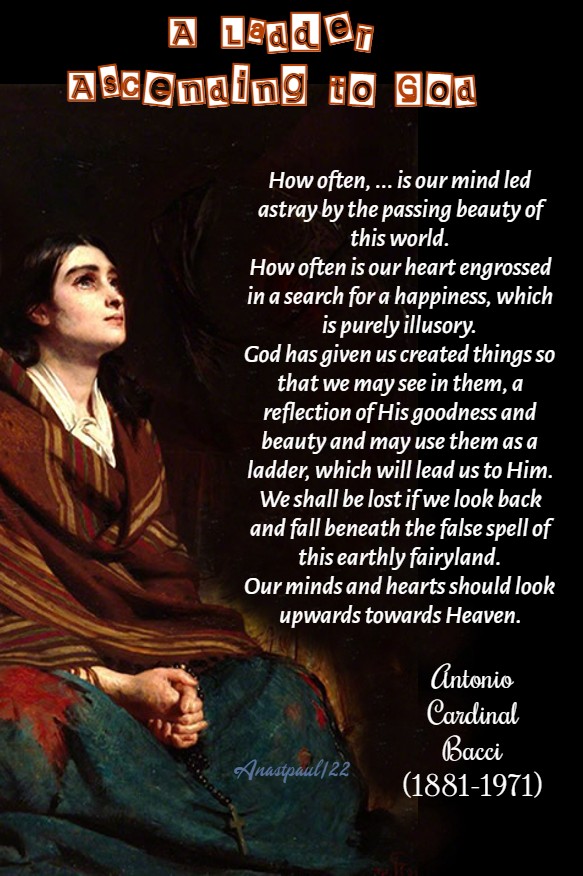
A Ladder Ascending to God
“How often, nevertheless, is our mind led astray by the passing beauty of this world. How often is our heart engrossed in a search for a happiness, which is purely illusory. God has given us created things so that we may see in them, a reflection of His goodness and beauty and may use them as a ladder, which will lead us to Him. We shall be lost if we look back and fall beneath the false spell of this earthly fairyland. Our minds and hearts should look upwards towards Heaven.
God alone can satisfy the infinite desires of the soul. Let us never lose sight of Him. Everything else passes but God does not change. He will be our sure guide in this life and our everlasting happiness in the next.”
Quote/s of the Day – 10 July – “The Month of the Precious Blood” – The Fifth Sunday after Pentecost and the Solemnity of the Most Precious Blood
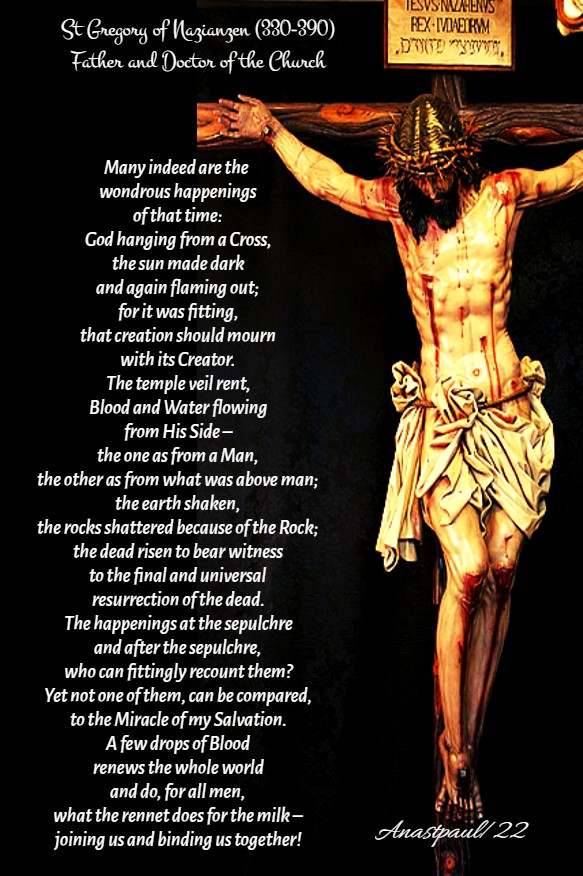
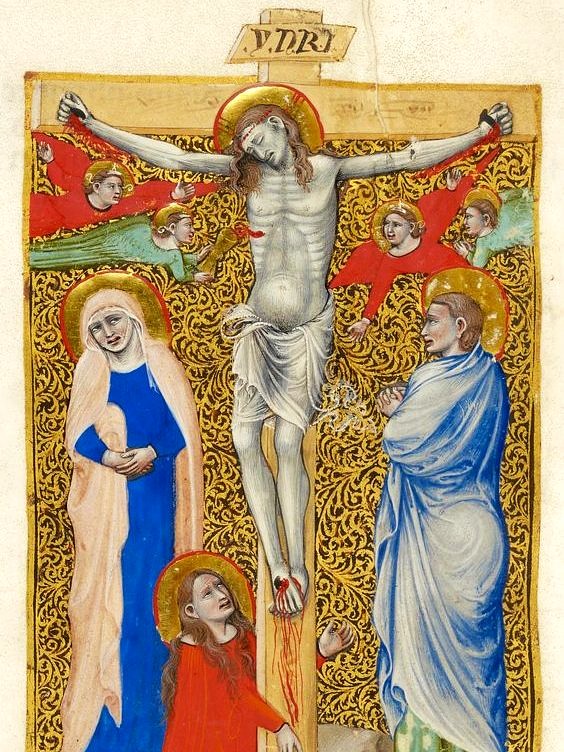
“Many indeed are the wondrous happenings of that time: God hanging from a Cross, the sun made dark and again flaming out; for it was fitting, that creation should mourn with its Creator. The temple veil rent, Blood and Water flowing from His side – the one as from a Man, the other as from what was above man; the earth shaken, the rocks shattered because of the Rock; the dead risen to bear witness to the final and universal resurrection of the dead. The happenings at the sepulchre and after the sepulchre, who can fittingly recount them? Yet not one of them, can be compared, to the Miracle of my Salvation. A few drops of Blood renews the whole world and do, for all men, what the rennet does for the milk – joining us and binding us together!”
St Gregory Nazianzen (330-390) Father & Doctor of the Church
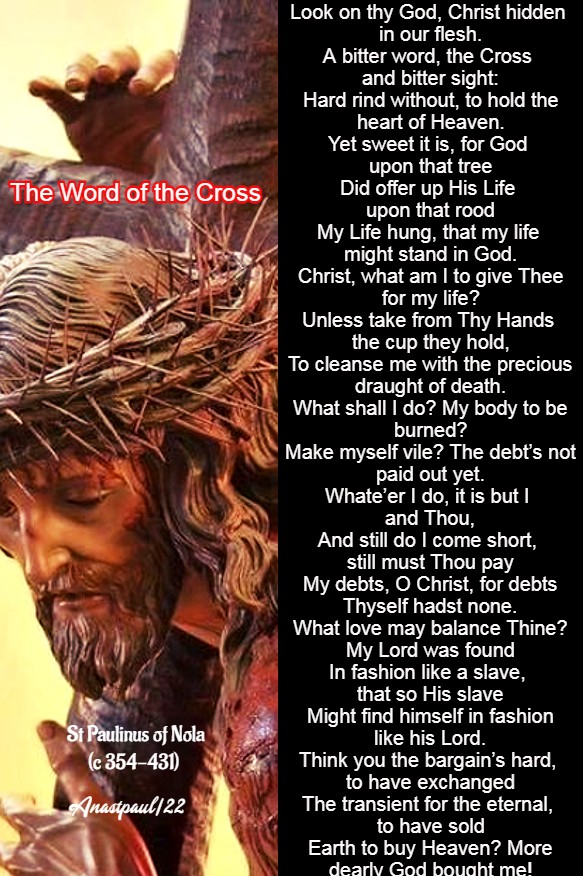
“The Word of the Cross Look on thy God, Christ hidden in our flesh. A bitter word, the Cross and bitter sight: Hard rind without, to hold the heart of Heaven. Yet sweet it is, for God upon that tree Did offer up His Life upon that rood My Life hung, that my Life might stand in God. Christ, what am I to give Thee for my life? Unless take from Thy Hands the cup they hold, To cleanse me with the precious draught of death. What shall I do? My body to be burned? Make myself vile? The debt’s not paid out yet. Whate’er I do, it is but I and Thou, And still do I come short, still must Thou pay My debts, O Christ, for debts Thyself hadst none. What love may balance Thine? My Lord was found In fashion like a slave, that so His slave Might find himself in fashion like his Lord. Think you the bargain’s hard, to have exchanged The transient for the eternal, to have sold Earth to buy Heaven? More dearly God bought me!
St Paulinus of Nola (c 354-431) Father of the Church
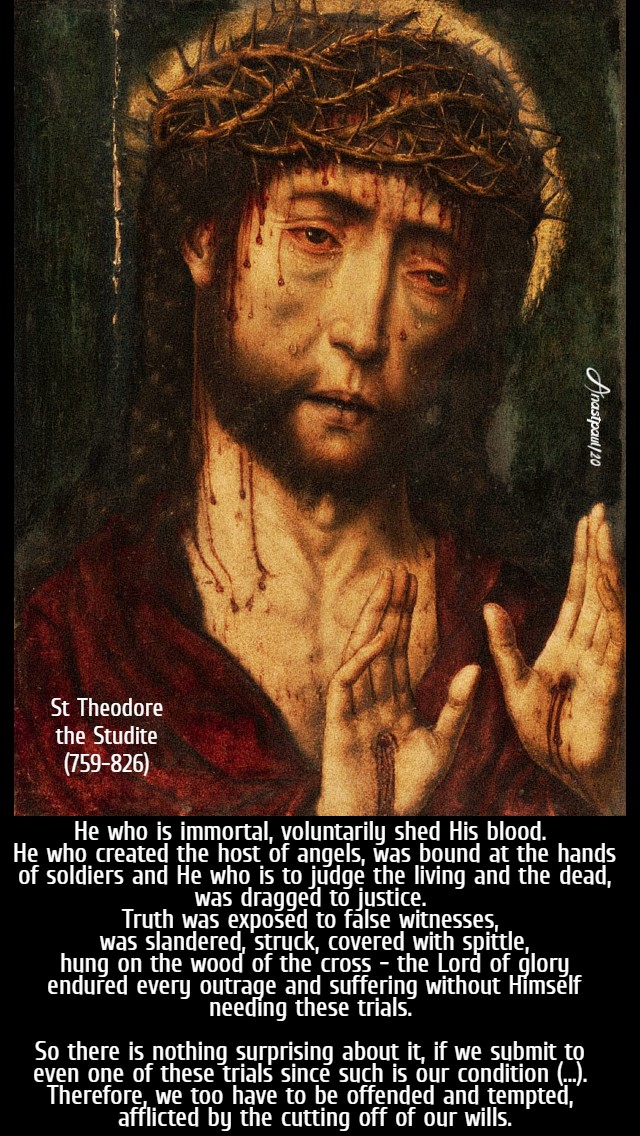
“He who is immortal, voluntarily shed His Blood. He who created the Host of Angels, was bound at the hands of soldiers and He who is to judge the living and the dead, was dragged to justice (cf. Acts 10:42; 2 Tm 4:1). Truth was exposed to false witnesses, was slandered, struck, covered with spittle, hung on the Wood of the Cross – the Lord of Glory (cf. 1 Cor 2:8) endured every outrage and suffering without Himself needing these trials. …
So there is nothing surprising about it, if we submit to even one of these trials, since such is our condition … Therefore, we too have to be offended and tempted, afflicted by the cutting off of our wills.”
St Theodore the Studite (759- 826) Monk at Constantinople, Father (Catecheses 1)
One Minute Reflection – 10 July – “The Month of the Precious Blood” – The Fifth Sunday after Pentecost and the Solemnity of the Most Precious Blood – Hebrews 9:11-15, John 19:30-35
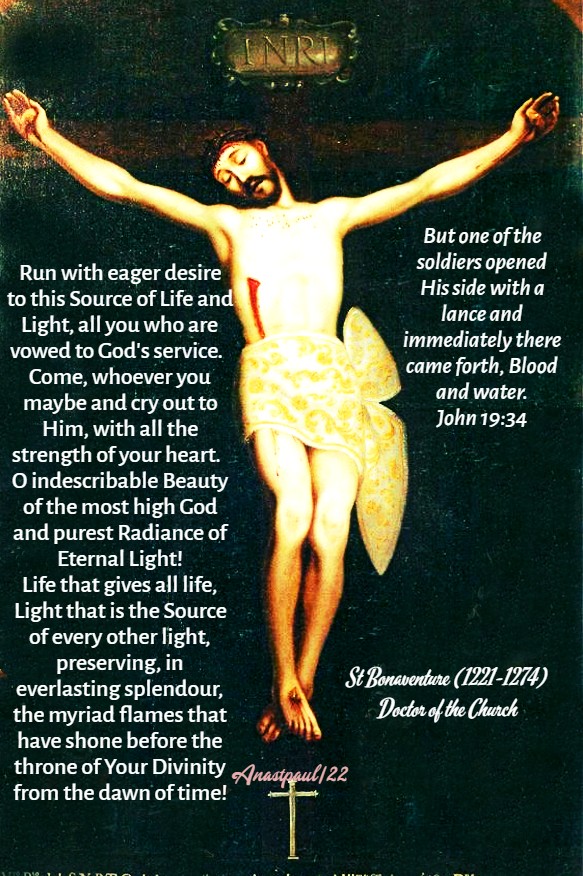
“But one of the soldiers opened His side with a lance and immediately there came forth, Blood and water.” – John 19:34
REFLECTION – “Take thought now, redeemed man and consider how great and worthy is He, Who hangs on the Cross for you… Arise, then, beloved of Christ! Imitate the dove ‘that nests in a hole in the cliff’ (Jr 48:28), keeping watch at the entrance ‘like the sparrow that finds a home’(Ps 84:4). There, like the turtledove, hide your little ones, the fruit of your chaste love. Press your lips to the Fountain, draw water from the wells of your Saviour; for this is the spring flowing out of the middle of paradise, dividing into four rivers, inundating devout hearts, watering the whole earth and making it fertile.
Run with eager desire to this Source of Life and Light, all you who are vowed to God’s service. Come, whoever you maybe and cry out to Him, with all the strength of your heart. O indescribable Beauty of the most high God and purest Radiance of Eternal Light! Life that gives all life, Light that is the Source of every other light, preserving, in everlasting splendour, the myriad flames that have shone before the throne of Your Divinity from the dawn of time!
Eternal and inaccessible Fountain, clear and sweet stream, flowing from a hidden spring, unseen by mortal eye! None can fathom Your depths nor survey Your boundaries, none can measure Your breadth, nothing can sully Your purity. From You flows ‘the river which gladdens the city of God’ (Ps 46:5) and makes us cry out with joy and thanksgiving, in hymns of praise to You, for we know, by our own experience, that ‘with You is the Source of Life and in Your Light we see light’ (Ps 36:10).” – St Bonaventure (1221-1274) Doctor of the Church (The Tree of Life, 29-30, 47, – Breviary)
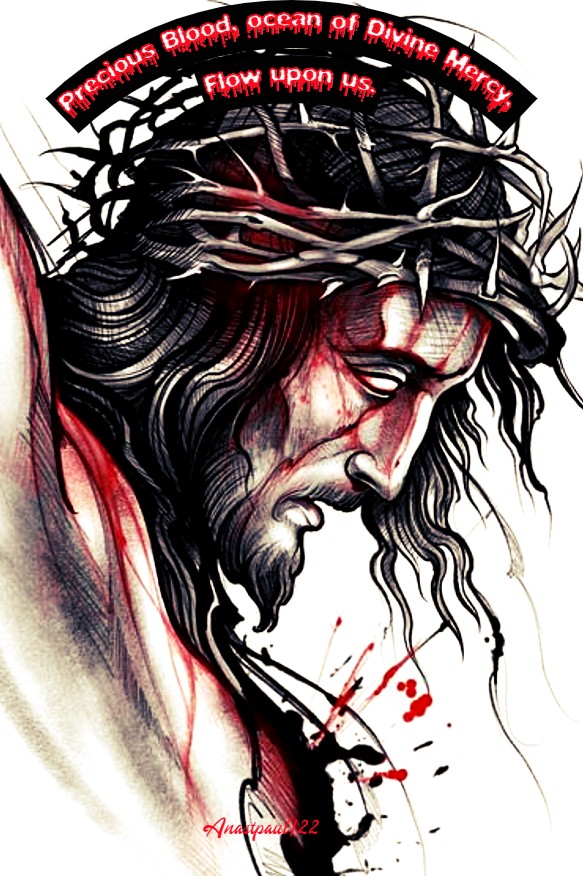
PRAYER – Almighty, eternal God, Who made Thy Only Begotten Son the Redeemer of the world and willed to be reconciled by His Blood, grant us, we beseech Thee, so to worship in this Sacred rite the price of our salvation and to be so protected by its power against the evils of the present life on earth, that we may enjoy its everlasting fruit in Heaven. Through the same Jesus Christ, Thy Son our Lord, Who lives and reigns with Thee, in the unity of the Holy Ghost, God, world without end. Amen (Collect). Aspiration:Precious Blood, ocean of Divine Mercy, Flow upon us.
Our Morning Offering – 10 July – “Month of the Most Precious Blood” and the Solemnity of the Most Precious Bloodof our Lord Jesus Christ
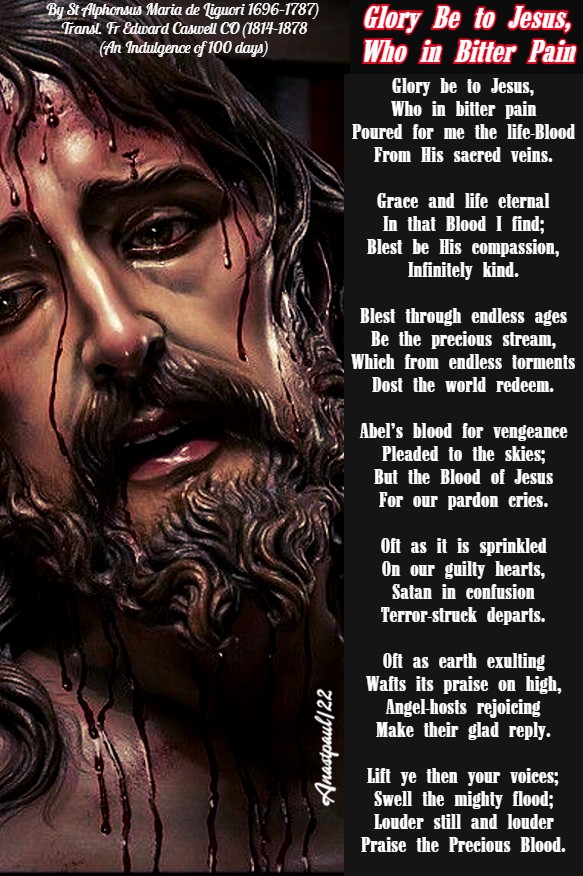
Glory Be to Jesus, Who in Bitter Pains By St Alphonsus Maria de Liguori 1696–1787) [Attrib] Transl. Fr Edward Caswell CO (1814-1878) (An Indulgence of 100 days)
Glory be to Jesus, Who in bitter pain Poured for me the life-Blood From His sacred veins.
Grace and life eternal In that Blood I find; Blest be His compassion, Infinitely kind.
Blest through endless ages Be the precious stream, Which from endless torments Dost the world redeem.
Abel’s blood for vengeance Pleaded to the skies; But the Blood of Jesus For our pardon cries.
Oft as it is sprinkled On our guilty hearts, Satan in confusion Terror-struck departs.
Oft as earth exulting Wafts its praise on high, Angel-hosts rejoicing Make their glad reply.
Lift ye then your voices; Swell the mighty flood; Louder still and louder Praise the Precious Blood.
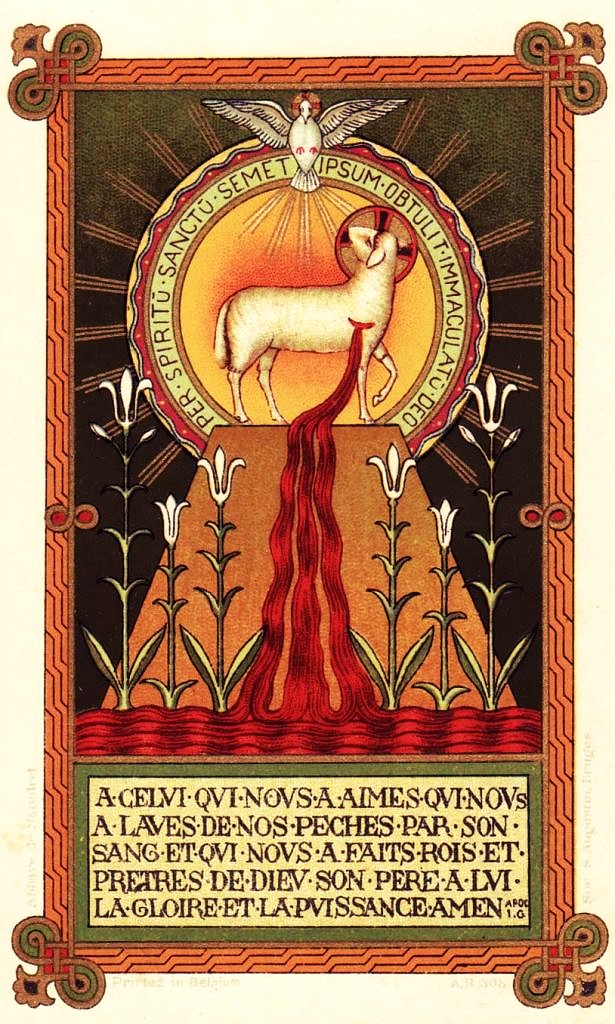
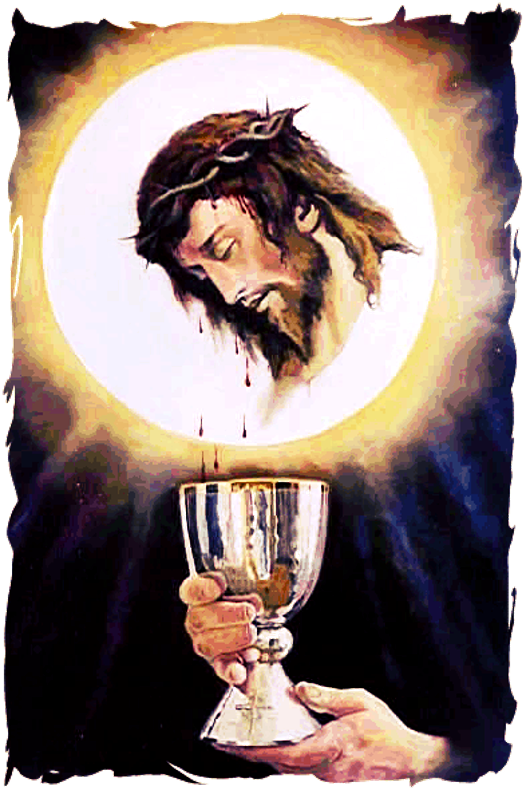
The Solemnity of the Most Precious Blood of of Our Lord Jesus Christ
By Servant of God Abbot Prosper Guéranger OSB (1805-1875)
John the Baptist has pointed out the Lamb, Peter has firmly fixed His throne, Paul has prepared the Bride; this their joint work, admirable in its unity, at once suggests the reason for their feasts occurring almost simultaneously on the cycle. The alliance being now secured, all three fall into shade; whilst the Bride herself, raised up by them to such lofty heights, appears alone before us, holding in her hands the sacred cup of the nuptial-feast.
This gives the key of today’s Solemnity; revealing how its illumining the heavens of the holy Liturgy, at this particular season, is replete with Mystery. The Church, it is true, has already made known to the sons of the New Covenant, and in a much more solemn manner, the price of the Blood that redeemed them, its nutritive strength and the adoring homage which is its due. Yes, on Good Friday, earth and Heaven beheld all sin drowned in the saving stream, whose eternal flood-gates, at last gave way, beneath the combined effort of man’s violence and of the love of the Divine Heart.
The festival of Corpus Christi witnessed our prostrate worship before the aAtars whereon is perpetuated the Sacrifice of Calvary and where, the outpouring of the Precious Blood affords drink to the humblest little ones, as well as to the mightiest potentates of earth, lowly bowed in adoration before it. How is it, then, that Holy Church is now inviting all Christians to hail, in a particular manner, the stream of life ever gushing from the Sacred Fount? What else can this mean but, that the preceding Solemnities have, by no means exhausted the Mystery? The peace which the Blood has made to reign in the high places, as well as in the low, the impetus of its wave-bearing back, the sons of Adam, from the yawning gulf, purified, renewed and dazzling white in the radiance of their heavenly apparel; the Sacred Table outspread before them, on the waters’ brink and the Chalice, brimful of inebriation; all this preparation and display would be objectless, all these splendours would be incomprehensible, if man were not brought to see therein, the wooings of a love which could never endure its advances to be outdone, by the pretensions of any other. Therefore, the Blood of Jesus is set before our eyes, at this moment, as the Blood of the Testament; the pledge of the alliance proposed to us by God (Exod. xxiv. 8; Heb. ix. 20); the dower stipulated upon by Eternal Wisdom for this Divine union to which He is inviting all men and whereof, the consummation in our soul is being urged forward with such vehemence, by the Holy Ghost.
“Having therefore, Brethren, a confidence in the entering into the Holies by the Blood of Christ,” says the Apostle, “a new and living way which He hath dedicated for us through the veil, that is to say, His flesh, let us draw near with a pure heart in fullness of faith, having our hearts sprinkled from an evil conscience and our bodies washed with clean water, let us hold fast the confession of our hope without wavering, for He is faithful that hath promised. Let us consider one another to provoke unto charity and to good works (Heb. x. 19-24). And may the God of peace, Who brought again from the dead the great Shepherd of the sheep, Our Lord Jesus Christ, in the Blood of the everlasting Testament, fit you in all goodness, that you may do His will: doing in you, that which is well-pleasing in His sight, through Jesus Christ, to whom is glory forever and ever. Amen!” (Ibid. xiii. 20, 21)
Nor must we omit to mention here, that this Feast is a monument of one of the most brilliant victories of Holy Church, in our own age. Pius IX. had been driven from Rome in 1848, by the triumphant revolution but, the following year, just about this very season, his power was re-established. Under the aegis of the Apostles on 28 June and the two following days, the eldest daughter of the Church, faithful to her past glories, swept the ramparts of the Eternal City; and on 2 July, Mary’s festival, the victory was completed. Not long after this, a twofold decree notified to the City and to the world, the Pontiff’s gratitude and the way in which he intended to perpetuate, in the Sacred Liturgy, the memory of these events. On 10 August, from Gaeta itself, the place of his exile in the evil day, Pius IX, before returning to re-assume the government of his States, addressing himself to the invisible Head of the Church, confined her in a special manner to His Divine care, by the institution of this day’s Festival; reminding Him that it was for His Church that He vouchsafed to shed all His Precious Blood.
Then, when the Pontiff re-entered his Capital, turning to Mary, just as Pius V and Pius VII. had done under other circumstances, he, the Vicar of Christ, solemnly attributed the honour of the recent victory to Her who is ever the “Help of Christians,” for, on the Feast of Her Visitation it had been gained and he now decreed that this said Feast of 2 July should be raised from the rite of double-major to that of second class throughout the whole world. This was but a prelude to the definition of the Dogma of the Immaculate Conception, which the immortal Pontiff had already in project, whereby the crushing of the serpent’s head would be completed.
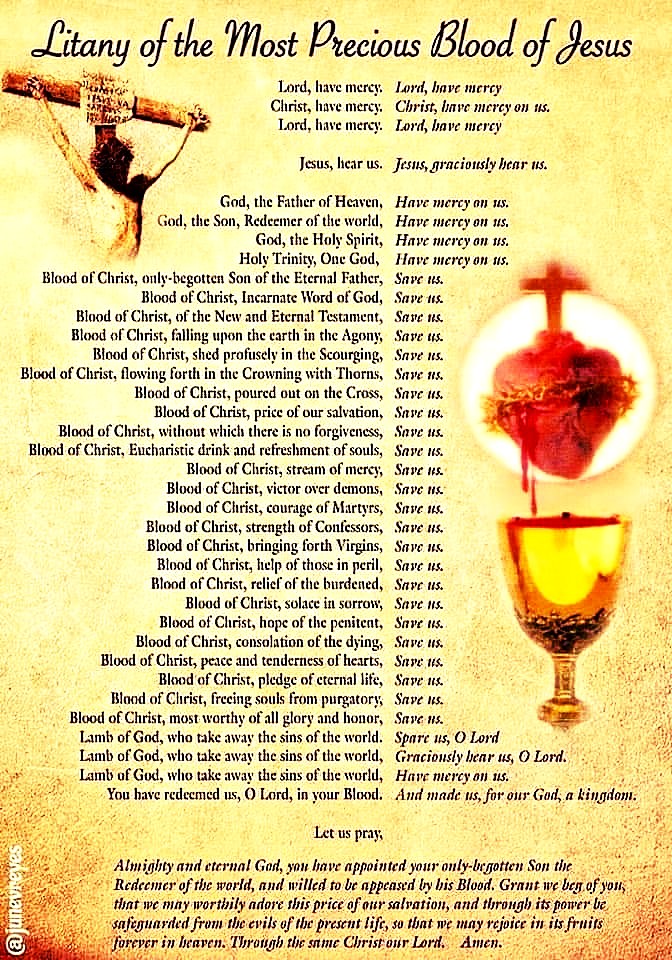
Litany of the Most Precious Blood of of Our Lord Jesus Christ
Lord, have mercy
Lord, have mercy
Christ, have mercy
Christ, have mercy
Lord, have mercy
Lord, have mercy
God our Father in heaven
have mercy on us
God the Son, Redeemer of the world
have mercy on us
God the Holy Spirit
have mercy on us
Holy Trinity, one God
have mercy on us
Blood of Christ, only Son of the Father
be our salvation
Blood of Christ, incarnate Word
be our salvation
Blood of Christ, of the new and eternal covenant
be our salvation
Blood of Christ, that spilled to the ground
be our salvation
Blood of Christ, that flowed at the scourging
be our salvation
Blood of Christ, dripping from the thorns
be our salvation
Blood of Christ, shed on the cross
be our salvation
Blood of Christ, the price of our redemption
be our salvation
Blood of Christ, our only claim to pardon
be our salvation
Blood of Christ, our blessing cup
be our salvation
Blood of Christ, in which we are washed
be our salvation
Blood of Christ, torrent of mercy
be our salvation
Blood of Christ, that overcomes evil
be our salvation
Blood of Christ, strength of the martyrs
be our salvation
Blood of Christ, endurance of the saints
be our salvation
Blood of Christ, that makes the barren fruitful
be our salvation
Blood of Christ, protection of the threatened
be our salvation
Blood of Christ, comfort of the weary
be our salvation
Blood of Christ, solace of the mourner
be our salvation
Blood of Christ, hope of the repentant
be our salvation
Blood of Christ, consolation of the dying
be our salvation
Blood of Christ, our peace and refreshment
be our salvation
Blood of Christ, our pledge of life
be our salvation
Blood of Christ, by which we pass to glory
be our salvation
Blood of Christ, most worthy of honor
be our salvation
Lamb of God, you take away the sins of the world
have mercy on us
Lamb of God, you take away the sins of the world
have mercy on us
Lamb of God, you take away the sins of the world
have mercy on us
Lord, you redeemed us by your blood.
You have made us a kingdom to serve our God.
Let us pray.
Almighty and Eternal God, Thou hast appointed Thine Only Begotten Son, the Redeemer of the world and willed to be appeased by His Blood. Grant, we beseech Thee, that we may worthily adore this Price of our Salvation,and through its power be safeguarded from the evils of this present life, so that we may rejoice in its fruits forever in Heaven. Through the same Christ Our Lord. R/. Amen.
St Cuán of Airbhre St Elilantus St Etto Bl Euménios St Lantfrid Bl Marie-Gertrude de Ripert d’Alauzier Bl Parthenios St Pascharius of Nantes St Peter Vincioli St Sylvanus of Pisidia Bl Sylvie-Agnès de Romillon St Waltram
Martyrs of Africa – 4 Saints: A group of Christians Martyred together in Africa. The only information that has survived are four of their names – Felix, Januarius, Marinus and Nabor.
Martyrs of Antioch – 10 Saints: A group of ten Christians Martyred together. We have no details about them but the names – Diogenes, Domnina, Esicius, Macarius, Maxima, Maximus, Rodigus, Timoteus, Veronia and Zacheus. They were martyred in Antioch, date unknown.
Martyrs of Damascus – 11 Beati: A group of Franciscans and laymen ordered by Druz Muslims to convert to Islam. They refused and were hacked to pieces. • ‘Abd Al-Mu’ti Masabki • Carmelo Bolta Bañuls • Engelbert Kolland • Francisco Pinazo Peñalver • Fransis Masabki • Juan Jacobo Fernández y Fernández • Manuel Ruiz López • Nicanor Ascanio de Soria • Nicolás María Alberca Torres • Pedro Soler Méndez • Rufayil Masabki They were cut to pieces on 9-10 July 1860 in Damascus, Syria. Beatified on 10 October 1926 by Pope Pius XI.
Martyrs of Nicopolis – 45 Saints: A group of 45 Christians tortured and Martyred together in the persecutions of emperor Licinius. We know nothing else but six of their names – Anicetus, Anthony, Daniel, Leontius, Mauritius and Sisinno. c 329 in Nicopolis, Armenia (modern Koyulhisar, Turkey).
Martyrs of Nitria – 5 Saints: Fathers of Nitria – Four Monks and the Bishop of Alexandria, Egypt who were Martyred by heretics. Saint John Chrysostom wrote about them but their names have not come down to us. They were martyred in the 4th century in Nitria, Egypt.
Thought for the Day – 9 July – Meditations with Antonio Cardinal Bacci (1881-1971)
Falling into Sin
“The second extreme to be avoided is discouragement, which can lead us to despair, as Judas did. We know that God is entirely good and merciful. We know that Jesus died on the Cross for our salvation. How can we doubt that He will welcome us if we repent and return to Him?
No matter how grave and how numerous our sins may be, let us remember that the Mercy of God is Infinite. Let us remember that He is waiting for us, as his father waited for the prodigal son and, that He is following us like a shepherd who is searching for his lost sheep. He allowed us to fall, in order to humble us and help us to realise that we are incapable of doing anything good by ourselves.
Let us go to Him humbly and penitently, trusting He will give us the kiss of peace and forgiveness.”
Quote/s of the Day – 9 July – Our Holy Mother’s Saturday and the Feast of Our Lady Queen of Peace
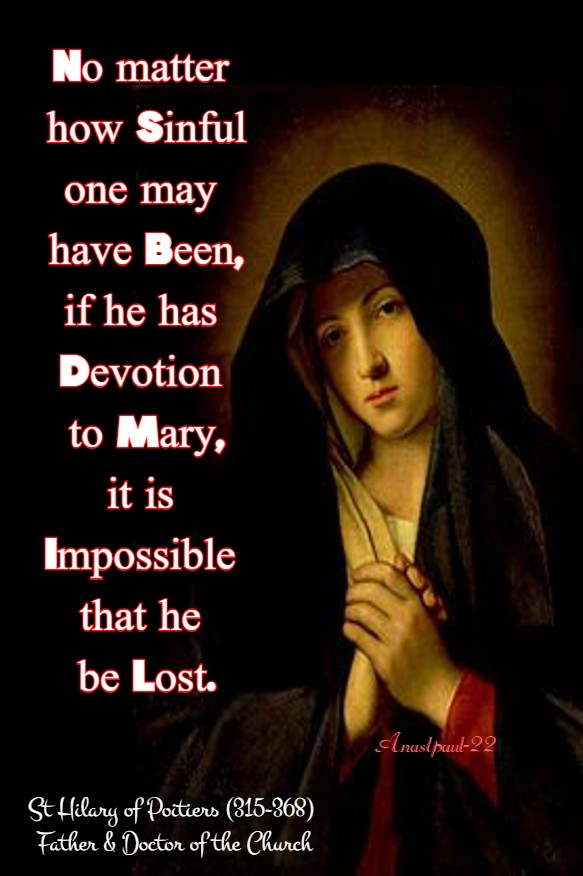
“No matter how sinful one may have been, if he has devotion to Mary, it is impossible that he be lost.”
St Hilary of Poitiers (315-368) Father & Doctor of the Church
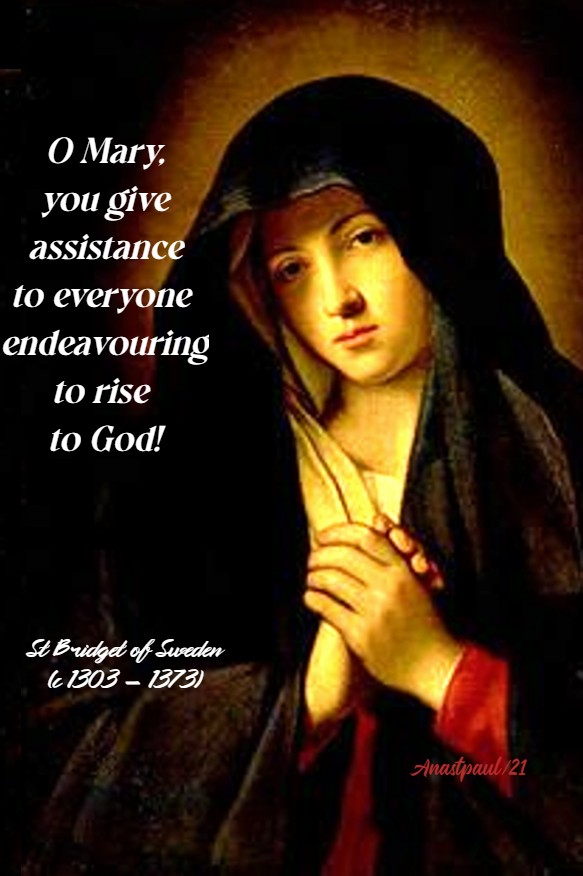
“O Mary, you give assistance to everyone endeavouring to rise to God!”
St Bridget of Sweden (c 1303 – 1373)
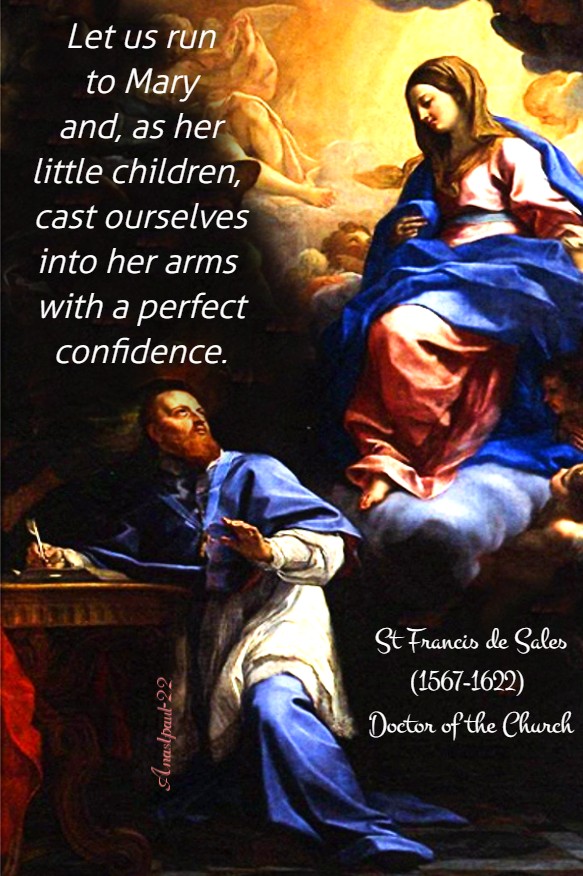
“Let us run to Mary and, as her little children, cast ourselves into her arms with a perfect confidence.”
St Francis de Sales (1567-1622) Doctor of the Church
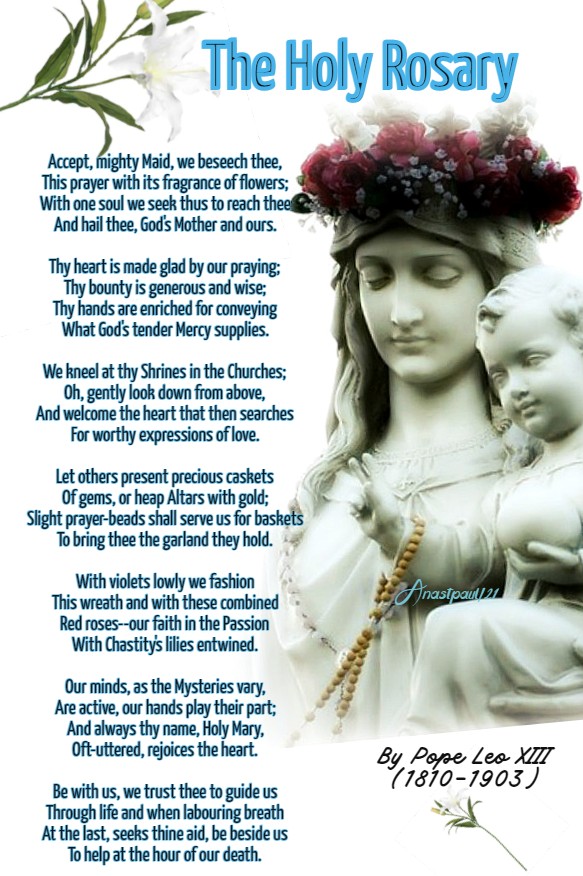
The Holy Rosary By Pope Leo XIII (1810-1903)
Accept, mighty Maid, we beseech thee, This prayer with its fragrance of flowers; With one soul we seek thus to reach thee And hail thee, God’s Mother and ours.
Thy heart is made glad by our praying; Thy bounty is generous and wise; Thy hands are enriched for conveying What God’s tender Mercy supplies.
We kneel at thy Shrines in the Churches; Oh, gently look down from above, And welcome the heart that then searches For worthy expressions of love.
Let others present precious caskets Of gems, or heap Altars with gold; Slight prayer-beads shall serve us for baskets To bring thee the garland they hold.
With violets lowly we fashion This wreath and with these combined Red roses–our faith in the Passion With Chastity’s lilies entwined.
Our minds, as the Mysteries vary, Are active, our hands play their part; And always thy name, Holy Mary, Oft-uttered, rejoices the heart.
Be with us, we trust thee to guide us Through life and when labouring breath At the last, seeks thine aid, be beside us To help at the hour of our death.
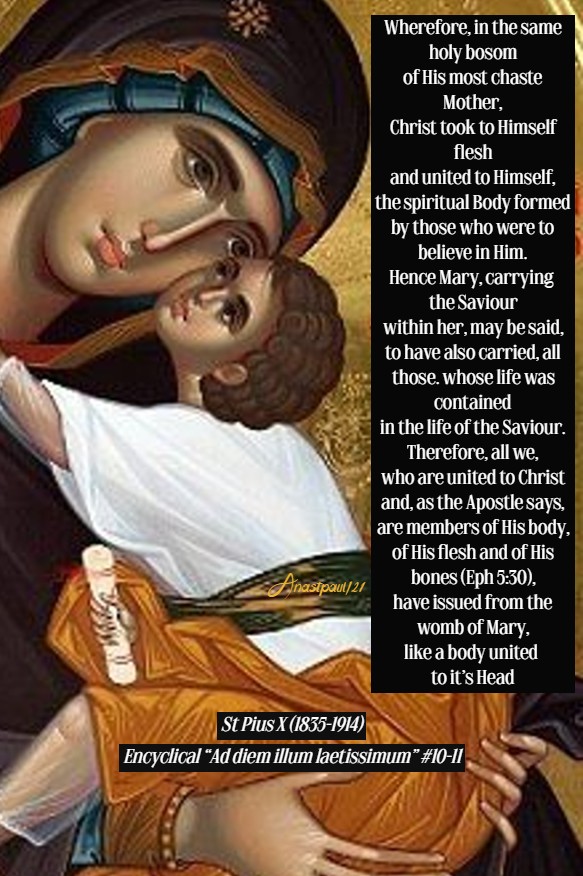
“Wherefore, in the same holy bosom of His most chaste Mother, Christ took to Himself flesh and united to Himself, the spiritual Body formed by those who were to believe in Him. Hence Mary, carrying the Saviour within her, may be said, to have also carried, all those. whose life was contained in the life of the Saviour. Therefore, all we, who are united to Christ and, as the Apostle says, are members of His body, of His flesh and of His bones (Eph 5:30), have issued from the womb of Mary, like a body united to it’s Head.”
St Pius X (1835-1914) Pope from 1903 to 1914 Encyclical “Ad diem illum laetissimum” #10-11
One Minute Reflection – 9 July – Our Holy Mother’s Saturday and the Feast of Our Lady Queen of Peace – Ecclesiasticus 24:14-16, Luke 11:27-28
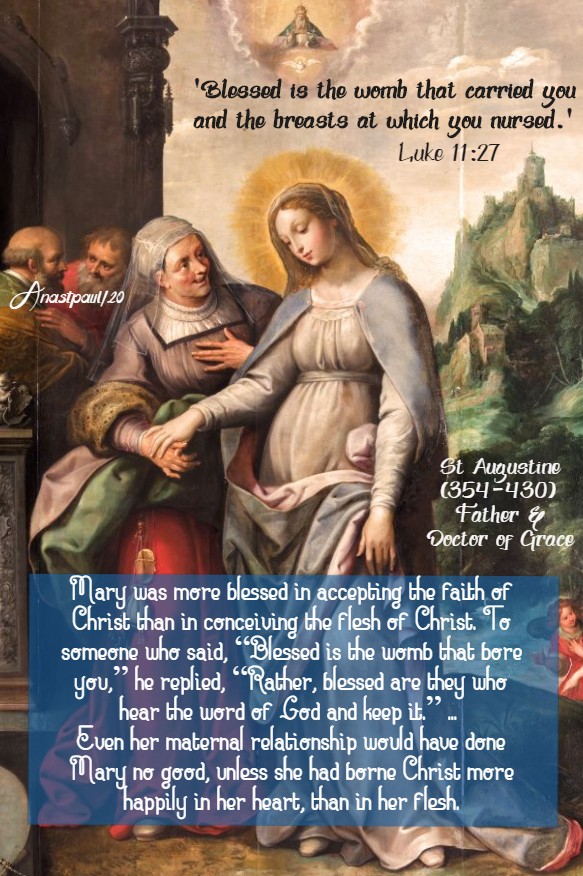
“While he was speaking, a woman from the crowd called out and said to him, ‘Blessed is the womb that carried you and the breasts at which you nursed.’” – Luke 11:27
REFLECTION – “Mary was more blessed in accepting the faith of Christ than in conceiving the flesh of Christ. To someone who said, “Blessed is the womb that bore you,” he replied, “Rather, blessed are they who hear the word of God and keep it.”
Finally, for his brothers, his relatives according to the flesh who did not believe in Him, of what advantage was that relationship? Even her maternal relationship would have done Mary no good, unless she had borne Christ more happily in her heart, than in her flesh.” – St Augustine (354-430) Father & Doctor of Grace (Holy Virginity 3).
PRAYER – Grant us, Thy servants, O Lord God, we beseech Thee to enjoy lasting health of mind and body and, by the intercession of glorious and Blessed Mary, ever virgin, may we be delivered from present sorrow and partake to the full of eternal happiness. Through Jesus Christ, Thy Son our Lord, Who lives and reigns with Thee, in the unity of the Holy Ghost, God, world without end. Amen (Collect).
Our Morning Offering – 9 July – Feast of Our Lady Queen of Peace
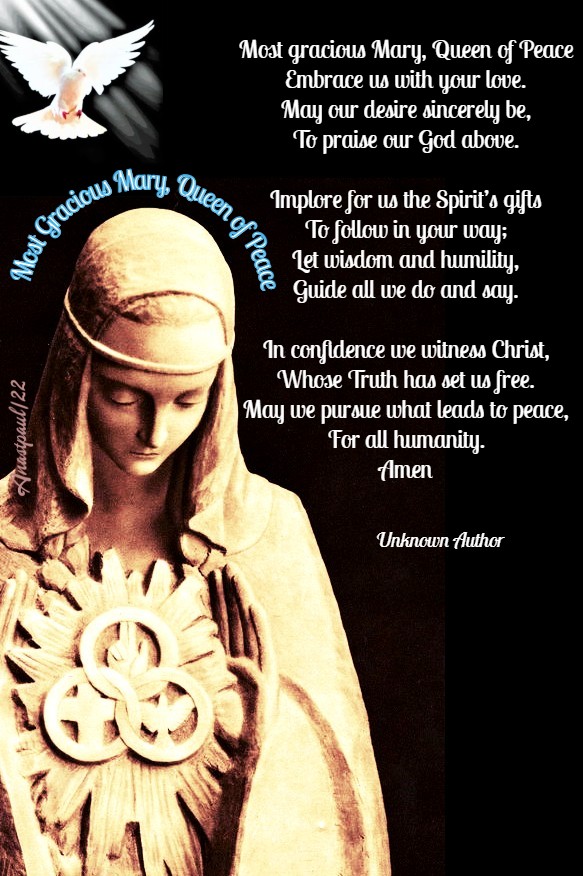
Most Gracious Mary, Queen of Peace Unknown Author
Most gracious Mary, Queen of Peace Embrace us with your love. May our desire sincerely be, To praise our God above.
Implore for us the Spirit’s gifts To follow in your way; Let wisdom and humility, Guide all we do and say.
In confidence we witness Christ, Whose Truth has set us free. May we pursue what leads to peace, For all humanity. Amen
The Author of this Marian Hymn is unknown. With common meter (ie 8.6.8.6) it is sung to the tune New Britain ie the same tune that is widely used for Amazing Grace.
Saint of the Day – 9 July – Our Lady, Queen of Peace / Notre Dame de Paix (1500s) Also known as – Our Lady of Peace, Mother of Peace, Queen of Peace.
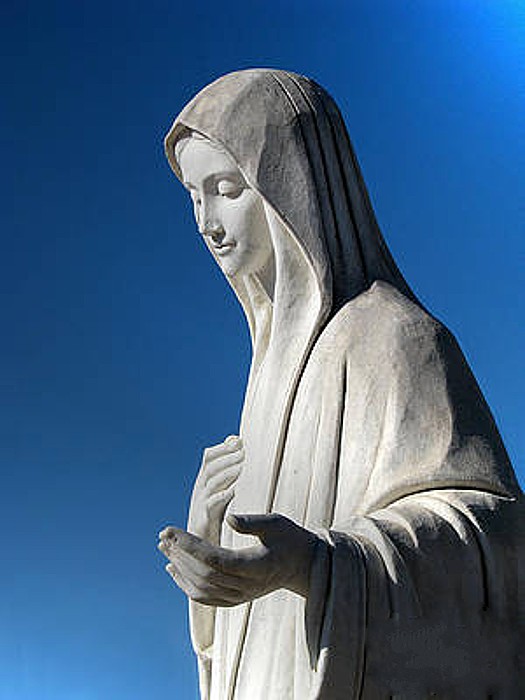
Original Statue
In the early 1500s in France, a certain Jean de Joyeuse presented the Statue as a wedding gift to his young bride, Françoise e Voisins. The Statue was known as the “Virgin of Joyeuse” and became a cherished family heirloom.
Around the year 1588, Jean’s grandson, Henri Joyeuse, joined the Capuchin Franciscans in Paris and brought the Statue with him, where it remained for many years. With the olive branch in her hand and the Prince of Peace on her arm, the Statue was called Our Lady, Queen of Peace. In 1657 the Capuchin community erected a larger chapel to accommodate the growing number of faithful who sought her intercession. On 9 July that year, 1657,, before a large crowd which included King Louis XIV, the Papal Nuncio to France, blessed and solemnly enthroned the Virgin’s Statue. Pope Alexander VII would later designate this date for the Capuchin community to celebrate the Feast of Our Lady of Peace.
During the French Revolution, which erupted in 1789, the Capuchins were driven from their Monastery. They took the image with them to prevent its destruction by the atheistic rebels. When peace was restored in the land, the Statue was brought out of hiding and entrusted to Peter Coudrin, a Priest in Paris. In 1800, Coudrin and Henriette became Co-founders of a community of Sisters, Brothers and Priests — the Congregation of the Sacred Hearts of Jesus and Mary and the Perpetual Adoration of the Blessed Sacrament. The Congregation was particularly successful in the Kingdom of Hawaii. They Consecrated the Hawaiian Islands under the protection of Our Lady, Queen of Peace
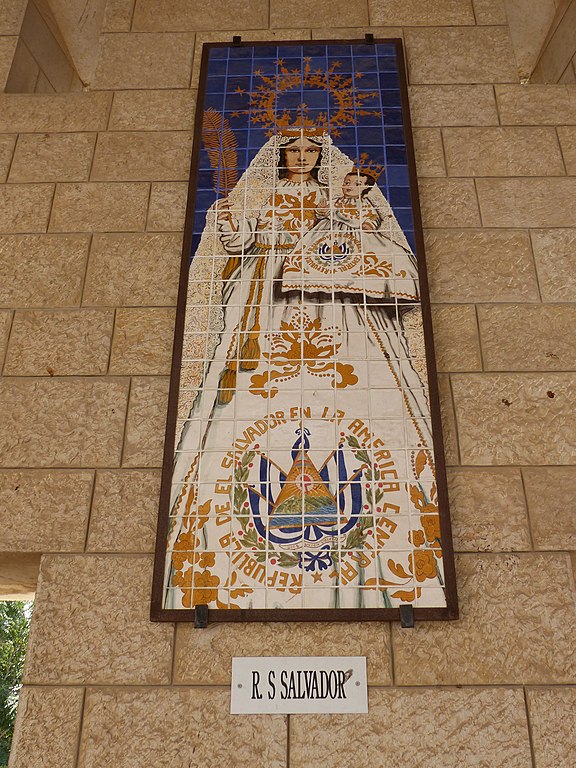
Our Lady, Queen of Peace, is the Patron Saint of El Salvador. In the Parish Church of St Michael, in the City of San Salvador, there is an ancient Statue of the Virgin Mary holding an olive branch, which, according to some accounts, was brought there from a shipwreck. In September 1787 the inhabitants of the City attributed, to the Statue their safety when threatened by a volcanic eruption. The Virgin was also reveredp as a model of peace, among warring factions in the country, at the time of the war of independence. The Statue was solemnly crowned in November 1921, in the presence of the Country’s President.
An azulejo of the Virgin Queen of Peace from El Salvador
The original Statue of Our Lady of Peace in France, was ceremonially crowned on 9 July 1906 by the Archbishop of Paris, in the name of Pope Pius X. Every 9 July since then, the Congregation of the Sacred Hearts of Jesus and Mary have celebrated the Feast of Our Lady of Peace. 24 January is the feast day in Hawaii and in some Diocese of the United States. During the troubled years of World War I, Pope Benedict XV added Our Lady, Queen of Peace to the Litany of the Blessed Virgin Mary.
St Maria Goretti (1890-1902) Virgin and Martyr, known as “Saint Agnes of the 20th Century.” She was Canonised on 24 June 1950 by Pope Pius XII The ceremony was attended by 250,000 including her mother, the only time a parent has witnessed her child’s Canonisation. Her Life and Death: https://anastpaul.com/2017/07/06/saint-of-the-day-6-july-st-maria-goretti/
Blessed Adrian Fortescue TOSD (1476-1539) Martyr,. A husband and father, a Justice of the Peace, a Knight of the Realm, a Knight of Malta and a Dominican Tertiary (Lay Dominican), he was at once a loyal servant of the Crown so far as he could be but still more, he was a man of unshakeable faith. About Blessed Adrian: https://anastpaul.com/2018/07/09/saint-of-the-day-blessed-adrian-fortescue-1476-1539-martyr/
St Agrippinus of Autun St Alexander of Egypt St Audax of Thora St Brictius of Martola St Copra of Egypt St Cyril of Gortyna Bl Dionysius the Rhetorician St Everild of Everingham St Faustina of Rome St Felician of Sicily Bl Fidelis Chojnacki
Blessed Giovanna Scopelli O.Carm (1428 – 1491) Virgin, Mystic, Italian Religious of the Carmelites and established her own Convent as its first Prioress. She was known, during her lifetime as a Miracle-worker with many coming to her to ask for her assistance and prayers. Her body is incorrupt. About Blessed Giovanna: https://anastpaul.com/2021/07/09/saint-of-the-day-9-july-blessed-giovanna-scopelli-o-carm-1428-1491/
St Floriana of Rome St Hérombert of Minden St Joachim Ho Bl Luigi Caburlotto Bl Marguerite-Marie-Anne de Rocher Bl Marie-Anne-Madeleine de Guilhermier St Patermutius of Egypt St Paulina do Coração Agonizante de Jesus
Four Holy Polish Brothers – 4 Saints: Four brothers who became hermits, Benedictine Monks and Saints – Andrew, Barnabas, Benedict and Justus. They were born in Poland and died in 1008 of natural causes.
Martyrs of Gorkum – 19 Saints: Nineteen Martyrs killed by Calvinists for loyalty to the Pope and for their belief in the Real Presence in the Eucharist. They are – • Adrianus van Hilvarenbeek • Andreas Wouters • Antonius van Hoornaar • Antonius van Weert • Cornelius van Wijk • Francisus de Roye • Godfried van Duynen • Godfried van Melveren • Hieronymus van Weert • Jacobus Lacops • Joannes Lenaerts • John of Cologne • Leonardus van Veghel • Nicasius Janssen van Heeze • Nicolaas Pieck • Nicolaas Poppel • Petrus van Assche • Theodorus van der Eem • Willehad van Deem • They werehanged on 9 July 1572 in Brielle, Zuid-Holland, Netherlands. Beatified on 24 November 1675 by Pope Clement X and Canonised on 29 June 1867 by Pope Pius IX.
Martyrs of Orange – 32 Beati: 32 nuns from several orders who spent up to 18 months in prison and were finally executed for refusing to renounce Christianity during the persecutions of the French Revolution. • Anne Cartier • Anne-Andrée Minutte • Dorothée-Madeleine-Julie de Justamond • élisabeth Verchière • élisabeth-Thérèse de Consolin • Jeanne-Marie de Romillon • Madeleine-Françoise de Justamond • Madeleine-Thérèse Talieu • Marguerite-Eléonore de Justamond • Marguerite-Marie-Anne de Rocher • Marguerite-Rose de Gordon • Marguerite-Thérèse Charensol • Marie Cluse • Marie-Anastasie de Roquard • Marie-Anne Béguin-Royal • Marie-Anne Depeyre • Marie-Anne Doux • Marie-Anne Lambert • Marie-Anne-Madeleine de Guilhermier • Marie-Claire du Bac • Marie-Clotilde Blanc • Marie-Elisabeth Pélissier • Marie-Gabrielle-Françoise-Suzanne de Gaillard de Lavaldène • Marie-Gertrude de Ripert d’Alauzier • Marie-Marguerite Bonnet • Marie-Marguerite de Barbégie d’Albrède • Marie-Rose Laye • Rosalie-Clotilde Bes • Suzanne-Agathe Deloye • Sylvie-Agnès de Romillon • Thérèse-Henriette Faurie They were guillotined between 6 July and 26 July 1794 at Orange, Vaucluse, France. Beatified on 10 May 1925 by Pope Pius XI.
Martyrs of the Baths – 10,204 Saints: A group of Christians enslaved by Diocletian to build the gigantic baths in imperial Rome, Italy. The end of their labours coincided with the beginning of the great persecutions of Diocletian and they were all executed. Ancient records indicated there were 10,204 of them; Zeno of Rome is the only one whose name has come down to us and we know nothing else about any of their individual lives.
Thought for the Day – 8 July – Meditations with Antonio Cardinal Bacci (1881-1971)
Uncharitableness
“The tendency to complain about others, is a most insidious cancer which can corrode all that is good in our conversation, making it harmful and even gravely sinful. Grumbling is always, more or less sinful, according to the circumstances. It may be a sin against charity, which demands that we love our neighbour as ourselves and help him as much as possible, by word and by deed. It may be a sin of scandal because the person to whom we are complaining maybe provoked to throw stones in his turn at the subject of our detraction. It maybe a sin of theft because it takes away the reputation of the person whom we are criticising. This could carry with it, the obligation to make restitution by withdrawing what we have said, if it is false or doubtful or by speaking charitably of the person whom we have wronged in order to restore his good name. Uncharitableness in speech, is also a sin of injustice, when it involves calumny, in which case, there is an obligation to repair the damage done in the best way possible.
Since criticism of others can be such an evil thing, we should take care not to form the habit of employing it as a means of making our conversation more lively and acceptable. The life of a Catholic, should be governed by charity and grumbling about others, is always an offence against charity!”
Quote/s of the Day – 8 July – The Memorial of St Elizabeth Queen of Portugal TOSF (1271-1336) – Proverbs 31:10-31, Matthew 13:44-52.
“The Kingdom of Heaven is like a treasure hidden in a field; he who finds it, hides it and in his joy, goes and sells all that he has and buys that field.”
Matthew 13:44
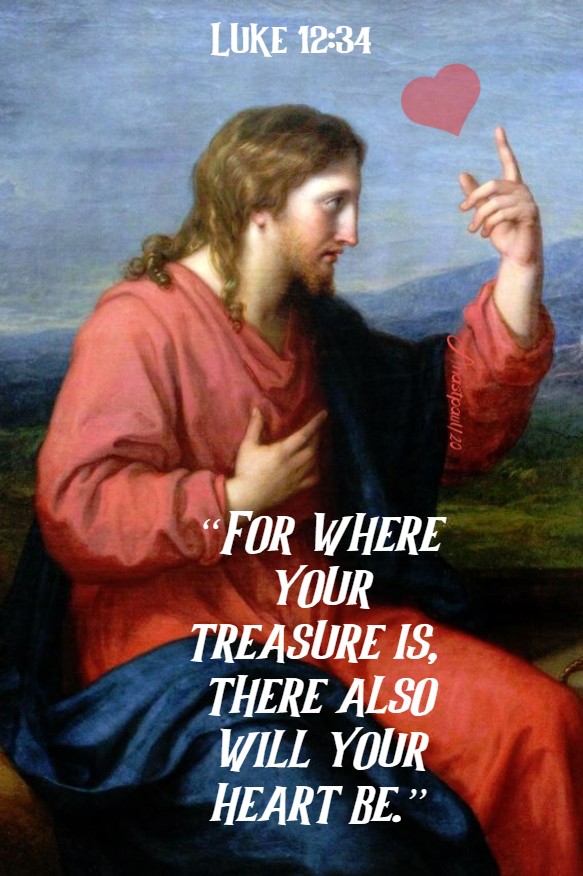
“For where your treasure is, there also will your heart be.”
Luke 12:34
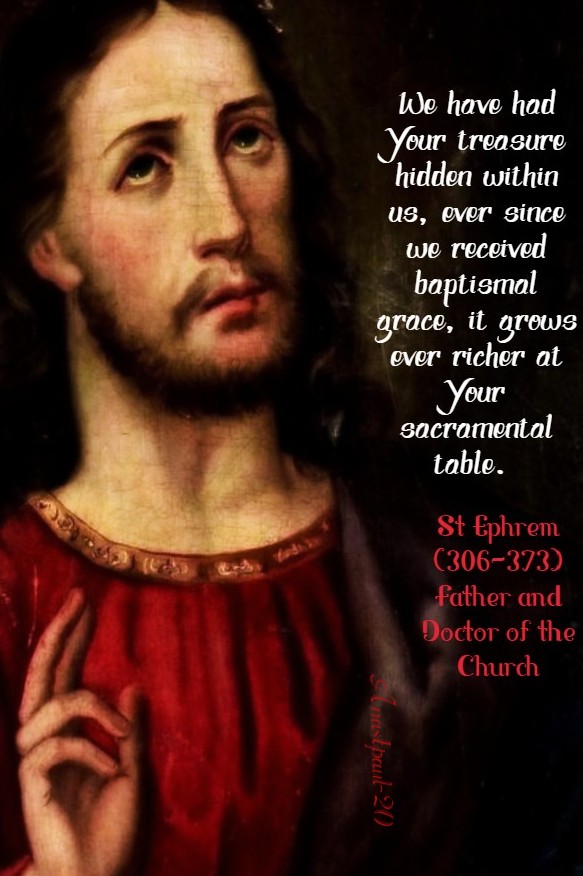
“We have had Your treasure hidden within us, ever since we received baptismal grace, it grows ever richer at Your sacramental table.”
St Ephrem (306-373) Father and Doctor of the Church
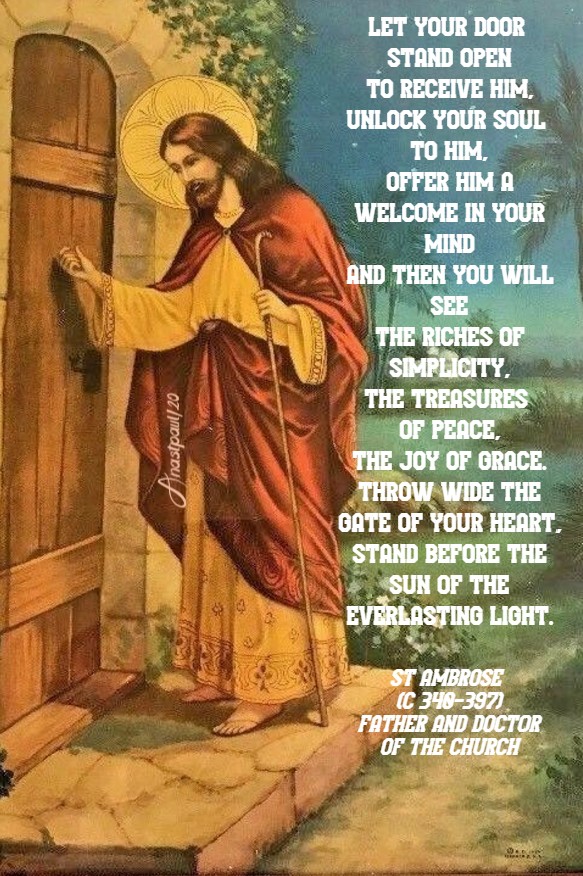
“Let your door stand open to receive Him, unlock your soul to Him, offer Him a welcome in your mind and then you will see the riches of simplicity, the treasures of peace, the joy of grace. Throw wide the gate of your heart, stand before the Sun of the everlasting Light.”
St Ambrose (c 340-397) Father and Doctor of the Church
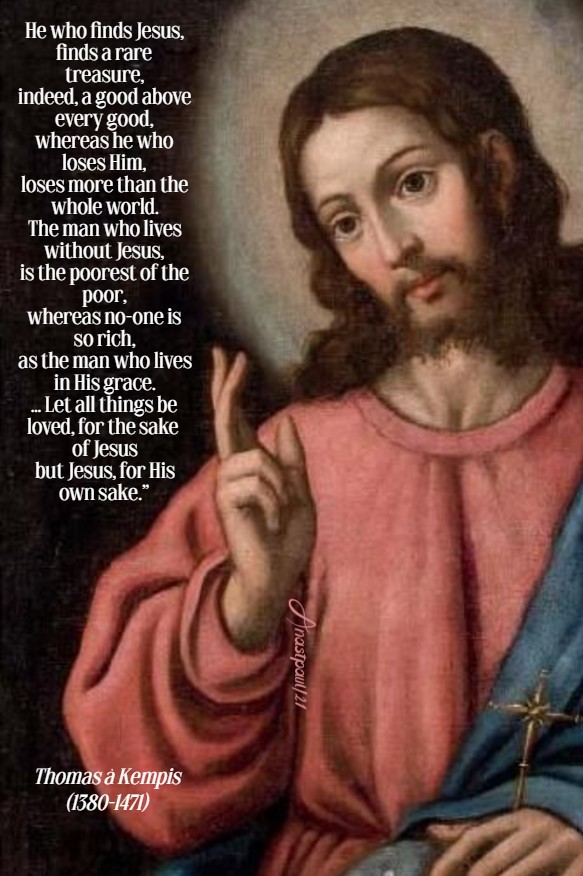
“ He who finds Jesus, finds a rare treasure, indeed, a good above every good, whereas he who loses Him, loses more than the whole world. The man who lives without Jesus, is the poorest of the poor, whereas no-one is so rich, as the man who lives in His grace. … Let all things be loved, for the sake of Jesus but Jesus, for His own sake.”
Thomas à Kempis (1380-1471)
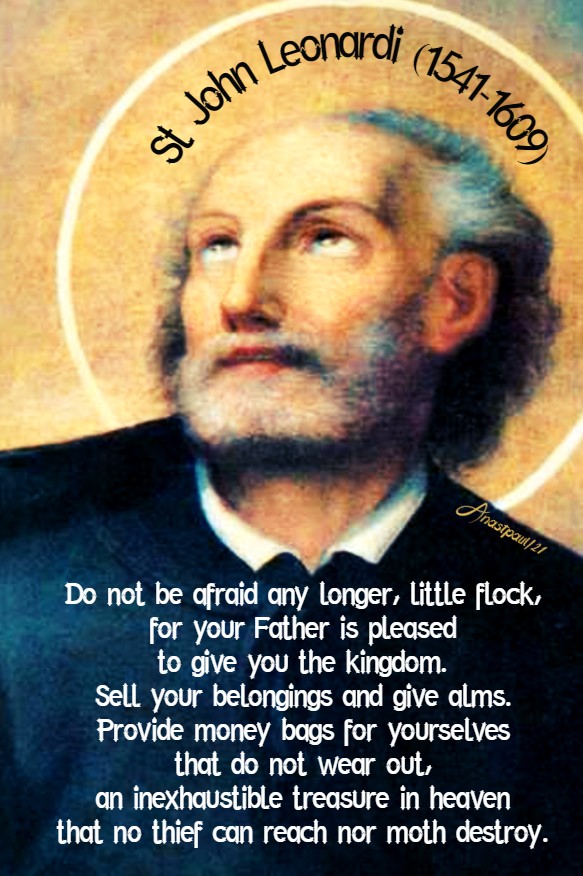
“Do not be afraid any longer, little flock, for your Father is pleased to give you the kingdom. Sell your belongings and give alms. Provide money bags for yourselves that do not wear out, an inexhaustible treasure in heaven that no thief can reach nor moth destroy.”
St John Leonardi (1541-1609)
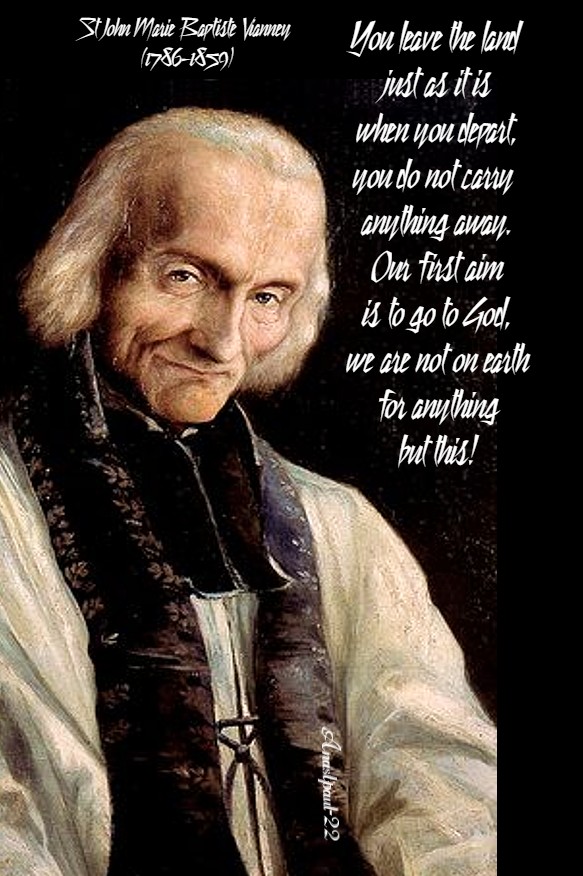
“You leave the land just as it is when you depart, you do not carry anything away. Our first aim is to go to God, we are not on earth for anything but this!”
One Minute Reflection – 8 July – “The Month of the Precious Blood”– The Memorial of St Elizabeth Queen of Portugal TOSF (1271-1336) – Proverbs 31:10-31, Matthew 13:44-52.
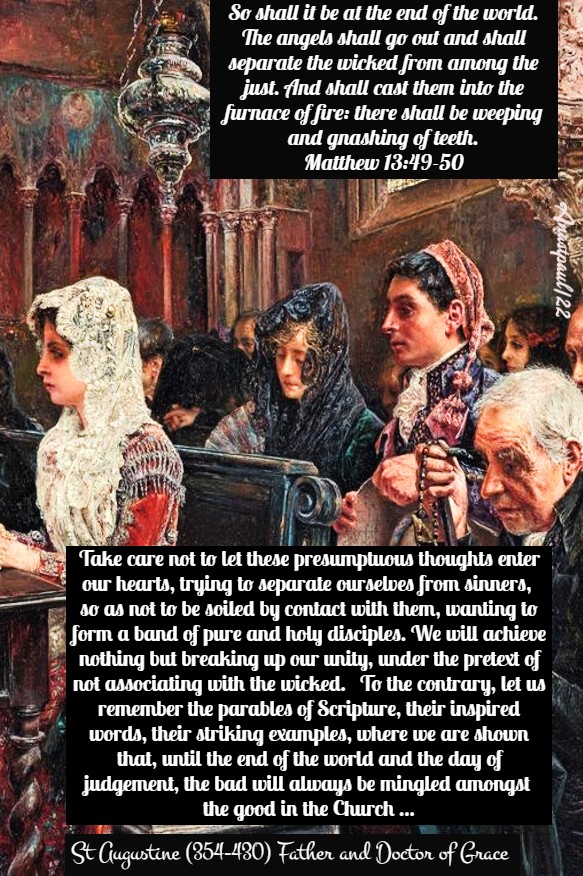
“So shall it be at the end of the world. The angels shall go out and shall separate the wicked from among the just. And shall cast them into the furnace of fire: there shall be weeping and gnashing of teeth.” – Matthew 13:49-50
REFLECTION – “Our Lord was an example of incomparable patience. He bore with a “devil” among His disciples even to His Passion (Jn 6,70). He said: “Let them grow together until the harvest lest you uproot the wheat when you pull out the weeds” (cf. Mt 13,29f.). As a symbol of the Church, He preached that the net would bring back to shore, namely the end of the world, every kind of fish, both good and bad. And He made it known, in various other ways, whether openly or in parables, that there would always be a mixture of good and bad. But, nevertheless, He stresses, that we have to protect the Church’s discipline when He says: “If your brother sins against you, go and tell him his fault between you and him alone. If he listens to you, you have won over your brother” (Mt 18,15)…
Yet today, we see people who think of nothing but stern commandments, who order that troublemakers be reproved, ‘not giving what is holy to the dogs,’ treating, like the publicans, ‘anyone who despises the Church, cutting off the scandalous member from the body‘ (Mt 7,6 ; 18,17 ; 5,30). Their stormy zeal so troubles the Church, that they pull out the weeds before their time and their blindness makes of them enemies, of the unity of Jesus Christ…
Take care not to let these presumptuous thoughts enter our hearts, trying to separate ourselves from sinners, so as not to be soiled by contact with them, wanting to form a band of pure and holy disciples. We will achieve nothing but breaking up our unity, under the pretext of not associating with the wicked. To the contrary, let us remember the parables of Scripture, their inspired words, their striking examples, where we are shown that, until the end of the world and the day of judgement, the bad will always be mingled amongst the good in the Church, without their participation in the Sacraments being harmful to the good, so long as these latter, have not played a part in their sins.” – St Augustine (354-430) Father and Doctor of Grace (On Faith and Works – Excerpt ch 3-5)
PRAYER – Most merciful God, Who among other admirable gifts, endowed blessed Queen Elizabeth with the special grace of calming the tumult of war; grant by her intercession that, after the peace for which we humbly pray, we may attain everlasting happiness. Through Jesus Christ, Thy Son our Lord, Who lives and reigns with Thee, in the unity of the Holy Ghost, God, world without end. Amen (Collect).
Our Morning Offering – 8 July – “The Month of the Precious Blood”
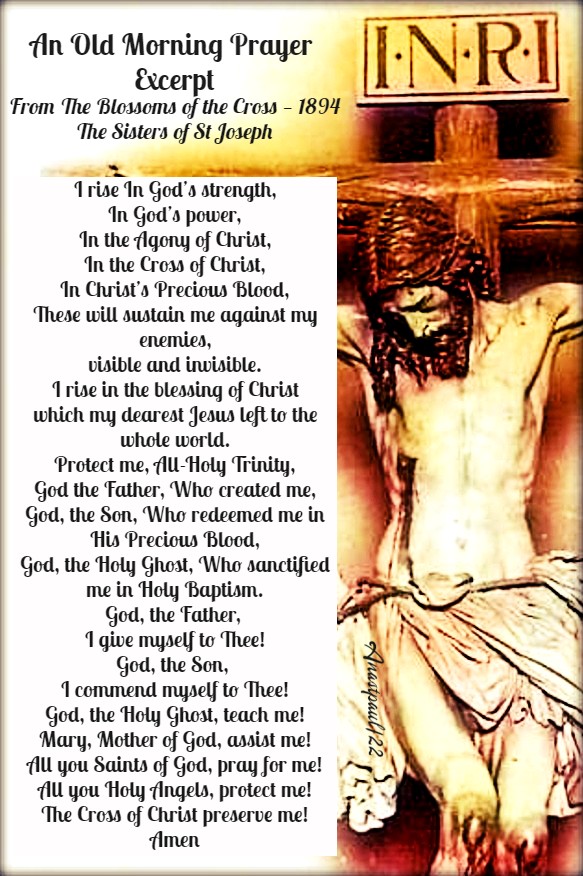
An Old Morning Prayer – Excerpt From The Blossoms of the Cross — 1894 The Sisters of St Joseph
I rise In God’s strength, In God’s power, In the Agony of Christ, In the Cross of Christ, In Christ’s Precious Blood, These will sustain me against my enemies, visible and invisible. I rise in the blessing of Christ which my dearest Jesus left to the whole world. Protect me, All-Holy Trinity, God the Father, Who created me, God, the Son, Who redeemed me in His Precious Blood, God, the Holy Ghost, Who sanctified me in Holy Baptism. God, the Father, I give myself to Thee! God, the Son, I commend myself to Thee! God, the Holy Ghost, teach me! Mary, Mother of God, assist me! All you Saints of God, pray for me! All you Holy Angels, protect me! The Cross of Christ preserve me! Amen
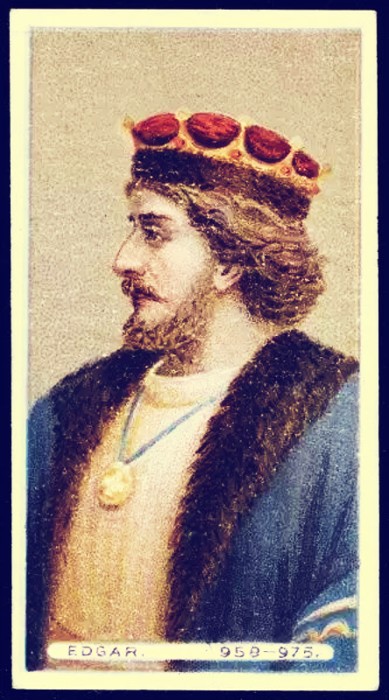
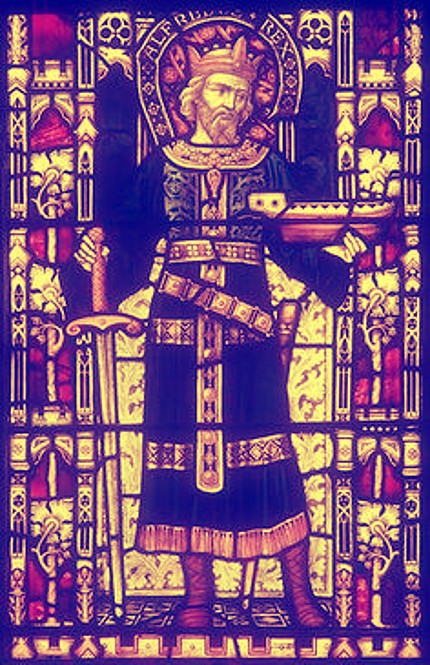
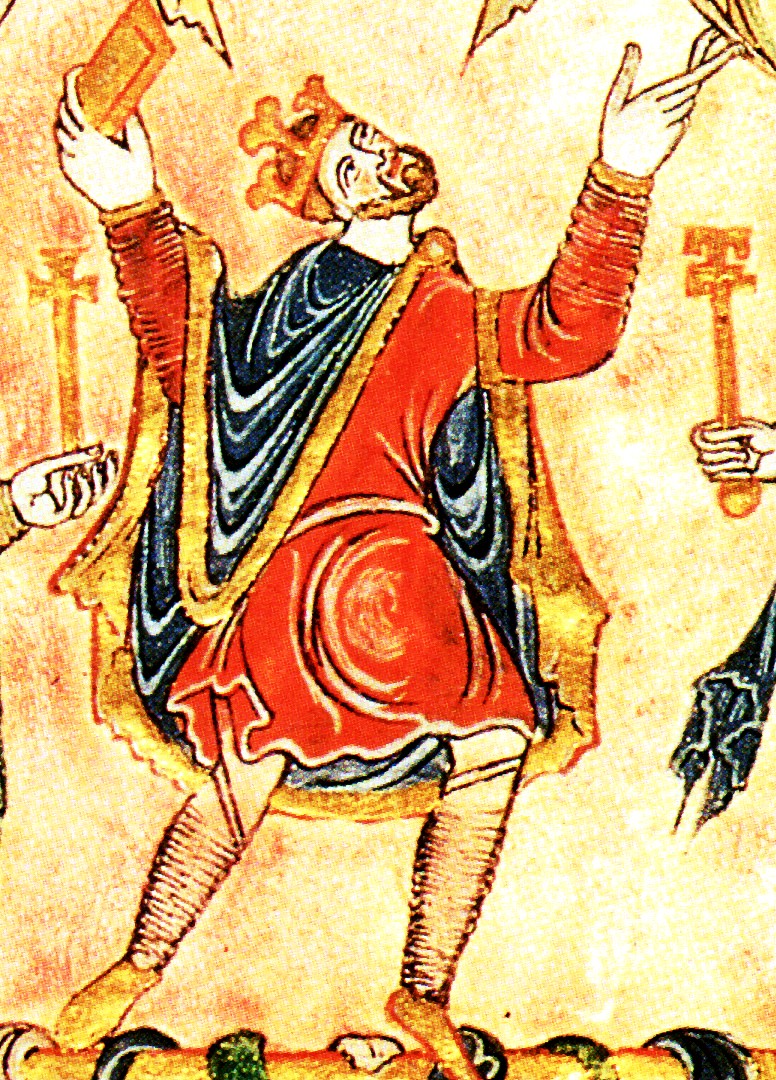
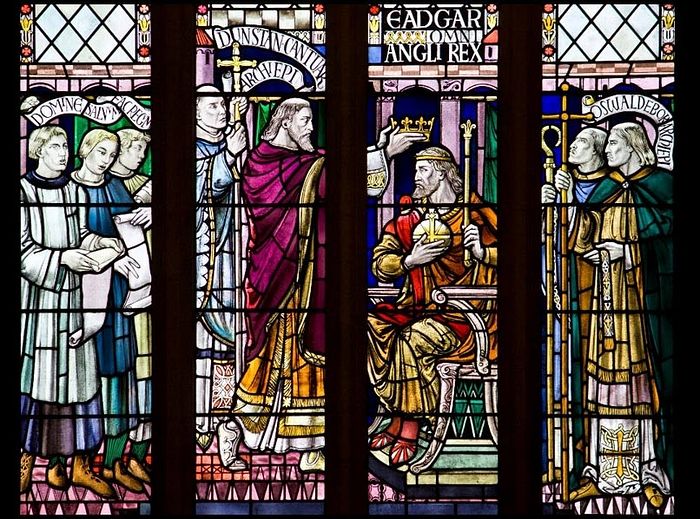
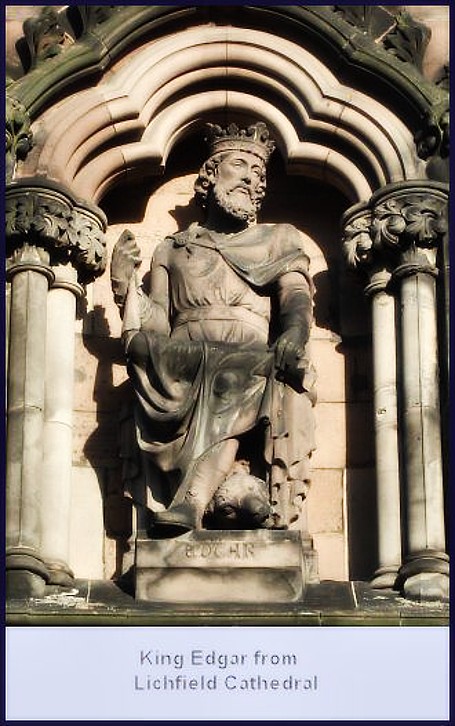
Saint of the Day – 8 July – St Edgar the Peaceful (c 943-975) King of the English, faithful son and Defender of the Church, Protector and Founder of Monasteries and Churches, a fair and wise ruler., always with the support of St Dunstan and the Bishops. Born in 943 or 944 in Wessex, England and died on 8 July 975 in Winchester, Wessex, England of natural causes. Patronage – kings, widowers. Also known as – Eadgar the Peaceful, Edgar the Peaceable, Edgar I, Edgar of England.
Edgar was King of England from 959 until his death. He was the younger son of Edmund I and St Elgiva of Shaftesbury and came to the throne as a teenager, following the death of his older brother Eadwig. As King, Edgar further consolidated the political unity achieved by his predecessors, with his reign being noted for its relative stability. His most trusted advisor was St Dunstan (909-988, who he recalled from exile and made Archbishop of Canterbury. The pinnacle of Edgar’s reign was his coronation at Bath in 973, which was organised by St Dunstan and forms the pattern for the current coronation ceremony in England. After his death he was succeeded by his son Edward.
One of Edgar’s first actions was to recall St Dunstan from exile and have him made Bishop of Worcester (and subsequently Bishop of London and later, Archbishop of Canterbury). St Dunstan remained Edgar’s advisor throughout his reign, by his advice and support, becoming the virtual Prime Minister. England underwent a religious revival during Edgar’s reign, with the spiritual and secular assistance of his friend, St Dunstan, as well as Archbishop Oswald of York and Bishop Aethelwold of Wincheste. Edgar founded Abbeys, encouraged the Benedictine Monks and their Rule and enacted penalties for nonpayment of tithes and Peter’s Pence, always encouraging faithful adherenceto the Pope.
Edgar was efficient and unusually tolerant of local customs; while he spent much time in military actions, his reign was a peaceful period for civilians. By the end of his reign, England was sufficiently unified, in that it was unlikely to regress back to a state of division among rival kingships. Indeed, an early eleventh century King Cnut the Great states in a letter to his subjects that “it is my will that all the nation, Ecclesiastical and lay, shall steadfastly observe Edgar’s laws, which all men have chosen and sworn at Oxford.”
Edgar was crowned at Bath and along with his wife Ælfthryth was anointed, setting a precedent for a coronation of a Queen in England itself. Edgar’s Coronation did not happen until 973 (just two years before his death), in an imperial ceremony planned, not as the initiation but as the culmination of his reign. This service was devised, written and arranged by St Dunstan himself and celebrated with a poem in the Anglo-Saxon Chronicle, forms the basis of the present-day British Coronation ceremony.
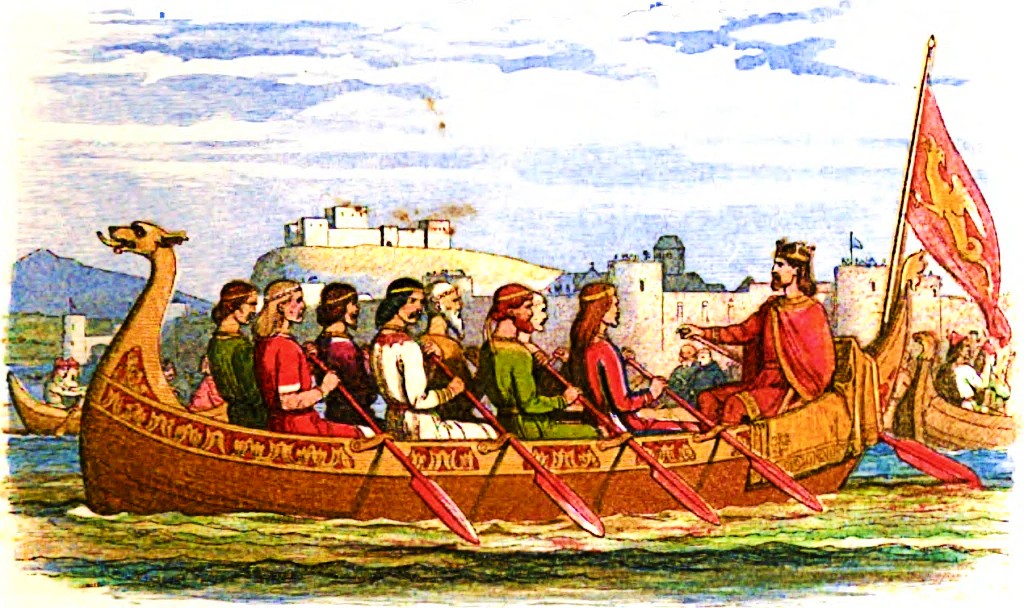
When Peaceful Edgar ruled the land He had eight kings at his command; How did he tame this royal band? Ah, he was knowing! These kings he did not subjugate And make them draw his coach of state Like Tamburlaine; he built an eight And taught them rowing
The symbolic Coronation was an important step – other Kings of Britain came and gave their allegiance to Edgar shortly afterwards, at Chester. Six kings in Britain, including the King of Scots and the King of Strathclyde, pledged their faith that they would be the King’s liege-men on land and sea. Later chroniclers made the kings into eight, all plying the oars of Edgar’s state barge on the River Dee.
Edgar died on 8 July 975 at Winchester, Hampshire. He left behind Edward, who was probably his illegitimate son by Æthelflæd and Æthelred, the younger, the child of his wife Ælfthryth. He was succeeded by Edward. Edgar also had a possibly illegitimate daughter by Wulfthryth, who later became Abbess of Wilton. She was joined there by her daughter, Edith of Wilton, who lived there as a nun until her death. Both women were later regarded as Saints.
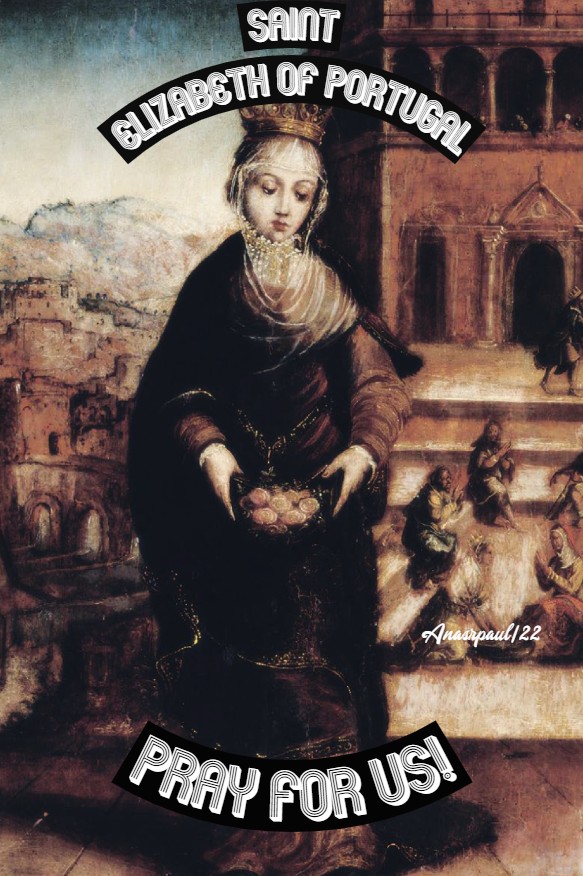
St Elizabeth of Portugal TOSF (1271-1336) Queen Consort, Franciscan Tertiary, Apostle of Charity and Peace, Political Negotiator and Mediator. In the year 1694 Pope Innocent XII moved her Feast to 8 July, so that it would not conflict with the celebration of the Octave of Saints Peter and Paul, Apostles. Biography: https://anastpaul.com/2018/07/04/saint-of-the-day-4-july-st-elizabeth-of-portugal-t-o-s-f-1271-1336/
St Abraham the Martyr Bl Adolf IV of Schauenburg St Pope Adrian III St Ampelius of Milan St Apollonius of Benevento
St Arnold St Auspicius of Toul St Auspicius of Trier Brogan of Mothil St Colman of Thuringia St Doucelin St Edgar the Peaceful (c 943-975) King of the English
St Landrada Bl Mancius Araki Kyuzaburo St Morwenna St Pancras of Taormina Bl Peter the Hermit St Procopius of Ceasarea St Sunniva of Bergen St Thibaud de Marly St Totnan of Thuringia
Abrahamite Monks/Martyrs of Constantinople: A group of Monks in a Monastery founded by Saint Abraham of Ephesus. Martyred in the iconoclast persecutions of Emperor Theophilus. In c 835 in Constantinople.
Martyrs of Shanxi – 7 Saints: In 1898 seven sisters of the Franciscan Missionaries of Mary were sent to the Shanxi Diocese in China to serve the poor in hospitals and care for the unwanted or other destitutes in orphanages. They were: • Anne-Catherine Dierks • Anne-Francoise Moreau • Clelia Nanetti • Irma Grivot • Jeanne-Marie Kuergin • Marianna Giuliani • Pauline Jeuris There they all died in one of the periodic persecutions against foreign missionaries. They were beheaded on 9 July 1900 at Taiyuanfu, China- Canonisedon 24 November 1946 by Pope Pius XII.
Martyrs of Syrmium – 5 Saints: Five Christians Martyred together for their faith. We know nothing else about them but the names – Cecilia, Eperentius, Eraclius, Sostratus and Spirus. They were martyred in the 4th century in Syrmium, Pannonia (modern Serbia).
Thought for the Day – 7 July – Meditations with Antonio Cardinal Bacci (1881-1971)
THE SALVATION OF SOULS
“If you still belong to the category of those who desire to be good and virtuous, remember that your obligations do not stop at this. You are obliged to work as hard as possible, for the return of sinners to the fold and for the reawakening of the faith of the indifferent.
A man who really loves God, cannot remain inactive when he witnesses the desertion of so many of his fellow-men, the corruption of public and private morals and the continuous insults offered to the Creator of the human race. ANYONE WHO REMAINS INACTIVE BECOMES AN ACCOMPLISH!
Everyone is obliged to do his best to prevent the spread of such errors and evils. Do NOT make the excuse that there is very little which you can do. Although the resources of those who are still faithful, may be individually insignificant, they become, when combined, an irresistible force.
Remember that you have three invincible weapons – prayer, mortification and sacrifice. These are the weapons which can and should be employed in order to convert the world and to establish the Kingdom of God.
Remember the countless conversions effected by the Saints as a result of their prayer, mortications and heroic sacrifices. No-one can call himself a Catholic, who does not love, in a practical manner, his fellowmen, especially unfortunate sinners. Make up your mind to offer up your prayers and sacrifices for their conversion.”
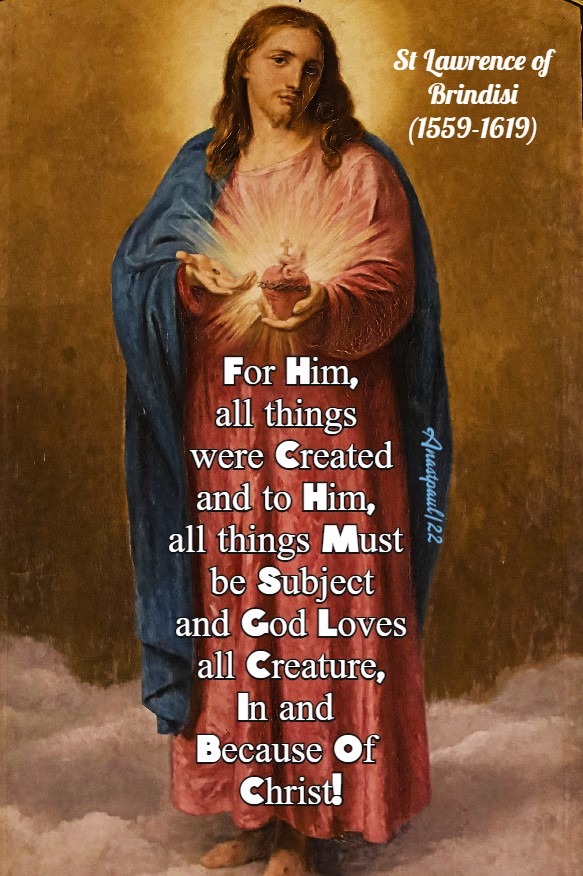
Quote/s of the Day – 7 July – The Memorial of St Lawrence of Brindisi OFM Cap (1559-1619) Confessor, The “Franciscan Renaissance Man,” Priest
“For Him all things were created and to Him, all things must be subject and God loves all creature, in and because of Christ.”
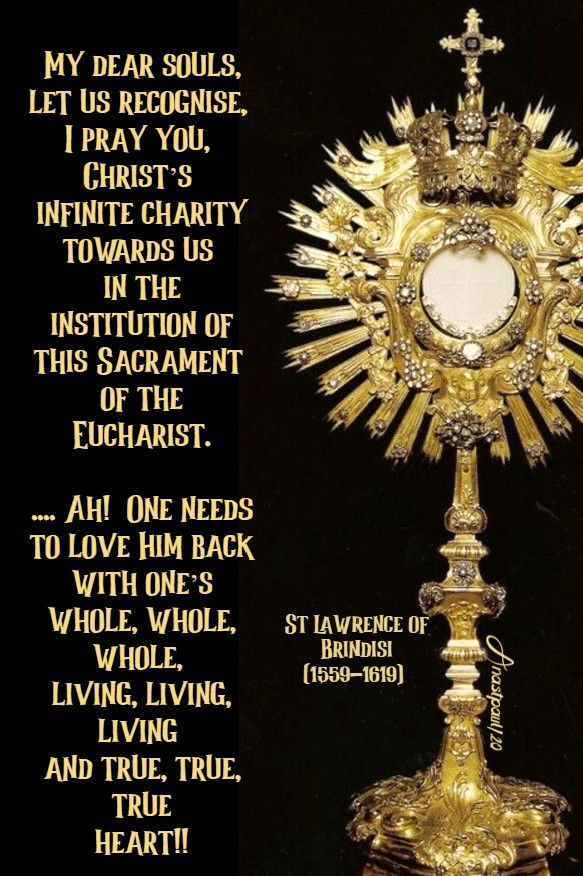
“My dear souls, let us recognise, I pray you, Christ’s infinite charity towards us in the institution of this Sacrament of the Eucharist. In order that our love be a spiritual love, He wills a new heart, a new love, a new spirit for us. It is not with a carnal heart but with a spiritual one, that Christ has loved us with a gratuitous love, a supreme and most ardent love, by way of pure grace and charity. Ah! One needs to love Him back with one’s whole, whole, whole, living, living, living and true, true, true heart!”
One Minute Reflection – 7 July – The Memorial of Saint Cyril (827-869) and Saint Methodius (826-885) “Apostles to the Slavs,” Sibling Brother Bishops, Confessors – Romans 8:18-23, Luke 10:1-9
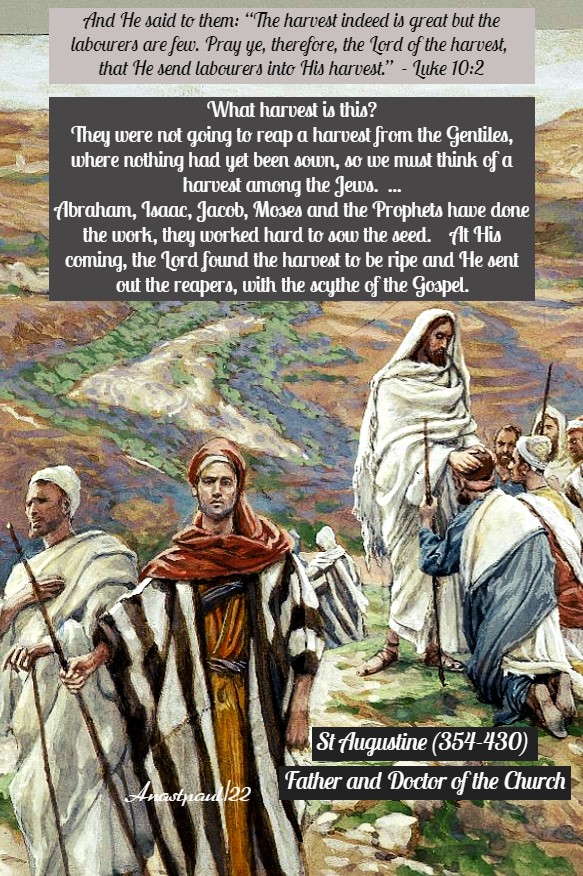
“Pray ye therefore the Lord of the harvest that He send labourers into His harvest.” – Luke 10:2
REFLECTION – “The gospel that has just been read to us invites us to seek out what this harvest might be of which the Lord says to us that: “The harvest is indeed great, the laborers are few, so pray the lord of the harvest that He send labourers into His harvest.” So it was that,, in addition to those twelve disciples whom He called Apostles (those who have been sent), He sent out seventy-two others. All of them, as His own words reveal, were sent to work at a harvest that had already been prepared. What harvest is this? They were not going to reap a harvest from the Gentiles, where nothing had yet been sown, so we must think of a harvest among the Jews. It was in order to reap this harvest that the Lord of the harvest came. But to the other peoples He sent, not reapers but sowers. Among the Jews, then, there was a harvest but elsewhere, the sowing. And it was particularly, while reaping among the Jews, that He chose the Apostles. Harvest time had come, the harvest was ripe, for the prophets had done their sowing among them…
Did not the Lord declare to His disciples: “You say the harvest will be a long time. I tell you, look up and see, the fields ripe for harvest,” (Jn 4,35)? And again, He said: “Others have done the work and you are sharing the fruits of their work,” (ibid v.38). Abraham, Isaac, Jacob, Moses and the prophets, have done the work, they worked hard to sow the seed. At His coming, the Lord found the harvest to be ripe and He sent out the reapers, with the scythe of the Gospel.” – St Augustine (354-430) Bishop of Hippo, Father and Doctor of the Church (Sermon 101).
PRAYER – Look forgivingly on Thy flock, Eternal Shepherd and keep it in Thy constant protection, by the intercession of the blessed brothers, Cyril and Methodius, who, by the power of the Holy Ghost were moved to bring the light of the Gospel to a hostile and divided people. Through Jesus Christ, Thy Son our Lord, Who lives and reigns with Thee, in the unity of the Holy Ghost, God, world without end. Amen (Collect).
Our Morning Offering – 7 July – “The Month of the Most Precious Blood”
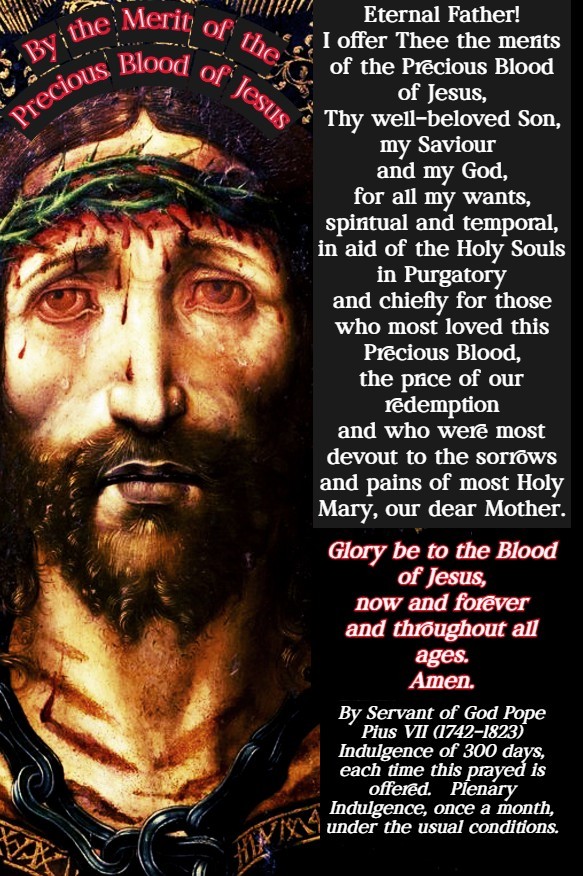
By the Merit of the Precious Blood of Jesus By Servant of God Pope Pius VII (1742-1823) Papacy from 1800 to 1823 Indulgenced Act of Oblation to Our Father
Eternal Father! I offer Thee the merit of the Precious Blood of Jesus, Thy well-beloved Son, my Saviour and my God, for all my wants, spiritual and temporal, in aid of the Holy Souls in Purgatory and chiefly for those who most loved this Precious Blood, the price of our redemption and who were most devout to the sorrows and pains of most Holy Mary, our dear Mother.
Glory be to the Blood of Jesus, now and forever and throughout all ages. Amen.
Indulgence of 300 days, each time this prayed is offered 22 September 1817 with a Plenary Indulgence, once a month, under the usual conditions.
Note of Interest: On 15 August 1811 – the Feast of the Assumption – it is recorded that the Pope celebrated Mass and entered a trance and began to levitate, in a manner, that drew him to the Altar. This particular episode aroused great wonder and awe among participants at the Mass , which included the French soldiers guarding him, who were awestruck at what had occurred and left records of it.
Saint of the Day – 7 July – Saint Prosper of Aquitaine (c 390-c 465) Theologian, Married Layman, Writer, disciple and friend of St Augustine (354-430). St Prosper was the first continuator of St Jerome’s Universal Chronicle. Born in c 390 in Aquitaine, France and died in c 465 in Rome, Italy, of natural causes. Also known as – Tiro Prosper or Prosper Tiro.
Prosper was a native of Aquitaine, France and may have been educated at Bordeaux. By 417 he arrived in Marseilles as a refugee from Aquitaine, in the aftermath of the Gothic invasions of Gaul.
We first meet Prosper definitively around 425 as a participant in the Pelagian controversy which rocked the Church in southern France. Pelagian heretics minimised the role of grace in the first steps of becoming a Christian. Many vigorously opposed St Augustine’s strict views that special grace was required for salvation and thus, many were predestined to damnation. Prosper, a lay theologian, championed St Augustine. And in 428, a letter from Prosper prompted Augustine to write a major work on predestination.
Although a layman, Prosper threw himself with ardour into the religious controversies of his day, defending St Augustine and propagating orthodoxy. In his De vocatione omnium gentium – “The Call of all Nations,”, in which the issues of the call to the Gentiles is discussed, in the light of Augustine’s doctrine of Grace, Prosper appears as the first of the medieval Augustinians.
In 431, Prosper went to Rome and obtained a letter from Pope Celestine I that affirmed Augustine and his views and urged the French Bishops to quell the dispute peacefully. But it raged on. For several more years, Prosper wrote extensively, defending and popularising St Augustine’s teaching.
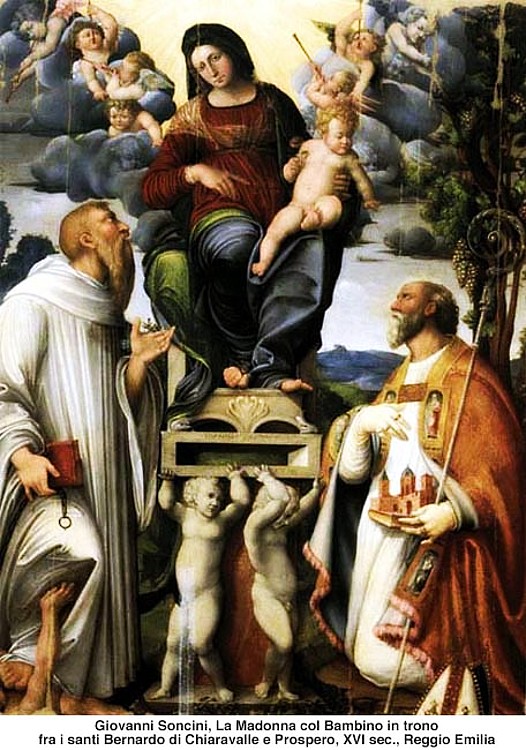
St Prosper on the right with Baby Jesus above him
In The Call to All Nations, Prosper seems to have mellowed somewhat, allowing that God mercifully made the Grace of Salvation available to all human beings. In the following excerpt Prosper describes the interplay of grace and free will:
“When the Word of God enters the ears through the ministry of preachers, the action of the Divine Power fuses with the sound of the human voice. The soul passes from one will to another will. Although the will that is driven out lingers on for a while, the newborn will claims for itself, all that is better in human beings. Thus the law of sin and the law of God do not dwell in the same way and together in the same person. Then the tempter tries to ambush the person through external things but the mind, strong with God’s help, prevails. For there are occasions for struggle and these greatly benefit the faithful. Their weakness is buffeted so that their holiness may not yield to pride. All good things, especially those conducive to eternal life, are obtained, increased and preserved through God’s favour.”
Prosper spent the last part of his life in Rome where he served as secretary to St Pope Leo the Great. During that tim, he wrote the Chronicle, a universal history from Adam’s fall to the Vandal’s conquest of Rome in 455. He died in Rome around 465.
You will remember yesterday’s Saint Palladius of Ireland, knowledge of whose history, was greatly enhanced by his contemporary’s writings, St Prosper, who speaks of St Palladius, in particular in regard to the Pelagian heresy.
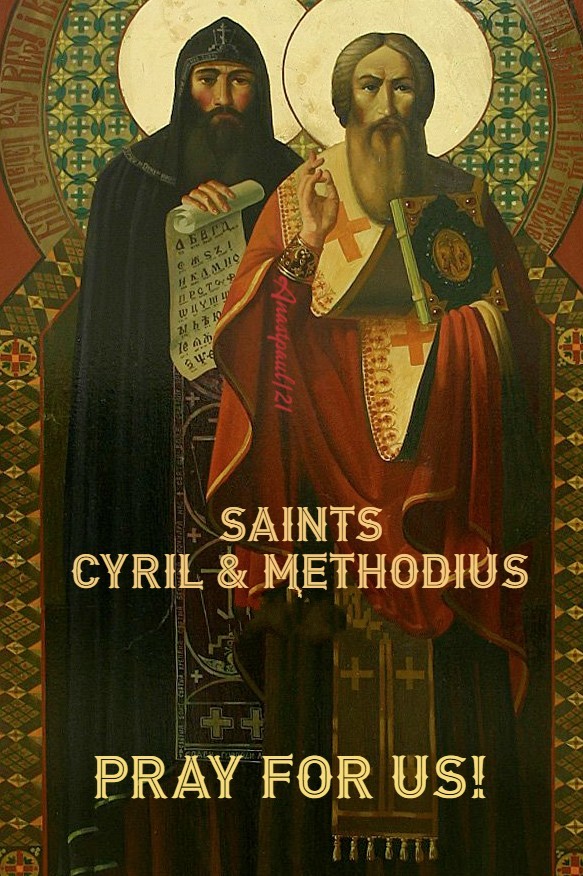
Saint Cyril (827-869) Saint Methodius (826-885) “Apostles to the Slavs,” Sibling Brother Bishops, Confessors, Theologians, Missionaries, Writers, Preachers, Patrons of Europe. Creators of the Glagolitic alphabet, the first alphabet used to transcribe Old Church Slavonic and Cyrillac Alphabet, which was developed from it. Their Feast Day is 7 July (moved in 1969). The great Saints Cyril & Methodius: https://anastpaul.wordpress.com/2018/02/14/saints-of-the-day-14-february-sts-cyril-827-869-methodius-826-885/
St Lawrence of Brindisi OFM Cap (1559-1619) Confessor, The “Franciscan Renaissance Man,” Priest and Friar of the Friars Minor Capuchin, Theologian, Vicar General of the Franciscans, Language scholar, Humanist, Philosopher, Biblicist, Preacher, Missionary, Professor, International Administrator, Confidant of Popes, Emperors, Kings and Princes, Diplomatic envoy, Army Chaplain, Military Strategist and Morale builder, Polemicist, Prolific writer. He was Beatified on 1 June 1783 by Pope Pius VI and Canonised on 8 December 1881 by Pope Leo XIII. His Zealous Life: https://anastpaul.com/2017/07/21/saint-of-the-day-21-july-st-lawrence-of-brindisi-o-f-m-cap-doctor-of-the-church/
St Alexander St Angelelmus of Auxerre St Apollonius of Brescia
Blessed Pope Benedict XI OP (1240-1303) Cardinal-Priest of St Sabina, Bishop of Ostia then of Rome, Dominican Friar, Prior Provincial of Lombardy prior to becoming the Master of the Order in 1296, Apostolic Papal Legate to Hungary and France, Teacher, Preacher, Writer and renowned Scholar with special emphasis on Biblical commentary. His Papacy began on 22 Ocober 1303 and ended at his death on 7 July 1304. His Life: https://anastpaul.com/2020/07/07/saint-of-the-day-7-july-blessed-pope-benedict-xi-1240-1303/
Bl Bodard of Poitiers St Bonitus of Monte Cassino St Carissima of Rauzeille St Eoaldus of Vienne St Ethelburga of Faremoutier St Hedda of Wessex St Maelruan Bl Marie-Gabrielle-Françoise-Suzanne de Gaillard de Lavaldène St Medran St Merryn Bl Oddino Barrotti St Odo of Urgell St Odran St Palladius of Ireland St Pantaenus of Alexandria
St Pantænus (Died c 216) Father of the Church, Theologian, Philosopher, Teacher, Confessor and Defender of the Faith, Writer and interpreter of the Bible, the Trinity and Christology, |Missionary. Convert ofthe disciples of the Apostles. Head of the Alexandrian School of Learning – a famous pupil was St Clement of Alexandria. Biography: https://anastpaul.com/2019/07/07/saint-of-the-day-7-july-st-pantaenus-father-of-the-church-died-c-216/
St Prosper of Aquitaine (c 390-c 436) Theologian, Married Layman, Writer, disciple abd friend of St Augustine. St Syrus of Genoa St They
Martyrs of Durres – 7 Saints: Also known as – Martyrs of Dyrrachium/Martyrs of Durazzo. A group of seven Italian Christians who fled Italy to escape the persecutions of Emperor Hadrian. Arrived in Dyrrachium, Macedonia to find Saint Astius tied to a cross, covered in honey, laid in the sun and left to be tortured by biting and stinging insects. When they expressed sympathy for Astius, they were accused of being Christians, arrested, chained, weighted down, taken off shore and drowned. We know little more about each of them than their names – Germaus, Hesychius, Lucian, Papius, Peregrinus, Pompeius and Saturninus. They were born in Italy and were martyred at sea c117 off the coast of Dyrrachium (Durazzo), Macedonia (modern Durres, Albania).





















 AnaStpaul
You must be logged in to post a comment.