St John Chrysostom (347-407) Bishop, Confessor, Father and Doctor of the Church – “Golden Mouthed,” Preacher, Orator, Writer, Theologian, Confessor. Name Meaning – God is gracious; gift of God (John), golden-mouthed (Chrysostom). Biography: https://anastpaul.com/2017/09/13/saint-of-the-day-13-september-st-john-chrysostom-347-407-father-and-doctor-of-the-church-golden-mouthed/ (His Feast Day is today (changed in 1969 to 13 September). The Roman Martyrology states of him today: “At Constantinople, St John, Bishop, who was surnamed Chrysostom on account of his golden flow of eloquence. He greatly promoted the interests of the Christian religion by his preaching and exemplary life and, after many toils, closed his life in banishment. His sacred body was brought to Constantinople on this day in the reign of Theodosius the younger and afterwards taken to Rome and placed in the Basilica of the Prince of the Apostles. This illustrious Preacher of the Word of God, Pope Pius X declared and appointed as the Heavenly Patron of Sacred Orators.”
St Domitian of Melitene St Emerius of Bañoles St Gilduin Bl Gonzalo Diaz di Amarante St Henry de Osso y Cervello Bl John of Warneton St Julian of Le Mans St Julian of Sora St Lupus of Châlons
St Marius of Bodon Bl Michael Pini St Natalis of Ulster St Theodoric of Orléans St Pope Vitalian
Martyrs of North Africa – 30 Saints: A group of 30 Christians Martyred together by Arian Vandals. The only details to have survived are four of their names – Datius, Julian, Reatrus and Vincent. c 500 in North Africa.
Thought for the Day – 26 January – Meditations with Antonio Cardinal Bacci (1881-1971)
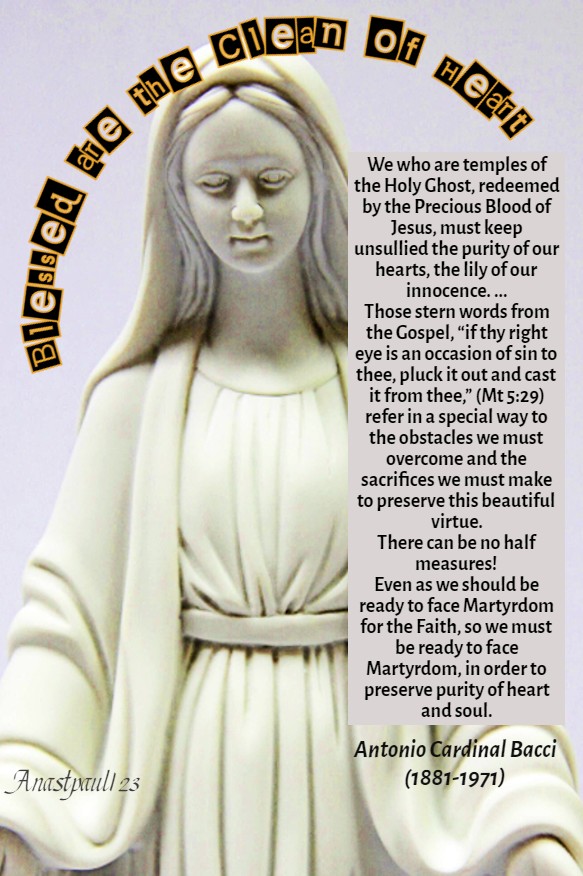
Blessed are the Clean of Heart
“St Paul warns us in the following words: “Do thou not know that thy members are the temple of the Holy Spirit, Who is in thee, Whom thou hast from God and that thou art not thy own? For thou hast been bought at a great price. Glorify God and bear Him in thy body” (1 Cor 6:19-20).
We who are temples of the Holy Ghost, redeemed by the Precious Blood of Jesus, must keep unsullied the purity of our hearts, the lily of our innocence. We must do this no matter what sacrifices it may cost us. Those stern words from the Gospel, “if thy right eye is an occasion of sin to thee, pluck it out and cast it from thee,” (Mt 5:29) refer in a special way to the obstacles we must overcome and the sacrifices we must make to preserve this beautiful virtue. There can be no half measures! We must be prepared to go to any lengths, even to accept death if necessary, like St Maria Goretti. Even as we should be ready to face Martyrdom for the Faith, so we must be ready to face Martyrdom, in order to preserve purity of heart and soul.”
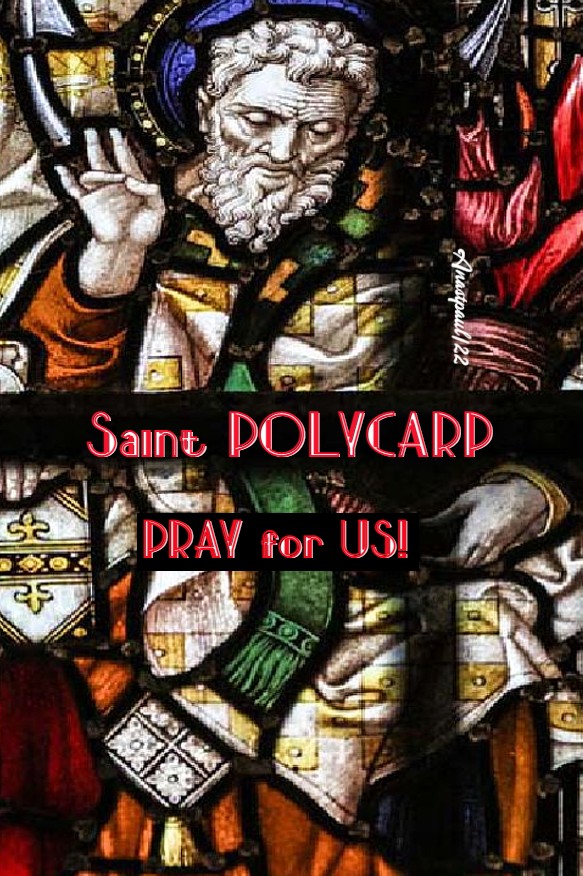
Quote/s of the Day – 26 January – St Polycarp (69-155) Martyr, Bishop of Smyrna (Asia Minor), Apostolic Father
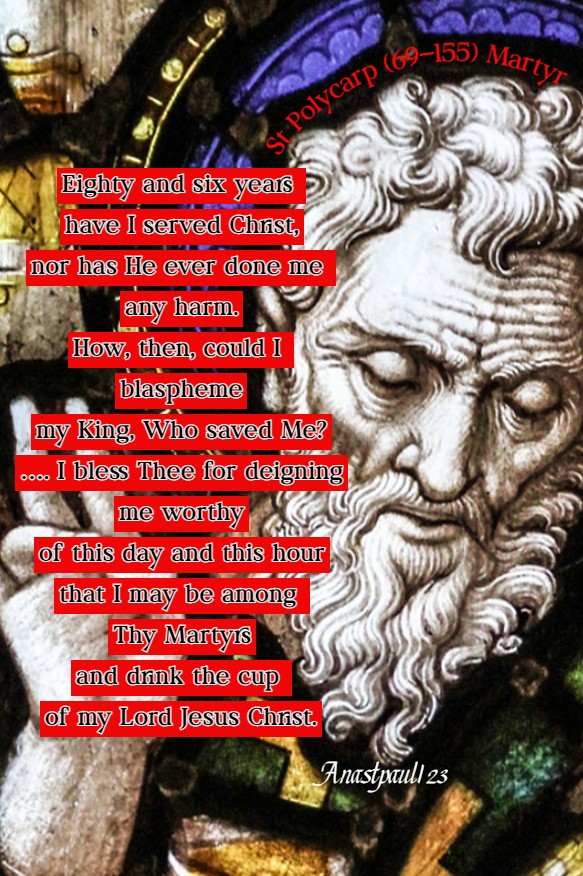
“Eighty and six years have I served Christ, nor has He ever done me any harm. How, then, could I blaspheme my King, Who saved Me? …. I bless Thee for deigning me worthy of this day and this hour that I may be among Thy Martyrs and drink the cup of my Lord Jesus Christ.”
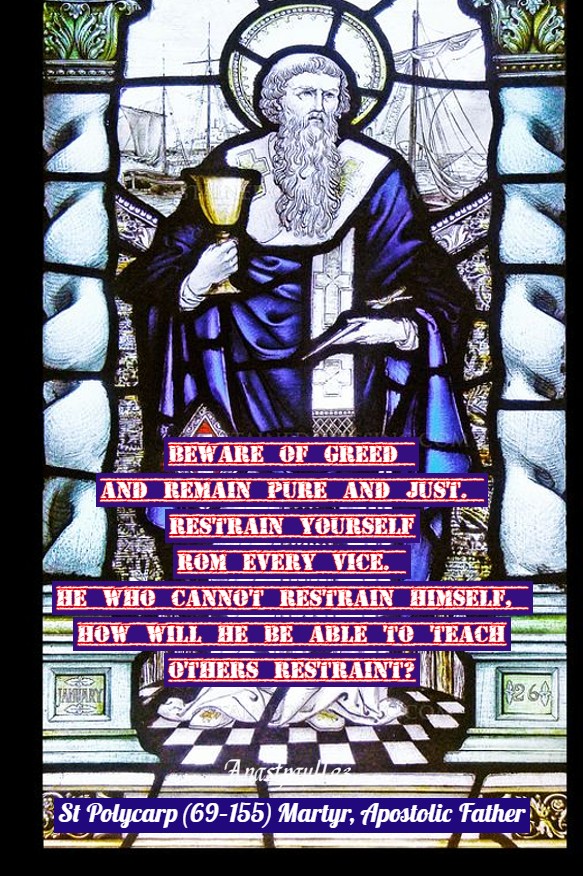
“Beware of greed and remain pure and just. Restrain yourself from every vice. He who cannot restrain himself, how will he be able to teach others restraint?”
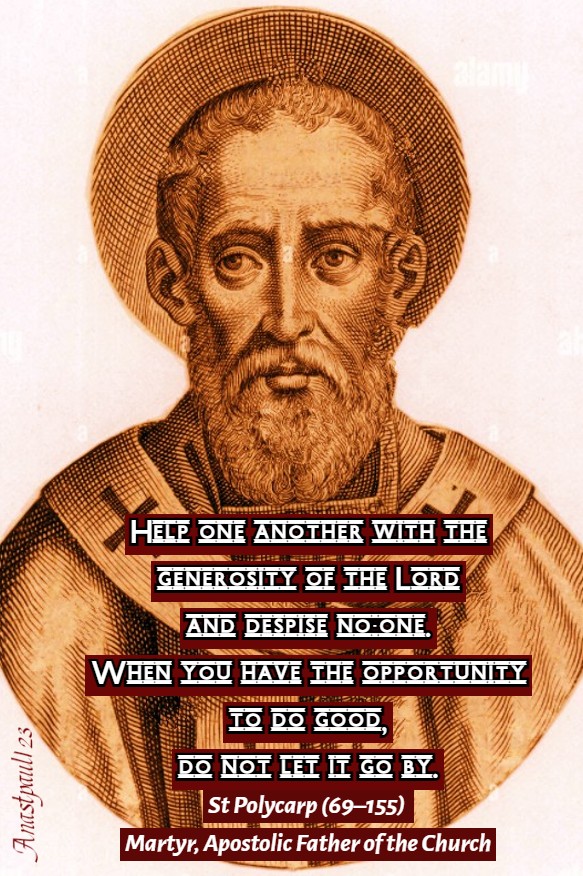
“Help one another with the generosity of the Lord and despise no-one. When you have the opportunity to do good, do not let it go by.”
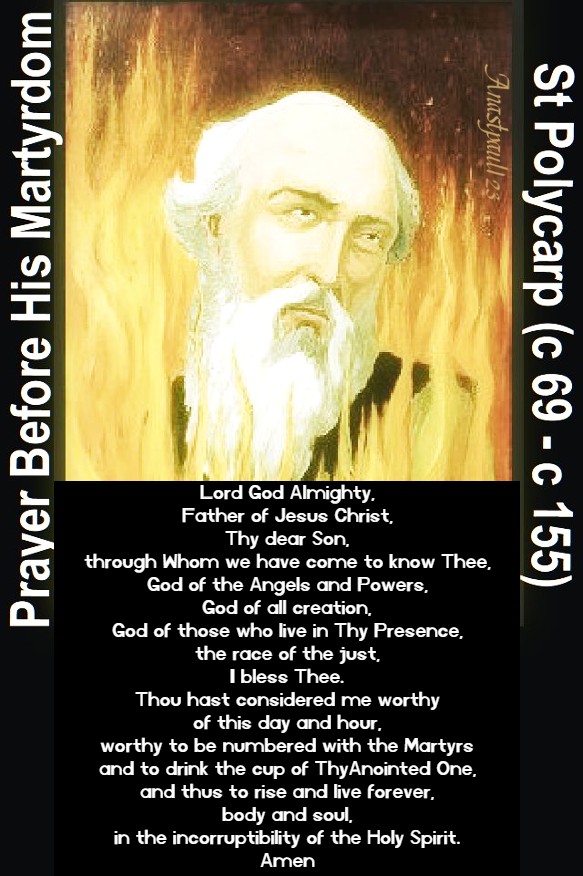
Prayer Before His Martyrdom By St Polycarp (69–155)
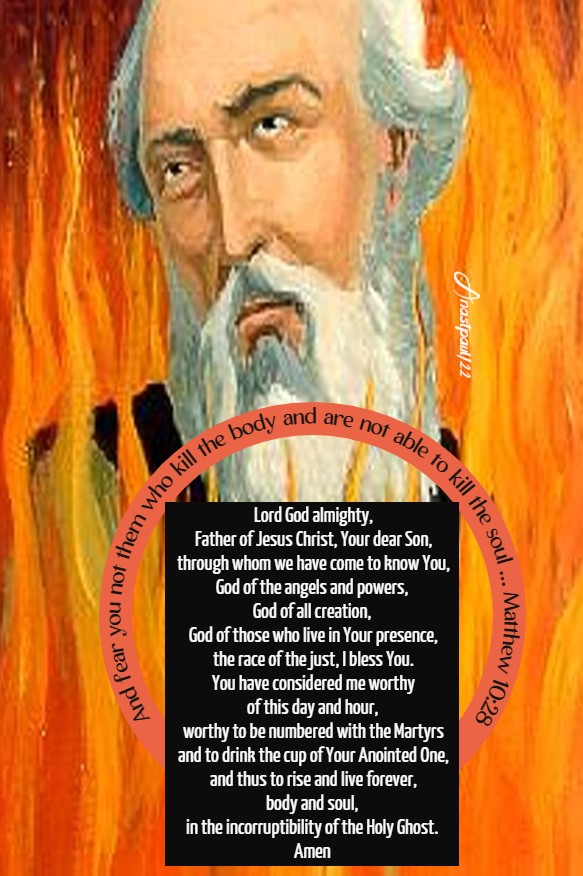
Lord God Almighty, Father of Jesus Christ, Thy dear Son, through Whom we have come to know Thee, God of the Angels and Powers, God of all creation, God of those who live in Thy Presence, the race of the just, I bless Thee. Thou hast considered me worthy of this day and hour, worthy to be numbered with the Martyrs and to drink the cup of Thy Anointed One, and thus to rise and live forever, body and soul, in the incorruptibility of the Holy Spirit. Amen
One Minute Reflection – 26 January – St Polycarp (69-155) Martyr, Bishop of Smyrna (Asia Minor), Apostolic Father – 1 John 3:10-16, Matthew 10:26-32 – Scripture search here: https://www.drbo.org/
“And fear you not them who kill the body and are not able to kill the soul …” – Matthew 10:28
REFLECTION – “They did not nail Polycarp but only tied him up. And so, he was bound, putting his arms behind his back, like a noble ram taken from a large flock for sacrifice, a burnt offering acceptable to and made ready for God. Then he gazed up to Heaven and said: “O Lord God Almighty, Father of Your beloved and blessed Son Jesus Christ, through Whom we have received knowledge of You, God of the angels and the powers and of all creation, God of the whole race of the righteous who live in Your sight: I bless You, for You have thought me worthy of this day and hour, to share the cup of Your Christ, as one of Your Martyrs, to rise again to eternal life in body and soul in the immortality of the Holy Ghost. May I be taken up today into Your Presence among Your Martyrs, as a rich and acceptable sacrifice, in the manner You have prepared and have revealed and have now brought to fulfillment, for You are the God of truth… And so also I praise You for all things; I bless and glorify you through our Eternal High Priest in Heaven (Heb 4,14), in Your beloved Child, Jesus Christ, through Whom be glory to You and to Him and to the Holy Ghost, now and for the ages to come. Amen.” – Letter of the Church of Smyrna concerning the Martyrdom of Saint Polycarp (69-155)
PRAYER – O God, Who gave us joy by the annual solemnity of blessed Polycarp, Thy Martyr and Bishop, mercifully grant that we may rejoice in his protection, whose birthday we celebrate. Through Jesus Christ, Thy Son our Lord, Who lives and reigns with Thee, in the unity of the Holy Ghost, God, world without end. Amen (Collect).
Our Morning Offering – 26 January – – “The Month of the Most Holy Name of Jesus”
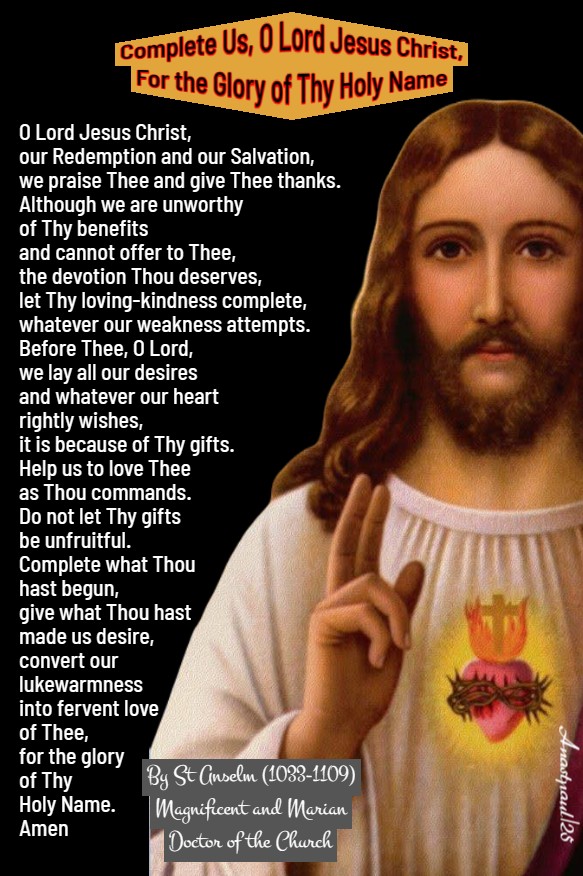
Complete Us, O Lord Jesus Christ, For the Glory of Thy Holy Name By St Anselm (1033-1109) Magnificent and Marian Doctor of the Church
O Lord Jesus Christ, our Redemption and our Salvation, we praise Thee and give Thee thanks. Although we are unworthy of Thy benefits and cannot offer to Thee, the devotion Thou deserves, let Thy loving-kindness complete, whatever our weakness attempts. Before Thee, O Lord, we lay all our desires and whatever our heart rightly wishes, it is because of Thy gifts. Help us to love Thee as Thou commands. Do not let Thy gifts be unfruitful. Complete what Thou hast begun, give what Thou hast made us desire, convert our lukewarmness into fervent love of Thee, for the glory of Thy Holy Name. Amen
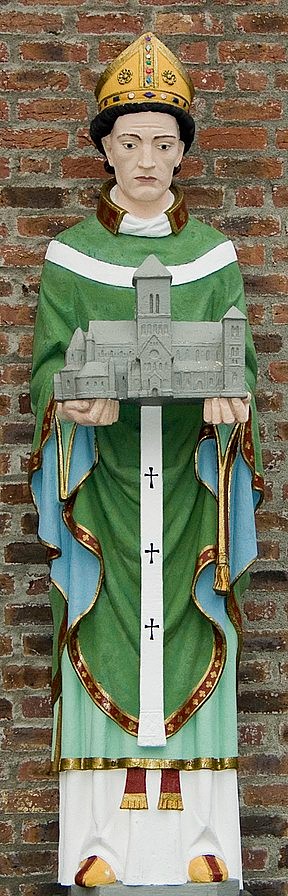
Saint of the Day – 26 January – Blessed Eystein Erlandssön (Died 1188) Bishop. Born in the 12th century in Norway and died in 1188 in Nidaros, (modern Trondheim), Norway of natural causes. Also known as – Augustine Erlandsön, Augustinus Nidrosiensi, Øystein Erlendsson.
Eystein Erlendsson was from Trøndelag, probably born just before 1130. On his mother’s side he descended from Erling Skjalgsson and he was related to most of the local nobility.
Eystein was educated at Saint-Victor, in Paris, where we presume he was Ordained too. As a Priest he served as sChaplin to King Inge Krokrygg of Norway. When Archbishop Jon Birgersson died on 24 February 1157, the King Inge appointed Eystein as the new Archbishop.
Eysteinn then travelled to Rome, where his appointment was confirmed by Pope Alexander III in 1161. He returned to Norway and attempted to strengthen the ties between Rome and the Norwegian Church. He established the communities of Augustinian Canons regular and consecrated Saint Thorlak as the Bishop of Iceland.
This was a time of tension between Royal power and the Church. During this conflict Eystein sided with Erling Skakke and his son Magnus. When Sverre Sigurdsson eventually gained control over large regions of the realm Eystein was forced into exile. He stayed in Suffolk in England for around three years before returning to Norway in the summer of 1183.
On the political level the Archbishop was forced to agree to several compromises, which included coming to terms with King Sverre (whom he had excommunicated).
From his final years, history knows Eystein best as the grand strategist during the initial great period of building Nidaros Cathedral. He had brought ideas from England about the new Gothic style and he let this style dominate the further plans for the Cathedral.
Eystein also left a lasting mark in the form of Passio Olavi, a hagiographical work written in Latin relating to the life and works of Saint Olaf, with particular emphasis on his missionary work. The title is an abbreviation for Passio Et Miracula Beati Olaui, meaning Holy Olav’s sufferings and miracles.
Eystein died in 1188. He was proclaimed a saint in 1229 but Papal approbation was not forthcoming. Eystein Erlendsson has ,nevertheless, been accepted as a Norwegian Saint – one of four. 1 Blessed Eystein’s cult was finally approved by the Vatican and he is now entered in the register of saints and the beatified. . Blessed Eystein is commemorated on the date of his death, 26 January.
St Theofrid of Corbie St Theogenes of Hippo St Tortgith of Barking
Martyred Family of Constantinople: Saint Mary and Saint Xenophon were married and the parents of Saint John and Saint Arcadius. Theirs was a wealthy family of Senatorial rank in 5th century imperial Constantinople but were known as a Christians who lived simple lives. To give their sons a good education, Xenophon and Mary sent them to study in Beirut, Phoenicia. However, their ship wrecked, there was no communication from them, and the couple assumed, naturally, that the young men had died at sea. In reality, John and Arcadius had survived and decided that instead of continuing to Beirut, they were going to follow a calling to religious life and became Monks, eventually living in a Monastery in Jerusalem. Years later, Mary and Xenophon made a pilgrimage to Jerusalem – where they encountered their sons. Grateful to have their family re-united and taking it as a sign, Xenophon and Mary gave up their positions in society in Constantinople and lived the rest of their lives as a Monk and Anchoress in Jerusalem. A few years later, the entire family was Martyred together. They were mMrtyred in 5th century Jerusalem.
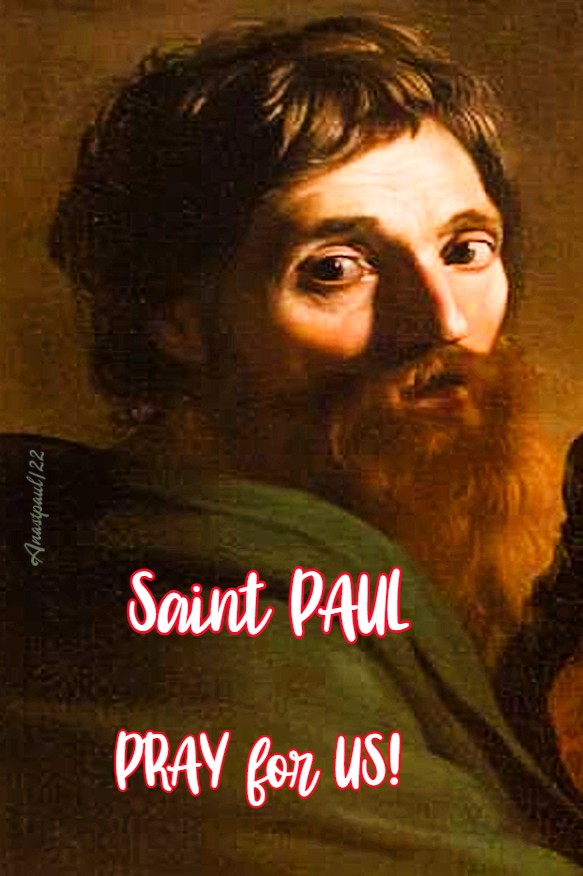
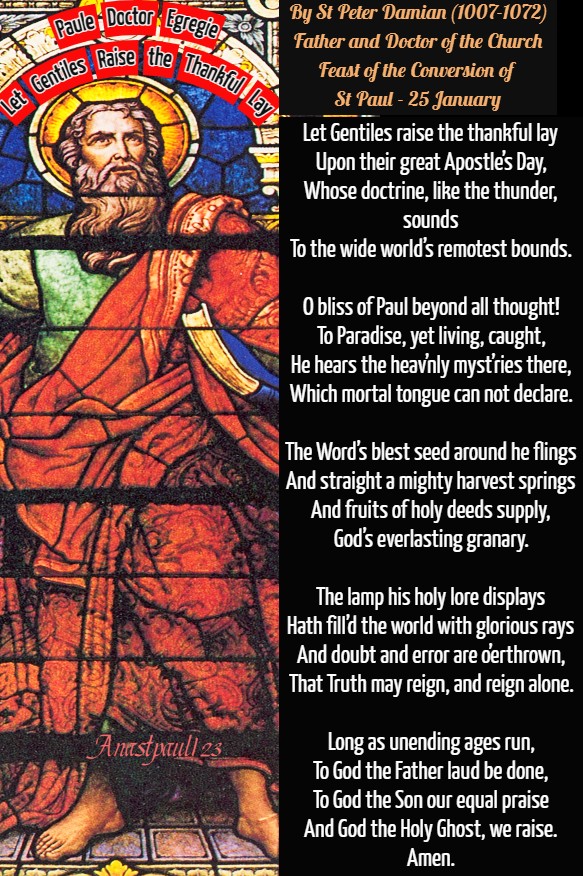
Our Prayers to the Saints – 25 January – Feast of the Conversion of St Paul, Apostle
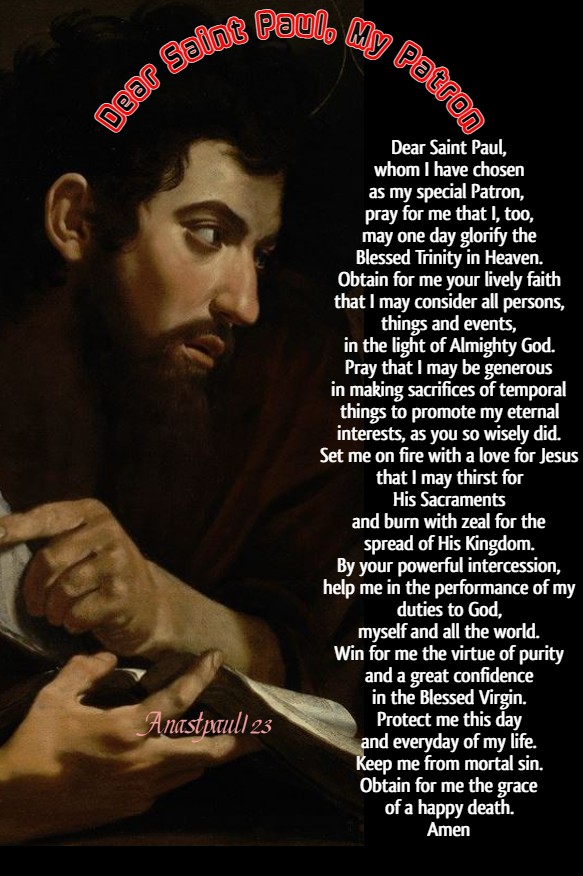
Dear Saint Paul, My Patron
Dear Saint Paul, whom I have chosen as my special Patron, pray for me that I, too, may one day glorify the Blessed Trinity in Heaven. Obtain for me your lively faith that I may consider all persons, things and events, in the light of Almighty God. Pray that I may be generous in making sacrifices of temporal things to promote my eternal interests, as you so wisely did. Set me on fire with a love for Jesus that I may thirst for His Sacraments and burn with zeal for the spread of His Kingdom. By your powerful intercession, help me in the performance of my duties to God, myself and all the world. Win for me the virtue of purity and a great confidence in the Blessed Virgin. Protect me this day and everyday of my life. Keep me from mortal sin. Obtain for me the grace of a happy death. Amen
Thought for the Day – 25 January – Meditations with Antonio Cardinal Bacci (1881-1971)
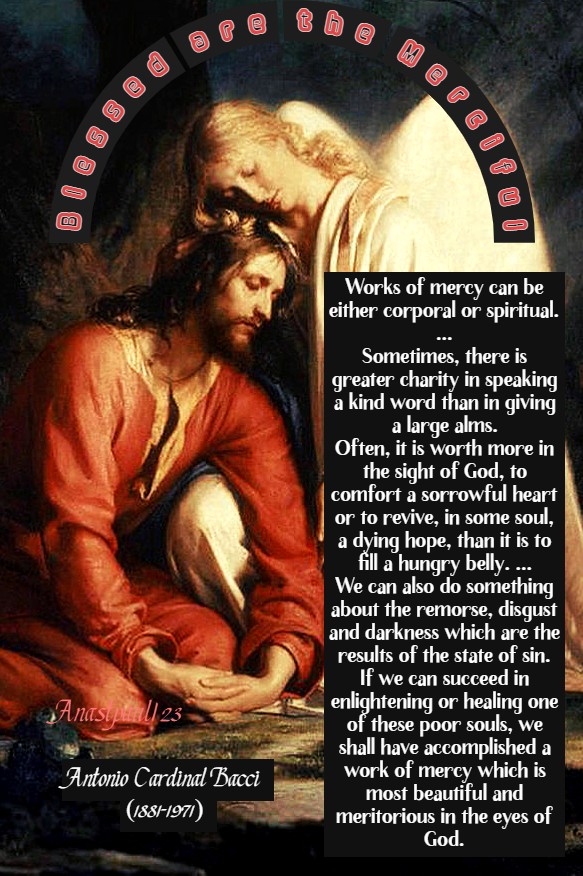
Blessed are the Merciful
“Works of mercy can be either corporal or spiritual. The former cannot be practised much by those who are poor but, any generous-minded Christian can perform the latter. Sometimes, there is greater charity in speaking a kind word than in giving a large alms. Often, it is worth more in the sight of God, to comfort a sorrowful heart or to revive, in some soul, a dying hope, than it is to fill a hungry belly.
There are so many spiritual miseries which are crying out to be assuaged. The suffering of the soul is much deeper than that of the body. This is why anything done to soothe and encourage the soul is so valuable before God.
We can also do something about the remorse, disgust and darkness which are the results of the state of sin. If we can succeed in enlightening or healing one of these poor souls, we shall have accomplished a work of mercy which is most beautiful and meritorious in the eyes of God.”
Quote/s of the Day – 25 January – Feast of the Conversion of St Paul, Apostle – Acts 9:1-22, Matthew 19:27-29 – Scripture search here: https://www.drbo.org/
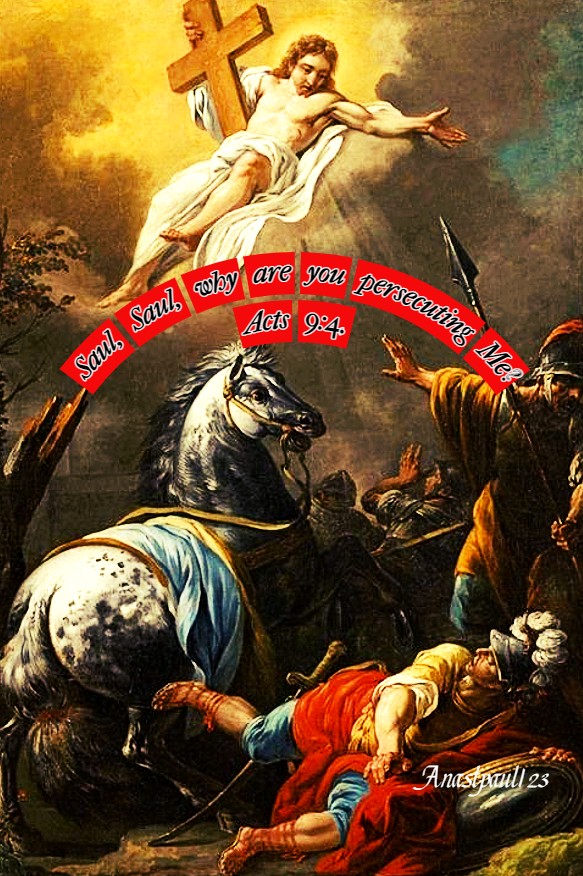
“Saul, Saul, why are you persecuting Me?”
Acts 9:4.
“So Saul was led to Ananias – the ravaging wolf is led to the sheep. But the Shepherd, Who guides everything from Heaven above, reassures him… “Do not fear, I will show him what he will have to suffer, for My Name’s sake” (Acts 9:16). What wonder is this! The wolf is led, a captive, to the sheep… The Lamb who died for the sheep, teaches it not to be afraid any more!”
St Augustine (354-430) Father and Doctor of the Church
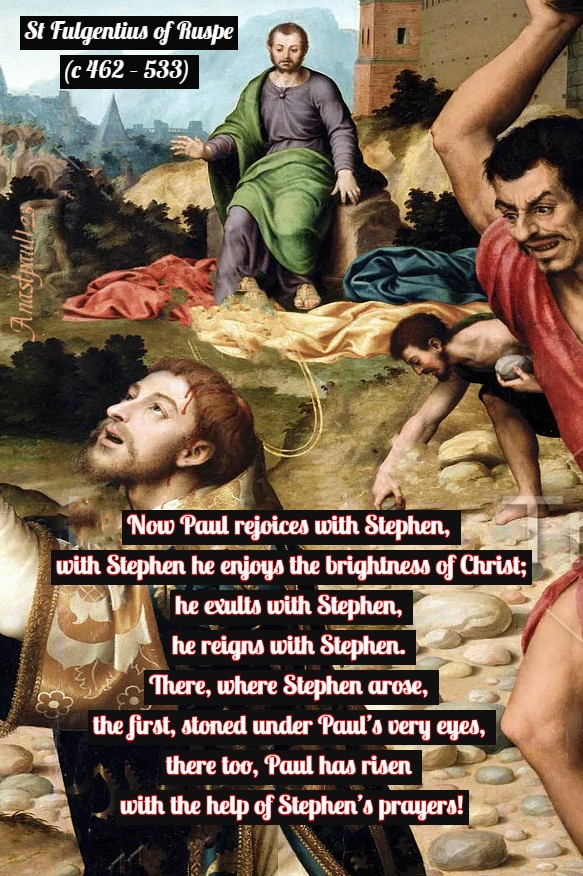
“Now Paul rejoices with Stephen, with Stephen he enjoys the brightness of Christ; he exults with Stephen, he reigns with Stephen. There, where Stephen arose, the first, stoned under Paul’s very eyes, there too, Paul has risen with the help of Stephen’s prayers!”
St Fulgentius of Ruspe (c 462 – 533) Bishop in North Africa
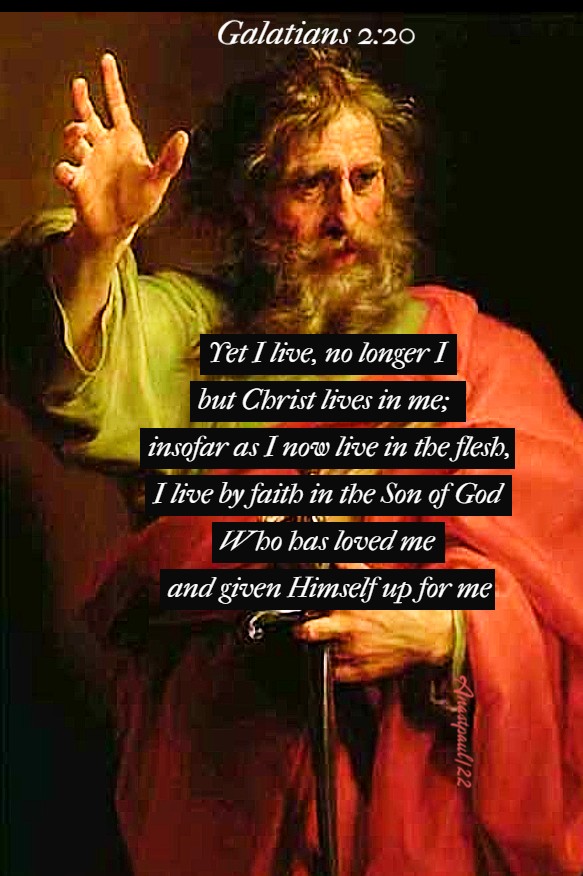
“Yet I live, no longer I but Christ lives in me; insofar as I now live in the flesh, I live by faith in the Son of God, Who has loved me and given himself up for me.”
Galatians 2:20
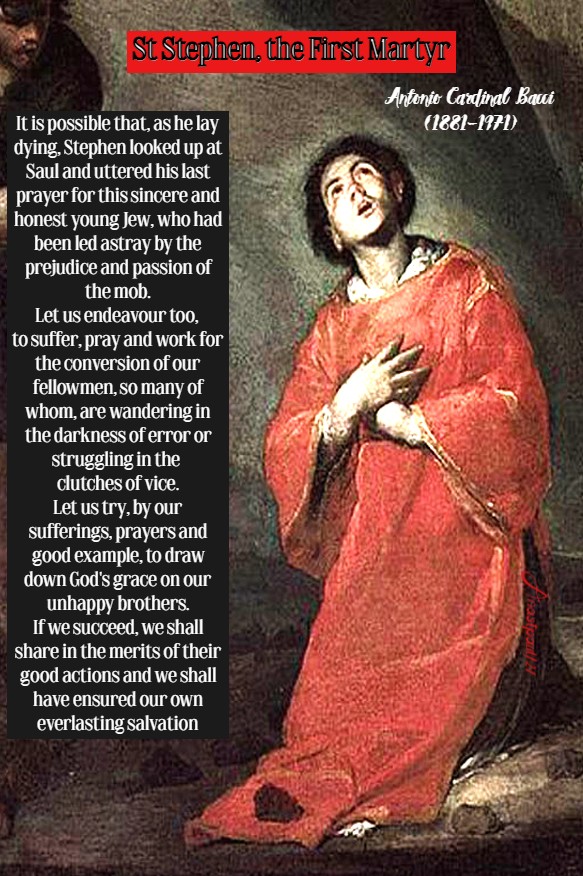
“It is possible that, as he lay dying, Stephen looked up at Saul and uttered his last prayer for this sincere and honest young Jew, who had been led astray by the prejudice and passion of the mob. … Let us endeavour too, to suffer, pray and work for the conversion of our fellowmen, so many of whom, are wandering in the darkness of error or struggling in the clutches of vice. Let us try, by our sufferings, prayers and good example, to draw down God’s grace on our unhappy brothers. If we succeed, we shall share in the merits of their good actions and we shall have ensured our own everlasting salvation.”
One Minute Reflection – 25 January – Feast of the Conversion of St Paul, Apostle – Acts 9:1-22, Matthew 19:27-29 – Scripture search here: https://www.drbo.org/
“He fell to the ground and heard a voice saying to him, “Saul, Saul, why are you persecuting Me?” – Acts 9:4.
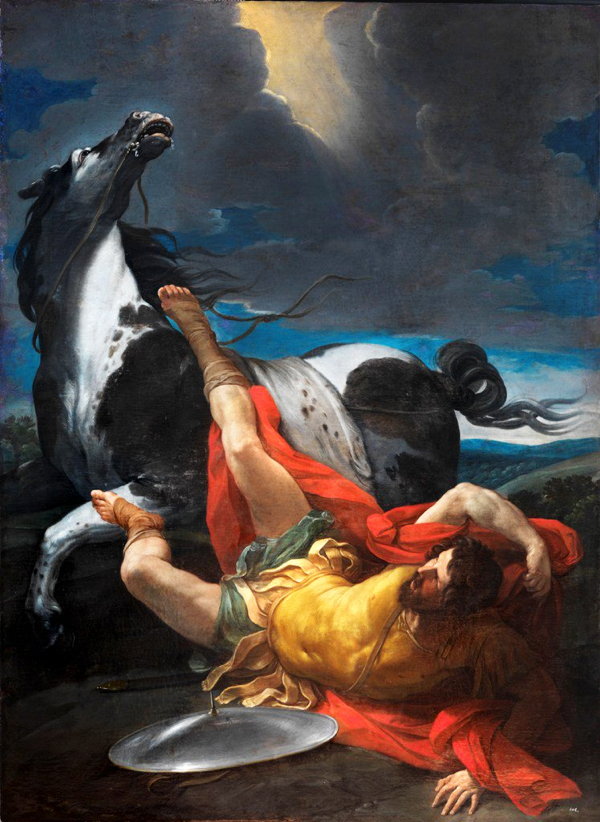
REFLECTION – “From Heaven’s height Christ’s Voice overturned Saul. He received a command to carry out his persecutions no more and fell face downwards to the ground. He had first to be knocked down and afterwards raised up – first struck, then healed. For Christ would never have come to live in him, if Saul had not died to his former life of sin. Cast down to the earth in this way, what was it he heard? “Saul, Saul, why are thou persecuting Me? It is hard for thou to kick against the goad” (Acts 9:4-5). And he replied: “Who are you, Lord?” Then the voice from on high continued: “I am Jesus of Nazareth, Whom thou art persecuting.” The members are still on the ground, while the Head cries out, from the heights of Heaven. He is not saying: “Why art thou persecuting My servants?” but “Why art thou persecuting Me?”
And Paul, who had put all his energy into his persecutions, is already preparing to obey: “What do Thou want me to do?” The persecutor is already transformed into the preacher, the wolf has become a sheep, the enemy, a defender. Paul learns what he is to do – if he has become blind, if this world’s light is held back from him for a while, it is so as to make the light within shine in his heart. Light is taken away from the persecutor, so that it may be given to the preacher; at the very moment he no longer saw anything of this world, he saw Jesus. This symbolises the believer – those who believe in Christ, must fix the eyes of their soul on Him, without paying attention to outward things…
So Saul was led to Ananias – the ravaging wolf is led to the sheep. But the Shepherd, Who guides everything from Heaven above, reassures him… “Do not fear, I will show him what he will have to suffer, for My Name’s sake” (Acts 9:16). What wonder is this! The wolf is led, a captive, to the sheep… The Lamb who died for the sheep, teaches it not to be afraid any more!” – St Augustine (354-430) Bishop, Father and Doctor of Grace of the Church (Sermon 279).
PRAYER – O God, Who taught the whole world by the preaching of Thy blessed Apostle Paul, grant, we beseech Thee that we, who today celebrate his conversion, may draw closer to Thee, by way of hia example.Through Jesus Christ, Thy Son our Lord, Who lives and reigns with Thee, in the unity of the Holy Ghost, God, world without end. Amen (Collect).
Feast of the Conversion of St Paul, Apostle – 25 January
From the Liturgical Year, 1904
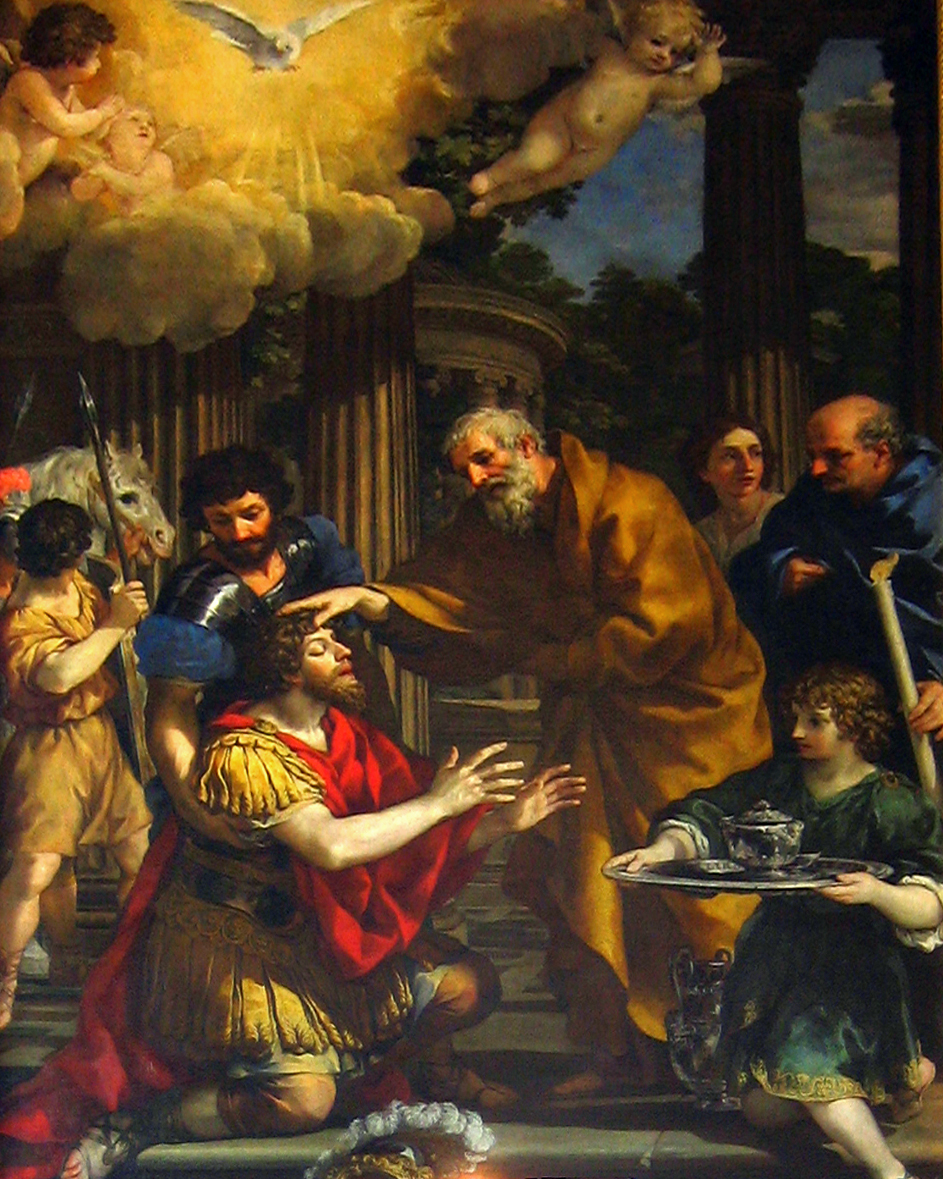
We have already seen how the Gentiles, in the person of the Three Magi, offered their mystic gifts to the Divine Child of Bethlehem and received from Him, in return, the precious gifts of faith, hope and charity. The harvest is ripe; it is time for the reaper to come. But who is to be God’s labourer? The Apostles of Christ are still living under the very shadow of Mount Sion. All of them have received the mission to preach the Gospel of Salvation to the uttermost parts of the world but, not one among them, has, as yet, received the special character of Apostle of the Gentiles. Peter, who had received the Apostleship of Circumcision (Gal 2:8), is sent especially, as was Christ Himself, to the sheep that are lost of the house of Israel (Mt 15:24). And yet, as he is the Head and the Foundation, it belongs to him to open the door of Faith to the Gentiles (Acts 14:26) which he solemnly does, by conferring Baptism on Cornelius, the Roman Centurion.
But the Church is to have one more Apostle – an Apostle for the Gentiles – and he is to be the fruit of the Martyrdom and prayer of St Stephen. Saul, a citizen of Tarsus, has not seen Christ in the flesh and yet, Christ alone can make an Apostle. It is then, from Heaven, where He reigns, impassible and glorified, that Jesus will call Saul to be His disciple, just as, during the period of His active life, He called the fishermen of Genesareth to follow Him and hearken to His teachings. The Son of God will raise Saul up to the Third Heaven and there, will reveal to Him, all His Mysteries and when Saul, having come down again to this earth, shall have seen Peter (Gal 1:18) and compared his Gospel with that recognised by Peter (Ibid 2: 2) – he can say, in all truth that he is an Apostle of Christ Jesus (Gal 1:1) and that he has done nothing less. than the great Apostles (2 Cor 11:55).
It is on this glorious day of the Conversion of Saul, who is soon to change his name into Paul that this great work is commenced. It is on this day, that is heard the Almighty Voice which breaketh the cedars of Libanus (Ps 28:5) and can make a persecuting Jew become, first a Christian and then an Apostle. This admirable transformation had been prophesied by Jacob, when, upon his death-bed, he unfolded, to each of his sons, the future of the tribe of which he was to be the father. Juda was to have the precedence of honour; from his royal race, was to be born the Redeemer, the Expected of nations. Benjamin’s turn came – his glory is not to be compared with that of his brother Juda and yet, it was to be very great – for, from his tribe, is to be born Paul, the Apostle of the Gentile nations!
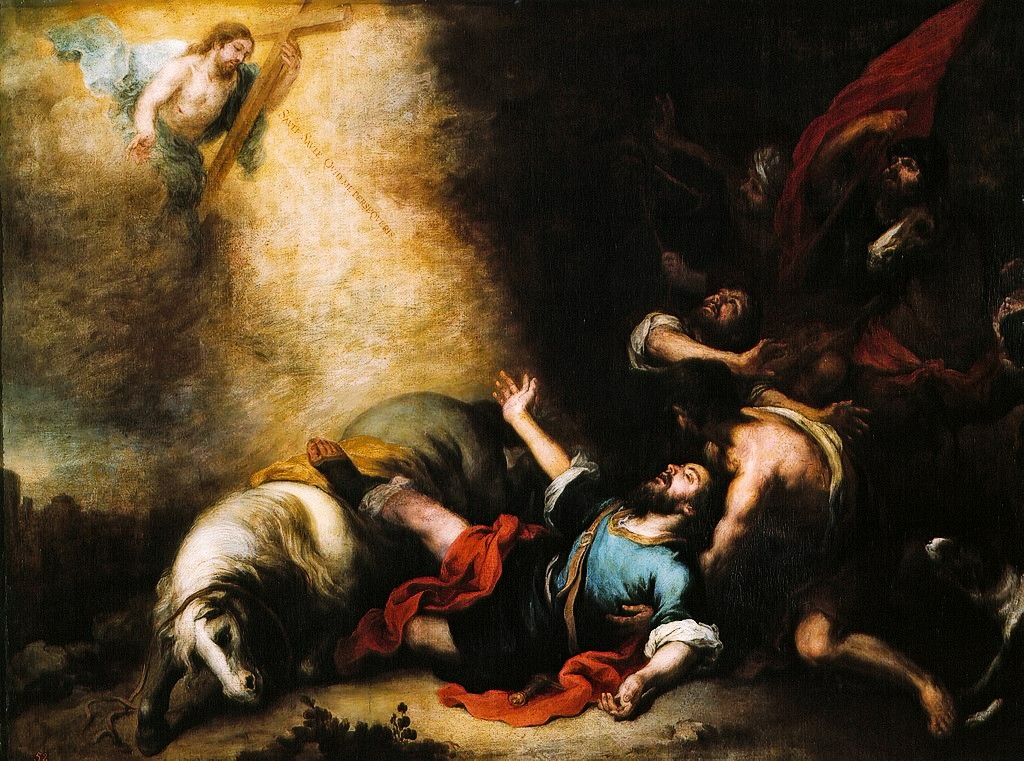
Bartolomé Esteban Murillo: Conversion of Saint Paul
These are the words of the dying Prophet – Benjamin, a ravenous wolf, in the morning shall eat the prey and in the evening, shall divide the spoil (Gen 49:27). Who, says an ancient writer (These words are taken from a Sermon, which for long time was thought to be St Augustine), is he, that in the morning of impetuous youth, goes like a wolf, in pursuit of the sheep of Christ, breathing threatenings and slaughter against them? Is it not Saul on the road to Damascus, the bearer and doer of the high-priest’s orders and stained with the blood of Stephen, whom he has stoned by the hands of all those, over whose garments he kept watch? And he, who, in the evening, not only does not despoil but, with a charitable and peaceful hand, breaks to the hungry the bread of life – is it not Paul, of the tribe of Benjamin, the Apostle of Christ, burning with zeal for his brethren, making himself all to all and wishing even to be an anathema for their sakes?
Oh! the power of our dear Jesus! how wonderful! how irresistible! He wishes that the first worshippers at His Crib should be humble Shepherds – and, He invites them by His Angels, whose sweet hymn was enough to lead these simple-hearted men to the Stable, where lies, in swaddling-clothes, He Who is the hope of Israel. He would have the Gentile Princes, the Magi, do Him homage – and bids to arise in the Heavens, a Star, whose mysterious apparition, joined to the interior speaking of the Holy Ghost, induces these men of desire, to come from the far East and lay, at the feet of an humble Babe, their riches and their hearts. When the time is come for forming the Apostolic College, He approaches the banks of the sea of Tiberias and, with this single word: Follow me, He draws after Him such as He wishes to have as His Disciples. In the midst of all the humiliations of His Passion, He has but to look at the unfaithful Peter and Peter is a penitent. Today, it is from Heaven that He evinces His power – all the Mysteries of our Redemption have been accomplished and He wishes to show mankind that He is the Sole Author and Master of the Apostolate and that, His alliance with the Gentiles, is now perfect – He speaks – the sound of His reproach bursts like thunder over the head of this hot Pharisee, who is bent on annihilating the Church. He takes this heart of the Jew and, by His grace, turns it into the heart of the Apostle, the Vessel of election, the Paul, who is afterwards to say of himself: I live, not I but Christ liveth in me (Gal 2:20).
The commemoration of this great event was to be a Feast in the Church and it had a right to be kept, as near as might be to the one which celebrates the Martyrdom of St Stephen, for Paul is the Protomartyr’s convert. The anniversary of his Martyrdom would, of course, have to be solemnised at the summer-solstice – where, then, place the Feast of his Conversion if not near Christmas and thus our own Apostle, would be at Jesus’ Crib and Stephen’s side? Moreover, the Magi could claim him, as being the conqueror of that Gentile-world, of which they were the first-fruits.
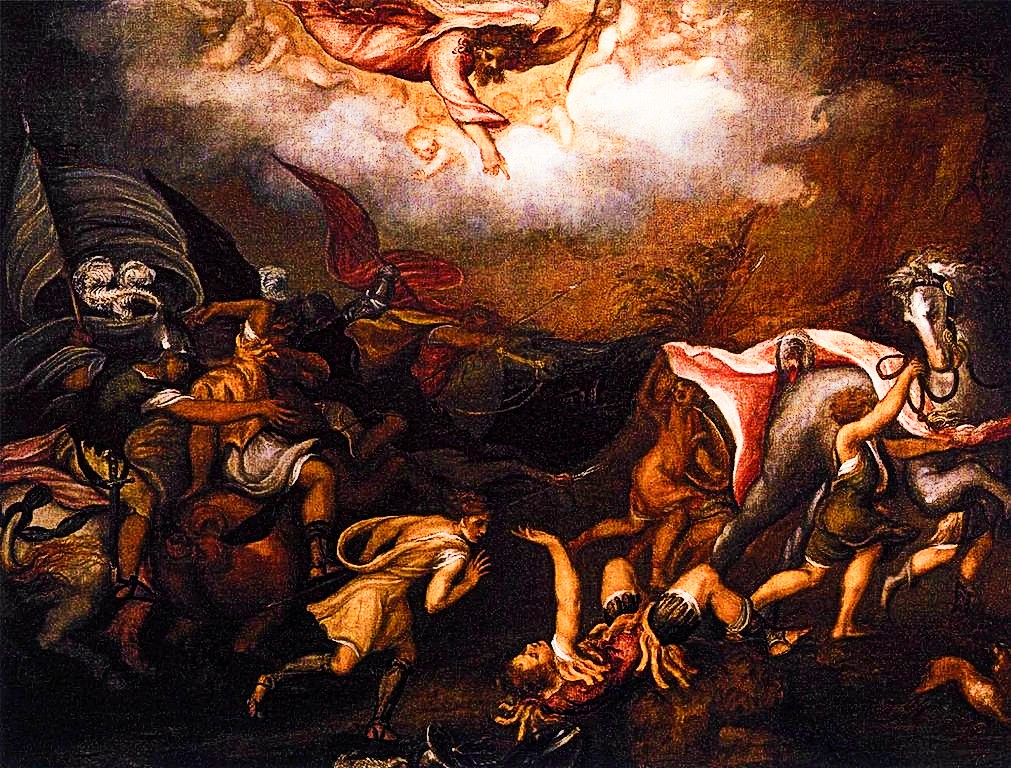
Andrea Schiavone: Conversion of Saul
And lastly, it was necessary, in order to give the Court of our Infant-King its full beauty that the two Princes of the Church – the Apostle of the Jews and the Apostle of the Gentiles – should stand close to the mystic Crib – Peter, with his Keys and Paul, with his Sword. Bethlehem thus becomes the perfect figure of the Church and the riches of this season of the Cycle are abundant beyond measure. Amen.
St Apollo of Heliopolis Bl Archangela Girlani St Artemas of Pozzuoli St Auxentius of Epirus St Bretannion of Tomi St Donatus the Martyr St Dwynwen (Died c 460) Virgin Princess, Nun. St Eochod of Galloway St Joel of Pulsano St Juventinus of Antioch St Maximinus of Antioch St Palaemon
Thought for the Day – 24 January – Meditations with Antonio Cardinal Bacci (1881-1971)
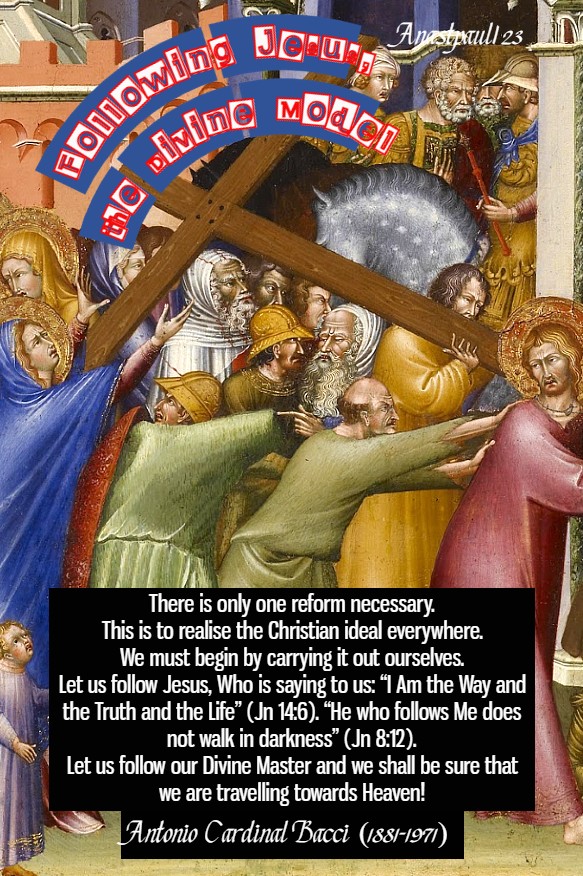
Following Jesus, the Divine Model
“When we have renounced ourselves and have embraced our cross with resignation and love, we must follow Jesus. We must follow Him in a special way as the infallible Teacher of truth. The teachings of men cannot satisfy our intellects. Still less, can they satisfy our hearts. What they teach is either incomplete or false. This is proved by the fact that the doctrines of mean have succeeded and replaced one another, down through the Centuries while “the word of the Lord endures forever” (1 Peter 1:25).
The teaching of Christ produces an extraordinary renovation in the individual, in the family and in society. It is this renewal which we call Christianity and Christian civilisation. There is a wide chasm between paganism and Christianity. This gulf would be even wider, only for the fact that Christianity has not yet been fully put into practice throughout the universe. There is only one reform necessary. This is to realise the Christian ideal everywhere. We must begin by carrying it out ourselves. Let us follow Jesus, Who is saying to us: “I Am the Way and the Truth and the Life” (Jn 14:6). “He who follows Me does not walk in darkness” (Jn 8:12).
Let us follow our Divine Master and we shall be sure that we are travelling towards Heaven!”
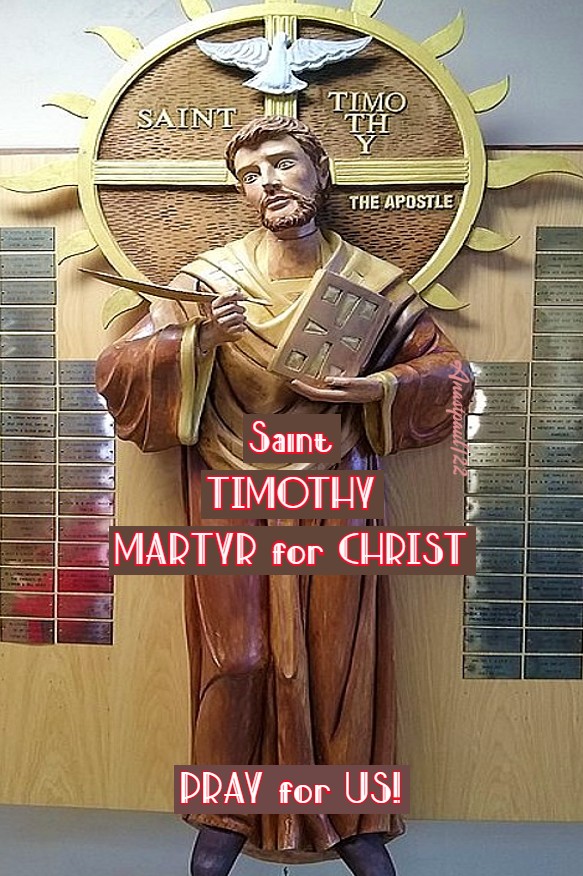
Quote/s of the Day – 24 January – St Timothy (1st Century) Disciple of St Paul, Bishop and Martyr – 1 Timothy 6:11-16, Luke 14:26-33.– Scripture search here: https://www.drbo.org/
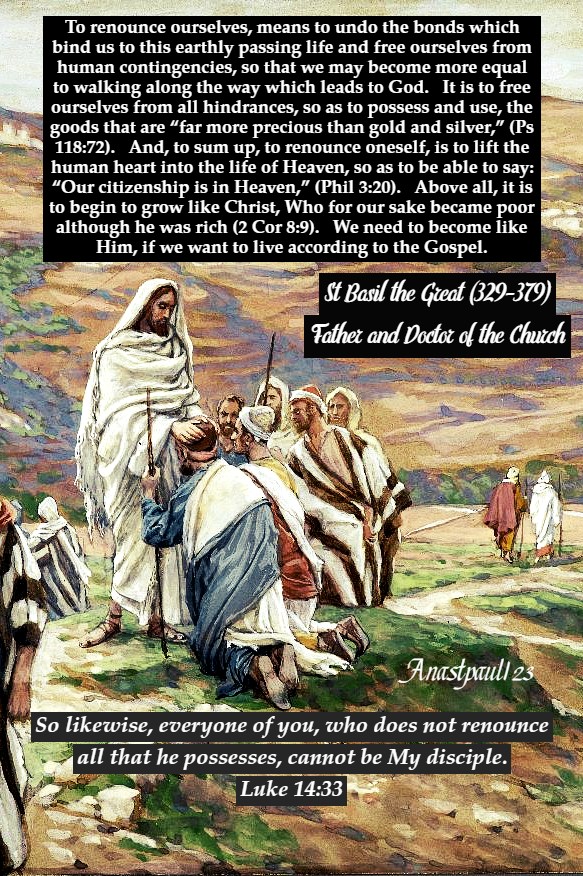
“So likewise, everyone of you, who does not renounce all that he possesses, cannot be My disciple.”
Luke 14:33
“He seems to demand of us the most entire renunciation… So, if we keep back for ourselves , any earthly goods or any perishable supplies, our minds will remain sunk in them, as though in mud. Then, inevitably, our souls will become unable to contemplate God and will be unmoved by desire for the splendours of Heaven and for the good things promised us. We shall only be able to acquire those good things, if we ask for them unceasingly, with a burning desire that will, besides, make easy the effort needed to gain them.”
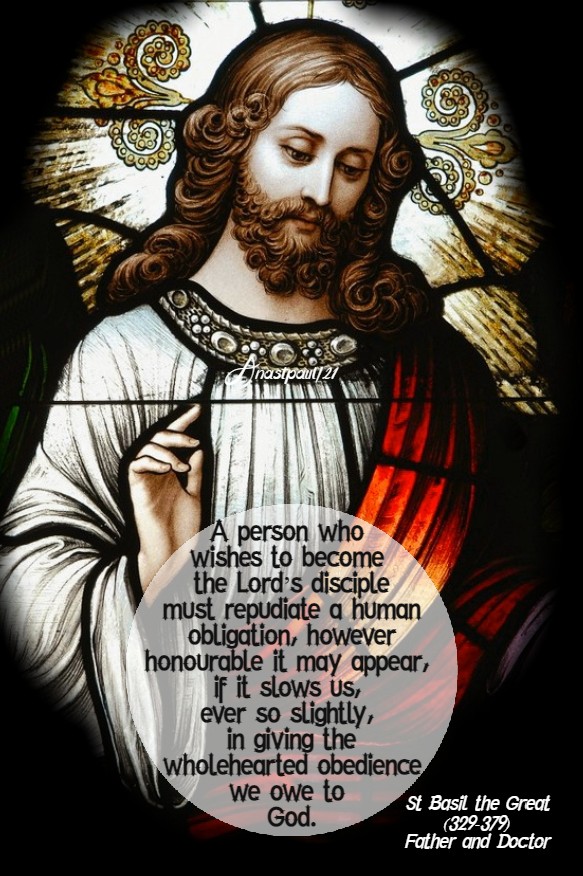
“A person who wishes to become the Lord’s disciple must repudiate a human obligation, however honourable it may appear, if it slows us, ever so slightly, in giving the wholehearted obedience we owe to God.”
St Basil the Great (329-379) Father and Doctor of the Church
“If you wish to enter into life, keep My commandments. If you will know the truth, believe in Me. If you will be perfect, sell all. If you will be My disciple, deny yourself. If you will possess the blessed life, despise this present life. If you will be exalted in Heaven, humble yourself on earth. If you wish to reign with Me, carry the Cross with Me. For only the servants of the Cross find the life of blessedness and of true Light.”
Thomas à Kempis (1380-1471) The Imitation of Christ Chapter 56
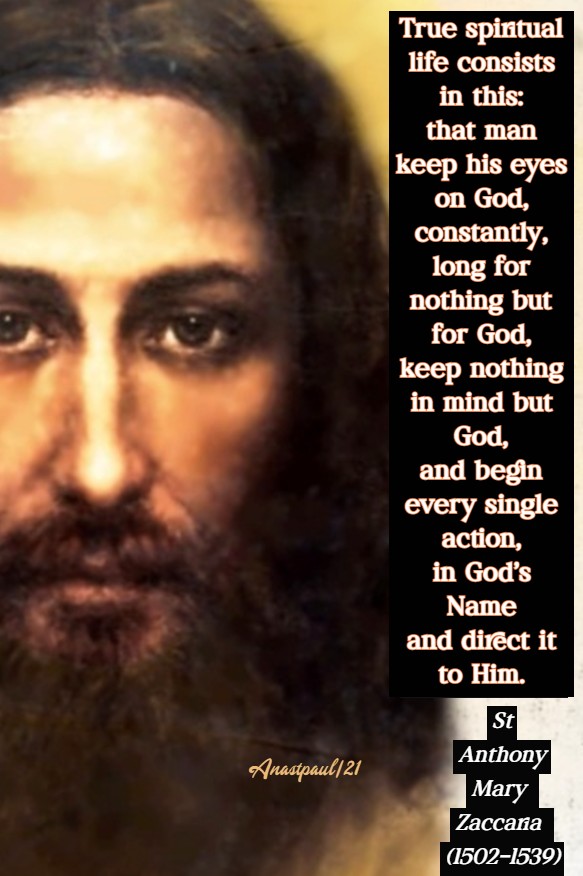
“True spiritual life consists in this: that man keep his eyes on God, constantly, long for nothing but for God, keep nothing in mind but God, and begin every single action, in God’s Name and direct it to Him.”
One Minute Reflection – 24 January – St Timothy (1st Century) Disciple of St Paul, Bishop and Martyr – 1 Timothy 6:11-16, Luke 14:26-33.– Scripture search here: https://www.drbo.org/
“So likewise, everyone of you, who does not renounce all that he possesses, cannot be My disciple.” – Luke 14:33
REFLECTION – “Our Lord Jesus Christ said to all, on many occasions and while giving many demonstrations of it: “If anyone wishes to come after me, he must deny himself, take up his cross and follow me,” (cf Lk 9:23) and again: “anyone of you who does not renounce all that he possesses cannot be My disciple.” Thus, He seems to demand of us the most entire renunciation… “Where your treasure is, there also will your heart be,” He says elsewhere (Mt 6:21). So if we keep back for ourselves any earthly goods or any perishable supplies, our minds will remain sunk in them as though in mud. Then, inevitably, our souls will become unable to contemplate God and will be unmoved by desire for the splendours of Heaven and for the good things promised us. We shall only be able to acquire those good things, if we ask for them unceasingly, with a burning desire that will, besides, make easy the effort needed to gain them.
To renounce ourselves, means to undo the bonds which bind us to this earthly passing life and free ourselves from human contingencies, so that we may become more equal to walking along the way which leads to God. It is to free ourselves from all hindrances, so as to possess and use, the goods that are “far more precious than gold and silver,” (Ps 118:72). And, to sum up, to renounce oneself, is to lift the human heart into the life of Heaven, so as to be able to say: “Our citizenship is in Heaven,” (Phil 3:20). Above all, it is to begin to grow like Christ, Who for our sake became poor although he was rich (2 Cor 8:9). We need to become like Him, if we want to live according to the Gospel.” – St Basil the Great (329-379) Monk and Bishop of Caesarea in Cappadocia, Father and Doctor of the Church (Greater Monastic Rules Q.8).
PRAYER – Be mindful of our weakness, Almighty God and because the burden of our sins weighs heavily upon us, may the glorious intercession of blessed Timothy, Your Martyr and Bishop, sustain us. Through Jesus Christ, Thy Son our Lord, Who lives and reigns with Thee, in the unity of the Holy Ghost, God, world without end. Amen (Collect).
Our Morning Offering – 24 January – Feast of Saint Timothy, Bishop and Martyr
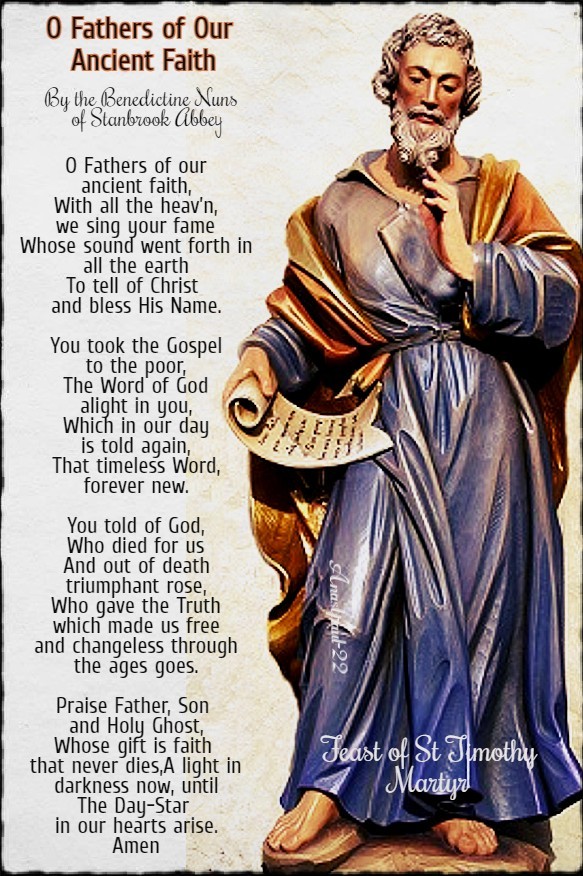
O Fathers of Our Ancient Faith
O Fathers of our ancient faith, With all the heav’n, we sing your fame Whose sound went forth in all the earth To tell of Christ and bless His Name.
You took the Gospel to the poor, The Word of God alight in you, Which in our day is told again, That timeless Word, forever new.
You told of God, Who died for us And out of death triumphant rose, Who gave the Truth which made us free and changeless through the ages goes.
Praise Father, Son and Holy Spirit, Whose gift is faith that never dies, A light in darkness now, until The Day-Star in our hearts arise.
O Fathers of Our Ancient Faith is written by the Benedictine Nuns of Stanbrook Abbey. In the Divine Office it is sung at Morning Prayer in the Common of Apostles. It is set to the anonymous tune associated with the 7th century Latin hymn, Creator Alme Siderum.
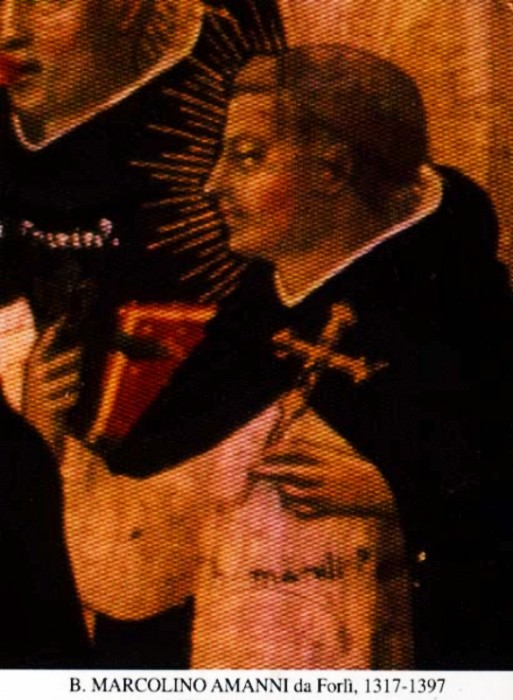
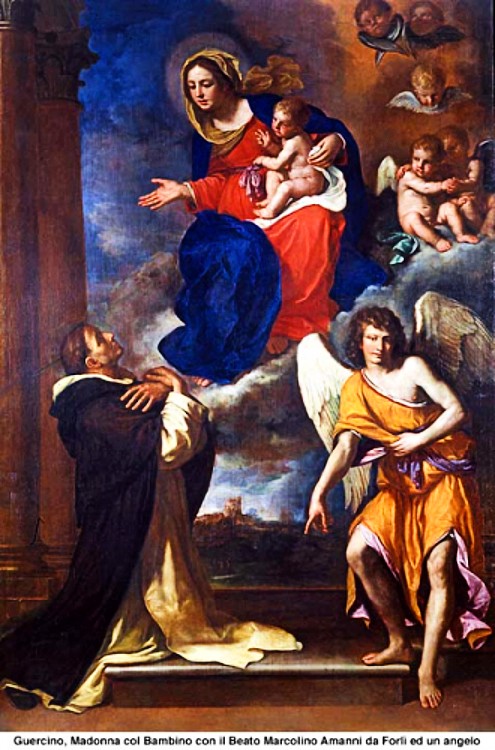
Saint of the Day – 24 January – Blessed Marcolino Amanni of Forli OP (1317-1397) Priest and Friar of the Dominican, the Order of Preachers, Mystic, Assistant Prior and Procurator of his Convent. Born in 1317 in Forli, Emilia, Italy and died on 24 January 1397 in Forli, Emilia, Italy of natural causes, seventy years after his entry into the Order of Preachers. Blessed John Dominici (1356-1419), Archbishop and Cardinal, wrote the life of Blessed Marcolino of Forlì . Also known as – Marcolinus of Forli, Marcolino Amannai da Forli.. Additional Memorial – 21 January in the Diocese of Forli, in order not to clash with the Novena to the Madonna del Fuoco (Our Lady of Fire).
The Roman Martyrology reads: “In Forlì, blessed Marcolino Amanni, Priest of the Order of Preachers, who lived his whole life in great humility and simplicity, in silence, in solitude, in the service of the poor and in the care of children.”
Born in Forli, Italy in 1317, Marcolino Amanni entered the Dominicans at the tender age of 10 years. He occupies a place unique in Dominican annals because he was almost purely contemplative . There is outwardly little to record of Marcolino;s life within the Order, except that for 70 years he kept the Dominican Rule in all its rigour. That is a claim to sanctity that can be made by very few, and is of itself enough to entitle him to sainthood. He did accomplish the reform of several Convents which had fallen from their primitive fervour but this he did by his prayers and his example, rather than by teaching or preaching.
However, from 1367 to 1370, he acted as Procurator and also as Assistant-prior of San Giacomo. Between 1371 and 1395 he is attested as a participant in Chapter assemblies or as a witness in notarial deeds concerning the life of the Convent.
But, for the most part, it is said that Marcolino was most at home with the lay brothers, or with the neighborhood poor, the sick, the needy and children, who enjoyed talking to him. He seldom went out of his cell, neither did he leave any writings. His work was the unseen labour presided over by the Holy Spirit, the work of contemplation. “To give to others the fruits of contemplation,” is the Dominican motto and one might be curious to know how Blessed Marcolino accomplished this.
In order to understand the need for just such a type of holiness, it is well to remember the state of the Church in the 14th Century. Devastated by plague and schism, divided and held up to scorn, preyed upon by all manner of evils, the Church militant was in need, not only of brave and intelligent action but also of prayer. Consistently through the Centuries, God has raised up such saints as could best avert the disasters that threatened the world in their day, and Marcolino was one answer to the need for mystics who would plead ceaselessly for the Church.
Marcolino’s interior life was not recorded by himself or by others. He lived the mystical life with such intensity that he was nearly always in ecstasy and unconscious of the things around him. One of his fellow friars recorded that he seemed “a stranger on earth, concerned only with the things of Heaven.” Most of his brethren thought him merely sleepy and inattentive but actually he was, for long periods, lost in converse with God. Some had heard him talking earnestly to the statue of Our Lady in his cell; some fortunate few had heard Our Lady replying to his questions, with the same simplicity.
At the death of Marcolino, on 24 January, 1397, a beautiful child appeared in the streets, crying out the news to the little town that the saintly friar was dead. As the child disappeared when the message was delivered, he was thought to have been an Angel. Many miracles were worked at Marcolino’s Tomb. One was the miraculous cure of a woman who had been bedridden for 30 years. Hearing of the death of the blessed, she begged him to cure her so that she could visit his Tomb.
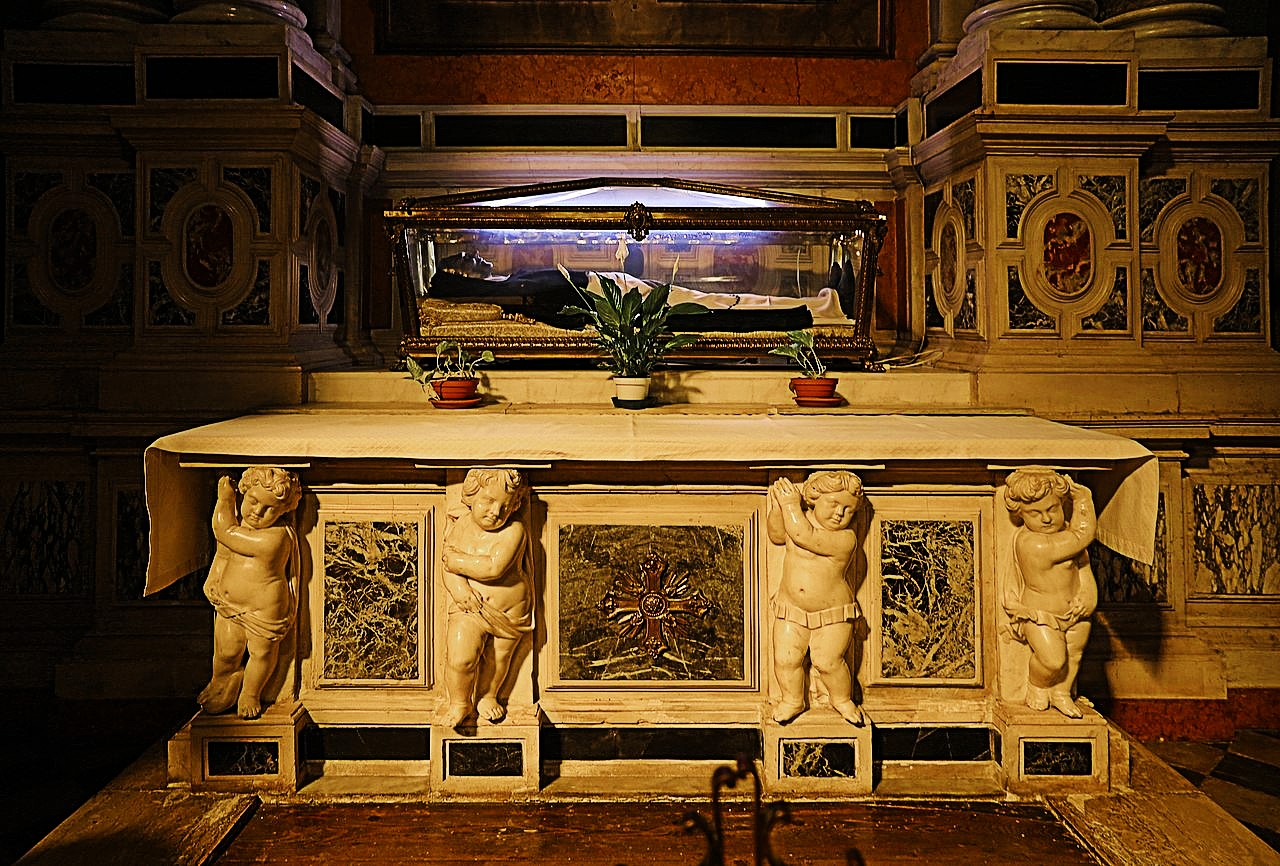
Upon his death, popular devotion, which considered him a saint, obtained that Marcolino, after a solemn funeral, was buried in the Dominican Church and for two months, it was not possible to close the Church, day or night, due to the large influx of faithful .
A little less than a month after Marcolino’s death, on 20 February 1397, Bello de’ Giuliani da Forlì, Vicar of the Bishop of Forlì Scarpetta Ordelaffi, sent a letter to Leonardo Dolfin, Bishop of Castello, informing him of the death of the Dominican religious, who he was described as a brother of exemplary life and full of charity.
Bello also gave news of about fifty miraculous cures performed by the intercession of Marcolino. Subsequent investigations brought this exceptional series of miracles up to 80 (report to Raimondo da Capua, general of the Order, who had been spiritual director and then biographer of Saint Catherine of Siena) and then to 188 (report from Forlì notaries to the Bishop of Forlì, Scarpetta Ordelaffi).
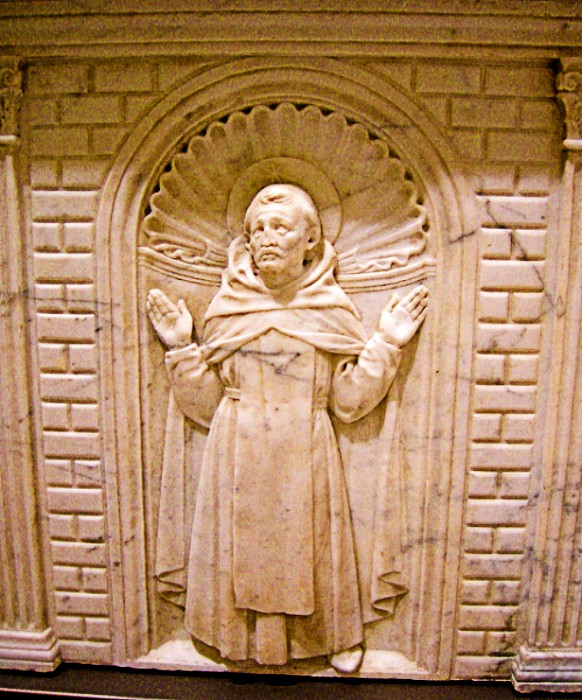
In 1457 Marcollino’s body was transferred to a marble monument by Antonio and Bernardo Rossellino, which had been commissioned by the fellow citizen of Forlì, Nicolò Dall’Aste, Bishop of Recanati. Marcolino’s body was then enshrined in the Forli Cathedral.
He was confirmed as a saint on 9 May 1750 by Pope Benedict XIV.
St Filip Geryluk St Guasacht St Ignacy Franczuk Bl John Grove St Julian Sabas the Elder St Macedonius Kritophagos Blessed Marcolino Amanni of Forli OP (1317-1397) Priest and Friar of the Order of Preachers, the Dominicans, Mystic.
St Projectus St Sabinian of Troyes St Suranus of Sora St Thyrsus Bl William Ireland
Martyrs of Asia Minor – 4 Saints: A group of ChristiansMmartyred together for their faith. The only details to survive are four of their names – Eugene, Mardonius, Metellus and Musonius. They were burned at the stake in Asia Minor.
Martyrs of Podlasie – 13 Beati: Podlasie is an area in modern eastern Poland that, in the 18th-century, was governed by the Russian Empire. Russian sovereigns sought to bring all Eastern-rite Catholics into the Orthodox Church. Catherine II suppressed the Greek Catholic Church in Ukraine in 1784. Nicholas I did the same in Belarus and Lithuania in 1839. Alexander II did the same in the Byzantine-rite Eparchy of Chelm in 1874 and officially suppressed the Eparchy in 1875. The Bishop and the Priests who refused to join the Orthodox Church were deported to Siberia or imprisoned. The laity, left on their own, had to defend their Church, their liturgy and their union with Rome. On 24 January 1874 soldiers entered the village of Pratulin to transfer the parish to Orthodox control. Many of the faithful gathered to defend their parish and Church. The soldiers tried to disperse the people but failed. Their commander tried to bribe the parishioners to abandon Rome but failed. He threatened them with assorted punishments but this failed to move them. Deciding that a show of force was needed, the commander ordered his troops to fire on the unarmed, hymn-singing laymen. Thirteen of the faithful died, most married men with families, ordinary men with great faith. We know almost nothing about their lives outside of this incident. Their families were not allowed to honour them or participate in the funerals and the authorities hoped they would be forgotten. Their names are:
Anicet Hryciuk
Bartlomiej Osypiuk
Daniel Karmasz
Filip Geryluk
Ignacy Franczuk
Jan Andrzejuk
Konstanty Bojko
Konstanty Lukaszuk
Lukasz Bojko
Maksym Hawryluk
Michal Wawryszuk
Onufry Wasyluk
Wincenty Lewoniuk Martyrdom:
shot on 14 January 1874 by Russian soldiers in Podlasie, Poland
buried nearby without rites by those soldiers.
Martyrs of Antioch: Babylas Epolonius Prilidian Urban
Thought for the Day – 23 January – Meditations with Antonio Cardinal Bacci (1881-1971)
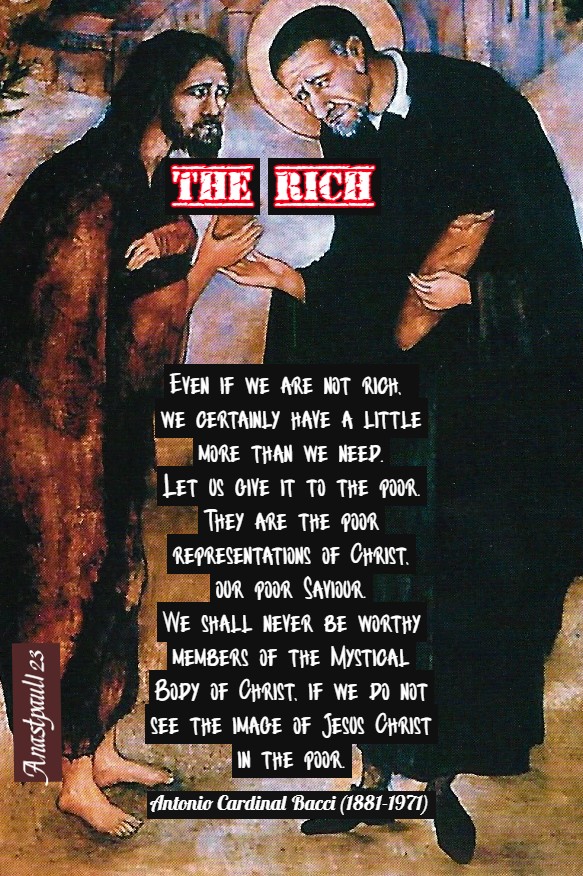
The Rich
“A very rich man who was convinced that he was a good Christian, went to Confession one day. He discussed his doubts and worries about the passages in Sacred Scripture which have just been quoted (see Part One). The penance which he received from the Confessor, was that he should go and read and meditate in a certain city suburb. This area was full of cabins and shacks, where large numbers of poor, abandoned people were eking out an existence. He drove there in his large streamlined car. He stopped and began reading slowly. After a while, he became greatly affected and wept … He left his car and, as if driven by some irresistible force, began to distribute all the money which he had with him to those poor people. At last, he understood fully and without the need of any glossary, the command of Our Lord: “Give that which remains as alms and behold, all things are clean to you” (Lk 11:41). From that day, he was no longer a self-complacent Christian but a just and charitable rich man.
We can all learn a lot from this story. Even if we are not rich, we certainly have a little more than we need. Let us give it to the poor. They are the poor representations of Christ, our poor Saviour. We shall never be worthy members of the Mystical Body of Christ, if we do not see the image of Jesus Christ in the poor.”
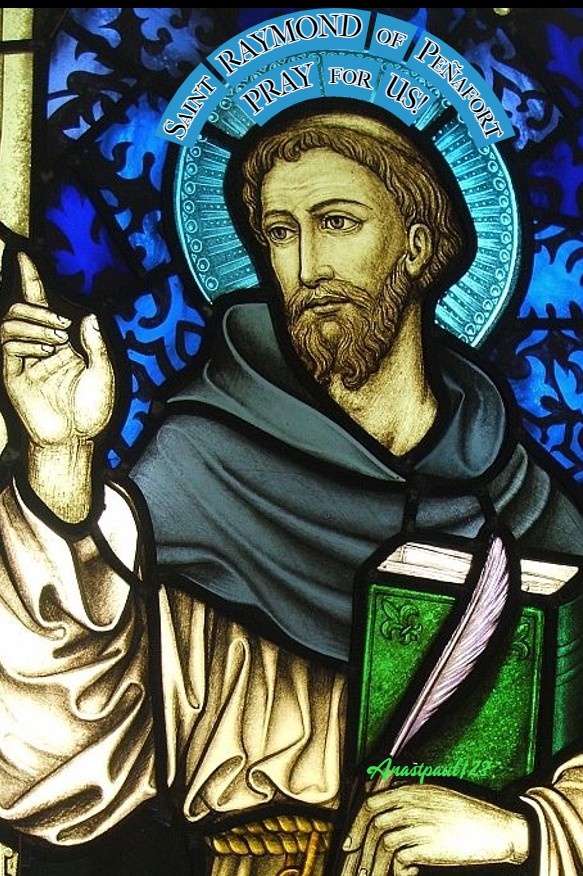
Quote/s of the Day – 23 January – “The Month of the Most Holy Name of Jesus” – St Raymond of Peñafort (1175-1275) – Sirach 31:8-11, Luke 12:35-40 – Scripture search here: https://www.drbo.org/
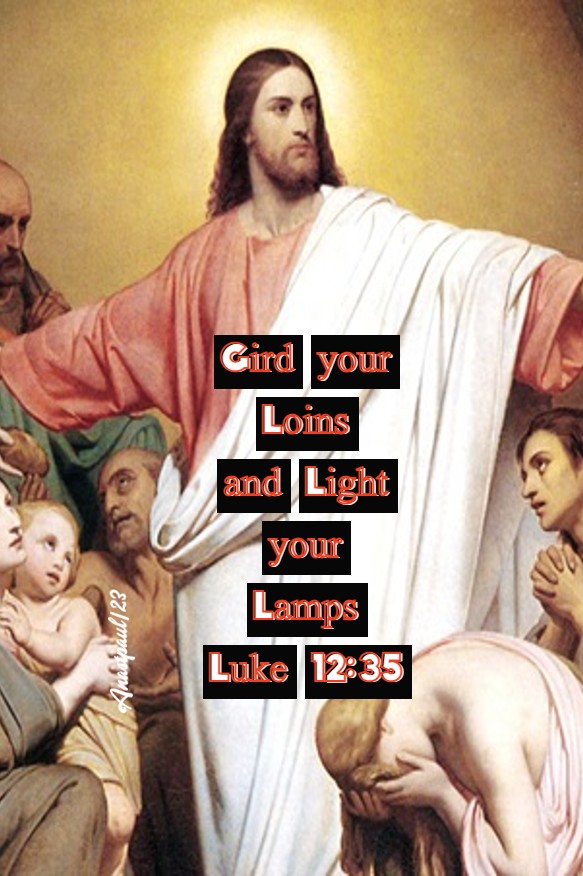
“Gird your loins and light your lamps”
Luke 12:35
“ The fire of the Lord is Light Eternal; the lamps of believers are lit at this fire: “Gird your loins and light your lamps,” (Lk 12:35). It is because the days of our life are still night that a lamp is necessary. This is the fire which, according to the testimony of the disciples at Emmaus, the Lord Himself set within them: “Were not our hearts burning within us while He spoke to us on the way and opened the scriptures to us?” (Lk 24:32). He gives us evident proof of this fire’s action, enlightening man’s inmost heart. That is why the Lord will come in fire (Is 66,15) so as to devour our faults at the resurrection, fulfil each one’s desires with His Presence and cast His Light over their merits and mysteries.”
St Ambrose (340-397) Father and Doctor of the Church
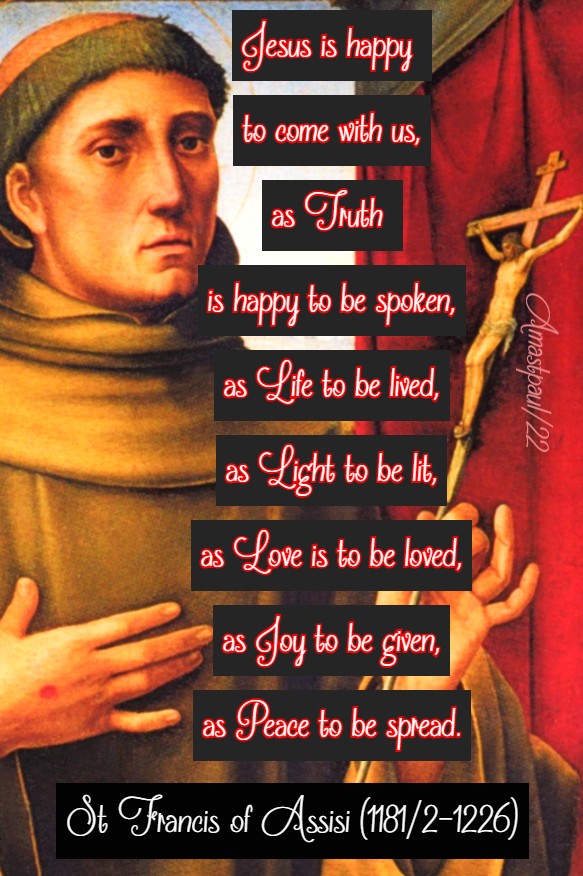
“Jesus is happy to come with us, as Truth is happy to be spoken, as Life to be lived, as Light to be lit, as Love is to be loved, as Joy to be given, as Peace to be spread.”
St Francis of Assisi (1181/2–1226)
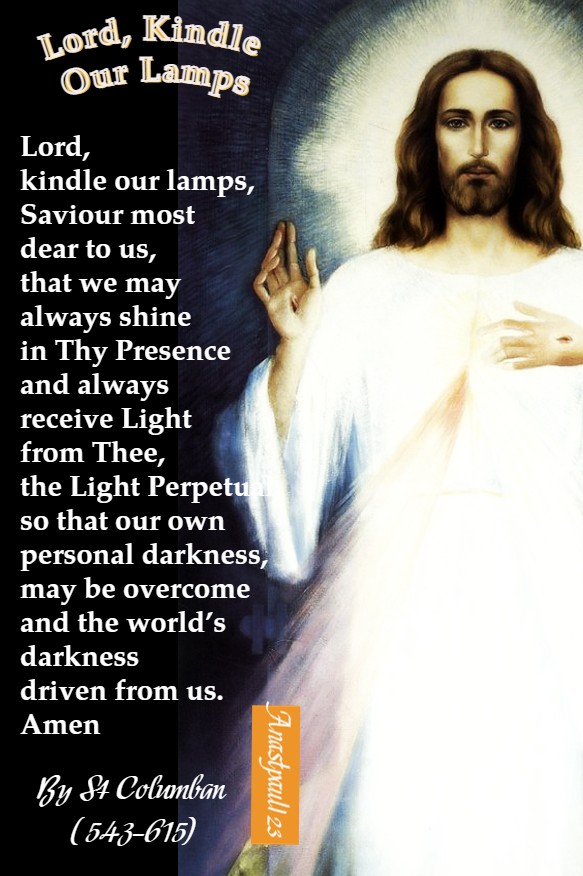
Lord, Kindle our Lamps By St Columban (543-615)
Lord, kindle our lamps, Saviour most dear to us, that we may always shine in Thy Presence and always receive Light from Thee, the Light Perpetual, so that our own personal darkness, may be overcome and the world’s darkness driven from us. Amen
One Minute Reflection – 23 January – St Raymond of Peñafort (1175-1275) – Sirach 31:8-11, Luke 12:35-40 – Scripture search here: https://www.drbo.org/
“You also must be ready, for at an hour that you think not, the Son of man will come.” – Luke 12:40
REFLECTION – “I have come to set the earth on fire and how I wish it were already blazing”… The Lord desires to have us vigilant, always waiting for the Saviour’s coming… But as the gain is meagre and the merit weak, when fear of pain is what prevents us from straying and as love is what has the greater worth, the Lord Himself…sets on fire our longing to win God, when He says: “I have come to set the earth on fire.” Not the kind of fire that destroys, of course but that which produces an upright will and perfects the golden vessels in the Lord’s House by consuming the chaff and the straw (1 Cor 3:12), by devouring all this world’s veneer, acquired through the taste for earthly pleasures and the perishable works of the flesh.
This was the heavenly fire that burned in the bones of the prophets, as Jeremiah declared: “It becomes, like fire burning…in my bones,” (Jer 20,9). For there is a fire of the Lord of which it is said: “Fire goes before Him,” (Ps 96,3). The Lord Himself is a fire, it says: “which burns without being consumed,” (Ex 3,2). The fire of the Lord is Light Eternal; the lamps of believers are lit at this fire: “Gird your loins and light your lamps,” (Lk 12:35). It is because the days of our life are still night that a lamp is necessary. This is the fire which, according to the testimony of the disciples at Emmaus, the Lord Himself set within them: “Were not our hearts burning within us while He spoke to us on the way and opened the scriptures to us?” (Lk 24:32). He gives us evident proof of this fire’s action, enlightening man’s inmost heart. That is why the Lord will come in fire (Is 66,15) so as to devour our faults at the resurrection, fulfil each one’s desires with His Presence and cast His Light over their merits and mysteries.” – St Ambrose (340-397) Archbishop of Milan, Father and Doctor of the Church (Treatise on St Luke’s Gospel, 7, 131-132).
PRAYER – O God, Thou Who chose blessed Raymond to be a renowned minister of the Sacrament of Penance and miraculously brought him through the waves of the sea, grant that, by his intercession, we may produce good results from our penance and reach the Heaven of eternal salvation .Through Jesus Christ, Thy Son our Lord, Who lives and reigns with Thee, in the unity of the Holy Ghost, God, world without end. Amen (Collect).
Saint of the Day – 23 January – Saint Maimbod (Died c 880) Martyr, Irish Pilgrim in France, Missionary Preacher, Born in Ireland and died in c 880 in Kaltenbrunn, Alsace, Gaul (modern France). Maimbod is regarded as an unofficial Patron of eye diseases and ailments. Also known as – Mainbeouf, Mainbodo, Maimbodus.
In the wake of St Columban, many Irish Monks travelled to France and Italy, spreading the Faith “on a pilgrimage for the love of Christ.” Maimbod was one of them, a pilgrim to the Tombs of many Saints and holy Shrines of the Blessed Virgin Mary. As he wandered, he preached, spreading the Faith throughout northern Italy and France.
In Burgundy, a nobleman gave him hospitality and unsuccessfully pressed him to settle there. Upon Maimbod’s departure, the nobleman gave Maimbod a pair of gloves as a reminder to pray for him.
He was praying at the Church of Domnipetra near Alsace, when he was set upon by robbers who, believed he had money because he was wearing gloves, murdered him.
There is a second version of his death which omits the gloves and relates his murder having been accomplished by pagans, enraged by Maimbod’s confession of Christ.
When miracles began to occur at his Tomb in Domnipetra, Count Aszo of Monteliard asked the blind Bishop Berengarius for a gift of the Saint’s Relics. Berengarius delegated the translation ceremony to his co-adjutor, Bishop Stephen. During the rite, Berengarius miraculously received his sight and instituted a Feast in honour of the Saint. Maimrod’s Relics were destroyed during the French Revolution.
Maimbod was Canonised by the confirmation of his cult on 24 November 1900 by Pope Leo XIII. His Feast today is especially celebrated in the Diocese of Besançon.
St Raymond of Peñafort OP (1175-1275) “Father of Canon Law” Dominican Priest, Doctor of Canon Law, the Third Master of the Order of Preachers, Founder of the Mercedarian friars, Writer, Teacher, Miracle-Worker. St Raymond of Peñafort’s Feast day was inserted in the General Roman Calendar in 1671 for celebration on 23 January. In 1969 it was moved to 7 January, the day after that of his death. He is the Patron Saint of canon lawyers, specifically and lawyers, in general. Biography: https://anastpaul.com/?s=st+raymond+penafort
St Abel the Patriarch St Agathangelus St Amasius of Teano St Aquila the Martyr St Asclas of Antinoe St Clement of Ancyra St Colman of Lismore St Dositheus of Gaza
St Ildephonsus (506-667) Archbishop of Toledo. Theologian, Scholar, Marian devotee, Writer, Evangeliser. Abbot Dom Guéranger calls him the Doctor of the Virginity of Mary. Saint Ildephonsus established the Feast of the Expectation of the Blessed Virgin Mary, which is still kept in some places on 18 December. Biography: https://anastpaul.wordpress.com/2018/01/23/saint-of-the-day-23-january-st-ildephonsus-607-667/
Bl Juan Infante St Jurmin St Lufthild St Maimbod (Died c 880) Martyr, Irish Pilgrim in France, Missionary Preacher, Bl Margaret of Ravenna St Martyrius of Valeria St Messalina of Foligno St Ormond of Mairé St Parmenas the Deacon St Severian the Martyr
Thought for the Day – 22 January – Meditations with Antonio Cardinal Bacci (1881-1971)
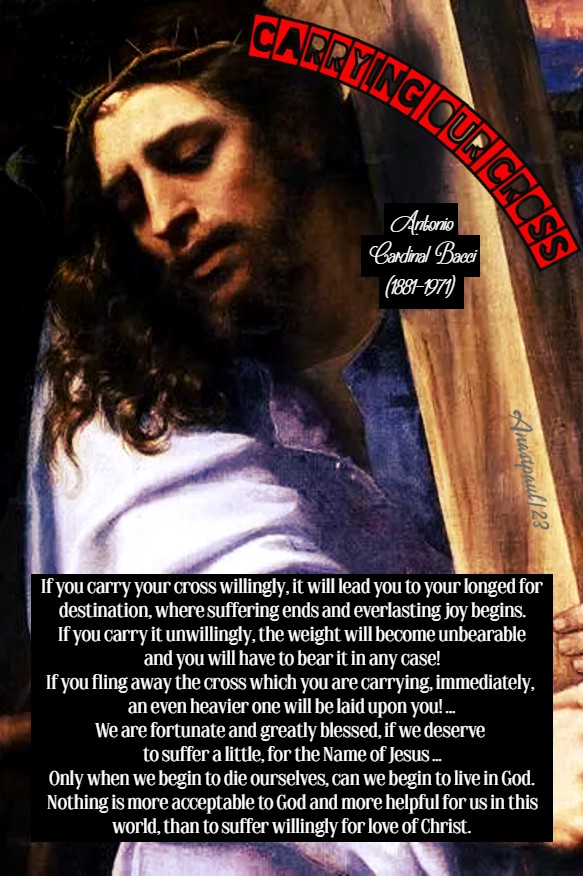
Carrying our Cross
“We also read in the Imitation of Christ: “No man has so heartfelt a sense of the Passion of Christ, as he whose lot it has been, to suffer like things.” (Imitation of Christ, Bk II, Ch 12) If you carry your cross willingly, it will lead you to your longed for destination, where suffering ends and everlasting joy begins. If you carry it unwillingly, the weight will become unbearable and you will have to bear it in any case! If you fling away the cross which you are carrying, immediately, an even heavier one will be laid upon you! Look upon them as wonderful consolations because, the sufferings of this life cannot be regarded as the measure of that glory which will be ours in Heaven … (Rom 8:18). We are fortunate and greatly blessed, if we deserve to suffer a little, for the Name of Jesus … Only when we begin to die ourselves, can we begin to live in God. Nothing is more acceptable to God and more helpful for us in this world, than to suffer willingly for love of Christ.”
Quote/s of the Day – 22 January – The Third Sunday after the Epiphany – Romans 12:16-21, Matthew 8:1-13 – Scripture search here: https://www.drbo.org/
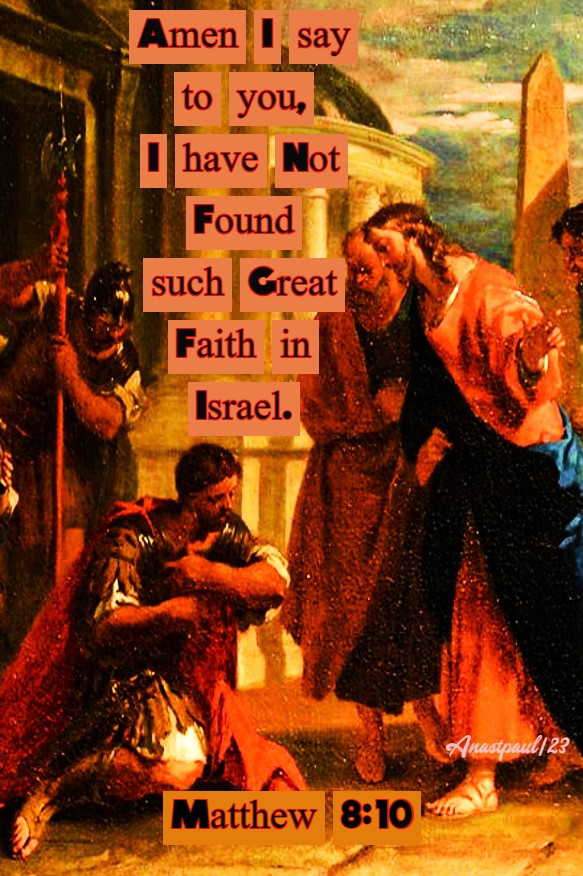
“Amen I say to you, I have not found such great faith in Israel.”
Matthew 8:10
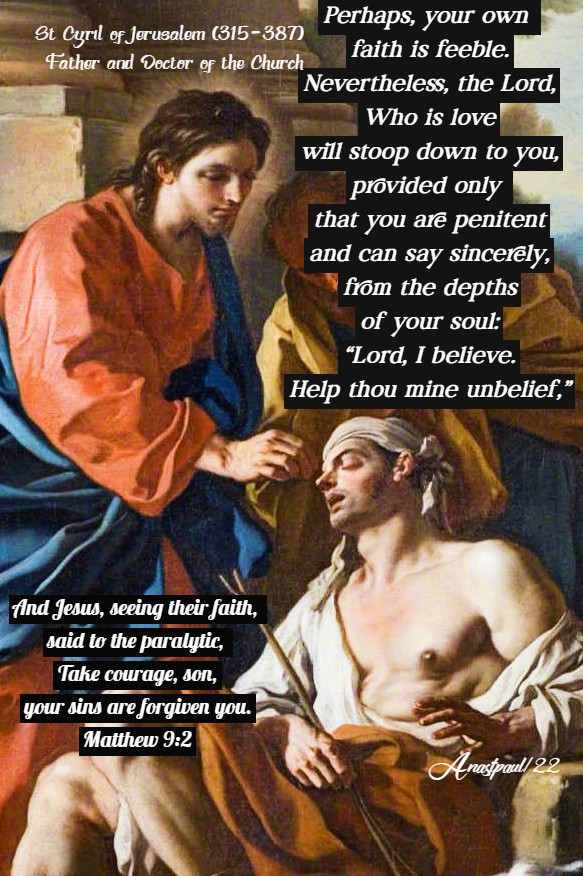
“And Jesus, seeing their faith, said to the paralytic, Take courage, son, your sins are forgiven you.”
Matthew 9:2
“Perhaps, your own faith is feeble. Nevertheless, the Lord, who is love will stoop down to you, provided only that you are penitent and can say sincerely, from the depths of your soul: “Lord, I believe. Help Thou mine unbelief,” (Mark 9:23)……”
St Cyril of Jerusalem (315-387) Father and Doctor of the Church
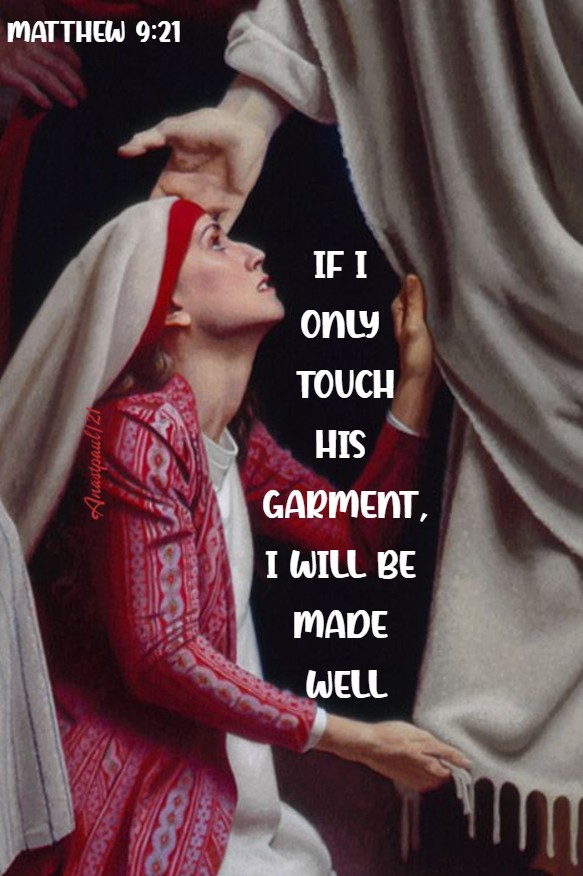
“If I only touch his garment, I will be made well.” Jesus turned and seeing her he said, “Take heart, daughter, your faith has made you well.” And instantly the woman was made well.”
Matthew 9:21-22
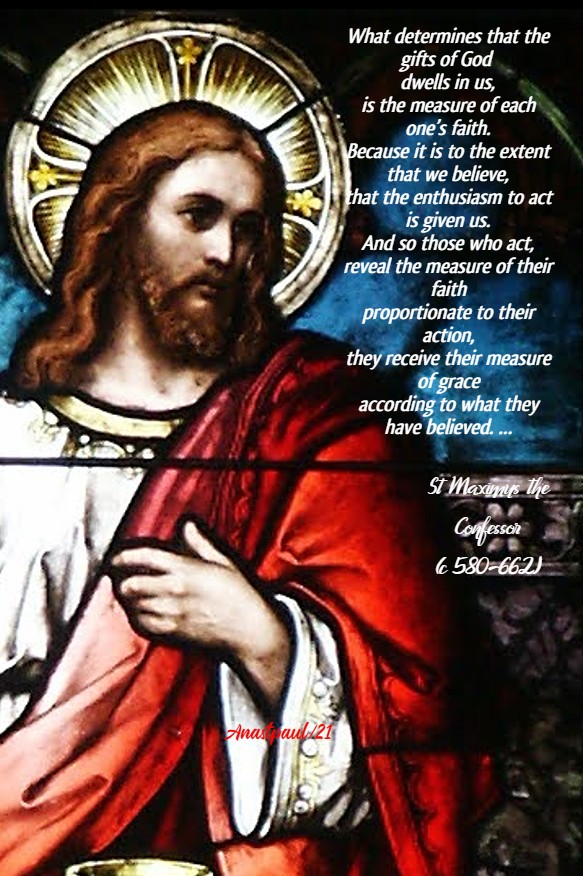
“What determines that the gifts of God dwells in us, is the measure of each one’s faith. Because it is to the extent that we believe, that the enthusiasm to act is given us. And so those who act, reveal the measure of their faith proportionate to their action, they receive their measure of grace according to what they have believed. …”
St Maximus the Confessor (c 580-662) Monk and Theologian
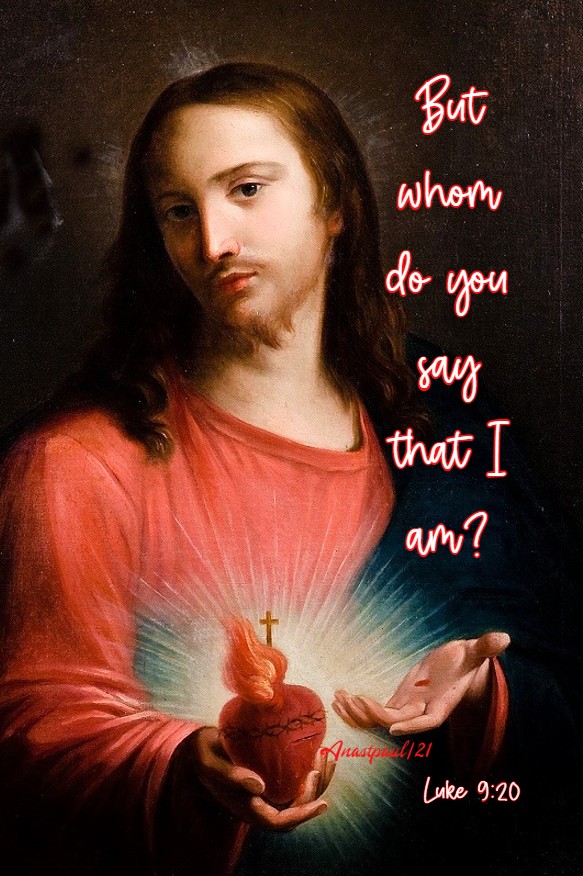
“But whom do you say that I Am?”
Luke 9:20
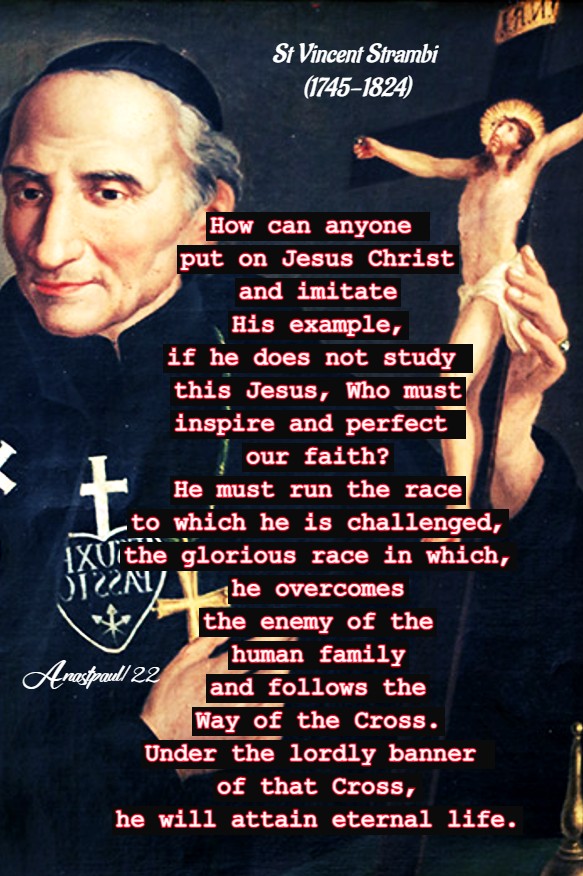
“… How can anyone put on Jesus Christ and imitate His example, if he does not study this Jesus, who must inspire and perfect our faith? He must run the race to which he is challenged, the glorious race in which, he overcomes the enemy of the human family and follows the Way of the Cross. Under the lordly banner of that Cross, he will attain eternal life.”
St Vincent Strambi CP (1745-1824)
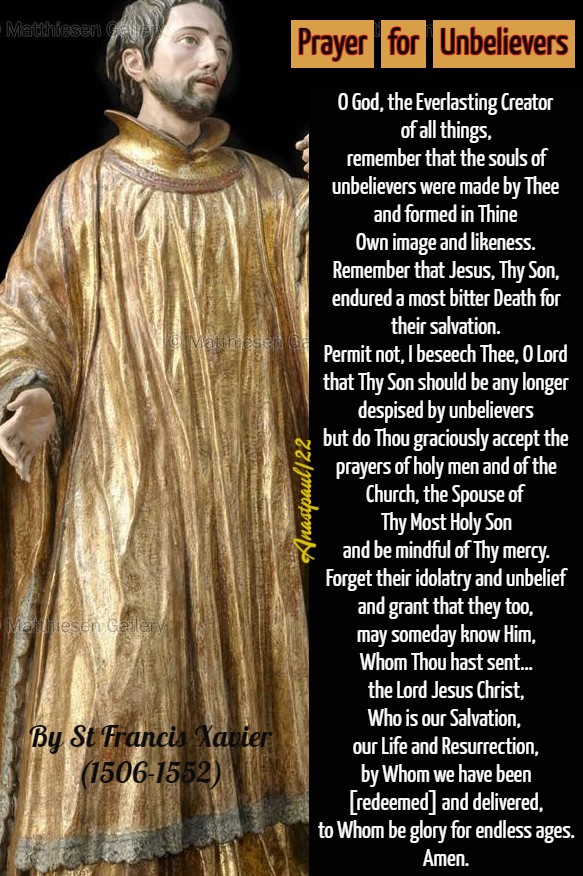
Prayer for Unbelievers By St Francis Xavier (1506-1552)
O God, the Everlasting Creator of all things, remember that the souls of unbelievers were made by Thee and formed in Thine own image and likeness. Remember that Jesus, Thy Son, endured a most bitter Death for their salvation. Permit not, I beseech Thee, O Lord that Thy Son should be any longer despised by unbelievers but do Thou graciously accept the prayers of holy men and of the Church, the Spouse of Thy Most Holy Son and be mindful of Thy mercy. Forget their idolatry and unbelief and grant that they too, may someday know Him, Whom Thou hast sent…the Lord Jesus Christ, Who is our Salvation, our Life and Resurrection, by Whom we have been [redeemed] and delivered, to Whom be glory for endless ages. Amen.
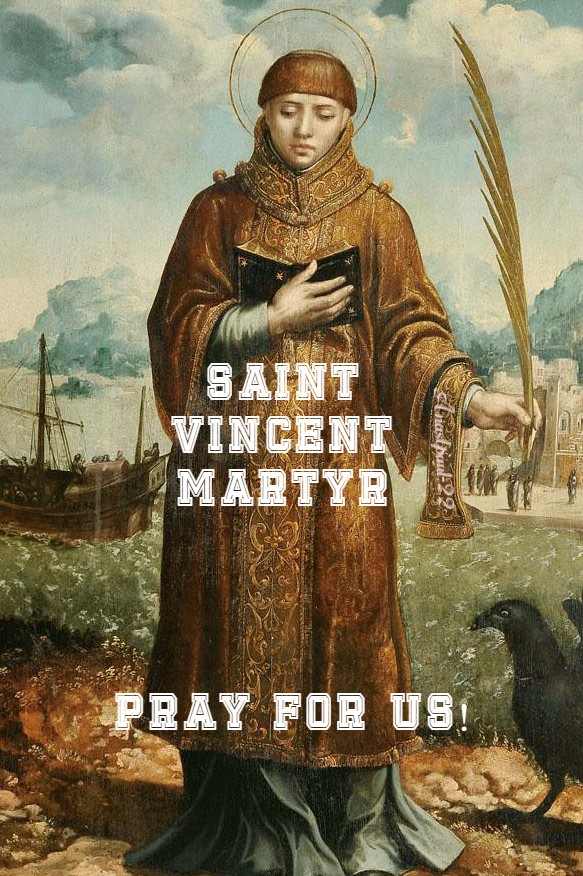
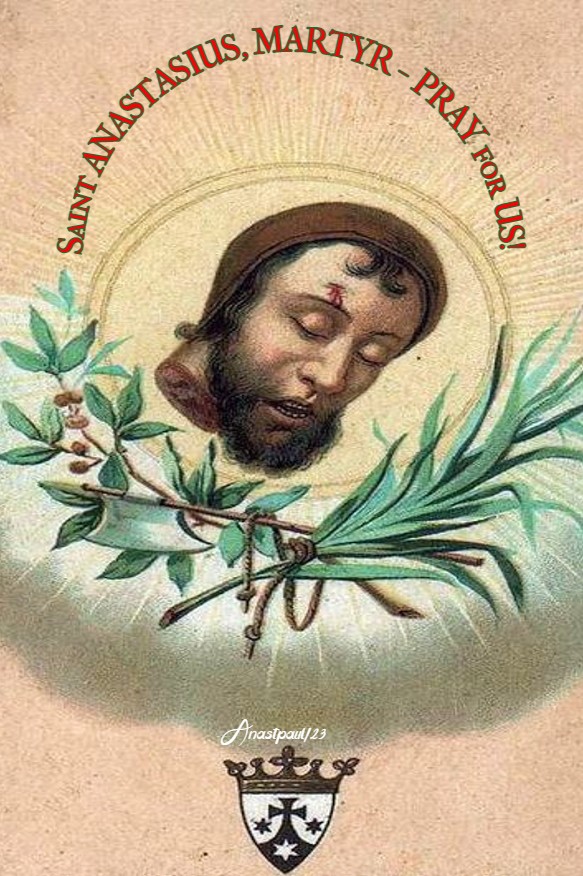
One Minute Reflection – 22 January – St Vincent of Saragossa (Died 304) Protomartyr of Spain and St Anastasius the Persian (Died 628) Martyr – The Third Sunday after the Epiphany – Romans 12:16-21, Matthew 8:1-13 – Scripture search here: https://www.drbo.org/
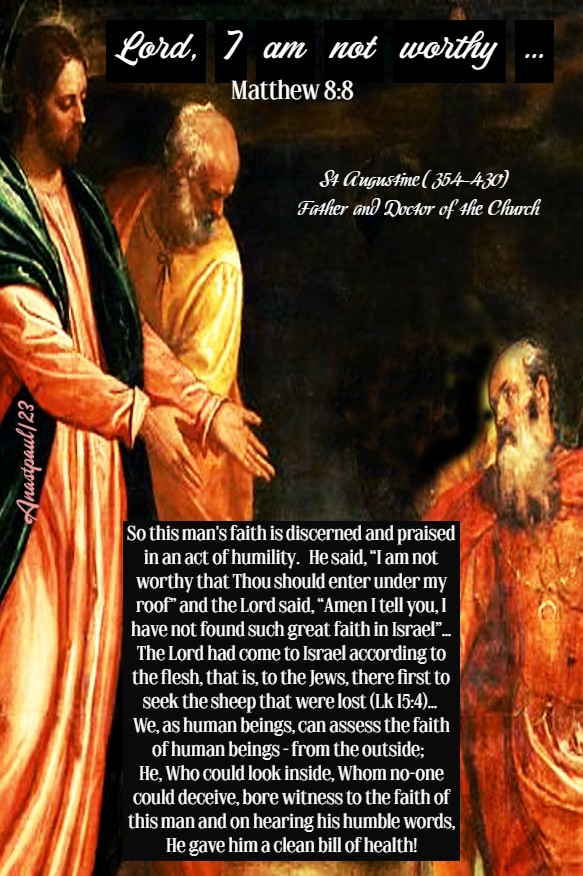
“Lord, I am not worthy … ”- Matthew 8:8
REFLECTION – “When the Gospel was read, we heard Jesus praise our faith in an act of humility. When the Lord Jesus, you remember, promised He would go to the centurion’s house to heal his servant, the man replied, “I am not worthy that Thou should enter under my roof but only say the word, and he will be healed”. By calling himself unworthy, he showed he was worthy to have Christ enter, not within his walls but within his heart…
There would, after all, have been no great benefit if the Lord Jesus had entered within his walls and had not been in his bosom. Christ, the teacher of humility, by both word and example, had, you may remember, sat down in the house of a certain proud Pharisee called Simon (Lk 7:36). And although He was sitting in his house, there wasn’t anywhere in his heart, where the Son of man might lay His Head (Lk 9,58)… But into this centurion’s house, He did not enter, yet, he took possession of his heart…
So this man’s faith is discerned and praised in an act of humility. He said, “I am not worthy that Thou should enter under my roof” and the Lord said, “Amen I tell you, I have not found such great faith in Israel”… The Lord had come to Israel according to the flesh, that is, to the Jews, there first to seek the sheep that were lost (Lk 15:4)… We, as human beings, can assess the faith of human beings – from the outside; He, Who could look inside, Whom no-one could deceive, bore witness to the faith of this man and on hearing his humble words, He gave him a clean bill of health!” – St Augustine (354-430) Bishop of Hippo, Father and Doctor of the Church (Sermon 62).
PRAYER – Give heed to our humble prayers, O Lord, that we who know we are guilty of our own sin, may be saved by the intercession of Thy blessed Martyrs Vincent and Anastasius.Through Jesus Christ, Thy Son our Lord, Who lives and reigns with Thee, in the unity of the Holy Ghost, God, world without end. Amen (Collect).
Our Morning Offering – 22 January – The Third Sunday after the Epiphany
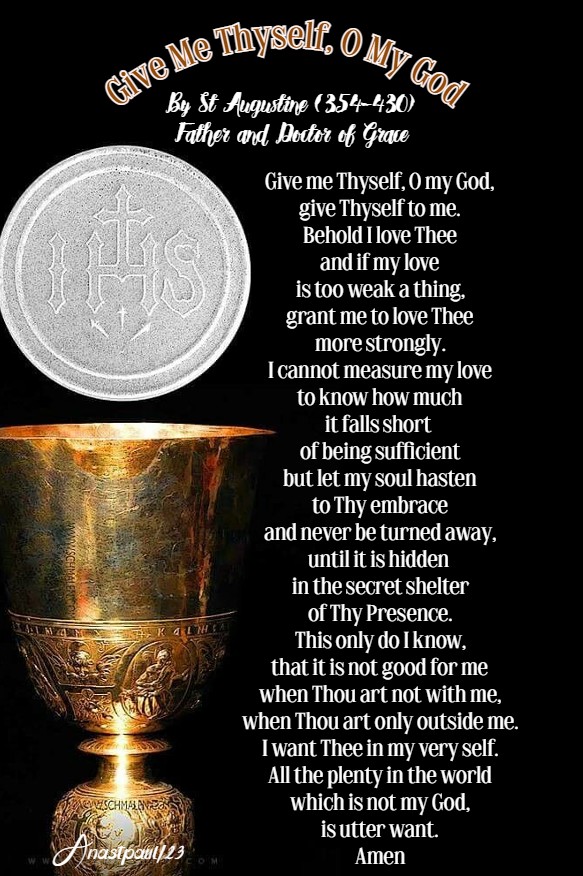
Give Me Thyself, O My God By St Augustine (354-430) Father and Doctor of Grace
Give me Thyself, O my God, give Thyself to me. Behold I love Thee and if my love is too weak a thing, grant me to love Thee more strongly. I cannot measure my love to know how much it falls short of being sufficient but let my soul hasten to Thy embrace and never be turned away, until it is hidden in the secret shelter of Thy Presence. This only do I know, that it is not good for me when Thou art not with me, when Thou art only outside me. I want Thee in my very self. All the plenty in the world which is not my God, is utter want. Amen
















 AnaStpaul
You must be logged in to post a comment.