Posted in ART DEI, AUGUSTINIANS OSA, SAINT of the DAY

Saint of the Day – 2 February – Blessed Stephen Luigi Giuseppe Bellesini OSA (1774-1840) Priest

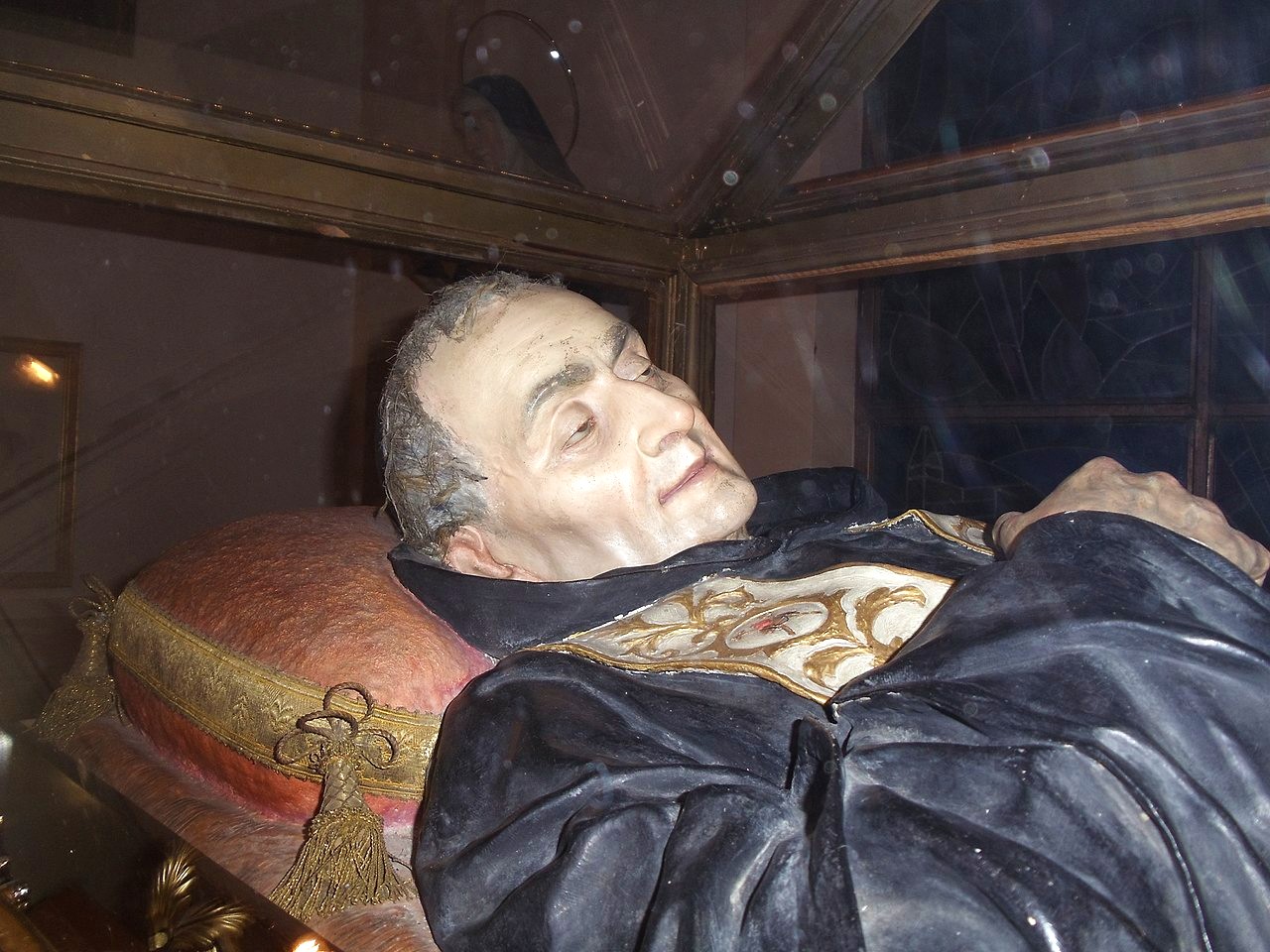
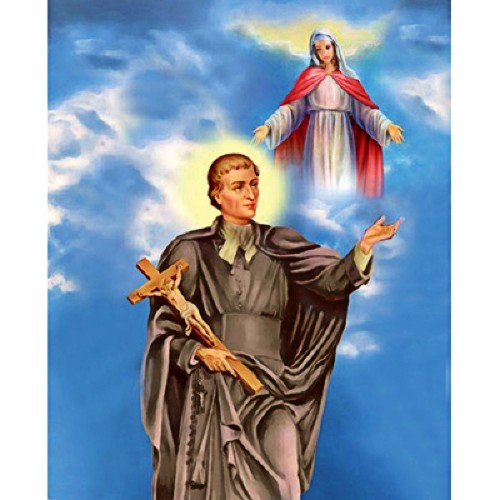
Saint of the Day – 2 February – Blessed Stephen Luigi Giuseppe Bellesini OSA (1774-1840) Priest and Friar of the Hermits of St Augustine, teacher, mentor to the youth, Parish Priest, guardian of the poor and sick. Born on 25 November 1774 at Trent, Italy as Aloysius Bellesini and died on 2 February 1840 of Typhus and an infection that developed from a cut on his leg received by an accidental fall while visiting the sick at Genazzano, Italy. Also known as – Aloysius Bellesini, Stefano Bellesini. Additional Memorial – 3 February (Augustinians). Beatified on 27 December 1904 by Pope Pius X.

We celebrate today the memory of Blessed Stephen Bellesini, a man who lived during a difficult period of the Church’s history at the turn of 19th Century Italy. His vocation as an Augustinian Religious was severely tried by strong anticlerical government regulations. Nevertheless, he did not withdraw in shame, nor did he become embittered by external challenges and persecutions. Rather, he redoubled his commitment and persevered in his resolve, giving himself generously in the service of others, most especially the poor, the disadvantaged and the infirm.
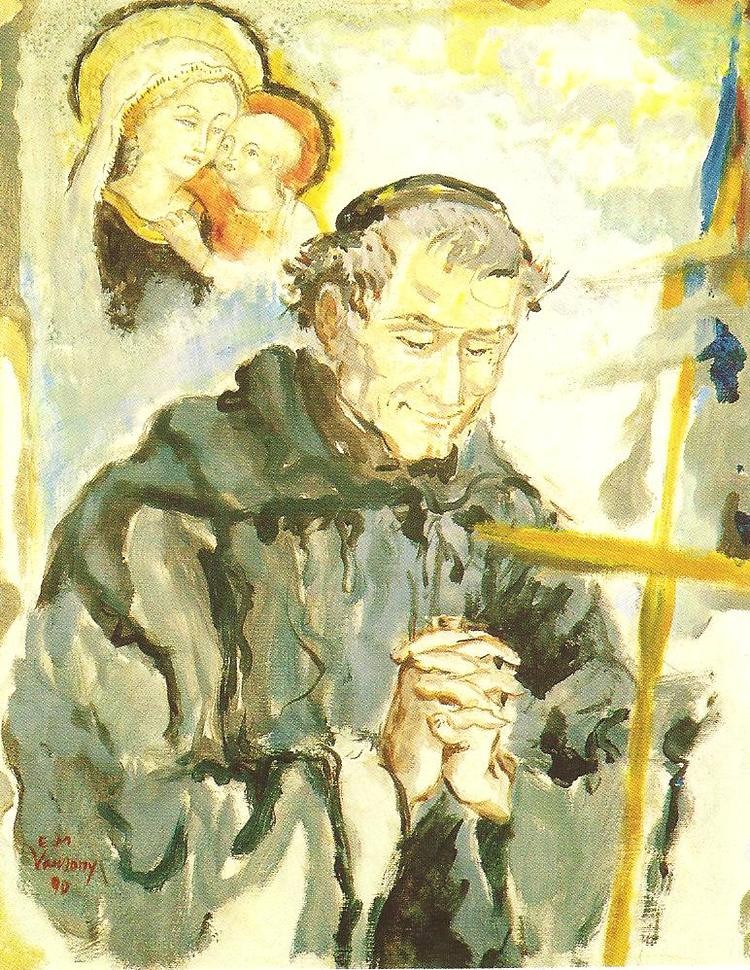
Luigi Bellesini was born in Trent, Italy, on 25 November 1774. He entered the Order at the Monastery of San Marco in his native City, taking the name Stephen and making his profession on 31 May 1794. Following studies in Rome and Bologna, aged just 22, he was forced to return to Trent during the government suppression of religious houses and there completed his theological education. He was Ordained to the Priesthood in 1797.

After several years of service, principally as a preacher as well as a teacher in the local schools, the Monastery in Trent, after years of tension and uncertainty, Stephen and his community were expelled from their Monastery for good, forbidden to wear any longer the Habit of their religious profession. They would never return. The Monastery would never re-open.

Stephen was forced to return to his family home. He founded, in his home, a free school for the poor children of the area, who otherwise would not have access to education. He gave food and clothing to the poorest of his students and offered encouragement and friendship to all of them. He dedicated his energies with such remarkable results that his work won the respect of the materialistic local authorities, who appointed him Director and Superintendent of all schools of the district.

However, when the opportunity presented itself, he resigned from these offices and secretly made his way to Rome, in order to resume his religious life. He was appointed Novice Master first in Rome, then in Bologna, Umbria and lastly at Genazzano.

Political leaders in Trent begged Stephen to return to his work in the schools there, offering to increase his salary. But Stephen refused, writing to them: “You would surely not ask me (to return to Trent) if you realised the unbreakable bond between a Friar and his God, Who is the King of Kings. Before His Altar, I have solemnly promised to be faithful to those vows.

The closing years of his life were spent as Parish Priest at the Shrine of Our Mother of Good Counsel,. There his ministry included a special emphasis on the needs of the poor and of children.

In January 1840, while answering a call to care for a sick Parishioner, during the Typhus epidemic which was raging in the area at the time, he tripped and fell. A cut on his leg became infected and he developed a high fever. He tried to remain active for the next two days but the fever remained. It is believed that he had contracted Cholera and in his weakened state, he could not fight the desease. He died, a Martyr of Charity, on 2 February 1840.

At the entrance to the Chapel of the General Curia in Rome, there is a familiar painting of the Augustinian Blessed, Stephen Bellesini. It is a copy of an original artwork created by G Toeschi in 1905, depicting a usual but crowning moment and possibly one of the last, of Stephen’s life.
He stands close to the bedside of an ill man, administering perhaps the last Sacrament or simply offering him some spiritual comfort, while the man’s wife presses her head to the bed, seemingly overcome with grief or exhaustion.
Two young children look on anxiously.
The artist touchingly captured here an important aspect of the ministry which occupied the latter part of Stephen’s life, as he visited the homes of the townspeople, bringing them the comfort of the Sacraments and oftentimes, material assistance as well, during the Typhus epidemic which struck Genazzano in the Spring of 1839. As we know, less than a year later, Stephen, himself, would fall victim to the pestilence and would succumb – a Martyr of Charity – faithful to the end.

Stephen was Beatified by St Pius X on 27 December 1904. His remains are venerated in a special Chapel dedicated to him at the Shrine of Our Mother of Good Counsel, Genazzano.

“Why is Blessed Stephen, who was Beatified in 1904, not yet a saint?

Certainly his sanctity is not at issue. Champion of youth, advocate for justice, comforter of the sick, guardian of the poor, his message is timely, his life is exemplary and his love for and commitment to religious life speaks loudly to Augustinians of today. The Postulator of Causes will tell us that Stephen needs to obtain a miracle!
And so we might be inclined to leave the question at Stephen’s own feet … and wait. But, to borrow an opinion expressed in another context, “how will they call on him if they have not heard of him?”
In Stephen Bellesini we Augustinians have a powerful witness to show forth, a Religious and Priest who has a great deal to say to so many categories of people in need today: the sick, the young, Religious and Priests, to those who fight injustice and religious persecution. This is a small attempt to make him better known. Can you help us in this effort?
” (Augustinian.org)

Posted in AUGUSTINIANS OSA, FEASTS and SOLEMNITIES, MARIAN TITLES, SAINT of the DAY, The BLESSED VIRGIN MARY

Feast of the Purification of Our Lady – Candlemas Day, Our Lady of the Candles and Memorials of the Saints – 2 February

Feast of the Purification of Our Lady – Candlemas Day – 2 February
About:

https://anastpaul.com/2021/02/02/feast-of-the-purification-of-our-lady-the-presentation-of-our-lord-in-the-temple-candlemas-day-2-february/
AND:
https://anastpaul.wordpress.com/2018/02/02/feast-of-the-presentation-of-the-lord-2-february/
AND:
https://anastpaul.com/2019/02/02/feast-of-the-presentation-of-the-lord-in-the-temple-2-february/

Our Lady of the Candles – (formally known as Nuestra Señora de la Purificación y la Candelaria) is a Marian title and image venerated by Filipino Catholics. The image, which is enshrined on the balcony of Jaro Cathedral, is known as the patroness of Jaro District of Iloilo City and the whole of the Western Visayas.
The feast day of Our Lady of the Candles is on Candlemas (2 February) and is celebrated in Iloilo City with a Solemn Pontifical Mass presided by the Archbishop of Jaro.

St Adalbald of Ostrevant
St Adeloga of Kitzingen
St Agathodoros of Tyana
St Apronian the Executioner
Bl Bernard of Corbara
St Bruno of Ebsdorf
St Burchard of Wurzburg
St Candidus the Martyr
St Columbanus of Ghent
St Cornelius the Centurion
St Felician the Martyr
St Feock
St Firmus of Rome
St Flosculus of Orléans
St Fortunatus the Martyr
St Hilarus the Martyr
St Jeanne de Lestonnac (1556-1640) Widow, Mother, Founder

St Lawrence of Canterbury (Died 2 February 619) The Second Archbishop of Canterbury, the successor of St Augustine of Canterbury from 604 until his death in 619, but he was Consecrated as Archbishop by his predecessor, St Augustine, during Augustine’s lifetime, to ensure continuity in the office, Benedictine Monk, Missionary. He was a member of the Gregorian mission sent from Italy to England to Christianise the Anglo-Saxons.
About St Lawrence:

https://anastpaul.com/2022/02/02/saint-of-the-day-2-february-saint-lawrence-of-canterbury-died-619/

Blessed Luigi Giuseppe Bellesini OSA (1774-1840) Priest and Friar of the Hermits of St Augustine
St Marquard of Hildesheim
St Mun

Blessed Peter Cambiano OP (1320-1365) Martyr, Priest and Friar of the Order of Preachers, Confessor, renowned Preacher calling many to conversion by his holy zeal and the power of his words. Martyred by heretics. Beatified on 4 December 1856 by Pope Pius IX.
His Life and Death:
https://anastpaul.com/2021/02/02/saint-of-the-day-2-february-blessed-peter-cambiano-op-1320-1365/

St Rogatus the Martyr
St Saturninus the Martyr
St Sicharia of Orleans
St Simon of Cassia Fidati
St Theodoric of Ninden
St Victoria the Martyr

Martyrs of Ebsdorf: Members of the army of King Louis III of France under the leadership of Duke Saint Bruno of Ebsdorf. The Martyrs died fighting invading pagan Norsemen, and defending the local Christian population. Four bishops, including Saint Marquard of Hildesheim and Saint Theodoric of Ninden, eleven nobles, and countless unnamed foot soldiers died repelling the invaders. They were martyred in the winter of 880 in battle at Luneberg Heath and Ebsdorf, Saxony (modern Germany).

Posted in BLESSED TRINITY PRAYERS, FEBRUARY - THE BLESSED TRINITY (Traditional), POETRY, The MOST HOLY & BLESSED TRINITY, The SIGN of the CROSS

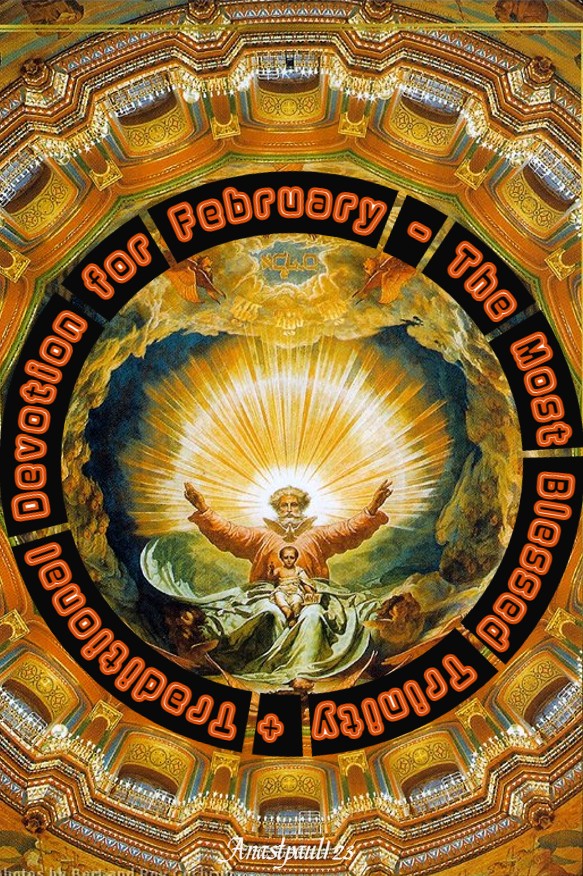
Traditional February Devotion – The Most Holy and Blessed Trinity

Traditional Catholic Devotions

February is traditionally the Month of the Blessed Trinity, with the Holy Family being celebrated together with the Holy Name of Jesus in January.

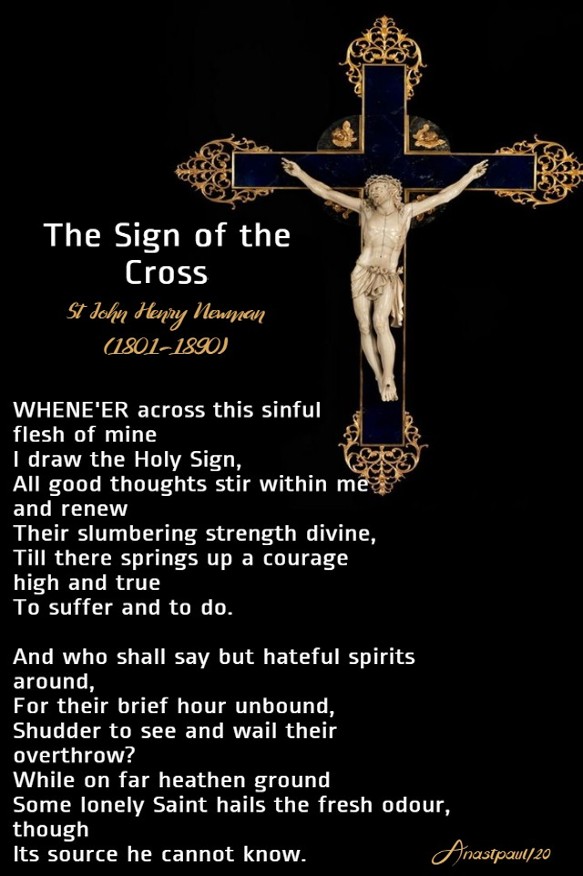
The Sign of the Cross

In the name of the Father
and of the Son
and of the Holy Ghost.

(50 Days. 100 Days if made with Holy Water
Blessed Pope Pius IX, 1865.
)

WHENE’ER across this sinful flesh of mine
I draw the Holy Sign,
All good thoughts stir within me and renew
Their slumbering strength divine,
Till there springs up a courage high and true
To suffer and to do.

And who shall say but hateful spirits around,
For their brief hour unbound,
Shudder to see and wail their overthrow?
While on far heathen ground
Some lonely Saint hails the fresh odour, though
Its source he cannot know.

John Henry Newman (1801-1890)
Oxford – 25 November 1832

Posted in CHRIST the JUDGE, CHRIST the SUN of JUSTICE, GOD ALONE!, MEDITATIONS - ANTONIO CARD BACCI, QUOTES on CHARITY, QUOTES on LOVE of GOD, QUOTES on OBEDIENCE, QUOTES on the CHURCH, SACRAMENTS

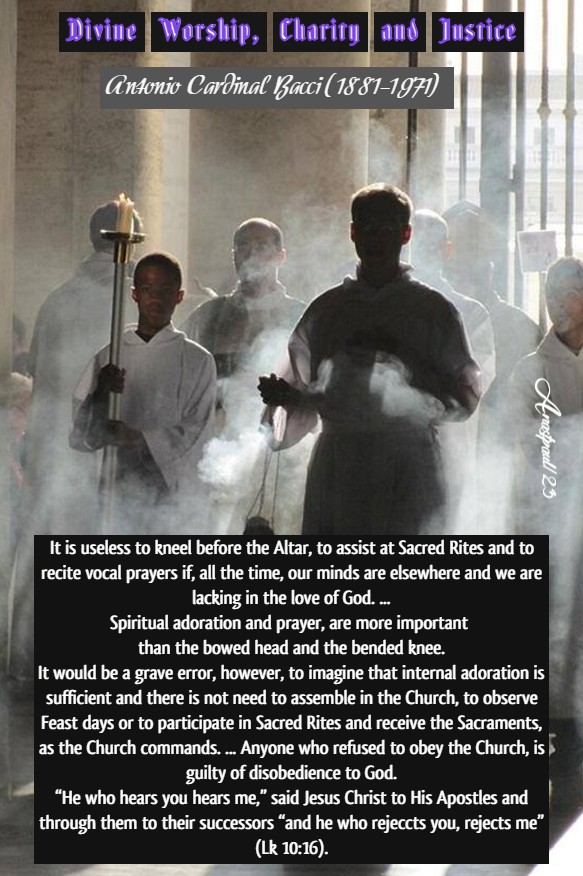
Thought for the Day – 1 February – Divine Worship, Charity and Justice

Thought for the Day – 1 February – Meditations with Antonio Cardinal Bacci (1881-1971)

Divine Worship, Charity and Justice

Divine Worship:
We have a strict duty to honour and obey God.
I, the Lord, Am your God,” He tells us in the first commandment of the Decalogue.
You shall not have other gods besides me.
We are obliged, therefore, to worship God both internally and externally, since both soul and body are created by God.
Internal worship is especially necessary, for without it, external worship would be an empty formality.
It is useless to kneel before the Altar, to assist at Sacred Rites and to recite vocal prayers if, all the time, our minds are elsewhere and we are lacking in the love of God.
Spiritual adoration and prayer, are more important than the bowed head and the bended knee.

It would be a grave error, however, to imagine that internal adoration is sufficient and there is not need to assemble in the Church, to observe Feast days or to participate in Sacred Rites and receive the Sacraments, as the Church commands.
Everything should be subject to God.
The Church was founded by Christ and endowed by Him with the authority to lay down the exact manner in which we should pay homage to Almighty God.
She has the right to dictate the feasts and ceremonies in which we are obliged to participate.
Anyone who refused to obey the Church, is guilty of disobedience to God.
He who hears you hears me,” said Jesus Christ to His Apostles and through them to their successors “and he who rejeccts you, rejects me” (Lk 10:16).

How do we adore God?
Are we among those who pray with their lips and not from the heart?
Or do we believe that private devotion is quite sufficient and that there is no need to subject ourselves to all the laws of the Church?
Some laws we agree with, some we do not and choose to ignore.
In either case, we have gone astray and should be unable to gain God’s favour and cannot be regarded as members of His Church!”

Antonio Cardinal Bacci

Posted in FATHERS of the Church, GOD ALONE!, I BELIEVE!, PRACTISING CATHOLIC, QUOTES on FAITH, QUOTES on GOOD WORKS, QUOTES on LOVE of GOD, QUOTES on SIN, The FAITHFUL on PILGRIMAGE, The LAST THINGS, The SECOND COMING

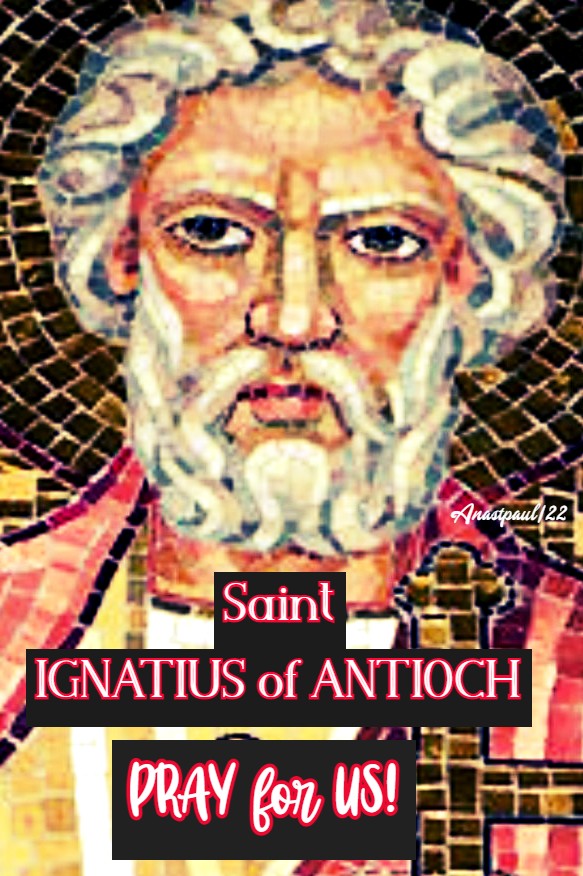
Quote/s of the Day – 1 February – – St Ignatius of Antioch

Quote/s of the Day – 1 February – – St Ignatius of Antioch (c35 – c107) Martyr, Bishop of Antioch, Apostolic Father of the Church

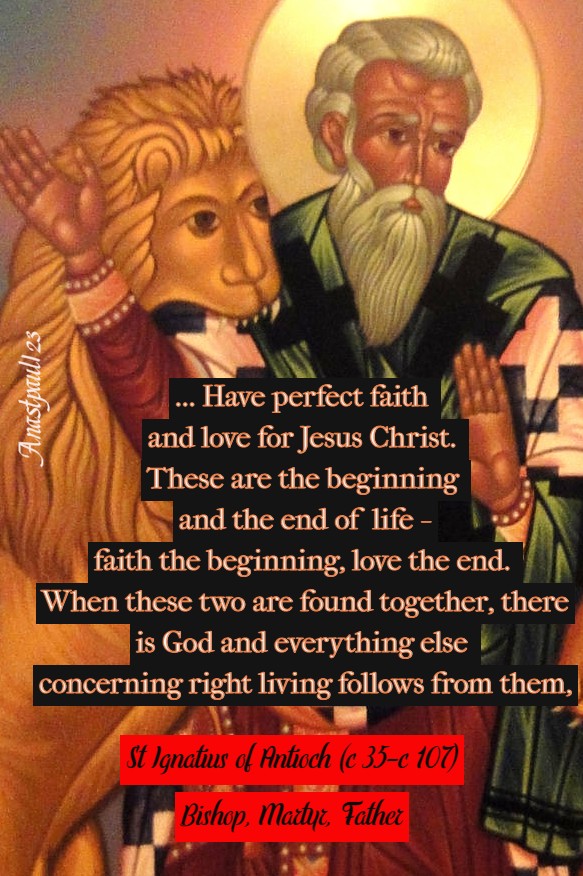
“ … Have perfect faith
and love for Jesus Christ.
These are the beginning
and the end of life –
faith the beginning, love the end.
When these two are found together,
there is God and everything else
concerning right living follows from them.
…”

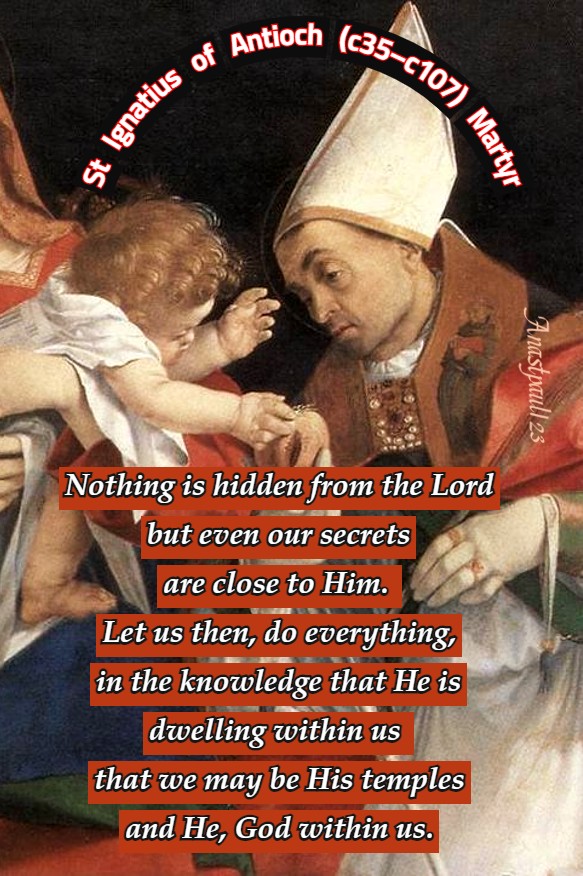
Nothing is hidden from the Lord
but even our secrets are close to Him.
Let us then, do everything,
in the knowledge that He is dwelling within us
that we may be His temples
and He ,God within us.

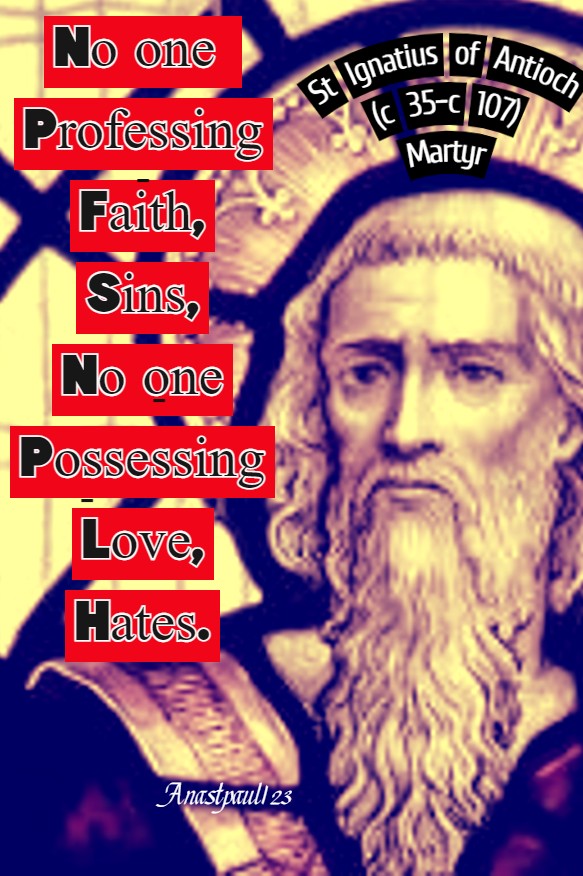
“… No-one professing faith, sins,
no-one possessing love, hates.
…”

“… A tree is known by its fruit.
So those who profess to belong to Christ
will be known, by what they do.
For the work we are about,
is not a matter of words, here and now
but depends on the power of faith
and on being found faithful, to the end!

MORE:
https://anastpaul.com/2022/02/01/quote-s-of-the-day-1-february-st-ignatius-of-antioch/

St Ignatius of Antioch (c35–c107)
Bishop, Martyr, Apostolic Father

Posted in "Follow Me", CHRIST the WORD and WISDOM, DOCTORS of the Church, FATHERS of the Church, ONE Minute REFLECTION, QUOTES on MYSTERIES of our FAITH, SAINT of the DAY, The KINGDOM of GOD / HEAVEN, The WORD

One Minute Reflection – 1 February – “If it dies, it produces much fruit” – John 12:24

One Minute Reflection – 1 February – “The Month of the Blessed Trinitys” – St Ignatius of Antioch (c 35 – 107) Martyr, Bishop of Antioch, Apostolic Father of the Church. – Romans 8:35-39, John 12:24-26 – Scripture search here: https://www.drbo.org/

If it dies, it produces much fruit” – John 12:24

REFLECTION – “The Kingdom of Heaven is like a mustard seed which a person took and sowed in a field. It is the smallest of all the seeds, yet, when full-grown it is the largest of plants. It becomes a large bush and the ‘birds of the sky come and dwell in its branches.’” (Mt 13:31). This small seed is for us the symbol of Jesus Christ, Who, sowed into the garden where He was buried, rose from it shortly after, through His Resurrection, as a big tree.

One could say that when He died, He was like a small seed – a small seed because of the humiliation of His flesh but a big tree because of the glorification of His Majesty. He was like a small seed when he appeared completely disfigured before our eyes but like a large tree when He rose again like “the most handsome of men” (Ps 44:3).

The branches of this mysterious tree, are the holy preachers of the Gospel, of whom one of the Psalms indicates the reach: “Their report goes forth throughout all the earth, their message, to the ends of the world “ (Ps 19:5; cf Rom 10:18). The birds rest on these branches while the souls of the just, who have been raised up above earth’s attractions, on the wings of holiness, find in the words of these preachers of the Gospel, the consolation they need in the sorrows and difficulties of this life.” – St Gregory the Great (540-604) Pope, Father and Doctor of the Church (Homilies on Matthew, Ch.13).

PRAYER – Be mindful of our weakness, O aAmighty God and since the burden of our deeds is grievous to us, grant that the glorious intercession of blessed Ignatius Thy Martyr and Bishop, may protect us. Through Jesus Christ, Thy Son our Lord, Who lives and reigns with Thee, in the unity of the Holy Ghost, God, world without end. Amen (Collect).

Posted in AUGUSTINIANS OSA, BLESSED TRINITY PRAYERS, DOCTORS of the Church, FATHERS of the Church, FEBRUARY - THE BLESSED TRINITY (Traditional), GOD ALONE!, I BELIEVE!, Our MORNING Offering, PRAYERS of the SAINTS, QUOTES on FAITH, QUOTES on HOPE, QUOTES on LOVE of GOD, QUOTES on STRENGTH, The HOLY FACE, The MOST HOLY & BLESSED TRINITY

Our Morning Offering – 1 February – O Lord, Our God, We Believe in Thee, Father, Son and Holy Ghost

Our Morning Offering – 1 February – “The Month of the Blessed Trinity”

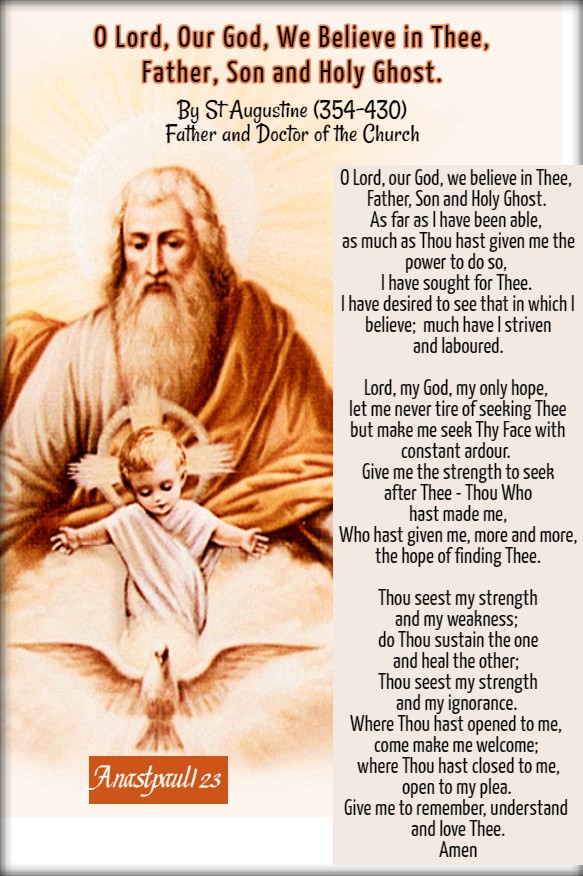
O Lord, Our God, We Believe in Thee,
Father, Son and Holy Ghost.
By St Augustine (354-430)
Father and Doctor of the Church

O Lord, our God, we believe in Thee,
Father, Son and Holy Ghost.
As far as I have been able,
as much as Thou hast given me the power to do so,
I have sought for Thee.
I have desired to see that in which I believe;
much have I striven and laboured.

Lord, my God, my only hope,
let me never tire of seeking Thee
but make me seek Thy Face with constant ardour.
Give me the strength to seek after Thee –
Thou Who hast made me,
Who hast given me, more and more,
the hope of finding Thee.

Thou seest my strength and my weakness;
do Thou sustain the one and heal the other;
Thou seest my strength and my ignorance.
Where Thou hast opened to me,
come make me welcome;
where Thou hast closed to me, open to my plea.
Give me to remember, understand and love Thee.
Amen

Posted in SAINT of the DAY

Saint of the Day – 1 February – Saint Sigebert III of Austrasia (c 630-656)

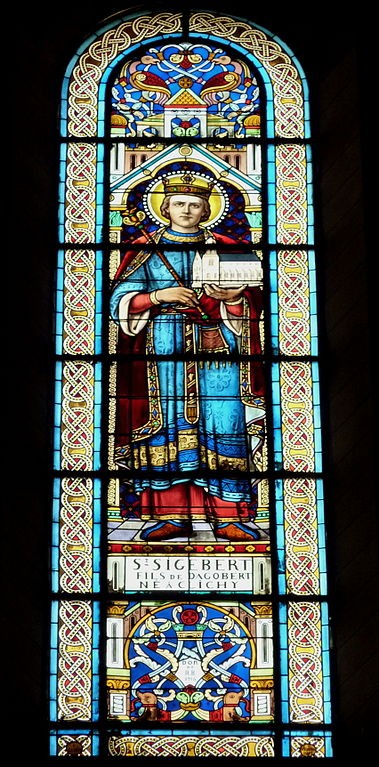
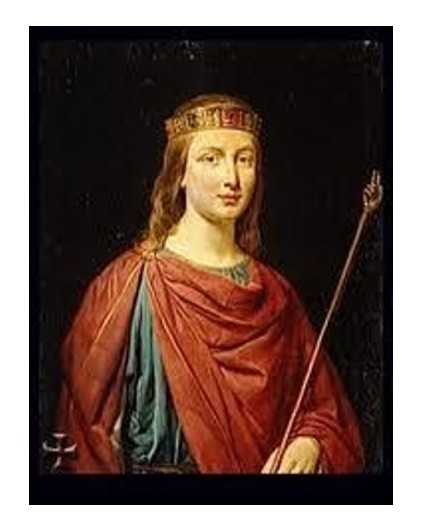
Saint of the Day – 1 February – Saint Sigebert III of Austrasia (c 630-656) King, Married and father of St Dagobert II. Born in c 630 in Metz, Moselle, Lorraine, France and died on 1 February 656 at Metz, France of natural causes, aged 25-26. His body was incorrupt until it was attacked by the marauders during the French Revolution. Patronages – the City and Diocese of Nancy, France. Also known as – Sigebert the Younger, Sigisbert…

Sigebert was the eldest son of King Dagobert I and his concubine Ragnetrude and half-brother of King Clovis. The King recalled and made peace with Saint Amand, who was previously banished for criticising the King’s vices and unholy life and asked him to baptise his new-born son. The ceremony was performed at Orléns and Charibert II, Dagobert’s half-brother who was King of Aquitaine at the time, was the Godfather. Dagobert assigned the education of Sigebert to Pepin of Landen, who was the Mayor of the Palace in Austrasia. Pepin took the baby Sigebert and moved with him to his domains in Aquitane, where they remained for the next three years.

In 633, a revolt of the nobles forced Dagobert to make the three-year old Sigebert King of Austrasia. However, he refused to give the power to Pepin of Landen by making him Mayor of the Palace for the child-king. Instead, he had put Sigebert under the tutelage of Adalgisel as Mayor of the Palace and the Bishop of Cologne, Saint Cunibert, as Regent, while keeping Pepin in Neustria as hostage.

On the death of Dagobert in 639, the two Frankish kingdoms became independent once again under Sigebert III and his little brother, Clovis II. Both kingdoms were under child-kings – Sigebert was around eleven years old and Clovis was five – and were ruled by the respective Regents. It was under Seigbert’s reign that the Mayor of the Palace began to play the most important role in political life and he has been described as the first “roi fainéant”—“do-nothin king”—of the Merovingian dynasty. A most unfair derogatory and insulting title, considering he was a child however, as he grew in age and wisdom, he disregarded worldly affairs as of no value anyway and focused his heart on things above.

In 640 the Duchy of Thuringia rebelled against Austrasia in the only war of Sigebert’s reign.The young King attempted to quell the rebellion but was defeated. The rout left Sigebert weeping in his saddle.

Throughout his youth and adolescencd, Sigebert had grown in personal sanctity and love for God and His Church. He became an extremely holy and devout adult under the tutelage of Pepin and the spiritual direcrion of Saint Cunibert and lived a life of Christian virtue. He used his wealth to establish numerous Monasteries, homes and hospitals especially for the poor and Churches, including the renowned Monastery of Stavelot-Malmedy.

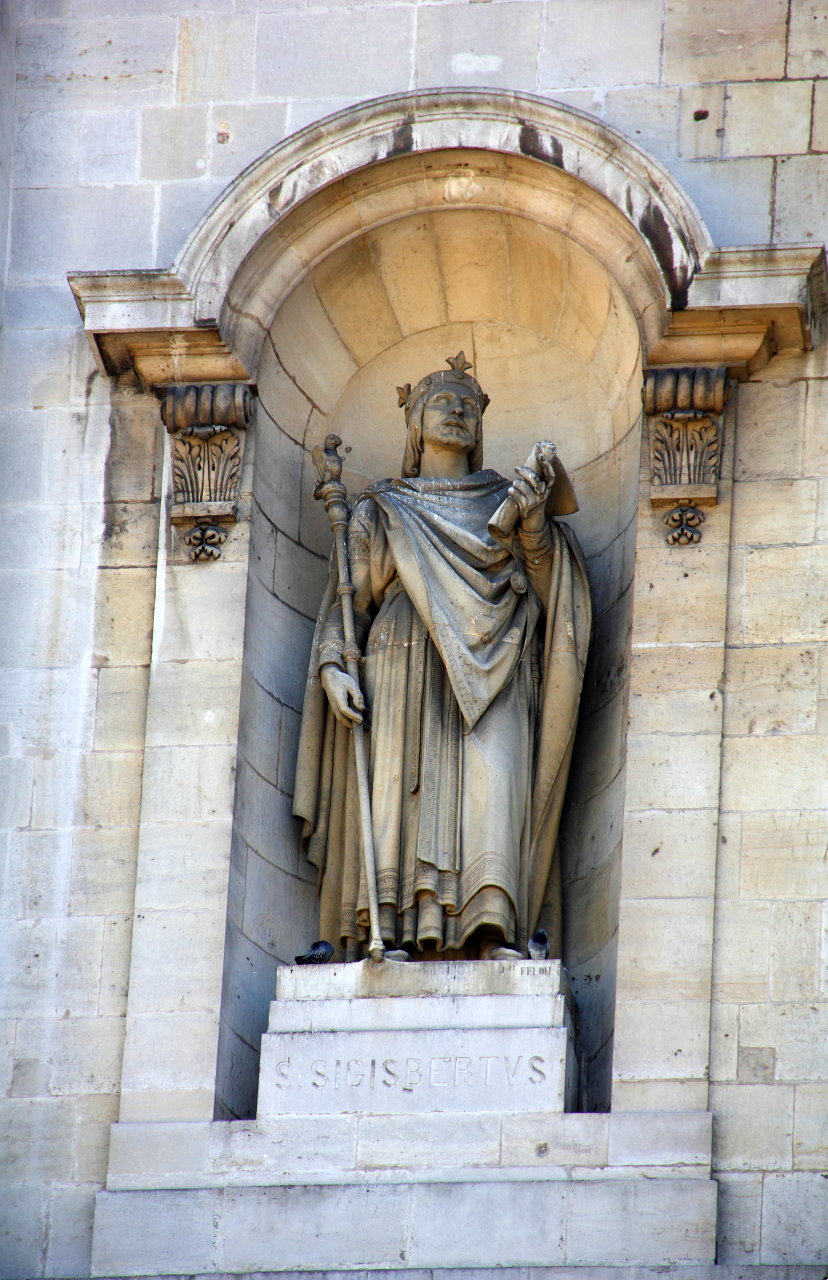
Sigebert III died of natural causes on 1 February 656 at age 25. He was buried in the Abbey of Saint Martin near Metz which he had founded. In 1063 his body, found incorrupt, was taken out of the tomb and moved to the Altar. During the French Revolution the Abbey and tomb were desecrated. What Relics remained were moved to the Nancy Cathedral. The Statue below is situate on the facade of said Cathedral.

Posted in FATHERS of the Church, franciscan OFM, SAINT of the DAY, St Louis-Marie Grignion de MONTFORT

St Ignatius of Antioch (c 35 – 107) Martyr, St Brigid of Ireland, Virgin, The Baptism of St Louis de Montfort / Eve of the Purification of Our Lady, Paris (1673) and Memorials of the Saints – 1 February

The Month of the Blessed Trinity

St Ignatius of Antioch (c 35 – 107) Martyr, Bishop of Antioch, Apostolic Father of the Church.
His Feast Day is today (General Roman Calendar, 12th century–1969, when it was moved to 17 October).
His Life and Death:

https://anastpaul.com/2017/10/17/saint-of-the-day-17-october-st-ignatius-of-antioch-c-35-c-108-father-of-the-church/

The Baptism of St Louis de Montfort / Eve of the Purification of Our Lady, Paris (1673): 1 February
HERE:

https://anastpaul.com/2021/02/01/memorials-of-the-saints-1-february-4/

St Brigid of Ireland/Kildare (c 453-523) Virgin, Abbess, Apostle of Charity and foundress of several monasteries of nuns, including that of Kildare in Ireland.
St Brigid’ Story:

https://anastpaul.com/2019/02/01/saint-of-the-day-st-brigid-of-ireland-kildare-c-453-523/

St Agrepe

Blessed Andrew of Segni OFM (1240-1302) Priest and Friar of the the Order of Friars Minor, Hermit, Spiritual teacher, Mystic, Miracle-worker and Exorcist. Patron against demonic possession. Beatified on 11 December 1724 by Pope Innocent XIII.
Blessed Andrew’s Life:

https://anastpaul.com/2021/02/01/saint-of-the-day-1-february-blessed-andrew-of-segni-ofm-1240-1302/

Bl Anthony Manzoni
St Asclepiades
St Autbert of Landevenec
St Brigid of Fiesole
St Cecilius of Granada
St Cinnia of Ulster
St Clarus of Seligenstadt
St Crewenna
St Darlaugdach of Kildare
St Henry Morse
St Jarlath
Bl John of the Grating
St Kinnia
St Paul of Trois-Châteaux
St Raymond of Fitero

Blessed Reginald of Orléans OP (c 1180 – 1220) Priest and Friar of the Order of Preachers, Canon Lawyer, renowned Preacher. He was Beatified in 1875 by Pope Pius IX.
Biography:

https://anastpaul.com/2022/02/01/saint-of-the-day-1-february-blessed-reginald-of-orleans-op-c-1180-1220/

St Sabinus
St Severus of Avranches
St Severus of Ravenna

St Sigebert III of Austrasia (c 630-656) King, Married and father of St Dagobert II. His body was incorrupt until it was attacked by the marauders during the French Revolution.

St Tryphon of Lampsacus
St Ursus of Aosta
St Veridiana