Our Morning Offering – 20 August – “The Month of the Immaculate Heart of Mary” – Feast of St Bernard (1090-1153) Confessor, Father and Doctor
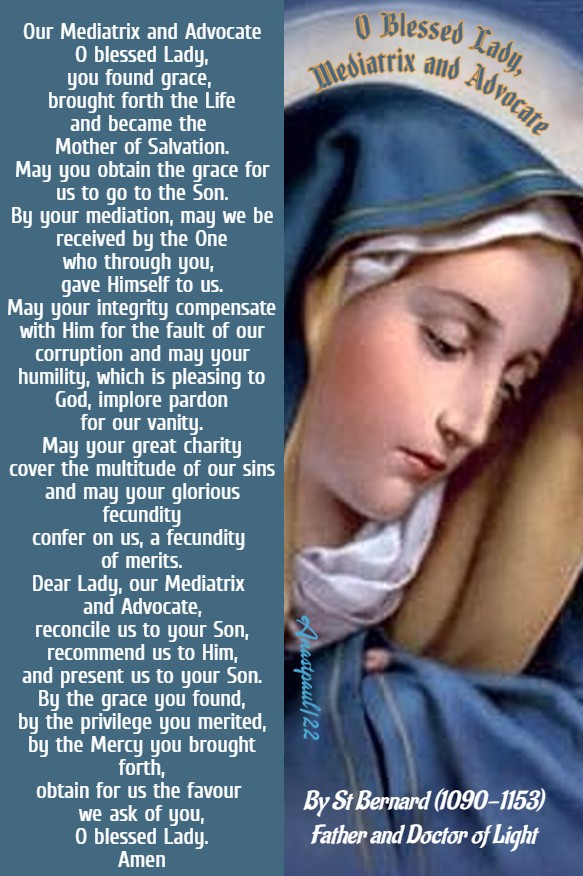
O Blessed Lady, Mediatrix and Advocate By St Bernard (1090-1153) Father and Doctor of Light
Our Mediatrix and Advocate O blessed Lady, you found grace, brought forth the Life, and became the Mother of Salvation. May you obtain the grace for us to go to the Son. By your mediation, may we be received by the One Who through you, gave Himself to us. May your integrity compensate with Him for the fault of our corruption and may your humility, which is pleasing to God, implore pardon for our vanity. May your great charity cover the multitude of our sins and may your glorious fecundity confer on us, a fecundity of merits. Dear Lady, our Mediatrix and Advocate, reconcile us to your Son, recommend us to Him and present us to your Son. By the grace you found, by the privilege you merited, by the Mercy you brought forth, obtain for us the favour we ask of you, O blessed Lady. Amen
Saint of the Day – 20 August – St Maximus of Chinon (5th Century) Priest, Abbot, Confessor, Founder of a Monastery on the river Vienne, later dedicated to him, today the Collegiate Church of Saint-Mexme , Miracle-worker. He was buried in this Monastery.Maximus had been a disciple of Saint Martin of Tours (315-397), he would, therefore, have died in the first half of the 5th Century. Also known as – Massimo, Mexme.
The Roman Martyrology reads today: “At Chinon, St Maximus, Confessor, disciple of the the blessed Bishop, Martin.”
The little we know of our Saint today comes from St Gregory of Tours(538-594) who, in his “De Gloria Confessorum” dedicated a Chapter to this disciple of St Martin of Tours, who, in order to keep his sanctity hidden, left Touraine, where he was born and lived, to go as a simple Monk to the Monastery of Ile-Barbe in Lyons.
But even here the sanctity and wisdom of his person attracted the attention of the inhabitants of the area, who did not leave him alone in his prayers and deliberately hidden and contemplative life, therefore, he decided to return to his own region.
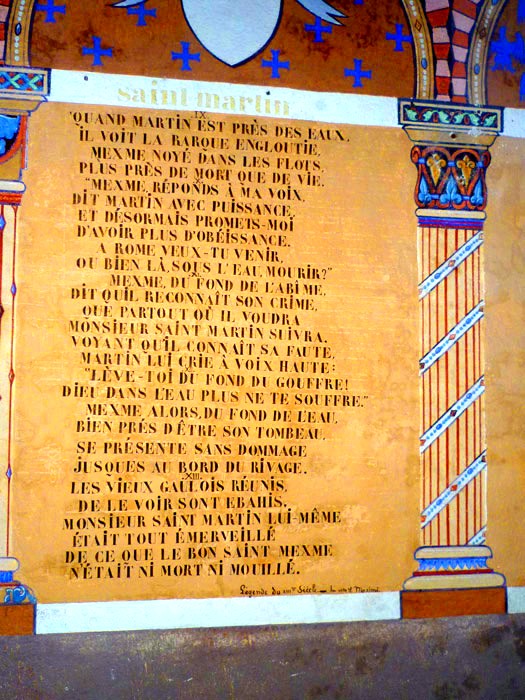
Crossing the river his boat sank but Maximus was able to reach the shore without difficulty, also saving the book of the Gospels, the Chalice and the Paten which he had with him.
Returning to Touraine in Aquitaine (a historical region of central France, largely in the Loire basin), he founded a Monastery in Chinon on the Vienne which later took his name. It was destroyed by the Normans and rebuilt in the 10th Century.
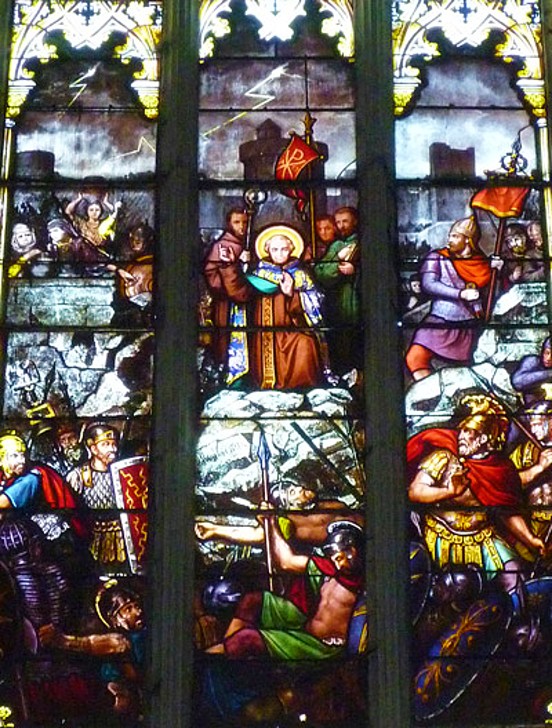
St Gregory of Tours tells us that while the Castle of Chinon was besieged by the Visigoth enemies, around 446, the holy Abbot obtained, with his intense prayers, torrents of rain to fall, thus aiding the population of Chinon, who had been isolated from the main water supplies. The rain allowed cisterns and containers to be filled. Thus the siege of Chinon was lifted.
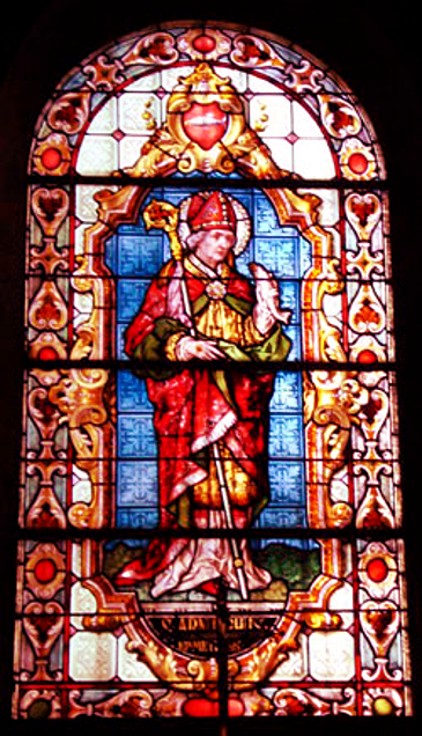
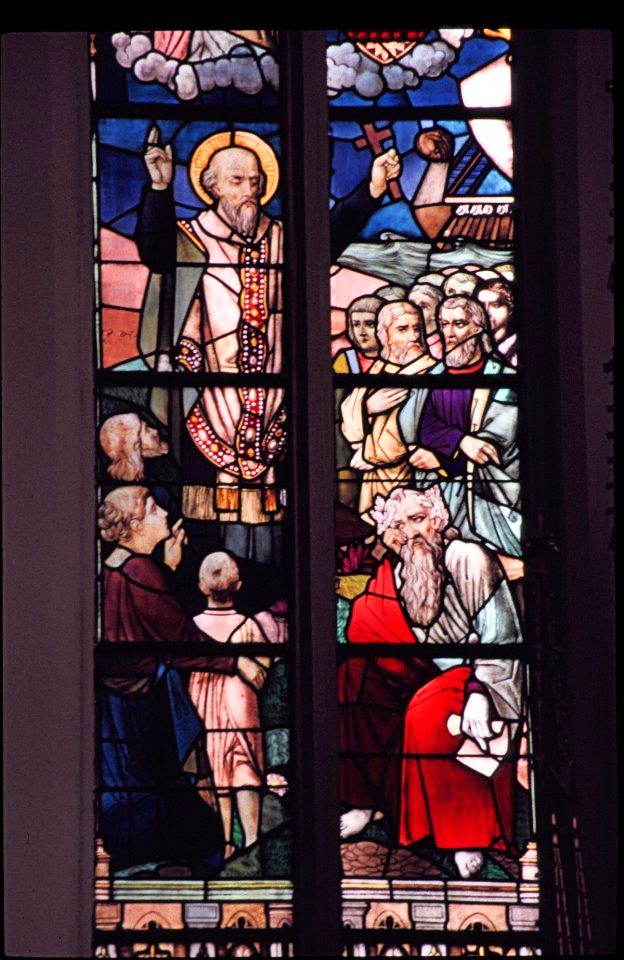
This episode is illustrated in the Saint-Etienne Church in Chinon by a stained glass window by master glassmaker Lobin, see below.
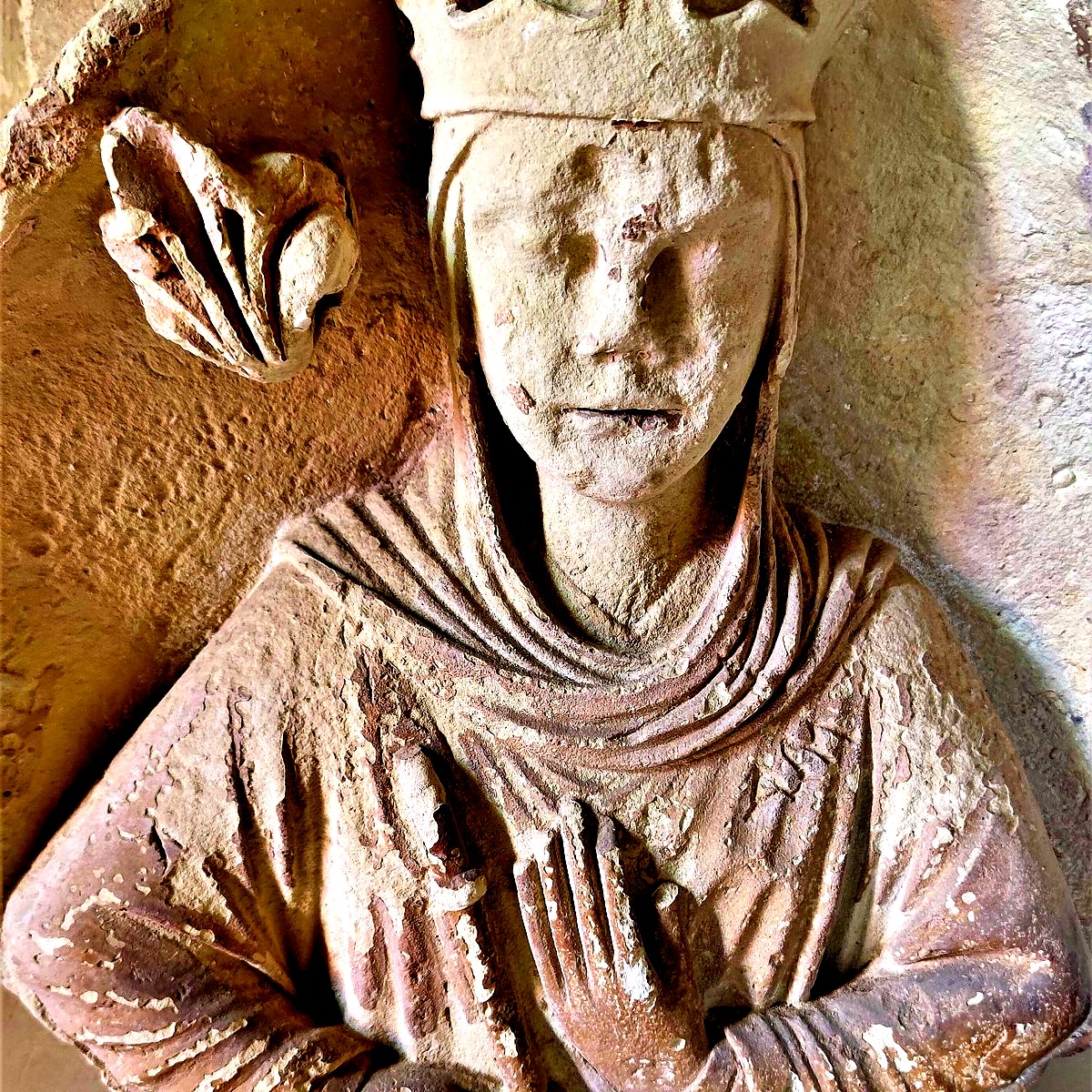
Saint Maximus, in this window, is covered with the famous Cope – the Cope called “of Saint Mexme ” – which was offered to the head of the Canons of the Collegiate Church of Saint-Maximus in the 12th Century by Queen Eleanor of Aquitaine, who is said to have brought it back from the second Crusade.
St Mexme liberator of Chinon in 446 Church of St. Stephen of Chinon
Kept at the Musée des Amis du Vieux Chinon, this Cope is made of silk and gold and dates from the end of the 11th Cr beginning of the 12th.
Chained cheetahs, trees of life stylised according to a Byzantine motif, falcons, jackals, representation of the sacred fire, it is surmounted by an inscription woven in the Kufic language indicating: “Happiness to its owner.”
Maximus is believed to have died shortly after the siege of Chinon at the age of over 85. His liturgical celebration on 20 August in the Roman Martyrology. In Chinon, where he was a tireless Abbot and shepherd he is especially venerated. He died in an unspecified year.
Maximus is also mentioned in the ‘Vita’ and the ‘Miracula’ written in the 9th Century but they add nothing historical to the that which St Gregory of Tours has given us.
Monastery of St Maximus now the Collegiate Church of Chinon
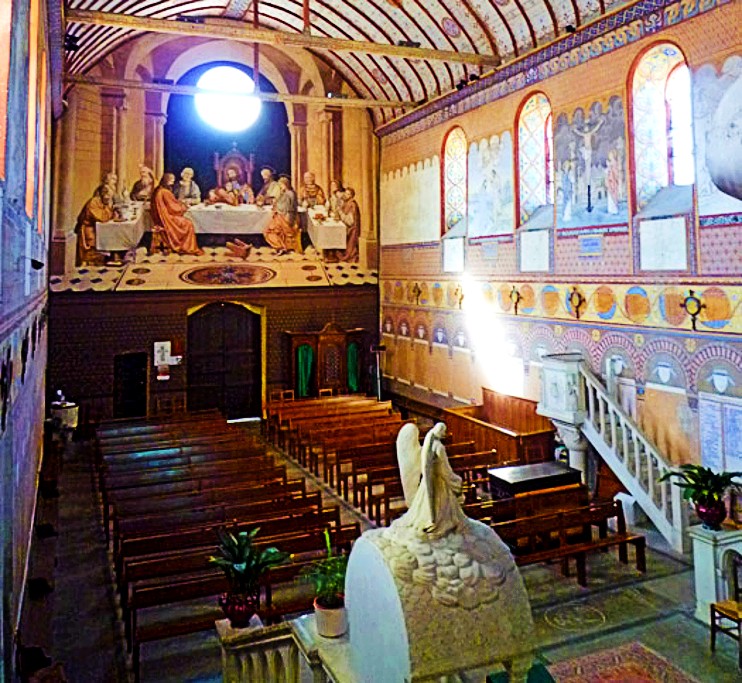
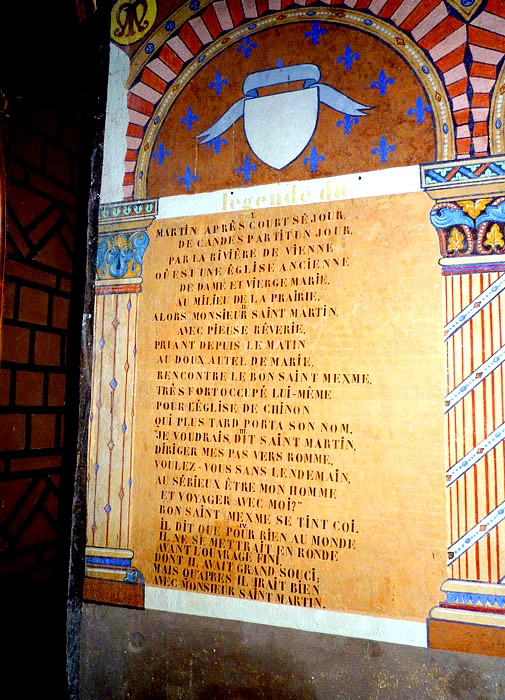
In the Church of Rivière, the legend of Saint Maximus is transcribed on three panels which are located at the Entrance to the Church, on the wall of the Pulpit, near the Confessional.
A legend dating from the 13th Century tells of an conversation between the great St Martin of Tours and our St Maximus which took place here in this “ancient Church of the Lady and Virgin Mary, in the middle of the meadow.” A site which the ‘old Gauls’ called the ‘Rives‘ (Rivière).
St Brogan St Burchard of Worms St Christopher of Cordoba St Cristòfol Baqués Almirall St Gobert of Apremont St Haduin of Le Mans St Heliodorus of Persia St Herbert Hoscam St Leovigild of Cordoba St Lucius of Cyprus St Maximus of Chinon (5th Century) Priest, Abbot, Confessor,
Thought for the Day – 19 August – Meditations with Fr Richard Frederick Clarke SJ (1839-1900)
CHARITY Meditations for a Month
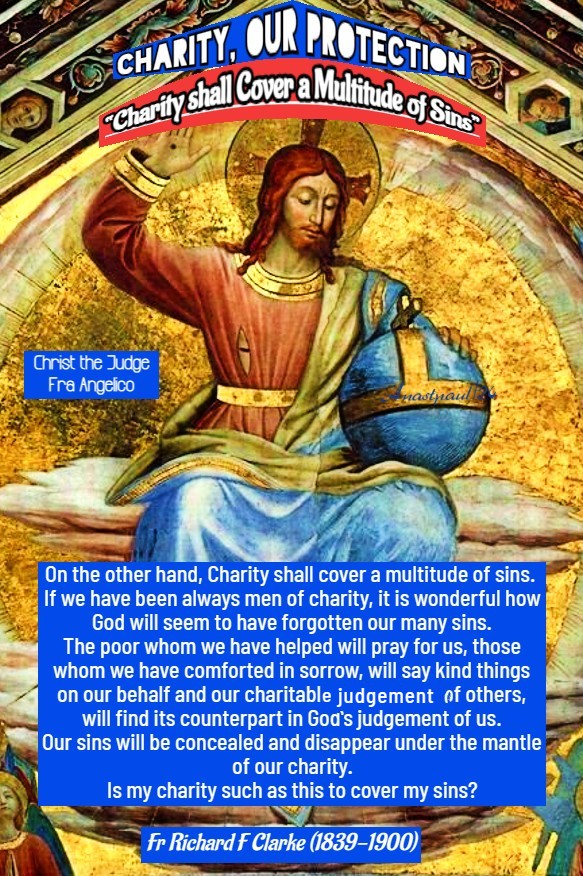
Charity, Our Protection “Charity shall Cover a multitude of Sins”
One of the characteristics of charity is that it always looks to the bright side of things. It seeks to bring out all that is good in others while concealing their sins. It does not notice their sins. It does not allude to their sins unnecessarily, whether they are committed directly against man or against God. It has a happy knack of forgetting their sins or seeming to forget them. It covers their sins from the eyes of men and even seeks to obliterate them before God by the prayers it offers for the offender. Is this my spirit? Do I not rather cover the virtues of others and disclose their faults?!
In this respect, it is especially true that we shall be treated as we treat others. “With what judgement you judge, you shall be judged,” says our Lord. If we pass the severe sentence of harsh criticism onto others, our sentence will be severe. If we make little of their faults and much of their virtues, God will do the same to us. What utter folly to prepare for ourselves a harsh verdict at the tribunal of Christ, by our condemnation of others here below!
On the other hand, Charity shall cover a multitude of sins. If we have been always men of charity, it is wonderful how God will seem to have forgotten our many sins. The poor whom we have helped will pray for us, those whom we have comforted in sorrow, will say kind things on our behalf and our charitable judgeement of others, will find its counterpart in God’s judgement of us. Our sins will be concealed and disappear under the mantle of our charity. Is my charity such as this to cover my sins?
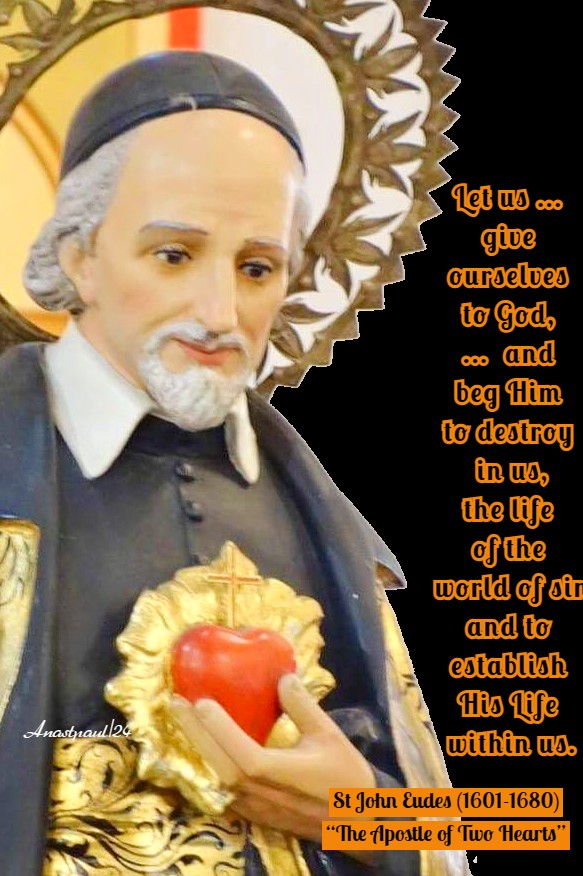
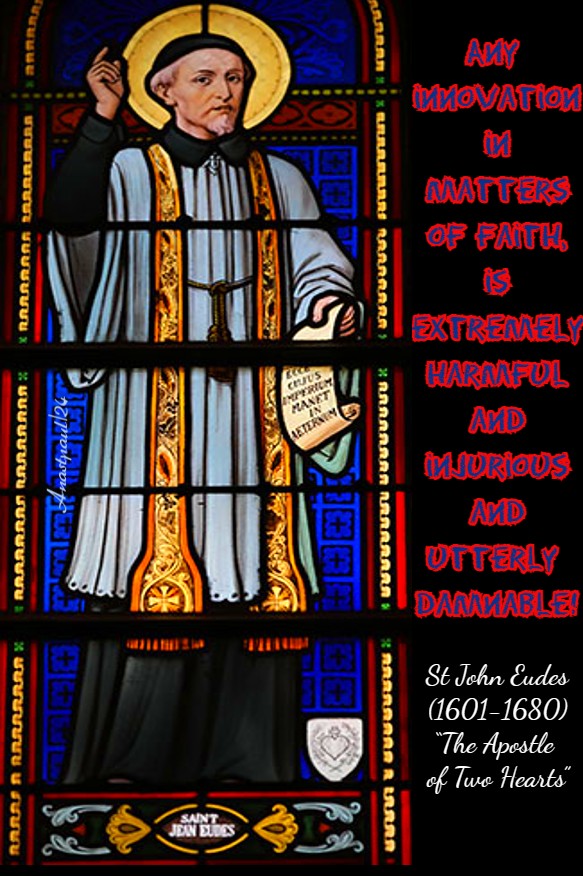
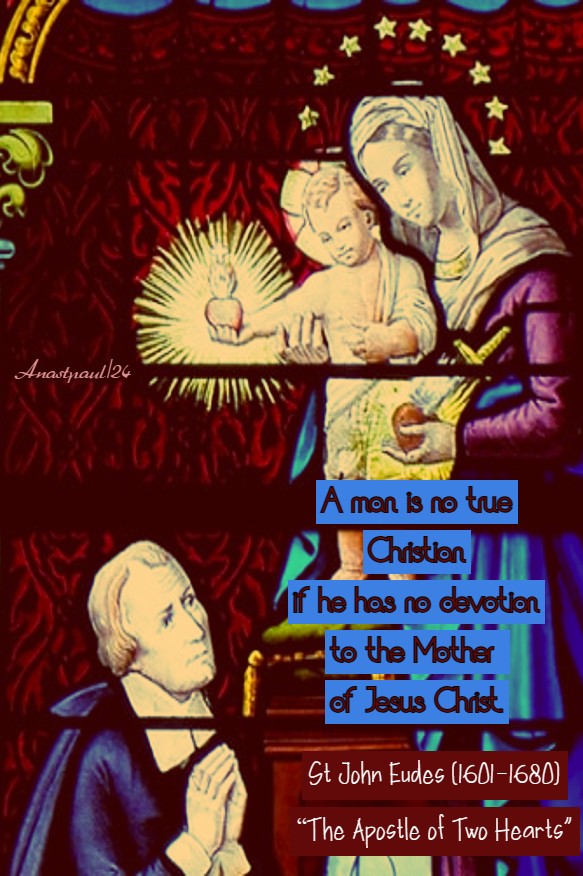
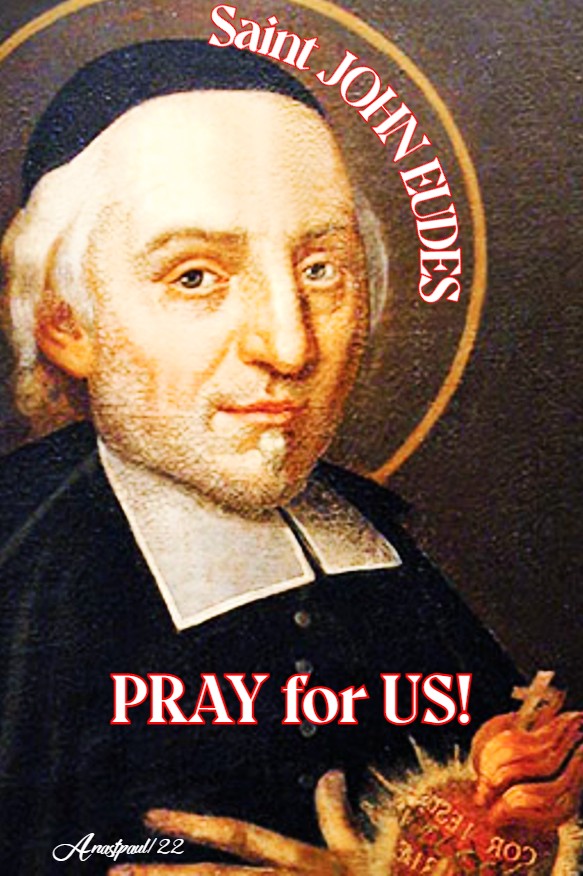
Quote/s of the Day – 19 August – “The Month of the Immaculate Heart of Mary” – the Feast St John Eudes (1601-1680) Confessor, “The Apostle of Two Hearts”
“Let us … give ourselves to God, … and beg Him to destroy in us, the life of the world of sin and to establish His Life within us.”
“Any innovation in matters of faith, is extremely harmful and injurious and utterly damnable!”
“A man is no true Christian if he has no devotion to the Mother of Jesus Christ.”
One Minute Reflection – 19 August – “The Month of the Immaculate Heart of Mary” – St John Eudes (1601-1680) Confessor, “The Apostle of Two Hearts” – – Sirach 31:8-11; Luke 12:35-40 – Scripture search here: https://www.drbo.org/
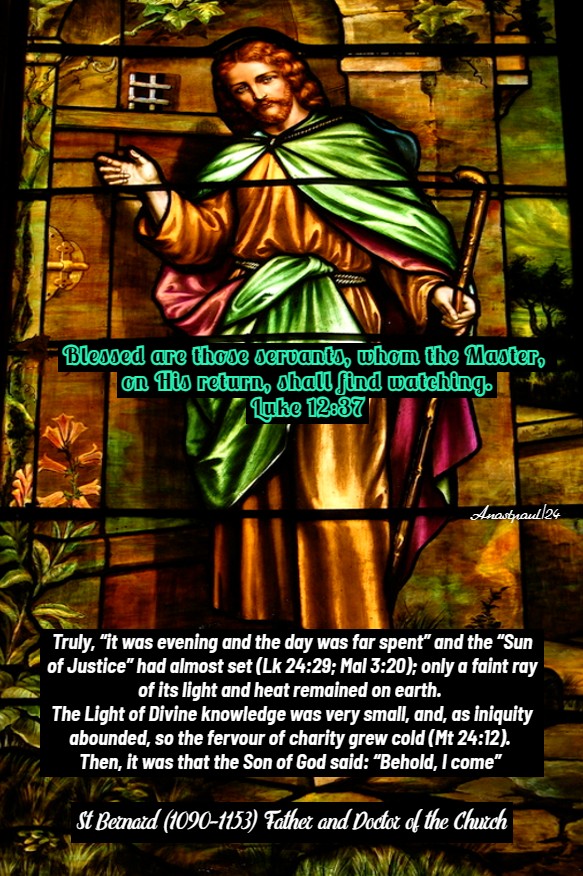
“Blessed are those servants, whom the Master, on His return, shall find watching.” – Luke 12:37
REFLECTION – “It is now fitting we should consider the time of our Lord’s coming. He came, as you know, not in the beginning, nor in the midst of time but in the end of it. This was no unsuitable choice but a truly wise dispensation of Infinite Wisdom, Who, aware that the sons of Adam are inclined to ingratitude, ordained that He would not come to their aid, until they were in the greatest need.
Truly, “it was evening and the day was far spent” and the “Sun of Justice” had almost set (Lk 24:29; Mal 3:20); only a faint ray of its light and heat remained on earth. The Light of Divine knowledge was very small, and, as iniquity abounded, so the fervour of charity grew cold (Mt 24:12). No Angel appeared; no Prophet spoke. The angelic vision and the prophetic spirit alike, had passed away, both hopelessly baffled by the obduracy and obstinacy of humankind. Then, it was that the Son of God said: “Behold, I come” (Ps 39:8; Heb 10:7). And “while all things were in quiet silence and night was in the midst of its swift course, Thy Almighty Word leaped down from Heaven, from Thy Royal throne” (Wis 18:14-15). As the Apostle Paul says: “When the fullness of time had come, God sent His Son” (Gal 4:4).” – St Bernard (1090-1153) Cistercian Abbot, Father and Doctor of the Church (Sermon 1 of Advent).
PRAYER – O God, Who wondrously enkindled St John, Thy Confessor, to promote the religious veneration of the Sacred Hearts of Jesus and Mary and through him, willed to found new religious families in the Church, grant, we beseech Thee that we may honour his holy merits and may learn from the example of his virtues. Through Jesus Christ, Thy Son our Lord, Who lives and reigns with Thee, in the unity of the Holy Ghost, God, world without end. Amen (Collect).
Our Morning Offering – 19 August – “The Month of the Immaculate Heart of Mary” – Feast of St John Eudes (1601-1680) Confessor, “The Apostle of Two Hearts”
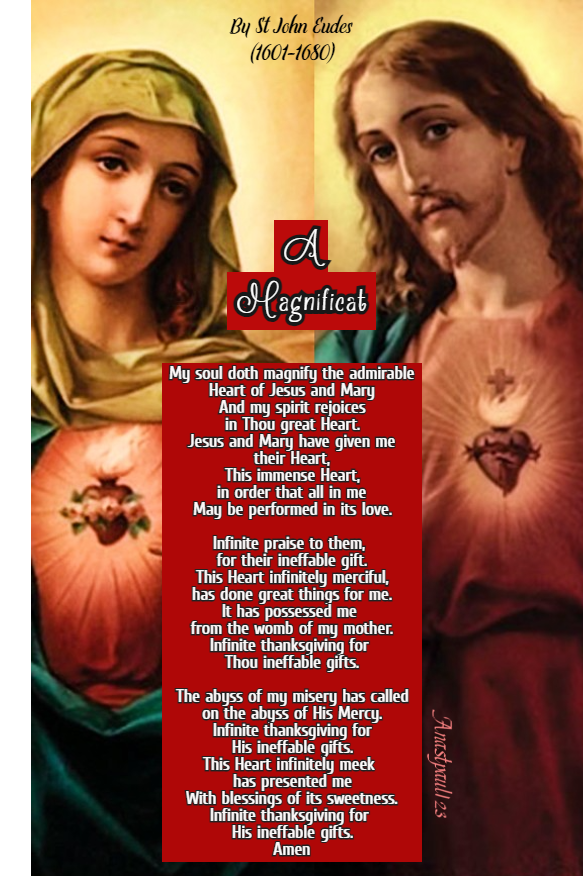
A Magnificat By St John Eudes (1601-1680) A Hymn of Praise and Thanksgiving to the Sacred Heart of Jesus and to the Holy Heart of Mary
My soul doth magnify the admirable Heart of Jesus and Mary And my spirit rejoices in Thou great Heart. Jesus and Mary have given me their Heart, This immense Heart, in order that all in me May be performed in its love.
Infinite praise to them, for their ineffable gift. This Heart infinitely merciful, has done great things for me. It has possessed me from the womb of my mother. Infinite thanksgiving for Thou ineffable gifts.
The abyss of my misery has called on the abyss of His Mercy. Infinite thanksgiving for His ineffable gifts. This Heart infinitely meek has presented me With blessings of its sweetness. Infinite thanksgiving for His ineffable gifts. Amen
Saint of the Day – 19 August – St Donatus of Sisteron (Died 535) Priest, Confessor, Hermit, Miracle-worker. Born in Orleans, France and died in c535 of natural causes in Provence at the foot of Mount Lure. Also known as – Donatus of Mount Lure, Donato of… Additional Memorial – 18 August on some calendars.
The Roman Martyrology reads: “In the neighbourhood of Sisteron in France, the blessed St Donatus, Priest and Confessor. Being from his very infancy endowed with the grace of God in an extraordinary manner, he lived the life of an Anchorite for many years and after having been renowned for glorious miracles, he went to Christ.”
Donatus was originally from Orléans in France. After completing his sacred studies, he was Ordained a Deacon and then he was raised to the sacred Priesthood.
After undertaking a pilgrimage to the Shrine of St Martin of Tours, seeking a more perfect imitation of a life of sanctity, he decided to settle alone in the vicinity of Sisteron, at the foot of Mount Lure.
Wonderful miracles surround his life. One of these involves a pagan called Celsus, who had persecuted the holy Hermit, converted because his daughter was miraculously cured by our Saint.
Donatus died around 535, assisted by his friend Marius, the Abbot of Val Benoit. The anniversary falls on 19 August.
A Benedictine Monastery was erected in the 12th Century on Mount Lure, near the Tomb of Saint-Donatus.
St Andrew the Tribune St Badulf of Ainay St Bertulf of Luxeuil St Calminius St Credan of Evesham St Donatus of Sisteron (Died 535) Priest, Hermit St Elaphius of Châlons St Guenninus Bl Guerricus
Blessed Jordan of Pisa OP (c 1255–1311) Dominican Friar, Theologian, Professor, renowned Preacher, Founder of the Confraternity of the Holy Redeemer at Pisa, Visionary, Marian devotee, promoter and daring innovator of the vernacular Italian language as a ‘church’ language and a tool for evangelisation. On 23 August 1833, Blessed Jordan’s cultus was confirmed by Pope Gregory XVI and in 1838 he was Beatified by Pope Gregory XVI. His Life: https://anastpaul.com/2019/08/19/saint-of-the-day-blessed-jordan-of-pisa-op-c-1255-1311/ St Julius of Rome
St Louis of Toulouse OFM (1274-1297) Prince and Bishop, Neapolitan Prince of the Capetian House of Anjou, Franciscan Friar and Priest, Apostle of Prayer, of Penance and of the poor and the sick. He had received the last sacraments on the Feast of the Assumption of Our Lady and on the 19th of August, 1297, while pronouncing the holy name of Mary, he yielded his soul to God. Because of the many miracles that were wrought at his tomb, he was Canonised as early as 1317, during the lifetime of his mother. Lovely St Louis: https://anastpaul.com/2020/08/19/saint-of-the-day-19-august-saint-louis-of-toulouse-ofm-1274-1297-prince-and-bishop/St
St Magnus of Anagni St Magnus of Avignon St Magnus of Cuneo St Marianus of Entreaigues St Marinus of Besalu St Magino of Tarragona St Mochta St Namadia of Marsat St Rufinus of Mantua St Sarah the Matriarch St Sebaldus St Thecla of Caesarea St Timothy of Gaza
Blessed Urban II (1042–1099) Bishop of Rome, Abbot, Confessor – after 1969 his Feast was moved to 29 July. The Roman Martyrology reads today: “At Rome, Blessed Urban II, Pope, who followed in the footsteps of St Gregory VII, in his zeal for learning and religion and fired the Crusaders with enthusiasm for the recovery of the holy places in Palestine, from the power of the infidels. The veneration paid to him from time immemorial Pope Leo XIII, approved and confirmed.” Biography: https://anastpaul.com/2019/07/29/saint-of-the-day-29-july-blessed-pope-urban-ii-c-1035-1099-bishop/
Martyrs of Nagasaki – 15 Beati: A group of missionaries and their laymen supporters who were executed for spreading Christianity in Japan. They are: Antonius Yamada, Bartholomaeus Mohyoe, Iacobus Matsuo Denji, Ioachim Díaz Hirayama, Ioannes Miyazaki Soemon, Ioannes Nagata Matashichi, Ioannes Yago, Laurentius Ikegami Rokusuke, Leo Sukeemon, Ludovic Frarijn, Marcus , kenoshita Shin’emon, Michaël Díaz Hori, Paulus Sankichi, Pedro de Zúñiga, Thomas Koyanag., They were beheaded on 19 August 1622 at Nagasaki, Japan and Beatified , 7 May 1867 by Pope Pius IX.
Thought for the Day – 18 August – Meditations with Fr Richard Frederick Clarke SJ (1839-1900)
CHARITY Meditations for a Month
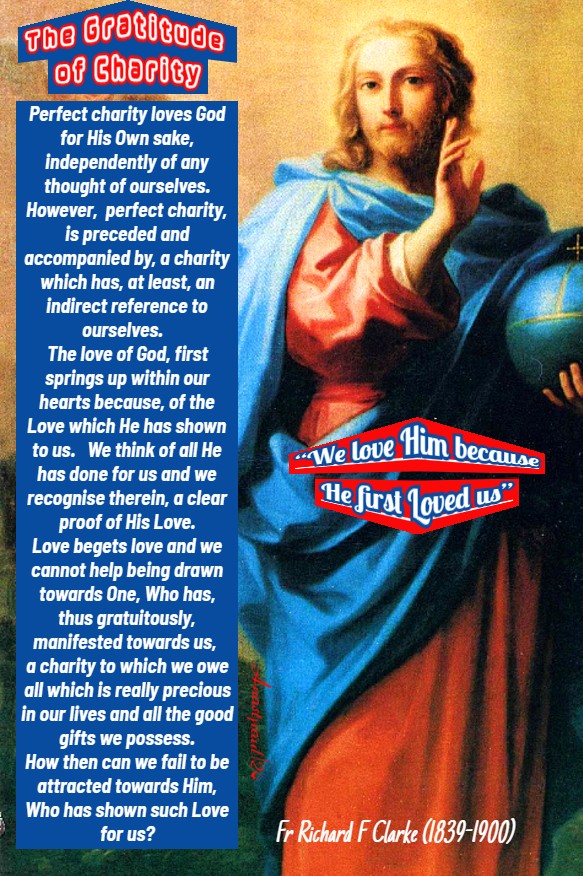
The Gratitude of Charity “We love Him because He first Loved us”
Perfect charity loves God for His Own sake, independently of any thought of ourselves. However, perfect charity, is preceded and accompanied by, a charity which has, at least, an indirect reference to ourselves. The love of God, first springs up within our hearts because, of the Love which He has shown to us. We think of all He has done for us and we recognise therein, a clear proof of His Love. Love begets love and we cannot help being drawn towards One, Who has, thus gratuitously, manifested towards us, a charity to which we owe all which is really precious in our lives and all the good gifts we possess. How then can we fail to be attracted towards Him, Who has shown such Love for us?
This love of gratitude, is not the same, as the love of concupiscence and, not the same, as the pure love of friendship. It most resembles the latter and always enters into it. Without some sort of gratitude, friendship would be mere admiration; the personal element necessary to love, would be wanting. When a Saint dwells with rapture on the Divine perfections, there is always present to his mind, a remembrance of all God has done for him. Do I, with gratitude, ever recount to myself all God has done for me?
This element of charity is present in the charity of the Saints in Heaven. Their song will not only be, “We give Thee thanks because, Thou hast taken to Thyself, great glory and hast reigned” but also “because Thou hast redeemed us to God in Thine own Blood.” The song, I must seek to sing in my heart, here on earth says, “Thanks to God, first for His great glory and then for His goodness and love to me.”
Quote/s of the Day – 18 August – Pentecost XIII – Galatians 3:16-22; Luke 17:11-19 – Scripture search here: https://www.drbo.org/
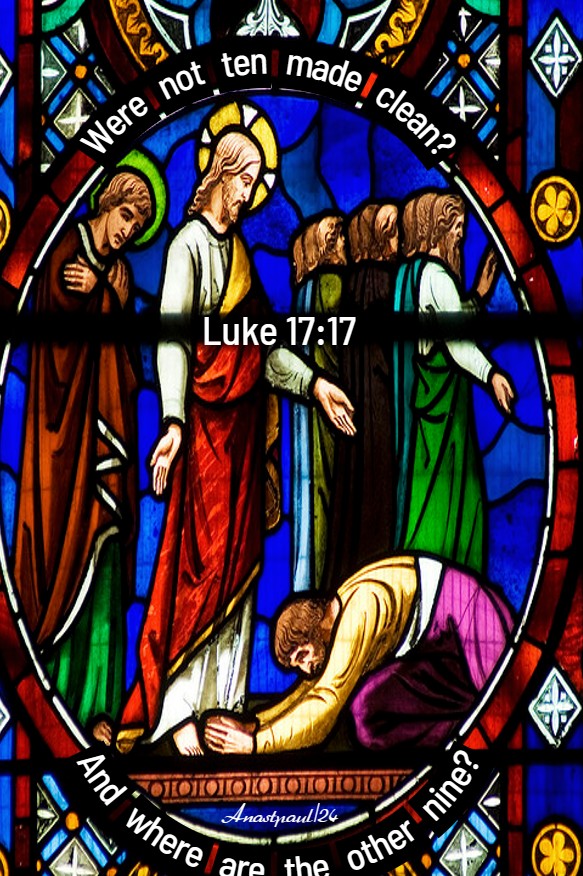
“Were not ten made clean? And where are the other nine?”
Luke 17:17
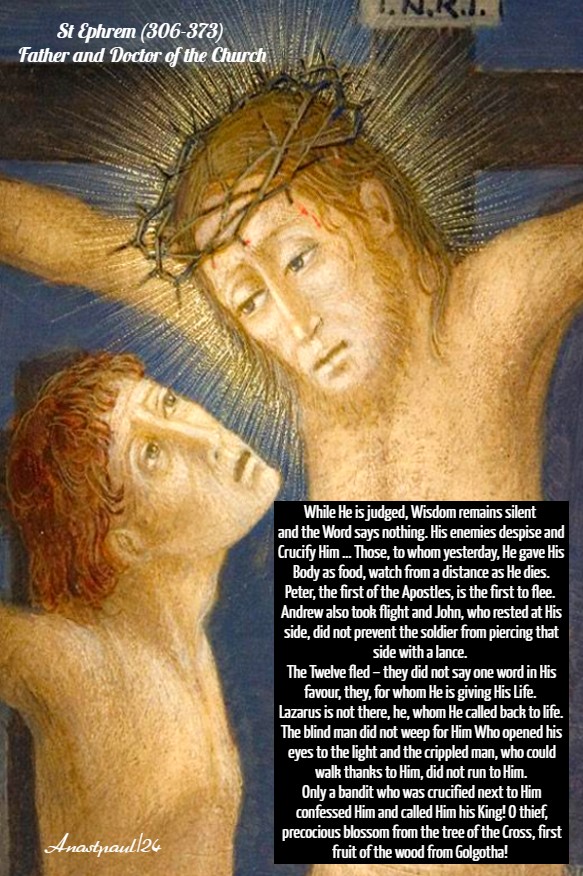
“While He is judged, Wisdom remains silent and the Word says nothing. His enemies despise and Crucify Him … Those, to whom yesterday, He gave His Body as food, watch from a distance as He dies. Peter, the first of the Apostles, is the first to flee. Andrew also took flight and John, who rested at His side, did not prevent the soldier from piercing that side with a lance. The Twelve fled – they did not say one word in His favour, they, for whom He is giving His Life. Lazarus is not there, he, whom He called back to life. The blind man did not weep for Him Who opened his eyes to the light and the crippled man, who could walk thanks to Him, did not run to Him. Only a bandit who was crucified next to Him confessed Him and called Him his King! O thief, precocious blossom from the tree of the Cross, first fruit of the wood from Golgotha!””
St Ephrem (306-373) Father and Doctor of the Church
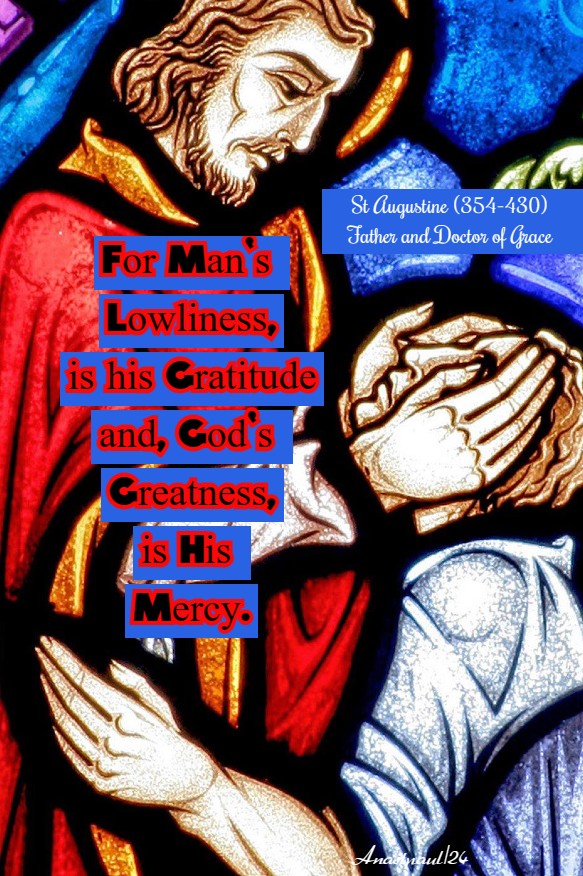
“ For man’s lowliness, is his gratitude and, God’s greatness, is His Mercy.”
St Augustine (354-430) Father and Doctor of Grace
Daily Consecration to the Sacred Heart of Jesus Prayers to the Sacred Heart 1936 – 15th Edition, Dublin
O Sacred Heart of Jesus, filled with infinite love, broken by our ingratitude and pierced by our sins, yet loving us still, accept the Consecration we make to Thee, of all that we are and all that we have. Take every faculty of our souls and bodies, only day by day draw us, nearer and nearer to Thy Sacred Heart, and there, as we shall hear the lesson, teach us Thy Holy Way. Amen
One Minute Reflection – 18 August – “The Month of the Immaculate Heart of Mary” – Pentecost XIII –Within the Octave of the Assumption of the Blessed Virgin – Galatians 3:16-22; Luke 17:11-19 – Scripture search here: https://www.drbo.org/
“Where are the other nine?” – Luke 17:17
REFLECTION – “In our own day we see many people at prayer but, unfortunately, we see none of them turning back to give thanks to God … “Ten were cleansed, were they not? Where are the other nine?” As I think you will remember, it was in these words that our Saviour complained about the lack of gratitude of the other nine lepers. We read that they knew well how to make “supplications, prayers, petitions” since they lifted up their voices, crying out: “Jesus, Master! Have pity on us!” But they lacked the fourth thing required by the Apostle Paul: “thanksgiving” (1Tm 2:1) for they did not turn back nor give thanks to God.
We see still more in our own day ,people who implore God for what they lack but a mere handful who seem to be grateful for the blessings they have received. There is no harm in imploring Him but what causes God not to grant our prayers, is His finding us lacking in gratitude. After all, perhaps it is even an act of mercy on His part, to hold back from the ungrateful, what they are asking for, so that they may not be judged all the more rigorously, on account of their ingratitude! … For, it is sometimes out of mercy that God holds back His mercy! …
So you see, not all those who are healed of the leprosy of this world, I mean their manifest complaints, profit by their cures. Indeed, many are secretly afflicted with an ulcer worse than leprosy, all the more dangerous, in that it is more interior. That is why it was correct that the Saviour of the world should ask, where the other nine lepers were, since sinners avoid cures. So, too, after his sin, God questioned the first man: “Where are you?” (Gn 3:9).” – St Bernard (1090-1153) Cistercian Abbot, Father and Doctor of the Church (Various sermons No 27).
PRAYER – O Lord, we beseech Thee, forgive the transgressions of Thy servants and, forasmuch as by our own deeds, we cannot please Thee, may we find safety through the prayers of the Mother of Thy Son and our Lord. Through the same Jesus Christ, Thy Son our Lord, Who lives and reigns with Thee, in the unity of the Holy Ghost, God, world without end. Amen (Collect).
Our Morning Offering – 18 August – “The Month of the Immaculate Heart of Mary” – Pentecost XIII
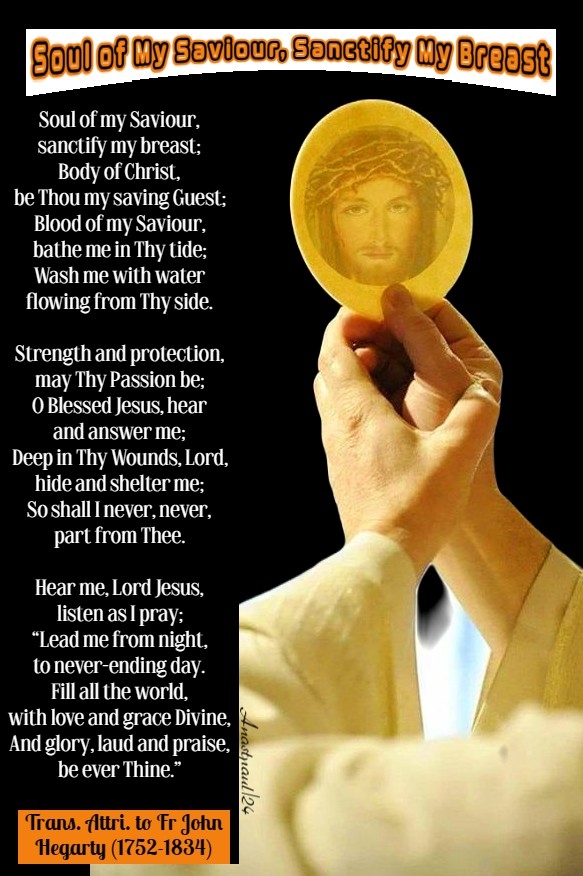
Soul of My Saviour, Sanctify My Breast Trans. Attri. to Fr John Hegarty (1752-1834)
Soul of my Saviour, sanctify my breast; Body of Christ, be Thou my saving Guest; Blood of my Saviour, bathe me in Thy tide; Wash me with water flowing from Thy side.
Strength and protection, may Thy Passion be; O Blessed Jesus, hear and answer me; Deep in Thy Wounds, Lord, hide and shelter me; So shall I never, never, part from Thee.
Hear me, Lord Jesus, listen as I pray; “Lead me from night, to never-ending day. Fill all the world, with love and grace Divine, And glory, laud and praise, be ever Thine.”
This Hymn is based on the original Latin text of the Anima Christi. Fr Hegarty is attributed with its translation and/or arrangement. He was born in County Derry, Ireland, educated at Dublin University and was Ordained in June 1890 and spent most of active apostolic years in Brisbane, Australia. He died aged 82 years.
Saint of the Day – 18 August – Saint Firminus of Metz (Died c496) Bishop and Conmfessor.
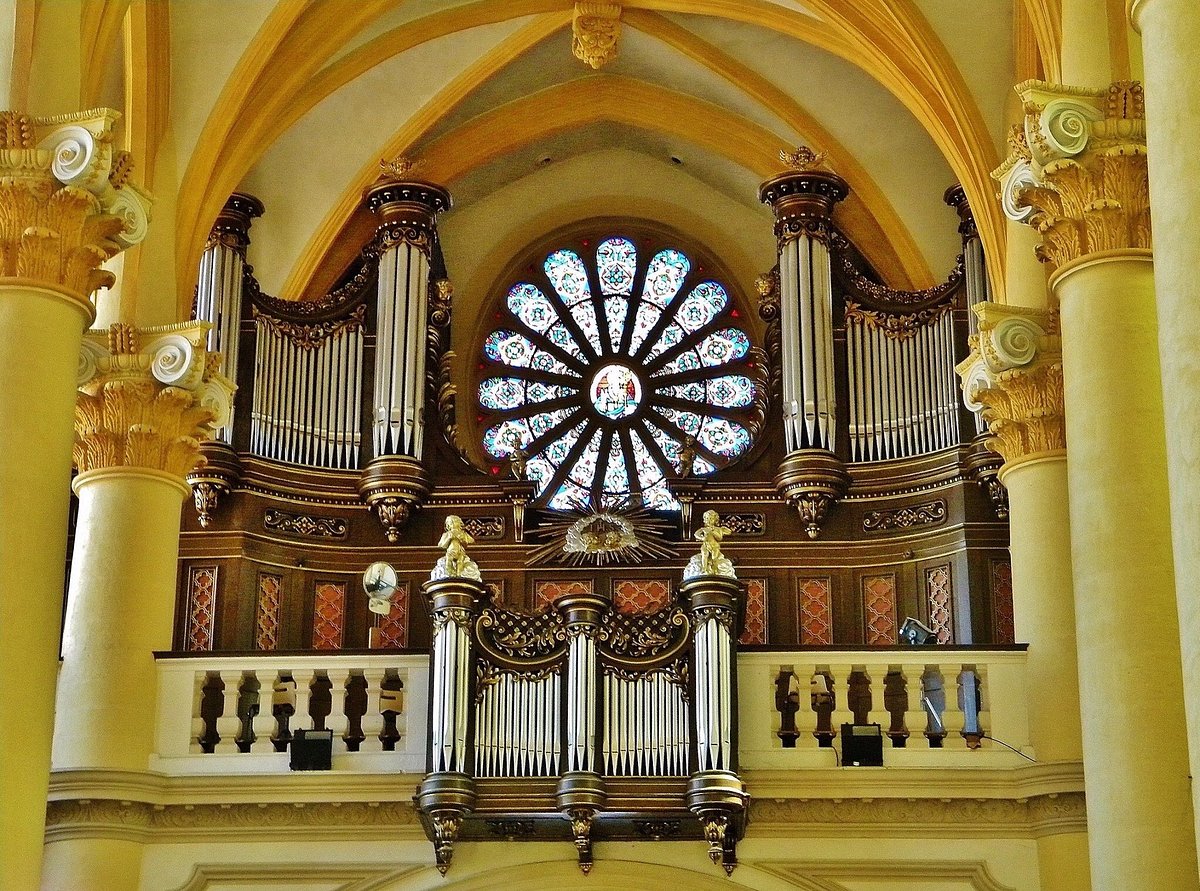
The Roman Martyrology reads: “At Metz, Firminus, Bishop and Confessor.”
Firminus was the 11th Bishop of Metz. In the official chronology of the Bishops of the Diocese, he succeeds Adelphus and precedes Leontius. His position was assigned by the oldest catalogue of the Bishops of the City, compiled around 776 and which has come down to us in the “Sacramentary” of Drogo,the Bishop of Metz between the years 823 and 855.
We know very little about our Saint today. Firminus is presumed to have been Greek in origin and that he governed the Diocese at the end of the 4th and the beginning of the 5th Centuries.
He seems to have been the Bishop for fifteen years and to have died on 18 August, in an unspecified year. but is was probably just before the assent of the new Bishop, Leontius, hence we place his death in c496.
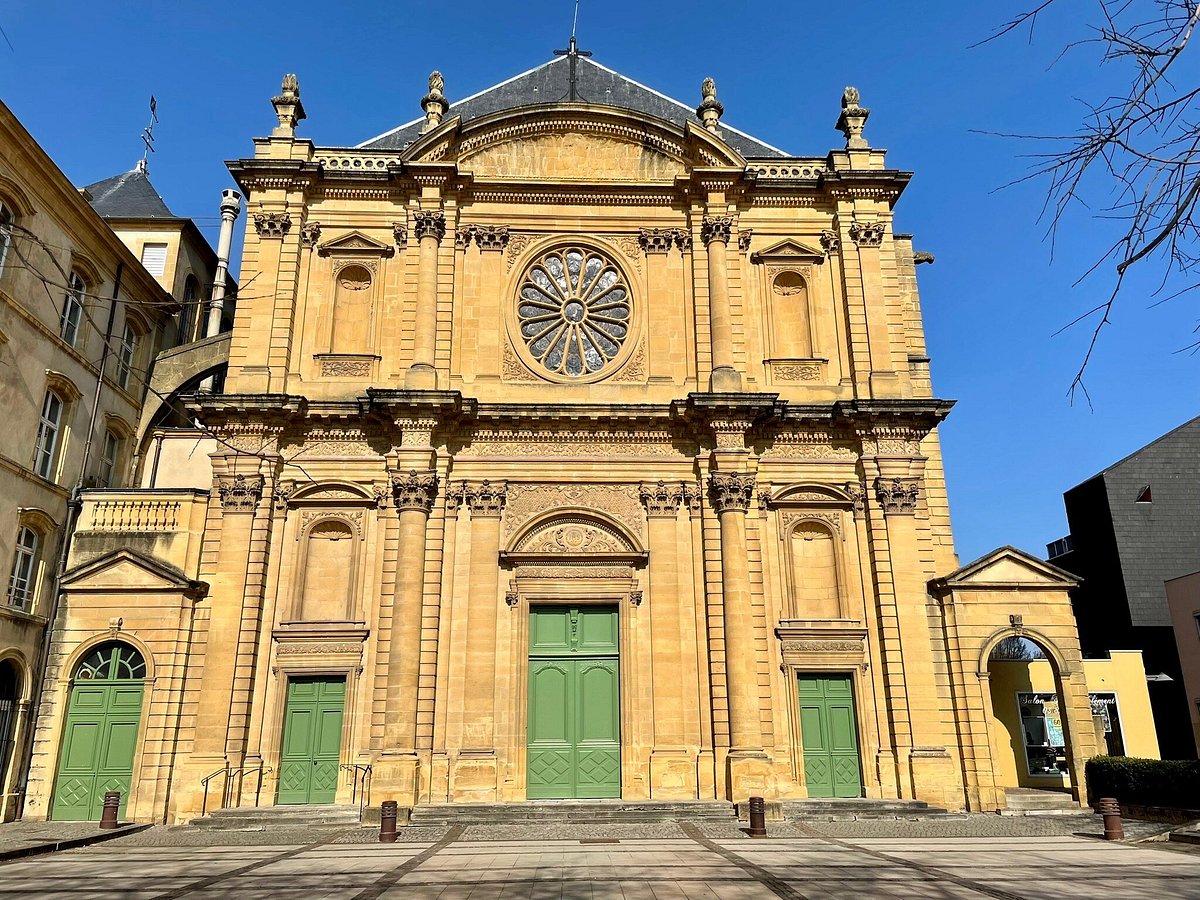
St Clements Church in Metz
His body was buried in the crypt of the Church of Saint Clement, the first Bishop of Metz. The stained glass window above resides in this Church too. His remains were transferred to the upper part of theChurch, where they were venerated until the end of the 18th Century. His Relics, after that time, as in many other cases, were destroyed by the satanic horrors and violent excesses of the French Revolutionaries.
The Feast of Saint Firminus, in the Proper of Metz is fixed on the 18 August.
St Crispus of Rome St Daig Maccairaill Bl Domenico de Molinar St Eonus of Arles St Ernan St Evan of Ayrshire St Firminus of Metz (Died c496) Bishop and Conmfessor. St Florus of Illyria Bl Francis of Francavilla Bl Gaspar di Salamanca St Hermas of Rome St John of Rome St Juliana of Myra St Juliana of Stobylum St Laurus of Illyria St Leo of Myra
St Maximus of Illyria Bl Milo of Fontenelle St Polyaenus of Rome St Proculus of Illyria
Blessed Rinaldo of Concorezzo (c1245 – 1321) Bishop of Vicenza from 1296 until his 1303 appointment as the Archbishop of Ravenna-Cervia holding that until his death, Doctor of Canon Law, Papal envoy, Arbitrator and Peace-maker. Archbishop Rinaldo was also a close friend of Dante Alighieri. His Courageous Life: https://anastpaul.com/2020/08/18/saint-of-the-day-18-august-blessed-rinaldo-of-concorezzo-c-1245-1321/
St Ronan of Iona St Serapion of Rome
Massa Candida: Also known as Martyrs of Utica and the White Company: Three hundred 3rd Century Christians at Carthage, who were ordered to burn incense to Jupiter or face death by fire. Martyrs. Saint Augustine of Hippo and the poet Prudentius wrote about them. They were forced to cast themselves into a pit of burning lime c 253 at Carthage, North Africa.
Thought for the Day – 17 August – Meditations with Fr Richard Frederick Clarke SJ (1839-1900)
CHARITY Meditations for a Month
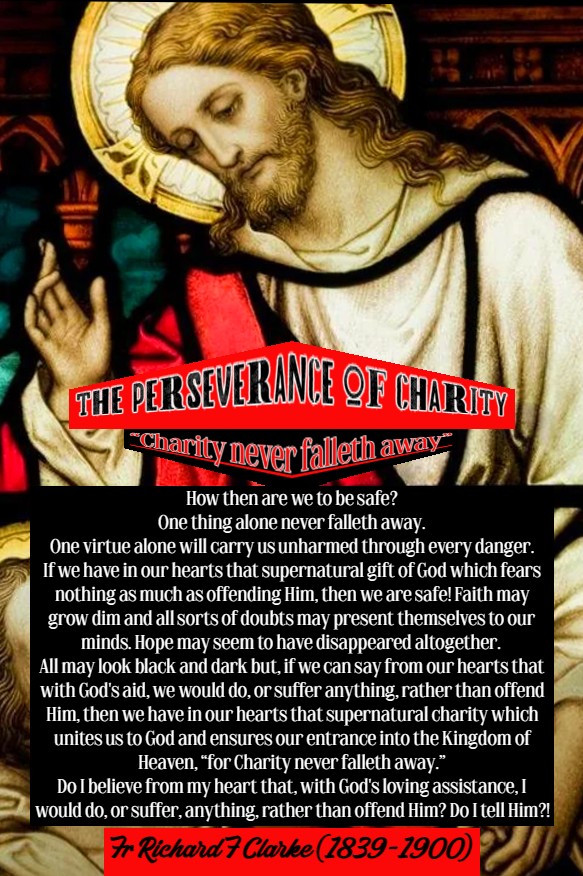
The Perseverance of Charity “Charity never falleth away”
We are all anxious to persevere to the end. We know, without perseverance, all else is of no avail. Of what use was it to the Israelites who perished in the desert for their sins, to have escaped from Egypt, safely crossed the Red Sea and toiled for years over the sandy plains? What use to Solomon to have been dear to God and endowed with supernatural wisdom, if, as some think, he did not persevere to the end? Therefore, all our graces are of no avail but rather, tend to our condemnation, if we, in the end, fall away and are lost.
Yet, who can be certain of perseverance? Who does not tremble at the thought of his own insecurity? We may have great gifts but they will not save us – talent, activity, zeal, courage, prudence, will be useless to us. Even faith will not save us – the devils believe and tremble! – and hope, may degenerate into presumption, or may disappear and leave us at the last, to an eternal despair.
How then are we to be safe? One thing alone never falleth away. One virtue alone will carry us unharmed through every danger. If we have in our hearts that supernatural gift of God which fears nothing as much as offending Him, then we are safe! Faith may grow dim and all sorts of doubts may present themselves to our minds. Hope may seem to have disappeared altogether. All may look black and dark but, if we can say from our hearts that with God’s aid, we would do, or suffer anything, rather than offend Him, then we have in our hearts that supernatural charity which unites us to God and ensures our entrance into the Kingdom of Heaven, “for Charity never falleth away.” Do I believe from my heart that, with God’s loving assistance, I would do, or suffer, anything, rather than offend Him? Do I tell Him?!
Quote/s of the Day – 17 August – “The Month of the Immaculate Heart of Mary” – St Hyacinth OP (1185-1257) ) Confessor – Sirach 31:8-11, Luke 12:35-40 – Scripture search here: https://www.drbo.org/
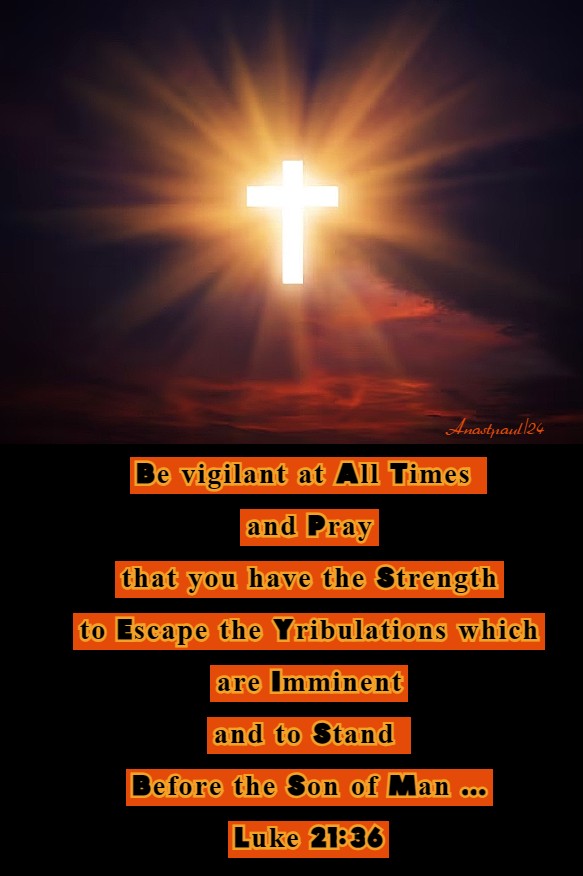
“Be vigilant at all times and pray that you have the strength to escape the tribulations that are imminent and to stand before the Son of Man…”
Luke 21:36
“Tell us when shall these things be? and what shall be the sign of Thy Coming and of the consummation of the world? ”
Matthew 24:3
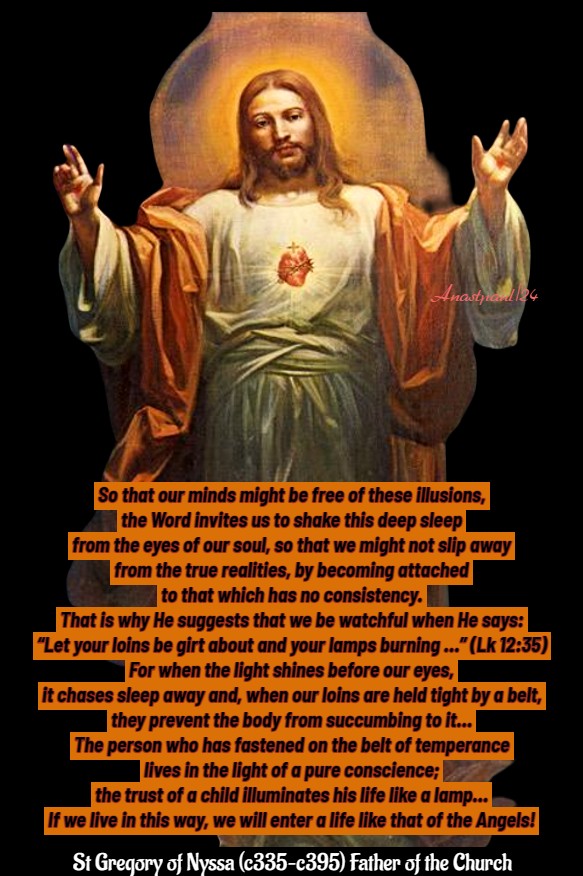
“So that our minds might be free of these illusions, the Word invites us to shake this deep sleep from the eyes of our soul, so that we might not slip away from the true realities, by becoming attached to that which has no consistency. That is why He suggests that we be watchful when He says: “Let your loins be girt about and your lamps burning …” (Lk 12:35) For when the light shines before our eyes, it chases sleep away and, when our loins are held tight by a belt, they prevent the body from succumbing to it… The person who has fastened on the belt of temperance lives in the light of a pure conscience; the trust of a child illuminates his life like a lamp… If we live in this way, we will enter a life like that of the Angels!”
St Gregory of Nyssa (c335–c395) Father of the Church (Brother of St Basil the Great)
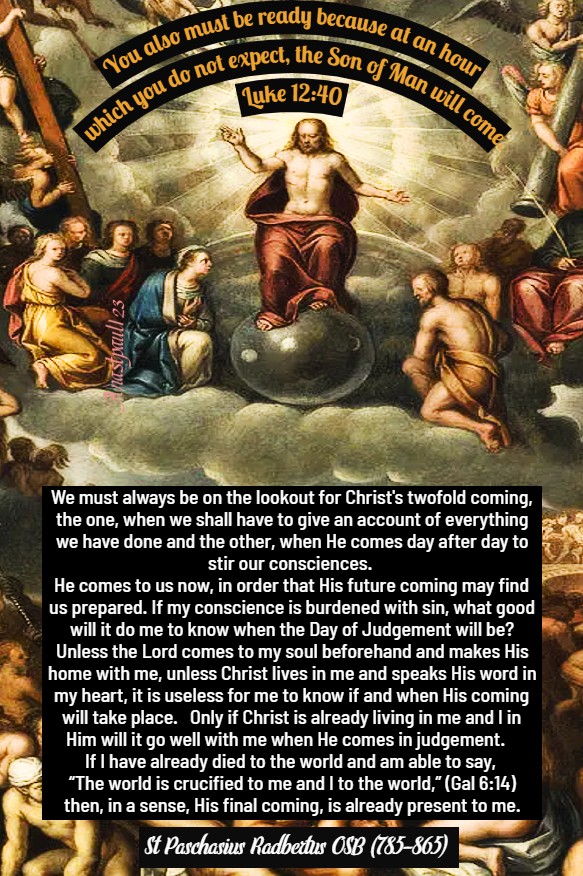
“You also must be ready because at an hour which you do not expect, the Son of Man will come.” Luke 12:40
“We must always be on the lookout for Christ’s twofold coming, the one, when we shall have to give an account of everything we have done and the other, when He comes, day after day, to stir our consciences. He comes to us now, in order that His future coming may find us prepared. If my conscience is burdened with sin, what good, will it do me, to know when the Day of Judgement will be? Unless the Lord comes to my soul beforehand and makes His home with me, unless Christ lives in me and speaks His word in my heart, it is useless for me to know if and when His coming will take place. Only if Christ is already living in me and I in Him, will it go well with me when He comes in judgement. If I have already died to the world and am able to say, “The world is crucified to me and I to the world,” (Gal 6:14) then, in a sense, His final coming is already present to me.”
St Paschasius Radbertus (785–865) Abbot, Theologian, Father of the Church
One Minute Reflection – 17 August – “The Month of the Immaculate Heart of Mary” – St Hyacinth OP (1185-1257) ) Confessor – Sirach 31:8-11; Luke 12:35-40 – Scripture search here: https://www.drbo.org/
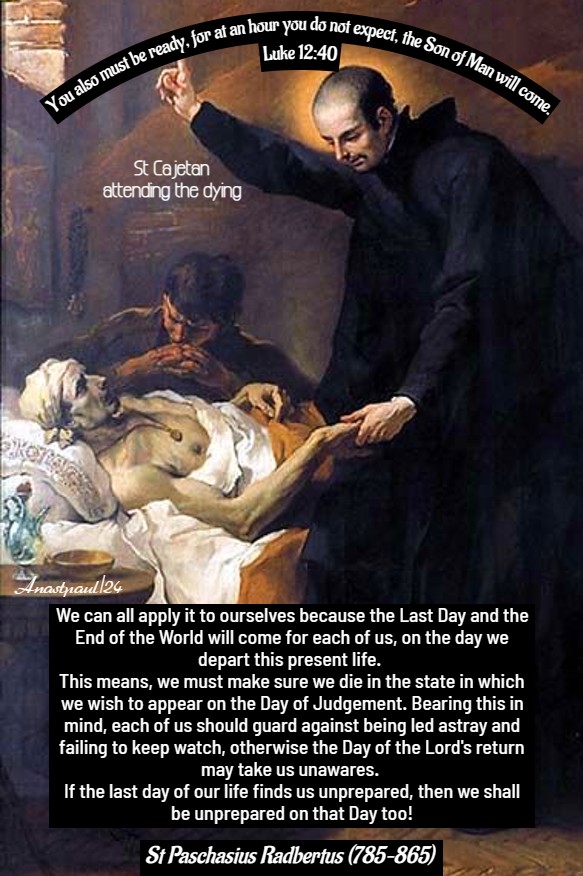
“You also must be ready, for at an hour you do not expect, the Son of Man will come.” – Luke 12:40
REFLECTION –“Watch, for you do not know the day nor the hour.” Like many other scriptural texts, this admonition is addressed to all of us, although it is formulated, in such a way that it would seem to concern only Christ’s immediate audience. We can all apply it to ourselves because the Last Day and the End of the World will come for each of us, on the day we depart this present life. This means, we must make sure we die in the state in which we wish to appear on the Day of Judgement. Bearing this in mind, each of us should guard against being led astray and failing to keep watch, otherwise the Day of the Lord’s return may take us unawares. If the last day of our life finds us unprepared, then we shall be unprepared on that Day too!” – St Paschasius Radbertus OSB (785–865) Abbot of Corbie, Theoplogian, Father of the Church (Commentary on Saint Matthew’s Gospel 11, 24) His Life here: https://anastpaul.com/2019/04/26/saint-of-the-day-26-april-saint-paschasius-radbertus-785-865/
PRAYER – God, Who gladden us with the annual feast of blessed Hyacinth, Thy Confessor, mercifully grant that, while honouring the anniversary of his death, we may also imitate his deeds. Through Jesus Christ, Thy Son our Lord, Who lives and reigns with Thee, in the unity of the Holy Ghost, God, world without end. Amen (Collect).
Our Morning Offering – 17 August – “The Month of the Immaculate Heart of Mary” and Mary’s day
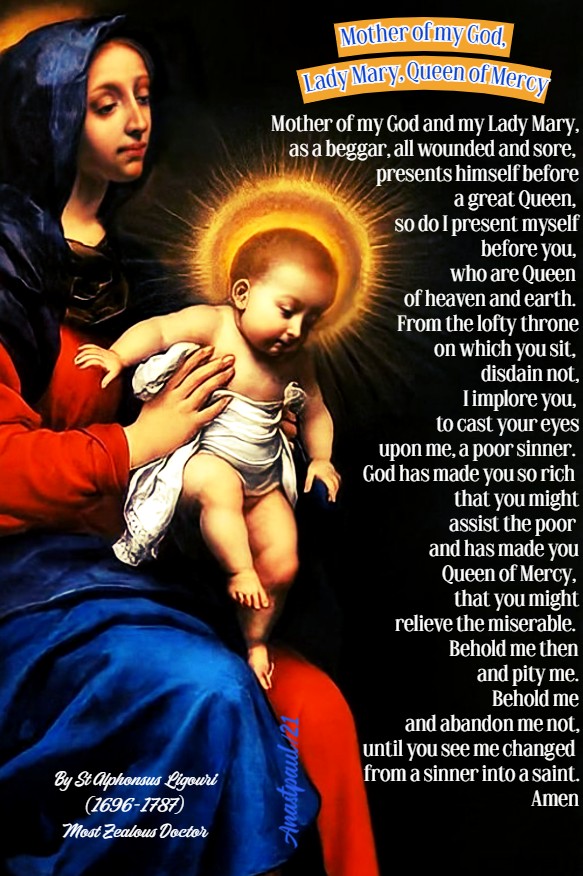
Mother of my God, Lady Mary, Queen of Mercy By St Alphonsus Ligouri (1696-1787) Most Zealous Doctor
Mother of my God and my Lady Mary, as a beggar, all wounded and sore, presents himself before a great Queen, so do I present myself before you, who are Queen of heaven and earth. From the lofty throne on which you sit, disdain not, I implore you, to cast your eyes on me, a poor sinner. God has made you so rich that you might assist the poor and has made you Queen of Mercy, that you might relieve the miserable. Behold me then and pity me. Behold me and abandon me not, until you see me changed from a sinner into a saint. Amen
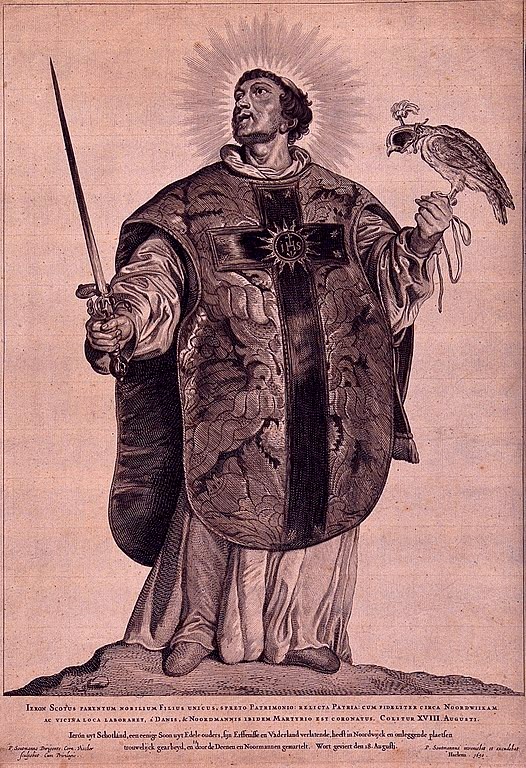
Saint of the Day – 17 August – St Jeroen of Noordwijk (c800- 856) Priest Martyr, Missionary. Born around 800 in Scotland or Ireland and died on 17 August 856 in Noordwijk, Holland by being beheaded by pagan Vikings. Patronage – the finding of lost articles, of Noordwijk. Also known as – Gerone, Hiero, Hieron, Iero, Ieron, Jeroen van Noordwijk, Jéron Noordwijk. Additional Memorial – 3rd Sunday in August in Noordwijk a St Jeroen celebration known as the ‘St Jeroen Sleep Walk’ and on the 1st Sunday in September, his Patronage of Noordwijk (and of lost articles) is celebrated there.
Jeroen was born around 800 as the son of a prominent nobleman in Scotland (or Ireland). As a young man, however, he chose a life as a Priest and Monk. Together with other Benedictine Monks, he crossed the North Sea to preach Christianity on the mainland. In 851, Jeroen settled as a shephjerd of souls in Noordwijk, Holland.
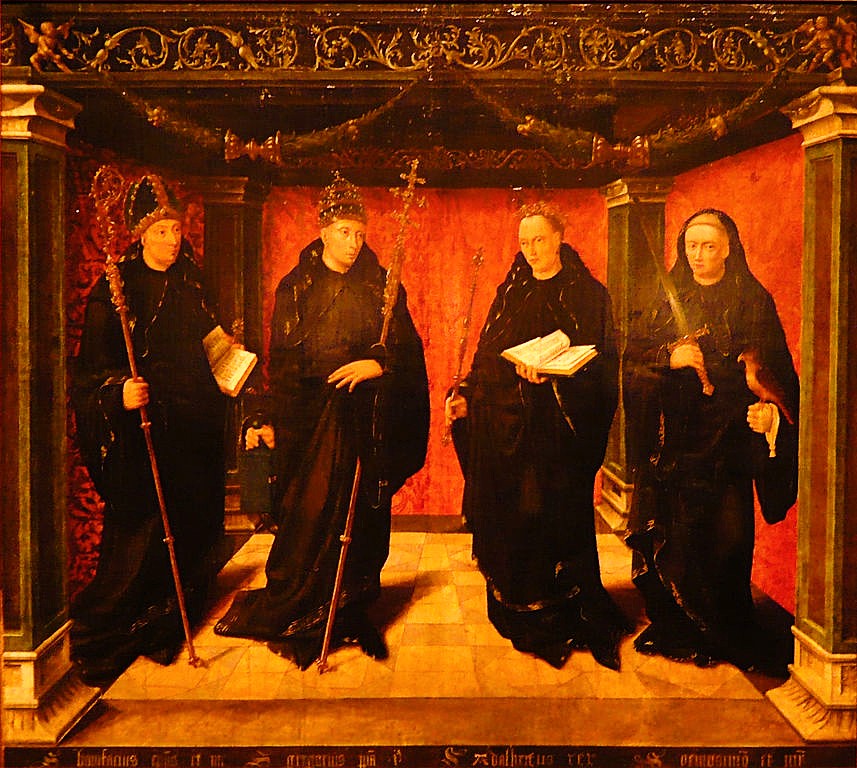
St Jeroen (far right) included amongs the great Benedictine Saints, St Bonficafe, St Gregory the Great, St Adalbert and St Jeroen
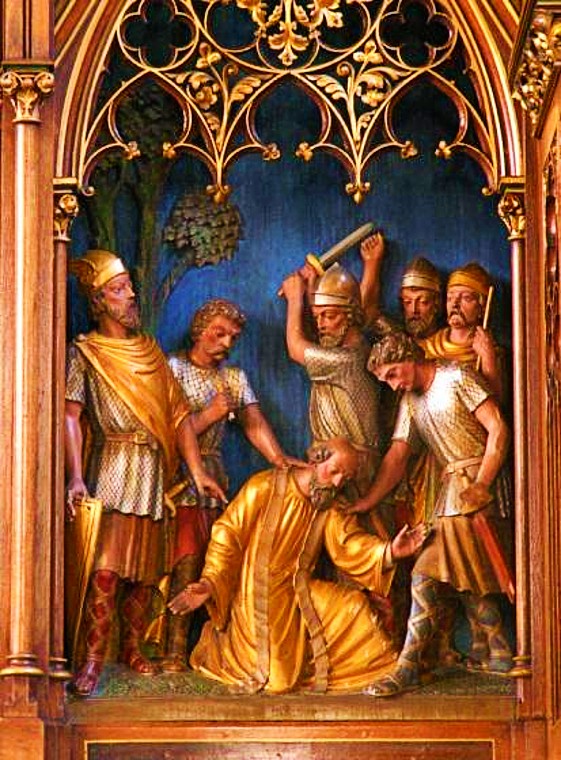
In August 856, Noordwijk was attacked by the Norsemen during one of their raids. Jeroen was captured and tortured. The next day, a chieftain of the Norsemen demanded that Jeroen renounce his faith and sacrifice to the Germanic gods. When Jeroen refused, he was sentenced to death and beheaded.
The Martyrdom of St Jeroen
After the Normans had disappeared, his body was buried in the utmost secrecy by his followers.
St Jeroen’s Funeral
A Church was built above the spot where Jeroen’s decapitated body was found. Around 1300, a skull was found in this building during an excavation. The skull was immediately attributed to St Jeroen. The Church bells began to ring spontaneously at the moment of the discovery, what further proof was needed! A man who suffered from epilepsy was immediately cured after touching the skull.
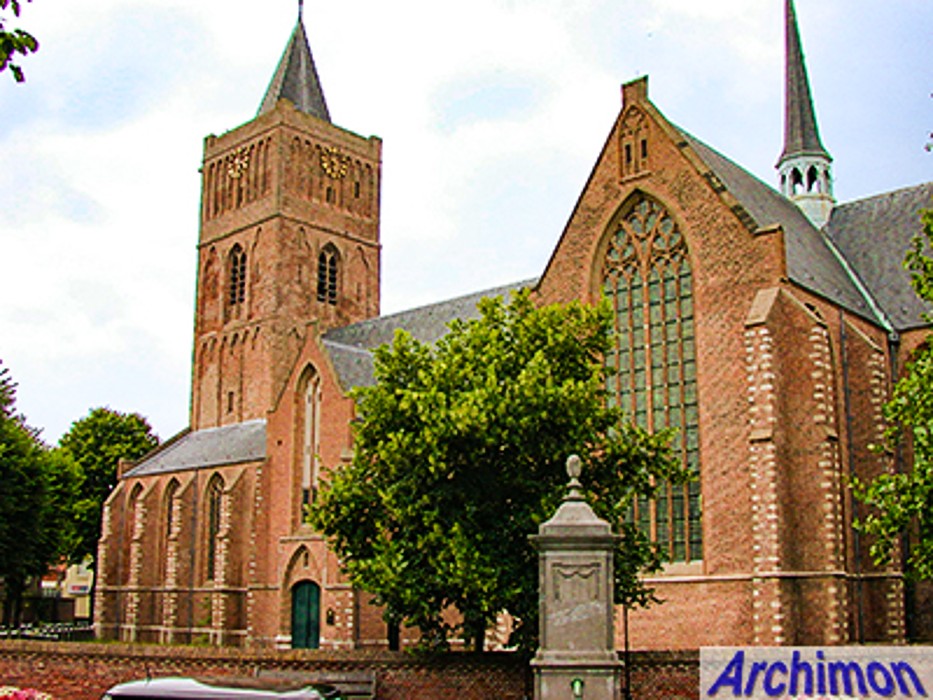
The original Church since claimed by the protestants
Jeroen’s head was placed in the Church and became an object of great veneration. In 1429, the Bishop of Utrecht elevated the village of Noordwijk to a place of pilgrimage for those seeking the intercession of Saint Jeroen in all their troubles and ailments.
St window is in St Jeroen’s Catholic Church in Noordwijk (I cannot find an image of the Church itself)
As a result of the Reformation, Noordwijk’s existence as a place of pilgrimage for Saint Jerome came to an end in the 16th Century. The Saint’s skull – possibly brought to safety somewhere – has been missing since then.
In 1892, Pope Leo XIII elevated Noordwijk to a place of pilgrimage of Saint Jerome for the second time in its history. The Relics, originating from the Abbey of Egmond, were transferred from Haarlem to the Parish Church in Noordwijk. Since then, they have been kept in a Shrine in the Saint Jerome Altar. The Shrine also contains a silver arm Relic. From then on, pilgrims received special favours in the form of Indulgences when visiting this Church. A marble plaque on the wall of the central portal is a reminder of this.
The discovery of St Jeroen’s Relics
Since the 1960s, pilgrimages to Noordwijk have no longer been organised (surprised?!). However, every year on the 3rd Sunday in August, the St Jeroen Sleep Way’ (Jeroensommegang) is walked through the centre of Noordwijk-Binnen. On the same day, the annual Jeroenvespers are sung in the Church in the afternoon. The Patron Saint’s day of Saint Jerome is also celebrated every year on the first Sunday in September.
St Amor of Amorbach St Anastasius of Terni St Benedicta of Lorraine St Carloman St Cecilia of Lorraine
St Clare of the Cross of Montefalco (c1269-1308) Augustinian Nun and Abbess, before becoming a nun, St Clare was a member of the Third Order of St Francis (Secular), Mystic, Penitent, Spiritual adviser. Beatified by Pope Clement XII. On 8 December 1881, the Feast of the Immaculate Conception, Pope Leo XIII Canonised Clare. Her Life: https://anastpaul.com/2019/08/17/saint-of-the-day-17-august-saint-clare-of-the-cross-of-montefalco-c-1269-1308/
St Drithelm St Elias the Younger St Eusebius of Sicily St James the Deacon St Jeroen of Noordwijk (c800-856) Priest Martyr St Juliana of Ptolemais St Mamas St Myron of Cyzicus
St Nicolò Politi (1117-1167) Basilian Monk and Hermit. He was known for his miracles even during his childhood and was Venerated as a saint even before his death. St Nicolò was Canonised on 7SJune 1507, at Saint Peter’s Basilica, Rome, by Pope Julius II. About St Nicolò: https://anastpaul.com/2020/08/17/saint-of-the-day-17-august-st-nicolo-politi-1117-1167/
Thought for the Day – 16 August – Meditations with Fr Richard Frederick Clarke SJ (1839-1900)
CHARITY Meditations for a Month
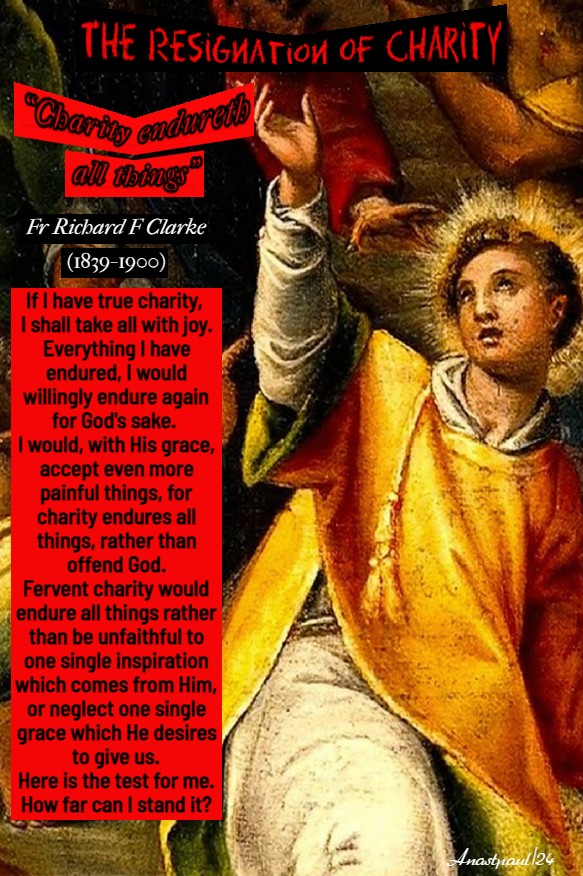
The Resignation of Charity “Charity endureth all things”
The test of our love for anyone, is what we are willing to endure for that person. If we love only a little, we are willing to endure only a little. If we love much, we are willing to endure much. If we love that person, better than we love ourselves, we are pleased to endure, for his sake, that which we would otherwise dread. If we love that person better than we love ourselves, we are pleased to endure, for his sake, that from which we would otherwise shrink. Hence, the test of our supernatural charity, is what we are willing to endure for God and whether ,it is a pleasure for us to endure, positive suffering, for Him.
We would consider it a great privilege, if we were called upon to lay down our lives for the Faith. However, this is a grace we poor ordinary mortals cannot expect and, we must be careful against deluding ourselves, by fancy pictures of the courage we should then display. The real question before us, is whether we willingly suffer the little, disagreeable effects of life, bodily ailments, failures in our projects, neglect or unkindness from others, or undeserved reproaches. It is no use thinking of Martyrdom until we have learnt to bear these!
If I have true charity, I shall take all with joy. Everything I have endured, I would willingly endure again for God’s sake. I would, with His grace, accept even more painful things, for charity endures all things, rather than offend God. Fervent charity would endure all things rather than be unfaithful to one single inspiration which comes from Him, or neglect one single grace which He desires to give us. Here is the test for me. How far can I stand it?
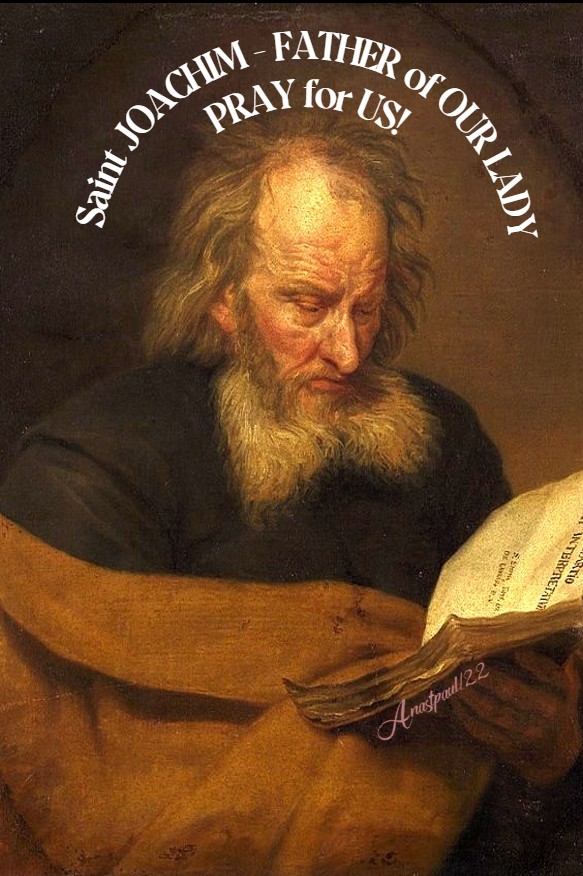
Quote/s of the Day – 16 August – “The Month of the Immaculate Heart of Mary” – St Joachim, Father of the Blessed Virgin Mary – Ecclesiasticus 31:8-11, Matthew1:1-16 – Scripture search here: https://www.drbo.org/
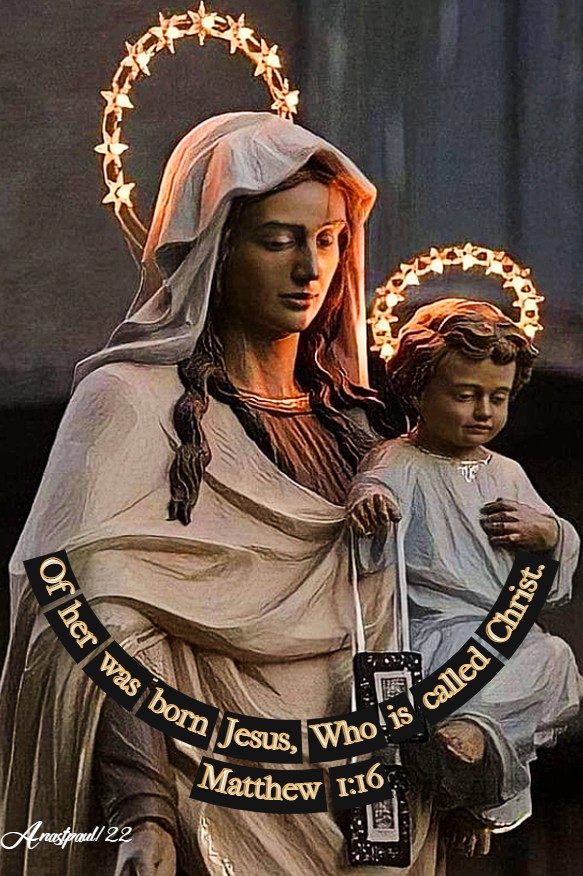
“And Jacob begot Joseph, the husband of Mary and of her was born Jesus, Who is called Christ.”
Matthew 1:16
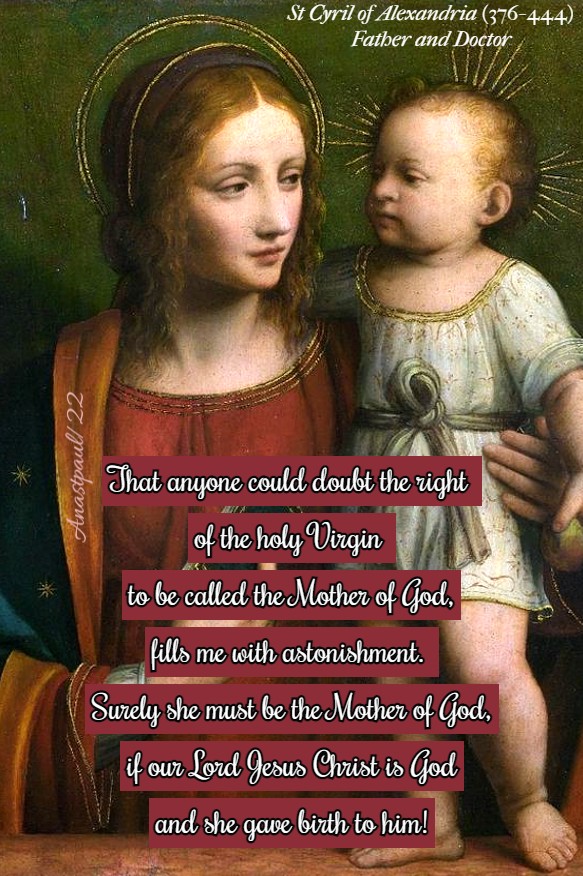
“That anyone could doubt the right of the holy Virgin to be called the Mother of God, fills me with astonishment. Surely she must be the Mother of God, if our Lord Jesus Christ is God and she gave birth to Him!”
St Cyril of Alexandria (376-444) Father and Doctor of the Church
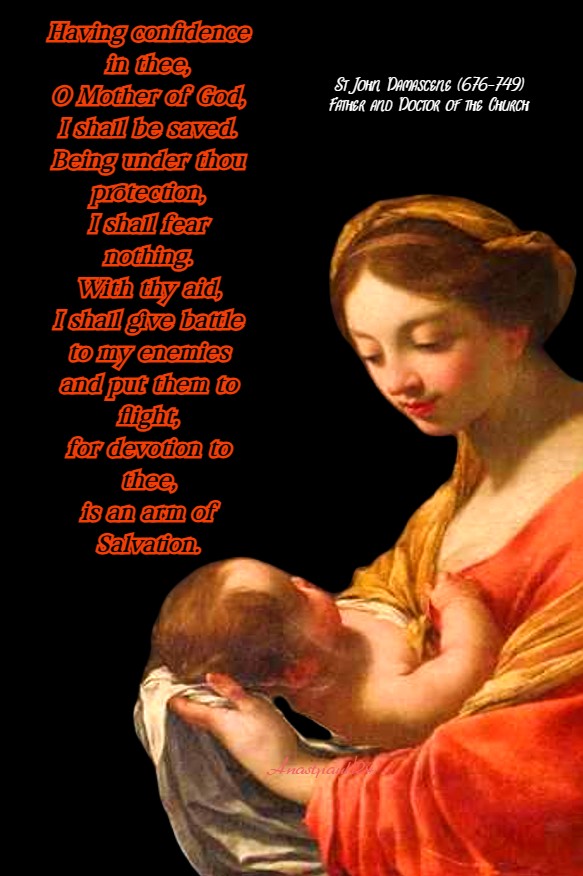
“Having confidence in thee, O Mother of God, I shall be saved. Being under thou protection, I shall fear nothing. With thy aid, I shall give battle to my enemies and put them to flight, for devotion to thee, is an arm of Salvation.”
St John Damascene (676-749) Father and Doctor of the Church
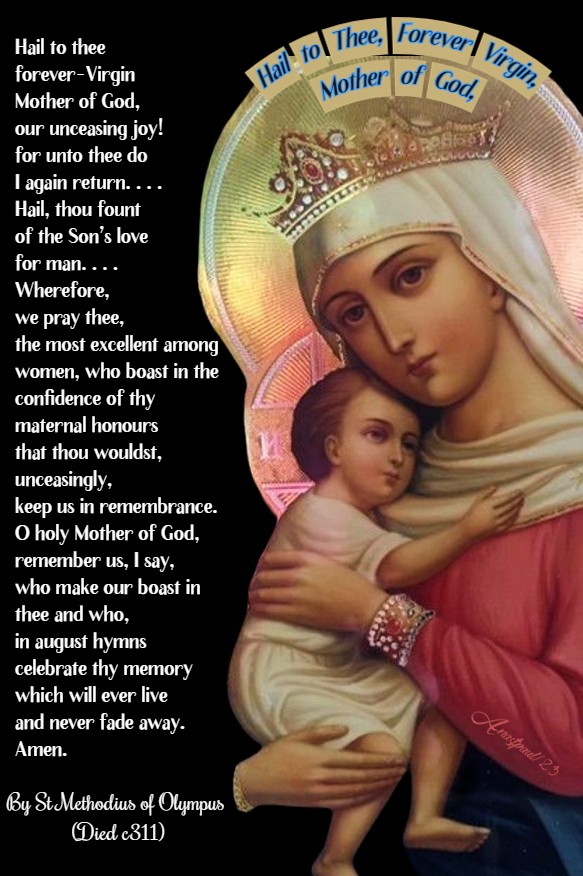
Hail to Thee, Forever Virgin, Mother of God, By St Methodius of Olympus (Died c311)
Hail to thee forever-Virgin Mother of God, our unceasing joy! for unto thee do I again return. . . . Hail, thou fount of the Son’s love for man. . . . Wherefore, we pray thee, the most excellent among women, who boast in the confidence of thy maternal honours that thou wouldst, unceasingly, keep us in remembrance. O holy Mother of God, remember us, I say, who make our boast in thee and who, in august hymns celebrate thy memory which will ever live and never fade away. Amen
One Minute Reflection – 16 August – “The Month of the Immaculate Heart of Mary” – St Joachim, Father of the Blessed Virgin Mary – Ecclesiasticus 31:8-11; Matthew1:1-16 – Scripture search here: https://www.drbo.org/
“And Jacob begot Joseph, the husband of Mary and of her was born Jesus, Who is called Christ.” – Matthew 1:16
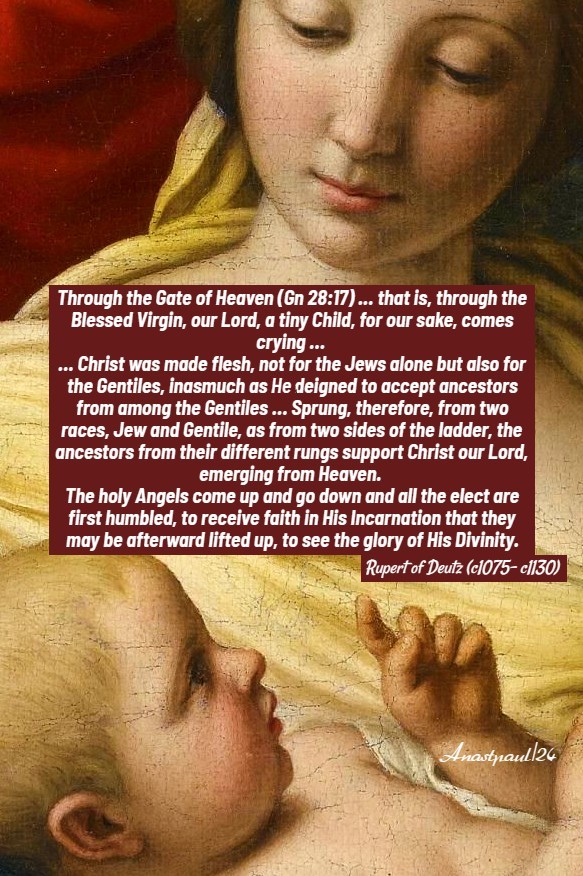
REFLECTION – “The genealogy of Jesus Christ from St Matthew’s Gospel is read to us. It is a custom handed down by holy Church with a beauty and mystery of its own. For behold, how in truth this reading puts before us, at dead of night that ladder, which Jacob saw at night in his sleep (Gn 28:12). Supported on the topmost rung of the ladder, where it reached Heaven, the Lord appeared to Jacob and promised him that his posterity would inherit the earth … Now, as we know, “all these things happened to them in figure” (1 Cor 10:11). The ladder by which the Lord appeared to be supported, prefigured the family-tree of Jesus Christ which the holy Gospel-writer so drew up, as to come through Joseph. It is, by Joseph that our Lord, as a small Child, is supported. Through the Gate of Heaven (Gn 28:17) … that is, through the Blessed Virgin, our Lord, a tiny Child, for our sake, comes crying … The words which Jacob, in his sleep heard the Lord say, “And in thy posterity shall all the nations of the earth be blessed” are fulfilled, by the birth of Christ.
The divine writer, bearing in mind this very point, put the names of Rahab, the prostitute and Ruth, the Moabite, into his genealogy. For he saw that Christ was made flesh, not for the Jews alone but also for the Gentiles, inasmuch as He deigned to accept ancestors from among the Gentiles … Sprung, therefore, from two races, Jew and Gentile, as from two sides of the ladder, the ancestors from their different rungs support Christ our Lord, emerging from Heaven. The holy Angels come up and go down and all the elect are first humbled, to receive faith in His Incarnation that they may be afterward lifted up, to see the glory of His Divinity.” – Rupert of Deutz (c1075- c1130) Benedictine Monk, Theologian and Writer (De Divinis Officiis 3, 18).
PRAYER – O God, Who, willed St Joachim to be the father of Thy Son’s Mother; grant, we beseech Thee that we may ever enjoy the spiritual help of him whose feast we celebrate. Through the same Jesus Christ, Thy Son our Lord, Who lives and reigns with Thee, in the unity of the Holy Ghost, God, world without end. Amen (Collect).
Our Morning Offering – 16 August – “The Month of the Immaculate Heart of Mary” – Feast of St Joachim, Father of the Blessed Virgin Mary
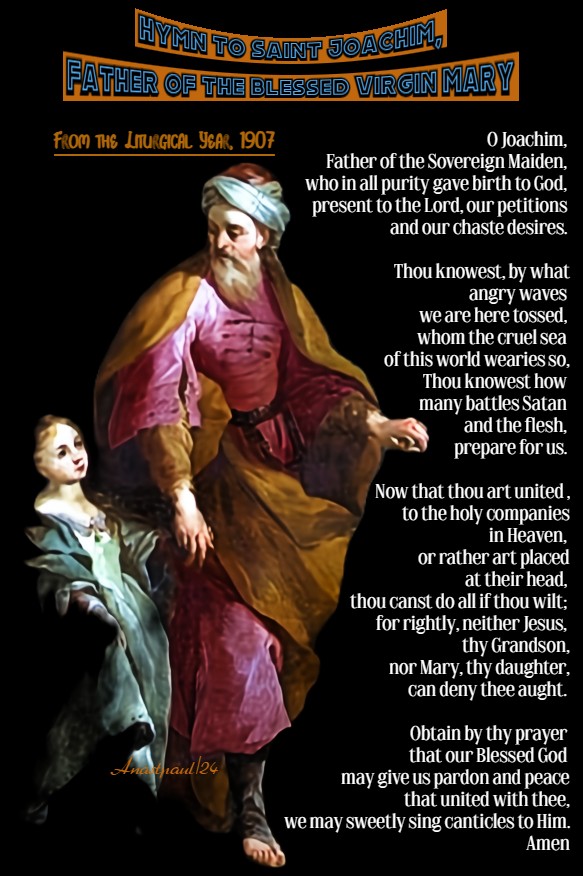
Hymn to St Joachim, Father of the Blessed Virgin Mary From the Liturgical Year, 1907
O Joachim, Father of the Sovereign Maiden, who in all purity gave birth to God, present to the Lord, our petitions and our chaste desires.
Thou knowest, by what angry waves we are here tossed, whom the cruel sea of this world wearies so, Thou knowest how many battles Satan and the flesh, prepare for us.
Now that thou art united , to the holy companies in Heaven, or rather art placed at their head, thou canst do all if thou wilt; for rightly, neither Jesus, thy Grandson, nor Mary, thy daughter, can deny thee aught.
Obtain by thy prayer that our Blessed God may give us pardon and peace that united with thee, we may sweetly sing canticles to Him. Amen
Saint of the Day – 16 August – Blessed Laurence “Loricatus” (Died 1243) Hermit, Pilgrim, Penitent, previously a Soldier. Born in Facciolo, Apulio, Italy and died in 1243 at Subiaco, Italy. “Loricatus” (Latin) meaning wearing Chain Mail.
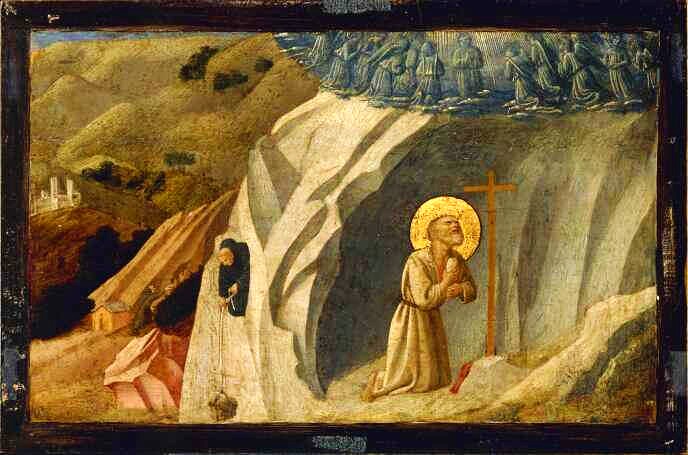
Laurence served as a Solider as a young man. After accidentally killing a man, perhaps in the course of duty, he was so overcome with remorse that he dedicated himself to a life of penance. The image below by Fra Angelico depicts St Benedict finding a new disciple in his ‘cave.’
After travelling as a pilgrim to the great Shrine of Saint James in Compostella, he became a Hermit at Subiaco, hallowed by St Benedict long before.
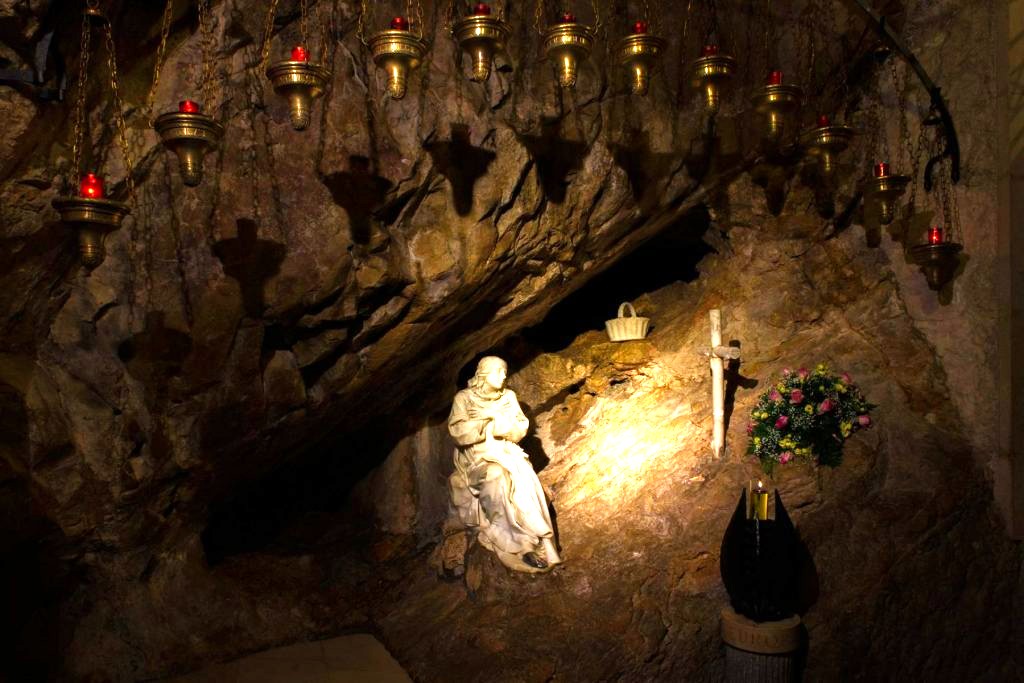
Laurence lived as a Hermit in the ruins of the cave where Saint Benedict himself had lived. When pilgrims would leave gifts and offerings for him, he would give these to the poor.
A spiritual master, he began to train a small community of disciples and later wrote a book of prayers. In 1224, his fame attracted a visit from Cardinal Hugolino (later Pope Gregory IX) who persuaded him to abandon his chain mail breastplate.
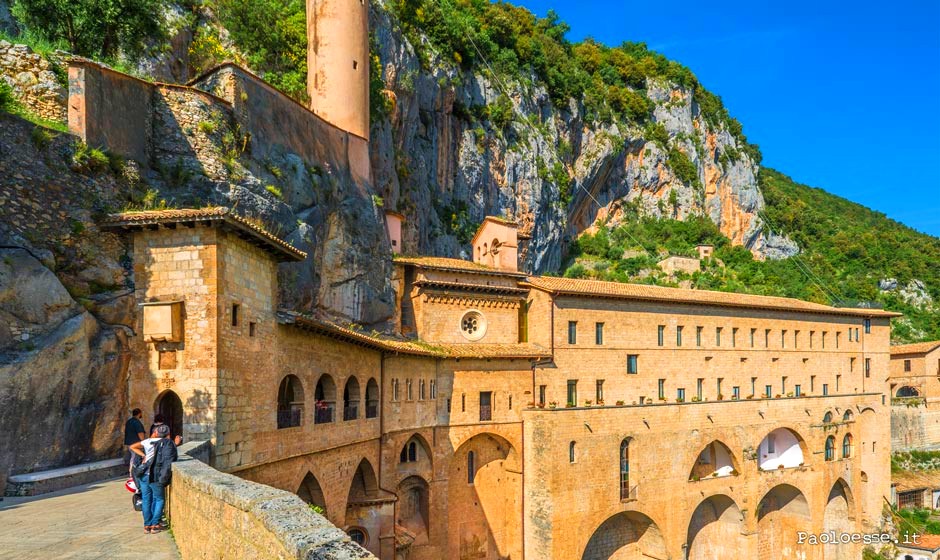
He died in 1243 after 34 years of eremitical life. He was succeeded by his disciple Amico de Canterano, who had shared his way of life for 24 years. Below is St Benedict’s Monastery at Subiaca beneath which lies the Shrin of our Blessed Laurence.
In 1244, an enquiry into his life and miracles initiated by Pope Innocent IV did not lead to an immediate formal Canonisation but a popular cult flourished which was approved by Pope Pius VI in 1778.
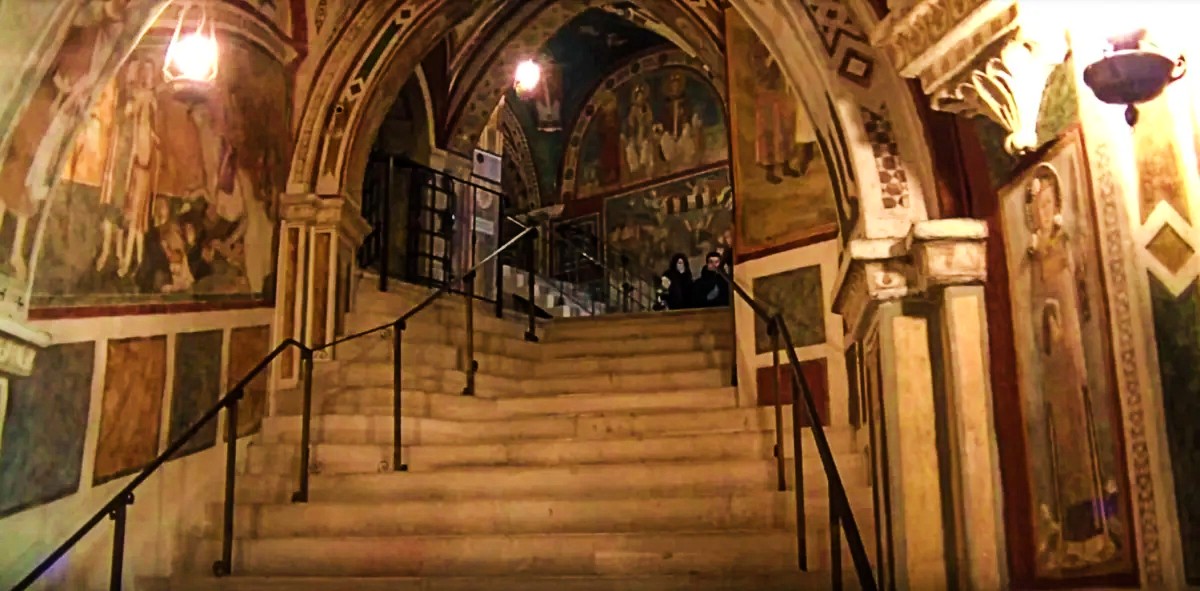
Blessed Laurence’s Relics, including the Manuscript in his own hand and his “Loricatus” Breastplate, are enshrined in St Benedict’s Cave at Subiaco.
Blessed Angelo Agostini Mazzinghi O.Carm. (1385-1438) was an Italian Priest and a professed member of the Carmelite Order. He was a noted Preacher, Prior and Reformer, Teacher of theology and was known for his pious devotion to the Holy Eucharist, the Blessed Virgin Mary and the Carmelite Rule of Life and to the profession of the Gospel. Holy Angelus: https://anastpaul.com/2019/08/16/saint-of-the-day-16-august-blessed-angelo-agostini-mazzinghi-o-carm-1385-1438/
St Arsacius of Nicomedia St Frambaldo Bl Iacobus Bunzo Gengoro Bl Jean-Baptiste Menestrel Bl John of Saint Martha
Blessed Laurence Loricatus (Died 1243) Hermit, Pilgrim, Penitent Bl Magdalena Kiyota Bokusai Bl Maria Gengoro Bl Ralph de la Futaye St Serena Bl Simon Kiyota Bokusai
St Ugolina of Vercelli (c 1239-c 1300) Anchorite, Recluse, Penitent, Spiritual advisor. The very strange story that of this Blessed Ugolina who shut herself in a hermitage, representing herself as a man and remained there for forty-seven years! The aim of her subterfuge was to escape the aims of her father, who wished her to marry. In order not to reveal her secret, she called herself Ugo without revealing her identity to anyone. for nearly fifty years Her Life: https://anastpaul.com/2021/08/16/saint-of-the-day-16-august-saint-ugolina-of-vercelli-c-1239-c-1300/
Martyrs of Palestine – 33 Saints: Thirty-three Christians Martyred in Palestine; they are commemorated in old martyrologies but the date and exact location have been lost.
Thought for the Day – 15 August – Meditations with Fr Richard Frederick Clarke SJ (1839-1900)
CHARITY Meditations for a Month
The Hopefulness of Charity “Charity hopeth all things”
How common and how fatal an evil is discouragement! Half of our enterprises fail,, simply because we become discouraged. More than half of our faults are owing to discouragement. We lose heart and, therefore, fail in the necessary perseverance. We become despondent and seek to console ourselves, by some earthly pleasure or perhaps, sinful indulgence. No general who was discouraged ever won a victory and, no sinner who lost heart, ever became a Saint or even turned to God, as long as the despondency remained.
Yet, it is no easy thing to keep up our courage and our hope. We so often fail and failures are discouraging. We commit so many faults; yet, nothing saps our courage, as much as the consciousness of having done wrong. Then too, there are continual impediments and obstacles in our way, the neglect and indifference shown by others to our work, the opposition we meet and a thousand things more. Too often, these are causes of discouragement to all who are working for God. We ought not to be discouraged by them, for often, difficulties and opposition are the best signs of coming success!
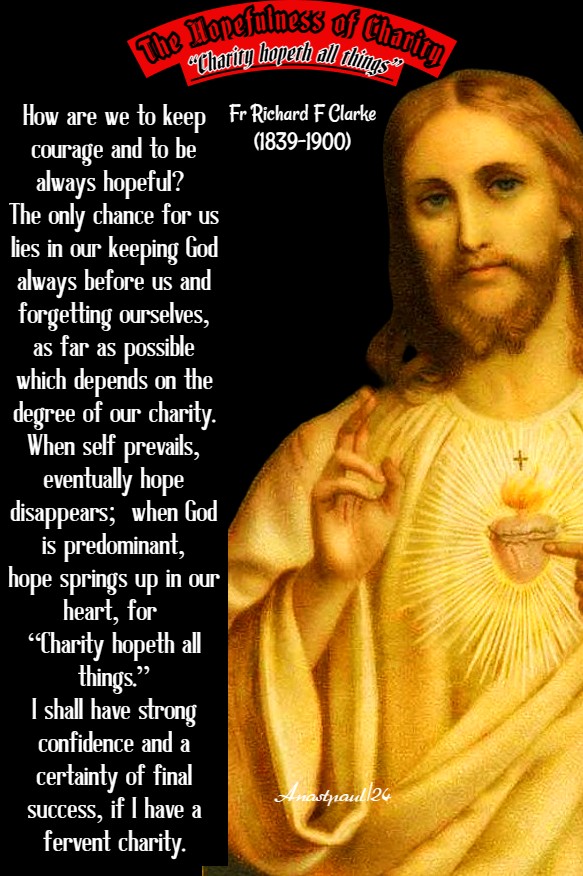
How are we to keep courage and to be always hopeful? The only chance for us lies in our keeping God always before us and forgetting ourselves, as far as possible which depends on the degree of our charity. When self prevails, eventually hope disappears; when God is predominant, hope springs up in our heart, for “Charity hopeth all things.” I shall have strong confidence and a certainty of final success, if I have a fervent charity.
Quote/s of the Day – 15 August – “The Month of the Immaculate Heart of Mary” – The Assumption of the Blessed Virgin Mary into Heaven – Judith 13:22-25; 15:10, Luke 1:41-50 – Scripture search here: https://www.drbo.org/
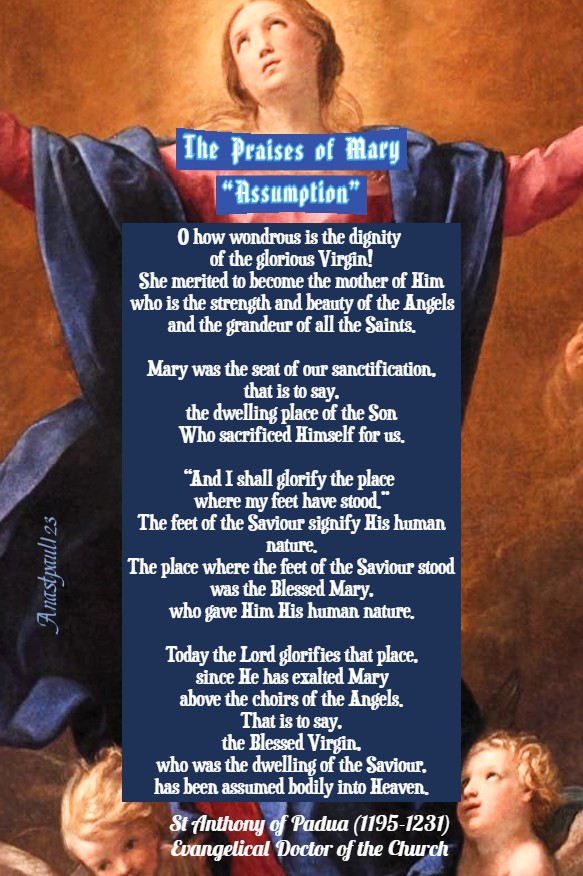
The Praises of Mary “Assumption” Poem by Saint Anthony
O how wondrous is the dignity of the glorious Virgin! She merited to become the mother of Him who is the strength and beauty of the Angels and the grandeur of all the Saints.
Mary was the seat of our sanctification, that is to say, the dwelling place of the Son Who sacrificed Himself for us.
“And I shall glorify the place where my feet have stood.” The feet of the Saviour signify His human nature. The place where the feet of the Saviour stood was the Blessed Mary, who gave Him His human nature.
Today the Lord glorifies that place, since He has exalted Mary above the choirs of the Angels. That is to say, the Blessed Virgin, who was the dwelling of the Saviour, has been assumed bodily into Heaven.
Mary, our Queen and Mother of Mercy By St Anthony of Padua (1195-1231) Evangelical Doctor of the Church
Mary, our Queen! Holy Mother of God, we beg you to hear our prayer. Make our hearts overflow with Divine grace and resplendent with heavenly wisdom. Render them strong with your might and rich in virtue. Pour down upon us the gift of mercy so that we may obtain the pardon of our sins. Help us to live in such a way as to merit the glory and bliss of Heaven. May this be granted us, by your Son Jesus Who has exalted you above the Angels, has crowned you as Queen and has seated you with Himself forever, on his refulgent throne. Amen.
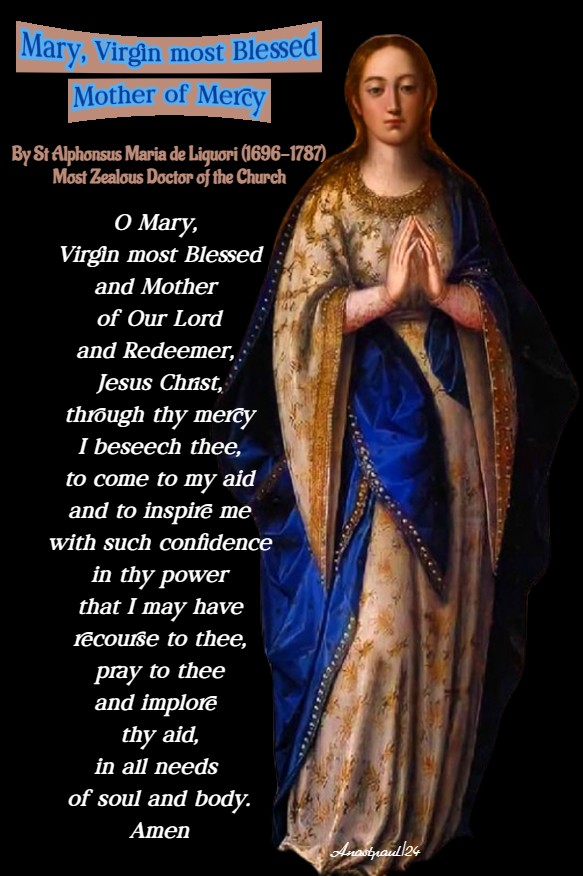
Mary, Virgin most Blessed Mother of Mercy By St Alphonsus Maria de Liguori (1696-1787) Most Zealous Doctor of the Church (Prayer used as part of the Assumption Novena)
O Mary, Virgin most Blessed and Mother of Our Lord and Redeemer, Jesus Christ, through thy mercy I beseech thee, to come to my aid and to inspire me with such confidence in thy power that I may have recourse to thee, pray to thee and implore thy aid, in all needs of soul and body. Amen
One Minute Reflection – 15 August – “The Month of the Immaculate Heart of Mary” – The Assumption of the Blessed Virgin Mary into Heaven – Judith 13:22-25; 15:10, Luke 1:41-50 – Scripture search here: https://www.drbo.org/
“For behold, as soon as the voice of thy salutation sounded in my ears, the infant in my womb leaped for joy. ” – Luke 1:44
REFLECTION – “Today the Virgin Mary rises gloriously to Heaven. She completes the happiness of Angels and Saints. For it was she whose simple word of greeting made the child in his mother’s womb leap for joy (Lk 1:44). What, then, must have been the rejoicing of the Angels and Saints, when they found themselves able to hear her voice, see her face and rejoice in her blessed presence!
And what a great Feast her glorious Assumption is for us, beloved brethren, what reason for happiness and cause for joy today! Mary’s presence brightens the whole world, so greatly do the heavens shine, lightened by the brilliance of the most holy Virgin. Therefore, it is altogether fitting that the heavens resound with thanksgiving and praise.
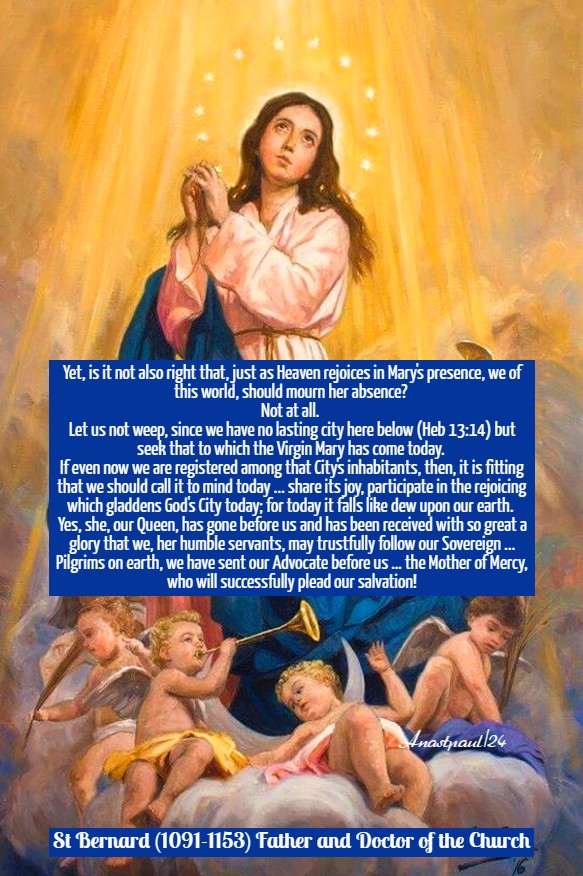
Yet, is it not also right that, just as Heaven rejoices in Mary’s presence, we of this world, should mourn her absence? Not at all. Let us not weep, since we have no lasting city here below (Heb 13:14) but seek that to which the Virgin Mary has come today. If even now we are registered among that City’s inhabitants, then, it is fitting that we should call it to mind today … share its joy, participate in the rejoicing which gladdens God’s City today; for today it falls like dew upon our earth. Yes, she, our Queen, has gone before us and has been received with so great a glory that we, her humble servants, may trustfully follow our Sovereign, crying [with the Bride of the Song of Songs]: “Draw us! We will run to the sweet scent of your perfumes!” (cf. Sg 1:3-4). Pilgrims on earth, we have sent our Advocate before us … the Mother of Mercy, who will successfully plead our salvation!” – St Bernard (1091-1153) Cistercian Abbot, Father and Doctor of the Church (1st Sermon for the Assumption).
PRAYER – O Lord, we beseech Thee, forgive the transgressions of Thy servants and, forasmuch as by our own deeds, we cannot please Thee, may we find safety through the prayers of the Mother of Thy Son and our Lord. Through the same Jesus Christ, Thy Son our Lord, Who lives and reigns with Thee, in the unity of the Holy Ghost, God, world without end. Amen (Collect).























 AnaStpaul
You must be logged in to post a comment.