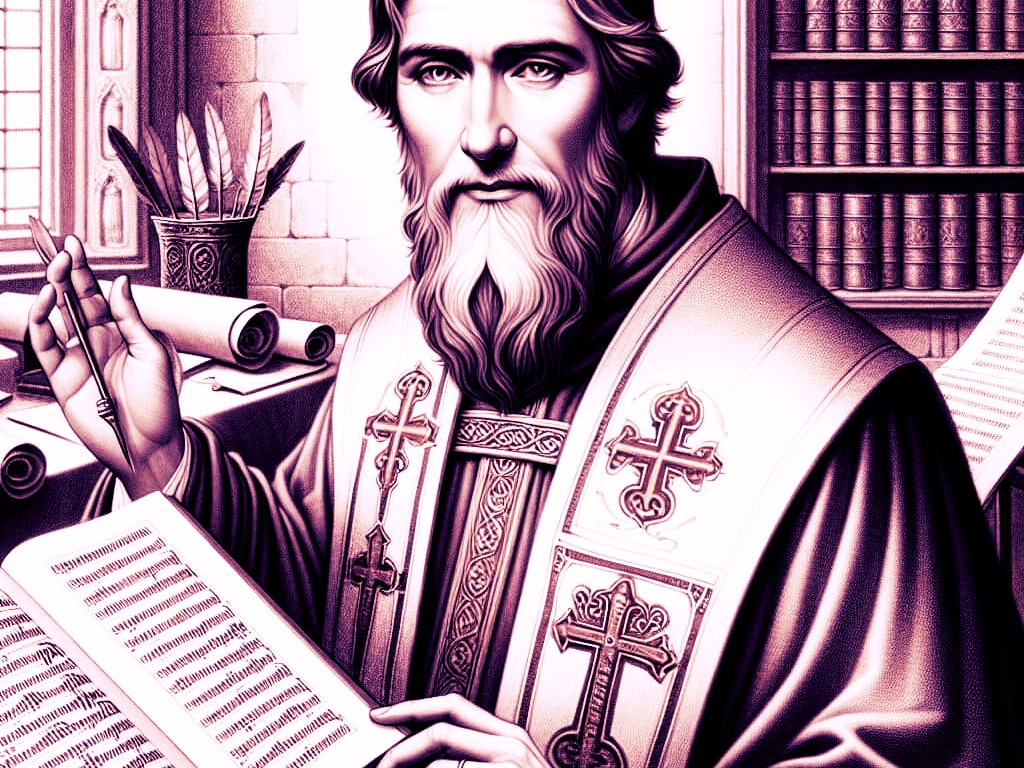
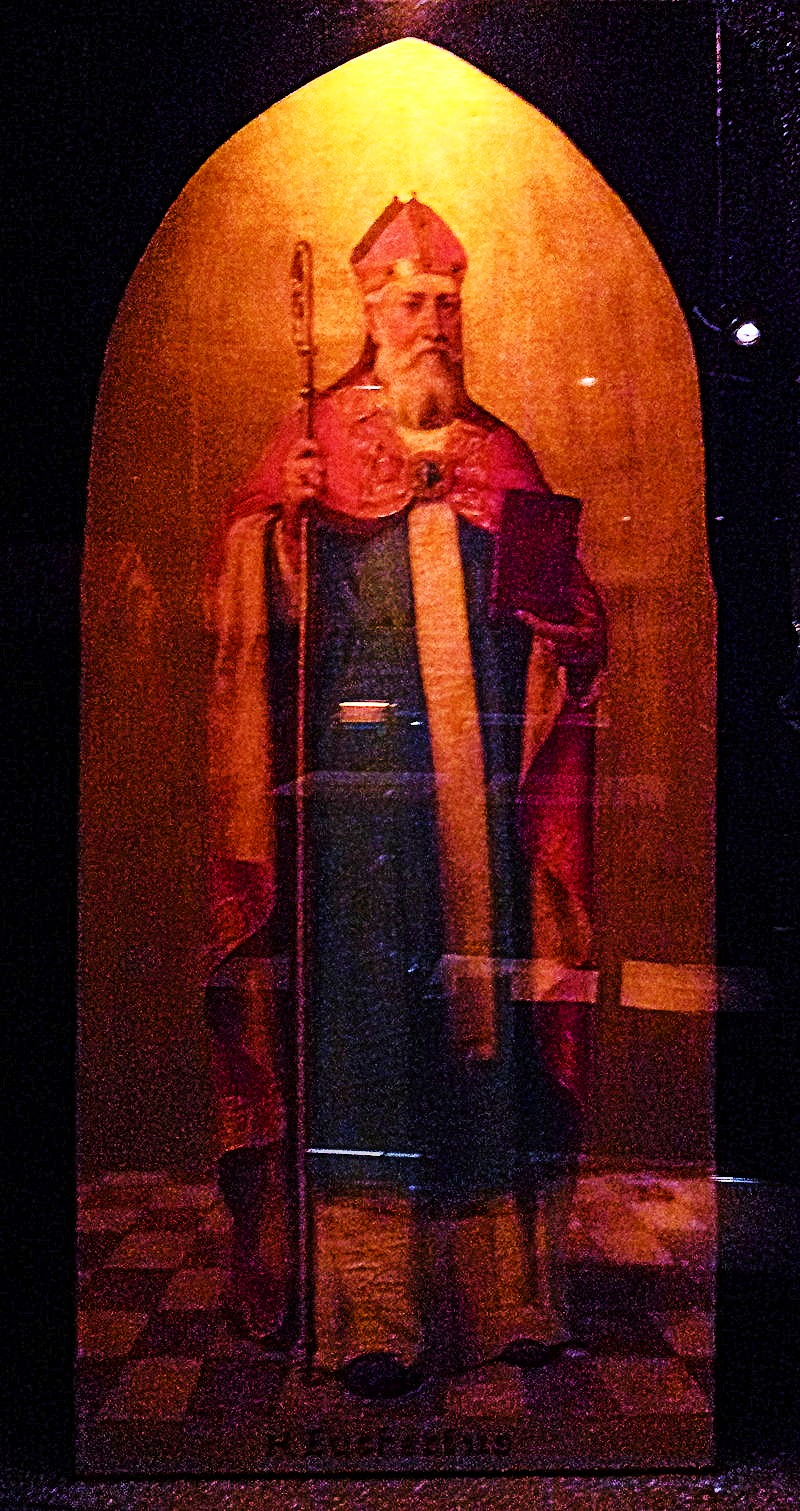
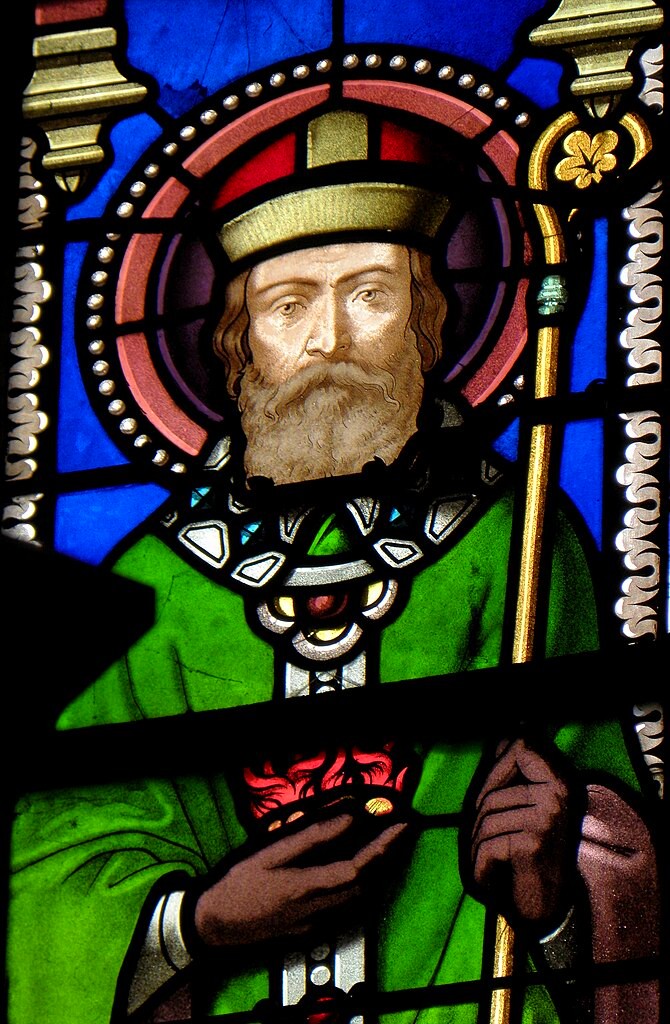
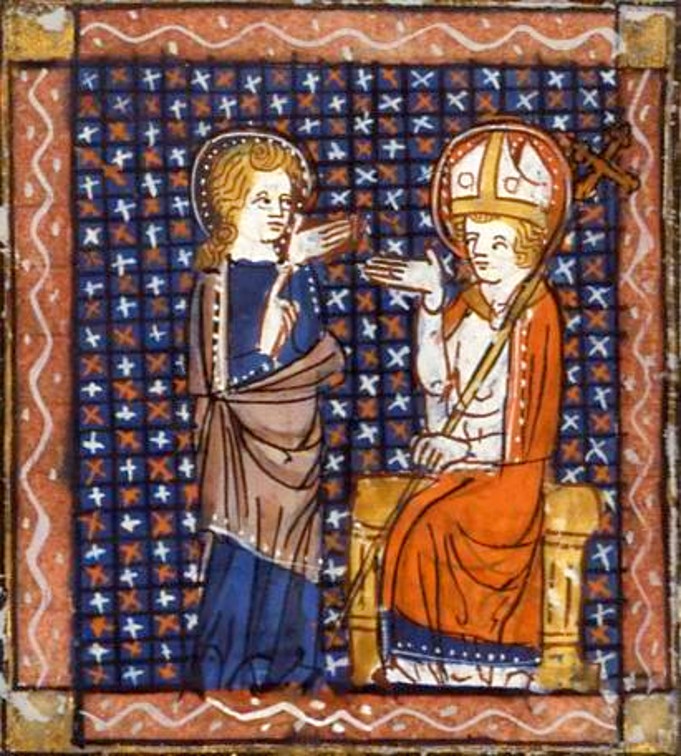
Saint of the Day – 16 November – Saint Eucherius of Lyons (c380-c449) Bishop and Confessor, a learned Scholar and renowned Poet and Writer, Married but later he and his wife separated to lead ermetical lives of prayer and fasting, father of 2 sons and a daughter, both sons became Bishops.
The Roman Martyrology reads today: “At Lyons, the birthday of St Eucherius, Bishop and Confessor, a man of extraordinary faith and learning. He renounced the Senatorial dignity to embrace the Religious life and, for a long time voluntarily shut himself up in a cavern where he served Christ in prayer and fasting. Afterwards, through the revelationm of an Angel, he was solemnly installed in the Episcopal Chair of the City of Lyons.”
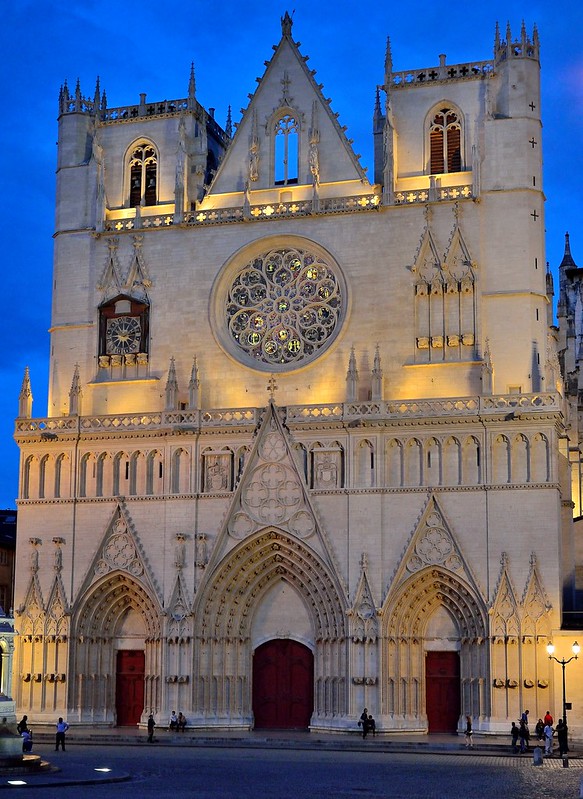
Next to St Ireaneus, no name has done so great honour to the Church of Lyons, as that of the great Eucherius. By birth he was most illustrious in the world but the Saint by despising the empty honours and riches of the world, became far more illustrious in the school of Christ.
Having become a Senator and married Galla, he had two sons, Veranus, who would become the Bishop of Vence and Salonius, later the Bishop of Geneva. Both were educated in the Monastery of Lérins by Hilary, the future Archbishop of Arles. A daughter, Consortia, is also attributed to him.
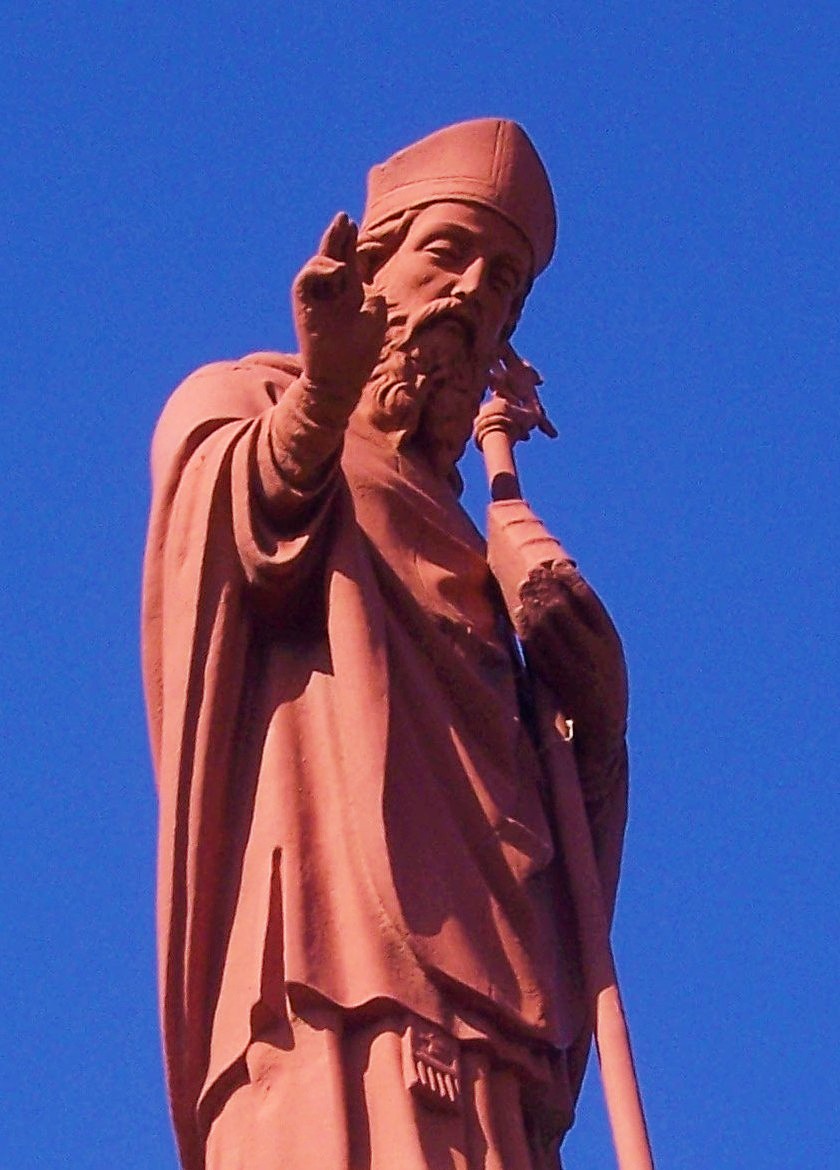
Statue of St Eucherius of Lyon in Beaumont-de-Pertuis
Around 422 Eucherius, with the consent of his wife, himself retired to the Monastery of Lérins, then, to the nearby Island of Sainte-Marguerite, where he led a Hermit’s life. St Cassian dedicated the prologue of his last seven conferences to him and he himself then showed some literary activity.
Many works are attributed to him. In addition to the letters, the homilies on the Martyrs of Lyon , Sts Epipodius and Alexander and the Passio Acaunensium Martyrum can be considered authentic.
Around 435 he was elected to the Episcopal see of Lyons, where he carried out a great pastoral activity. In 441 he attended the 1st Council of Orange. In 449 Poleminus Silvius dedicated his Laterculus to him. He died that year. He is registered on 16 November in the Martyrology of Hieronymus and in the Roman.
St Elpidius the Martyr St Eucherius of Lyons (c380-c449) Bishop and Confessor St Eustochius the Martyr St Felicita of Capua St Fidentius of Padua St Gobrain of Vannes St Ludre St Marcellus the Martyr
Thought for the Day – 15 November – Meditations with Saint Alphonsus Maria de Liguori (1696-1787) Bishop, Confessor, Most Zealous Doctor of the Church
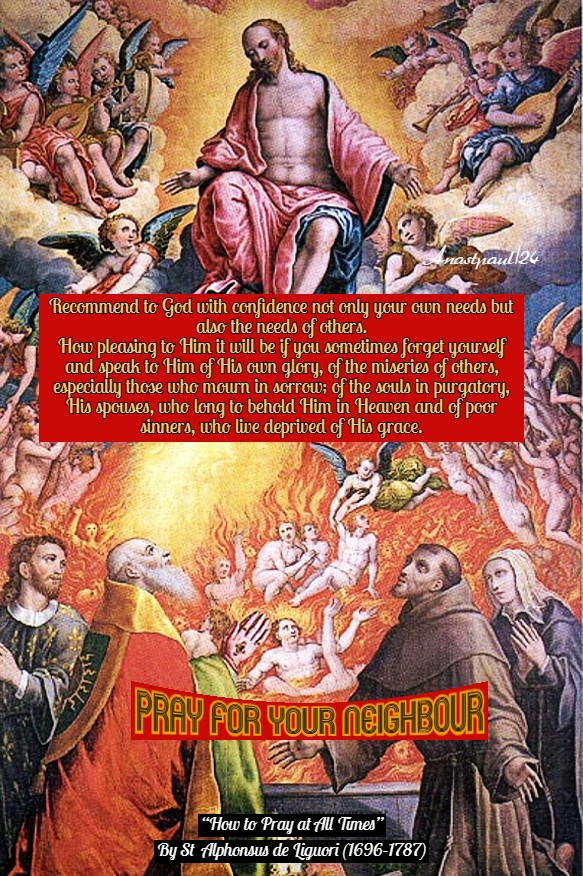
“How to Pray at All Times” By St Alphonsus Maria de Liguori (1696-1787)
Pray For Your Neighbour Excerpt from Chapter Three:VI
“Recommend to God with confidence not only your own needs but also the needs of others. How pleasing to Him it will be if you sometimes forget yourself and speak to Him of His own glory, of the miseries of others, especially those who mourn in sorrow; of the souls in purgatory, His spouses, who long to behold Him in Heaven and of poor sinners, who live deprived of His grace.
Pray to Him for sinners thus – ‘Lord, Thou art all goodness and worthy of an infinite love – how, then, canst Thou endure in the world, so many souls on whom Thou hast lavished Thy favours and who yet, have no desire to know Thee, who have no desire to love Thee, who even offend and despise Thee?’ Ah, my most amiable God, make Thyself known-make Thyself loved. Hallowed be Thy Name, Thy Kingdom come. May Thy Name be adored and loved by all men. May Thy love reign in all hearts. Do not let me depart from Thee without granting me some grace for the unhappy souls for whom I pray.”
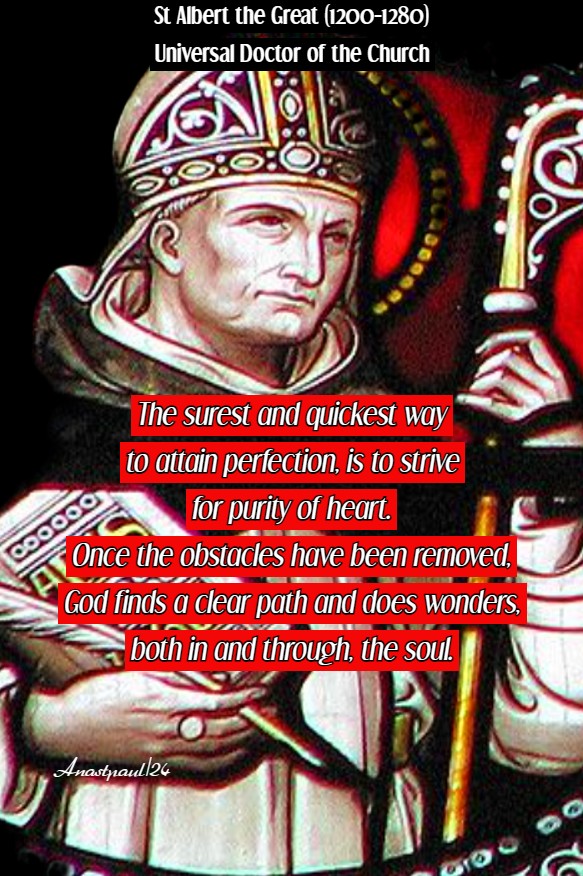
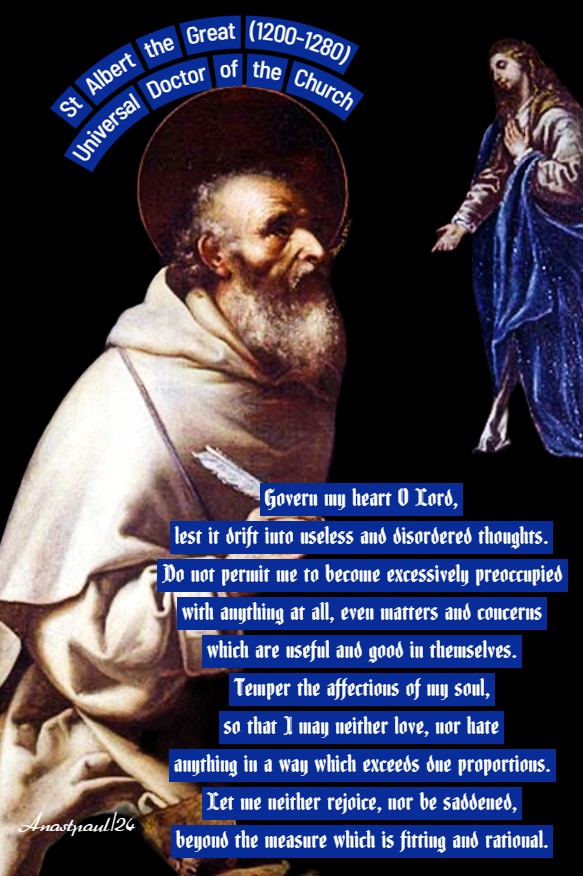
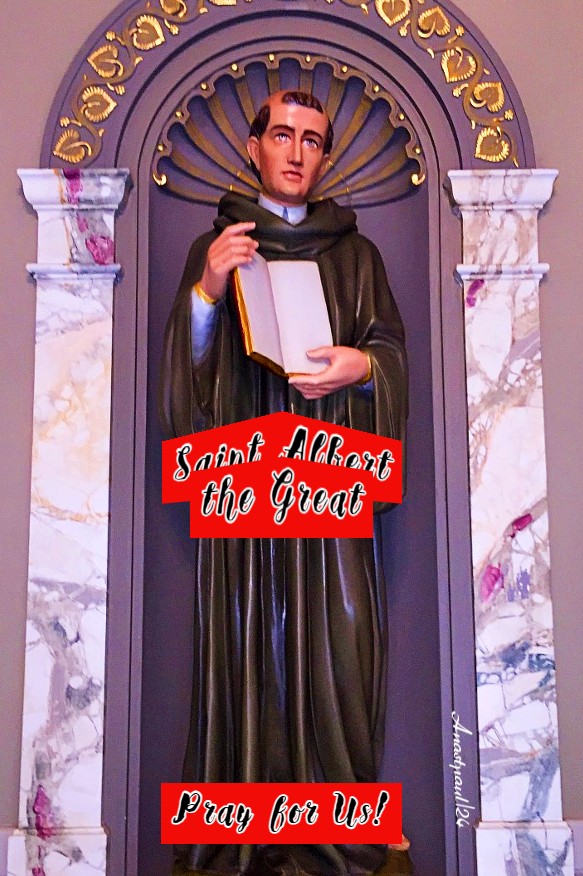
Quote/s of the Day – 15 November – St Albert the Great OP (1200-1280) Bishop, Confessor, Doctor of the Church
“The greater and more persistent your confidence in God, the more abundantly you will receive, all you ask for.”
“The surest and quickest way to attain perfection, is to strive for purity of heart. Once the obstacles have been removed, God finds a clear path and does wonders, both in and through, the soul.”
“Govern my heart O Lord, lest it drift into useless and disordered thoughts. Do not permit me to become excessively preoccupied with anything at all, even matters and concerns which are useful and good in themselves. Temper the affections of my soul, so that I may neither love, nor hate anything in a way which exceeds due proportions. Let me neither rejoice, nor be saddened, beyond the measure which is fitting and rational.”
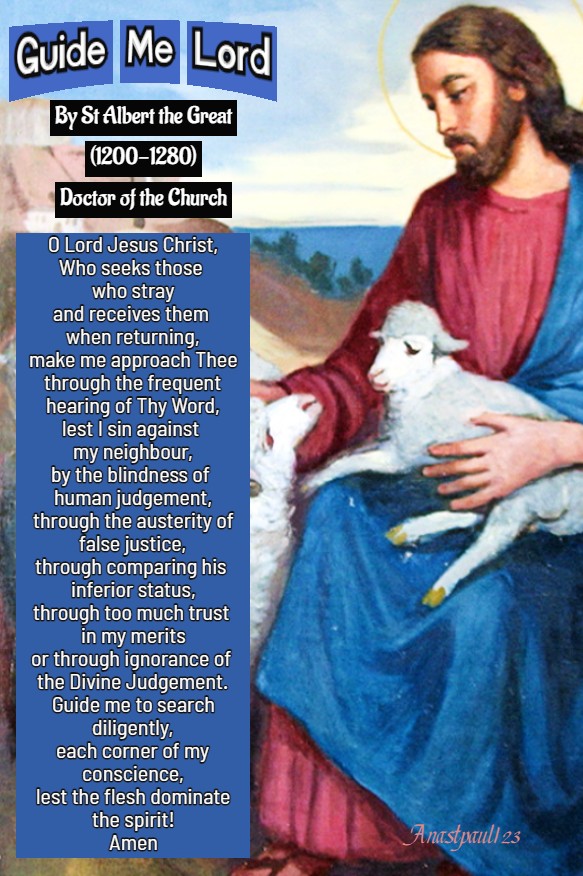
Guide Me Lord By St Albert the Great (1200-1280) Doctor of the Church
O Lord Jesus Christ, Who seeks those who stray and receives them when returning, make me approach Thee through the frequent hearing of Thy Word, lest I sin against my neighbour, by the blindness of human judgement, through the austerity of false justice, through comparing his inferior status, through too much trust in my merits or through ignorance of the Divine Judgement. Guide me to search diligently, each corner of my conscience, lest the flesh dominate the spirit! Amen
One Minute Reflection – 15 November – “The Month of the Holy Souls in Purgatory” – St Albert the Great OP (1200-1280) Bishop, Confessor, Doctor of the Church – 2 Timothy 4:1-8; Matthew 5:13-19 – Scripture search here: https://www.drbo.org/
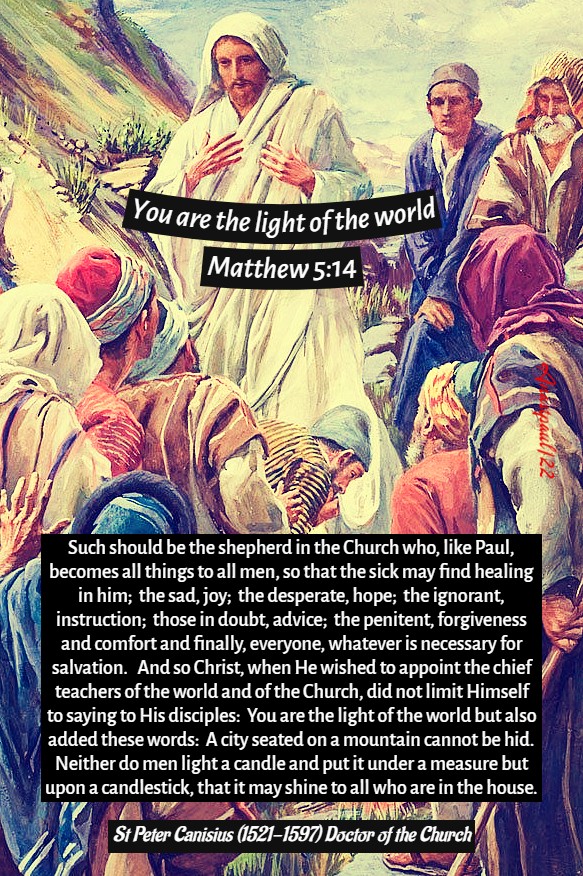
“You are the light of the world.” – Matthew 5:14
REFLECTION – “I shall always love and reverence the Apostles sent by Christ and their successors, in sowing the seed of the Gospel, those zealous and tireless co-operators in propagating the Word, who may justly say of themselves: Let a man so account of us as the ministers of Christ and the dispensers of the Mysteries of God. For Christ, like a most watchful and most faithful householder, wished that the Gospel lamp should be lit by such ministers and delegates, with fire sent down from Heaven and once lit, should not be put under a measure but set upon a candlestick, so that it may spread its brightness far and wide and put to flight, all darkness and error, rife among both Jews and Gentiles.
Now it is not enough for the Gospel teacher to be a brilliant speaker in the eyes of the people; he must also be as a voice crying in the desert and endeavour, by his eloquence, to help many to lead good lives, lest, if he omit his duty of speaking, he be called the dumb dog that is not able to bark, spoken of by the prophet. Yes, he should also burn, in such a way, that, equipped with good works and love, he may adorn his evangelical office and follow the leadership of Paul. He indeed was not satisfied with bidding the Bishop of the Ephesians: This command and teach: conduct thyself in work as a good soldier of Christ Jesus but he unflaggingly preached the Gospel to friend and foe alike and, said with a good conscience to the Bishops gathered at Ephesus: You know how I have kept back nothing that was for your good but have declared it to you and taught you in public and from house to house, urging Jews and Gentiles to turn to God in repentance and to believe in our Lord Jesus Christ.
Such should be the shepherd in the Church who, like Paul, becomes all things to all men, so that the sick may find healing in him; the sad, joy; the desperate, hope; the ignorant, instruction; those in doubt, advice; the penitent, forgiveness and comfort and finally, everyone, whatever is necessary for salvation. And so Christ, when He wished to appoint the chief teachers of the world and of the Church, did not limit Himself to saying to His disciples: You are the light of the world but also added these words: A city seated on a mountain cannot be hid. Neither do men light a candle and put it under a measure but upon a candlestick, that it may shine to all who are in the house. Those churchmen err, who imagine that it is by brilliant preaching, rather than by holiness of life and all-embracing love, they fulfil their office.” – St Peter Canisius SJ (1521-1597) Doctor of the Church (Sermon excerpt).
PRAYER – O God, Who made blessed Albert, ThyBishop and Doctor, eminent in the submission of human wisdom to divine faith, grant us, we beseech Thee, so to follow the path of his teaching that we may enjoy perfect light in Heaven.Through Jesus Christ, Thy Son our Lord, Who lives and reigns with Thee, in the unity of the Holy Ghost, God, world without end. Amen (Collect).
Our Morning Offering – 15 November – St Albert the Great (1200-1280) Bishop, Confessor, Doctor of the Church
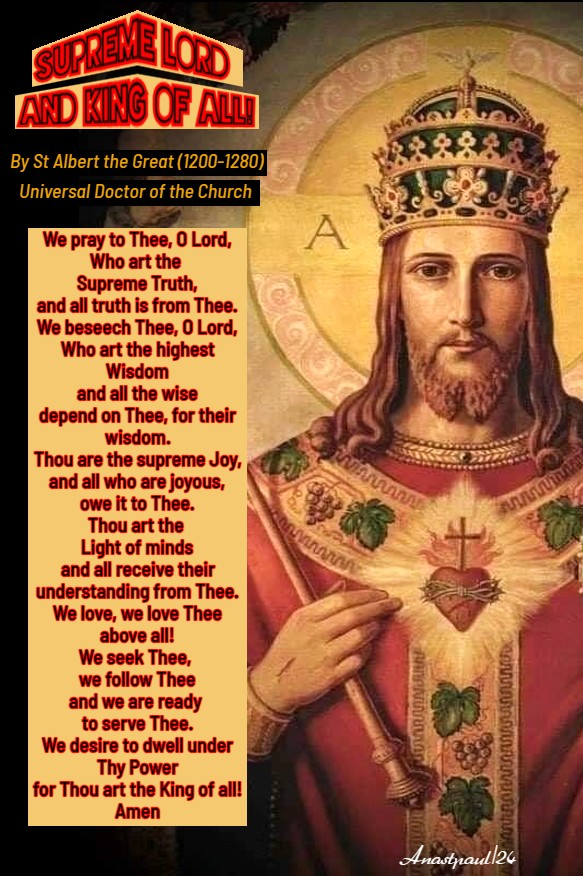
Supreme Lord and King of All! By St Albert the Great (1200-1280) Universal Doctor of the Church
We pray to Thee, O Lord, Who art the Supreme Truth, and all truth is from Thee. We beseech Thee, O Lord, Who art the highest Wisdom and all the wise depend on Thee, for their wisdom. Thou are the supreme Joy, and all who are joyous, owe it to Thee. Thou art the Light of minds and all receive their understanding from Thee. We love, we love Thee above all! We seek Thee, we follow Thee and we are ready to serve Thee. We desire to dwell under Thy Power for Thou art the King of all! Amen
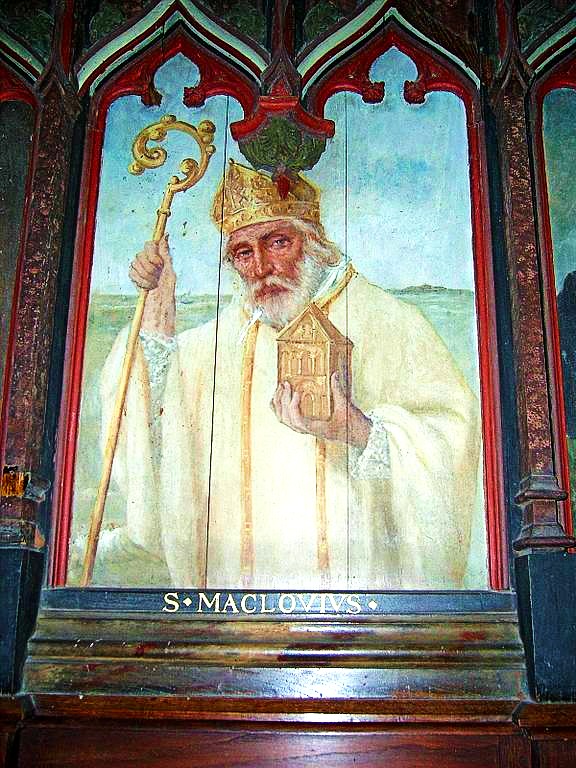
Saint of the Day – 15 November – Saint Malo (c520-621) the 1st Bishop of Aleth in Brittany, France, Missionary, one of the Seven Founding Saints of Brittany, disciple and companion of St Brendan the Navigato on his renowned voyages, Founder of Monateries, Churches and a City names after him, Miracle-worker. Born on 27 March c520 at Llancarfan, Wales and died possibly on 15 November 621 (aged 101) in Archambiac, Aquitaine, France. Patronages – of his hometown of Llancarfan, Wales and of Saint-Malo, the City name for him in Brittany, France. Also known as – Malo of Aleth, Malo de Phily, Malo of Brittan, Mac’h Low… Machutus… Maclou… Maclovio… Maclovius… Macuto…
The Roman Martyrology reads today: “At Bretagne, the birthday of St Malo, Bishop, who was glorious for miracles from his early years.”
Malo was the son of Dervel, sister of Amwn Ddu and, therefore, a cousin to St Samson. He was placed in the Abbot’s care in the Llancarfan Abbey in Wales, at a tender age and grew up at the Abbey, where he was Ordained Priest and assigned the office of preacher.
As a Monk at Llancarfan Abbey, Malo was known for his participation in the voyages of St Brendan the Navigator. Malo became Brendan’s favourite disciple.
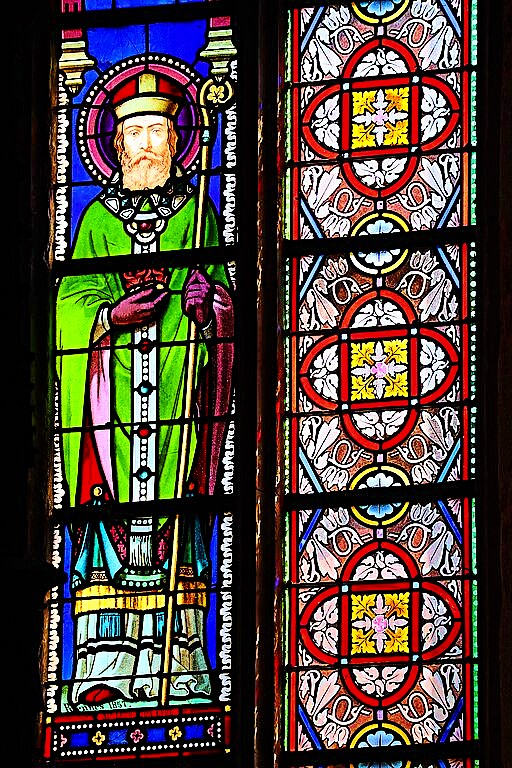
This window of St Malo resides in Réguiny Church in Brittany,
A number of legendary tales of the adventures of Brendan and Malo survive. According to the Voyage of St Brendan the Abbot, they and their companions discovered the ‘Island of the Blest.’ Another tale tells of an encounter with Maclovius, a dead giant whom Brendan temporarily revived and baptised.
On a second voyage, Brendan and Malo visited and evangelised locations including the Orkney Islands and the northern isles of Scotland.
They travelled to the coast of France and landed in Brittany . At Aleth, Malo served under a venerable Hermit named Aaron. Upon Aaron’s death in 544, Malo continued the spiritual rule of the district subsequently known as Saint-Malo and was Consecrated as the 1st Bishop of Aleth (now Saint Servan). Many miracles are related of his missionary work there.
In old age, the disorder on the island compelled Malo to leave but the people soon begged him to return. He obliged his faithful and returned to restore order. Feeling near the end of his life, Malo was determined to spend his last days in solitary penance. He died at an advanced age during a journey from Aleth to a neighbouring Town.
The City of Saint-Malo is one of the Seven stages in the ‘Tour of Brittany’ a pilgrimage celebrating the Seven Founding Saints.
Pontoise Cathedral near Paris, is dedicated to Saint Malo. Lesmahagow Priory in South Lanarkshire is also dedicated to him in the Latin form of his name, Machutus. He is the Patron Saint of the Churches of St Maughans and Llanfaenor in Monmouthshire and Llanfechell in Anglesey.
St Anianus of Wilparting St Arnulf of Toul Bl Caius of Korea St Desiderius of Cahors St Eugene of Toledo St Felix of Nola St Findan St Fintan the Missionary St Gurias of Edessa Bl Hugh Faringdon Bl John Eynon Bl John Rugg Bl John Thorne
Blessed Lucia (Lucy) of Narni OP (1476-1544) Virgin, Tertiary of the Order of Preachers, Mystic, Stigmatist, Her body is incorrupt. So many miracles occurred at her Shrine that Lucia was finally Beatified on 1 March 1710 by Pope Clement XI. It is thought that Lucia was the inspiration for th little girl Lucy, who could see many things that no-one else could, in C S Lewis’ The Chronicles of Narnia. Her Life: https://anastpaul.com/2021/11/15/saint-of-the-day-15-november-blessed-lucia-of-narni-op-1476-1544/
St Luperius of Verona St Machudd of Llanfechell St Malo (c520-621) Bishop St Marinus of Wilparting
St Paduinus of Le Mans Bl Richard Whiting Bl Roger James St Shamuna of Edessa St Sidonius of Saint-Saens
Martyrs of Hippo – 20 Saints: 20 Christians Martyred together and celebrated by Saint Augustine. The only details about them to survive are three of the names – Fidenziano, Valerian and Victoria. Hippo, Numidia (in north Africa).
Martyrs of North Africa – 3 Saints: A group of Christians murdered for their faith in imperial Roman north Africa. The only details that have survived are the names of three of them – Fidentian, Secundus and Varicus.
Thought for the Day – 14 November – Meditations with Saint Alphonsus Maria de Liguori (1696-1787) Bishop, Confessor, Most Zealous Doctor of the Church
“How to Pray at All Times” By St Alphonsus Maria de Liguori (1696-1787)
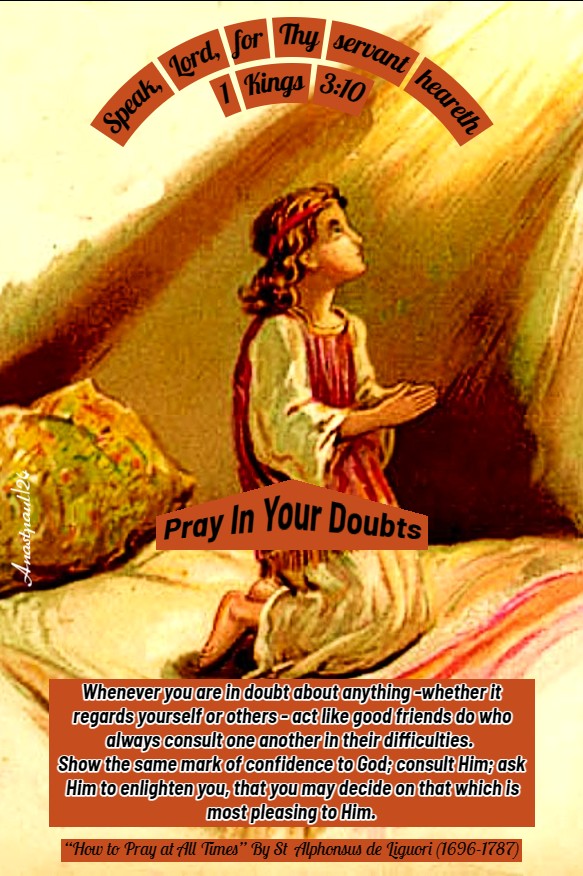
Pray In Your Doubts Excerpt from Chapter Three:V
“Whenever you are in doubt about anything -whether it regards yourself or others – act like good friends do who always consult one another in their difficulties. Show the same mark of confidence to God; consult Him; ask Him to enlighten you, that you may decide on that which is most pleasing to Him.
Put Thou words in my mouth and strengthen the resolution in my heart (Jud 9:18). Lord, make known to me that which Thou wouldst have me do and I will obey Thee: Speak, Lord, for Thy servant heareth (i Kings 3:10).”
Quote/s of the Day – 14 November – St Josaphat Kuncewicz OSBM (1584-1623) Confessor, Archbishop, Martyr – Hebrews 5:1-6, John 10:11-16 – Scripture search here: https://www.drbo.org/
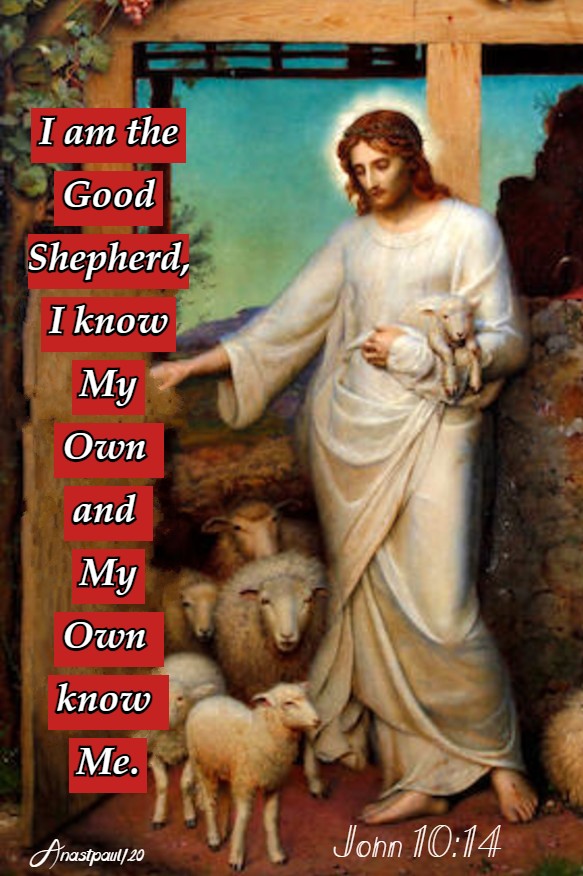
“I am the Good Shepherd, I know My Own and My Own know Me.”
John 10:14
“My sheep hear My Voice; I know them and they follow Me.”
John 10:27
“I am like the sick sheep which strays from the rest of the flock. Unless the Good Shepherd takes me on His shoulders and carries me back to His fold, my steps will falter and, in the very effort of rising, my feet will give way!”
St Jerome (343-420) Father and Doctor of the Church
“Christ said that the shepherd enters through the gate and that He is Himself the Gate, as well as the Shepherd. Then, it is necessary, that He enter through Himself. By so doing, He reveals Himself and through Himself, He knows the Father. But we enter through Him because through Him, we find happiness.”
St Thomas Aquinas (1225-1274) Doctor Angelicus/ Doctor Communis
“The measure of love, is to love without measure.”
St Francis de Sales (1567-1622) Doctor of the Church
One Minute Reflection – 14 November – “The Month of the Holy Souls in Purgatory” – St Josaphat Kuncewicz OSBM (1584-1623) Confessor, Archbishop, Martyr – Hebrews 5:1-6, John 10:11-16 – Scripture search here: https://www.drbo.org/
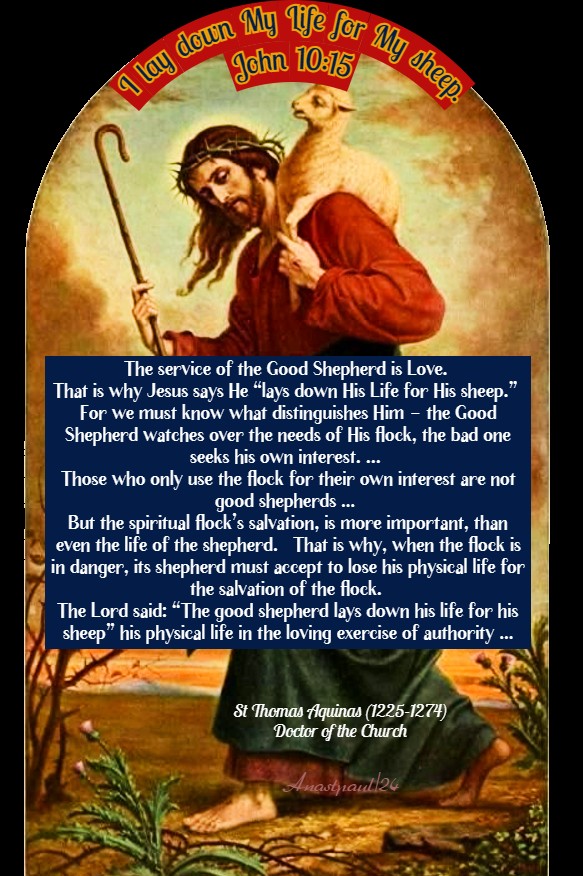
“ I lay down My Life for My sheep.” – John 10:15
REFLECTION – “The service of the Good Shepherd is Love. That is why Jesus says He “lays down His Life for His sheep.” For we must know what distinguishes Him – the Good Shepherd watches over the needs of His flock, the bad one seeks his own interest. That is what the Prophet said: “Woe to the shepherds of Israel, who seek only to feed themselves! Should they not feed their flock?” (Ezek 34:2). Those who only use the flock for their own interest are not good shepherds … A good shepherd, in the natural sense, bears with much for the sake of the flock over which he watches, as Jacob testified: “By day the heat consumed me and the cold by night.” (Gen 31:40)…
But the spiritual flock’s salvation, is more important, than even the life of the shepherd. That is why, when the flock is in danger, its shepherd must accept to lose his physical life for the salvation of the flock. The Lord said: “The good shepherd lays down his life for his sheep” his physical life in the loving exercise of authority … Christ gave us an example: “He laid down His Life for us – and we ought to lay down our lives for one another.” (1 Jn 3:16).” – St Thomas Aquinas (1225-1274) Dominican Priest and Friar, Theologian, Doctor of the Church (Lectura super Ioannem, X lect 3, 1-20).
PRAYER – Arouse in Thy Church, O Lord, the spirit with which blessed Josaphat, Thy Martyr and Bishop, was filled, when he laid down his life for his flock; so that, by his intercession, we, also moved and strengthened by the same spirit, may not fear to lay down our lives for our brethren. Through Jesus Christ, Thy Son our Lord, Who lives and reigns with Thee, in the unity of the Holy Ghost, God, world without end. Amen (Collect).
Our Morning Offering – 14 November – Thursday being the day devoted to the Most Holy Eucharist
Prayer in Adoration of the Sacred Heart By St Margaret Mary Alacoque (1647-1690) Visionary and Apostle of the Sacred Heart of Jesus
Jesus Christ, my Lord and my God, Whom I believe to be really present in the Blessed Sacrament of the Altar, receive this most profound Act of Adoration to supply for the desire I have, to adore Thee unceasingly and in thanksgiving, for the sentiments of love which Thy Sacred Heart has for me in this Sacrament. I cannot better acknowledge them, than by offering Thee, all the Acts of Adoration, resignation, patience and love which this same Heart has made during its mortal life and which it makes still and which it shall make eternally in Heaven, in order that through it, I may love Thee, praise Thee and adore Thee worthily, as much as it is possible for me. I unite myself to this Divine Offering which Thou dost make to Thy Divine Father and I consecrate to Thee, my whole being, praying Thee, to destroy in me, all sin and not to permit that I should be separated from Thee, in time and eternally. Amen
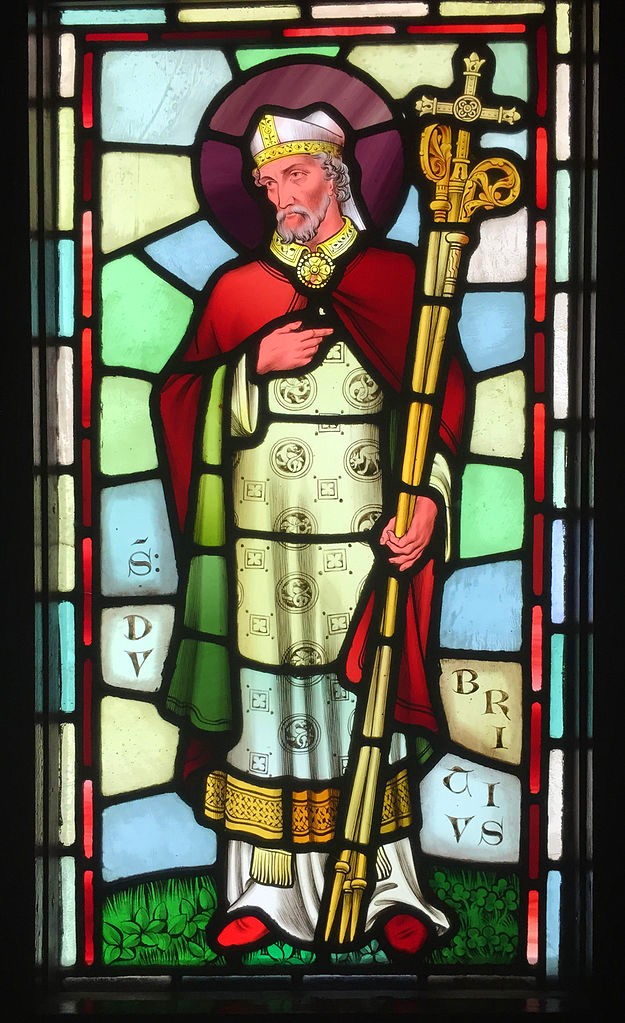
Saint of the Day – 14 November – Saint Dubricius of Wales (c465-c545) Bishop and Confessor, Monk and Founder of Monasteriest, becoming an Abbot, highly renowned and learned Scholar, Hermit, Miracle-worker. Born in Madley (?) near Hereford in England around 465 and died in c545 of natural causes. on Bardsey Island, Wales. Dubricius is one of the greatest of Welsh Saints. He is usually represented holding two Crosiers which signify his jurisdiction over the Sees of Caerleon and Llandaff. Patronages – of Hereford (his birth City in England), of Caldey Island and Monmouth in Wales. Also known as – Dubricius Dubritius, Dubric, Dyfig, Devereux. Additional Memorial – 9 February (on some calendars), 29 May (translation of his Relics).
Dubricius was the illegitimate son of Efrddyl, the daughter of King Peibio Clafrog of Ergyng. His grandfather threw his mother into the River Wye when he discovered she was pregnant, but failed to drown her. Dubricius was born in Madley in Herefordshire, England. He and his mother were reconciled with Peibio when the child Dubricius touched him and cured him of his leprosy.
Noted for his precocious intellect, by the time he attained manhood, Dubricius was already known as a scholar throughout Britain. Dubricius founded a Monastery at Hentland and then one at Moccas, both of these in Herefordshire.
Later moving to Wales, he became the teacher of many well-known Welsh Saints, including Teilo and Samson and also healed the sick of various disorders through the laying on of hands.
Dubricius was Consecrated as the Bishop of Llandaff by Saint Germanus of Auxerre and legend says he later crowned King Arthur. He lalso became the Bishop of Ergyng, possibly with his seat at Weston and probably held sway over all of Glamorgan and Gwent, an area which was then incorporated into the Diocese of Llandaff. Dubricius was a good friend of Saints Illtud and Samson. He attended the Synod of Llanddewi Brefi in 545, where he is said to have resigned his See in favour of Saint David.
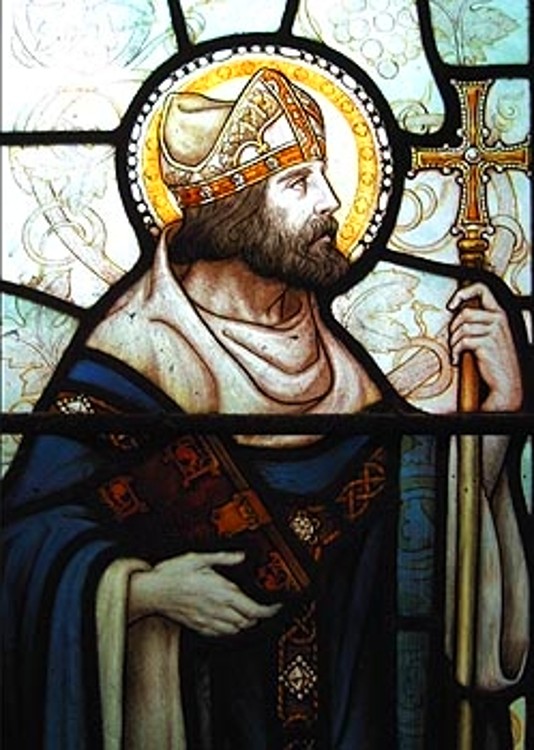
Stained glass depiction of St Dubricius, designed by William Burges, at Castell Coch, Cardiff, Wales
It is believed that he died not long after having retired to Bardsey Island to live his last years as a Hermit. This is where he was eventually buried before his body was translated to Llandaff Cathedral in 1120. There are many Churches dedicated to our Saint across England and Wales.
All Saints of the Carmelite Order: On this day, the Carmelite Family celebrates the memory of all its holy men and women, those known and those unknown, those living on Earth and those living in Heaven, who reflect the glory of God.
St Joseph Maria Pignatelli SJ (1737 – 1811) Priest of the Society of Jesus known as “The Restorer of the Society of Jesus” and “The Second Founder of the Society of Jesus” following the suppression of the Society of Jesus by Pope Clement XIV in 1773. He was Beatified on 21 May 1933 by Pope Pius XI and was Canonised on 12 June 1954 by Venerable Pope Pius XII. His Life: https://anastpaul.com/2019/11/14/saint-of-the-day-14-november-saint-joseph-maria-pignatelli-sj-1737-1811/
St Jucundus of Bologna
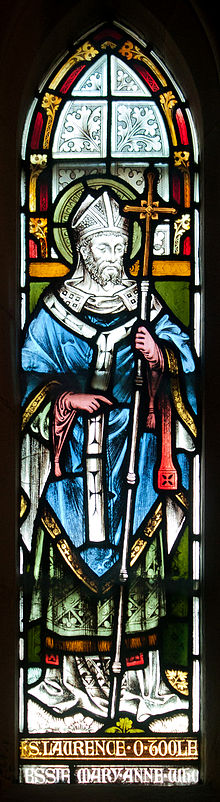
St Laurence O’Toole/Lorcán Ua Tuathail (c 1128 – 1180) Archbishop of Dublin, Abbot, Reformer, Mediator, Preacher, Apostle of Charity, Papal Legate to Ireland, he established new Churches and Monasteries. Due to the great number of miracles that rapidly occurred either at his tomb or through his intercession, Lorcán was canonised only 45 years after his death in 1225 by Pope Honorius III. Biography: https://anastpaul.com/2018/11/14/saint-of-the-day-14-november-st-laurence-otoole-c-1128-1180/
St Modanic St Pierre of Narbonne St Ruf of Avignon St Serapion of Alexandria
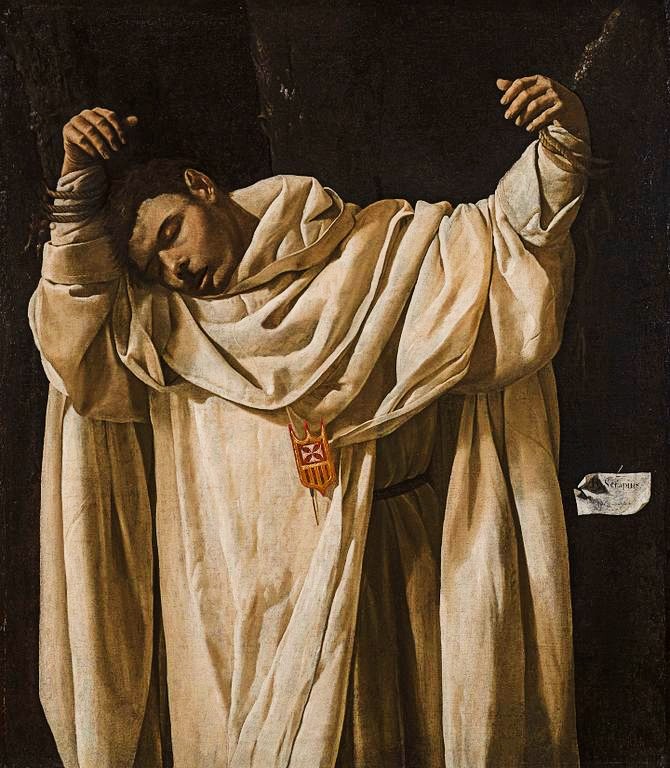
St Serapion of Algiers OdeM (c 1179–1240) Mercedarian Priest and Martyr, Soldier and Crusader. The Roman Martyrology states today: “At Algiers in Africa, the blessed Serapion, of the Order of Our Blessed Lady of Ransom, for the Redemption of the faithful in captivity and the preaching of the Christian Faith. He was the first of his Order to deserve the Palm of Martyrdom by being crucified and cut to pieces.” On 14 July 1728, a decree was issued confirming his immemorial cult. he was Canonised on 14 April 1728 by Pope Benedict XIII and on 24 August 1743, he was included in the Roman Martyrology. His Life and Death: https://anastpaul.com/2021/11/14/saint-of-the-day-14-november-saint-serapion-of-algiers-odem-c-1179-1240-martyr/
St Siard OPraem (Died 1230) Abbot of the Premonstratensian Order or the “Norbertines.”Siard of Friesland in the Netherlands, was a holy Abbot of the Norbertine Abbey in Mariëngaard by Hallum in Friesland. He was a powerful and hardworking Administrator, abiding strictly by the Rule of the Order, Apostle of the poor and needy, a holy Abbot of deep and mystical piety and prayer, on occasion he was seen in ecstasy, Peace-maker. Patronage – against blindness, bodily ailments. His Zealkous and Holy Life: https://anastpaul.com/2022/11/14/saint-of-the-day-14-november-saint-siard-opraem-died-1230/
St Venerando the Centurian St Venerandus of Troyes
Martyrs of Emesa: Group of Christian women tortured and executed for their faith in the persecutions of the Arab chieftain Mady. They died in Emesa (modern Homs, Syria).
Martyrs of Heraclea – (3 Saints): Group of Christians murdered together for their faith. The only details we have are three of their names – Clementinus, Philomenus and Theodotus. They were Martyred in Heraclea, Thrace.
Thought for the Day – 13 Noivember – Meditations with Saint Alphonsus Maria de Liguori (1696-1787) Bishop, Confessor, Most Zealous Doctor of the Church
“How to Pray at All Times” By St Alphonsus Maria de Liguori (1696-1787)
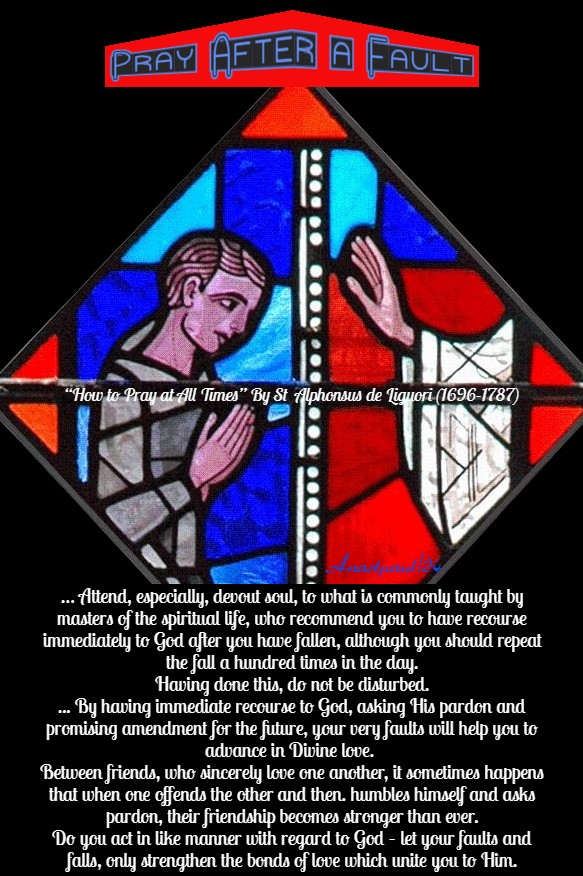
Pray After a Fault Excerpt from Chapter Three:IV
“Another mark of confidence, highly pleasing to our most loving God, is this – that when you have committed any fault, you are not ashamed to go at once to Him and seek His pardon. Consider that God is so willing to pardon sinners that He laments their perdition, when they depart far from Him and live lives dead to His grace.
… He promises to receive a soul who has forsaken Him, if only the soul returns to His arms … If you come to Me and repent, though your soul be dyed deep crimson with crime, by My grace it shall be made white as snow.
… Attend, especially, devout soul, to what is commonly taught by masters of the spiritual life, who recommend you to have recourse immediately to God after you have fallen, although you should repeat the fall a hundred times in the day. Having done this, do not be disturbed. If you remain discouraged and troubled because of the fault committed, you will scarcely speak to God; your confidence will grow less; your desire to love God will grow cold and you will make little or no advancement in the way of the Lord. On the other hand, by having immediate recourse to God, asking His pardon and promising amendment for the future, your very faults will help you to advance in Divine love. Between friends, who sincerely love one another, it sometimes happens that when one offends the other and then. humbles himself and asks pardon, their friendship becomes stronger than ever. Do you act in like manner with regard to God – let your faults and falls, only strengthen the bonds of love which unite you to Him.”
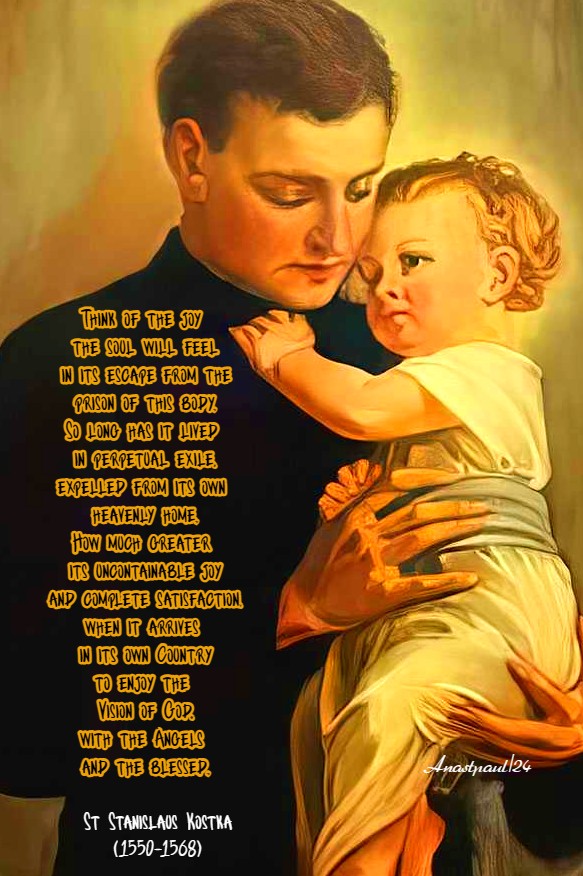
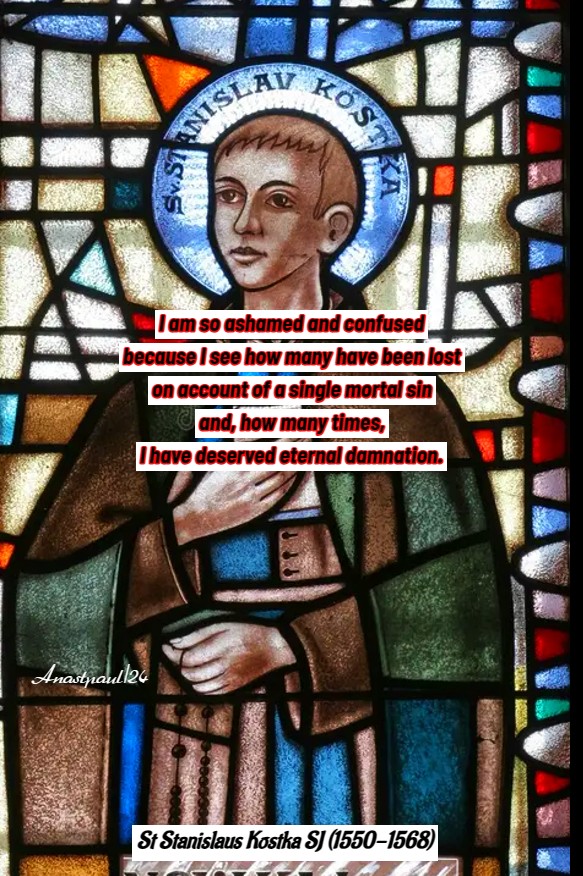
Quote/s of the Day – 13 November – St Stanislaus Kostka SJ (1550-1568) Jesuit Novice
“Think of the joy the soul will feel in its escape from the prison of this body. So long has it lived in perpetual exile, expelled from its own heavenly home. How much greater its uncontainable joy and complete satisfaction, when it arrives in its own Country to enjoy the Vision of God, with the Angels and the blessed.”
“I am so ashamed and confused because I see how many have been lost on account of a single mortal sin and, how many times, I have deserved eternal damnation.”
One Minute Reflection – 13 November – “The Month of the Holy Souls in Purgatory” – St Didacus de Alcalá de Henares) OFM (c 1400-1463) Confessor – 1 Corinthians 4:9-14; Luke 12:32-34 – Scripture search here: https://www.drbo.org/
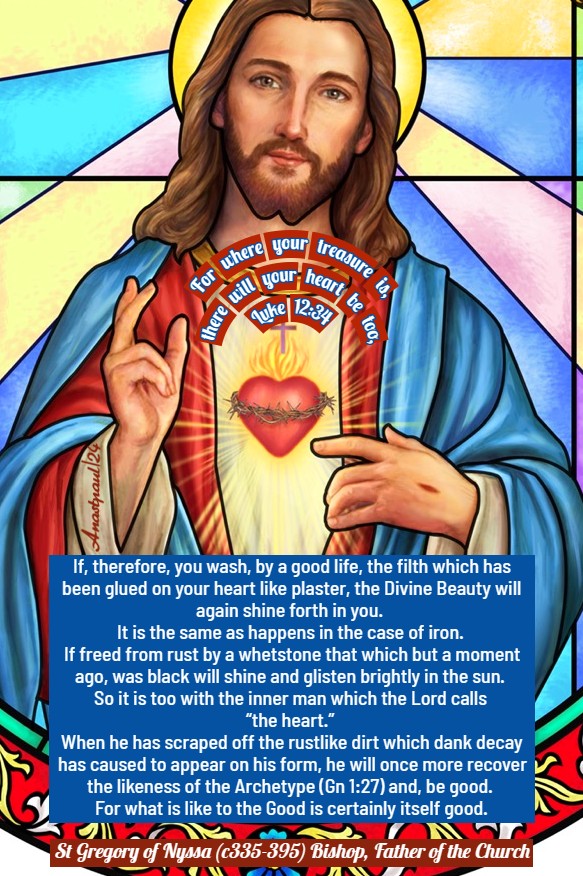
“For where your treasure is, there will your heart be too.” – Luke 12:34
REFLECTION – “…If, therefore, you wash, by a good life, the filth which has been glued on your heart like plaster, the Divine Beauty will again shine forth in you. It is the same as happens in the case of iron. If freed from rust by a whetstone that which but a moment ago, was black will shine and glisten brightly in the sun. So it is too with the inner man which the Lord calls “the heart.” When he has scraped off the rustlike dirt which dank decay has caused to appear on his form, he will once more recover the likeness of the Archetype (Gn 1:27) and, be good. For what is like to the Good is certainly itself good.
Hence, if a man who is pure of heart sees himself, he sees in himself what he desires and thus, he becomes blessed because, when he looks at his own purity, he sees the Archetype in the image. To give an example. Although men, who see the sun in a mirror, do not gaze at the sky itself, yet they see the sun in the reflection of the mirror, no less than those who look at its very orb. So, He says, it is also with you. Even though you are too weak to perceive the Light itself, yet if you but return to the grace of the image with which you were informed from the beginning, you will have all you seek in yourselves.
…For the Godhead is purity, freedom from passion and separation from all evil. If, therefore, these things be in you, God is indeed in you. Hence, if your thought is without any alloy of evil, free from passion, arid alien from all stain, you are blessed because you are clear of sight.” – St Gregory of Nyssa (c335-395) Bishop, Father of the Church (Brother of St Basil the Great) (Sermons 6 sur les Béatitudes – on the Beatitudes 6).
PRAYER – Almighty, eternal God, Who in Thy wondrous providence, choose the weak things of the world to overcome the strong, mercifully grant unto us Thy humble servants that, by the loving prayers of blessed Didacus, Thy Confessor, we may be found worthy to be raised unto the everlasting glory of Heaven. Through Jesus Christ, Thy Son our Lord, Who lives and reigns with Thee, in the unity of the Holy Ghost, God, world without end. Amen (Collect).
Saint of the Day – 13 November – Saint Brice of Tours (c370-444) Bishop, disciple of St Martin of Tours, Penitent, Miracle-worker. Born in Gaul, modern France and died in Tours, France of natural causes. Patronages – against colic, against stomach diseases, of Tours, of Calimera and Samperone in Italy. Also known as – Briccius, Brictius, Britius, Brixius, Brizio, Brizo.
The Roman Martyrology reads today: “At Tours, St Brice, Bishop, disciple of the blessed Bishop Martin.”
St Martin, whose Feast we kept two days ago, was succeeded in the See of Tours, as he had predicted, by a Monk named Brice, a singularly unpromising candidate to succeed such a holy Bishop.
Martin had spent as much time as his Episcopal duties permitted among a monastic community at Marmoutier near Tours, into which he himself had taken the orphaned Brice. St Gregory of Tours describes Brice as “proud and vain” and St Martin’s Biographer, St Sulpicius Severus, tells the story in his Dialogues (3.15) of Brice being led by devils to “vomit up a thousand reproaches against Martin” even daring to assert that he, himself, was much holier for being raised from childhood in a Monastery, while Martin was raised in a military camp. Although Brice repented of this (as St Sulpicius believed, due to Martin’s prayers) and asked for the Saint’s forgiveness, he continued to be a very difficult character. Martin refused to remove him from the Priesthood, lest he would be judged to do so, as an act of vengeance but, expressed his tolerance in less than-complimentary terms: “If Christ could put up with Judas, why should I not put up with Brice?”
St Brice and St Martin
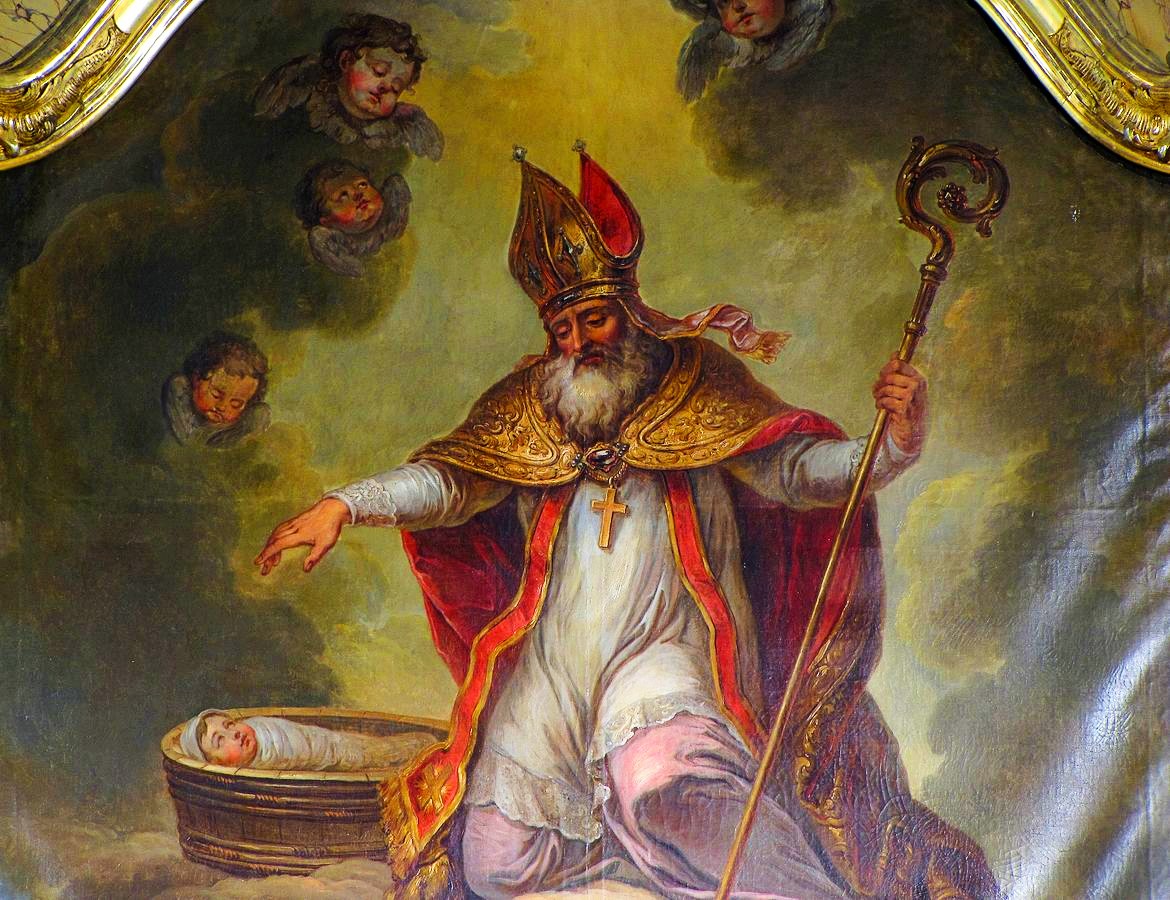
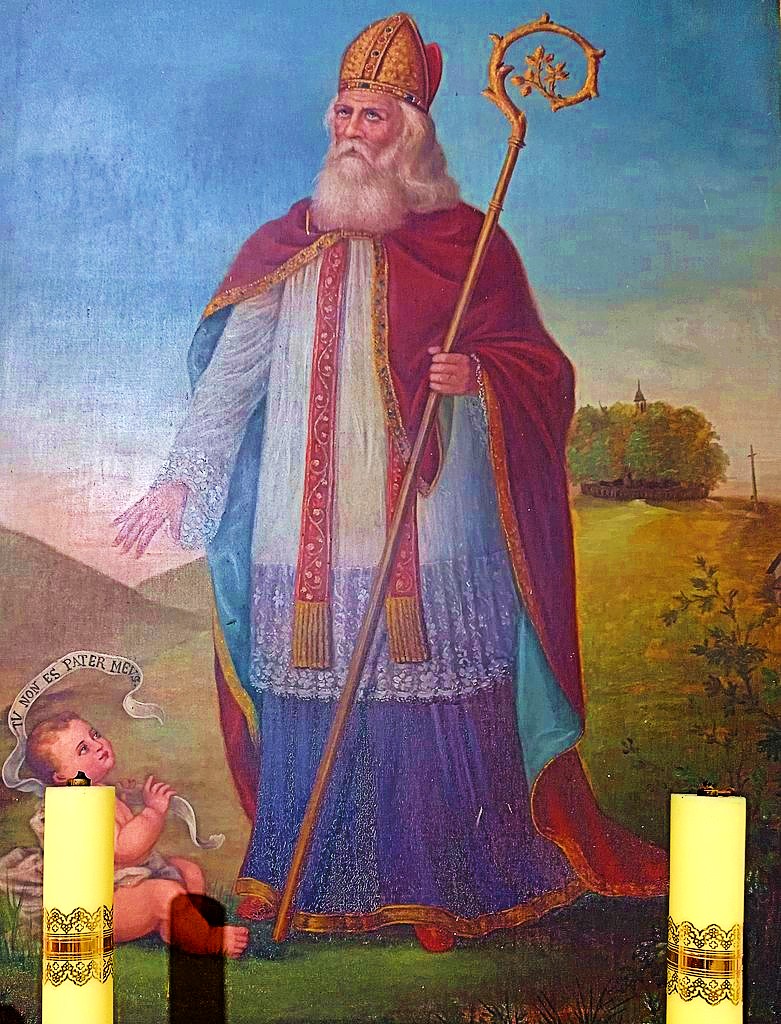
St Martin had predicted, not only that Brice would succeed him as the Bishop, but, that he would suffer much in the Episcopacy, words which Brice dismissed as “ravings.” Both predictions were fulfilled in the following manner. Although Brice was vain and proud, he was “chaste in body” and yet, he was accused of fathering a child. The revised Butler’s Lives of the Saints says, with characteristic reticence that he vindicated himself by “a very astonishing miracle” without saying what the miracle was. St Gregory of Tours tells us that Brice called together the faithful and before them ordered the month-old infant to say whether or not he was the father, at which the child did indeed say, “You are not my father!” The people ask Brice to make the infant say who its father was but Brice replied, “That is not my job. I have taken care of the part of this business which pertains to me; if you can, ask for yourselves.”
St Brice with the Infant, from the Church of St Médard in Boersch in Eastern France.
This miraculous event was attributed, perhaps understandably, to the use of magic, rather than holiness and so Brice attempted to vindicate himself by carrying hot coals in his cloak to the Tomb of St Martin; when he arrived his cloak was not burnt. But this sign was also not accepted and so he was driven from his See, “that the words of the Saint might be fulfilled, ‘Know that, in the Episcopate, you will suffer many adversities.’ …
Then Brice sought out the Pope of Rome, weeping and mourning and saying ‘Rightly do I suffer these things because I sinned against God’s Saint and often called him crazy and deluded and, seeing his virtues, I did not believe.’ ” After staying in Rome for seven years and purging his sins by the celebration of many Masses, he was restored to his See which he governed for a further seven years as a man “of magnificent sanctity,” according to St Gregory, very much changed for the better by the experience.
I believe, a Polish image of St Brice with the Infant
His popularity in the medieval period was very great and his Feast is found on most calendars, although not that of Rome. This is due in part to his association with St Martin but perhaps more, as an example of something which the medievals understood very well and loved to dwell upon – it is never too late for God’s grace to bring us away from sin to sanctity and even to Sainthood. And so we ask St Brice to assist us by his intercession, in our repentance and our growth in holiness. (Adapted from Gregory DiPippo’s articleon NLM).
Our Morning Offering – 13 November – “The Month of the Holy Souls in Purgatory”
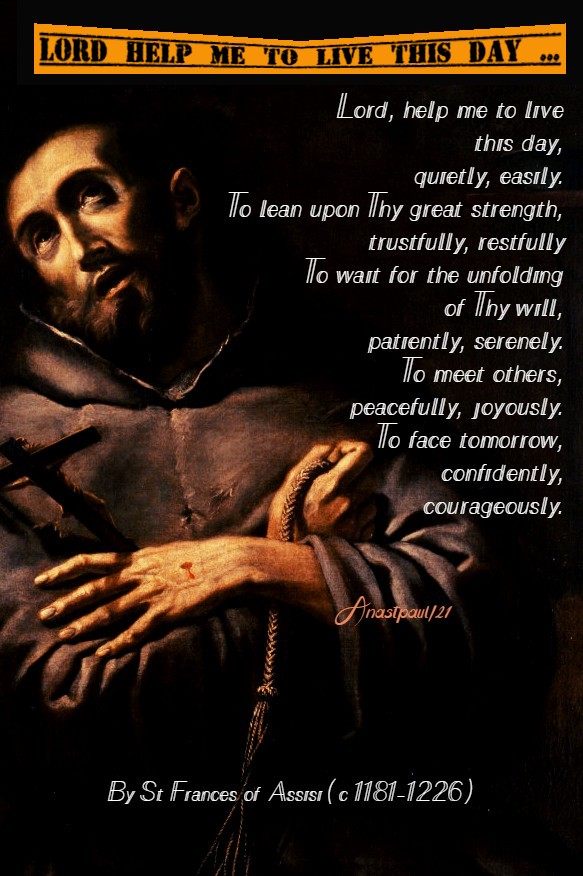
Lord, Help Me to Live This Day By St Frances of Assisi (c1181-1226)
Lord, help me to live this day, quietly, easily. To lean upon Thy great strength, trustfully, restfully. To wait for the unfolding of Thy will, patiently, serenely. To meet others, peacefully, joyously. To face tomorrow, confidently, courageously. Amen
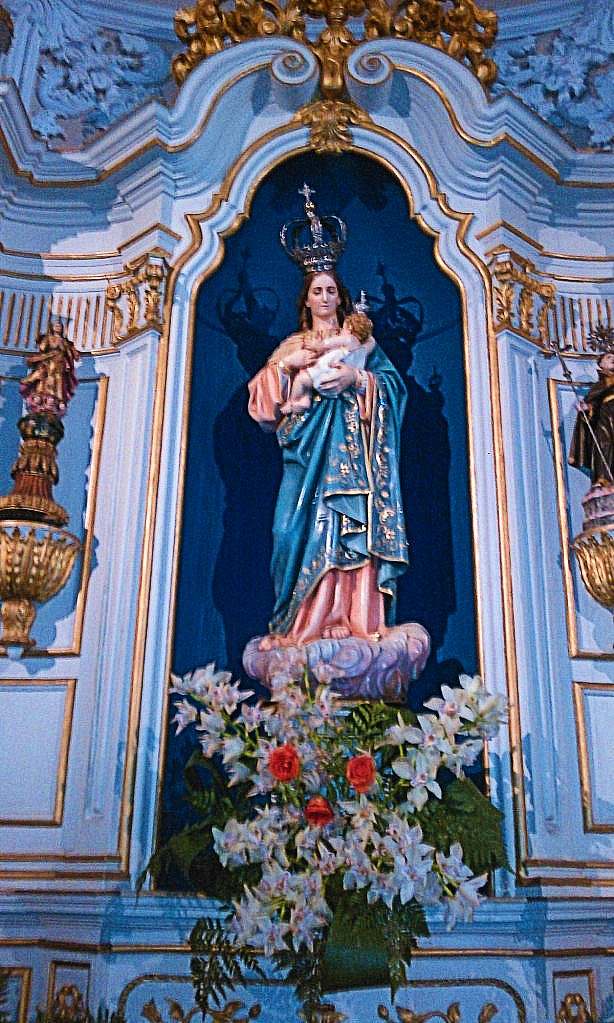
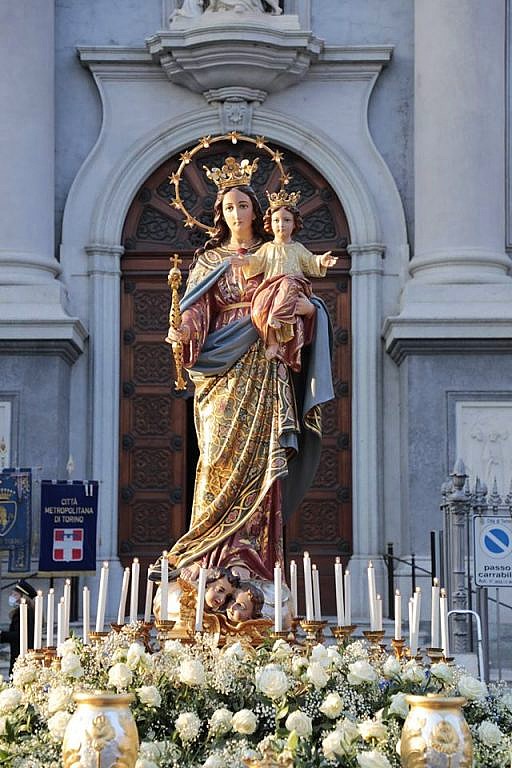
Fiesta del Patronato de Nuestra Señora / Feast of the Patronage of Our Lady (1679):
Statue of Our Lady in Barcelona Cathedral
This Feast was first permitted by Decree of the Sacred Congregation of Rites, on 6 May, 1679, for all the Provinces of Spain, in memory of the victories obtained over the Saracens, heretics and other enemies, from the sixth century to the reign of Philip IV. Pope Benedict XII ordered it to be kept in the Papal States on the third Sunday of November. To other places it is granted, on request, for a Sunday in November, to be designated by the ordinary. The Office is taken entirely from the Common of the Blessed Virgin and the Mass is the “Salve sancta parens”. In many places the Feast of the Patronage of Our Lady, is held with an additional title of Queen of All Saints, of Mercy, Mother of Graces.
St Didacus de Alcalá de Henares) OFM (c 1400-1463) Confessor, Lay Brother of the Order of Friars Minor, Hermit, Mystic. Months passed before it was possible to bury Brother Didacus, so great was the number of people who came to venerate his remains. Not only did his body remain incorrupt but it diffused a pleasant odour. After it was laid to rest in the Franciscan Church at Alcalá de Henares, astounding miracles continued to occur at his tomb. Pope Sixtus V, himself a Franciscan, Canonised Brother Didacus in 1588. About this lovely Sainst: https://anastpaul.com/2021/11/13/saint-of-the-day-13-november-saint-didacus-ofm-c-1400-1463/
All Saints of the Augustinian Order: On 13 November – St Augustine’s Birthday, we celebrate the Feast of All Saints of the Augustinian Order. On this day we call to mind the many unsung brothers and sisters of the Augustinian family who have “fought the good fight” and celebrate now, in Heaven. Let us pray for one another that we too may one day join in the “unceasing chorus of praise” with all our Augustinian brethren in Heaven.
All Saints of the Benedictine & Cistercian Orders: Those interested in the Benedictine family may be interested to know that today, within the Benedictine liturgical tradition, is traditionally celebrated the Feast of All Saints of the Benedictine Order – In Festo Omnium Sanctorum Ordinis S.P.N. Benedicti. The Cistercians — who also follow the Rule of St Benedict — likewise observe this day for All Saints of their Order. (On a related note, the Benedictines also traditionally observe 14 November as All Souls of their Order.
All Benedictine Saints
St Benedict and St Bernard -1542
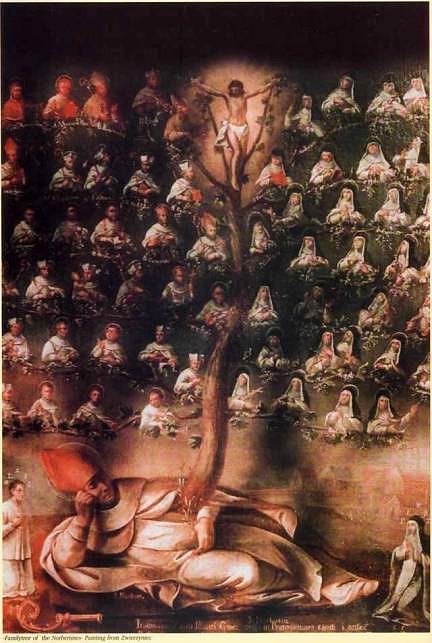
All Saints of the Premonstratensian Order or the “Norbertines.” The Order of Canons Regular of Prémontré, also known as the Premonstratensians, the Norbertines and, in Britain and Ireland, as the White Canons , are a Roman Catholic religious order of canons regular founded in Prémontré near Laon in 1120 by Saint Norbert, who later became Archbishop of Magdeburg. Premonstratensians are designated by O.Praem. following their name. St Norbert was a friend of Saint Bernard of Clairvaux and so was largely influenced by the Cistercian ideals as to both the manner of life and the government of his order. Aside from St Norbert there are at present fifteen saints of the Order who have been Canonised or have had their immemorial cults confirmed by the Holy See. St Norbert (c 1080-1134) “Defender of the Eucharist” and “Apostle of the Eucharist” – Bishop, Confessor, Founder. Patron for peace, invoked during childbirth for safe delivery, of infertile married couples. St Norbert here: https://anastpaul.com/2017/06/06/saint-of-the-day-6-june-st-norbert/
St Norbert
All Saints of the Norbertines
All Deceased Dominican Brothers and Sisters
St Abbo of Fleury St Amandus of Rennes St Amanzio St Beatrix of Bohemia St Brice of Tours (Died 444) Bishop St Caillin St Chillien of Aubigny St Columba of Cornwall St Dalmatius of Rodez St Devinicus St Eugenius of Toledo St Florido of Città di Castello St Gredifael St Himerius St Homobonus of Cremona St Juan Ortega Uribe
St Leoniano of Vienne St Maxellendis St Mitrius St Pope Nicholas I St Paterniano St Quintian of Rodez Bl Robert Scurlock Bl Warmondus of Ivrea
Martyrs of Caesarea – 5 Saints: A group of Christians murdered for their faith in the persecutions of Diocletian, Galerius Maximian and Firmilian. – Antoninus, Ennatha, Germanus, Nicephorus and Zebinas. 297 at Caesarea, Palestine.
Martyrs of Ravenna – 3 Saints: A group of Christians murdered together in the persecutions of Diocletian. The only information about them that has survived are three names – Solutor, Valentine and Victor. c 305 in Ravenna, Italy.
Martyrs of Salamanca – 5 Saints: The first group of Christians exiled, tortured and executed for their adherence to the Nicene Creed during the persecutions of the Arian heretic Genseric. – Arcadius, Eutychianus, Paschasius, Paulillus and Probus. Born in Spain and Martyred in 437. Their relics are at Medina del Campo, Spain.
Thought for the Day – 12 November – Meditations with Saint Alphonsus Maria de Liguori (1696-1787) Bishop, Confessor, Most Zealous Doctor of the Church
“How to Pray at All Times” By St Alphonsus Maria de Liguori (1696-1787)
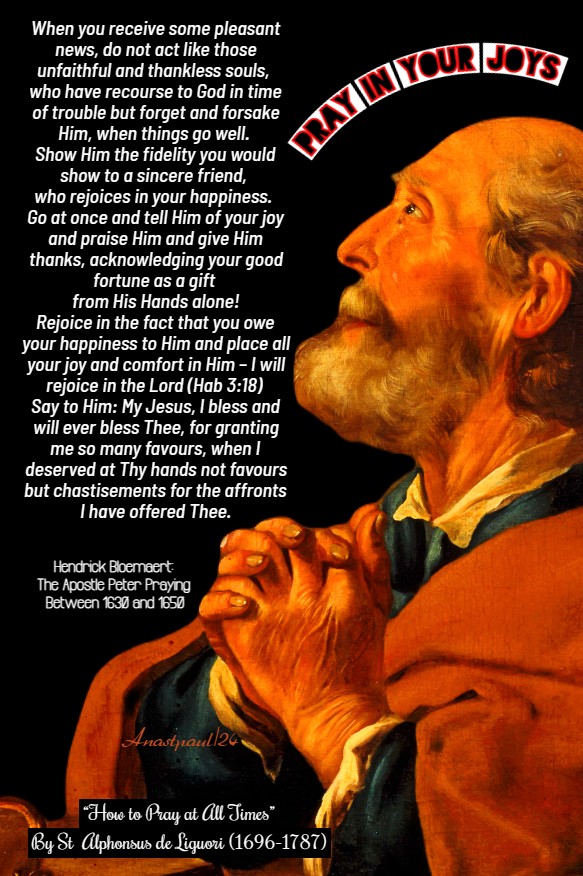
Pray In Your Joys Excerpt from Chapter Three:III
“When you receive some pleasant news, do not act like those unfaithful and thankless souls, who have recourse to God in time of trouble but forget and forsake Him, when things go well. Show Him the fidelity you would show to a sincere friend, who rejoices in your happiness. Go at once and tell Him of your joy and praise Him and give Him thanks, acknowledging your good fortune as a gift from His Hands alone! Rejoice in the fact that you owe your happiness to Him and place all your joy and comfort in Him – I will rejoice in the Lord (Hab 3:18) Say to Him: My Jesus, I bless and will ever bless Thee, for granting me so many favours, when I deserved at Thy hands not favours but chastisements for the affronts I have offered Thee.
… But, if you love your God, you ought to rejoice more in His blessedness than in your own. He, who has a dear friend, sometimes takes more delight in that friend’s good fortune than if it had been his own. Comfort yourself, then, in the knowledge that God is infinitely happy. Often say to Him – My beloved Lord, I rejoice more in Thy blessedness than in any happiness of my own, for I love Thee more than I love myself.”
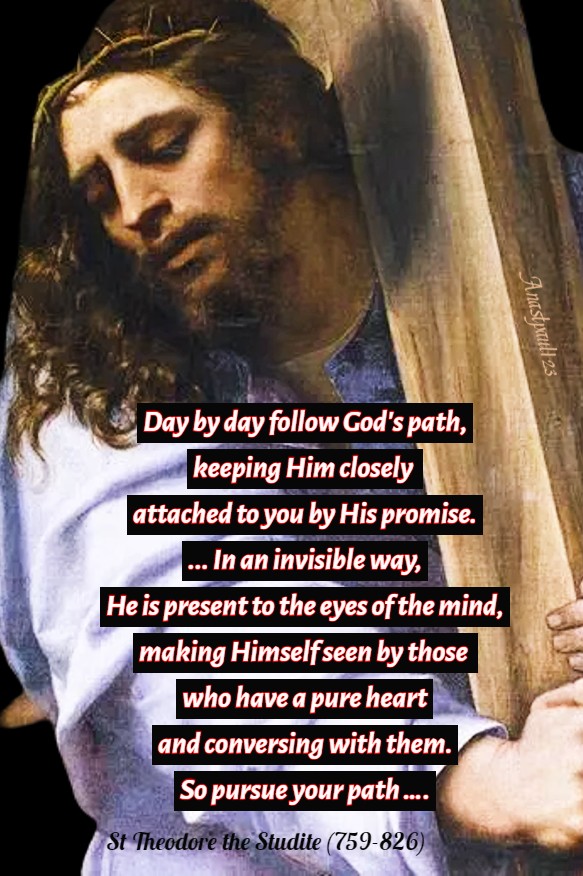
Quote/s of the Day – 12 November – St Theodore the Studite (759-826) Abbot, Confessor, Father of the Church
“Day by day follow God’s path, keeping Him closely attached to you by His promise. In fact, He Himself said, through the mediation of His Apostles, to all those who seek His will and His testimonies that He would be with them until the end of the world (Mt 28:20) where paths and footsteps will be unknown (cf Ps 76:20), as the divine David said in his songs. Yet, in an invisible way, He is present to the eyes of the mind, making Himself seen by those who have a pure heart and conversing with them. So pursue your path …. ”
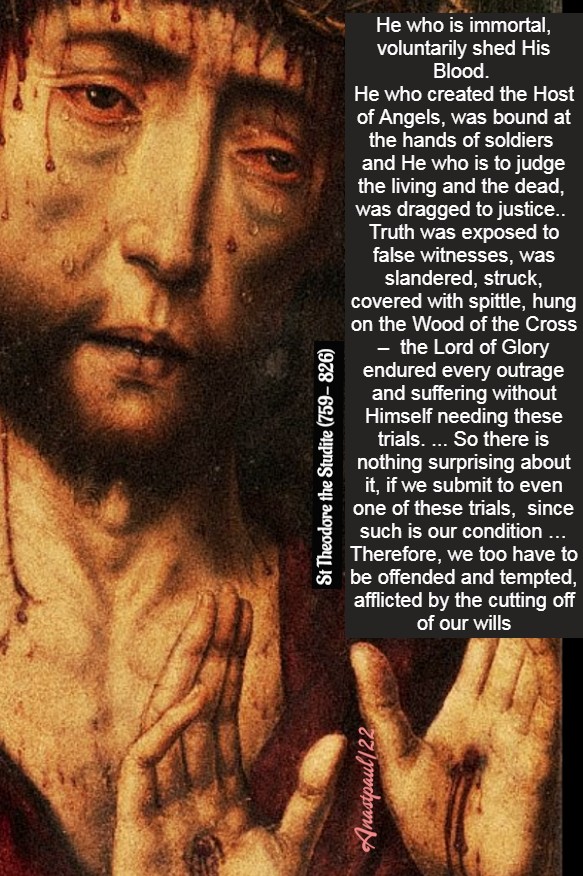
“He who is immortal, voluntarily shed His Blood. He who created the Host of Angels, was bound at the hands of soldiers and He who is to judge the living and the dead, was dragged to justice (cf. Acts 10:42; 2 Tm 4:1). Truth was exposed to false witnesses, was slandered, struck, covered with spittle, hung on the Wood of the Cross – the Lord of Glory (cf. 1 Cor 2:8) endured every outrage and suffering without Himself needing these trials. …
So there is nothing surprising about it, if we submit to even one of these trials, since such is our condition … Therefore, we too have to be offended and tempted, afflicted by the cutting off of our wills.” (Catecheses 1)
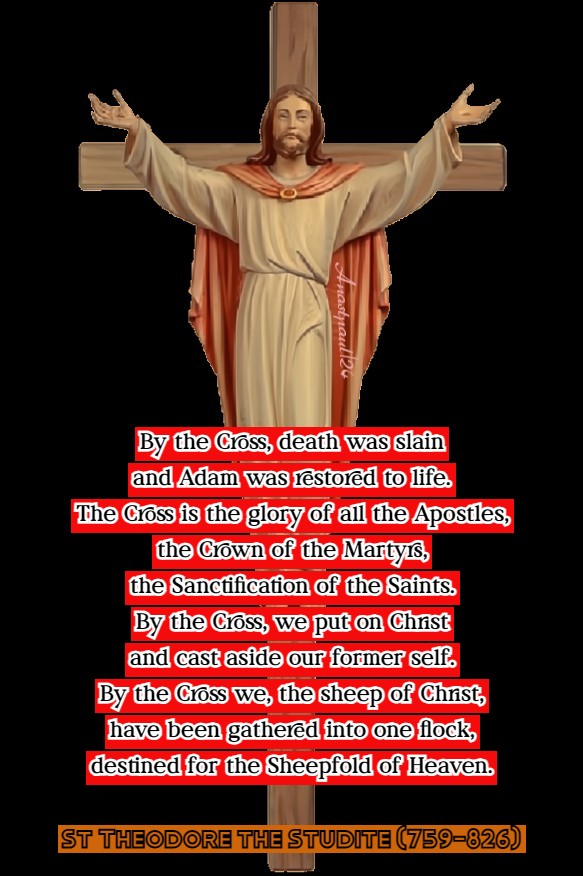
“By the Cross, death was slain and Adam was restored to life. The Cross is the glory of all the Apostles, the Crown of the Martyrs, the Sanctification of the Saints. By the Cross, we put on Christ and cast aside our former self. By the Cross we, the sheep of Christ, have been gathered into one flock, destined for the Sheepfold of Heaven.”
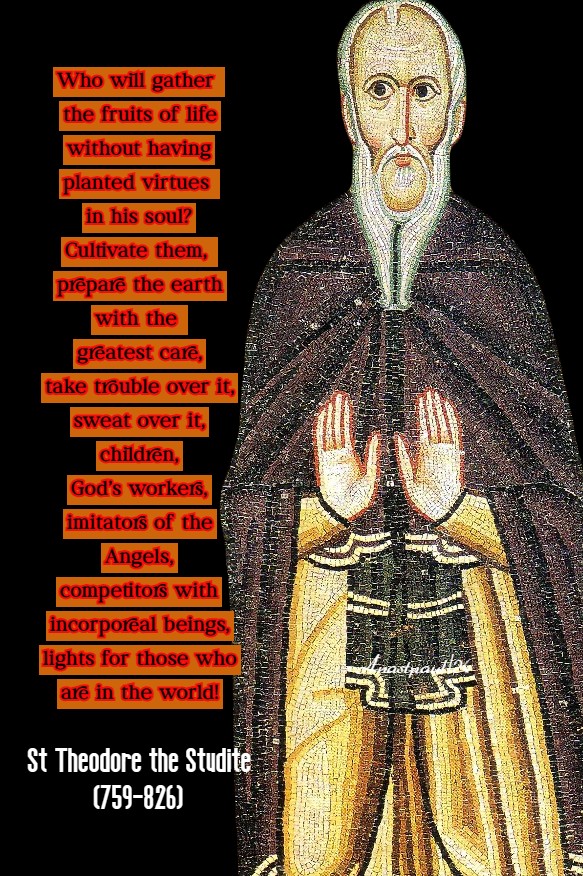
“Who will gather the fruits of life without having planted virtues in his soul? Cultivate them, prepare the earth with the greatest care, take trouble over it, sweat over it, children, God’s workers, imitators of the Angels, competitors with incorporeal beings, lights for those who are in the world!”
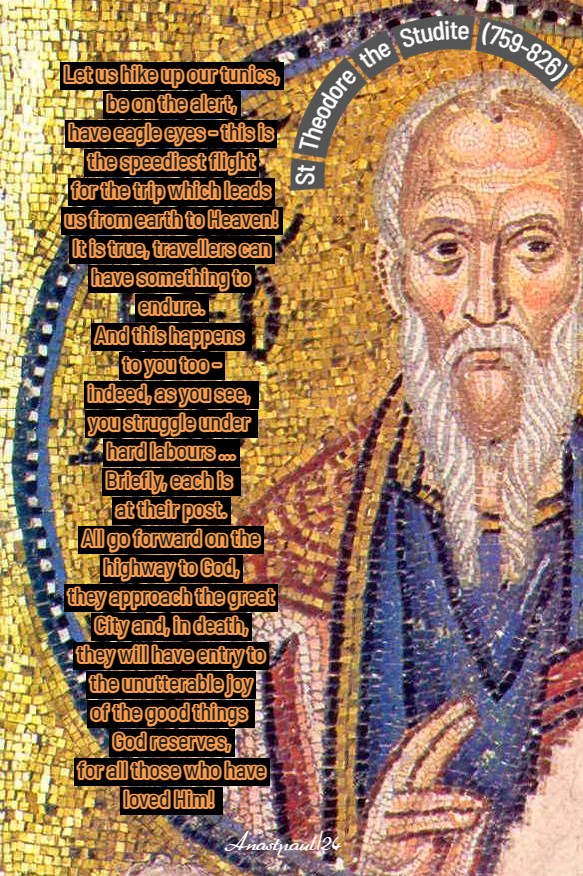
“Let us hike up our tunics, be on the alert, have eagle eyes – this is the speediest flight for the trip which leads us from earth to Heaven! It is true, travellers can have something to endure. And this happens to you too – indeed, as you see, you struggle under hard labours … Briefly, each is at their post. All go forward on the highway to God, they approach the great City and, in death, they will have entry to the unutterable joy of the good things God reserves, for all those who have loved Him! ”
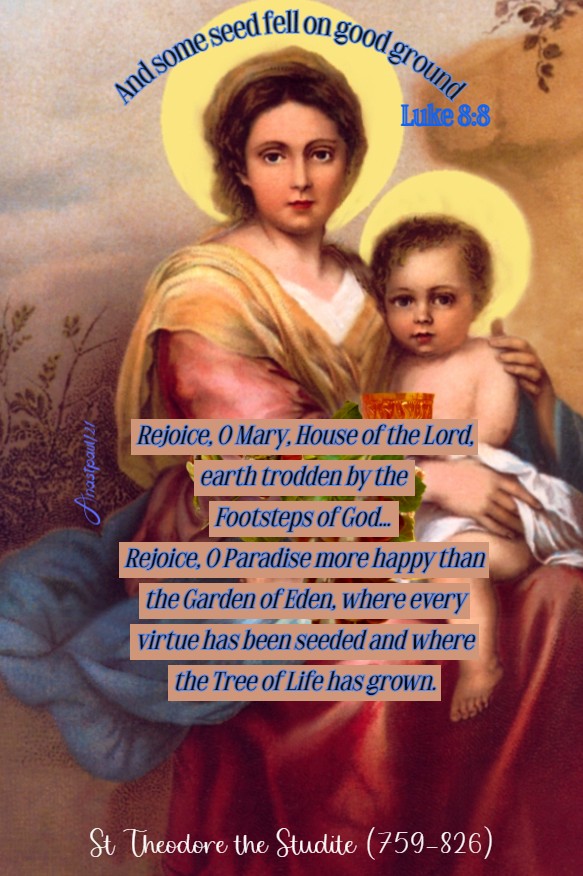
“Rejoice, O Mary, House of the Lord, earth trodden by the Footsteps of God… Rejoice, O Paradise more happy than the Garden of Eden, where every virtue has been seeded and where the Tree of Life has grown.”
St Theodore the Studite (759-826) Abbot, Confessor, Father of the Church
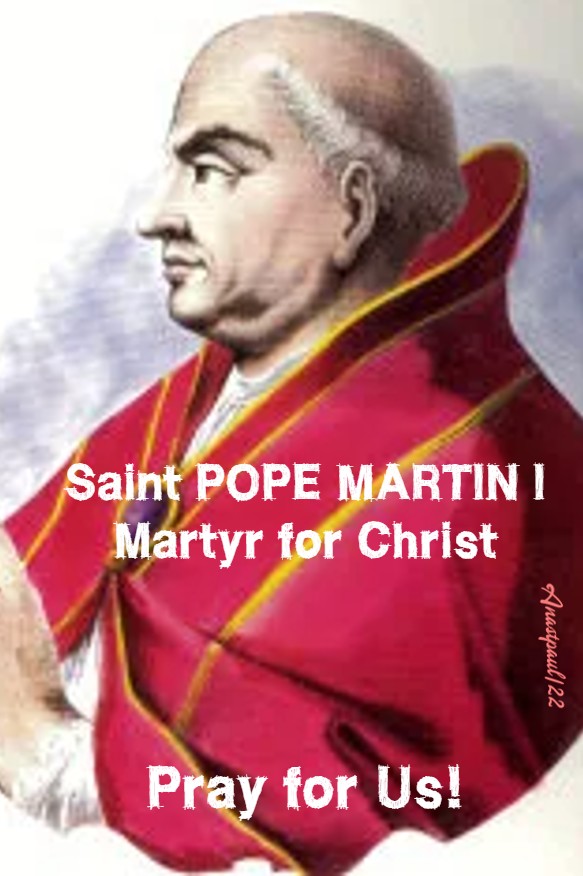
One Minute Reflection – 12 November – St Martin I, Pope (598-655) Martyr – 1 Peter 5:1-4; 5:10-11; Matthew 16:13-19 – Scripture search here: https://www.drbo.org/
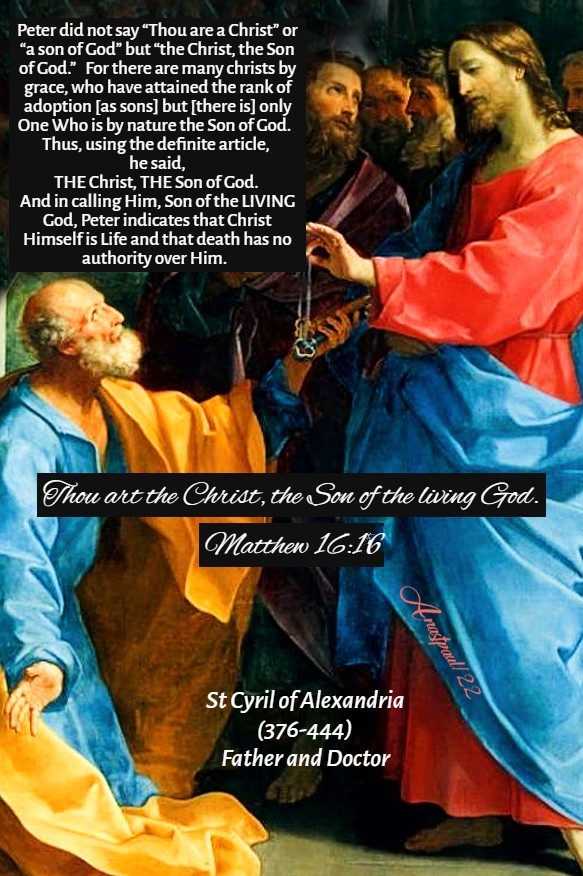
“Thou art the Christ, the Son of the living God.” – Matthew 16:16
REFLECTION – “Peter did not say “Thou are a Christ” or “a son of God” but “the Christ,the Son of God.” For there are many christs by grace, who have attained the rank of adoption [as sons] but, [there is] only One ,Who is by nature the Son of God. Thus, using the definite article, he said, THE Christ, THE Son of God. And in calling Him, Son of the LIVING God, Peter indicates that Christ Himself is Life and that death has no authority over Him. And even if the flesh, for a short while, was weak and died, nevertheless, it rose again, since the Word, Who dwelled in it, could not be held under the bonds of death.” – St Cyril of Alexandria (376-444) Known as “The Pillar of Faith” Archbishop of Alexandria, Father and Doctor Incarnationis (Doctor of the Incarnation) (Fragment 190).
PRAYER – Look forgivingly on Thy flock, Eternal Shepherd and keep it in Thy constant protection, by the intercession of blessed Martin Thy Martyr and Sovereign Pontiff, whom thou didst constitute Shepherd of the whole Church. Through Jesus Christ, Thy Son our Lord, Who lives and reigns with Thee, in the unity of the Holy Ghost, God, world without end. Amen (Collect).
Our Morning Offering – 12 November – “The Month of the Holy Souls in Purgatory”
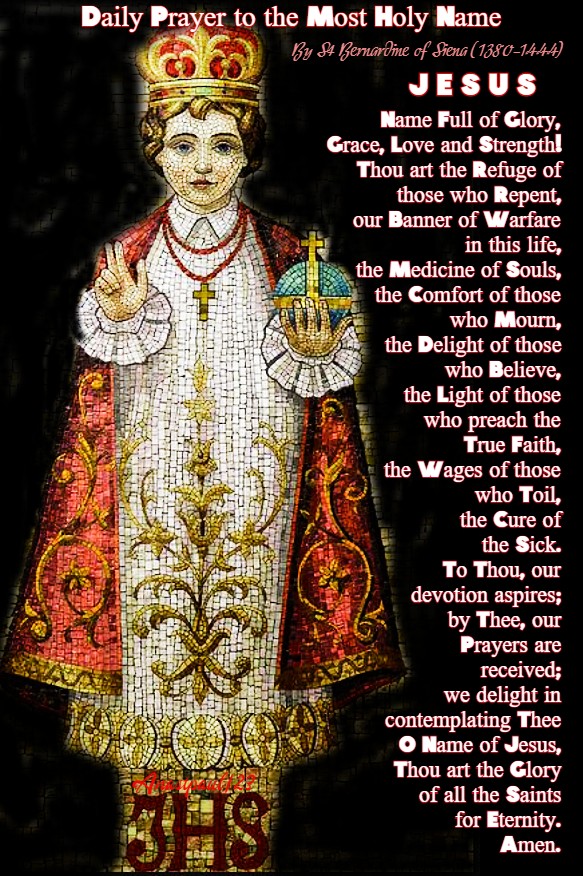
Daily Prayer to the Most Holy Name By St Bernardine of Siena (1380-1444) Apostle of the Most Holy Name
Jesus, Name full of glory, grace, love and strength! Thou art the Refuge of those who repent, our Banner of warfare in this life, the Medicine of souls, the Comfort of those who mourn, the Delight of those who believe, the Light of those who preach the True Faith, the Wages of those who toil, the Cure of the sick. To Thou, our devotion aspires; by Thee, our prayers are received; we delight in contemplating Thee. O Name of Jesus, Thou art the glory of all the Saints for eternity. Amen
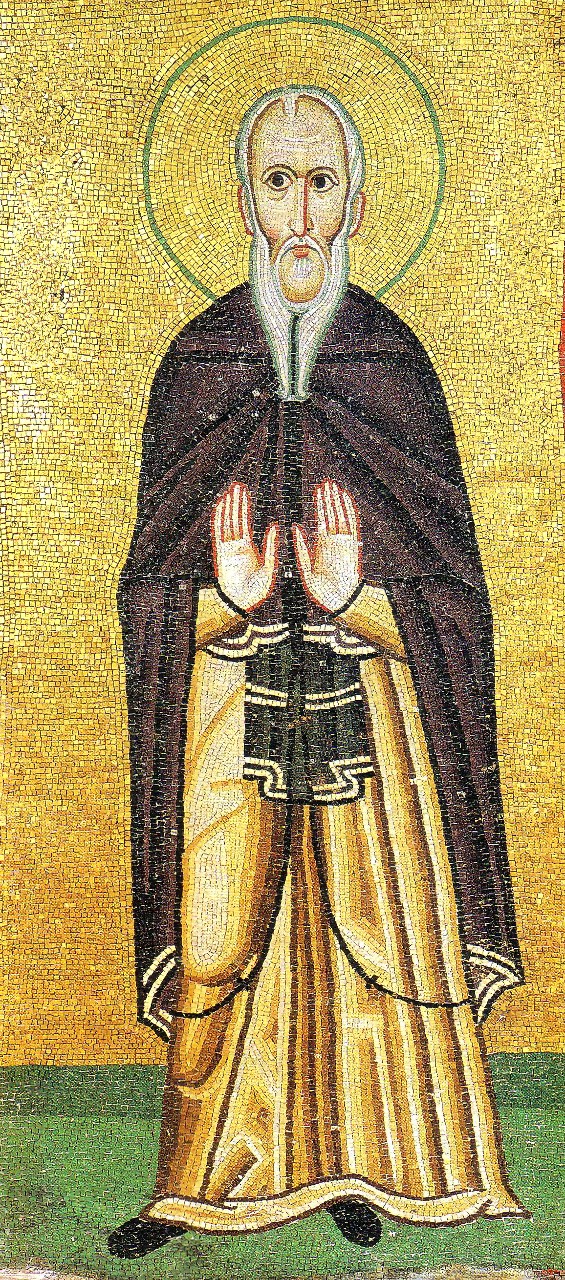
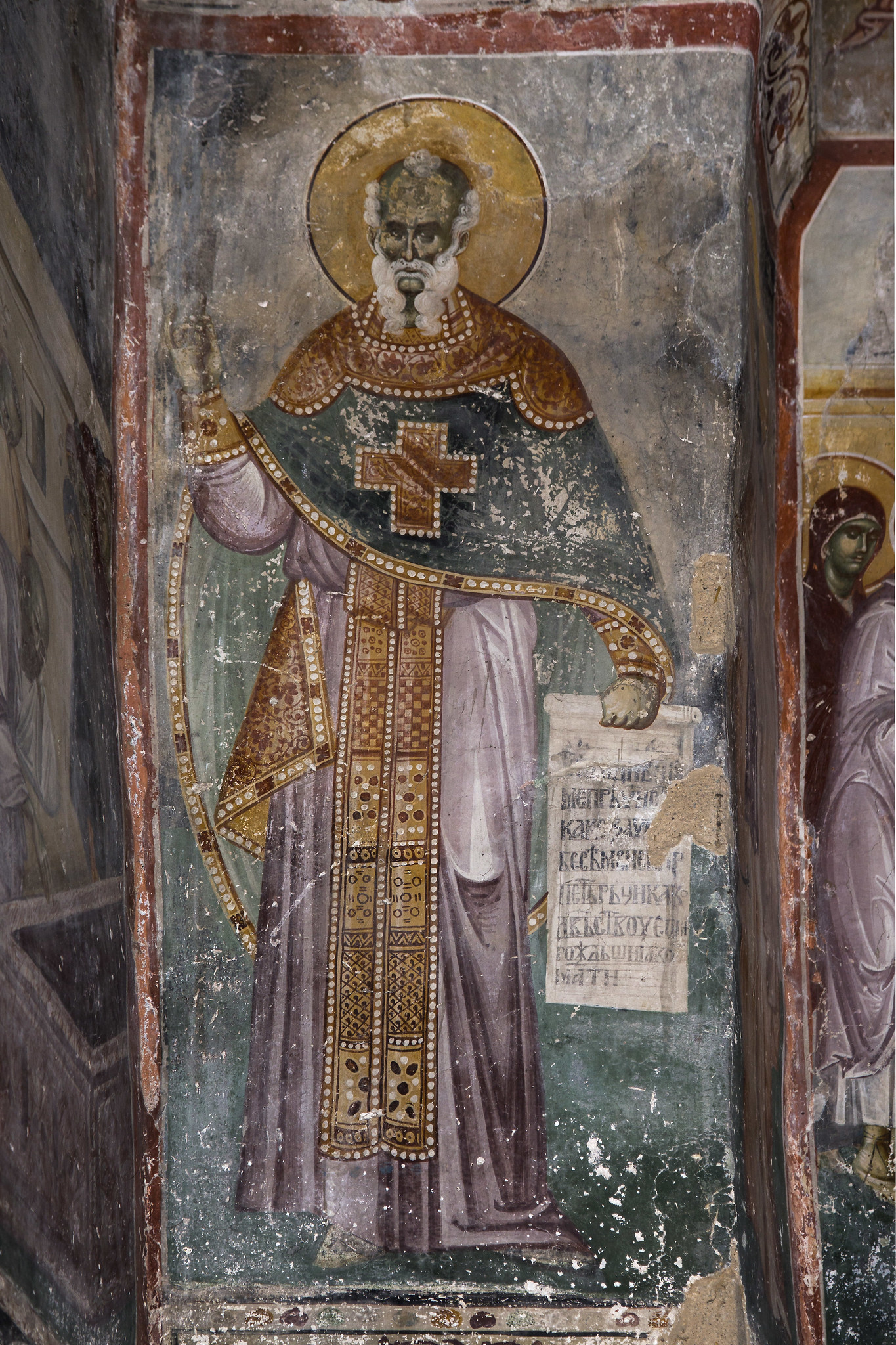
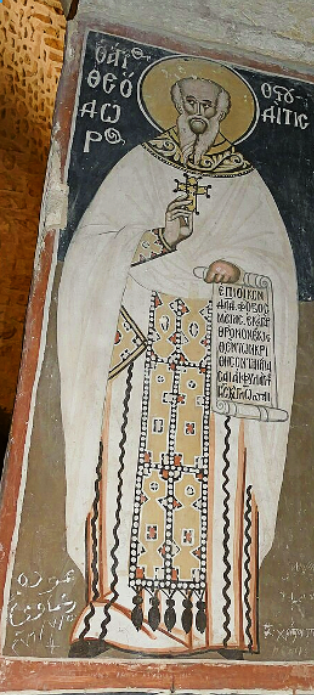
Saint of the Day – 12 November – St Theodore the Studite (759-826) Abbot of the Stoudios Monastery in Constantinople, Confessor, stern Reformer, zealous Defender of the sanctity of Marriage and of Sacred Images, two of several conflicts which set him at odds with both the Emperor and Bishops. He played a major role in the revivals both of Byzantine monasticism and of classical literary genres in Byzantium. He was a spiritual writer and exegesis and throughout his life, he maintained letter correspondences with many important spiritual, political and cultural figures of the Byzantine Empire. Born in 759 in Constantinople, (modern-day Istanbul, Turkey) and died on 11 November 826 (aged 66/67) whilst in exile in Cape Akritas (modern-day Tuzla, Istanbul, Turkey). Also known as – Theodorus Studita, Theodore of Studium, of Stoudios, of studion.
The Roman Martyrology reads today: “At Constantinople, St Theodore Studita, who became celebrated througout the whole Catholic Chirch by his vigorous defence of the Faith against the Iconoclasts.”
Theodore was born in Constantinople in 759 and from his youth he fought courageously in defence of the Sacred Imagery present in the capital of the Byzantine Empire, threatened by the adverse religious policy of the imperial government.
In 794 he succeeded his uncle Plato, (who ten years earlier had persuaded him to take monastic vows) in the direction of the Monastery of Sakkoudion in Bithynia. Shortly afterwards, however, he was sent into exile in Thessalonica, for having excommunicated the Emperor Constantine VI, later also venerated as a Saint, who had divorced his wife Mary to marry Theodota. This incident was not a simple occurence of one man’s sinful adultery but, under the name of “Synod of Adultery” an assembly of errant Bishops who, in the 9th Century, wished to approve the practice of second marriage after the repudiation of the legitimate wife, entered the history of the Church – (ring any bells – only no-one is being exiled for this now!?) Saint Theodore was the one who most vigorously opposed it and for this reason he was persecuted, imprisoned and exiled three times.
In 797, after the death of the Emperor, Theodore was recalled to his homeland with full honours, left Sakkoudion Monastery which, in the meantime, had been sacked by the Arabs and Theodore moved to the Monastery of Studios in Constantinople, from which he took his nickname. Here he undertook a powerful campaign in favour of asceticism and radical monastic reforms. The key points of his rule, later used in both Byzantine and Eastern Monasteries, were strict seclusion, poverty, discipline, study, religious offices and manual labour.
Abbot Theodore is also remembered for allowing his Monks to sprinkle nutmeg, one of the most expensive spices at the time, ontp their pea soup when they were forced to eat it. This anecdote, the veracity of which is difficult to ascertain, far from ridiculing the Saint, helps us to approach him in aspects of his daily life, as the shepherd of a community, certainly a firm spiritual leader but also, at the same time, a kindly shepherd displaying a generous love.
In 809, Theodore was again banished because of his refusal to receive Communion from Patriarch Nicephorus, who had reinstated the Priest Joseph, guilty of having officiated at the wedding between Constantine and Theodote. Two years later, Emperor Michael I, over whom our Saint had much influence, recalled him from exile but, he was again banished and flogged in 814 because of his strenuous opposition to the iconoclastic edict promulgated by Emperor Leo V which prohibited the veneration of Sacred Images. Released in 821 by Emperor Michael II, in 824 he promoted an insurrection against the latter, whom the Saint judged to be too indulgent towards the iconoclasts. However, when his plans failed, Theodore then thought it appropriate to leave Constantinople.
From that moment he wandered between various Monasteries in Bithynia and died in that of Chalcis on 11 November 826. Initially buried in that Monastery, on 26 January 844, his body was translated to Studios Monastery.
He is celebrated today 12 November, the day after his death. Saint Theodore composed several literary works. First of all, as an intrepid fighter for the defence of the indissolubility of Marriage; he wrote a treatise and a paper ‘On the economy in general’ which were unfortunately lost or more probably destroyed by order of the Patriarch Methodius. His letters the importance of which is constituted by the picture of the life and character of St Theodore which is displayed within them and, which also shed light, on the theological disputes in which he intervened. St Theodore also wrote Catechetical works divided into two collections, addressed to Monks and containing warnings and advice connected with spiritual life and monastic communities; funeral orations for his mother and for his uncle Plato; theological works focused on the use and veneration of Sacred Images; epigrams on various subjects, some of which demonstrate considerable originality and some Sacred Hymns. Furthermore, like all the Monks of the Studios, Saint Theodore was renowned too for his calligraphy and for his skill in copying manuscripts.
St Theodore the Studite, a simple but deeply religious man who dared to challenge the imperial power and the Ecclesiastical hierarchies of the time, should be considered one of the heavenly protectors of those who, even today, faced with the changed Church, have the courage to repeat an inflexible love of the One True Church and a denial of all unlawful practices. St Theodore the Studite, Pray for us!
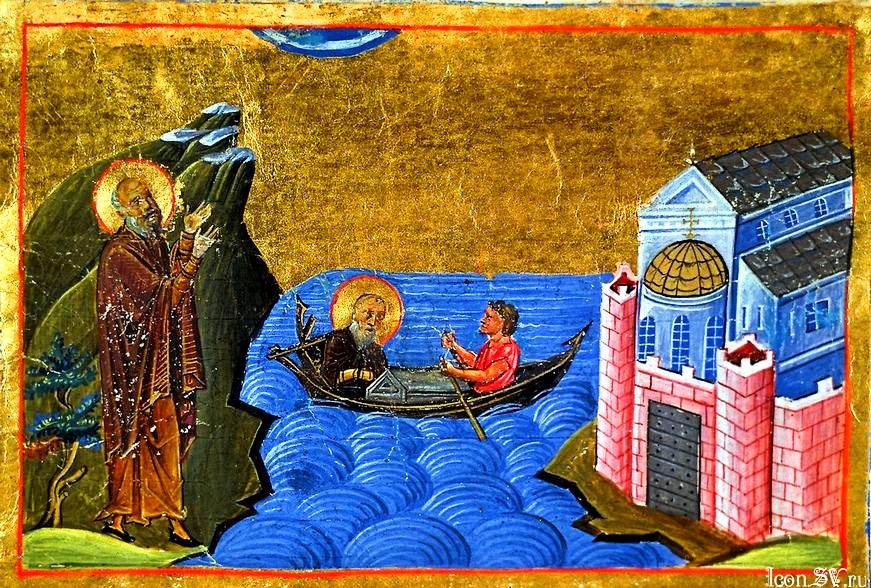
Byzantine miniature depicting the Stoudios Monastery and the Sea of Marmara.
St Livinus of Alost St Machar of Aberdeen St Namphasius St Nilus the Elder St Paternus of Sens St Publius St Renatus of Angers St Rufus of Avignon St Theodore the Studite (759-826) Abbot St Ymar of Reculver
Five Polish Brothers – Martyrs: They weren’t Polish and they weren’t related but were instead five Italian Benedictine Monks who worked with Saint Adalbert of Prague as missionaries to the Slavs and were Martyred together. They were – Benedict, Christinus, Isaac, John and Matthew. Born in Italy. They were Martyred in 1005 at the Benedictine Monastery near Gnesen, Poland and Canonised by Pope Julius II.
Thought for the Day – 11 November – Meditations with Saint Alphonsus Maria de Liguori (1696-1787) Bishop, Confessor, Most Zealous Doctor of the Church
“How to Pray at All Times” By St Alphonsus Maria de Liguori (1696-1787)
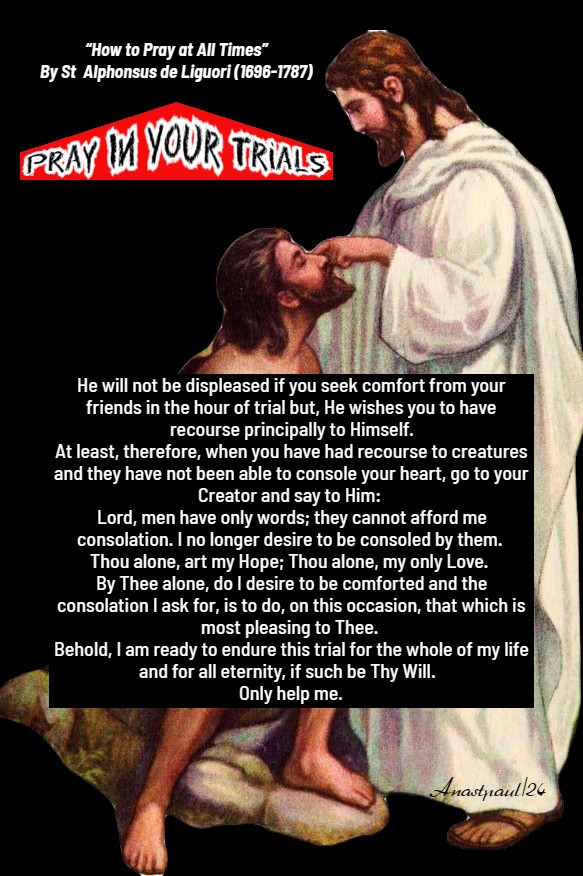
Pray In Your Trials. Excerpt from Chapter Three:II
“When you are afflicted with sickness, persecution, temptation, or any other trouble, turn at once to God and ask His aid. It is enough for you to lay your affliction before Him – to go to Him and say: Behold, O Lord, for I am in distress (Lam 1:20). He will not fail to comfort you, or at least, to give you strength to suffer the trial with patience and, in this case, it will prove a greater good than if He had freed you altogether from it. Tell Him of all the things which make you fear, or make you sad and say to Him: My God, in Thee are all my hopes. I offer this cross to Thee. I resign myself to Thy Will. Take pity on me and either deliver me from my trial or give me strength to endure it. He will remember immediately the promise He made in the Gospel, of consoling and comforting all those who have recourse to Him in tribulation: Come to Me all you who labour and are burdened and I will refresh you (Matt II:28).
He will not be displeased if you seek comfort from your friends in the hour of trial but, He wishes you to have recourse principally to Himself. At least, therefore, when you have had recourse to creatures and they have not been able to console your heart, go to your Creator and say to Him: Lord, men have only words; they cannot afford me consolation. I no longer desire to be consoled by them. Thou alone, art my Hope; Thou alone, my only Love. By Thee alone, do I desire to be comforted and the consolation I ask for, is to do, on this occasion, that which is most pleasing to Thee. Behold, I am ready to endure this trial for the whole of my life and for all eternity, if such be Thy Will. Only help me.
Do not be afraid of offending Him if you sometimes gently complain, saying: Why, Lord, has Thou retired afar off? (Ps 9:1). Lord, Thou knowest that I love Thee and that I desire nothing but Thy Love. Have pity on me and help me. Do not abandon me.”
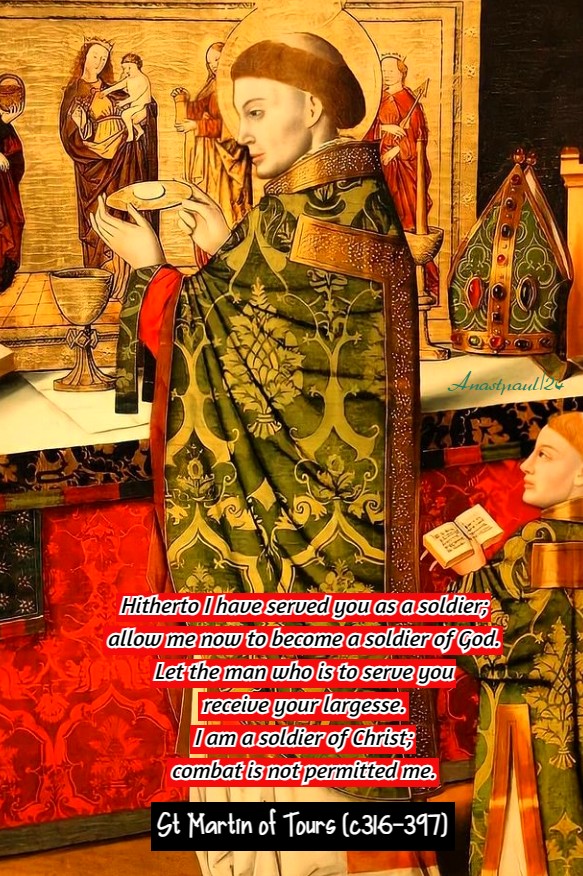
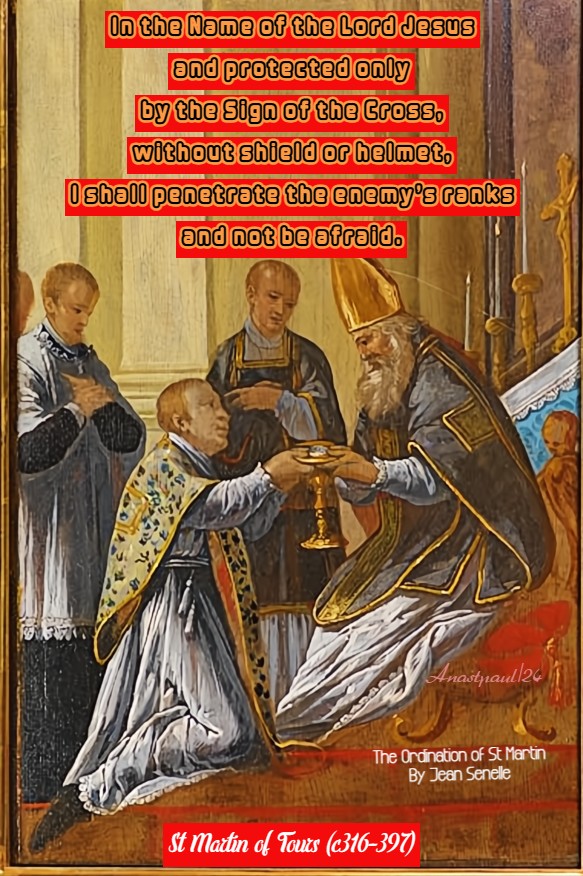
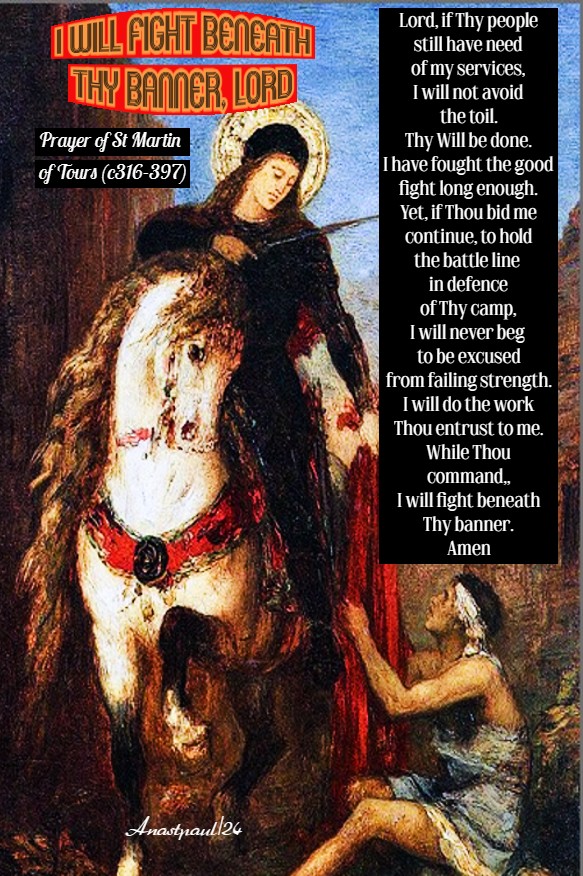
Quote/s of the Day – 11 November – St Martin of Tours (c316-397) “Martin the Merciful,” Bishop, Confessor, Miracle-Worker.
“Hitherto I have served you as a soldier; allow me now to become a soldier of God. Let the man who is to serve you receive your largesse. I am a soldier of Christ; combat is not permitted me.”
“In the Name of the Lord Jesus and protected only by the Sign of the Cross, without shield or helmet, I shall penetrate the enemy’s ranks and not be afraid.”
I Will Fight Beneath Thy Banner, Lord Prayer of St Martin of Tours (c316-397)
Lord, if Thy people still have need of my services, I will not avoid the toil. Thy Will be done. I have fought the good fight long enough. Yet, if Thou bid me continue, to hold the battle line in defence of Thy camp, I will never beg to be excused from failing strength. I will do the work Thou entrust to me. While Thou command,, I will fight beneath Thy banner. Amen
One Minute Reflection – 11 November – “The Month of the Holy Souls in Purgatory” – St Martin of Tours (c316-397) “Martin the Merciful,” Bishop, Confessor, Miracle-Worker. – Sirach 44:16-27; 45:3-20, Luke 11:33-36 – Scripture search here: https://www.drbo.org/
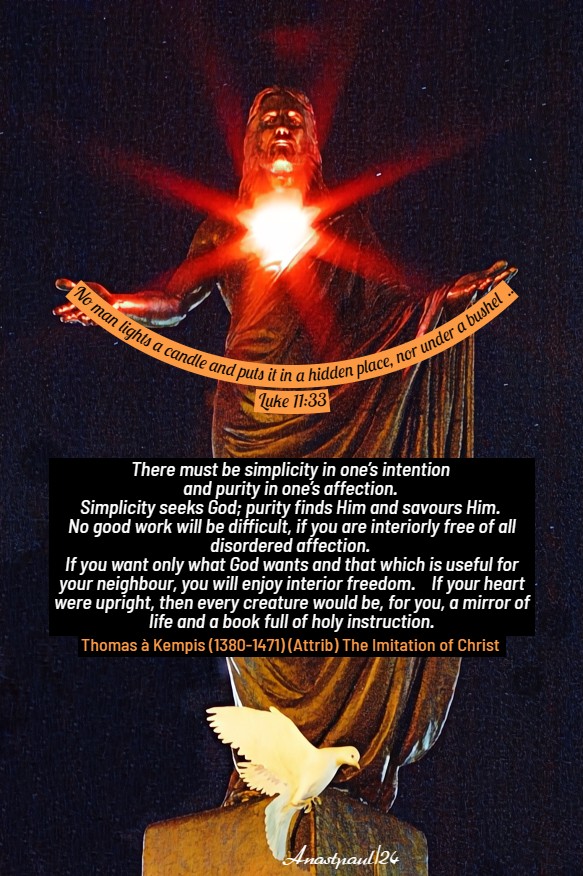
“No man lights a candle and puts it in a hidden place, nor under a bushel but upon a candlestick that they, who come in, may see the light.” – Luke 11:33
REFLECTION – “There must be simplicity in one’s intention and purity in one’s affection. Simplicity seeks God; purity finds Him and savours Him. No good work will be difficult, if you are interiorly free of all disordered affection. If you want only what God wants and that which is useful for your neighbour, you will enjoy interior freedom. If your heart were upright, then every creature would be, for you, a mirror of life and a book full of holy instruction.
There is no creature so small and so base that it does not show, some image of God’s goodness. If you had enough innocence and purity within you, you would see everything without hindrance. A pure heart penetrates Heaven and hell. Each person judges that which is outside, according to that which is within himself. If there is any joy in the world, the pure heart possesses it.” – Thomas à Kempis CRSA (1380-1471) (Attrib) The Imitation of Christ (Book II:4)
PRAYER – O God, Who sees that we cannot survive by any power of our own, mercifully grant that, by the intercession of blessed Martin, Thy Confessor and Bishop, we may be made safe from all harm. Through Jesus Christ, Thy Son our Lord, Who lives and reigns with Thee, in the unity of the Holy Ghost, God, world without end. Amen (Collect).
Our Morning Offering – 11 November – “The Month of the Holy Souls in Purgatory”
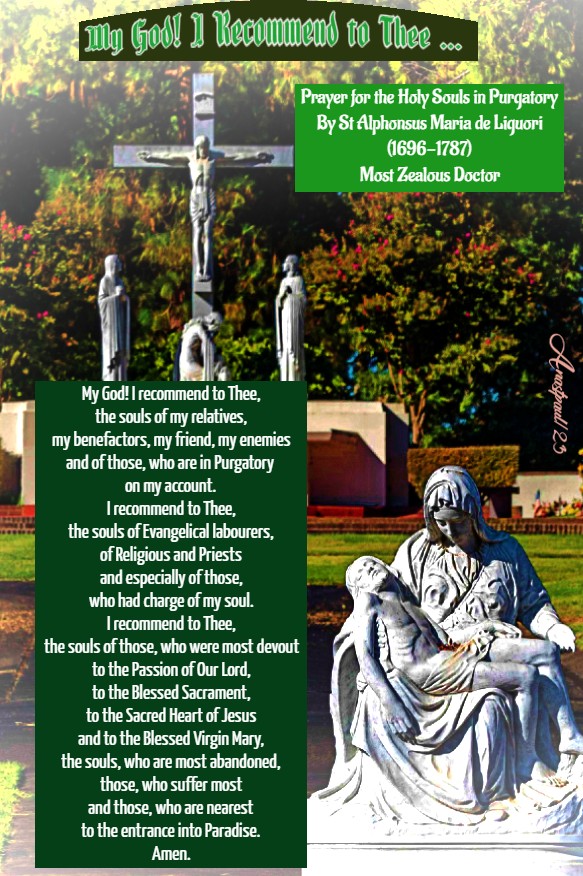
My God! I Recommend to Thee … Prayer for the Holy Souls in Purgatory By St Alphonsus Maria de Liguori (1696-1787) Most Zealous Doctor
My God! I recommend to Thee, the souls of my relatives, my benefactors, my friend, my enemies and of those, who are in Purgatory on my account. I recommend to Thee, the souls of Evangelical labourers, of Religious and Priests and especially of those, who had charge of my soul. I recommend to Thee, the souls of those, who were most devout to the Passion of Our Lord, to the Blessed Sacrament, to the Sacred Heart of Jesus and to the Blessed Virgin Mary, the souls, who are most abandoned, those, who suffer most and those, who are nearest to the entrance into Paradise. Amen






















 AnaStpaul
You must be logged in to post a comment.