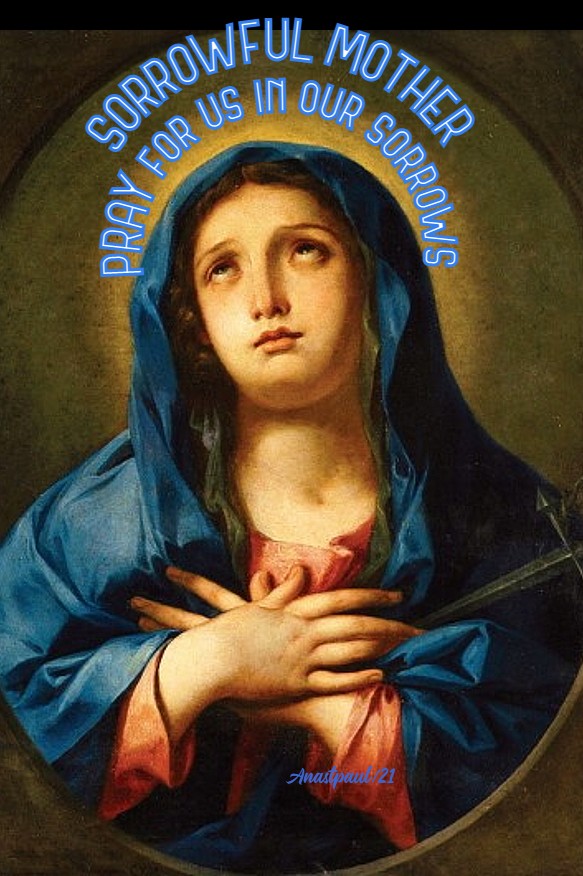
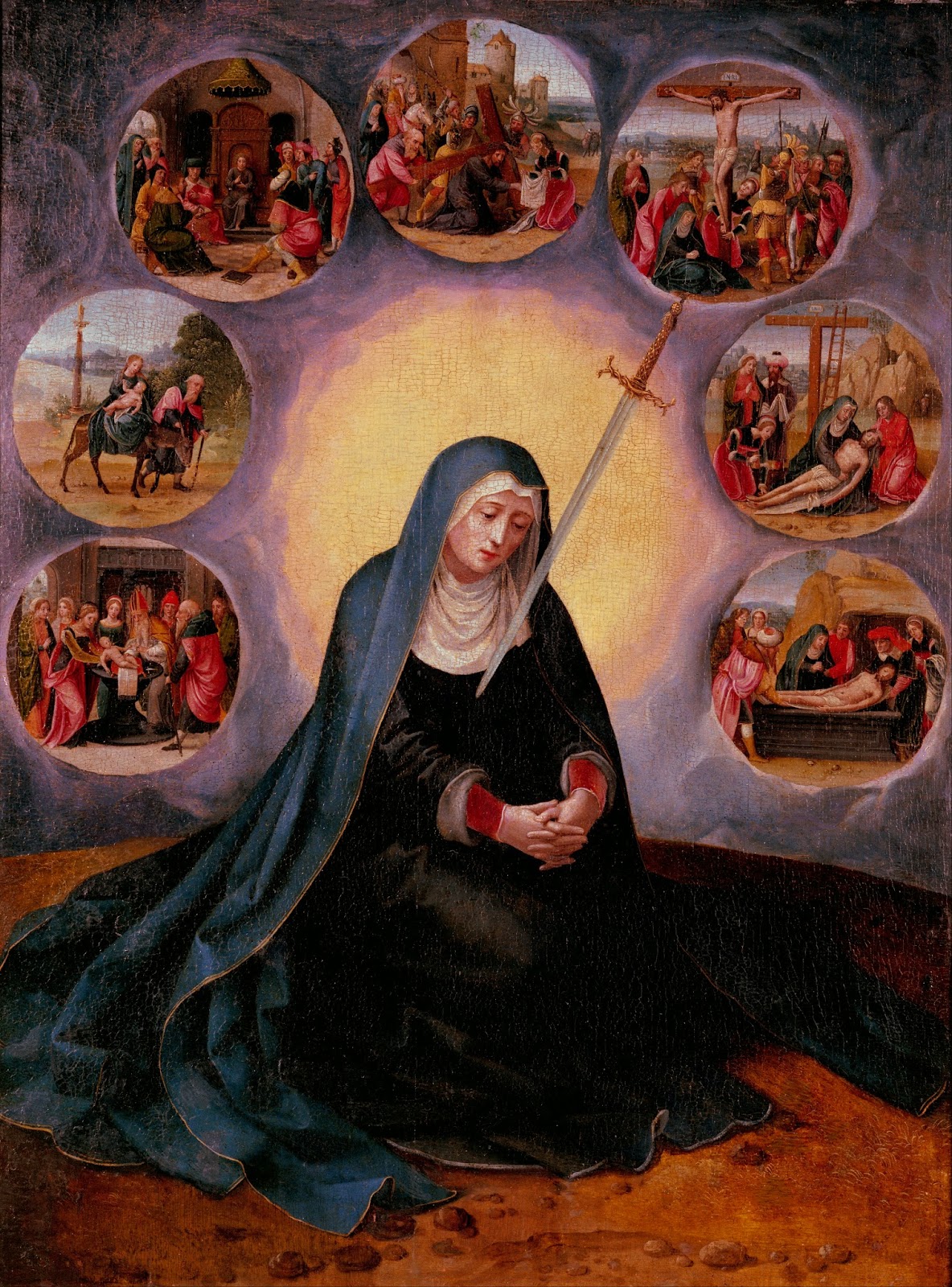
Quote/s of the Day – 15 September – “The Month of The Seven Sorrows of the Blessed Virgin Mary and The Holy Cross” and The Feast of the Seven Sorrows of the Blessed Virgin
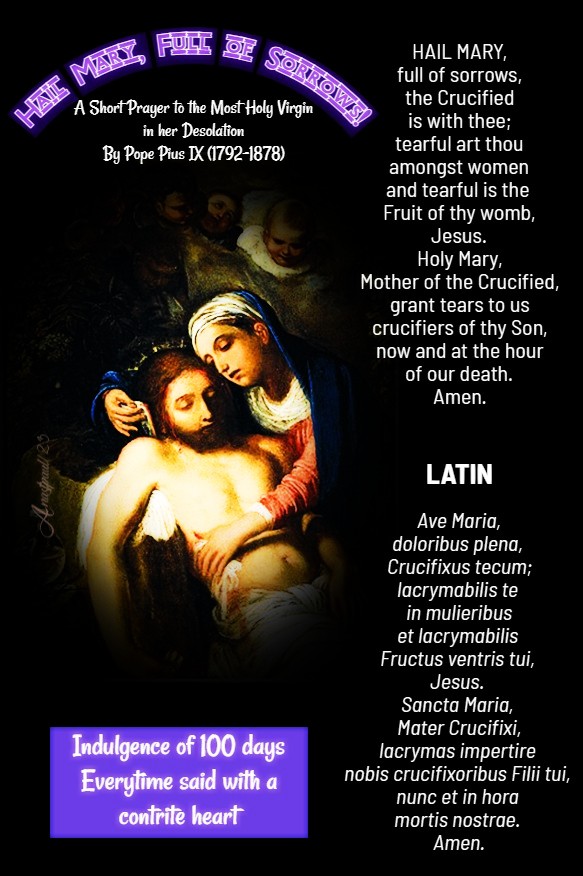
Hail Mary, Full of Sorrows! A Short Prayer to the Most Holy Virgin in her Desolation By Pope Pius IX (1792-1878) Papal Reign 1846-1878 (+102 Raccolta)
His Holiness Pope Pius IX, by a Decree of the Sacred Congregation of Indulgences, of 23 December 1847, deigned to grant:
An Indulgence of 100 days to all the faithful, everytime they say, with contrite heart, the following prayer in honour of the most Holy Virgin in her desolation.
HAIL MARY, full of sorrows! the Crucified is with thee; tearful art thou amongst women and tearful is the Fruit of thy womb, Jesus. Holy Mary, Mother of the Crucified, grant tears to us crucifiers of thy Son, now and at the hour of our death. Amen.
LATIN
Ave Maria, doloribus plena, Crucifixus tecum; lacrymabilis te in mulieribus et lacrymabilis Fructus ventris tui, Jesus. Sancta Maria, Mater Crucifixi, lacrymas impertire nobis crucifixoribus Filii tui, nunc et in hora mortis nostrae. Amen.
Thought for the Day – 15 September – The Feast of the Seven Sorrows of the Blessed Virgin Mary – Our Lord’s Third Word … – By St Francis de Sales (1567-1622) Doctor Caritas
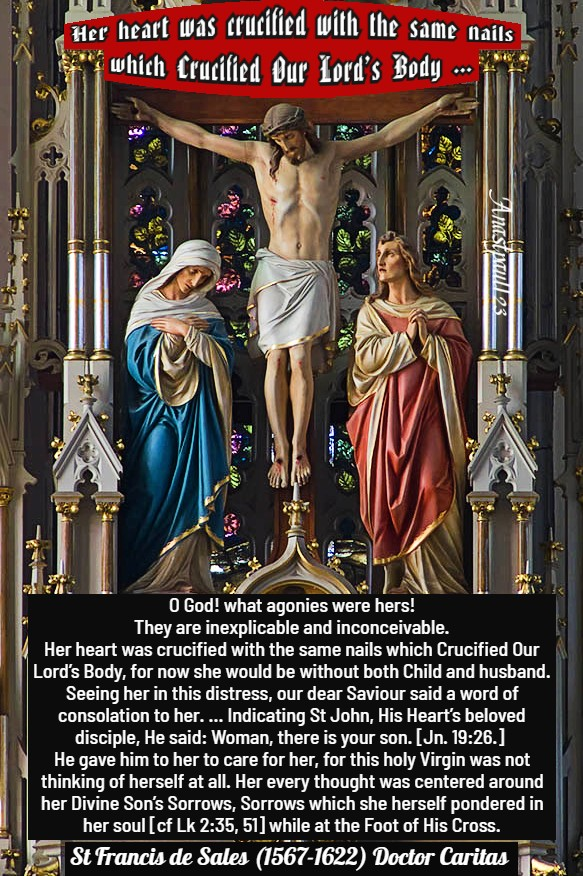
“Her heart was crucified with the same nails which Crucified Our Lord’s Body …”
“OUR LORD’S THIRD WORD was one of consolation. He spoke it to His sacred Mother who was at the foot of the Cross, pierced by a sword of sorrow [Lk 2:35] but certainly not swooning, nor with faint heart, as artists have falsely and impertinently painted her. The Evangelist clearly says the contrary, insisting that she remained standing with an incomparable firmness [Jn.19:25]. That courage did not keep her from the grieving which she endured with the generous and magnanimous heart belonging to her alone. O God! what agonies were hers! They are inexplicable and inconceivable. Her heart was crucified with the same nails which Crucified Our Lord’s Body, for now she would be without both Child and husband.
Seeing her in this distress, our dear Saviour said a word of consolation to her. But this consoling and tender word was not given to lift her heart from such great desolation. The heart of this perfectly submissive and resigned holy Virgin needed to be extremely strong and Our Lord, Who knew her so well, dealt with her accordingly. Indicating St John, His Heart’s beloved disciple, He said: Woman, there is your son. [Jn 19:26.] He gave him to her to care for her, for this holy Virgin was not thinking of herself at all. Her every thought was centered around her Divine Son’s Sorrows, Sorrows which she herself pondered in her soul [cf Lk 2:35, 51] while at the Foot of His Cross.” – (Sermons of St Francis de Sales for or Lent).
One Minute Reflection – 15 September – “The Month of The Seven Sorrows of the Blessed Virgin Mary and The Holy Cross” and The Feast of the Seven Sorrows of the Blessed Virgin – Judith 13:22; 13:25 – John 19:25-27 – Scripture search here:
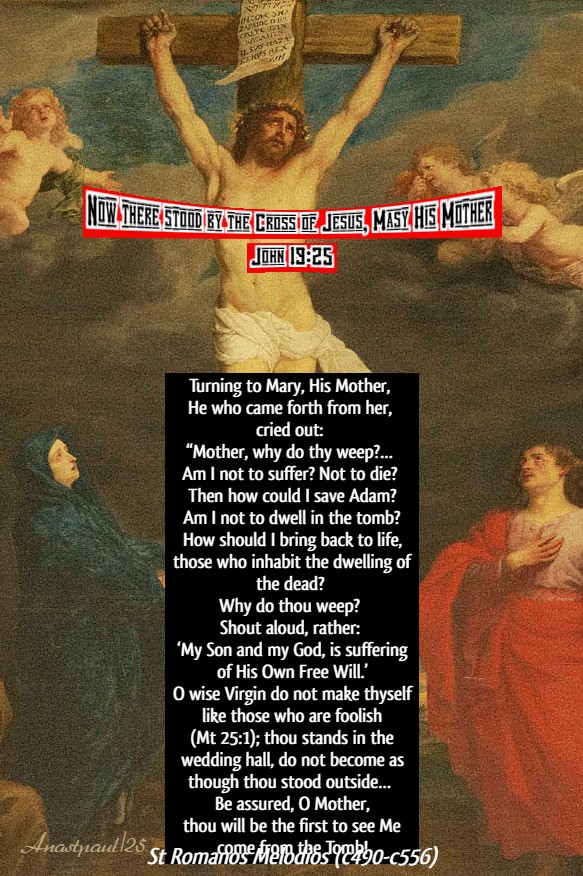
“Now there stood by the Cross of Jesus, Mary, His Mother …” –John 19:25
REFLECTION – “Like a sheep beholding its lamb being led to the slaughterhouse (Is 53 :7), Mary followed behind with the other women, consumed with sorrow and crying: “Where are Thou going, my Child? Why do Thou end Thy swift course (Ps 18:6) in this way? Are there still other wedding feasts in Cana? Is it there that Thou are now going so swiftly, to make wine for them out of water? May I come with Thee, O my Child, or would it be better to wait? Speak one word to me, O Word, do not pass before me in silence…, oh Thou Who are my Son and my God…
“Thou art going towards an unjust death and no-one shares Thy suffering. Peter does not go with Thee, he who said: “Even if I have to die, I will never deny Thee” (Mt 26:35). Thomas, who exclaimed: “Let us all die with Him!” (Jn 11:16), has left Thee. And the others too, Thy friends, those who are to judge the twelve tribes of Israel (Mt 19:28), where are they now!? Not one remains. But Thou alone, O my Child, Thou dies for all. This is Thy recompense for having saved and served all humankind, my Son and my God.”
Turning to Mary, His Mother, He who came forth from her, cried out: “Mother, why do thy weep?… Am I not to suffer? Not to die? Then how could I save Adam? Am I not to dwell in the tomb? How should I bring back to life, those who inhabit the dwelling of the dead? Why do thou weep? Shout aloud, rather: ‘My Son and my God, is suffering of His Own Free Will.’ O wise Virgin do not make thyself like those who are foolish (Mt 25:1); thou stands in the wedding hall, do not become as though thou stood outside… Weep no longer, then but rather say: ‘Take pity on Adam, be merciful towards Eve, O my Son and my God.’
“Be assured, O Mother, thou will be the first to see Me come from the Tomb. I will come to show thee from what misfortunes I have redeemed Adam, what efforts I have expended for his sake. To My friends, I shall reveal their marks which I will show in My Hands. Then thou will see Eve alive, as she was before and in thou joy, thou will cry out: ‘He has saved my parents, my Son and my God!’ – St Romanos Melodios (c490-c556) Monk, Composer of Hymns, Poet (Hymn 25, The Blessed Virgin Mary at the Cross).
PRAYER – O God, in Whose Passion the sword, according to the prophecy of blessed Simeon, pierced through the soul of Mary, the glorious Virgin and Mother, mercifully grant that we, who reverently commemorate her piercing through and her suffering, may, by the interceding glorious merits of all the Saints faithfully standing by the Cross, obtain the abundant fruit of Thine Passion. Who lives and reigns with God the Father, in the unity of the Holy Ghost, God, world without end. Amen (Collect).
Our Morning Offering – 15 September – “The Month of The Seven Sorrows of the Blessed Virgin Mary and The Holy Cross” and the Feast of the Seven Sorrows of Our Lady
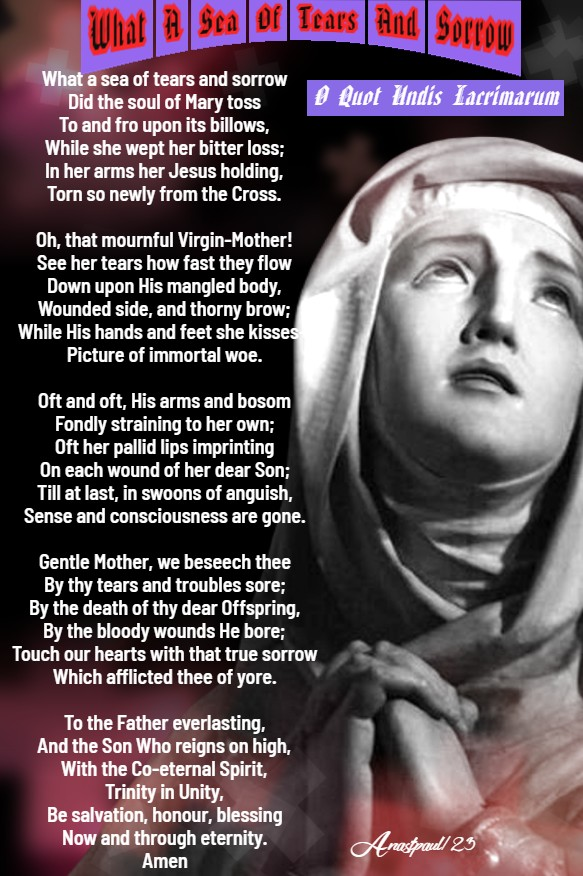
O Quot Undis Lacrimarum What A Sea Of Tears And Sorrow Breviary Hymn for the Feast of the Seven Sorrow Attrib. Bishop Callisto Palumbella OSM (1687-1749) Trans. Fr Edward Caswell COrat (1814–1878)
What a sea of tears and sorrow Did the soul of Mary toss To and fro upon its billows, While she wept her bitter loss; In her arms her Jesus holding, Torn so newly from the Cross.
Oh, that mournful Virgin-Mother! See her tears how fast they flow Down upon His mangled body, Wounded side, and thorny brow; While His hands and feet she kisses— Picture of immortal woe.
Oft and oft, His arms and bosom Fondly straining to her own; Oft her pallid lips imprinting On each wound of her dear Son; Till at last, in swoons of anguish, Sense and consciousness are gone.
Gentle Mother, we beseech thee By thy tears and troubles sore; By the death of thy dear Offspring, By the bloody wounds He bore; Touch our hearts with that true sorrow Which afflicted thee of yore.
To the Father everlasting, And the Son Who reigns on high, With the Co-eternal Spirit, Trinity in Unity, Be salvation, honour, blessing Now and through eternity. Amen
Attrib. to the Servite Bishop Callisto Maria Vincenzo Antonio Palumbella OSM (1687-1749), who also composed the Office for the Feast inserted in the Breviary in 1720. He was the Bishop of Terracina, Priverno e Sezze, Italy. This Translation by Fr Edward Caswell COrat (1814–1878)
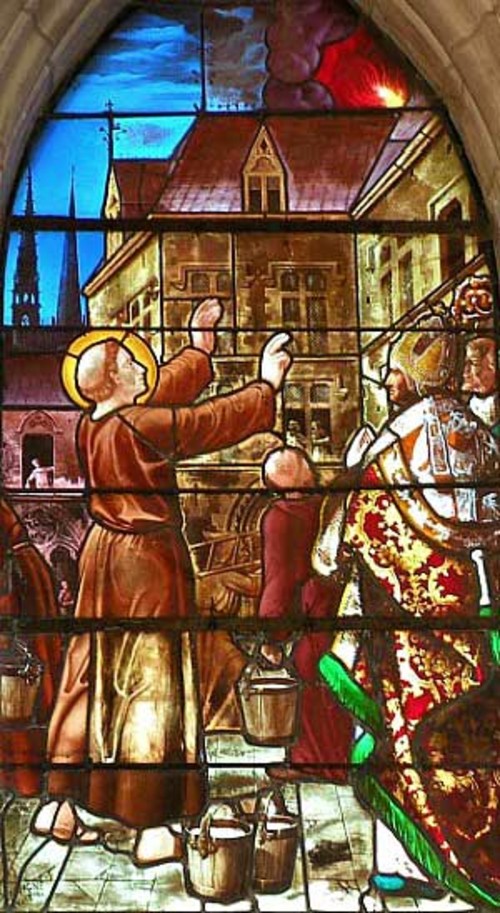
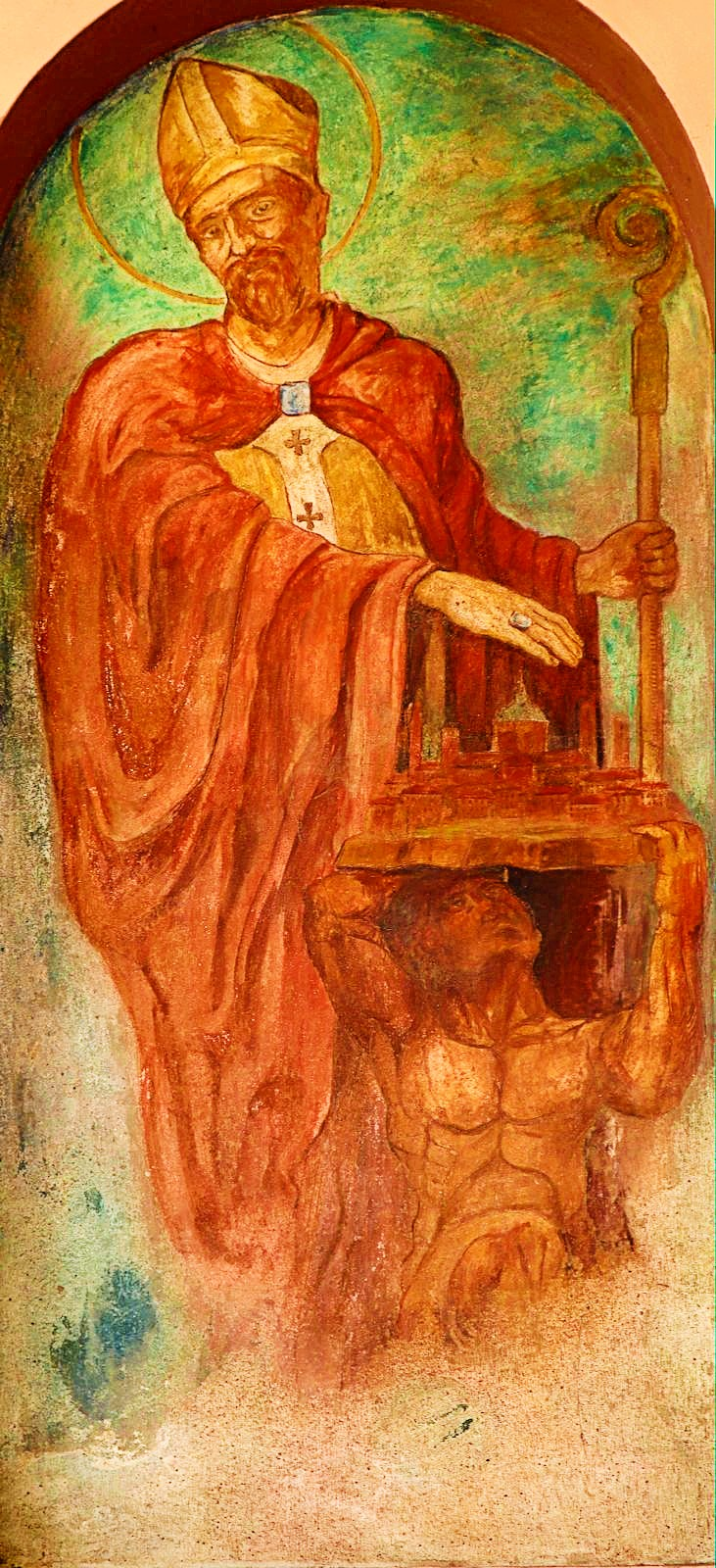
Saint of the Day – 15 September – Saint Allbinus (Died c400) the 14th Bishop of Lyon and the Founder of the Cathedral of St Stephen in Lyon. Also known as – Alpin, Albin, Aubin, St Albinus.
The Roman Martyrology reads today: “At Lyon, St Allbinus, the Bishop.”
It seems that the name of our Saint today was originally Alpin, altered to Allbinus, by St Bede and the Martyrologies which succeed him.
According to them, Allbinus succeeds St Justus in 390 and was a holy Bishop. He is believed to be the Founder builder of the St Stephen’s Cathedral and its Baptistry, where St Allbinus was duly buried. He died around 400.
St Aichardus St Albinus (Died c400) Bishop of Lyon St Aprus of Toul St Bond of Sens St Emilas of Cordoba St Eutropa of Auvergne Holy 5th Century widow in Auvergne, France. No other information has survived. St Hernan St Jeremias of Cordoba St Joseph Abibos
St Leobinus (Died c448) Bishop of Chartres, Abbot, Hermit, Miracle worker – he had the gift of healing, especially of dropsy or edema – born as Lubin at Poitiers, France and died on 14 March c558 of natural causes. Patronages – against dropsy/oedema, against rheumatism, of innkeepers and wine merchants. His Feast Day is today 15 September. It was moved in around 1969. Zealous St Leobinus: https://anastpaul.com/2020/03/14/saint-of-the-day-14-march-saint-leobinus-of-chartres-died-c-558/
St Mamillian of Palermo St Melitina St Mirin of Bangor St Nicetas the Goth
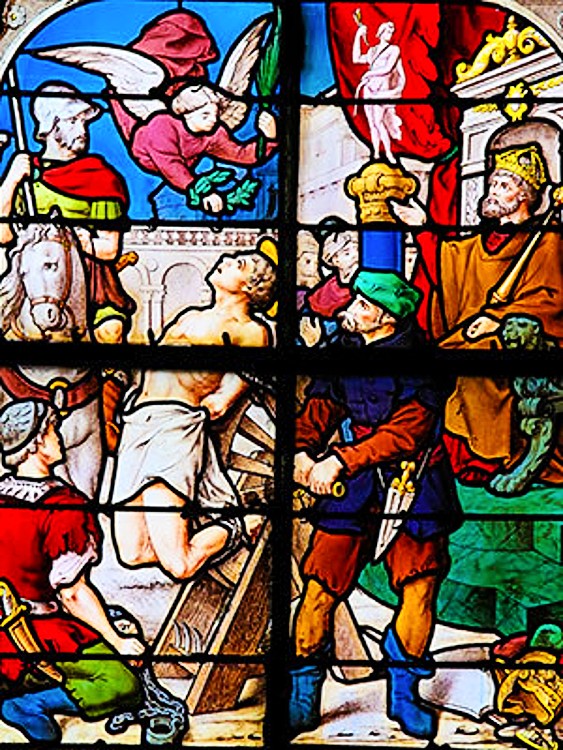
St Nicomedes (Died c71) Priest and Martyr. The Roman Martyrology reads today: “In Rome, on the Nomentan Way, the birthday of the blessed Nicomedes, Priest and Martyr. As he said to those who would compel him to sacrifice: “I sacrifice only to the Omnipotent God, who reigns in Heaven.” He was scourged, for a very long time with leaded whips and thus, went to our Lord.” His Life and Death: https://anastpaul.com/2023/09/15/saint-of-the-day-15-september-st-nicomedes-died-c71-priest-and-martyr/
St Porphyrius the Martyr St Ribert St Ritbert of Varennes
Bl Tommasuccio of Foligno St Valerian of Châlon-sur-Saône St Valerian of Noviodunum St Vitus of Bergamo
Martyrs of Adrianopolis – 3 Saints: Three Christian men Martyred together in the persecutions of Maximian – Asclepiodotus, Maximus and Theodore. They were martyred in 310 at Adrianopolis (Adrianople), a location in modern Bulgaria.
Martyrs of Noviodunum – 4 Saints: Three Christian men martyred together, date unknown – Gordian, Macrinus, Stratone and Valerian. They were martyred in Noviodunum, Lower Moesia (near modern Isaccea, Romania).
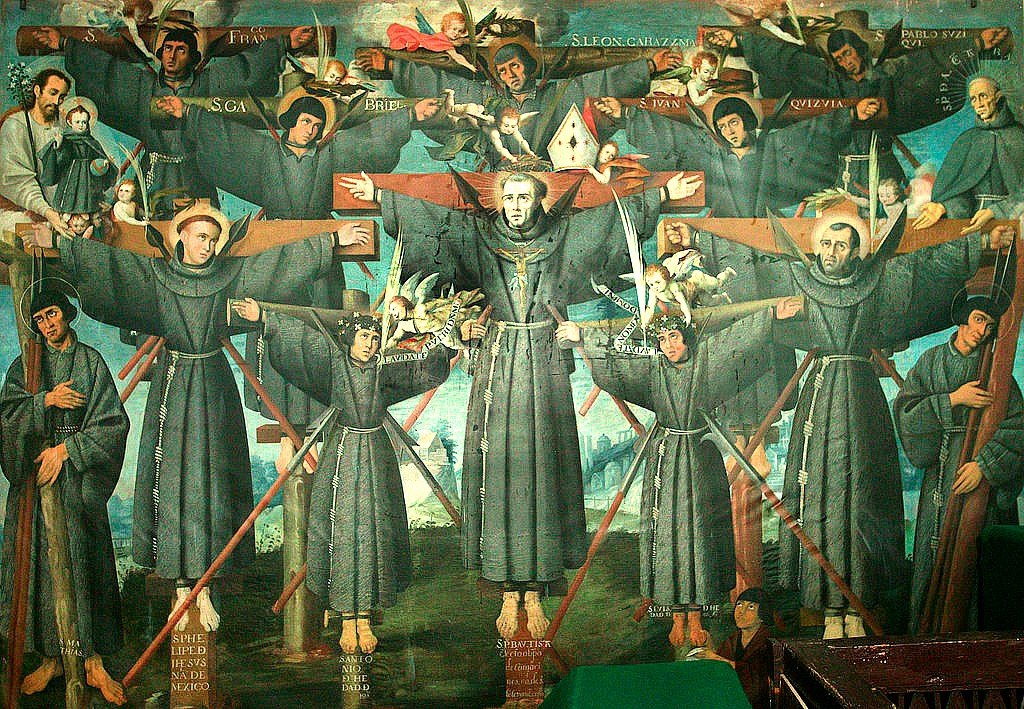
Mercedarian Martyrs of Morocco – 6 Beati: A group of six Mercedarians who were captured by Moors near Valencia, Spain and taken to Morocco. Though enslaved, they refused to stop preaching Christianity. Martyrs. – Dionisio, Francis, Ildefonso, James, John and Sancho. They were crucified in 1437 in Morocco.
DISCLAIMER: Please note: I cannot control the content of the Advertisements on this Site, or of pop-ups which may appear, The revenue from the Advertisements, however, does provide a little assistance in the support of the Site. I do apologise for any inappropriate content.
Thought for the Day – 14 September – Meditations with Antonio Cardinal Bacci (1881-1971)
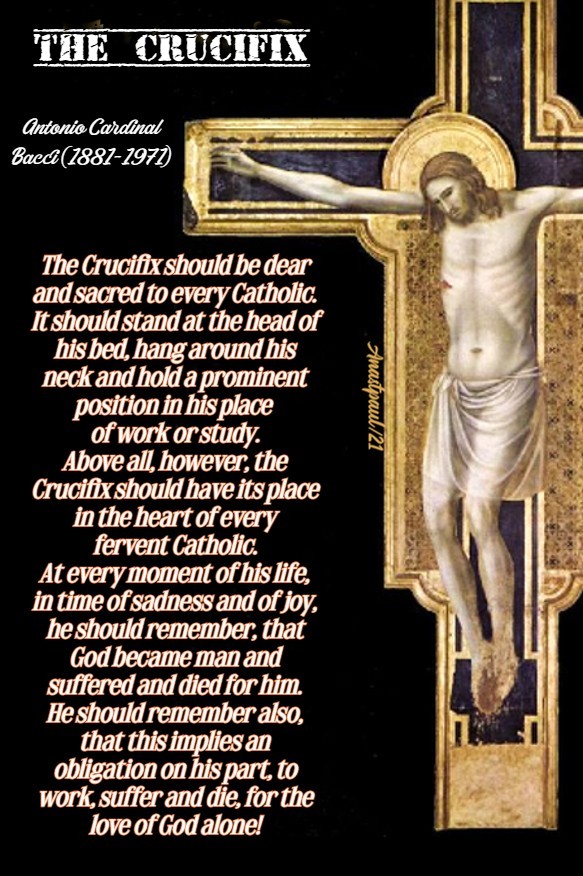
The Crucifix
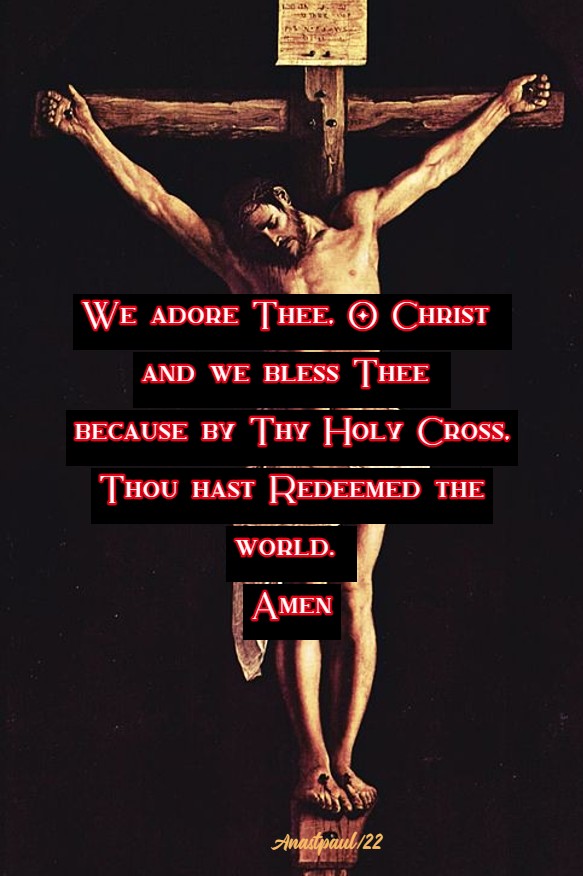
“The Crucifix is a simple meditation manual, open and intelligible to all, even to the most illiterate. Anyone who turns to it, can study the sorrowful gaze of Jesus, His heart pierced with love for men. His head crowned with thorns, His hands and feet transfixed with nails which support His divine body, streaming blood and writhing in anguish. The Crucifix should be dear and sacred to every Catholic. It should stand at the head of his bed, hang around his neck and hold a prominent position in his place of work or study.
Above all, however, the Crucifix should have its place in the heart of every fervent Catholic. At every moment of his life, in time of sadness and of joy, he should remember, that God became man and suffered and died for him. He should remember also, that this implies an obligation on his part, to work, suffer and die, for the love of God alone!
Many people meditate on the Crucifix. They kiss it and claim to love it. But while they love the Crucifix, they have no love for their particular cross, which they try, by every means in their power, to fling far away from them. Now, it is very certain, that anyone who does not love his own cross, does not really love the Crucifix, for Jesus has told us that, “if anyone wishes to come after me, let him deny himself and take up his cross and follow me” (Mt 16:24).”
Quote/s of the Day – 14 September – “The Month of The Seven Sorrows of the Blessed Virgin Mary and The Holy Cross” and the Feast of the Exaltation of the Holy Cross
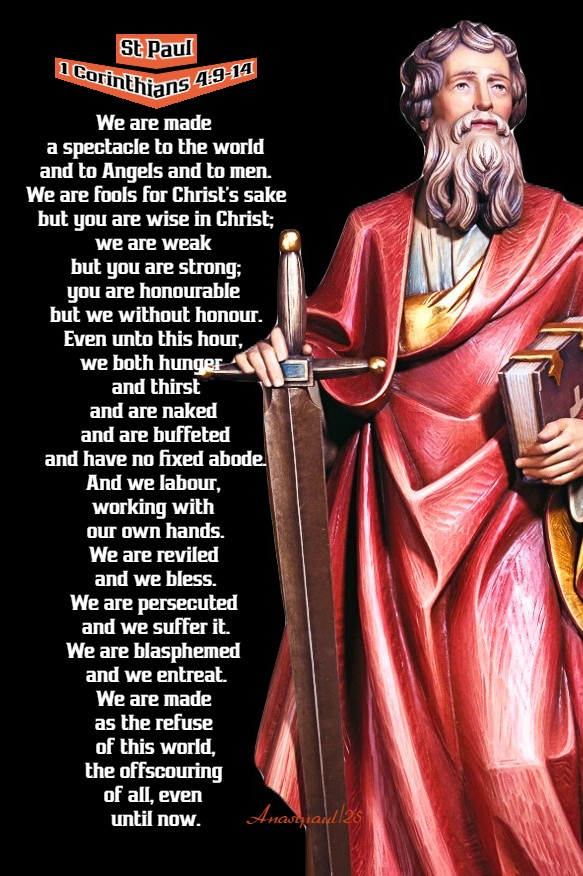
“We are made a spectacle to the world and to Angels and to men. We are fools for Christ’s sake but you are wise in Christ; we are weak but you are strong; you are honourable but we without honour. Even unto this hour, we both hunger and thirst and are naked and are buffeted and have no fixed abode. And we labour, working with our own hands. We are reviled and we bless. We are persecuted and we suffer it. We are blasphemed and we entreat. We are made as the refuse of this world, the offscouring of all, even until now.”
St Paul – 1 Corinthians 4:9-14
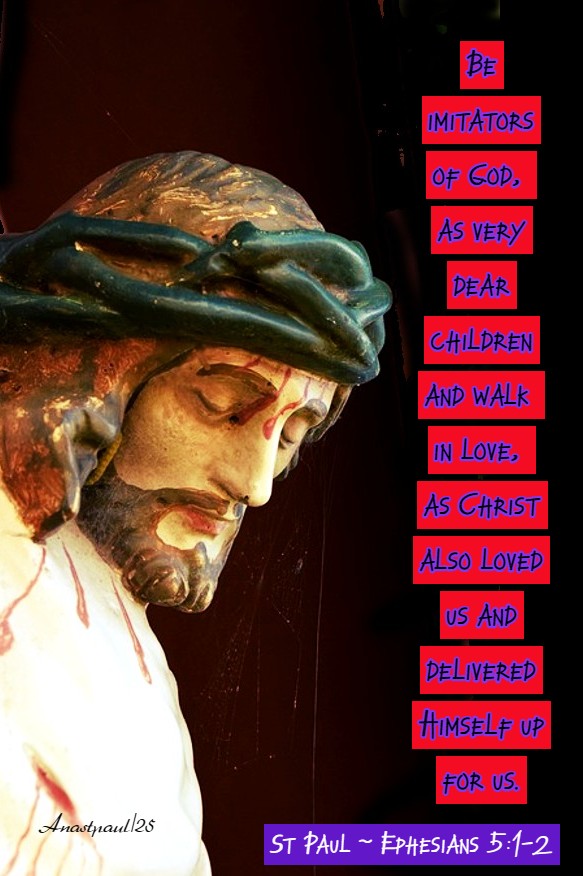
“Be imitators of God, as very dear children and walk in love, as Christ also loved us and delivered Himself up for us …”
St Paul … Ephesians 5:1-2
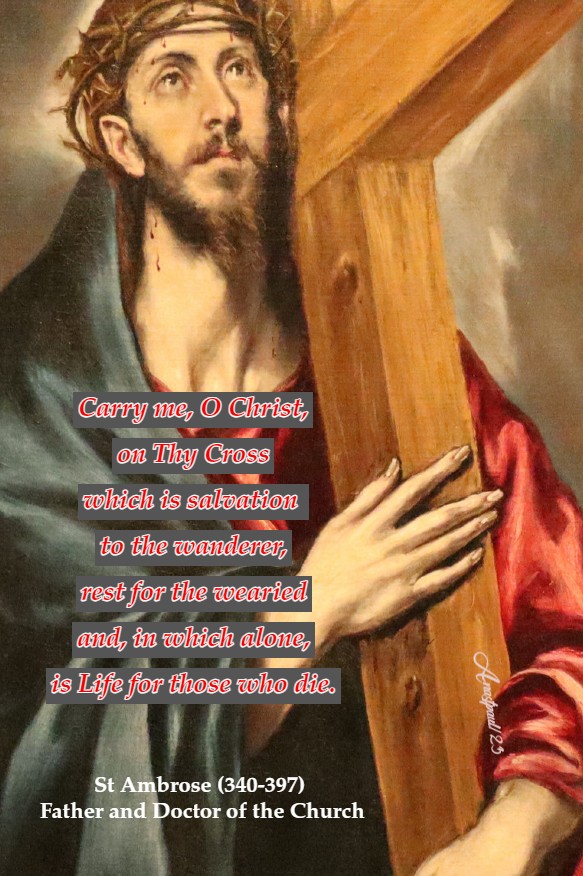
“Carry me, O Christ, on Thy Cross which is salvation to the wanderer, rest for the wearied and, in which alone, is Life for those who die.”
St Ambrose (340-397) Father and Doctor of the Church
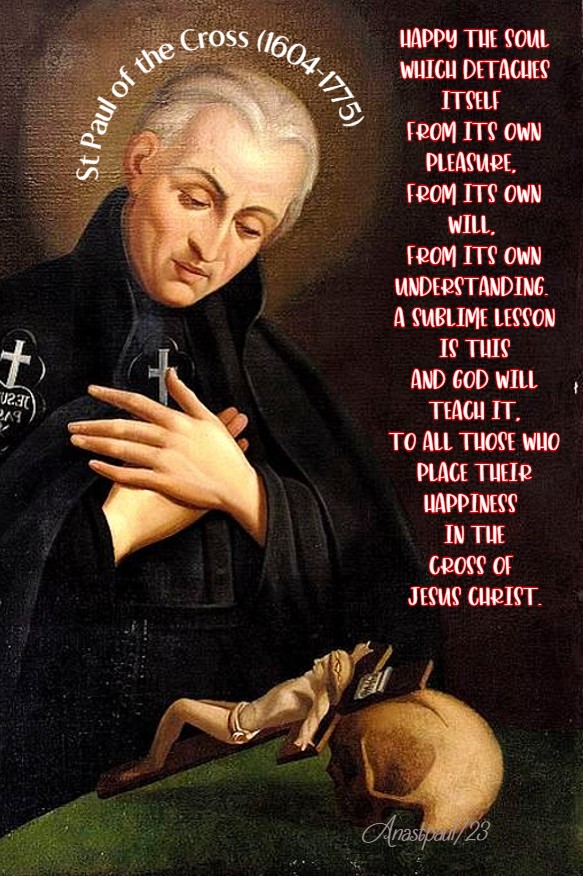
“Happy the soul which detaches itself from its own pleasure, from its own will, from its own understanding. A sublime lesson is this and God will teach it, to all those who place their happiness in the Cross of Jesus Christ.”
St Paul of the Cross (1604-1775)
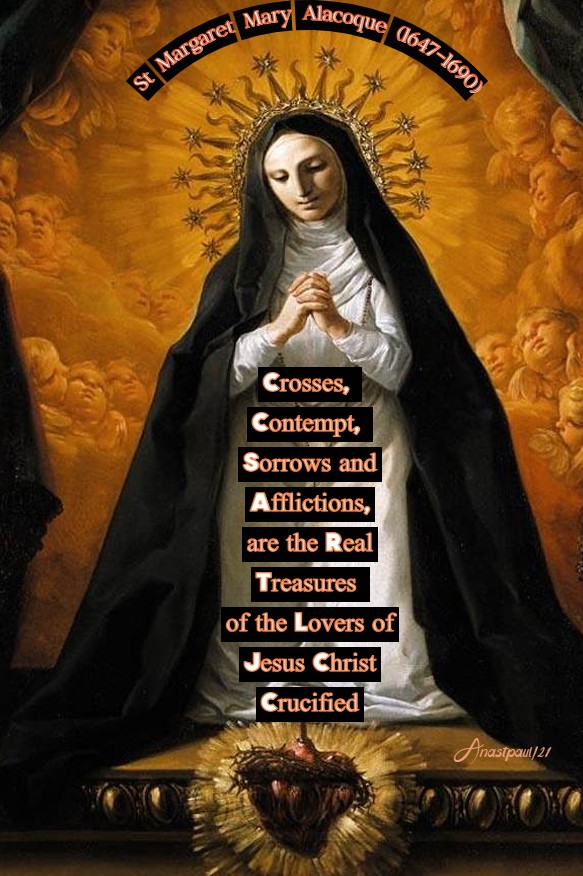
“Crosses, contempt, sorrows and afflictions, are the real treasures of the lovers of Jesus Christ Crucified.”
One Minute Reflection – 14 September – “The Month of The Seven Sorrows of the Blessed Virgin Mary and The Holy Cross” – Exaltation of the Holy Cross – Pentecost XIV – Philippians 2:5-11 – John 12:31-36 – Scripture search here: https://www.drbo.org/
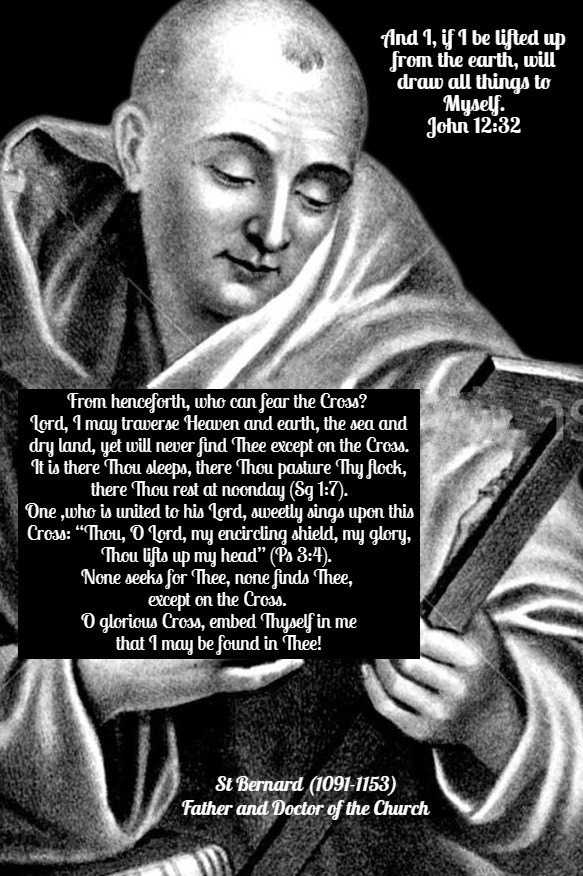
“And I, if I be lifted up from the earth, will draw all things to Myself.” – John 12:32
REFLECTION – “Far be it for me to glory, except in the Cross of my Lord Jesus Christ” (Gal 6:4). The Cross is Thy glory, the Cross is Thy Dominion. Behold, upon Thy shoulders Dominion rests (Is 9:5). Those who bear Thy Cross, bear Thy glory. That is why the Cross which makes unbelievers quail, is more beautiful than all the trees of Paradise to believers. Was Christ afraid of the Cross? Or Peter? Or Andrew? To the contrary! they longed for it. Christ went to meet it “like a champion joyfully running his course” (Ps 18:6): “I have eagerly desired to eat this Passover with you before I suffer” (Lk 22:15). He ate the Passover even as He suffered His Passion when He passed from this world to His Father. He ate and drank on the Cross, He was drunk with wine and fell asleep …
From henceforth, who can fear the Cross? Lord, I may traverse Heaven and earth, the sea and dry land, yet will never find Thee, except on the Cross. It is there Thou sleeps, there Thou pasture Thy flock, there Thou rest at noonday (Sg 1:7). One ,who is united to his Lord, sweetly sings upon this Cross: “Thou, O Lord, my encircling shield, my glory, Thou lifts up my head” (Ps 3:4). None seeks for Thee, none finds Thee, except on the Cross. O glorious Cross, embed Thyself in me that I may be found in Thee!” – St Bernard (1091-1153) Cistercian Abbot, Father and the Mellifluous Doctor of the Church (Meditation on the Passion (attrib),
PRAYER – O God, Who gladden us this day by the annual feast of the Exaltation of the Holy Cross, grant, we beseech Thee, that we, who know on earth, the mysteries of Christ, may be found worthy to obtain, in heaven, the rewards of His Redemption. Through the same Jesus Christ, Thy Son our Lord, Who lives and reigns with Thee, in the unity of the Holy Ghost, God, world without end. Amen (Collect).
Our Morning Offering – 14 September – “The Month of The Seven Sorrows of the Blessed Virgin Mary and The Holy Cross” – The Feast of the Exaltation of the Holy Cross
Faithful Cross! Above All Other By St Venantius Fortunatus (c 530 – c 609)
Faithful Cross! above all other, one and only noble tree! None in foliage, none in blossom, none in fruit thy peer may be; sweetest wood and sweetest iron, sweetest weight is hung on thee.
Bend thy boughs, O tree of glory! Thy relaxing sinews bend; for awhile the ancient rigour that thy birth bestowed, suspend and the King of heavenly beauty gently on thine arms extend.
Praise and honour to the Father, praise and honour to the Son, praise and honour to the Spirit, ever Three and ever One: One in might and One in glory while eternal ages run.
Saint of the Day – 14 September – Saint Crescentius c292-c303) Child Martyr of Rome who died under the persecutions of Diocletian. Patronage – of Perugia and Sienna, Italy.
The Roman Martyrology reads today: “On the Salarian Road, at Rome, during the pwersecution of Diocletian, St Crescentius, the young son of St Euthymius, who ended his life by the sowrd, under the Judge Turpilius.”
Born in Rome, toward the end of the 3rd Century, into a family where the Gospel was lived daily, even amidst the most ferocious persecutions like that of Diocletian, this boy was born with an auspicious name, a promise of growth not only physical, but above all spiritual and moral.
Crescentius, was the young son of a Roman patrician couple who fled to Perugia in the persecution of Diocletian. here, the father St Euthemius died of natural causes but Crescentius was brought back to Rome to be executed on the Via Salaria. He was eleven years old. He is sometimes associated with St George because he is shown stepping on the legendary dragon.
He was buried in the Cemetery of Priscilla on the Via Salaria. His place of burial became a focus of pilgrimage and veneration in the Middle Ages. In around 1058, his body was translated from Rome to Siena by Pope Stephen IX at the request of Bishop Antifredus. Other Relics were translated to Tortosa in 1606.
Saint Crescentius, Maestà of Duccio.
The only biographical source concerning Crescentius was derived from the copy of a manuscript dated 1600 and conserved in the Biblioteca Vallicelliana. His Acts were written long after the death of this Saint, probably around 1058, when Crescentius’ body was translated to Siena. During the Middle Ages, Crescentius was the subject of a popular cult there and he remains an important Patron of the City.
St Crescentian of Carthage St Crescentius (Died c300) Child Martyr of Rome St Generalis of Carthage St Giulia Crostarosa St Jean Gabriel Taurin du Fresse
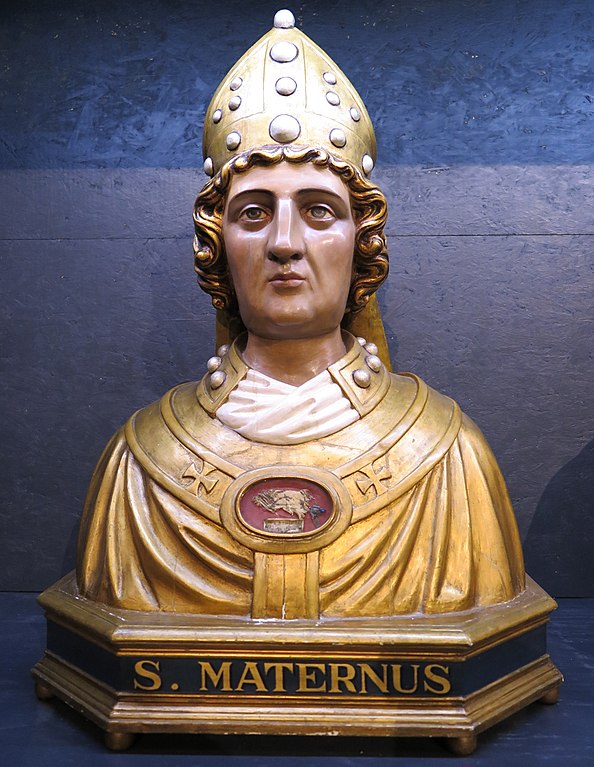
St Maternus (Died c 325)Bishop, the first Bishop of Cologne and Founder of the Diocese of Tongeren, Germany. In Cologne and in his hometown of Trier, the faithful began to venerate him as a Saint. A popular cult of which the splendid 13th Century stained glass windows in the Cathedral Chapel dedicated to his name, also testify. He was buried in the Cathedral of Cologne but the Cathedral of St Peter in Trier boasts a large Reliquary which became and remains, a pilgrimage site. His Life of Love: https://anastpaul.com/2021/09/14/saint-of-the-day-14-september-saint-maternus-of-cologne-died-c-325/
St Peter O.Cist (1102-1174) Cistercian Monk, Archbishop of Tarentaise from 1141 until his death, Abbot, Apostle of Charity, Miracle-worker. There are two Saints named Saint Peter of Tarentaise who lived one Century apart. The Saint we honour today, is the younger Peter, born in France in the early part of the 12th Century. The other Saint Peter if Tarentaise, became Pope Innocent V. His Holy Life: https://anastpaul.com/2019/09/14/saint-of-the-day-14-september-saint-peter-of-tarentaise-o-cist-1102-1174/
St Rosula of Carthage St Sallustia St Victor of Carthage
Thought for the Day – 13 September – Meditations with Antonio Cardinal Bacci (1881-1971)
“Holy Mary”
“The Angel’s greeting was completed later by the salutation of St Elizabeth. As soon as Elizabeth saw the Blessed Virgin coming to visit her, she cried out in humble veneratin: “Blessed art thou among women and blessed is the fruit of thy womb!” (Lk 1:42).
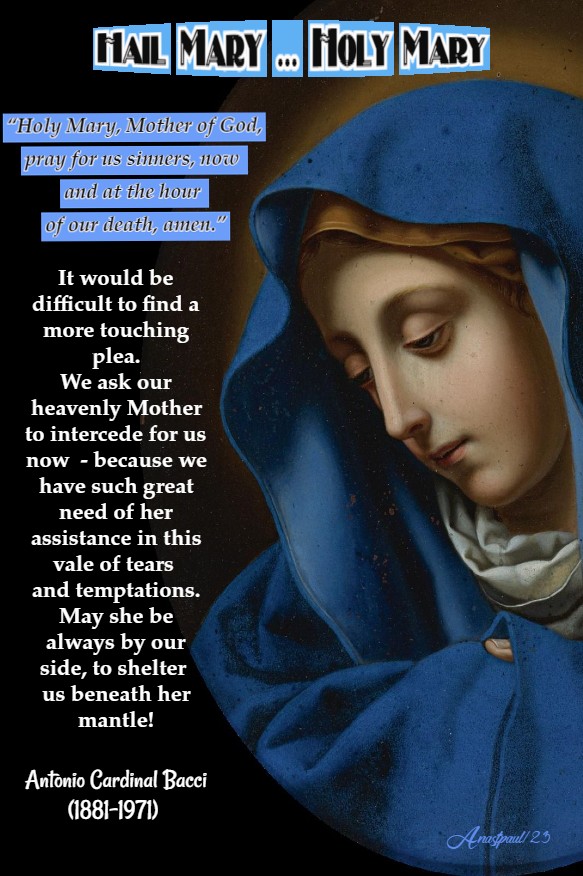
In the first part of the Hail Mary, then, we pay her the words of the Gospel, the highest tributes ever accorded to any human creature, proclaiming her to be full of grace, blessed among women and Mother of the Redeemer. The second part which was later added by the Church, (composed and proposed by St Peter Canisius 1521-1597) Doctor of the Church), is a heartfelt supplication addressed to Mary as the Mother of God and our Mother. “Holy Mary, Mother of God, pray for us sinners, now and at the hour of our death, amen.” It would be difficult to find a more touching plea. We ask our heavenly Mother to intercede for us now – because we have such great need of her assistance in this vale of tears and temptations. May she be always by our side, to shelter us beneath her mantle!”
Quote/s of the Day – 13 September – Our Holy Mother’s Day – Sanctæ Mariæ Sabbato
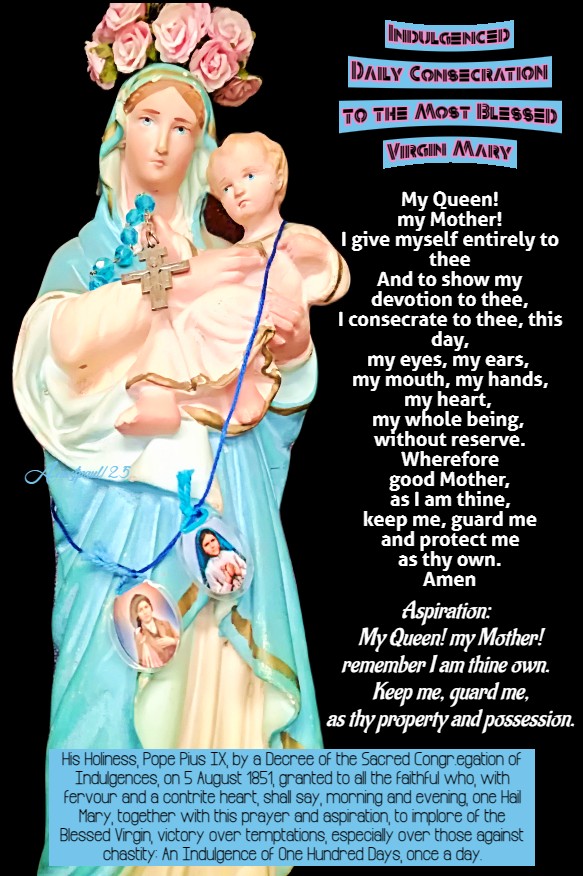
Indulgenced Daily Consecration to the Most Blessed Virgin Mary
My Queen! my Mother! I give myself entirely to thee And to show my devotion to thee, I consecrate to thee, this day, my eyes, my ears, my mouth, my hands, my heart, my whole being, without reserve. Wherefore, good Mother, as I am thine, keep me, guard me, and protect me as thy own. Amen
Aspiration:My Queen! my Mother! remember I am thine own. Keep me, guard me, as thy property and possession.
His Holiness, Pope Pius IX, by a Decree of the Sacred Congr.egation of Indulgences, on 5 August 1851, granted to all the faithful who, with fervour and a contrite heart, shall say, morning and evening, one Hail Mary, together with this prayer and aspiration, to implore of the Blessed Virgin, victory over temptations, especially over those against chastity: An Indulgence of One Hundred Days, once a day.
The Memorare Indulgence of three years – Raccolta 339. Plenary indulgence – once a month for the daily recitation of this prayer.
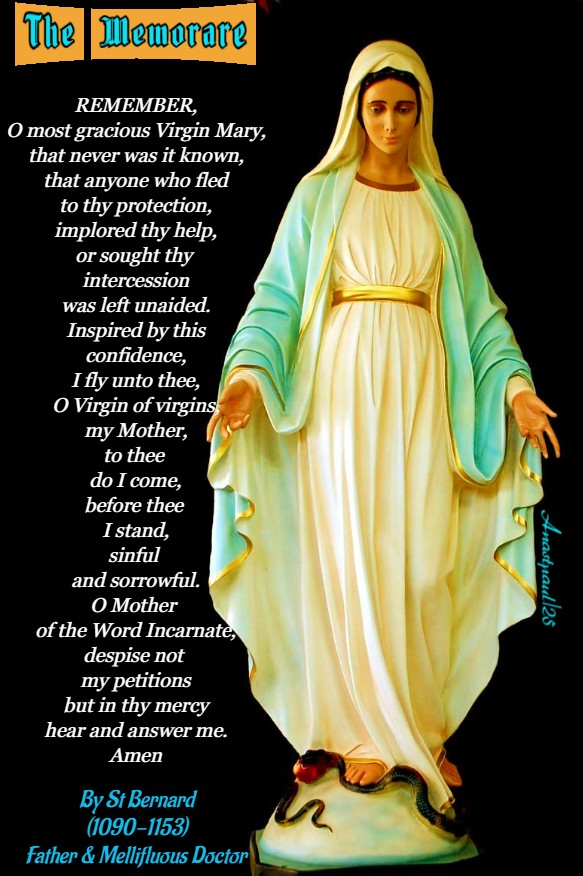
The Memorare By St Bernard (1090-1153) Father and Mellifluous Doctor
REMEMBER, O most gracious Virgin Mary, that never was it known, that anyone who fled to thy protection, implored thy help, or sought thy intercession was left unaided. Inspired by this confidence, I fly unto thee, O Virgin of virgins, my Mother, to thee do I come, before thee I stand, sinful and sorrowful. O Mother of the Word Incarnate, despise not my petitions but in thy mercy hear and answer me. Amen
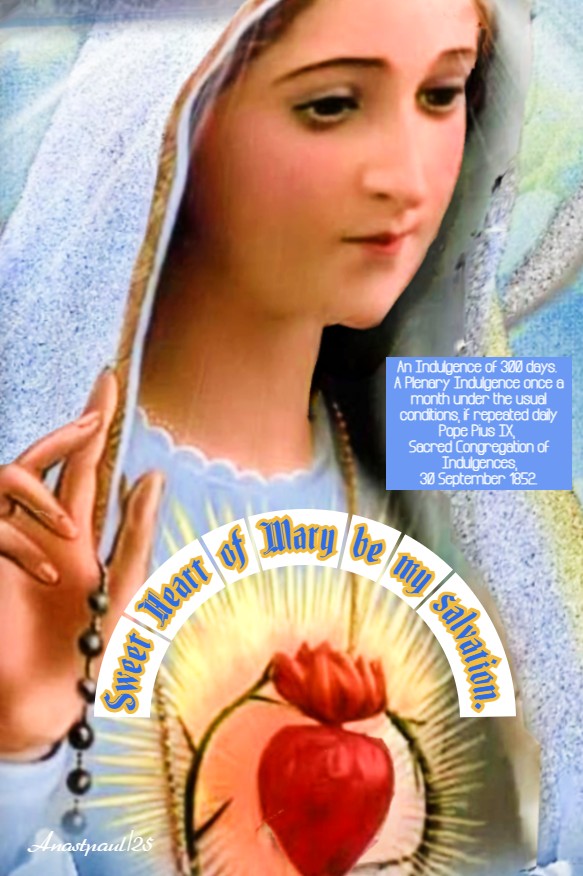
Sweet Heart of Mary be my salvation.
An Indulgence of 300 days. A Plenary Indulgence once a month under the usual conditions, if repeated daily Pope Pius IX, Sacred Congregation of Indulgences, 30 September 1852.
One Minute Reflection – 13 September – “The Month of The Seven Sorrows of the Blessed Virgin Mary and The Holy Cross” –Sanctæ Mariæ Sabbato – Prov 8:22-35 – Matthew 1:1-16 – Scripture search here: https://www.drbo.org/
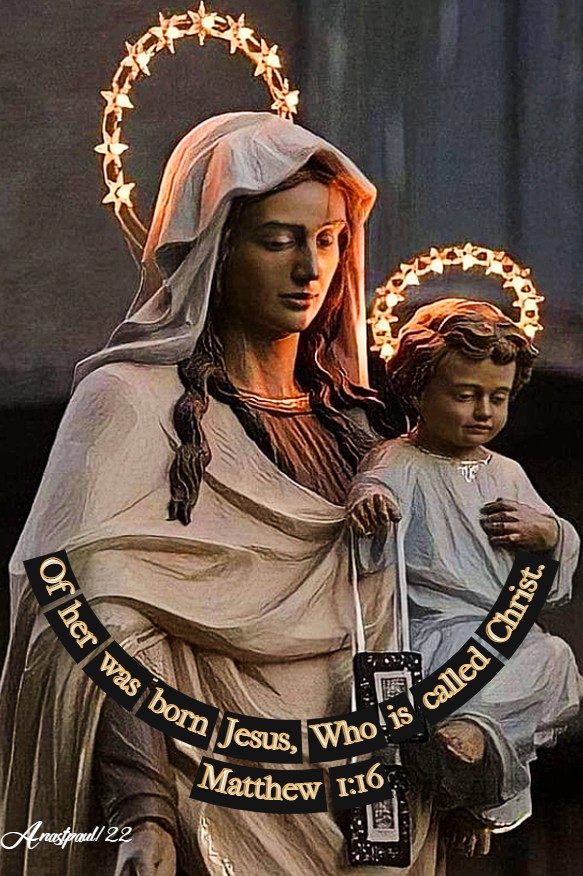
“And Jacob begot Joseph, the husband of Mary and of her was born Jesus, Who is called Christ.” – Matthew 1:16
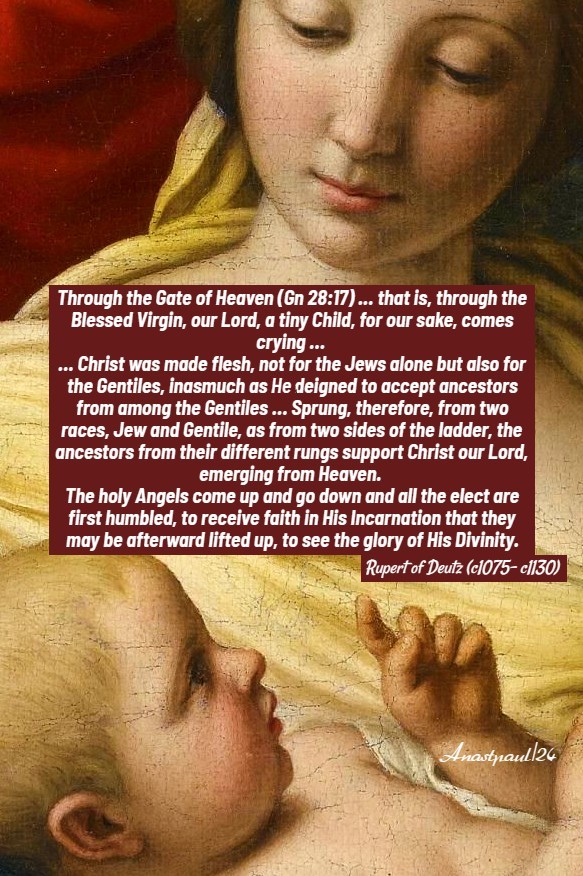
REFLECTION – “The genealogy of Jesus Christ from St Matthew’s Gospel is read to us. It is a custom handed down by holy Church with a beauty and mystery of its own. For behold, how in truth this reading puts before us, at dead of night that ladder, which Jacob saw at night in his sleep (Gn 28:12). Supported on the topmost rung of the ladder, where it reached Heaven, the Lord appeared to Jacob and promised him that his posterity would inherit the earth … Now, as we know, “all these things happened to them in figure” (1 Cor 10:11). The ladder by which the Lord appeared to be supported, prefigured the family-tree of Jesus Christ which the holy Gospel-writer so drew up, as to come through Joseph. It is, by Joseph that our Lord, as a small Child, is supported. Through the Gate of Heaven (Gn 28:17) … that is, through the Blessed Virgin, our Lord, a tiny Child, for our sake, comes crying … The words which Jacob, in his sleep heard the Lord say, “And in thy posterity shall all the nations of the earth be blessed” are fulfilled, by the birth of Christ.
The divine writer, bearing in mind this very point, put the names of Rahab, the prostitute and Ruth, the Moabite, into his genealogy. For he saw that Christ was made flesh, not for the Jews alone but also for the Gentiles, inasmuch as He deigned to accept ancestors from among the Gentiles … Sprung, therefore, from two races, Jew and Gentile, as from two sides of the ladder, the ancestors from their different rungs support Christ our Lord, emerging from Heaven. The holy Angels come up and go down and all the elect are first humbled, to receive faith in His Incarnation that they may be afterward lifted up, to see the glory of His Divinity.” – Rupert of Deutz (c1075- c1130) Monk, Theologian and Writer (De Divinis Officiis 3, 18).
PRAYER – Lord God, the day of our salvation dawned when the Blessed Virgin gave birth to Your Son. As we celebrate her nativity, grant us Your grace and Your peace. Through Christ, Thy Son our Lord, Who lives and reigns with Thee, in the unity of the Holy Ghost, God, world without end. Amen (Collect).
Our Morning Offering – 13 September – “The Month of The Seven Sorrows of the Blessed Virgin Mary and The Holy Cross” and Sanctæ Mariæ Sabbato, Our Lady’s Saturday
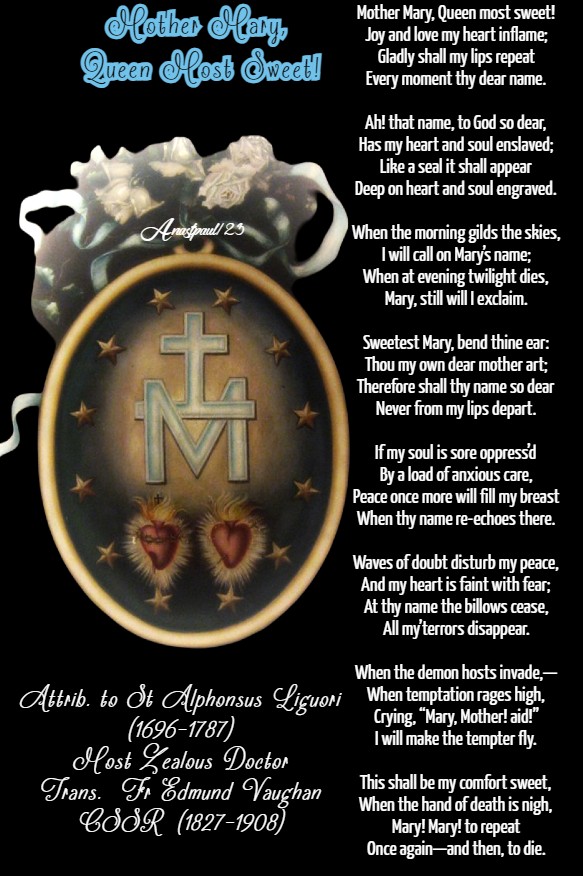
Mother Mary, Queen Most Sweet! Attrib. to St Alphonsus Liguori (1696-1787) Most Zealous Doctor Italian Hymn Trans. Fr Edmund Vaughan CSSR (1827-1908)
Mother Mary, Queen most sweet! Joy and love my heart inflame; Gladly shall my lips repeat Every moment thy dear name.
Ah! that name, to God so dear, Has my heart and soul enslaved; Like a seal it shall appear Deep on heart and soul engraved.
When the morning gilds the skies, I will call on Mary’s name; When at evening twilight dies, Mary, still will I exclaim.
Sweetest Mary, bend thine ear: Thou my own dear mother art; Therefore, shall thy name so dear Never from my lips depart.
If my soul is sore oppress’d By a load of anxious care, Peace once more will fill my breast When thy name re-echoes there.
Waves of doubt disturb my peace, And my heart is faint with fear; At thy name the billows cease, All my’terrors disappear.
When the demon hosts invade,— When temptation rages high, Crying, “Mary, Mother! aid!” I will make the tempter fly.
This shall be my comfort sweet, When the hand of death is nigh, Mary! Mary! to repeat Once again—and then, to die.
This Hymn is an Anonymous Hymn belonging to the Redemptorist tradition but Hymnary.org attributes it to St Alphonsus Liguori. “Hymns and Verses on Spiritual Subjects” (1863) notes that this is one of two Hymns, translated in that book, mentioned above, which come from a Neapolitan published collection of Mission Hymns which are attributed to St Alphonsus.
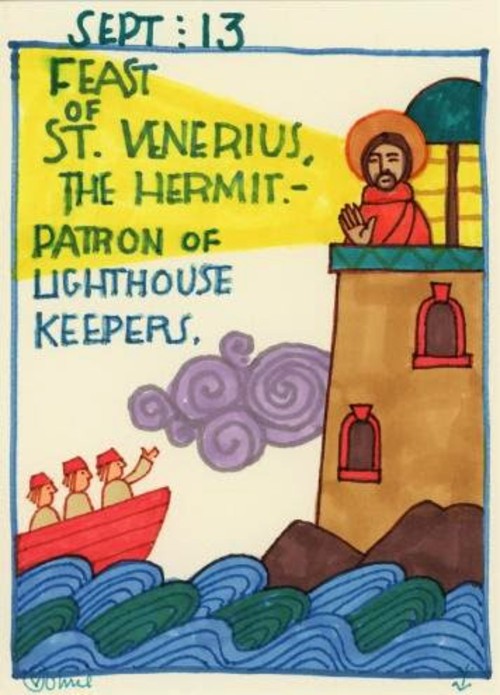
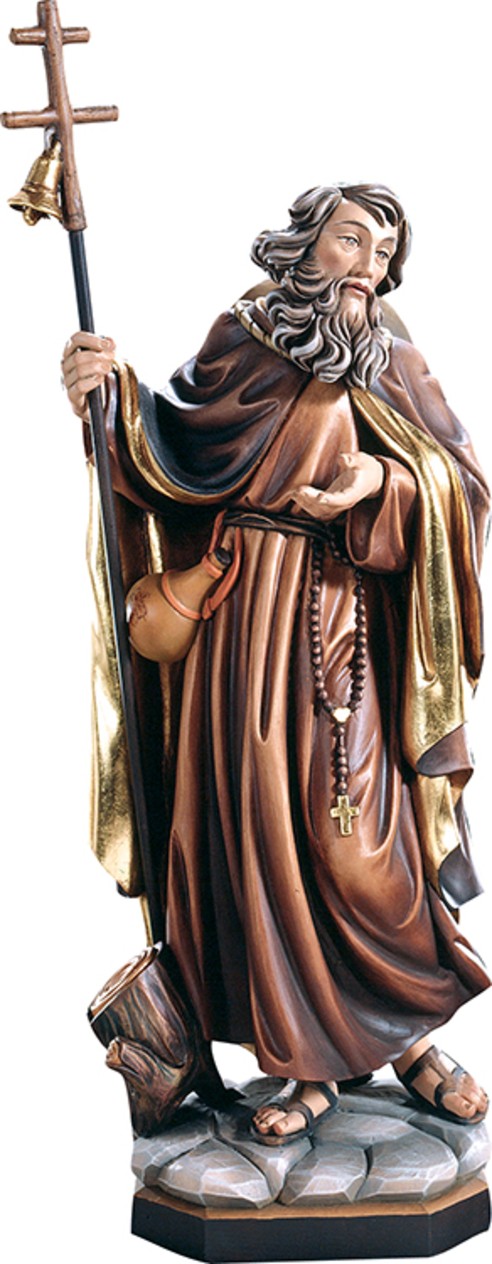
Saint of the Day – 13 September – St Venerius (c560-630) Confessor, Founder Abbot of the Monastery on the Island of Tino, near Genoa, Italy, Hermit, Ascetic, spiritual Counsellor, Miricle-worker. Borin in c560 on the Island of Palmaria and died in 630 on Timo Island. Patronages – of the Gulf of La Spezia, of Lighthouse Keepers. Also known as – Venerio.
The Roman Martyrology reads today: “St Venerius, Confessor, a man of admirable sancity, who led an eremitical life on the Island of Timo.”
Little is known of Venerius’ early life and family background. However, it is believed that he had a deep faith and piety from a young age. Venerius was drawn to a life of solitude and seclusion, seeking a deeper spiritual union with God. He decided to dedicate his life to prayer and contemplation, ultimately becoming a Hermit on the Island of Tino.
As a Hermit, Venerius lived a life of simplicity and asceticism, distancing himself from worldly distractions and focusing solely on his devotion to God. His exceptional piety and profound spiritual insight attracted disciples who sought his guidance. Thus Venerius was led to establish a Monastic community on the Island.
Under his leadership, the Monastery flourished, attracting many individuals seeking a life of prayer in quiet surroundings. Venerius, as an Abbot, nurtured the spiritual growth of his fellow Monks, instilling in them the values of humility, discipline and dedication to God.
Among the notable aspects of Venerius’ life, is the Lighthouse on the Island of Tino. This Lighthouse which served as a beacon of light and safety for ships navigating the treacherous waters, became a symbol of hope and spiritual guidance. Due to its importance, Venerius’ association with the Lighthouse, led to his Patronage becoming closely tied with Lighthouse Keepers.
Despite living a secluded life, Venerius never failed to extend his support and prayers to those who depended upon him for counsel. Pilgrims from near and far sought his intercession, seeking his spiritual counsel and assistance in their quest for holiness. Known for his deep faith and miraculous abilities, Venerius was credited with numerous cures and graces granted through his intercession.
Saint Venerius departed from this earthly life on 13 September 630, leaving behind a legacy of holiness, wisdom and devotion to God. His sanctity was widely recognised even during his lifetime and after his death, his reputation as a saintly man only grew.
Venerius’ exemplary life and the countless miracles attributed to him, led to his veneration as a Saint by the faithful. His Feast Day is celebrated on 13 September, commemorating the day of his birthday into eternal life. Saint Venerius is honoured as the Patron Saint of Lighthouse Keepers, who look to him as a heavenly protector and advocate. His dedication to God, his life as a Hermit and Abbot continue to inspire and offer solace to those entrusted with the safety and guidance of seafarers.
To this day, the memory of Saint Venerius lives on, serving as a testament to the power of prayer, the selflessness of a life devoted to God and the immense impact one individual can make in the lives of others.
Even in death, Venerius remains in the hearts of the people of the Gulf of La Spezia, of which he is the Patron, so much so that, when, about a century after his death, these lands and Towns were attacked by Saracen and then Norman ships, the first concern of the inhabitants of Porto Venere (named after our Saint) was to secure the Saint’s venerated remains.
NOTE: The Gulf of La Spezia, is a body of water on the north-western coast of Italy and part of the northern Tyrrhenian Sea, specifically of Ligurian Sea.
St Evantius of Autun St Gordian of Pontus St Julian of Ankyra St Litorius (Died 371) Bishopof Tours the 2nd Bishop of Tour, reigning for 34 years from 337 until his death in 371. He built the first Churches and the Basilica of Tours. Born in Tours and died there on 13 September 371 of natural causes. A Lengthy Career of Love: https://anastpaul.com/2024/09/13/saint-of-the-day-13-september-saint-litorius-of-tours-died-371-bishop/
Thought for the Day – 12 September – Meditations with Antonio Cardinal Bacci (1881-1971)
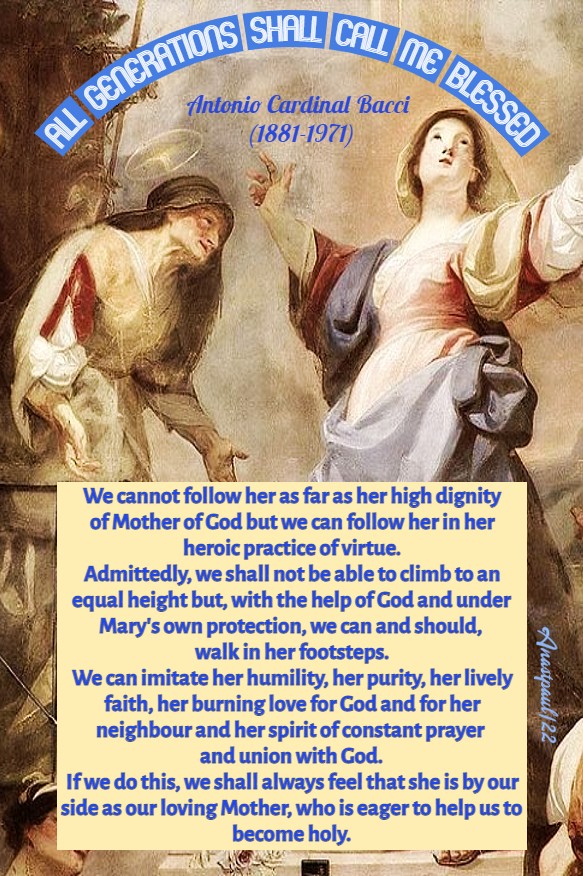
“All Generations Shall Call Me Blessed”
“It is related in the Gospel, that once a certain occasion, a woman in the crowd, was roused by the preaching and miracles of Jesus and cried out: “Blessed is the womb that bore thee and the breasts that nursed thee.” But Jesus replied: “Rather blessed are they who hear the word of God and keep it” (Lk 11:27-28). These words take nothing from the glory of the Mother of God. They were not intended for her but, for us. She was great and holy, not only because she was chosen to be the Mother of the Word Incarnate but also because she perfected herself in virtue by carrying out, in everything, the teaching of her Divine Son, Jesus.
We cannot follow her as far as her high dignity of Mother of God but we can follow her in her heroic practice of virtue. Admittedly, we shall not be able to climb to an equal height but, with the help of God and under Mary’s own protection, we can and should, walk in her footsteps.
We can imitate her humility, her purity, her lively faith, her burning love for God and for her neighbour and her spirit of constant prayer and union with God. If we do this, we shall always feel that she is by our side as our loving Mother, who is eager to help us to become holy.”
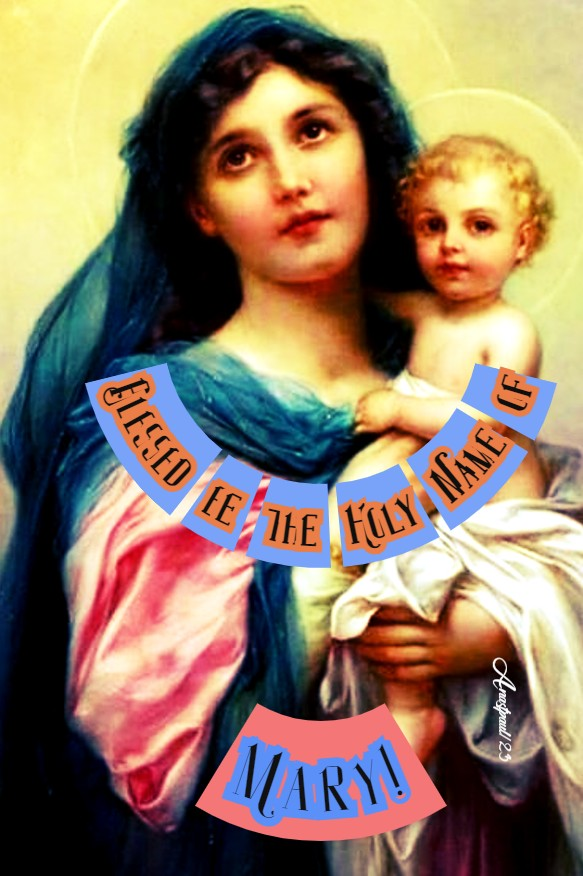
Quote/s of the Day – 12 September – The Feast of the Most Holy Name of Mary
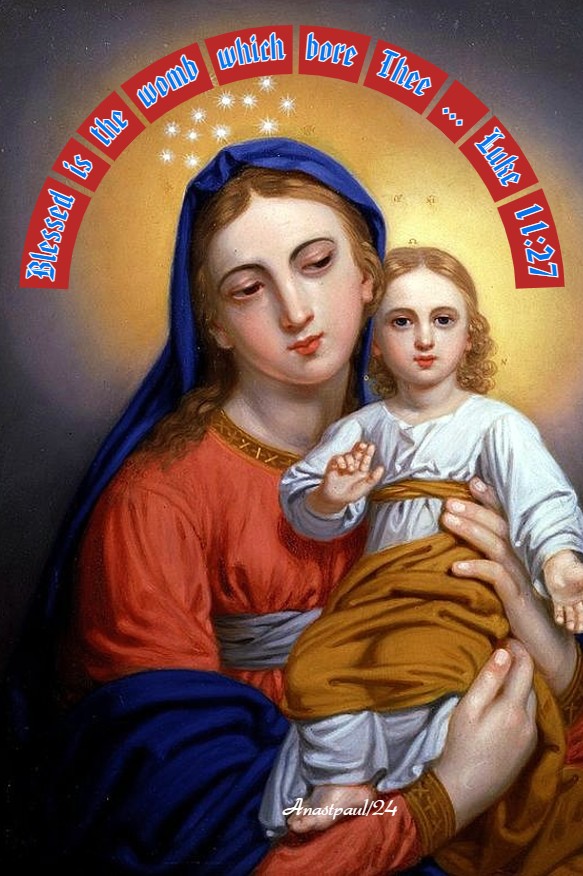
“Blessed is the womb which bore thee”
Luke 11:27
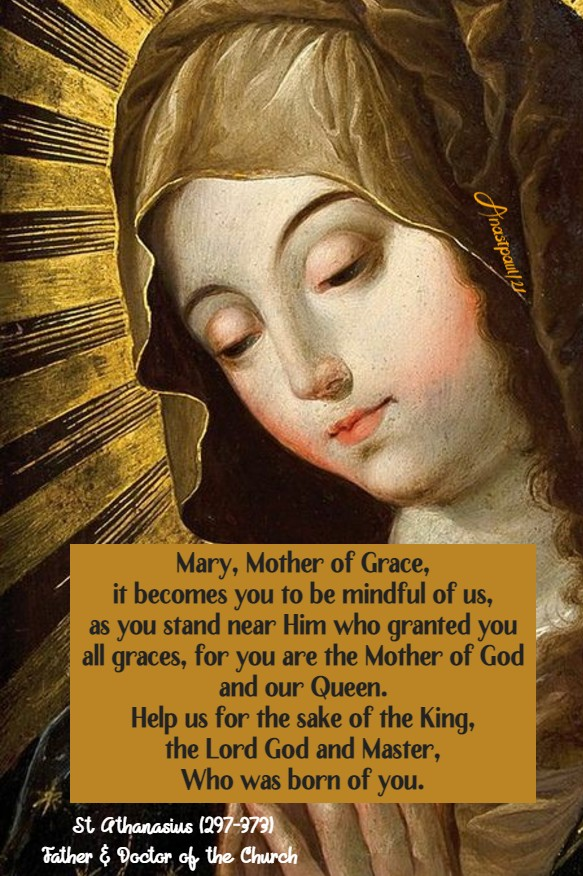
“Mary, Mother of Grace, it becomes you to be mindful of us, as you stand near Him who granted you all graces, for you are the Mother of God and our Queen. Help us for the sake of the King, the Lord God and Master, Who was born of you.”
St Athanasius (297-373) Father & Doctor of the Church
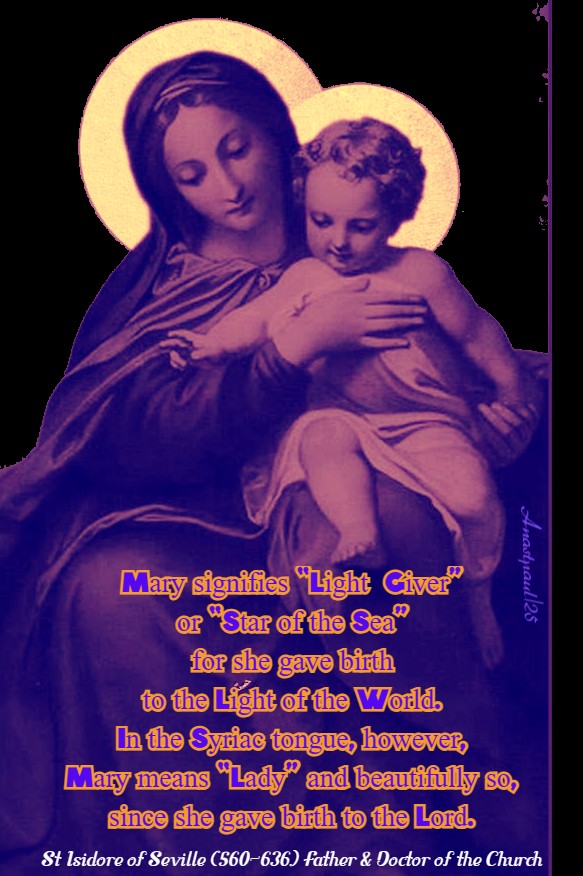
“Mary signifies “Light-Giver” or “Star of the Sea” for she gave birth to the Light of the World. In the Syriac tongue, however, Mary means “Lady” and beautifully so, since she gave birth to the Lord.”
St Isidore of Seville (c560-636) Father & Doctor of the Church
One Minute Reflection – 12 September – “The Month of The Seven Sorrows of the Blessed Virgin Mary and The Holy Cross” – The Feast of the Most Holy Name of Mary – Ecclesiasticus 24:23-31 – Luke 1:26-38 – Scripture search here: https://www.drbo.org/
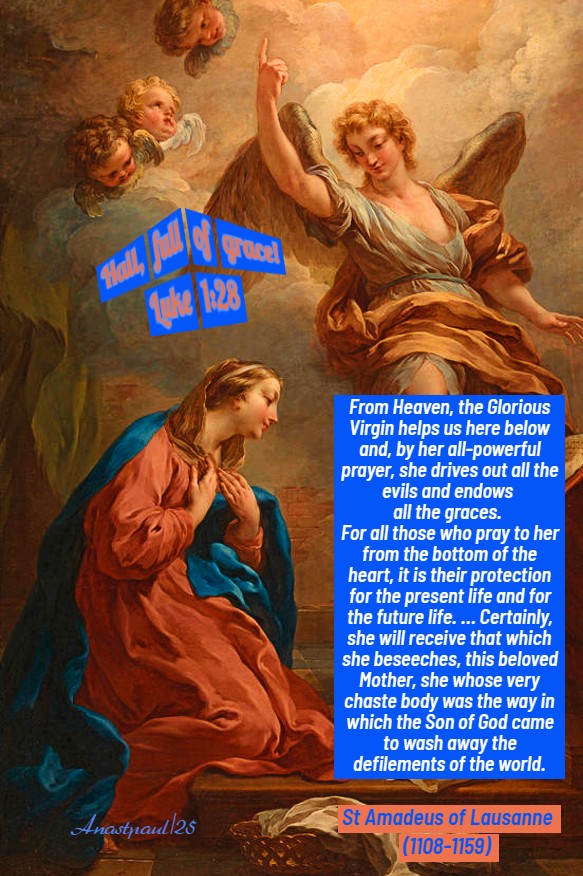
“Hail, full of grace!” – Luke 1:28
REFLECTION – “So when the Virgin of Virgins was led by her God and Son, the King of Kings, in the joy of the Angels, the joy of the Archangels, among the acclactions of Heaven, then was accomplished the prophecy of David saying to the Lord: “The Queen stands on Thy Right, in a gilded clothing and various ornaments.” (Cf PS 44:10) Then, according to the Word of Solomon, The young girls arose and proclaimed Him blessed and the Queens in turn sang His praise (cf Pr 31:28 Vulg ). … She could not stop praising, she who saw the Son of God, born of her, sit to the Right of the Majesty of the Father and with Him in glory. “Thou held,” she said, “my right hand and Thou led me, according to Thy Will and in glory Thou received me.” (Cf PS 72:24) … raised in the midst of cheers of joy and praise, therefore, placed, first after God, on a throne of glory, above all the inhabitants of Heaven. …
Then, lowering towards the human race with an unspeakable charity and turning towards us, these merciful eyes which are the Light of the sky, it fosters an universal prayer for the clergy and the people , alive and dead. From Heaven, the Glorious Virgin helps us here below and, by her all-powerful prayer, she drives out all the evils and endows all the graces. For all those who pray to her from the bottom of the heart, it is their protection for the present life and for the future life. … Certainly, she will receive that which she beseeches, this beloved Mother, she whose very chaste body was the way in which the Son of God came to wash away the defilements of the world. Jesus Christ, our Lord, Who lives and reigns with God the Father in the unity of the Holy Ghost, God in all centuries of centuries. Amen” – St Amadeus of Lausanne O.Cist. (1108-1159) Cistercian Bishop (Marion Sermon VII).
PRAYER – Grant, we beseech Thee, Almighty God, through the protection of the most holy Virgin Mary, Thy faithful people, who delight in her name may, by her loving intercession, be delivered from all evils on earth and be found worthy to attain everlasting happiness in Heaven. Through Jesus Christ, Thy Son our Lord, Who lives and reigns with Thee, in the unity of the Holy Ghost, God, world without end. Amen (Collect).
Our Morning Offering – 12 September – “The Month of The Seven Sorrows of the Blessed Virgin Mary and The Holy Cross” – The Feast of the Most Holy Name of Mary
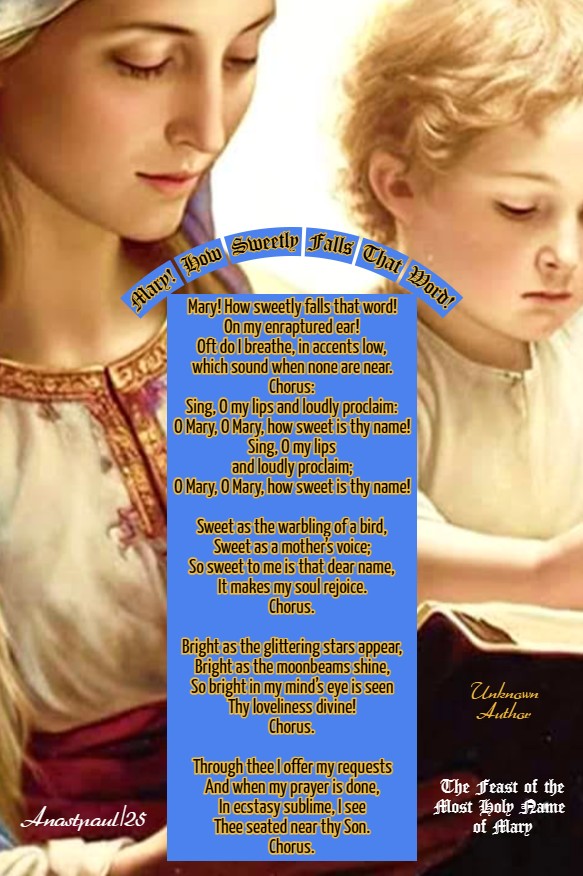
Mary! How Sweetly Falls That Word! Anonymous Author 19th Century Tune (St Basil’s Hymnal 1903) Unnamed Tune.
Mary! How sweetly falls that word! On my enraptured ear! Oft do I breathe, in accents low, which sound when none are near. Chorus: Sing, O my lips and loudly proclaim: O Mary, O Mary, how sweet is thy name! Sing, O my lips and loudly proclaim; O Mary, O Mary, how sweet is thy name!
Sweet as the warbling of a bird, Sweet as a mother’s voice; So sweet to me is that dear name, It makes my soul rejoice. Chorus.
Bright as the glittering stars appear, Bright as the moonbeams shine, So bright in my mind’s eye is seen Thy loveliness divine! Chorus.
Through thee I offer my requests And when my prayer is done, In ecstasy sublime, I see Thee seated near thy Son. Chorus.
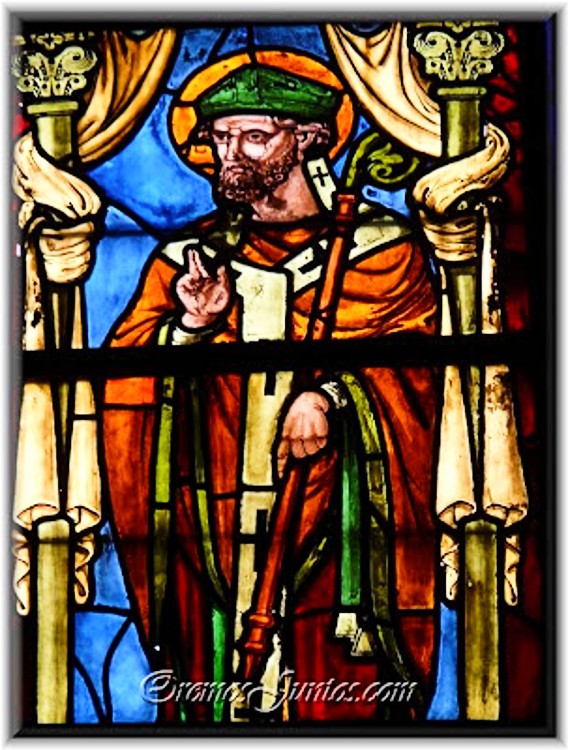
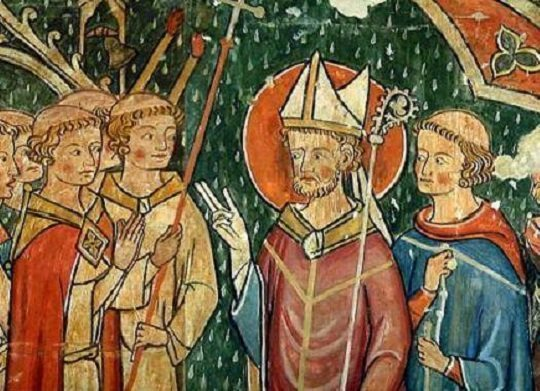
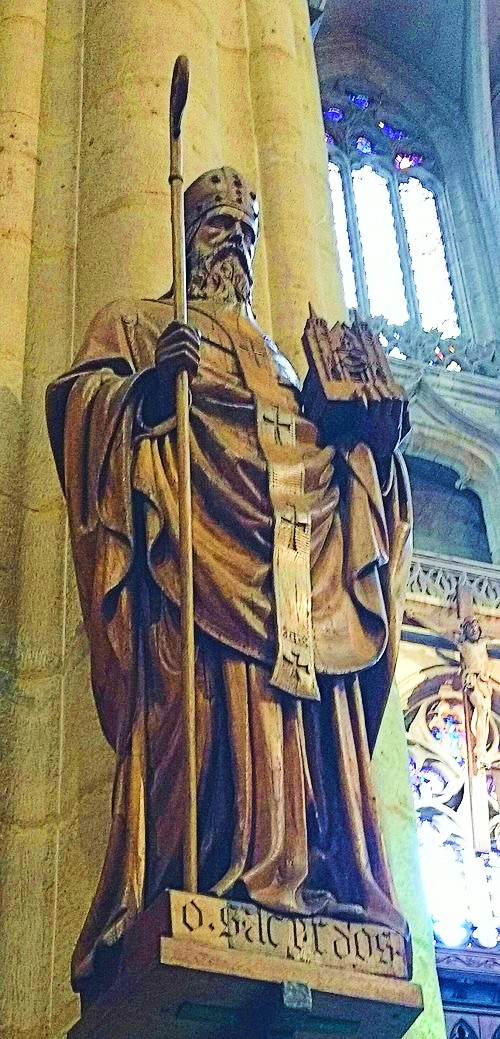
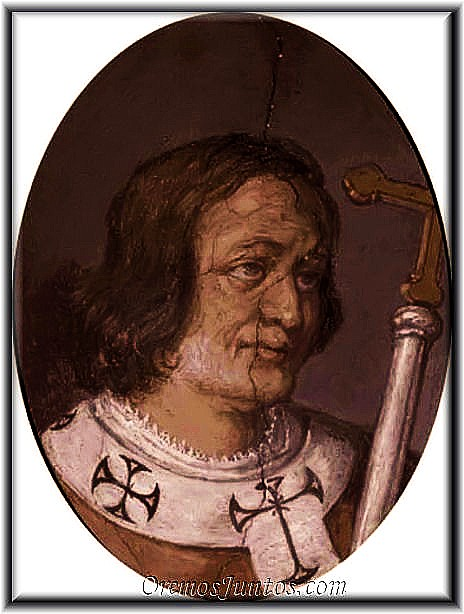
Saint of the Day – 12 September – Saint Sacerdos/Saint Priest (487-552) Bishop of Lyon – the 27th encumbent of this high Office in Lyon, our Saint Priest (the meaning of Sacerdos) was highly visible at the Councils and in the construction and renovation of Churches, Monasteriest and was highly favoured by the King. In fact, as the Advisor to King Childebert, it is believed that he influenced the King to found a Hospital, between the Saint-Paul Church and the first Pont du Change. Born in 487 in Burgundy, France and died on 11 September 552 in Paris, where he had arrived for a the meeting of a Council. Also known as – Saint Priest, Sardot, Sacerdote, Serdon.
The Roman Martyrology reads today: “At Lyon, the decease of St Sacerdos, Bishop.”
Sacerdos belonged to a noble family of the Kingdom of Burgundy. Tradition tells us he was married and had a son. , Aurelien who became the Sainted Archbishop of Arles. A specific Epitaph also states that he was buried in the tomb alongside his son.
His Episcopate, temporally speaking, was entirely under the reign of Childebert, the 1st King of the Franks, who reigned in Lyon between 534 and 558.
Sacerdos did not participate in the Council of Orléans in 541 but presided over the Council held on 28 October 540, in the same City. The 24 Canos of that Council addressed various topics, including the condemnation of Monophysitism and Nestorianism; the limitation of the use of excommunication; the requirement of the master’s consent for the Ordination of a slave and the care of prisoners and lepers. This Ccouncil also ratified, with a specific and detailed Canon, the foundation of the hospice erected by the King in Lyon.
During his Episcopate, the construction of the Church of Saint Paul and that of Saint Eulalia, originally connected to a Monastery of Nuns, which later became the Church of Saint George. Toward the end of hisreign, he ordered major renovations to be carried out at the Monastery of Saint Peter.
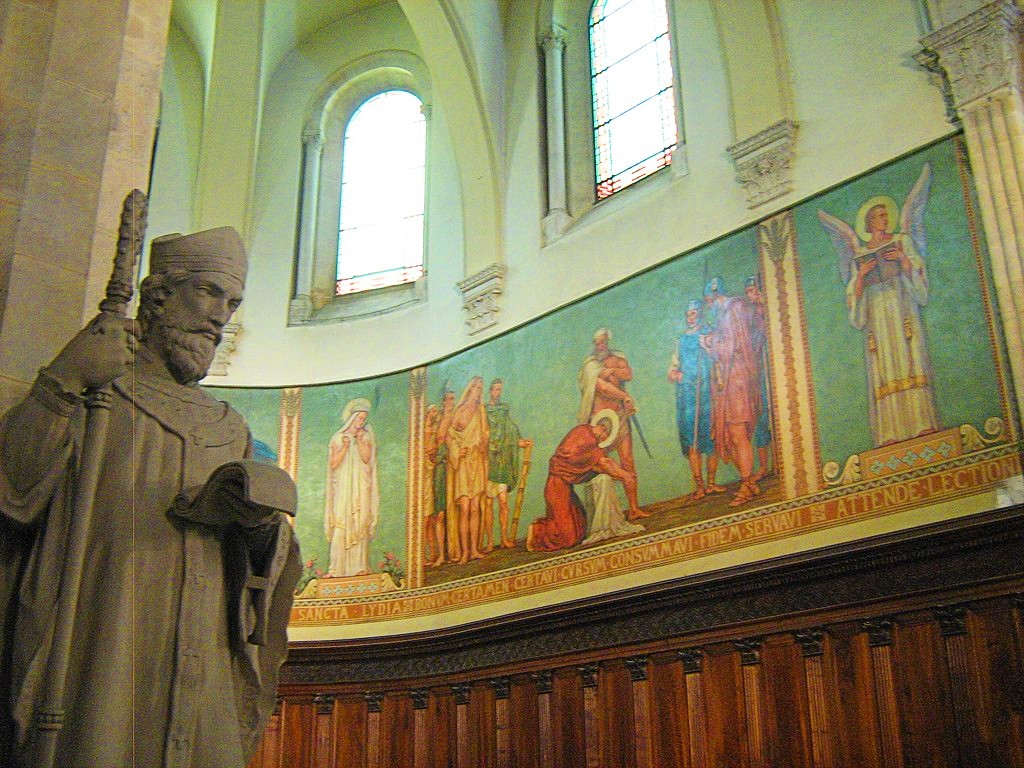
St Sacerdos Statue in the Church which he built, St Paul’s
A detailed account by St Gregory of Tours of his death in Paris has survived. Sacerdos was in Paris to participate in the Council convened by the King after the deposition of Bishop Saffaracus of Paris. St Gregory tells us that the King, having a special affection for Bishop Sacerdote, who had fallen ill in Paris, visited him during his illness. At that meeting, the Bishop requested the King to appoint his nephew, Nicetius (sT),as his successor to govern the Diocese of Lyon.
Sacerdote died at the age of 65, on 11 September 552. His body was transported to Lyon and buried in the Church of the Holy Apostles, a Church which, in later centuries, would be named after Saint Nicetius, our Saint’s son.
Numerous miracles flourished at his Tomb. An Epitaph on Saint Sacerdos remains, known from a 1308 transcription, carved in the Crypt of Saint Nicetius and rediscovered in 1883.
Feast of the Holy Name of Mary (1683 ) – 12 September: This Feast was first observed at Cuenca, Spain in 1513, then extended to the Universal Church and assigned to its present place and rank by Pope Innocent XI in 1683, in thanksgiving to God and the Blessed Virgin, for the liberation of Vienna, France and the signal victory over the Turks on 12 September 1683. It is the Titular Feast of the Society of Mary (Marianists) and of the Congregation of the Oblates of Mary Immaculate.
St Mancius of Saint Thomas St Paul of Saint Clare St Sacerdos/Saint Priest (487-552) Bishop of Lyon St Silvinus of Verona St Tomás de Zumárraga Lazcano
Martyrs of Alexandria – 6 Saints: A group of Christians Martyred in the persecutions of Diocletian. We know little more than their names – Hieronides, Leontius, Sarapion, Seleusius, Straton and Valerian. They were drowned c 300 at Alexandria, Egypt.
Martyrs of Phrygia – 3 Saints: Three Christians who were Martyred for destroying pagan idols. We know little more than their names – Macedonius, Tatian and Theodolus. They were burned to death in 362 in Phrygia (modern Turkey).
Thought for the Day – 11 September – Meditations with Antonio Cardinal Bacci (1881-1971)
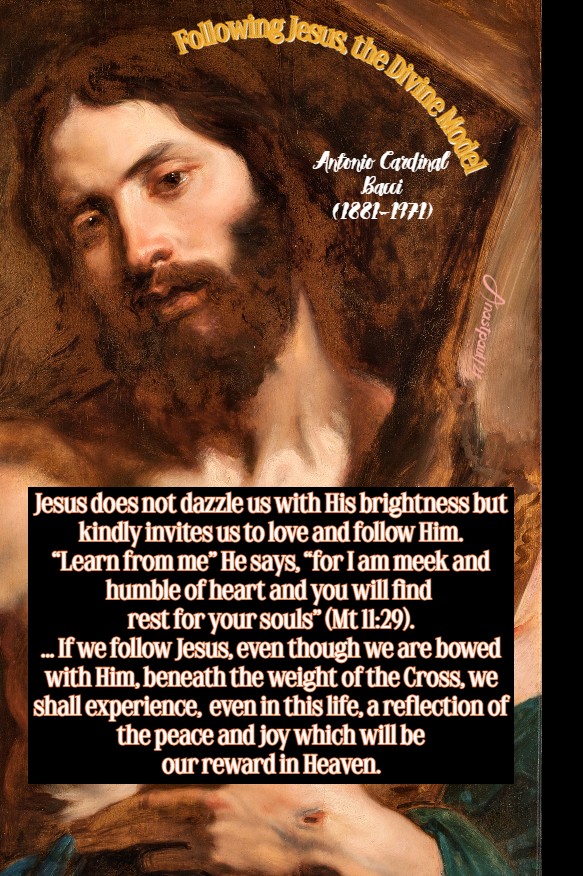
Following Jesus, the Divine Model
“Jesus is the Divine Model, Whom we ought to follow and imitate. In Him, the virtues possess both the Infinite splendour of the Divinity and the gentle appeal of glorified Humanity. Jesus does not dazzle us with His brightness but kindly invites us to love and follow Him. “Learn from me” He says, “for I am meek and humble of heart and you will find rest for your souls” (Mt 11:29). After He has indicated humility, meekness and interior peace, as the foundations of the spiritual life, He invites us to take up the yoke of His law and assures us, that we shall find it light (Mt 11).
If we follow Jesus, even though we are bowed with Him, beneath the weight of the Cross, we shall experience, even in this life, a reflection of the peace and joy which will be our reward in Heaven.”
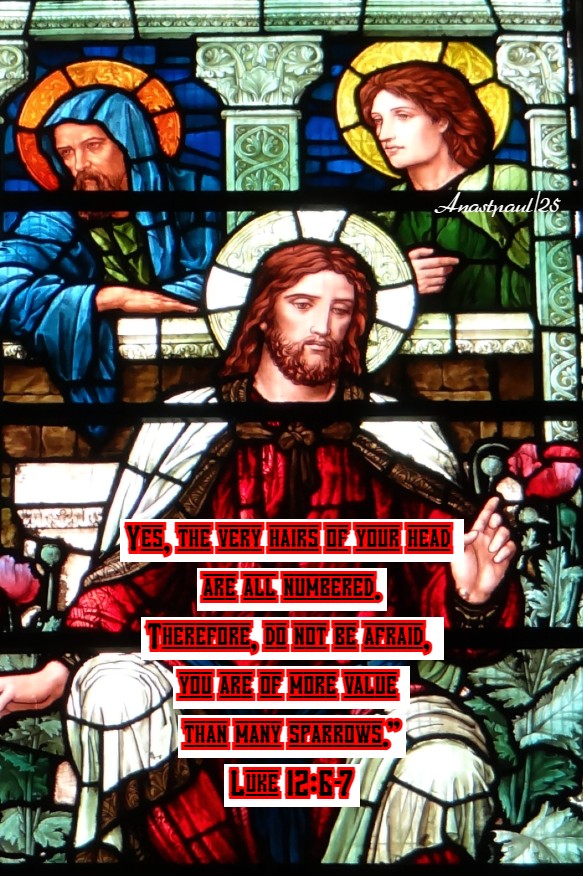
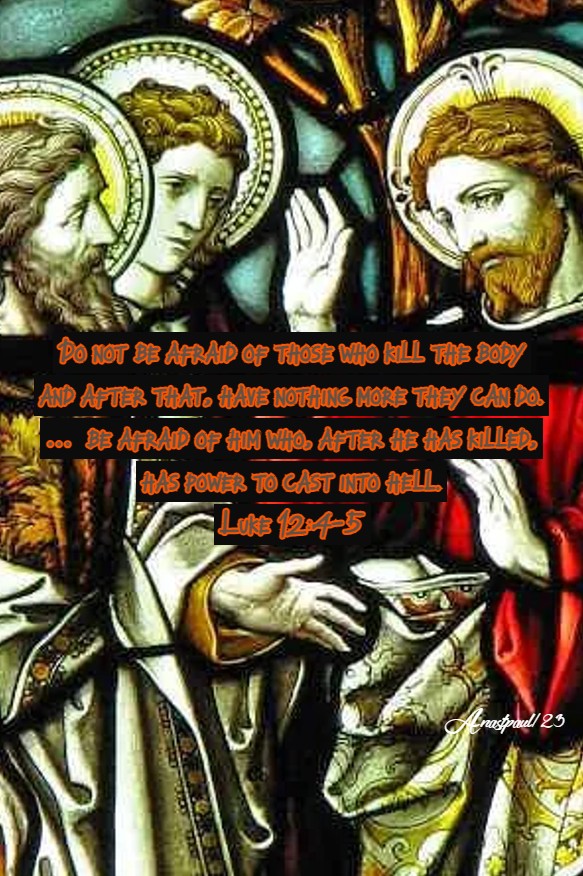
Quote/s of the Day – 11 September – St Protus and St Hyacinth (Died c257) Brother Martyrs – Hebrews 10:32-38 – Luke 12:1-8 – Scripture search here: https://www.drbo.org/
“Yes, the very hairs of your head are all numbered. Therefore, do not be afraid, you are of more value than many sparrows.”
Luke 12:6-7”
“Do not be afraid of those who kill the body and after that have nothing more they can do. … be afraid of him who, after he has killed, has power to cast into hell. ”
Luke 12:4
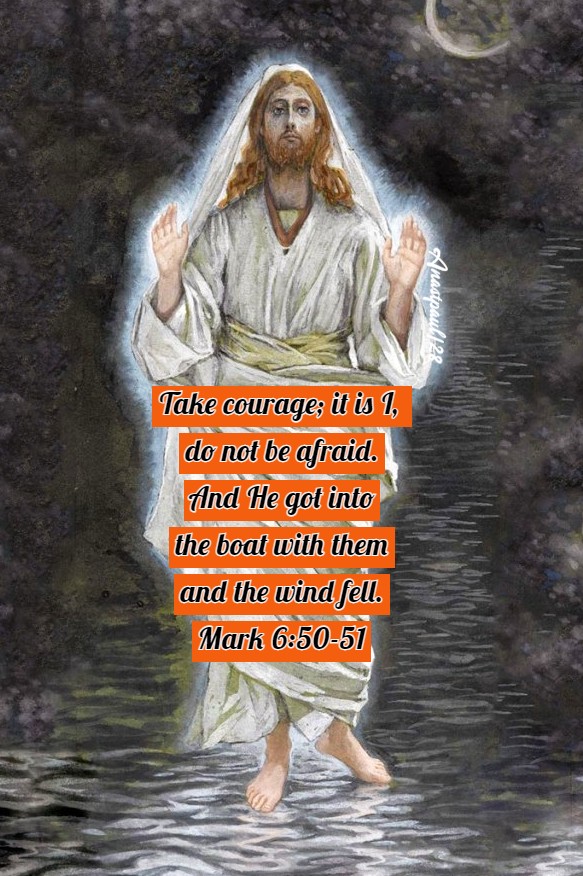
“Take courage: It is I, do not be afraid. And He got into the boat with them and the wind fell”
Mark 6:50-51
“Fear is a greater evil than the evil itself.”
(Letters to Persons in the World, VI, 12)
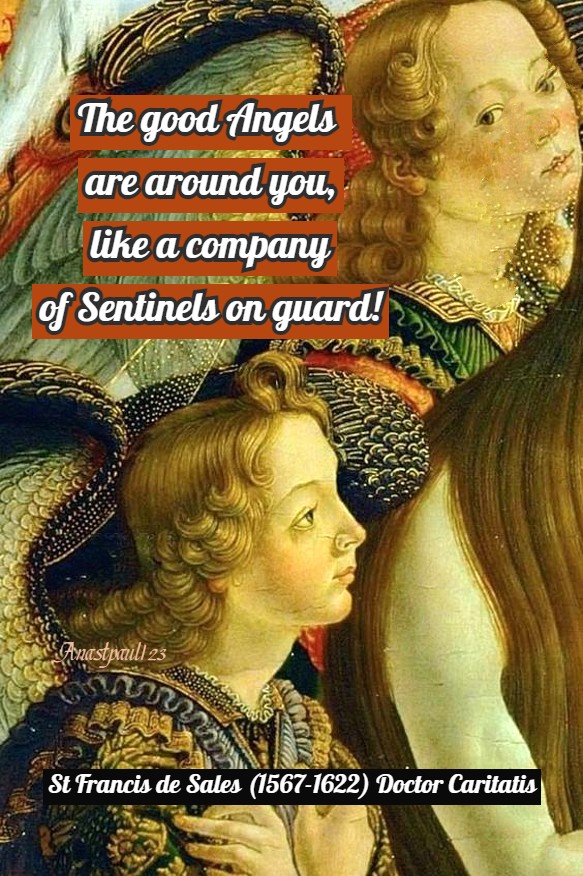
“The good Angels are around you, like a company of Sentinels on guard!”
One Minute Reflection – 11 September – “The Month of The Seven Sorrows of the Blessed Virgin Mary and The Holy Cross” – St Protus and St Hyacinth (Died c257) Brother Martyrs – Hebrews 10:32-38 – Luke 12:1-8 – Scripture search here: https://www.drbo.org/
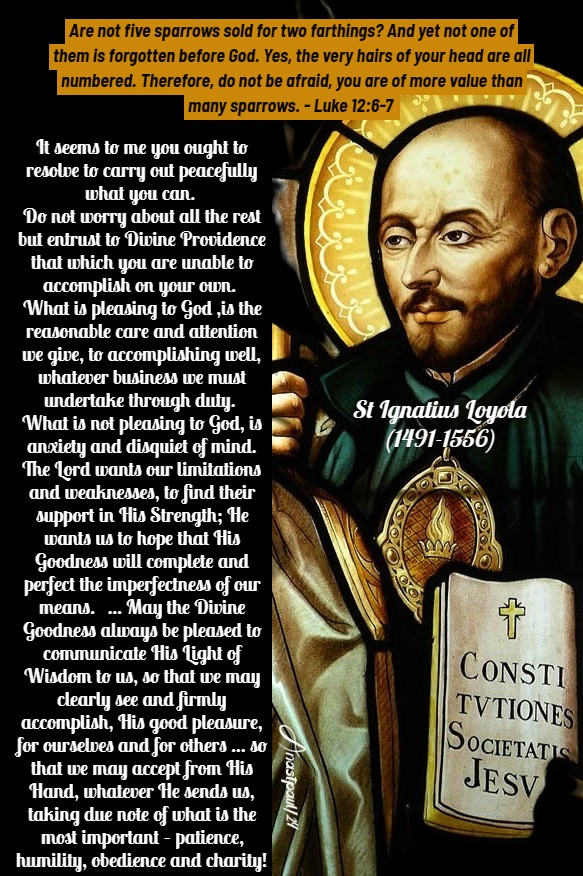
“Are not five sparrows sold for two farthings? And yet not one of them is forgotten before God. Yes, the very hairs of your head are all numbered. Therefore, do not be afraid, you are of more value than many sparrows.” – Luke 12:6-7
REFLECTION – “It seems to me you ought to resolve to carry out peacefully what you can. Do not worry about all the rest but entrust to Divine Providence that which you are unable to accomplish on your own. What is pleasing to God, is the reasonable care and attention we give, to accomplishing well, whatever business we must undertake through duty. What is not pleasing to God, is anxiety and disquiet of mind. The Lord wants our limitations and weaknesses, to find their support in His Strength; He wants us to hope that His Goodness will complete and perfect the imperfectness of our means.
Those who take on numerous responsibilities, even with an upright and pure intention, must resolve to do simply what lies within their power … If it is necessary to set certain things aside, arm yourselves with patience and do not think that God expects of us what we are unable to do. He does not want a man to distress himself on account of his limitations … there is no need to tire ourselves out excessively. More, if we have laboured to do our best, we can abandon all the rest to Him ,Who has the power to accomplish whatever He will.
May the Divine Goodness always be pleased to communicate His Light of Wisdom to us, so that we may clearly see and firmly accomplish, His good pleasure, for ourselves and for others … so that we may accept from His Hand, whatever He sends us, taking due note of what is the most important – patience, humility, obedience and charity!” – St Ignatius Loyola (1491-1556) Priest, Founder of the Society of Jesus (Letter of 17 November 1555)
PRAYER – May the precious witness of Thy blessed Martyrs, Protus and Hyacinth, comfort us, O Lord and may their kind intercession, continually protect us. Through Jesus Christ, Thy Son our Lord, Who lives and reigns with Thee, in the unity of the Holy Ghost, God, world without end. Amen (Collect).
Our Morning Offering – 11 September – “The Month of The Seven Sorrows of the Blessed Virgin Mary and The Holy Cross”
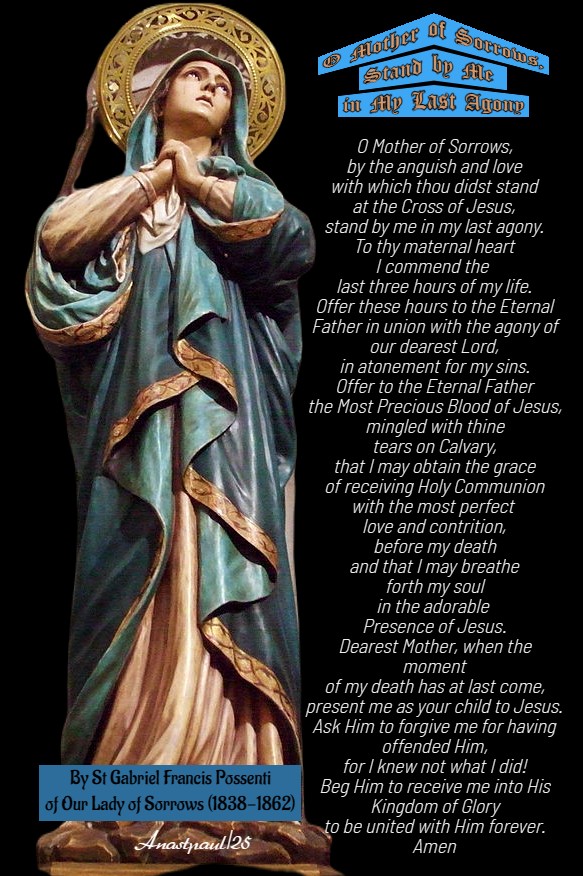
O Mother of Sorrows, Stand by Me in My Last Agony By St Gabriel Francis Possenti of Our Lady of Sorrows (1838-1862)
O Mother of Sorrows, by the anguish and love with which thou didst stand at the Cross of Jesus, stand by me in my last agony. To thy maternal heart I commend the last three hours of my life. Offer these hours to the Eternal Father in union with the agony of our dearest Lord, in atonement for my sins. Offer to the Eternal Father the Most Precious Blood of Jesus, mingled with your tears on Calvary, that I may obtain the grace of receiving Holy Communion with the most perfect love and contrition, before my death and that I may breathe forth my soul in the adorable Presence of Jesus. Dearest Mother, when the moment of my death has at last come, present me as your child to Jesus. Ask Him to forgive me for having offended Him, for I knew not what I did! Beg Him to receive me into His Kingdom of Glory to be united with Him forever. Amen
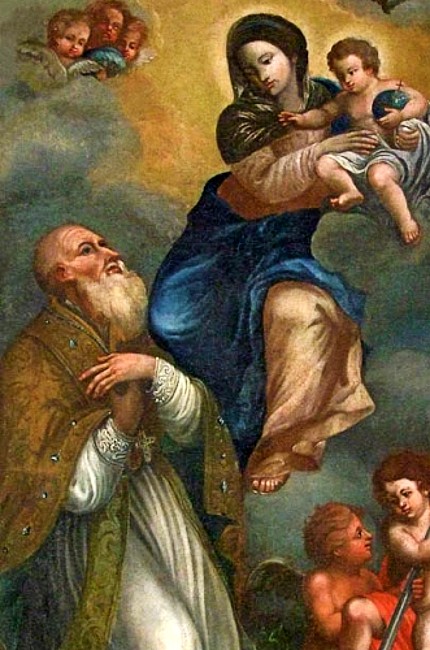
Saint of the Day – 11 September – St Patiens (Died c491) Bishop of Lyon, a most zealous and devoted shepherd of his flock for around 40 years and at the same time, the lover and caregiver of the needy and poor regardless of where they lived and to which Diocese they belonged – as we should, he did not ask whether they were pagans or Christians. Also known as – Patrient, Patient, Patriens, Paziente.
The Roman Martyrology reads today: “At Lyon, the decease of St Patiens, Bishop.”
In the official chronology, Patiens is listed in20th place. He succeeds Saint Eucherius and precedes Saint Lupicinus.
The name of Saint Patiens is recorded in the oldest Episcopal records, contained in a Litergical Gospel book from the mid-9th Century. The catalogue was compiled around 799-814 duringthe reign of Bishop Leidradus and is based on the original of the Lyonnais Church.
The name of Saint Patiens is also mentioned in a second Episcopal catalogue, reported by Hugues of Flavigny in his Chronica Universalis.
Patriens governed the Diocese for forty years, between 451 and 491. Considering this lengthy period of service, we know very little about his personal history.
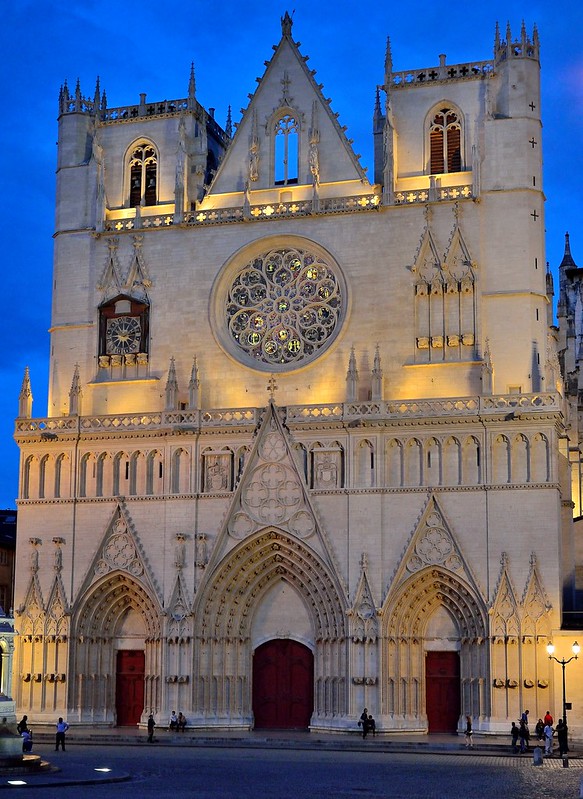
But it was Bishop Patiens who commissioned St Constantius of Lyon to write theVita of St Germanud (Life of Germanus). Patiens also built a new Cathedral, dedicated to Saint Stephen. Later, in the 7th Century, a baptistery dedicated to Saint John was constructed as an accessory to the Church. This later became the site of the Cathédrale Saint-Jean-Baptiste de Lyon.
Patient, moved by great charity to help the people oppresssd by hunger, distributed free grain from the stores located in his See. He is also membered as a Bishop who devoted himself to a continuous apostolate, caring for his flock especially for the needy. He was deeply committed to the conversion of heretics.
His contemporary, the remarkable St Sidonius Apollinaris (c 30 – 489), admired Patiens and said that, despite the austerity of his life, he made himself “all things to all men.” He played his part zealously in repressing the heresies of his time but is especially remembered for his great dedication to the poor, not only of his own Diocese but of other parts of Gaul. He devoted all his resources to their relief. During a famine, he arrived in Lyon with wheat, to feed the entire population.
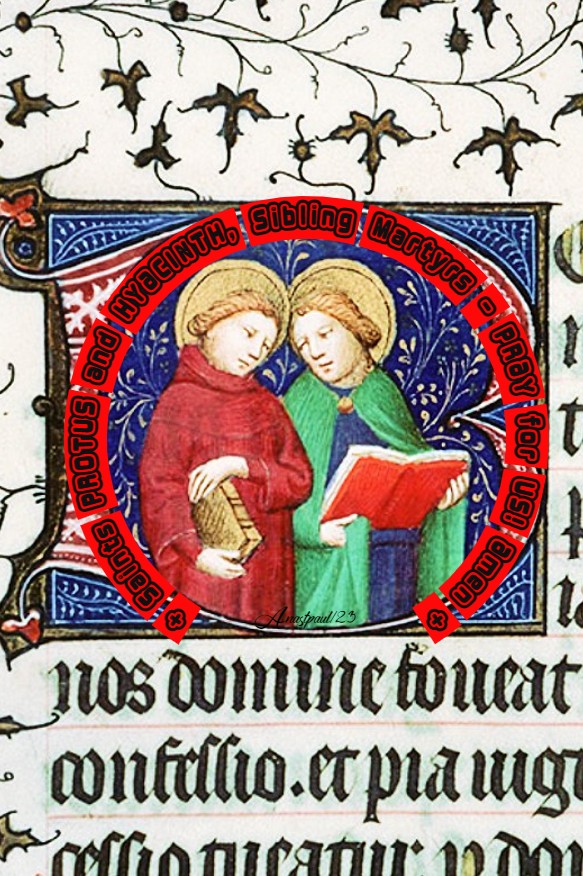
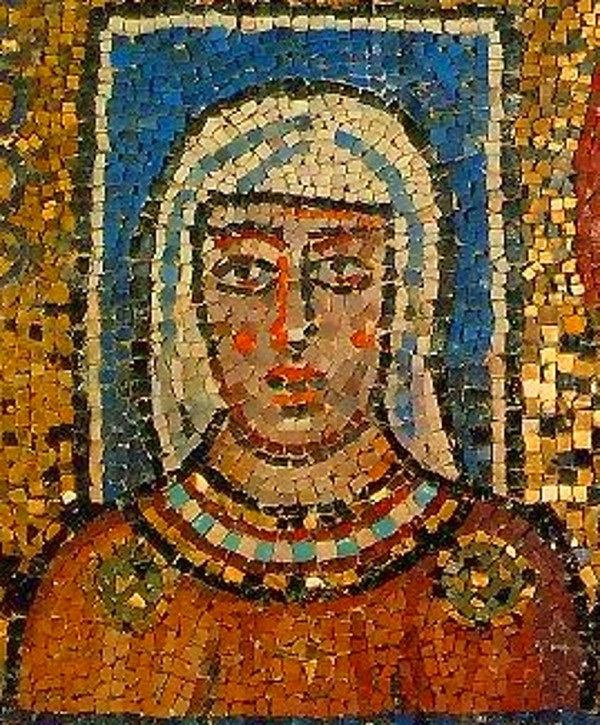
St Protus and St Hyacinth (Died c257) Brother MartyrsBrother Martyrs during the persecution of Emperor Valerian (257–259), they served as household Officials to St Eugenia. The Roman Martyrology states today: “At Rome, in the Cemetery of Basilla, on the old Salarian Way, the birthday of the Holy Martyrs, Protus and Hyacinth, brothers and eunuchs in the service of the blessed Eugenia, who were arrested in the time of the Emperor Gallienus, on the charge of being Christians and urged to offer sacrifice to the gods. But as they refused, both were most severely scourged and finally, beheaded.” Their Life and Death: https://anastpaul.com/2023/09/11/saint-s-of-the-day-11-september-st-protus-and-st-hyacinth-died-c257-brother-martyrs/
St Adelphus of Remiremont St Almirus Bl Baldassarre Velasquez
St Essuperanzio of Zurich St Felix of Zurich Bl Franciscus Takeya Bl François Mayaudon Bl Gaspar Koteda St Gusmeo of Gravedona sul Lario St Leudinus of Toul St Matthew of Gravedona sul Lario St Paphnutius of Thebes St Patiens (Died c491) Bishop of Lyon Bl Peter Taaffe Bl Petrus Kawano St Regula of Zurich St Sperandea





















 AnaStpaul
You must be logged in to post a comment.