Friday of the Second Week of Lent – 6 March – Our Lenten Journey With St Thomas Aquinas (1225-1274) Doctor of the Church
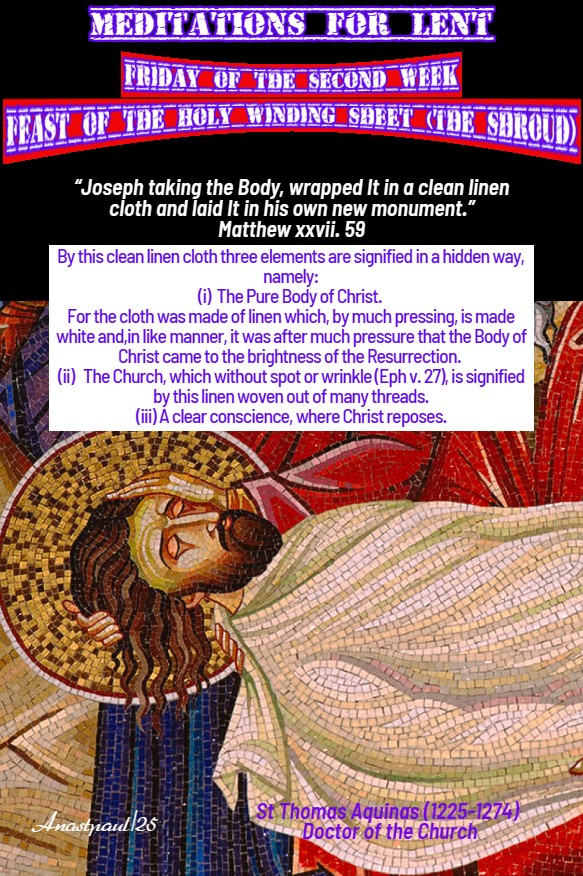
Friday of the Second Week Feast of the Holy Winding Sheet (the Shroud)
“Joseph taking the Body, wrapped It in a clean linen cloth and laid It in his own new monument.” Matthew xxvii. 59
By this clean linen cloth three elements are signified in a hidden way, namely:
(i) The Pure Body of Christ. For the cloth was made of linen which, by much pressing, is made white and,in like manner, it was after much pressure that the Body of Christ came to the brightness of the Resurrection. Thus it behoved Christ to Suffer and to Rise again from the dead on the third day (Luke xxiv. 46).
(ii) The Church, which without spot or wrinkle (Eph v. 27), is signified by this linen woven out of many threads.
(iii) A clear conscience, where Christ reposes.
And laid Him in his own new monument. It was Joseph’s own grave and certainly it was appropriate that He Who had Died for the sins of others, should be buried in another man’s grave!
Notice that it was a new grave. Had other bodies already been laid in it, there might have been a doubt which had arisen. There is another fitness in this circumstance, namely – He Who was buried in this new tomb, as He who was born of a virgin mother.
As Mary’s womb knew no child before Him nor after Him, so was it with this tomb. Again we may understand, it is in a renewed soul renewed where Christ is buried by faith, where Christ may dwell by faith in our hearts (Eph iii. 17).
St. John’s Gospel adds, Now there was in the place where He was crucified, a garden ; and in the garden a new sepulchre (John xix. 41). Which recalls to us that as Christ was taken in a garden and suffered His agony in a garden, so in a garden was He buried, and thereby we are reminded that it was from the sin committed by Adam in the garden of delightfulness that, by the power of His Passion, Christ set us free, and also that through the Passion the Church was consecrated, the Church which again is as a garden closed.
ST THOMAS AQUINAS (1225-1274) Priest, Theologian, Dominican Doctor Angelicus (Angelic Doctor) Doctor Communis (Common Doctor) Added by Pope Saint Pius V in 1568
Quote/s of the Day – 6 March – Friday of the Second Week in Lent and the Feast of the Holy Shroud – Ecclesiasticus Sir ach51:1-8; 51:12 – Matthew 21:33-46.– Scripture search here: https://www.drbo.org/
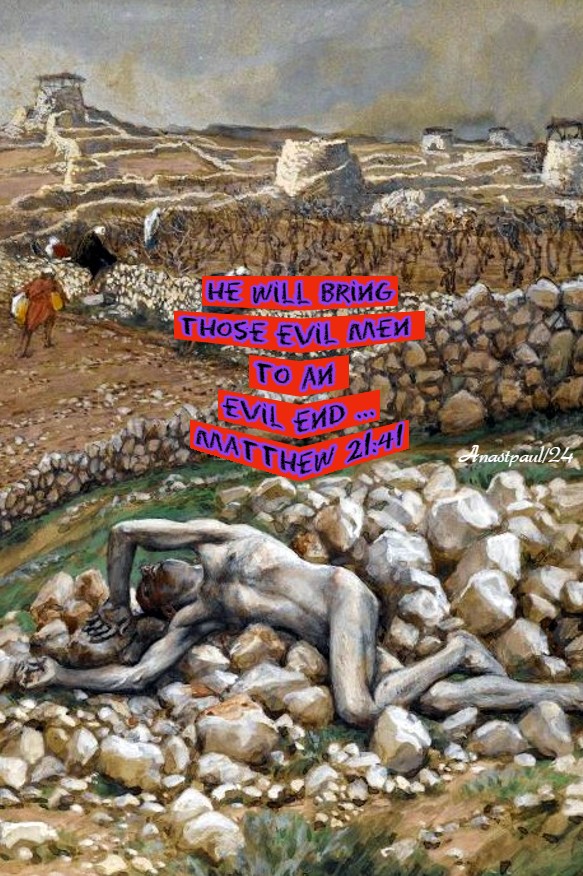
“He will bring those evil men to an evil end”
Matthew 21:41
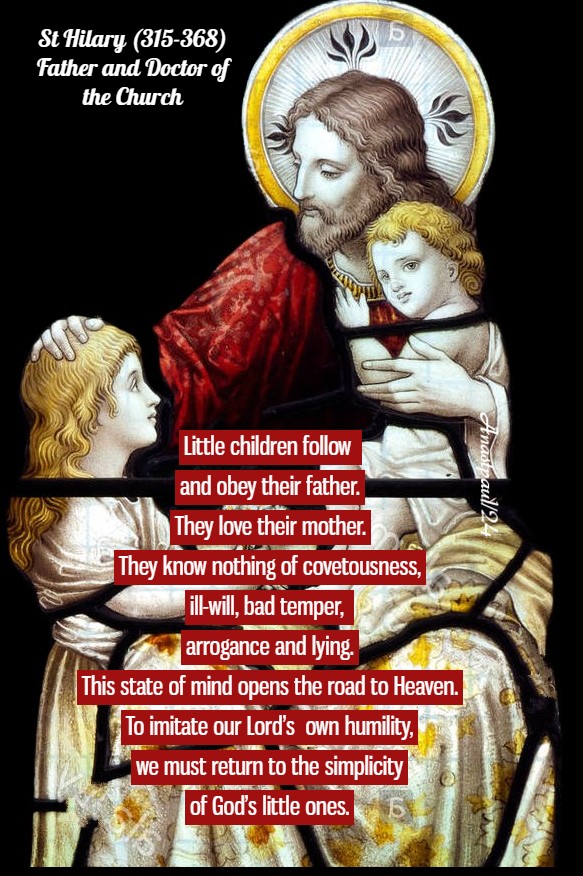
“Little children follow and obey their father. They love their mother. They know nothing of covetousness, ill-will, bad temper, arrogance and lying. This state of mind opens the road to Heaven. To imitate our Lord’s own humility, we must return to the simplicity of God’s little ones.”
St Hilary (315-368) Father and Doctor of the Church
“Let us then depart, let us depart from Egypt, let us approach Our Lord, let us make provision of good works; let the feet of our affections be bare, let us clothe ourselves with innocence, let us not be satisfied with crying for mercy, let us go forth from Egypt, let us delay no longer. The hour is come to arise from sleep, since we know that He receives sinners; the Angels await our repentance, the Saints pray for it!”
St Francis de Sales 91567-1622) Doctor of the Church
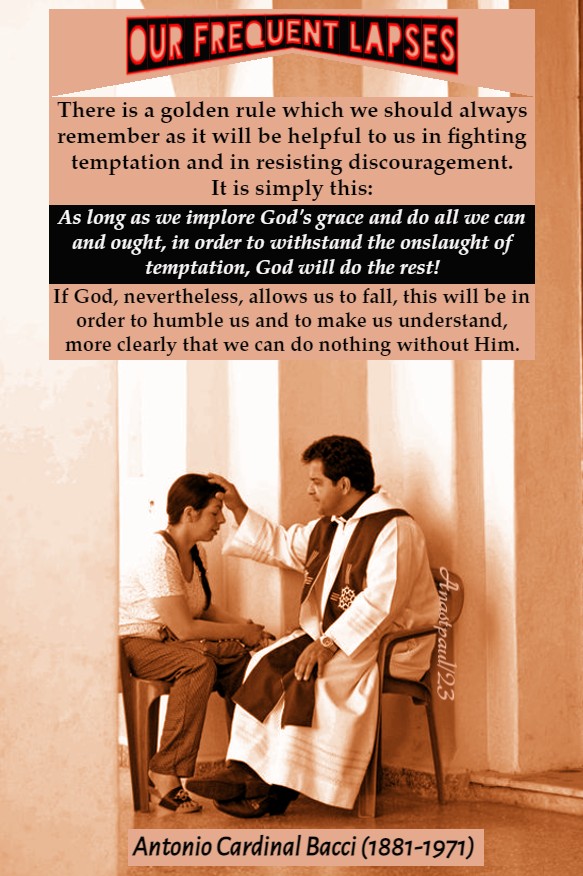
“There is a golden rule which we should always remember as it will be helpful to us in fighting temptation and in resisting discouragement. It is simply this: As long as we implore God’s grace and do all we can and ought, in order to withstand the onslaught of temptation, God will do the rest! If God, nevertheless, allows us to fall, this will be in order to humble us and to make us understand, more clearly that we can do nothing without Him.”
Our Morning Offering – 6 March – The Feast of the Holy Shroud of Jesus
Faithful Cross! Above All Other By St Venantius Fortunatus (c 530 – c 609)
Faithful Cross! above all other, one and only noble tree! None in foliage, none in blossom, none in fruit thy peer may be; sweetest wood and sweetest iron, sweetest weight is hung on thee.
Bend thy boughs, O tree of glory! Thy relaxing sinews bend; for awhile the ancient rigour that thy birth bestowed, suspend and the King of heavenly beauty gently on thine arms extend.
Praise and honour to the Father, praise and honour to the Son, praise and honour to the Spirit, ever Three and ever One: One in might and One in glory while eternal ages run.
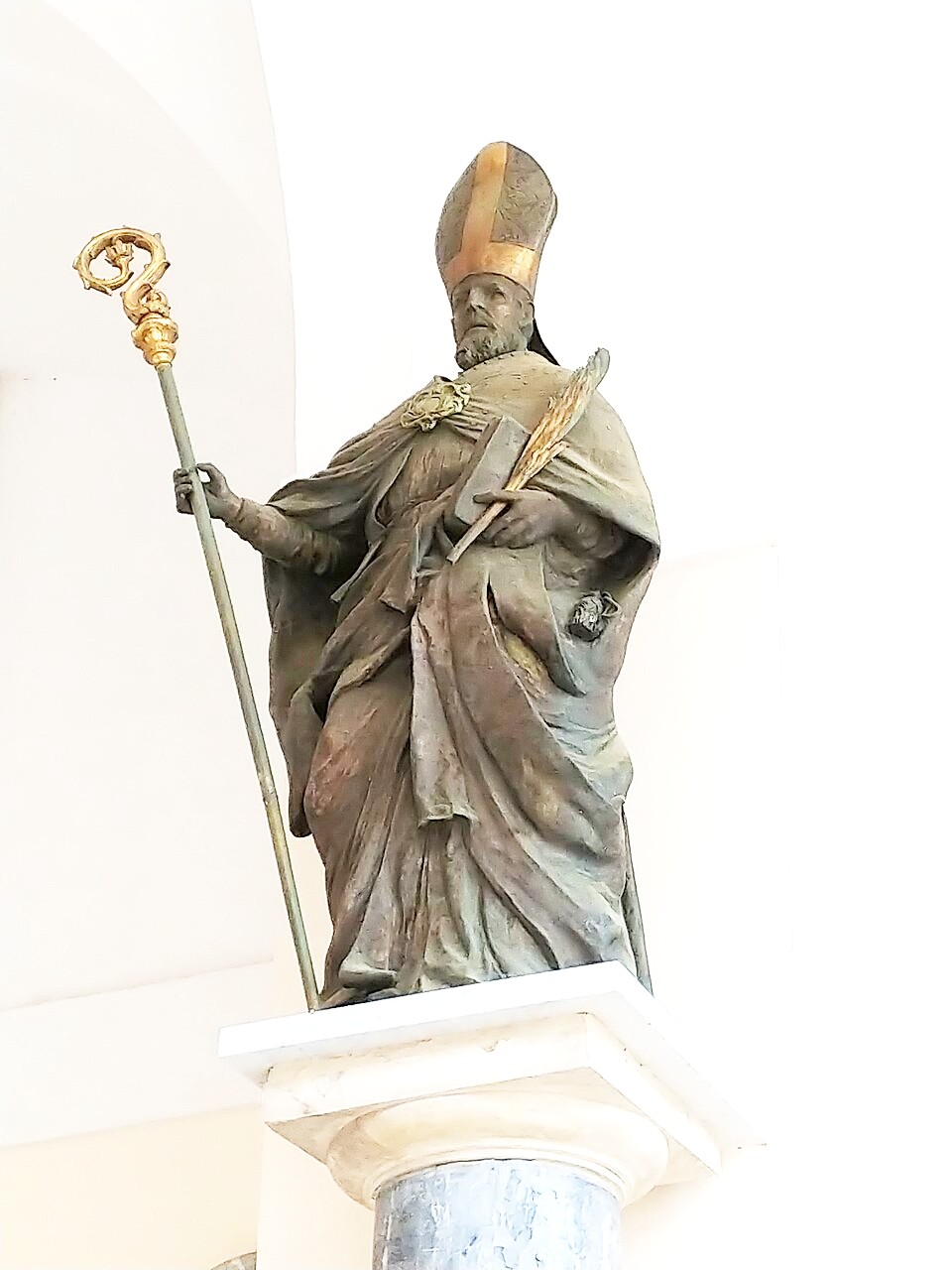
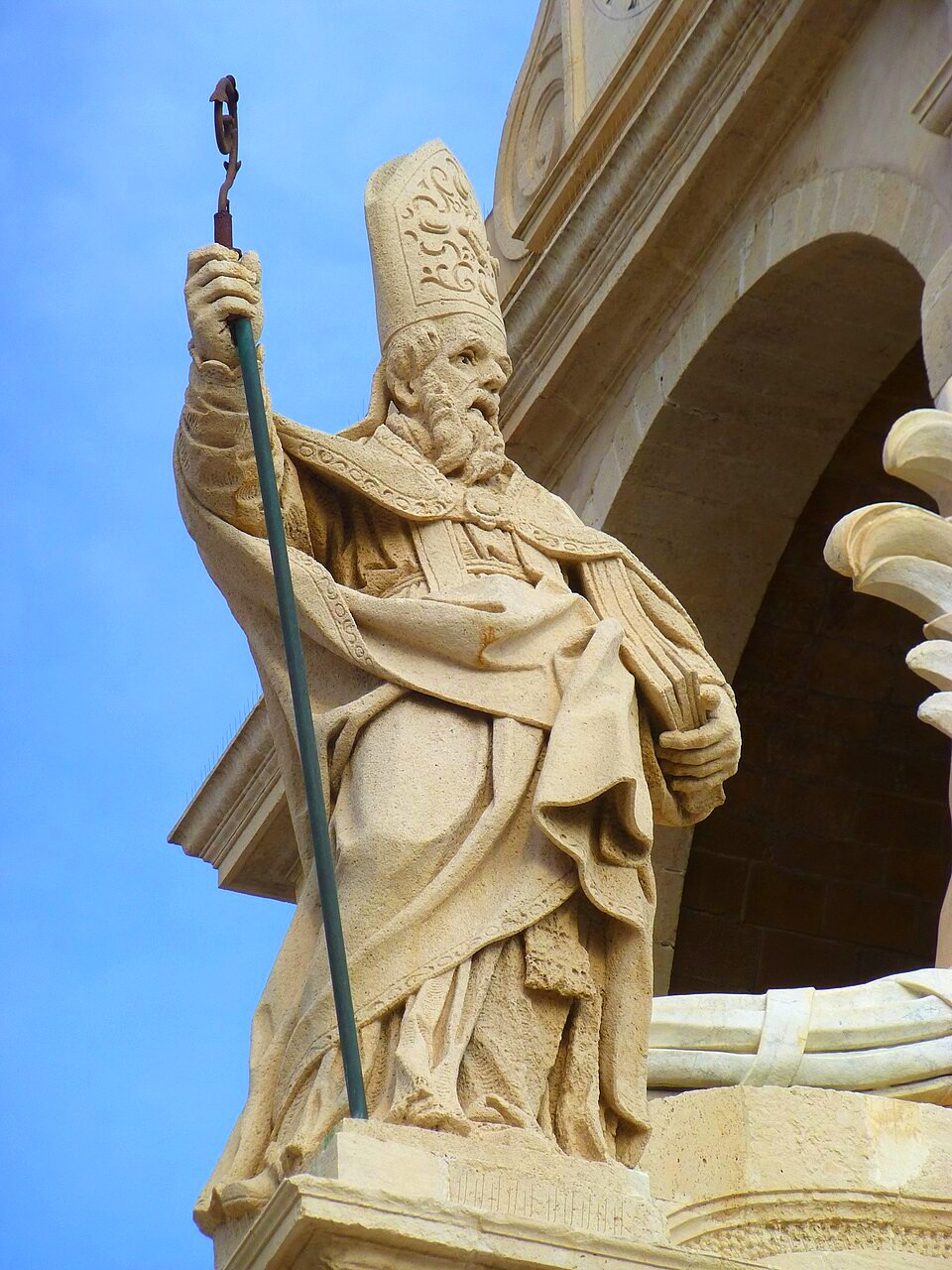
Saint of the Day – 6 March – Saint Marcian (Died c122) Bishop and Martyr of Tortona,in north-western Italy. He occupied his Office for 45 years and had been consecrated by St Barnabas. Patronages – of both the City and Diocese if Tortona, of Genola, also in Italy. Also known as – Marcianus, Martianus, Marzano, Marziano.
The Roman Martyrology reads today: “At Tortona, St Marcian, Bishop and Martyr who received the Crown of immortality by being killed under Trajan, for the glory of Christ.”
Tradition states that he was born to a pagan family but was converted by St Barnabas and then confirmed in the Christian faith by St Sirus the 1st Bishop of Pavia.
St Secundus (Died c119) to become the Bishop of Asti is said to have met Marcian at Tortona, when the former was still a pagan and St Marcian converted him.
There is some disagreement about the year of St Marcian’s death. Some sources say it occurred in c17, under Trajan, while others say it was under Hadrian in c122 but all agree that he was Crucified.
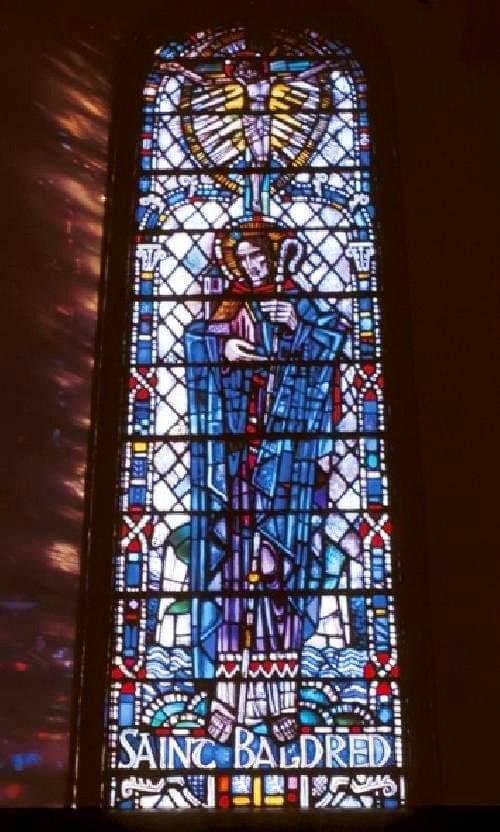
St Balther of Lindisfarne St Basil (Died c335) Bishop of Bologna St Cadroë
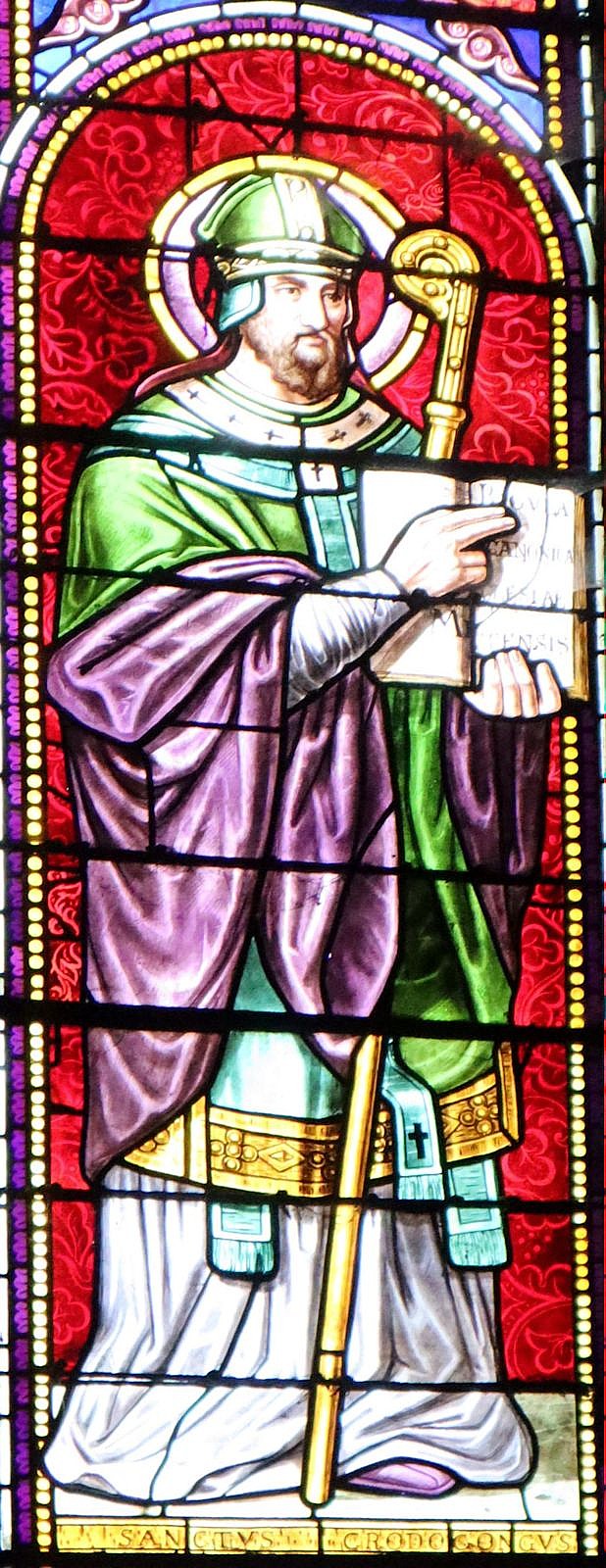
St Chrodegang of Metz (c714-776) The First Bishop of Metz, Protector and Father of the poor and orphans, Reformer of the Clergy, a relative of King Pepin and of Prince Charles Martel, both of whom he was Court Chancellor, Royal Diplomat, Saint Opportuna of Montreuil was his brother. The Roman Martyrology states: “In Metz in Austrasia, in today’s France, St Crodegango, Bishop, who arranged for the Clergy to live as if within the walls of a cloister under an exemplary rule of life and greatly promoted liturgical chant.” An Ardemt Shepherd: https://anastpaul.com/2022/03/06/saint-of-the-day-6-march-saint-chrodegang-of-metz/
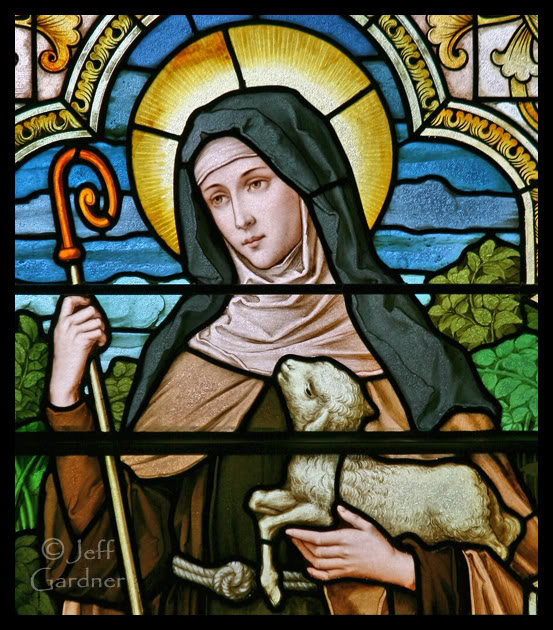
St Colette PCC (1381-1447) Abbess and Foundress of the Colettine Poor Clares, a reform branch of the Order of Saint Clare. Patronages – against eye disorders, against fever, against headaches, against infertility, against the death of parents, of women seeking to conceive, expectant mothers and sick children, craftsmen, Poor Clares, servants, Corbie, France, Ghent, Belgium. St Colette was Canonised on 24 May 1807 by Pope Pius VII. Lovely St Colette: https://anastpaul.com/2017/03/06/saint-of-the-day-6-march-st-colette/ AND: https://anastpaul.com/2019/03/06/saint-of-the-day-6-march-st-colette-2/
St Cyriacus of Trier St Cyril of Constantinople St Evagrius of Constantinople
Bl Guillermo Giraldi St Heliodorus the Martyr Bl Jordan of Pisa St Julian of Toledo St Kyneburga of Castor St Kyneswide of Castor St Marcian (Died c122) Bishop and Martyr of Tortona
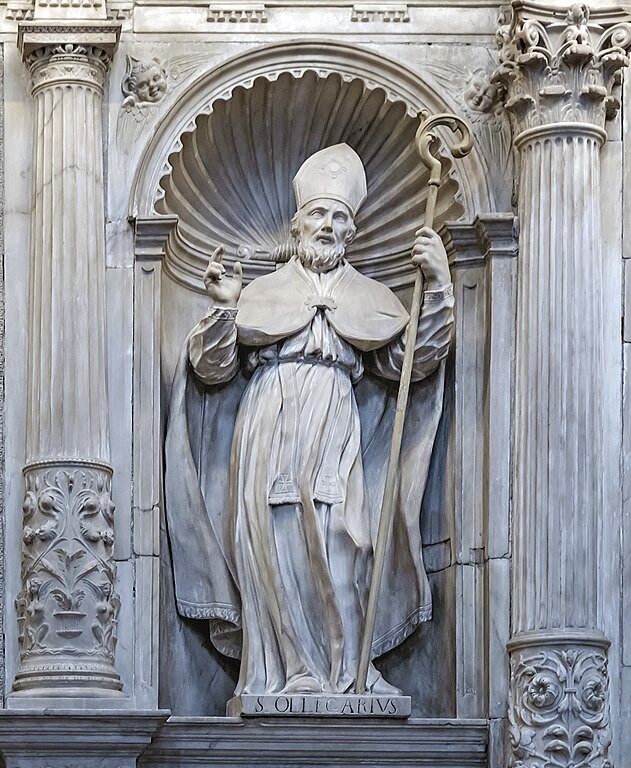
St Ollegarius Bonestruga OSA (1060-1137) Bishop, Canon Regular of the Augustinians, Reformer, in both the religious sphere and the social one, Abbot, Diplomat, Peacemaker and Proptector of his people from possible violent incursions. The Roman Martyrology reads: “At Barcelona in Spain, the blessed St Ollegarius, who was first a Canon and afterwards the Bishop of Barcelona and Archbishop of Tarragona.” A Very Busy Shepherd https://anastpaul.com/2024/03/06/saint-of-the-day-6-march-st-ollegarius-bonestruga-osa-1060-1137-bishop/
Martyrs of Amorium – 42 Saints – Also known as Martyrs of Syria and Martyrs of Samarra; A group of 42 Christian senior officials in the Byzantine Empire who were captured by forces of the Abbasid Caliphate when the Muslim forces overran the City of Amorium, Phrygia in 838 and massacred or enslaved its population. The men were imprisoned in Samarra, the seat of the Caliphate, for seven years. Initially thought to be held for ransom due to their high position in the empire, all attempts to buy their freedom were declined. The Caliph repeatedly ordered them to convert to Islam and sent Islamic scholars to the prison to convince them; they refused until the Muslims finally gave up and killed them. Martyrs. We know the names and a little about seven of them: Aetios Bassoes Constantine Constantine Baboutzikos Kallistos Theodore Krateros Theophilos but details about the rest have disappeared over time. However, a lack of information did not stop several legendary and increasingly over-blown “Acts” to be written for years afterward. One of the first biographers, a monk name Euodios, presented the entire affair as a judgement by God on the empire for its official policy of Iconoclasm. Deaths: beheaded on 6 March 845 in Samarra (in modern Iraq) on the banks of the Euphrates river by Ethiopian slaves the bodies were thrown into the river, but later recovered by local Christians and given proper burial.






 AnaStpaul
You must be logged in to post a comment.