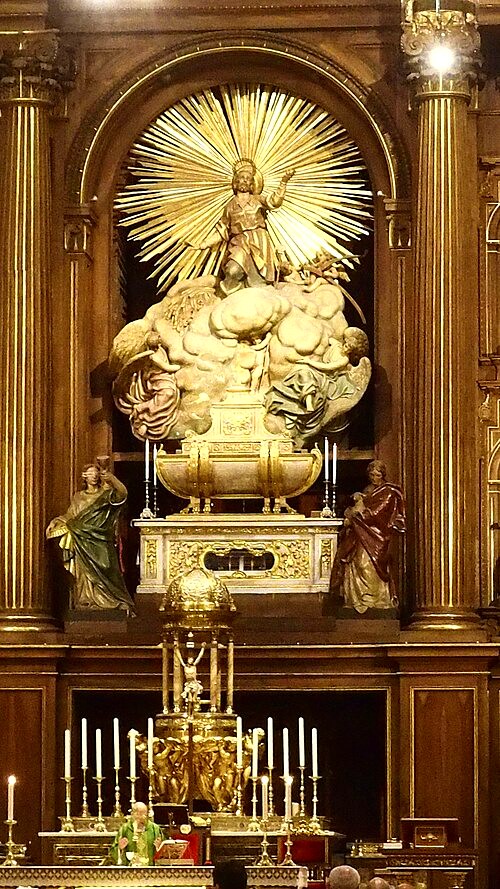
Saint of the Day – 10 May – Saint Isidore the Labourer of Madrid (c1070-c1130) Confessor, renowned for his great piety and miracles. Born as Isidro and died near Madrid. Patronages – of Madrid, Leon, Zaragossa and Seville, of farmers, farm labourers, peasants
Additional Feats on 15 May (believed possibly, to have been the date of birth into life). Also known as – Isidore the Farmer, Isidro,
The Roman Martyrology reads today: “At Madrid, St Isidore, a labourer. Being renowned for miracles, Pope Gregory XV, placed him in the number of the Saints, at the same time as St Ignatius, St Francis, St Teresa and St Philip Neri.”
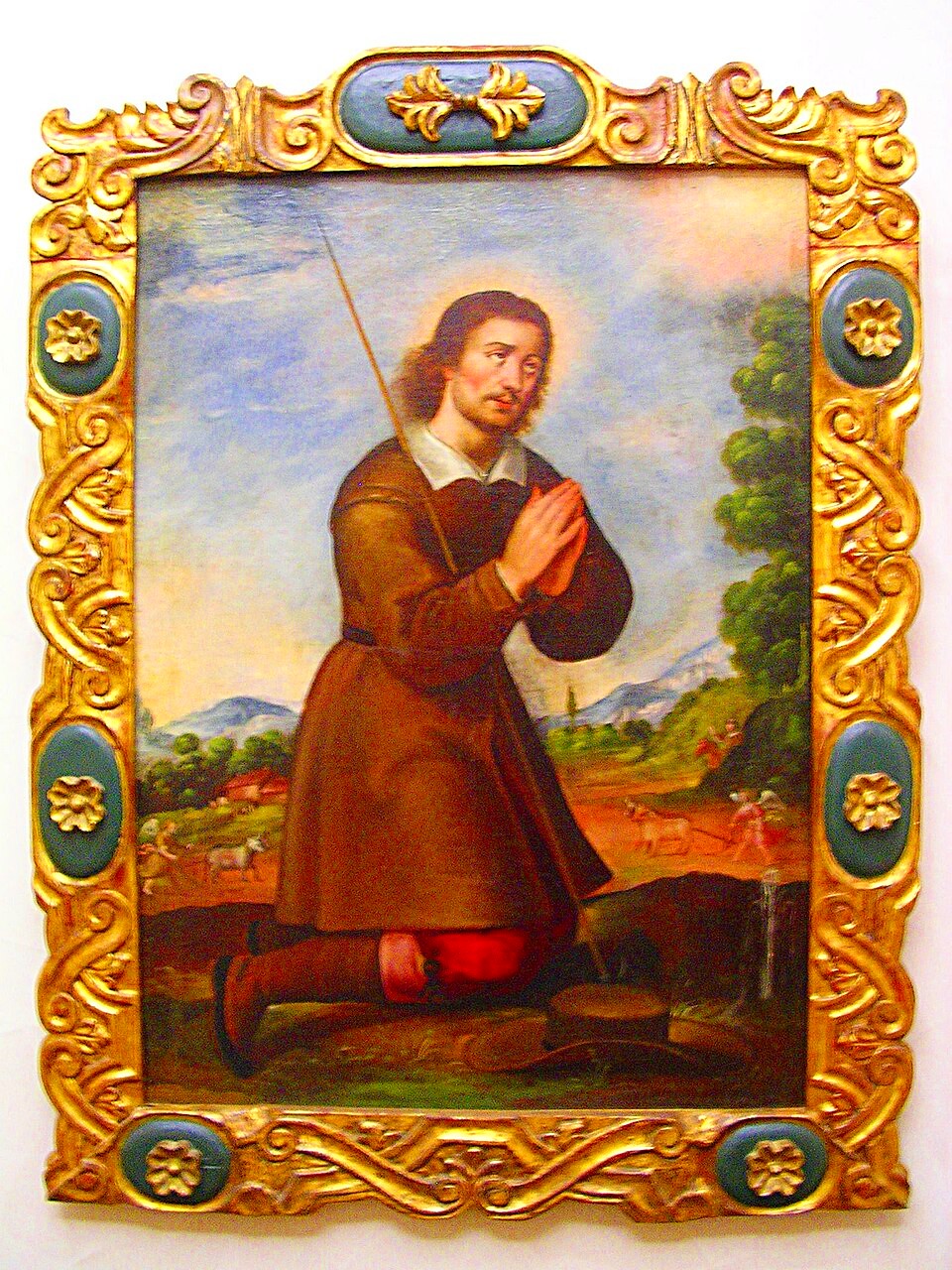
St Isidore’s Life, was first written in 1265 by John, a Deacon of the Church of St Andrew, at Madrid and he edited and supplemented it in 1275,
St Isidore was born to devout, humble and poor parents in the Spanish countryside near Madrid. As a very young man he entered the service of a certain Juan de Vargas, on a farm in the vicinity of Madrid.
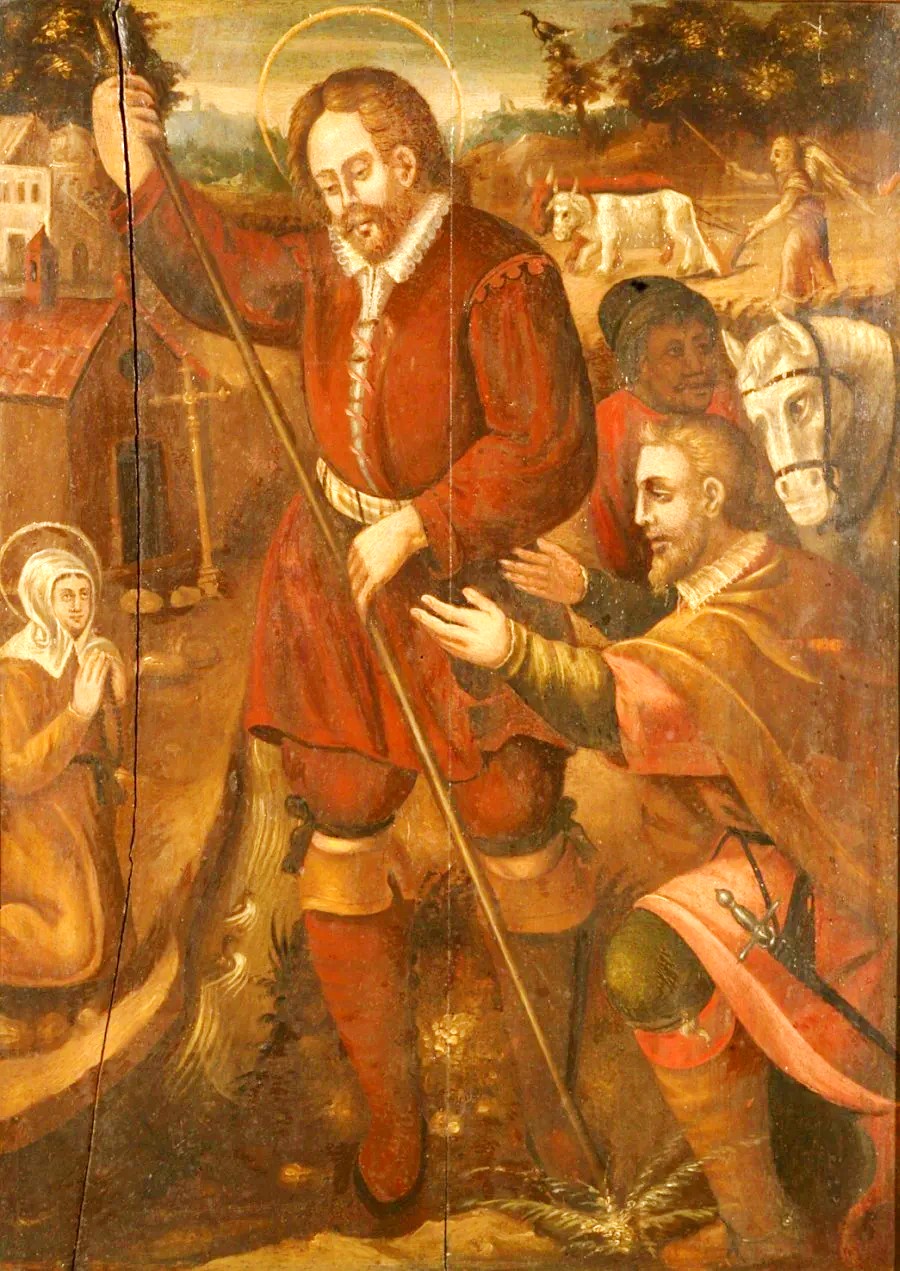
Every morning before begining his labours, he was accustomed to participate at Holy Mass at one of the Churches nearby. One day his fellow-labourers complained to their master that Isidore was always late for work due to his attendance at Mass. Upon investigation, the master found Isidore at prayer, while an Angel was doing the ploughing. On another occasion, his master saw an Angel ploughing on either side of him, so that Isidore’s work was equal to that of three of his fellow-labourers.
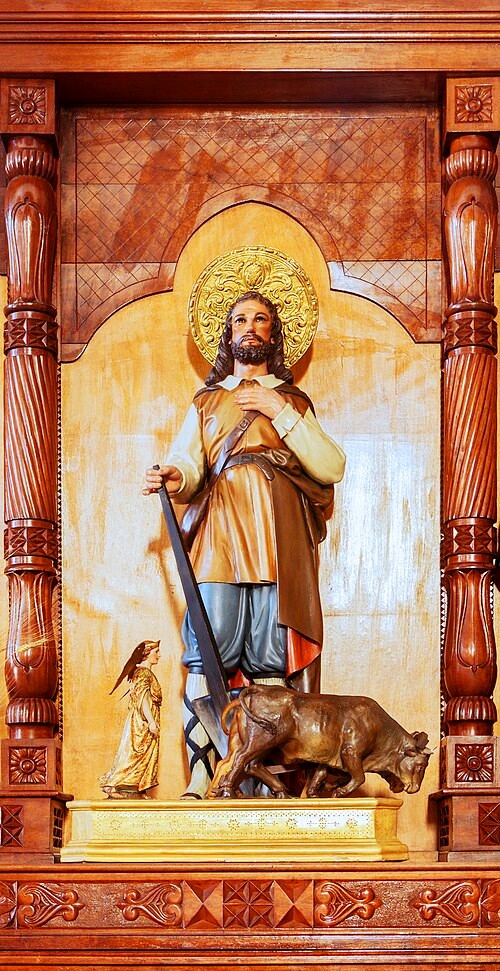
St Isidore holiness and prayers inspired great awe. By his intereceesion he resurrected his master’s lifeless daughter. He also caused a fountain of fresh water to burst from the dry earth in order to quench his master’s thirst.
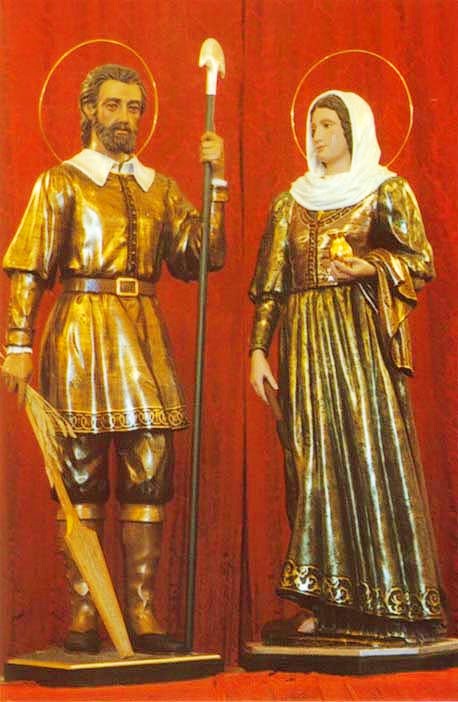
He was married to Maria Torribia, also a Canonised Saint, who is venerated in Spain as Maria della Cabeza, from the fact that her head (Spanish, cabez) is often carried in procession especially in time of drought. The couple were blessed with one son, who sadly died in his youth. On one occasion this son fell into a deep well and at the prayers of his parents, the water of the well miraculously rose to the level of the ground, bringing the child with it aalive and well. Hereupon the parents made a vow of continence and lived in separate houses.
Forty years after St Isidore’s death, his body was translated from the cemetery to the Church of St Andrew. In 1212, St Isidore appeared to Alfonso of Castile and to have shown him the hidden path by which he surprised the Moors and gained the victory of Las Nevas de Tolosa.
When King Philip III of Spain was cured of a deadly disease by touching St Isidore’s Relics, the King substitued the old Reliquary with a costly Splid Silver replacement.
St Isidore was Canonised by Gregory XV, along with Sts. Ignatius, Francis Xavier, Teresa of Jesus and Philip Neri, on 12 March, 1622.
St Isidore is widely venerated as the Patron of peasants and day-labourers. The Cities of Madrid, Leon, Zaragossa and Seville, also, honour him as their Patron. His feast is celebrated on 10 May.