Passionate Catholic.
Being a Catholic is a way of life - a love affair "Religion must be like the air we breathe..."- St John Bosco
Prayer is what the world needs combined with the example of our lives which testify to the Light of Christ.
This site, which is now using the Traditional Calendar, will mainly concentrate on Daily Prayers, Novenas and the Memorials and Feast Days of our friends in Heaven, the Saints who went before us and the great blessings the Church provides in our Catholic Monthly Devotions.
This Site is placed under the Patronage of my many favourite Saints and especially, St Paul.
"For the Saints are sent to us by God
as so many sermons.
We do not use them, it is they who move us
and lead us, to where we had not expected to go.”
Charles Cardinal Journet (1891-1975)
This site adheres to the pre-Vatican II Catholic Church and all her teachings. .
PLEASE ADVISE ME OF ANY GLARING TYPOS etc - In June 2021 I lost 100% sight in my left eye and sometimes miss errors. Thank you and I pray all those who visit here will be abundantly blessed. Pax et bonum! 🙏
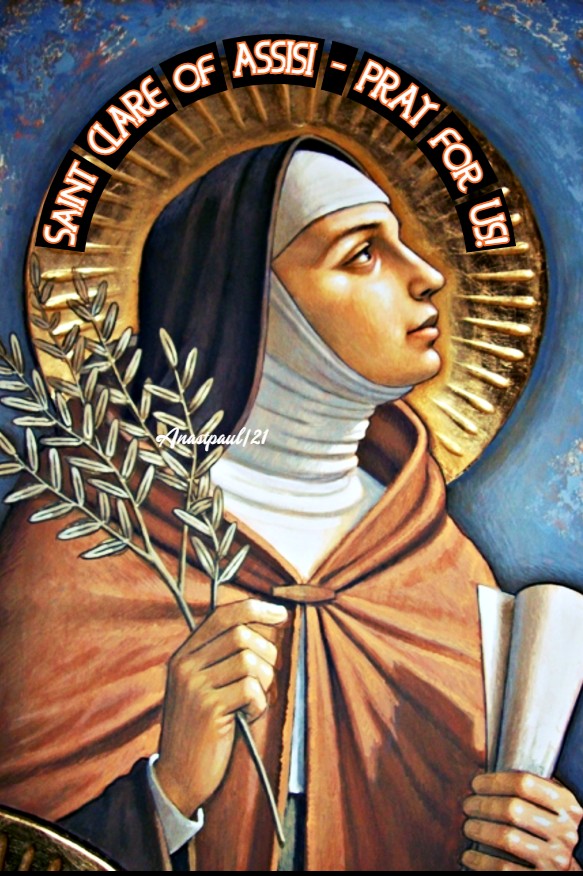
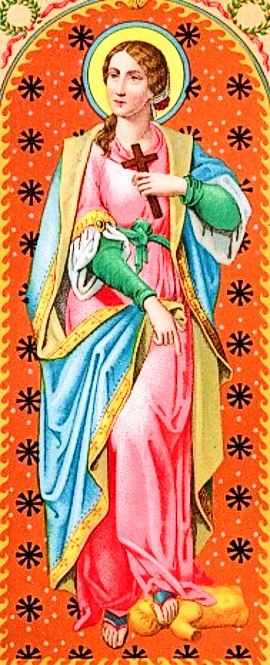
One Minute Reflection – 12 August – “The Month of the Immaculate Heart of Mary” – St Clare (1194-1253) Virgin – 2 Cor inthians 10:17-18; 11:1-2 – Matthew 25:1-13 – Scripture search here: https://www.drbo.org/
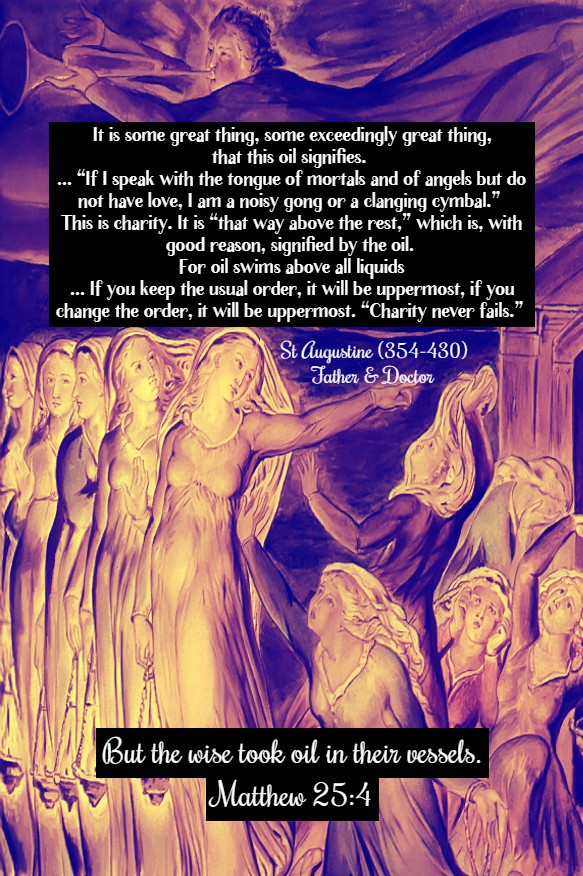
“But the wise took oil in their vessels” – Matthew 25:4
REFLECTION – “It is some great thing, some exceedingly great thing, that this oil signifies. Do you think it might be charity? If we try out this hypothesis, we hazard no precipitate judgement. I will tell you why charity seems to be signified by the oil. The Apostle says, “I will show you a still more excellent way.” “If I speak with the tongue of mortals and of Angels but do not have love, I am a noisy gong or a clanging cymbal.” This is charity. It is “that way above the rest” which is, with good reason, signified by the oil. For oil swims above all liquids. Pour in water and pour in oil upon it, the oil will swim above. If you keep the usual order, it will be uppermost, if you change the order, it will be uppermost. “Charity never fails!” … St Augustine (354-430) Father & Doctor (Sermon 93).
PRAYER – Hear us, O God, our Saviour that as we are gladdened by the festival of blessed Clare Thy virgin, so we may learn from it piety and devotion. Through the same Jesus Christ, Thy Son our Lord, Who lives and reigns with Thee, in the unity of the Holy Ghost, God, world without end. Amen (Collect).
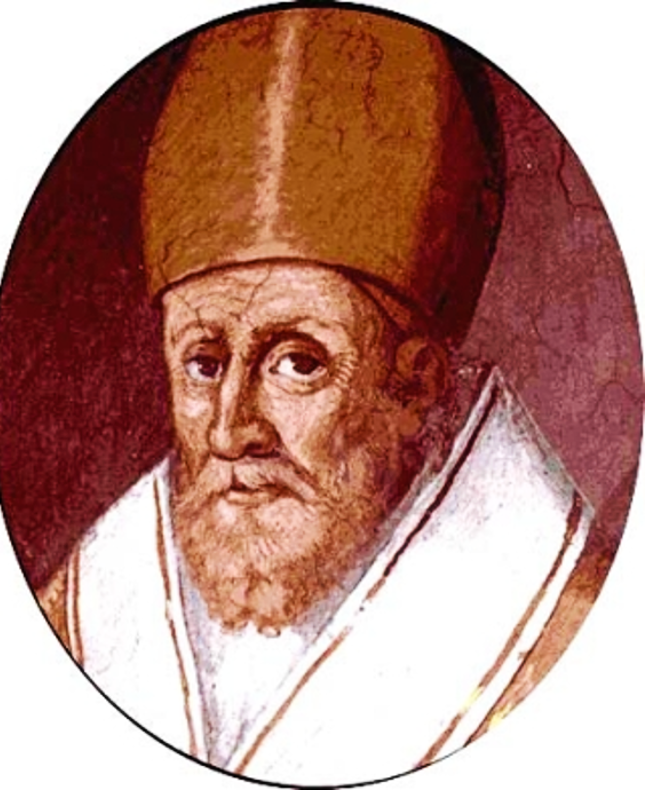
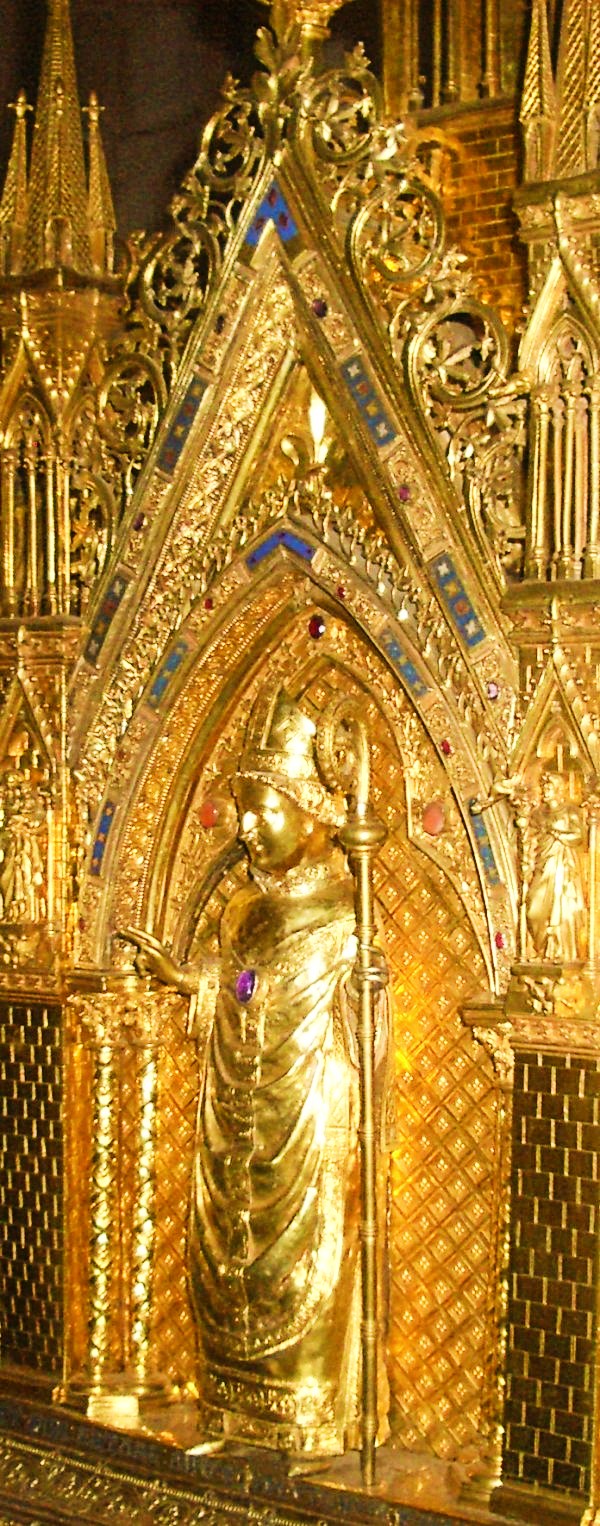
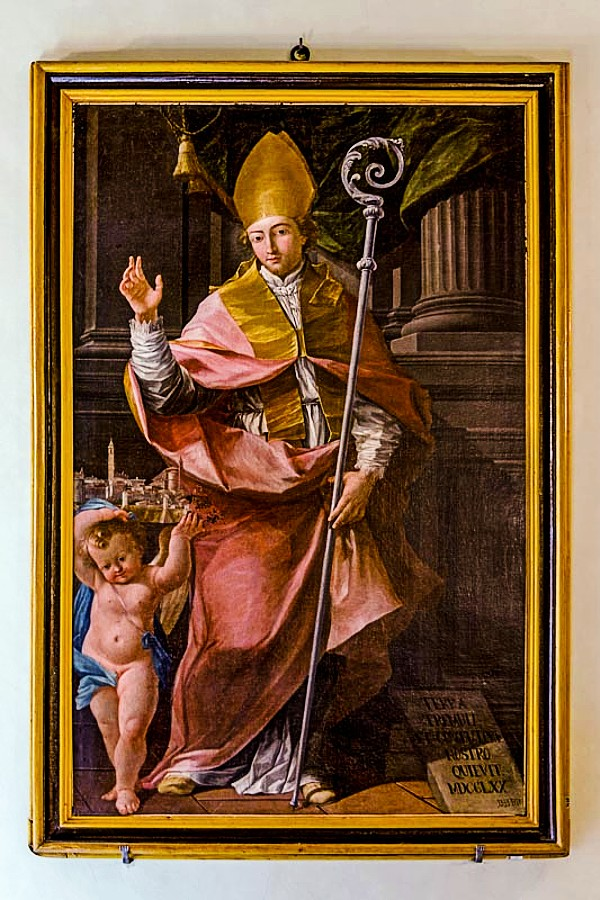
Saint of the Day – 12 August – Saint Herculanus (Died c550) the 18th Bishop of Brescia . Patronage of the City of Maderno in Brescia. Also known as – Ercolano.
The Roman Martyrology reads today: “At Brescia, Saint Herculaneum, Bishop.”
In the ancient City catalogues, Herculanus is listed 18th position between St Cyprian and St Honorius but it is impossible to determine the years of his Episcopate. We can only state that it took place in the 6th Century, probably shortly after the middle years of that Centry.
Virgin and Child, with Saints Louis of Toulouse, Lawrence, Herculanus of Brescia and Constantius of Perugia. Date 1497.
He died in Campione del Garda, where, according to some, he had retired to the life of a Hermit. His Relics, discovered in the Church of Maderno in 1282, were displayed for public veneration the following year and in 1484, were recognised by the local Bishop, Paolo Zane. In 15, St Charles Borromeo transferred them from the old Shrine to the High Altar. On 7 May 1587, Bishop Morosini placed them in an inscribed marble Tomb.
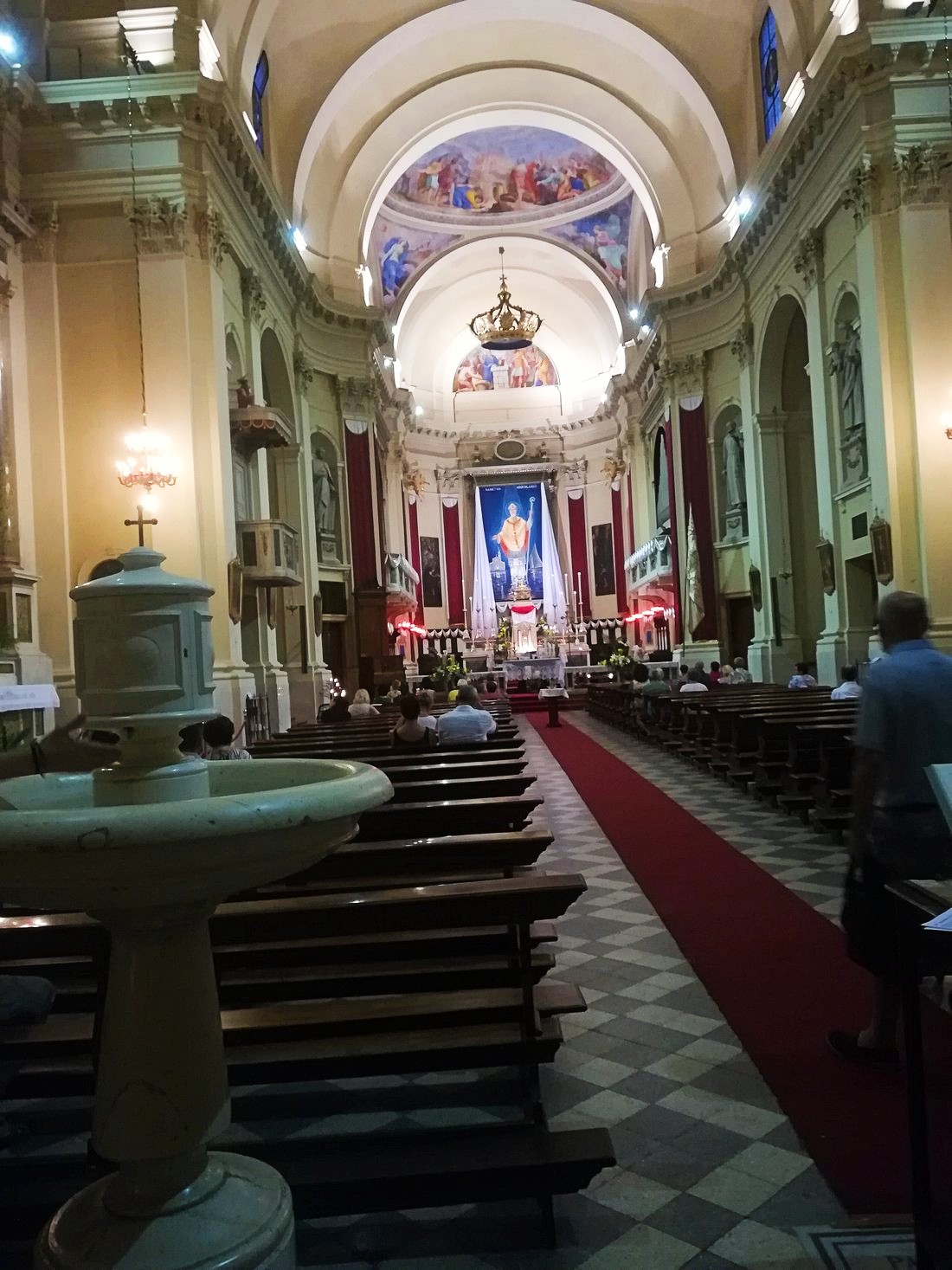
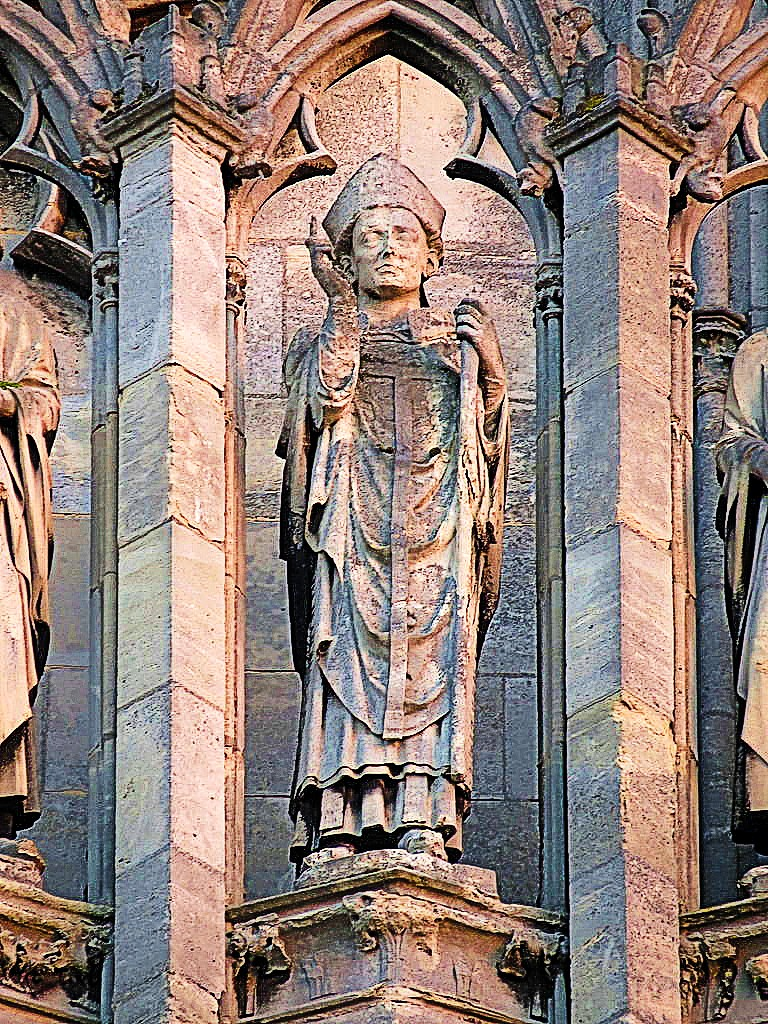
His memorial is celebrated today 12 August, the day on which he is celebrated in Maderno City, of which he is the Patron Saint, and in the surrounding towns. Below is a lovely Statue of St Herculanus on the Facade of the Church and an interior view of the Church dedicated to him in Maderno.
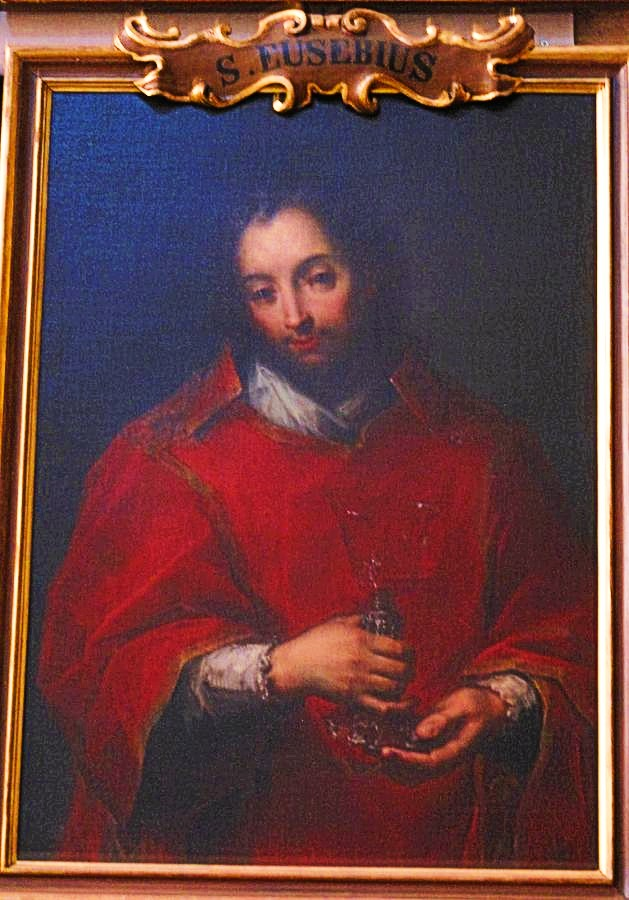
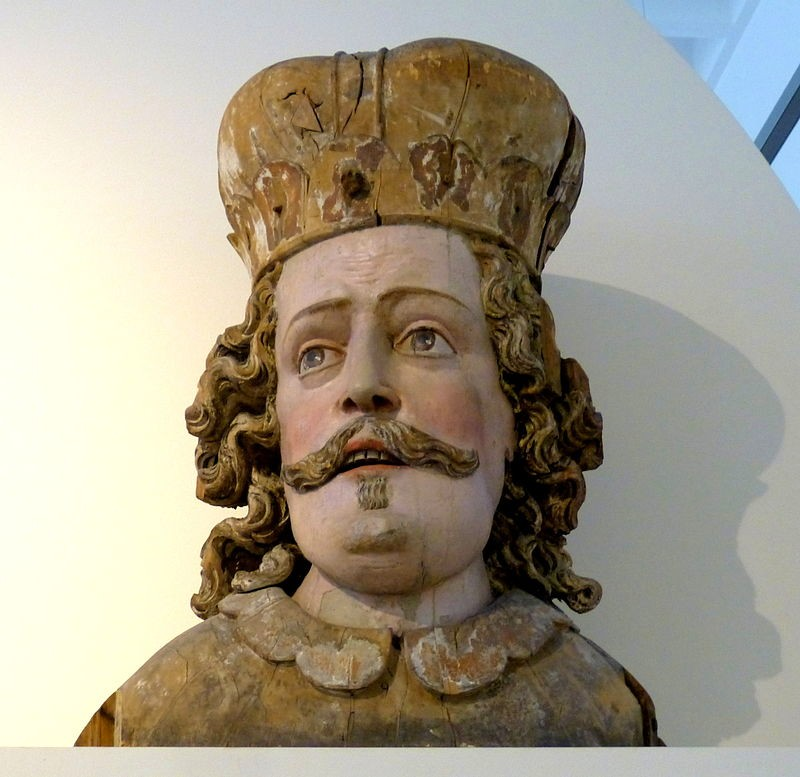
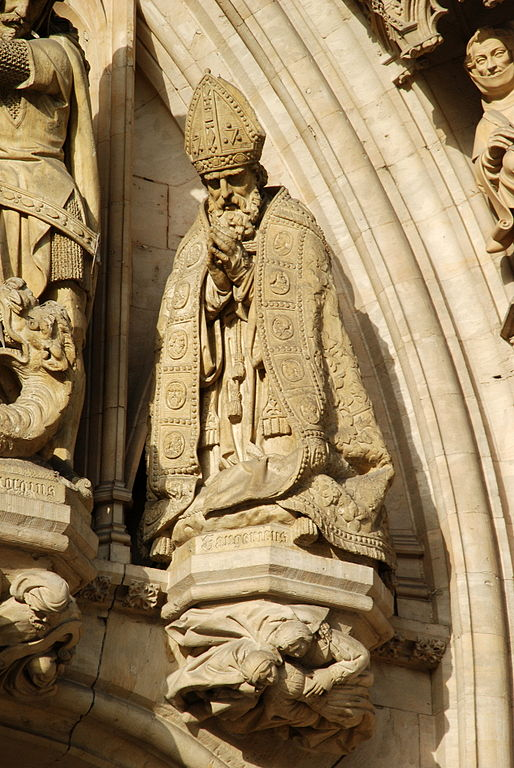
St Eusebius of Milan (Died 462) Archbishop of Milan. Born in Greece (although some sources regard him as Milanese) and died on 12 August 462. He was the Archbishop from 449 until his death. The Roman Martyrology reads: “In Milan, Saint Eusebius, Bishop, who worked diligently for the True Faith and rebuilt the Cathedral destroyed by the Huns.” His Zealous Life of Grace: https://anastpaul.com/2023/08/12/saint-of-the-day-12-august-st-eusebius-of-milan-died-462-bishop/
St Felicissima the Blind St Gracilian St Herculanus (Died c550) Bishop of Brescia St Jambert of Canterbury St Julian of Syria
St Macarius of Syria St Merewenna St Micae Nguyen Huy My St Murtagh of Killala St Photinus of Marmora
Martyrs of Augsburg – 4 Saints: The mother, Hilaria,and three friends of of Saint Afra ofAugsburg. While visiting the tomb of Saint Afra who were seized by the authorities and Martyred when they visited Afra’s tomb – Digna, Eunomia, Euprepia and Hilaria. They were burned alive c 304.
Martyrs of Rome – 5 Saints: A group of Christians Martyred together in the persecutions of Diocletian. We know little more than their names – Crescentian, Juliana, Largio, Nimmia and Quiriacus. They died in c304 in Rome, Italy and were buried on the Ostian Way outside Rome.
Thought for the Day – 11 August – Meditations with Antonio Cardinal Bacci (1881-1971)
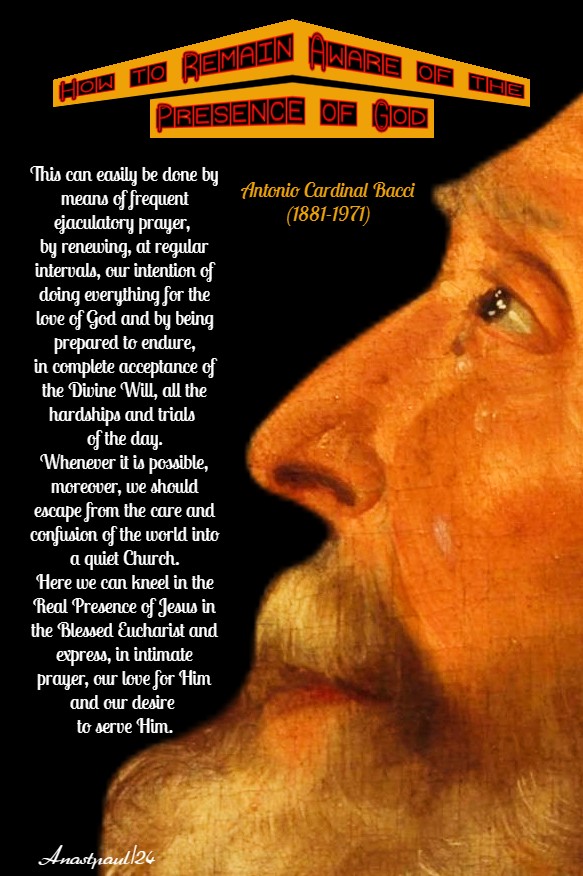
How to Remain Aware of the Presence of God
“It is useful to consider the ways in which we can develop a constant and effective awareness of the Presence of God. The first way in which we can do this, is by cultivating a lively faith, which will help us to see God everywhere. “Do not I fill heaven and earth, saith the Lord?” (Jer 23:24).
This kind of faith should deepen our sense of God’s Presence and inspire in us sentiments of love and gratitude, which will guide us in all our actions. We cannot expect that we shall be able to remain in a state of constant contemplation of God, for this is the privilege enjoyed by the blessed in Heaven, for whom faith has been replaced by the Beatific Vision. We must be satisfied with exciting in ourselves, as often as possible, the active awareness of God’s Presence. This should be a quiet and peaceful process, not involving undue mental effort or anxiety.
We should be able to attend quite naturally to our work and other obligations and, we should be helped and consoled in this, by directing our thoughts to God from time to time, in order to offer ourselves to Him. This can easily be done by means of frequent ejaculatory prayer, by renewing, at regular intervals, our intention of doing everything for the love of God and by being prepared to endure, in complete acceptance of the Divine Will, all the hardships and trials of the day. Whenever it is possible, moreover, we should escape from the care and confusion of the world into a quiet Church. Here we can kneel in the Real Presence of Jesus in the Blessed Eucharist and express, in intimate prayer, our love for Him and our desire to serve Him.”
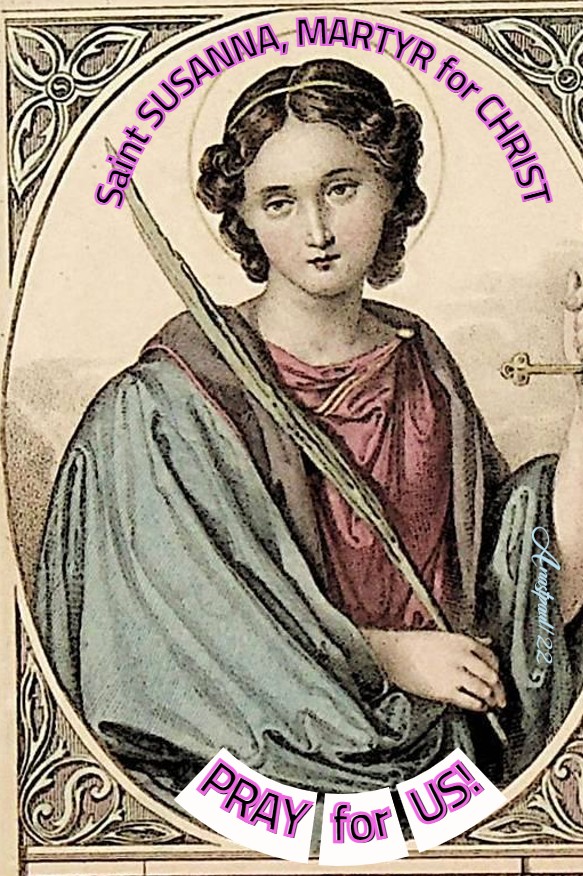
Quote/s of the Day – 11 August – “The Month of the Immaculate Heart of Mary” – St Tiburtius (Died c286) Martyr, Layman, St Susanna of Rome (Died c 295) Virgin Martyr, St Philomena (Died 304) Virgin Martyr – Hebrews 11:33-39– Luke 12:1-8 – Scripture search here: https://www.drbo.org/
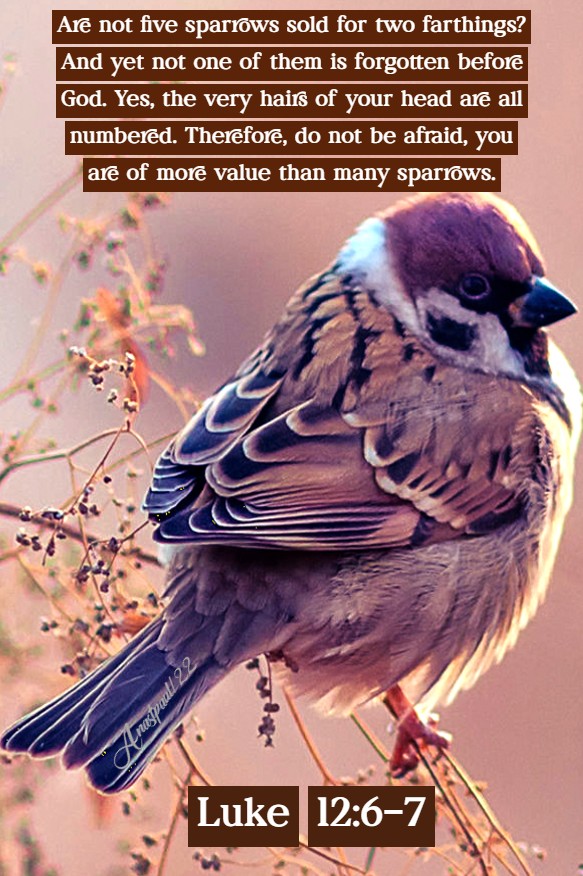
“Are not five sparrows sold for two farthings? And yet not one of them is forgotten before God. Yes, the very hairs of your head are all numbered. Therefore, do not be afraid, you are of more value than many sparrows.”
Luke 12:6-7
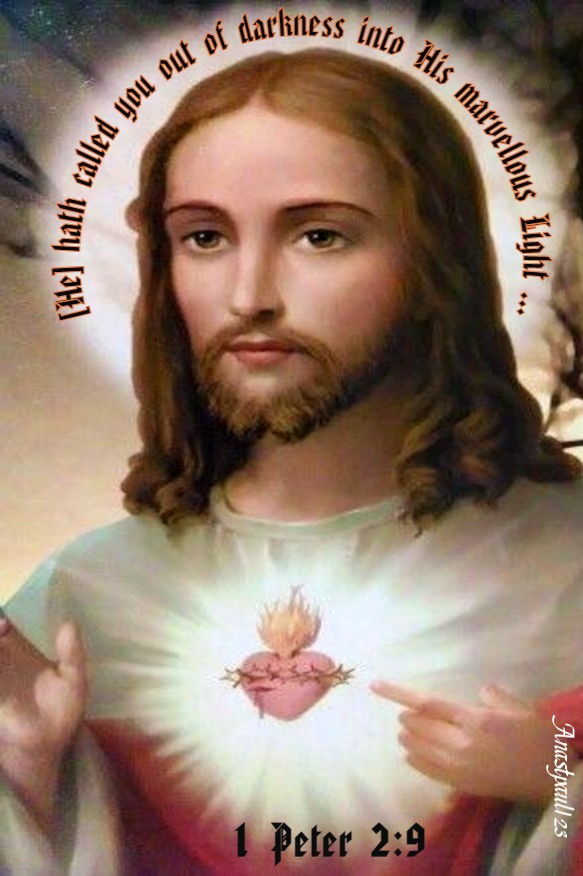
“[He] hath called you out of darkness into His marvellous Light … ”
1 Peter 2:9
“In the world you will have tribulation. But take heart, I have conquered the world.” John 16:33
“Who will be crowned without having fought? Who will go to rest if he is not tired (cf. 2 Tim 2:5-6)? Who will gather the fruits of life without having planted virtues in his soul? Cultivate them, prepare the earth with the greatest care, take trouble over it, sweat over it, children, God’s workers, imitators of the Angels, competitors with incorporeal beings, lights for those who are in the world. (cf. Phil 2:15)!”
St Theodore the Studite (759-826)
“Fear is a greater evil than the evil itself.”
(Letters to Persons in the World, VI, 12)
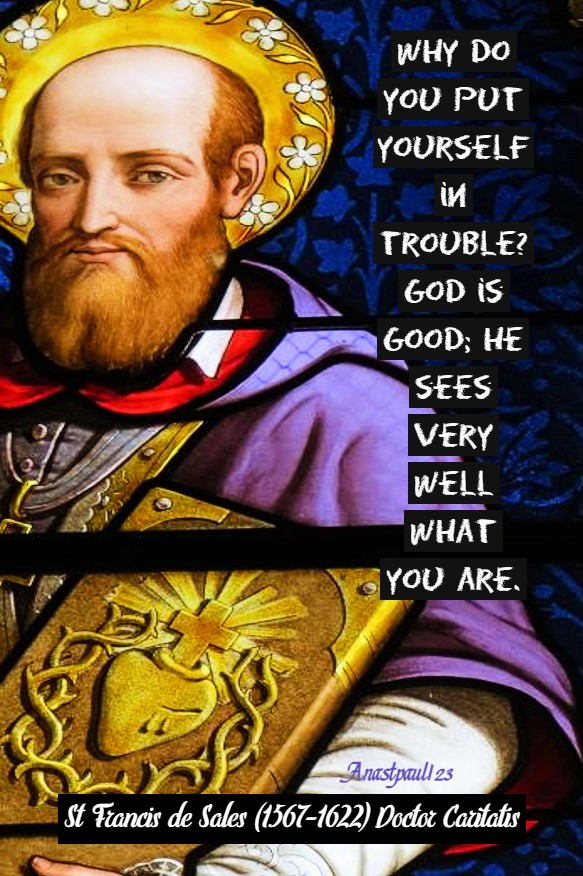
“Why do you put yourself in trouble? God is good; He sees very well what you are.”
(Letters to Persons in Religion, III, 16)
St Francis de Sales (1567-1622) Doctor Caritatis
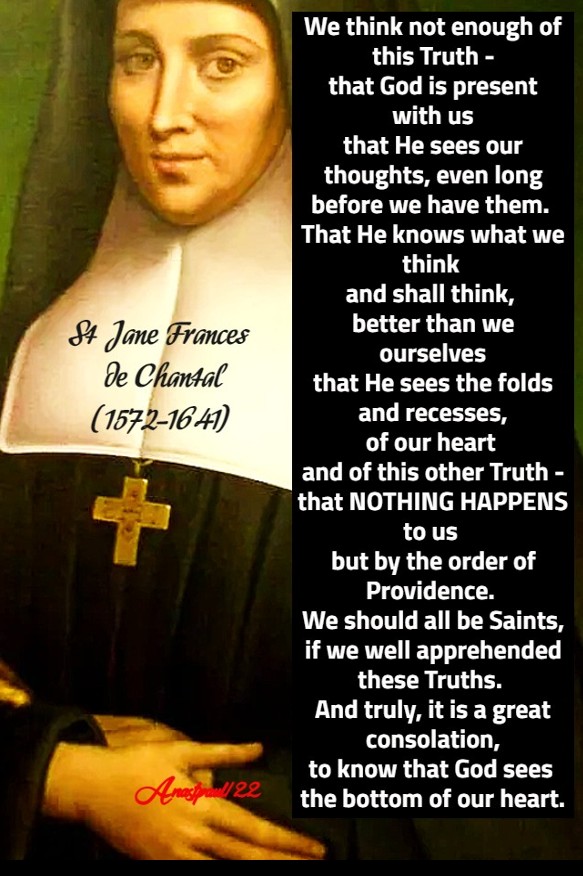
“We think not enough of this Truth – that God is present with us that He sees our thoughts, even long before we have them. That He knows what we think and shall think, better than we ourselves that He sees the folds and recesses, of our heart and of this other Truth – that NOTHING HAPPENS to us but by the order of Providence. We should all be Saints, if we well apprehended these Truths. And truly, it is a great consolation, to know that God sees the bottom of our heart.”
St Jane Frances de Chantal (1572-1641) Disciple and Collaborator with St Francis de Sales in Founding the Sisters of the Visitation
One Minute Reflection – 11 August – “The Month of the Immaculate Heart of Mary” – St Tiburtius (Died c286) Martyr, Layman, St Susanna of Rome (Died c 295) Virgin Martyr, St Philomena (Died 304) Virgin Martyr – Hebrews 11:33-39– Luke 12:1-8 – Scripture search here: https://www.drbo.org/
“Are not five sparrows sold for two farthings? And yet not one of them is forgotten before God. Yes, the very hairs of your head are all numbered. Therefore, do not be afraid, you are of more value than many sparrows.” – Luke 12:6-7
REFLECTION – “Do not look forward to the changes and chances of this life in fear – rather look to them with full hope that, as they arise, God, whose you are, will deliver you out of them. He is your keeper. He has kept you hitherto. Do you but hold fast to His dear Hand and He will lead you safely through all things and, when you cannot stand, He will bear you in His Arms. Do not look forward to what may happen tomorrow. Our Father will either shield you from suffering, or He will give you strength to bear it.” – St Francis de Sales (1567-1622) Doctor of the Church.
PRAYER – May the constant protection of Thy holy Martyrs, Tiburtius and Susanna and Philomena support us, O Lord, for Thou never fails to look mercifully upon those whom Thou, hast given the help, of such intercession. Through Jesus Christ, Thy Son our Lord, Who lives and reigns with Thee, in the unity of the Holy Ghost, God, world without end. Amen (Collect).
Our Morning Offering – 11 August – “The Month of the Immaculate Heart of Mary” – Resumed Mass of Sunday, Pentecost IX
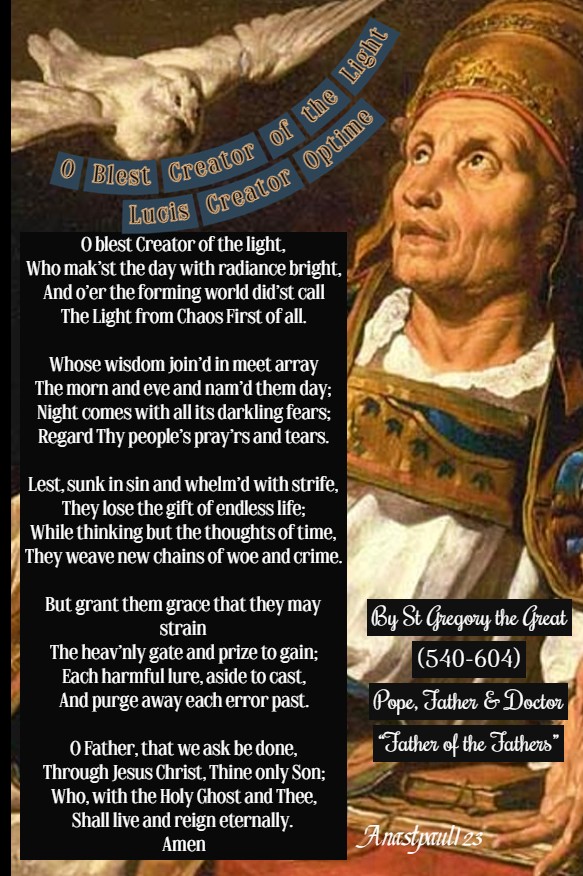
Lucis Creator Optime O Blest Creator of the Light By St Gregory the Great (540-604) Pope, Father & Doctor “Father of the Fathers”
O blest Creator of the light, Who mak’st the day with radiance bright, And o’er the forming world did’st call The Light from Chaos First of all.
Whose wisdom join’d in meet array The morn and eve and nam’d them day; Night comes with all its darkling fears; Regard Thy people’s pray’rs and tears.
Lest, sunk in sin and whelm’d with strife, They lose the gift of endless life; While thinking but the thoughts of time, They weave new chains of woe and crime.
But grant them grace that they may strain The heav’nly gate and prize to gain; Each harmful lure, aside to cast, And purge away each error past.
O Father, that we ask be done, Through Jesus Christ, Thine only Son; Who, with the Holy Ghost and Thee, Shall live and reign eternally. Amen
This hymn is used for Vespers (II) on Sundays throughout the year in the Extraordinary Form of the Roman Breviary. Trans John M Neale (1818-1866), 1851. Tune: “Lucis Creator Optime” Gregorian Chant, Mode VIII, traditional.
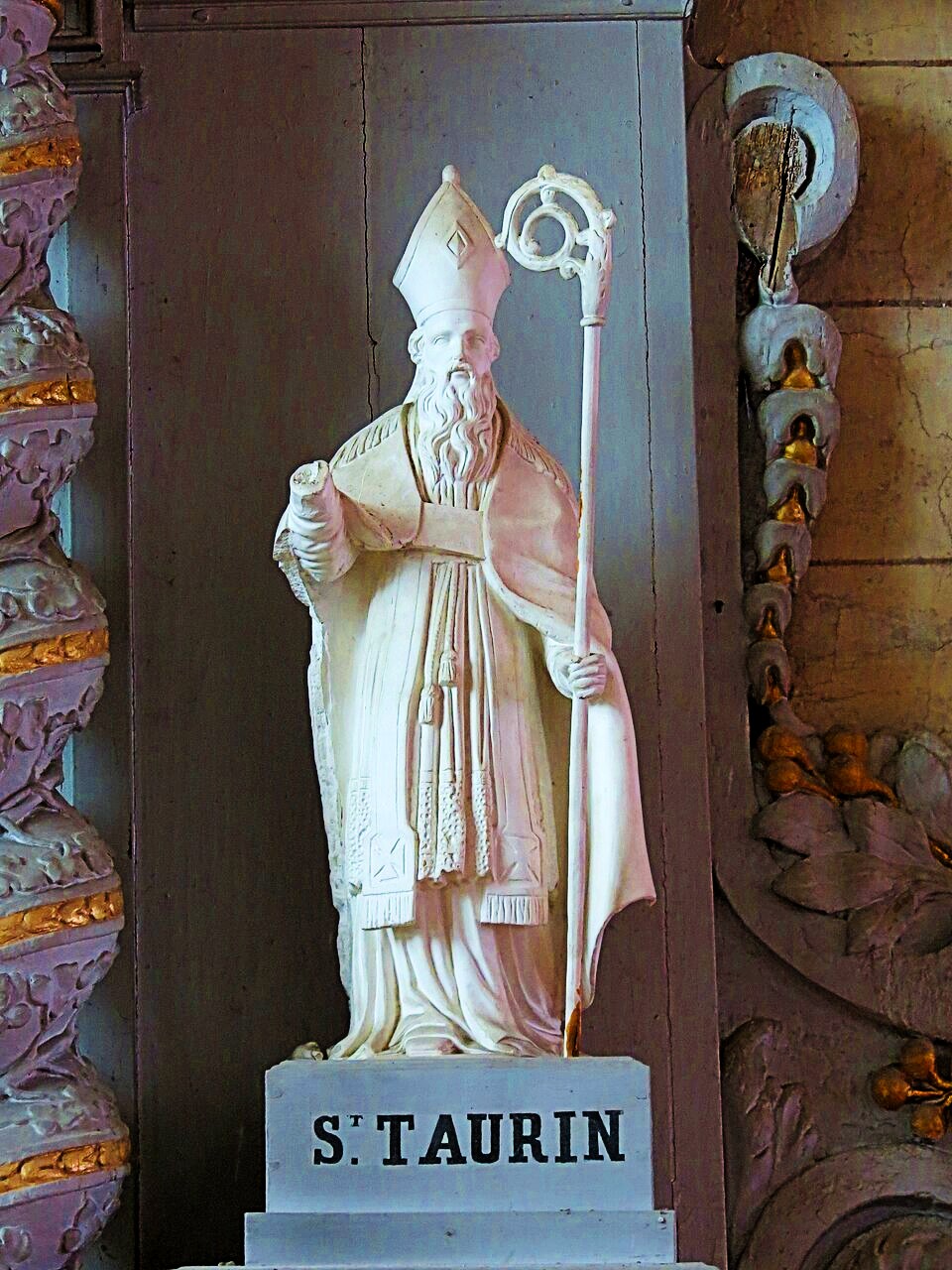
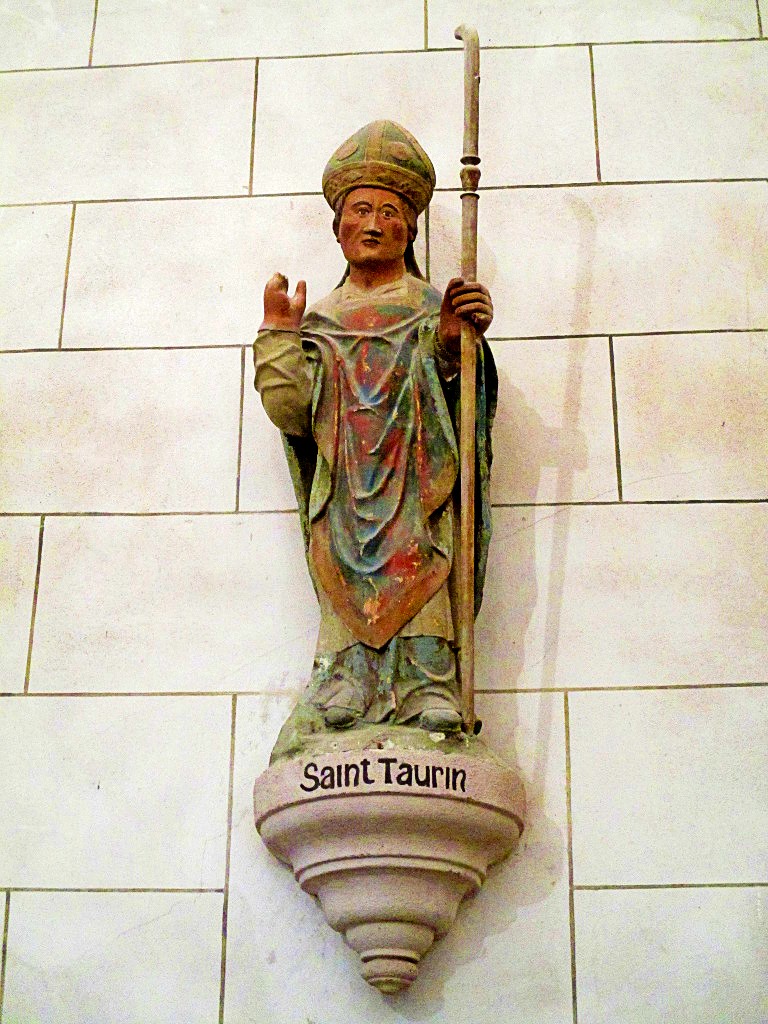
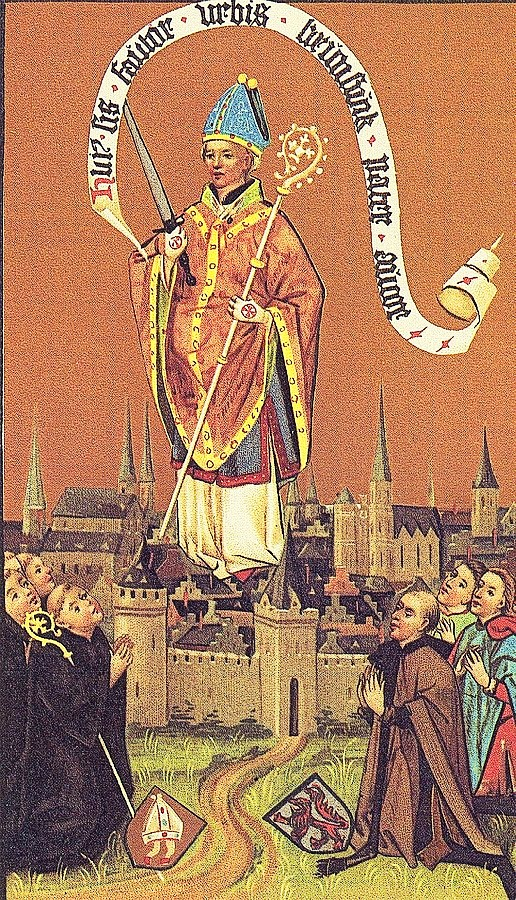
Saint of the Day – 11 August – St Taurinus (c350-c412) the 1st Bishop of Evreux, in Normandy, France, Miracle-worker. Born in Rome in c350 and died at his See in Evreux in c412. Patronage – of the City and Diocese of Evreux. A lso known as – Taurin, Taurino.
The Roman Martyrology reads today: “At Evreux, in France, St Taurinus, Bishop. Being made the Bishop of that City by the blessed Pope Clement, he propagated the Christian Faith by the preaching of the Gospel and the many labours he sustained for it. He is celebrated for glorious miracles and finally slept in the Lord.”
Taurinus’ life is known through a manuscript of the 10th Century, itself based on a 9th Cntury text. The Vita was written by a wll-known Hagiographer Monk named Deodatus,
Taurinus was born in Rome to Tarquinius, a pagan and Eustycia, a devout Christian. An Angel appeared to Eustycia to announce that her son would have a great destiny. He was Baptised by St Pope Clement I. He became the Bishop of Evreux in around 385.
A number of miracles were associated with Taurinus. His legend states that he raised a girl, Euphrasia, from the dead after she died in a fire. After he had done so, there was no trace of burn or wounds upon her flesh. These wondrous miracle led to many conversions . He also resurrected a Marinus, the son of the local Prefect, who had fallen into a hole and died from the impact. After a short prayer, Taurinus revived the young man. At once, Marinus requested Baptism for himself and his entourage,and hundreds of others.
After Taurinus’ death, Maximus of Evreux was sent by Pope Damasus I to continue his predecessor’s immense success.
A Monastery dedicated to Taurinus was built around the 6th Century; it was restored in the 10 Century at the instigation of Richard I of Normandy/
Relief depicting St Tarinus evangelising
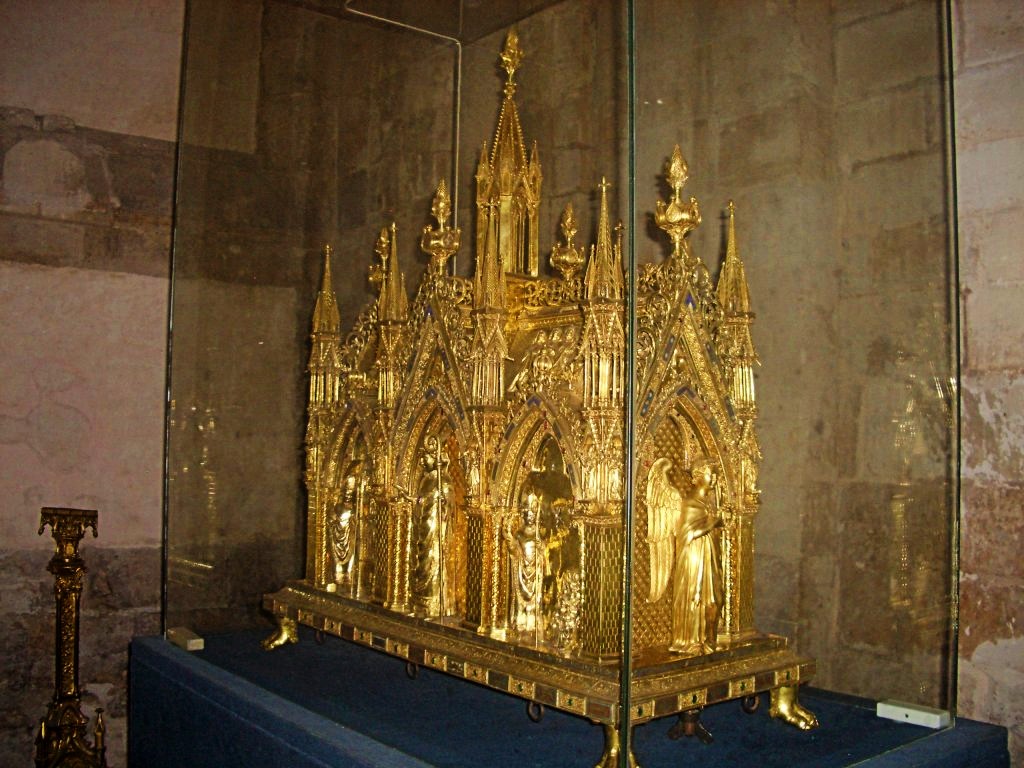
Bishop Landulphus is credited with having discovered, in answer to fervent prayer, the Relics of Taurinus and built a Basilica to house them. In 1035, the Abbey of Saint-Taurin was placed under the jurisdiction of the Abbey of Fécamp which also claimed the body of Taurinus. The Monks of Saint-Taurin claimed that they owned a part of the Saint’s Relics. In 1247, Gislebert de Saint-Martin, Abbot of Saint-Taurin, had a Reliquary built to house the remaining Relics. See below.
St Tiburtius (Died c286) Martyr, Layman, the son of Saint Chromatius the Prefect of Rome, also a Martyr. St Damasus (c305-384), the Pope, wrote about Tiburtius. He died by being beheaded in c286 in Rome, Italy and his remains are entombed in the Ad Duas Lauros Cemetery at the three mile marker on the Via Lavicana in Rome. The Roman Martyrology reads today: “At Rome, between the two laurels situate about three miles from the City, the birthday of St Tiburtius, Martyr, under the Judge Fabian, in the persecution of Diocletian. After he had walked barefoot on burning coals and confessed Christ with increased constancy. he was put to the sword.” His Life and Death: https://anastpaul.com/2023/08/11/saint-of-the-day-11-august-saint-tiburtius-died-c286-martyr/
St Cassian of Benevento St Chromatius the Prefect Martyr, the Father of St Tiburtius also celebrated today and also a Martyr St Digna of Todi
St Equitius (Died c570) Abbot,Miracle-worker, a renowned Preacher and Evangeliser spreading the tenets and glory of monasticism, Founder of a Monastery. The Roman Martyrology reads today: “In the Province of Valeria, St Equitius, Abbot, whose sanctity is attested to by the blessed Pope Gregory.” His Life of Service: https://anastpaul.com/2024/08/11/saint-of-the-day-11-august-st-equitius-died-c570-abbot/
St Lelia St Rusicola of Arles St Rufinus of Marsi Bl Theobald of England and Companion St Taurinus (c350-c412) Bishop of Evreux
DISCLAIMER: Please note: I cannot control the content of the Advertisements on this Site, or of pop-ups which may appear, The revenue from the Advertisements, however, does provide a little assistance in the support of the Site. I do apologise for any inappropriate content.
Thought for the Day – 10 August – Meditations with Antonio Cardinal Bacci (1881-1971)
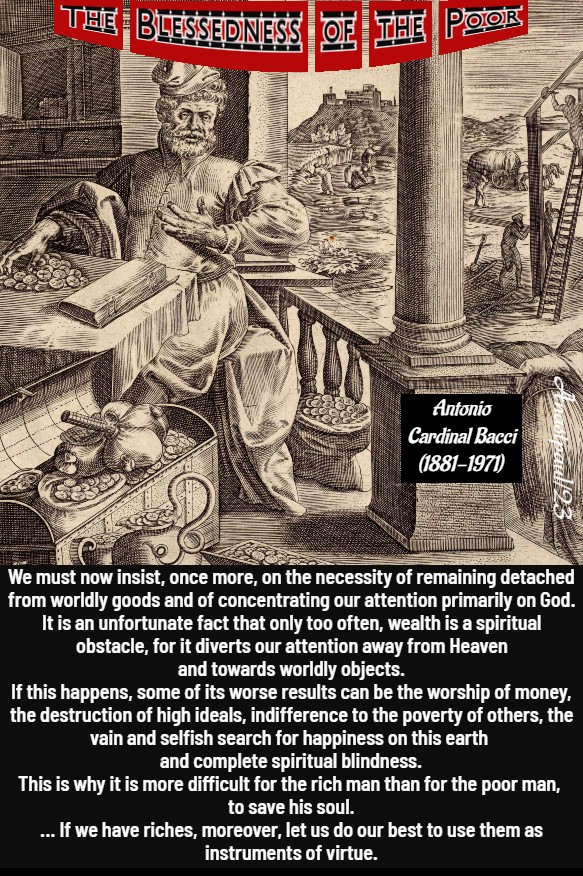
The Blessedness of the Poor
“We have established the principle that wealth is, in itself, good and is a gift from God but that, “it is good, insofar, as it leads us towards virtue and evil, insofar, as it leads us towards vice” (Summa Contra Gentiles III 134). We must now insist, once more, on the necessity of remaining detached from worldly goods and of concentrating our attention primarily on God. It is an unfortunate fact that only too often, wealth is a spiritual obstacle, for it diverts our attention away from Heaven and towards worldly objects. If this happens, some of its worse results can be the worship of money, the destruction of high ideals, indifference to the poverty of others, the vain and selfish search for happiness on this earth and complete spiritual blindness. This is why it is more difficult for the rich man than for the poor man, to save his soul.
“If thou wilt be perfect, go, sell what thou hast and give to the poor” (Mt 19:21). This is an evangelical counsel which we may have neither the courage, nor the vocation to pursue. At least, however, let us seek to purify ourselves of all attachments to wealth. If we have riches, moreover, let us do our best to use them as instruments of virtue.”
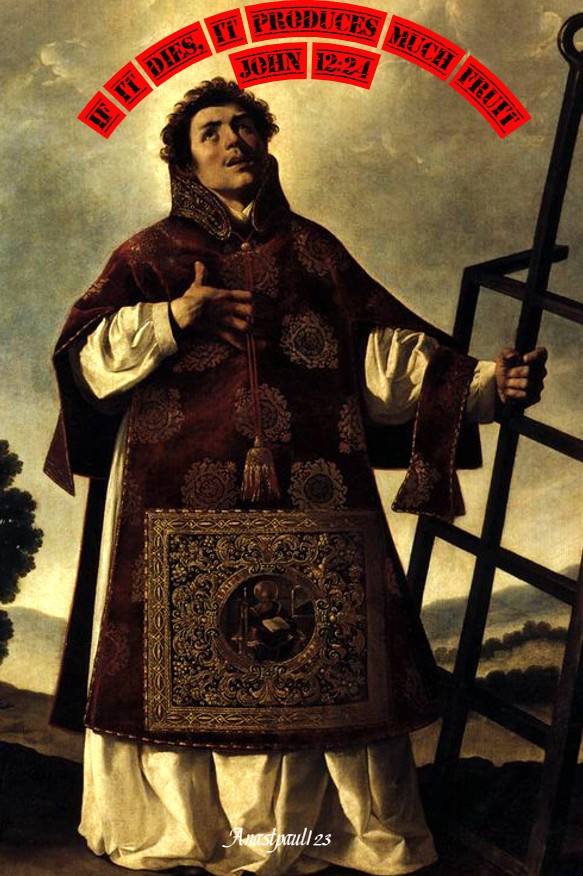
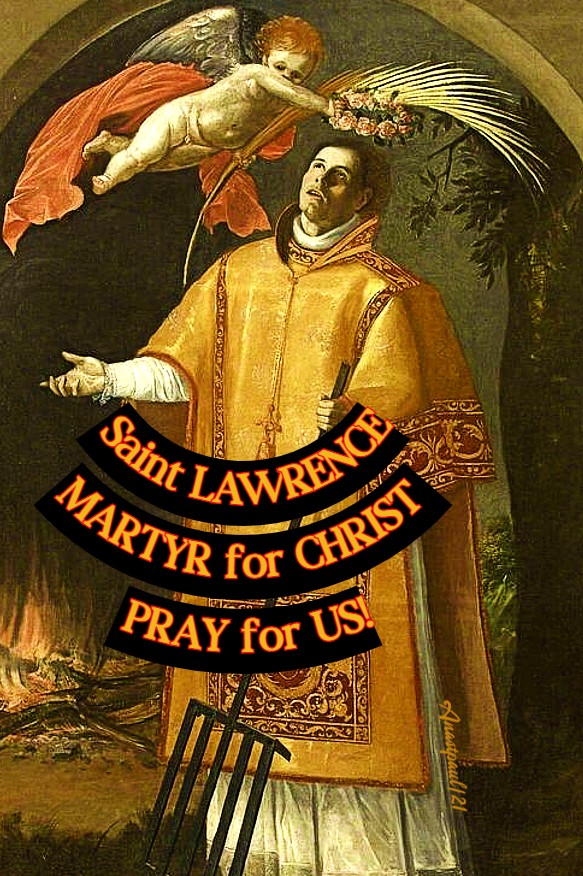
Quote/s of the Day – 10 August – “The Month of the Immaculate Heart of Mary” – St Lawrence (Died 258) Martyr, “Keeper of the Treasures of he Church” – 2 Corinthians 9:6-10; John 12:24-26 – Scripture search here: https://www.drbo.org/
“If it dies, it produces much fruit.”
John 12:24
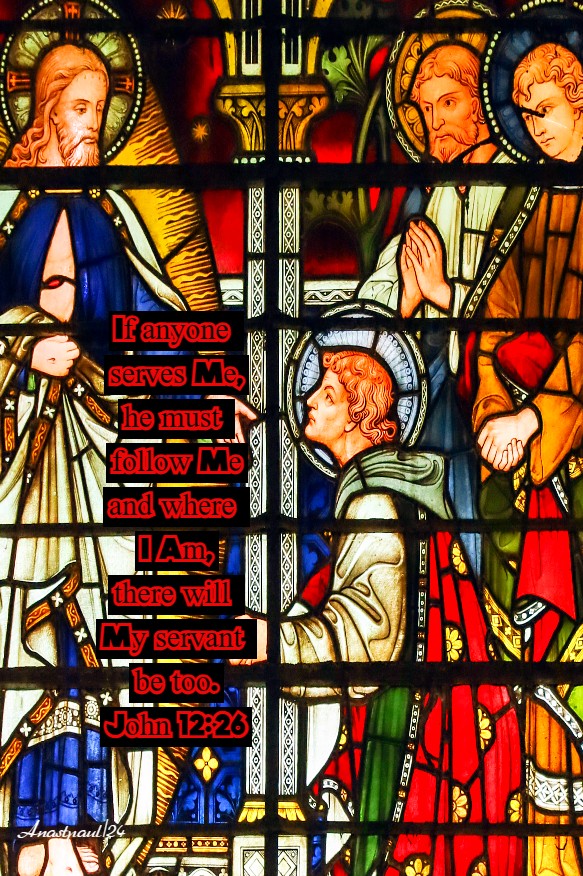
“If anyone serves Me, he must follow Me and where I Am, there will My servant be too.”
John 12:26
“The present is nothing. But eternity abides for those on whom all Truth, all Good, has shone, in One Entire and Perfect Light. ”
St Paulinus of Nola (c354-431)
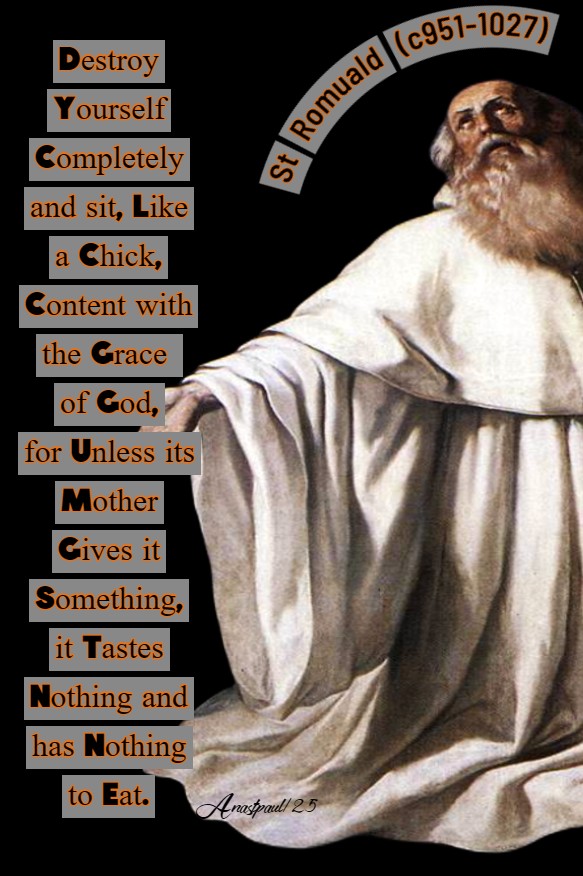
“Destroy yourself completely and sit, like a chick, content with the grace of God, for unless its mother gives it something, it tastes nothing and has nothing to eat.”
St Romuald (c951-1027)
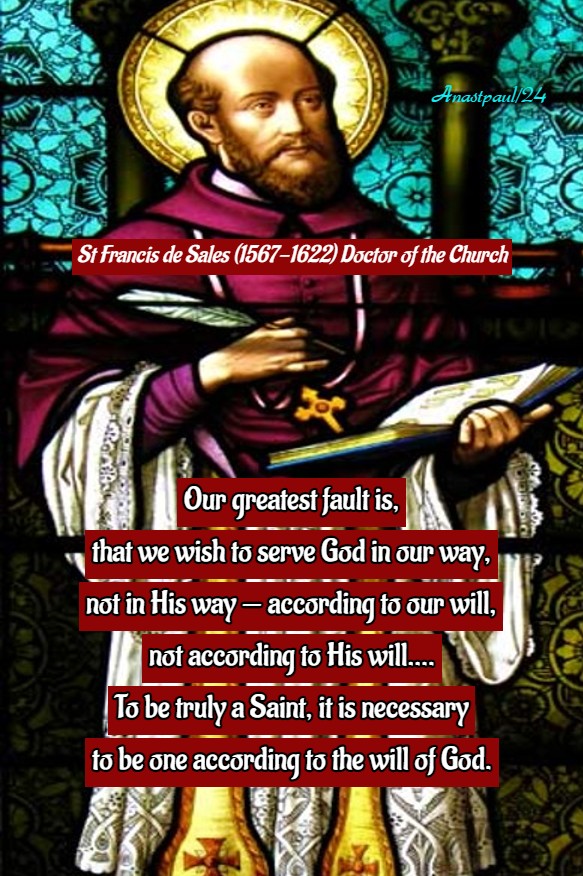
“Our greatest fault is, that we wish to serve God in our way, not in His way — according to our will, not according to His Will…. To be truly a Saint, it is necessary to be one according to the Will of God.”
St Francis de Sales (1567-1622) Doctor of the Church
One Minute Reflection – 10 August – “The Month of the Immaculate Heart of Mary” – St Lawrence (Died 258) Martyr, “Keeper of the Treasures of he Church” – 2 Corinthians 9:6-10 –John 12:24-26 – Scripture search here: https://www.drbo.org/
“If it dies, it produces much fruit” – John 12:24
REFLECTION – “The Kingdom of Heaven is like a mustard seed which a person took and sowed in a field. It is the smallest of all the seeds, yet, when full-grown it is the largest of plants. It becomes a large bush and the ‘birds of the sky come and dwell in its branches.’” (Mt 13:31). This small seed is for us the symbol of Jesus Christ, Who, sowed into the garden where He was buried, rose from it shortly after, through His Resurrection, as a big tree.
One could say that when He died, He was like a small seed – a small seed because of the humiliation of His flesh but a big tree because of the glorification of His Majesty. He was like a small seed when he appeared completely disfigured before our eyes but like a large tree when He rose again like “the most handsome of men” (Ps 44:3).
The branches of this mysterious tree, are the holy preachers of the Gospel, of whom one of the Psalms indicates the reach: “Their report goes forth throughout all the earth, their message, to the ends of the world “ (Ps 19:5; cf Rom 10:18). The birds rest on these branches while the souls of the just, who have been raised up above earth’s attractions, on the wings of holiness, find in the words of these preachers of the Gospel, the consolation they need in the sorrows and difficulties of this life.”– St Gregory the Great (540-604) Pope, Father and Doctor of the Church (Homilies on Matthew, Ch.13).
PRAYER – Grant us, we beseech Thee, Almighty God, to extinguish the flames of our sins, as Thou granted St Lawrence to overcome the fires of his tortures. Through Jesus Christ, Thy Son our Lord, Who lives and reigns with Thee, in the unity of the Holy Ghost, God, world without end. Amen (Collect).
Our Morning Offering – 10 August – St Lawrence (Died 258) “Keeper of the Treasures of he Church,” Martyr, Archdeacon.
Holy Deacon Martyr, St Lawrence! Unknown Author
Holy Deacon! by thy yearning For the Martyr’s glorious crown; By thy tortures, by thy burning, By thy death of bright renown; When the world and flesh and devil Tempt our souls to sin and evil, Dear Saint Lawrence, pray for us!
By the love that thou didst ever To thy Pontiff-Father bear, Pray that no base act may sever Us from Peter’s loving care! But when men would once more lead us Into bonds from which Christ freed us, Dear Saint Lawrence, pray for us!
By the Pontiff’s words of warning, Bidding all thy sorrows cease, Words foretelling bitter mourning Leading unto lasting peace! That to Jesus in our sadness We may look for help and gladness, Dear Saint Lawrence, pray for us!
By thy love, which knew no measure, For the needy and the old, Giving them the Church’s treasure Dearer they than gems and gold! Teaching us that alms well given Are but treasures stored in Heaven, Dear Saint Lawrence, pray for us!
By thy fervent love for Jesus, By thy strong and constant faith, Of our sinful burdens ease us! Help us at the hour of death! When the fears of death confound us When the cleansing fires surround us! Dear Saint Lawrence, pray for us!
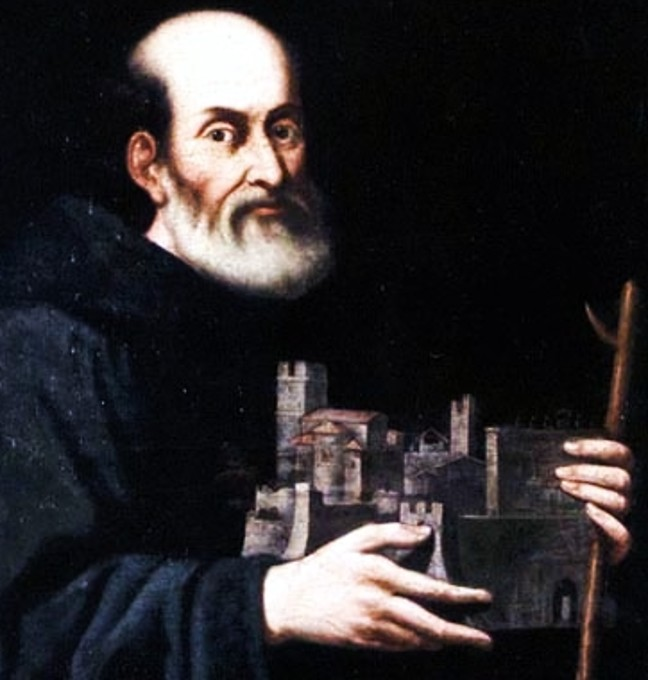
Saint of the Day – 10 August – Friar of the Order of Friars Minor in Grosseto, Italy, Mystic who had received the gift of Levitation whilst in prayer. He was greatly dedicated to the Rule of St Francis.
Unknown Franciscan Friar
Andrea da Grosseto was a Franciscan Friar who lived in the 15th Century. We do not know as a matter of certainty, whether he was a layman or a Priest, although the Seraphic Biographies of Illustrious Authors list him as a layman.
He entered the Order at a very young age and was placed under the protection of Blessed Tommaso da Scarlino. He was “a very spiritual man, fervent in both mental and vocal prayer, where he always remained motionless and with his eyes raised to Heaven. He was rising from the earth seen several times in prayer. He yearned only for heavenly things.”
He became a man who embodied religious observance and an example of perfect obedience.
He died, between 1497 and 1512, in the Convent of San Benedetto della Nave, located on the slopes of Mont Leoni and located in the Diocese of Grosseto.
In the Franciscan Martyrology, his Feastday is celebrated today.
St Deusdedit the Cobbler (6th Century)Confessor – Deusdedit was a poor layman shoemaker in 6th Century Rome, Italy. Patronages – shoemakers, of the poor. His name meaning, “dedicated to God.” The Roman Martyrology reads of him today: “At Rome, the holy Confessor Deusdedit, a working man, who gave to the poor, every Saturday, whatever he had earned during the week.” His Dedicated Life: https://anastpaul.com/2023/08/10/saint-of-the-day-10-august-st-deusdedit-the-cobbler-6th-century-confessor-layman/
St Gerontius St Paula of Carthage
Martyrs of Alexandria – 260+ Saints: A large number of Christians who were Martyred in Alexandria, Egypt between 260 and 267 in the persecutions of Decius and Valerian, whose names have not come down to us and who are commemorated together.
Martyrs of Rome – 165 Saints: Group of 165 Christians Martyred in the persecutions of Aurelian. 274 in Rome, Italy.
Thought for the Day – 9 August – Meditations with Antonio Cardinal Bacci (1881-1971)
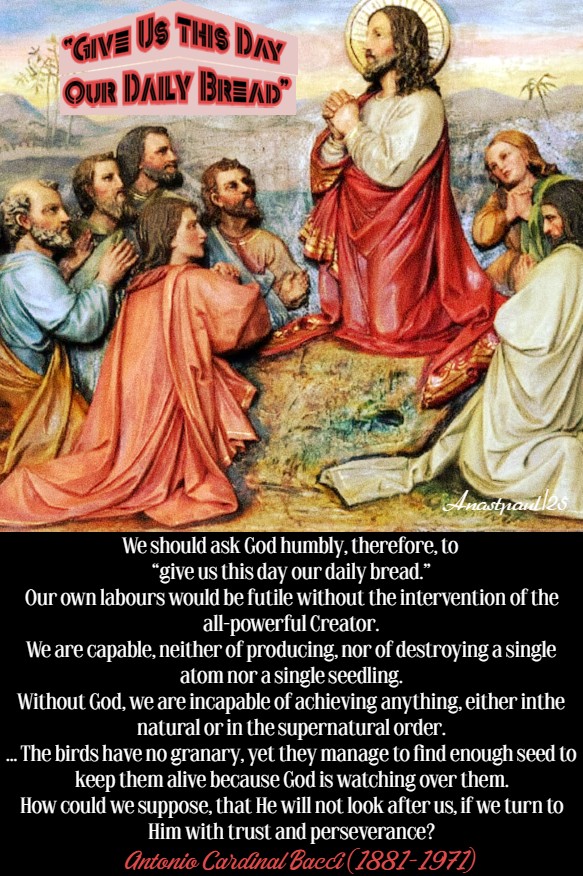
“Give Us this Day Our Daily Bread”
“In the second part of the Lord’s Prayer, we ask the universal Father, on behalf of ourselves and of our brethren, for all things necessary for soul and body. Since we have already paid homage to God, our Creator and our Redeemer and, have prayed for the triumph of His Kingdom and for the accomplishment of His Will in Heaven and on earth, Our Lord does not forbid us to think now of ourselves and to pray for our own needs. “Give us this day our daily bread,” we ask, intending to pray, both for our spiritual and material requirements.
We should not delude ourselves into imagining that it is we who produce the fruits of the earth. A grain of wheat dies beneath the soil but God has infused into it, a mysterious force as a result of which, in dying, it generates new life.
The moisture of the soil, the warmth of the air and the light of the sun combine to develop this mysterious life-force, which produces the green stalk and then the flaxen ear of corn which provides us with bread. It is God Who has given this vital power to this tiny seed, as well as to all the other seeds of the soil. It is He Who has endowed the soil with the nutritive elements from which the seeds draw life and it is He, Who sends the dew, the rain and the sunshine, which cause the flowers to blossom and the plants to bear fruit.
We should ask God humbly, therefore, to “give us this day our daily bread.” Our own labours would be futile without the intervention of the all-powerful Creator. We are capable, neither of producing, nor of destroying a single atom nor a single seedling. Without God, we are incapable of achieving anything, either inthe natural or in the supernatural order. Therefore, we must ask Him to provide us with what we need. He is supremely good and loves us very much. His Providence will not leave us in want, even if we are often obliged to work with all our energy, in co-operation with Him to procure the necessaries of life. The birds have no granary, yet they manage to find enough seed to keep them alive because God is watching over them. How could we suppose, that He will not look after us, if we turn to Him with trust and perseverance?”
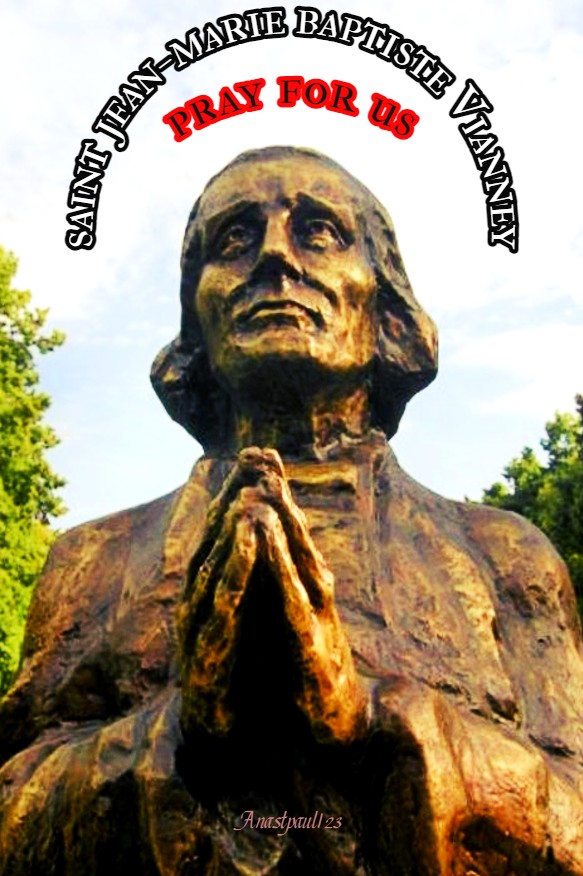
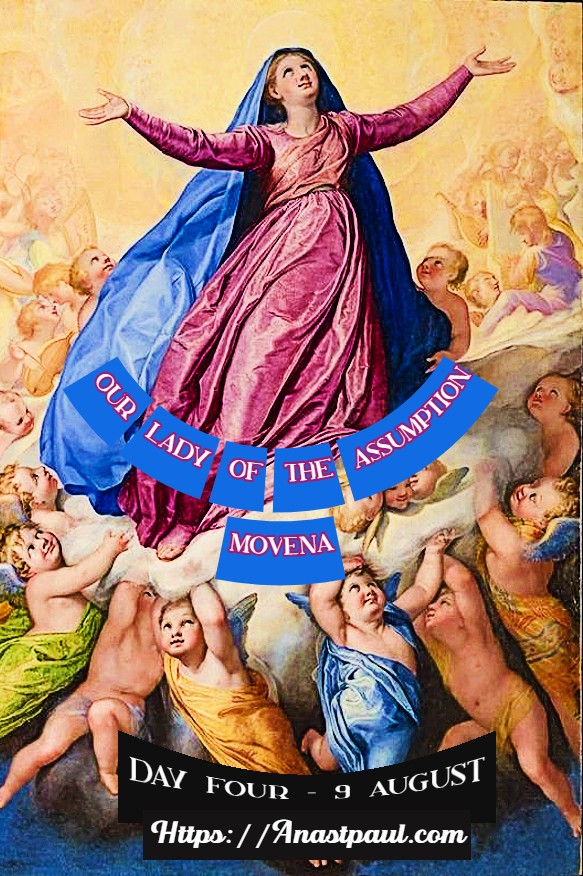
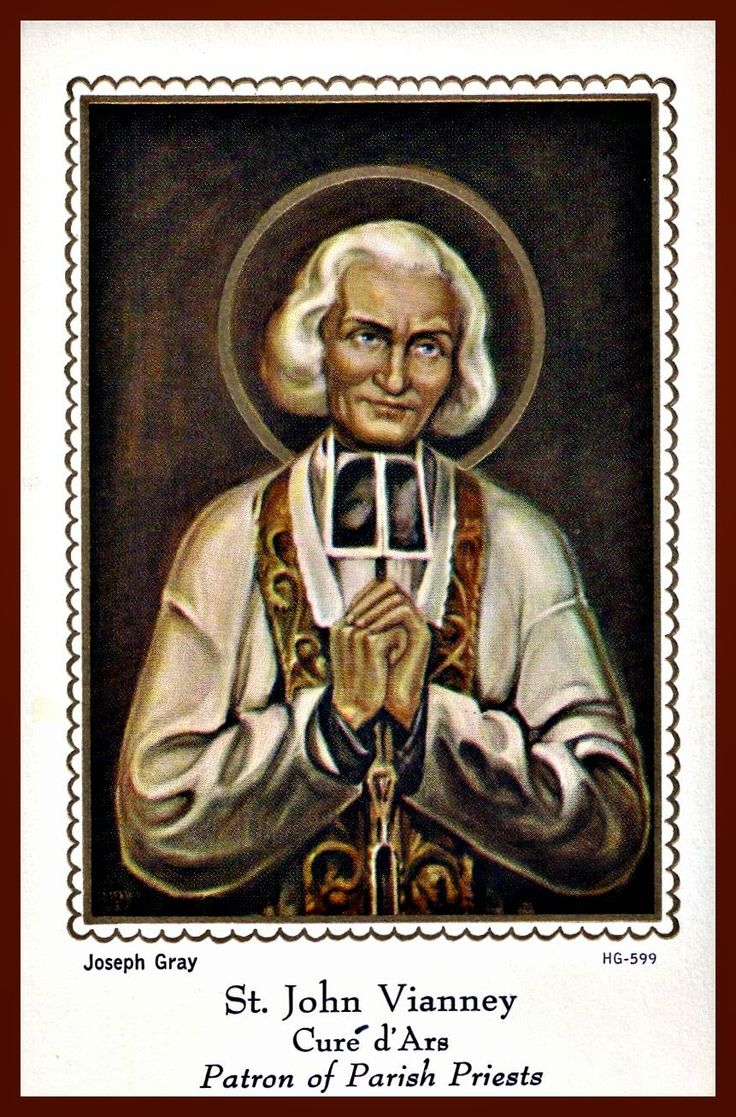
One Minute Reflection – 9 August – “The Month of the Immaculate Heart of Mary” – St Jean-Marie-Baptiste Vianney (1786-1859) Confessor – Sirach 31:8-11 – Luke 12:35 – 40 – Scripture search here: https://www.drbo.org/
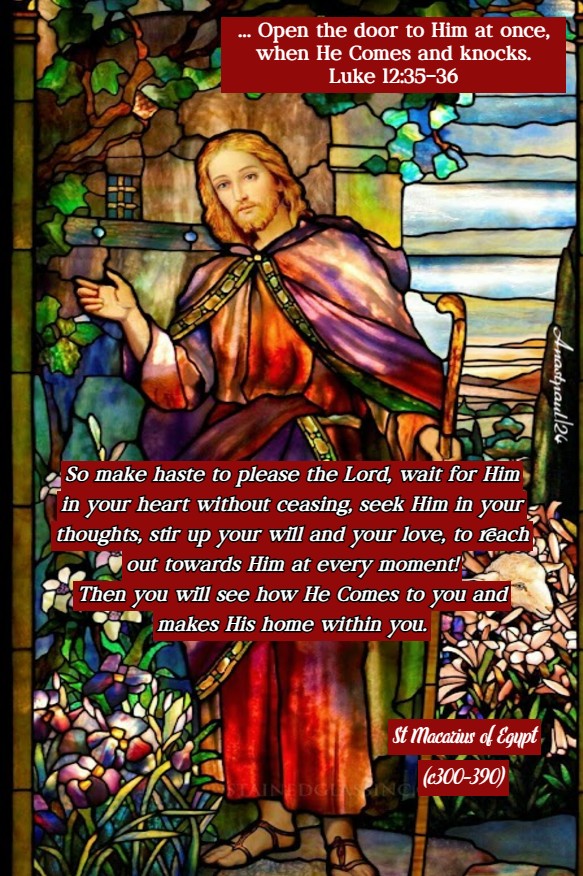
“Stay dressed for action and keep your lamps burning and be like men who are waiting for their master to come home from the wedding feast, so that they may open the door to Him at once, when He Comes and knocks.” – Luke 12:35-36
REFLECTION – “God is the Supreme Being, therefore, direct the thoughts of your mind to Him and do not think of anything else, except to watch for His Coming. Let the soul gather together its thoughts, dispersed by sin, as though it were gathering together children romping about! Let it take them back to the house of its body and there, wait for the Lord, at all times with fasting and love, until He Comes and gathers them up in truth…
If our hearts are not swollen with pride and, if we do not send our thoughts out to feed in the pastures on the mad weeds of sin and if, to the contrary, we lift up our minds and lead our thoughts into the Lord’s Presence with fervent wills, then, in His good Will, the Lord shall certainly Come to us and truly unite us to Himself …
So make haste to please the Lord, wait for Him in your heart without ceasing, seek Him in your thoughts, stir up your will and your love, to reach out towards Him at every moment! Then you will see how He Comes to you and makes His home within you.” – St Macarius of Egypt (c300-390) (Attrib) Monk, Father (Sermon 31).
PRAYER – Almighty and merciful God, Who made St John-Marie glorious by priestly zeal and untiring fervoru in prayer and penance, grantP we beseech Thee that by his example and intercession, we may have strength to win for Christ, the souls of our brethren and, with them, attain everlasting glory.Through the same Jesus Christ, Thy Son our Lord, Who lives and reigns with Thee, in the unity of the Holy Ghost, God, world without end. Amen (Collect).
Our Morning Offering – 9 August – “The Month of the Immaculate Heart of Mary” – St Jean-Marie-Baptiste Vianney (1786-1859) Confessor
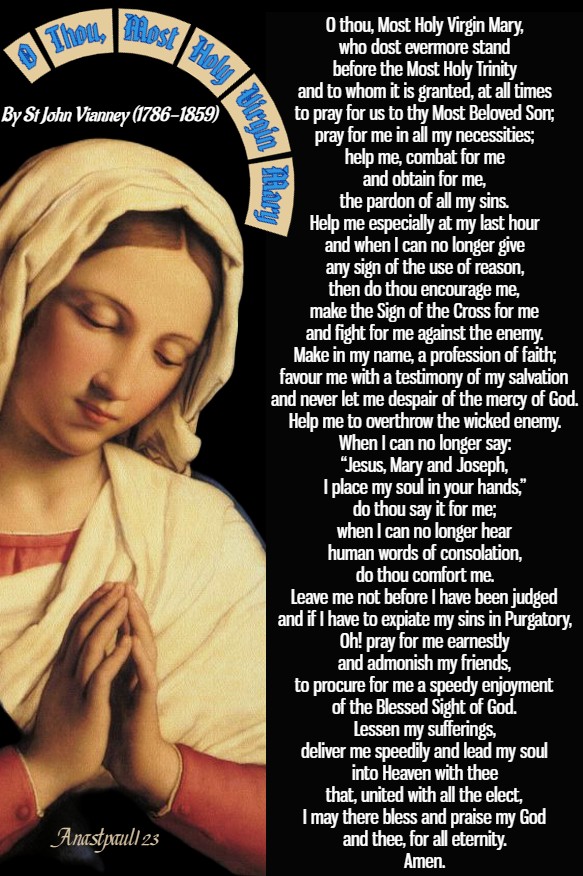
O Thou, Most Holy Virgin Mary (Pray for Me in All My Necessities) By St John Vianney (1786-1859)
O thou, Most Holy Virgin Mary, who dost evermore stand before the Most Holy Trinity and to whom it is granted, at all times to pray for us to thy Most Beloved Son; pray for me in all my necessities; help me, combat for me and obtain for me, the pardon of all my sins. Help me especially at my last hour and when I can no longer give any sign of the use of reason, then do thou encourage me, make the Sign of the Cross for me and fight for me against the enemy. Make in my name, a profession of faith; favour me with a testimony of my salvation and never let me despair of the mercy of God. Help me to overthrow the wicked enemy. When I can no longer say: “Jesus, Mary and Joseph, I place my soul in Thy hands,” do thou say it for me; when I can no longer hear human words of consolation, do thou comfort me. Leave me not before I have been judged and if I have to expiate my sins in Purgatory, Oh! pray for me earnestly and admonish my friends, to procure for me a speedy enjoyment of the Blessed Sight of God. Lessen my sufferings, deliver me speedily and lead my soul into Heaven with thee that, united with all the elect, I may there bless and praise my God and thee, for all eternity. Amen.
Saint of the Day – 9 August – Saint Bandaridus (Died c545) Bishop of Soissons in France. A zealous shepherd of the people of God and Defender of the Church and of obedience to the Gospel, Miracle-worker. Patronage of – Saint-Bandry. Also known as – Banderik, Bandery, Bandry.
On the death of Bishop Loup de Soissons in around 535-540, acceded to the Episcopate records of Soissons, Bandaridus was elected and assumed the Office as the Bishop of the See of S oissons.
His Episcopate began under happy auspices but he had to face a revolt, perhaps due to his dogmatic rigidity om terms of obedience to the Word of God and of His Holy Church. Angry, Clotaire I chased him from his Kingdom and Bandaridus took refuge in England in a Monastery there.
In c543, Bandaridus returned to Soissons which had been decimated by the Plague but our Saint arrived in time to save his See from total destruction by this scourge:
“The inhabitants of Soissons came with great eagerness to meet him … to the Village of Arthèse which has since been called Saint-Bandry. The Prelate began to give proof of his credit with God by obtaining that a spring of water should spring forth in an arid place. His prayers obtained the cessation of the Plague. Clotaire himself recognised Bandry’s credit with God; for the holy Bishop delivered one of his daughters from the devil. The King offered him in gratitude the land of Celle-sur-Aisne and other goods which Bandry applied to the endowment of the Abbey of Saint-Crépin-le-Grand.”
Bandaridus, thanks to this endowment, was able to grace the Monastery of Saint-Crépin with the construction of am Abbey Church.
In c1044, during the reconstruction of the Church of Saint-Crépin-le-Grand, the Abbot tsolemnly transferred St Bandaridus’ remains to his restored Church.
St Nathy St Numidicus of Carthage St Phelim St Rusticus of Sirmium St Rusticus of Verona St Secundian of Civitavecchia St Stephen of Burgos St Verian of Civitavecchia
Martyrs of Civitavecchia: Three Christians Martyred together in the persecutions of Decius. We know little more than the names – Marcellian, Secundian and Verian. 250 near Civitavecchia, Italy.
Martyrs of Constantinople: 10 Saints: A group of ten Christians who were arrested, tortured and executed for defending an icon of Christ in defiance of orders from Emperor Leo the Isaurian. We know the names of three, but nothing else about them – Julian, Marcian and Mary. They were beheaded in Constantinople.
Thought for the Day – 8 August – Meditations with Antonio Cardinal Bacci (1881-1971)
The Search for God
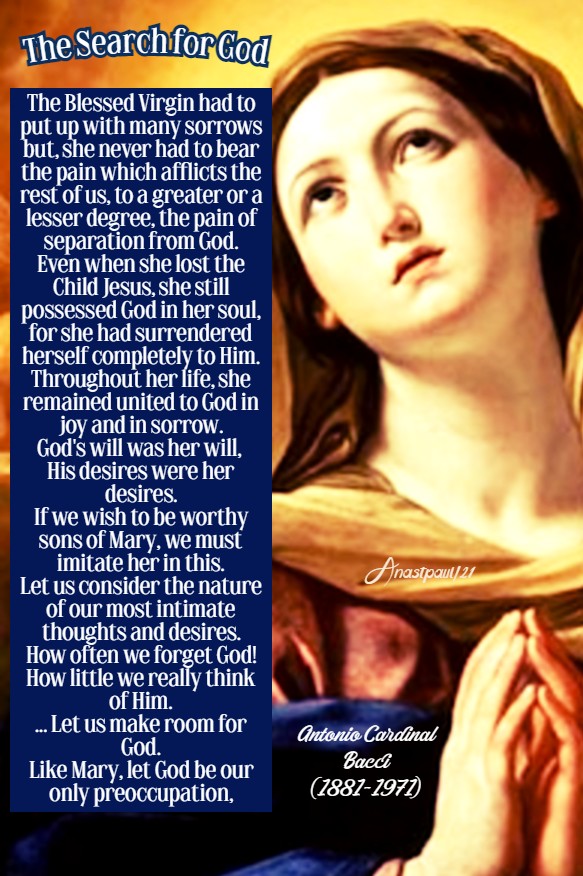
“All men are looking for God, whether they are aware of it or not. They are discontented and cannot understand why. They do not realise, that the real source of their discontent, is that they have not found God and God alone can make men happy. The Blessed Virgin had to put up with many sorrows but, she never had to bear the pain which afflicts the rest of us, to a greater or a lesser degree, the pain of separation from God. Even when she lost the Child Jesus, she still possessed God in her soul, for she had surrendered herself completely to Him. Throughout her life, she remained united to God in joy and in sorrow. God’s will was her will, His desires were her desires.
If we wish to be worthy sons of Mary, we must imitate her in this. Let us consider the nature of our most intimate thoughts and desires. How often we forget God! How little we really think of Him. We are absorbed in so many other affairs, that we forget Him, Who should be the centre of our plans. We are too fond of ourselves and of our own comfort and interests. As a result, we forget Him, to Whom we owe everything and Who should be the final goal of our lives. Our hearts are very small. If we fill them with worldly desires, there is no room for God. But God should be the absolute master of our souls.
Let us empty ourselves of useless worldly preoccupations and make room for spiritual aims. Let us make room for God. Like Mary, let God be our only preoccupation, If we look for Him in everything, we shall find Him.”
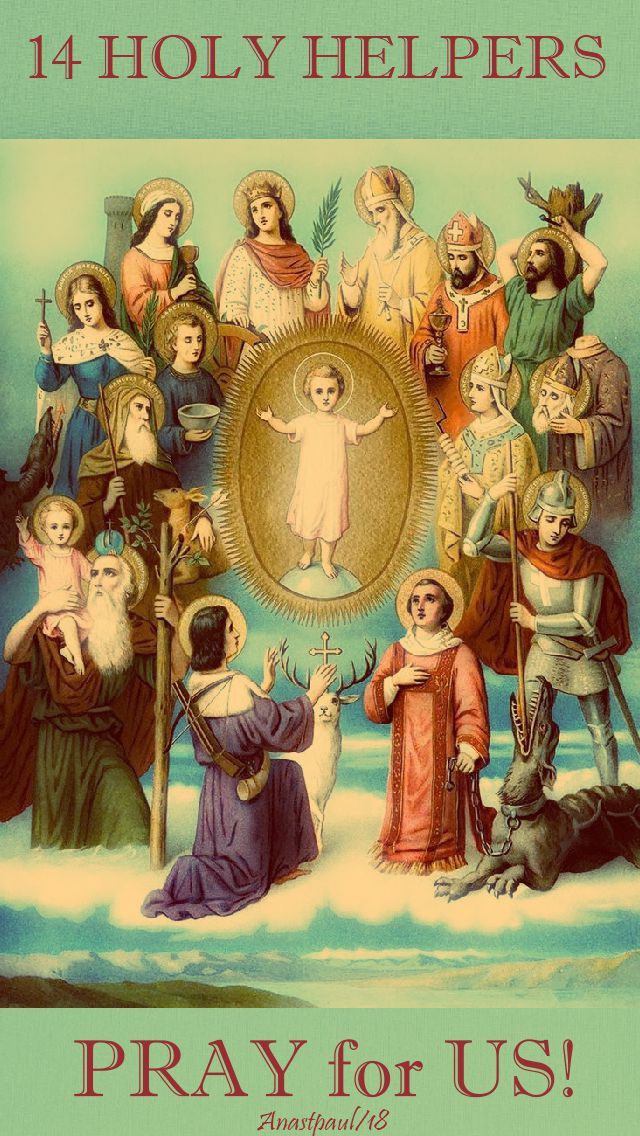
Quote/s of the Day – 8 August – The Fourteen Holy Helpers – 1 Thessalonians 2:13-16 – Mark 16:15-18 – Scripture search here: https://www.drbo.org/
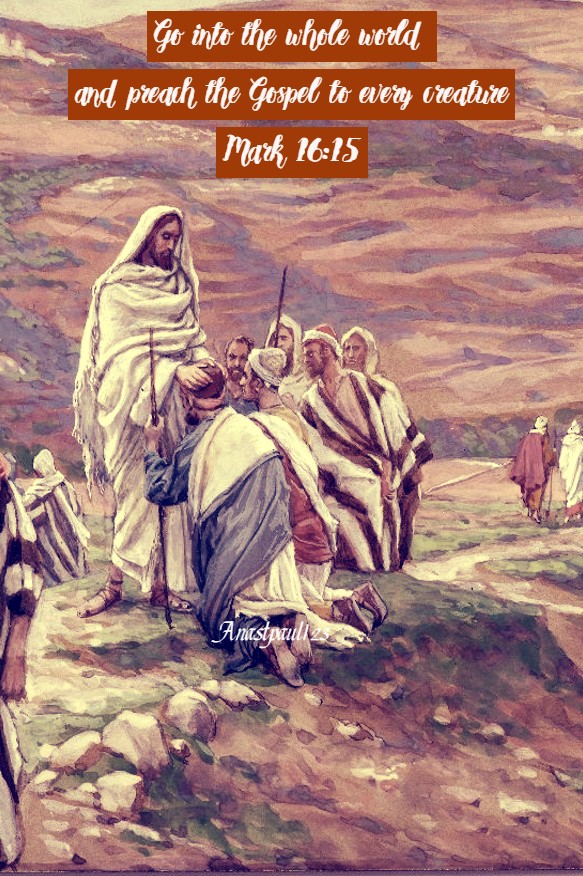
“Go into the whole world and preach the Gospel to every creature.”
Mark 16:15
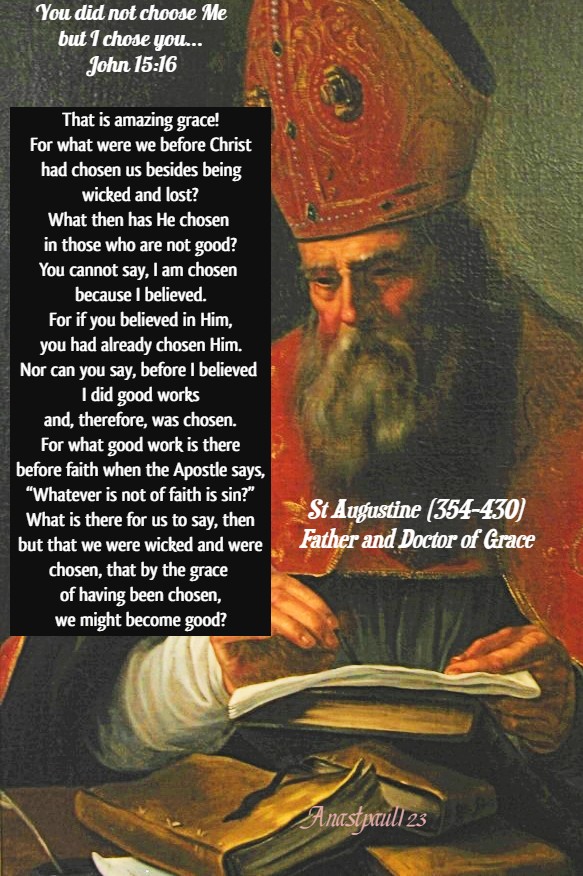
“You did not choose Me but I chose you…”
John 15:16
“That is amazing grace! For what were we before Christ had chosen us besides being wicked and lost? What then has He chosen in those who are not good? You cannot say, I am chosen because I believed. For if you believed in Him, you had already chosen Him. Nor can you say, before I believed I did good works and, therefore, was chosen. For what good work is there before faith when the Apostle says, “Whatever is not of faith is sin?” What is there for us to say, then but that we were wicked and were chosen, that by the grace of having been chosen, we might become good?”
St Augustine (354-430) Father and Doctor of Grace
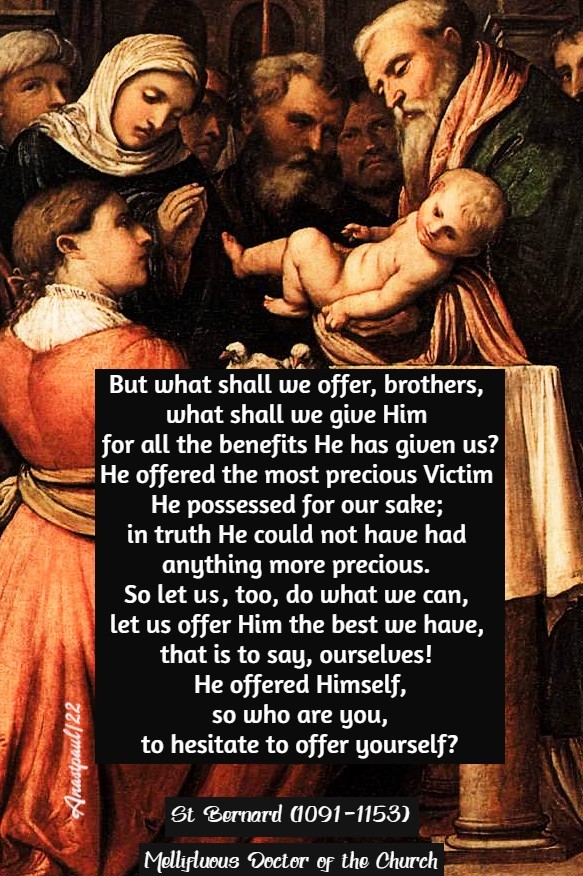
“But what shall we offer, brothers, what shall we give Him for all the benefits He has given us? He offered the most precious Victim He possessed for our sake; in truth, He could not have had anything more precious. So let us, too, do what we can, let us offer Him the best we have, that is to say, ourselves! He offered Himself, so who are you, to hesitate to offer yourself?”
St Bernard (1090-1153) Father & Mellifluous Doctor of the Church
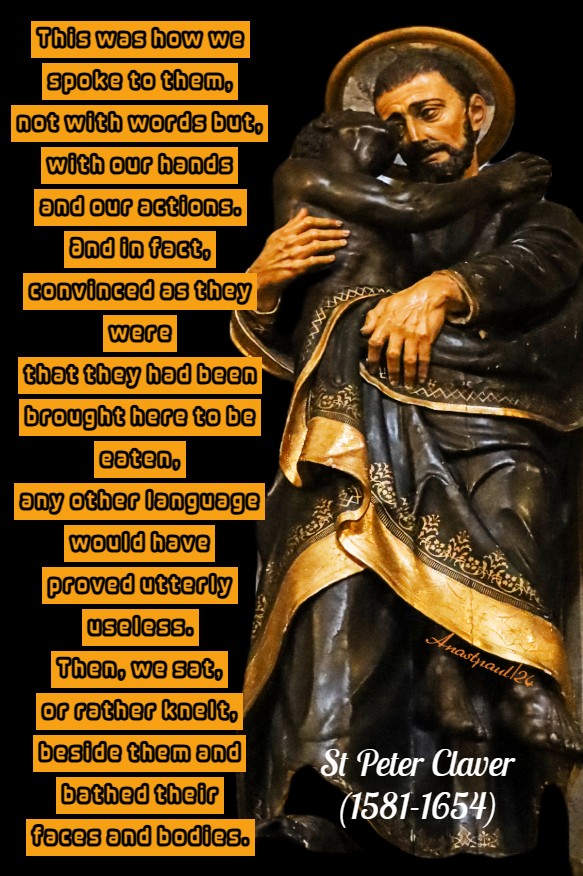
“This was how we spoke to them, not with words but, with our hands and our actions. And in fact, convinced as they were that they had been brought here to be eaten, any other language would have proved utterly useless. Then, we sat, or rather knelt, beside them and bathed their faces and bodies.”
St Peter Claver (1581-1654)
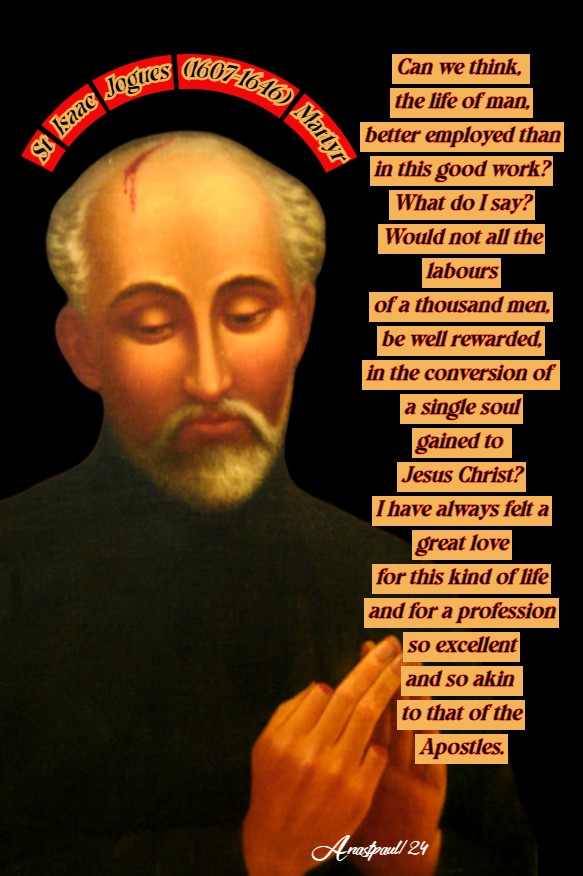
“Can we think, the life of man, better employed than in this good work? What do I say? Would not all the labours of a thousand men, be well rewarded, in the conversion of a single soul gained to Jesus Christ? I have always felt a great love for this kind of life and for a profession so excellent and so akin to that of the Apostles.”
One Minute Reflection – 8 August – “The Month of the Immaculate Heart of Mary” – The Fourteen Holy Helpers – 1 Thessalonians 2:13-16 – Mark 16:15-18 – Scripture search here: https://www.drbo.org/
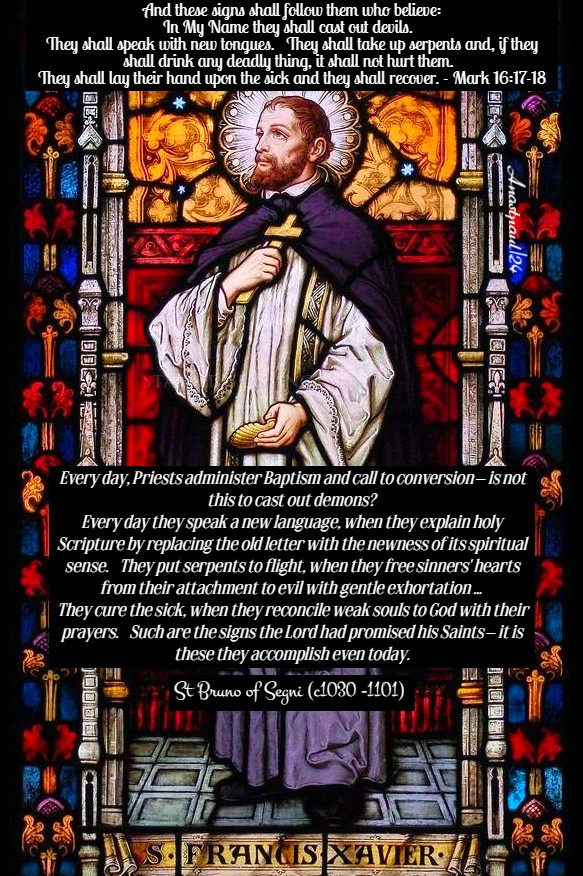
“And these signs shall follow them who believe: In My Name they shall cast out devils. They shall speak with new tongues. They shall take up serpents and, if they shall drink any deadly thing, it shall not hurt them. They shall lay their hand upon the sick and they shall recover.” – Mark 16:17-18
REFLECTION – “The Lord said to the Eleven: “And these signs shall follow them who believe: In My Name they shall cast out devils. They shall speak with new tongues. They shall take up serpents and, if they shall drink any deadly thing, it shall not hurt them. They shall lay their hand upon the sick and they shall recover.” In the primitive Church all the signs the Lord lists here, were fulfilled to the letter, not only by the Apostles but, many other of the Saints. The Gentiles would not have abandoned the worship of idols if the Gospel preaching had not been confirmed with so many signs and wonders. Indeed, did not the disciples preach “a Crucified Christ, a stumbling block to Jews and foolishness to Gentiles,” according to Saint Paul’s saying? (1 Cor 1:23) …
As for us, from now on, signs and wonders are no longer needed, it is enough for us to read or hear an account of those which have happened. For we believe in the Gospel, we believe in the Scriptures which relate them. And yet, signs still take place daily and, if we would mark them well, we would acknowledge that they have far more worth than the concrete miracles of former times.
Everyday Priests administer Baptism and call to conversion – is not this to cast out demons? Everyday they speak a new language when they explain holy Scripture by replacing the old letter with the newness of its spiritual sense. They put serpents to flight, when they free sinners’ hearts from their attachment to evil with gentle exhortation … They cure the sick, when they reconcile weak souls to God with their prayers. Such are the signs the Lord had promised his Saints – it is these they accomplish even today!” – St Bruno of Segni O.Cart. (c1030 -1101) Cistercian Bishop (Commentary on Saint Mark’s Gospel).
PRAYER – PRAYER – O God, Who gladden us with the annual festival of Thy 14 holy Saints, mercifully grant, that we, who celebrate the anniversary of their death, may also strive to equal the courage of their Martyrdom. Through Jesus Christ, Thy Son our Lord, Who lives and reigns with Thee, in the unity of the Holy Ghost, God, world without end. Amen (Collect).
Our Morning Offering – 8 August – “The Month of the Immaculate Heart of Mary” – The Feast of the 14 Holy Helpers
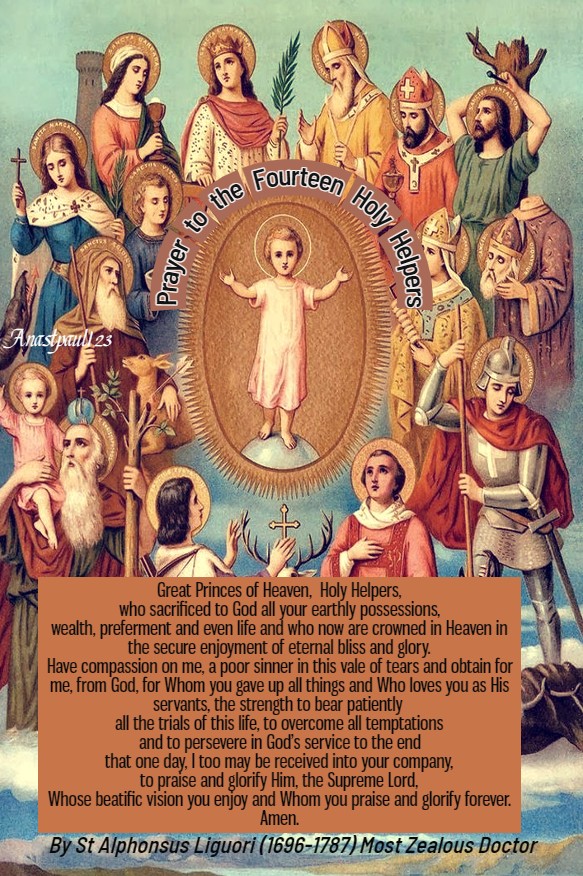
Prayer to the Fourteen Holy Helpers By St Alphonsus Liguori (1696-1787) Doctor of the Church
Great princes of Heaven, Holy Helpers, who sacrificed to God all your earthly possessions, wealth, preferment and even life and who now are crowned in Heaven in the secure enjoyment of eternal bliss and glory; have compassion on me, a poor sinner in this vale of tears and obtain for me from God, for Whom you gave up all things and Who loves you as His servants, the strength to bear patiently, all the trials of this life, to overcome all temptations and to persevere in God’s service to the end, that one day I too may be received into your company, to praise and glorify Him, the supreme Lord, Whose Beatific Vision you enjoy and Whom you praise and glorify forever. Amen
Saint of the Day – 8 August – St Aemilian (Died c818) Confessor, Bishop of Cyzicus in Greece, Defender of Holy Images. Died in an unknown region when exiled from his See for his stand against Emperor Leo the Armenian. Also known as – Aemilianus, Emilian, Emiliano, Name means: the zealous one / from the family of the Aemilians (Latin).
The Roman Martyrology reads today: “St Aemilitian, Bishop, who ended his life in exile after having suffered much from the Emperor Leo, for the veneration of Holy Images.”
Aemilian was Bishop of Cycicus/ Kyzikos —the present-day ruins in Düzler near Erdek in Turkey.
During the reign of Emperor Leo V the Armenian, he vigorously defended the veneration of Holy Images.
St Gedeon of Besancon St Hormisdas of Persia St Largus St Leobald of Fleury St Leonidas of Constantinople St Marinus of Anzarba St Mummolus of Fleury St Myron the Wonder Worker St Rathard of Diessen St Severus of Vienne St Sigrada St Smaragdus St Ternatius of Besançon St Ultan of Crayke
Martyrs of Albano – 4 Saints: Four Christians who were Martyred together, and about we today know little more than their names – Carpóforo, Secondo, Severiano and Vittorino. They were martyred in Albano, Italy – their remains are interred in the San Senator cemetery, on the Appian Way, 15 miles from Rome, Italy.
Martyrs of Rome – 5 Saints: Five Christians Martyred together; we know nothing else about them but the names – Ciriaco, Crescenziano, Giuliana, Memmia and Smaragdus. They were martyred at the 7 mile marker, on the Via Ostia, Rome, Italy.
Thought for the Day – 7 August – Meditations with Antonio Cardinal Bacci (1881-1971)
Mary’s Patience
“Holy Mary, Mother of Sorrows, obtain for me the spirit of loving patience which made you the Queen of Martyrs. Help me to carry, with resignation, the cross which God has given me. Help me to walk like you in the footsteps of Jesus, until I reach my Calvary, so that I may join Him and you, in the glory of Heaven. Amen,”




























 AnaStpaul
You must be logged in to post a comment.