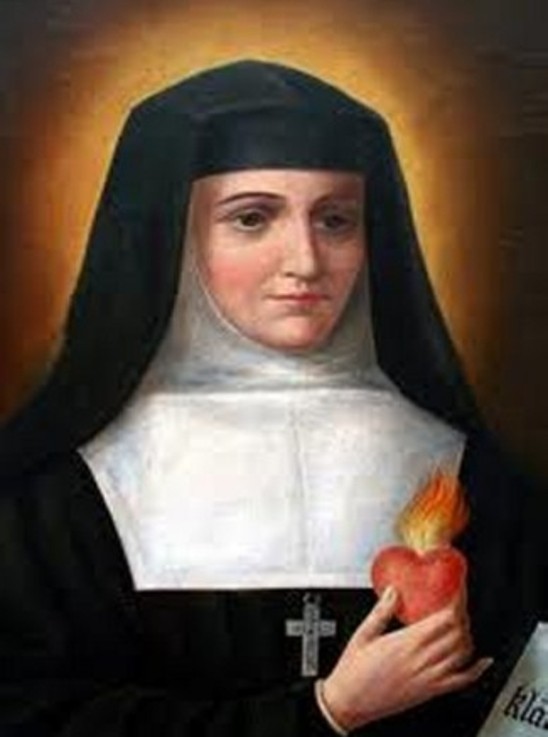
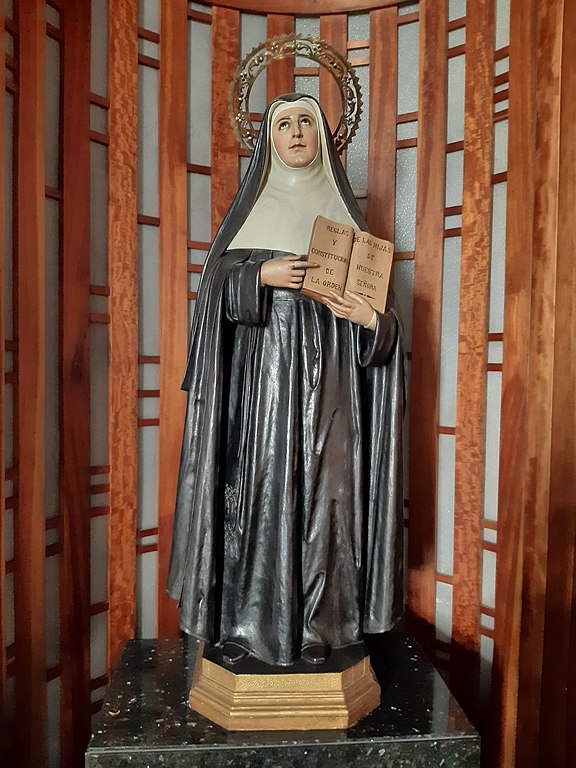
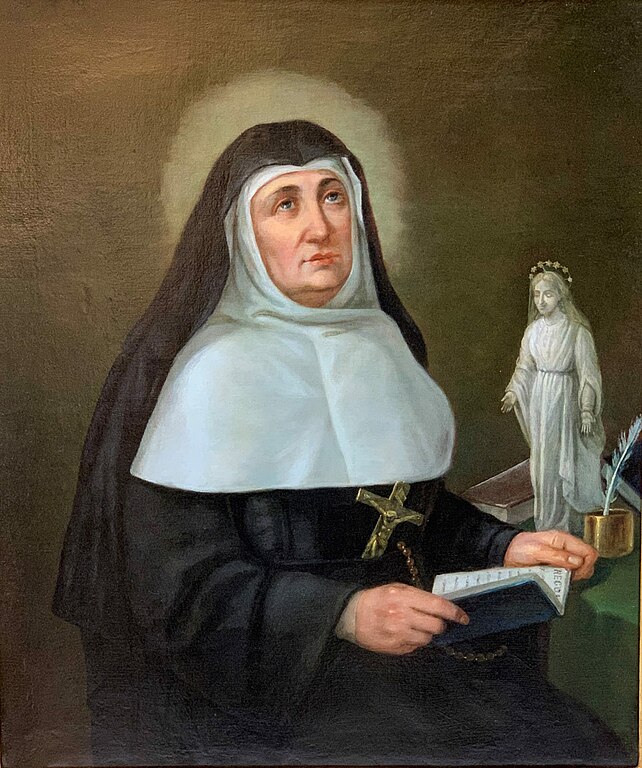
Saint of the Day – 2 February – St Jeanne de Lestonnac ODN (1556-1640) Widow, Mother, Founder of the The Sisters of the Company of Mary, Our Lady ODN (Latin: Ordinis Dominae Nostrae). Born on 27 December 1556 at Bordeaux, France and died on 2 February 1640 of natural causes. Patronages – of widows, abuse victims. Also known as – Jane de Lestonnac, Joan de Lestonnac, Joanne. Additional Memorial – 15 May on some Calendars.
Jeanne was born in Bordeaux in 1556 to Richard de Lestonnac, a member of the Parlement of Bordeaux and Jeanne Eyquem, the sister of the noted philosopher, Michel Eyquem de Montaigne. She grew up in a time where the conflict between the Protestants and the defenders of the Catholic Faith was at its height. This was evident in her own family. While her mother became an enthusiastic Calvinist and tried to persuade her to convert, her father and her uncle Montaigne, adhered to the Catholic Faith and were her support in withstanding her own mother’s influence. Jeanner remained a devoted Catholic.
At the age of 17 she married Gaston de Montferrant, with whom she had seven children, three of whom died in infancy. She was married for 24 years when her husband died. This marked the beginning of a very painful period in her life, with the further loss, within seven months, of her father, uncle and eldest son.
Copy of a Portrait of an 18-year old woman, attributed to Pieter Pourbus, 1574, in the Montreal Museum of Fine Arts, possibly St Jeanne de Lestonnac (1556-1640).
Following her husband’s death, Jeanne, at the age of 46 and with her children now grown, turned to a contemplative life and entered the Cistercian Monastery in Toulouse, where she was given the religious name of “Jeanne of Saint Bernard.” She found great peace and satisfaction in the monastic life but, after six months, she became very ill and had to leave the Monastery. She then went to live on her estate La Mothe Lusié to recover her health and where she adopted the lifestyle of a secular Sister, performing many acts of charity, including food and alms distribution and Jeanne regularly met with young women of her social class, to pray and discuss religious questions. She sought for models of Catholic women to be her guides and cultivated an interest in the lives of St Scholastica, St Clare of Assisi, St Catherine of Siena and St Teresa of Avila.
A few years later, in 1605, an epidemic of the Plague erupted in Bordeaux. At risk to her own life, Jeanne returned to her native City to help care for the sick and suffering in the slums and poorest regions of Bordeaux.
Jeanne’s brother, a Jesuit attached to the college in Bordeaux, arranged a meeting between his sister and two Jesuit Priests – Jean de Bordes and François de Raymond. The Jesuits asked her to serve as founder of a new teaching order for young women. They encouraged her to establish for girls, in terms of formal education, what they were doing for boys. The three decided upon a cloistered community to follow the Benedictine Rule, modified to allow Sisters to teach. The group gained the approval of Pope Paul V in 1607. The community took the name of the Compagnie de Notre-Dame.
An old priory was purchased near the Château Trompette but moved in September 1610, to a larger old Monastery on Rue du Hâ. They were well-received and financially supported by the City’s elite. The first five members of the new Order took their religious vows on 10 December 1610. The community established its first school for girls in Bordeaux. Foundations proceeded in Beziers, Périgueux and Toulouse through Jeanne’s personal connections, as well as her connections with the Jesuits and Bordelaise political elite. By the time she died in 1640, 30 Houses existed in France that is roughly one new foundation per year for 30 years.
Two of her daughters and at least one granddaughter had now joined the Order. Revised Rules and Constitutions for the congregation were drawn up in 1638. Joeanne was now over 80 and her health was beginning to fail. She spent her last years in seclusion as she prepared for death. But in her last years she was highly honoured by her Order. She died peacefully on 2 February 1640 in Bordeaux, aged 84, just after the sisters had renewed their vows on the Feast of the Purification of Our Lady. Her body is said to have been as healthy and emitted a sweet smell for several days afterwards. She was buried in the Cemetery of the Convent in Rue du Ha.
St Jeanne was Beatified on 23 December 1900 by Pope Leo XIII and was CanoniSed on 15 May 1949 by Pope Pius XII. As of 2016, her religious order has over 1,450 Sisters found in 27 Countries throughout Europe, Africa, North America and South America.
Our Lady of the Candles – Nuestra Señora de la Purificación y la Candelaria, is a Marian title and image venerated by Filipino Catholics. The image, which is enshrined on the balcony of Jaro Cathedral, is known as the Patroness of Jaro District of Iloilo City and the whole of the Western Visayas. The Feast Day of Our Lady of the Candles is on Candlemas (2 February) and is celebrated in Iloilo City with a Solemn Pontifical Mass presided by the Archbishop of Jaro.
St Adalbald of Ostrevant St Adeloga of Kitzingen St Agathodoros of Tyana St Apronian the Executioner Bl Bernard of Corbara St Bruno of Ebsdorf St Candidus the Martyr St Columbanus of Ghent St Cornelius the Centurion St Felician the Martyr St Feock St Firmus of Rome St Flosculus of Orléans St Fortunatus the Martyr St Hilarus the Martyr St Jeanne de Lestonnac (1556-1640) Widow, Mother, Founder
St Lawrence of Canterbury (Died 2 February 619) The Second Archbishop of Canterbury, the successor of St Augustine of Canterbury from 604 until his death in 619, but he was Consecrated as Archbishop by his predecessor, St Augustine, during Augustine’s lifetime, to ensure continuity in the office, Benedictine Monk, Missionary. He was a member of the Gregorian mission sent from Italy to England to Christianise the Anglo-Saxons. About St Lawrence: https://anastpaul.com/2022/02/02/saint-of-the-day-2-february-saint-lawrence-of-canterbury-died-619/
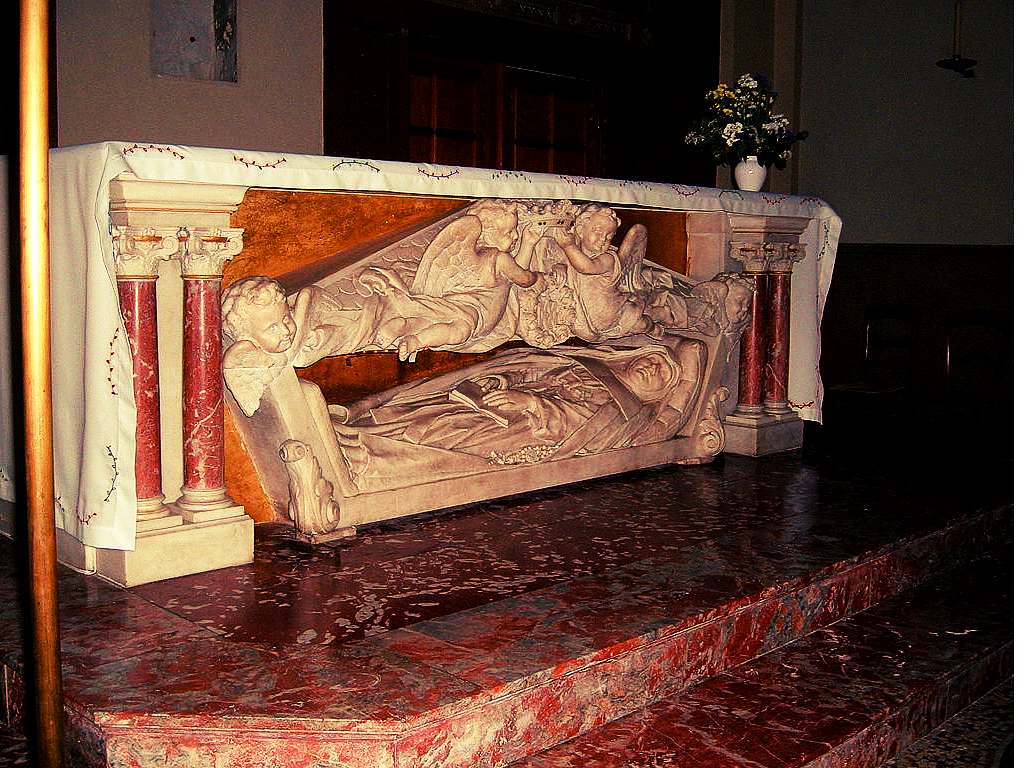
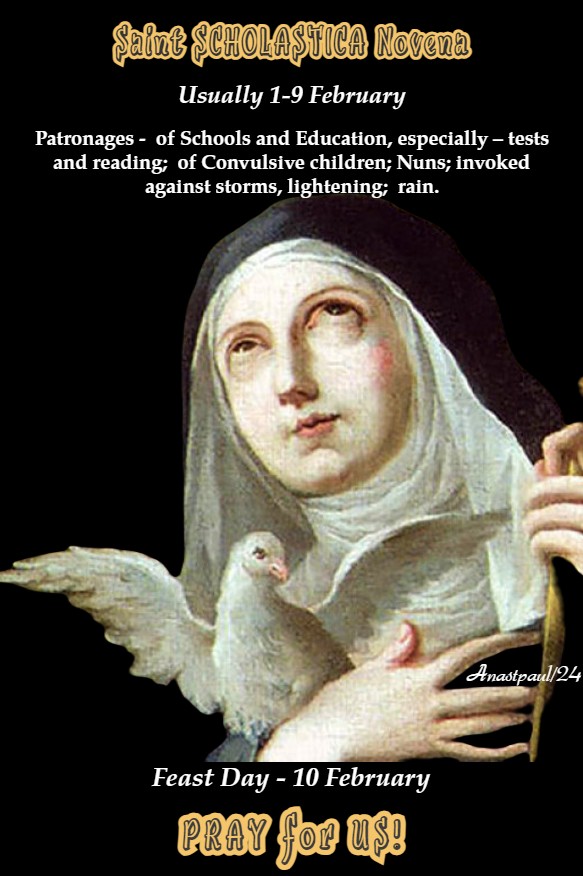
St Scholastica was the twin sister of St Benedict (480-547) and the Foundress of the Benedictine Nuns. As twins, St Scholastica and St Benedict were naturally born together and died within 6 weeks of each other. She is the Patron of Schools and Education, especially – tests and reading; of Convulsive children; Nuns; invoked against storms, lightening; rain. Normally prayed from 1 February until the 9th, in preparation for her Feast day on the 10 February.
O God, Thou caused the soul of Thy blessed virgin Scholastica, to enter heaven in the form of a dove, to show us the way of innocence. Grant us, by her prayers and merits, to live in such innocence that we may deserve to attain eternal joys. Through Jesus Christ, Thy Son our Lord, Who liveth and reigneth with Thee, in the unity of the Holy Ghost, ever one God, world without end. Amen. V. By the example and intercession of the Blessed Virgin Mary, Mother of the Church, keep us faithful to Thy Word. R. Hear us, O Lord. V. By the example and intercession of St Scholastica, keep us rooted in Thy love. R. Hear us, O Lord. V. By the example and intercession of all the holy virgins, keep us firm in prayer and charity. R. Hear us, O Lord.
(Mention your request here…)
Lord our God, Thou robed the virgin St Scholastica with the beauty and splendour of love. Help us to walk blamelessly before Thee, so that in the company of virgins, we may praise Thy Name forever and find our delight in Thee, through the same Jesus Christ our Lord. Amen
February is traditionally the Month of the Blessed Trinity, with the Holy Family being celebrated together with the Holy Name of Jesus in January.
The Sign of the Cross
In the Name of the Father and of the Son and of the Holy Ghost.
(50 Days. 100 Days if made with Holy Water Pope Pius IX, 1865)
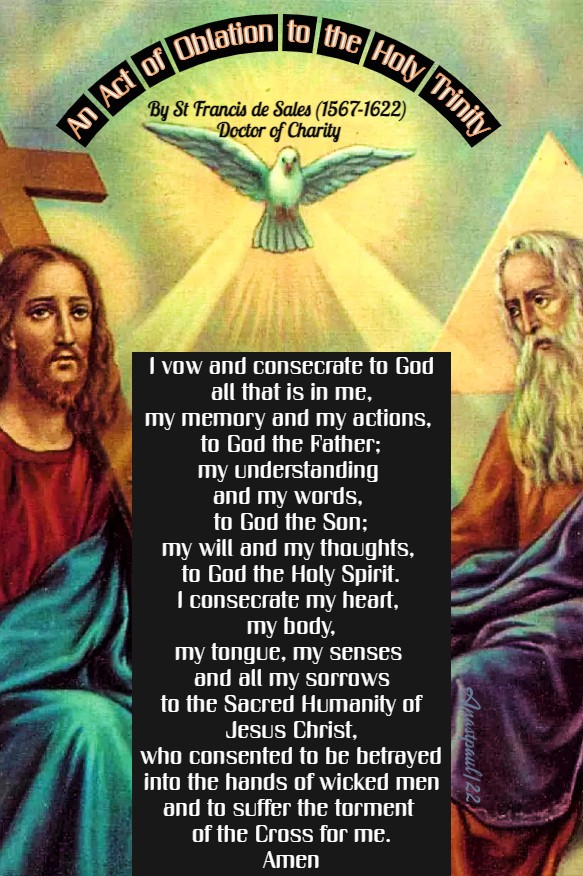
An Act of Oblation to the Most Blessed Trinity By St Francis de Sales (1567-1622) Doctor of Charity
I vow and consecrate to God all that is in me, my memory and my actions, to God the Father; my understanding and my words, to God the Son; my will and my thoughts, to God the Holy Spirit. I consecrate my heart, my body, my tongue, my senses and all my sorrows, to the Sacred Humanity of Jesus Christ, Who consented to be betrayed into the hands of wicked men and to suffer the torment of the Cross for me. Amen
Virgin most resigned, who didst feel thy soul transfixed with sorrow when in spirit, thou didst foresee all the bitter passion of thy Son and, knowing the grief of St Joseph, thy Spouse, for all thy sufferings, didst, with holy words console him. Pierce our souls, through and through, with true sorrow for our sins that we may one day, possess the consolation of being made partakers of thy glory in Heaven. Amen
R. That he should not see death until he had seen the Christ of the Lord.
Let us Pray
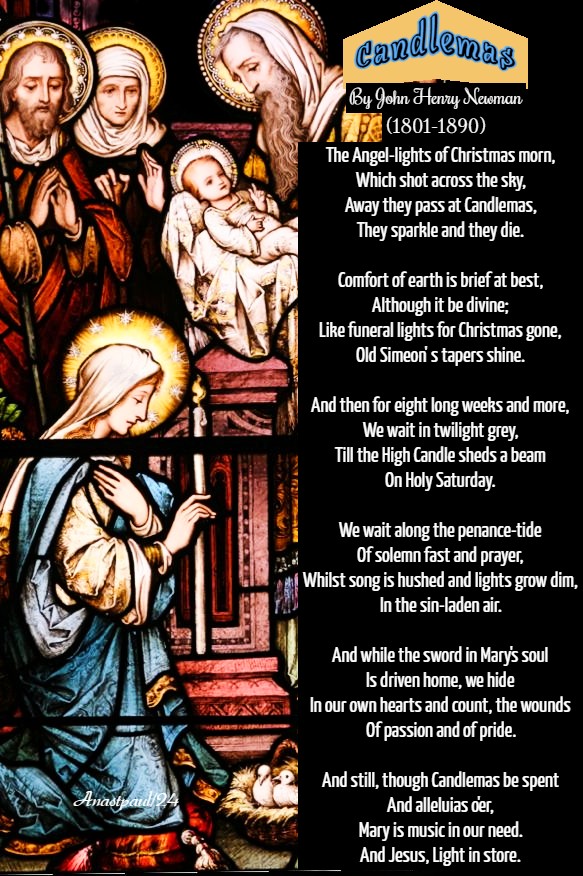
Almighty, everlasting God, we pray Thy majesty that as Thine Only-begotten Son was presented in the Temple in the substance of our flesh, so Thou wouldst enable us to present ourselves before Thee, with clean hearts. Amen
To all faithful Christians who, in private or public, in Church or in their own houses, shall keep any of theNovenas, in preparation for the principal Feasts of Most Holy Mary, Pope Pius VII, at the prayer of several holy persons, granted, by Rescripts issued through his Eminence the Cardinal-Vicar, 4 August and 24 November 1808 and 11 January 1800 (all of which are kept in the Segretaria of the Vicariate) — i. An Indulgence of 300 days, daily. ii. A Plenary Indulgence to all who shall assist at these Novenas everyday and, who shall afterwards, either on the Feast Day itself, to which each Novena respectively has reference, or on some one day in its Octave, after Confession and Communion, prayed to our Lord and to the Blessed Virgin, according to the pious intention of the Sovereign Pontiff.
Virgin most compassionate when, through thy divine Son, thou didst fill the soul of Anna, the prophetess, with light, thou didst make her magnify the mercies of God by recognising Jesus, as the Redeemer of the world. Enrich our souls with heavenly grace that we, may largely share, the fruit of the Divine Redemption. Amen
R. That he should not see death until he had seen the Christ of the Lord.
Let us Pray
Almighty, everlasting God, we pray Thy majesty that as Thine Only-begotten Son was presented in the Temple in the substance of our flesh, so Thou wouldst enable us to present ourselves before Thee, with clean hearts. Amen
To all faithful Christians who, in private or public, in Church or in their own houses, shall keep any of theNovenas, in preparation for the principal Feasts of Most Holy Mary, Pope Pius VII, at the prayer of several holy persons, granted, by Rescripts issued through his Eminence the Cardinal-Vicar, 4 August and 24 November 1808 and 11 January 1800 (all of which are kept in the Segretaria of the Vicariate) — i. An Indulgence of 300 days, daily. ii. A Plenary Indulgence to all who shall assist at these Novenas everyday and, who shall afterwards, either on the Feast Day itself, to which each Novena respectively has reference, or on some one day in its Octave, after Confession and Communion, prayed to our Lord and to the Blessed Virgin, according to the pious intention of the Sovereign Pontiff.
Virgin most meek, on hearing the prophecy of Simeon foretelling thy woes, thou didst promptly bow to the good pleasure of Go. Enable us too, to bear all troubles with patience and resignation to His Divine Will. Amen
R. That he should not see death until he had seen the Christ of the Lord.
Let us Pray
Almighty, everlasting God, we pray Thy majesty that as Thine Only-begotten Son was presented in the Temple in the substance of our flesh, so Thou wouldst enable us to present ourselves before Thee, with clean hearts. Amen
NOVENA In Preparation for the Feast of the Purification of the Blessed Virgin Mary – DAY SIX 29 JANUARY:
DAY SIX
Virgin most zealous, by redeeming* thy Son, Jesus, according to the Law, thou didst co-operate in the salvation of the world:. Ransom now, our poor hearts, from the slavery of sin that so they maybe ever pure, before the face of God. Amen
Footnote to Day Six: Of course, Our Lord Jesus Christ, as God Incarnate, did not need to be redeemed. However, He and Our Lady, fulfilled all the precepts of the Law. This is the sense in which this day’s prayer is to be understood.
R. That he should not see death until he had seen the Christ of the Lord.
Let us Pray
Almighty, everlasting God, we pray Thy majesty that as Thine Only-begotten Son was presented in the Temple in the substance of our flesh, so Thou wouldst enable us to present ourselves before Thee, with clean hearts. Amen
To all faithful Christians who, in private or public, in Church or in their own houses, shall keep any of theNovenas, in preparation for the principal Feasts of Most Holy Mary, Pope Pius VII, at the prayer of several holy persons, granted, by Rescripts issued through his Eminence the Cardinal-Vicar, 4 August and 24 November 1808 and 11 January 1800 (all of which are kept in the Segretaria of the Vicariate) — i. An Indulgence of 300 days, daily. ii. A Plenary Indulgence to all who shall assist at these Novenas everyday and, who shall afterwards, either on the Feast Day itself, to which each Novena respectively has reference, or on some one day in its Octave, after Confession and Communion, prayed to our Lord and to the Blessed Virgin, according to the pious intention of the Sovereign Pontiff.
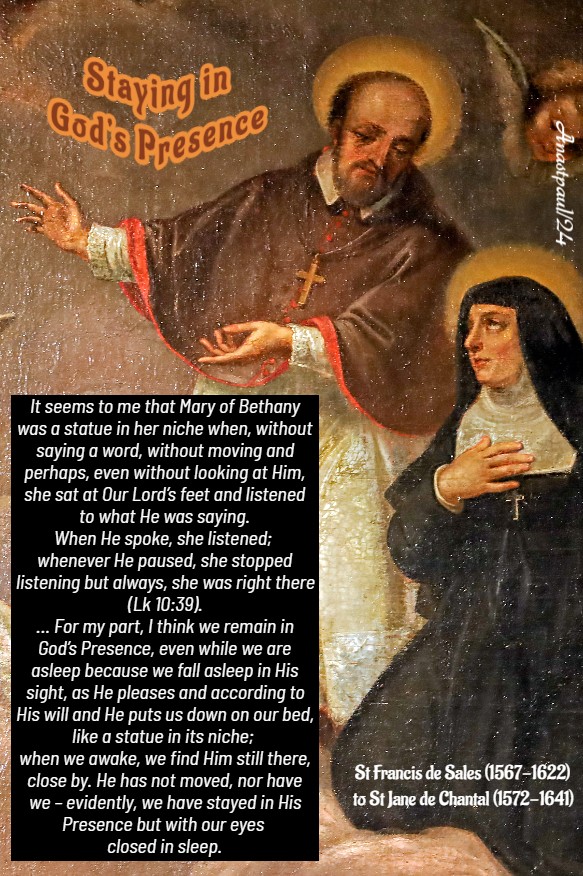
Thought for the Day – 29 January – The Feast of St Francis de Sales (1567-1622) Bishop, Confessor – Doctor of the Church: Doctor Caritatis (Doctor of Charity) “The Gentle Christ of Geneva” and “The Gentleman Saint.”
“The Difference between – Placing ourselves in God’s Presence and Staying in God’s Presence”
From a letter of St Francis de Sales (1567-1622) to St Jane Frances de Chantal (1572-1641) dated 16 January 1610
“Staying in God’s Presence and placing ourselves in God’s Presence are, to my mind, are two different things.
In order to place ourselves in His presence, we have to withdraw our soul from every other object and make it attentive to that Presence at this very moment, as I have explained in the book.[Introduction to the Devout Life] But once we are there, we remain there, as long as, either out intellect or our will, is active in regard to God. We look either at Him, or at something else, for love of Him; or, not looking at anything at all, we speak to Him; or again, without either looking at Him or speaking to Him, we just stay there where He has placed us, like a statue in its niche. And if, while we are there, we also have some sense that we belong to God and that He is our All, then we must certainly thank Him for this.
If a statue which had been placed in a niche, in some room, had the ability to speak and were asked “Why are you there?” it would answer, “Because my master, the sculptor, has put me here.” “Why do you not move out?” “Because he wants me to be perfectly still.” “What use are you there?What do you gain by staying like this?” “I’m not here for my own benefit but to serve and obey the will of my master.” “But you do not see him.” “No but he sees me and is pleased that I am here where he has put me.” “But would you not like to be able to move about and to get closer to him? “No, not unless he ordered me to.” “Is there not anything at all which you wish then?” “No because I am where my master put me and all my happiness lies in pleasing him.”
Dear daughter, what a good way of praying and what a fine way of staying in God’s Presence – doing what He wants and accepting what pleases Him! It seems to me that Mary of Bethany was a statue in her niche when, without saying a word, without moving and perhaps, even without looking at Him, she sat at Our Lord’s feet and listened to what He was saying. When He spoke, she listened; whenever He paused, she stopped listening but always, she was right there (Lk 10:39). A little child who is at its mother’s breast when she has fallen asleep, is really where it belongs and wants to be, even though neither of them makes a sound.
O my daughter, how I enjoy talking with you about these things! How happy we are when we want to love Our Lord! Let us really love Him, my daughter and let us not start examining in detail what we are doing, for love of Him, as long as we know that we never want to do anything except for love of Him.
For my part, I think we remain in God’s Presence, even while we are asleep because we fall asleep in His sight, as He pleases and according to His will and He puts us down on our bed, like a statue in its niche; when we awake, we find Him still there, close by. He has not moved, nor have we – evidently, we have stayed in His Presence but with our eyes closed in sleep.”
NOVENA In Preparation for the Feast of the Purification of the Blessed Virgin Mary – DAY FIVE, 28 JANUARY
DAY FIVE
Virgin most humble, in placing Jesus in holy old Simeon’s arms, thou didst fill his soul with heavenly joy. Give our hearts into God’s holy keeping that He may fill them with His Holy Spirit. Amen
R. That he should not see death until he had seen the Christ of the Lord.
Let us Pray
Almighty, everlasting God, we pray Thy majesty that as Thine Only-begotten Son was presented in the Temple in the substance of our flesh, so Thou wouldst enable us to present ourselves before Thee, with clean hearts. Amen
To all faithful Christians who, in private or public, in Church or in their own houses, shall keep any of theNovenas, in preparation for the principal Feasts of Most Holy Mary, Pope Pius VII, at the prayer of several holy persons, granted, by Rescripts issued through his Eminence the Cardinal-Vicar, 4 August and 24 November 1808 and 11 January 1800 (all of which are kept in the Segretaria of the Vicariate) — i. An Indulgence of 300 days, daily. ii. A Plenary Indulgence to all who shall assist at these Novenas everyday and, who shall afterwards, either on the Feast Day itself, to which each Novena respectively has reference, or on some one day in its Octave, after Confession and Communion, prayed to our Lord and to the Blessed Virgin, according to the pious intention of the Sovereign Pontiff.
NOVENA In Preparation for the Feast of the Purification of the Blessed Virgin Mary – DAY FOUR, 27 January
Day Four
Virgin most holy, in offering thy divine Son to His eternal Father, thou didst gladden all the court of Heaven; present our poor hearts to God, that He, by His grace, may keep them ever free from mortal sin. Amen
R. That he should not see death until he had seen the Christ of the Lord.
Let us Pray
Almighty, everlasting God, we pray Thy majesty that as Thine Only-begotten Son was presented in the Temple in the substance of our flesh, so Thou wouldst enable us to present ourselves before Thee, with clean hearts. Amen
NOVENA In Preparation for the Feast of the Purification of the Blessed Virgin Mary – DAY THREE, 26 January
Day Three
Virgin most pure, in observing the precept of the Law, thou didst care little that men should account thee unclean — ask for us, we beg of thee, grace to keep our hearts forever pure, however blamable the world may think us. Amen
R. That he should not see death until he had seen the Christ of the Lord.
Let us Pray
Almighty, everlasting God, we pray Thy majesty that as Thine Only-begotten Son was presented in the Temple in the substance of our flesh, so Thou wouldst enable us to present ourselves before Thee, with clean hearts. Amen
To all faithful Christians who, in private or public, in Church or in their own houses, shall keep any of theNovenas, in preparation for the principal Feasts of Most Holy Mary, Pope Pius VII, at the prayer of several holy persons, granted, by Rescripts issued through his Eminence the Cardinal-Vicar, 4 August and 24 November 1808 and 11 January 1800 (all of which are kept in the Segretaria of the Vicariate) — i. An Indulgence of 300 days, daily. ii. A Plenary Indulgence to all who shall assist at these Novenas everyday and, who shall afterwards, either on the Feast Day itself, to which each Novena respectively has reference, or on some one day in its Octave, after Confession and Communion, prayed to our Lord and to the Blessed Virgin, according to the pious intention of the Sovereign Pontiff.
NOVENA In Preparation for the Feast of the Purification of the Blessed Virgin Mary – DAY TWO, 25 January
To all faithful Christians who, in private or public, in Church or in their own houses, shall keep any of theNovenas, in preparation for the principal Feasts of Most Holy Mary, Pope Pius VII, at the prayer of several holy persons, granted, by Rescripts issued through his Eminence the Cardinal-Vicar, 4 August and 24 November 1808 and 11 January 1800 (all of which are kept in the Segretaria of the Vicariate) — i. An Indulgence of 300 days, daily. ii. A Plenary Indulgence to all who shall assist at these Novenas everyday and, who shall afterwards, either on the Feast Day itself, to which each Novena respectively has reference, or on some one day in its Octave, after Confession and Communion, prayed to our Lord and to the Blessed Virgin, according to the pious intention of the Sovereign Pontiff.
Day Two
Virgin most obedient, at thy presentation in the Temple thou didst will, like other women, to offer the wonted sacrifice: obtain for us that we too, following thy example, may learn how to offer ourselves as a living sacrifice to God, by practicing every virtue. Amen
R. That he should not see death until he had seen the Christ of the Lord.
Let us Pray
Almighty, everlasting God, we pray Thy majesty that as Thine Only-begotten Son was presented in the Temple in the substance of our flesh, so Thou wouldst enable us to present ourselves before Thee, with clean hearts. Amen
Thought for the Day – 25 January – The Spiritual Combat (1589) – Dom Lorenzo Scupoli OSM (c1530-1610)
“None shall be crowned who has not fought well.” 2 Tim 2: 5
The Third Weapon of the Spiritual Combat
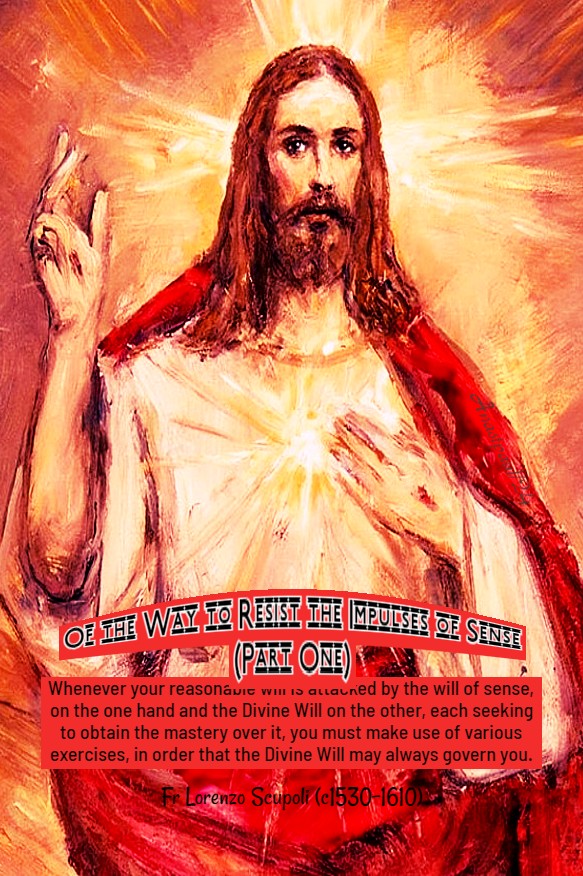
XIII: … Of the Way to Resist the Impulses of Sense and of the Acts to be Performed by the Will in order to Acquire Habits of Virtue (Part One)
“Whenever your reasonable will is attacked by the will of sense, on the one hand and the Divine Will on the other, each seeking to obtain the mastery over it, you must make use of various exercises, in order that the Divine Will may always govern you.
Firstly: — Whenever you are assailed and buffeted by the impulses of sense, oppose a valiant resistance to them, so that the superior will may not consent.
Secondly: — When the assaults have ceased, excite them anew, in order to repress them with greater force and vigour.
Then challenge them again to a third conflict, wherein you may accustom yourself to repulse them with contempt and abhorrence. These two challenges to battle should be made to every disorderly appetite, except in the case of temptations of the flesh, concerning which we shall speak in their place.
Lastly: — Make acts contrary to each evil passion which is to be resisted. This will be made clear by the following example in part two.”
Quote/s of the Day – 25 January – Feast of the Conversion of St Paul, Apostle
“O my brethren, if only we wanted to, if only we all wanted to perceive our soul’s paralysis in all its depth! Then we would see that it is lying on a stretcher of sins, deprived of strength. Christ’s action within us, would be a source of light and we would understand that each day He sees our lack of faith, harmful as it is, that He draws us towards healing remedies and sharply presses our rebellious wills. “My son” He says, “your sins are forgiven you.”
St Peter Chrysologus (c 400-450) “Golden Words” Father & Doctor of the Church
“What are you afraid of, you men of little faith? That He will not pardon your sins? But with His own hands He has nailed them to the Cross. That you are used to soft living and your tastes are fastidious? But He knows the clay of which we are made (Gn 2:7). That a prolonged habit of sinning binds you like a chain? But the Lord loosens the shackles of prisoners. Or perhaps that angered by the enormity and frequency of your sins, He is slow to extend a helping hand? But where sin abounded, grace became superabundant (Rom 5,20). Are you worried about clothing and food and other bodily necessities so that you hesitate to give up your possessions? But He knows that you need all these things (Mt 6,32). What more can you wish? What else is there to hold you back from the way of salvation? ”
St Bernard (1091-1153) Mellifluous Doctor of the Church
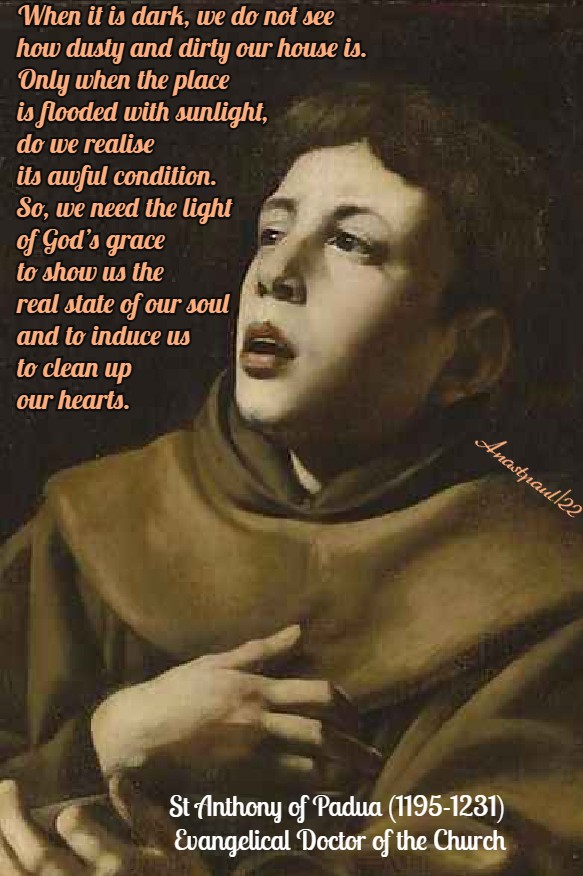
“When it is dark, we do not see how dusty and dirty our house is. Only when the place is flooded with sunlight, do we realise its awful condition. So, we need the light of God’s grace to show us the real state of our soul and to induce us to clean up our hearts!”
St Anthony of Padua (1195-1231) Evangelical Doctor of the Church
“I see clearly with the interior eye, that the sweet God loves, with a pure love, the creature that He has created and has a HATRED for nothing but SIN, which is more opposed to Him, than can be thought or imagined.”
St Catherine of Genoa (1447-1510)
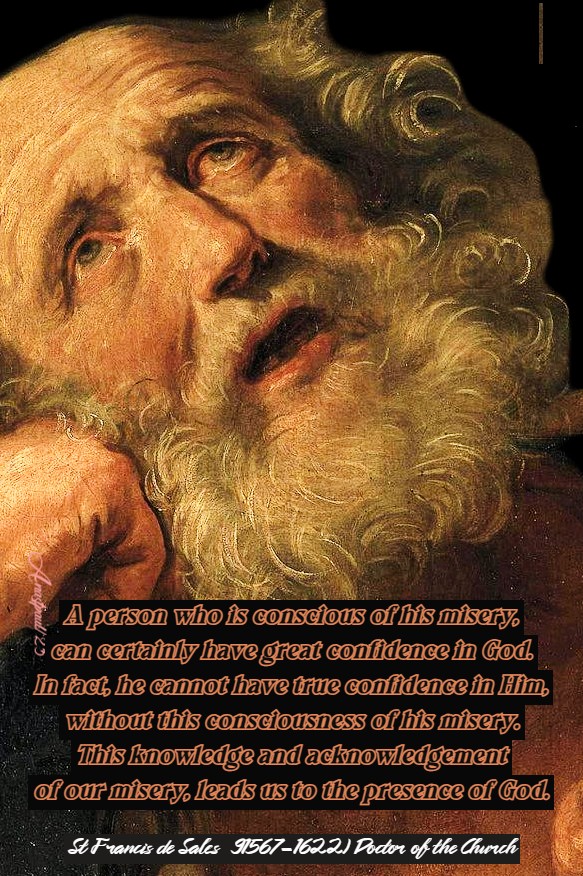
“A person who is conscious of his misery, can certainly have great confidence in God. In fact, he cannot have true confidence in Him, without this consciousness of his misery. This knowledge and acknowledgement of our misery, leads us to the presence of God.”
“Let us then depart, let us depart from Egypt, let us approach Our Lord, let us make provision of good works; let the feet of our affections be bare, let us clothe ourselves with innocence, let us not be satisfied with crying for mercy, let us go forth from Egypt, let us delay no longer. The hour is come to arise from sleep, since we know that He receives sinners; the Angels await our repentance, the Saints pray for it!”
St Francis de Sales 91567-1622) Doctor of the Church
One Minute Reflection – 25 January – Feast of the Conversion of St Paul , Apostle, Acts 9:1-22, Matthew 19,27-29.
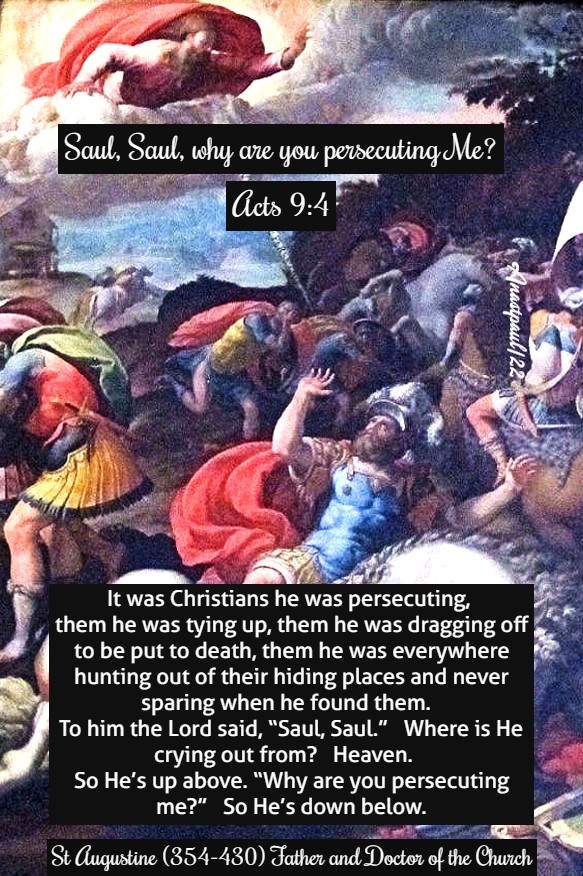
“He fell to the ground and heard a voice saying to him, “Saul, Saul, why are you persecuting Me?” – Acts 9:4.
REFLECTION – “How can we show that He is there and that He is also here? Let Paul answer for us, who was previously Saul. First of all, the Lord’s own Voice from Heaven shows this: “Saul, Saul, why are you persecuting Me?” Had Paul climbed up to Heaven then? Had Paul even thrown a stone at Heaven? It was Christians he was persecuting, them he was tying up, them he was dragging off to be put to death, them he was everywhere hunting out of their hiding places and never sparing, when he found them. To him the Lord said, “Saul, Saul.” Where is He crying out from? Heaven. So He’s up above. “Why are you persecuting Me?” So He’s down below.” – St Augustine (354-430) Bishop of Hippo, Father and Doctor of the Church (Sermon 122).
PRAYER – O God, Who taught the whole world by the preaching of Thy blessed Apostle Paul, grant, we beseech Thee that we, who today celebrate his conversion, may draw closer to Thee, by way of hia example.Through Jesus Christ, Thy Son our Lord, Who lives and reigns with Thee, in the unity of the Holy Ghost, God, world without end. Amen (Collect).
Our Morning Offering – 25 January – Feast of the Conversion of Saint Paul
Great Convert Teacher of the Faith Doctor Egregie Paule Attri. to Elpis (Died c493) Trans. The Benedictines of Saint Cecilia’s Abbey, Ryde, UK
Great Convert Teacher of the Faith Who never ceased from preaching Christ, Saint Paul impart to us your zeal, That we may reach the joys unseen.
All glory to the Trinity, Forever honour, sov’reignty; To God Almighty be all praise, Beginning and the End of all. Amen.
Elpis, first wife of the celebrated Philosopher Boethius, was the daughter of Festus, Consul at Rome, 472 and aunt of St Placidus, a disciple of St.Benedict. The above hymn, as well as, “Aurea luce et decore roseo” are attributed to her. Others also bear her name. She died at an early age, at Padua.
Saint of the Day – 25 January – Saint Bretannion of Tomi (Died c380) Bishop, Confessor, Defender of the Faith against heresy. Born of Cappadocian origin, he occupied the See of Tomi from 360 until his death in c380 of natural causes. Also known as – Brittany, Vetranio, Vetranius, Bretannione.
The Roman Martyrology reads today: “At Tomi in Scythia, St Bretannion, Bishop, who by his great sanctity and his zeal for the Catholic Faith, shone in the Church under the Arian Emperor Valens,. whom he opposed with fortitude.”
Bretannion lived in the 4th Century and was the Bishop of Tomi, today’s Constance in Romania, on the shores of the Black Sea.
According to the renowned Roman Lawyer and Historian, Sozomen (c400-c450), around the year 368, during the Roman campaign against the Goths in the Danube regions, Emperor Valens stopped in Tomi and spoke to the people gathered in front of the Cathedral to persuade them to betray theTrue Faith proclaimed by the Council of Nicaea.
In fact, it seems that this Emperor had made a personal decision to visit all the Diocese of the Empire, to convince all the faithful to embrace the Arian cause. Bishop Bretannion, however, placed himself at the head of the Clergy and the people of Tomi and all together they moved away from the Church where Emperor Valens was carrying out his heretical propaganda in favour of Arianism.
For this gesture the holy shepherd was exiled but thanks to the protest of the faithful and the fear of sedition in the border territory, the Emperor was induced to revoke the punishment against the Bishop.
Bretannion sent the body of the famous Martyr, Saint Sheba the Goth, who died in Romanian territory, to Saint Basil the Great of Caesarea, accompanying it with a letter from faithful Goths, aimed at illustrating the ‘Passio’ of the Saint, attributed to St Ulfilas “Apostle of the Goths”(c311-c380) but certainly written by Bretanion himself. It was accompanied by a personal letter to St Basil, to which St Basil replied thanking him.
Contradictory reports have been handed down regarding the possible participation in the Council of Constantinople, convened in 381. According to some sources, in fact, Tomi was represented, not by Bretannion, who had probably already died but, by the Bishop Gerontius whom we presume was his successor..
Cardinal Cesare Baronio, in compiling the Martyrologium Romanum, seems to have arbitrarily chosen the date of the commemoration of our Saint Bretannion as 25 January.
St Apollo of Heliopolis St Artemas of Pozzuoli St Auxentius of Epirus St Bretannion of Tomi (Died c380) Bisho, Confessor St Donatus the Martyr St Dwynwen (Died c460) Virgin Princess, Nun. St Eochod of Galloway St Joel of Pulsano St Juventinus of Antioch St Maximinus of Antioch St Palaemon
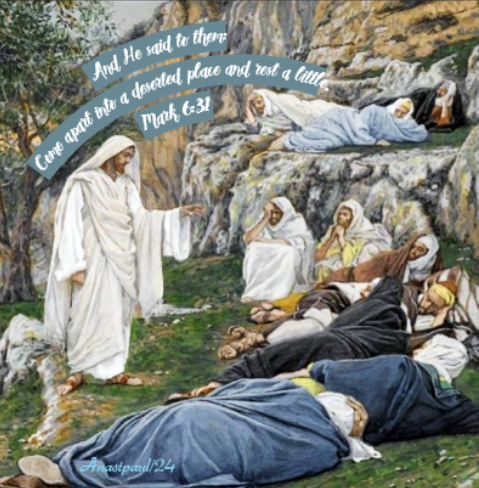
[30] And the Apostles coming together unto Jesus, related to Him all things that they had done and taught. [31] And He said to them: Come apart into a deserted place and rest a little. For there were many coming and going and they had not so much, as time to eat. [32] And … they went into a desert place apart. [Mark 6:30-32] Scripture search here: https://www.drbo.org/
I will be taking a small rest prior to Lent but will still be here for a few important posts. The Candlemas Novena amongst others.
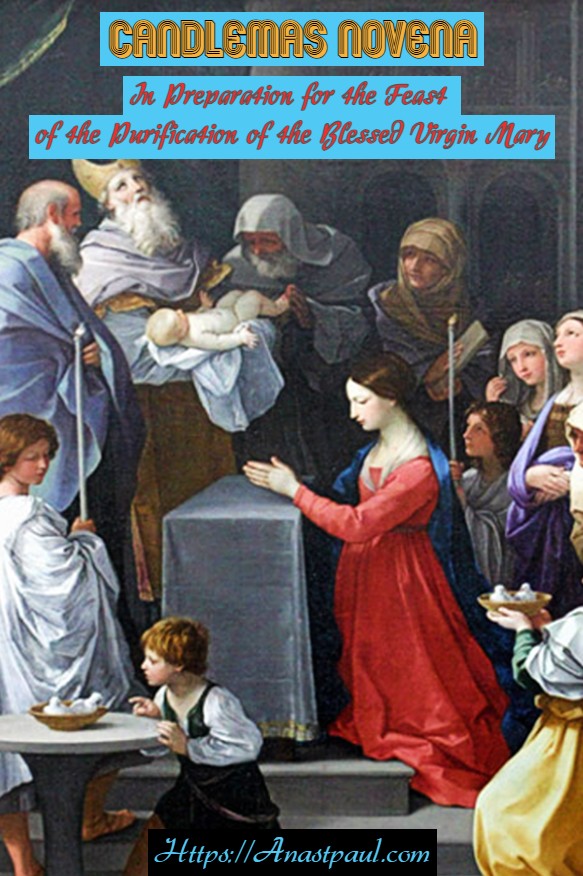
NOVENA In Preparation for the Feast of the Purification of the Blessed Virgin Mary (The Candlemas Novena)
Today marks the start of the Novena in preparation for the great Feast of the Purification of the Blessed Virgin Mary.
A version of the Candlemas Novena follows below:-
Day One Bright Mirror of all virtues, holiest Mary, forty days had scarcely elapsed from thy delivery when thou, although the purest of all virgins, didst will, according to the Law, to be presented in the Temple to be purified. Grant that we, like thee, may keep our hearts unstained by sin, that so we too, maybe made worthy to be presented to our God in the Temple of His Glory. Amen
R. That he should not see death until he had seen the Christ of the Lord.
Let us Pray
Almighty, everlasting God, we pray Thy majesty that as Thine Only-begotten Son was presented in the Temple in the substance of our flesh, so Thou wouldst enable us to present ourselves before Thee, with clean hearts. Amen
To all faithful Christians who, in private or public, in Church or in their own houses, shall keep any of the Novenas, in preparation for the principal Feasts of Most Holy Mary, Pope Pius VII, at the prayer of several holy persons, granted, by Rescripts issued through his Eminence the Cardinal-Vicar, 4 August and 24 November 1808 and 11 January 1800 (all of which are kept in the Segretaria of the Vicariate) — i. An Indulgence of 300 days, daily. ii. A Plenary Indulgence to all who shall assist at these Novenas everyday and, who shall afterwards, either on the Feast Day itself, to which each Novena respectively has reference, or on some one day in its Octave, after Confession and Communion, prayed to our Lord and to the Blessed Virgin, according to the pious intention of the Sovereign Pontiff.
Thought for the Day – 24 January – The Spiritual Combat (1589) – Dom Lorenzo Scupoli OSM (c1530-1610)
“None shall be crowned who has not fought well.” 2 Tim 2: 5
The Third Weapon of the Spiritual Combat
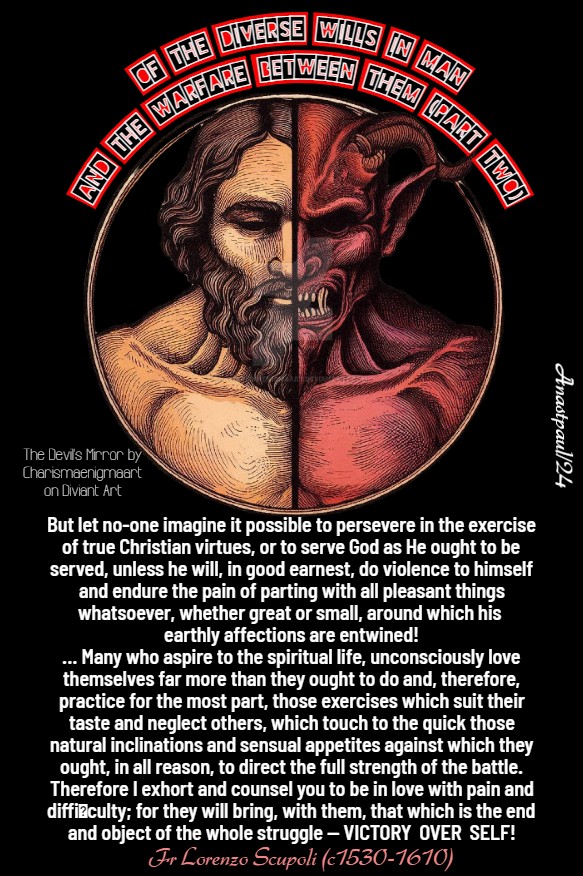
XII: … Of the Diverse Wills in Man and the Warfare Between Them (Part Two)
“But let no-one imagine it possible to persevere in the exercise of true Christian virtues, or to serve God as He ought to be served, unless he will, in good earnest, do violence to himself and endure the pain of parting with all pleasant things whatsoever, whether great or small, around which his earthly affections are entwined!
Hence it is that so few attain to perfection; for after having, with much toil, overcome the greater vices, they will not persevere in doing violence to themselves, by struggling against the promptings of self-will and an infinity of lesser desires. They grow weary of so unremitting a struggle; they suffer these insignificant enemies to prevail against them and so to acquire an absolute mastery over their hearts!
To this class belong men who, if they do not take what belongs to others, cleave with inordinate affection, to that which is lawfully their own. If they do not obtain honours by unlawful means, yet they do not, as they should, shun them but, on the contrary, cease not to desire and sometimes, even to seek them in various ways. If they observe fasts of obligation, yet they do not mortify their palate in the matter of superfluous eating, or the indulgence in delicate morsels. If they live continently, yet they do not renounce many indulgences which much impede union with God and the growth of the spiritual life and which, as they are very dangerous, even to the holiest persons, and most dangerous to those, who fear them least, should be as much as possible avoided by all. Hence all their good works are performed in a lukewarm spirit and accompanied by much self-seeking, by many lurking impefections, by a certain kind of self-esteem and by a desire to be praised and valued by the world.
Such persons not only fail to make any progress in the way of salvation but rather, go backwards and are, therefore, in danger of relapsing into their former sins because they have no love of true holiness and show little gratitude to their Lord, Who rescued them from the tyranny of the devil.
They are, moreover, too blind and ignorant to see the peril in which they stand and so, falsely persuade themselves, of their own security. And here we discover a delusion which is the more dangerous because, it is little apprehended.
Many who aspire to the spiritual life, unconsciously love themselves far more than they ought to do and, therefore, practice for the most part, those exercises which suit their taste and neglect others, which touch to the quick those natural inclinations and sensual appetites, against which they ought, in all reason, to direct the full strength of the battle.
Therefore, I exhort and counsel you, to be in love with pain and difficulty — for they will bring with them, that which is the end and object of the whole struggle — victory over self!
The more deeply you shall be in love with the difficulties encountered by beginners in virtue and in war, the surer and the speedier shall be the victory and, if your love be to the difficult and the toilsome struggle, rather than to the victory and the virtue to be attained, you shall, the more speedily obtain, all you desire!”
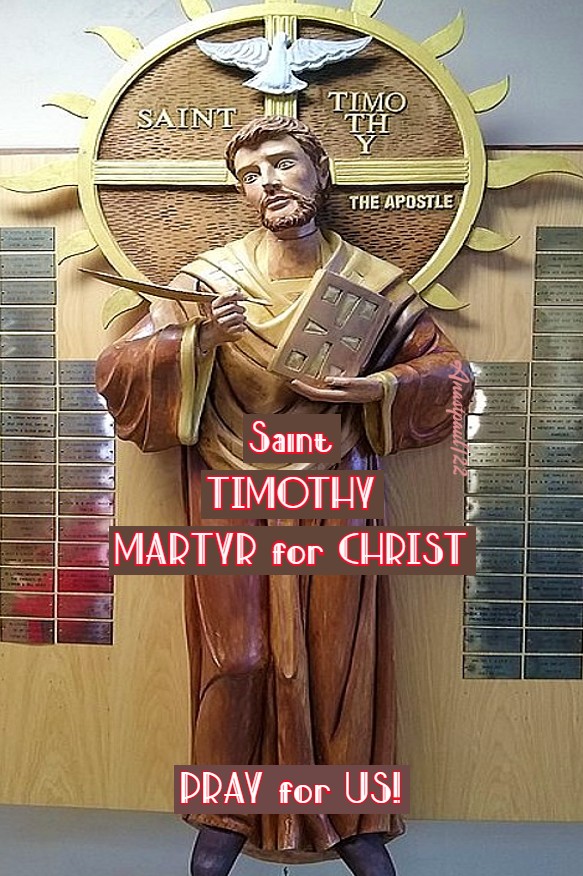
Quote/s of the Day – 24 January – St Timothy (1st Century) Disciple of St Paul, Bishop and Martyr – 1 Timothy 6:11-16, Luke 14:26-33 – Scripture search here: https://www.drbo.org/
“If anyone comes to Me without hating his father and mother, wife and children, brothers and sisters and even his own life, he cannot be My disciple.”
Luke 14:26
“So likewise, everyone of you, who does not renounce all that he possesses, cannot be My disciple.”
Luke 14:33
“Pursue justice, godliness, faith, charity, patience, mildness. Fight the good fight of the faith, lay hold on the life eternal, to which you have been called …”
1 Timothy 6:11-12
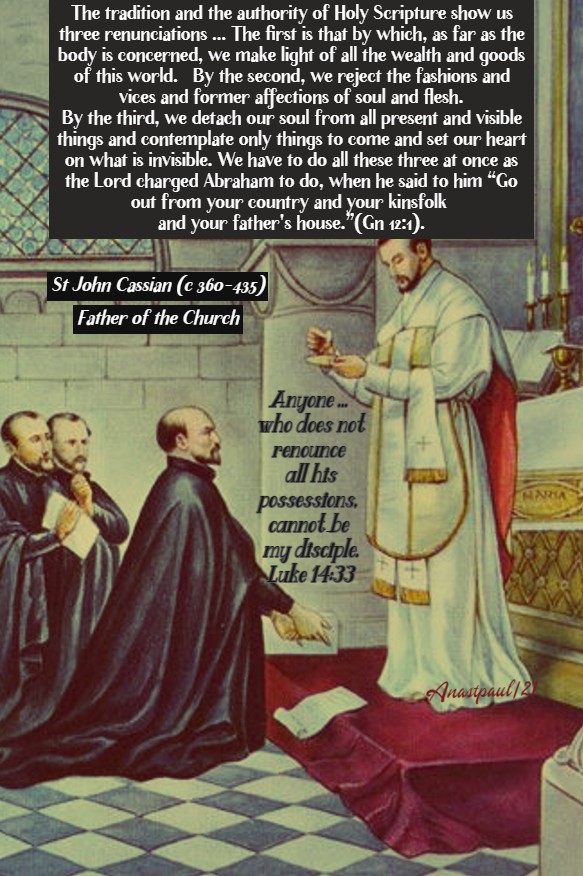
“… Anyone of you who does not renounce all his possessions, cannot be my disciple.” Luke 14:33
“The tradition and the authority of Holy Scripture, show us three renunciations … The first is that, by which, as far as the body is concerned, we make light of all the wealth and goods of this world. By the second, we reject the fashions and vices and former affections of soul and flesh. By the third, we detach our soul from all present and visible things and contemplate only things to come and set our heart on what is invisible. We have to do all these three at once, as the Lord charged Abraham to do, when he said to him “Go out from your country and your kinsfolk and your father’s house.”(Gn 12:1).”
St John Cassian (c360-435) Monk, Founder of Monasteries, Father of the Church
(Conference 3, 6-7)
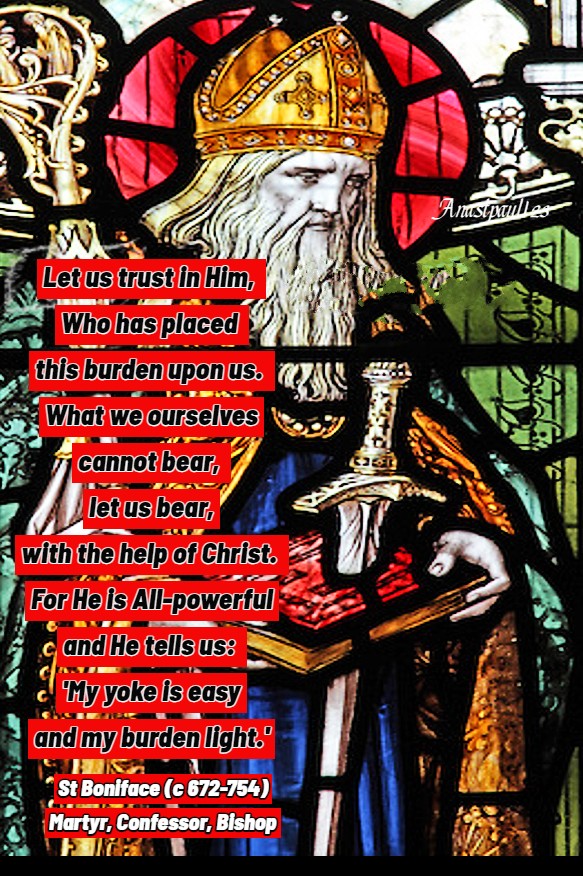
“Let us trust in Him. Who has placed this burden upon us. What we ourselves cannot bear, let us bear, with the help of Christ. For He is All-powerful and He tells us: ‘My yoke is easy and my burden light.’”
St Boniface (c672-754) Martyr, Confessor, Bishop
“I will go anywhere and do anything, in order to communicate the love of Jesus to those who do not know Him, or have forgotten Him.”
One Minute Reflection – 24 January – St Timothy (1st Century) Disciple of St Paul, Bishop and Martyr – 1 Timothy 6:11-16, Luke 14:26-33 – Scripture search here: https://www.drbo.org/
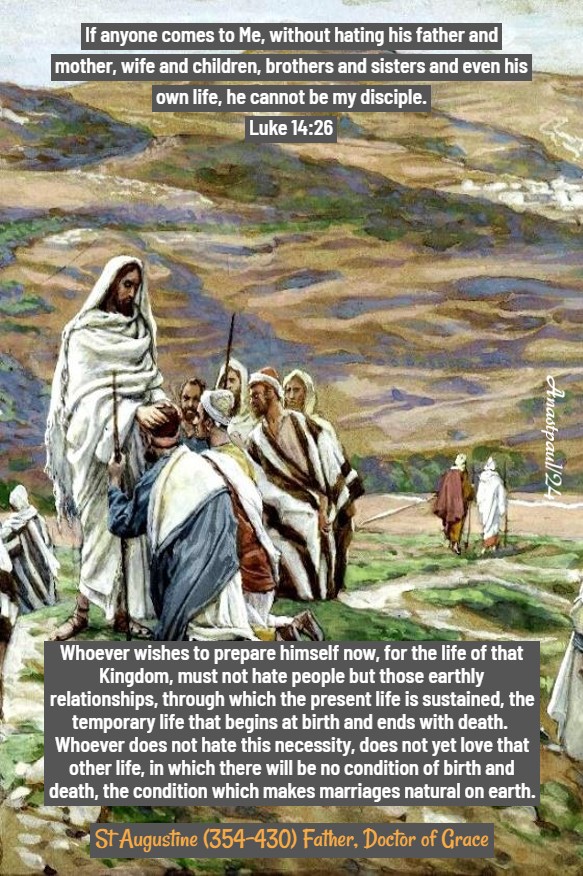
“If anyone comes to Me, without hating his father and mother, wife and children, brothers and sisters and even his own life, he cannot be my disciple.” – Luke 14:26
REFLECTION – “On another occasion, the Lord says, “Whoever comes to me and does not hate his father and mother, and wife and children and brothers and sisters and even his own soul, cannot be my disciple.” As a rule, this is more upsetting to the mind of new Christians, who are eager to begin at once, to live in accordance with the precepts of Christ. To those who do not fully grasp its meaning, it would seem contradictory…. He has condescended to call His disciples to the eternal Kingdom. He also called them brothers. In the Kingdom these relationships are transcended because, “there is neither Jew nor Greek, neither male nor female, neither slave nor freeman but Christ, is all things and in all.” The Lord says, “For in the resurrection, they will neither be married nor marry but will be as the Angels of God in Heaven.”
Whoever wishes to prepare himself now, for the life of that Kingdom, must not hate people but those earthly relationships, through which the present life is sustained, the temporary life that begins at birth and ends with death. Whoever does not hate this necessity, does not yet love that other life, in which there will be no condition of birth and death, the condition which makes marriages natural on earth.” – St Augustine (354-430) Bishop, Father, Doctor of Grace (Sermon on the Mount,15).
PRAYER – Be mindful of our weakness, Almighty God and because the burden of our sins weighs heavily upon us, may the glorious intercession of blessed Timothy, Your Martyr and Bishop, sustain us. Through Jesus Christ, Thy Son our Lord, Who lives and reigns with Thee, in the unity of the Holy Ghost, God, world without end. Amen (Collect).
Our Morning Offering – 24 January – Feast of Saint Timothy, Bishop and Martyr
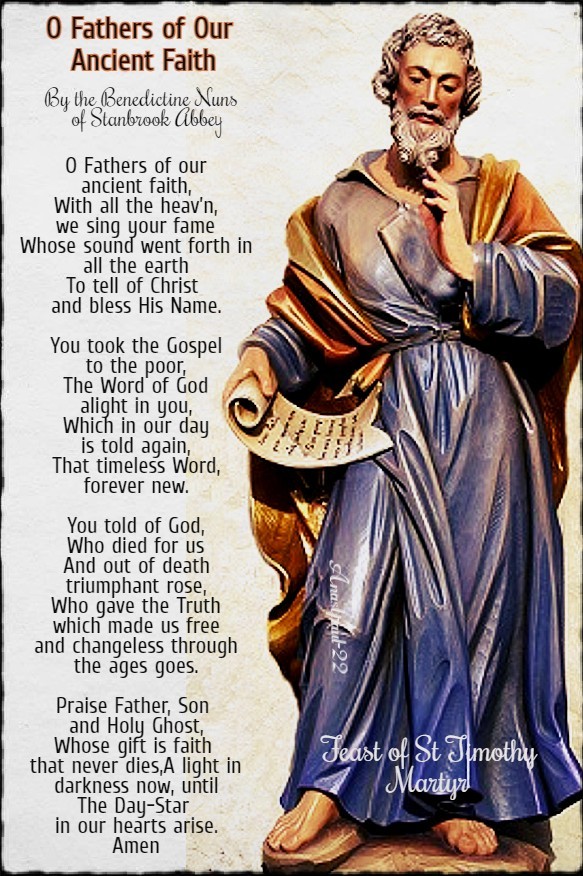
O Fathers of Our Ancient Faith
O Fathers of our ancient faith, With all the heav’n, we sing your fame Whose sound went forth in all the earth To tell of Christ and bless His Name.
You took the Gospel to the poor, The Word of God alight in you, Which in our day is told again, That timeless Word, forever new.
You told of God, Who died for us And out of death triumphant rose, Who gave the Truth which made us free and changeless through the ages goes.
Praise Father, Son and Holy Spirit, Whose gift is faith that never dies, A light in darkness now, until The Day-Star in our hearts arise.
O Fathers of Our Ancient Faith is written by the Benedictine Nuns of Stanbrook Abbey. In the Divine Office it is sung at Morning Prayer in the Common of Apostles. It is set to the anonymous tune associated with the 7th century Latin hymn, Creator Alme Siderum.
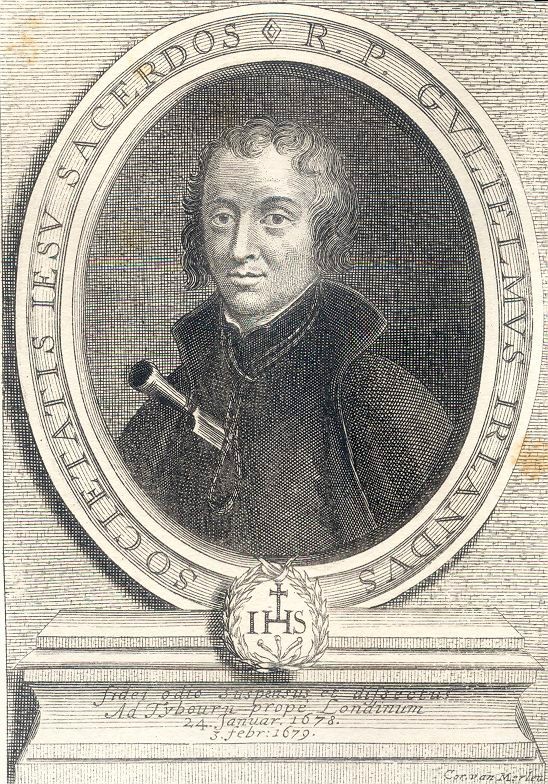
Saint of the Day – 24 January – Blessed William Ireland SJ (1636-1679) Priest Martyr. Born in 1636 in Lincolnshire, England and died by hanging on 24 January 1679 at Tyburn, London, England. Also known as – William Ironmonger, William Iremonger. He was Beatified on 15 December 1929 by Pope Pius XI.
William was the eldest son of William Ireland of Crofton Hall, Yorkshire, by his wife, Barbara, a daughter of Ralph Eure, 3rd Baron Eure of Washingborough, Lincolnshire. He had several sisters, to whom he remained close, and who worked tirelessly to prove his innocence After he was falsely accused of conspiring to murder King Charles II during the Popish Plot conspiracy and hysteria,
He was educated at the English College at St Omer in France and was admitted to the Society of Jesus at the age 19 at Watten, Belgium. He studied Theology in Liege and in 1667, aged 31, was Ordained a Priest. For 10 years William was the Confessor to the Poor Clares at Gravelines in Northern France, waiting to return to England.
In 1677, when he finally succeeded, entering his country as William Ironmonger, (William Iremonger) he had only been working as Procurator of his Order (responsible for finances) for a year, when he already became the first victim of the nefarious conspiracy hatched by Titus Oates.
The apostate and perverted Titus Oates, was an Anglican Minister, who hated all Catholics and most particularly, he harboured a deeply vicious hatred towards the Society of Jesus. Together with another Minister, Israel Tonge, he invented the plot which the English Jesuits had supposedly planned wherein the assassination of King Charles II, the fall of the Government and its official religion and the re-establishment of Catholicism. This fictional tale caused an uproar and a new furious persecution against Catholics.
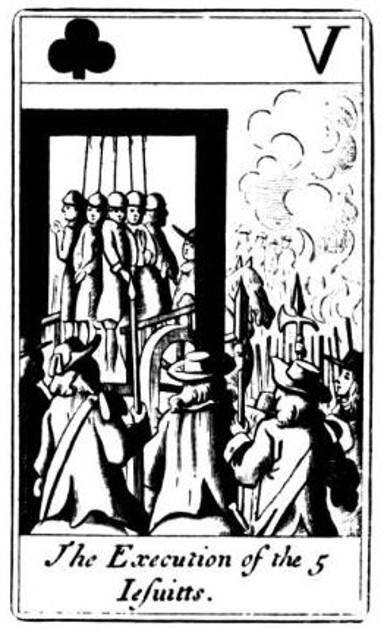
Among the first victims was Fr William, who was arrested together with Fr John Fenwick and William’s assistant, Mr John Grove. They were locked up in Newgate Prison and secured with heavy shackles which embedded itself into the bare flesh of their legs. On 17 December 1678, after three months in the horrors of the most notorious Prison in England, they were finally tried, along with Fr Thomas Whitbread and Thomas Pickering, a Benedictine Brother. At the trial, Titus Oates claimed to have witnessed a meeting of the Jesuits in April of that year and heard the Jesuits plotting to kill the King. He claimed that William, Fr Fenwick and John Grove were at the meeting and the Frs Whitbread and Pickering were to carry out the plan. They allegedly tried to carry out the murder but Fr Pickering’s gun allegedly failed three times. Another witness largely confirmed these statements.
Fr William, however, proved that at the time when he was supposed to be walking around the Royal Palace, he was in fact in the Midlands and in the north of Wales. As evidence to the contrary, Oates bribed a maid who claimed to have seen him in London at the time. On these trumped-up charges and blatant lies, William, John Grove and Fr Pickering were found guilty of high treason and sentenced to be hanged,drawn and quartered.
The execution was postponed by Royal Order for one month because the King, Charles II, himself did not believe that the Jesuits were involved in a conspiracy against him. Oates, however, procured and bribed, several more so-called witnesses of dubious repute, after which the King, fearing the wrath of the people, allowed the execution of the sentence.
William and John Grove were taken to Tyburn on 24 January 1679. The mob pelted them with stones and verbal abuse as they were led to the gallows. The King, who had already stated privately that they were innocent, as a special act of clemency, ordered that they be allowed to hang until they were dead, thus sparing them the usual horrors of drawing and quartering whilst still alive. They were hanged,and when they died, they were taken down so that they could be drawn and dismembered.
St Projectus St Sabinian of Troyes St Suranus of Sora St Thyrsus Bl essed William Ireland SJ (1636-1679) Priest Martyr
Martyrs of Asia Minor – 4 Saints: A group of ChristiansMmartyred together for their faith. The only details to survive are four of their names – Eugene, Mardonius, Metellus and Musonius. They were burned at the stake in Asia Minor.
Martyrs of Antioch: Babylas Epolonius Prilidian Urban
Thought for the Day – 23 January – The Spiritual Combat (1589) – Dom Lorenzo Scupoli OSM (c1530-1610)
“None shall be crowned who has not fought well.” 2 Tim 2: 5
The Third Weapon of the Spiritual Combat
XII: … Of the Diverse Wills in Man and the Warfare Between Them (Part One)
“Although in this combat, we may be said to have within us, two wills, the one of the reason which is called rational and superior, the other of the senses, called sensual and inferior and commonly described, by the words — appetite, flesh, sense and passion; yet, as it is the reason which constitutes us men, we cannot be said to will anything which is willed by the senses, unless we be also inclined thereto, by the superior will.
And herein does our spiritual conflict principally consist. The Reasonable Will. being placed, as it were, midway between the Divine Will which is above it — and, the Inferior Will, or Will of the Senses which is beneath it, is continually assaulted by both — each seeking, in turn, to attract and subdue and bring it into obedience. Much hard toil and trouble must, however, be undergone by the unpracticed, especially at the outset, when they resolve to amend their evil lives and, renouncing the world and the flesh, to give themselves up to the love and service of Jesus Christ.
For the opposition encountered by the Superior Will, from the continual warfare between the Divine and Sensual Will, is sharp and severe and accompanied by acute suffering. It is not so with those who are well practiced in the way of virtue or of vice — they pursue, without difficulty, the path on which they have entered — the virtuous yielding readily to the Divine Will and the vicious yielding, without resistance, to the will of the senses.”
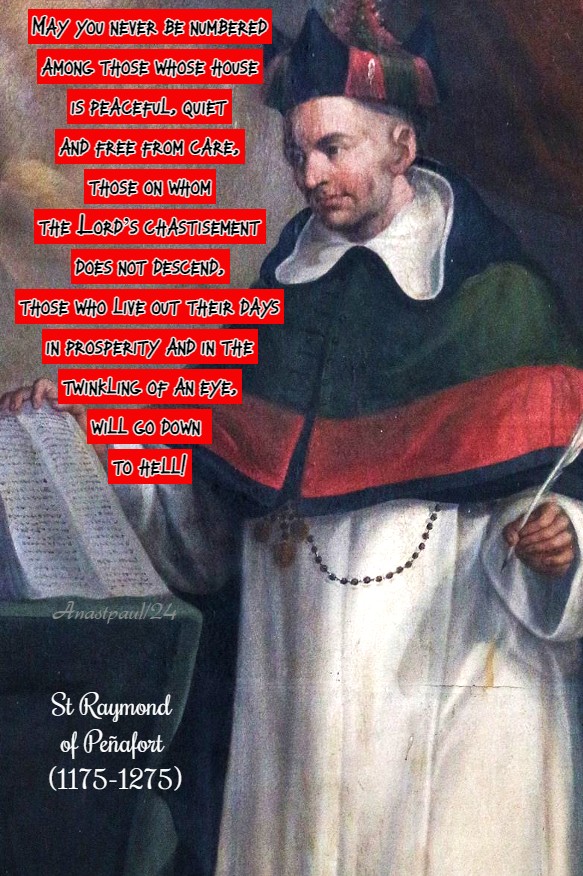
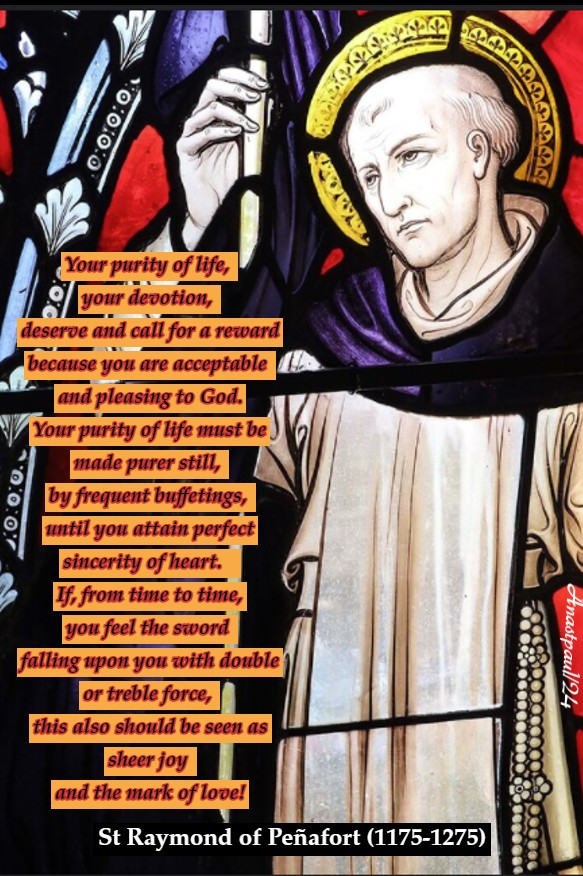
Quote/s of the Day – 23 January – St Raymond of Peñafort OP (1175-1275) Confessor, “Father of Canon Law”
“May you never be numbered among those whose house is peaceful, quiet and free from care, those on whom the Lord’s chastisement does not descend, those who live out their days in prosperity and in the twinkling of an eye, will go down to hell!”
“Your purity of life, your devotion, deserve and call for a reward because you are acceptable and pleasing to God. Your purity of life must be made purer still, by frequent buffetings, until you attain perfect sincerity of heart. If, from time to time, you feel the sword falling upon you with double or treble force, this also should be seen as sheer joy and the mark of love!”
“Look then on Jesus, the Author and Preserver of faith — in complete sinlessness, He suffered and, at the hands of those who were His own and was numbered among the wicked. As you drink the cup of the Lord Jesus (how glorious it is!), give thanks to the Lord, the Giver of all blessings. May the God of love and peace set your hearts at rest and speed you on your journey; may He meanwhile, shelter you from disturbance by others in the hidden recesses of His Love, until He brings you, at last, into that place of complete plenitude, where you will repose forever in the vision of peace, in the security of trust and in the restful enjoyment of His riches. ”


























 AnaStpaul
You must be logged in to post a comment.