St Robert Bellarmine SJ (1542-1621) Doctor of the Church, Bishop, Confessor, Theologian, Professor, Writer, Preacher, Mediator. (Optional Memorial) Feast day – 13 May (General Roman Calendar, 1932–1969)
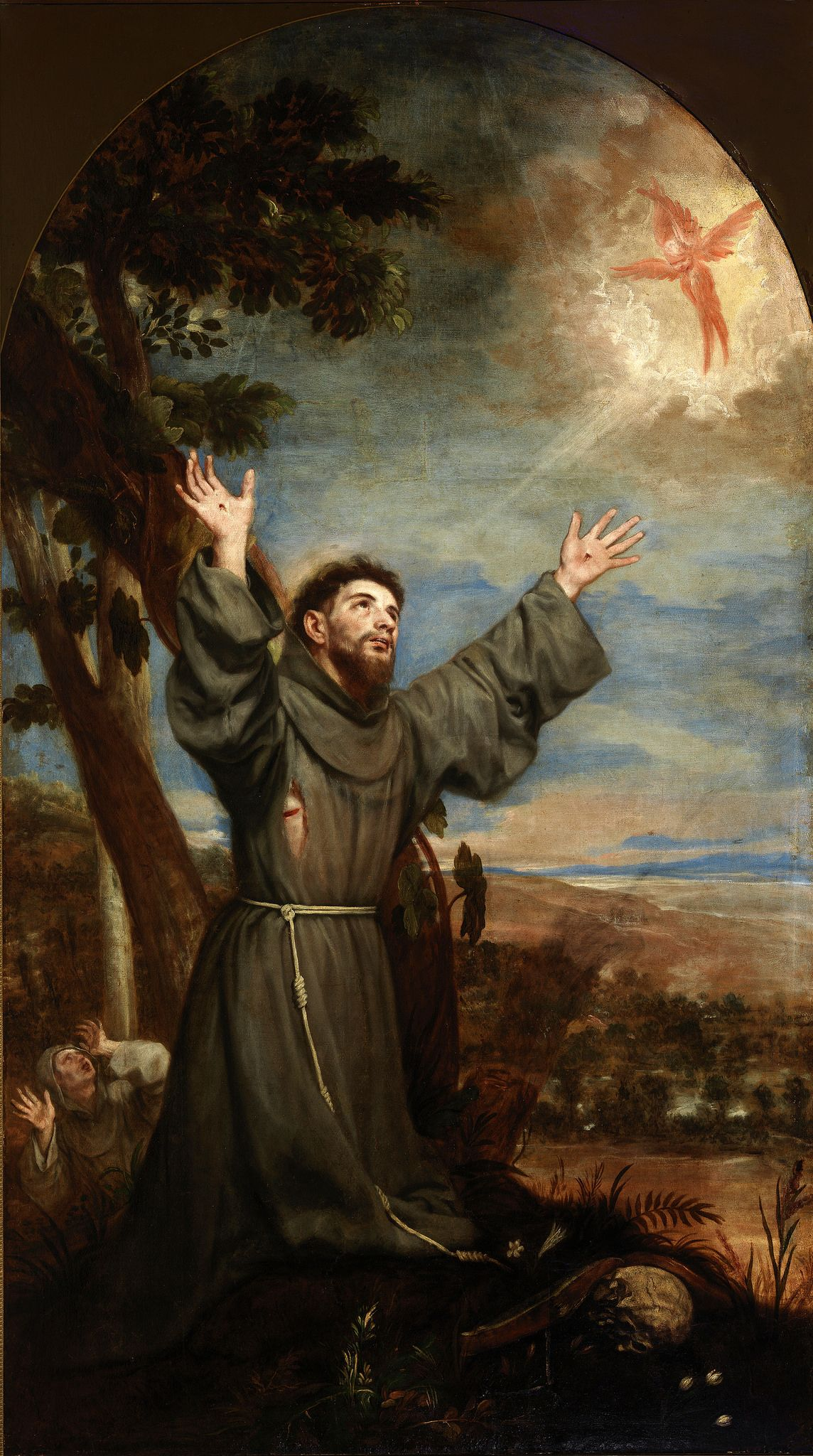
Stigmata of St Francis of Assisi: Two years before the great Saint Francis of Assisi died and when he was forty-two years old — one year after he had built the first crib in honour of Our Lord — he went off to a lonely mountain called Mount Alvernia, to prepare himself by forty days of fasting and prayer for the Feast of Saint Michael, the greatest of God’s Angels, whose Feast day is 29 September. On the Feast of the Exaltation of the Holy Cross on 14 September, Saint Francis received in his hands, feet and side the Sacred Wounds from Our Lord’s own body.
Never was a Saint more beautifully loved by Jesus than Saint Francis of Assisi. The wounds Jesus gave him stayed in his hands, feet and side and continually bled for two more years, until he died in 1226. The day on which Saint Francis received the Five Wounds of Our Lord was 14 September but so, that this beautiful event might have a feast day for itself, the Stigmata of Saint Francis is commemorated today, on 17 September. The simple liturgy of this holy Saint’s life might be put this way – the crib in 1223 and the Cross in 1224.
St Agathoclia St Brogan of Ross Tuirc St Columba of Cordova St Crescentio of Rome St Emmanuel Nguyen Van Trieu St Flocellus
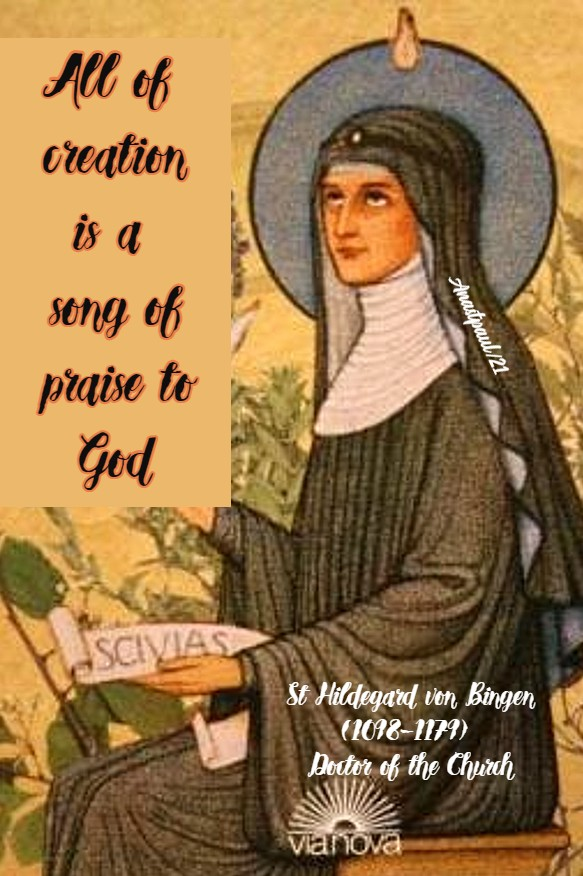
St Hildegard von Bingen OSB (1098-1179) Doctor of the Church, German Benedictine Abbess, Theologian, Writer, Composer, Philosopher, Poet, Mystic, Visionary, Founder, Scientist, Artist and Polymath. She is considered to be the founder of scientific natural history in Germany.
St Justin of Rome
St Lambert (c 635-c 700) Bishop & Martyr, Bishop of Maastricht, Confessor, Missionary.
St Narcissus of Rome St Peter Arbues OSA (1442-1485) Priest Martyr St Rodingus St Satyrus of Milan St Socrates Bl Stanislaus of Jesus and Mary St Stephen of England St Theodora St Uni of Bremen St Zygmunt Sajna
St Zygmunt Szcesny Felinski TOSF (1822-1895) Archbishop of Warsaw and founder of the Franciscan Sisters of the Family of Mary, Apostle of poor, Confessor, Professor, Writer, Reformer.
Martyred in the Spanish Civil War • Blessed Álvaro Santos Cejudo Moreno Chocano • Blessed Juan Ventura Solsona • Blessed Timoteo Valero Pérez
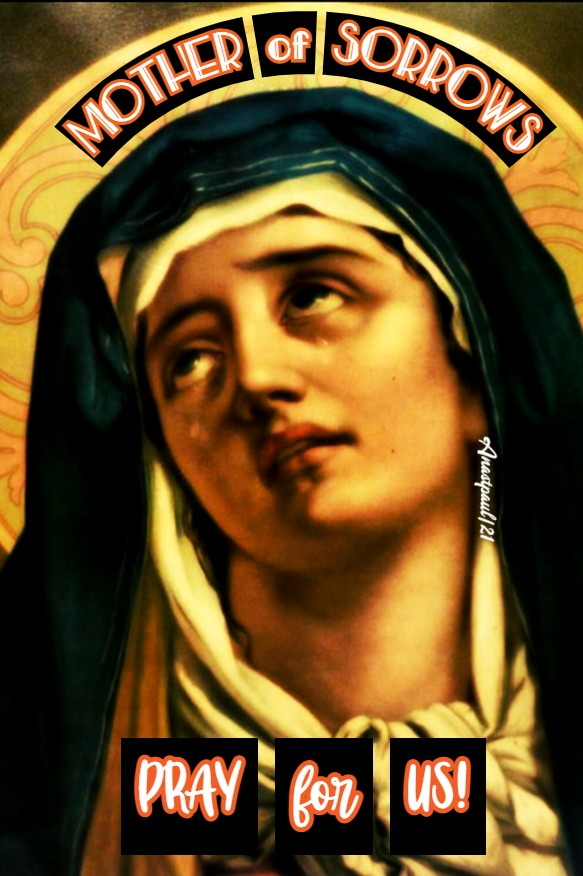
Our Morning Offering – 17 September – “Month of the Seven Sorrows of the Blessed Virgin Mary ”
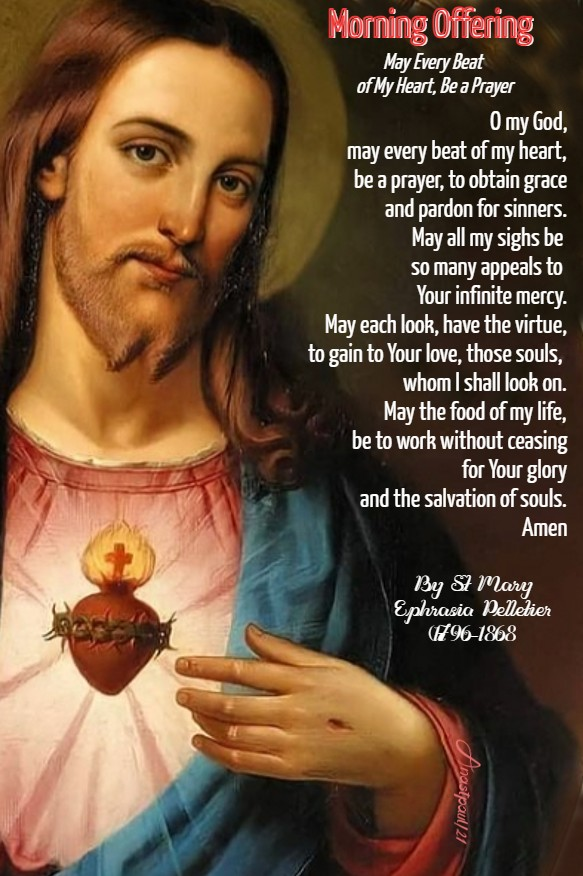
Morning Offering May Every Beat of My Heart Be a Prayer By St Mary Euphrasia Pelletier (1796-1868)
O my God, may every beat of my heart, be a prayer, to obtain grace and pardon for sinners. May all my sighs be so many appeals to Your infinite mercy. May each look have the virtue to gain to Your love, those souls, whom I shall look on. May the food of my life, be to work without ceasing for Your glory and the salvation of souls. Amen
One Minute Reflection – 17 September – “Month of the Seven Sorrows of the Blessed Virgin Mary ” – Readings: Ps 85:3; 85:5, Ps 85:1, Eph 3:13-21, Luke 14:1-11
But when you are invited go and recline in the last place; that when he who invited you comes in, he may say to you, ‘Friend, go up higher!’
Luke 14:1-11
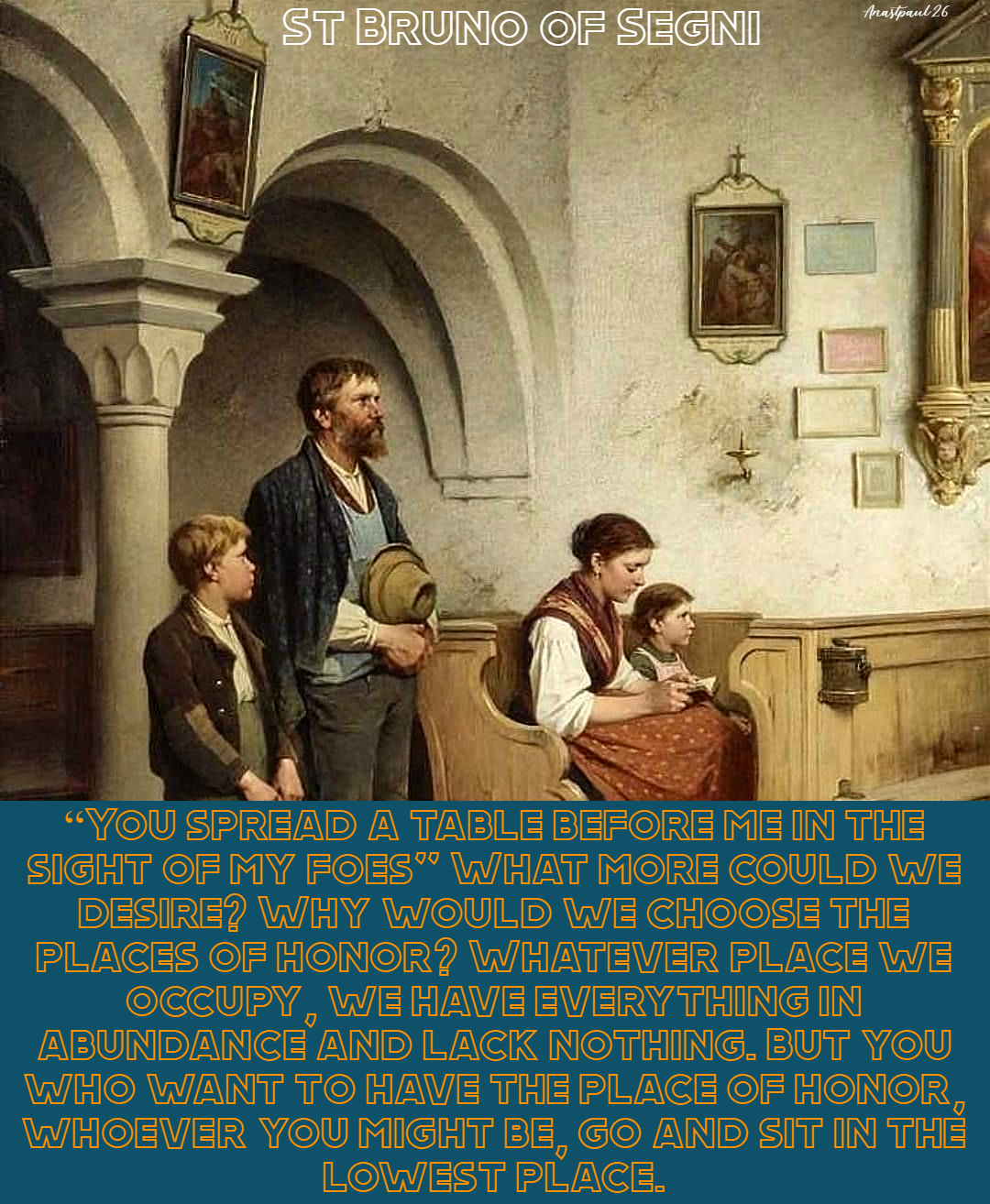
REFLECTION –“You spread a table before me in the sight of my foes” What more could we desire? Why would we choose the places of honor? Whatever place we occupy, we have everything in abundance and lack nothing. But you who want to have the place of honor, whoever you might be, go and sit in the lowest place. Do not let your knowledge make your head swell with pride; do not allow yourself to be exalted by means of your reputation. Instead, the greater you are, the more you must humble yourself in everything and “you will find favor with God”, so much so that at the favorable time he will say to you: “My friend, come up higher,” and “this will win you the esteem of your fellow guests.”
Most certainly, so far as it depended on him, Moses occupied the lowest place. When the Lord wanted to send him to the children of Israel and invited him to come higher, he answered: “If you please, Lord, send someone else, for I am slow of speech.” It is as though he had said: “I am not worthy of such a high function.” Saul also considered himself to be a man of humble condition when the Lord made him king. And in the same way, Jeremiah, afraid to go up to the place of honor, said: “Ah, Lord God! I do not know how to speak; I am too young.” It is thus through humility, not pride, through the virtues, not money that we must seek to occupy the place of honor.
St Bruno of Segni
PRAYER – Heavenly Father, help me to be holy in the way that You have laid out for me. Let me carry out my duties of my state of life to the full and grant me the grace to carry my crosses in honour of You. Only in You may I attain holiness, learning to give myself, my will, my heart and my soul only to You. Mary Holy Sorrowful Virgin and Glorious Mother of Christ Jesus, we ask for your intercession. We make our prayer in unity with Our Lord Jesus Christ and the Holy Spirit, one with You, now and forever, amen.
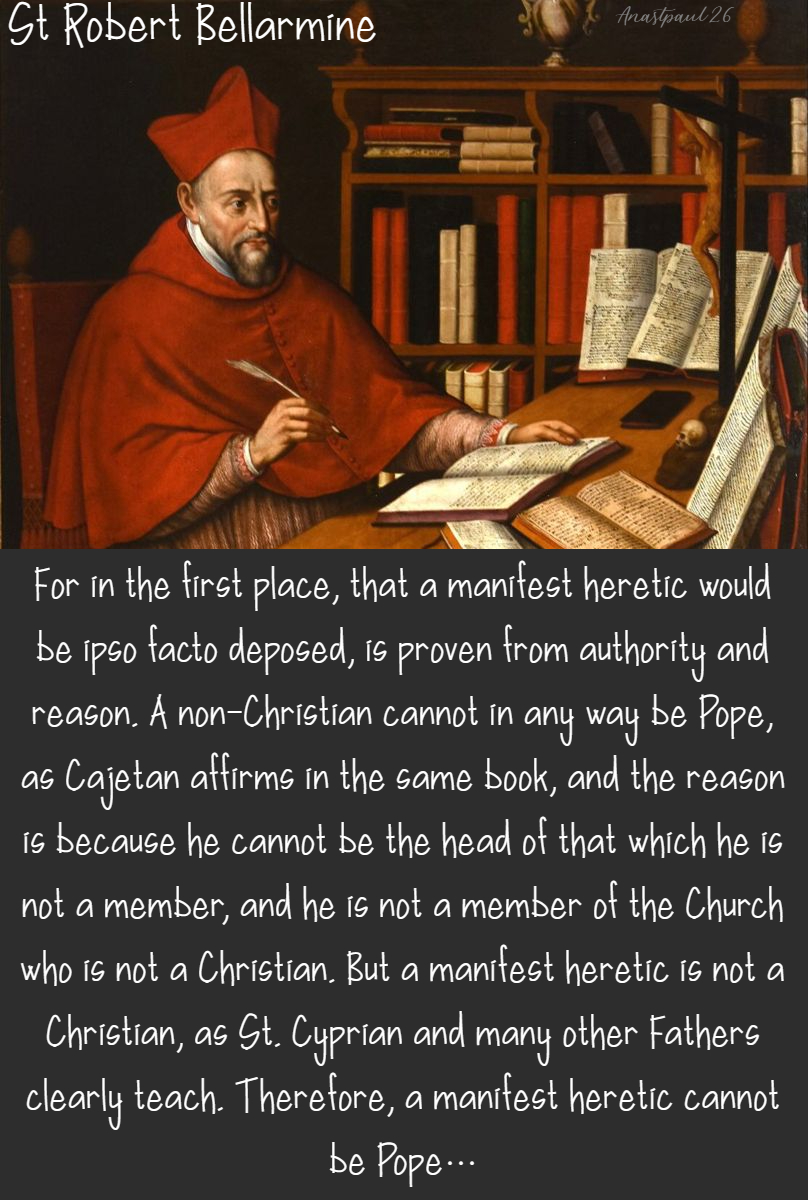
For in the first place, that a manifest heretic would be ipso facto deposed, is proven from authority and reason. A non-Christian cannot in any way be Pope, as Cajetan affirms in the same book, and the reason is because he cannot be the head of that which he is not a member, and he is not a member of the Church who is not a Christian. But a manifest heretic is not a Christian, as St. Cyprian and many other Fathers clearly teach. Therefore, a manifest heretic cannot be Pope….
The school of Christ is the school of love. In the last day, when the general examination takes place … Love will be the whole syllabus.
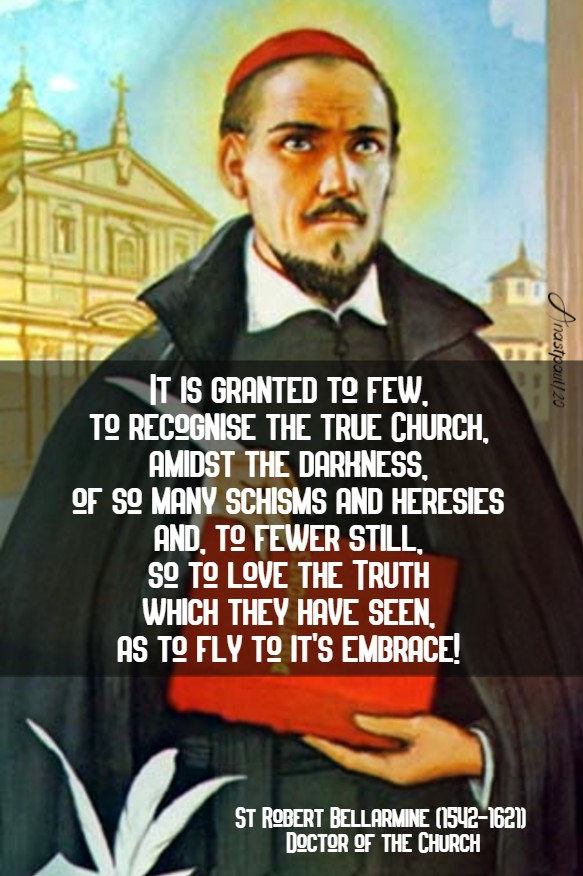
It is granted to few, to recognise the true Church, amidst the darkness, of so many schisms and heresies and, to fewer still, so to love the Truth which they have seen, as to fly to it’s embrace!
Even in a world which is being shipwrecked, remain brave and strong.
All of creation is a song of praise to God.
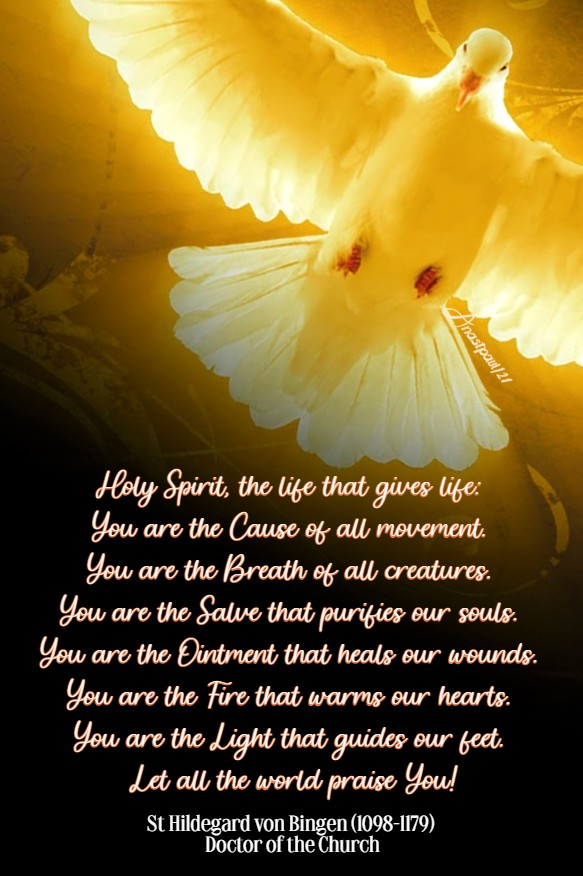
Holy Spirit, the life that gives life: You are the Cause of all movement. You are the Breath of all creatures. You are the Salve that purifies our souls. You are the Ointment that heals our wounds. You are the Fire that warms our hearts. You are the Light that guides our feet. Let all the world praise You!
Reflections on each of the Seven Dolors of Mary by St Alphonsus Liguori
The Piercing of the Side of Jesus and His Descent From the Cross
And now we are to consider to-day the sixth dolor which afflicted this sorrowful mother. Attend and weep. Hitherto the dolors of Mary tortured her one by one, but to-day they are all united to assail her.
That the joy of the following Paschal Sabbath should not be disturbed, the Jews wished the body of Jesus to be taken down from the cross; but because they could not take down a criminal until he was dead, they came with iron mallets to break his legs, as they had already done to the two thieves crucified with him. And Mary, while she remains weeping at the death of her Son, sees those armed men coming towards her Jesus. At this sight she first trembled with fear, then she said : Ah, my Son is already dead, cease to maltreat him, and cease to torture me a poor mother longer. She implored them not to break his legs : “Oravit eos, ne frangerent crura,” as St. Bonaventure writes. But while she is thus speaking, oh, God she sees a soldier with violence brandishing a spear, and piercing the side of Jesus : “One of the soldiers with a spear opened his side, and immediately there came out blood and water.” The cross shook at the stroke of the spear, and, as was revealed to St. Bridget, the heart of Jesus was divided : “Ita ut ambae paries essent divisse.” There came out blood and water, for only a few drops of blood remained, and those also the Saviour wished to shed, in order to show that he had no more blood to give us. The injury of that stroke was offered to Jesus, but the pain was inflicted on Mary: Christ, says the devout Lanspergius, shared with his mother the infliction of that wound, for he received the insult and his mother the pain. The holy Fathers explain this to be the very sword predicted to the Virgin by St. Simeon ; a sword, not of iron, but of grief, which pierced through her blessed soul in the heart of Jesus, where it always dwelt. Thus, among others, Si. Bernard says: The spear which opened his side passed through the soul of the Virgin, which could not be torn from the heart of Jesus. And the divine mother herself revealed the same to St. Bridget, saying: When the spear was drawn out, the point appeared red with blood; then I felt as if my heart were pierced when I saw the heart of my most dear Son pierced.” The angel told St. Bridget, that such were the sufferings of Mary, that she was saved from death only by the miraculous power of God. In her other dolors she at least had her Son to compassionate her; and now she had not even him to take pity on her.
The afflicted mother, still fearing that other injuries might be inflicted on her Son, entreats Joseph of Arimathea to obtain from Pilate the body of her Jesus, that at least after his death she may be able to guard it and protect it from injuries. Joseph went to Pilate, and made known to him the sorrow and the wish of this afflicted mother; and St. Anselm thinks that compassion for the mother softened the heart of Pilate, and moved him to grant her the body. of the Saviour. And now Jesus is taken from the cross. Oh most holy Virgin, after thou with so great love hadst given thy Son to the world for our salvation, behold the world returns him to thee again! But oh, my God, how dost thou return him to me? said Mary to the world. My Son was white and ruddy: “Dilectus meus candidus et rubicundus:” but thou hast returned him to me blackened with bruises, and red, not with a ruddy color, but with the wounds thou hast inflicted upon him; he was beautiful, now there is no more beauty in him; he is all deformity. All were enamored with his aspect, now he excites horror in all who look upon him. Oh, how many swords, says St. Bonaventure, pierced the soul of this mother, when she received the body of her Son after it was taken from the cross: ” O quot gladii animam matris pertransierunt!” Let us consider what anguish it would cause any mother to receive the lifeless body of a son!
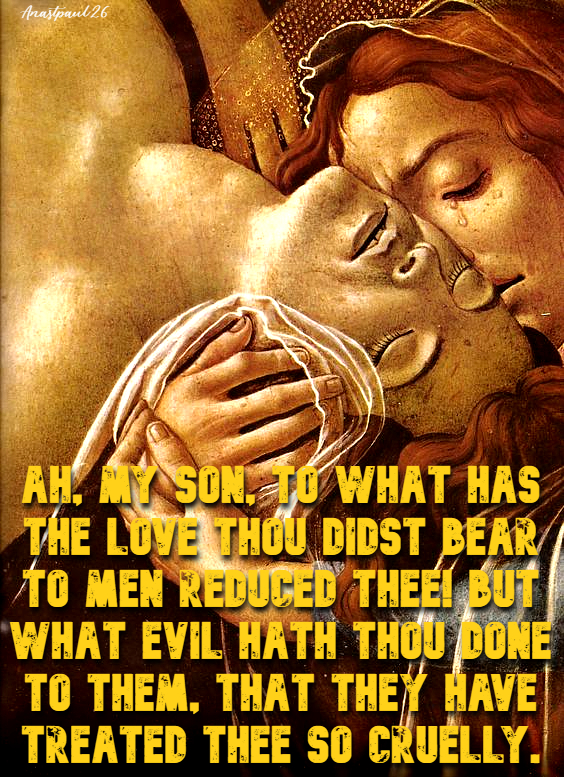
She sees his mouth open, his eye shut, she examines the lacerated flesh, and those exposed bones; she takes off the crown, and sees the cruel injury made by those thorns, in that sacred head; she looks upon those pierced hands and feet, and says: Ah, my Son, to what has the love thou didst bear to men reduced thee!But what evil hath thou done to them, that they have treated thee so cruelly. Thou wast my Father, Bernardino de Bustis imagines her to say, my brother, my spouse, my delight, my glory, my all. Oh, my Son, behold how I am afflicted, look upon me and console me; but thou dost look upon me no more. Speak, speak to me but one word, and console me; but thou dost speak no more, for thou art dead. Then turning to those barbarous instruments, she said: Oh cruel thorns, oh nails, oh merciless spear, how could you thus torture your Creator? But what thorns, what nails? Alas! sinners, she exclaimed, it is you who have thus cruelly treated my Son.
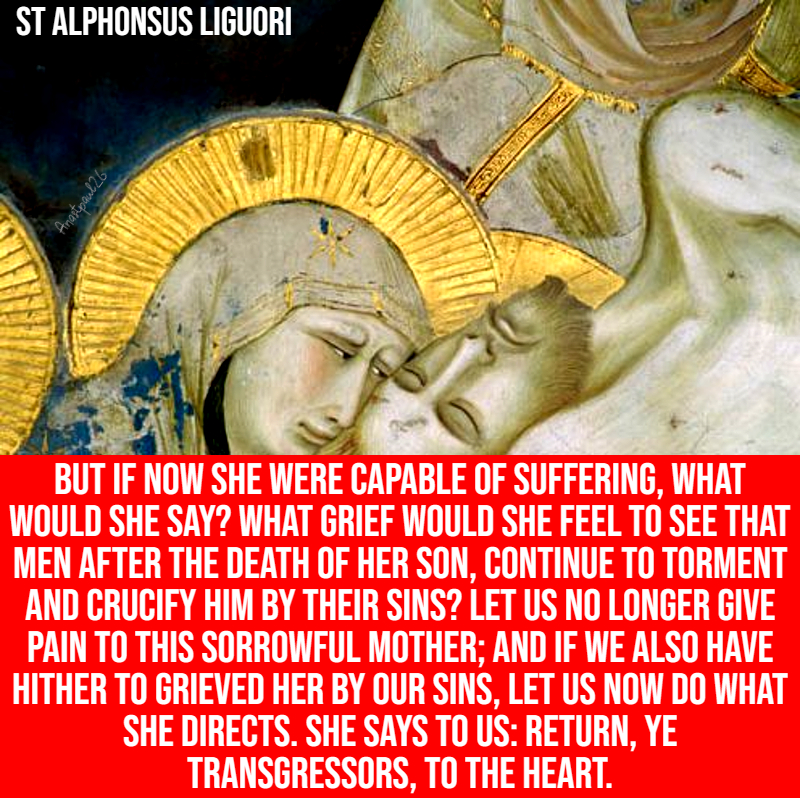
Thus Mary spoke and complained of us. But if now she were capable of suffering, what would she say? What grief would she feel to see that men after the death of her Son, continue to torment and crucify him by their sins? Let us no longer give pain to this sorrowful mother; and if we also have hither to grieved her by our sins, let us now do what she directs. She says to us: Return, ye transgressors, to the heart: “Redite, prsevaricatores, ad cor.” Sinners, return to the wounded heart of my Jesus; return as penitents, for he will receive you. Flee from him to him, she continues to say with Guerric the Abbot; from the Judge to the Redeemer, from the tribunal to the cross.
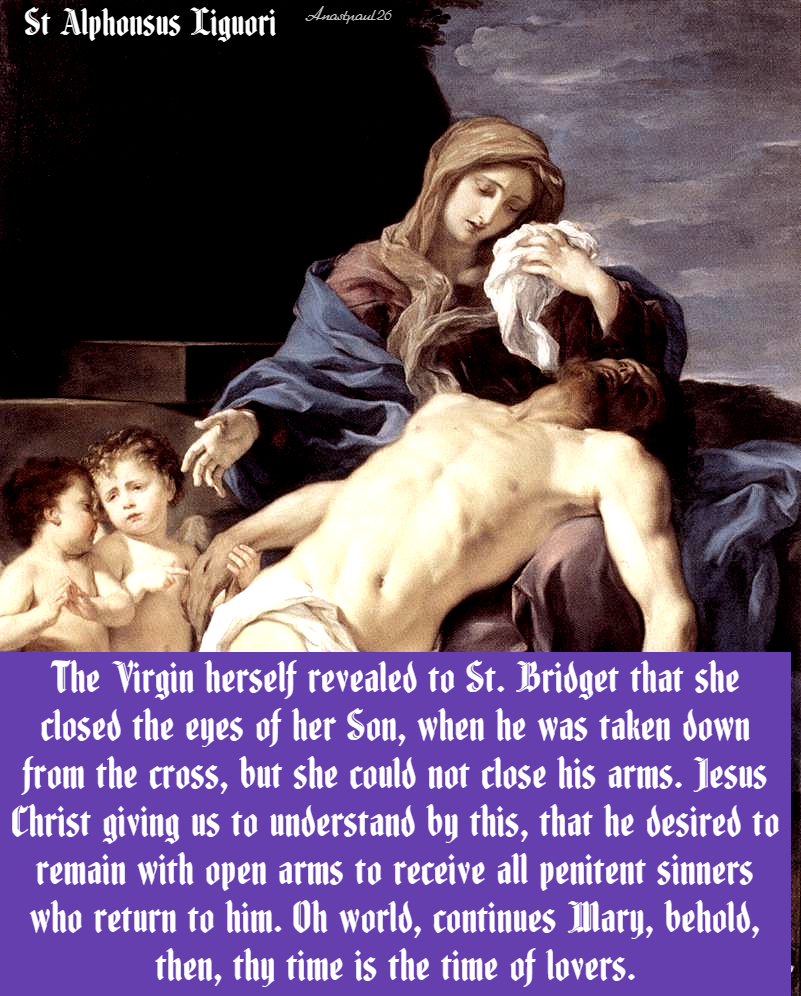
The Virgin herself revealed to St. Bridget that she closed the eyes of her Son, when he was taken down from the cross, but she could not close his arms: “Ejus brachia flectere non potui.” Jesus Christ giving us to understand by this, that he desired to remain with open arms to receive all penitent sinners who return to him. Oh world, continues Mary, behold, then, thy time is the time of lovers.
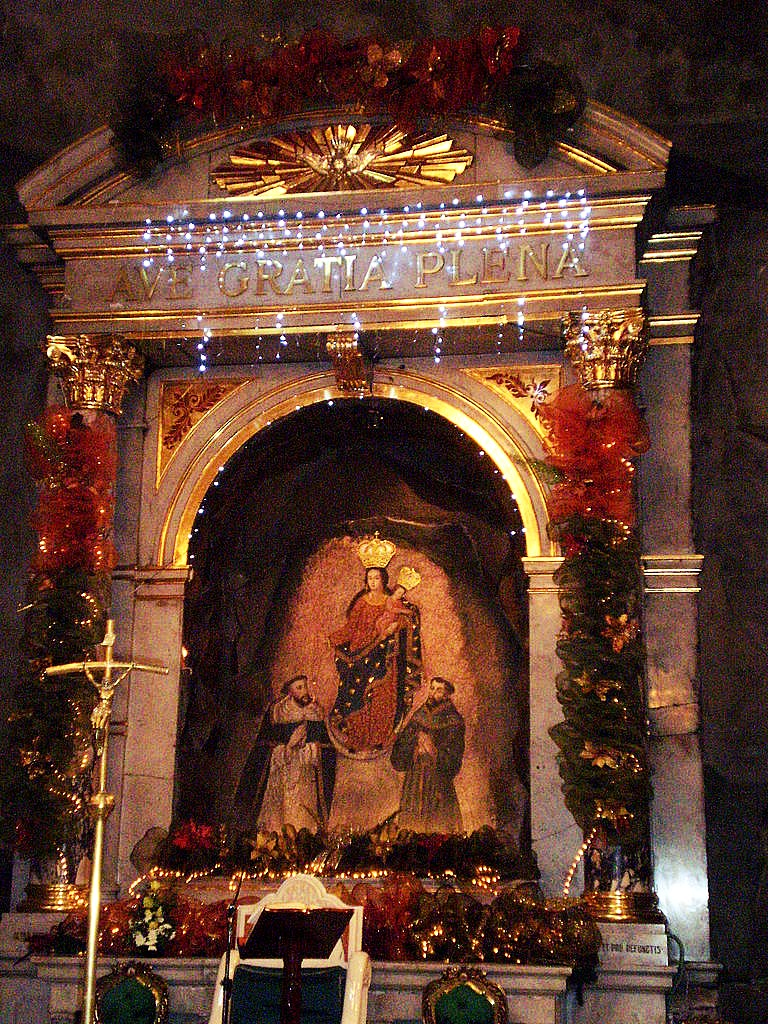
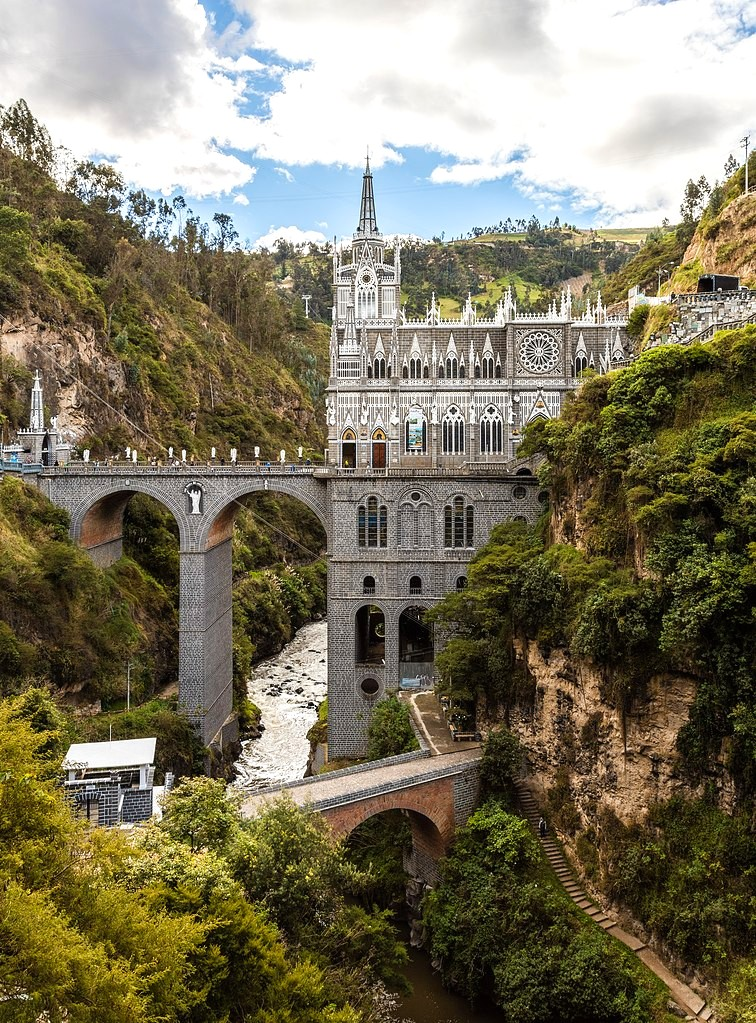
Nuestra Señora de las Lajas / Our Lady of the Flagstones, Potosí, Caldas, Colombia (1754) – 16 September:
In 1754, Maria Mueses de Quinones, an Indian woman from the village of Potosi, Colombia and her deaf-mute daughter, Rosa, were caught in a very strong storm. They sought refuge in a cave in the gigantic Lajas mountains. To Maria’s surprise, her mute daughter, Rosa exclaimed with her first words “the mestiza is calling me…” Maria did not see the figures of a woman and child that the girl described and fearfully ran back with her daughter to Ipiales and told the townspeople. After later returning to the spot, the woman saw an apparition of Our Lady and Child. Some months later, Rosa died and was returned to life when her mother prayed again at the cave. The townspeople came to see this place and encountered the miraculous image burned into the rocks!
The congregation celebrated the first Mass in the Pastarán river cave – it was 16 September 1754 and they built a straw grotto. With the endorsement of the ecclesiastical authorities, who declared the event as a miracle on 15 September 1754. Very soon, the image began to be venerated with great fervour and many miraculous events occurred there.
Around the image the faithful devotees have erected four successively larger Churches, until culminating in the current Sanctuary whose construction lasted 30 years and was completed in 1949. In 1952 , Pope Pius XII granted the image the canonical coronation and in 1954 he granted the Sanctuary, the title of Minor Basilica.
St Abundantius of Rome St Abundius of Rome St Andrew Kim Taegon St Cunibert of Maroilles St Curcodomus Bl Dominic Shobyoye St Dulcissima of Sutri St Edith of Wilton St Eugenia of Hohenburg St Euphemia (c 290-c 305) Virgin Martyr St Geminianus of Rome St John of Rome
Blessed Luigi Ludovico Allemandi (c 1390-1450) Bishop and Cardinal, called “The Cardinal of Arles.” Blessed Luigi was a Priest driven by immense love for the Holy Mother of God and for the Church. His involvement in various Councils and Papal dissentions, were the result of his great desire to maintain the purity of the Chair of Peter. He was Beatified in 1527 by Pope Clement VII.
St Lucy of Rome St Ludmila St Marcian the Senator Bl Martin of Huerta Bl Michael Himonaya
St Ninian (Died 432) “Apostle to the Southern Picts,” Bishop, Missionary, Monastic Founder, Wonderworker.
Bl Paul Fimonaya St Priscus of Nocera St Rogellus of Cordoba St Sebastiana St Servus Dei St Stephen of Perugia
Blessed Pope Victor III OSB (1027-1087) Known as “the Gentle Pope,” Prince, Benedictine Abbot, Monk, Advisor, diplomat, reformer – Papal ascension – elected 24 May 1086 and enthroned on 9 May 1087 – until his death. Few have been more reluctant to accept the Papacy than the humble Monk and Hermit, who became Victor III.
St Vitalis of Savigny
Martyrs of the Via Nomentana: Four Christian men martyred together, date unknown – Alexander, Felix, Papias and Victor. They were martyred on the Via Nomentana outside Rome, Italy.
Martyred in the Spanish Civil War: • Blessed Antonio Martínez García • Blessed Ignasi Casanovas Perramón • Blessed Manuel Ferrer Jordá • Blessed Pablo Martínez Robles • Blessed Salvador Ferrer Cardet
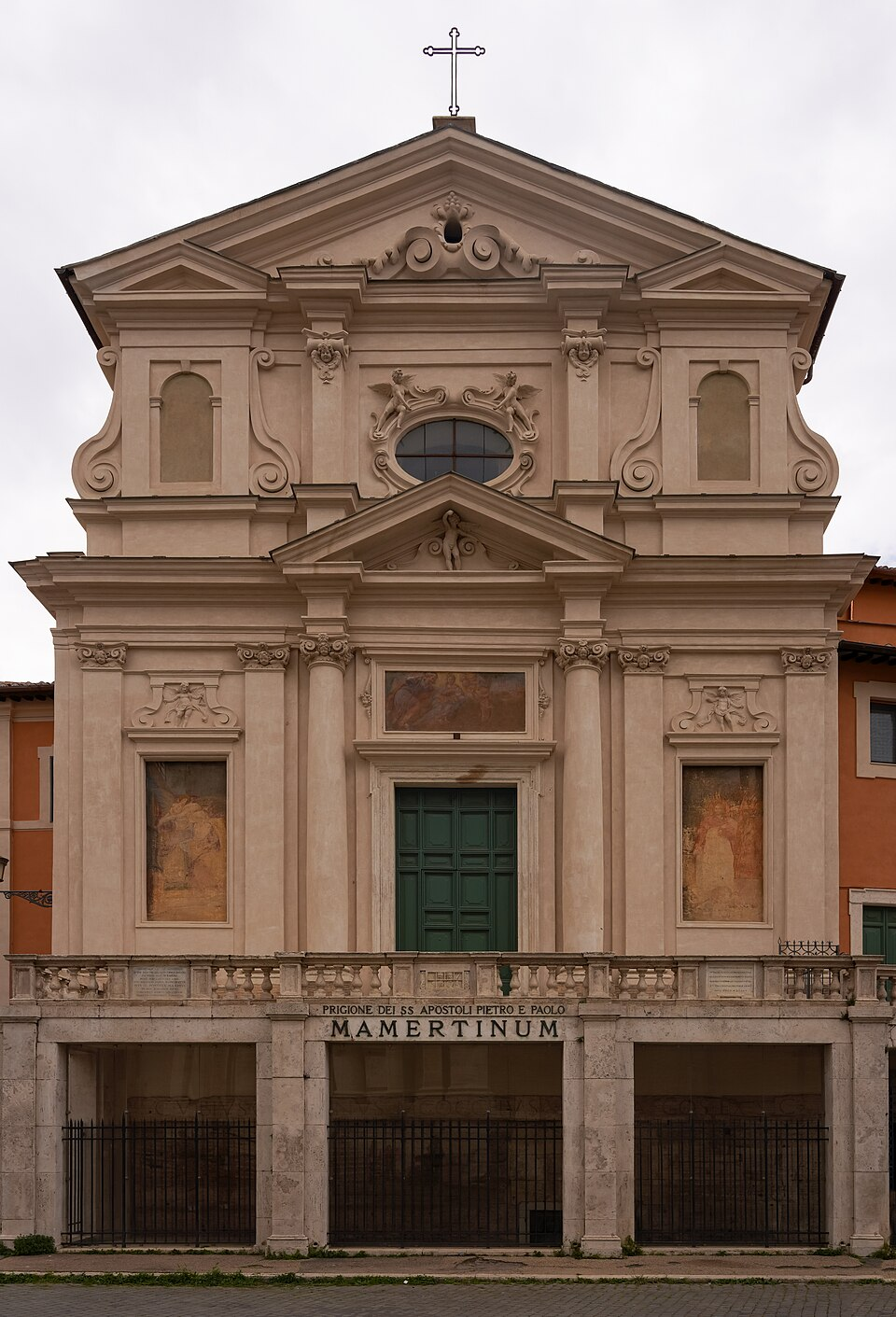
Saints Abundius and Abundantiusof Rome were martyrs who killed during the Diocletian persecution in the year 304. Abundius was a priest and Abundantius a deacon. The emperor ordered them to be arrested on suspicion of Christianity. When they refused to sacrifice to Hercules, they were tortured at Mamertine prison, and condemned to be beheaded. On the way to execution the two passed Senator Marcian who was grieving over his son John who had just died. Abundius prayed over John, and the boy returned to life; Marcian and John converted to Christianity on the spot.
Prison of the Holy Apostles Peter & Paul (Mamertinum)
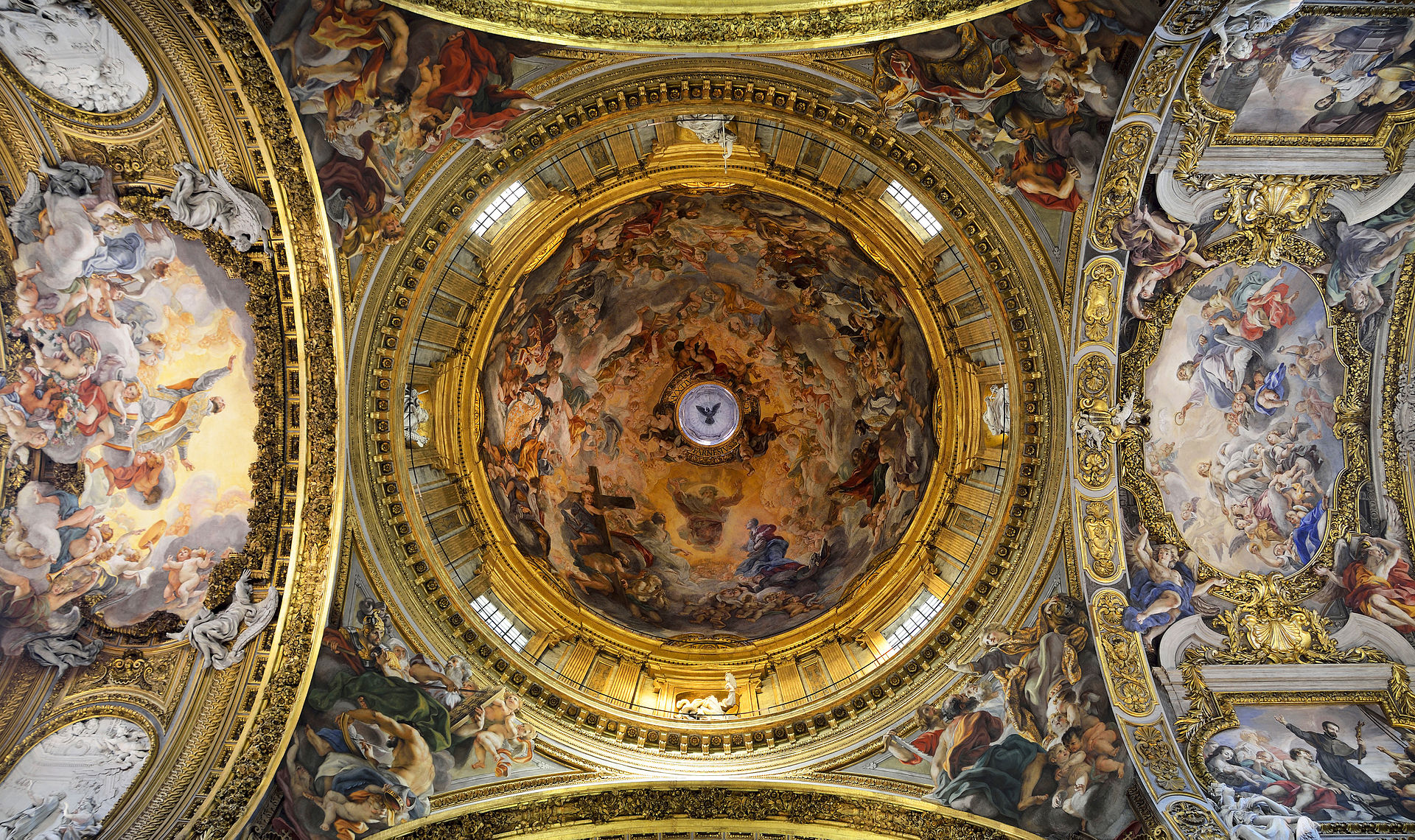
The executions were carried out at the 26th milestone of the Via Flaminia. Their bodies were later transferred to the church of Cosmas and Damian in Rome. The bodies of Marcianus and John were found around 1001 and transferred to Civita Castellana. In 1583, the relics of Abundius and Abundantius were transferred to the SS. Nome di Gesu, where they were placed under the church’s high altar. Aloysius Gonzaga heard mass there before becoming a Jesuit.
Church of the Gesù
For in him whom then with a latent foreboding of divinity they were in such wise demanding, they were seeking not only a priest — but moreover a future martyr.
O Mary, make me live in God, with God, and for God.
(300 days every time said)
Mary, mother of grace, mother of mercy, protect us from the enemy and receive us at the hour of death.
(300 days every time said)
Remember, O Virgin Mother of God, when thou standest in the sight of the Lord, to speak good things in our behalf, and thus He may avert His indignation from us.
(300 days every time said)
May the Virgin Mary with her loving Child bless us.
(300 days every time said)
Thou art my mother, O Virgin Mary; defend me lest I should ever provoke thy most beloved Son, and grant that I may always and in everything please Him.
(300 days every time said)
O Virgin Mary, thou hast been blessed by the Lord God on high before all women on earth.
(300 days every time said)
Most worthy queen of the world, Mary ever Virgin, intercede for our peace and salvation, thou who didst bring forth Christ the Lord, the Saviour of all.
(300 days every time said)
Holy Mother of God, pray for me. Hail Mary, etc.
(300 days every time said thrice before a representation of the Blessed Virgin Mary)
Hail, O queen, mother of mercy, hail, our life, our sweetness, and our hope. To thee do we cry, poor banished children of Eve, to thee do we send up our sighs, mourning and weeping in this vale of tears. Turn then, most gracious advocate, thine eyes of mercy toward us. And after this our exile show unto us the blessed fruit of thy womb, Jesus. O clement, O loving, O sweet Virgin Mary.
(5 years every time said. Plenary indulgence at the point of death to those who have frequently said it during life)
One Minute Reflection – 16 September – “Month of the Seven Sorrows of the Blessed Virgin Mary ” – Readings: Ps 78:11; 78:12; 78:10, Ps 78:1, Wis 3:1-8, Luke 21:9-19
The souls of the just are in the hands of God, and no torment of death shall touch them. They seemed, in the view of the foolish, to be dead; and their passing away was judged an affliction, and their going forth from us, utter destruction. But they are in peace.
Wis 3:1-8
REFLECTION – Do you want to come to that life where you will be sheltered from error forever? Who does not want this? We all desire life and truth but how are we to attain it? What path are we to follow? Certainly, we have not reached the end of the journey yet we can already see it, we yearn for life and truth. Christ is both one and the other. What is the way to it? “I am the way,” he says. To what will we come? “I am the truth and the life”.
This is what the martyrs loved; this is why they looked beyond the love of present goods that pass away. Don’t be astonished at their bravery: in them love overcame suffering.Let us walk in their footsteps, our eyes fixed on him who is both their Leader and ours. If we would come to so great a happiness, let us not be afraid of treading difficult paths. He who has promised is true; he is faithful; he could not deceive us. Why fear the hard road of suffering and tribulation? Our Saviour in person has trodden it.
You answer: “But that was him, the Saviour!” Know that the apostles passed that way too. Now you’re going to say: “But they were apostles!” Yes, I know. But don’t forget that a great many people like yourself have trodden it in their turn, women have trodden it, too children, even young girls have gone that way. How could the road that so many passers-by have levelled still be too hard?
Saint Augustine
PRAYER – Look upon us Lord, Creator and Ruler of the whole world, give us the grace to serve You with all our hearts, to take up our cross and follow You, that we may come to know the power of Your love and the forgiveness which You give and You teach. Grant that by the intercession of Sts Cornelius and Cyprian, we may attain the glory of Your kingdom and see You face to face. We make our prayer through Christ our Lord with the Holy Spirit, one God forever, amen.
Look at the havoc which hail and storm spread around our gardens and orchard, look at the rot fast spreading amongst the cattle, look at the winds and hurricane which toss the ships at sea. This is only but a feeble image of the ravages of sin in a soul. Mortal sin destroys the merits of good works, corrupts every faculty of the mind, and leads the sinner on to certain death.
Manna suited everyone’s taste, in like manner the Word of God, which is preached to all throughout the world, supplies the wants of all kinds of persons, and according as it is listened to by those of ordinary intelligence it will be found – as did the manna of old – to be suitable to everyone’s taste.
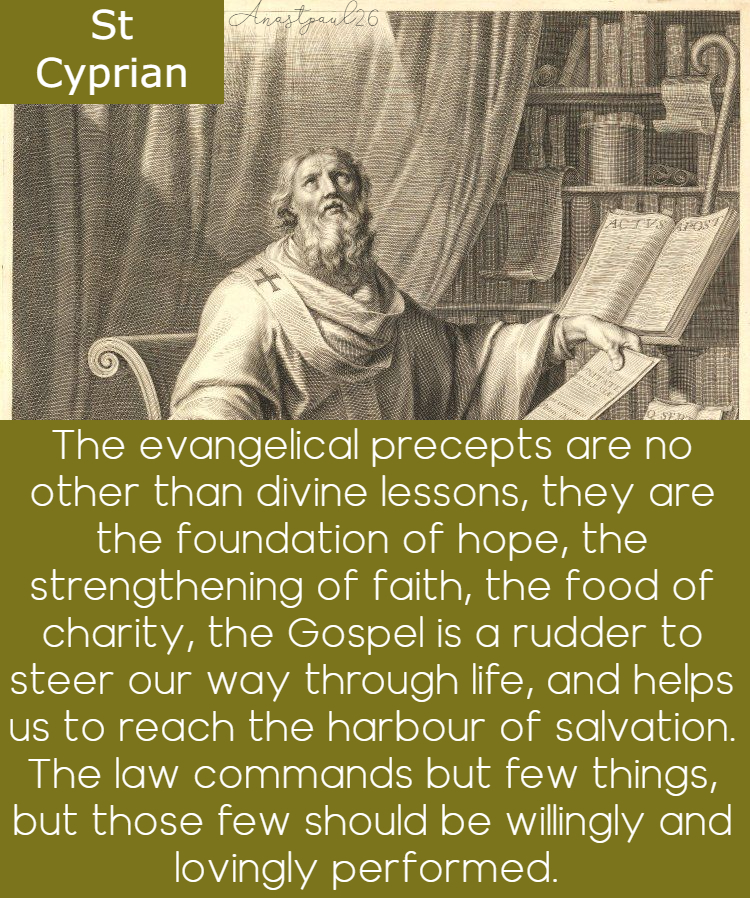
The evangelical precepts are no other than divine lessons, they are the foundation of hope, the strengthening of faith, the food of charity, the Gospel is a rudder to steer our way through life, and helps us to reach the harbour of salvation. The law commands but few things, but those few should be willingly and lovingly performed.
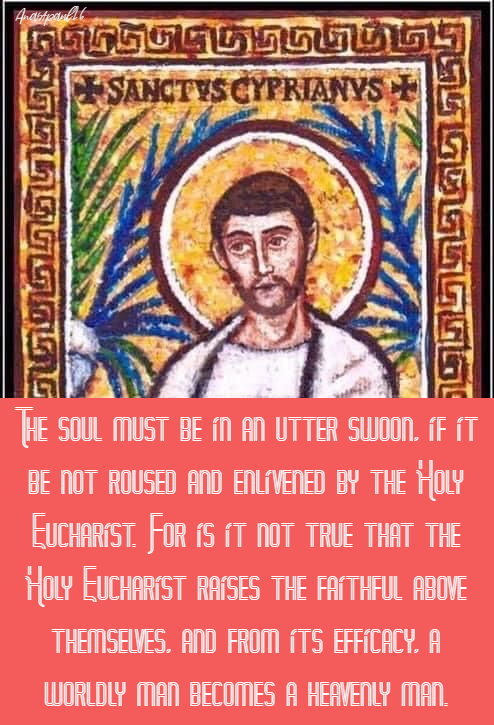
The soul must be in an utter swoon, if it be not roused and enlivened by the Holy Eucharist. For is it not true that the Holy Eucharist raises the faithful above themselves, and from its efficacy, a worldly man becomes a heavenly man.
Envy is as prolific as it is hurtful, it is the root of all evil, the source of endless disorder and misery, the cause of most sins that are comitted.
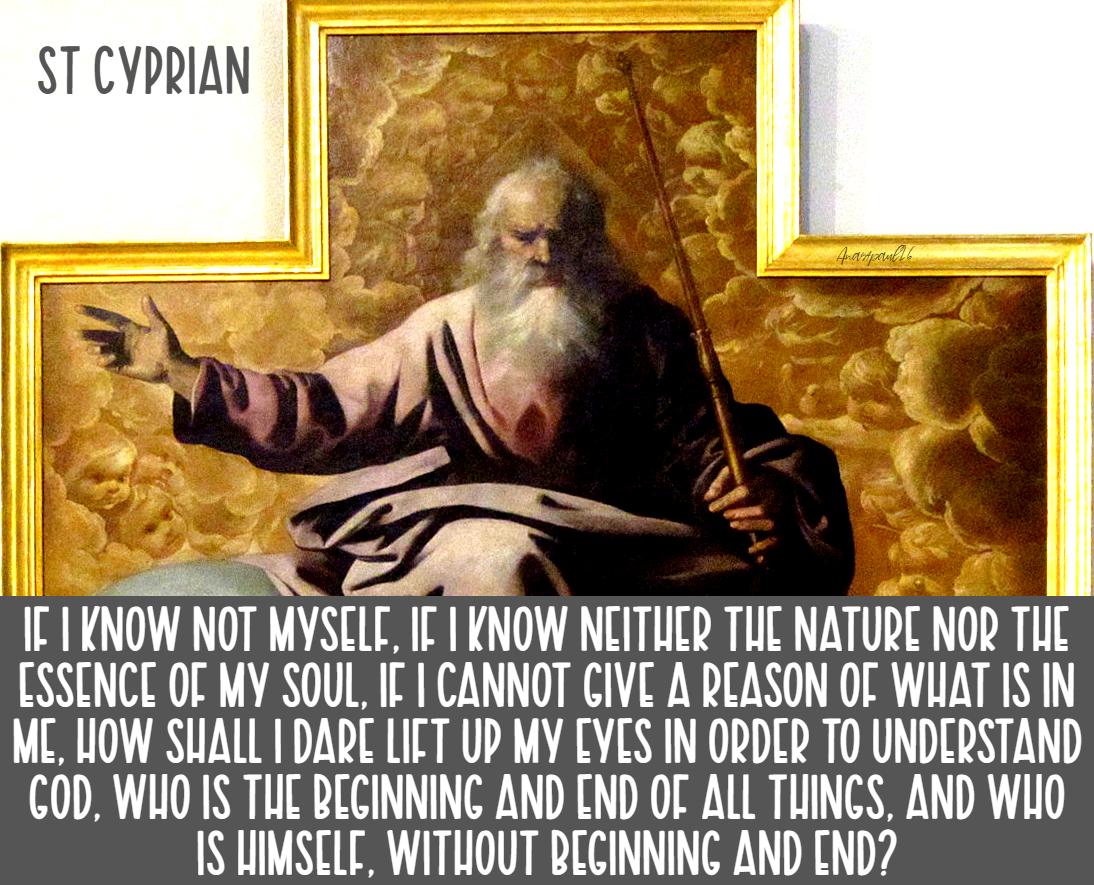
If I know not myself, if I know neither the nature nor the essence of my soul, if I cannot give a reason of what is in me, how shall I dare lift up my eyes in order to understand God, who is the beginning and end of all things, and who is Himself, without beginning and end?
Reflections on each of the Seven Dolors of Mary by St Alphonsus Liguori
The Death of Jesus
And now we have to admire a new sort of martyrdom, a mother condemned to see an innocent son, whom she loved with all the affection of her heart, put to death before her eyes, by the most barbarous tortures. There stood by the cross of Jesus his mother: “Stabat autem juxta crucem mater ejus.” There is nothing more to be said, says St. John, of the martyrdom of Mary: behold her at the foot of the cross, looking on her dying Son, and then see if there is grief like her grief.
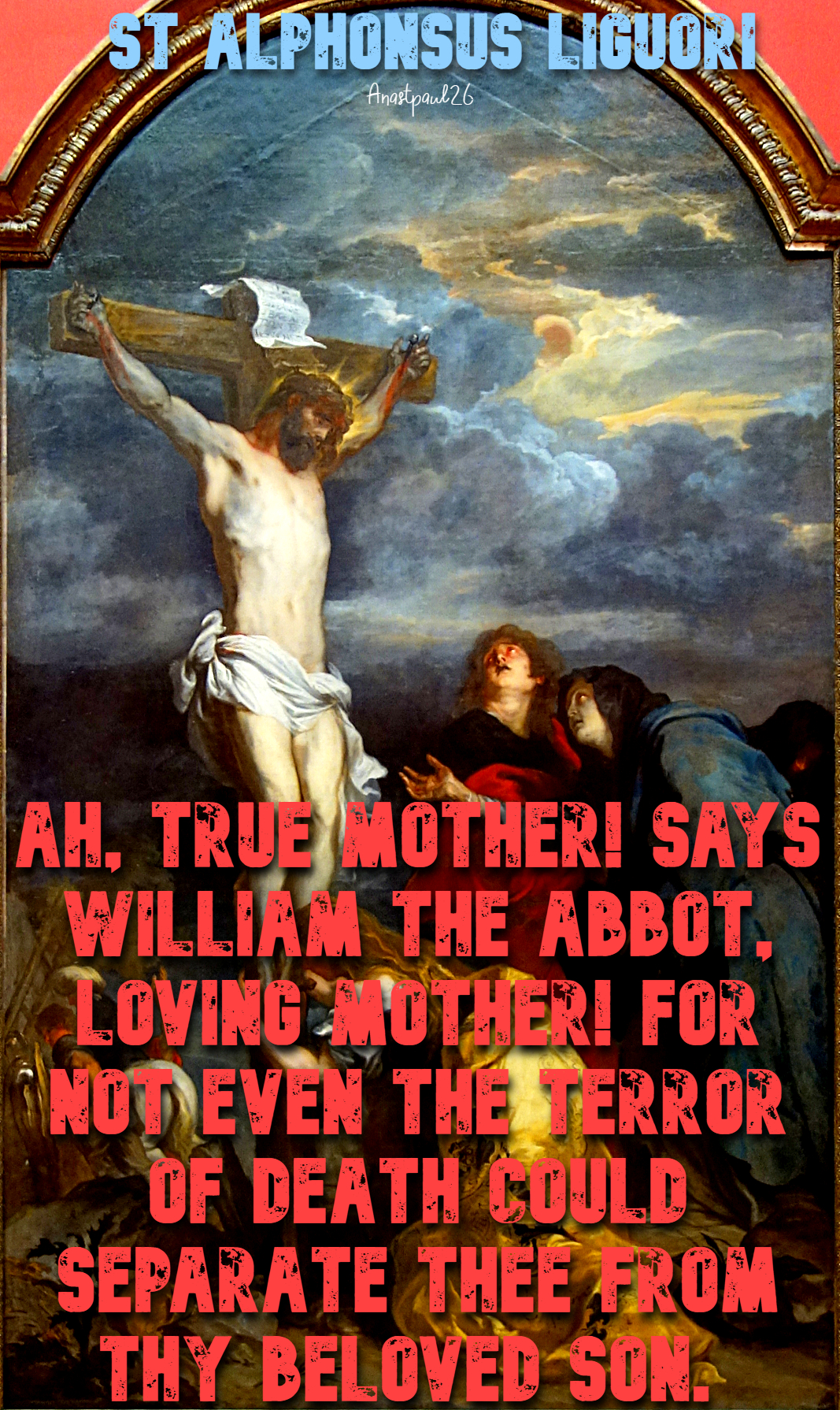
As soon as our afflicted Redeemer had ascended the hill of Calvary, the executioners stripped him of his garments, and piercing his sacred hands and feet with nails, not sharp, but blunt: “Non acutis, sed obtusis;” as St. Bernard says, and to torture him more, they fastened him to the cross. When they had crucified him, they planted the cross, and thus left him to die. The executioners abandon him, but Mary does not abandon him. She then draws nearer to the cross, in order to assist at his death. But what did it avail, oh Lady, says St. Bonaventure, to go to Calvary to witness there the death of this Son? Shame should have prevented thee, for his disgrace was also thine, because thou wast his mother; or, at least, the horror of such a crime as that of seeing a God crucified by his own creatures, should have prevented thee. But the saint himself answers: Thy heart did not consider the horror, but the suffering: “Non considerabat cor tuum horrorem, sed dolorem.” Ah, thy heart did not then care for its own sorrow, but for the suffering and death of thy dear Son; and therefore thou thyself didst wish to be near him, at least to compassionate him. Ah, true mother! says William the Abbot, loving mother! for not even the terror of death could separate thee from thy beloved Son. But, oh God, what a spectacle of sorrow, to see this Son then in agony upon the cross, and under the cross this mother in agony, who was suffering all the pain that her Son was suffering!
Mary also suffered all these pains of Jesus. Every torture inflicted on the body of Jesus, says St. Jerome, was a wound in the heart of the mother. Any one of us who should then have been on Mount Calvary, would have seen two altars, says St. John Chrysostom, on which two great sacrifices were consummating, one in the body of Jesus, the other in the heart of Mary. But rather would I see there, with St. Bonaventure, one altar only, namely, the cross alone of the Son, on which, with the victim, this divine Lamb, the mother also was sacrificed.
Mothers fly from the presence of their dying children; but if a mother is ever obliged to witness the death of a child, she procures for him all possible relief; she arranges the bed, that his posture may be more easy; she administers refreshments to him; and thus the poor mother relieves her own sorrows. Ah, mother, the most afflicted of all mothers! oh Mary, it was decreed that thou shouldst be present at the death of Jesus, but it was not given to thee to afford him any relief.
And what caused her the greatest sorrow was to see that, by her presence and her grief, she increased the sufferings of her Son. The sorrow itself, says St. Bernard, that filled the heart of Mary, in creased the bitterness of sorrow in the heart of Jesus. St. Bernard also says, that Jesus on the cross suffered more from compassion for his mother than from his own pains: he thus speaks in the name of the Virgin: I stood and looked upon him, and he looked upon me; and he suffered more for me than for himself. Passino writes that Jesus Christ himself, speaking one day to the blessed Baptista Varana, of Camerino, said to her, that he was so afflicted on the cross at the sight of his mother in such anguish at his feet, that compassion for his mother caused him to die without consolation. So that the blessed Baptista, being enlightened to know this suffering of Jesus, exclaimed: Oh my Lord, tell me no more of this thy sorrow, for I can not bear it.
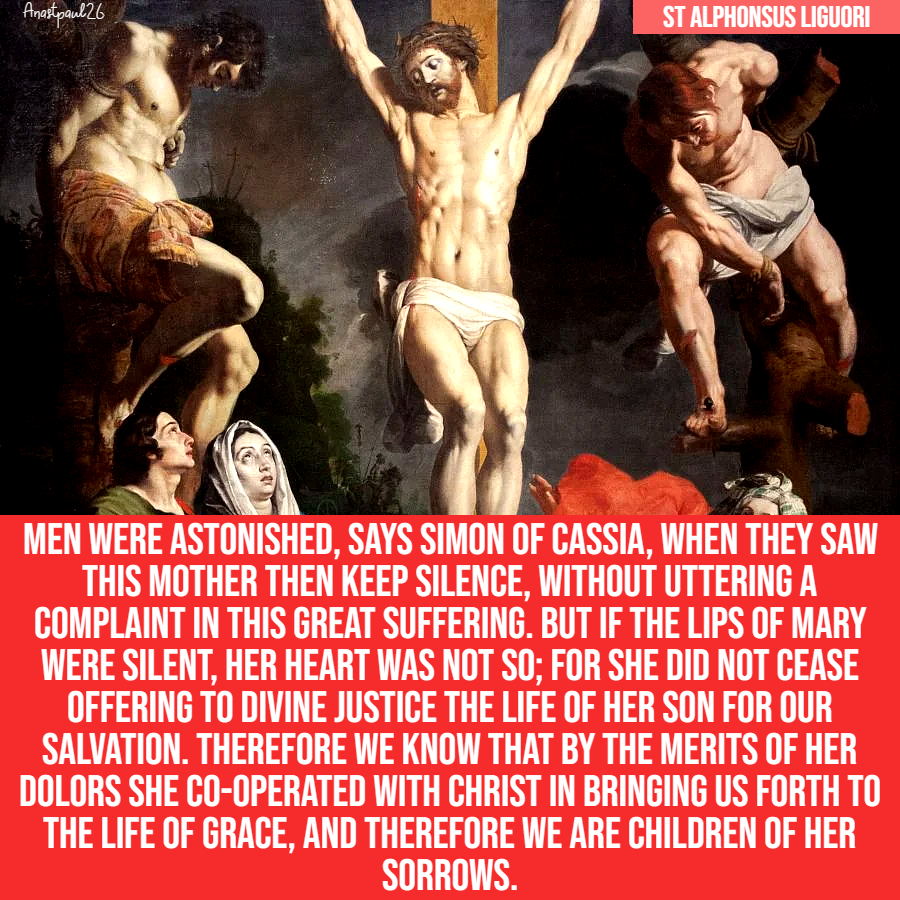
Men were astonished, says Simon of Cassia, when they saw this mother then keep silence, without uttering a complaint in this great suffering. But if the lips of Mary were silent, her heart was not so; for she did not cease offering to divine justice the life of her Son for our salvation. Therefore we know that by the merits of her dolors she co-operated with Christ in bringing us forth to the life of grace, and therefore we are children of her sorrows. And from that time Mary began to perform for us this office of a good mother; for, as St. Peter Damian declares, the penitent thief, through the prayers of Mary, was then converted and saved: Therefore the good thief repented, because the blessed Virgin, standing between the cross of her Son and that of the thief, prayed her Son for him; thus rewarding, by this favor, his former service. For as other authors also relate, this thief, in the journey to Egypt with the infant Jesus, showed them kindness; and this same office the blessed Virgin has ever continued, and still continues to perform.
St Aichardus St Albinus of Lyon Bl Anton Maria Schwartz St Aprus of Toul St Bond of Sens
St Catherine of Genoa (1447-1510) Married laywoman, Mystic, Apostle of the sick, the poor and the needy, Writer. Her body is incorrupt and rests in a glass reliquary at the Capuchin Church in Genoa. Catherine’s writings were examined by the Holy Office and declared to contain doctrine that would alone be enough to prove her sanctity and she was accordingly Beatified in 1675 by Pope Clement X and Canonised in 1737 by Pope Clement XII. Her writings also, became sources of inspiration for other religious leaders such as Robert Bellarmine and Francis de Sales and Cardinal Henry Edward Manning. Pope Pius XII declared her Patroness of the hospitals in Italy.
Bl Camillus Constanzo St Emilas of Cordoba St Eutropa of Auvergne St Hernan Bl Jacinto de Los Ángeles and Bl Juan Bautista St Jeremias of Cordoba St Joseph Abibos St Mamillian of Palermo St Melitina St Mirin of Bangor St Nicetas the Goth St Nicomedes of Rome
St Porphyrius the Martyr St Ribert St Ritbert of Varennes Bl Rolando de Medici Bl Tommasuccio of Foligno St Valerian of Châlon-sur-Saône St Valerian of Noviodunum St Vitus of Bergamo Bl Wladyslaw Miegon — Martyrs of Adrianopolis – 3 saints: Three Christian men martyred together in the persecutions of Maximian – Asclepiodotus, Maximus and Theodore. They were martyred in 310 at Adrianopolis (Adrianople), a location in modern Bulgaria.
Martyrs of Noviodunum – 4 saints: Three Christian men martyred together, date unknown – Gordian, Macrinus, Stratone and Valerian. They were martyred in Noviodunum, Lower Moesia (near modern Isaccea, Romania).
Mercedarian Martyrs of Morocco – 6 beati: A group of six Mercedarians who were captured by Moors near Valencia, Spain and taken to Morocco. Though enslaved, they refused to stop preaching Christianity. Martyrs. – Dionisio, Francis, Ildefonso, James, John and Sancho. They were crucified in 1437 in Morocco.
Martyred in the Spanish Civil War: Bl Antonio Sierra Leyva Bl Pascual Penades Jornet
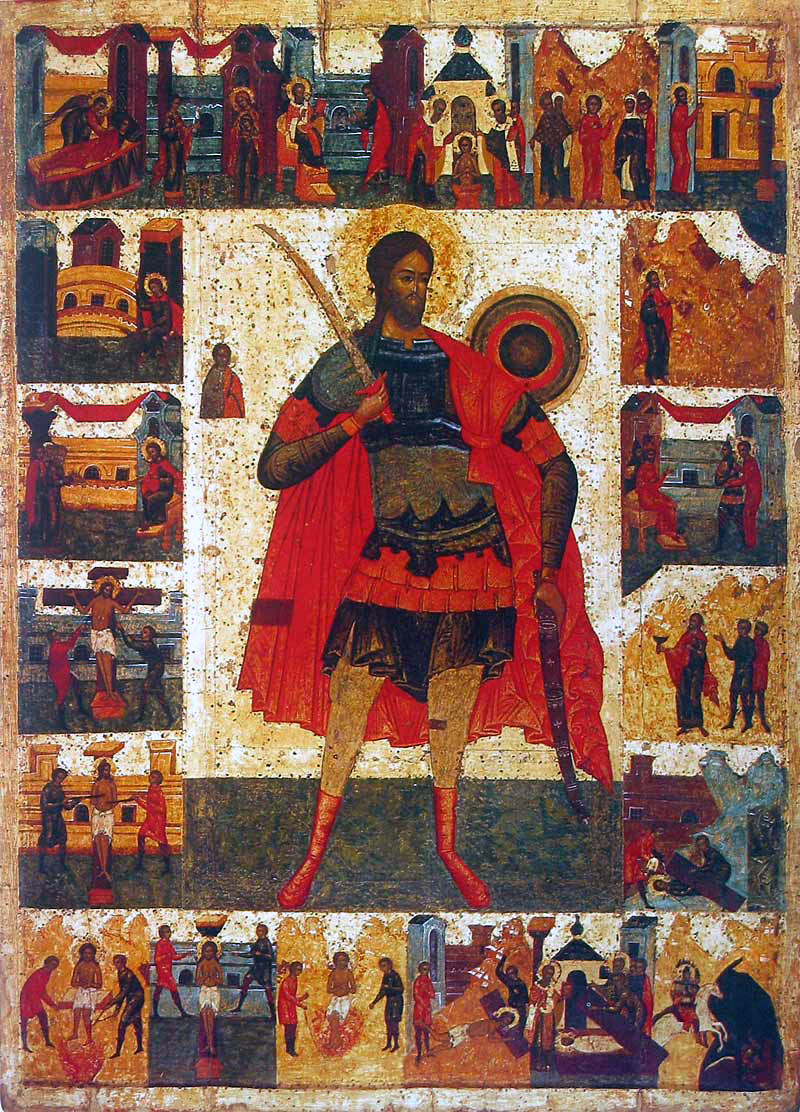
Saint Nicetas the Goth was a soldier and martyr born in the 4th-century, in the Gothic territory north of the Danube River. Coming from the upper class of his people. He was instructed in Christianity by Theophilus of Gothia, a converted bishop, between 325 and 341 AD.
Nicetas received his Greek name on the occasion of his baptism by Theophilus, a participant in the First Ecumenical Council. Pagan Goths began to oppose the spread of Christianity, which resulted in internecine strife. Nicetas fought in the Gothic civil war between the pagan Alaric and the Christian Fritigern. After the defeat of Alaric and after the invention of Gothic alphabets by Ulfilas, Nicetas worked intensely among the Goths for their conversion.
Later, Alaric returned, defeated Fritigern, and resumed his persecution of Christians. The s aint denounced the persecutor for his cruelty and impiety, because he subjected the Christians to severe torments. Nicetas endured many tortures himself and was condemned to the stake in 372. All the while, he hept over his heart, under his robes, an icon of the Blessed Virgin Mary and the Christ Child holding the Cross, carrying this after the Blessed Virgin appeared to him to provide comfort.The devil, shaped as an angel, induced Nicetas to sacrifice to the pagan gods for saving his life; the saint, however, put him to flight by means of prayer and the assistance of St Michael. Although he died at the stake, miraculously the fire did not touch his body, which was buried in Cilicia, and later transferred to Constantinople.
The veneration of this saint gave rise to the Slavic forms of his name: Nikita, Mykyta and Mikita. St Nicetas is prayed to for the preservation of children from birth defects and he is patron of Melendugno, Lecce, Italy.
At what point, then, shall I begin — from what direction shall I approach the description of his goodness, except from the beginning of his faith and from his heavenly birth? Inasmuch as the doings of a man of God should not be reckoned from any point except from the time that he was born of God.
Our Morning Offering – 15 September – “Month of the Seven Sorrows of the Blessed Virgin Mary” and Memorial of the Seven Sorrows of our Mother
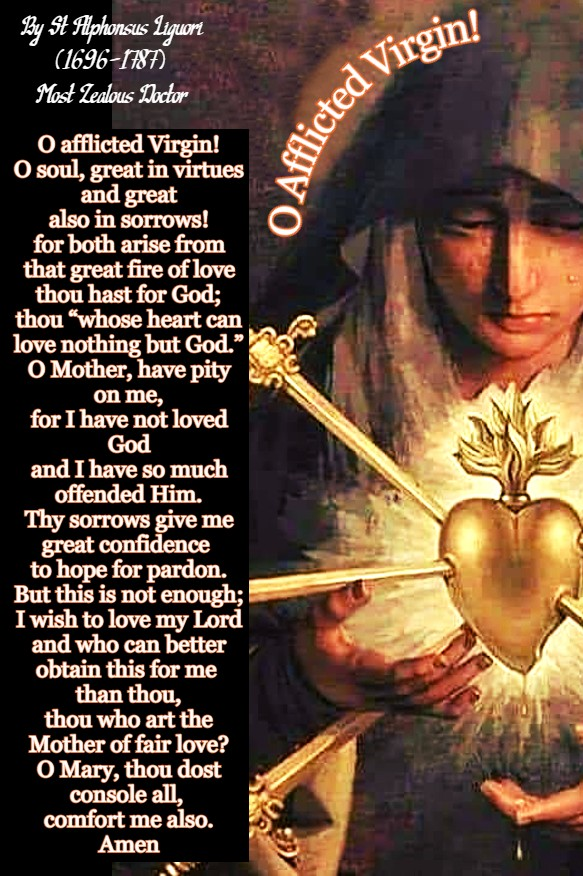
O Afflicted Virgin! By St Alphonsus Liguori (1696-1787) Most Zealous Doctor
O afflicted Virgin! O soul, great in virtues and great also in sorrows! for both arise from that great fire of love thou hast for God; thou “whose heart can love nothing but God.” O Mother, have pity on me, for I have not loved God and I have so much offended Him. Thy sorrows give me great confidence to hope for pardon. But this is not enough; I wish to love my Lord and who can better obtain this for me than thou, thou who art the Mother of fair love? O Mary, thou dost console all, comfort me also. Amen
One Minute Reflection – 15 September – “Month of the Seven Sorrows of the Blessed Virgin Mary” and Memorial of the Seven Sorrows of our Mother – Readings: Jn. 19:25, Jn. 19:26-27, Judith 13:22; 13:25, John 19:25-27
The Lord has blessed you by His power, Who by you has brought our enemies to nought. Blessed are you, O daughter, by the Lord the Most High God, above all women upon the earth.
Judith 13:22; 13:25
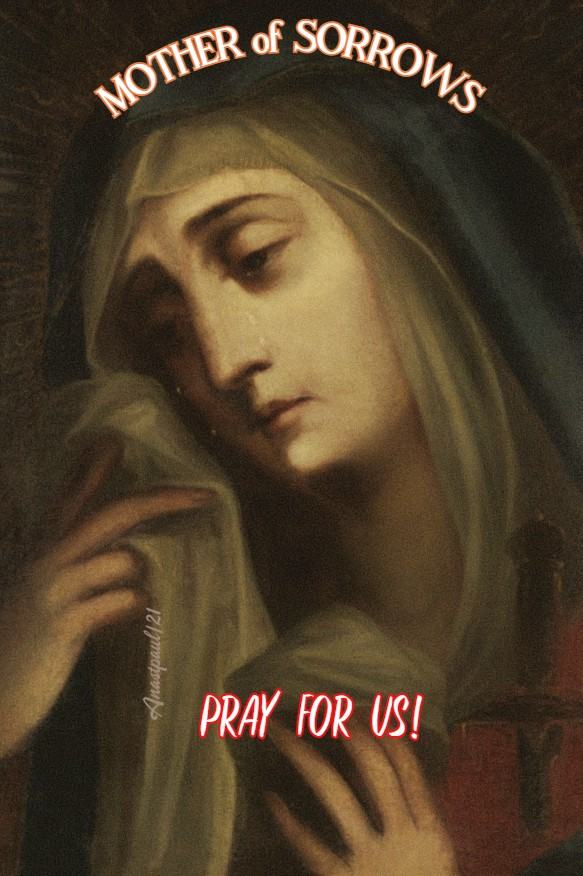
REFLECTION – The martyrdom of the Virgin is suggested both by the prophecy of Simeon and by the very narrative of the passion of the Lord. “This one,” said the old man speaking of the child Jesus, “will be a sign of contradiction, and yourself,” he added to Mary, a sword will pierce her soul “. Yes, blessed mother, your soul, a sword pierced her, and besides, it was only by penetrating her that he entered the flesh of your son. In fact, when your Jesus – which is everyone’s, but especially yours – had returned His Spirit, the cruel lance did not reach its soul. If, not saving him – even dead – it opened his side, it could no longer cause Him pain. But your soul, it pierced: at that moment, his was no longer there, but yours could not turn away from him.
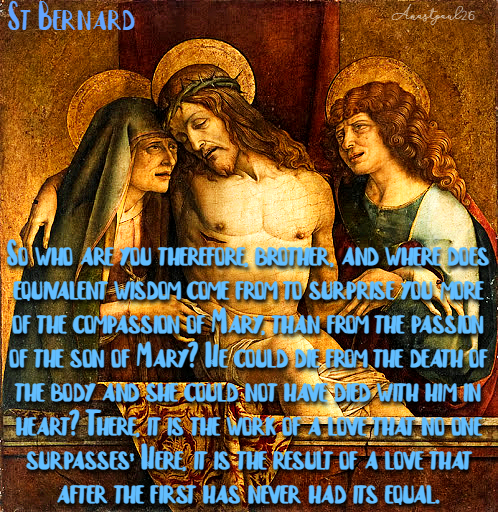
Maybe someone will say, “Didn’t she know in advance that she should die?” Yes, undoubtedly. “Wasn’t she hoping to see him resurrect immediately?” Yes, with confidence. “After that, she suffered when he was crucified?” Certainly, and with what violence! So who are you therefore, brother, and where does equivalent wisdom come from to surprise you more of the compassion of Mary, than from the passion of the son of Mary? He could die from the death of the body and she could not have died with him in heart? There, it is the work of a love that no one surpasses; Here, it is the result of a love that after the first has never had its equal.
Saint Bernard
PRAYER – Our Father, when Jesus Your Son, was raised up on the Cross, it was Your will that Mary, His Mother, should stand there and suffer with Him in her heart. Grant that in union with her, the Church may share in the passion of Christ and so be brought to the glory of His Resurrection. Be our intercessor and our consolation, Our Lady of Sorrows, amen.
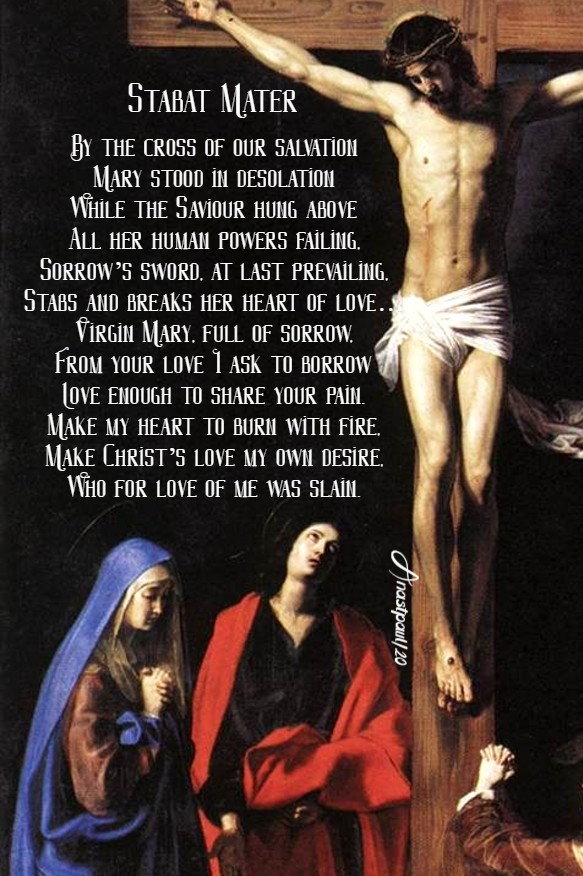
‘By the cross of our salvation Mary stood in desolation While the Saviour hung above All her human powers failing, Sorrow’s sword, at last prevailing, Stabs and breaks her heart of love… Virgin Mary, full of sorrow, From your love I ask to borrow Love enough to share your pain. Make my heart to burn with fire, Make Christ’s love my own desire, Who for love of me was slain.’
Stabat Mater
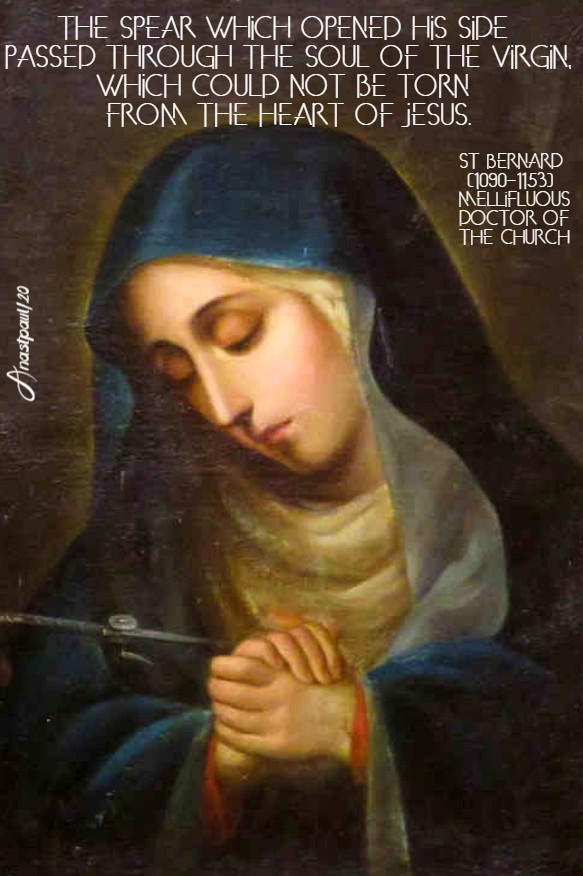
“The spear which opened His side passed through the soul of the Virgin, which could not be torn from the heart of Jesus.”
St Bernard
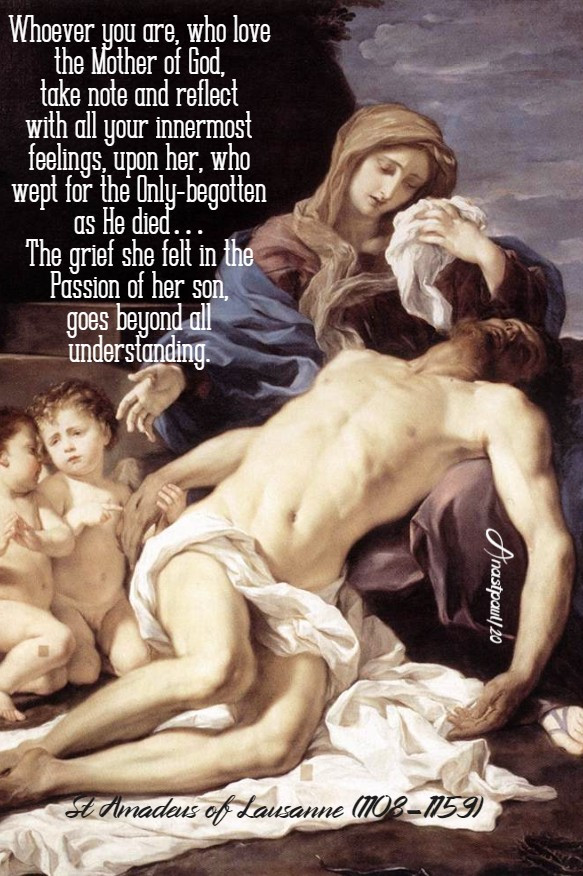
“Whoever you are, who love the Mother of God, take note and reflect with all your innermost feelings, upon her, who wept for the Only-Begotten as He died… The grief she felt in the Passion of her son, goes beyond all understanding.”
St Amadeus of Lausanne
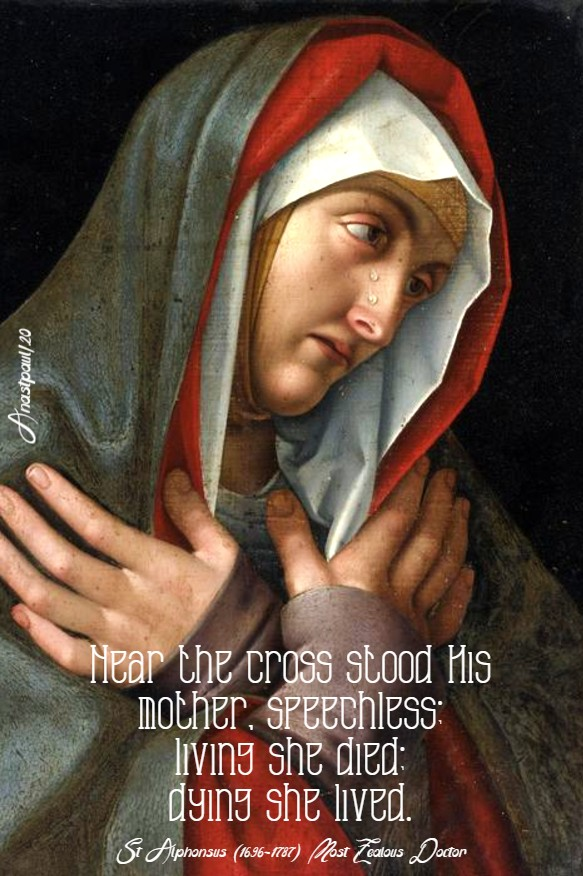
“Near the cross stood His mother, speechless; living she died; dying she lived.”
St Alphonsus
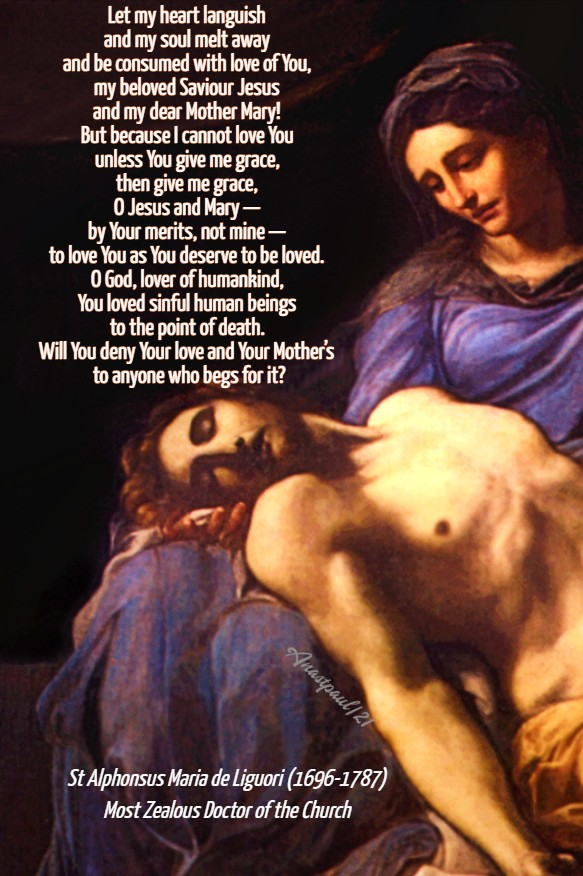
“Let my heart languish and my soul melt away and be consumed with love of You, my beloved Saviour Jesus and my dear Mother Mary! But because I cannot love You unless You give me grace, then give me grace, O Jesus and Mary — by Your merits, not mine — to love You as You deserve to be loved. O God, lover of humankind, You loved sinful human beings to the point of death. Will You deny Your love and Your Mother’s to anyone who begs for it?”
St Alphonsus Maria de Liguori
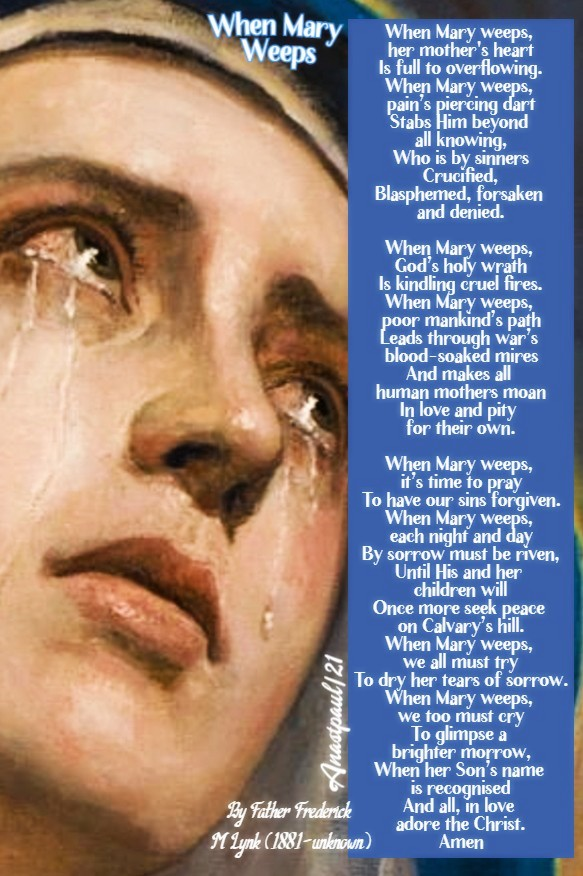
When Mary Weeps By Father Frederick M Lynk (1881-unknown)
When Mary weeps, her mother’s heart Is full to overflowing. When Mary weeps, pain’s piercing dart Stabs Him beyond all knowing, Who is by sinners Crucified, Blasphemed, forsaken and denied.
When Mary weeps, God’s holy wrath Is kindling cruel fires. When Mary weeps, poor mankind’s path Leads through war’s blood-soaked mires And makes all human mothers moan In love and pity for their own.
When Mary weeps, it’s time to pray To have our sins forgiven. When Mary weeps, each night and day By sorrow must be riven, Until His and her children will Once more seek peace on Calvary’s hill. When Mary weeps, we all must try To dry her tears of sorrow. When Mary weeps, we too must cry To glimpse a brighter morrow, When her Son’s name is recognised And all, in love adore the Christ. Amen
Reflections on each of the Seven Dolors of Mary by St Alphonsus Liguori
On the Meeting of Mary With Jesus When He Went To Death
The blessed Virgin revealed to St. Bridget that at the time when the passion of our Lord was drawing nigh, her eyes were always filled with tears, as she thought of her beloved Son whom she was about to lose on this earth. Therefore, as she also said, a cold sweat covered her body from the fear that seized her at that prospect of approaching suffering. Behold, the appointed day at length arrived, and Jesus came in tears to take leave of his mother before he went to death. St. Bonaventure, contemplating Mary on that night, says: Thou didst spend it without sleep, and while others slept, thou didst remain watching. Finally, for I omit the rest to come to my point, St. John came and announced to Mary that the most unjust Pilate had already condemned him to death upon the cross. I say the most unjust, for, as St. Leo remarks, this unjust judge condemned him to death with the same lips with which he had pronounced him innocent.
Mary goes with St. John, and she perceives by the blood with which the way was sprinkled, that her Son had already passed there. This she revealed to St. Bridget: “By the footsteps of my Son I traced his course, for along the way by which he had passed, the ground was sprinkled with blood.” St. Bonaventure imagines the afflicted mother taking a shorter way, and placing herself at the corner of the street to meet her afflicted Son as he passed by. This most afflicted mother met her most afflicted Son: Mcestissima mater mcestissimo filio occurrit, said St. Bernard. While Mary stopped in that place how much she must have heard said against her Son by the Jews who knew her, and perhaps also words in mockery of herself! Alas ! what a commencement of sorrows was then before her eyes, when she saw the nails, the hammers, the cords, the fatal instruments of the death of her Son borne before him! And what a sword pierced her heart when she heard the trumpet proclaiming along the way the sentence pronounced against her Son ! But behold, now, after the instruments, the trumpet, and the ministers of justice had passed, she raises her eyes and sees; she sees, oh God, a young man covered with blood and wounds from head to foot, with a crown of thorns on his head, and two heavy beams on his shoulders; she looks at him and hardly knows him, saying, then, with Isaias: ” And we have seen him, and there was no sightliness.
But at length love recognizes him, and as soon as she knows him, ah, what was then, as St. Peter of Alcantara says in his meditations, the love and fear of the heart of Mary! On the one hand, she desired to see him ; on the other, she could not endure to look upon so pitiable a sight. But at length they look at each other. The Son wipes from his eyes the clotted blood, which prevented him from seeing ( as was revealed to St. Bridget), and looks upon the mother; the mother looks upon the Son. Ah, looks of sorrow, which pierced, as with so many arrows, those two holy and loving souls. When Margaret, the daughter of Sir Thomas More, met her father on his way to the scaffold, she could utter only two words, oh,father! oh, father! arid fell fainting at his feet. At the sight of her Son going to Calvary, Mary fainted not; no, be cause it was not fitting that his mother should lose the use of her reason, as Father Suarez remarks, neither did she die, for God reserved her for a greater grief; but if she did not die, she suffered sorrow enough to cause her a thousand deaths.
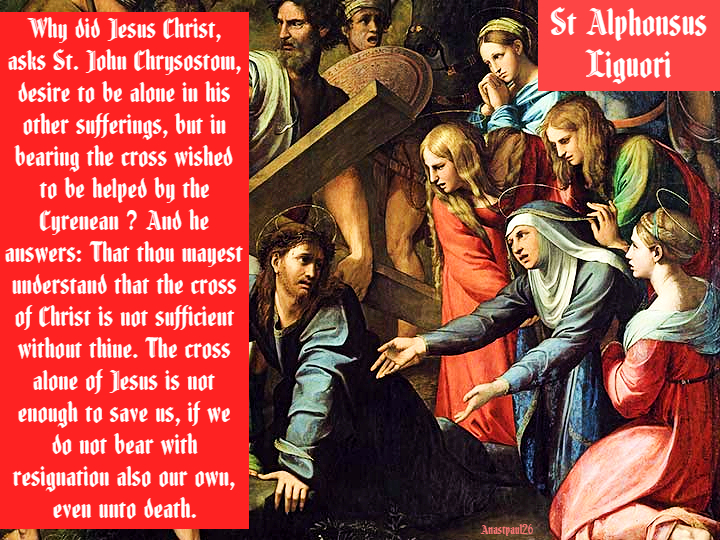
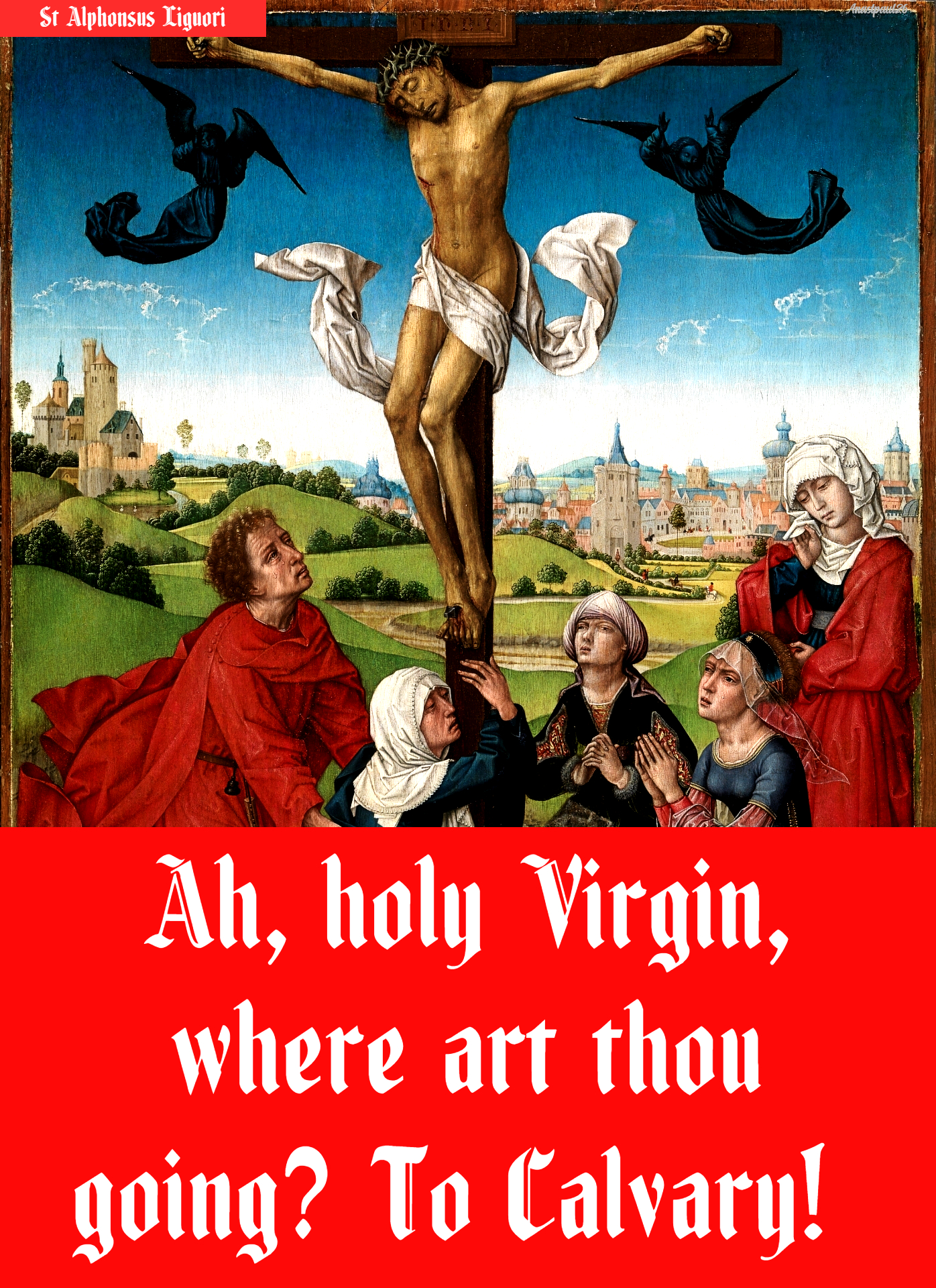
The mother wished to embrace him, as St. Anselm says, but the officers of justice thrust her aside, loading her with insults, and urge onward our afflicted Lord. Mary follows. Ah, holy Virgin, where art thou going? To Calvary! And canst thou trust thyself to see him who is thy life hanging from a cross? And thy life shall be as it were hanging before thee: “Et erit vita tua quasi pendens ante te.” Ah! my mother, stop, says St. Lawrence Justinian, as if the Son himself had then spoken to her; where dost thou hasten? Where art thou going? If thou comest where I go, thou wilt be tortured with my sufferings, and I with thine. But although the sight of her dying Jesus must cost her such cruel anguish, the loving Mary will not leave him. The Son goes before, and the mother follows, that she may be crucified with her Son, as William the Abbot says: The mother took up her cross, and followed him, that she might be crucified with him. We even pity the wild beasts: “Ferarum etiam miseremur;” as St. John Chrysostom has said. If we should see a lioness following her whelp as he was led to death, even this wild beast would call forth our compassion. And shall we not feel compassion to see Mary following her im maculate Lamb, as they are leading him to death ? Let us then pity her, and endeavor also ourselves to accompany her Son and herself, bearing with patience the cross which the Lord imposes upon us. Why did Jesus Christ, asks St. John Chrysostom, desire to be alone in his other sufferings, but in bearing the cross wished to be helped by the Cyrenean ? And he answers: That thou mayest understand that the cross of Christ is not sufficient without thine. The cross alone of Jesus is not enough to save us, if we do not bear with resignation also our own, even unto death.
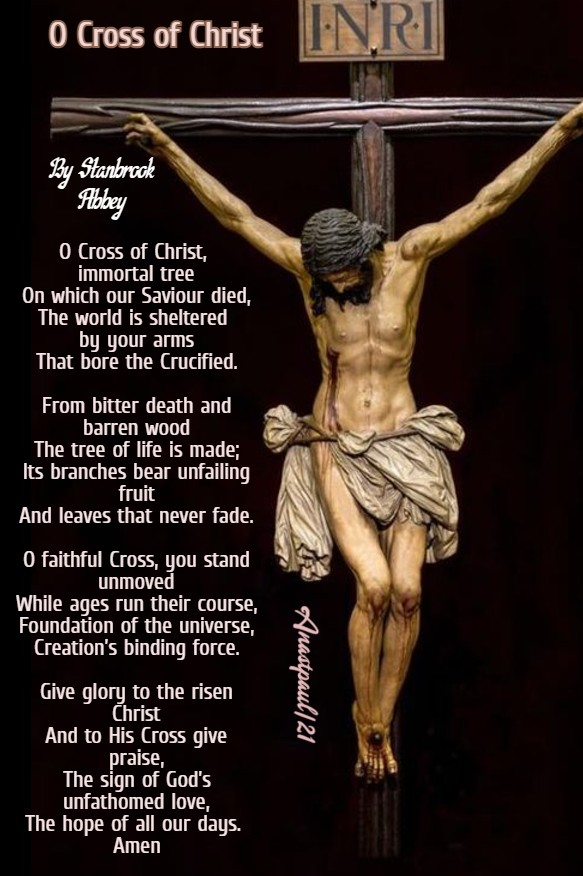
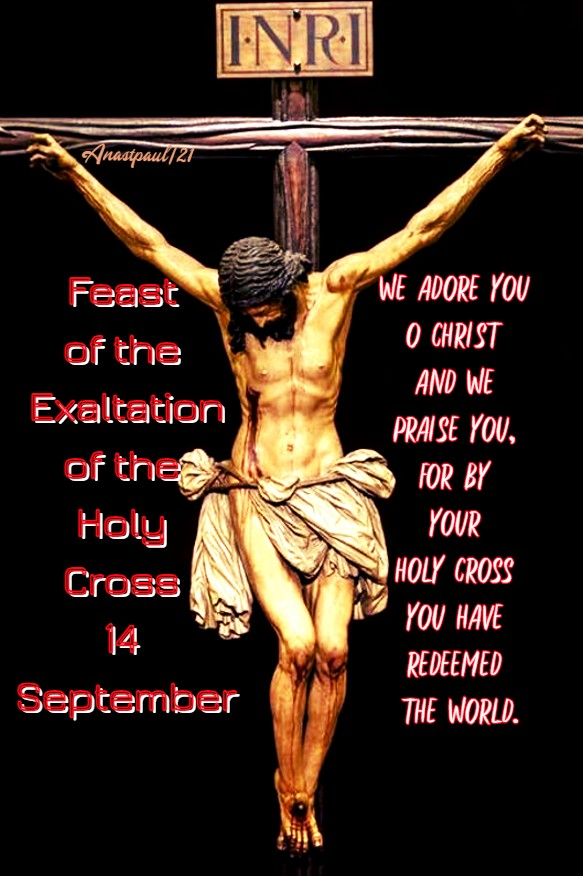
Exaltation of the Holy Cross(Feast) This feast was observed in Rome before the end of the seventh century. It commemorates the recovery of the Holy Cross, which had been placed on Mount Calvary by St Helena.
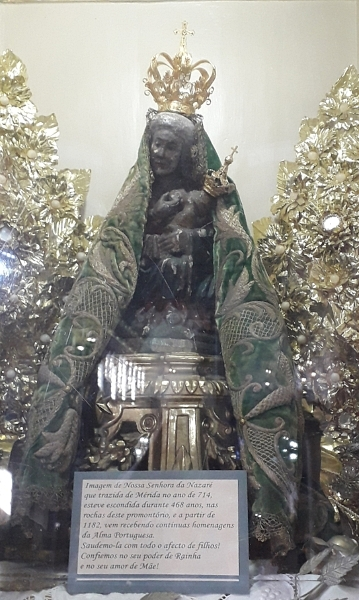
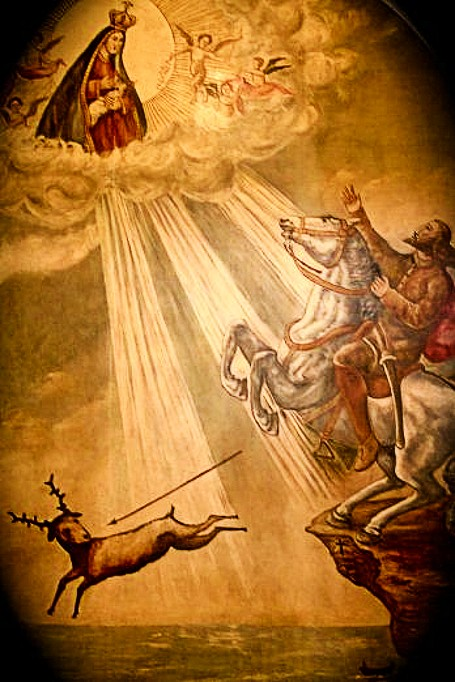
Nossa Senhora de Nazaré / Our Lady of Nazareth, Portugal (1182) -14 September:
The chronicles of old Portugal report this episode that took place in the year 1182, on the day of the Exaltation of the Holy Cross. Dom Fuas Roupinho, a Knight and vassal of King Afonso Henriques, was out hunting on a foggy day. He was pursuing a deer when it came to an unexpected precipice and fell to its death into the sea below.
The horse, which was in close pursuit, reared on the very edge of the cliff and it seemed certain that Dom Fuas would follow the deer to his death. Knowing that a little distance to his left was a cave with the Statue of the Virgin of Nazareth, Dom Fuas immediately invoked her protection. He was saved and in thanksgiving he built a small “Chapel of memory” (Ermida da Memória) over the cave in her honour.
According to a document found with it, the little Statue of the Virgin had been venerated in Nazareth in the times of early Christianity. When the iconoclast heresy started in Constantinople and the heretics were destroying all the Statues, a Monk called Ciriaco took it to a Monastery in Spain in the proximity of Merida.
In 714, when the Saracens invaded the Iberian Peninsula, King Rodrigo fled with Friar Germano to the Atlantic coast, bearing the Statue with them. They hid the Statue in a small cave off the coast of the site that was later to become Nazaré, where it remained until it was found by a shepherd in 1179.
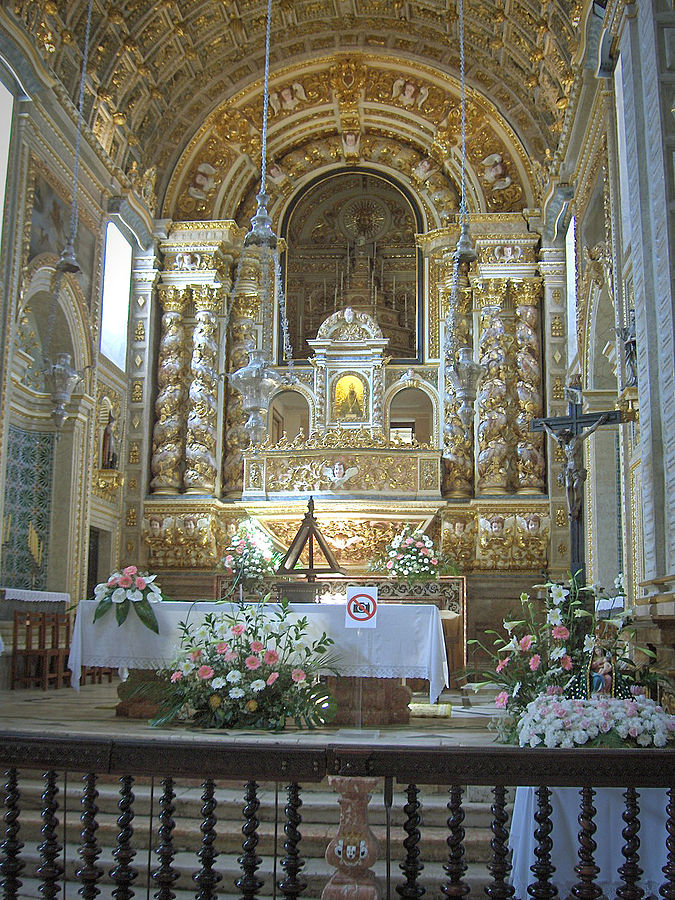
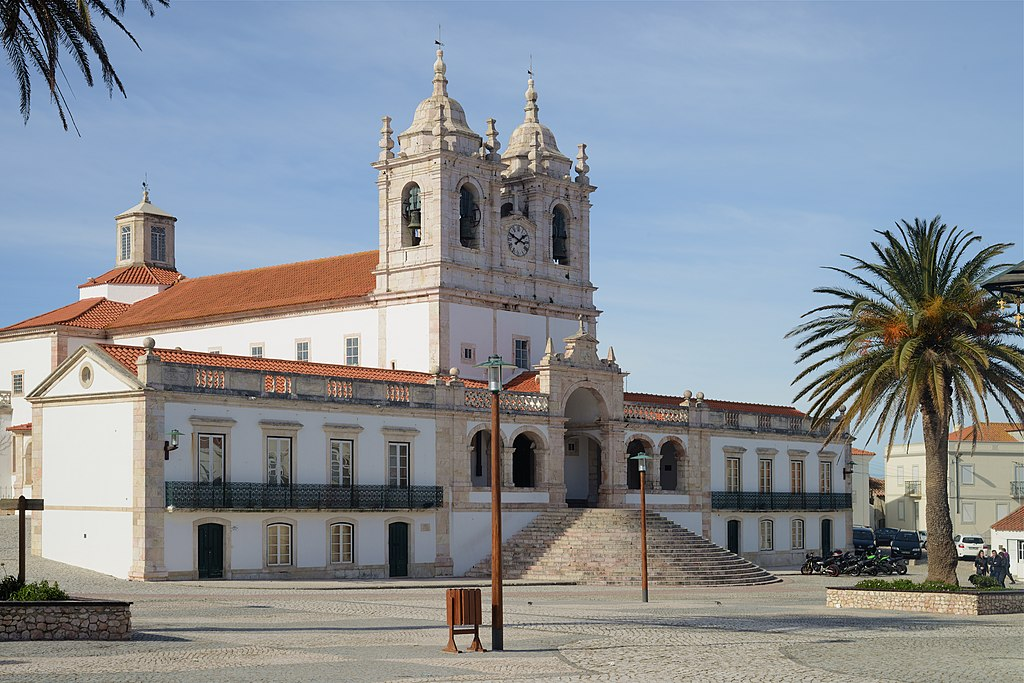
After Our Lady miraculously saved the life of Dom Fuas, the devotion to Our Lady of Nazareth spread throughout the country and was the source of countless graces for the people. In 1377 King Fernando ordered a large Church to be built near the little Chapel, and the Statue is venerated there now.
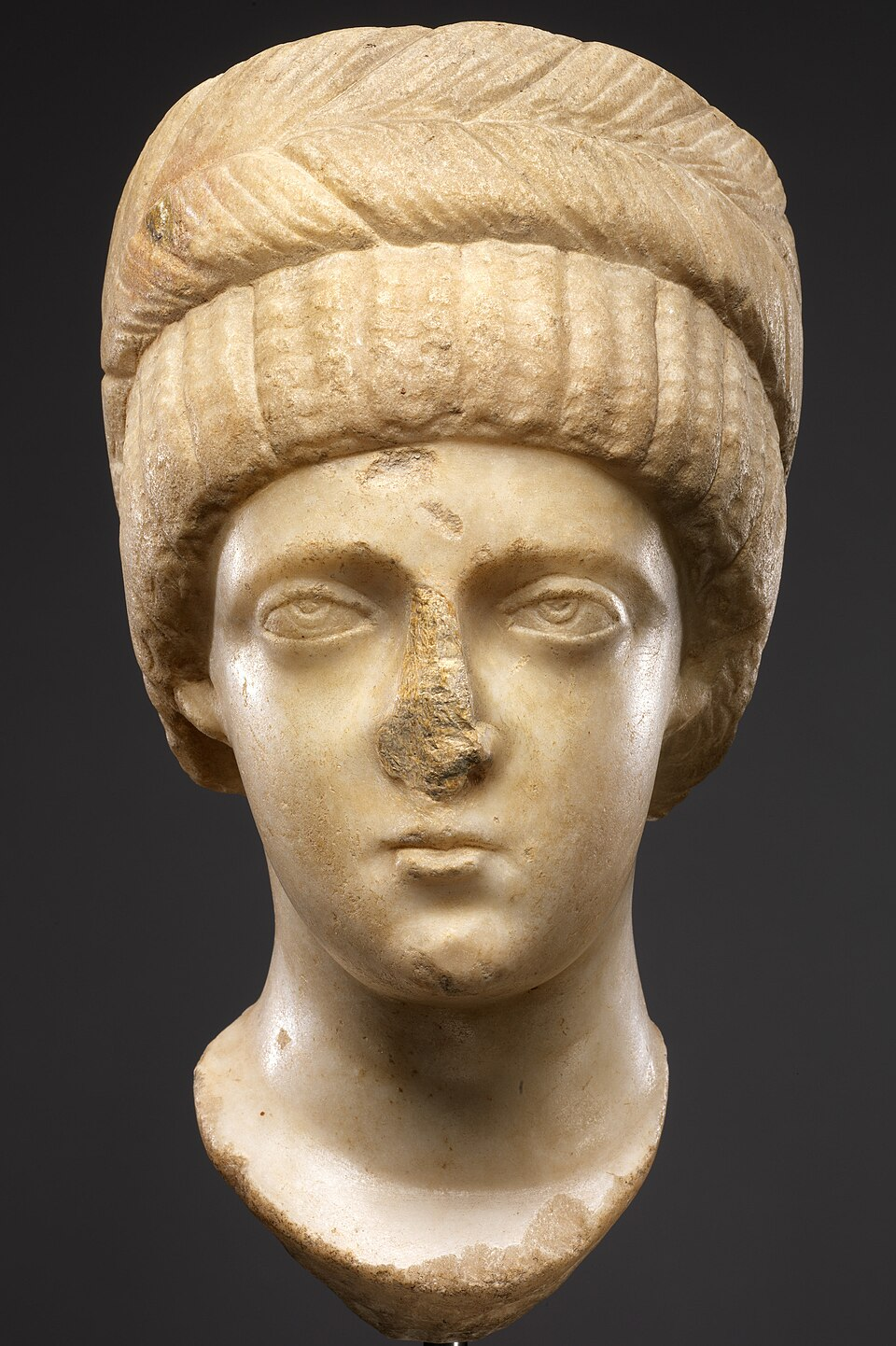
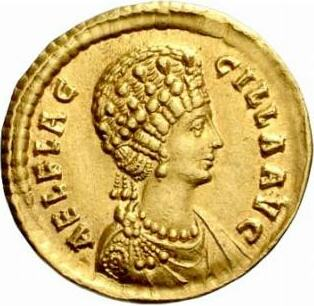
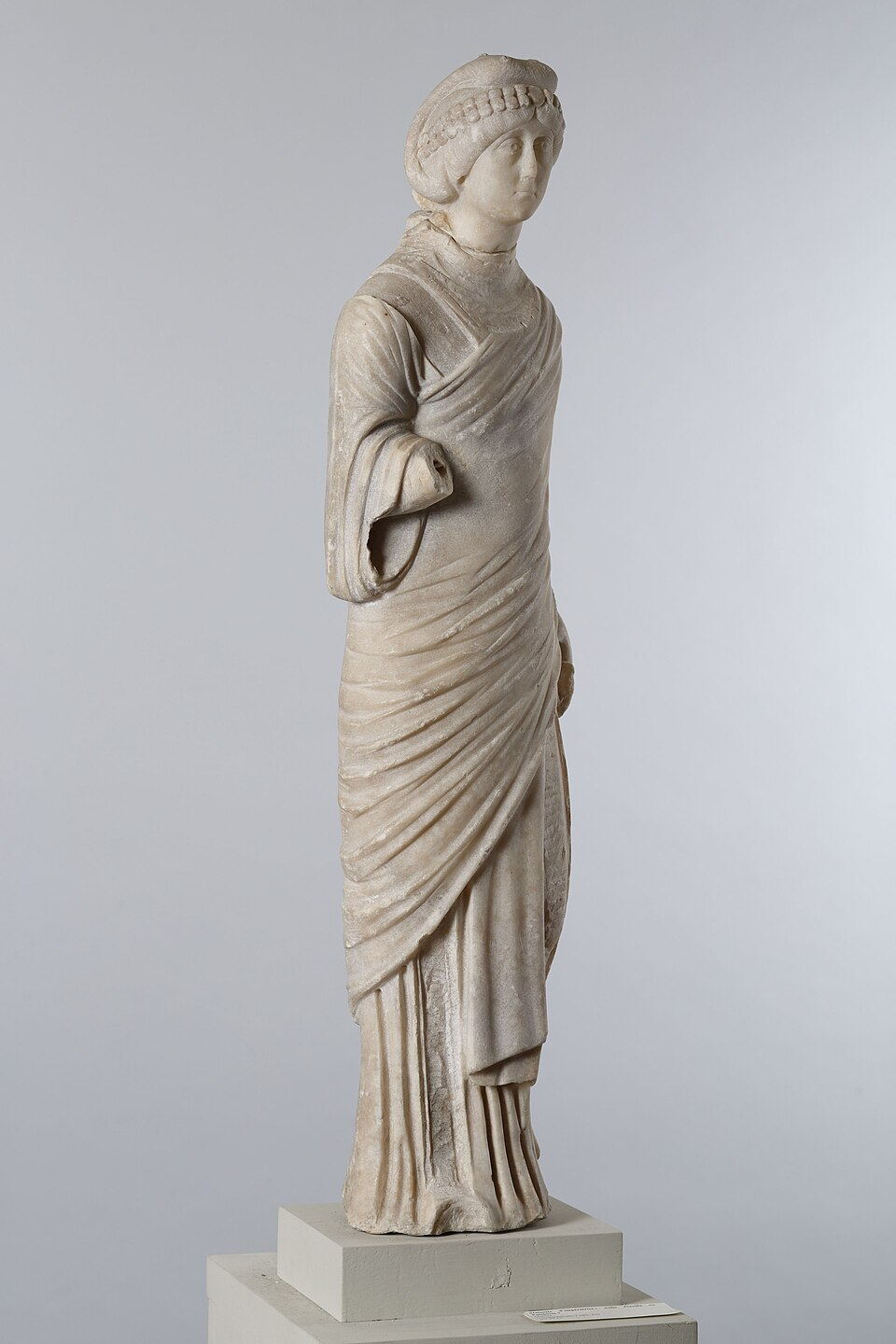
St Aelia Flaccilla
St Albert of Jerusalem (1149-1215) also known as St Albert of Vercelli – Bishop, Canon Lawyer, Diplomat and Peacemaker and is regarded as a Co-Founder of the Carmelite Order.
St Peter of Tarentaise O.Cist (1102-1174) Cistercian Monk, Archbishop of Tarentaise from 1141 until his death, Abbot, Apostle of Charity, Miracle-worker. There are two men named Saint Peter of Tarentaise who lived one century apart. The man we honour today is the younger Peter, born in France in the early part of the 12th century. The other man with the same name became Pope Innocent the Fifth.
Bl Pedro Bruch Cotacáns St Rosula of Carthage St Sallustia St Victor of Carthage
SaintAelia Flavia Flaccilla, known as Aelia Flacilla or Flacilla, was a Roman empress and may have been the daughter of Claudius Antonius, Prefect of Gaul. She was the first wife of Emperor Theodosius I. She was of Spanish descent. During her marriage to Theodosius, she gave birth to two sons, the future Emperors Arcadius and Honorius, as well as a daughter, Aelia Pulcheria.
Aelia Flacilla was a zealous supporter of the Nicene Creed, and she was considered a pillar of the Church and model of Christian virtue by Saint Gregory of Nyssa and others. She died in 385 of natural causes.
"The greatness of the good gift given her made her love for Him who gave it all the greater, so she bestowed every kind of attention on the maimed and the mutilated, declining all aid from her household and her guards, herself visiting the houses where the sufferers lodged, and providing every one with what he required. She also went about the chambers of the churches and ministered to the wants of the sick, herself handling pots and pans, and tasting broth, now bringing in a dish and breaking bread and offering morsels, and washing out a cup and going through all the other duties which are supposed to be proper to servants and maids. To them who strove to restrain her from doing these things with her own hands she would say, "It befits a sovereign to distribute gold; I, for the sovereign power that has been given me, am giving my own service to the Giver."
-Theodoret, Ecclesiastical History (Book V.18)
"It appears that, during the reign of Valens, had some dispute with his own clergy at Cyzicus, and had in consequence seceded from the Arians, and retired to Bithynia, near Constantinople. Here multitudes resorted to him; some also gathered from different quarters, a few with the design of testing his principles, and others merely from the desire of listening to his discourses. His reputation reached the ears of the emperor, who would gladly have held a conference with him. But the Empress Flacilla studiously prevented an interview from taking place between them; for she was the most faithful guard of the Nicene doctrines, and feared lest Eunomius might, by his powers of disputation, induce a change in the sentiments of the emperor."
One Minute Reflection – 14 September – Feast of the Exaltation of the Holy Cross – Readings: Gal 6:14, Ps 66:2, Phil 2:5-11, John 12:31-36
At that time, Jesus said to the multitudes of the Jews, Now is the judgment of the world; now will the prince of the world be cast out. And I, if I be lifted up from the earth, will draw all things to Myself.
John 12:31-36
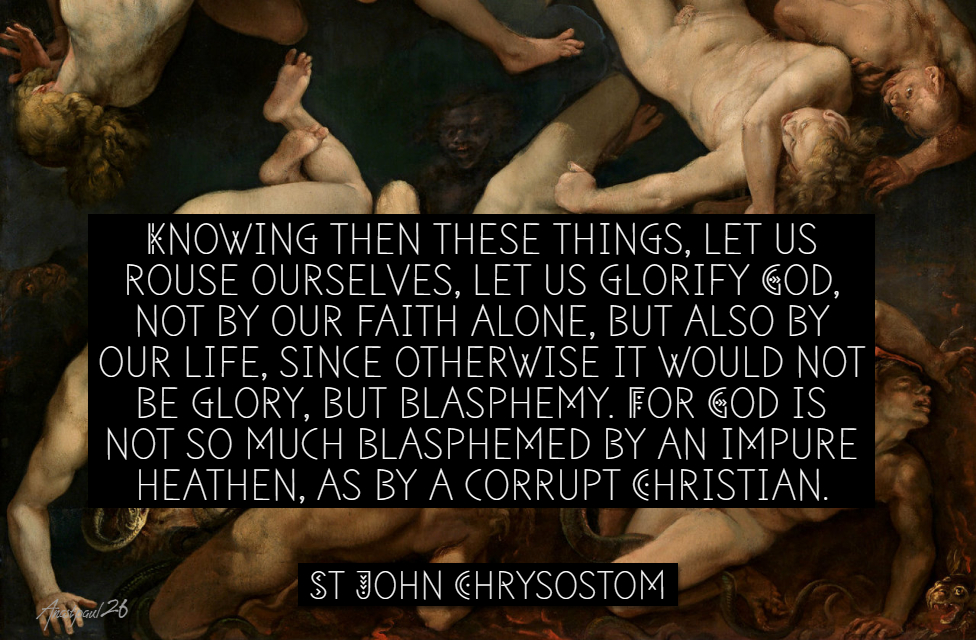
REFLECTION – Knowing then these things, let us rouse ourselves, let us glorify God, not by our faith alone, but also by our life, since otherwise it would not be glory, but blasphemy. For God is not so much blasphemed by an impure heathen, as by a corrupt Christian. Wherefore I entreat you to do all that God may be glorified; for, Woe, it says, to that servant by whom the Name of God is blasphemed, (and wherever there is a woe, every punishment and vengeance straightway follows,) but blessed is he by whom that Name is glorified.
Let us then not be as in darkness, but avoid all sins, and especially those which tend to the hurt of others, since by these God is most blasphemed. What pardon shall we have, when, being commanded to give to others, we plunder the property of others? What shall be our hope of salvation? You are punished if you have not fed the hungry; but if you have even stripped one who was clothed, what sort of pardon shall you obtain? These things I will never desist from saying, for they who have not heard today perhaps will hear tomorrow, and they who take no heed tomorrow perhaps will be persuaded the next day; and even if any be so disposed as not to be persuaded, yet for us there will be no account to give of them at the Judgment. Our part we have fulfilled; may we never have cause to be ashamed of our words, nor you to hide your faces, but may all be able to stand with boldness before the judgment-seat of Christ, that we also may be able to rejoice over you, and to have some compensation of our own faults, in your being approved in Christ Jesus our Lord, with whom to the Father and the Holy Ghost be glory forever. Amen.
St John Chrysostom
PRAYER – O God, who willed that Your Only Begotten Son should undergo the Cross to save the human race, grant, we pray, that we, who have known His mystery on earth, may merit the grace of His redemption in heaven. For You placed the salvation of the human race on the wood of the Cross, so that, where death arose, life might again spring forth and the evil one, who conquered on a tree, might likewise on a tree be conquered through Christ. O Cross, You are the glorious sign of victory. Through your power may we share in the triumph of Christ Jesus. We adore You O Christ and we praise You, for by Your Holy Cross You have redeemed the world. Amen.
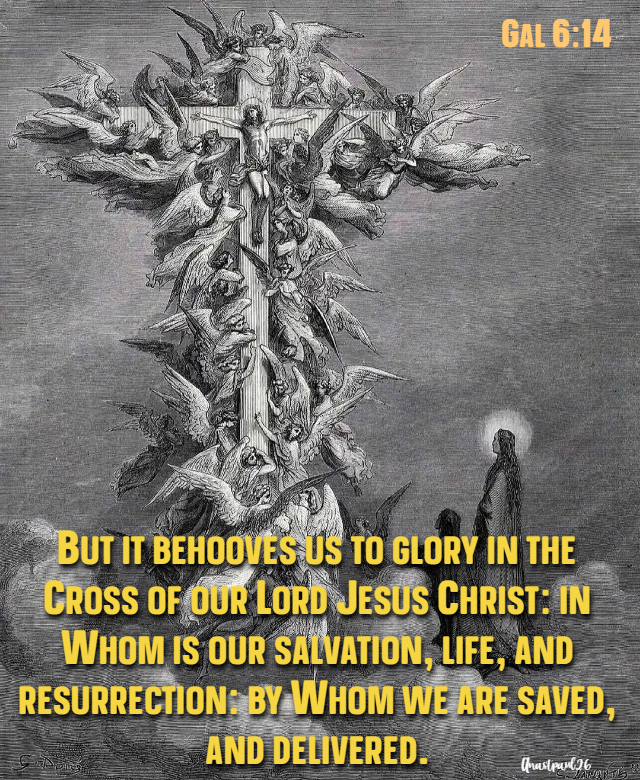
But it behooves us to glory in the Cross of our Lord Jesus Christ: in Whom is our salvation, life, and resurrection: by Whom we are saved, and delivered.
Gal 6:14
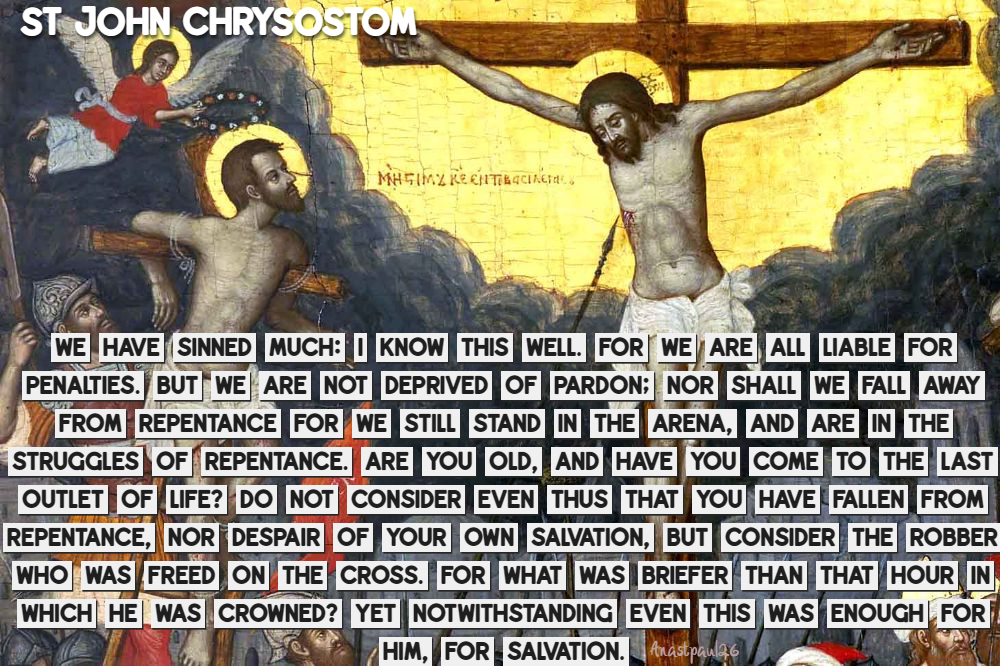
We have sinned much: I know this well. For we are all liable for penalties. But we are not deprived of pardon; nor shall we fall away from repentance for we still stand in the arena, and are in the struggles of repentance. Are You old, and have you come to the last outlet of life? Do not consider even thus that you have fallen from repentance, nor despair of your own salvation, but consider the robber who was freed on the cross. For what was briefer than that hour in which he was crowned? Yet notwithstanding even this was enough for him, for salvation.
St John Chrysostom
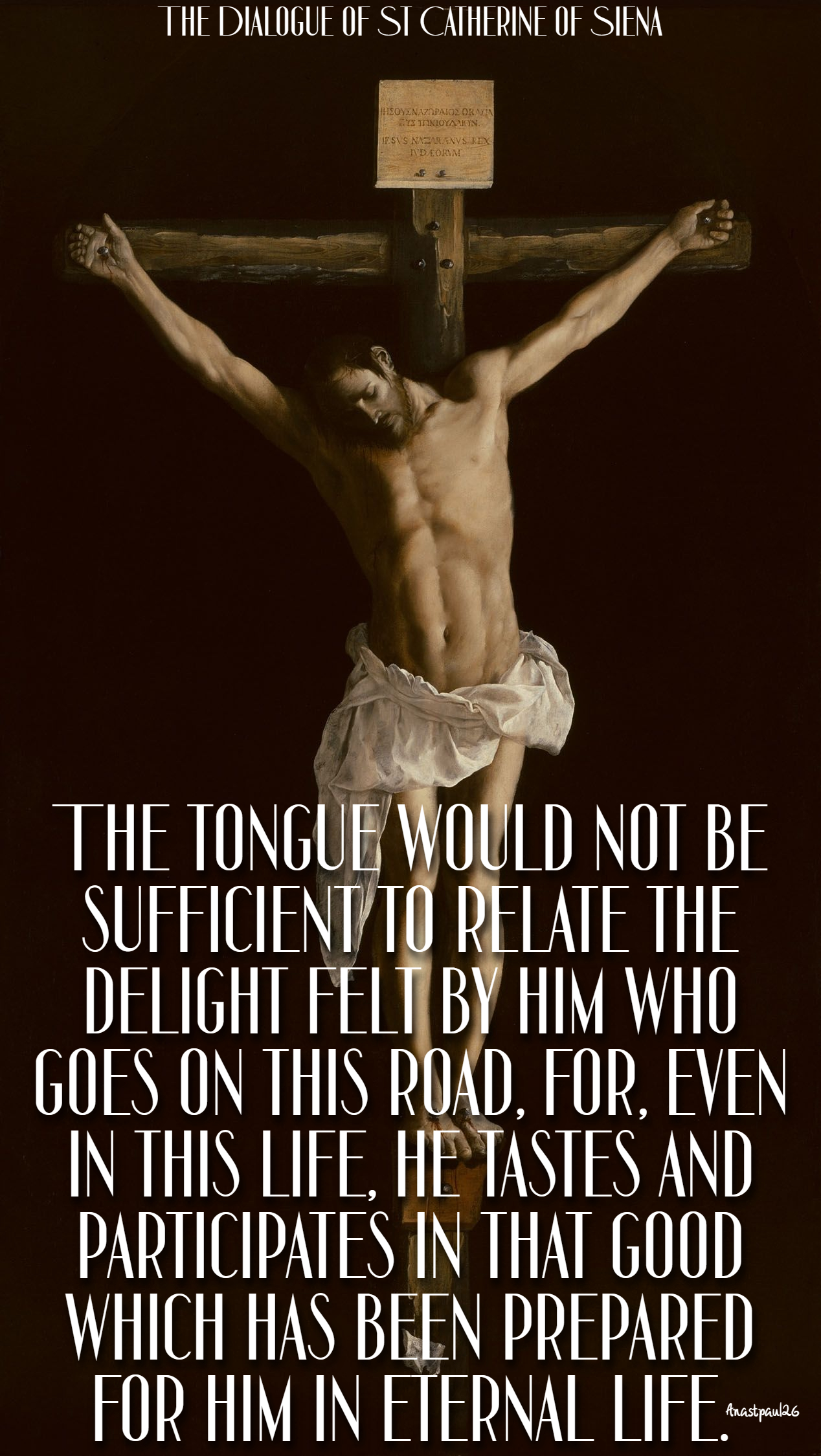
The tongue would not be sufficient to relate the delight felt by him who goes on this road, for, even in this life, he tastes and participates in that good which has been prepared for him in eternal life.
The Dialogue of St Catherine of Siena
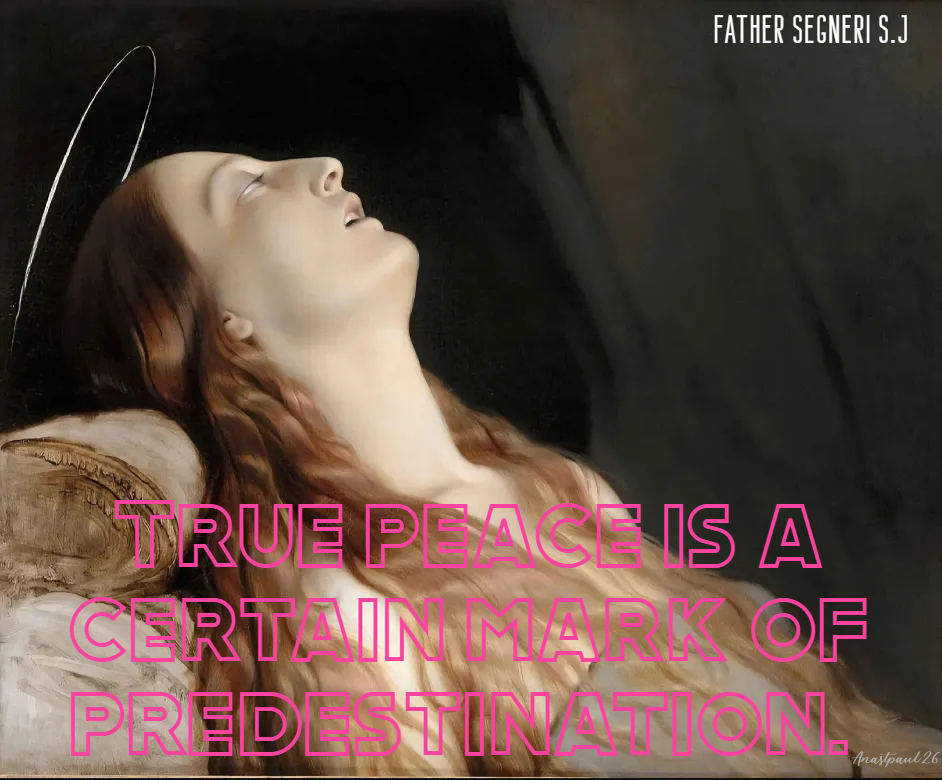
Benjamin, in the Old Law, was the figure of the predestinate: accordingly, it is to him that the cup, or chalice, is given – a gift, says St Ambrose, which is presented to only one of all the children of Jacob. To all, indeed, corn was given, but the chalice is reserved for one alone. In fine the great Doctor of our salvation, the Adorable Jesus, teaches us that His disciples shall lament and weep, but the world shall rejoice, the world which knows not God and is the enemy of God.
Henri-Marie Boudon
Heaven is open only to the innocent and to the truly penitent.
Massillon
Alas, my dear brethren, what have we become even since our conversion? Instead of going always forward and increasing in holiness, what laziness and what indifference we display! God cannot endure this perpetual inconstancy with which we pass from virtue to vice and from vice to virtue. Tell me, my children, is not this the very pattern of the way you live?
Reflections on each of the Seven Dolors of Mary by St Alphonsus Liguori
Of The Loss Of Jesus In the Temple
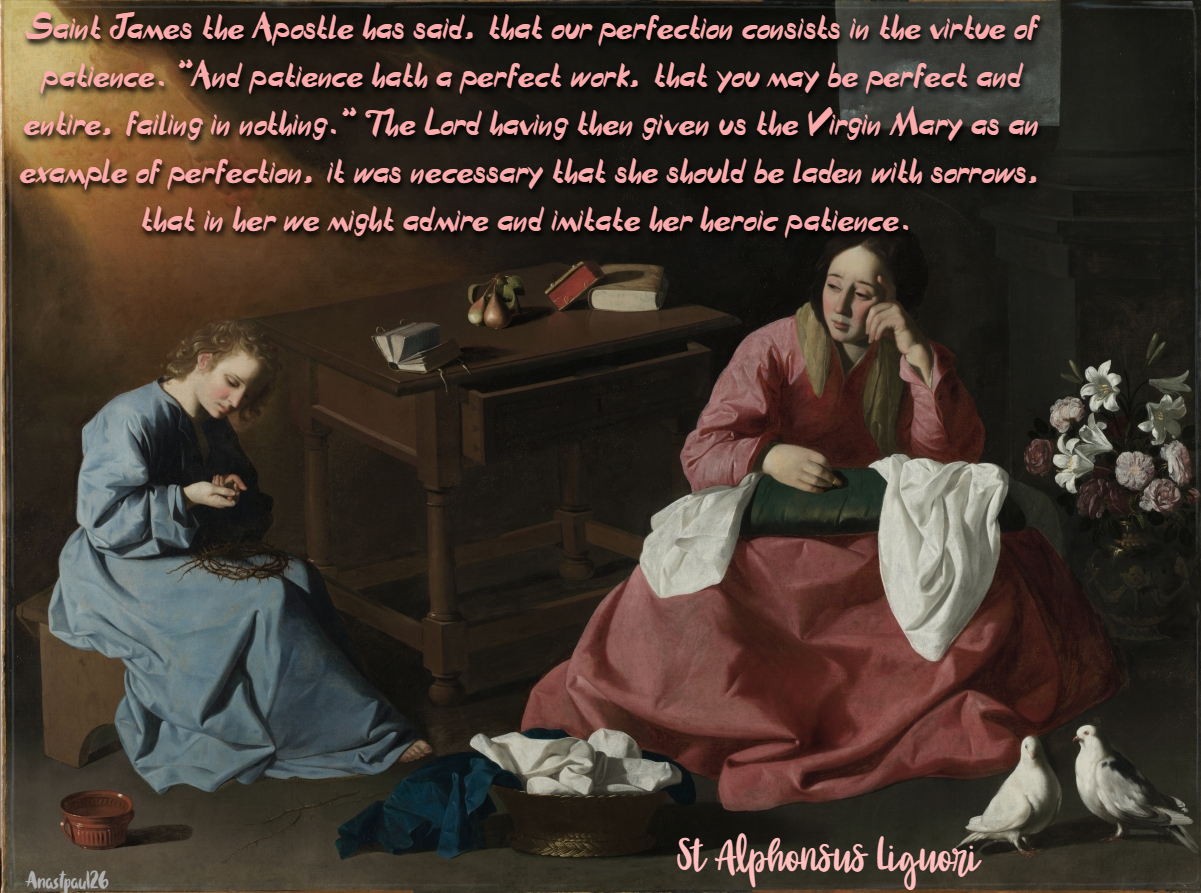
Saint James the Apostle has said, that our perfection consists in the virtue of patience. “And patience hath a perfect work, that you may be perfect and entire, failing in nothing.” The Lord having then given us the Virgin Mary as an example of perfection, it was necessary that she should be laden with sorrows, that in her we might admire and imitate her heroic patience. The dolor that we are this day to consider is one of the greatest which our divine mother Buffered during her life, namely, the loss of her Son in the temple. He who is born blind is little sensible of the pain of being deprived of the light of day; but to him who has once had sight and enjoyed the light, it is a great sorrow to find himself deprived of it by blindness. And thus it is with those unhappy souls who, being blinded by the mire of this earth, have but little knowledge of God, and therefore scarcely feel pain at not finding him. On the contrary, the man who, illuminated with celestial light, has been made worthy to find by love the sweet presence of the highest good, oh God, how he mourns when he finds himself deprived of it !
From this we can judge how painful must have been to Mary, who was accustomed to enjoy constantly the sweet presence of Jesus, that third sword which wounded her, when she lost him in Jerusalem, and was separated from him for three days.
Some writers assert, and not without reason, that this dolor was not only one of the greatest, but that it was the greatest and most painful of all. For in the first place, Mary in her other dolors had Jesus with her; she suffered when St. Simeon uttered the prophecy in the temple; she suffered in the flight to Egypt, but always with Jesus; but in this dolor she suffered at a distance from Jesus, without knowing where he was: “And the light of my eyes itself is not with me.” Thus, with tears, she then exclaimed: Ah, the light of my eyes, my dear Jesus, is no more with me; he is far from me, I know not where he is! Origen says, that though the love which this holy mother bore her Son, she suffered more at this loss of Jesus than any martyr ever suffered at death. Ah, how long: were these three days for Mary! they appeared three ages.
Secondly. Mary well understood the cause and end of the other dolors, namely, the redemption of the world, the divine will ; but in this she did not know the cause of the absence of her Son. The sorrowful mother was grieved to find Jesus withdrawn from her, for her humility, says Lanspergius, made her consider herself unworthy to remain with him any longer, and attend upon him on earth, and have the care of such a treasure. And perhaps, she may have thought within herself, I have not served him as I ought. Perhaps I have been guilty of some neglect, and therefore he has left me. They sought him, lest he perchance had left them, as Origen has said. Certainly there is no greater grief for a soul that loves God than the fear of having displeased him. And therefore Mary never complained in any other sorrow but this, lovingly expostulating with Jesus after she found him : “Son, why hast thou done so to us? Thy father and I have sought thee sorrowing.”!By these words she did not wish to reprove Jesus, as the heretics blasphemously assert, but only to make known to him the grief she had experienced during his absence from her, on account of the love she bore him.
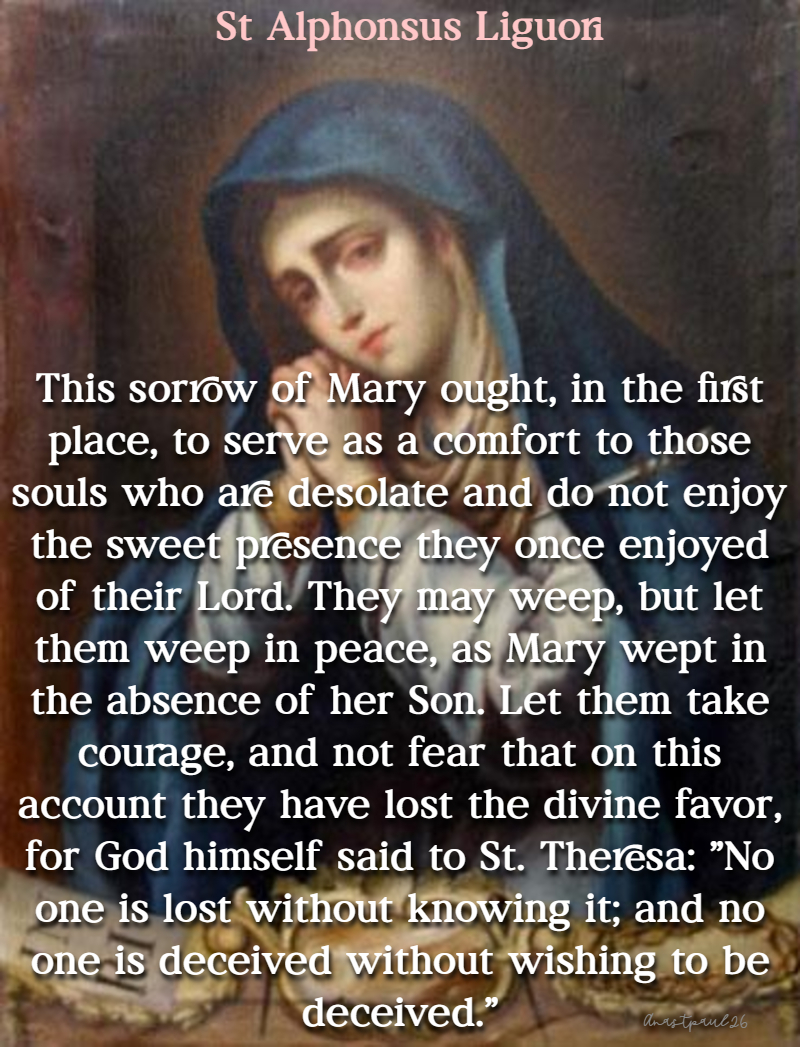
This sorrow of Mary ought, in the first place, to serve as a comfort to those souls who are desolate and do not enjoy the sweet presence they once enjoyed of their Lord. They may weep, but let them weep in peace, as Mary wept in the absence of her Son. Let them take courage, and not fear that on this account they have lost the divine favor, for God himself said to St. Theresa: “No one is lost without knowing it; and no one is deceived without wishing to be deceived.” If the Lord departs from the sight of that soul who loves him, he does not therefore depart from the heart. He often hides himself that she may seek him with greater desire and love. But those who would find Jesus must seek him, not amid the delights and pleasures of the world, but amid crosses and mortifications, as Mary sought him: We sought thee sorrowing, as she said to her Son: “Dolentes quasrebamus te.”
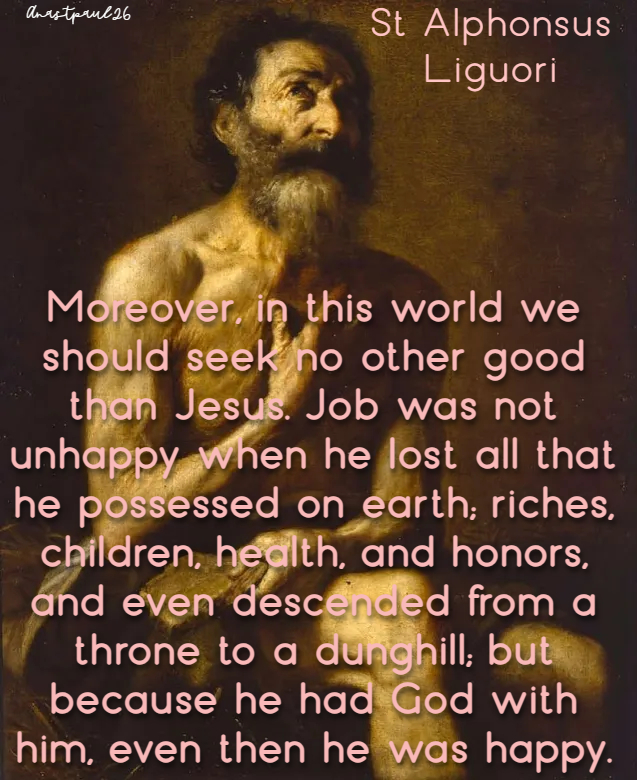
Moreover, in this world we should seek no other good than Jesus. Job was not unhappy when he lost all that he possessed on earth; riches, children, health, and honors, and even descended from a throne to a dunghill; but because he had God with him, even then he was happy. St. Augustine, speaking of him, says: He had lost all that God had given him, but he had God himself
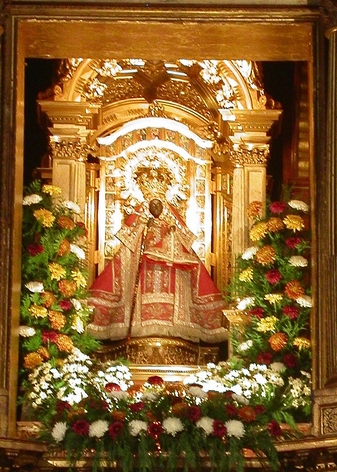
The Marian shrine of Our Lady of Guadalupe is located in the Extremadura region of what was the Kingdom of Castile. The shrine houses a Black Madonna, a statue crafted by the loving hands of Saint Luke the Evangelist himself and given to Saint Leander, Archbishop of Seville, by Pope Gregory I. It is one of the fifteen Black Madonnas in Spain. The statue was canonically crowned on 12 October 1928 by Pope Pius XI with a crown designed and crafted by Father Felix Granda, and crowned in the presence of King Alfonso XIII of Spain.
Spain was invaded by the Muslims in the year 711. The beloved statue of the Blessed Virgin was taken by the Christians who fled before the advance of the invading hordes, placing the statue in a strongbox and burying it in a cave in the hills near the Guadalupe River in Extremadura. When those who had safeguarded the statue died, the existence of it and the knowledge of its location was lost.
In the year 1326, the Blessed Virgin appeared to a shepherd near the village of Guadalupe, asking him to have priests dig at the site of the apparition. When they did, the priests found the strongbox that had been buried in the earth over 600 years previously. It contained documents that identified the cherished statue that became known as Our Lady of Guadalupe. A Marian shrine was built there in her honor.
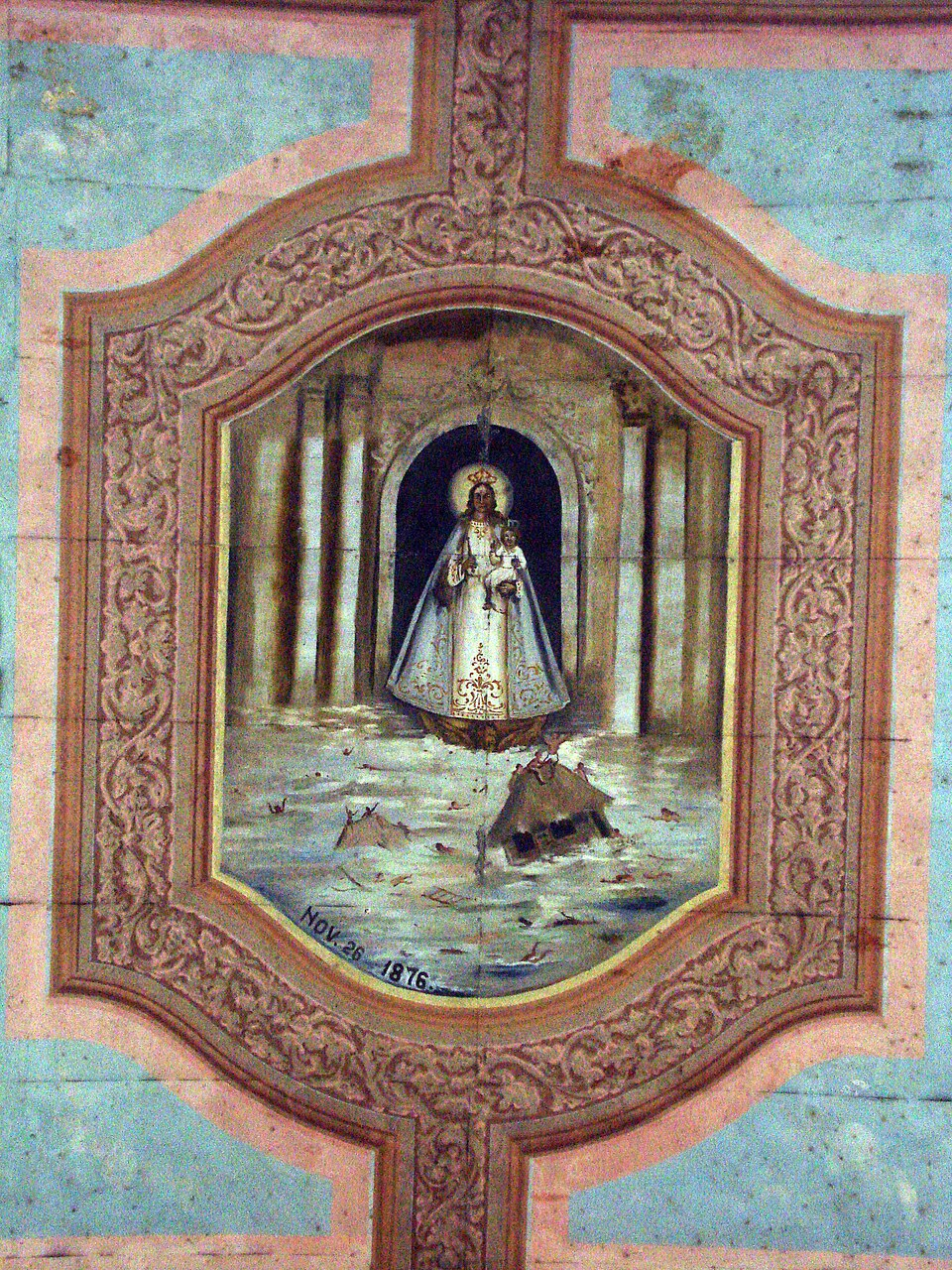
A copy of the Extremaduran image is enshrined in Loboc Church in the island province of Bohol, and has documented miracles attributed to the Virgin.
Immediately pilgrims began to visit the shrine dedicated to Our Lady of Guadalupe, and in 1340, King Alfonso XI endowed the sanctuary over which he took a particular interest. It was in that same year that Abu Hasan of Morocco had invaded the Iberian Peninsula with a huge army, intending to march into Castile and reverse the earlier Catholic expansion into what had been Muslim territory. The battle of Rio Salado had been hard fought, though it ended in a Christian victory that King Alfonso attributed to the intercession of the Blessed Virgin, Our Lady of Guadalupe.
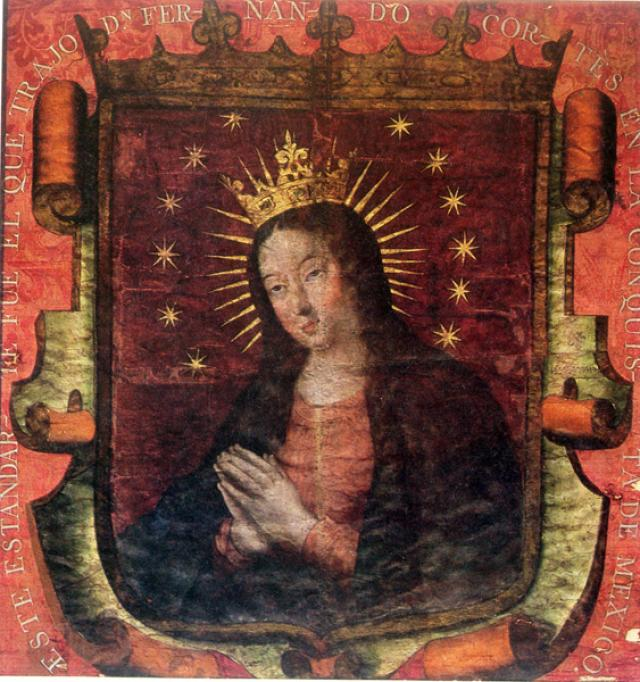
Banner of Cortés preserved in the Army Museum in Toledo (Spain)
In 1389 the Spanish architect, Juan Alphonso, began the church, which has walls ornamented with magnificent votive offerings, attesting to more than three thousand authentic miracles of the Blessed Virgin, Our Lady of Guadalupe.
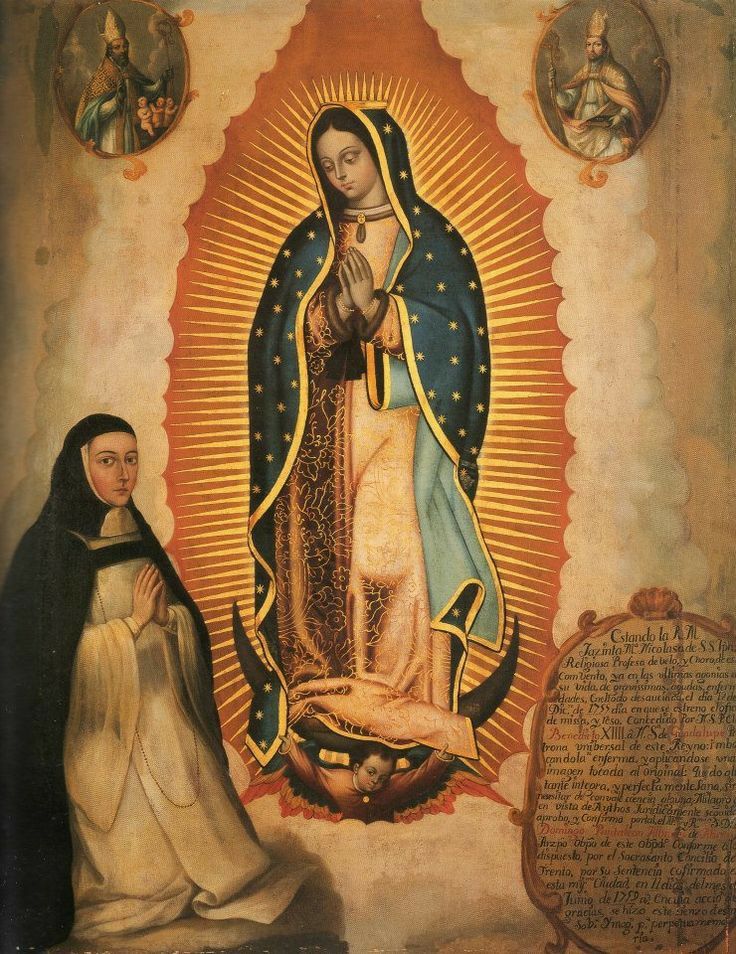
The veneration for Our Lady of Guadalupe crossed the ocean, and was established by miracles in Mexico. The magnificent captain, Hernan Cortez, conquered the evil Aztec Empire under a Marian standard. Cortez himself was from Extremadura.
Dedication of the Basilicas of Jerusalem: Commemoration of the dedications of the Basilicas built on Mount Calvary and the Church of the Holy Sepulchre in Jerusalem. — St Aigulf
St Amatus OSB (c 560-c 627) Monk, Abbot, Hermit, Penitent, miracle-worker, together with St Romaric, he founded Remiremont Abbey.
St Barsenorius Bl Claude Dumonet St Columbinus of Lure St Emiliano of Valence St Evantius of Autun St Gordian of Pontus Bl Hedwig of Hreford St Julian of Ankyra St Ligorius St Litorius of Tours St Macrobius St Marcellinus of Carthage Bl María López de Rivas Martínez
St Maurilius of Angers (c 336-426) Bishop of Angers, Cantor for Saint Ambrose, (Bishop of Milan and Father and Doctor of the Church), Disciple of St Martin of Tours.
St Nectarius of Autun
St Notburga (c 1265-1313) Virgin St Philip of Rome St Venerius of Tino — Martyrs of Ireland: • Blessed Edward Stapleton • Blessed Elizabeth Kearney • Blessed James Saul • Blessed Margaret of Cashel • Blessed Richard Barry • Blessed Richard Butler • Blessed Theobald Stapleton • Blessed Thomas Morrissey • Blessed William Boyton
Martyred in the Spanish Civil War including the Martyrs of Pozo de Cantavieja – 11 beati: • Blessed Bienvenido Villalón Acebrón • Blessed Emilio Antequera Lupiáñez • Blessed Florencio Arnáiz Cejudo • Blessed Francisco Rodríguez Martínez • Blessed Joaquín Gisbert Aguilera • Blessed José Álvarez-Benavides de La Torre • Blessed José Cano García • Blessed José Román García González • Blessed Juan Capel Segura • Blessed Juan Ibáñez Martín • Blessed Luis Eduardo López Gascón • Blessed Manuel Alvarez y Alvarez • Blessed Manuel Martínez Giménez • Blessed Pío Navarro Moreno • Blessed Ramiro Argüelles Hevia • Blessed Sabino Ayastuy Errasti • Blessed Teófilo Montes Calvo
Saint Aigulf, also known as Aigulphe, Aygulf or Ayoul. He was Abbot of Lérins, and a martyr.
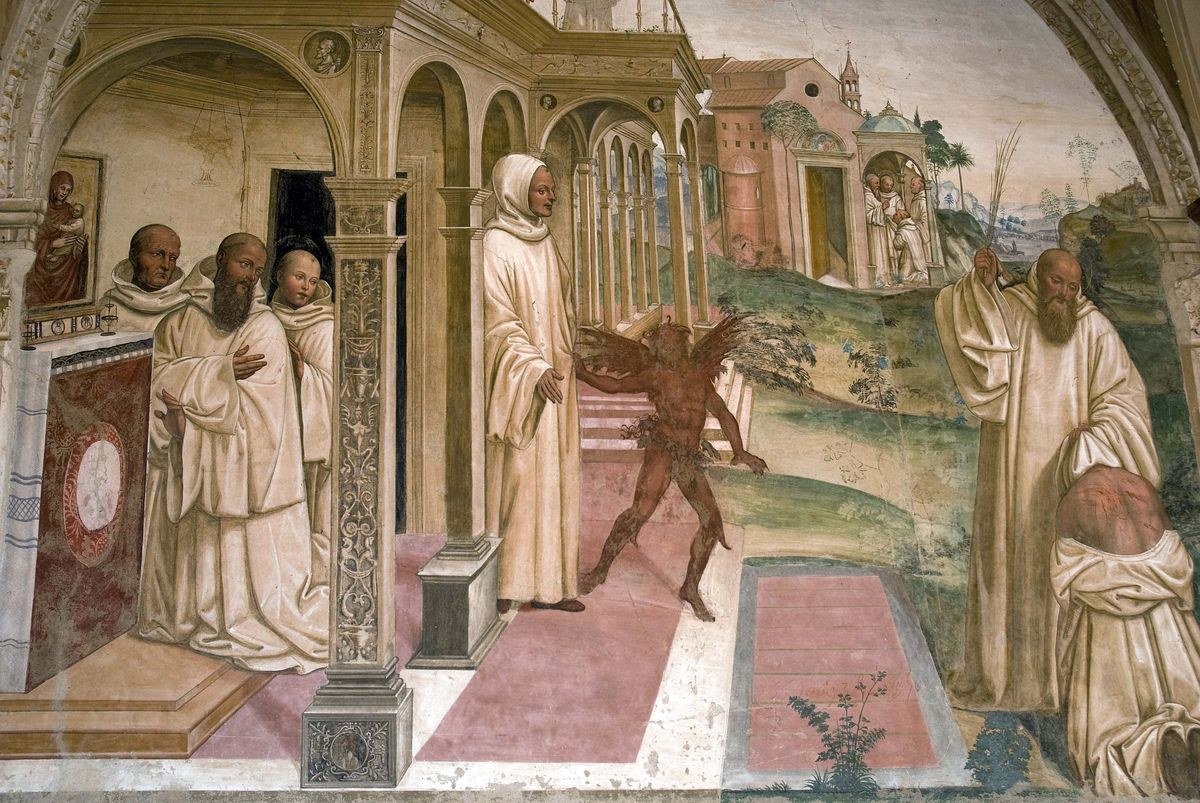
St. Benedict frees a monk possessed by a demon by striking him.
Aigulf was born in 630 in Blois and was a Benedictine monk at Fleury, France. He led a party of monks sent to retrieve the relics of Saint Bernard from the Lombards. Later, he was called upon to reform the Abbey of Saint Honorat.
He became abbot of Lérins around 671 and worked to restore monastic discipline, which had weakened over time. He replaced the monks’ own rules, which had been followed since the abbey’s origins, with the Rule of Saint Benedict. Many of the brothers supported him, but some resisted, and following a riot they conspired to have Aigulf and four of his supporters kidnapped by soldiers, taken to the island of Capri, Italy, blinded, tortured and murdered. The monks of Lérins claimed possession of his relics and have always considered Aygulf a martyr. A chapel was dedicated to him in the fortified monastery.
Saint Aygulf is invoked for the healing of eye ailments.
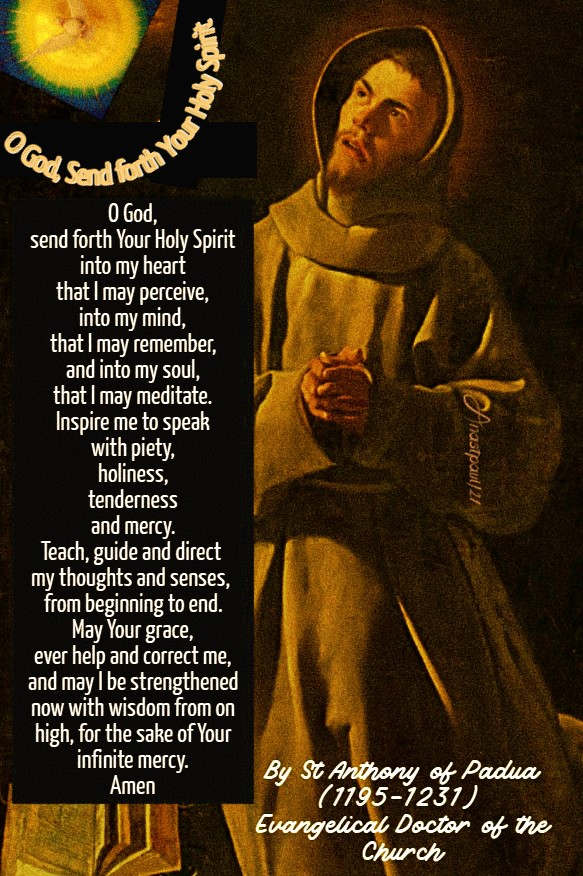
O God, Send forth Your Holy Spirit By St Anthony of Padua (1195-1231) Doctor of the Church
O God, send forth Your Holy Spirit into my heart that I may perceive, into my mind, that I may remember, and into my soul, that I may meditate. Inspire me to speak with piety, holiness, tenderness and mercy. Teach, guide and direct my thoughts and senses, from beginning to end. May Your grace, ever help and correct me, and may I be strengthened now with wisdom from on high, for the sake of Your infinite mercy. Amen
One Minute Reflection – 13 September – Readings: Ps 85:3; 85:5, Ps 85:1, Eph 3:13-21, Luke 14:1-11
And Jesus asked the lawyers and Pharisees, saying, Is it lawful to cure on the Sabbath? But they remained silent. And He took and healed him and let him go.
Luke 14:1-11
REFLECTION – The world’s eternal and invisible Creator, preparing to save humankind, which for long ages had been hindered by its subjection to the heavy law of death, deigned “in these last days” to become man that in his mercy he might redeem those who in justice he condemned. And so as to show the depth of his love for us, he not only became a man but a poor and humble man so that, by drawing near to us in his poverty, he might make us sharers in his riches. So poor did he become for our sake that he had nowhere to lay his head: “Foxes have dens and the birds of the air have their nest, but the Son of Man has nowhere to lay his head”.
This is the reason why he agreed to go and dine wherever he was invited, not out of an excessive enjoyment in eating but so that he could teach the way of salvation and stimulate faith. There he would fill the guests with light by his miracles and the servants, who were kept busy inside and were not free to go with him, would hear the words of salvation. Indeed, he despised no one and none were considered unworthy of his love because “he has mercy on all; he hates nothing of what he has made and takes care of them all”.
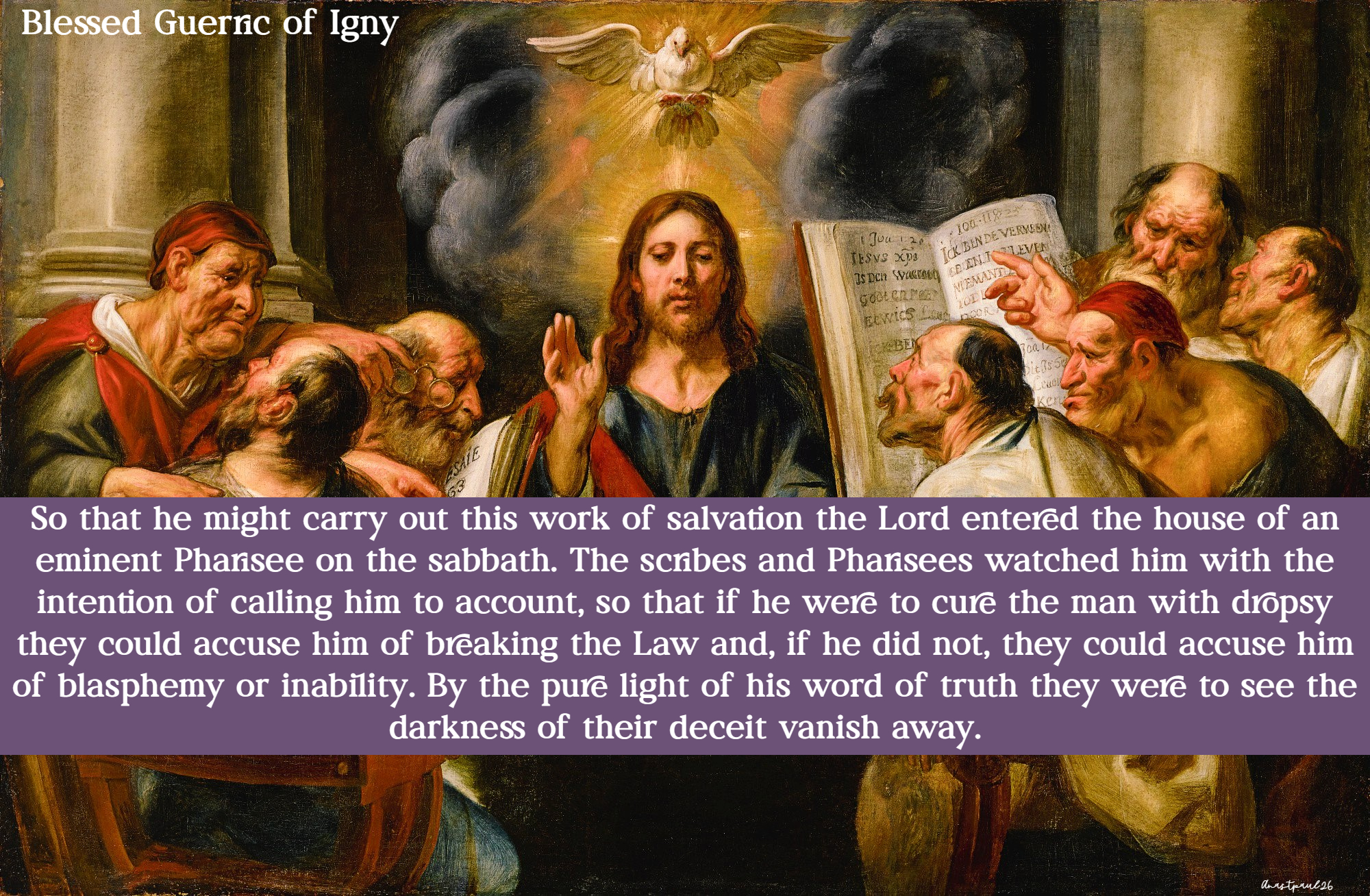
So that he might carry out this work of salvation the Lord entered the house of an eminent Pharisee on the sabbath. The scribes and Pharisees watched him with the intention of calling him to account, so that if he were to cure the man with dropsy they could accuse him of breaking the Law and, if he did not, they could accuse him of blasphemy or inability. By the pure light of his word of truth they were to see the darkness of their deceit vanish away.
Blessed Guerric of Igny
PRAYER – Lord God and holy Father, guard our faith we pray and grace us with Your mercy. Keep us ever faithful to Your precepts and bring us to Your home, to look upon Your Face. May the prayers of Your saints assist us on our journey. In your untiring life of trust in God, And may our Holy and Sorrowful Mother Mary, be our merciful protector. We ask all this through Christ, our Lord with the Holy Spirit, one God forever, amen.
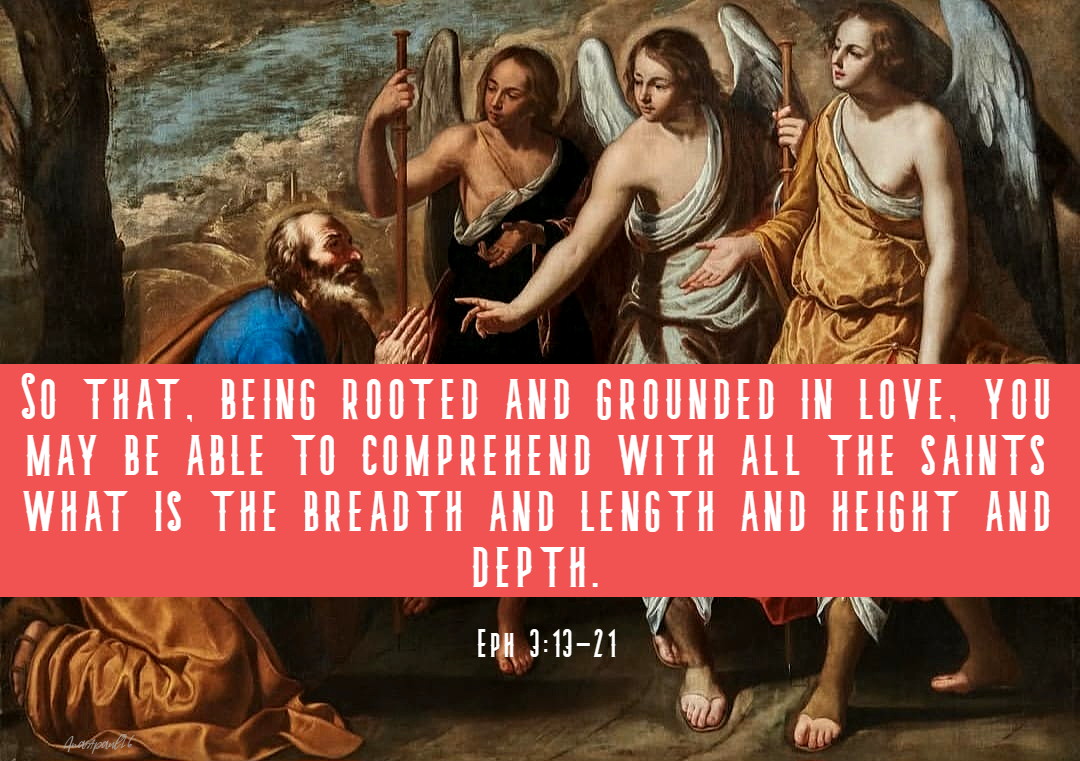
So that, being rooted and grounded in love, you may be able to comprehend with all the saints what is the breadth and length and height and depth.
Eph 3:13-21
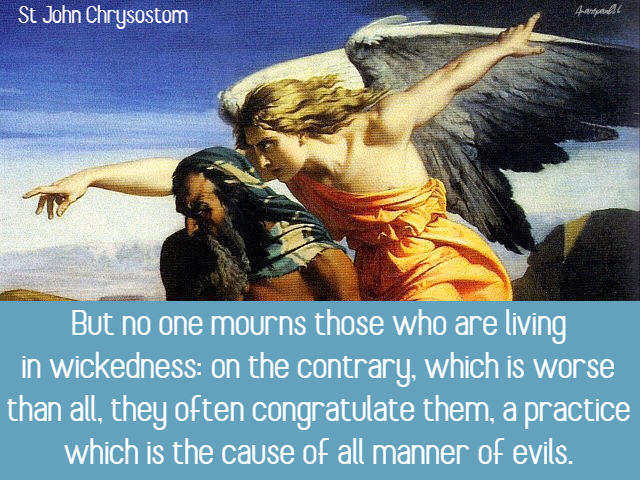
Some bewail and lament the inmates of the prison, some those who have been expelled from their country and transported to the land of exile, others those who have been deprived of their freedom, others those who have been seized and made captives by enemies, others those who have been drowned, or burnt, or buried by the fall of a house, but no one mourns those who are living in wickedness: on the contrary, which is worse than all, they often congratulate them, a practice which is the cause of all manner of evils.
St John Chrysostom
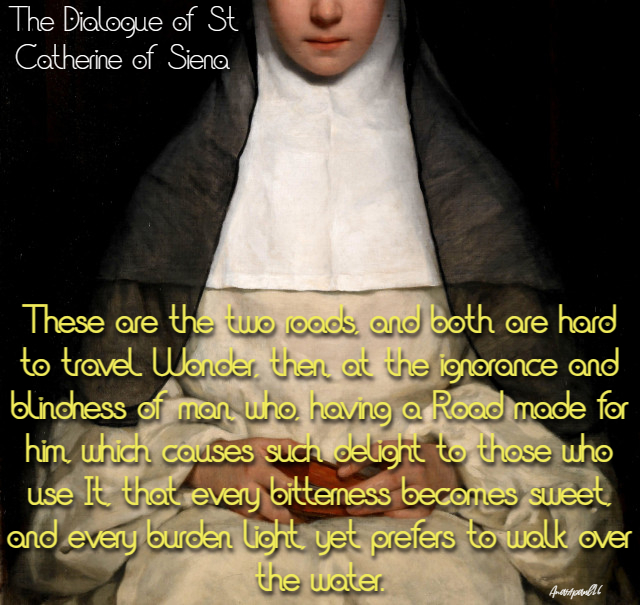
These are the two roads, and both are hard to travel. Wonder, then, at the ignorance and blindness of man, who, having a Road made for him, which causes such delight to those who use It, that every bitterness becomes sweet, and every burden light, yet prefers to walk over the water.
The Dialogue of St Catherine of Siena
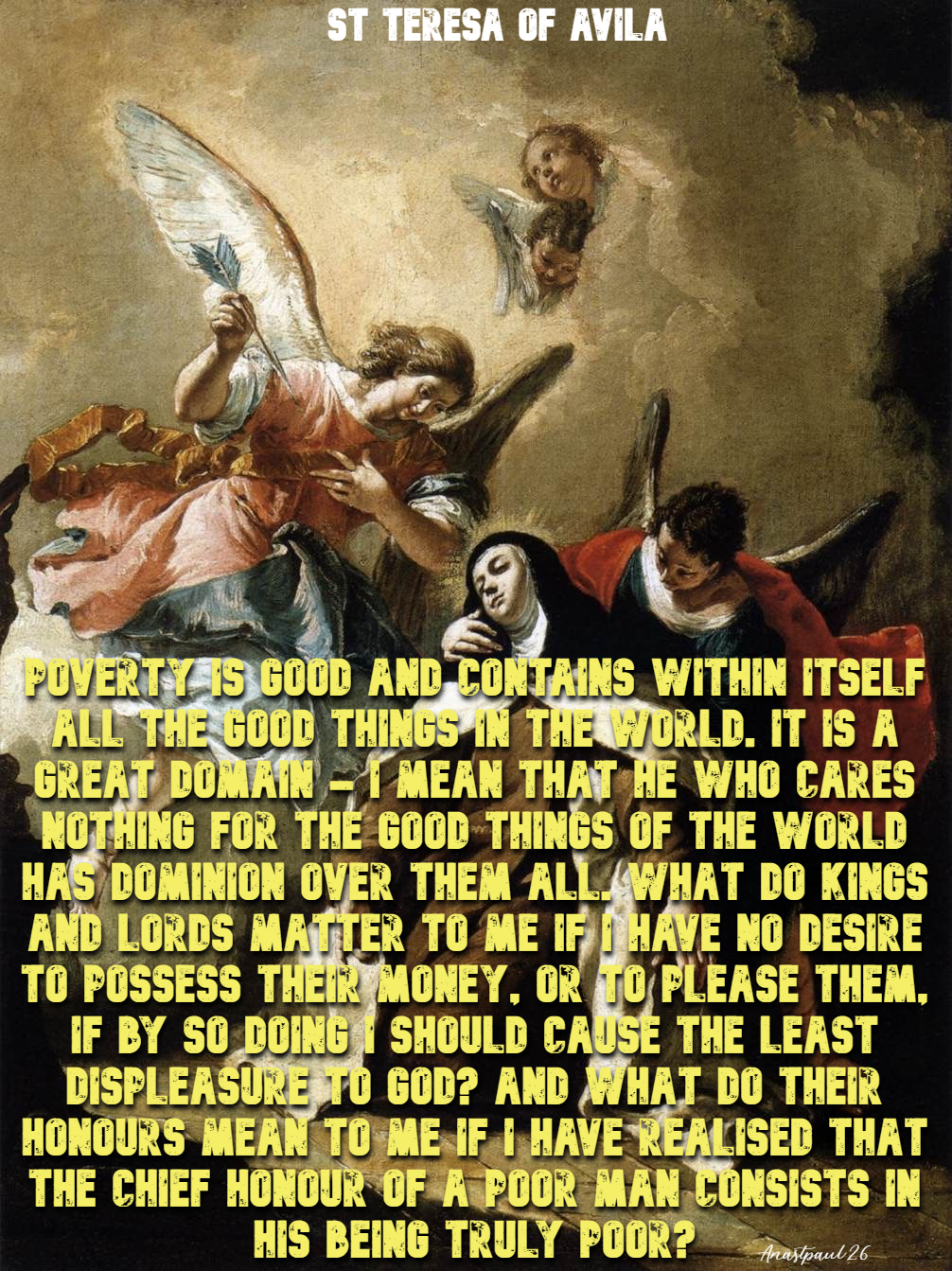
Poverty is good and contains within itself all the good things in the world. It is a great domain – I mean that he who cares nothing for the good things of the world has dominion over them all. What do kings and lords matter to me if I have no desire to possess their money, or to please them, if by so doing I should cause the least displeasure to God? And what do their honours mean to me if I have realised that the chief honour of a poor man consists in his being truly poor?
St Teresa of Avila
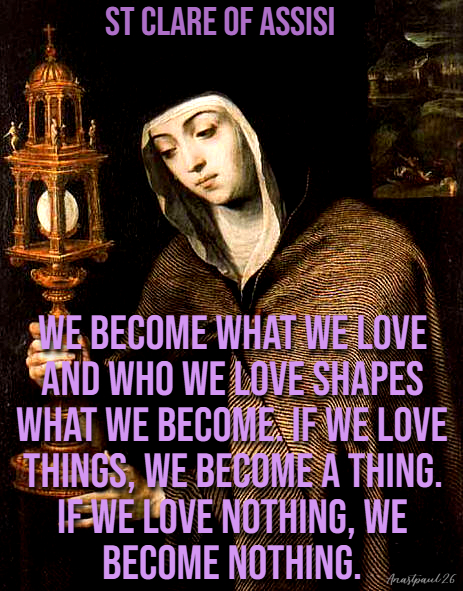
We become what we love and who we love shapes what we become. If we love things, we become a thing. If we love nothing, we become nothing.
Reflections on each of the Seven Dolors of Mary by St Alphonsus Liguori
Of The Flight of Jesus Into Egypt
Herod having heard that the expected Messiah was born, foolishly feared that the new-born King would deprive him of his kingdom. Hence St. Fulgentius, reproving him for his folly, thus says: “Why, oh Herod, art thou that disturbed? This King who is born has not come to conquer kings by arms, but to subjugate them, in a wonderful manner, by his death.” The impious Herod, therefore, waited to learn from the holy magi where the King was born, that he might take from him his life; but finding himself deceived by the magi, he ordered all the infants that could be found in the neighborhood of Bethlehem to be put to death. But an angel appeared in a dream to St. Joseph, and said to him:” Arise, and take the child and his mother, and fly into Egypt.”
According to Gerson, immediately, on that very night, Joseph made this command known to Mary; and taking the infant Jesus, they commenced their journey, as it seems clearly from the Gospel itself: Who arose and took the child and his mother by night, and retired into Egypt.” And then the afflicted Mary knew that already the prophecy of Simeon, regarding her Son, was beginning to be verified: ” He is set for a sign which shall be contradicted.” Seeing that scarcely is he born,when he is persecuted to death. What suffering it must have been to the heart of Mary, writes St. John Chrysostom, to hear the tidings of that cruel exile of herself with her Son! Flee from thy friends to strangers, from the holy temple of the only true God, to the temples of demons. What greater tribulation than that a new-born child, clinging to its mother’s bosom, should be forced to fly with the mother herself!
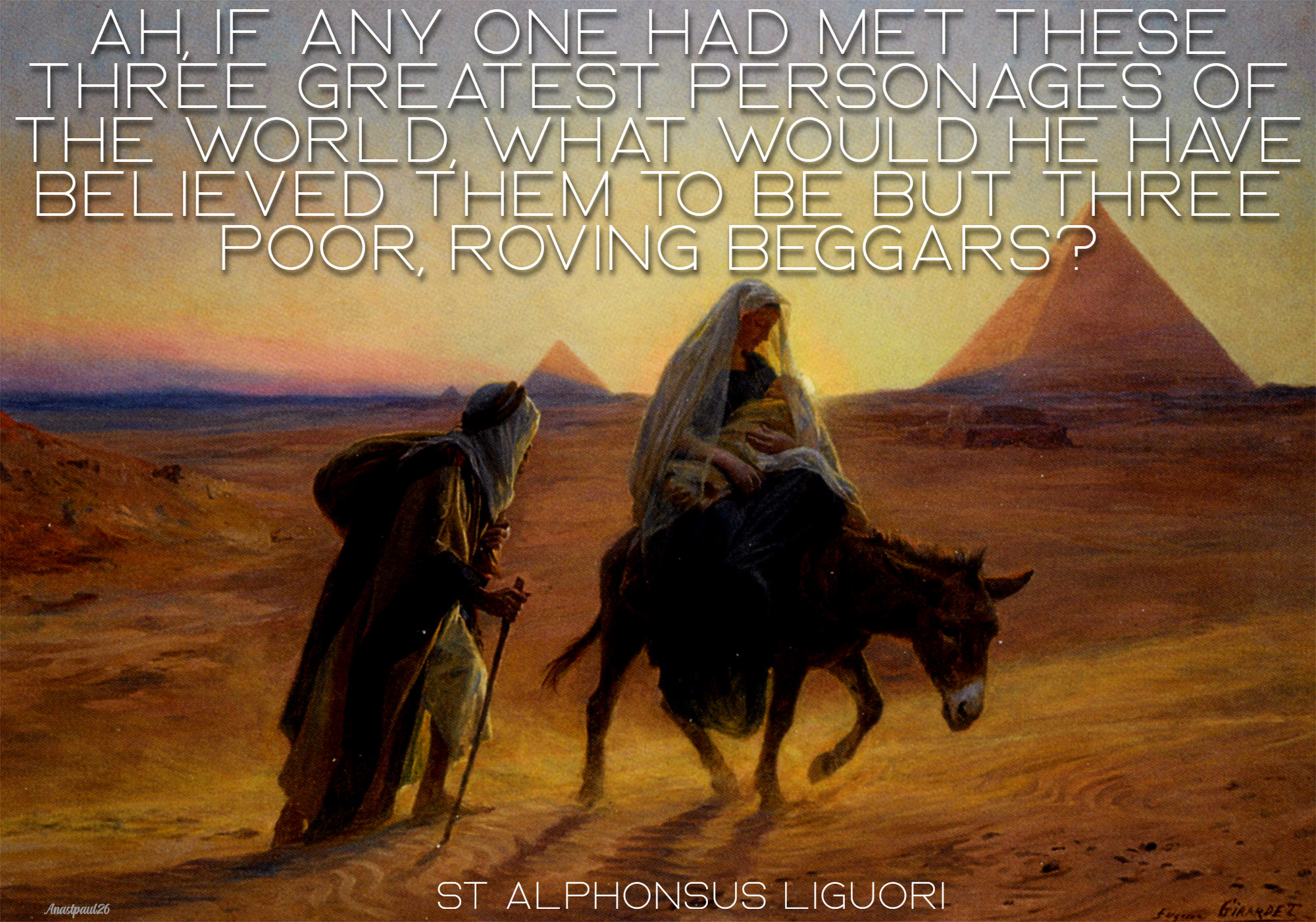
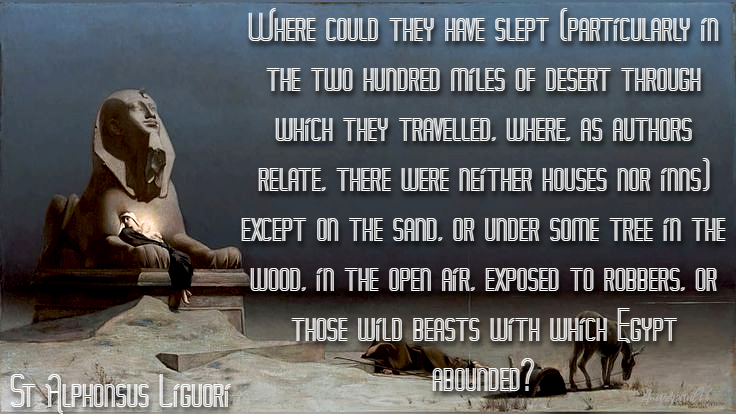
Every one can imagine how much Mary must have suffered on this journey. It was a long distance to Egypt. Authors generally agree with Barrada that it was four hundred miles; so that at least it was a journey of thirty days. The way, as St. Bonaventure describes it, was rough, unknown, through woods, and little frequented. The season was winter, and therefore they had to travel in snow, rain, wind, and storms, and through bad and difficult roads. Mary was then fifteen years of age, a delicate virgin, unaccustomed to such journeys. They had no servant to attend them. Joseph and Mary, said St. Peter Chrysologus, had no man servant nor maid-servant; they were themselves both masters and servants. Oh God, how piteous a spectacle it was to see that tender Virgin, with that newly born infant in her arms wandering through this world! St. Bonaventure asks, Where did they obtain food? Where did they rest at night? How were they lodged ? What other food could they have, than a piece of hard bread which Joseph brought with him or begged in charity? Where could they have slept (particularly in the two hundred miles of desert through which they travelled, where, as authors relate, there were neither houses nor inns) except on the sand, or under some tree in the wood, in the open air, exposed to robbers, or those wild beasts with which Egypt abounded?Ah, if any one had met these three greatest personages of the world, what would he have believed them to be but three poor, roving beggars?
They lived in Egypt, according to St. Anselm, Heliopolis, first called Memphis, and now Cairo. And here let us consider the great poverty they must have suffered for the seven years they were there, as St. Antoninus, St. Thomas, and others assert, They were foreigners, unknown, without revenues, without money, without kindred; hardly were they able to support them selves by their humble labors. As they were destitute, says St. Basil, it is manifest what effort they must have made to obtain there the necessaries of life. Moreover, Landolph of Saxony has written, and let it be repeated for the consolation of the poor, that so great was the poverty of Mary there, that sometimes she had not so much as a morsel of bread, when her Son, forced by hunger, asked it of her.
St. Matthew also relates that when Herod was dead, the angel again appeared, in a dream, to St. Joseph, and directed him to return to Judea. St. Bonaventure, speaking of his return, considers the greater pain of the blessed Virgin, on account of the sufferings which Jesus must have endured in that journey, having arrived at about the age of seven years an age, says the saint, when he was so large that he could not be carried, and so small that he could not go with out assistance.
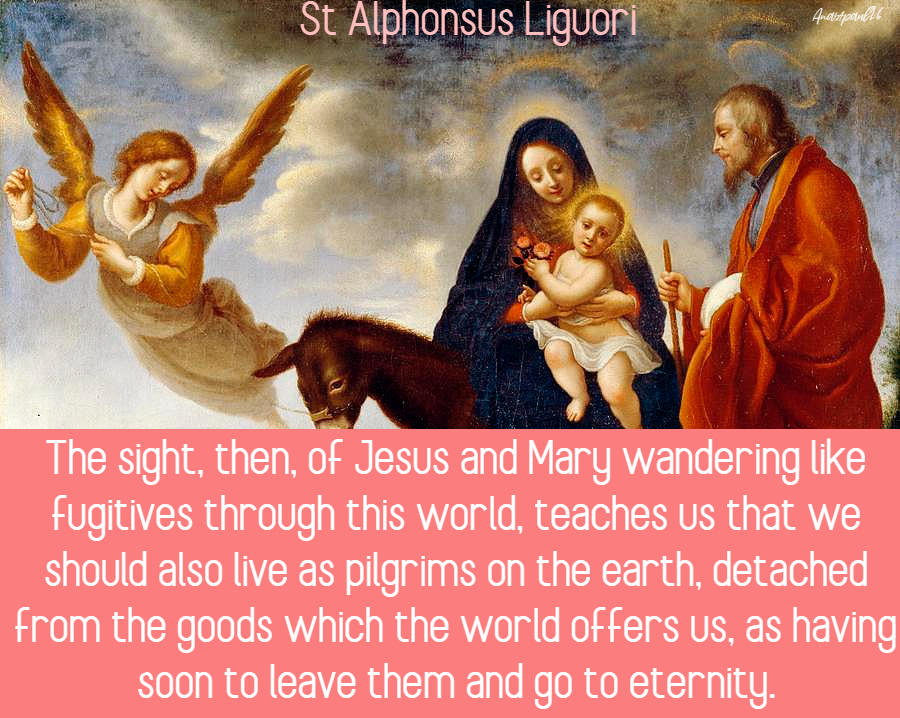
The sight, then, of Jesus and Mary wandering like fugitives through this world, teaches us that we should also live as pilgrims on the earth, detached from the goods which the world offers us, as having soon to leave them and go to eternity.






You must be logged in to post a comment.