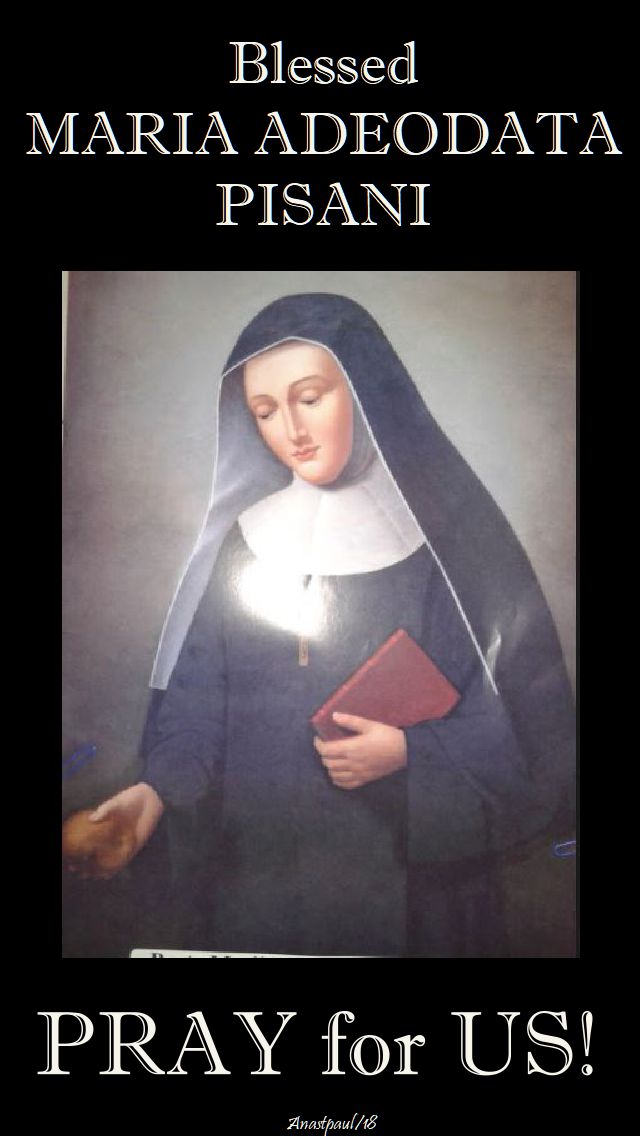
One Minute Reflection – 25 February 2018 – Second Sunday of Lent, Year B and the Memorial of Blessed Maria Adeodata Pisani (1806-1855)
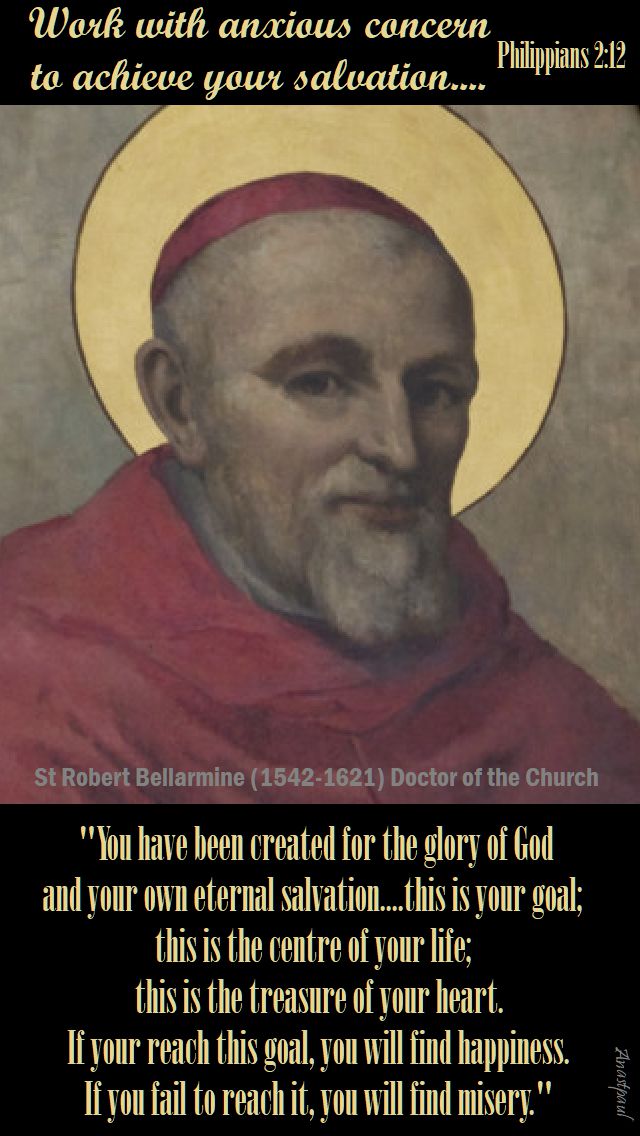
Work with anxious concern to achieve your salvation….Philippians 2:12
REFLECTION – “You have been created for the glory of God
and your own eternal salvation….this is your goal;
this is the centre of your life;
this is the treasure of your heart.
If your reach this goal, you will find happiness.
If you fail to reach it, you will find misery.”….St Robert Bellarmine
PRAYER – Heavenly Father, teach me to do everything for Your honour and glory.
Grant me the grace to work out my salvation with anxious concern each day of my life. Blessed Maria Adeodata Pisani, you focused your whole life on achieving salvation and helping all those who came in contact with you to do the same, please pray for us, amen.
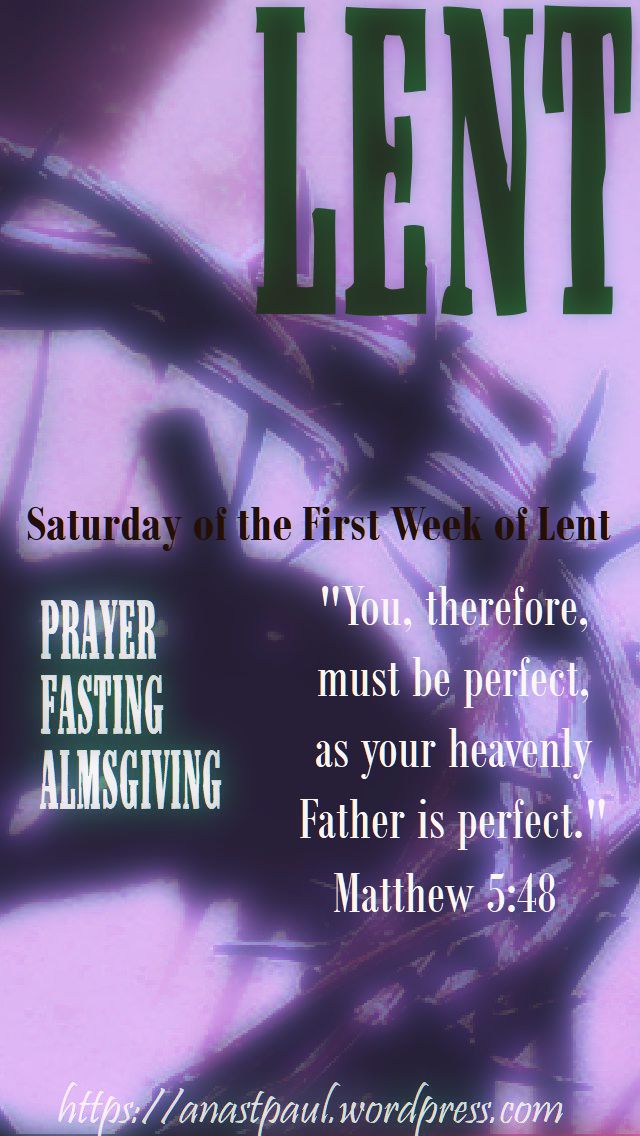
24 February 2018 – Saturday of the First Week of Lent
Deuteronomy 26:16-19, Psalms 119:1-2, 4-5, 7-8, Matthew 5:43-48
Deuteronomy 28:16 – “This day the Lord your God commands you to do these statutes and ordinances; you shall therefore be careful to do them with all your heart and with all your soul.”
Matthew 5:48 – “You, therefore, must be perfect, as your heavenly Father is perfect.”
The theme of today’s liturgy is law but not just any kind of law. The Law of the Lord rests on the single crucial fact of God’s having chosen the Jewish people as His very own. He made an agreement, a covenant with them. He never intended His covenant to be a burden on them. He chose them simply because He loved them. He Himself compared the covenant to marriage between a man and a woman. Marriage implies mutual respect, mutual obligation and above all, mutual love. Marriage cannot be static – if it does not evolve into deeper and deeper love and trust, it deteriorates and falls apart. Both parties have to be faithful to the obligations they freely have taken upon themselves. And that is what this law of the Lord is all about.
We Christians believe, that the Old Testament people of God has evolved into the Church, the Body of Christ, His Spouse. At the Last Supper, Jesus said “This cup … is the new Covenant in my blood” (Luke 22:29)
We, as the people of God are still responsible for fulfilling our part of the Covenant. But we, like the Old Testament people can and do grow careless. The marriage ‘cools off’, as it were. It needs renewal, it needs a ‘marriage encounter’ with our God. Lent is an extended ‘married couples retreat’ for us and for Him!
At the Last Supper, Jesus established the new Covenant and He also gave us a new law “a new commandment” that we love one another. Yesterday, He told us how much we need forgiving hearts. Today He gets tough: “But I say to you, Love your enemies and pray for those who persecute you…For if you love those who love you, what reward have you?” And He ends with the command that may seem impossible to fulfil – “You, therefore, must be perfect, as your heavenly Father is perfect.”
Fulfilling Jesus’ command is what our Christian life and above all LENT, it all about. It is a progressive process of co-operating with God in His will to make us a perfect spouse for Himself. We can fast, give alms, pray day and night but it is all a waste of time unless we at least try to fulfill this new commandment of the Lord. The ideal Jesus sets before us is not just tolerance of those who do not like us or whom we do not like, or the stranger who make us feel afraid and protective of our ‘patch’. Too often tolerance comes close to mindless indifference, which is the exact opposite of love!
Life with God, like any marriage, has to be worked at. Love is hard, it is a lifetime task that is never finished. Nor will Christ’s Bride, the Church, be the perfect bride until the end of time. BUT, we can be sure our God will do His part. It is only when we do all in our power to love and forgive that He will take over and love in us, with our hearts and then we will be perfected as our heavenly Father is perfect!…..Fr E Lawerence OSB
Is there someone who has hurt me or who is ‘an enemy’? Pray for them! Who are the groups in the world whom I hate or fear? Pray for them! Are there strangers in my neighbourhood of whom I am perhaps nervous or afraid, go to them and pray for them!
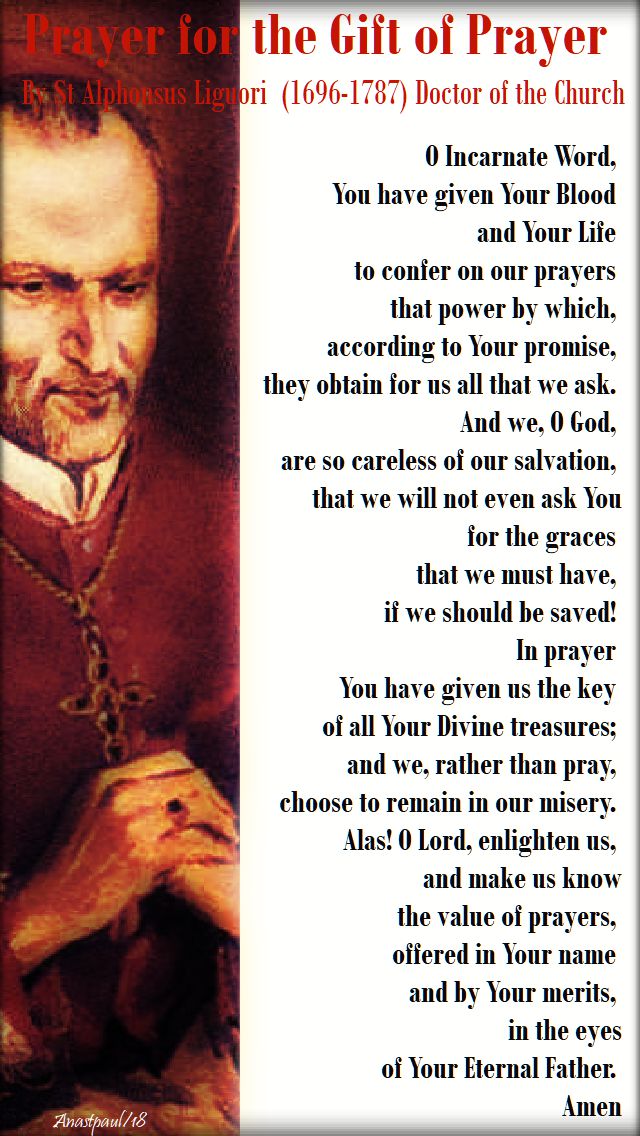
Prayer for the Gift of Prayer By St Alphonsus Liguori (1696-1787) Doctor of the Church
O Incarnate Word, You have given Your Blood and Your Life to confer on our prayers that power by which, according to Your promise, they obtain for us all that we ask. And we, O God, are so careless of our salvation, that we will not even ask You for the graces that we must have, if we should be saved! In prayer You have given us the key of all Your Divine treasures; and we, rather than pray, choose to remain in our misery. Alas! O Lord, enlighten us, and make us know the value of prayers, offered in Your name and by Your merits, in the eyes of Your Eternal Father. Amen
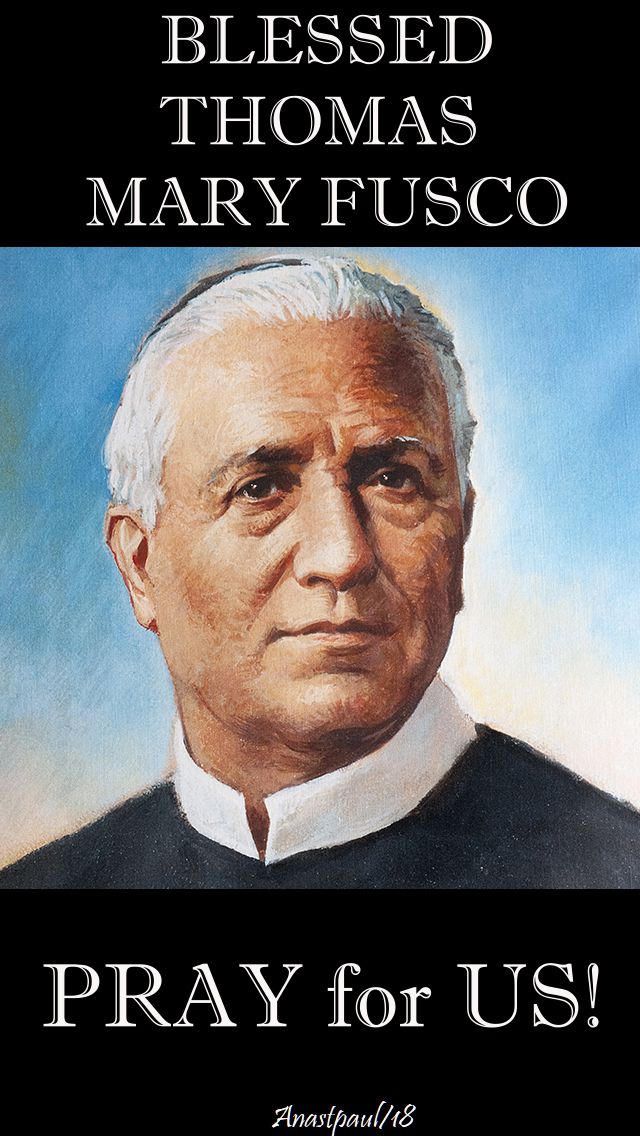
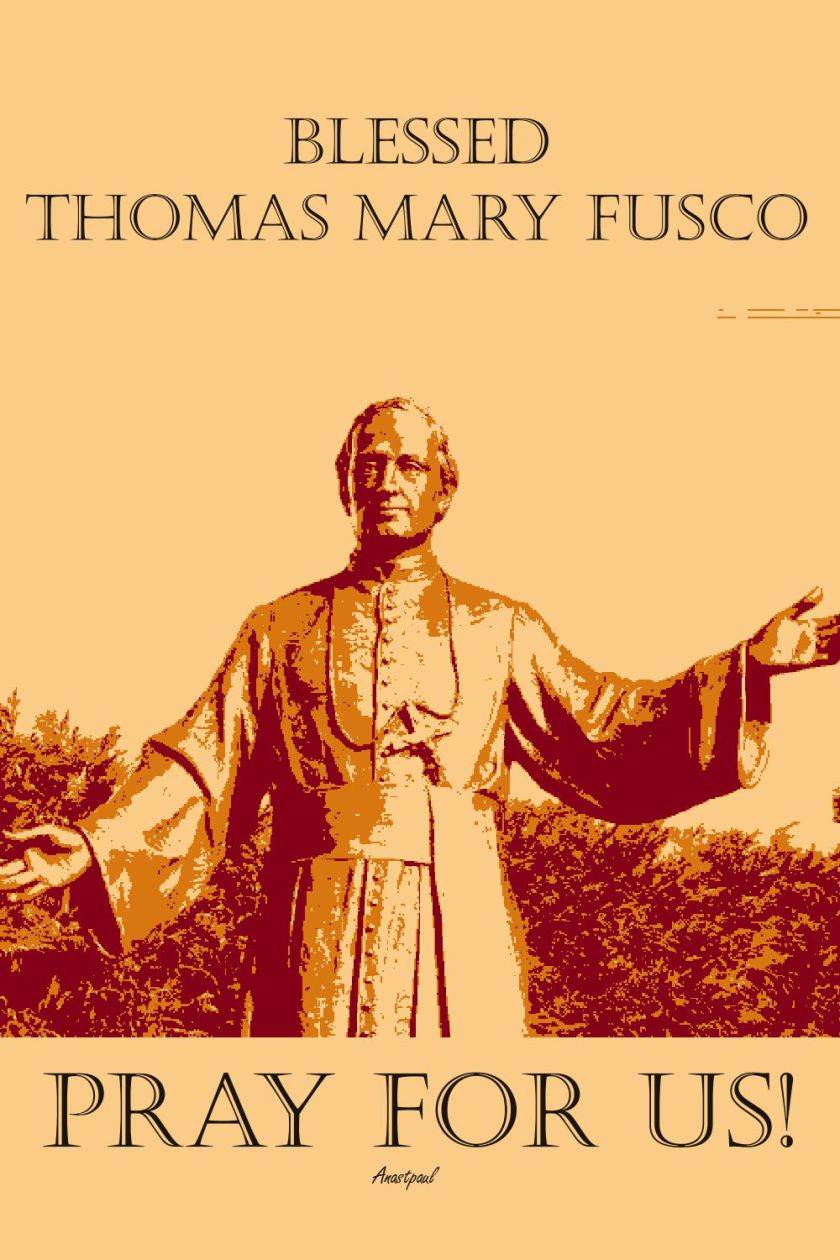
Thought for the Day – 24 February – The Memorial of Blessed Thomas Mary Fusco (1831-1891)
The outstanding vitality of faith, …. emerges in the life and activity of Tommaso Maria Fusco, founder of the Institute of the Daughters of Charity of the Precious Blood. By virtue of the faith he knew how to live in the world the reality of the Kingdom of God in a very special way. Among his aspirations, there was one which was his favourite: “I believe in you, my God, increase my faith”. It is this prayer that the Apostles direct to the Lord in the Gospel reading today (cf. Lk 17,6). Bl Tommaso understood that faith is first of all a gift and a grace. No one can conquer it or obtain it by himself. One can only ask for it, implore it from on high. For that reason, enlightened by the teaching of the new Blessed, we never tire of asking the gift of faith because “the just man will live by faith” (Hb 1,4)
“God is wonderful in his saints!”. With the communities in which the Blessed lived and for which they spent their best human and spiritual energies, we want to thank God, who is “wonderful in his saints”. At the same time, we ask Him through their intercession, to help us respond with renewed eagerness to the universal call to holiness. Amen….St Pope John Paul on the Beatification of Blessed Thomas Mary Fusco – 7 October 2001
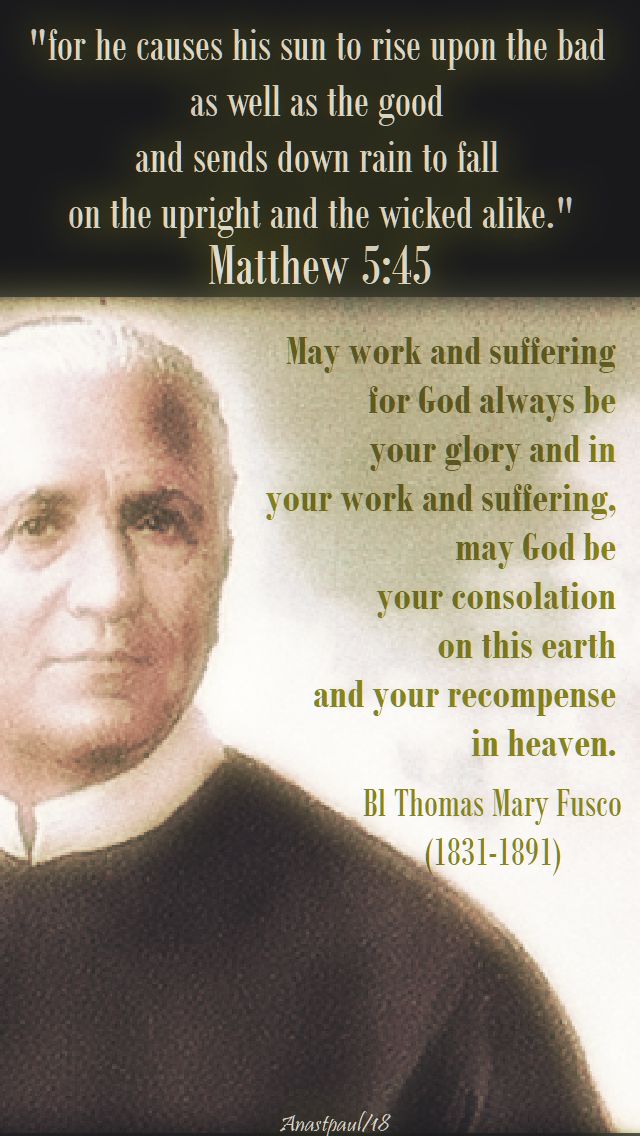
One Minute Reflection – 24 February – The Memorial of Blessed Thomas Mary Fusco (1831-1891) and Saturday of the First Week of Lent, Year B
…”for he causes his sun to rise upon the bad as well as the good and sends down rain to fall on the upright and the wicked alike.“…Matthew 5:45 (Today’s Gospel Matthew 5:43-48)
REFLECTION – “May work and suffering for God always be your glory and in your work and suffering, may God be your consolation on this earth and your recompense in heaven.”……………..Bl Thomas Mary Fusco
PRAYER– O Lord my God, give me the strength to endure with patience the sufferings I encounter in my life. Teach me to do my daily work for You alone and to do more than that in every way I can, for your greater glory. Teach me, Holy Father, to obey the words of Your Son, to pray for those who persecute me and to suffer for the glory of the Kingdom. Blessed Thomas Mary Fusco, pray that we may achieve the crown of glory in heaven, amen.
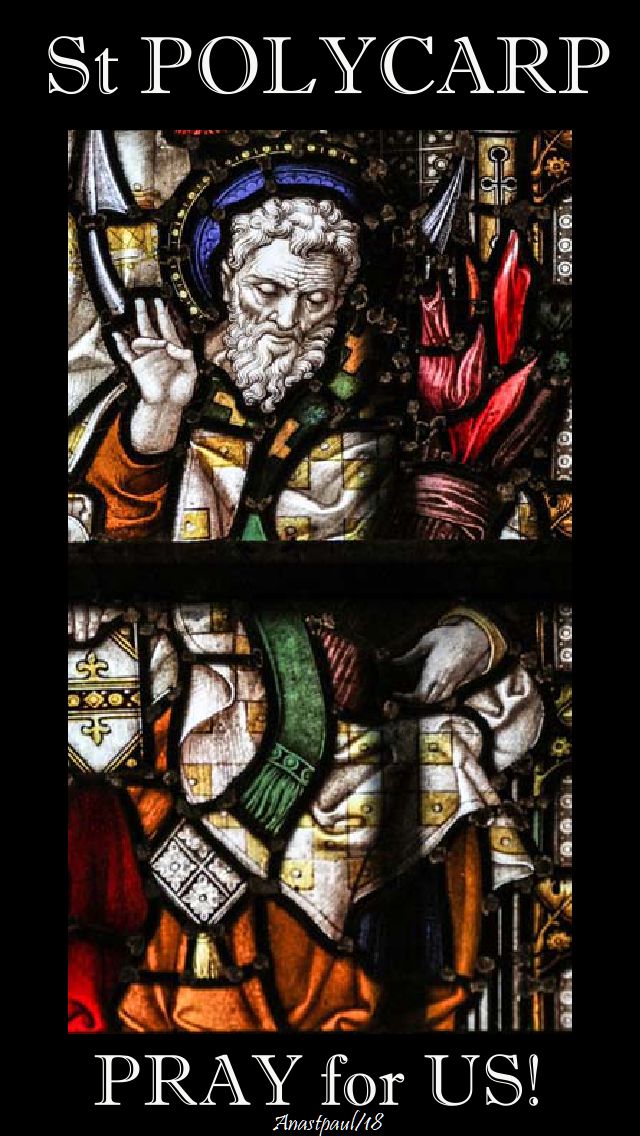
23 February 2018 – Friday of the First Week of Lent – The Memorial of St Polycarp (c 69 – c 155) Martyr and Apostolic Father of the Church
Ezekiel 18:21-28, Psalms 130:1-8, Matthew 5:20-26
Ezekiel 18:21-22 – “But if a wicked man turns away from all his sins which he has committed and keeps all my statutes and does what is lawful and right, he shall surely live; he shall not die. None of the transgressions which he has committed shall be remembered against him; for the righteousness which he has done he shall live.”
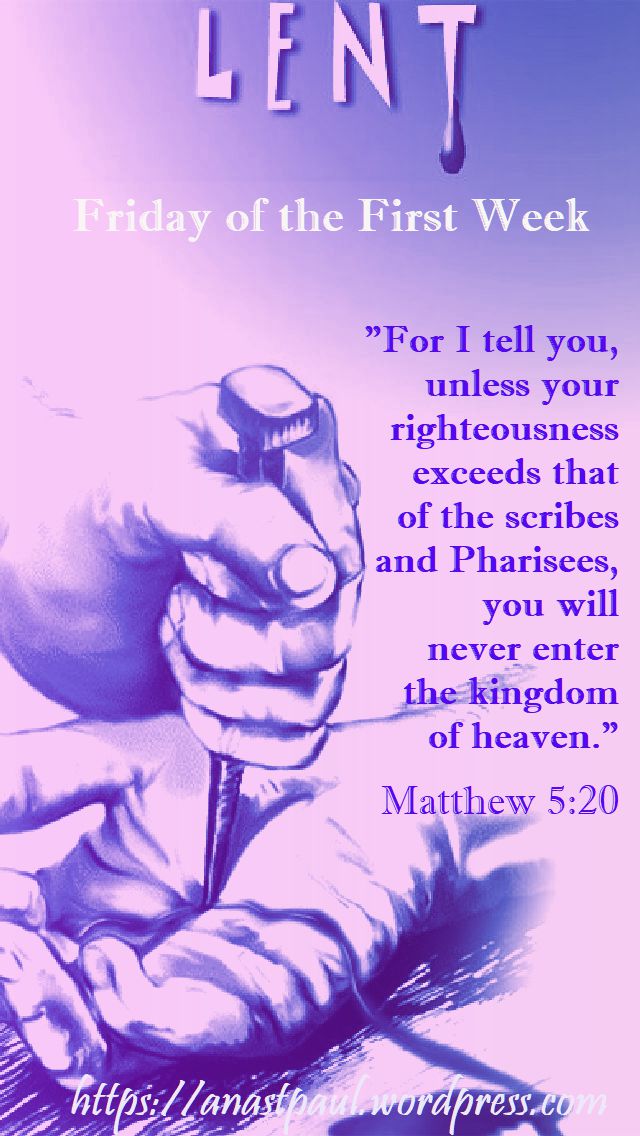
Matthew 5:20 – “For I tell you, unless your righteousness exceeds that of the scribes and Pharisees, you will never enter the kingdom of heaven.”
Who wants to enter the Kingdom of Heaven? Certainly all of us do! That should be our primary goal in life. And, along with that goal, we should seek to bring as many people with us as possible.
Too often we fail to see this as an ultimate goal in life. We fail to keep our eyes on Heaven as the primary reason we are here on Earth. It’s very easy to get caught up in the day-to-day satisfactions of what we may call the “mini goals” of life. These are goals such as entertainment, money, success, and the like. And we can often make these mini goals our only goals at times.
So how about you? What is your goal? What is it you strive for and seek throughout your day? If you honestly examine your actions throughout each day you may be surprised that you are actually seeking unimportant and passing mini goals more than you realize.
Jesus gives us one bit of clear direction in this passage above on how to attain that ultimate goal of life – the Kingdom of Heaven. The path He points to is righteousness.
What is righteousness? It’s simply being real. Being authentic. Not fake. And most especially, it’s being real in our love of God. The Pharisees struggled with pretending they were holy and good followers of the will of God. But they were not very good at it. They may have been good at the acting job, and they may have convinced themselves and others, but they could not fool Jesus. Jesus could see through the fake veneer and perceive that which was underneath. He could see that their “righteousness” was only a show for themselves and others.
And a great part of this, is our relationship with our neighbour – with everyone we come into contact with! This is not easy – “whoever insults his brother shall be liable to the council and whoever says, ‘You fool!’ shall be liable to the hell of fire. So if you are offering your gift at the altar and there remember that your brother has something against you, leave your gift there before the altar and go; first be reconciled to your brother and then come and offer your gift.” So we have been told – this is as clear as daylight – there can be no desenting or pretending – go and do it!
Reflect, today, upon your own righteousness – your honesty and sincerity in striving for holiness. If you want to daily keep Heaven as your ultimate goal, then you must also strive to make each daily mini goal an honest attempt at holiness. We must daily seek Christ with all sincerity and truth in all the small things of life. We must then let that sincerity shine through, showing what truly lies beneath. To be righteous, in the truest sense, means we sincerely seek God throughout our day and make that sincerity the constant goal of our life.
Is there someone I need to make peace with?
Pray for the grace of forgiveness and reconciliation.
Am I keeping my eyes on my ultimate goal or do I allow this daily life to become the goal?
Fr Nicholas King S.J.
Learn the kindness of the Crucified. His enemies said, “His blood be upon us and upon our children.” Not so Christ, but supplicating the Father, He said: “Father, forgive them, for they know not what they do.” For if His blood had indeed fallen upon them and upon their children, the apostles would not have been made out of their children, neither three thousand nor five thousand would have believed on the spot. See how barbarous and cruel those were towards their descendants – they ignored even nature itself, while God was more loving than all the fathers put together, and tenderer than any mother.
He did not at once let the chastisement and penalty fall upon them, but He allowed forty years and more to pass after the cross. Our Lord Himself was crucified under Tiberius, and their city was destroyed under Vespasian and Titus. Now why did He allow so long a time to elapse after all these things? Because He wished to give them time for repentance, so that they might put off their impieties and be quit of their crimes. As, having a respite for conversion, they remained in their impenitence, He at last inflicted punishment upon them, and destroying their city, sent them out wanderers over the, face of the earth. And this He did through love. He dispersed them that they might everywhere see that Christ whom they had crucified adored, and that seeing Him adored by all they might learn His power and acknowledge their own exceeding wickedness, and in acknowledging might come to the truth….St John Chrysostom
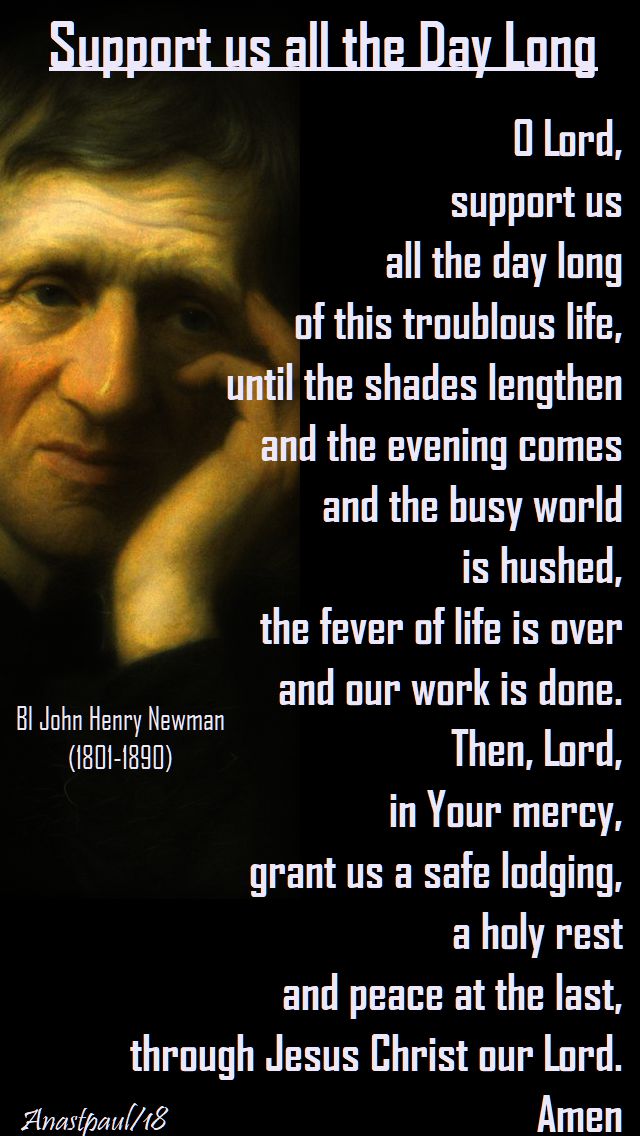
Support us all the Day Long Blessed John Henry Newman (1801-1890)
O Lord, support us all the day long of this troublous life, until the shades lengthen and the evening comes and the busy world is hushed, the fever of life is over and our work is done. Then, Lord, in Your mercy, grant us a safe lodging, a holy rest and peace at the last, through Jesus Christ our Lord. Amen
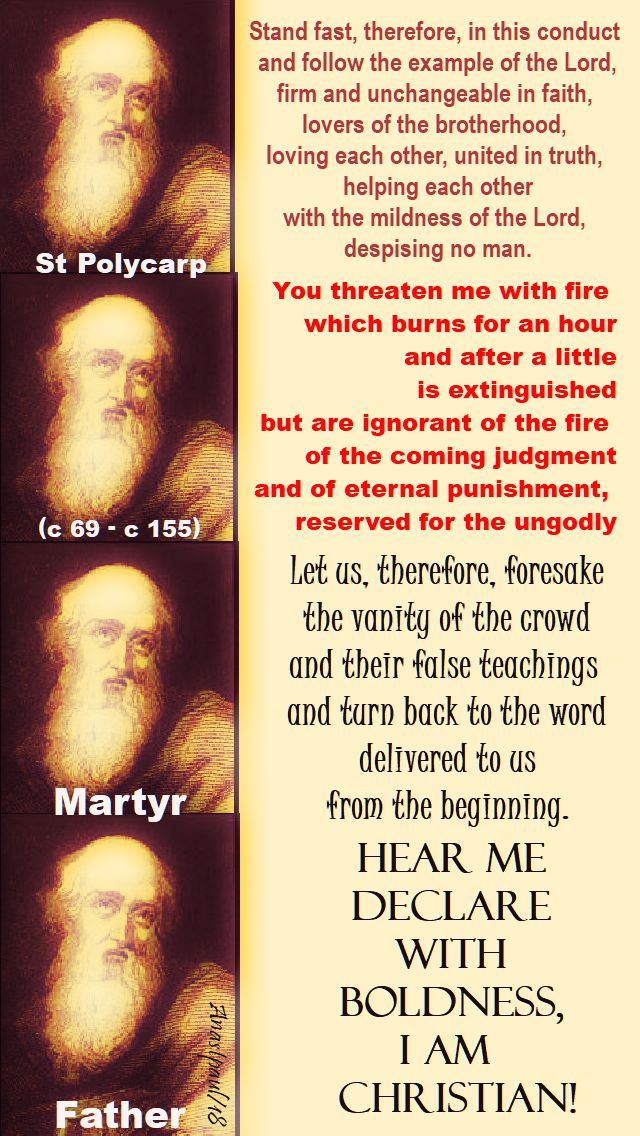
Quote/s of the Day – 23 February – The Memorial of St Polycarp (c 69 – c 155) Martyr and Father of the Church
“Stand fast, therefore, in this conduct and follow the example of the Lord, firm and unchangeable in faith, lovers of the brotherhood, loving each other, united in truth, helping each other with the mildness of the Lord, despising no man.”
“You threaten me with fire which burns for an hour and after a little is extinguished but are ignorant of the fire of the coming judgement and of eternal punishment, reserved for the ungodly.”
“Let us, therefore, forsake the vanity of the crowd and their false teachings and turn back to the word delivered to us from the beginning.”
“Hear me declare with boldness, I am a Christian!”
St Polycarp (c 69 – c 155) Martyr and Father of the Church
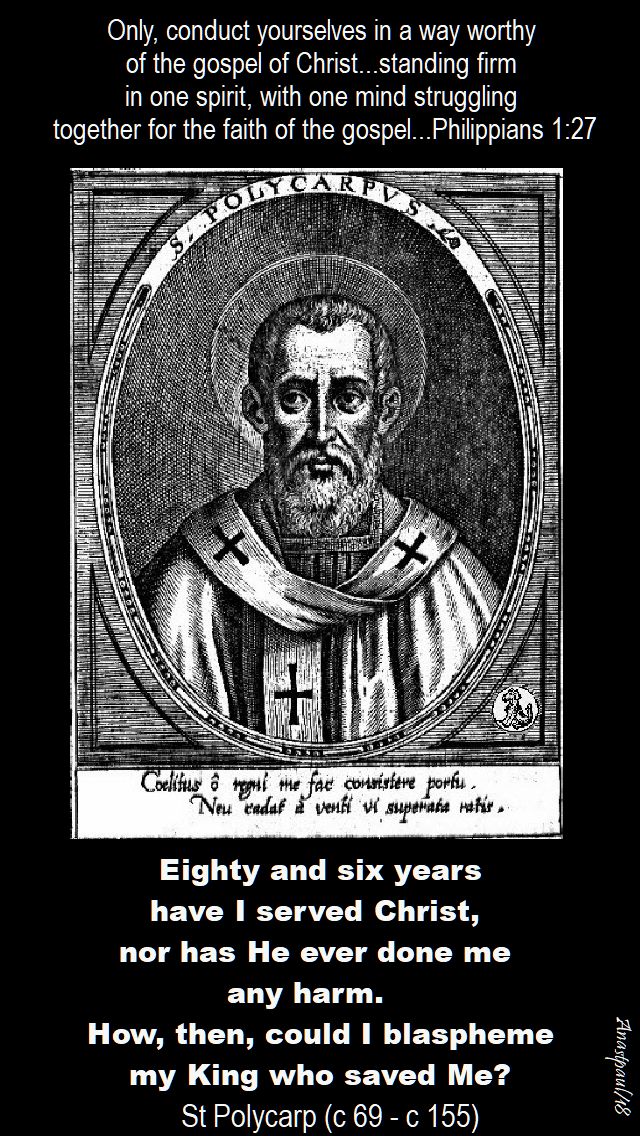
One Minute Reflection – 23 February – The Memorial of St Polycarp (c 69 – c 155) Martyr and Father of the Church and Friday of the First Week of Lent 2018
Only, conduct yourselves in a way worthy of the gospel of Christ, so that, whether I come and see you or am absent, I may hear news of you, that you are standing firm in one spirit, with one mind struggling together for the faith of the gospel...Philippians 1:27
REFLECTION – “Eighty and six years have I served Christ, nor has He ever done me any harm. How, then, could I blaspheme my King who saved Me?….I bless Thee for deigning me worthy of this day and this hour that I may be among Thy martyrs and drink the cup of my Lord Jesus Christ.”…St Polycarp
PRAYER – Lord of all creation, You gave St Polycarp, a place in the company of the Martyrs. Grant that, through his intercession, we may, like him, drink from that cup which Christ drank and so rise to eternal life. Through Christ our Lord, in unity with the Holy Spirit, one God forever, amen.
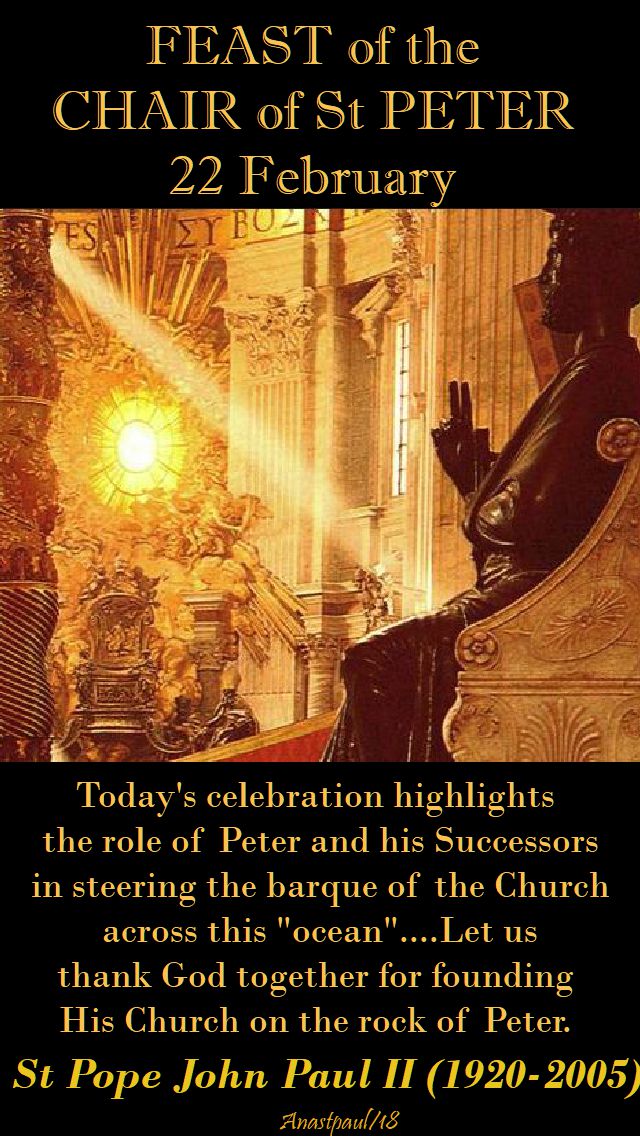
Thought for the Day – 22 February – The Feast of the Chair of Saint Peter
Today’s celebration highlights the role of Peter and his Successors in steering the barque of the Church across this “ocean”…. Let us thank God together for founding His Church on the rock of Peter. As the opening prayer suggests, let us pray intensely that amid the upheavals of the world, she may not be shaken but advance with courage and trust.
By virtue of the transforming experience of the Good Shepherd, Peter described himself, in his Letter to the Churches of Asia Minor, as “a witness of the sufferings of Christ as well as a partaker in the glory that is to be revealed” (1 Pt 5: 1). He urges “the elders” to tend the flock of God and become examples to it (cf. 1 Pt 5: 2-3). Today, dear friends, this exhortation is addressed particularly to you, whom the Good Shepherd has wished to associate in the most eminent way with the ministry of Peter’s Successor. Be faithful to your mission and ready to lay down your lives for the Gospel. The Lord is asking this of you, and the Christian people who have gathered around you today with joy and affection expect it of you.
“I have prayed for you that your faith may not fail” (Lk 22: 32). This is what the Lord said to Simon Peter at the Last Supper. Jesus’ words, fundamental for Peter and his Successors, also spread light and comfort to those who cooperate more closely in their ministry. Today, …Christ is repeating to each of you: “I have prayed for you” that your faith will not fail in the situations in which your fidelity to Christ, to the Church, to the Pope, may be put to the greatest test.
May this prayer, which never ceases to flow from the Good Shepherd’s heart, always be your strength! Have no doubt that just as it was for Christ and for Peter, so it will be for you: your most effective witness will always be one that is marked by the Cross. The Cross is God’s chair in the world.On it Christ has offered humanity the most important lesson, that of loving one another as He has loved us (cf. Jn 13: 34): even to the ultimate gift of oneself.
The Mother of Christ and of the disciples, Mary Most Holy, always stands beneath the Cross. The Lord entrusted us to her when He said: “Woman, behold, your son!” (Jn 19: 26). Since the Blessed Virgin, Mother of the Church, protected Peter and the Apostles in a special way, she will not fail to protect the Successor of Peter and his collaborators. May this consoling certainty encourage you not to be afraid of trials and difficulties. But, reassured by God’s constant protection, let us obey together the command of Christ, who vigorously asked Peter, and with him the Church, to put out into the deep: “Duc in altum” (Lk 5: 4). Yes, dear Brothers, let us put out into the deep, let us cast our nets for the catch and let us “go forward in hope!” (Novo millennio ineunte, n. 58).
Christ, the Son of the living God, is the same yesterday and today and forever. Amen!…Excerpt from the Homily of St John Paul on Thursday, 22 February 2001, Feast of Saint Peter’s Chair
St Peter Pray for Holy Mother Church, Pray for us all!
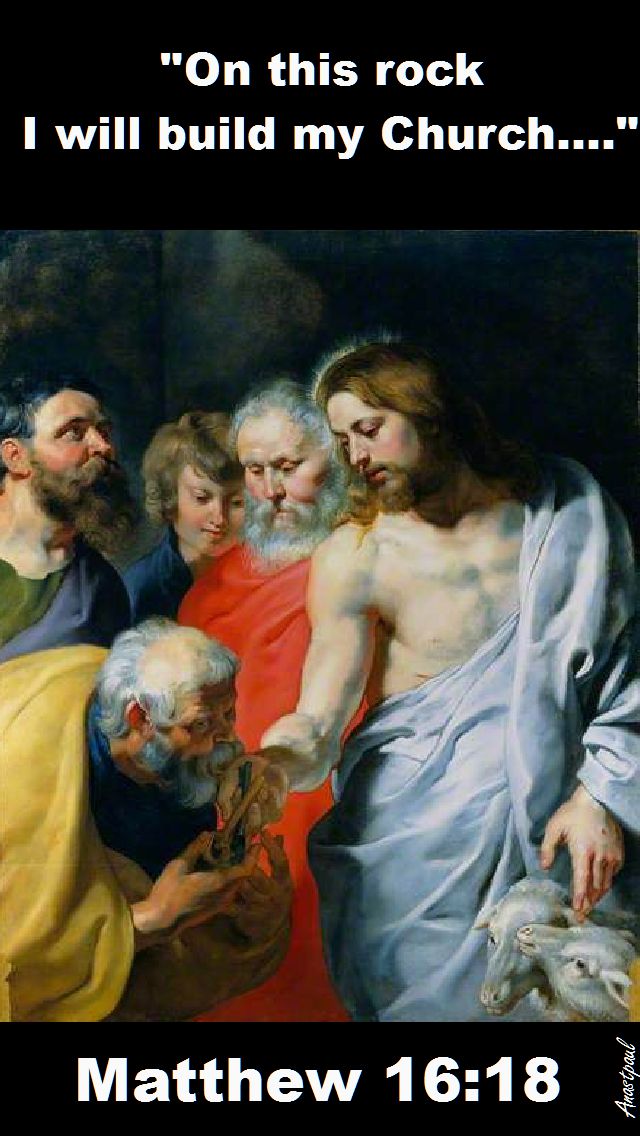
One Minute Reflection – 22 February – The Feast of the Chair of Saint Peter
“On this rock I will build my Church”…Matthew 16:18
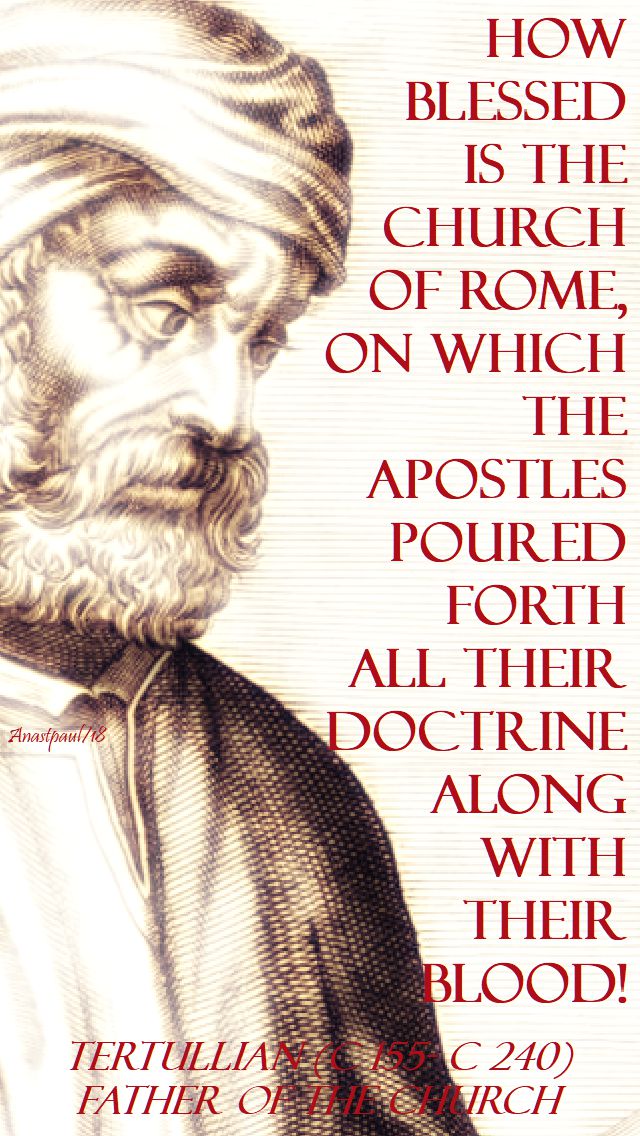
REFLECTION – “How blessed is the Church of Rome, on which the Apostles poured forth all their doctrine along with their blood!” (De Praescriptione Hereticorum, 36)…….Tertullian
“I decided to consult the Chair of Peter, where that faith is found exalted by the lips of an Apostle; I now come to ask for nourishment for my soul there, where once I received the garment of Christ. I follow no leader save Christ, so I enter into communion with Your beatitude, that is, with the Chair of Peter, for this I know is the rock upon which the Church is built.” (cf. Le lettere I, 15, 1-2)…………..St Jerome (343-420) Father & Doctor
PRAYER – Holy Father, send Your Divine Enlightener into the hearts of all Your faithful, filling us with the strength to fulfil our mission as the followers of the Chair of St Peter. And most of all, we pray Lord Holy God to inspire and light the way of our Holy Father, Francis. Sustain and guide him, keep him in health and strength, to lead Your people by the Light of the Way and the Truth. Holy Father, have mercy on us, Holy Spirit guide and lead us, Lord Jesus Christ be our intercessor and teacher, amen.
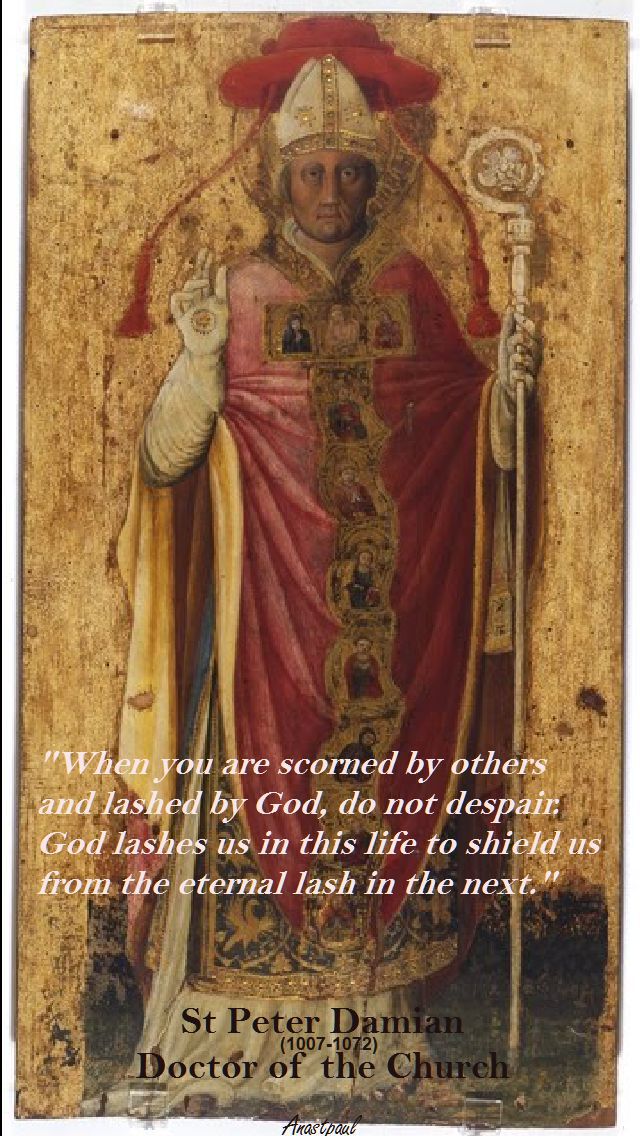
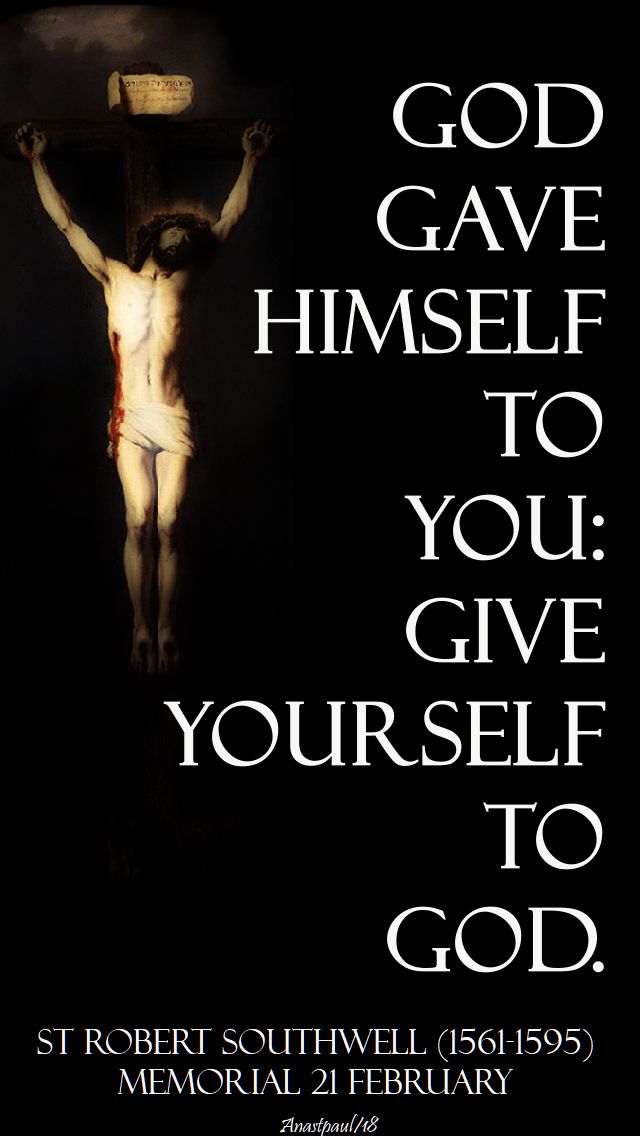
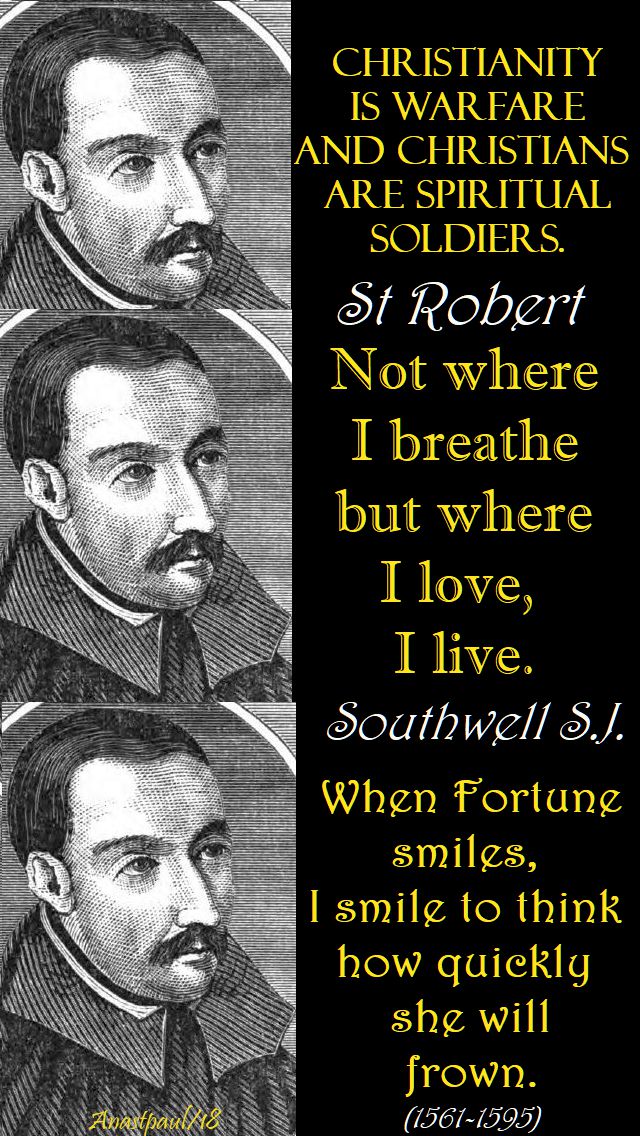
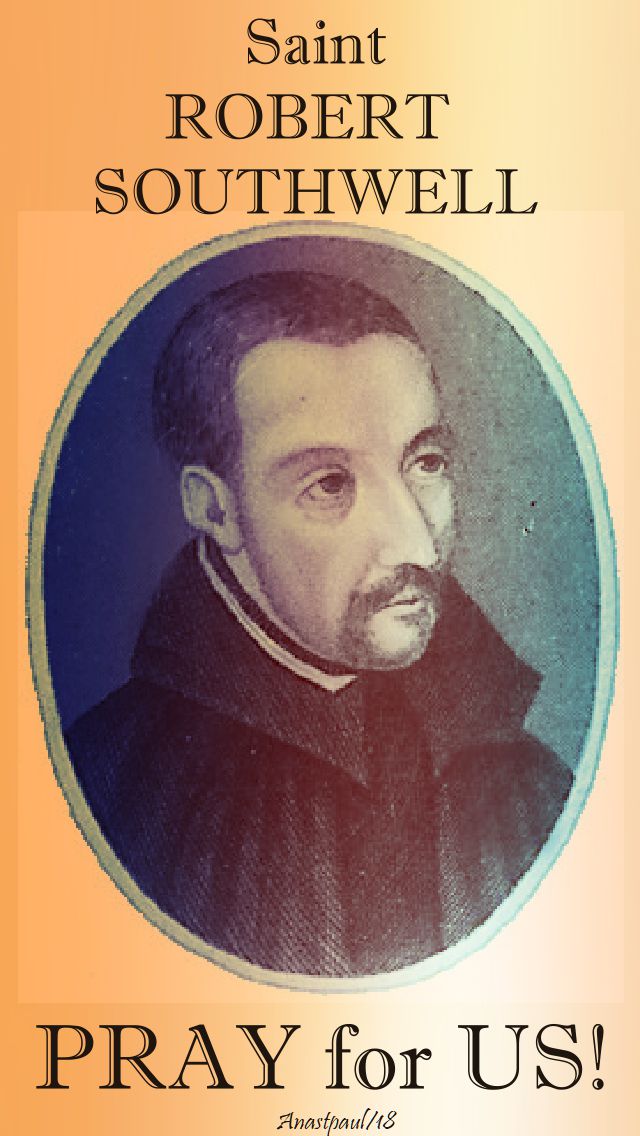
Quote/s of the Day – 21 February – The Memorial of St Peter Damian O.S.B. (1007-1072) and St Robert Southwell S.J. (1561-1595)
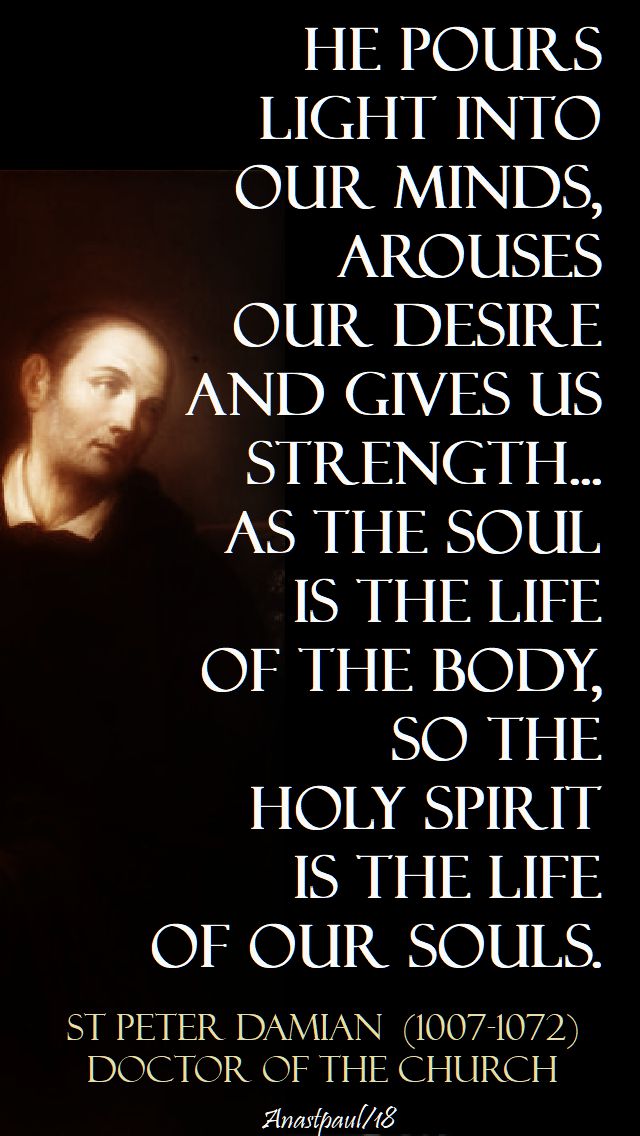
“He pours light into our minds, arouses our desire and gives us strength… As the soul is the life of the body, so the Holy Spirit is the life of our souls.”
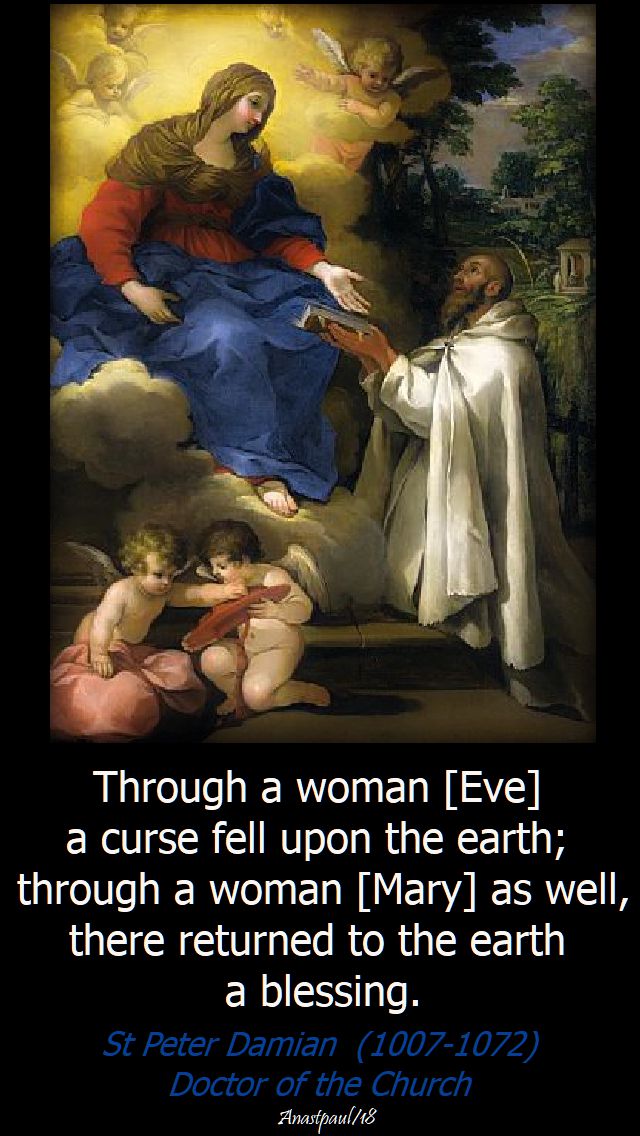
“Through a woman [Eve] a curse fell upon the earth; through a woman [Mary] as well, there returned to the earth a blessing.”
“When you are scorned by others and lashed by God, do not despair. God lashes us in this life, to shield us from the eternal lash in the next.”
St Peter Damian (1007-1072) Doctor of the Church
“God gave Himself to you: give yourself to God.”
“Where sin was hatched, let tears now wash the nest.”
“Christianity is warfare and Christians are spiritual soldiers.”
“Not where I breathe but where I love, I live.”
“When Fortune smiles, I smile to think, how quickly she will frown.”
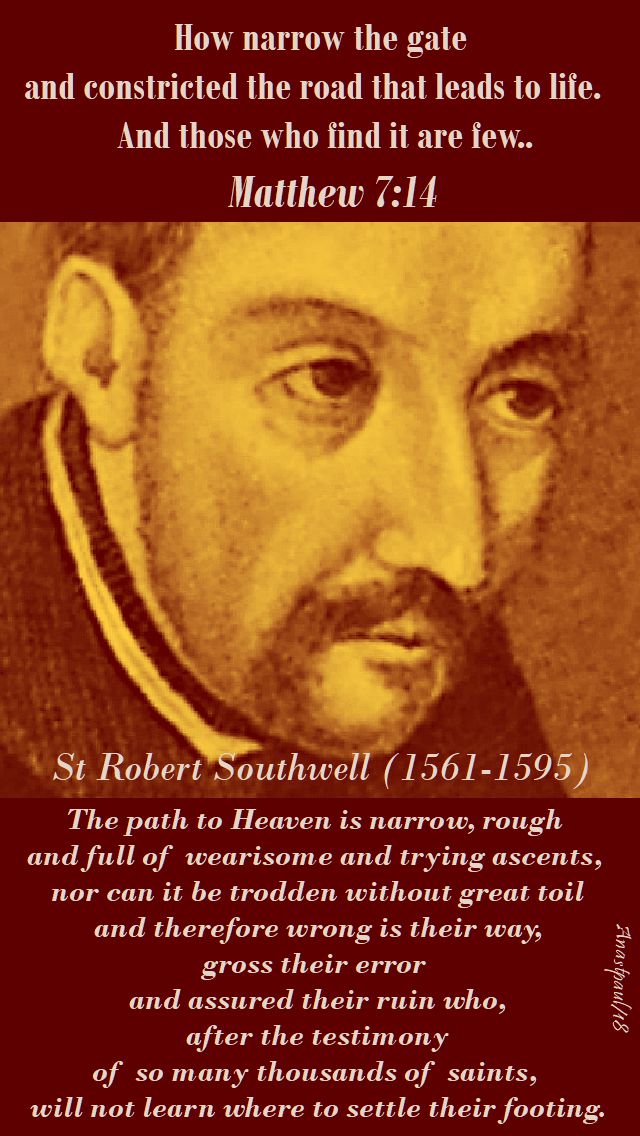
One Minute Reflection – 21 February – The Memorial of St Robert Southwell S.J. (1561-1595)
How narrow the gate and constricted the road that leads to life. And those who find it are few...Matthew 7:14
REFLECTION – “The path to Heaven is narrow, rough and full of wearisome and trying ascents, nor can it be trodden without great toil and therefore wrong is their way, gross their error and assured their ruin who, after the testimony of so many thousands of saints, will not learn where to settle their footing.”…St Robert Southwell (1561-1595)
PRAYER – Lord of heaven and earth, You blessed us this day with the grace of the Martyr St Robert Southwell. Grant that, through his intercession, we may, like him, drink from that cup which Christ drank and so rise to eternal life. We make our prayer through our Lord Jesus, in unity with the Holy Spirit, one God forever, amen
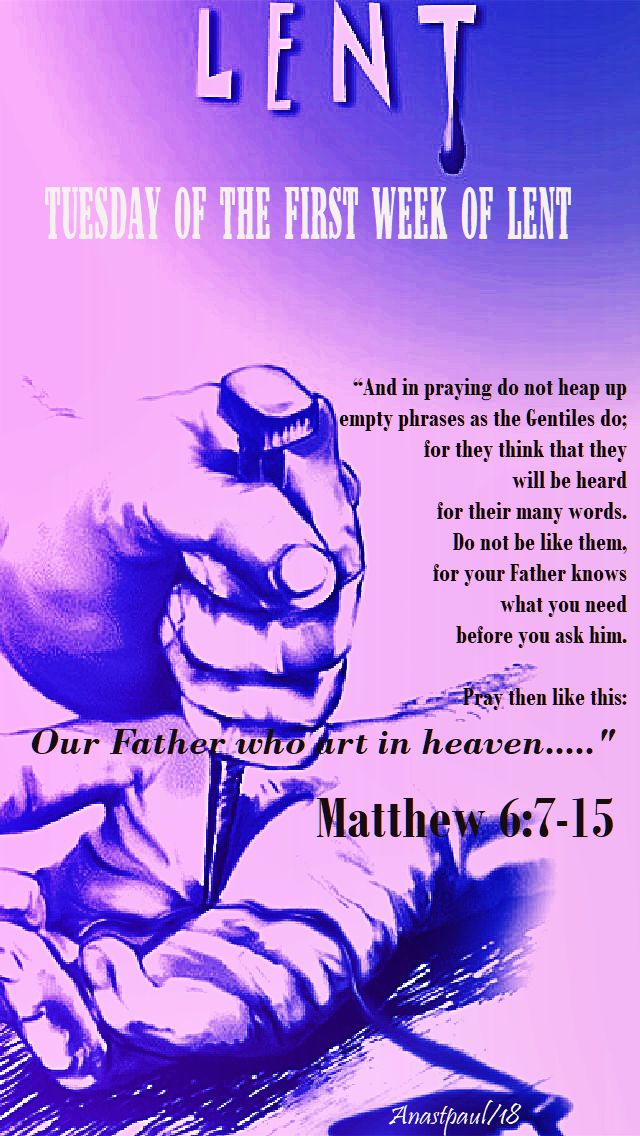
20 February 2018 – Tuesday of the First Week of Lent
Isaiah 55:10-11, Psalms 34:4-7, 16-19, Matthew 6:7-15
Isaiah 55:10-11 – “For as the rain and the snow come down from heaven and return not thither but water the earth, making it bring forth and sprout, giving seed to the sower and bread to the eater, so shall my word be that goes forth from my mouth; it shall not return to me empty but it shall accomplish that which I purpose and prosper in the thing for which I sent it.
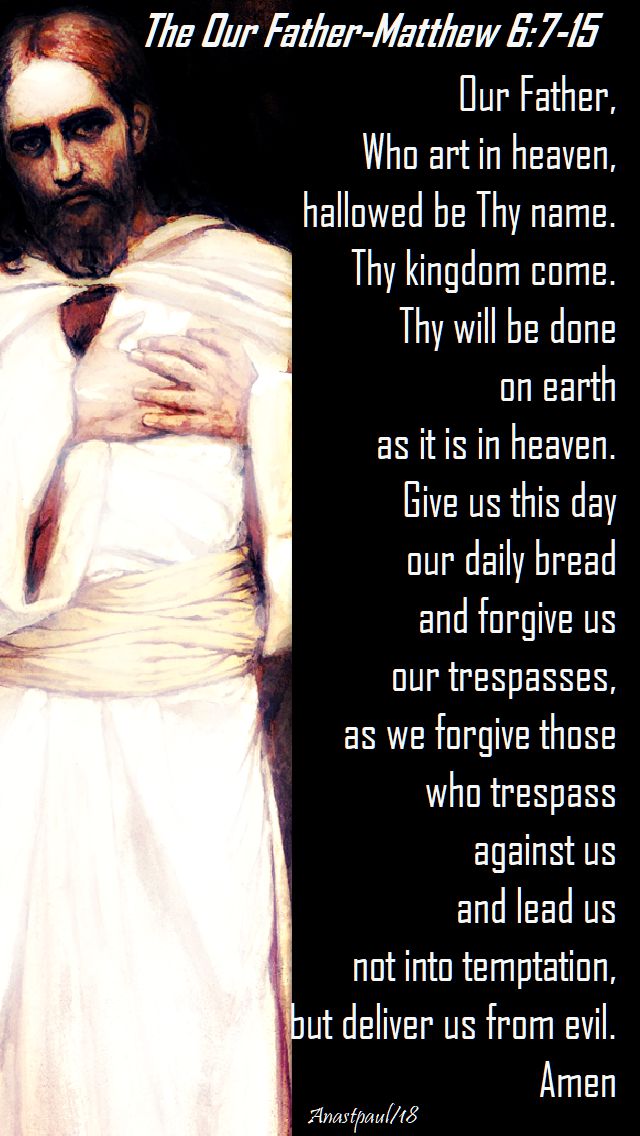
Matthew 6:7-15 – “And in praying do not heap up empty phrases as the Gentiles do; for they think that they will be heard for their many words. Do not be like them, for your Father knows what you need before you ask him. Pray then like this: Our Father who art in heaven, Hallowed be thy name. Thy kingdom come. Thy will be done, On earth as it is in heaven. Give us this day our daily bread; And forgive us our debts, As we also have forgiven our debtors; And lead us not into temptation, But deliver us from evil. For if you forgive men their trespasses, your heavenly Father also will forgive you; but if you do not forgive men their trespasses, neither will your Father forgive your trespasses.”
Today we learn another of Lent’s purposes, perhaps the best of all. The Opening Prayer instructs us “Father, look on us, your children. Through the discipline of Lent, help us to grow in our desire for you.” If at Easter, our desire for God is more intense, more demanding, we shall know that our Lent this year, has been a success!
But what nourishes desire for God more than His own word? The more we know about Him, the greater will be our eagerness to possess and be possessed by Him, who is love in person. The desire for God is unlike any other desire. It is its own reward, its own fulfilment but that’s not all. We are satiated but we still yearn for more. Infinite abysses in human hearts demand infinite satisfaction, which is a task that only endless eternity can really gratify. To behold the Face of God!
The prophet Isaiah today provides us with a glorious description of what will happen to us when God’s word becomes our daily nourishment. He compares the word of God to the rain and snow that refresh the land, make it fertile and give life to the seeds planted there. In the same way, God wants His word to refresh our hearts and fertilise the seeds of desire for Him that we so need.
But the best is yet to come. In the Gospel, Jesus tells us that what matters is not the quantity of our responses to God’s words to us, it is the quality. It is not what we say or think when we pray but HOW we say or think what is in our hearts.
Remember how we prayed in the Opening Prayer, ‘Father, look on us your children…..’ He looks at us and we look at Him, with Jesus’ own prayer on our lips and in our hearts! “Our Father, who art in Heaven ……”
It has been said that the Lord’s Prayer is the summary of the Gospel. It is Jesus’ own prayer, so it has to be the perfect prayer. It comes from His heart, it is His personal response to all that the Father is and says to Him.
“In every age, O Lord, you have been our refuge. From all eternity, you are God.” (Entrance Antiphon) Fr E Lawrence OSB _ Daily Meditations for Lent
There is a sermon that is always being preached, not by the tongue of man but by the myriad voices of God’s vast universe. Day and night, without ceasing, in every land, among all peoples, in the universal language of nature – the language that is foreign to none of the children of men – God is preaching His sermon. He is whispering it upon every breeze, booming it with every thunderclap, flashing it upon the clouds with the lightnings. His message is trailing its way in a blaze of fire across the sky “from the rising of the sun to the going down thereof.” All nature is a panorama created to illustrate the sermon of God, painted in colours gay and sombre by turn to catch the fickle eye of man, the spectator. All the universe is one vast stage for the enacting of the drama that God has written. All human history is a pageant, a never-ending procession passing before the bewildered eyes of mankind and upon every banner in that pageant is written the motto that God would have us read. And yet this obvious lesson is one we never learn. The sermon is one to which we will not listen. The pageant passes in review but we gaze as in a stupor, seeing but not understanding. For the sermon, the lesson, the play, the pageant, the spectacle, is “Life and Death.”Father James M Gillis – A Thought a Day for Lent
Thought for the Day – 20 February 2018 – Tuesday of the First Week of Lent
Excerpt from “Behold the Man”, a Lenten Reflection
By Blessed John Henry Cardinal Newman (1801-1890)
“I see the figure of a man, whether young or old I cannot tell. He may be fifty, or he may be thirty. Sometimes He looks one, sometimes the other. There is something inexpressible about His face that I cannot solve. Perhaps, as He bears all burdens, He bears that of old age too. But so it is; His face is at once most venerable, yet most childlike, most calm, most sweet, most modest, beaming with sanctity and with loving kindness. His eyes rivet me and move my heart. His breath is all fragrant and transports me out of myself. Oh, I will look upon that face forever and will not cease.
And I see suddenly someone come to Him and raise His hand and sharply strike Him on that heavenly face. It is a hard hand, the hand of a rude man and perhaps has iron upon it. It could not be so sudden as to take by surprise, Him who knows all things past and future and He shows no sign of resentment, remaining calm and grave as before; but the expression of His face is marred; a great welt arises and in a short time that all-gracious face is hidden from me by the effects of this indignity, as if a cloud came over it.
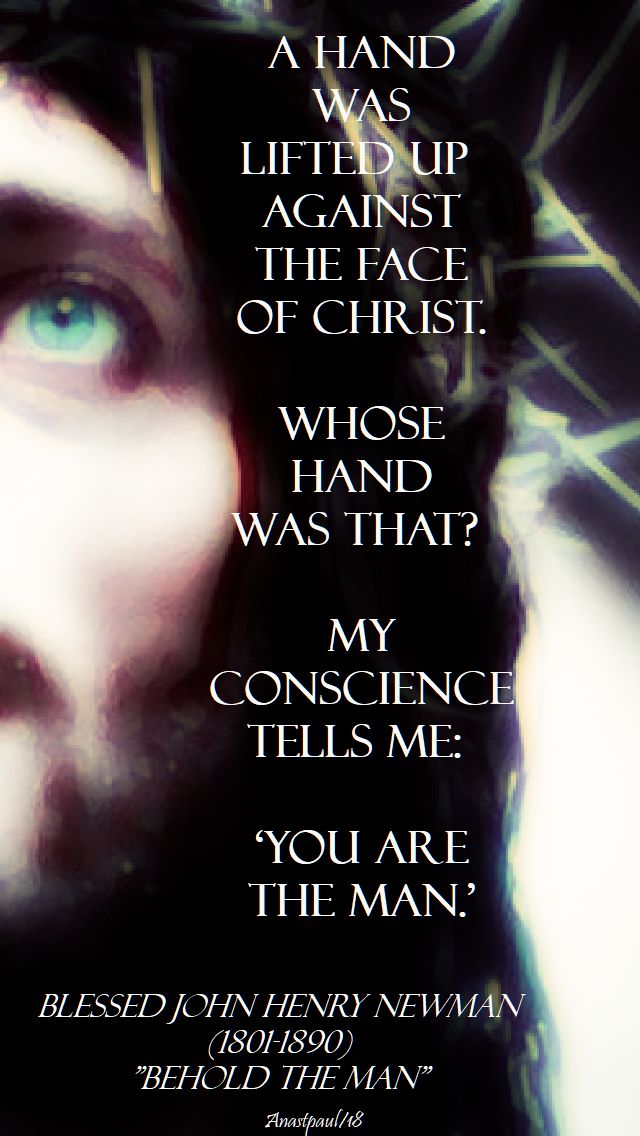
A hand was lifted up against the face of Christ.
Whose hand was that? My conscience tells me: ‘You are the man.’
I trust it is not so with me now. But, O my soul, contemplate the awful fact. Fancy Christ before you and fancy yourself lifting up your hand and striking Him! You will say, ‘It is impossible: I could not do so.’ Yes, you have done so.When you sinned wilfully, then you have done so. He is beyond pain now: still you have struck Him and had it been in the days of His flesh, He would have felt pain. Turn back in memory and recollect the time, the day, the hour, when by wilful mortal sin, by scoffing at sacred things, or by profaneness, or by hard hatred of your brother, or by acts of impurity, or by deliberate rejection of God’s voice, or in any other devilish way known to you, you have struck the All-Holy One.”(to be continued…………….)
NOTE of Interest: A second miracle attributed to the intercession of Blessed John Henry (2016) is still in progress of investigation by the Congregation for the Causes of Sainthood and if Vatican theologians and doctors conclude the healing is a divine sign of Newman’s sanctity the Pope will be invited to canonise him as the first English saint since 1970 and the first British saint since 1976.
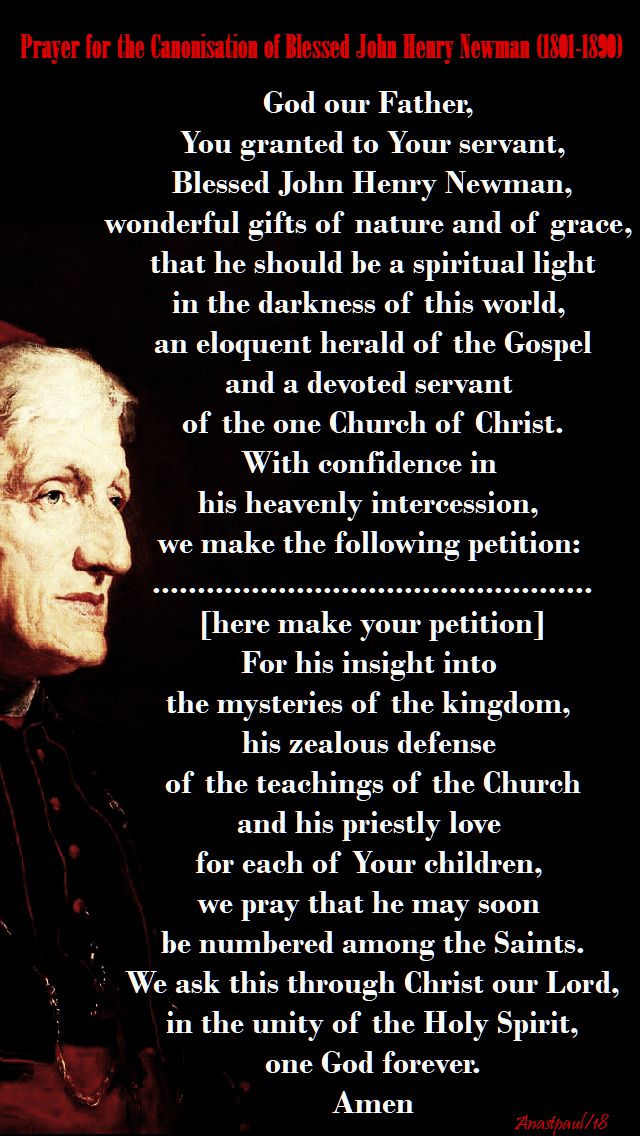
Prayer for the Canonisation of Blessed John Henry Newman (1801-1890)
God our Father, You granted to Your servant, Blessed John Henry Newman, wonderful gifts of nature and of grace, that he should be a spiritual light in the darkness of this world, an eloquent herald of the Gospel and a devoted servant of the one Church of Christ. With confidence in his heavenly intercession, we make the following petition: …………………………………………. [here make your petition] For his insight into the mysteries of the kingdom, his zealous defense of the teachings of the Church and his priestly love for each of Your children, we pray that he may soon be numbered among the Saints. We ask this through Christ our Lord, in the unity of the Holy Spirit, one God forever. Amen
Quote/s of the Day – 20 February 2018 -The First Memorial of Saints Francisco (1908-1919) and Jacinta (1910-1920) – “The Shepherds of Fatima”
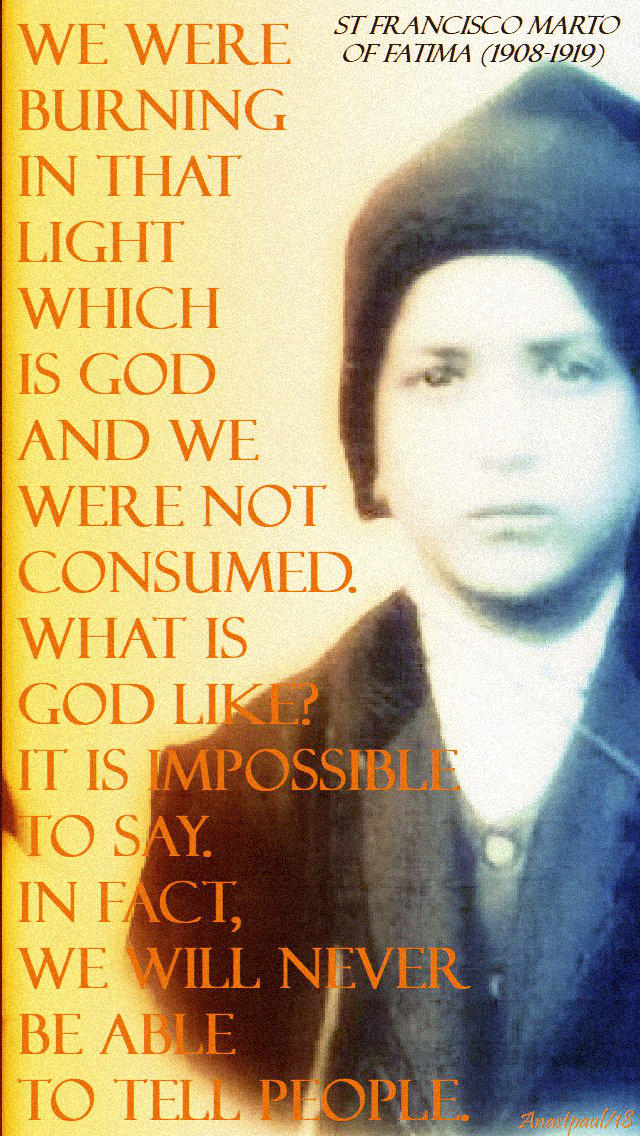
“We were burning in that light which is God and we were not consumed. What is God like? It is impossible to say. In fact, we will never be able to tell people”
St Francisco Marto of Fatima (1908-1919)
“Speak ill of no-one and avoid the company of those who talk (ill) about their neighbours.”
St Jacinta Marto of Fatima (1910-1920)
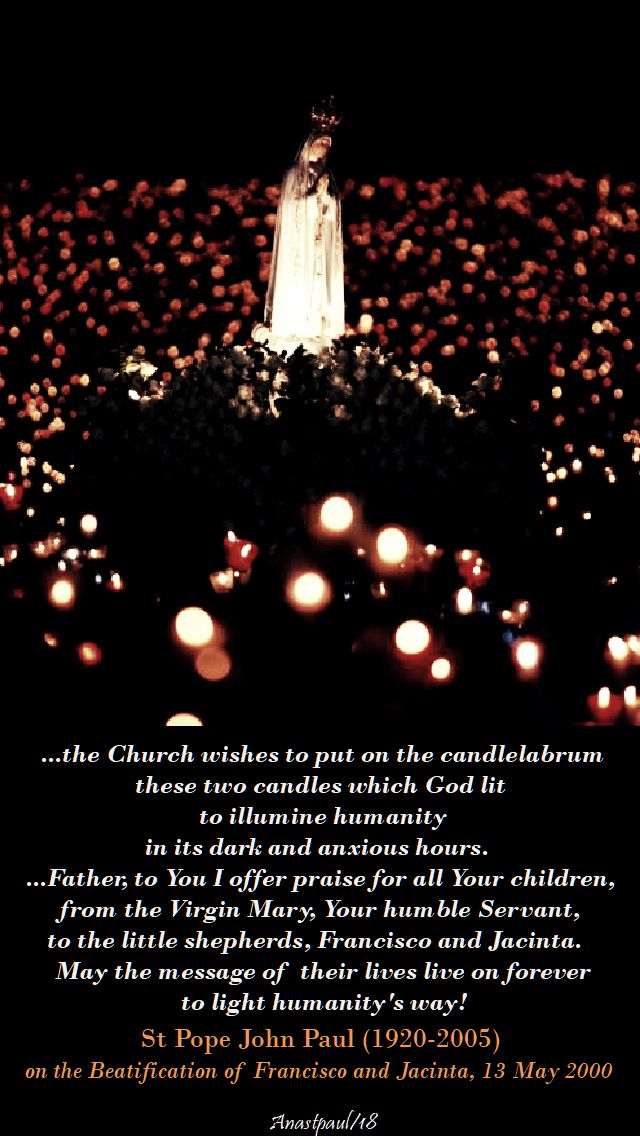
“Father, to You I offer praise, for you have revealed these things to the merest children”. Today Jesus’ praise takes the solemn form of the beatification of the little shepherds, Francisco and Jacinta. With this rite the Church wishes to put on the candlelabrum these two candles which God lit to illumine humanity in its dark and anxious hours. …Father, to You I offer praise for all Your children, from the Virgin Mary, Your humble Servant, to the little shepherds, Francisco and Jacinta. May the message of their lives live on forever to light humanity’s way!”
St Pope John Paul (1920-2005) on the Beatification of Francisco and Jacinta, 13 May 2000
One Minute Reflection – 20 February 2018 – Tuesday of the First Week of Lent and The First Memorial of Saints Francisco (1908-1919) and Jacinta (1910-1920)
“Unless a grain of wheat falls into the earth and dies, it remains just a single grain; but if it dies, it bears much fruit..” …John 12:24
REFLECTION – “In Lucia’s account, the three chosen children found themselves surrounded by God’s light as it radiated from Our Lady. She enveloped them in the mantle of Light that God had given her. According to the belief and experience of many pilgrims, if not of all, Fatima is more than anything this mantle of Light that protects us, here, as in almost no other place on earth. We need but take refuge under the protection of the Virgin Mary and to ask her, as the Salve Regina teaches: “show unto us… Jesus”.
“The Lord, who always goes before us, said this and did this (Jn 12:24). Whenever we experience the cross, He has already experienced it before us. We do not mount the cross to find Jesus. Instead it was He who, in His self-abasement, descended even to the cross, in order to find us, to dispel the darkness of evil within us and to bring us back to the light.”…Pope Francis at the Canonisation of Saints Francisco and Jacinta on 14 May 2017
PRAYER – Heavenly Father, just as the little children, Francisco and Jacinta, were chosen to be bearers of Your message, grant we pray, that by their prayers on our behalf, we too may Your bearers of light. Be with us, holy Mother, during our Lenten journey to the Resurrection of your Son, help us to become like little children and in that new purity, shine with His Light. Through Jesus our Lord, with the Holy Spirit, one God forever, amen.
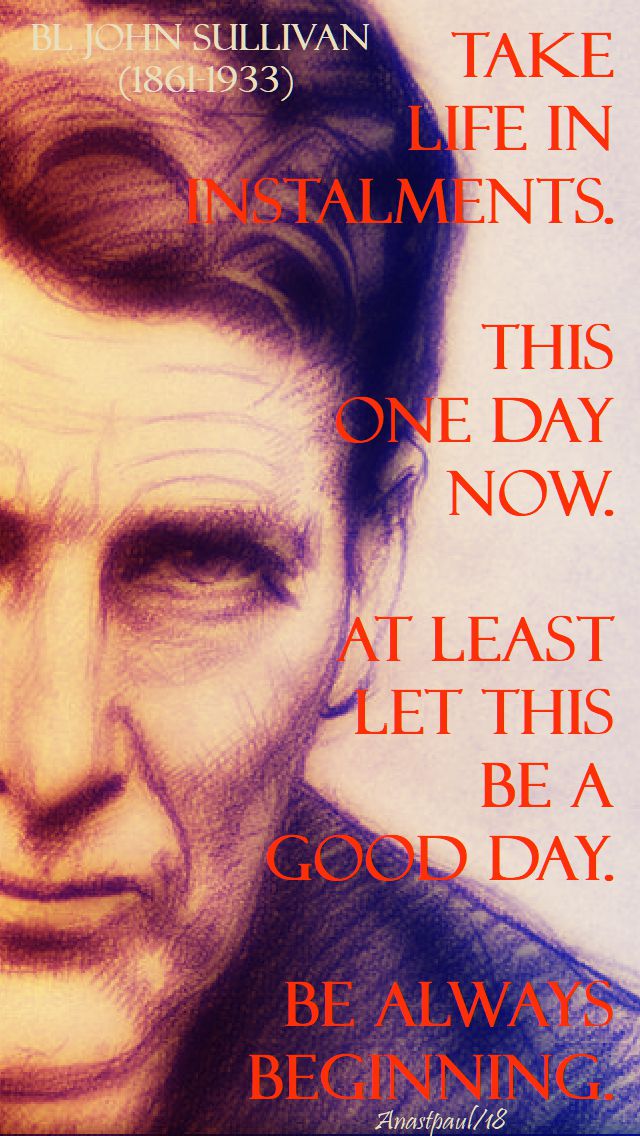
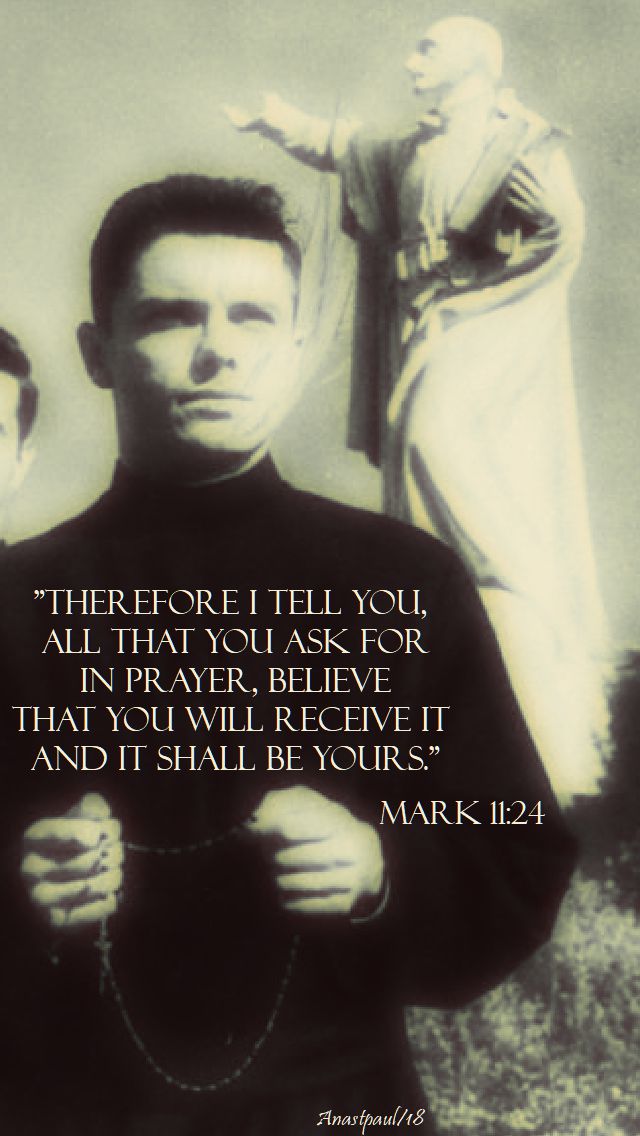
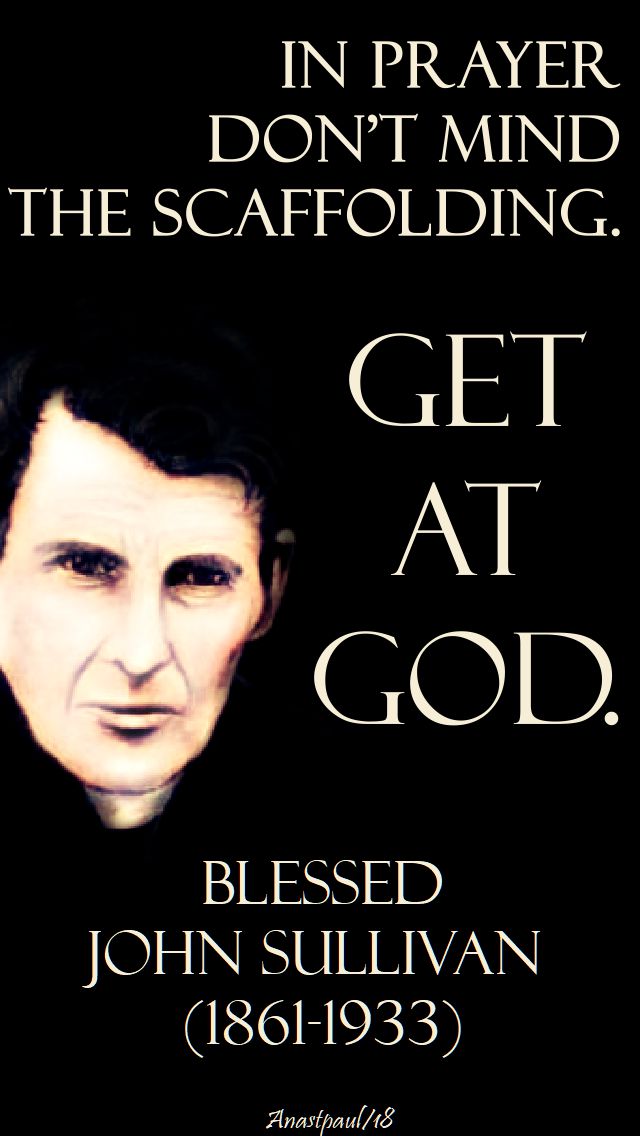
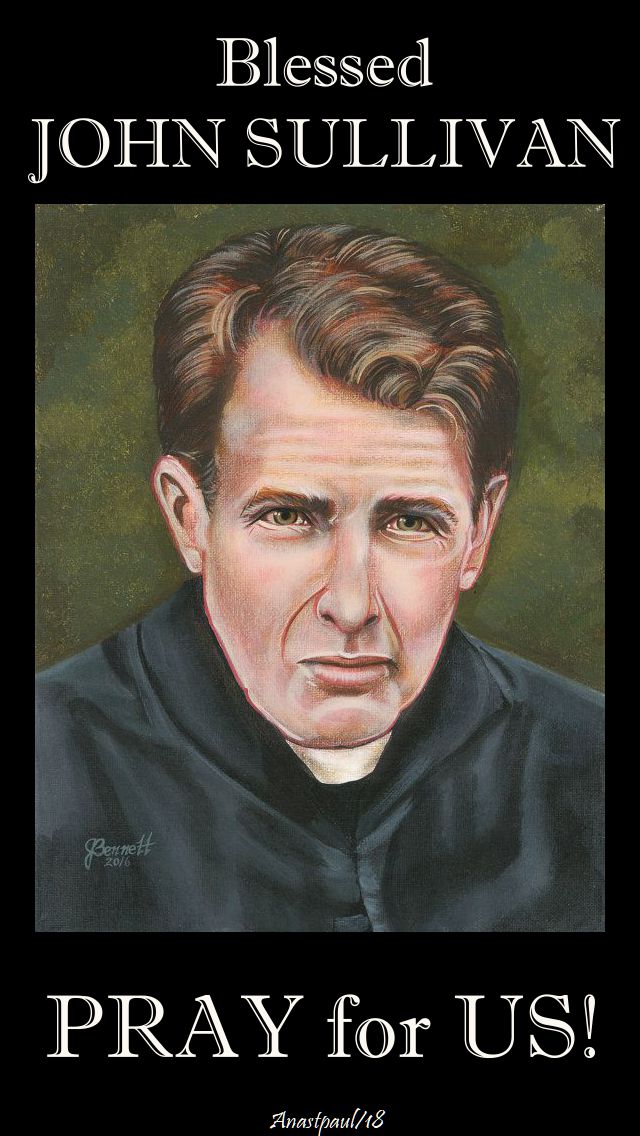
One Minute Reflection – 19 February – The Memorial of Bl John Sullivan SJ (1861-1933)
Therefore I tell you, all that you ask for in prayer, believe that you will receive it and it shall be yours...Mark 11:24
REFLECTION – “In prayer,don’t mind the scaffolding. Get at God.”
PRAYER – God of mercy, teach us to live as You have ordained. Help us to follow Your commandments with courage and steadfast devotion. Let our Saviour be our master, help us to learn from Him, the ways of prayer in silence. Fill us with the fire of the Holy Spirit, that we may learn how to pray. Grant blessed Trinity, that by the prayers of Blessed John Sullivan, who so clearly gave himself totally in prayer, we may grow in holiness. Through Jesus our Lord, in unity with the Holy Spirit, one God forever. Amen
Our Morning Offering – 19 February – The Memorial of Bl John Sullivan SJ (1861-1933) and Monday of the First Week of Lent – a Penitential Prayer from St Ignatius
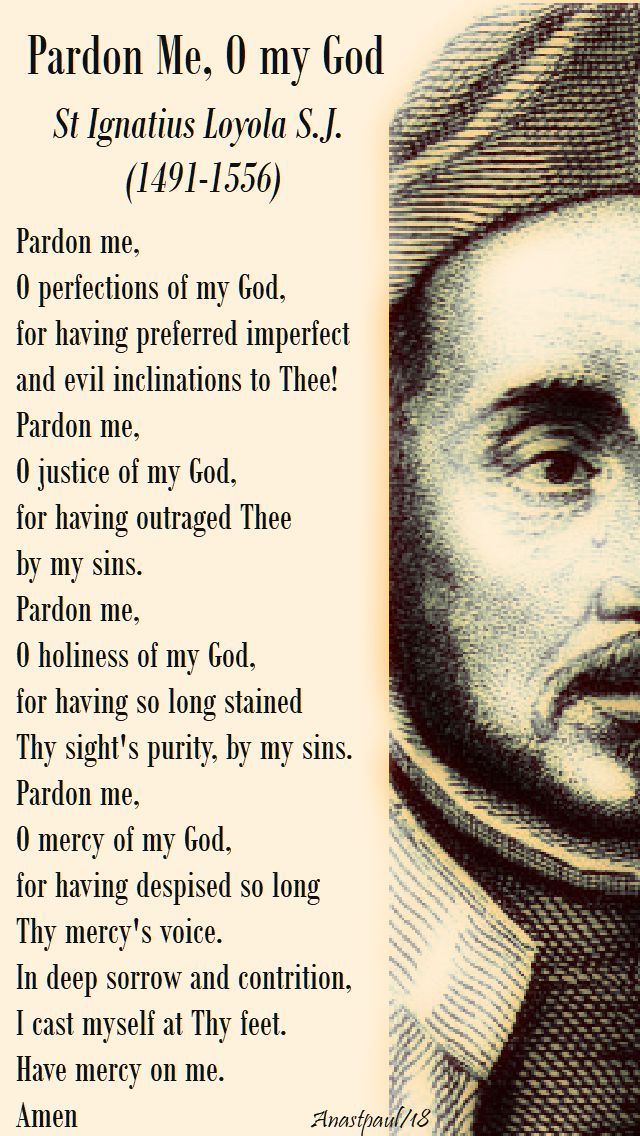
Pardon Me, O my God St Ignatius Loyola S.J. (1491-1556)
Pardon me,
O perfections of my God,
for having preferred imperfect
and evil inclinations to Thee!
Pardon me,
O justice of my God,
for having outraged Thee by my sins.
Pardon me,
O holiness of my God,
for having so long stained
Thy sight’s purity, by my sins.
Pardon me,
O mercy of my God,
for having despised so long
Thy mercy’s voice.
In deep sorrow and contrition,
I cast myself at Thy feet.
Have mercy on me.
Amen
Sunday Reflection – 18 February – The First Sunday of Lent Year B
Beyond the daily life of the believer, the Eucharist extends its action to the whole cosmos.
As Teilhard de Chardin wrote: “When He (Christ) says through the priest “This is my body”, His words go well beyond the piece of bread over which they are pronounced: they effect the birth of the whole Mystical Body. Beyond the transubstantiated Host, the priestly action extends to the cosmos itself.”
Every Eucharist is a “Mass on the world.”
This vision inspired a prayer of Teilhard de Chardin that we can make our own, each time we participate in the Mass and even when we cannot participate:
“On the altar of the whole earth I offer You, Lord, the work and the toil of the world…. All that will grow in the world in the course of this day, all that will decline in it and all that will die in it… Receive, Lord, this total Host that Creation presents to You, drawn and moved by You, at the dawn of a new day.”
Fr Raneiro Cantalamessa OFM (Preacher to the Papal Household) “This is My Body”
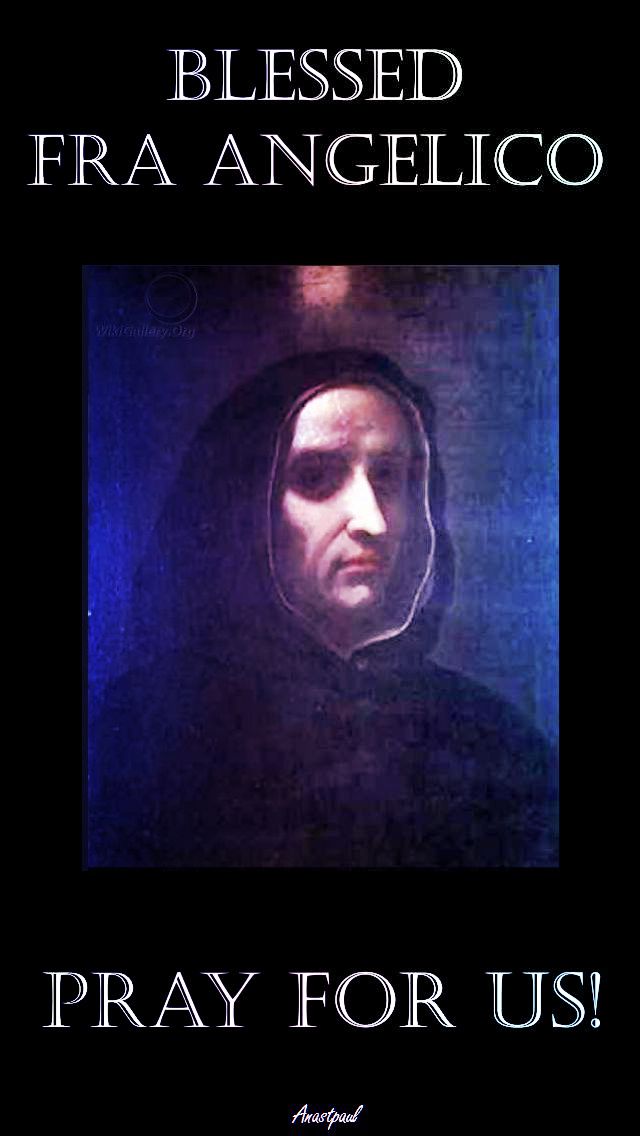
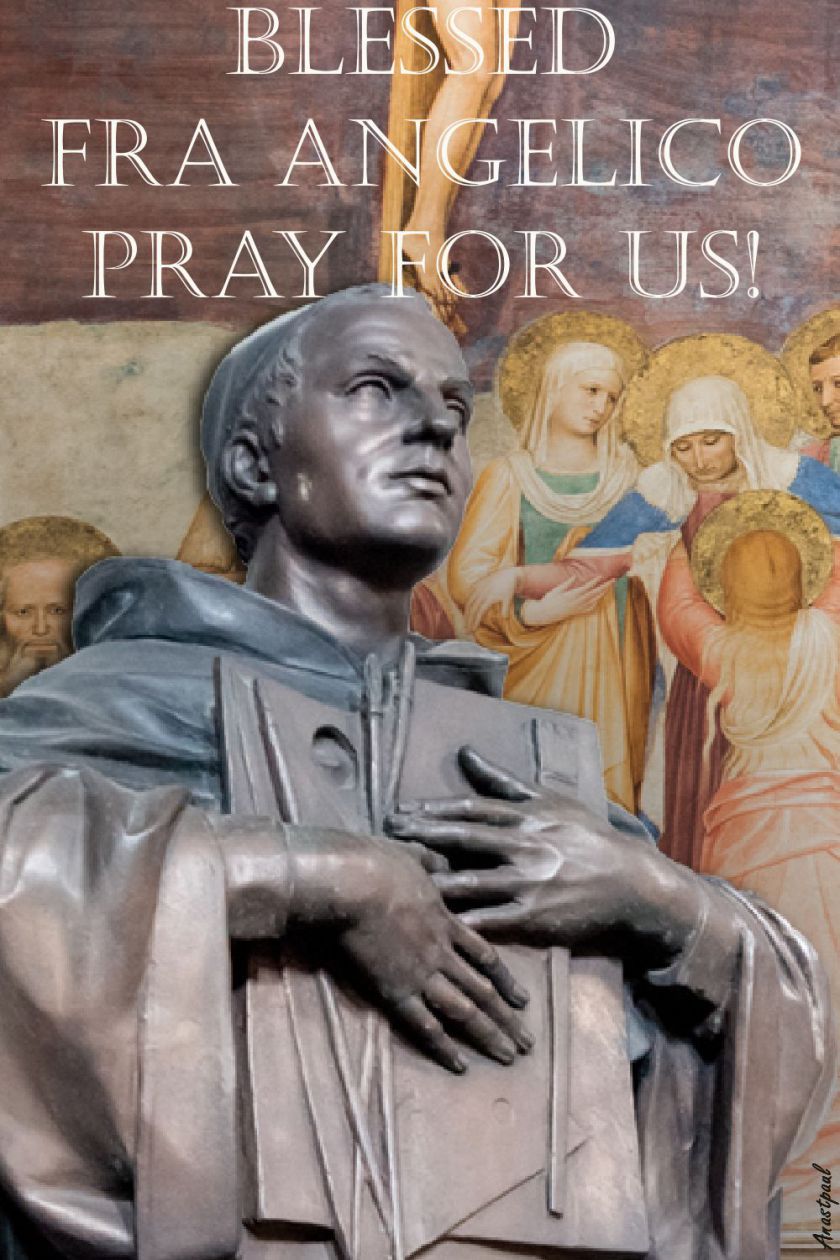
Thought for the Day – 18 February – The Memorial of Blessed John of Fiesole/Fra Angelico O.P. (1387-1455)
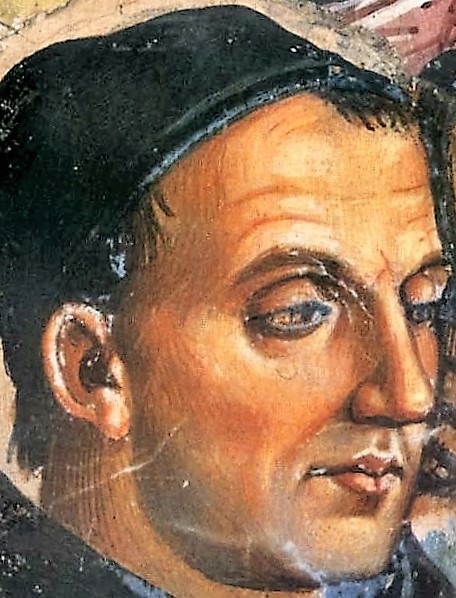
One of the greatest Christian artists is Giovanni Fiesole, better known to the world as Blessed Fra Angelico, the “Angelic Brother.” Fra Angelico is a patron saint for Catholic artists. His style of painting beautifully bridges the iconographic and gothic traditions. Giorgio Vasari, author of “Lives of the Artists,” referred to Angelico as a “rare and perfect talent.”
Very little of his writings have survived the centuries but one phrase still resonates, more than 400 years after his death. “He who does Christ’s work, must stay with Christ always.”
Saint Paul, in his letter to the Galatians said something similar. “I live; yet now, it is not I, but truly Christ, who lives in me. And though I live now in the flesh, I live in the faith of the Son of God, who loved me and who delivered himself for me.” Galatians 2:20
What does it mean when Paul tells us it is no longer he who lives but Christ who lives in him? What does it mean to stay with Christ always?
In Paul’s time it was believed that the only way to have a right relationship with God was to follow the law, the Ten Commandments and all the thousands of rules that derive from them. But Paul rejected this idea and preached that the only road to justification, to having that right relationship with God, is through faith in Jesus Christ.
It is not enough to simply “follow the rules” and stay out of trouble. If that is all we do then we are trying to achieve heaven by our own merits. God wants more from us than that. God invites us into a relationship of friends and family, a relationship of love. This type of relationship is a living, dynamic one. To love Christ and to want to be near Him is to be crucified with Him.
It means standing up for the Truth even when it is unpopular. It means finding time to pray. It means that we stay faithful to the teachings of Jesus. And it means that when we fail, we humbly confess our sins as we would apologise to a friend we have hurt, so that that relationship can be restored. It means that we must reflect Christ to the whole world, so that when people look at us they do not see us, they see Christ.
For the Artist this means we must deeply consider our vocation, St John Paul described it as a vocation of beauty. Do we work to bring beauty to the world? Do we use our gifts to lift peoples hearts and minds to God? Does our work reflect His splendour and bring hope and joy to our brothers and sisters? This does not mean that every artist must confine themselves to religious art but it does mean that we may be called to sacrifice lucrative opportunities. or turn away from work that does not suit our vocation. But in the end that is what it means to live for Christ and not for ourselves. (Deacon Lawrence Klimecki – Speaker, Writer, Artist)
Quote of the Day – 18 February – The First Sunday of Lent Year B
“Lent is like a long ‘retreat’ during which we can turn back into ourselves and listen to the voice of God, in order to defeat the temptations of the Evil One.
It is a period of spiritual ‘combat’ which we must experience alongside Jesus, not with pride and presumption, but using the arms of faith: prayer, listening to the word of God and penance.
In this way we will be able to celebrate Easter in truth, ready to renew the promises of our baptism.”
One Minute Reflection – 18 February – The Memorial of Blessed John of Fiesole/Fra Angelico O.P. (1387-1455)
Well done you are an industrious and reliable servant…… Come share your master’s joy…………Matthew 25:21
REFLECTION – “In God’s house we must try to accept whatever job he gives us – cook, kitchen boy, waiter, stable boy or baker. For we know that our reward depends not on the job itself but on the faithfulness with which we serve God.”… Pope John Paul I
“Fra Angelico’s painting was the fruit of the great harmony between a holy life and the creative power with which he had been endowed.”… St Pope John Paul II
PRAYER – O God, in Your providence You inspired blessed Fra Angelico to portray the beauty and sweetness of heaven. By his prayers and the example of his virtues, grant that we may manifest this splendour to our brothers and sisters. Blessed Angelico, pray for us! Through Christ our Lord, amen.
Saint of the Day – 18 February – Blessed John of Fiesole/Fra Angelico O.P. (1387-1455) Born in 1387 in Vicchio di Mugello near Florence, Italy as Guido di Pietro – he died on 18 February 1455 in the Dominican convent in Rome, Italy of natural causes. He was known to contemporaries as Fra Giovanni da Fiesole (Brother John of Fiesole) and Fra Giovanni Angelico (Angelic Brother John). In modern Italian he is called il Beato Angelico (Blessed Angelic One); the common English name Fra Angelico means the “Angelic friar”. In 1982, Pope John Paul II proclaimed his beatification in recognition of the holiness of his life, thereby making the title of “Blessed” official. Fiesole is sometimes misinterpreted as being part of his formal name but it was merely the name of the town where he took his vows as a Dominican friar and was used by contemporaries to separate him from others who were also known as Fra Giovanni. He is listed in the Roman Martyrology as Beatus Ioannes Faesulanus, cognomento Angelicus—”Blessed Giovanni of Fiesole, surnamed ‘the Angelic’ “. Patron of Catholic Artists.
Fra Angelico was an Early Italian Renaissance painter described by Vasari in his Lives of the Artists as having “a rare and perfect talent”.
Early life, 1395–1436
Fra Angelico was born Guido di Pietro at Rupecanina in the Tuscan area of Mugello near Fiesole towards the end of the 14th century. Nothing is known of his parents. He was baptised Guido or Guidolino. The earliest recorded document concerning Fra Angelico dates from 17 October 1417 when he joined a religious confraternity or guild at the Carmine Church, still under the name of Guido di Pietro. This record reveals that he was already a painter, a fact that is subsequently confirmed by two records of payment to Guido di Pietro in January and February 1418 for work done in the church of Santo Stefano del Ponte. The first record of Angelico as a friar dates from 1423, when he is first referred to as Fra Giovanni (Friar John), following the custom of those entering one of the older religious orders of taking a new name. He was a member of the local community at Fiesole, not far from Florence, of the Dominican Order; one of the medieval Orders belonging to a category known as mendicant Orders because they generally lived not from the income of estates but from begging or donations. Fra, a contraction of frater (Latin for ‘brother’), is a conventional title for a mendicant friar.
According to Vasari, Fra Angelico initially received training as an illuminator, possibly working with his older brother Benedetto who was also a Dominican and an illuminator. The former Dominican convent of San Marco in Florence, now a state museum, holds several manuscripts that are thought to be entirely or partly by his hand. The painter Lorenzo Monaco may have contributed to his art training and the influence of the Sienese school is discernible in his work. He had several important charges in the convents he lived in but this did not limit his art, which very soon became famous. According to Vasari, the first paintings of this artist were an altarpiece and a painted screen for the Charterhouse (Carthusian monastery) of Florence; none such exist there now.
From 1408 to 1418, Fra Angelico was at the Dominican friary of Cortona, where he painted frescoes, now mostly destroyed, in the Dominican Church and may have been assistant to Gherardo Starnina or a follower of his. Between 1418 and 1436 he was at the convent of Fiesole, where he also executed a number of frescoes for the church and the Altarpiece, which was deteriorated but has since been restored. A predella of the Altarpiece remains intact and is conserved in the National Gallery, London, and is a great example of Fra Angelico’s ability. It shows Christ in Glory surrounded by more than 250 figures, including beatified Dominicans.
San Marco, Florence, 1436–1445
In 1436, Fra Angelico was one of a number of the friars from Fiesole who moved to the newly built convent or friary of San Marco in Florence. This was an important move which put him in the centre of artistic activity of the region and brought about the patronage of one of the wealthiest and most powerful members of the city’s governing authority, or “Signoria” (namely Cosimo de’ Medici), who had a cell reserved for himself at the friary in order that he might retreat from the world.
It was, according to Vasari, at Cosimo’s urging that Fra Angelico set about the task of decorating the convent, including the magnificent fresco of the Chapter House, the often-reproduced Annunciation at the top of the stairs leading to the cells, the Maesta (or Coronation of the Madonna) with Saints (cell 9) and the many other devotional frescoes, of smaller format but remarkable luminous quality, depicting aspects of the Life of Christ that adorn the walls of each cell.
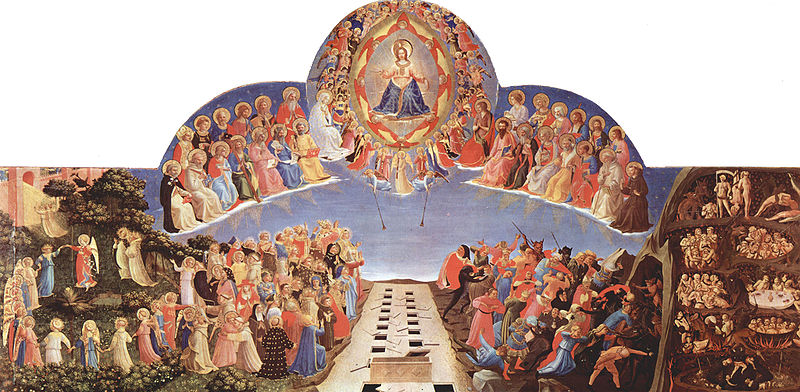
The Last JudgementThe Transfiguration shows the directness, simplicity and restrained palette typical of these frescoes. Located in a monk’s cell at the Convent San’ Marco and intended for private devotion.
In 1439 Fra Angelico completed one of his most famous works, the San Marco Altarpiece at Florence. The result was unusual for its time. Images of the enthroned Madonna and Child surrounded by saints were common, but they usually depicted a setting that was clearly heaven-like, in which saints and angels hovered about as divine presences rather than people. But in this instance, the saints stand squarely within the space, grouped in a natural way as if they were able to converse about the shared experience of witnessing the Virgin in glory. Paintings such as this, known as Sacred Conversations, were to become the major commissions of Giovanni Bellini, Perugino and Raphael.
San Marco Altarpiece
The Vatican, 1445–1455
In 1445 Pope Eugene IV summoned him to Rome to paint the frescoes of the Chapel of the Holy Sacrament at St Peter’s, later demolished by Pope Paul III. Vasari claims that at this time Fra Angelico was offered the Archbishopric of Florence by Pope Nicholas V and that he refused it, recommending another friar for the position. The story seems possible and even likely. However, if Vasari’s date is correct, then the pope must have been Eugene IV and not Nicholas, who was elected Pope only on 6 March 1447. Moreover, the archbishop in 1446–1459 was the Dominican Antoninus of Florence (Antonio Pierozzi), canonised by Pope Adrian VI in 1523. In 1447 Fra Angelico was in Orvieto with his pupil, Benozzo Gozzoli, executing works for the Cathedral. Among his other pupils were Zanobi Strozzi.
From 1447 to 1449 Fra Angelico was back at the Vatican, designing the frescoes for the Niccoline Chapel for Nicholas V. The scenes from the lives of the two martyred deacons of the Early Christian Church, St Stephen and St Lawrence may have been executed wholly or in part by assistants. The small chapel, with its brightly frescoed walls and gold leaf decorations gives the impression of a jewel box. From 1449 until 1452, Fra Angelico returned to his old convent of Fiesole, where he was the Prior.
Death and beatification
In 1455, Fra Angelico died while staying at a Dominican convent in Rome, perhaps on an order to work on Pope Nicholas’ chapel. He was buried in the church of Santa Maria sopra Minerva.
When singing my praise, don’t liken my talents to those of Apelles. Say, rather, that, in the name of Christ, I gave all I had to the poor.
The deeds that count on Earth are not the ones that count in Heaven.
I, Giovanni, am the flower of Tuscany. — Translation of epitaph
The English writer and critic William Michael Rossetti wrote of the friar:
“From various accounts of Fra Angelico’s life, it is possible to gain some sense of why he was deserving of canonisation. He led the devout and ascetic life of a Dominican friar and never rose above that rank; he followed the dictates of the order in caring for the poor; he was always good-humoured. All of his many paintings were of divine subjects and it seems that he never altered or retouched them, perhaps from a religious conviction that, because his paintings were divinely inspired, they should retain their original form. He was wont to say that he who illustrates the acts of Christ should be with Christ. It is averred that he never handled a brush without fervent prayer and he wept when he painted a Crucifixion. The Last Judgement and the Annunciation were two of the subjects he most frequently treated.”
The Crucified Christ
Pope John Paul II beatified Fra Angelico on 3 October 1982 and in 1984 declared him patron of Catholic artists.
“Angelico was reported to say “He who does Christ’s work must stay with Christ always”. This motto earned him the epithet “Blessed Angelico” because of the perfect integrity of his life and the almost divine beauty of the images he painted, to a superlative extent those of the Blessed Virgin Mary.”— St Pope John Paul II
Saturday after Ash Wednesday – 17 February 2018 Isaiah 58:9-14, Psalms 86:1-6, Luke 5:27-32
Show me Lord, your way, so that I may walk in your truth.
Isaiah 58:9-10: “If you take away from the midst of you the yoke, the pointing of the finger and speaking wickedness, if you pour yourself out for the hungry and satisfy the desire of the afflicted, then shall your light rise in the darkness and your darkest hour will be like noon.
Luke 5:32: “I have come to call not the upright but sinners to repentance.”
Isaiah makes it abundantly clear that it is our service to the poor and the weak that wins God’s favour, not lifeless religious practices. The message becomes most meaningful in modern society, marked by unfair distribution of resources, hatred, violence, abuse and mutual accusations. It is only when we strive against such evils that we win God’s approval. “You shall be like the watered garden” the prophet says. The image stands for the possession of every good thing that we desire.
The Gospel speaks of the call of Levi. His joy was so great that he could hardly contain it.
He organised a party for his fellow tax-collectors, which unfailingly earned the criticism of the Pharisees. Jesus’ answer was that His mission was precisely to wrongdoers, to the least and the lost. These words indeed offer us hope when we stray and urge us to reach out to others as Jesus did.
That is the Christian calling, that is the Christian ‘job’! (Archbishop Thomas Menamparanpil SDB – Gods Word)
Don’t you wonder what it was about Levi that moved Jesus to call him? And what was it that caused Levi to respond?
He must have been a pretty successful man in economic terms but as a tax collector, he was undoubtedly not popular in his own community and was seen as a collaborator with Rome. Perhaps he had a nagging sense of “there must be something more to life”. perhaps a sense of emptiness and sadness. Something touched him so deeply at Jesus call, that he let go of a previous way of life and opened himself instantly to the gift being offered. He was overjoyed, he was filled with joy, he was joyous, he bubbled over and threw a big party in order to share his joy! And Jesus attended the party! He was at the party! He is at our party too when we allow Him entrance to our hearts.
When asked who he is, Pope Francis responded “I am a sinner, whom the Lord has looked upon.” When we are able to see ourselves as Pope Francis does, as loved sinners, we are open to receive the forgiveness and help God longs to give us. When we are aware of ourselves as sinners, loved and called by God, we respond with a deep sense of repentance, gratitude and joy, we throw that party and invite other sinners to join us. We simply have to share the joy!
Where do I experience my own sinfulness? How is this awareness a gift? Spend some time with Jesus today sharing with Him your struggles and Your need of His help. Have a party with Him! (excerpt Fr Nicholas King S.J. ‘The Long Journey to the Resurrection’)
My soul, what have you done for God?
Look o’er your misspent years and see;
See first what you have done for God,
And then what God has done for thee!
Daily Lenten Prayer
Today Lord, I choose life,
I choose Your love
and the challenge to live it and share it,
I choose hope, even in moments of darkness,
I choose faith, accepting You as Lord and God,
I choose to let go of some part of my burdens,
day by day handing them over to You,
I choose to take hold of Your strength
and power ever more deeply in my life.
May this truly be for me a time of new life,
of change, challenge and growth.
May I come to Easter with a heart open to dying with You
and rising to Your new life, day by day.
Amen
One Minute Reflection – 17 February – The First Saturday of Lent 2018
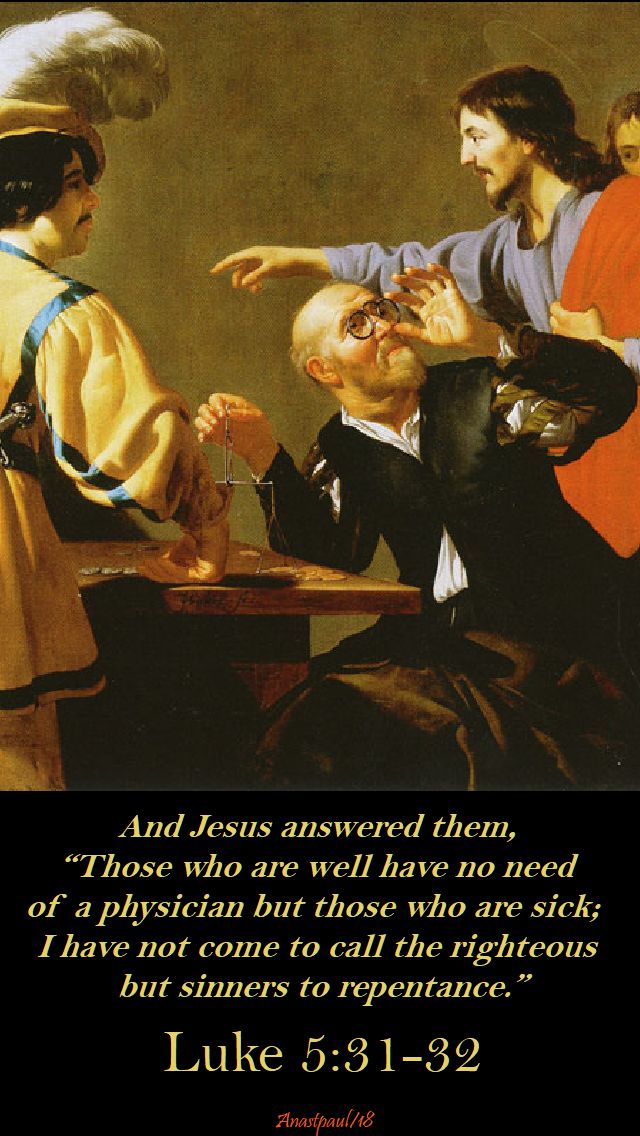
And Jesus answered them, “Those who are well have no need of a physician but those who are sick; I have not come to call the righteous but sinners to repentance.”...Luke 5:31-32
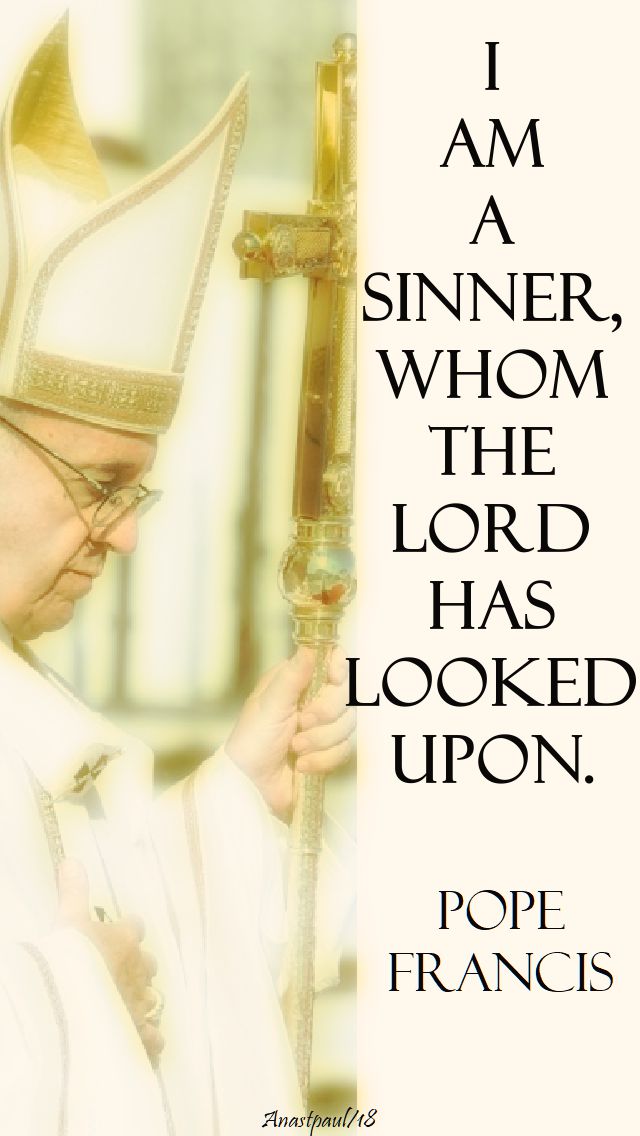
REFLECTION – “I am a sinner, whom the Lord has looked upon.”…Pope Francis
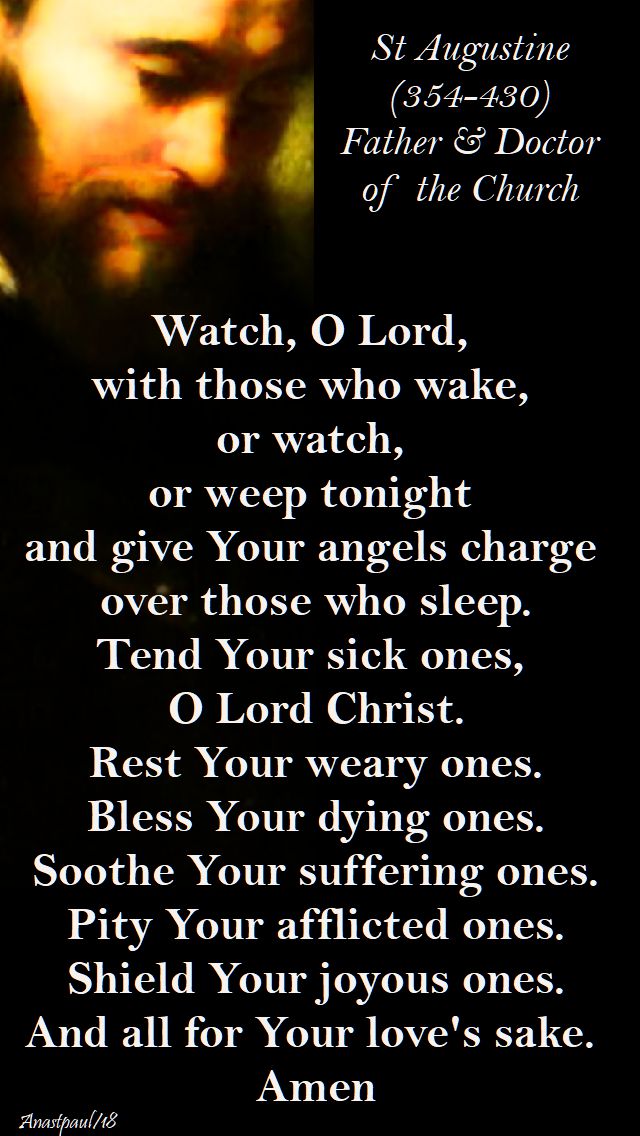
PRAYER – Watch, O Lord, with those who wake, or watch, or weep tonight and give Your angels charge over those who sleep.
Tend Your sick ones, O Lord Christ.
Rest Your weary ones.
Bless Your dying ones.
Soothe Your suffering ones.
Pity Your afflicted ones.
Shield Your joyous ones.
And all for Your love’s sake. Amen…St Augustine (354-430) Father & Doctor of the Church
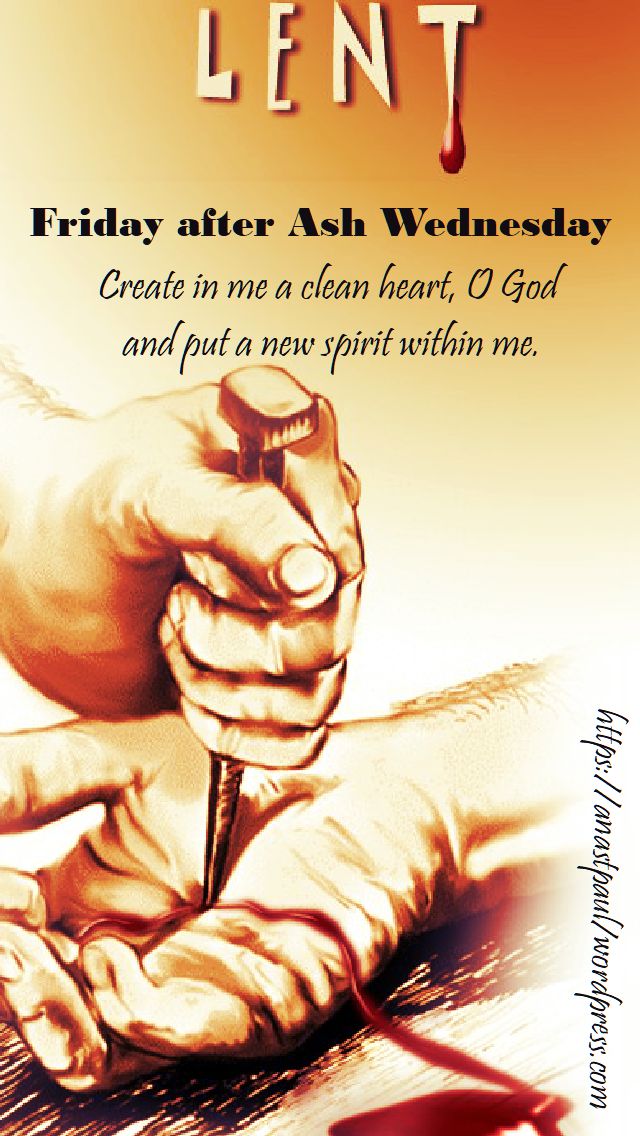
Friday after Ash Wednesday – 16 February 2018
Isaiah 58:1-9, Psalms 51:3-6, 18-19, Matthew 9:14-15
Isaiah 58:3-4 – Behold, in the day of your fast you seek your own pleasure and oppress all your workers. Behold, you fast only to quarrel and to fight and to hit with wicked fist. Fasting like yours this day will not make your voice to be heard on high…
Matthew 9:14-15 – 14 – Then the disciples of John came to him, saying, “Why do we and the Pharisees fast but your disciples do not fast?” And Jesus said to them, “Can the wedding guests mourn as long as the bridegroom is with them? The days will come, when the bridegroom is taken away from them, and then they will fast.”
Create in me a clean heart, O God and put a new spirit within me.
Genuine faith does not make a believer pretentious.
Dialogue with God is not a business bargain.
External observance of religion wins little favour with God, if it is combined with unfairness to the weak and indifference to the poor.
Openness to the indigent is the door to true religion.
The world itself changes for the better with the widening of human concern for the poor. Good works multiply on the face of the earth and everyones sees the glory of God in action.
The Gospel presents Jesus, as refusing to absolutise ritual fasting.
What He expects from His disciples is that they remain faithful to the mission He is about to give them even at great sacrifice.
It will make evidently greater demands from them than mere ritual fasting.
They should be prepared.
Jesus is introducing a new set of values of immense worth, for which the old order of things must make way. (Archbishop Thomas Menamparanpil SDB – GodsWord)
Each of us has different talents, material resources and opportunities. Lent is an invitation, not to introspection and penance for its own sake but always to help us to better partner with God in responding to the needs of our world.
Is there a need I feel called to do something about? Could I ask God to show me where He is inviting me to act? What one thing might I do today to reach out to someone in need? (excerpt Fr Nicholas King S.J. ‘The Long Journey to the Resurrection’)
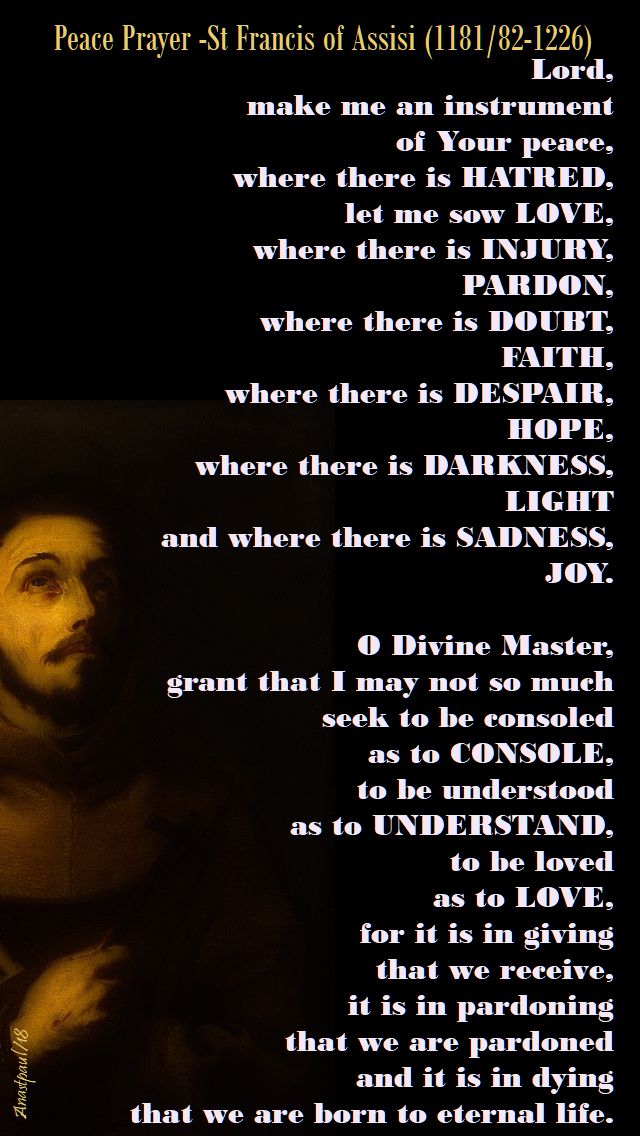
Lord, make me an instrument of Your peace, where there is hatred, let me sow love, where there is injury, pardon, where there is doubt, faith, where there is despair, hope, where there is darkness, light and where there is sadness, joy. O Divine Master, grant that I may not so much seek to be consoled as to console, to be understood as to understand, to be loved as to love, for it is in giving that we receive, it is in pardoning that we are pardoned and it is in dying that we are born to eternal life.
















 AnaStpaul
You must be logged in to post a comment.